EP3922849A1 - Repair system and method for performing at least one repair task in a wind turbine - Google Patents
Repair system and method for performing at least one repair task in a wind turbine Download PDFInfo
- Publication number
- EP3922849A1 EP3922849A1 EP20179807.1A EP20179807A EP3922849A1 EP 3922849 A1 EP3922849 A1 EP 3922849A1 EP 20179807 A EP20179807 A EP 20179807A EP 3922849 A1 EP3922849 A1 EP 3922849A1
- Authority
- EP
- European Patent Office
- Prior art keywords
- repair
- virtual reality
- wind turbine
- nacelle
- robotic
- Prior art date
- Legal status (The legal status is an assumption and is not a legal conclusion. Google has not performed a legal analysis and makes no representation as to the accuracy of the status listed.)
- Withdrawn
Links
- 230000008439 repair process Effects 0.000 title claims abstract description 200
- 238000000034 method Methods 0.000 title claims description 16
- 239000011521 glass Substances 0.000 claims description 12
- 238000010248 power generation Methods 0.000 claims description 11
- 238000013473 artificial intelligence Methods 0.000 claims description 10
- 238000012549 training Methods 0.000 claims description 10
- 238000013528 artificial neural network Methods 0.000 claims description 7
- 238000012545 processing Methods 0.000 claims description 3
- 230000002787 reinforcement Effects 0.000 claims description 3
- 238000012544 monitoring process Methods 0.000 description 10
- 230000000694 effects Effects 0.000 description 6
- 230000004397 blinking Effects 0.000 description 4
- 239000003086 colorant Substances 0.000 description 4
- 238000012423 maintenance Methods 0.000 description 4
- 230000007257 malfunction Effects 0.000 description 4
- 238000004891 communication Methods 0.000 description 3
- 230000008878 coupling Effects 0.000 description 3
- 238000010168 coupling process Methods 0.000 description 3
- 238000005859 coupling reaction Methods 0.000 description 3
- 230000003993 interaction Effects 0.000 description 2
- 241000282412 Homo Species 0.000 description 1
- 230000001133 acceleration Effects 0.000 description 1
- 210000000080 chela (arthropods) Anatomy 0.000 description 1
- 238000006243 chemical reaction Methods 0.000 description 1
- 230000003920 cognitive function Effects 0.000 description 1
- 238000013527 convolutional neural network Methods 0.000 description 1
- 238000007405 data analysis Methods 0.000 description 1
- 238000003066 decision tree Methods 0.000 description 1
- 230000003247 decreasing effect Effects 0.000 description 1
- 230000001419 dependent effect Effects 0.000 description 1
- 230000005611 electricity Effects 0.000 description 1
- 238000005516 engineering process Methods 0.000 description 1
- 238000011156 evaluation Methods 0.000 description 1
- 230000004424 eye movement Effects 0.000 description 1
- 230000006870 function Effects 0.000 description 1
- 230000002068 genetic effect Effects 0.000 description 1
- 230000004886 head movement Effects 0.000 description 1
- 238000003064 k means clustering Methods 0.000 description 1
- 238000004020 luminiscence type Methods 0.000 description 1
- 238000010801 machine learning Methods 0.000 description 1
- 238000012806 monitoring device Methods 0.000 description 1
- 238000013021 overheating Methods 0.000 description 1
- 230000008447 perception Effects 0.000 description 1
- 230000000704 physical effect Effects 0.000 description 1
- 230000008569 process Effects 0.000 description 1
- 230000000306 recurrent effect Effects 0.000 description 1
- 230000009467 reduction Effects 0.000 description 1
- 238000012552 review Methods 0.000 description 1
- 238000012706 support-vector machine Methods 0.000 description 1
Images

Classifications
-
- F—MECHANICAL ENGINEERING; LIGHTING; HEATING; WEAPONS; BLASTING
- F03—MACHINES OR ENGINES FOR LIQUIDS; WIND, SPRING, OR WEIGHT MOTORS; PRODUCING MECHANICAL POWER OR A REACTIVE PROPULSIVE THRUST, NOT OTHERWISE PROVIDED FOR
- F03D—WIND MOTORS
- F03D80/00—Details, components or accessories not provided for in groups F03D1/00 - F03D17/00
- F03D80/50—Maintenance or repair
-
- F—MECHANICAL ENGINEERING; LIGHTING; HEATING; WEAPONS; BLASTING
- F05—INDEXING SCHEMES RELATING TO ENGINES OR PUMPS IN VARIOUS SUBCLASSES OF CLASSES F01-F04
- F05B—INDEXING SCHEME RELATING TO WIND, SPRING, WEIGHT, INERTIA OR LIKE MOTORS, TO MACHINES OR ENGINES FOR LIQUIDS COVERED BY SUBCLASSES F03B, F03D AND F03G
- F05B2230/00—Manufacture
- F05B2230/80—Repairing, retrofitting or upgrading methods
-
- Y—GENERAL TAGGING OF NEW TECHNOLOGICAL DEVELOPMENTS; GENERAL TAGGING OF CROSS-SECTIONAL TECHNOLOGIES SPANNING OVER SEVERAL SECTIONS OF THE IPC; TECHNICAL SUBJECTS COVERED BY FORMER USPC CROSS-REFERENCE ART COLLECTIONS [XRACs] AND DIGESTS
- Y02—TECHNOLOGIES OR APPLICATIONS FOR MITIGATION OR ADAPTATION AGAINST CLIMATE CHANGE
- Y02E—REDUCTION OF GREENHOUSE GAS [GHG] EMISSIONS, RELATED TO ENERGY GENERATION, TRANSMISSION OR DISTRIBUTION
- Y02E10/00—Energy generation through renewable energy sources
- Y02E10/70—Wind energy
- Y02E10/72—Wind turbines with rotation axis in wind direction
-
- Y—GENERAL TAGGING OF NEW TECHNOLOGICAL DEVELOPMENTS; GENERAL TAGGING OF CROSS-SECTIONAL TECHNOLOGIES SPANNING OVER SEVERAL SECTIONS OF THE IPC; TECHNICAL SUBJECTS COVERED BY FORMER USPC CROSS-REFERENCE ART COLLECTIONS [XRACs] AND DIGESTS
- Y02—TECHNOLOGIES OR APPLICATIONS FOR MITIGATION OR ADAPTATION AGAINST CLIMATE CHANGE
- Y02P—CLIMATE CHANGE MITIGATION TECHNOLOGIES IN THE PRODUCTION OR PROCESSING OF GOODS
- Y02P70/00—Climate change mitigation technologies in the production process for final industrial or consumer products
- Y02P70/50—Manufacturing or production processes characterised by the final manufactured product
Definitions
- the invention concerns a repair system for performing at least one repair task in the nacelle of at least one wind turbine.
- the invention also concerns a method for performing at least one repair task in a nacelle of at least one wind turbine using a repair system.
- Wind turbines are large-scale electrical power generation devices, which are often placed away from infrastructure, for example in the case of offshore wind parks, which may comprise a large number of such wind turbines positioned in the sea.
- Wind turbines usually comprise a tower carrying a nacelle, to which a rotor arrangement having, for example, a rotor hub and at least two, preferably three, wind turbine blades are mounted.
- the rotor arrangement directly drives a generator of a power generation arrangement housed in the nacelle, while in other cases, a gear box may be used between rotor bearing and generator.
- the power generation arrangement of a wind turbine may additionally comprise at least one converter for preparing generated electrical power for feeding into a power grid.
- the nacelle may additionally comprise a controller or control unit of the wind turbine, controlling its operation.
- Wind turbines are subject to large forces, associated effects like vibrations, and high power, such that, in addition to regular maintenance tasks, wear effects and other fault conditions may occur, wherein, in many cases, the wind turbine operation needs to be stopped. Operation of the wind turbine is then suspended until a service technician was informed, planned a trip, made the trip to the wind turbine and performed the required repair tasks.
- weather is an important factor determining when the wind turbine may resume operation, since a trip to the wind turbine may only be undertaken if weather allows it.
- a repair system for performing at least one repair task in at least one wind turbine, in particular the nacelle, according to the invention comprises:
- the invention provides an option for a human service user, in particular a service technician, to repair the wind turbine remotely, without the necessity to physically enter the wind turbine.
- the service technician that is, the human service user
- the robotic repair device may be understood as an avatar which is operated using a virtual reality environment. Access to the virtual reality environment is provided by virtual reality equipment provided remote to the wind turbine, for example at a workplace of the human service user.
- a control device receives user input commands generated by the virtual reality equipment to generate respective control signals for the robotic repair device in the wind turbine.
- control device may be distributed. That is, different sub-systems of the control device may be located at different locations.
- control device may also be implemented as or comprise a central server device, in particular when the repair system comprises multiple robotic repair devices located in different wind turbines and/or multiple sets of virtual reality equipment, such that, in particular, multiple repair tasks in different wind turbines may, in particular simultaneously, be performed using the repair system according to the invention.
- the repair system according to the invention may thus comprise multiple robotic repair devices in multiple wind turbines, for example in all wind turbines of at least one wind park, and/or multiple sets of virtual reality equipment.
- multiple robotic repair devices in multiple wind turbines for example in all wind turbines of at least one wind park, and/or multiple sets of virtual reality equipment.
- Using the repair system according to the invention may thus lead to reduced downtimes, reduced manual effort of service technicians and thus reduced cost, to higher availability of wind turbines and decreased levelized cost of electricity.
- the repair system is, of course, also applicable to regular, planned maintenance and/or repair tasks.
- a process using the repair system according to the invention may be as follows. First of all, a fault condition, in particular a malfunction, occurs at a wind turbine, in particular causing a downtime or at least reduction in power generation. Data analysis, in particular based on alarm and/or status information of the wind turbine reveals that a certain repair task is required. Once the repair task to be performed is determined, the repair system according to the invention may be put into operation.
- a service technician as the human service user uses the virtual reality equipment to virtually enter the wind turbine, in particular its nacelle, implemented as the virtual reality environment. The service technician operates the robotic repair device via user input commands generated in the virtual reality environment using the virtual reality equipment. In other words, the service technician operates an avatar that performs physical actions inside the wind turbine. As soon as the repair task has been performed in this manner, the wind turbine may, if applicable, again be put into operation and/or have its power generation increased.
- repair system is, of course, only used for repair tasks it is configured to perform, however, preparatory steps for on-site repair tasks may, at least in some cases, also be performed using the repair system according to the invention.
- the repair system may also comprise at least one tool for repair, in particular as part of the robotic repair device or usable by the robotic repair device.
- some tools for example pincers, screw drivers and the like may be implemented as a constructive part of the robotic repair device, while other tools, in particular larger tools that are required less often may be stored on-site in the wind turbine, in particular its nacelle, such that they may be picked up and used by the robotic repair device.
- the repair system may also comprise spare parts, in particular regarding smaller components or sub-components of the wind turbine such as screws, bolts, connectors, cables and the like. In this manner, when an easily replaceable component and/or sub-component is broken, damaged, or faulty, it may simply be replaced by the robotic repair device using the spare part provided on-site the wind turbine.
- the repair system provides a set of virtual reality equipment.
- the robotic repair system may comprise at least one environment sensor, in particular a camera
- the virtual reality equipment may comprise virtual reality glasses
- the control device is adapted to generate the virtual reality environment for the virtual reality glasses based on sensor data from the at least one sensor of the robotic repair device.
- the virtual reality equipment may comprise virtual reality glasses, in particular a virtual reality headset, as for example known under the trademark "Oculus Quest", available from Facebook Technologies, LLC.
- the virtual reality equipment may comprise virtual reality gloves, wherein the control device is adapted to derive at least one user input command from movement data of the virtual reality gloves.
- virtual reality gloves already come as a set with virtual reality glasses, in particular a virtual reality head-set.
- user input commands may also be derived from the virtual reality glasses, as, in a preferred embodiment, the virtual reality glasses may comprise at least one user monitoring sensor and the control device may be configured to adapt a representation of the virtual reality environment based on sensor data from the user monitoring sensor and/or to derive at least one user input command from sensor data of the user monitoring sensor.
- a user monitoring sensor of the virtual reality glasses may comprise an eye sensor to determine a viewing direction of the user and/or blinking movements of the user.
- the at least one user monitoring sensor may also comprise at least one inertial sensor and/or acceleration sensor, in particular an inertial platform, for detecting head movements of the user, in particular, the service technician.
- the displayed representation of the virtual reality environment may be adapted based on such information, but sensor data from the user monitoring sensors may also be used to derive user input commands. For example, a user may fixate a certain position in the virtual reality environment with his gaze and may perform a certain blinking gesture, for example blinking two times in succession, to interact with the position.
- a certain blinking gesture for example blinking two times in succession.
- Such interaction concepts have already been proposed in the state of the art for other applications and will not be described further in this application.
- gloves for virtual reality equipment it is exemplarily referred to an article by K. Song et al., "Pneumatic actuator and flexible piezoelectric sensor for soft virtual reality glove system", Scientific Reports 9 (2019) 8988 .
- the virtual reality environment may be a representation of the interior of the nacelle, where the robotic repair device is installed.
- the control device may be adapted to determine, based on status information, in particular comprising alarm information, received from a wind turbine controller and/or sensor data of the at least one environment sensor repair task information describing a current repair task.
- repair task information may be determined by the control device itself.
- the control device may also be adapted to receive repair task information, for example from a higher-level monitoring device or system.
- repair task information may also be input manually.
- repair task information may be validated and/or refined by the human service user via the virtual reality equipment.
- control device may be adapted to, in the virtual reality environment, highlight objects of the nacelle relevant for the repair task according to the repair task information and/or fade objects not relevant for the repair task according to the repair task information.
- objects like tools to use in the repair tasks, components and/or sub-components to repair and/or parts affected by the repair task may be highlighted in the virtual reality environment, for example, by using a different color than their natural color, adding a luminescence effect and/or increasing brightness.
- objects that are not relevant to the repair tasks can be faded, that is, in effect, "counter-highlighted", in the virtual reality environment, for example by changing their natural colors to grey tones according to a grey scale and/or blurring their outlines. This facilitates work for the service technician in the virtual reality environment, guiding him to objects relevant and required for the current repair task.
- the control device may be adapted to include virtual hub and/or status information objects into the virtual reality environment according to the repair task information and/or the status information. For example, if a repair task is related to overheating, current temperature values of a temperature sensor of the wind turbine, which have been received by the control device, may be displayed, and/or the corresponding component or sub-component of the wind turbine may be colored in a corresponding red tone. Additionally, or alternatively to such display of status information, the repair task information may also be used to guide the user through the repair tasks, for example by including arrows, textural information and/or pictogram information as objects into the virtual reality environment, simplifying the performance of the repair task. In this manner, the repair task may be performed fast and reliably.
- the robotic repair device may comprise at least one manipulator, in particular comprising at least one tool and/or adapted to handle a tool provided in the nacelle.
- the manipulator may be a grabbler and/or a robot arm.
- the robotic repair device may be or comprise a humanoid robot.
- the robotic repair device may also comprises at least one environment sensor, in particular a camera, as described above, the at least one environment sensor and the at least one manipulator may be arranged in a human eye-to-arm relationship.
- the at least one manipulator may be intuitively understood as a replacement for an arm of the service technician and may, for example, also be depicted as an arm in the virtual reality environment.
- the at least one environment sensor may act as a replacement for an eye of the user, while the at least one manipulator may act as a replacement for an arm of the user.
- the robotic repair device may further comprise a positioning assembly for positioning the manipulator.
- the manipulator and, in particular, additionally the at least one environment sensor may be mounted on a steerable and/or at least partly autonomous mobile platform, for example positioned on the floor of the nacelle.
- the nacelle may be subject to vibrations and/or other movements, which may decrease the accuracy of actions performed using the manipulator, guidance systems that are fixed to the wind turbine, in particular the nacelle itself, are preferred.
- the positioning assembly may comprise a first guiding device, in particular guide rail, and a second guiding device, in particular guide rail, wherein the second guiding device is guided in the first guiding device in a first direction and the manipulator is guided in the second device in a second direction, which is in particular perpendicular to the first direction.
- Each guiding device may comprise actuators, in particular motors, controllable by the control device to adjust to a certain position and/or perform a movement, each defined by corresponding user input commands, of the manipulator.
- perpendicular linear guides, in particular guiding rails allows for movement and positioning to any position in a two-dimensional coordinate system spanned by the first and the second direction.
- such a positioning assembly may be supplemented by a height adjustment device, for example a telescope-like height adjustment device coupling the manipulator to the second guiding device, in particular guide rail.
- a height adjustment device for example a telescope-like height adjustment device coupling the manipulator to the second guiding device, in particular guide rail.
- the manipulator can be positioned in any three-dimensional location covered by the positioning ranges of each positioning assembly component.
- a gimbal assembly having a corresponding actuator may also be provided to provide multiple orientations of the manipulator.
- other joints for example of an robotic arm as or as part of the manipulator, may also be provided.
- the first direction may correspond to a longitudinal direction of the nacelle and/or the direction of the rotational axis of the wind turbine rotating assembly, and/or the first guiding device may be mounted to the ceiling of the nacelle.
- This facilitates integrating the positioning assembly into the nacelle, which usually is longitudinal, such that, in the corresponding longitudinal direction which often corresponds to the rotational axis, multiple components and/or sub-components follow each other.
- the positioning range of the positioning system in particular the first guiding device, may span at least partly a rotor bearing and/or a gear box and/or a power generation assembly, in particular a generator, in the nacelle. In this manner, each major component in the nacelle is accessible for repair tasks by the manipulator.
- the invention further concerns a method for performing at least one repair task in at least one wind turbine, in particular a nacelle, using a repair system, in particular according to the invention, the repair system comprising a controllable robotic repair device installed in the wind turbine, in particular the nacelle, and an operating device for remotely operating the robotic repair device, which comprises a control device and virtual reality equipment providing a virtual reality environment of the interior of the wind turbine, in particular the nacelle, for at least one human service user, wherein the virtual reality equipment is provided remote to the wind turbine, wherein the robotic repair device is remotely controlled according to user input commands provided via the virtual reality equipment.
- All comments and features regarding the repair system according to the invention correspondingly apply to the method according to the invention, such that the same advantages are achieved.
- protocol information describing each repair task is stored, in particular in the control device, the protocol information in particular comprising a repaired component of the wind turbine, used tools and/or processing steps to perform the repair according to user input commands.
- each repair task can be reconstructed at a later time, for example for review, quality management and the like.
- the protocol information may be stored in the control device or in another storage device, in particular in a database, for later evaluation/use.
- such protocol information in particular from repair tasks in different wind turbines and/or performed by different service technicians as human service users, may be used as training data for machine learning an artificial intelligence algorithm to, after sufficient training, autonomously perform at least a part of the repair tasks.
- stored protocol information for multiple repair tasks may be used to train an artificial intelligence automatic control algorithm, wherein the trained automatic control algorithm is used for fully automatic performance of at least one future repair task by, in particular remotely, controlling the robotic repair device.
- the automatic control algorithm may comprise a neural network and/or training may be performed as reinforcement learning. That is, the automatic control algorithm learns how to operate the robotic repair device to perform repairs. If the trained automatic control algorithm is applied in the control device, repair tasks may be performed fully automatically using the robotic repair device.
- the way towards an autonomous wind turbine is paved, in which the robotic repair device, which may be understood as an avatar, is not controlled by a human service technician, but can perform repair tasks (or other service tasks) autonomously.
- an artificial intelligence algorithm which may also be called trained function or machine learned algorithm, mimics cognitive functions that humans associate with other human minds.
- the artificial intelligence algorithm is able to adapt to new circumstances and to detect and extrapolate patterns.
- parameters of an artificial intelligence algorithm can be adapted by means of training. While, in principle, known learning techniques (training techniques), such as supervised learning, semi-supervised learning, and/or unsupervised learning can be used. Reinforcement learning is especially preferred.
- representation learning an alternative term is "feature learning" can be used.
- the parameters of the artificial intelligence algorithm can be adapted iteratively by several steps of training.
- An artificial intelligence algorithm in this case the automatic control algorithm, can comprise a neural network, a support vector machine, a decision tree and/or a Bayesian network, and/or the artificial intelligence algorithm can be based on K-means clustering, Q-learning, genetic algorithms and/or association rules.
- a neural network which is usually a deep neural network, may, for example, be a convolutional neural network or a recurrent neural network.
- a neural network can be a generative adversarial network.
- Fig. 1 shows a repair system 1 implemented for a wind turbine 2. It is, however, noted already at this point, that in preferred embodiments, the repair system 1 is provided for multiple wind turbines 2. Additionally, the repair system may comprise multiple sets of virtual reality equipment 3 such that multiple repair tasks may be performed simultaneously by multiple human service users, in particular service technicians.
- the wind turbine 2 comprises a tower 4 on which a nacelle 5 is rotatably mounted.
- a rotating assembly 6 comprising three wind turbine blades 7 and a rotor hub 8 is mounted on the nacelle 5.
- a rotor bearing 9, a gear box 10, and a power generation assembly 11 are housed, as well as a controller 12 of the wind turbine 2.
- the power generation assembly 11, in this embodiment, comprises a generator 13 and at least one converter 14.
- the repair system 1 comprises a robotic repair device 15 installed inside the nacelle 5, in this case comprising at least one manipulator 16 only indicated in fig. 1 and a positioning assembly 17 for positioning the manipulator 16 inside the nacelle 5.
- the positioning assembly 17 comprises a first guiding device 18, in this case a guard rail extending in a first direction, which is the longitudinal direction of the nacelle 5 and thus the direction of the rotating axis of the rotating assembly 6.
- the guard rail spans at least part of the rotor bearing 9, the gear box 10, the generator 13 and, at least on part, the at least one converter 14 such that a second guiding device 19 guided in the first guiding device 18 can be positioned above each of those components, since, in this case, the positioning assembly 17 is mounted to the ceiling 20 of the nacelle 5.
- the second guiding device 19 is also a guide rail extending in a second horizontal direction perpendicular to the first direction, thus perpendicular to the longitudinal direction of the nacelle 5.
- the manipulator 16 is coupled to the second guiding device 19 by a height adjustment device 21, in this case a telescope arm which is perpendicular to the first and second guiding devices. In this manner, the manipulator 16 can be positioned anywhere in the three-dimensional space of the nacelle 5 allowed by the positioning ranges of the components of the positioning assembly 17, that is, the first guiding device 18, the second guiding device 19 and the height adjustment device 21.
- Each of these components of the positioning assembly 17 comprises at least one controllable actuator, as does the manipulator 16, which may be or comprise a robotic arm or a grabbler.
- the robotic repair device 15 further comprises at least one environment sensor 22, in this case at least one camera, in particular a 3D-camera, mounted on the manipulator 16 or the height adjustment device 21.
- controller 12 of the wind turbine 2 might also be connected to further sensors and/or control units in the wind turbine 2, which are not shown for simplicity reasons, which provide status information or, for example comprising alarm information, regarding the wind turbine 2, in particular the components and sub-components housed in the nacelle 5.
- the repair system 1 further comprises a control device 23.
- the control device 23 is adapted to receive sensor data of the at least one environment sensor 22 and to control the robotic repair device 15 by sending corresponding control signals using a wireless communication link 24.
- the control device 23 also provides a virtual reality environment of the interior of the nacelle 5 for the already mentioned at least one set of virtual reality equipment 3 and is adapted to derive user input commands from user data received from the virtual reality equipment 3.
- each set of virtual reality equipment 3 comprises virtual reality glasses 25 as well as virtual reality gloves 26.
- the virtual reality glasses 25 comprise at least one user monitoring sensor, wherein the control device 23 is adapted to adapt a representation of the virtual reality environment based on sensor data from the user monitoring sensor and to derive user input commands from sensor data of the user monitoring sensor.
- interaction with objects of the virtual reality environment may be implemented by fixating objects with the gaze of the human service user and performing predefined blinking movements and/or eye movements by the user.
- user input commands can also be derived from movement data of the virtual reality gloves 26.
- the control device 23 may be configured to determine repair task information concerning a current repair task by itself, in particular by evaluating status information received from the controller 12 and/or sensor data received from the at least one environment sensor 22. Status information from the controller 12 may, of course, also comprise alarm information if a fault condition, in particular a malfunction, has been detected by the controller 12. Using such information, the control device 23 may derive a repair task to be performed and compiles respective repair task information. Alternatively or additionally, repair task information may also be received by the control device 23, for example from the controller 12 or a higher-level device.
- a human service user in particular a service technician, is contacted and may use the virtual reality equipment 3 to act in the virtual reality environment 23 generated by the control device 23 and resembling the interior of the nacelle 5.
- the virtual reality environment depicts, using the virtual reality glasses 25, the current state of the interior of the nacelle 5, in particular based on the sensor data of the camera as environment sensor 22 and/or status information from the controller 12.
- the virtual reality environment is enriched with additional information or help by the control device 23 based on the repair task information.
- objects relevant for the repair task may be highlighted, for example by representing them in signal colors instead of the natural colors in the virtual reality environment or increasing their brightness.
- Protocol data describing the execution of the repair task is collected. It is noted that, for performing the repair task, tools 27 and/or spare parts 28 located in the nacelle 5, in particular as part of the repair system 1, may be used. Tools 27 may be integrated into the manipulator 16 or picked up and handled by the manipulator 16. Protocol information may, in particular, comprise the component or sub-component to be repaired, tools used and processing steps to perform the repair task.
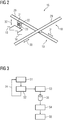
- Fig. 2 shows an exemplary concrete embodiment of the robotic repair device 15 as a schematical drawing.
- both the first guiding device 18 as well as the second guiding device 19 of the positioning assembly 17 are realized as guide rails 29 in perpendicular first and second directions 30, 31.
- the height adjustment device 21 is mounted to a sled of the guide rail 29 of the second guiding device 19, such that the, in this case two, manipulators 16, which may be grabblers or robotic arms, may also be adjusted in a height direction 32.
- the environment sensor 22 implemented as a camera is positioned above the manipulators 16 in a human eye-to-arm relationship. This allows for intuitive input of user input commands by the service technician and simplifies conversion of user input commands to respective control signals.
- the positioning assembly 17 further comprises a gimbal assembly 33 having a corresponding actuator, such that the environment sensor 22 and/or the manipulator 16 may be brought into different orientations, in particular according to user monitoring data and/or movement data from the virtual reality equipment 3.
- each manipulator 16 may also comprise at least one joint.
- Fig. 3 finally shows a flowchart of a preferred embodiment of a method according to the invention.
- a step S1 repair task information concerning at least one repair task in at least one wind turbine 2 is determined and/or received, as explained above.
- a human service user in this case a service technician, performs the repair task based on the repair task information and uses the repair system 1, in particular the virtual reality equipment 3.
- the execution of this repair task, performed in step S2, is protocolled in a parallel step S3.
- Protocol information comprising at least the component repaired, the tools used and the process steps performed/initiated by the service technician in step S2, is stored.
- all repair task information determined and/received in step S1 may be included into the protocol information data set of a repair task. Since, as indicated by arrow 34, multiple repair tasks are performed over time, a database 35 containing a large number of protocol information data sets is generated.
- protocol information data sets can, once sufficient data has been acquired, in particular for a certain class of repair tasks, be used, in a step S4, to train an artificial intelligence automatic control algorithm to completely automatically perform repair tasks, in particular of the class of repair tasks to which the protocol information used as training data is related.
- the automatic control algorithm Once the automatic control algorithm has been sufficiently trained in step S4, such that it can robustly perform repair tasks, at least of the repair task class, it may be employed in the control device 23 to automatically perform at least some of the repair tasks.
Landscapes
- Engineering & Computer Science (AREA)
- Life Sciences & Earth Sciences (AREA)
- Sustainable Development (AREA)
- Sustainable Energy (AREA)
- Chemical & Material Sciences (AREA)
- Combustion & Propulsion (AREA)
- Mechanical Engineering (AREA)
- General Engineering & Computer Science (AREA)
- Wind Motors (AREA)
Abstract
Repair system (1) for performing at least one repair task in at least one wind turbine (2), in particular the nacelle (5), the repair system (1) comprising:
- a controllable robotic repair device (15) installed in the wind turbine (2), in particular the nacelle (5),
- an operating device for remotely operating the robotic repair device (15), which comprises a control device (23) and virtual reality equipment (3) providing a virtual reality environment of the interior of the wind turbine, in particular the nacelle (5), for at least one human service user provided remote to the wind turbine (2),
- wherein the control device (23) of the operating device is adapted to remotely control the robotic repair device (15) according to user input commands provided via the virtual reality equipment (3).
- a controllable robotic repair device (15) installed in the wind turbine (2), in particular the nacelle (5),
- an operating device for remotely operating the robotic repair device (15), which comprises a control device (23) and virtual reality equipment (3) providing a virtual reality environment of the interior of the wind turbine, in particular the nacelle (5), for at least one human service user provided remote to the wind turbine (2),
- wherein the control device (23) of the operating device is adapted to remotely control the robotic repair device (15) according to user input commands provided via the virtual reality equipment (3).
Description
- The invention concerns a repair system for performing at least one repair task in the nacelle of at least one wind turbine. The invention also concerns a method for performing at least one repair task in a nacelle of at least one wind turbine using a repair system.
- Wind turbines are large-scale electrical power generation devices, which are often placed away from infrastructure, for example in the case of offshore wind parks, which may comprise a large number of such wind turbines positioned in the sea. Wind turbines usually comprise a tower carrying a nacelle, to which a rotor arrangement having, for example, a rotor hub and at least two, preferably three, wind turbine blades are mounted. In a direct drive wind turbine, the rotor arrangement directly drives a generator of a power generation arrangement housed in the nacelle, while in other cases, a gear box may be used between rotor bearing and generator. The power generation arrangement of a wind turbine may additionally comprise at least one converter for preparing generated electrical power for feeding into a power grid. The nacelle may additionally comprise a controller or control unit of the wind turbine, controlling its operation.
- Wind turbines are subject to large forces, associated effects like vibrations, and high power, such that, in addition to regular maintenance tasks, wear effects and other fault conditions may occur, wherein, in many cases, the wind turbine operation needs to be stopped. Operation of the wind turbine is then suspended until a service technician was informed, planned a trip, made the trip to the wind turbine and performed the required repair tasks. In particular in the case of offshore wind turbines, weather is an important factor determining when the wind turbine may resume operation, since a trip to the wind turbine may only be undertaken if weather allows it. That is, the overall time until the wind turbine may again be put into operation, and thus the loss in power generation due to the malfunction, is dominated by the time the technician needs to travel to the wind turbine, wherein the pure repair time is usually negligible in comparison. In summary, even small technical malfunctions in a wind turbine may result in a long downtime and thus losses in power generation and high cost.
- It is an object of the current invention to provide for faster execution of repair tasks in wind turbines, in particular offshore wind turbines.
- This object is achieved by providing a repair system according to claim 1 and a method according to
claim 12. Advantageous embodiments are described in the dependent claims. - A repair system for performing at least one repair task in at least one wind turbine, in particular the nacelle, according to the invention comprises:
- a controllable robotic repair device installed in the wind turbine, in particular the nacelle,
- an operating device for remotely operating the robotic repair device, which comprises a control device and virtual reality equipment providing a virtual reality environment of the interior of the wind turbine, in particular the nacelle, for at least one human service user provided remote to the wind turbine,
- wherein the control device of the operating device is adapted to remotely control the robotic repair device according to user input commands provided via the virtual reality equipment.
- While the invention will be described as relating to the interior of the nacelle of the wind turbine as the most relevant use case, it is noted that it is also applicable to other interior areas of the wind turbine, for example inside the tower, in particular in an equipment room or on a platform of the tower.
- The invention provides an option for a human service user, in particular a service technician, to repair the wind turbine remotely, without the necessity to physically enter the wind turbine. In particular, the service technician, that is, the human service user, may use virtual reality to operate equipment, comprising at least a robotic repair device, that is installed in the interior, in particular in the nacelle of the wind turbine. The robotic repair device may be understood as an avatar which is operated using a virtual reality environment. Access to the virtual reality environment is provided by virtual reality equipment provided remote to the wind turbine, for example at a workplace of the human service user. A control device receives user input commands generated by the virtual reality equipment to generate respective control signals for the robotic repair device in the wind turbine. That is, a communication link between the workplace of the user and the wind turbine, in particular the robotic repair device, is used, which preferably allows for wireless communication. The control device may be distributed. That is, different sub-systems of the control device may be located at different locations. However, in some embodiments, the control device may also be implemented as or comprise a central server device, in particular when the repair system comprises multiple robotic repair devices located in different wind turbines and/or multiple sets of virtual reality equipment, such that, in particular, multiple repair tasks in different wind turbines may, in particular simultaneously, be performed using the repair system according to the invention.
- Generally speaking, the repair system according to the invention may thus comprise multiple robotic repair devices in multiple wind turbines, for example in all wind turbines of at least one wind park, and/or multiple sets of virtual reality equipment. In this manner, even large-scale wind parks may be serviced by using one repair system, in particular by coupling a certain set of virtual reality equipment to the robotic repair device of a certain wind turbine. Maintenance and repair may thus be provided remotely without the need for expensive and effortful time-consuming travel activities by the service technician.
- Using the repair system according to the invention may thus lead to reduced downtimes, reduced manual effort of service technicians and thus reduced cost, to higher availability of wind turbines and decreased levelized cost of electricity.
- As should be noted, while the invention focuses on unplanned maintenance/repair tasks which might lead to downtimes of the wind turbine, the repair system is, of course, also applicable to regular, planned maintenance and/or repair tasks.
- A process using the repair system according to the invention may be as follows. First of all, a fault condition, in particular a malfunction, occurs at a wind turbine, in particular causing a downtime or at least reduction in power generation. Data analysis, in particular based on alarm and/or status information of the wind turbine reveals that a certain repair task is required. Once the repair task to be performed is determined, the repair system according to the invention may be put into operation. A service technician as the human service user uses the virtual reality equipment to virtually enter the wind turbine, in particular its nacelle, implemented as the virtual reality environment. The service technician operates the robotic repair device via user input commands generated in the virtual reality environment using the virtual reality equipment. In other words, the service technician operates an avatar that performs physical actions inside the wind turbine. As soon as the repair task has been performed in this manner, the wind turbine may, if applicable, again be put into operation and/or have its power generation increased.
- It is noted that not necessarily all repair tasks may be performed remotely, for example regarding repair tasks requiring the replacement of a larger component, for example the converter, the generator or the like. In this case, the repair system is, of course, only used for repair tasks it is configured to perform, however, preparatory steps for on-site repair tasks may, at least in some cases, also be performed using the repair system according to the invention.
- In preferred embodiments, the repair system may also comprise at least one tool for repair, in particular as part of the robotic repair device or usable by the robotic repair device. For example, some tools, for example pincers, screw drivers and the like may be implemented as a constructive part of the robotic repair device, while other tools, in particular larger tools that are required less often may be stored on-site in the wind turbine, in particular its nacelle, such that they may be picked up and used by the robotic repair device.
- The repair system may also comprise spare parts, in particular regarding smaller components or sub-components of the wind turbine such as screws, bolts, connectors, cables and the like. In this manner, when an easily replaceable component and/or sub-component is broken, damaged, or faulty, it may simply be replaced by the robotic repair device using the spare part provided on-site the wind turbine.
- As already laid out above, for the remote service technician, the repair system according to the invention provides a set of virtual reality equipment. In preferred embodiments of the invention, the robotic repair system may comprise at least one environment sensor, in particular a camera, and the virtual reality equipment may comprise virtual reality glasses, wherein the control device is adapted to generate the virtual reality environment for the virtual reality glasses based on sensor data from the at least one sensor of the robotic repair device. That is, the virtual reality equipment may comprise virtual reality glasses, in particular a virtual reality headset, as for example known under the trademark "Oculus Quest", available from Facebook Technologies, LLC. Environment sensors on-site, in particular directly coupled to an actuator of the robotic repair device, provide current information regarding the state of the wind turbine components and/or the robotic repair device and can, as in principle known from other applications in the state of the art, be used to produce a virtual reality environment reflecting the current state on-site. Further preferably, the virtual reality equipment may comprise virtual reality gloves, wherein the control device is adapted to derive at least one user input command from movement data of the virtual reality gloves. In many cases, such virtual reality gloves already come as a set with virtual reality glasses, in particular a virtual reality head-set. However, user input commands may also be derived from the virtual reality glasses, as, in a preferred embodiment, the virtual reality glasses may comprise at least one user monitoring sensor and the control device may be configured to adapt a representation of the virtual reality environment based on sensor data from the user monitoring sensor and/or to derive at least one user input command from sensor data of the user monitoring sensor. For example, a user monitoring sensor of the virtual reality glasses may comprise an eye sensor to determine a viewing direction of the user and/or blinking movements of the user. The at least one user monitoring sensor may also comprise at least one inertial sensor and/or acceleration sensor, in particular an inertial platform, for detecting head movements of the user, in particular, the service technician. The displayed representation of the virtual reality environment may be adapted based on such information, but sensor data from the user monitoring sensors may also be used to derive user input commands. For example, a user may fixate a certain position in the virtual reality environment with his gaze and may perform a certain blinking gesture, for example blinking two times in succession, to interact with the position. Such interaction concepts have already been proposed in the state of the art for other applications and will not be described further in this application. Regarding gloves for virtual reality equipment, it is exemplarily referred to an article by K. Song et al., "Pneumatic actuator and flexible piezoelectric sensor for soft virtual reality glove system", Scientific Reports 9 (2019) 8988.
- It is again noted that, preferably, the virtual reality environment may be a representation of the interior of the nacelle, where the robotic repair device is installed.
- As already discussed, a repair task needs to be determined before it can be performed. In this context, the control device may be adapted to determine, based on status information, in particular comprising alarm information, received from a wind turbine controller and/or sensor data of the at least one environment sensor repair task information describing a current repair task. In such an embodiment, repair task information may be determined by the control device itself. However, additionally or alternatively, the control device may also be adapted to receive repair task information, for example from a higher-level monitoring device or system. In other cases, of course, repair task information may also be input manually. Of course, repair task information may be validated and/or refined by the human service user via the virtual reality equipment.
- In preferred embodiments, the control device may be adapted to, in the virtual reality environment, highlight objects of the nacelle relevant for the repair task according to the repair task information and/or fade objects not relevant for the repair task according to the repair task information. In other words, objects like tools to use in the repair tasks, components and/or sub-components to repair and/or parts affected by the repair task may be highlighted in the virtual reality environment, for example, by using a different color than their natural color, adding a luminescence effect and/or increasing brightness. On the other hand, objects that are not relevant to the repair tasks can be faded, that is, in effect, "counter-highlighted", in the virtual reality environment, for example by changing their natural colors to grey tones according to a grey scale and/or blurring their outlines. This facilitates work for the service technician in the virtual reality environment, guiding him to objects relevant and required for the current repair task.
- Further preferably, the control device may be adapted to include virtual hub and/or status information objects into the virtual reality environment according to the repair task information and/or the status information. For example, if a repair task is related to overheating, current temperature values of a temperature sensor of the wind turbine, which have been received by the control device, may be displayed, and/or the corresponding component or sub-component of the wind turbine may be colored in a corresponding red tone. Additionally, or alternatively to such display of status information, the repair task information may also be used to guide the user through the repair tasks, for example by including arrows, textural information and/or pictogram information as objects into the virtual reality environment, simplifying the performance of the repair task. In this manner, the repair task may be performed fast and reliably.
- Regarding the robotic repair system, in preferred embodiments, the robotic repair device may comprise at least one manipulator, in particular comprising at least one tool and/or adapted to handle a tool provided in the nacelle. In particular, the manipulator may be a grabbler and/or a robot arm. In an envisaged embodiment, the robotic repair device may be or comprise a humanoid robot. As, however, such humanoid robots are difficult to technically implement, other solutions at least partly resembling human perception and/or activity range may be implemented in the robotic repair device, since converting user input commands, in particular also comprising movements of the user, to control signals for the robotic repair device is strongly simplified. For example, in a preferred embodiment, if the robotic repair device also comprises at least one environment sensor, in particular a camera, as described above, the at least one environment sensor and the at least one manipulator may be arranged in a human eye-to-arm relationship.
- In this manner, the at least one manipulator may be intuitively understood as a replacement for an arm of the service technician and may, for example, also be depicted as an arm in the virtual reality environment. In other words, the at least one environment sensor may act as a replacement for an eye of the user, while the at least one manipulator may act as a replacement for an arm of the user.
- Preferably, the robotic repair device may further comprise a positioning assembly for positioning the manipulator. For example, the manipulator and, in particular, additionally the at least one environment sensor, may be mounted on a steerable and/or at least partly autonomous mobile platform, for example positioned on the floor of the nacelle. However, since the nacelle may be subject to vibrations and/or other movements, which may decrease the accuracy of actions performed using the manipulator, guidance systems that are fixed to the wind turbine, in particular the nacelle itself, are preferred.
- In a preferred embodiment, the positioning assembly may comprise a first guiding device, in particular guide rail, and a second guiding device, in particular guide rail, wherein the second guiding device is guided in the first guiding device in a first direction and the manipulator is guided in the second device in a second direction, which is in particular perpendicular to the first direction. Each guiding device may comprise actuators, in particular motors, controllable by the control device to adjust to a certain position and/or perform a movement, each defined by corresponding user input commands, of the manipulator. Using perpendicular linear guides, in particular guiding rails, allows for movement and positioning to any position in a two-dimensional coordinate system spanned by the first and the second direction. In especially preferred embodiments, such a positioning assembly may be supplemented by a height adjustment device, for example a telescope-like height adjustment device coupling the manipulator to the second guiding device, in particular guide rail. In this manner, the manipulator can be positioned in any three-dimensional location covered by the positioning ranges of each positioning assembly component. In particular for coupling the manipulator to the height adjustment device, a gimbal assembly having a corresponding actuator may also be provided to provide multiple orientations of the manipulator. Of course, other joints, for example of an robotic arm as or as part of the manipulator, may also be provided.
- Preferably, the first direction may correspond to a longitudinal direction of the nacelle and/or the direction of the rotational axis of the wind turbine rotating assembly, and/or the first guiding device may be mounted to the ceiling of the nacelle. This facilitates integrating the positioning assembly into the nacelle, which usually is longitudinal, such that, in the corresponding longitudinal direction which often corresponds to the rotational axis, multiple components and/or sub-components follow each other.
- In particularly preferred embodiments, the positioning range of the positioning system, in particular the first guiding device, may span at least partly a rotor bearing and/or a gear box and/or a power generation assembly, in particular a generator, in the nacelle. In this manner, each major component in the nacelle is accessible for repair tasks by the manipulator.
- The invention further concerns a method for performing at least one repair task in at least one wind turbine, in particular a nacelle, using a repair system, in particular according to the invention, the repair system comprising a controllable robotic repair device installed in the wind turbine, in particular the nacelle, and an operating device for remotely operating the robotic repair device, which comprises a control device and virtual reality equipment providing a virtual reality environment of the interior of the wind turbine, in particular the nacelle, for at least one human service user, wherein the virtual reality equipment is provided remote to the wind turbine, wherein the robotic repair device is remotely controlled according to user input commands provided via the virtual reality equipment. All comments and features regarding the repair system according to the invention correspondingly apply to the method according to the invention, such that the same advantages are achieved.
- Preferably, in a method according to the invention, protocol information describing each repair task is stored, in particular in the control device, the protocol information in particular comprising a repaired component of the wind turbine, used tools and/or processing steps to perform the repair according to user input commands. In this manner, each repair task can be reconstructed at a later time, for example for review, quality management and the like. The protocol information may be stored in the control device or in another storage device, in particular in a database, for later evaluation/use. However, in especially preferred embodiments of the current invention, such protocol information, in particular from repair tasks in different wind turbines and/or performed by different service technicians as human service users, may be used as training data for machine learning an artificial intelligence algorithm to, after sufficient training, autonomously perform at least a part of the repair tasks.
- That is, in such especially preferred embodiments, stored protocol information for multiple repair tasks may be used to train an artificial intelligence automatic control algorithm, wherein the trained automatic control algorithm is used for fully automatic performance of at least one future repair task by, in particular remotely, controlling the robotic repair device. In concrete embodiments, the automatic control algorithm may comprise a neural network and/or training may be performed as reinforcement learning. That is, the automatic control algorithm learns how to operate the robotic repair device to perform repairs. If the trained automatic control algorithm is applied in the control device, repair tasks may be performed fully automatically using the robotic repair device. In such embodiments, the way towards an autonomous wind turbine is paved, in which the robotic repair device, which may be understood as an avatar, is not controlled by a human service technician, but can perform repair tasks (or other service tasks) autonomously.
- In general, an artificial intelligence algorithm, which may also be called trained function or machine learned algorithm, mimics cognitive functions that humans associate with other human minds. In particular, by training based on training data, in this embodiment protocol information, the artificial intelligence algorithm is able to adapt to new circumstances and to detect and extrapolate patterns. In general, parameters of an artificial intelligence algorithm can be adapted by means of training. While, in principle, known learning techniques (training techniques), such as supervised learning, semi-supervised learning, and/or unsupervised learning can be used. Reinforcement learning is especially preferred. Furthermore, representation learning (an alternative term is "feature learning") can be used. In particular, the parameters of the artificial intelligence algorithm can be adapted iteratively by several steps of training.
- An artificial intelligence algorithm, in this case the automatic control algorithm, can comprise a neural network, a support vector machine, a decision tree and/or a Bayesian network, and/or the artificial intelligence algorithm can be based on K-means clustering, Q-learning, genetic algorithms and/or association rules. Of course, other algorithms or algorithm classes may also be used. In particular, a neural network, which is usually a deep neural network, may, for example, be a convolutional neural network or a recurrent neural network. Furthermore, a neural network can be a generative adversarial network.
- Other objects and features of the present invention will become apparent from the following detailed description considered in conjunction with the accompanying drawings. The drawings, however, are only principle sketches designed solely for the purpose of illustration and do not limit the invention. The drawings show:
- Fig. 1
- a principle drawing of a repair system according to the invention implemented for a wind turbine,
- Fig. 2
- a view of a robotic repair device installed in the nacelle of the wind turbine and
- Fig. 3
- a flowchart describing an embodiment of a method according to the invention.
-
Fig. 1 shows a repair system 1 implemented for awind turbine 2. It is, however, noted already at this point, that in preferred embodiments, the repair system 1 is provided formultiple wind turbines 2. Additionally, the repair system may comprise multiple sets ofvirtual reality equipment 3 such that multiple repair tasks may be performed simultaneously by multiple human service users, in particular service technicians. - As can be seen, the
wind turbine 2 comprises a tower 4 on which anacelle 5 is rotatably mounted. A rotating assembly 6 comprising three wind turbine blades 7 and arotor hub 8 is mounted on thenacelle 5. In thenacelle 5, arotor bearing 9, agear box 10, and a power generation assembly 11 are housed, as well as acontroller 12 of thewind turbine 2. The power generation assembly 11, in this embodiment, comprises agenerator 13 and at least oneconverter 14. - To be able to perform repair tasks in the
nacelle 5 of thewind turbine 2, the repair system 1 comprises arobotic repair device 15 installed inside thenacelle 5, in this case comprising at least onemanipulator 16 only indicated infig. 1 and apositioning assembly 17 for positioning themanipulator 16 inside thenacelle 5. - The
positioning assembly 17 comprises afirst guiding device 18, in this case a guard rail extending in a first direction, which is the longitudinal direction of thenacelle 5 and thus the direction of the rotating axis of the rotating assembly 6. The guard rail spans at least part of therotor bearing 9, thegear box 10, thegenerator 13 and, at least on part, the at least oneconverter 14 such that asecond guiding device 19 guided in thefirst guiding device 18 can be positioned above each of those components, since, in this case, thepositioning assembly 17 is mounted to theceiling 20 of thenacelle 5. Thesecond guiding device 19 is also a guide rail extending in a second horizontal direction perpendicular to the first direction, thus perpendicular to the longitudinal direction of thenacelle 5. Themanipulator 16 is coupled to thesecond guiding device 19 by aheight adjustment device 21, in this case a telescope arm which is perpendicular to the first and second guiding devices. In this manner, themanipulator 16 can be positioned anywhere in the three-dimensional space of thenacelle 5 allowed by the positioning ranges of the components of thepositioning assembly 17, that is, thefirst guiding device 18, thesecond guiding device 19 and theheight adjustment device 21. Each of these components of thepositioning assembly 17 comprises at least one controllable actuator, as does themanipulator 16, which may be or comprise a robotic arm or a grabbler. Therobotic repair device 15 further comprises at least oneenvironment sensor 22, in this case at least one camera, in particular a 3D-camera, mounted on themanipulator 16 or theheight adjustment device 21. It is noted that thecontroller 12 of thewind turbine 2 might also be connected to further sensors and/or control units in thewind turbine 2, which are not shown for simplicity reasons, which provide status information or, for example comprising alarm information, regarding thewind turbine 2, in particular the components and sub-components housed in thenacelle 5. - The repair system 1 further comprises a
control device 23. Thecontrol device 23 is adapted to receive sensor data of the at least oneenvironment sensor 22 and to control therobotic repair device 15 by sending corresponding control signals using awireless communication link 24. Thecontrol device 23 also provides a virtual reality environment of the interior of thenacelle 5 for the already mentioned at least one set ofvirtual reality equipment 3 and is adapted to derive user input commands from user data received from thevirtual reality equipment 3. In the embodiment offig. 1 , each set ofvirtual reality equipment 3 comprisesvirtual reality glasses 25 as well asvirtual reality gloves 26. As in principle known from the state of the art, thevirtual reality glasses 25 comprise at least one user monitoring sensor, wherein thecontrol device 23 is adapted to adapt a representation of the virtual reality environment based on sensor data from the user monitoring sensor and to derive user input commands from sensor data of the user monitoring sensor. For example, interaction with objects of the virtual reality environment may be implemented by fixating objects with the gaze of the human service user and performing predefined blinking movements and/or eye movements by the user. Furthermore, of course, user input commands can also be derived from movement data of thevirtual reality gloves 26. - The
control device 23 may be configured to determine repair task information concerning a current repair task by itself, in particular by evaluating status information received from thecontroller 12 and/or sensor data received from the at least oneenvironment sensor 22. Status information from thecontroller 12 may, of course, also comprise alarm information if a fault condition, in particular a malfunction, has been detected by thecontroller 12. Using such information, thecontrol device 23 may derive a repair task to be performed and compiles respective repair task information. Alternatively or additionally, repair task information may also be received by thecontrol device 23, for example from thecontroller 12 or a higher-level device. - If it was determined that the
wind turbine 2 needs repair by performing a corresponding repair task, a human service user, in particular a service technician, is contacted and may use thevirtual reality equipment 3 to act in thevirtual reality environment 23 generated by thecontrol device 23 and resembling the interior of thenacelle 5. The virtual reality environment depicts, using thevirtual reality glasses 25, the current state of the interior of thenacelle 5, in particular based on the sensor data of the camera asenvironment sensor 22 and/or status information from thecontroller 12. However, the virtual reality environment is enriched with additional information or help by thecontrol device 23 based on the repair task information. In particular, objects relevant for the repair task may be highlighted, for example by representing them in signal colors instead of the natural colors in the virtual reality environment or increasing their brightness. On the other hand, objects not relevant for the repair task may be faded out, for example represented blurred and/or in grey scale colors. Further, thecontrol device 23 adds virtual help information objects and virtual status information objects, for example showing the temperature of certain components and/or sub-components and providing hints on performing the repair task, for example by arrow objects. In particular regarding status information objects, of course, also status information received from thecontroller 12 may be used directly. - While the service technician performs the repair task by generating corresponding user input commands resulting in control signals for the
robotic repair device 15, protocol data describing the execution of the repair task is collected. It is noted that, for performing the repair task,tools 27 and/orspare parts 28 located in thenacelle 5, in particular as part of the repair system 1, may be used.Tools 27 may be integrated into themanipulator 16 or picked up and handled by themanipulator 16. Protocol information may, in particular, comprise the component or sub-component to be repaired, tools used and processing steps to perform the repair task. -
Fig. 2 shows an exemplary concrete embodiment of therobotic repair device 15 as a schematical drawing. In this embodiment, both thefirst guiding device 18 as well as thesecond guiding device 19 of thepositioning assembly 17 are realized asguide rails 29 in perpendicular first andsecond directions height adjustment device 21 is mounted to a sled of theguide rail 29 of thesecond guiding device 19, such that the, in this case two,manipulators 16, which may be grabblers or robotic arms, may also be adjusted in aheight direction 32. In this case, theenvironment sensor 22 implemented as a camera is positioned above themanipulators 16 in a human eye-to-arm relationship. This allows for intuitive input of user input commands by the service technician and simplifies conversion of user input commands to respective control signals. - It is noted that, in this embodiment, the
positioning assembly 17 further comprises agimbal assembly 33 having a corresponding actuator, such that theenvironment sensor 22 and/or themanipulator 16 may be brought into different orientations, in particular according to user monitoring data and/or movement data from thevirtual reality equipment 3. Of course, additionally or alternatively, eachmanipulator 16 may also comprise at least one joint. -
Fig. 3 finally shows a flowchart of a preferred embodiment of a method according to the invention. In a step S1, repair task information concerning at least one repair task in at least onewind turbine 2 is determined and/or received, as explained above. In a step S2, a human service user, in this case a service technician, performs the repair task based on the repair task information and uses the repair system 1, in particular thevirtual reality equipment 3. The execution of this repair task, performed in step S2, is protocolled in a parallel step S3. Protocol information, comprising at least the component repaired, the tools used and the process steps performed/initiated by the service technician in step S2, is stored. Preferably, all repair task information determined and/received in step S1 may be included into the protocol information data set of a repair task. Since, as indicated byarrow 34, multiple repair tasks are performed over time, adatabase 35 containing a large number of protocol information data sets is generated. - These protocol information data sets can, once sufficient data has been acquired, in particular for a certain class of repair tasks, be used, in a step S4, to train an artificial intelligence automatic control algorithm to completely automatically perform repair tasks, in particular of the class of repair tasks to which the protocol information used as training data is related. Once the automatic control algorithm has been sufficiently trained in step S4, such that it can robustly perform repair tasks, at least of the repair task class, it may be employed in the
control device 23 to automatically perform at least some of the repair tasks. - Although the present invention has been described in detail with reference to the preferred embodiment, the present invention is not limited by the disclosed examples from which the skilled person is able to derive other variations without departing from the scope of the invention.
Claims (15)
- Repair system (1) for performing at least one repair task in at least one wind turbine (2), in particular the nacelle (5), the repair system (1) comprising:- a controllable robotic repair device (15) installed in the wind turbine (2), in particular the nacelle (5),- an operating device for remotely operating the robotic repair device (15), which comprises a control device (23) and virtual reality equipment (3) providing a virtual reality environment of the interior of the wind turbine, in particular the nacelle (5), for at least one human service user provided remote to the wind turbine (2),- wherein the control device (23) of the operating device is adapted to remotely control the robotic repair device (15) according to user input commands provided via the virtual reality equipment (3).
- Repair system (1) according to claim 1, characterized in that the robotic repair device (15) comprises at least one environment sensor (22), in particular a camera, and the virtual reality equipment (3) comprises virtual reality glasses (25), wherein the control device (23) is adapted to generate the virtual reality environment for the virtual reality glasses (25) based on sensor data from the at least one sensor of the robotic repair device (15), and/or in that the virtual reality equipment (3) further comprises virtual reality gloves (26), wherein the control device (23) is adapted to derive at least one user input command from movement data of the virtual reality gloves (26).
- Repair system (1) according to claim 1 or 2, characterized in that the control device (23) is further adapted to determine, based on status information received from a wind turbine controller (12) and/or sensor data of the environment sensor (22), and/or receive repair task information describing a current repair task.
- Repair system (1) according to claim 3, characterized in that the control device (23) is adapted to, in the virtual reality environment, highlight objects of the interior, in particular the nacelle (5), relevant for the repair task according to the repair task information and/or fade objects not relevant for the repair task according to the repair task information.
- Repair system (1) according to claim 3 or 4, characterized in that the control device (23) is adapted to include virtual help and/or status information objects into the virtual reality environment according to the repair task information and/or the information.
- Repair system (1) according to one of the preceding claims, characterized in that the robotic repair device (15) comprises at least one manipulator (16), in particular comprising at least one tool and/or adapted to handle a tool provided in the interior, in particular the nacelle (5).
- Repair system (1) according to claim 6, characterized in that, if the robotic repair device (15) also comprises at least one environment sensor (22), the at least one environment sensor (22) and the at least one manipulator (16) are arranged in a human eye-to-arm relationship.
- Repair system (1) according to claim 6 or 7, characterized in that the robotic repair device (15) further comprises a positioning assembly (17) for positioning the manipulator (16) .
- Repair system (1) according to claim 8, characterized in that the positioning assembly (17) comprises a first guiding device (18), in particular guide rail (29), and a second guiding device (19), in particular guide rail (29), wherein the second guiding device (19) is guided in the first guiding device (18) in a first direction (30) and the manipulator (16) is guided in the second guiding device (19) in a second direction (31), which is in particular perpendicular to the first direction (30).
- Repair system (1) according to claim 9, characterized in that the first direction (30) corresponds to a longitudinal direction of the nacelle (5) and/or the direction of the rotational axis of the wind turbine rotating assembly (6), and/or the first guiding device (19) is mounted to a ceiling(20) of the nacelle (5).
- Repair system (1) according to any of claims 8 to 10, characterized in that the positioning range of the positioning assembly (17), in particular the first guiding device (18), spans at least partly a rotor bearing (9) and/or a gearbox (10) and/or a power generation assembly (11), in particular a generator (13), in the nacelle (5).
- Method for performing at least one repair task in at least one wind turbine (2), in particular the nacelle (5), using a repair system (1), in particular according to one of the preceding claims, the repair system (1) comprising a controllable robotic repair device (15) installed in the wind turbine, in particular the nacelle (5), an operating device for remotely operating the robotic repair device (15), which comprises a control device (23) and virtual reality equipment (3) providing a virtual reality environment of the interior of the wind turbine, in particular the nacelle (5), for at least one human service user provided remote to the wind turbine (2),
wherein the robotic repair device (15) is remotely controlled according to user input commands provided via the virtual reality equipment (3). - Method according to claim 12, characterized in that protocol information describing each repair task is stored, in particular in the control device (23), the protocol information in particular comprising a repaired component of the wind turbine (2), used tools (27) and/or processing steps to perform the repair according to user input commands.
- Method according to claim 13, characterized in that stored protocol information for multiple repair tasks is used to train an artificial intelligence automatic control algorithm, wherein the trained automatic control algorithm is used for fully automatic performance of at least one future repair task by, in particular remotely, controlling the robotic repair device (15).
- Method according to claim 14, characterized in that the automatic control algorithm comprises a neural network and/or training is performed as, in particular deep, reinforcement learning.
Priority Applications (6)
| Application Number | Priority Date | Filing Date | Title |
|---|---|---|---|
| EP20179807.1A EP3922849A1 (en) | 2020-06-12 | 2020-06-12 | Repair system and method for performing at least one repair task in a wind turbine |
| US18/008,734 US20230220836A1 (en) | 2020-06-12 | 2021-05-21 | Repair system and method for performing at least one repair task in a wind turbine |
| CN202180041997.3A CN115667708A (en) | 2020-06-12 | 2021-05-21 | Repair system and method for performing at least one repair task in a wind turbine |
| EP21728047.8A EP4136349B1 (en) | 2020-06-12 | 2021-05-21 | Repair system and method for performing at least one repair task in a wind turbine |
| DK21728047.8T DK4136349T3 (en) | 2020-06-12 | 2021-05-21 | REPAIR SYSTEM AND PROCEDURE FOR CARRYING OUT AT LEAST ONE REPAIR TASK IN A WIND TURBINE |
| PCT/EP2021/063637 WO2021249745A1 (en) | 2020-06-12 | 2021-05-21 | Repair system and method for performing at least one repair task in a wind turbine |
Applications Claiming Priority (1)
| Application Number | Priority Date | Filing Date | Title |
|---|---|---|---|
| EP20179807.1A EP3922849A1 (en) | 2020-06-12 | 2020-06-12 | Repair system and method for performing at least one repair task in a wind turbine |
Publications (1)
| Publication Number | Publication Date |
|---|---|
| EP3922849A1 true EP3922849A1 (en) | 2021-12-15 |
Family
ID=71094225
Family Applications (2)
| Application Number | Title | Priority Date | Filing Date |
|---|---|---|---|
| EP20179807.1A Withdrawn EP3922849A1 (en) | 2020-06-12 | 2020-06-12 | Repair system and method for performing at least one repair task in a wind turbine |
| EP21728047.8A Active EP4136349B1 (en) | 2020-06-12 | 2021-05-21 | Repair system and method for performing at least one repair task in a wind turbine |
Family Applications After (1)
| Application Number | Title | Priority Date | Filing Date |
|---|---|---|---|
| EP21728047.8A Active EP4136349B1 (en) | 2020-06-12 | 2021-05-21 | Repair system and method for performing at least one repair task in a wind turbine |
Country Status (5)
| Country | Link |
|---|---|
| US (1) | US20230220836A1 (en) |
| EP (2) | EP3922849A1 (en) |
| CN (1) | CN115667708A (en) |
| DK (1) | DK4136349T3 (en) |
| WO (1) | WO2021249745A1 (en) |
Families Citing this family (2)
| Publication number | Priority date | Publication date | Assignee | Title |
|---|---|---|---|---|
| JP2024532830A (en) * | 2021-08-18 | 2024-09-10 | ジョージア テック リサーチ コーポレイション | Extended Reality (XR) Collaborative Environments |
| NO20240272A1 (en) * | 2024-03-21 | 2025-09-22 | Odfjell Oceanwind As | Maintenance system for offshore wind turbines |
Citations (3)
| Publication number | Priority date | Publication date | Assignee | Title |
|---|---|---|---|---|
| US20120165985A1 (en) * | 2010-12-28 | 2012-06-28 | Vestas Wind Systems A/S | Maintaining a wind turbine with a maintenance robot |
| KR101236763B1 (en) * | 2011-09-05 | 2013-02-25 | 삼성중공업 주식회사 | Nacelle management robot, and wind power generator having the same |
| US20190202053A1 (en) * | 2018-01-02 | 2019-07-04 | General Electric Company | Systems and method for robotic learning of industrial tasks based on human demonstration |
Family Cites Families (6)
| Publication number | Priority date | Publication date | Assignee | Title |
|---|---|---|---|---|
| KR101038641B1 (en) * | 2008-09-01 | 2011-06-03 | 두산중공업 주식회사 | Maintenance system of wind turbine facility |
| WO2011107137A1 (en) * | 2010-03-01 | 2011-09-09 | Abb As | A mobile robot for a harsh, corrosive outdoor environment |
| EP3464883B1 (en) * | 2016-05-26 | 2020-04-22 | Vestas Wind Systems A/S | Wind turbine system with damping during service |
| WO2019158171A1 (en) * | 2018-02-13 | 2019-08-22 | Vestas Wind Systems A/S | Systems and vehicles for managing wind turbine systems |
| WO2019242693A1 (en) * | 2018-06-20 | 2019-12-26 | 深圳市太惠科技有限公司 | Single-armed manipulator |
| US11481884B2 (en) * | 2020-06-04 | 2022-10-25 | Nuro, Inc. | Image quality enhancement for autonomous vehicle remote operations |
-
2020
- 2020-06-12 EP EP20179807.1A patent/EP3922849A1/en not_active Withdrawn
-
2021
- 2021-05-21 DK DK21728047.8T patent/DK4136349T3/en active
- 2021-05-21 WO PCT/EP2021/063637 patent/WO2021249745A1/en not_active Ceased
- 2021-05-21 US US18/008,734 patent/US20230220836A1/en not_active Abandoned
- 2021-05-21 EP EP21728047.8A patent/EP4136349B1/en active Active
- 2021-05-21 CN CN202180041997.3A patent/CN115667708A/en active Pending
Patent Citations (3)
| Publication number | Priority date | Publication date | Assignee | Title |
|---|---|---|---|---|
| US20120165985A1 (en) * | 2010-12-28 | 2012-06-28 | Vestas Wind Systems A/S | Maintaining a wind turbine with a maintenance robot |
| KR101236763B1 (en) * | 2011-09-05 | 2013-02-25 | 삼성중공업 주식회사 | Nacelle management robot, and wind power generator having the same |
| US20190202053A1 (en) * | 2018-01-02 | 2019-07-04 | General Electric Company | Systems and method for robotic learning of industrial tasks based on human demonstration |
Non-Patent Citations (1)
| Title |
|---|
| K. SONG ET AL.: "Pneumatic actuator and flexible piezoelectric sensor for soft virtual reality glove system", SCIENTIFIC REPORTS, vol. 9, 2019, pages 8988 |
Also Published As
| Publication number | Publication date |
|---|---|
| WO2021249745A1 (en) | 2021-12-16 |
| EP4136349B1 (en) | 2024-01-03 |
| CN115667708A (en) | 2023-01-31 |
| DK4136349T3 (en) | 2024-03-04 |
| EP4136349A1 (en) | 2023-02-22 |
| US20230220836A1 (en) | 2023-07-13 |
Similar Documents
| Publication | Publication Date | Title |
|---|---|---|
| JP6886869B2 (en) | Motion prediction system and motion prediction method | |
| Oh et al. | Cable suspended planar robots with redundant cables: Controllers with positive tensions | |
| Lenz et al. | Joint-action for humans and industrial robots for assembly tasks | |
| US8369992B2 (en) | Embedded diagnostic, prognostic, and health management system and method for a humanoid robot | |
| EP4136349B1 (en) | Repair system and method for performing at least one repair task in a wind turbine | |
| EP3585569B1 (en) | Systems, apparatus, and methods for robotic learning and execution of skills | |
| US20190086907A1 (en) | Programming a robot by demonstration | |
| CN115157261B (en) | Flexible robotic arm remote operation human-computer interaction device and method based on mixed reality | |
| CN109531565A (en) | A kind of control method of mechanical arm, device, service robot and storage medium | |
| EP3735620A1 (en) | Systems and method for robotic learning of industrial tasks based on human demonstration | |
| WO2021132281A1 (en) | Training data selection device, robot system, and training data selection method | |
| WO2025179628A1 (en) | Multi-modal shared teleoperation system and method for three-arm space robot | |
| CN118183507A (en) | Intelligent control system and method for crane with autonomous operation planning and automatic obstacle avoidance functions | |
| KR20260010293A (en) | Cooperative Robot, Method for Controlling the Robot, and System Including the Same | |
| CN119036485A (en) | Self-adaptive power inspection robot and inspection method | |
| CN107671838A (en) | Robot teaching record system, the processing step and its algorithm flow of teaching | |
| Batti et al. | Toward intuitive robot-to-human error reporting to enhance user awareness in space (tele) operation | |
| CN119025549B (en) | Wind power generation intelligent interaction integrated system based on large language model | |
| Simon et al. | Development of an IoT based 3D printed mobile robot platform for training of mechatronics engineering students | |
| She et al. | Control design to underwater robotic arm | |
| CN113064389B (en) | Intelligent production line touch control system and method based on digital twinning | |
| Nguyen et al. | Human-centred interfaces on engineering teleoperation: A case study of utilising virtual reality (vr) with robotic systems | |
| Carvalho et al. | The DORIS offshore robot: recent developments and real-world demonstration results | |
| JP7327991B2 (en) | Control method, control program, recording medium, robot system, article manufacturing method, and input device | |
| Fedak et al. | HIL Simulator of Drives of an Industrial Robot with 6 DOF |
Legal Events
| Date | Code | Title | Description |
|---|---|---|---|
| PUAI | Public reference made under article 153(3) epc to a published international application that has entered the european phase |
Free format text: ORIGINAL CODE: 0009012 |
|
| STAA | Information on the status of an ep patent application or granted ep patent |
Free format text: STATUS: THE APPLICATION HAS BEEN PUBLISHED |
|
| AK | Designated contracting states |
Kind code of ref document: A1 Designated state(s): AL AT BE BG CH CY CZ DE DK EE ES FI FR GB GR HR HU IE IS IT LI LT LU LV MC MK MT NL NO PL PT RO RS SE SI SK SM TR |
|
| B565 | Issuance of search results under rule 164(2) epc |
Effective date: 20201123 |
|
| STAA | Information on the status of an ep patent application or granted ep patent |
Free format text: STATUS: THE APPLICATION IS DEEMED TO BE WITHDRAWN |
|
| 18D | Application deemed to be withdrawn |
Effective date: 20220616 |