EP3922684A1 - Enhanced maintenance antiviral coatings for cabin surfaces - Google Patents
Enhanced maintenance antiviral coatings for cabin surfaces Download PDFInfo
- Publication number
- EP3922684A1 EP3922684A1 EP21178863.3A EP21178863A EP3922684A1 EP 3922684 A1 EP3922684 A1 EP 3922684A1 EP 21178863 A EP21178863 A EP 21178863A EP 3922684 A1 EP3922684 A1 EP 3922684A1
- Authority
- EP
- European Patent Office
- Prior art keywords
- antiviral
- coating
- antiviral coating
- maintenance
- enhanced
- Prior art date
- Legal status (The legal status is an assumption and is not a legal conclusion. Google has not performed a legal analysis and makes no representation as to the accuracy of the status listed.)
- Withdrawn
Links
Images


Classifications
-
- C—CHEMISTRY; METALLURGY
- C09—DYES; PAINTS; POLISHES; NATURAL RESINS; ADHESIVES; COMPOSITIONS NOT OTHERWISE PROVIDED FOR; APPLICATIONS OF MATERIALS NOT OTHERWISE PROVIDED FOR
- C09D—COATING COMPOSITIONS, e.g. PAINTS, VARNISHES OR LACQUERS; FILLING PASTES; CHEMICAL PAINT OR INK REMOVERS; INKS; CORRECTING FLUIDS; WOODSTAINS; PASTES OR SOLIDS FOR COLOURING OR PRINTING; USE OF MATERIALS THEREFOR
- C09D5/00—Coating compositions, e.g. paints, varnishes or lacquers, characterised by their physical nature or the effects produced; Filling pastes
- C09D5/14—Paints containing biocides, e.g. fungicides, insecticides or pesticides
-
- A—HUMAN NECESSITIES
- A01—AGRICULTURE; FORESTRY; ANIMAL HUSBANDRY; HUNTING; TRAPPING; FISHING
- A01N—PRESERVATION OF BODIES OF HUMANS OR ANIMALS OR PLANTS OR PARTS THEREOF; BIOCIDES, e.g. AS DISINFECTANTS, AS PESTICIDES OR AS HERBICIDES; PEST REPELLANTS OR ATTRACTANTS; PLANT GROWTH REGULATORS
- A01N25/00—Biocides, pest repellants or attractants, or plant growth regulators, characterised by their forms, or by their non-active ingredients or by their methods of application, e.g. seed treatment or sequential application; Substances for reducing the noxious effect of the active ingredients to organisms other than pests
- A01N25/34—Shaped forms, e.g. sheets, not provided for in any other sub-group of this main group
-
- A—HUMAN NECESSITIES
- A01—AGRICULTURE; FORESTRY; ANIMAL HUSBANDRY; HUNTING; TRAPPING; FISHING
- A01N—PRESERVATION OF BODIES OF HUMANS OR ANIMALS OR PLANTS OR PARTS THEREOF; BIOCIDES, e.g. AS DISINFECTANTS, AS PESTICIDES OR AS HERBICIDES; PEST REPELLANTS OR ATTRACTANTS; PLANT GROWTH REGULATORS
- A01N61/00—Biocides, pest repellants or attractants, or plant growth regulators containing substances of unknown or undetermined composition, e.g. substances characterised only by the mode of action
-
- A—HUMAN NECESSITIES
- A01—AGRICULTURE; FORESTRY; ANIMAL HUSBANDRY; HUNTING; TRAPPING; FISHING
- A01P—BIOCIDAL, PEST REPELLANT, PEST ATTRACTANT OR PLANT GROWTH REGULATORY ACTIVITY OF CHEMICAL COMPOUNDS OR PREPARATIONS
- A01P1/00—Disinfectants; Antimicrobial compounds or mixtures thereof
-
- A—HUMAN NECESSITIES
- A61—MEDICAL OR VETERINARY SCIENCE; HYGIENE
- A61L—METHODS OR APPARATUS FOR STERILISING MATERIALS OR OBJECTS IN GENERAL; DISINFECTION, STERILISATION OR DEODORISATION OF AIR; CHEMICAL ASPECTS OF BANDAGES, DRESSINGS, ABSORBENT PADS OR SURGICAL ARTICLES; MATERIALS FOR BANDAGES, DRESSINGS, ABSORBENT PADS OR SURGICAL ARTICLES
- A61L2/00—Disinfection or sterilisation of materials or objects, in general; Accessories therefor
- A61L2/16—Disinfection or sterilisation of materials or objects, in general; Accessories therefor using chemical substances
- A61L2/23—Solid materials, e.g. granules, powders, blocks or tablets
- A61L2/232—Solid materials, e.g. granules, powders, blocks or tablets layered or coated
-
- A—HUMAN NECESSITIES
- A61—MEDICAL OR VETERINARY SCIENCE; HYGIENE
- A61L—METHODS OR APPARATUS FOR STERILISING MATERIALS OR OBJECTS IN GENERAL; DISINFECTION, STERILISATION OR DEODORISATION OF AIR; CHEMICAL ASPECTS OF BANDAGES, DRESSINGS, ABSORBENT PADS OR SURGICAL ARTICLES; MATERIALS FOR BANDAGES, DRESSINGS, ABSORBENT PADS OR SURGICAL ARTICLES
- A61L2/00—Disinfection or sterilisation of materials or objects, in general; Accessories therefor
- A61L2/26—Accessories
- A61L2/28—Devices for testing the effectiveness or completeness of sterilisation or disinfection, e.g. indicators which change colour
-
- B—PERFORMING OPERATIONS; TRANSPORTING
- B64—AIRCRAFT; AVIATION; COSMONAUTICS
- B64D—EQUIPMENT FOR FITTING IN OR TO AIRCRAFT; FLIGHT SUITS; PARACHUTES; ARRANGEMENT OR MOUNTING OF POWER PLANTS OR PROPULSION TRANSMISSIONS IN AIRCRAFT
- B64D11/00—Passenger or crew accommodation; Flight-deck installations not otherwise provided for
- B64D11/02—Toilet fittings
-
- E—FIXED CONSTRUCTIONS
- E05—LOCKS; KEYS; WINDOW OR DOOR FITTINGS; SAFES
- E05B—LOCKS; ACCESSORIES THEREFOR; HANDCUFFS
- E05B1/00—Knobs or handles for wings; Knobs, handles, or press buttons for locks or latches on wings
- E05B1/0069—Sanitary doorknobs or handles, e.g. comprising a disinfectant
-
- E—FIXED CONSTRUCTIONS
- E05—LOCKS; KEYS; WINDOW OR DOOR FITTINGS; SAFES
- E05B—LOCKS; ACCESSORIES THEREFOR; HANDCUFFS
- E05B65/00—Locks or fastenings for special use
- E05B65/0035—Locks or fastenings for special use for privacy rooms, e.g. bathrooms
-
- A—HUMAN NECESSITIES
- A47—FURNITURE; DOMESTIC ARTICLES OR APPLIANCES; COFFEE MILLS; SPICE MILLS; SUCTION CLEANERS IN GENERAL
- A47K—SANITARY EQUIPMENT; ACCESSORIES THEREFOR, e.g. TOILET ACCESSORIES
- A47K13/00—Seats or covers for all kinds of closets
- A47K13/24—Parts or details not covered in, or of interest apart from, groups A47K13/02 - A47K13/22
- A47K13/30—Seats having provisions for heating, deodorising or the like, e.g. ventilating, noise-damping or cleaning devices
-
- A—HUMAN NECESSITIES
- A47—FURNITURE; DOMESTIC ARTICLES OR APPLIANCES; COFFEE MILLS; SPICE MILLS; SUCTION CLEANERS IN GENERAL
- A47K—SANITARY EQUIPMENT; ACCESSORIES THEREFOR, e.g. TOILET ACCESSORIES
- A47K17/00—Other sanitary equipment not covered by the other groups of this subclass ; Holders for toilet brushes
- A47K17/003—Dispensers or holders for protecting covers for toilet bowls, seats or covers
-
- E—FIXED CONSTRUCTIONS
- E03—WATER SUPPLY; SEWERAGE
- E03D—WATER-CLOSETS OR URINALS WITH FLUSHING DEVICES; FLUSHING VALVES THEREFOR
- E03D9/00—Sanitary or other accessories for lavatories ; Devices for cleaning or disinfecting the toilet room or the toilet bowl; Devices for eliminating smells
Definitions
- the subject matter disclosed herein is directed generally to aircraft and vehicle interiors and more particularly for antiviral protection for the external surfaces of passenger cabin components.
- Aircraft passenger cabins may be prime spots or epicenters for the transmission of viruses, bacteria, or other pathogenic microorganisms from person to person, due to concentrating large groups of people in close proximity for long periods of time. Further, the passenger cabin may include multiple surfaces especially prone to physical contact by one or more passengers and thus particularly likely to serve as vectors for transmission via said personal contact. Antiviral and/or antibacterial coatings may provide resistance against viral transmission for these surfaces, but the said coatings may be relatively weak and liable to be eroded and/or compromised by sustained physical contact.
- an enhanced-maintenance protective antiviral coating for external surfaces of internal components within a passenger cabin or other like public space includes antiviral, antibacterial, and/or other components configured to destroy or reduce the effectiveness of pathogens, such as viruses, bacteria, and other like pathogenic microorganisms deposited upon a treated external surface.
- the coating includes indicating agents incorporated therein; when specialized light (e.g., incorporating specially selected reactive components) is applied to the external surface, the indicating agents reveal an absence or thickness change of the antiviral compound (which may be sufficiently severe to warrant replacement, repair, or other corrective action).
- the indicating agents include fluorescing agents capable of absorbing the specialized light.
- the indicating agents include reflective agents capable of partially or fully reflecting the specialized light.
- the indicating agents include reactive particles suspended within the antiviral compound.
- the specialized light induces fluorescence in the indicating agents.
- the specialized light includes visible light and/or ultraviolet (UV) spectral components.
- UV ultraviolet
- the enhanced-maintenance antiviral compound is a multilayer compound, wherein multiple types of indicating agents may be incorporated into the antiviral compound and applied to the external surface in a sequence of layers, such that the exact layer revealed to the specialized light (and the exact indicating agents incorporated thereinto) may reveal precise information about thickness changes to the antiviral coating.
- the varied layers of the enhanced-maintenance antiviral compound may react by fluorescing in specific colors to indicate the depth of wear to, or the remaining thickness of, the antiviral coating.
- the indicating agents are incorporated into a parasitic layer disposed beneath the antiviral coating, indicating the wearing away of the antiviral coating over a region or area by their fluorescence or reflectivity.
- the public space is a passenger cabin configured for transport of a group of passengers.
- the passenger cabin is disposed within an aircraft, a ground-based vehicle, or a water-based vehicle.
- the public space includes a classroom, theater, auditorium, office space, or other indoor interior space.
- a method for maintaining a public interior area comprising multiple surfaces associated with frequent or continual physical contact by multiple individuals includes providing an enhanced-maintenance antiviral coating by adding fluorescent, reflective, and/or reactive dyes or other indicating agents to an antiviral or antimicrobial coating.
- the method includes applying the enhanced-maintenance antiviral coating to the external surfaces associated with frequent or continual physical contact, e.g., toilet lids, walls and panels, faucets, light switches, door/panel handles, buttons, seating components.
- the method includes applying specialized lighting to the coated surfaces to check the status of any antiviral or antimicrobial coatings applied thereto.
- the method includes detecting changes in fluorescence or reflectivity indicative of significant damage or wear to the coated external surfaces.
- the method includes taking corrective actions with respect to any detected areas of damage or wear, e.g., reapplying the enhanced-maintenance antiviral coating to the areas of damage or wear, reapplying the enhanced-maintenance antiviral coating uniformly or non-uniformly to the damaged or worn external surface, or replacing the damaged or worn external surface or its embodying component.
- any reference to “one embodiment” or “some embodiments” means that a particular element, feature, structure, or characteristic described in connection with the embodiment is included in at least one embodiment disclosed herein.
- the appearances of the phrase “in some embodiments” in various places in the specification are not necessarily all referring to the same embodiment, and embodiments may include one or more of the features expressly described or inherently present herein, or any combination or sub-combination of two or more such features, along with any other features which may not necessarily be expressly described or inherently present in the instant disclosure.
- an aircraft lavatory 100 is disclosed.
- the aircraft lavatory 100, and other interior areas of an aircraft cabin may be areas of especially high potential danger for transmission of viruses (e.g., COVID-19 or other types of respiratory viruses), bacteria, and other pathogenic microorganisms from one person to another.
- viruses e.g., COVID-19 or other types of respiratory viruses
- inventive concepts disclosed herein may be implemented within any mobile platform or public interior space, commercial aircraft provide a particularly strong opportunity for application.
- Aircraft passenger cabins congregate large groups of people in close proximity under recirculating air systems for longer periods of time than do most ground-based vehicles.
- individual passengers and/or crewmembers may originate from dozens or even hundreds of locations around the world, which may include epidemiological epicenters.
- the aircraft lavatory 100 may be occupied and used by several dozen individuals over the course of a flight and may include numerous objects and/or surfaces especially likely to experience physical contact from multiple passengers, e.g., toilet lids 102, interior walls and panels 104, faucets 106, door/panel handles 108, or buttons 110 (e.g., for flushing the toilet 112).
- passengers e.g., toilet lids 102, interior walls and panels 104, faucets 106, door/panel handles 108, or buttons 110 (e.g., for flushing the toilet 112).
- an aircraft seating environment 200 is disclosed.
- the aircraft seating environment 200 may include individual passenger seats 202, headrests 204, armrests 206 (which may be shared between adjacent seats), and aircraft monuments 208 including, e.g., an access door 210 (with access handle/latch 212) for the aircraft lavatory 100 of FIG. 1 .
- These locations may be especially susceptible to physical contact by one or more passengers throughout the course of a flight (as opposed to, e.g., cabin ceilings) and may thus be prime candidates for viral or bacterial transmission via physical contact.
- the toilet lids 102, interior walls and panels 104, faucets 106, headrests 204, armrests 206, access handle/latch 212, and/or other external surfaces particularly prone to physical contact may be partially or fully coated with an enhanced-maintenance antiviral coating (214) infused with indicative agents to facilitate service and replacement.
- the enhanced-maintenance antiviral coating 214 may indicate to the cabin crew and/or maintenance team if, and precisely where, the antiviral coating has eroded or otherwise worn from the surface onto which it has been applied (and thus if, and where, the antiviral coating should be serviced (e.g., repaired, reapplied, replaced).
- the enhanced-maintenance antiviral coating 214 may be applied to the external surfaces of interior components within the passenger cabins of other passenger and transit vehicles (e.g., railway cars, buses, trolleys, ferries, passenger ships, cable cars, funiculars) or within indoor public spaces configured for the concentration of populations in close proximity for extended periods, e.g., classrooms, office spaces, theaters and auditoriums.
- passenger and transit vehicles e.g., railway cars, buses, trolleys, ferries, passenger ships, cable cars, funiculars
- indoor public spaces configured for the concentration of populations in close proximity for extended periods, e.g., classrooms, office spaces, theaters and auditoriums.
- an external surface 300 e.g., of a toilet lid 102, interior wall or panel 104, faucet 106, headrest 204, armrest 206, access handle/latch 212, and/or other interior component within the passenger cabin
- an enhanced-maintenance antiviral coating 214 applied thereto.
- the enhanced-maintenance antiviral coating 214 may experience wear (302).
- the disinfectant components of the enhanced-maintenance antiviral coating 214 may lose potency overtime. More commonly, however, the enhanced-maintenance antiviral coating 214 may be reduced in thickness as the coating is abraded or erodes from the external surface 300.
- the enhanced-maintenance antiviral coating 214 may incorporate one or more indicating agents combined into, or commingled with, the disinfectant components of the antiviral coating.
- the enhanced-maintenance antiviral coating 214 may include fluorescent dyes or agents mixed by any appropriate processes into the antiviral coating in such a way as not to impede its antiviral properties.
- the enhanced-maintenance antiviral coating 214 may appear invisible or otherwise normal under standard interior lighting (e.g., indistinguishable from the untreated external surface). However, the cabin crew or maintenance team may quickly inspect the external surface 300 and enhanced-maintenance antiviral coating 214 by illuminating the antiviral coating with a dedicated light source 304.
- the dedicated light source 304 may emit specialized light (306a-b) partially or fully within the ultraviolet (UV) band (e.g., in addition to visible light components) or incorporating other specially selected spectral components to which the indicating agents are reactive, such that the indicating agents react to the emitted light and indicate a status (e.g., a presence, an absence, a thickness change) of the enhanced-maintenance antiviral coating 214.
- the presence, absence, or thickness change of the enhanced-maintenance antiviral coating 214 may be full or partial.
- the specialized light 306a-b may induce fluorescence in the indicating agents within the enhanced-maintenance antiviral coating 214, which may absorb the specialized light 306b, re-emitting the absorbed light (308) at a slightly different wavelength.
- the crew or maintenance team member, scanning the external surface 300 with the dedicated light source 304, may view the re-emitted light/fluorescence 308 e.g., in a specific color, or otherwise as an indication that the enhanced-maintenance antiviral coating 214 remains intact (e.g., fully intact, or sufficiently intact).
- the indicating agents may be partially or fully reflective in nature.
- the dedicated light source 304 when directed toward a portion of wear (302) the absence of enhanced-maintenance antiviral coating 214 (and thus the absence of indicating agents) will be reflected in an appearance, under specialized light 306a, different from the re-emitted light/fluorescence 308.
- the lack of fluorescence or reflectivity may indicate damage to, or erosion of, the enhanced-maintenance antiviral coating 214 sufficient to warrant service or replacement.
- the external surface 300a may be implemented and may function similarly to the external surface 300 of FIGS. 3A and 3B , except that within the enhanced-maintenance antiviral coating 214, the indicating agents (310) may appear (e.g., under the specialized light 306a-b, FIGS. 3A-B ) as particles suspended in the antiviral coating (as opposed to, e.g., seamless incorporation with the enhanced-maintenance antiviral coating 214).
- the method 400 may be implemented within the aircraft lavatory 100 of FIG. 1 , the aircraft seating environment 200 of FIG. 2 , or any other public interior area of a vehicle or mobile platform incorporating external surfaces of interior components associated with frequent or continual physical contact by multiple individuals.
- cabin crew may combine one or more indicating agents (e.g., fluorescent, reflective, reactive) with or into an antiviral or/and antimicrobial coating.
- indicating agents e.g., fluorescent, reflective, reactive
- the cabin crew may apply the enhanced-maintenance antiviral coating to one or more external surfaces of interior components (e.g., as disclosed above in FIGS. 1 and 2 and accompanying text).
- the cabin crew may apply ultraviolet or otherwise specialized lighting to the applied enhanced-maintenance antiviral coating, checking for changes in its fluorescence and/or reflectivity.
- the observing cabin crew may recognize areas of reduced or eliminated fluorescence and/or reflectivity as areas of damage or wear to the enhanced-maintenance antiviral coating.
- the observing cabin crew may take a variety of corrective actions in response to detected damage or wear: reapplying the enhanced-maintenance antiviral coating locally to damaged or worn areas, reapplying the enhanced-maintenance antiviral coating (e.g., uniformly or non-uniformly) to the entire external surface, or replacing the affected external surface or internal component.
- the external surface 500 may be implemented and may function similarly to the external surface 300 of FIG. 3A , except that the external surface 500 may have applied thereto a series of layered enhanced-maintenance antiviral coatings 214a-d.
- the series of layered enhanced-maintenance antiviral coatings 214a-d may be applied in succession over the external surface 500.
- the enhanced-maintenance antiviral coating 214a may be fashioned by adding a first indicating agent to the antiviral coating, such that the antiviral coating has a distinct appearance (e.g., a generally red color).
- the enhanced-maintenance antiviral coating 214b may be fashioned by adding a second indicating agent to the antiviral coating, such that the antiviral coating has an appearance distinct from the enhanced-maintenance antiviral coating 214a (e.g., a yellow color).
- the enhanced-maintenance antiviral coating 214b may be applied over the enhanced-maintenance antiviral coating 214a, and the enhanced-maintenance antiviral coatings 214c-d (having, e.g., generally green and blue appearances, respectively).
- the external surfaces 500a and 500b may be implemented and may function similarly to the external surface 500 of FIG. 5A , except that the external surfaces 500a-b may sustain wear (302) or damage.
- the wear 302 or damage may be revealed more precisely by the reflectivity or fluorescence 308a-c emitted thereby.
- blue and green fluorescence 308a-b may be respectively associated with minimal or minor damage or wear respectively revealing the enhanced-maintenance antiviral coatings 214d and 214c.
- FIG. 5B blue and green fluorescence 308a-b may be respectively associated with minimal or minor damage or wear respectively revealing the enhanced-maintenance antiviral coatings 214d and 214c.
- significant damage or wear revealing the enhanced-maintenance antiviral coating 214a may be associated with red fluorescence 308c, and severe or total damage or wear may erode or abrade the enhanced-maintenance antiviral coating 214a-d entirely, revealing the original component surface 502 (e.g., via the absence of fluorescence or reflectivity) when the specialized light 306 is applied to the external surface.
- the external surface 600 is disclosed.
- the external surface 600 may incorporate a parasitic layer 602 under an antiviral coating 604.
- the parasitic layer 602 may incorporate fluorescent or reflective indicators in one or more layers adjacent to the original component surface 502.
- the external surface 600 may otherwise be implemented similarly to the external surfaces 300, 500 of FIGS. 3A, 3B , and 5A , except that when specialized light 306a is applied thereto, the lack of fluorescence and/or reflectivity may be interpreted as a lack of damage or wear.
- damage or wear (302) to the antiviral coating 604 is present, only then may the parasitic layer 602 exhibit fluorescence or reflectivity (308) when specialized light 306b is applied thereto.
- the external surface 700 may be implemented and may function similarly to the external surface 600 of FIG. 6 , except that the external surface 700 (e.g., of an interior component as described above) may embed or otherwise incorporate indicating agents 310 directly into a surface layer 702. For example, if damage or wear (302) occurs to the antiviral coating 604, the surface layer 702 below may exhibit fluorescence or reflectivity (308) when specialized light 306 is applied thereto.
- the external surface 700 e.g., of an interior component as described above
- the surface layer 702 below may exhibit fluorescence or reflectivity (308) when specialized light 306 is applied thereto.
Landscapes
- Life Sciences & Earth Sciences (AREA)
- Health & Medical Sciences (AREA)
- Chemical & Material Sciences (AREA)
- Engineering & Computer Science (AREA)
- Plant Pathology (AREA)
- General Health & Medical Sciences (AREA)
- Wood Science & Technology (AREA)
- Pest Control & Pesticides (AREA)
- Public Health (AREA)
- Zoology (AREA)
- Environmental Sciences (AREA)
- Epidemiology (AREA)
- Animal Behavior & Ethology (AREA)
- Dentistry (AREA)
- Veterinary Medicine (AREA)
- Agronomy & Crop Science (AREA)
- Materials Engineering (AREA)
- Organic Chemistry (AREA)
- Chemical Kinetics & Catalysis (AREA)
- General Chemical & Material Sciences (AREA)
- Toxicology (AREA)
- Aviation & Aerospace Engineering (AREA)
- Medicinal Chemistry (AREA)
- Paints Or Removers (AREA)
- Apparatus For Disinfection Or Sterilisation (AREA)
Abstract
Description
- The present application is related to and claims the benefit of the earliest available effective filing dates from the following listed applications (the "Related Applications") (e.g., claims earliest available priority dates for other than provisional patent applications (e.g., under 35 USC § 120 as a continuation in part) or claims benefits under 35 USC § 119(e) for provisional patent applications, for any and all parent, grandparent, great-grandparent, etc. applications of the Related Applications).
-
United States Provisional Patent Application Serial No. 63/037,267 - Said
United States Provisional Patent Application 63/037,267 - The subject matter disclosed herein is directed generally to aircraft and vehicle interiors and more particularly for antiviral protection for the external surfaces of passenger cabin components.
- Aircraft passenger cabins may be prime spots or epicenters for the transmission of viruses, bacteria, or other pathogenic microorganisms from person to person, due to concentrating large groups of people in close proximity for long periods of time. Further, the passenger cabin may include multiple surfaces especially prone to physical contact by one or more passengers and thus particularly likely to serve as vectors for transmission via said personal contact. Antiviral and/or antibacterial coatings may provide resistance against viral transmission for these surfaces, but the said coatings may be relatively weak and liable to be eroded and/or compromised by sustained physical contact.
- In a first aspect, an enhanced-maintenance protective antiviral coating for external surfaces of internal components within a passenger cabin or other like public space is disclosed. In embodiments, the enhanced-maintenance antiviral coating includes antiviral, antibacterial, and/or other components configured to destroy or reduce the effectiveness of pathogens, such as viruses, bacteria, and other like pathogenic microorganisms deposited upon a treated external surface. The coating includes indicating agents incorporated therein; when specialized light (e.g., incorporating specially selected reactive components) is applied to the external surface, the indicating agents reveal an absence or thickness change of the antiviral compound (which may be sufficiently severe to warrant replacement, repair, or other corrective action).
- In some embodiments, the indicating agents include fluorescing agents capable of absorbing the specialized light.
- In some embodiments, the indicating agents include reflective agents capable of partially or fully reflecting the specialized light.
- In some embodiments, the indicating agents include reactive particles suspended within the antiviral compound.
- In some embodiments, the specialized light induces fluorescence in the indicating agents.
- In some embodiments, the specialized light includes visible light and/or ultraviolet (UV) spectral components.
- In some embodiments, the enhanced-maintenance antiviral compound is a multilayer compound, wherein multiple types of indicating agents may be incorporated into the antiviral compound and applied to the external surface in a sequence of layers, such that the exact layer revealed to the specialized light (and the exact indicating agents incorporated thereinto) may reveal precise information about thickness changes to the antiviral coating.
- In some embodiments, the varied layers of the enhanced-maintenance antiviral compound may react by fluorescing in specific colors to indicate the depth of wear to, or the remaining thickness of, the antiviral coating.
- In some embodiments, the indicating agents are incorporated into a parasitic layer disposed beneath the antiviral coating, indicating the wearing away of the antiviral coating over a region or area by their fluorescence or reflectivity.
- In some embodiments, the public space is a passenger cabin configured for transport of a group of passengers.
- In some embodiments, the passenger cabin is disposed within an aircraft, a ground-based vehicle, or a water-based vehicle.
- In some embodiments, the public space includes a classroom, theater, auditorium, office space, or other indoor interior space.
- In a further aspect, a method for maintaining a public interior area comprising multiple surfaces associated with frequent or continual physical contact by multiple individuals is disclosed. In embodiments, the method includes providing an enhanced-maintenance antiviral coating by adding fluorescent, reflective, and/or reactive dyes or other indicating agents to an antiviral or antimicrobial coating. The method includes applying the enhanced-maintenance antiviral coating to the external surfaces associated with frequent or continual physical contact, e.g., toilet lids, walls and panels, faucets, light switches, door/panel handles, buttons, seating components. The method includes applying specialized lighting to the coated surfaces to check the status of any antiviral or antimicrobial coatings applied thereto. The method includes detecting changes in fluorescence or reflectivity indicative of significant damage or wear to the coated external surfaces. The method includes taking corrective actions with respect to any detected areas of damage or wear, e.g., reapplying the enhanced-maintenance antiviral coating to the areas of damage or wear, reapplying the enhanced-maintenance antiviral coating uniformly or non-uniformly to the damaged or worn external surface, or replacing the damaged or worn external surface or its embodying component.
- This Summary is provided solely as an introduction to subject matter that is fully described in the Detailed Description and Drawings. The Summary should not be considered to describe essential features nor be used to determine the scope of the Claims. Moreover, it is to be understood that both the foregoing Summary and the following Detailed Description are example and explanatory only and are not necessarily restrictive of the subject matter claimed.
- The detailed description is described with reference to the accompanying figures. The use of the same reference numbers in different instances in the description and the figures may indicate similar or identical items. Various embodiments or examples ("examples") of the present disclosure are disclosed in the following detailed description and the accompanying drawings. The drawings are not necessarily to scale. In general, operations of disclosed processes may be performed in an arbitrary order, unless otherwise provided in the claims. In the drawings:
-
FIG. 1 is an isometric overhead view of an aircraft lavatory incorporating enhanced-maintenance antiviral coatings according to example embodiments of this disclosure; -
FIG. 2 is an isometric profile view of an aircraft seating environment incorporating enhanced-maintenance antiviral coatings according to example embodiments of this disclosure; -
FIG. 3A is an overhead view illustrating the enhanced-maintenance antiviral coating ofFIGS. 1 and2 ; -
FIG. 3B is a cross sectional through-thickness diagrammatic illustration of the enhanced-maintenance antiviral coating ofFIG. 3A ; -
FIG. 3C is a cross sectional through-thickness diagrammatic illustration of the enhanced-maintenance antiviral coating ofFIG. 3A ; -
FIG. 4 is a flow diagram illustrating a method for service enhancement according to example embodiments of this disclosure; -
FIG. 5A is a cross sectional through-thickness diagrammatic illustration of the enhanced-maintenance antiviral coating ofFIG. 1 ; -
FIG. 5B is a cross-sectional through-thickness diagrammatic illustration of the enhanced-maintenance antiviral coating ofFIG. 1 ; -
FIG. 5C is a cross-sectional through-thickness diagrammatic illustration of the enhanced-maintenance antiviral coating ofFIG. 1 . -
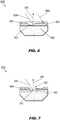
FIG. 6 is a cross-sectional through-thickness diagrammatic illustration of an external surface with an enhanced-maintenance antiviral coating according to example embodiments of this disclosure; - and
FIG. 7 is a cross-sectional through-thickness diagrammatic illustration of an external surface with an enhanced-maintenance antiviral coating according to example embodiments of this disclosure. - Before explaining one or more embodiments of the disclosure in detail, it is to be understood that the embodiments are not limited in their application to the details of construction and the arrangement of the components or steps or methodologies set forth in the following description or illustrated in the drawings. In the following detailed description of embodiments, numerous specific details may be set forth in order to provide a more thorough understanding of the disclosure. However, it will be apparent to one of ordinary skill in the art having the benefit of the instant disclosure that the embodiments disclosed herein may be practiced without some of these specific details. In other instances, well-known features may not be described in detail to avoid unnecessarily complicating the instant disclosure.
- As used herein a letter following a reference numeral is intended to reference an embodiment of the feature or element that may be similar, but not necessarily identical, to a previously described element or feature bearing the same reference numeral (e.g., 1, 1a, 1b). Such shorthand notations are used for purposes of convenience only and should not be construed to limit the disclosure in any way unless expressly stated to the contrary.
- Further, unless expressly stated to the contrary, "or" refers to an inclusive or and not to an exclusive or. For example, a condition A or B is satisfied by any one of the following: A is true (or present) and B is false (or not present), A is false (or not present) and B is true (or present), and both A and B are true (or present).
- In addition, use of "a" or "an" may be employed to describe elements and components of embodiments disclosed herein. This is done merely for convenience and "a" and "an" are intended to include "one" or "at least one," and the singular also includes the plural unless it is obvious that it is meant otherwise.
- Finally, as used herein any reference to "one embodiment" or "some embodiments" means that a particular element, feature, structure, or characteristic described in connection with the embodiment is included in at least one embodiment disclosed herein. The appearances of the phrase "in some embodiments" in various places in the specification are not necessarily all referring to the same embodiment, and embodiments may include one or more of the features expressly described or inherently present herein, or any combination or sub-combination of two or more such features, along with any other features which may not necessarily be expressly described or inherently present in the instant disclosure.
- Referring to
FIG. 1 , anaircraft lavatory 100 is disclosed. - The
aircraft lavatory 100, and other interior areas of an aircraft cabin, may be areas of especially high potential danger for transmission of viruses (e.g., COVID-19 or other types of respiratory viruses), bacteria, and other pathogenic microorganisms from one person to another. While the inventive concepts disclosed herein may be implemented within any mobile platform or public interior space, commercial aircraft provide a particularly strong opportunity for application. Aircraft passenger cabins congregate large groups of people in close proximity under recirculating air systems for longer periods of time than do most ground-based vehicles. Within any one flight, individual passengers and/or crewmembers may originate from dozens or even hundreds of locations around the world, which may include epidemiological epicenters. Theaircraft lavatory 100 may be occupied and used by several dozen individuals over the course of a flight and may include numerous objects and/or surfaces especially likely to experience physical contact from multiple passengers, e.g.,toilet lids 102, interior walls andpanels 104,faucets 106, door/panel handles 108, or buttons 110 (e.g., for flushing the toilet 112). - Referring also to
FIG. 2 , anaircraft seating environment 200 is disclosed. Similarly toFIG. 1 , in embodiments theaircraft seating environment 200 may includeindividual passenger seats 202,headrests 204, armrests 206 (which may be shared between adjacent seats), andaircraft monuments 208 including, e.g., an access door 210 (with access handle/latch 212) for theaircraft lavatory 100 ofFIG. 1 . These locations may be especially susceptible to physical contact by one or more passengers throughout the course of a flight (as opposed to, e.g., cabin ceilings) and may thus be prime candidates for viral or bacterial transmission via physical contact. - In embodiments, the
toilet lids 102, interior walls andpanels 104,faucets 106,headrests 204,armrests 206, access handle/latch 212, and/or other external surfaces particularly prone to physical contact may be partially or fully coated with an enhanced-maintenance antiviral coating (214) infused with indicative agents to facilitate service and replacement. For example, the enhanced-maintenanceantiviral coating 214 may indicate to the cabin crew and/or maintenance team if, and precisely where, the antiviral coating has eroded or otherwise worn from the surface onto which it has been applied (and thus if, and where, the antiviral coating should be serviced (e.g., repaired, reapplied, replaced). In some embodiments, the enhanced-maintenanceantiviral coating 214 may be applied to the external surfaces of interior components within the passenger cabins of other passenger and transit vehicles (e.g., railway cars, buses, trolleys, ferries, passenger ships, cable cars, funiculars) or within indoor public spaces configured for the concentration of populations in close proximity for extended periods, e.g., classrooms, office spaces, theaters and auditoriums. - Referring to
FIGS. 3A and 3B , in embodiments anexternal surface 300 e.g., of atoilet lid 102, interior wall orpanel 104,faucet 106,headrest 204,armrest 206, access handle/latch 212, and/or other interior component within the passenger cabin) may have an enhanced-maintenanceantiviral coating 214 applied thereto. Over time, especially after sustained physical contact, the enhanced-maintenanceantiviral coating 214 may experience wear (302). For example, the disinfectant components of the enhanced-maintenanceantiviral coating 214 may lose potency overtime. More commonly, however, the enhanced-maintenanceantiviral coating 214 may be reduced in thickness as the coating is abraded or erodes from theexternal surface 300. - In embodiments, the enhanced-maintenance
antiviral coating 214 may incorporate one or more indicating agents combined into, or commingled with, the disinfectant components of the antiviral coating. For example, the enhanced-maintenanceantiviral coating 214 may include fluorescent dyes or agents mixed by any appropriate processes into the antiviral coating in such a way as not to impede its antiviral properties. The enhanced-maintenanceantiviral coating 214 may appear invisible or otherwise normal under standard interior lighting (e.g., indistinguishable from the untreated external surface). However, the cabin crew or maintenance team may quickly inspect theexternal surface 300 and enhanced-maintenanceantiviral coating 214 by illuminating the antiviral coating with a dedicatedlight source 304. - In embodiments, the dedicated
light source 304 may emit specialized light (306a-b) partially or fully within the ultraviolet (UV) band (e.g., in addition to visible light components) or incorporating other specially selected spectral components to which the indicating agents are reactive, such that the indicating agents react to the emitted light and indicate a status (e.g., a presence, an absence, a thickness change) of the enhanced-maintenanceantiviral coating 214. The presence, absence, or thickness change of the enhanced-maintenanceantiviral coating 214 may be full or partial. For example, the specialized light 306a-b may induce fluorescence in the indicating agents within the enhanced-maintenanceantiviral coating 214, which may absorb thespecialized light 306b, re-emitting the absorbed light (308) at a slightly different wavelength. The crew or maintenance team member, scanning theexternal surface 300 with the dedicatedlight source 304, may view the re-emitted light/fluorescence 308 e.g., in a specific color, or otherwise as an indication that the enhanced-maintenanceantiviral coating 214 remains intact (e.g., fully intact, or sufficiently intact). In some embodiments, the indicating agents may be partially or fully reflective in nature. - In embodiments, when the dedicated
light source 304 is directed toward a portion of wear (302) the absence of enhanced-maintenance antiviral coating 214 (and thus the absence of indicating agents) will be reflected in an appearance, underspecialized light 306a, different from the re-emitted light/fluorescence 308. For example, the lack of fluorescence or reflectivity may indicate damage to, or erosion of, the enhanced-maintenanceantiviral coating 214 sufficient to warrant service or replacement. - Referring now to
FIG. 3C , in embodiments theexternal surface 300a may be implemented and may function similarly to theexternal surface 300 ofFIGS. 3A and 3B , except that within the enhanced-maintenanceantiviral coating 214, the indicating agents (310) may appear (e.g., under the specialized light 306a-b,FIGS. 3A-B ) as particles suspended in the antiviral coating (as opposed to, e.g., seamless incorporation with the enhanced-maintenance antiviral coating 214). - Referring now to
FIG. 4 , amethod 400 of service is disclosed. Themethod 400 may be implemented within theaircraft lavatory 100 ofFIG. 1 , theaircraft seating environment 200 ofFIG. 2 , or any other public interior area of a vehicle or mobile platform incorporating external surfaces of interior components associated with frequent or continual physical contact by multiple individuals. - At a
step 402, cabin crew (or, e.g., maintenance personnel or interior suppliers) may combine one or more indicating agents (e.g., fluorescent, reflective, reactive) with or into an antiviral or/and antimicrobial coating. - At a
step 404, the cabin crew may apply the enhanced-maintenance antiviral coating to one or more external surfaces of interior components (e.g., as disclosed above inFIGS. 1 and2 and accompanying text). - At a
step 406, the cabin crew may apply ultraviolet or otherwise specialized lighting to the applied enhanced-maintenance antiviral coating, checking for changes in its fluorescence and/or reflectivity. - At a
step 408, the observing cabin crew may recognize areas of reduced or eliminated fluorescence and/or reflectivity as areas of damage or wear to the enhanced-maintenance antiviral coating. - At a
step 410, the observing cabin crew may take a variety of corrective actions in response to detected damage or wear: reapplying the enhanced-maintenance antiviral coating locally to damaged or worn areas, reapplying the enhanced-maintenance antiviral coating (e.g., uniformly or non-uniformly) to the entire external surface, or replacing the affected external surface or internal component. - Referring to
FIG. 5A , in embodiments theexternal surface 500 may be implemented and may function similarly to theexternal surface 300 ofFIG. 3A , except that theexternal surface 500 may have applied thereto a series of layered enhanced-maintenanceantiviral coatings 214a-d. - In embodiments, the series of layered enhanced-maintenance
antiviral coatings 214a-d may be applied in succession over theexternal surface 500. For example, the enhanced-maintenanceantiviral coating 214a may be fashioned by adding a first indicating agent to the antiviral coating, such that the antiviral coating has a distinct appearance (e.g., a generally red color). Similarly, the enhanced-maintenanceantiviral coating 214b may be fashioned by adding a second indicating agent to the antiviral coating, such that the antiviral coating has an appearance distinct from the enhanced-maintenanceantiviral coating 214a (e.g., a yellow color). - In embodiments, the enhanced-maintenance
antiviral coating 214b may be applied over the enhanced-maintenanceantiviral coating 214a, and the enhanced-maintenanceantiviral coatings 214c-d (having, e.g., generally green and blue appearances, respectively). - Referring also to
FIGS. 5B and 5C , in embodiments theexternal surfaces external surface 500 ofFIG. 5A , except that theexternal surfaces 500a-b may sustain wear (302) or damage. In embodiments, when the specialized light 306a-b is applied to theexternal surfaces 500a-b, thewear 302 or damage may be revealed more precisely by the reflectivity orfluorescence 308a-c emitted thereby. For example, referring in particular toFIG. 5B , blue andgreen fluorescence 308a-b may be respectively associated with minimal or minor damage or wear respectively revealing the enhanced-maintenanceantiviral coatings FIG. 5C , significant damage or wear revealing the enhanced-maintenanceantiviral coating 214a may be associated withred fluorescence 308c, and severe or total damage or wear may erode or abrade the enhanced-maintenanceantiviral coating 214a-d entirely, revealing the original component surface 502 (e.g., via the absence of fluorescence or reflectivity) when thespecialized light 306 is applied to the external surface. - Referring to
FIG. 6 , theexternal surface 600 is disclosed. - In embodiments, the
external surface 600 may incorporate aparasitic layer 602 under anantiviral coating 604. For example, theparasitic layer 602 may incorporate fluorescent or reflective indicators in one or more layers adjacent to theoriginal component surface 502. Theexternal surface 600 may otherwise be implemented similarly to theexternal surfaces FIGS. 3A, 3B , and5A , except that whenspecialized light 306a is applied thereto, the lack of fluorescence and/or reflectivity may be interpreted as a lack of damage or wear. Similarly, if damage or wear (302) to theantiviral coating 604 is present, only then may theparasitic layer 602 exhibit fluorescence or reflectivity (308) when specialized light 306b is applied thereto. - Referring to
FIG. 7 , in embodiments theexternal surface 700 may be implemented and may function similarly to theexternal surface 600 ofFIG. 6 , except that the external surface 700 (e.g., of an interior component as described above) may embed or otherwise incorporate indicatingagents 310 directly into asurface layer 702. For example, if damage or wear (302) occurs to theantiviral coating 604, thesurface layer 702 below may exhibit fluorescence or reflectivity (308) whenspecialized light 306 is applied thereto.
Claims (13)
- A protective antiviral coating (214) for interior components of a public space, comprising:at least one antiviral compound applicable to an external surface (300) within a public space and configured to destroy one or more pathogens deposited on the external surface;
andat least one indicating agent combined with the at least one antiviral compound, the indicating agent configured to indicate a status of the antiviral compound by reacting to a specialized light applied to the external surface. - The protective antiviral coating of claim 1, wherein the status is selected from a presence of the antiviral compound, an absence of the antiviral compound, or a change of the antiviral compound.
- The protective antiviral coating of claims 1 or 2, wherein the at least one indicating agent includes at least one fluorescing agent configured to absorb the specialized light.
- The protective antiviral coating of any preceding claim, wherein the at least one indicating agent includes at least one reflective agent configured to reflect the specialized light.
- The protective antiviral coating of any preceding claim, wherein the at least one indicating agent includes one or more reactive particles suspended within the antiviral compound.
- The protective antiviral coating of any preceding claim, wherein the specialized light is configured to induce fluorescence in the at least one indicating agent.
- The protective antiviral coating of claim 6, wherein the specialized light includes at least one of visible light or ultraviolet (UV) light.
- The protective antiviral coating of any preceding claim, wherein the at least one indicating agent comprises:at least one first indicating agent configured to combine with the antiviral compound in an outermost layer, the first indicating agent configured to indicate a status of the outermost layer via a first reaction to the specialized light;
andat least one second indicating agent configured to combine with the antiviral compound in at least one secondary layer beneath the outermost layer, the second indicating agent configured to indicate a status of each corresponding secondary layer via at least one second reaction to the specialized light. - The protective antiviral coating of claim 8, wherein:the first reaction is associated with a first color;
andthe at least one second reaction is associated with at least one second color. - The protective antiviral coating of any of claims 1 through 7, wherein the at least one indicating agent is configured to:combine with the at least one antiviral compound in at least one layer between the antiviral compound and the external surface;
andindicate a status of the antiviral compound by reacting to the specialized light. - The protective antiviral coating of any preceding claim, wherein the public space includes a cabin within a vehicle, the vehicle configured for transport of one or more passengers.
- The protective antiviral coating of claim 11, wherein the vehicle is selected from an aircraft, a ground-based vehicle, or a water-based vehicle.
- The protective antiviral coating of any of claims 1 through 10, wherein the public space includes an interior space within a building.
Applications Claiming Priority (2)
| Application Number | Priority Date | Filing Date | Title |
|---|---|---|---|
| US202063037267P | 2020-06-10 | 2020-06-10 | |
| US17/338,413 US20210388217A1 (en) | 2020-06-10 | 2021-06-03 | Enhanced maintenance antiviral coatings for cabin surfaces |
Publications (1)
| Publication Number | Publication Date |
|---|---|
| EP3922684A1 true EP3922684A1 (en) | 2021-12-15 |
Family
ID=76392196
Family Applications (1)
| Application Number | Title | Priority Date | Filing Date |
|---|---|---|---|
| EP21178863.3A Withdrawn EP3922684A1 (en) | 2020-06-10 | 2021-06-10 | Enhanced maintenance antiviral coatings for cabin surfaces |
Country Status (2)
| Country | Link |
|---|---|
| US (1) | US20210388217A1 (en) |
| EP (1) | EP3922684A1 (en) |
Families Citing this family (6)
| Publication number | Priority date | Publication date | Assignee | Title |
|---|---|---|---|---|
| US11536662B2 (en) * | 2020-06-24 | 2022-12-27 | B/E Aerospace, Inc. | Methods for detecting antimicrobial surface coatings using fluorescent indicators |
| US12332180B2 (en) | 2020-06-24 | 2025-06-17 | B/E Aerospace, Inc. | Antimicrobial surface coating formation, detection, quantification and reactivation systems and methods |
| TWI746194B (en) * | 2020-09-30 | 2021-11-11 | 宏碁股份有限公司 | Electronic device with antibacterial effect detection and portable device |
| JP7192945B1 (en) * | 2021-10-21 | 2022-12-20 | 横浜ゴム株式会社 | Flush switch for aircraft lavatory units |
| US12522357B2 (en) * | 2024-01-03 | 2026-01-13 | B/E Aerospace, Inc. | Large aircraft lavatory with storage compartments |
| DE102024121969A1 (en) * | 2024-08-01 | 2026-02-05 | Airbus Operations Gmbh | Washroom for use by people with reduced mobility |
Citations (5)
| Publication number | Priority date | Publication date | Assignee | Title |
|---|---|---|---|---|
| US6333093B1 (en) * | 1997-03-17 | 2001-12-25 | Westaim Biomedical Corp. | Anti-microbial coatings having indicator properties and wound dressings |
| DE10346387A1 (en) * | 2003-10-07 | 2005-06-09 | Henkel Kgaa | Antimicrobial equipment of bathroom and toilet articles |
| US20100003198A1 (en) * | 2008-07-07 | 2010-01-07 | Patrick John Stolmeier | Antimicrobial Topical and Other Preparations Containing Fluorescent or Illumination Dye and Tracer Agents or Compounds |
| US8729505B2 (en) * | 2011-02-24 | 2014-05-20 | Airbus Operations Gmbh | Methods and apparatus for monitoring hygienic conditions on board a vehicle |
| US20170273307A1 (en) * | 2016-03-28 | 2017-09-28 | Trent University | Silane-based antimicrobial coatings and methods of making and using the same |
Family Cites Families (1)
| Publication number | Priority date | Publication date | Assignee | Title |
|---|---|---|---|---|
| US11536662B2 (en) * | 2020-06-24 | 2022-12-27 | B/E Aerospace, Inc. | Methods for detecting antimicrobial surface coatings using fluorescent indicators |
-
2021
- 2021-06-03 US US17/338,413 patent/US20210388217A1/en not_active Abandoned
- 2021-06-10 EP EP21178863.3A patent/EP3922684A1/en not_active Withdrawn
Patent Citations (5)
| Publication number | Priority date | Publication date | Assignee | Title |
|---|---|---|---|---|
| US6333093B1 (en) * | 1997-03-17 | 2001-12-25 | Westaim Biomedical Corp. | Anti-microbial coatings having indicator properties and wound dressings |
| DE10346387A1 (en) * | 2003-10-07 | 2005-06-09 | Henkel Kgaa | Antimicrobial equipment of bathroom and toilet articles |
| US20100003198A1 (en) * | 2008-07-07 | 2010-01-07 | Patrick John Stolmeier | Antimicrobial Topical and Other Preparations Containing Fluorescent or Illumination Dye and Tracer Agents or Compounds |
| US8729505B2 (en) * | 2011-02-24 | 2014-05-20 | Airbus Operations Gmbh | Methods and apparatus for monitoring hygienic conditions on board a vehicle |
| US20170273307A1 (en) * | 2016-03-28 | 2017-09-28 | Trent University | Silane-based antimicrobial coatings and methods of making and using the same |
Also Published As
| Publication number | Publication date |
|---|---|
| US20210388217A1 (en) | 2021-12-16 |
Similar Documents
| Publication | Publication Date | Title |
|---|---|---|
| US20210388217A1 (en) | Enhanced maintenance antiviral coatings for cabin surfaces | |
| Arora et al. | Airport pandemic response: An assessment of impacts and strategies after one year with COVID-19 | |
| EP3691972B1 (en) | Method for disinfecting an aircraft cabin using a lighting assembly and a lighting assembly therefor | |
| US9907870B2 (en) | Systems and methods for treatment of cabin surfaces and air | |
| US8567741B2 (en) | Hard coated seat rail | |
| US12497173B2 (en) | Passenger seat unit with foldable door | |
| US20140050901A1 (en) | Method of providing a fire-resistant laminate having a print advertisement for a cabin component of an aircraft | |
| US8097108B2 (en) | Method and apparatus for forming a fireworthy laminate | |
| MX2011002518A (en) | Method and apparatus for reducing heat release and smoke density. | |
| GB2602203A (en) | Photoluminescent signs | |
| EP4009017B1 (en) | Systems and methods of use of uv-responsive laminates and methods of fabrication thereof | |
| CN106938702A (en) | Slide closet | |
| US20240391190A1 (en) | Selective Protective Coating, System, and Method for Vehicle Cabin Interior Structures | |
| CN105883560A (en) | Elevator door arrangement | |
| Johnstone | Not safe enough: fixing transportation security | |
| EP4212190A2 (en) | Surface disinfection and visible light system and method for using same | |
| Ostrowska-Tryzno et al. | Some aspects of tourism and transport in the COVID-19 pandemic time | |
| EP2723637B1 (en) | Doorway width restriction system | |
| US20200398543A1 (en) | Protective, Adhesive Sheet Material | |
| Sorrells | US Thanksgiving travel trends show clear shift in destination preferences | |
| Personeni | 50 Years of Sematic. | |
| AVIATION | Notice Concerning the “Principles for Determining and Handling Cases and Suspected Cases of Contagious Atypical Pneumonia in Means of Transportation (Draft)”(Wei ji fa | |
| Heymann | Aviation Law | |
| Deneuville | EVACUATION SESSION | |
| O’Malley | Seaway Will Be First Inland Waterway With GPS Tracking |
Legal Events
| Date | Code | Title | Description |
|---|---|---|---|
| PUAI | Public reference made under article 153(3) epc to a published international application that has entered the european phase |
Free format text: ORIGINAL CODE: 0009012 |
|
| STAA | Information on the status of an ep patent application or granted ep patent |
Free format text: STATUS: THE APPLICATION HAS BEEN PUBLISHED |
|
| AK | Designated contracting states |
Kind code of ref document: A1 Designated state(s): AL AT BE BG CH CY CZ DE DK EE ES FI FR GB GR HR HU IE IS IT LI LT LU LV MC MK MT NL NO PL PT RO RS SE SI SK SM TR |
|
| B565 | Issuance of search results under rule 164(2) epc |
Effective date: 20211103 |
|
| STAA | Information on the status of an ep patent application or granted ep patent |
Free format text: STATUS: REQUEST FOR EXAMINATION WAS MADE |
|
| 17P | Request for examination filed |
Effective date: 20220613 |
|
| RBV | Designated contracting states (corrected) |
Designated state(s): AL AT BE BG CH CY CZ DE DK EE ES FI FR GB GR HR HU IE IS IT LI LT LU LV MC MK MT NL NO PL PT RO RS SE SI SK SM TR |
|
| P01 | Opt-out of the competence of the unified patent court (upc) registered |
Effective date: 20230922 |
|
| STAA | Information on the status of an ep patent application or granted ep patent |
Free format text: STATUS: EXAMINATION IS IN PROGRESS |
|
| 17Q | First examination report despatched |
Effective date: 20250303 |
|
| STAA | Information on the status of an ep patent application or granted ep patent |
Free format text: STATUS: THE APPLICATION HAS BEEN WITHDRAWN |
|
| 18W | Application withdrawn |
Effective date: 20250701 |