EP3920001A1 - Obstacle avoidance control device, obstacle avoidance control system, obstacle avoidance control method, and recording medium - Google Patents
Obstacle avoidance control device, obstacle avoidance control system, obstacle avoidance control method, and recording medium Download PDFInfo
- Publication number
- EP3920001A1 EP3920001A1 EP19914139.1A EP19914139A EP3920001A1 EP 3920001 A1 EP3920001 A1 EP 3920001A1 EP 19914139 A EP19914139 A EP 19914139A EP 3920001 A1 EP3920001 A1 EP 3920001A1
- Authority
- EP
- European Patent Office
- Prior art keywords
- obstacle
- command value
- control
- target equipment
- avoidance
- Prior art date
- Legal status (The legal status is an assumption and is not a legal conclusion. Google has not performed a legal analysis and makes no representation as to the accuracy of the status listed.)
- Pending
Links
Images






Classifications
-
- B—PERFORMING OPERATIONS; TRANSPORTING
- B25—HAND TOOLS; PORTABLE POWER-DRIVEN TOOLS; MANIPULATORS
- B25J—MANIPULATORS; CHAMBERS PROVIDED WITH MANIPULATION DEVICES
- B25J9/00—Program-controlled manipulators
- B25J9/16—Program controls
- B25J9/1656—Program controls characterised by programming, planning systems for manipulators
- B25J9/1664—Program controls characterised by programming, planning systems for manipulators characterised by motion, path, trajectory planning
- B25J9/1666—Avoiding collision or forbidden zones
-
- G—PHYSICS
- G05—CONTROLLING; REGULATING
- G05B—CONTROL OR REGULATING SYSTEMS IN GENERAL; FUNCTIONAL ELEMENTS OF SUCH SYSTEMS; MONITORING OR TESTING ARRANGEMENTS FOR SUCH SYSTEMS OR ELEMENTS
- G05B2219/00—Program-control systems
- G05B2219/30—Nc systems
- G05B2219/39—Robotics, robotics to robotics hand
- G05B2219/39091—Avoid collision with moving obstacles
-
- G—PHYSICS
- G05—CONTROLLING; REGULATING
- G05B—CONTROL OR REGULATING SYSTEMS IN GENERAL; FUNCTIONAL ELEMENTS OF SUCH SYSTEMS; MONITORING OR TESTING ARRANGEMENTS FOR SUCH SYSTEMS OR ELEMENTS
- G05B2219/00—Program-control systems
- G05B2219/30—Nc systems
- G05B2219/40—Robotics, robotics mapping to robotics vision
- G05B2219/40476—Collision, planning for collision free path
Definitions
- the present invention relates to an obstacle avoidance control device, an obstacle avoidance control system, an obstacle avoidance control method, and a recording medium.
- Patent Document 1 Japanese Unexamined Patent Application, First Publication No. 2018-167333
- a location where the robot is likely to come into contact with the obstacle is not limited to the tip of the arm thereof. It is preferable that the obstacle be avoided with respect to various parts of the control target equipment as well as the tip of the robot arm.
- An example object of the present invention is to provide an obstacle avoidance control device, an obstacle avoidance control system, an obstacle avoidance control method, and a recording medium capable of solving the above-described problems.
- an obstacle avoidance control device including: an avoidance command value calculation unit that obtains an avoidance command value that is a control command value for control target equipment, the control command value which satisfies constraint conditions including a condition sufficient for the control target equipment not to come into contact with an obstacle, and the control command value that an evaluation value obtained by applying the control command value to an evaluation function satisfies a prescribed end condition; and an equipment control unit that controls the control target equipment on the basis of a processing result of the avoidance command value calculation unit.
- an obstacle avoidance control method including: a process of obtaining an avoidance command value that is a control command value for control target equipment, the control command value which satisfies constraint conditions including a condition sufficient for the control target equipment not to come into contact with an obstacle, and the control command value that an evaluation value obtained by applying the control command value to an evaluation function satisfies a prescribed end condition; and a process of controlling the control target equipment on the basis of a processing result in the process of obtaining the avoidance command value.
- a recording medium recording a program for causing a computer to execute: a process of obtaining an avoidance command value that is a control command value for control target equipment, the control command value which satisfies constraint conditions including a condition sufficient for the control target equipment not to come into contact with an obstacle, and the control command value that an evaluation value obtained by applying the control command value to an evaluation function satisfies a prescribed end condition; and a process of controlling the control target equipment on the basis of a processing result in the process of obtaining the avoidance command value.
- the obstacle avoidance control device According to the obstacle avoidance control device, the obstacle avoidance control system, the obstacle avoidance control method, and the recording medium described above, it is possible to perform control so that an obstacle is avoided with respect to various parts of the control target equipment.
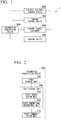
- FIG. 1 is a schematic configuration diagram showing an example of a device configuration of an obstacle avoidance control system according to a first example embodiment.
- the obstacle avoidance control system 1 includes an imaging device 100, an information acquisition device 200, a nominal control device 300, and an obstacle avoidance control device 400.
- the obstacle avoidance control system 1 controls control target equipment 900.
- the obstacle avoidance control system 1 controls the control target equipment 900 so that the control target equipment 900 performs a desired operation and the control target equipment 900 does not come into contact with an obstacle.
- the desired operation described here is an operation for achieving a target set in the control target equipment 900.
- the contact described here is not limited to a simple touch and includes a collision.
- the control target equipment 900 comes into contact with an obstacle, at least a part of the control target equipment 900 may come into contact with at least a part of the obstacle.
- control target equipment 900 is a vertical articulated robot
- a control target of the obstacle avoidance control system 1 operates in accordance with a control command value and can be various types of equipment that are likely to come into contact with an obstacle.
- the control target equipment 900 may be an industrial robot other than a vertical articulated robot.
- control target equipment 900 may be a robot other than an industrial robot, such as a building robot or a domestic robot.
- Various robots that are not limited to a specific application and that change in shape can be used as an example of the control target equipment 900.
- control target equipment 900 may be moving objects such as automated guided vehicles or drones.
- control target equipment 900 may be a device that operates autonomously as long as it can be controlled by a control command value.
- the obstacle described here is an obstacle that is likely to come into contact with the control target equipment 900.
- the obstacle is not limited to any specific type of obstacle.
- the obstacle may be a human being, another robot, a nearby wall or machine, temporarily placed cargo, or a combination thereof.
- control target equipment 900 itself may be treated as an obstacle.
- the control target equipment 900 is a vertical articulated robot and a robot arm and a pedestal portion come into contact with each other according to a posture thereof
- the obstacle avoidance control system 1 treats the control target equipment 900 as the obstacle, so that contact between the robot arm and the pedestal portion can be avoided.
- the imaging device 100 captures an image of an obstacle. For example, the imaging device 100 captures an image so that the entire space where the control target equipment 900 can operate is included within an imaging range, and the imaging device 100 captures an image of the obstacle when the obstacle is present.
- the information acquisition device 200 estimates a position of the obstacle on the basis of the image captured by the imaging device 100.
- a camera capable of obtaining three-dimensional information such as a depth camera or a stereo camera, may be used.
- the information acquisition device 200 may be configured to use technology for obtaining three-dimensional information from a two-dimensional image, such as a three-dimensional extension of OpenPose.
- the obstacle avoidance control system 1 may be configured to include a device for obtaining three-dimensional information such as a three-dimensional light detection and ranging (3D-LiDAR) sensor in addition to or instead of the imaging device 100.
- a device for obtaining three-dimensional information such as a three-dimensional light detection and ranging (3D-LiDAR) sensor in addition to or instead of the imaging device 100.
- 3D-LiDAR three-dimensional light detection and ranging
- the imaging device 100 may include multiple cameras.
- the imaging device 100 may be movable.
- the imaging device 100 may be configured to indicate a state of a space of an observation target with voxel data.
- the information acquisition device 200 acquires sensing data from a sensor that observes the control target equipment 900, such as a sensor provided in the control target equipment 900, and detects a position and an operation of the control target equipment 900.
- the sensor from which the information acquisition device 200 acquires sensing data is not limited to a specific type of sensor.
- the information acquisition device 200 may be configured to acquire information about any one of a joint angle, a joint angular velocity, a joint velocity, and joint acceleration, or a combination thereof associated with each joint of the control target equipment 900 from the sensing data.
- the information acquisition device 200 generates and transmits position information of the control target equipment 900 and information indicating a movement of the control target equipment 900 on the basis of the obtained information.
- the information acquisition device 200 may be configured to transmit the position information of the control target equipment 900 with voxel data. For example, when the information acquisition device 200 transmits position information of a surface of the control target equipment 900 with voxel data, the obstacle avoidance control device 400 can ascertain a positional relationship between the surface of the control target equipment 900 instead of one point and the obstacle and more accurately ascertain a distance between the control target equipment 900 and the obstacle. The distance between the control target equipment 900 and the obstacle can be more accurately ascertained, so that the obstacle avoidance control device 400 can perform control for causing the control target equipment 900 to avoid the obstacle with higher accuracy. Alternatively, the information acquisition device 200 may be configured to transmit coordinates of a representative point set in the control target equipment 900 as the position information of the control target equipment 900.
- the information acquisition device 200 transmits, for example, a velocity, acceleration, an angular velocity, angular acceleration, or a combination thereof associated with the control target equipment 900, as information indicating the movement of the control target equipment 900.
- the information acquisition device 200 may be configured to transmit information indicating the movement of the surface of the control target equipment 900 with voxel data.
- the information acquisition device 200 may be configured to transmit data indicating the movement of the representative point of the control target equipment 900.
- the information acquisition device 200 may be configured to transmit a vector in which generalized coordinates q and a generalized velocity q' of the control target equipment 900 are arranged.
- the information acquisition device 200 may be configured to transmit information indicating a movement of an actuator of the control target equipment, such as the angular velocity of the joint of the control target equipment.
- the position information of the control target equipment 900 and the information indicating the movement of the control target equipment 900 are collectively referred to as state information of the control target equipment 900.
- the information acquisition device 200 transmits the state information of the control target equipment to the nominal control device 300 and the obstacle avoidance control device 400.
- the information acquisition device 200 transmits the position information of the obstacle.
- the information acquisition device 200 may be configured to transmit the position information of the obstacle in a data format of voxel data.
- the obstacle avoidance control device 400 can ascertain the positional relationship between the surface of the obstacle instead of one point and the control target equipment 900 and more accurately ascertain the distance between the control target equipment 900 and the obstacle.
- the distance between the control target equipment 900 and the obstacle can be more accurately ascertained, so that the obstacle avoidance control device 400 can perform control for causing the control target equipment 900 to avoid the obstacle with higher accuracy.
- the information acquisition device 200 may be configured to transmit the coordinates of the representative point set in the control target equipment 900 as the position information of the control target equipment 900.
- the information acquisition device 200 may be configured to transmit information indicating the movement of the obstacle in addition to the position information of the obstacle.
- the information acquisition device 200 may be configured to transmit, for example, a velocity, acceleration, an angular velocity, angular acceleration, or a combination thereof associated with the obstacle, as information indicating the movement of the obstacle.
- the information acquisition device 200 may be configured to transmit information indicating the movement of the surface of the obstacle with voxel data.
- the information acquisition device 200 may be configured to transmit data indicating a movement of a representative point of the obstacle.
- the information acquisition device 200 may be configured to transmit a vector in which generalized coordinates q and a generalized velocity q' of the obstacle are arranged.
- the position information of the obstacle or the combination of the position information of the obstacle and the information indicating the movement of the obstacle when the obstacle moves is referred to as the state information of the obstacle.
- the information acquisition device 200 transmits the state information of the obstacle to the obstacle avoidance control device 400.
- the nominal control device 300 calculates a nominal command value.
- the nominal command value is a control command value for the control target equipment 900 when obstacle avoidance by the control target equipment 900 is not taken into account. That is, the nominal command value is a control command value for the control target equipment 900 to achieve a target set in the control target equipment 900 under the assumption that there is no obstacle.
- a control method for the nominal control device 300 to calculate the nominal command value is not limited to a specific control method and various known control methods can be used.
- the nominal command value calculated by the nominal control device 300 is used as a control command value serving as a reference for the obstacle avoidance control device 400 to acquire the control command value (i.e., a control command value that is actually used) indicated with respect to the control target equipment 900.
- the obstacle avoidance control device 400 executes the control of the control target equipment 900 by the obstacle avoidance control system 1. Therefore, as described above with respect to the obstacle avoidance control system 1, the obstacle avoidance control device 400 causes the control target equipment 900 to perform a desired operation and controls the control target equipment 900 so that the control target equipment 900 does not come into contact with the obstacle.
- the obstacle avoidance control device 400 acquires a control command value for controlling the control target equipment 900.
- the obstacle avoidance control device 400 controls the control target equipment 900 by transmitting the acquired control command value to the control target equipment 900.
- the obstacle avoidance control device 400 uses the control command value calculated by the nominal control device 300 as the control command value for the control target equipment 900. This is because it can be expected that the control target equipment 900 will not come into contact with the obstacle even if the control command value calculated by the nominal control device 300 without taking into account the obstacle avoidance is used.
- the obstacle avoidance control device 400 does not need to newly calculate a control threshold value in consideration of the obstacle avoidance. In this regard, the load of the obstacle avoidance control device 400 can be lightened.
- the obstacle avoidance control device 400 calculates a control command value for the control target equipment 900 to avoid the obstacle and achieve the target and transmits the calculated control command value to the control target equipment 900.
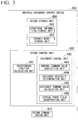
- FIG. 2 is a schematic block diagram showing an example of a functional configuration of the information acquisition device 200.
- the information acquisition device 200 includes a first communication unit 210, a first storage unit 280, and a first control unit 290.
- the first control unit 290 includes a state observation unit 291 and a three-dimensional measurement unit 292.
- the first communication unit 210 communicates with other devices.
- the first communication unit 210 receives sensing data from the sensor provided in the control target equipment 900.
- the first communication unit 210 receives data from the imaging device 100.
- the first communication unit 210 receives image data of an image captured by the imaging device 100 and further receives the additional information in addition to the image data when there is additional information such as distance information in a depth direction.
- the first communication unit 210 transmits position information and operation information of the control target equipment 900 generated by the information acquisition device 200 to the nominal control device 300 and the obstacle avoidance control device 400. Also, the first communication unit 210 transmits the position information of the obstacle generated by the information acquisition device 200 to the obstacle avoidance control device 400. When the information acquisition device 200 also identifies an operation of the obstacle, the first communication unit 210 transmits operation information of the obstacle (for example, velocity or acceleration information) to the obstacle avoidance control device 400.
- operation information of the obstacle for example, velocity or acceleration information
- the first storage unit 280 stores various types of data.
- the function of the first storage unit 280 is executed using the storage device provided in the information acquisition device 200.
- the first control unit 290 controls each unit of the information acquisition device 200 so that various types of processes are executed.
- a function of the first control unit 290 is executed by a central processing unit (CPU) provided in the information acquisition device 200 reading a program from the first storage unit 280 and executing the program.
- CPU central processing unit
- the state observation unit 291 estimates a position and an operation of the control target equipment 900 on the basis of the sensing data from the sensor provided in the control target equipment 900.
- the state observation unit 291 calculates a coordinate value indicating the estimated position of the control target equipment 900.
- the state observation unit 291 transmits data indicating the position and the operation of the control target equipment 900 to the nominal control device 300 and the obstacle avoidance control device 400 via the first communication unit 210. That is, the state observation unit 291 transmits state information of the control target equipment 900 to the nominal control device 300 and the obstacle avoidance control device 400 via the first communication unit 210.
- the three-dimensional measurement unit 292 estimates the position of the obstacle on the basis of the data from the imaging device 100.
- the three-dimensional measurement unit 292 calculates a coordinate value indicating the estimated position and transmits calculated data to the obstacle avoidance control device 400 via the first communication unit 210.
- the three-dimensional measurement unit 292 may be configured to calculate the operation information of the obstacle (for example, velocity or acceleration information) when the obstacle moves and transmit the calculated data to the obstacle avoidance control device 400 via the first communication unit 210. In this way, the three-dimensional measurement unit 292 transmits state information of the obstacle to the obstacle avoidance control device 400 via the first communication unit 210.
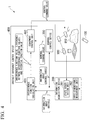
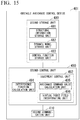
- FIG. 3 is a schematic block diagram showing an example of a functional configuration of the obstacle avoidance control device 400.
- the obstacle avoidance control device 400 includes a second communication unit 410, a second storage unit 480, and a second control unit 490.
- the second storage unit 480 includes a structural information storage unit 481 and a dynamic model storage unit 482.
- the second control unit 490 includes an interference function calculation unit 491 and an equipment control unit 492.
- the equipment control unit 492 includes a nominal command value acquisition unit 493, an avoidance necessity determination unit 494, an avoidance command value calculation unit 495, and a virtual force field incorporating unit 496.
- the second communication unit 410 communicates with other devices.
- the second communication unit 410 receives the state information of the control target equipment 900 and the state information of the obstacle transmitted by the information acquisition device 200.
- the second communication unit 410 receives the control command value calculated and transmitted by the nominal control device 300.
- the second communication unit 410 transmits the control command value to the control target equipment 900.
- the obstacle avoidance control device 400 controls the control target equipment 900 by transmitting the control command value to the control target equipment 900.
- the second storage unit 480 stores various types of data. A function of the second storage unit 480 is executed using the storage device provided in the obstacle avoidance control device 400.
- the structural information storage unit 481 stores structural information of the control target equipment 900.
- the structural information of the control target equipment 900 is information about a shape and an operation of the control target equipment 900, such as a length and a thickness of an arm of the control target equipment 900, a direction in which a joint moves, and a movable range. If there is computer-aided design (CAD) data of the control target equipment 900, the CAD data may be used as the structural information.
- CAD computer-aided design
- the dynamic model storage unit 482 stores a dynamic model of the control target equipment 900.
- the dynamic model of the control target equipment 900 simulates an operation of a case in which the control target equipment 900 receives inputs of the state information of the control target equipment 900 and the control command value and follows the control command value.
- the dynamic model may be configured to output position information of a predicted position of the control target equipment 900 at a future point in time.
- the dynamic model may be configured to output an operation quantity of the control target equipment 900. That is, the dynamic model may be configured to output a difference obtained by subtracting a current position from a predicted future position of the control target equipment 900.
- the dynamic model is a model in which a differential value or a difference of a state indicated in state information x of the control target equipment 900 is obtained with respect to an input of a control command value u, and may be, for example, a state space model.
- a space occupied by the control target equipment 900 can be estimated.
- the obstacle avoidance control device 400 can acquire position information in consideration of the thickness of the arm and the like as well as a position of a skeleton of the control target equipment 900. That is, the obstacle avoidance control device 400 can ascertain the position information of the control target equipment 900 as a position having a spatial spread.
- the obstacle avoidance control device 400 can more accurately ascertain the operation of the control target equipment 900 using the dynamic model of the control target equipment 900. Thereby, it is possible to determine whether or not the control target equipment 900 will come into contact with an obstacle, determine how the control target equipment 900 will move to come into contact therewith if the control target equipment 900 will come into contact with an obstacle, and perform the obstacle avoidance by the control target equipment 900 with higher accuracy.
- the second control unit 490 controls each unit of the obstacle avoidance control device 400 so that various types of processes are executed.
- a function of the second control unit 490 is executed by the CPU provided in the obstacle avoidance control device 400 reading a program from the second storage unit 480 and executing the program.
- the interference function calculation unit 491 calculates an interference function value and a value indicating a change over time in the interference function value.
- the interference function represents a value based on a positional relationship between the control target equipment 900 and the obstacle.
- x denotes the state information of the control target equipment 900.
- the information acquisition device 200 may be configured to transmit the position information of the surface of the control target equipment 900 with voxel data and the interference function calculation unit 491 may be configured to calculate a distance between both sides at a position where the control target equipment 900 is closest to the obstacle by applying the state information of the control target equipment 900 to the interference function B.
- the interference function value B(x) represents a distance between a position of the control target equipment 900 indicated in the state information x of the control target equipment 900 and the obstacle.
- the interference function value B(x) when the control target equipment 900 is located inside the obstacle may not be defined.
- the interference function value B(x) indicates whether or not the control target equipment 900 will come into contact with the obstacle and the distance between the control target equipment 900 and the obstacle.
- the interference function calculation unit 491 generates an interference function on the basis of state information of the obstacle and stores the interference function in the second storage unit 480.
- the interference function calculation unit 491 calculates a differential value of the interference function value B(x) between control steps as a value indicating a change over time in the interference function value B(x).
- the control steps here are a series of processing steps for the obstacle avoidance control device 400 to transmit the control command value once to the control target equipment 900. That is, the obstacle avoidance control device 400 transmits a control command value to the control target equipment 900 in each periodic control step.
- the interference function calculation unit 491 predicts the differential value of the interference function value B(x) between a current control step and the next control step.
- the differential value of the interference function value between the control steps is denoted by ⁇ B(x, u). Because the differential value of the interference function value B(x) depends on a change in the position of the control target equipment 900 and the change in the position of the control target equipment 900 depends on the control command value u, the control command value u is specified.
- the interference function calculation unit 491 calculates a potential function value P(x) with respect to the position of the control target equipment 900.
- the potential function value P(x) is a virtual force field value based on the distance between the control target equipment 900 and the obstacle.
- the interference function calculation unit 491 calculates a larger potential function value P(x) when the position of the control target equipment 900 indicated in the state information of the control target equipment 900 is closer to the obstacle (accordingly, when the interference function value B(x) is smaller).
- the equipment control unit 492 controls the control target equipment 900 on the basis of either the nominal command value from the nominal control device 300 or the processing result of the avoidance command value calculation unit 495.
- the nominal command value is a control command value that does not take into account obstacle avoidance.
- the avoidance command value calculation unit 495 obtains a control command value so that the control target equipment 900 can avoid the obstacle.
- the equipment control unit 492 transmits a nominal command value from the nominal control device 300 or a control command value obtained by correcting the nominal command value in the virtual force field incorporating unit 496 to the control target equipment 900 via the second communication unit 410.
- the avoidance command value calculation unit 495 attempts to calculate a control command value for avoiding the obstacle.
- the equipment control unit 492 transmits the control command value calculated by the avoidance command value calculation unit 495 or the control command value obtained by correcting the control command value in the virtual force field incorporating unit 496 to the control target equipment 900 via the second communication unit 410.
- the equipment control unit 492 transmits a control command value for decelerating the control target equipment 900 to the control target equipment 900 via the second communication unit 410.
- the nominal command value acquisition unit 493 acquires the nominal command value. Specifically, the nominal command value acquisition unit 493 extracts the nominal command value from the nominal control device 300 from a received signal of the second communication unit 410.
- the avoidance necessity determination unit 494 determines whether or not the avoidance command value calculation unit 495 needs to perform a process of acquiring the control command value on the basis of a positional relationship between the control target equipment 900 and the obstacle. As described above, the avoidance necessity determination unit 494 compares the distance between the control target equipment 900 and the obstacle with the threshold value and determines whether or not the distance is greater than the threshold value. Specifically, the avoidance necessity determination unit 494 compares an interference function value B(x) with a threshold value ⁇ of a prescribed constant and determines whether or not B(x)> ⁇ .
- the avoidance necessity determination unit 494 determines that the avoidance command value calculation unit 495 does not need to perform the process of acquiring the control command value.
- the avoidance necessity determination unit 494 determines that the avoidance command value calculation unit 495 needs to perform the process of acquiring the control command value.
- the avoidance command value calculation unit 495 obtains the avoidance command value.
- the avoidance command value is a control command value for the control target equipment 900 and is a control command value which satisfies constraint conditions including a condition sufficient for the control target equipment 900 not to come into contact with an obstacle, and an evaluation value obtained by applying the control command value to the evaluation function satisfies a prescribed end condition.
- the obstacle avoidance control device 400 controls the control target equipment 900 using the avoidance command value, so that the control target equipment 900 can be controlled so that the control target equipment 900 does not come into contact with the obstacle.
- the avoidance command value calculation unit 495 obtains the avoidance command value using the end condition that a degree of a difference between the control command value serving as the solution to be obtained and the nominal command value satisfies a prescribed condition. For example, the avoidance command value calculation unit 495 obtains the avoidance command value by solving an optimization problem that minimizes the degree of the difference between the control command value serving as the solution to be obtained and the nominal command value under the above-described constraint conditions.
- u ⁇ denotes a control command value that is a solution to the above optimization problem.
- argmin denotes a function that minimizes a value of the argument. In the case of Expression (2), "argmin” uses a value of u for minimizing the argument "(u ⁇ u r ) T (u ⁇ u r )" as a function value.
- u r denotes a nominal command value from the nominal control device 300.
- Expression (2) indicates that the control command value as close as possible to the nominal command value u r is obtained under the constraint condition. Because the nominal command value u r is a command value that has been calculated so that the control target equipment 900 achieves an objective set in the control target equipment 900, it can be expected that the objective set in the control target equipment 900 will be achieved in the control target equipment 900 by obtaining a command value close to the nominal command value u r .
- the data formats of u ⁇ , u, and u r indicating the control command value are vectors of the same dimension.
- the number of dimensions of the above vectors is assumed to be the same as the number of dimensions of the control command value transmitted by the obstacle avoidance control device 400 to the control target equipment 900.
- Expression (2) corresponds to an example of the evaluation function.
- the control command value u which is the minimum solution in Expression (2), corresponds to an example of a control command value in which the evaluation value obtained by applying the control command value to the evaluation function satisfies a prescribed end condition.
- the constraint conditions in the minimization problem to be solved by the avoidance command value calculation unit 495 are expressed by two types of inequalities.
- the first type between the two types of inequalities is shown as in Expression (3). [Math. 3] ⁇ B x u + ⁇ B x ⁇ 0
- ⁇ is a constant of 0 ⁇ 1.
- a part (1 ⁇ )B(x) of the distance between the control target equipment 900 and the obstacle denoted by B(x) is used as a margin for preventing the control target equipment 900 and the obstacle from coming into contact with each other and excluded from the operable range of the control target equipment 900.
- ⁇ the operable range of the control target equipment 900
- the margin for preventing the control target equipment 900 from coming into contact with the obstacle becomes larger. For example, even if the control target equipment 900 is pushed toward the obstacle by an unexpected external force, the control target equipment 900 is unlikely to hit the obstacle.
- the avoidance command value calculation unit 495 obtains the avoidance command value using the interference function value and the value indicating a change over time in the interference function value.
- the constraint condition of Expression (3) can be set for each obstacle.
- the obstacle avoidance control device 400 can control the control target equipment 900 so that the control target equipment 900 does not come into contact with any of the obstacles.
- the interference function may be designed for a collection of a plurality of obstacles.
- Expression (3) shows a condition sufficient for the control target equipment 900 not to come into contact with an obstacle in the next control step if the control target equipment 900 does not come into contact with the obstacle in a current control step.
- a description will be given.
- the current control step is denoted by t and the control step following the control step t is denoted by t+1.
- the interference function value in the control step t is denoted by B(xt).
- the interference function value in the control step t+1 is denoted by B(x t+1 ).
- the difference obtained by subtracting B(xt) from B(x t+1 ) is denoted by ⁇ B(x t , ut).
- Expression (5) can be obtained from Expression (3). [Math. 5] ⁇ B x t u t ⁇ ⁇ ⁇ B x t
- the avoidance command value calculation unit 495 can more accurately determine whether or not the condition of Expression (3) is satisfied.
- the avoidance command value calculation unit 495 obtains a distance between both sides at a position where the control target equipment 900 is closest to the obstacle using the interference function B.
- the avoidance command value calculation unit 495 can determine the condition more accurately by determining the condition of Expression (3) using the above distance. In this regard, it can be expected that the avoidance command value calculation unit 495 will be able to obtain a more accurate control command value and the equipment control unit 492 will be able to control the control target equipment 900 with higher accuracy.
- a case in which the position information of the surface of the control target equipment 900 is used for determining the constraint condition of Expression (3) a case in which the information acquisition device 200 transmits the position information of the surface of the control target equipment 900 to the obstacle avoidance control device 400, for example, with voxel data, may be mentioned.
- the information acquisition device 200 transmits the position information of the surface of the obstacle, for example, as the voxel data, to the obstacle avoidance control device 400 and the interference function calculation unit 491 generates an interference function using the position information may be mentioned.
- the conditional expression of Expression (3) can be set for each reference point.
- the obstacle avoidance control device 400 can deal with a plurality of reference points relatively easily.
- the conditional expression of Expression (3) can be set for each obstacle.
- the obstacle avoidance control device 400 can deal with a plurality of obstacles relatively easily.
- u i (i is an integer of 1 ⁇ i ⁇ N) is a scalar value indicating a control command value for each movable part of the control target equipment 900, for example, for each joint of the control target equipment 900.
- N denotes the number of movable parts of the control target equipment 900.
- i denotes an identification number for identifying a movable part.
- the movable part identified by the identification number i is referred to as an i th movable part. Therefore, u i denotes a control command value for the i th movable part.
- u i_min and u i_max are a lower limit value and an upper limit value of u i , which are predetermined by the specifications of the control target equipment 900, respectively.
- Expression (7) indicates a constraint condition that each control command value is set within the range of the upper and lower limit values specified by the specifications of the movable part.
- the specifications of the movable part are defined by, for example, the specifications of the actuator used for the movable part.
- the avoidance command value calculation unit 495 obtains an avoidance command value when the avoidance necessity determination unit 494 determines that a process of acquiring the avoidance command value is necessary.
- the virtual force field incorporating unit 496 reflects an operation in which the control target equipment 900 moves farther away from the obstacle when the control target equipment 900 is closer to the obstacle in at least one of the nominal command value and the avoidance command value.
- the fact that the control target equipment 900 moves farther away from the obstacle when the control target equipment 900 is closer to the obstacle may indicate that the control target equipment 900 moves farther away from the obstacle at greater acceleration when the control target equipment 900 is closer to the obstacle.
- the fact that the control target equipment 900 moves farther away from the obstacle when the control target equipment 900 is closer to the obstacle may indicate that a distance from the obstacle is longer when the control target equipment 900 is closer to the obstacle.
- the fact that the control target equipment 900 moves farther away from the obstacle when the control target equipment 900 is closer to the obstacle may indicate that the control target equipment 900 moves farther away from the obstacle only when a distance between the control target equipment 900 and the obstacle is less than or equal to a prescribed threshold value.
- the virtual force field incorporating unit 496 may be configured to simulate a virtual force field based on a positional relationship between the control target equipment 900 and an obstacle.
- the virtual force field incorporating unit 496 may calculate a greater repulsive force when the distance between the control target equipment 900 and the obstacle is shorter.
- the repulsive force generated in the control target equipment 900 is greater, the acceleration of the control target equipment 900 becomes greater and a movement quantity of the control target equipment 900 away from the obstacle becomes greater.
- control command value calculated by the virtual force field incorporating unit 496 is denoted by u p .
- control command value u p indicates a movement quantity of the reference point set in the control target equipment 900
- u p ( ⁇ x, ⁇ y, ⁇ z) is shown.
- the obstacle may be represented by a point mass and the coordinates of the obstacle may be (x 0 , y 0 , z 0 ).
- the virtual force field incorporating unit 496 may be configured to calculate the control command value u p for moving the control target equipment 900 positioned at the coordinates (x, y, z) away from the obstacle on the basis of Expression (8).
- P(x, y, z) denotes a potential function. ⁇ denotes nabla.
- x denotes a three-dimensional position of the control target equipment 900 in Expression (1), Expression (3) to Expression (6), and Expression (10) to Expression (12), (x, y, z) indicates coordinates in Expression (8) and Expression (9). Therefore, while x denotes a vector quantity or matrix in Expression (1), Expression (3) to Expression (6), and Expression (10) to Expression (12), x denotes a scalar quantity in Expression (8) and Expression (9).
- the virtual force field incorporating unit 496 may be configured to calculate the movement quantity of the control target equipment 900 as a command value for one representative point such as the tip of the robot arm and distribute the calculated movement quantity to each joint.
- the virtual force field incorporating unit 496 may be configured to calculate the movement quantity to be indicated with respect to each of the plurality of parts of the control target equipment 900 such as each joint of the robot.
- the virtual force field incorporating unit 496 reflects the calculated command value in the control command value, so that it is possible to prevent contact between the control target equipment 900 and an obstacle more reliably.
- the process of the virtual force field incorporating unit 496 is not essential for the obstacle avoidance control device 400. Accordingly, a configuration in which the obstacle avoidance control device 400 does not include the virtual force field incorporating unit 496 may be adopted.
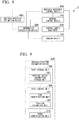
- FIG. 4 is a diagram showing an example of a flow of data in the obstacle avoidance control system 1.
- an obstacle is denoted by reference sign 950.
- the obstacle 950 is similar to the obstacle described above.
- the sensing data of the sensor of the control target equipment 900 is input to the state observation unit 291 of the information acquisition device 200.
- Image data of the imaging device 100 is input to the three-dimensional measurement unit 292 of the information acquisition device 200.
- the additional information is input to the three-dimensional measurement unit 292 in addition to the image data.
- the information acquisition device 200 transmits state information of the control target equipment 900 calculated by the state observation unit 291 to the nominal control device 300 and the obstacle avoidance control device 400. For example, the information acquisition device 200 transmits position information of the surface of the control target equipment 900 with voxel data. In addition, the information acquisition device 200 transmits information indicating the operation of the control target equipment 900, such as a velocity, acceleration, an angular velocity, or angular acceleration of a surface or a reference point of the control target equipment 900. For example, the information acquisition device 200 may be configured to transmit a vector in which generalized coordinates q and a generalized velocity q' are arranged.
- the information acquisition device 200 transmits the state information of the obstacle 950 to the obstacle avoidance control device 400.
- the information acquisition device 200 transmits three-dimensional position information of the obstacle 950 to the obstacle avoidance control device 400.
- the data format in which the information acquisition device 200 transmits the position information of the obstacle 950 is not limited to a specific data format.
- the information acquisition device 200 may be configured to transmit the position information of the obstacle 950 with voxel data.
- the information acquisition device 200 may be configured to transmit the position information of the obstacle 950 as surface data.
- the information acquisition device 200 may be configured to transmit the position information of the obstacle 950 as point cloud data.
- the nominal control device 300 calculates the nominal command value u r using the state information of the control target equipment 900 received from the information acquisition device 200.
- the nominal control device 300 transmits the calculated nominal command value u r to the obstacle avoidance control device 400.
- the interference function calculation unit 491 of the obstacle avoidance control device 400 calculates the interference function value B(x), the differential value ⁇ B(x, u) of B(x) between the control steps, and the potential function value P(x) on the basis of the state information of the control target equipment 900 and the state information of the obstacle obtained from the information acquisition device 200 and the control command value set by the equipment control unit 492.
- the process of the virtual force field incorporating unit 496 is not essential. Accordingly, the calculation of the potential function value by the interference function calculation unit 491 is not essential.
- the equipment control unit 492 of the obstacle avoidance control device 400 acquires the control command value u for the control target equipment 900 using the nominal command value u r obtained from the nominal control device 300, the interference function value B(x) obtained from the interference function calculation unit 491, the differential value ⁇ B(x, u) of the interference function value, and the potential function value P(x).
- the equipment control unit 492 controls the control target equipment 900 by transmitting the acquired control command value u to the control target equipment 900 via the second communication unit 410.
- FIG. 5 is a flowchart showing an example of a processing procedure in which the obstacle avoidance control device 400 acquires a control command value for the control target equipment 900.
- the obstacle avoidance control device 400 performs the process of FIG. 5 for each control step of control for the control target equipment 900.
- the virtual force field incorporating unit 496 calculates the control command value u p for simulating the force field on the basis of the potential function value P(x) calculated by the interference function calculation unit 491 (step S111).
- the control command value u p is used as a correction term for adding a value to the nominal command value or the avoidance command value.
- the avoidance necessity determination unit 494 determines whether or not the interference function value B(x) calculated by the interference function calculation unit 491 is larger than a threshold value ⁇ (step S112).
- the equipment control unit 492 controls the control target equipment 900 by transmitting the control command value u to the control target equipment 900 via the second communication unit 410 (step S161).
- step S161 the obstacle avoidance control device 400 ends the process of FIG. 5 .
- step S112 determines that the interference function value B(x) is less than or equal to the threshold value ⁇ in step S112 (step S112: NO)
- the avoidance command value calculation unit 495 attempts to acquire the control command value based on the calculation of the above-mentioned optimization problem (step S131).
- the equipment control unit 492 determines whether or not the avoidance command value calculation unit 495 has obtained the solution to the optimization problem in step S131 (step S132).
- step S141 the process proceeds to step S161.
- step S132 when it is determined that the solution to the optimization problem has not been obtained in the determination of step S132 (step S132: NO), the equipment control unit 492 generates a control command value u so that the control target equipment 900 is decelerated (step S151).
- step S151 the process proceeds to step S161.
- FIG. 6 is a flowchart showing an example of a processing procedure in which the obstacle avoidance control device 400 calculates a value associated with the interference function.
- the obstacle avoidance control device 400 performs the process of FIG. 6 as a preprocess for the process of FIG. 5 for each control step of controlling the control target equipment 900.
- the interference function calculation unit 491 calculates position information of a space occupied by the control target equipment 900 using the information about the control target equipment 900 transmitted by the information acquisition device 200, the structural information of the control target equipment 900 stored in the structural information storage unit 481, and the like (step S211).
- the interference function calculation unit 491 calculates the position information of the space occupied by the control target equipment 900 with a coordinate value based on a coordinate system of the control target equipment 900.
- the coordinate system of the control target equipment 900 described here is associated with a coordinate value for use in a control command value transmitted by the obstacle avoidance control device 400 to the control target equipment 900.
- the interference function calculation unit 491 acquires the position information of the obstacle (step S212).
- the three-dimensional measurement unit 292 may be configured to detect the position of the obstacle and generate position information based on the coordinate system of the control target equipment 900 and the interference function calculation unit 491 may be configured to use the position information.
- the three-dimensional measurement unit 292 may be configured to generate the position information of the obstacle with a coordinate value of a coordinate system different from the coordinate system of the control target equipment 900 and the interference function calculation unit 491 may be configured to perform coordinate conversion into the coordinate value of the coordinate system of the control target equipment 900.
- the interference function calculation unit 491 calculates the interference function value B(x) on the basis of the position information of the control target equipment 900 and the position information of the obstacle (step S213).
- the interference function calculation unit 491 calculates a differential value ⁇ B(x, u) of the interference function value on the basis of the position information of the control target equipment 900, the operation information of the control target equipment 900, and the position information of the obstacle (step S214).
- the interference function calculation unit 491 may be configured to use the operation information of the control target equipment 900 that is calculated by the state observation unit 291 from the sensing data of the sensor of the control target equipment 900 as the operation information of the control target equipment 900. Alternatively, the interference function calculation unit 491 may be configured to use the control command value u for the control target equipment 900 in a previous control step as the operation information of the control target equipment 900. Alternatively, the interference function calculation unit 491 may be configured to use both of the above as the operation information of the control target equipment 900.
- step S214 the obstacle avoidance control device 400 ends the process of FIG. 6 .
- FIG. 7 is a flowchart showing an example of a processing procedure in which the obstacle avoidance control device 400 calculates the differential value ⁇ B(x, u) of the interference function value.
- the obstacle avoidance control device 400 performs the process of FIG. 7 in step S214 of FIG. 6 .
- the interference function calculation unit 491 determines whether ⁇ B(x, u) can be calculated in the calculation of the dynamic model (step S221).
- the interference function calculation unit 491 calculates ⁇ B(x, u) in the calculation of the dynamic model (step S231).
- step S231 the obstacle avoidance control device 400 ends the process of FIG. 7 .
- the interference function calculation unit 491 calculates ⁇ B(x, u) using a minute change in the control command value u. For example, the interference function calculation unit 491 approximately calculates ⁇ B(x, u) using Expression (10). [Math. 10] ⁇ B x u ⁇ ⁇ B x u ⁇ u ⁇ t ⁇ u
- ⁇ t denotes a time interval between control steps.
- B(x, u) denotes the interference function value. Because the operation of the control target equipment 900 changes and the interference function value changes when the control command value u changes, the interference function B is referred to as a function of the control command value u.
- step S241 the obstacle avoidance control device 400 ends the process of FIG. 7 .
- step S231 When the processing of step S231 is compared with the processing of step S241, it is not necessary to perform the trial using a minute change in u and the approximation as in Expression (10) in the processing of step S231. In this regard, it can be expected that the accuracy of the obtained ⁇ B(x, u) will be higher in the processing of step S231 than in the processing of step S241. On the other hand, even if ⁇ B(x, u) cannot be calculated in step S231, it can be expected that ⁇ B(x, u) will be able to be calculated in the processing of step S241.
- the interference function calculation unit 491 determines whether ⁇ B(x, u) can be calculated in the processing of step S231 and performs the processing of step S231 if ⁇ B(x, u) can be calculated. On the other hand, if ⁇ B(x, u) cannot be calculated in the processing of step S231, the interference function calculation unit 491 performs the processing of step S241.
- the nominal command value acquisition unit 493 acquires the nominal command value.
- the nominal command value is, so to speak, a reference control command value for use in obtaining a command value for the control target equipment 900.
- the avoidance command value calculation unit 495 obtains the avoidance command value.
- the avoidance command value is a control command value that satisfies constraint conditions including a condition sufficient for the control target equipment 900 not to come into contact with the obstacle as in Expression (3) and that satisfies a prescribed condition associated with a magnitude of a degree of a difference from the nominal command value as in Expression (2).
- the equipment control unit 492 controls the control target equipment 900 on the basis of either the nominal command value or the processing result of the avoidance command value calculation unit 495.
- the obstacle avoidance control device 400 can set a constraint condition for avoiding contact between the control target equipment 900 and an obstacle.
- a constraint condition can be set for each reference point.
- the reference point for controlling the control target equipment 900 to avoid the obstacle is not limited to one place and control can be performed to avoid obstacles with respect to various parts of the control target equipment 900.
- the obstacle avoidance control device 400 when there are a plurality of obstacles, a constraint condition can be set for each obstacle. In this regard, according to the obstacle avoidance control device 400, when there are a plurality of obstacles, it is possible to deal with the obstacles relatively easily.
- the nominal command value acquisition unit 493 acquires a nominal command value as the nominal command value.
- the nominal command value is a control command value when obstacle avoidance by the control target equipment 900 is not taken into account.
- the nominal command value is a command value set to achieve the target set in the control target equipment 900 and it can be expected that the obstacle avoidance control device 400 will be able to achieve the target by generating the avoidance command value in consideration of obstacle avoidance so that the avoidance command value is close to the nominal command value.
- the nominal command value can be used as a reference when the avoidance command value is generated in the above way.
- the avoidance command value can be generated relatively easily.
- the interference function calculation unit 491 calculates the interference function value (B(x)) and a value indicating a change over time in the interference function value ( ⁇ B(x, u)).
- the interference function value is a value based on a positional relationship between the control target equipment 900 and the obstacle.
- the avoidance command value calculation unit 495 obtains the avoidance command value using the interference function value and the value indicating the change over time in the interference function value.
- the obstacle avoidance control device 400 by using the above values, a degree of a possibility that the control target equipment 900 will come into contact with an obstacle can be estimated and a countermeasure such as obstacle avoidance can be taken as necessary.
- the distance between the control target equipment 900 and the obstacle can be used as an interference function and a function value can be easily calculated from a position of the control target equipment 900 and a position of the obstacle.
- the load on the obstacle avoidance control device 400 can be lightened.
- the avoidance necessity determination unit 494 determines whether or not a process of acquiring the avoidance command value is necessary on the basis of the positional relationship between the control target equipment 900 and the obstacle.
- the avoidance command value calculation unit 495 obtains the avoidance command value when the avoidance necessity determination unit 494 determines that the process of acquiring the avoidance command value is necessary.
- the avoidance necessity determination unit 494 determines that the process of acquiring the avoidance command value is unnecessary, the nominal command value generated by the nominal control device 300 can be used as the command value for the control target equipment 900 and the obstacle avoidance control device 400 does not need to generate a command value newly.
- the load on the obstacle avoidance control device 400 can be relatively lightened.
- the equipment control unit 492 determines that the avoidance command value calculation unit 495 has failed to acquire the avoidance command value, the equipment control unit 492 causes the control target equipment 900 to decelerate.
- the equipment control unit 492 causes the control target equipment 900 to decelerate. Thereby, it is possible to secure a time period until the control target equipment 900 comes into contact with the obstacle, and it is possible to take a countermeasure such as manually moving the obstacle. Also, even though the control target equipment 900 has come into contact with an obstacle, it can be expected that the deceleration of the control target equipment 900 will not cause a problem or a degree of a problem will be lightened.
- the virtual force field incorporating unit 496 reflects an operation in which the control target equipment 900 moves farther away from the obstacle with greater acceleration when the control target equipment 900 is closer to the obstacle in at least one of the nominal command value and the avoidance command value.
- the equipment control unit 492 controls the control target equipment 900 on the basis of either the nominal command value in which the above operation is reflected or the avoidance command value in which the above operation is reflected.
- control target equipment 900 operates to move farther away from the obstacle when the control target equipment 900 is closer to the obstacle.
- the control target equipment 900 can more reliably avoid the obstacle.
- the avoidance command value calculation unit 495 obtains an avoidance command value that satisfies a condition sufficient for the reference point not to come into contact with an obstacle for each reference point set in the control target equipment 900.
- the expression of the constraint condition can be set for each reference point.
- the obstacle avoidance control device 400 in this regard, when a plurality of reference points are set in the control target equipment, it is possible to deal with the obstacle relatively easily.
- the avoidance command value calculation unit 495 obtains an avoidance command value that satisfies a condition sufficient for the control target equipment 900 not to come into contact with the obstacle for each obstacle.
- the expression of the constraint condition can be set for each obstacle.
- the obstacle avoidance control device 400 in this regard, when there are a plurality of obstacles, it is possible to deal with the obstacles relatively easily.
- the avoidance command value calculation unit 495 obtains the avoidance command value that satisfies a condition sufficient for the control target equipment 900 not to come into contact with the obstacle, the avoidance command value being determined on the basis of a distance between the control target equipment 900 and the obstacle at a position where the control target equipment 900 is closest to the obstacle.
- the avoidance command value calculation unit 495 can obtain the avoidance command value in which a possibility of contact between the control target equipment 900 and the obstacle is reflected more accurately by obtaining the avoidance command value using the distance between the control target equipment 900 and the obstacle at the position where the control target equipment 900 is closest to the obstacle.
- the control target equipment 900 can be controlled with relatively high accuracy.
- FIG. 8 is a schematic configuration diagram showing an example of a device configuration of an obstacle avoidance control system according to a second example embodiment.
- an obstacle avoidance control system 2 includes an imaging device 100, an information acquisition device 200, a nominal control device 300, an obstacle avoidance control device 400, and an obstacle position estimation device 500. Also, the obstacle avoidance control system 2 controls control target equipment 900.
- the obstacle avoidance control system 2 is different from the case of the obstacle avoidance control system 1 in that the obstacle position estimation device 500 is provided. In other respects, the obstacle avoidance control system 2 is similar to the obstacle avoidance control system 1. Description of similarities between the obstacle avoidance control system 2 and the obstacle avoidance control system 1 will be omitted and the reference signs shown in FIG. 2 and the reference signs shown in FIG. 3 will be cited as necessary.
- FIG. 9 is a schematic block diagram showing an example of a functional configuration of the obstacle position estimation device 500.
- the obstacle position estimation device 500 includes a third communication unit 510, a third storage unit 580, and a third control unit 590.
- the third storage unit 580 includes a physical object information storage unit 581.
- the third control unit 590 includes a type identification unit 591 and a position estimation unit 592.
- the third communication unit 510 communicates with other devices.
- the third communication unit 510 receives position information of an obstacle from the information acquisition device 200.
- the third communication unit 510 transmits the position information of the obstacle in which a process of the position estimation unit 592 is reflected to the obstacle avoidance control device 400.
- the third communication unit 510 may be configured to transmit obstacle position information calculated by the position estimation unit 592 to the obstacle avoidance control device 400.
- the third communication unit 510 may be configured to transmit information obtained by replacing the position information of the obstacle with the position information calculated by the position estimation unit 592 with respect to the information received from the information acquisition device 200 to the obstacle avoidance control device 400.
- the third storage unit 580 stores various types of data. A function of the third storage unit 580 is executed using the storage device provided in the obstacle position estimation device 500.
- the physical object information storage unit 581 stores physical object information.
- the physical object information storage unit 581 stores information in which type identification information for identifying a type of physical object and information for estimating a position of the physical object such as a shape and a size of the physical object are associated as the physical object information.
- the type of physical object here is not limited to a specific type of physical object as long as it can be identified.
- the physical object information storage unit 581 may store physical object information for each name of a physical object such as a PET bottle or a cup.
- the physical object information storage unit 581 may store physical object information for each shape of the physical object such as a columnar physical object or a circular physical object.
- the physical object identification information may include a parameter as in a case in which, when PET bottle information is included in physical object identification information, a capacity of the PET bottle is a parameter.
- the third control unit 590 controls each unit of the obstacle position estimation device 500 so that various types of processes are executed.
- a function of the third control unit 590 is executed by a CPU provided in the obstacle position estimation device 500 reading a program from the third storage unit 580 and executing the program.
- the type identification unit 591 identifies a type of physical object that is an obstacle on the basis of information about the obstacle calculated by a three-dimensional measurement unit 292.
- the type identification unit 591 may be configured to extract a physical object within the obstacle in a process of dividing the obstacle indicated in information calculated by the three-dimensional measurement unit 292 into parts that are physically grouped or the like.
- the type identification unit 591 may be configured to identify a type of physical object by performing pattern matching for each extracted physical object.
- the type identification unit 591 may be configured as a physical object detector based on a neural network, such as You Only Look Once (YOLO) or a single shot multibox detector (SSD).
- YOLO You Only Look Once
- SSD single shot multibox detector
- the position estimation unit 592 estimates a position of a physical object that is an obstacle on the basis of the information about the obstacle calculated by the three-dimensional measurement unit 292 and the physical object information stored in the physical object information storage unit 581.
- the position estimation unit 592 reads information about a position and a size of the physical object from the physical object information stored in the physical object information storage unit 581 on the basis of the type of physical object identified by the type identification unit 591.
- the position estimation unit 592 calculates position information of the physical object under the assumption that there is the physical object having the position and the size read from the physical object information at the position of the physical object indicated in the information about the obstacle calculated by the three-dimensional measurement unit 292.
- the position estimation unit 592 may be configured to calculate the position of the physical object in the format of a coordinate value.
- the position estimation unit 592 regards the obstacle as a physical object having a three-dimensional spread and calculates coordinates thereof. For example, when the imaging device 100 captures an image of an obstacle from one side and does not obtain an image of the other side, the position estimation unit 592 can calculate the position information of the obstacle in a portion not shown in the image.
- the position estimation unit 592 transmits the calculated position information for each physical object to the obstacle avoidance control device 400 via the third communication unit 510.
- the third communication unit 510 may be configured to transmit the position information for each physical object calculated by the position estimation unit 592 to the obstacle avoidance control device 400 in addition to the information received from the information acquisition device 200.
- the third communication unit 510 may be configured to transmit information obtained by replacing the position information of the obstacle with the position information calculated by the position estimation unit 592 to the obstacle avoidance control device 400 with respect to the information received from the information acquisition device 200.
- FIG. 10 is a diagram showing an example of a flow of data in the obstacle avoidance control system 2.
- the obstacle avoidance control system 2 of FIG. 10 is different from the obstacle avoidance control system 1 of FIG. 4 in that the obstacle position estimation device 500 is provided. Due to the above difference, the information acquisition device 200 transmits the information about the obstacle calculated by the three-dimensional measurement unit 292 to the obstacle avoidance control device 400 in FIG. 4 , whereas the information acquisition device 200 transmits the information about the obstacle calculated by the three-dimensional measurement unit 292 to the obstacle position estimation device 500 in FIG. 10 .
- the obstacle position estimation device 500 transmits information obtained by replacing the position information of the obstacle with the position information calculated by the position estimation unit 592 with respect to the information received from the information acquisition device 200 to the obstacle avoidance control device 400.
- the interference function calculation unit 491 calculates an interference function value, a difference between interference function values, and a potential function value using the information calculated by the state observation unit 291 of the information acquisition device 200 and the information from the obstacle position estimation device 500.
- FIG. 10 is similar to the case of FIG. 4 .
- the type identification unit 591 identifies a type of physical object that is an obstacle.
- the position estimation unit 592 reads information based on the type identified by the type identification unit 591 from the physical object information indicating the size and the shape of the physical object for each type of physical object and estimates a position of the physical object serving as the obstacle using the read information.
- the obstacle avoidance control system 2 can obtain the position information of the obstacle with higher accuracy.
- the obstacle position estimation device 500 can supplement the position information of the obstacle with respect to a portion not shown in the image of the imaging device 100.
- the obstacle avoidance control device 400 can calculate a command value for causing the control target equipment 900 to avoid the obstacle with higher accuracy.
- FIG. 11 is a schematic configuration diagram showing an example of a device configuration of the obstacle avoidance control system according to a third example embodiment.
- an obstacle avoidance control system 3 includes an imaging device 100, an information acquisition device 200, a nominal control device 300, an obstacle avoidance control device 400, an obstacle position estimation device 500, and an obstacle operation prediction device 600. Also, the obstacle avoidance control system 3 controls control target equipment 900.
- the obstacle avoidance control system 3 is different from the obstacle avoidance control system 2 in that the obstacle operation prediction device 600 is provided.
- the obstacle avoidance control system 3 is similar to the obstacle avoidance control system 2. Description of similarities between the obstacle avoidance control system 3 and the obstacle avoidance control system 2 will be omitted and the reference signs shown in FIG. 2 , the reference signs shown in FIG. 3 , and the reference signs shown in FIG. 9 will be cited as necessary.
- FIG. 12 is a schematic block diagram showing an example of the functional configuration of the obstacle operation prediction device 600.
- the obstacle operation prediction device 600 includes a fourth communication unit 610, a fourth storage unit 680, and a fourth control unit 690.
- the fourth storage unit 680 includes a physical object operation information storage unit 681.
- the fourth control unit 690 includes a position prediction unit 691.
- the fourth communication unit 610 communicates with other devices.
- the obstacle position estimation device 500 transmits information indicating a type of obstacle identified by the type identification unit 591 and position information of the obstacle calculated by the position estimation unit 592 in association.
- the fourth communication unit 610 receives the information transmitted by the obstacle position estimation device 500.
- the fourth communication unit 610 transmits information obtained by adding future position information of the obstacle predicted by the position prediction unit 691 to the information received from the obstacle position estimation device 500 to the obstacle avoidance control device 400.
- the fourth storage unit 680 stores various types of data. A function of the fourth storage unit 680 is executed using the storage device provided in the obstacle operation prediction device 600.
- the physical object operation information storage unit 681 stores physical object operation information.
- the physical object operation information storage unit 681 stores information in which type identification information for identifying the type of physical object and information for predicting an operation of the physical object are associated as the physical object operation information.
- the physical object operation information storage unit 681 may be configured to store an operation model of the physical object as the physical object operation information. Alternatively, the physical object operation information storage unit 681 may be configured to store history information about a position of the physical object detected as an obstacle as the physical object operation information.
- the fourth control unit 690 controls each unit of the obstacle operation prediction device 600 so that various types of processes are executed.
- a function of the fourth control unit 690 is executed by a CPU provided in the obstacle operation prediction device 600 reading a program from the fourth storage unit 680 and executing the program.
- the position prediction unit 691 identifies a future position of a physical object serving as the obstacle. For example, the position prediction unit 691 reads information for predicting the operation of the physical object from the physical object operation information storage unit 681 using identification information of the type of physical object identified by the type identification unit 591 of the obstacle position estimation device 500. The position prediction unit 691 predicts a movement quantity of the physical object between control steps using the read information. The position prediction unit 691 predicts the position of the physical object in the next control step by adding the predicted movement quantity to the position of the physical object calculated by the position estimation unit 592 of the obstacle position estimation device 500.
- FIG. 13 is a diagram showing an example of a flow of data in the obstacle avoidance control system 3.
- the obstacle avoidance control system 3 of FIG. 13 is different from the obstacle avoidance control system 2 of FIG. 10 in that the obstacle operation prediction device 600 is provided. Due to the above difference, the obstacle position estimation device 500 transmits information to the obstacle avoidance control device 400 in FIG. 10 , whereas the obstacle position estimation device 500 transmits information to the obstacle operation prediction device 600 and the obstacle operation prediction device 600 transmits the information to the obstacle avoidance control device 400 in FIG. 13 .
- the obstacle position estimation device 500 transmits information in which information indicating the type of physical object is associated with the position information of the physical object to the obstacle operation prediction device 600 for each physical object.
- the obstacle operation prediction device 600 transmits information in which the information indicating the type of physical object, the position information of the physical object, and the prediction information about the position of the physical object are associated to the obstacle avoidance control device 400 for each physical object.
- the interference function calculation unit 491 calculates an interference function value, a difference between interference function values, and a potential function value using the information calculated by the state observation unit 291 of the information acquisition device 200 and the information from the obstacle operation prediction device 600.
- FIG. 13 is similar to the case of FIG. 10 .
- the obstacle operation prediction device 600 reads information based on the identified type from the physical object operation information indicating information about the movement of the physical object for each type of physical object and predicts a future position of the obstacle using the read information.
- the interference function calculation unit 491 of the obstacle avoidance control device 400 calculates a value indicating a change over time in the interference function value on the basis of the predicted future position of the obstacle.
- the obstacle avoidance control system 3 can use information about the operation of the physical object, which is shown as a characteristic of the physical object that is the obstacle, in the prediction of the future position of the obstacle. In this regard, the future position of the obstacle can be predicted with relatively high accuracy.
- the obstacle avoidance control system 3 can perform obstacle avoidance of the control target equipment 900 with relatively high accuracy in that a result of predicting the future position of the obstacle is used for obstacle avoidance of the control target equipment 900.
- FIG. 14 is a schematic configuration diagram showing an example of a device configuration of an obstacle avoidance control system according to a fourth example embodiment.
- the obstacle avoidance control system 4 includes an imaging device 100, an information acquisition device 200, and an obstacle avoidance control device 401. Also, the obstacle avoidance control system 2 controls control target equipment 900.
- the obstacle avoidance control system 4 is different from the obstacle avoidance control device 400 in that no nominal control device 300 is provided and the obstacle avoidance control device 401 is provided instead of the obstacle avoidance control device 400.
- one of the constraint conditions for use in a process of obtaining an avoidance command value includes a constraint condition for reflecting a target set in the control target equipment 900 in a control command value.
- the obstacle avoidance control system 4 is similar to the obstacle avoidance control system 1. Description of similarities between the obstacle avoidance control system 4 and the obstacle avoidance control system 1 will be omitted and the reference signs shown in FIG. 2 will be cited as necessary.
- the fourth example embodiment may be implemented on the basis of the second example embodiment or the third example embodiment.
- the obstacle avoidance control system 4 may include an obstacle position estimation device 500 according to the second example embodiment.
- the obstacle avoidance control system 4 may include the obstacle position estimation device 500 and the obstacle operation prediction device 600 according to the third example embodiment.
- FIG. 15 is a schematic block diagram showing an example of a functional configuration of the obstacle avoidance control device 401.
- the obstacle avoidance control device 401 includes a second communication unit 410, a second storage unit 480, and a second control unit 490.
- the second storage unit 480 includes a structural information storage unit 481, a dynamic model storage unit 482, and a control function storage unit 483.
- the second control unit 490 includes an interference function calculation unit 491 and an equipment control unit 492.
- the equipment control unit 492 includes an avoidance command value calculation unit 495 and a virtual force field incorporating unit 496.
- the obstacle avoidance control device 401 is different from the obstacle avoidance control device 400 in that the second storage unit 480 includes the control function storage unit 483, and the equipment control unit 492 does not include the nominal command value acquisition unit 493 and the avoidance necessity determination unit 494.
- the above difference is due to a difference in a method of reflecting the target set in the control target equipment 900 in the control command value.
- the avoidance command value calculation unit 495 causes the target set in the control target equipment 900 to be reflected in the avoidance command value by approximating the avoidance command value to a nominal command value using an evaluation function.
- one of the constraint conditions for use in the avoidance command value calculation unit 495 in the process of obtaining the avoidance command value includes a constraint condition for reflecting the target set in the control target equipment 900 in the control command value.
- the obstacle avoidance control device 401 is similar to the obstacle avoidance control device 400.
- the constraint conditions in an optimization problem to be solved by the avoidance command value calculation unit 495 in the fourth example embodiment are expressed by three types of inequalities.
- the first type of inequality among the three types of inequalities is an inequality showing a condition sufficient for the control target equipment 900 not to come into contact with an obstacle, as in the case of the first example embodiment.
- the first type of inequality among the three types of inequalities is shown as in, for example, the above-described Expression (3).
- the second type of inequality among the three types of inequalities is an inequality representing a constraint condition that the control command value is set within a range of upper and lower limit values defined by the specifications of the movable part of the control target equipment 900 as in the case of the first example embodiment.
- the second type of inequality among the three types of inequalities is shown as in, for example, the above-described Expression (7).
- the third type of inequality among the three types of inequalities represents a condition associated with a degree at which the target set in the control target equipment 900 is stably achieved by executing the control command.
- a Lyapunov function is denoted by V
- a differential value of a Lyapunov function value between control steps is denoted by ⁇ V
- the third type of inequality representing the constraint condition may be shown as in Expression (11). [Math. 11] ⁇ V x u ⁇ d
- the solution is a control command value for strictly achieving the target set in the control target equipment 900.
- the solution is searched for with pinpoint accuracy.
- the evaluation function in the optimization problem may include the term for evaluating a magnitude of the value of "d.”
- the third type of inequality representing the constraint condition in the optimization problem to be solved by the avoidance command value calculation unit 495 in the fourth example embodiment is not limited to Expression (11) and can be various inequalities capable of adjusting a tradeoff between a degree of achievement of the target set in the control target equipment 900 and the ease of obtaining the solution.
- the third type of inequality indicating the constraint condition in the optimization problem to be solved by the avoidance command value calculation unit 495 in the fourth example embodiment may be shown as in Expression (12).
- a function D is a function for calculating the Euclidean distance between a target value and an actual value set in the control target equipment 900. Assuming that the target value set in the control target equipment 900 is indicated by a vector, the avoidance command value calculation unit 495 obtains a sum of squares of the differences between the target value and the actual value for all elements of the vector in the calculation of the function D and calculates a square root of the sum.
- a function ⁇ D is a function for calculating a differential value between the control steps in the Euclidean distance between the target value set in the control target equipment 900 and the actual value.
- a function value D(x) in a control step t is denoted by D(xt)
- a function value D(x) in the control step t+1 is denoted by D(x t+1 ).
- Expression (12) is a constraint inequality for mitigating the condition for guaranteeing the stability of the control target equipment 900. For example, if the avoidance command value calculation unit 495 obtains the control command u that satisfies ⁇ D(x, u) ⁇ 0 all the time, the control target equipment 900 can stably achieve a target value.
- u T u indicates a square of the norm as a vector of the control command value u.
- the norm here is also referred to as the Euclidean norm or the Euclidean distance.
- the item "u T u" in Expression (13) is set to reduce a magnitude of the control command value as far as possible so that the control target equipment 900 does not perform an ineffective operation.
- the candidate having a smaller value between the values of the "p ⁇ d 2 " terms is adopted as an optimum solution if the values of the "u T u" terms of the two solution candidates are the same.
- Expression (13) corresponds to an example of the evaluation function.
- the control command value u which is a minimum solution in Expression (13), corresponds to an example of a control command value in which the evaluation value obtained by applying the control command value to the evaluation function satisfies a prescribed end condition.
- FIG. 16 is a diagram showing an example of a flow of data in the obstacle avoidance control system 4.
- the obstacle avoidance control system 4 does not include the nominal control device 300 in FIG. 16 . According to this, in FIG. 16 , a value associated with a control target from the information acquisition device 200 is input to the equipment control unit 492.
- FIG. 16 is similar to the case of FIG. 4 .
- FIG. 17 is a flowchart showing an example of a processing procedure in which the obstacle avoidance control device 401 acquires a control command value for the control target equipment 900.
- the obstacle avoidance control device 401 performs the process of FIG. 17 for each control step of control for the control target equipment 900.
- step S311 of FIG. 17 is similar to the processing of step S111 of FIG. 5 .
- step S311 the avoidance command value calculation unit 495 attempts to acquire the control command value based on the calculation of the optimization problem described above (step S312).
- the equipment control unit 492 determines whether or not the avoidance command value calculation unit 495 has obtained a solution to the optimization problem in step S312 (step S313).
- step S313 When the equipment control unit 492 determines that the solution has been obtained (step S313: YES), the process proceeds to step S321.
- the processing of step S321 is similar to the processing of step S141 of FIG. 5 .
- step S321 the process proceeds to step S341.
- the processing of step S341 is similar to the processing of step S161 of FIG. 5 .
- the obstacle avoidance control device 401 ends the process of FIG. 17 .
- step S313 determines that a solution has not been obtained in step S313 (step S313: NO).
- step S3331 The processing of step S331 is similar to the processing of step S151 of FIG. 5 . After step S331, the process proceeds to step S341.
- the obstacle avoidance control device 401 can also set a constraint condition for avoiding the contact between the control target equipment 900 and an obstacle.
- a constraint condition can be set for each reference point. In this way, according to the obstacle avoidance control device 401, it is possible to set a plurality of reference points for avoiding contact between the control target equipment 900 and the obstacle and control can be performed to avoid the obstacle with respect to various parts of the control target equipment 900.
- a constraint condition can be set for each obstacle when there are a plurality of obstacles.
- FIG. 18 is a diagram showing an example of a configuration of an obstacle avoidance control device according to a fifth example embodiment.
- An obstacle avoidance control device 10 shown in FIG. 18 includes an avoidance command value calculation unit 11 and a device control unit 12.
- the avoidance command value calculation unit 11 obtains an avoidance command value that is a control command value for control target equipment, the control command value which satisfies constraint conditions including a condition sufficient for the control target equipment not to come into contact with an obstacle, and the control command value that an evaluation value obtained by applying the control command value to an evaluation function satisfies a prescribed end condition.
- the device control unit 12 controls the control target equipment on the basis of a processing result of the avoidance command value calculation unit 11.
- the obstacle avoidance control device 10 can set a constraint condition for avoiding contact between the control target equipment and the obstacle.
- a constraint condition can be set for each reference point.
- the reference point for avoiding the obstacle with respect to the control target equipment is not limited to one place and control can be performed to avoid obstacles with respect to various parts of the control target equipment.
- a constraint condition can be set for each obstacle when there are a plurality of obstacles.
- the obstacle avoidance control device 10 it is possible to deal with the obstacles relatively easily when there are a plurality of obstacles.
- FIG. 19 is a diagram showing an example of a processing procedure in an obstacle avoidance control method according to a sixth example embodiment.
- the obstacle avoidance control method shown in FIG. 19 includes a process (step S11) of obtaining an avoidance command value that is a control command value for control target equipment, the control command value which satisfies constraint conditions including a condition sufficient for the control target equipment not to come into contact with an obstacle, and the control command value that an evaluation value obtained by applying the control command value to an evaluation function satisfies a prescribed end condition; and a process (step S12) of controlling the control target equipment on the basis of a processing result in step S11.
- this obstacle avoidance control method it is possible to set a constraint condition for avoiding contact between the control target equipment and the obstacle.
- a constraint condition can be set for each reference point.
- the reference point for avoiding the obstacle with respect to the control target equipment is not limited to one place and control can be performed to avoid obstacles with respect to various parts of the control target equipment.
- FIG. 20 is a schematic block diagram showing a configuration of a computer according to at least one example embodiment.
- the computer 700 includes a CPU 710, a main storage device 720, an auxiliary storage device 730, and an interface 740.
- any one or more of the information acquisition device 200, the nominal control device 300, the obstacle avoidance control device 400, the obstacle avoidance control device 401, the obstacle position estimation device 500, and the obstacle operation prediction device 600 described above may be implemented in the computer 700.
- the operation of each of the above-described processing units is stored in the auxiliary storage device 730 in the form of a program.
- the CPU 710 reads the program from the auxiliary storage device 730, loads the program into the main storage device 720, and executes the above-described process in accordance with the program. Also, the CPU 710 secures a storage area corresponding to each of the above-described storage units in the main storage device 720 in accordance with the program. Communication between each device and other devices is executed when the interface 740 has a communication function and communication is performed in accordance with the control of the CPU 710.
- the operations of the first control unit 290 and each unit thereof are stored in the auxiliary storage device 730 in the form of a program.
- the CPU 710 reads the program from the auxiliary storage device 730, loads the program into the main storage device 720, and executes the above-described process in accordance with the program.
- the CPU 710 secures a storage area corresponding to the first storage unit 280 in the main storage device 720 in accordance with the program. Communication to be performed by the first communication unit 210 is executed when the interface 740 has a communication function and communication is performed in accordance with the control of the CPU 710.
- the operations of the second control unit 490 and each unit thereof are stored in the auxiliary storage device 730 in the form of a program.
- the CPU 710 reads the program from the auxiliary storage device 730, loads the program into the main storage device 720, and executes the above-described process in accordance with the program.
- the CPU 710 secures the second storage unit 480 and the storage area corresponding to each unit in the main storage device 720 in accordance with the program. Communication to be performed by the second communication unit 410 is executed when the interface 740 has a communication function and communication is performed in accordance with the control of the CPU 710.
- the operations of the second control unit 490 and each unit thereof are stored in the auxiliary storage device 730 in the form of a program.
- the CPU 710 reads the program from the auxiliary storage device 730, loads the program into the main storage device 720, and executes the above-described process in accordance with the program.
- the CPU 710 secures the second storage unit 480 and the storage area corresponding to each unit in the main storage device 720 in accordance with the program. Communication to be performed by the second communication unit 410 is executed when the interface 740 has a communication function and communication is performed in accordance with the control of the CPU 710.
- the operations of the third control unit 590 and each unit thereof are stored in the auxiliary storage device 730 in the form of a program.
- the CPU 710 reads the program from the auxiliary storage device 730, loads the program into the main storage device 720, and executes the above-described process in accordance with the program.
- the CPU 710 secures the third storage unit 580 and the storage area corresponding to each unit in the main storage device 720 in accordance with the program. Communication to be performed by the third communication unit 510 is executed when the interface 740 has a communication function and communication is performed in accordance with the control of the CPU 710.
- the operations of the fourth control unit 690 and each unit thereof are stored in the auxiliary storage device 730 in the form of a program.
- the CPU 710 reads the program from the auxiliary storage device 730, loads the program into the main storage device 720, and executes the above process in accordance with the program.
- the CPU 710 secures the fourth storage unit 680 and the storage area corresponding to each unit in the main storage device 720 in accordance with the program. Communication to be performed by the fourth communication unit 610 is executed when the interface 740 has a communication function and communication is performed in accordance with the control of the CPU 710.
- a process of each unit may be performed by recording a program for implementing all or some functions of the information acquisition device 200, the nominal control device 300, the obstacle avoidance control device 400, the obstacle avoidance control device 401, the obstacle position estimation device 500, and the obstacle operation prediction device 600 on a computer-readable recording medium and causing a computer system to read and execute the program recorded on the recording medium.
- the "computer system” described here includes an operating system (OS) and hardware such as peripheral devices.
- the "computer-readable recording medium” refers to a flexible disk, a magneto-optical disc, a read only memory (ROM), a portable medium such as a compact disc (CD)-ROM, or a storage device such as a hard disk embedded in the computer system.
- the above-described program may be a program for implementing some of the above-described functions. Further, the above-described program may be capable of implementing the above-described function in combination with a program already recorded on the computer system.
- the example embodiments of the present invention may be applied to an obstacle avoidance control device, an obstacle avoidance control system, an obstacle avoidance control method, and a recording medium.
Landscapes
- Engineering & Computer Science (AREA)
- Robotics (AREA)
- Mechanical Engineering (AREA)
- Manipulator (AREA)
- Control Of Position, Course, Altitude, Or Attitude Of Moving Bodies (AREA)
Abstract
Description
- The present invention relates to an obstacle avoidance control device, an obstacle avoidance control system, an obstacle avoidance control method, and a recording medium.
- Technology for performing control so that control target equipment such as a robot avoids an obstacle has been proposed. For example, in the robot control device described in
Patent Document 1, when there is an obstacle between a target position of a tip of an arm of a robot and a first position which is a position before the tip reaches the target position, a convex trajectory for avoiding an obstacle is set. The tip of the arm moves along the above trajectory. - [Patent Document 1]
Japanese Unexamined Patent Application, First Publication No. 2018-167333 - A location where the robot is likely to come into contact with the obstacle is not limited to the tip of the arm thereof. It is preferable that the obstacle be avoided with respect to various parts of the control target equipment as well as the tip of the robot arm.
- An example object of the present invention is to provide an obstacle avoidance control device, an obstacle avoidance control system, an obstacle avoidance control method, and a recording medium capable of solving the above-described problems.
- According to a first example aspect of the present invention, there is provided an obstacle avoidance control device including: an avoidance command value calculation unit that obtains an avoidance command value that is a control command value for control target equipment, the control command value which satisfies constraint conditions including a condition sufficient for the control target equipment not to come into contact with an obstacle, and the control command value that an evaluation value obtained by applying the control command value to an evaluation function satisfies a prescribed end condition; and an equipment control unit that controls the control target equipment on the basis of a processing result of the avoidance command value calculation unit.
- According to a second example aspect of the present invention, there is provided an obstacle avoidance control method including: a process of obtaining an avoidance command value that is a control command value for control target equipment, the control command value which satisfies constraint conditions including a condition sufficient for the control target equipment not to come into contact with an obstacle, and the control command value that an evaluation value obtained by applying the control command value to an evaluation function satisfies a prescribed end condition; and a process of controlling the control target equipment on the basis of a processing result in the process of obtaining the avoidance command value.
- According to a third example aspect of the present invention, there is provided a recording medium recording a program for causing a computer to execute: a process of obtaining an avoidance command value that is a control command value for control target equipment, the control command value which satisfies constraint conditions including a condition sufficient for the control target equipment not to come into contact with an obstacle, and the control command value that an evaluation value obtained by applying the control command value to an evaluation function satisfies a prescribed end condition; and a process of controlling the control target equipment on the basis of a processing result in the process of obtaining the avoidance command value.
- According to the obstacle avoidance control device, the obstacle avoidance control system, the obstacle avoidance control method, and the recording medium described above, it is possible to perform control so that an obstacle is avoided with respect to various parts of the control target equipment.
-
-
FIG. 1 is a schematic configuration diagram showing an example of a device configuration of an obstacle avoidance control system according to a first example embodiment. -
FIG. 2 is a schematic block diagram showing an example of a functional configuration of an information acquisition device according to the first example embodiment. -
FIG. 3 is a schematic block diagram showing an example of a functional configuration of an obstacle avoidance control device according to the first example embodiment. -
FIG. 4 is a diagram showing an example of a flow of data in the obstacle avoidance control system according to the first example embodiment. -
FIG. 5 is a flowchart showing an example of a processing procedure in which the obstacle avoidance control device according to the first example embodiment acquires a control command value for control target equipment. -
FIG. 6 is a flowchart showing an example of a processing procedure in which the obstacle avoidance control device according to the first example embodiment calculates a value associated with an interference function. -
FIG. 7 is a flowchart showing an example of a processing procedure in which the obstacle avoidance control device according to the first example embodiment calculates a differential value ΔB(x, u) of an interference function value. -
FIG. 8 is a schematic configuration diagram showing an example of a device configuration of an obstacle avoidance control system according to a second example embodiment. -
FIG. 9 is a schematic block diagram showing an example of a functional configuration of an obstacle position estimation device according to the second example embodiment. -
FIG. 10 is a diagram showing an example of a flow of data in an obstacle avoidance control system according to the second example embodiment. -
FIG. 11 is a schematic configuration diagram showing an example of a device configuration of an obstacle avoidance control system according to a third example embodiment. -
FIG. 12 is a schematic block diagram showing an example of a functional configuration of an obstacle operation prediction device according to the third example embodiment. -
FIG. 13 is a diagram showing an example of a flow of data in the obstacle avoidance control system according to the third example embodiment. -
FIG. 14 is a schematic configuration diagram showing an example of a device configuration of an obstacle avoidance control system according to a fourth example embodiment. -
FIG. 15 is a schematic block diagram showing an example of a functional configuration of an obstacle avoidance control device according to the fourth example embodiment. -
FIG. 16 is a diagram showing an example of a flow of data in the obstacle avoidance control system according to the fourth example embodiment. -
FIG. 17 is a flowchart showing an example of a processing procedure in which the obstacle avoidance control device according to the fourth example embodiment acquires a control command value for control target equipment. -
FIG. 18 is a diagram showing an example of a configuration of an obstacle avoidance control device according to a fifth example embodiment. -
FIG. 19 is a diagram showing an example of a processing procedure in an obstacle avoidance control method according to a sixth example embodiment. -
FIG. 20 is a schematic block diagram showing a configuration of a computer according to at least one example embodiment. - Hereinafter, example embodiments of the present invention will be described. The example embodiments to be described below do not limit the inventions set forth in the appended claims. Also, not all of combinations of features described in the example embodiments may be essential for solving means of the inventions.
-
FIG. 1 is a schematic configuration diagram showing an example of a device configuration of an obstacle avoidance control system according to a first example embodiment. In the configuration shown inFIG. 1 , the obstacleavoidance control system 1 includes animaging device 100, aninformation acquisition device 200, anominal control device 300, and an obstacleavoidance control device 400. - The obstacle
avoidance control system 1 controlscontrol target equipment 900. The obstacleavoidance control system 1 controls thecontrol target equipment 900 so that thecontrol target equipment 900 performs a desired operation and thecontrol target equipment 900 does not come into contact with an obstacle. - The desired operation described here is an operation for achieving a target set in the
control target equipment 900. The contact described here is not limited to a simple touch and includes a collision. When thecontrol target equipment 900 comes into contact with an obstacle, at least a part of thecontrol target equipment 900 may come into contact with at least a part of the obstacle. - Although a case in which the
control target equipment 900 is a vertical articulated robot will be described below as an example, a control target of the obstacleavoidance control system 1 operates in accordance with a control command value and can be various types of equipment that are likely to come into contact with an obstacle. For example, thecontrol target equipment 900 may be an industrial robot other than a vertical articulated robot. - Alternatively, the
control target equipment 900 may be a robot other than an industrial robot, such as a building robot or a domestic robot. Various robots that are not limited to a specific application and that change in shape can be used as an example of thecontrol target equipment 900. - Alternatively, the
control target equipment 900 may be moving objects such as automated guided vehicles or drones. Also, thecontrol target equipment 900 may be a device that operates autonomously as long as it can be controlled by a control command value. - The obstacle described here is an obstacle that is likely to come into contact with the
control target equipment 900. The obstacle is not limited to any specific type of obstacle. For example, the obstacle may be a human being, another robot, a nearby wall or machine, temporarily placed cargo, or a combination thereof. - Also, the
control target equipment 900 itself may be treated as an obstacle. For example, when thecontrol target equipment 900 is a vertical articulated robot and a robot arm and a pedestal portion come into contact with each other according to a posture thereof, the obstacleavoidance control system 1 treats thecontrol target equipment 900 as the obstacle, so that contact between the robot arm and the pedestal portion can be avoided. - The
imaging device 100 captures an image of an obstacle. For example, theimaging device 100 captures an image so that the entire space where thecontrol target equipment 900 can operate is included within an imaging range, and theimaging device 100 captures an image of the obstacle when the obstacle is present. - The
information acquisition device 200 estimates a position of the obstacle on the basis of the image captured by theimaging device 100. As theimaging device 100, a camera capable of obtaining three-dimensional information, such as a depth camera or a stereo camera, may be used. Alternatively, theinformation acquisition device 200 may be configured to use technology for obtaining three-dimensional information from a two-dimensional image, such as a three-dimensional extension of OpenPose. - Alternatively, the obstacle
avoidance control system 1 may be configured to include a device for obtaining three-dimensional information such as a three-dimensional light detection and ranging (3D-LiDAR) sensor in addition to or instead of theimaging device 100. - Also, the
imaging device 100 may include multiple cameras. Theimaging device 100 may be movable. - The
imaging device 100 may be configured to indicate a state of a space of an observation target with voxel data. - The
information acquisition device 200 acquires sensing data from a sensor that observes thecontrol target equipment 900, such as a sensor provided in thecontrol target equipment 900, and detects a position and an operation of thecontrol target equipment 900. The sensor from which theinformation acquisition device 200 acquires sensing data is not limited to a specific type of sensor. For example, theinformation acquisition device 200 may be configured to acquire information about any one of a joint angle, a joint angular velocity, a joint velocity, and joint acceleration, or a combination thereof associated with each joint of thecontrol target equipment 900 from the sensing data. - The
information acquisition device 200 generates and transmits position information of thecontrol target equipment 900 and information indicating a movement of thecontrol target equipment 900 on the basis of the obtained information. - The
information acquisition device 200 may be configured to transmit the position information of thecontrol target equipment 900 with voxel data. For example, when theinformation acquisition device 200 transmits position information of a surface of thecontrol target equipment 900 with voxel data, the obstacleavoidance control device 400 can ascertain a positional relationship between the surface of thecontrol target equipment 900 instead of one point and the obstacle and more accurately ascertain a distance between thecontrol target equipment 900 and the obstacle. The distance between thecontrol target equipment 900 and the obstacle can be more accurately ascertained, so that the obstacleavoidance control device 400 can perform control for causing thecontrol target equipment 900 to avoid the obstacle with higher accuracy. Alternatively, theinformation acquisition device 200 may be configured to transmit coordinates of a representative point set in thecontrol target equipment 900 as the position information of thecontrol target equipment 900. - The
information acquisition device 200 transmits, for example, a velocity, acceleration, an angular velocity, angular acceleration, or a combination thereof associated with thecontrol target equipment 900, as information indicating the movement of thecontrol target equipment 900. Theinformation acquisition device 200 may be configured to transmit information indicating the movement of the surface of thecontrol target equipment 900 with voxel data. Alternatively, theinformation acquisition device 200 may be configured to transmit data indicating the movement of the representative point of thecontrol target equipment 900. For example, theinformation acquisition device 200 may be configured to transmit a vector in which generalized coordinates q and a generalized velocity q' of thecontrol target equipment 900 are arranged. - Alternatively, the
information acquisition device 200 may be configured to transmit information indicating a movement of an actuator of the control target equipment, such as the angular velocity of the joint of the control target equipment. - The position information of the
control target equipment 900 and the information indicating the movement of thecontrol target equipment 900 are collectively referred to as state information of thecontrol target equipment 900. - The
information acquisition device 200 transmits the state information of the control target equipment to thenominal control device 300 and the obstacleavoidance control device 400. - The
information acquisition device 200 transmits the position information of the obstacle. Theinformation acquisition device 200 may be configured to transmit the position information of the obstacle in a data format of voxel data. For example, when theinformation acquisition device 200 transmits the position information of the surface of the obstacle with voxel data, the obstacleavoidance control device 400 can ascertain the positional relationship between the surface of the obstacle instead of one point and thecontrol target equipment 900 and more accurately ascertain the distance between thecontrol target equipment 900 and the obstacle. The distance between thecontrol target equipment 900 and the obstacle can be more accurately ascertained, so that the obstacleavoidance control device 400 can perform control for causing thecontrol target equipment 900 to avoid the obstacle with higher accuracy. Alternatively, theinformation acquisition device 200 may be configured to transmit the coordinates of the representative point set in thecontrol target equipment 900 as the position information of thecontrol target equipment 900. - When the obstacle moves, the
information acquisition device 200 may be configured to transmit information indicating the movement of the obstacle in addition to the position information of the obstacle. Theinformation acquisition device 200 may be configured to transmit, for example, a velocity, acceleration, an angular velocity, angular acceleration, or a combination thereof associated with the obstacle, as information indicating the movement of the obstacle. Theinformation acquisition device 200 may be configured to transmit information indicating the movement of the surface of the obstacle with voxel data. Alternatively, theinformation acquisition device 200 may be configured to transmit data indicating a movement of a representative point of the obstacle. For example, theinformation acquisition device 200 may be configured to transmit a vector in which generalized coordinates q and a generalized velocity q' of the obstacle are arranged. - The position information of the obstacle or the combination of the position information of the obstacle and the information indicating the movement of the obstacle when the obstacle moves is referred to as the state information of the obstacle.
- The
information acquisition device 200 transmits the state information of the obstacle to the obstacleavoidance control device 400. - The
nominal control device 300 calculates a nominal command value. The nominal command value is a control command value for thecontrol target equipment 900 when obstacle avoidance by thecontrol target equipment 900 is not taken into account. That is, the nominal command value is a control command value for thecontrol target equipment 900 to achieve a target set in thecontrol target equipment 900 under the assumption that there is no obstacle. - A control method for the
nominal control device 300 to calculate the nominal command value is not limited to a specific control method and various known control methods can be used. - The nominal command value calculated by the
nominal control device 300 is used as a control command value serving as a reference for the obstacleavoidance control device 400 to acquire the control command value (i.e., a control command value that is actually used) indicated with respect to thecontrol target equipment 900. - The obstacle
avoidance control device 400 executes the control of thecontrol target equipment 900 by the obstacleavoidance control system 1. Therefore, as described above with respect to the obstacleavoidance control system 1, the obstacleavoidance control device 400 causes thecontrol target equipment 900 to perform a desired operation and controls thecontrol target equipment 900 so that thecontrol target equipment 900 does not come into contact with the obstacle. - The obstacle
avoidance control device 400 acquires a control command value for controlling thecontrol target equipment 900. The obstacleavoidance control device 400 controls thecontrol target equipment 900 by transmitting the acquired control command value to thecontrol target equipment 900. - When the distance between the
control target equipment 900 and the obstacle is greater than a prescribed threshold value, the obstacleavoidance control device 400 uses the control command value calculated by thenominal control device 300 as the control command value for thecontrol target equipment 900. This is because it can be expected that thecontrol target equipment 900 will not come into contact with the obstacle even if the control command value calculated by thenominal control device 300 without taking into account the obstacle avoidance is used. By using a control threshold value calculated by thenominal control device 300, the obstacleavoidance control device 400 does not need to newly calculate a control threshold value in consideration of the obstacle avoidance. In this regard, the load of the obstacleavoidance control device 400 can be lightened. - On the other hand, when the distance between the
control target equipment 900 and the obstacle is less than the prescribed threshold value, there is a relatively high possibility that thecontrol target equipment 900 will come into contact with an obstacle according to the control command value calculated by thenominal control device 300. Therefore, the obstacleavoidance control device 400 calculates a control command value for thecontrol target equipment 900 to avoid the obstacle and achieve the target and transmits the calculated control command value to thecontrol target equipment 900. -
FIG. 2 is a schematic block diagram showing an example of a functional configuration of theinformation acquisition device 200. In the configuration shown inFIG. 2 , theinformation acquisition device 200 includes afirst communication unit 210, afirst storage unit 280, and afirst control unit 290. Thefirst control unit 290 includes astate observation unit 291 and a three-dimensional measurement unit 292. - The
first communication unit 210 communicates with other devices. In particular, thefirst communication unit 210 receives sensing data from the sensor provided in thecontrol target equipment 900. Also, thefirst communication unit 210 receives data from theimaging device 100. Thefirst communication unit 210 receives image data of an image captured by theimaging device 100 and further receives the additional information in addition to the image data when there is additional information such as distance information in a depth direction. - Also, the
first communication unit 210 transmits position information and operation information of thecontrol target equipment 900 generated by theinformation acquisition device 200 to thenominal control device 300 and the obstacleavoidance control device 400. Also, thefirst communication unit 210 transmits the position information of the obstacle generated by theinformation acquisition device 200 to the obstacleavoidance control device 400. When theinformation acquisition device 200 also identifies an operation of the obstacle, thefirst communication unit 210 transmits operation information of the obstacle (for example, velocity or acceleration information) to the obstacleavoidance control device 400. - The
first storage unit 280 stores various types of data. The function of thefirst storage unit 280 is executed using the storage device provided in theinformation acquisition device 200. - The
first control unit 290 controls each unit of theinformation acquisition device 200 so that various types of processes are executed. A function of thefirst control unit 290 is executed by a central processing unit (CPU) provided in theinformation acquisition device 200 reading a program from thefirst storage unit 280 and executing the program. - The
state observation unit 291 estimates a position and an operation of thecontrol target equipment 900 on the basis of the sensing data from the sensor provided in thecontrol target equipment 900. Thestate observation unit 291 calculates a coordinate value indicating the estimated position of thecontrol target equipment 900. Thestate observation unit 291 transmits data indicating the position and the operation of thecontrol target equipment 900 to thenominal control device 300 and the obstacleavoidance control device 400 via thefirst communication unit 210. That is, thestate observation unit 291 transmits state information of thecontrol target equipment 900 to thenominal control device 300 and the obstacleavoidance control device 400 via thefirst communication unit 210. - The three-
dimensional measurement unit 292 estimates the position of the obstacle on the basis of the data from theimaging device 100. The three-dimensional measurement unit 292 calculates a coordinate value indicating the estimated position and transmits calculated data to the obstacleavoidance control device 400 via thefirst communication unit 210. The three-dimensional measurement unit 292 may be configured to calculate the operation information of the obstacle (for example, velocity or acceleration information) when the obstacle moves and transmit the calculated data to the obstacleavoidance control device 400 via thefirst communication unit 210. In this way, the three-dimensional measurement unit 292 transmits state information of the obstacle to the obstacleavoidance control device 400 via thefirst communication unit 210. -
FIG. 3 is a schematic block diagram showing an example of a functional configuration of the obstacleavoidance control device 400. In the configuration shown inFIG. 3 , the obstacleavoidance control device 400 includes asecond communication unit 410, asecond storage unit 480, and asecond control unit 490. Thesecond storage unit 480 includes a structuralinformation storage unit 481 and a dynamicmodel storage unit 482. Thesecond control unit 490 includes an interferencefunction calculation unit 491 and anequipment control unit 492. Theequipment control unit 492 includes a nominal commandvalue acquisition unit 493, an avoidancenecessity determination unit 494, an avoidance commandvalue calculation unit 495, and a virtual forcefield incorporating unit 496. - The
second communication unit 410 communicates with other devices. In particular, thesecond communication unit 410 receives the state information of thecontrol target equipment 900 and the state information of the obstacle transmitted by theinformation acquisition device 200. Also, thesecond communication unit 410 receives the control command value calculated and transmitted by thenominal control device 300. Also, thesecond communication unit 410 transmits the control command value to thecontrol target equipment 900. The obstacleavoidance control device 400 controls thecontrol target equipment 900 by transmitting the control command value to thecontrol target equipment 900. - The
second storage unit 480 stores various types of data. A function of thesecond storage unit 480 is executed using the storage device provided in the obstacleavoidance control device 400. - The structural
information storage unit 481 stores structural information of thecontrol target equipment 900. The structural information of thecontrol target equipment 900 is information about a shape and an operation of thecontrol target equipment 900, such as a length and a thickness of an arm of thecontrol target equipment 900, a direction in which a joint moves, and a movable range. If there is computer-aided design (CAD) data of thecontrol target equipment 900, the CAD data may be used as the structural information. - The dynamic
model storage unit 482 stores a dynamic model of thecontrol target equipment 900. The dynamic model of thecontrol target equipment 900 simulates an operation of a case in which thecontrol target equipment 900 receives inputs of the state information of thecontrol target equipment 900 and the control command value and follows the control command value. - The dynamic model may be configured to output position information of a predicted position of the
control target equipment 900 at a future point in time. Alternatively, the dynamic model may be configured to output an operation quantity of thecontrol target equipment 900. That is, the dynamic model may be configured to output a difference obtained by subtracting a current position from a predicted future position of thecontrol target equipment 900. - The dynamic model is a model in which a differential value or a difference of a state indicated in state information x of the
control target equipment 900 is obtained with respect to an input of a control command value u, and may be, for example, a state space model. - By using the information from the sensor of the
control target equipment 900, the structural information stored in the structuralinformation storage unit 481, and the dynamic model stored in the dynamicmodel storage unit 482, a space occupied by thecontrol target equipment 900 can be estimated. - In particular, because the structural information of the
control target equipment 900 includes information about a thickness of the arm and the like, the obstacleavoidance control device 400 can acquire position information in consideration of the thickness of the arm and the like as well as a position of a skeleton of thecontrol target equipment 900. That is, the obstacleavoidance control device 400 can ascertain the position information of thecontrol target equipment 900 as a position having a spatial spread. - Also, the obstacle
avoidance control device 400 can more accurately ascertain the operation of thecontrol target equipment 900 using the dynamic model of thecontrol target equipment 900. Thereby, it is possible to determine whether or not thecontrol target equipment 900 will come into contact with an obstacle, determine how thecontrol target equipment 900 will move to come into contact therewith if thecontrol target equipment 900 will come into contact with an obstacle, and perform the obstacle avoidance by thecontrol target equipment 900 with higher accuracy. - The
second control unit 490 controls each unit of the obstacleavoidance control device 400 so that various types of processes are executed. A function of thesecond control unit 490 is executed by the CPU provided in the obstacleavoidance control device 400 reading a program from thesecond storage unit 480 and executing the program. - The interference
function calculation unit 491 calculates an interference function value and a value indicating a change over time in the interference function value. The interference function represents a value based on a positional relationship between thecontrol target equipment 900 and the obstacle. An interference function B takes a value as in Expression (1).
[Math. 1]
- In Expression (1), x denotes the state information of the
control target equipment 900. For example, theinformation acquisition device 200 may be configured to transmit the position information of the surface of thecontrol target equipment 900 with voxel data and the interferencefunction calculation unit 491 may be configured to calculate a distance between both sides at a position where thecontrol target equipment 900 is closest to the obstacle by applying the state information of thecontrol target equipment 900 to the interference function B. - Hereinafter, it is assumed that the interference function value B(x) represents a distance between a position of the
control target equipment 900 indicated in the state information x of thecontrol target equipment 900 and the obstacle. When there are a plurality of obstacles, it is assumed that a distance from an obstacle closest to the position of thecontrol target equipment 900 is indicated. Normally, because thecontrol target equipment 900 does not enter the obstacle, the interference function value B(x) when thecontrol target equipment 900 is located inside the obstacle may not be defined. - The interference function value B(x) indicates whether or not the
control target equipment 900 will come into contact with the obstacle and the distance between thecontrol target equipment 900 and the obstacle. - The interference
function calculation unit 491 generates an interference function on the basis of state information of the obstacle and stores the interference function in thesecond storage unit 480. - As the
control target equipment 900 operates and the position of thecontrol target equipment 900 changes over time, the interference function value B(x) also changes over time. In this case, the interferencefunction calculation unit 491 calculates a differential value of the interference function value B(x) between control steps as a value indicating a change over time in the interference function value B(x). - The control steps here are a series of processing steps for the obstacle
avoidance control device 400 to transmit the control command value once to thecontrol target equipment 900. That is, the obstacleavoidance control device 400 transmits a control command value to thecontrol target equipment 900 in each periodic control step. - The interference
function calculation unit 491 predicts the differential value of the interference function value B(x) between a current control step and the next control step. The differential value of the interference function value between the control steps is denoted by ΔB(x, u). Because the differential value of the interference function value B(x) depends on a change in the position of thecontrol target equipment 900 and the change in the position of thecontrol target equipment 900 depends on the control command value u, the control command value u is specified. - Also, the interference
function calculation unit 491 calculates a potential function value P(x) with respect to the position of thecontrol target equipment 900. The potential function value P(x) is a virtual force field value based on the distance between thecontrol target equipment 900 and the obstacle. The interferencefunction calculation unit 491 calculates a larger potential function value P(x) when the position of thecontrol target equipment 900 indicated in the state information of thecontrol target equipment 900 is closer to the obstacle (accordingly, when the interference function value B(x) is smaller). - The
equipment control unit 492 controls thecontrol target equipment 900 on the basis of either the nominal command value from thenominal control device 300 or the processing result of the avoidance commandvalue calculation unit 495. As described above, the nominal command value is a control command value that does not take into account obstacle avoidance. On the other hand, the avoidance commandvalue calculation unit 495 obtains a control command value so that thecontrol target equipment 900 can avoid the obstacle. - When it is determined that the distance between the
control target equipment 900 and the obstacle is greater than a prescribed threshold value, theequipment control unit 492 transmits a nominal command value from thenominal control device 300 or a control command value obtained by correcting the nominal command value in the virtual forcefield incorporating unit 496 to thecontrol target equipment 900 via thesecond communication unit 410. - On the other hand, when it is determined that the distance between the
control target equipment 900 and the obstacle is less than or equal to the prescribed threshold value, the avoidance commandvalue calculation unit 495 attempts to calculate a control command value for avoiding the obstacle. When the avoidance commandvalue calculation unit 495 has succeeded in calculating the control command value, theequipment control unit 492 transmits the control command value calculated by the avoidance commandvalue calculation unit 495 or the control command value obtained by correcting the control command value in the virtual forcefield incorporating unit 496 to thecontrol target equipment 900 via thesecond communication unit 410. - On the other hand, when the avoidance command
value calculation unit 495 has failed to calculate the control command value, i.e., when the control command value for avoiding the obstacle has not been obtained, theequipment control unit 492 transmits a control command value for decelerating thecontrol target equipment 900 to thecontrol target equipment 900 via thesecond communication unit 410. - The nominal command
value acquisition unit 493 acquires the nominal command value. Specifically, the nominal commandvalue acquisition unit 493 extracts the nominal command value from thenominal control device 300 from a received signal of thesecond communication unit 410. - The avoidance
necessity determination unit 494 determines whether or not the avoidance commandvalue calculation unit 495 needs to perform a process of acquiring the control command value on the basis of a positional relationship between thecontrol target equipment 900 and the obstacle. As described above, the avoidancenecessity determination unit 494 compares the distance between thecontrol target equipment 900 and the obstacle with the threshold value and determines whether or not the distance is greater than the threshold value. Specifically, the avoidancenecessity determination unit 494 compares an interference function value B(x) with a threshold value α of a prescribed constant and determines whether or not B(x)>α. - When B(x)>α, the position of the
control target equipment 900 is relatively far from the obstacle. In this case, the avoidancenecessity determination unit 494 determines that the avoidance commandvalue calculation unit 495 does not need to perform the process of acquiring the control command value. On the other hand, when B(x)≤α, the position of thecontrol target equipment 900 is relatively close to the obstacle. In this case, the avoidancenecessity determination unit 494 determines that the avoidance commandvalue calculation unit 495 needs to perform the process of acquiring the control command value. - The avoidance command
value calculation unit 495 obtains the avoidance command value. The avoidance command value is a control command value for thecontrol target equipment 900 and is a control command value which satisfies constraint conditions including a condition sufficient for thecontrol target equipment 900 not to come into contact with an obstacle, and an evaluation value obtained by applying the control command value to the evaluation function satisfies a prescribed end condition. In particular, the obstacleavoidance control device 400 controls thecontrol target equipment 900 using the avoidance command value, so that thecontrol target equipment 900 can be controlled so that thecontrol target equipment 900 does not come into contact with the obstacle. - The avoidance command
value calculation unit 495 obtains the avoidance command value using the end condition that a degree of a difference between the control command value serving as the solution to be obtained and the nominal command value satisfies a prescribed condition. For example, the avoidance commandvalue calculation unit 495 obtains the avoidance command value by solving an optimization problem that minimizes the degree of the difference between the control command value serving as the solution to be obtained and the nominal command value under the above-described constraint conditions. - In this case, an evaluation function (also referred to as an objective function) in the optimization problem to be solved by the avoidance command
value calculation unit 495 is shown as in, for example, Expression (2).
[Math. 2]
- "u∗" denotes a control command value that is a solution to the above optimization problem. "argmin" denotes a function that minimizes a value of the argument. In the case of Expression (2), "argmin" uses a value of u for minimizing the argument "(u―ur)T(u―ur)" as a function value.
- The superscript "T" attached to the vector or the matrix denotes the transpose of the vector or matrix.
- "ur" denotes a nominal command value from the
nominal control device 300. - Expression (2) indicates that the control command value as close as possible to the nominal command value ur is obtained under the constraint condition. Because the nominal command value ur is a command value that has been calculated so that the
control target equipment 900 achieves an objective set in thecontrol target equipment 900, it can be expected that the objective set in thecontrol target equipment 900 will be achieved in thecontrol target equipment 900 by obtaining a command value close to the nominal command value ur. - It is assumed that the data formats of u∗, u, and ur indicating the control command value are vectors of the same dimension. The number of dimensions of the above vectors is assumed to be the same as the number of dimensions of the control command value transmitted by the obstacle
avoidance control device 400 to thecontrol target equipment 900. - Expression (2) corresponds to an example of the evaluation function. The control command value u, which is the minimum solution in Expression (2), corresponds to an example of a control command value in which the evaluation value obtained by applying the control command value to the evaluation function satisfies a prescribed end condition.
- The constraint conditions in the minimization problem to be solved by the avoidance command
value calculation unit 495 are expressed by two types of inequalities. The first type between the two types of inequalities is shown as in Expression (3).
[Math. 3]
- γ is a constant of 0≤γ<1.
- According to the value of y, it is possible to adjust an expected margin for the distance between the
control target equipment 900 and the obstacle so that thecontrol target equipment 900 and the obstacle do not come into contact with each other. - Normally, the
control target equipment 900 does not come into contact with an obstacle, and B(x) indicates the distance between thecontrol target equipment 900 and the obstacle. When thecontrol target equipment 900 is close to an obstacle and ΔB(x, u) has a negative value, Expression (3) is valid if a magnitude of ΔB(x, u) is less than or equal to γB(x). - From the above, it can be said that a part (1―γ)B(x) of the distance between the
control target equipment 900 and the obstacle denoted by B(x) is used as a margin for preventing thecontrol target equipment 900 and the obstacle from coming into contact with each other and excluded from the operable range of thecontrol target equipment 900. When a larger value of γ is set, the operable range of thecontrol target equipment 900 is wider. On the other hand, when a smaller value of γ is set, the margin for preventing thecontrol target equipment 900 from coming into contact with the obstacle becomes larger. For example, even if thecontrol target equipment 900 is pushed toward the obstacle by an unexpected external force, thecontrol target equipment 900 is unlikely to hit the obstacle. - As shown in Expression (3), the avoidance command
value calculation unit 495 obtains the avoidance command value using the interference function value and the value indicating a change over time in the interference function value. - When there are a plurality of obstacles, the constraint condition of Expression (3) can be set for each obstacle. Thereby, the obstacle
avoidance control device 400 can control thecontrol target equipment 900 so that thecontrol target equipment 900 does not come into contact with any of the obstacles. Alternatively, the interference function may be designed for a collection of a plurality of obstacles. - Expression (3) shows a condition sufficient for the
control target equipment 900 not to come into contact with an obstacle in the next control step if thecontrol target equipment 900 does not come into contact with the obstacle in a current control step. In this regard, a description will be given. - The current control step is denoted by t and the control step following the control step t is denoted by t+1. The interference function value in the control step t is denoted by B(xt).
- The interference function value in the control step t+1 is denoted by B(xt+1). The difference obtained by subtracting B(xt) from B(xt+1) is denoted by ΔB(xt, ut). ΔB(xt, ut) is shown as in Expression (4).
[Math. 4]
- Also, Expression (5) can be obtained from Expression (3).
[Math. 5]
- Expression (6) can be obtained from Expression (4) and (4).
[Math. 6]
- Because 0≤γ<1, B(xt)―γB(xt)≥0 and B(xt+1)>0 when B(xt)>0. Accordingly, if the position of the
control target equipment 900 is outside of the obstacle in the control step t, the position of thecontrol target equipment 900 is also outside of the obstacle in the controlstep t+ 1. - When the position information of the surface of the
control target equipment 900 is used for determining the constraint condition of Expression (3), the avoidance commandvalue calculation unit 495 can more accurately determine whether or not the condition of Expression (3) is satisfied. In particular, when the position information of the surface of thecontrol target equipment 900 and the position information of the surface of the obstacle are used, the avoidance commandvalue calculation unit 495 obtains a distance between both sides at a position where thecontrol target equipment 900 is closest to the obstacle using the interference function B. - The avoidance command
value calculation unit 495 can determine the condition more accurately by determining the condition of Expression (3) using the above distance. In this regard, it can be expected that the avoidance commandvalue calculation unit 495 will be able to obtain a more accurate control command value and theequipment control unit 492 will be able to control thecontrol target equipment 900 with higher accuracy. - As an example of a case in which the position information of the surface of the
control target equipment 900 is used for determining the constraint condition of Expression (3), a case in which theinformation acquisition device 200 transmits the position information of the surface of thecontrol target equipment 900 to the obstacleavoidance control device 400, for example, with voxel data, may be mentioned. - As an example of a case in which the position information of the surface of the obstacle is used for determining the constraint condition of Expression (3), a case in which the
information acquisition device 200 transmits the position information of the surface of the obstacle, for example, as the voxel data, to the obstacleavoidance control device 400 and the interferencefunction calculation unit 491 generates an interference function using the position information may be mentioned. - On the other hand, when position information of a reference point set in the
control target equipment 900 is used for the determination of Expression (3), the conditional expression of Expression (3) can be set for each reference point. In this regard, the obstacleavoidance control device 400 can deal with a plurality of reference points relatively easily. - Even if there are a plurality of obstacles, the conditional expression of Expression (3) can be set for each obstacle. In this regard, the obstacle
avoidance control device 400 can deal with a plurality of obstacles relatively easily. - The second type between the two types of inequalities indicating the constraint conditions in a minimization problem to be solved by the avoidance command
value calculation unit 495 is shown as in Expression (7).
[Math. 7]
- ui (i is an integer of 1≤i≤N) is a scalar value indicating a control command value for each movable part of the
control target equipment 900, for example, for each joint of thecontrol target equipment 900. N denotes the number of movable parts of thecontrol target equipment 900. i denotes an identification number for identifying a movable part. - The movable part identified by the identification number i is referred to as an ith movable part. Therefore, ui denotes a control command value for the ith movable part.
- ui_min and ui_max are a lower limit value and an upper limit value of ui, which are predetermined by the specifications of the
control target equipment 900, respectively. - Expression (7) indicates a constraint condition that each control command value is set within the range of the upper and lower limit values specified by the specifications of the movable part. The specifications of the movable part are defined by, for example, the specifications of the actuator used for the movable part.
- The control command value u is expressed as a vector by summing ui (i = 1, 2, ..., N).
- As described above, the avoidance command
value calculation unit 495 obtains an avoidance command value when the avoidancenecessity determination unit 494 determines that a process of acquiring the avoidance command value is necessary. - The virtual force
field incorporating unit 496 reflects an operation in which thecontrol target equipment 900 moves farther away from the obstacle when thecontrol target equipment 900 is closer to the obstacle in at least one of the nominal command value and the avoidance command value. - The fact that the
control target equipment 900 moves farther away from the obstacle when thecontrol target equipment 900 is closer to the obstacle may indicate that thecontrol target equipment 900 moves farther away from the obstacle at greater acceleration when thecontrol target equipment 900 is closer to the obstacle. Alternatively, the fact that thecontrol target equipment 900 moves farther away from the obstacle when thecontrol target equipment 900 is closer to the obstacle may indicate that a distance from the obstacle is longer when thecontrol target equipment 900 is closer to the obstacle. Alternatively, the fact that thecontrol target equipment 900 moves farther away from the obstacle when thecontrol target equipment 900 is closer to the obstacle may indicate that thecontrol target equipment 900 moves farther away from the obstacle only when a distance between thecontrol target equipment 900 and the obstacle is less than or equal to a prescribed threshold value. - For example, the virtual force
field incorporating unit 496 may be configured to simulate a virtual force field based on a positional relationship between thecontrol target equipment 900 and an obstacle. In this case, the virtual forcefield incorporating unit 496 may calculate a greater repulsive force when the distance between thecontrol target equipment 900 and the obstacle is shorter. When the repulsive force generated in thecontrol target equipment 900 is greater, the acceleration of thecontrol target equipment 900 becomes greater and a movement quantity of thecontrol target equipment 900 away from the obstacle becomes greater. - For example, the control command value calculated by the virtual force
field incorporating unit 496 is denoted by up. Assuming that the control command value up indicates a movement quantity of the reference point set in thecontrol target equipment 900, up=(Δx, Δy, Δz) is shown. - The obstacle may be represented by a point mass and the coordinates of the obstacle may be (x0, y0, z0). The virtual force
field incorporating unit 496 may be configured to calculate the control command value up for moving thecontrol target equipment 900 positioned at the coordinates (x, y, z) away from the obstacle on the basis of Expression (8).
[Math. 8]
- P(x, y, z) denotes a potential function. ∇ denotes nabla. P0(x, y, z) is shown as in Expression (9).
[Math. 9]
- Also, while x denotes a three-dimensional position of the
control target equipment 900 in Expression (1), Expression (3) to Expression (6), and Expression (10) to Expression (12), (x, y, z) indicates coordinates in Expression (8) and Expression (9). Therefore, while x denotes a vector quantity or matrix in Expression (1), Expression (3) to Expression (6), and Expression (10) to Expression (12), x denotes a scalar quantity in Expression (8) and Expression (9). - The virtual force
field incorporating unit 496 may be configured to calculate the movement quantity of thecontrol target equipment 900 as a command value for one representative point such as the tip of the robot arm and distribute the calculated movement quantity to each joint. Alternatively, the virtual forcefield incorporating unit 496 may be configured to calculate the movement quantity to be indicated with respect to each of the plurality of parts of thecontrol target equipment 900 such as each joint of the robot. - The virtual force
field incorporating unit 496 reflects the calculated command value in the control command value, so that it is possible to prevent contact between thecontrol target equipment 900 and an obstacle more reliably. - Hereinafter, a case in which the virtual force
field incorporating unit 496 reflects the calculated command value in both the nominal command value and the avoidance command value will be described as an example. - However, the process of the virtual force
field incorporating unit 496 is not essential for the obstacleavoidance control device 400. Accordingly, a configuration in which the obstacleavoidance control device 400 does not include the virtual forcefield incorporating unit 496 may be adopted. -
FIG. 4 is a diagram showing an example of a flow of data in the obstacleavoidance control system 1. InFIG. 4 , an obstacle is denoted byreference sign 950. Theobstacle 950 is similar to the obstacle described above. - As described above, the sensing data of the sensor of the
control target equipment 900 is input to thestate observation unit 291 of theinformation acquisition device 200. - Image data of the
imaging device 100 is input to the three-dimensional measurement unit 292 of theinformation acquisition device 200. When there is additional information about theimaging device 100, the additional information is input to the three-dimensional measurement unit 292 in addition to the image data. - The
information acquisition device 200 transmits state information of thecontrol target equipment 900 calculated by thestate observation unit 291 to thenominal control device 300 and the obstacleavoidance control device 400. For example, theinformation acquisition device 200 transmits position information of the surface of thecontrol target equipment 900 with voxel data. In addition, theinformation acquisition device 200 transmits information indicating the operation of thecontrol target equipment 900, such as a velocity, acceleration, an angular velocity, or angular acceleration of a surface or a reference point of thecontrol target equipment 900. For example, theinformation acquisition device 200 may be configured to transmit a vector in which generalized coordinates q and a generalized velocity q' are arranged. - Also, the
information acquisition device 200 transmits the state information of theobstacle 950 to the obstacleavoidance control device 400. In particular, theinformation acquisition device 200 transmits three-dimensional position information of theobstacle 950 to the obstacleavoidance control device 400. The data format in which theinformation acquisition device 200 transmits the position information of theobstacle 950 is not limited to a specific data format. For example, theinformation acquisition device 200 may be configured to transmit the position information of theobstacle 950 with voxel data. Alternatively, theinformation acquisition device 200 may be configured to transmit the position information of theobstacle 950 as surface data. Alternatively, theinformation acquisition device 200 may be configured to transmit the position information of theobstacle 950 as point cloud data. - The
nominal control device 300 calculates the nominal command value ur using the state information of thecontrol target equipment 900 received from theinformation acquisition device 200. Thenominal control device 300 transmits the calculated nominal command value ur to the obstacleavoidance control device 400. - The interference
function calculation unit 491 of the obstacleavoidance control device 400 calculates the interference function value B(x), the differential value ΔB(x, u) of B(x) between the control steps, and the potential function value P(x) on the basis of the state information of thecontrol target equipment 900 and the state information of the obstacle obtained from theinformation acquisition device 200 and the control command value set by theequipment control unit 492. As described above, the process of the virtual forcefield incorporating unit 496 is not essential. Accordingly, the calculation of the potential function value by the interferencefunction calculation unit 491 is not essential. - The
equipment control unit 492 of the obstacleavoidance control device 400 acquires the control command value u for thecontrol target equipment 900 using the nominal command value ur obtained from thenominal control device 300, the interference function value B(x) obtained from the interferencefunction calculation unit 491, the differential value ΔB(x, u) of the interference function value, and the potential function value P(x). Theequipment control unit 492 controls thecontrol target equipment 900 by transmitting the acquired control command value u to thecontrol target equipment 900 via thesecond communication unit 410. - An operation of the obstacle
avoidance control device 400 will be described with reference toFIGs. 5 to 7 . -
FIG. 5 is a flowchart showing an example of a processing procedure in which the obstacleavoidance control device 400 acquires a control command value for thecontrol target equipment 900. The obstacleavoidance control device 400 performs the process ofFIG. 5 for each control step of control for thecontrol target equipment 900. - In the process of
FIG. 5 , the virtual forcefield incorporating unit 496 calculates the control command value up for simulating the force field on the basis of the potential function value P(x) calculated by the interference function calculation unit 491 (step S111). The control command value up is used as a correction term for adding a value to the nominal command value or the avoidance command value. - Also, the avoidance
necessity determination unit 494 determines whether or not the interference function value B(x) calculated by the interferencefunction calculation unit 491 is larger than a threshold value α (step S112). - When it is determined that the interference function value B(x) is larger than the threshold value α (step S112: YES), the
equipment control unit 492 calculates the control command value u for thecontrol target equipment 900 as a value obtained by adding the control command value up to the nominal command value ur (step S121). That is, theequipment control unit 492 calculates the control command value u as u=ur+up. - The
equipment control unit 492 controls thecontrol target equipment 900 by transmitting the control command value u to thecontrol target equipment 900 via the second communication unit 410 (step S161). - After step S161, the obstacle
avoidance control device 400 ends the process ofFIG. 5 . - On the other hand, when the avoidance
necessity determination unit 494 determines that the interference function value B(x) is less than or equal to the threshold value α in step S112 (step S112: NO), the avoidance commandvalue calculation unit 495 attempts to acquire the control command value based on the calculation of the above-mentioned optimization problem (step S131). - The
equipment control unit 492 determines whether or not the avoidance commandvalue calculation unit 495 has obtained the solution to the optimization problem in step S131 (step S132). - When it is determined that the solution has been obtained (step S132: YES), the
equipment control unit 492 calculates the control command value u for thecontrol target equipment 900 as a value obtained by adding the control command value up to the control command value u∗ based on the solution to the optimization problem (step S141). That is, theequipment control unit 492 calculates the control command value u as u=u∗+up. - After step S141, the process proceeds to step S161.
- On the other hand, when it is determined that the solution to the optimization problem has not been obtained in the determination of step S132 (step S132: NO), the
equipment control unit 492 generates a control command value u so that thecontrol target equipment 900 is decelerated (step S151). - After step S151, the process proceeds to step S161.
-
FIG. 6 is a flowchart showing an example of a processing procedure in which the obstacleavoidance control device 400 calculates a value associated with the interference function. The obstacleavoidance control device 400 performs the process ofFIG. 6 as a preprocess for the process ofFIG. 5 for each control step of controlling thecontrol target equipment 900. - In the process of
FIG. 6 , the interferencefunction calculation unit 491 calculates position information of a space occupied by thecontrol target equipment 900 using the information about thecontrol target equipment 900 transmitted by theinformation acquisition device 200, the structural information of thecontrol target equipment 900 stored in the structuralinformation storage unit 481, and the like (step S211). The interferencefunction calculation unit 491 calculates the position information of the space occupied by thecontrol target equipment 900 with a coordinate value based on a coordinate system of thecontrol target equipment 900. For example, the coordinate system of thecontrol target equipment 900 described here is associated with a coordinate value for use in a control command value transmitted by the obstacleavoidance control device 400 to thecontrol target equipment 900. - Subsequently, the interference
function calculation unit 491 acquires the position information of the obstacle (step S212). The three-dimensional measurement unit 292 may be configured to detect the position of the obstacle and generate position information based on the coordinate system of thecontrol target equipment 900 and the interferencefunction calculation unit 491 may be configured to use the position information. Alternatively, the three-dimensional measurement unit 292 may be configured to generate the position information of the obstacle with a coordinate value of a coordinate system different from the coordinate system of thecontrol target equipment 900 and the interferencefunction calculation unit 491 may be configured to perform coordinate conversion into the coordinate value of the coordinate system of thecontrol target equipment 900. - Subsequently, the interference
function calculation unit 491 calculates the interference function value B(x) on the basis of the position information of thecontrol target equipment 900 and the position information of the obstacle (step S213). - Also, the interference
function calculation unit 491 calculates a differential value ΔB(x, u) of the interference function value on the basis of the position information of thecontrol target equipment 900, the operation information of thecontrol target equipment 900, and the position information of the obstacle (step S214). - The interference
function calculation unit 491 may be configured to use the operation information of thecontrol target equipment 900 that is calculated by thestate observation unit 291 from the sensing data of the sensor of thecontrol target equipment 900 as the operation information of thecontrol target equipment 900. Alternatively, the interferencefunction calculation unit 491 may be configured to use the control command value u for thecontrol target equipment 900 in a previous control step as the operation information of thecontrol target equipment 900. Alternatively, the interferencefunction calculation unit 491 may be configured to use both of the above as the operation information of thecontrol target equipment 900. - After step S214, the obstacle
avoidance control device 400 ends the process ofFIG. 6 . -
FIG. 7 is a flowchart showing an example of a processing procedure in which the obstacleavoidance control device 400 calculates the differential value ΔB(x, u) of the interference function value. The obstacleavoidance control device 400 performs the process ofFIG. 7 in step S214 ofFIG. 6 . - In the process of
FIG. 7 , the interferencefunction calculation unit 491 determines whether ΔB(x, u) can be calculated in the calculation of the dynamic model (step S221). - When it is determined that the calculation is possible (step S221; YES), the interference
function calculation unit 491 calculates ΔB(x, u) in the calculation of the dynamic model (step S231). - After step S231, the obstacle
avoidance control device 400 ends the process ofFIG. 7 . - On the other hand, when it is determined that ΔB(x, u) cannot be calculated in the calculation of the dynamic model in step S221 (step S221: NO), the interference
function calculation unit 491 calculates ΔB(x, u) using a minute change in the control command value u. For example, the interferencefunction calculation unit 491 approximately calculates ΔB(x, u) using Expression (10).
[Math. 10]
- Δt denotes a time interval between control steps. B(x, u) denotes the interference function value. Because the operation of the
control target equipment 900 changes and the interference function value changes when the control command value u changes, the interference function B is referred to as a function of the control command value u. - After step S241, the obstacle
avoidance control device 400 ends the process ofFIG. 7 . - When the processing of step S231 is compared with the processing of step S241, it is not necessary to perform the trial using a minute change in u and the approximation as in Expression (10) in the processing of step S231. In this regard, it can be expected that the accuracy of the obtained ΔB(x, u) will be higher in the processing of step S231 than in the processing of step S241. On the other hand, even if ΔB(x, u) cannot be calculated in step S231, it can be expected that ΔB(x, u) will be able to be calculated in the processing of step S241.
- Therefore, the interference
function calculation unit 491 determines whether ΔB(x, u) can be calculated in the processing of step S231 and performs the processing of step S231 if ΔB(x, u) can be calculated. On the other hand, if ΔB(x, u) cannot be calculated in the processing of step S231, the interferencefunction calculation unit 491 performs the processing of step S241. - As described above, the nominal command
value acquisition unit 493 acquires the nominal command value. The nominal command value is, so to speak, a reference control command value for use in obtaining a command value for thecontrol target equipment 900. The avoidance commandvalue calculation unit 495 obtains the avoidance command value. The avoidance command value is a control command value that satisfies constraint conditions including a condition sufficient for thecontrol target equipment 900 not to come into contact with the obstacle as in Expression (3) and that satisfies a prescribed condition associated with a magnitude of a degree of a difference from the nominal command value as in Expression (2). Theequipment control unit 492 controls thecontrol target equipment 900 on the basis of either the nominal command value or the processing result of the avoidance commandvalue calculation unit 495. - The obstacle
avoidance control device 400 can set a constraint condition for avoiding contact between thecontrol target equipment 900 and an obstacle. When a plurality of reference points for avoiding contact between thecontrol target equipment 900 and an obstacle are set in thecontrol target equipment 900, a constraint condition can be set for each reference point. In this way, in the obstacleavoidance control device 400, the reference point for controlling thecontrol target equipment 900 to avoid the obstacle is not limited to one place and control can be performed to avoid obstacles with respect to various parts of thecontrol target equipment 900. - Also, in the obstacle
avoidance control device 400, when there are a plurality of obstacles, a constraint condition can be set for each obstacle. In this regard, according to the obstacleavoidance control device 400, when there are a plurality of obstacles, it is possible to deal with the obstacles relatively easily. - Also, the nominal command
value acquisition unit 493 acquires a nominal command value as the nominal command value. The nominal command value is a control command value when obstacle avoidance by thecontrol target equipment 900 is not taken into account. - The nominal command value is a command value set to achieve the target set in the
control target equipment 900 and it can be expected that the obstacleavoidance control device 400 will be able to achieve the target by generating the avoidance command value in consideration of obstacle avoidance so that the avoidance command value is close to the nominal command value. - According to the obstacle
avoidance control device 400, the nominal command value can be used as a reference when the avoidance command value is generated in the above way. In this regard, the avoidance command value can be generated relatively easily. - Also, the interference
function calculation unit 491 calculates the interference function value (B(x)) and a value indicating a change over time in the interference function value (ΔB(x, u)). The interference function value is a value based on a positional relationship between thecontrol target equipment 900 and the obstacle. The avoidance commandvalue calculation unit 495 obtains the avoidance command value using the interference function value and the value indicating the change over time in the interference function value. - According to the obstacle
avoidance control device 400, by using the above values, a degree of a possibility that thecontrol target equipment 900 will come into contact with an obstacle can be estimated and a countermeasure such as obstacle avoidance can be taken as necessary. - In the obstacle
avoidance control device 400, the distance between thecontrol target equipment 900 and the obstacle can be used as an interference function and a function value can be easily calculated from a position of thecontrol target equipment 900 and a position of the obstacle. In this regard, the load on the obstacleavoidance control device 400 can be lightened. - Also, the avoidance
necessity determination unit 494 determines whether or not a process of acquiring the avoidance command value is necessary on the basis of the positional relationship between thecontrol target equipment 900 and the obstacle. The avoidance commandvalue calculation unit 495 obtains the avoidance command value when the avoidancenecessity determination unit 494 determines that the process of acquiring the avoidance command value is necessary. - When the avoidance
necessity determination unit 494 determines that the process of acquiring the avoidance command value is unnecessary, the nominal command value generated by thenominal control device 300 can be used as the command value for thecontrol target equipment 900 and the obstacleavoidance control device 400 does not need to generate a command value newly. In this regard, the load on the obstacleavoidance control device 400 can be relatively lightened. - Also, when the
equipment control unit 492 determines that the avoidance commandvalue calculation unit 495 has failed to acquire the avoidance command value, theequipment control unit 492 causes thecontrol target equipment 900 to decelerate. - When the avoidance command
value calculation unit 495 has failed to acquire the avoidance command value, there is a possibility that contact between thecontrol target equipment 900 and an obstacle will not be avoided. Therefore, theequipment control unit 492 causes thecontrol target equipment 900 to decelerate. Thereby, it is possible to secure a time period until thecontrol target equipment 900 comes into contact with the obstacle, and it is possible to take a countermeasure such as manually moving the obstacle. Also, even though thecontrol target equipment 900 has come into contact with an obstacle, it can be expected that the deceleration of thecontrol target equipment 900 will not cause a problem or a degree of a problem will be lightened. - Also, the virtual force
field incorporating unit 496 reflects an operation in which thecontrol target equipment 900 moves farther away from the obstacle with greater acceleration when thecontrol target equipment 900 is closer to the obstacle in at least one of the nominal command value and the avoidance command value. Theequipment control unit 492 controls thecontrol target equipment 900 on the basis of either the nominal command value in which the above operation is reflected or the avoidance command value in which the above operation is reflected. - Thereby, the
control target equipment 900 operates to move farther away from the obstacle when thecontrol target equipment 900 is closer to the obstacle. According to the obstacleavoidance control device 400, in this regard, thecontrol target equipment 900 can more reliably avoid the obstacle. - Also, the avoidance command
value calculation unit 495 obtains an avoidance command value that satisfies a condition sufficient for the reference point not to come into contact with an obstacle for each reference point set in thecontrol target equipment 900. - In this way, in the obstacle
avoidance control device 400, the expression of the constraint condition can be set for each reference point. According to the obstacleavoidance control device 400, in this regard, when a plurality of reference points are set in the control target equipment, it is possible to deal with the obstacle relatively easily. - Also, the avoidance command
value calculation unit 495 obtains an avoidance command value that satisfies a condition sufficient for thecontrol target equipment 900 not to come into contact with the obstacle for each obstacle. - In this way, in the obstacle
avoidance control device 400, the expression of the constraint condition can be set for each obstacle. According to the obstacleavoidance control device 400, in this regard, when there are a plurality of obstacles, it is possible to deal with the obstacles relatively easily. - Also, the avoidance command
value calculation unit 495 obtains the avoidance command value that satisfies a condition sufficient for thecontrol target equipment 900 not to come into contact with the obstacle, the avoidance command value being determined on the basis of a distance between thecontrol target equipment 900 and the obstacle at a position where thecontrol target equipment 900 is closest to the obstacle. - In this way, the avoidance command
value calculation unit 495 can obtain the avoidance command value in which a possibility of contact between thecontrol target equipment 900 and the obstacle is reflected more accurately by obtaining the avoidance command value using the distance between thecontrol target equipment 900 and the obstacle at the position where thecontrol target equipment 900 is closest to the obstacle. According to the obstacleavoidance control device 400, in this regard, thecontrol target equipment 900 can be controlled with relatively high accuracy. -
FIG. 8 is a schematic configuration diagram showing an example of a device configuration of an obstacle avoidance control system according to a second example embodiment. In the configuration shown inFIG. 8 , an obstacleavoidance control system 2 includes animaging device 100, aninformation acquisition device 200, anominal control device 300, an obstacleavoidance control device 400, and an obstacleposition estimation device 500. Also, the obstacleavoidance control system 2 controls controltarget equipment 900. - The obstacle
avoidance control system 2 is different from the case of the obstacleavoidance control system 1 in that the obstacleposition estimation device 500 is provided. In other respects, the obstacleavoidance control system 2 is similar to the obstacleavoidance control system 1. Description of similarities between the obstacleavoidance control system 2 and the obstacleavoidance control system 1 will be omitted and the reference signs shown inFIG. 2 and the reference signs shown inFIG. 3 will be cited as necessary. -
FIG. 9 is a schematic block diagram showing an example of a functional configuration of the obstacleposition estimation device 500. In the configuration shown inFIG. 9 , the obstacleposition estimation device 500 includes athird communication unit 510, athird storage unit 580, and athird control unit 590. Thethird storage unit 580 includes a physical objectinformation storage unit 581. Thethird control unit 590 includes atype identification unit 591 and aposition estimation unit 592. - The
third communication unit 510 communicates with other devices. In particular, thethird communication unit 510 receives position information of an obstacle from theinformation acquisition device 200. Also, thethird communication unit 510 transmits the position information of the obstacle in which a process of theposition estimation unit 592 is reflected to the obstacleavoidance control device 400. In addition to the information received from theinformation acquisition device 200, thethird communication unit 510 may be configured to transmit obstacle position information calculated by theposition estimation unit 592 to the obstacleavoidance control device 400. Alternatively, thethird communication unit 510 may be configured to transmit information obtained by replacing the position information of the obstacle with the position information calculated by theposition estimation unit 592 with respect to the information received from theinformation acquisition device 200 to the obstacleavoidance control device 400. - The
third storage unit 580 stores various types of data. A function of thethird storage unit 580 is executed using the storage device provided in the obstacleposition estimation device 500. - The physical object
information storage unit 581 stores physical object information. The physical objectinformation storage unit 581 stores information in which type identification information for identifying a type of physical object and information for estimating a position of the physical object such as a shape and a size of the physical object are associated as the physical object information. - The type of physical object here is not limited to a specific type of physical object as long as it can be identified. For example, the physical object
information storage unit 581 may store physical object information for each name of a physical object such as a PET bottle or a cup. Alternatively, the physical objectinformation storage unit 581 may store physical object information for each shape of the physical object such as a columnar physical object or a circular physical object. Also, the physical object identification information may include a parameter as in a case in which, when PET bottle information is included in physical object identification information, a capacity of the PET bottle is a parameter. - The
third control unit 590 controls each unit of the obstacleposition estimation device 500 so that various types of processes are executed. A function of thethird control unit 590 is executed by a CPU provided in the obstacleposition estimation device 500 reading a program from thethird storage unit 580 and executing the program. - The
type identification unit 591 identifies a type of physical object that is an obstacle on the basis of information about the obstacle calculated by a three-dimensional measurement unit 292. - For example, the
type identification unit 591 may be configured to extract a physical object within the obstacle in a process of dividing the obstacle indicated in information calculated by the three-dimensional measurement unit 292 into parts that are physically grouped or the like. Thetype identification unit 591 may be configured to identify a type of physical object by performing pattern matching for each extracted physical object. - For example, the
type identification unit 591 may be configured as a physical object detector based on a neural network, such as You Only Look Once (YOLO) or a single shot multibox detector (SSD). - The
position estimation unit 592 estimates a position of a physical object that is an obstacle on the basis of the information about the obstacle calculated by the three-dimensional measurement unit 292 and the physical object information stored in the physical objectinformation storage unit 581. - For example, the
position estimation unit 592 reads information about a position and a size of the physical object from the physical object information stored in the physical objectinformation storage unit 581 on the basis of the type of physical object identified by thetype identification unit 591. Theposition estimation unit 592 calculates position information of the physical object under the assumption that there is the physical object having the position and the size read from the physical object information at the position of the physical object indicated in the information about the obstacle calculated by the three-dimensional measurement unit 292. Theposition estimation unit 592 may be configured to calculate the position of the physical object in the format of a coordinate value. - Thereby, the
position estimation unit 592 regards the obstacle as a physical object having a three-dimensional spread and calculates coordinates thereof. For example, when theimaging device 100 captures an image of an obstacle from one side and does not obtain an image of the other side, theposition estimation unit 592 can calculate the position information of the obstacle in a portion not shown in the image. - The
position estimation unit 592 transmits the calculated position information for each physical object to the obstacleavoidance control device 400 via thethird communication unit 510. As described above, thethird communication unit 510 may be configured to transmit the position information for each physical object calculated by theposition estimation unit 592 to the obstacleavoidance control device 400 in addition to the information received from theinformation acquisition device 200. Alternatively, thethird communication unit 510 may be configured to transmit information obtained by replacing the position information of the obstacle with the position information calculated by theposition estimation unit 592 to the obstacleavoidance control device 400 with respect to the information received from theinformation acquisition device 200. -
FIG. 10 is a diagram showing an example of a flow of data in the obstacleavoidance control system 2. - When
FIG. 10 is compared withFIG. 4 , the obstacleavoidance control system 2 ofFIG. 10 is different from the obstacleavoidance control system 1 ofFIG. 4 in that the obstacleposition estimation device 500 is provided. Due to the above difference, theinformation acquisition device 200 transmits the information about the obstacle calculated by the three-dimensional measurement unit 292 to the obstacleavoidance control device 400 inFIG. 4 , whereas theinformation acquisition device 200 transmits the information about the obstacle calculated by the three-dimensional measurement unit 292 to the obstacleposition estimation device 500 inFIG. 10 . - In
FIG. 10 , the obstacleposition estimation device 500 transmits information obtained by replacing the position information of the obstacle with the position information calculated by theposition estimation unit 592 with respect to the information received from theinformation acquisition device 200 to the obstacleavoidance control device 400. In the obstacleavoidance control device 400, the interferencefunction calculation unit 491 calculates an interference function value, a difference between interference function values, and a potential function value using the information calculated by thestate observation unit 291 of theinformation acquisition device 200 and the information from the obstacleposition estimation device 500. - In other respects,
FIG. 10 is similar to the case ofFIG. 4 . - As described above, the
type identification unit 591 identifies a type of physical object that is an obstacle. Theposition estimation unit 592 reads information based on the type identified by thetype identification unit 591 from the physical object information indicating the size and the shape of the physical object for each type of physical object and estimates a position of the physical object serving as the obstacle using the read information. - Thereby, the obstacle
avoidance control system 2 can obtain the position information of the obstacle with higher accuracy. For example, the obstacleposition estimation device 500 can supplement the position information of the obstacle with respect to a portion not shown in the image of theimaging device 100. - By obtaining the position information of the obstacle with higher accuracy, the obstacle
avoidance control device 400 can calculate a command value for causing thecontrol target equipment 900 to avoid the obstacle with higher accuracy. -
FIG. 11 is a schematic configuration diagram showing an example of a device configuration of the obstacle avoidance control system according to a third example embodiment. In the configuration shown inFIG. 11 , an obstacleavoidance control system 3 includes animaging device 100, aninformation acquisition device 200, anominal control device 300, an obstacleavoidance control device 400, an obstacleposition estimation device 500, and an obstacleoperation prediction device 600. Also, the obstacleavoidance control system 3 controls controltarget equipment 900. - The obstacle
avoidance control system 3 is different from the obstacleavoidance control system 2 in that the obstacleoperation prediction device 600 is provided. - In other respects, the obstacle
avoidance control system 3 is similar to the obstacleavoidance control system 2. Description of similarities between the obstacleavoidance control system 3 and the obstacleavoidance control system 2 will be omitted and the reference signs shown inFIG. 2 , the reference signs shown inFIG. 3 , and the reference signs shown inFIG. 9 will be cited as necessary. -
FIG. 12 is a schematic block diagram showing an example of the functional configuration of the obstacleoperation prediction device 600. In the configuration shown inFIG. 12 , the obstacleoperation prediction device 600 includes afourth communication unit 610, afourth storage unit 680, and afourth control unit 690. Thefourth storage unit 680 includes a physical object operationinformation storage unit 681. Thefourth control unit 690 includes aposition prediction unit 691. - The
fourth communication unit 610 communicates with other devices. In the obstacleavoidance control system 3, the obstacleposition estimation device 500 transmits information indicating a type of obstacle identified by thetype identification unit 591 and position information of the obstacle calculated by theposition estimation unit 592 in association. Thefourth communication unit 610 receives the information transmitted by the obstacleposition estimation device 500. Also, thefourth communication unit 610 transmits information obtained by adding future position information of the obstacle predicted by theposition prediction unit 691 to the information received from the obstacleposition estimation device 500 to the obstacleavoidance control device 400. - The
fourth storage unit 680 stores various types of data. A function of thefourth storage unit 680 is executed using the storage device provided in the obstacleoperation prediction device 600. - The physical object operation
information storage unit 681 stores physical object operation information. The physical object operationinformation storage unit 681 stores information in which type identification information for identifying the type of physical object and information for predicting an operation of the physical object are associated as the physical object operation information. - The physical object operation
information storage unit 681 may be configured to store an operation model of the physical object as the physical object operation information. Alternatively, the physical object operationinformation storage unit 681 may be configured to store history information about a position of the physical object detected as an obstacle as the physical object operation information. - The
fourth control unit 690 controls each unit of the obstacleoperation prediction device 600 so that various types of processes are executed. A function of thefourth control unit 690 is executed by a CPU provided in the obstacleoperation prediction device 600 reading a program from thefourth storage unit 680 and executing the program. - The
position prediction unit 691 identifies a future position of a physical object serving as the obstacle. For example, theposition prediction unit 691 reads information for predicting the operation of the physical object from the physical object operationinformation storage unit 681 using identification information of the type of physical object identified by thetype identification unit 591 of the obstacleposition estimation device 500. Theposition prediction unit 691 predicts a movement quantity of the physical object between control steps using the read information. Theposition prediction unit 691 predicts the position of the physical object in the next control step by adding the predicted movement quantity to the position of the physical object calculated by theposition estimation unit 592 of the obstacleposition estimation device 500. -
FIG. 13 is a diagram showing an example of a flow of data in the obstacleavoidance control system 3. - When
FIG. 13 is compared withFIG. 10 , the obstacleavoidance control system 3 ofFIG. 13 is different from the obstacleavoidance control system 2 ofFIG. 10 in that the obstacleoperation prediction device 600 is provided. Due to the above difference, the obstacleposition estimation device 500 transmits information to the obstacleavoidance control device 400 inFIG. 10 , whereas the obstacleposition estimation device 500 transmits information to the obstacleoperation prediction device 600 and the obstacleoperation prediction device 600 transmits the information to the obstacleavoidance control device 400 inFIG. 13 . - In
FIG. 13 , the obstacleposition estimation device 500 transmits information in which information indicating the type of physical object is associated with the position information of the physical object to the obstacleoperation prediction device 600 for each physical object. The obstacleoperation prediction device 600 transmits information in which the information indicating the type of physical object, the position information of the physical object, and the prediction information about the position of the physical object are associated to the obstacleavoidance control device 400 for each physical object. In the obstacleavoidance control device 400, the interferencefunction calculation unit 491 calculates an interference function value, a difference between interference function values, and a potential function value using the information calculated by thestate observation unit 291 of theinformation acquisition device 200 and the information from the obstacleoperation prediction device 600. - In other respects,
FIG. 13 is similar to the case ofFIG. 10 . - As described above, the obstacle
operation prediction device 600 reads information based on the identified type from the physical object operation information indicating information about the movement of the physical object for each type of physical object and predicts a future position of the obstacle using the read information. The interferencefunction calculation unit 491 of the obstacleavoidance control device 400 calculates a value indicating a change over time in the interference function value on the basis of the predicted future position of the obstacle. - The obstacle
avoidance control system 3 can use information about the operation of the physical object, which is shown as a characteristic of the physical object that is the obstacle, in the prediction of the future position of the obstacle. In this regard, the future position of the obstacle can be predicted with relatively high accuracy. The obstacleavoidance control system 3 can perform obstacle avoidance of thecontrol target equipment 900 with relatively high accuracy in that a result of predicting the future position of the obstacle is used for obstacle avoidance of thecontrol target equipment 900. -
FIG. 14 is a schematic configuration diagram showing an example of a device configuration of an obstacle avoidance control system according to a fourth example embodiment. In the configuration shown inFIG. 14 , the obstacleavoidance control system 4 includes animaging device 100, aninformation acquisition device 200, and an obstacleavoidance control device 401. Also, the obstacleavoidance control system 2 controls controltarget equipment 900. - The obstacle
avoidance control system 4 is different from the obstacleavoidance control device 400 in that nonominal control device 300 is provided and the obstacleavoidance control device 401 is provided instead of the obstacleavoidance control device 400. In the obstacleavoidance control device 401, one of the constraint conditions for use in a process of obtaining an avoidance command value includes a constraint condition for reflecting a target set in thecontrol target equipment 900 in a control command value. - In other respects, the obstacle
avoidance control system 4 is similar to the obstacleavoidance control system 1. Description of similarities between the obstacleavoidance control system 4 and the obstacleavoidance control system 1 will be omitted and the reference signs shown inFIG. 2 will be cited as necessary. - Although a case in which the fourth example embodiment is implemented on the basis of the first example embodiment will be described below as an example, the fourth example embodiment may be implemented on the basis of the second example embodiment or the third example embodiment. In particular, the obstacle
avoidance control system 4 may include an obstacleposition estimation device 500 according to the second example embodiment. The obstacleavoidance control system 4 may include the obstacleposition estimation device 500 and the obstacleoperation prediction device 600 according to the third example embodiment. -
FIG. 15 is a schematic block diagram showing an example of a functional configuration of the obstacleavoidance control device 401. In the configuration shown inFIG. 15 , the obstacleavoidance control device 401 includes asecond communication unit 410, asecond storage unit 480, and asecond control unit 490. Thesecond storage unit 480 includes a structuralinformation storage unit 481, a dynamicmodel storage unit 482, and a controlfunction storage unit 483. Thesecond control unit 490 includes an interferencefunction calculation unit 491 and anequipment control unit 492. Theequipment control unit 492 includes an avoidance commandvalue calculation unit 495 and a virtual forcefield incorporating unit 496. - The obstacle
avoidance control device 401 is different from the obstacleavoidance control device 400 in that thesecond storage unit 480 includes the controlfunction storage unit 483, and theequipment control unit 492 does not include the nominal commandvalue acquisition unit 493 and the avoidancenecessity determination unit 494. The above difference is due to a difference in a method of reflecting the target set in thecontrol target equipment 900 in the control command value. - In the obstacle
avoidance control device 400, the avoidance commandvalue calculation unit 495 causes the target set in thecontrol target equipment 900 to be reflected in the avoidance command value by approximating the avoidance command value to a nominal command value using an evaluation function. On the other hand, in the obstacleavoidance control device 401, one of the constraint conditions for use in the avoidance commandvalue calculation unit 495 in the process of obtaining the avoidance command value includes a constraint condition for reflecting the target set in thecontrol target equipment 900 in the control command value. - In other respects, the obstacle
avoidance control device 401 is similar to the obstacleavoidance control device 400. - The constraint conditions in an optimization problem to be solved by the avoidance command
value calculation unit 495 in the fourth example embodiment are expressed by three types of inequalities. - The first type of inequality among the three types of inequalities is an inequality showing a condition sufficient for the
control target equipment 900 not to come into contact with an obstacle, as in the case of the first example embodiment. The first type of inequality among the three types of inequalities is shown as in, for example, the above-described Expression (3). - The second type of inequality among the three types of inequalities is an inequality representing a constraint condition that the control command value is set within a range of upper and lower limit values defined by the specifications of the movable part of the
control target equipment 900 as in the case of the first example embodiment. The second type of inequality among the three types of inequalities is shown as in, for example, the above-described Expression (7). - On the other hand, the third type of inequality among the three types of inequalities represents a condition associated with a degree at which the target set in the
control target equipment 900 is stably achieved by executing the control command. - For example, a Lyapunov function is denoted by V, a differential value of a Lyapunov function value between control steps is denoted by ΔV, and the third type of inequality representing the constraint condition may be shown as in Expression (11).
[Math. 11]
- "d" is set to mitigate the constraint condition and easily obtain a solution.
- When the solution is obtained with d=0, the solution is a control command value for strictly achieving the target set in the
control target equipment 900. On the other hand, when d=0, there is a problem that the solution cannot be obtained because the solution is searched for with pinpoint accuracy. - Therefore, by setting d≥0, it is possible to allow a deviation between the operation result of the
control target equipment 900 based on the control command value and the target and to expand a search range of the solution. Hereinafter, the deviation between the operation result of thecontrol target equipment 900 and the target is referred to as an error. When a value of "d" is larger, an allowable error is larger and the solution is obtained more easily. - An example in which "d" is a variable with d≥0 will be described below. In this case, as will be described below, the evaluation function in the optimization problem may include the term for evaluating a magnitude of the value of "d."
- The third type of inequality representing the constraint condition in the optimization problem to be solved by the avoidance command
value calculation unit 495 in the fourth example embodiment is not limited to Expression (11) and can be various inequalities capable of adjusting a tradeoff between a degree of achievement of the target set in thecontrol target equipment 900 and the ease of obtaining the solution. - For example, the third type of inequality indicating the constraint condition in the optimization problem to be solved by the avoidance command
value calculation unit 495 in the fourth example embodiment may be shown as in Expression (12).
[Math. 12]
- A function D is a function for calculating the Euclidean distance between a target value and an actual value set in the
control target equipment 900. Assuming that the target value set in thecontrol target equipment 900 is indicated by a vector, the avoidance commandvalue calculation unit 495 obtains a sum of squares of the differences between the target value and the actual value for all elements of the vector in the calculation of the function D and calculates a square root of the sum. - A function ΔD is a function for calculating a differential value between the control steps in the Euclidean distance between the target value set in the
control target equipment 900 and the actual value. For example, a function value D(x) in a control step t is denoted by D(xt) and a function value D(x) in the control step t+1 is denoted by D(xt+1). Also, a differential value ΔD(x, u) of the function value D(x) from the control step t to the control step t+1 is expressed as ΔD(xt, ut)=D(xt+i)-D(xt). - Expression (12) is a constraint inequality for mitigating the condition for guaranteeing the stability of the
control target equipment 900. For example, if the avoidance commandvalue calculation unit 495 obtains the control command u that satisfies ΔD(x, u)<0 all the time, thecontrol target equipment 900 can stably achieve a target value. - An objective function in the optimization problem to be solved by the avoidance command
value calculation unit 495 in the fourth example embodiment is shown as in, for example, Expression (13).
[Math. 13]
- The term "uTu" in Expression (13) indicates a square of the norm as a vector of the control command value u. The norm here is also referred to as the Euclidean norm or the Euclidean distance.
- The item "uTu" in Expression (13) is set to reduce a magnitude of the control command value as far as possible so that the
control target equipment 900 does not perform an ineffective operation. - The term "p·d2" in Expression (13) is a term for evaluating the magnitude of "d" in Expression (11) or Expression (12). "p" in "p·d2" denotes a weight for adjusting the weighting of "uTu" and "d2." "p" is set, for example, as a constant of p>0.
- When two solution candidates for the above optimization problem are detected, the candidate having a smaller value between the values of the "p·d2" terms is adopted as an optimum solution if the values of the "uTu" terms of the two solution candidates are the same.
- Expression (13) corresponds to an example of the evaluation function. The control command value u, which is a minimum solution in Expression (13), corresponds to an example of a control command value in which the evaluation value obtained by applying the control command value to the evaluation function satisfies a prescribed end condition.
-
FIG. 16 is a diagram showing an example of a flow of data in the obstacleavoidance control system 4. - When
FIG. 16 is compared withFIG. 4 , the obstacleavoidance control system 4 does not include thenominal control device 300 inFIG. 16 . According to this, inFIG. 16 , a value associated with a control target from theinformation acquisition device 200 is input to theequipment control unit 492. - In other respects,
FIG. 16 is similar to the case ofFIG. 4 . -
FIG. 17 is a flowchart showing an example of a processing procedure in which the obstacleavoidance control device 401 acquires a control command value for thecontrol target equipment 900. The obstacleavoidance control device 401 performs the process ofFIG. 17 for each control step of control for thecontrol target equipment 900. - The processing of step S311 of
FIG. 17 is similar to the processing of step S111 ofFIG. 5 . - After step S311 the avoidance command
value calculation unit 495 attempts to acquire the control command value based on the calculation of the optimization problem described above (step S312). - The
equipment control unit 492 determines whether or not the avoidance commandvalue calculation unit 495 has obtained a solution to the optimization problem in step S312 (step S313). - When the
equipment control unit 492 determines that the solution has been obtained (step S313: YES), the process proceeds to step S321. The processing of step S321 is similar to the processing of step S141 ofFIG. 5 . After step S321, the process proceeds to step S341. The processing of step S341 is similar to the processing of step S161 ofFIG. 5 . After step S341, the obstacleavoidance control device 401 ends the process ofFIG. 17 . - On the other hand, when the
equipment control unit 492 determines that a solution has not been obtained in step S313 (step S313: NO), the process proceeds to step S3331. The processing of step S331 is similar to the processing of step S151 ofFIG. 5 . After step S331, the process proceeds to step S341. - As described above, as in the case of the obstacle
avoidance control device 400, the obstacleavoidance control device 401 can also set a constraint condition for avoiding the contact between thecontrol target equipment 900 and an obstacle. When a plurality of reference points for avoiding contact with the obstacle are set in thecontrol target equipment 900, a constraint condition can be set for each reference point. In this way, according to the obstacleavoidance control device 401, it is possible to set a plurality of reference points for avoiding contact between thecontrol target equipment 900 and the obstacle and control can be performed to avoid the obstacle with respect to various parts of thecontrol target equipment 900. - Also, in the obstacle
avoidance control device 401, a constraint condition can be set for each obstacle when there are a plurality of obstacles. In this regard, according to the obstacleavoidance control device 401, it is possible to deal with the obstacles relatively easily when there are a plurality of obstacles. -
FIG. 18 is a diagram showing an example of a configuration of an obstacle avoidance control device according to a fifth example embodiment. An obstacleavoidance control device 10 shown inFIG. 18 includes an avoidance commandvalue calculation unit 11 and adevice control unit 12. - In the above configuration, the avoidance command
value calculation unit 11 obtains an avoidance command value that is a control command value for control target equipment, the control command value which satisfies constraint conditions including a condition sufficient for the control target equipment not to come into contact with an obstacle, and the control command value that an evaluation value obtained by applying the control command value to an evaluation function satisfies a prescribed end condition. Thedevice control unit 12 controls the control target equipment on the basis of a processing result of the avoidance commandvalue calculation unit 11. - The obstacle
avoidance control device 10 can set a constraint condition for avoiding contact between the control target equipment and the obstacle. When a plurality of reference points for avoiding contact between the control target equipment and the obstacle are set in the control target, a constraint condition can be set for each reference point. In this way, in the obstacleavoidance control device 10, the reference point for avoiding the obstacle with respect to the control target equipment is not limited to one place and control can be performed to avoid obstacles with respect to various parts of the control target equipment. - Also, in the obstacle
avoidance control device 10, a constraint condition can be set for each obstacle when there are a plurality of obstacles. In this regard, according to the obstacleavoidance control device 10, it is possible to deal with the obstacles relatively easily when there are a plurality of obstacles. -
FIG. 19 is a diagram showing an example of a processing procedure in an obstacle avoidance control method according to a sixth example embodiment. The obstacle avoidance control method shown inFIG. 19 includes a process (step S11) of obtaining an avoidance command value that is a control command value for control target equipment, the control command value which satisfies constraint conditions including a condition sufficient for the control target equipment not to come into contact with an obstacle, and the control command value that an evaluation value obtained by applying the control command value to an evaluation function satisfies a prescribed end condition; and a process (step S12) of controlling the control target equipment on the basis of a processing result in step S11. - In this obstacle avoidance control method, it is possible to set a constraint condition for avoiding contact between the control target equipment and the obstacle. When a plurality of reference points for avoiding contact between the control target equipment and the obstacle are set in the control target, a constraint condition can be set for each reference point. In this way, in the obstacle
avoidance control device 10, the reference point for avoiding the obstacle with respect to the control target equipment is not limited to one place and control can be performed to avoid obstacles with respect to various parts of the control target equipment. -
FIG. 20 is a schematic block diagram showing a configuration of a computer according to at least one example embodiment. - In the configuration shown in
FIG. 20 , thecomputer 700 includes aCPU 710, amain storage device 720, anauxiliary storage device 730, and aninterface 740. - Any one or more of the
information acquisition device 200, thenominal control device 300, the obstacleavoidance control device 400, the obstacleavoidance control device 401, the obstacleposition estimation device 500, and the obstacleoperation prediction device 600 described above may be implemented in thecomputer 700. In this case, the operation of each of the above-described processing units is stored in theauxiliary storage device 730 in the form of a program. TheCPU 710 reads the program from theauxiliary storage device 730, loads the program into themain storage device 720, and executes the above-described process in accordance with the program. Also, theCPU 710 secures a storage area corresponding to each of the above-described storage units in themain storage device 720 in accordance with the program. Communication between each device and other devices is executed when theinterface 740 has a communication function and communication is performed in accordance with the control of theCPU 710. - When the
information acquisition device 200 is implemented in thecomputer 700, the operations of thefirst control unit 290 and each unit thereof are stored in theauxiliary storage device 730 in the form of a program. TheCPU 710 reads the program from theauxiliary storage device 730, loads the program into themain storage device 720, and executes the above-described process in accordance with the program. - Also, the
CPU 710 secures a storage area corresponding to thefirst storage unit 280 in themain storage device 720 in accordance with the program. Communication to be performed by thefirst communication unit 210 is executed when theinterface 740 has a communication function and communication is performed in accordance with the control of theCPU 710. - When the obstacle
avoidance control device 400 is implemented in thecomputer 700, the operations of thesecond control unit 490 and each unit thereof are stored in theauxiliary storage device 730 in the form of a program. TheCPU 710 reads the program from theauxiliary storage device 730, loads the program into themain storage device 720, and executes the above-described process in accordance with the program. - Also, the
CPU 710 secures thesecond storage unit 480 and the storage area corresponding to each unit in themain storage device 720 in accordance with the program. Communication to be performed by thesecond communication unit 410 is executed when theinterface 740 has a communication function and communication is performed in accordance with the control of theCPU 710. - When the obstacle
avoidance control device 401 is implemented in thecomputer 700, the operations of thesecond control unit 490 and each unit thereof are stored in theauxiliary storage device 730 in the form of a program. TheCPU 710 reads the program from theauxiliary storage device 730, loads the program into themain storage device 720, and executes the above-described process in accordance with the program. - Also, the
CPU 710 secures thesecond storage unit 480 and the storage area corresponding to each unit in themain storage device 720 in accordance with the program. Communication to be performed by thesecond communication unit 410 is executed when theinterface 740 has a communication function and communication is performed in accordance with the control of theCPU 710. - When the obstacle
position estimation device 500 is implemented in thecomputer 700, the operations of thethird control unit 590 and each unit thereof are stored in theauxiliary storage device 730 in the form of a program. TheCPU 710 reads the program from theauxiliary storage device 730, loads the program into themain storage device 720, and executes the above-described process in accordance with the program. - Also, the
CPU 710 secures thethird storage unit 580 and the storage area corresponding to each unit in themain storage device 720 in accordance with the program. Communication to be performed by thethird communication unit 510 is executed when theinterface 740 has a communication function and communication is performed in accordance with the control of theCPU 710. - When the obstacle
operation prediction device 600 is implemented in thecomputer 700, the operations of thefourth control unit 690 and each unit thereof are stored in theauxiliary storage device 730 in the form of a program. TheCPU 710 reads the program from theauxiliary storage device 730, loads the program into themain storage device 720, and executes the above process in accordance with the program. - Also, the
CPU 710 secures thefourth storage unit 680 and the storage area corresponding to each unit in themain storage device 720 in accordance with the program. Communication to be performed by thefourth communication unit 610 is executed when theinterface 740 has a communication function and communication is performed in accordance with the control of theCPU 710. - Also, a process of each unit may be performed by recording a program for implementing all or some functions of the
information acquisition device 200, thenominal control device 300, the obstacleavoidance control device 400, the obstacleavoidance control device 401, the obstacleposition estimation device 500, and the obstacleoperation prediction device 600 on a computer-readable recording medium and causing a computer system to read and execute the program recorded on the recording medium. The "computer system" described here includes an operating system (OS) and hardware such as peripheral devices. - The "computer-readable recording medium" refers to a flexible disk, a magneto-optical disc, a read only memory (ROM), a portable medium such as a compact disc (CD)-ROM, or a storage device such as a hard disk embedded in the computer system. Also, the above-described program may be a program for implementing some of the above-described functions. Further, the above-described program may be capable of implementing the above-described function in combination with a program already recorded on the computer system.
- Although example embodiments of the present invention have been described above with reference to the drawings, specific configurations are not limited to the example embodiments and a change in design and the like may also be included without departing from the scope of the present invention.
- The example embodiments of the present invention may be applied to an obstacle avoidance control device, an obstacle avoidance control system, an obstacle avoidance control method, and a recording medium.
-
- 1, 2, 3, 4
- Obstacle avoidance control system
- 10, 400, 401
- Obstacle avoidance control device
- 11, 495
- Avoidance command value calculation unit
- 12, 492
- Equipment control unit
- 100
- Imaging device
- 200
- Information acquisition device
- 210
- First communication unit
- 280
- First storage unit
- 290
- First control unit
- 291
- State observation unit
- 292
- Three-dimensional measurement unit
- 300
- Nominal control device
- 410
- Second communication unit
- 480
- Second storage unit
- 481
- Structural information storage unit
- 482
- Dynamic model storage unit
- 483
- Control function storage unit
- 490
- Second control unit
- 491
- Interference function calculation unit
- 493
- Nominal command value acquisition unit
- 494
- Avoidance necessity determination unit
- 496
- Virtual force field incorporating unit
- 500
- Obstacle position estimation device
- 510
- Third communication unit
- 580
- Third storage unit
- 581
- Physical object information storage unit
- 590
- Third control unit
- 591
- Type identification unit
- 592
- Position estimation unit
- 600
- Obstacle operation prediction device
- 610
- Fourth communication unit
- 680
- Fourth storage unit
- 681
- Physical object operation information storage unit
- 690
- Fourth control unit
- 691
- Position prediction unit
Claims (13)
- An obstacle avoidance control device comprising:an avoidance command value calculation unit that obtains an avoidance command value that is a control command value for control target equipment, the control command value which satisfies constraint conditions including a condition sufficient for the control target equipment not to come into contact with an obstacle, and the control command value that an evaluation value obtained by applying the control command value to an evaluation function satisfies a prescribed end condition; andan equipment control unit that controls the control target equipment on the basis of a processing result of the avoidance command value calculation unit.
- The obstacle avoidance control device according to claim 1, further comprising a nominal command value acquisition unit that acquires a nominal command value that is a control command value when obstacle avoidance by the control target equipment is not taken into account,wherein the avoidance command value calculation unit obtains the avoidance command value using the end condition that a degree of a difference between the obtained control command value and the nominal command value satisfies a prescribed condition, andwherein the equipment control unit controls the control target equipment on the basis of either one of the nominal command value and the processing result of the avoidance command value calculation unit.
- The obstacle avoidance control device according to claim 2, further comprising a virtual force field incorporating unit that reflects an operation in which the control target equipment moves farther away from the obstacle when the control target equipment is closer to the obstacle in at least one of the nominal command value and the avoidance command value,
wherein the equipment control unit controls the control target equipment on the basis of either one of the nominal command value in which the operation is reflected and the avoidance command value in which the operation is reflected. - The obstacle avoidance control device according to any one of claims 1 to 3, further comprising an interference function calculation unit that calculates an interference function value indicating a value based on a positional relationship between the control target equipment and the obstacle and a value indicating a change over time in the interference function value,
wherein the avoidance command value calculation unit obtains the avoidance command value using the interference function value and the value indicating the change over time in the interference function value. - The obstacle avoidance control device according to any one of claims 1 to 4, further comprising an avoidance necessity determination unit that determines whether or not a process of acquiring the avoidance command value is necessary on the basis of the positional relationship between the control target equipment and the obstacle,
wherein the avoidance command value calculation unit obtains the avoidance command value when the avoidance necessity determination unit determines that the process of acquiring the avoidance command value is necessary. - The obstacle avoidance control device according to any one of claims 1 to 5, wherein, when the avoidance command value calculation unit determines that acquisition of the avoidance command value has failed, the equipment control unit decelerates the control target equipment.
- The obstacle avoidance control device according to any one of claims 1 to 6, wherein the avoidance command value calculation unit obtains the avoidance command value that satisfies the condition sufficient for a reference point not to come into contact with the obstacle for each reference point set in the control target equipment.
- The obstacle avoidance control device according to any one of claims 1 to 7, wherein the avoidance command value calculation unit obtains the avoidance command value that satisfies the condition sufficient for the control target equipment not to come into contact with the obstacle for each obstacle.
- The obstacle avoidance control device according to any one of claims 1 to 6, wherein the avoidance command value calculation unit obtains the avoidance command value that satisfies the condition sufficient for the control target equipment not to come into contact with the obstacle, the avoidance command value being determined on the basis of a distance between the control target equipment and the obstacle at a position where the control target equipment is closest to the obstacle.
- An obstacle avoidance control system further comprising:the obstacle avoidance control device according to claim 4;a type identification unit that identifies a type of physical object serving as the obstacle; anda position estimation unit that reads information based on the identified type from physical object information indicating a size and a shape of the physical object for each type of physical object and estimate a position of the physical object using the read information,wherein the interference function calculation unit calculates the interference function value and the value indicating the change over time in the interference function value on the basis of the estimated position of the physical object.
- The obstacle avoidance control system according to claim 10, further comprising a position prediction unit that reads information based on the identified type from physical object operation information indicating information about a movement of the physical object for each type of physical object and predict a future position of the obstacle using the read information,
wherein the interference function calculation unit calculates the value indicating the change over time in the interference function value on the basis of the predicted future position of the obstacle. - An obstacle avoidance control method comprising:a process of obtaining an avoidance command value that is a control command value for control target equipment, the control command value which satisfies constraint conditions including a condition sufficient for the control target equipment not to come into contact with an obstacle, and the control command value that an evaluation value obtained by applying the control command value to an evaluation function satisfies a prescribed end condition; anda process of controlling the control target equipment on the basis of a processing result in the process of obtaining the avoidance command value.
- A recording medium recording a program for causing a computer to execute:a process of obtaining an avoidance command value that is a control command value for control target equipment, the control command value which satisfies constraint conditions including a condition sufficient for the control target equipment not to come into contact with an obstacle, and the control command value that an evaluation value obtained by applying the control command value to an evaluation function satisfies a prescribed end condition; anda process of controlling the control target equipment on the basis of a processing result in the process of obtaining the avoidance command value.
Applications Claiming Priority (1)
| Application Number | Priority Date | Filing Date | Title |
|---|---|---|---|
| PCT/JP2019/003177 WO2020157862A1 (en) | 2019-01-30 | 2019-01-30 | Obstacle avoidance control device, obstacle avoidance control system, obstacle avoidance control method, and recording medium |
Publications (2)
| Publication Number | Publication Date |
|---|---|
| EP3920001A1 true EP3920001A1 (en) | 2021-12-08 |
| EP3920001A4 EP3920001A4 (en) | 2022-01-26 |
Family
ID=71841442
Family Applications (1)
| Application Number | Title | Priority Date | Filing Date |
|---|---|---|---|
| EP19914139.1A Pending EP3920001A4 (en) | 2019-01-30 | 2019-01-30 | OBSTACLE AVOIDANCE CONTROL DEVICE, OBSTACLE AVOIDANCE CONTROL SYSTEM, OBSTACLE AVOIDANCE CONTROL METHOD AND RECORDING MEDIA |
Country Status (4)
| Country | Link |
|---|---|
| US (1) | US20220097231A1 (en) |
| EP (1) | EP3920001A4 (en) |
| JP (1) | JP7180695B2 (en) |
| WO (1) | WO2020157862A1 (en) |
Families Citing this family (9)
| Publication number | Priority date | Publication date | Assignee | Title |
|---|---|---|---|---|
| CN115003464B (en) * | 2020-02-12 | 2025-09-05 | 发那科株式会社 | Robotic system |
| US20230302648A1 (en) * | 2020-10-21 | 2023-09-28 | Fanuc Corporation | Control device, control system, program, and control method |
| CN113625702B (en) * | 2020-10-28 | 2023-09-22 | 北京科技大学 | Simultaneous path tracking and obstacle avoidance method for unmanned vehicles based on quadratic planning |
| JP7631929B2 (en) * | 2021-03-15 | 2025-02-19 | オムロン株式会社 | Control device, control system, control method and program |
| CN113119119B (en) * | 2021-03-30 | 2022-07-05 | 广州大学 | Robot action execution method and device and storage medium |
| WO2023047496A1 (en) * | 2021-09-22 | 2023-03-30 | 日本電気株式会社 | Constraint condition acquisition device, control system, constraint condition acquisition method, and recording medium |
| CN114782759B (en) | 2022-06-22 | 2022-09-13 | 鲁东大学 | Method for detecting densely-occluded fish based on YOLOv5 network |
| CN116755562B (en) * | 2023-07-04 | 2024-04-05 | 深圳市仙瞬科技有限公司 | Obstacle avoidance method, device, medium and AR/VR equipment |
| CN118655902B (en) * | 2024-07-04 | 2025-03-21 | 南京航空航天大学 | Unmanned aerial vehicle obstacle avoidance system based on obstacle behavior prediction |
Family Cites Families (13)
| Publication number | Priority date | Publication date | Assignee | Title |
|---|---|---|---|---|
| SE456048B (en) * | 1982-02-24 | 1988-08-29 | Philips Norden Ab | SET AND DEVICE FOR DETERMINING THE RISK OF COLLISION FOR TWO INBOARD'S LOVELY BODIES |
| US5347459A (en) * | 1993-03-17 | 1994-09-13 | National Research Council Of Canada | Real time collision detection |
| JP4045961B2 (en) * | 2003-01-24 | 2008-02-13 | 日産自動車株式会社 | Braking control device |
| JP5112666B2 (en) * | 2006-09-11 | 2013-01-09 | 株式会社日立製作所 | Mobile device |
| JP4730440B2 (en) * | 2009-01-01 | 2011-07-20 | ソニー株式会社 | Trajectory planning apparatus, trajectory planning method, and computer program |
| JP2012011494A (en) * | 2010-06-30 | 2012-01-19 | Yaskawa Electric Corp | Robot angle data conversion method, and control device for executing the method |
| JP2012011498A (en) * | 2010-06-30 | 2012-01-19 | Toshiba Corp | System and method for operating robot arm |
| JP6378783B2 (en) * | 2014-12-25 | 2018-08-22 | 川崎重工業株式会社 | Automatic obstacle avoidance method and control device for arm type robot |
| US10131053B1 (en) * | 2016-09-14 | 2018-11-20 | X Development Llc | Real time robot collision avoidance |
| JP2018167333A (en) | 2017-03-29 | 2018-11-01 | セイコーエプソン株式会社 | Robot control device, robot and robot system |
| JP6951659B2 (en) * | 2017-05-09 | 2021-10-20 | オムロン株式会社 | Task execution system, task execution method, and its learning device and learning method |
| JP7058126B2 (en) * | 2018-01-12 | 2022-04-21 | 株式会社日立製作所 | Robot control device and automatic assembly system |
| TWI664573B (en) * | 2018-05-11 | 2019-07-01 | 國立交通大學 | Motion computing device, robot system and robot controlling method |
-
2019
- 2019-01-30 WO PCT/JP2019/003177 patent/WO2020157862A1/en not_active Ceased
- 2019-01-30 EP EP19914139.1A patent/EP3920001A4/en active Pending
- 2019-01-30 JP JP2020569234A patent/JP7180695B2/en active Active
- 2019-01-30 US US17/426,240 patent/US20220097231A1/en not_active Abandoned
Also Published As
| Publication number | Publication date |
|---|---|
| JP7180695B2 (en) | 2022-11-30 |
| EP3920001A4 (en) | 2022-01-26 |
| JPWO2020157862A1 (en) | 2021-11-11 |
| US20220097231A1 (en) | 2022-03-31 |
| WO2020157862A1 (en) | 2020-08-06 |
Similar Documents
| Publication | Publication Date | Title |
|---|---|---|
| EP3920001A1 (en) | Obstacle avoidance control device, obstacle avoidance control system, obstacle avoidance control method, and recording medium | |
| EP3367199B1 (en) | Moving robot and method of controlling the same | |
| CN111708047A (en) | Robot positioning evaluation method, robot and computer storage medium | |
| EP1978432B1 (en) | Routing apparatus for autonomous mobile unit | |
| US20190113603A1 (en) | Method for predicting a motion of an object | |
| EP3920000A1 (en) | Control device, control method, and recording medium | |
| CN118419788B (en) | Intelligent control system for approaching protection and anti-collision protection of monorail crane personnel | |
| WO2020181257A1 (en) | Collaborative determination of a load footprint of a robotic vehicle | |
| EP4064213A1 (en) | Utility vehicle and corresponding apparatus, method and computer program for a utility vehicle | |
| KR20120048958A (en) | Method for tracking object and for estimating | |
| KR102925170B1 (en) | Method and apparatus for object tracking using lidar sensor and camera | |
| EP4686379A1 (en) | Environmental feature-specific actions for robot navigation | |
| CN121091315A (en) | Laser radar system integrating volume measurement and obstacle avoidance functions | |
| KR102772458B1 (en) | Method for preventing collision between human and robot in realtime and system for preventing collision in realtime using the same | |
| CN120039807A (en) | Intelligent forklift management system and method based on AI anti-collision | |
| US12017372B2 (en) | Robot control device | |
| US20240177342A1 (en) | Information processing device, information processing method, and storage medium | |
| CN114415659B (en) | Robot safety obstacle avoidance method and device, robot and storage medium | |
| Masson et al. | Robust navigation and mapping architecture for large environments | |
| CN120027795B (en) | Sensor-based accompanying robot intelligent prediction method, device and medium | |
| US20260084303A1 (en) | Method and device for controlling a robot | |
| Bigaj et al. | Low Time Complexity Collision Avoidance Method for Autonomous Mobile Robots | |
| Porfiri et al. | Development and application of advanced estimation algorithms for assistive robotics in populated environments | |
| JP2008065562A (en) | Information processing apparatus, identification processing method, and computer program | |
| Wang et al. | A hierarchical and progressive ship-feature-based method for berthing and unberthing situation awareness |
Legal Events
| Date | Code | Title | Description |
|---|---|---|---|
| STAA | Information on the status of an ep patent application or granted ep patent |
Free format text: STATUS: THE INTERNATIONAL PUBLICATION HAS BEEN MADE |
|
| PUAI | Public reference made under article 153(3) epc to a published international application that has entered the european phase |
Free format text: ORIGINAL CODE: 0009012 |
|
| STAA | Information on the status of an ep patent application or granted ep patent |
Free format text: STATUS: REQUEST FOR EXAMINATION WAS MADE |
|
| 17P | Request for examination filed |
Effective date: 20210830 |
|
| AK | Designated contracting states |
Kind code of ref document: A1 Designated state(s): AL AT BE BG CH CY CZ DE DK EE ES FI FR GB GR HR HU IE IS IT LI LT LU LV MC MK MT NL NO PL PT RO RS SE SI SK SM TR |
|
| A4 | Supplementary search report drawn up and despatched |
Effective date: 20211223 |
|
| RIC1 | Information provided on ipc code assigned before grant |
Ipc: B25J 9/16 20060101ALI20211217BHEP Ipc: B25J 13/00 20060101ALI20211217BHEP Ipc: B25J 9/10 20060101ALI20211217BHEP Ipc: G05B 19/4155 20060101ALI20211217BHEP Ipc: G05D 1/02 20200101AFI20211217BHEP |
|
| DAV | Request for validation of the european patent (deleted) | ||
| DAX | Request for extension of the european patent (deleted) | ||
| STAA | Information on the status of an ep patent application or granted ep patent |
Free format text: STATUS: EXAMINATION IS IN PROGRESS |
|
| 17Q | First examination report despatched |
Effective date: 20240318 |