EP3918969B1 - Self-moving robot and walking method therefor - Google Patents
Self-moving robot and walking method therefor Download PDFInfo
- Publication number
- EP3918969B1 EP3918969B1 EP20748446.0A EP20748446A EP3918969B1 EP 3918969 B1 EP3918969 B1 EP 3918969B1 EP 20748446 A EP20748446 A EP 20748446A EP 3918969 B1 EP3918969 B1 EP 3918969B1
- Authority
- EP
- European Patent Office
- Prior art keywords
- driving wheel
- force
- mobile robot
- autonomous mobile
- assembly
- Prior art date
- Legal status (The legal status is an assumption and is not a legal conclusion. Google has not performed a legal analysis and makes no representation as to the accuracy of the status listed.)
- Active
Links
Images

Classifications
-
- B—PERFORMING OPERATIONS; TRANSPORTING
- B60—VEHICLES IN GENERAL
- B60L—PROPULSION OF ELECTRICALLY-PROPELLED VEHICLES; SUPPLYING ELECTRIC POWER FOR AUXILIARY EQUIPMENT OF ELECTRICALLY-PROPELLED VEHICLES; ELECTRODYNAMIC BRAKE SYSTEMS FOR VEHICLES IN GENERAL; MAGNETIC SUSPENSION OR LEVITATION FOR VEHICLES; MONITORING OPERATING VARIABLES OF ELECTRICALLY-PROPELLED VEHICLES; ELECTRIC SAFETY DEVICES FOR ELECTRICALLY-PROPELLED VEHICLES
- B60L15/00—Methods, circuits, or devices for controlling the traction-motor speed of electrically-propelled vehicles
- B60L15/20—Methods, circuits, or devices for controlling the traction-motor speed of electrically-propelled vehicles for control of the vehicle or its driving motor to achieve a desired performance, e.g. speed, torque, programmed variation of speed
-
- A—HUMAN NECESSITIES
- A47—FURNITURE; DOMESTIC ARTICLES OR APPLIANCES; COFFEE MILLS; SPICE MILLS; SUCTION CLEANERS IN GENERAL
- A47L—DOMESTIC WASHING OR CLEANING; SUCTION CLEANERS IN GENERAL
- A47L11/00—Machines for cleaning floors, carpets, furniture, walls, or wall coverings
- A47L11/24—Floor-sweeping machines, motor-driven
-
- A—HUMAN NECESSITIES
- A47—FURNITURE; DOMESTIC ARTICLES OR APPLIANCES; COFFEE MILLS; SPICE MILLS; SUCTION CLEANERS IN GENERAL
- A47L—DOMESTIC WASHING OR CLEANING; SUCTION CLEANERS IN GENERAL
- A47L11/00—Machines for cleaning floors, carpets, furniture, walls, or wall coverings
- A47L11/40—Parts or details of machines not provided for in groups A47L11/02 - A47L11/38, or not restricted to one of these groups, e.g. handles, arrangements of switches, skirts, buffers, levers
-
- A—HUMAN NECESSITIES
- A47—FURNITURE; DOMESTIC ARTICLES OR APPLIANCES; COFFEE MILLS; SPICE MILLS; SUCTION CLEANERS IN GENERAL
- A47L—DOMESTIC WASHING OR CLEANING; SUCTION CLEANERS IN GENERAL
- A47L11/00—Machines for cleaning floors, carpets, furniture, walls, or wall coverings
- A47L11/40—Parts or details of machines not provided for in groups A47L11/02 - A47L11/38, or not restricted to one of these groups, e.g. handles, arrangements of switches, skirts, buffers, levers
- A47L11/4061—Steering means; Means for avoiding obstacles; Details related to the place where the driver is accommodated
-
- A—HUMAN NECESSITIES
- A47—FURNITURE; DOMESTIC ARTICLES OR APPLIANCES; COFFEE MILLS; SPICE MILLS; SUCTION CLEANERS IN GENERAL
- A47L—DOMESTIC WASHING OR CLEANING; SUCTION CLEANERS IN GENERAL
- A47L11/00—Machines for cleaning floors, carpets, furniture, walls, or wall coverings
- A47L11/40—Parts or details of machines not provided for in groups A47L11/02 - A47L11/38, or not restricted to one of these groups, e.g. handles, arrangements of switches, skirts, buffers, levers
- A47L11/4063—Driving means; Transmission means therefor
- A47L11/4066—Propulsion of the whole machine
-
- A—HUMAN NECESSITIES
- A47—FURNITURE; DOMESTIC ARTICLES OR APPLIANCES; COFFEE MILLS; SPICE MILLS; SUCTION CLEANERS IN GENERAL
- A47L—DOMESTIC WASHING OR CLEANING; SUCTION CLEANERS IN GENERAL
- A47L11/00—Machines for cleaning floors, carpets, furniture, walls, or wall coverings
- A47L11/40—Parts or details of machines not provided for in groups A47L11/02 - A47L11/38, or not restricted to one of these groups, e.g. handles, arrangements of switches, skirts, buffers, levers
- A47L11/4072—Arrangement of castors or wheels
-
- B—PERFORMING OPERATIONS; TRANSPORTING
- B60—VEHICLES IN GENERAL
- B60K—ARRANGEMENT OR MOUNTING OF PROPULSION UNITS OR OF TRANSMISSIONS IN VEHICLES; ARRANGEMENT OR MOUNTING OF PLURAL DIVERSE PRIME-MOVERS IN VEHICLES; AUXILIARY DRIVES FOR VEHICLES; INSTRUMENTATION OR DASHBOARDS FOR VEHICLES; ARRANGEMENTS IN CONNECTION WITH COOLING, AIR INTAKE, GAS EXHAUST OR FUEL SUPPLY OF PROPULSION UNITS IN VEHICLES
- B60K7/00—Disposition of motor in, or adjacent to, traction wheel
- B60K7/0007—Disposition of motor in, or adjacent to, traction wheel the motor being electric
-
- A—HUMAN NECESSITIES
- A47—FURNITURE; DOMESTIC ARTICLES OR APPLIANCES; COFFEE MILLS; SPICE MILLS; SUCTION CLEANERS IN GENERAL
- A47L—DOMESTIC WASHING OR CLEANING; SUCTION CLEANERS IN GENERAL
- A47L2201/00—Robotic cleaning machines, i.e. with automatic control of the travelling movement or the cleaning operation
-
- A—HUMAN NECESSITIES
- A47—FURNITURE; DOMESTIC ARTICLES OR APPLIANCES; COFFEE MILLS; SPICE MILLS; SUCTION CLEANERS IN GENERAL
- A47L—DOMESTIC WASHING OR CLEANING; SUCTION CLEANERS IN GENERAL
- A47L2201/00—Robotic cleaning machines, i.e. with automatic control of the travelling movement or the cleaning operation
- A47L2201/04—Automatic control of the travelling movement; Automatic obstacle detection
-
- B—PERFORMING OPERATIONS; TRANSPORTING
- B60—VEHICLES IN GENERAL
- B60K—ARRANGEMENT OR MOUNTING OF PROPULSION UNITS OR OF TRANSMISSIONS IN VEHICLES; ARRANGEMENT OR MOUNTING OF PLURAL DIVERSE PRIME-MOVERS IN VEHICLES; AUXILIARY DRIVES FOR VEHICLES; INSTRUMENTATION OR DASHBOARDS FOR VEHICLES; ARRANGEMENTS IN CONNECTION WITH COOLING, AIR INTAKE, GAS EXHAUST OR FUEL SUPPLY OF PROPULSION UNITS IN VEHICLES
- B60K7/00—Disposition of motor in, or adjacent to, traction wheel
- B60K2007/0061—Disposition of motor in, or adjacent to, traction wheel the motor axle being parallel to the wheel axle
-
- B—PERFORMING OPERATIONS; TRANSPORTING
- B60—VEHICLES IN GENERAL
- B60L—PROPULSION OF ELECTRICALLY-PROPELLED VEHICLES; SUPPLYING ELECTRIC POWER FOR AUXILIARY EQUIPMENT OF ELECTRICALLY-PROPELLED VEHICLES; ELECTRODYNAMIC BRAKE SYSTEMS FOR VEHICLES IN GENERAL; MAGNETIC SUSPENSION OR LEVITATION FOR VEHICLES; MONITORING OPERATING VARIABLES OF ELECTRICALLY-PROPELLED VEHICLES; ELECTRIC SAFETY DEVICES FOR ELECTRICALLY-PROPELLED VEHICLES
- B60L2200/00—Type of vehicles
- B60L2200/40—Working vehicles
-
- B—PERFORMING OPERATIONS; TRANSPORTING
- B60—VEHICLES IN GENERAL
- B60L—PROPULSION OF ELECTRICALLY-PROPELLED VEHICLES; SUPPLYING ELECTRIC POWER FOR AUXILIARY EQUIPMENT OF ELECTRICALLY-PROPELLED VEHICLES; ELECTRODYNAMIC BRAKE SYSTEMS FOR VEHICLES IN GENERAL; MAGNETIC SUSPENSION OR LEVITATION FOR VEHICLES; MONITORING OPERATING VARIABLES OF ELECTRICALLY-PROPELLED VEHICLES; ELECTRIC SAFETY DEVICES FOR ELECTRICALLY-PROPELLED VEHICLES
- B60L2240/00—Control parameters of input or output; Target parameters
- B60L2240/40—Drive Train control parameters
- B60L2240/42—Drive Train control parameters related to electric machines
- B60L2240/423—Torque
-
- Y—GENERAL TAGGING OF NEW TECHNOLOGICAL DEVELOPMENTS; GENERAL TAGGING OF CROSS-SECTIONAL TECHNOLOGIES SPANNING OVER SEVERAL SECTIONS OF THE IPC; TECHNICAL SUBJECTS COVERED BY FORMER USPC CROSS-REFERENCE ART COLLECTIONS [XRACs] AND DIGESTS
- Y02—TECHNOLOGIES OR APPLICATIONS FOR MITIGATION OR ADAPTATION AGAINST CLIMATE CHANGE
- Y02T—CLIMATE CHANGE MITIGATION TECHNOLOGIES RELATED TO TRANSPORTATION
- Y02T10/00—Road transport of goods or passengers
- Y02T10/60—Other road transportation technologies with climate change mitigation effect
- Y02T10/64—Electric machine technologies in electromobility
-
- Y—GENERAL TAGGING OF NEW TECHNOLOGICAL DEVELOPMENTS; GENERAL TAGGING OF CROSS-SECTIONAL TECHNOLOGIES SPANNING OVER SEVERAL SECTIONS OF THE IPC; TECHNICAL SUBJECTS COVERED BY FORMER USPC CROSS-REFERENCE ART COLLECTIONS [XRACs] AND DIGESTS
- Y02—TECHNOLOGIES OR APPLICATIONS FOR MITIGATION OR ADAPTATION AGAINST CLIMATE CHANGE
- Y02T—CLIMATE CHANGE MITIGATION TECHNOLOGIES RELATED TO TRANSPORTATION
- Y02T10/00—Road transport of goods or passengers
- Y02T10/60—Other road transportation technologies with climate change mitigation effect
- Y02T10/72—Electric energy management in electromobility
Definitions
- the present invention relates to the field of electronic devices technology, and more particularly relates to an autonomous mobile robot and a walking method thereof.
- An autonomous mobile robot may automatically finish floor cleaning work in a room by virtue of certain artificial intelligence.
- driving wheels of some autonomous mobile robots may realize floating regulation according to ground condition changes, thereby improving obstacle crossing capabilities of the robots.
- an existing floating obstacle crossing structure may provide a relatively weak driving force for a driving wheel, and thus a robot may cross a relatively small obstacle only and is very limited in an obstacle crossing capability.
- Prior art document D1 generally discloses a robot cleaner, and specifically discloses the robot cleaner includes a main body, and drive devices at left and right sides of the main body; each drive device includes a main wheel to drive the main body, a drive motor to rotate the main wheel, a gear assembly to transmit power from the drive motor to the main wheel, a drive shaft to assist the main wheel in rotating by rotation power, and an auxiliary wheel connected to a distal end of the drive shaft so as to be located closer to the center of the main body than the main wheel; and if the main wheel is lifted from a floor when passing over an obstacle during traveling, the auxiliary wheel protrudes downward to reach the floor, assisting the main body in traveling to escape from the obstacle (see ABSTRACT of D1).
- Prior art document D2 ( GB 2494447 A ) generally discloses an autonomous surface treating appliance, and specifically discloses that the autonomous surface treating appliance such as a vacuum cleaner comprises a main body defining an outer plan profile, and having a supporting wheel arrangement mounted inboard of the outer plan profile of the main body, drive means for driving the wheel arrangement so as to propel the appliance in a direction of movement across a surface to be cleaned, a surface treating assembly including a surface treating head 24 associated with the main body and carried transversely to the direction of movement, the treating head 24 being generally elongate in form and having side edges 27, 29 extending substantially tangentially to respective circular portions of the outer plan profile of the main body (see ABSTRACT of D2).
- the present invention provides an autonomous mobile robot and a walking method thereof, to solve the above problem or at least partially solve the above problem.
- an autonomous mobile robot includes a machine body, a driving wheel assembly and an obstacle crossing assembly.
- the driving wheel assembly is rotatably arranged on the machine body through a first rotating shaft.
- the driving wheel assembly includes a driving wheel.
- the obstacle crossing assembly applies a force to the driving wheel assembly to make a change amplitude of positive pressure between the driving wheel and a traveling surface less than or equal to a set threshold value.
- an autonomous mobile robot in another embodiment, includes a machine body, a driving wheel assembly and an obstacle crossing assembly.
- the driving wheel assembly is rotatably arranged on the machine body through a first rotating shaft.
- the driving wheel assembly includes a driving wheel.
- the obstacle crossing assembly includes a force application portion and a force bearing portion arranged on the driving wheel assembly.
- the force application portion includes a power initial member and a pressure plate rotatably arranged on the machine body through a second rotating shaft.
- the force bearing portion is positioned between the first rotating shaft and the second rotating shaft.
- an autonomous mobile robot in another embodiment, is also provided.
- the autonomous mobile robot includes a machine body, a driving wheel assembly and an obstacle crossing assembly.
- the driving wheel assembly is rotatably arranged on the machine body through a first rotating shaft.
- the driving wheel assembly includes a driving wheel.
- the obstacle crossing assembly includes a force application portion and a force bearing portion arranged on the driving wheel assembly.
- the force application portion is included in an elastic body. Along a deformation direction, one end of the elastic body is fixed to the machine body, and a roller assembly is arranged at the other end.
- the force bearing portion has a curved structure. When the driving wheel moves from a first position to a second position, the roller assembly is pressed against the curved structure under the action of the elastic body to apply a force to the driving wheel assembly.
- a walking method of an autonomous mobile robot includes:
- the driving wheel assembly when the autonomous mobile robot encounters the obstacle and the machine body is jacked up or walks to a pit, the driving wheel assembly is subjected to the acting force applied by the obstacle crossing assembly, besides its own gravity, and under the combined action of these forces, the change amplitude of the positive pressure between the driving wheel and the traveling surface is less than or equal to the set threshold value, so that increase of a friction force between the driving wheel and the traveling surface and improvement of an obstacle crossing capability of the autonomous mobile robot are further facilitated.
- the pressure plate rotatably arranged on the machine body through the second rotating shaft is adopted, and the driving wheel assembly is subjected to a continuous acting force due to the pressure plate and the force bearing portion on the driving wheel assembly under the action of the power initial member; and in addition, with adoption of such a structure, an magnitude of the continuous acting force applied to the driving wheel assembly may be easily controlled to control the change amplitude of the positive pressure between the driving wheel and the traveling surface within a relatively small range, and the friction force between the driving wheel and the traveling surface is also relatively stable, so that improvement of the obstacle crossing capability of the autonomous mobile robot is facilitated.
- the elastic body arranged on the machine body applies the continuous acting force to the driving wheel assembly through the curved structure under the action of its own elasticity.
- the continuous acting force applied to the driving wheel assembly may be easily controlled by selecting a type of a spring and/or changing a curved shape of the curved structure to control the change amplitude of the positive pressure between the driving wheel and the traveling surface within a relatively small range, and the friction force between the driving wheel and the traveling surface is also relatively stable, so that improvement of the obstacle crossing capability of the autonomous mobile robot is facilitated.
- the obstacle crossing assembly continuously applies the force to the driving wheel assembly to make the change amplitude of the positive pressure between the driving wheel and the traveling surface less than or equal to the set threshold value, so that the friction force between the driving wheel and the traveling surface is increased, and the obstacle crossing capability of the autonomous mobile robot is improved.
- a driving wheel is required to carry out floating regulation according to a ground condition change to improve an obstacle crossing capability of the robot.
- a floating obstacle crossing mechanism is usually implemented through the action of a tension spring.
- a cantilever driving wheel mechanism is provided in the prior art. According to the mechanism, a driving wheel is mounted on a chassis of a cleaning robot through a cantilever, and the driving wheel is deflected to a position far away from the chassis of the robot through a tension spring between the cantilever and the chassis of the robot. During cleaning, the autonomous mobile robot overcomes a spring force of the tension spring with the gravity to deflect the wheel to another position.
- the mechanism When the mechanism is adopted, if the autonomous mobile robot encounters a step or an obstacle, the chassis is jacked up, the driving wheel is deflected to a position far away from the chassis of the robot under the action of the tension spring, and in this process, a certain spring force may be released by the tension spring to minimize a driving force that may be provided by the driving wheel when the autonomous mobile robot crosses the obstacle, resulting in reduction of the obstacle crossing capability of the autonomous mobile robot.
- the driving wheel is elevated and lowered under the action of the spring force, the acting force of the driving wheel changes greatly to easily cause the condition of jamming or slipping when the robot crosses an obstacle and reduce a climbing capability.
- the present invention provides an autonomous mobile robot, which includes a machine body, a driving wheel assembly and an obstacle crossing assembly.
- the driving wheel assembly is rotatably arranged on the machine body through a first rotating shaft.
- the driving wheel assembly includes a driving wheel.
- the obstacle crossing assembly applies a force to the driving wheel assembly to make a change amplitude of positive pressure between the driving wheel and a traveling surface less than or equal to a set threshold value.
- the machine body is provided with a base 10, and the driving wheel assembly is arranged on base 10 of the machine body.
- the driving wheel assembly includes a shell 100, one end of the shell 100 is rotatably arranged on the base 10 of the autonomous mobile robot through the first rotating shaft 110, the driving wheel 200 is further arranged at the other end of the shell 100, and the driving wheel 200 is used for driving the autonomous mobile robot to walk.
- the driving wheel 200 is rotatable about the first rotating shaft 110.
- the driving wheel assembly when the autonomous mobile robot walks on a plane, the driving wheel assembly is subjected to a gravity of the autonomous mobile robot and a limiting action of the base 10 and thus the driving wheel 200 is at the first position (a high position) relative to the base 10 of the machine body; and when the machine body of the autonomous mobile robot is taken up or the driving wheel 200 does not contact with a ground and is kept suspended, the driving wheel 200 rotates to the second position (a low position) about the first rotating shaft 110 under the action of its own gravity. It is to be noted that the second position may change.
- a second position that may be reached by driving wheel when the machine body is taken up is usually lower than a second position that may be reached by the driving wheel when the autonomous mobile robot is on a carpet or climbs.
- a distance between the driving wheel and the base of the robot is taken as a reference for the height, and if the distance with the base of the autonomous mobile robot is longer, the position of the driving wheel is lower.
- the set threshold value in the embodiment of the present invention may specifically be a value in 0-25%.
- the set threshold value may be 20%, or 16%, etc.
- the acting force applied to the driving wheel assembly by the obstacle crossing assembly changes, and thus the positive pressure between the driving wheel and the traveling surface also changes.
- the positive pressure increases at first and then decreases or is substantially constant. Determination of the "change amplitude of the positive pressure" mentioned in the embodiment of the present invention will be described through the following specific example. There is made such a hypothesis that, when the driving wheel moves from the first position to the second position, the positive pressure is shown in Table 1.
- a proper structural design may be selected to make a magnitude of the change amplitude of the positive pressure between the driving wheel and the travel plane less than or equal to the set threshold value during movement of the driving wheel from the first position to the second position.
- the change amplitude of the positive pressure is controlled within a certain range, so that increase of a friction force between the driving wheel and the traveling surface and further improvement of an obstacle crossing capability of the autonomous mobile robot are facilitated.
- the technical solution provided in the embodiment of the present invention may also be specifically as follows: the obstacle crossing assembly is further arranged on the autonomous mobile robot, and the obstacle crossing assembly is arranged to provide an increasing or substantially constant torque for the driving wheel assembly when the driving wheel 200 is switched from the first position to the second position, namely the torque through which the obstacle crossing assembly provides power for the driving wheel assembly increases or is substantially constant after the driving wheel assembly extends downwards.
- being substantially constant means that a change of the torque provided by the obstacle crossing assembly when the driving wheel 200 is at the second position relative to the torque provided by the obstacle crossing assembly when the driving wheel 200 is at the first position is less than or equal to 10% of the torque provided by the obstacle crossing assembly when the drive wheel 200 is at the first position. Therefore, “being substantially constant” may also be expressed as follows: the obstacle crossing assembly provides a torque that is stable in a set error range for the driving wheel assembly.
- the obstacle crossing assembly may provide a substantially constant torque for the driving wheel assembly in multiple manners.
- the torque provided by the obstacle crossing assembly is substantially constant, or the torque provided by the obstacle crossing assembly decreases at first and then increases, or the torque provided by the obstacle crossing assembly increases at first and then decreases, or a magnitude of the torque provided by the obstacle crossing assembly fluctuates like waves.
- the obstacle crossing assembly may also provide an increasing torque for the driving wheel assembly in multiple manners.
- the torque provided by the obstacle crossing assembly keeps increasing, or the torque provided by the obstacle crossing assembly decreases at first and then increases, or the torque provided by the obstacle crossing assembly increases at first and then decreases, or the magnitude of the torque provided by the obstacle crossing assembly fluctuates like waves.
- the obstacle crossing assembly provides the increasing or substantially constant torque for the driving wheel assembly, thereby ensuring that the increasing or substantially constant torque is provided for the driving wheel assembly when the driving wheel 200 is switched from the first position to the second position.
- the obstacle crossing assembly provides the increasing or substantially unchanged torque for the driving wheel assembly.
- the torque provided for the driving wheel assembly by the obstacle crossing assembly increases or is substantially constant even though the torque provided by the obstacle crossing assembly when the driving wheel 200 is at the second position is less than the torque provided by the obstacle crossing assembly when the driving wheel 200 is at the first position, and the obstacle crossing assembly provides the increasing or substantially constant torque for the driving wheel assembly if there is at least part of the movement stage during switching the driving wheel 200 from the first position to the second position.
- the obstacle crossing assembly includes a force bearing portion arranged on the shell 100 and a force application portion arranged on the base 10.
- the driving wheel assembly is subjected to the gravity of the autonomous mobile robot and the limiting action of the base 10 and thus the driving wheel 200 is at the first position.
- a direction of an acting force applied to the force bearing portion by the force application portion passes through the first rotating shaft 110, namely a torque generated by the force application portion is zero.
- the force application portion applies the acting force to the force bearing portion, but the acting force is far less than the gravity of the machine body of the autonomous mobile robot, so that the driving wheel 200 is at the first position.
- the driving wheel 200 rotates about the first rotating shaft 110 and extends out under the action of its own gravity to change relative positions of the force bearing portion and the force application portion, and the direction of the acting force applied to the force bearing portion by the force application portion deviates downwards to generate an effective torque, so that the driving wheel assembly is subjected to the effective torque of the acting force applied by the force application portion, besides its own gravity, and by the acting force, the friction between the driving wheel 200 and the ground is increased and obstacle crossing is facilitated.
- a magnitude and torque of the acting force applied to the force bearing portion by the force application portion may be regulated by changing shapes of the force application portion and the force bearing portion.
- the position of the force application portion relative to the force bearing portion may also be changed to ensure that, when the autonomous mobile robot is stationary on the flat ground or walks normally on the plane, the direction of the acting force applied to the force bearing portion by the force application portion does not pass through the first rotating shaft 110, namely the force application portion has applied the effective torque of a downward acting force to the force bearing portion, but the driving wheel 200 is still at the first position due to the action of the gravity of the autonomous mobile robot, and when the machine body of the autonomous mobile robot is jacked up or the driving wheel 200 walks to a pit, the driving wheel 200 rotates about the first rotating shaft 110 and extends out downwards under the action of its own gravity and the acting force applied by the force application portion.
- the force application portion includes a pressure plate 320 and a power initial member
- the pressure plate 320 is rotatably arranged on the base 10 through a second rotating shaft 300
- the force bearing portion is positioned between the second rotating shaft 300 and the first rotating shaft 110
- the pressure plate 320 is pressed against the force bearing portion under the action of the power initial member to apply a force to the driving wheel assembly.
- the force bearing portion may adopt a first roller 330 or a cylinder, etc.
- the power initial member may be a torsion spring 310 sleeved on the second rotating shaft 300, and one end of the torsion spring 310 is pressed against the pressure plate.
- the side, pressed against the force bearing portion, of the pressure plate 320 includes a curved pressure section of which a shape may be regulated according to an initial torsional force of the torsion spring 310 and relative positions of the first rotating shaft 110, the second rotating shaft 300 and the force bearing portion such that the obstacle crossing assembly may provide the increasing torque for the driving wheel assembly when the driving wheel 200 is switched from the first position to the second position.
- the pressure plate 320 contacts with the first roller 330 under a torsional force provided by the torsion spring 310 and applies the acting force to the driving wheel assembly through the first roller 330.
- the relative positions of the force application portion and the force bearing portion may also change, and the force application portion and the force bearing portion keep in contact under the acting force of the torsion spring 310.
- a working principle of the autonomous mobile robot is as follows: when the autonomous mobile robot works normally (namely working on the flat ground), the driving wheel assembly rotates to a maximum limiting angle about the first rotating shaft 110 under the action of the gravity of the machine body (as shown in FIG. 2 ).
- a compression angle, i.e., a stored torsional force, of the torsion spring 310 is maximum, but included angles between a normal direction of a contact point of the pressure plate 320 and the first roller 330 and center lines of the first roller 330 and the first rotating shaft 110 are 0°, so that the pressure plate 320 only generates pressure passing through an axle center of the first rotating shaft 110 on the driving wheel assembly.
- the driving wheel assembly When the autonomous mobile robot encounters a step or an obstacle, the base 10 of the machine body is jacked up, the driving wheel assembly generates a certain torque on the first rotating shaft 110 under the action of its own gravity, in such case, the driving wheel assembly rotates about the first rotating shaft 110 counterclockwise, and when the driving wheel assembly rotates, the first roller 330 rolls along a surface of the pressure plate 320 and the included angles between the normal direction of the contact point of the pressure plate 320 and the first roller 330 and the centerlines of the first roller 330 and the first rotating shaft 110 are continuously enlarged.
- the drive wheel assembly rotates to a minimum limiting angle about the first rotating shaft 110 (as shown in FIG.
- the included angles between the normal direction of the contact point of the pressure plate 320 and the first roller 330 and the center lines of the first roller 330 and the first rotating shaft 110 are angles (for example, 90°) shown in FIG. 3 .
- the pressure of the pressure plate 320 on the first roller 330 is all converted into normal pressure of the driving wheel 200 on the traveling surface to maximize a friction force of the driving wheel 200 on the traveling surface, thereby maximizing the driving force and obstacle crossing capability of the autonomous mobile robot.
- the working principle of the autonomous mobile robot is as follows: when the autonomous mobile robot is stationary on the flat ground or walks normally on the plane, the driving wheel assembly is subjected to the gravity of the autonomous mobile robot and the limiting action of the base 10 and thus the driving wheel 200 is at the first position; and in such case, the pressure plate 320 rotates to the first roller 330 about the second rotating shaft 300 under the action of the stored torsion force of the torsion spring 310 to apply an acting force to the first roller 330.
- the direction of the acting force passes through the first rotating shaft 110 and the torque is zero, namely the acting force does not provide effective power for rotation and extension of the driving wheel assembly.
- the driving wheel 200 drives the driving wheel assembly under the action of its own gravity to rotate about the first rotating shaft 110 and extend out, the direction of the acting force applied to the first roller 330 by the pressure plate 320 changes, the first roller 330 rolls along the surface of the pressure plate 320 when the driving wheel assembly rotates, the included angles between the normal direction of the contact point of the pressure plate 320 and the first roller 330 and the center lines of the first roller 330 and the first rotating shaft 110 are continuously enlarged, and an increasing torque is generated.
- the driving wheel assembly is subjected to the torsional force of the torsion spring 310, besides its own gravity.
- the driving wheel 200 is switched from the first position to the second position, and the torque for rotation and extension of the driving wheel assembly increases, so that obstacle crossing is facilitated.
- the relative positions of the force application portion and the force bearing portion change, and in such case, when the driving wheel 200 is at the first position, a connecting line of the first roller 330 and the first rotating shaft 110 forms an included angle a with a direction in which the pressure plate 320 applies the acting force to the first roller 330.
- a range of the included angle a is 0° ⁇ a ⁇ 90°.
- a is 30°, and in such case, a torsion angle of the torsion spring 310 is 90°.
- the included angle a between the connecting line of the first roller 330 and the first rotating shaft 110 and the direction in which the pressure plate 320 applies the acting force to the first roller 330 is 90°
- the torsion angle of the torsion spring 310 is 45°
- the driving wheel 200 is switched from a normal walking state to an obstacle crossing state
- the torsional force of torsion spring 310 is halved but a force arm from an application point of the pressure plate 320 to the second rotating shaft is doubled, so that the obstacle crossing assembly may keep the torque acting on the driving wheel 200 at the second position and the first position constant or substantially constant.
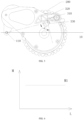
- the ordinate is the torque M applied to the driving wheel assembly by the force application portion by taking the first rotating shaft 110 as a rotation axis
- the abscissa is a distance L by which the driving wheel assembly rotates and extends out. It may be seen from FIG. 6 that the torque applied to the driving wheel assembly by the force application portion during rotation and extension of the driving wheel assembly is constant and always M1.
- the driving wheel 200 when the machine body of the autonomous mobile robot is jacked up (for example, the front section of the machine body is jacked up during climbing, or the machine body is jacked up by carpet bristles during walking on a carpet) or the driving wheel 200 walks to a pit, the driving wheel 200 is switched from the first position to the second position, and the torque for rotation and extension of the driving wheel assembly is constant, so that obstacle crossing is facilitated.
- angle a and the torsion angle of the torsion spring 310 are not limited in the present invention and may be designed by those skilled in the art according to the practical requirement.
- the pressure plate includes a force application end 410 pressed against the force bearing portion and a power end 420 generating power.
- the second rotating shaft 300 is arranged between the force application end and the power end, the power initial member includes a first magnet 430 and a second magnet 440, the first magnet 430 is arranged at the power end, the second magnet 440 is arranged on the base, the second magnet 440 is positioned below the first magnet 430, and a repulsive force is generated between the second magnet and the first magnet.
- the force bearing portion is a first roller 330 fixed between the force application portion and the first rotating shaft 110.
- a third magnet 450 may further be arranged on the base 10, the third magnet is positioned above the first magnet 430, and an attractive force is generated between the third magnet and the first magnet. That is, opposite surfaces of the third magnet 450 and the first magnet 430 are different poles (for example, an N pole of the third magnet 450 faces an S pole of the first magnet 430), and opposite surfaces of the second magnet 440 and the first magnet 430 are the same poles (for example, an N pole of the second magnet 440 faces an N pole of the first magnet 430).
- the power end 420 is subjected to an upward rotating acting force under the action of the magnetic forces, and the force application end 410 is subjected to a downward rotating acting force under leverage, so that an acting force for rotation and extension is applied to the driving wheel assembly through the first roller 330.
- a working principle of the autonomous mobile robot is as follows: when the autonomous mobile robot works normally (working on the flat ground), the driving wheel assembly rotates to the maximum limiting angle about the first rotating shaft 110 under the action of the gravity of the machine body (as shown in FIG. 2 ), and in such case, the repulsive force between the magnet 3 and the magnet 2 is maximum and the attractive force between the first magnet 430 and the third magnet 450 is minimum.
- the base 10 of the machine body of the autonomous mobile robot is jacked up, the force application end 410 of the pressure plate rotates about the second rotating shaft 300 counterclockwise under the action of the repulsive force between the second magnet 440 and the first magnet 430, and during rotation of the force application end 410 of the pressure plate, the repulsive force between the second magnet 440 and the first magnet 430 gradually decreases while the attractive force between the third magnet 450 and the first magnet 430 gradually increases.
- the driving wheel assembly rotates to the minimum limiting angle about the first rotating shaft 110 (as shown in FIG.
- the repulsive force between the second magnet 440 and the first magnet 430 is minimum while the attractive force between the third magnet 450 and the first magnet 430 is maximum. It may be ensured that magnitudes of the acting forces of the third magnet 450 and the second magnet 440 on the first magnet 430 during floating of the driving wheel 200 are equal, namely a magnitude of the pressure of the pressure plate on the driving wheel assembly is equal, so that the driving force of the autonomous mobile robot during obstacle crossing is kept constant.
- the working principle of the autonomous mobile robot is as follows: when the autonomous mobile robot is stationary on a flat ground or walks normally on a plane, the driving wheel assembly is subjected to the gravity of the autonomous mobile robot and the limiting action of the base 10 and thus the driving wheel 200 is at the first position; and in such case, although the first magnet 430 is subjected to the magnetic forces of the second magnet 440 and the third magnet 450, since the acting force applied to the first roller 330 by the force application end 410 passes through the first rotating shaft 110, the torque is zero, namely the force application portion does not provide an effective force for rotation and extension of the driving wheel assembly.
- the driving wheel 200 drives the driving wheel assembly under the action of its own gravity to rotate about the first rotating shaft 110 and extend out, the direction of the acting force applied to the first roller 330 by the force application end 410 changes, the first roller 330 rolls along a surface of the force application end 410 when the driving wheel assembly rotates, included angles between a normal direction of a contact point of the force application end 410 and the first roller 330 and the center lines of the first roller 330 and the first rotating shaft 110 are continuously enlarged, and an increasing torque is generated.
- the driving wheel assembly is subjected to magnetic forces, besides its own gravity.
- the driving wheel 200 is switched from the first position to the second position, and the torque for rotation and extension of the driving wheel assembly increases, so that obstacle crossing is facilitated.
- FIG. 10 is a structure diagram of a driving wheel assembly according to Embodiment 4 of the present invention.
- the force application portion includes an elastic body. Along a deformation direction, one end of the elastic body is fixed to the machine body, and a roller assembly is arranged at the other end.
- the force bearing portion has a curved structure. The roller assembly is pressed against the curved structure to apply a force to the driving wheel assembly.
- the elastic body may be a spring or a deformed soft rubber material, etc. There are no specific limits made thereto in the embodiment of the present invention.
- the force application portion includes a spring 500 that is vertically arranged and a roller assembly 510 at a bottom of the spring 500, an upper end of the spring 500 is fixed to the base 10, the roller assembly 510 includes a roller bracket and a second roller, an upper end of the roller bracket is fixed at the bottom of the spring 500, and the second roller is rotatably arranged at a lower end of the roller bracket through a second roller shaft.
- the force bearing portion includes a curved structure 520 fixed to the shell 100 and pressed against the second roller.
- the roller assembly 510 applies an acting force to the driving wheel assembly through the curved structure 520 under the action of stored elasticity of the spring 500.
- the driving wheel assembly is subjected to the gravity of the autonomous mobile robot and the limiting action of the base 10 and the driving wheel 200 is at the first position.
- the roller assembly 510 applies the acting force to the driving wheel assembly through the curved structure 520 under the action of the stored elasticity of the spring 500.
- a direction of the acting force passes through the first rotating shaft 110 and the torque is zero, namely the acting force does not provide effective power for rotation and extension of the driving wheel assembly.
- the driving wheel 200 drives the driving wheel assembly under the action of its own gravity to rotate about the first rotating shaft 110 and extend out, the direction of the acting force applied to the curved structure 520 by the roller assembly 510 changes, the second roller rolls along a surface of the curved structure 520 when the driving wheel assembly rotates, included angles between a normal direction of a contact point of the second roller and the curved structure 520 and center lines of the second roller and the first rotating shaft 110 are continuously enlarged, and an increasing torque is generated.
- the driving wheel assembly is subjected to the elasticity of the spring 500, besides its own gravity.
- the driving wheel 200 is switched from the first position to the second position, and the torque for rotation and extension of the driving wheel assembly increases, so that obstacle crossing is facilitated.
- the continuous acting force applied to the driving wheel assembly may be controlled by selecting a type of the spring and/or changing a curved shape of the curved structure to control the change amplitude of the positive pressure between the driving wheel and the traveling surface within a relatively small range, and the friction force between the driving wheel and the traveling surface is also relatively stable, so that improvement of the obstacle crossing capability of the autonomous mobile robot is facilitated.
- the acting force on the driving wheel changes less.
- the pressure of the driving wheel on the traveling surface ranges from 8.6N to 10.2N
- the change amplitude is about 20% and the obstacle crossing capability is high.
- a tension spring cantilever lifting mechanism is adopted, the pressure of the driving wheel on the ground ranges from 6.1N to 10.5N, the change amplitude is about 40%, and the obstacle crossing capability is relatively low.
- FIG. 11 is a curve comparison diagram of a change of pressure of a driving wheel on a ground in the prior art and the change of the pressure of the driving wheel on the ground in the technical solutions provided in the embodiments of the present invention.
- Table 2 is a comparison table of positive pressure on the driving wheel in the prior art and the technical solution provided in the embodiment of the present invention.
- the pressure of the driving wheel on the traveling surface ranges from 8.6N to 10.2N, the change amplitude is about 20%, the driving wheel is unlikely to jam, the pressure of the driving wheel on the ground is relatively high, the provided friction force is stronger, and the obstacle crossing capability is high.
- FIG. 12 is a flowchart of a walking method of an autonomous mobile robot according to an embodiment of the present invention.
- the method includes:
- the set threshold value is 0-25%.
- S02 may also be specifically as follows: the obstacle crossing assembly provides an increasing torque for the driving wheel assembly, or the obstacle crossing assembly provides a torque that is stable in a set error range for the driving wheel assembly.
- the obstacle crossing assembly may provide the increasing torque or the torque that is stable in the set error range for the driving wheel assembly in a whole movement stage of movement of the driving wheel from the first position to the second position or part of the movement stage.
- the obstacle crossing assembly provides the increasing torque or the torque that is stable in the set error range for the driving wheel assembly.
- the obstacle crossing assembly when the obstacle is encountered and the driving wheel moves from the first position to the second position, the obstacle crossing assembly applies a continuous acting force to the driving wheel assembly to make the change amplitude of the positive pressure between the driving wheel and the traveling surface less than or equal to the set threshold value, so that a friction force between the driving wheel and the traveling surface is increased, and an obstacle crossing capability of the autonomous mobile robot is improved.
Landscapes
- Engineering & Computer Science (AREA)
- Transportation (AREA)
- Mechanical Engineering (AREA)
- Power Engineering (AREA)
- Chemical & Material Sciences (AREA)
- Combustion & Propulsion (AREA)
- Manipulator (AREA)
- Control Of Position, Course, Altitude, Or Attitude Of Moving Bodies (AREA)
Description
- The present invention relates to the field of electronic devices technology, and more particularly relates to an autonomous mobile robot and a walking method thereof.
- Along with the constant development of sciences and technologies, household appliances have become more and more intelligent. Intelligent household appliances bring great convenience to work, live and study of users, one of which is autonomous mobile robot. An autonomous mobile robot may automatically finish floor cleaning work in a room by virtue of certain artificial intelligence.
- At present, driving wheels of some autonomous mobile robots may realize floating regulation according to ground condition changes, thereby improving obstacle crossing capabilities of the robots. However, an existing floating obstacle crossing structure may provide a relatively weak driving force for a driving wheel, and thus a robot may cross a relatively small obstacle only and is very limited in an obstacle crossing capability. Prior art document D1 (
EP 2574263 A2 ) generally discloses a robot cleaner, and specifically discloses the robot cleaner includes a main body, and drive devices at left and right sides of the main body; each drive device includes a main wheel to drive the main body, a drive motor to rotate the main wheel, a gear assembly to transmit power from the drive motor to the main wheel, a drive shaft to assist the main wheel in rotating by rotation power, and an auxiliary wheel connected to a distal end of the drive shaft so as to be located closer to the center of the main body than the main wheel; and if the main wheel is lifted from a floor when passing over an obstacle during traveling, the auxiliary wheel protrudes downward to reach the floor, assisting the main body in traveling to escape from the obstacle (see ABSTRACT of D1). - Prior art document D2 (
GB 2494447 A - In view of the above problem, the present invention provides an autonomous mobile robot and a walking method thereof, to solve the above problem or at least partially solve the above problem.
- Therefore, in an embodiment of the present invention, an autonomous mobile robot is provided. The autonomous mobile robot includes a machine body, a driving wheel assembly and an obstacle crossing assembly. The driving wheel assembly is rotatably arranged on the machine body through a first rotating shaft. The driving wheel assembly includes a driving wheel. When the driving wheel moves from a first position to a second position relative to the machine body, the obstacle crossing assembly applies a force to the driving wheel assembly to make a change amplitude of positive pressure between the driving wheel and a traveling surface less than or equal to a set threshold value.
- In another embodiment of the present invention, an autonomous mobile robot is provided. The autonomous mobile robot includes a machine body, a driving wheel assembly and an obstacle crossing assembly. The driving wheel assembly is rotatably arranged on the machine body through a first rotating shaft. The driving wheel assembly includes a driving wheel. The obstacle crossing assembly includes a force application portion and a force bearing portion arranged on the driving wheel assembly. The force application portion includes a power initial member and a pressure plate rotatably arranged on the machine body through a second rotating shaft. The force bearing portion is positioned between the first rotating shaft and the second rotating shaft. When the driving wheel moves from a first position to a second position relative to the machine body, the pressure plate is pressed against the force bearing portion under the action of the power initial member to apply a force to the driving wheel assembly.
- In another embodiment of the present invention, an autonomous mobile robot is also provided. The autonomous mobile robot includes a machine body, a driving wheel assembly and an obstacle crossing assembly. The driving wheel assembly is rotatably arranged on the machine body through a first rotating shaft. The driving wheel assembly includes a driving wheel. The obstacle crossing assembly includes a force application portion and a force bearing portion arranged on the driving wheel assembly. The force application portion is included in an elastic body. Along a deformation direction, one end of the elastic body is fixed to the machine body, and a roller assembly is arranged at the other end. The force bearing portion has a curved structure. When the driving wheel moves from a first position to a second position, the roller assembly is pressed against the curved structure under the action of the elastic body to apply a force to the driving wheel assembly.
- In another embodiment of the present invention, a walking method of an autonomous mobile robot is also provided. The method includes:
- when an obstacle is encountered, causing a driving wheel of a driving wheel assembly to move from a first position to a second position relative to a machine body; and
- when the driving wheel moves from the first position to the second position, applying, by an obstacle crossing assembly, a force to the driving wheel assembly to make a change amplitude of positive pressure between the driving wheel and a traveling surface less than or equal to a set threshold value.
- In the embodiment of the autonomous mobile robot provided in the embodiment of the present invention, when the autonomous mobile robot encounters the obstacle and the machine body is jacked up or walks to a pit, the driving wheel assembly is subjected to the acting force applied by the obstacle crossing assembly, besides its own gravity, and under the combined action of these forces, the change amplitude of the positive pressure between the driving wheel and the traveling surface is less than or equal to the set threshold value, so that increase of a friction force between the driving wheel and the traveling surface and improvement of an obstacle crossing capability of the autonomous mobile robot are further facilitated.
- In another embodiment of the autonomous mobile robot provided in the embodiment of the present invention, the pressure plate rotatably arranged on the machine body through the second rotating shaft is adopted, and the driving wheel assembly is subjected to a continuous acting force due to the pressure plate and the force bearing portion on the driving wheel assembly under the action of the power initial member; and in addition, with adoption of such a structure, an magnitude of the continuous acting force applied to the driving wheel assembly may be easily controlled to control the change amplitude of the positive pressure between the driving wheel and the traveling surface within a relatively small range, and the friction force between the driving wheel and the traveling surface is also relatively stable, so that improvement of the obstacle crossing capability of the autonomous mobile robot is facilitated.
- In still another embodiment of the autonomous mobile robot provided in the embodiment of the present invention, the elastic body arranged on the machine body applies the continuous acting force to the driving wheel assembly through the curved structure under the action of its own elasticity. According to such a structure, the continuous acting force applied to the driving wheel assembly may be easily controlled by selecting a type of a spring and/or changing a curved shape of the curved structure to control the change amplitude of the positive pressure between the driving wheel and the traveling surface within a relatively small range, and the friction force between the driving wheel and the traveling surface is also relatively stable, so that improvement of the obstacle crossing capability of the autonomous mobile robot is facilitated.
- In the embodiment of the walking method of the autonomous mobile robot provided in the embodiment of the present invention, when the obstacle is encountered and the driving wheel moves from the first position to the second position, the obstacle crossing assembly continuously applies the force to the driving wheel assembly to make the change amplitude of the positive pressure between the driving wheel and the traveling surface less than or equal to the set threshold value, so that the friction force between the driving wheel and the traveling surface is increased, and the obstacle crossing capability of the autonomous mobile robot is improved.
- In order to describe the technical solutions in the embodiments of the present invention or the prior art more clearly, the drawings required to be used for descriptions about the embodiments or the prior art will be simply introduced below. It is apparent that the drawings described below are some embodiments of the present invention.
- Those of ordinary skill in the art may further obtain other drawings according to these drawings without creative work.
-
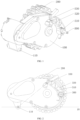
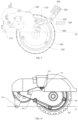
FIG. 1 is a structure diagram of a driving wheel assembly according to Embodiment 1 of the present invention; -
FIG. 2 is a structure diagram of a driving wheel assembly of which a driving wheel is at a first position according to Embodiment 1 of the present invention; -
FIG. 3 is a structure diagram of a driving wheel assembly of which a driving wheel is at a second position according to Embodiment 1 of the present invention; -
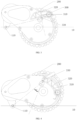
FIG. 4 is a structure diagram of a driving wheel assembly of which a driving wheel is at a first position according to Embodiment 2 of the present invention; -
FIG. 5 is a structure diagram of a driving wheel assembly of which a driving wheel is at a second position according to Embodiment 2 of the present invention; -
FIG. 6 is a schematic diagram of a torque applied to a driving wheel assembly in an extension process of a driving wheel according to Embodiment 2 of the present invention; -
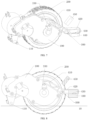
FIG. 7 is a structure diagram of a driving wheel assembly according to Embodiment 3 of the present invention; -
FIG. 8 is a structure diagram of a driving wheel assembly of which a driving wheel is at a first position according to Embodiment 3 of the present invention; -
FIG. 9 is a structure diagram of a driving wheel assembly of which a driving wheel is at a second position according to Embodiment 3 of the present invention; -
FIG. 10 is a structure diagram of a driving wheel assembly according to Embodiment 4 of the present invention; -
FIG. 11 is a curve comparison diagram of a change of pressure of a driving wheel on a ground in the prior art and the change of the pressure of the driving wheel on the ground in the technical solutions provided in the embodiments of the present invention; and -
FIG. 12 is a flowchart of a walking method of an autonomous mobile robot according to an embodiment of the present invention. - When an autonomous mobile robot works, a driving wheel is required to carry out floating regulation according to a ground condition change to improve an obstacle crossing capability of the robot. A floating obstacle crossing mechanism is usually implemented through the action of a tension spring. For example, a cantilever driving wheel mechanism is provided in the prior art. According to the mechanism, a driving wheel is mounted on a chassis of a cleaning robot through a cantilever, and the driving wheel is deflected to a position far away from the chassis of the robot through a tension spring between the cantilever and the chassis of the robot. During cleaning, the autonomous mobile robot overcomes a spring force of the tension spring with the gravity to deflect the wheel to another position. When the mechanism is adopted, if the autonomous mobile robot encounters a step or an obstacle, the chassis is jacked up, the driving wheel is deflected to a position far away from the chassis of the robot under the action of the tension spring, and in this process, a certain spring force may be released by the tension spring to minimize a driving force that may be provided by the driving wheel when the autonomous mobile robot crosses the obstacle, resulting in reduction of the obstacle crossing capability of the autonomous mobile robot. Particularly, when the driving wheel is elevated and lowered under the action of the spring force, the acting force of the driving wheel changes greatly to easily cause the condition of jamming or slipping when the robot crosses an obstacle and reduce a climbing capability.
- The present invention provides an autonomous mobile robot, which includes a machine body, a driving wheel assembly and an obstacle crossing assembly. The driving wheel assembly is rotatably arranged on the machine body through a first rotating shaft. The driving wheel assembly includes a driving wheel. When the driving wheel moves from a first position to a second position relative to the machine body, the obstacle crossing assembly applies a force to the driving wheel assembly to make a change amplitude of positive pressure between the driving wheel and a traveling surface less than or equal to a set threshold value.
- Specifically, referring to
FIGs. 1-3 , the machine body is provided with abase 10, and the driving wheel assembly is arranged onbase 10 of the machine body. The driving wheel assembly includes ashell 100, one end of theshell 100 is rotatably arranged on thebase 10 of the autonomous mobile robot through the firstrotating shaft 110, thedriving wheel 200 is further arranged at the other end of theshell 100, and thedriving wheel 200 is used for driving the autonomous mobile robot to walk. Thedriving wheel 200 is rotatable about the firstrotating shaft 110. Specifically, when the autonomous mobile robot walks on a plane, the driving wheel assembly is subjected to a gravity of the autonomous mobile robot and a limiting action of thebase 10 and thus thedriving wheel 200 is at the first position (a high position) relative to thebase 10 of the machine body; and when the machine body of the autonomous mobile robot is taken up or thedriving wheel 200 does not contact with a ground and is kept suspended, thedriving wheel 200 rotates to the second position (a low position) about the firstrotating shaft 110 under the action of its own gravity. It is to be noted that the second position may change. For example, a second position that may be reached by driving wheel when the machine body is taken up (the driving wheel does not contact with the ground) is usually lower than a second position that may be reached by the driving wheel when the autonomous mobile robot is on a carpet or climbs. Here, a distance between the driving wheel and the base of the robot is taken as a reference for the height, and if the distance with the base of the autonomous mobile robot is longer, the position of the driving wheel is lower. - During specific implementation, the set threshold value in the embodiment of the present invention may specifically be a value in 0-25%. For example, the set threshold value may be 20%, or 16%, etc.
- When the driving wheel moves from the first position to the second position relative to the machine body, the acting force applied to the driving wheel assembly by the obstacle crossing assembly changes, and thus the positive pressure between the driving wheel and the traveling surface also changes. For example, the positive pressure increases at first and then decreases or is substantially constant. Determination of the "change amplitude of the positive pressure" mentioned in the embodiment of the present invention will be described through the following specific example. There is made such a hypothesis that, when the driving wheel moves from the first position to the second position, the positive pressure is shown in Table 1.

- Based on the positive pressure data, a maximum positive pressure change during movement of the driving wheel from the first position (corresponding to stroke 0) to the second position (corresponding to stroke 30) may be 10.2N-8.6N=1.6N; and correspondingly, the change amplitude of the positive pressure is 1.6N/10.2N=15.7%. During specific implementation, a proper structural design may be selected to make a magnitude of the change amplitude of the positive pressure between the driving wheel and the travel plane less than or equal to the set threshold value during movement of the driving wheel from the first position to the second position. The change amplitude of the positive pressure is controlled within a certain range, so that increase of a friction force between the driving wheel and the traveling surface and further improvement of an obstacle crossing capability of the autonomous mobile robot are facilitated. The specifically adopted structural design will be described through the following contents. A torque is a product of the acting force and a force arm. Therefore, the technical solution provided in the embodiment of the present invention may also be specifically as follows: the obstacle crossing assembly is further arranged on the autonomous mobile robot, and the obstacle crossing assembly is arranged to provide an increasing or substantially constant torque for the driving wheel assembly when the
driving wheel 200 is switched from the first position to the second position, namely the torque through which the obstacle crossing assembly provides power for the driving wheel assembly increases or is substantially constant after the driving wheel assembly extends downwards. It is to be noted that "being substantially constant" rather than "being constant" is used herein because even if those skilled in the art design a provided torque of a product to be constant, due to a difference between theory and practice, errors inevitably exist when the product is produced and assembled, the product may be worn during use and it may not be accurately ensured that the torque provided by the obstacle crossing assembly of the practical product for the driving wheel assembly is constant when thedriving wheel 200 is switched from the first position to the second position. - Particularly, being substantially constant means that a change of the torque provided by the obstacle crossing assembly when the
driving wheel 200 is at the second position relative to the torque provided by the obstacle crossing assembly when thedriving wheel 200 is at the first position is less than or equal to 10% of the torque provided by the obstacle crossing assembly when thedrive wheel 200 is at the first position. Therefore, "being substantially constant" may also be expressed as follows: the obstacle crossing assembly provides a torque that is stable in a set error range for the driving wheel assembly. - It is to be supplemented that, when the
driving wheel 200 is switched from the first position to the second position, the obstacle crossing assembly may provide a substantially constant torque for the driving wheel assembly in multiple manners. For example, when thedriving wheel 200 is switched from the first position to the second position, the torque provided by the obstacle crossing assembly is substantially constant, or the torque provided by the obstacle crossing assembly decreases at first and then increases, or the torque provided by the obstacle crossing assembly increases at first and then decreases, or a magnitude of the torque provided by the obstacle crossing assembly fluctuates like waves. Similarly, when thedriving wheel 200 is switched from the first position to the second position, the obstacle crossing assembly may also provide an increasing torque for the driving wheel assembly in multiple manners. For example, when thedriving wheel 200 is switched from the first position to the second position, the torque provided by the obstacle crossing assembly keeps increasing, or the torque provided by the obstacle crossing assembly decreases at first and then increases, or the torque provided by the obstacle crossing assembly increases at first and then decreases, or the magnitude of the torque provided by the obstacle crossing assembly fluctuates like waves. In other words, there is at least part of a movement stage during switching of thedriving wheel 200 from the first position to the second position, and in such case, the obstacle crossing assembly provides the increasing or substantially constant torque for the driving wheel assembly, thereby ensuring that the increasing or substantially constant torque is provided for the driving wheel assembly when thedriving wheel 200 is switched from the first position to the second position. - Those skilled in the art may select a proper manner according to a practical requirement to implement that the obstacle crossing assembly provides the increasing or substantially unchanged torque for the driving wheel assembly. Furthermore, when the
driving wheel 200 is switched from the first position to the second position, it is not limited in the present disclosure that the torque provided for the driving wheel assembly by the obstacle crossing assembly increases or is substantially constant even though the torque provided by the obstacle crossing assembly when thedriving wheel 200 is at the second position is less than the torque provided by the obstacle crossing assembly when thedriving wheel 200 is at the first position, and the obstacle crossing assembly provides the increasing or substantially constant torque for the driving wheel assembly if there is at least part of the movement stage during switching thedriving wheel 200 from the first position to the second position. - For achieving the purpose that the change amplitude of the positive pressure between the driving wheel provided in the embodiment of the present invention and the traveling surface is less than or equal to the set threshold value, the obstacle crossing assembly includes a force bearing portion arranged on the
shell 100 and a force application portion arranged on thebase 10. When the autonomous mobile robot is stationary on a flat ground or walks normally on a plane, the driving wheel assembly is subjected to the gravity of the autonomous mobile robot and the limiting action of thebase 10 and thus thedriving wheel 200 is at the first position. In such case, a direction of an acting force applied to the force bearing portion by the force application portion passes through the firstrotating shaft 110, namely a torque generated by the force application portion is zero. The force application portion applies the acting force to the force bearing portion, but the acting force is far less than the gravity of the machine body of the autonomous mobile robot, so that thedriving wheel 200 is at the first position. When the machine body of the autonomous mobile robot is jacked up or thedriving wheel 200 walks to a pit, thedriving wheel 200 rotates about the firstrotating shaft 110 and extends out under the action of its own gravity to change relative positions of the force bearing portion and the force application portion, and the direction of the acting force applied to the force bearing portion by the force application portion deviates downwards to generate an effective torque, so that the driving wheel assembly is subjected to the effective torque of the acting force applied by the force application portion, besides its own gravity, and by the acting force, the friction between thedriving wheel 200 and the ground is increased and obstacle crossing is facilitated. A magnitude and torque of the acting force applied to the force bearing portion by the force application portion may be regulated by changing shapes of the force application portion and the force bearing portion. - It is to be supplemented that the position of the force application portion relative to the force bearing portion may also be changed to ensure that, when the autonomous mobile robot is stationary on the flat ground or walks normally on the plane, the direction of the acting force applied to the force bearing portion by the force application portion does not pass through the first
rotating shaft 110, namely the force application portion has applied the effective torque of a downward acting force to the force bearing portion, but thedriving wheel 200 is still at the first position due to the action of the gravity of the autonomous mobile robot, and when the machine body of the autonomous mobile robot is jacked up or thedriving wheel 200 walks to a pit, thedriving wheel 200 rotates about the firstrotating shaft 110 and extends out downwards under the action of its own gravity and the acting force applied by the force application portion. - As shown in
FIGs 1-3 , in the embodiment, the force application portion includes apressure plate 320 and a power initial member, thepressure plate 320 is rotatably arranged on the base 10 through a secondrotating shaft 300, the force bearing portion is positioned between the secondrotating shaft 300 and the firstrotating shaft 110, and thepressure plate 320 is pressed against the force bearing portion under the action of the power initial member to apply a force to the driving wheel assembly. For reducing friction between the force bearing portion and the force application portion, the force bearing portion may adopt afirst roller 330 or a cylinder, etc. The power initial member may be atorsion spring 310 sleeved on the secondrotating shaft 300, and one end of thetorsion spring 310 is pressed against the pressure plate. The side, pressed against the force bearing portion, of thepressure plate 320 includes a curved pressure section of which a shape may be regulated according to an initial torsional force of thetorsion spring 310 and relative positions of the firstrotating shaft 110, the secondrotating shaft 300 and the force bearing portion such that the obstacle crossing assembly may provide the increasing torque for the driving wheel assembly when thedriving wheel 200 is switched from the first position to the second position. Thepressure plate 320 contacts with thefirst roller 330 under a torsional force provided by thetorsion spring 310 and applies the acting force to the driving wheel assembly through thefirst roller 330. In the embodiment, as a walking environment of the autonomous mobile robot changes, the relative positions of the force application portion and the force bearing portion may also change, and the force application portion and the force bearing portion keep in contact under the acting force of thetorsion spring 310. - From the prospective of the acting force, a working principle of the autonomous mobile robot provided in Embodiment 1 is as follows: when the autonomous mobile robot works normally (namely working on the flat ground), the driving wheel assembly rotates to a maximum limiting angle about the first
rotating shaft 110 under the action of the gravity of the machine body (as shown inFIG. 2 ). In such case, a compression angle, i.e., a stored torsional force, of thetorsion spring 310 is maximum, but included angles between a normal direction of a contact point of thepressure plate 320 and thefirst roller 330 and center lines of thefirst roller 330 and the firstrotating shaft 110 are 0°, so that thepressure plate 320 only generates pressure passing through an axle center of the firstrotating shaft 110 on the driving wheel assembly. When the autonomous mobile robot encounters a step or an obstacle, thebase 10 of the machine body is jacked up, the driving wheel assembly generates a certain torque on the firstrotating shaft 110 under the action of its own gravity, in such case, the driving wheel assembly rotates about the firstrotating shaft 110 counterclockwise, and when the driving wheel assembly rotates, thefirst roller 330 rolls along a surface of thepressure plate 320 and the included angles between the normal direction of the contact point of thepressure plate 320 and thefirst roller 330 and the centerlines of thefirst roller 330 and the firstrotating shaft 110 are continuously enlarged. When the drive wheel assembly rotates to a minimum limiting angle about the first rotating shaft 110 (as shown inFIG. 3 ), the included angles between the normal direction of the contact point of thepressure plate 320 and thefirst roller 330 and the center lines of thefirst roller 330 and the firstrotating shaft 110 are angles (for example, 90°) shown inFIG. 3 . In such case, the pressure of thepressure plate 320 on thefirst roller 330 is all converted into normal pressure of thedriving wheel 200 on the traveling surface to maximize a friction force of thedriving wheel 200 on the traveling surface, thereby maximizing the driving force and obstacle crossing capability of the autonomous mobile robot. - From the perspective of the torque, the working principle of the autonomous mobile robot provided in Embodiment 1 is as follows: when the autonomous mobile robot is stationary on the flat ground or walks normally on the plane, the driving wheel assembly is subjected to the gravity of the autonomous mobile robot and the limiting action of the
base 10 and thus thedriving wheel 200 is at the first position; and in such case, thepressure plate 320 rotates to thefirst roller 330 about the secondrotating shaft 300 under the action of the stored torsion force of thetorsion spring 310 to apply an acting force to thefirst roller 330. In the embodiment, as shown inFIG. 2 , the direction of the acting force passes through the firstrotating shaft 110 and the torque is zero, namely the acting force does not provide effective power for rotation and extension of the driving wheel assembly. When the machine body of the autonomous mobile robot is jacked up (for example, a front section of the machine body is jacked up during climbing, or the machine body is jacked up by carpet bristles during walking on a carpet) or thedriving wheel 200 walks to a pit, thedriving wheel 200 drives the driving wheel assembly under the action of its own gravity to rotate about the firstrotating shaft 110 and extend out, the direction of the acting force applied to thefirst roller 330 by thepressure plate 320 changes, thefirst roller 330 rolls along the surface of thepressure plate 320 when the driving wheel assembly rotates, the included angles between the normal direction of the contact point of thepressure plate 320 and thefirst roller 330 and the center lines of thefirst roller 330 and the firstrotating shaft 110 are continuously enlarged, and an increasing torque is generated. The driving wheel assembly is subjected to the torsional force of thetorsion spring 310, besides its own gravity. In other words, when the machine body of the autonomous mobile robot is jacked up or thedriving wheel 200 walks to a pit, thedriving wheel 200 is switched from the first position to the second position, and the torque for rotation and extension of the driving wheel assembly increases, so that obstacle crossing is facilitated. - As shown in
FIGs 4-6 , compared with Embodiment 1, in the embodiment, the relative positions of the force application portion and the force bearing portion change, and in such case, when thedriving wheel 200 is at the first position, a connecting line of thefirst roller 330 and the firstrotating shaft 110 forms an included angle a with a direction in which thepressure plate 320 applies the acting force to thefirst roller 330. Preferably, a range of the included angle a is 0°<a≤90°. In the embodiment, a is 30°, and in such case, a torsion angle of thetorsion spring 310 is 90°. When thedriving wheel 200 is at the second position, the included angle a between the connecting line of thefirst roller 330 and the firstrotating shaft 110 and the direction in which thepressure plate 320 applies the acting force to thefirst roller 330 is 90°, the torsion angle of thetorsion spring 310 is 45°, and when thedriving wheel 200 is switched from a normal walking state to an obstacle crossing state, the torsional force oftorsion spring 310 is halved but a force arm from an application point of thepressure plate 320 to the second rotating shaft is doubled, so that the obstacle crossing assembly may keep the torque acting on thedriving wheel 200 at the second position and the first position constant or substantially constant. In combination withFIG. 6 , inFIG. 6 , the ordinate is the torque M applied to the driving wheel assembly by the force application portion by taking the firstrotating shaft 110 as a rotation axis, and the abscissa is a distance L by which the driving wheel assembly rotates and extends out. It may be seen fromFIG. 6 that the torque applied to the driving wheel assembly by the force application portion during rotation and extension of the driving wheel assembly is constant and always M1. In other words, when the machine body of the autonomous mobile robot is jacked up (for example, the front section of the machine body is jacked up during climbing, or the machine body is jacked up by carpet bristles during walking on a carpet) or thedriving wheel 200 walks to a pit, thedriving wheel 200 is switched from the first position to the second position, and the torque for rotation and extension of the driving wheel assembly is constant, so that obstacle crossing is facilitated. - It is be noted that the angle a and the torsion angle of the
torsion spring 310 are not limited in the present invention and may be designed by those skilled in the art according to the practical requirement. - As shown in
FIGs 7-9 , the difference between the embodiment and the abovementioned embodiments is that the pressure plate includes aforce application end 410 pressed against the force bearing portion and apower end 420 generating power. The secondrotating shaft 300 is arranged between the force application end and the power end, the power initial member includes afirst magnet 430 and asecond magnet 440, thefirst magnet 430 is arranged at the power end, thesecond magnet 440 is arranged on the base, thesecond magnet 440 is positioned below thefirst magnet 430, and a repulsive force is generated between the second magnet and the first magnet. Similarly, the force bearing portion is afirst roller 330 fixed between the force application portion and the firstrotating shaft 110. Furthermore, athird magnet 450 may further be arranged on thebase 10, the third magnet is positioned above thefirst magnet 430, and an attractive force is generated between the third magnet and the first magnet. That is, opposite surfaces of thethird magnet 450 and thefirst magnet 430 are different poles (for example, an N pole of thethird magnet 450 faces an S pole of the first magnet 430), and opposite surfaces of thesecond magnet 440 and thefirst magnet 430 are the same poles (for example, an N pole of thesecond magnet 440 faces an N pole of the first magnet 430). Through the action of magnetic forces between thefirst magnet 430 and each of thesecond magnet 440 and thethird magnet 450, thepower end 420 is subjected to an upward rotating acting force under the action of the magnetic forces, and theforce application end 410 is subjected to a downward rotating acting force under leverage, so that an acting force for rotation and extension is applied to the driving wheel assembly through thefirst roller 330. - From the prospective of the acting force, a working principle of the autonomous mobile robot provided in Embodiment 3 is as follows: when the autonomous mobile robot works normally (working on the flat ground), the driving wheel assembly rotates to the maximum limiting angle about the first
rotating shaft 110 under the action of the gravity of the machine body (as shown inFIG. 2 ), and in such case, the repulsive force between the magnet 3 and the magnet 2 is maximum and the attractive force between thefirst magnet 430 and thethird magnet 450 is minimum. When the autonomous mobile robot encounters a step or an obstacle, thebase 10 of the machine body of the autonomous mobile robot is jacked up, theforce application end 410 of the pressure plate rotates about the secondrotating shaft 300 counterclockwise under the action of the repulsive force between thesecond magnet 440 and thefirst magnet 430, and during rotation of theforce application end 410 of the pressure plate, the repulsive force between thesecond magnet 440 and thefirst magnet 430 gradually decreases while the attractive force between thethird magnet 450 and thefirst magnet 430 gradually increases. When the driving wheel assembly rotates to the minimum limiting angle about the first rotating shaft 110 (as shown inFIG. 3 ), the repulsive force between thesecond magnet 440 and thefirst magnet 430 is minimum while the attractive force between thethird magnet 450 and thefirst magnet 430 is maximum. It may be ensured that magnitudes of the acting forces of thethird magnet 450 and thesecond magnet 440 on thefirst magnet 430 during floating of thedriving wheel 200 are equal, namely a magnitude of the pressure of the pressure plate on the driving wheel assembly is equal, so that the driving force of the autonomous mobile robot during obstacle crossing is kept constant. - From the prospective of the torque, the working principle of the autonomous mobile robot provided in Embodiment 3 is as follows: when the autonomous mobile robot is stationary on a flat ground or walks normally on a plane, the driving wheel assembly is subjected to the gravity of the autonomous mobile robot and the limiting action of the
base 10 and thus thedriving wheel 200 is at the first position; and in such case, although thefirst magnet 430 is subjected to the magnetic forces of thesecond magnet 440 and thethird magnet 450, since the acting force applied to thefirst roller 330 by theforce application end 410 passes through the firstrotating shaft 110, the torque is zero, namely the force application portion does not provide an effective force for rotation and extension of the driving wheel assembly. When the machine body of the autonomous mobile robot is jacked up (for example, a front section of the machine body is jacked up during climbing, or the machine body is jacked up by carpet bristles during walking on a carpet) or thedriving wheel 200 walks to a pit, thedriving wheel 200 drives the driving wheel assembly under the action of its own gravity to rotate about the firstrotating shaft 110 and extend out, the direction of the acting force applied to thefirst roller 330 by the force application end 410 changes, thefirst roller 330 rolls along a surface of theforce application end 410 when the driving wheel assembly rotates, included angles between a normal direction of a contact point of theforce application end 410 and thefirst roller 330 and the center lines of thefirst roller 330 and the firstrotating shaft 110 are continuously enlarged, and an increasing torque is generated. The driving wheel assembly is subjected to magnetic forces, besides its own gravity. In other words, when the machine body of the autonomous mobile robot is jacked up or thedriving wheel 200 walks to a pit, thedriving wheel 200 is switched from the first position to the second position, and the torque for rotation and extension of the driving wheel assembly increases, so that obstacle crossing is facilitated. -
FIG. 10 is a structure diagram of a driving wheel assembly according to Embodiment 4 of the present invention. - The force application portion includes an elastic body. Along a deformation direction, one end of the elastic body is fixed to the machine body, and a roller assembly is arranged at the other end. The force bearing portion has a curved structure. The roller assembly is pressed against the curved structure to apply a force to the driving wheel assembly. The elastic body may be a spring or a deformed soft rubber material, etc. There are no specific limits made thereto in the embodiment of the present invention.
- Specifically, as shown in
FIG. 10 , in the embodiment, the force application portion includes aspring 500 that is vertically arranged and aroller assembly 510 at a bottom of thespring 500, an upper end of thespring 500 is fixed to thebase 10, theroller assembly 510 includes a roller bracket and a second roller, an upper end of the roller bracket is fixed at the bottom of thespring 500, and the second roller is rotatably arranged at a lower end of the roller bracket through a second roller shaft. The force bearing portion includes acurved structure 520 fixed to theshell 100 and pressed against the second roller. Theroller assembly 510 applies an acting force to the driving wheel assembly through thecurved structure 520 under the action of stored elasticity of thespring 500. - Specifically, when the autonomous mobile robot is stationary on a flat ground or walks normally on a plane, the driving wheel assembly is subjected to the gravity of the autonomous mobile robot and the limiting action of the
base 10 and thedriving wheel 200 is at the first position. In such case, theroller assembly 510 applies the acting force to the driving wheel assembly through thecurved structure 520 under the action of the stored elasticity of thespring 500. In the embodiment, a direction of the acting force passes through the firstrotating shaft 110 and the torque is zero, namely the acting force does not provide effective power for rotation and extension of the driving wheel assembly. When the machine body of the autonomous mobile robot is jacked up (for example, a front section of the machine body is jacked up during climbing, or the machine body is jacked up by carpet bristles during walking on a carpet) or thedriving wheel 200 walks to a pit, thedriving wheel 200 drives the driving wheel assembly under the action of its own gravity to rotate about the firstrotating shaft 110 and extend out, the direction of the acting force applied to thecurved structure 520 by theroller assembly 510 changes, the second roller rolls along a surface of thecurved structure 520 when the driving wheel assembly rotates, included angles between a normal direction of a contact point of the second roller and thecurved structure 520 and center lines of the second roller and the firstrotating shaft 110 are continuously enlarged, and an increasing torque is generated. The driving wheel assembly is subjected to the elasticity of thespring 500, besides its own gravity. In other words, when the machine body of the autonomous mobile robot is jacked up or thedriving wheel 200 walks to a pit, thedriving wheel 200 is switched from the first position to the second position, and the torque for rotation and extension of the driving wheel assembly increases, so that obstacle crossing is facilitated. - According to the technical solution provided in the embodiment, the continuous acting force applied to the driving wheel assembly may be controlled by selecting a type of the spring and/or changing a curved shape of the curved structure to control the change amplitude of the positive pressure between the driving wheel and the traveling surface within a relatively small range, and the friction force between the driving wheel and the traveling surface is also relatively stable, so that improvement of the obstacle crossing capability of the autonomous mobile robot is facilitated.
- According to each implementation structure of the obstacle crossing assembly provided in each embodiment, the acting force on the driving wheel changes less. Experiments show that, in each embodiment of the present invention, the pressure of the driving wheel on the traveling surface ranges from 8.6N to 10.2N, the change amplitude is about 20% and the obstacle crossing capability is high. In the prior art, a tension spring cantilever lifting mechanism is adopted, the pressure of the driving wheel on the ground ranges from 6.1N to 10.5N, the change amplitude is about 40%, and the obstacle crossing capability is relatively low.
FIG. 11 is a curve comparison diagram of a change of pressure of a driving wheel on a ground in the prior art and the change of the pressure of the driving wheel on the ground in the technical solutions provided in the embodiments of the present invention. - The following Table 2 is a comparison table of positive pressure on the driving wheel in the prior art and the technical solution provided in the embodiment of the present invention.

- According to the technical solution provided in the present invention, the pressure of the driving wheel on the traveling surface ranges from 8.6N to 10.2N, the change amplitude is about 20%, the driving wheel is unlikely to jam, the pressure of the driving wheel on the ground is relatively high, the provided friction force is stronger, and the obstacle crossing capability is high.
-
FIG. 12 is a flowchart of a walking method of an autonomous mobile robot according to an embodiment of the present invention. - As shown in
FIG. 12 , the method includes: - S01, when an obstacle is encountered, casing a driving wheel of a driving wheel assembly to move from a first position to a second position relative to a machine body.
- 502, when the driving wheel moves from the first position to the second position, an obstacle crossing assembly applies a force to the driving wheel assembly to make a change amplitude of positive pressure between the driving wheel and a traveling surface less than or equal to a set threshold value.
- It is to be noted herein that specific implementation of structural features involved in the embodiment and a connecting relationship between the structural features may refer to the corresponding contents in each embodiment and will not be elaborated herein. The set threshold value is 0-25%.
- S02 may also be specifically as follows: the obstacle crossing assembly provides an increasing torque for the driving wheel assembly, or the obstacle crossing assembly provides a torque that is stable in a set error range for the driving wheel assembly.
- During specific implementation, the obstacle crossing assembly may provide the increasing torque or the torque that is stable in the set error range for the driving wheel assembly in a whole movement stage of movement of the driving wheel from the first position to the second position or part of the movement stage.
- That is, there is at least part of the movement stage during movement of the driving wheel from the first position to the second position, and the obstacle crossing assembly provides the increasing torque or the torque that is stable in the set error range for the driving wheel assembly.
- In the embodiment of the present disclosure, when the obstacle is encountered and the driving wheel moves from the first position to the second position, the obstacle crossing assembly applies a continuous acting force to the driving wheel assembly to make the change amplitude of the positive pressure between the driving wheel and the traveling surface less than or equal to the set threshold value, so that a friction force between the driving wheel and the traveling surface is increased, and an obstacle crossing capability of the autonomous mobile robot is improved.
- It is finally to be noted that the above embodiments are adopted not to limit but only to describe the technical solutions of the present invention.
- Although the present invention has been described with reference to the abovementioned embodiments in detail, those of ordinary skill in the art should know that modifications may still be made to the technical solutions recorded in each embodiment or equivalent replacements may be made to part of technical features therein. These modifications or replacements do not make the essences of the corresponding technical solutions depart from the scope of the technical solutions of each embodiment of the present invention.
Claims (13)
- An autonomous mobile robot, wherein the autonomous mobile robot is a household cleaning appliance, comprising a machine body, a driving wheel assembly and an obstacle crossing assembly, wherein,the driving wheel assembly is rotatably arranged on the machine body through a first rotating shaft (110);the driving wheel assembly comprises a driving wheel (200); and characterized in thatwhen the driving wheel (200) moves from a first position to a second position relative to the machine body, the obstacle crossing assembly applies a force to the driving wheel assembly to make a positive change in pressure between the driving wheel (200) and a traveling surface less than or equal to a set threshold value.
- The autonomous mobile robot according to claim 1, wherein, the set threshold value is 0-25%.
- The autonomous mobile robot according to claim 1, wherein, the obstacle crossing assembly comprises a force bearing portion arranged on the driving wheel assembly and a force application portion arranged on the machine body; wherein,the force application portion comprises a pressure plate (320) and a power initial member;the pressure plate (320) is rotatably arranged on the machine body through a second rotating shaft (300); andthe force bearing portion is positioned between the second rotating shaft (300) and the first rotating shaft (110), and the pressure plate (320) is pressed against the force bearing portion under an action of the power initial member to apply a force to the driving wheel assembly.
- The autonomous mobile robot according to claim 2, wherein, the obstacle crossing assembly comprises a force bearing portion arranged on the driving wheel assembly and a force application portion arranged on the machine body; wherein,the force application portion comprises a pressure plate (320) and a power initial member;the pressure plate (320) is rotatably arranged on the machine body through a second rotating shaft (300); andthe force bearing portion is positioned between the second rotating shaft (300) and the first rotating shaft (110), and the pressure plate (320) is pressed against the force bearing portion under an action of the power initial member to apply a force to the driving wheel assembly.
- The autonomous mobile robot according to claim 3, wherein, the power initial member is a torsion spring (310) sleeved on the second rotating shaft (300), and one end of the torsion spring (310) is pressed against the pressure plate (320).
- The autonomous mobile robot according to claim 3, wherein, one side of the pressure plate (320) being pressed against the force bearing portion comprises a curved pressure section.
- The autonomous mobile robot according to claim 3, wherein, when the driving wheel (200) is at the first position, a line along a direction of an acting force applied to the force bearing portion by the pressure plate (320) passes through the first rotating shaft (110).
- The autonomous mobile robot according to claim 3, wherein, when the driving wheel (200) is at the first position, a connecting line of the force bearing portion and the first rotating shaft (110) forms an included angle a with a line alone a direction of an acting force applied to the force bearing portion by the pressure plate (320).
- The autonomous mobile robot according to claim 3, wherein, the pressure plate (320) comprises a force application end (410) being pressed against the force bearing portion and a power end (420) generating power;the second rotating shaft (300) is arranged between the force application end (410) and the power end (420);the power initial member comprises a first magnet (430) and a second magnet (440), the first magnet (430) is arranged at the power end (420), and the second magnet (440) is arranged on the machine body; andthe second magnet (440) is positioned below the first magnet (430), and a repulsive force is generated between the second magnet (440) and the first magnet (430).
- The autonomous mobile robot according to claim 9, wherein, the power initial member further comprises a third magnet (450) arranged on the machine body, the third magnet (450) is positioned above the first magnet (430), and an attractive force is generated between the third magnet (450) and the first magnet (430).
- The autonomous mobile robot according to claim 3, wherein, the force bearing portion is a first roller (330).
- The autonomous mobile robot according to claim 3, wherein, the force application portion comprises an elastic body;along a deformation direction, one end of the elastic body is fixed to the machine body, and a roller assembly (510) is arranged at the other end;the force bearing portion has a curved structure (520); andthe roller assembly (510) is pressed against the curved structure (520) to apply a force to the driving wheel assembly.
- The autonomous mobile robot according to claim 12, wherein, the roller assembly (510) comprises a roller bracket and a second roller;an upper end of the roller bracket is arranged on the elastic body; andthe second roller is rotatably arranged at a lower end of the roller bracket through a roller shaft.
Applications Claiming Priority (3)
| Application Number | Priority Date | Filing Date | Title |
|---|---|---|---|
| CN201810112588 | 2018-02-05 | ||
| CN201910093765.7A CN110115549B (en) | 2018-02-05 | 2019-01-30 | Self-moving robot and walking method thereof |
| PCT/CN2020/070524 WO2020156046A1 (en) | 2018-02-05 | 2020-01-06 | Self-moving robot and walking method therefor |
Publications (3)
| Publication Number | Publication Date |
|---|---|
| EP3918969A1 EP3918969A1 (en) | 2021-12-08 |
| EP3918969A4 EP3918969A4 (en) | 2022-11-30 |
| EP3918969B1 true EP3918969B1 (en) | 2024-11-20 |
Family
ID=67520419
Family Applications (1)
| Application Number | Title | Priority Date | Filing Date |
|---|---|---|---|
| EP20748446.0A Active EP3918969B1 (en) | 2018-02-05 | 2020-01-06 | Self-moving robot and walking method therefor |
Country Status (4)
| Country | Link |
|---|---|
| US (2) | US11273714B2 (en) |
| EP (1) | EP3918969B1 (en) |
| CN (3) | CN110115549B (en) |
| WO (1) | WO2020156046A1 (en) |
Families Citing this family (16)
| Publication number | Priority date | Publication date | Assignee | Title |
|---|---|---|---|---|
| CN110115549B (en) * | 2018-02-05 | 2025-02-21 | 科沃斯机器人股份有限公司 | Self-moving robot and walking method thereof |
| CN113490445A (en) | 2018-12-28 | 2021-10-08 | 尚科宁家运营有限公司 | Wheel assembly for robot cleaner and robot cleaner having the same |
| CN113243853B (en) * | 2020-02-11 | 2024-01-16 | 鸿富锦精密工业(武汉)有限公司 | Support devices and movable equipment |
| CN111973083B (en) * | 2020-08-27 | 2025-11-18 | 苏州三六零机器人科技有限公司 | sweeper |
| CN217072349U (en) * | 2021-04-09 | 2022-07-29 | 美智纵横科技有限责任公司 | Self-moving robot |
| CN113287974B (en) * | 2021-05-18 | 2022-05-17 | 科沃斯机器人股份有限公司 | Driving device, autonomous moving equipment and cleaning robot |
| CN113261887B (en) * | 2021-06-16 | 2025-07-15 | 尚科宁家(中国)科技有限公司 | A cleaning robot that is easy to climb and overcome obstacles |
| CN115593367A (en) * | 2021-06-28 | 2023-01-13 | 科沃斯机器人股份有限公司(Cn) | Mobile robot with auxiliary obstacle-surmounting device and working method thereof |
| US11857139B2 (en) | 2021-07-29 | 2024-01-02 | Irobot Corporation | Mobile cleaning robot with adjustable suspension |
| CN113696713A (en) * | 2021-08-23 | 2021-11-26 | 科沃斯机器人股份有限公司 | Self-moving robot and brake mechanism and driving mechanism thereof |
| USD967578S1 (en) * | 2022-03-22 | 2022-10-18 | Shenzhen Seauto Technology Co., Ltd. | Wheel |
| CN115032979B (en) * | 2022-04-24 | 2025-06-03 | 深圳航天科技创新研究院 | Climbing control method and control system based on robot |
| CN115251768A (en) * | 2022-07-28 | 2022-11-01 | 深圳市无限动力发展有限公司 | Floor sweeping robot |
| US12532996B2 (en) * | 2023-04-25 | 2026-01-27 | Irobot Corporation | Mobile cleaning robot with active suspension |
| CN222693280U (en) * | 2024-05-11 | 2025-04-01 | 北京小米移动软件有限公司 | Obstacle surmounting assembly and floor sweeping machine |
| CN120773097B (en) * | 2025-09-02 | 2025-11-21 | 交通运输部科学研究院 | A performance testing method for inspection robots |
Family Cites Families (25)
| Publication number | Priority date | Publication date | Assignee | Title |
|---|---|---|---|---|
| JP4218137B2 (en) * | 1999-03-19 | 2009-02-04 | パナソニック株式会社 | Vacuum cleaner suction tool and vacuum cleaner |
| GB9917232D0 (en) * | 1999-07-23 | 1999-09-22 | Notetry Ltd | Method of operating a floor cleaning device |
| KR101812021B1 (en) * | 2011-09-30 | 2017-12-27 | 삼성전자주식회사 | Robot cleaner |
| KR20050068133A (en) * | 2003-12-29 | 2005-07-05 | 엘지전자 주식회사 | Absorb device of robot cleaner bumper |
| JP5028116B2 (en) * | 2007-03-16 | 2012-09-19 | 三洋電機株式会社 | Self-propelled vehicle |
| KR20090028359A (en) * | 2007-09-14 | 2009-03-18 | 삼성광주전자 주식회사 | Wheel drive of moving body |
| CN201496455U (en) * | 2009-07-29 | 2010-06-02 | 杭州钱江弹簧有限公司 | Suspension spring |
| CN201755196U (en) * | 2009-12-14 | 2011-03-09 | 杭州明强智能科技有限公司 | Traveling device of autonomous moving dust collector capable of adjusting different heights |
| CN101788093B (en) * | 2010-03-10 | 2011-08-10 | 大庆石油学院 | Drive running mechanism of pipeline robot |
| DE102010038026A1 (en) * | 2010-10-06 | 2012-04-12 | Düpro AG | Vacuum cleaner nozzle with magnetic lock |
| KR101311295B1 (en) * | 2011-07-13 | 2013-09-25 | 주식회사 유진로봇 | Wheel assembly for moving robot |
| KR101880089B1 (en) * | 2011-09-01 | 2018-07-23 | 삼성전자주식회사 | Autonomous cleaning device and control method thereof |
| GB2494447B (en) * | 2011-09-09 | 2014-02-26 | Dyson Technology Ltd | Autonomous surface treating appliance |
| JP2014230714A (en) | 2013-05-30 | 2014-12-11 | シャープ株式会社 | Self-travelling electronic apparatus |
| EP3190938A1 (en) * | 2014-09-08 | 2017-07-19 | Aktiebolaget Electrolux | Robotic vacuum cleaner |
| JP6443897B2 (en) * | 2014-09-08 | 2018-12-26 | アクチエボラゲット エレクトロルックス | Robot vacuum cleaner |
| CN204218833U (en) * | 2014-10-24 | 2015-03-25 | 深圳市银星智能科技股份有限公司 | A kind of driving wheel module of clean robot and clean robot |
| JP2015134297A (en) * | 2015-05-08 | 2015-07-27 | シャープ株式会社 | Self-travelling electronic apparatus |
| KR102376774B1 (en) * | 2015-11-20 | 2022-03-21 | 삼성전자주식회사 | Wheel assembly and robot cleaner having the same |
| JP6656094B2 (en) * | 2016-06-17 | 2020-03-04 | シャープ株式会社 | Self-propelled electronic equipment |
| CN206105825U (en) * | 2016-08-31 | 2017-04-19 | 科沃斯机器人股份有限公司 | Automatic mobile robot |
| US10239370B2 (en) * | 2017-08-02 | 2019-03-26 | AI Incorporated | Wheel suspension system |
| CN107512325B (en) * | 2017-09-29 | 2024-03-22 | 常州中车瑞泰装备科技有限公司 | Automatic guided vehicle |
| CN208677290U (en) * | 2018-02-05 | 2019-04-02 | 科沃斯机器人股份有限公司 | Self-movement robot |
| CN110115549B (en) * | 2018-02-05 | 2025-02-21 | 科沃斯机器人股份有限公司 | Self-moving robot and walking method thereof |
-
2019
- 2019-01-30 CN CN201910093765.7A patent/CN110115549B/en active Active
- 2019-01-30 CN CN202510126166.6A patent/CN119896419A/en active Pending
- 2019-01-30 CN CN201920164843.3U patent/CN209966277U/en active Active
-
2020
- 2020-01-06 EP EP20748446.0A patent/EP3918969B1/en active Active
- 2020-01-06 WO PCT/CN2020/070524 patent/WO2020156046A1/en not_active Ceased
- 2020-01-21 US US16/748,484 patent/US11273714B2/en active Active
-
2022
- 2022-02-10 US US17/669,237 patent/US11801759B2/en active Active
Also Published As
| Publication number | Publication date |
|---|---|
| CN119896419A (en) | 2025-04-29 |
| CN110115549A (en) | 2019-08-13 |
| US11801759B2 (en) | 2023-10-31 |
| US20200238836A1 (en) | 2020-07-30 |
| EP3918969A4 (en) | 2022-11-30 |
| CN110115549B (en) | 2025-02-21 |
| WO2020156046A1 (en) | 2020-08-06 |
| US11273714B2 (en) | 2022-03-15 |
| CN209966277U (en) | 2020-01-21 |
| EP3918969A1 (en) | 2021-12-08 |
| US20220161665A1 (en) | 2022-05-26 |
Similar Documents
| Publication | Publication Date | Title |
|---|---|---|
| EP3918969B1 (en) | Self-moving robot and walking method therefor | |
| EP3454707B1 (en) | Robotic cleaning device | |
| CN110338714A (en) | A kind of clean robot chassis structure and clean robot | |
| CN112773239B (en) | Walking mechanism, surface cleaning device and walking method of surface cleaning device | |
| WO2021082290A1 (en) | Cleaning robot chassis and cleaning robot | |
| JP2019037773A (en) | Autonomously-moving floor processing apparatus with run-on lever | |
| KR20170059182A (en) | Wheel assembly and robot cleaner having the same | |
| CN208740867U (en) | Self-movement robot | |
| CN208677290U (en) | Self-movement robot | |
| CN114599260A (en) | Wheels and Wheel-Guided Household Appliances | |
| CN109018053B (en) | Mobile device | |
| CN211658046U (en) | Running gear and surface cleaning equipment | |
| CN113287974B (en) | Driving device, autonomous moving equipment and cleaning robot | |
| CN115783074A (en) | Running gear and chassis system and intelligent cleaning robot | |
| CN222708156U (en) | Obstacle surmounting mechanism and robot | |
| CN110271622A (en) | Wheel-foot structure and wheel-foot robot | |
| CN209808223U (en) | move robot | |
| CN109131620B (en) | Mobile device | |
| KR100664061B1 (en) | Robot with Jaw Climbing Device | |
| WO2024102481A1 (en) | Systems and methods for active suspension for a robotic cleaning device | |
| Chen et al. | Electroadhesive feet for turning control in legged robots | |
| WO2022213748A1 (en) | Self-moving robot | |
| CN223994857U (en) | A universal wheel device and cleaning equipment | |
| CN221555449U (en) | Obstacle surmounting structure and robot sweeps floor | |
| CN223416160U (en) | Self-propelled surface cleaning robot |
Legal Events
| Date | Code | Title | Description |
|---|---|---|---|
| STAA | Information on the status of an ep patent application or granted ep patent |
Free format text: STATUS: THE INTERNATIONAL PUBLICATION HAS BEEN MADE |
|
| PUAI | Public reference made under article 153(3) epc to a published international application that has entered the european phase |
Free format text: ORIGINAL CODE: 0009012 |
|
| STAA | Information on the status of an ep patent application or granted ep patent |
Free format text: STATUS: REQUEST FOR EXAMINATION WAS MADE |
|
| 17P | Request for examination filed |
Effective date: 20210810 |
|
| AK | Designated contracting states |
Kind code of ref document: A1 Designated state(s): AL AT BE BG CH CY CZ DE DK EE ES FI FR GB GR HR HU IE IS IT LI LT LU LV MC MK MT NL NO PL PT RO RS SE SI SK SM TR |
|
| DAV | Request for validation of the european patent (deleted) | ||
| DAX | Request for extension of the european patent (deleted) | ||
| A4 | Supplementary search report drawn up and despatched |
Effective date: 20221028 |
|
| RIC1 | Information provided on ipc code assigned before grant |
Ipc: B60L 15/20 20060101ALI20221025BHEP Ipc: A47L 11/40 20060101ALI20221025BHEP Ipc: A47L 11/24 20060101AFI20221025BHEP |
|
| STAA | Information on the status of an ep patent application or granted ep patent |
Free format text: STATUS: EXAMINATION IS IN PROGRESS |
|
| 17Q | First examination report despatched |
Effective date: 20230503 |
|
| GRAP | Despatch of communication of intention to grant a patent |
Free format text: ORIGINAL CODE: EPIDOSNIGR1 |
|
| STAA | Information on the status of an ep patent application or granted ep patent |
Free format text: STATUS: GRANT OF PATENT IS INTENDED |
|
| INTG | Intention to grant announced |
Effective date: 20240621 |
|
| GRAS | Grant fee paid |
Free format text: ORIGINAL CODE: EPIDOSNIGR3 |
|
| GRAA | (expected) grant |
Free format text: ORIGINAL CODE: 0009210 |
|
| STAA | Information on the status of an ep patent application or granted ep patent |
Free format text: STATUS: THE PATENT HAS BEEN GRANTED |
|
| AK | Designated contracting states |
Kind code of ref document: B1 Designated state(s): AL AT BE BG CH CY CZ DE DK EE ES FI FR GB GR HR HU IE IS IT LI LT LU LV MC MK MT NL NO PL PT RO RS SE SI SK SM TR |
|
| REG | Reference to a national code |
Ref country code: GB Ref legal event code: FG4D |
|
| REG | Reference to a national code |
Ref country code: CH Ref legal event code: EP |
|
| P01 | Opt-out of the competence of the unified patent court (upc) registered |
Free format text: CASE NUMBER: APP_58723/2024 Effective date: 20241028 |
|
| REG | Reference to a national code |
Ref country code: DE Ref legal event code: R096 Ref document number: 602020041683 Country of ref document: DE |
|
| REG | Reference to a national code |
Ref country code: IE Ref legal event code: FG4D |
|
| REG | Reference to a national code |
Ref country code: LT Ref legal event code: MG9D |
|
| REG | Reference to a national code |
Ref country code: NL Ref legal event code: MP Effective date: 20241120 |
|
| PG25 | Lapsed in a contracting state [announced via postgrant information from national office to epo] |
Ref country code: PT Free format text: LAPSE BECAUSE OF FAILURE TO SUBMIT A TRANSLATION OF THE DESCRIPTION OR TO PAY THE FEE WITHIN THE PRESCRIBED TIME-LIMIT Effective date: 20250320 Ref country code: HR Free format text: LAPSE BECAUSE OF FAILURE TO SUBMIT A TRANSLATION OF THE DESCRIPTION OR TO PAY THE FEE WITHIN THE PRESCRIBED TIME-LIMIT Effective date: 20241120 Ref country code: IS Free format text: LAPSE BECAUSE OF FAILURE TO SUBMIT A TRANSLATION OF THE DESCRIPTION OR TO PAY THE FEE WITHIN THE PRESCRIBED TIME-LIMIT Effective date: 20250320 |
|
| PG25 | Lapsed in a contracting state [announced via postgrant information from national office to epo] |
Ref country code: NL Free format text: LAPSE BECAUSE OF FAILURE TO SUBMIT A TRANSLATION OF THE DESCRIPTION OR TO PAY THE FEE WITHIN THE PRESCRIBED TIME-LIMIT Effective date: 20241120 Ref country code: FI Free format text: LAPSE BECAUSE OF FAILURE TO SUBMIT A TRANSLATION OF THE DESCRIPTION OR TO PAY THE FEE WITHIN THE PRESCRIBED TIME-LIMIT Effective date: 20241120 |
|
| REG | Reference to a national code |
Ref country code: AT Ref legal event code: MK05 Ref document number: 1742773 Country of ref document: AT Kind code of ref document: T Effective date: 20241120 |
|
| PG25 | Lapsed in a contracting state [announced via postgrant information from national office to epo] |
Ref country code: BG Free format text: LAPSE BECAUSE OF FAILURE TO SUBMIT A TRANSLATION OF THE DESCRIPTION OR TO PAY THE FEE WITHIN THE PRESCRIBED TIME-LIMIT Effective date: 20241120 |
|
| PG25 | Lapsed in a contracting state [announced via postgrant information from national office to epo] |
Ref country code: ES Free format text: LAPSE BECAUSE OF FAILURE TO SUBMIT A TRANSLATION OF THE DESCRIPTION OR TO PAY THE FEE WITHIN THE PRESCRIBED TIME-LIMIT Effective date: 20241120 |
|
| PG25 | Lapsed in a contracting state [announced via postgrant information from national office to epo] |
Ref country code: NO Free format text: LAPSE BECAUSE OF FAILURE TO SUBMIT A TRANSLATION OF THE DESCRIPTION OR TO PAY THE FEE WITHIN THE PRESCRIBED TIME-LIMIT Effective date: 20250220 |
|
| PG25 | Lapsed in a contracting state [announced via postgrant information from national office to epo] |
Ref country code: LV Free format text: LAPSE BECAUSE OF FAILURE TO SUBMIT A TRANSLATION OF THE DESCRIPTION OR TO PAY THE FEE WITHIN THE PRESCRIBED TIME-LIMIT Effective date: 20241120 Ref country code: AT Free format text: LAPSE BECAUSE OF FAILURE TO SUBMIT A TRANSLATION OF THE DESCRIPTION OR TO PAY THE FEE WITHIN THE PRESCRIBED TIME-LIMIT Effective date: 20241120 Ref country code: GR Free format text: LAPSE BECAUSE OF FAILURE TO SUBMIT A TRANSLATION OF THE DESCRIPTION OR TO PAY THE FEE WITHIN THE PRESCRIBED TIME-LIMIT Effective date: 20250221 |
|
| PG25 | Lapsed in a contracting state [announced via postgrant information from national office to epo] |
Ref country code: PL Free format text: LAPSE BECAUSE OF FAILURE TO SUBMIT A TRANSLATION OF THE DESCRIPTION OR TO PAY THE FEE WITHIN THE PRESCRIBED TIME-LIMIT Effective date: 20241120 |
|
| PG25 | Lapsed in a contracting state [announced via postgrant information from national office to epo] |
Ref country code: RS Free format text: LAPSE BECAUSE OF FAILURE TO SUBMIT A TRANSLATION OF THE DESCRIPTION OR TO PAY THE FEE WITHIN THE PRESCRIBED TIME-LIMIT Effective date: 20250220 |
|
| PG25 | Lapsed in a contracting state [announced via postgrant information from national office to epo] |
Ref country code: SM Free format text: LAPSE BECAUSE OF FAILURE TO SUBMIT A TRANSLATION OF THE DESCRIPTION OR TO PAY THE FEE WITHIN THE PRESCRIBED TIME-LIMIT Effective date: 20241120 |
|
| PG25 | Lapsed in a contracting state [announced via postgrant information from national office to epo] |
Ref country code: DK Free format text: LAPSE BECAUSE OF FAILURE TO SUBMIT A TRANSLATION OF THE DESCRIPTION OR TO PAY THE FEE WITHIN THE PRESCRIBED TIME-LIMIT Effective date: 20241120 |
|
| PG25 | Lapsed in a contracting state [announced via postgrant information from national office to epo] |
Ref country code: EE Free format text: LAPSE BECAUSE OF FAILURE TO SUBMIT A TRANSLATION OF THE DESCRIPTION OR TO PAY THE FEE WITHIN THE PRESCRIBED TIME-LIMIT Effective date: 20241120 |
|
| PG25 | Lapsed in a contracting state [announced via postgrant information from national office to epo] |
Ref country code: RO Free format text: LAPSE BECAUSE OF FAILURE TO SUBMIT A TRANSLATION OF THE DESCRIPTION OR TO PAY THE FEE WITHIN THE PRESCRIBED TIME-LIMIT Effective date: 20241120 |
|
| PG25 | Lapsed in a contracting state [announced via postgrant information from national office to epo] |
Ref country code: SK Free format text: LAPSE BECAUSE OF FAILURE TO SUBMIT A TRANSLATION OF THE DESCRIPTION OR TO PAY THE FEE WITHIN THE PRESCRIBED TIME-LIMIT Effective date: 20241120 |
|
| PG25 | Lapsed in a contracting state [announced via postgrant information from national office to epo] |
Ref country code: CZ Free format text: LAPSE BECAUSE OF FAILURE TO SUBMIT A TRANSLATION OF THE DESCRIPTION OR TO PAY THE FEE WITHIN THE PRESCRIBED TIME-LIMIT Effective date: 20241120 |
|
| PG25 | Lapsed in a contracting state [announced via postgrant information from national office to epo] |
Ref country code: IT Free format text: LAPSE BECAUSE OF FAILURE TO SUBMIT A TRANSLATION OF THE DESCRIPTION OR TO PAY THE FEE WITHIN THE PRESCRIBED TIME-LIMIT Effective date: 20241120 |
|
| REG | Reference to a national code |
Ref country code: DE Ref legal event code: R097 Ref document number: 602020041683 Country of ref document: DE |
|
| REG | Reference to a national code |
Ref country code: CH Ref legal event code: PL |
|
| PG25 | Lapsed in a contracting state [announced via postgrant information from national office to epo] |
Ref country code: SE Free format text: LAPSE BECAUSE OF FAILURE TO SUBMIT A TRANSLATION OF THE DESCRIPTION OR TO PAY THE FEE WITHIN THE PRESCRIBED TIME-LIMIT Effective date: 20241120 |
|
| PG25 | Lapsed in a contracting state [announced via postgrant information from national office to epo] |
Ref country code: MC Free format text: LAPSE BECAUSE OF FAILURE TO SUBMIT A TRANSLATION OF THE DESCRIPTION OR TO PAY THE FEE WITHIN THE PRESCRIBED TIME-LIMIT Effective date: 20241120 Ref country code: LU Free format text: LAPSE BECAUSE OF NON-PAYMENT OF DUE FEES Effective date: 20250106 |
|
| PLBE | No opposition filed within time limit |
Free format text: ORIGINAL CODE: 0009261 |
|
| STAA | Information on the status of an ep patent application or granted ep patent |
Free format text: STATUS: NO OPPOSITION FILED WITHIN TIME LIMIT |
|
| PG25 | Lapsed in a contracting state [announced via postgrant information from national office to epo] |
Ref country code: BE Free format text: LAPSE BECAUSE OF NON-PAYMENT OF DUE FEES Effective date: 20250131 |
|
| PG25 | Lapsed in a contracting state [announced via postgrant information from national office to epo] |
Ref country code: FR Free format text: LAPSE BECAUSE OF NON-PAYMENT OF DUE FEES Effective date: 20250120 |
|
| PG25 | Lapsed in a contracting state [announced via postgrant information from national office to epo] |
Ref country code: CH Free format text: LAPSE BECAUSE OF NON-PAYMENT OF DUE FEES Effective date: 20250131 |
|
| 26N | No opposition filed |
Effective date: 20250821 |
|
| REG | Reference to a national code |
Ref country code: BE Ref legal event code: MM Effective date: 20250131 |
|
| GBPC | Gb: european patent ceased through non-payment of renewal fee |
Effective date: 20250220 |
|
| PG25 | Lapsed in a contracting state [announced via postgrant information from national office to epo] |
Ref country code: GB Free format text: LAPSE BECAUSE OF NON-PAYMENT OF DUE FEES Effective date: 20250220 |
|
| PG25 | Lapsed in a contracting state [announced via postgrant information from national office to epo] |
Ref country code: IE Free format text: LAPSE BECAUSE OF NON-PAYMENT OF DUE FEES Effective date: 20250106 |
|
| PGFP | Annual fee paid to national office [announced via postgrant information from national office to epo] |
Ref country code: DE Payment date: 20260206 Year of fee payment: 7 |