EP3916867B1 - Battery pack - Google Patents
Battery pack Download PDFInfo
- Publication number
- EP3916867B1 EP3916867B1 EP19911091.7A EP19911091A EP3916867B1 EP 3916867 B1 EP3916867 B1 EP 3916867B1 EP 19911091 A EP19911091 A EP 19911091A EP 3916867 B1 EP3916867 B1 EP 3916867B1
- Authority
- EP
- European Patent Office
- Prior art keywords
- battery
- case
- battery pack
- flame
- discharge
- Prior art date
- Legal status (The legal status is an assumption and is not a legal conclusion. Google has not performed a legal analysis and makes no representation as to the accuracy of the status listed.)
- Active
Links
Images





Classifications
-
- H—ELECTRICITY
- H01—ELECTRIC ELEMENTS
- H01M—PROCESSES OR MEANS, e.g. BATTERIES, FOR THE DIRECT CONVERSION OF CHEMICAL ENERGY INTO ELECTRICAL ENERGY
- H01M50/00—Constructional details or processes of manufacture of the non-active parts of electrochemical cells other than fuel cells, e.g. hybrid cells
- H01M50/30—Arrangements for facilitating escape of gases
- H01M50/383—Flame arresting or ignition-preventing means
-
- H—ELECTRICITY
- H01—ELECTRIC ELEMENTS
- H01M—PROCESSES OR MEANS, e.g. BATTERIES, FOR THE DIRECT CONVERSION OF CHEMICAL ENERGY INTO ELECTRICAL ENERGY
- H01M10/00—Secondary cells; Manufacture thereof
- H01M10/05—Accumulators with non-aqueous electrolyte
- H01M10/052—Li-accumulators
- H01M10/0525—Rocking-chair batteries, i.e. batteries with lithium insertion or intercalation in both electrodes; Lithium-ion batteries
-
- H—ELECTRICITY
- H01—ELECTRIC ELEMENTS
- H01M—PROCESSES OR MEANS, e.g. BATTERIES, FOR THE DIRECT CONVERSION OF CHEMICAL ENERGY INTO ELECTRICAL ENERGY
- H01M50/00—Constructional details or processes of manufacture of the non-active parts of electrochemical cells other than fuel cells, e.g. hybrid cells
- H01M50/10—Primary casings; Jackets or wrappings
- H01M50/147—Lids or covers
- H01M50/155—Lids or covers characterised by the material
-
- H—ELECTRICITY
- H01—ELECTRIC ELEMENTS
- H01M—PROCESSES OR MEANS, e.g. BATTERIES, FOR THE DIRECT CONVERSION OF CHEMICAL ENERGY INTO ELECTRICAL ENERGY
- H01M50/00—Constructional details or processes of manufacture of the non-active parts of electrochemical cells other than fuel cells, e.g. hybrid cells
- H01M50/20—Mountings; Secondary casings or frames; Racks, modules or packs; Suspension devices; Shock absorbers; Transport or carrying devices; Holders
- H01M50/204—Racks, modules or packs for multiple batteries or multiple cells
-
- H—ELECTRICITY
- H01—ELECTRIC ELEMENTS
- H01M—PROCESSES OR MEANS, e.g. BATTERIES, FOR THE DIRECT CONVERSION OF CHEMICAL ENERGY INTO ELECTRICAL ENERGY
- H01M50/00—Constructional details or processes of manufacture of the non-active parts of electrochemical cells other than fuel cells, e.g. hybrid cells
- H01M50/20—Mountings; Secondary casings or frames; Racks, modules or packs; Suspension devices; Shock absorbers; Transport or carrying devices; Holders
- H01M50/204—Racks, modules or packs for multiple batteries or multiple cells
- H01M50/207—Racks, modules or packs for multiple batteries or multiple cells characterised by their shape
- H01M50/213—Racks, modules or packs for multiple batteries or multiple cells characterised by their shape adapted for cells having curved cross-section, e.g. round or elliptic
-
- H—ELECTRICITY
- H01—ELECTRIC ELEMENTS
- H01M—PROCESSES OR MEANS, e.g. BATTERIES, FOR THE DIRECT CONVERSION OF CHEMICAL ENERGY INTO ELECTRICAL ENERGY
- H01M50/00—Constructional details or processes of manufacture of the non-active parts of electrochemical cells other than fuel cells, e.g. hybrid cells
- H01M50/20—Mountings; Secondary casings or frames; Racks, modules or packs; Suspension devices; Shock absorbers; Transport or carrying devices; Holders
- H01M50/233—Mountings; Secondary casings or frames; Racks, modules or packs; Suspension devices; Shock absorbers; Transport or carrying devices; Holders characterised by physical properties of casings or racks, e.g. dimensions
- H01M50/24—Mountings; Secondary casings or frames; Racks, modules or packs; Suspension devices; Shock absorbers; Transport or carrying devices; Holders characterised by physical properties of casings or racks, e.g. dimensions adapted for protecting batteries from their environment, e.g. from corrosion
-
- H—ELECTRICITY
- H01—ELECTRIC ELEMENTS
- H01M—PROCESSES OR MEANS, e.g. BATTERIES, FOR THE DIRECT CONVERSION OF CHEMICAL ENERGY INTO ELECTRICAL ENERGY
- H01M50/00—Constructional details or processes of manufacture of the non-active parts of electrochemical cells other than fuel cells, e.g. hybrid cells
- H01M50/20—Mountings; Secondary casings or frames; Racks, modules or packs; Suspension devices; Shock absorbers; Transport or carrying devices; Holders
- H01M50/247—Mountings; Secondary casings or frames; Racks, modules or packs; Suspension devices; Shock absorbers; Transport or carrying devices; Holders specially adapted for portable devices, e.g. mobile phones, computers, hand tools or pacemakers
-
- H—ELECTRICITY
- H01—ELECTRIC ELEMENTS
- H01M—PROCESSES OR MEANS, e.g. BATTERIES, FOR THE DIRECT CONVERSION OF CHEMICAL ENERGY INTO ELECTRICAL ENERGY
- H01M50/00—Constructional details or processes of manufacture of the non-active parts of electrochemical cells other than fuel cells, e.g. hybrid cells
- H01M50/30—Arrangements for facilitating escape of gases
- H01M50/35—Gas exhaust passages comprising elongated, tortuous or labyrinth-shaped exhaust passages
- H01M50/358—External gas exhaust passages located on the battery cover or case
-
- Y—GENERAL TAGGING OF NEW TECHNOLOGICAL DEVELOPMENTS; GENERAL TAGGING OF CROSS-SECTIONAL TECHNOLOGIES SPANNING OVER SEVERAL SECTIONS OF THE IPC; TECHNICAL SUBJECTS COVERED BY FORMER USPC CROSS-REFERENCE ART COLLECTIONS [XRACs] AND DIGESTS
- Y02—TECHNOLOGIES OR APPLICATIONS FOR MITIGATION OR ADAPTATION AGAINST CLIMATE CHANGE
- Y02E—REDUCTION OF GREENHOUSE GAS [GHG] EMISSIONS, RELATED TO ENERGY GENERATION, TRANSMISSION OR DISTRIBUTION
- Y02E60/00—Enabling technologies; Technologies with a potential or indirect contribution to GHG emissions mitigation
- Y02E60/10—Energy storage using batteries
Definitions
- a main object of the present invention is to provide a battery pack capable of improving safety by suppressing adverse effects caused by a high-temperature discharge gas ejected from a discharge valve of a battery and suppressing releasing of a flame to the outside of a case.
- the battery pack described above is characterized in that it is possible to prevent the high-temperature discharge gas ejected from the opened discharge valve from being vigorously jetted to the outside of the case, to prevent adverse effects such as ignition, and to improve safety.
- the battery pack described above causes the high-temperature discharge gas having high energy ejected from the discharge valve to collide with the collision plate of the flame-retardant cap and diffuse in the diffusion gap, the diffused discharge gas further flows into the reverse ejection gap, the flow is redirected to the direction opposite to the ejection direction of the discharge valve, the energy is attenuated, and the discharge gas flowing in from the reverse ejection gap into the expansion space and filled in the expansion space is further attenuated in energy in the expansion space.
- the flame-retardant cap is a heat-resistant fiber sheet formed by forming heat-resistant fibers into a sheet shape.
- the flame-retardant cap is a nonwoven fabric formed by assembling heat-resistant fibers without directionality, or a fiber sheet formed by braiding heat-resistant fibers.
- Battery cell 1 is a battery having a cylindrical shape.
- an electrode and an electrolytic solution are housed in a metal case having a cylindrical shape.
- the metal case has a sealed structure in which a sealing plate is airtightly fixed to an opening of an exterior can blocking a bottom.
- the exterior can is manufactured by pressing a metal plate.
- the sealing plate is airtightly fixed by being crimped to a peripheral edge of the opening of the exterior can with an insulating packing interposed therebetween.
- the discharge gas ejected from the opened discharge valve has a high temperature, it is important to attenuate the energy of the discharge gas and exhaust the discharge gas to the outside of the case for enhancing safety.
- Battery block 10 includes two sets of battery assemblies 11. In battery assembly 11, battery cells 1 are arranged at fixed positions by inserting battery cells 1 into battery holders 4. In battery holder 4, battery cells 1 are arranged in four rows in parallel to side wall 23 of case 2. Battery block 10 in which two sets of battery assemblies 11 are arranged in two stages in a longitudinal direction of case 2 and eight battery cells 1 are connected in series and in parallel in four rows and two stages is provided. In each battery assembly 11, the openings of the discharge valves of two battery cells 1 are arranged in case 2 so as to face end wall 24.
- battery assembly 11 includes four battery cells 1
- battery block 10 includes two sets of battery assemblies 11, and battery block 10 is disposed in case 2.
- the battery pack of the present invention does not specify a number or connection state of the battery cells housed in the case.
- the protection circuit is a circuit that prevents overcharge and overdischarge of battery cells 1, a circuit that prevents overcurrent, or a circuit that interrupts current in a state in which the temperature rises abnormally.
- Flame-retardant cap 6 is disposed on an inner surface of case 2 with diffusion gap 28 provided between the flame-retardant cap and discharge valve side end surface 1a of battery cell 1.
- Flame-retardant cap 6 includes collision plate 6A disposed at a position facing discharge valve side end surface 1a and peripheral walls 6B formed around collision plate 6A.
- the discharge valve of battery cell 1 and a region in proximity are arranged inside peripheral walls 6B, reverse ejection gap 30 is provided between battery cell 1 and peripheral wall 6B, and reverse ejection gap 30 is communicatively connected with diffusion gap 28.
- collision plate 6A is disposed with diffusion gap 28 provided between the flame-retardant cap and discharge valve side end surface 1a of battery cell 1 such that the discharge gas ejected from the discharge valve can collide and be diffused around.
- the end surfaces of four battery cells 1 are arranged on an identical plane and are arranged on block end surface 10a of battery block 10. However, in two battery cells 1, discharge valve side end surface 1a (positive electrode in the drawing) is disposed on block end surface 10a, and in two battery cells 1, electrode end surface 1b (negative electrode) on which the discharge valve is not provided is disposed on block end surface 10a.
- the diffusion gap and the reverse ejection gap are preferably greater than 0.5 mm and preferably greater than or equal to 1 mm.
- diffusion gap 28 and reverse ejection gap 30 are widened, since an outer shape of case 2 becomes large, diffusion gap 28 and reverse ejection gap 30 are preferably narrowed to less than 5 mm.
- the battery pack of the present invention is suitable for, for example, a small-sized battery pack for home electric appliances having relatively small-capacity battery cell 1 in which the charge capacity of battery cell 1 is less than or equal to 5 Ah built therein, it is important to reduce a size and a weight by simplifying the entire structure.
- Flame-retardant cap 6 is a flexible heat-resistant sheet that is not melted by the discharge gas ejected from the discharge valve and can be bent.
- An inorganic sheet in which inorganic fibers are assembled into a sheet shape or a flexible heat-resistant sheet in which inorganic fibers are impregnated with plastic is suitable for flame-retardant cap 6.
- the end of battery cell 1 can be easily disposed as flame-retardant cap 6 inside peripheral wall 6B by cutting the flexible heat-resistant sheet that can be bent as illustrated in a development view of FIG. 4 and bending the heat-resistant sheet at a right angle at a boundary between collision plate 6A and peripheral wall 6B indicated by a chain line.
- a plurality of flue gas holes 27 is provided in case 2.
- the plurality of flue gas holes 27 is provided in side walls 23 of case 2. Since flue gas holes 27 can increase the permeation resistance of the discharge gas by reducing the size and can reduce the total permeation resistance by reducing the number, an inner diameter and the number of flue gas holes are set such that the discharge gas can be smoothly dispersed by attenuating the discharge gas to be low energy and can be exhausted.
- the inner diameter and the number of flue gas holes 27 are optimally designed according to the capacity of battery cell 1, that is, the amount of discharge gas discharged from the opened discharge valve.
- expansion space 25 can expand the discharge gas flowing in from reverse ejection gap 30 to a larger volume by increasing a volume. Accordingly, expansion space 25 is set to have a sufficiently large volume as compared with diffusion gap 28 and reverse ejection gap 30, preferably greater than or equal to 10 times, more preferably greater than or equal to 50 times of diffusion gap 28 and reverse ejection gap 30.
- Battery pack 200 of FIGS. 5 to 7 has the same structure as the structure of the first exemplary embodiment except that opening 26 is provided in surface plate 21 of case 2 and opening 26 is blocked by porous plate 5 in which flue gas holes 27 are provided. At least a part of case 2 in FIGS. 5 to 7 is porous plate 5 having many through-holes. In case 2 illustrated in the drawing, opening 26 is formed on substantially the entire surface of surface plate 21 of upper case 2A, and opening 26 is blocked by porous plate 5. In battery pack 200, since the discharge gas is smoothly exhausted by increasing opening 26 of case 2, an opening area of opening 26 is preferably greater than or equal to 40%, more preferably greater than or equal to 50% of surface plate 21. In case 2 in this drawing, the opening area of opening 26 is increased by providing opening 26 having a rectangular shape in rectangular surface plate 21.
- Porous plate 5 in which flue gas holes 27 through which the discharge gas can pass are provided.
- Porous plate 5 is bonded and fixed to surface plate 21 by a structure such as adhesion or welding, or is fixed by a fitting structure.
- Porous plate 5 is fixed so as not to form a gap between the porous plate and opening 26.
- the plurality of porous plates 5 is stacked so as to attenuate and exhaust the energy of the discharge gas. Expansion gap 8 of the discharge gas is provided between stacked porous plates 5.
- Each of stacked porous plates 5 has a structure in which flue gas holes 27 are arranged at non-facing positions not facing each other and the discharge gas does not flow linearly through the plurality of porous plates 5 to be exhausted.
- Porous plate 5 is obtained by molding plastic into a plate shape, and a plurality of flue gas holes 27 is provided in the porous plate.
- flue gas hole 27 is set to be larger than other porous plates 5, and thus, the discharge gas ejected from the discharge valve can smoothly permeate through flue gas hole 27.
- flue gas holes 27 of all porous plates 5 may have the same size.
- the discharge gas having permeated through flue gas holes 27 is ejected into expansion gap 8, and is adiabatically expanded.
- the temperature of the discharge gas adiabatically expanded in expansion gap 8 decreases.
- expansion gap 8 is formed in a plurality of layers, whenever the discharge gas permeates through flue gas holes 27 and flows into expansion gap 8, the discharge gas is adiabatically expanded to decrease the temperature.
Landscapes
- Chemical & Material Sciences (AREA)
- Chemical Kinetics & Catalysis (AREA)
- Electrochemistry (AREA)
- General Chemical & Material Sciences (AREA)
- Engineering & Computer Science (AREA)
- Materials Engineering (AREA)
- Manufacturing & Machinery (AREA)
- Life Sciences & Earth Sciences (AREA)
- Biophysics (AREA)
- Computer Hardware Design (AREA)
- Gas Exhaust Devices For Batteries (AREA)
- Battery Mounting, Suspending (AREA)
Description
- The present invention relates to a battery pack that houses a battery that can be charged in an exterior case.
- In recent years, a battery pack used as a power supply of a portable electric device has been further required to have a high output, and a non-aqueous electrolyte secondary battery such as a lithium-ion battery having excellent efficiency per unit volume has been adopted. Although the lithium-ion battery has a high output, an internal pressure may increase for some reason. In order to ensure safety against an increase in the internal pressure of the battery, a discharge valve opened at a set pressure to prevent rupture is provided. When the discharge valve is opened, the battery is in an abnormal heat generation state, and a high-temperature gas is vigorously ejected from the discharge valve. The high-temperature gas ejected from the discharge valve has high thermal energy and kinetic energy, and thermally melts and damages an exterior case. The damaged exterior case ejects high-temperature ejection gas to the outside of the case, but the gas ejected to the outside may come into contact with air and may ignite. In order to prevent the exterior case from being damaged by the discharge gas from the discharge valve, a battery pack in which a heat-resistant spacer is disposed at a position facing a discharge valve side end surface of the battery has been developed. (see PTL 1). The document
JP2016035817 CA2938316 discloses a intumescent battery housing and the documentUS2013/071706 discloses a battery pack. - PTL 1: Unexamined
Japanese Patent Publication No. 2010-55957 - In the battery pack of
PTL 1, a heat-resistant plate member such as a mica plate is disposed between the discharge valve side end surface of the battery and an inner surface of the exterior case. This battery pack can prevent the discharge gas ejected from the discharge valve from colliding with the mica plate and from being directly ejected to the exterior case. However, since the discharge gas ejected from the discharge valve of the lithium-ion battery which is the non-aqueous electrolyte secondary battery is vigorously ejected at an abnormally high temperature greater than or equal to 400°C, even after the discharge gas collides with the mica plate and is redirected to a front direction, the discharge gas vigorously collides with the inner surface of the exterior case while the abnormally high temperature is maintained. The discharge gas ejected to the inner surface of the exterior case in this state thermally melts and damages the exterior case, and the discharge gas is jetted to the outside of the case from the damaged portion. The battery pack in which the high-temperature discharge gas ejected from the discharge valve is ejected to the outside of the case does not ensure high safety due to smoking, ignition, and the like. Since a flame caused in the exterior case is released to the outside of the case from the hole of the exterior case, safety cannot be further ensured. - The present invention has been made based on such findings of the present inventors. A main object of the present invention is to provide a battery pack capable of improving safety by suppressing adverse effects caused by a high-temperature discharge gas ejected from a discharge valve of a battery and suppressing releasing of a flame to the outside of a case.
- A battery pack of the present invention includes
battery cell 1 having a discharge valve opened when an internal pressure exceeds a set pressure, andcase 2housing battery cell 1. Flame-retardant cap 6 is disposed at a position facing discharge valveside end surface 1a ofbattery cell 1 withdiffusion gap 28 provided between discharge valveside end surface 1a and the flame-retardant cap. Flame-retardant cap 6 includescollision plate 6A disposed at a position facing discharge valveside end surface 1a andperipheral wall 6B formed aroundcollision plate 6A, and a discharge valve ofbattery cell 1 and a region in proximity are arranged insideperipheral wall 6B, andreverse ejection gap 30 is provided betweenbattery cell 1 andperipheral wall 6B.Expansion space 25 of a discharge gas flowing in fromreverse ejection gap 30 is provided insidecase 2. Inexpansion space 25, the discharge gas ejected from the discharge valve collides withcollision plate 6A of flame-retardant cap 6, and fillsexpansion space 25 viadiffusion gap 28 andreverse ejection gap 30. - The battery pack described above is characterized in that it is possible to prevent the high-temperature discharge gas ejected from the opened discharge valve from being vigorously jetted to the outside of the case, to prevent adverse effects such as ignition, and to improve safety. This is because the battery pack described above causes the high-temperature discharge gas having high energy ejected from the discharge valve to collide with the collision plate of the flame-retardant cap and diffuse in the diffusion gap, the diffused discharge gas further flows into the reverse ejection gap, the flow is redirected to the direction opposite to the ejection direction of the discharge valve, the energy is attenuated, and the discharge gas flowing in from the reverse ejection gap into the expansion space and filled in the expansion space is further attenuated in energy in the expansion space.
-
-
FIG. 1 is a schematic horizontal cross-sectional view illustrating an internal structure of a battery pack according to a first exemplary embodiment of the present invention. -
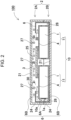
FIG. 2 is a vertical longitudinal cross-sectional view of the battery pack according to the first exemplary embodiment of the present invention. -
FIG. 3 is a schematic perspective view illustrating the internal structure of the battery pack according to the first exemplary embodiment of the present invention. -
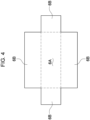
FIG. 4 is a development view of a flame-retardant cap illustrated inFIG. 3 . -
FIG. 5 is a schematic perspective view illustrating an internal structure of a battery pack according to a second exemplary embodiment of the present invention. -
FIG. 6 is a schematic horizontal cross-sectional view illustrating the internal structure of the battery pack according to the second exemplary embodiment of the present invention. -
FIG. 7 is a vertical longitudinal sectional view of the battery pack according to the second exemplary embodiment of the present invention. -
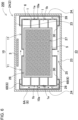
FIG. 8 is a partially enlarged plan view illustrating a stacked state of porous plates. -
FIG. 9 is an enlarged cross-sectional view illustrating the stacked state of the porous plates. -
FIG. 10 is an enlarged cross-sectional perspective view illustrating the stacked state of the porous plates. - A first invention of the present invention is a battery pack including a battery cell having a discharge valve opened when an internal pressure exceeds a set pressure, and a case housing the battery cell. A flame-retardant cap is disposed at a position facing a discharge valve side end surface of the battery cell with a diffusion gap provided between the discharge valve side end surface and the flame-retardant cap, the flame-retardant cap includes a collision plate disposed at a position facing the discharge valve side end surface and a peripheral wall formed around the collision plate, a discharge valve of the battery cell and a region in proximity are arranged inside the peripheral wall, and a reverse ejection gap is provided between the battery cell and the peripheral wall, an expansion space of a discharge gas flowing in from the reverse ejection gap is provided inside the case, and in the expansion space, the discharge gas ejected from the discharge valve collides with the collision plate of the flame-retardant cap, and fills the expansion space via the diffusion gap and the reverse ejection gap.
- In a second invention of the present invention, the case includes a plurality of flue gas holes that discharges the discharge gas ejected from the discharge valve of the battery cell to an outside of the case, the flue gas hole is opened to a case surface in a direction in which a discharge direction of the discharge gas discharged from the flue gas hole and an ejection direction of the discharge gas discharged from the discharge valve of the battery valve, the expansion space is communicatively connected with the reverse ejection gap and an inner opening of the flue gas hole of an inner surface of the case, and the discharge gas ejected from the discharge valve is dispersed into the plurality of flue gas holes and is discharged to the outside of the case.
- In a third invention of the present invention, the flame-retardant cap is a flexible heat-resistant sheet. The battery pack described above is characterized in that the battery cell can be easily and smoothly disposed inside the flame-retardant cap. This is because the flame-retardant cap is deformed and the battery cell can be inserted into the peripheral wall.
- In a fourth invention of the present invention, the flame-retardant cap is a heat-resistant fiber sheet formed by forming heat-resistant fibers into a sheet shape.
- In a fifth invention of the present invention, the flame-retardant cap is a nonwoven fabric formed by assembling heat-resistant fibers without directionality, or a fiber sheet formed by braiding heat-resistant fibers.
- In a sixth invention of the present invention, the heat-resistant fibers are either inorganic fibers or heat-resistant plastic fibers.
- In a seventh invention of the present invention, the flame-retardant cap is either a heat-resistant plastic sheet or a plastic plate.
- In an eighth invention of the present invention, the battery cell is a non-aqueous electrolyte secondary battery. In a ninth invention of the present invention, the battery cell is a lithium-ion battery.
- In a tenth invention of the present invention, the battery cell is a battery having a cylindrical shape, and a battery block is provided by arranging end surfaces of a plurality of the cylindrical batteries in an identical plane and arranging the plurality of batteries in parallel with each other, and an end of the battery block is inserted into the flame-retardant cap.
- In an eleventh invention of the present invention, the case has a non-sealed structure. In a twelfth invention of the present invention, at least a part of the case is a porous plate having a plurality of through-holes. The battery pack described above is characterized in that the discharge gas in the case can be smoothly discharged to the outside.
- Hereinafter, the present invention will be described in detail with reference to the drawings. In the following description, terms (for example, "upper", "lower", and other terms including these terms) indicating specific directions and positions are used as necessary, but these terms are used to facilitate understanding of the invention with reference to the drawings, and the technical scope of the present invention is not limited by the meanings of these terms. Parts denoted by identical reference marks in a plurality of drawings indicate identical or equivalent parts or members.
- The following exemplary embodiments illustrate specific examples of the technical idea of the present invention, and do not limit the present invention to the following exemplary embodiments. Unless otherwise specified, dimensions, materials, shapes, relative arrangements, and the like of constituent components to be described below are not intended to limit the scope of the present invention, but are intended to be illustrative. Contents described in one exemplary embodiment and example are also applicable to other exemplary embodiments and examples. Sizes, positional relationships, and the like of members illustrated in the drawings may be exaggerated in order to clarify the description.
-
Battery pack 100 illustrated inFIGS. 1 to 4 includes a plurality ofbattery cells 1,battery holder 4 in whichbattery cells 1 are arranged at fixed positions,circuit board 3 fixed tobattery holder 4, flame-retardant caps 6 arranged at positions facing discharge valve openings ofbattery cells 1, andcase 2 in whichbattery cells 1 arranged at the fixed positions inbattery holders 4,circuit board 3, and flame-retardant caps 6 are arranged. -
Battery cell 1 is a battery having a cylindrical shape. In the cylindrical battery, an electrode and an electrolytic solution are housed in a metal case having a cylindrical shape. The metal case has a sealed structure in which a sealing plate is airtightly fixed to an opening of an exterior can blocking a bottom. The exterior can is manufactured by pressing a metal plate. The sealing plate is airtightly fixed by being crimped to a peripheral edge of the opening of the exterior can with an insulating packing interposed therebetween. - Although not illustrated, a discharge valve on the sealing plate is provided in
battery cell 1 in order to prevent damage due to an abnormally high internal pressure of the metal case. In the discharge valve, an opening through which an internal gas and the like are discharged in an opened state is provided in the sealing plate. However, in the battery cell, the discharge valve and the opening thereof may be provided at a bottom portion of the exterior can. When the internal pressure becomes higher than a set pressure, for example, 1.5 MPa, the discharge valve is opened to prevent destruction of the metal case due to an increase in the internal pressure. The discharge valve is opened in an abnormal state. Accordingly, in a state in which the discharge valve is opened, a temperature ofbattery cell 1 is also very high. Thus, the gas and the electrolytic solution (ejected matter) discharged from the opened discharge valve have an abnormal high temperature. Particularly, in a battery pack in whichbattery cell 1 is a non-aqueous electrolyte secondary battery such as a lithium-ion battery, a discharge gas has an abnormal high temperature of 400°C or higher. Since the lithium-ion battery is filled with a non-aqueous electrolytic solution, when the electrolytic solution is discharged to the outside of the case at a high temperature, the electrolytic solution may be ignited by being in contact with air, and may have an abnormal higher temperature. In not only the lithium-ion battery but also other chargeable batteries, since the discharge gas ejected from the opened discharge valve has a high temperature, it is important to attenuate the energy of the discharge gas and exhaust the discharge gas to the outside of the case for enhancing safety. - In
battery pack 100 ofFIGS. 1 to 4 , a plurality ofbattery cells 1 is arranged at the fixed positions inbattery holders 4, and is arranged asbattery block 10 incase 2.Battery block 10 includes two sets ofbattery assemblies 11. Inbattery assembly 11,battery cells 1 are arranged at fixed positions by insertingbattery cells 1 intobattery holders 4. Inbattery holder 4,battery cells 1 are arranged in four rows in parallel toside wall 23 ofcase 2.Battery block 10 in which two sets ofbattery assemblies 11 are arranged in two stages in a longitudinal direction ofcase 2 and eightbattery cells 1 are connected in series and in parallel in four rows and two stages is provided. In eachbattery assembly 11, the openings of the discharge valves of twobattery cells 1 are arranged incase 2 so as to faceend wall 24. Inbattery pack 100 in the drawing,battery assembly 11 includes fourbattery cells 1,battery block 10 includes two sets ofbattery assemblies 11, andbattery block 10 is disposed incase 2. However, the battery pack of the present invention does not specify a number or connection state of the battery cells housed in the case. - An electronic component (not illustrated) connected to
battery cells 1 to achieve a protection circuit forbattery cells 1 is mounted oncircuit board 3. The protection circuit is a circuit that prevents overcharge and overdischarge ofbattery cells 1, a circuit that prevents overcurrent, or a circuit that interrupts current in a state in which the temperature rises abnormally. - Flame-
retardant cap 6 is disposed on an inner surface ofcase 2 withdiffusion gap 28 provided between the flame-retardant cap and discharge valveside end surface 1a ofbattery cell 1. Flame-retardant cap 6 includescollision plate 6A disposed at a position facing discharge valveside end surface 1a andperipheral walls 6B formed aroundcollision plate 6A. The discharge valve ofbattery cell 1 and a region in proximity are arranged insideperipheral walls 6B,reverse ejection gap 30 is provided betweenbattery cell 1 andperipheral wall 6B, andreverse ejection gap 30 is communicatively connected withdiffusion gap 28. In flame-retardant cap 6,collision plate 6A is disposed withdiffusion gap 28 provided between the flame-retardant cap and discharge valveside end surface 1a ofbattery cell 1 such that the discharge gas ejected from the discharge valve can collide and be diffused around. Inbattery pack 100 ofFIGS. 1 and2 , the end surfaces of fourbattery cells 1 are arranged on an identical plane and are arranged onblock end surface 10a ofbattery block 10. However, in twobattery cells 1, discharge valveside end surface 1a (positive electrode in the drawing) is disposed onblock end surface 10a, and in twobattery cells 1,electrode end surface 1b (negative electrode) on which the discharge valve is not provided is disposed onblock end surface 10a. In flame-retardant cap 6,reverse ejection gap 30 is provided between the reverse ejection gap andbattery cell 1 by disposingcollision plate 6A on the inner surface ofcase 2 at a position facing entireblock end surface 10a ofbattery block 10 and inserting an end ofbattery block 10 intoperipheral wall 6B provided along an outer periphery ofcollision plate 6A. - As for flame-
retardant cap 6, since discharge valveside end surface 1a andelectrode end surface 1b on which the discharge valve is not provided are inserted into flame-retardant cap 6,collision plate 6A is disposed on entireblock end surface 10a ofbattery block 10, and thus,reverse ejection gap 30 is provided between the end ofbattery block 10 andperipheral wall 6B. The discharge gas discharged from the discharge valve collides withcollision plate 6A, is diffused intodiffusion gap 28, flows intoreverse ejection gap 30 fromdiffusion gap 28, is redirected in a direction opposite to an ejection direction of the discharge valve, and flows intoexpansion space 25. - When
diffusion gap 28 andreverse ejection gap 30 are too narrow, since the discharge gas cannot smoothly pass therethrough, the diffusion gap and the reverse ejection gap are preferably greater than 0.5 mm and preferably greater than or equal to 1 mm. Whendiffusion gap 28 andreverse ejection gap 30 are widened, since an outer shape ofcase 2 becomes large,diffusion gap 28 andreverse ejection gap 30 are preferably narrowed to less than 5 mm. In particular, since the battery pack of the present invention is suitable for, for example, a small-sized battery pack for home electric appliances having relatively small-capacity battery cell 1 in which the charge capacity ofbattery cell 1 is less than or equal to 5 Ah built therein, it is important to reduce a size and a weight by simplifying the entire structure. - Flame-
retardant cap 6 is a flexible heat-resistant sheet that is not melted by the discharge gas ejected from the discharge valve and can be bent. An inorganic sheet in which inorganic fibers are assembled into a sheet shape or a flexible heat-resistant sheet in which inorganic fibers are impregnated with plastic is suitable for flame-retardant cap 6. The end ofbattery cell 1 can be easily disposed as flame-retardant cap 6 insideperipheral wall 6B by cutting the flexible heat-resistant sheet that can be bent as illustrated in a development view ofFIG. 4 and bending the heat-resistant sheet at a right angle at a boundary betweencollision plate 6A andperipheral wall 6B indicated by a chain line. However, flame-retardant cap 6 is not necessarily required to be a flexible heat-resistant sheet that can be bent. For example, the flame-retardant cap can be produced by using a mica plate or an inorganic material as an inorganic plate having a cap shape, and molding plastic having excellent heat resistance, for example, a thermoplastic resin such as a nylon resin or a fluorocarbon resin into a cap shape or molding plastic having more excellent heat resistance such as a silicon resin or a polyimide resin into a cap shape. -
Entire case 2 is molded into a rectangular cuboid.Case 2 is molded by a thermoplastic resin such as polycarbonate.Case 2 has a plurality ofbattery cells 1 arranged at the fixed positions inbattery holders 4,circuit board 3, and flame-retardant caps 6.Case 2 in the drawing includesupper case 2A andlower case 2B. Atlower case 2B andupper case 2A,peripheral wall 22 is provided aroundsurface plate 21 having a quadrangular shape, specifically, a rectangular shape in the drawing.Lower case 2B andupper case 2A are coupled with opening end surfaces ofperipheral wall 22 as mating surfaces.Peripheral wall 22 includesside walls 23 on both sides extending in a longitudinal direction ofrectangular surface plate 21 and endwalls 24 orthogonal toside walls 23. Incase 2 ofFIGS. 1 to 3 , sincebattery block 10 is disposed such thatend wall 24 is disposed at a position facing discharge valveside end surface 1a ofbattery cell 1, flame-retardant cap 6 is disposed on an inner surface ofend wall 24. - A plurality of flue gas holes 27 is provided in
case 2. Incase 2 ofFIGS. 1 to 3 , the plurality of flue gas holes 27 is provided inside walls 23 ofcase 2. Since flue gas holes 27 can increase the permeation resistance of the discharge gas by reducing the size and can reduce the total permeation resistance by reducing the number, an inner diameter and the number of flue gas holes are set such that the discharge gas can be smoothly dispersed by attenuating the discharge gas to be low energy and can be exhausted. The inner diameter and the number of flue gas holes 27 are optimally designed according to the capacity ofbattery cell 1, that is, the amount of discharge gas discharged from the opened discharge valve. For example, in a lithium-ion battery having a cylindrical shape commonly called "18650", the inner diameter is preferably 0.5 mm to 3 mm, and the number of flue gas holes is preferably 10 to 100. However, the present invention does not specify the inner diameter and the number of flue gas holes 27, and the inner diameter and the number of flue gas holes are set to optimum values in consideration of the type and capacity ofbattery cell 1, required safety, and the like. As indicated by a chain line inFIG. 1 , labels 7 peeled off by the discharge gas are attached to flue gas holes 27. As described above, flue gas holes 27 are blocked bylabels 7, foreign substances are prevented from entering in a state in which the discharge valve is not opened. -
Case 2 includesexpansion space 25 of the discharge gas that collides withcollision plate 6A of flame-retardant cap 6, is diffused indiffusion gap 28, and flows out fromreverse ejection gap 30. The discharge gas ejected from the discharge valve collides withcollision plate 6A of flame-retardant cap 6, and fillsexpansion space 25 viadiffusion gap 28 andreverse ejection gap 30.Expansion space 25 is communicatively connected withreverse ejection gap 30 and flue gas holes 27, expands and disperses the discharge gas flowing in fromreverse ejection gap 30, and further redirects the discharge gas to disperse and flow into the plurality of flue gas holes 27.Expansion space 25 is formed by a gap between the inner surface ofcase 2 and a built-in object. Sincebattery assemblies 11 in whichbattery cells 1 are fixed at the fixed positions bybattery holders 4 andcircuit board 3 fixed tobattery holders 4 are built incase 2, the expansion space is configured with a gap formed between the built-in object and the inner surface ofcase 2 and all gaps formed in a communicative manner betweenbattery cells 1,battery holders 4, andcircuit board 3 as built-in objects.Expansion space 25 can expand the discharge gas flowing in fromreverse ejection gap 30 to a larger volume by increasing a volume. Accordingly,expansion space 25 is set to have a sufficiently large volume as compared withdiffusion gap 28 andreverse ejection gap 30, preferably greater than or equal to 10 times, more preferably greater than or equal to 50 times ofdiffusion gap 28 andreverse ejection gap 30. -
Battery pack 200 ofFIGS. 5 to 7 has the same structure as the structure of the first exemplary embodiment except thatopening 26 is provided insurface plate 21 ofcase 2 andopening 26 is blocked byporous plate 5 in which flue gas holes 27 are provided. At least a part ofcase 2 inFIGS. 5 to 7 isporous plate 5 having many through-holes. Incase 2 illustrated in the drawing, opening 26 is formed on substantially the entire surface ofsurface plate 21 ofupper case 2A, andopening 26 is blocked byporous plate 5. Inbattery pack 200, since the discharge gas is smoothly exhausted by increasingopening 26 ofcase 2, an opening area of opening 26 is preferably greater than or equal to 40%, more preferably greater than or equal to 50% ofsurface plate 21. Incase 2 in this drawing, the opening area of opening 26 is increased by providingopening 26 having a rectangular shape inrectangular surface plate 21. -
Opening 26 is blocked byporous plate 5 in which flue gas holes 27 through which the discharge gas can pass are provided.Porous plate 5 is bonded and fixed to surfaceplate 21 by a structure such as adhesion or welding, or is fixed by a fitting structure.Porous plate 5 is fixed so as not to form a gap between the porous plate andopening 26. The plurality ofporous plates 5 is stacked so as to attenuate and exhaust the energy of the discharge gas.Expansion gap 8 of the discharge gas is provided between stackedporous plates 5. Each of stackedporous plates 5 has a structure in which flue gas holes 27 are arranged at non-facing positions not facing each other and the discharge gas does not flow linearly through the plurality ofporous plates 5 to be exhausted.Porous plate 5 is obtained by molding plastic into a plate shape, and a plurality of flue gas holes 27 is provided in the porous plate. -
Porous plate 5 can safely exhaust a high-energy discharge gas by using plastic having heat resistance capable of attenuating the energy of the discharge gas and exhausting the discharge gas to the outside. Although it is ideal thatporous plate 5 is molded by plastic having heat resistance that is not thermally deformed by the temperature of the discharge gas, the structure in which the plurality ofporous plates 5 is stacked withexpansion gap 8 may not have heat resistance that allporous plates 5 are not thermally deformed by the discharge gas. This is because even thoughporous plate 5 on the inner side is thermally deformed, the safety ofbattery pack 200 can be ensured by maintaining the discharge gas in a state in whichporous plate 5 on the outer side can attenuate and exhaust the discharge gas by the plurality of remaining flue gas holes 27. There are characteristics thatporous plate 5 obtained by stacking a plurality of sheets can be produced in large quantities at low cost by injection molding with a thermoplastic resin such as polycarbonate. However, the present invention does not specify the plastic ofporous plate 5, and the porous plate can be molded with a thermoplastic resin having more excellent heat resistance, for example, a thermoplastic resin such as a nylon resin or a fluorocarbon resin, and can also be molded with plastic having more excellent heat resistance such as a silicone resin or a polyimide resin. - In
porous plate 5 illustrated in plan view ofFIG. 8 , flue gas holes 27 each having a circular shape are arranged at intersections of the checkerboard lattice such that vertical and horizontal pitches of flue gas holes 27 are constant. Flue gas holes 27 can increase the permeation resistance of the discharge gas by reducing the size, but when the flue gas hole is too small, since the discharge gas cannot be smoothly exhausted to the outside ofcase 2, the inner diameter is preferably 1 mm to 3 mm. The discharge gas vigorously ejected from the discharge valve first permeates throughporous plate 5 stacked on the innermost side ofcase 2. In thisporous plate 5,flue gas hole 27 is set to be larger than otherporous plates 5, and thus, the discharge gas ejected from the discharge valve can smoothly permeate throughflue gas hole 27. However, flue gas holes 27 of allporous plates 5 may have the same size. The discharge gas having permeated through flue gas holes 27 is ejected intoexpansion gap 8, and is adiabatically expanded. The temperature of the discharge gas adiabatically expanded inexpansion gap 8 decreases. In the structure in which three or moreporous plates 5 are stacked, sinceexpansion gap 8 is formed in a plurality of layers, whenever the discharge gas permeates through flue gas holes 27 and flows intoexpansion gap 8, the discharge gas is adiabatically expanded to decrease the temperature. - Since
porous plate 5 can lengthenflue gas hole 27 to increase the permeation resistance of the discharge gas by increasing a thickness, the thickness ofporous plate 5 is preferably 1 mm to 3 mm. However, in the present invention, the inner diameter offlue gas hole 27 and the thickness ofporous plate 5 are not specified to the above ranges, and the porous plate can have a shape in which the energy of the discharge gas is attenuated to exhaust the discharge gas by providing a plurality of smaller flue gas holes or a small number of larger flue gas holes and increasing or decreasing the porous plate. The pitch of flue gas holes 27 is set to a dimension in which flue gas holes 27 of facingporous plates 5 are arranged at non-facing positions and a part of flue gas holes 27 is not arranged at a facing position of stackedporous plates 5. As illustrated in the plan view ofFIG. 8 ,porous plates 5 in which flue gas holes 27 are arranged in a checkerboard lattice shape are arranged at positions at which four flue gas holes 27 provided inporous plate 5 to be stacked do not overlap each other around flue gas holes 27 provided in oneporous plate 5. However, a structure in which the energy of the discharge gas can be attenuated and the discharge gas can be safely exhausted to the outside can also be adopted even with a structure in which a part of flue gas holes 27 provided inporous plates 5 arranged to face each other is arranged at positions overlapping with each other. This is because most of the discharge gas having permeated through flue gas holes 27 collides with the surface of stackedporous plates 5 and the energy is attenuated. - As illustrated in
FIGS. 9 and10 ,porous plates 5 are stacked and provided such thatprotrusions 5b are integrally molded on the surface andexpansion gap 8 having a certain gap is formed.Protrusions 5b illustrated in the drawing are spacer ribs integrally molded along side edges ofporous plate 5. A protrusion height ofprotrusion 5b which is the spacer rib specifies a dimension ofexpansion gap 8. Inporous plate 5 illustrated in a cross-sectional view ofFIG. 9 ,expansion gap 8 is substantially equal to the thickness ofporous plate 5, butexpansion gap 8 may be narrower or wider than the thickness ofporous plate 5.Narrow expansion gap 8 can more effectively attenuate the energy of the discharge gas by increasing the permeation resistance of the discharge gas, but cannot smoothly exhaust the discharge gas. Whenexpansion gap 8 is widened, the plurality ofporous plates 5 is stacked and thickened. Accordingly,expansion gap 8 is set to have a dimension, for example, 2 mm to 5 mm which allows the discharge gas to be smoothly exhausted while entire stackedporous plates 5 is set to be as thin as possible and can further safely discharge the discharge gas by preventing adverse effects such as ignition. -
Protrusions 5b are scattered and arranged on an outer periphery ofporous plate 5 and are also arranged in a central portion if necessary, and can be stacked whileconstant expansion gap 8 is maintained.FIGS. 9 and10 illustrateporous plates 5 stacked in five layers. Inporous plates 5 illustrated in these drawings, two types ofporous plates 5 including planarporous plate 5A and intermediateporous plate 5B are alternately stacked. In planarporous plate 5A and intermediateporous plate 5B, flue gas holes 27 are provided at positions not facing each other, that is, at non-facing positions. Intermediateporous plate 5A is provided by integrally moldingprotrusions 5b protruding from both surfaces.Porous plates 5 having this shape can be stacked by alternately stacking two types ofporous plates 5, arranging flue gas holes 27 at the non-facing positions, and providingconstant expansion gap 8 betweenporous plates 5.Porous plates 5 illustrated inFIGS. 9 and10 have a 5-layer stacked structure by stacking three planarporous plates 5A and two intermediateporous plates 5B. Planarporous plates 5A are stacked on both surfaces and in the middle, and intermediateporous plates 5B are stacked between planarporous plates 5A. This structure can be a stacked structure in which the number of stacked sheets is an odd number by alternately stackingporous plates 5 made of plastic and molded in two types of shapes. Inporous plates 5 illustrated inFIGS. 9 and10 , flue gas holes 27 provided in planarporous plate 5A disposed on an innermost side are set to be larger than flue gas holes 27a of otherporous plates 5. As described above, inbattery pack 100 in which flue gas holes 27 ofporous plates 5 stacked on the innermost side ofcase 2 are enlarged, since onlyporous plates 5 stacked on the innermost side are molded separately, three or more odd-numbered layers can be stacked by stackingporous plates 5 molded in three types of shapes. - In
battery pack 200,expansion space 25 is provided insidecase 2. Inbattery pack 200, the discharge gas ejected from the discharge valve is ejected into flame-retardant cap 6, and the energy is attenuated indiffusion gap 28 andreverse ejection gap 30. Thereafter, the discharge gas is ejected intoexpansion space 25, and the energy is further attenuated inexpansion space 25. Thereafter, the energy is attenuated by flue gas holes 27 provided in stackedporous plates 5 andexpansion gap 8 provided betweenporous plates 5, and the discharge gas is discharged to the outside of the case. Flue gas holes 27 attenuate the energy of the discharge gas by the permeation resistance through which the discharge gas permeates, andexpansion gap 8 causes the discharge gas having permeated through flue gas holes 27 to collide with the surface ofporous plates 5 and attenuates the energy of the discharge gas. -
Battery pack 200 illustrated in a schematic perspective view ofFIG. 5 is disposed in a direction in which an ejection direction of the discharge gas ejected frombattery cells 1 and a direction in which the discharge gas permeates through flue gas holes 27 ofporous plates 5 intersect each other.Battery cells 1 extend in the longitudinal direction ofrectangular surface plate 21, andporous plates 5 are arranged in parallel tosurface plate 21 so as to block flue gas holes 27 provided insurface plate 21.Battery cells 1 eject the discharge gas from the opened discharge valves in a direction parallel to the surface ofsurface plate 21, and flue gas holes 27 cause the discharge gas to permeate in a direction orthogonal to surfaceplate 21 and exhausts the discharge gas. That is, the ejection direction of the discharge gas and the exhaust direction of flue gas holes 27 intersect each other, and are directions orthogonal to each other in the drawing. Thus, the discharge gas is redirected incase 2, and is exhausted to the outside. - The discharge gas ejected into
case 2 from the discharge valves flows in directions indicated by arrows inFIGS. 5 to 7 and is exhausted to the outside ofcase 2. Inbattery cell 1, the opening of the discharge valve is disposed to faceend wall 24 ofcase 2. The discharge gas ejected from the discharge valves is ejected towardend walls 24. Since flame-retardant cap 6 is disposed insideend wall 24, the discharge gas collides withcollision plate 6A of flame-retardant cap 6 and is scattered around by indiffusion gap 28, is redirected, and flows intoreverse ejection gap 30. The discharge gas that collides with flame-retardant cap 6 and is redirected fromdiffusion gap 28 to reverseejection gap 30 flows intoexpansion space 25 and is further diffused. The energy is attenuated. As indicated by the arrows in the drawing, the discharge gas flowing intoexpansion space 25 collides with an inner surface ofcase 2, is dispersed, is redirected, and is exhausted to the outside from flue gas holes 27. As indicated by the arrows in the drawing, the discharge gas collides with the inner surface ofcase 2, is dispersed, and is redirected. The energy of the discharge gas is attenuated, and the discharge gas permeates through flue gas holes 27. The energy of the discharge gas is further attenuated by flue gas holes 27 andexpansion gap 8, and the discharge gas is exhausted to the outside ofcase 2. The structure in which the energy of the discharge gas is attenuated and the discharge gas is exhausted to the outside ofcase 2 can improve safety by suppressing adverse effects such as ignition outsidecase 2. - The present invention can be effectively used for a battery pack that safely exhausts a discharge gas.
-
- 100, 200: battery pack
- 1: battery cell
- 1a: discharge valve side end surface
- 1b: electrode end surface
- 2: case
- 2A: upper case
- 2B: lower case
- 3: circuit board
- 4: battery holder
- 5: porous plate
- 5A: planar porous plate
- 5B: intermediate porous plate
- 5b: protrusion
- 6: flame-retardant cap
- 6A: collision plate
- 6B: peripheral wall
- 7: label
- 8: expansion gap
- 10: battery block
- 10a: block end surface
- 11: battery assembly
- 21: surface plate
- 22: peripheral wall
- 23: side wall
- 24: end wall
- 25: expansion space
- 26: opening
- 27: flue gas hole
- 28: diffusion gap
- 30: reverse ejection gap
Claims (12)
- A battery pack (100, 200) comprising:a battery cell (1) including a discharge valve opened when an internal pressure of the battery cell (1) exceeds a set pressure; anda case (2) housing the battery cell (1), whereinthe battery pack (100, 200) further comprises a flame-retardant cap (6) is disposed at a position facing a discharge valve side end surface (1a) of the battery cell (1) with a diffusion gap (28) provided between the discharge valve side end surface (1a) and the flame-retardant cap (6),the flame-retardant cap (6) includesa collision plate (6A) disposed at a position facing the discharge valve side end surface (1a) anda peripheral wall (6B) around the collision plate (6A),a discharge valve of the battery cell (1) and a region in proximity are arranged inside the peripheral wall (6B), and a reverse ejection gap (30) is provided between the battery cell (1) and the peripheral wall (6B),an expansion space (25) of a discharge gas flowing in from the reverse ejection gap (30) is provided inside the case (2), andin the expansion space (25), the discharge gas ejected from the discharge valve collides with the collision plate (6A) of the flame-retardant cap (6), and fills the expansion space (25) via the diffusion gap (28) and the reverse ejection gap (30).
- The battery pack (100, 200) according to claim 1, whereinthe case (2) includes a plurality of flue gas holes (27) that discharges the discharge gas ejected from the discharge valve of the battery cell (1) to an outside of the case (2),each of the plurality of flue gas holes (27) is opened to a surface of the case (2) in a direction in which a discharge direction of the discharge gas discharged from the plurality of flue gas holes (27) and an ejection direction of the discharge gas discharged from the discharge valve of the battery valve intersecting each other,the expansion space (25) is communicatively connected with the reverse ejection gap (30) and inner openings of the plurality of flue gas holes (27) of an inner surface of the case (2), andthe discharge gas ejected from the discharge valve is dispersed into the plurality of flue gas holes (27) in the expansion space (25) and is discharged to the outside of the case (2).
- The battery pack (100, 200) according to claim 1 or claim 2, wherein the flame-retardant cap (6) is a flexible heat-resistant sheet.
- The battery pack (100, 200) according to claim 3, wherein the flame-retardant cap (6) is a heat-resistant fiber sheet made of heat-resistant fibers into a sheet shape.
- The battery pack (100, 200) according to claim 4, wherein the flame-retardant cap (6) is a nonwoven fabric assembled from heat-resistant fibers without directionality, or a fiber sheet braided from heat-resistant fibers.
- The battery pack (100, 200) according to claim 4 or claim 5, wherein the heat-resistant fibers are either inorganic fibers or heat-resistant plastic fibers.
- The battery pack (100, 200) according to claim 1 or claim 2, wherein the flame-retardant cap (6) is either a heat-resistant plastic sheet or a heat-resistant plastic plate.
- The battery pack (100, 200) according to any one of claim 1 to claim 7, wherein the battery cell (1) is a non-aqueous electrolyte secondary battery.
- The battery pack (100, 200) according to claim 8, wherein the battery cell (1) is a lithium-ion battery.
- The battery pack (100, 200) according to any one of claim 1 to claim 9, whereinthe battery cell (1) is one of cylindrical batteries, and a battery block (10) is provided by arranging end surfaces of the cylindrical batteries in an identical plane and arranging the batteries in parallel with each other, andan end of the battery block (10) is inserted into the flame-retardant cap (6).
- The battery pack (100, 200) according to any one of claim 1 to claim 10, wherein the case (2) has a non-sealed structure.
- The battery pack (100, 200) according to claim 11, wherein at least a part of the case (2) is a porous plate (5) including a plurality of through-holes.
Applications Claiming Priority (2)
| Application Number | Priority Date | Filing Date | Title |
|---|---|---|---|
| JP2019011545 | 2019-01-25 | ||
| PCT/JP2019/048014 WO2020153015A1 (en) | 2019-01-25 | 2019-12-09 | Battery pack |
Publications (3)
| Publication Number | Publication Date |
|---|---|
| EP3916867A1 EP3916867A1 (en) | 2021-12-01 |
| EP3916867A4 EP3916867A4 (en) | 2022-03-23 |
| EP3916867B1 true EP3916867B1 (en) | 2025-04-16 |
Family
ID=71735711
Family Applications (1)
| Application Number | Title | Priority Date | Filing Date |
|---|---|---|---|
| EP19911091.7A Active EP3916867B1 (en) | 2019-01-25 | 2019-12-09 | Battery pack |
Country Status (5)
| Country | Link |
|---|---|
| US (1) | US12206127B2 (en) |
| EP (1) | EP3916867B1 (en) |
| JP (1) | JP7404275B2 (en) |
| CN (1) | CN113302774B (en) |
| WO (1) | WO2020153015A1 (en) |
Families Citing this family (20)
| Publication number | Priority date | Publication date | Assignee | Title |
|---|---|---|---|---|
| US11984613B2 (en) * | 2019-01-25 | 2024-05-14 | Panasonic Energy Co., Ltd. | Battery pack |
| US12300842B2 (en) * | 2019-07-29 | 2025-05-13 | Panasonic Energy Co., Ltd. | Battery pack |
| US12183942B2 (en) * | 2019-08-01 | 2024-12-31 | Panasonic Energy Co., Ltd. | Battery pack |
| KR102708662B1 (en) * | 2020-12-07 | 2024-09-20 | 주식회사 엘지에너지솔루션 | Battery Module, Battery Pack, and Vehicle |
| CN112688019B (en) * | 2020-12-25 | 2022-10-14 | 中国第一汽车股份有限公司 | Power battery heat flow discharging device and power battery heat flow discharging method |
| CN115398721B (en) * | 2021-03-15 | 2023-11-03 | 宁德时代新能源科技股份有限公司 | Battery, electrical device, method and device for preparing battery |
| KR102844252B1 (en) * | 2021-07-07 | 2025-08-07 | 주식회사 엘지에너지솔루션 | Battery module and battery pack including the same |
| WO2023145277A1 (en) * | 2022-01-27 | 2023-08-03 | パナソニックエナジ-株式会社 | Battery pack |
| KR20230122934A (en) * | 2022-02-15 | 2023-08-22 | 주식회사 엘지에너지솔루션 | The battery pack |
| CN114639918B (en) * | 2022-05-19 | 2022-09-06 | 江苏福瑞士电池科技有限公司 | Composite packaging lithium battery structure with flame retardant function |
| DE102022118992A1 (en) * | 2022-07-28 | 2024-02-08 | Man Truck & Bus Se | Electrical energy storage with a degassing line |
| US20240063499A1 (en) * | 2022-08-16 | 2024-02-22 | GM Global Technology Operations LLC | Battery container vents with pressure burst covers using electrical interlocks for detecting thermal events |
| US20240063465A1 (en) * | 2022-08-19 | 2024-02-22 | GM Global Technology Operations LLC | Cold-plate design for thermal runaway mitigation in a battery module |
| KR102821850B1 (en) * | 2022-09-05 | 2025-06-26 | 주식회사 엘지에너지솔루션 | Battery pack |
| JPWO2024195358A1 (en) * | 2023-03-17 | 2024-09-26 | ||
| WO2024253013A1 (en) * | 2023-06-07 | 2024-12-12 | 株式会社Aescジャパン | Battery pack |
| JP7785043B2 (en) | 2023-06-23 | 2025-12-12 | プライムプラネットエナジー&ソリューションズ株式会社 | Energy storage pack |
| JPWO2025018164A1 (en) * | 2023-07-19 | 2025-01-23 | ||
| JP2025130965A (en) * | 2024-02-28 | 2025-09-09 | 株式会社Aescジャパン | Battery modules and battery packs |
| WO2026036257A1 (en) * | 2024-08-12 | 2026-02-19 | 宁德时代新能源科技股份有限公司 | Battery device and electric device |
Family Cites Families (18)
| Publication number | Priority date | Publication date | Assignee | Title |
|---|---|---|---|---|
| JPS6454257U (en) * | 1987-09-28 | 1989-04-04 | ||
| JPH06111798A (en) * | 1992-09-02 | 1994-04-22 | Globe Union Inc | Explosion damping system and method to incorporate said system into storage battery |
| JP2005339932A (en) * | 2004-05-26 | 2005-12-08 | Toyota Motor Corp | Assembled battery |
| JP5338331B2 (en) * | 2008-02-04 | 2013-11-13 | パナソニック株式会社 | Battery pack and electronic device equipped with the same |
| JP2010055957A (en) | 2008-08-28 | 2010-03-11 | Sanyo Electric Co Ltd | Battery pack |
| DE102011078301A1 (en) * | 2011-06-29 | 2013-01-03 | Sb Limotive Co., Ltd. | Battery cell, battery, battery cell module and motor vehicle |
| EP2738834B1 (en) * | 2011-07-29 | 2019-03-20 | Panasonic Intellectual Property Management Co., Ltd. | Battery pack |
| KR101282473B1 (en) * | 2011-09-21 | 2013-07-04 | 로베르트 보쉬 게엠베하 | Battery pack |
| JP5461610B2 (en) * | 2012-03-22 | 2014-04-02 | 三菱重工業株式会社 | Battery and battery system |
| JP2013206728A (en) * | 2012-03-28 | 2013-10-07 | Daihatsu Motor Co Ltd | Cooling structure of battery pack for vehicle |
| DE102012219379A1 (en) * | 2012-10-24 | 2014-04-24 | Robert Bosch Gmbh | Battery i.e. lithium-ion-battery, for motor vehicle, has conducting elements arranged in inner side of battery housing and spatially arranged at distance from openings, where elements flow-technically guide fluid and/or gas towards valve |
| US9853267B2 (en) * | 2014-02-03 | 2017-12-26 | Ursatech Ltd. | Intumescent battery housing |
| US10319970B2 (en) * | 2014-07-30 | 2019-06-11 | Zhejiang Chilwee Chuangyuan Industry Company Ltd. | Lithium-ion battery and electric vehicle utilizing the same |
| JP2016035817A (en) | 2014-08-01 | 2016-03-17 | 三菱重工業株式会社 | Module cover upper structure, battery module and method of preventing thermal runaway of battery module |
| JP6606907B2 (en) * | 2015-07-30 | 2019-11-20 | 株式会社Gsユアサ | Power storage device |
| WO2018025559A1 (en) * | 2016-08-02 | 2018-02-08 | パナソニックIpマネジメント株式会社 | Battery cover and battery pack |
| JP6821391B2 (en) * | 2016-10-26 | 2021-01-27 | 三洋電機株式会社 | Power supply device, vehicle using it, and power storage device |
| EP3780254A4 (en) * | 2018-03-30 | 2021-05-19 | SANYO Electric Co., Ltd. | Power supply device, electric vehicle provided with said power supply device, and electricity-storage device |
-
2019
- 2019-12-09 CN CN201980088896.4A patent/CN113302774B/en active Active
- 2019-12-09 US US17/422,732 patent/US12206127B2/en active Active
- 2019-12-09 EP EP19911091.7A patent/EP3916867B1/en active Active
- 2019-12-09 WO PCT/JP2019/048014 patent/WO2020153015A1/en not_active Ceased
- 2019-12-09 JP JP2020567403A patent/JP7404275B2/en active Active
Also Published As
| Publication number | Publication date |
|---|---|
| US12206127B2 (en) | 2025-01-21 |
| CN113302774B (en) | 2024-03-29 |
| EP3916867A4 (en) | 2022-03-23 |
| JP7404275B2 (en) | 2023-12-25 |
| EP3916867A1 (en) | 2021-12-01 |
| CN113302774A (en) | 2021-08-24 |
| JPWO2020153015A1 (en) | 2021-12-02 |
| WO2020153015A1 (en) | 2020-07-30 |
| US20220085453A1 (en) | 2022-03-17 |
Similar Documents
| Publication | Publication Date | Title |
|---|---|---|
| EP3916867B1 (en) | Battery pack | |
| EP3916876B1 (en) | Battery pack | |
| JP7401467B2 (en) | pack batteries | |
| US12294107B2 (en) | Battery pack | |
| JP7489330B2 (en) | Battery pack | |
| US10003055B2 (en) | Battery module | |
| EP2860787B1 (en) | Battery module comprising venting guidance portion | |
| JP7520842B2 (en) | Battery pack | |
| JP7609777B2 (en) | Battery pack | |
| EP4175043A1 (en) | Battery module and battery pack comprising same | |
| EP4199228B1 (en) | Battery module and battery pack comprising same |
Legal Events
| Date | Code | Title | Description |
|---|---|---|---|
| STAA | Information on the status of an ep patent application or granted ep patent |
Free format text: STATUS: THE INTERNATIONAL PUBLICATION HAS BEEN MADE |
|
| PUAI | Public reference made under article 153(3) epc to a published international application that has entered the european phase |
Free format text: ORIGINAL CODE: 0009012 |
|
| STAA | Information on the status of an ep patent application or granted ep patent |
Free format text: STATUS: REQUEST FOR EXAMINATION WAS MADE |
|
| 17P | Request for examination filed |
Effective date: 20210714 |
|
| AK | Designated contracting states |
Kind code of ref document: A1 Designated state(s): AL AT BE BG CH CY CZ DE DK EE ES FI FR GB GR HR HU IE IS IT LI LT LU LV MC MK MT NL NO PL PT RO RS SE SI SK SM TR |
|
| A4 | Supplementary search report drawn up and despatched |
Effective date: 20220223 |
|
| RIC1 | Information provided on ipc code assigned before grant |
Ipc: H01M 10/42 20060101ALN20220217BHEP Ipc: H01M 50/426 20210101ALN20220217BHEP Ipc: H01M 50/423 20210101ALN20220217BHEP Ipc: H01M 50/431 20210101ALI20220217BHEP Ipc: H01M 50/411 20210101ALI20220217BHEP Ipc: H01M 50/44 20210101ALI20220217BHEP Ipc: H01M 50/383 20210101ALI20220217BHEP Ipc: H01M 50/367 20210101ALI20220217BHEP Ipc: H01M 50/358 20210101ALI20220217BHEP Ipc: H01M 50/213 20210101ALI20220217BHEP Ipc: H01M 10/0525 20100101ALI20220217BHEP Ipc: H01M 10/0566 20100101ALI20220217BHEP Ipc: H01M 10/052 20100101AFI20220217BHEP |
|
| DAV | Request for validation of the european patent (deleted) | ||
| DAX | Request for extension of the european patent (deleted) | ||
| GRAP | Despatch of communication of intention to grant a patent |
Free format text: ORIGINAL CODE: EPIDOSNIGR1 |
|
| STAA | Information on the status of an ep patent application or granted ep patent |
Free format text: STATUS: GRANT OF PATENT IS INTENDED |
|
| RIC1 | Information provided on ipc code assigned before grant |
Ipc: H01M 10/42 20060101ALN20241212BHEP Ipc: H01M 50/426 20210101ALN20241212BHEP Ipc: H01M 50/423 20210101ALN20241212BHEP Ipc: H01M 50/247 20210101ALI20241212BHEP Ipc: H01M 50/431 20210101ALI20241212BHEP Ipc: H01M 50/411 20210101ALI20241212BHEP Ipc: H01M 50/44 20210101ALI20241212BHEP Ipc: H01M 50/204 20210101ALI20241212BHEP Ipc: H01M 50/383 20210101ALI20241212BHEP Ipc: H01M 50/367 20210101ALI20241212BHEP Ipc: H01M 50/358 20210101ALI20241212BHEP Ipc: H01M 50/24 20210101ALI20241212BHEP Ipc: H01M 50/213 20210101ALI20241212BHEP Ipc: H01M 10/0525 20100101ALI20241212BHEP Ipc: H01M 10/0566 20100101ALI20241212BHEP Ipc: H01M 10/052 20100101AFI20241212BHEP |
|
| INTG | Intention to grant announced |
Effective date: 20241219 |
|
| GRAS | Grant fee paid |
Free format text: ORIGINAL CODE: EPIDOSNIGR3 |
|
| RAP3 | Party data changed (applicant data changed or rights of an application transferred) |
Owner name: SANYO ELECTRIC CO., LTD. |
|
| GRAA | (expected) grant |
Free format text: ORIGINAL CODE: 0009210 |
|
| STAA | Information on the status of an ep patent application or granted ep patent |
Free format text: STATUS: THE PATENT HAS BEEN GRANTED |
|
| RAP1 | Party data changed (applicant data changed or rights of an application transferred) |
Owner name: PANASONIC ENERGY CO., LTD. |
|
| AK | Designated contracting states |
Kind code of ref document: B1 Designated state(s): AL AT BE BG CH CY CZ DE DK EE ES FI FR GB GR HR HU IE IS IT LI LT LU LV MC MK MT NL NO PL PT RO RS SE SI SK SM TR |
|
| REG | Reference to a national code |
Ref country code: GB Ref legal event code: FG4D |
|
| REG | Reference to a national code |
Ref country code: CH Ref legal event code: EP Ref country code: DE Ref legal event code: R096 Ref document number: 602019068873 Country of ref document: DE |
|
| REG | Reference to a national code |
Ref country code: IE Ref legal event code: FG4D |
|
| REG | Reference to a national code |
Ref country code: NL Ref legal event code: MP Effective date: 20250416 |
|
| PG25 | Lapsed in a contracting state [announced via postgrant information from national office to epo] |
Ref country code: NL Free format text: LAPSE BECAUSE OF FAILURE TO SUBMIT A TRANSLATION OF THE DESCRIPTION OR TO PAY THE FEE WITHIN THE PRESCRIBED TIME-LIMIT Effective date: 20250416 |
|
| REG | Reference to a national code |
Ref country code: AT Ref legal event code: MK05 Ref document number: 1786418 Country of ref document: AT Kind code of ref document: T Effective date: 20250416 |
|
| PG25 | Lapsed in a contracting state [announced via postgrant information from national office to epo] |
Ref country code: ES Free format text: LAPSE BECAUSE OF FAILURE TO SUBMIT A TRANSLATION OF THE DESCRIPTION OR TO PAY THE FEE WITHIN THE PRESCRIBED TIME-LIMIT Effective date: 20250416 Ref country code: PT Free format text: LAPSE BECAUSE OF FAILURE TO SUBMIT A TRANSLATION OF THE DESCRIPTION OR TO PAY THE FEE WITHIN THE PRESCRIBED TIME-LIMIT Effective date: 20250818 Ref country code: FI Free format text: LAPSE BECAUSE OF FAILURE TO SUBMIT A TRANSLATION OF THE DESCRIPTION OR TO PAY THE FEE WITHIN THE PRESCRIBED TIME-LIMIT Effective date: 20250416 |
|
| REG | Reference to a national code |
Ref country code: LT Ref legal event code: MG9D |
|
| PG25 | Lapsed in a contracting state [announced via postgrant information from national office to epo] |
Ref country code: GR Free format text: LAPSE BECAUSE OF FAILURE TO SUBMIT A TRANSLATION OF THE DESCRIPTION OR TO PAY THE FEE WITHIN THE PRESCRIBED TIME-LIMIT Effective date: 20250717 Ref country code: NO Free format text: LAPSE BECAUSE OF FAILURE TO SUBMIT A TRANSLATION OF THE DESCRIPTION OR TO PAY THE FEE WITHIN THE PRESCRIBED TIME-LIMIT Effective date: 20250716 |
|
| PG25 | Lapsed in a contracting state [announced via postgrant information from national office to epo] |
Ref country code: PL Free format text: LAPSE BECAUSE OF FAILURE TO SUBMIT A TRANSLATION OF THE DESCRIPTION OR TO PAY THE FEE WITHIN THE PRESCRIBED TIME-LIMIT Effective date: 20250416 |
|
| PG25 | Lapsed in a contracting state [announced via postgrant information from national office to epo] |
Ref country code: BG Free format text: LAPSE BECAUSE OF FAILURE TO SUBMIT A TRANSLATION OF THE DESCRIPTION OR TO PAY THE FEE WITHIN THE PRESCRIBED TIME-LIMIT Effective date: 20250416 |
|
| PG25 | Lapsed in a contracting state [announced via postgrant information from national office to epo] |
Ref country code: HR Free format text: LAPSE BECAUSE OF FAILURE TO SUBMIT A TRANSLATION OF THE DESCRIPTION OR TO PAY THE FEE WITHIN THE PRESCRIBED TIME-LIMIT Effective date: 20250416 |
|
| PG25 | Lapsed in a contracting state [announced via postgrant information from national office to epo] |
Ref country code: AT Free format text: LAPSE BECAUSE OF FAILURE TO SUBMIT A TRANSLATION OF THE DESCRIPTION OR TO PAY THE FEE WITHIN THE PRESCRIBED TIME-LIMIT Effective date: 20250416 |
|
| PG25 | Lapsed in a contracting state [announced via postgrant information from national office to epo] |
Ref country code: RS Free format text: LAPSE BECAUSE OF FAILURE TO SUBMIT A TRANSLATION OF THE DESCRIPTION OR TO PAY THE FEE WITHIN THE PRESCRIBED TIME-LIMIT Effective date: 20250716 |
|
| PG25 | Lapsed in a contracting state [announced via postgrant information from national office to epo] |
Ref country code: IS Free format text: LAPSE BECAUSE OF FAILURE TO SUBMIT A TRANSLATION OF THE DESCRIPTION OR TO PAY THE FEE WITHIN THE PRESCRIBED TIME-LIMIT Effective date: 20250816 |
|
| PG25 | Lapsed in a contracting state [announced via postgrant information from national office to epo] |
Ref country code: LV Free format text: LAPSE BECAUSE OF FAILURE TO SUBMIT A TRANSLATION OF THE DESCRIPTION OR TO PAY THE FEE WITHIN THE PRESCRIBED TIME-LIMIT Effective date: 20250416 |
|
| PGFP | Annual fee paid to national office [announced via postgrant information from national office to epo] |
Ref country code: DE Payment date: 20251211 Year of fee payment: 7 |
|
| PGFP | Annual fee paid to national office [announced via postgrant information from national office to epo] |
Ref country code: GB Payment date: 20251219 Year of fee payment: 7 |
|
| PG25 | Lapsed in a contracting state [announced via postgrant information from national office to epo] |
Ref country code: SM Free format text: LAPSE BECAUSE OF FAILURE TO SUBMIT A TRANSLATION OF THE DESCRIPTION OR TO PAY THE FEE WITHIN THE PRESCRIBED TIME-LIMIT Effective date: 20250416 Ref country code: DK Free format text: LAPSE BECAUSE OF FAILURE TO SUBMIT A TRANSLATION OF THE DESCRIPTION OR TO PAY THE FEE WITHIN THE PRESCRIBED TIME-LIMIT Effective date: 20250416 |
|
| PGFP | Annual fee paid to national office [announced via postgrant information from national office to epo] |
Ref country code: FR Payment date: 20251229 Year of fee payment: 7 |
|
| REG | Reference to a national code |
Ref country code: DE Ref legal event code: R097 Ref document number: 602019068873 Country of ref document: DE |
|
| PG25 | Lapsed in a contracting state [announced via postgrant information from national office to epo] |
Ref country code: CZ Free format text: LAPSE BECAUSE OF FAILURE TO SUBMIT A TRANSLATION OF THE DESCRIPTION OR TO PAY THE FEE WITHIN THE PRESCRIBED TIME-LIMIT Effective date: 20250416 |
|
| PG25 | Lapsed in a contracting state [announced via postgrant information from national office to epo] |
Ref country code: EE Free format text: LAPSE BECAUSE OF FAILURE TO SUBMIT A TRANSLATION OF THE DESCRIPTION OR TO PAY THE FEE WITHIN THE PRESCRIBED TIME-LIMIT Effective date: 20250416 |
|
| PG25 | Lapsed in a contracting state [announced via postgrant information from national office to epo] |
Ref country code: SK Free format text: LAPSE BECAUSE OF FAILURE TO SUBMIT A TRANSLATION OF THE DESCRIPTION OR TO PAY THE FEE WITHIN THE PRESCRIBED TIME-LIMIT Effective date: 20250416 Ref country code: RO Free format text: LAPSE BECAUSE OF FAILURE TO SUBMIT A TRANSLATION OF THE DESCRIPTION OR TO PAY THE FEE WITHIN THE PRESCRIBED TIME-LIMIT Effective date: 20250416 |
|
| PG25 | Lapsed in a contracting state [announced via postgrant information from national office to epo] |
Ref country code: IT Free format text: LAPSE BECAUSE OF FAILURE TO SUBMIT A TRANSLATION OF THE DESCRIPTION OR TO PAY THE FEE WITHIN THE PRESCRIBED TIME-LIMIT Effective date: 20250416 |
|
| PLBE | No opposition filed within time limit |
Free format text: ORIGINAL CODE: 0009261 |
|
| STAA | Information on the status of an ep patent application or granted ep patent |
Free format text: STATUS: NO OPPOSITION FILED WITHIN TIME LIMIT |
|
| REG | Reference to a national code |
Ref country code: CH Ref legal event code: L10 Free format text: ST27 STATUS EVENT CODE: U-0-0-L10-L00 (AS PROVIDED BY THE NATIONAL OFFICE) Effective date: 20260225 |
|
| 26N | No opposition filed |
Effective date: 20260119 |