EP3916718A1 - Method and apparatus for speech recognition, electronic device and storage medium - Google Patents
Method and apparatus for speech recognition, electronic device and storage medium Download PDFInfo
- Publication number
- EP3916718A1 EP3916718A1 EP20216638.5A EP20216638A EP3916718A1 EP 3916718 A1 EP3916718 A1 EP 3916718A1 EP 20216638 A EP20216638 A EP 20216638A EP 3916718 A1 EP3916718 A1 EP 3916718A1
- Authority
- EP
- European Patent Office
- Prior art keywords
- syllable
- encoding
- vector
- converted word
- generating
- Prior art date
- Legal status (The legal status is an assumption and is not a legal conclusion. Google has not performed a legal analysis and makes no representation as to the accuracy of the status listed.)
- Withdrawn
Links
Images




Classifications
-
- G—PHYSICS
- G10—MUSICAL INSTRUMENTS; ACOUSTICS
- G10L—SPEECH ANALYSIS TECHNIQUES OR SPEECH SYNTHESIS; SPEECH RECOGNITION; SPEECH OR VOICE PROCESSING TECHNIQUES; SPEECH OR AUDIO CODING OR DECODING
- G10L15/00—Speech recognition
- G10L15/02—Feature extraction for speech recognition; Selection of recognition unit
-
- G—PHYSICS
- G10—MUSICAL INSTRUMENTS; ACOUSTICS
- G10L—SPEECH ANALYSIS TECHNIQUES OR SPEECH SYNTHESIS; SPEECH RECOGNITION; SPEECH OR VOICE PROCESSING TECHNIQUES; SPEECH OR AUDIO CODING OR DECODING
- G10L15/00—Speech recognition
- G10L15/08—Speech classification or search
- G10L15/16—Speech classification or search using artificial neural networks
-
- G—PHYSICS
- G06—COMPUTING OR CALCULATING; COUNTING
- G06F—ELECTRIC DIGITAL DATA PROCESSING
- G06F17/00—Digital computing or data processing equipment or methods, specially adapted for specific functions
- G06F17/10—Complex mathematical operations
- G06F17/16—Matrix or vector computation, e.g. matrix-matrix or matrix-vector multiplication, matrix factorization
-
- G—PHYSICS
- G06—COMPUTING OR CALCULATING; COUNTING
- G06F—ELECTRIC DIGITAL DATA PROCESSING
- G06F40/00—Handling natural language data
- G06F40/10—Text processing
- G06F40/12—Use of codes for handling textual entities
-
- G—PHYSICS
- G06—COMPUTING OR CALCULATING; COUNTING
- G06F—ELECTRIC DIGITAL DATA PROCESSING
- G06F40/00—Handling natural language data
- G06F40/10—Text processing
- G06F40/12—Use of codes for handling textual entities
- G06F40/126—Character encoding
-
- G—PHYSICS
- G06—COMPUTING OR CALCULATING; COUNTING
- G06F—ELECTRIC DIGITAL DATA PROCESSING
- G06F40/00—Handling natural language data
- G06F40/30—Semantic analysis
-
- G—PHYSICS
- G06—COMPUTING OR CALCULATING; COUNTING
- G06F—ELECTRIC DIGITAL DATA PROCESSING
- G06F40/00—Handling natural language data
- G06F40/40—Processing or translation of natural language
- G06F40/58—Use of machine translation, e.g. for multi-lingual retrieval, for server-side translation for client devices or for real-time translation
-
- G—PHYSICS
- G06—COMPUTING OR CALCULATING; COUNTING
- G06F—ELECTRIC DIGITAL DATA PROCESSING
- G06F7/00—Methods or arrangements for processing data by operating upon the order or content of the data handled
- G06F7/76—Arrangements for rearranging, permuting or selecting data according to predetermined rules, independently of the content of the data
- G06F7/78—Arrangements for rearranging, permuting or selecting data according to predetermined rules, independently of the content of the data for changing the order of data flow, e.g. matrix transposition or LIFO buffers; Overflow or underflow handling therefor
-
- G—PHYSICS
- G10—MUSICAL INSTRUMENTS; ACOUSTICS
- G10L—SPEECH ANALYSIS TECHNIQUES OR SPEECH SYNTHESIS; SPEECH RECOGNITION; SPEECH OR VOICE PROCESSING TECHNIQUES; SPEECH OR AUDIO CODING OR DECODING
- G10L15/00—Speech recognition
- G10L15/06—Creation of reference templates; Training of speech recognition systems, e.g. adaptation to the characteristics of the speaker's voice
-
- G—PHYSICS
- G10—MUSICAL INSTRUMENTS; ACOUSTICS
- G10L—SPEECH ANALYSIS TECHNIQUES OR SPEECH SYNTHESIS; SPEECH RECOGNITION; SPEECH OR VOICE PROCESSING TECHNIQUES; SPEECH OR AUDIO CODING OR DECODING
- G10L15/00—Speech recognition
- G10L15/08—Speech classification or search
- G10L15/18—Speech classification or search using natural language modelling
-
- G—PHYSICS
- G10—MUSICAL INSTRUMENTS; ACOUSTICS
- G10L—SPEECH ANALYSIS TECHNIQUES OR SPEECH SYNTHESIS; SPEECH RECOGNITION; SPEECH OR VOICE PROCESSING TECHNIQUES; SPEECH OR AUDIO CODING OR DECODING
- G10L15/00—Speech recognition
- G10L15/22—Procedures used during a speech recognition process, e.g. man-machine dialogue
-
- G—PHYSICS
- G10—MUSICAL INSTRUMENTS; ACOUSTICS
- G10L—SPEECH ANALYSIS TECHNIQUES OR SPEECH SYNTHESIS; SPEECH RECOGNITION; SPEECH OR VOICE PROCESSING TECHNIQUES; SPEECH OR AUDIO CODING OR DECODING
- G10L15/00—Speech recognition
- G10L15/26—Speech to text systems
-
- G—PHYSICS
- G10—MUSICAL INSTRUMENTS; ACOUSTICS
- G10L—SPEECH ANALYSIS TECHNIQUES OR SPEECH SYNTHESIS; SPEECH RECOGNITION; SPEECH OR VOICE PROCESSING TECHNIQUES; SPEECH OR AUDIO CODING OR DECODING
- G10L19/00—Speech or audio signals analysis-synthesis techniques for redundancy reduction, e.g. in vocoders; Coding or decoding of speech or audio signals, using source filter models or psychoacoustic analysis
- G10L19/0017—Lossless audio signal coding; Perfect reconstruction of coded audio signal by transmission of coding error
-
- G—PHYSICS
- G10—MUSICAL INSTRUMENTS; ACOUSTICS
- G10L—SPEECH ANALYSIS TECHNIQUES OR SPEECH SYNTHESIS; SPEECH RECOGNITION; SPEECH OR VOICE PROCESSING TECHNIQUES; SPEECH OR AUDIO CODING OR DECODING
- G10L15/00—Speech recognition
- G10L15/02—Feature extraction for speech recognition; Selection of recognition unit
- G10L2015/025—Phonemes, fenemes or fenones being the recognition units
-
- G—PHYSICS
- G10—MUSICAL INSTRUMENTS; ACOUSTICS
- G10L—SPEECH ANALYSIS TECHNIQUES OR SPEECH SYNTHESIS; SPEECH RECOGNITION; SPEECH OR VOICE PROCESSING TECHNIQUES; SPEECH OR AUDIO CODING OR DECODING
- G10L15/00—Speech recognition
- G10L15/02—Feature extraction for speech recognition; Selection of recognition unit
- G10L2015/027—Syllables being the recognition units
-
- G—PHYSICS
- G10—MUSICAL INSTRUMENTS; ACOUSTICS
- G10L—SPEECH ANALYSIS TECHNIQUES OR SPEECH SYNTHESIS; SPEECH RECOGNITION; SPEECH OR VOICE PROCESSING TECHNIQUES; SPEECH OR AUDIO CODING OR DECODING
- G10L15/00—Speech recognition
- G10L15/06—Creation of reference templates; Training of speech recognition systems, e.g. adaptation to the characteristics of the speaker's voice
- G10L15/063—Training
- G10L2015/0631—Creating reference templates; Clustering
Definitions
- Present disclosure relates to the field of speech processing technology, in particular to the field of natural language processing technology, and in particular to a method and apparatus for speech recognition, an electronic device, a storage medium and a computer program product.
- NLP natural language processing
- the present disclosure provides a method and apparatus for speech recognition, an electronic device and a storage medium.
- a method for speech recognition including: obtaining audio data to be recognized; decoding the audio data to obtain a first syllable of a to-be-converted word, in which the first syllable is a combination of at least one phoneme corresponding to the to-be-converted word; obtaining a sentence to which the to-be-converted word belongs and a converted word in the sentence, and obtaining a second syllable of the converted word; encoding the first syllable and the second syllable to generate first encoding information of the first syllable; and decoding the first encoding information to obtain a text corresponding to the to-be-converted word.
- the encoding the first syllable and the second syllable to generate the first encoding information of the first syllable may include: extracting a first phrase embedding vector of the first syllable and a second phrase embedding vector of the second syllable respectively; and generating the first encoding information based on the first phrase embedding vector and the second phrase embedding vector.
- generating the first encoding information based on the first phrase embedding vector and the second phrase embedding vector may include: generating a first query vector and a key vector of the first syllable based on the first phrase embedding vector and the second phrase embedding vector; generating an encoding increment of the first syllable based on the first query vector and the key vector; and generating the first encoding information based on the encoding increment and second encoding information of the second syllable.
- generating the encoding increment of the first syllable based on the first query vector and the key vector may include: generating a self-attention weight matrix of the first syllable based on the first query vector and the key vector, wherein weight values in the self-attention weight matrix is configured to represent a correlation degree between syllables; generating a value vector of the first syllable based on the first syllable and the second syllable; and weighting the value vector based on the self-attention weight matrix to generate the encoding increment.
- generating the first query vector and the key vector of the first syllable based on the first phrase embedding vector and the second phrase embedding vector may include: constructing a first query vector of the first syllable based on the first phrase embedding vector of the first syllable; constructing a second query vector of the second syllable by using the second phrase embedding vector of each second syllable; and splicing the first query vector with the second query vector to generate the key vector.
- generating the self-attention weight matrix of the first syllable based on the first query vector and the key vector may include: obtaining a transposed vector of the key vector; multiplying the first query vector by the transposed vector to generate a first matrix; and normalizing the first matrix to generate the self-attention weight matrix.
- generating the first encoding information based on the encoding increment and the second encoding information of the second syllable may include: splicing the encoding increment with the second encoding information to obtain the first encoding information.
- the first syllable is encoded by an encoder
- the encoder includes N encoding components, and N is a positive integer, when N is greater than 1, the first encoding component to the N-th encoding component are connected in sequence
- the method further includes: in the first encoding component, generating the first query vector based on the first phrase embedding vector of the first syllable; in an i-th encoding component, determining the encoding increment of the first syllable obtained by an (i-1)th encoding component as the first query vector of the first syllable in the i-th encoding component, where i is a positive integer greater than 1 and smaller than or equal to N.
- the method further includes: in the first encoding component, splicing the first query vector with the second query vector of each second syllable to obtain the key vector of the first syllable; in the i-th encoding component, determining the first encoding information of the first syllable obtained by the (i-1)th encoding component as the key vector of the first syllable in the i-th encoding component, where i is a positive integer greater than 1 and smaller than or equal to N.
- the method further includes generating first display information based on the text corresponding to the to-be-converted word, and splicing the first display information with the second display information currently on a screen to generate third display information; and displaying the third display information on the screen.
- displaying the third display information on the screen may include: performing semantic analysis on the third display information to predict a number of words in the sentence; determining a display position of the third display information on the screen based on the number; and controlling the third display information to be displayed on the display position.
- an apparatus for speech recognition including: a first obtaining module, configured to obtain audio data to be recognized; a second obtaining module, configured to decode the audio data to obtain a first syllable of a to-be-converted word, in which the first syllable is a combination of at least one phoneme corresponding to the to-be-converted word; a third obtaining module, configured to obtain a sentence to which the to-be-converted word belongs and a converted word in the sentence, and obtain a second syllable of the converted word; an encoding module, configured to encode the first syllable and the second syllable to generate first encoding information of the first syllable; and a decoding module, configured to decode the first encoding information to obtain a text corresponding to the to-be-converted word.
- an electronic device including: at least one processor; and a memory communicatively connected with the at least one processor; in which the memory is configured to store instructions executable by the at least one processor, when the instructions are executed by the at least one processor, the at least one processor is configured to execute a method for speech recognition according to embodiments of the present disclosure.
- a non-transitory computer-readable storage medium having computer instructions stored thereon, in which the computer instructions are configured to cause a computer to execute a method for speech recognition according to embodiments of the present disclosure.
- a computer program product comprising a computer program, wherein when the computer program is executed by a processor, the processor is caused to implement a method for speech recognition according to embodiments of the present disclosure.
- the current to-be-converted word can be encoded based on the current to-be-converted word and the converted word in the sentence to which the to-be-converted word belongs.
- the words after the to-be-converted word is no longer considered.
- the speech-to-text efficiency will be improved effectively while ensuring accuracy, without the need to input the entire sentence of the speech to be converted.
- FIG. 1 is a flowchart of a method for speech recognition provided by an embodiment of present disclosure.
- the executive body of the method for speech recognition in this example is an apparatus for speech recognition, and the apparatus for speech recognition may be an electronic device with a human-computer interaction function, such as a PC (Personal Computer), a tablet computer, a handheld computer or a mobile terminal, etc., there is no limitation here, or the software in other hardware devices with human-computer interaction functions.
- the method for speech recognition of the embodiment of the present disclosure includes the following steps.
- step 101 the audio data to be recognized is obtained.
- the audio data may be obtained in real time by a radio device of an electronic device with a human-computer interaction function, or may be obtained from data pre-stored in a local or remote storage area.
- step 102 the audio data is decoded to obtain a first syllable of a to-be-converted word.
- the first syllable is a combination of at least one phoneme corresponding to the to-be-converted word.
- the phoneme is the smallest phonetic unit defined based on the natural attributes of the phonetic.
- An action constitutes a phoneme, and a combination of at least one phoneme constitute a syllable.
- the syllable of the Chinese character “ (which means “oh” in English)” is composed of a phoneme of "o”.
- the syllable of Chinese character “ (which means “love” in English” is composed of two phonemes "a” and "i”
- the syllable of the Chinese character “ (which means "I” in English)” is composed of two phonemes "w” and "o".
- the first syllable of the to-be-converted word can be determined by searching for the optimal path in the decoding space formed by the acoustic model and the language model.
- the audio data is decoded in streaming decoding, that is, the audio in the audio data is decoded word by word to obtain the first syllable of the to-be-converted word one by one. That is to say, when the present disclosure decodes audio data to obtain syllables, each time a syllable is recognized, a syllable is input to the subsequent encoding module, so that the subsequent encoding module and decoding module can analyze word by word to achieve speech-to-text processing in steaming mode.
- step 103 a sentence to which the to-be-converted word belongs and a converted word in the sentence are obtained, and a second syllable of the converted word is obtained.
- the self-attention mechanism for speech-to-text conversion (or, syllable-to-character conversion) is implemented in the present disclosure.
- the key of the self-attention mechanism is to use other words in the text to enhance the semantic representation of the target word. That is, for the to-be-converted word, the word before the to-be-converted word in the sentence to which the to-be-converted word belongs has a certain impact on the semantics of the to-be-converted word. Therefore, it is necessary to obtain the second syllable of the word before the to-be-converted word in the sentence to which the to-be-converted word belongs. The obtained second syllable is combined with the first syllable of the to-be-converted word, so as to recognize the semantics of the to-be-converted word.
- the present disclosure performs speech-to-text processing in a streaming mode, that is, all syllables before the to-be-converted word are converted to text. Therefore, the words before the to-be-converted word can be called converted words, that is, it can be directly obtained the second syllable of the converted word in the sentence to which the to-be-converted word belongs.
- the sentence to which the to-be-converted word belongs can be identified based on the pause duration of the language habit. For example, in the foregoing decoding process, by judging the pause duration between each syllable and the previous syllable, it is determined whether each syllable belongs to the same sentence as the previous syllable. Optionally, it can be judged whether the pause duration is greater than the first preset time, and in case that the pause duration is greater than or equal to the first preset time, the current syllable is determined as the first word of the sentence.
- the previous syllable and the current syllable belong to two sentences respectively, there is no converted word in the sentence to which the current syllable belongs. If the pause duration is smaller than the first preset time, it is determined that the current syllable is not the first word of the sentence, and the current syllable and the previous syllable belong to the same sentence, the text corresponding to the previous syllable is the converted word in the sentence to which the current syllable belongs, and the judgment of the first word of the sentence is continued based on the previous syllable, until the first word of the sentence to which the current syllable belongs is obtained, and the previous syllables of all converted words between the previous syllable to the first word are obtained.
- the initial character when a certain syllable is recognized as the first word of the sentence, the initial character is configured in the forepart of the syllable.
- the initial character can be ⁇ begin>, and the second syllables between the current syllable and the starting character are obtained.
- step 104 the first syllable and the second syllable are encoded to generate first encoding information of the first syllable.
- step 105 the first encoding information is decoded to obtain a text corresponding to the to-be-converted word.
- the converted word before the first syllable contained in the first encoding information have an impact on text corresponding to the first syllable. Therefore, by decoding the first encoding information, text can be decoded based on the impact of the preceding text.
- each text in a sentence is decoded into a first syllable 201 based on time sequence, the second syllable 202 corresponding to the converted word before the syllable is obtained, and the first encoding information 203 of the first syllable is obtained by encoding, the first encoding information 203 is then decoded to obtain the text 204 corresponding to the to-be-converted word.
- the first syllable 201 "tian" is obtained, and the second syllable 202 converted word before the first syllable 201 is "jin".
- the first syllable 201 "ni” is obtained, and the second syllable 202 of converted word before the first syllable 201 is "jintian”.
- the first syllable 201 "zhen” is obtained, and the second syllable 202 of converted word before the first syllable 201 is "jintianni”
- the first syllable 201 "shuai” is obtained, and the second syllable 202 of the converted word before the first syllable 201 is "jintiannizhen” .
- the present disclosure can encode the current to-be-converted word based on the current to-be-converted word and the converted word in the sentence to which the to-be-converted word belongs.
- the present disclosure can encode the current to-be-converted word based on the current to-be-converted word and the converted word in the sentence to which the to-be-converted word belongs.
- the above step 104 in which the first syllable and the second syllable are encoded to generate first encoding information of the first syllable may include following steps.
- step 301 a first phrase embedding vector of the first syllable and a second phrase embedding vector of the second syllable are extracting respectively.
- phrase embedding vector express the syllable in a vector that can be mathematically processed.
- a pre-trained syllable-phrase embedding vector model such as Word2Vec, Glove, or transformer, can be used to obtain the phrase embedding vector of each syllable separately.
- the sentence to which the to-be-converted word belongs contains at least one converted word, that is, there are multiple converted words, and each converted word contains a second syllable, that is, when obtaining the phrase embedding vector of the second syllable, the corresponding phrase embedding vector can be obtained for each second syllable; when the to-be-converted word is the first word of the sentence, there is no converted word in the sentence, so there is no actual second syllable. At this time, the zero vector can be used as the phrase embedding vector of the second syllable.
- the converted word at the forepart of the sentence has less influence on the first syllable, that is, the degree of influence of the second syllable on the first syllable may be related to the distance between the first syllable and the second syllable. Therefore, in order to further reduce the amount of calculation, it is also possible to obtain only a preset number of second syllables before the first syllable, and phrase embedding vectors of the preset number of second syllables.
- step 302 the first encoding information is generated based on the first phrase embedding vector and the second phrase embedding vector.
- the present disclosure first converts syllables into phrase embedding vectors that can be mathematically transformed.
- encoding is performed based on the phrase embedding vectors of the words that have been converted (converted words) and the to-be-converted word, and then the first encoding information corresponding to the first syllable may be obtained.
- the present disclosure converts the syllable data into vector information that can be mathematically processed through the phrase embedding vector, thereby facilitating the encoding of the first syllable.
- the syllables recognized in present disclosure are encoded one by one. Therefore, before encoding the currently recognized first syllable of the to-be-converted word, the previous converted word has been encoded, and the to-be-converted word will not affect the encoding information of the previously converted words. Therefore, in present disclosure, the encoding information of the first syllable can be directly generated based on the encoding information of the converted words.
- a trained speech-to-text model can be used to encode and decode the first syllable, where the encoding component of the speech-to-text model can save the encoding state of the previous syllable, and when encoding the first syllable, the speech-to-text model can multiplex the encoded state of the converted word buffered in its encoding component, that is, when encoding the first syllable, the saved encoding state is directly read from the buffer, and the encoding increment of the first syllable is spliced with the encoding information of the previous syllable to obtain the first encoding information of the first syllable, so that there is no need to repeatedly calculate the encoding content of the converted word when encoding the first syllable, which will greatly improve the speed of syllable-to-text conversion.
- the step 302 in which the first encoding information is generated based on the first phrase embedding vector and the second phrase embedding vector will be illustrated using the syllable-to-text model as the transformer model. As shown in FIG. 4 , the step 302 includes the following steps.
- step 401 a first query vector and a key vector of the first syllable are generated based on the first phrase embedding vector and the second phrase embedding vector.
- the first query vector of the first syllable is constructed based on the phrase embedding vector of the first syllable
- the second query vector of each second syllable is constructed by using the phrase embedding vector of each second syllable
- the first query vector is spliced with the second query vector to generate the key vector.
- step 402 an encoding increment of the first syllable is generated based on the first query vector and the key vector.
- the self-attention weight matrix of the first syllable can be generated based on the first query vector and the key vector, the value vector of the first syllable can be generated based on the first syllable and the second syllable, and the value vector is weighted based on the self-attention weight matrix to generate the encoding increment.
- generating the self-attention weight matrix of the first syllable based on the first query vector and the key vector may include: obtaining a transposed vector of the key vector; multiplying the first query vector by the transposed vector to generate a first matrix; and normalizing the first matrix to generate the self-attention weight matrix.
- step 403 the first encoding information is generated based on the encoding increment and second encoding information of the second syllable.
- the encoding increment can be spliced with the second encoding information to obtain the first encoding information.
- the query vector of the first syllable is the initial increment.
- the increment of the first syllable is combined with the state data such as key vectors and value vectors in the encoding process of the second syllable that has been saved, thereby realizing the encoding process of the first syllable without repeating the processing of the second syllable.
- a dot multiplication is performed on the transposition K T of the key vector K and the query vector Q of the first syllable to obtain the influence weight of each second syllable on the first syllable, which can be marked as the first matrix, and then the first matrix is normalized to obtain the self-attention weight matrix, that is, the sum of the influence weights of multiple second syllables on the first syllable is 1.
- Attention Q K V softmax QK T d k V , where d k is the number of columns of the Q and K matrix, that is, a vector dimension.
- the calculation result based on the query vector Q is also the increment. For example, as shown in FIG. 5 , based on the query vector Q and the key vector K of the first syllable, the encoding increment 502 of the first syllable may be generated.
- the obtained complete first syllable encoding information is a diagonal matrix structure, and the impact of the first syllable at the current moment on the entire encoding information is only on the last row of the matrix, that is, the encoding increment 502. Therefore, present disclosure proposes to multiplex the encoding information of the second syllable, so that the encoding component only needs to increase the encoding information.
- the increment part is the only part that the encoding component should calculate, and the efficiency of phonetic conversion can be effectively improved while ensuring accuracy.
- present disclosure can calculate the encoding increment of the first syllable based on the query vector of the first syllable of each to-be-converted word and the key vector generated after splicing, and then the encoding increment is spliced with encoding increment of each converted word to obtain the first encoding information, that is, replacing the calculation generation process by multiplexing the encoding information of the converted words, thereby effectively improving the efficiency of syllable conversion and the speed of speech translation.
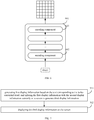
- the encoder 601 includes N encoding components, and N is a positive integer. When N is greater than 1, the first to N-th encoding components are sequentially connected.
- a first query vector is generated based on the phrase embedding vector of the first syllable, and the first query vector is spliced with the second query vector of each second syllable to obtain the key vector of the first syllable.
- the encoding increment of the first syllable obtained by the previous encoding component (that is, by the (i-1)th encoding component) is used as the first query vector of the first syllable in the current encoding component, and the first encoding information of the first syllable obtained by the previous encoding component is used as the key vector of the first syllable in the current encoding component, in which i is a positive integer greater than 1 and less than or equal to N.
- the current transformer model usually uses an encoder with 6 encoding components.
- the method for speech recognition may further include the following steps after obtaining the text corresponding to the first syllable.
- step 701 first display information is generated based on the text corresponding to the to-be-converted word, and the first display information is spliced with the second display information currently on a screen to generate third display information.
- step 702 the third display information on the screen is display.
- the present disclosure can realize word-by-word on-screen display based on streaming syllable conversion, that is, converting words one by one and displaying the words one by one, the first display information of the text corresponding to the current to-be-converted word is spliced with the second display information of the converted word which has been displayed on the screen to generate the third display information, and the third display information is displayed on the screen, so as to realize a seamless connection between the conversion and display, so that the user can clearly feel the effect of the audio data conversion in streaming.
- semantic analysis may be performed on the third display information to predict a number of words in the sentence, a display position of the third display information on the screen based on the number may be determined, and the third display information may be controlled to be displayed on the display position.
- the present disclosure determines the word content of the sentence by adding speech analysis before displaying on the screen, thereby determining the display position of the third information on the screen, avoiding screen flicker and other effects at the end of the line.
- a number of words in the third display information may be obtained, and word spacing in the third display information may be adjusted based on the number.
- the number of words in the third display information may be obtained when generating the third display information, and word spacing in the third display information may be adjusted based on the number, and the third display information may be displayed with the determined word spacing on the screen.
- the above step 102 includes following steps.
- a first candidate posterior probability of the first syllable of the audio data is obtained by using an acoustic model.
- a second candidate posterior probability of the first syllable of the audio data is obtained by using a speech model.
- step 803 the first candidate posterior probability is cropped based on the second candidate posterior probability to obtain the first syllable with the largest probability.
- the input of the acoustic model is the speech feature
- the first candidate posterior probability is the syllable posterior probability
- the input of the speech model is the syllable string
- the second candidate posterior probability is the occurrence probability of the syllable string.
- Both the posterior probability and the posterior probability of the syllable string can express the syllable information of the to-be-converted word, and the difference lies in the different expression forms.
- the syllable with the largest probability and overlapping between the two posterior probabilities can be used as the first syllable of the to-be-converted word.
- FIG. 9 is a schematic block diagram of an apparatus for speech recognition provided by an embodiment of the application.
- the apparatus 10 for speech recognition includes: a first obtaining module 11, configured to obtain audio data to be recognized; a second obtaining module 12, configured to decode the audio data to obtain a first syllable of a to-be-converted word, in which the first syllable is a combination of at least one phoneme corresponding to the to-be-converted word; a third obtaining module 13, configured to obtain a sentence to which the to-be-converted word belongs and a converted word in the sentence, and obtain a second syllable of the converted word; an encoding module 14, configured to encode the first syllable and the second syllable to generate first encoding information of the first syllable; and a decoding module 15, configured to decode the first encoding information to obtain a text corresponding to the to-be-converted word.
- the encoding module 14 includes: a first obtaining unit, configured to extract a first phrase embedding vector of the first syllable and a second phrase embedding vector of the second syllable respectively; and an encoding information generating module, configured to generate the first encoding information based on the first phrase embedding vector and the second phrase embedding vector.
- the encoding information generating unit includes: a first generating sub-unit, configured to generate a first query vector and a key vector of the first syllable based on the first phrase embedding vector and the second phrase embedding vector; a second generating sub-unit, configured to generate an encoding increment of the first syllable based on the first query vector and the key vector; and a third generating sub-unit, configured to generate the first encoding information based on the encoding increment and second encoding information of the second syllable.
- the second generating sub-unit includes: a first generating component, configured to generate a self-attention weight matrix of the first syllable based on the first query vector and the key vector, in which weight values in the self-attention weight matrix is configured to represent a correlation degree between syllables; a second generating component, configured to generate a value vector of the first syllable based on the first syllable and the second syllable; and a third generating component, configured to weight the value vector based on the self-attention weight matrix to generate the encoding increment.
- the first generating sub-unit includes: a fourth generating component, configured to construct a first query vector of the first syllable based on the first phrase embedding vector of the first syllable; a fifth generating component, configured to construct a second query vector of the second syllable by using the second phrase embedding vector of each second syllable; and a sixth generating component, configured to splice the first query vector with the second query vector to generate the key vector.
- the first generating component is configured to: obtain a transposed vector of the key vector; multiply the first query vector by the transposed vector to generate a first matrix; and normalize the first matrix to generate the self-attention weight matrix.
- the third generating sub-unit is configured to: splice the encoding increment with the second encoding information to obtain the first encoding information.
- the encoding module comprises N encoding components, and N is a positive integer, when N is greater than 1, the first encoding component to the N-th encoding component are connected in sequence, and in the first encoding component, the first generating sub-unit is configured to generate the first query vector based on the first phrase embedding vector of the first syllable; in an i-th encoding component, the first generating sub-unit is configured to determine the encoding increment of the first syllable obtained by an (i-1)th encoding component as the first query vector of the first syllable in the i-th encoding component, where i is a positive integer greater than 1 and smaller than or equal to N.
- the first generating sub-unit in the first encoding component, is configured to splice the first query vector with the second query vector of each second syllable to obtain the key vector of the first syllable; in the i-th encoding component, the first generating sub-unit is configured to determine the first encoding information of the first syllable obtained by the (i-1)th encoding component as the key vector of the first syllable in the i-th encoding component, where i is a positive integer greater than 1 and smaller than or equal to N.
- the apparatus for speech recognition 10 further includes: a first generating module 16, configured to generate first display information based on the text corresponding to the to-be-converted word, and splice the first display information with the second display information currently on a screen to generate third display information; and a display module 17, configured to display the third display information on the screen.
- the displaying module 17 is specifically configured to: perform semantic analysis on the third display information to predict a number of words in the sentence; determine a display position of the third display information on the screen based on the number; and control the third display information to be displayed on the display position.
- the displaying module 17 is specifically configured to: obtain a number of words in the third display information; and adjust word spacing in the third display information based on the number.
- the second obtaining module 12 is specifically configured to: obtain a first candidate posterior probability of the first syllable of the audio data by using an acoustic model; obtain a second candidate posterior probability of the first syllable of the audio data by using a speech model; crop the first candidate posterior probability based on the second candidate posterior probability to obtain the first syllable with the largest probability.
- the current to-be-converted word can be encoded based on the current to-be-converted word and the converted word in the sentence to which the to-be-converted word belongs.
- the words after the to-be-converted word is no longer considered.
- the speech-to-text efficiency will be improved effectively while ensuring accuracy, without the need to input the entire sentence of the speech to be converted.
- the present disclosure also provides an electronic device, a readable storage medium and a computer program product.
- FIG. 11 is a block diagram of an electronic device used to implement a method for speech recognition according to an embodiment of the present disclosure.
- the electronic device aims to represent various forms of digital computers, such as a laptop computer, a desktop computer, a workstation, a personal digital assistant, a server, a blade server, a mainframe computer and other suitable computers.
- the electronic device may also represent various forms of mobile devices, such as a personal digital processing, a cellular phone, a smart phone, a wearable device and other similar computing devices.
- the components, connections and relationships of the components, and functions of the components illustrated herein are merely examples, and are not intended to limit the implementation of the present disclosure described and/or claimed herein.
- the electronic device includes: one or more processors 1101, a memory 1102, and interfaces for connecting various components, including a high-speed interface and a low-speed interface.
- Various components are connected to each other with different buses, and may be mounted on a common main board or mounted in other ways as required.
- the processor may process instructions executed within the electronic device, including instructions stored in or on the memory to display graphical information of the GUI (graphical user interface) on an external input/output device (such as a display device coupled to an interface).
- a plurality of processors and/or a plurality of buses may be used together with a plurality of memories if necessary.
- each electronic device may be connected, and each electronic device provides a part of necessary operations (for example, as a server array, a group of blade servers, or a multiprocessor system).
- a processor 1101 is taken as an example.
- the memory 1102 is a non-transitory computer readable storage medium based on the present disclosure.
- the memory is configured to store instructions executable by at least one processor, to cause the at least one processor to execute a method for testing a dialogue platform based on the present disclosure.
- the non-transitory computer readable storage medium based on the present disclosure is configured to store computer instructions.
- the computer instructions are configured to enable a computer to execute the method for testing a dialogue platform based on the present disclosure.
- the memory 1102 may be configured to store non-transitory software programs, non-transitory computer executable programs and modules, such as program instructions/modules (such as, the first obtaining module 11, the second obtaining module 12, the second obtaining module 13, the encoding module 14 and the decoding module 15 illustrated in FIG. 9 ) corresponding to the method for testing a dialogue platform based on embodiments of the present disclosure.
- the processor 1101 executes various functional applications and data processing of the server by operating non-transitory software programs, instructions and modules stored in the memory 1102, that is, implements the method for controlling the vehicle based on the above method embodiment.
- the memory 1102 may include a storage program region and a storage data region.
- the storage program region may store an application required by an operating system and at least one function.
- the storage data region may store data created based on usage of the electronic device for testing a dialogue platform.
- the memory 1102 may include a high-speed random access memory, and may also include a non-transitory memory, such as at least one disk memory device, a flash memory device, or other non-transitory solid-state memory device.
- the memory 1102 may optionally include memories remotely located to the processor 1101 which may be connected to the electronic device capable of testing a dialogue platform via a network. Examples of the above network include, but are not limited to, the Internet, an intranet, a local area network, a mobile communication network and combinations thereof.
- the electronic device capable of performing speech recognition may also include: an input device 1103 and an output device 1104.
- the processor 1101, the memory 1102, the input device 1103, and the output device 1104 may be connected through a bus or in other means. In FIG. 11 , the bus is taken as an example.
- the input device 1103 may receive input digitals or character information, and generate key signal input related to user setting and function control of the electronic device capable of testing a dialogue platform, such as a touch screen, a keypad, a mouse, a track pad, a touch pad, an indicator stick, one or more mouse buttons, a trackball, a joystick and other input device.
- the output device 1104 may include a display device, an auxiliary lighting device (e.g., LED), a haptic feedback device (e.g., a vibration motor), and the like.
- the display device may include, but be not limited to, a liquid crystal display (LCD), a light emitting diode (LED) display, and a plasma display. In some embodiments, the display device may be a touch screen.
- the various implementations of the system and technologies described herein may be implemented in a digital electronic circuit system, an integrated circuit system, an application specific ASIC (application specific integrated circuit), a computer hardware, a firmware, a software, and/or combinations thereof. These various implementations may include: being implemented in one or more computer programs.
- the one or more computer programs may be executed and/or interpreted on a programmable system including at least one programmable processor.
- the programmable processor may be a special purpose or general purpose programmable processor, may receive data and instructions from a storage system, at least one input device and at least one output device, and may transmit the data and the instructions to the storage system, the at least one input device and the at least one output device.
- machine readable medium and “computer readable medium” refer to any computer program product, device, and/or apparatus (such as, a magnetic disk, an optical disk, a memory, a programmable logic device (PLD)) for providing machine instructions and/or data to a programmable processor, including machine readable medium that receives machine instructions as machine readable signals.
- machine readable signal refers to any signal for providing the machine instructions and/or data to the programmable processor.
- the system and technologies described herein may be implemented on a computer.
- the computer has a display device (such as, a CRT (cathode ray tube) or a LCD (liquid crystal display) monitor) for displaying information to the user, a keyboard and a pointing device (such as, a mouse or a trackball), through which the user may provide the input to the computer.
- a display device such as, a CRT (cathode ray tube) or a LCD (liquid crystal display) monitor
- a keyboard and a pointing device such as, a mouse or a trackball
- Other types of devices may also be configured to provide interaction with the user.
- the feedback provided to the user may be any form of sensory feedback (such as, visual feedback, auditory feedback, or tactile feedback), and the input from the user may be received in any form (including acoustic input, speech input or tactile input).
- the system and technologies described herein may be implemented in a computing system including a background component (such as, a data server), a computing system including a middleware component (such as, an application server), or a computing system including a front-end component (such as, a user computer having a graphical user interface or a web browser through which the user may interact with embodiments of the system and technologies described herein), or a computing system including any combination of such background component, the middleware components, or the front-end component.
- Components of the system may be connected to each other through digital data communication in any form or medium (such as, a communication network). Examples of the communication network include a local area network (LAN), a wide area networks (WAN), and the Internet.
- the computer system may include a client and a server.
- the client and the server are generally remote from each other and usually interact via the communication network.
- a relationship between the client and the server is generated by computer programs operated on a corresponding computer and having a client-server relationship with each other.
- the current to-be-converted word can be encoded based on the current to-be-converted word and the converted word in the sentence to which the to-be-converted word belongs.
- the words after the to-be-converted word is no longer considered.
- the speech-to-text efficiency will be improved effectively while ensuring accuracy, without the need to input the entire sentence of the speech to be converted.
Landscapes
- Engineering & Computer Science (AREA)
- Physics & Mathematics (AREA)
- Audiology, Speech & Language Pathology (AREA)
- Computational Linguistics (AREA)
- Health & Medical Sciences (AREA)
- Theoretical Computer Science (AREA)
- Multimedia (AREA)
- Acoustics & Sound (AREA)
- Human Computer Interaction (AREA)
- General Physics & Mathematics (AREA)
- Artificial Intelligence (AREA)
- General Engineering & Computer Science (AREA)
- Mathematical Physics (AREA)
- General Health & Medical Sciences (AREA)
- Mathematical Analysis (AREA)
- Pure & Applied Mathematics (AREA)
- Data Mining & Analysis (AREA)
- Mathematical Optimization (AREA)
- Computational Mathematics (AREA)
- Algebra (AREA)
- Databases & Information Systems (AREA)
- Software Systems (AREA)
- Computing Systems (AREA)
- Computer Vision & Pattern Recognition (AREA)
- Signal Processing (AREA)
- Evolutionary Computation (AREA)
- Machine Translation (AREA)
Abstract
Description
- Present disclosure relates to the field of speech processing technology, in particular to the field of natural language processing technology, and in particular to a method and apparatus for speech recognition, an electronic device, a storage medium and a computer program product.
- With the development of science and technology, natural language processing (NLP) is an important means in human-computer interaction, and the attention mechanism can effectively capture the importance of words in the context and improve the effectiveness of natural language understanding tasks. However, the recognition accuracy of speech recognition using the attention mechanism in the related technology depends on the completeness of the sentence. Therefore, as the length of the sentence increases, the amount of calculation in the recognition will soar, which will seriously affect the recognition speed.
- The present disclosure provides a method and apparatus for speech recognition, an electronic device and a storage medium.
- Based on a first aspect of the present disclosure, there is provided a method for speech recognition, including: obtaining audio data to be recognized; decoding the audio data to obtain a first syllable of a to-be-converted word, in which the first syllable is a combination of at least one phoneme corresponding to the to-be-converted word; obtaining a sentence to which the to-be-converted word belongs and a converted word in the sentence, and obtaining a second syllable of the converted word; encoding the first syllable and the second syllable to generate first encoding information of the first syllable; and decoding the first encoding information to obtain a text corresponding to the to-be-converted word.
- In some embodiments, the encoding the first syllable and the second syllable to generate the first encoding information of the first syllable may include: extracting a first phrase embedding vector of the first syllable and a second phrase embedding vector of the second syllable respectively; and generating the first encoding information based on the first phrase embedding vector and the second phrase embedding vector.
- In some embodiments, generating the first encoding information based on the first phrase embedding vector and the second phrase embedding vector may include: generating a first query vector and a key vector of the first syllable based on the first phrase embedding vector and the second phrase embedding vector; generating an encoding increment of the first syllable based on the first query vector and the key vector; and generating the first encoding information based on the encoding increment and second encoding information of the second syllable.
- In some embodiments, generating the encoding increment of the first syllable based on the first query vector and the key vector may include: generating a self-attention weight matrix of the first syllable based on the first query vector and the key vector, wherein weight values in the self-attention weight matrix is configured to represent a correlation degree between syllables; generating a value vector of the first syllable based on the first syllable and the second syllable; and weighting the value vector based on the self-attention weight matrix to generate the encoding increment.
- In some embodiments, there are a plurality of second syllables, and generating the first query vector and the key vector of the first syllable based on the first phrase embedding vector and the second phrase embedding vector may include: constructing a first query vector of the first syllable based on the first phrase embedding vector of the first syllable; constructing a second query vector of the second syllable by using the second phrase embedding vector of each second syllable; and splicing the first query vector with the second query vector to generate the key vector.
- In some embodiments, generating the self-attention weight matrix of the first syllable based on the first query vector and the key vector may include: obtaining a transposed vector of the key vector; multiplying the first query vector by the transposed vector to generate a first matrix; and normalizing the first matrix to generate the self-attention weight matrix.
- In some embodiments, generating the first encoding information based on the encoding increment and the second encoding information of the second syllable may include: splicing the encoding increment with the second encoding information to obtain the first encoding information.
- In some embodiments, the first syllable is encoded by an encoder, the encoder includes N encoding components, and N is a positive integer, when N is greater than 1, the first encoding component to the N-th encoding component are connected in sequence, and the method further includes: in the first encoding component, generating the first query vector based on the first phrase embedding vector of the first syllable; in an i-th encoding component, determining the encoding increment of the first syllable obtained by an (i-1)th encoding component as the first query vector of the first syllable in the i-th encoding component, where i is a positive integer greater than 1 and smaller than or equal to N.
- In some embodiments, the method further includes: in the first encoding component, splicing the first query vector with the second query vector of each second syllable to obtain the key vector of the first syllable; in the i-th encoding component, determining the first encoding information of the first syllable obtained by the (i-1)th encoding component as the key vector of the first syllable in the i-th encoding component, where i is a positive integer greater than 1 and smaller than or equal to N.
- In some embodiments, the method further includes generating first display information based on the text corresponding to the to-be-converted word, and splicing the first display information with the second display information currently on a screen to generate third display information; and displaying the third display information on the screen.
- In some embodiments, displaying the third display information on the screen may include: performing semantic analysis on the third display information to predict a number of words in the sentence; determining a display position of the third display information on the screen based on the number; and controlling the third display information to be displayed on the display position.
- Based on a second aspect of the present disclosure, there is provided an apparatus for speech recognition, including: a first obtaining module, configured to obtain audio data to be recognized; a second obtaining module, configured to decode the audio data to obtain a first syllable of a to-be-converted word, in which the first syllable is a combination of at least one phoneme corresponding to the to-be-converted word; a third obtaining module, configured to obtain a sentence to which the to-be-converted word belongs and a converted word in the sentence, and obtain a second syllable of the converted word; an encoding module, configured to encode the first syllable and the second syllable to generate first encoding information of the first syllable; and a decoding module, configured to decode the first encoding information to obtain a text corresponding to the to-be-converted word.
- Based on a third aspect of the present disclosure, there is provided an electronic device, including: at least one processor; and a memory communicatively connected with the at least one processor; in which the memory is configured to store instructions executable by the at least one processor, when the instructions are executed by the at least one processor, the at least one processor is configured to execute a method for speech recognition according to embodiments of the present disclosure.
- Based on a fourth aspect of the present disclosure, there is provided a non-transitory computer-readable storage medium having computer instructions stored thereon, in which the computer instructions are configured to cause a computer to execute a method for speech recognition according to embodiments of the present disclosure.
- Based on a fifth aspect of the present disclosure, there is provided a computer program product comprising a computer program, wherein when the computer program is executed by a processor, the processor is caused to implement a method for speech recognition according to embodiments of the present disclosure.
- Based on the technology of present disclosure, the current to-be-converted word can be encoded based on the current to-be-converted word and the converted word in the sentence to which the to-be-converted word belongs. During the encoding process, only the influence of the previous converted word on the to-be-converted word is considered, and the words after the to-be-converted word is no longer considered. The speech-to-text efficiency will be improved effectively while ensuring accuracy, without the need to input the entire sentence of the speech to be converted. Further, when performing speech-to-text conversion based on the above-mentioned encoding, since the encoding information of the to-be-converted word is obtained on the basis of the converted word, not only the amount of calculation for encoding and conversion is reduced, but also a real-time speech-to-text translation of the to-be-converted word may be achieved because the influence of the following words does not need to be considered.
- It should be understood that the content described in this section is not intended to identify key or important features of the embodiments of the present disclosure, nor is it intended to limit the scope of the present disclosure. Other features of the present disclosure will be easily understood by the following description.
- The drawings are used to better understand this solution, and do not constitute a limitation to the present disclosure, wherein:
-
FIG. 1 is a flowchart of a method for speech recognition provided by an embodiment of present disclosure; -
FIG. 2 is a schematic diagram of the principle of a method for speech recognition provided by an embodiment of the application; -
FIG. 3 is a flowchart of a method for speech recognition provided by another embodiment of present disclosure; -
FIG. 4 is a flowchart of a method for speech recognition provided by yet another embodiment of present disclosure; -
FIG. 5 is a schematic diagram of the encoding principle of a method for speech recognition provided by an embodiment of present disclosure; -
FIG. 6 is a schematic structure diagram of the encoder used in the transformer model in an embodiment of the present disclosure; -
FIG. 7 is a flowchart of a method for speech recognition provided by still another embodiment of present disclosure; -
FIG. 8 is a flowchart of a method for speech recognition provided by yet still another embodiment of present disclosure; -
FIG. 9 is a schematic block diagram of an apparatus for speech recognition provided by an embodiment of present disclosure; -
FIG. 10 is a schematic block diagram of an apparatus for speech recognition provided by another embodiment of present disclosure; and -
FIG. 11 is a block diagram of an electronic device used to implement a method for speech recognition according to an embodiment of the present disclosure. - Description will be made below to example embodiments of the present disclosure in conjunction with accompanying drawings, which includes various details of embodiments of the present disclosure to facilitate understanding and should be regarded as merely examples. Therefore, it should be recognized by the skilled in the art that various changes and modifications may be made to the embodiments described herein without departing from the scope and spirit of the present disclosure. Meanwhile, for clarity and conciseness, descriptions for well-known functions and structures are omitted in the following description.
- A method and apparatus for speech recognition, electronic device, and storage medium of embodiments of the present disclosure are described below with reference to the accompanying drawings.
-
FIG. 1 is a flowchart of a method for speech recognition provided by an embodiment of present disclosure. It should be noted that the executive body of the method for speech recognition in this example is an apparatus for speech recognition, and the apparatus for speech recognition may be an electronic device with a human-computer interaction function, such as a PC (Personal Computer), a tablet computer, a handheld computer or a mobile terminal, etc., there is no limitation here, or the software in other hardware devices with human-computer interaction functions. - As shown in
Fig. 1 , the method for speech recognition of the embodiment of the present disclosure includes the following steps. - In
step 101, the audio data to be recognized is obtained. - The audio data may be obtained in real time by a radio device of an electronic device with a human-computer interaction function, or may be obtained from data pre-stored in a local or remote storage area.
- In
step 102, the audio data is decoded to obtain a first syllable of a to-be-converted word. - The first syllable is a combination of at least one phoneme corresponding to the to-be-converted word.
- It should be noted that the phoneme is the smallest phonetic unit defined based on the natural attributes of the phonetic. An action constitutes a phoneme, and a combination of at least one phoneme constitute a syllable. For example, the syllable of the Chinese character "(which means "oh" in English)" is composed of a phoneme of "o". The syllable of Chinese character "
 (which means "love" in English" is composed of two phonemes "a" and "i", and the syllable of the Chinese character "
 (which means "I" in English)" is composed of two phonemes "w" and "o".
- It should also be noted that the first syllable of the to-be-converted word can be determined by searching for the optimal path in the decoding space formed by the acoustic model and the language model.
- It should be understood that, in the embodiment of the present disclosure, the audio data is decoded in streaming decoding, that is, the audio in the audio data is decoded word by word to obtain the first syllable of the to-be-converted word one by one. That is to say, when the present disclosure decodes audio data to obtain syllables, each time a syllable is recognized, a syllable is input to the subsequent encoding module, so that the subsequent encoding module and decoding module can analyze word by word to achieve speech-to-text processing in steaming mode.
- In
step 103, a sentence to which the to-be-converted word belongs and a converted word in the sentence are obtained, and a second syllable of the converted word is obtained. - It should be noted that the self-attention mechanism for speech-to-text conversion (or, syllable-to-character conversion) is implemented in the present disclosure. The key of the self-attention mechanism is to use other words in the text to enhance the semantic representation of the target word. That is, for the to-be-converted word, the word before the to-be-converted word in the sentence to which the to-be-converted word belongs has a certain impact on the semantics of the to-be-converted word. Therefore, it is necessary to obtain the second syllable of the word before the to-be-converted word in the sentence to which the to-be-converted word belongs. The obtained second syllable is combined with the first syllable of the to-be-converted word, so as to recognize the semantics of the to-be-converted word.
- Moreover, because the present disclosure performs speech-to-text processing in a streaming mode, that is, all syllables before the to-be-converted word are converted to text. Therefore, the words before the to-be-converted word can be called converted words, that is, it can be directly obtained the second syllable of the converted word in the sentence to which the to-be-converted word belongs.
- The sentence to which the to-be-converted word belongs can be identified based on the pause duration of the language habit. For example, in the foregoing decoding process, by judging the pause duration between each syllable and the previous syllable, it is determined whether each syllable belongs to the same sentence as the previous syllable. Optionally, it can be judged whether the pause duration is greater than the first preset time, and in case that the pause duration is greater than or equal to the first preset time, the current syllable is determined as the first word of the sentence.
- In a case that the previous syllable and the current syllable belong to two sentences respectively, there is no converted word in the sentence to which the current syllable belongs. If the pause duration is smaller than the first preset time, it is determined that the current syllable is not the first word of the sentence, and the current syllable and the previous syllable belong to the same sentence, the text corresponding to the previous syllable is the converted word in the sentence to which the current syllable belongs, and the judgment of the first word of the sentence is continued based on the previous syllable, until the first word of the sentence to which the current syllable belongs is obtained, and the previous syllables of all converted words between the previous syllable to the first word are obtained. For example, when a certain syllable is recognized as the first word of the sentence, the initial character is configured in the forepart of the syllable. Optionally, the initial character can be <begin>, and the second syllables between the current syllable and the starting character are obtained.
- In some embodiments, it is also possible to judge whether the current syllable belongs to the same sentence as the previous syllable based on the semantics of the converted word. For example, if the previous syllable is determined to be the last word of the sentence based on the semantics, the current syllable is determined to be the first word of the sentence, if it is judged that the previous syllable is not the first word of the sentence based on semantics, it is determined that the current syllable and the previous syllable belong to the same sentence.
- In
step 104, the first syllable and the second syllable are encoded to generate first encoding information of the first syllable. - In
step 105, the first encoding information is decoded to obtain a text corresponding to the to-be-converted word. - That is to say, in embodiments of the present disclosure, by encoding the first syllable of the to-be-converted word and the second syllable of the converted word, the converted word before the first syllable contained in the first encoding information have an impact on text corresponding to the first syllable. Therefore, by decoding the first encoding information, text can be decoded based on the impact of the preceding text.
- For example, as shown in
FIG. 2 , each text in a sentence is decoded into afirst syllable 201 based on time sequence, thesecond syllable 202 corresponding to the converted word before the syllable is obtained, and thefirst encoding information 203 of the first syllable is obtained by encoding, thefirst encoding information 203 is then decoded to obtain thetext 204 corresponding to the to-be-converted word. For example, at time t1, thefirst syllable 201 "tian" is obtained, and thesecond syllable 202 converted word before thefirst syllable 201 is "jin". At time t2, thefirst syllable 201 "ni" is obtained, and thesecond syllable 202 of converted word before thefirst syllable 201 is "jintian". At time t3, thefirst syllable 201 "zhen" is obtained, and thesecond syllable 202 of converted word before thefirst syllable 201 is "jintianni" At time t4, thefirst syllable 201 "shuai" is obtained, and thesecond syllable 202 of the converted word before thefirst syllable 201 is "jintiannizhen" . - Therefore, the present disclosure can encode the current to-be-converted word based on the current to-be-converted word and the converted word in the sentence to which the to-be-converted word belongs. During the encoding process, only the influence of the previous converted word on the to-be-converted word is considered, and the subsequent words of the to-be-converted word are no longer considered. The efficiency of speech-to-text conversion is effectively improved while ensuring accuracy, without the need of inputting the entire sentence of the to-be-converted word. Further, by performing the speech-to-text conversion based on the above-mentioned encoding, since the encoding information of the to-be-converted word is obtained on the basis of the converted word, not only the amount of calculation for encoding and conversion is reduced, but also a real-time speech-to-text translation of the to-be-converted word may be achieved because the influence of the following words does not need to be considered.
- In order to further explain the previous embodiment clearly, as shown in
FIG. 3 , theabove step 104 in which the first syllable and the second syllable are encoded to generate first encoding information of the first syllable may include following steps. - In
step 301, a first phrase embedding vector of the first syllable and a second phrase embedding vector of the second syllable are extracting respectively. - It should be noted that the phrase embedding vector express the syllable in a vector that can be mathematically processed. A pre-trained syllable-phrase embedding vector model, such as Word2Vec, Glove, or transformer, can be used to obtain the phrase embedding vector of each syllable separately.
- It should be understood that, for the to-be-converted word, when the to-be-converted word is not the first word of the sentence, the sentence to which the to-be-converted word belongs contains at least one converted word, that is, there are multiple converted words, and each converted word contains a second syllable, that is, when obtaining the phrase embedding vector of the second syllable, the corresponding phrase embedding vector can be obtained for each second syllable; when the to-be-converted word is the first word of the sentence, there is no converted word in the sentence, so there is no actual second syllable. At this time, the zero vector can be used as the phrase embedding vector of the second syllable. It should also be understood that when the sentence contains more words, the converted word at the forepart of the sentence has less influence on the first syllable, that is, the degree of influence of the second syllable on the first syllable may be related to the distance between the first syllable and the second syllable. Therefore, in order to further reduce the amount of calculation, it is also possible to obtain only a preset number of second syllables before the first syllable, and phrase embedding vectors of the preset number of second syllables.
- In
step 302, the first encoding information is generated based on the first phrase embedding vector and the second phrase embedding vector. - That is to say, the present disclosure first converts syllables into phrase embedding vectors that can be mathematically transformed. In order to ensure the semantic accuracy of the to-be-converted word, encoding is performed based on the phrase embedding vectors of the words that have been converted (converted words) and the to-be-converted word, and then the first encoding information corresponding to the first syllable may be obtained.
- Therefore, the present disclosure converts the syllable data into vector information that can be mathematically processed through the phrase embedding vector, thereby facilitating the encoding of the first syllable.
- It should be noted that the syllables recognized in present disclosure are encoded one by one. Therefore, before encoding the currently recognized first syllable of the to-be-converted word, the previous converted word has been encoded, and the to-be-converted word will not affect the encoding information of the previously converted words. Therefore, in present disclosure, the encoding information of the first syllable can be directly generated based on the encoding information of the converted words.
- Optionally, in present disclosure, a trained speech-to-text model can be used to encode and decode the first syllable, where the encoding component of the speech-to-text model can save the encoding state of the previous syllable, and when encoding the first syllable, the speech-to-text model can multiplex the encoded state of the converted word buffered in its encoding component, that is, when encoding the first syllable, the saved encoding state is directly read from the buffer, and the encoding increment of the first syllable is spliced with the encoding information of the previous syllable to obtain the first encoding information of the first syllable, so that there is no need to repeatedly calculate the encoding content of the converted word when encoding the first syllable, which will greatly improve the speed of syllable-to-text conversion.
- In the following, the
step 302 in which the first encoding information is generated based on the first phrase embedding vector and the second phrase embedding vector will be illustrated using the syllable-to-text model as the transformer model. As shown inFIG. 4 , thestep 302 includes the following steps. - In
step 401, a first query vector and a key vector of the first syllable are generated based on the first phrase embedding vector and the second phrase embedding vector. - In some embodiments, the first query vector of the first syllable is constructed based on the phrase embedding vector of the first syllable, the second query vector of each second syllable is constructed by using the phrase embedding vector of each second syllable, and the first query vector is spliced with the second query vector to generate the key vector.
- In
step 402, an encoding increment of the first syllable is generated based on the first query vector and the key vector. - In some embodiments, the self-attention weight matrix of the first syllable can be generated based on the first query vector and the key vector, the value vector of the first syllable can be generated based on the first syllable and the second syllable, and the value vector is weighted based on the self-attention weight matrix to generate the encoding increment.
- Further, generating the self-attention weight matrix of the first syllable based on the first query vector and the key vector may include: obtaining a transposed vector of the key vector; multiplying the first query vector by the transposed vector to generate a first matrix; and normalizing the first matrix to generate the self-attention weight matrix.
- In
step 403, the first encoding information is generated based on the encoding increment and second encoding information of the second syllable. - In some embodiments, the encoding increment can be spliced with the second encoding information to obtain the first encoding information.
- That is to say, in the embodiment of the present disclosure, the query vector of the first syllable is the initial increment. During the encoding process, the increment of the first syllable is combined with the state data such as key vectors and value vectors in the encoding process of the second syllable that has been saved, thereby realizing the encoding process of the first syllable without repeating the processing of the second syllable.
- For example, as shown in
FIG. 5 , the phrase embedding vector corresponding to thefirst syllable 501 inputted at the current time T is obtained and used as the query vector Q=x{T}, and the query vector of the first syllable is spliced with the query vector of each second syllable from the first time moment T=1 to the previous moment T-1 as the key vector K=x{ 1,2,...,T-1,T} of the first syllable. The value vector is the same as the key vector, which is V=x{1,2,...,T-1,T}. - Then, a dot multiplication is performed on the transposition KT of the key vector K and the query vector Q of the first syllable to obtain the influence weight of each second syllable on the first syllable, which can be marked as the first matrix, and then the first matrix is normalized to obtain the self-attention weight matrix, that is, the sum of the influence weights of multiple second syllables on the first syllable is 1.
- Optionally, the following formula can be used to obtain the self-attention weight matrix:

- Further, since the first syllable is the original increment of the entire encoding process, the calculation result based on the query vector Q is also the increment. For example, as shown in
FIG. 5 , based on the query vector Q and the key vector K of the first syllable, theencoding increment 502 of the first syllable may be generated. - It should be noted that from the matrix structure shown in
FIG. 5 , it can be seen that since there is no need to consider the influence of the text after the to-be-converted word on the to-be-converted word, the obtained complete first syllable encoding information is a diagonal matrix structure, and the impact of the first syllable at the current moment on the entire encoding information is only on the last row of the matrix, that is, theencoding increment 502. Therefore, present disclosure proposes to multiplex the encoding information of the second syllable, so that the encoding component only needs to increase the encoding information. The increment part is the only part that the encoding component should calculate, and the efficiency of phonetic conversion can be effectively improved while ensuring accuracy. - It can be seen that present disclosure can calculate the encoding increment of the first syllable based on the query vector of the first syllable of each to-be-converted word and the key vector generated after splicing, and then the encoding increment is spliced with encoding increment of each converted word to obtain the first encoding information, that is, replacing the calculation generation process by multiplexing the encoding information of the converted words, thereby effectively improving the efficiency of syllable conversion and the speed of speech translation.
- Further, the structure of the encoder in the transformer model is introduced. As shown in
FIG. 6 , theencoder 601 includes N encoding components, and N is a positive integer. When N is greater than 1, the first to N-th encoding components are sequentially connected. - In the first encoding component 602, a first query vector is generated based on the phrase embedding vector of the first syllable, and the first query vector is spliced with the second query vector of each second syllable to obtain the key vector of the first syllable.
- In the i-th encoding component 603, the encoding increment of the first syllable obtained by the previous encoding component (that is, by the (i-1)th encoding component) is used as the first query vector of the first syllable in the current encoding component, and the first encoding information of the first syllable obtained by the previous encoding component is used as the key vector of the first syllable in the current encoding component, in which i is a positive integer greater than 1 and less than or equal to N.
- The current transformer model usually uses an encoder with 6 encoding components.
- In some embodiments, as shown in
FIG. 7 , the method for speech recognition may further include the following steps after obtaining the text corresponding to the first syllable. - In
step 701, first display information is generated based on the text corresponding to the to-be-converted word, and the first display information is spliced with the second display information currently on a screen to generate third display information. - In
step 702, the third display information on the screen is display. - That is to say, the present disclosure can realize word-by-word on-screen display based on streaming syllable conversion, that is, converting words one by one and displaying the words one by one, the first display information of the text corresponding to the current to-be-converted word is spliced with the second display information of the converted word which has been displayed on the screen to generate the third display information, and the third display information is displayed on the screen, so as to realize a seamless connection between the conversion and display, so that the user can clearly feel the effect of the audio data conversion in streaming.
- In some embodiments, semantic analysis may be performed on the third display information to predict a number of words in the sentence, a display position of the third display information on the screen based on the number may be determined, and the third display information may be controlled to be displayed on the display position.
- It should be noted that the number of bytes displayed in each line in different display areas is fixed. When displaying different numbers of words, the word spacing is usually adjusted automatically as the number of words increases. When the content displayed on the screen is in the end of the line, it is easy to produce a state of constant adjustment, which affects the user's reading experience. Therefore, the present disclosure determines the word content of the sentence by adding speech analysis before displaying on the screen, thereby determining the display position of the third information on the screen, avoiding screen flicker and other effects at the end of the line.
- In some embodiments, a number of words in the third display information may be obtained, and word spacing in the third display information may be adjusted based on the number.
- That is to say, the number of words in the third display information may be obtained when generating the third display information, and word spacing in the third display information may be adjusted based on the number, and the third display information may be displayed with the determined word spacing on the screen.
- In some embodiments, as shown in
FIG. 8 , theabove step 102 includes following steps. - In
step 801, a first candidate posterior probability of the first syllable of the audio data is obtained by using an acoustic model. - In
step 802, a second candidate posterior probability of the first syllable of the audio data is obtained by using a speech model. - In
step 803, the first candidate posterior probability is cropped based on the second candidate posterior probability to obtain the first syllable with the largest probability. - It should be noted that the input of the acoustic model is the speech feature, the first candidate posterior probability is the syllable posterior probability, the input of the speech model is the syllable string, and the second candidate posterior probability is the occurrence probability of the syllable string. Both the posterior probability and the posterior probability of the syllable string can express the syllable information of the to-be-converted word, and the difference lies in the different expression forms. Further, the syllable with the largest probability and overlapping between the two posterior probabilities can be used as the first syllable of the to-be-converted word.
- In summary, based on the technology of present disclosure, it is possible to encode the current to-be-converted word based on the to-be-converted word and the converted word in the sentence to which it belongs. During the encoding process, only the impact of the previous converted word on the to-be-converted word is considered. Then the impact of the text after the to-be-converted word is no longer considered. The efficiency of phonetic conversion will be effectively improved while ensuring accuracy, without the need to input the entire sentence of the speech to be converted. Further, based on the above-mentioned encoding to perform phonetic conversion, since the encoding information of the to-be-converted word is obtained on the basis of the converted word, not only the amount of calculation for encoding and conversion is reduced, but also a real-time speech-to-text translation of the to-be-converted word may be achieved because the influence of the following words does not need to be considered.
-
FIG. 9 is a schematic block diagram of an apparatus for speech recognition provided by an embodiment of the application. - As shown in
FIG. 9 , theapparatus 10 for speech recognition includes: a first obtainingmodule 11, configured to obtain audio data to be recognized; a second obtainingmodule 12, configured to decode the audio data to obtain a first syllable of a to-be-converted word, in which the first syllable is a combination of at least one phoneme corresponding to the to-be-converted word; a third obtainingmodule 13, configured to obtain a sentence to which the to-be-converted word belongs and a converted word in the sentence, and obtain a second syllable of the converted word; anencoding module 14, configured to encode the first syllable and the second syllable to generate first encoding information of the first syllable; and adecoding module 15, configured to decode the first encoding information to obtain a text corresponding to the to-be-converted word. - In some embodiments, the
encoding module 14 includes: a first obtaining unit, configured to extract a first phrase embedding vector of the first syllable and a second phrase embedding vector of the second syllable respectively; and an encoding information generating module, configured to generate the first encoding information based on the first phrase embedding vector and the second phrase embedding vector. - In some embodiments, the encoding information generating unit includes: a first generating sub-unit, configured to generate a first query vector and a key vector of the first syllable based on the first phrase embedding vector and the second phrase embedding vector; a second generating sub-unit, configured to generate an encoding increment of the first syllable based on the first query vector and the key vector; and a third generating sub-unit, configured to generate the first encoding information based on the encoding increment and second encoding information of the second syllable.
- In some embodiments, the second generating sub-unit includes: a first generating component, configured to generate a self-attention weight matrix of the first syllable based on the first query vector and the key vector, in which weight values in the self-attention weight matrix is configured to represent a correlation degree between syllables; a second generating component, configured to generate a value vector of the first syllable based on the first syllable and the second syllable; and a third generating component, configured to weight the value vector based on the self-attention weight matrix to generate the encoding increment.
- In some embodiments, there are a plurality of second syllables, and the first generating sub-unit includes: a fourth generating component, configured to construct a first query vector of the first syllable based on the first phrase embedding vector of the first syllable; a fifth generating component, configured to construct a second query vector of the second syllable by using the second phrase embedding vector of each second syllable; and a sixth generating component, configured to splice the first query vector with the second query vector to generate the key vector.
- In some embodiments, the first generating component is configured to: obtain a transposed vector of the key vector; multiply the first query vector by the transposed vector to generate a first matrix; and normalize the first matrix to generate the self-attention weight matrix.
- In some embodiments, the third generating sub-unit is configured to: splice the encoding increment with the second encoding information to obtain the first encoding information.
- In some embodiments, the encoding module comprises N encoding components, and N is a positive integer, when N is greater than 1, the first encoding component to the N-th encoding component are connected in sequence, and in the first encoding component, the first generating sub-unit is configured to generate the first query vector based on the first phrase embedding vector of the first syllable; in an i-th encoding component, the first generating sub-unit is configured to determine the encoding increment of the first syllable obtained by an (i-1)th encoding component as the first query vector of the first syllable in the i-th encoding component, where i is a positive integer greater than 1 and smaller than or equal to N.
- In some embodiments, in the first encoding component, the first generating sub-unit is configured to splice the first query vector with the second query vector of each second syllable to obtain the key vector of the first syllable; in the i-th encoding component, the first generating sub-unit is configured to determine the first encoding information of the first syllable obtained by the (i-1)th encoding component as the key vector of the first syllable in the i-th encoding component, where i is a positive integer greater than 1 and smaller than or equal to N.
- In some embodiments, as shown in
FIG. 10 , the apparatus forspeech recognition 10 further includes: afirst generating module 16, configured to generate first display information based on the text corresponding to the to-be-converted word, and splice the first display information with the second display information currently on a screen to generate third display information; and adisplay module 17, configured to display the third display information on the screen. - In some embodiments, the displaying
module 17 is specifically configured to: perform semantic analysis on the third display information to predict a number of words in the sentence; determine a display position of the third display information on the screen based on the number; and control the third display information to be displayed on the display position. - In some embodiments, the displaying
module 17 is specifically configured to: obtain a number of words in the third display information; and adjust word spacing in the third display information based on the number. - In some embodiments, the second obtaining
module 12 is specifically configured to: obtain a first candidate posterior probability of the first syllable of the audio data by using an acoustic model; obtain a second candidate posterior probability of the first syllable of the audio data by using a speech model; crop the first candidate posterior probability based on the second candidate posterior probability to obtain the first syllable with the largest probability. - It should be noted that the foregoing explanation of the embodiment of the method for speech recognition is also applicable to the apparatus for speech recognition of some embodiments, and will not be repeated here.
- Based on the technology of present disclosure, the current to-be-converted word can be encoded based on the current to-be-converted word and the converted word in the sentence to which the to-be-converted word belongs. During the encoding process, only the influence of the previous converted word on the to-be-converted word is considered, and the words after the to-be-converted word is no longer considered. The speech-to-text efficiency will be improved effectively while ensuring accuracy, without the need to input the entire sentence of the speech to be converted. Further, when performing speech-to-text conversion based on the above-mentioned encoding, since the encoding information of the to-be-converted word is obtained on the basis of the converted word, not only the amount of calculation for encoding and conversion is reduced, but also a real-time speech-to-text translation of the to-be-converted word may be achieved because the influence of the following words does not need to be considered.
- Based on the embodiments of the present disclosure, the present disclosure also provides an electronic device, a readable storage medium and a computer program product.
- As shown in
FIG. 11, FIG. 11 is a block diagram of an electronic device used to implement a method for speech recognition according to an embodiment of the present disclosure. The electronic device aims to represent various forms of digital computers, such as a laptop computer, a desktop computer, a workstation, a personal digital assistant, a server, a blade server, a mainframe computer and other suitable computers. The electronic device may also represent various forms of mobile devices, such as a personal digital processing, a cellular phone, a smart phone, a wearable device and other similar computing devices. The components, connections and relationships of the components, and functions of the components illustrated herein are merely examples, and are not intended to limit the implementation of the present disclosure described and/or claimed herein. - As illustrated in
FIG. 11 , the electronic device includes: one ormore processors 1101, amemory 1102, and interfaces for connecting various components, including a high-speed interface and a low-speed interface. Various components are connected to each other with different buses, and may be mounted on a common main board or mounted in other ways as required. The processor may process instructions executed within the electronic device, including instructions stored in or on the memory to display graphical information of the GUI (graphical user interface) on an external input/output device (such as a display device coupled to an interface). In other implementations, a plurality of processors and/or a plurality of buses may be used together with a plurality of memories if necessary. Similarly, a plurality of electronic devices may be connected, and each electronic device provides a part of necessary operations (for example, as a server array, a group of blade servers, or a multiprocessor system). InFIG. 11 , oneprocessor 1101 is taken as an example. - The
memory 1102 is a non-transitory computer readable storage medium based on the present disclosure. The memory is configured to store instructions executable by at least one processor, to cause the at least one processor to execute a method for testing a dialogue platform based on the present disclosure. The non-transitory computer readable storage medium based on the present disclosure is configured to store computer instructions. The computer instructions are configured to enable a computer to execute the method for testing a dialogue platform based on the present disclosure. - As the non-transitory computer readable storage medium, the
memory 1102 may be configured to store non-transitory software programs, non-transitory computer executable programs and modules, such as program instructions/modules (such as, the first obtainingmodule 11, the second obtainingmodule 12, the second obtainingmodule 13, theencoding module 14 and thedecoding module 15 illustrated inFIG. 9 ) corresponding to the method for testing a dialogue platform based on embodiments of the present disclosure. Theprocessor 1101 executes various functional applications and data processing of the server by operating non-transitory software programs, instructions and modules stored in thememory 1102, that is, implements the method for controlling the vehicle based on the above method embodiment. - The
memory 1102 may include a storage program region and a storage data region. The storage program region may store an application required by an operating system and at least one function. The storage data region may store data created based on usage of the electronic device for testing a dialogue platform. In addition, thememory 1102 may include a high-speed random access memory, and may also include a non-transitory memory, such as at least one disk memory device, a flash memory device, or other non-transitory solid-state memory device. In some embodiments, thememory 1102 may optionally include memories remotely located to theprocessor 1101 which may be connected to the electronic device capable of testing a dialogue platform via a network. Examples of the above network include, but are not limited to, the Internet, an intranet, a local area network, a mobile communication network and combinations thereof. - The electronic device capable of performing speech recognition may also include: an
input device 1103 and anoutput device 1104. Theprocessor 1101, thememory 1102, theinput device 1103, and theoutput device 1104 may be connected through a bus or in other means. InFIG. 11 , the bus is taken as an example. - The
input device 1103 may receive input digitals or character information, and generate key signal input related to user setting and function control of the electronic device capable of testing a dialogue platform, such as a touch screen, a keypad, a mouse, a track pad, a touch pad, an indicator stick, one or more mouse buttons, a trackball, a joystick and other input device. Theoutput device 1104 may include a display device, an auxiliary lighting device (e.g., LED), a haptic feedback device (e.g., a vibration motor), and the like. The display device may include, but be not limited to, a liquid crystal display (LCD), a light emitting diode (LED) display, and a plasma display. In some embodiments, the display device may be a touch screen. - The various implementations of the system and technologies described herein may be implemented in a digital electronic circuit system, an integrated circuit system, an application specific ASIC (application specific integrated circuit), a computer hardware, a firmware, a software, and/or combinations thereof. These various implementations may include: being implemented in one or more computer programs. The one or more computer programs may be executed and/or interpreted on a programmable system including at least one programmable processor. The programmable processor may be a special purpose or general purpose programmable processor, may receive data and instructions from a storage system, at least one input device and at least one output device, and may transmit the data and the instructions to the storage system, the at least one input device and the at least one output device.
- These computing programs (also called programs, software, software applications, or codes) include machine instructions of programmable processors, and may be implemented by utilizing high-level procedures and/or object-oriented programming languages, and/or assembly/machine languages. As used herein, the terms "machine readable medium" and "computer readable medium" refer to any computer program product, device, and/or apparatus (such as, a magnetic disk, an optical disk, a memory, a programmable logic device (PLD)) for providing machine instructions and/or data to a programmable processor, including machine readable medium that receives machine instructions as machine readable signals. The term "machine readable signal" refers to any signal for providing the machine instructions and/or data to the programmable processor.
- To provide interaction with a user, the system and technologies described herein may be implemented on a computer. The computer has a display device (such as, a CRT (cathode ray tube) or a LCD (liquid crystal display) monitor) for displaying information to the user, a keyboard and a pointing device (such as, a mouse or a trackball), through which the user may provide the input to the computer. Other types of devices may also be configured to provide interaction with the user. For example, the feedback provided to the user may be any form of sensory feedback (such as, visual feedback, auditory feedback, or tactile feedback), and the input from the user may be received in any form (including acoustic input, speech input or tactile input).
- The system and technologies described herein may be implemented in a computing system including a background component (such as, a data server), a computing system including a middleware component (such as, an application server), or a computing system including a front-end component (such as, a user computer having a graphical user interface or a web browser through which the user may interact with embodiments of the system and technologies described herein), or a computing system including any combination of such background component, the middleware components, or the front-end component. Components of the system may be connected to each other through digital data communication in any form or medium (such as, a communication network). Examples of the communication network include a local area network (LAN), a wide area networks (WAN), and the Internet.
- The computer system may include a client and a server. The client and the server are generally remote from each other and usually interact via the communication network. A relationship between the client and the server is generated by computer programs operated on a corresponding computer and having a client-server relationship with each other.
- Based on the technology of present disclosure, the current to-be-converted word can be encoded based on the current to-be-converted word and the converted word in the sentence to which the to-be-converted word belongs. During the encoding process, only the influence of the previous converted word on the to-be-converted word is considered, and the words after the to-be-converted word is no longer considered. The speech-to-text efficiency will be improved effectively while ensuring accuracy, without the need to input the entire sentence of the speech to be converted. Further, when performing speech-to-text conversion based on the above-mentioned encoding, since the encoding information of the to-be-converted word is obtained on the basis of the converted word, not only the amount of calculation for encoding and conversion is reduced, but also a real-time speech-to-text translation of the to-be-converted word may be achieved because the influence of the following words does not need to be considered.
- It should be understood that, steps may be reordered, added or deleted by utilizing flows in the various forms illustrated above. For example, the steps described in the present disclosure may be executed in parallel, sequentially or in different orders, so long as desired results of the technical solution disclosed by the present disclosure may be achieved without limitation herein.
Claims (15)
- A method for speech recognition, comprising:obtaining (101) audio data to be recognized;decoding (102) the audio data to obtain a first syllable of a to-be-converted word, wherein the first syllable is a combination of at least one phoneme corresponding to the to-be-converted word;obtaining (103) a sentence to which the to-be-converted word belongs and a converted word in the sentence, and obtaining a second syllable of the converted word;encoding (104) the first syllable and the second syllable to generate first encoding information of the first syllable; anddecoding (105) the first encoding information to obtain a text corresponding to the to-be-converted word.
- The method of claim 1, wherein the encoding (104) the first syllable and the second syllable to generate the first encoding information of the first syllable comprises:extracting (301) a first phrase embedding vector of the first syllable and a second phrase embedding vector of the second syllable respectively; andgenerating (302) the first encoding information based on the first phrase embedding vector and the second phrase embedding vector.
- The method of claim 2, wherein generating (302) the first encoding information based on the first phrase embedding vector and the second phrase embedding vector comprises:generating (401) a first query vector and a key vector of the first syllable based on the first phrase embedding vector and the second phrase embedding vector;generating (402) an encoding increment of the first syllable based on the first query vector and the key vector; andgenerating (403) the first encoding information based on the encoding increment and second encoding information of the second syllable.
- The method of claim 3, wherein generating (402) the encoding increment of the first syllable based on the first query vector and the key vector comprises:generating a self-attention weight matrix of the first syllable based on the first query vector and the key vector, wherein weight values in the self-attention weight matrix is configured to represent a correlation degree between syllables;generating a value vector of the first syllable based on the first syllable and the second syllable; andweighting the value vector based on the self-attention weight matrix to generate the encoding increment.
- The method of claim 3 or 4, wherein there are a plurality of second syllables, and generating (401) the first query vector and the key vector of the first syllable based on the first phrase embedding vector and the second phrase embedding vector comprises:constructing a first query vector of the first syllable based on the first phrase embedding vector of the first syllable;constructing a second query vector of the second syllable by using the second phrase embedding vector of each second syllable; andsplicing the first query vector with the second query vector to generate the key vector.
- The method of claim 4 or 5, wherein generating the self-attention weight matrix of the first syllable based on the first query vector and the key vector comprises:obtaining a transposed vector of the key vector;multiplying the first query vector by the transposed vector to generate a first matrix; andnormalizing the first matrix to generate the self-attention weight matrix.
- The method of any of claims 3-6, wherein generating the first encoding information based on the encoding increment and the second encoding information of the second syllable comprises:
splicing the encoding increment with the second encoding information to obtain the first encoding information. - The method of any of claims 5-7, wherein the first syllable is encoded by an encoder, the encoder comprises N encoding components, and N is a positive integer, when N is greater than 1, the first encoding component to the N-th encoding component are connected in sequence, and the method further comprises:in the first encoding component, generating the first query vector based on the first phrase embedding vector of the first syllable;in an i-th encoding component, determining the encoding increment of the first syllable obtained by an (i-1)th encoding component as the first query vector of the first syllable in the i-th encoding component, where i is a positive integer greater than 1 and smaller than or equal to N.
- The method of claim 8, further comprising:in the first encoding component, splicing the first query vector with the second query vector of each second syllable to obtain the key vector of the first syllable;in the i-th encoding component, determining the first encoding information of the first syllable obtained by the (i-1)th encoding component as the key vector of the first syllable in the i-th encoding component.
- The method of any one of claims 1-7, further comprising:generating (701) first display information based on the text corresponding to the to-be-converted word, and splicing the first display information with the second display information currently on a screen to generate third display information; anddisplaying (702) the third display information on the screen.
- The method of claim 10, wherein displaying the third display information on the screen comprises:performing semantic analysis on the third display information to predict a number of words in the sentence;determining a display position of the third display information on the screen based on the number; andcontrolling the third display information to be displayed on the display position.
- An apparatus (10) for speech recognition, comprising:a first obtaining module (11), configured to obtain audio data to be recognized;a second obtaining module (12), configured to decode the audio data to obtain a first syllable of a to-be-converted word, wherein the first syllable is a combination of at least one phoneme corresponding to the to-be-converted word;a third obtaining module (13), configured to obtain a sentence to which the to-be-converted word belongs and a converted word in the sentence, and obtain a second syllable of the converted word;an encoding module (14), configured to encode the first syllable and the second syllable to generate first encoding information of the first syllable; anda decoding module (15), configured to decode the first encoding information to obtain a text corresponding to the to-be-converted word.
- An electronic device, comprising:at least one processor; anda memory communicatively connected with the at least one processor;wherein the memory is configured to store instructions executable by the at least one processor, when the instructions are executed by the at least one processor, the at least one processor is configured to execute a method for speech recognition of any one of claims 1-11.
- A non-transitory computer-readable storage medium having computer instructions stored thereon, wherein the computer instructions are configured to cause a computer to execute a method for speech recognition of any one of claims 1-11.
- A computer program product comprising a computer program, wherein when the computer program is executed by a processor, the processor is caused to implement a method for speech recognition of any one of claims 1-11.
Applications Claiming Priority (1)
| Application Number | Priority Date | Filing Date | Title |
|---|---|---|---|
| CN202010469985.8A CN111667828B (en) | 2020-05-28 | 2020-05-28 | Speech recognition method and apparatus, electronic device, and storage medium |
Publications (1)
| Publication Number | Publication Date |
|---|---|
| EP3916718A1 true EP3916718A1 (en) | 2021-12-01 |
Family
ID=72385053
Family Applications (1)
| Application Number | Title | Priority Date | Filing Date |
|---|---|---|---|
| EP20216638.5A Withdrawn EP3916718A1 (en) | 2020-05-28 | 2020-12-22 | Method and apparatus for speech recognition, electronic device and storage medium |
Country Status (5)
| Country | Link |
|---|---|
| US (1) | US11756529B2 (en) |
| EP (1) | EP3916718A1 (en) |
| JP (1) | JP7216065B2 (en) |
| KR (1) | KR20210058765A (en) |
| CN (1) | CN111667828B (en) |
Families Citing this family (5)
| Publication number | Priority date | Publication date | Assignee | Title |
|---|---|---|---|---|
| CN113724739B (en) * | 2021-09-01 | 2024-06-11 | 腾讯音乐娱乐科技(深圳)有限公司 | Method, terminal and storage medium for retrieving audio and training acoustic model |
| CN113761900B (en) * | 2021-09-08 | 2024-11-22 | 南方基金管理股份有限公司 | Unstructured transaction information recognition method and system based on natural language processing |
| CN115831102A (en) * | 2022-11-28 | 2023-03-21 | 中国电子科技集团公司第三十六研究所 | Speech recognition method and device based on pre-training feature representation and electronic equipment |
| CN117116264B (en) * | 2023-02-20 | 2024-07-23 | 荣耀终端有限公司 | Voice recognition method, electronic equipment and medium |
| CN117524197A (en) * | 2023-11-13 | 2024-02-06 | 展讯通信(上海)有限公司 | End-to-end command word recognition method and device, storage medium, terminal |
Citations (1)
| Publication number | Priority date | Publication date | Assignee | Title |
|---|---|---|---|---|
| CN111048082A (en) * | 2019-12-12 | 2020-04-21 | 中国电子科技集团公司第二十八研究所 | An Improved End-to-End Speech Recognition Approach |
Family Cites Families (28)
| Publication number | Priority date | Publication date | Assignee | Title |
|---|---|---|---|---|
| JPH05324718A (en) | 1992-05-19 | 1993-12-07 | Fujitsu Ltd | Proper noun processor |
| JPH0675943A (en) | 1992-08-26 | 1994-03-18 | Toshiba Corp | Kana-Kanji converter |
| CN1120469C (en) * | 1998-02-03 | 2003-09-03 | 西门子公司 | Method for voice data transmission |
| US7403888B1 (en) * | 1999-11-05 | 2008-07-22 | Microsoft Corporation | Language input user interface |
| CN100410852C (en) * | 2002-12-27 | 2008-08-13 | 佳能株式会社 | Character processing method, device and storage medium |
| KR100486733B1 (en) * | 2003-02-24 | 2005-05-03 | 삼성전자주식회사 | Method and apparatus for speech recognition using phone connection information |
| US20060259301A1 (en) * | 2005-05-12 | 2006-11-16 | Nokia Corporation | High quality thai text-to-phoneme converter |
| US8442821B1 (en) * | 2012-07-27 | 2013-05-14 | Google Inc. | Multi-frame prediction for hybrid neural network/hidden Markov models |
| WO2014035437A1 (en) * | 2012-08-29 | 2014-03-06 | Nuance Communications, Inc. | Using character describer to efficiently input ambiguous characters for smart chinese speech dictation correction |
| CN103578467B (en) * | 2013-10-18 | 2017-01-18 | 威盛电子股份有限公司 | Acoustic model building method, speech recognition method and electronic device thereof |
| JP6400936B2 (en) * | 2014-04-21 | 2018-10-03 | シノイースト・コンセプト・リミテッド | Voice search method, voice search device, and program for voice search device |
| KR20150144031A (en) * | 2014-06-16 | 2015-12-24 | 삼성전자주식회사 | Method and device for providing user interface using voice recognition |
| CN105989833B (en) * | 2015-02-28 | 2019-11-15 | 讯飞智元信息科技有限公司 | Multilingual mixed this making character fonts of Chinese language method and system |
| US10366158B2 (en) * | 2015-09-29 | 2019-07-30 | Apple Inc. | Efficient word encoding for recurrent neural network language models |
| JP2018028848A (en) | 2016-08-19 | 2018-02-22 | 日本放送協会 | Conversion processor, transliteration processor, and program |
| KR20200026295A (en) * | 2017-07-10 | 2020-03-10 | 복스 프론테라, 인크. | Syllable-based Automatic Speech Recognition |
| CN108510990A (en) * | 2018-07-04 | 2018-09-07 | 百度在线网络技术(北京)有限公司 | Audio recognition method, device, user equipment and storage medium |
| CN109243428B (en) * | 2018-10-15 | 2019-11-26 | 百度在线网络技术(北京)有限公司 | A kind of method that establishing speech recognition modeling, audio recognition method and system |
| CN111429889B (en) * | 2019-01-08 | 2023-04-28 | 百度在线网络技术(北京)有限公司 | Method, apparatus, device and computer readable storage medium for real-time speech recognition based on truncated attention |
| CN110111775B (en) * | 2019-05-17 | 2021-06-22 | 腾讯科技(深圳)有限公司 | A kind of streaming speech recognition method, apparatus, equipment and storage medium |
| CN110335592B (en) * | 2019-06-28 | 2022-06-03 | 腾讯科技(深圳)有限公司 | Speech phoneme recognition method and device, storage medium and electronic device |
| CN110610707B (en) * | 2019-09-20 | 2022-04-22 | 科大讯飞股份有限公司 | Voice keyword recognition method and device, electronic equipment and storage medium |
| CN110675886B (en) * | 2019-10-09 | 2023-09-15 | 腾讯科技(深圳)有限公司 | Audio signal processing method, device, electronic equipment and storage medium |
| CN110689876B (en) * | 2019-10-14 | 2022-04-12 | 腾讯科技(深圳)有限公司 | Speech recognition method, device, electronic device and storage medium |
| US11373639B2 (en) * | 2019-12-12 | 2022-06-28 | Mitsubishi Electric Research Laboratories, Inc. | System and method for streaming end-to-end speech recognition with asynchronous decoders pruning prefixes using a joint label and frame information in transcribing technique |
| CN111144138A (en) * | 2019-12-17 | 2020-05-12 | Oppo广东移动通信有限公司 | Method and device for simultaneous interpretation, and storage medium |
| CN110990632B (en) * | 2019-12-19 | 2023-05-02 | 腾讯科技(深圳)有限公司 | A video processing method and device |
| CN112466285B (en) | 2020-12-23 | 2022-01-28 | 北京百度网讯科技有限公司 | Offline voice recognition method and device, electronic equipment and storage medium |
-
2020
- 2020-05-28 CN CN202010469985.8A patent/CN111667828B/en active Active
- 2020-12-16 US US17/123,253 patent/US11756529B2/en active Active
- 2020-12-22 EP EP20216638.5A patent/EP3916718A1/en not_active Withdrawn
- 2020-12-24 JP JP2020214927A patent/JP7216065B2/en active Active
-
2021
- 2021-05-03 KR KR1020210057437A patent/KR20210058765A/en not_active Withdrawn
Patent Citations (1)
| Publication number | Priority date | Publication date | Assignee | Title |
|---|---|---|---|---|
| CN111048082A (en) * | 2019-12-12 | 2020-04-21 | 中国电子科技集团公司第二十八研究所 | An Improved End-to-End Speech Recognition Approach |
Non-Patent Citations (3)
| Title |
|---|
| HAONENG LUO ET AL: "Simplified Self-Attention for Transformer-based End-to-End Speech Recognition", ARXIV.ORG, CORNELL UNIVERSITY LIBRARY, 201 OLIN LIBRARY CORNELL UNIVERSITY ITHACA, NY 14853, 21 May 2020 (2020-05-21), XP081676048 * |
| SHIYU ZHOU ET AL: "Syllable-Based Sequence-to-Sequence Speech Recognition with the Transformer in Mandarin Chinese", ARXIV.ORG, CORNELL UNIVERSITY LIBRARY, 201 OLIN LIBRARY CORNELL UNIVERSITY ITHACA, NY 14853, 28 April 2018 (2018-04-28), XP081237154 * |
| YOU ZHAO ET AL: "Dfsmn-San with Persistent Memory Model for Automatic Speech Recognition", ICASSP 2020 - 2020 IEEE INTERNATIONAL CONFERENCE ON ACOUSTICS, SPEECH AND SIGNAL PROCESSING (ICASSP), IEEE, 4 May 2020 (2020-05-04), pages 7704 - 7708, XP033793231, DOI: 10.1109/ICASSP40776.2020.9053568 * |
Also Published As
| Publication number | Publication date |
|---|---|
| US11756529B2 (en) | 2023-09-12 |
| CN111667828B (en) | 2021-09-21 |
| JP7216065B2 (en) | 2023-01-31 |
| CN111667828A (en) | 2020-09-15 |
| JP2021189429A (en) | 2021-12-13 |
| KR20210058765A (en) | 2021-05-24 |
| US20210375264A1 (en) | 2021-12-02 |
Similar Documents
| Publication | Publication Date | Title |
|---|---|---|
| US11769480B2 (en) | Method and apparatus for training model, method and apparatus for synthesizing speech, device and storage medium | |
| US11756529B2 (en) | Method and apparatus for speech recognition, and storage medium | |
| KR102541306B1 (en) | Method, apparatus, and electronic device for training text generation model | |
| CN111859994B (en) | Machine translation model acquisition and text translation methods, devices and storage media | |
| KR102472708B1 (en) | Pre-training method for emotion analysis model, apparatus and electronic device | |
| US11488577B2 (en) | Training method and apparatus for a speech synthesis model, and storage medium | |
| US20220068265A1 (en) | Method for displaying streaming speech recognition result, electronic device, and storage medium | |
| US12033615B2 (en) | Method and apparatus for recognizing speech, electronic device and storage medium | |
| JP2022028887A (en) | Method, apparatus, electronic device and storage medium for correcting text errors | |
| JP2022522379A (en) | Systems and methods for end-to-end speech recognition with triggered door tensions | |
| JP2023504219A (en) | Systems and methods for streaming end-to-end speech recognition with an asynchronous decoder | |
| KR20210154705A (en) | Method, apparatus, device and storage medium for matching semantics | |
| KR20210148918A (en) | Method, device, equipment and storage medium for acquiring word vector based on language model | |
| US20210303608A1 (en) | Keyword generating method, apparatus, device and storage medium | |
| KR102630243B1 (en) | method and device for predicting punctuation | |
| US12073822B2 (en) | Voice generating method and apparatus, electronic device and storage medium | |
| KR20210158815A (en) | Method, device, electronic equipment and storage medium for generating triple sample | |
| US11461549B2 (en) | Method and apparatus for generating text based on semantic representation, and medium | |
| CN110807331B (en) | Polyphone pronunciation prediction method and device and electronic equipment | |
| CN112289305B (en) | Prosody prediction method, apparatus, device, and storage medium | |
| JP7530412B2 (en) | Method and apparatus for training a non-autoregressive translation model | |
| EP4682868A1 (en) | Interactive method and apparatus based on large model, training method and apparatus, intelligent agent, device,medium, and program product | |
| JP2024170588A (en) | Text detection method, training method, device, equipment, medium and program | |
| CN112541557A (en) | Training method and device of generative confrontation network and electronic equipment | |
| US20250149026A1 (en) | Extremely fast utterances for measuring unintended memorization in automatic speech recognition models |
Legal Events
| Date | Code | Title | Description |
|---|---|---|---|
| PUAI | Public reference made under article 153(3) epc to a published international application that has entered the european phase |
Free format text: ORIGINAL CODE: 0009012 |
|
| STAA | Information on the status of an ep patent application or granted ep patent |
Free format text: STATUS: THE APPLICATION HAS BEEN PUBLISHED |
|
| AK | Designated contracting states |
Kind code of ref document: A1 Designated state(s): AL AT BE BG CH CY CZ DE DK EE ES FI FR GB GR HR HU IE IS IT LI LT LU LV MC MK MT NL NO PL PT RO RS SE SI SK SM TR |
|
| B565 | Issuance of search results under rule 164(2) epc |
Effective date: 20210526 |
|
| STAA | Information on the status of an ep patent application or granted ep patent |
Free format text: STATUS: REQUEST FOR EXAMINATION WAS MADE |
|
| 17P | Request for examination filed |
Effective date: 20220520 |
|
| RBV | Designated contracting states (corrected) |
Designated state(s): AL AT BE BG CH CY CZ DE DK EE ES FI FR GB GR HR HU IE IS IT LI LT LU LV MC MK MT NL NO PL PT RO RS SE SI SK SM TR |
|
| STAA | Information on the status of an ep patent application or granted ep patent |
Free format text: STATUS: EXAMINATION IS IN PROGRESS |
|
| 17Q | First examination report despatched |
Effective date: 20230720 |
|
| GRAP | Despatch of communication of intention to grant a patent |
Free format text: ORIGINAL CODE: EPIDOSNIGR1 |
|
| STAA | Information on the status of an ep patent application or granted ep patent |
Free format text: STATUS: GRANT OF PATENT IS INTENDED |
|
| RIC1 | Information provided on ipc code assigned before grant |
Ipc: G10L 15/02 20060101ALN20250129BHEP Ipc: G10L 15/16 20060101AFI20250129BHEP |
|
| INTG | Intention to grant announced |
Effective date: 20250205 |
|
| STAA | Information on the status of an ep patent application or granted ep patent |
Free format text: STATUS: THE APPLICATION IS DEEMED TO BE WITHDRAWN |
|
| 18D | Application deemed to be withdrawn |
Effective date: 20250606 |