EP3916002A1 - Immunoglobulin purification method and immunoglobulin purification device, and immunoglobulin production method and immunoglobulin production device - Google Patents
Immunoglobulin purification method and immunoglobulin purification device, and immunoglobulin production method and immunoglobulin production device Download PDFInfo
- Publication number
- EP3916002A1 EP3916002A1 EP20745803.5A EP20745803A EP3916002A1 EP 3916002 A1 EP3916002 A1 EP 3916002A1 EP 20745803 A EP20745803 A EP 20745803A EP 3916002 A1 EP3916002 A1 EP 3916002A1
- Authority
- EP
- European Patent Office
- Prior art keywords
- immunoglobulin
- desorption
- zirconia particles
- porous zirconia
- adsorption
- Prior art date
- Legal status (The legal status is an assumption and is not a legal conclusion. Google has not performed a legal analysis and makes no representation as to the accuracy of the status listed.)
- Pending
Links
- 0 **N(**)*N(**)** Chemical compound **N(**)*N(**)** 0.000 description 2
Images


Classifications
-
- C—CHEMISTRY; METALLURGY
- C07—ORGANIC CHEMISTRY
- C07K—PEPTIDES
- C07K16/00—Immunoglobulins [IG], e.g. monoclonal or polyclonal antibodies
-
- C—CHEMISTRY; METALLURGY
- C07—ORGANIC CHEMISTRY
- C07K—PEPTIDES
- C07K1/00—General methods for the preparation of peptides, i.e. processes for the organic chemical preparation of peptides or proteins of any length
- C07K1/14—Extraction; Separation; Purification
- C07K1/16—Extraction; Separation; Purification by chromatography
-
- B—PERFORMING OPERATIONS; TRANSPORTING
- B01—PHYSICAL OR CHEMICAL PROCESSES OR APPARATUS IN GENERAL
- B01J—CHEMICAL OR PHYSICAL PROCESSES, e.g. CATALYSIS OR COLLOID CHEMISTRY; THEIR RELEVANT APPARATUS
- B01J20/00—Solid sorbent compositions or filter aid compositions; Sorbents for chromatography; Processes for preparing, regenerating or reactivating thereof
- B01J20/02—Solid sorbent compositions or filter aid compositions; Sorbents for chromatography; Processes for preparing, regenerating or reactivating thereof comprising inorganic material
- B01J20/06—Solid sorbent compositions or filter aid compositions; Sorbents for chromatography; Processes for preparing, regenerating or reactivating thereof comprising inorganic material comprising oxides or hydroxides of metals not provided for in group B01J20/04
-
- B—PERFORMING OPERATIONS; TRANSPORTING
- B01—PHYSICAL OR CHEMICAL PROCESSES OR APPARATUS IN GENERAL
- B01J—CHEMICAL OR PHYSICAL PROCESSES, e.g. CATALYSIS OR COLLOID CHEMISTRY; THEIR RELEVANT APPARATUS
- B01J20/00—Solid sorbent compositions or filter aid compositions; Sorbents for chromatography; Processes for preparing, regenerating or reactivating thereof
- B01J20/28—Solid sorbent compositions or filter aid compositions; Sorbents for chromatography; Processes for preparing, regenerating or reactivating thereof characterised by their form or physical properties
- B01J20/28002—Solid sorbent compositions or filter aid compositions; Sorbents for chromatography; Processes for preparing, regenerating or reactivating thereof characterised by their form or physical properties characterised by their physical properties
- B01J20/28004—Sorbent size or size distribution, e.g. particle size
-
- B—PERFORMING OPERATIONS; TRANSPORTING
- B01—PHYSICAL OR CHEMICAL PROCESSES OR APPARATUS IN GENERAL
- B01J—CHEMICAL OR PHYSICAL PROCESSES, e.g. CATALYSIS OR COLLOID CHEMISTRY; THEIR RELEVANT APPARATUS
- B01J20/00—Solid sorbent compositions or filter aid compositions; Sorbents for chromatography; Processes for preparing, regenerating or reactivating thereof
- B01J20/28—Solid sorbent compositions or filter aid compositions; Sorbents for chromatography; Processes for preparing, regenerating or reactivating thereof characterised by their form or physical properties
- B01J20/28054—Solid sorbent compositions or filter aid compositions; Sorbents for chromatography; Processes for preparing, regenerating or reactivating thereof characterised by their form or physical properties characterised by their surface properties or porosity
- B01J20/28069—Pore volume, e.g. total pore volume, mesopore volume, micropore volume
-
- B—PERFORMING OPERATIONS; TRANSPORTING
- B01—PHYSICAL OR CHEMICAL PROCESSES OR APPARATUS IN GENERAL
- B01J—CHEMICAL OR PHYSICAL PROCESSES, e.g. CATALYSIS OR COLLOID CHEMISTRY; THEIR RELEVANT APPARATUS
- B01J20/00—Solid sorbent compositions or filter aid compositions; Sorbents for chromatography; Processes for preparing, regenerating or reactivating thereof
- B01J20/28—Solid sorbent compositions or filter aid compositions; Sorbents for chromatography; Processes for preparing, regenerating or reactivating thereof characterised by their form or physical properties
- B01J20/28054—Solid sorbent compositions or filter aid compositions; Sorbents for chromatography; Processes for preparing, regenerating or reactivating thereof characterised by their form or physical properties characterised by their surface properties or porosity
- B01J20/28078—Pore diameter
-
- B—PERFORMING OPERATIONS; TRANSPORTING
- B01—PHYSICAL OR CHEMICAL PROCESSES OR APPARATUS IN GENERAL
- B01J—CHEMICAL OR PHYSICAL PROCESSES, e.g. CATALYSIS OR COLLOID CHEMISTRY; THEIR RELEVANT APPARATUS
- B01J20/00—Solid sorbent compositions or filter aid compositions; Sorbents for chromatography; Processes for preparing, regenerating or reactivating thereof
- B01J20/281—Sorbents specially adapted for preparative, analytical or investigative chromatography
- B01J20/282—Porous sorbents
-
- B—PERFORMING OPERATIONS; TRANSPORTING
- B01—PHYSICAL OR CHEMICAL PROCESSES OR APPARATUS IN GENERAL
- B01J—CHEMICAL OR PHYSICAL PROCESSES, e.g. CATALYSIS OR COLLOID CHEMISTRY; THEIR RELEVANT APPARATUS
- B01J20/00—Solid sorbent compositions or filter aid compositions; Sorbents for chromatography; Processes for preparing, regenerating or reactivating thereof
- B01J20/281—Sorbents specially adapted for preparative, analytical or investigative chromatography
- B01J20/286—Phases chemically bonded to a substrate, e.g. to silica or to polymers
-
- B—PERFORMING OPERATIONS; TRANSPORTING
- B01—PHYSICAL OR CHEMICAL PROCESSES OR APPARATUS IN GENERAL
- B01J—CHEMICAL OR PHYSICAL PROCESSES, e.g. CATALYSIS OR COLLOID CHEMISTRY; THEIR RELEVANT APPARATUS
- B01J20/00—Solid sorbent compositions or filter aid compositions; Sorbents for chromatography; Processes for preparing, regenerating or reactivating thereof
- B01J20/30—Processes for preparing, regenerating, or reactivating
- B01J20/32—Impregnating or coating ; Solid sorbent compositions obtained from processes involving impregnating or coating
- B01J20/3202—Impregnating or coating ; Solid sorbent compositions obtained from processes involving impregnating or coating characterised by the carrier, support or substrate used for impregnation or coating
- B01J20/3204—Inorganic carriers, supports or substrates
-
- B—PERFORMING OPERATIONS; TRANSPORTING
- B01—PHYSICAL OR CHEMICAL PROCESSES OR APPARATUS IN GENERAL
- B01J—CHEMICAL OR PHYSICAL PROCESSES, e.g. CATALYSIS OR COLLOID CHEMISTRY; THEIR RELEVANT APPARATUS
- B01J20/00—Solid sorbent compositions or filter aid compositions; Sorbents for chromatography; Processes for preparing, regenerating or reactivating thereof
- B01J20/30—Processes for preparing, regenerating, or reactivating
- B01J20/32—Impregnating or coating ; Solid sorbent compositions obtained from processes involving impregnating or coating
- B01J20/3231—Impregnating or coating ; Solid sorbent compositions obtained from processes involving impregnating or coating characterised by the coating or impregnating layer
- B01J20/3242—Layers with a functional group, e.g. an affinity material, a ligand, a reactant or a complexing group
- B01J20/3244—Non-macromolecular compounds
- B01J20/3246—Non-macromolecular compounds having a well defined chemical structure
-
- B—PERFORMING OPERATIONS; TRANSPORTING
- B01—PHYSICAL OR CHEMICAL PROCESSES OR APPARATUS IN GENERAL
- B01J—CHEMICAL OR PHYSICAL PROCESSES, e.g. CATALYSIS OR COLLOID CHEMISTRY; THEIR RELEVANT APPARATUS
- B01J20/00—Solid sorbent compositions or filter aid compositions; Sorbents for chromatography; Processes for preparing, regenerating or reactivating thereof
- B01J20/30—Processes for preparing, regenerating, or reactivating
- B01J20/34—Regenerating or reactivating
- B01J20/3433—Regenerating or reactivating of sorbents or filter aids other than those covered by B01J20/3408 - B01J20/3425
-
- B—PERFORMING OPERATIONS; TRANSPORTING
- B01—PHYSICAL OR CHEMICAL PROCESSES OR APPARATUS IN GENERAL
- B01J—CHEMICAL OR PHYSICAL PROCESSES, e.g. CATALYSIS OR COLLOID CHEMISTRY; THEIR RELEVANT APPARATUS
- B01J20/00—Solid sorbent compositions or filter aid compositions; Sorbents for chromatography; Processes for preparing, regenerating or reactivating thereof
- B01J20/30—Processes for preparing, regenerating, or reactivating
- B01J20/34—Regenerating or reactivating
- B01J20/345—Regenerating or reactivating using a particular desorbing compound or mixture
- B01J20/3475—Regenerating or reactivating using a particular desorbing compound or mixture in the liquid phase
-
- C—CHEMISTRY; METALLURGY
- C07—ORGANIC CHEMISTRY
- C07K—PEPTIDES
- C07K1/00—General methods for the preparation of peptides, i.e. processes for the organic chemical preparation of peptides or proteins of any length
- C07K1/14—Extraction; Separation; Purification
- C07K1/16—Extraction; Separation; Purification by chromatography
- C07K1/22—Affinity chromatography or related techniques based upon selective absorption processes
-
- C—CHEMISTRY; METALLURGY
- C07—ORGANIC CHEMISTRY
- C07K—PEPTIDES
- C07K1/00—General methods for the preparation of peptides, i.e. processes for the organic chemical preparation of peptides or proteins of any length
- C07K1/14—Extraction; Separation; Purification
- C07K1/30—Extraction; Separation; Purification by precipitation
-
- C—CHEMISTRY; METALLURGY
- C07—ORGANIC CHEMISTRY
- C07K—PEPTIDES
- C07K16/00—Immunoglobulins [IG], e.g. monoclonal or polyclonal antibodies
- C07K16/06—Immunoglobulins [IG], e.g. monoclonal or polyclonal antibodies from serum
- C07K16/065—Purification, fragmentation
Definitions
- the present invention relates to an immunoglobulin purification method, to an immunoglobulin purification device, to an immunoglobulin production method, and to an immunoglobulin production device.
- Immunoglobulins are useful as therapeutic drugs and extracorporeal diagnostic agents. It is predicted that demand for immunoglobulins will continue to increase in the future. Use of an immunoglobulin for such an application requires development of a technique for purifying the immunoglobulin at a high level.
- immunoglobulin is purified through affinity chromatography using protein A (see, for example, Patent Document 1). Protein A exhibits binding specificity to IgG and is separated from the pellicle of Staphylococcus aureus. Protein A binds specifically to immunoglobulins derived from various animals, and the amount of bound immunoglobulin per unit protein is large.
- affinity chromatography using a protein A-immobilized carrier is used in an antibody purification process on an industrial scale.
- Patent Document 1 Japanese Patent Application Laid-Open (kokai) No. 2017-47365
- affinity chromatography employing protein A uses an acidic solution having a pH of 4 or less for elution of an adsorbed immunoglobulin, and thus may cause a change in the high-order structure of the antibody, leading to association and aggregation of the antibody.
- an immunoglobulin aggregate is formed at a cell culture stage, and affinity chromatography employing protein A encounters difficulty in removing an impurity containing such an immunoglobulin polymer (aggregate).
- ion-exchange chromatography or hydrophobic interaction chromatography is generally performed after purification through affinity chromatography employing protein A.
- the present invention has been conceived under such circumstances, and thus an object of the invention is to provide an immunoglobulin purification method, an immunoglobulin purification device, an immunoglobulin production method, and an immunoglobulin production device, each of which achieves a high immunoglobulin recovery percentage without causing loss of the antibody nature of an immunoglobulin.
- the present invention can be implemented in the following modes.
- an immunoglobulin is adsorbed onto porous zirconia particles in a neutral buffer, and the immunoglobulin is desorbed from the porous zirconia particles by means of a neutral desorption liquid.
- the immunoglobulin does not lose its antibody nature.
- the immunoglobulin purification method of the present invention achieves a high immunoglobulin recovery percentage.
- the immunoglobulin purification method of the present invention uses a phosphate buffer as a desorption liquid, the method achieves a high immunoglobulin recovery percentage.
- the method when the desorption liquid contains at least one species selected from the group consisting of a compound represented by formula (1) and a salt of the compound, the method achieves a high immunoglobulin recovery percentage.
- an immunoglobulin is adsorbed onto porous zirconia particles in a neutral buffer, and the immunoglobulin is desorbed from the porous zirconia particles by means of a neutral desorption liquid.
- the immunoglobulin does not lose its antibody nature.
- the immunoglobulin purification device of the present invention achieves a high immunoglobulin recovery percentage.
- the immunoglobulin purification device of the present invention uses a phosphate buffer as a desorption liquid, the device achieves a high immunoglobulin recovery percentage.
- the device when the desorption liquid contains at least one species selected from the group consisting of a compound represented by formula (1) and a salt of the compound, the device achieves a high immunoglobulin recovery percentage.
- an immunoglobulin is adsorbed onto porous zirconia particles in a neutral buffer, and the immunoglobulin is desorbed from the porous zirconia particles by means of a neutral desorption liquid.
- the immunoglobulin does not lose its antibody nature.
- the immunoglobulin production method of the present invention achieves high immunoglobulin production efficiency.
- the immunoglobulin production method of the present invention uses a phosphate buffer as a desorption liquid, the method achieves high immunoglobulin production efficiency.
- the method when the desorption liquid contains at least one species selected from the group consisting of a compound represented by formula (1) and a salt of the compound, the method achieves high immunoglobulin production efficiency.
- an immunoglobulin is adsorbed onto porous zirconia particles in a neutral buffer, and the immunoglobulin is desorbed from the porous zirconia particles by means of a neutral desorption liquid.
- the immunoglobulin does not lose its antibody nature.
- the immunoglobulin production device of the present invention achieves high immunoglobulin production efficiency.
- the immunoglobulin production device of the present invention uses a phosphate buffer as a desorption liquid, the device achieves high immunoglobulin production efficiency.
- the device when the desorption liquid contains at least one species selected from the group consisting of a compound represented by formula (1) and a salt of the compound, the device achieves high immunoglobulin production efficiency.
- the numerical value range expressed by “(value) to (value)” includes the lower limit and the upper limit of the range.
- the expression “10 to 20” includes both a lower limit of "10” and an upper limit of "20.” That is, “10 to 20” is equivalent to "10 or more and 20 or less.”
- the immunoglobulin purification method of the present invention includes an adsorption step and a desorption step.
- the adsorption step involves adsorption of an immunoglobulin onto porous zirconia particles in a neutral buffer.
- the neutral buffer is preferably a buffer having a pH of 6.1 or more and 8.0 or less, more preferably a buffer having a pH of 6.5 or more and 7.5 or less, still more preferably a buffer having a pH of 6.6 or more and 7.4 or less.
- the buffer contains a buffering agent, and the buffering agent may be appropriately selected depending on the target pH from among buffering agents generally used by those skilled in the art. Examples of the buffering agent include phosphate salts, acetate salts, carbonate salts, and Tris (tris(hydroxymethyl)aminomethane).
- the concentration is preferably 0.1 mM or more and 200 mM or less, more preferably 1 mM or more and 100 mM or less, still more preferably 5 mM or more and 20 mM or less.
- the neutral buffer is particularly preferably phosphate buffered saline (PBS) from the viewpoint of maintaining the antibody nature of an immunoglobulin.
- PBS phosphate buffered saline
- the temperature of the neutral buffer is generally used at a temperature of 4°C or higher and 50°C or lower.
- the immunoglobulin may be IgG, IgA, IgM, IgD, or IgE.
- IgG, IgD, or IgE is in the form of monomer
- IgA is in the form of monomer or dimer
- IgM is in the form of pentamer or hexamer.
- Each of these immunoglobulins has a size of about 10 nm to about 30 nm.
- porous zirconia particles used in the present invention No particular limitation is imposed on the porous zirconia particles used in the present invention, but the below-described porous zirconia particles are preferred. Specifically, the porous zirconia particles used in the present invention preferably have D50, D90, and a total pore volume falling within the ranges described below.
- the porous zirconia particles may be in the form of individually separate particles, or may be in the form of an aggregate composed of a plurality of aggregated particles.
- the porous zirconia particles have a pore diameter D50, at which a ratio of a cumulative pore volume to a total pore volume is 50%, of 3.20 nm or more and 6.50 nm or less, and a pore diameter D90, at which a ratio of a cumulative pore volume to a total pore volume is 90%, of 10.50 nm or more and 100.00 or nm or less, as determined in a pore diameter distribution measured through a BET method.
- the pore diameter D50 is preferably 3.35 nm or more and 6.30 nm or less, more preferably 3.50 nm or more and 5.00 nm or less.
- the pore diameter D90 is preferably 10.80 nm or more and 50.00 nm or less, more preferably 11.00 nm or more and 30.00 nm or less.
- the total pore volume of the porous zirconia particles is greater than 0.10 cm 3 /g.
- the total pore volume is preferably greater than 0.15 cm 3 /g, more preferably greater than 0.30 cm 3 /g. No particular limitation is imposed on the upper limit of the total pore volume, and it is generally 10 cm 3 /g.
- the selectivity to the immunoglobulin to be adsorbed is enhanced.
- D90 to be 100.00 nm or less
- selective adsorption of a free (non-aggregated) immunoglobulin is facilitated.
- a free immunoglobulin has a size of about 10 nm to about 30 m, while an aggregate of immunoglobulin has a size of about 100 nm.
- D90 regulated to 100.00 nm or less avoids adsorption of an aggregate of immunoglobulin and facilitates selective adsorption of a free immunoglobulin.
- the pore diameter distribution and pore volume may be determined by means of, for example, a porosity analyzer (Micromeritics, automated surface area/porosity analyzer (TriStar II, product of Shimadzu Corporation)).
- a porosity analyzer Micromeritics, automated surface area/porosity analyzer (TriStar II, product of Shimadzu Corporation)
- the primary particles generally have a particle diameter of 10 nm to 100 nm, preferably 10 nm to 50 nm, more preferably 10 nm to 30 nm. Through aggregation of such primary particles, secondary particles having a particle size of 50 nm to 1,000 nm are formed.
- the specific surface area of the porous zirconia particles considerably increases, whereby the amount of adsorbed immunoglobulin tends to increase.
- a chelating agent Onto the surfaces of the porous zirconia particles, a chelating agent may be bound.
- the chelating agent supported on the zirconia particles immunoglobulin adsorption selectivity can be further enhanced.
- the chelating agent is preferably at least one species selected from the group consisting of a compound represented by the following formula (2), ethylenediaminetetraacetic acid (EDTA), diethylenetriaminepentaacetic acid (DETPA), diethylenetriaminepentamethylenephosphonic acid (DETPPA), and salts thereof.
- EDTA ethylenediaminetetraacetic acid
- DETPA diethylenetriaminepentaacetic acid
- DETPPA diethylenetriaminepentamethylenephosphonic acid
- salts thereof examples include alkali metal (e.g., sodium) salts.
- R 1 represents a C1 to C10 alkylene group.
- R 2 to R 5 which may be identical to or different from one another, represents a C1 to C10 alkylene group.
- Examples of the C1 to C10 alkylene group of R 1 in formula (2) include a methylene group, an ethylene group, a trimethylene group, a tetramethylene group, a hexamethylene group, and an isobutylene group.
- Examples of the C1 to C10 alkylene group of R 2 to R 5 include a methylene group, an ethylene group, a trimethylene group, a tetramethylene group, a hexamethylene group, and an isobutylene group.
- the chelating agent is preferably a compound represented by formula (2).
- ethylenediaminetetramethylenephosphonic acid i.e., N,N,N',N'-ethylenediaminetetrakis(methylenephosphonic acid)
- EDTPA ethylenediaminetetramethylenephosphonic acid
- the amount of the bound chelating agent is preferably 0.01 ⁇ g to 10 ⁇ g per 1 mg of zirconia, more preferably 0.02 ⁇ g to 5 ⁇ g, still more preferably 0.05 ⁇ g to 3 ⁇ g.
- the amount of the bound chelating agent may be calculated by a reduction in weight as determined through TG-DTA (thermogravimetry-differential thermal analysis).
- the porous zirconia particles may be produced through, for example, the following method. Specifically, a zirconium oxychloride (ZrOCl 2 ⁇ 8H 2 O) solution is prepared from zircon as a raw material. Subsequently, Zr(OH) 4 microparticles are formed through hydrolysis of the solution. The microparticles are fired, to thereby yield porous zirconia particles.
- a zirconium oxychloride (ZrOCl 2 ⁇ 8H 2 O) solution is prepared from zircon as a raw material.
- Zr(OH) 4 microparticles are formed through hydrolysis of the solution. The microparticles are fired, to thereby yield porous zirconia particles.
- the neutral buffer may be used in an amount of 10 ⁇ L or more and 300 ⁇ L or less with respect to 1 mg of the porous zirconia particles.
- the desorption step involves desorption (elution) of the immunoglobulin adsorbed on the porous zirconia particles from the porous zirconia particles by means of a neutral desorption liquid.
- the neutral desorption liquid is preferably a desorption liquid having a pH of 6.0 or more and 8.0 or less, more preferably a desorption liquid having a pH of 6.5 or more and 7.5 or less, still more preferably a desorption liquid having a pH of 6.8 or more and 7.2 or less.
- the desorption liquid is preferably a phosphate buffer.
- the phosphate buffer is preferably, for example, phosphate buffered saline (PBS).
- the desorption liquid concentration is appropriately determined depending on the type of the desorption liquid.
- the concentration is preferably 50 mM or more and 200 mM or less, more preferably 60 mM or more and 150 mM or less, still more preferably 70 mM or more and 130 mM or less, from the viewpoint of enhancing the immunoglobulin recovery percentage.
- PBS phosphate buffered saline
- PBS phosphate buffered saline
- these two liquids preferably satisfy the following concentration relationship from the viewpoint of enhancing the immunoglobulin recovery percentage.
- the phosphate buffered saline (PBS) used in the desorption step preferably has a concentration higher than that of the phosphate buffered saline (PBS) used in the adsorption step.
- the desorption liquid may contain at least one species selected from the group consisting of a compound represented by formula (1) and a salt thereof.
- R 1 represents a C1 to C10 alkylene group.
- R 2 to R 5 which may be identical to or different from one another, represents a C1 to C10 alkylene group.
- Examples of the C1 to C10 alkylene group of R 1 in formula (1) include a methylene group, an ethylene group, trimethylene group, a tetramethylene group, a hexamethylene group, and an isobutylene group.
- Examples of the C1 to C10 alkylene group of R 2 to R 5 include a methylene group, an ethylene group, a trimethylene group, a tetramethylene group, a hexamethylene group, and an isobutylene group.
- At least one species selected from the group consisting of a compound represented by formula (1) and a salt of the compound is preferably at least one species selected from among ethylenediaminetetramethylenephosphonic acid (EDTPA; N,N,N',N'-ethylenediaminetetrakis(methylenephosphonic acid)) and a salt thereof.
- EDTPA ethylenediaminetetramethylenephosphonic acid
- the desorption liquid contains at least one species selected from the group consisting of a compound represented by formula (1) and a salt of the compound at a concentration (total concentration in the case of two or more species) of preferably 0.1 mM or more and 10 mM or less, more preferably 0.5 mM or more and 8 mM or less, still more preferably 2 mM or more and 6 mM or less.
- the temperature of the desorption liquid is generally used at a temperature of 4°C or higher and 50°C or lower.
- the desorption liquid can be used in an amount of 10 ⁇ L or more and 300 ⁇ L or less with respect to 1 mg of the porous zirconia particles.
- An immunoglobulin purification device 1 includes an absorption unit and a desorption unit.
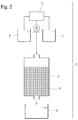
- Fig. 2 shows an example of the immunoglobulin purification device 1, including an absorption/desorption unit 3 serving as both an absorption unit and a desorption unit.
- the absorption/desorption unit 3 has, for example, a tubular portion having two openings, and the tubular portion is charged with porous zirconia particles 4.
- the immunoglobulin purification device 1 also includes an adsorption liquid container 5 for holding a neutral buffer (adsorption liquid), a desorption liquid container 7 for holding a neutral desorption liquid, and a recovery container 9 for recovering a liquid discharged from the absorption/desorption unit 3.
- a neutral buffer (adsorption liquid) containing an immunoglobulin is supplied from the adsorption liquid container 5 to the absorption/desorption unit 3 by means of a pump, whereby the immunoglobulin is adsorbed onto the porous zirconia particles 4.
- a neutral desorption liquid is supplied from the desorption liquid container 7 to the absorption/desorption unit 3 by means of the pump, whereby the immunoglobulin adsorbed on the porous zirconia particles 4 is desorbed (eluted).
- the switching between the adsorption liquid and the desorption liquid is performed by means of a switching unit 11.
- neutral buffer used in relation to the immunoglobulin purification device 1 are the same as those described in relation to the section "1. Immunoglobulin purification method" above.
- the immunoglobulin production method of the present invention includes an adsorption step and a desorption step.
- the "adsorption step” and “desorption step” of the immunoglobulin production method are the same as those described above in the section "1. Immunoglobulin purification method" above.
- the immunoglobulin production method of the present invention can produce an immunoglobulin having a purity higher than that of an immunoglobulin (raw immunoglobulin) used in the adsorption step.
- the raw immunoglobulin is obtained through any known method.
- the raw immunoglobulin may be separated and collected from blood or tissue fluid, may be prepared through biosynthesis or chemosynthesis, or may be prepared through a culture process.
- the immunoglobulin production method of the present invention may include a step of obtaining a raw immunoglobulin.
- An immunoglobulin production device 21 includes an absorption unit and a desorption unit.
- Fig. 3 shows an example of the immunoglobulin production device 21, which includes an absorption/desorption unit 23 serving as both an absorption unit and a desorption unit.
- the absorption/desorption unit 23 has, for example, a tubular portion having two openings, and the tubular portion is charged with porous zirconia particles 24.
- the immunoglobulin purification device 21 also includes an adsorption liquid container 25 for holding a neutral buffer (adsorption liquid), a desorption liquid container 27 for holding a neutral desorption liquid, and a recovery container 29 for recovering a liquid discharged from the absorption/desorption unit 23.
- a neutral buffer (adsorption liquid) containing an immunoglobulin is supplied from the adsorption liquid container 25 to the absorption/desorption unit 23 by means of a pump, whereby the immunoglobulin is adsorbed onto the porous zirconia particles 24.
- a neutral desorption liquid is supplied from the desorption liquid container 27 to the absorption/desorption unit 23 by means of the pump, whereby the immunoglobulin adsorbed on the porous zirconia particles 24 is desorbed (eluted).
- the switching between the adsorption liquid and the desorption liquid is performed by means of a switching unit 31.
- neutral buffer used in relation to the immunoglobulin production device 21 are the same as those described in relation to the section "1. Immunoglobulin purification method" above.
- the immunoglobulin production device 21 of the present invention can produce an immunoglobulin having a purity higher than that of an immunoglobulin (raw immunoglobulin) used in the adsorption unit.
- the raw immunoglobulin is obtained through any known method.
- the raw immunoglobulin may be separated and collected from blood or tissue fluid, may be prepared through biosynthesis or chemosynthesis, or may be prepared through a culture process.
- the immunoglobulin production device 21 of the present invention may include a unit for obtaining a raw immunoglobulin.
- Porous zirconia particle products as listed in Table 1 were used.
- Test Examples 1 to 9 PBS (phosphate buffered saline) which is neutral buffer was used as an adsorption liquid.
- Test Example 10 a HEPES (2-[4-(2-hydroxyethyl)-1-piperazinyl]ethanesulfonic acid) solution which is acidic solution was used as an adsorption liquid.
- Table 1 Test Ex. Particle type Carrier amount (mg) Absorption liquid Absorption percentage (%) Component Concentration pH IgG HAS Trf 1 PCS140(SD) 3 PBS 10mM 7. 0 92. 7 13. 4 13.3 2 PCS140(SD)-P(0.00125M) 3 PBS 10mM 7. 0 88. 2 5.
- PCS140(SD) is a porous zirconia particle product of Nippon Denko Co., Ltd.
- PCS140(SD)-P (0.00125M) is EDTPA-bound porous zirconia particles prepared by treating a porous zirconia particle product of Nippon Denko Co., Ltd. (PCS140(SD), raw material) with 0.00125M EDTPA solution.
- PCS140(SD)-P (0.0025M)
- PCS140(SD)-P (0.0025M)
- PCS140(SD)-P (0.0025M)
- PCS140(SD)-P (0.00125M) was prepared through the following procedure. Specifically, porous zirconia particles (PCS140(SD)) were preliminarily dried at 100°C for two hours under degassing. To the thus-dried product (250 mg) was added 0.00125M EDTPA solution (10 mL), and the resultant mixture was degassed for 15 minutes and stirred and/or shaken for 17 hours, followed by further refluxing the mixture for 4 hours. The resultant product was then washed with pure water and freeze-dried, to thereby yield PCS140(SD)-P (0.00125M).
- PCS140(SD)-P 0.00125M
- PCS140(SD)-P (0.0025M) was prepared in the same manner as employed in the preparation of "PCS140(SD)-P (0.00125M).” Specifically, the procedure of preparing “PCS140(SD)-P (0.00125M)” was repeated, except that "0.00125M EDTPA solution” was replaced with "0.0025M EDTPA solution, to thereby prepare “PCS140(SD)-P (0.0025M).”
- the amount of bound EDTPA was calculated from a weight loss as determined through TG-DTA (thermogravimetry-differential thermal analysis). Specifically, EDTPA-bound porous zirconia particles (about 10 mg) were weighed, and a change in weight of the sample was measured in a temperature range of ambient temperature to 1,000°C by means of a thermogravimetry-differential thermal analyzer (TG-DTA) (Thermo plus TG8120, product of Rigaku). From the weight loss in the range of 200°C to 600°C, the porous zirconia particles were found to have EDTPA bound onto the surfaces thereof in an amount of 0.06 ⁇ g to 2.20 ⁇ g per 1 mg of the particles.
- TG-DTA thermogravimetry-differential thermal analyzer
- porous zirconia particles were tested with respect to three proteins; i.e., IgG, HAS (albumin from human serum), and Trf (transferrin human).
- an adsorption liquid 500 ⁇ L was added to a Spitz tube, and porous zirconia particles (3 mg) were added to the liquid.
- a protein liquid 500 ⁇ g/500 ⁇ L (500 ⁇ L) was added to the dispersion, and the resultant mixture was stirred overnight at 4°C under shielding from light.
- the Spitz tube was subjected to centrifugation at 12,000 rpm for 10 minutes, to thereby precipitate the porous zirconia particles.
- the mass of non-immobilized protein remaining in the supernatant was determined by means of a microplate reader (Infinite F200PRO, product of TECAN) using a protein assay stain (product of BIO-RAD).
- the difference between the initial protein mass and the mass of non-adsorbed protein was employed as the mass of adsorbed protein.
- the ratio of the mass of adsorbed protein to the initial protein mass was calculated as an adsorption percentage (%).
- Test Example 10 was performed in the same manner as employed in Test Examples 1 to 9, except that the amount of protein added was changed; specifically, a protein liquid (750 ⁇ g/500 ⁇ L) was added in an amount of 500 ⁇ L.
- Test Examples 1 to 3 and 10 are compared with one another.
- the IgG adsorption percentage is higher in Test Examples 1 to 3 than in Test Example 10.
- the results indicate that the use of a neutral buffer as an adsorption liquid increases the IgG adsorption percentage.
- IgG selectivity is assessed from the results of Test Examples 1 and 10.
- HAS and Trf are adsorbed in addition to IgG.
- the IgG adsorption percentage is 31.7%
- the HAS adsorption percentage is 72.7%
- the Trf adsorption percentage is 60.2%.
- the HAS or Trf adsorption percentage is higher than IgG adsorption percentage; i.e., the selectivity to IgG adsorption is low.
- HAS and Trf are adsorbed in addition to IgG, but the adsorption HAS or Trf percentage is lower than IgG adsorption percentage; i.e., the selectivity to IgG adsorption is high.
- Test Example 1 wherein EDTPA-unbound porous zirconia particles were used
- Test Examples 2 and 3 wherein EDTPA-bound porous zirconia particles were used.
- the ratio of the HAS or Trf adsorption percentage to IgG adsorption percentage is low (i.e., the selectivity to IgG adsorption is high) as compared with the case of Test Example 1.
- the chelating agent is bound to the porous zirconia particles, IgG selectivity is further improved, and the IgG recovery percentage is further enhanced.
- Test Examples 4 to 6 are compared with one another.
- the comparison shows that the IgG adsorption percentage is the highest in Test Example 4 wherein the adsorption liquid concentration is 10 mM.
- the results indicate that when the adsorption liquid concentration is adjusted to 5 mM or more and 20 mM or less, the IgG adsorption percentage is increased, whereby the IgG recovery percentage is enhanced.
- Test Examples 7 to 9 are compared with one another.
- the comparison shows that the IgG adsorption percentage is the highest in Test Example 8 wherein the adsorption liquid has a pH of 7.0.
- PCS140(SD)-P EDTPA-bound porous zirconia particles (PCS140(SD)-P (0.0025M) as listed in Table 2 were used.
- Table 2 Test Ex. Particle type Absorption liquid Absorption percentage (%) Desorption liquid Recovery percentage (%) Concentration and component pH IgG Concentration and component pH IgG 11 PCS140(SD)-P(0.0025M) 10mM PBS 7. 0 72.8 100mM PBS 6. 9 67. 3 12 10mM PBS 7.0 74. 1 100mM PBS 6. 6 70. 0 4mM EDTPA 13 10mM PBS 7. 5 70. 8 100mM PBS 7. 5 70. 8 14 10mM PBS 7. 5 83. 9 100mM PBS 7. 0 78.
- An adsorption liquid 500 ⁇ L was added to a Spitz tube, and EDTPA-bound porous zirconia particles (PCS140(SD)-P (0.0025M)) (3 mg) were added to the liquid.
- EDTPA-bound porous zirconia particles PCS140(SD)-P (0.0025M)
- the Spitz tube was subjected to centrifugation at 14,000 rpm for 5 minutes, to thereby precipitate the porous zirconia particles.
- the mass of non-immobilized IgG remaining in the supernatant was determined by means of SDS-PAGE (sodium dodecyl sulfate-polyacrylamide gel electrophoresis using Image Analysis Software CS Analyzer 4 (product of ATTO)).
- SDS-PAGE sodium dodecyl sulfate-polyacrylamide gel electrophoresis using Image Analysis Software CS Analyzer 4 (product of ATTO)
- the difference between the initial IgG mass and the mass of non-adsorbed IgG was employed as the mass of adsorbed IgG.
- the ratio of the mass of adsorbed IgG to the initial IgG mass was calculated as an adsorption percentage (%).
- IgG was desorbed as follows. Specifically, after the aforementioned evaluation of adsorption, the supernatant was removed from the Spitz tube, and then each desorption liquid listed in Table 2 (500 ⁇ L) was added to the Spitz tube, followed by resuspension for desorption (elution) of IgG.
- the Spitz tube was subjected to centrifugation at 14,000 rpm for 5 minutes, to thereby precipitate the porous zirconia particles.
- the mass of IgG desorbed from the porous zirconia particles and contained in the supernatant was determined by means of SDS-PAGE (sodium dodecyl sulfate-polyacrylamide gel electrophoresis using Image Analysis Software CS Analyzer 4 (product of ATTO)).
- the thus-determined mass of IgG was employed as the mass of recovered IgG.
- the ratio of the mass of recovered IgG to the initial IgG mass was calculated as a recovery percentage (%).
- a recovery percentage (%) was calculated in the same manner as described above.
- the recovery percentage is higher in Test Examples 11 to 16 (wherein a neutral desorption liquid was used) than in Test Example 17 (wherein an acidic desorption liquid was used).
- Rhinophase-AB is a porous zirconia particle product of Zir Chrom Seperations Inc.
- Table 3 Test Ex. Particle type Absorption liquid Absorption percentage (%) Desorption liquid Recovery percentage (%) Concentration and component pH IgG Concentration and component pH IgG 18 PCS140(SD) 10mM PBS 7. 0 69. 8 100mM PBS 6. 9 69. 8 19 Rhinophase-AB 10mM PBS 7. 0 26.5 100mM PBS 6.9 14.6 20 PCS140(SD) 20mM MES 2. 1 63.8 20mM MES 2.1 30.3 4M EDTPA 4M EDTPA 21 Rhinophase-AB 45. 5 6.5 50mM NaCl 2M NaCl
- Test Example 20 and 21 correspond to a Rhinophase-AB standard purification process which is a conventional technique.
- Test Example 18 both the adsorption liquid and the desorption liquid are a neutral buffer.
- Test Example 20 both the adsorption liquid and the desorption liquid are an acidic buffer.
- the adsorption percentage is 69.8% in Test Example 18 (wherein the adsorption liquid is neutral), whereas the adsorption percentage is 63.8% in Test Example 20 (wherein the adsorption liquid is acidic).
- the recovery percentage is 69.8% in Test Example 18 and 30.3% in Test Example 20; i.e., the recovery percentage in Test Example 18 is considerably higher than that in Test Example 20.
- Test Example 19 both the adsorption liquid and the desorption liquid are a neutral buffer.
- both the adsorption liquid and the desorption liquid are an acidic buffer.
- the adsorption percentage is 26.5% in Test Example 19 and 45.5% in Test Example 21; i.e., the adsorption percentage in Test Example 21 is higher than that in Test Example 19.
- the recovery percentage is 14.6% in Test Example 19 and 6.5% in Test Example 21; i.e., the recovery percentage in Test Example 19 is considerably higher than that in Test
- Test Example 18 the adsorption percentage is 69.8%, and the recovery percentage is 69.8%; i.e., IgG adsorbed on the porous zirconia particles is almost entirely desorbed.
- the immunoglobulin purification method which involves adsorption of an immunoglobulin onto porous zirconia particles in a neutral buffer and desorption of the immunoglobulin from the porous zirconia particles by means of a neutral desorption liquid, achieves a high immunoglobulin recovery percentage.
- the immunoglobulin purification method does not cause loss of the antibody nature of an immunoglobulin, since the method does not use an acidic solution or an alkaline solution.
- the immunoglobulin purification method of the present invention is suitable for use in purification of an immunoglobulin (antibody).
- the immunoglobulin production method of the present invention is suitable for use in production of an immunoglobulin (antibody).
- the immunoglobulin purification device of the present invention is suitable for use in purification of an immunoglobulin (antibody).
- the immunoglobulin production device of the present invention is suitable for use in production of an immunoglobulin (antibody).
Landscapes
- Chemical & Material Sciences (AREA)
- Organic Chemistry (AREA)
- Analytical Chemistry (AREA)
- Chemical Kinetics & Catalysis (AREA)
- Health & Medical Sciences (AREA)
- Biophysics (AREA)
- Molecular Biology (AREA)
- Biochemistry (AREA)
- Proteomics, Peptides & Aminoacids (AREA)
- General Health & Medical Sciences (AREA)
- Genetics & Genomics (AREA)
- Medicinal Chemistry (AREA)
- Life Sciences & Earth Sciences (AREA)
- Immunology (AREA)
- Inorganic Chemistry (AREA)
- Solid-Sorbent Or Filter-Aiding Compositions (AREA)
- Peptides Or Proteins (AREA)
- Treatment Of Liquids With Adsorbents In General (AREA)
- Medicines Containing Antibodies Or Antigens For Use As Internal Diagnostic Agents (AREA)
Abstract
Description
- The present invention relates to an immunoglobulin purification method, to an immunoglobulin purification device, to an immunoglobulin production method, and to an immunoglobulin production device.
- Immunoglobulins are useful as therapeutic drugs and extracorporeal diagnostic agents. It is predicted that demand for immunoglobulins will continue to increase in the future. Use of an immunoglobulin for such an application requires development of a technique for purifying the immunoglobulin at a high level. In general, immunoglobulin is purified through affinity chromatography using protein A (see, for example, Patent Document 1). Protein A exhibits binding specificity to IgG and is separated from the pellicle of Staphylococcus aureus. Protein A binds specifically to immunoglobulins derived from various animals, and the amount of bound immunoglobulin per unit protein is large. Thus, affinity chromatography using a protein A-immobilized carrier is used in an antibody purification process on an industrial scale.
- Patent Document 1:
Japanese Patent Application Laid-Open (kokai) No. 2017-47365 - However, affinity chromatography employing protein A uses an acidic solution having a pH of 4 or less for elution of an adsorbed immunoglobulin, and thus may cause a change in the high-order structure of the antibody, leading to association and aggregation of the antibody.
- Also, an immunoglobulin aggregate is formed at a cell culture stage, and affinity chromatography employing protein A encounters difficulty in removing an impurity containing such an immunoglobulin polymer (aggregate).
- In order to solve the aforementioned problems, ion-exchange chromatography or hydrophobic interaction chromatography is generally performed after purification through affinity chromatography employing protein A.
- However, conventional ion-exchange chromatography has a narrow range of conditions under which only an immunoglobulin monomer can be separated, and thus causes a problem of low immunoglobulin recovery percentage. In addition, hydrophobic interaction chromatography causes a problem of high immunoglobulin purification cost, due to low immunoglobulin recovery percentage and a long period of time required for immunoglobulin recovery.
- The present invention has been conceived under such circumstances, and thus an object of the invention is to provide an immunoglobulin purification method, an immunoglobulin purification device, an immunoglobulin production method, and an immunoglobulin production device, each of which achieves a high immunoglobulin recovery percentage without causing loss of the antibody nature of an immunoglobulin. The present invention can be implemented in the following modes.
-
- [1] An immunoglobulin purification method characterized by comprising:
- an adsorption step of adsorbing an immunoglobulin onto porous zirconia particles in a neutral buffer; and
- a desorption step of desorbing the immunoglobulin adsorbed on the porous zirconia particles from the porous zirconia particles by means of a neutral desorption liquid.
- [2] An immunoglobulin purification method as described in [1], wherein the desorption liquid is a phosphate buffer.
- [3] An immunoglobulin purification method as described in [1] or [2], wherein the desorption liquid contains at least one species selected from the group consisting of a compound represented by the following formula (1):

- [4] An immunoglobulin purification device characterized by comprising:
- an adsorption unit for adsorbing an immunoglobulin onto porous zirconia particles in a neutral buffer; and
- a desorption unit for desorbing the immunoglobulin adsorbed on the porous zirconia particles from the porous zirconia particles by means of a neutral desorption liquid.
- [5] An immunoglobulin purification device as described in [4], wherein the desorption liquid is a phosphate buffer.
- [6] An immunoglobulin purification device as described in [4] or [5], wherein the desorption liquid contains at least one species selected from the group consisting of a compound represented by formula (1):

- [7] An immunoglobulin production method characterized by comprising:
- an adsorption step of adsorbing an immunoglobulin onto porous zirconia particles in a neutral buffer; and
- a desorption step of desorbing the immunoglobulin adsorbed on the porous zirconia particles from the porous zirconia particles by means of a neutral desorption liquid.
- [8] An immunoglobulin production method as described in [7], wherein the desorption liquid is a phosphate buffer.
- [9] An immunoglobulin production method as described in [7] or [8], wherein the desorption liquid contains at least one species selected from the group consisting of a compound represented by formula (1):

- [10] An immunoglobulin production device characterized by comprising:
- an adsorption unit for adsorbing an immunoglobulin onto porous zirconia particles in a neutral buffer; and
- a desorption unit for desorbing the immunoglobulin adsorbed on the porous zirconia particles from the porous zirconia particles by means of a neutral desorption liquid.
- [11] An immunoglobulin production device as described in [10], wherein the desorption liquid is a phosphate buffer.
- [12] An immunoglobulin production device as described in [10] or [11], wherein the desorption liquid contains at least one species selected from the group consisting of a compound represented by formula (1):

- According to the immunoglobulin purification method of the present invention, an immunoglobulin is adsorbed onto porous zirconia particles in a neutral buffer, and the immunoglobulin is desorbed from the porous zirconia particles by means of a neutral desorption liquid. Thus, the immunoglobulin does not lose its antibody nature. The immunoglobulin purification method of the present invention achieves a high immunoglobulin recovery percentage.
- When the immunoglobulin purification method of the present invention uses a phosphate buffer as a desorption liquid, the method achieves a high immunoglobulin recovery percentage.
- In the immunoglobulin purification method of the present invention, when the desorption liquid contains at least one species selected from the group consisting of a compound represented by formula (1) and a salt of the compound, the method achieves a high immunoglobulin recovery percentage.
- According to the immunoglobulin purification device of the present invention, an immunoglobulin is adsorbed onto porous zirconia particles in a neutral buffer, and the immunoglobulin is desorbed from the porous zirconia particles by means of a neutral desorption liquid. Thus, the immunoglobulin does not lose its antibody nature. The immunoglobulin purification device of the present invention achieves a high immunoglobulin recovery percentage.
- When the immunoglobulin purification device of the present invention uses a phosphate buffer as a desorption liquid, the device achieves a high immunoglobulin recovery percentage.
- In the immunoglobulin purification device of the present invention, when the desorption liquid contains at least one species selected from the group consisting of a compound represented by formula (1) and a salt of the compound, the device achieves a high immunoglobulin recovery percentage.
- According to the immunoglobulin production method of the present invention, an immunoglobulin is adsorbed onto porous zirconia particles in a neutral buffer, and the immunoglobulin is desorbed from the porous zirconia particles by means of a neutral desorption liquid. Thus, the immunoglobulin does not lose its antibody nature. The immunoglobulin production method of the present invention achieves high immunoglobulin production efficiency.
- When the immunoglobulin production method of the present invention uses a phosphate buffer as a desorption liquid, the method achieves high immunoglobulin production efficiency.
- In the immunoglobulin production method of the present invention, when the desorption liquid contains at least one species selected from the group consisting of a compound represented by formula (1) and a salt of the compound, the method achieves high immunoglobulin production efficiency.
- According to the immunoglobulin production device of the present invention, an immunoglobulin is adsorbed onto porous zirconia particles in a neutral buffer, and the immunoglobulin is desorbed from the porous zirconia particles by means of a neutral desorption liquid. Thus, the immunoglobulin does not lose its antibody nature. The immunoglobulin production device of the present invention achieves high immunoglobulin production efficiency.
- When the immunoglobulin production device of the present invention uses a phosphate buffer as a desorption liquid, the device achieves high immunoglobulin production efficiency.
- In the immunoglobulin production device of the present invention, when the desorption liquid contains at least one species selected from the group consisting of a compound represented by formula (1) and a salt of the compound, the device achieves high immunoglobulin production efficiency.
-
-
Fig. 1 is a schematic representation of a conceivable bonding structure of ethylenediaminetetramethylenephosphonic acid (EDTPA). -
Fig. 2 is a block diagram showing an immunoglobulin purification device. -
Fig. 3 is a block diagram showing an immunoglobulin production device. - The present invention will next be described in detail. As used herein, unless otherwise specified, the numerical value range expressed by "(value) to (value)" includes the lower limit and the upper limit of the range. For example, the expression "10 to 20" includes both a lower limit of "10" and an upper limit of "20." That is, "10 to 20" is equivalent to "10 or more and 20 or less."
- The immunoglobulin purification method of the present invention includes an adsorption step and a desorption step.
- The adsorption step involves adsorption of an immunoglobulin onto porous zirconia particles in a neutral buffer.
- The neutral buffer is preferably a buffer having a pH of 6.1 or more and 8.0 or less, more preferably a buffer having a pH of 6.5 or more and 7.5 or less, still more preferably a buffer having a pH of 6.6 or more and 7.4 or less. The buffer contains a buffering agent, and the buffering agent may be appropriately selected depending on the target pH from among buffering agents generally used by those skilled in the art. Examples of the buffering agent include phosphate salts, acetate salts, carbonate salts, and Tris (tris(hydroxymethyl)aminomethane). No particular limitation is imposed on the neutral buffer concentration, but the concentration is preferably 0.1 mM or more and 200 mM or less, more preferably 1 mM or more and 100 mM or less, still more preferably 5 mM or more and 20 mM or less.
- The neutral buffer is particularly preferably phosphate buffered saline (PBS) from the viewpoint of maintaining the antibody nature of an immunoglobulin.
- No particular limitation is imposed on the temperature of the neutral buffer, and it is generally used at a temperature of 4°C or higher and 50°C or lower.
- The immunoglobulin may be IgG, IgA, IgM, IgD, or IgE. IgG, IgD, or IgE is in the form of monomer, IgA is in the form of monomer or dimer, and IgM is in the form of pentamer or hexamer. Each of these immunoglobulins has a size of about 10 nm to about 30 nm.
- No particular limitation is imposed on the porous zirconia particles used in the present invention, but the below-described porous zirconia particles are preferred. Specifically, the porous zirconia particles used in the present invention preferably have D50, D90, and a total pore volume falling within the ranges described below.
- The porous zirconia particles may be in the form of individually separate particles, or may be in the form of an aggregate composed of a plurality of aggregated particles.
- The porous zirconia particles have a pore diameter D50, at which a ratio of a cumulative pore volume to a total pore volume is 50%, of 3.20 nm or more and 6.50 nm or less, and a pore diameter D90, at which a ratio of a cumulative pore volume to a total pore volume is 90%, of 10.50 nm or more and 100.00 or nm or less, as determined in a pore diameter distribution measured through a BET method. The pore diameter D50 is preferably 3.35 nm or more and 6.30 nm or less, more preferably 3.50 nm or more and 5.00 nm or less. The pore diameter D90 is preferably 10.80 nm or more and 50.00 nm or less, more preferably 11.00 nm or more and 30.00 nm or less.
- The total pore volume of the porous zirconia particles is greater than 0.10 cm3/g. The total pore volume is preferably greater than 0.15 cm3/g, more preferably greater than 0.30 cm3/g. No particular limitation is imposed on the upper limit of the total pore volume, and it is generally 10 cm3/g.
- When D50, D90, and the total pore volume satisfy the above conditions, the selectivity to the immunoglobulin to be adsorbed is enhanced. Notably, through adjusting D90 to be 100.00 nm or less, selective adsorption of a free (non-aggregated) immunoglobulin is facilitated. A free immunoglobulin has a size of about 10 nm to about 30 m, while an aggregate of immunoglobulin has a size of about 100 nm. Thus, D90 regulated to 100.00 nm or less avoids adsorption of an aggregate of immunoglobulin and facilitates selective adsorption of a free immunoglobulin.
- Notably, the pore diameter distribution and pore volume may be determined by means of, for example, a porosity analyzer (Micromeritics, automated surface area/porosity analyzer (TriStar II, product of Shimadzu Corporation)).
- The calculation method will now be described.
- Firstly, a method for calculating D50 is described. By use of data of a pore diameter distribution, two points A and B, which are respectively present above and below the line representing cumulative pore volume 50% and in the closest vicinity of the 50% line, are chosen. The cumulative pore volume (X(%)) and the pore diameter (Y(nm)) of each of the points A and B are read off. Specifically, point A (Xa(%), Ya(nm)) and point B (Xb(%), Yb(nm)) are read (wherein Xa>Xb, Ya>Yb). From these values, D50 is calculated by the following calculation formula (1):

- In a similar manner, D90 is determined. Specifically, by use of the data of the pore diameter distribution, two points C and D, which are respectively present above and below the line representing cumulative pore volume 90% and in the closest vicinity of the 90% line, are chosen. The cumulative pore volume (X(%)) and the pore diameter (Y(nm)) of each of the points C and D are read off. More specifically, point C (Xc(%), Yc(nm)) and point D (Xd(%), Yd(nm)) are read (wherein Xc>Xd, Yc>Yd). From these values, D90 is calculated by the following calculation formula (2):

- No particular limitation is imposed on the particle diameter of the porous zirconia particles. However, the primary particles generally have a particle diameter of 10 nm to 100 nm, preferably 10 nm to 50 nm, more preferably 10 nm to 30 nm. Through aggregation of such primary particles, secondary particles having a particle size of 50 nm to 1,000 nm are formed. When the primary particle diameter satisfies the above conditions, the specific surface area of the porous zirconia particles considerably increases, whereby the amount of adsorbed immunoglobulin tends to increase.
- Onto the surfaces of the porous zirconia particles, a chelating agent may be bound. By virtue of the chelating agent supported on the zirconia particles, immunoglobulin adsorption selectivity can be further enhanced.
- No particular limitation is imposed on the chelating agent, and the chelating agent is preferably at least one species selected from the group consisting of a compound represented by the following formula (2), ethylenediaminetetraacetic acid (EDTA), diethylenetriaminepentaacetic acid (DETPA), diethylenetriaminepentamethylenephosphonic acid (DETPPA), and salts thereof. Examples of preferred salts include alkali metal (e.g., sodium) salts.

- Examples of the C1 to C10 alkylene group of R1 in formula (2) include a methylene group, an ethylene group, a trimethylene group, a tetramethylene group, a hexamethylene group, and an isobutylene group.
- Examples of the C1 to C10 alkylene group of R2 to R5 include a methylene group, an ethylene group, a trimethylene group, a tetramethylene group, a hexamethylene group, and an isobutylene group.
- From the viewpoint of enhancing selectivity to immunoglobulin, the chelating agent is preferably a compound represented by formula (2). Among compounds represented by formula (2), ethylenediaminetetramethylenephosphonic acid (i.e., N,N,N',N'-ethylenediaminetetrakis(methylenephosphonic acid)) (EDTPA) is particularly preferred.
- No particular limitation is imposed on the amount of the bound chelating agent. From the viewpoint of enhancing selectivity to immunoglobulin, the amount of bound chelating agent is preferably 0.01 µg to 10 µg per 1 mg of zirconia, more preferably 0.02 µg to 5 µg, still more preferably 0.05 µg to 3 µg.
- Notably, the amount of the bound chelating agent may be calculated by a reduction in weight as determined through TG-DTA (thermogravimetry-differential thermal analysis).
- No precise bonding mode of the chelating agent has been elucidated. However, the mode is assumed such that a ligand derived from the chelating agent is bound to zirconium atoms. In the case where the chelating agent is ethylenediaminetetramethylenephosphonic acid, the bonding mode is assumed to be represented by the structure shown in
Fig. 1 . - No particular limitation is imposed on the method for producing the porous zirconia particles. The porous zirconia particles may be produced through, for example, the following method. Specifically, a zirconium oxychloride (ZrOCl2·8H2O) solution is prepared from zircon as a raw material. Subsequently, Zr(OH)4 microparticles are formed through hydrolysis of the solution. The microparticles are fired, to thereby yield porous zirconia particles.
- No particular limitation is imposed on the relationship between the amount of the porous zirconia particles and the amount of the neutral buffer in the adsorption step. For example, the neutral buffer may be used in an amount of 10 µL or more and 300 µL or less with respect to 1 mg of the porous zirconia particles.
- The desorption step involves desorption (elution) of the immunoglobulin adsorbed on the porous zirconia particles from the porous zirconia particles by means of a neutral desorption liquid.
- The neutral desorption liquid is preferably a desorption liquid having a pH of 6.0 or more and 8.0 or less, more preferably a desorption liquid having a pH of 6.5 or more and 7.5 or less, still more preferably a desorption liquid having a pH of 6.8 or more and 7.2 or less.
- The desorption liquid is preferably a phosphate buffer. The phosphate buffer is preferably, for example, phosphate buffered saline (PBS).
- No particular limitation is imposed on the desorption liquid concentration, and the concentration is appropriately determined depending on the type of the desorption liquid.
- When, for example, phosphate buffered saline (PBS) is used, the concentration is preferably 50 mM or more and 200 mM or less, more preferably 60 mM or more and 150 mM or less, still more preferably 70 mM or more and 130 mM or less, from the viewpoint of enhancing the immunoglobulin recovery percentage. When phosphate buffered saline (PBS) is used as the neutral buffer in the adsorption step, and phosphate buffered saline (PBS) is used as the desorption liquid in the desorption step, these two liquids preferably satisfy the following concentration relationship from the viewpoint of enhancing the immunoglobulin recovery percentage. Specifically, the phosphate buffered saline (PBS) used in the desorption step preferably has a concentration higher than that of the phosphate buffered saline (PBS) used in the adsorption step.
- The desorption liquid may contain at least one species selected from the group consisting of a compound represented by formula (1) and a salt thereof.

- Examples of the C1 to C10 alkylene group of R1 in formula (1) include a methylene group, an ethylene group, trimethylene group, a tetramethylene group, a hexamethylene group, and an isobutylene group.
- Examples of the C1 to C10 alkylene group of R2 to R5 include a methylene group, an ethylene group, a trimethylene group, a tetramethylene group, a hexamethylene group, and an isobutylene group.
- From the viewpoint of enhancing the immunoglobulin recovery percentage, at least one species selected from the group consisting of a compound represented by formula (1) and a salt of the compound is preferably at least one species selected from among ethylenediaminetetramethylenephosphonic acid (EDTPA; N,N,N',N'-ethylenediaminetetrakis(methylenephosphonic acid)) and a salt thereof.
- From the viewpoint of enhancing the immunoglobulin recovery percentage, the desorption liquid contains at least one species selected from the group consisting of a compound represented by formula (1) and a salt of the compound at a concentration (total concentration in the case of two or more species) of preferably 0.1 mM or more and 10 mM or less, more preferably 0.5 mM or more and 8 mM or less, still more preferably 2 mM or more and 6 mM or less.
- Notably, no particular limitation is imposed on the temperature of the desorption liquid, and it is generally used at a temperature of 4°C or higher and 50°C or lower.
- No particular limitation is imposed on the relationship between the amount of the porous zirconia particles and the amount of the desorption liquid in the desorption step. For example, the desorption liquid can be used in an amount of 10 µL or more and 300 µL or less with respect to 1 mg of the porous zirconia particles.
- An
immunoglobulin purification device 1 according to the present invention includes an absorption unit and a desorption unit.Fig. 2 shows an example of theimmunoglobulin purification device 1, including an absorption/desorption unit 3 serving as both an absorption unit and a desorption unit. The absorption/desorption unit 3 has, for example, a tubular portion having two openings, and the tubular portion is charged withporous zirconia particles 4. Theimmunoglobulin purification device 1 also includes anadsorption liquid container 5 for holding a neutral buffer (adsorption liquid), a desorption liquid container 7 for holding a neutral desorption liquid, and arecovery container 9 for recovering a liquid discharged from the absorption/desorption unit 3. In the adsorption step (adsorption process), a neutral buffer (adsorption liquid) containing an immunoglobulin is supplied from theadsorption liquid container 5 to the absorption/desorption unit 3 by means of a pump, whereby the immunoglobulin is adsorbed onto theporous zirconia particles 4. In the desorption step (desorption process), a neutral desorption liquid is supplied from the desorption liquid container 7 to the absorption/desorption unit 3 by means of the pump, whereby the immunoglobulin adsorbed on theporous zirconia particles 4 is desorbed (eluted). The switching between the adsorption liquid and the desorption liquid is performed by means of aswitching unit 11. - The terms "neutral buffer," "immunoglobulin," "porous zirconia particles," and "neutral desorption liquid" used in relation to the
immunoglobulin purification device 1 are the same as those described in relation to the section "1. Immunoglobulin purification method" above. - The immunoglobulin production method of the present invention includes an adsorption step and a desorption step.
- The "adsorption step" and "desorption step" of the immunoglobulin production method are the same as those described above in the section "1. Immunoglobulin purification method" above.
- The immunoglobulin production method of the present invention can produce an immunoglobulin having a purity higher than that of an immunoglobulin (raw immunoglobulin) used in the adsorption step. The raw immunoglobulin is obtained through any known method. For example, the raw immunoglobulin may be separated and collected from blood or tissue fluid, may be prepared through biosynthesis or chemosynthesis, or may be prepared through a culture process. The immunoglobulin production method of the present invention may include a step of obtaining a raw immunoglobulin.
- An
immunoglobulin production device 21 according to the present invention includes an absorption unit and a desorption unit.Fig. 3 shows an example of theimmunoglobulin production device 21, which includes an absorption/desorption unit 23 serving as both an absorption unit and a desorption unit. The absorption/desorption unit 23 has, for example, a tubular portion having two openings, and the tubular portion is charged withporous zirconia particles 24. Theimmunoglobulin purification device 21 also includes anadsorption liquid container 25 for holding a neutral buffer (adsorption liquid), adesorption liquid container 27 for holding a neutral desorption liquid, and arecovery container 29 for recovering a liquid discharged from the absorption/desorption unit 23. In the adsorption step (adsorption process), a neutral buffer (adsorption liquid) containing an immunoglobulin is supplied from theadsorption liquid container 25 to the absorption/desorption unit 23 by means of a pump, whereby the immunoglobulin is adsorbed onto theporous zirconia particles 24. In the desorption step (desorption process), a neutral desorption liquid is supplied from thedesorption liquid container 27 to the absorption/desorption unit 23 by means of the pump, whereby the immunoglobulin adsorbed on theporous zirconia particles 24 is desorbed (eluted). The switching between the adsorption liquid and the desorption liquid is performed by means of aswitching unit 31. - The terms "neutral buffer," "immunoglobulin," "porous zirconia particles," and "neutral desorption liquid" used in relation to the
immunoglobulin production device 21 are the same as those described in relation to the section "1. Immunoglobulin purification method" above. - The
immunoglobulin production device 21 of the present invention can produce an immunoglobulin having a purity higher than that of an immunoglobulin (raw immunoglobulin) used in the adsorption unit. The raw immunoglobulin is obtained through any known method. For example, the raw immunoglobulin may be separated and collected from blood or tissue fluid, may be prepared through biosynthesis or chemosynthesis, or may be prepared through a culture process. Theimmunoglobulin production device 21 of the present invention may include a unit for obtaining a raw immunoglobulin. - The present invention will next be described in more detail.
- Porous zirconia particle products as listed in Table 1 were used.
- In Test Examples 1 to 9, PBS (phosphate buffered saline) which is neutral buffer was used as an adsorption liquid. In Test Example 10, a HEPES (2-[4-(2-hydroxyethyl)-1-piperazinyl]ethanesulfonic acid) solution which is acidic solution was used as an adsorption liquid.
Table 1 Test Ex. Particle type Carrier amount (mg) Absorption liquid Absorption percentage (%) Component Concentration pH IgG HAS Trf 1 PCS140(SD) 3 PBS 10mM 7. 0 92. 7 13. 4 13.3 2 PCS140(SD)-P(0.00125M) 3 PBS 10mM 7. 0 88. 2 5. 1 11.8 3 PCS140(SD)-P(0.0025M) 3 PBS 10mM 7. 0 85. 9 7. 7 4.0 4 PCS140(SD)-P(0.00125M) 3 PBS 10mM 7. 0 88. 2 5. 1 11.8 5 PCS140(SD)-P(0.00125M) 3 PBS 50mM 7.0 47. 3 0.8 0. 3 6 PCS140(SD)-P(0.00125M) 3 PBS 100mM 7.0 21. 9 0. 8 0. 0 7 PCS140(SD)-P(0.00125M) 3 PBS 10mM 6.5 85. 8 15.2 31. 7 8 PCS140(SD)-P(0.00125M) 3 PBS 10mM 7. 0 88. 2 5.1 11.8 9 PCS140(SD)-P(0.00125M) 3 PBS 10mM 7. 5 69. 2 2. 5 0.0 10 PCS140(SD) 3 HEPES 10mM 6.0 31. 7 72. 7 60.2 - In Table 1, "PCS140(SD)" is a porous zirconia particle product of Nippon Denko Co., Ltd.
- In Table 1, "PCS140(SD)-P (0.00125M)" is EDTPA-bound porous zirconia particles prepared by treating a porous zirconia particle product of Nippon Denko Co., Ltd. (PCS140(SD), raw material) with 0.00125M EDTPA solution.
- In Table 1, "PCS140(SD)-P (0.0025M)" is EDTPA-bound porous zirconia particles prepared by treating a porous zirconia particle product of Nippon Denko Co., Ltd. (PCS140(SD), raw material) with 0.0025M EDTPA solution. These abbreviations shall apply to Tables 2 and 3 below.
- "PCS140(SD)-P (0.00125M)" was prepared through the following procedure. Specifically, porous zirconia particles (PCS140(SD)) were preliminarily dried at 100°C for two hours under degassing. To the thus-dried product (250 mg) was added 0.00125M EDTPA solution (10 mL), and the resultant mixture was degassed for 15 minutes and stirred and/or shaken for 17 hours, followed by further refluxing the mixture for 4 hours. The resultant product was then washed with pure water and freeze-dried, to thereby yield PCS140(SD)-P (0.00125M).
- "PCS140(SD)-P (0.0025M)" was prepared in the same manner as employed in the preparation of "PCS140(SD)-P (0.00125M)." Specifically, the procedure of preparing "PCS140(SD)-P (0.00125M)" was repeated, except that "0.00125M EDTPA solution" was replaced with "0.0025M EDTPA solution, to thereby prepare "PCS140(SD)-P (0.0025M)."
- The amount of bound EDTPA was calculated from a weight loss as determined through TG-DTA (thermogravimetry-differential thermal analysis). Specifically, EDTPA-bound porous zirconia particles (about 10 mg) were weighed, and a change in weight of the sample was measured in a temperature range of ambient temperature to 1,000°C by means of a thermogravimetry-differential thermal analyzer (TG-DTA) (Thermo plus TG8120, product of Rigaku). From the weight loss in the range of 200°C to 600°C, the porous zirconia particles were found to have EDTPA bound onto the surfaces thereof in an amount of 0.06 µg to 2.20 µg per 1 mg of the particles.
- Each type of porous zirconia particles shown in Table 1 was evaluated in terms of protein adsorbability.
- As described below, each type of porous zirconia particles was tested with respect to three proteins; i.e., IgG, HAS (albumin from human serum), and Trf (transferrin human).
- Specifically, an adsorption liquid (500 µL) was added to a Spitz tube, and porous zirconia particles (3 mg) were added to the liquid. After completion of sufficient dispersion of the porous zirconia particles, a protein liquid (500 µg/500 µL) (500 µL) was added to the dispersion, and the resultant mixture was stirred overnight at 4°C under shielding from light.
- The Spitz tube was subjected to centrifugation at 12,000 rpm for 10 minutes, to thereby precipitate the porous zirconia particles. The mass of non-immobilized protein remaining in the supernatant was determined by means of a microplate reader (Infinite F200PRO, product of TECAN) using a protein assay stain (product of BIO-RAD). The difference between the initial protein mass and the mass of non-adsorbed protein was employed as the mass of adsorbed protein. The ratio of the mass of adsorbed protein to the initial protein mass was calculated as an adsorption percentage (%).
- Test Example 10 was performed in the same manner as employed in Test Examples 1 to 9, except that the amount of protein added was changed; specifically, a protein liquid (750 µg/500 µL) was added in an amount of 500 µL.
- Test results are shown in Table 1.
- The effect of the type of an adsorption liquid on protein adsorbability is assessed.
- Firstly, the results of Test Examples 1 to 3 and 10 are compared with one another. The IgG adsorption percentage is higher in Test Examples 1 to 3 than in Test Example 10. The results indicate that the use of a neutral buffer as an adsorption liquid increases the IgG adsorption percentage.
- Next, IgG selectivity is assessed from the results of Test Examples 1 and 10. In Test Example 10, HAS and Trf are adsorbed in addition to IgG. In Test Example 10, the IgG adsorption percentage is 31.7%, the HAS adsorption percentage is 72.7%, and the Trf adsorption percentage is 60.2%. As shown in Test Example 10, the HAS or Trf adsorption percentage is higher than IgG adsorption percentage; i.e., the selectivity to IgG adsorption is low.
- In Test Example 1, HAS and Trf are adsorbed in addition to IgG, but the adsorption HAS or Trf percentage is lower than IgG adsorption percentage; i.e., the selectivity to IgG adsorption is high.
- These results indicate that the use of a neutral buffer as an adsorption liquid can increase the selectivity to IgG adsorption and achieve efficient IgG adsorption. Since IgG recovery is performed through desorption of the adsorbed IgG, efficient adsorption of IgG by using a neutral buffer as an adsorption liquid leads to an increase in IgG recovery percentage.
- The effect of binding a chelating agent to porous zirconia particles on protein adsorbability is assessed.
- The results of Test Example 1 (wherein EDTPA-unbound porous zirconia particles were used) are compared with those of Test Examples 2 and 3 (wherein EDTPA-bound porous zirconia particles were used). In Test Examples 2 and 3, the ratio of the HAS or Trf adsorption percentage to IgG adsorption percentage is low (i.e., the selectivity to IgG adsorption is high) as compared with the case of Test Example 1. Thus, when the chelating agent is bound to the porous zirconia particles, IgG selectivity is further improved, and the IgG recovery percentage is further enhanced.
- The effect of adsorption liquid concentration on protein adsorbability is assessed.
- Specifically, the results of Test Examples 4 to 6 are compared with one another. The comparison shows that the IgG adsorption percentage is the highest in Test Example 4 wherein the adsorption liquid concentration is 10 mM.
- The results indicate that when the adsorption liquid concentration is adjusted to 5 mM or more and 20 mM or less, the IgG adsorption percentage is increased, whereby the IgG recovery percentage is enhanced.
- The effect of the pH of an adsorption liquid on protein adsorbability is assessed.
- Specifically, the results of Test Examples 7 to 9 are compared with one another. The comparison shows that the IgG adsorption percentage is the highest in Test Example 8 wherein the adsorption liquid has a pH of 7.0.
- The results indicate that when the pH of an adsorption liquid is adjusted to 6.6 or more and 7.4 or less, the IgG adsorption percentage increases, whereby the IgG recovery percentage increases.
- EDTPA-bound porous zirconia particles (PCS140(SD)-P (0.0025M) as listed in Table 2 were used.
Table 2 Test Ex. Particle type Absorption liquid Absorption percentage (%) Desorption liquid Recovery percentage (%) Concentration and component pH IgG Concentration and component pH IgG 11 PCS140(SD)-P(0.0025M) 10mM PBS 7. 0 72.8 100mM PBS 6. 9 67. 3 12 10mM PBS 7.0 74. 1 100mM PBS 6. 6 70. 0 4mM EDTPA 13 10mM PBS 7. 5 70. 8 100mM PBS 7. 5 70. 8 14 10mM PBS 7. 5 83. 9 100mM PBS 7. 0 78. 1 4mM EDTPA 15 10mM PBS 7.0 80.0 100mM PBS 7.0 61. 7 2M NaCl 16 10mM PBS 7. 5 77. 1 100mM PBS 7. 5 33. 1 2M NaCl 17 10mM PBS 7.0 95. 0 2M NaCl 5.5 23.6 - An adsorption liquid (500 µL) was added to a Spitz tube, and EDTPA-bound porous zirconia particles (PCS140(SD)-P (0.0025M)) (3 mg) were added to the liquid. After completion of sufficient dispersion of the EDTPA-bound porous zirconia particles, an IgG liquid (500 µg/500 µL) (500 µL) was added to the dispersion, and the resultant mixture was stirred overnight at 4°C under shielding from light.
- The Spitz tube was subjected to centrifugation at 14,000 rpm for 5 minutes, to thereby precipitate the porous zirconia particles. The mass of non-immobilized IgG remaining in the supernatant was determined by means of SDS-PAGE (sodium dodecyl sulfate-polyacrylamide gel electrophoresis using Image Analysis Software CS Analyzer 4 (product of ATTO)). The difference between the initial IgG mass and the mass of non-adsorbed IgG was employed as the mass of adsorbed IgG. The ratio of the mass of adsorbed IgG to the initial IgG mass was calculated as an adsorption percentage (%).
- After the aforementioned evaluation of adsorption, desorption of IgG was evaluated by use of each desorption liquid listed in Table 2.
- IgG was desorbed as follows. Specifically, after the aforementioned evaluation of adsorption, the supernatant was removed from the Spitz tube, and then each desorption liquid listed in Table 2 (500 µL) was added to the Spitz tube, followed by resuspension for desorption (elution) of IgG.
- Subsequently, the Spitz tube was subjected to centrifugation at 14,000 rpm for 5 minutes, to thereby precipitate the porous zirconia particles. The mass of IgG desorbed from the porous zirconia particles and contained in the supernatant was determined by means of SDS-PAGE (sodium dodecyl sulfate-polyacrylamide gel electrophoresis using Image Analysis Software CS Analyzer 4 (product of ATTO)).
- The thus-determined mass of IgG was employed as the mass of recovered IgG.
- The ratio of the mass of recovered IgG to the initial IgG mass was calculated as a recovery percentage (%). In experiment C, a recovery percentage (%) was calculated in the same manner as described above.
- Test results are shown in Table 2.
- The recovery percentage is higher in Test Examples 11 to 16 (wherein a neutral desorption liquid was used) than in Test Example 17 (wherein an acidic desorption liquid was used).
- Porous zirconia particle products as listed in Table 3 were used. In Table 3, "Rhinophase-AB" is a porous zirconia particle product of Zir Chrom Seperations Inc.
Table 3 Test Ex. Particle type Absorption liquid Absorption percentage (%) Desorption liquid Recovery percentage (%) Concentration and component pH IgG Concentration and component pH IgG 18 PCS140(SD) 10mM PBS 7. 0 69. 8 100mM PBS 6. 9 69. 8 19 Rhinophase-AB 10mM PBS 7. 0 26.5 100mM PBS 6.9 14.6 20 PCS140(SD) 20mM MES 2. 1 63.8 20mM MES 2.1 30.3 4M EDTPA 4M EDTPA 21 Rhinophase-AB 45. 5 6.5 50mM NaCl 2M NaCl - Evaluation of adsorption and desorption was performed in the same manner as employed in Test Example 11, except that porous zirconia particles as listed in Table 3 were used, and goat serum (500 µL) (IgG: 300 µg/500 µL) was used.
- Evaluation of adsorption and desorption was performed in the same manner as employed in Test Example 11, except that porous zirconia particles as listed in Table 3 were used, a solution containing 20mM MES (2-(N-morpholino)ethanesulfonic acid), 4M EDTPA, and 50mM NaCl was used as an adsorption liquid, and a solution containing 20mM MES, 4M EDTPA, and 2M NaCl was used as a desorption liquid. Test Examples 20 and 21 correspond to a Rhinophase-AB standard purification process which is a conventional technique.
- Test results are shown in Table 3.
- Firstly, the results of Test Examples 18 and 20 are compared with each other. In Test Example 18, both the adsorption liquid and the desorption liquid are a neutral buffer. In Test Example 20, both the adsorption liquid and the desorption liquid are an acidic buffer. The adsorption percentage is 69.8% in Test Example 18 (wherein the adsorption liquid is neutral), whereas the adsorption percentage is 63.8% in Test Example 20 (wherein the adsorption liquid is acidic). Thus, there is no large difference in adsorption percentage between these Examples. However, the recovery percentage is 69.8% in Test Example 18 and 30.3% in Test Example 20; i.e., the recovery percentage in Test Example 18 is considerably higher than that in Test Example 20.
- Next, the results of Test Examples 19 and 21 are compared with each other. In Test Example 19, both the adsorption liquid and the desorption liquid are a neutral buffer. In Test Example 21, both the adsorption liquid and the desorption liquid are an acidic buffer. The adsorption percentage is 26.5% in Test Example 19 and 45.5% in Test Example 21; i.e., the adsorption percentage in Test Example 21 is higher than that in Test Example 19. However, the recovery percentage is 14.6% in Test Example 19 and 6.5% in Test Example 21; i.e., the recovery percentage in Test Example 19 is considerably higher than that in Test
- These results indicate that the use of a neutral buffer as a desorption liquid facilitates desorption of IgG adsorbed on the porous zirconia particles, resulting in an increase in recovery percentage.
- In Test Example 18, the adsorption percentage is 69.8%, and the recovery percentage is 69.8%; i.e., IgG adsorbed on the porous zirconia particles is almost entirely desorbed.
- The immunoglobulin purification method, which involves adsorption of an immunoglobulin onto porous zirconia particles in a neutral buffer and desorption of the immunoglobulin from the porous zirconia particles by means of a neutral desorption liquid, achieves a high immunoglobulin recovery percentage. In addition, the immunoglobulin purification method does not cause loss of the antibody nature of an immunoglobulin, since the method does not use an acidic solution or an alkaline solution.
- The invention is not limited to the aforementioned Examples and embodiments and may be carried out in various modes, so long as they do not deviate the scope of the invention.
- (1) Although exemplary
immunoglobulin purification device 1 andimmunoglobulin production device 21 have been described above, the structure of theimmunoglobulin purification device 1 or theimmunoglobulin production device 21 may be appropriately modified depending on, for example, the type of an adsorption liquid or a desorption liquid, and the scale of the device. - (2) In the above description, the absorption/
desorption unit 3 has a tubular portion. However, the tubular portion may be omitted. - The immunoglobulin purification method of the present invention is suitable for use in purification of an immunoglobulin (antibody).
- The immunoglobulin production method of the present invention is suitable for use in production of an immunoglobulin (antibody).
- The immunoglobulin purification device of the present invention is suitable for use in purification of an immunoglobulin (antibody).
- The immunoglobulin production device of the present invention is suitable for use in production of an immunoglobulin (antibody).
-
- 1:
- immunoglobulin purification device
- 3:
- absorption/desorption unit
- 4:
- porous zirconia particles
- 5:
- adsorption liquid container
- 7:
- desorption liquid container
- 9:
- recovery container
- 11:
- switching unit
- 21:
- immunoglobulin production device
- 23:
- absorption/desorption unit
- 24:
- porous zirconia particles
- 25:
- adsorption liquid container
- 27:
- desorption liquid container
- 29:
- recovery container
- 31:
- switching unit
Claims (12)
- An immunoglobulin purification method characterized by comprising:an adsorption step of adsorbing an immunoglobulin onto porous zirconia particles in a neutral buffer; anda desorption step of desorbing the immunoglobulin adsorbed on the porous zirconia particles from the porous zirconia particles by means of a neutral desorption liquid.
- An immunoglobulin purification method according to claim 1, wherein the desorption liquid is a phosphate buffer.
- An immunoglobulin purification method according to claim 1 or 2, wherein the desorption liquid contains at least one species selected from the group consisting of a compound represented by the following formula (1):

- An immunoglobulin purification device characterized by comprising:an adsorption unit for adsorbing an immunoglobulin onto porous zirconia particles in a neutral buffer; anda desorption unit for desorbing the immunoglobulin adsorbed on the porous zirconia particles from the porous zirconia particles by means of a neutral desorption liquid.
- An immunoglobulin purification device according to claim 4, wherein the desorption liquid is a phosphate buffer.
- An immunoglobulin purification device according to 4 or 5, wherein the desorption liquid contains at least one species selected from the group consisting of a compound represented by formula (1):

- An immunoglobulin production method characterized by comprising:an adsorption step of adsorbing an immunoglobulin onto porous zirconia particles in a neutral buffer; anda desorption step of desorbing the immunoglobulin adsorbed on the porous zirconia particles from the porous zirconia particles by means of a neutral desorption liquid.
- An immunoglobulin production method according to claim 7, wherein the desorption liquid is a phosphate buffer.
- An immunoglobulin production method according to claim 7 or 8, wherein the desorption liquid contains at least one species selected from the group consisting of a compound represented by formula (1):

- An immunoglobulin production device characterized by comprising:an adsorption unit for adsorbing an immunoglobulin onto porous zirconia particles in a neutral buffer; anda desorption unit for desorbing the immunoglobulin adsorbed on the porous zirconia particles from the porous zirconia particles by means of a neutral desorption liquid.
- An immunoglobulin production device according to claim 10, wherein the desorption liquid is a phosphate buffer.
- An immunoglobulin production device according to claim 10 or 11, wherein the desorption liquid contains at least one species selected from the group consisting of a compound represented by formula (1):
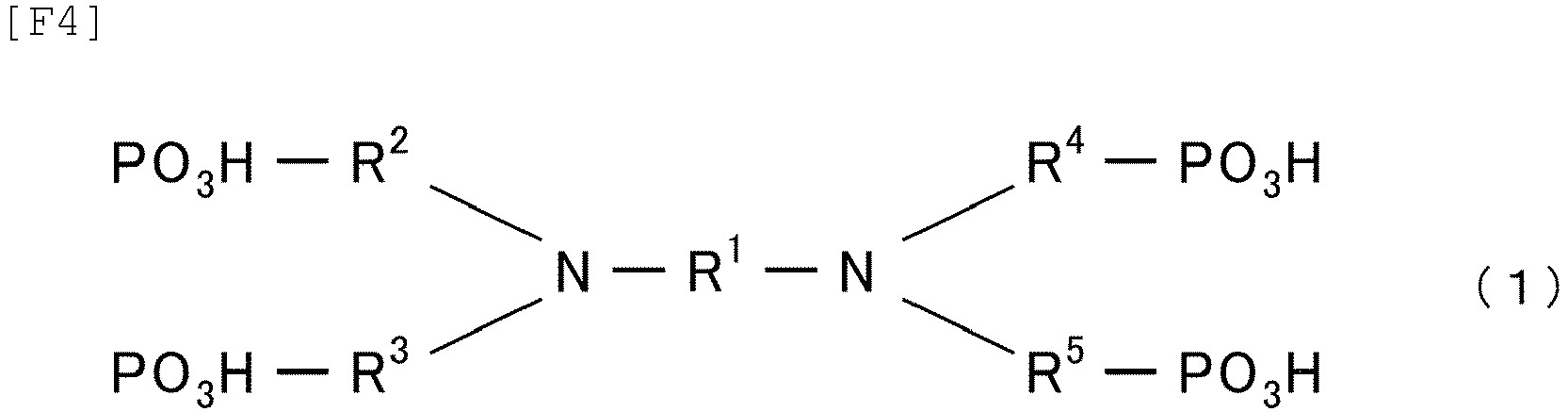
Applications Claiming Priority (2)
| Application Number | Priority Date | Filing Date | Title |
|---|---|---|---|
| JP2019010358 | 2019-01-24 | ||
| PCT/JP2020/001499 WO2020153254A1 (en) | 2019-01-24 | 2020-01-17 | Immunoglobulin purification method and immunoglobulin purification device, and immunoglobulin production method and immunoglobulin production device |
Publications (2)
| Publication Number | Publication Date |
|---|---|
| EP3916002A1 true EP3916002A1 (en) | 2021-12-01 |
| EP3916002A4 EP3916002A4 (en) | 2022-10-19 |
Family
ID=71735434
Family Applications (1)
| Application Number | Title | Priority Date | Filing Date |
|---|---|---|---|
| EP20745803.5A Pending EP3916002A4 (en) | 2019-01-24 | 2020-01-17 | IMMUNOGLOBULIN PURIFICATION METHOD AND IMMUNOGLOBULIN PURIFICATION DEVICE, IMMUNOGLOBULIN PRODUCTION METHOD AND IMMUNOGLOBULIN PRODUCTION DEVICE |
Country Status (6)
| Country | Link |
|---|---|
| US (1) | US20220119498A1 (en) |
| EP (1) | EP3916002A4 (en) |
| JP (1) | JP7090300B2 (en) |
| KR (1) | KR20210111816A (en) |
| CN (1) | CN113302198B (en) |
| WO (1) | WO2020153254A1 (en) |
Family Cites Families (3)
| Publication number | Priority date | Publication date | Assignee | Title |
|---|---|---|---|---|
| US6846410B2 (en) * | 2002-05-03 | 2005-01-25 | Zirchrom Separations, Inc. | High stability porous metal oxide spherules used for one-step antibody purifications |
| CN100486993C (en) * | 2006-11-23 | 2009-05-13 | 中国人民解放军第二军医大学 | Evolved immunoglobulin binding molecule, and its preparation method and uses |
| JP6710823B2 (en) | 2015-09-01 | 2020-06-17 | 国立研究開発法人産業技術総合研究所 | Carrier for immobilizing protein and method for producing the same |
-
2020
- 2020-01-17 JP JP2020568123A patent/JP7090300B2/en active Active
- 2020-01-17 CN CN202080009801.8A patent/CN113302198B/en active Active
- 2020-01-17 US US17/424,691 patent/US20220119498A1/en not_active Abandoned
- 2020-01-17 EP EP20745803.5A patent/EP3916002A4/en active Pending
- 2020-01-17 WO PCT/JP2020/001499 patent/WO2020153254A1/en not_active Ceased
- 2020-01-17 KR KR1020217024721A patent/KR20210111816A/en not_active Ceased
Also Published As
| Publication number | Publication date |
|---|---|
| CN113302198B (en) | 2025-04-22 |
| CN113302198A (en) | 2021-08-24 |
| EP3916002A4 (en) | 2022-10-19 |
| US20220119498A1 (en) | 2022-04-21 |
| WO2020153254A1 (en) | 2020-07-30 |
| JP7090300B2 (en) | 2022-06-24 |
| JPWO2020153254A1 (en) | 2021-10-07 |
| KR20210111816A (en) | 2021-09-13 |
Similar Documents
| Publication | Publication Date | Title |
|---|---|---|
| AU2009264282B2 (en) | A process of purifying coagulation factor VIII | |
| ES2677650T3 (en) | Methods to reduce the level of one or more impurities in a sample during protein purification | |
| AU2001273907B2 (en) | A method of producing IgG | |
| US5439591A (en) | Displacement chromatography process | |
| EP3325614B1 (en) | Methods for purifying adenovirus vectors | |
| US20090318674A1 (en) | Process for purification of antibodies | |
| JPH06107561A (en) | Preparation of intravenous compatible immunoglobulin-g-formulation | |
| EP3097118B1 (en) | A process for manufacturing factor viii having an improved ratio of fviii:c/fviii:ag | |
| KR20150023297A (en) | Selective binding of biological targets to solid phase ureides | |
| EP2958931A1 (en) | Materials and methods for removing endotoxins from protein preparations | |
| Safarik et al. | Magnetic cation exchange isolation of lysozyme from native hen egg white | |
| EP3816177A1 (en) | Method for isolating polypeptide, method for producing polypeptide, and apparatus for purifying polypeptide | |
| US20220119498A1 (en) | Immunoglobulin purification method and immunoglobulin purification device, and immunoglobulin production method and immunoglobulin production device | |
| CN116120392B (en) | Method for purifying polymer protein | |
| US20060024689A1 (en) | Process for the purification of recombinant proteins from complex media and purified proteins obtained thereby | |
| JP2003532874A (en) | Separation of sugar-containing entities | |
| EP3915940A1 (en) | Porous zirconia particles, and aggregate for immobilizing protein | |
| JP2011041475A (en) | Antibody production method | |
| WO2007112953A1 (en) | Process for the purification of recombinant alpha 1-antitrypsin involving a step of anion exchange chromatography | |
| CN120309683A (en) | A method for purifying antibodies using Protein A affinity chromatography and its application | |
| JPS61191699A (en) | Method of purifying mouse interferon | |
| JPS61234792A (en) | Purification of mouse interferon | |
| JPS61181395A (en) | Method of purifying mouse interferon | |
| ROBERTS | Integrated Capture and Recovery in Monoclonal Antibody Processing | |
| JPS61249397A (en) | Purification of mouse interferon |
Legal Events
| Date | Code | Title | Description |
|---|---|---|---|
| STAA | Information on the status of an ep patent application or granted ep patent |
Free format text: STATUS: THE INTERNATIONAL PUBLICATION HAS BEEN MADE |
|
| PUAI | Public reference made under article 153(3) epc to a published international application that has entered the european phase |
Free format text: ORIGINAL CODE: 0009012 |
|
| STAA | Information on the status of an ep patent application or granted ep patent |
Free format text: STATUS: REQUEST FOR EXAMINATION WAS MADE |
|
| 17P | Request for examination filed |
Effective date: 20210817 |
|
| AK | Designated contracting states |
Kind code of ref document: A1 Designated state(s): AL AT BE BG CH CY CZ DE DK EE ES FI FR GB GR HR HU IE IS IT LI LT LU LV MC MK MT NL NO PL PT RO RS SE SI SK SM TR |
|
| DAV | Request for validation of the european patent (deleted) | ||
| DAX | Request for extension of the european patent (deleted) | ||
| REG | Reference to a national code |
Ref country code: DE Ref legal event code: R079 Free format text: PREVIOUS MAIN CLASS: C07K0001220000 Ipc: C07K0001160000 |
|
| A4 | Supplementary search report drawn up and despatched |
Effective date: 20220919 |
|
| RIC1 | Information provided on ipc code assigned before grant |
Ipc: B01J 20/06 20060101ALI20220913BHEP Ipc: C12M 1/00 20060101ALI20220913BHEP Ipc: C07K 16/00 20060101ALI20220913BHEP Ipc: C07K 1/22 20060101ALI20220913BHEP Ipc: C07K 1/16 20060101AFI20220913BHEP |
|
| RAP3 | Party data changed (applicant data changed or rights of an application transferred) |
Owner name: NATIONAL INSTITUTE OF ADVANCED INDUSTRIAL SCIENCE AND TECHNOLOGY Owner name: NITERRA CO., LTD. |