-
The present invention concerns new inhibitors of LIMK and/or ROCK kinases, and therapeutic uses thereof. The present invention also concerns these new inhibitors as anticancer agents.
-
LIM kinases (LIMKs) are serine/threonine and tyrosine kinases involved in regulating cytoskeleton dynamics. They phosphorylate cofilin, resulting in its inhibition (Scott, R. W. and Olson, M. F. (2007) LIM kinases: function, regulation and association with human disease. Journal of molecular medicine (Berlin, Germany). 85, 555-568). Cofilin is a member of the Actin Depolymerizing Factor (ADF) family and regulates actin polymerization dynamics by promoting rapid turnover of actin filaments (Bamburg, J. R. and Bernstein, B. W. (2010) Roles of ADF/cofilin in actin polymerization and beyond. F1000 biology reports. 2, 62; Mizuno, K. (2013) Signaling mechanisms and functional roles of cofilin phosphorylation and dephosphorylation. Cellular signalling. 25, 457-469; Pollard, T. D. and Borisy, G. G. (2003) Cellular motility driven by assembly and disassembly of actin filaments. Cell. 112, 453-465). LIMKs also control microtubule dynamics, independently from their regulation of actin remodeling. The molecular mechanism by which LIMKs regulate microtubule dynamics is still unknown (Prunier, C., Prudent, R., Kapur, R., Sadoul, K. and Lafanechere, L. (2017) LIM kinases: cofilin and beyond. Oncotarget. 8, 41749-41763). LIMKs thus play a crucial role in cytoskeleton remodeling, contributing to many cellular functions, such as cell motility, morphogenesis, division, differentiation, apoptosis, neuronal morphology, neuritogenesis, and oncogenesis.
-
The LIMK family consists of only two members: LIMK1 and LIMK2. Recently, LIMKs have emerged as new therapeutic targets as they have been shown to be involved in many diseases, for example in numerous cancers, in viral infection, in ocular hypertension and glaucoma formation. They also play a role in Neurofibromatosis type 1 and 2 (NF1 and NF2). LIMKs are also involved in psoriatic lesions, in the inflammatory response, in the development of inflammatory hyperalgesia, central sensitization and chronic pain, in oocyte maturation, and in erectile dysfunction due to old age. More recently, LIMKs have been shown to play key roles in neuronal development and plasticity, they are involved in several neuronal diseases such as Amyotrophic Lateral Sclerosis, Parkinson and Alzheimer diseases, Williams-Beuren syndrome, schizophrenia, intellectual deficiency, ...
-
Rho-associated coiled-coil-containing kinases (ROCKs) are serine/threonine kinases, members of the AGC kinase family (Hartmann, S.; Ridley, A.J.; Lutz, S. The Function of Rho-Associated Kinases ROCK1 and ROCK2 in the Pathogenesis of Cardiovascular Disease. Front. Pharmacol. 2015, 6, 276). ROCKs phosphorylate several targets : 1/Myosin Light Chain (MLC) together with Myosin Light chain Phosphatase (MLCP) thereby inactivating this later and allowing MLC phosphorylation to persist (Amano, M.; Nakayama, M.; Kaibuchi, K. Rho-kinase/ROCK: A key regulator of the cytoskeleton and cell polarity. Cytoskeleton 2010, 67, 545-554). This results in actomyosin contractility stimulation and cellular contraction. 2/ LIMK2 which becomes activated and phosphorylates cofilin leading to the inactivation of this latter and actin filament stabilisation (Maekawa, M.; Ishizaki, T.; Boku, S.;Watanabe, N.; Fujita, A.; Iwamatsu, A.; Obinata, T.; Ohashi, K.; Mizuno, K.; Narumiya, S. Signaling from Rho to the actin cytoskeleton through protein kinases ROCK and LIM-kinase. Science 1999, 285, 895-898). 3/ Ezrin, radixin and moesin (ERM), which are involved in actin/plasma membrane interactions (Matsui, T.; Maeda, M.; Doi, Y.; Yonemura, S.; Amano, M.; Kaibuchi, K.; Tsukita, S.; Tsukita, S. Rho-kinase phosphorylates COOH-terminal threonines of ezrin/radixin/moesin (ERM) proteins and regulates their head-to-tail association. J. Cell Biol. 1998, 140, 647-657). 4/ Collapsin response mediator protein-2 (CRMP-2), thereby inhibiting its ability to stimulate microtubule assembly and axonal growth (Arimura, N.; Menager, C.; Fukata, Y.; Kaibuchi, K. Role of CRMP-2 in neuronal polarity. J. Neurobiol. 2004, 58, 34-47). 5/ PTEN (phosphatase and tensin homolog), a tumor suppressor thereby preventing it to inhibit cell growth and survival (Li, Z.; Dong, X.;Wang, Z.; Liu,W.; Deng, N.; Ding, Y.; Tang, L.; Hla, T.; Zeng, R.; Li, L.; et al. Regulation of PTEN by Rho small GTPases. Nat. Cell Biol. 2005, 7, 399-404).
-
Collectively, these actions play a role in actin cytoskeleton remodelling, cell contractility and cell death. Accordingly, ROCKs regulate different cellular functions such as growth, apoptosis, migration and metabolism.
-
ROCKs are involved in different pathologies: cardiac diseases such as cardiac fibrosis, cardiac hypertrophy, systemic blood pressure disorders, pulmonary hypertension, renal pathologies such as hypertensive nephropathy, Bartter and Gitelman syndrome, diabetic nephropathy, asthma, chronic obstructive pulmonary diseases, traumatic brain injuries, Alzheimer and Parkinson diseases, obesity, diabetis mellitus, cancers, autoimmune diseases (Lupus erythematosus, rhumatoid arthritis).
-
The aim of the present invention is to provide new small molecules with an inhibition activity against LIMK and/or ROCK kinases.
-
The aim of the present invention is to provide new inhibitors of LIMK and/or ROCK kinases.
-
Another aim of the present invention is to provide new inhibitors of LIMK and ROCK kinases.
-
Another aim of the present invention is to provide new potent inhibitors targeting both LIMKs and ROCKs or specific of LIMKs according to the targeted disease.
-
Another aim of the present invention is to provide new small molecules as inhibitors of LIMK and/or ROCK kinases, said molecules having a wide range of cytotoxicity, from low toxicity to high toxicity according to the potent applications.
-
Thus, the present invention relates to a compound having the following formula (I):
wherein:
- "a" is a single bond and "b" is a double bond, or "a" is a double bond and "b" is a single bond;
- R1 is selected from the group consisting of: H, (C1-C6)alkyl group, halogen, and (C3-C7)cycloalkyl group;
- R2 is selected from the group consisting of: H, and (C1-C6)alkyl group;
- or R1 and R2 may form together with the carbon atoms carrying them a (C5-C7)cycloalkyl group or a (C5-C7)heterocycloalkyl group, said heterocycloalkyl group being optionally substituted with a (C1-C6)alkyl group;
- n is 0, 1 or 2;
- each Ri, identical or different, is selected from the (C1-C6)alkyl groups;
- R is selected from the group consisting of: (C3-C7)cycloalkyl group, optionally fused with an aryl group, aryl group, heteroaryl group, heterocycloalkyl group fused with an aryl group, and aryl group fused with a heterocycloalkyl group, said aryl and heteroaryl groups being optionally substituted with at least one substituent R3 selected from the group consisting of:
- H,
- (C1-C6)alkyl, said alkyl being optionally interrupted with at least one heteroatom,
- heterocycloalkyl,
- aryl, said aryl being optionally substituted with at least one substituent such as:
- (C1-C6)alkoxy;
- NRaRb, Ra and Rb, independently from each other, being H or a (C1-C6)alkyl group;
- -X-Rc, X being a bond, a (C1-C6)alkylene group, preferably -CH2-, or -C(=O)-, and Rc being a heterocycloalkyl group, optionally substituted with at least one (C1-C6)alkyl group, SO2CH3 or (C1-C6)alkylamino group;
- halogen;
- -C(=O)-NRaRb, Ra and Rb, independently from each other, being H or a (C1-C6)alkyl group;
- -C(=O)-N(Rd)-X1-NRaRb, Rd, Ra and Rb, independently from each other, being H or a (C1-C6)alkyl group, and X1 being a (C1-C6)alkylene group, preferably CH2; or
- -O-X2-NReRf, X2 being a (C1-C6)alkylene group, Re and Rf, independently from each other, being H or a (C1-C6)alkyl group, or at least one of Re and Rf is an amino-protecting group such as Boc or comprises one fluorophore such as difluoroborane derivatives; or
- heteroaryl, said heteroaryl being optionally substituted with at least one substituent such as:
- (C1-C6)alkoxy;
- NRaRb, Ra and Rb, independently from each other, being H or a (C1-C6)alkyl group;
- -C(=O)-NRaRb, Ra and Rb, independently from each other, being H or a (C1-C6)alkyl group; or
- -NH-C(=O)-Ra, Ra being H or a (C1-C6)alkyl group;
- halogen,
- halo(C1-C6)alkyl,
- aryloxy, said aryloxy being optionally substituted with at least one substituent such as:
- (C1-C6)alkoxy;
- NRaRb, Ra and Rb, independently from each other, being H or a (C1-C6)alkyl group;
- -X-Rc, X being a bond, a (C1-C6)alkylene group, preferably -CH2-, or -C(=O)-, and Rc being a heterocycloalkyl group, optionally substituted with at least one (C1-C6)alkyl group, SO2CH3 or (C1-C6)alkylamino group;
- halogen;
-C(=O)-NRaRb, Ra and Rb, independently from each other, being H or a (C1-C6)alkyl group; or - -C(=O)-N(Rd)-X1-NRaRb, Rd, Ra and Rb, independently from each other, being H or a (C1-C6)alkyl group, and X1 being a (C1-C6)alkylene group, preferably CH2;
- -O-halo(C1-C6)alkyl,
- cyano,
- (C1-C6)alkoxy, and
- -X-NRaRb, X being selected in the group consisting of: (C1-C6)alkylene group, -O-C(=O)-, -C(=O)-, and -NH-C(=O)-, and Ra and Rb, independently from each other, being H or a (C1-C6)alkyl group;
or its pharmaceutically acceptable salts, racemates, diastereomers or enantiomers.
-
According to an embodiment, in formula (I), R is a (C3-C7)cycloalkyl group, preferably an unsubstituted cyclohexyl group.
-
According to another embodiment, in formula (I), R is an aryl group, optionally substituted with at least one substituent R3 as defined above, and is preferably an optionally substituted phenyl group as defined above.
-
According to an embodiment, when R is an aryl group, preferably a phenyl group, substituted with at least one substituted aryl group, preferably a substituted phenyl group, the following R groups may be mentioned:
-
According to an embodiment, in formula (I), R is an aryl group, preferably a phenyl group, substituted with at least one aryl group, preferably a phenyl group, substituted with a -O-X2-NReRf group as defined above.
-
Preferably, in this embodiment, the -O-X
2-NR
eR
f group is selected from the following groups: -O-X
2-NHBoc, preferably -O-(CH
2)
3-NHBoc, -O-X
2-NH-C(=O)Alkyl, preferably -O-(CH
2)
3-NH-C(=O)Me, -O-X
2-NH-SO
2-Alkyl, preferably -O-(CH
2)
3-NH-SO
2-Me, -O-X
2-NR
eR
f group wherein R
e and R
f are alkyl groups, preferably methyl, and the group having the following formula:
-
According to an embodiment, at least one of Re and Rf is an amino-protecting group such as Boc or comprises one fluorophore such as difluoroborane derivatives. As difluoroborane derivatives, the fluorophore 5,5-difluoro-1,3-dimethyl-5H-dipyrrolo[1,2-c:2',1'-f][1,3,2]diazaborinine may be mentioned.
-
According to this embodiment, the following compounds may thus be mentioned:
-
According to an embodiment, when R is an aryl group, preferably a phenyl group, substituted with at least one substituted heteroaryl group, the following R groups may be mentioned:
-
The following definitions are set forth to illustrate and define the meaning and scope of the various terms used to describe the invention herein.
-
The expression "Ct-Cz" means a carbon-based chain which can have from t to z carbon atoms, for example C1-C3 means a carbon-based chain which can have from 1 to 3 carbon atoms.
-
The term "alkyl group" means: a linear or branched, saturated, hydrocarbon-based aliphatic group comprising, unless otherwise mentioned, from 1 to 12 carbon atoms. By way of examples, mention may be made of methyl, ethyl, n-propyl, isopropyl, butyl, isobutyl, tert-butyl or pentyl groups.
-
The term "aryl group" means: a cyclic aromatic group comprising between 6 and 10 carbon atoms. By way of examples of aryl groups, mention may be made of phenyl or naphthyl groups.
-
The term "heteroaryl group" means: a 5- to 10-membered aromatic monocyclic or bicyclic group containing from 1 to 4 heteroatoms selected from O, S or N. By way of examples, mention may be made of imidazolyl, thiazolyl, oxazolyl, furanyl, thiophenyl, pyrazolyl, oxadiazolyl, tetrazolyl, pyridinyl, pyrazinyl, pyrimidinyl, pyridazinyl, indolyl, benzofuranyl, benzothiophenyl, benzoxazolyl, benzimidazolyl, indazolyl, benzothiazolyl, isobenzothiazolyl, benzotriazolyl, quinolinyl and isoquinolinyl groups.
-
By way of a heteroaryl comprising 5 to 6 atoms, including 1 to 4 nitrogen atoms, mention may in particular be made of the following representative groups: pyrrolyl, pyrazolyl, 1,2,3-triazolyl, 1,2,4-triazolyl, tetrazolyl and 1,2,3-triazinyl.
-
Mention may also be made, by way of heteroaryl, of thiophenyl, oxazolyl, furazanyl, 1,2,4-thiadiazolyl, naphthyridinyl, quinoxalinyl, phthalazinyl, imidazo[1,2-a]pyridine, imidazo[2,1-b]thiazolyl, cinnolinyl, benzofurazanyl, azaindolyl, benzimidazolyl, benzothiophenyl, thienopyridyl, thienopyrimidinyl, pyrrolopyridyl, imidazopyridyl, benzoazaindole, 1,2,4-triazinyl, indolizinyl, isoxazolyl, isoquinolinyl, isothiazolyl, purinyl, quinazolinyl, quinolinyl, isoquinolyl, 1,3,4-thiadiazolyl, thiazolyl, isothiazolyl, carbazolyl, and also the corresponding groups resulting from their fusion or from fusion with the phenyl nucleus.
-
The term "heterocycloalkyl group" means: a 4- to 10-membered, saturated or partially unsaturated, monocyclic or bicyclic group comprising from one to three heteroatoms selected from O, S or N; the heterocycloalkyl group may be attached to the rest of the molecule via a carbon atom or via a heteroatom; the term bicyclic heterocycloalkyl includes fused bicycles and spiro-type rings.
-
By way of saturated heterocycloalkyl comprising from 5 to 6 atoms, mention may be made of oxetanyl, tetrahydrofuranyl, dioxolanyl, pyrrolidinyl, azepinyl, oxazepinyl, pyrazolidinyl, imidazolidinyl, tetrahydrothiophenyl, dithiolanyl, thiazolidinyl, tetrahydropyranyl, tetrahydropyridinyl, dioxanyl, morpholinyl, piperidinyl, piperazinyl, tetrahydrothiopyranyl, dithianyl, thiomorpholinyl or isoxazolidinyl.
-
Among the heterocycloalkyls, mention may also be made, by way of examples, of bicyclic groups such as (8aR)-hexahydropyrrolo[1,2-a]pyrazin-2(1H)-yl, octahydroindozilinyl, diazepanyl, dihydroimidazopyrazinyl and diazabicycloheptanyl groups, or else diazaspiro rings such as 1,7-diazaspiro[4.4]non-7-yl or 1-ethyl-1,7-diazaspiro[4.4]non-7-yl.
-
When the heterocycloalkyl is substituted, the substitution(s) may be on one (or more) carbon atom(s) and/or on the heteroatom(s). When the heterocycloalkyl comprises several substituents, they may be borne by one and the same atom or different atoms.
-
The term "cycloalkyl group" means: a cyclic carbon-based group comprising, unless otherwise mentioned, from 3 to 6 carbon atoms. By way of examples, mention may be made of cyclopropyl, cyclobutyl, cyclopentyl, cyclohexyl, etc. groups.
-
When an alkyl radical is substituted with an aryl group, the term "arylalkyl" or "aralkyl" radical is used. The "arylalkyl" or "aralkyl" radicals are aryl-alkyl- radicals, the aryl and alkyl groups being as defined above. Among the arylalkyl radicals, mention may in particular be made of the benzyl or phenethyl radicals.
-
The term "halogen" means: a fluorine, a chlorine, a bromine or an iodine.
-
The term "alkoxy group" means: an -O-alkyl radical where the alkyl group is as previously defined. By way of examples, mention may be made of -O-(C1-C4)alkyl groups, and in particular the -O-methyl group, the -O-ethyl group as -O-C3alkyl group, the -O-propyl group, the -O-isopropyl group, and as -O-C4alkyl group, the -O-butyl, -O-isobutyl or -O-tert-butyl group.
-
The abovementioned "alkyl", "cycloalkyl", "aryl", "heteroaryl" and "heterocycloalkyl" radicals can be substituted with one or more substituents. Among these substituents, mention may be made of the following groups: amino, hydroxyl, thiol, oxo, halogen, alkyl, alkoxy, alkylthio, alkylamino, aryloxy, arylalkoxy, cyano, trifluoromethyl, carboxy or carboxyalkyl.
-
The term "alkylthio" means: an -S-alkyl group, the alkyl group being as defined above.
-
The term "alkylamino" means: an -NH-alkyl group, the alkyl group being as defined above.
-
The term "aryloxy" means: an -O-aryl group, the aryl group being as defined above.
-
The term "arylalkoxy" means: an aryl-alkoxy- group, the aryl and alkoxy groups being as defined above.
-
The term "carboxyalkyl" means: an HOOC-alkyl- group, the alkyl group being as defined above. As examples of carboxyalkyl groups, mention may in particular be made of carboxymethyl or carboxyethyl.
-
The term "haloalkyl group" means: an alkyl group as defined above, in which one or more of the hydrogen atoms is (are) replaced with a halogen atom. By way of example, mention may be made of fluoroalkyls, in particular CF3 or CHF2.
-
The term "carboxyl" means: a COOH group.
-
The term "oxo" means: "=O".
-
In some embodiments of the invention, the compounds of the invention can contain one or more asymmetric centers and thus occur as racemates and racemic mixtures, single enantiomers, individual diastereoisomeric mixtures. All such isomeric forms of these compounds are included in the present invention, unless expressly provided otherwise.
-
In some embodiments, the compounds of the invention can contain one or more double bonds and thus occur as individual or mixtures of Z and/or E isomers. All such isomeric forms of these compounds are included in the present invention, unless expressly provided otherwise.
-
In the embodiments where the compounds of the invention can contain multiple tautomeric forms, the present invention also includes all tautomeric forms of said compounds unless expressly provided otherwise.
-
A preferred family of compounds according to the invention are compounds having the following formula (II):
wherein:
- a, b, n, Ri, R1, and R2 are as defined above in formula (I), and
- m is 1 or 2, and each R3, identical or different, is as defined above in formula (I).
-
Compounds of formula (II) are compounds of formula (l) wherein R is a phenyl group, substituted with at least one R3 group.
-
A preferred family of compounds according to the invention are compounds having the following formula (III):
wherein:
- a, b, n, Ri, R1, R2, and R3 are as defined above in formula (I), and
- R4 is H, halogen or aryloxy.
-
A preferred family of compounds according to the invention are compounds having the following formula (IV):
wherein:
- R1 is H or (C1-C6)alkyl group;
- R3 is selected from the group consisting of:
- H,
- C1-C6)alkyl,
- aryl, preferably phenyl, said aryl being optionally substituted with at least one substituent such as (C1-C6)alkoxy, in particular OMe, or halogen such as F,
- heteroaryl, such as pyridinyl, imidazolyl, pyrrolyl or triazolyl,
- halogen, such as F, Cl, or Br,
- halo(C1-C6)alkyl, such as CF3,
- aryloxy, in particular phenyloxy, said aryloxy being optionally substituted with at least one substituent such as (C1-C6)alkoxy, preferably OMe,
- -O-halo(C1-C6)alkyl, such as OCF3,
- cyano,
- (C1-C6)alkoxy, such as OMe, and
- -O-C(=O)-NRaRb, Ra and Rb, independently from each other, being H or a (C1-C6)alkyl group; and
- R4 is H, halogen or aryloxy, such as phenyloxy,
or R3 and R4 form together with the carbon atoms carrying them a phenyl group or a heterocycloalkyl group comprising preferably 2 oxygen atoms and 3 carbon atoms.
-
Preferably, in formula (IV), R1 is methyl.
-
Preferred compounds of formula (IV) are the followings:
-
A preferred family of compounds according to the invention are compounds having the following formula (V):
wherein:
- "a" is a single bond and "b" is a double bond, or "a" is a double bond and "b" is a single bond;
- R1 is (C1-C6)alkyl group, preferably methyl;
- R5 is (C1-C6)alkyl group, preferably methyl;
- R6 is H or (C1-C6)alkyl group, preferably methyl;
- R3 is selected from the group consisting of:
- halogen, such as F, Cl, or Br, and
- aryloxy, in particular phenyloxy.
-
Preferably, in formula (V), R1 is methyl.
-
Preferred compounds of formula (V) are the followings:
-
A preferred family of compounds according to the invention are compounds having the following formula (VI):
wherein R
3 is halogen.
-
A preferred compound of formula (VI) is the following:
-
A preferred family of compounds according to the invention are compounds having the following formula (VII):
wherein:
- R1 is halogen, preferably Cl; and
- R3 is -O-C(=O)-NRaRb, Ra and Rb, independently from each other, being H or a (C1-C6)alkyl group.
-
A preferred compound of formula (VII) is the following:
-
A preferred family of compounds according to the invention are compounds having the following formula (VIII):
wherein:
- R1 is (C3-C7)cycloalkyl group, preferably cyclopropyl;
- R3 is selected from the group consisting of:
- aryl, preferably phenyl, said aryl being optionally substituted with at least one substituent such as (C1-C6)alkoxy, in particular OMe,
- heteroaryl, such as pyrrolyl,
- halogen, such as F, Cl, or Br,
- aryloxy, in particular phenyloxy, said aryloxy being optionally substituted with at least one substituent such as (C1-C6)alkoxy, preferably OMe, and
- -O-C(=O)-NRaRb, Ra and Rb, independently from each other, being H or a (C1-C6)alkyl group.
-
Preferably, in formula (VIII), R1 is cyclopropyl.
-
Preferred compounds of formula (VIII) are the followings:
-
A preferred family of compounds according to the invention are compounds having the following formula (IX):
wherein:
- R1 is (C1-C6)alkyl group, preferably methyl;
- R2 is (C1-C6)alkyl group, preferably methyl;
- R3 is selected from the group consisting of:
- H,
- aryl, preferably phenyl, said aryl being optionally substituted with at least one substituent such as (C1-C6)alkoxy, in particular OMe,
- halogen, such as F, Cl, or Br,
- (C1-C6)alkoxy, such as OMe, and
- -O-C(=O)-NRaRb, Ra and Rb, independently from each other, being H or a (C1-C6)alkyl group.
-
Preferably, in formula (IX), R1 and R2 are identical. More preferably, they are methyl.
-
Preferred compounds of formula (IX) are the followings:
-
A preferred family of compounds according to the invention are compounds having the following formula (X):
wherein:
- p is 0, 1, or 2;
- R3 is selected from the group consisting of:
- H,
- (C1-C6)alkyl, said alkyl being optionally interrupted with at least one heteroatom,
- heterocycloalkyl, such as morpholinyl,
- aryl, preferably phenyl, said aryl being optionally substituted with at least one substituent such as (C1-C6)alkoxy,
- heteroaryl, such as pyridinyl,
- halogen,
- aryloxy,
- halo(C1-C6)alkyl,
- cyano,
- (C1-C6)alkoxy, and
- -X-NRaRb, X being selected in the group consisting of: (C1-C6)alkylene group, -O-C(=O)-, -C(=O)-, and -NH-C(=O)-, and Ra and Rb, independently from each other, being H or a (C1-C6)alkyl group.
-
Preferred compounds of formula (X) are the followings:
-
A preferred family of compounds according to the invention are compounds having the following formula (XI):
wherein:
- X1 is -O-, -S-, or -N((C1-C6)alkyl)-, such as -N(Me)-; and
- R3 is halogen.
-
Preferred compounds of formula (XI) are the followings:
-
A preferred family of compounds according to the invention are compounds having the following formula (XII):
wherein R
1 and R
2 are as defined above in formula (I).
-
Preferably, in formula (XII), R1 is a (C1-C6)alkyl group, such as methyl or ethyl, or a (C3-C7)cycloalkyl group, such as cyclopropyl.
-
Preferably, in formula (XII), R2 is H or a (C1-C6)alkyl group, such as a ethyl.
-
Preferred compounds of formula (XII) are the followings:
-
A preferred family of compounds according to the invention are compounds having the following formula (XIII):
wherein R
1 and R
2 are as defined above in formula (I).
-
Preferably, in formula (XIII), R1 is a (C1-C6)alkyl group, such as methyl or ethyl, or a (C3-C7)cycloalkyl group, such as cyclopropyl.
-
Preferably, in formula (XIII), R2 is H or a (C1-C6)alkyl group, such as a ethyl.
-
Preferred compounds of formula (XIII) are the followings:
-
The present invention also relates to a medicament comprising a compound of formula (l) as defined above, or a pharmaceutically acceptable salt thereof.
-
The present invention also relates to a medicament comprising a compound of formula (II), (III), (IV), (V), (VI), (VII), (VIII), (IX), (X), (XI), (XII) or (XIII) as defined above, or a pharmaceutically acceptable salt thereof.
-
The present invention also relates to a pharmaceutical composition, comprising a compound of formula (I) as defined above, or a pharmaceutically acceptable salt thereof, and also at least one pharmaceutically acceptable excipient.
-
The present invention also relates to a pharmaceutical composition, comprising a compound of formula (II), (III), (IV), (V), (VI), (VII), (VIII), (IX), (X), (XI), (XII) or (XIII) as defined above, or a pharmaceutically acceptable salt thereof, and also at least one pharmaceutically acceptable excipient.
-
Said excipients are selected, according to the pharmaceutical form and the mode of administration desired, from the usual excipients which are known to those skilled in the art.
-
The present invention relates to a compound of formula (l) as defined above, or an addition salt of this compound with a pharmaceutically acceptable acid, for use as a medicine.
-
The present invention relates to a compound of formula (l) as defined above, or a pharmaceutically acceptable salt of this compound, for use as a drug.
-
The present invention also relates to a compound of formula (l) as defined above, or of formula (II), (III), (IV), (V), (VI), (VII), (VIII), (IX), (X), (XI), (XII) or (XIII) as defined above, for use in treating a condition selected in the group consisting of: cancers, such as breast, lung, pancreas, prostate, colorectal cancers, leukemias, glioma, melanoma and osteosarcoma, virion infections (HIV, Ebola and Herpes virus...), ocular hypertension and glaucoma formation, Neurofibromatosis type 1 and 2 (NF1 and NF2), psoriatic lesions, inflammatory diseases and hyperalgesia, central sensitization and chronic pain, reproduction (oocyte maturation) erectile dysfunction, and neuronal diseases such as Amyotrophic Lateral Sclerosis, Parkinson and Alzheimer diseases, Williams-Beuren syndrome, schizophrenia, and intellectual deficiency.
-
The present invention also relates to a compound of formula (I) as defined above, or of formula (II), (III), (IV), (V), (VI), (VII), (VIII), (IX), (X), (XI), (XII) or (XIII) as defined above, for use in treating cancer.
-
The present invention also relates to a method for treating the pathological conditions indicated above, which comprises the administration, to a patient, of an effective dose of a compound according to the invention, or a pharmaceutically acceptable salt thereof.
-
The compounds of the invention may thus be used for treating several pathologies involved in regulating cytoskeleton dynamics cytoskeleton remodeling, cell motility, morphogenesis, division, differentiation, apoptosis, neuronal morphology, neuritogenesis, and oncogenesis.
-
This includes: cancers, such as breast, lung, pancreas, prostate, colorectal cancers, leukemias, glioma, melanoma and osteosarcoma, virion infections (HIV, Ebola and Herpes virus...), ocular hypertension and glaucoma formation, Neurofibromatosis type 1 and 2 (NF1 and NF2), psoriatic lesions, inflammatory diseases and hyperalgesia, central sensitization and chronic pain, reproduction (oocyte maturation) erectile dysfunction, and neuronal diseases such as Amyotrophic Lateral Sclerosis, Parkinson and Alzheimer diseases, Williams-Beuren syndrome, schizophrenia, intellectual deficiency.
-
In the pharmaceutical compositions of the present invention for oral, sublingual, subcutaneous, intramuscular, intravenous, topical, local, intratracheal, intranasal, transdermal or rectal administration, the active ingredient of formula (I), above, or the salt thereof, can be administered in unit administration form, as a mixture with conventional pharmaceutical excipients, to animals and to human beings for the treatment of the disorders and diseases as mentioned above.
-
The suitable unit administration forms include oral forms such as tablets, soft or hard gel capsules, powders, granules and oral solutions or suspensions, sublingual, buccal, intratracheal, intraocular and intranasal administration forms, forms for administration by inhalation, topical, transdermal, subcutaneous, intramuscular or intravenous administration forms, rectal administration forms, and implants. For topical application, the compounds according to the invention can be used in creams, gels, ointments or lotions.
-
According to the usual practice, the dosage suitable for each patient is determined by the physician according to the mode of administration and the weight and response of said patient.
EXAMPLES
CHEMICAL SYNTHESIS
General Procedure A: Hydrazone formation
-
To a suspension of 4-hydroxy-6-hydrazinylpyrimidine (1.0 equiv.) in EtOH (0.5 M) was added the corresponding ketone (1.5 equiv.). The reaction was refluxed for 3 h and then cooled to 0°C. The solid was collected by filtration, washed with Et2O and dried under high vacuum to afford the desired product.
General Procedure B: Fischer synthesis
-
A suspension of hydrazone (1.0 equiv.) in tetraline (0.25 M) was heated to 260°C in a sealed tube for 3 h. The reaction mixture was cooled to room temperature. The solid was collected by filtration, washed with petroleum ether and Et2O several times and dried under high vacuum to afford the desired product.
General Procedure C: Chlorination
-
A solution of the tricyclic compound (1.0 equiv.) in POCl3 (0.15 M) was heated at 100°C for 1 h. Excess POCl3 was removed under vacuum and the resulting dark slurry was suspended in CH2Cl2 and poured into an ice-bath. The mixture was stirred for 1 h and extracted with CH2Cl2. The organic layers were dried over MgSO4, filtered and concentrated under vacuum. The residue was purified by silica gel column chromatography to afford the desired product.
General Procedure D: Suzuki-Miyaura cross-coupling
-
To a solution of the chlorinated heterocycle (1.0 equiv.) in THF (0.25 M) were added boronate ester (1.1 equiv.) followed by a 2 M aqueous solution of Na2CO3 (3.0 equiv.). The solution was degassed for 20 minutes with Argon and Pd(PPh3)4 (0.1 equiv.) was added. The mixture was then heated under microwave irradiation at 120°C for 1.5 h, cooled and extracted with CH2Cl2. The organic layers were dried over MgSO4, filtered and concentrated under vacuum. The residue was purified by silica gel column chromatography to afford the desired product.
General Procedure E: Hydrogenation
-
Pd/C (10% wt) (0.05 equiv.) was added to a solution of N-protected compound (1.0 equiv.) in MeOH (0.06 M). The reaction was stirred under H2 pressure until completion. The mixture was filtered through a pad of celite which was rinsed several times with MeOH. The MeOH was evaporated under reduced pressure and the crude reaction mixture was used in the next step without further purification.
General Procedure F1: Boc deprotection, free amine
-
To a solution of the N-Boc protected compound (1.0 equiv.) in CH2Cl2 (0.04 M) at 0°C was slowly added TFA (35.0 equiv.) (CH2Cl2/TFA 10/1). The mixture was allowed to reach room temperature and stirred until completion (TLC monitoring). The solvent was then removed under reduced pressure. The residue was taken up in CH2Cl2 and a 2 M aqueous solution of NaOH was added. The mixture was stirred for 30 min and extracted with CH2Cl2. The combined organic layers were dried over MgSO4, filtered and concentrated under vacuum to afford the desired product.
General Procedure F2: Boc deprotection (amine TFA salt)
-
To a solution of N-Boc protected compound (1.0 equiv.) in CH2Cl2 (0.04 M) at 0°C was slowly added TFA (35.0 equiv.). The mixture was allowed to reach room temperature and stirred until completion (TLC monitoring). The solvent was then removed under reduced pressure and the residue was co-evaporated 3 times with Et2O. The resulting solid was taken up in Et2O, filtered, washed with Et2O and pentane and dried at 60°C under vacuum to afford the desired amine as a TFA salt.
General Procedure G: Urea synthesis using isocyanates
-
To a solution of the desired amine (1.0 equiv.) in anhydrous CH2Cl2 (0.07 M) under argon was added DIPEA (3.0 equiv.). The solution was cooled to 0°C and the corresponding isocyanate (1.1 equiv.) was added. The mixture was stirred at this temperature until completion (TLC monitoring). The solvent was then removed under reduced pressure and the residue was purified by silica gel column chromatography to afford the desired product.
General Procedure H: Urea synthesis using 4-nitrophenyl chloroformate
-
To a solution of the desired aniline (1.0 equiv.) in THF (0.07 M) at 0°C was added DIPEA (1.1 to 2.1 equiv.) and 4-nitrophenyl chloroformate (1.2 equiv.). The mixture was stirred at 0°C until total disappearance of the starting material (TLC monitoring). Then, the second amine (free or as a salt derivative) (1.2 equiv.) and DIPEA (2.1 equiv.) were added and the reaction mixture was stirred at 50°C until completion (TLC monitoring). The solvent was removed under reduced pressure and the residue was purified by silica gel column chromatography to afford the desired product.
General Procedure I: Urea synthesis using Curtius rearrangement
-
To a solution of acid (1.0 equiv.) was added Et3N (1.2 equiv.) in THF (0.05 M) at 0°C. Ethyl chloroformate (1.5 equiv.) was added and the reaction was stirred for 1 h at 0°C (TLC monitoring). A solution of NaN3 (1.5 equiv.) in H2O was then added at 0°C and stirred for 1.5 h (TLC monitoring). The reaction was quenched with ice and quickly extracted with EtOAc, dried with MgSO4, filtered and the solvent was removed under reduced pressure without heating. The acylazide was dissolved in toluene (0.05 M) and stirred for 1 h at reflux. Toluene was removed under reduced pressure. To this freshly prepared isocyanate was added a solution of amine (1.0 equiv.) and DIPEA (2.2 equiv.) in anhydrous CH2Cl2 at 0°C. The mixture was stirred at this temperature until completion (TLC monitoring). The solvent was then removed under reduced pressure and the residue was purified by silica gel column chromatography to afford the desired product.
General Procedure J: Boc deprotection (amine HCl salt)
-
Hydrochloric acid (4M HCl solution in dioxane, 18 equiv.) was slowly added to a solution of the N-Boc protected compound (1.0 equiv.) in dioxane (0.11 M) at 0°C. The mixture was allowed to reach room temperature and stirred until completion (TLC monitoring). Diethyl ether was added to precipitate the amine salt which was filtered and washed with Et2O then dried at 60°C under vacuum to afford the desired amine as an HCl salt.
General Procedure K: modified Fisher Synthesis
-
A suspension of hydrazone (1.0 equiv.) in diphenylether (0.22 M) was degassed for 20 minutes with Ar and then heated to reflux for 3 h. After cooling to room temperature the solid was filtered, washed several times with Et2O then dried at 60°C under vacuum to afford the desired product.
FAMILY 1.
3-methyl pyrolopyrimidine derivatives
-
5-Methyl-7H-pyrrolo[2,3-d]pyrimidin-4-ol (1)
-
To a solution of LiOH (3.5 g, 147.7 mmol, 1.5 equiv.) in anhydrous MeOH (120 mL) was added cyanoacetamide (12.4 g, 147.7 mmol, 1.5 equiv.) under argon. This solution was stirred 20 min and addition of a solution of phtalimidoacetone in anhydrous THF (140 mL) was performed over 30 min. The reaction mixture was then stirred 2 h at room temperature and 1 h at 55°C. A sodium methoxide (NaOMe) solution (25% in methanol, 31.6 mL, 147.7 mmol, 1.5 equiv.) was added dropwise at 55°C and the mixture was stirred 3 h. Ethyl formate (HCOOEt, 39.7 mL, 492.2 mmol, 5.0 equiv.) followed by NaOMe solution (25% in methanol, 63.2 mL, 295.3 mmol, 3.0 equiv.) were then added and the reaction mixture was stirred at 55°C overnight. After cooling, the reaction mixture was diluted with water (500 mL), heated at 60°C for 1 h, and then concentrated under reduced pressure to small volume (≈ 500 mL). The resulting solution was slowly acidified to pH = 7 with a 6 N aqueous HCl solution, cooled to about 5°C and stirred at this temperature for 30 min. The solid was filtered, washed with water (100 mL) and dried at 50°C under vacuum overnight to afford compound 1 (8.65 g, 59%) as a light brown solid. 1H NMR (250 MHz, DMSO-d6 ) δ 11.50 (br s, 2H, 2 x NH), 7.73 (s, 1H, CH), 6.75 - 6.72 (m, 1H, CH), 2.26 (d, J = 1.1 Hz, 3H, CH3). Org. Process Res. Dev. 2007, 11 (1), 86-89.
4-Chloro-5-methyl-7H-pyrrolo[2,3-d]pyrimidine (2)
-
The hydroxy compound 1 (2.0 g, 13.4 mmol) was dissolved in POCl3 (50 mL) and stirred at reflux for 1.5 h. After cooling, the mixture was slowly poured into a vigorously stirred ice-water bath and stirred for 30 min. The mixture was carefully neutralized to pH 7 with solid NaOH. Then, the mixture was extracted with CH2Cl2 (3 x 150 mL). The combined organic layers were dried over MgSO4, filtered and concentrated under reduced pressure. The residue was purified by flash silica gel column chromatography using a gradient solvent system of PE/EtOAc from 100/0 up to 70/30. Finally the product was precipitated in a mixture of acetone/PE to 2 (3.6 g, 81 %) as a beige solid. 1H NMR (250 MHz, CDCl3) δ 9.49 (br s, 1H, NH), 8.60 (s, 1H, CH), 7.11 (dd, J = 2.3 Hz, J = 1.2 Hz, 1H, CH), 2.50 (d, J = 1.2 Hz, 3H, CH3). West, R. A. J. Org. Chem. 1961, 26, 4959-4961.
tert-Butyl 4-(5-methyl-7H-pyrrolo[2,3-d]pyrimidin-4-yl)-3,6-dihydro pyridine-1(2H)-carboxylate (3)
-
The reaction was carried out as described in general procedure D using the chlorinated bicycle 2 (0.50 g, 2.99 mmol), N-Boc-1,2,3,6-tetrahydropyridine-4-boronic acid pinacol ester (1.02 g, 3.29 mmol, 1.1 equiv.), Pd(PPh3)4 (0.35 g, 0.30 mmol, 0.1 equiv.) in THF (12 mL) and a 2 M solution of Na2CO3 (4.5 mL, 8.98 mmol, 3.0 equiv.). The crude reaction mixture was purified by silica gel column chromatography using a gradient solvent system of CH2Cl2/acetone from 90/10 up to 60/40 to afford compound 3 (0.63 g, 67%) as a beige solid. Rf (CH2Cl2/acetone 60/40) 0.33. Mp: 190 - 192°C..1H NMR (250 MHz, CDCl3) δ 10.40 (br s, 1H, NH), 8.81 (s, 1H, CH), 7.12 (s, 1H, CH), 6.06 - 5.87 (m, 1H, CH), 4.24 - 4.09 (m, 2H, CH2), 3.72 (t, J = 5.6 Hz, 2H, CH2), 2.77 - 2.65 (m, 2H, CH2), 2.29 (d, J = 1.1 Hz, 3H, CH3), 1.51 (s, 9H, 3 x CH3). HRMS (EI-MS) m/z calcd for C17H23N4O2 [M+H]+: 315.1816, found: 315.1814.
5-Methyl-4-(1,2,3,6-tetrahydropyridin-4-yl)-7H-pyrrolo[2,3-d]pyrimidine dihydrochloride (4)
-
To a solution of the N-Boc protected compound 3 (1.68 g, 5.35 mmol) in 1,4-dioxane (5 mL) at 0°C was added a 4 M solution of HCl in 1,4-dioxane (20 mL, 80.0 mmol, 15.0 equiv.). The reaction mixture was stirred for 1 hour at room temperature. After completion, Et2O (200 mL) was added and the resulting precipitate was filtered and washed with Et2O (3 x 30 mL) to afford compound 4 (1.47 g, 96 %) as a beige solid. Mp: > 260°C. 1H NMR (400 MHz, DMSO-d6 ) δ 13.23 (br s, 1H, NH), 9.94 (br s, 2H, NH + H+), 8.98 (s, 1H, CH), 7.73 (s, 1H, CH), 6.39 - 6.28 (m, 1H, CH), 4.48 - 4.11 (m, 1H, H+), 3.91 - 3.81 (m, 2H, CH2), 3.41 - 3.30 (m, 2H, CH2), 2.98 - 2.88 (m, 2H, CH2), 2.31 (d, J = 1.2 Hz, 3H, CH3). HRMS (EI-MS) m/z calcd for C12H15N4 [M+H]+: 215.1291, found: 215.1295.
SUBFAMILY 1.1.
3-methyl pyrolopyrimidine derivatives with an unsubstituted hydropyridine
-
| Compound |
General Procedure |
Yield (%) |
R |
|
5
|
G |
80 |
|
|
6
|
G |
60 |
|
|
7
|
G |
47 |
|
|
8
|
G |
70 |
|
|
9
|
G |
46 |
|
|
10
|
G |
76 |
|
|
11
|
G |
72 |
|
|
12
|
G |
47 |
|
|
13
|
G |
60 |
|
|
14
|
G |
35 |
|
|
15
|
G |
49 |
|
|
16
|
G |
85 |
|
|
17
|
I |
34 |
|
|
18
|
I |
15 |
|
|
19
|
I |
49 |
|
|
20
|
H |
58 |
|
|
21
|
H |
70 |
|
|
22
|
H |
57 |
|
|
24
|
H |
45 |
|
|
26
|
H |
63 |
|
|
28
|
H |
55 |
|
|
29
|
H |
72 |
|
|
30
|
H |
78 |
|
|
31
|
H |
72 |
|
|
32
|
H |
60 |
|
|
33
|
G |
54 |
|
|
34-rac
|
H |
63 |
|
|
35-R
|
H |
60 |
|
|
40
|
H |
40 |
|
|
42
|
H |
42 |
|
Example 1: 4-(5-Methyl-7H-pyrrolo[2,3-d]pyrimidin-4-yl)-N-phenyl-3,6-dihydropyridine-1(2H)-carboxamide (5)
-
The reaction was carried out as described in general procedure G using amine 4 (70 mg, 0.24 mmol) in anhydrous CH2Cl2 (4 mL). The crude reaction mixture was purified by silica gel column chromatography using a gradient solvent system of CH2Cl2/acetone from 100/0 up to 40/60 to afford compound 5 (64 mg, 80 %) as an off-white solid. R f (CH2Cl2/acetone 30/70) 0.35. Mp: 245 - 247°C. 1H NMR (250 MHz, MeOD-d4) δ 8.63 (s, 1H, CH), 7.45 - 7.36 (m, 2H, 2 x CH), 7.33 - 7.24 (m, 2H, 2 x CH), 7.23 (d, J = 1.3 Hz, 1H, CH), 7.09 - 6.98 (m, 1H, CH), 6.08 - 6.00 (m, 1H, CH), 4.29 (q, J = 2.8 Hz, 2H, CH2), 3.84 (t, J = 5.6 Hz, 2H, CH2), 2.80 - 2.68 (m, 2H, CH2), 2.30 (d, J = 1.2 Hz, 3H, CH3). HRMS (EI-MS) m/z calcd for C19H20N5O [M+H]+: 334.1662, found: 334.1661.
Example 2: N-(3-Fluorophenyl)-4-(5-methyl-7H-pyrrolo[2,3-d]pyrimidin-4-yl)-3,6-dihydropyridine-1(2H)-carboxamide (6)
-
The reaction was carried out as described in general procedure G using amine 4 (70 mg, 0.24 mmol) in anhydrous CH2Cl2 (4 mL). The crude reaction mixture was purified by silica gel column chromatography using a gradient solvent system of CH2Cl2/acetone from 90/10 up to 60/40 to afford compound 65 6 (51 mg, 60%) as an off-white solid. R f (CH2Cl2/acetone 70/30) 0.28. Mp: 241-243°C. 1H NMR (400 MHz, DMSO-d6) δ 11.83 (br s, 1H, NH), 8.79 (br s, 1H, NH), 8.65 (s, 1H, CH), 7.49 (d, J = 12.4 Hz, 1H, CH), 7.38 - 7.23 (m, 3H, 3 x CH), 6.86 - 6.66 (m, 1H, CH), 6.05 (s, 1H, CH), 4.34 - 4.10 (m, 2H, CH2), 3.81 - 3.69 (m, 2H, CH2), 2.74 - 2.64 (m, 2H, CH2), 2.23 (s, 3H, CH3). 19F NMR (376 MHz, DMSO-d6) δ -112.7 - -113.0 (m). HRMS (EI-MS) m/z calcd for C19H19FN5O [M+H]+: 352.1568, found: 352.1570.
Example 3: N-(3-Chlorophenyl)-4-(5-methyl-7H-pyrrolo[2,3-d]pyrimidin-4-yl)-3,6-dihydropyridine-1(2H)-carboxamide (7)
-
The reaction was carried out as described in general procedure G using amine 4 (70 mg, 0.24 mmol) in anhydrous CH2Cl2 (4 mL). The crude reaction mixture was purified by silica gel column chromatography using a gradient solvent system of CH2Cl2/acetone from 90/10 up to 60/40 to afford compound 7 (42 mg, 47 %) as an off-white solid. R f (CH2Cl2/acetone 70/30) 0.29. Mp: 232 - 234°C. 1H NMR (400 MHz, DMSO-d6) δ 11.84 (br s, 1H, NH), 8.77 (br s, 1H, NH), 8.65 (s, 1H, CH), 7.70 (t, J = 2.1 Hz, 1H, CH), 7.45 (dd, J = 8.2 Hz, J = 2.0 Hz, 1H, CH), 7.32 (s, 1H, CH), 7.27 (t, J = 8.1 Hz, 1H, CH), 6.99 (dd, J = 8.0 Hz, J = 2.1 Hz, 1H, CH), 6.09 - 6.01 (m, 1H, CH), 4.26-4.19 (m, 2H, CH2), 3.74 (t, J = 5.6 Hz, 2H, CH2), 2.73 - 2.61 (m, 2H, CH2), 2.24 (s, 3H, CH3). HRMS (EI-MS) m/z calcd for C19H19ClN5O [M+H]+: 368.1273, found: 368.1275.
Example 4: N-(3-Bromophenyl)-4-(5-methyl-7H-pyrrolo[2,3-d]pyrimidin-4-yl)-3,6-dihydropyridine-1(2H)-carboxamide (8)
-
The reaction was carried out as described in general procedure G using amine 4 (70 mg, 0.24 mmol) in anhydrous CH2Cl2 (4 mL). The crude reaction mixture was purified by silica gel column chromatography using a gradient solvent system of CH2Cl2/acetone from 90/10 up to 60/40 to afford compound 8 (69 mg, 70 %) as a white solid. R f (CH2Cl2/acetone 70/30) 0.28. Mp: 223 - 225°C. 1H NMR (400 MHz, DMSO-d6) δ 11.82 (br s, 1H, NH), 8.75 (br s, 1H, NH), 8.65 (s, 1H, CH), 7.83 (s, 1H, CH), 7.50 (d, J= 8.3 Hz, 1H, CH), 7.31 (s, 1H, CH), 7.21 (t, J = 8.0 Hz, 1H, CH), 7.12 (d, J = 8.0 Hz, 1H, CH), 6.05 (s, 1H, 4.30 - 4.13 (m, 2H, CH2), 3.73 (t, J = 5.6 Hz, 2H, CH2), 2.75 - 2.62 (m, 2H, CH2), 2.23 (s, 3H, CH3). HRMS (EI-MS) m/z calcd for C19H19BrN5O [M+H]+: 412.0767, found: 412.0766.
Example 5: N-(3-Methoxyphenyl)-4-(5-methyl-7H-pyrrolo[2,3-d]pyrimidin-4-yl)-3,6-dihydropyridine-1(2H)-carboxamide (9)
-
The reaction was carried out as described in general procedure G using amine 4 (70 mg, 0.24 mmol) in anhydrous CH2Cl2 (4 mL). The crude reaction mixture was purified by silica gel column chromatography using a gradient solvent system of CH2Cl2/acetone from 90/10 up to 60/40 to afford compound 9 (40 mg, 46 %) as a white solid. R f (CH2Cl2/acetone 70/30) 0.30. Mp: 212 - 214°C. 1H NMR (400 MHz, DMSO-d6 ) δ 11.82 (br s, 1H, NH), 8.65 (s, 1H, CH), 8.56 (br s, 1H, NH), 7.38 - 7.06 (m, 4H, 4 x CH), 6.67 - 6.37 (m, 1H, CH), 6.15 - 5.95 (m, 1H, CH), 4.22 (s, 2H, CH2), 3.72 (m, 5H, CH2 + OCH3), 2.74 - 2.59 (m, 2H, CH2), 2.24 (s, 3H, CH3). HRMS (EI-MS) m/z calcd for C20H22N5O2 [M+H]+: 364.1768, found: 364.1770.
Example 6: N-(3-Cyanophenyl)-4-(5-methyl-7H-pyrrolo[2,3-d]pyrimidin-4-yl)-3,6-dihydropyridine-1(2H)-carboxamide (10)
-
The reaction was carried out as described in general procedure G using amine 4 (70 mg, 0.24 mmol) in anhydrous CH2Cl2 (4 mL). The crude reaction mixture was purified by silica gel column chromatography using a gradient solvent system of CH2Cl2/acetone from 90/10 up to 40/60 to afford compound 10 (65 mg, 76 %) as an off-white solid. R f (CH2Cl2/acetone 50/50) 0.19. Mp: 207 - 209°C. 1H NMR (250 MHz, DMSO-d6 ) δ 8.63 (s, 1H, CH), 7.89 - 7.86 (m, 1H, CH), 7.71 (ddd, J = 8.2 Hz, J = 2.3 Hz, J = 1.2 Hz, 1H, CH), 7.44 (td, J = 7.6 Hz, J = 2.4 Hz, 1H, CH), 7.35 (dt, J = 7.7 Hz, J = 1.4 Hz, 1H, CH), 7.24 (d, J = 1.2 Hz, 1H, CH), 6.13 - 5.98 (m, 1H, CH), 4.37 - 4.23 (m, 2H, CH2), 3.86 (t, J = 5.6 Hz, 2H, CH2), 2.80 - 2.67 (m, 2H, CH2), 2.31 (d, J = 1.2 Hz, 3H, CH3). 1HRMS (EI-MS) m/z calcd for C20H19NeO [M+H]+: 359.1615, found: 359.1616.
Example 7: 4-(5-Methyl-7H-pyrrolo[2,3-d]pyrimidin-4-yl)-N-(3-(trifluoromethyl)phenyl)-3,6-dihydropyridine-1(2H)-carboxamide (11)
-
The reaction was carried out as described in general procedure G using amine 4 (70 mg, 0.24 mmol) in anhydrous CH2Cl2 (4 mL). The crude reaction mixture was purified by silica gel column chromatography using a gradient solvent system of CH2Cl2/acetone from 80/20 up to 30/70 to afford compound 11 (69 mg, 72 %) as an off-white solid. R f (CH2Cl2/acetone 50/50) 0.33. Mp: degradation 231°C. 1H NMR (400 MHz, DMSO-d6) δ 11.83 (br s, 1H, NH), 8.93 (br s, 1H, NH), 8.65 (s, 1H, CH), 7.97 (s, 1H, CH), 7.80 (d, J = 8.3 Hz, 1H, CH), 7.48 (t, J = 8.0 Hz, 1H, CH), 7.32 (s, 1H, CH), 7.28 (d, J = 7.8 Hz, 1H, CH), 6.11 - 5.96 (m, 1H, CH), 4.30 - 4.11 (m, 2H, CH2), 3.76 (t, J = 5.6 Hz, 2H, CH2), 2.73 - 2.61 (m, 2H, CH2), 2.24 (s, 3H, CH3). 19F NMR (376 MHz, DMSO-de) δ -61.2 (s). HRMS (EI-MS) m/z calcd for C20H19F3N5O [M+H]+: 402.1536, found: 402.1536.
Example 8: N-(4-Chloro-3-(trifluoromethyl)phenyl)-4-(5-methyl-7H-pyrrolo[2,3-d]pyrimidin-4-yl)-3,6-dihydropyridine-1(2H)-carboxamide (12)
-
The reaction was carried out as described in general procedure G using amine 4 (70 mg, 0.24 mmol) in anhydrous CH2Cl2 (4 mL). The crude reaction mixture was purified by silica gel column chromatography using a gradient solvent system of CH2Cl2/acetone from 80/20 up to 40/60 to afford compound 12 (49 mg, 47 %) as an off-white solid. R f (CH2Cl2/acetone 60/40) 0.22. Mp: 228 - 230°C. 1H NMR (400 MHz, DMSO-d6 ) δ 11.83 (br s, 1H, NH), 9.03 (br s, 1H, NH), 8.65 (s, 1H, CH), 8.10 (d, J = 2.6 Hz, 1H, CH), 7.85 (dd, J = 8.8 Hz, J =2.6 Hz, 1H, CH), 7.59 (d, J = 8.8 Hz, 1H, CH), 7.31 (s, 1H, CH), 6.10-6.02 (m, 1H, CH), 4.29-4.18 (m, 2H, CH2), 3.75 (t, J = 5.6 Hz, 2H, CH2), 2.73 - 2.64 (m, 2H, CH2), 2.23 (s, 3H, CH3). 19F NMR (376 MHz, DMSO-d6) δ -61.4 (s). HRMS (EI-MS) m/z calcd for C20H18ClF3N5O [M+H]+: 436.1146, found: 436.1145.
Example 9: 4-(5-Methyl-7H-pyrrolo[2,3-d]pyrimidin-4-yl)-N-(naphthalen-2-yl)-3,6-dihydropyridine-1(2H)-carboxamide (13)
-
The reaction was carried out as described in general procedure G using amine 4 (70 mg, 0.24 mmol) in anhydrous CH2Cl2 (4 mL). The crude reaction mixture was purified by silica gel column chromatography using a gradient solvent system of CH2Cl2/acetone from 80/20 up to 30/70 to afford compound 13 (55 mg, 60 %) as an off-white solid. R f (CH2Cl2/acetone 50/50) 0.31. Mp: 233 - 235°C. 1H NMR (250 MHz, MeOD-d4) δ 8.64 (s, 1H, CH), 7.91 (d, J = 2.1 Hz, 1H, CH), 7.84 - 7.69 (m, 3H, 3xCH), 7.56 (dd, J = 8.8 Hz, J = 2.2 Hz, 1H, CH), 7.47 - 7.30 (m, 2H, 2 x CH), 7.24 (d, J = 1.2 Hz, 1H, CH), 6.13 - 5.99 (m, 1H, CH), 4.39 - 4.31 (m, 2H, CH2), 3.90 (t, J = 5.6 Hz, 2H, CH2), 2.83 - 2.69 (m, 2H, CH2), 2.33 (d, J = 1.2 Hz, 3H, CH3). HRMS (EI-MS) m/z calcd for C23H22N5O [M+H]+: 384.1819, found: 384.1815.
Example 10: N-(Benzo[d][1,3]dioxol-5-yl)-4-(5-methyl-7H-pyrrolo[2,3-d]pyrimidin-4-yl)-3,6-dihydropyridine-1(2H)-carboxamide (14)
-
The reaction was carried out as described in general procedure G using amine 4 (70 mg, 0.24 mmol) in anhydrous CH2Cl2 (4 mL). The crude reaction mixture was purified by silica gel column chromatography using a gradient solvent system of CH2Cl2/acetone from 80/20 up to 40/60 to afford compound 14 (32 mg, 35%) as an off-white solid. R f (CH2Cl2/acetone 60/40) 0.13. Mp: 235 - 237°C. 1H NMR (400 MHz, DMSO-d6) δ 11.85 (br s, 1H, NH), 8.64 (s, 1H, CH), 8.47 (br s, 1H, NH), 7.38 - 7.24 (m, 1H, CH), 7.22 - 7.11 (m, 1H, CH), 6.93 - 6.69 (m, 2H, 2 x CH), 6.09 - 5.81 (m, 3H, CH + OCH2O), 4.28 - 4.05 (m, 2H, CH2), 3.79 - 3.59 (m, 2H, CH2), 2.73 - 2.58 (m, 2H, CH2), 2.23 (d, J = 17.4 Hz, 3H, CH3). HRMS (EI-MS) m/z calcd for C20H20N5O3 [M+H]+: 378.1561, found: 378.1560.
Example 11: 4-(5-Methyl-7H-pyrrolo[2,3-d]pyrimidin-4-yl)-N-(3-phenoxyphenyl)-3,6-dihydropyridine-1(2H)-carboxamide (15)
-
The reaction was carried out as described in general procedure G using amine 4 (70 mg, 0.24 mmol) in anhydrous CH2Cl2 (4 mL). The crude reaction mixture was purified by silica gel column chromatography using a gradient solvent system of CH2Cl2/acetone from 80/20 up to 70/30 to afford compound 15 (50 mg, 49 %) as a white solid. R f (CH2Cl2/acetone 60/40) 0.21. Mp: 196 - 198°C. 1H NMR (400 MHz, MeOD-d4) δ 8.62 (s, 1H, CH), 7.41 - 6.93 (m, 9H, 9xCH), 6.69 - 6.61 (m, 1H, CH), 6.13 - 5.96 (m, 1H, CH), 4.30 -4.22 (m, 2H, CH2), 3.82 (t, J = 5.6 Hz, 2H, CH2), 2.77 - 2.64 (m, 2H, CH2), 2.29 (s, 3H, CH3). HRMS (EI-MS) m/z calcd for C25H24N5O2[M+H]+: 426.1925, found: 426.1923.
Example 12: 4-(5-Methyl-7H-pyrrolo[2,3-d]pyrimidin-4-yi)-N-(4-phenoxyphenyl)-3,6-dihydropyridine-1(2H)-carboxamide (16)
-
The reaction was carried out as described in general procedure G using amine 4 (70 mg, 0.24 mmol) in anhydrous CH2Cl2 (4 mL). The crude reaction mixture was purified by silica gel column chromatography using a gradient solvent system of CH2Cl2/acetone from 80/20 up to 30/70 to afford compound 16 (87 mg, 85 %) as a white solid. R f (CH2Cl2/acetone 60/40) 0.18. Mp: 224 - 226°C. 1H NMR (400 MHz, DMSO-d6) δ 11.83 (br s, 1H, NH), 8.65 (s, 1H, CH), 8.61 (br s, 1H, NH), 7.52 (d, J = 8.9 Hz, 2H, 2 x CH), 7.35 (t, J = 7.8 Hz, 2H, 2 x CH), 7.32 (s, 1H, CH), 7.08 (t, J = 7.4 Hz, 1H, CH), 6.95 (d, J = 8.3 Hz, 4H, 4xCH), 6.05 (s, 1H, CH), 4.28 - 4.17 (m, 2H, CH2), 3.74 (t, J = 5.6 Hz, 2H, CH2), 2.75 - 2.62 (m, 2H, CH2), 2.24 (s, 3H, CH3). HRMS (EI-MS) m/z calcd for C25H24N5O2 [M+H]+: 426.1925, found: 426.1927.
Example 13: N-([1,1'-Biphenyl]-3-yl)-4-(5-methyl-7H-pyrrolo[2,3-d] pyrimidin-4-yl)-3,6-dihydropyridine-1(2H)-carboxamide (17)
-
The reaction was carried out as described in general procedure I using biphenyl-3-carboxylic acid (61 mg, 0.31 mmol), and the amine 4 (89 mg, 0.31 mmol). The crude reaction mixture was purified by silica gel column chromatography using a gradient solvent system of CH2Cl2/acetone from 100/0 up to 60/40 to afford compound 17 (43 mg, 34 %) as a white solid. R f (CH2Cl2/acetone 70/30) 0.31. Mp: 235 - 237°C. 1H NMR (400 MHz, DMSO-d6 ) δ 11.83 (br s, 1H, NH), 8.68 (br s, 1H, NH), 8.65 (s, 1H, CH), 7.83 (s, 1H, CH), 7.71 - 7.18 (m, 9H, 9xCH), 6.17-5.97 (m, 1H, CH), 4.33 - 4.15 (m, 2H, CH2), 3.83 - 3.67 (m, 2H, CH2), 2.78 - 2.62 (m, 2H, CH2), 2.25 (s, 3H, CH3). HRMS (EI-MS) m/z calcd for C25H24N5O [M+H]+: 410.1975, found: 410.1983.
Example 14: 4-(5-Methyl-7H-pyrrolo[2,3-d]pyrimidin-4-yl)-N-(3-(pyridin-4-yl)phenyl)-3,6-dihydropyridine-1(2H)-carboxamide (18)
-
The reaction was carried out as described in general procedure I using 3-(pyridin-4-yl)benzoic acid (62 mg, 0.31 mmol), and the amine 4 (89 mg, 0.31 mmol). The crude reaction mixture was purified by silica gel column chromatography using a gradient solvent system of CH2Cl2/acetone from 100/0 up to 50/50 to afford compound 18 (19 mg, 15 %) as a beige solid. R f (CH2Cl2/acetone 50/50) 0.24. Mp: 208 - 210°C. 1H NMR (400 MHz, DMSO-d6 ) δ 11.83 (br s, 1H, NH), 8.77 (br s, 1H, NH), 8.71 - 8.59 (m, 3H, 3 x CH), 8.01 - 7.90 (m, 1H, CH), 7.73 - 7.56 (m, 2H, 2 x CH), 7.45 - 7.36 (m, 3H, 3xCH), 7.32 (s, 1H, CH), 6.07 (s, 1H, CH), 4.26 (s, 2H, CH2), 3.77 (s, 2H, CH2), 2.70 (s, 2H, CH2), 2.25 (s, 3H, CH3). HRMS (EI-MS) m/z calcd for C24H24NeO [M+H]+: 411.1928, found: 411.1933.
Example 15: N-(3-(1H-Pyrrol-1-yl)phenyl)-4-(5-methyl-7H-pyrrolo[2,3-d] pyrimidin-4-yl)-3,6-dihydropyridine-1(2H)-carboxamide (19)
-
The reaction was carried out as described in general procedure I using 3-(1H-pyrrol-1-yl)benzoic acid (58 mg, 0.31 mmol), and amine 4 (89 mg, 0.31 mmol, 1.0 equiv.). The crude reaction mixture was purified by silica gel column chromatography using a gradient solvent system of CH2Cl2/acetone from 100/0 up to 50/50 to afford compound 19 (61 mg, 49 %) as an off-white solid. R f (CH2Cl2/acetone 50/50) 0.28. Mp: 215 - 217°C 1H NMR (400 MHz, DMSO-d6 ) δ 11.85 (br s, 1H, NH), 8.75 (br s, 1H, NH), 8.66 (s, 1H, CH), 7.76 (s, 1H, CH), 7.52 - 7.06 (m, 6H, 6 x CH), 6.26 (s, 2H, 2 x CH), 6.18 - 5.97 (m, 1H, CH), 4.37 - 4.09 (m, 2H, CH2), 3.85 - 3.69 (m, 2H, CH2), 2.77 - 2.63 (m, 2H, CH2), 2.24 (s, 3H, CH3). HRMS (EI-MS) m/z calcd for C23H23N6O [M+H]+: 399.1928, found: 399.1928.
Example 16: N-(3-Ethylphenyl)-4-(5-methyl-7H-pyrrolo[2,3-d]pyrimidin-4-yl)-3,6-dihydropyridine-1(2H)-carboxamide (20)
-
The reaction was carried out as described in general procedure H using 3-ethylaniline (31 µL, 0.25 mmol) and amine 4 (85 mg, 0.30 mmol) in THF (4 mL). The crude reaction mixture was purified by silica gel column chromatography using a gradient solvent system of CH2Cl2/acetone from 80/20 up to 30/70 to afford compound 20 (52 mg, 58%) as a white solid. R f (CH2Cl2/acetone 60/40) 0.20. Mp: 210 - 212°C. 1H NMR (400 MHz, DMSO-d6 ) δ 11.82 (br s, 1H, NH), 8.65 (s, 1H, CH), 8.51 (br s, 1H, NH), 7.40 - 7.28 (m, 3H, 3 x CH), 7.14 (t, J = 7.7 Hz, 1H, CH), 6.80 (d, J = 7.6 Hz, 1H, CH), 6.04 (s, 1H, CH), 4.30 - 4.14 (m, 2H, CH2), 3.73 (t, J = 5.6 Hz, 2H, CH2), 2.73 -2.64 (m, 2H, CH2), 2.55 (q, J = 7.7 Hz, 2H, CH2), 2.24 (s, 3H, CH3), 1.17 (t, J = 7.6 Hz, 3H, CH3). HRMS (EI-MS) m/z calcd for C21H24N5O [M+H]+: 362.1975, found: 362.1975.
Example 17: 4-(5-Methyl-7H-pyrrolo[2,3-d]pyrimidin-4-yl)-N-(3-(trifluoro-methoxy)phenyl)-3,6-dihydropyridine-1(2H)-carboxamide (21)
-
The reaction was carried out as described in general procedure H using 3-(trifluoromethoxy)aniline (33 µL, 0.25 mmol) and amine 4 (85 mg, 0.30 mmol, 1.2 equiv.) in THF (4 mL). The crude reaction mixture was purified by silica gel column chromatography using a gradient solvent system of CH2Cl2/acetone from 80/20 up to 20/80 to afford compound 21 (73 mg, 70%) as a white solid. R f (CH2Cl2/acetone 60/40) 0.18. Mp: 227 - 229°C. 1H NMR (400 MHz, DMSO-d6 ) δ 11.83 (br s, 1H, NH), 8.87 (br s, 1H, NH), 8.65 (s, 1H, CH), 7.67 (s, 1H, CH), 7.52 (d, J = 8.3 Hz, 1H, CH), 7.36 (t, J = 8.3 Hz, 1H, CH), 7.32 (s, 1H, CH), 6.91 (d, J = 8.2 Hz, 1H, CH), 6.05 (s, 1H, CH), 4.33 - 4.13 (m, 2H, CH2), 3.75 (t, J = 5.7 Hz, 2H, CH2), 2.76 - 2.61 (m, 2H, CH2), 2.23 (s, 3H, CH3). 19F NMR (376 MHz, DMSO-d6 ) δ -56.6 (s). HRMS (EI-MS) m/z calcd for C20H19F3N5O2 [M+H]+: 418.1485, found: 418.1484.
Example 18: 3-(4-(5-Methyl-7H-pyrrolo[2,3-d]pyrimidin-4-yl)-1,2,3,6-tetrahydropyridine-1-carboxamido)phenyl dimethylcarbamate (22)
-
The reaction was carried out as described in general procedure H using 3-aminophenyldimethyl carbamate (45 mg, 0.25 mmol) and amine 4 (85 mg, 0.30 mmol, 1.2 equiv.) in THF (4 mL). The crude mixture was purified by silica gel column chromatography using a gradient solvent system of CH2Cl2/acetone from 90/10 up to 20/80 to afford compound 22 (60 mg, 57%) as a white solid. R f (CH2Cl2/acetone 60/40) 0.21. Mp: 214 - 216°C. 1H NMR (400 MHz, DMSO-d6 ) δ 11.81 (br s, 1H, NH), 8.89 - 8.45 (m, 2H, NH + CH), 7.60 - 7.10 (m, 4H, 4 x CH), 6.87 - 6.49 (m, 1H, CH), 6.07 - 5.92 (m, 1H, CH), 4.29 - 4.09 (m, 2H, CH2), 3.71 (t, J = 5.7 Hz, 2H, CH2), 3.03 (s, 3H, NCH3), 2.91 (s, 3H, NCH3), 2.75 - 2.60 (m, 2H, CH2), 2.23 (s, 3H, CH3). HRMS (EI-MS) m/z calcd for C22H25N6O3[M+H]+: 421.1983, found: 421.1978.
3-(1H-lmidazol-1-yl)aniline (23)
-
An oven-dried microwave vial was charged with a magnetic stirbar, CuI (28 mg, 0.15 mmol, 0.05 equiv.), K3PO4 (1.31 g, 6.17 mmol, 2.1 equiv.), imidazole (0.20 g, 2.94 mmol, 1.0 equiv.) and 1,10-Phenanthroline (52 mg, 0.29 mmol, 0.1 equiv.). The tube was then evacuated and back-filled with argon. The evacuation/backfill sequence was repeated two additional times. Under a counterflow of argon, 3-iodoaniline (0.42 mL, 3.53 mmol, 1.2 equiv.) and degassed 1,4-dioxane (1.5 mL) were added by syringe. The tube was placed in a preheated oil bath at 110 °C and the solution was stirred vigorously for 24 h. The reaction mixture was cooled to room temperature, diluted with EtOAc (2-3 mL), filtered through a plug of Celite and rinsed with EtOAc. The filtrate was concentrated under reduced pressure and the resulting residue was purified by silica gel column chromatography using a gradient solvent system of PE/EtOAc from 90/10 up to 80/20 to afford compound 23 (0.38 g, 82 %) as a beige solid. 1H NMR (250 MHz, DMSO-d6 ) δ 7.82 (s, 1H, CH), 7.28-7.16 (m, 3H, 3 x CH), 6.79 - 6.73 (m, 1H, CH), 6.70 - 6.63 (m, 2H, 2 x CH), 3.75 (br s, 2H, NH2). All spectral data corresponded to literature values as found in Suresh, P.; Pitchumani, K. J. Org. Chem. 2008, 73, 9121-9124.
Example 19: N-(3-(1H-lmidazol-1-yl)phenyl)-4-(5-methyl-7H-pyrrolo[2,3-d]pyrimidin-4-yl)-3,6-dihydropyridine-1(2H)-carboxamide (24)
-
The reaction was carried out as described in general procedure H using aniline 23 (40 mg, 0.25 mmol) and amine 4 (85 mg, 0.30 mmol, 1.2 equiv.) in THF (4 mL). The crude mixture was purified by silica gel column chromatography using a gradient solvent system of CH2Cl2/acetone from 90/10 up to 40/60 to afford compound 24 (45 mg, 45 %) as an off-white solid. R f (CH2Cl2/acetone 50/50) 0.23. Mp: 245 - 247°C 1H NMR (400 MHz, DMSO-d6 ) δ 11.84 (br s, 1H, NH), 8.83 (br s, 1H, NH), 8.65 (s, 1H, CH), 8.13 (s, 1H, H), 7.80 (t, J = 2.2 Hz, 1H, CH), 7.62 (s, 1H, CH), 7.52 (dd, J = 8.0 Hz, J = 2.0 Hz, 1H, CH), 7.39 (t, J = 8.1 Hz, 1H, CH), 7.32 (s, 1H, CH), 7.20 (dd, J = 7.9 Hz, J = 2.2 Hz, 1H, CH), 7.11 (s, 1H, CH), 6.11 - 6.02 (m, 1H, CH), 4.32 - 4.16 (m, 2H, CH2), 3.76 (t, J= 5.5 Hz, 2H, CH2), 2.70 (s, 2H, CH2), 2.24 (s, 3H, CH3). HRMS (EI-MS) m/z calcd for C22H22N7O [M+H]+: 400.1880, found: 400.1880.
3-(1H-1,2,4-Triazol-1-yl)aniline (84) 25 GB 156
-
An oven-dried microwave vial was charged with a magnetic stirbar, Cul (28 mg, 0.15 mmol, 0.05 equiv.), K3PO4 (1.31 g, 6.17 mmol, 2.1 equiv.), 1,2,4-triazole (0.20 g, 2.94 mmol, 1.0 equiv.) and 1,10-phenanthroline (52 mg, 0.29 mmol, 0.1 equiv.). The tube was then evacuated and back-filled with argon. The evacuation/backfill sequence was repeated two additional times. Under a counterflow of argon, 3-iodoaniline (0.42 mL, 3.53 mmol, 1.2 equiv.) and degassed 1,4-dioxane (1.5 mL) were added by syringe. The tube was placed in a preheated oil bath at 110°C and the solution was stirred vigorously for 24 h. The reaction mixture was cooled to room temperature, diluted with EtOAc (2-3 mL), filtered through a plug of Celite and rinsed with EtOAc. The filtrate was concentrated under reduced pressure and the resulting residue was purified by silica gel column chromatography using a gradient solvent system of PE/EtOAc from 90/10 up to 70/30 to afford compound 25 (0.41 g, 87 %) as a brown solid. R f (CH2Cl2/acetone 60/40) 0.49. Mp: 114 - 116°C. 1H NMR (400 MHz, DMSO-d6 ) δ 9.13 (s, 1H, CH), 8.17 (s, 1H, CH), 7.15 (t, J = 8.0 Hz, 1H, CH), 7.04 (t, J = 2.1 Hz, 1H, CH), 6.94 (ddd, J = 7.9 Hz, J = 2.1 Hz, J = 0.9 Hz, 1H, CH), 6.60 (ddd, J = 8.1 Hz, J = 2.2 Hz, J = 0.9 Hz, 1H, CH), 5.48 (br s, 2H, NH2). HRMS (EI-MS) m/z calcd for C8H9N4 [M+H]+: 161.0822, found: 161.0820.
Example 20: N-(3-(1H-1,2,4-Triazol-1-yl)phenyl)-4-(5-methyl-7H-pyrrolo[2,3-d]pyrimidin-4-yl)-3,6-dihydropyridine-1(2H)-carboxamide (26)
-
The reaction was carried out as described in general procedure H using aniline 25 (40 mg, 0.25 mmol) and amine 4 (85 mg, 0.30 mmol, 1.2 equiv.) in THF (4 mL). The crude reaction mixture was purified by silica gel column chromatography using a gradient solvent system of CH2Cl2/acetone from 90/10 up to 40/60 to afford compound 26 (63 mg, 63 %) as a white solid. Rf (CH2Cl2/acetone 50/50) 0.21. Mp: 228 - 230°C. 1H NMR (400 MHz, DMSO-d6 ) δ 11.83 (br s, 1H, NH), 9.22 (s, 1H, CH), 8.90 (br s, 1H, NH), 8.65 (s, 1H, CH), 8.22 (s, 1H, CH), 8.13 - 8.06 (m, 1H, CH), 7.63 - 7.53 (m, 1H, CH), 7.45 - 7.39 (m, 2H, 2 x CH), 7.32 (s, 1H, CH), 6.18 - 5.99 (m, 1H, CH), 4.34 - 4.21 (m, 2H, CH2), 3.77 (t, J = 5.6 Hz, 2H, CH2), 2.77 - 2.64 (m, 2H, CH2), 2.28 - 2.18 (m, 3H, CH3). HRMS (EI-MS) m/z calcd for C21H21N8O[M+H]+: 401.1833, found: 401.1832.
3-(3-Methoxyphenoxy)aniline (27)
-
An oven-dried microwave vial was charged with a magnetic stirring bar, Cul (29 mg, 0.15 mmol, 0.05 equiv.), 2-picolinic acid (123 mg, 0.30 mmol, 0.10 equiv.), 3-aminophenol (0.39 g, 3.60 mmol, 1.2 equiv.) and K3PO4 (1.27 g, 3.60 mmol, 2.0 equiv.). The tube was then evacuated and back-filled with argon. The evacuation/backfill sequence was repeated two additional times. Under a counterflow of argon, 3-iodoanisole (0.36 mL, 3.00 mmol, 1.0 equiv.) and DMSO (6 mL) were added by syringe. The tube was placed in a preheated oil bath at 80°C and the reaction mixture was stirred vigorously for 24 h. The reaction mixture was cooled to room temperature. EtOAc (30 mL) and H2O (5 mL) were added and the mixture was stirred. The organic layer was separated and the aqueous layer was extracted twice with EtOAc (30 mL). The combined organic layers was dried over MgSO4 and filtered through a pad of silica gel. The filtrate was concentrated and the resulting residue was purified by silica gel column chromatography using a gradient solvent system cyclohexane/EtOAc from 100/0 up to 90/10 to afford compound 27 (87 mg, 85 %) as a brown oil. 1H NMR (250 MHz, CDCl3) δ 7.23 (t, J = 8.2 Hz, 1H, CH), 7.11 (t, J = 8.0 Hz, 1H, CH), 6.70 - 6.60 (m, 3H, 3 x CH), 6.47 - 6.43 (m, 1H, CH), 6.41 (m, 1H, CH), 6.35 (m, 1H, CH), 3.78 (s, 3H, OCH3), 3.69 (br s, 2H, NH2). All spectral data corresponded to literature values as found in Maiti, D.; Buchwald, S. L. J. Am. Chem. Soc. 2009, 131, 17423-17429.
Example 21: 4-(5-Methyl-7H-pyrrolo[2,3-d]pyrimidin-4-yl)-N-(4-phenoxyphenyl)-3,6-dihydropyridine-1 (2H)-carboxamide (28)
-
The reaction was carried out as described in general procedure H using aniline 27 (54 mg, 0.25 mmol) and amine 4 (85 mg, 0.30 mmol, 1.2 equiv.) in THF (4 mL). The crude reaction mixture was purified by silica gel column chromatography using a gradient solvent system of CH2Cl2/acetone from 80/20 up to 20/80 to afford compound 28 (63 mg, 55 %) as a beige solid. Rf (CH2Cl2/acetone 60/40) 0.21. Mp: degradation 132°C. 1H NMR (400 MHz, DMSO-d6 ) δ 11.91 (br s, 1H, NH), 8.68 (br s, 1H, NH), 8.66 (s, 1H, CH), 7.36 - 7.21 (m, 5H, 5 x CH), 6.71 (dd, J = 8.3 Hz, J = 2.4 Hz, 1H, CH), 6.65 - 6.52 (m, 3H, 3xCH), 6.09 - 6.02 (m, 1H, CH), 4.24 - 4.16 (m, 2H, CH2), 3.74 (s, 3H, OCH3), 3.71 (t, J = 5.5 Hz, 2H, CH2), 2.69 - 2.61 (m, 2H, CH2), 2.22 (s, 3H, CH3). HRMS (EI-MS) m/z calcd for C26H26N5O3 [M+H]+: 456.2030, found: 456.2031.
Example 22: N-[3-(2-Methoxyphenyl)phenyl]-4-(5-methyl-7H-pyrrolo[2,3-d]pyrimidin-4-yl)-3,6-dihydro-2H-pyridine-1-carboxamide (29)
-
The reaction was carried out as described in general procedure H with 2'-methoxy-[1,1'-biphenyl]-3-amine (26 mg, 0.13 mmol) and amine 4 (47 mg, 0.16 mmol, 1.2 equiv.) in THF (4 mL). The crude mixture was purified by silica gel column chromatography using a gradient solvent system CH2Cl2/acetone from 100/0 up to 40/60 to afford 29 (43 mg, 72 %) as a white solid. R f (CH2Cl2/acetone 50/50) 0.18. Mp: degradation 205°C. 1H NMR (250 MHz, DMSO-d6 ) δ 11.83 (s, 1H, NH), 8.65 (s, 1H, CH), 8.62 (s, 1H, NH), 7.60 (s 1H, CH), 7.49 (d, J = 8.0 Hz, 1H, CH), 7.40 - 7.20 (m, 4H, 4 x CH), 7.18 - 6.95 (m, 3H, 3 x CH), 6.05 (s, 1H, CH), 4.27 - 4.19 (m, 2H, CH2), 3.86 - 3.63 (m, 5H, OCH3 + CH2), 2.68 (s, 2H, CH2), 2.24 (s, 3H, CH3). HRMS (EI-MS) m/z calcd for CH6H26N5O2[M+H]+: 440.2081, found: 440.2080.
Example 23: N-[3-(3-Methoxyphenyl)phenyl]-4-(5-methyl-7H-pyrrolo[2,3-d]pyrimidin-4-yl)-3,6-dihydro-2H-pyridine-1-carboxamide (30)
-
The reaction was carried out as described in general procedure H with 3'-methoxy-[1,1'-biphenyl]-3-amine (26 mg, 0.13 mmol) and amine 4 (47 mg, 0.16 mmol, 1.2 equiv.) in THF (4 mL). The crude mixture was purified by silica gel column chromatography using a gradient solvent system CH2Cl2/acetone from 100/0 up to 40/60 to afford 30 (47 mg, 78%) as a white solid. Rf (CH2Cl2/acetone 50/50) 0.19. Mp: degradation 224°C. 1H NMR (250 MHz, DMSO-d6 ) δ 11.83 (s, 1H, NH), 8.68 (s, 1H, CH), 8.65 (s, 1H, NH), 7.81 (s, 1H, CH), 7.56 (d, J = 7.9 Hz, 1H, CH), 7.47 - 7.04 (m, 6H, 6 x CH), 6.94 (d, J = 8.1 Hz, 1H, CH), 6.07 (s, 1H, CH), 4.26 (s, 2H, CH2), 3.82 (s, 3H, CH3), 3.76 (t, J = 4.6 Hz, 2H, CH2), 2.70 (s, 2H, CH2), 2.25 (s, 3H, CH3). HRMS (EI-MS) m/z calcd for C26H26N5O2[M+H]+: 440.2081, found: 440.2083.
Example 24: N-[3-(4-Methoxyphenyl)phenyl]-4-(5-methyl-7H-pyrrolo[2,3-d]pyrimidin-4-yl)-3,6-dihydro-2H-pyridine-1-carboxamide (31)
-
The reaction was carried out as described in general procedure H with 4'-methoxy-[1,1'-biphenyl]-3-amine (26 mg, 0.13 mmol) and amine 4 (47 mg, 0.16 mmol, 1.2 equiv.) in THF (4 mL). The crude mixture was purified by silica gel column chromatography using a gradient solvent system of CH2Cl2/acetone from 100/0 up to 40/60 to afford 31 (43 mg, 72 %) as a white solid. R f (CH2Cl2/acetone 50/50) 0.25. Mp: degradation 252°C. 1H NMR (250 MHz, DMSO-d6 ) δ 11.83 (s, 1H, NH), 8.65 (s, 2H, CH + NH), 7.77 (s, 1H, CH), 7.60 - 7.45 (m, 3H, 3xCH), 7.37 - 7.15 (m, 3H, 3xCH), 7.03 (d, J = 8.8 Hz, 2H, CH), 6.06 (s, 1H, CH), 4.25 (s, 2H, CH2), 3.85 - 3.71 (m, 5H, OCH3 +CH2), 2.69 (s, 2H, CH2), 2.25 (s, 3H, CH3). HRMS (EI-MS) m/z calcd for C26H26N5O2[M+H]+: 440.2081, found: 440.2082.
Example 25: 4-(5-methyl-7H-pyrrolo[2,3-d]pyrimidin-4-yl)-N-(3-pyridyl)-3,6-dihydro-2H-pyridine-1-carboxamide (32)
-
The reaction was carried out as described in general procedure H with 3-aminopyridine (75 mg, 0.80 mmol) and amine 4 (240 mg, 0.96 mmol, 1.2 eq.) in THF (12 mL). The crude reaction mixture was purified by silica gel column chromatography using a gradient solvent system of CH2Cl2/MeOH from 100/0 up to 95/5 to afford compound 32 (162 mg, 60%) as a beige solid. Rf (CH2Cl2/MeOH 90/10) 0.24. Mp: 170°C. 1H NMR (400 MHz, MeOD-d4) δ 8.72 (brs, 1H, CH), 8.66 (s, 1H, CH), 8.22 (brs, 1H, CH), 8.07 - 8.00 (m, 1H, CH), 7.44 (dd, J = 8.4, 4.9 Hz, 1H, CH), 7.28 (brs, 1H, CH), 6.09 (s, 1H, CH), 4.36 - 4.31 (m, 2H, CH2), 3.87 (t, J = 5.6 Hz, 2H, CH2), 2.78 - 2.71 (m, 2H, CH2), 2.32 (s, 3H, CH3). HRMS (EI-MS): m/z calcd for C18H19N6O [M+H]+: 335.1615; found: 335.1617.
Example 26: 4-(5-methyl-7H-pyrrolo[2,3-d]pyrimidin-4-yl)-N-(2-thienyl)-3,6-dihydro-2H-pyridine-1-carboxamide (33)
-
The reaction was carried out as described in general procedure G with amine 4 (550 mg, 2.19 mmol) in anhydrous CH2Cl2 (30 mL). The crude reaction mixture was purified by silica gel column chromatography using a gradient solvent system of CH2Cl2/acetone from 100/0 up to 50/50 to afford compound 33 (278 mg, 54%) as a beige solid. Rf (CH2Cl2/acetone 50/50) 0.57. Mp: 241-143°C. 1H NMR (400 MHz, MeOD-d4) δ 8.62 (s, 1H, CH), 7.28 (dd, J = 5.1, 3.2 Hz, 1H, CH), 7.25 - 7.21 (m, 2H, CH), 7.13 (dd, J = 5.1, 1.4 Hz, 1H, CH), 6.07 - 6.01 (m, 1H, CH), 4.27 (q, J = 2.9 Hz, 2H, CH2), 3.83 (t, J = 5.6 Hz, 2H, CH2), 2.76 - 2.68 (m, 2H, CH2), 2.30 (d, J = 1.2 Hz, 3H, CH3). HRMS (EI-MS): m/z calcd for C17H18N5OS [M+H]+: 340.1227; found: 340.1227.
Example 27: 4-(5-methyl-7H-pyrrolo[2,3-d]pyrimidin-4-yl)-N-tetralin-1-yl-3,6-dihydro-2H-pyridine-1-carboxamide (34-rac and 35-R)
-
The reaction was carried out as described in general procedure
H with 1,2,3,4-tetrahydro-1-naphthylamine as a racemic mixture or with the pure (R) enantiomer (73 mg, 0.50 mmol) and amine 4 (150 mg, 0.60 mmol, 1.2 eq.) in THF (7 mL). The crude reaction mixture was purified by silica gel column chromatography using a gradient solvent system of CH
2Cl
2/MeOH from 100/0 up to 95/5 to afford compound
34-rac (122 mg, 63%) or
35-R (116 mg, 60%) as a beige solid in both cases. Trace amounts of DIPEA were removed by washing the solid with water. R
f (CH
2Cl
2/MeOH 95/5) 0.34. Mp: 170°C.
1H NMR (400 MHz, MeOD-d
4) δ 8.61 (s, 1H, CH), 7.31 - 7.26 (m, 1H), 7.23 (d,
J = 1.2 Hz, 1H), 7.16-7.03 (m, 3H), 6.00 (dt,
J = 3.3, 1.7 Hz, 1H, CH), 5.06 (t,
J = 6.4 Hz, 1H, CH), 4.19 (q,
J = 3.0 Hz, 2H, CH
2), 3.81 -3.69 (m, 2H, CH
2), 2.91 - 2.72 (m, 2H, CH
2), 2.70 - 2.62 (m, 2H, CH
2), 2.31 (d,
J = 1.2 Hz, 3H, CH
3), 2.12 - 1.93 (m, 2H, CH
2), 1.91 - 1.76 (m, 2H, CH
2). HRMS (EI-MS): m/z calcd for C
23H
26N
5O [M+H]
+: 388.2132; found: 388.2131.
tert-Butyl N-[3-(3-bromophenoxy)propyl]carbamate (36)
-
tert-Butyl N-(3-hydroxypropyl)carbamate (912 mg, 5.20 mmol, 1.5 equiv.) and triphenylphosphine (1.0 g, 3.81 mmol, 1.1 equiv.). was added to a solution of 3-bromophenol (600 mg, 3.47 mmol) in THF (12 mL) in a microwave tube. A solution of DIAD (768 mg, 3.81 mmol, 1.1 equiv.) in THF (5 mL) was added dropwise and the tube was sealed and the mixture heated in the microwave at 120°C for 1 h. After cooling, an additional amount of triphenylphosphine and DIAD were added (1 equiv.) and the tube heated at 120°C for 30 min. The mixture was concentrated, and the residue taken up in EtOAc, washed with a saturated solution of NaCl (30 mL), dried with MgSO4 and concentrated under reduced pressure. The crude reaction mixture was purified by silica gel column chromatography using a gradient solvent system of EP/Et2O from 100/0 up to 50/50 to afford compound 36 (874 mg, 77%) as a white solid. Rf (EP/Et2O 50/50) 0.51. Mp: 77 - 79°C. 1H NMR (400 MHz, CDCl3) δ 7.18 - 7.01 (m, 3H, 3 x CH), 6.85 - 6.79 (m, 1 H, CH), 4.72 (s, 1H, NH), 4.00 (t, J = 6.2 Hz, 2H, CH2), 3.31 (q, J = 6.3 Hz, 2H, CH2), 1.97 (p, J = 6.2 Hz, 2H, CH2), 1.44 (s, 9H, 3 x CH3). HRMS (EI-MS) m/z calcd for C14H21BrNO3 [M+H]+: 330.0699, found: 330.0695.
tert-Butyl N-[3-[3-(3-nitrophenyl)phenoxy]propyl]carbamate (37)
-
Compound 36 (300 mg, 0.91 mmol), 3-phenylboronic acid (304 mg, 1.82 mmol, 2.0 equiv.) and K2CO3 (377 mg, 2.73 mmol, 3.0 equiv.) were suspended in a mixture of DME/EtOH/H2O (1.8 mL, 1.2 mL and 0.6 mL). The solution was degassed for 20 minutes under Ar and Pd(PPh3)4 (53 mg, 0.045 mmol, 0.05 equiv.) was added. The reaction was heated in the microwave at 160°C for 15 min. After cooling, the mixture was extracted with CH2Cl2 (3 x 10 mL). The combined organic layers were dried (MgSO4), filtered and evaporated under reduced pressure. The crude reaction mixture was purified by silica gel column chromatography using a gradient solvent system of EP/Et2O from 100/0 up to 70/30 to afford compound 37 (267 mg, 79 %) as a yellow solid. R f (EP/Et2O 80/20) 0.26. Mp: 93 - 95°C. 1H NMR (400 MHz, MeOD-d4) δ 8.41 (t, J= 1.9 Hz, 1H, CH), 8.20 (ddd, J = 8.2, 2.2, 0.8 Hz, 1H, CH), 8.03 - 7.98 (m, 1H, CH), 7.67 (t, J = 8.0 Hz, 1H, CH), 7.39 (t, J = 7.9 Hz, 1H, CH), 7.24 (d, J = 7.7 Hz, 1H, CH), 7.22 - 7.19 (m, 1H, CH), 6.99 (dd, J = 8.2, 1.8 Hz, 1H, CH), 4.09 (t, J = 6.2 Hz, 2H, CH2), 3.26 (t, J = 6.8 Hz, 2H, CH2), 1.97 (p, J = 6.5 Hz, 2H, CH2), 1.42 (s, 9H, 3 x CH3). HRMS (EI-MS) m/z calcd for C20H24NaN2O5 [M+Na]+: 395.1577, found: 395.1575.
N-[3-[3-(3-Nitrophenyl)phenoxy]propyl]acetamide (38)
-
A 4N HCI solution in dioxane (1.10 mL, 4.3 mmol, 8.0 equiv.) was added to the Boc protected amine 37 (200 mg, 0.54 mmol) in CH2Cl2 (2 mL) at 0°C under argon. The reaction was stirred for 2 hr at rt or until finished (TLC). The solvent was then evaporated, and the residue was taken up in CH2Cl2 (5 mL) and a saturated solution of K2CO3 was added until pH 8-9. The mixture was stirred for 30 min and extracted with CH2Cl2 (2 x 5 mL). The combined organic layers were dried over MgSO4, filtered and concentrated under reduced pressure to afford the desired product which was used without further purification in the next step.
-
The free amine was then placed in round bottom flask under Ar, diluted with anhydrous CH2Cl2 (2 mL), and cooled to 0°C. Triethylamine (38 µL, 0.28 mmol, 1.5 equiv.) was added followed by acetic anhydride (0.26 ml, 2.69 mmol, 5 equiv.) and the mixture was heated at 40°C for 2 h. The reaction was then quenched with Na2CO3 and the aqueous layer was extracted with AcOEt (3 x 10 mL). The combined organic layers were washed with brine, dried over MgSO4, and the solvent removed under reduced pressure. The crude reaction mixture was purified by silica gel column chromatography using a gradient solvent system of CH2Cl2/MeOH from 100/0 up to 95/5 to afford compound 38 (139 mg, 82%) as a yellow oil. Rf (CH2Cl2/MeOH95/5) 0.48. 1H NMR (400 MHz, MeOD-d4) δ 8.37 (t, J = 2.0 Hz, 1H, CH), 8.21 - 8.13 (m, 1H, CH), 8.00-7.94 (m, 1H, CH), 7.64 (t, J = 8.0 Hz, 1H, CH), 7.37 (t, J= 7.9 Hz, 1H, CH), 7.24 - 7.15 (m, 1H, CH), 7.17 (t, J= 2.1 Hz, 1H, CH), 6.97 (dd, J = 8.3, 2.4 Hz, 1H, CH), 4.08 (t, J= 6.1 Hz, 2H, CH2), 3.37 (t, J= 6.9 Hz, 2H, CH2), 1.99 (p, J = 6.6 Hz, 2H, CH2), 1.94 (s, 3H, CH3). HRMS (EI-MS): m/z calcd for C17H19N2O4 [M+H]+: 315.1339; found 315.1334.
N-(3-((3'-Amino-[1,1'-biphenyl]-3-yl)oxy)propyl)acetamide (39)
-
Pd/C (10% wt) (5 mg, 0.04 mmol, 0.1 equiv.) was added to a solution of the nitro compound 38 (133 mg, 0.42 mmol) in AcOEt (12 mL) in a small hydrogenation reactor. The reaction was stirred under an H2 pressure of 15 bar until completion. The mixture was then filtered through a pad of celite which was rinsed several times with MeOH. The solvent was evaporated under reduced pressure to give the desired amine 39 (101 mg, 84 %) as a yellow oil which was used in the next step without further purification. R f (CH2Cl2/MeOH 90/10) 0.19. 1H NMR (400 MHz, MeOD-d4) δ 7.27 (t, J = 7.9 Hz, 1H, CH), 7.18 - 7.07 (m, 3H, CH), 6.96 (t, J = 2.0 Hz, 1H, CH), 6.93 - 6.88 (m, 1H, CH), 6.88 - 6.83 (m, 1H, CH), 6.72 - 6.67 (m, 1H, CH), 4.03 (t, J = 6.1 Hz, 2H, CH2-4), 3.35 (t, J = 6.9 Hz, 2H, CH2-2), 2.00 - 1.94 (m, 2H, CH2-3), 1.93 (s, 3H CH3). HRMS (EI-MS): m/z calcd for C17H21N2O2 [M+H]+: 285.1598; found 285.1595.
Example 28: N-(3'-(3-Acetamidopropoxy)-[1,1'-biphenyl]-3-yl)-4-(5-methyl-7H-pyrrolo[2,3-d]pyrimidin-4-yl)-5,6-dihydropyridine-1(2H)-carboxamide (40)
-
The reaction was carried out as described in general procedure H with aniline 39 (97 mg, 0.34 mmol) and amine 4 (94 mg, 0.38 mmol, 1.1 eq.) in THF (5 mL). The crude reaction mixture was purified by silica gel column chromatography using a gradient solvent system of CH2Cl2/MeOH from 100/0 up to 90/10 to afford compound 40 (74 mg, 40 %) as a beige solid. R f (CH2Cl2/MeOH90/10) 0.18. 1H NMR (400 MHz, MeOD-d4) 8.64 (s, 1H, CH), 7.71 (brs, 1H, CH), 7.46 - 7.23 (m, 5H, 5 x CH), 7.22 - 7.14 (m, 2H, 2 x CH), 6.93 - 6.86 (m, 1H, CH), 6.07 (brs, 1H, CH), 4.32 (d, J = 2.0 Hz, 2H, CH2), 4.08 (t, J = 6.2 Hz, 2H, CH2), 3.86 (t, J = 5.6 Hz, 2H, CH2), 3.37 (t, J = 6.9 Hz, 2H, CH2), 2.74 (brs, 2H, CH2), 2.31 (s, 3H, CH3), 2.03 - 1.96 (m, 2H, CH2), 1.94 (s, 3H, CH3). HRMS (EI-MS): m/z calcd for C30H33N6O3 [M+H]+: 525.2609; found: 525.2611.
3-[4-(Dimethylamino)phenoxy]aniline (41)
-
An oven-dried screw cap test tube was charged with a magnetic stir bar, copper(l) iodide (28 mg, 0.15 mmol, 0.1 equiv.), 2-picolinic acid (36 mg, 0.30 mmol, 0.2 equiv.), 4-bromo-N,N-dimethyl aniline (300 mg, 1.5 mmol), 3-aminophenol (196 mg, 1.80 mmol, 1.2 equiv.) and K3PO4 (636 mg, 3.00 mmol, 2 equiv.). The tube was then evacuated and back-filled with argon. The evacuation/back-fill sequence was repeated two additional times. Under a counterflow of argon, dimethyl sulfoxide (5 mL) was added by syringe. The tube was placed in a preheated plate at 90°C and the reaction mixture was stirred vigorously for 24 h. The reaction mixture was then cooled to room temperature. Ethyl acetate and water were added and the mixture was stirred. The organic layer was separated and the aqueous layer was extracted with ethyl acetate (2 x 25 mL). The combined organic layers were dried over MgSO4 and filtered, and the mixture was concentrated under reduced pressure. The crude reaction mixture was purified by silica gel column chromatography using a gradient solvent system of EP/AcOEt (100/0 to 80/20). The product was then precipitated with pentane to give aniline 41 (0.181 g, 53%) as an amorphous beige solid. 1H NMR (250 MHz, CDCl3) δ 7.07 (t, J = 8.0 Hz, 1H, CH), 7.02-6.95 (m, 2H, 2 x CH), 6.80-6.72 (m, 2H, 2 x CH), 6.36 (dd, J= 8.1, 2.3 Hz, 2H, 2 x CH), 6.27 (t, J= 2.0 Hz, 1H, CH) 3.66 (brs, 2H, NH2), 2.96 (s, 6H, 2 x CH3)2). HRMS (EI-MS): m/z calcd for C14H17N2O[M+H]+ 229.1335; found: 229.1338.
Example 29: N-[3-[4-(Dimethylamino)phenoxy]phenyl]-4-(5-methyl-7H-pyrrolo[2,3-d]pyrimidin-4-yl)-3,6-dihydro-2H-pyridine-1-carboxamide (42)
-
The reaction was carried out as described in general procedure H with the prepared aniline derivative 41 (66 mg, 0.29 mmol) and amine 4 (100 mg, 0.35 mmol, 1.2 equiv.) in THF (4 mL). The crude mixture was purified by silica gel column chromatography using a gradient solvent system of CH2Cl2/acetone from 100/0 up to 50/50. The product was then precipitated with pentane to afford 42 (57 mg, 42 %) as an amorphous beige solid. 1H NMR (250 MHz, DMSO) δ 11.82 (s, 1H, NH), 8.64 (s, 1H, CH), 8.60 (s, 1H, NH), 7.31 (s, 1H, CH), 7.26 - 7.08 (m, 3H, 3 x CH), 7.00 - 6.85 (m, 2H, 2 x CH), 6.82 - 6.69 (m, 2H, 2 x CH), 6.57 - 6.44 (m, 1H, CH), 6.02 (s, 1H, CH), 4.18 (s, 2H, CH2), 3.69 (s, 2H, CH2), 2.87 (s, 6H, 2 x CH3), 2.65 (s, 2H, CH2), 2.22 (s, 3H, CH3). HRMS (EI-MS): m/z calcd for C27H28N6O2 [M+H]+: 469.2347; found: 469.2341.
SUBFAMILY 1.2.
3-methyl pyrolopyrimidine derivatives with a substituted hydropyridine
-
| compound |
General procedure |
Yield (%) |
R1 |
R2 |
R |
|
47a-47b
|
G |
84 |
CH3 |
H |
|
|
48a-48b
|
G |
56 |
CH3 |
H |
|
|
49a-49b
|
G |
71 |
CH3 |
H |
|
|
57
|
G |
54 |
CH3 |
CH3 |
|
|
58
|
G |
73 |
CH3 |
CH3 |
|
|
59
|
G |
71 |
CH3 |
CH3 |
|
|
60
|
G |
49 |
CH3 |
CH3 |
|
tert-Butyl 6-methyl-4-(1,1,2,2,3,3,4,4,4-nonafluorobutylsulfonyloxy)-3,6-dihydro-2H-pyridine-1-carboxylate (43a) and tert-Butyl 2-methyl-4-(1,1,2,2,3,3,4,4,4-nonafluorobutylsulfonyl oxy)-3,6-dihydro-2H-pyridine-1-carboxylate (43b)
-
DBU (1.96 mL, 13.1 mmol, 1.4 equiv.) and perfluoro-1-butanesulfonyl fluoride (1.68 mL, 9.4 mmol) was added dropwise to a solution of N-Boc-2-methyl-piperidone (2.0 g, 9.4 mmol) in anhydrous THF (60 mL) at 0°C under argon atmosphere. The mixture was allowed to reach room temperature and stirred overnight. TLC monitoring the next day was performed to ensure complete conversion (if not complete DBU (0.25 equiv.) and perfluoro-1-butanesulfonyl fluoride (0.5 equiv.) can be added every 1.5 h). The reaction mixture was then treated with a saturated aqueous solution of NaHCO3 (50 mL) and extracted with Et2O (2 x 100 mL). The combined organic layers were dried over MgSO4,filtered and concentrated under reduced pressure. The residue was purified by flash silica gel column chromatography using a gradient solvent system of PE/EtOAc from 100/0 up to 95/5 to afford compounds 43a-43b (4.03 g, 87%) as a colorless oil containing a mixture of diastereoisomeres (7/3). R f (PE/EtOAc 70/30) 0.37. Product 43a (main product) 1H NMR (250 MHz, CDCl3) δ 5.72 (m, 1H, CH), 4.78-4.57 (m, 1H, CH), 4.32-4.15 (m, 1H, CH), 3.08 - 2.89 (m, 1H, CH), 2.67 - 2.48 (m, 1H, CH), 2.26-2.13 (m, 1H, CH), 1.47 (s, 9H, 3 xC H3), 1.23 (d, J = 6.8 Hz, 3H, CH3). Product 43b 1H NMR (250 MHz, CDCl3) δ 5.76 (m, 1H, CH), 4.78 - 4.57 (m, 1H, CH), 4.51 - 4.34 (m, 1H, CH), 3.63 (ddt, J = 18.8 Hz, J = 4.7 Hz, J = 2.5 Hz, 1H, CH), 2.87 - 2.72 (m, 1H, CH), 2.11 - 2.00 (m, 1H, CH), 1.46 (s, 9H, 3 x CH3), 1.17 (d, J = 6.9 Hz, 3H, CH3). HRMS (EI-MS) m/z calcd for C15H19F9NO5S [M+H]+: 496.0835, found: 496.0835.
tert-Butyl 6-methyl-4-(4,4,5,5-tetramethyl-1,3,2-dioxaborolan-2-yl)-3,6-dihydropyridine-1(2H)-carboxylate (44a) and tert-Butyl 2-methyl-4-(4,4,5,5-tetramethyl-1,3,2-dioxaborolan-2-yl)-3,6-dihydropyridine-1(2H)-carboxylate (44b)
-
To a solution of 43a-43b (5.0 g, 10.0 mmol) in 1,4-dioxane (50 mL) were added bis(pinacolato)diboron (2.9 g, 11.5 mmol, 1.15 equiv.), potassium acetate (3.5 g, 35.2 mmol, 3.5 equiv.) and dppf (170 mg, 0.3 mmol, 0.03 equiv.). The solution was degassed for 15 min and Pd(dppf)Cl2·DCM (245 mg, 0.3 mmol, 0.03 equiv.) was added. The mixture was then heated at 80°C overnight, cooled and extracted with EtOAc (2 x 200 mL). The combined organic layers were washed with brine (100 mL), dried over MgSO4,filtered and concentrated under vacuum. The crude residue was purified by silica gel column chromatography using a solvent system of PE/EtOAc 95/5 to afford compounds 44b-44b (3.77 g, 83 %) as a colorless oil containing a mixture of diastereoisomeres (7/3). Rf (PE/EtOAc 90/10) 0.19. Product 44a (main) 1H NMR (250 MHz, CDCl3) δ 6.41 - 6.33 (m, 1H, CH), 4.53 - 4.34 (m, 1H, CH), 4.12 - 3.94 (m, 1H, CH), 2.82 - 2.63 (m, 1H, CH), 2.26 - 2.09 (m, 2H, 2 x CH), 1.44 (s, 9H, 3 x CH3), 1.25 (s, 12H, 4 x CH3), 1.17 (d, J = 6.9 Hz, 3H, CH3). Product 44b 1H NMR (250 MHz, CDCl3) δ 6.48 - 6.42 (m, 1H, CH), 4.53 - 4.34 (m, 1H, CH), 4.20 (dt, J = 20.2 Hz, J = 3.8 Hz, 1H, CH), 3.66 - 3.51 (m, 1H, CH), 2.50 - 2.34 (m, 1H, CH), 2.09 - 1.98 (m, 1H, CH), 1.44 (s, 9H, 3 x CH3), 1.25 (s, 12H, 4 x CH3), 1.04 (d, J = 6.8 Hz, 3H, CH3). HRMS (EI-MS) m/z calcd for C17H31BNO4 [M+H]+: 324.2341, found: 324.2342.
tert-Butyl 6-methyl-4-(5-methyl-7H-pyrrolo[2,3-d]pyrimidin-4-yl)-3,6-dihydropyridine-1(2H)-carboxylate (45a) and tert-Butyl 2-methyl-4-(5-methyl-7H-pyrrolo[2,3-d]pyrimidin-4-yl)-3,6-dihydropyridine-1(2H)-carboxylate (45b)
-
The reaction was carried out as described in general procedure D using the chlorinated bicycle 2 (0.4 g, 2.4 mmol) and the boronate ester 44b-44b (850 mg, 2.6 mmol, 1.1 equiv.) in THF (12 mL). The crude mixture was purified by silica gel column chromatography using a gradient solvent system of CH2Cl2/acetone from 90/10 up to 70/30 to afford compounds 45a-45b (1.25 g, 80%) as a white solid containing a mixture of diastereoisomeres (7/3). R f (PE/EtOAc 70/30) 0.18. Mp: 161 - 163°C. Product 35a (main) 1H NMR (250 MHz, MeOD-d4 ) δ 8.59 (s, 1H, CH), 7.18 (d, J = 1.0 Hz, 1H, CH), 5.90 - 5.86 (m, 1H, CH), 4.76 - 4.57 (m, 1H, CH), 4.22 (dd, J = 13.3 Hz, J = 4.8 Hz, 1H, CH), 3.21 - 3.00 (m, 1H, CH), 2.70 - 2.52 (m, 1H, CH), 2.51 - 2.37 (m, 1H, CH), 2.24 (d, J = 1.1 Hz, 3H, CH3), 1.49 (s, 9H, 3 x CH3), 1.31 (d, J = 6.8 Hz, 3H, CH3). Product 35b 1H NMR (250 MHz, MeOD-d4 ) δ 8.59 (s, 1H, CH), 7.18 (d, J = 1.0 Hz, 1H, CH), 5.95 - 5.90 (m, 1H, CH), 4.76-4.57 (m, 1H, CH), 4.42 (dt, J = 19.5 Hz, J = 3.3 Hz, 1H, CH), 3.87 - 3.69 (m, 1H, CH), 2.94 - 2.77 (m, 1H, CH), 2.51 - 2.37 (m, 1H, CH), 2.24 (d, J = 1.1 Hz, 3H, CH3), 1.49 (s, 9H, 3xCH3), 1.25 (d, J = 6.8 Hz, 1H, CH3). HRMS (EI-MS) m/z calcd for C18H25N4O2 [M+H]+: 329.1972, found: 329.1972.
5-Methyl-4-(6-methyl-1,2,3,6-tetrahydropyridin-4-yl)-7H-pyrrolo[2,3-d]pyrimidine trifluoroacetate (46a) and 5-Methyl-4-(2-methyl-1,2,3,6-tetrahydropyridin-4-yl)-7H-pyrrolo[2,3-d]pyrimidine trifluoroacetate (46b)
-
The reaction was carried out as described in general procedure F2 using N-boc protected compound 45b-45b (0.6 g, 1.8 mmol) and TFA (4.9 mL, 63.9 mmol, 35.0 equiv.) in CH2Cl2 (50 mL). The reaction was complete after 1 h. Workup gave compounds 46a-46b (0.44 g, 72 %) as an offwhite solid containing a mixture of diastereoisomeres (7/3). Mp: 199 - 201°C. Product 46a (main) 1H NMR (250 MHz, MeOD-d4 ) δ 8.60 (s, 1H, CH), 7.21 (d, J = 1.2 Hz, 1H, CH), 5.92 - 5.85 (m, 1H, CH), 3.70 -3.58 (m, 1H, CH), 3.34-3.21 (m, 1H, CH), 3.10 - 2.95 (m, 1H, CH), 2.61 - 2.50 (m, 2H, 2 x CH), 2.32 (d, J= 1.2 Hz, 3H, CH3), 1.31 (d, J= 7.0 Hz, 3H, CH3). 19F NMR (235 MHz, MeOD-d4 ) δ -76.9 (s). Product 46b 1H NMR (250 MHz, MeOD-d4) δ 8.60 (s, 1H, CH), 7.21 (d, J = 1.2 Hz, 1H, CH), 6.03 - 5.95 (m, 1H, CH), 3.70 - 3.58 (m, 1H, CH), 3.33 - 3.29 (m, 1H, CH), 3.10 - 2.95 (m, 1H, CH), 2.71 - 2.59 (m, 1H, CH), 2.30 (d, J= 1.2 Hz, 3H, CH3), 2.28 - 2.14 (m, 1H, CH), 1.26 (d, J= 7.0 Hz, 3H, CH3). 19F NMR (235 MHz, MeOD-d4 ) δ -76.9 (s). HRMS (EI-MS) m/z calcd for C13H18N4[M+H]+: 229.1448, found: 229.1447.
Example 30: N-(3-fluorophenyl)-6-methyl-4-(5-methyl-7H-pyrrolo[2,3-d]pyrimidin-4-yl)-3,6-dihydropyridine-1 (2H)-carboxamide (47a) and N-(3-fluorophenyl)-2-methyl-4-(5-methyl-7H-pyrrolo[2,3-d]pyrimidin-4-yl)-3,6-dihydropyridine-1(2H)-carboxamide (47b)
-
The reaction was carried out as described in general procedure G using amine 46a-46b (70 mg, 0.20 mmol) in anhydrous CH2Cl2 (5 mL). The crude reaction mixture was purified by silica gel column chromatography using a gradient solvent system CH2Cl2/acetone from 90/10 up to 70/30 to afford compounds 47a-47b (61 mg, 84%) as a white solid containing a mixture of diastereoisomers (7/3). R f (CH2Cl2/acetone 50/50) 0.28. Mp: 154 - 156°C. Product 47a (main) 1H NMR (400 MHz, MeOD-d4 ) δ 8.62 (s, 1H, CH), 7.32 (dt, J = 11.6 Hz, J = 2.2 Hz, 1H, CH), 7.29 - 7.22 (m, 2H, 2 x CH), 7.19 (ddd, J = 8.2 Hz, J = 2.1 Hz, J = 1.1 Hz, 1H, CH), 6.73 (tdd, J = 8.4 Hz, J = 2.5 Hz, J = 1.1 Hz, 1H, CH), 6.03 - 5.99 (m, 1H, CH), 4.96 - 4.88 (m, 1H, CH), 4.32 (dd, J = 13.7 Hz, J = 5.4 Hz, 1H, CH), 3.38 - 3.27 (m, 1H, CH), 2.83 - 2.69 (m, 1H, CH), 2.63 - 2.56 (m, 1H, CH), 2.32 (d, J = 1.2 Hz, 3H, CH3), 1.42 (d, J = 6.8 Hz, 3H, CH3). 19F NMR (376 MHz, MeOD-d4 ) δ -115.0 (s). Product 47b 1H NMR (400 MHz, MeOD-d4 ) δ 8.63 (s, 1H, CH), 7.32 (dt, J = 11.6 Hz, J = 2.2 Hz, 1H, CH), 7.29 -7.22 (m, 2H, 2 x CH), 7.19 (ddd, J = 8.2 Hz, J = 2.1 Hz, J = 1.1 Hz, 1H, CH), 6.73 (tdd, J = 8.4 Hz, J = 2.5 Hz, J = 1.1 Hz, 1H, CH), 6.07 - 6.04 (m, 1H, CH), 4.87 - 4.79 (m, 1H, CH), 4.54 (dt, J = 19.0 Hz, J = 3.7 Hz, 1H, CH), 4.07 - 3.89 (m, 1H, CH), 3.07 - 2.92 (m, 1H, CH), 2.58 - 2.51 (m, 1H, CH), 2.32 (d, J = 1.2 Hz, 3H, CH3), 1.36 (d, J = 6.8 Hz, 3H, CH3). 19F NMR (376 MHz, MeOD-d4 ) δ -76.9 (s). HRMS (EI-MS) m/z calcd for C20H21FN5O [M+H]+: 366.1725, found: 366.1723.
Example 31: N-(3-Chlorophenyl)-6-methyl-4-(5-methyl-7H-pyrrolo[2,3-d]pyrimidin-4-yl)-3,6-dihydropyridine-1(2H)-carboxamide (48a) and N-(3-Chlorophenyl)-2-methyl-4-(5-methyl-7H-pyrrolo[2,3-d]pyrimidin-4-yl)-3,6-dihydropyridine-1(2H)-carboxamide (48b)
-
The reaction was carried out as described in general procedure G using amine 46a-46b (70 mg, 0.20 mmol) in anhydrous CH2Cl2 (5 mL). The crude reaction mixture was purified by silica gel column chromatography using a gradient solvent system CH2Cl2/acetone from 90/10 up to 70/30 to afford compounds 48a-48b (43 mg, 56 %) as a white solid containing a mixture of diastereoisomers (7/3). Rf (CH2Cl2/acetone 50/50) 0.31. Mp: 159 - 161°C. Product 48a (main) 1H NMR (400 MHz, MeOD-d4 ) δ 8.62 (s, 1H, CH), 7.56 (t, J = 2.0 Hz, 1H, CH), 7.36-7.30 (m, 1H, CH), 7.27 - 7.19 (m, 2H, 2 x CH), 7.04 - 6.93 (m, 1H, CH), 6.02 - 5.97 (m, 1H, CH), 4.97 - 4.86 (m, 1H, CH), 4.31 (dd, J = 13.7 Hz, J = 5.3 Hz, 1H, CH), 3.38 - 3.26 (d, J = 3.8 Hz, 1H, CH), 2.83 - 2.69 (m, 1H, CH), 2.63 - 2.57 (m, 1H, CH), 2.34 - 2.29 (m, 3H, CH3), 1.42 (d, J = 6.7 Hz, 3H, CH3). Product 48b 1H NMR (400 MHz, MeOD-d4 ) δ 8.63 (s, 1H, CH), 7.56 (t, J = 2.0 Hz, 1H, CH), 7.36 - 7.30 (m, 1H, CH), 7.27 - 7.19 (m, 2H, 2 x CH), 7.04 - 6.93 (m, 1H, CH), 6.08 - 6.03 (m, 1H, CH), 4.85 - 4.77 (m, 1H, CH), 4.54 (dt, J = 18.9 Hz, J = 3.6 Hz, 1H, CH), 4.03 - 3.91 (m, 1H, CH), 3.05 - 2.94 (m, 1H, CH), 2.57 - 2.50 (m, 1H, CH), 2.34 - 2.29 (m, 3H, CH3), 1.36 (d, J = 6.7 Hz, 3H, CH3). HRMS (EI-MS) m/z calcd for C20H21CIN5O [M+H]+: 382.1429, found: 382.1426.
Example 32: N-(3-bromophenyl)-6-methyl-4-(5-methyl-7H-pyrrolo[2,3-d]pyrimidin-4-yl)-3,6-dihydropyridine-1(2H)-carboxamide (49a) and N-(3-bromophenyl)-2-methyl-4-(5-methyl-7H-pyrrolo[2,3-d]pyrimidin-4-yl)-3,6-dihydropyridine-1(2H)-carboxamide (49b)
-
The reaction was carried out as described in general procedure G using amine 46a-46b (70 mg, 0.20 mmol) in anhydrous CH2Cl2 (5 mL). The crude reaction mixture was purified by silica gel column chromatography using a gradient solvent system CH2Cl2/acetone from 90/10 up to 70/30 to afford compounds 49a-49b (61 mg, 71%) as a white solid containing a mixture of diastereoisomers (7/3). Rf (CH2Cl2/acetone 50/50) 0.31. Mp: 159 - 161°C. Product 49a (main) 1H NMR (400 MHz, MeOD-d4 ) δ 8.62 (s, 1H, CH), 7.72 - 7.70 (m, 1H, CH), 7.37 (dt, J = 7.3 Hz, J = 2.1 Hz, 1H, CH), 7.25 - 7.22 (m, 1H, CH), 7.21 - 7.13 (m, 2H, 2 x CH), 6.03 - 5.99 (m, 1H, CH), 4.96 - 4.88 (m, 1H, CH), 4.31 (dd, J = 13.7 Hz, J = 5.3 Hz, 1H, CH), 3.38 - 3.26 (m, 1H, CH), 2.82 - 2.69 (m, 1H, CH), 2.64 - 2.51 (m, 1H, CH), 2.32 (d, J = 1.3 Hz, 3H, CH3), 1.42 (d, J = 6.7 Hz, 3H, CH3). Product 49b 1H NMR (400 MHz, MeOD-d4 ) δ 8.63 (s, 1H, CH), 7.72 - 7.70 (m, 1H, CH), 7.37 (dt, J = 7.3 Hz, J = 2.1 Hz, 1H, CH), 7.25 - 7.22 (m, 1H, CH), 7.21 -7.13 (m, 2H, 2 x CH), 6.08 - 6.03 (m, 1H, CH), 4.87 - 4.74 (m, 1H, CH), 4.54 (dt, J = 18.9 Hz, J = 3.6 Hz, 1H, CH), 4.04 - 3.92 (m, 1H, CH), 3.06 - 2.93 (m, 1H, CH), 2.64 - 2.51 (m, 1H, CH), 2.32 (m, 3H, CH3), 1.36 (d, J = 6.8 Hz, 3H, CH3). HRMS (EI-MS) m/z calcd for C20H21BrN5O [M+H]+: 426.0924, found: 426.0921.
Dimethyl 2,6-dimethyl-4-oxopiperidine-3,5-dicarboxylate (50)
-
Ammonia gas was bubbled through a mixture of dimethyl-1,3-acetonedicarboxylate (19.0 g, 109 mmol) and acetaldehyde (12.5 mL, 284 mmol, 2.6 equiv.) at -30°C until the liquid was saturated. The solution was stored in the freezer (4°C) for 20 h. After solvent evaporation under reduced pressure the yellow residue was purified by silica gel column chromatography using a gradient solvent system of PE/EtOAc from 100/0 up to 70/30 to afford compound
50 (14.0 g, 53%) as an orange oil.
1H NMR (250 MHz, CDCl
3) δ 3.74 - 3.65 (m, 8H, 2 x CH + 2 x OCH
3), 2.97 - 2.91 (m, 2H, 2 x CH), 1.26 - 1.23 (d,
J = 6.6 Hz, 3H, CH
3), 1.15 - 1.09 (d,
J = 6.6 Hz, 3H, CH
3)(see
WO2015158283, 2015 , pp 172).
2,6-Dimethylpiperidin-4-one hydrochloride (51)
-
A solution of
50 (14.0 g, 65 mmol) in a 10% aqueous HCl solution (100 mL) was heated to 110°C for 24 h. The solution was cooled and the solvent was removed under reduced pressure to afford compound
51 (8.5 g, 80%) as an orange solid which was used in the next step without further purification.
1H NMR (250 MHz, DMSO-
d6 ) δ 10.11 - 9.79 (m, 2H, NH + H
+), 3.91 - 3.74 (m, 1H, CH), 3.61 - 3.43 (m, 1H, CH), 2.77 - 2.60 (m, 2H, CH
2), 2.48 - 2.35 (m, 2H, CH
2), 1.35 (d,
J = 6.4 Hz, 3H, CH
3), 1.30 (d,
J = 6.7 Hz, 3H, CH
3).
WO2015158283, 2015 , pp 172.
tert-Butyl 2,6-dimethyl-4-oxopiperidine-1-carboxylate (52)
-
Na
2CO
3 (11.0 g, 104 mmol, 2.0 equiv.) was added portionwise to a solution of
51 (8.5 g, 52 mmol) in 1,4-dioxane (70 mL) and H
2O (70 mL). BoC
2O (22.7 g, 104 mmol, 2.0 equiv.) was then added and the resulting reaction mixture was stirred at room temperature for 24 h. The solvent was removed under reduced pressure and the resulting aqueous solution was extracted with Et
2O (3 x 200 mL). The combined organic layers were washed with brine (100 mL), dried over MgSO
4, filtered and concentrated under vacuum. The crude mixture was purified by silica gel column chromatography using a gradient solvent system of PE/EtOAc from 97/3 up to 80/20 to afford compound 122 52 (2.5 g, 21 %) as an off-white solid containing a mixture of diastereoisomers (Trans/Cis, 9/1).
Main isomer (trans) 52:
1H NMR (250 MHz, CDCl
3) δ 4.44 - 4.23 (m, 2H, 2 x CH), 2.83 (dd,
J = 17.8 Hz,
J = 6.4 Hz, 2H, 2 x CH), 2.35 (dd,
J = 17.8 Hz,
J = 1.9 Hz, 2H, 2 x CH), 1.48 (s, 9H, 3 x CH
3), 1.23 (dd,
J = 6.8 Hz,
J = 0.7 Hz, 6H, 2 x CH
3).
WO2015158283, 2015 , pp 172.
tert-
Butyl 2,6-dimethyl-4-(((trifluoromethyl)sulfonyl)oxy)-3,6-dihydropyridine-1(2H)-carboxylate (53)
-
A 1 M solution of NaHMDS in THF (5.7 mL, 5.72 mmol, 1.3 equiv.) was added dropwise to a solution of 52 (1.0 g, 4.40 mmol) in anhydrous THF (25 mL) at -78°C under argon. The solution was stirred at this temperature for 1 h and a solution of N-phenyl-bis(trifluoromethanesulfonimide) (1.89 g, 5.28 mmol, 1.2 equiv.) in THF (12 mL) was then slowly added. The reaction mixture was allowed to reach room temperature and stirred for 2.5 h. The solvent was removed under reduced pressure and the residue was taken up in Et2O (40 mL) and washed with cold water (2 x 10 mL). The ether layers were dried with MgSO4,filtered and concentrated under vacuum. The residue was purified by silica gel column chromatography using a solvent system of PE/EtOAc 99/1 to afford compound 53 (0.98 g, 62%) as an off-white solid containing the trans product as an enantiomeric mixture. 1H NMR (250 MHz, CDCl3) δ 5.82 - 5.77 (m, 1H, CH), 4.42 - 4.27 (m, 2H, 2 x CH), 2.91 - 2.77 (m, 1H, CH), 2.17 (dd, J = 16.5 Hz, J = 2.8 Hz, 1H, CH), 1.48 (s, 9H, 3 x CH3), 1.36 (d, J = 6.3 Hz, 3H, CH3), 1.25 - 1.21 (d, J = 6.3 Hz, 3H, CH3). Heterocycles, 1996, 43, 10, 2131-2138.
tert-Butyl 2,6-dimethyl-4-(4,4,5,5-tetramethyl-1,3,2-dioxaborolan-2-yl)-3,6-dihydropyridine-1(2H)-carboxylate (54)
-
To a solution of
53 (1.0 g, 2.78 mmol) in 1,4-dioxane (20 mL) were added bis(pinacolato)diboron (0.78 g, 3.06 mmol, 1.1 equiv.), potassium acetate (0.82 g, 8.34 mmol, 3.0 equiv.) and dppf (46 mg, 0.08 mmol, 0.03 equiv.). The solution was degassed for 15 min and Pd(dppf)Cl
2·CH
2Cl
2 (68 mg, 0.08 mmol, 0.03 equiv.) was added. The mixture was then heated to 80°C for 12 h, cooled and extracted with EtOAc (2 x 100 mL). The organic layers were washed with brine (100 mL), dried over MgSO
4,filtered and concentrated under vacuum. The residue was purified by silica gel column chromatography using a gradient solvent system of PE/EtOAc from 95/5 up to 70/30 to afford compound
54 (0.72 g, 77 %) as a white solid containing the trans product as an enantiomeric mixture.
1H NMR (250 MHz, CDCl
3) δ 6.55 (dd,
J = 5.0 Hz,
J = 2.9 Hz, 1H CH), 4.25 - 4.03 (m, 2H, 2 x CH), 2.41 - 2.27 (m, 1H, CH), 2.14 (ddd,
J = 16.0 Hz,
J = 2.4 Hz,
J = 0.9 Hz, 1H, CH), 1.44 (s, 9H, 3 x CH
3), 1.26 - 1.21 (m, 15H, 5xCH
3), 1.02 (dd,
J = 6.5 Hz,
J = 0.6 Hz, 3H, CH
3).
WO2008016534, 2008 , 133 pp.
tert- Butyl 2,6-dimethyl-4-(5-methyl-7H-pyrrolo[2,3-d]pyrimidin-4-yl)-3,6-dihydropyridine-1(2H)-carboxylate (55)
-
The reaction was carried out as described in general procedure D using the chlorinated bicycle 2 (0.30 g, 1.80 mmol) and boronic acid pinacol ester 54 (0.67 g, 1.98 mmol, 1.1 equiv.) in THF (9 mL). The crude mixture was purified by silica gel column chromatography using a gradient solvent system of CH2Cl2/acetone from 100/0 up to 70/30 to afford compound 55 (0.43 g, 70 %) as a beige solid containing the trans product as an enantiomeric mixture. R f (CH2Cl2/acetone 80/20) 0.26. Mp: degradation 119 °C. 1H NMR (400 MHz, CDCl3) δ 9.81 (br s, 1H, NH), 8.81 (s, 1H, CH), 7.19 - 6.97 (m, 1H, CH), 6.17 (dd, J = 5.2 Hz, J = 2.8 Hz, 1H, CH), 4.51 - 4.40 (m, 2H, 2 x CH), 3.06 - 2.95 (m, 1H, CH), 2.67 (dd, J = 15.9 Hz, J = 2.4 Hz, 1H, CH), 2.35 (d, J = 1.2 Hz, 3H, CH3), 1.52 (s, 9H, 3xCH3), 1.43 (d, J = 6.4 Hz, 3H, CH3), 1.28 (d, J = 6.2 Hz, 3H, CH3). HRMS (EI-MS) m/z calcd for C19H27N4O2 [M+H]+: 343.2129, found: 343.2128.
4-(2,6-Dimethyl-1,2,3,6-tetrahydropyridin-4-yl)-5-methyl-7H-pyrrolo[2,3-d]pyrimidine trifluoroacetate (56)
-
The reaction was carried out as described in general procedure F1 using the N-Boc protected compound 55 (0.4 g, 1.17 mmol) in CH2Cl2 (32 mL). The reaction was complete after 1 h. Workup gave compound 56 (0.31 g, 74 %) as a light yellow solid containing the trans product as an enantiomeric mixture. Mp: degradation 136°C. 1H NMR (400 MHz, DMSO-d6 ) δ 11.80 (br s, 1H, NH), 8.60 (s, 1H, CH), 7.29 (s, 1H, CH), 5.93 (s, 1H, CH), 3.74 (s, 1H, CH), 3.63 (s, 2H, NH + H+), 3.22 (s, 1H, CH), 2.60 - 2.53 (m, 1H, CH), 2.29 - 2.19 (m, 4H, CH + CH3), 1.23 (d, J = 6.9 Hz, 3H, CH3), 1.16 (d, J = 5.6 Hz, 3H, CH3). 19F NMR (376 MHz, DMSO-d6 ) δ -73.5 (s). HRMS (EI-MS) m/z calcd for C14H19N4 [M+H]+: 243.1604, found: 243.1603.
Example 33: N-(3-Fluorophenyl)-2,6-dimethyl-4-(5-methyl-7H-pyrrolo[2,3-d]pyrimidin-4-yl)-3,6-dihydropyridine-1(2H)-carboxamide (57)
-
The reaction was carried out as described in general procedure G using amine 56 (60 mg, 0.25 mmol) in anhydrous CH2Cl2 (4 mL). The crude reaction mixture was purified by silica gel column chromatography using a gradient solvent system of CH2Cl2/acetone from 80/20 up to 30/70 to afford compound 57 (51 mg, 54 %) as a white solid containing the trans product as an enantiomeric mixture. R f (CH2Cl2/acetone 80/20) 0.11. Mp: 210 - 212 °C. 1H NMR (400 MHz, DMSO-d6 ) δ 11.84 (br s, 1H, NH), 8.87 (br s, 1H, NH), 8.67 (s, 1H, CH), 7.48 (d, J = 12.0 Hz, 1H, CH), 7.34 (s, 1H, CH), 7.32 - 7.24 (m, 2H, 2 x CH), 6.75 (t, J = 8.1 Hz, 1H, CH), 6.24 - 6.12 (m, 1H, CH), 4.60 - 4.55 (m, 1H, CH), 4.55 - 4.48 (m, 1H, CH), 2.95 (d, J = 14.8 Hz, 1H, CH), 2.72 (d, J = 16.0 Hz, 1H, CH), 2.29 (s, 3H, CH3), 1.37 (d, J = 6.3 Hz, 3H, CH3), 1.19 (d, J = 6.3 Hz, 3H, CH3). 19F NMR (376 MHz, DMSO-d6 ) δ - 112.9 (s). HRMS (EI-MS) m/z calcd for C21H23FN5O [M+H]+: 380.1881, found: 380.1880.
Example 34: N-(3-Chlorophenyl)-2,6-dimethyl-4-(5-methyl-7H-pyrrolo[2,3-d]pyrimidin-4-yl)-3,6-dihydropyridine -1 (2H)-carboxamide (58)
-
The reaction was carried out as described in general procedure G using amine 56 (60 mg, 0.25 mmol) in anhydrous CH2Cl2 (4 mL). The crude reaction mixture was purified by silica gel column chromatography using a gradient solvent system of CH2Cl2/acetone from 80/20 up to 30/70 to afford compound 58 (72 mg, 73%) as a white solid containing the trans product as an enantiomeric mixture. R f (CH2Cl2/acetone 80/20) 0.10. Mp: 240 - 242°C. 1H NMR (400 MHz, DMSO-d6 ) δ 11.84 (br s, 1 H, NH), 8.84 (br s, 1 H, NH), 8.67 (s, 1 H, CH), 7.70 (s, 1 H, CH), 7.44 (d, J = 8.3 Hz, 1 H, CH), 7.34 (s, 1 H, CH), 7.27 (t, J = 8.1 Hz, 1 H, CH), 6.99 (d, J = 7.9 Hz, 1 H, CH), 6.23 - 6.10 (m, 1 H, CH), 4.61 -4.55 (m, 1H, CH), 4.55-4.49 (m, 1 H, CH), 2.95 (d, J = 17.5 Hz, 1 H, CH), 2.72 (d, J = 16.0 Hz, 1 H, CH), 2.29 (s, 3H, CH3), 1.37 (d, J = 6.2 Hz, 3H, CH3), 1.19 (d, J = 6.3 Hz, 3H, CH3). HRMS (EI-MS) m/z calcd for C21H23CIN5O [M+H]+: 396.1586, found: 396.1585.
Example 35: N-(3-Bromophenyl)-2,6-dimethyl-4-(5-methyl-7H-pyrrolo[2,3-d]pyrimidin-4-yl)-3,6-dihydropyridine-1(2H)-carboxamide (59)
-
The reaction was carried out as described in general procedure G using amine 56 (60 mg, 0.25 mmol) in anhydrous CH2Cl2 (4 mL). The crude reaction mixture was purified by silica gel column chromatography using a gradient solvent system of CH2Cl2/acetone from 80/20 up to 30/70 to afford compound 59 (77 mg, 71%) as a white solid containing the trans product as an enantiomeric mixture. R f (CH2Cl2/acetone 80/20) 0.11. Mp: 238 - 240°C. 1H NMR (400 MHz, DMSO-d6)δ 11.84 (br s, 1 H, NH), 8.83 (br s, 1 H, NH), 8.67 (s, 1 H, CH), 7.84 (t, J = 2.0 Hz, 1 H, CH), 7.49 (d, J = 8.2 Hz, 1H, CH), 7.33 (s, 1H, CH), 7.21 (t, J = 8.0 Hz, 1H, CH), 7.12 (d, J = 8.0 Hz, 1H, CH), 6.22-6.11 (m, 1H, CH), 4.64-4.47 (m, 2H, 2 x CH), 3.00-2.88 (m, 1H, CH), 2.72 (d, J = 16.0 Hz, 1H, CH), 2.29 (s, 3H, CH3), 1.36 (d, J = 6.3 Hz, 3H, CH3), 1.19 (d, J = 6.3 Hz, 3H, CH3). HRMS (EI-MS) m/z calcd for C21 H23BrN5O[M+H]+: 440.1080, found: 440.1081.
Example 36: 2,6-Dimethyl-4-(5-methyl-7H-pyrrolo[2,3-d]pyrimidin-4-yl)-N-(3-phenoxyphenyl)-3,6-dihydro pyridine-1(2H)-carboxamide (60)
-
The reaction was carried out as described in general procedure G using amine 56 (60 mg, 0.25 mmol) in anhydrous CH2Cl2 (4 mL). The crude reaction mixture was purified by silica gel column chromatography using a gradient solvent system of CH2Cl2/acetone from 80/20 up to 30/70 to afford compound 60 (56 mg, 49%) as a white solid containing the trans product as an enantiomeric mixture. R f (CH2Cl2/acetone 80/20) 0.15. Mp: 212 - 214°C. 1H NMR (400 MHz, DMSO-d6)δ 11.84 (br s, 1H, NH), 8.76 (br s, 1H, NH), 8.66 (s, 1H, CH), 7.47 - 7.22 (m, 6H, 6xCH), 7.13 (t, J = 7.2 Hz, 1H, CH), 7.02 (d, J= 7.9 Hz, 2H, 2 x CH), 6.60 (d, J = 8.0 Hz, 1 H, CH), 6.15 (s, 1 H, CH), 4.62 - 4.52 (m, 1H, CH), 4.52 - 4.44 (m, 1 H, CH), 2.92 (d, J = 15.9 Hz, 1H, CH), 2.69 (d, J = 16.1 Hz, 1H, CH), 2.28 (s, 3H, CH3), 1.34 (d, J = 6.2 Hz, 3H, CH3), 1.17 (d, J = 6.3 Hz, 3H, CH3). HRMS (EI-MS) m/z calcd for C27H28N5O2 [M+H]+: 454.2238, found: 454.2238.
FAMILY 2.
Unsubstituted pyrolopyrimidine derivatives with a hydropyridine.
-
| Compound |
General procedure |
Yield (%) |
R |
|
63
|
G |
71 |
|
tert-Butyl 4-(7H-pyrrolo[2,3-d]pyrimidin-4-yl)-3,6-dihydropyridine-1(2H)-carboxylate (61)
-
The reaction was carried out as described in general procedure D using 4-chloro-7H-pyrrolo[2,3-d]pyrimidine (0.60 g, 3.91 mmol) and N-Boc-1,2,3,6-tetrahydropyridine-4-boronic acid pinacol ester (1.3 g, 4.30 mmol, 1.1 equiv.) in THF (10 mL). The crude reaction mixture was purified by silica gel column chromatography using a gradient solvent system of CH2Cl2/acetone from 90/10 up to 50/50. To remove final impurities, the product was precipitated in a mixture of acetone/pentane to afford compound 61 (0.85 g, 72 %) as a pale yellow solid. R f (CH2Cl2/acetone 70/30) 0.43. Mp: 159 - 161°C. 1H NMR (400 MHz, MeOD-d4 ) δ 8.64 (s, 1H, CH), 7.42 (d, J = 3.7 Hz, 1 H, CH), 6.77 - 6.73 (m, 1 H, CH), 6.72 (d, J = 3.6 Hz, 1 H, CH), 4.21 - 4.15 (m, 2H, CH2), 3.66 (t, J = 5.7 Hz, 2H, CH2), 2.78 - 2.71 (m, 2H, CH2), 1.49 (s, 9H, 3 x CH3). HRMS (EI-MS) m/z calcd for C16H21N4O2 [M+H]+: 301.1659, found: 301.1659.
4-(1,2,3,6-Tetrahydropyridin-4-yl)-7H-pyrrolo[2,3-d]pyrimidine dihydrochloride (62)
-
The reaction was carried out as described in general procedure J with N-Boc protected compound 61 (100 mg, 0.28 mmol). The reaction mixture was stirred for 1 hour at room temperature. After completion, Et2O (20 mL) was added and the resulting precipitate was filtered and washed with Et2O (3 x 10 mL) to afford compound 62 (87 mg, 96 %) as a light brown solid. Mp: degradation > 260°C. 1H NMR (400 MHz, DMSO-d6 ) δ 12.91 (br s, 1 H, NH), 9.63 (br s, 2H, NH + H+), 8.98 - 8.82 (m, 1H, CH), 7.93 - 7.76 (s, 1 H, CH), 7.07 - 6.91 (m, 2H, 2 x CH), 4.57 - 4.08 (m, 1 H, H+), 3.96 - 3.86 (s, 2H, CH2), 3.44 - 3.26 (s, 2H, CH2), 3.12 - 2.87 (s, 2H, CH2). HRMS (EI-MS) m/z calcd for C11H13N4[M+H]+: 201.1135, found: 201.1135.
Example 37: N-(3-Chlorophenyl)-4-(7H-pyrrolo[2,3-d]pyrimidin-4-yl)-3,6-dihydro-pyridine-1 (2H)-carboxamide (63)
-
The reaction was carried out as described in general procedure G using amine 62 (70 mg, 0.26 mmol). The crude reaction mixture was purified by silica gel column chromatography using a gradient solvent system of CH2Cl2/acetone from 100/0 up to 50/50 to afford compound 63 (64 mg, 71%) as a white solid. R f (CH2Cl2/acetone 50/50) 0.29. Mp: degradation 122°C. 1H NMR (250 MHz, MeOD-d4 ) δ 8.68 (s, 1 H, CH), 7.57 (t, J = 2.0 Hz, 1 H, CH), 7.48 (d, J = 3.6 Hz, 1 H, CH), 7.33 (ddd, J = 8.2 Hz, J = 2.0 Hz, J = 1.2 Hz, 1 H, CH), 7.24 (t, J = 8.0 Hz, 1H, CH), 7.01 (ddd, J = 7.7 Hz, J = 2.1 Hz, J = 1.2 Hz, 1H, CH), 6.90 - 6.83 (m, 1 H, CH), 6.82 (d, J = 3.6 Hz, 1H, CH), 4.41 - 4.28 (m, 2H, CH2), 3.82 (t, J = 5.6 Hz, 2H, CH2), 2.96 - 2.82 (m, 2H, CH2). HRMS (EI-MS) m/z calcd for C18H17ClN5O[M+H]+: 354.1116, found: 354.1114.
FAMILY 3.
3-chloropyrolopyrimidine derivatives with a hydropyridine.
-
| Compound |
General procedure |
Yield (%) |
R |
|
66
|
H |
70 |
|
tert-Butyl 4-(5-chloro-7H-pyrrolo[2,3-d]pyrimidin-4-yl)-3,6-dihydro-2H-pyridine-1-carboxylate (64)
-
N-Chlorosuccinimide (222 mg, 1.66 mmol, 1.0 equiv.) was added to a solution of 61 (500 mg, 1.66 mmol) in anhydrous DMF (0.047 M). The reaction mixture was heated to 70°C and stirred for 4h until completion (TLC monitoring). After cooling, it was pour into water and the aqueous layer was extracted with EtOAc (2 x 100 mL). The combined organic layers were washed with brine (4 x 200 mL) and a saturated sodium thiosulfate solution, dried over MgSO4, filtered, and concentrated. The residue was purified by silica gel column chromatography using a gradient solvent system of CH2Cl2/acetone from 100/0 up to 60/40 to afford compound 64 (340 mg, 61%) as a white solid. R f (CH2Cl2/acetone70/30) 0.41. Mp: degradation 189°C. 1H NMR (250 MHz, MeOD-d4 ) δ 8.69 (s, 1 H, CH), 7.51 (s, 1 H, CH), 6.11 (s, 1H, CH), 4.17 (q, J = 2.8 Hz, 2H, CH2), 3.71 (t, J = 5.6 Hz, 2H, CH2), 2.66 (m, 2H, CH2), 1.50 (s, 9H, CH3). HRMS (EI-MS) m/z calcd for C16H20ClN4O2[M+H]+: 335.1269, found: 335.1272.
5-Chloro-4-(1,2,3,6-tetrahydropyridin-4-yl)-7H-pyrrolo[2,3-d]pyrimidine (65)
-
The reaction was carried out as described in general procedure J using 64 (250 mg, 0.75 mmol). The desired product 65 (195 mg, 85 %) was obtained as a white solid. R f (CH2Cl2/MeOH 80/20) 0.03. Mp: degradation >266°C. 1H NMR (400 MHz, DMSO-d6) δ 13.07 (s, 1 H, NH), 9.70 (s, 2H, NH2 (sel)), 8.88 (s, 1 H, CH), 7.95 (s, 1H, CH), 6.27 (s, 1H, CH), 3.86 (s, 2H, CH2), 3.42-3.21 (s, 2H, CH2), 2.88 (s, 2H, CH2). HRMS (EI-MS) m/z calcd for C11H12ClN4[M+H]+: 235.0745, found: 235.0743.
Example 38: [3-[[4-(5-Chloro-7H-pyrrolo[2,3-d]pyrimidin-4-yl)-3,6-dihydro-2H-pyridine-1-carbonyl]amino] phenyl] N,N-dimethylcarbamate (66)
-
The reaction was carried out as described in general procedure H using 3-aminophenyl dimethylcarbamate (24 mg, 0.14 mmol) and 65 (50 mg, 0.16 mmol, 1.2 equiv.). The crude reaction mixture was purified by silica gel column chromatography using a gradient solvent system CH2Cl2/acetone from 10/0 up to 60/40 to afford compound 66 (42 mg, 70%) as a white solid. R f (CH2Cl2/acetone 50/50) 0.25. Mp: degradation 132 °C. 1H NMR (250 MHz, DMSO-d6 ) δ 12.53 (s, 1 H, NH), 8.77 (s, 1 H, CH), 8.69 (s, 1 H, NH), 7.79 (t, J = 2.1 Hz, 1 H, CH), 7.42 - 7.28 (m, 2H, 2 x CH), 7.22 (t, J = 8.0 Hz, 1 H, CH), 6.69 (d, J = 8.3 Hz, 1H, CH), 6.22 (s, 1 H, CH), 4.25 (s, 2H, CH2), 3.73 (t, J = 5.5 Hz, 2H, CH2), 3.03 (s, 3H, NCH3), 2.90 (s, 3H, NCH3), 2.71 (s, 2H, CH2). HRMS (EI-MS) m/z calcd for C21H22ClN6O3[M+H]+: 441.1436, found: 441.1436.
FAMILY 4.
3-cyclopropylpyrrolopyrimidine derivatives with an unsubstituted hydropyridine.
-
| Compound |
General procedure |
Yield (%) |
R |
|
71
|
G |
56 |
|
|
72
|
G |
67 |
|
|
73
|
G |
50 |
|
|
74
|
H |
48 |
|
|
75
|
H |
64 |
|
|
76
|
H |
58 |
|
|
77
|
H |
67 |
|
|
78
|
H |
67 |
|
|
79
|
G |
58 |
|
|
81
|
H |
70 |
|
|
82
|
H |
53 |
|
|
83
|
H |
60 |
|
tert-Butyl 4-(5-iodo-7H-pyrrolo[2,3-d]pyrimidin-4-yl)-5,6-dihydropyridine-1(2H)-carboxylate (67)
-
To a solution of 14 61 (1.40 g, 4.66 mmol) in anhydrous DMF (25 mL) under an argon atmosphere was added NIS (1.10 g, 4.89 mmol, 1.05 equiv.) at 0 °C. The mixture was stirred at this temperature for 20 minutes and was allowed to warm to room temperature. The solution was poured into ice (50 g) and the aqueous phase was extracted with EtOAc (3 x 100 mL). The combined organic layers were washed with a saturated solution of NaCl (4 x 50 mL), dried over MgSO4, filtered and concentrated under reduced pressure. The crude residue was dissolved in a minimum of acetone, precipitated with pentane and filtered to afford compound 67 (1.79 g, 90 %) as a light brown solid. R f (CH2Cl2/acetone70/30) 0.16. Mp: 151 - 153 °C. 1H NMR (400 MHz, MeOD-d4 ) δ 8.67 (s, 1H, CH), 7.61 (s, 1H, CH), 6.02 - 5.92 (m, 1H, CH), 4.25 - 4.14 (m, 2H, CH2), 3.73 (t, J = 5.6 Hz, 2H, CH2), 2.62 - 2.52 (m, 2H, CH2), 1.49 (s, 9H, 3 x CH3). HRMS (EI-MS) m/z calcd for C16H20lN4O2 [M+H]+: 427.0625, found: 427.0626.
tert-Butyl 4-(5-iodo-7-tosyl-7H-pyrrolo[2,3-d]pyrimidin-4-yl)-5,6-dihydropyridine-1(2H)-carboxylate (68)
-
NaH (60 % dispersion in mineral oil, 0.18 g, 4.50 mmol, 1.2 equiv.) was added to a solution of the iodide derivative 67 (1.60 g, 3.75 mmol) in anhydrous THF (35 mL) under an argon atmosphere at room temperature. The solution was stirred for 30 minutes before the addition of p-toluenesulfonyl chloride (0.79 g, 4.13 mmol, 1.1 equiv.). Stirring was continued overnight. After completion, the reaction was quenched with H2O (20 mL) and the aqueous layer was extracted with EtOAc (3 x 100 mL). The combined organic layers were washed with a saturated solution of NaCl (100 mL), dried over MgSO4, filtered and concentrated under reduced pressure. The crude reaction mixture was purified by silica gel column chromatography using a gradient solvent system of PE/EtOAc from 100/0 up to 50/50 to afford compound 68 (1.78 g, 82 %) as a white solid. R f (CH2Cl2/acetone 70/30) 0.91. Mp: 183 - 185°C. 1H NMR (400 MHz, DMSO-d6) δ 8.91 (s, 1H, CH), 8.21 (s, 1H, CH), 8.07 (d, J = 8.4 Hz, 2H, 2 x CH), 7.47 (d, J = 8.2 Hz, 2H, 2 x CH), 6.11 - 5.96 (m, 1 H, CH), 4.16 - 4.02 (m, 2H, CH2), 3.58 (t, J = 5.7 Hz, 2H, CH2), 2.55 - 2.48 (m, 2H, CH2), 2.36 (s, 3H, CH3), 1.43 (s, 9H, 3 x CH3). HRMS (EI-MS) m/z calcd for C23H26lN4O4S [M+H]+: 581.0714, found: 581.0712.
tert-Butyl 4-(5-cyclopropyl-7-tosyl-7H-pyrrolo[2,3-d]pyrimidin-4-yl)-5,6-dihydropyridine-1(2H)-carboxylate (69)
-
A microwave vial was charged with a magnetic stirring bar, compound 68 (0.70 g, 1.21 mmol), cyclopropylboronic acid (0.26 g, 3.05 mmol, 2.5 equiv.), K3PO4 (0.90 g, 4.24 mmol, 3.5 equiv.), P(Cy)3 (68 mg, 0.24 mmol, 0.2 equiv.), toluene (15 mL) and H2O (1.5 mL). The solution was degassed with argon for 15 minutes under stirring. Pd(OAc)2 (27 mg, 0.12 mmol, 0.1 equiv.) was added to the solution, the tube was sealed and the reaction mixture was heated under microwave irradiation at 140°C for 1 h. After cooling, cyclopropylboronic acid (0.10 g, 1.21 mmol, 1.0 equiv.) was again added and the reaction mixture was stirred for 30 minutes under microwave irradiation at 140°C. After completion, H2O (30 mL) was added and the aqueous phase was extracted with CH2Cl2 (2 x 100 mL). The combined organic layers were washed with a saturated solution of NaCl (50 mL), dried over MgSO4, filtered and concentrated under reduced pressure. The crude reaction mixture was purified by silica gel column chromatography using a gradient solvent system of CH2Cl2/acetone from 100/0 up to 60/40 to afford compound 69 (0.36 g, 60 %) as a beige solid. R f (CH2Cl2/acetone 70/30) 0.90. Mp: degradation 90°C. 1H NMR (400 MHz, MeOD-d4 ) δ 8.77 (s, 1 H, CH), 8.03 (d, J = 8.4 Hz, 2H, 2 x CH), 7.55 (d, J = 1.3 Hz, 1H, CH), 7.37 (d, J = 8.1 Hz, 2H, 2 x CH), 6.20 - 6.05 (m, 1 H, CH), 4.18 - 4.06 (m, 2H, CH2), 3.68 (t, J = 5.6 Hz, 2H, CH2), 2.65 - 2.57 (m, 2H, CH2), 2.37 (s, 3H, CH3), 1.85 - 1.75 (m, 1H, CH), 1.48 (s, 9H, 3 x CH3), 0.99 - 0.83 (m, 2H, CH2), 0.72 - 0.61 (m, 2H, CH2). HRMS (EI-MS) m/z calcd for C26H31N4O4S [M+H]+: 495.2061, found: 495.2058.
5-Cyclopropyl-4-(1,2,3,6-tetrahydropyridin-4-yl)-7H-pyrrolo[2,3-d]pyrimidine (70)
-
To a solution of 69 (0.30 g, 0.61 mmol) in THF/H2O (12 mL, 5:1) was added KOH (0.31 g, 5.46 mmol, 9.0 equiv.). The reaction mixture was heated to reflux for 24 h. After cooling, the solution was extracted with CH2Cl2 (2 x 50 mL) and the combined organic layers were washed with a saturated solution of NaCl (30 mL), dried over MgSO4, filtered and concentrated under reduced pressure. The residue was taken up in CH2Cl2 (20 mL), the solution was cooled to 0°C and TFA (1.6 mL, 21.35 mmol, 35.0 equiv.) was added. The mixture was stirred for 2 h at room temperature. The excess of TFA was removed under reduced pressure. The residue was taken up in CH2Cl2 (10 mL) and a 2 M aqueous solution of NaOH (3 mL) was added. The mixture was stirred for 30 min and extracted with CH2Cl2 (30 mL). The organic layer was dried over MgSO4, filtered and concentrated under vacuum to afford 70 (125 mg, 85 %) as a white solid. Mp: 184 - 186°C. 1H NMR (400 MHz, MeOD-d4 ) δ 8.60 (s, 1 H, CH), 7.13 (d, J = 1.1 Hz, 1 H, CH), 6.25 - 6.15 (m, 1 H, CH), 3.58 - 3.51 (m, 2H, CH2), 3.14 (t, J = 5.7 Hz, 2H, CH2), 2.68 - 2.58 (m, 2H, CH2), 1.99 - 1.86 (m, 1 H, CH), 0.94 - 0.84 (m, 2H, CH2), 0.66 - 0.57 (m, 2H, CH2). HRMS (EI-MS) m/z calcd for C14H17N4 [M+H]+: 241.1448, found: 241.1447.
Example 39: 4-(5-Cyclopropyl-7H-pyrrolo[2,3-d]pyrimidin-4-yl)-N-(3-fluoro-phenyl)-5,6-dihydropyridine-1(2H)-carboxamide (71)
-
The reaction was carried out as described in general procedure G using amine 70 (50 mg, 0.21 mmol) and 3-fluorophenyl isocyanate (26 µL, 0.23 mmol, 1.1 equiv.) in anhydrous CH2Cl2 (5 mL). The crude reaction mixture was purified by silica gel column chromatography using a gradient solvent system of CH2Cl2/acetone from 90/10 up to 30/70 to afford compound 71 (44 mg, 56 %) as a white solid. R f (CH2Cl2/acetone 50/50) 0.28. Mp: 149 - 151°C. 1H NMR (250 MHz, MeOD-d4 ) δ 8.63 (s, 1 H, CH), 7.41 - 7.12 (m, 4H, 4 x CH), 6.81 - 6.67 (m, 1 H, CH), 6.29 - 6.17 (m, 1 H, CH), 4.36 - 4.21 (m, 2H, CH2), 3.85 (t, J = 5.6 Hz, 2H, CH2), 2.86 - 2.70 (m, 2H, CH2), 1.95 - 1.77 (m, 1 H, CH), 0.99 - 0.77 (m, 2H, CH2), 0.67 - 0.51 (m, 2H, CH2). 19F NMR (235 MHz, MeOD-d4 ) δ -114.87 - -115.04 (m). HRMS (EI-MS) m/z calcd for C21H21FN5O [M+H]+: 378.1725, found: 378.1724.
Example 40: N-(3-Chlorophenyl)-4-(5-cyclopropyl-7H-pyrrolo[2,3-d] pyrimidin-4-yl)-5,6-dihydropyridine-1(2H)-carboxamide (72)
-
The reaction was carried out as described in general procedure G using amine 70 (50 mg, 0.21 mmol) and 3-chlorophenyl isocyanate (28 µL, 0.23 mmol, 1.1 equiv.) in anhydrous CH2Cl2 (5 mL). The crude reaction mixture was purified by silica gel column chromatography using a gradient solvent system of CH2Cl2/acetone from 90/10 up to 30/70 to afford compound 72 (55 mg, 67%) as a white solid. R f (CH2Cl2/acetone 50/50) 0.28. Mp: 174 - 176°C. 1H NMR (400 MHz, MeOD-d4 ) δ 8.63 (s, 1 H, CH), 7.55 (t, J = 2.1 Hz, 1 H, CH), 7.31 (d, J = 8.2 Hz, 1 H, CH), 7.24 (t, J = 8.0 Hz, 1 H, CH), 7.16 (s, 1 H, CH), 7.01 (d, J = 7.2 Hz, 1 H, CH), 6.25 - 6.19 (m, 1H, CH), 4.36 - 4.23 (m, 2H, CH2), 3.85 (t, J = 5.6 Hz, 2H, CH2), 2.84 - 2.71 (m, 2H, CH2), 1.93 - 1.77 (m, 1H, CH), 0.90 - 0.83 (m, 2H, CH2), 0.64 - 0.57 (m, 2H, CH2). HRMS (EI-MS) m/z calcd for C21H21ClN5O [M+H]+: 394.1429, found: 394.1426.
Example 41: N-(3-Bromophenyl)-4-(5-cyclopropyl-7H-pyrrolo[2,3-d]pyrimidin-4-yl)-5,6-dihydropyridine-1(2H)-carboxamide (73)
-
The reaction was carried out as described in general procedure G using amine 70 (50 mg, 0.21 mmol) and 3-bromophenyl isocyanate (29 µL, 0.23 mmol, 1.1 equiv.) in anhydrous CH2Cl2 (5 mL). The crude reaction mixture was purified by silica gel column chromatography using a gradient solvent system of CH2Cl2/acetone from 90/10 up to 30/70 to afford compound 73 (46 mg, 50 %) as a white solid. R f (CH2Cl2/acetone 50/50) 0.28. Mp: 179 - 181°C. 1H NMR (250 MHz, MeOD-d4 ) δ 8.63 (s, 1 H, CH), 7.74 - 7.66 (m, 1 H, CH), 7.40 - 7.32 (m, 1 H, CH), 7.23 - 7.11 (m, 3H, CH + 2 x CH), 6.25 - 6.19 (m, 1 H, CH), 4.34 - 4.23 (m, 2H, CH2), 3.85 (t, J = 5.6 Hz, 2H, CH2), 2.85 - 2.70 (m, 2H, CH2), 1.95 - 1.78 (m, 1 H, CH), 0.94 - 0.78 (m, 2H, CH2), 0.67 - 0.54 (m, 2H, CH2). HRMS (EI-MS) m/z calcd for C21 H21 BrN5O [M+H]+: 438.0924, found: 438.0922.
Example 42: 4-(5-Cyclopropyl-7H-pyrrolo[2,3-d]pyrimidin-4-yl)-N-(3-phenylphenyl)-3,6-dihydropyridine-1 (2H)-carboxamide (74)
-
The reaction was carried out as described in general procedure H with 1,1'-biphenyl]-3-amine (31 µL, 0.25 mmol) and amine 70.HCl (37 mg, 0.12 mmol, 1.2 equiv.) in anhydrous THF (4 mL). The crude reaction mixture was purified by silica gel column chromatography using a gradient solvent system of CH2Cl2/acetone from 100/0 up to 40/60 to give the desired compound 74 (25 mg, 48 %) as a yellow solid. R f (CH2Cl2/ acetone 40/60) 0.3. Mp: degradation 145°C. 1H NMR (400 MHz, DMSO-d6) δ 11.86 (s, 1 H, NH), 8.73 - 8.57 (m, 2H, NH + CH), 7.82 (s, 1 H, CH), 7.62 (d, J = 7.6 Hz, 2H, 2 x CH), 7.54 (d, J = 8.0 Hz, 1 H, CH), 7.47 (t, J = 7.5 Hz, 2H, 2 x CH), 7.35 (q, J = 7.8 Hz, 2H, 2 x CH), 7.27 - 7.22 (m, 2H, 2 x CH), 6.29 (s, 1 H, CH), 4.25 (s, 2H, CH2), 3.77 (t, J = 5.5 Hz, 2H, CH2), 2.72 (s, 2H, CH2), 1.90 - 1.78 (m, 1 H, CH), 0.85 - 0.78 (m, 2H, CH2), 0.64 - 0.57 (m, 2H, CH2). HRMS (EI-MS) m/z calcd for C27H26N5O[M+H]+: 436.2132, found: 436.2130.
Example 43: [3-[[4-(5-Cyclopropyl-7H-pyrrolo[2,3-d]pyrimidin-4-yl)-3,6-dihydropyridine-1(2H)carbonyl]amino] phenyl] N,N-dimethylcarbamate (75)
-
The reaction was carried out as described in general procedure H with 3-aminophenyl dimethylcarbamate (18 mg, 0.10 mmol) and amine 70.HCl (38 mg, 0.12 mmol, 1.2 equiv.) in anhydrous THF (4 mL). The crude reaction mixture was purified by silica gel column chromatography using a gradient solvent system of CH2Cl2/acetone from 100/0 up to 25/75 to give the desired compound 75 (35 mg, 64 %) as a white solid. R f (CH2Cl2/acetone 20/80) 0.28. Mp: degradation 132°C. 1H NMR (400 MHz, DMSO-d6) δ 11.83 (s, 1 H, NH), 8.67 (s, 1 H, CH), 8.64 (s, 1 H, NH), 7.35 (t, J = 2.1 Hz, 1 H, CH), 7.31 (d, J = 2.1, Hz, 1H, CH), 7.28 - 7.19 (m, 2H, 2 x CH), 6.71 - 6.66 (m, 1 H, CH), 6.27 (s, 1 H, CH), 4.24 - 4.19 (m, 2H, CH2), 3.74 (t, J = 5.6 Hz, 2H, CH2), 3.03 (s, 3H, NCH3), 2.90 (s, 3H, NCH3), 2.73 - 2.64 (m, 2H, CH2), 1.88 - 1.77 (m, 1 H, CH), 0.84 - 0.76 (m, 2H, CH2), 0.63 - 0.52 (m, 2H, CH2). HRMS (EI-MS) m/z calcd for C24H27N6O3[M+H]+: 447.2139, found: 447.2137.
Example 44: 4-(5-Cyclopropyl-7H-pyrrolo[2,3-d]pyrimidin-4-yl)-N-[3-(2-methoxyphenyl)phenyl]-3,6 dihydropyridine-1 (2H)-carboxamide (76)
-
The reaction was carried out as described in general procedure H with 2'-methoxy-[1,1'-biphenyl]-3-amine (25 mg, 0.12 mmol) and amine 70.HCl (48 mg, 0.15 mmol, 1.2 equiv.) in anhydrous THF (4 mL). The crude reaction mixture was purified by silica gel column chromatography using a gradient solvent system of CH2Cl2/acetone from 100/0 up to 30/70 to give the desired compound 76 (35 mg, 58%) as a white solid. R f (CH2Cl2/acetone 30/70) 0.43. Mp: degradation 140°C. 1H NMR (400 MHz, DMSO-d6 ) δ 11.95 (s, 1H, NH), 8.68 (s, 1 H, CH), 8.61 (s, 1 H, NH), 7.59 (s, 1 H, CH), 7.48 (d, J = 8.2 Hz, 1 H, CH), 7.33 (t, J = 8.2 Hz, 1 H, CH), 7.31 - 7.21 (m, 3H, 3xCH), 7.10 (d, J = 8.3 Hz, 1H, CH), 7.08 - 6.98 (m, 2H, 2 x CH), 6.30 (s, 1 H, CH), 4.24 (s, 2H, CH2), 3.76 (s, 5H, OCH3 + CH2), 2.71 (s, 2H, CH2), 1.84 (m, 1 H, CH), 0.85 - 0.78 (m, 2H, CH2), 0.64 - 0.57 (m, 2H, CH2). HRMS (EI-MS) m/z calcd for C28H28N5O2[M+H]+: 466.2238, found: 466.2234.
Example 45: 4-(5-Cyclopropyl-7H-pyrrolo[2,3-d]pyrimidin-4-yl)-N-[3-(3-methoxyphenyl)phenyl]-3,6-dihydropyridine-1(2H)-carboxamide (77)
-
The reaction was carried out as described in general procedure H with 3'-methoxy-[1,1'-biphenyl]-3-amine (25 mg, 0.12 mmol) and amine 70.HCl (48 mg, 0.15 mmol, 1.2 equiv.) in anhydrous THF (4 mL). The crude reaction mixture was purified by silica gel column chromatography using a gradient solvent system of CH2Cl2/acetone from 100/0 up to 40/60 to give the desired compound 77 (40 mg, 67 %) as a white solid. R f (CH2Cl2/acetone 30/70) 0.67. Mp: degradation 199°C. 1H NMR (400 MHz, DMSO-d6) δ 11.86 (s, 1H, NH), 8.66 (s, 2H, NH + CH), 7.80 (s, 1 H, CH), 7.55 (d, J = 8.1 Hz, 1 H, CH), 7.38 (t, J = 7.9 Hz, 1 H, CH), 7.33 (t, J = 7.9 Hz, 1H, CH), 7.29 - 7.22 (m, 2H, 2 x CH), 7.18 (d, J = 7.7 Hz, 1H, CH), 7.16 - 7.11 (m, 1H, CH), 6.94 (dd, J = 8.2, 2.6 Hz, 1 H, CH), 6.29 (s, 1 H, CH), 4.30 - 4.20 (m, 2H, CH2), 3.82 (s, 3H, OCH3), 3.77 (t, J = 5.7 Hz, 2H, CH2), 2.72 (s, 2H, CH2), 1.91 - 1.78 (m, 1H, CH), 0.86 - 0.76 (m, 2H, CH2), 0.65 - 0.52 (m, 2H, CH2). HRMS (ElMS) m/z calcd for C28H28N5O2[M+H]+: 466.2238, found: 466.2235.
Example 46: 4-(5-Cyclopropyl-7H-pyrrolo[2,3-d]pyrimidin-4-yl)-N-[3-(4-methoxyphenyl)phenyl]-3,6-dihydropyridine-1(2H)-carboxamide (78)
-
The reaction was carried out as described in general procedure H with 4'-methoxy-[1,1'-biphenyl]-3-amine (25 mg, 0.12 mmol) and amine 70.HCl (48 mg, 0.15 mmol, 1.2 equiv.) in anhydrous THF (4 mL). The crude reaction mixture was purified by silica gel column chromatography using a gradient solvent system of CH2Cl2/acetone from 100/0 up to 40/60 to give the desired compound 78 (40 mg, 67 %) as a light beige solid. R f (CH2Cl2/ acetone 30/70) 0.4. Mp: degradation 149°C. 1H NMR (400 MHz, DMSO-d6) δ 11.89 (s, 1 H, NH), 8.67 (s, 1 H, CH), 8.64 (s, 1 H, NH), 7.77 (s, 1H, CH), 7.55 (d, J = 8.6 Hz, 2H, 2 x CH), 7.48 (d, J = 8.1 Hz, 1H, CH), 7.33 - 7.24 (m, 2H, 2 x CH), 7.19 (d, J = 7.6 Hz, 1 H, CH), 7.03 (d, J = 8.5 Hz, 2H, 2 x CH), 6.30 (s, 1 H, CH), 4.31 - 4.19 (m, 2H, CH2), 3.84 - 3.71 (m, 5H, OCH3 + CH2), 2.72 (s, 2H, CH2), 1.90 - 1.78 (m, 1 H, CH), 0.82 (d, J = 7.0 Hz, 2H, CH2), 0.61 (d, J = 4.2 Hz, 2H, CH2). HRMS (EI-MS) m/z calcd for C28H28N5O2[M+H]+: 466.2238, found: 466.2234.
Example 47: 4-(5-Cyclopropyl-7H-pyrrolo[2,3-d]pyrimidin-4-yl)-N-(3-phenoxyphenyl)-3,6-dihydropyridine-1 (2H)-carboxamide (79)
-
The reaction was carried out as described in general procedure G with amine 70.HCl (48 mg, 0.15 mmol) in CH2Cl2 (4 mL). The crude reaction mixture was purified by silica gel column chromatography using a gradient solvent system of CH2Cl2/acetone from 80/20 up to 70/30 to give the desired compound 79 (35 mg, 58 %) as a white solid. R f (CH2Cl2/ acetone 30/70) 0.52. Mp: degradation 124°C. 1H NMR (400 MHz, DMSO-d6) δ 11.89 (s, 1 H, NH), 8.66 (s, 2H, CH + NH), 7.39 (t, J = 8.0 Hz, 2H, 2 x CH), 7.33 - 7.20 (m, 4H, 4xCH), 7.13 (t, J = 7.4 Hz, 1 H, CH), 7.01 (d, J = 7.7 Hz, 2H, 2 x CH), 6.64 - 6.57 (m, 1H, CH), 6.26 (s, 1H, CH), 4.22 - 4.17 (m, 2H, CH2), 3.72 (t, J = 5.5 Hz, 2H, CH2), 2.68 (m, 2H, CH2), 1.87 - 1.74 (m, 1 H, CH), 0.85 - 0.72 (m, 2H, CH2), 0.64 - 0.53 (m, 2H, CH2). HRMS (EI-MS) m/z calcd for C27H26N5O2 [M+H]+: 452.2081, found: 452.2076.
3-(1H-Pyrrol-1-yl)aniline (80)
-
An oven-dried microwave vial was charged with a magnetic stirring bar, Cul (29 mg, 0.15 mmol, 0.05 equiv.), K3PO4 (1.33 g, 6.26 mmol, 2.1 equiv.) and 1,10-Phenanthroline (107 mg, 0.60 mmol, 0.2 equiv.). The tube was then evacuated and back-filled with argon. The evacuation/backfill sequence was repeated two additional times. Under a counterflow of argon, 3-iodoaniline (0.43 mL, 3.58 mmol, 1.2 equiv.), pyrrole (0.21 mL, 2.98 mmol) and degassed 1,4-dioxane (1.5 mL) were added by syringe. The tube was placed in a preheated oil bath at 110 °C and the solution was stirred vigorously for 24 h. The reaction mixture was cooled to room temperature, diluted with EtOAc (2-3 mL), filtered through a plug of Celite and eluted with EtOAc. The filtrate was concentrated under reduced pressure and the resulting residue was purified by silica gel column chromatography using a gradient solvent system PE/EtOAc from 90/10 up to 80/20 to afford compound 80 (0.41 g, 87 %) as a brown solid. 1H NMR (250 MHz, CDCl3) δ 7.22 (t, J = 8.0 Hz, 1 H, H), 7.11 (t, J = 2.2 Hz, 2H, 2 x CH), 6.83 (ddd, J = 8.0 Hz, J = 2.1 Hz, J = 0.9 Hz, 1 H, CH), 6.71 (t, J = 2.2 Hz, 1 H, CH), 6.57 (ddd, J = 8.0 Hz, J = 2.3 Hz, J = 0.9 Hz, 1 H, CH), 6.40 (t, J = 2.2 Hz, 2H, 2 x CH), 3.76 (br s, 2H, NH2). Tetrahedron 2011, 67, 898-903.
Example 48: 4-(5-Cyclopropyl-7H-pyrrolo[2,3-d]pyrimidin-4-yl)-N-(3-pyrrol-1-ylphenyl)-3,6-dihydropyridine-1(2H)-carboxamide (81)
-
The reaction was carried out as described in general procedure H with 3-(1H-pyrrol-1-yl)aniline 80 (22 mg, 0.14 mmol) and amine 70.HCl (53 mg, 0.16 mmol, 1.2 equiv.) in anhydrous THF (4 mL). The crude reaction mixture was purified by silica gel column chromatography using a gradient solvent system of CH2Cl2/acetone from 100/0 up to 50/50 to give the desired compound 81 (42 mg, 70 %) as a white solid. R f (CH2Cl2/ acetone 70/30) 0.25. Mp: degradation 140°C. 1H NMR (400 MHz, DMSO-d6 ) δ 11.84 (s, 1 H, NH), 8.72 (s, 1H, NH), 8.65 (s, 1H, CH), 7.74 (s, 1 H, CH), 7.41 (d, J = 7.9 Hz, 1H, CH), 7.32 (t, J = 8.0 Hz, 1 H, CH), 7.27 - 7.21 (m, 3H, 3 x CH), 7.13 (d, J = 7.7 Hz, 1 H, CH), 6.43 - 6.07 (m, 3H, 3 x CH), 4.31 - 4.16 (m, 2H, CH2), 3.77 (t, J = 5.4 Hz, 2H, CH2), 2.77 - 2.68 (m, 2H, CH2), 1.91 - 1.77 (m, 1 H, CH), 0.86 - 0.75 (m, 2H, CH2), 0.66 - 0.53 (m, 2H, CH2). HRMS (EI-MS) m/z calcd for C25H24N6O[M+H]+: 425.2084, found: 425.2084.
Example 49: 4-(5-Cyclopropyl-7H-pyrrolo[2,3-d]pyrimidin-4-yl)-N-[3-(3-methoxyphenoxy)phenyl]-3,6-dihydropyridine-1(2H)-carboxamide (82)
-
The reaction was carried out as described in general procedure H with 3-(3-methoxyphenoxy)aniline (22 mg, 0.11 mmol) and amine 70.HCl (47 mg, 0.15 mmol, 1.2 equiv.) in anhydrous THF (4 mL). The crude reaction mixture was purified by silica gel column chromatography using a gradient solvent system of CH2Cl2/acetone from 100/0 up to 40/60 to give the desired compound 82 (32 mg, 53 %) as a white solid. R f (CH2Cl2/ acetone 40/60) 0.35. Mp: degradation 186°C. 1H NMR (400 MHz, DMSO-d6) δ 11.83 (s, 1H, NH), 8.69 - 8.61 (m, 2H, NH + CH), 7.39 - 7.07 (m, 5H, 5xCH), 6.71 (dd, J = 8.2, J = 2.4 Hz, 1 H, CH), 6.62 (d, J = 7.9 Hz, 1 H, CH), 6.58 (t, J = 2.3 Hz, 1H, CH), 6.57 - 6.53 (m, 1 H, CH), 6.25 (s, 1 H, CH), 4.22 - 4.17 (m, 2H, CH2), 3.80 - 3.64 (m, 5H, OCH3+ CH2), 2.68 (s, 2H, CH2), 1.88 - 1.76 (m, 1H, CH), 0.86 - 0.73 (m, 2H, CH2), 0.65 - 0.52 (m, 2H, CH2HRMS (ElMS) m/z calcd for C28H28N5O3[M+H]+: 482.2187, found: 482.2186.
Example 50: N-Cyclohexyl-4-(5-cyclopropyl-7H-pyrrolo[2,3-d]pyrimidin-4-yl)-3,6-dihydropyridine-1 (2H)-carboxamide (83)
-
The reaction was carried out as described in general procedure H with cyclohexylamine (13 mg, 0.11 mmol) and amine 70.HCl (51 mg, 0.16 mmol, 1.2 equiv.) in anhydrous THF (4 mL). The crude reaction mixture was purified by silica gel column chromatography using a gradient solvent system of CH2Cl2/acetone from 100/0 up to 40/60 to give the desired compound 83 (35 mg, 60%) as a white solid. R f (CH2Cl2/ acetone 30/70) 0.27. Mp: 201°C. 1H NMR (400 MHz, DMSO-d6) δ 11.82 (s, 1 H, NH), 8.62 (s, 1 H, CH), 7.23 (s, 1 H, CH), 6.20 (m, 2H, NH + CH), 4.03 (s, 2H, CH2), 3.57 (t, J = 5.5 Hz, 2H, CH2), 3.51 - 3.41 (m, 1 H, CH), 2.59 (s, 2H, CH2), 1.84 - 1.63 (m, 5H, CH + CH2), 1.57 (d, J = 11.9 Hz, 1 H, CH2), 1.33 - 0.99 (m, 5H, 2 x CH2, CH), 0.85 - 0.74 (m, 2H, CH2), 0.63 - 0.53 (m, 2H, CH2). HRMS (EI-MS) m/z calcd for C21H28N5O[M+H]+: 366.2290, found: 366.2288.
FAMILY 5.
2,3-dimethylpyrrolopyrimidine derivatives with an unsubstituted hydropyridine.
-
| Compound |
General procedure |
Yield (%) |
R |
|
89
|
G |
75 |
|
|
90
|
G |
72 |
|
|
91
|
G |
55 |
|
|
92
|
H |
48 |
|
|
93
|
H |
50 |
|
|
94
|
H |
58 |
|
6-[(2E)-2-(1-Methylpropylidene)hydrazino]pyrimidin-4-ol (84)
-
The reaction was carried out as described in general procedure A with 4-hydroxy-6-hydrazinyl pyrimidine (2.0 g, 15.9 mmol). The desired product 84 (2.7 g, 95%) was obtained as a white solid. R f (acetone) 0.31. Mp: degradation 225°C. 1H NMR (400 MHz, DMSO-d6 ) δ 11.64 (s, 1H, NH), 9.40 (s, 1H, OH), 7.90 (s, 1H, CH), 5.55 (s, 1 H, CH), 2.25 (q, J = 7.4 Hz, 2H, CH2), 1.88 (s, 3H, CH3), 1.04 (t, J = 7.4 Hz, 3H, CH3). HRMS (EI-MS) m/z calcd for C8H13N4O[M+H]+: 181.1084, found: 181.1083.
5,6-Dimethyl-7H-pyrrolo[2,3-d]pyrimidin-4-ol (85)
-
The reaction was carried out as described in general procedure K using 84 (400 mg, 2.21 mmol). The desired product 85 (300 mg, 92 %) was obtained as a light brown solid. R f (CH2Cl2/acetone 20/80) 0.35. Mp: degradation >266°C. 1H NMR (400 MHz, DMSO-d6 ) δ 11.54 (s, 1H, OH), 11.38 (s, 1H, NH), 7.67 (s, 1H, CH), 2.18 (s, 3H, CH3), 2.15 (s, 3H, CH3). HRMS (EI-MS) m/z calcd for C5H10N3O[M+H]+: 164.0818, found: 164.0814.
4-Chloro-5,6-dimethyl-7H-pyrrolo[2,3-d]pyrimidine TL132 86
-
The reaction was carried out as described in general procedure C using 85 (400 mg, 2.45 mmol). The crude reaction mixture was purified by silica gel column chromatography using a gradient solvent system of CH2Cl2/acetone from 100/0 up to 70/30 to afford compound 86 (267 mg, 60 %) as a white solid. R f (CH2Cl2/acetone 70/30) 0.49. Mp: degradation 232 °C. 1H NMR (400 MHz, DMSO-d6 ) δ 12.13 (s, 1H, NH), 8.40 (s, 1 H, CH), 2.32 (s, 3H, CH3), 2.30 (s, 3H, CH3). HRMS (EI-MS) m/z calcd for C8H9ClN3[M+H]+: 182.0480, found: 182.0475.
tert-Butyl 4-(5,6-dimethyl-7H-pyrrolo[2,3-d]pyrimidin-4-yl)-3,6-dihydro-2H-pyridine-1-carboxylate (87)
-
The reaction was carried out as described in general procedure D using 86 (109 mg, 0.6 mmol). The crude reaction mixture was purified by silica gel column chromatography using a gradient solvent system of CH2Cl2/acetone from 100/0 up to 50/50 to afford compound 87 (58 mg, 30 %) as a white solid. R f (CH2Cl2/acetone 60/40): 0.26. Mp: degradation 162°C. 1H NMR (250 MHz, CDCl3) δ 11.07 (s, 1H, NH), 8.72 (s, 1 H, CH), 5.92 (s, 1 H, CH), 4.15 (s, 2H, CH2), 3.71 (t, J = 5.6 Hz, 2H, CH2), 2.76 - 2.65 (m, 2H, CH2), 2.44 (s, 3H, CH3), 2.18 (s, 3H, CH3), 1.50 (s, 9H, CH3). HRMS (EI-MS) m/z calcd for C18H25N4O2[M+H]+: 329.1972, found: 329.1973.
5,6-Dimethyl-4-(1,2,3,6-tetrahydropyridin-4-yl)-7H-pyrrolo[2,3-d]pyrimidine hydrochloride (88)
-
The reaction was carried out as described in general procedure J using 87 (350 mg, 1.07 mmol). The desired product 88 (345 mg, quant.) was obtained as a yellow solid (HCl salt). Mp: degradation >266°C. 1H NMR (400 MHz, DMSO-d6 ) δ 13.27 (s, 1 H, NH), 9.95 (s, 2H, NH2 (salt)), 8.92 (s, 1 H, CH), 6.28 (s, 1 H, CH), 3.86 (s, 2H, CH2), 3.35 (s, 2H, CH2), 2.92 (s, 2H, CH2), 2.43 (s, 3H, CH3), 2.21 (s, 3H, CH3). HRMS (EI-MS) m/z calcd for C13H17N4[M+H]+: 229.1448, found: 229.1446.
Example 51: N-(3-Bromophenyl)-4-(5,6-dimethyl-7H-pyrrolo[2,3-d]pyrimidin-4-yl)-3,6-dihydro-2H-pyridine-1-carboxamide(89)
-
The reaction was carried out as described in general procedure G using 88 (42 mg, 0.14 mmol). The crude mixture was purified by silica gel column chromatography using a gradient solvent system of CH2Cl2/acetone from 100/0 up to 50/50 to afford compound 89 (45 mg, 75%) as a white solid. R f (CH2Cl2/acetone 50/50): 0.25. Mp: degradation >266°C. 1H NMR (400 MHz, DMSO-d6 ) δ 11.76 (s, 1 H, NH), 8.75 (s, 1 H, NH), 8.55 (s, 1 H, CH), 7.83 (s, 1 H, CH), 7.50 (d, J = 8.6 Hz, 1 H, CH), 7.21 (t, J = 8.1 Hz, 1H, CH), 7.12 (d, J = 8.0 Hz, 1H, CH), 5.97 (s, 1 H, CH), 4.21 (s, 2H, CH2), 3.73 (t, J = 5.6 Hz, 2H, CH2), 2.66 (s, 2H, CH2), 2.33 (s, 3H, CH3), 2.13 (s, 3H, CH3). HRMS (EI-MS) m/z calcd for C20H21BrN5O[M+H]+: 426.0924, found: 426.0919.
Example 52: 4-(5,6-dimethyl-7H-pyrrolo[2,3-d]pyrimidin-4-yl)-N-phenyl-3,6-dihydro-2H-pyridine-1-carboxamide (90)
-
The reaction was carried out as described in general procedure G using 88 (52 mg, 0.17 mmol). The crude reaction mixture was purified by silica gel column chromatography using a gradient solvent system of CH2Cl2/acetone from 100/0 up to 50/50 to afford compound 90 (43 mg, 72%) as a white solid. R f (CH2Cl2/acetone 70/30) 0.48. Mp: degradation >266°C. 1H NMR (400 MHz, DMSO-d6 ) δ 11.77 (s, 1 H, NH), 8.59 - 8.53 (m, 2H, NH + CH), 7.50 (d, J = 8.0 Hz, 2H, CH), 7.24 (t, J = 7.7 Hz, 2H, CH), 6.94 (t, J = 7.3 Hz, 1H, CH), 5.98 (s, 1H, CH), 4.21 (s, 2H, CH2), 3.73 (t, J = 5.5 Hz, 2H, CH2), 2.66 (s, 2H, CH2), 2.33 (s, 3H, CH3), 2.14 (s, 3H, CH3). HRMS (EI-MS) m/z calcd for C20H22N5O[M+H]+: 348.1819, found: 348.1821.
Example 53: 4-(5,6-dimethyl-7H-pyrrolo[2,3-d]pyrimidin-4-yl)-N-(3-methoxyphenyl)-3,6-dihydro-2H-pyridine-1-carboxamide (91)
-
The reaction was carried out as described in general procedure G using 88 (48 mg, 0.16 mmol). The crude reaction mixture was purified by silica gel column chromatography using a gradient solvent system of CH2Cl2/acetone from 100/0 up to 40/60 to afford compound 91 (33 mg, 55%) as a white solid. R f (CH2Cl2/acetone 30/70) 0.36. Mp: degradation >266°C. 1H NMR (400 MHz, DMSO-d6 ) δ 11.80 (s, 1 H, NH), 8.60 - 8.53 (m, 2H, NH + CH), 7.20 (s, 1 H, CH), 7.17 - 7.06 (m, 2H, CH), 6.52 (d, J = 7.5 Hz, 1 H, CH), 5.98 (s, 1 H, CH), 4.20 (s, 2H, CH2), 3.72 (s, 5H, CH3 + CH2), 2.66 (s, 2H, CH2), 2.33 (s, 3H, CH3), 2.13 (s, 3H, CH3). HRMS (EI-MS) m/z calcd for C21 H24N5O2 [M+H]+: 378.1925, found: 378.1922.
Example 54: 4-(5,6-dimethyl-7H-pyrrolo[2,3-d]pyrimidin-4-yl)-N-(3-phenyl-phenyl)-3,6-dihydro-2H-pyridine-1-carboxamide (92)
-
The reaction was carried out as described in general procedure H with 1,1'-biphenyl]-3-amine (16 mg, 0.14 mmol) and 88 (51 mg, 0.17 mmol, 1.2 equiv.) in THF (4 mL). The crude reaction mixture was purified by silica gel column chromatography using a solvent system of CH2Cl2/acetone 70/30 to afford compound 92 (29 mg, 48%) as a white solid. R f (CH2Cl2/acetone 50/50) 0.35. Mp: degradation 144°C. 1H NMR (400 MHz, DMSO-d6 ) δ 11.78 (s, 1H, NH), 8.68 (s, 1H, NH), 8.57 (s, 1H, CH), 7.83 (s, 1H, CH), 7.62 (d, J = 7.6 Hz, 2H, CH), 7.55 (d, J = 8.0 Hz, 1 H, CH), 7.47 (t, J = 7.6 Hz, 2H, CH), 7.35 (q, J = 7.8 Hz, 2H, CH), 7.24 (d, J = 7.7 Hz, 1 H, CH), 5.99 (s, 1 H, CH), 4.24 (s, 2H, CH2), 3.76 (t, J = 4.9 Hz, 2H, CH2), 2.68 (s, 2H, CH2), 2.33 (s, 3H, CH3), 2.14 (s, 3H, CH3). HRMS (EI-MS) m/z calcd for C26H26N5O [M+H]+: 424.2132, found: 424.2128.
Example 55: 4-(5,6-Dimethyl-7H-pyrrolo[2,3-d]pyrimidin-4-yl)-N-[3-(4-methoxyphenyl)phenyl]-3,6-dihydropyridine-1(2H)-carboxamide (93)
-
The reaction was carried out as described in general procedure H using 4'-methoxy-[1,1'-biphenyl]-3-amine (26 mg, 0.13 mmol) and the amine salt 88 (48 mg, 0.16 mmol, 1.2 equiv.) in THF (4 mL). The crude mixture was purified by silica gel column chromatography using a gradient solvent system CH2Cl2/acetone from 100/0 up to 40/60 to afford 93 (30 mg, 50%) as a white solid. R f (CH2Cl2/ acetone 30/70) 0.53. Mp: degradation 248°C. 1H NMR (400 MHz, DMSO-d6 ) δ 11.77 (s, 1H, NH), 8.64 (s, 1 H, NH), 8.56 (s, 1 H, CH), 7.77 (s, 1 H, CH), 7.55 (d, J = 8.4 Hz, 2H, CH), 7.49 (d, J = 7.9 Hz, 1 H, CH), 7.30 (t, J = 7.8 Hz, 1 H, CH), 7.19 (d, J = 7.7 Hz, 1 H, CH), 7.03 (d, J = 8.3 Hz, 2H, CH), 5.99 (s, 1H, CH), 4.23 (s, 2H, CH2), 3.80 (s, 3H, CH3), 3.79 - 3.71 (m, 2H, CH2), 2.67 (s, 2H, CH2), 2.33 (s, 3H, CH3), 2.14 (s, 3H, CH3). HRMS (EI-MS) m/z calcd for C27H28N5O2[M+H]+: 454.2238, found: 454.2238.
Example 56: [3-[[4-(5,6-Dimethyl-7H-pyrrolo[2,3-d]pyrimidin-4-yl)-3,6-dihydro-2H-pyridine-1-carbonyl]amino]phenyl]N,N-dimethylcarbamate (94)
-
The reaction was carried out as described in general procedure H using 3-aminophenyldimethyl carbamate (45 mg, 0.25 mmol) and the amine salt 88 (50 mg, 0.17 mmol, 1.2 equiv.) in THF (4 mL). The crude mixture was purified by silica gel column chromatography using a gradient solvent system CH2Cl2/acetone from 100/0 up to 50/50 to afford 94 (35 mg, 58%) as a pale yellow solid. R f (CH2Cl2/acetone 30/70): 0.41. Mp: degradation 142°C. 1H NMR (400 MHz, DMSO-de) δ 11.81 (s, 1H, NH), 8.69 (s, 1H, NH), 8.57 (s, 1H, CH), 7.38 (s, 1H, CH), 7.32 (d, J = 8.2 Hz, 1H, CH), 7.22 (t, J = 8.1 Hz, 1H, CH), 6.69 (d, J = 7.4 Hz, 1H, CH), 5.99 (s, 1H, CH), 4.21 (s, 2H, CH2), 3.73 (t, J = 5.4 Hz, 2H, CH2), 3.04 (s, 3H, CH3), 2.91 (s, 3H, CH3), 2.65 (s, 2H, CH2), 2.33 (s, 3H, CH3), 2.13 (s, 3H, CH3). HRMS (EI-MS) m/z calcd for C23H27N6O3 [M+H]+: 435.2136, found: 435.2139.
FAMILY 6.
Tricyclic derivatives with an alkyl ring in positions 2 and 3 of the pyrrolopyrimidine and an unsubstituted hydropyridine.
-
| Compound |
General procedure |
Yield (%) |
n |
R |
|
110
|
G |
60 |
0 |
|
|
111
|
G |
83 |
0 |
|
|
112
|
G |
42 |
0 |
|
|
113
|
G |
91 |
1 |
|
|
114
|
G |
86 |
1 |
|
|
115
|
G |
87 |
1 |
|
|
116
|
G |
84 |
2 |
|
|
117
|
G |
83 |
2 |
|
|
118
|
G |
82 |
2 |
|
|
119
|
G |
75 |
0 |
|
|
120
|
G |
78 |
1 |
|
|
121
|
G |
89 |
0 |
|
|
122
|
H |
89 |
0 |
|
|
123
|
H |
58 |
0 |
|
|
124
|
H |
77 |
0 |
|
|
125
|
G |
59 |
0 |
|
|
126
|
G |
81 |
1 |
|
|
127
|
G |
69 |
0 |
|
|
128
|
G |
80 |
0 |
|
|
129
|
H |
75 |
0 |
|
|
130
|
H |
67 |
0 |
|
|
131
|
H |
62 |
0 |
|
|
132
|
H |
42 |
0 |
|
|
133
|
H |
94 |
0 |
|
|
134
|
H |
83 |
0 |
|
|
135
|
H |
92 |
0 |
|
|
136
|
H |
75 |
0 |
|
|
137
|
H |
57 |
0 |
|
6-(2-Cyclopentylidenehydrazinyl)pyrimidin-4-ol (95)
-
The reaction was carried out as described in general procedure A using 4-hydroxy-6-hydrazinylpyrimidine (1.0 g, 7.93 mmol) and cyclopentanone (1.05 mL, 11.89 mmol, 1.5 equiv.) in EtOH (16 mL). The precipitate was filtered and washed with Et2O (2 x 20 mL) to afford compound 95 (1.18 g, 77%) as a white solid. R f (CH2Cl2/acetone 50/50) 0.10. Mp: > 260°C. 1H NMR (250 MHz, MeOD-d4 ) δ 7.91 (s, 1H, CH), 5.84 (s, 1H, CH), 2.52 - 2.27 (m, 4H, CH2 + CH2), 1.97 - 1.65 (m, 4H, CH2 + CH2). HRMS (EI-MS) m/z calcd for C9H13N4O [M+H]+: 193.1084, found: 193.1085.
6-(2-Cyclohexylidenehydrazinyl)pyrimidin-4-ol (96)
-
The reaction was carried out as described in general procedure A using 4-hydroxy-6-hydrazinylpyrimidine (1.0 g, 7.93 mmol) and cyclohexanone (1.16 mL, 11.89 mmol, 1.5 equiv.) in EtOH (16 mL). The precipitate was filtered and washed with Et2O (2 x 20 mL) to afford 96 (1.17 g, 72 %) as a white solid. R f (CH2Cl2/acetone 50/50) 0.11. Mp: > 260 °C. 1H NMR (250 MHz, MeOD-d4 ) δ 7.90 (d, J = 0.8 Hz, 1H, CH), 5.86 (d, J = 0.8 Hz, 1H, CH), 2.49 - 2.39 (m, 2H, CH2), 2.39 - 2.31 (m, 2H, CH2), 1.80 - 1.59 (m, 6H, 3 x CH2). HRMS (EI-MS) m/z calcd for C10H15N4O [M+H]+: 207.1240, found: 207.1239.
6-(2-Cycloheptylidenehydrazinyl)pyrimidin-4-ol (97)
-
The reaction was carried out as described in general procedure A using 4-hydroxy-6-hydrazinylpyrimidine (1.0 g, 7.93 mmol) and cycloheptanone (1.4 mL, 11.89 mmol, 1.5 equiv.) in EtOH (16 mL). The precipitate was filtered and washed with Et2O (2 x 20 mL) to afford compound 97 (1.3 g, 76%) as a beige solid. R f (CH2Cl2/acetone 50/50) 0.11. Mp: > 260°C. 1H NMR (400 MHz, DMSO-d6 ) δ 11.65 (br s, 1H, OH), 9.22 (s, 1H, NH), 7.89 (s, 1H, CH), 5.55 (s, 1H, CH), 2.48 - 2.44 (m, 2H, CH2), 2.44 - 2.40 (m, 2H, CH2), 1.68 - 1.60 (m, 2H, CH2), 1.59 - 1.45 (m, 6H, 3 x CH2). HRMS (EI-MS) m/z calcd for C11H17N4O [M+H]+: 221.1397, found: 221.1396.
5,6,7,8-Tetrahydrocyclopenta[4,5]pyrrolo[2,3-d]pyrimidin-4-ol (98)
-
The reaction was carried out as described in general procedure B using hydrazone 95 (0.5 g, 2.60 mmol) in tetraline (10 mL). The precipitate was filtered and washed several times with PE (3 x 10 mL) and Et2O (10 mL) to afford compound 98 (0.39 g, 85 %) as a grey solid. R f (CH2Cl2/MeOH/NH4OH 90/9/1) 0.33. Mp: > 260°C. 1H NMR (250 MHz, DMSO-d6 ) δ 11.66 (br s, 1H, OH), 11.59 (s, 1H, NH), 7.69 (s, 1H, CH), 2.79 - 2.64 (m, 4H, 2 x CH2), 2.42 - 2.26 (m, 2H, CH2). HRMS (EI-MS) m/z calcd for C9H10N3O [M+H]+: 176.0818, found: 176.0821.
6,7,8,9-Tetrahydro-5H-pyrimido[4,5-b]indol-4-ol (99)
-
The reaction was carried out as described in general procedure B using hydrazone 96 (0.5 g, 2.42 mmol) in tetraline (10 mL). The precipitate was filtered and washed several times with PE (3 x 10 mL) and Et2O (10 mL) to afford compound 99 (0.41 g, 89 %) as a beige solid. R f (CH2Cl2/MeOH/NH4OH 90/9/1) 0.35. Mp: > 260°C. 1H NMR (400 MHz, DMSO-d6 ) δ 11.56 (br s, 1H, OH), 11.37 (s, 1H, NH), 7.68 (s, 1H, CH), 2.66 (t, J = 5.9 Hz, 2H, CH2), 2.55 (t, J = 6.0 Hz, 2H, CH2), 1.79 - 1.65 (m, 4H, 2 x CH2). HRMS (EI-MS) m/z calcd for C10H12N3O [M+H]+: 190.0975, found: 190.0975.
5,6,7,8,9,10-Hexahydrocyclohepta[4,5]pyrrolo[2,3-d]pyrimidin-4-ol (100)
-
The reaction was carried out as described in general procedure B using hydrazone 97 (0.5 g, 2.27 mmol) in tetraline (10 mL). The precipitate was filtered and washed several times with PE (3 x 10 mL) and Et2O (10 mL) to afford compound 100 (0.41 g, 88 %) as a beige solid. R f (CH2Cl2/MeOH/NH4OH 90/9/1) 0.34. Mp: > 260°C. 1H NMR (250 MHz, DMSO-d6 ) δ 11.53 (br s, 1H, OH), 11.40 (s, 1H, NH), 7.66 (s, 1H, CH), 3.01 - 2.83 (m, 2H, CH2), 2.74 - 2.61 (m, 2H, CH2), 1.83 - 1.72 (m, 2H, CH2), 1.66 - 1.52 (m, 4H, 2 x CH2). HRMS (EI-MS) m/z calcd for C11H14N3O [M+H]+: 204.1131, found: 204.1132.
4-Chloro-5,6,7,8-tetrahydrocyclopenta[4,5]pyrrolo[2,3-d]pyrimidine (101)
-
The reaction was carried out as described in general procedure C using tricycle 98 (1.0 g, 5.71 mmol) in POCl3 (40 mL). The crude reaction mixture was purified by silica gel column chromatography using a gradient solvent system of CH2Cl2/acetone from 100/0 up to 70/30 to afford 101 (0.83 g, 75%) as a white solid. R f (CH2Cl2/acetone 80/20) 0.31. Mp: degradation 239°C. 1H NMR (250 MHz, DMSO-d6 ) δ 12.31 (br s, 1H, NH), 8.42 (s, 1H, CH), 2.95 - 2.81 (m, 4H, 2 x CH2), 2.48 - 2.38 (m, 2H, CH2). HRMS (EI-MS) m/z calcd for C9H9CIN3 [M+H]+: 194.0480, found: 194.0480.
4-Chloro-6,7,8,9-tetrahydro-5H-pyrimido[4,5-b]indole (102)
-
The reaction was carried out as described in general procedure C using tricycle 99 (1.0 g, 5.28 mmol) in POCI3 (40 mL). The crude reaction mixture was purified by silica gel column chromatography using a gradient solvent system of CH2Cl2/acetone from 100/0 up to 70/30 to afford compound 102 (0.86 g, 78%) as a white solid. R f (CH2Cl2/acetone 80/20) 0.34. Mp: degradation 240°C. 1H NMR (250 MHz, DMSO-d6 ) δ 12.13 (s, 1H, NH), 8.41 (s, 1H, CH), 2.84 - 2.76 (m, 2H, CH2), 2.76 - 2.67 (m, 2H, CH2), 1.87 - 1.73 (m, 4H, 2 x CH2). HRMS (EI-MS) m/z calcd for C10H11CIN3 [M+H]+: 208.0636, found: 208.0637.
4-Chloro-5,6,7,8,9,10-hexahydrocyclohepta[4,5]pyrrolo[2,3-d]pyrimidine
-
(103) The reaction was carried out as described in general procedure C using tricycle 100 (1.0 g, 4.92 mmol) in POCI3 (35 mL). The crude reaction mixture was purified by silica gel column chromatography using a gradient solvent system of CH2Cl2/acetone from 100/0 up to 70/30 to afford compound 103 (0.81 g, 74%) as an off-white solid. R f (CH2Cl2/acetone 80/20) 0.36. Mp: 249 - 251°C. 1H NMR (250 MHz, DMSO-d6 ) δ 12.19 (s, 1H, NH), 8.39 (s, 1H, CH), 3.12 - 2.94 (m, 2H, CH2), 2.89 - 2.77 (m, 2H, CH2), 1.90 - 1.74 (m, 2H, CH2), 1.74 - 1.59 (m, 4H, 2 x CH2). HRMS (EI-MS) m/z calcd for CHH13ClN3[M+H]+: 222.0793, found: 222.0792.
tert-Butyl 4-(5,6,7,8-tetrahydrocyclopenta[4,5]pyrrolo[2,3-d]pyrimidin-4-yl)-3,6-dihydropyridine-1(2H)-carboxylate (104)
-
The reaction was carried out as described in general procedure D using the chlorinated tricycle 101 (0.35 g, 1.81 mmol) and N-Boc-1,2,3,6-tetrahydropyridine-4-boronic acid pinacol ester (0.62 g, 1.99 mmol, 1.1 equiv.) in THF (9 mL). The crude reaction mixture was purified by silica gel column chromatography using a gradient solvent system of CH2Cl2/acetone from 90/10 up to 50/50 to afford compound 104 (0.54 g, 88%) as a white solid. R f (CH2Cl2/acetone 70/30) 0.23. Mp: 213 - 215°C. 1H NMR (250 MHz, DMSO-d6 ) δ 11.95 (s, 1H, NH), 8.55 (s, 1H, CH), 6.56 - 6.46 (m, 1H, CH), 4.15 - 4.04 (m, 2H, CH2), 3.56 (t, J = 5.7 Hz, 2H, CH2), 2.94 - 2.78 (m, 4H, 2 x CH2), 2.72 - 2.60 (m, 2H, CH2), 2.41 (p, J = 7.7 Hz, 2H, CH2), 1.44 (s, 9H, 3 x CH3). HRMS (EI-MS) m/z calcd for C19H25N4O2[M+H]+: 341.1972, found: 341.1970.
tert-Butyl 4-(6,7,8,9-tetrahydro-5H-pyrimido[4,5-b]indol-4-yl)-3,6-dihydropyridine-1(2H)-carboxylate (105)
-
The reaction was carried out as described in general procedure D using the chlorinated tricycle 102 (0.45 g, 2.17 mmol) and N-Boc-1,2,3,6-tetrahydropyridine-4-boronic acid pinacol ester (0.74 g, 2.38 mmol, 1.1 equiv.) in THF (9 mL). The crude reaction mixture was purified by silica gel column chromatography using a gradient solvent system of CH2Cl2/acetone from 90/10 up to 50/50 to afford compound 105 (0.67 g, 87%) as a white solid. R f (CH2Cl2/acetone 70/30) 0.26. Mp: 214 - 216°C. 1H NMR (250 MHz, DMSO-d6 ) δ 11.73 (s, 1H, NH), 8.54 (s, 1H, CH), 6.07 - 5.95 (m, 1H, CH), 4.13 - 3.97 (m, 2H, CH2), 3.64 - 3.49 (m, 2H, CH2), 2.78 - 2.64 (m, 2H, CH2), 2.65 - 2.53 (m, 4H, 2 x CH2), 1.90 - 1.67 (m, 4H, 2 x CH2), 1.43 (s, 9H, 3 x CH3). HRMS (EI-MS) m/z calcd for C20H27N4O2 [M+H]+: 355.2129, found: 355.2129.
tert-Butyl 4-(5,6,7,8,9,10-hexahydrocyclohepta[4,5]pyrrolo[2,3-d]pyrimidin-4-yl)-3,6-dihydropyridine-1(2H)-carboxylate (106)
-
The reaction was carried out as described in general procedure D using the chlorinated tricycle 103 (0.45 g, 2.03 mmol) and N-Boc-1,2,3,6-tetrahydropyridine-4-boronic acid pinacol ester (0.69 g, 2.23 mmol, 1.1 equiv.) in THF (9 mL). The crude reaction mixture was purified by silica gel column chromatography using a gradient solvent system of CH2Cl2/acetone from 90/10 up to 50/50 to afford compound 106 (0.50 g, 67%) as a white solid. R f (CH2Cl2/acetone 70/30) 0.27. Mp: 180 - 182°C. 1H NMR (250 MHz, DMSO-d6 ) δ 11.78 (s, 1H, NH), 8.53 (s, 1H, CH), 5.86 (s, 1H, CH), 4.11 - 3.98 (m, 2H, CH2), 3.65 - 3.51 (m, 2H, CH2), 2.89 - 2.79 (m, 2H, CH2), 2.79 - 2.69 (m, 2H, CH2), 2.63 - 2.53 (m, 2H, CH2), 1.89 - 1.75 (m, 2H, CH2), 1.76 - 1.55 (m, 4H, 2 x CH2), 1.44 (s, 9H, 3 x CH3). HRMS (EI-MS) m/z calcd for C21H29N4O2 [M+H]+: 369.2285, found: 369.2286.
4-(1,2,3,6-Tetrahydropyridin-4-yl)-5,6,7,8-tetrahydrocyclopenta[4,5] pyrrolo[2,3-d]pyrimidine (107)
-
The reaction was carried out as described in general procedure F1 using the N-boc protected compound 104 (1.0 g, 2.94 mmol) in CH2Cl2 (80 mL). The reaction was complete after 1 h. Workup gave compound 107 (0.65 g, 92 %) as a beige solid. Mp: > 260°C. 1H NMR (250 MHz, DMSO-d6 ) δ 11.91 (br s, 1H, NH), 8.53 (s, 1H, CH), 6.53 (s, 1H, CH), 3.50 - 3.38 (m, 2H, CH2), 2.98 - 2.75 (m, 6H, 3 x CH2), 2.59 - 2.45 (m, 2H, CH2), 2.45 - 2.30 (m, 2H, CH2). HRMS (EI-MS) m/z calcd for C14H17N4 [M+H]+: 241.1448, found: 241.1446.
4-(1,2,3,6-Tetrahydropyridin-4-yl)-6,7,8,9-tetrahydro-5H-pyrimido[4,5-b]indole (108)
-
The reaction was carried out as described in general procedure F1 using the N-boc protected compound 105 (1.0 g, 2.82 mmol) in CH2Cl2 (80 mL). The reaction was complete after 1 h. Workup gave compound 108 (0.68 g, 95 %) as a light yellow solid. Mp: 187 - 189°C. 1H NMR (250 MHz, MeOD-d4 ) δ 8.51 (s, 1H, CH), 6.03 (tt, J = 3.3, 1.7 Hz, 1H, CH), 3.54 (dt, J = 2.9 Hz, J = 2.9 Hz, 2H, CH2), 3.10 (t, J = 5.7 Hz, 2H, CH2), 2.82 - 2.74 (m, 2H, CH2), 2.71 - 2.63 (m, 2H, CH2), 2.65 - 2.51 (m, 2H, CH2), 2.00 - 1.77 (m, 4H, 2 x CH2). HRMS (EI-MS) m/z calcd for C15H19N4 [M+H]+: 255.1604, found: 255.1603.
4-(1,2,3,6-Tetrahydropyridin-4-yl)-5,6,7,8,9,10-hexahydrocyclohepta[4,5] pyrrolo[2,3-d]pyrimidine ditrifluoroacetate (109)
-
The reaction was carried out as described in general procedure F2 using the N-boc protected compound 106 (1.0 g, 2.71 mmol) in CH2Cl2 (80 mL). The reaction was complete after 1 h. Workup gave compound 109 (1.17 g, 87 %) as a yellow solid. Mp: degradation 176°C. 1H NMR (250 MHz, DMSO-d6 ) δ 12.32 (br s, 1H, NH), 9.21 (s, 2H, NH + H+), 8.70 (s, 1H, CH), 6.08 - 5.95 (m, 1H, CH), 3.92 - 3.79 (m, 2H, CH2), 3.47 - 3.30 (m, 2H, CH2), 2.94 - 2.85 (m, 2H, CH2), 2.82 - 2.71 (m, 4H, 2 x CH2), 1.89 - 1.77 (m, 2H, CH2), 1.76 - 1.58 (m, 4H, 2 x CH2). 19F NMR (235 MHz, DMSO-d6 ) δ -74.2 (s). HRMS (EI-MS) m/z calcd for C16H21N4 [M+H]+: 269.1761, found: 269.1760.
Example 57: N-(3-Fluorophenyl)-4-(5,6,7,8-tetrahydrocyclopenta[4,5] pyrrolo[2,3-d]pyrimidin-4-yl)-3,6-dihydropyridine-1(2H )-carboxamide (110)
-
The reaction was carried out as described in general procedure G using amine 107 (60 mg, 0.25 mmol) in anhydrous CH2Cl2 (3 mL). The crude reaction mixture was purified by silica gel column chromatography using a gradient solvent system of CH2Cl2/acetone from 80/20 up to 30/70 to afford compound 110 (57 mg, 60%) as a light yellow solid. R f (CH2Cl2/acetone 70/30) 0.26. Mp: degradation 217°C. 1H NMR (400 MHz, DMSO-d6 ) δ 11.96 (br s, 1H, NH), 8.77 (br s, 1H, NH), 8.57 (s, 1H, CH), 7.52 - 7.43 (m, 1H, CH), 7.33 - 7.20 (m, 2H, CH), 6.79 - 6.71 (m, 1H, CH), 6.61 - 6.53 (m, 1H, CH), 4.29 - 4.20 (m, 2H, CH2), 3.71 (t, J = 5.6 Hz, 2H, CH2), 2.92 - 2.82 (m, 4H, 2 x CH2), 2.78 - 2.71 (m, 2H, CH2), 2.46 - 2.37 (m, 2H, CH2). 19F NMR (376 MHz, DMSO-d6 ) δ -112.9 (s). HRMS (EI-MS) m/z calcd for C21H21FN5O [M+H]+: 378.1725, found: 378.1724.
Example 58: N-(3-Chlorophenyl)-4-(5,6,7,8-tetrahydrocyclopenta[4,5] pyrrolo[2,3-d]pyrimidin-4-yl)-3,6-dihydropyridine-1(2H )-carboxamide (111)
-
The reaction was carried out as described in general procedure G using amine 107 (60 mg, 0.25 mmol) in anhydrous CH2Cl2 (3 mL). The crude reaction mixture was purified by silica gel column chromatography using a gradient solvent system of CH2Cl2/acetone from 80/20 up to 30/70 to afford compound 111 (82 mg, 83%) as a white solid. R f (CH2Cl2/acetone 70/30) 0.26. Mp: degradation 208°C. 1H NMR (400 MHz, DMSO-d6 ) δ 11.96 (br s, 1H, NH), 8.75 (br s, 1H, NH), 8.57 (s, 1H, CH), 7.69 (s, 1H, CH), 7.45 (d, J = 8.3 Hz, 1H, CH), 7.26 (t, J = 8.1 Hz, 1H, CH), 6.98 (d, J = 8.0 Hz, 1H, CH), 6.60 - 6.53 (m, 1H, CH), 4.30 - 4.21 (m, 2H, CH2), 3.71 (t, J = 5.7 Hz, 2H, CH2), 2.91 - 2.81 (m, 4H, 2 x CH2), 2.77 - 2.69 (m, 2H, CH2), 2.46 - 2.37 (m, 2H, CH2). HRMS (EI-MS) m/z calcd for C21H21ClN5O [M+H]+: 394.1429, found: 394.1430.
Example 59: N-(3-Bromophenyl)-4-(5,6,7,8-tetrahydrocyclopenta[4,5] pyrrolo[2,3-d]pyrimidin-4-yl)-3,6-dihydropyridine-1(2H )-carboxamide (112)
-
The reaction was carried out as described in general procedure G using amine 107 (60 mg, 0.25 mmol) in anhydrous CH2Cl2 (3 mL). The crude reaction mixture was purified by silica gel column chromatography using a gradient solvent system of CH2Cl2/acetone from 80/20 up to 30/70 to afford compound 112 (46 mg, 42%) as a beige solid. R f (CH2Cl2/acetone 70/30) 0.25. Mp: degradation 216°C. 1H NMR (400 MHz, DMSO-d6 ) δ 11.96 (br s, 1H, NH), 8.73 (br s, 1H, NH), 8.57 (s, 1H, CH), 7.83 (s, 1H, CH), 7.50 (d, J = 8.3 Hz, 1H, CH), 7.20 (t, J = 8.0 Hz, 1H, CH), 7.11 (d, J = 8.0 Hz, 1H, CH), 6.57 (s, 1H, CH), 4.26-4.21 (m, 2H, CH2), 3.70 (t, J = 5.5 Hz, 2H, CH2), 2.93 - 2.81 (m, 4H, 2 x CH2), 2.78 - 2.69 (m, 2H, CH2), 2.45 - 2.37 (m, 2H, CH2). HRMS (EI-MS) m/z calcd for C21H21BrN5O [M+H]+: 438.0924, found: 438.0925.
Example 60: N-(3-Fluorophenyl)-4-(6,7,8,9-tetrahydro-5H-pyrimido[4,5-b]indol-4-yl)-3,6-dihydropyridine-1(2H)-carboxamide (113)
-
The reaction was carried out as described in general procedure G using amine 108 (60 mg, 0.24 mmol) in anhydrous CH2Cl2 (3 mL). The crude reaction mixture was purified by silica gel column chromatography using a gradient solvent system of CH2Cl2/acetone from 80/20 up to 20/80 to afford compound 113 (86 mg, 91 %) as a light yellow solid. R f (CH2Cl2/acetone 20/80) 0.27. Mp: degradation 246°C. 1H NMR (400 MHz, DMSO-d6 ) δ 11.75 (br s, 1H, NH), 8.77 (br s, 1H, NH), 8.56 (s, 1H, CH), 7.49 (dt, J = 12.6 Hz, J = 2.1 Hz, 1H, CH), 7.34-7.21 (m, 2H, 2 x CH), 6.80 - 6.70 (m, 1H, CH), 6.12-6.03 (m, 1H, CH), 4.26-4.16 (m, 2H, CH2), 3.72 (t, J = 5.6 Hz, 2H, CH2), 2.75 - 2.65 (m, 4H, 2 x CH2), 2.58 (t, J = 5.8 Hz, 2H, CH2), 1.87 - 1.78 (m, 2H, CH2), 1.77 - 1.69 (m, 2H, CH2). 19F NMR (376 MHz, DMSO-d6 ) δ -112.9 (s). HRMS (EI-MS) m/z calcd for C22H23FN5O [M+H]+: 392.1881, found: 392.1880.
Example 61: N-(3-Chlorophenyl)-4-(6,7,8,9-tetrahydro-5H-pyrimido[4,5-b]indol-4-yl)-3,6-dihydropyridine-1(2H)-carboxamide (114)
-
The reaction was carried out as described in general procedure G using amine 108 (60 mg, 0.24 mmol) in anhydrous CH2Cl2 (3 mL). The crude reaction mixture was purified by silica gel column chromatography using a gradient solvent system of CH2Cl2/acetone from 80/20 up to 20/80 to afford compound 114 (84 mg, 86 %) as a beige solid. R f (CH2Cl2/acetone 20/80) 0.28. Mp: degradation 177°C. 1H NMR (400 MHz, DMSO-d6 ) δ 11.77 (br s, 1H, NH), 8.76 (br s, 1H, NH), 8.57 (s, 1H, CH), 7.70 (s, 1H, CH), 7.45 (d, J = 8.4 Hz, 1H, CH), 7.26 (t, J = 8.1 Hz, 1H, CH), 6.99 (d, J = 8.8 Hz, 1H, CH), 6.08 (s, 1H, CH), 4.26 - 4.18 (m, 2H, CH2), 3.72 (t, J = 5.6 Hz, 2H, CH2), 2.76 - 2.64 (m, 4H, 2 x CH2), 2.61 - 2.55 (m, 2H, CH2), 1.87 - 1.78 (m, 2H, CH2), 1.78 - 1.68 (m, 2H, CH2). HRMS (EI-MS) m/z calcd for C22H23ClN5O [M+H]+: 408.1586, found: 408.1584.
Example 62: N-(3-Bromophenyl)-4-(6,7,8,9-tetrahydro-5H-pyrimido[4,5-b]indol-4-yl)-3,6-dihydropyridine-1(2H)-carboxamide (115)
-
The reaction was carried out as described in general procedure G using amine 108 (60 mg, 0.24 mmol) in anhydrous CH2Cl2 (3 mL). The crude reaction mixture was purified by silica gel column chromatography using a gradient solvent system of CH2Cl2/acetone from 80/20 up to 20/80 to afford compound 115 (95 mg, 87%) as a beige solid. R f (CH2Cl2/acetone 20/80) 0.28. Mp: degradation 198°C. 1H NMR (400 MHz, DMSO-d6 ) δ 11.75 (brs, 1H, NH), 8.74 (brs, 1H, NH), 8.56 (s, 1H, CH), 7.86 - 7.80 (m, 1H, CH), 7.50 (d, J = 8.1 Hz, 1H, CH), 7.21 (t, J = 8.0 Hz, 1H, CH), 7.12 (d, J = 8.7 Hz, 1H, CH), 6.07 (s, 1H, CH), 4.26-4.16 (m, 2H, CH2), 3.71 (t, J = 5.6 Hz, 2H, CH2), 2.73 (t, J = 5.9 Hz, 2H, CH2), 2.69 - 2.66 (m, 2H, CH2), 2.57 (t, J = 5.7 Hz, 2H, CH2), 1.88 - 1.79 (m, 2H, CH2), 1.78 - 1.68 (m, 2H, CH2). HRMS (EI-MS) m/z calcd for C22H23BrN5O [M+H]+: 452.1080, found: 452.1079.
Example 63: N-(3-Fluorophenyl)-4-(5,6,7,8,9,10-hexahydrocyclohepta[4,5] pyrrolo[2,3-d]pyrimidin-4-yl)-3,6-dihydropyridine-1(2H )-carboxamide (116)
-
The reaction was carried out as described in general procedure G using amine 109 (60 mg, 0.16 mmol) in anhydrous CH2Cl2 (3 mL). The crude reaction mixture was purified by silica gel column chromatography using a gradient solvent system of CH2Cl2/acetone from 100/0 up to 30/70 to afford compound 116 (54 mg, 84%) as a beige solid. R f (CH2Cl2/acetone 60/40) 0.27. Mp: degradation 151°C. 1H NMR (400 MHz, DMSO-d6 ) δ 11.80 (br s, 1H, NH), 8.79 (br s, 1H, NH), 8.55 (s, 1H, H2 CH), 7.49 (dt, J = 12.3 Hz, J = 2.2 Hz, 1H, CH), 7.33 - 7.22 (m, 2H, 2 x CH), 6.81 - 6.69 (m, 1H, CH), 5.97 - 5.85 (m, 1H, CH), 4.23-4.15 (m, 2H, CH2), 3.73 (t, J = 5.6 Hz, 2H, CH2), 2.88 - 2.80 (m, 2H, CH2), 2.80 - 2.73 (m, 2H, CH2), 2.70 - 2.64 (m, 2H, CH2), 1.85 - 1.77 (m, 2H, CH2), 1.73 - 1.66 (m, 2H, CH2), 1.65 (s, 2H, CH2). 19F NMR (376 MHz, DMSO-d6 ) δ -112.9 (s). HRMS (EI-MS) m/z calcd for C23H25FN5O [M+H]+: 406.2038, found: 406.2035.
Example 64: N-(3-Chlorophenyl)-4-(5,6,7,8,9,10-hexahydrocyclohepta[4,5] pyrrolo[2,3-d]pyrimidin-4-yl)-3,6-dihydropyridine-1(2H )-carboxamide (117)
-
The reaction was carried out as described in general procedure G using amine 109 (60 mg, 0.16 mmol) in anhydrous CH2Cl2 (3 mL). The crude reaction mixture was purified by silica gel column chromatography using a gradient solvent system of CH2Cl2/acetone from 100/0 up to 30/70 to afford compound 117 (63 mg, 94%) as a beige solid. R f (CH2Cl2/acetone 60/40) 0.27. Mp: degradation 163°C. 1H NMR (400 MHz, DMSO-d6 ) δ 11.80 (br s, 1H, NH), 8.77 (br s, 1H, NH), 8.55 (s, 1H, CH), 7.70 (s, 1H, CH), 7.45 (d, J = 8.4 Hz, 1H, CH), 7.27 (t, J = 8.1 Hz, 1H, CH), 6.99 (d, J = 8.2 Hz, 1H, CH), 5.96 - 5.87 (m, 1H, CH), 4.27 - 4.10 (m, 2H, CH2), 3.73 (t, J = 5.6 Hz, 2H, CH2), 2.88 - 2.81 (m, 2H, CH2), 2.80 - 2.72 (m, 2H, CH2), 2.71 - 2.62 (m, 2H, CH2), 1.84 - 1.77 (m, 2H, CH2), 1.72 - 1.66 (m, 2H, CH2), 1.66 - 1.60 (m, 2H, CH2). HRMS (EI-MS) m/z calcd for C23H25ClN5O [M+H]+: 422.1742, found: 422.1740.
Example 65 : N-(3-Bromophenyl)-4-(5,6,7,8,9,10-hexahydrocyclohepta[4,5] pyrrolo[2,3-d]pyrimidin-4-yl)-3,6-dihydropyridine-1(2H )-carboxamide (118)
-
The reaction was carried out as described in general procedure G using amine 109 (60 mg, 0.16 mmol) in anhydrous CH2Cl2 (3 mL). The crude reaction mixture was purified by silica gel column chromatography using a gradient solvent system of CH2Cl2/acetone from 100/0 up to 30/70 to afford compound 118 (61 mg, 82%) as a beige solid. R f (CH2Cl2/acetone 60/40) 0.28. Mp: degradation 178°C. 1H NMR (400 MHz, DMSO-d6 ) δ 11.80 (br s, 1H, NH), 8.75 (br s, 1H, NH), 8.55 (s, 1H, CH), 7.83 (s, 1H, CH), 7.50 (d, J = 8.2 Hz, 1H, CH), 7.21 (t, J = 7.9 Hz, 1H, CH), 7.12 (d, J = 8.0 Hz, 1H, CH), 5.98-5.86 (m, 1H, CH), 4.26 - 4.13 (m, 2H, CH2), 3.72 (t, J = 5.5 Hz, 2H, CH2), 2.88 - 2.80 (m, 2H, CH2), 2.80 - 2.73 (m, 2H, CH2), 2.70 - 2.62 (m, 2H, CH2), 1.85 - 1.76 (m, 2H, CH2), 1.73 - 1.66 (m, 2H, CH2), 1.66 - 1.60 (m, 2H, CH2). HRMS (EI-MS) m/z calcd for C23H25BrN5O [M+H]+: 466.1237, found: 466.1234.
Example 66 : N-Phenyl-4-(5,6,7,8-tetrahydrocyclopenta[4,5]pyrrolo[2,3-d]pyrimidin-4-yl)-3,6-dihydropyridine-1(2H )-carboxamide (119)
-
The reaction was carried out as described in general procedure G using amine 107 (60 mg, 0.25 mmol) in anhydrous CH2Cl2 (3 mL). The crude reaction mixture was purified by silica gel column chromatography using a gradient solvent system of CH2Cl2/acetone from 100/0 up to 40/60 to afford compound 119 (47 mg, 75%) as a light yellow solid. R f (CH2Cl2/acetone 50/50) 0.24. Mp: degradation 215°C. 1H NMR (250 MHz, MeOD-d4 ) δ 8.54 (s, 1H, CH), 7.47 - 7.35 (m, 2H, 2 x CH), 7.35 - 7.21 (m, 2H, 2 x CH), 7.09 - 6.97 (m, 1H, CH), 6.57 - 6.43 (m, 1H, CH), 4.36 - 4.27 (m, 2H, CH2), 3.81 (t, J = 5.6 Hz, 2H, CH2), 3.03 - 2.86 (m, 4H, 2 x CH2), 2.86 - 2.73 (m, 2H, CH2), 2.61 - 2.40 (m, 2H, CH2). HRMS (EI-MS) m/z calcd for C21H22N5O [M+H]+: 360.1819, found: 360.1819.
Example 67: N-Phenyl-4-(6,7,8,9-tetrahydro-5H-pyrimido[4,5-b]indol-4-yl)-3,6-dihydropyridine-1(2H )-carboxamide (120)
-
The reaction was carried out as described in general procedure G using amine 108 (60 mg, 0.25 mmol) in anhydrous CH2Cl2 (3 mL). The crude reaction mixture was purified by silica gel column chromatography using a gradient solvent system of CH2Cl2/acetone from 80/20 up to 80/20 to afford compound 207 120 (69 mg, 78%) as a white solid. R f (CH2Cl2/acetone 20/80) 0.20. Mp: 255 - 257°C. 1H NMR (400 MHz, DMSO-d6 ) δ 11.74 (br s, 1H, NH), 8.56 (s, 2H, NH + CH), 7.50 (d, J = 8.0 Hz, 2H, 2 x CH), 7.24 (t, J = 7.7 Hz, 2H, 2 x CH), 6.94 (t, J = 7.3 Hz, 1H, CH), 6.07 (s, 1H, CH), 4.27 - 4.12 (m, 2H, CH2), 3.71 (t, J = 5.6 Hz, 2H, CH2), 2.78 - 2.63 (m, 4H, 2 x CH2), 2.63 - 2.54 (m, 2H, CH2), 1.87 - 1.77 (m, 2H, CH2), 1.77 - 1.69 (m, 2H, CH2). HRMS (EI-MS) m/z calcd for C22H24N5O [M+H]+: 374.1975, found: 374.1972.
Example 68: N-(3-Methoxyphenyl)-4-(5,6,7,8-tetrahydrocyclopenta[4,5] pyrrolo[2,3-d]pyrimidin-4-yl)-3,6-dihydropyridine-1(2H)-carboxamide (121)
-
The reaction was carried out as described in general procedure G using amine 107 (60 mg, 0.25 mmol) in anhydrous CH2Cl2 (3 mL). The crude reaction mixture was purified by silica gel column chromatography using a gradient solvent system of CH2Cl2/acetone from 100/0 up to 40/60 to afford compound 121 (55 mg, 89%) as a white solid. R f (CH2Cl2/acetone 50/50) 0.21. Mp: degradation 206°C. 1H NMR (250 MHz, MeOD-d4 ) δ 8.54 (s, 1H, CH), 7.16 (t, J = 8.1 Hz, 1H, CH), 7.09 (t, J = 2.2 Hz, 1H, CH), 6.97 (ddd, J = 8.1 Hz, J = 2.0 Hz, J = 1.0 Hz, 1H, CH), 6.60 (ddd, J = 8.2 Hz, J = 2.5 Hz, J = 1.0 Hz, 1H, CH), 6.48 (m, 1H, CH), 4.34 - 4.25 (m, 2H, CH2), 3.80 (t, J = 5.6 Hz, 2H, CH2), 3.78 (s, 3H, OCH3), 3.05 - 2.85 (m, 4H, 2 x CH2), 2.85 - 2.73 (m, 2H, CH2), 2.62 - 2.42 (m, 2H, CH2). HRMS (EI-MS) m/z calcd for C22H24N5O2 [M+H]+: 390.1925, found: 390.1923.
Example 69: 3-(4-(5,6,7,8-Tetrahydrocyclopenta[4,5]pyrrolo[2,3-d] pyrimidin-4-yl)-1,2,3,6-tetrahydropyridine-1-carboxamido)phenyl dimethyl carbamate (122)
-
The reaction was carried out as described in general procedure H using 3-aminophenyl dimethylcarbamate (45 mg, 0.25 mmol) and amine 107 (72 mg, 0.30 mmol, 1.2 equiv.) in THF (4 mL). The crude reaction mixture was purified by silica gel column chromatography using a gradient solvent system of CH2Cl2/acetone from 80/20 up to 10/90 to afford compound 122 (99 mg, 89%) as a light yellow solid. R f (CH2Cl2/acetone 20/80) 0.24. Mp: 227 - 229°C. 1H NMR (250 MHz, DMSO-d6 ) δ 11.96 (s, 1H, NH), 8.68 (br s, 1H, NH), 8.58 (s, 1H, H2), 7.38 (d, J = 2.2 Hz, 1H, CH), 7.32 (d, J = 8.1 Hz, 1H, CH), 7.22 (t, J = 8.0 Hz, 1H, CH), 6.69 (d, J = 7.9 Hz, 1H, CH), 6.62 - 6.53 (m, 1H, CH), 4.36 - 4.18 (m, 2H, CH2), 3.70 (t, J = 5.3 Hz, 2H, CH2), 3.03 (s, 3H, NCH3), 2.97 - 2.81 (m, 7H, 2 x CH2 + NCH3), 2.80 - 2.69 (m, 2H, CH2), 2.46 - 2.35 (m, 2H, CH2). HRMS (EI-MS) m/z calcd for C24H27N6O3 [M+H]+: 447.2139, found: 447.2141.
Example 70: N-([1,1'-Biphenyl]-3-yl)-4-(5,6,7,8-tetrahydrocyclopenta[4,5] pyrrolo[2,3-d]pyrimidin-4-yl)-3,6-dihydropyridine-1(2H )-carboxamide (123)
-
The reaction was carried out as described in general procedure H using 3-aminobiphenyl (42 mg, 0.25 mmol) and amine 107 (72 mg, 0.30 mmol, 1.2 equiv.) in THF (4 mL). The crude reaction mixture was purified by silica gel column chromatography using a gradient solvent system of CH2Cl2/acetone from 80/20 up to 10/90 to afford compound 123 (63 mg, 58%) as a white solid. R f (CH2Cl2/acetone 50/50) 0.26. Mp: 245 - 247°C. 1H NMR (250 MHz, DMSO-d6 ) δ 11.96 (br s, 1H, NH), 8.66 (br s, 1H, NH), 8.58 (s, 1H, CH), 7.87 - 7.78 (m, 1H, CH), 7.66 - 7.58 (m, 2H, 2 x CH), 7.57 - 7.41 (m, 3H, 3 x CH), 7.40 - 7.28 (m, 2H, 2 x CH), 7.28 - 7.17 (m, 1H, CH), 6.66 - 6.52 (m, 1H, CH), 4.32 - 4.23 (m, 2H, CH2), 3.73 (t, J = 5.5 Hz, 2H, CH2), 2.94 - 2.81 (m, 4H, 2 x CH2), 2.79 - 2.70 (m, 2H, CH2), 2.48 - 2.35 (m, 2H, CH2). HRMS (EI-MS) m/z calcd for C27H26N5O [M+H]+: 436.2132, found: 436.2131.
Example 71: N-(3-(Pyridin-4-yl)phenyl)-4-(5,6,7,8-tetrahydrocyclopenta [4,5]pyrrolo[2,3-d]pyrimidin-4-yl)-3,6-dihydropyridine-1(2H )-carboxamide (124)
-
The reaction was carried out as described in general procedure H using 3-(pyridin-4-yl)aniline (43 mg, 0.25 mmol) and amine 107 (72 mg, 0.30 mmol, 1.2 equiv.) in THF (4 mL). The crude reaction mixture was purified by silica gel column chromatography using a gradient solvent system of CH2Cl2/acetone from 60/40 up to 0/100 to afford compound 124 (84 mg, 77%) as an offwhite solid. R f (Acetone) 0.16. Mp: > 260°C. 1H NMR (400 MHz, DMSO-d6 ) δ 11.97 (br s, 1H, NH), 8.74 (br s, 1H, NH), 8.64 (d, J = 5.7 Hz, 2H, 2 x CH), 8.58 (s, 1H, CH), 7.98 - 7.93 (m, 1H, CH), 7.66 - 7.61 (m, 3H, 3 x CH), 7.44 - 7.34 (m, 2H, 2 x CH), 6.64 - 6.56 (m, 1H, CH), 4.32 - 4.24 (m, 2H, CH2), 3.74 (t, J = 5.6 Hz, 2H, CH2), 2.92 - 2.82 (m, 4H, 2 x CH2), 2.80 - 2.72 (m, 2H, CH2), 2.46 - 2.37 (m, 2H, CH2). HRMS (EI-MS) m/z calcd for C26H25N6O [M+H]+: 437.2084, found: 437.2080.
Example 72: N-(3-Phenoxyphenyl)-4-(5,6,7,8-tetrahydrocyclopenta[4,5] pyrrolo[2,3-d]pyrimidin-4-yl)-3,6-dihydropyridine-1(2H )-carboxamide (125)
-
The reaction was carried out as described in general procedure G using amine 107 (60 mg, 0.25 mmol) in anhydrous CH2Cl2 (3 mL). The crude reaction mixture was purified by silica gel column chromatography using a gradient solvent system of CH2Cl2/acetone from 80/20 up to 30/70 to afford compound 125 (67 mg, 59%) as a yellow solid. R f (CH2Cl2/acetone 50/50) 0.26. Mp: degradation 154°C. 1H NMR (400 MHz, DMSO-d6 ) δ 11.96 (br s, 1H, NH), 8.64 (br s, 1H, NH), 8.57 (s, 1H, CH), 7.39 (t, J = 7.8 Hz, 2H, 2 x CH), 7.33-7.20 (m, 3H, 3 x CH), 7.13 (t, J = 7.4 Hz, 1H, CH), 7.01 (d, J = 8.0 Hz, 2H, 2 x CH), 6.61 (d, J = 8.0 Hz, 1H, CH), 6.58 - 6.53 (m, 1H, CH), 4.25 - 4.16 (m, 2H, CH2), 3.68 (t, J = 5.6 Hz, 2H, CH2), 2.91 - 2.81 (m, 4H, 2 x CH2), 2.76 - 2.67 (m, 2H, CH2), 2.45 - 2.37 (m, 2H, CH2). HRMS (EI-MS) m/z calcd for C27H26N5O2 [M+H]+: 452.2081, found: 452.2079.
Example 73: N-(3-Phenoxyphenyl)-4-(6,7,8,9-tetrahydro-5H-pyrimido[4,5-b]indol-4-yl)-3,6-dihydropyridine-1(2H )-carboxamide (126)
-
The reaction was carried out as described in general procedure G using amine 108 (60 mg, 0.24 mmol) in anhydrous CH2Cl2 (3 mL). The crude reaction mixture was purified by silica gel column chromatography using a gradient solvent system of CH2Cl2/acetone from 80/20 up to 20/80 to afford compound 126 (87 mg, 81%) as an off-white solid. R f (CH2Cl2/acetone 20/80) 0.31. Mp: degradation 171°C. 1H NMR (400 MHz, DMSO-d6 ) δ 11.74 (br s, 1H, NH), 8.65 (br s, 1H, NH), 8.56 (s, 1H, CH), 7.39 (t, J = 7.8 Hz, 2H, 2 x CH), 7.34 - 7.20 (m, 3H, 3 x CH), 7.13 (t, J = 7.4 Hz, 1H, CH), 7.01 (d, J = 8.0 Hz, 2H, 2 x CH), 6.61 (d, J = 8.0 Hz, 1H, CH), 6.08 - 6.01 (m, 1H, CH), 4.23 - 4.11 (m, 2H, CH2), 3.69 (t, J = 5.6 Hz, 2H, CH2), 2.75 - 2.69 (m, 2H, CH2), 2.69 - 2.63 (m, 2H, CH2), 2.60 - 2.54 (m, 2H, CH2), 1.86 - 1.78 (m, 2H, CH2), 1.78 - 1.68 (m, 2H, CH2). HRMS (EI-MS) m/z calcd for C28H28N5O2 [M+H]+: 466.2238, found: 466.2236.
Example 74: N-(3-Cyanophenyl)-4-(7,9,11-triazatricyclo[6.4.0.02,6] dodeca-1(8),2(6),9,11-tetraen-12-yl)-3,6-dihydropyridine-1(2H )-carboxamide (127)
-
The reaction was carried out as described in general procedure G using 107.HCl (50 mg, 0.16 mmol) in anhydrous CH2Cl2 (3 mL). The crude reaction mixture was purified by silica gel column chromatography using a gradient solvent system CH2Cl2/acetone from 100/0 up to 40/60 to afford compound 127 (42 mg, 69%) as a white solid. R f (CH2Cl2/acetone 50/50) 0.4. Mp: degradation >266°C. 1H NMR (250 MHz, DMSO-d6 ) δ 11.97 (s, 1H), 8.92 (s, 1H), 8.58 (s, 1H), 7.98 (s, 1H), 7.80 (d, J = 8.1 Hz, 1H), 7.57 - 7.30 (m, 2H), 6.58 (s, 1H), 4.34 - 4.13 (m, 2H), 3.72 (t, J = 5.8 Hz, 2H), 2.94 - 2.81 (m, 4H), 2.76 (brs, 2H), 2.47 - 2.33 (m, 2H). HRMS (EI-MS) m/z calcd for C22H21N6O[M+H]+: 385.1771, found: 385.1768.
Example 75: 4-(7,9,11-Triazatricyclo[6.4.0.02,6]dodeca-1(8),2(6),9,11-tetraen-12-yl)-N[3(trifluoromethyl)phenyl]-3,6-dihydropyridine-1(2H)-carboxamide (128)
-
The reaction was carried out as described in general procedure G using the amine salt 107.HCl (50 mg, 0.15 mmol) in anhydrous CH2Cl2 (3 mL). The crude reaction mixture was purified by silica gel column chromatography using a gradient solvent system CH2Cl2/acetone from 100/0 up to 50/50 to afford compound 128 (55 mg, 80%) as a white solid. R f (CH2Cl2/acetone 50/50) 0.22. Mp: degradation 220°C. 1H NMR (250 MHz, DMSO-d6 ) δ 11.90 (s, 1H, NH), 8.86 (s, 1H, NH), 8.57 (s, 1H, CH), 7.96 (s, 1H, CH), 7.80 (d, J = 8.4 Hz, 1H, CH), 7.48 (t, J = 8.0 Hz, 1H, CH), 7.27 (d, J = 8.2 Hz, 1H, CH), 6.73 - 6.46 (m, 1H, CH), 4.31 - 4.23 (m, 2H, CH2), 3.73 (t, J = 5.6 Hz, 2H, CH2), 2.95 - 2.81 (m, 4H, CH2), 2.75 (brs, 2H, CH2), 2.47 - 2.32 (m, 2H, CH2). 19F NMR (235 MHz, DMSO-d6 ) δ -61.26 (CF3). HRMS (EI-MS) m/z calcd for C22H21F3N5O[M+H]+: 428.1693, found: 428.1690.
Example 76: N-(3-Ethylphenyl)-4-(7,9,11-triazatricyclo[6.4.0.02,6]dodeca-1(8),2(6),9,11-tetraen-12-yl)-3,6-dihydropyridine-1(2H )-carboxamide (129)
-
The reaction was carried out as described in general procedure H using the amine salt 107.HCl (58 mg, 0.19 mmol) in THF (4 mL). The crude reaction mixture was purified by silica gel column chromatography using a gradient solvent system CH2Cl2/acetone from 100/0 up to 60/40 to afford compound 129 (45 mg, 75%) as a light yellow solid. R f (CH2Cl2/acetone 70/30) 0.24. Mp: degradation 192°C. 1H NMR (250 MHz, MeOD-d4 ) δ 8.54 (s, 1H, CH), 7.35 - 7.10 (m, 3H, CH), 6.97 - 6.81 (m, 1H, CH), 6.48 (s, 1H, CH), 4.36 - 4.20 (m, 2H, CH2), 3.79 (t, J = 5.6 Hz, 2H, CH2), 2.99 - 2.84 (m, 4H, CH2), 2.80 (s, 2H, CH2), 2.69 - 2.41 (m, 4H, CH2), 1.23 (t, J = 7.6 Hz, 3H, CH3). HRMS (EI-MS) m/z calcd for C23H26N5O[M+H]+: 388.2132, found: 388.2130.
Example 77: N-(3-morpholinophenyl)-4-(7,9,11-triazatricyclo[6.4.0.02,6] dodeca-1(8),2(6),9,11-tetraen-12-yl)-3,6-dihydropyridine-1(2H )-carboxamide
-
(130) The reaction was carried out as described in general procedure H using the amine salt 107.HCl (51 mg, 0.16 mmol) in THF (4 mL). The crude reaction mixture was purified by silica gel column chromatography using a gradient solvent system CH2Cl2/acetone from 100/0 up to 40/60 to afford 130 (40 mg, 67%) as a light yellow solid. R f (CH2Cl2/acetone 30/70) 0.32. Mp: degradation 250°C. 1H NMR (250 MHz, DMSO-d6 ) δ 11.96 (s, 1H, NH), 8.57 (s, 1H, CH), 8.42 (s, 1H, NH), 7.30 - 6.90 (m, 3H, CH), 6.57 (brs, 2H, CH + CH), 4.24 (s, 2H, CH2), 3.86 - 3.58 (m, 6H, CH2), 3.05 (brs, 4H, CH2), 2.87 (brs, 4H, CH2), 2.73 (s, 2H, CH2), 2.45 - 2.29 (m, 2H, CH2). HRMS (EI-MS) m/z calcd for C25H29N6O2[M+H]+: 445.2347, found: 445.2347.
Example 78: N-[3-(Dimethylcarbamoylamino)phenyl]-4-(7,9,11-triazatricyclo[6.4.0.02,6]dodeca-1(8),2(6),9,11-tetraen-12-yl)-3,6-dihydropyridine-1(2H)-carboxamide (131)
-
The reaction was carried out as described in general procedure H using the amine salt 107.HCl (51 mg, 0.16 mmol) in THF (4 mL). The crude reaction mixture was purified by silica gel column chromatography using a gradient solvent system of CH2Cl2/acetone/MeOH from 100/0/0 up to 0/95/5 to afford compound 131 (37 mg, 62%) as a white solid. R f (acetone) 0.42. Mp: degradation 208°C. 1H NMR (250 MHz, DMSO-d6 ) δ 11.99 (s, 1H, NH), 8.58 (s, 1H, CH), 8.52 (s, 1H, NH), 8.20 (s, 1H, NH), 7.66 (s, 1H, CH), 7.06 (s, 3H, CH), 6.57 (s, 1H, CH), 4.24 (s, 2H, CH2), 3.69 (t, J = 5.4 Hz, 2H, CH2), 2.98 - 2.80 (m, 10H, 2x CH3 + 2x CH2), 2.73 (s, 2H, CH2), 2.46 - 2.30 (m, 2H, CH2). HRMS (EI-MS) m/z calcd for C24H28N7O2 [M+H]+: 446.2299, found: 446.2300.
Example 79: N-[3-[(dimethylamino)methyl]phenyl]-4-(7,9,11-triazatricyclo[6.4.0.02,6]dodeca-1(8),2(6),9,11-tetraen-12-yl)-3,6-dihydropyridine-1(2H)-carboxamide (132)
-
The reaction was carried out as described in general procedure H using the amine salt 107.HCl (54 mg, 0.17 mmol) in THF (4 mL). The crude reaction mixture was purified by silica gel column chromatography using a gradient solvent system of CH2Cl2/acetone (0.1% aq. NH3) from 100/0 up to 86/14 to afford compound 132 (25 mg, 42%) as a light yellow solid. R f (CH2Cl2/ MeOH/ NH3 aq 91/9/0.1) 0.21. Mp: degradation 180°C. 1H NMR (250 MHz, DMSO-d6 ) δ 11.97 (s, 1H, NH), 8.70 - 8.43 (m, 2H, NH + CHar), 7.50 (s, 1H, CH), 7.44 (d, J = 8.3 Hz, 1H, CH), 7.21 (t, J = 7.8 Hz, 1H, CH), 6.91 (d, J = 7.5 Hz, 1H, CH), 6.57 (s, 1H, CH), 4.25 (s, 2H, CH2), 3.70 (t, J = 4.4 Hz, 2H, CH2), 3.50 (s, 2H, CH2), 3.08 - 2.80 (m, 4H, CH2), 2.73 (s, 2H, CH2), 2.45 - 2.32 (m, 2H, CH2), 2.25 (s, 6H, CH3). HRMS (EI-MS) m/z calcd for C24H29N6O[M+H]+: 417.2397, found: 417.2397.
Example 80: N-[3-(Methylcarbamoyl)phenyl]-4-(7,9,11-triazatricyclo [6.4.0.02,6]dodeca-1(8),2(6),9,11-tetraen-12-yl)-3,6-dihydropyridine-1(2H)-carboxamide (133)
-
The reaction was carried out as described in general procedure H using the amine salt 107.HCl (53 mg, 0.17 mmol) in THF (4 mL). The crude reaction mixture was purified by silica gel column chromatography using a gradient solvent system of CH2Cl2/acetone from 100/0 up to 10/90 to afford compound 133 (55 mg, 94 %) as a white solid. R f (CH2Cl2/ acetone 10/90) 0.27. Mp: degradation 228°C. 1H NMR (250 MHz, DMSO-d6 ) δ 11.96 (s, 1H, NH), 8.74 (s, 1H, NH), 8.58 (s, 1H, CH), 8.39 - 8.28 (m, 1H, CH), 7.95 (s, 1H, CH), 7.68 (d, J = 8.1 Hz, 1H, CH), 7.47 - 7.22 (m, 2H, CH), 6.58 (s, 1H, CH), 4.27 (s, 2H, CH2), 3.72 (t, J = 5.5 Hz, 2H, CH2), 2.94 - 2.81 (m, 4H, 2 x CH2), 2.81 - 2.67 (m, 5H, CH2, CH3), 2.46 - 2.37 (m, 2H, CH2). HRMS (EI-MS) m/z calcd for C23H25N6O2[M+H]+: 417.2033, found: 417.2034.
Example 81: N-[3-(Dimethylcarbamoyl)phenyl]-4-(7,9,11-triazatricyclo [6.4.0.02,6]dodeca-1(8),2(6),9,11-tetraen-12-yl)-3,6-dihydropyridine-1(2H)-carboxamide (134)
-
The reaction was carried out as described in general procedure H using the amine salt 107.HCl (52 mg, 0.17 mmol) in THF (4 mL). The crude reaction mixture was purified by silica gel column chromatography using a gradient solvent system of CH2Cl2/acetone from 100/0 up to 05/95 to afford compound 134 (50 mg, 83%) as a white solid. R f (acetone) 0.21. Mp: degradation 245°C 1H NMR (400 MHz, DMSO-d6 ) δ 11.96 (s, 1H, NH), 8.70 (s, 1H, NH), 8.57 (s, 1H, CH), 7.59 - 7.53 (m, 2H, CH), 7.30 (t, J = 7.8 Hz, 1H, CH), 6.95 (d, J = 7.6, Hz, 1H, CH), 6.62 - 6.52 (m, 1H, CH), 4.28 - 4.24 (m, 2H, CH2), 3.71 (t, J = 5.5 Hz, 2H, CH2), 3.03 - 2.81 (m, 10H, CH3 + CH2), 2.74 (m, 2H, CH2), 2.48 - 2.34 (m, 2H, CH2). HRMS (EI-MS) m/z calcd for C24H26N6O2[M+H]+: 431.2190, found: 431.2189.
Example 82: N-[3-(Methoxymethoxymethyl)phenyl]-4-(7,9,11-triazatricyclo[6.4.0.02,6]dodeca-1(8),2(6),9,11-tetraen-12-yl)-3,6-dihydropyridine-1(2H)-carboxamide (135)
-
The reaction was carried out as described in general procedure H using the amine salt 107.HCl (113 mg, 0.36 mmol) in THF (8 mL). The crude reaction mixture was purified by silica gel column chromatography using a gradient solvent system of CH2Cl2/acetone from 100/0 up to 30/70 to afford compound 135 (120 mg, 92%) as a white solid. R f (CH2Cl2/ acetone 30/70) 0.35. Mp: degradation 196°C. 1H NMR (250 MHz, DMSO-d6 ) δ 11.95 (s, 1H, NH), 8.67 - 8.49 (m, 2H, NH + CH), 7.58 - 7.35 (m, 2H, CH), 7.21 (t, J = 7.7 Hz, 1H, CH), 6.90 (d, J = 7.4 Hz, 1H, CH), 6.65 - 6.43 (m, 1H, CH), 4.64 (s, 2H, CH2), 4.47 (s, 2H, CH2), 4.2 (s, 2H, CH2), 3.70 (t, J = 5.3 Hz, 2H, CH2), 3.30 (s, 3H, CH3), 2.99 - 2.80 (m, 4H, CH2), 2.73 (s, 2H, CH2), 2.47 - 2.33 (m, 2H, CH2). HRMS (EI-MS) m/z calcd for C24H28N5O3[M+H]+: 434.2187, found: 434.2186.
Example 83: N-[3-(4-Methoxyphenyl)phenyl]-4-(7,9,11-triazatricyclo[6.4.0.02,6]dodeca-1(8),2(6),9,11-tetraen-12-yl)-3,6-dihydropyridine-1(2H)-carboxamide (136)
-
The reaction was carried out as described in general procedure H using 107.HCl (48 mg, 0.15 mmol) in THF (3 mL). The crude reaction mixture was purified by silica gel column chromatography using a gradient solvent system CH2Cl2/acetone from 100/0 up to 10/90 to afford compound 136 (45 mg, 75%) as a pale yellow solid. R f (CH2Cl2/ acetone 20/80) 0.56. Mp: degradation 240°C. 1H NMR (400 MHz, DMSO-d6 ) δ 11.96 (s, 1H, NH), 8.63 (s, 1H, NH), 8.58 (s, 1H, CH), 7.77 (s, 1H, CH), 7.55 (d, J = 8.3 Hz, 2H, CH), 7.48 (d, J = 8.1 Hz, 1H, CH), 7.30 (t, J = 7.9 Hz, 1H, CH), 7.19 (d, J = 7.7 Hz, 1H, CH), 7.02 (d, J = 8.3 Hz, 2H, CH), 6.59 (s, 1H, CH), 4.27 (s, 2H, CH2), 3.79 (s, 3H, CH3), 3.73 (t, J = 4.8 Hz, 2H, CH2), 2.88 (s, 4H, CH2), 2.75 (s, 2H, CH2), 2.47 - 2.36 (m, 2H, CH2). HRMS (EI-MS) m/z calcd for C28H28N5O2[M+H]+: 466.2238, found: 466.2240.
Example 84: N-[3-(3-Methoxyphenyl)phenyl]-4-(7,9,11-triazatricyclo [6.4.0.02,6]dodeca-1(8),2(6),9,11-tetraen-12-yl)-3,6-dihydropyridine-1(2H)-carboxamide (137)
-
The reaction was carried out as described in general procedure H using the amine salt 107.HCI (48 mg, 0.15 mmol) in THF (3 mL). The crude reaction mixture was purified by silica gel column chromatography using a gradient solvent system CH2Cl2/acetone from 100/0 up to 40/60 to afford compound 137 (34 mg, 57%) as a white solid. R f (CH2Cl2/ acetone 40/60) 0.53. Mp: degradation 208°C. 1H NMR (400 MHz, DMSO-d6 ) δ 11.96 (s, 1H, NH), 8.65 (s, 1H, NH), 8.58 (s, 1H, CH), 7.80 (s, 1H, CH), 7.55 (d, J = 8.0 Hz, 1H, CH), 7.38 (t, J = 8.0 Hz, 1H, CH), 7.33 (t, J = 7.9 Hz, 1H, CH), 7.24 (d, J = 8.3 Hz, 1H, CH), 7.18 (d, J = 7.7 Hz, 1H, CH), 7.13 (s, 1H, CH), 6.94 (dd, J = 8.2, 2.5 Hz, 1H, CH), 6.59 (s, 1H, CH), 4.31 - 4.23 (m, 2H, CH2), 3.82 (s, 3H, CH3), 3.73 (t, J = 5.6 Hz, 2H, CH2), 2.97 - 2.84 (m, 4H, CH2), 2.76 (s, 2H, CH2), 2.47 - 2.37 (m, 2H, CH2). HRMS (EI-MS) m/z calcd for C28H28N5O2[M+H]+: 466.2238, found: 466.2232.
FAMILY 7.
Tricyclic derivatives with a heteroalkyl ring in positions 2 and 3 of the pyrrolopyridine and an unsubstituted hydropyridine
-
| Compound |
General procedure |
Yield (%) |
X |
R |
|
154
|
G |
83 |
S |
|
|
155
|
G |
81 |
S |
|
|
156
|
G |
82 |
S |
|
|
157
|
G |
67 |
O |
|
|
158
|
G |
72 |
O |
|
|
159
|
G |
71 |
O |
|
|
160
|
G |
68 |
NCH3 |
|
|
161
|
G |
53 |
NCH3 |
|
|
162
|
G |
50 |
NCH3 |
|
6-(2-(Tetrahydro-4H-thiopyran-4-ylidene)hydrazinyl)pyrimidin-4-ol (138)
-
The reaction was carried out as described in general procedure A using 4-hydroxy-6-hydrazinyl pyrimidine (1.0 g, 7.93 mmol) and tetrahydro-4H-thiopyran-4-one (1.38 mL, 11.89 mmol, 1.5 equiv.) in EtOH (16 mL). The precipitate was filtered and washed with Et2O (2 x 20 mL) to afford compound 138 (1.51 g, 85%) as a white solid. R f (CH2Cl2/acetone 50/50) 0.14. Mp: > 260°C. 1H NMR (250 MHz, DMSO-d6 ) δ 11.67 (br s, 1H, OH), 9.77 (s, 1H, NH), 7.90 (d, J = 0.8 Hz, 1H, CH), 5.56 (d, J = 0.8 Hz, 1H, CH), 2.81 - 2.67 (m, 6H, 3 x CH2), 2.61 - 2.53 (m, 2H, CH2). HRMS (EI-MS) m/z calcd for C9H13N4OS [M+H]+: 225.0805, found: 225.0804.
6-(2-(Tetrahydro-4H-pyran-4-ylidene)hydrazinyl)pyrimidin-4-ol (139)
-
The reaction was carried out as described in general procedure A using 4-hydroxy-6-hydrazinyl pyrimidine (1.0 g, 7.93 mmol) and tetrahydro-4H-pyran-4-one (1.11 mL, 11.89 mmol, 1.5 equiv.) in EtOH (16 mL). The precipitate was filtered and washed with Et2O (2 x 20 mL) to afford compound 139 (1.28 g, 77 %) as a beige solid. R f (CH2Cl2/acetone 50/50) 0.06. Mp: > 260°C. 1H NMR (250 MHz, DMSO-d6) δ 11.65 (br s, 1H, OH), 9.74 (s, 1H, NH), 7.89 (d, J = 0.8 Hz, 1H, CH), 5.56 (d, J = 0.8 Hz, 1H, CH), 3.73 (t, J = 5.7 Hz, 2H, CH2), 3.65 (t, J = 5.8 Hz, 2H, CH2), 2.55 (t, J = 5.8 Hz, 2H, CH2), 2.36 (t, J = 5.6 Hz, 2H, CH2 HRMS (EI-MS) m/z calcd for C9H13N4O2 [M+H]+: 209.1033, found: 209.1032.
Benzyl 4-(2-(6-hydroxypyrimidin-4-yl)hydrazono)piperidine-1-carboxylate
-
(140) The reaction was carried out as described in general procedure A using 4-hydroxy-6-hydrazinyl pyrimidine (1.0 g, 7.93 mmol) and 1-Cbz-4-piperidone (2.77 g, 11.89 mmol, 1.5 equiv.) in EtOH (16 mL). The precipitate was filtered and washed with Et2O (2 x 20 mL) to afford compound 140 (2.41 g, 89%) as a white solid. R f (CH2Cl2/acetone 50/50) 0.11. Mp: 242 - 244°C.. 1H NMR (250 MHz, DMSO-d6 ) δ 11.67 (br s, 1H, OH), 9.72 (s, 1H, NH), 7.90 (d, J = 0.9 Hz, 1H, CH), 7.50 - 7.19 (m, 5H, 5 x CH), 5.56 (d, J = 0.8 Hz, 1H, CH), 5.10 (s, 2H, OCH2), 3.60 - 3.47 (m, 4H, 2 x CH2), 2.55 (t, J = 6.3 Hz, 2H, CH2), 2.41 (t, J = 6.3 Hz, 2H, CH2). HRMS (EI-MS) m/z calcd for C17H20N5O3 [M+H]+: 342.1561, found: 342.1560.
5,7,8,9-Tetrahydrothiopyrano[3',4':4,5]pyrrolo[2,3-d]pyrimidin-4-ol (141)
-
The reaction was carried out as described in general procedure B using hydrazone 138 (0.5 g, 2.23 mmol) in tetraline (10 mL). The precipitate was filtered and washed several times with PE (3 x 10 mL) and Et2O (10 mL) to afford compound 141 (0.40 g, 86%) as a brown solid. R f (CH2Cl2/MeOH/NH4OH 90/9/1) 0.39. Mp: > 260°C. 1H NMR (250 MHz, DMSO-d6 ) δ 11.70 (br s, 1H, OH), 11.60 (s, 1H, NH), 7.73 (s, 1H, CH), 3.85 - 3.76 (m, 2H, CH2), 2.96 - 2.75 (m, 4H, 2 x CH2). HRMS (EI-MS) m/z calcd for C9H10N3OS [M+H]+: 208.0539, found: 208.0538.
5,7,8,9-Tetrahydropyrano[3',4':4,5]pyrrolo[2,3-d]pyrimidin-4-ol (142)
-
The reaction was carried out as described in general procedure B using hydrazone 139 (0.5 g, 2.40 mmol) in tetraline (10 mL). The precipitate was filtered and washed several times with PE (3 x 10 mL) and Et2O (10 mL) to afford compound 142 (0.44 g, 95%) as a brown solid. R f (CH2Cl2/MeOH/NH4OH 90/9/1) 0.26. Mp: > 260°C. 1H NMR (250 MHz, DMSO-d6 ) δ 11.73 (br s, 1H, OH), 11.67 (s, 1H, NH), 7.74 (s, 1H, CH), 4.79 - 4.65 (m, 2H, CH2), 3.87 (t, J = 5.5 Hz, 2H, CH2), 2.66 (t, J = 5.5 Hz, 2H, CH2). HRMS (EI-MS) m/z calcd for C9H10N3O2 [M+H]+: 192.0768, found: 192.0769.
Benzyl 4-hydroxy-5,7 ,8,9-tetrahydro-6H-pyrido[3',4':4,5]pyrrolo[2,3-d]pyrimidine-6-carboxylate (143)
-
The reaction was carried out as described in general procedure B using hydrazone 140 (0.5 g, 1.46 mmol) in tetraline (10 mL). The precipitate was filtered and washed several times with PE (3 x 10 mL) and Et2O (10 mL) to afford compound 143 (0.45 g, 94%) as a beige solid. R f (CH2Cl2/MeOH/NH4OH 90/9/1) 0.42. Mp: > 260°C. 1H NMR (250 MHz, DMSO-d6 ) δ 11.76 (br s, 1H, OH), 11.70 (s, 1H, NH), 7.75 (s, 1H, H2), 7.45 - 7.26 (m, 5H, 5xH), 5.12 (s, 2H, OCH2), 4.61 (s, 2H, CH2(5)), 3.73 (t, J = 5.8 Hz, 2H, CH2(7)), 2.68 (t, J = 5.7 Hz, 2H, CH2(8)). HRMS (EI-MS) m/z calcd for C17H17N4O3 [M+H]+: 325.1295, found: 325.1294.
4-Chloro-5,7,8,9-tetrahydrothiopyrano[3',4':4,5]pyrrolo[2,3-d]pyrimidine
-
(144) The reaction was carried out as described in general procedure C using tricycle 141 (1.0 g, 4.83 mmol) in POCl3 (35 mL). The crude reaction mixture was purified by silica gel column chromatography using a gradient solvent system of CH2Cl2/acetone from 100/0 up to 70/30 to afford compound 144 (0.74 g, 68%) as a beige solid. R f (CH2Cl2/acetone 60/40) 0.28. Mp: > 260°C. 1H NMR (250 MHz, DMSO-d6 ) δ 12.34 (br s, 1H, NH), 8.46 (s, 1H, CH), 3.95 (s, 2H, CH2), 3.03 - 2.92 (m, 4H, 2 x CH2). HRMS (EI-MS) m/z calcd for C9H9ClN3S [M+H]+: 226.0200, found: 226.0200.
4-Chloro-5,7,8,9-tetrahydropyrano[3',4':4,5]pyrrolo[2,3-d]pyrimidine (145)
-
In a round bottom flask, 142 (0.2 g, 1.05 mmol) was suspended in CHCl3 (4 mL) and treated with 2 drops of N,N-dimethylformamide and oxalyl chloride (0.4 mL, 4.73 mmol, 4.5 equiv.). The reaction mixture was heated under reflux for 5 h. The solvent was removed under reduced pressure, the residue was dissolved in CH2Cl2 (100 mL) and shaken with a saturated aqueous Na2CO3 solution (50 mL). The organic layer was dried over MgSO4, filtered and concentrated under reduced pressure. The crude reaction mixture was purified by silica gel column chromatography using a gradient solvent system of CH2Cl2/acetone from 100/0 up to 50/50 to afford compound 145 (65 mg, 30 %) as a beige solid. R f (CH2Cl2/acetone 70/30) 0.34. Mp: > 260°C. 1H NMR (250 MHz, DMSO-d6 ) δ 12.43 (s, 1H, NH), 8.79 - 8.13 (m, 1H, CH), 5.07 - 4.76 (m, 2H, CH2), 3.96 (t, J = 5.4 Hz, 2H, CH2), 2.90 - 2.75 (m, 2H, CH2). HRMS (EI-MS) m/z calcd for C9H9ClN3O [M+H]+: 210.0429, found: 210.0428.
Benzyl 4-chloro-5,7,8,9-tetrahydro-6H-pyrido[3',4':4,5]pyrrolo[2,3-d]pyrimidine-6-carboxylate hydrochloride (146)
-
he reaction was carried out as described in general procedure C using tricycle 143 (1.0 g, 3.08 mmol) in POCl3 (25 mL). The crude reaction mixture was purified by silica gel column chromatography using a gradient solvent system of CH2Cl2/acetone from 80/20 up to 20/80 to afford compound 146 (0.62 g, 53%) as a white solid. R f (CH2Cl2/acetone 60/40) 0.31. Mp: 180 - 182°C. 1H NMR (250 MHz, DMSO-d6 ) δ 12.45 (s, 1H, NH), 8.48 (s, 1H, CH), 7.52 - 7.22 (m, 5H, 5 x CH), 5.14 (s, 2H, OCH2), 5.00 (br s, 1H, H+), 4.87 - 4.64 (m, 2H, CH2), 3.93 - 3.69 (m, 2H, CH2), 2.91 - 2.78 (m, 2H, CH2). HRMS (EI-MS) m/z calcd for C17H17ClN4O2 [M+H]+: 343.0956, found: 343.0954.
4-Chloro-6-methyl-6,7,8,9-tetrahydro-5H-pyrido[3',4':4,5]pyrrolo[2,3-d]pyrimidine (147)
-
In a round bottom flask, 146 (2.3 g, 6.71 mmol) was dissolved in anhydrous THF (90 mL) under argon and the solution was cooled to 0°C for 10 minutes. Then, LiAlH4 (1.27 g, 33.55 mmol, 5.0 equiv.) was slowly added, the mixture was stirred at 0 °C for an additional 10 minutes and 2 h at room temperature. Water (2 mL), a 2 M aqueous solution of NaOH (2 mL) and H2O (2 mL) were successively added dropwise to the mixture. The precipitate was filtered on a celite pad and washed with MeOH (50 mL). The solvent was removed under reduced pressure and the crude reaction mixture was purified by silica gel column chromatography using a gradient solvent system of CH2Cl2/MeOH from 95/5 up to 85/15 to afford compound 147 (1.18 g, 79%) as a white solid. R f (CH2Cl2/MeOH 90/10) 0.17. Mp: 250 - 252°C. 1H NMR (250 MHz, MeOD-d4 ) δ 8.42 (s, 1H, CH), 3.86 - 3.82 (m, 2H, CH2), 2.99 - 2.85 (m, 4H, 2 x CH2), 2.57 (s, 3H, NCH3). HRMS (EI-MS) m/z calcd for C10H12ClN4 [M+H]+: 223.0745, found: 223.0745.
tert-Butyl 4-(5,7,8,9-tetrahydrothiopyrano[3',4':4,5]pyrrolo[2,3-d] pyrimidin-4-yl)-3,6-dihydropyridine-1(2H)-carboxylate (148)
-
The reaction was carried out as described in general procedure D using the chlorinated tricycle 144 (0.35 g, 1.55 mmol) and N-Boc-1,2,3,6-tetrahydropyridine-4-boronic acid pinacol ester (0.52 g, 1.71 mmol, 1.1 equiv.) in THF (9 mL). The crude reaction mixture was purified by silica gel column chromatography using a gradient solvent system of CH2Cl2/acetone from 90/10 up to 40/60 to afford compound 148 (0.49 g, 85%) as a white solid. R f (CH2Cl2/acetone 80/20) 0.21. Mp: 211 - 213°C 1H NMR (250 MHz, MeOD-d4 ) δ 8.57 (s, 1H, CH), 6.06 - 5.95 (m, 1H, CH), 4.21 - 4.10 (m, 2H, CH2), 3.76 - 3.66 (m, 4H, 2 x CH2), 3.10 - 2.93 (m, 4H, 2 x CH2), 2.69 - 2.56 (m, 2H, CH2), 1.51 (s, 9H, 3 x CH3). HRMS (EI-MS) m/z calcd for C19H25N4O2S [M+H]+: 373.1693, found: 373.1693.
tert-Butyl 4-(5,7,8,9-tetrahydropyrano[3',4':4,5]pyrrolo[2,3-d]pyrimidin-4-yl)-3,6-dihydropyridine-1(2H)-carboxylate (149)
-
The reaction was carried out as described in general procedure D using the chlorinated tricycle 145 (0.35 g, 1.67 mmol) and N-Boc-1 ,2,3,6-tetrahydropyridine-4-boronic acid pinacol ester (0.57 g, 1.84 mmol, 1.1 equiv.) in THF (9 mL). The crude reaction mixture was purified by silica gel column chromatography using a gradient solvent system of CH2Cl2/acetone from 90/10 up to 60/40 to afford compound 149 (0.53 g, 89%) as a white solid. R f (CH2Cl2/acetone 80/20) 0.27. Mp: 236 - 238°C. 1H NMR (250 MHz, DMSO-d6 ) δ 12.02 (s, 1H, NH), 8.61 (s, 1H, CH), 6.11 - 5.94 (m, 1H, CH), 4.67 (s, 2H, CH2), 4.11 - 4.00 (m, 2H, CH2), 4.01 - 3.90 (m, 2H, CH2), 3.63 - 3.50 (m, 2H, CH2), 2.89 - 2.79 (m, 2H, CH2), 2.64 - 2.56 (m, 2H, CH2), 1.45 (s, 9H, 3 x CH3). HRMS (EI-MS) m/z calcd for C19H25N4O3 [M+H]+: 357.1921, found: 357.1921.
tert-Butyl 4-(6-methyl-6,7,8,9-tetrahydro-5H-pyrido[3',4':4,5]pyrrolo[2,3-d]pyrimidin-4-yl)-3,6-dihydropyridine-1(2H)-carboxylate (150)
-
he reaction was carried out as described in general procedure D using the chlorinated tricycle 147 (0.35 g, 1.58 mmol) and N-Boc-1,2,3,6-tetrahydropyridine-4-boronic acid pinacol ester (0.54 g, 1.73 mmol, 1.1 equiv.) in THF (9 mL). The crude reaction mixture was purified by silica gel column chromatography using a gradient solvent system CH2Cl2/acetone/NH4OH from 70/28/2 up to 0/98/2. After evaporation, the product was dissolved in CH2Cl2 (20 mL), the pH was adjusted to 7 by addition of a 1 M aqueous solution of HCl. The organic layer was separated, dried over MgSO4, filtered and concentrated under vacuum to afford compound 150 (0.46 g, 79%) as a pink solid. R f (CH2Cl2/acetone/NH4OH 70/28/2) 0.18. Mp: 210 - 212°C. 1H NMR (250 MHz, DMSO-d6 ) δ 11.90 (s, 1H, NH), 8.57 (s, 1H, CH), 6.09 - 5.96 (m, 1H, CH), 4.05 (s, 2H, CH2), 3.57 (t, J = 5.4 Hz, 2H, CH2), 3.40 (s, 2H, CH2), 2.86 - 2.77 (m, 2H, CH2), 2.75 - 2.65 (m, 2H, CH2), 2.63 - 2.54 (m, 2H, CH2), 2.39 (s, 3H, NCH3), 1.44 (s, 9H, 3 x CH3). HRMS (EI-MS) m/z calcd for C20H28N5O2 [M+H]+: 370.2238, found: 370.2236.
4-(1,2,3,6-Tetrahydropyridin-4-yl)-5,7,8,9-tetrahydrothiopyrano [3',4':4,5]pyrrolo[2,3-d]pyrimidine (151)
-
he reaction was carried out as described in general procedure F1 using the N-boc protected compound 148 (1.0 g, 2.68 mmol) in CH2Cl2 (80 mL). The reaction was complete after 1 h. Workup gave compound 151 (0.56 g, 98%) as a beige solid. Mp: 241 - 243°C. 1H NMR (250 MHz, MeOD-d4 ) δ 8.56 (s, 1H, CH), 6.01 (tt, J = 3.2, 1.8 Hz, 1H, CH), 3.83 - 3.74 (m, 2H, CH2), 3.53 (dt, J = 2.9 Hz, J = 2.9 Hz, 2H, CH2), 3.10 (t, J = 5.7 Hz, 2H, CH2), 3.08 - 2.95 (m, 4H, 2 x CH2), 2.63 - 2.51 (m, 2H, CH2). HRMS (EI-MS) m/z calcd for C14H17N4S [M+H]+: 273.1168, found: 273.1168.
4-(1,2,3,6-Tetrahydropyridin-4-yl)-5,7,8,9-tetrahydropyrano [3',4':4,5]pyrrolo[2,3 d]pyrimidine (152)
-
he reaction was carried out as described in general procedure F1 using the N-boc protected compound 149 (1.0 g, 2.81 mmol) in CH2Cl2 (80 mL). The reaction was complete after 1 h. Workup gave compound 152 (0.60 g, 83%) as an off-white solid. Mp: 231 - 233°C. 1H NMR (250 MHz, DMSO-d6 ) δ 12.01 (br s, 1H, NH), 8.59 (s, 1H, CH), 6.07 - 5.97 (m, 1H, CH), 4.72 - 4.62 (m, 2H, CH2), 3.95 (t, J = 5.6 Hz, 2H, CH2), 3.52 - 3.45 (m, 2H, CH2), 3.02 (t, J = 5.7 Hz, 2H, CH2), 2.88 - 2.76 (m, 2H, CH2), 2.58 - 2.47 (m, 2H, CH2). HRMS (EI-MS) m/z calcd for C14H17N4O [M+H]+: 257.1397, found: 257.1396.
6-Methyl-4-(1,2,3,6-tetrahydropyridin-4-yl)-6,7,8,9-tetrahydro-5H-pyrido[3',4':4,5]pyrrolo[2,3-d]pyrimidine (153)
-
The reaction was carried out as described in general procedure F1 using the N-boc protected compound 150 (1.0 g, 2.71 mmol) in CH2Cl2 (80 mL). The reaction was complete after 1 h. Workup gave compound 153 (0.61 g, 84%) as a beige solid. Mp: degradation 226°C. 1H NMR (250 MHz, MeOD-d4 ) δ 8.58 (s, 1H, CH), 6.11 - 6.04 (m, 1H, CH), 3.69 - 3.57 (m, 4H, 2 x CH2), 3.21 (t, J = 5.8 Hz, 2H, CH2), 3.04 - 2.86 (m, 4H, 2 x CH2), 2.72 - 2.63 (m, 2H, CH2), 2.54 (s, 3H, NCH3). HRMS (EI-MS) m/z calcd for C15H20N5 [M+H]+: 270.1713, found: 270.1713.
Example 85: N-(3-Fluorophenyl)-4-(5,7,8,9-tetrahydrothiopyrano[3',4':4,5] pyrrolo[2,3-d]pyrimidin-4-yl)-3,6-dihydropyridine-1(2H)-carboxamide (154)
-
The reaction was carried out as described in general procedure G using amine 151 (70 mg, 0.26 mmol) in anhydrous CH2Cl2 (3 mL). The crude reaction mixture was purified by silica gel column chromatography using a gradient solvent system of CH2Cl2/acetone from 90/10 up to 20/80 to afford compound 154 (86 mg, 83%) as a beige solid. R f (CH2Cl2/acetone 40/60) 0.27. Mp: degradation 200°C. 1H NMR (400 MHz, DMSO-d6 ) δ 11.96 (br s, 1H, NH), 8.77 (br s, 1H, NH), 8.61 (s, 1H, CH), 7.48 (d, J = 12.3 Hz, 1H, CH), 7.35 - 7.22 (m, 2H, 2 x CH), 6.75 (t, J = 8.3 Hz, 1H, CH), 6.13 - 5.99 (m, 1H, CH), 4.27 - 4.17 (m, 2H, CH2), 3.84 - 3.65 (m, 4H, 2 x CH2), 3.05 - 2.91 (m, 4H, 2 x CH2), 2.74 - 2.63 (m, 2H, CH2). 19F NMR (376 MHz, DMSO-d6) δ -112.9 (s). HRMS (EI-MS) m/z calcd for C21H21FN5OS [M+H]+: 410.1445, found: 410.1440.
Example 86: N-(3-Chlorophenyl)-4-(5,7,8,9-tetrahydrothiopyrano [3',4':4,5]pyrrolo[2,3-d]pyrimidin-4-yl)-3,6-dihydropyridine-1(2H)-carboxamide (155)
-
The reaction was carried out as described in general procedure G using amine 151 (70 mg, 0.26 mmol) in anhydrous CH2Cl2 (3 mL). The crude reaction mixture was purified by silica gel column chromatography using a gradient solvent system of CH2Cl2/acetone from 80/20 up to 10/90 to afford compound 155 (89 mg, 81%) as a brown solid. R f (CH2Cl2/acetone 40/60) 0.28. Mp: degradation 206°C. 1H NMR (250 MHz, MeOD-d4 ) δ 8.59 (s, 1H, CH), 7.74 - 7.67 (m, 1H, CH), 7.42 - 7.33 (m, 1H, CH), 7.23 - 7.12 (m, 2H, 2 x CH), 6.06 (s, 2H, CH), 4.33 - 4.24 (m, 2H, CH2), 3.82 (t, J = 5.6 Hz, 2H, CH2), 3.77 (s, 2H, CH2), 3.11 - 2.96 (m, 4H, 2 x CH2), 2.73 (s, 2H, CH2). HRMS (EI-MS) m/z calcd for C21H21ClN5OS [M+H]+: 426.1150, found: 426.1147.
Example 87: N-(3-Bromophenyl)-4-(5,7,8,9-tetrahydrothiopyrano [3',4':4,5]pyrrolo[2,3-d]pyrimidin-4-yl)-3,6-dihydropyridine-1(2H)-carboxamide (156)
-
The reaction was carried out as described in general procedure G using amine 151 (70 mg, 0.26 mmol) in anhydrous CH2Cl2 (3 mL). The crude reaction mixture was purified by silica gel column chromatography using a gradient solvent system of CH2Cl2/acetone from 80/20 up to 10/90 to afford compound 156 (99 mg, 82%) as a brown solid. R f (CH2Cl2/acetone 40/60) 0.28. Mp: degradation 220°C. 1H NMR (250 MHz, MeOD-d4 ) δ 8.61 (s, 1H, CH), 7.56 (d, J = 2.2 Hz, 1H, CH), 7.32 (d, J = 8.4 Hz, 1H, CH), 7.24 (t, J = 8.0 Hz, 1H, CH), 7.01 (d, J = 7.7 Hz, 1H, CH), 6.12 - 6.04 (m, 1H, CH), 4.34 - 4.24 (m, 2H, CH2), 3.83 (t, J = 5.6 Hz, 2H, CH2), 3.77 (s, 2H, CH2), 3.12 - 2.93 (m, 4H, 2 x CH2), 2.79 - 2.67 (m, 2H, CH2). HRMS (EI-MS) m/z calcd for C21H21BrN5OS [M+H]+: 470.0645, found: 470.0639.
Example 88: N-(3-Fluorophenyl)-4-(5,7,8,9-tetrahydropyrano[3',4':4,5] pyrrolo[2,3-d]pyrimidin-4-yl)-3,6-dihydropyridine-1(2H)-carboxamide (157)
-
The reaction was carried out as described in general procedure G using amine 152 (60 mg, 0.16 mmol) in anhydrous CH2Cl2 (3 mL). The crude reaction mixture was purified by silica gel column chromatography using a gradient solvent system of CH2Cl2/acetone from 80/20 up to 20/80 to afford compound 157 (42 mg, 67%) as a beige solid. R f (CH2Cl2/acetone 50/50) 0.25. Mp: 223 - 225°C. 1H NMR (400 MHz, DMSO-d6 ) δ 12.02 (br s, 1H, NH), 8.78 (br s, 1H, NH), 8.62 (s, 1H, CH), 7.48 (dt, J = 12.3 Hz, J = 2.2 Hz, 1H, CH), 7.32 - 7.21 (m, 2H, 2 x CH), 6.79 - 6.71 (m, 1H, CH), 6.11 - 6.06 (m, 1H, CH), 4.69 (s, 2H, CH2), 4.30 - 4.14 (m, 2H, CH2), 3.96 (t, J = 5.6 Hz, 2H, CH2), 3.71 (t, J = 5.6 Hz, 2H, CH2), 2.86 - 2.78 (m, 2H, CH2), 2.71 - 2.62 (m, 2H, CH2). 19F NMR (376 MHz, DMSO-d6 ) δ -112.9 (s). HRMS (EI-MS) m/z calcd for C21H21FN5O2[M+H]+: 394.1674, found: 394.1673.
Example 89:
N
-(3-Chlorophenyl)-4-(5,7,8,9-tetrahydropyrano[3',4':4,5] pyrrolo[2,3-d]pyrimidin-4-yl)-3,6-dihydropyridine-1(2H)-carboxamide (158)
-
The reaction was carried out as described in general procedure G using amine 152 (60 mg, 0.16 mmol) in anhydrous CH2Cl2 (3 mL). The crude reaction mixture was purified by silica gel column chromatography using a gradient solvent system of CH2Cl2/acetone from 80/20 up to 20/80 to afford compound 158 (47 mg, 72%) as a beige solid. R f (CH2Cl2/acetone 50/50) 0.28. Mp: 224 - 226°C. 1H NMR (400 MHz, DMSO-d6 ) δ 12.03 (br s, 1H, NH), 8.76 (br s, 1H, NH), 8.62 (s, 1H, CH), 7.69 (t, J = 2.2 Hz, 1H, CH), 7.44 (dd, J = 8.2 Hz, J = 2.1 Hz, 1H, CH), 7.26 (t, J = 8.1 Hz, 1H, CH), 6.98 (dd, J = 7.8 Hz, J = 2.1 Hz, 1H, CH), 6.13 - 6.06 (m, 1H, CH), 4.69 (s, 2H, CH2), 4.26 - 4.17 (m, 2H, CH2), 3.96 (t, J = 5.6 Hz, 2H, CH2), 3.71 (t, J = 5.6 Hz, 2H, CH2), 2.86 - 2.79 (m, 2H, CH2), 2.73 - 2.62 (m, 2H, CH2). HRMS (EI-MS) m/z calcd for C21H21ClN5O2 [M+H]+: 410.1378, found: 410.1377.
Example 90: N-(3-Bromophenyl)-4-(5,7,8,9-tetrahydropyrano[3',4':4,5] pyrrolo[2,3-d]pyrimidin-4-yl)-3,6-dihydropyridine-1(2H)-carboxamide (159)
-
The reaction was carried out as described in general procedure G using amine 152 (60 mg, 0.16 mmol) in anhydrous CH2Cl2 (3 mL). The crude reaction mixture was purified by silica gel column chromatography using a gradient solvent system of CH2Cl2/acetone from 80/20 up to 20/80 to afford compound 159 (52 mg, 71%) as a beige solid. R f (CH2Cl2/acetone 50/50) 0.27. Mp: 219 - 221 °C. 1H NMR (400 MHz, DMSO-d6 ) δ 12.03 (br s, 1H, NH), 8.74 (br s, 1H, NH), 8.62 (s, 1H, CH), 7.83 (t, J = 2.1 Hz, 1H, CH), 7.49 (dd, J = 8.1 Hz, J = 2.0 Hz, 1H, CH), 7.20 (t, J = 8.0 Hz, 1H, CH), 7.11 (dd, J = 7.9 Hz, J = 1.9 Hz, 1H, CH), 6.13 - 6.04 (m, 1H, CH), 4.69 (s, 2H, CH2), 4.25 - 4.16 (m, 2H, CH2), 3.96 (t, J = 5.5 Hz, 2H, CH2), 3.71 (t, J = 5.6 Hz, 2H, CH2), 2.83 (t, J = 5.5 Hz, 2H, CH2), 2.71 - 2.63 (m, 2H, CH2). HRMS (EI-MS) m/z calcd for C21H21BrN5O2 [M+H]+: 454.0873, found: 454.0870.
Example 91: N-(3-Fluorophenyl)-4-(6-methyl-6,7,8,9-tetrahydro-5H-pyrido[3',4':4,5]pyrrolo[2,3-d]pyrimidin-4-yl)-3,6-dihydropyridine-1(2H)-carboxamide (160)
-
The reaction was carried out as described in general procedure G using amine 153 (40 mg, 0.15 mmol) in anhydrous CH2Cl2 (3 mL). The crude reaction mixture was purified by silica gel column chromatography using a gradient solvent system of CH2Cl2/MeOH from 98/2 up to 82/18 to afford compound 160 (41 mg, 68%) as a beige solid. R f (CH2Cl2/MeOH 85/15) 0.16. Mp: degradation 191°C 1H NMR (400 MHz, DMSO-d6 ) δ 12.25 (br s, 1H, NH), 8.90 (br s, 1H, NH), 8.67 (s, 1H, CH), 7.51 (d, J = 12.3 Hz, 1H, CH), 7.39 - 7.16 (m, 2H, 2 x CH), 6.75 (t, J = 8.6 Hz, 1H, CH), 6.19 - 6.00 (m, 1H, CH), 4.26 (s, 2H, CH2), 4.11 (s, 2H, CH2), 3.75 (s, 2H, CH2), 3.40 - 3.28 (m, 2H, CH2), 3.07 (s, 2H, CH2), 2.80 (s, 3H, NCH3), 2.71 (s, 2H, CH2). 19F NMR (376 MHz, DMSO-d6 ) δ -112.9 (s). HRMS (EI-MS) m/z calcd for C22H24FN6O [M+H]+: 407.1990, found: 407.1988.
Example 92: N-(3-Chlorophenyl)-4-(6-methyl-6,7,8,9-tetrahydro-5H-pyrido[3',4':4,5]pyrrolo[2,3-d]pyrimidin-4-yl)-3,6-dihydropyridine-1(2H)-carboxamide (161)
-
The reaction was carried out as described in general procedure G using amine 153 (70 mg, 0.26 mmol) in anhydrous CH2Cl2 (3 mL). The crude reaction mixture was purified by silica gel column chromatography using a gradient solvent system of CH2Cl2/MeOH from 98/2 up to 82/18 to afford compound 161 (58 mg, 53%) as a beige solid. R f (CH2Cl2/MeOH 85/15) 0.16. Mp: degradation 193°C. 1H NMR (400 MHz, DMSO-d6 ) δ 12.21 (br s, 1H, NH), 8.93 (br s, 1H, NH), 8.65 (s, 1H, CH), 7.73 (s, 1H, CH), 7.49 (d, J = 8.4 Hz, 1H, CH), 7.26 (t, J = 8.1 Hz, 1H, CH), 6.98 (d, J = 8.1 Hz, 1H, CH), 6.13 - 6.05 (m, 1H, CH), 4.26 (s, 2H, CH2), 3.99 (s, 2H, CH2), 3.79 - 3.70 (m, 2H, CH2), 3.28 - 3.16 (m, 2H, CH2), 3.04 (s, 2H, CH2), 2.78 - 2.64 (m, 5H, NCH3 + CH2). HRMS (EI-MS) m/z calcd for C22H24ClN6O [M+H]+: 423.1695, found: 423.1694.
Example 93: N-(3-Bromophenyl)-4-(6-methyl-6,7,8,9-tetrahydro-5H-pyrido [3',4':4,5]pyrrolo[2,3-d]pyrimidin-4-yl)-3,6-dihydropyridine-1(2H)-carboxamide (162)
-
The reaction was carried out as described in general procedure G using amine 153 (70 mg, 0.26 mmol) in anhydrous CH2Cl2 (3 mL). The crude reaction mixture was purified by silica gel column chromatography using a gradient solvent system of CH2Cl2/MeOH from 98/2 up to 82/18 to afford compound 162 (61 mg, 50%) as a beige solid. R f (CH2Cl2/MeOH 85/15) 0.17. Mp: degradation 191°C. 1H NMR (400 MHz, DMSO-d6 ) δ 12.05 (br s, 1H, NH), 8.90 (br s, 1H, NH), 8.61 (s, 1H, CH), 7.87 (s, 1H, CH), 7.54 (d, J = 8.5 Hz, 1H, CH), 7.20 (t, J = 8.0 Hz, 1H, CH), 7.11 (d, J = 8.0 Hz, 1H, CH), 6.14 - 6.05 (m, 1H, CH), 4.23 (s, 2H, CH2), 3.79 - 3.58 (m, 4H, 2 x CH2), 2.90 (s, 4H, 2 x CH2), 2.72 - 2.62 (m, 2H, CH2), 2.50 (s, 3H, NCH3). HRMS (EI-MS) m/z calcd for C22H24BrN6O [M+H]+: 467.1189, found: 467.1183.
FAMILY 8.
Fluorescent probes synthesized from LIMK/Rock inhibitors for cellular tests
-
tert-Butyl N-[3-[3-(3-aminophenyl)phenoxy]propyl]carbamate (163)
-
Compound 37 (377 mg, 1.01 mmol) was suspended in 30 mL EtOAc in a hydrogenation reactor. Pd/C (11 mg, 0.10 mmol, 0.1 equiv.) was then added and the reaction was stirred under 10 bar of hydrogen for 48 hrs. The reaction mixture was then filtered over Celite and concentrated under reduced pressure to give compound 163 as a yellow oil (0.345 g, quant.) which was used in the next step without further purification. R f (EP/Et2O 80/20) 0.11. 1H NMR (400 MHz, MeOD-d4) δ 7.29 (t, J = 7.9 Hz, 1H, CH), 7.18 - 7.07 (m, 3H, CH), 6.98 (t, J = 1.8 Hz, 1H, CH), 6.95 - 6.90 (m, 1H, CH), 6.89 - 6.85 (m, 1H, CH), 6.73 - 6.67 (m, 1H, CH), 4.03 (t, J = 6.3 Hz, 2H, CH2), 3.23 (q, J = 6.3 Hz 2H, CH2), 1.93 (p, J = 6.3 Hz, 2H, CH2), 1.44 (s, 9H, 3 x CH3). HRMS (EI-MS) m/z calcd for C20H27N2O3 [M+H]+: 343.2016, found: 343.2011.
tert-butyl (3-((3'-(4-(5,6,7,8-tetrahydrocyclopenta[4,5]pyrrolo[2,3-d] pyrimidin-4-yl)-1,2,3,6-tetrahydropyridine-1-carboxamido)-[1,1'-biphenyl]-3-yl)oxy)propyl)carbamate (164)
-
The reaction was carried out as described in general procedure H using compound 163 (309 mg, 0.90 mmol) and amine 107.HCI (300 mg, 1.08 mmol, 1.2 equiv.) in THF (13 mL). The crude reaction mixture was purified by silica gel column chromatography using a gradient solvent system of CH2Cl2/acetone from 90/10 up to 50/50 to afford compound 164 (350 mg, 64%) as a beige solid. R f (CH2Cl2/acetone 50/50) 0.41. Mp: degradation 120°C. 1H NMR (400 MHz, DMSO-d6 ) δ 11.96 (s, 1H, NH), 8.64 (s, 1H, NH), 8.58 (s, 1H, CH), 7.80 (t, J = 1.88 Hz, 1H, CH), 7.59 - 7.54 (m, 1H, CH), 7.40 - 7.29 (m, 2H, CH), 7.27 - 7.21 (m, 1H, CH), 7.20 - 7.16 (m, 1H, CH), 7.14 - 7.10 (m, 1H, CH), 6.96 - 6.88 (m, 2H, CH + NH), 6.66 - 6.56 (m, 1H, CH), 4.28 (d, J = 3.0 Hz, 2H, CH2), 4.04 (t, J = 6.3 Hz, 2H, CH2), 3.73 (t, J = 5.6 Hz, 2H, CH2), 3.11 (q, J = 6.6 Hz, 2H, CH2), 2.95 - 2.83 (m, 4H, 2 x CH2), 2.79 - 2.72 (m, 2H, CH2), 2.43 (p, J = 7.28 Hz, 2H, CH2), 1.86 (p, J = 6.6 Hz, 2H, CH2), 1.37 (s, 9H, 3 x CH3). HRMS (EI-MS) m/z calcd for C35H41N6O4 [M+H]+: 609.3184, found: 609.3180.
tert-butyl N-[3-[3-[3-[[4-(5-cyclopropyl-7H-pyrrolo[2,3-d]pyrimidin-4-yl)-3,6-dihydro-2H-pyridine-1-carbonyl]amino]phenyl]phenoxy]propyl]carbamate (165)
-
The reaction was carried out as described in general procedure H using compound 163 (210 mg, 0.61 mmol) and amine 70.HCl (205 mg, 0.74 mmol, 1.2 equiv.) in THF (13 mL). The crude reaction mixture was purified by silica gel column chromatography using a gradient solvent system of CH2Cl2/acetone from 90/10 up to 50/50 to afford compound 165 (152 mg, 41%) as a beige solid. R f (CH2Cl2 /acetone 50/50) 0.36. Mp: degradation 113°C. 1H NMR (400 MHz, DMSO-d6 ) δ 11.84 (s, 1H, NH), 8.65 (s, 2H, NH + CH), 7.80 (s, 1H, CH), 7.55 (d, J = 8.0 Hz, 1H, CH), 7.40 - 7.29 (m, 2H, CH), 7.26 - 7.22 (m, 2H, 2 x CH), 7.18 (d, J = 7.8 Hz, 1H, CH), 7.12 (s, 1H, CH), 6.96 - 6.86 (m, 2H, NH + CH), 6.32 - 6.26 (m, 1H, CH), 4.30 - 4.20 (m, 2H, CH2), 4.04 (t, J = 6.3 Hz, 2H, CH2), 3.77 (t, J = 5.6 Hz, 2H, CH2), 3.11 (q, J = 6.5 Hz, 2H, CH2), 2.81 - 2.66 (m, 2H, CH2), 1.93 - 1.80 (m, 3H, CH + CH2), 1.37 (s, 9H, 3 x CH3), 0.86 - 0.76 (m, 2H, CH2), 0.66 - 0.57 (m, 2H, CH2). HRMS (EI-MS) m/z calcd for C35H41N6O4 [M+H]+: 609.3184, found: 609.3180.
tert-butyl N-[3-[3-[3-[[4-(5-methyl-7H-pyrrolo[2,3-d]pyrimidin-4-yl)-3,6-di hydro-2H-pyridine-1-carbonyl]amino]phenyl]phenoxy]propyl]carbamate (166)
-
The reaction was carried out as described in general procedure H using compound 163 (300 mg, 0.88 mmol) and amine 4 (263 mg, 1.05 mmol, 1.2 equiv.) in THF (13 mL). The crude reaction mixture was purified by silica gel column chromatography using a gradient solvent system of CH2Cl2/acetone from 90/10 up to 50/50 to afford compound 166 (294 mg, 58%) as a beige solid. R f (CH2Cl2/acetone 50/50) 0.32. Mp: degradation 105°C. 1H NMR (250 MHz, DMSO-d6 ) δ 11.83 (s, 1H, NH), 8.67 (s, 1H, NH), 8.65 (s, 1H, CH), 7.81 (s, 1H, CH), 7.57 (d, J = 7.9 Hz, 1H, CH), 7.42 - 7.08 (m, 6H, 6 x CH), 6.97 - 6.84 (m, 2H, CH + NH), 6.06 (s, 1H, CH), 4.35 - 4.20 (m, 2H, CH2), 4.04 (t, J = 6.0 Hz, 2H, CH2), 3.76 (t, J = 5.5 Hz, 2H, CH2), 3.21 - 3.02 (m, 2H, CH2), 2.77 - 2.63 (m, 2H, CH2), 2.25 (s, 3H, CH3), 1.87 (p, J = 6.6 Hz, 2H, CH2), 1.37 (s, 9H, 3 x CH3). HRMS (EI-MS) m/z calcd for C33H39N6O4 [M+H]+: 583.3027, found: 583.3018.
N-(3'-(3-(3-(5,5-Difluoro-7,9-dimethyl-5H-dipyrrolo[1,2-c:2',1'-f][1,3,2]diaza borinin-3-yl)propanamido)propoxy)-[1,1'-biphenyl]-3-yl)-4-(5,6,7,8-tetrahydro cyclopenta[4,5]pyrrolo[2,3-d]pyrimidin-4-yl)-3,6-dihydropyridine-1(2H)-carboxamide (167)
-
A solution of HCl (4N in dioxane, 0.164 mL, 8 equiv.) was slowly added to a solution of urea 164 (50 mg, 0.08 mmol) in CH2Cl2 (3 mL) at 0°C and stirred at r.t. until the reaction was complete by TLC. The solvent was then evaporated under reduced pressure and the crude amine salt was used in the next step without further purification. Anhydrous DMF (10 mL) was added and the reaction placed under Ar. DIPEA (0.086 mL, 0.49 mmol, 6.0 equiv.), HOBt (33 mg, 0.25 mmol, 3.0 equiv.), and 3-(5,5-difluoro-7,9-dimethyl-5H-dipyrrolo[1,2-c:2',1'-f][1,3,2]diazaborinin-3-yl)propanoic acid (26 mg, 0.09 mmol, 1.1 equiv.) were then added followed by EDC (38 mg, 43 µL, 0.25 mmol, 3.0 equiv.). The reaction was stirred at r.t. overnight. The reaction mixture was diluted with water (3 mL) and the aqueous layer extracted with AcOEt (3 x 10 mL). The combined organic layers were washed with brine, dried over MgSO4, and the solvent removed under reduced pressure. The crude reaction mixture was purified by silica gel column chromatography using a gradient solvent system of CH2Cl2/ acetone from 100/0 up to 70/30 to afford compound 167 (16 mg, 25%) as a red solid. R f (CH2Cl2/acetone 50/50) 0.18. Mp: degradation 103°C. 1H NMR (400MHz, CDCl3) δ (ppm) 9.63 (s, 1H, NH), 8.71 (s, 1H, CH), 7.57 (s, 1H, CH), 7.53 - 7.47 (m, 1H, CH), 7.34 (t, J = 7.9 Hz, 1H, CH), 7.29 - 7.23 (m, 2H, 2 x CH), 7.19 - 7.14 (m, 1H, CH), 7.06 - 7.03 (m, 1H, CH), 6.94 (s, 1H, CH), 6.82 - 6.78 (m, 2H, NH + CH), 6.76 (d, J = 3.9 Hz, 1H, CH), 6.54 - 6.50 (m, 1H, CH), 6.24 (d, J = 4.0 Hz, 1H, CH), 6.14 (t, J = 5.7 Hz, 1H, NH), 6.06 (s, 1H, CH), 4.30 (d, J = 3.0 Hz, 2H, CH2), 3.93 (t, J = 6.1 Hz, 2H, CH2), 3.79 (t, J = 5.6 Hz, 2H, CH2), 3.42 (q, J = 6.2 Hz, 2H, CH2), 3.27 (t, J = 7.4 Hz, 2H, CH2), 2.95 (t, J = 7.2 Hz, 2H, CH2), 2.92 - 2.83 (m, 4H, 2 x CH2), 2.66 (t, J = 7.3 Hz, 2H, CH2), 2.58 - 2.43 (m, 5H, CH2 + CH3), 2.17 (s, 3H, CH3), 1.92 (p, J = 6.3 Hz, 2H, CH2). HRMS (EI-MS) m/z calcd for C44H46BF2N8O3 [M+H]+: 783.3749, found: 783.3754.
N-(3'-(3-(3-(5,5-Difluoro-7,9-dimethyl-5H-dipyrrolo[1,2-c:2',1'-f][1,3,2]diaza borinin-3-yl)propanamido)propoxy)-[1,1'-biphenyl]-3-yl)-4-(5-isopropyl-7H-pyrrolo[2,3-d]pyrimidin-4-yl)-3,6-dihydropyridine-1(2H)-carboxamide (168)
-
A solution of HCl (4N in dioxane, 0.26 mL, 8 equiv.) was slowly added to a solution of urea 165 (81 mg, 0.13 mmol) in CH2Cl2 (3 mL) at 0°C and stirred at r.t. until the reaction was complete by TLC. The solvent was then evaporated under reduced pressure and the crude amine salt was used in the next step without further purification. Anhydrous DMF (10 mL) was added and the reaction placed under Ar. DIPEA (0.140 mL, 0.80 mmol, 6.0 equiv.), HOBt (54 mg, 0.40 mmol, 3.0 equiv.), and 3-(5,5-difluoro-7,9-dimethyl-5H-dipyrrolo[1,2-c:2',1'-f][1,3,2]diazaborinin-3-yl)propanoic acid (43 mg, 0.15 mmol, 1.1 equiv.) were then added followed by EDC (71,2 µL, 0.40 mmol, 3.0 equiv.). The reaction was stirred at r.t. overnight. The reaction mixture was diluted with water (3 mL) and the aqueous layer extracted with AcOEt (3 x 10 mL). The combined organic layers were washed with brine, dried over MgSO4, and the solvent removed under reduced pressure. The crude reaction mixture was purified by silica gel column chromatography using a gradient solvent system of CH2Cl2/MeOH from 100/0 up to 90/10 to afford compound 168 (25 mg, 24%) as a red solid. R f (CH2Cl2 /acetone 90/10) 0.52. Mp: degradation 138°C. 1H NMR (250 MHz, CDCl3) δ 10.18 (brs, 1H, NH), 8.80 (s, 1H, CH), 7.60 - 7.54 (m, 1H, CH), 7.50 (d, J = 8.0 Hz, 1H, CH), 7.33 (t, J = 7.8 Hz, 1H, CH), 7.26 (t, J = 7.9 Hz, 2H, 2 x CH), 7.15 (d, J = 7.8 Hz, 1H, CH), 7.04 - 7.01 (m, 1H, CH), 7.01 - 6.95 (m, 2H, CH + NH), 6.94 (s, 1H, CH), 6.82 - 6.73 (m, 2H, 2 x CH), 6.28 - 6.15 (m, 3H, 2 x CH, NH), 6.05 (s, 1H, CH), 4.32 - 4.18 (m, 2H, CH2), 3.91 (t, J = 6.1 Hz, 2H, CH2), 3.82 (t, J = 5.5 Hz, 2H, CH2), 3.41 (q, J = 6.3 Hz, 2H, CH2), 3.26 (t, J = 7.3 Hz, 2H, CH2), 2.84 (s, 2H, CH2), 2.65 (t, J = 7.3 Hz, 2H, CH2), 2.48 (s, 3H, CH3), 2.16 (s, 3H, CH3), 1.91 (p, J = 6.0 Hz, 2H, CH2), 1.85 - 1.74 (m, 1H, CH), 0.91 - 0.78 (m, 2H, CH2), 0.62 - 0.51 (m, 2H, CH2). HRMS (EI-MS) m/z calcd for C44H46BF2N8O3 [M+H]+: 783.3749, found: 783.3755.
N-(3'-(3-(3-(5,5-difluoro-7,9-dimethyl-5H-dipyrrolo[1,2-c:2',1'-f][1,3,2]diaza borinin-3-yl)propanamido)propoxy)-[1,1'-biphenyl]-3-yl)-4-(5-methyl-7H-pyrrolo [2,3-d]pyrimidin-4-yl)-3,6-dihydropyridine-1(2H)-carboxamide (169)
-
A solution of HCl (4N in dioxane, 0.34 mL, 8 equiv.) was slowly added to a solution of urea 166 (100 mg, 0.17 mmol) in CH2Cl2 (4 mL) at 0°C and stirred at r.t. until the reaction was complete by TLC. The solvent was then evaporated under reduced pressure and the crude amine salt was used in the next step without further purification. Anhydrous DMF (12 mL) was added and the reaction placed under Ar. DIPEA (0.18 mL, 1.03 mmol, 6.0 equiv.), HOBt (70 mg, 0.52 mmol, 3.0 equiv.), and 3-(5,5-difluoro-7,9-dimethyl-5H-dipyrrolo[1,2-c:2',1'-f][1,3,2]diazaborinin-3-yl)propanoic acid (55 mg, 0.19 mmol, 1.1 equiv.) were then added followed by EDC (91 µL, 0.52 mmol, 3.0 equiv.). The reaction was stirred at r.t. overnight. The reaction mixture was diluted with water (4 mL) and the aqueous layer extracted with AcOEt (3 x 15 mL). The combined organic layers were washed with brine, dried over MgSO4, and the solvent removed under reduced pressure. The crude reaction mixture was purified by silica gel column chromatography using a gradient solvent system of CH2Cl2/ MeOH from 100/0 up to 90/10 to afford compound 169 (37 mg, 28%) as a red solid. R f (CH2Cl2/acetone 95/5) 0.25. Mp: 130 °C. 1H NMR (400 MHz, CDCl3) δ 9.70 (s, 1H, NH), 8.80 (s, 1H, CH), 7.60 - 7.55 (m, 1H, CH), 7.52 - 7.48 (m, 1H, CH), 7.34 (t, J = 7.9 Hz, 1H, CH), 7.30 - 7.23 (m, 2H, CH), 7.19 - 7.14 (m, 1H, CH), 7.08 (brs, 1H, CH), 7.04 (t, J = 2.1 Hz, 1H, CH), 6.95 (brs, 1H, CH), 6.86 (brs, 1H, NH), 6.80 (dd, J = 8.2, 2.5 Hz, 1H, CH), 6.75 (d, J = 4.0 Hz, 1H, CH), 6.23 (d, J = 4.0 Hz, 1H, CH), 6.16 (t, J = 5.9 Hz, 1H, NH), 6.06 (s, 1H, CH), 5.99 (s, 1H, CH), 4.27 (d, J = 2.9 Hz, 2H, CH2), 3.93 (t, J = 6.2 Hz, 2H, CH2), 3.82 (t, J = 5.6 Hz, 2H, CH2), 3.42 (q, J = 6.3 Hz, 2H, CH2), 3.26 (t, J = 7.4 Hz, 2H, CH2), 2.87 - 2.77 (m, 2H, CH2), 2.65 (t, J = 7.4 Hz, 2H, CH2), 2.48 (s, 3H, CH3), 2.26 (s, 3H, CH3), 2.17 (s, 3H, CH3), 1.92 (p, J = 6.3 Hz, 2H, CH2). HRMS (EI-MS): m/z calcd for C42H44BF2N8O3 [M+H]+ 757.3593; found: 757.3592.
BIOLOGICAL STUDIES
1. In vitro assays
-
For LIMK1 and LIMK2, «Lanthascreen® Eu binding assay » (Life Technologies) has been selected. This TR-FRET assay is based on the competition between a fluorescent tracer and the inhibitor to be tested, allowing the determination of an inhibition constant, Ki.
-
122 compounds have been tested. A dozen of these compounds have their Ki below 10 nM, and about fifty below 50 nM. These results are very promising, as Ki values of the reference compounds LIMKi3 and LX7101 are 8 and 3.9 nM, respectively, and the Pyr1 compound tested on breast cancer tumors has an IC50 of 50 nM on LIMK1 and 75 nM on LIMK2.
-
ROCK1 and ROCK2 inhibition has also been assessed, but at a single concentration of 1 µM. These tests have been performed by using the «Z'Lyte®» assay based on the inhibition of the phosphorylation of a reference measured by FRET (Life Technologies).
-
Based on this assay, the compounds were classified in two groups: (i) compounds selectively inhibiting LIMKs, (ii) potential "dual" compounds inhibiting both LIMKs and ROCKs.
2. In cell assays
-
Three in cell assays have been used to characterize the activity of our compounds:
- 1. Determination of cytotoxicity on two cell lines: HeLa and MPNST
- 2. Actin cytoskeleton remodelling, by measuring the level of phospho-cofilin, cofilin is the canonical substrate of LIMKs;
- 3. Actin cytoskeleton dynamics, by visualising stress fibers induced by LIMK2 overexpression
2.1. Cytotoxicity
-
The cytotoxicity of our compounds was assessed with the « CellTiter-Glo® Luminescent Cell Viability » assay from Promega. This assay is based on the production of ATP by live cells. Two cell lines were studied; HeLa, and MPNST (Malignant Peripheral Nerve Sheath tumor, tumors associated with Neurofibromatose type I genetic disease).
-
Day 1: Cell preparation in 96 well plates
Seed HeLa cells at 10,000 cells per well in 100 µl of DMEM.
Seed MPNST cells at 30,000 cells per well in 100 µl of DMEM.
-
Day 2: Incubation with the inhibitor
-
For each inhibitor, a 1 mM solution in DMEM is prepared from the 10 mM stock solution. Serial dilutions are made from this solution with DMEM, to reach the following concentrations: 10, 20, 30, 40, 50, 60, 70, 80, 90, 100 µM. Cell medium is removed, and 100 µL of the solution of the inhibitors at the different concentrations are added.
-
Control conditions: (i) 100µl of 1 :100 DMSO, (ii) 100 µL of DMEM.
-
Incubation for 48 hours at 37 °C under CO2 and humid atmosphere.
-
Day 4: Cytotoxicity determination with the "CellTiter-Glo® Luminescent Cell Viability" assay from Promega, readout of the plates with Mithras apparatus.
- The plate is removed from the incubator. 100 µL of reagent is added to each well. The plate is then incubated at 22 °C for 30 minutes. A standard with ATP diluted in DMEM is prepared: 100 µL of 1µM, 100 nM and 10 nM in triplicate to load on the same plate. Readout luminescence on Mithras apparatus.
Data interpretation.
-
Luminescent values are directly linked to the amount of ATP present in the cells, this amount of ATP is linked to the number of live cells.
-
Data are normalized, 100% corresponds to the control condition 1:100 DMSO.
-
50 compounds have been tested on HeLa cell lines. EC
50 (inhibitor concentration corresponding to half of live cells) of most of the compounds of the invention are between 15 and 35 µM as compared to those of LIMKi3 and Pyr1 on HeLa cells which is 9 and 1 µM, respectively. 17 compounds have been tested on MPNST cell line. EC
50 of the compounds of the invention are between 35 and 90 µM (Table 1). Compared to published data, T56-LIMKi, the compound developed by Y. Kloog, has an EC
50 of about 20 µM on the MPNST cell line.
2.2. Actin cytoskeleton remodelling by measuring the level of phospho-cofilin
-
Cofilin is the canonical substrate of LIMKs. LIMKs inhibit cofilin by phosphorylation of its Serine 3. As cofilin is an Actin Depolymerization Factor (ADF), its inactivation blocks actin cytoskeleton remodelling.
-
The effect of the compounds on the level of phosphorylation of cofilin was measured by Western Blot, using a specific antibody: anti-phospho-Ser3-cofilin.
-
HeLa and MPNST cell lines were studied.
- Day 1: Cell preparation in 6 well plates
Seed HeLa cells at 150,000 cells per well in 2 mL of DMEM.
Seed MPNST cells at 500,000 cells per well in 2 mL of DMEM. - Day 3: Incubation with the inhibitor and lysis
-
5 µl of the 10 mM stock solution or 5 µL of DMSO (control) are added to the media of the cultured cells => final concentration: 25 µM.
-
Incubate for 2 hours at 37 °C under CO2 and humid atmosphere.
Lysis:
-
Remove the media. Wash the cells twice with 1 ml PBS, and incubate with 150 µl of lysis buffer (50 mM Tris/HCl, pH 7.5, 100 mM NaCl, 5 mM EDTA, 0.1% Triton X-100, 50 mM NaF, 10 mM sodium pyrophosphate, 1 mM Na3VO4,20 mM p-nitrophenyl phosphate, 20 mM β-glycerophosphate, 10 mg/mL aprotinin, 0.05 mg/mL okaidic acid, 1 mg/mL leupeptin, 1 mM PMSF) for 10 minutes on ice. Cell are collected (with a cell scraper), transferred in a tube and centrifuged at 10,000xg for 10 minutes at 4°C. Take 60 µL of supernatant and add 20 µL of Laemmli buffer 4x. Heat the samples at 95 °C for 5 minutes, spin at 10,000xg for 5 minutes, and analyse by Western Blot. Antibodies are anti-phosphoSer3-cofilin (#3313) and anti-cofilin (#3312) from Cell Signalling Technology (Figure 1 - Example of a Western Blot after treatment of HeLa cells with several inhibitors. Antibodies used in this experiment: upper part anti-phospho-Ser3-cofilin, lower part anti-cofilin).
-
The control condition correspond to cells incubated with DMSO (solvent in which inhibitors are diluted).
-
The rate of phospho-cofilin is quantified, divided by the rate of total cofilin, and normalized with the control condition DMSO (100% of phosphorylation). Each sample is analyzed twice to increase reproducibility, and the best molecules are tested twice in two independent experiments.
-
70 compounds have been tested on HeLa cell line. More than 80% of inhibition of the phosphorylation of the cofilin is observed. 50 compounds are more efficient than LIMKi3, 24 of these compounds are more efficient than LX7101.
-
20 compounds have been tested on MPNST cell line. Cofilin phosphorylation is inhibited between 60 and 80%. 9 compounds are more efficient than LIMKi3 and LX7101. Furthermore, 3 compounds which are not very good on the HeLa cell line (60 % of inhibition of phospho-cofilin) are really efficient on the MPNST cell line (80 % of inhibition of phospho-cofilin). These data suggest that some compounds selectively inhibit specific cell lines, and so they may target specific diseases.
-
To conclude, the compounds of the invention are highly active in cell on the direct phosphorylation of cofilin by LIMKs.
2.3. Actin cytoskeleton dynamics by visualising stress fibers induced by LIMK2 overexpression
-
Another approach was then developed to test the efficiency of the compounds of the invention directly in live cells by imaging. In HeLa cells, stress fibers induced by LIMK2 overexpression are visualized by immunofluorescence. Indeed, when LIMK2 is overproduced, it phosphorylates cofilin, resulting in its inhibition. Cofilin can no longer depolymerise actin filaments, stress fibers are then observed.
-
Day 1: Cell preparation in 6 well plates
Seed HeLa cells at 30,000 cells per well in 2 mL of DMEM.
-
Day 2: Transfection
-
Remove the media from the cells. Add 1.5 mL of DMEM.
-
In Eppendorf tubes, add 150µL of OptiMEM.
-
Dilute 2.5 µg of DNA (Plasmidic preparation) in 150 µL of OptiMEM.
-
Mix the + Reagent (Invitrogen), add 7.5 µL of + Reagent to the previous mixture. Homogenize by inversion. Incubate 5min at room temperature.
-
Mix Lipofectamin LTX (Invitrogen). Add 7.5 µL of Lipofectamin LTX to 150 µL of OptiMEM in a new tube. Homogenize by inversion. Incubate 5 min at RT.
-
Add the OptiMEM-ADN mix to the OptiMEM-Lipofectamin mix. Homogenize by inversion. Incubate 30 min at RT.
-
Add on the top of the cells the OptiMEM-ADN-Lipofectamine mix without agitating to prevent complex disruption, drop by drop everywhere in the well.
-
Incubate for 4 to 5 hours.
-
Change the media.
-
Day 3: Seed the cells in 4 well plates
-
Treat the cells with trypsin to detach them from the plate. Seed cells at 20,000 cellules per wells in 500µl of DMEM.
-
Day 4: Incubation with the inhibitors and labelling
-
Cells are incubated for 2 hours with 25 µM of inhibitors (i.e. 1.25 µl of 10 mM stock solution) or 1.25 µL of DMSO (control) at 37°C under CO2 and humid atmosphere.
-
Labelling: Remove the media. Wash three times with 500 µL of PBS 1x.
-
Add 250 µL of PBS/4% PFA. Incubate 20 min at RT.
-
Remove PBS/PFA. Wash 3 times with 500 µL of PBS 1x.
-
Add 250µL of PBS/0.5% Triton. Incubate 15 min at RT.
-
Remove PBS/Triton. Wash 3 times with 500 µL of PBS 1x.
-
Add 250 µL of primary antibody (anti-HA from Roche Applied Science) diluted in PBS/1% BSA. Incubate 1h at RT.
-
Remove primary antibody. Wash 3 times with 500 µL of PBS/0.5% BSA.
-
Add 250 µL of secondary antibody (FITC anti-rat) or 250 µL de phalloidin coupled to AlexaFluor568 diluted in PBS/1 % BSA. Incubate 1h at RT with no light.
-
Remove the media. Wash 3 times with 500 µL of PBS/0.5% BSA.
Mounting
-
Mount coverslip with a drop of Vectashield (5µL).
-
Seal coverslip with nail polish to prevent drying and movement under microscope.
-
Store in dark at - +4 °C for 2-3 days, and then at -20 °C.
-
LIMK2 overexpression does induce stress fiber formation, which are not sensitive to DMSO treatment. When cells are treated with our compounds, stress fibers are much less numerous (Figure 2 - Confocal imaging of actin cytoskeleton. HeLa cells are transfected with a plasmid allowing the overproduction of LIMK2, treated for 2 h with 25 µM of inhibitors or DMSO (control). Stress fibers are visualized by phalloidin labelling, which binds to filamentous actin, by immunofluorescence (stress fibers appear as white thick lines inside the cells)). Therefore, the compounds of the invention inhibit stress fiber formation induced by LIMK2 overexpression.
-
This second test further shows that our compounds are efficient on the dynamics of actin filament polymerisation in live cells.
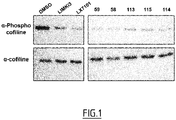


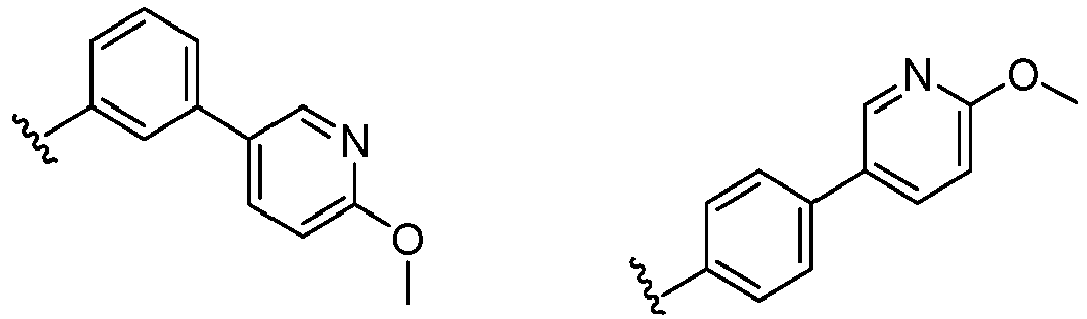


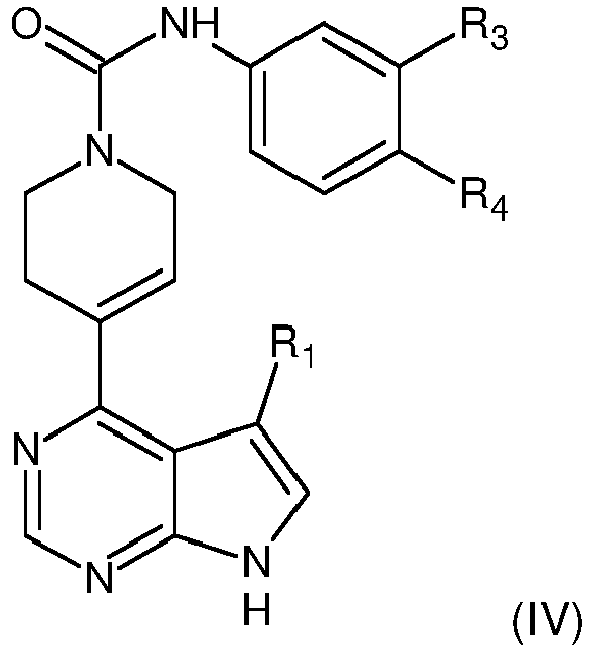


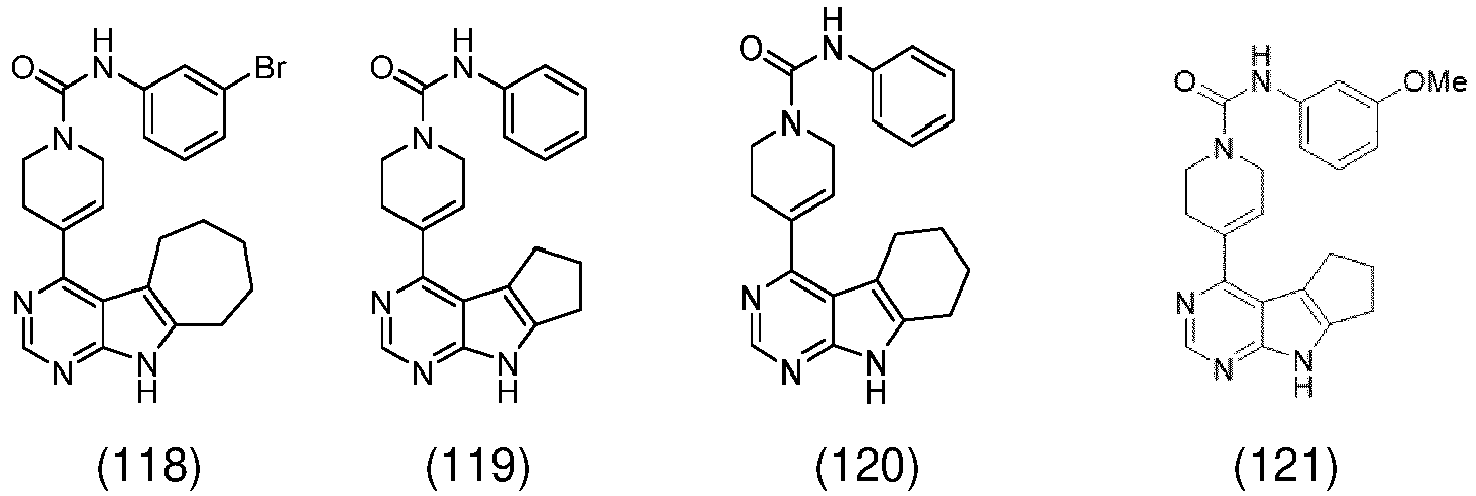


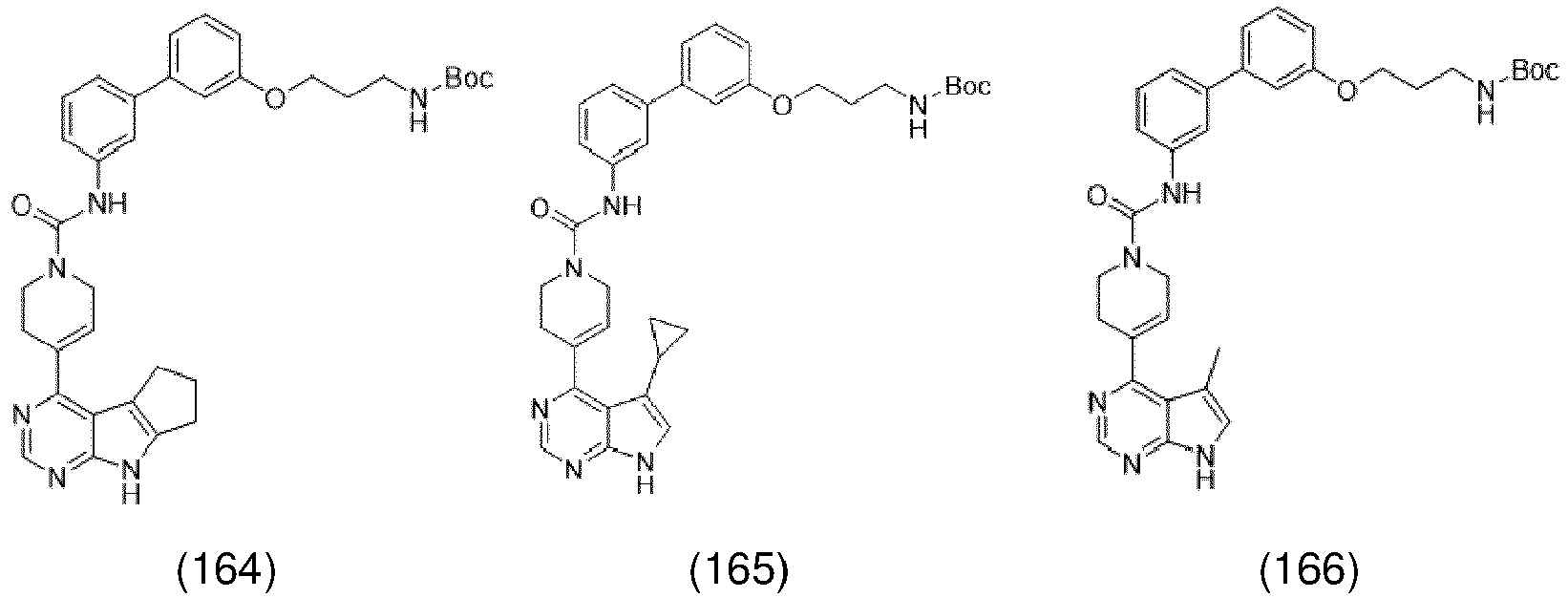


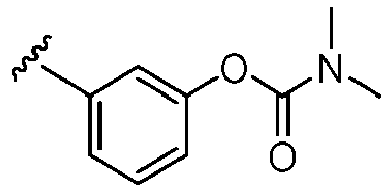


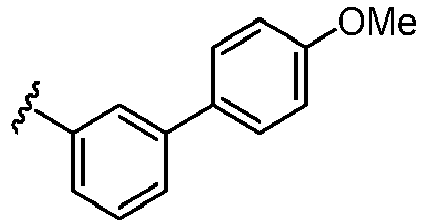
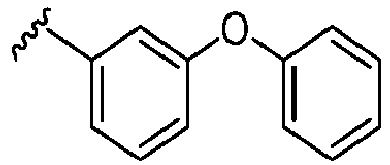


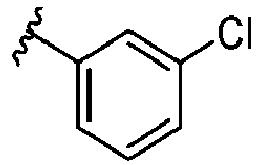


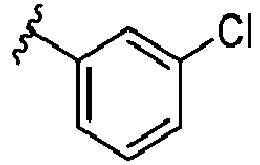


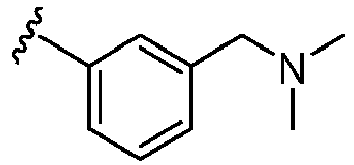


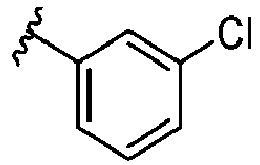
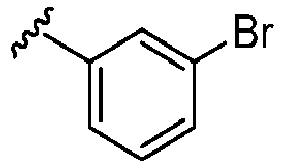


 - "a" is a single bond and "b" is a double bond, or "a" is a double bond and "b" is a single bond;- R1 is selected from the group consisting of: H, (C1-C6)alkyl group, halogen, and (C3-C7)cycloalkyl group;- R2 is selected from the group consisting of: H, and (C1-C6)alkyl group;- or R1 and R2 may form together with the carbon atoms carrying them a (C5-C7)cycloalkyl group or a (C5-C7)heterocycloalkyl group, said heterocycloalkyl group being optionally substituted with a (C1-C6)alkyl group;- n is 0, 1 or 2;- each Ri, identical or different, is selected from the (C1-C6)alkyl groups;- R is selected from the group consisting of: (C3-C7)cycloalkyl group, optionally fused with an aryl group, aryl group, heteroaryl group, heterocycloalkyl group fused with an aryl group, and aryl group fused with a heterocycloalkyl group, said aryl and heteroaryl groups being optionally substituted with at least one substituent R3 selected from the group consisting of:• H,• (C1-C6)alkyl, said alkyl being optionally interrupted with at least one heteroatom,• heterocycloalkyl,• aryl, said aryl being optionally substituted with at least one substituent such as:• (C1-C6)alkoxy;• NRaRb, Ra and Rb, independently from each other, being H or a (C1-C6)alkyl group;• -X-Rc, X being a bond, a (C1-C6)alkylene group, preferably -CH2-, or -C(=O)-, and Rc being a heterocycloalkyl group, optionally substituted with at least one (C1-C6)alkyl group, SO2CH3 or (C1-C6)alkylamino group;• halogen;• -C(=O)-NRaRb, Ra and Rb, independently from each other, being H or a (C1-C6)alkyl group;• -C(=O)-N(Rd)-X1-NRaRb, Rd, Ra and Rb, independently from each other, being H or a (C1-C6)alkyl group, and X1 being a (C1-C6)alkylene group, preferably CH2; or• -O-X2-NReRf, X2 being a (C1-C6)alkylene group, Re and Rf, independently from each other, being H or a (C1-C6)alkyl group, or at least one of Re and Rf is an amino-protecting group such as Boc or comprises one fluorophore; or• heteroaryl, said heteroaryl being optionally substituted with at least one substituent such as:▪ (C1-C6)alkoxy;▪ NRaRb, Ra and Rb, independently from each other, being H or a (C1-C6)alkyl group;▪ -C(=O)-NRaRb, Ra and Rb, independently from each other, being H or a (C1-C6)alkyl group; or• -NH-C(=O)-Ra, Ra being H or a (C1-C6)alkyl group;• halogen,• halo(C1-C6)alkyl,• aryloxy, said aryloxy being optionally substituted with at least one substituent such as:• (C1-C6)alkoxy;• NRaRb, Ra and Rb, independently from each other, being H or a (C1-C6)alkyl group;• -X-Rc, X being a bond, a (C1-C6)alkylene group, preferably -CH2-, or -C(=O)-, and Rc being a heterocycloalkyl group, optionally substituted with at least one (C1-C6)alkyl group, SO2CH3 or (C1-C6)alkylamino group;• halogen;
 - a, b, n, Ri, R1, and R2 are as defined in claim 1, and- m is 1 or 2, and each R3, identical or different, is as defined in claim 1.
 - a, b, n, Ri, R1, R2, and R3 are as defined in claim 1, and- R4 is H, halogen or aryloxy.
 - R1 is H or (C1-C6)alkyl group;- R3 is selected from the group consisting of:• H,• (C1-C6)alkyl,• aryl, preferably phenyl, said aryl being optionally substituted with at least one substituent such as (C1-C6)alkoxy, in particular OMe, or halogen such as F,• heteroaryl, such as pyridinyl, imidazolyl, pyrrolyl or triazolyl,• halogen, such as F, Cl, or Br,• halo(C1-C6)alkyl, such as CF3,• aryloxy, in particular phenyloxy, said aryloxy being optionally substituted with at least one substituent such as (C1-C6)alkoxy, preferably OMe,• -O-halo(C1-C6)alkyl, such as OCF3,• cyano,• (C1-C6)alkoxy, such as OMe, and• -O-C(=O)-NRaRb, Ra and Rb, independently from each other, being H or a (C1-C6)alkyl group; and- R4 is H, halogen or aryloxy, such as phenyloxy,or R3 and R4 form together with the carbon atoms carrying them a phenyl group or a heterocycloalkyl group comprising preferably 2 oxygen atoms and 3 carbon atoms.
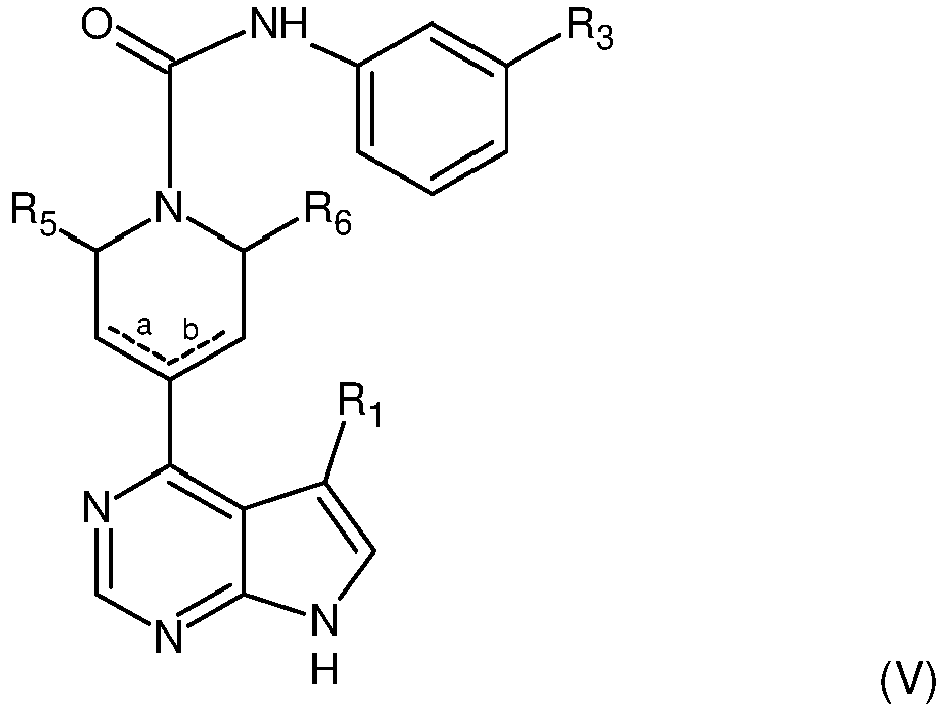 - "a" is a single bond and "b" is a double bond, or "a" is a double bond and "b" is a single bond;- R1 is (C1-C6)alkyl group, preferably methyl;- R5 is (C1-C6)alkyl group, preferably methyl;- R6 is H or (C1-C6)alkyl group, preferably methyl;- R3 is selected from the group consisting of:• halogen, such as F, Cl, or Br, and• aryloxy, in particular phenyloxy.
 - R1 is halogen, preferably Cl; and- R3 is -O-C(=O)-NRaRb, Ra and Rb, independently from each other, being H or a (C1-C6)alkyl group.
 - R1 is (C3-C7)cycloalkyl group, preferably cyclopropyl;- R3 is selected from the group consisting of:• aryl, preferably phenyl, said aryl being optionally substituted with at least one substituent such as (C1-C6)alkoxy, in particular OMe,• heteroaryl, such as pyrrolyl,• halogen, such as F, Cl, or Br,• aryloxy, in particular phenyloxy, said aryloxy being optionally substituted with at least one substituent such as (C1-C6)alkoxy, preferably OMe, and• -O-C(=O)-NRaRb, Ra and Rb, independently from each other, being H or a (C1-C6)alkyl group.
 - R1 is (C1-C6)alkyl group, preferably methyl;- R2 is (C1-C6)alkyl group, preferably methyl;- R3 is selected from the group consisting of:• H,• aryl, preferably phenyl, said aryl being optionally substituted with at least one substituent such as (C1-C6)alkoxy, in particular OMe,• halogen, such as F, Cl, or Br,• (C1-C6)alkoxy, such as OMe, and• -O-C(=O)-NRaRb, Ra and Rb, independently from each other, being H or a (C1-C6)alkyl group.
 - p is 0, 1, or 2;- R3 is selected from the group consisting of:• H,• (C1-C6)alkyl, said alkyl being optionally interrupted with at least one heteroatom,• heterocycloalkyl, such as morpholinyl,• aryl, preferably phenyl, said aryl being optionally substituted with at least one substituent such as (C1-C6)alkoxy,• heteroaryl, such as pyridinyl,• halogen,• aryloxy,• halo(C1-C6)alkyl,• cyano,• (C1-C6)alkoxy, and• -X-NRaRb, X being selected in the group consisting of: (C1-C6)alkylene group, -O-C(=O)-, -C(=O)-, and -NH-C(=O)-, and Ra and Rb, independently from each other, being H or a (C1-C6)alkyl group.
 - X1 is -O-, -S-, or -N((C1-C6)alkyl)-, such as -N(Me)-; and- R3 is halogen.