EP3915932B1 - Manufacturing device and manufacturing method for component with outer layer - Google Patents
Manufacturing device and manufacturing method for component with outer layer Download PDFInfo
- Publication number
- EP3915932B1 EP3915932B1 EP20913020.2A EP20913020A EP3915932B1 EP 3915932 B1 EP3915932 B1 EP 3915932B1 EP 20913020 A EP20913020 A EP 20913020A EP 3915932 B1 EP3915932 B1 EP 3915932B1
- Authority
- EP
- European Patent Office
- Prior art keywords
- surface layer
- base member
- layer member
- edge
- pulling
- Prior art date
- Legal status (The legal status is an assumption and is not a legal conclusion. Google has not performed a legal analysis and makes no representation as to the accuracy of the status listed.)
- Active
Links
Images




Classifications
-
- B—PERFORMING OPERATIONS; TRANSPORTING
- B29—WORKING OF PLASTICS; WORKING OF SUBSTANCES IN A PLASTIC STATE IN GENERAL
- B29C—SHAPING OR JOINING OF PLASTICS; SHAPING OF MATERIAL IN A PLASTIC STATE, NOT OTHERWISE PROVIDED FOR; AFTER-TREATMENT OF THE SHAPED PRODUCTS, e.g. REPAIRING
- B29C53/00—Shaping by bending, folding, twisting, straightening or flattening; Apparatus therefor
- B29C53/80—Component parts, details or accessories; Auxiliary operations
-
- B—PERFORMING OPERATIONS; TRANSPORTING
- B29—WORKING OF PLASTICS; WORKING OF SUBSTANCES IN A PLASTIC STATE IN GENERAL
- B29C—SHAPING OR JOINING OF PLASTICS; SHAPING OF MATERIAL IN A PLASTIC STATE, NOT OTHERWISE PROVIDED FOR; AFTER-TREATMENT OF THE SHAPED PRODUCTS, e.g. REPAIRING
- B29C63/00—Lining or sheathing, i.e. applying preformed layers or sheathings of plastics; Apparatus therefor
- B29C63/22—Lining or sheathing, i.e. applying preformed layers or sheathings of plastics; Apparatus therefor using layers or sheathings having a shape adapted to the shape of the article
-
- B—PERFORMING OPERATIONS; TRANSPORTING
- B29—WORKING OF PLASTICS; WORKING OF SUBSTANCES IN A PLASTIC STATE IN GENERAL
- B29C—SHAPING OR JOINING OF PLASTICS; SHAPING OF MATERIAL IN A PLASTIC STATE, NOT OTHERWISE PROVIDED FOR; AFTER-TREATMENT OF THE SHAPED PRODUCTS, e.g. REPAIRING
- B29C53/00—Shaping by bending, folding, twisting, straightening or flattening; Apparatus therefor
- B29C53/02—Bending or folding
- B29C53/04—Bending or folding of plates or sheets
-
- B—PERFORMING OPERATIONS; TRANSPORTING
- B29—WORKING OF PLASTICS; WORKING OF SUBSTANCES IN A PLASTIC STATE IN GENERAL
- B29C—SHAPING OR JOINING OF PLASTICS; SHAPING OF MATERIAL IN A PLASTIC STATE, NOT OTHERWISE PROVIDED FOR; AFTER-TREATMENT OF THE SHAPED PRODUCTS, e.g. REPAIRING
- B29C63/00—Lining or sheathing, i.e. applying preformed layers or sheathings of plastics; Apparatus therefor
- B29C63/0004—Component parts, details or accessories; Auxiliary operations
-
- B—PERFORMING OPERATIONS; TRANSPORTING
- B29—WORKING OF PLASTICS; WORKING OF SUBSTANCES IN A PLASTIC STATE IN GENERAL
- B29C—SHAPING OR JOINING OF PLASTICS; SHAPING OF MATERIAL IN A PLASTIC STATE, NOT OTHERWISE PROVIDED FOR; AFTER-TREATMENT OF THE SHAPED PRODUCTS, e.g. REPAIRING
- B29C63/00—Lining or sheathing, i.e. applying preformed layers or sheathings of plastics; Apparatus therefor
- B29C63/0073—Lining or sheathing, i.e. applying preformed layers or sheathings of plastics; Apparatus therefor of non-flat surfaces, e.g. curved, profiled
-
- B—PERFORMING OPERATIONS; TRANSPORTING
- B29—WORKING OF PLASTICS; WORKING OF SUBSTANCES IN A PLASTIC STATE IN GENERAL
- B29C—SHAPING OR JOINING OF PLASTICS; SHAPING OF MATERIAL IN A PLASTIC STATE, NOT OTHERWISE PROVIDED FOR; AFTER-TREATMENT OF THE SHAPED PRODUCTS, e.g. REPAIRING
- B29C63/00—Lining or sheathing, i.e. applying preformed layers or sheathings of plastics; Apparatus therefor
- B29C63/02—Lining or sheathing, i.e. applying preformed layers or sheathings of plastics; Apparatus therefor using sheet or web-like material
- B29C63/04—Lining or sheathing, i.e. applying preformed layers or sheathings of plastics; Apparatus therefor using sheet or web-like material by folding, winding, bending or the like
-
- B—PERFORMING OPERATIONS; TRANSPORTING
- B60—VEHICLES IN GENERAL
- B60N—SEATS SPECIALLY ADAPTED FOR VEHICLES; VEHICLE PASSENGER ACCOMMODATION NOT OTHERWISE PROVIDED FOR
- B60N2/00—Seats specially adapted for vehicles; Arrangement or mounting of seats in vehicles
- B60N2/64—Back-rests or cushions
- B60N2/643—Back-rests or cushions shape of the back-rests
-
- B—PERFORMING OPERATIONS; TRANSPORTING
- B60—VEHICLES IN GENERAL
- B60N—SEATS SPECIALLY ADAPTED FOR VEHICLES; VEHICLE PASSENGER ACCOMMODATION NOT OTHERWISE PROVIDED FOR
- B60N2/00—Seats specially adapted for vehicles; Arrangement or mounting of seats in vehicles
- B60N2/64—Back-rests or cushions
- B60N2/646—Back-rests or cushions shape of the cushion
-
- B—PERFORMING OPERATIONS; TRANSPORTING
- B60—VEHICLES IN GENERAL
- B60N—SEATS SPECIALLY ADAPTED FOR VEHICLES; VEHICLE PASSENGER ACCOMMODATION NOT OTHERWISE PROVIDED FOR
- B60N2/00—Seats specially adapted for vehicles; Arrangement or mounting of seats in vehicles
- B60N2/70—Upholstery springs ; Upholstery
- B60N2/7017—Upholstery springs ; Upholstery characterised by the manufacturing process; manufacturing upholstery or upholstery springs not otherwise provided for
Definitions
- the present disclosure relates to apparatuses and methods for manufacturing a surface-layered part.
- Japanese Patent Application Publication No. 2006-213134 discloses a vehicle armrest that includes a molded plastic armrest core and a cushion attached to the upper surface of the armrest core.
- the armrest core and the cushion are covered with a cover-shaped armrest skin, which has wrapping portions at its peripheral edge that are hooked on the edges of the armrest core.
- JP H07-299868 describes methods for producing skinned products, such as for use in a vehicle. The method includes the step of bonding a base material to a skin material.
- the vehicle armrest described in Japanese Patent Application Publication No. 2006-213134 has the disadvantage that when attaching the armrest skin to the armrest core, workers are required to start with one corner of the armrest skin and hook all wrapping portions at the peripheral edge of the armrest skin onto the armrest core with their fingers. This results in a long time needed for the assembly. It is thus desired to improve the productivity by automating the work of wrapping the edge of the surface layer member around the edge of the base member.
- an apparatus for manufacturing a surface-layered part comprising: a main support for supporting a surface layer member placeable under a base member; a pulling device arranged at a periphery of the main support, wherein the pulling device includes a pulling member for pulling an edge of the surface layer member, when the edge of the surface layer member is in a position away from an edge of the base member, outward with respect to the base member; a base member clamping device for fixedly clamping the surface layer member, when the surface layer member is pulled outward by the pulling member of the pulling device, against the main support via the base member placed over the surface layer member; a relieving device for separating the pulling member from the edge of the surface layer member, when the edge of the surface layer member is moved outward with respect to the base member by the pulling device, to allow the edge of the surface layer member to wrap around the edge of the base member owing to an elastic restoring force of the surface layer member, thereby integrating the surface layer member and the base member; and a control device for controlling the edge of the surface layer member,
- the apparatus further comprises a peripheral support arranged along an edge of a lip of the main support, wherein the peripheral support provides a bending restraint on the surface layer member when the surface layer member is bent back outward over the peripheral support by the pulling member whilst fixed, together with the base member, to the main support by the base member clamping device.
- the peripheral support comprises one or more round rails arranged along the edge of the lip of the main support.
- the base member clamping device is adapted to push the base member into the main support so that a peripheral edge of the base member is close contactable with the surface layer member to thereby clamp the surface layer member.
- the pulling member is shaped for hooking the edge of the surface layer member and to be separable from the edge of the surface layer member.
- the present disclosure provides, in another aspect, a method for manufacturing a surface-layered part using the apparatus described above, the method comprising: a first step of placing the surface layer member on the main support; a second step of pulling the edge of the surface layer member, which was placed in the first step, outward with respect to the base member by the pulling member; a third step of fixedly clamping the surface layer member, which has been pulled outward by the pulling member in the second step, against the main support by the base member clamping device via the base member placed over the surface layer member; and a fourth step of separating the pulling member from the edge of the surface layer member, which has been fixedly clamped against the main support via the base member in the third step, by the relieving device to allow the edge of the surface layer member to wrap around the edge of the base member owing to the elastic restoring force of the surface layer member, thereby integrating the surface layer member and the base member.
- the apparatus 1 for manufacturing a surface-layered part will be described with reference to Figs. 1 to 7 .
- the side on which the worker stands is the front side of the manufacturing apparatus 1, and the directions of the manufacturing apparatus 1 are indicated by arrows.
- directional terms will be used on the basis of the directions as shown.
- the manufacturing apparatus 1 includes a frame 11, and a main support 12 for supporting a base member 3 and a surface layer member 2 (see, Fig. 8 ) in such a way that the surface layer member 2 is layered on the lower side of the base member 3 (see, Fig. 10 ).
- the apparatus 1 further includes peripheral supports 13 arranged along the peripheral edge of an lip 12A ( Fig. 3 ) of the main support 12.
- the apparatus 1 further includes pulling devices 15A-15F arranged around the main support 12 and configured to pull the edges 2A ( Fig. 8 ) of the surface layer member 2 outward.
- the apparatus 1 further includes a pair of base member clamping devices 16 arranged at the left and right ends and on the rear side of the main support 12.
- the base member clamping devices 16 are configured to clamp the base member 3 layered on top of the surface layer member 2 by pushing the base member 3 into the main support 12.
- the apparatus 1 further includes a control device 17 configured to drive and control the pulling devices 15A-15F and the base member clamping devices 16.
- Fig. 1 the base member clamping device 16 on the left side is omitted.
- Fig. 2 the base member clamping devices 16 that are pressing down the base member are indicated by double-dashed lines.
- the frame 11 may be box shaped with a left to right long rectangular shape in a plan view.
- the frame 11 may be slightly higher than the height of a worker (e.g. about 180 cm high).
- a base plate 11A may be provided at the lower ends of the frame 11.
- a junction box 18 may be mounted on the base plate 11A for housing an air supply switching valve (not shown) or an electromagnetic relay (not shown) electrically connected to the control device 17.
- a flat mounting base plate 11B may be positioned above the junction box 18, for example at about the height of the worker's knee, for mounting equipment devices, such as the pulling devices 15A-15F, the main support 12, the peripheral supports 13, and the base member clamping devices 16, which may be secured by bolts or other means to the mounting base plate 11B.
- the control device 17 includes a control circuit board, not shown, including: a CPU; a RAM, ROM, and/or EEPROM; an interface circuit; a timer; and so on, housed in a generally box-shaped housing 21 attached to the upper left front corner of the frame 11.
- a display 22 and operation buttons, such as a power button 23, electrically connected to the control circuit board may be provided on the front side of the housing 21.
- An operation box 26 with two operation buttons 25A, 25B for giving instructions, such as starting the operation, arranged on the upper surface may be attached to the front left member of the frame 11, at a height slightly lower than the worker's waist.
- the operation buttons 25A and 25B are electrically connected to the interface circuit of the control device 17.
- the main support 12 may be mounted on the mounting base plate 11B generally at the center in a position extending left to right.
- the bottom of the main support 12 may be fixed to the mounting base plate 11B with bolts or by any other means (not shown).
- the upper surface of the main support 12 is recessed downward to define a recess 28.
- the recess 28 may have a left to right long, generally rectangular shape in a plan view and a generally U-shaped cross section over its entire length.
- a surface layer member 2 is to be set on the recess 28 (see, Fig. 11 ), as will be further described later.
- each peripheral support 13 may include support plates 31 arranged along the periphery of the main support 12, which has a left to right long, generally rectangular shape in a plan view. Each support plate 31 may have a vertically long rectangular shape in a front view.
- the peripheral support 13 further includes one or more round rail 32 welded or otherwise fixed in a substantially horizontal position along the upper end(s) of the respective support plates 31.
- the lower end of each support plate 31 is fixed to the mounting base plate 11B by bolting or the like, such that it extends substantially vertically.
- the support plate 31 is positioned at a height above the mounting base plate 11B substantially equal to or slightly higher than the lip 12A of the main support 12.
- Each round rail 32 may be positioned slightly higher, for example by the diameter of the round rail 32, than the lip 12A of the main support 12 at the corresponding support plate 31.
- Each round rail 32 may have an appropriate length so that it traces the portion of the periphery of the lip 12A of the main support 12 that faces the corresponding support plate 31.
- Each round rail 32 may be appropriately curved along the periphery of the lip 12A.
- the round rails 32 serve as restraints on the peripheral edges 2A ( Fig. 8 ) of the surface layer member 2 that are being bent back outwardly when the peripheral edges 2A are pulled outward while the base member 3 and the surface layer member 2 layered under it are clamped against the surface of the recess 28 (see, Fig. 11 ), as will be further described later.
- Figs. 1 to 3 and 5 the general configuration of the pulling devices 15A-15F, which are arranged around the main support 12 and configured to pull the peripheral edges 2A ( Fig. 8 ) of the surface layer member 2 outward, will be described.
- one pulling device 15A is positioned on the front side of the main support 12, substantially at the center in the left-to-right direction.
- Another pulling device 15B is positioned at the right end of the main support 12.
- Other pulling devices 15C, 15D, 15E are positioned along the rear side of the main support 12, left to right in this order.
- Still another pulling device 15F is positioned at the left end of the main support 12.
- the pulling devices 15A-15F may be fixed to the mounting base plate 11B by bolting or any other means.
- the pulling devices 15A-15F may be configured in the same way, and therefore only the configuration of one pulling device 15A will be described, with reference to Figs. 3 and 5 .
- the pulling device 15A includes a plurality of (e.g. nine) claws 35, each having a sideways L-shape in a side view and situated above the lip 12A of the main support 12, and claw supporting member 36 for supporting the claws 35 along the corresponding portion of the lip 12A of the main support 12.
- the pulling device 15A further includes a generally box-shaped pulling mechanism 37 configured to move the claw supporting member 36 across the lip 12A of the main support 12, and a vertical movement mechanism 38 configured to move the pulling mechanism 37 vertically.
- the claws 35 may be formed from a sheet of a hard plastic or a metal, such as aluminum. Each edge of the claw 35 toward the main support 12 may have an L-shaped profile, The claws 35 may be bent downward so as to be able to hook (see, Fig. 11 ) a generally U-shaped wrapping portion 2B ( Fig. 9 ) formed at the edge 2A ( Fig. 8 ) of the surface layer member 2.
- the claws 35 may be arranged at intervals and screwed or otherwise fixed, at their respective edges on the far side from the main support 12, to the upper surface of the long rectangular claw supporting member 36 at the edge that extends toward the main support 12.
- the claw supporting member 36 may be rectangular in a plan view with a length substantially equal to the length of the portion of the lip 12A ( Fig. 3 ) of the main support 12 that faces the claw supporting member 36.
- the edge of the claw supporting member 36 opposite to the main support 12 may extend downward by a length, thereby forming an L-shaped profile.
- the claw supporting member 36 may be made of sheets of metal, such as aluminum or stainless steel.
- the edge of the claw supporting member 36 opposite to the main support 12 is attached, generally at the center of its length, to the surface of the outer box part 37A of the pulling mechanism 37 that faces the main support 12.
- the pulling mechanism 37 may include a generally box-shaped outer box part 37A having an open side opposite to the main support 12, a generally box-shaped base part 37B inserted in the open side of the outer box part 37A opposite to the main support 12, and a moving mechanism (not shown) housed in the base part 37B and configured to move the outer box 37A relative to the base part 37B linearly in the insertion direction.
- the moving mechanism (not shown) in the base part 37B may be configured with at least one of an air cylinder, a pinion gear and a rack, a nut and a ball screw, or the like, powered by compressed air, an electric motor, or any other source, to move the outer box 37A linearly relative to the base part 37B.
- the vertical movement mechanism 38 may include a generally box-shaped base part 38A connected at a substantially right angle to the lower surface of a portion of the base part 37B of the pulling mechanism 37 opposite from the claw supporting member 36, thereby forming a generally L-shaped profile.
- the vertical movement mechanism 38 further includes a generally box-shaped supporting part 38B with an open upper side, in which the base part 38A is inserted, and a moving mechanism (not shown) housed inside the base part 38A and configured to linearly move the base part 38A itself relative to the supporting part 38B in the insertion direction (i.e. vertically).
- the moving mechanism (not shown) in the base part 38A may configured with at least one of an air cylinder, a pinion gear and a rack, a nut and a ball screw, etc., powered by compressed air, motor drive, or other means, to move the base part 38A linearly and vertically relative to the supporting part 38B.
- the supporting part 38B of the vertical movement mechanism 38 is bolted or otherwise fixed at a base flange 38C to the mounting base plate 11B.
- the claw supporting member 36 attached to the outer box part 37A and the claws 35 on it are moved linearly vertically (in the direction of arrow 42 in Fig. 3 ) relative to the main support 12 by way of the base part 37B of the pulling mechanism 37.
- a pair of base member clamping devices 16 for pushing and clamping the base member 3 layered on the surface layer member 2 against the main support 12 will be described.
- alternate long/short dashed lines indicate the base member clamping devices 16 pushing the base member 3, which is placed on top of the surface layer member 2, into the main support 12.
- the base member clamping devices 16 may be configured substantially symmetrically, and therefore only the base member clamping device 16 on the right side will be described.
- the base member clamping device 16 may include an air cylinder 45 configured to extend and retract vertically, and a base member pressing device 46 rotatably connected at its rear end to the tip of the air cylinder 45 so that base member pressing device 46 is moved vertically in a pivoting manner as the air cylinder 45 extends and retracts.
- the base member pressing device 46 may include an arm 47 having an L-shape in a plan view and configured to be rotated downward when the air cylinder 45 ( Fig. 1 ) extends out.
- the arm 47 may have a generally L-shaped cross section.
- the base member pressing device 46 may include a plurality of (e.g. six) contact elements 48 arranged left to right at intervals and mounted on the lower side of the arm 47.
- the contact elements 48 are configured to contact the inner side surface of the base member 3 and to press the base member 3 downward.
- Each contact element 48 may be made of elastic rubber and may have a generally columnar shape.
- support plates 51 each bent into a U-shaped profile, are mounted on the lower surface of the arm 47 and arranged left to right at substantially equal intervals.
- Four of the six contact elements 48 are attached to the tips of the support plates 51 such that they extend diagonally downward in the forward direction.
- Two elongated support plates 52 extend downward from of the lower surface of the arm 47 diagonally in the forward direction at the left and right ends of the arm 47.
- the other two of the six contact elements 48 are attached to the tips of the corresponding support plates 52, such that they extend downward diagonally in the rearward direction.
- the base member 3 is pushed downward, and the upward peripheral edge 3A is more opened such that the base member 3 comes in close contact, at its periphery, with the inner side surface of the surface layer member 2, as will be further described later (see, Fig. 11 ).
- the surface layer member 2 may be a left to right long, generally rectangular sheet formed with a generally U-shaped cross section to be convex on its visual side so that it can be set in the recess 28 defined in the upper side of the main support 12.
- the visual side refers to the side of the surface layer member 2 that is visible to the user when the surface layer member 2 is attached to the base member 3.
- the visual side is the side of the armrest that faces the inside of the vehicle.
- the surface layer member 2 has generally U-shaped wrapping portions 2B on the peripheral edge 2A over its entire circumference.
- the wrapping portion 2B has, in the inwardly bent portion of its U-shape, breaks 2C each having a width (e.g., about 3 mm) at appropriate intervals along the periphery.
- the breaks 2C allow the peripheral edge 2A of the surface layer member 2 to be elastically deformed more smoothly when the wrapping portion 2B is hooked and pulled by the claws 35 of the pulling devices 15A-15F, as will be further described later (see, Fig. 11 ).
- the surface layer member 2 may be made of a relatively soft (or flexible) and stretchable material that is easily elastically deformed when the wrapping portion 2B is hooked and pulled by the claws 35 of the pulling devices 15A-15F.
- the surface layer member 2 is preferably made of an olefinic elastomer.
- various thermoplastics such as soft polyvinyl chloride or styrenic, olefinic, or polyester materials may be preferably used.
- other materials such as elastic woven fabric, non-woven fabric, knitted fabric, synthetic leather, leather, vinyl chloride, and soft film can be used for the surface layer member 2.
- the non-visual side refers to the side of the surface layer member 2 opposite to the visual side, i.e. the inner side that is not visible to the user when the surface layer member 2 is attached to the base member 3.
- the base member 3 is a flat member with a left to right long, generally rectangular shape in a plan view.
- the base member may generally have U-shaped cross section ( Fig. 13 ) so that the base member 3 can be layered on top of the surface layer member 2 that has been set in the recess 28 defined in the upper side of the main support 12.
- the peripheral edge 3A of the base member 3 includes tabs 3B, which are configured to be fitted into the breaks 2C defined in the edge 2A of the surface layer member 2.
- the tabs 3B are attached to the outer side of the base member 3.
- the protrusion height of the tabs 3B may be substantially equal to the thickness of the surface layer member 2.
- the base member 3 includes, on its outer surface (i.e. the surface toward the surface layer member 2) of the right rear portion, a concave portion 3C having a generally rectangular shape in front view, in which a flat cushion member 55 can be attached. Accordingly, the base member 3 will be layered on the non-visual side of the surface layer member 2 with the cushion member 55 attached to the recessed portion 3C.
- the base member 3 may preferably be made of a relatively hard synthetic plastic, and more preferably of any thermoplastic with a higher rigidity than the surface layer member 2, such as polypropylene, hard polyvinyl chloride, ABS (acrylonitrile butadiene styrene), or SAN (styrene acrylonitrile).
- the base member 3 may be a press-formed steel sheet.
- the cushion member 55 may be made of a synthetic plastic, such as polypropylene or polyurethane, and may have a desired elasticity, that is, a cushioning property of being elastically deformed when pressed.
- polyurethane foam, foam rubber, or the like may be used.
- Step 1 a first step as claimed
- the worker sets a flat surface layer member 2, which has a left to right long, generally rectangular shape and a generally U-shaped cross section, down into the recess 28 of the main support 12, which has a left to right long, generally rectangular shape in a plan view, of the manufacturing apparatus 1, so that the surface layer member 2 fits in the shape of the recess 28. That is, the surface layer member 2 is set such that its visual side faces the bottom surface of the recess 28 in the main support 12.
- the worker then presses the start button 25A on the operation box 26 of the manufacturing apparatus 1 to send a start signal to the control device 17.
- the control device 17 upon receiving the start signal, drives the pulling mechanisms 37 of the pulling devices 15A-15F to move the outer box part 37A substantially horizontally toward the main support 12 to position the claws 35 inside the peripheral edge 2A of the surface layer member 2 in a plan view.
- control device 17 drives the vertical movement mechanisms 38 of the pulling devices 15A-15F to move the base part 37B of the pulling mechanism 37 downward until the inner side of the tip portion of the claws 35 attached to the outer box part 37A reach a position facing the respective wrapping portions 2B of the edge 2A of the surface layer member 2.
- Step 2 the control device 17 drives the pulling mechanisms 37 of the pulling devices 15A-15F to move the outer box part 37A substantially horizontally in the outward direction with respect to the main support 12 by a distance and then stop.
- the claws 35 hook the respective wrapping portions 2B of the surface layer member 2 and move outward substantially horizontally by a distance.
- the surface layer member 2 set in the recess 28 is elastically deformed and lifted from the bottom surface of the recess 28.
- the peripheral edges 2A along the entire circumference are elastically bent back, while being restrained by the round rails 32 of the peripheral supports 13, to be outwardly opened.
- the bending of the peripheral edges 2A of the surface layer member 2 outward over the restraining round rails 32 can prevent the claws 35 of the pulling devices 15A-15F from slipping off from the edges 2A of the surface layer member 2.
- the outer side surfaces (i.e. visual sides) of the edges 2A of the surface layer member 2 are in contact with the cylindrical surface of the round rails 32. This effectively prevents the surface layer member 2 from being scratched on its visual side, resulting in an improvement to the quality of the product.
- Step 3 after waiting for the pulling mechanisms 37 of the pulling devices 15A-15F to stop while it continues to be pulling the surface layer member 2 outward, the worker sets the flat base member 3, which has a left to right long, generally rectangular shape in a plan view and a generally U-shaped cross section, down on the surface layer member 2 in a position that fits to the shape of the surface layer member 2. The worker then presses the clamp operation button 25B on the operation box 26 of the manufacturing apparatus 1 to send a clamp signal to the control device 17 for starting the clamping of the base member 3.
- the worker may use, for example, a base member 3 with a flat cushion member 55 attached to the concave portion 3C defined in the outer surface of the right rear portion of the base member 3.
- the worker sets the base member 3 on top of the surface layer member 2 by inserting the right end of the base member 3 into the wrapping portion 2B at the right end of the surface layer member 2 such that the cushion member 55 is layered on the inner surface of the right rear portion of the surface layer member 2, as can be seen in Fig. 8 .
- the worker then presses the clamp operation button 25B on the operation box 26 of the manufacturing apparatus 1 to send a clamp signal to the control device 17. This starts the clamping of the base member 3.
- Step 4 the control device 17, upon receiving the clamp signal, drives the air cylinder 45 of each base member clamping device 16 to extend out in order to pivot the arm 47 of the base member pressing device 46 downward (see, Fig. 7 ).
- This allows the contact elements 48 on the bottom of the arms 47 to press the inner side surface of the base member 3, at areas that extend diagonally upward in the front direction and in the rear direction, thereby pushing downward the base member 3 so that the upward peripheral edges 3A are spread open outwardly.
- Step 5 the control device 17 drives the vertical movement mechanism 38 of each of the pulling devices 15A-15F to move the base part 37B of the pulling mechanism 37 upward and drives the pulling mechanism 37 to move the outer box part 37A further outward with respect to the main support 12 substantially horizontally by a distance. Accordingly, the control device 17 drives the vertical movement mechanism 38 and the pulling mechanism 37 at the same time to take the claws 35 of the pulling devices 15A-15F off from the wrapping portions 2B of the surface layer member 2 in a direction diagonally upward.
- the wrapping portions 2B of the surface layer member 2 which has been clamped together with the base member 3 against the recess 28 of the main support 12 by the contact elements 48 of the base member clamping device 16, are further unrolled diagonally upward by the claws 35, and then relaxed. Consequently, as shown in the portion of Fig. 11 labeled "Completed, in cross section", the wrapping portions 2B of the surface layer member 2 are turned back by a strong elastic restoring force over the upward peripheral edge 3A of the base member 3 toward the inside of the recess 28 in the main support 12, thereby wrapping around the peripheral edge 3A of the base member 3 over the entire perimeter to produce a surface-layered part 5 that comprises the base member 3 integrated with the surface layer member 2.
- an example of the surface-layered part 5 thus produced includes the base member 3 with a flat cushion member 55 fitted in the concave portion 3C formed in the rear outer surface of the right end portion of the base member 3, and the surface layer member 2 with its wrapping portions 2B wrapping around the peripheral edge 3A of the base member 3 over the entire perimeter. Further, the surface-layered part 5 includes tabs 3B on the peripheral edge 3A of the base member 3 fitted in the corresponding breaks 2C formed in the edge 2A of the surface layer member 2 that covers from the outside. In the way described above, the manufacturing apparatus 1 produces the surface-layered part 5 in which the surface layer member 2 and the base member 3 are integrated.
- Each of the pulling devices 15A-15F is an embodiment of the pulling device and relieving device as claimed.
- the claw 35 is an embodiment of a pulling member as claimed.
- the worker using the manufacturing apparatus 1 of the present embodiment, sets the surface layer member 2 in the recess 28 of the main support 12 and presses an operation button 25A on the operation box 26.
- the control device 17 then drives and controls the pulling devices 15A-15F so that the claws 35 hook on the respective wrapping portions 2B of the surface layer member 2.
- the pulling devices 15A-15F then move outwardly and substantially horizontally by a distance.
- the worker sets the base member 3 on top of the surface layer member 2 and presses another operation button 25B on the operation box 26.
- the control device 17 then drives and controls the pulling devices 15A-15F and the base member clamping device 16 in a preset order to produce the surface-layered part 5.
- the surface-layered part 5 includes the base member 3 integrated with the surface layer member 2.
- the manufacturing apparatus 1 can be used to automate the work of hooking the wrapping portions 2B formed in the edge 2A of the surface layer member 2 on the peripheral edge 3A of the base member 3, thereby improving productivity.
- Step 1 the control device 17 drives and controls the pulling mechanism 37 and the vertical movement mechanism 38 of the pulling devices 15A-15F. This causes the grabbing devices to be inserted so that the opened distal ends sandwich the generally U-shaped wrapping portions 2B formed at the edge 2A of the surface layer member 2 ( Fig. 8 ).
- Step 2 the control device 17 turns on (energizes) the solenoid actuator of each grabbing device to grip the generally U-shaped wrapping portions 2B.
- the control device 17 drives the pulling mechanism 37 of each pulling device 15A-15F to move the outer box part 37A substantially horizontally with respect to the main support 12 by a distance and then stop.
- the control device 17 may turn off (de-energize) the solenoid actuator of each grabbing device to open the distal ends of the grabbing device.
- the wrapping portions 2B of the surface layer member 2 are flipped back over the upward peripheral edge 3A of the base member 3 toward the surface layer member 2 (i.e. into the recess 28 of the main support 12) owing to the strong elastic restoring force to wrap around the entire circumference of the peripheral edge 3A of the base member 3.
- the surface layer member 2 and the base member 3 are thus integrated to produce the surface-layered part 5.
- a plurality of vacuum suction pads may be included along the edge of the claw supporting member 36 toward the main support 12 for sucking the generally U-shaped wrapping portion 2B ( Fig. 9 ) formed in the edge 2A ( Fig. 8 ) of the surface layer member 2.
- each vacuum suction pad may be brought into contact with the wrapping portion 2B.
- the vacuum suctions pads may suck the wrapping portions to pull the edge 2A of the surface layer member 2.
- the suction of each vacuum suction pad can be deactivated to separate each vacuum suction pad from the edge 2A of the surface layer member 2.
- the control device 17 is configured to switch the activation and deactivation of the suction of each vacuum suction pad.
- the vacuum suction pads are an embodiment of the pulling member as claimed.
- Step 1 the control device 17 drives and controls the pulling mechanism 37 and the vertical movement mechanism 38 of the pulling devices 15A-15F, and controls each vacuum suction pad to the edge 2A of the surface layer member 2 ( Fig. 8 ) is brought into contact with the wrapping portion 2B having a generally U-shaped cross section.
- Step 2 the control device 17 activates the suction of each vacuum suction pad to suck the wrapping portion 2B having a generally U-shaped cross section.
- the control device 17 then drives the pulling mechanism 37 of each pulling device 15A-15F.
- the outer box part 37A is then moved substantially horizontally with respect to the main support 12 by a distance and stopped.
- the control device 17 may deactivate the suction of each vacuum suction pad to cause each vacuum suction pad to separate from the edge 2A of the surface layer member 2.
- the wrapping portions 2B of the surface layer member 2 are flipped back over the upward peripheral edge 3A of the base member 3 toward the surface layer member 2 (i.e. into the recess 28 side of the main support 12). This causes the wrapping portions 2B to wrap the entire circumference of the peripheral edge 3A of the base member 3.
- the surface layer member 2 and the base member 3 are thus integrated to produce the surface-layered part 5.
- the worker places the base member and the surface layer member on the main support such that the surface layer member is positioned below the base member.
- the control device drives and controls the pulling device, the base member clamping device, and the relieving device to cause the edge of the surface layer member to wrap around the edge of the base member by means of the elastic restoring force of the surface layer member.
- the surface layer member is integrated with the base member. This allows for automation of the work for wrapping the edge of the surface layer member around the edge of the base member, thereby increasing productivity.
- the surface layer member fixed together with the base member to the main support is bent outward while being restrained by the peripheral support. This effectively prevents the pulling member of the pulling device from separating from the edge of the surface layer member.
- the cylindrical surface of the round rail comes into contact with the outer side surface of the edge bent outward of the surface layer member. This effectively prevents the surface layer member from being scratched and improves its quality.
- the peripheral edge of the base member is clamped to be in close contact with the surface layer member. This allows the edge of the surface layer member to be reliably wrapped around the peripheral edge of the base member, leading to improved product quality.
- the pulling member is shaped so that it allows the edge of the surface layer member to be pulled and detached from the edge of the surface layer member. This allows the pulling member to pull the edge of the surface layer member outward. This also allows the pulling member to separate outwardly from the edge of the surface layer member pulled outward.
Landscapes
- Engineering & Computer Science (AREA)
- Manufacturing & Machinery (AREA)
- Mechanical Engineering (AREA)
- Aviation & Aerospace Engineering (AREA)
- Transportation (AREA)
- Lining Or Joining Of Plastics Or The Like (AREA)
- Passenger Equipment (AREA)
- Shaping Of Tube Ends By Bending Or Straightening (AREA)
Description
- The present disclosure relates to apparatuses and methods for manufacturing a surface-layered part.
- Various techniques associated with a surface-layered part that includes a base member and a surface layer member covering the surface of the base member have been proposed. For example,
Japanese Patent Application Publication No. 2006-213134 JP H07-299868 - The vehicle armrest described in
Japanese Patent Application Publication No. 2006-213134 - The present disclosure provides, in an aspect, an apparatus for manufacturing a surface-layered part, comprising: a main support for supporting a surface layer member placeable under a base member; a pulling device arranged at a periphery of the main support, wherein the pulling device includes a pulling member for pulling an edge of the surface layer member, when the edge of the surface layer member is in a position away from an edge of the base member, outward with respect to the base member; a base member clamping device for fixedly clamping the surface layer member, when the surface layer member is pulled outward by the pulling member of the pulling device, against the main support via the base member placed over the surface layer member; a relieving device for separating the pulling member from the edge of the surface layer member, when the edge of the surface layer member is moved outward with respect to the base member by the pulling device, to allow the edge of the surface layer member to wrap around the edge of the base member owing to an elastic restoring force of the surface layer member, thereby integrating the surface layer member and the base member; and a control device for driving and controlling the base member clamping device, the pulling device, and the relieving device.
- In some embodiments, the apparatus further comprises a peripheral support arranged along an edge of a lip of the main support, wherein the peripheral support provides a bending restraint on the surface layer member when the surface layer member is bent back outward over the peripheral support by the pulling member whilst fixed, together with the base member, to the main support by the base member clamping device.
- In some embodiments, the peripheral support comprises one or more round rails arranged along the edge of the lip of the main support.
- In some embodiments, the base member clamping device is adapted to push the base member into the main support so that a peripheral edge of the base member is close contactable with the surface layer member to thereby clamp the surface layer member.
- In some embodiments, the pulling member is shaped for hooking the edge of the surface layer member and to be separable from the edge of the surface layer member.
- The present disclosure provides, in another aspect, a method for manufacturing a surface-layered part using the apparatus described above, the method comprising: a first step of placing the surface layer member on the main support; a second step of pulling the edge of the surface layer member, which was placed in the first step, outward with respect to the base member by the pulling member; a third step of fixedly clamping the surface layer member, which has been pulled outward by the pulling member in the second step, against the main support by the base member clamping device via the base member placed over the surface layer member; and a fourth step of separating the pulling member from the edge of the surface layer member, which has been fixedly clamped against the main support via the base member in the third step, by the relieving device to allow the edge of the surface layer member to wrap around the edge of the base member owing to the elastic restoring force of the surface layer member, thereby integrating the surface layer member and the base member.
-
-
Fig. 1 is a perspective view of an exemplary apparatus for manufacturing a surface-layered part according to one embodiment. -
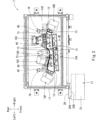
Fig. 2 is a plan view of the apparatus for manufacturing a surface-layered part ofFig. 1 . -
Fig. 3 is a cross-sectional view of the manufacturing apparatus ofFIG. 2 taken along the line III-III ofFig. 2 . -
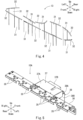
Fig. 4 is a perspective view of the peripheral support ofFig. 3 . -
Fig. 5 is a perspective view of a main portion of the pulling device shown inFig. 1 . -
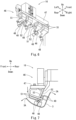
Fig. 6 is a perspective view of a main portion of the base member clamping device shown inFig. 2 . -
Fig. 7 is a side view of the base member clamping device ofFig. 6 in a pushing position. -
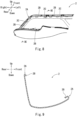
Fig. 8 is a perspective view of an example of a surface layer member. -
Fig. 9 is a cross-sectional view of the surface layer member ofFig. 8 taken along line IX-IX ofFig. 8 . -
Fig. 10 is a perspective view of an example of a base member. -
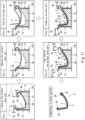
Fig. 11 is an illustration of a method for manufacturing a surface-layered part. -
Fig. 12 is a perspective view of an example of a surface-layered part. -
Fig. 13 is a cross-sectional view of the surface-layered part ofFig. 12 taken along line XIII-XIII ofFig. 12 . - Hereinafter, various embodiments of the present disclosure will be described in detail with reference to the drawings.
- First, the
apparatus 1 for manufacturing a surface-layered part will be described with reference toFigs. 1 to 7 . In each figure, the side on which the worker stands is the front side of themanufacturing apparatus 1, and the directions of themanufacturing apparatus 1 are indicated by arrows. In the following description, directional terms will be used on the basis of the directions as shown. - As shown in
Figs. 1 and2 , themanufacturing apparatus 1 includes aframe 11, and amain support 12 for supporting abase member 3 and a surface layer member 2 (see,Fig. 8 ) in such a way that thesurface layer member 2 is layered on the lower side of the base member 3 (see,Fig. 10 ). Theapparatus 1 further includesperipheral supports 13 arranged along the peripheral edge of anlip 12A (Fig. 3 ) of themain support 12. Theapparatus 1 further includes pullingdevices 15A-15F arranged around themain support 12 and configured to pull theedges 2A (Fig. 8 ) of thesurface layer member 2 outward. Theapparatus 1 further includes a pair of basemember clamping devices 16 arranged at the left and right ends and on the rear side of themain support 12. The basemember clamping devices 16 are configured to clamp thebase member 3 layered on top of thesurface layer member 2 by pushing thebase member 3 into themain support 12. Theapparatus 1 further includes acontrol device 17 configured to drive and control thepulling devices 15A-15F and the basemember clamping devices 16. - In
Fig. 1 , the basemember clamping device 16 on the left side is omitted. InFig. 2 , the basemember clamping devices 16 that are pressing down the base member are indicated by double-dashed lines. - Referring to
Figs. 1 and2 , theframe 11 may be box shaped with a left to right long rectangular shape in a plan view. Theframe 11 may be slightly higher than the height of a worker (e.g. about 180 cm high). Abase plate 11A may be provided at the lower ends of theframe 11. Ajunction box 18 may be mounted on thebase plate 11A for housing an air supply switching valve (not shown) or an electromagnetic relay (not shown) electrically connected to thecontrol device 17. A flatmounting base plate 11B may be positioned above thejunction box 18, for example at about the height of the worker's knee, for mounting equipment devices, such as thepulling devices 15A-15F, themain support 12, theperipheral supports 13, and the basemember clamping devices 16, which may be secured by bolts or other means to themounting base plate 11B. - The
control device 17 includes a control circuit board, not shown, including: a CPU; a RAM, ROM, and/or EEPROM; an interface circuit; a timer; and so on, housed in a generally box-shaped housing 21 attached to the upper left front corner of theframe 11. Adisplay 22 and operation buttons, such as apower button 23, electrically connected to the control circuit board may be provided on the front side of thehousing 21. Anoperation box 26 with twooperation buttons frame 11, at a height slightly lower than the worker's waist. Theoperation buttons control device 17. - Referring to
Figs. 2 and3 , themain support 12 may be mounted on themounting base plate 11B generally at the center in a position extending left to right. The bottom of themain support 12 may be fixed to themounting base plate 11B with bolts or by any other means (not shown). The upper surface of themain support 12 is recessed downward to define arecess 28. Therecess 28 may have a left to right long, generally rectangular shape in a plan view and a generally U-shaped cross section over its entire length. Asurface layer member 2 is to be set on the recess 28 (see,Fig. 11 ), as will be further described later. The left to right long, generally rectangular shape in a plan view and the generally U-shaped cross section over the entire length of therecess 28 may be, for example, in accordance with the shape of the outer surface of a surface-layered part, such as an armrest attached to the inner panel of the left door of an automobile, that is visible from inside of the vehicle. Accordingly, therecess 28 is open upward and has a left to right long, generally rectangular shape in a plan view. Thesurface layer member 2 can be set in therecess 28 from above. - Referring to
Figs. 3 and4 , eachperipheral support 13 may includesupport plates 31 arranged along the periphery of themain support 12, which has a left to right long, generally rectangular shape in a plan view. Eachsupport plate 31 may have a vertically long rectangular shape in a front view. Theperipheral support 13 further includes one or moreround rail 32 welded or otherwise fixed in a substantially horizontal position along the upper end(s) of therespective support plates 31. The lower end of eachsupport plate 31 is fixed to the mountingbase plate 11B by bolting or the like, such that it extends substantially vertically. Thesupport plate 31 is positioned at a height above the mountingbase plate 11B substantially equal to or slightly higher than thelip 12A of themain support 12. - Each
round rail 32 may be positioned slightly higher, for example by the diameter of theround rail 32, than thelip 12A of themain support 12 at thecorresponding support plate 31. Eachround rail 32 may have an appropriate length so that it traces the portion of the periphery of thelip 12A of themain support 12 that faces thecorresponding support plate 31. Eachround rail 32 may be appropriately curved along the periphery of thelip 12A. As a result, the round rails 32 serve as restraints on theperipheral edges 2A (Fig. 8 ) of thesurface layer member 2 that are being bent back outwardly when theperipheral edges 2A are pulled outward while thebase member 3 and thesurface layer member 2 layered under it are clamped against the surface of the recess 28 (see,Fig. 11 ), as will be further described later. - Referring now to
Figs. 1 to 3 and5 , the general configuration of the pullingdevices 15A-15F, which are arranged around themain support 12 and configured to pull theperipheral edges 2A (Fig. 8 ) of thesurface layer member 2 outward, will be described. As shown inFigs. 1 and2 , one pullingdevice 15A is positioned on the front side of themain support 12, substantially at the center in the left-to-right direction. Another pullingdevice 15B is positioned at the right end of themain support 12. Other pullingdevices main support 12, left to right in this order. Still another pullingdevice 15F is positioned at the left end of themain support 12. The pullingdevices 15A-15F may be fixed to the mountingbase plate 11B by bolting or any other means. - The pulling
devices 15A-15F may be configured in the same way, and therefore only the configuration of one pullingdevice 15A will be described, with reference toFigs. 3 and5 . As shown, the pullingdevice 15A includes a plurality of (e.g. nine)claws 35, each having a sideways L-shape in a side view and situated above thelip 12A of themain support 12, andclaw supporting member 36 for supporting theclaws 35 along the corresponding portion of thelip 12A of themain support 12. The pullingdevice 15A further includes a generally box-shaped pullingmechanism 37 configured to move theclaw supporting member 36 across thelip 12A of themain support 12, and avertical movement mechanism 38 configured to move the pullingmechanism 37 vertically. - The
claws 35 may be formed from a sheet of a hard plastic or a metal, such as aluminum. Each edge of theclaw 35 toward themain support 12 may have an L-shaped profile, Theclaws 35 may be bent downward so as to be able to hook (see,Fig. 11 ) a generallyU-shaped wrapping portion 2B (Fig. 9 ) formed at theedge 2A (Fig. 8 ) of thesurface layer member 2. Theclaws 35 may be arranged at intervals and screwed or otherwise fixed, at their respective edges on the far side from themain support 12, to the upper surface of the long rectangularclaw supporting member 36 at the edge that extends toward themain support 12. - As shown in
Fig. 5 , theclaw supporting member 36 may be rectangular in a plan view with a length substantially equal to the length of the portion of thelip 12A (Fig. 3 ) of themain support 12 that faces theclaw supporting member 36. The edge of theclaw supporting member 36 opposite to themain support 12 may extend downward by a length, thereby forming an L-shaped profile. Theclaw supporting member 36 may be made of sheets of metal, such as aluminum or stainless steel. The edge of theclaw supporting member 36 opposite to themain support 12 is attached, generally at the center of its length, to the surface of theouter box part 37A of the pullingmechanism 37 that faces themain support 12. - The pulling
mechanism 37 may include a generally box-shapedouter box part 37A having an open side opposite to themain support 12, a generally box-shapedbase part 37B inserted in the open side of theouter box part 37A opposite to themain support 12, and a moving mechanism (not shown) housed in thebase part 37B and configured to move theouter box 37A relative to thebase part 37B linearly in the insertion direction. The moving mechanism (not shown) in thebase part 37B may be configured with at least one of an air cylinder, a pinion gear and a rack, a nut and a ball screw, or the like, powered by compressed air, an electric motor, or any other source, to move theouter box 37A linearly relative to thebase part 37B. When theouter box part 37A is moved linearly relative to thebase part 37B, theclaws 35 on theclaw supporting member 36 are moved linearly forward or rearward relative to the main support 12 (in the direction ofarrow 41 inFig. 3 ). - The
vertical movement mechanism 38 may include a generally box-shapedbase part 38A connected at a substantially right angle to the lower surface of a portion of thebase part 37B of the pullingmechanism 37 opposite from theclaw supporting member 36, thereby forming a generally L-shaped profile. Thevertical movement mechanism 38 further includes a generally box-shaped supportingpart 38B with an open upper side, in which thebase part 38A is inserted, and a moving mechanism (not shown) housed inside thebase part 38A and configured to linearly move thebase part 38A itself relative to the supportingpart 38B in the insertion direction (i.e. vertically). - The moving mechanism (not shown) in the
base part 38A may configured with at least one of an air cylinder, a pinion gear and a rack, a nut and a ball screw, etc., powered by compressed air, motor drive, or other means, to move thebase part 38A linearly and vertically relative to the supportingpart 38B. As shown inFig. 1 , the supportingpart 38B of thevertical movement mechanism 38 is bolted or otherwise fixed at abase flange 38C to the mountingbase plate 11B. As a result, when thebase part 38A moves linearly and vertically relative to the supportingpart 38B, theclaw supporting member 36 attached to theouter box part 37A and theclaws 35 on it are moved linearly vertically (in the direction ofarrow 42 inFig. 3 ) relative to themain support 12 by way of thebase part 37B of the pullingmechanism 37. - Referring now to
Figs. 1 ,2 ,6 and 7 , a pair of basemember clamping devices 16 for pushing and clamping thebase member 3 layered on thesurface layer member 2 against themain support 12 will be described. InFig. 2 , alternate long/short dashed lines indicate the basemember clamping devices 16 pushing thebase member 3, which is placed on top of thesurface layer member 2, into themain support 12. - As shown in
Figs. 1 and2 , the basemember clamping devices 16 may be configured substantially symmetrically, and therefore only the basemember clamping device 16 on the right side will be described. The basemember clamping device 16 may include anair cylinder 45 configured to extend and retract vertically, and a basemember pressing device 46 rotatably connected at its rear end to the tip of theair cylinder 45 so that basemember pressing device 46 is moved vertically in a pivoting manner as theair cylinder 45 extends and retracts. - As shown in
Fig. 6 , the basemember pressing device 46 may include anarm 47 having an L-shape in a plan view and configured to be rotated downward when the air cylinder 45 (Fig. 1 ) extends out. Thearm 47 may have a generally L-shaped cross section. The basemember pressing device 46 may include a plurality of (e.g. six)contact elements 48 arranged left to right at intervals and mounted on the lower side of thearm 47. Thecontact elements 48 are configured to contact the inner side surface of thebase member 3 and to press thebase member 3 downward. Eachcontact element 48 may be made of elastic rubber and may have a generally columnar shape. - Four
support plates 51, each bent into a U-shaped profile, are mounted on the lower surface of thearm 47 and arranged left to right at substantially equal intervals. Four of the sixcontact elements 48 are attached to the tips of thesupport plates 51 such that they extend diagonally downward in the forward direction. Twoelongated support plates 52 extend downward from of the lower surface of thearm 47 diagonally in the forward direction at the left and right ends of thearm 47. The other two of the sixcontact elements 48 are attached to the tips of thecorresponding support plates 52, such that they extend downward diagonally in the rearward direction. - Referring to
Fig. 7 , when the air cylinder 45 (Fig. 1 ) of the basemember clamping device 16 extends out to rotate the basemember pressing device 46 downward, somecontact elements 48 attached to theU-shaped support plates 51 are brought in contact with an area of the inner side surface of thebase member 3 that rises diagonally toward the forward side and press down thebase member 3 diagonally forward. At the same time, theother contact elements 48 attached to thesupport plates 52 are brought in contact with an area of the inner side surface of thebase member 3 that rises diagonally toward the rear side and press down thebase member 3 diagonally rearward. As a result, thebase member 3 is pushed downward, and the upwardperipheral edge 3A is more opened such that thebase member 3 comes in close contact, at its periphery, with the inner side surface of thesurface layer member 2, as will be further described later (see,Fig. 11 ). - Referring now to
Figs. 8 and 9 , an illustrativesurface layer member 2 to be set down in therecess 28 of themain support 12 will be described. As shown, thesurface layer member 2 may be a left to right long, generally rectangular sheet formed with a generally U-shaped cross section to be convex on its visual side so that it can be set in therecess 28 defined in the upper side of themain support 12. As used herein, the visual side refers to the side of thesurface layer member 2 that is visible to the user when thesurface layer member 2 is attached to thebase member 3. For an armrest (as a surface-layered part) attached to a vehicle door, for example, the visual side is the side of the armrest that faces the inside of the vehicle. - The
surface layer member 2 has generallyU-shaped wrapping portions 2B on theperipheral edge 2A over its entire circumference. In the embodiment shown inFig. 8 , the wrappingportion 2B has, in the inwardly bent portion of its U-shape, breaks 2C each having a width (e.g., about 3 mm) at appropriate intervals along the periphery. Thebreaks 2C allow theperipheral edge 2A of thesurface layer member 2 to be elastically deformed more smoothly when the wrappingportion 2B is hooked and pulled by theclaws 35 of the pullingdevices 15A-15F, as will be further described later (see,Fig. 11 ). - The
surface layer member 2 may be made of a relatively soft (or flexible) and stretchable material that is easily elastically deformed when the wrappingportion 2B is hooked and pulled by theclaws 35 of the pullingdevices 15A-15F. Thesurface layer member 2 is preferably made of an olefinic elastomer. However, various thermoplastics such as soft polyvinyl chloride or styrenic, olefinic, or polyester materials may be preferably used. Alternatively, other materials such as elastic woven fabric, non-woven fabric, knitted fabric, synthetic leather, leather, vinyl chloride, and soft film can be used for thesurface layer member 2. - Referring now to
Fig. 10 , anillustrative base member 3 to be placed on the non-visual side of thesurface layer member 2 will be described. As used herein, the non-visual side refers to the side of thesurface layer member 2 opposite to the visual side, i.e. the inner side that is not visible to the user when thesurface layer member 2 is attached to thebase member 3. As shown inFig. 10 , thebase member 3 is a flat member with a left to right long, generally rectangular shape in a plan view. The base member may generally have U-shaped cross section (Fig. 13 ) so that thebase member 3 can be layered on top of thesurface layer member 2 that has been set in therecess 28 defined in the upper side of themain support 12. - The
peripheral edge 3A of thebase member 3 includestabs 3B, which are configured to be fitted into thebreaks 2C defined in theedge 2A of thesurface layer member 2. Thetabs 3B are attached to the outer side of thebase member 3. The protrusion height of thetabs 3B may be substantially equal to the thickness of thesurface layer member 2. When thesurface layer member 2 is attached to thebase member 3 so that thewrapping portions 2B wrap around theperipheral edge 3A of thebase member 3, thetabs 3B allow thesurface layer member 2 to be positioned in place along the periphery relative to thebase member 3. This also reduces positional deviations along the periphery. - The
base member 3 includes, on its outer surface (i.e. the surface toward the surface layer member 2) of the right rear portion, a concave portion 3C having a generally rectangular shape in front view, in which aflat cushion member 55 can be attached. Accordingly, thebase member 3 will be layered on the non-visual side of thesurface layer member 2 with thecushion member 55 attached to the recessed portion 3C. - The
base member 3 may preferably be made of a relatively hard synthetic plastic, and more preferably of any thermoplastic with a higher rigidity than thesurface layer member 2, such as polypropylene, hard polyvinyl chloride, ABS (acrylonitrile butadiene styrene), or SAN (styrene acrylonitrile). Alternatively, thebase member 3 may be a press-formed steel sheet. Thecushion member 55 may be made of a synthetic plastic, such as polypropylene or polyurethane, and may have a desired elasticity, that is, a cushioning property of being elastically deformed when pressed. Preferably, polyurethane foam, foam rubber, or the like may be used. - Referring now to
Figs. 11 to 13 , a method for manufacturing the surface-layered part 5 (Fig. 12 ) using themanufacturing apparatus 1 configured as described above will be described. As shown inFig. 11 , in Step 1 (a first step as claimed), the worker sets a flatsurface layer member 2, which has a left to right long, generally rectangular shape and a generally U-shaped cross section, down into therecess 28 of themain support 12, which has a left to right long, generally rectangular shape in a plan view, of themanufacturing apparatus 1, so that thesurface layer member 2 fits in the shape of therecess 28. That is, thesurface layer member 2 is set such that its visual side faces the bottom surface of therecess 28 in themain support 12. - The worker then presses the
start button 25A on theoperation box 26 of themanufacturing apparatus 1 to send a start signal to thecontrol device 17. Thecontrol device 17, upon receiving the start signal, drives the pullingmechanisms 37 of the pullingdevices 15A-15F to move theouter box part 37A substantially horizontally toward themain support 12 to position theclaws 35 inside theperipheral edge 2A of thesurface layer member 2 in a plan view. - Subsequently, the
control device 17 drives thevertical movement mechanisms 38 of the pullingdevices 15A-15F to move thebase part 37B of the pullingmechanism 37 downward until the inner side of the tip portion of theclaws 35 attached to theouter box part 37A reach a position facing therespective wrapping portions 2B of theedge 2A of thesurface layer member 2. - In Step 2 (the second step as claimed), the
control device 17 drives the pullingmechanisms 37 of the pullingdevices 15A-15F to move theouter box part 37A substantially horizontally in the outward direction with respect to themain support 12 by a distance and then stop. During this, theclaws 35 hook therespective wrapping portions 2B of thesurface layer member 2 and move outward substantially horizontally by a distance. As a result, thesurface layer member 2 set in therecess 28 is elastically deformed and lifted from the bottom surface of therecess 28. Theperipheral edges 2A along the entire circumference are elastically bent back, while being restrained by the round rails 32 of theperipheral supports 13, to be outwardly opened. - The bending of the
peripheral edges 2A of thesurface layer member 2 outward over the restraining round rails 32 can prevent theclaws 35 of the pullingdevices 15A-15F from slipping off from theedges 2A of thesurface layer member 2. The outer side surfaces (i.e. visual sides) of theedges 2A of thesurface layer member 2 are in contact with the cylindrical surface of the round rails 32. This effectively prevents thesurface layer member 2 from being scratched on its visual side, resulting in an improvement to the quality of the product. - In
Step 3, after waiting for the pullingmechanisms 37 of the pullingdevices 15A-15F to stop while it continues to be pulling thesurface layer member 2 outward, the worker sets theflat base member 3, which has a left to right long, generally rectangular shape in a plan view and a generally U-shaped cross section, down on thesurface layer member 2 in a position that fits to the shape of thesurface layer member 2. The worker then presses theclamp operation button 25B on theoperation box 26 of themanufacturing apparatus 1 to send a clamp signal to thecontrol device 17 for starting the clamping of thebase member 3. - As shown in
Fig. 10 , the worker may use, for example, abase member 3 with aflat cushion member 55 attached to the concave portion 3C defined in the outer surface of the right rear portion of thebase member 3. The worker sets thebase member 3 on top of thesurface layer member 2 by inserting the right end of thebase member 3 into the wrappingportion 2B at the right end of thesurface layer member 2 such that thecushion member 55 is layered on the inner surface of the right rear portion of thesurface layer member 2, as can be seen inFig. 8 . The worker then presses theclamp operation button 25B on theoperation box 26 of themanufacturing apparatus 1 to send a clamp signal to thecontrol device 17. This starts the clamping of thebase member 3. - As shown in
Fig. 11 , inStep 4, thecontrol device 17, upon receiving the clamp signal, drives theair cylinder 45 of each basemember clamping device 16 to extend out in order to pivot thearm 47 of the basemember pressing device 46 downward (see,Fig. 7 ). This allows thecontact elements 48 on the bottom of thearms 47 to press the inner side surface of thebase member 3, at areas that extend diagonally upward in the front direction and in the rear direction, thereby pushing downward thebase member 3 so that the upwardperipheral edges 3A are spread open outwardly. - As a result, the
surface layer member 2 being pulled outward by theclaws 35 of the pullingdevices 15A-15F and thebase member 3 layered on top of thesurface layer member 2 are clamped together by thecontact elements 48 of the basemember clamping devices 16 by being pressed against themain support 12. At the same time, thesurface layer member 2, with its periphery still being pulled outward by theclaws 35 of the pullingdevices 15A-15F, is pushed into therecess 28 of themain support 12, while being elastically stretched, by thebase member 3 pushed downward by thecontact elements 48. Furthermore, thebase member 3 is clamped by thecontact elements 48 such that its upward periphery is in close contact with the inner side surface of thesurface layer member 2. The combination ofSteps - Subsequently, in Step 5 (the fourth step as claimed), the
control device 17 drives thevertical movement mechanism 38 of each of the pullingdevices 15A-15F to move thebase part 37B of the pullingmechanism 37 upward and drives the pullingmechanism 37 to move theouter box part 37A further outward with respect to themain support 12 substantially horizontally by a distance. Accordingly, thecontrol device 17 drives thevertical movement mechanism 38 and the pullingmechanism 37 at the same time to take theclaws 35 of the pullingdevices 15A-15F off from thewrapping portions 2B of thesurface layer member 2 in a direction diagonally upward. - As a result, the
wrapping portions 2B of thesurface layer member 2, which has been clamped together with thebase member 3 against therecess 28 of themain support 12 by thecontact elements 48 of the basemember clamping device 16, are further unrolled diagonally upward by theclaws 35, and then relaxed. Consequently, as shown in the portion ofFig. 11 labeled "Completed, in cross section", thewrapping portions 2B of thesurface layer member 2 are turned back by a strong elastic restoring force over the upwardperipheral edge 3A of thebase member 3 toward the inside of therecess 28 in themain support 12, thereby wrapping around theperipheral edge 3A of thebase member 3 over the entire perimeter to produce a surface-layeredpart 5 that comprises thebase member 3 integrated with thesurface layer member 2. - Referring to
Figs. 12 and 13 , an example of the surface-layeredpart 5 thus produced includes thebase member 3 with aflat cushion member 55 fitted in the concave portion 3C formed in the rear outer surface of the right end portion of thebase member 3, and thesurface layer member 2 with itswrapping portions 2B wrapping around theperipheral edge 3A of thebase member 3 over the entire perimeter. Further, the surface-layeredpart 5 includestabs 3B on theperipheral edge 3A of thebase member 3 fitted in the correspondingbreaks 2C formed in theedge 2A of thesurface layer member 2 that covers from the outside. In the way described above, themanufacturing apparatus 1 produces the surface-layeredpart 5 in which thesurface layer member 2 and thebase member 3 are integrated. - Each of the pulling
devices 15A-15F is an embodiment of the pulling device and relieving device as claimed. Theclaw 35 is an embodiment of a pulling member as claimed. - As described above in detail, the worker, using the
manufacturing apparatus 1 of the present embodiment, sets thesurface layer member 2 in therecess 28 of themain support 12 and presses anoperation button 25A on theoperation box 26. Thecontrol device 17 then drives and controls the pullingdevices 15A-15F so that theclaws 35 hook on therespective wrapping portions 2B of thesurface layer member 2. The pullingdevices 15A-15F then move outwardly and substantially horizontally by a distance. After that, the worker sets thebase member 3 on top of thesurface layer member 2 and presses anotheroperation button 25B on theoperation box 26. Thecontrol device 17 then drives and controls the pullingdevices 15A-15F and the basemember clamping device 16 in a preset order to produce the surface-layeredpart 5. The surface-layeredpart 5 includes thebase member 3 integrated with thesurface layer member 2. - The
manufacturing apparatus 1 can be used to automate the work of hooking thewrapping portions 2B formed in theedge 2A of thesurface layer member 2 on theperipheral edge 3A of thebase member 3, thereby improving productivity. - Further embodiments will be described below. The same reference numerals used in the following description as those of the
manufacturing apparatus 1 and the surface-layeredpart 5 of the above embodiments indicate the same or corresponding features to those of themanufacturing apparatus 1 and the surface-layeredpart 5 of the above embodiments. - (A) In some cases, in Step 5 (the fourth step as claimed), the
control device 17 may drive only thevertical movement mechanism 38 of each of the pullingdevices 15A-15F. This may cause thebase part 37B of the pullingmechanism 37 to move upward so that theclaws 35 of the pullingdevices 15A-15F are separated upward from the wrappingportion 2B of thesurface layer member 2.
As a result, each wrappingportion 2B of thesurface layer member 2, which is clamped together with thebase member 3 against therecess 28 of themain support 12 by thecontact elements 48 of the basemember clamping device 16, is relaxed from a stretched state. Thewrapping portions 2B are then flipped back by their elastic restoring force over the upwardperipheral edge 3A of thebase member 3 toward the surface layer member 2 (i.e. into therecess 28 of the main support 12) to hook on theperipheral edge 3A of thebase member 3 over its entire circumference. Thesurface layer member 2 is thus integrated with thebase member 3. - (B) In some cases, the surface-layered
part 5 may not necessarily include thecushion member 55. For example, a number of elastic protrusions may extend from the non-visual side surface of thesurface layer member 2 toward thebase member 3. These protrusions function as a cushion to ensure the cushioning property of thesurface layer member 2.
Asurface layer member 2 with a number of such elastic protrusions on the non-visual side can be used to manufacture a surface-layeredpart 5 that includes thesurface layer member 2 integrated with thebase member 3 based on the manufacturing method using themanufacturing apparatus 1 as shown inFig. 11 . Themanufacturing apparatus 1 can be used to automate the work of wrapping each wrappingportion 2B formed on theedge 2A of thesurface layer member 2 around theperipheral edge 3A of thebase member 3, thereby improving productivity. - (C) In some cases, the
peripheral support 13 may include, instead of the plurality ofround rails 32, a single round rail curved along the periphery of thelip 12A of themain support 12 and welded or otherwise fixed in a substantially horizontal position to the upper ends of thesupport plates 31. Alternatively, instead of the round rails 32, tubes, square bars, or the like may be welded or otherwise fixed in a substantially horizontal position to the upper ends of thesupport plates 31. - (D) The
claws 35 have been described as having a sideways L-shape. However, they are not limited to a rectangular sideways L-shape, and may instead have an angle slightly larger than a right angle, as far as it can hook the generallyU-shaped wrapping portion 2B (Fig. 9 ) formed at anedge 2A (Fig. 8 ) of thesurface layer member 2 and separate from the wrappingportion 2B when moved upward. Alternatively, theclaws 35 may have a T-shape or V-shape in a side view. In this case as well, theclaws 35 can hook the generallyU-shaped wrapping portion 2B (Fig. 9 ) formed in theedge 2A (Fig. 8 ) of thesurface layer member 2 and can separate from the wrappingportion 2B when moved upward. - (E) In some cases, instead of the sideways L-shaped
claws 35 in a side view, a plurality of grabbing devices may be included to grab the generallyU-shaped wrapping portion 2B (Fig. 9 ) formed at theedge 2A (Fig. 8 ) of thesurface layer member 2 by sandwiching it vertically. For example, the grabbing device may include two upper and two lower thin-plate grabbing elements pivotably connected at their base ends. The grabbing elements are normally opened by a coil spring. In the grabbing operation, an electromagnetic solenoid or other actuator is driven (energized) to cause the distal ends to close against the urging force of the coil spring to grab the wrappingportion 2B. Thecontrol device 17 may be configured to drive the solenoid actuator. The grabbing device is another embodiment of the pulling member as claimed. - In
Step 1, thecontrol device 17 drives and controls the pullingmechanism 37 and thevertical movement mechanism 38 of the pullingdevices 15A-15F. This causes the grabbing devices to be inserted so that the opened distal ends sandwich the generallyU-shaped wrapping portions 2B formed at theedge 2A of the surface layer member 2 (Fig. 8 ). InStep 2, thecontrol device 17 turns on (energizes) the solenoid actuator of each grabbing device to grip the generallyU-shaped wrapping portions 2B. Subsequently, thecontrol device 17 drives the pullingmechanism 37 of each pullingdevice 15A-15F to move theouter box part 37A substantially horizontally with respect to themain support 12 by a distance and then stop. - Later in
Step 5, thecontrol device 17 may turn off (de-energize) the solenoid actuator of each grabbing device to open the distal ends of the grabbing device. As a result, as shown in the portion ofFig. 11 labeled "Completed, in cross section," thewrapping portions 2B of thesurface layer member 2 are flipped back over the upwardperipheral edge 3A of thebase member 3 toward the surface layer member 2 (i.e. into therecess 28 of the main support 12) owing to the strong elastic restoring force to wrap around the entire circumference of theperipheral edge 3A of thebase member 3. Thesurface layer member 2 and thebase member 3 are thus integrated to produce the surface-layeredpart 5. - (F) In some cases, instead of the plurality of
claws 35 having a sideways L-shape in a side view, a plurality of vacuum suction pads may be included along the edge of theclaw supporting member 36 toward themain support 12 for sucking the generallyU-shaped wrapping portion 2B (Fig. 9 ) formed in theedge 2A (Fig. 8 ) of thesurface layer member 2. For example, each vacuum suction pad may be brought into contact with the wrappingportion 2B. The vacuum suctions pads may suck the wrapping portions to pull theedge 2A of thesurface layer member 2. The suction of each vacuum suction pad can be deactivated to separate each vacuum suction pad from theedge 2A of thesurface layer member 2. Thecontrol device 17 is configured to switch the activation and deactivation of the suction of each vacuum suction pad. The vacuum suction pads are an embodiment of the pulling member as claimed. - Then, in
Step 1, thecontrol device 17 drives and controls the pullingmechanism 37 and thevertical movement mechanism 38 of the pullingdevices 15A-15F, and controls each vacuum suction pad to theedge 2A of the surface layer member 2 (Fig. 8 ) is brought into contact with the wrappingportion 2B having a generally U-shaped cross section. Subsequently, inStep 2, thecontrol device 17 activates the suction of each vacuum suction pad to suck the wrappingportion 2B having a generally U-shaped cross section. Thecontrol device 17 then drives the pullingmechanism 37 of each pullingdevice 15A-15F. Theouter box part 37A is then moved substantially horizontally with respect to themain support 12 by a distance and stopped. - Later, in
Step 5, thecontrol device 17 may deactivate the suction of each vacuum suction pad to cause each vacuum suction pad to separate from theedge 2A of thesurface layer member 2. As a result, as shown in the portion ofFig. 11 labeled "Completed, in cross section," owing to the strong elastic restoring force, thewrapping portions 2B of thesurface layer member 2 are flipped back over the upwardperipheral edge 3A of thebase member 3 toward the surface layer member 2 (i.e. into therecess 28 side of the main support 12). This causes thewrapping portions 2B to wrap the entire circumference of theperipheral edge 3A of thebase member 3. Thesurface layer member 2 and thebase member 3 are thus integrated to produce the surface-layeredpart 5. - (G) The embodiments described above may have the following advantages.
- In some embodiments, the worker places the base member and the surface layer member on the main support such that the surface layer member is positioned below the base member. Then the control device drives and controls the pulling device, the base member clamping device, and the relieving device to cause the edge of the surface layer member to wrap around the edge of the base member by means of the elastic restoring force of the surface layer member. Thereby, the surface layer member is integrated with the base member. This allows for automation of the work for wrapping the edge of the surface layer member around the edge of the base member, thereby increasing productivity.
- In some embodiments, the surface layer member fixed together with the base member to the main support is bent outward while being restrained by the peripheral support. This effectively prevents the pulling member of the pulling device from separating from the edge of the surface layer member.
- In some embodiments, the cylindrical surface of the round rail comes into contact with the outer side surface of the edge bent outward of the surface layer member. This effectively prevents the surface layer member from being scratched and improves its quality.
- In some embodiments, the peripheral edge of the base member is clamped to be in close contact with the surface layer member. This allows the edge of the surface layer member to be reliably wrapped around the peripheral edge of the base member, leading to improved product quality.
- In some embodiments, the pulling member is shaped so that it allows the edge of the surface layer member to be pulled and detached from the edge of the surface layer member. This allows the pulling member to pull the edge of the surface layer member outward. This also allows the pulling member to separate outwardly from the edge of the surface layer member pulled outward.
Claims (6)
- An apparatus (1) for manufacturing a surface-layered part (5), comprising:a main support (12) for supporting a surface layer member (2) placeable under a base member (3);a pulling device (15A-15F) arranged at a periphery (12A) of the main support (12), wherein the pulling device includes a pulling member (35) for pulling an edge (2A) of the surface layer member (2), when the edge (2A) of the surface layer member is in a position away from an edge (3A) of the base member (3), outward with respect to the base member (3);a base member clamping device (16) for fixedly clamping the surface layer member (2), when the surface layer member (2) is pulled outward by the pulling member (35) of the pulling device (15A-15F), against the main support (12) via the base member (3) placed over the surface layer member (2);a relieving device (15A-15F) for separating the pulling member (35) from the edge (2A) of the surface layer member (2), when the edge (2A) of the surface layer member (2) is moved outward with respect to the base member (3) by the pulling device (15A-15F), to allow the edge (2A) of the surface layer member (2) to wrap around the edge (3A) of the base member (3) owing to an elastic restoring force of the surface layer member (2), thereby integrating the surface layer member (2) and the base member (3); anda control device (17) for driving and controlling the base member clamping device (16), the pulling device (15A-15F), and the relieving device (15A-15F).
- The apparatus of claim 1, further comprising:
a peripheral support (13) arranged along an edge of a lip (12A) of the main support (12), wherein the peripheral support (13) provides a bending restraint on the surface layer member (2) when the surface layer member (2) is bent back outward over the peripheral support (13) by the pulling member (35) whilst fixed, together with the base member (3), to the main support (12) by the base member clamping device (16). - The apparatus of claim 2, wherein the peripheral support comprises one or more round rails (32) arranged along the edge of the lip (12A) of the main support (12).
- The apparatus of any one of claims 1 to 3, wherein:
the base member clamping device (16) is adapted to push the base member (3) into the main support (12) so that a peripheral edge (3A) of the base member (3) is close contactable with the surface layer member (2) to thereby clamp the surface layer member (2). - The apparatus of any one of claims 1 to 4, wherein:
the pulling member (35) is shaped for hooking the edge (2A) of the surface layer member (2) and to be separable from the edge (2A) of the surface layer member (2). - A method for manufacturing a surface-layered part (5) using the apparatus of any one of claims 1 to 5, the method comprising:a first step of placing the surface layer member (2) on the main support (12);a second step of pulling the edge (2A) of the surface layer member (2), which was placed in the first step, outward with respect to the base member (3) by the pulling member (35);a third step of fixedly clamping the surface layer member (2), which has been pulled outward by the pulling member (35) in the second step, against the main support (12) by the base member clamping device (16) via the base member (3) placed over the surface layer member (2); anda fourth step of separating the pulling member (35) from the edge (2A) of the surface layer member (2), which has been fixedly clamped against the main support (12) via the base member (3) in the third step, by the relieving device (15A-15F) to allow the edge (2A) of the surface layer member (2) to wrap around the edge (3A) of the base member (3) owing to the elastic restoring force of the surface layer member (2), thereby integrating the surface layer member (2) and the base member (3).
Applications Claiming Priority (2)
| Application Number | Priority Date | Filing Date | Title |
|---|---|---|---|
| JP2020000921A JP6922004B2 (en) | 2020-01-07 | 2020-01-07 | Manufacturing equipment for parts with surface layer and manufacturing method for parts with surface layer |
| PCT/JP2020/035215 WO2021140707A1 (en) | 2020-01-07 | 2020-09-17 | Manufacturing device and manufacturing method for component with outer layer |
Publications (3)
| Publication Number | Publication Date |
|---|---|
| EP3915932A1 EP3915932A1 (en) | 2021-12-01 |
| EP3915932A4 EP3915932A4 (en) | 2022-11-23 |
| EP3915932B1 true EP3915932B1 (en) | 2024-10-30 |
Family
ID=76788177
Family Applications (1)
| Application Number | Title | Priority Date | Filing Date |
|---|---|---|---|
| EP20913020.2A Active EP3915932B1 (en) | 2020-01-07 | 2020-09-17 | Manufacturing device and manufacturing method for component with outer layer |
Country Status (5)
| Country | Link |
|---|---|
| US (2) | US12011870B2 (en) |
| EP (1) | EP3915932B1 (en) |
| JP (1) | JP6922004B2 (en) |
| CN (1) | CN113382841B (en) |
| WO (1) | WO2021140707A1 (en) |
Family Cites Families (21)
| Publication number | Priority date | Publication date | Assignee | Title |
|---|---|---|---|---|
| US3580770A (en) | 1967-01-31 | 1971-05-25 | Tripro Inc | Method for producing laminated structures |
| JPH06182871A (en) * | 1992-12-16 | 1994-07-05 | Nippon Plast Co Ltd | Manufacture of molded form with skin material |
| US5324384A (en) | 1992-12-23 | 1994-06-28 | R & S Stanztechnik Gmbh | Apparatus for laminating a trim panel and folding a brim around the panel rim |
| JPH06285979A (en) * | 1993-04-01 | 1994-10-11 | Nippon Plast Co Ltd | Method for sticking skin material |
| JP3403758B2 (en) * | 1993-06-07 | 2003-05-06 | しげる工業株式会社 | Bonding equipment for laminated molded products |
| JP3553131B2 (en) * | 1994-05-03 | 2004-08-11 | 株式会社イノアックコーポレーション | Manufacturing method of products with skin |
| JP3317659B2 (en) * | 1997-07-04 | 2002-08-26 | 河西工業株式会社 | Terminal treatment method and terminal treatment device for laminated molded article |
| JP3930955B2 (en) * | 1997-11-28 | 2007-06-13 | トヨタ紡織株式会社 | Skin entrainment fixing device |
| JP2002248682A (en) * | 2001-02-26 | 2002-09-03 | Neoex Lab Inc | Mold for mounting skin and skin mounting method |
| EP1371476A1 (en) * | 2002-02-15 | 2003-12-17 | R+S Technik GmbH | Apparatus for manufacturing vehicle interior parts |
| JP4280653B2 (en) * | 2004-02-09 | 2009-06-17 | 南条装備工業株式会社 | Molded body manufacturing equipment |
| JP2006213134A (en) | 2005-02-02 | 2006-08-17 | Kasai Kogyo Co Ltd | Arm rest for vehicle |
| DE102005044823B3 (en) * | 2005-09-20 | 2007-05-16 | Airbus Gmbh | Placing method of thin material layer onto relief mold for producing composite material involves arranging elastically-reversible deformable portion with attached material layer so that surface relief of material layer matches relief mold |
| JP5645649B2 (en) * | 2010-12-24 | 2014-12-24 | 株式会社イノアックコーポレーション | Multilayer member manufacturing method and manufacturing apparatus |
| JP5273204B2 (en) * | 2011-05-25 | 2013-08-28 | 第一精工株式会社 | Thermocompression bonding apparatus and thermocompression bonding method |
| JP6111217B2 (en) * | 2014-04-02 | 2017-04-05 | 豊田鉄工株式会社 | Overlapped composite parts |
| JP6363486B2 (en) * | 2014-12-05 | 2018-07-25 | 豊田鉄工株式会社 | Interior parts for vehicles |
| US10293762B2 (en) * | 2014-11-26 | 2019-05-21 | Toyota Iron Works Co., Ltd. | Vehicular interior component, vehicular interior panel, and vehicular composite interior component |
| JP6569638B2 (en) * | 2016-10-21 | 2019-09-04 | 豊田合成株式会社 | Element device |
| KR101825513B1 (en) * | 2017-06-08 | 2018-03-22 | (주)윤텍 | Bonding device for a curved substrate, bonding method using it |
| DE102018201850B4 (en) * | 2018-02-07 | 2026-04-23 | Bayerische Motoren Werke Aktiengesellschaft | Method for laminating a top surface of a support component with a laminating material layer and associated device |
-
2020
- 2020-01-07 JP JP2020000921A patent/JP6922004B2/en active Active
- 2020-09-17 EP EP20913020.2A patent/EP3915932B1/en active Active
- 2020-09-17 US US17/440,667 patent/US12011870B2/en active Active
- 2020-09-17 WO PCT/JP2020/035215 patent/WO2021140707A1/en not_active Ceased
- 2020-09-17 CN CN202080003341.8A patent/CN113382841B/en active Active
-
2023
- 2023-08-09 US US18/232,061 patent/US20230382038A1/en not_active Abandoned
Also Published As
| Publication number | Publication date |
|---|---|
| CN113382841B (en) | 2023-04-18 |
| US20230382038A1 (en) | 2023-11-30 |
| JP2021108788A (en) | 2021-08-02 |
| EP3915932A1 (en) | 2021-12-01 |
| JP6922004B2 (en) | 2021-08-18 |
| WO2021140707A1 (en) | 2021-07-15 |
| EP3915932A4 (en) | 2022-11-23 |
| CN113382841A (en) | 2021-09-10 |
| US12011870B2 (en) | 2024-06-18 |
| US20220152913A1 (en) | 2022-05-19 |
Similar Documents
| Publication | Publication Date | Title |
|---|---|---|
| US7195277B2 (en) | Vehicle seat assembly | |
| US7937815B2 (en) | Apparatus for securing a trim cover with a foam pad and method of using the same | |
| US20060113751A1 (en) | Vehicle seat assembly | |
| EP3915932B1 (en) | Manufacturing device and manufacturing method for component with outer layer | |
| JPH0710562B2 (en) | Vacuum forming method | |
| US20010040404A1 (en) | Cushion structure manufacturing method and apparatus of the same | |
| JP7366210B2 (en) | welding equipment | |
| CN215358782U (en) | Lobe of a leaf device and plastics cutting lobe of a leaf automatic assembly | |
| US5855392A (en) | Air bag cover and membrane horn switch assembly | |
| JP2011088653A (en) | Heat seal packaging device | |
| CN114132556B (en) | Film pasting device, automatic film pasting production line and film pasting method | |
| JPH0434800Y2 (en) | ||
| KR101465117B1 (en) | Apparatus for fitting a cover to armrest of a vehicle | |
| CN213830332U (en) | Film sticking machine | |
| JP3301671B2 (en) | Manufacturing method and manufacturing apparatus for laminate | |
| JP2003251690A (en) | Apparatus and method for manufacturing seat for vehicle | |
| JP3199464B2 (en) | Pressure switch | |
| JP2002248682A (en) | Mold for mounting skin and skin mounting method | |
| JPH0459354A (en) | Laminating device with trimming mechanism | |
| KR101899913B1 (en) | Door trim fabric cutting device | |
| JPH0727119Y2 (en) | Residual material adsorption device | |
| JPH11114861A (en) | Rigid auxiliary material sticking device and sticking method | |
| JPH0547634Y2 (en) | ||
| JP3767890B2 (en) | Mold for crimping decorative sheet | |
| CN114536784A (en) | Tool for assembling bright decorative strip on edge-covered glass assembly |
Legal Events
| Date | Code | Title | Description |
|---|---|---|---|
| STAA | Information on the status of an ep patent application or granted ep patent |
Free format text: STATUS: THE INTERNATIONAL PUBLICATION HAS BEEN MADE |
|
| PUAI | Public reference made under article 153(3) epc to a published international application that has entered the european phase |
Free format text: ORIGINAL CODE: 0009012 |
|
| STAA | Information on the status of an ep patent application or granted ep patent |
Free format text: STATUS: REQUEST FOR EXAMINATION WAS MADE |
|
| 17P | Request for examination filed |
Effective date: 20210825 |
|
| AK | Designated contracting states |
Kind code of ref document: A1 Designated state(s): AL AT BE BG CH CY CZ DE DK EE ES FI FR GB GR HR HU IE IS IT LI LT LU LV MC MK MT NL NO PL PT RO RS SE SI SK SM TR |
|
| A4 | Supplementary search report drawn up and despatched |
Effective date: 20221020 |
|
| RIC1 | Information provided on ipc code assigned before grant |
Ipc: B29C 63/04 20060101ALI20221014BHEP Ipc: B60N 3/00 20060101ALI20221014BHEP Ipc: B68G 15/00 20060101AFI20221014BHEP |
|
| DAV | Request for validation of the european patent (deleted) | ||
| DAX | Request for extension of the european patent (deleted) | ||
| GRAP | Despatch of communication of intention to grant a patent |
Free format text: ORIGINAL CODE: EPIDOSNIGR1 |
|
| STAA | Information on the status of an ep patent application or granted ep patent |
Free format text: STATUS: GRANT OF PATENT IS INTENDED |
|
| RIC1 | Information provided on ipc code assigned before grant |
Ipc: B29C 63/04 20060101ALI20240522BHEP Ipc: B60N 3/00 20060101ALI20240522BHEP Ipc: B68G 15/00 20060101AFI20240522BHEP |
|
| INTG | Intention to grant announced |
Effective date: 20240619 |
|
| GRAS | Grant fee paid |
Free format text: ORIGINAL CODE: EPIDOSNIGR3 |
|
| GRAA | (expected) grant |
Free format text: ORIGINAL CODE: 0009210 |
|
| STAA | Information on the status of an ep patent application or granted ep patent |
Free format text: STATUS: THE PATENT HAS BEEN GRANTED |
|
| AK | Designated contracting states |
Kind code of ref document: B1 Designated state(s): AL AT BE BG CH CY CZ DE DK EE ES FI FR GB GR HR HU IE IS IT LI LT LU LV MC MK MT NL NO PL PT RO RS SE SI SK SM TR |
|
| REG | Reference to a national code |
Ref country code: GB Ref legal event code: FG4D |
|
| REG | Reference to a national code |
Ref country code: CH Ref legal event code: EP |
|
| REG | Reference to a national code |
Ref country code: IE Ref legal event code: FG4D |
|
| REG | Reference to a national code |
Ref country code: DE Ref legal event code: R096 Ref document number: 602020040586 Country of ref document: DE |
|
| REG | Reference to a national code |
Ref country code: LT Ref legal event code: MG9D |
|
| REG | Reference to a national code |
Ref country code: NL Ref legal event code: MP Effective date: 20241030 |
|
| PG25 | Lapsed in a contracting state [announced via postgrant information from national office to epo] |
Ref country code: HR Free format text: LAPSE BECAUSE OF FAILURE TO SUBMIT A TRANSLATION OF THE DESCRIPTION OR TO PAY THE FEE WITHIN THE PRESCRIBED TIME-LIMIT Effective date: 20241030 Ref country code: PT Free format text: LAPSE BECAUSE OF FAILURE TO SUBMIT A TRANSLATION OF THE DESCRIPTION OR TO PAY THE FEE WITHIN THE PRESCRIBED TIME-LIMIT Effective date: 20250228 Ref country code: IS Free format text: LAPSE BECAUSE OF FAILURE TO SUBMIT A TRANSLATION OF THE DESCRIPTION OR TO PAY THE FEE WITHIN THE PRESCRIBED TIME-LIMIT Effective date: 20250228 |
|
| PG25 | Lapsed in a contracting state [announced via postgrant information from national office to epo] |
Ref country code: NL Free format text: LAPSE BECAUSE OF FAILURE TO SUBMIT A TRANSLATION OF THE DESCRIPTION OR TO PAY THE FEE WITHIN THE PRESCRIBED TIME-LIMIT Effective date: 20241030 Ref country code: FI Free format text: LAPSE BECAUSE OF FAILURE TO SUBMIT A TRANSLATION OF THE DESCRIPTION OR TO PAY THE FEE WITHIN THE PRESCRIBED TIME-LIMIT Effective date: 20241030 |
|
| REG | Reference to a national code |
Ref country code: AT Ref legal event code: MK05 Ref document number: 1736744 Country of ref document: AT Kind code of ref document: T Effective date: 20241030 |
|
| PG25 | Lapsed in a contracting state [announced via postgrant information from national office to epo] |
Ref country code: BG Free format text: LAPSE BECAUSE OF FAILURE TO SUBMIT A TRANSLATION OF THE DESCRIPTION OR TO PAY THE FEE WITHIN THE PRESCRIBED TIME-LIMIT Effective date: 20241030 |
|
| PG25 | Lapsed in a contracting state [announced via postgrant information from national office to epo] |
Ref country code: ES Free format text: LAPSE BECAUSE OF FAILURE TO SUBMIT A TRANSLATION OF THE DESCRIPTION OR TO PAY THE FEE WITHIN THE PRESCRIBED TIME-LIMIT Effective date: 20241030 |
|
| PG25 | Lapsed in a contracting state [announced via postgrant information from national office to epo] |
Ref country code: NO Free format text: LAPSE BECAUSE OF FAILURE TO SUBMIT A TRANSLATION OF THE DESCRIPTION OR TO PAY THE FEE WITHIN THE PRESCRIBED TIME-LIMIT Effective date: 20250130 |
|
| PG25 | Lapsed in a contracting state [announced via postgrant information from national office to epo] |
Ref country code: LV Free format text: LAPSE BECAUSE OF FAILURE TO SUBMIT A TRANSLATION OF THE DESCRIPTION OR TO PAY THE FEE WITHIN THE PRESCRIBED TIME-LIMIT Effective date: 20241030 Ref country code: GR Free format text: LAPSE BECAUSE OF FAILURE TO SUBMIT A TRANSLATION OF THE DESCRIPTION OR TO PAY THE FEE WITHIN THE PRESCRIBED TIME-LIMIT Effective date: 20250131 Ref country code: AT Free format text: LAPSE BECAUSE OF FAILURE TO SUBMIT A TRANSLATION OF THE DESCRIPTION OR TO PAY THE FEE WITHIN THE PRESCRIBED TIME-LIMIT Effective date: 20241030 |
|
| PG25 | Lapsed in a contracting state [announced via postgrant information from national office to epo] |
Ref country code: PL Free format text: LAPSE BECAUSE OF FAILURE TO SUBMIT A TRANSLATION OF THE DESCRIPTION OR TO PAY THE FEE WITHIN THE PRESCRIBED TIME-LIMIT Effective date: 20241030 |
|
| PG25 | Lapsed in a contracting state [announced via postgrant information from national office to epo] |
Ref country code: RS Free format text: LAPSE BECAUSE OF FAILURE TO SUBMIT A TRANSLATION OF THE DESCRIPTION OR TO PAY THE FEE WITHIN THE PRESCRIBED TIME-LIMIT Effective date: 20250130 |
|
| PG25 | Lapsed in a contracting state [announced via postgrant information from national office to epo] |
Ref country code: SM Free format text: LAPSE BECAUSE OF FAILURE TO SUBMIT A TRANSLATION OF THE DESCRIPTION OR TO PAY THE FEE WITHIN THE PRESCRIBED TIME-LIMIT Effective date: 20241030 |
|
| PG25 | Lapsed in a contracting state [announced via postgrant information from national office to epo] |
Ref country code: DK Free format text: LAPSE BECAUSE OF FAILURE TO SUBMIT A TRANSLATION OF THE DESCRIPTION OR TO PAY THE FEE WITHIN THE PRESCRIBED TIME-LIMIT Effective date: 20241030 |
|
| PG25 | Lapsed in a contracting state [announced via postgrant information from national office to epo] |
Ref country code: EE Free format text: LAPSE BECAUSE OF FAILURE TO SUBMIT A TRANSLATION OF THE DESCRIPTION OR TO PAY THE FEE WITHIN THE PRESCRIBED TIME-LIMIT Effective date: 20241030 |
|
| PG25 | Lapsed in a contracting state [announced via postgrant information from national office to epo] |
Ref country code: RO Free format text: LAPSE BECAUSE OF FAILURE TO SUBMIT A TRANSLATION OF THE DESCRIPTION OR TO PAY THE FEE WITHIN THE PRESCRIBED TIME-LIMIT Effective date: 20241030 |
|
| PG25 | Lapsed in a contracting state [announced via postgrant information from national office to epo] |
Ref country code: SK Free format text: LAPSE BECAUSE OF FAILURE TO SUBMIT A TRANSLATION OF THE DESCRIPTION OR TO PAY THE FEE WITHIN THE PRESCRIBED TIME-LIMIT Effective date: 20241030 |
|
| PG25 | Lapsed in a contracting state [announced via postgrant information from national office to epo] |
Ref country code: CZ Free format text: LAPSE BECAUSE OF FAILURE TO SUBMIT A TRANSLATION OF THE DESCRIPTION OR TO PAY THE FEE WITHIN THE PRESCRIBED TIME-LIMIT Effective date: 20241030 |
|
| PG25 | Lapsed in a contracting state [announced via postgrant information from national office to epo] |
Ref country code: IT Free format text: LAPSE BECAUSE OF FAILURE TO SUBMIT A TRANSLATION OF THE DESCRIPTION OR TO PAY THE FEE WITHIN THE PRESCRIBED TIME-LIMIT Effective date: 20241030 |
|
| REG | Reference to a national code |
Ref country code: DE Ref legal event code: R097 Ref document number: 602020040586 Country of ref document: DE |
|
| PLBE | No opposition filed within time limit |
Free format text: ORIGINAL CODE: 0009261 |
|
| STAA | Information on the status of an ep patent application or granted ep patent |
Free format text: STATUS: NO OPPOSITION FILED WITHIN TIME LIMIT |
|
| PG25 | Lapsed in a contracting state [announced via postgrant information from national office to epo] |
Ref country code: SE Free format text: LAPSE BECAUSE OF FAILURE TO SUBMIT A TRANSLATION OF THE DESCRIPTION OR TO PAY THE FEE WITHIN THE PRESCRIBED TIME-LIMIT Effective date: 20241030 |
|
| 26N | No opposition filed |
Effective date: 20250731 |
|
| PGFP | Annual fee paid to national office [announced via postgrant information from national office to epo] |
Ref country code: DE Payment date: 20250924 Year of fee payment: 6 |
|
| PGFP | Annual fee paid to national office [announced via postgrant information from national office to epo] |
Ref country code: GB Payment date: 20250924 Year of fee payment: 6 |
|
| PGFP | Annual fee paid to national office [announced via postgrant information from national office to epo] |
Ref country code: FR Payment date: 20250923 Year of fee payment: 6 |