EP3914150B1 - System and method for chicks sexing of newly-hatched chicks - Google Patents
System and method for chicks sexing of newly-hatched chicks Download PDFInfo
- Publication number
- EP3914150B1 EP3914150B1 EP20895561.7A EP20895561A EP3914150B1 EP 3914150 B1 EP3914150 B1 EP 3914150B1 EP 20895561 A EP20895561 A EP 20895561A EP 3914150 B1 EP3914150 B1 EP 3914150B1
- Authority
- EP
- European Patent Office
- Prior art keywords
- container
- conveyor
- chicks
- chick
- unit
- Prior art date
- Legal status (The legal status is an assumption and is not a legal conclusion. Google has not performed a legal analysis and makes no representation as to the accuracy of the status listed.)
- Active
Links
Images





Classifications
-
- A—HUMAN NECESSITIES
- A01—AGRICULTURE; FORESTRY; ANIMAL HUSBANDRY; HUNTING; TRAPPING; FISHING
- A01K—ANIMAL HUSBANDRY; AVICULTURE; APICULTURE; PISCICULTURE; FISHING; REARING OR BREEDING ANIMALS, NOT OTHERWISE PROVIDED FOR; NEW BREEDS OF ANIMALS
- A01K45/00—Other aviculture appliances, e.g. devices for determining whether a bird is about to lay
-
- A—HUMAN NECESSITIES
- A61—MEDICAL OR VETERINARY SCIENCE; HYGIENE
- A61B—DIAGNOSIS; SURGERY; IDENTIFICATION
- A61B5/00—Measuring for diagnostic purposes; Identification of persons
-
- A—HUMAN NECESSITIES
- A61—MEDICAL OR VETERINARY SCIENCE; HYGIENE
- A61B—DIAGNOSIS; SURGERY; IDENTIFICATION
- A61B5/00—Measuring for diagnostic purposes; Identification of persons
- A61B5/0033—Features or image-related aspects of imaging apparatus, e.g. for MRI, optical tomography or impedance tomography apparatus; Arrangements of imaging apparatus in a room
- A61B5/004—Features or image-related aspects of imaging apparatus, e.g. for MRI, optical tomography or impedance tomography apparatus; Arrangements of imaging apparatus in a room adapted for image acquisition of a particular organ or body part
-
- A—HUMAN NECESSITIES
- A61—MEDICAL OR VETERINARY SCIENCE; HYGIENE
- A61B—DIAGNOSIS; SURGERY; IDENTIFICATION
- A61B5/00—Measuring for diagnostic purposes; Identification of persons
- A61B5/0059—Measuring for diagnostic purposes; Identification of persons using light, e.g. diagnosis by transillumination, diascopy, fluorescence
- A61B5/0077—Devices for viewing the surface of the body, e.g. camera, magnifying lens
-
- A—HUMAN NECESSITIES
- A61—MEDICAL OR VETERINARY SCIENCE; HYGIENE
- A61B—DIAGNOSIS; SURGERY; IDENTIFICATION
- A61B5/00—Measuring for diagnostic purposes; Identification of persons
- A61B5/43—Detecting, measuring or recording for evaluating the reproductive systems
-
- G—PHYSICS
- G06—COMPUTING OR CALCULATING; COUNTING
- G06V—IMAGE OR VIDEO RECOGNITION OR UNDERSTANDING
- G06V20/00—Scenes; Scene-specific elements
- G06V20/50—Context or environment of the image
- G06V20/52—Surveillance or monitoring of activities, e.g. for recognising suspicious objects
-
- G—PHYSICS
- G06—COMPUTING OR CALCULATING; COUNTING
- G06V—IMAGE OR VIDEO RECOGNITION OR UNDERSTANDING
- G06V40/00—Recognition of biometric, human-related or animal-related patterns in image or video data
- G06V40/10—Human or animal bodies, e.g. vehicle occupants or pedestrians; Body parts, e.g. hands
-
- G—PHYSICS
- G06—COMPUTING OR CALCULATING; COUNTING
- G06V—IMAGE OR VIDEO RECOGNITION OR UNDERSTANDING
- G06V2201/00—Indexing scheme relating to image or video recognition or understanding
- G06V2201/03—Recognition of patterns in medical or anatomical images
-
- G—PHYSICS
- G06—COMPUTING OR CALCULATING; COUNTING
- G06V—IMAGE OR VIDEO RECOGNITION OR UNDERSTANDING
- G06V2201/00—Indexing scheme relating to image or video recognition or understanding
- G06V2201/06—Recognition of objects for industrial automation
Definitions
- the present invention relates to the field of identifying and assessing newly-hatched chick's gender and health.
- Chick sexing is the method of distinguishing the gender of chickens and other hatchlings, usually by a trained person called a chick sexer or chicken sexer. Chick sexing is practiced mostly by large commercial hatcheries to separate female chicks or "pullets” (destined to lay eggs for commercial sale) from the males or "cockerels" (most of which are killed within days of hatching because they are irrelevant to egg production).
- Feather sexing is the ability to detect the gender of a newly-hatched chick based on the rate of growth of its wing feathers, which differ with gender due to genetic encoding.
- the female wings In an outstretched position, the female wings display a pattern of long feathers in the primary row and short feathers in the secondary row, while the male wings display a pattern of feathers of the same length in the primary and secondary rows.
- US 2001/030146 A1 discloses an apparatus and a method for causing a chick's wings to spread automatically for a sufficient length of time so that chick sexing can be performed.
- the present invention provides systems and methods for recognizing and segregating chicks by gender.
- the system is based on the instinctive reaction of chicks to spread their wings in order to maintain stability in response to instantaneous disorientation caused by an external factor, for example, due to a sudden change in spatial movement.
- the present invention further features a weighing system and a system for detecting external body defects of chicks for assessing chicks' health.
- Embodiments of the invention are directed to a system for recognizing and segregating chicks by gender according to their feathers pattern
- a separation unit including at least one first conveyor extending at least partially through the separation unit, the at least one first conveyor configured to maintain a forward moving path of a plurality of chicks in a queue
- a sorting unit configured to receive the plurality of chicks in a queue, wherein the sorting unit includes: at least one second conveyor extending at least partially through the sorting unit configured to maintain a forward moving path; and, at least one container containing a chick of said plurality of chicks in communication with the at least one second conveyor and a slanting section through a moving element such that the at least one container is moved vertically from a first position, in which the container is adjacent to the conveyor, to a second position, in which the container is at a predetermined distance from the conveyor while containing the chick of the plurality of chicks; wherein the moving element includes a pin portion configured to slide along the
- the moving element is controlled by a computerized controller.
- the moving element includes a turning aside mechanism designed to allow the removal of the container's content.
- the turning aside mechanism is controlled by the computerized controller.
- system additonally comprising a computerized controller configured for controlling the at least one second conveyor and the camera.
- the at least one conveyor is one of: a belt conveyor, a U-shaped belt conveyor, a chain conveyor, a live roller conveyor, and a combination thereof.
- the at least one container has the shape of an inverted pyramid with a flattened vertex.
- the camera is a high-speed Charge Coupled Device (CCD) camera.
- CCD Charge Coupled Device
- the optic unit further includes a light source.
- the light source is a LED light source.
- the light source is controlled by the computerized controller.
- system additionally comprising a segregating unit including at least one electromagnetic gate configured to receive the at least one chick from the at least one container.
- the segregating unit is controlled by the computerized controller.
- the system additionally comprising a counting machine configured to monitor the number of chicks passing through the at least one gate.
- the counting machine is controlled by the computerized controller.
- the system additionally comprising a packaging machine configured to receive chicks from the at least one gate and pack them in a crates suitable for transporting chicks.
- a packaging machine configured to receive chicks from the at least one gate and pack them in a crates suitable for transporting chicks.
- the packaging machine is controlled by the computerized controller.
- the one or more images are additionally used to detect body defects in the at least one chick.
- the system additionally comprising a weighing unit connected to the at least one conveyor of the sorting unit, the weighing unit includes a load cell configured to perform a plurality of weight readings of the at least one chick as the container reaches it so as to determine the health of the at least one chick based on its weight.
- the weighing unit is in controlled by the computerized controller.
- the load cell is in communication with a processor configured to calculate the actual weight of the at least one chick.
- Embodiments of the invention are directed to a method for recognizing and segregating chicks by gender according to their feathers pattern comprising: placing the chicks on a first conveyor for causing movement of the plurality of chicks in a queue; placing each chick of the plurality of chicks in a queue in a container, the container being placed on a second conveyor, moving the containers sequentially one after the other by the second conveyor, at a constant speed towards a proximal portion of a slanting section, wherein when the container is at the proximal portion, a pin portion of a moving element in communication with the container moves along a route of the slanting section, from the proximal portion to a distal portion, wherein said movement of the pin portion causes an intermediate portion of the moving element to move vertically in relation to the second conveyor, causing the container to move from a first position in which the container is adjacent to the conveyor, to a second position in which the container is at a predetermined distance from the conveyor, wherein said
- the method additionally comprising sorting the chicks according to their gender.
- the method additionally comprising counting the chicks of each gender.
- the one or more images of the chick is further used to identify body defects.
- the body defects are one of: plume problems, defective head, rotated head, crossed beak, and a combination thereof.
- the method additionally comprising: performing a plurality of weighing readings to each of the plurality of chicks as the container reaches a designated location within the second pathway; and, calculating the average of the plurality of weighing readings so as to determine the weight of each of the plurality of chicks and by that determine its health.
- the present invention provides systems and methods for recognizing and segregating chicks by gender based on their wing pattern.
- the present invention relies on chicks' instinctive reaction to spread their wings to maintain stability in response to instantaneous disorientation.
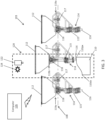
- FIG. 1 is a perspective view of system 100.
- the system 100 includes a separation unit 102 having one or more conveyors, a sorting unit 103, and a segregating unit 104.
- the system 100 further includes a conveyor 105, which is, for example, a belt conveyor extending at least partially through the separation unit 102, the sorting unit 103, and the segregating unit 104.
- the separation unit 102 includes, for example, a first conveyor 106a and a second conveyor 106b extending at least partially through the separation unit 102 and configured to receive a plurality of chicks (not shown).
- the first and second conveyors 106a-106b which are, for example, belt conveyors, are positioned sequentially one after the other and are in communication with one another so as to maintain a forward moving path.
- the conveyors which are either portions of the conveyor 105 or separate conveyors, may operate at the same or different speeds, and may be activated manually or controlled by a computerized controller (not shown), over wired and/or wireless networks, or combinations thereof.
- the separation unit 102 may be in communication with other conveyors placed before it. These conveyors provide chicks into the separation unit 102 and may be, for example, a belt conveyor, a U-shaped conveyor, a chain conveyor, a live roller conveyor, and the like.
- the sorting unit 103 includes a slanting section 110 extending from a proximal portion 110ax to a distal portion 110px, and a conveyor 108, which is, for example, a belt conveyor.
- the conveyor 108 which is either a portion of the conveyor 105 or a separate conveyor, extends at least partially through the sorting unit 103 and may be controlled by a computer, computerized controller, or the like, as well as manually.
- the sorting unit 103 further includes one or more containers, for example, a container 112 configured to receive a single chick.
- the container 112 which may be of different shapes, for example, an inverted pyramid with a flattened vertex, is in communication with the conveyor 108 and the slanting section 110 through, for example, moving element 114.
- the moving element 114 includes a pin portion 116 configured to slide along the slanting section 110, a container portion 118 configured to connect between the moving element 114 and the container 112, an intermediate portion 115 configured to connect between the pin portion 116 and the container portion 118, and a conveyor portion 117 configured to connect the moving element 114 to the conveyor 108.
- the intermediate portion 115 is able to move vertically on the conveyor 108, in response to movement along the slanting section 110, so as to allow movement of the container 112 between a first position 119a, in which the container 112 is adjacent to the conveyor 108 (for example, at and before the proximal portion 110ax, as well as after the distal portion 110px), and a second position 119b, in which the container 112 is at a predetermined distance from the conveyor 108 (for example, at the distal portion 110px).
- the moving element 114 may further incorporate a container content removal mechanism, for example, a turning aside mechanism.
- a container content removal mechanism for example, a turning aside mechanism.
- the turning aside mechanism which may be controlled by a computer, computerized controller, or the like, as well as manually, is operated using, for example, an extension (not shown) that collides with either side of the bottom of the container 112, causing it to flip and release its content.
- the sorting unit 103 further features an optic unit 120 covering at least a portion of the area of the slanting section 110.
- the optic unit 120 includes a camera 122, which is, for example, a high-speed Charge Coupled Device (CCD) camera or other camera suitable to achieve the same purpose, and a light source 124, which is, for example, a Light Emitting Diodes (LED) light source or other light source suitable to achieve the same purpose.
- the camera 122 and the light source 124 are positioned, for example, at the top of the optic unit 120, above the slanting section 110, and are in communication with a linked computer 126.
- "Linked" as used herein, includes both wired and/or wireless links, such that the computers, servers, components, devices and the like, are in electronic and/or data communications with each other, directly or indirectly.
- the linked computer 126 is in further communication with the segregating unit 104.
- the segregating unit 104 positioned, for example, after the distal portion 110px, includes one or more gates, for example, three electromagnetic gates (not shown). Each electromagnetic gate represents, for example, a specific gender (male, female, or unrecognized gender) and is operated in response to a signal sent from the linked computer 126.
- the gates may be in further communication with a counter or counting machine so as to monitor the number of chicks passing through each gate.
- the gates may also be in communication with a packaging machine including crates suitable for transporting chicks.
- Each crate receives a predetermined number of chicks, for example, 100 chicks per crate so as to be supplied to a customer.
- chicks are entered into the separation unit 102 and are placed, either manually or automatically, on the first conveyor 106a.
- the chicks are moved, for example, in a horizontal movement from the first conveyor 106a towards the sorting unit 103, through the second conveyor 106b.
- the second conveyor 106b is operated, for example, at a speed, which is, for example, 10 percent faster than the speed of the first conveyor 106a.
- the difference in speeds enables creating a queue-like arrangement of chicks so as to feed the chicks to the sorting unit 103 one by one.
- the distance between every two chicks in the queue-like arrangement may be predetermined or random.
- each chick is placed, either manually or automatically, in a separate container 112, positioned in its first position 119a.
- the containers are then moved sequentially one after the other by the conveyor 108, at a constant speed, towards the proximal portion 110ax of slanting section 110.
- the speed is, for example, identical to the speed of the second conveyor 106b allowing the chicks to relax and stay calm ( FIGs. 4A and 5A ).
- each moving element 114 moves along the route of the slanting section 110, from the proximal portion 110ax to the distal portion 110px.
- This movement causes the intermediate portion 115 of each moving element 114 to move vertically in relation to the conveyor 108, causing the containers to move from their first position 119a to their second position 119b.
- This movement which causes a swift change in the container's height in relation to the conveyor 108, triggers an instinctive reaction of the chicks within the containers, causing them to spread their wings to maintain their stability in response to the instantaneous disorientation.
- the camera 122 obtains images of each chick within each container spreading its wings ( FIGs. 4B-4D and 5B-5D ). These images are then transferred to the linked computer 126, which determines the gender of the chick via image processing.
- the image processing occurs, for example, in real-time and includes: separating the chick pixels from the background, analyzing the chick's contour to select images of the chick with wings outstretched, extracting features relating to the chick's wings, and determining the chick's gender according to these features.
- each moving element 114 moves back to its initial position, causing each container to move back to its first position 119a.
- the conveyor 108 keeps a forward movement of each container 112 with its conveyor portion 117 towards the segregating unit 104 in a horizontal movement. This horizontal movement allows the chick within each container 112 to relax, regain balance, fold its wings, and return to an upright stance ( FIGs. 4E and 4E ).
- a signal is sent from the linked computer 126 to the segregating unit 104.
- the signal leads to the opening of the designated electromagnetic gate (male, female, or unrecognized gender), according to the determination of gender performed by the image processing.
- the chick is removed from the container 112 and transferred through the proper gender gate either manually or through the turning aside mechanism of the moving element 114.
- the present invention further provides a weighing system and a system for detecting external body defects of chicks for assessing chicks' health. These systems can be independent or integrated into the aforementioned system for recognizing and segregating chicks by gender based on their wing pattern.
- FIG. 6 is a perspective view of the weighing system 130, which determines the health of a chick based on its weight (a healthy chick weight over 42-43 grams).
- the weighing system 130 includes, for example, a plane 132, a load cell 134 in communication with a processor (not shown), which is in further communication with a linked computer (not shown), and a first and second protrusions 136a and 136b extending upwards from the plane 132 so as to fasten the plane 132 to a surface 137.
- the load cell 134 is in communication, directly or indirectly, with the surface 137 so as to create a weighing position 138, in which weight readings are being produced.
- the weighing position 138 further includes an anchoring portion 142 configured to fasten the examined chick to the weighing position, while the weight readings are being produced.
- the system 130 further includes, for example, two electromagnetic gates (not shown), a healthy chick gate, and a non-healthy chick gate located after the weighing position 138 and which are in communication with the linked computer.
- a chick In operation, as a chick enters the weighing system 130, it is directed to the weighing position 138 by, for example, being placed directly on the surface, which is, for example, a belt conveyor, or by being placed within, for example, a container similar in construction and operation to the containers of the system 100, disclosed above.
- the chick Once the chick reaches the weighing position 138, it is secured, either directly or through pin 116, to the weighing position 138 by anchoring portion 142. This action allows the load cell 134 to form, for example, over a hundred readings and transfer them to the processor.
- the processor identifies the "clean" readings (readings in which the chick did not move) and calculates the average value of the "clean” readings. This value is then transferred to the linked computer.
- the linked computer compares the weight value transferred from the processor to a predetermined threshold, for example, a weight value of 42-43 grams, and sends a signal to either the healthy chick gate (if the weight value is equal or higher than the predetermined threshold) or the non-healthy chick gate (if the weight value is lower than the predetermined threshold) accordingly, causing the designated gate to open and receive the chick.
- a predetermined threshold for example, a weight value of 42-43 grams
- the system for detecting external body defects of chicks for assessing chicks' health includes, for example, a camera configured to obtain images of chicks, and a linked computer in communication with the camera configured to receive the images obtained by the camera and assess the health of the chicks via image processing.
- the chicks are directed to the camera's field of view by being placed, for example, directly on a conveyor, for example, a belt conveyor, or by being placed within, for example, a container similar in construction and operation to the containers of the system 100, disclosed above.
- the system further includes, for example, two electromagnetic gates, a healthy chick gate, and a non-healthy chick gate located after the camera's field of view and which are in communication with the linked computer.
- the camera In operation, as each chick enters the camera's field of view, the camera obtains images of the chick and transfers them to the linked computer.
- the linked computer processes the images and detects external body defects such as plume problems, a defective head, a rotated head, a crossed beak, and the like.
- the linked computer sends a signal to either the healthy chick gate or the non-healthy chick gate, causing the designated gate to open and receive the chick.
Landscapes
- Life Sciences & Earth Sciences (AREA)
- Health & Medical Sciences (AREA)
- Engineering & Computer Science (AREA)
- Physics & Mathematics (AREA)
- Biomedical Technology (AREA)
- Pathology (AREA)
- General Health & Medical Sciences (AREA)
- Animal Behavior & Ethology (AREA)
- Veterinary Medicine (AREA)
- Surgery (AREA)
- Biophysics (AREA)
- Molecular Biology (AREA)
- Public Health (AREA)
- Heart & Thoracic Surgery (AREA)
- Medical Informatics (AREA)
- Environmental Sciences (AREA)
- Theoretical Computer Science (AREA)
- General Physics & Mathematics (AREA)
- Multimedia (AREA)
- Nuclear Medicine, Radiotherapy & Molecular Imaging (AREA)
- Radiology & Medical Imaging (AREA)
- Birds (AREA)
- Animal Husbandry (AREA)
- Biodiversity & Conservation Biology (AREA)
- Human Computer Interaction (AREA)
- Reproductive Health (AREA)
- Gynecology & Obstetrics (AREA)
- Image Analysis (AREA)
- Investigating Or Analysing Biological Materials (AREA)
- Processing Of Meat And Fish (AREA)
Description
- The present invention relates to the field of identifying and assessing newly-hatched chick's gender and health.
- Chick sexing is the method of distinguishing the gender of chickens and other hatchlings, usually by a trained person called a chick sexer or chicken sexer. Chick sexing is practiced mostly by large commercial hatcheries to separate female chicks or "pullets" (destined to lay eggs for commercial sale) from the males or "cockerels" (most of which are killed within days of hatching because they are irrelevant to egg production).
- Identification of the gender of newly-hatched chicks can be achieved for most species of chicks by feather sexing. Feather sexing is the ability to detect the gender of a newly-hatched chick based on the rate of growth of its wing feathers, which differ with gender due to genetic encoding. In an outstretched position, the female wings display a pattern of long feathers in the primary row and short feathers in the secondary row, while the male wings display a pattern of feathers of the same length in the primary and secondary rows.
- Assessment of newly-hatched chicks' health is achieved for the most part by observing the chicks and identifying signs related to healthy chicks such as brighteyed, alert and active, head configuration, beak configuration, legs configuration, and the like.
- To date, health assessment and gender recognition of newly hatched poultry chicks are performed manually, involving the need to observe each chick with a naked eye, and spread its wings so as to determine its health and gender, respectively.
-
US 2001/030146 A1 discloses an apparatus and a method for causing a chick's wings to spread automatically for a sufficient length of time so that chick sexing can be performed. - The present invention provides systems and methods for recognizing and segregating chicks by gender. The system is based on the instinctive reaction of chicks to spread their wings in order to maintain stability in response to instantaneous disorientation caused by an external factor, for example, due to a sudden change in spatial movement.
- The present invention further features a weighing system and a system for detecting external body defects of chicks for assessing chicks' health.
- Embodiments of the invention are directed to a system for recognizing and segregating chicks by gender according to their feathers pattern comprising: a separation unit including at least one first conveyor extending at least partially through the separation unit, the at least one first conveyor configured to maintain a forward moving path of a plurality of chicks in a queue; a sorting unit configured to receive the plurality of chicks in a queue, wherein the sorting unit includes: at least one second conveyor extending at least partially through the sorting unit configured to maintain a forward moving path; and, at least one container containing a chick of said plurality of chicks in communication with the at least one second conveyor and a slanting section through a moving element such that the at least one container is moved vertically from a first position, in which the container is adjacent to the conveyor, to a second position, in which the container is at a predetermined distance from the conveyor while containing the chick of the plurality of chicks;
wherein the moving element includes a pin portion configured to slide along the slanting section, a container portion configured to connect between the moving element and the container, an intermediate portion configured to connect between the pin portion and the container portion, and a conveyor portion configured to connect the moving element to the second conveyor; wherein the intermediate portion is adapted to move vertically on the second conveyor, in response to movement along the slanting section, so as to allow movement of the container from the first position to the second position; an optic unit including a camera configured to capture at least one image of the at least one chick as the at least one container is moved from the first position to the second position, the at least one image being then transferred to be image processed so as to determine the gender of the at least one chick; wherein each container of the at least one container is adapted to allow said chick to fold its wings while the container moves from the sorting unit towards a segregating unit in a horizontal movement. - Optionally, the moving element is controlled by a computerized controller.
- Optionally, the moving element includes a turning aside mechanism designed to allow the removal of the container's content.
- Optionally, the turning aside mechanism is controlled by the computerized controller.
- Optionally, the system additonally comprising a computerized controller configured for controlling the at least one second conveyor and the camera.
- Optionally, the at least one conveyor is one of: a belt conveyor, a U-shaped belt conveyor, a chain conveyor, a live roller conveyor, and a combination thereof.
- Optionally, the at least one container has the shape of an inverted pyramid with a flattened vertex.
- Optionally, the camera is a high-speed Charge Coupled Device (CCD) camera.
- Optionally, the optic unit further includes a light source.
- Optionally, the light source is a LED light source.
- Optionally, the light source is controlled by the computerized controller.
- Optionally, the system additionally comprising a segregating unit including at least one electromagnetic gate configured to receive the at least one chick from the at least one container.
- Optionally, the segregating unit is controlled by the computerized controller.
- Optionally, the system additionally comprising a counting machine configured to monitor the number of chicks passing through the at least one gate.
- Optionally, the counting machine is controlled by the computerized controller.
- Optionally, the system additionally comprising a packaging machine configured to receive chicks from the at least one gate and pack them in a crates suitable for transporting chicks.
- Optionally, the packaging machine is controlled by the computerized controller.
- Optionally, the one or more images are additionally used to detect body defects in the at least one chick.
- Optionally, the system additionally comprising a weighing unit connected to the at least one conveyor of the sorting unit, the weighing unit includes a load cell configured to perform a plurality of weight readings of the at least one chick as the container reaches it so as to determine the health of the at least one chick based on its weight.
- Optionally, the weighing unit is in controlled by the computerized controller.
- Optionally, the load cell is in communication with a processor configured to calculate the actual weight of the at least one chick.
- Embodiments of the invention are directed to a method for recognizing and segregating chicks by gender according to their feathers pattern comprising: placing the chicks on a first conveyor for causing movement of the plurality of chicks in a queue; placing each chick of the plurality of chicks in a queue in a container, the container being placed on a second conveyor, moving the containers sequentially one after the other by the second conveyor, at a constant speed towards a proximal portion of a slanting section, wherein when the container is at the proximal portion, a pin portion of a moving element in communication with the container moves along a route of the slanting section, from the proximal portion to a distal portion, wherein said movement of the pin portion causes an intermediate portion of the moving element to move vertically in relation to the second conveyor, causing the container to move from a first position in which the container is adjacent to the conveyor, to a second position in which the container is at a predetermined distance from the conveyor, wherein said movement from the first position to the second position causes a swift change in the container's height in relation to the second conveyor, triggering an instinctive reaction of the chick within the container, causing it to spread its wings; capturing one or more images of the wings of the each of the plurality of chicks as the container is moved vertically from the first position to the second position; processing the one or more images of the wings of the at least one chick so as to determine its gender; wherein each container of the at least one container is adapted to allow said chick to fold its wings while the container moves from the sorting unit towards a segregating unit in a horizontal movement.
- Optionally, the method additionally comprising sorting the chicks according to their gender.
- Optionally, the method additionally comprising counting the chicks of each gender.
- Optionally, the one or more images of the chick is further used to identify body defects.
- Optionally, the body defects are one of: plume problems, defective head, rotated head, crossed beak, and a combination thereof.
- Optionally, the method additionally comprising: performing a plurality of weighing readings to each of the plurality of chicks as the container reaches a designated location within the second pathway; and, calculating the average of the plurality of weighing readings so as to determine the weight of each of the plurality of chicks and by that determine its health.
- Unless otherwise defined herein, all technical and/or scientific terms used herein have the same meaning as commonly understood by one of ordinary skill in the art to which the invention pertains. Although methods and materials similar or equivalent to those described herein may be used in the practice or testing of embodiments of the invention, exemplary methods and/or materials are described below. In case of conflict, the patent specification, including definitions, will control. In addition, the materials, methods, and examples are illustrative only and are not intended to be necessarily limiting.
- Some embodiments of the present invention are herein described, by way of example only, with reference to the accompanying drawings. With specific reference to the drawings in detail, it is stressed that the particulars shown are by way of example and for purposes of illustrative discussion of embodiments of the invention. In this regard, the description taken with the drawings makes apparent to those skilled in the art how embodiments of the invention may be practiced.
- Attention is now directed to the drawings, where like reference numerals or characters indicate corresponding or like components. In the drawings:
-
FIG. 1 is a perspective view of the system for recognizing and segregating chicks by gender according to an embodiment of the present invention; -
FIG. 2 is a perspective view of the separation unit of the system ofFIG. 1 ; -
FIG. 3 is a perspective view of the sorting unit of the system ofFIG. 1 , which forces the instability of chicks causing them to wide spread their wings; -
FIGs. 4A-E are top views illustrate the transition of the wings of a female chick from a folded position to an outstretched position and vice versa. -
FIGs. 5A-E are top views illustrate the transition of the wings of a male chick from a folded position to an outstretched position and vice versa. -
FIG. 6 is a perspective view of the weighing system according to an embodiment of the present invention. - The present invention is not limited in its application to the details of construction and the arrangement of the components set forth in the following description. The invention is capable of other embodiments, or of being practiced or carried out in various ways. Also, it is to be understood that the phraseology and terminology employed herein is for the purpose of description and should not be regarded as limiting.
- The present invention provides systems and methods for recognizing and segregating chicks by gender based on their wing pattern. The present invention relies on chicks' instinctive reaction to spread their wings to maintain stability in response to instantaneous disorientation.
-
FIG. 1 is a perspective view ofsystem 100. Thesystem 100 includes aseparation unit 102 having one or more conveyors, asorting unit 103, and asegregating unit 104. Thesystem 100 further includes aconveyor 105, which is, for example, a belt conveyor extending at least partially through theseparation unit 102, thesorting unit 103, and thesegregating unit 104. - The
separation unit 102, best seen inFIG. 2 , includes, for example, afirst conveyor 106a and asecond conveyor 106b extending at least partially through theseparation unit 102 and configured to receive a plurality of chicks (not shown). The first andsecond conveyors 106a-106b, which are, for example, belt conveyors, are positioned sequentially one after the other and are in communication with one another so as to maintain a forward moving path. - The conveyors, which are either portions of the
conveyor 105 or separate conveyors, may operate at the same or different speeds, and may be activated manually or controlled by a computerized controller (not shown), over wired and/or wireless networks, or combinations thereof. - The
separation unit 102 may be in communication with other conveyors placed before it. These conveyors provide chicks into theseparation unit 102 and may be, for example, a belt conveyor, a U-shaped conveyor, a chain conveyor, a live roller conveyor, and the like. - The
sorting unit 103, best seen inFIG. 3 , includes aslanting section 110 extending from a proximal portion 110ax to a distal portion 110px, and aconveyor 108, which is, for example, a belt conveyor. Theconveyor 108, which is either a portion of theconveyor 105 or a separate conveyor, extends at least partially through thesorting unit 103 and may be controlled by a computer, computerized controller, or the like, as well as manually. - The
sorting unit 103 further includes one or more containers, for example, acontainer 112 configured to receive a single chick. Thecontainer 112, which may be of different shapes, for example, an inverted pyramid with a flattened vertex, is in communication with theconveyor 108 and theslanting section 110 through, for example, movingelement 114. - The moving
element 114 includes apin portion 116 configured to slide along theslanting section 110, acontainer portion 118 configured to connect between the movingelement 114 and thecontainer 112, anintermediate portion 115 configured to connect between thepin portion 116 and thecontainer portion 118, and aconveyor portion 117 configured to connect the movingelement 114 to theconveyor 108. Theintermediate portion 115 is able to move vertically on theconveyor 108, in response to movement along theslanting section 110, so as to allow movement of thecontainer 112 between afirst position 119a, in which thecontainer 112 is adjacent to the conveyor 108 (for example, at and before the proximal portion 110ax, as well as after the distal portion 110px), and asecond position 119b, in which thecontainer 112 is at a predetermined distance from the conveyor 108 (for example, at the distal portion 110px). - The moving
element 114 may further incorporate a container content removal mechanism, for example, a turning aside mechanism. The turning aside mechanism, which may be controlled by a computer, computerized controller, or the like, as well as manually, is operated using, for example, an extension (not shown) that collides with either side of the bottom of thecontainer 112, causing it to flip and release its content. - The
sorting unit 103 further features anoptic unit 120 covering at least a portion of the area of theslanting section 110. Theoptic unit 120 includes acamera 122, which is, for example, a high-speed Charge Coupled Device (CCD) camera or other camera suitable to achieve the same purpose, and alight source 124, which is, for example, a Light Emitting Diodes (LED) light source or other light source suitable to achieve the same purpose. Thecamera 122 and thelight source 124 are positioned, for example, at the top of theoptic unit 120, above theslanting section 110, and are in communication with a linkedcomputer 126. "Linked" as used herein, includes both wired and/or wireless links, such that the computers, servers, components, devices and the like, are in electronic and/or data communications with each other, directly or indirectly. - The linked
computer 126 is in further communication with the segregatingunit 104. The segregatingunit 104, positioned, for example, after the distal portion 110px, includes one or more gates, for example, three electromagnetic gates (not shown). Each electromagnetic gate represents, for example, a specific gender (male, female, or unrecognized gender) and is operated in response to a signal sent from the linkedcomputer 126. - The gates may be in further communication with a counter or counting machine so as to monitor the number of chicks passing through each gate. The gates may also be in communication with a packaging machine including crates suitable for transporting chicks. Each crate receives a predetermined number of chicks, for example, 100 chicks per crate so as to be supplied to a customer.
- In operation, chicks are entered into the
separation unit 102 and are placed, either manually or automatically, on thefirst conveyor 106a. The chicks are moved, for example, in a horizontal movement from thefirst conveyor 106a towards the sortingunit 103, through thesecond conveyor 106b. Thesecond conveyor 106b is operated, for example, at a speed, which is, for example, 10 percent faster than the speed of thefirst conveyor 106a. The difference in speeds enables creating a queue-like arrangement of chicks so as to feed the chicks to thesorting unit 103 one by one. The distance between every two chicks in the queue-like arrangement may be predetermined or random. - In the
sorting unit 103, each chick is placed, either manually or automatically, in aseparate container 112, positioned in itsfirst position 119a. The containers are then moved sequentially one after the other by theconveyor 108, at a constant speed, towards the proximal portion 110ax ofslanting section 110. The speed is, for example, identical to the speed of thesecond conveyor 106b allowing the chicks to relax and stay calm (FIGs. 4A and5A ). - Once the containers reach the proximal portion 110ax, the
pin portion 116 of each movingelement 114 moves along the route of theslanting section 110, from the proximal portion 110ax to the distal portion 110px. This movement causes theintermediate portion 115 of each movingelement 114 to move vertically in relation to theconveyor 108, causing the containers to move from theirfirst position 119a to theirsecond position 119b. This movement, which causes a swift change in the container's height in relation to theconveyor 108, triggers an instinctive reaction of the chicks within the containers, causing them to spread their wings to maintain their stability in response to the instantaneous disorientation. - Simultaneously with each moving element's movement along the route of
slanting section 110, thecamera 122 obtains images of each chick within each container spreading its wings (FIGs. 4B-4D and5B-5D ). These images are then transferred to the linkedcomputer 126, which determines the gender of the chick via image processing. The image processing occurs, for example, in real-time and includes: separating the chick pixels from the background, analyzing the chick's contour to select images of the chick with wings outstretched, extracting features relating to the chick's wings, and determining the chick's gender according to these features. - After the distal portion 110px, the
intermediate portion 115 of each movingelement 114 moves back to its initial position, causing each container to move back to itsfirst position 119a. Theconveyor 108 keeps a forward movement of eachcontainer 112 with itsconveyor portion 117 towards the segregatingunit 104 in a horizontal movement. This horizontal movement allows the chick within eachcontainer 112 to relax, regain balance, fold its wings, and return to an upright stance (FIGs. 4E and 4E ). - With each
container 112 reaching thesegregating unit 104, a signal is sent from the linkedcomputer 126 to thesegregating unit 104. The signal leads to the opening of the designated electromagnetic gate (male, female, or unrecognized gender), according to the determination of gender performed by the image processing. - Once the
container 112 reaches its designated gate, the chick is removed from thecontainer 112 and transferred through the proper gender gate either manually or through the turning aside mechanism of the movingelement 114. - The present invention further provides a weighing system and a system for detecting external body defects of chicks for assessing chicks' health. These systems can be independent or integrated into the aforementioned system for recognizing and segregating chicks by gender based on their wing pattern.
-
FIG. 6 is a perspective view of the weighingsystem 130, which determines the health of a chick based on its weight (a healthy chick weight over 42-43 grams). The weighingsystem 130 includes, for example, aplane 132, aload cell 134 in communication with a processor (not shown), which is in further communication with a linked computer (not shown), and a first andsecond protrusions plane 132 so as to fasten theplane 132 to asurface 137. Theload cell 134 is in communication, directly or indirectly, with thesurface 137 so as to create a weighingposition 138, in which weight readings are being produced. The weighingposition 138 further includes an anchoringportion 142 configured to fasten the examined chick to the weighing position, while the weight readings are being produced. - The
system 130 further includes, for example, two electromagnetic gates (not shown), a healthy chick gate, and a non-healthy chick gate located after the weighingposition 138 and which are in communication with the linked computer. - In operation, as a chick enters the weighing
system 130, it is directed to the weighingposition 138 by, for example, being placed directly on the surface, which is, for example, a belt conveyor, or by being placed within, for example, a container similar in construction and operation to the containers of thesystem 100, disclosed above. - Once the chick reaches the weighing
position 138, it is secured, either directly or throughpin 116, to the weighingposition 138 by anchoringportion 142. This action allows theload cell 134 to form, for example, over a hundred readings and transfer them to the processor. The processor identifies the "clean" readings (readings in which the chick did not move) and calculates the average value of the "clean" readings. This value is then transferred to the linked computer. - The linked computer compares the weight value transferred from the processor to a predetermined threshold, for example, a weight value of 42-43 grams, and sends a signal to either the healthy chick gate (if the weight value is equal or higher than the predetermined threshold) or the non-healthy chick gate (if the weight value is lower than the predetermined threshold) accordingly, causing the designated gate to open and receive the chick.
- The system for detecting external body defects of chicks for assessing chicks' health includes, for example, a camera configured to obtain images of chicks, and a linked computer in communication with the camera configured to receive the images obtained by the camera and assess the health of the chicks via image processing. The chicks are directed to the camera's field of view by being placed, for example, directly on a conveyor, for example, a belt conveyor, or by being placed within, for example, a container similar in construction and operation to the containers of the
system 100, disclosed above. The system further includes, for example, two electromagnetic gates, a healthy chick gate, and a non-healthy chick gate located after the camera's field of view and which are in communication with the linked computer. - In operation, as each chick enters the camera's field of view, the camera obtains images of the chick and transfers them to the linked computer. The linked computer processes the images and detects external body defects such as plume problems, a defective head, a rotated head, a crossed beak, and the like.
- Once the image processing is finished and the chick exits the camera's field of view towards the gates, the linked computer sends a signal to either the healthy chick gate or the non-healthy chick gate, causing the designated gate to open and receive the chick.
- While the invention has been described with respect to a limited number of embodiments, it will be appreciated that many variations, modifications and other applications of the invention may be made. Therefore, the claimed invention as recited in the claims that follow is not limited to the embodiments described herein.
Claims (7)
- A system (100) for recognizing and segregating chicks by gender according to their feathers pattern comprising:a separation unit (102) including at least one first conveyor (105) extending at least partially through said separation unit, said at least one first conveyor configured to maintain a forward moving path of a plurality of chicks in a queue;a sorting unit (103) configured to receive said plurality of chicks in a queue, wherein said sorting unit includesat least one second conveyor (108) extending at least partially through said sorting unit, configured to maintain a forward moving path; and,at least one container (112) containing a chick of said plurality of chicks, in communication with said at least one second conveyor (108) and a slanting section (110) through a moving element (114) such that said at least one container (112) is moved vertically from a first position (119a), in which the container (112) is adjacent to the second conveyor (108), to a second position (119b), in which the container (112) is at a predetermined distance from the second conveyor (108), while containing the chick of said plurality of chicks,wherein the moving element (114) includes a pin portion (116) configured to slide along the slanting section (110), a container portion (118) configured to connect between the moving element (114) and the container (112), an intermediate portion (115) configured to connect between the pin portion (116) and the container portion (118), and a conveyor portion (117) configured to connect the moving element (114) to the second conveyor (108); wherein the intermediate portion (115) is adapted to move vertically on the second conveyor (108), in response to movement along the slanting section (110), so as to allow movement of the container (112) from the first position (119a) to the second position (119b);an optic unit (120) including a camera (122) configured to capture at least one image of said chick as said at least one container (112) is moved vertically from said first position (119a) to said second position (119b), and to transfer said at least one image to be image processed so as to determine the gender of said chick; andwherein each container (112) of the at least one container (112) is adapted to allow said chick to fold its wings while the container (112) moves from the sorting unit (103) towards a segregating unit (104) in a horizontal movement.
- The system of claim 1, further comprising a turning aside mechanism designed to allow the removal of the container's content and wherein said turning aside mechanism is controlled by a the computerized controller.
- The system of any one of claims 1-2, additionally comprising a computerized controller configured for controlling said at least one second conveyor and said camera.
- The system of any one of claims 1-3, wherein said at least one container has the shape of an inverted pyramid with a flattened vertex.
- The system of any one of claims 1-4, wherein said optic unit further includes a light source controlled by a computerized controller.
- The system of any one of claims 1-5, additionally comprising a segregating unit including at least one electromagnetic gate configured to receive said chick from said at least one container and wherein said segregating unit is controlled by a computerized controller.
- A method for recognizing and segregating chicks by gender according to their feathers pattern comprising:placing a plurality of chicks on a first conveyor (105) for causing movement of said plurality of chicks in a queue;placing each chick of said plurality of chicks in a queue in a container (112), said container being placed on a second conveyor (108),moving the containers (112) sequentially one after the other by the second conveyor (108), at a constant speed, towards a proximal portion (110ax) of a slanting section (110), wherein, when the container (112) is at the proximal portion (110ax), a pin portion (116) of a moving element (114) in communication with the container (112) moves along a route of the slanting section (110), from the proximal portion (110ax) to a distal portion (110px), wherein said movement of the pin portion (116) causes an intermediate portion (115) of the moving element (114) to move vertically in relation to the second conveyor (108), causing the container (112) to move from a first position (119a) in which the container (112) is adjacent to the second conveyor (108), to a second position (119b) in which the container (112) is at a predetermined distance from the second conveyor (108), wherein said movement from the first position (119a) to the second position (119b) causes a swift change in the container's height in relation to the second conveyor (108), triggering an instinctive reaction of the chick within the container (112), causing it to spread its wings;capturing one or more images of the wings of said each of said plurality of chicks as said container (112) is moved vertically from said first position (119a) to said second position (119b);processing said one or more images of the wings of said chick so as to determine its gender;wherein each container (112) of the at least one container (112) is adapted to allow said chick to fold its wings while the container (112) moves from the sorting unit (103) towards a segregating unit (104) in a horizontal movement.
Applications Claiming Priority (2)
| Application Number | Priority Date | Filing Date | Title |
|---|---|---|---|
| US201962943881P | 2019-12-05 | 2019-12-05 | |
| PCT/IB2020/061567 WO2021111420A1 (en) | 2019-12-05 | 2020-12-06 | Systems and methods for chicks sexing and health assessment of newly-hatched chicks |
Publications (3)
| Publication Number | Publication Date |
|---|---|
| EP3914150A1 EP3914150A1 (en) | 2021-12-01 |
| EP3914150A4 EP3914150A4 (en) | 2022-03-09 |
| EP3914150B1 true EP3914150B1 (en) | 2023-11-22 |
Family
ID=76221540
Family Applications (1)
| Application Number | Title | Priority Date | Filing Date |
|---|---|---|---|
| EP20895561.7A Active EP3914150B1 (en) | 2019-12-05 | 2020-12-06 | System and method for chicks sexing of newly-hatched chicks |
Country Status (8)
| Country | Link |
|---|---|
| US (1) | US11690358B2 (en) |
| EP (1) | EP3914150B1 (en) |
| BR (1) | BR112022000166A2 (en) |
| ES (1) | ES2971433T3 (en) |
| IL (1) | IL284452B2 (en) |
| PL (1) | PL3914150T3 (en) |
| PT (1) | PT3914150T (en) |
| WO (1) | WO2021111420A1 (en) |
Families Citing this family (15)
| Publication number | Priority date | Publication date | Assignee | Title |
|---|---|---|---|---|
| WO2020095394A1 (en) * | 2018-11-07 | 2020-05-14 | 八木 宜英 | Fertilized egg male-or-female determination device, fertilized egg male-or-female determination method, and program |
| WO2023281198A1 (en) * | 2021-07-08 | 2023-01-12 | Egg-Chick Automated Technologies | Facility for automatically determining the sex of a chick |
| CN114260209B (en) * | 2022-03-02 | 2022-05-24 | 山东峪口禽业有限公司 | Intelligent sorting system and method for chick hatching production line |
| IL320279A (en) * | 2022-10-18 | 2025-06-01 | Targan Inc | Identifying the gender of chicks using digital image analysis |
| EP4677999A1 (en) * | 2023-04-06 | 2026-01-14 | Antonello, Ricardo | Equipment and method for analysing individual characteristics and determining the sex of birds |
| WO2025041697A1 (en) * | 2023-08-22 | 2025-02-27 | 株式会社ナベル | Sex determination device |
| WO2025176950A1 (en) * | 2024-02-20 | 2025-08-28 | Egg-Chick Automated Technologies | Facility for determining the sex of chicks |
| WO2025176952A1 (en) * | 2024-02-20 | 2025-08-28 | Egg-Chick Automated Technologies | Device for spacing and longitudinally or substantially longitudinally aligning chicks during transport |
| WO2025176947A1 (en) * | 2024-02-20 | 2025-08-28 | Egg-Chick Automated Technologies | Device for routing chicks at the output of a conveyor |
| WO2025176951A1 (en) * | 2024-02-20 | 2025-08-28 | Egg-Chick Automated Technologies | System for transporting a chick making it possible to track the movement of the chick |
| WO2025176949A1 (en) * | 2024-02-20 | 2025-08-28 | Egg-Chick Automated Technologies | System and method for transporting chicks, allowing their reorientation during transport |
| WO2025176948A1 (en) * | 2024-02-20 | 2025-08-28 | Egg-Chick Automated Technologies | System and method for preparing and prompting the deployment of the wings of a chick in response to a stimulus |
| WO2025176953A1 (en) * | 2024-02-20 | 2025-08-28 | Egg-Chick Automated Technologies | Chick transport unit |
| FR3159287A1 (en) * | 2024-02-20 | 2025-08-22 | Egg-Chick Automated Technologies | Installation and method for the automatic determination of the sex of a chick |
| CN118661666A (en) * | 2024-07-11 | 2024-09-20 | 浙江大学 | Automatic young bird gender detection device and method based on machine vision |
Family Cites Families (9)
| Publication number | Priority date | Publication date | Assignee | Title |
|---|---|---|---|---|
| DE2015619A1 (en) * | 1970-04-02 | 1971-12-23 | Hauni Werke Korber & Co KG, 2050 Hamburg | Method and device for monitoring tobacco processing machines |
| JPH06245662A (en) * | 1993-02-24 | 1994-09-06 | Koiwai Nouboku Kk | Chick receiving system |
| US6396938B1 (en) * | 1998-02-27 | 2002-05-28 | University Of Arkansas, N.A. | Automatic feather sexing of poultry chicks using ultraviolet imaging |
| CA2323197A1 (en) | 1999-10-12 | 2001-04-12 | Efrochan (1997) Ltd. | Method of automated sexing of chicks |
| US8019125B2 (en) * | 2007-04-17 | 2011-09-13 | Egg-Chick Automated Technologies | System and method for automatically determining the sex of chicks and device for conveying living animals |
| CN102169539B (en) * | 2011-04-27 | 2012-11-28 | 南通市众发禽业有限公司 | Poult sex discriminator and discriminating method |
| EP2579188B1 (en) | 2011-10-06 | 2018-03-21 | Pas Reform BV | Chick counter and method for counting chicks |
| KR102829941B1 (en) * | 2015-11-13 | 2025-07-04 | 타르간 인크. | Automatic system and method for injecting a substance into an animal |
| CN211070913U (en) | 2019-08-09 | 2020-07-24 | 上海欣灏珍禽育种有限公司 | Device for sorting chicks according to gender of pheasants |
-
2020
- 2020-12-06 WO PCT/IB2020/061567 patent/WO2021111420A1/en not_active Ceased
- 2020-12-06 PL PL20895561.7T patent/PL3914150T3/en unknown
- 2020-12-06 EP EP20895561.7A patent/EP3914150B1/en active Active
- 2020-12-06 IL IL284452A patent/IL284452B2/en unknown
- 2020-12-06 BR BR112022000166A patent/BR112022000166A2/en unknown
- 2020-12-06 PT PT208955617T patent/PT3914150T/en unknown
- 2020-12-06 ES ES20895561T patent/ES2971433T3/en active Active
- 2020-12-06 US US17/429,952 patent/US11690358B2/en active Active
Also Published As
| Publication number | Publication date |
|---|---|
| WO2021111420A1 (en) | 2021-06-10 |
| EP3914150A4 (en) | 2022-03-09 |
| US11690358B2 (en) | 2023-07-04 |
| PT3914150T (en) | 2024-02-26 |
| IL284452A (en) | 2021-08-31 |
| IL284452B1 (en) | 2025-01-01 |
| BR112022000166A2 (en) | 2022-06-21 |
| US20220132811A1 (en) | 2022-05-05 |
| EP3914150A1 (en) | 2021-12-01 |
| PL3914150T3 (en) | 2024-08-12 |
| ES2971433T3 (en) | 2024-06-05 |
| IL284452B2 (en) | 2025-05-01 |
Similar Documents
| Publication | Publication Date | Title |
|---|---|---|
| US11690358B2 (en) | Systems and methods for chicks sexing and health assessment of newly-hatched chicks | |
| AU2021218043B2 (en) | System and Method of Determining the Health and Gender of a Chick | |
| Giersberg et al. | Effects of hatching system on the welfare of broiler chickens in early and later life | |
| Donaldson et al. | The influence of access to aerial perches on fearfulness, social behaviour and production parameters in free-range laying hens | |
| US5980377A (en) | Method and device for processing a slaughtered animal or part thereof in a slaughterhouse | |
| EFSA Panel on Animal Health and Welfare (AHAW) et al. | Slaughter of animals: poultry | |
| CN114260209B (en) | Intelligent sorting system and method for chick hatching production line | |
| US20130125835A1 (en) | Livestock positioning apparatus for data collection and subsequent sorting | |
| Van de Ven et al. | Significance of chick quality score in broiler production | |
| Aydin et al. | Automatic identification of activity and spatial use of broiler chickens with different gait scores | |
| NL2013435B1 (en) | Methods and systems in egg hatching. | |
| RU2816757C1 (en) | Systems and methods for sex determination and health assessment of newly hatched chickens | |
| WO2023237912A1 (en) | Automated system and method for the hanging of live birds to slaughter | |
| CN120226058A (en) | Chick sexing using digital image analysis | |
| KR20250164803A (en) | Device and method for sex determination and individual characteristic analysis of birds | |
| Nielsen et al. | SCIENTIFIC OPINION | |
| WO2026060377A1 (en) | Noncontact animal diverter system | |
| BR102016014921A2 (en) | automated equipment and method for hanging live poultry for slaughter | |
| CA3288055A1 (en) | Equipment and method for sexing and analysing the individual characteristics of birds | |
| Vekić et al. | Results of incubation and quality of day-old chicks hatched from eggs of different weight. |
Legal Events
| Date | Code | Title | Description |
|---|---|---|---|
| STAA | Information on the status of an ep patent application or granted ep patent |
Free format text: STATUS: THE INTERNATIONAL PUBLICATION HAS BEEN MADE |
|
| PUAI | Public reference made under article 153(3) epc to a published international application that has entered the european phase |
Free format text: ORIGINAL CODE: 0009012 |
|
| STAA | Information on the status of an ep patent application or granted ep patent |
Free format text: STATUS: REQUEST FOR EXAMINATION WAS MADE |
|
| 17P | Request for examination filed |
Effective date: 20210824 |
|
| AK | Designated contracting states |
Kind code of ref document: A1 Designated state(s): AL AT BE BG CH CY CZ DE DK EE ES FI FR GB GR HR HU IE IS IT LI LT LU LV MC MK MT NL NO PL PT RO RS SE SI SK SM TR |
|
| A4 | Supplementary search report drawn up and despatched |
Effective date: 20220209 |
|
| RIC1 | Information provided on ipc code assigned before grant |
Ipc: A01K 45/00 20060101ALI20220203BHEP Ipc: G06M 7/00 20060101ALI20220203BHEP Ipc: G06V 20/52 20220101ALI20220203BHEP Ipc: B65G 15/00 20060101ALI20220203BHEP Ipc: A61B 5/00 20060101AFI20220203BHEP |
|
| STAA | Information on the status of an ep patent application or granted ep patent |
Free format text: STATUS: EXAMINATION IS IN PROGRESS |
|
| 17Q | First examination report despatched |
Effective date: 20230116 |
|
| DAV | Request for validation of the european patent (deleted) | ||
| DAX | Request for extension of the european patent (deleted) | ||
| GRAP | Despatch of communication of intention to grant a patent |
Free format text: ORIGINAL CODE: EPIDOSNIGR1 |
|
| STAA | Information on the status of an ep patent application or granted ep patent |
Free format text: STATUS: GRANT OF PATENT IS INTENDED |
|
| INTG | Intention to grant announced |
Effective date: 20230606 |
|
| GRAS | Grant fee paid |
Free format text: ORIGINAL CODE: EPIDOSNIGR3 |
|
| GRAA | (expected) grant |
Free format text: ORIGINAL CODE: 0009210 |
|
| STAA | Information on the status of an ep patent application or granted ep patent |
Free format text: STATUS: THE PATENT HAS BEEN GRANTED |
|
| REG | Reference to a national code |
Ref country code: DE Ref legal event code: R081 Ref document number: 602020021680 Country of ref document: DE Owner name: THE STATE OF ISRAEL, MINISTRY OF AGRICULTURE &, IL Free format text: FORMER OWNER: THE STATE OF ISRAEL, MINISTRY OF AGRICULTURE & RURAL DEVELOPMENT AGRICULTURAL RESEARCH ORGANIZATION, RISHON LEZION, IL Ref country code: DE Ref legal event code: R081 Ref document number: 602020021680 Country of ref document: DE Owner name: ESHET EILON INDUSTRIES LTD., IL Free format text: FORMER OWNER: THE STATE OF ISRAEL, MINISTRY OF AGRICULTURE & RURAL DEVELOPMENT AGRICULTURAL RESEARCH ORGANIZATION, RISHON LEZION, IL |
|
| AK | Designated contracting states |
Kind code of ref document: B1 Designated state(s): AL AT BE BG CH CY CZ DE DK EE ES FI FR GB GR HR HU IE IS IT LI LT LU LV MC MK MT NL NO PL PT RO RS SE SI SK SM TR |
|
| REG | Reference to a national code |
Ref country code: GB Ref legal event code: FG4D |
|
| REG | Reference to a national code |
Ref country code: CH Ref legal event code: EP |
|
| REG | Reference to a national code |
Ref country code: DE Ref legal event code: R096 Ref document number: 602020021680 Country of ref document: DE |
|
| REG | Reference to a national code |
Ref country code: IE Ref legal event code: FG4D |
|
| REG | Reference to a national code |
Ref country code: NL Ref legal event code: FP |
|
| REG | Reference to a national code |
Ref country code: PT Ref legal event code: SC4A Ref document number: 3914150 Country of ref document: PT Date of ref document: 20240226 Kind code of ref document: T Free format text: AVAILABILITY OF NATIONAL TRANSLATION Effective date: 20240216 |
|
| REG | Reference to a national code |
Ref country code: LT Ref legal event code: MG9D |
|
| PG25 | Lapsed in a contracting state [announced via postgrant information from national office to epo] |
Ref country code: IS Free format text: LAPSE BECAUSE OF FAILURE TO SUBMIT A TRANSLATION OF THE DESCRIPTION OR TO PAY THE FEE WITHIN THE PRESCRIBED TIME-LIMIT Effective date: 20240322 |
|
| PG25 | Lapsed in a contracting state [announced via postgrant information from national office to epo] |
Ref country code: LT Free format text: LAPSE BECAUSE OF FAILURE TO SUBMIT A TRANSLATION OF THE DESCRIPTION OR TO PAY THE FEE WITHIN THE PRESCRIBED TIME-LIMIT Effective date: 20231122 |
|
| REG | Reference to a national code |
Ref country code: AT Ref legal event code: MK05 Ref document number: 1633079 Country of ref document: AT Kind code of ref document: T Effective date: 20231122 |
|
| PG25 | Lapsed in a contracting state [announced via postgrant information from national office to epo] |
Ref country code: AT Free format text: LAPSE BECAUSE OF FAILURE TO SUBMIT A TRANSLATION OF THE DESCRIPTION OR TO PAY THE FEE WITHIN THE PRESCRIBED TIME-LIMIT Effective date: 20231122 |
|
| REG | Reference to a national code |
Ref country code: GR Ref legal event code: EP Ref document number: 20240400464 Country of ref document: GR Effective date: 20240410 |
|
| PG25 | Lapsed in a contracting state [announced via postgrant information from national office to epo] |
Ref country code: LT Free format text: LAPSE BECAUSE OF FAILURE TO SUBMIT A TRANSLATION OF THE DESCRIPTION OR TO PAY THE FEE WITHIN THE PRESCRIBED TIME-LIMIT Effective date: 20231122 Ref country code: IS Free format text: LAPSE BECAUSE OF FAILURE TO SUBMIT A TRANSLATION OF THE DESCRIPTION OR TO PAY THE FEE WITHIN THE PRESCRIBED TIME-LIMIT Effective date: 20240322 Ref country code: BG Free format text: LAPSE BECAUSE OF FAILURE TO SUBMIT A TRANSLATION OF THE DESCRIPTION OR TO PAY THE FEE WITHIN THE PRESCRIBED TIME-LIMIT Effective date: 20240222 Ref country code: AT Free format text: LAPSE BECAUSE OF FAILURE TO SUBMIT A TRANSLATION OF THE DESCRIPTION OR TO PAY THE FEE WITHIN THE PRESCRIBED TIME-LIMIT Effective date: 20231122 |
|
| PG25 | Lapsed in a contracting state [announced via postgrant information from national office to epo] |
Ref country code: SE Free format text: LAPSE BECAUSE OF FAILURE TO SUBMIT A TRANSLATION OF THE DESCRIPTION OR TO PAY THE FEE WITHIN THE PRESCRIBED TIME-LIMIT Effective date: 20231122 Ref country code: RS Free format text: LAPSE BECAUSE OF FAILURE TO SUBMIT A TRANSLATION OF THE DESCRIPTION OR TO PAY THE FEE WITHIN THE PRESCRIBED TIME-LIMIT Effective date: 20231122 Ref country code: NO Free format text: LAPSE BECAUSE OF FAILURE TO SUBMIT A TRANSLATION OF THE DESCRIPTION OR TO PAY THE FEE WITHIN THE PRESCRIBED TIME-LIMIT Effective date: 20240222 Ref country code: LV Free format text: LAPSE BECAUSE OF FAILURE TO SUBMIT A TRANSLATION OF THE DESCRIPTION OR TO PAY THE FEE WITHIN THE PRESCRIBED TIME-LIMIT Effective date: 20231122 Ref country code: HR Free format text: LAPSE BECAUSE OF FAILURE TO SUBMIT A TRANSLATION OF THE DESCRIPTION OR TO PAY THE FEE WITHIN THE PRESCRIBED TIME-LIMIT Effective date: 20231122 |
|
| REG | Reference to a national code |
Ref country code: ES Ref legal event code: FG2A Ref document number: 2971433 Country of ref document: ES Kind code of ref document: T3 Effective date: 20240605 |
|
| PG25 | Lapsed in a contracting state [announced via postgrant information from national office to epo] |
Ref country code: DK Free format text: LAPSE BECAUSE OF FAILURE TO SUBMIT A TRANSLATION OF THE DESCRIPTION OR TO PAY THE FEE WITHIN THE PRESCRIBED TIME-LIMIT Effective date: 20231122 |
|
| PG25 | Lapsed in a contracting state [announced via postgrant information from national office to epo] |
Ref country code: CZ Free format text: LAPSE BECAUSE OF FAILURE TO SUBMIT A TRANSLATION OF THE DESCRIPTION OR TO PAY THE FEE WITHIN THE PRESCRIBED TIME-LIMIT Effective date: 20231122 |
|
| PG25 | Lapsed in a contracting state [announced via postgrant information from national office to epo] |
Ref country code: SK Free format text: LAPSE BECAUSE OF FAILURE TO SUBMIT A TRANSLATION OF THE DESCRIPTION OR TO PAY THE FEE WITHIN THE PRESCRIBED TIME-LIMIT Effective date: 20231122 |
|
| PG25 | Lapsed in a contracting state [announced via postgrant information from national office to epo] |
Ref country code: SM Free format text: LAPSE BECAUSE OF FAILURE TO SUBMIT A TRANSLATION OF THE DESCRIPTION OR TO PAY THE FEE WITHIN THE PRESCRIBED TIME-LIMIT Effective date: 20231122 Ref country code: SK Free format text: LAPSE BECAUSE OF FAILURE TO SUBMIT A TRANSLATION OF THE DESCRIPTION OR TO PAY THE FEE WITHIN THE PRESCRIBED TIME-LIMIT Effective date: 20231122 Ref country code: RO Free format text: LAPSE BECAUSE OF FAILURE TO SUBMIT A TRANSLATION OF THE DESCRIPTION OR TO PAY THE FEE WITHIN THE PRESCRIBED TIME-LIMIT Effective date: 20231122 Ref country code: IT Free format text: LAPSE BECAUSE OF NON-PAYMENT OF DUE FEES Effective date: 20231206 Ref country code: EE Free format text: LAPSE BECAUSE OF FAILURE TO SUBMIT A TRANSLATION OF THE DESCRIPTION OR TO PAY THE FEE WITHIN THE PRESCRIBED TIME-LIMIT Effective date: 20231122 Ref country code: DK Free format text: LAPSE BECAUSE OF FAILURE TO SUBMIT A TRANSLATION OF THE DESCRIPTION OR TO PAY THE FEE WITHIN THE PRESCRIBED TIME-LIMIT Effective date: 20231122 Ref country code: CZ Free format text: LAPSE BECAUSE OF FAILURE TO SUBMIT A TRANSLATION OF THE DESCRIPTION OR TO PAY THE FEE WITHIN THE PRESCRIBED TIME-LIMIT Effective date: 20231122 |
|
| PG25 | Lapsed in a contracting state [announced via postgrant information from national office to epo] |
Ref country code: LU Free format text: LAPSE BECAUSE OF NON-PAYMENT OF DUE FEES Effective date: 20231206 |
|
| REG | Reference to a national code |
Ref country code: DE Ref legal event code: R097 Ref document number: 602020021680 Country of ref document: DE |
|
| PG25 | Lapsed in a contracting state [announced via postgrant information from national office to epo] |
Ref country code: MC Free format text: LAPSE BECAUSE OF FAILURE TO SUBMIT A TRANSLATION OF THE DESCRIPTION OR TO PAY THE FEE WITHIN THE PRESCRIBED TIME-LIMIT Effective date: 20231122 |
|
| PG25 | Lapsed in a contracting state [announced via postgrant information from national office to epo] |
Ref country code: MC Free format text: LAPSE BECAUSE OF FAILURE TO SUBMIT A TRANSLATION OF THE DESCRIPTION OR TO PAY THE FEE WITHIN THE PRESCRIBED TIME-LIMIT Effective date: 20231122 Ref country code: LU Free format text: LAPSE BECAUSE OF NON-PAYMENT OF DUE FEES Effective date: 20231206 |
|
| PLBE | No opposition filed within time limit |
Free format text: ORIGINAL CODE: 0009261 |
|
| STAA | Information on the status of an ep patent application or granted ep patent |
Free format text: STATUS: NO OPPOSITION FILED WITHIN TIME LIMIT |
|
| PG25 | Lapsed in a contracting state [announced via postgrant information from national office to epo] |
Ref country code: SI Free format text: LAPSE BECAUSE OF FAILURE TO SUBMIT A TRANSLATION OF THE DESCRIPTION OR TO PAY THE FEE WITHIN THE PRESCRIBED TIME-LIMIT Effective date: 20231122 |
|
| 26N | No opposition filed |
Effective date: 20240823 |
|
| PG25 | Lapsed in a contracting state [announced via postgrant information from national office to epo] |
Ref country code: SI Free format text: LAPSE BECAUSE OF FAILURE TO SUBMIT A TRANSLATION OF THE DESCRIPTION OR TO PAY THE FEE WITHIN THE PRESCRIBED TIME-LIMIT Effective date: 20231122 |
|
| PG25 | Lapsed in a contracting state [announced via postgrant information from national office to epo] |
Ref country code: IT Free format text: LAPSE BECAUSE OF NON-PAYMENT OF DUE FEES Effective date: 20231206 |
|
| PGRI | Patent reinstated in contracting state [announced from national office to epo] |
Ref country code: IT Effective date: 20240102 |
|
| PG25 | Lapsed in a contracting state [announced via postgrant information from national office to epo] |
Ref country code: IT Free format text: LAPSE BECAUSE OF NON-PAYMENT OF DUE FEES Effective date: 20231206 |
|
| PGRI | Patent reinstated in contracting state [announced from national office to epo] |
Ref country code: IT Effective date: 20240102 |
|
| PG25 | Lapsed in a contracting state [announced via postgrant information from national office to epo] |
Ref country code: FI Free format text: LAPSE BECAUSE OF FAILURE TO SUBMIT A TRANSLATION OF THE DESCRIPTION OR TO PAY THE FEE WITHIN THE PRESCRIBED TIME-LIMIT Effective date: 20231122 |
|
| PG25 | Lapsed in a contracting state [announced via postgrant information from national office to epo] |
Ref country code: CY Free format text: LAPSE BECAUSE OF FAILURE TO SUBMIT A TRANSLATION OF THE DESCRIPTION OR TO PAY THE FEE WITHIN THE PRESCRIBED TIME-LIMIT; INVALID AB INITIO Effective date: 20201206 |
|
| PG25 | Lapsed in a contracting state [announced via postgrant information from national office to epo] |
Ref country code: HU Free format text: LAPSE BECAUSE OF FAILURE TO SUBMIT A TRANSLATION OF THE DESCRIPTION OR TO PAY THE FEE WITHIN THE PRESCRIBED TIME-LIMIT; INVALID AB INITIO Effective date: 20201206 |
|
| PGFP | Annual fee paid to national office [announced via postgrant information from national office to epo] |
Ref country code: PT Payment date: 20251125 Year of fee payment: 6 |
|
| REG | Reference to a national code |
Ref country code: CH Ref legal event code: U11 Free format text: ST27 STATUS EVENT CODE: U-0-0-U10-U11 (AS PROVIDED BY THE NATIONAL OFFICE) Effective date: 20260101 |
|
| PGFP | Annual fee paid to national office [announced via postgrant information from national office to epo] |
Ref country code: GB Payment date: 20251219 Year of fee payment: 6 |
|
| PGFP | Annual fee paid to national office [announced via postgrant information from national office to epo] |
Ref country code: IT Payment date: 20251212 Year of fee payment: 6 |
|
| PGFP | Annual fee paid to national office [announced via postgrant information from national office to epo] |
Ref country code: NL Payment date: 20251215 Year of fee payment: 6 Ref country code: FR Payment date: 20251211 Year of fee payment: 6 |
|
| PGFP | Annual fee paid to national office [announced via postgrant information from national office to epo] |
Ref country code: TR Payment date: 20251128 Year of fee payment: 6 Ref country code: GR Payment date: 20251219 Year of fee payment: 6 Ref country code: BE Payment date: 20251223 Year of fee payment: 6 |
|
| PGFP | Annual fee paid to national office [announced via postgrant information from national office to epo] |
Ref country code: IE Payment date: 20251215 Year of fee payment: 6 |
|
| PGFP | Annual fee paid to national office [announced via postgrant information from national office to epo] |
Ref country code: PL Payment date: 20251125 Year of fee payment: 6 |
|
| PGFP | Annual fee paid to national office [announced via postgrant information from national office to epo] |
Ref country code: ES Payment date: 20260122 Year of fee payment: 6 |
|
| PGFP | Annual fee paid to national office [announced via postgrant information from national office to epo] |
Ref country code: DE Payment date: 20251222 Year of fee payment: 6 |
|
| PGFP | Annual fee paid to national office [announced via postgrant information from national office to epo] |
Ref country code: CH Payment date: 20260101 Year of fee payment: 6 |