EP3913764A1 - Charging apparatus - Google Patents
Charging apparatus Download PDFInfo
- Publication number
- EP3913764A1 EP3913764A1 EP20175732.5A EP20175732A EP3913764A1 EP 3913764 A1 EP3913764 A1 EP 3913764A1 EP 20175732 A EP20175732 A EP 20175732A EP 3913764 A1 EP3913764 A1 EP 3913764A1
- Authority
- EP
- European Patent Office
- Prior art keywords
- charging
- flexible diaphragm
- coils
- mobile apparatus
- mobile
- Prior art date
- Legal status (The legal status is an assumption and is not a legal conclusion. Google has not performed a legal analysis and makes no representation as to the accuracy of the status listed.)
- Pending
Links
Images



Classifications
-
- H—ELECTRICITY
- H02—GENERATION; CONVERSION OR DISTRIBUTION OF ELECTRIC POWER
- H02J—ELECTRIC POWER NETWORKS; CIRCUIT ARRANGEMENTS OR SYSTEMS FOR SUPPLYING OR DISTRIBUTING ELECTRIC POWER; SYSTEMS FOR STORING ELECTRIC ENERGY
- H02J50/00—Circuit arrangements or systems for wireless supply or distribution of electric power
- H02J50/10—Circuit arrangements or systems for wireless supply or distribution of electric power using inductive coupling
-
- H—ELECTRICITY
- H01—ELECTRIC ELEMENTS
- H01F—MAGNETS; INDUCTANCES; TRANSFORMERS; SELECTION OF MATERIALS FOR THEIR MAGNETIC PROPERTIES
- H01F38/00—Adaptations of transformers or inductances for specific applications or functions
- H01F38/14—Inductive couplings
-
- G—PHYSICS
- G05—CONTROLLING; REGULATING
- G05D—SYSTEMS FOR CONTROLLING OR REGULATING NON-ELECTRIC VARIABLES
- G05D7/00—Control of flow
- G05D7/01—Control of flow without auxiliary power
- G05D7/0106—Control of flow without auxiliary power the sensing element being a flexible member, e.g. bellows, diaphragm, capsule
-
- H—ELECTRICITY
- H01—ELECTRIC ELEMENTS
- H01F—MAGNETS; INDUCTANCES; TRANSFORMERS; SELECTION OF MATERIALS FOR THEIR MAGNETIC PROPERTIES
- H01F27/00—Details of transformers or inductances, in general
- H01F27/02—Casings
- H01F27/025—Constructional details relating to cooling
-
- H—ELECTRICITY
- H01—ELECTRIC ELEMENTS
- H01F—MAGNETS; INDUCTANCES; TRANSFORMERS; SELECTION OF MATERIALS FOR THEIR MAGNETIC PROPERTIES
- H01F27/00—Details of transformers or inductances, in general
- H01F27/08—Cooling; Ventilating
- H01F27/085—Cooling by ambient air
-
- H—ELECTRICITY
- H01—ELECTRIC ELEMENTS
- H01F—MAGNETS; INDUCTANCES; TRANSFORMERS; SELECTION OF MATERIALS FOR THEIR MAGNETIC PROPERTIES
- H01F27/00—Details of transformers or inductances, in general
- H01F27/24—Magnetic cores
- H01F27/255—Magnetic cores made from particles
-
- H—ELECTRICITY
- H01—ELECTRIC ELEMENTS
- H01F—MAGNETS; INDUCTANCES; TRANSFORMERS; SELECTION OF MATERIALS FOR THEIR MAGNETIC PROPERTIES
- H01F27/00—Details of transformers or inductances, in general
- H01F27/28—Coils; Windings; Conductive connections
- H01F27/2804—Printed windings
-
- H—ELECTRICITY
- H01—ELECTRIC ELEMENTS
- H01F—MAGNETS; INDUCTANCES; TRANSFORMERS; SELECTION OF MATERIALS FOR THEIR MAGNETIC PROPERTIES
- H01F27/00—Details of transformers or inductances, in general
- H01F27/34—Special means for preventing or reducing unwanted electric or magnetic effects, e.g. no-load losses, reactive currents, harmonics, oscillations, leakage fields
- H01F27/36—Electric or magnetic shields or screens
- H01F27/366—Electric or magnetic shields or screens made of ferromagnetic material
-
- H—ELECTRICITY
- H02—GENERATION; CONVERSION OR DISTRIBUTION OF ELECTRIC POWER
- H02J—ELECTRIC POWER NETWORKS; CIRCUIT ARRANGEMENTS OR SYSTEMS FOR SUPPLYING OR DISTRIBUTING ELECTRIC POWER; SYSTEMS FOR STORING ELECTRIC ENERGY
- H02J7/00—Circuit arrangements for charging or discharging batteries or for supplying loads from batteries
- H02J7/70—Circuit arrangements for charging or discharging batteries or for supplying loads from batteries characterised by the mechanical construction
-
- H—ELECTRICITY
- H02—GENERATION; CONVERSION OR DISTRIBUTION OF ELECTRIC POWER
- H02J—ELECTRIC POWER NETWORKS; CIRCUIT ARRANGEMENTS OR SYSTEMS FOR SUPPLYING OR DISTRIBUTING ELECTRIC POWER; SYSTEMS FOR STORING ELECTRIC ENERGY
- H02J7/00—Circuit arrangements for charging or discharging batteries or for supplying loads from batteries
- H02J7/70—Circuit arrangements for charging or discharging batteries or for supplying loads from batteries characterised by the mechanical construction
- H02J7/731—Circuit arrangements for charging or discharging batteries or for supplying loads from batteries characterised by the mechanical construction specially adapted for holding portable devices containing batteries
Definitions
- Embodiments of the present disclosure relate to charging apparatus. Some relate to charging apparatus for charging mobile electronic apparatus by inductive charging.
- Inductive charging of an electronic mobile apparatus can lead to unwanted heat being generated at the electronic mobile apparatus. As charging rates increase this may increase the amount of unwanted heat that is generated. This can be problematic for the apparatus being charged as the excess heat could lead to damage of the battery or other components of the electronic mobile apparatus.
- a charging apparatus comprising: one or more charging coils configured to transfer power to a mobile apparatus; and at least one flexible diaphragm configured so that movement of the flexible diaphragm directs air flow towards the mobile apparatus; wherein at least one of, the one or more charging coils or actuating circuitry for actuating the one or more charging coils are mounted on the flexible diaphragm.
- the charging apparatus may comprise at least one ferrite shield provided between the one or more charging coils and the flexible diaphragm.
- the charging coils may be positioned on the diaphragm so as to control a bending mode of the flexible diaphragm.
- the ferrite shield may also be provided on the flexible diaphragm.
- the ferrite shield may be configured to direct a magnetic field generated by the one or more charging coils towards the mobile apparatus.
- the ferrite shield may be configured to, at least partially, block a magnetic field generated by the one or more charging coils from impinging circuitry within the charging apparatus.
- the charging apparatus may comprise one or more vents positioned above the flexible diaphragm and configured to enable air flow towards a mobile apparatus.
- the charging apparatus may comprise one or more vents configured to enable air flow towards circuitry within the charging apparatus.
- the charging apparatus may comprise actuating circuitry configured to actuate movement of the flexible diaphragm.
- the actuating circuitry may comprise one or more coils configured to electromagnetically interact with the one or more charging coils.
- At least part of the actuating circuitry may be provided on the flexible diaphragm.
- the charging coils may be configured to receive data from the mobile apparatus.
- the data received from the mobile apparatus may comprises data relating to the temperature of the mobile apparatus.
- the flexible diaphragm may comprise an electrically insulating material.
- Examples of the disclosure relate to a charging apparatus 101 for inductively charging a separate, mobile apparatus 201.
- the charging apparatus 101 comprises a flexible diaphragm 103 which is configured to generate an air flow to enable cooling of the mobile apparatus 201 during inductive charging.
- Fig. 1 shows a charging apparatus 101 according to examples of the disclosure.
- the example charging apparatus 101 comprises one or more charging coils 103, one or more ferrite shields 107 and a flexible diaphragm 105. It is to be appreciated that only components referred to in the following description are shown in Fig.1 and that the charging apparatus 101 can comprise additional components that are not shown in Fig. 1 .
- the one or more charging coils 103 are configured to transfer power to a mobile apparatus.
- the one or more charging coils 103 enable inductive charging of a separate, mobile apparatus when the mobile apparatus is positioned close to the charging apparatus 101.
- the charging coils 103 enable charging of the mobile apparatus by near-field inductive power transfer or any other suitable type of inductive charging method.
- the mobile apparatus When the mobile apparatus is being charged it is positioned adjacent to the charging apparatus 101 so that one or more corresponding charging coils within the mobile apparatus can receive power from the charging coils 103 in the charging apparatus 101.
- the mobile apparatus can be positioned on, or adjacent to, a surface of the charging apparatus 101.
- the one or more charging coils 103 can comprise any suitable electrically conductive material such as copper.
- the at least one ferrite shield 107 is provided between the one or more charging coils and the flexible diaphragm. In the example shown in Fig. 1 the at least one ferrite shield is provided underneath the one or more charging coils 103.
- the ferrite shield 107 can be configured to protect electronic components in the charging apparatus 101 from the electromagnetic fields of the one or more charging coils 103.
- the ferrite shield 107 can be configured to, at least partially, block a magnetic field generated by the one or more charging coils 103 from impinging circuitry within the charging apparatus 101.
- the ferrite shield 107 can be configured to direct a magnetic field generated by the one or more charging coils 103 towards the mobile apparatus 101.
- the ferrite shield 107 can comprise any suitable material with high magnetic permeability and low electrical conductivity.
- the charging apparatus 101 also comprises a flexible diaphragm 105.
- the flexible diaphragm 105 is configured so that it can oscillate about an equilibrium position.
- the flexible diaphragm 105 is configured so that, when the charging apparatus 101 is in use, oscillation of the flexible diaphragm 105 directs air flow towards the mobile apparatus being charged.
- the flexible diaphragm 105 can comprise any suitable flexible and electrically insulating material.
- the flexible diaphragm 105 can comprise rubber or any other suitable material.
- the one or more charging coils 103 are provided on the flexible diaphragm 105.
- the ferrite shield 107 can also be provided on the flexible diaphragm 105.
- the ferrite shield 107 is provided between the flexible diaphragm 105 and the one or more charging coils 103.
- the charging coils 103 and ferrite shield 107 can be printed on the flexible diaphragm 105 using an electro deposition process or any other suitable process.
- the flexible diaphragm 105 when the flexible diaphragm 105 is moving this will create an air flow towards the mobile apparatus to cause cooling of the mobile apparatus and will also cause movement of the charging coils 103.
- the charging coils 103 will oscillate about a mean position during movement of the flexible diaphragm 105 so that the average power transmitted to the mobile apparatus over a period of time does not change.
- the one or more charging coils 103 could be provided in other locations within the charging apparatus 101.
- Fig. 2 illustrates a charging apparatus 101 being used to charge a separate mobile apparatus 201.
- the mobile apparatus 201 could be a mobile telephone, a laptop, a smart watch or any other suitable electronic mobile apparatus 201.
- the mobile apparatus 201 is portable so that it can be easily carried by a user.
- the mobile apparatus 201 is separate to the charging apparatus 101 in that it can function independently of the charging apparatus 101.
- the mobile apparatus 201 comprises one or more charging coils 205. Only components of the mobile apparatus 201 that are referred to in the following description are shown in Fig. 2 . It is to be appreciated that the mobile apparatus 201 could comprise additional components that are not shown in Fig. 2 . For instance, the mobile apparatus 201 could comprise components such as, batteries, control circuitry, user interfaces and transceiver circuitry or any other suitable components.
- the charging coil 205 of the mobile apparatus 201 is provided close to a surface of the mobile apparatus 201 so as to enable inductive charging of a battery of the mobile apparatus 201 when the mobile apparatus 201 is positioned close to the charging apparatus 101 as shown in Fig. 2 .
- the mobile apparatus 201 is positioned adjacent to the charging apparatus 101 so that power can be transferred from the charging coils 103 of the charging apparatus 101 to the corresponding charging coils 205 and circuitry within the mobile apparatus 201.
- the charging apparatus 101 comprises charging coils 103, a flexible diaphragm 105 and a ferrite shield 107 which can be as shown in Fig. 1 and described above.
- the charging apparatus 101 also comprises circuitry 203.
- the circuitry 203 can comprise electronic components such as a controller comprising a processor and memory.
- the controller can enable control of the charging apparatus 101.
- the controller can control power provided to the charging coils 103.
- the controller can enable actuation of the flexible diaphragm 105.
- the controller can control when the flexible diaphragm 105 is moved.
- the controller can be configured to control the frequency with which the flexible diaphragm 105 is actuated.
- the circuitry 203 is provided underneath the flexible diaphragm 105.
- the circuitry 203 is provided on an opposite side of the flexible diaphragm 105 to the charging coils 103
- the ferrite shield 107 is provided between the charging coils 103 and the circuitry 203 so as to protect the circuitry 203 from electromagnetic fields of the charging coils 103.
- the charging apparatus 101 also comprises vents 207, 209 configured to enable air flow towards the mobile apparatus 201.
- a first set of vents 209 are provided in the side of the charging apparatus 101, these enable air to be drawn into the charging apparatus 101.
- a second vent 207 is provided in an upper surface of the charging apparatus 101. The second vent 207 is positioned within the charging apparatus 101 so that when the charging apparatus 101 is in use the second vent 207 is positioned in proximity to the mobile apparatus 201.
- the second vent 207 is configured to enable air to be directed out of the charging apparatus 101 and towards the mobile apparatus 201.
- vents 207, 209 are configured to direct air flow towards the mobile apparatus 201. It is to be appreciated that in other examples vents could be provided to direct air flow in other directions. For example, one or more vents could be provided to enable air flow to be directed towards the circuitry 203 within the charging apparatus 101. Such vents could be provided beneath the flexible diaphragm. This can enable the airflow generated by the flexible diaphragm 105 to be used to cool both the mobile apparatus 101 and the circuitry 203 within the charging apparatus 101.
- Fig. 3 illustrates the flexible diaphragm 105 of the charging apparatus 101 being used to generate air flow to cool the separate mobile apparatus 201.
- the flexible diaphragm 105 oscillates about an equilibrium position. This causes air to be drawn into the charging apparatus 101 through the first vent 209 and directed out of the charging apparatus 101 and towards the mobile apparatus 201 through the second vent 207 as indicated by the arrows 301. This air flow enables cooling of the mobile apparatus 201.
- the flexible diaphragm 105 is oscillating in a first bending mode.
- nodes 303 are only provided at the edge of the flexible diaphragm 105.
- the maximum displacement of the flexible diaphragm 105 occurs at the centre of the flexible diaphragm 105.
- the vents 207 of the charging apparatus 101 are arranged so that the location of the maximum displacement of the flexible diaphragm 105 is positioned underneath the first vent 207. This enables the displacement of the flexible diaphragm 105 to force the air flow through the vent 207 and towards the mobile apparatus 201.
- the charging coils 103 are mounted on the flexible diaphragm 105 so that the oscillation of the flexible diaphragm 105 also causes movement of the charging coils 103. This can cause the power transferred from the charging coils 103 to the mobile apparatus 201 to fluctuate over time.
- Fig. 4 illustrates the flexible diaphragm 105 of the charging apparatus 101 being used in a higher bending mode to generate air flow to cool the separate mobile apparatus 201.
- first nodes 303 are provided at the edge of the flexible diaphragm 105 and second nodes 401 are provided at positions along the length of the flexible diaphragm 105.
- the second nodes 401 are provided at about a quarter of the way along the length of the flexible diaphragm 105 from the edge of the charging apparatus 101.
- the charging coils 103 are mounted on the flexible diaphragm 105 in the position of the second nodes 401 or close to the position of the second nodes 401. This reduces the movement of the charging coils 103 and so reduces fluctuations in the power transferred to the mobile apparatus 201.
- the charging coils 103 can be positioned on the flexible diaphragm 105 so as to enable control of the bending modes of the flexible diaphragm 105. This can help to ensure that the displacement of the flexible diaphragm 105 is sufficient to provide a flow of cooling air towards the mobile apparatus 201.
- Figs. 5A to 5D show another example charging apparatus 101 being used to charge a mobile apparatus 201 according to examples of the disclosure.
- Fig. 5A shows a charging apparatus 101 and corresponding mobile apparatus 201.
- the example charging apparatus 101 comprises one or more charging coils 103, a flexible diaphragm 105 and a ferrite shield 107 which can be as described above.
- the charging apparatus 301 also comprises actuating circuitry 501.
- the actuating circuitry 501 is configured to actuate movement of the flexible diaphragm 105.
- the actuating circuitry 501 comprises one or more actuating coils 503 and one or more magnetic portions 505.
- the one or more actuating coils 503 are provided underneath the flexible diaphragm 105 so that when the charging apparatus 101 is in use the flexible diaphragm 105 and charging coils 103 are positioned between the actuating coils 503 and the mobile apparatus 201.
- the one or more magnetic portions 505 are positioned relative to the actuating coils 503 so that when a current is provided to the actuating coils 503 this generates a varying magnetic field that interacts with the magnetic portions 505 so as to cause movement of the magnetic portions 505.
- the magnetic portions 505 are provided on the flexible diaphragm 105 so that movement of the magnetic portions 505 causes movement of the flexible diaphragm 105.
- the ferrite shield 107 is provided between the magnetic portions 505 and the one or more charging coils 103. This prevents the magnetic fields from the actuating coils 503 from interacting with the one or more charging coils 103.
- the flexible diaphragm 105 is in the equilibrium position. In this example the flexible diaphragm 105 is not moving so there is no air flow being directed towards the mobile apparatus 201.
- the charging apparatus 101 is in use so that power is being transferred from the one or more charging coils 103 in the charging apparatus 101 to the corresponding charging coils 205 in the mobile apparatus 201 as indicated by the arrow 507.
- the charging coils 103 of the charging apparatus 101 and the charging coils 205 of the mobile apparatus 201 can also be configured to enable transfer of data 511 between the mobile apparatus 201 and the charging apparatus 101.
- data 511 is transferred from the mobile apparatus 201 to the charging apparatus 101 as indicated by the arrow 509.
- the data 511 can be transferred from the mobile apparatus 201 to the charging apparatus 101 via backscattering or any other suitable process.
- the data 511 transferred from the mobile apparatus 201 to the charging apparatus 101 can comprise any data 511 that can be used to help control the charging apparatus 101.
- the data 511 that is transferred can comprise data 511 relating to the temperature of the mobile apparatus 201 or the temperature of one or more components of the mobile apparatus 201.
- This temperature information can then be used by the charging apparatus 101 to determine the level of cooling required by the mobile apparatus 201.
- This temperature information can then be used to determine whether or not to actuate the flexible diaphragm 105.
- the temperature information can be used to determine an actuation sequence for the flexible diaphragm 105.
- the actuation sequence can comprise the frequency and duration of movements of the flexible diaphragm 105.
- the mobile apparatus 201 can provide information about charging rates and levels which can indicate how effectively power is being transferred from the charging apparatus 101 to the mobile apparatus 201.
- Fig. 5B shows the functions of the charging coils 103 of the charging apparatus 101 over a period of time.
- the charging coils 103 are transmitting power to the charging coils 205 of the mobile apparatus 201.
- the charging coils 103 are receiving data 511 from the charging coils 205 of the mobile apparatus 201.
- the data 511 can comprise data relating to the temperature of the mobile apparatus 201 or any other suitable data.
- the charging coils 103 return to the function of transmitting power to the charging coils 205 of the mobile apparatus 201. It is to be appreciated that the functions of transmitting power and receiving data 511 can be repeated as many times as is necessary.
- Fig. 5C shows the charging apparatus 101 being used to cool mobile apparatus 201.
- an input signal has been provided to the actuator coils 503.
- the input signal can be provided in response to the data 511 received from the mobile apparatus 201.
- the data 511 received from the mobile apparatus 201 can indicate that the temperature of the mobile apparatus 201, or components within the mobile apparatus 201, has exceeded a threshold and that cooling of the mobile apparatus 201 is required.
- the input signal comprises a short pulse of current that is provided to the actuator coils 503.
- This pulse of current through the actuator coil 503 causes a varying magnetic field which causes movement of the magnetic portions 505.
- the movement of the magnetic portions 505 causes movement of the flexible diaphragm 105.
- the movement of the diaphragm 105 causes the movement of the air as shown by the arrows 301 in Fig. 5C .
- the air flow enables cooling of the mobile apparatus 201.
- Fig. 5D shows the functions of the charging coils 103 of the charging apparatus 101 over a period of time during which the charging apparatus 101 provides cooling air flow for the mobile apparatus 201.
- the charging coils 103 are transmitting power to the charging coils 205 of the mobile apparatus 201.
- the actuating coils 503 receive an input signal.
- the input signal causes a varying magnetic field that causes movement of the magnetic portions 505 and the flexible diaphragm 105.
- the movement of the flexible diaphragm 105 also causes movement of the charging coils 103 which therefore changes the power transferred to the mobile apparatus 201.
- the charging coils 103 are receiving data 511 from the charging coils 205 of the mobile apparatus 201.
- the data 511 can comprise data relating to the temperature of the mobile apparatus 201 or any other suitable data 511.
- the charging coils 103 return to the charging mode and repeat the sequence shown in the first three periods of time 531, 533, 535. It is to be appreciated that the functions of transmitting power, moving the flexible diaphragm 105 and receiving data 511 can be repeated as many times as is necessary.
- Figs. 6A to 6C show another example charging apparatus 101 being used to charge a mobile apparatus 201 according to examples of the disclosure.
- Fig. 6A shows a charging apparatus 101 and corresponding mobile apparatus 201.
- the example charging apparatus 101 comprises one or more charging coils 103, a flexible diaphragm 105 and a ferrite shield 107 which can be as described above.
- the example charging apparatus 101 also comprises actuating circuitry 501 configured to actuate movement of the flexible diaphragm 105.
- the actuating circuitry 501 can be as shown in Fig. 5A and described above. Other types of actuating circuitry 501 can be provided in other examples of the disclosure.
- the flexible diaphragm 105 resonates in a first bending mode with a node 303 at the edge of the flexible diaphragm 105 and a region of maximum displacement 601 in the centre of the flexible diaphragm 105.
- the region of maximum displacement 601 of the diaphragm 105 is positioned underneath the vent 209 that directs air towards the mobile apparatus 201. This enables movement of the flexible diaphragm 105 to force the air flow through the vent 209 towards the mobile apparatus 201.
- Figs. 6B and 6C show the displacement of the centre of the flexible diaphragm 105 and the timing of the input signals to the actuating circuitry 501.
- Fig. 6B shows that an interval is provided between the input signals to the actuating circuitry 501.
- the interval between consecutive input signals is long enough that the flexible diaphragm 105 returns to its equilibrium position and is stationary between consecutive input signals.
- the frequency of the input signals can be determined by the data that is received from the mobile apparatus 201.
- the frequency of the input signals can be determined by the temperature of the mobile apparatus 201 or any other suitable factor.
- Figs. 7A to 7B show another example charging apparatus 101 according to examples of the disclosure.
- the actuating circuitry 501 is provided on the flexible diaphragm 105.
- the actuating coils 503 are provided on the flexible diaphragm 105.
- the charging coils 103, ferrite shield 107 and magnetic portions 505 are all provided on a fixed portion of the charging apparatus 101.
- the charging coils 103 are provided on the surface of the charging apparatus 101 while the ferrite shield 107 and magnetic portions 505 are provided underneath the charging coils 103. It is to be appreciated that other configurations of the actuating circuitry 501 and the charging coils 103 could be used in other examples of the disclosure.
- Fig. 7B shows the flexible diaphragm 105 oscillating in a first bending mode.
- this first bending mode nodes 303 are provided at the edge of the flexible diaphragm 105 while the region of maximum displacement 601 is provided towards the centre of the flexible diaphragm 105.
- the actuating coils 503 can be positioned to control the bending modes of the flexible diaphragm 105.
- Examples of the disclosure therefore provide a charging apparatus 101 that enables cooling of the mobile apparatus 201 during charging. This helps to prevent overheating of the mobile apparatus 201.
- the charging coils 103 or the actuating circuitry 503 can be provided on the flexible diaphragm 105 this enables the cooling to be provided with few additional components being added to the charging apparatus 101.
- coupled means operationally coupled. Any number or combination of intervening elements can exist between coupled components including no intervening elements.
- a property of the instance can be a property of only that instance or a property of the class or a property of a sub-class of the class that includes some but not all of the instances in the class. It is therefore implicitly disclosed that a feature described with reference to one example but not with reference to another example, can where possible be used in that other example as part of a working combination but does not necessarily have to be used in that other example.
- 'a' or 'the' is used in this document with an inclusive not an exclusive meaning. That is any reference to X comprising a/the Y indicates that X may comprise only one Y or may comprise more than one Y unless the context clearly indicates the contrary. If it is intended to use 'a' or 'the' with an exclusive meaning then it will be made clear in the context. In some circumstances the use of 'at least one' or 'one or more' may be used to emphasis an inclusive meaning but the absence of these terms should not be taken to infer any exclusive meaning.
- the presence of a feature (or combination of features) in a claim is a reference to that feature or (combination of features) itself and also to features that achieve substantially the same technical effect (equivalent features).
- the equivalent features include, for example, features that are variants and achieve substantially the same result in substantially the same way.
- the equivalent features include, for example, features that perform substantially the same function, in substantially the same way to achieve substantially the same result.
Landscapes
- Engineering & Computer Science (AREA)
- Power Engineering (AREA)
- Physics & Mathematics (AREA)
- General Physics & Mathematics (AREA)
- Automation & Control Theory (AREA)
- Computer Networks & Wireless Communication (AREA)
- Charge And Discharge Circuits For Batteries Or The Like (AREA)
Abstract
Description
- Embodiments of the present disclosure relate to charging apparatus. Some relate to charging apparatus for charging mobile electronic apparatus by inductive charging.
- Inductive charging of an electronic mobile apparatus can lead to unwanted heat being generated at the electronic mobile apparatus. As charging rates increase this may increase the amount of unwanted heat that is generated. This can be problematic for the apparatus being charged as the excess heat could lead to damage of the battery or other components of the electronic mobile apparatus.
- According to various, but not necessarily all, examples of the disclosure there is provided a charging apparatus comprising: one or more charging coils configured to transfer power to a mobile apparatus; and at least one flexible diaphragm configured so that movement of the flexible diaphragm directs air flow towards the mobile apparatus; wherein at least one of, the one or more charging coils or actuating circuitry for actuating the one or more charging coils are mounted on the flexible diaphragm.
- The charging apparatus may comprise at least one ferrite shield provided between the one or more charging coils and the flexible diaphragm.
- The charging coils may be positioned on the diaphragm so as to control a bending mode of the flexible diaphragm.
- The ferrite shield may also be provided on the flexible diaphragm.
- The ferrite shield may be configured to direct a magnetic field generated by the one or more charging coils towards the mobile apparatus.
- The ferrite shield may be configured to, at least partially, block a magnetic field generated by the one or more charging coils from impinging circuitry within the charging apparatus.
- The charging apparatus may comprise one or more vents positioned above the flexible diaphragm and configured to enable air flow towards a mobile apparatus.
- The charging apparatus may comprise one or more vents configured to enable air flow towards circuitry within the charging apparatus.
- The charging apparatus may comprise actuating circuitry configured to actuate movement of the flexible diaphragm.
- The actuating circuitry may comprise one or more coils configured to electromagnetically interact with the one or more charging coils.
- At least part of the actuating circuitry may be provided on the flexible diaphragm.
- The charging coils may be configured to receive data from the mobile apparatus.
- The data received from the mobile apparatus may comprises data relating to the temperature of the mobile apparatus.
- The flexible diaphragm may comprise an electrically insulating material.
- According to various, but not necessarily all, examples of the disclosure there is provided a system comprising an apparatus as claimed in any preceding claim and a mobile apparatus.
- Some examples will now be described with reference to the accompanying drawings in which:
-
Fig. 1 shows an example of the subject matter described herein; -
Fig. 2 shows another example of the subject matter described herein; -
Fig. 3 shows another example of the subject matter described herein; -
Fig. 4 shows another example of the subject matter described herein; -
Figs. 5A to 5D show another example of the subject matter described herein; -
Figs. 6A to 6C show another example of the subject matter described herein; and -
Figs. 7A to 7B show another example of the subject matter described herein. - Examples of the disclosure relate to a
charging apparatus 101 for inductively charging a separate,mobile apparatus 201. Thecharging apparatus 101 comprises aflexible diaphragm 103 which is configured to generate an air flow to enable cooling of themobile apparatus 201 during inductive charging. -
Fig. 1 shows acharging apparatus 101 according to examples of the disclosure. Theexample charging apparatus 101 comprises one or morecharging coils 103, one or moreferrite shields 107 and aflexible diaphragm 105. It is to be appreciated that only components referred to in the following description are shown inFig.1 and that thecharging apparatus 101 can comprise additional components that are not shown inFig. 1 . - The one or more
charging coils 103 are configured to transfer power to a mobile apparatus. The one ormore charging coils 103 enable inductive charging of a separate, mobile apparatus when the mobile apparatus is positioned close to thecharging apparatus 101. In some examples thecharging coils 103 enable charging of the mobile apparatus by near-field inductive power transfer or any other suitable type of inductive charging method. - When the mobile apparatus is being charged it is positioned adjacent to the
charging apparatus 101 so that one or more corresponding charging coils within the mobile apparatus can receive power from thecharging coils 103 in thecharging apparatus 101. In the example ofFig. 1 the mobile apparatus can be positioned on, or adjacent to, a surface of thecharging apparatus 101. - The one or more
charging coils 103 can comprise any suitable electrically conductive material such as copper. - The at least one
ferrite shield 107 is provided between the one or more charging coils and the flexible diaphragm. In the example shown inFig. 1 the at least one ferrite shield is provided underneath the one or morecharging coils 103. Theferrite shield 107 can be configured to protect electronic components in thecharging apparatus 101 from the electromagnetic fields of the one ormore charging coils 103. Theferrite shield 107 can be configured to, at least partially, block a magnetic field generated by the one ormore charging coils 103 from impinging circuitry within thecharging apparatus 101. theferrite shield 107 can be configured to direct a magnetic field generated by the one or morecharging coils 103 towards themobile apparatus 101. Theferrite shield 107 can comprise any suitable material with high magnetic permeability and low electrical conductivity. - The
charging apparatus 101 also comprises aflexible diaphragm 105. Theflexible diaphragm 105 is configured so that it can oscillate about an equilibrium position. Theflexible diaphragm 105 is configured so that, when thecharging apparatus 101 is in use, oscillation of theflexible diaphragm 105 directs air flow towards the mobile apparatus being charged. - The
flexible diaphragm 105 can comprise any suitable flexible and electrically insulating material. In some examples theflexible diaphragm 105 can comprise rubber or any other suitable material. - In the example shown in
Fig. 1 the one or morecharging coils 103 are provided on theflexible diaphragm 105. Theferrite shield 107 can also be provided on theflexible diaphragm 105. Theferrite shield 107 is provided between theflexible diaphragm 105 and the one ormore charging coils 103. Thecharging coils 103 andferrite shield 107 can be printed on theflexible diaphragm 105 using an electro deposition process or any other suitable process. - In this example when the
flexible diaphragm 105 is moving this will create an air flow towards the mobile apparatus to cause cooling of the mobile apparatus and will also cause movement of thecharging coils 103. Thecharging coils 103 will oscillate about a mean position during movement of theflexible diaphragm 105 so that the average power transmitted to the mobile apparatus over a period of time does not change. - It is to be appreciated that in other examples the one or more
charging coils 103 could be provided in other locations within thecharging apparatus 101. -
Fig. 2 illustrates acharging apparatus 101 being used to charge a separatemobile apparatus 201. - The
mobile apparatus 201 could be a mobile telephone, a laptop, a smart watch or any other suitable electronicmobile apparatus 201. Themobile apparatus 201 is portable so that it can be easily carried by a user. Themobile apparatus 201 is separate to thecharging apparatus 101 in that it can function independently of the chargingapparatus 101. - In the example shown in
Fig. 2 themobile apparatus 201 comprises one or more charging coils 205. Only components of themobile apparatus 201 that are referred to in the following description are shown inFig. 2 . It is to be appreciated that themobile apparatus 201 could comprise additional components that are not shown inFig. 2 . For instance, themobile apparatus 201 could comprise components such as, batteries, control circuitry, user interfaces and transceiver circuitry or any other suitable components. - The charging
coil 205 of themobile apparatus 201 is provided close to a surface of themobile apparatus 201 so as to enable inductive charging of a battery of themobile apparatus 201 when themobile apparatus 201 is positioned close to thecharging apparatus 101 as shown inFig. 2 . - In the example of
Fig. 2 themobile apparatus 201 is positioned adjacent to thecharging apparatus 101 so that power can be transferred from the charging coils 103 of the chargingapparatus 101 to the corresponding charging coils 205 and circuitry within themobile apparatus 201. - The charging
apparatus 101 comprises chargingcoils 103, aflexible diaphragm 105 and aferrite shield 107 which can be as shown inFig. 1 and described above. - The charging
apparatus 101 also comprisescircuitry 203. Thecircuitry 203 can comprise electronic components such as a controller comprising a processor and memory. The controller can enable control of the chargingapparatus 101. The controller can control power provided to the charging coils 103. In some examples the controller can enable actuation of theflexible diaphragm 105. For example, the controller can control when theflexible diaphragm 105 is moved. The controller can be configured to control the frequency with which theflexible diaphragm 105 is actuated. - In the example of
Fig. 2 thecircuitry 203 is provided underneath theflexible diaphragm 105. Thecircuitry 203 is provided on an opposite side of theflexible diaphragm 105 to the charging coils 103 Theferrite shield 107 is provided between the chargingcoils 103 and thecircuitry 203 so as to protect thecircuitry 203 from electromagnetic fields of the charging coils 103. - The charging
apparatus 101 also comprisesvents mobile apparatus 201. In the example ofFig. 2 a first set ofvents 209 are provided in the side of the chargingapparatus 101, these enable air to be drawn into the chargingapparatus 101. Asecond vent 207 is provided in an upper surface of the chargingapparatus 101. Thesecond vent 207 is positioned within the chargingapparatus 101 so that when the chargingapparatus 101 is in use thesecond vent 207 is positioned in proximity to themobile apparatus 201. Thesecond vent 207 is configured to enable air to be directed out of the chargingapparatus 101 and towards themobile apparatus 201. - In the example shown in
Fig. 2 thevents mobile apparatus 201. It is to be appreciated that in other examples vents could be provided to direct air flow in other directions. For example, one or more vents could be provided to enable air flow to be directed towards thecircuitry 203 within the chargingapparatus 101. Such vents could be provided beneath the flexible diaphragm. This can enable the airflow generated by theflexible diaphragm 105 to be used to cool both themobile apparatus 101 and thecircuitry 203 within the chargingapparatus 101. -
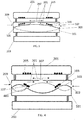
Fig. 3 illustrates theflexible diaphragm 105 of the chargingapparatus 101 being used to generate air flow to cool the separatemobile apparatus 201. - The
flexible diaphragm 105 oscillates about an equilibrium position. This causes air to be drawn into the chargingapparatus 101 through thefirst vent 209 and directed out of the chargingapparatus 101 and towards themobile apparatus 201 through thesecond vent 207 as indicated by thearrows 301. This air flow enables cooling of themobile apparatus 201. - In the example shown in
Fig. 3 theflexible diaphragm 105 is oscillating in a first bending mode. In this firstbending mode nodes 303 are only provided at the edge of theflexible diaphragm 105. The maximum displacement of theflexible diaphragm 105 occurs at the centre of theflexible diaphragm 105. In the example ofFig. 3 thevents 207 of the chargingapparatus 101 are arranged so that the location of the maximum displacement of theflexible diaphragm 105 is positioned underneath thefirst vent 207. This enables the displacement of theflexible diaphragm 105 to force the air flow through thevent 207 and towards themobile apparatus 201. - In the example of
Fig. 3 the charging coils 103 are mounted on theflexible diaphragm 105 so that the oscillation of theflexible diaphragm 105 also causes movement of the charging coils 103. This can cause the power transferred from the chargingcoils 103 to themobile apparatus 201 to fluctuate over time. -
Fig. 4 illustrates theflexible diaphragm 105 of the chargingapparatus 101 being used in a higher bending mode to generate air flow to cool the separatemobile apparatus 201. - In this higher bending mode
first nodes 303 are provided at the edge of theflexible diaphragm 105 andsecond nodes 401 are provided at positions along the length of theflexible diaphragm 105. In the example ofFig. 4 thesecond nodes 401 are provided at about a quarter of the way along the length of theflexible diaphragm 105 from the edge of the chargingapparatus 101. - In the example of
Fig. 4 the charging coils 103 are mounted on theflexible diaphragm 105 in the position of thesecond nodes 401 or close to the position of thesecond nodes 401. This reduces the movement of the charging coils 103 and so reduces fluctuations in the power transferred to themobile apparatus 201. - It is to be appreciated that other modes of oscillation of the
flexible diaphragm 105 can be used in other examples of the disclosure. In some examples the charging coils 103 can be positioned on theflexible diaphragm 105 so as to enable control of the bending modes of theflexible diaphragm 105. This can help to ensure that the displacement of theflexible diaphragm 105 is sufficient to provide a flow of cooling air towards themobile apparatus 201. -
Figs. 5A to 5D show anotherexample charging apparatus 101 being used to charge amobile apparatus 201 according to examples of the disclosure. -
Fig. 5A shows acharging apparatus 101 and correspondingmobile apparatus 201. Theexample charging apparatus 101 comprises one or more charging coils 103, aflexible diaphragm 105 and aferrite shield 107 which can be as described above. - In the example of
Fig. 5A the chargingapparatus 301 also comprises actuatingcircuitry 501. Theactuating circuitry 501 is configured to actuate movement of theflexible diaphragm 105. - In the example of
Fig. 5A theactuating circuitry 501 comprises one or more actuating coils 503 and one or moremagnetic portions 505. The one or more actuating coils 503 are provided underneath theflexible diaphragm 105 so that when the chargingapparatus 101 is in use theflexible diaphragm 105 and chargingcoils 103 are positioned between the actuating coils 503 and themobile apparatus 201. - The one or more
magnetic portions 505 are positioned relative to the actuating coils 503 so that when a current is provided to the actuating coils 503 this generates a varying magnetic field that interacts with themagnetic portions 505 so as to cause movement of themagnetic portions 505. In the example ofFig. 5A themagnetic portions 505 are provided on theflexible diaphragm 105 so that movement of themagnetic portions 505 causes movement of theflexible diaphragm 105. - In the example of
Fig. 5A theferrite shield 107 is provided between themagnetic portions 505 and the one or more charging coils 103. This prevents the magnetic fields from the actuating coils 503 from interacting with the one or more charging coils 103. - In the example shown on
Fig. 5A theflexible diaphragm 105 is in the equilibrium position. In this example theflexible diaphragm 105 is not moving so there is no air flow being directed towards themobile apparatus 201. - In the example shown in
Fig. 5A the chargingapparatus 101 is in use so that power is being transferred from the one or more charging coils 103 in thecharging apparatus 101 to the corresponding charging coils 205 in themobile apparatus 201 as indicated by thearrow 507. - The charging coils 103 of the charging
apparatus 101 and the charging coils 205 of themobile apparatus 201 can also be configured to enable transfer ofdata 511 between themobile apparatus 201 and thecharging apparatus 101. In the example shown inFig. 5A data 511 is transferred from themobile apparatus 201 to thecharging apparatus 101 as indicated by thearrow 509. In some examples thedata 511 can be transferred from themobile apparatus 201 to thecharging apparatus 101 via backscattering or any other suitable process. - The
data 511 transferred from themobile apparatus 201 to thecharging apparatus 101 can comprise anydata 511 that can be used to help control the chargingapparatus 101. In some examples thedata 511 that is transferred can comprisedata 511 relating to the temperature of themobile apparatus 201 or the temperature of one or more components of themobile apparatus 201. This temperature information can then be used by the chargingapparatus 101 to determine the level of cooling required by themobile apparatus 201. This temperature information can then be used to determine whether or not to actuate theflexible diaphragm 105. In some examples the temperature information can be used to determine an actuation sequence for theflexible diaphragm 105. The actuation sequence can comprise the frequency and duration of movements of theflexible diaphragm 105. - It is to be appreciated that other information can also be transmitted between the
mobile apparatus 201 and thecharging apparatus 101. For example, themobile apparatus 201 can provide information about charging rates and levels which can indicate how effectively power is being transferred from the chargingapparatus 101 to themobile apparatus 201. -
Fig. 5B shows the functions of the charging coils 103 of the chargingapparatus 101 over a period of time. During a first period oftime 521 the charging coils 103 are transmitting power to the charging coils 205 of themobile apparatus 201. During a second period oftime 523 the charging coils 103 are receivingdata 511 from the charging coils 205 of themobile apparatus 201. Thedata 511 can comprise data relating to the temperature of themobile apparatus 201 or any other suitable data. During a third period oftime 525 the charging coils 103 return to the function of transmitting power to the charging coils 205 of themobile apparatus 201. It is to be appreciated that the functions of transmitting power and receivingdata 511 can be repeated as many times as is necessary. -
Fig. 5C shows the chargingapparatus 101 being used to coolmobile apparatus 201. In this example an input signal has been provided to the actuator coils 503. The input signal can be provided in response to thedata 511 received from themobile apparatus 201. For example, thedata 511 received from themobile apparatus 201 can indicate that the temperature of themobile apparatus 201, or components within themobile apparatus 201, has exceeded a threshold and that cooling of themobile apparatus 201 is required. - In this example the input signal comprises a short pulse of current that is provided to the actuator coils 503. This pulse of current through the
actuator coil 503 causes a varying magnetic field which causes movement of themagnetic portions 505. As themagnetic portions 505 are coupled to theflexible diaphragm 105 the movement of themagnetic portions 505 causes movement of theflexible diaphragm 105. The movement of thediaphragm 105 causes the movement of the air as shown by thearrows 301 inFig. 5C . The air flow enables cooling of themobile apparatus 201. -
Fig. 5D shows the functions of the charging coils 103 of the chargingapparatus 101 over a period of time during which thecharging apparatus 101 provides cooling air flow for themobile apparatus 201. - During a first period of
time 531 the charging coils 103 are transmitting power to the charging coils 205 of themobile apparatus 201. - During a second period of
time 533 the actuating coils 503 receive an input signal. The input signal causes a varying magnetic field that causes movement of themagnetic portions 505 and theflexible diaphragm 105. The movement of theflexible diaphragm 105 also causes movement of the charging coils 103 which therefore changes the power transferred to themobile apparatus 201. - During a third period of
time 535 theflexible diaphragm 105 returns to the stationary equilibrium position and the charging coils 103 continue transmitting power to the charging coils 205 of themobile apparatus 201. - During a fourth period of
time 537 the charging coils 103 are receivingdata 511 from the charging coils 205 of themobile apparatus 201. Thedata 511 can comprise data relating to the temperature of themobile apparatus 201 or any othersuitable data 511. Following thedata 511 being received from themobile apparatus 201 the charging coils 103 return to the charging mode and repeat the sequence shown in the first three periods oftime flexible diaphragm 105 and receivingdata 511 can be repeated as many times as is necessary. -
Figs. 6A to 6C show anotherexample charging apparatus 101 being used to charge amobile apparatus 201 according to examples of the disclosure. -
Fig. 6A shows acharging apparatus 101 and correspondingmobile apparatus 201. Theexample charging apparatus 101 comprises one or more charging coils 103, aflexible diaphragm 105 and aferrite shield 107 which can be as described above. Theexample charging apparatus 101 also comprises actuatingcircuitry 501 configured to actuate movement of theflexible diaphragm 105. Theactuating circuitry 501 can be as shown inFig. 5A and described above. Other types ofactuating circuitry 501 can be provided in other examples of the disclosure. - In the example of
Fig. 6A theflexible diaphragm 105 resonates in a first bending mode with anode 303 at the edge of theflexible diaphragm 105 and a region ofmaximum displacement 601 in the centre of theflexible diaphragm 105. The region ofmaximum displacement 601 of thediaphragm 105 is positioned underneath thevent 209 that directs air towards themobile apparatus 201. This enables movement of theflexible diaphragm 105 to force the air flow through thevent 209 towards themobile apparatus 201. -
Figs. 6B and 6C show the displacement of the centre of theflexible diaphragm 105 and the timing of the input signals to theactuating circuitry 501. -
Fig. 6B shows that an interval is provided between the input signals to theactuating circuitry 501. The interval between consecutive input signals is long enough that theflexible diaphragm 105 returns to its equilibrium position and is stationary between consecutive input signals. - In
Fig. 6C the interval between the input signals is decreased so that theflexible diaphragm 105 does not return to stationary between consecutive input signals. As shown inFig. 6C there is some damping of the oscillations over time, however the next input signal is provided before theflexible diaphragm 105 returns to stationary. - The frequency of the input signals can be determined by the data that is received from the
mobile apparatus 201. The frequency of the input signals can be determined by the temperature of themobile apparatus 201 or any other suitable factor. -
Figs. 7A to 7B show anotherexample charging apparatus 101 according to examples of the disclosure. In the example ofFigs. 7A and 7B at least part of theactuating circuitry 501 is provided on theflexible diaphragm 105. In the example ofFigs. 7A and 7B the actuating coils 503 are provided on theflexible diaphragm 105. The charging coils 103,ferrite shield 107 andmagnetic portions 505 are all provided on a fixed portion of the chargingapparatus 101. In the example shown inFigs. 7A and 7B the charging coils 103 are provided on the surface of the chargingapparatus 101 while theferrite shield 107 andmagnetic portions 505 are provided underneath the charging coils 103. It is to be appreciated that other configurations of theactuating circuitry 501 and the charging coils 103 could be used in other examples of the disclosure. - In this example when an input signal is provided to the actuating coils 503 the force generated by the
magnetic portions 505 in the varying magnetic field causes movement of the actuating coils 503 and thereby causes the displacement of theflexible diaphragm 105. This therefore causes an air flow as shown by thearrows 301. -
Fig. 7B shows theflexible diaphragm 105 oscillating in a first bending mode. In this firstbending mode nodes 303 are provided at the edge of theflexible diaphragm 105 while the region ofmaximum displacement 601 is provided towards the centre of theflexible diaphragm 105. It is to be appreciated that other bending modes could be used in other examples of the disclosure. The actuating coils 503 can be positioned to control the bending modes of theflexible diaphragm 105. - Examples of the disclosure therefore provide a
charging apparatus 101 that enables cooling of themobile apparatus 201 during charging. This helps to prevent overheating of themobile apparatus 201. As the charging coils 103 or theactuating circuitry 503 can be provided on theflexible diaphragm 105 this enables the cooling to be provided with few additional components being added to thecharging apparatus 101. - In this description the term coupled means operationally coupled. Any number or combination of intervening elements can exist between coupled components including no intervening elements.
- The term "comprise" is used in this document with an inclusive not an exclusive meaning. That is any reference to X comprising Y indicates that X may comprise only one Y or may comprise more than one Y. If it is intended to use "comprise" with an exclusive meaning then it will be made clear in the context by referring to "comprising only one..." or by using "consisting".
- In this description, reference has been made to various examples. The description of features or functions in relation to an example indicates that those features or functions are present in that example. The use of the term 'example' or 'for example' or 'can' or 'may' in the text denotes, whether explicitly stated or not, that such features or functions are present in at least the described example, whether described as an example or not, and that they can be, but are not necessarily, present in some of or all other examples. Thus 'example', 'for example', 'can' or 'may' refers to a particular instance in a class of examples. A property of the instance can be a property of only that instance or a property of the class or a property of a sub-class of the class that includes some but not all of the instances in the class. It is therefore implicitly disclosed that a feature described with reference to one example but not with reference to another example, can where possible be used in that other example as part of a working combination but does not necessarily have to be used in that other example.
- Although examples have been described in the preceding paragraphs with reference to various examples, it should be appreciated that modifications to the examples given can be made without departing from the scope of the claims.
- Features described in the preceding description may be used in combinations other than the combinations explicitly described above.
- Although functions have been described with reference to certain features, those functions may be performable by other features whether described or not.
- Although features have been described with reference to certain examples, those features may also be present in other examples whether described or not.
- The term 'a' or 'the' is used in this document with an inclusive not an exclusive meaning. That is any reference to X comprising a/the Y indicates that X may comprise only one Y or may comprise more than one Y unless the context clearly indicates the contrary. If it is intended to use 'a' or 'the' with an exclusive meaning then it will be made clear in the context. In some circumstances the use of 'at least one' or 'one or more' may be used to emphasis an inclusive meaning but the absence of these terms should not be taken to infer any exclusive meaning.
- The presence of a feature (or combination of features) in a claim is a reference to that feature or (combination of features) itself and also to features that achieve substantially the same technical effect (equivalent features). The equivalent features include, for example, features that are variants and achieve substantially the same result in substantially the same way. The equivalent features include, for example, features that perform substantially the same function, in substantially the same way to achieve substantially the same result.
- In this description, reference has been made to various examples using adjectives or adjectival phrases to describe characteristics of the examples. Such a description of a characteristic in relation to an example indicates that the characteristic is present in some examples exactly as described and is present in other examples substantially as described.
- Whilst endeavoring in the foregoing specification to draw attention to those features believed to be of importance it should be understood that the Applicant may seek protection via the claims in respect of any patentable feature or combination of features hereinbefore referred to and/or shown in the drawings whether or not emphasis has been placed thereon.
Claims (15)
- A charging apparatus comprising:one or more charging coils configured to transfer power to a mobile apparatus; andat least one flexible diaphragm configured so that movement of the flexible diaphragm directs air flow towards the mobile apparatus; whereinat least one of, the one or more charging coils or actuating circuitry for actuating the one or more charging coils are mounted on the flexible diaphragm.
- A charging apparatus as claimed in any preceding claim comprising at least one ferrite shield provided between the one or more charging coils and the flexible diaphragm.
- A charging apparatus as claimed in any preceding claim wherein the charging coils are positioned on the diaphragm so as to control a bending mode of the flexible diaphragm.
- A charging apparatus as claimed in any of claims 2 to 3 wherein the ferrite shield is also provided on the flexible diaphragm.
- A charging apparatus as claimed in any preceding claim wherein the ferrite shield is configured to direct a magnetic field generated by the one or more charging coils towards the mobile apparatus.
- A charging apparatus as claimed in any preceding claim wherein the ferrite shield is configured to, at least partially, block a magnetic field generated by the one or more charging coils from impinging circuitry within the charging apparatus.
- A charging apparatus as claimed in any preceding claim comprising one or more vents positioned above the flexible diaphragm and configured to enable air flow towards a mobile apparatus.
- A charging apparatus as claimed in any preceding claim comprising one or more vents configured to enable air flow towards circuitry within the charging apparatus.
- A charging apparatus as claimed in any preceding claim comprising actuating circuitry configured to actuate movement of the flexible diaphragm.
- A charging apparatus as claimed in claim 9 wherein the actuating circuitry comprises one or more coils configured to electromagnetically interact with the one or more charging coils.
- An apparatus as claimed in any of claims 9 to 10 wherein at least part of the actuating circuitry is provided on the flexible diaphragm.
- A charging apparatus as claimed in any preceding claim wherein the charging coils are configured to receive data from the mobile apparatus.
- A charging apparatus as claimed in claim 12 wherein the data received from the mobile apparatus comprises data relating to the temperature of the mobile apparatus.
- An apparatus as claimed in any preceding claim wherein the flexible diaphragm comprises an electrically insulating material.
- A system comprising an apparatus as claimed in any preceding claim and a mobile apparatus.
Priority Applications (2)
| Application Number | Priority Date | Filing Date | Title |
|---|---|---|---|
| EP20175732.5A EP3913764A1 (en) | 2020-05-20 | 2020-05-20 | Charging apparatus |
| US17/324,642 US11862390B2 (en) | 2020-05-20 | 2021-05-19 | Charging apparatus with flexible diaphragm for cooling |
Applications Claiming Priority (1)
| Application Number | Priority Date | Filing Date | Title |
|---|---|---|---|
| EP20175732.5A EP3913764A1 (en) | 2020-05-20 | 2020-05-20 | Charging apparatus |
Publications (1)
| Publication Number | Publication Date |
|---|---|
| EP3913764A1 true EP3913764A1 (en) | 2021-11-24 |
Family
ID=70802638
Family Applications (1)
| Application Number | Title | Priority Date | Filing Date |
|---|---|---|---|
| EP20175732.5A Pending EP3913764A1 (en) | 2020-05-20 | 2020-05-20 | Charging apparatus |
Country Status (2)
| Country | Link |
|---|---|
| US (1) | US11862390B2 (en) |
| EP (1) | EP3913764A1 (en) |
Families Citing this family (2)
| Publication number | Priority date | Publication date | Assignee | Title |
|---|---|---|---|---|
| TWI880179B (en) * | 2023-03-10 | 2025-04-11 | 雲山 張 | Airflow controlling assembly, and sensing and controlling module of airflow for an active aerosol suction device |
| CN118888290B (en) * | 2024-09-29 | 2024-11-29 | 西北工业大学 | A deformable charging coil structure for underwater equipment and its design method |
Citations (6)
| Publication number | Priority date | Publication date | Assignee | Title |
|---|---|---|---|---|
| US20090174999A1 (en) * | 2007-09-27 | 2009-07-09 | Ioan Sauciuc | Piezoelectric air jet augmented cooling for electronic devices |
| US20140191717A1 (en) * | 2013-01-08 | 2014-07-10 | Lg Electronics Inc. | Wireless power transmitter |
| EP2965941A1 (en) * | 2014-07-09 | 2016-01-13 | Brusa Elektronik AG | Primary section of an inductive charger |
| US20160254690A1 (en) * | 2015-02-26 | 2016-09-01 | Dell Products, L.P. | Advanced convectively-cooled inductive charging |
| US9860660B1 (en) * | 2014-09-30 | 2018-01-02 | Apple Inc. | Electronic device with speaker cavity cooling |
| US20180251035A1 (en) * | 2015-08-27 | 2018-09-06 | Daimler Ag | Ground Pad Module for Charging a Power-Driven Vehicle |
Family Cites Families (2)
| Publication number | Priority date | Publication date | Assignee | Title |
|---|---|---|---|---|
| CN105449812B (en) * | 2016-01-04 | 2018-04-06 | 上海斐讯数据通信技术有限公司 | A kind of air-flow charging device applied to mobile phone |
| US9848508B1 (en) | 2016-06-17 | 2017-12-19 | Toyota Motor Engineering & Manufacturing North America, Inc. | Cooling systems and synthetic jets configured to harvest energy and vehicles including the same |
-
2020
- 2020-05-20 EP EP20175732.5A patent/EP3913764A1/en active Pending
-
2021
- 2021-05-19 US US17/324,642 patent/US11862390B2/en active Active
Patent Citations (6)
| Publication number | Priority date | Publication date | Assignee | Title |
|---|---|---|---|---|
| US20090174999A1 (en) * | 2007-09-27 | 2009-07-09 | Ioan Sauciuc | Piezoelectric air jet augmented cooling for electronic devices |
| US20140191717A1 (en) * | 2013-01-08 | 2014-07-10 | Lg Electronics Inc. | Wireless power transmitter |
| EP2965941A1 (en) * | 2014-07-09 | 2016-01-13 | Brusa Elektronik AG | Primary section of an inductive charger |
| US9860660B1 (en) * | 2014-09-30 | 2018-01-02 | Apple Inc. | Electronic device with speaker cavity cooling |
| US20160254690A1 (en) * | 2015-02-26 | 2016-09-01 | Dell Products, L.P. | Advanced convectively-cooled inductive charging |
| US20180251035A1 (en) * | 2015-08-27 | 2018-09-06 | Daimler Ag | Ground Pad Module for Charging a Power-Driven Vehicle |
Also Published As
| Publication number | Publication date |
|---|---|
| US11862390B2 (en) | 2024-01-02 |
| US20210366652A1 (en) | 2021-11-25 |
Similar Documents
| Publication | Publication Date | Title |
|---|---|---|
| US11862390B2 (en) | Charging apparatus with flexible diaphragm for cooling | |
| EP3528267B1 (en) | Magnetic shielding in inductive power transfer | |
| CN103915905B (en) | Wireless power transmission device | |
| US9270797B2 (en) | Reducing inductive heating | |
| US10283999B2 (en) | Advanced convectively-cooled inductive charging | |
| US20160087484A1 (en) | Wireless charging apparatus | |
| CN103532182A (en) | Charging assembly, portable electronic equipment and protection shell | |
| US9626009B2 (en) | Coordinate indicating device and coordinate measuring device for measuring input coordinates of coordinate indicating device | |
| CN112398231A (en) | Devices coupled for wireless charging | |
| JP2021533723A (en) | Equipment and methods for wireless power transfer | |
| JPH1198705A (en) | Terminal device and power supply device | |
| US20190319524A1 (en) | Power generation element and smart key | |
| CN108370646B (en) | Adjustable Gap Structure for Mobile Devices | |
| CN107332363A (en) | Wireless charging system and its control method | |
| CN110768503B (en) | XYZ three-direction vibration motor | |
| EP3933200B1 (en) | Heat sink assembly and control method for heat sink assembly, and electronic device and manufacturing method for electronic device | |
| KR20230001611U (en) | MagSafe wireless charger | |
| WO2020068389A1 (en) | Dual mode wireless power system designs | |
| CN111900808A (en) | Wireless charging device | |
| US10996772B2 (en) | Structure of digital pen including antenna | |
| EP2756580A1 (en) | Coil techniques | |
| CN110247443B (en) | Charging system | |
| US20180269720A1 (en) | Power transmission device | |
| CN214850521U (en) | Wireless charger | |
| KR20240072574A (en) | Matching circuit of NFC device, resonance circuit of NFC device and NFC device |
Legal Events
| Date | Code | Title | Description |
|---|---|---|---|
| PUAI | Public reference made under article 153(3) epc to a published international application that has entered the european phase |
Free format text: ORIGINAL CODE: 0009012 |
|
| STAA | Information on the status of an ep patent application or granted ep patent |
Free format text: STATUS: THE APPLICATION HAS BEEN PUBLISHED |
|
| AK | Designated contracting states |
Kind code of ref document: A1 Designated state(s): AL AT BE BG CH CY CZ DE DK EE ES FI FR GB GR HR HU IE IS IT LI LT LU LV MC MK MT NL NO PL PT RO RS SE SI SK SM TR |
|
| B565 | Issuance of search results under rule 164(2) epc |
Effective date: 20200828 |
|
| STAA | Information on the status of an ep patent application or granted ep patent |
Free format text: STATUS: REQUEST FOR EXAMINATION WAS MADE |
|
| 17P | Request for examination filed |
Effective date: 20220517 |
|
| RBV | Designated contracting states (corrected) |
Designated state(s): AL AT BE BG CH CY CZ DE DK EE ES FI FR GB GR HR HU IE IS IT LI LT LU LV MC MK MT NL NO PL PT RO RS SE SI SK SM TR |
|
| STAA | Information on the status of an ep patent application or granted ep patent |
Free format text: STATUS: EXAMINATION IS IN PROGRESS |
|
| 17Q | First examination report despatched |
Effective date: 20240902 |