EP3913722B1 - Secondary battery and apparatus containing secondary battery - Google Patents
Secondary battery and apparatus containing secondary battery Download PDFInfo
- Publication number
- EP3913722B1 EP3913722B1 EP19957409.6A EP19957409A EP3913722B1 EP 3913722 B1 EP3913722 B1 EP 3913722B1 EP 19957409 A EP19957409 A EP 19957409A EP 3913722 B1 EP3913722 B1 EP 3913722B1
- Authority
- EP
- European Patent Office
- Prior art keywords
- secondary battery
- lithium
- silicon
- battery according
- electrolyte
- Prior art date
- Legal status (The legal status is an assumption and is not a legal conclusion. Google has not performed a legal analysis and makes no representation as to the accuracy of the status listed.)
- Active
Links
Images

Classifications
-
- H—ELECTRICITY
- H01—ELECTRIC ELEMENTS
- H01M—PROCESSES OR MEANS, e.g. BATTERIES, FOR THE DIRECT CONVERSION OF CHEMICAL ENERGY INTO ELECTRICAL ENERGY
- H01M4/00—Electrodes
- H01M4/02—Electrodes composed of, or comprising, active material
- H01M4/13—Electrodes for accumulators with non-aqueous electrolyte, e.g. for lithium-accumulators; Processes of manufacture thereof
- H01M4/133—Electrodes based on carbonaceous material, e.g. graphite-intercalation compounds or CFx
-
- H—ELECTRICITY
- H01—ELECTRIC ELEMENTS
- H01M—PROCESSES OR MEANS, e.g. BATTERIES, FOR THE DIRECT CONVERSION OF CHEMICAL ENERGY INTO ELECTRICAL ENERGY
- H01M10/00—Secondary cells; Manufacture thereof
- H01M10/05—Accumulators with non-aqueous electrolyte
- H01M10/056—Accumulators with non-aqueous electrolyte characterised by the materials used as electrolytes, e.g. mixed inorganic/organic electrolytes
- H01M10/0564—Accumulators with non-aqueous electrolyte characterised by the materials used as electrolytes, e.g. mixed inorganic/organic electrolytes the electrolyte being constituted of organic materials only
- H01M10/0566—Liquid materials
- H01M10/0569—Liquid materials characterised by the solvents
-
- H—ELECTRICITY
- H01—ELECTRIC ELEMENTS
- H01M—PROCESSES OR MEANS, e.g. BATTERIES, FOR THE DIRECT CONVERSION OF CHEMICAL ENERGY INTO ELECTRICAL ENERGY
- H01M10/00—Secondary cells; Manufacture thereof
- H01M10/05—Accumulators with non-aqueous electrolyte
- H01M10/052—Li-accumulators
- H01M10/0525—Rocking-chair batteries, i.e. batteries with lithium insertion or intercalation in both electrodes; Lithium-ion batteries
-
- H—ELECTRICITY
- H01—ELECTRIC ELEMENTS
- H01M—PROCESSES OR MEANS, e.g. BATTERIES, FOR THE DIRECT CONVERSION OF CHEMICAL ENERGY INTO ELECTRICAL ENERGY
- H01M10/00—Secondary cells; Manufacture thereof
- H01M10/05—Accumulators with non-aqueous electrolyte
- H01M10/056—Accumulators with non-aqueous electrolyte characterised by the materials used as electrolytes, e.g. mixed inorganic/organic electrolytes
- H01M10/0564—Accumulators with non-aqueous electrolyte characterised by the materials used as electrolytes, e.g. mixed inorganic/organic electrolytes the electrolyte being constituted of organic materials only
- H01M10/0566—Liquid materials
- H01M10/0567—Liquid materials characterised by the additives
-
- H—ELECTRICITY
- H01—ELECTRIC ELEMENTS
- H01M—PROCESSES OR MEANS, e.g. BATTERIES, FOR THE DIRECT CONVERSION OF CHEMICAL ENERGY INTO ELECTRICAL ENERGY
- H01M10/00—Secondary cells; Manufacture thereof
- H01M10/05—Accumulators with non-aqueous electrolyte
- H01M10/056—Accumulators with non-aqueous electrolyte characterised by the materials used as electrolytes, e.g. mixed inorganic/organic electrolytes
- H01M10/0564—Accumulators with non-aqueous electrolyte characterised by the materials used as electrolytes, e.g. mixed inorganic/organic electrolytes the electrolyte being constituted of organic materials only
- H01M10/0566—Liquid materials
- H01M10/0568—Liquid materials characterised by the solutes
-
- H—ELECTRICITY
- H01—ELECTRIC ELEMENTS
- H01M—PROCESSES OR MEANS, e.g. BATTERIES, FOR THE DIRECT CONVERSION OF CHEMICAL ENERGY INTO ELECTRICAL ENERGY
- H01M4/00—Electrodes
- H01M4/02—Electrodes composed of, or comprising, active material
- H01M4/13—Electrodes for accumulators with non-aqueous electrolyte, e.g. for lithium-accumulators; Processes of manufacture thereof
- H01M4/134—Electrodes based on metals, Si or alloys
-
- H—ELECTRICITY
- H01—ELECTRIC ELEMENTS
- H01M—PROCESSES OR MEANS, e.g. BATTERIES, FOR THE DIRECT CONVERSION OF CHEMICAL ENERGY INTO ELECTRICAL ENERGY
- H01M4/00—Electrodes
- H01M4/02—Electrodes composed of, or comprising, active material
- H01M4/36—Selection of substances as active materials, active masses, active liquids
- H01M4/362—Composites
- H01M4/364—Composites as mixtures
-
- H—ELECTRICITY
- H01—ELECTRIC ELEMENTS
- H01M—PROCESSES OR MEANS, e.g. BATTERIES, FOR THE DIRECT CONVERSION OF CHEMICAL ENERGY INTO ELECTRICAL ENERGY
- H01M4/00—Electrodes
- H01M4/02—Electrodes composed of, or comprising, active material
- H01M4/36—Selection of substances as active materials, active masses, active liquids
- H01M4/38—Selection of substances as active materials, active masses, active liquids of elements or alloys
- H01M4/386—Silicon or alloys based on silicon
-
- H—ELECTRICITY
- H01—ELECTRIC ELEMENTS
- H01M—PROCESSES OR MEANS, e.g. BATTERIES, FOR THE DIRECT CONVERSION OF CHEMICAL ENERGY INTO ELECTRICAL ENERGY
- H01M4/00—Electrodes
- H01M4/02—Electrodes composed of, or comprising, active material
- H01M4/36—Selection of substances as active materials, active masses, active liquids
- H01M4/48—Selection of substances as active materials, active masses, active liquids of inorganic oxides or hydroxides
- H01M4/483—Selection of substances as active materials, active masses, active liquids of inorganic oxides or hydroxides for non-aqueous cells
-
- H—ELECTRICITY
- H01—ELECTRIC ELEMENTS
- H01M—PROCESSES OR MEANS, e.g. BATTERIES, FOR THE DIRECT CONVERSION OF CHEMICAL ENERGY INTO ELECTRICAL ENERGY
- H01M4/00—Electrodes
- H01M4/02—Electrodes composed of, or comprising, active material
- H01M4/36—Selection of substances as active materials, active masses, active liquids
- H01M4/48—Selection of substances as active materials, active masses, active liquids of inorganic oxides or hydroxides
- H01M4/50—Selection of substances as active materials, active masses, active liquids of inorganic oxides or hydroxides of manganese
- H01M4/505—Selection of substances as active materials, active masses, active liquids of inorganic oxides or hydroxides of manganese of mixed oxides or hydroxides containing manganese for inserting or intercalating light metals, e.g. LiMn2O4 or LiMn2OxFy
-
- H—ELECTRICITY
- H01—ELECTRIC ELEMENTS
- H01M—PROCESSES OR MEANS, e.g. BATTERIES, FOR THE DIRECT CONVERSION OF CHEMICAL ENERGY INTO ELECTRICAL ENERGY
- H01M4/00—Electrodes
- H01M4/02—Electrodes composed of, or comprising, active material
- H01M4/36—Selection of substances as active materials, active masses, active liquids
- H01M4/48—Selection of substances as active materials, active masses, active liquids of inorganic oxides or hydroxides
- H01M4/52—Selection of substances as active materials, active masses, active liquids of inorganic oxides or hydroxides of nickel, cobalt or iron
- H01M4/525—Selection of substances as active materials, active masses, active liquids of inorganic oxides or hydroxides of nickel, cobalt or iron of mixed oxides or hydroxides containing iron, cobalt or nickel for inserting or intercalating light metals, e.g. LiNiO2, LiCoO2 or LiCoOxFy
-
- H—ELECTRICITY
- H01—ELECTRIC ELEMENTS
- H01M—PROCESSES OR MEANS, e.g. BATTERIES, FOR THE DIRECT CONVERSION OF CHEMICAL ENERGY INTO ELECTRICAL ENERGY
- H01M4/00—Electrodes
- H01M4/02—Electrodes composed of, or comprising, active material
- H01M4/36—Selection of substances as active materials, active masses, active liquids
- H01M4/58—Selection of substances as active materials, active masses, active liquids of inorganic compounds other than oxides or hydroxides, e.g. sulfides, selenides, tellurides, halogenides or LiCoFy; of polyanionic structures, e.g. phosphates, silicates or borates
- H01M4/583—Carbonaceous material, e.g. graphite-intercalation compounds or CFx
- H01M4/587—Carbonaceous material, e.g. graphite-intercalation compounds or CFx for inserting or intercalating light metals
-
- H—ELECTRICITY
- H01—ELECTRIC ELEMENTS
- H01M—PROCESSES OR MEANS, e.g. BATTERIES, FOR THE DIRECT CONVERSION OF CHEMICAL ENERGY INTO ELECTRICAL ENERGY
- H01M4/00—Electrodes
- H01M4/02—Electrodes composed of, or comprising, active material
- H01M4/62—Selection of inactive substances as ingredients for active masses, e.g. binders, fillers
- H01M4/624—Electric conductive fillers
- H01M4/625—Carbon or graphite
-
- H—ELECTRICITY
- H01—ELECTRIC ELEMENTS
- H01M—PROCESSES OR MEANS, e.g. BATTERIES, FOR THE DIRECT CONVERSION OF CHEMICAL ENERGY INTO ELECTRICAL ENERGY
- H01M4/00—Electrodes
- H01M4/02—Electrodes composed of, or comprising, active material
- H01M2004/026—Electrodes composed of, or comprising, active material characterised by the polarity
- H01M2004/027—Negative electrodes
-
- H—ELECTRICITY
- H01—ELECTRIC ELEMENTS
- H01M—PROCESSES OR MEANS, e.g. BATTERIES, FOR THE DIRECT CONVERSION OF CHEMICAL ENERGY INTO ELECTRICAL ENERGY
- H01M4/00—Electrodes
- H01M4/02—Electrodes composed of, or comprising, active material
- H01M2004/026—Electrodes composed of, or comprising, active material characterised by the polarity
- H01M2004/028—Positive electrodes
-
- H—ELECTRICITY
- H01—ELECTRIC ELEMENTS
- H01M—PROCESSES OR MEANS, e.g. BATTERIES, FOR THE DIRECT CONVERSION OF CHEMICAL ENERGY INTO ELECTRICAL ENERGY
- H01M2220/00—Batteries for particular applications
- H01M2220/20—Batteries in motive systems, e.g. vehicle, ship, plane
-
- H—ELECTRICITY
- H01—ELECTRIC ELEMENTS
- H01M—PROCESSES OR MEANS, e.g. BATTERIES, FOR THE DIRECT CONVERSION OF CHEMICAL ENERGY INTO ELECTRICAL ENERGY
- H01M2300/00—Electrolytes
- H01M2300/0017—Non-aqueous electrolytes
- H01M2300/0025—Organic electrolyte
- H01M2300/0028—Organic electrolyte characterised by the solvent
- H01M2300/0037—Mixture of solvents
-
- H—ELECTRICITY
- H01—ELECTRIC ELEMENTS
- H01M—PROCESSES OR MEANS, e.g. BATTERIES, FOR THE DIRECT CONVERSION OF CHEMICAL ENERGY INTO ELECTRICAL ENERGY
- H01M2300/00—Electrolytes
- H01M2300/0017—Non-aqueous electrolytes
- H01M2300/0025—Organic electrolyte
- H01M2300/0028—Organic electrolyte characterised by the solvent
- H01M2300/0037—Mixture of solvents
- H01M2300/004—Three solvents
-
- Y—GENERAL TAGGING OF NEW TECHNOLOGICAL DEVELOPMENTS; GENERAL TAGGING OF CROSS-SECTIONAL TECHNOLOGIES SPANNING OVER SEVERAL SECTIONS OF THE IPC; TECHNICAL SUBJECTS COVERED BY FORMER USPC CROSS-REFERENCE ART COLLECTIONS [XRACs] AND DIGESTS
- Y02—TECHNOLOGIES OR APPLICATIONS FOR MITIGATION OR ADAPTATION AGAINST CLIMATE CHANGE
- Y02E—REDUCTION OF GREENHOUSE GAS [GHG] EMISSIONS, RELATED TO ENERGY GENERATION, TRANSMISSION OR DISTRIBUTION
- Y02E60/00—Enabling technologies; Technologies with a potential or indirect contribution to GHG emissions mitigation
- Y02E60/10—Energy storage using batteries
Definitions
- the application relates to the technical field of batteries, in particular to a secondary battery and an apparatus including the same.
- the secondary battery stands out due to its high energy density, no memory effect, high working voltage and the like, and thus becomes the preferred solution for current new energy vehicle power supply.
- the new energy vehicle industry generally requires a power supply of high energy density, long cycle life, and the like, but it is a big challenge for a conventional secondary battery.
- a silicon-based material with high specific capacity used as a negative active material of the secondary battery can effectively improve the energy density of the secondary battery, but the silicon-based material would become much swollen in the charge-discharge cycle, causing electrochemical performance of the secondary battery to be reduced sharply.
- the application provides a secondary battery and an apparatus including the same.
- the secondary battery can simultaneously have good high-temperature storage performance and high-temperature cycle performance.
- a first aspect of the application provides a secondary battery and an apparatus comprises a secondary battery, according to the appended claims.
- a negative electrode includes the silicon-based material, the organic solvent in the electrolyte contains the ethylene carbonate (EC) and the ethyl methyl carbonate (EMC) which have specific content, and under the combined action of the substances above, the secondary battery has good high-temperature storage performance and high-temperature cycle performance.
- the apparatus provided by the application includes the secondary battery, and thus at least has the same advantages with the secondary battery,
- CN 109 244 530 A discloses a secondary battery comprising a negative current collector coated with a negative active material film, the negative active material being silicon carbon graphite composite, a positive current collector coated with a positive active material film, the positive active material being Li[Ni 0.89 Co 0.09 Mn 0.02 ]O 2 .
- the electrolyte comprises a lithium salt and ethylene carbonate (EC), dimethyl carbonate (DMC), and ethyl methyl carbonate (EMC) mixed at a volume ratio of 5:15:80.
- a secondary battery and an apparatus including the same according to the application will be illustrated in detail below.
- the secondary battery according to the application includes: a negative electrode plate and an electrolyte; the negative electrode plate includes a negative current collector and a negative electrode film which is disposed on at least one surface of the negative current collector and includes a negative active material; and the electrolyte includes electrolyte salt and an organic solvent, wherein the negative active material contains a silicon-based material; and the organic solvent contains ethylene carbonate (EC) and ethyl methyl carbonate (EMC), a weight ratio of the ethylene carbonate (EC) in the organic solvent is less than or equal to 10%, and a weight ratio of the ethyl methyl carbonate (EMC) in the organic solvent is 80% to 95%.
- EC ethylene carbonate
- EMC ethyl methyl carbonate
- the silicon-based material is used as the negative active material according to the application, but the silicon-based negative active material has a serious volume effect in the battery cycle process, resulting in limitation to the actual application of the secondary battery.
- an inventor of the application finds that when the organic solvents of the ethylene carbonate (EC) and the ethyl methyl carbonate (EMC), which have specific content, are added into the electrolyte, high-temperature storage performance and high-temperature cycle performance of the secondary battery using the silicon-based material as the negative active material can be effectively improved.
- EC ethylene carbonate
- EMC ethyl methyl carbonate
- the inventor supposes that when the EC and EMC solvents with the specific content are simultaneously added into the electrolyte, not only can the electrolyte salt be well dissociated, but also gas production in the battery cycle process can be effectively reduced under the combined action of the EC and the EMC, and thus, the secondary battery shows good high-temperature cycle performance and high-temperature storage performance while the energy density is improved.
- the weight ratio of the ethylene carbonate (EC) in the organic solvent is less than or equal to 5%.
- the weight ratio of the ethyl methyl carbonate (EMC) in the organic solvent is 85% to 95%.
- the electrolyte salt includes lithium hexafluorophosphate (LiPF6) and lithium bisfluorosulfonimide (LiFSI), and a concentration of the lithium bisfluorosulfonimide (LiFSI) is 0.8 mol/L to 1.3 mol/L.
- the electrolyte simultaneously includes the lithium hexafluorophosphate (LiPF6) and the lithium bisfluorosulfonimide (LiFSI) and the concentration of the lithium bisfluorosulfonimide (LiFSI) is within a given range, the high-temperature storage performance and high-temperature cycle performance of the secondary battery are further improved. More preferably, the concentration of the lithium bisfluorosulfonimide (LiFSI) is 0.9 mol/L to 1.1 mol/L.
- the organic solvent may further contain one or more of dimethyl carbonate (DMC) and diethyl carbonate (DEC); more preferably, a weight ratio of the dimethyl carbonate (DMC) and/or the diethyl carbonate (DEC) in the organic solvent is less than or equal to 10%.
- DMC dimethyl carbonate
- DEC diethyl carbonate
- the electrolyte further includes an additive, and the additive contains one or more of fluoroethylene carbonate (FEC), 1,2,3-dioxathiolane 2,2-dioxide (DTD), 1,3-propane sultone (PS), 1,3-propenyl-sultone (PST), succinic anhydride (SA), tris(trimethylsilane) borate (TMSB), tris(trimethylsilane) phosphate (TMSP), lithium difluoro(oxalato)borate (LiDFOB), and lithium difluorodioxaltophosphate (LiDFOP).
- FEC fluoroethylene carbonate
- DTD 1,2,3-dioxathiolane 2,2-dioxide
- PS 1,3-propane sultone
- PST 1,3-propenyl-sultone
- SA succinic anhydride
- TMSB tris(trimethylsilane) borate
- TMSP tris(trimethyls
- an electrical conductivity of the electrolyte at a temperature of 25° C is 7 mS/cm to 9.5 mS/cm, more preferably, the electrical conductivity of the electrolyte at the temperature of 25° C is 7.5 mS/cm to 9.0 mS/cm.
- a viscosity of the electrolyte at the temperature of 25° C is 3.5 mPa ⁇ s to 5.5 mPa ⁇ s, more preferably, the viscosity of the electrolyte at the temperature of 25° C is 4 mPa ⁇ s to 5 mPa s.
- the silicon-based material includes one or more of simple substance silicon, a silicon carbon compound, a silicon oxygen compound, a silicon nitrogen compound, and silicon alloy; more preferably, the silicon-based material includes the silicon oxygen compound.
- the negative active material further includes a carbon material; more preferably, the carbon material includes one or more of natural graphite, artificial graphite, soft carbon, and hard carbon; more preferably, the carbon material includes one or more of the natural graphite and the artificial graphite.
- a mass ratio of the silicon-based material in the negative active material is greater than or equal to 15%; more preferably, the mass ratio of the silicon-based material in the negative active material is 20% to 40%.
- a type of the negative current collector is not specifically limited, and can be selected according to actual demands.
- the negative current collector can be selected from a metal foil, e.g., a copper foil.
- the secondary battery further includes a positive electrode plate, and the positive electrode plate includes a positive current collector and a positive electrode film which is disposed on at least one surface of the positive current collector and includes a positive active material.
- the positive active material includes one or more of a lithium nickel cobalt manganese oxygen compound and a lithium nickel cobalt aluminium oxide.
- the lithium nickel cobalt manganese oxygen compound and the lithium nickel cobalt aluminium oxide, as the positive active materials of the secondary battery, have the advantages of high specific capacity, long cycle life, and the like, and are used in concert with the negative active material including the silicon-based material so as to further improve electrochemical performance of the battery.
- the positive active material includes one or more of Li a Ni b Co c M d M' e O f A g or Li a Ni b Co c M d M' e O f A g with a coating layer on at least one part of the surface thereof, wherein 0.8 ⁇ a ⁇ 1.2, 0.5 ⁇ b ⁇ 1, 0 ⁇ c ⁇ 1, 0 ⁇ d ⁇ 1, 0 ⁇ e ⁇ 0.1, 1 ⁇ f ⁇ 2, 0 ⁇ g ⁇ 1, M is selected from one or more of Mn and Al, M' is selected from one or more of Zr, Al, Zn, Cu, Cr, Mg, Fe, V, Ti, and B, and A is selected from one or more of N, F, S, and Cl.
- the coating layer of the positive active material may be a carbon layer, an oxide layer, an inorganic salt layer or a conductive macromolecule layer.
- the positive active material can further include one or more of a lithium manganese oxide (e.g., spinel type lithium manganate, layered lithium manganite, and the like) and modified compounds thereof, lithium iron phosphate and modified compounds thereof, and lithium cobaltate and modified compounds thereof.
- a lithium manganese oxide e.g., spinel type lithium manganate, layered lithium manganite, and the like
- modified compounds thereof lithium iron phosphate and modified compounds thereof, and lithium cobaltate and modified compounds thereof.
- a type of the positive current collector is not specifically limited, and can be selected according to actual demands.
- the positive current collector can be selected from a metal foil, e.g., an aluminium foil.
- the secondary battery further includes a separation film.
- a type of the separation film is not specifically limited, and can be selected according to actual demands.
- the separation film can be selected from one or more of a polyethylene film, a polypropylene film, a polyvinylidene fluoride film, and multi-layer composite films thereof.
- the secondary battery may include an outer package for packaging the positive electrode plate, the negative electrode plate, and the electrolyte.
- the positive electrode plate, the negative electrode plate, and the separation film can be formed into an electrode assembly with a laminated structure by lamination or an electrode assembly with a wound structure by winding, and the electrode assembly is packaged in the outer package; and the electrolyte wets the electrode assembly.
- the number of the electrode assemblies in the secondary battery may be one or more, and can be regulated as required.
- the outer package of the secondary battery may be a soft package, e.g., a bag-type soft package.
- a material of the soft package may be plastics, and for example, may include one or more of polypropylene (PP), polybutylene terephthalate (PBT), polybutylene succinate (PBS), and the like.
- the outer package of the secondary battery may also be a hard housing, e.g., an aluminium housing and the like.
- the secondary battery may be of a cylinder shape, a square shape or other random shapes.
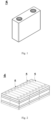
- Fig. 1 shows a secondary battery 5 with a square structure as an example.
- the secondary battery can be assembled into a battery module, the battery module may include a plurality of secondary batteries, and the specific number of the secondary batteries may be regulated according to application and capacity of the battery module.
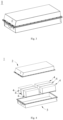
- Fig. 2 is a battery module 4 as an example.
- a plurality of secondary batteries 5 may be sequentially disposed along a length direction of the battery module 4.
- the secondary batteries 5 may also be disposed in other random manners.
- the plurality of secondary batteries 5 can be fixed by fasteners.
- the battery module 4 can further include a housing with an accommodation space, and the plurality of secondary batteries 5 are accommodated in the accommodation space.
- the battery module can also be assembled into a battery pack, and the number of the battery modules in the battery pack can be regulated according to application and capacity of the battery pack.
- Fig. 3 and Fig. 4 show a battery pack 1 as an example.
- the battery pack 1 may internally include a battery box and a plurality of battery modules 4 disposed in the battery box.
- the battery box includes an upper box body 2 and a lower box body 3, the upper box body 2 can be covered on the lower box body 3, and an enclosed space for accommodating the battery modules 4 is formed.
- the plurality of battery modules 4 can be disposed in the battery box in a random manner.
- the second aspect of the application provides an apparatus, including the secondary battery according to the first aspect of the application.
- the secondary battery can be used as a power supply of the apparatus, or can be used as an energy storage unit of the apparatus.
- the apparatus includes, but is not limited to, a mobile device (e.g., a mobile phone, a notebook computer, and the like), an electric vehicle (e.g., a pure electric vehicle, a hybrid electric vehicle, a plug-in hybrid electric vehicle, an electric bicycle, an electric scooter, an electric golf cart, an electric truck, and the like), an electric train, a ship, a satellite, an energy storage system, and the like.
- the apparatus may select the secondary battery, the battery module or the battery pack depending on the demands for application of the apparatus.
- Fig. 5 shows an apparatus as an example.
- the apparatus is the pure electric vehicle, the hybrid electric vehicle, or the plug-in hybrid electric vehicle, and the like.
- the battery pack or the battery module can be adopted.
- An apparatus as another example may be the mobile phone, a tablet personal computer, the notebook computer, and the like.
- the apparatus usually has lightening and thinning demands, and can use the secondary battery as a power supply.
- Secondary batteries in embodiments 1 to 11 and contrast examples 1 to 3 are all prepared according to the following method.
- the secondary battery At a temperature of 60° C, the secondary battery is charged to have a voltage of 4.25V with a constant current of 0.5C and then is charged to have a current of 0.05C with the constant voltage of 4.25V, and the volume of a lithium ion battery at the moment is tested by a drainage method and is recorded as Vi; and then the secondary battery is placed into a calorstat at a temperature of 60° C and is taken out after being stored for 30 days, and the volume of the secondary battery at the moment is tested and recorded as V 2 .
- the volume expansion ratio (%) after the secondary battery is stored for 30 days at the temperature of 60° C [(V2-V1) /V1 ] ⁇ 100%.
- the secondary battery At a temperature of 45° C, the secondary battery is charged to have a voltage of 4.25V with a constant current of 1C, then is charged to have a current of 0.05C with the constant voltage of 4.25V, is stood for Smin and then discharged to have a voltage of 2.5V with the constant current of 1C, it is the first charge/discharge cycle of the secondary battery, this discharge capacity is recorded as discharge capacity of the first cycle of the secondary battery, the secondary battery is subjected to charge/discharge cycle for 800 times according to the method, and discharge capacity after the secondary battery is cycled for 800 times is recorded.
- a capacity retention ratio (%) after the secondary battery is cycled for 800 times at the temperature of 45° C (the discharge capacity after the secondary battery is cycled for 800 times/the discharge capacity of the first cycle of the secondary battery) ⁇ 100%.
- the organic solvent of the secondary battery according to the embodiments 1 to 11 includes the ethylene carbonate (EC) and the ethyl methyl carbonate (EMC) which have specific content, so that the secondary battery can give consideration to good high-temperature storage performance and high-temperature cycle performance; specially, when the electrolyte salt of the secondary battery simultaneously includes the lithium hexafluorophosphate (LiPF6) and the lithium bisfluorosulfonimide (LiFSI) and a concentration of the lithium bisfluorosulfonimide (LiFSI) meets a specific concentration, as shown in the embodiments 7 to 11, the high-temperature storage performance and the high-temperature cycle performance of the secondary battery are better.
- LiPF6 lithium hexafluorophosphate
- LiFSI lithium bisfluorosulfonimide
- LiFSI concentration of the lithium bisfluorosulfonimide
- the content of the ethylene carbonate (EC) in the electrolyte in the contrast example 1 is over 10%, so that both the high-temperature storage performance and the high-temperature cycle performance of the obtained secondary battery are poor.
- the content of the ethylene carbonate (EC) in the electrolytes in the contrast examples 2 and 3 is over 10%, and the content of the ethyl methyl carbonate (EMC) does not meet a range of 80% to 95%, so that both the high-temperature storage performance and the high-temperature cycle performance of the obtained secondary batteries are poor.
Landscapes
- Chemical & Material Sciences (AREA)
- General Chemical & Material Sciences (AREA)
- Chemical Kinetics & Catalysis (AREA)
- Electrochemistry (AREA)
- Engineering & Computer Science (AREA)
- Inorganic Chemistry (AREA)
- Manufacturing & Machinery (AREA)
- General Physics & Mathematics (AREA)
- Condensed Matter Physics & Semiconductors (AREA)
- Physics & Mathematics (AREA)
- Materials Engineering (AREA)
- Composite Materials (AREA)
- Secondary Cells (AREA)
- Battery Electrode And Active Subsutance (AREA)
Description
- The application relates to the technical field of batteries, in particular to a secondary battery and an apparatus including the same.
- As fossil energy is increasingly depleted and the pressure of environment pollution becomes higher and higher, the automobile industry urgently needs a type of new energy as the driving power. The secondary battery stands out due to its high energy density, no memory effect, high working voltage and the like, and thus becomes the preferred solution for current new energy vehicle power supply. The new energy vehicle industry generally requires a power supply of high energy density, long cycle life, and the like, but it is a big challenge for a conventional secondary battery.
- Currently, a silicon-based material with high specific capacity used as a negative active material of the secondary battery can effectively improve the energy density of the secondary battery, but the silicon-based material would become much swollen in the charge-discharge cycle, causing electrochemical performance of the secondary battery to be reduced sharply.
- Therefore, in order to meet demands of an electric vehicle on the performance of the secondary battery, a secondary battery with good comprehensive performance is needed.
- In view of the problems in the background art, the application provides a secondary battery and an apparatus including the same. In the premise of having a high energy density, the secondary battery can simultaneously have good high-temperature storage performance and high-temperature cycle performance.
- In order to fulfill the aim above, a first aspect of the application provides a secondary battery and an apparatus comprises a secondary battery, according to the appended claims.
- According to the secondary battery provided by the application, a negative electrode includes the silicon-based material, the organic solvent in the electrolyte contains the ethylene carbonate (EC) and the ethyl methyl carbonate (EMC) which have specific content, and under the combined action of the substances above, the secondary battery has good high-temperature storage performance and high-temperature cycle performance. The apparatus provided by the application includes the secondary battery, and thus at least has the same advantages with the secondary battery,
-
CN 109 244 530 A discloses a secondary battery comprising a negative current collector coated with a negative active material film, the negative active material being silicon carbon graphite composite, a positive current collector coated with a positive active material film, the positive active material being Li[Ni0.89Co0.09Mn0.02]O2. The electrolyte comprises a lithium salt and ethylene carbonate (EC), dimethyl carbonate (DMC), and ethyl methyl carbonate (EMC) mixed at a volume ratio of 5:15:80. -
-
Fig. 1 is a schematic diagram of an embodiment of a secondary battery. -
Fig. 2 is a schematic diagram of an embodiment of a battery module. -
Fig. 3 is a schematic diagram of an embodiment of a battery pack. -
Fig. 4 is an exploded view ofFig. 3 . -
Fig. 5 is a schematic diagram of an embodiment of an apparatus using a secondary battery as a power supply. - Where, reference signs are illustrated as follows:
- 1. battery pack
- 2. upper box body
- 3. lower box body
- 4. battery module
- 5. secondary battery
- A secondary battery and an apparatus including the same according to the application will be illustrated in detail below.
- The secondary battery according to the application includes: a negative electrode plate and an electrolyte; the negative electrode plate includes a negative current collector and a negative electrode film which is disposed on at least one surface of the negative current collector and includes a negative active material; and the electrolyte includes electrolyte salt and an organic solvent, wherein the negative active material contains a silicon-based material; and the organic solvent contains ethylene carbonate (EC) and ethyl methyl carbonate (EMC), a weight ratio of the ethylene carbonate (EC) in the organic solvent is less than or equal to 10%, and a weight ratio of the ethyl methyl carbonate (EMC) in the organic solvent is 80% to 95%.
- In order to improve energy density of the secondary battery, the silicon-based material is used as the negative active material according to the application, but the silicon-based negative active material has a serious volume effect in the battery cycle process, resulting in limitation to the actual application of the secondary battery. Through a great deal of researches, an inventor of the application finds that when the organic solvents of the ethylene carbonate (EC) and the ethyl methyl carbonate (EMC), which have specific content, are added into the electrolyte, high-temperature storage performance and high-temperature cycle performance of the secondary battery using the silicon-based material as the negative active material can be effectively improved. The inventor supposes that when the EC and EMC solvents with the specific content are simultaneously added into the electrolyte, not only can the electrolyte salt be well dissociated, but also gas production in the battery cycle process can be effectively reduced under the combined action of the EC and the EMC, and thus, the secondary battery shows good high-temperature cycle performance and high-temperature storage performance while the energy density is improved.
- In the secondary battery according to a first aspect of the application, preferably, the weight ratio of the ethylene carbonate (EC) in the organic solvent is less than or equal to 5%.
- In the secondary battery according to the first aspect of the application, preferably, the weight ratio of the ethyl methyl carbonate (EMC) in the organic solvent is 85% to 95%.
- In the secondary battery according to the first aspect of the application, preferably, the electrolyte salt includes lithium hexafluorophosphate (LiPF6) and lithium bisfluorosulfonimide (LiFSI), and a concentration of the lithium bisfluorosulfonimide (LiFSI) is 0.8 mol/L to 1.3 mol/L. When the electrolyte simultaneously includes the lithium hexafluorophosphate (LiPF6) and the lithium bisfluorosulfonimide (LiFSI) and the concentration of the lithium bisfluorosulfonimide (LiFSI) is within a given range, the high-temperature storage performance and high-temperature cycle performance of the secondary battery are further improved. More preferably, the concentration of the lithium bisfluorosulfonimide (LiFSI) is 0.9 mol/L to 1.1 mol/L.
- In the secondary battery according to the first aspect of the application, preferably, the organic solvent may further contain one or more of dimethyl carbonate (DMC) and diethyl carbonate (DEC); more preferably, a weight ratio of the dimethyl carbonate (DMC) and/or the diethyl carbonate (DEC) in the organic solvent is less than or equal to 10%.
- In the secondary battery according to the first aspect of the application, preferably, the electrolyte further includes an additive, and the additive contains one or more of fluoroethylene carbonate (FEC), 1,2,3-
dioxathiolane 2,2-dioxide (DTD), 1,3-propane sultone (PS), 1,3-propenyl-sultone (PST), succinic anhydride (SA), tris(trimethylsilane) borate (TMSB), tris(trimethylsilane) phosphate (TMSP), lithium difluoro(oxalato)borate (LiDFOB), and lithium difluorodioxaltophosphate (LiDFOP). - In the secondary battery according to the first aspect of the application, preferably, an electrical conductivity of the electrolyte at a temperature of 25° C is 7 mS/cm to 9.5 mS/cm, more preferably, the electrical conductivity of the electrolyte at the temperature of 25° C is 7.5 mS/cm to 9.0 mS/cm.
- In the secondary battery according to the first aspect of the application, preferably, a viscosity of the electrolyte at the temperature of 25° C is 3.5 mPa·s to 5.5 mPa·s, more preferably, the viscosity of the electrolyte at the temperature of 25° C is 4 mPa·s to 5 mPa s.
- In the secondary battery according to the first aspect of the application, preferably, the silicon-based material includes one or more of simple substance silicon, a silicon carbon compound, a silicon oxygen compound, a silicon nitrogen compound, and silicon alloy; more preferably, the silicon-based material includes the silicon oxygen compound.
- In the secondary battery according to the first aspect of the application, preferably, the negative active material further includes a carbon material; more preferably, the carbon material includes one or more of natural graphite, artificial graphite, soft carbon, and hard carbon; more preferably, the carbon material includes one or more of the natural graphite and the artificial graphite.
- In the secondary battery according to the first aspect of the application, preferably, a mass ratio of the silicon-based material in the negative active material is greater than or equal to 15%; more preferably, the mass ratio of the silicon-based material in the negative active material is 20% to 40%.
- In the secondary battery according to the first aspect of the application, preferably, a type of the negative current collector is not specifically limited, and can be selected according to actual demands. Specifically, the negative current collector can be selected from a metal foil, e.g., a copper foil.
- In the secondary battery according to the first aspect of the application, the secondary battery further includes a positive electrode plate, and the positive electrode plate includes a positive current collector and a positive electrode film which is disposed on at least one surface of the positive current collector and includes a positive active material.
- In the secondary battery according to the first aspect of the application, preferably, the positive active material includes one or more of a lithium nickel cobalt manganese oxygen compound and a lithium nickel cobalt aluminium oxide. The lithium nickel cobalt manganese oxygen compound and the lithium nickel cobalt aluminium oxide, as the positive active materials of the secondary battery, have the advantages of high specific capacity, long cycle life, and the like, and are used in concert with the negative active material including the silicon-based material so as to further improve electrochemical performance of the battery.
- In the secondary battery according to the first aspect of the application, preferably, the positive active material includes one or more of LiaNibCocMdM'eOfAg or LiaNibCocMdM'eOfAg with a coating layer on at least one part of the surface thereof, wherein 0.8≤a≤1.2, 0.5≤b<1, 0<c<1, 0<d<1, 0≤e≤0.1, 1≤f≤2, 0≤g≤1, M is selected from one or more of Mn and Al, M' is selected from one or more of Zr, Al, Zn, Cu, Cr, Mg, Fe, V, Ti, and B, and A is selected from one or more of N, F, S, and Cl.
- The coating layer of the positive active material may be a carbon layer, an oxide layer, an inorganic salt layer or a conductive macromolecule layer. By carrying out coating modification on the surface of the positive active material, the cycle performance of the secondary battery can be further improved.
- In the secondary battery according to the first aspect of the application, further, the positive active material can further include one or more of a lithium manganese oxide (e.g., spinel type lithium manganate, layered lithium manganite, and the like) and modified compounds thereof, lithium iron phosphate and modified compounds thereof, and lithium cobaltate and modified compounds thereof.
- In the secondary battery according to the first aspect of the application, a type of the positive current collector is not specifically limited, and can be selected according to actual demands. Specifically, the positive current collector can be selected from a metal foil, e.g., an aluminium foil.
- In the secondary battery according to the first aspect of the application, the secondary battery further includes a separation film. A type of the separation film is not specifically limited, and can be selected according to actual demands. Specifically, the separation film can be selected from one or more of a polyethylene film, a polypropylene film, a polyvinylidene fluoride film, and multi-layer composite films thereof.
- In some embodiments, the secondary battery may include an outer package for packaging the positive electrode plate, the negative electrode plate, and the electrolyte. As an example, the positive electrode plate, the negative electrode plate, and the separation film can be formed into an electrode assembly with a laminated structure by lamination or an electrode assembly with a wound structure by winding, and the electrode assembly is packaged in the outer package; and the electrolyte wets the electrode assembly. The number of the electrode assemblies in the secondary battery may be one or more, and can be regulated as required.
- In some embodiments, the outer package of the secondary battery may be a soft package, e.g., a bag-type soft package. A material of the soft package may be plastics, and for example, may include one or more of polypropylene (PP), polybutylene terephthalate (PBT), polybutylene succinate (PBS), and the like. The outer package of the secondary battery may also be a hard housing, e.g., an aluminium housing and the like.
- The application does not make any special limitation to the shape of the secondary battery, and the secondary battery may be of a cylinder shape, a square shape or other random shapes.
Fig. 1 shows asecondary battery 5 with a square structure as an example. - In some embodiments, the secondary battery can be assembled into a battery module, the battery module may include a plurality of secondary batteries, and the specific number of the secondary batteries may be regulated according to application and capacity of the battery module.
-
Fig. 2 is abattery module 4 as an example. With reference toFig. 2 , in thebattery module 4, a plurality ofsecondary batteries 5 may be sequentially disposed along a length direction of thebattery module 4. Certainly, thesecondary batteries 5 may also be disposed in other random manners. Further, the plurality ofsecondary batteries 5 can be fixed by fasteners. - Optionally, the
battery module 4 can further include a housing with an accommodation space, and the plurality ofsecondary batteries 5 are accommodated in the accommodation space. - In some embodiments, the battery module can also be assembled into a battery pack, and the number of the battery modules in the battery pack can be regulated according to application and capacity of the battery pack.
-
Fig. 3 and Fig. 4 show abattery pack 1 as an example. With reference toFig. 3 and Fig. 4 , thebattery pack 1 may internally include a battery box and a plurality ofbattery modules 4 disposed in the battery box. The battery box includes anupper box body 2 and alower box body 3, theupper box body 2 can be covered on thelower box body 3, and an enclosed space for accommodating thebattery modules 4 is formed. The plurality ofbattery modules 4 can be disposed in the battery box in a random manner. - The second aspect of the application provides an apparatus, including the secondary battery according to the first aspect of the application. The secondary battery can be used as a power supply of the apparatus, or can be used as an energy storage unit of the apparatus. The apparatus includes, but is not limited to, a mobile device (e.g., a mobile phone, a notebook computer, and the like), an electric vehicle (e.g., a pure electric vehicle, a hybrid electric vehicle, a plug-in hybrid electric vehicle, an electric bicycle, an electric scooter, an electric golf cart, an electric truck, and the like), an electric train, a ship, a satellite, an energy storage system, and the like.
- The apparatus may select the secondary battery, the battery module or the battery pack depending on the demands for application of the apparatus.
-
Fig. 5 shows an apparatus as an example. The apparatus is the pure electric vehicle, the hybrid electric vehicle, or the plug-in hybrid electric vehicle, and the like. In order to meet demands of the apparatus for high power and a high energy density of the secondary battery, the battery pack or the battery module can be adopted. - An apparatus as another example may be the mobile phone, a tablet personal computer, the notebook computer, and the like. The apparatus usually has lightening and thinning demands, and can use the secondary battery as a power supply.
- The application will be further illustrated below in combination with embodiments. It should be understood that those embodiments are merely used for illustrating the application, but not intended to limit the scope of the application.
- Secondary batteries in
embodiments 1 to 11 and contrast examples 1 to 3 are all prepared according to the following method. - (1) Preparation of a positive electrode plate:
a positive active material NCM811 (LiNi0.8Co0.1Mn0.1O2), an adhesive polyvinylidene fluoride, and a conductive additive Super P are mixed according to a weight ratio of 98:1:1, N-methyl pyrrolidone (NMP) is added, and under the action of a vacuum stirrer, stirring is carried out until a system is changed into a transparent state, so as to obtain a positive electrode size; the positive electrode size is uniformly coated on an aluminium foil; and the aluminium foil is transferred to a drying oven to be dried after being air-dried at the room temperature, and then is subjected to cold pressing and slitting to obtain the positive electrode plate. - (2) Preparation of a negative electrode plate:
after negative active materials of silicon monoxide and artificial graphite are mixed according to a mass ratio of 2:8, a mixture is mixed with the conductive additive Super P, a thickener carboxymethylcellulose sodium (CMC-Na), and an adhesive styrene butadiene rubber (SBR) according to a mass ratio of 92:2:2:4, deionized water is added, and under the action of the vacuum stirrer, a negative electrode size is obtained; the negative electrode size is uniformly coated on a negative current collector copper foil; and the copper foil is transferred to the drying oven to be dried after being air-dried at the room temperature, and then is subjected to cold pressing and slitting to obtain the negative electrode plate. - (3) Preparation of an electrolyte:
in an argon atmosphere glove box of which moisture content is less than 10 ppm, organic solvents are mixed according to a weight ratio to obtain a mixed solvent, then sufficiently dried electrolyte salt is dissolved in the mixed solvent, then additives (8% of FEC, 0.5% of SA, and 0.5% of TMSP) are added, and after uniform mixing is carried out, the electrolyte is obtained, content of each additive being a weight percent calculated on the basis of a total weight of the electrolyte, wherein composition of the organic solvents and a specific type and content of the electrolyte salt are as shown in Table 1. In Table 1, content of each organic solvent is a weight percent calculated on the basis of a total weight of the organic solvents; and a concentration of each electrolyte salt is a concentration calculated on the basis of a total concentration of the electrolyte. - (4) Preparation of a separation film:
a polyethylene (PE) film is used as the separation film. - (5) Preparation of the secondary battery:
the positive electrode plate, the separation film, and the negative electrode plate are stacked in sequence, the separation film is enabled to be positioned between the positive and negative electrode plates to take a separation effect, and then winding is carried out to obtain an electrode assembly; and the electrode assembly is placed in an outer package, the prepared electrolyte is injected into a dried secondary battery, and processes of vacuum packaging, standing, formation, shaping, and the like are carried out to obtain the secondary battery. - Then the testing process of the secondary battery is illustrated.
- At a temperature of 60° C, the secondary battery is charged to have a voltage of 4.25V with a constant current of 0.5C and then is charged to have a current of 0.05C with the constant voltage of 4.25V, and the volume of a lithium ion battery at the moment is tested by a drainage method and is recorded as Vi; and then the secondary battery is placed into a calorstat at a temperature of 60° C and is taken out after being stored for 30 days, and the volume of the secondary battery at the moment is tested and recorded as V2.
- The volume expansion ratio (%) after the secondary battery is stored for 30 days at the temperature of 60° C = [(V2-V1) /V1 ]×100%.
- At a temperature of 45° C, the secondary battery is charged to have a voltage of 4.25V with a constant current of 1C, then is charged to have a current of 0.05C with the constant voltage of 4.25V, is stood for Smin and then discharged to have a voltage of 2.5V with the constant current of 1C, it is the first charge/discharge cycle of the secondary battery, this discharge capacity is recorded as discharge capacity of the first cycle of the secondary battery, the secondary battery is subjected to charge/discharge cycle for 800 times according to the method, and discharge capacity after the secondary battery is cycled for 800 times is recorded.
- A capacity retention ratio (%) after the secondary battery is cycled for 800 times at the temperature of 45° C = (the discharge capacity after the secondary battery is cycled for 800 times/the discharge capacity of the first cycle of the secondary battery)×100%.
Table 2 Performance Test Results of Embodiments 1-11 and Contrast Examples 1-3 Sequence Number Volume Expansion Ratio (%) after Storage for 30 Days at the Temperature of 60°C Capacity Retention Ratio (%) after Cycle for 800 Times at the Temperature of 45° C Embodiment 1 11.5 78.1 Embodiment 28.8 78.5 Embodiment 312.5 76.3 Embodiment 47.8 74.6 Embodiment 513.5 78.9 Embodiment 6 13.2 78.1 Embodiment 7 7.5 78.8 Embodiment 8 7.4 80.1 Embodiment 9 7.1 81.5 Embodiment 10 6.8 82.1 Embodiment 11 6.5 79.5 Contrast Example 1 18.6 72.2 Contrast Example 2 23.5 70.5 Contrast Example 3 20.1 71.2 - It can be seen from the test results as shown in Table 2 that: the organic solvent of the secondary battery according to the
embodiments 1 to 11 includes the ethylene carbonate (EC) and the ethyl methyl carbonate (EMC) which have specific content, so that the secondary battery can give consideration to good high-temperature storage performance and high-temperature cycle performance; specially, when the electrolyte salt of the secondary battery simultaneously includes the lithium hexafluorophosphate (LiPF6) and the lithium bisfluorosulfonimide (LiFSI) and a concentration of the lithium bisfluorosulfonimide (LiFSI) meets a specific concentration, as shown in the embodiments 7 to 11, the high-temperature storage performance and the high-temperature cycle performance of the secondary battery are better. - The content of the ethylene carbonate (EC) in the electrolyte in the contrast example 1 is over 10%, so that both the high-temperature storage performance and the high-temperature cycle performance of the obtained secondary battery are poor.
- The content of the ethylene carbonate (EC) in the electrolytes in the contrast examples 2 and 3 is over 10%, and the content of the ethyl methyl carbonate (EMC) does not meet a range of 80% to 95%, so that both the high-temperature storage performance and the high-temperature cycle performance of the obtained secondary batteries are poor.
| Sequence Number | Organic Solvents | Type and Concentration of Electrolyte Salt |
| Embodiment 1 | EC:EMC=10:90 | LiPF6 (1.3 mol/L) |
| Embodiment 2 | EC:EMC=5:95 | LiPF6 (1.3 mol/L) |
| Embodiment 3 | EC:EMC:DEC=10:80:10 | LiPF6 (1.3 mol/L) |
| Embodiment 4 | EC:EMC:DEC=5:85:10 | LiPF6 (1.3 mol/L) |
| Embodiment 5 | EC:EMC:DMC=10:80:10 | LiPF6 (1.3 mol/L) |
| Embodiment 6 | EC:EMC:DMC=5:85:10 | LiPF6 (1.3 mol/L) |
| Embodiment 7 | EC:EMC=5:95 | LiPF6 (0.5 mol/L) +LiFSI (0.8 mol/L) |
| Embodiment 8 | EC:EMC=5:95 | LiPF6 (0.4 mol/L) +LiFSI (0.9 mol/L) |
| Embodiment 9 | EC:EMC=5:95 | LiPF6 (0.3 mol/L) +LiFSI (1.0 mol/L) |
| Embodiment 10 | EC:EMC=5:95 | LiPF6 (0.2 mol/L) +LiFSI (1.1 mol/L) |
| Embodiment 11 | EC:EMC=5:95 | LiPF6 (0.1 mol/L) +LiFSI (1.2 mol/L) |
| Contrast Example 1 | EC:EMC=30:70 | LiPF6 (1.3 mol/L) |
| Contrast Example 2 | EC:EMC:DMC=20:50:30 | LiPF6 (1.3 mol/L) |
| Contrast Example 3 | EC:EMC:DEC=20:50:30 | LiPF6 (1.3 mol/L) |
Claims (13)
- A secondary battery, comprising: a negative electrode plate and an electrolyte; the negative electrode plate including a negative current collector and a negative electrode film which is disposed on at least one surface of the negative current collector and includes a negative active material; and the electrolyte including electrolyte salt and an organic solvent, whereinthe negative active material comprises a silicon-based material;the organic solvent comprises ethylene carbonate (EC) and ethyl methyl carbonate (EMC), a weight ratio of the ethylene carbonate (EC) in the organic solvent is less than or equal to 10%, and a weight ratio of the ethyl methyl carbonate (EMC) in the organic solvent is 80% to 95%.
- The secondary battery according to claim 1, wherein the weight ratio of the ethylene carbonate (EC) in the organic solvent is less than or equal to 5%.
- The secondary battery according to any one of claims 1 to 2, wherein the weight ratio of the ethyl methyl carbonate (EMC) in the organic solvent is 85% to 95%.
- The secondary battery according to any one of claims 1 to 3, wherein the electrolyte salt includes lithium hexafluorophosphate (LiPF6) and lithium bisfluorosulfonimide (LiFSI), and a concentration of the lithium bisfluorosulfonimide (LiFSI) is 0.8 mol/L to 1.3 mol/L, preferably 0.9 mol/L to 1.1 mol/L.
- The secondary battery according to any one of claims 1 to 4, wherein the organic solvent further comprises one or more of dimethyl carbonate (DMC) and diethyl carbonate (DEC);
preferably, a mass ratio of the dimethyl carbonate (DMC) and/or the diethyl carbonate (DEC) in the organic solvent is less than or equal to 10%. - The secondary battery according to any one of claims 1 to 5, wherein the electrolyte further includes an additive, and the additive comprises one or more of fluoroethylene carbonate (FEC), 1,2,3-dioxathiolane 2,2-dioxide (DTD), 1,3-propane sultone (PS), 1,3-propenyl-sultone (PST), vinylene carbonate (VC), succinic anhydride (SA), tris(trimethylsilane) borate (TMSB), tris(trimethylsilane) phosphate (TMSP), lithium difluoro(oxalato)borate (LiDFOB), and lithium difluorodioxaltophosphate (LiDFOP).
- The secondary battery according to any one of claims 1 to 6, whereinan electrical conductivity of the electrolyte at a temperature of 25° C is 7 mS/cm to 9.5 mS/cm, preferably, the electrical conductivity of the electrolyte at the temperature of 25° C is 7.5 mS/cm to 9.0 mS/cm; and/ora viscosity of the electrolyte at the temperature of 25° C is 3.5 mPa·s to 5.5 mPa·s, preferably, the viscosity of the electrolyte at the temperature of 25° C is 4 mPa·s to 5 mPa s.
- The secondary battery according to any one of claims 1 to 7, wherein the silicon-based material includes one or more of simple substance silicon, a silicon carbon compound, a silicon oxygen compound, a silicon nitrogen compound, and silicon alloy; preferably, the silicon-based material includes the silicon oxygen compound.
- The secondary battery according to any one of claims 1 to 8, wherein the negative active material further includes a carbon material, and the carbon material includes one or more of natural graphite, artificial graphite, soft carbon, and hard carbon; preferably, the carbon material includes one or more of the natural graphite and the artificial graphite.
- The secondary battery according to any one of claims 1 to 9, wherein a mass ratio of the silicon-based material in the negative active material is greater than or equal to 15%; preferably, the mass ratio of the silicon-based material in the negative active material is 20% to 40%.
- The secondary battery according to any one of claims 1 to 10, further comprising a positive electrode plate, the positive electrode plate including a positive current collector and a positive electrode film which is disposed on at least one surface of the positive current collector and includes a positive active material, the positive active material including one or more of a lithium nickel cobalt manganese oxygen compound and a lithium nickel cobalt aluminium oxide;
preferably, the positive active material including one or more of a material with a general formula of LiaNibCocMdM'eOfAg or a material LiaNibCocMdM'eOfAg with a coating layer on at least one part of the surface thereof, wherein 0.8≤a≤1.2, 0.5≤b<1, 0<c<1, 0<d<1, 0≤e≤0.1, 1≤f≤2, 0≤g≤1, M is selected from one or more of Mn and Al, M' is selected from one or more of Zr, Al, Zn, Cu, Cr, Mg, Fe, V, Ti, and B, and A is selected from one or more of N, F, S, and Cl. - The secondary battery according to claim 11, wherein the positive active material further includes one or more of a lithium nickel oxide, a lithium manganese oxide, lithium iron phosphate, lithium manganese phosphate, lithium manganese iron phosphate, lithium cobaltate, and modified compounds thereof.
- An apparatus, comprising the secondary battery according to any one of claims 1 to 12.
Applications Claiming Priority (1)
| Application Number | Priority Date | Filing Date | Title |
|---|---|---|---|
| PCT/CN2019/127980 WO2021127999A1 (en) | 2019-12-24 | 2019-12-24 | Secondary battery and apparatus containing secondary battery |
Publications (3)
| Publication Number | Publication Date |
|---|---|
| EP3913722A1 EP3913722A1 (en) | 2021-11-24 |
| EP3913722A4 EP3913722A4 (en) | 2022-03-23 |
| EP3913722B1 true EP3913722B1 (en) | 2024-01-31 |
Family
ID=76575007
Family Applications (1)
| Application Number | Title | Priority Date | Filing Date |
|---|---|---|---|
| EP19957409.6A Active EP3913722B1 (en) | 2019-12-24 | 2019-12-24 | Secondary battery and apparatus containing secondary battery |
Country Status (6)
| Country | Link |
|---|---|
| US (1) | US20220181696A1 (en) |
| EP (1) | EP3913722B1 (en) |
| JP (1) | JP7309263B2 (en) |
| KR (1) | KR102642131B1 (en) |
| CN (1) | CN114175346B (en) |
| WO (1) | WO2021127999A1 (en) |
Families Citing this family (7)
| Publication number | Priority date | Publication date | Assignee | Title |
|---|---|---|---|---|
| JP7728271B2 (en) * | 2021-07-22 | 2025-08-22 | 香港時代新能源科技有限公司 | Electrolytes, lithium-ion batteries and electrical equipment |
| CN114899492B (en) * | 2022-06-13 | 2025-11-28 | 昆明云大新能源有限公司 | Electrolyte additive generated in situ and preparation method and application thereof |
| WO2024020841A1 (en) * | 2022-07-27 | 2024-02-01 | 宁德时代新能源科技股份有限公司 | Secondary battery, battery module, battery pack and electric device |
| EP4611061A4 (en) * | 2023-03-31 | 2026-03-18 | Contemporary Amperex Technology Hong Kong Ltd | SECONDARY BATTERY AND ELECTRICAL DEVICE |
| CN119340491B (en) * | 2023-07-18 | 2025-11-04 | 宁德时代新能源科技股份有限公司 | Lithium secondary batteries and electrical devices |
| CN119833760A (en) * | 2024-07-30 | 2025-04-15 | 宁德时代新能源科技股份有限公司 | Secondary battery and electricity utilization device |
| CN118943496A (en) * | 2024-08-09 | 2024-11-12 | 宁德时代新能源科技股份有限公司 | Secondary battery cell and electric device |
Family Cites Families (16)
| Publication number | Priority date | Publication date | Assignee | Title |
|---|---|---|---|---|
| KR100467435B1 (en) * | 2002-09-06 | 2005-01-24 | 삼성에스디아이 주식회사 | An electrolyte for a lithium battery and a lithium battery comprising the same |
| CN101667660A (en) * | 2008-09-01 | 2010-03-10 | 北京创亚恒业新材料科技有限公司 | Electrolyte solution capable of improving high-temperature electrochemical properties of lithium-ion secondary battery |
| JP4992921B2 (en) * | 2009-02-19 | 2012-08-08 | ソニー株式会社 | Non-aqueous electrolyte secondary battery |
| JP2011198508A (en) | 2010-03-17 | 2011-10-06 | Sony Corp | Lithium secondary battery, electrolyte for lithium secondary battery, power tool, electric vehicle, and power storage system |
| FR2976736B1 (en) * | 2011-06-14 | 2013-06-14 | Commissariat Energie Atomique | LIQUID ELECTROLYTE FOR LITHIUM BATTERY COMPRISING A QUATERNARY MIXTURE OF NONAQUEOUS ORGANIC SOLVENTS. |
| KR101797289B1 (en) * | 2014-09-26 | 2017-11-13 | 주식회사 엘지화학 | Non-aqueous liquid electrolyte and lithium secondary battery comprising the same |
| JP6587235B2 (en) * | 2015-03-12 | 2019-10-09 | セイコーインスツル株式会社 | Nonaqueous electrolyte secondary battery |
| WO2017073016A1 (en) * | 2015-10-30 | 2017-05-04 | パナソニックIpマネジメント株式会社 | Nonaqueous electrolyte secondary battery |
| CN105261790A (en) * | 2015-11-03 | 2016-01-20 | 宁德新能源科技有限公司 | Electrolyte and lithium-ion battery including same |
| KR20180093709A (en) * | 2017-02-14 | 2018-08-22 | 세방전지(주) | Electrolyte including phosphate-based compound and lithium secondary battery including the same |
| WO2019039903A2 (en) * | 2017-08-24 | 2019-02-28 | 주식회사 엘지화학 | Nonaqueous electrolyte for lithium secondary battery and lithium secondary battery comprising same |
| US10818973B2 (en) * | 2017-10-25 | 2020-10-27 | Toyota Jidosha Kabushiki Kaisha | Electrolyte composition and lithium ion secondary battery |
| CN108461804A (en) * | 2018-01-31 | 2018-08-28 | 深圳市卓能新能源股份有限公司 | A 18650-3800mAh lithium battery and its preparation method |
| CN109244530A (en) * | 2018-09-21 | 2019-01-18 | 深圳市卓能新能源股份有限公司 | A kind of lithium ion battery and preparation method |
| CN111684643B (en) * | 2018-09-28 | 2023-07-07 | 株式会社Lg新能源 | Non-aqueous electrolyte solution and lithium secondary battery containing same |
| KR102243610B1 (en) * | 2018-12-17 | 2021-04-27 | 주식회사 티씨케이 | Negative active material, method for preparing the same and lithium secondary battery comprising the same |
-
2019
- 2019-12-24 JP JP2022522058A patent/JP7309263B2/en active Active
- 2019-12-24 US US17/598,149 patent/US20220181696A1/en not_active Abandoned
- 2019-12-24 CN CN201980098757.XA patent/CN114175346B/en active Active
- 2019-12-24 WO PCT/CN2019/127980 patent/WO2021127999A1/en not_active Ceased
- 2019-12-24 KR KR1020227012239A patent/KR102642131B1/en active Active
- 2019-12-24 EP EP19957409.6A patent/EP3913722B1/en active Active
Also Published As
| Publication number | Publication date |
|---|---|
| JP2022553168A (en) | 2022-12-22 |
| CN114175346B (en) | 2025-03-07 |
| JP7309263B2 (en) | 2023-07-18 |
| EP3913722A4 (en) | 2022-03-23 |
| CN114175346A (en) | 2022-03-11 |
| KR20220065798A (en) | 2022-05-20 |
| EP3913722A1 (en) | 2021-11-24 |
| KR102642131B1 (en) | 2024-03-04 |
| WO2021127999A1 (en) | 2021-07-01 |
| US20220181696A1 (en) | 2022-06-09 |
Similar Documents
| Publication | Publication Date | Title |
|---|---|---|
| EP3913722B1 (en) | Secondary battery and apparatus containing secondary battery | |
| US12300785B2 (en) | Secondary battery and apparatus containing the secondary battery | |
| US20250070119A1 (en) | Negative electrode plate and preparation method thereof, secondary battery, battery module, battery pack, and electric apparatus | |
| EP3930049B1 (en) | Secondary battery and device comprising the secondary battery | |
| KR102651812B1 (en) | Secondary batteries and devices containing secondary batteries | |
| EP4231368A1 (en) | Lithium supplementing method and charging and discharging method for secondary battery | |
| US12230763B2 (en) | Secondary battery and device comprising the same | |
| US20220407117A1 (en) | Electrolyte solution, secondary battery, battery module, battery pack and device | |
| US20230080029A1 (en) | Secondary battery, preparation method thereof, and apparatus containing same | |
| EP4318637A1 (en) | Secondary battery and preparation method therefor, battery module, battery pack, and electric device |
Legal Events
| Date | Code | Title | Description |
|---|---|---|---|
| STAA | Information on the status of an ep patent application or granted ep patent |
Free format text: STATUS: THE INTERNATIONAL PUBLICATION HAS BEEN MADE |
|
| PUAI | Public reference made under article 153(3) epc to a published international application that has entered the european phase |
Free format text: ORIGINAL CODE: 0009012 |
|
| STAA | Information on the status of an ep patent application or granted ep patent |
Free format text: STATUS: REQUEST FOR EXAMINATION WAS MADE |
|
| 17P | Request for examination filed |
Effective date: 20210713 |
|
| AK | Designated contracting states |
Kind code of ref document: A1 Designated state(s): AL AT BE BG CH CY CZ DE DK EE ES FI FR GB GR HR HU IE IS IT LI LT LU LV MC MK MT NL NO PL PT RO RS SE SI SK SM TR |
|
| A4 | Supplementary search report drawn up and despatched |
Effective date: 20220218 |
|
| RIC1 | Information provided on ipc code assigned before grant |
Ipc: H01M 4/48 20100101ALI20220215BHEP Ipc: H01M 4/133 20100101ALI20220215BHEP Ipc: H01M 10/0568 20100101ALI20220215BHEP Ipc: H01M 10/0567 20100101ALI20220215BHEP Ipc: H01M 4/587 20100101ALI20220215BHEP Ipc: H01M 4/38 20060101ALI20220215BHEP Ipc: H01M 4/36 20060101ALI20220215BHEP Ipc: H01M 10/0525 20100101ALI20220215BHEP Ipc: H01M 10/0569 20100101AFI20220215BHEP |
|
| RAP3 | Party data changed (applicant data changed or rights of an application transferred) |
Owner name: CONTEMPORARY AMPEREX TECHNOLOGY CO., LIMITED |
|
| DAV | Request for validation of the european patent (deleted) | ||
| DAX | Request for extension of the european patent (deleted) | ||
| RIC1 | Information provided on ipc code assigned before grant |
Ipc: H01M 4/48 20100101ALI20231010BHEP Ipc: H01M 4/133 20100101ALI20231010BHEP Ipc: H01M 10/0568 20100101ALI20231010BHEP Ipc: H01M 10/0567 20100101ALI20231010BHEP Ipc: H01M 4/587 20100101ALI20231010BHEP Ipc: H01M 4/38 20060101ALI20231010BHEP Ipc: H01M 4/36 20060101ALI20231010BHEP Ipc: H01M 10/0525 20100101ALI20231010BHEP Ipc: H01M 10/0569 20100101AFI20231010BHEP |
|
| GRAP | Despatch of communication of intention to grant a patent |
Free format text: ORIGINAL CODE: EPIDOSNIGR1 |
|
| STAA | Information on the status of an ep patent application or granted ep patent |
Free format text: STATUS: GRANT OF PATENT IS INTENDED |
|
| GRAS | Grant fee paid |
Free format text: ORIGINAL CODE: EPIDOSNIGR3 |
|
| INTG | Intention to grant announced |
Effective date: 20231123 |
|
| GRAA | (expected) grant |
Free format text: ORIGINAL CODE: 0009210 |
|
| STAA | Information on the status of an ep patent application or granted ep patent |
Free format text: STATUS: THE PATENT HAS BEEN GRANTED |
|
| AK | Designated contracting states |
Kind code of ref document: B1 Designated state(s): AL AT BE BG CH CY CZ DE DK EE ES FI FR GB GR HR HU IE IS IT LI LT LU LV MC MK MT NL NO PL PT RO RS SE SI SK SM TR |
|
| REG | Reference to a national code |
Ref country code: GB Ref legal event code: FG4D Ref country code: CH Ref legal event code: EP |
|
| P01 | Opt-out of the competence of the unified patent court (upc) registered |
Effective date: 20240104 |
|
| REG | Reference to a national code |
Ref country code: DE Ref legal event code: R096 Ref document number: 602019046072 Country of ref document: DE |
|
| REG | Reference to a national code |
Ref country code: IE Ref legal event code: FG4D |
|
| REG | Reference to a national code |
Ref country code: LT Ref legal event code: MG9D |
|
| REG | Reference to a national code |
Ref country code: NL Ref legal event code: MP Effective date: 20240131 |
|
| PG25 | Lapsed in a contracting state [announced via postgrant information from national office to epo] |
Ref country code: IS Free format text: LAPSE BECAUSE OF FAILURE TO SUBMIT A TRANSLATION OF THE DESCRIPTION OR TO PAY THE FEE WITHIN THE PRESCRIBED TIME-LIMIT Effective date: 20240531 |
|
| PG25 | Lapsed in a contracting state [announced via postgrant information from national office to epo] |
Ref country code: LT Free format text: LAPSE BECAUSE OF FAILURE TO SUBMIT A TRANSLATION OF THE DESCRIPTION OR TO PAY THE FEE WITHIN THE PRESCRIBED TIME-LIMIT Effective date: 20240131 |
|
| PG25 | Lapsed in a contracting state [announced via postgrant information from national office to epo] |
Ref country code: GR Free format text: LAPSE BECAUSE OF FAILURE TO SUBMIT A TRANSLATION OF THE DESCRIPTION OR TO PAY THE FEE WITHIN THE PRESCRIBED TIME-LIMIT Effective date: 20240501 |
|
| REG | Reference to a national code |
Ref country code: AT Ref legal event code: MK05 Ref document number: 1654480 Country of ref document: AT Kind code of ref document: T Effective date: 20240131 |
|
| PG25 | Lapsed in a contracting state [announced via postgrant information from national office to epo] |
Ref country code: RS Free format text: LAPSE BECAUSE OF FAILURE TO SUBMIT A TRANSLATION OF THE DESCRIPTION OR TO PAY THE FEE WITHIN THE PRESCRIBED TIME-LIMIT Effective date: 20240430 Ref country code: NL Free format text: LAPSE BECAUSE OF FAILURE TO SUBMIT A TRANSLATION OF THE DESCRIPTION OR TO PAY THE FEE WITHIN THE PRESCRIBED TIME-LIMIT Effective date: 20240131 Ref country code: HR Free format text: LAPSE BECAUSE OF FAILURE TO SUBMIT A TRANSLATION OF THE DESCRIPTION OR TO PAY THE FEE WITHIN THE PRESCRIBED TIME-LIMIT Effective date: 20240131 |
|
| PG25 | Lapsed in a contracting state [announced via postgrant information from national office to epo] |
Ref country code: ES Free format text: LAPSE BECAUSE OF FAILURE TO SUBMIT A TRANSLATION OF THE DESCRIPTION OR TO PAY THE FEE WITHIN THE PRESCRIBED TIME-LIMIT Effective date: 20240131 |
|
| PG25 | Lapsed in a contracting state [announced via postgrant information from national office to epo] |
Ref country code: AT Free format text: LAPSE BECAUSE OF FAILURE TO SUBMIT A TRANSLATION OF THE DESCRIPTION OR TO PAY THE FEE WITHIN THE PRESCRIBED TIME-LIMIT Effective date: 20240131 |
|
| PG25 | Lapsed in a contracting state [announced via postgrant information from national office to epo] |
Ref country code: RS Free format text: LAPSE BECAUSE OF FAILURE TO SUBMIT A TRANSLATION OF THE DESCRIPTION OR TO PAY THE FEE WITHIN THE PRESCRIBED TIME-LIMIT Effective date: 20240430 Ref country code: NO Free format text: LAPSE BECAUSE OF FAILURE TO SUBMIT A TRANSLATION OF THE DESCRIPTION OR TO PAY THE FEE WITHIN THE PRESCRIBED TIME-LIMIT Effective date: 20240430 Ref country code: NL Free format text: LAPSE BECAUSE OF FAILURE TO SUBMIT A TRANSLATION OF THE DESCRIPTION OR TO PAY THE FEE WITHIN THE PRESCRIBED TIME-LIMIT Effective date: 20240131 Ref country code: LT Free format text: LAPSE BECAUSE OF FAILURE TO SUBMIT A TRANSLATION OF THE DESCRIPTION OR TO PAY THE FEE WITHIN THE PRESCRIBED TIME-LIMIT Effective date: 20240131 Ref country code: IS Free format text: LAPSE BECAUSE OF FAILURE TO SUBMIT A TRANSLATION OF THE DESCRIPTION OR TO PAY THE FEE WITHIN THE PRESCRIBED TIME-LIMIT Effective date: 20240531 Ref country code: HR Free format text: LAPSE BECAUSE OF FAILURE TO SUBMIT A TRANSLATION OF THE DESCRIPTION OR TO PAY THE FEE WITHIN THE PRESCRIBED TIME-LIMIT Effective date: 20240131 Ref country code: GR Free format text: LAPSE BECAUSE OF FAILURE TO SUBMIT A TRANSLATION OF THE DESCRIPTION OR TO PAY THE FEE WITHIN THE PRESCRIBED TIME-LIMIT Effective date: 20240501 Ref country code: FI Free format text: LAPSE BECAUSE OF FAILURE TO SUBMIT A TRANSLATION OF THE DESCRIPTION OR TO PAY THE FEE WITHIN THE PRESCRIBED TIME-LIMIT Effective date: 20240131 Ref country code: ES Free format text: LAPSE BECAUSE OF FAILURE TO SUBMIT A TRANSLATION OF THE DESCRIPTION OR TO PAY THE FEE WITHIN THE PRESCRIBED TIME-LIMIT Effective date: 20240131 Ref country code: BG Free format text: LAPSE BECAUSE OF FAILURE TO SUBMIT A TRANSLATION OF THE DESCRIPTION OR TO PAY THE FEE WITHIN THE PRESCRIBED TIME-LIMIT Effective date: 20240131 Ref country code: AT Free format text: LAPSE BECAUSE OF FAILURE TO SUBMIT A TRANSLATION OF THE DESCRIPTION OR TO PAY THE FEE WITHIN THE PRESCRIBED TIME-LIMIT Effective date: 20240131 |
|
| PG25 | Lapsed in a contracting state [announced via postgrant information from national office to epo] |
Ref country code: PL Free format text: LAPSE BECAUSE OF FAILURE TO SUBMIT A TRANSLATION OF THE DESCRIPTION OR TO PAY THE FEE WITHIN THE PRESCRIBED TIME-LIMIT Effective date: 20240131 Ref country code: PT Free format text: LAPSE BECAUSE OF FAILURE TO SUBMIT A TRANSLATION OF THE DESCRIPTION OR TO PAY THE FEE WITHIN THE PRESCRIBED TIME-LIMIT Effective date: 20240531 |
|
| REG | Reference to a national code |
Ref country code: DE Ref legal event code: R081 Ref document number: 602019046072 Country of ref document: DE Owner name: CONTEMPORARY AMPEREX TECHNOLOGY (HONG KONG) LI, HK Free format text: FORMER OWNER: CONTEMPORARY AMPEREX TECHNOLOGY CO., LIMITED, NINGDE CITY, FUJIAN, CN |
|
| PG25 | Lapsed in a contracting state [announced via postgrant information from national office to epo] |
Ref country code: SE Free format text: LAPSE BECAUSE OF FAILURE TO SUBMIT A TRANSLATION OF THE DESCRIPTION OR TO PAY THE FEE WITHIN THE PRESCRIBED TIME-LIMIT Effective date: 20240131 Ref country code: PT Free format text: LAPSE BECAUSE OF FAILURE TO SUBMIT A TRANSLATION OF THE DESCRIPTION OR TO PAY THE FEE WITHIN THE PRESCRIBED TIME-LIMIT Effective date: 20240531 Ref country code: PL Free format text: LAPSE BECAUSE OF FAILURE TO SUBMIT A TRANSLATION OF THE DESCRIPTION OR TO PAY THE FEE WITHIN THE PRESCRIBED TIME-LIMIT Effective date: 20240131 Ref country code: LV Free format text: LAPSE BECAUSE OF FAILURE TO SUBMIT A TRANSLATION OF THE DESCRIPTION OR TO PAY THE FEE WITHIN THE PRESCRIBED TIME-LIMIT Effective date: 20240131 |
|
| REG | Reference to a national code |
Ref country code: GB Ref legal event code: 732E Free format text: REGISTERED BETWEEN 20240822 AND 20240828 |
|
| RAP2 | Party data changed (patent owner data changed or rights of a patent transferred) |
Owner name: CONTEMPORARY AMPEREX TECHNOLOGY(HONG KONG) LIMITED |
|
| PG25 | Lapsed in a contracting state [announced via postgrant information from national office to epo] |
Ref country code: DK Free format text: LAPSE BECAUSE OF FAILURE TO SUBMIT A TRANSLATION OF THE DESCRIPTION OR TO PAY THE FEE WITHIN THE PRESCRIBED TIME-LIMIT Effective date: 20240131 |
|
| PG25 | Lapsed in a contracting state [announced via postgrant information from national office to epo] |
Ref country code: SM Free format text: LAPSE BECAUSE OF FAILURE TO SUBMIT A TRANSLATION OF THE DESCRIPTION OR TO PAY THE FEE WITHIN THE PRESCRIBED TIME-LIMIT Effective date: 20240131 |
|
| PG25 | Lapsed in a contracting state [announced via postgrant information from national office to epo] |
Ref country code: CZ Free format text: LAPSE BECAUSE OF FAILURE TO SUBMIT A TRANSLATION OF THE DESCRIPTION OR TO PAY THE FEE WITHIN THE PRESCRIBED TIME-LIMIT Effective date: 20240131 Ref country code: EE Free format text: LAPSE BECAUSE OF FAILURE TO SUBMIT A TRANSLATION OF THE DESCRIPTION OR TO PAY THE FEE WITHIN THE PRESCRIBED TIME-LIMIT Effective date: 20240131 |
|
| PG25 | Lapsed in a contracting state [announced via postgrant information from national office to epo] |
Ref country code: SK Free format text: LAPSE BECAUSE OF FAILURE TO SUBMIT A TRANSLATION OF THE DESCRIPTION OR TO PAY THE FEE WITHIN THE PRESCRIBED TIME-LIMIT Effective date: 20240131 |
|
| PG25 | Lapsed in a contracting state [announced via postgrant information from national office to epo] |
Ref country code: SM Free format text: LAPSE BECAUSE OF FAILURE TO SUBMIT A TRANSLATION OF THE DESCRIPTION OR TO PAY THE FEE WITHIN THE PRESCRIBED TIME-LIMIT Effective date: 20240131 Ref country code: SK Free format text: LAPSE BECAUSE OF FAILURE TO SUBMIT A TRANSLATION OF THE DESCRIPTION OR TO PAY THE FEE WITHIN THE PRESCRIBED TIME-LIMIT Effective date: 20240131 Ref country code: RO Free format text: LAPSE BECAUSE OF FAILURE TO SUBMIT A TRANSLATION OF THE DESCRIPTION OR TO PAY THE FEE WITHIN THE PRESCRIBED TIME-LIMIT Effective date: 20240131 Ref country code: EE Free format text: LAPSE BECAUSE OF FAILURE TO SUBMIT A TRANSLATION OF THE DESCRIPTION OR TO PAY THE FEE WITHIN THE PRESCRIBED TIME-LIMIT Effective date: 20240131 Ref country code: DK Free format text: LAPSE BECAUSE OF FAILURE TO SUBMIT A TRANSLATION OF THE DESCRIPTION OR TO PAY THE FEE WITHIN THE PRESCRIBED TIME-LIMIT Effective date: 20240131 Ref country code: CZ Free format text: LAPSE BECAUSE OF FAILURE TO SUBMIT A TRANSLATION OF THE DESCRIPTION OR TO PAY THE FEE WITHIN THE PRESCRIBED TIME-LIMIT Effective date: 20240131 |
|
| REG | Reference to a national code |
Ref country code: DE Ref legal event code: R097 Ref document number: 602019046072 Country of ref document: DE |
|
| PG25 | Lapsed in a contracting state [announced via postgrant information from national office to epo] |
Ref country code: IT Free format text: LAPSE BECAUSE OF FAILURE TO SUBMIT A TRANSLATION OF THE DESCRIPTION OR TO PAY THE FEE WITHIN THE PRESCRIBED TIME-LIMIT Effective date: 20240131 |
|
| PLBE | No opposition filed within time limit |
Free format text: ORIGINAL CODE: 0009261 |
|
| STAA | Information on the status of an ep patent application or granted ep patent |
Free format text: STATUS: NO OPPOSITION FILED WITHIN TIME LIMIT |
|
| PG25 | Lapsed in a contracting state [announced via postgrant information from national office to epo] |
Ref country code: IT Free format text: LAPSE BECAUSE OF FAILURE TO SUBMIT A TRANSLATION OF THE DESCRIPTION OR TO PAY THE FEE WITHIN THE PRESCRIBED TIME-LIMIT Effective date: 20240131 |
|
| 26N | No opposition filed |
Effective date: 20241101 |
|
| PG25 | Lapsed in a contracting state [announced via postgrant information from national office to epo] |
Ref country code: SI Free format text: LAPSE BECAUSE OF FAILURE TO SUBMIT A TRANSLATION OF THE DESCRIPTION OR TO PAY THE FEE WITHIN THE PRESCRIBED TIME-LIMIT Effective date: 20240131 |
|
| PG25 | Lapsed in a contracting state [announced via postgrant information from national office to epo] |
Ref country code: MC Free format text: LAPSE BECAUSE OF FAILURE TO SUBMIT A TRANSLATION OF THE DESCRIPTION OR TO PAY THE FEE WITHIN THE PRESCRIBED TIME-LIMIT Effective date: 20240131 |
|
| REG | Reference to a national code |
Ref country code: CH Ref legal event code: PL |
|
| PG25 | Lapsed in a contracting state [announced via postgrant information from national office to epo] |
Ref country code: LU Free format text: LAPSE BECAUSE OF NON-PAYMENT OF DUE FEES Effective date: 20241224 |
|
| REG | Reference to a national code |
Ref country code: BE Ref legal event code: MM Effective date: 20241231 |
|
| PG25 | Lapsed in a contracting state [announced via postgrant information from national office to epo] |
Ref country code: BE Free format text: LAPSE BECAUSE OF NON-PAYMENT OF DUE FEES Effective date: 20241231 |
|
| PG25 | Lapsed in a contracting state [announced via postgrant information from national office to epo] |
Ref country code: CH Free format text: LAPSE BECAUSE OF NON-PAYMENT OF DUE FEES Effective date: 20241231 |
|
| PG25 | Lapsed in a contracting state [announced via postgrant information from national office to epo] |
Ref country code: IE Free format text: LAPSE BECAUSE OF NON-PAYMENT OF DUE FEES Effective date: 20241224 |
|
| PGFP | Annual fee paid to national office [announced via postgrant information from national office to epo] |
Ref country code: DE Payment date: 20251212 Year of fee payment: 7 |
|
| PGFP | Annual fee paid to national office [announced via postgrant information from national office to epo] |
Ref country code: GB Payment date: 20251211 Year of fee payment: 7 |
|
| PGFP | Annual fee paid to national office [announced via postgrant information from national office to epo] |
Ref country code: FR Payment date: 20251212 Year of fee payment: 7 |