EP3913496A1 - Enabling data access by external cloud-based analytics system - Google Patents
Enabling data access by external cloud-based analytics system Download PDFInfo
- Publication number
- EP3913496A1 EP3913496A1 EP21158855.3A EP21158855A EP3913496A1 EP 3913496 A1 EP3913496 A1 EP 3913496A1 EP 21158855 A EP21158855 A EP 21158855A EP 3913496 A1 EP3913496 A1 EP 3913496A1
- Authority
- EP
- European Patent Office
- Prior art keywords
- metadata
- data
- analytics
- analytics engine
- enterprise
- Prior art date
- Legal status (The legal status is an assumption and is not a legal conclusion. Google has not performed a legal analysis and makes no representation as to the accuracy of the status listed.)
- Granted
Links
Images





Classifications
-
- G—PHYSICS
- G06—COMPUTING OR CALCULATING; COUNTING
- G06F—ELECTRIC DIGITAL DATA PROCESSING
- G06F16/00—Information retrieval; Database structures therefor; File system structures therefor
- G06F16/20—Information retrieval; Database structures therefor; File system structures therefor of structured data, e.g. relational data
- G06F16/25—Integrating or interfacing systems involving database management systems
- G06F16/252—Integrating or interfacing systems involving database management systems between a Database Management System and a front-end application
-
- G—PHYSICS
- G06—COMPUTING OR CALCULATING; COUNTING
- G06F—ELECTRIC DIGITAL DATA PROCESSING
- G06F16/00—Information retrieval; Database structures therefor; File system structures therefor
- G06F16/20—Information retrieval; Database structures therefor; File system structures therefor of structured data, e.g. relational data
- G06F16/25—Integrating or interfacing systems involving database management systems
- G06F16/258—Data format conversion from or to a database
-
- G—PHYSICS
- G06—COMPUTING OR CALCULATING; COUNTING
- G06F—ELECTRIC DIGITAL DATA PROCESSING
- G06F16/00—Information retrieval; Database structures therefor; File system structures therefor
- G06F16/20—Information retrieval; Database structures therefor; File system structures therefor of structured data, e.g. relational data
- G06F16/24—Querying
- G06F16/242—Query formulation
- G06F16/2433—Query languages
-
- G—PHYSICS
- G06—COMPUTING OR CALCULATING; COUNTING
- G06F—ELECTRIC DIGITAL DATA PROCESSING
- G06F16/00—Information retrieval; Database structures therefor; File system structures therefor
- G06F16/20—Information retrieval; Database structures therefor; File system structures therefor of structured data, e.g. relational data
- G06F16/21—Design, administration or maintenance of databases
- G06F16/211—Schema design and management
-
- G—PHYSICS
- G06—COMPUTING OR CALCULATING; COUNTING
- G06F—ELECTRIC DIGITAL DATA PROCESSING
- G06F16/00—Information retrieval; Database structures therefor; File system structures therefor
- G06F16/20—Information retrieval; Database structures therefor; File system structures therefor of structured data, e.g. relational data
- G06F16/23—Updating
- G06F16/2358—Change logging, detection, and notification
-
- G—PHYSICS
- G06—COMPUTING OR CALCULATING; COUNTING
- G06F—ELECTRIC DIGITAL DATA PROCESSING
- G06F16/00—Information retrieval; Database structures therefor; File system structures therefor
- G06F16/20—Information retrieval; Database structures therefor; File system structures therefor of structured data, e.g. relational data
- G06F16/24—Querying
- G06F16/245—Query processing
- G06F16/2457—Query processing with adaptation to user needs
- G06F16/24573—Query processing with adaptation to user needs using data annotations, e.g. user-defined metadata
-
- G—PHYSICS
- G06—COMPUTING OR CALCULATING; COUNTING
- G06F—ELECTRIC DIGITAL DATA PROCESSING
- G06F16/00—Information retrieval; Database structures therefor; File system structures therefor
- G06F16/20—Information retrieval; Database structures therefor; File system structures therefor of structured data, e.g. relational data
- G06F16/24—Querying
- G06F16/248—Presentation of query results
-
- G—PHYSICS
- G06—COMPUTING OR CALCULATING; COUNTING
- G06F—ELECTRIC DIGITAL DATA PROCESSING
- G06F16/00—Information retrieval; Database structures therefor; File system structures therefor
- G06F16/20—Information retrieval; Database structures therefor; File system structures therefor of structured data, e.g. relational data
- G06F16/28—Databases characterised by their database models, e.g. relational or object models
- G06F16/283—Multi-dimensional databases or data warehouses, e.g. MOLAP or ROLAP
Definitions
- An enterprise can use multiple systems for storing and processing data. For example, an enterprise can use a system that stores data in a database system and provides metadata that defines how the data is stored and how the data is accessed.
- Analytics systems have been introduced that provide advanced analytics capabilities and improved data processing performance as compared to that provided by other systems, such as a system within which the enterprise stores and maintains its data.
- Such analytics systems can include cloud-based analytics systems that include an analytics engine that is executed directly within the underlying database system.
- Such an analytics engine can be referred to as a database (DB) analytics engine (DB-based analytics engine).
- Implementations of the present disclosure are directed to enabling data provided in a first system to be accessed and processed by an analytics engine of a second system. More particularly, implementations of the present disclosure transform metadata (that is used by the first system to store and access data) from a first format to a second format through an intermediate format to enable the analytics engine of the second system to access the data for analytics processing.
- metadata that is used by the first system to store and access data
- actions include retrieving metadata associated with data stored within a database system of an enterprise, the metadata being provided in a first format and being used by the first system to store and access the data, providing a document including the metadata provided in an interoperable format, processing, by a deployer, the document to provide analytics engine metadata in a second format, the analytics metadata being stored in the second system and being consumable by the DB-based analytics engine to access the data from the database system of the enterprise, and retrieving, by the DB-based analytics engine, the data from the database system of the enterprise based on the analytics metadata to provide analytics data based on the data.
- Other implementations of this aspect include corresponding systems, apparatus, and computer programs, configured to perform the actions of the methods, encoded on computer storage devices.
- the metadata is retrieved in response to the data being marked as to be accessible to the DB-based analytics engine; the metadata is retrieved in response to determining that a change to the metadata has occurred; the DB-based analytics engine is executed within the database system of the enterprise; the DB-based analytics engine is executed within a cloud-based database system that accesses the database system of the enterprise; the deployer is provided within the database system of the enterprise; and the interoperable format comprises core schema notation (CSN).
- CSN core schema notation
- the present disclosure also provides a computer-readable storage medium coupled to one or more processors and having instructions stored thereon which, when executed by the one or more processors, cause the one or more processors to perform operations in accordance with implementations of the methods provided herein.
- the present disclosure further provides a system for implementing the methods provided herein.
- the system includes one or more processors, and a computer-readable storage medium coupled to the one or more processors having instructions stored thereon which, when executed by the one or more processors, cause the one or more processors to perform operations in accordance with implementations of the methods provided herein.
- Implementations of the present disclosure are directed to enabling data provided in a first system to be accessed and processed by an analytics engine of a second system. More particularly, implementations of the present disclosure transform metadata (that is used by the first system to store and access data) from a first format to a second format through an intermediate format to enable the analytics engine of the second system to access the data for analytics processing.
- metadata that is used by the first system to store and access data
- Implementations can include actions of retrieving metadata associated with data stored within a database system of an enterprise, the metadata being provided in a first format and being used by the first system to store and access the data, providing a document including the metadata provided in an interoperable format, processing, by a deployer, the document to provide analytics engine metadata in a second format, the analytics metadata being stored in the second system and being consumable by the DB-based analytics engine to access the data from the database system of the enterprise, and retrieving, by the DB-based analytics engine, the data from the database system of the enterprise based on the analytics metadata to provide analytics data based on the data.
- Implementations of the present disclosure are described in further detail herein with reference to products, services, and infrastructures provided by SAP SE of Walldorf, Germany. It is contemplated, however, that implementations of the present disclosure can be realized with any appropriate products, services, and/or infrastructures provided by one or more providers.
- an enterprise can use multiple systems for storing and processing data.
- an enterprise can use a system that stores data in a database system and provides metadata that defines how the data is stored and how the data is accessed.
- An example system includes, without limitation, a data warehouse (DW), which can be described as a system used for storing data, generating reports, and executing data analytics.
- a DW can be considered a central repository of data integrated from disparate sources and includes metadata that defines how the data is stored and how the data is accessed.
- the data can be stored in a particular schema (e.g., star schema, discussed below).
- a DW can store a significant amount of data (e.g., multiple terabytes of data).
- a DW is provided as an on-premise system, such that the DW is at least partially managed by the enterprise, for which the DW is established.
- an example DW includes SAP Business Warehouse (BW) provided by SAP SE of Walldorf, Germany.
- SAP BW can be described as a model-driven data warehousing product based on the SAP NetWeaver ABAP platform.
- SAP BW collects, transforms and stores data generated in SAP and non-SAP applications and makes the data accessible through built-in reporting, business intelligence, and analytics tools.
- data is accessed using so-called InfoCubes, each InfoCube being made up of a set of InfoObjects, which include characteristics (e.g., master data with their attributes and text descriptions) and key figures.
- An InfoObject can be described as a type of InfoProvider, which is a data object that is created and used to run queries.
- An InfoCube is structured using a star schema, which includes a fact table that contains key figures for the InfoCube, and several dimension tables surround the fact table. The fact table and dimension tables are both relational database tables that are stored in the underlying database system.
- a DW such as SAP BW
- the analytics engine (also referred to herein as the DW analytics engine, or server-based analytics engine) is executed within an application server.
- the application server receives a request from a client (e.g., a computing device in communication with the application server), and interprets the request based on metadata to determine which data to retrieve from the database.
- the application server queries the database system using a query language (e.g., (SQL)), and receives data (e.g., hundreds, thousands of records) responsive to the query from the database system.
- the application server processes the received data using the server-based analytics engine and provides analytics data to the client. This process can be referred to as a 3-tiered approach, in which the majority of processing is executed within the application server.
- Analytics systems have been introduced that provide advanced analytics capabilities and improved data processing performance as compared to that provided by DWs, for example.
- Such analytics systems can include cloud-based analytics systems that include an analytics engine that is executed directly within the underlying database system (e.g., as opposed to a DW analytics engine that executes within an application server).
- Such an analytics engine is referred to herein as a database (DB) analytics engine (DB-based analytics engine).
- DB database
- DB-based analytics engine database analytics engine
- the request is processed by the DB analytics engine within the database system. Consequently, data stored within the database system is directly accessed by the DB-based analytics engine for analytics processing within the database system, avoiding transmitting data from the database system for analytics processing (e.g., transmitting data from the database system to an application server).
- an example cloud-based analytics system includes SAP Analytics Cloud (SAC) provided by SAP SE of Walldorf, Germany.
- SAC can be described as an all-in-one platform for business intelligence, planning, and predictive analytics to support enterprise operations.
- SAP SAC uses multi-dimensional services (MDS), which provides a DB-based analytics engine.
- MDS multi-dimensional services
- SAP SAC provides requests to the MDS in a particular protocol (e.g., information access (InA) protocol), which enables more complex data analytics requests to be formulated and executed (e.g., as compared to data analytics requests submitted through the DW).
- a particular protocol e.g., information access (InA) protocol
- a calculation view contains many parts, which represent features of the DW that may be used.
- the calculation view contains a complex calculation engine scenario with thousands of nodes. For example, available hierarchies are included by expensive (in terms of resources required to calculate) outer joins, currency conversions are built in, and the like. This leads to substantial instantiation, optimization and runtimes.
- DW uses much simpler views - even using SIDs instead of values - and can access the data much faster.
- implementations of the present disclosure enable data provided in a first system to be accessed and processed by an analytics engine of a second system. More particularly, and as described in further detail herein, implementations of the present disclosure transform metadata (that is used by the first system to store and access data) from a first format to a second format through an intermediate format (referred to herein as an interoperable format) to enable the analytics engine of the second system to access the data for analytics processing.
- metadata that is used by the first system to store and access data
- an intermediate format referred to herein as an interoperable format
- Implementations of the present disclosure are described in further detail herein with reference to a DW system. It is contemplated, however, that implementations of the present disclosure can be realized with any appropriate system that stores data that is to be accessed by another system.
- FIG. 1 depicts an example architecture 100 in accordance with implementations of the present disclosure.
- the example architecture 100 includes a client device 102, a network 106, and server systems 104, 105.
- the server systems 104, 105 each include one or more server devices and databases 108 (e.g., processors, memory).
- a user 112 interacts with the client device 102.
- the client device 102 can communicate with the server systems 104, 105 over the network 106.
- the client device 102 includes any appropriate type of computing device such as a desktop computer, a laptop computer, a handheld computer, a tablet computer, a personal digital assistant (PDA), a cellular telephone, a network appliance, a camera, a smart phone, an enhanced general packet radio service (EGPRS) mobile phone, a media player, a navigation device, an email device, a game console, or an appropriate combination of any two or more of these devices or other data processing devices.
- PDA personal digital assistant
- EGPS enhanced general packet radio service
- the network 106 can include a large computer network, such as a local area network (LAN), a wide area network (WAN), the Internet, a cellular network, a telephone network (e.g., PSTN) or an appropriate combination thereof connecting any number of communication devices, mobile computing devices, fixed computing devices and server systems.
- LAN local area network
- WAN wide area network
- PSTN public switched telephone network
- the server systems 104, 105 each include at least one server and at least one data store.
- the server systems 104, 105 is intended to represent various forms of servers including, but not limited to a web server, an application server, a proxy server, a network server, and/or a server pool.
- server systems accept requests for application services and provides such services to any number of client devices (e.g., the client device 102 over the network 106).
- the server system 104 can host a DW system operated for enterprise, and the server system 105 can be operated by a software provider (e.g., SAP SE) to provision services for one or more enterprises.
- SAP SE software provider
- the server system 104 and/or the server system 105 hosts a database system, within which data of the enterprise is stored.
- An example database system includes, without limitation, SAP HANA provided by SAP SE of Walldorf, Germany.
- SAP HANA can be described as a data platform that processes transactions and analytics at the same time on any data type, with built-in advanced analytics and multi-model data processing engines.
- implementations of the present disclosure enable data of the DW system to be accessed and processed for analytics using the cloud-based analytics system.
- FIG. 2 depicts an example conceptual architecture 200 in accordance with implementations of the present disclosure.
- the example conceptual architecture 200 includes a frontend system 202, a backend system 204, and a cloud services system 206.
- the example conceptual architecture 200 depicts an on-premise approach, in which a system (e.g., a DW system), a database system, and a DB-based analytics engine are provisioned within a server system operated by an enterprise (e.g., the server system 104 of FIG. 1 ). That is, for example, the backend system 204 is a backend system of the enterprise.
- the cloud services system 206 is provided by a software provider (e.g., SAP SE) on a server system (e.g., the server system 105 of FIG. 1 ).
- SAP SE software provider
- the frontend system 202 can be executed by one or more client-side devices (e.g., the client device 102 of FIG. 1 ) and includes a DW administrator user interface (UI) 210 and an analytics application 212 (e.g., provided as part of SAP SAC).
- the cloud services system 206 can be executed by one or more server-side devices (e.g., the server system 105 of FIG. 1 ).
- the cloud services system 206 includes integration services 214, which includes a metadata handler 216 and a deployer 218.
- the integration services 214 is depicted within the cloud service 206, it is contemplated that the integration services 214 can be provisioned directly within the backend 204.
- the metadata handler 216 and the deployer 218 can be provisioned within the backend 204 (e.g., on-premise).
- the backend 204 includes a DW system 220, integration services 222, application services 224, and a database system 226.
- the DW system 220 can be provided as at least a portion of SAP BW, introduced above, and the application services 224 can be provided as SAP extended application services (XS) provided by SAP SE of Walldorf, Germany.
- the database system 226 can be provided as SAP HANA.
- the DW system 220 includes a view generator 230, a data authorization provider 232, a metadata invalidator 234, and a metadata provider 236.
- the integration services 222 includes a data provisioning agent 238, and the application services 224 includes a protocol adapter 240 (e.g., for the InA protocol).
- the data provisioning agent 238 is provided to enable communication (e.g., using HTTP) between the cloud services 206 provided by the software provider and the backend system 204 of the enterprise provided as an on-premise system.
- the database system 226 includes an authorizations store 250, a DW metadata store 252, a facts store 254, a master data store 256, one or more InfoProvider views 258, and, for each InfoProvider view 258, one or more InfoObject views 260.
- the DW metadata store 252 stores metadata that describes how data is stored and can be accessed within the database system 226 (e.g., metadata that describes columns, views, and relationships therebetween).
- the facts store 254 stores fact data, which can be described as data that changes relatively frequently.
- Example fact data includes, without limitation, sales, revenue, cost, net values, keys (e.g., a key identifying a specific customer) and the like.
- the master data store 256 stores master data, which can be described as data that changes less frequently (e.g., as compared to fact data).
- An example of master data includes, without limitation, customer data (e.g., name, address, telephone number).
- the database system 226 further includes an analytics engine 270 (e.g., provide as MDS), an analytics engine data access component 272, analytics engine metadata 274, a view cache manager 276, and a view cache 278.
- the view cache manager 276 monitors views (e.g., InfoProvider views 258, InfoObject views 260) generated within the database system 226, and caches views in the view cache 278. Accordingly, the first time a view is requested, the view can be generated and stored in the view cache 278, and the second time the view is requested, the view can be provisioned from the view cache 278, if still available in the view cache 278. In this manner, computing resources of the backend system 204 can be preserved, because the view does not need to be (re-)generated with each request.
- implementations of the present disclosure enable the DB-based analytics engine 270 direct access to data stored by the DW system 220 within the database system 226. That is, the DB-based analytics engine 270 is able to directly access facts stored in the fact store 254 and master data stored in the master data store 256.
- the analytics engine 270 receives a request for analytics processing from the analytical application 212 and through the application services 224.
- the analytics engine 270 uses the analytics engine metadata 274 to provide a data access request to access one or more InfoProvider views 258 and one or more InfoObjects 260.
- the data access request is received by the analytics engine data access component 272, which processes the data access request to retrieve data relevant to the request for analytics.
- DW metadata stored in the DW metadata store 252 is transformed into analytics engine metadata that has a format that is consumable by the DB-based analytics engine 270 and that is stored in the analytics engine metadata store 274.
- the metadata provider 236 retrieves metadata from the DW metadata store 252 that would be needed to access a particular view.
- the metadata provider 236 transforms the metadata from a first format to an interoperable format.
- the first format is specific to analytics processing of the DW system (e.g., by a server-based analytics engine executed on an application server), and the interoperable format is not bound to any analytics engine.
- the interoperable format includes the metadata and expresses the semantics and intent of the metadata.
- the interoperable format includes core schema notation (CSN) and the metadata is provided within a metadata document (e.g., a Javascript object notation (JSON) document).
- CSN core schema notation
- JSON Javascript object notation
- a non-limiting example CSN representation is provided below in Listing 1.
- the integration services 214 receives the metadata document from the DW system 220 (e.g., in response to an HTTP request issued by the integration services 214 to the DW system 220).
- the metadata handler 216 interprets the metadata document received from the DW system 220 and provides the metadata document to the deployer 218.
- the metadata stored in the DW system 220 can be described as single entity definitions and their relations to other entities.
- One task of the metadata handler 216 is, starting with a single entity (e.g., the central entity of a star schema), to collect all metadata from the metadata provider, which is required for the deployer 218 to create the AE/runtime-optimized metadata.
- the metadata handler has to have knowledge about the functional scope of the deployer.
- the deployer 218 transforms the metadata from the interoperable format to a second format that is specific to the analytics engine 270 to provide the analytics metadata.
- the analytics metadata includes data definition language (DDL) statements (e.g., to create or delete objects within the database system 226) and/or data modification language (DML) statements (e.g., to insert, update or delete data within the database system 226).
- DDL data definition language
- DML data modification language
- DW metadata from the DW metadata store 252 is transformed to provide analytics engine data stored in the analytics engine metadata store 274, the analytics engine 270 being able to consume the analytics metadata to retrieve data (e.g., facts, master data) within the database system 226 for analytics processing within the database system 226.
- data e.g., facts, master data
- a non-limiting example DW representation is provided below in Listing 2.
- FIG. 3 depicts another example conceptual architecture 300 in accordance with implementations of the present disclosure.
- the example conceptual architecture 300 depicts a hybrid approach, in which an enterprise uses a cloud-based data warehouse system that access data stored in an on-premise system of the enterprise. In this manner, cloud-based functionality is provided, while maintaining the data on-premise.
- An example cloud-based data warehouse system includes, without limitation, the SAP Data Warehouse Cloud (DWC) provided by SAP SE of Walldorf, Germany.
- DWC SAP Data Warehouse Cloud
- the example conceptual architecture 300 includes the frontend 202, a cloud-based DW (e.g., SAP DWC) 302, and a backend system 204' (i.e., on-premise system of the enterprise).
- the backend system 204' includes a DW system 220', the integration services 222, and a database system 226'.
- the DW system 220' includes the view generator 230, the data authorization provider 232, the metadata invalidator 234, and the metadata provider 236.
- the integration services 222 includes the provisioning agent 238.
- the database system 226' includes the authorizations store 250, the DW metadata store 252, the facts store 254, the master data store 256, the one or more InfoProvider views 258, and the one or more InfoObject views 260.
- the cloud-based DW includes spaces 304, repositories 306, integration services 214', and a database system 226".
- the integration services 214' include the metadata handler 216, the deployer 218, the adapter 240, and an authorization and data privacy component 310.
- the database system 226" includes authorizations 312, provided as a remote table, one or more InfoProvider views 258', provided as respective remote tables, and one or more InfoObject view 260', provided as respective remote tables (also referred to as virtual tables).
- a remote table is a technical artefact in the (local) database system, that appears in all usages to be a table, but in fact it points to a table or view in another database system, which can be referred to as a remote source.
- the database system 226" also includes the analytics engine 270, the analytics engine data access component 272, the analytics engine metadata 274, the view cache manager 276, and the view cache 278.
- DW metadata stored in the DW metadata store 252 is transformed into analytics engine metadata that has a format that is consumable by the DB-based analytics engine 270 and that is stored in the analytics engine metadata store 274.
- the metadata provider 236 retrieves metadata from the DW metadata store 252 that would be needed to access a particular view.
- the metadata provider 236 transforms the metadata from the first format to the interoperable format.
- the integration services 214' receives the metadata document from the DW system 220 (e.g., in response to an HTTP request issued by the integration services 214 to the DW system 220').
- the metadata handler 216 interprets the metadata document received from the DW system 220' and provides the metadata document to the deployer 218.
- the deployer 218 transforms the metadata from the interoperable format to the second format that is specific to the analytics engine 270 to provide the analytics metadata, which is stored in the analytics metadata store 274.
- DW metadata from the DW metadata store 252 is transformed to provide analytics engine metadata stored in the analytics engine metadata store 274, the analytics engine 270 being able to consume the analytics metadata to retrieve data (e.g., facts, master data) within the database system 226' for analytics processing within the database system 226".
- data within the database system 226, 226' can be identified as being accessible by the analytics engine 270.
- a user e.g., an administrator
- the user can set a flag associated with the data, the flag indicating that the data is to be accessible to the analytics engine 270.
- a SQL view is generated with all dimensions relevant to the InfoProvider and including navigation attributes and measure fields from the InfoProvider.
- the metadata provider 236 can retrieve corresponding metadata from the DW metadata store 252 to transform the metadata and provide the analytics engine metadata, as described herein.
- the metadata invalidator 234 can be provided as a listener that detects a change in metadata of data that is to be accessible to the analytics engine 270. If a change has occurred, the metadata invalidator 234 triggers redeployment of the metadata as analytics engine metadata. That is, for example, the metadata provider 236 can retrieve corresponding metadata from the DW metadata store 252 to transform the metadata and provide the analytics engine metadata, as described herein.
- the analytics engine 270 processing a request from the analytical application is provided and includes how the analytics metadata is used to identify and access data (i.e., an end-to-end workflow starting from the analytics application making a request to the MDS).
- the analytical application request metadata in order to, for example, offer the selection of dimensions and measures to a user (e.g., in an "edit chart" dialogue).
- the MDS reads its private representation and converts the measures section into the format specified for client/server exchange for metadata (which is close to the MDS-internal format).
- the analytical application has a chart definition, for example, with the dimension "Fiscal Year” and the measure "Max + Min,” and sends a corresponding data request to the MDS.
- the MDS reads the metadata of the requested fields in order to prepare a response to the data request.
- the MDS determines that "Fiscal Year” is a dimension and there is a corresponding column in the data source / underlying SQL view, and that "Min + Max” is a measure.
- Min + Max can be provided as a formula (e.g., non-SQL default aggregation FORMULA), referring to other measures "Min” (with default aggregation MIN) and “Max” (with default aggregation MAX). For those measures there are corresponding columns in the data source.
- a formula e.g., non-SQL default aggregation FORMULA
- the MDS prepares an execution plan.
- An example execution plan based on the above example can include first reading MIN(Min) and MAX(max) group by FISCAL_YEAR from the underlying (SQL) data source, and then calculate the formula MAX_PLUS_MIN for each row of the result set.
- the MDS executes the execution plan (e.g., by creating a complex SQL request or a transient DB runtime artefact ("caculation scenario") for this plan and execute it).
- the MDS returns the query result in accordance with the metadata (e.g. values for measure MIN_PLUS_MAX).
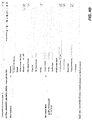
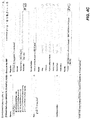
- FIGs. 4A-4C depict example screen-shots for a query design-time within a DW system.
- the example measure MAX_PLUS_MIN is defined, which is used in the examples of Listing 1 and Listing 2 provided herein.
- FIG. 5 depicts an example process 500 that can be executed in accordance with implementations of the present disclosure.
- the example process 500 is provided using one or more computer-executable programs executed by one or more computing devices.
- a trigger is received (502). For example, a user can mark data stored within the database system 226, 226' as to be accessible to the analytics engine 270, the trigger being marking of the data. As another example, it can be determined that metadata associated with data stored within the database system 226, 226' that is to be accessible to the analytics engine 270 has changed, the trigger being changing of the metadata.
- DW metadata is accessed (504) and a document is provided including DW metadata provided in the interoperable format (506). For example, in response to the trigger, DW metadata associated with the data that is to be accessible to the analytics engine 270 is accessed by the metadata provider 236, which converts the DW metadata to an interoperable format.
- the interoperable format includes CSN.
- the document is processed to provide analytics metadata (508).
- the metadata handler 216 receives the document from the DW system 220, 220', and the deployer 218 processes the document to provide the analytics metadata in the second format, such that the analytics metadata is consumable by the analytics engine 270 to access the data from the database system 226, 226'.
- the analytics metadata is stored in the analytics metadata store (510). Data is retrieved from the database system of the enterprise based on analytics metadata (512).
- the system 600 can be used for the operations described in association with the implementations described herein.
- the system 600 may be included in any or all of the server components discussed herein.
- the system 600 includes a processor 610, a memory 620, a storage device 630, and an input/output device 640.
- the components 610, 620, 630, 640 are interconnected using a system bus 650.
- the processor 610 is capable of processing instructions for execution within the system 600.
- the processor 610 is a single-threaded processor.
- the processor 610 is a multi-threaded processor.
- the processor 610 is capable of processing instructions stored in the memory 620 or on the storage device 630 to display graphical information for a user interface on the input/output device 640.
- the memory 620 stores information within the system 600.
- the memory 620 is a computer-readable medium.
- the memory 620 is a volatile memory unit.
- the memory 620 is a non-volatile memory unit.
- the storage device 630 is capable of providing mass storage for the system 600.
- the storage device 630 is a computer-readable medium.
- the storage device 630 may be a floppy disk device, a hard disk device, an optical disk device, or a tape device.
- the input/output device 640 provides input/output operations for the system 600.
- the input/output device 640 includes a keyboard and/or pointing device.
- the input/output device 640 includes a display unit for displaying graphical user interfaces.
- the features described can be implemented in digital electronic circuitry, or in computer hardware, firmware, software, or in combinations of them.
- the apparatus can be implemented in a computer program product tangibly embodied in an information carrier (e.g., in a machine-readable storage device, for execution by a programmable processor), and method steps can be performed by a programmable processor executing a program of instructions to perform functions of the described implementations by operating on input data and generating output.
- the described features can be implemented advantageously in one or more computer programs that are executable on a programmable system including at least one programmable processor coupled to receive data and instructions from, and to transmit data and instructions to, a data storage system, at least one input device, and at least one output device.
- a computer program is a set of instructions that can be used, directly or indirectly, in a computer to perform a certain activity or bring about a certain result.
- a computer program can be written in any form of programming language, including compiled or interpreted languages, and it can be deployed in any form, including as a stand-alone program or as a module, component, subroutine, or other unit suitable for use in a computing environment.
- Suitable processors for the execution of a program of instructions include, by way of example, both general and special purpose microprocessors, and the sole processor or one of multiple processors of any kind of computer.
- a processor will receive instructions and data from a read-only memory or a random access memory or both.
- Elements of a computer can include a processor for executing instructions and one or more memories for storing instructions and data.
- a computer can also include, or be operatively coupled to communicate with, one or more mass storage devices for storing data files; such devices include magnetic disks, such as internal hard disks and removable disks; magneto-optical disks; and optical disks.
- Storage devices suitable for tangibly embodying computer program instructions and data include all forms of non-volatile memory, including by way of example semiconductor memory devices, such as EPROM, EEPROM, and flash memory devices; magnetic disks such as internal hard disks and removable disks; magneto-optical disks; and CD-ROM and DVD-ROM disks.
- semiconductor memory devices such as EPROM, EEPROM, and flash memory devices
- magnetic disks such as internal hard disks and removable disks
- magneto-optical disks and CD-ROM and DVD-ROM disks.
- the processor and the memory can be supplemented by, or incorporated in, ASICs (application-specific integrated circuits).
- ASICs application-specific integrated circuits
- the features can be implemented on a computer having a display device such as a CRT (cathode ray tube) or LCD (liquid crystal display) monitor for displaying information to the user and a keyboard and a pointing device such as a mouse or a trackball by which the user can provide input to the computer.
- a display device such as a CRT (cathode ray tube) or LCD (liquid crystal display) monitor for displaying information to the user and a keyboard and a pointing device such as a mouse or a trackball by which the user can provide input to the computer.
- the features can be implemented in a computer system that includes a backend component, such as a data server, or that includes a middleware component, such as an application server or an Internet server, or that includes a front-end component, such as a client computer having a graphical user interface or an Internet browser, or any combination of them.
- the components of the system can be connected by any form or medium of digital data communication such as a communication network. Examples of communication networks include, for example, a LAN, a WAN, and the computers and networks forming the Internet.
- the computer system can include clients and servers.
- a client and server are generally remote from each other and typically interact through a network, such as the described one.
- the relationship of client and server arises by virtue of computer programs running on the respective computers and having a client-server relationship to each other.
Landscapes
- Engineering & Computer Science (AREA)
- Theoretical Computer Science (AREA)
- Databases & Information Systems (AREA)
- Physics & Mathematics (AREA)
- Data Mining & Analysis (AREA)
- General Engineering & Computer Science (AREA)
- General Physics & Mathematics (AREA)
- Computational Linguistics (AREA)
- Library & Information Science (AREA)
- Mathematical Physics (AREA)
- Information Retrieval, Db Structures And Fs Structures Therefor (AREA)
Abstract
Description
- An enterprise can use multiple systems for storing and processing data. For example, an enterprise can use a system that stores data in a database system and provides metadata that defines how the data is stored and how the data is accessed. Analytics systems have been introduced that provide advanced analytics capabilities and improved data processing performance as compared to that provided by other systems, such as a system within which the enterprise stores and maintains its data. Such analytics systems can include cloud-based analytics systems that include an analytics engine that is executed directly within the underlying database system. Such an analytics engine can be referred to as a database (DB) analytics engine (DB-based analytics engine).
- To provide a unified user experience for enterprises, it is desirable to connect systems within which data of the enterprise is stored to the DB-based analytics engine. In this manner, an enterprise is able to leverage the more sophisticated and resource-efficient analytics provided by an analytics system through the DB-based analytics engine. Traditional techniques to achieve this include, for example, providing a so-called live connection using an online analytical processing (OLAP) processor, and through the DB-based analytics engine using so-called calculation views. However, such traditional techniques have disadvantages. For example, calculation views used in the database system access causes severe performance issues, because of the complexity and missing metadata, as well as other disadvantages.
- Implementations of the present disclosure are directed to enabling data provided in a first system to be accessed and processed by an analytics engine of a second system. More particularly, implementations of the present disclosure transform metadata (that is used by the first system to store and access data) from a first format to a second format through an intermediate format to enable the analytics engine of the second system to access the data for analytics processing.
- In some implementations, actions include retrieving metadata associated with data stored within a database system of an enterprise, the metadata being provided in a first format and being used by the first system to store and access the data, providing a document including the metadata provided in an interoperable format, processing, by a deployer, the document to provide analytics engine metadata in a second format, the analytics metadata being stored in the second system and being consumable by the DB-based analytics engine to access the data from the database system of the enterprise, and retrieving, by the DB-based analytics engine, the data from the database system of the enterprise based on the analytics metadata to provide analytics data based on the data. Other implementations of this aspect include corresponding systems, apparatus, and computer programs, configured to perform the actions of the methods, encoded on computer storage devices.
- These and other implementations can each optionally include one or more of the following features: the metadata is retrieved in response to the data being marked as to be accessible to the DB-based analytics engine; the metadata is retrieved in response to determining that a change to the metadata has occurred; the DB-based analytics engine is executed within the database system of the enterprise; the DB-based analytics engine is executed within a cloud-based database system that accesses the database system of the enterprise; the deployer is provided within the database system of the enterprise; and the interoperable format comprises core schema notation (CSN).
- The present disclosure also provides a computer-readable storage medium coupled to one or more processors and having instructions stored thereon which, when executed by the one or more processors, cause the one or more processors to perform operations in accordance with implementations of the methods provided herein.
- The present disclosure further provides a system for implementing the methods provided herein. The system includes one or more processors, and a computer-readable storage medium coupled to the one or more processors having instructions stored thereon which, when executed by the one or more processors, cause the one or more processors to perform operations in accordance with implementations of the methods provided herein.
- It is appreciated that methods in accordance with the present disclosure can include any combination of the aspects and features described herein. That is, methods in accordance with the present disclosure are not limited to the combinations of aspects and features specifically described herein, but also include any combination of the aspects and features provided.
- The details of one or more implementations of the present disclosure are set forth in the accompanying drawings and the description below. Other features and advantages of the present disclosure will be apparent from the description and drawings, and from the claims.
-
-
FIG. 1 depicts an example architecture that can be used to execute implementations of the present disclosure. -
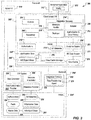
FIG. 2 depicts an example conceptual architecture in accordance with implementations of the present disclosure. -
FIG. 3 depicts another example conceptual architecture in accordance with implementations of the present disclosure. -
FIGs. 4A-4C depict example screen-shots for a query design-time within a data warehouse (DW) system. -
FIG. 5 depicts an example process that can be executed in accordance with implementations of the present disclosure. -
FIG. 6 is a schematic illustration of example computer systems that can be used to execute implementations of the present disclosure. - Like reference symbols in the various drawings indicate like elements.
- Implementations of the present disclosure are directed to enabling data provided in a first system to be accessed and processed by an analytics engine of a second system. More particularly, implementations of the present disclosure transform metadata (that is used by the first system to store and access data) from a first format to a second format through an intermediate format to enable the analytics engine of the second system to access the data for analytics processing.
- Implementations can include actions of retrieving metadata associated with data stored within a database system of an enterprise, the metadata being provided in a first format and being used by the first system to store and access the data, providing a document including the metadata provided in an interoperable format, processing, by a deployer, the document to provide analytics engine metadata in a second format, the analytics metadata being stored in the second system and being consumable by the DB-based analytics engine to access the data from the database system of the enterprise, and retrieving, by the DB-based analytics engine, the data from the database system of the enterprise based on the analytics metadata to provide analytics data based on the data.
- Implementations of the present disclosure are described in further detail herein with reference to products, services, and infrastructures provided by SAP SE of Walldorf, Germany. It is contemplated, however, that implementations of the present disclosure can be realized with any appropriate products, services, and/or infrastructures provided by one or more providers.
- To provide further context for implementations of the present disclosure, and as introduced above, an enterprise can use multiple systems for storing and processing data. For example, an enterprise can use a system that stores data in a database system and provides metadata that defines how the data is stored and how the data is accessed. An example system includes, without limitation, a data warehouse (DW), which can be described as a system used for storing data, generating reports, and executing data analytics. A DW can be considered a central repository of data integrated from disparate sources and includes metadata that defines how the data is stored and how the data is accessed. For example, the data can be stored in a particular schema (e.g., star schema, discussed below). A DW can store a significant amount of data (e.g., multiple terabytes of data). In some scenarios, a DW is provided as an on-premise system, such that the DW is at least partially managed by the enterprise, for which the DW is established.
- By way of non-limiting example, an example DW includes SAP Business Warehouse (BW) provided by SAP SE of Walldorf, Germany. SAP BW can be described as a model-driven data warehousing product based on the SAP NetWeaver ABAP platform. SAP BW collects, transforms and stores data generated in SAP and non-SAP applications and makes the data accessible through built-in reporting, business intelligence, and analytics tools. In SAP BW, data is accessed using so-called InfoCubes, each InfoCube being made up of a set of InfoObjects, which include characteristics (e.g., master data with their attributes and text descriptions) and key figures. An InfoObject can be described as a type of InfoProvider, which is a data object that is created and used to run queries. An InfoCube is structured using a star schema, which includes a fact table that contains key figures for the InfoCube, and several dimension tables surround the fact table. The fact table and dimension tables are both relational database tables that are stored in the underlying database system.
- In some examples, a DW (such as SAP BW) includes an analytics engine that enables data to be retrieved from the underlying database system, executes analytics on the retrieved data, and provides analytics results to a client. For example, the analytics engine (also referred to herein as the DW analytics engine, or server-based analytics engine) is executed within an application server. In some examples, the application server receives a request from a client (e.g., a computing device in communication with the application server), and interprets the request based on metadata to determine which data to retrieve from the database. The application server queries the database system using a query language (e.g., (SQL)), and receives data (e.g., hundreds, thousands of records) responsive to the query from the database system. The application server processes the received data using the server-based analytics engine and provides analytics data to the client. This process can be referred to as a 3-tiered approach, in which the majority of processing is executed within the application server.
- Analytics systems have been introduced that provide advanced analytics capabilities and improved data processing performance as compared to that provided by DWs, for example. Such analytics systems can include cloud-based analytics systems that include an analytics engine that is executed directly within the underlying database system (e.g., as opposed to a DW analytics engine that executes within an application server). Such an analytics engine is referred to herein as a database (DB) analytics engine (DB-based analytics engine). Accordingly, in response to a request from a client, the request is processed by the DB analytics engine within the database system. Consequently, data stored within the database system is directly accessed by the DB-based analytics engine for analytics processing within the database system, avoiding transmitting data from the database system for analytics processing (e.g., transmitting data from the database system to an application server).
- By way of non-limiting example, an example cloud-based analytics system includes SAP Analytics Cloud (SAC) provided by SAP SE of Walldorf, Germany. SAC can be described as an all-in-one platform for business intelligence, planning, and predictive analytics to support enterprise operations. In some examples, SAP SAC uses multi-dimensional services (MDS), which provides a DB-based analytics engine. SAP SAC provides requests to the MDS in a particular protocol (e.g., information access (InA) protocol), which enables more complex data analytics requests to be formulated and executed (e.g., as compared to data analytics requests submitted through the DW).
- To provide a unified user experience for enterprises using DWs, it is desirable to connect the DW to the DB-based analytics engine. In this manner, an enterprise using a DW is able to leverage the more sophisticated and resource-efficient analytics provided by an analytics system through the DB-based analytics engine. Traditional techniques to achieve this include, for example, providing a so-called live connection using an online analytical processing (OLAP) processor, and through the DB-based analytics engine using so-called calculation views created by the DW. However, such traditional techniques have disadvantages. For example, calculation views used in the database system access causes severe performance issues, because of the complexity and missing metadata.
- With regard to complexity, view creation is designed for usage by SQL-based tools. Consequently, a calculation view contains many parts, which represent features of the DW that may be used. Often, the calculation view contains a complex calculation engine scenario with thousands of nodes. For example, available hierarchies are included by expensive (in terms of resources required to calculate) outer joins, currency conversions are built in, and the like. This leads to substantial instantiation, optimization and runtimes. DW, on the other hand, uses much simpler views - even using SIDs instead of values - and can access the data much faster.
- With regard to missing metadata, many details of the view internals are not available as calculation view metadata, which must be used by the DB-based analytics engine. This leads to performance issues. For example, measures using the same currency or unit column or constant in the DW model are shown as different currency/unit columns in the view. The DB-based analytics engine cannot combine these in a single aggregation, because this may result in incorrect results. Runtimes increase with the number of measures used. As another example, all available hierarchies are included in the created view. Without the appropriate metadata, hierarchies requested in the analytics system cannot be used. As another example, the view may contain restricted key figures with additional filters. The calculation view metadata, however, contains a simple base measure only. Count aggregations, which do not explicitly request the measure, may return unexpected results, because the restricted key figure filter is not applied. Besides the above-disadvantages, traditional techniques for connecting the DW to the DB-based analytics engine suffer from other drawbacks.
- In view of the above context, implementations of the present disclosure enable data provided in a first system to be accessed and processed by an analytics engine of a second system. More particularly, and as described in further detail herein, implementations of the present disclosure transform metadata (that is used by the first system to store and access data) from a first format to a second format through an intermediate format (referred to herein as an interoperable format) to enable the analytics engine of the second system to access the data for analytics processing.
- Implementations of the present disclosure are described in further detail herein with reference to a DW system. It is contemplated, however, that implementations of the present disclosure can be realized with any appropriate system that stores data that is to be accessed by another system.
-
FIG. 1 depicts anexample architecture 100 in accordance with implementations of the present disclosure. In the depicted example, theexample architecture 100 includes aclient device 102, anetwork 106, andserver systems server systems user 112 interacts with theclient device 102. - In some examples, the
client device 102 can communicate with theserver systems network 106. In some examples, theclient device 102 includes any appropriate type of computing device such as a desktop computer, a laptop computer, a handheld computer, a tablet computer, a personal digital assistant (PDA), a cellular telephone, a network appliance, a camera, a smart phone, an enhanced general packet radio service (EGPRS) mobile phone, a media player, a navigation device, an email device, a game console, or an appropriate combination of any two or more of these devices or other data processing devices. In some implementations, thenetwork 106 can include a large computer network, such as a local area network (LAN), a wide area network (WAN), the Internet, a cellular network, a telephone network (e.g., PSTN) or an appropriate combination thereof connecting any number of communication devices, mobile computing devices, fixed computing devices and server systems. - In some implementations, the
server systems FIG. 1 , theserver systems client device 102 over the network 106). - In accordance with implementations of the present disclosure, the
server system 104 can host a DW system operated for enterprise, and theserver system 105 can be operated by a software provider (e.g., SAP SE) to provision services for one or more enterprises. In some examples, theserver system 104 and/or theserver system 105 hosts a database system, within which data of the enterprise is stored. An example database system includes, without limitation, SAP HANA provided by SAP SE of Walldorf, Germany. SAP HANA can be described as a data platform that processes transactions and analytics at the same time on any data type, with built-in advanced analytics and multi-model data processing engines. As described in further detail herein, implementations of the present disclosure enable data of the DW system to be accessed and processed for analytics using the cloud-based analytics system. -
FIG. 2 depicts an exampleconceptual architecture 200 in accordance with implementations of the present disclosure. In the depicted example, the exampleconceptual architecture 200 includes afrontend system 202, abackend system 204, and acloud services system 206. In general, the exampleconceptual architecture 200 depicts an on-premise approach, in which a system (e.g., a DW system), a database system, and a DB-based analytics engine are provisioned within a server system operated by an enterprise (e.g., theserver system 104 ofFIG. 1 ). That is, for example, thebackend system 204 is a backend system of the enterprise. In some examples, thecloud services system 206 is provided by a software provider (e.g., SAP SE) on a server system (e.g., theserver system 105 ofFIG. 1 ). - In some examples, the
frontend system 202 can be executed by one or more client-side devices (e.g., theclient device 102 ofFIG. 1 ) and includes a DW administrator user interface (UI) 210 and an analytics application 212 (e.g., provided as part of SAP SAC). Thecloud services system 206 can be executed by one or more server-side devices (e.g., theserver system 105 ofFIG. 1 ). In accordance with implementations of the present disclosure, thecloud services system 206 includesintegration services 214, which includes ametadata handler 216 and adeployer 218. Although theintegration services 214 is depicted within thecloud service 206, it is contemplated that theintegration services 214 can be provisioned directly within thebackend 204. For example, in some implementations, themetadata handler 216 and thedeployer 218 can be provisioned within the backend 204 (e.g., on-premise). - In the depicted example, the
backend 204 includes aDW system 220,integration services 222,application services 224, and adatabase system 226. By way of non-limiting example, theDW system 220 can be provided as at least a portion of SAP BW, introduced above, and theapplication services 224 can be provided as SAP extended application services (XS) provided by SAP SE of Walldorf, Germany. Also by way of non-limiting example, thedatabase system 226 can be provided as SAP HANA. - In the example of
FIG. 2 , theDW system 220 includes aview generator 230, adata authorization provider 232, ametadata invalidator 234, and ametadata provider 236. The integration services 222 includes adata provisioning agent 238, and theapplication services 224 includes a protocol adapter 240 (e.g., for the InA protocol). In some examples, thedata provisioning agent 238 is provided to enable communication (e.g., using HTTP) between thecloud services 206 provided by the software provider and thebackend system 204 of the enterprise provided as an on-premise system. - In the example of
FIG. 2 , thedatabase system 226 includes anauthorizations store 250, aDW metadata store 252, afacts store 254, amaster data store 256, one or moreInfoProvider views 258, and, for eachInfoProvider view 258, one or more InfoObject views 260. TheDW metadata store 252 stores metadata that describes how data is stored and can be accessed within the database system 226 (e.g., metadata that describes columns, views, and relationships therebetween). - The facts store 254 stores fact data, which can be described as data that changes relatively frequently. Example fact data includes, without limitation, sales, revenue, cost, net values, keys (e.g., a key identifying a specific customer) and the like. The
master data store 256 stores master data, which can be described as data that changes less frequently (e.g., as compared to fact data). An example of master data includes, without limitation, customer data (e.g., name, address, telephone number). - The
database system 226 further includes an analytics engine 270 (e.g., provide as MDS), an analytics enginedata access component 272,analytics engine metadata 274, aview cache manager 276, and aview cache 278. In some examples, theview cache manager 276 monitors views (e.g., InfoProvider views 258, InfoObject views 260) generated within thedatabase system 226, and caches views in theview cache 278. Accordingly, the first time a view is requested, the view can be generated and stored in theview cache 278, and the second time the view is requested, the view can be provisioned from theview cache 278, if still available in theview cache 278. In this manner, computing resources of thebackend system 204 can be preserved, because the view does not need to be (re-)generated with each request. - As described in further detail herein, implementations of the present disclosure enable the DB-based
analytics engine 270 direct access to data stored by theDW system 220 within thedatabase system 226. That is, the DB-basedanalytics engine 270 is able to directly access facts stored in thefact store 254 and master data stored in themaster data store 256. For example, theanalytics engine 270 receives a request for analytics processing from theanalytical application 212 and through the application services 224. Theanalytics engine 270 uses theanalytics engine metadata 274 to provide a data access request to access one or moreInfoProvider views 258 and one ormore InfoObjects 260. In some examples, the data access request is received by the analytics enginedata access component 272, which processes the data access request to retrieve data relevant to the request for analytics. - In accordance with implementations of the present disclosure, DW metadata stored in the
DW metadata store 252 is transformed into analytics engine metadata that has a format that is consumable by the DB-basedanalytics engine 270 and that is stored in the analyticsengine metadata store 274. In some implementations, themetadata provider 236 retrieves metadata from theDW metadata store 252 that would be needed to access a particular view. Themetadata provider 236 transforms the metadata from a first format to an interoperable format. In some examples, the first format is specific to analytics processing of the DW system (e.g., by a server-based analytics engine executed on an application server), and the interoperable format is not bound to any analytics engine. The interoperable format includes the metadata and expresses the semantics and intent of the metadata. In some examples, the interoperable format includes core schema notation (CSN) and the metadata is provided within a metadata document (e.g., a Javascript object notation (JSON) document). A non-limiting example CSN representation is provided below inListing 1. In the example ofListing 1, there are two references to "MAX_PLUS_MIN," one in a section "elements" and one in a section "query," which contain the design-time information in terms of standardized/ interoperable "annotations", e.g. "@EndUserText.label", "@Aggregation.default." - In some implementations, the
integration services 214 receives the metadata document from the DW system 220 (e.g., in response to an HTTP request issued by theintegration services 214 to the DW system 220). Themetadata handler 216 interprets the metadata document received from theDW system 220 and provides the metadata document to thedeployer 218. In some examples, the metadata stored in theDW system 220 can be described as single entity definitions and their relations to other entities. One task of themetadata handler 216 is, starting with a single entity (e.g., the central entity of a star schema), to collect all metadata from the metadata provider, which is required for thedeployer 218 to create the AE/runtime-optimized metadata. This would include, for example, all related dimension entities, (language-dependent) texts, and hierarchies for a compete star schema. In order to do so, the metadata handler has to have knowledge about the functional scope of the deployer. Thedeployer 218 transforms the metadata from the interoperable format to a second format that is specific to theanalytics engine 270 to provide the analytics metadata. In some examples, the analytics metadata includes data definition language (DDL) statements (e.g., to create or delete objects within the database system 226) and/or data modification language (DML) statements (e.g., to insert, update or delete data within the database system 226). The analytics metadata is stored in theanalytics metadata store 274 through thedata provisioning agent 238. In this manner, DW metadata from theDW metadata store 252 is transformed to provide analytics engine data stored in the analyticsengine metadata store 274, theanalytics engine 270 being able to consume the analytics metadata to retrieve data (e.g., facts, master data) within thedatabase system 226 for analytics processing within thedatabase system 226. - A non-limiting example DW representation is provided below in Listing 2. In the example of Listing 2, there are two sub-sections "MAX_PLUS_MIN" one in a section of "DataSourceFields" referring to a deployed database runtime artefact (e.g., a SQL view) and another in a section "Measures" (analytics-specific metadata for the MDS runtime).
-
FIG. 3 depicts another exampleconceptual architecture 300 in accordance with implementations of the present disclosure. The exampleconceptual architecture 300 depicts a hybrid approach, in which an enterprise uses a cloud-based data warehouse system that access data stored in an on-premise system of the enterprise. In this manner, cloud-based functionality is provided, while maintaining the data on-premise. An example cloud-based data warehouse system includes, without limitation, the SAP Data Warehouse Cloud (DWC) provided by SAP SE of Walldorf, Germany. - In the example of
FIG. 3 , the exampleconceptual architecture 300 includes thefrontend 202, a cloud-based DW (e.g., SAP DWC) 302, and a backend system 204' (i.e., on-premise system of the enterprise). The backend system 204' includes a DW system 220', theintegration services 222, and a database system 226'. The DW system 220' includes theview generator 230, thedata authorization provider 232, themetadata invalidator 234, and themetadata provider 236. The integration services 222 includes theprovisioning agent 238. The database system 226' includes theauthorizations store 250, theDW metadata store 252, thefacts store 254, themaster data store 256, the one or moreInfoProvider views 258, and the one or more InfoObject views 260. - The cloud-based DW includes
spaces 304,repositories 306, integration services 214', and adatabase system 226". The integration services 214' include themetadata handler 216, thedeployer 218, theadapter 240, and an authorization anddata privacy component 310. Thedatabase system 226" includesauthorizations 312, provided as a remote table, one or more InfoProvider views 258', provided as respective remote tables, and one or more InfoObject view 260', provided as respective remote tables (also referred to as virtual tables). In some examples, a remote table is a technical artefact in the (local) database system, that appears in all usages to be a table, but in fact it points to a table or view in another database system, which can be referred to as a remote source. Thedatabase system 226" also includes theanalytics engine 270, the analytics enginedata access component 272, theanalytics engine metadata 274, theview cache manager 276, and theview cache 278. - As similarly described above with reference to
FIG. 2 , DW metadata stored in theDW metadata store 252 is transformed into analytics engine metadata that has a format that is consumable by the DB-basedanalytics engine 270 and that is stored in the analyticsengine metadata store 274. In some implementations, themetadata provider 236 retrieves metadata from theDW metadata store 252 that would be needed to access a particular view. Themetadata provider 236 transforms the metadata from the first format to the interoperable format. In some implementations, the integration services 214' receives the metadata document from the DW system 220 (e.g., in response to an HTTP request issued by theintegration services 214 to the DW system 220'). Themetadata handler 216 interprets the metadata document received from the DW system 220' and provides the metadata document to thedeployer 218. Thedeployer 218 transforms the metadata from the interoperable format to the second format that is specific to theanalytics engine 270 to provide the analytics metadata, which is stored in theanalytics metadata store 274. In this manner, DW metadata from theDW metadata store 252 is transformed to provide analytics engine metadata stored in the analyticsengine metadata store 274, theanalytics engine 270 being able to consume the analytics metadata to retrieve data (e.g., facts, master data) within the database system 226' for analytics processing within thedatabase system 226". - In some implementations, to trigger transformation of metadata to provide analytics engine metadata, data within the
database system 226, 226' can be identified as being accessible by theanalytics engine 270. For example, a user (e.g., an administrator) can access theDW system 220, 220' through theDW administrator UI 210, and can mark data (e.g., InfoProviders) that are to be accessible to theanalytics engine 270. For example, the user can set a flag associated with the data, the flag indicating that the data is to be accessible to theanalytics engine 270. In some examples, for each InfoProvider marked as to be accessible to theanalytics engine 270, a SQL view is generated with all dimensions relevant to the InfoProvider and including navigation attributes and measure fields from the InfoProvider. In some examples, only fields of the InfoProvider (e.g., dimension-key, measures) are included. In response to data being marked as accessible to theanalytics engine 270, themetadata provider 236 can retrieve corresponding metadata from theDW metadata store 252 to transform the metadata and provide the analytics engine metadata, as described herein. - In some implementations, it can be determined that metadata underling data that is to be accessible to the
analytics engine 270 has changed. For example, an update to thedatabase system 226, 226' can result in a structure of data being changed, which also results in the corresponding metadata being changed. In some examples, themetadata invalidator 234 can be provided as a listener that detects a change in metadata of data that is to be accessible to theanalytics engine 270. If a change has occurred, themetadata invalidator 234 triggers redeployment of the metadata as analytics engine metadata. That is, for example, themetadata provider 236 can retrieve corresponding metadata from theDW metadata store 252 to transform the metadata and provide the analytics engine metadata, as described herein. - For purposes of illustrating implementations of the present disclosure, and without limitation, a brief description and example of the
analytics engine 270 processing a request from the analytical application is provided and includes how the analytics metadata is used to identify and access data (i.e., an end-to-end workflow starting from the analytics application making a request to the MDS). In further detail, the analytical application request metadata in order to, for example, offer the selection of dimensions and measures to a user (e.g., in an "edit chart" dialogue). In some examples, the MDS reads its private representation and converts the measures section into the format specified for client/server exchange for metadata (which is close to the MDS-internal format). This is part of the runtime optimization: that it only uses relatively few and cheap (in terms of resources expended to execute) transformations to prepare the response for a metadata request. The analytical application has a chart definition, for example, with the dimension "Fiscal Year" and the measure "Max + Min," and sends a corresponding data request to the MDS. The MDS reads the metadata of the requested fields in order to prepare a response to the data request. The MDS determines that "Fiscal Year" is a dimension and there is a corresponding column in the data source / underlying SQL view, and that "Min + Max" is a measure. In some examples, "Min + Max" can be provided as a formula (e.g., non-SQL default aggregation FORMULA), referring to other measures "Min" (with default aggregation MIN) and "Max" (with default aggregation MAX). For those measures there are corresponding columns in the data source. - In some examples, the MDS prepares an execution plan. An example execution plan based on the above example can include first reading MIN(Min) and MAX(max) group by FISCAL_YEAR from the underlying (SQL) data source, and then calculate the formula MAX_PLUS_MIN for each row of the result set. In some examples, the MDS executes the execution plan (e.g., by creating a complex SQL request or a transient DB runtime artefact ("caculation scenario") for this plan and execute it). The MDS returns the query result in accordance with the metadata (e.g. values for measure MIN_PLUS_MAX).
-
FIGs. 4A-4C depict example screen-shots for a query design-time within a DW system. In the examples ofFIGs. 4A-4C , the example measure MAX_PLUS_MIN is defined, which is used in the examples ofListing 1 and Listing 2 provided herein. -
FIG. 5 depicts anexample process 500 that can be executed in accordance with implementations of the present disclosure. In some examples, theexample process 500 is provided using one or more computer-executable programs executed by one or more computing devices. - A trigger is received (502). For example, a user can mark data stored within the
database system 226, 226' as to be accessible to theanalytics engine 270, the trigger being marking of the data. As another example, it can be determined that metadata associated with data stored within thedatabase system 226, 226' that is to be accessible to theanalytics engine 270 has changed, the trigger being changing of the metadata. DW metadata is accessed (504) and a document is provided including DW metadata provided in the interoperable format (506). For example, in response to the trigger, DW metadata associated with the data that is to be accessible to theanalytics engine 270 is accessed by themetadata provider 236, which converts the DW metadata to an interoperable format. In some examples, the interoperable format includes CSN. - The document is processed to provide analytics metadata (508). For example, the
metadata handler 216 receives the document from theDW system 220, 220', and the deployer 218 processes the document to provide the analytics metadata in the second format, such that the analytics metadata is consumable by theanalytics engine 270 to access the data from thedatabase system 226, 226'. The analytics metadata is stored in the analytics metadata store (510). Data is retrieved from the database system of the enterprise based on analytics metadata (512). - Referring now to
FIG. 6 , a schematic diagram of anexample computing system 600 is provided. Thesystem 600 can be used for the operations described in association with the implementations described herein. For example, thesystem 600 may be included in any or all of the server components discussed herein. Thesystem 600 includes aprocessor 610, amemory 620, astorage device 630, and an input/output device 640. Thecomponents system bus 650. Theprocessor 610 is capable of processing instructions for execution within thesystem 600. In some implementations, theprocessor 610 is a single-threaded processor. In some implementations, theprocessor 610 is a multi-threaded processor. Theprocessor 610 is capable of processing instructions stored in thememory 620 or on thestorage device 630 to display graphical information for a user interface on the input/output device 640. - The
memory 620 stores information within thesystem 600. In some implementations, thememory 620 is a computer-readable medium. In some implementations, thememory 620 is a volatile memory unit. In some implementations, thememory 620 is a non-volatile memory unit. Thestorage device 630 is capable of providing mass storage for thesystem 600. In some implementations, thestorage device 630 is a computer-readable medium. In some implementations, thestorage device 630 may be a floppy disk device, a hard disk device, an optical disk device, or a tape device. The input/output device 640 provides input/output operations for thesystem 600. In some implementations, the input/output device 640 includes a keyboard and/or pointing device. In some implementations, the input/output device 640 includes a display unit for displaying graphical user interfaces. - The features described can be implemented in digital electronic circuitry, or in computer hardware, firmware, software, or in combinations of them. The apparatus can be implemented in a computer program product tangibly embodied in an information carrier (e.g., in a machine-readable storage device, for execution by a programmable processor), and method steps can be performed by a programmable processor executing a program of instructions to perform functions of the described implementations by operating on input data and generating output. The described features can be implemented advantageously in one or more computer programs that are executable on a programmable system including at least one programmable processor coupled to receive data and instructions from, and to transmit data and instructions to, a data storage system, at least one input device, and at least one output device. A computer program is a set of instructions that can be used, directly or indirectly, in a computer to perform a certain activity or bring about a certain result. A computer program can be written in any form of programming language, including compiled or interpreted languages, and it can be deployed in any form, including as a stand-alone program or as a module, component, subroutine, or other unit suitable for use in a computing environment.
- Suitable processors for the execution of a program of instructions include, by way of example, both general and special purpose microprocessors, and the sole processor or one of multiple processors of any kind of computer. Generally, a processor will receive instructions and data from a read-only memory or a random access memory or both. Elements of a computer can include a processor for executing instructions and one or more memories for storing instructions and data. Generally, a computer can also include, or be operatively coupled to communicate with, one or more mass storage devices for storing data files; such devices include magnetic disks, such as internal hard disks and removable disks; magneto-optical disks; and optical disks. Storage devices suitable for tangibly embodying computer program instructions and data include all forms of non-volatile memory, including by way of example semiconductor memory devices, such as EPROM, EEPROM, and flash memory devices; magnetic disks such as internal hard disks and removable disks; magneto-optical disks; and CD-ROM and DVD-ROM disks. The processor and the memory can be supplemented by, or incorporated in, ASICs (application-specific integrated circuits).
- To provide for interaction with a user, the features can be implemented on a computer having a display device such as a CRT (cathode ray tube) or LCD (liquid crystal display) monitor for displaying information to the user and a keyboard and a pointing device such as a mouse or a trackball by which the user can provide input to the computer.
- The features can be implemented in a computer system that includes a backend component, such as a data server, or that includes a middleware component, such as an application server or an Internet server, or that includes a front-end component, such as a client computer having a graphical user interface or an Internet browser, or any combination of them. The components of the system can be connected by any form or medium of digital data communication such as a communication network. Examples of communication networks include, for example, a LAN, a WAN, and the computers and networks forming the Internet.
- The computer system can include clients and servers. A client and server are generally remote from each other and typically interact through a network, such as the described one. The relationship of client and server arises by virtue of computer programs running on the respective computers and having a client-server relationship to each other.
- In addition, the logic flows depicted in the figures do not require the particular order shown, or sequential order, to achieve desirable results. In addition, other steps may be provided, or steps may be eliminated, from the described flows, and other components may be added to, or removed from, the described systems. Accordingly, other implementations are within the scope of the following claims.
- A number of implementations of the present disclosure have been described. Nevertheless, it will be understood that various modifications may be made without departing from the spirit and scope of the present disclosure. Accordingly, other implementations are within the scope of the following claims.
-
 {
 "schemaName":"SAPW4D",
 "entitiesToDeploy" :
 {
 "definitions":
 {
 "BW4HCPR_EXAMPLE_FILTER":
 {
 "kind":"entity",
 "@EndUserText.label":"Example for RKF",
 "@Analytics.dataCategory":
 {
 "#":"CUBE"
 },
 "@Analytics.provider":true,
 "elements":
 {
  "0FISCVARNT":
 { "@AnalyticsDetails.infoobject":"OFISCVARNT",
  "@EndUserText.label":"Fiscal year variant",
  "key": true,
  "type":"cds.String",
  "length":2,
  "@Analytics.dimension":true,
  "@Semantics.fiscal.yearVariant":true
 },
 "0FISCYEAR":
 {
  "@AnalyticsDetails.infoobject":"0FISCYEAR",
  "@EndUserText.label":"Fiscal year",
  "key":true,
  "type":"cds.String",
  "length":4,
  "@Analytics.dimension":true,
  "@Semantics.fiscal.year":true
 },
 "0UNIT":
 {
  "@AnalyticsDetails.infoobject":"OUNIT",
  "@EndUserText.label":"Unit of Measure",
  "key":true,
  "type":"cds.String",
  "length":3,
  "@Analytics.dimension":true,
  "@Semantics.quantity.unitOfMeasure":true
 },
 "0VC_CUST":
 {
  "@AnalyticsDetails.infoobject":"0VC_CUST",
  "@EndUserText.label":"0VC_CUST",
  "key":true,
  "type":"cds.String",
  "length":6,
  "@Analytics.dimension":true,
  "@ObjectModel.foreignKey.association":
  {
   "=":"_0VC_CUST"
  },
  "@Common.IsDigitSequence":true
 },
 "_0VC_CUST":
 {"type":"cds.Association",
  "target":"0VC_CUST",
  "on" :
  [
  {
    "ref":
     [
      "0VC_CUST"
    ]
   },
   "=",
  {
  "ref":
     [
      "_0VC_CUST" ,
      "VC_CUST"
     ]
    }
   ]
  },
 "0VC_MAX":
 {
  "@AnalyticsDetails.infoobject":"0VC_MAX",
  "@EndUserText.label":"Maximal Purchase Quantity",
  "type":"cds.Decimal" ,
  "precision":17,
  "scale":3,
  "@Analytics.measure":true,
  "@Semantics.quantity.unitOfMeasure":
  {
   "=":"0UNIT"
  },
  "@Aggregation.default":
  {
   "#":"MAX"
  }
 },
 "0VC_MIN":
 {
  "@AnalyticsDetails.infoobject":"0VC_MIN",
  "@EndUserText.label":"Minimal Purchase Quantity",
  "type":"cds.Decimal",
  "precision":17,
  "scale":3,
  "@Analytics.measure":true,
  "@Semantics.quantity.unitOfMeasure":
  {
   "=":"0UNIT"
  },
  "@Aggregation.default.":
  {
   "#":"MIN"
  }
 },
 "MINIMAL":
 {
 "@AnalyticsDetails.infoobject":"0VC_MIN",
  "@EndUserText.label":"Minimal Purchase Quantity",
  "type":"cds.Decimal",
  "precision":17,
  "scale":3,
  "@Analytics.measure":true,
  "@Semantics.quantity.unitOfMeasure":
  {
   "=":"0UNIT"
  },
  "@Aggregation.default":
  {
   "#": "MIN"
  }
 },
 "MAXIMAL":
 {
  "@AnalyticsDetails.infoobject":"0VC_MAX",
  "@EndUserText.label":"Maximal Purchase Quantity",
  "type":"cds.Decimal",
  "precision":17,
  "scale":3,
  "@Analytics.measure":true,
  "@Semantics.quantity.unitOfMeasure":
  {
   "=":"0UNIT"
  },
  "@Aggregation.default":
  {
   "#":"MAX"
  }
 },
 "DIFF_IN_1000":
 {
  "@EndUserText.label":"Difference in 1000",
  "type":"cds.Decimal",
  "precision":31,
  "scale":9,
  "@Analytics.measure":true,
  "@Aggregation.default":
  {
   "#":"FORMULA"
  }
 },
 "NEGATIVE_MAX":
 {
  "@EndUserText.label":"Negative MAX",
  "type":"cds.Decimal",
  "precision":17,
  "scale":3,
  "@Analytics.measure":true,
  "@Semantics.quantity.unitOfMeasure":
  {
   "=":"0UNIT"
  },
  "@Aggregation.default":
  {
   "#":"MAX"
  }
 },
 "MAX_PLUS_MIN":
 {
  "@EndUserText.label":"Max + Min",
  "type":"cds.Decimal",
  "precision":31,
  "scale":3,
  "@Analytics.measure":true,
  "@Aggregation.default":
  {
   #":"FORMULA"
   }
  }
 },
 "query":
 {
 "SELECT":
 {
  "from":
  {"ref" :
   [
    "/BIC/VBW4HCPR8"
   ]
  },
  "columns":
  [
   {
     "as":"0FISCVARNT",
     "ref":
     [
      "0FISCVARNT"
     ]
   },
   {
     "as":"0FISCYEAR",
     "ref":
     [
      "0FISCYEAR"
    ]
   },
   {
   {"as":"0UNIT",
     "ref":
     [
      "0UNIT"
    ]
   },
   {
    "as":"0VC_CUST",
    "ref":
     [
      "0VC_CUST"
    ]
   },
   {
    "as":"_0VC_CUST",
    "ref":
     [
      "_0VC_CUST"
     ]
   },
   {
    "as":"0VC_MAX",
    "ref":
    [
     "0VC_MAX"
    ]
   },
   {
    "as":"0VC_MIN",
    "ref":
    [
     "0VC_MIN"
    ]
   },
   {
    "as":"MINIMAL",
    "ref":
    [
      "0VC_MIN"
    ]
   },
   {
     "as":"MAXIMAL",
     "xpr":
     [
      "case",
      "when",
      "(",
      "(",
      "(",
      {
       "ref":
       [
        "0FISCVARNT"
       ]
      },
      "-",
      { "val":"K4"
      },
          ")",
      "and",
       "(",
      {
       "ref":
       [
        "0FISCYEAR"
       ]
      },
      "=",
      { "val" : "2003"
      },
     "or",
    {
       "ref":
       [
        "0FISCYEAR"
       ]
     },
     "BETWEEN",
     {
       "val":"1999"
     },
     "AND",
     {
       "val":"2000"
     },
     ")",
     ")",
      ")",
      "and",
       "(",
      "(",
      "(",
      {"ref" :
       [
        "0FISCYEAR"
       ]
      },
      "NOT",
      "BETWEEN",
      {
       "val":"2005"
      },
      "AND",
      {
       "val":"2007"
      }
      ")",
     ")",
     ")",
     "then",
     {
       "ref":
       [
        "0VC_MAX"
       ]
     },
     "end"
    ]
   },
   {
    "as":"DIFF_IN_1000",
    "xpr" :
     [
     "(",
         "-",
       "(",
     {
        "ref":
       [
        "0VC_MAX"
      ]
     },
     "-",
     {
       "ref":
       [
        "0VC_MIN"
      ]
      },
      ")",
      "/",
      {
       "val":"1000"
      },
      ")"
     ]
   },
   {
     "as":"NEGATIVE_MAX",
     "xpr":
     [
      "-",
     {
       "ref":
       [
        "0VC_MAX"
       ]
      }
    ]
   },
   {
     "as":"MAX_PLUS_MIN",
     "xpr":
     [
      "(",
      {
       "ref":
       [
        "0VC_MAX"
       ]
      },
      "+",
      {
       "ref":
       [
        "0VC_MAX"
       ]
      },
      ")"
  ],
  "mixin":
  {
   "_0VC_CUST":
   {
    "type":"cds.Association",
    "target":"0VC_CUST",
    "on" :
    [
      {"ref" :
        [
         "$projection",
         "0VC_CUST"
       ]
      },
      "="
          , {
       "ref" :
       [
        "_0VC_CUST",
        "VC_CUST"
       ]
      }
    ]
    }
   }
  }
 }
    }
    },
    "0VC_CUST":
    {
    "kind": "entity",
    "@EndUserText.label":"0VC_CUST",
    "@Analytics.dataCategory":
    {
 "#": "DIMENSION"
 },
 "elements":
 "VC_CUST":
  {
  "@AnalyticsDetails.infoobject":"0VC_CUST",
  "@EndUserText.label":"0VC_CUST",
  "key":true,
  "type":"cds.String",
  "length":6,
  "@ObjectModel.text.association":
  {
   "=":"_TEXT"
  },
  "@Common.IsDigitSequence":true
 },
 "_TEXT":
 {
  "type":"cds.Association",
  "target":"/BI0/TVC_CUST",
  "on" :
  [
   {
    "ref":
     [
      "VC_CUST"
    ]
   },
   "=",
   {"ref":
     [
      "_TEXT",
      "VC_CUST"
  ]
 }
 ]
 },
 "VC_CITY":
 {
  "@AnalyticsDetails.infoobject":"0VC_CITY",
  "@EndUserText.label":"0VC_CITY",
  "type":"cds.String",
  "length":35
 },
 "VC_COUN":
 {
  "@AnalyticsDetails.infoobject":"0VC_COUN",
  "@EndUserText.label":"0VC_COUN",
  "@Analytics.hidden":true,
  "type":"cds.String",
  "length":3
 },
 "VC_POST":
 {
  "@AnalyticsDetails.infoobject":"0VC_POST",
  "@EndUserText.label":"0VC_POST",
  "@Analytics.hidden":true,
  "type":"cds.String",
  "length":10
 },
 "VC_REG":
 {
  "@AnalyticsDetails.infoobject":"0VC_REG",
  "@EndUserText.label":"0VC_REG",
  "@Analytics.hidden":true,
 "type":"cds.String",
 "length":3
 }
 },
 "query":
 {
 "SELECT":
 {
 "from":
 {
   "ref":
    [
     "/BIO/PVC_CUST"
   ]
  },
  "columns":
  [
   {
    "ref":
     [
      "VC_CUST"
    ]
   },
   {
    "ref":
     [
      "_TEXT"
    ]
   },
   {
    "ref":
     [
      "VC_CITY"
    ]
   },
   {"ref":
     [
     "VC_COUN"
    ]
   },
  {
    "ref":
     [
     "VC_POST"
    ]
   },
   {
    "ref":
    [
     "VC_REG"
    ]
   }
 ],
  "mixin" :
  {
   "_TEXT":
   {
    "type":"cds.Association",
    "target":"/BIO/TVC_CUST",
    "on" :
    [
      {"ref":
        [
         "$projection",
         "VC_CUST"
       ]
      },
      "=",
      { "ref" :
        [
         "_TEXT",
         "VC_CUST"
       ]
      }
     ]
   }
  },
  "where":
  [
   "OBJVERS",
   "=",
   {
     "val": "A"
   }
  ]
  }
  }
  },
  "/BI0/PVC_CUST":
  {
  "kind":"entity",
  "@EnduserText.label":"/BI0/PVC_CUST",
  "@ObjectModel.dataCategory":
  {
 "#":"DataSet"
 },
 "@cds.persistence.exists":true,
 "elements":
 {
 "VC_CUST":
 {
  "@EndUserText.label": "VC_CUST",
  "key":true,
  "type":"cds.String",
  "length":6
 },
 "OBJVERS" :
 {
  "@EndUserText.label": "OBJVERS",
  "key":true,
  "type":"cds.String",
  "length":1
 },
 "CHANGED":
 {
  "@EndUserText.label":"CHANGED",
  "type":"cds.String",
  "length":1
 },
 "VC_CITY":
 {
  "@EndUserText.label": "VC_CITY",
  "type":"cds.String",
  "length":35
 },
 "VC_COUN":
 {
  "@EndUserText.label":"VC_COUN",
  "type":"cds.String",
  "length":3
 },
 "VC_POST":
 {
  "@EndUserText.label" : "VC_POST" ,
  "type":"cds.String",
  "length":10
 },
 "VC_REG":
 {
  "@EndUserText.label":"VC_REG",
  "type":"cds.String",
  "length":3
  }
  }
  },
  "/BI0/TVC_CUST":
  {
  "kind":"entity",
  "@EndUserText.label":"/BI0/TVC_CUST",
  "@ObjectModel.dataCategory":
  {
 "#":"TEXT"
 },
 "@cds.persistence.exists":true,
 "elements":
 {
 "VC_CUST":
 {
  "@EndUserText.label":"VC_CUST",
  "key":true,
  "type":"cds.String",
  "length":6
 },
 "LANGU":
 {
  "@EndUserText.label":"LANGU",
  "key":true,
  "type":"cds.String",
  "length":1,
  "@Semantics.language":true
 },
 "TXTSH" :
 {
  @EndUserText.label":"TXTSH" ,
  "type":"cds.String",
  "length":20,
  "@Semantics.text":true
 },
 "TXTMD" :
 {
  "@EndUserText.label":"TXTMD",
  "type":"cds.String",
  "length":40
 },
 "TXTLG" :
 {
  "@EndUserText.label":"TXTLG",
  "type":"cds.String",
  "length":60
  }
  }
  },
  "/BIC/VBW4HCPR8":
  {
  "kind":"entity",
  "@EndUserText.label":"copy of C03",
  "@ObjectModel.dataCategory":
  {
 "#":"DataSet"
 },
 "@cds.persistence.exists":true,
 "elements":
 {
 "0CURRENCY":
 {
  "@AnalyticsDetails.infoobject":"0CURRENCY",
  "@EndUserText.label":"Currency key",
  "type":"cds.String",
  "length":5,
 "@Analytics.dimension":true,
 "@Semantics.amount.currencyCode":true
 },
 "0FISCPER":
 {
  "@AnalyticsDetails.infoobject":"0FISCPER",
  "@EndUserText.label":"Fiscal year / period",
  "type":"cds.String",
  "length":7,
  "@Analytics.dimension":true,
  "@Semantics.fiscal.yearPeriod":true
 },
 "0FISCVARNT":
 {
  @AnalyticsDetails.infoobject":"OFISCVARNT",
  "@EndUserText.label":"Fiscal year variant",
  "type":"cds.String",
  "length":2,
  "@Analytics.dimension":true,
  "@Semantics.fiscal.yearVariant":true
 },
 "0FISCYEAR":
 {
  "@AnalyticsDetails.infoobject":"0FISCYEAR",
  "@EndUserText.label":"Fiscal year",
  "type":"cds.String",
  "length":4,
  "@Analytics.dimension":true,
  "@Semantics.fiscal.year":true
 },
 "0INFOPROV" :
 {
  "@AnalyticsDetails.infoobject":"0INFOPROV",
  "@EndUserText.label":"InfoProvider",
  "type":"cds.String",
  "length":30,
  "@Analytics.dimension":true
 },
 "0UNIT":
 {
  "@AnalyticsDetails.infoobject":"0UNIT",
  "@EndUserText.label":"Unit of Measure",
  "type":"cds.String",
  "length":3,
  "@Analytics.dimension":true,
  "@Semantics.quantity.unitOfMeasure":true
 },
 "0VC_AMT":
 {
  "@AnalyticsDetails.infoobject":"0VC_AMT",
  "@EndUserText.label":"Amount",
  "type":"cds.Decimal",
  "precision":17,
 "scale":2,
 "@Analytics.measure":true,
 "@Semantics.amount.currencyOfMeasure":
 {
   "=":"0CURRENCY"
  },
  "@Aggregation.default":
  {
   "#":"SUM"
  }
 "0VC_COUN":
 {
  "@AnalyticsDetails.infoobject":"0VC_COUN",
  "@EndUserText.label":"0VC_COUN",
  "type":"cds.String",
  "length":3,
  "@Analytics.dimension":true
 },
 "0VC_CUST":
 {
  "@AnalyticsDetails.infoobject":"0VC_CUST",
  "@EndUserText.label":"0VC_CUST",
  "type":"cds.String",
  "length":6,
  "@Analytics.dimension":true,
  "@Common.IsDigitSequence":true
 },
 "0VC_CUST_0VC_COUN":
 {
  "@AnalyticsDetails.infoobject":"0VC_CUST_0VC_COUN",
  "@EndUserText.label":"0VC_CUST_0VC_COUN",
  "type":"cds.String",
  "length":3,
  "@Analytics.dimension":true
 },
 "0VC_CUST_0VC_POST":
 {
  "@AnalyticsDetails.infoobject":"0VC_CUST_OVC_POST",
  "@EndUserText.label":"0VC_CUST_0VC_POST",
  "type":"cds.String",
  "length":10,
  "@Analytics.dimension":true
 },
 "0VC_CUST_0VC_REG":
 {
  "@AnalyticsDetails.infoobj ect":"0VC_CUST_0VC_REG",
  "@EndUserText.label":"0VC_CUST_0VC_REG",
  "type":"cds.String",
  "length":3,
  "@Analytics.dimension":true
 },
 "0VC_DATE":
 {
  "@AnalyticsDetails.infoobject":"0VC_DATE",
  "@EndUserText.label":"Deposit Date",
  "type":"cds.Decimal",
  "precision":17,
  "scale":0,
  "@Analytics.measure":true,
  "@Aggregation.default":
  {
  "#":"SUM"
  }
 },
 "0VC_FIELD":
 {
  "@AnalyticsDetails.infoobject":"0VC_FIELD",
  "@EndUserText.label":"0VC_FIELD",
  "type":"cds.String",
  "length":3,
  "@Analytics.dimension":true,
  "@Common.IsDigitSequence":true
 },
 "0VC_FIELD_0VC_POST":
 {
  "@AnalyticsDetails.infoobject":"0VC_FIELD_0VC_POST",
  "@EndUserText.label":"0VC_FIELD_0VC_POST",
  "type":"cds.String",
  "length":10,
  "@Analytics.dimension":true
 },
 "0VC_MAX":
 {
  "@AnalyticsDetails.infoobject":"0VC_MAX",
  "@EndUserText.label":"Maximal Purchase Quantity",
  "type":"cds.Decimal",
  "precision":17,
  "scale":3,
  "@Analytics.measure":true,
  "@Semantics.quantity.unitOfMeasure":
  {
   "=":"0UNIT"
  },
  "@Aggregation.default":
  {
   "#":"MAX"
   }
 },
 "0VC_MIN":
 {
  "@AnalyticsDetails.infoobject":"0VC_MIN",
  "@EndUserText.label":"Minimal Purchase Quantity",
  "type":"cds.Decimal",
  "precision":17,
  "scale":3,
  "@Analytics.measure":true,
  "@Semantics.quantity.unitOfMeasure":
  {
   "=":"0UNIT"
  },
  "@Aggregation.default":
  {
   "#":"MIN"
  }
 },
 "0VC_ORD":
 {
  "@AnalyticsDetails.infoobject":"0VC_ORD",
  "@EndUserText.label":"Number of Orders",
  "type":"cds.Decimal",
  "precision":17,
  "scale":3,
  "@Analytics.measure":true,
  "@Aggregation.default":
  {
    "#":"SUM"
  },
  "@AnalyticsDetails.exceptionAggregationSteps":
  [
   {
    "exceptionAggregationBehavior":
    {
      "#":"CNT"
    },
    "exceptionAggregationElements":
     [
     "OFISCPER"
   ]
  }
  ]
 },
 "0VC_REG":
 {
  "@AnalyticsDetails.infoobject":"0VC_REG",
  "@EndUserText.label":"0VC_REG",
  "type":"cds.String",
  "length":3,
  "@Analytics.dimension":true
 },
 "0VC_REG6":
 {
  "@AnalyticsDetails.infoobject":"0VC_REG6",
  "@EndUserText.label":"CHAR6 version of 0VC_REG",
  "type":"cds.String",
  "length":6,
  "@Analytics.dimension":true
 },
 "0VC_TYPE":
 {
  "@AnalyticsDetails.infoobject":"0VC_TYPE",
  "@EndUserText.label":"0VC_TYPE",
  "type":"cds.String",
  "length":1,
  "@Analytics.dimension":true
 },
 "0VC_ZHL":
 {
  "@AnalyticsDetails.infoobject":"0VC_ZHL",
  "@EndUserText.label":"Amount of Positions",
  "type":"cds.Decimal",
  "precision":17,
  "scale":3,
  "@Analytics.measure":true,
  "@Aggregation.default":
  {
   "#":"SUM"
   }
  }
  }
  }
  }
 },
 "queryResults":
 []
 }
{
"CubeData": {
"DataSourceKey": {
"SchemaName": "SAPW4D",
"ObjectName":
"-BW4HCPR_EXAMPLE_FILTER-:BW4HCPR_EXAMPLE_FILTER",
"FullDBName":
"\"SAPW4D\".\"-BW4HCPR_EXAMPLE_FILTER-:BW4HCPR_EXAMPLE_FILTER\""
},
"DataSourceFields": [
{
"Name": "0FISCVARNT",
"Description": "Fiscal year variant",
"AttributeReference": "0FISCVARNT",
"SQLType": "NVARCHAR",
"Length": 2
},
{
"Name": "OFISCYEAR",
"Description": "Fiscal year",
"AttributeReference": "OFISCYEAR",
"SQLType": "NVARCHAR",
"Length": 4
},
{
"Name": "OUNIT",
"Description": "Unit of Measure",
"AttributeReference": "0UNIT",
"SQLType": "NVARCHAR",
"Length": 3
},
{
"Name": "0VC_CUST",
"Description": "0VC_CUST",
"AttributeReference": "0VC_CUST",
"SQLType": "NVARCHAR",
"Length": 6
},
{
"Name": "0VC_MAX",
"Description": "Maximal Purchase Quantity",
"AttributeReference": "0VC_MAX",
"SQLType": "DECIMAL",
"Length": 17,
"Scale": 3
},
{
"Name": "0VC_MIN",
"Description": "Minimal Purchase Quantity",
"AttributeReference": "0VC_MIN",
"SQLType": "DECIMAL",
"Length": 17,
"Scale": 3
},
{
"Name": "MINIMAL",
"Description": "Minimal Purchase Quantity",
"AttributeReference": "MINIMAL",
"SQLType": "DECIMAL",
"Length": 17,
"Scale": 3
},
{
"Name": "MAXIMAL",
"Description": "Maximal Purchase Quantity",
"AttributeReference": "MAXIMAL",
"SQLType": "DECIMAL",
"Length": 17,
"Scale": 3
},
{
"Name": "DIFF_IN_1000",
"Description": "Difference in 1000",
"AttributeReference": "DIFF_IN_1000",
"SQLType": "DECIMAL",
"Length": 31,
"Scale": 9
},
{
"Name": "NEGATIVE_MAX",
"Description": "Negative MAX",
"AttributeReference": "NEGATIVE_MAX",
"SQLType": "DECIMAL",
"Length": 17,
"Scale": 3
},
{
"Name": "MAX_PLUS_MIN",
"Description": "Max + Min",
"AttributeReference": "MAX_PLUS_MIN",
"SQLType": "DECIMAL",
"Length": 31,
"Scale": 3
},
{
"Name": "_0VC_CUST_VC_CUST",
"Description": "0VC_CUST",
"AttributeReference": "_0VC_CUST_VC_CUST",
"SQLType": "NVARCHAR",
"Length": 6
},
{
"Name": "_0VC_CUST_VC_CITY",
"Description": "0VC_CITY",
"AttributeReference": "_0VC_CUST_VC_CITY",
"SQLType": "NVARCHAR",
"Length": 35
},
{
"Name": "_0VC_CUST_VC_COUN",
"Description": "0VC_COUN",
"AttributeReference": "_0VC_CUST_VC_COUN",
"SQLType": "NVARCHAR",
"Length": 3
},
{
"Name": "_0VC_CUST_VC_POST",
"Description": "0VC_POST",
"AttributeReference": "_0VC_CUST_VC_POST",
"SQLType": "NVARCHAR",
"Length": 10
},
{
"Name": "_0VC_CUST_VC_REG",
"Description": "0VC_REG",
"AttributeReference": "_0VC_CUST_VC_REG",
"SQLType": "NVARCHAR",
"Length": 3
},
{
"Name": "_0VC_CUST_TEXT_LANGU",
"Description": "LANGU",
"AttributeReference": "_0VC_CUST_TEXT_LANGU",
"SQLType": "NVARCHAR",
"Length": 1
},
{
"Name": "_0VC_CUST_TEXT_TXTSH",
"Description": "TXTSH",
"AttributeReference": "_0VC_CUST_TEXT_TXTSH",
"SQLType": "NVARCHAR",
"Length": 20
}
],
"Dimensions": [
{
"Name": "BW4HCPR_EXAMPLE_FILTER_0FISCVARNT",
"Description": "Fiscal year variant",
"UniqueName": "[0FISCVARNT]",
"Attributes": [
{
"Name": "0FISCVARNT",
"Description": "Fiscal year variant",
"ExposeAsDimension": {
"Name": "0FISCVARNT"
},
"SemanticType" :
"Semantics::fiscal.yearVariant"
}
],
"IsAggregatable": true,
"KeyAttributeReferences": [
"0FISCVARNT"
],
"IsCubeDimension": true,
"Visibility": "Metadata",
"Type": "Dimension"
},
{
"Name": "BW4HCPR_EXAMPLE_FILTER_0FISCYEAR",
"Description": "Fiscal year",
"UniqueName": "[OFISCYEAR]",
"Attributes": [
{
"Name": "0FISCYEAR",
"Description": "Fiscal year",
"ExposeAsDimension": {
"Name": "0FISCYEAR"
},
"SemanticType": "Semantics::fiscal.year"
}
],
"IsAggregatable": true,
"KeyAttributeReferences": [
"0FISCYEAR"
],
"IsCubeDimension": true,
"Visibility": "Metadata",
"Type": "Dimension"
},
{
"Name": "BW4HCPR_EXAMPLE_FILTER_0UNIT",
"Description": "Unit of Measure",
"UniqueName": "[OUNIT]",
"Attributes": [
{
"Name": "OUNIT",
"Description": "Unit of Measure",
"ExposeAsDimension": {
"Name": "0UNIT"
}
}
],
"IsAggregatable": true,
"KeyAttributeReferences": [
"0UNIT"
],
"IsCubeDimension": true,
"Visibility": "Metadata",
"Type": "Dimension"
},
{
"Name": "_0VC_CUST",
"Description": "0VC_CUST",
"UniqueName": "[_0VC_CUST]",
"Attributes": [
{
"Name": "_0VC_CUST_VC_CUST",
"Description": "0VC_CUST",
"DescriptionAttributeReference":
"_0VC_CUST_TEXT_TXTSH",
"ExposeAsDimension": {
"Name": "_0VC_CUST_VC_CUST"
},
"SemanticType" :
"Semantics::IsDigitSequence"
},
{
"Name": "_0VC_CUST_VC_CITY",
"Description": "0VC_CITY",
"ExposeAsDimension": {
"Name": "_0VC_CUST_VC_CITY"
}
},
{
"Name": "_0VC_CUST_VC_COUN" ,
"Description": "0VC_COUN"
}
{,
"Name": "_0VC_CUST_VC_POST",
"Description": "0VC_POST"
},
{
"Name": "_0VC_CUST_VC_REG",
"Description": "0VC_REG"
},
{
"Name": "_0VC_CUST_TEXT_LANGU",
"Description": "LANGU",
"SemanticType": "Semantics::language"
},
{
"Name": "_0VC_CUST_TEXT_TXTSH",
"Description":"TXTSH",
"SemanticType": "Semantics::text"
}
],
"IsAggregatable": true,
"KeyAttributeReferences": [
"_OVC_CUST_VC_CUST"
],
"Hierarchies": [],
"Visibility": "Visible",
"Type": "Dimension",
"DimensionData": {
"DataSourceKey": {
"SchemaName": "SAPW4D",
"ObjectName" :
"-BW4HCPR_EXAMPLE_FILTER-:_OVC_CUST",
"FullDBName":
"\"SAPW4D\".\"-BW4HCPR_EXAMPLE_FILTER-: _OVG_CUST\""
},
"DataSourceFields": [
{
"Name": "_OVC_CUST_VC_CUST",
"Description": "0VC_CUST",
"AttributeReference":
"_0VC_CUST_VC_CUST" ,
"SQLType": "NVARCHAR",
"Length": 6
},
{"Name": "_0VC_CUST_VC_CITY" ,
"Description": "0VC_CITY",
"AttributeReference":
"_0VC_CUST_VC_CITY",
"SQLType": "NVARCHAR",
"Length": 35
},
{"Name": "_0VC_CUST_VC_COUN",
"Description": "0VC_COUN",
"AttributeReference":
"_0VC_CUST_VC_COUN" ,
"SQLType": "NVARCHAR",
"Length": 3
},
{"Name": "_0VC_CUST_VC_POST",
"Description": "0VC_POST",
"AttributeReference":
"_0VC_CUST_VC_POST",
"SQLType": "NVARCHAR",
"Length": 10
},
{
"Name": "_0VC_CUST_VC_REG",
"Description": "0VC_REG",
"AttributeReference":
"_0VC_CUST_VC_REG",
"SQLType": "NVARCHAR",
"Length": 3
},
{
"Name": "_0VC_CUST_TEXT_LANGU",
"Description": "LANGU",
"AttributeReference" :
"_0VC_CUST_TEXT_LANGU",
"SQLType": "NVARCHAR",
"Length": 1
},
{"Name": "_0VC_CUST_TEXT_TXTSH",
"Description": "TXTSH",
"AttributeReference":
"_0VC_CUST_TEXT_TXTSH'',
"SQLType": "NVARCHAR",
}"Length": 20
]
},
"Variables": []
], }
"Measures": [
{"Name": "OVC_MAX",
"Description": "Maximal Purchase Quantity",
"UniqueName": "[0VC_MAX]",
"CubeFieldReference": "0VC_MAX",
"AggregationType": "MAX",
"IsAggregatable": true,
"SQLType": "DECIMAL",
"Length": 17,
"Scale": 3,
"Visibility": "Visible",
"Unit": {
"Type": "UNIT",
"UnitFieldReference": "OUNIT"
}, }
{
"Name": "0VC_MIN",
"Description": "Minimal Purchase Quantity",
"UniqueName": "[0VC_MIN] ",
"CubeFieldReference": "0VC_MIN",
"AggregationType": "MIN",
"IsAggregatable": true,
"SQLType": "DECIMAL",
"Length": 17,
"Scale": 3,
"Visibility": "Visible",
"Unit": {
"Type": "UNIT",
"UnitFieldReference": "OUNIT"
},}
{"Name": "MINIMAL",
"Description": "Minimal Purchase Quantity",
"UniqueName": "[MINIMAL] " ,
"CubeFieldReference": "MINIMAL",
"AggregationType": "MIN",
"IsAggregatable": true,
"SQLType": "DECIMAL",
"Length": 17,
"Scale": 3,
"Visibility": "Visible",
"Unit": {
"Type": "UNIT",
"UnitFieldReference": "OUNIT"
}
},
{
"Name": "MAXIMAL",
"Description": "Maximal Purchase Quantity",
"UniqueName": "[MAXIMAL] " ,
"CubeFieldReference": "MAXIMAL",
"AggregationType": "MAX",
"IsAggregatable": true,
"SQLType": "DECIMAL",
"Length": 17,
"Scale": 3,
"Visibility": "Visible",
"Unit": {
"Type": "UNIT",
"UnitFieldReference": "OUNIT"
}
},
{
"Name": "DIFF_IN_1000",
"Description": "Difference in 1000",
"UniqueName": "[DIFF_IN_1000]",
"CubeFieldReference": "DIFF_IN_1000",
"IsAggregatable": true,
"SQLType": "DECIMAL",
"Length": 31,
"Scale": 9,
"Visibility": "Visible"
},
{
"Name": "NEGATIVE_MAX",
"Description": "Negative MAX",
"UniqueName": "[NEGATIVE_MAX]",
"CubeFieldReference": "NEGATIVE_MAX",
"AggregationType": "MAX",
"IsAggregatable": true,
"SQLType": "DECIMAL",
"Length": 17,
"Scale": 3,
"Visibility": "Visible",
"Unit": {
"Type": "UNIT",
"UnitFieldReference": "OUNIT"
}, }
{
"Name": "MAX_PLUS_MIN",
"Description": "Max + Min",
"UniqueName": "[MAX_PLUS_MIN]",
"CubeFieldReference": "MAX_PLUS_MIN",
"IsAggregatable": true,
"SQLType": "DECIMAL",
"Length": 31,
"Scale": 3,
}"Visibility": "Visible"
],
"Variables": []
}
}
- 1. A computer-implemented method for accessing data provided in a first system by a database (DB) -based analytics engine of a second system, the method being executed by one or more processors and comprising:
- retrieving metadata associated with data stored within a database system of an enterprise, the metadata being provided in a first format and being used by the first system to store and access the data;
- providing a document including the metadata provided in an interoperable format;
- processing, by a deployer, the document to provide analytics engine metadata in a second format, the analytics metadata being stored in the second system and being consumable by the DB-based analytics engine to access the data from the database system of the enterprise; and
- retrieving, by the DB-based analytics engine, the data from the database system of the enterprise based on the analytics metadata to provide analytics data based on the data.
- 2. The method of
item 1, wherein the metadata is retrieved in response to the data being marked as to be accessible to the DB-based analytics engine. - 3. The method of any one of the preceding items, wherein the metadata is retrieved in response to determining that a change to the metadata has occurred.
- 4. The method of any one of the preceding items, wherein the DB-based analytics engine is executed within the database system of the enterprise.
- 5. The method of any one of the preceding items, wherein the DB-based analytics engine is executed within a cloud-based database system that accesses the database system of the enterprise.
- 6. The method of any one of the preceding items, wherein the deployer is provided within the database system of the enterprise.
- 7. The method of any one of the preceding items, wherein the interoperable format comprises core schema notation (CSN).
- 8. A non-transitory computer-readable storage medium coupled to one or more processors and having instructions stored thereon which, when executed by the one or more processors, cause the one or more processors to perform operations for accessing data provided in a first system by a database (DB) -based analytics engine of a second system, the operations comprising:
- retrieving metadata associated with data stored within a database system of an enterprise, the metadata being provided in a first format and being used by the first system to store and access the data;
- providing a document including the metadata provided in an interoperable format;
- processing, by a deployer, the document to provide analytics engine metadata in a second format, the analytics metadata being stored in the second system and being consumable by the DB-based analytics engine to access the data from the database system of the enterprise; and
- retrieving, by the DB-based analytics engine, the data from the database system of the enterprise based on the analytics metadata to provide analytics data based on the data.
- 9. The computer-readable storage medium of item 8, wherein the metadata is retrieved in response to the data being marked as to be accessible to the DB-based analytics engine.
- 10. The computer-readable storage medium of any one of items 8 or 9, wherein the metadata is retrieved in response to determining that a change to the metadata has occurred.
- 11. The computer-readable storage medium of any one of items 8-10, wherein the DB-based analytics engine is executed within the database system of the enterprise.
- 12. The computer-readable storage medium of any one of items 8-11, wherein the DB-based analytics engine is executed within a cloud-based database system that accesses the database system of the enterprise.
- 13. The computer-readable storage medium of any one of items 8-12, wherein the deployer is provided within the database system of the enterprise.
- 14. The computer-readable storage medium of any one of items 8-13, wherein the interoperable format comprises core schema notation (CSN).
- 15. A system, comprising:
- a computing device; and
- a computer-readable storage device coupled to the computing device and having instructions stored thereon which, when executed by the computing device, cause the computing device to perform operations for accessing data provided in a first system by a database (DB) -based analytics engine of a second system, the operations comprising:
- retrieving metadata associated with data stored within a database system of an enterprise, the metadata being provided in a first format and being used by the first system to store and access the data;
- providing a document including the metadata provided in an interoperable format;
- processing, by a deployer, the document to provide analytics engine metadata in a second format, the analytics metadata being stored in the second system and being consumable by the DB-based analytics engine to access the data from the database system of the enterprise; and
- retrieving, by the DB-based analytics engine, the data from the database system of the enterprise based on the analytics metadata to provide analytics data based on the data.
- 16. The system of item 15, wherein the metadata is retrieved in response to the data being marked as to be accessible to the DB-based analytics engine.
- 17. The system of any one of items 15 or 16, wherein the metadata is retrieved in response to determining that a change to the metadata has occurred.
- 18. The system of any one of items 15-17, wherein the DB-based analytics engine is executed within the database system of the enterprise.
- 19. The system of any one of items 15-18, wherein the DB-based analytics engine is executed within a cloud-based database system that accesses the database system of the enterprise.
- 20. The system of any one of items 15-19, wherein the deployer is provided within the database system of the enterprise.
Claims (15)
- A computer-implemented method for accessing data provided in a first system by a database (DB) -based analytics engine of a second system, the method being executed by one or more processors and comprising:retrieving metadata associated with data stored within a database system of an enterprise, the metadata being provided in a first format and being used by the first system to store and access the data;providing a document including the metadata provided in an interoperable format;processing, by a deployer, the document to provide analytics engine metadata in a second format, the analytics metadata being stored in the second system and being consumable by the DB-based analytics engine to access the data from the database system of the enterprise; andretrieving, by the DB-based analytics engine, the data from the database system of the enterprise based on the analytics metadata to provide analytics data based on the data.
- The method of claim 1, wherein the metadata is retrieved in response to the data being marked as to be accessible to the DB-based analytics engine, and/or wherein the metadata is retrieved in response to determining that a change to the metadata has occurred.
- The method of any one of the preceding claims, wherein the DB-based analytics engine is executed within the database system of the enterprise.
- The method of any one of the preceding claims, wherein the DB-based analytics engine is executed within a cloud-based database system that accesses the database system of the enterprise.
- The method of any one of the preceding claims, wherein the deployer is provided within the database system of the enterprise.
- The method of any one of the preceding claims, wherein the interoperable format comprises core schema notation (CSN).
- A non-transitory computer-readable storage medium coupled to one or more processors and having instructions stored thereon which, when executed by the one or more processors, cause the one or more processors to perform operations for accessing data provided in a first system by a database (DB) -based analytics engine of a second system, the operations comprising:retrieving metadata associated with data stored within a database system of an enterprise, the metadata being provided in a first format and being used by the first system to store and access the data;providing a document including the metadata provided in an interoperable format;processing, by a deployer, the document to provide analytics engine metadata in a second format, the analytics metadata being stored in the second system and being consumable by the DB-based analytics engine to access the data from the database system of the enterprise; andretrieving, by the DB-based analytics engine, the data from the database system of the enterprise based on the analytics metadata to provide analytics data based on the data.
- The computer-readable storage medium of claim 7, wherein the metadata is retrieved in response to the data being marked as to be accessible to the DB-based analytics engine, and/or wherein the metadata is retrieved in response to determining that a change to the metadata has occurred.
- The computer-readable storage medium of any one of claims 7 or 8, wherein the DB-based analytics engine is executed within the database system of the enterprise.
- The computer-readable storage medium of any one of claims 7-9, wherein the DB-based analytics engine is executed within a cloud-based database system that accesses the database system of the enterprise.
- The computer-readable storage medium of any one of claims 7-10, wherein the deployer is provided within the database system of the enterprise, and/or wherein the interoperable format comprises core schema notation (CSN).
- A system, comprising:a computing device; anda computer-readable storage device coupled to the computing device and having instructions stored thereon which, when executed by the computing device, cause the computing device to perform operations for accessing data provided in a first system by a database (DB) -based analytics engine of a second system, the operations comprising:retrieving metadata associated with data stored within a database system of an enterprise, the metadata being provided in a first format and being used by the first system to store and access the data;providing a document including the metadata provided in an interoperable format;processing, by a deployer, the document to provide analytics engine metadata in a second format, the analytics metadata being stored in the second system and being consumable by the DB-based analytics engine to access the data from the database system of the enterprise; andretrieving, by the DB-based analytics engine, the data from the database system of the enterprise based on the analytics metadata to provide analytics data based on the data.
- The system of claim 12, wherein the metadata is retrieved in response to the data being marked as to be accessible to the DB-based analytics engine, and/or wherein the metadata is retrieved in response to determining that a change to the metadata has occurred.
- The system of any one of claims 12 or 13, wherein the DB-based analytics engine is executed within the database system of the enterprise.
- The system of any one of claims 12-14, wherein the DB-based analytics engine is executed within a cloud-based database system that accesses the database system of the enterprise, and/or wherein the deployer is provided within the database system of the enterprise.
Applications Claiming Priority (1)
| Application Number | Priority Date | Filing Date | Title |
|---|---|---|---|
| US16/878,742 US11354332B2 (en) | 2020-05-20 | 2020-05-20 | Enabling data access by external cloud-based analytics system |
Publications (3)
| Publication Number | Publication Date |
|---|---|
| EP3913496A1 true EP3913496A1 (en) | 2021-11-24 |
| EP3913496B1 EP3913496B1 (en) | 2024-09-25 |
| EP3913496C0 EP3913496C0 (en) | 2024-09-25 |
Family
ID=74732695
Family Applications (1)
| Application Number | Title | Priority Date | Filing Date |
|---|---|---|---|
| EP21158855.3A Active EP3913496B1 (en) | 2020-05-20 | 2021-02-24 | Enabling data access by external cloud-based analytics system |
Country Status (3)
| Country | Link |
|---|---|
| US (1) | US11354332B2 (en) |
| EP (1) | EP3913496B1 (en) |
| CN (1) | CN113722346B (en) |
Families Citing this family (4)
| Publication number | Priority date | Publication date | Assignee | Title |
|---|---|---|---|---|
| US11250018B2 (en) * | 2019-06-25 | 2022-02-15 | Periscope Data Inc. | Method for automated query language expansion and indexing |
| US12147432B2 (en) * | 2021-08-31 | 2024-11-19 | Lemon Inc. | Hybrid data processing system and method |
| US11789936B2 (en) | 2021-08-31 | 2023-10-17 | Lemon Inc. | Storage engine for hybrid data processing |
| US11841845B2 (en) | 2021-08-31 | 2023-12-12 | Lemon Inc. | Data consistency mechanism for hybrid data processing |
Family Cites Families (158)
| Publication number | Priority date | Publication date | Assignee | Title |
|---|---|---|---|---|
| EP1482417A1 (en) | 2003-05-28 | 2004-12-01 | Sap Ag | Data processing method and system for combining database tables |
| EP1482418A1 (en) | 2003-05-28 | 2004-12-01 | Sap Ag | A data processing method and system |
| US7908248B2 (en) | 2003-07-22 | 2011-03-15 | Sap Ag | Dynamic meta data |
| US8032890B2 (en) | 2003-07-22 | 2011-10-04 | Sap Ag | Resources managing in isolated plurality of applications context using data slots to access application global data and specification of resources lifetime to access resources |
| US7533103B2 (en) | 2003-07-22 | 2009-05-12 | Sap Ag | Self-describing business objects |
| US8122062B2 (en) | 2003-07-22 | 2012-02-21 | Sap Ag | Meta model for an enterprise service architecture |
| US7536673B2 (en) | 2003-07-22 | 2009-05-19 | Sap Ag | Application business object processing |
| US7685568B2 (en) | 2003-07-22 | 2010-03-23 | Sap Ag | Service management of a service oriented business framework |
| US20050065983A1 (en) | 2003-09-19 | 2005-03-24 | Peng Wang | Extracting record content |
| US7454660B1 (en) | 2003-10-13 | 2008-11-18 | Sap Ag | System and method for testing applications at the business layer |
| US7673245B2 (en) | 2003-10-15 | 2010-03-02 | Sap Aktiengesellschaft | Converting user interface panels |
| US7424685B2 (en) | 2003-10-31 | 2008-09-09 | Sap Aktiengesellschaft | Providing access to database objects |
| US8180845B2 (en) | 2003-12-17 | 2012-05-15 | Sap Ag | Remote debugging of software |
| US20050192942A1 (en) | 2004-02-27 | 2005-09-01 | Stefan Biedenstein | Accelerated query refinement by instant estimation of results |
| US7263520B2 (en) | 2004-02-27 | 2007-08-28 | Sap Ag | Fast aggregation of compressed data using full table scans |
| US7707052B2 (en) | 2004-02-27 | 2010-04-27 | Sap | Monitoring employment compensation |
| US7426523B2 (en) * | 2004-03-12 | 2008-09-16 | Sap Ag | Meta Object Facility compliant interface enabling |
| US7424470B2 (en) * | 2004-05-11 | 2008-09-09 | Sap Ag | Local data repository generation |
| US7685644B2 (en) | 2004-05-13 | 2010-03-23 | Sap Ag | Managing user access to data |
| US7350033B2 (en) | 2004-06-30 | 2008-03-25 | Sap Ag | Methods and systems for providing validity logic |
| US7428552B2 (en) * | 2004-07-09 | 2008-09-23 | Sap Aktiengesellschaft | Flexible access to metamodels, metadata, and other program resources |
| US7487512B2 (en) | 2004-09-30 | 2009-02-03 | Sap Ag | Publish-subscribe event notifications |
| US7315853B2 (en) | 2004-10-11 | 2008-01-01 | Sap Ag | Service-oriented architecture for accessing reports in legacy systems |
| US8122374B2 (en) | 2004-10-12 | 2012-02-21 | Sap Ag | Dynamic value sets in a service-oriented business framework |
| US7818342B2 (en) * | 2004-11-12 | 2010-10-19 | Sap Ag | Tracking usage of data elements in electronic business communications |
| US20060143225A1 (en) | 2004-12-29 | 2006-06-29 | Rainer Brendle | System and method for enterprise data objects |
| US7840944B2 (en) | 2005-06-30 | 2010-11-23 | Sap Ag | Analytical regression testing on a software build |
| US7801996B2 (en) | 2005-09-12 | 2010-09-21 | Sap Ag | Systems and methods for providing a local client proxy |
| US7685114B2 (en) | 2005-09-26 | 2010-03-23 | Sap Ag | Systems and methods for mapping text |
| US7797370B2 (en) | 2005-10-28 | 2010-09-14 | Sap Ag | Systems and methods for enhanced message support of common model interface |
| US8386555B2 (en) | 2005-11-04 | 2013-02-26 | Sap Ag | Systems and methods for adapting procedure calls to service providers |
| US7620642B2 (en) | 2005-12-13 | 2009-11-17 | Sap Ag | Mapping data structures |
| US7844615B2 (en) | 2005-12-19 | 2010-11-30 | Sap Ag | Systems and methods for an enterprise services framework using a state model |
| US7769821B2 (en) | 2005-12-20 | 2010-08-03 | Sap Ag | Systems and methods for enhanced meassage support using a generic client proxy |
| US7865900B2 (en) | 2005-12-20 | 2011-01-04 | Sap Ag | Systems and methods for providing mockup business objects |
| US7810102B2 (en) | 2005-12-29 | 2010-10-05 | Sap Ag | Service adaptation of the enterprise services framework |
| US7480920B2 (en) | 2006-03-23 | 2009-01-20 | Sap Ag | Systems and methods for providing an enterprise services description language |
| US7720803B2 (en) | 2006-03-28 | 2010-05-18 | Sap Ag | Mapping of a transactional data model to a reporting data model |
| US7770146B2 (en) | 2006-05-19 | 2010-08-03 | Sap Ag | Computer software development incorporating core and compound services |
| US8060863B2 (en) | 2006-05-19 | 2011-11-15 | Sap Ag | Conformance control module |
| US7778965B2 (en) | 2006-05-23 | 2010-08-17 | Sap Ag | Systems and methods for common instance handling of providers in a plurality of frameworks |
| US7765494B2 (en) | 2006-05-24 | 2010-07-27 | Sap Ag | Harmonized theme definition language |
| US8838627B2 (en) | 2006-05-30 | 2014-09-16 | Sap Ag | Systems and methods for providing template based output management |
| US7917524B2 (en) | 2006-06-27 | 2011-03-29 | Sap Ag | Systems and methods for providing a mockup data generator |
| US7676816B2 (en) | 2006-06-30 | 2010-03-09 | Sap Ag | Systems and methods for integrating services |
| US8056091B2 (en) | 2006-07-13 | 2011-11-08 | Sap Ag | Systems and methods for using application services |
| US7774463B2 (en) | 2006-07-25 | 2010-08-10 | Sap Ag | Unified meta-model for a service oriented architecture |
| US7900190B2 (en) | 2006-09-21 | 2011-03-01 | Sap Ag | Business object templates |
| US7966603B2 (en) | 2006-10-27 | 2011-06-21 | Sap, Ag | Systems and methods for context-based content management |
| US8015039B2 (en) | 2006-12-14 | 2011-09-06 | Sap Ag | Enterprise verification and certification framework |
| US8132119B2 (en) | 2006-12-14 | 2012-03-06 | Sap Ag | Priority controlled display |
| US7877695B2 (en) | 2006-12-28 | 2011-01-25 | Sap Ag | Tailored object |
| US7702650B2 (en) | 2006-12-28 | 2010-04-20 | Sap Ag | Adaptive models framework |
| US7725907B2 (en) | 2006-12-28 | 2010-05-25 | Sap Ag | Default value initialization of business objects |
| US7890959B2 (en) | 2007-03-30 | 2011-02-15 | Sap Ag | System and method for message lifetime management |
| US20080306753A1 (en) | 2007-06-08 | 2008-12-11 | Frank Brunswig | System and method for providing quick links |
| US7685268B2 (en) | 2007-06-08 | 2010-03-23 | Sap Ag | Message handling for user interfaces |
| US20090019424A1 (en) | 2007-07-12 | 2009-01-15 | Sap Ag | System and method of application context driven access restriction |
| US8074229B2 (en) | 2007-07-18 | 2011-12-06 | Sap Ag | Co-execution of objects from divergent runtime environments |
| US7930251B2 (en) | 2007-08-09 | 2011-04-19 | Sap Ag | Model driven state management of applications |
| US9098559B2 (en) | 2007-08-31 | 2015-08-04 | Sap Se | Optimized visualization and analysis of tabular and multidimensional data |
| US7698174B2 (en) | 2007-09-12 | 2010-04-13 | Sap Ag | Wiki biz web |
| US7984020B2 (en) | 2007-12-06 | 2011-07-19 | Sap Ag | System and method for business object sync-point and rollback framework |
| US8745690B2 (en) | 2007-12-20 | 2014-06-03 | Sap Ag | Deriving service provider constraints from service consumer context |
| US20090172003A1 (en) | 2007-12-27 | 2009-07-02 | Frank Jentsch | Secondary Persistencies in a Service-Oriented Business Framework |
| US8015262B2 (en) | 2008-02-27 | 2011-09-06 | Sap, Ag | Stateless core service transaction patterns |
| US20100001834A1 (en) | 2008-07-06 | 2010-01-07 | Frank Brunswig | System and method for a message registry and message handling in a service -oriented business framework |
| US8108433B2 (en) | 2008-08-26 | 2012-01-31 | Sap Ag | Dynamic extension fields for business objects |
| US20100088391A1 (en) | 2008-10-06 | 2010-04-08 | Frank Brunswig | Backend service adaptation |
| US8135689B2 (en) | 2008-11-14 | 2012-03-13 | Sap Ag | Performance optimized retrieve transformation nodes |
| US9020881B2 (en) | 2008-12-19 | 2015-04-28 | Sap Se | Public solution model in an enterprise service architecture |
| US20100162147A1 (en) | 2008-12-19 | 2010-06-24 | Ritter Gerd M | Ui-driven binding of extension fields to business objects |
| US8655923B2 (en) | 2008-12-19 | 2014-02-18 | Sap Ag | Simple aggregate mode for transactional data |
| US8555248B2 (en) | 2009-12-16 | 2013-10-08 | Sap Ag | Business object change management using release status codes |
| US8234308B2 (en) | 2009-12-22 | 2012-07-31 | Sap Ag | Deliver application services through business object views |
| US8726229B2 (en) | 2009-12-28 | 2014-05-13 | Sap Ag | Multi-language support for service adaptation |
| US8739166B2 (en) | 2009-12-28 | 2014-05-27 | Sap Ag | Progress-driven progress information in a service-oriented architecture |
| US9536222B2 (en) | 2009-12-28 | 2017-01-03 | Sap Se | Progress information in a service-oriented architecture |
| US8392227B2 (en) | 2009-12-28 | 2013-03-05 | Sap Ag | Consistency checks for business process data using master data vectors |
| US8387030B2 (en) | 2009-12-28 | 2013-02-26 | Sap Ag | Service adaptation definition language |
| US8843436B2 (en) | 2010-02-12 | 2014-09-23 | Sap Ag | Systems and methods for performing direct reporting access to transaction databases |
| US8370400B2 (en) | 2010-07-19 | 2013-02-05 | Sap Ag | Solution-specific business object view |
| US8661432B2 (en) | 2010-10-05 | 2014-02-25 | Sap Ag | Method, computer program product and system for installing applications and prerequisites components |
| US8479111B2 (en) | 2010-10-29 | 2013-07-02 | Sap Ag | Simplified views of meta model entities of data objects |
| US8533413B2 (en) | 2010-12-03 | 2013-09-10 | Sap Ag | Content modification control using read-only type definitions |
| US8832658B2 (en) | 2010-12-21 | 2014-09-09 | Sap Ag | Verification framework for business objects |
| US8645913B2 (en) | 2010-12-21 | 2014-02-04 | Sap Ag | Web-service based generation of business objects |
| US9423920B2 (en) | 2010-12-22 | 2016-08-23 | Sap Se | System and method for modifying user interface elements |
| US20120167056A1 (en) | 2010-12-23 | 2012-06-28 | Sap Ag | Debugger for a metadata-centric development infrastructure |
| US10262050B2 (en) * | 2015-09-25 | 2019-04-16 | Mongodb, Inc. | Distributed database systems and methods with pluggable storage engines |
| US9135319B2 (en) | 2010-12-28 | 2015-09-15 | Sap Se | System and method for executing transformation rules |
| US9330080B2 (en) | 2011-06-27 | 2016-05-03 | Sap Se | Methods and systems to facilitate providing spreadsheet and database data to users via a social network |
| US8612927B2 (en) | 2011-07-05 | 2013-12-17 | Sap Ag | Bulk access to metadata in a service-oriented business framework |
| US8863075B2 (en) | 2011-08-10 | 2014-10-14 | Sap Ag | Automated support for distributed platform development |
| US9171039B2 (en) | 2011-09-29 | 2015-10-27 | Sap Se | Query language based on business object model |
| US8892667B2 (en) | 2011-09-29 | 2014-11-18 | Sap Se | Systems and methods for sending and receiving communications |
| US20130086547A1 (en) | 2011-09-29 | 2013-04-04 | Bare Said | Real-time operational reporting and analytics on development entities |
| US8756567B2 (en) | 2011-10-14 | 2014-06-17 | Sap Ag | Profile based version comparison |
| US8806422B2 (en) | 2011-10-27 | 2014-08-12 | Sap Ag | Impact analysis and adoption planning based on global where-used lists |
| US9460415B2 (en) | 2011-11-10 | 2016-10-04 | Sap Se | Determining semantic information of business applications |
| US20130145371A1 (en) | 2011-12-01 | 2013-06-06 | Sap Ag | Batch processing of business objects |
| US20130166675A1 (en) | 2011-12-21 | 2013-06-27 | Sap Ag | Computer System and Computer Method for Coarse-Grained Data Access |
| US20130166602A1 (en) | 2011-12-22 | 2013-06-27 | Sap Ag | Cloud-enabled business object modeling |
| US9406044B2 (en) | 2011-12-22 | 2016-08-02 | Sap Se | Rule-based determination and validation in business object processing |
| US20130166603A1 (en) | 2011-12-27 | 2013-06-27 | Sap Ag | Consumer-related specialization of metadata models based on a template-projection approach |
| US9009110B2 (en) | 2011-12-28 | 2015-04-14 | Sap Se | Declarative view objects |
| US20130174181A1 (en) | 2011-12-30 | 2013-07-04 | Sap Ag | Frontend - backend communication decision based on business object metadata |
| US9489179B2 (en) | 2012-03-08 | 2016-11-08 | Business Objects Software Ltd. | Application programming interface tracing mechanism |
| US8949678B2 (en) | 2012-05-15 | 2015-02-03 | Sap Se | Generation of error messages and progress information messages via a common interface |
| US9058176B2 (en) | 2012-05-31 | 2015-06-16 | Sap Se | Domain-specific generation of programming interfaces for business objects |
| US20140006000A1 (en) | 2012-07-02 | 2014-01-02 | Sap Ag | Built-in response time analytics for business applications |
| US20140039968A1 (en) | 2012-08-06 | 2014-02-06 | Sap Ag | Integration of modeled collaboration stream in business process flow |
| US20140068021A1 (en) | 2012-08-28 | 2014-03-06 | Alexey Arseniev | Configuring client services |
| US9053161B2 (en) * | 2012-08-30 | 2015-06-09 | International Business Machines Corporation | Database table format conversion based on user data access patterns in a networked computing environment |
| US8788533B2 (en) | 2012-10-26 | 2014-07-22 | Sap Ag | Read access logging |
| US9280676B2 (en) | 2012-11-13 | 2016-03-08 | Sap Se | Development of business applications |
| US20140136668A1 (en) | 2012-11-15 | 2014-05-15 | Frank Brunswig | Real-time self-optimizing system for multitenant based cloud infrastructure |
| US9703833B2 (en) | 2012-11-30 | 2017-07-11 | Sap Se | Unification of search and analytics |
| US9053445B2 (en) | 2012-12-05 | 2015-06-09 | Sap Se | Managing business objects |
| US8955080B2 (en) | 2012-12-07 | 2015-02-10 | Sap Se | Managing single sign-ons between different entities |
| US9170826B2 (en) | 2012-12-17 | 2015-10-27 | Sap Se | Common multi-language text management in a business-oriented software framework |
| US20140181004A1 (en) | 2012-12-20 | 2014-06-26 | Sap Ag | Common Framework for Definition, Generation, and Management of Metadata Runtime-Loads |
| US20140195908A1 (en) | 2013-01-07 | 2014-07-10 | Frank Brunswig | Uniform value help and value check |
| US20140279839A1 (en) | 2013-03-14 | 2014-09-18 | Sap Ag | Integration of transactional and analytical capabilities of a database management system |
| US9400830B2 (en) | 2013-03-21 | 2016-07-26 | Sap Se | Key figure data filters in OLAP with hierarchies |
| US9547505B2 (en) | 2013-06-04 | 2017-01-17 | Sap Se | Adaptive contextual graphical representation of development entities |
| CN104239158A (en) * | 2013-06-07 | 2014-12-24 | Sap欧洲公司 | Analysis engine for automatic analysis and error log linking |
| US20140366002A1 (en) | 2013-06-11 | 2014-12-11 | Sap Ag | Searching for an entity most suited to provide knowledge regarding an object |
| US10091282B2 (en) | 2013-06-12 | 2018-10-02 | Sap Se | Metadata-driven dynamic load balancing in multi-tenant systems |
| US20150100946A1 (en) | 2013-10-08 | 2015-04-09 | Frank Brunswig | Using mock data to validate applications |
| US20150113093A1 (en) | 2013-10-21 | 2015-04-23 | Frank Brunswig | Application-aware browser |
| CN104636669B (en) * | 2013-11-13 | 2018-08-14 | 华为技术有限公司 | A kind of method and apparatus of data management |
| US20150169675A1 (en) | 2013-12-17 | 2015-06-18 | Sap Ag | Data access using virtual retrieve transformation nodes |
| US9798833B2 (en) * | 2013-12-30 | 2017-10-24 | Sap Ag | Accessing information content in a database platform using metadata |
| US10664479B2 (en) | 2014-06-27 | 2020-05-26 | Sap Se | Accommodating concurrent changes in underlying data during reporting |
| US10095733B2 (en) | 2014-10-07 | 2018-10-09 | Sap Se | Heterogeneous database processing archetypes for hybrid system |
| US20160162263A1 (en) | 2014-12-08 | 2016-06-09 | Frank Brunswig | Visual and interaction design integrated development infrastructure |
| US10558345B2 (en) | 2015-11-16 | 2020-02-11 | Sap Se | User interface development in a transcompiling environment |
| US9886249B2 (en) | 2015-11-16 | 2018-02-06 | Sap Se | Universal transcompiling framework |
| US9749453B2 (en) | 2015-11-20 | 2017-08-29 | Sap Se | Relaxation of mobile device features restrictions leveraging embedded auditing system |
| US10055269B2 (en) | 2015-11-20 | 2018-08-21 | Sap Se | Additional message information handling for applications |
| US9697104B2 (en) | 2015-12-07 | 2017-07-04 | Sap Se | End-to end tracing and logging |
| US10503821B2 (en) | 2015-12-29 | 2019-12-10 | Sap Se | Dynamic workflow assistant with shared application context |
| US10157068B2 (en) | 2015-12-29 | 2018-12-18 | Sap Se | Configuring and operating applications using a descriptor |
| US20170331915A1 (en) | 2016-05-13 | 2017-11-16 | Sap Se | Providing an offline mode for applications and interfaces across multiple platforms |
| US20170329505A1 (en) | 2016-05-13 | 2017-11-16 | Sap Se | Transferring parameters in applications and interfaces across multiple platforms |
| US10346418B2 (en) * | 2016-12-16 | 2019-07-09 | Sap Se | Optimizing data access based on data aging |
| US10423917B2 (en) | 2016-12-19 | 2019-09-24 | Sap Se | Modeling internet of things devices in processes |
| GB2561660A (en) * | 2017-02-10 | 2018-10-24 | Count Tech Ltd | Computer-implemented method of querying a dataset |
| US20180329963A1 (en) | 2017-05-09 | 2018-11-15 | Sap Se | Embedded Analytics and Transactional Data Processing |
| US10282360B2 (en) | 2017-08-03 | 2019-05-07 | Sap Se | Uniform chart formatting based on semantics in data models |
| US11379481B2 (en) | 2018-05-03 | 2022-07-05 | Sap Se | Query and metadata repositories to facilitate content management and lifecycles in remote analytical application integration |
| US10671411B2 (en) | 2018-05-29 | 2020-06-02 | Sap Se | Cloning for object-oriented environment |
| US11397744B2 (en) * | 2018-07-19 | 2022-07-26 | Bank Of Montreal | Systems and methods for data storage and processing |
| US10929415B1 (en) * | 2018-10-01 | 2021-02-23 | Splunk Inc. | Isolated execution environment system monitoring |
| US10936585B1 (en) * | 2018-10-31 | 2021-03-02 | Splunk Inc. | Unified data processing across streaming and indexed data sets |
| US11176125B2 (en) * | 2018-10-31 | 2021-11-16 | Sap Se | Blended retrieval of data in transformed, normalized data models |
| US11252257B2 (en) * | 2020-03-06 | 2022-02-15 | Sap Se | Dynamic rest access |
-
2020
- 2020-05-20 US US16/878,742 patent/US11354332B2/en active Active
-
2021
- 2021-02-07 CN CN202110167923.6A patent/CN113722346B/en active Active
- 2021-02-24 EP EP21158855.3A patent/EP3913496B1/en active Active
Non-Patent Citations (2)
| Title |
|---|
| BOLLINENI VENKATA SAIKRISHNA: "Consuming SAP HANA data into SAP Analytics Cloud through Live connection - End to End scenario", SAP BLOGS, 5 February 2020 (2020-02-05), pages 1 - 26, XP055823520, Retrieved from the Internet <URL:https://blogs.sap.com/2020/02/05/consuming-sap-hana-data-into-sap-analytics-cloud-through-live-connection-end-to-end-scenario/> [retrieved on 20210712] * |
| HENRY IAN: "SAP Analytics Cloud: Live Smart Predict with SAP HANA", SAP BLOGS, 3 December 2019 (2019-12-03), pages 1 - 27, XP055823521, Retrieved from the Internet <URL:https://blogs.sap.com/2019/12/03/sap-analytics-cloud-live-smart-predict-with-sap-hana/> [retrieved on 20210712] * |
Also Published As
| Publication number | Publication date |
|---|---|
| EP3913496B1 (en) | 2024-09-25 |
| EP3913496C0 (en) | 2024-09-25 |
| CN113722346B (en) | 2024-10-25 |
| CN113722346A (en) | 2021-11-30 |
| US20210365469A1 (en) | 2021-11-25 |
| US11354332B2 (en) | 2022-06-07 |
Similar Documents
| Publication | Publication Date | Title |
|---|---|---|
| US11157489B2 (en) | Data querying | |
| EP3913496B1 (en) | Enabling data access by external cloud-based analytics system | |
| US7716233B2 (en) | System and method for processing queries for combined hierarchical dimensions | |
| US7937410B2 (en) | Generic archiving of enterprise service oriented architecture data | |
| EP2669815B1 (en) | System and method of generating in-memory models from data warehouse models | |
| US20140279839A1 (en) | Integration of transactional and analytical capabilities of a database management system | |
| US10102269B2 (en) | Object query model for analytics data access | |
| MX2013014800A (en) | Recommending data enrichments. | |
| US20130159354A1 (en) | Generating remotely accessible repositories from language meta-models | |
| US20170011128A1 (en) | Dynamic domain query and query translation | |
| US11961026B2 (en) | Dynamic extension of semantic layer universes | |
| EP3864520B1 (en) | Systems and methods for specifying olap cube at query time | |
| EP4660830A1 (en) | Query language representations of constraints useable to cause query failure | |
| US8060528B2 (en) | Business intelligence OLAP consumer model and API | |
| US12242461B2 (en) | Document transmission for offline editing | |
| US11113284B2 (en) | Virtual backward associations for generic request handling based on models | |
| US10860564B2 (en) | Automatic generation of data foundation fragments | |
| US11048761B2 (en) | Semantic contextual element linking | |
| US11693826B2 (en) | Lightweight extension of core data services | |
| US20080162512A1 (en) | Efficient storage and distribution system for non-transactional data | |
| US10922275B2 (en) | Universe automatic generation of business layer fragments | |
| Dave et al. | Microsoft Data Access Technologies |
Legal Events
| Date | Code | Title | Description |
|---|---|---|---|
| PUAI | Public reference made under article 153(3) epc to a published international application that has entered the european phase |
Free format text: ORIGINAL CODE: 0009012 |
|
| STAA | Information on the status of an ep patent application or granted ep patent |
Free format text: STATUS: THE APPLICATION HAS BEEN PUBLISHED |
|
| AK | Designated contracting states |
Kind code of ref document: A1 Designated state(s): AL AT BE BG CH CY CZ DE DK EE ES FI FR GB GR HR HU IE IS IT LI LT LU LV MC MK MT NL NO PL PT RO RS SE SI SK SM TR |
|
| B565 | Issuance of search results under rule 164(2) epc |
Effective date: 20210721 |
|
| STAA | Information on the status of an ep patent application or granted ep patent |
Free format text: STATUS: REQUEST FOR EXAMINATION WAS MADE |
|
| 17P | Request for examination filed |
Effective date: 20220512 |
|
| RBV | Designated contracting states (corrected) |
Designated state(s): AL AT BE BG CH CY CZ DE DK EE ES FI FR GB GR HR HU IE IS IT LI LT LU LV MC MK MT NL NO PL PT RO RS SE SI SK SM TR |
|
| STAA | Information on the status of an ep patent application or granted ep patent |
Free format text: STATUS: EXAMINATION IS IN PROGRESS |
|
| 17Q | First examination report despatched |
Effective date: 20230222 |
|
| GRAP | Despatch of communication of intention to grant a patent |
Free format text: ORIGINAL CODE: EPIDOSNIGR1 |
|
| STAA | Information on the status of an ep patent application or granted ep patent |
Free format text: STATUS: GRANT OF PATENT IS INTENDED |
|
| INTG | Intention to grant announced |
Effective date: 20240521 |
|
| GRAS | Grant fee paid |
Free format text: ORIGINAL CODE: EPIDOSNIGR3 |
|
| GRAA | (expected) grant |
Free format text: ORIGINAL CODE: 0009210 |
|
| STAA | Information on the status of an ep patent application or granted ep patent |
Free format text: STATUS: THE PATENT HAS BEEN GRANTED |
|
| AK | Designated contracting states |
Kind code of ref document: B1 Designated state(s): AL AT BE BG CH CY CZ DE DK EE ES FI FR GB GR HR HU IE IS IT LI LT LU LV MC MK MT NL NO PL PT RO RS SE SI SK SM TR |
|
| REG | Reference to a national code |
Ref country code: GB Ref legal event code: FG4D |
|
| REG | Reference to a national code |
Ref country code: CH Ref legal event code: EP |
|
| REG | Reference to a national code |
Ref country code: DE Ref legal event code: R096 Ref document number: 602021019149 Country of ref document: DE |
|
| REG | Reference to a national code |
Ref country code: IE Ref legal event code: FG4D |
|
| U01 | Request for unitary effect filed |
Effective date: 20240930 |
|
| U07 | Unitary effect registered |
Designated state(s): AT BE BG DE DK EE FI FR IT LT LU LV MT NL PT RO SE SI Effective date: 20241024 |
|
| PG25 | Lapsed in a contracting state [announced via postgrant information from national office to epo] |
Ref country code: NO Free format text: LAPSE BECAUSE OF FAILURE TO SUBMIT A TRANSLATION OF THE DESCRIPTION OR TO PAY THE FEE WITHIN THE PRESCRIBED TIME-LIMIT Effective date: 20241225 |
|
| PG25 | Lapsed in a contracting state [announced via postgrant information from national office to epo] |
Ref country code: GR Free format text: LAPSE BECAUSE OF FAILURE TO SUBMIT A TRANSLATION OF THE DESCRIPTION OR TO PAY THE FEE WITHIN THE PRESCRIBED TIME-LIMIT Effective date: 20241226 |
|
| PG25 | Lapsed in a contracting state [announced via postgrant information from national office to epo] |
Ref country code: RS Free format text: LAPSE BECAUSE OF FAILURE TO SUBMIT A TRANSLATION OF THE DESCRIPTION OR TO PAY THE FEE WITHIN THE PRESCRIBED TIME-LIMIT Effective date: 20241225 |
|
| PG25 | Lapsed in a contracting state [announced via postgrant information from national office to epo] |
Ref country code: RS Free format text: LAPSE BECAUSE OF FAILURE TO SUBMIT A TRANSLATION OF THE DESCRIPTION OR TO PAY THE FEE WITHIN THE PRESCRIBED TIME-LIMIT Effective date: 20241225 Ref country code: NO Free format text: LAPSE BECAUSE OF FAILURE TO SUBMIT A TRANSLATION OF THE DESCRIPTION OR TO PAY THE FEE WITHIN THE PRESCRIBED TIME-LIMIT Effective date: 20241225 Ref country code: GR Free format text: LAPSE BECAUSE OF FAILURE TO SUBMIT A TRANSLATION OF THE DESCRIPTION OR TO PAY THE FEE WITHIN THE PRESCRIBED TIME-LIMIT Effective date: 20241226 |
|
| U20 | Renewal fee for the european patent with unitary effect paid |
Year of fee payment: 5 Effective date: 20250221 |
|
| PG25 | Lapsed in a contracting state [announced via postgrant information from national office to epo] |
Ref country code: IS Free format text: LAPSE BECAUSE OF FAILURE TO SUBMIT A TRANSLATION OF THE DESCRIPTION OR TO PAY THE FEE WITHIN THE PRESCRIBED TIME-LIMIT Effective date: 20250125 |
|
| PG25 | Lapsed in a contracting state [announced via postgrant information from national office to epo] |
Ref country code: SM Free format text: LAPSE BECAUSE OF FAILURE TO SUBMIT A TRANSLATION OF THE DESCRIPTION OR TO PAY THE FEE WITHIN THE PRESCRIBED TIME-LIMIT Effective date: 20240925 |
|
| PG25 | Lapsed in a contracting state [announced via postgrant information from national office to epo] |
Ref country code: ES Free format text: LAPSE BECAUSE OF FAILURE TO SUBMIT A TRANSLATION OF THE DESCRIPTION OR TO PAY THE FEE WITHIN THE PRESCRIBED TIME-LIMIT Effective date: 20240925 |
|
| PG25 | Lapsed in a contracting state [announced via postgrant information from national office to epo] |
Ref country code: CZ Free format text: LAPSE BECAUSE OF FAILURE TO SUBMIT A TRANSLATION OF THE DESCRIPTION OR TO PAY THE FEE WITHIN THE PRESCRIBED TIME-LIMIT Effective date: 20240925 Ref country code: PL Free format text: LAPSE BECAUSE OF FAILURE TO SUBMIT A TRANSLATION OF THE DESCRIPTION OR TO PAY THE FEE WITHIN THE PRESCRIBED TIME-LIMIT Effective date: 20240925 |
|
| PG25 | Lapsed in a contracting state [announced via postgrant information from national office to epo] |
Ref country code: SK Free format text: LAPSE BECAUSE OF FAILURE TO SUBMIT A TRANSLATION OF THE DESCRIPTION OR TO PAY THE FEE WITHIN THE PRESCRIBED TIME-LIMIT Effective date: 20240925 |
|
| PLBE | No opposition filed within time limit |
Free format text: ORIGINAL CODE: 0009261 |
|
| STAA | Information on the status of an ep patent application or granted ep patent |
Free format text: STATUS: NO OPPOSITION FILED WITHIN TIME LIMIT |
|
| U30 | Action lodged before the upc [information provided by the upc] |
Free format text: ACTION-TYPE: INFRINGEMENT ACTION; CASE-NUMBER: ACT_29431/2025 Effective date: 20250621 |
|
| 26N | No opposition filed |
Effective date: 20250626 |
|
| PG25 | Lapsed in a contracting state [announced via postgrant information from national office to epo] |
Ref country code: MC Free format text: LAPSE BECAUSE OF FAILURE TO SUBMIT A TRANSLATION OF THE DESCRIPTION OR TO PAY THE FEE WITHIN THE PRESCRIBED TIME-LIMIT Effective date: 20240925 |
|
| REG | Reference to a national code |
Ref country code: CH Ref legal event code: PL |
|
| PG25 | Lapsed in a contracting state [announced via postgrant information from national office to epo] |
Ref country code: CH Free format text: LAPSE BECAUSE OF NON-PAYMENT OF DUE FEES Effective date: 20250228 |
|
| PG25 | Lapsed in a contracting state [announced via postgrant information from national office to epo] |
Ref country code: HR Free format text: LAPSE BECAUSE OF FAILURE TO SUBMIT A TRANSLATION OF THE DESCRIPTION OR TO PAY THE FEE WITHIN THE PRESCRIBED TIME-LIMIT Effective date: 20240925 |
|
| PG25 | Lapsed in a contracting state [announced via postgrant information from national office to epo] |
Ref country code: IE Free format text: LAPSE BECAUSE OF NON-PAYMENT OF DUE FEES Effective date: 20250224 |
|
| U20 | Renewal fee for the european patent with unitary effect paid |
Year of fee payment: 6 Effective date: 20260225 |
|
| PGFP | Annual fee paid to national office [announced via postgrant information from national office to epo] |
Ref country code: GB Payment date: 20260220 Year of fee payment: 6 |