EP3913466B1 - Safety monitoring of power-up and/or power-down of a power management device - Google Patents
Safety monitoring of power-up and/or power-down of a power management device Download PDFInfo
- Publication number
- EP3913466B1 EP3913466B1 EP20305528.0A EP20305528A EP3913466B1 EP 3913466 B1 EP3913466 B1 EP 3913466B1 EP 20305528 A EP20305528 A EP 20305528A EP 3913466 B1 EP3913466 B1 EP 3913466B1
- Authority
- EP
- European Patent Office
- Prior art keywords
- power
- unit
- safety
- voltage
- sequencer
- Prior art date
- Legal status (The legal status is an assumption and is not a legal conclusion. Google has not performed a legal analysis and makes no representation as to the accuracy of the status listed.)
- Active
Links
Images



Classifications
-
- G—PHYSICS
- G06—COMPUTING OR CALCULATING; COUNTING
- G06F—ELECTRIC DIGITAL DATA PROCESSING
- G06F1/00—Details not covered by groups G06F3/00 - G06F13/00 and G06F21/00
- G06F1/26—Power supply means, e.g. regulation thereof
- G06F1/32—Means for saving power
- G06F1/3203—Power management, i.e. event-based initiation of a power-saving mode
- G06F1/3206—Monitoring of events, devices or parameters that trigger a change in power modality
-
- G—PHYSICS
- G06—COMPUTING OR CALCULATING; COUNTING
- G06F—ELECTRIC DIGITAL DATA PROCESSING
- G06F1/00—Details not covered by groups G06F3/00 - G06F13/00 and G06F21/00
- G06F1/26—Power supply means, e.g. regulation thereof
-
- H—ELECTRICITY
- H02—GENERATION; CONVERSION OR DISTRIBUTION OF ELECTRIC POWER
- H02J—ELECTRIC POWER NETWORKS; CIRCUIT ARRANGEMENTS OR SYSTEMS FOR SUPPLYING OR DISTRIBUTING ELECTRIC POWER; SYSTEMS FOR STORING ELECTRIC ENERGY
- H02J13/00—Circuit arrangements for providing remote monitoring or remote control of equipment in a power distribution network
- H02J13/18—Circuit arrangements for providing remote monitoring or remote control of equipment in a power distribution network characterised by the remotely-controlled equipment, e.g. converters or transformers
- H02J13/34—Circuit arrangements for providing remote monitoring or remote control of equipment in a power distribution network characterised by the remotely-controlled equipment, e.g. converters or transformers the equipment being switches, relays or circuit breakers
- H02J13/36—Circuit arrangements for providing remote monitoring or remote control of equipment in a power distribution network characterised by the remotely-controlled equipment, e.g. converters or transformers the equipment being switches, relays or circuit breakers specially adapted for protection systems
-
- G—PHYSICS
- G06—COMPUTING OR CALCULATING; COUNTING
- G06F—ELECTRIC DIGITAL DATA PROCESSING
- G06F1/00—Details not covered by groups G06F3/00 - G06F13/00 and G06F21/00
- G06F1/16—Constructional details or arrangements
- G06F1/18—Packaging or power distribution
- G06F1/189—Power distribution
-
- G—PHYSICS
- G06—COMPUTING OR CALCULATING; COUNTING
- G06F—ELECTRIC DIGITAL DATA PROCESSING
- G06F1/00—Details not covered by groups G06F3/00 - G06F13/00 and G06F21/00
- G06F1/26—Power supply means, e.g. regulation thereof
- G06F1/263—Arrangements for using multiple switchable power supplies, e.g. battery and AC
-
- G—PHYSICS
- G06—COMPUTING OR CALCULATING; COUNTING
- G06F—ELECTRIC DIGITAL DATA PROCESSING
- G06F1/00—Details not covered by groups G06F3/00 - G06F13/00 and G06F21/00
- G06F1/26—Power supply means, e.g. regulation thereof
- G06F1/28—Supervision thereof, e.g. detecting power-supply failure by out of limits supervision
-
- H—ELECTRICITY
- H02—GENERATION; CONVERSION OR DISTRIBUTION OF ELECTRIC POWER
- H02H—EMERGENCY PROTECTIVE CIRCUIT ARRANGEMENTS
- H02H3/00—Emergency protective circuit arrangements for automatic disconnection directly responsive to an undesired change from normal electric working condition with or without subsequent reconnection ; integrated protection
- H02H3/24—Emergency protective circuit arrangements for automatic disconnection directly responsive to an undesired change from normal electric working condition with or without subsequent reconnection ; integrated protection responsive to undervoltage or no-voltage
-
- H—ELECTRICITY
- H02—GENERATION; CONVERSION OR DISTRIBUTION OF ELECTRIC POWER
- H02H—EMERGENCY PROTECTIVE CIRCUIT ARRANGEMENTS
- H02H7/00—Emergency protective circuit arrangements specially adapted for specific types of electric machines or apparatus or for sectionalised protection of cable or line systems, and effecting automatic switching in the event of an undesired change from normal working conditions
- H02H7/26—Sectionalised protection of cable or line systems, e.g. for disconnecting a section on which a short-circuit, earth fault, or arc discharge has occured
- H02H7/261—Sectionalised protection of cable or line systems, e.g. for disconnecting a section on which a short-circuit, earth fault, or arc discharge has occured involving signal transmission between at least two stations
- H02H7/262—Sectionalised protection of cable or line systems, e.g. for disconnecting a section on which a short-circuit, earth fault, or arc discharge has occured involving signal transmission between at least two stations involving transmissions of switching or blocking orders
-
- H—ELECTRICITY
- H02—GENERATION; CONVERSION OR DISTRIBUTION OF ELECTRIC POWER
- H02H—EMERGENCY PROTECTIVE CIRCUIT ARRANGEMENTS
- H02H7/00—Emergency protective circuit arrangements specially adapted for specific types of electric machines or apparatus or for sectionalised protection of cable or line systems, and effecting automatic switching in the event of an undesired change from normal working conditions
- H02H7/26—Sectionalised protection of cable or line systems, e.g. for disconnecting a section on which a short-circuit, earth fault, or arc discharge has occured
- H02H7/261—Sectionalised protection of cable or line systems, e.g. for disconnecting a section on which a short-circuit, earth fault, or arc discharge has occured involving signal transmission between at least two stations
- H02H7/263—Sectionalised protection of cable or line systems, e.g. for disconnecting a section on which a short-circuit, earth fault, or arc discharge has occured involving signal transmission between at least two stations involving transmissions of measured values
-
- H—ELECTRICITY
- H02—GENERATION; CONVERSION OR DISTRIBUTION OF ELECTRIC POWER
- H02J—ELECTRIC POWER NETWORKS; CIRCUIT ARRANGEMENTS OR SYSTEMS FOR SUPPLYING OR DISTRIBUTING ELECTRIC POWER; SYSTEMS FOR STORING ELECTRIC ENERGY
- H02J13/00—Circuit arrangements for providing remote monitoring or remote control of equipment in a power distribution network
- H02J13/13—Circuit arrangements for providing remote monitoring or remote control of equipment in a power distribution network characterised by the transmission of data to equipment in the power network
- H02J13/1321—Circuit arrangements for providing remote monitoring or remote control of equipment in a power distribution network characterised by the transmission of data to equipment in the power network using a wired telecommunication network or a data transmission bus
-
- H—ELECTRICITY
- H02—GENERATION; CONVERSION OR DISTRIBUTION OF ELECTRIC POWER
- H02J—ELECTRIC POWER NETWORKS; CIRCUIT ARRANGEMENTS OR SYSTEMS FOR SUPPLYING OR DISTRIBUTING ELECTRIC POWER; SYSTEMS FOR STORING ELECTRIC ENERGY
- H02J3/00—Circuit arrangements for AC mains or AC distribution networks
- H02J3/001—Arrangements for handling faults or abnormalities, e.g. emergencies or contingencies
- H02J3/0012—Arrangements for handling faults or abnormalities, e.g. emergencies or contingencies characterised by the contingency detection means in AC networks, e.g. using phasor measurement units [PMU], synchrophasors or contingency analysis
-
- H—ELECTRICITY
- H02—GENERATION; CONVERSION OR DISTRIBUTION OF ELECTRIC POWER
- H02M—APPARATUS FOR CONVERSION BETWEEN AC AND AC, BETWEEN AC AND DC, OR BETWEEN DC AND DC, AND FOR USE WITH MAINS OR SIMILAR POWER SUPPLY SYSTEMS; CONVERSION OF DC OR AC INPUT POWER INTO SURGE OUTPUT POWER; CONTROL OR REGULATION THEREOF
- H02M3/00—Conversion of DC power input into DC power output
- H02M3/02—Conversion of DC power input into DC power output without intermediate conversion into AC
- H02M3/04—Conversion of DC power input into DC power output without intermediate conversion into AC by static converters
- H02M3/10—Conversion of DC power input into DC power output without intermediate conversion into AC by static converters using discharge tubes with control electrode or semiconductor devices with control electrode
- H02M3/145—Conversion of DC power input into DC power output without intermediate conversion into AC by static converters using discharge tubes with control electrode or semiconductor devices with control electrode using devices of a triode or transistor type requiring continuous application of a control signal
- H02M3/155—Conversion of DC power input into DC power output without intermediate conversion into AC by static converters using discharge tubes with control electrode or semiconductor devices with control electrode using devices of a triode or transistor type requiring continuous application of a control signal using semiconductor devices only
- H02M3/156—Conversion of DC power input into DC power output without intermediate conversion into AC by static converters using discharge tubes with control electrode or semiconductor devices with control electrode using devices of a triode or transistor type requiring continuous application of a control signal using semiconductor devices only with automatic control of output voltage or current, e.g. switching regulators
- H02M3/158—Conversion of DC power input into DC power output without intermediate conversion into AC by static converters using discharge tubes with control electrode or semiconductor devices with control electrode using devices of a triode or transistor type requiring continuous application of a control signal using semiconductor devices only with automatic control of output voltage or current, e.g. switching regulators including plural semiconductor devices as final control devices for a single load
-
- G—PHYSICS
- G06—COMPUTING OR CALCULATING; COUNTING
- G06F—ELECTRIC DIGITAL DATA PROCESSING
- G06F1/00—Details not covered by groups G06F3/00 - G06F13/00 and G06F21/00
- G06F1/26—Power supply means, e.g. regulation thereof
- G06F1/30—Means for acting in the event of power-supply failure or interruption, e.g. power-supply fluctuations
- G06F1/305—Means for acting in the event of power-supply failure or interruption, e.g. power-supply fluctuations in the event of power-supply fluctuations
Definitions
- the present disclosure relates to power management devices, systems including power management devices, and methods of operating the same.
- Modern power management devices and power management ICs often include safety features to ensure the proper monitoring and/or management of both the PMIC itself, and any externally connected regulators or converters and any application processor or other peripherals driven or powered by the PMIC, in case of an interruption to the power supply. This may include voltage monitoring of the one or more outputs from the power management PMIC. Safe power management is achieved by an independent safety monitoring unit (iSMU) which forms part of the PMIC power management processing.
- iSMU independent safety monitoring unit
- Chinese patent application publication number CN109491487 discloses a multifunctional power sequence generator and a monitor chip, including: a controller, a communication unit, a storage unit, a power sequence generation unit, a sequence monitoring unit, and an abnormality processing unit; a controller; Invoke the work of the above-mentioned units to generate a multichannel power sequence to meet the power-on sequence problems of different systems, and to monitor the power sequence and turn on or off the chip or the corresponding channel when an error occurs.
- the safety monitoring may be extended to include the power-up stage of the power management device, relatively independently from the power management processing unit. This may extend the capability of the safety unit.
- the safety unit is powered from one of the regulators or DC-DC converters on the power management processing unit; however, in other embodiments, the safety unit may be powered by a dedicated regulator.
- the safety processing unit is, in general terms a processing unit dedicated to monitoring for correct operation of the device.
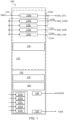
- FIG. 1 illustrates a power management device 100 according to one or more embodiments of the present disclosure.
- the power management device 100 may be implemented as a stand-alone integrated circuit, and thus may also be referred to as a power management integrated circuit (PMIC) or may form part of a larger, integrated device.
- PMIC power management integrated circuit
- the power management device comprises two separate domains.
- a first domain is a power management processing unit 110, and the second domain is a safety unit 150.
- the power management processing unit 110 comprises: an input 115 configured to receive current at an input voltage (VBAT). Input 115 may be connected in use to a battery for supplying an input power, typically at a battery voltage, to the PMIC.
- the power management processing unit 110 further comprises a plurality of power units, shown at 120a, 120b..120e, each configured to receive voltage or current from the input, and to supply voltage or current at a respective output voltage, shown at outputs 125a, 125b, ... 125e.
- the output voltages may all be different, or may, as shown in figure 1 at 125b and 125c sometimes be common, or parts of a multiphase regulator.
- one or more of the converters or regulators of the power management device may be "off-chip". That is to say, they may be manufactured as either a separate IC, or having one or more of their component parts as external components,
- the term “device” as used herein, may thus cover two or more ICs, one of which is a main PMIC and the other or others comprise one or more regulators or DC-DC converters. The output voltages will depend on the application of the PMIC.
- the voltages may be chosen to be 3.3V (shown at V DD_3V3 ), a core operating voltage of the application processor(shown at V DD_CORE ), a 1.8V supply (shown at V DD_1V8 ), and a supply for Double Data Rate (DDR) memory... (shown at V DD_DDR ).
- the power units 120a, 120b, 120e may take various forms. In particular they may be implemented as DC-DC converters, or be implemented as other voltage regulators, such as so-called low drop out (LDO) voltage regulators. Other voltage regulators or other types of voltage regulators (not shown in figure 1 ) may be included in addition or as alternatives.
- the DC-DC converters are typically buck converters, but other type of DC-DC converters, such as boost converters, are not excluded.
- a high-voltage (HV) DC-DC buck converter 120a may be used to supply the 3.3 V output.
- a DC-DC buck converter 120b may be used to supply the voltage DD_CORE for the application processor core.
- two or more buck converters may be used for this purpose with their outputs connected in common.
- a separate DC-DC buck converter 120d may be used to supply the DDR voltage.
- a LDO voltage regulator 120e may be used to supply the 1.8V supply.
- this example is nonlimiting and other numbers of power units, operating at the same or other voltages may be utilised depending on the specific application.
- the DC-DC and other regulators may all have, as their input, the input 115 for connection to VBAT; alternatively, and as shown, one or more of the DC-DC convertors, may be only indirectly connected to the input 115; for example, as shown, they may use the output of the HV DC-DC buck converter as their own input. Thus, for example, the lower voltage supplies may be provided with a smaller step-down ratio.
- the power management processing unit also includes a main sequencer 130.
- a main sequencer 130 two of the functions of the main sequencer are to implement a power-up sequence in which the plurality of power units 120a, 120b,... 120e are powered up in a predetermined sequence and to implement a power-down sequence in which the plurality of power units are powered-down in a predetermined sequence.
- the main sequencer may also determine the ouput voltage of some or each of the regulators.
- the main sequencer may be implemented using non-volatile memory such as, without limitation, one-time programmable (OTP) memory.
- OTP one-time programmable
- the power-up sequence instructions and the power-down sequence instructions are burnt into the OTP memory.
- the instructions can then be loaded into for example mirror registers to implement (in the case of the main sequencer), or monitor (in the case of the safety sequencer discussed in more detail below) the power-up and/or power-down.
- the power management device 100 or PMIC includes a second domain, being a safety unit 150.
- the safety unit 150 includes a plurality of voltage monitors 155a, 155b ..155e, each configured to monitor the output voltage of a respective one of the power units. That is to say, there is a voltage monitor associated with each of the power units.
- the voltage monitors are each implemented as a separate circuit - typically in the analogue domain. Each of voltage monitors is configured to be able to compare the output of the respective power unit with one or more threshold voltages.
- the voltage monitor may include an under-voltage threshold, which is compared with the respective output voltage in order to ensure that the power unit is providing power which is not too far below the design voltage.
- the under-voltage threshold for the 3.3 V supply may be set to be equal to 3.0 V, in order to be sure that the voltage is being supplied at no less than 90% of the design voltage. In other embodiments, other thresholds may be used. The threshold may be set as a percentage of the design voltage, or as an absolute difference from the design voltage.
- the voltage monitor may be provided with an over-voltage threshold, in order to detect potentially damaging over-voltages.
- the over-voltage threshold may be set to be 3.9 V, in order to be confident that the voltage is being supplied as no more than 120% of the design voltage. Again, in other embodiments, other thresholds may be used.
- the threshold may be set as a percentage of the design voltage, or as an absolute difference from the design voltage.
- the voltage monitors have been described above as being physically distinct units arranged such that there is a separate voltage monitor for each of the power units, the skilled person will appreciate that in other embodiments, this may be a logical arrangement only, and the same physical circuitry may be implemented to operate as two or more of the voltage monitors. For example, a single circuit may be arranged so the same physical voltage monitor circuit may be switched between a plurality of circuit configurations to monitor the voltage of two or more of the power units.
- this may save circuitry, in general it is not preferred, since there may be a delay between a failure in a particular circuit, and that circuit being multiplexed for monitoring: the consequent loss of "real time" monitoring may be, in some circumstances, not acceptable.
- the safety unit further comprises a power-good unit 160, configured to provide a power-good output signal PGOOD indicative of normal operation of the power management device.
- the power-good output signal PGOOD is typically provided at an output pin of the PMIC, and may be used to reset the application processor when needed.
- the safety unit further comprises a fail-state unit 165, configured to provide an output FSOB indicative of a fail-state of the power management device.
- the fail-state output signal FSOB is typically provided at an output pin of the PMIC, and may be used to notify the applications processor and/or other peripherals of a fault.
- the safety unit may be powered from the power management processor unit, for instance from a dedicated LDO. Furthermore, the safety unit may generate its own power supplies.
- the safety unit further comprises a safety sequencer 170, configured to store sequence data.
- the sequence data includes the power-up sequence which is also stored in the main sequencer 130, and a safety processing unit 180.
- the safety sequencer 170 stores the order in which the power units should power-up.
- the safety sequencer may in addition store further information.
- the safety sequencer may store data corresponding to the under-voltage threshold for each of the power units.
- the safety sequencer may store data corresponding to the overvoltage threshold for each of the power units.
- the safety sequencer may store data corresponding to a power-down threshold - for example if a power unit is powered down, its output voltage will fall and the power-down threshold may correspond to the voltage below which the output must have fallen for the system to consider that the power unit has properly powered down.
- the safety sequencer may store timing information, such as time-limits: in particular, powering up a power unit takes a finite time: there may be a time limit by which time the power unit would have been expected to have fully powered up, and in the case that the output voltage from the power unit does not rise above the undervoltage threshold within this time limit, the safety processing unit 180 may report a fault.
- the timing information may be baselined from a start of the overall power-up sequence, or relate to the expected or maximum time for an individual power unit power-up.
- the safety processing unit 180 comprises a sequencer processing logic.
- the sequencer processing logic is configured to use the sequence data stored in safety sequencer to monitor the plurality of power units during the power-up sequence by means of the respective voltage monitors, and to provide an output to at least one of the power-good unit and the fail-state unit in response to the monitoring.
- the processing logic may be simple, for instance, it may just apply the comparisons.
- the processing logic may include additional functionality, for instance it may include latch functionality, or a timed-latch functionality.
- the safety processing unit 180 may include other safety processing functions, such as will be familiar to the skilled person.
- the safety processing unit 180 may include known functionality of an independent safety monitoring unit (iSMU).
- the safety monitoring unit is independent in the sense that its operation is not necessarily dependent on correct functioning of the power management processing unit.
- this logic unit monitors the state of the power unit such as DC-DC converters and LDO regulators using the voltage monitor 155a, 155b.. 155e during normal operation of the PMIC.
- the safety unit may include an analogue built in self-test, ABIST, circuit (shown at 250 in figure 2 ) configured to test for the integrity and/or the correct operation of the voltage monitors. Furthermore, the safety unit may comprise a logic built in self-test, LBIST, circuit (shown at 240 in figure 2 ) configured to test for correct operation the safety monitoring unit and the safety sequencer.
- the LBIST circuit may check the integrity of the iSMU safety logic and the sequencer processing logic which may be integrated into the safety logic.
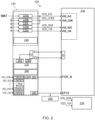
- FIG 2 this shows a power management device 100 and in a system 200 which includes an application processor 210 and memory 230, according to one or more embodiments.
- the output of each of the power units within the power management device is provided to the application processor, in the example shown.
- one or more outputs may be provided to other external devices such as external peripherals, for instance a controller area network (CAN) or ethernet device or an SD card, or the like.
- the memory device 230 is powered by the 1.8V supply along with the DDR supply.
- the power management device may include, in the safety processing domain or safety unit 150, an analogue built in self-test unit 250 (ABIST), for ensuring the integrity of the analogue circuits and in particular the voltage monitors 155.
- the power management device may also include, in the safety processing domain or safety unit 150, a logical built in self-test unit (LBIST) 240, for ensuring the integrity of the logical and/or digital circuit.
- LBIST logical built in self-test unit
- the communication channel may be configured for I2C communication, with each of the power management device 100 and application processor 210 having an I2C interface 270 and 275 respectively.
- I2C interfaces are used, the connections are a clock line (SCL) and a data line (SDA). In other embodiments other communication links and/or other communication protocols might be used.
- a cyclic redundancy check 245, may check that no data errors, such as flipped bits, occur in the transactions and communications between the power management device and the applications processor.
- the power good output PGOOD 160 is connected to the applications processor 210 on the applications processor's power-on-reset pin POR_B, which typically is available to start or reset the device, and the output FSOB from the fail state unit 165 is connected to the application processor 210 on a general purpose input/output (GPIO) pin.
- This connection may be direct, or may be through an external peripheral, such as the system safe state transition unit mentioned below.
- the application processor is thereby enabled to take appropriate action on the discovery of a failure in the power management device. According to one or more embodiments this failure may include a failed power-up process.
- the system may also include a system safe state transition unit 260.
- a system safe state transition unit 260 may consist of additional logic or switches to transition the system in a controlled and known state. Without this, the system might be uncontrolled, depending on the nature of the failure.
- FIG 3 the figure shows state machines for both the power management processing 130 and the safety unit 108.
- the state machine 330 for the power management processing unit is generally on the left-hand side and the middle of the figure, and the state machine 340 for the safety unit is on the right-hand side of the figure.
- the state machine for the power management processing unit is generally the same as for a conventional power management device: starting from an OFF mode 301, in this mode all of the power units of regulators are off, including the application processor under reset: typically, the PGOOD pin is used to maintain the application processor in the reset state; however, once the power-up sequence is complete, the PGOOD pin is released, which allows the application processor to start.
- the main sequencer is initiated at 302, by loading sequence information from the main sequencer into mirror registers from the non-volatile memory such as OTP memory.
- the initial power unit is powered up at 303. This power unit is conventionally considered to be in "slot 0" and the skilled person will be aware that it is conventional for this power unit to provide a 3.3 V supply.
- the remaining power units are then powered up with slot 1 being powered up at 304, through to the last power unit or units, in slot n, being powered up at 305.
- the state machine moves to normal mode operation at 306.
- the power-down sequence is generally the reverse: so the state machine starts the power-down on receipt of a power-down command at 307, and powers down the power unit in the slots n at 308, and then sequentially powers-down the other power units until finally the first power unit in slot 0 is powered down at 309.
- the state machine then moves to OFF mode as shown at 323.
- the state machine for the safety unit is shown at 340 on the right-hand side of figure 3 .
- the safety unit starts in an off mode 310, and then may perform a logical built in self-test routine LBIST at 311.
- the safety unit initiates the loading of the safety sequence from the non-volatile memory such as OTP memory in the safety sequencer as shown at 312 as "safety OTP sequencer loading".
- the state machines may then transition to their next state - in the case of the power management processing unit this is state 303 in which the initial power unit is powered up, and in the case of the safety unit the state machine moves to state 313 in which the safety unit starts monitoring threshold voltages to determine when each power unit crosses the undervoltage threshold ("regulator start-up UV threshold monitoring").
- the safety unit state machine moves to the state 314 at which it may carry out an analogue built in self-test routine (ABIST). Upon successful completion of this the state machine moves to state 315 at which the power good unit is instructed to set the flag power good ("PGOOD release").
- ABIST an analogue built in self-test routine
- the safety unit has confirmed that the LBIST is OK, the ABIST is OK and the Power-up monitoring is OK, as shown at 322.
- the PGOOD pin may be released - which may for instance allow from some debugging or diagnostics to take place, whilst the FSOB pin is not released.
- the state machine then transitions to normal mode and instructs the fail-state unit to release FSOB, as shown at state 316.
- the safety unit state machine remains in this state until the power management device starts to power-down the power units, at which point the safety state machine moves to state 317 ("regulator power-down threshold monitoring"). On successful completion of this process, the safety unit state machine moves to an OFF mode 324.
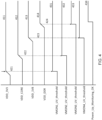
- Figure 4 shows an example timeline of a successful start-up sequence for a power management device as shown in figure 1 .
- the figure shows, at the top four curves, the output voltage from each of four power units or regulators, which are intended to be powered up in sequence. It also shows at the bottom four curves, signals associated with each of the voltage monitors.
- the 3.3 V DC-DC converter is powered up first, and the voltage on its output ramps up from a low value (nominally zero) to the expected value (3.3 V).
- the output voltage crosses the undervoltage threshold (which may be set to for instance 3.0 V as discussed above). This moment is shown as 421 on the figure.
- the output VMON1_UV_THRESHOLD of the voltage monitor associated with the 3.3 V power supply comparing the output voltage with the undervoltage threshold goes high, as shown on curve 431.
- the DC-DC converter or converters for VDD_CORE is or are powered up as shown at 412, and the voltage on its or their output ramps up from a low value (nominally zero) to the expected value (VDD_CORE).
- the output voltage crosses the undervoltage threshold (which may be set to for instance 10% below the nominal voltage, as discussed above). This moment is shown as 422 on the figure.
- the output VMON2_UV_ THRESHOLD of the voltage monitor associated with the VDD_CORE power supply comparing the output voltage with the undervoltage threshold goes high, as shown on curve 432.
- the power unit for VDD_1.8V (note that this may typically be an LDO) is powered up as shown at 413, and the voltage on its output ramps up from a low value (nominally zero) to the expected value (VDD_1V8). During this ramp up, the output voltage crosses the respective undervoltage threshold (which may be set to for instance 10% below the nominal voltage, as discussed above). This moment is shown as 423 on the figure. At this time the output VMON3_UV THRESHOLD of the voltage monitor associated with the VDD_1V8 power supply comparing the output voltage with the undervoltage threshold goes high, as shown on curve 433.
- the DC-DC converter or converters for VDD_DDR is powered up as shown at 414, and the voltage on its output ramps up from a low value (nominally zero) to the expected value (VDD_DDR).
- the output voltage crosses the respective undervoltage threshold (which may be set to for instance 10% below the nominal voltage, as discussed above). This moment is shown as 424 on the figure.
- the output VMON4_UV_THRESHOLD of the voltage monitor associated with the VDD_DDR power supply comparing the output voltage with the undervoltage threshold goes high, as shown on curve 434.
- the unit sets the flag Power_Up_Monitoring_OK to high.
- the flag Power_Up_Monitoring_OK may be effected by suitable logic circuitry combining individual monitor flags for each slot or power unit, and the it's also possible to have a dedicated flag for each VMON for debug purposes.
- the threshhold monitor signals may not latch high when the threshold is passed - in such embodiments, even after the specific power unit has powered up, the monitor may detect and undervoltage if the power voltage from that unit subsequently dips below the threshold.
- the timing diagram may include a time of which commences as each threshold signal 431,432, 433 goes high, and the power monitoring okay is latched low if the subsequent threshold signal does not pass go high within a predetermined time limit.
- Figure 5 shows a flow diagram of a method according to the present disclosure.
- the method of operating a power management device which comprises a power management processing unit having a plurality of power units, and a safety unit having a plurality of voltage monitors.
- the method comprises, at step 510, powering up each of the plurality of power units according to a predetermined sequence stored in a main sequencer.
- an output voltage of the respective power unit is compared with a respective undervoltage threshold by means of a respective one of the voltage monitors as (shown at 520), and a signal provided to a safety sequencer in dependence on whether the output voltage exceeds the respective undervoltage threshold (shown at 530).
- the signals are compared to a set of expected signals stored in the safety sequencer (shown at 540); and it is determined whether there is a failure in dependence on the comparisons (at 550).
- Determining whether there is a failure in dependence on the comparisons may be done by: providing a power-good signal in response to all the respective signals matching the set of expected signals; and providing a fail-state signal in response to any of the respective signals not matching the set of expected signals.
- FIG. 6 shows as flow diagram of a method according to the present disclosure.
- the method is a method of operating a power management device comprising a power management processing unit having a plurality of power units, and a safety unit having a plurality of voltage monitors.
- the method comprises: at step 610, powering down each of the plurality of power units according to a predetermined sequence stored in a main sequencer.
- step 620 output voltage of the respective power unit while it is being powered up is compared with a respective power-down voltage threshold by means of a respective one of the voltage monitors, and at step 630 a signal is provided to a safety sequencer in dependence on whether the output voltage exceeds the respective power-down threshold.
- the signals are compared with a set of expected signals stored in the safety sequencer; and at step 650 it is determined whether there is a failure in dependence on the comparisons.
- Determining whether there is a failure in dependence on the comparisons is done by providing a power-down-good signal in response to all the respective signals matching the set of expected signals; and providing a fail-state signal in response to any of the respective signals not matching the set of expected signals.
Landscapes
- Engineering & Computer Science (AREA)
- Theoretical Computer Science (AREA)
- Power Engineering (AREA)
- Physics & Mathematics (AREA)
- General Engineering & Computer Science (AREA)
- General Physics & Mathematics (AREA)
- Human Computer Interaction (AREA)
- Power Sources (AREA)
Description
- The present disclosure relates to power management devices, systems including power management devices, and methods of operating the same.
- Modern power management devices and power management ICs (PMICs) often include safety features to ensure the proper monitoring and/or management of both the PMIC itself, and any externally connected regulators or converters and any application processor or other peripherals driven or powered by the PMIC, in case of an interruption to the power supply. This may include voltage monitoring of the one or more outputs from the power management PMIC. Safe power management is achieved by an independent safety monitoring unit (iSMU) which forms part of the PMIC power management processing.
- Monitoring the device during power-up and power-down however remains a challenge.
- Chinese patent application publication number
CN109491487 discloses a multifunctional power sequence generator and a monitor chip, including: a controller, a communication unit, a storage unit, a power sequence generation unit, a sequence monitoring unit, and an abnormality processing unit; a controller; Invoke the work of the above-mentioned units to generate a multichannel power sequence to meet the power-on sequence problems of different systems, and to monitor the power sequence and turn on or off the chip or the corresponding channel when an error occurs. - According to the invention there is a provided a power management device and a method of operating the power management device, as defined by the appended claims.
- By providing a safety sequencer configured to store sequence data in the safety unit separate from, that is to say independent of, the storage of sequence data in the power management processing unit, the safety monitoring may be extended to include the power-up stage of the power management device, relatively independently from the power management processing unit. This may extend the capability of the safety unit. Typically, the safety unit is powered from one of the regulators or DC-DC converters on the power management processing unit; however, in other embodiments, the safety unit may be powered by a dedicated regulator. The safety processing unit is, in general terms a processing unit dedicated to monitoring for correct operation of the device.
- These and other aspects of the invention will be apparent from, and elucidated with reference to, the embodiments described hereinafter.
- Embodiments will be described, by way of example only, with reference to the drawings, in which
-
figure 1 shows a block diagram of a power management device according to one or more embodiments of the present disclosure; -
figure 2 shows a block diagram of the power management device offigure 1 in a system; -
figure 3 shows a state machine diagram of each of a power management processing units and of a safety unit according to one or more embodiments; -
figure 4 shows the start-up sequence of a power management device; -
figure 5 shows a flow diagram of a method according to one or more embodiments; and -
figure 6 shows a flow diagram of a further method according to one or more embodiments. - It should be noted that the Figures are diagrammatic and not drawn to scale. Relative dimensions and proportions of parts of these Figures have been shown exaggerated or reduced in size, for the sake of clarity and convenience in the drawings. The same reference signs are generally used to refer to corresponding or similar features in modified and different embodiments
-
Figure 1 illustrates apower management device 100 according to one or more embodiments of the present disclosure. Thepower management device 100 may be implemented as a stand-alone integrated circuit, and thus may also be referred to as a power management integrated circuit (PMIC) or may form part of a larger, integrated device. - As shown, the power management device comprises two separate domains. A first domain is a power
management processing unit 110, and the second domain is asafety unit 150. - The power
management processing unit 110 comprises: aninput 115 configured to receive current at an input voltage (VBAT).Input 115 may be connected in use to a battery for supplying an input power, typically at a battery voltage, to the PMIC. The powermanagement processing unit 110 further comprises a plurality of power units, shown at 120a, 120b..120e, each configured to receive voltage or current from the input, and to supply voltage or current at a respective output voltage, shown atoutputs figure 1 at 125b and 125c sometimes be common, or parts of a multiphase regulator. Although typically all the DC-DC converters and regulators are integrated into the same integrated circuit, one or more of the converters or regulators of the power management device may be "off-chip". That is to say, they may be manufactured as either a separate IC, or having one or more of their component parts as external components, The term "device" as used herein, may thus cover two or more ICs, one of which is a main PMIC and the other or others comprise one or more regulators or DC-DC converters. The output voltages will depend on the application of the PMIC. For a non-limiting example application in which the PMIC is used to provide power to an application processor and at least one external memory device, in an automobile environment, the voltages may be chosen to be 3.3V (shown at VDD_3V3), a core operating voltage of the application processor(shown at VDD_CORE), a 1.8V supply (shown at VDD_1V8), and a supply for Double Data Rate (DDR) memory... (shown at VDD_DDR). - As will be familiar to the skilled person, the
power units figure 1 ) may be included in addition or as alternatives. The DC-DC converters are typically buck converters, but other type of DC-DC converters, such as boost converters, are not excluded. In the example application mentioned wherein the PMIC is used to power an applications processor and peripherals in an automobile environment, a high-voltage (HV) DC-DC buck converter 120a may be used to supply the 3.3 V output. Similarly, a DC-DC buck converter 120b may be used to supply the voltage DD_CORE for the application processor core. As will be familiar to the skilled person, two or more buck converters (two are shown -120b and 120c) may be used for this purpose with their outputs connected in common. Furthermore, a separate DC-DC buck converter 120d may be used to supply the DDR voltage. Finally, aLDO voltage regulator 120e may be used to supply the 1.8V supply. Of course, this example is nonlimiting and other numbers of power units, operating at the same or other voltages may be utilised depending on the specific application. The DC-DC and other regulators may all have, as their input, theinput 115 for connection to VBAT; alternatively, and as shown, one or more of the DC-DC convertors, may be only indirectly connected to theinput 115; for example, as shown, they may use the output of the HV DC-DC buck converter as their own input. Thus, for example, the lower voltage supplies may be provided with a smaller step-down ratio. - The power management processing unit also includes a
main sequencer 130. As will be discussed in more detail hereinbelow, two of the functions of the main sequencer are to implement a power-up sequence in which the plurality ofpower units - As already mentioned, in addition to the power
management processing unit 110, thepower management device 100 or PMIC includes a second domain, being asafety unit 150. Thesafety unit 150 includes a plurality ofvoltage monitors - Whereas the voltage monitors have been described above as being physically distinct units arranged such that there is a separate voltage monitor for each of the power units, the skilled person will appreciate that in other embodiments, this may be a logical arrangement only, and the same physical circuitry may be implemented to operate as two or more of the voltage monitors. For example, a single circuit may be arranged so the same physical voltage monitor circuit may be switched between a plurality of circuit configurations to monitor the voltage of two or more of the power units. However, although this may save circuitry, in general it is not preferred, since there may be a delay between a failure in a particular circuit, and that circuit being multiplexed for monitoring: the consequent loss of "real time" monitoring may be, in some circumstances, not acceptable.
- The safety unit further comprises a power-
good unit 160, configured to provide a power-good output signal PGOOD indicative of normal operation of the power management device. The power-good output signal PGOOD is typically provided at an output pin of the PMIC, and may be used to reset the application processor when needed. - The safety unit further comprises a fail-
state unit 165, configured to provide an output FSOB indicative of a fail-state of the power management device. The fail-state output signal FSOB is typically provided at an output pin of the PMIC, and may be used to notify the applications processor and/or other peripherals of a fault. - As already mentioned above, the safety unit may be powered from the power management processor unit, for instance from a dedicated LDO. Furthermore, the safety unit may generate its own power supplies.
- According to one or more embodiments of the present disclosure, the safety unit further comprises a
safety sequencer 170, configured to store sequence data. The sequence data includes the power-up sequence which is also stored in themain sequencer 130, and asafety processing unit 180. As a minimum thesafety sequencer 170 stores the order in which the power units should power-up. The safety sequencer may in addition store further information. For example, the safety sequencer may store data corresponding to the under-voltage threshold for each of the power units. Furthermore, the safety sequencer may store data corresponding to the overvoltage threshold for each of the power units. Furthermore, the safety sequencer may store data corresponding to a power-down threshold - for example if a power unit is powered down, its output voltage will fall and the power-down threshold may correspond to the voltage below which the output must have fallen for the system to consider that the power unit has properly powered down. Moreover, in one or more embodiments, the safety sequencer may store timing information, such as time-limits: in particular, powering up a power unit takes a finite time: there may be a time limit by which time the power unit would have been expected to have fully powered up, and in the case that the output voltage from the power unit does not rise above the undervoltage threshold within this time limit, thesafety processing unit 180 may report a fault. The skilled person will appreciate that the timing information may be baselined from a start of the overall power-up sequence, or relate to the expected or maximum time for an individual power unit power-up. - The
safety processing unit 180 comprises a sequencer processing logic. The sequencer processing logic is configured to use the sequence data stored in safety sequencer to monitor the plurality of power units during the power-up sequence by means of the respective voltage monitors, and to provide an output to at least one of the power-good unit and the fail-state unit in response to the monitoring. The processing logic may be simple, for instance, it may just apply the comparisons. In one or more other embodiments, the processing logic may include additional functionality, for instance it may include latch functionality, or a timed-latch functionality. - The
safety processing unit 180 may include other safety processing functions, such as will be familiar to the skilled person. In particular thesafety processing unit 180 may include known functionality of an independent safety monitoring unit (iSMU). The safety monitoring unit is independent in the sense that its operation is not necessarily dependent on correct functioning of the power management processing unit. Typically in known safety power management devices and safety PMICs this logic unit monitors the state of the power unit such as DC-DC converters and LDO regulators using thevoltage monitor - The safety unit may include an analogue built in self-test, ABIST, circuit (shown at 250 in
figure 2 ) configured to test for the integrity and/or the correct operation of the voltage monitors. Furthermore, the safety unit may comprise a logic built in self-test, LBIST, circuit (shown at 240 infigure 2 ) configured to test for correct operation the safety monitoring unit and the safety sequencer. The LBIST circuit may check the integrity of the iSMU safety logic and the sequencer processing logic which may be integrated into the safety logic. - Turning now to
figure 2 , this shows apower management device 100 and in asystem 200 which includes anapplication processor 210 andmemory 230, according to one or more embodiments. The output of each of the power units within the power management device is provided to the application processor, in the example shown. In other embodiments, one or more outputs may be provided to other external devices such as external peripherals, for instance a controller area network (CAN) or ethernet device or an SD card, or the like. Thememory device 230 is powered by the 1.8V supply along with the DDR supply. As mentioned above the power management device may include, in the safety processing domain orsafety unit 150, an analogue built in self-test unit 250 (ABIST), for ensuring the integrity of the analogue circuits and in particular the voltage monitors 155. The power management device may also include, in the safety processing domain orsafety unit 150, a logical built in self-test unit (LBIST) 240, for ensuring the integrity of the logical and/or digital circuit. - Also shown in
figure 2 is a communication channel between the power management device and the application processor. As shown, the communication channel may be configured for I2C communication, with each of thepower management device 100 andapplication processor 210 having an I2C interface 270 and 275 respectively. Where I2C interfaces are used, the connections are a clock line (SCL) and a data line (SDA). In other embodiments other communication links and/or other communication protocols might be used. - There may by a
cyclic redundancy check 245, to checks that no data errors, such as flipped bits, occur in the transactions and communications between the power management device and the applications processor. - The power
good output PGOOD 160 is connected to theapplications processor 210 on the applications processor's power-on-reset pin POR_B, which typically is available to start or reset the device, and the output FSOB from thefail state unit 165 is connected to theapplication processor 210 on a general purpose input/output (GPIO) pin. This connection may be direct, or may be through an external peripheral, such as the system safe state transition unit mentioned below. The application processor is thereby enabled to take appropriate action on the discovery of a failure in the power management device. According to one or more embodiments this failure may include a failed power-up process. - The system may also include a system safe
state transition unit 260. As will be familiar to the skilled person, such a unit may consist of additional logic or switches to transition the system in a controlled and known state. Without this, the system might be uncontrolled, depending on the nature of the failure. - Turning now to
figure 3 , the figure shows state machines for both thepower management processing 130 and the safety unit 108. Thestate machine 330 for the power management processing unit is generally on the left-hand side and the middle of the figure, and thestate machine 340 for the safety unit is on the right-hand side of the figure. - The state machine for the power management processing unit is generally the same as for a conventional power management device: starting from an
OFF mode 301, in this mode all of the power units of regulators are off, including the application processor under reset: typically, the PGOOD pin is used to maintain the application processor in the reset state; however, once the power-up sequence is complete, the PGOOD pin is released, which allows the application processor to start. The main sequencer is initiated at 302, by loading sequence information from the main sequencer into mirror registers from the non-volatile memory such as OTP memory. The initial power unit is powered up at 303. This power unit is conventionally considered to be in "slot 0" and the skilled person will be aware that it is conventional for this power unit to provide a 3.3 V supply. The remaining power units are then powered up withslot 1 being powered up at 304, through to the last power unit or units, in slot n, being powered up at 305. On completion of this the state machine moves to normal mode operation at 306. The power-down sequence is generally the reverse: so the state machine starts the power-down on receipt of a power-down command at 307, and powers down the power unit in the slots n at 308, and then sequentially powers-down the other power units until finally the first power unit inslot 0 is powered down at 309. The state machine then moves to OFF mode as shown at 323. - The state machine for the safety unit is shown at 340 on the right-hand side of
figure 3 . The safety unit starts in anoff mode 310, and then may perform a logical built in self-test routine LBIST at 311. According to one or more embodiments of the present disclosure, the safety unit initiates the loading of the safety sequence from the non-volatile memory such as OTP memory in the safety sequencer as shown at 312 as "safety OTP sequencer loading". It should be noted that there is an independency between the state machines of the power management processing unit and the safety unit, that is to say that the power management processing unit is prevented from transitioning from state 302 ("main OTP sequencer loading") to state 303 (powering up the initial power unit), until the safety unit has completed step 312 ("safety OTP sequencer loading") and is ready to start monitoring. Each state machine may indicate that it has reached this state, for instance by setting a respective flag FS_READY to be true as shown at 321. The state machines may then transition to their next state - in the case of the power management processing unit this isstate 303 in which the initial power unit is powered up, and in the case of the safety unit the state machine moves tostate 313 in which the safety unit starts monitoring threshold voltages to determine when each power unit crosses the undervoltage threshold ("regulator start-up UV threshold monitoring"). - Once all the power units have started up properly in the correct sequence (and optionally with the correct timing as discussed above) the safety unit state machine moves to the
state 314 at which it may carry out an analogue built in self-test routine (ABIST). Upon successful completion of this the state machine moves tostate 315 at which the power good unit is instructed to set the flag power good ("PGOOD release"). - At this time the safety unit has confirmed that the LBIST is OK, the ABIST is OK and the Power-up monitoring is OK, as shown at 322. Thus, in one of more embodiments, even if one or other of the LBIST and ABIST fails, the PGOOD pin may be released - which may for instance allow from some debugging or diagnostics to take place, whilst the FSOB pin is not released.
- The state machine then transitions to normal mode and instructs the fail-state unit to release FSOB, as shown at
state 316. - The safety unit state machine remains in this state until the power management device starts to power-down the power units, at which point the safety state machine moves to state 317 ("regulator power-down threshold monitoring"). On successful completion of this process, the safety unit state machine moves to an
OFF mode 324. -
Figure 4 shows an example timeline of a successful start-up sequence for a power management device as shown infigure 1 . The figure shows, at the top four curves, the output voltage from each of four power units or regulators, which are intended to be powered up in sequence. It also shows at the bottom four curves, signals associated with each of the voltage monitors. As can be seen at 411 the 3.3 V DC-DC converter is powered up first, and the voltage on its output ramps up from a low value (nominally zero) to the expected value (3.3 V). During this ramp up, the output voltage crosses the undervoltage threshold (which may be set to for instance 3.0 V as discussed above). This moment is shown as 421 on the figure. At this time the output VMON1_UV_THRESHOLD of the voltage monitor associated with the 3.3 V power supply comparing the output voltage with the undervoltage threshold goes high, as shown oncurve 431. - Similarly, and after this unit is operational, the DC-DC converter or converters for VDD_CORE is or are powered up as shown at 412, and the voltage on its or their output ramps up from a low value (nominally zero) to the expected value (VDD_CORE). During this ramp up, the output voltage crosses the undervoltage threshold (which may be set to for instance 10% below the nominal voltage, as discussed above). This moment is shown as 422 on the figure. At this time the output VMON2_UV_ THRESHOLD of the voltage monitor associated with the VDD_CORE power supply comparing the output voltage with the undervoltage threshold goes high, as shown on
curve 432. - Similarly, and after this or these units is or are operational, the power unit for VDD_1.8V (note that this may typically be an LDO) is powered up as shown at 413, and the voltage on its output ramps up from a low value (nominally zero) to the expected value (VDD_1V8). During this ramp up, the output voltage crosses the respective undervoltage threshold (which may be set to for instance 10% below the nominal voltage, as discussed above). This moment is shown as 423 on the figure. At this time the output VMON3_UV THRESHOLD of the voltage monitor associated with the VDD_1V8 power supply comparing the output voltage with the undervoltage threshold goes high, as shown on
curve 433. - Finally (in this example) after this unit is operational, the DC-DC converter or converters for VDD_DDR is powered up as shown at 414, and the voltage on its output ramps up from a low value (nominally zero) to the expected value (VDD_DDR). During this ramp up, the output voltage crosses the respective undervoltage threshold (which may be set to for instance 10% below the nominal voltage, as discussed above). This moment is shown as 424 on the figure. At this time the output VMON4_UV_THRESHOLD of the voltage monitor associated with the VDD_DDR power supply comparing the output voltage with the undervoltage threshold goes high, as shown on
curve 434. - Once all the power units have successfully powered up, and the safety unit has established that the output voltages have each passed the respective undervoltage threshold, the unit sets the flag Power_Up_Monitoring_OK to high. The skilled person will appreciate that this may be effected by suitable logic circuitry combining individual monitor flags for each slot or power unit, and the it's also possible to have a dedicated flag for each VMON for debug purposes.
- The skilled person will appreciate that the timing diagram shown in
figure 4 corresponds to one of the simplest embodiments discussed herein. In other embodiments, the threshhold monitor signals may not latch high when the threshold is passed - in such embodiments, even after the specific power unit has powered up, the monitor may detect and undervoltage if the power voltage from that unit subsequently dips below the threshold. - In other embodiments the timing diagram may include a time of which commences as each threshold signal 431,432, 433 goes high, and the power monitoring okay is latched low if the subsequent threshold signal does not pass go high within a predetermined time limit.
-
Figure 5 shows a flow diagram of a method according to the present disclosure. The method of operating a power management device, which comprises a power management processing unit having a plurality of power units, and a safety unit having a plurality of voltage monitors. The method comprises, atstep 510, powering up each of the plurality of power units according to a predetermined sequence stored in a main sequencer. - While the power unit is being powered up, an output voltage of the respective power unit is compared with a respective undervoltage threshold by means of a respective one of the voltage monitors as (shown at 520), and a signal provided to a safety sequencer in dependence on whether the output voltage exceeds the respective undervoltage threshold (shown at 530).
- The signals are compared to a set of expected signals stored in the safety sequencer (shown at 540); and it is determined whether there is a failure in dependence on the comparisons (at 550).
- Determining whether there is a failure in dependence on the comparisons (at 550) may be done by: providing a power-good signal in response to all the respective signals matching the set of expected signals; and providing a fail-state signal in response to any of the respective signals not matching the set of expected signals.
-
Figure 6 shows as flow diagram of a method according to the present disclosure. The method is a method of operating a power management device comprising a power management processing unit having a plurality of power units, and a safety unit having a plurality of voltage monitors. The method comprises: atstep 610, powering down each of the plurality of power units according to a predetermined sequence stored in a main sequencer. - At
step 620, output voltage of the respective power unit while it is being powered up is compared with a respective power-down voltage threshold by means of a respective one of the voltage monitors, and at step 630 a signal is provided to a safety sequencer in dependence on whether the output voltage exceeds the respective power-down threshold. - At
step 620 the signals are compared with a set of expected signals stored in the safety sequencer; and atstep 650 it is determined whether there is a failure in dependence on the comparisons. - Determining whether there is a failure in dependence on the comparisons is done by providing a power-down-good signal in response to all the respective signals matching the set of expected signals; and providing a fail-state signal in response to any of the respective signals not matching the set of expected signals.
Claims (12)
- A power management device (100) comprisinga power management processing unit (110) and a separate safety unit (150);the power management processing unit (110) comprising:an input (115) configured to receive current at an input voltage (VBAT);a plurality of power units (120a-e) each configured to supply current from the input (115) at a respective output (125a-e), anda main sequencer (130) configured to implement a power-up sequence in which the plurality of power units (120a-e) are powered-up to supply said respective current in a predetermined sequence stored in the main sequencer (130);the safety unit (150) comprising:a plurality of voltage monitors (155a-e) each configured to monitor the output voltage of a respective one of the power units (120a-e);a power-good unit (160), configured to provide a power-good output signal (PGOOD) indicative of normal operation of the power management device (100);wherein the safety unit (150) further comprises a safety sequencer (170), distinct from the main sequencer (130) and configured to store sequence data; andwherein the safety unit (150) further comprises a safety processing unit (180), configured to use the sequence data stored in the safety sequencer (170) to monitor the plurality of power units (120a-e) during the power-up sequence by means of the respective voltage monitors (155a-e), wherein the safety unit (150) further comprises a fail-state unit (165) configured to provide an output (FSOB) indicative of a fail-state of the power management device (100), and wherein the safety processing unit (180) is further configured to provide the output (FSOB) to at least one of the power-good unit (160) and the fail-state unit (165) in response to the monitoring.
- A power management device (100) as claimed in claim 1,
wherein the safety unit comprises one-time programmable, OTP, memory (312). - A power management device (100) as claimed in claim 1 or 2,
wherein the main sequencer (130) is further configured to implement a power-down sequence in which the plurality of power units (120a-e) are powered-down in a predetermined sequence, and the safety processing unit is further configured to monitor the power units (120a-e) during the power-down sequence by means of the respective voltage monitors (155a-e), and to provide an output in response to the monitoring. - A power management device (100) as claimed in any preceding claim, wherein safety processing unit (180) is configured to monitor the plurality of power units (120a-e) during the power-up sequence by each voltage monitor (155a-e) comparing the output voltage of the respective power unit (120a-e) with a respective undervoltage threshold voltage, and the safety processing unit (180) is configured to provide a threshold-passed signal indicative of whether the output voltage exceeds the respective undervoltage threshold voltage.
- A power management device (100) as claimed in claim 4,
wherein the safety sequencer (170) is configured to store an expected sequence in which the power units should power-up, and the safety processing unit is configured to provide an output to the power-good unit (160) in response to the threshold-passed signals indicating the power unit powers up in expected sequence, and to a fail-state unit (165) otherwise. - A power management device (100) as claimed in claim 4,
wherein the safety sequencer (170) is configured to store an expected power-up interval for each power unit, and the safety processing unit (180) is configured to provide an output to the power-good unit (160) in response to receiving each of the respective threshold-passed signals indicating the power units have powered up within the respective predetermined interval in the same sequence as the expected sequence unit, and to the fail-state unit (165) otherwise. - A power management device (100) as claimed in any preceding claim, wherein the safety processing unit (180) is configured to provide an output to the fail-state unit (165) in response to any one or more of the threshold-passed signals indicated that the respective power unit (120a-e) falls below the respective threshold after being powered up.
- A power management device (100) as claimed in any preceding claim,
wherein the plurality of power units comprises a plurality of DC-DC converters and at least one low drop out, LDO, voltage regulator. - A power management device (100) as claimed in any preceding claim,
wherein the power management processing unit (110) further comprises a communication interface for communicating with an application processor, and wherein at least one of the plurality of power units (120a-e) are configured to provide power to the application processor. - An integrated circuit comprising a power management device (100) as claimed in any preceding claim.
- A method of operating a power management device (100) according to claim 1, the method comprising:powering up each of the plurality of power units (120a-e) according to the predetermined sequence stored in the main sequencer (130);comparing an output voltage of the respective power unit (120a-e) while it is being powered up with a respective undervoltage threshold by means of a respective one of the voltage monitors (155a-e), and providing a respective signal to the safety sequencer (170), which is distinct from the main sequencer (130), in dependence on whether the output voltage exceeds the respective undervoltage threshold;comparing the signals with a set of expected signals stored in the safety sequencer (170); and
determining whether there is a failure in dependence on the comparisons, wherein determining whether there is a failure in dependence on the comparisons comprisesproviding a power-good signal (PGOOD) in response to all the respective signals matching the set of expected signals; andproviding a fail-state signal (FSOB) in response to any of the respective signals not matching the set of expected signals. - The method of claim 11, the method further comprising:powering down each of the plurality of power units (120a-e) according to a predetermined sequence stored in the main sequencer (130);comparing an output voltage of the respective power unit (120a-e) while it is being powered down with a respective power-down voltage threshold by means of a respective one of the voltage monitors (155a-e), and providing a signal to the safety sequencer (170) in dependence on whether the output voltage exceeds the respective power-down threshold;comparing the signals with a set of expected signals stored in the safety sequencer (170); anddetermining whether there is a failure in dependence on the comparisons,
wherein determining whether there is a failure in dependence on the comparisons comprisesproviding a power-down-good signal (PGOOD) in response to all the respective signals matching the set of expected signals; andproviding a fail-state signal (FSOB) in response to any of the respective signals not matching the set of expected signals.
Priority Applications (3)
| Application Number | Priority Date | Filing Date | Title |
|---|---|---|---|
| EP20305528.0A EP3913466B1 (en) | 2020-05-20 | 2020-05-20 | Safety monitoring of power-up and/or power-down of a power management device |
| US17/313,311 US20210365098A1 (en) | 2020-05-20 | 2021-05-06 | Safety monitoring or power-up and/or power-down of a power management device |
| CN202110555235.7A CN113708483A (en) | 2020-05-20 | 2021-05-20 | Safety monitoring of power-up and/or power-down of a power management device |
Applications Claiming Priority (1)
| Application Number | Priority Date | Filing Date | Title |
|---|---|---|---|
| EP20305528.0A EP3913466B1 (en) | 2020-05-20 | 2020-05-20 | Safety monitoring of power-up and/or power-down of a power management device |
Publications (2)
| Publication Number | Publication Date |
|---|---|
| EP3913466A1 EP3913466A1 (en) | 2021-11-24 |
| EP3913466B1 true EP3913466B1 (en) | 2023-12-13 |
Family
ID=71465249
Family Applications (1)
| Application Number | Title | Priority Date | Filing Date |
|---|---|---|---|
| EP20305528.0A Active EP3913466B1 (en) | 2020-05-20 | 2020-05-20 | Safety monitoring of power-up and/or power-down of a power management device |
Country Status (3)
| Country | Link |
|---|---|
| US (1) | US20210365098A1 (en) |
| EP (1) | EP3913466B1 (en) |
| CN (1) | CN113708483A (en) |
Families Citing this family (3)
| Publication number | Priority date | Publication date | Assignee | Title |
|---|---|---|---|---|
| CN114778968B (en) * | 2022-03-31 | 2025-07-11 | 深圳市沃特沃德信息有限公司 | Safety simulation test circuit for electric toothbrush holder |
| KR20240015877A (en) | 2022-07-28 | 2024-02-06 | 삼성전자주식회사 | Power management integrated circuit, electronic device having the same, and operating method thereof |
| CN121070163B (en) * | 2025-11-05 | 2026-02-03 | 合肥智芯半导体有限公司 | On-chip system power-down control methods, on-chip systems, electronic devices and media |
Family Cites Families (17)
| Publication number | Priority date | Publication date | Assignee | Title |
|---|---|---|---|---|
| GB1536046A (en) * | 1976-06-30 | 1978-12-20 | Ibm | Data processing system power control |
| US6333650B1 (en) * | 2000-12-05 | 2001-12-25 | Juniper Networks, Inc. | Voltage sequencing circuit for powering-up sensitive electrical components |
| US7882372B2 (en) * | 2002-12-21 | 2011-02-01 | Power-One, Inc. | Method and system for controlling and monitoring an array of point-of-load regulators |
| US6879139B2 (en) * | 2003-05-02 | 2005-04-12 | Potentia Semiconductor, Inc. | Sequencing power supplies |
| US6850048B2 (en) * | 2003-05-02 | 2005-02-01 | Potentia Semiconductor, Inc. | Power supply controller |
| US7105947B1 (en) * | 2003-05-21 | 2006-09-12 | Cisco Technology, Inc. | Method and system for voltage tracking and sequencing in a power supply |
| US7295051B2 (en) * | 2005-06-15 | 2007-11-13 | Cypress Semiconductor Corp. | System and method for monitoring a power supply level |
| US7613937B2 (en) * | 2005-10-31 | 2009-11-03 | Hewlett-Packard Development Company, L.P. | Method and apparatus for utilizing a microcontroller to provide an automatic order and timing power and reset sequencer |
| JP5039322B2 (en) * | 2006-05-09 | 2012-10-03 | ローム株式会社 | Start-up circuit, method, and low-voltage malfunction prevention circuit, power supply circuit, and electronic device using the same |
| US7694163B1 (en) * | 2006-12-14 | 2010-04-06 | Emc Corporation | System for generating and monitoring voltages generated for a variety of different components on a common printed circuit board |
| JP5023731B2 (en) * | 2007-02-16 | 2012-09-12 | 富士通セミコンダクター株式会社 | Power supply circuit, power supply control circuit, and power supply control method |
| US8386806B2 (en) * | 2007-12-17 | 2013-02-26 | Intel Corporation | Integrated power management logic |
| GB2472051B (en) * | 2009-07-22 | 2012-10-10 | Wolfson Microelectronics Plc | Power management apparatus and methods |
| US8680710B2 (en) * | 2010-12-17 | 2014-03-25 | Texas Instruments Incorporated | Analog power sequencer and method |
| US10277068B2 (en) * | 2016-03-18 | 2019-04-30 | Analog Devices Global | Architecture to scale finite-state machines across integrated circuits using a digital bus |
| DE112017005367B4 (en) * | 2016-11-25 | 2023-03-16 | Hitachi Astemo, Ltd. | power supply circuit |
| CN109491487B (en) * | 2018-11-13 | 2022-07-05 | 中国电子科技集团公司第四十七研究所 | Multifunctional power supply sequencer and monitor chip |
-
2020
- 2020-05-20 EP EP20305528.0A patent/EP3913466B1/en active Active
-
2021
- 2021-05-06 US US17/313,311 patent/US20210365098A1/en not_active Abandoned
- 2021-05-20 CN CN202110555235.7A patent/CN113708483A/en active Pending
Also Published As
| Publication number | Publication date |
|---|---|
| CN113708483A (en) | 2021-11-26 |
| US20210365098A1 (en) | 2021-11-25 |
| EP3913466A1 (en) | 2021-11-24 |
Similar Documents
| Publication | Publication Date | Title |
|---|---|---|
| EP3913466B1 (en) | Safety monitoring of power-up and/or power-down of a power management device | |
| US7888943B2 (en) | Method and apparatus for battery test | |
| US9000786B2 (en) | Methods and systems for defective phase identification and current sense calibration for multi-phase voltage regulator circuits | |
| US8909948B2 (en) | On-chip power management | |
| US9348346B2 (en) | Voltage regulation subsystem | |
| US20060200714A1 (en) | Test equipment for semiconductor | |
| US6597074B2 (en) | Backup power-source module, backup power-source apparatus, and computer | |
| CN108389596B (en) | Power-down protection circuit and method of NAND Flash chip and solid state disk | |
| CN101335513A (en) | Power-on system construction applicable to multiple power system smart cards | |
| CN109672328B (en) | Converter control unit protection device and method | |
| JP6638068B2 (en) | System power supply circuit, electronic device, and protection method for electronic device | |
| CN113126545A (en) | Power management system, method and apparatus for autonomous vehicle controller | |
| EP2336844A1 (en) | A method of choosing a functioning mode of an integrated circuit device and relative device | |
| JP7261543B2 (en) | Control device and control method | |
| EP3899690B1 (en) | Maintaining proper voltage sequence during sudden power loss | |
| US12493333B2 (en) | Power-on-reset request functionality in semiconductor devices and power management ICs | |
| US7694163B1 (en) | System for generating and monitoring voltages generated for a variety of different components on a common printed circuit board | |
| US9252751B2 (en) | Apparatus and method for preventing multiple resets | |
| US11703936B2 (en) | Master-slave interchangeable power supply device and host thereof, master-slave interchangeable power supply method and computer-readable storage medium thereof | |
| CN101655732A (en) | Control device and method for power start | |
| US10606329B2 (en) | Safety circuit for an electrical system | |
| CN111596585B (en) | System control method, circuit, electronic device, and storage medium | |
| CN224081790U (en) | Leakage detection device and related computer system | |
| CN222482693U (en) | Chip power supply circuit, chip and electronic equipment | |
| CN115766622B (en) | Switch power-on control circuit, method and system |
Legal Events
| Date | Code | Title | Description |
|---|---|---|---|
| PUAI | Public reference made under article 153(3) epc to a published international application that has entered the european phase |
Free format text: ORIGINAL CODE: 0009012 |
|
| STAA | Information on the status of an ep patent application or granted ep patent |
Free format text: STATUS: THE APPLICATION HAS BEEN PUBLISHED |
|
| AK | Designated contracting states |
Kind code of ref document: A1 Designated state(s): AL AT BE BG CH CY CZ DE DK EE ES FI FR GB GR HR HU IE IS IT LI LT LU LV MC MK MT NL NO PL PT RO RS SE SI SK SM TR |
|
| B565 | Issuance of search results under rule 164(2) epc |
Effective date: 20201123 |
|
| STAA | Information on the status of an ep patent application or granted ep patent |
Free format text: STATUS: REQUEST FOR EXAMINATION WAS MADE |
|
| 17P | Request for examination filed |
Effective date: 20220524 |
|
| RBV | Designated contracting states (corrected) |
Designated state(s): AL AT BE BG CH CY CZ DE DK EE ES FI FR GB GR HR HU IE IS IT LI LT LU LV MC MK MT NL NO PL PT RO RS SE SI SK SM TR |
|
| STAA | Information on the status of an ep patent application or granted ep patent |
Free format text: STATUS: EXAMINATION IS IN PROGRESS |
|
| 17Q | First examination report despatched |
Effective date: 20230213 |
|
| GRAP | Despatch of communication of intention to grant a patent |
Free format text: ORIGINAL CODE: EPIDOSNIGR1 |
|
| STAA | Information on the status of an ep patent application or granted ep patent |
Free format text: STATUS: GRANT OF PATENT IS INTENDED |
|
| INTG | Intention to grant announced |
Effective date: 20230720 |
|
| GRAJ | Information related to disapproval of communication of intention to grant by the applicant or resumption of examination proceedings by the epo deleted |
Free format text: ORIGINAL CODE: EPIDOSDIGR1 |
|
| STAA | Information on the status of an ep patent application or granted ep patent |
Free format text: STATUS: EXAMINATION IS IN PROGRESS |
|
| INTC | Intention to grant announced (deleted) | ||
| GRAP | Despatch of communication of intention to grant a patent |
Free format text: ORIGINAL CODE: EPIDOSNIGR1 |
|
| STAA | Information on the status of an ep patent application or granted ep patent |
Free format text: STATUS: GRANT OF PATENT IS INTENDED |
|
| GRAS | Grant fee paid |
Free format text: ORIGINAL CODE: EPIDOSNIGR3 |
|
| GRAA | (expected) grant |
Free format text: ORIGINAL CODE: 0009210 |
|
| STAA | Information on the status of an ep patent application or granted ep patent |
Free format text: STATUS: THE PATENT HAS BEEN GRANTED |
|
| INTG | Intention to grant announced |
Effective date: 20231016 |
|
| AK | Designated contracting states |
Kind code of ref document: B1 Designated state(s): AL AT BE BG CH CY CZ DE DK EE ES FI FR GB GR HR HU IE IS IT LI LT LU LV MC MK MT NL NO PL PT RO RS SE SI SK SM TR |
|
| REG | Reference to a national code |
Ref country code: GB Ref legal event code: FG4D |
|
| REG | Reference to a national code |
Ref country code: CH Ref legal event code: EP |
|
| REG | Reference to a national code |
Ref country code: DE Ref legal event code: R096 Ref document number: 602020022638 Country of ref document: DE |
|
| REG | Reference to a national code |
Ref country code: IE Ref legal event code: FG4D |
|
| P01 | Opt-out of the competence of the unified patent court (upc) registered |
Effective date: 20240228 |
|
| PG25 | Lapsed in a contracting state [announced via postgrant information from national office to epo] |
Ref country code: GR Free format text: LAPSE BECAUSE OF FAILURE TO SUBMIT A TRANSLATION OF THE DESCRIPTION OR TO PAY THE FEE WITHIN THE PRESCRIBED TIME-LIMIT Effective date: 20240314 |
|
| REG | Reference to a national code |
Ref country code: LT Ref legal event code: MG9D |
|
| PG25 | Lapsed in a contracting state [announced via postgrant information from national office to epo] |
Ref country code: LT Free format text: LAPSE BECAUSE OF FAILURE TO SUBMIT A TRANSLATION OF THE DESCRIPTION OR TO PAY THE FEE WITHIN THE PRESCRIBED TIME-LIMIT Effective date: 20231213 |
|
| REG | Reference to a national code |
Ref country code: NL Ref legal event code: MP Effective date: 20231213 |
|
| PG25 | Lapsed in a contracting state [announced via postgrant information from national office to epo] |
Ref country code: ES Free format text: LAPSE BECAUSE OF FAILURE TO SUBMIT A TRANSLATION OF THE DESCRIPTION OR TO PAY THE FEE WITHIN THE PRESCRIBED TIME-LIMIT Effective date: 20231213 |
|
| PG25 | Lapsed in a contracting state [announced via postgrant information from national office to epo] |
Ref country code: LT Free format text: LAPSE BECAUSE OF FAILURE TO SUBMIT A TRANSLATION OF THE DESCRIPTION OR TO PAY THE FEE WITHIN THE PRESCRIBED TIME-LIMIT Effective date: 20231213 Ref country code: GR Free format text: LAPSE BECAUSE OF FAILURE TO SUBMIT A TRANSLATION OF THE DESCRIPTION OR TO PAY THE FEE WITHIN THE PRESCRIBED TIME-LIMIT Effective date: 20240314 Ref country code: ES Free format text: LAPSE BECAUSE OF FAILURE TO SUBMIT A TRANSLATION OF THE DESCRIPTION OR TO PAY THE FEE WITHIN THE PRESCRIBED TIME-LIMIT Effective date: 20231213 Ref country code: BG Free format text: LAPSE BECAUSE OF FAILURE TO SUBMIT A TRANSLATION OF THE DESCRIPTION OR TO PAY THE FEE WITHIN THE PRESCRIBED TIME-LIMIT Effective date: 20240313 |
|
| REG | Reference to a national code |
Ref country code: AT Ref legal event code: MK05 Ref document number: 1640991 Country of ref document: AT Kind code of ref document: T Effective date: 20231213 |
|
| PG25 | Lapsed in a contracting state [announced via postgrant information from national office to epo] |
Ref country code: NL Free format text: LAPSE BECAUSE OF FAILURE TO SUBMIT A TRANSLATION OF THE DESCRIPTION OR TO PAY THE FEE WITHIN THE PRESCRIBED TIME-LIMIT Effective date: 20231213 |
|
| PG25 | Lapsed in a contracting state [announced via postgrant information from national office to epo] |
Ref country code: SE Free format text: LAPSE BECAUSE OF FAILURE TO SUBMIT A TRANSLATION OF THE DESCRIPTION OR TO PAY THE FEE WITHIN THE PRESCRIBED TIME-LIMIT Effective date: 20231213 Ref country code: RS Free format text: LAPSE BECAUSE OF FAILURE TO SUBMIT A TRANSLATION OF THE DESCRIPTION OR TO PAY THE FEE WITHIN THE PRESCRIBED TIME-LIMIT Effective date: 20231213 Ref country code: NO Free format text: LAPSE BECAUSE OF FAILURE TO SUBMIT A TRANSLATION OF THE DESCRIPTION OR TO PAY THE FEE WITHIN THE PRESCRIBED TIME-LIMIT Effective date: 20240313 Ref country code: NL Free format text: LAPSE BECAUSE OF FAILURE TO SUBMIT A TRANSLATION OF THE DESCRIPTION OR TO PAY THE FEE WITHIN THE PRESCRIBED TIME-LIMIT Effective date: 20231213 Ref country code: LV Free format text: LAPSE BECAUSE OF FAILURE TO SUBMIT A TRANSLATION OF THE DESCRIPTION OR TO PAY THE FEE WITHIN THE PRESCRIBED TIME-LIMIT Effective date: 20231213 Ref country code: HR Free format text: LAPSE BECAUSE OF FAILURE TO SUBMIT A TRANSLATION OF THE DESCRIPTION OR TO PAY THE FEE WITHIN THE PRESCRIBED TIME-LIMIT Effective date: 20231213 |
|
| PG25 | Lapsed in a contracting state [announced via postgrant information from national office to epo] |
Ref country code: IS Free format text: LAPSE BECAUSE OF FAILURE TO SUBMIT A TRANSLATION OF THE DESCRIPTION OR TO PAY THE FEE WITHIN THE PRESCRIBED TIME-LIMIT Effective date: 20240413 |
|
| PG25 | Lapsed in a contracting state [announced via postgrant information from national office to epo] |
Ref country code: CZ Free format text: LAPSE BECAUSE OF FAILURE TO SUBMIT A TRANSLATION OF THE DESCRIPTION OR TO PAY THE FEE WITHIN THE PRESCRIBED TIME-LIMIT Effective date: 20231213 Ref country code: AT Free format text: LAPSE BECAUSE OF FAILURE TO SUBMIT A TRANSLATION OF THE DESCRIPTION OR TO PAY THE FEE WITHIN THE PRESCRIBED TIME-LIMIT Effective date: 20231213 |
|
| PG25 | Lapsed in a contracting state [announced via postgrant information from national office to epo] |
Ref country code: SK Free format text: LAPSE BECAUSE OF FAILURE TO SUBMIT A TRANSLATION OF THE DESCRIPTION OR TO PAY THE FEE WITHIN THE PRESCRIBED TIME-LIMIT Effective date: 20231213 |
|
| PG25 | Lapsed in a contracting state [announced via postgrant information from national office to epo] |
Ref country code: SM Free format text: LAPSE BECAUSE OF FAILURE TO SUBMIT A TRANSLATION OF THE DESCRIPTION OR TO PAY THE FEE WITHIN THE PRESCRIBED TIME-LIMIT Effective date: 20231213 Ref country code: SK Free format text: LAPSE BECAUSE OF FAILURE TO SUBMIT A TRANSLATION OF THE DESCRIPTION OR TO PAY THE FEE WITHIN THE PRESCRIBED TIME-LIMIT Effective date: 20231213 Ref country code: RO Free format text: LAPSE BECAUSE OF FAILURE TO SUBMIT A TRANSLATION OF THE DESCRIPTION OR TO PAY THE FEE WITHIN THE PRESCRIBED TIME-LIMIT Effective date: 20231213 Ref country code: IT Free format text: LAPSE BECAUSE OF FAILURE TO SUBMIT A TRANSLATION OF THE DESCRIPTION OR TO PAY THE FEE WITHIN THE PRESCRIBED TIME-LIMIT Effective date: 20231213 Ref country code: IS Free format text: LAPSE BECAUSE OF FAILURE TO SUBMIT A TRANSLATION OF THE DESCRIPTION OR TO PAY THE FEE WITHIN THE PRESCRIBED TIME-LIMIT Effective date: 20240413 Ref country code: EE Free format text: LAPSE BECAUSE OF FAILURE TO SUBMIT A TRANSLATION OF THE DESCRIPTION OR TO PAY THE FEE WITHIN THE PRESCRIBED TIME-LIMIT Effective date: 20231213 Ref country code: CZ Free format text: LAPSE BECAUSE OF FAILURE TO SUBMIT A TRANSLATION OF THE DESCRIPTION OR TO PAY THE FEE WITHIN THE PRESCRIBED TIME-LIMIT Effective date: 20231213 Ref country code: AT Free format text: LAPSE BECAUSE OF FAILURE TO SUBMIT A TRANSLATION OF THE DESCRIPTION OR TO PAY THE FEE WITHIN THE PRESCRIBED TIME-LIMIT Effective date: 20231213 |
|
| PG25 | Lapsed in a contracting state [announced via postgrant information from national office to epo] |
Ref country code: PL Free format text: LAPSE BECAUSE OF FAILURE TO SUBMIT A TRANSLATION OF THE DESCRIPTION OR TO PAY THE FEE WITHIN THE PRESCRIBED TIME-LIMIT Effective date: 20231213 Ref country code: PT Free format text: LAPSE BECAUSE OF FAILURE TO SUBMIT A TRANSLATION OF THE DESCRIPTION OR TO PAY THE FEE WITHIN THE PRESCRIBED TIME-LIMIT Effective date: 20240415 |
|
| PG25 | Lapsed in a contracting state [announced via postgrant information from national office to epo] |
Ref country code: PT Free format text: LAPSE BECAUSE OF FAILURE TO SUBMIT A TRANSLATION OF THE DESCRIPTION OR TO PAY THE FEE WITHIN THE PRESCRIBED TIME-LIMIT Effective date: 20240415 Ref country code: PL Free format text: LAPSE BECAUSE OF FAILURE TO SUBMIT A TRANSLATION OF THE DESCRIPTION OR TO PAY THE FEE WITHIN THE PRESCRIBED TIME-LIMIT Effective date: 20231213 |
|
| REG | Reference to a national code |
Ref country code: DE Ref legal event code: R097 Ref document number: 602020022638 Country of ref document: DE |
|
| PG25 | Lapsed in a contracting state [announced via postgrant information from national office to epo] |
Ref country code: DK Free format text: LAPSE BECAUSE OF FAILURE TO SUBMIT A TRANSLATION OF THE DESCRIPTION OR TO PAY THE FEE WITHIN THE PRESCRIBED TIME-LIMIT Effective date: 20231213 |
|
| PLBE | No opposition filed within time limit |
Free format text: ORIGINAL CODE: 0009261 |
|
| STAA | Information on the status of an ep patent application or granted ep patent |
Free format text: STATUS: NO OPPOSITION FILED WITHIN TIME LIMIT |
|
| PG25 | Lapsed in a contracting state [announced via postgrant information from national office to epo] |
Ref country code: SI Free format text: LAPSE BECAUSE OF FAILURE TO SUBMIT A TRANSLATION OF THE DESCRIPTION OR TO PAY THE FEE WITHIN THE PRESCRIBED TIME-LIMIT Effective date: 20231213 |
|
| PG25 | Lapsed in a contracting state [announced via postgrant information from national office to epo] |
Ref country code: SI Free format text: LAPSE BECAUSE OF FAILURE TO SUBMIT A TRANSLATION OF THE DESCRIPTION OR TO PAY THE FEE WITHIN THE PRESCRIBED TIME-LIMIT Effective date: 20231213 Ref country code: DK Free format text: LAPSE BECAUSE OF FAILURE TO SUBMIT A TRANSLATION OF THE DESCRIPTION OR TO PAY THE FEE WITHIN THE PRESCRIBED TIME-LIMIT Effective date: 20231213 |
|
| 26N | No opposition filed |
Effective date: 20240916 |
|
| REG | Reference to a national code |
Ref country code: CH Ref legal event code: PL |
|
| PG25 | Lapsed in a contracting state [announced via postgrant information from national office to epo] |
Ref country code: MC Free format text: LAPSE BECAUSE OF FAILURE TO SUBMIT A TRANSLATION OF THE DESCRIPTION OR TO PAY THE FEE WITHIN THE PRESCRIBED TIME-LIMIT Effective date: 20231213 |
|
| PG25 | Lapsed in a contracting state [announced via postgrant information from national office to epo] |
Ref country code: LU Free format text: LAPSE BECAUSE OF NON-PAYMENT OF DUE FEES Effective date: 20240520 |
|
| PG25 | Lapsed in a contracting state [announced via postgrant information from national office to epo] |
Ref country code: MC Free format text: LAPSE BECAUSE OF FAILURE TO SUBMIT A TRANSLATION OF THE DESCRIPTION OR TO PAY THE FEE WITHIN THE PRESCRIBED TIME-LIMIT Effective date: 20231213 Ref country code: LU Free format text: LAPSE BECAUSE OF NON-PAYMENT OF DUE FEES Effective date: 20240520 Ref country code: CH Free format text: LAPSE BECAUSE OF NON-PAYMENT OF DUE FEES Effective date: 20240531 |
|
| REG | Reference to a national code |
Ref country code: BE Ref legal event code: MM Effective date: 20240531 |
|
| PG25 | Lapsed in a contracting state [announced via postgrant information from national office to epo] |
Ref country code: IE Free format text: LAPSE BECAUSE OF NON-PAYMENT OF DUE FEES Effective date: 20240520 |
|
| PG25 | Lapsed in a contracting state [announced via postgrant information from national office to epo] |
Ref country code: BE Free format text: LAPSE BECAUSE OF NON-PAYMENT OF DUE FEES Effective date: 20240531 |
|
| PG25 | Lapsed in a contracting state [announced via postgrant information from national office to epo] |
Ref country code: FR Free format text: LAPSE BECAUSE OF NON-PAYMENT OF DUE FEES Effective date: 20240531 |
|
| PGFP | Annual fee paid to national office [announced via postgrant information from national office to epo] |
Ref country code: DE Payment date: 20250423 Year of fee payment: 6 |
|
| PGFP | Annual fee paid to national office [announced via postgrant information from national office to epo] |
Ref country code: GB Payment date: 20250423 Year of fee payment: 6 |
|
| PG25 | Lapsed in a contracting state [announced via postgrant information from national office to epo] |
Ref country code: CY Free format text: LAPSE BECAUSE OF FAILURE TO SUBMIT A TRANSLATION OF THE DESCRIPTION OR TO PAY THE FEE WITHIN THE PRESCRIBED TIME-LIMIT; INVALID AB INITIO Effective date: 20200520 |
|
| PG25 | Lapsed in a contracting state [announced via postgrant information from national office to epo] |
Ref country code: HU Free format text: LAPSE BECAUSE OF FAILURE TO SUBMIT A TRANSLATION OF THE DESCRIPTION OR TO PAY THE FEE WITHIN THE PRESCRIBED TIME-LIMIT; INVALID AB INITIO Effective date: 20200520 |
|
| PG25 | Lapsed in a contracting state [announced via postgrant information from national office to epo] |
Ref country code: FI Free format text: LAPSE BECAUSE OF FAILURE TO SUBMIT A TRANSLATION OF THE DESCRIPTION OR TO PAY THE FEE WITHIN THE PRESCRIBED TIME-LIMIT Effective date: 20231213 |