EP3912769A1 - Robot control system and robot control method - Google Patents
Robot control system and robot control method Download PDFInfo
- Publication number
- EP3912769A1 EP3912769A1 EP20741650.4A EP20741650A EP3912769A1 EP 3912769 A1 EP3912769 A1 EP 3912769A1 EP 20741650 A EP20741650 A EP 20741650A EP 3912769 A1 EP3912769 A1 EP 3912769A1
- Authority
- EP
- European Patent Office
- Prior art keywords
- robot
- work
- information
- unit
- support information
- Prior art date
- Legal status (The legal status is an assumption and is not a legal conclusion. Google has not performed a legal analysis and makes no representation as to the accuracy of the status listed.)
- Pending
Links
Images





Classifications
-
- B—PERFORMING OPERATIONS; TRANSPORTING
- B25—HAND TOOLS; PORTABLE POWER-DRIVEN TOOLS; MANIPULATORS
- B25J—MANIPULATORS; CHAMBERS PROVIDED WITH MANIPULATION DEVICES
- B25J9/00—Program-controlled manipulators
- B25J9/16—Program controls
- B25J9/1628—Program controls characterised by the control loop
- B25J9/163—Program controls characterised by the control loop learning, adaptive, model based, rule based expert control
-
- B—PERFORMING OPERATIONS; TRANSPORTING
- B25—HAND TOOLS; PORTABLE POWER-DRIVEN TOOLS; MANIPULATORS
- B25J—MANIPULATORS; CHAMBERS PROVIDED WITH MANIPULATION DEVICES
- B25J9/00—Program-controlled manipulators
- B25J9/16—Program controls
- B25J9/1679—Program controls characterised by the tasks executed
- B25J9/1689—Teleoperation
-
- B—PERFORMING OPERATIONS; TRANSPORTING
- B25—HAND TOOLS; PORTABLE POWER-DRIVEN TOOLS; MANIPULATORS
- B25J—MANIPULATORS; CHAMBERS PROVIDED WITH MANIPULATION DEVICES
- B25J9/00—Program-controlled manipulators
- B25J9/16—Program controls
- B25J9/1602—Program controls characterised by the control system, structure, architecture
- B25J9/161—Hardware, e.g. neural networks, fuzzy logic, interfaces, processor
-
- B—PERFORMING OPERATIONS; TRANSPORTING
- B25—HAND TOOLS; PORTABLE POWER-DRIVEN TOOLS; MANIPULATORS
- B25J—MANIPULATORS; CHAMBERS PROVIDED WITH MANIPULATION DEVICES
- B25J9/00—Program-controlled manipulators
- B25J9/16—Program controls
- B25J9/1656—Program controls characterised by programming, planning systems for manipulators
- B25J9/1664—Program controls characterised by programming, planning systems for manipulators characterised by motion, path, trajectory planning
-
- G—PHYSICS
- G05—CONTROLLING; REGULATING
- G05B—CONTROL OR REGULATING SYSTEMS IN GENERAL; FUNCTIONAL ELEMENTS OF SUCH SYSTEMS; MONITORING OR TESTING ARRANGEMENTS FOR SUCH SYSTEMS OR ELEMENTS
- G05B19/00—Program-control systems
- G05B19/02—Program-control systems electric
- G05B19/42—Recording and playback systems, i.e. in which the program is recorded from a cycle of operations, e.g. the cycle of operations being manually controlled, after which this record is played back on the same machine
- G05B19/425—Teaching successive positions by numerical control, i.e. commands being entered to control the positioning servo of the tool head or end effector
-
- G—PHYSICS
- G05—CONTROLLING; REGULATING
- G05B—CONTROL OR REGULATING SYSTEMS IN GENERAL; FUNCTIONAL ELEMENTS OF SUCH SYSTEMS; MONITORING OR TESTING ARRANGEMENTS FOR SUCH SYSTEMS OR ELEMENTS
- G05B2219/00—Program-control systems
- G05B2219/30—Nc systems
- G05B2219/39—Robotics, robotics to robotics hand
- G05B2219/39212—Select between autonomous or teleoperation control
-
- G—PHYSICS
- G05—CONTROLLING; REGULATING
- G05B—CONTROL OR REGULATING SYSTEMS IN GENERAL; FUNCTIONAL ELEMENTS OF SUCH SYSTEMS; MONITORING OR TESTING ARRANGEMENTS FOR SUCH SYSTEMS OR ELEMENTS
- G05B2219/00—Program-control systems
- G05B2219/30—Nc systems
- G05B2219/40—Robotics, robotics mapping to robotics vision
- G05B2219/40153—Teleassistance, operator assists, controls autonomous robot
-
- G—PHYSICS
- G05—CONTROLLING; REGULATING
- G05B—CONTROL OR REGULATING SYSTEMS IN GENERAL; FUNCTIONAL ELEMENTS OF SUCH SYSTEMS; MONITORING OR TESTING ARRANGEMENTS FOR SUCH SYSTEMS OR ELEMENTS
- G05B2219/00—Program-control systems
- G05B2219/30—Nc systems
- G05B2219/40—Robotics, robotics mapping to robotics vision
- G05B2219/40195—Tele-operation, computer assisted manual operation
Definitions
- the present disclosure relates to a robot control system and a robot control method.
- Patent Document 1 discloses a robot guidance process including a first step of stopping a robot in the middle of a play back operation based on a work program registered in advance, a second step of permitting a direct operation of the robot, a third step of guiding the robot by the direct operation, a fourth step of prohibiting the direct operation of the robot, and a fifth step of continuing the play back operation based on the work program.
- Patent Document 1 Japanese Unexamined Patent Application Publication No. 2006-82185
- the present disclosure provides a system effective for efficient cooperation between a robot and a person.
- a robot control system includes: an operator storage unit configured to store information of multiple operators; a selection unit configured to one of the multiple operators stored in an operator storage unit in response to determining that support information is necessary for a robot to continue work; an environment information transmission unit configured to transmit environment information of the robot to an operator selected by the selection unit via a communication network; and a support information receiving unit configured to receive the support information from the operator selected by the selection unit via the communication network.
- a robot control method includes: storing information of multiple operators; selecting one of the multiple operators in response to determining that support information is necessary for a robot to continue work; transmitting environment information of the robot to a selected operator via a communication network; and receiving the support information from the selected operator via the communication network.
- a system effective for efficient cooperation between a robot and a person can be provided.
- a robot control system 1 illustrated in FIG. 1 is a control system that enables cooperation between a robot and an operator via a communication network.
- the robot control system 1 is configured to execute: controlling the robot to execute a predetermined work; selecting one of multiple operators when support information is necessary to cause the robot to continue the work; transmitting environment information of the robot to the selected operator via a communication network; receiving support information from the selected operator via the communication network; and controlling the robot to continue the work based on the support information.
- the work executed by the robot is not particularly limited. Specific examples of the work executed by the robot include processing, assembly, and transport work.
- the work executed by the robot is not limited to work in the industrial field.
- the work to be executed by the robot may be farm work such as sowing, harvesting, leaf scraping, and agrochemical spraying.
- the robot control system 1 is interposed between a plurality of robot apparatuses 10 and a plurality of teaching terminals 40.
- the robot apparatus 10 includes a robot 20 and a robot controller 30.
- the robot 20 is, for example, a vertical articulated robot, and includes a base 21, a tip portion 22, and an articulated arm 23.
- the base 21 is installed in the work area.
- the base 21 may be installed in a vehicle movable in the work area.
- the tip portion 22 holds a tool for work. Specific examples of the tool include a gripping hand and various tools.
- the articulated arm 23 changes the position and orientation of the tip portion 22 relative to the base 21 using a plurality of actuators (e.g., electric actuators) as a power source.
- actuators e.g., electric actuators
- the robot controller 30 controls the robot 20 to operate according to the operation command.
- the operation command includes, for example, a movement command of the tip portion 22 and an operation command of the tool corresponding to the movement of the tip portion 22.
- the command to move the tip portion 22 is a command to change the position and orientation of the tip portion 22, and includes a plurality of target positions and orientations (target positions and orientations of the tip portion 22) arranged in time series.
- the teaching terminal 40 is a terminal used by the operator and may be any terminal as long as reception and display of environment information and input and transmit of support information are possible. Specific examples of the teaching terminal 40 include a smartphone, a tablet computer, and a personal computer.
- the robot control system 1 includes an edge controller 100 and a collaboration controller 200.
- the edge controller 100 is connected to the robot controller 30 in a wired or wireless manner.
- the edge controller 100 generates an operation command for causing the robot 20 to execute a predetermined work based on the environment information of the robot 20, and transmits the operation command to the robot controller 30.
- the edge controller 100 is configured to: store a work model configured to output work instruction information of the robot 20 corresponding to environment information of the robot in response to input of the environment information of the robot 20; derive work instruction information for the robot 20 based on the environment information of the robot 20 and the work model; determine work availability of the work of the robot 20 based on the work instruction information based on environment information of the robot 20 and the work model; and request the support information in response to determining that the work of the robot 20 based on the work instruction information is unavailable.
- the edge controller 100 When it is determined that the work of the robot 20 based on the work instruction information is available, the edge controller 100 generates an operation command based on the work instruction information and outputs the operation command to the robot controller 30. When it is determined that the work of the robot 20 based on the work instruction information is not available, the edge controller 100 generates an operation command based on the support information and outputs the operation command to the robot controller 30.
- the collaboration controller 200 is connected to a plurality of teaching terminals 40 via a communication network 50.
- the collaboration controller 200 may be connected to the edge controller 100 via a wired or wireless dedicated line or may be connected to the edge controller 100 via the communication network 50.
- the communication network 50 may be a local area network or a wide area network (for example, the Internet).
- the collaboration controller 200 is configured to: store information of multiple operators; select one of the multiple operators in response to receiving a request of support information from the edge controller 100; transmit environment information of the robot 20 to a teaching terminal 40 of the selected operator via the communication network 50; receive the support information based on the environment information from the teaching terminal 40 of the selected operator via the communication network 50; and transmit the support information to the edge controller 100.
- specific configurations of the edge controller 100 and the collaboration controller 200 will be described.
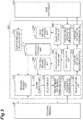
- the edge controller 100 includes a model storage unit 111, an environment information acquisition unit 112, a work instruction derivation unit 113, a work instruction storage unit 114, a reliability derivation unit 115, a work availability determination unit 116, a support request unit 117, a support information receiving unit 118, an operation command generation unit 121, and an operation command transmission unit 122 as a functional configuration (hereinafter referred to as "functional module").
- the model storage unit 111 stores a plurality of work models respectively corresponding to the plurality of robots 20.
- the work model outputs the work instruction information of the robot 20 corresponding to the environment information in response to the input of the environment information of the robot 20.
- the environment information indicates the state of the surrounding environment of the robot 20. Specific examples of the environment information include two-dimensional or three-dimensional image information.
- the work instruction information includes information necessary for specifying work contents such as a work object in the surrounding environment of the robot 20. When there are a plurality of objects that can be a work target in the surrounding environment of the robot 20, the work instruction information may include a plurality of numerical values indicating recommendation degrees of the plurality of objects as work objects.
- the work instruction information may be the operation command.
- the work model is constructed by machine learning.
- a specific example of the work model is a neural network in which the environment information is an input vector and the work instruction information is an output vector.
- the neural network includes an input layer, one or more intermediate layers, and an output layer.
- the input layer directly outputs the input vector to the next intermediate layer.
- the intermediate layer converts the input from the previous layer by the activation function and outputs the converted input to the next layer.
- the output layer converts an input from an intermediate layer farthest from the input layer by an activation function, and outputs the conversion result as an output vector.
- the work model may be anything as long as it outputs work instruction information according to at least the input of environment information, and is not necessarily limited to a neural network.
- the work model may be a function derived based on statistical analysis or the like.
- the work model may be configured to output work instruction information including the operation command.
- the work model may include an algorithm for generating the movement command of the tip portion 22 in which the collision between the robot 20 and the peripheral object does not occur by the random trial of the simulation.
- the environment information acquisition unit 112 acquires the environment information of the robot 20 from the robot controller 30.
- the work instruction derivation unit 113 derives work instruction information for the robot 20 based on the environment information of the robot 20 acquired by the environment information acquisition unit 112 and the work model stored in the model storage unit 111. For example, the work instruction derivation unit 113 inputs the environment information of the robot 20 to the work model, and obtains the work instruction information output by the work model according to the environment information.
- the work instruction storage unit 114 stores the work instruction information derived by the work instruction derivation unit 113.
- the reliability derivation unit 115 derives the reliability of the work instruction information. For example, the reliability derivation unit 115 derives the reliability based on a difference in recommendation degree between an object having the highest recommendation degree as the work object (hereinafter referred to as a "favorite object") and another object. Specifically, the reliability derivation unit 115 increases the reliability as the difference in recommendation degree between the favorite object and the other object increases (i.e., as the recommendation degree of the favorite object becomes relatively high).
- the reliability derivation unit 115 may derive the reliability based on the operation of the robot 20 according to the operation command. For example, the reliability derivation unit 115 may derive the reliability based on the simulation of the operation of the robot 20 according to the operation command. For example, the reliability derivation unit 115 may reduce the reliability as the distance between the robot 20 and the peripheral object decreases at the time when the robot 20 in operation and the peripheral object come closest to each other.
- the work availability determination unit 116 determines the work availability of the robot 20 based on the work instruction information based on the environment information of the robot 20 acquired by the environment information acquisition unit 112 and the work model stored in the model storage unit 111. For example, the work availability determination unit 116 determines that the work of the robot 20 based on the work instruction information is available (or permits the work) when the reliability derived by the reliability derivation unit 115 exceeds a predetermined threshold value, and determines that the work of the robot 20 is unavailable (or prohibits the work) based on the work instruction information when the reliability falls below the threshold value.
- the support request unit 117 requests the collaboration controller 200 to transmit support information when the work availability determination unit 116 determines that the work of the robot 20 is unavailable based on the work instruction information.
- the support request unit 117 transmits the environment information of the robot 20 to the collaboration controller 200 in response to the request to transmit the support information.
- the support request unit 117 may further transmit difficulty level of providing the support information to the collaboration controller 200 when requesting to transmit the support information.
- the support request unit 117 may calculate the difficulty level based on the reliability. For example, the support request unit 117 may increase the difficulty level as the reliability decreases.
- the support information receiving unit 118 receives the support information transmitted by the collaboration controller 200 in response to the request from the support request unit 117.
- support information includes information necessary for specifying work content.
- the support information may include the operation command.
- the operation command generation unit 121 generates the operation command based on the work instruction information or the support information. For example, the operation command generation unit 121 generates the movement command of the tip portion 22 and the operation command of the tool corresponding to the movement of the tip portion 22 so as to execute the work content specified by the work instruction information or the support information. When the work instruction information and the support information include the operation command, the operation command generation unit 121 selects the operation command based on the work instruction information or the operation command based on the support information based on the determination result by the work availability determination unit 116. The operation command transmission unit 122 transmits the operation command generated by the operation command generation unit 121 to the robot controller 30.
- the edge controller 100 may be configured to: accumulate environment information of the robot 20 and a work result of the robot 20 as learning data; and update the work model in the model storage unit 111 by machine learning based on the accumulated learning data. Further, the edge controller 100 may be configured to reflect the update content of the work model in the work model of another robot 20 when the work model of any robot 20 is updated. For example, the edge controller 100 further includes, as functional modules, a performance information acquisition unit 123, a learning data accumulation unit 124, a model update unit 125, an update content reflecting unit 126, and a performance information transmission unit 127.
- the performance information acquisition unit 123 acquires work performance information on the work result of the robot 20.
- the work result information includes work instruction information or support information and success/failure information indicating success/failure of work by the robot 20 operated according to the work instruction information or the support information.
- the success/failure information include information indicating the presence or absence of an alarm in the robot controller 30.
- the work result information may further include efficiency information indicating efficiency of work by the robot 20 operated according to the work instruction information or the support information.
- efficiency information include the work time of the robot 20 measured by the robot controller 30.
- the performance information acquisition unit 123 acquires work instruction information or support information from the operation command generation unit 121, and acquires success/failure information and efficiency information from the robot controller 30.
- the learning data accumulation unit 124 accumulates the environment information of the robot 20 and the work result information of the robot 20 corresponding to the environment information as learning data. For example, the learning data accumulation unit 124 acquires the environment information of the robot 20 from the environment information acquisition unit 112, and acquires and accumulates the work result information of the robot 20 corresponding to the environment information from the performance information acquisition unit 123.
- the learning data accumulation unit 124 may accumulate learning data for each robot 20. In other words, the learning data accumulation unit 124 may accumulate a plurality of learning data sets (sets of learning data) respectively corresponding to the plurality of robots 20.
- the model update unit 125 updates the work model of the model storage unit 111 by machine learning (for example, deep learning) based on the learning data accumulated by the learning data accumulation unit 124.
- the model update unit 125 updates a parameter of the work model (for example, weight of the activation function) based on the learning data so as to increase the suitability of the work instruction information output by the work model in accordance with the input of the environment information. More specifically, the model update unit 125 repeatedly applies the environment information of the robot 20 and the work record of the robot 20 corresponding to the environment information to the work model to update the parameters of the work model.
- the update content reflecting unit 126 reflects the update content of the work model in the work model of any other robot 20.
- the update content reflecting unit 126 overwrites the work model of another robot 20 that performs the same type of work as the robot 20 with the updated work model.
- the performance information transmission unit 127 transmits the work result information acquired by the performance information acquisition unit 123 to the collaboration controller 200. The work result information transmitted by the performance information transmission unit 127 is used to evaluate the operator as described later.
- the collaboration controller 200 includes, as functional modules, an operator storage unit 211, a support request acquisition unit 212, a teaching request unit 213, a selection unit 214, an environment information transmission unit 215, a support information receiving unit 216, and a support information transmission unit 217.
- the operator storage unit 211 stores information of multiple operators.
- the operator information includes, for example, operator identification information and operator access information.
- the access information is information indicating an information transmit destination to the operator, such as an electronic mail address.
- the information of the operator may include information of a work type that can be taught by the operator.
- the work type that can be taught by the operator means a work type that enables the operator to determine in which procedure the robot 20 should perform work.
- the work type that can be taught by the operator is determined according to expert knowledge or skill of the operator. For example, according to an operator who has expertise or skill in cutting but no expertise or skill in welding, while the teaching of cutting is possible, the teaching of welding is impossible.
- the support request acquisition unit 212 acquires the transmit request of the support information from the edge controller 100 (support request unit 117).
- the transmit request of the support information includes the environment information of the robot 20.
- the transmit request of the support information may further include a difficulty level of providing the support information.
- the teaching request unit 213 requests the multiple operators stored in the operator storage unit 211 to transmit the support information via the communication network 50.
- the case where the support information is necessary means a case where the robot 20 cannot continue the work without the support information.
- Specific examples of the case where the support information is necessary include a case where the edge controller 100 determines that work of the robot 20 based on the work instruction information is unavailable.
- the teaching request unit 213 delivers a message requesting the transmission of the support information to the teaching terminal 40 of the multiple operators.
- the selection unit 214 selects one of the multiple operators stored in the model storage unit 111 as the transmitter of the support information.
- the selection unit 214 may select one of the multiple operators based on the information of the work type that can be taught by each of the multiple operators and the work type of the robot 20. For example, the selection unit 214 may select an operator capable of teaching the work type of the robot 20 from the multiple operators.
- the selection unit 214 may select any of the multiple operators based on the response speed to the request from the tearing request unit 213. For example, the selection unit 214 may preferentially select an operator whose response to a request from the teaching request unit 213 is fast.
- the selection unit 214 may select any of multiple operators by a combination of a plurality of select criteria (for example, a select criterion based on the work type and a select criterion based on the response speed).
- the environment information transmission unit 215 transmits the environment information of the robot 20 to the operator selected by the selection unit 214 (hereinafter referred to as "selected operator") via the communication network 50.
- the environment information transmission unit 215 transmits the environment information received from the edge controller 100 (the support request unit 117) to the terminal 40 of the selected operator.
- the teaching terminal 40 of the selected operator displays environment information of the robot 20, and transmits support information input by the selected operator based on the environment information to the collaboration controller 200.
- the support information receiving unit 216 receives support information from the selected operator via the communication network 50. For example, the support information receiving unit 216 receives the support information transmitted by the terminal 40 of the selected operator.
- the support information transmission unit 217 transmits the support information received by the support information receiving unit 216 to the edge controller 100.
- the support information transmitted by the support information transmission unit 217 is received by the above-described support information receiving unit 118.
- the collaboration controller 200 may be configured to: derive a suitability of the support information based on existing data before a work of the robot 20 based on the support information; and determine an adoptability of the support information based on the suitability.
- the collaboration controller 200 further includes a pre-evaluation unit 221 and a support availability determination unit 222 as functional modules.
- the pre-evaluation unit 221 evaluates the suitability of the support information (hereinafter referred to as "pre-suitability") based on the existing data before the work of the robot 20 based on the support information.
- the existing information include the support information itself, which is a target for deriving the pre-suitability, and a transmission result (for example, post-suitability described later) of the support information in the past by the selected operator receiver.
- the pre-evaluation unit 221 derives the pre-suitability based on whether or not the work object indicated by the support information is an appropriate object as a work target. For example, when an object that is fixed to a space and is obviously unconveyable is set to be a work object to be conveyed, the pre-evaluation unit 221 lowers the pre-suitability.
- the support availability determination unit 222 determines the adoptability of the support information based on the pre-suitability of the support information derived by the pre-evaluation unit 221. For example, the support availability determination unit 222 determines that the support information can be adopted when the pre-suitability of the support information exceeds a predetermined adoption threshold, and determines that the support information cannot be adopted when the pre-suitability of the support information is below the adoption threshold. When the support availability determination unit 222 determines that support information cannot be adopted, the support information transmission unit 217 is prohibited from transmitting the support information.
- the collaboration controller 200 may be configured to: derive a suitability of the support information based on a work result of the robot 20 after the work of the robot 20 based on the support information; derive a score of the operator who provides the support information based on the suitability, and select one of the multiple operators based on the score.
- the collaboration controller 200 further includes a performance information receiving unit 231, a post-evaluation unit 232, and a score derivation unit 233 as functional modules.
- the performance information receiving unit 231 receives work result information indicating the work result of the robot 20 based on the support information from the performance information transmission unit 127.
- the post-evaluation unit 232 evaluates the suitability of the support information (hereinafter referred to as "post-suitability") based on the work result information received by the performance information receiving unit 231. For example, when the success/failure information indicates success of the work by the robot 20, the post-evaluation unit 232 increases the post-suitability compared to when the success/failure information indicates failure of the work by the robot 20.
- the post-evaluation unit 232 increases the post-suitability as the work efficiency indicated by the efficiency information increases.
- the score derivation unit 233 derives the operator's score of the support information based on the post-suitability derived by the post-evaluation unit 232. For example, the score derivation unit 233 increases the score of the operator as the post-suitability increases.
- the selection unit 214 may select one of the multiple operators based on the score derived by the score derivation unit 233. For example, the selection unit 214 may preferentially select an operator having a high score derived by the score derivation unit 233. In this case, the selection unit 214 may select one of the multiple operators based on a combination of the select criterion based on the score height and another select criterion (for example, the select criterion based on the work type and the select criterion based on the response speed).
- the collaboration controller 200 may be further configured to: store a teaching record value and an operator in association with each other, the teaching record value being a calculation reference of a reward amount for the support information; and update the teaching record value of the operator of the support information according to the work every time the work of the robot 20 based on the support information is executed.
- the collaboration controller 200 may be further configured to: store a usage record value and the robot 20 in association with each other, the usage record value serving as a calculation reference of a billing amount corresponding to utilization of the support information; and update the usage record value of the robot 20 according to the work every time the work of the robot 20 based on the support information is executed.
- the collaboration controller 200 further includes, as functional modules, a teaching record storage unit 241, a teaching record update unit 242, a usage record storage unit 243, and a usage record update unit 244.
- the teaching record storage unit 241 stores the teaching record value and the operator in association with each other.
- the teaching record value is a value indicating the transmit record of the support information used to cause the robot 20 to continue work.
- the teaching record value may include the evaluation result of the post-suitability by the post-evaluation unit 232 or may include the accumulated value of the post-suitability.
- the score derivation unit 233 may refer to the teaching record storage unit 241 and derive the score of the operator based on the teaching record value.
- the score derivation unit 233 may use the teaching record value itself as the score of the operator or may calculate the score of the operator by performing a predetermined operation on the teaching record value.
- the teaching record update unit 242 updates the teaching record value of the operator of the support information according to the work. For example, each time the post-evaluation unit 232 derives the post-suitability of the support information, the teaching record update unit 242 adds a value correlated with the post-suitability (hereinafter, referred to as an "addition value") to the teaching record value of the operator of the support information. For this reason, every time the work of the robot 20 based on the support information is executed, the teaching record value of the operator of the support information increases, and the higher the post-suitability is, the larger the increment is.
- the teaching record update unit 242 may change the added value to the teaching record value of the operator of the support information based on the difficulty level of providing the support information. For example, the teaching record update unit 242 may increase the additional value as the difficulty level of providing support information increases.
- the usage record storage unit 243 stores the usage record value and the robot 20 in association with each other.
- the usage record value may include the evaluation result of the suitability by the post-evaluation unit 232.
- the usage record update unit 244 updates the usage record value of the robot 20 according to the work. For example, every time the post-evaluation unit 232 derives the post-suitability of the support information, the usage record update unit 244 adds a value correlated with the post-suitability (hereinafter referred to as an "addition value") to the usage record value of the robot 20 that has utilized the support information.
- the usage record update unit 244 may change the value added to the usage record value of the robot 20 that has utilized the support information, based on the difficulty level of providing the support information. For example, the usage record update unit 244 may increase the additional value as the difficulty level of providing support information increases.
- FIG. 4 is a block diagram illustrating a hardware configuration of the edge controller 100 and the collaboration controller 200.
- the edge controller 100 includes circuitry 190.
- the circuitry 190 includes at least one processor 191, a memory 192, a storage 193, and a communication port 194.
- the storage 193 is a storage medium such as at least one hard disk or a nonvolatile memory.
- the storage 193 stores a program for causing the edge controller 100 to: store a work model for outputting work instruction information of the robot 20 corresponding to environment information of the robot 20 in response to input of the environment information; derive work instruction information to the robot 20 based on the environment information and the work model of the robot 20; determine availability of the work of the robot 20 based on the work instruction information based on the environment information and the work model of the robot 20, and request support information when it is determined that the work of the robot 20 based on the work instruction information is unavailable.
- the storage 193 stores a program for configuring the functional modules of the edge controller 100 described above.
- the memory 192 temporarily stores a program loaded from the storage 193, an operation result by the processor 191, and the like.
- the processor 191 executes the program in cooperation with the memory 192 to configure each functional module of the edge controller 100.
- the communication port 194 performs network communication with the robot controller 30 and the collaboration controller 200 in response to a command from the processor 191.
- the collaboration controller 200 includes circuitry 290.
- the circuitry 290 includes at least one processor 291, a memory 292, a storage 293, and a communication port 294.
- the storage 293 is a storage medium such as at least one hard disk or a nonvolatile memory.
- the storage 293 stores a program that causes the collaboration controller 200 to execute storing information of multiple operators, selecting any of the multiple operators in response to a request for support information from the edge controller 100, transmitting environment information of the robot 20 to the teaching terminal 40 of the selected operator via the communication network 50, receiving support information based on the environment information from the teaching terminal 40 of the selected operator via the communication network 50, and transmitting the received support information to the edge controller 100.
- the storage 293 stores a program for configuring the functional modules of the collaboration controller 200 described above.
- the memory 292 temporarily stores a program loaded from the storage 293, an operation result by the processor 291, and the like.
- the processor 291 executes the program in cooperation with the memory 292 to configure each functional module of the collaboration controller 200.
- the communication port 294 performs network communication between the teaching terminal 40 and the edge controller 100 in response to a command from the processor 291.
- the storage 293 is not necessarily built in the collaboration controller 200.
- the storage 293 may be an external storage (for example, a cloud) connected to the communication port 294 via the communication network 50.
- This control procedure includes an output procedure of an operation command executed by the edge controller 100, an update procedure of a work model executed by the edge controller 100, and a receive procedure of support information executed by the collaboration controller 200.
- This procedure will be described in detail.
- the operation command output procedure includes: deriving work instruction information to the robot 20 based on the environment information of the robot 20 and the work model; determining availability of work of the robot 20 based on the work instruction information based on the environment information of the robot 20 and the work model; generating an operation command based on the work instruction information and outputting the operation command to the robot controller 30; and, when it is determined that work of the robot 20 based on the work instruction information is unavailable, requesting the support information and generating an operation command based on the support information and output the operation command to the robot controller 30.
- FIG. 5 is a flowchart illustrating an output procedure of an operation command executed by the edge controller 100 for one robot 20.
- the edge controller 100 first executes steps S01 and S02.
- the environment information acquisition unit 112 acquires the environment information of the robot 20 from the robot controller 30.
- the work instruction derivation unit 113 derives work instruction information for the robot 20 based on the environment information of the robot 20 acquired by the environment information acquisition unit 112 and the work model stored in the model storage unit 111.
- the work instruction derivation unit 113 inputs the environment information of the robot 20 to the work model, obtains the work instruction information output by the work model according to the environment information, and writes the work instruction information to the work instruction storage unit 114.
- step S03 the reliability derivation unit 115 derives the reliability of the work instruction information.
- step S04 the work availability determination unit 116 determines the work availability of the robot 20 based on the work instruction information based on the environment information of the robot 20 acquired by the environment information acquisition unit 112 and the work model stored in the model storage unit 111. For example, the work availability determination unit 116 determines that the work of the robot 20 based on the work instruction information is available when the reliability derived by the reliability derivation unit 115 exceeds a predetermined threshold, and determines that the work of the robot 20 based on the work instruction information is unavailable when the reliability falls below the threshold.
- step S05 the operation command generation unit 121 generates an operation command of the robot 20 based on the work instruction information. For example, the operation command generation unit 121 generates the movement command of the tip portion 22 and the operation command of the tool corresponding to the movement of the tip portion 22 so as to execute the work content specified by the work instruction information.
- step S06 the support request unit 117 requests the collaboration controller 200 to transmit support information.
- the support request unit 117 transmits environment information of the robot 20 to be referred to by the operator to the collaboration controller 200.
- step S07 the support information receiving unit 118 receives the support information transmitted by the collaboration controller 200 in response to the request from the support request unit 117.
- step S08 the operation command generation unit 121 generates an operation command of the robot 20 based on the support information. For example, the operation command generation unit 121 generates the movement command of the tip portion 22 and the operation command of the tool corresponding to the movement of the tip portion 22 so as to execute the work content specified by the support information.
- step S09 the operation command transmission unit 122 outputs the operation command generated by the operation command generation unit 121 to the robot controller 30.
- the robot controller 30 controls the robot 20 according to the operation command output from the operation command transmission unit 122.
- work based on work instruction information or support information is executed by the robot 20. This completes the output procedure of the operation command.
- the edge controller 100 repeats the above procedure for each of the plurality of robots 20.
- the update procedure of the work model includes: accumulating the environment information of the robot 20 and the work result of the robot 20 as learning data; updating the work model of the model storage unit 111 by machine learning based on the accumulated learning data; and reflecting the update content of the work model of the robot 20 in the work models of the other robots 20.
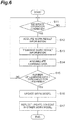
- FIG. 6 is a flowchart illustrating an update procedure executed by the edge controller 100 for the work model of one robot 20.
- the edge controller 100 first executes steps S11, S12, and S13.
- step S11 the performance information acquisition unit 123 waits for the operation command generation unit 121 to generate the operation command.
- step S12 the performance information acquisition unit 123 acquires work result information on the work result of the robot 20 according to the operation command.
- the performance information acquisition unit 123 acquires work instruction information or support information from the operation command generation unit 121, and acquires success/failure information, efficiency information, and the like from the robot controller 30.
- the performance information transmission unit 127 transmits the work result information acquired by the performance information acquisition unit 123 to the collaboration controller 200.
- the edge controller 100 executes steps S14 and S15.
- the learning data accumulation unit 124 accumulates the environment information of the robot 20, the work result information of the robot 20 corresponding to the environment information, and the learning data.
- the learning data accumulation unit 124 acquires the environment information of the robot 20 from the environment information acquisition unit 112, acquires the work result information of the robot 20 corresponding to the environment information from the performance information acquisition unit 123, and accumulates them as the learning data.
- the model update unit 125 checks whether the number of pieces of data accumulated by the learning data accumulation unit 124 (the number of pieces of environment information and work result information of the robot 20) exceeds a predetermined threshold for learning.
- the number of pieces of data is the number of data accumulated after the latest work model (work model stored in the model storage unit 111) is obtained.
- step S15 If it is determined in step S15 that the number of pieces of data does not exceed the predetermined threshold for learning, the edge controller 100 returns the process to step S11. If it is determined in step S15 that the number of data exceeds the predetermined threshold for learning, the edge controller 100 executes steps S16 and S17.
- step S16 the model update unit 125 updates the work model of the model storage unit 111 by machine learning based on the learning data accumulated by the learning data accumulation unit 124.
- step S17 the update content reflecting unit 126 reflects the update content of the work model of the robot 20 in step S16 in the work model of any other robot 20.
- the edge controller 100 repeats the above procedure for each work model of the plurality of robots 20.
- the receive procedure of support information includes: selecting any of multiple operators in response to a request of support information from the edge controller 100; transmitting environment information of the robot 20 to the teaching terminal 40 of the selected operator via the communication network 50; receiving support information based on the environment information from the teaching terminal 40 of the selected operator via the communication network 50; and transmitting the received support information to the edge controller 100.
- the collaboration controller 200 executes steps S21, S22, S23, and S24.
- step S21 the support request acquisition unit 212 acquires the transmit request of the support information from the support request unit 117.
- step S22 the teaching request unit 213 extracts an operator capable of teaching the work type of the robot 20 targeted by the support information from the multiple operators stored in the operator storage unit 211.
- the operator extracted by the teaching request unit 213 is referred to as a "candidate operator”.
- the teaching request unit 213 requests the candidate operator extracted in step S22 to transmit support information via the communication network 50.
- step S24 the score derivation unit 233 waits for a response from the candidate operator. The score derivation unit 233 may wait for responses from multiple candidate operators.
- step S25 the score derivation unit 233 derives the score of the candidate operator in response to the teaching request based on the post-suitability previously derived by the post-evaluation unit 232.
- the score derivation unit 233 refers to the teaching record storage unit 241 and derives the score of the candidate operator based on the teaching record value.
- step S26 the selection unit 214 selects one of the candidate operators as a transmitter of support information.
- the selection unit 214 may select one of the multiple operators based on the score derived by the score derivation unit 233.
- the selection unit 214 may select any of the multiple operators based on a combination of the select criterion based on the score height and another select criterion (for example, the select criterion based on the work type and the select criterion based on the response speed).
- the environment information transmission unit 215 transmits the environment information of the robot 20 to the operator selected by the selected operator unit 214 via the communication network 50.
- the support information receiving unit 216 receives support information from the selected operator via the communication network 50.
- step S31 the pre-evaluation unit 221 derives the pre-suitability of the support information based on the existing data.
- step S32 the support availability determination unit 222 determines the adoptability of the support information based on the pre-suitability derived by the pre-evaluation unit 221. For example, the support availability determination unit 222 determines whether the pre-suitability exceeds a predetermined adoption threshold.
- step S32 If it is determined in step S32 that support information cannot be adopted, the collaboration controller 200 returns the process to step S24. Thereafter, the acquisition of the support information and the determination of the adoptability based on the pre-suitability are repeated until the support availability determination unit 222 determines that the support information is adoptable.
- step S33 the support information transmission unit 217 transmits the support information determined to be adoptable to the edge controller 100.
- step S34 the performance information receiving unit 231 receives work result information indicating the work result of the robot 20 based on the support information from the performance information transmission unit 127.
- step S35 the post-evaluation unit 232 derives the post-suitability of the support information based on the work result information received by the performance information receiving unit 231.
- step S36 the teaching record update unit 242 adds the value correlated with the post-suitability of the support information to the teaching record value of the operator of the support information, and the usage record update unit 244 adds the value correlated with the post-suitability of the support information to the usage record value of the robot 20 that utilized the support information. This completes the receive procedure of the support information.
- the collaboration controller 200 repeats the above procedure.
- the robot control system 1 includes: the operator storage unit 211 configured to store information of multiple operators; the selection unit 214 configured to select one of the multiple operators stored in the operator storage unit 211 in response to determining that support information is necessary for the robot 20 to continue work; the environment information transmission unit 215 configured to transmit environment information of the robot 20 to an operator selected by the selection unit 214 via the communication network 50; and the support information receiving unit 216 configured to receive the support information from the operator selected by the selection unit 214 via the communication network 50.
- the robot control system 1 it is possible to receive the provision of support information from multiple operators via the communication network 50. Therefore, even if there is no operator waiting at all times, it is possible to acquire the support information at an early stage and continue the work of the robot 20. In addition, since each operator does not always wait near the robot 20, it is possible to perform his own work. This is effective for efficient cooperation between the robot 20 and a person.
- the robot control system 1 may further include: the pre-evaluation unit 221 configured to derive a suitability of the support information based on existing data before a work of the robot 20 based on the support information; and the support availability determination unit 222 configured to determine an adoptability of the support information based on the suitability of the support information derived by the pre-evaluation unit.
- the pre-evaluation unit 221 configured to derive a suitability of the support information based on existing data before a work of the robot 20 based on the support information
- the support availability determination unit 222 configured to determine an adoptability of the support information based on the suitability of the support information derived by the pre-evaluation unit.
- the robot control system 1 may further include: the post-evaluation unit 232 configured to derive a suitability of the support information based on a work result of the robot 20 after the work of the robot 20 based on the support information; and the score derivation unit 233 configured to derive, based on the suitability of the support information derived by the post-evaluation unit 232, a score of the operator who provides the support information, and the selection unit 214 may be further configured to select one of the multiple operators based on the score derived by the score derivation unit 233. In this case, it is possible to improve the reliability of the work of the robot 20 based on the support information by giving priority to the operator who tends to provide the support information with a high degree of suitability while receiving the support information widely from the multiple operators.
- the information of the multiple operators stored in the operator storage unit 211 may include information of a work type that can be taught by each of the multiple operators, and the selection unit 214 may be further configured to select one of the multiple operators based on the information of a work type that can be taught by each of the multiple operators and a work type of the work of the robot 20. In this case, it is possible to further improve the reliability of the work of the robot 20 based on the support information by giving priority to the operator suitable for the work type targeted by the support information while widely receiving the support information from the multiple operators.
- the robot control system 1 may further include the teaching request unit 213 configured to request, in response to determining that the support information is necessary, the multiple operators stored in the operator storage unit 211 to transmit the support information via the communication network 50, and the selection unit 214 may be further configured to select one of the multiple operators based on a response speed to a request from the teaching request unit 213. In this case, by giving priority to an operator who responds quickly, the operator can be prompted to provide support information more quickly. Therefore, the work efficiency of the robot 20 can be further improved.
- the robot control system 1 may further include: the teaching record storage unit 241 configured to store a teaching record value and an operator in association with each other, the teaching record value being a calculation reference of a reward amount for the support information; and a teaching record update unit 242 configured to update the teaching record value of the operator of the support information according to the work every time the work of the robot 20 based on the support information is executed.
- the operator can be prompted to provide more aggressive support information by correlating the teaching record with the reward amount. Therefore, the work efficiency of the robot 20 can be further improved.
- the robot control system 1 may further include: the usage record storage unit 243 configured to store a usage record value and the robot 20 in association with each other, the usage record value serving as a calculation reference of a billing amount corresponding to utilization of the support information; and the usage record update unit 244 configured to update the usage record value of the robot 20 according to the work every time the work of the robot 20 based on the support information is executed. In this case, it is possible to promote the effective use of the support information by reasonable billing according to the utilization result.
- the robot control system 1 may further include: the model storage unit 111 configured to store a work model configured to output work instruction information of the robot 20 corresponding to environment information of the robot 20 in response to input of the environment information of the robot 20; the work instruction derivation unit 113 configured to derive work instruction information for the robot 20 based on the environment information of the robot 20 and the work model stored in the model storage unit 111; the work availability determination unit 116 configured to determine work availability of the work of the robot 20 based on the work instruction information, based on environment information of the robot 20 and the work model stored in the model storage unit 111; and the support request unit 117 configured to request the support information in response to determining that the work availability determination unit 116 determines that the work of the robot 20 based on the work instruction information is unavailable.
- the autonomous operation of the robot 20 is utilized to reduce the situation where the support information becomes necessary, thereby further reducing the burden on the operator.
- the robot control system 1 may include: the learning data accumulation unit 124 configured to accumulate environment information of the robot 20 and a work result of the robot 20 as learning data; and the model update unit 125 configured to update the work model by machine learning based on the learning data accumulated by the learning data accumulation unit 124. In this case, it is possible to gradually reduce the burden on the operator by improving the autonomy of the robot 20 through machine learning.
- the robot control system 1 may further include: the learning data accumulation unit 124 configured to accumulate environment information of the robot 20 and a work result of the robot 20 as learning data; and the model update unit 125 configured to update the work model by machine learning based on the learning data accumulated by the learning data accumulation unit 124.
- the autonomy of each robot 20 can be quickly improved by sharing the latest work model.
Landscapes
- Engineering & Computer Science (AREA)
- Robotics (AREA)
- Mechanical Engineering (AREA)
- Manipulator (AREA)
Abstract
Description
- The present disclosure relates to a robot control system and a robot control method.
- Patent Document 1 discloses a robot guidance process including a first step of stopping a robot in the middle of a play back operation based on a work program registered in advance, a second step of permitting a direct operation of the robot, a third step of guiding the robot by the direct operation, a fourth step of prohibiting the direct operation of the robot, and a fifth step of continuing the play back operation based on the work program.
- [Patent Document 1]
Japanese Unexamined Patent Application Publication No. 2006-82185 - The present disclosure provides a system effective for efficient cooperation between a robot and a person.
- A robot control system according to one aspect of the present disclosure includes: an operator storage unit configured to store information of multiple operators; a selection unit configured to one of the multiple operators stored in an operator storage unit in response to determining that support information is necessary for a robot to continue work; an environment information transmission unit configured to transmit environment information of the robot to an operator selected by the selection unit via a communication network; and a support information receiving unit configured to receive the support information from the operator selected by the selection unit via the communication network.
- A robot control method according to another aspect of the present disclosure includes: storing information of multiple operators; selecting one of the multiple operators in response to determining that support information is necessary for a robot to continue work; transmitting environment information of the robot to a selected operator via a communication network; and receiving the support information from the selected operator via the communication network.
- According to the present disclosure, a system effective for efficient cooperation between a robot and a person can be provided.
-
-
FIG. 1 is a schematic diagram illustrating an overall configuration of a robot control system. -
FIG. 2 is a block diagram illustrating a functional configuration of an edge controller. -
FIG. 3 is a block diagram illustrating a functional configuration of a collaboration controller. -
FIG. 4 is a block diagram illustrating a hardware configuration of the edge controller and the collaboration controller. -
FIG. 5 is a flowchart illustrating an output procedure of an operation command. -
FIG. 6 is a flowchart illustrating an update procedure of a work model. -
FIG. 7 is a flowchart illustrating a receive procedure of support information. - Hereinafter, embodiments will be described in detail with reference to the drawings. In the description, the same element or the element having the same function is denoted by the same reference numeral, and the overlapping description is omitted.
- A robot control system 1 illustrated in
FIG. 1 is a control system that enables cooperation between a robot and an operator via a communication network. The robot control system 1 is configured to execute: controlling the robot to execute a predetermined work; selecting one of multiple operators when support information is necessary to cause the robot to continue the work; transmitting environment information of the robot to the selected operator via a communication network; receiving support information from the selected operator via the communication network; and controlling the robot to continue the work based on the support information. The work executed by the robot is not particularly limited. Specific examples of the work executed by the robot include processing, assembly, and transport work. The work executed by the robot is not limited to work in the industrial field. For example, the work to be executed by the robot may be farm work such as sowing, harvesting, leaf scraping, and agrochemical spraying. - For example, the robot control system 1 is interposed between a plurality of
robot apparatuses 10 and a plurality ofteaching terminals 40. Therobot apparatus 10 includes arobot 20 and arobot controller 30. Therobot 20 is, for example, a vertical articulated robot, and includes abase 21, atip portion 22, and an articulatedarm 23. Thebase 21 is installed in the work area. Thebase 21 may be installed in a vehicle movable in the work area. Thetip portion 22 holds a tool for work. Specific examples of the tool include a gripping hand and various tools. The articulatedarm 23 changes the position and orientation of thetip portion 22 relative to thebase 21 using a plurality of actuators (e.g., electric actuators) as a power source. - The
robot controller 30 controls therobot 20 to operate according to the operation command. The operation command includes, for example, a movement command of thetip portion 22 and an operation command of the tool corresponding to the movement of thetip portion 22. The command to move thetip portion 22 is a command to change the position and orientation of thetip portion 22, and includes a plurality of target positions and orientations (target positions and orientations of the tip portion 22) arranged in time series. Theteaching terminal 40 is a terminal used by the operator and may be any terminal as long as reception and display of environment information and input and transmit of support information are possible. Specific examples of theteaching terminal 40 include a smartphone, a tablet computer, and a personal computer. - For example, the robot control system 1 includes an
edge controller 100 and acollaboration controller 200. Theedge controller 100 is connected to therobot controller 30 in a wired or wireless manner. Theedge controller 100 generates an operation command for causing therobot 20 to execute a predetermined work based on the environment information of therobot 20, and transmits the operation command to therobot controller 30. For example, theedge controller 100 is configured to: store a work model configured to output work instruction information of therobot 20 corresponding to environment information of the robot in response to input of the environment information of therobot 20; derive work instruction information for therobot 20 based on the environment information of therobot 20 and the work model; determine work availability of the work of therobot 20 based on the work instruction information based on environment information of therobot 20 and the work model; and request the support information in response to determining that the work of therobot 20 based on the work instruction information is unavailable. - When it is determined that the work of the
robot 20 based on the work instruction information is available, theedge controller 100 generates an operation command based on the work instruction information and outputs the operation command to therobot controller 30. When it is determined that the work of therobot 20 based on the work instruction information is not available, theedge controller 100 generates an operation command based on the support information and outputs the operation command to therobot controller 30. - The
collaboration controller 200 is connected to a plurality ofteaching terminals 40 via acommunication network 50. Thecollaboration controller 200 may be connected to theedge controller 100 via a wired or wireless dedicated line or may be connected to theedge controller 100 via thecommunication network 50. Thecommunication network 50 may be a local area network or a wide area network (for example, the Internet). - The
collaboration controller 200 is configured to: store information of multiple operators; select one of the multiple operators in response to receiving a request of support information from theedge controller 100; transmit environment information of therobot 20 to ateaching terminal 40 of the selected operator via thecommunication network 50; receive the support information based on the environment information from theteaching terminal 40 of the selected operator via thecommunication network 50; and transmit the support information to theedge controller 100. Hereinafter, specific configurations of theedge controller 100 and thecollaboration controller 200 will be described. - As shown in
FIG. 2 , theedge controller 100 includes amodel storage unit 111, an environmentinformation acquisition unit 112, a workinstruction derivation unit 113, a workinstruction storage unit 114, areliability derivation unit 115, a workavailability determination unit 116, asupport request unit 117, a supportinformation receiving unit 118, an operationcommand generation unit 121, and an operationcommand transmission unit 122 as a functional configuration (hereinafter referred to as "functional module"). - The
model storage unit 111 stores a plurality of work models respectively corresponding to the plurality ofrobots 20. As described above, the work model outputs the work instruction information of therobot 20 corresponding to the environment information in response to the input of the environment information of therobot 20. The environment information indicates the state of the surrounding environment of therobot 20. Specific examples of the environment information include two-dimensional or three-dimensional image information. The work instruction information includes information necessary for specifying work contents such as a work object in the surrounding environment of therobot 20. When there are a plurality of objects that can be a work target in the surrounding environment of therobot 20, the work instruction information may include a plurality of numerical values indicating recommendation degrees of the plurality of objects as work objects. The work instruction information may be the operation command. - The work model is constructed by machine learning. A specific example of the work model is a neural network in which the environment information is an input vector and the work instruction information is an output vector. The neural network includes an input layer, one or more intermediate layers, and an output layer. The input layer directly outputs the input vector to the next intermediate layer. The intermediate layer converts the input from the previous layer by the activation function and outputs the converted input to the next layer. The output layer converts an input from an intermediate layer farthest from the input layer by an activation function, and outputs the conversion result as an output vector. The work model may be anything as long as it outputs work instruction information according to at least the input of environment information, and is not necessarily limited to a neural network. For example, the work model may be a function derived based on statistical analysis or the like.
- The work model may be configured to output work instruction information including the operation command. In this case, the work model may include an algorithm for generating the movement command of the
tip portion 22 in which the collision between therobot 20 and the peripheral object does not occur by the random trial of the simulation. - The environment
information acquisition unit 112 acquires the environment information of therobot 20 from therobot controller 30. The workinstruction derivation unit 113 derives work instruction information for therobot 20 based on the environment information of therobot 20 acquired by the environmentinformation acquisition unit 112 and the work model stored in themodel storage unit 111. For example, the workinstruction derivation unit 113 inputs the environment information of therobot 20 to the work model, and obtains the work instruction information output by the work model according to the environment information. The workinstruction storage unit 114 stores the work instruction information derived by the workinstruction derivation unit 113. - The
reliability derivation unit 115 derives the reliability of the work instruction information. For example, thereliability derivation unit 115 derives the reliability based on a difference in recommendation degree between an object having the highest recommendation degree as the work object (hereinafter referred to as a "favorite object") and another object. Specifically, thereliability derivation unit 115 increases the reliability as the difference in recommendation degree between the favorite object and the other object increases (i.e., as the recommendation degree of the favorite object becomes relatively high). - When the work instruction information is the operation command, the
reliability derivation unit 115 may derive the reliability based on the operation of therobot 20 according to the operation command. For example, thereliability derivation unit 115 may derive the reliability based on the simulation of the operation of therobot 20 according to the operation command. For example, thereliability derivation unit 115 may reduce the reliability as the distance between therobot 20 and the peripheral object decreases at the time when therobot 20 in operation and the peripheral object come closest to each other. - The work
availability determination unit 116 determines the work availability of therobot 20 based on the work instruction information based on the environment information of therobot 20 acquired by the environmentinformation acquisition unit 112 and the work model stored in themodel storage unit 111. For example, the workavailability determination unit 116 determines that the work of therobot 20 based on the work instruction information is available (or permits the work) when the reliability derived by thereliability derivation unit 115 exceeds a predetermined threshold value, and determines that the work of therobot 20 is unavailable (or prohibits the work) based on the work instruction information when the reliability falls below the threshold value. - The
support request unit 117 requests thecollaboration controller 200 to transmit support information when the workavailability determination unit 116 determines that the work of therobot 20 is unavailable based on the work instruction information. Thesupport request unit 117 transmits the environment information of therobot 20 to thecollaboration controller 200 in response to the request to transmit the support information. Thesupport request unit 117 may further transmit difficulty level of providing the support information to thecollaboration controller 200 when requesting to transmit the support information. In this case, thesupport request unit 117 may calculate the difficulty level based on the reliability. For example, thesupport request unit 117 may increase the difficulty level as the reliability decreases. - The support
information receiving unit 118 receives the support information transmitted by thecollaboration controller 200 in response to the request from thesupport request unit 117. For example, like work instruction information, support information includes information necessary for specifying work content. The support information may include the operation command. - The operation
command generation unit 121 generates the operation command based on the work instruction information or the support information. For example, the operationcommand generation unit 121 generates the movement command of thetip portion 22 and the operation command of the tool corresponding to the movement of thetip portion 22 so as to execute the work content specified by the work instruction information or the support information. When the work instruction information and the support information include the operation command, the operationcommand generation unit 121 selects the operation command based on the work instruction information or the operation command based on the support information based on the determination result by the workavailability determination unit 116. The operationcommand transmission unit 122 transmits the operation command generated by the operationcommand generation unit 121 to therobot controller 30. - The
edge controller 100 may be configured to: accumulate environment information of therobot 20 and a work result of therobot 20 as learning data; and update the work model in themodel storage unit 111 by machine learning based on the accumulated learning data. Further, theedge controller 100 may be configured to reflect the update content of the work model in the work model of anotherrobot 20 when the work model of anyrobot 20 is updated. For example, theedge controller 100 further includes, as functional modules, a performanceinformation acquisition unit 123, a learningdata accumulation unit 124, amodel update unit 125, an updatecontent reflecting unit 126, and a performanceinformation transmission unit 127. - The performance
information acquisition unit 123 acquires work performance information on the work result of therobot 20. For example, the work result information includes work instruction information or support information and success/failure information indicating success/failure of work by therobot 20 operated according to the work instruction information or the support information. Specific examples of the success/failure information include information indicating the presence or absence of an alarm in therobot controller 30. - The work result information may further include efficiency information indicating efficiency of work by the
robot 20 operated according to the work instruction information or the support information. Specific examples of the efficiency information include the work time of therobot 20 measured by therobot controller 30. For example, the performanceinformation acquisition unit 123 acquires work instruction information or support information from the operationcommand generation unit 121, and acquires success/failure information and efficiency information from therobot controller 30. - The learning
data accumulation unit 124 accumulates the environment information of therobot 20 and the work result information of therobot 20 corresponding to the environment information as learning data. For example, the learningdata accumulation unit 124 acquires the environment information of therobot 20 from the environmentinformation acquisition unit 112, and acquires and accumulates the work result information of therobot 20 corresponding to the environment information from the performanceinformation acquisition unit 123. The learningdata accumulation unit 124 may accumulate learning data for eachrobot 20. In other words, the learningdata accumulation unit 124 may accumulate a plurality of learning data sets (sets of learning data) respectively corresponding to the plurality ofrobots 20. - The
model update unit 125 updates the work model of themodel storage unit 111 by machine learning (for example, deep learning) based on the learning data accumulated by the learningdata accumulation unit 124. For example, themodel update unit 125 updates a parameter of the work model (for example, weight of the activation function) based on the learning data so as to increase the suitability of the work instruction information output by the work model in accordance with the input of the environment information. More specifically, themodel update unit 125 repeatedly applies the environment information of therobot 20 and the work record of therobot 20 corresponding to the environment information to the work model to update the parameters of the work model. - When the
model update unit 125 updates the work model of anyrobot 20, the updatecontent reflecting unit 126 reflects the update content of the work model in the work model of anyother robot 20. For example, when themodel update unit 125 updates the work model of anyrobot 20, the updatecontent reflecting unit 126 overwrites the work model of anotherrobot 20 that performs the same type of work as therobot 20 with the updated work model. The performanceinformation transmission unit 127 transmits the work result information acquired by the performanceinformation acquisition unit 123 to thecollaboration controller 200. The work result information transmitted by the performanceinformation transmission unit 127 is used to evaluate the operator as described later. - As shown in
FIG. 3 , thecollaboration controller 200 includes, as functional modules, anoperator storage unit 211, a supportrequest acquisition unit 212, ateaching request unit 213, aselection unit 214, an environmentinformation transmission unit 215, a supportinformation receiving unit 216, and a supportinformation transmission unit 217. - The
operator storage unit 211 stores information of multiple operators. The operator information includes, for example, operator identification information and operator access information. The access information is information indicating an information transmit destination to the operator, such as an electronic mail address. The information of the operator may include information of a work type that can be taught by the operator. The work type that can be taught by the operator means a work type that enables the operator to determine in which procedure therobot 20 should perform work. The work type that can be taught by the operator is determined according to expert knowledge or skill of the operator. For example, according to an operator who has expertise or skill in cutting but no expertise or skill in welding, while the teaching of cutting is possible, the teaching of welding is impossible. - The support
request acquisition unit 212 acquires the transmit request of the support information from the edge controller 100 (support request unit 117). As described above, the transmit request of the support information includes the environment information of therobot 20. The transmit request of the support information may further include a difficulty level of providing the support information. When the support information is necessary, theteaching request unit 213 requests the multiple operators stored in theoperator storage unit 211 to transmit the support information via thecommunication network 50. The case where the support information is necessary means a case where therobot 20 cannot continue the work without the support information. Specific examples of the case where the support information is necessary include a case where theedge controller 100 determines that work of therobot 20 based on the work instruction information is unavailable. For example, when the supportrequest acquisition unit 212 acquires the transmit request of the support information, theteaching request unit 213 delivers a message requesting the transmission of the support information to theteaching terminal 40 of the multiple operators. - The
selection unit 214 selects one of the multiple operators stored in themodel storage unit 111 as the transmitter of the support information. Theselection unit 214 may select one of the multiple operators based on the information of the work type that can be taught by each of the multiple operators and the work type of therobot 20. For example, theselection unit 214 may select an operator capable of teaching the work type of therobot 20 from the multiple operators. Theselection unit 214 may select any of the multiple operators based on the response speed to the request from the tearingrequest unit 213. For example, theselection unit 214 may preferentially select an operator whose response to a request from theteaching request unit 213 is fast. In addition, theselection unit 214 may select any of multiple operators by a combination of a plurality of select criteria (for example, a select criterion based on the work type and a select criterion based on the response speed). - The environment
information transmission unit 215 transmits the environment information of therobot 20 to the operator selected by the selection unit 214 (hereinafter referred to as "selected operator") via thecommunication network 50. For example, the environmentinformation transmission unit 215 transmits the environment information received from the edge controller 100 (the support request unit 117) to theterminal 40 of the selected operator. Theteaching terminal 40 of the selected operator displays environment information of therobot 20, and transmits support information input by the selected operator based on the environment information to thecollaboration controller 200. - The support
information receiving unit 216 receives support information from the selected operator via thecommunication network 50. For example, the supportinformation receiving unit 216 receives the support information transmitted by theterminal 40 of the selected operator. The supportinformation transmission unit 217 transmits the support information received by the supportinformation receiving unit 216 to theedge controller 100. The support information transmitted by the supportinformation transmission unit 217 is received by the above-described supportinformation receiving unit 118. - The
collaboration controller 200 may be configured to: derive a suitability of the support information based on existing data before a work of therobot 20 based on the support information; and determine an adoptability of the support information based on the suitability. For example, thecollaboration controller 200 further includes apre-evaluation unit 221 and a supportavailability determination unit 222 as functional modules. - The
pre-evaluation unit 221 evaluates the suitability of the support information (hereinafter referred to as "pre-suitability") based on the existing data before the work of therobot 20 based on the support information. Specific examples of the existing information include the support information itself, which is a target for deriving the pre-suitability, and a transmission result (for example, post-suitability described later) of the support information in the past by the selected operator receiver. For example, thepre-evaluation unit 221 derives the pre-suitability based on whether or not the work object indicated by the support information is an appropriate object as a work target. For example, when an object that is fixed to a space and is obviously unconveyable is set to be a work object to be conveyed, thepre-evaluation unit 221 lowers the pre-suitability. - The support
availability determination unit 222 determines the adoptability of the support information based on the pre-suitability of the support information derived by thepre-evaluation unit 221. For example, the supportavailability determination unit 222 determines that the support information can be adopted when the pre-suitability of the support information exceeds a predetermined adoption threshold, and determines that the support information cannot be adopted when the pre-suitability of the support information is below the adoption threshold. When the supportavailability determination unit 222 determines that support information cannot be adopted, the supportinformation transmission unit 217 is prohibited from transmitting the support information. - The
collaboration controller 200 may be configured to: derive a suitability of the support information based on a work result of therobot 20 after the work of therobot 20 based on the support information; derive a score of the operator who provides the support information based on the suitability, and select one of the multiple operators based on the score. For example, thecollaboration controller 200 further includes a performanceinformation receiving unit 231, apost-evaluation unit 232, and ascore derivation unit 233 as functional modules. - The performance
information receiving unit 231 receives work result information indicating the work result of therobot 20 based on the support information from the performanceinformation transmission unit 127. Thepost-evaluation unit 232 evaluates the suitability of the support information (hereinafter referred to as "post-suitability") based on the work result information received by the performanceinformation receiving unit 231. For example, when the success/failure information indicates success of the work by therobot 20, thepost-evaluation unit 232 increases the post-suitability compared to when the success/failure information indicates failure of the work by therobot 20. Thepost-evaluation unit 232 increases the post-suitability as the work efficiency indicated by the efficiency information increases. - The
score derivation unit 233 derives the operator's score of the support information based on the post-suitability derived by thepost-evaluation unit 232. For example, thescore derivation unit 233 increases the score of the operator as the post-suitability increases. - The
selection unit 214 may select one of the multiple operators based on the score derived by thescore derivation unit 233. For example, theselection unit 214 may preferentially select an operator having a high score derived by thescore derivation unit 233. In this case, theselection unit 214 may select one of the multiple operators based on a combination of the select criterion based on the score height and another select criterion (for example, the select criterion based on the work type and the select criterion based on the response speed). - The
collaboration controller 200 may be further configured to: store a teaching record value and an operator in association with each other, the teaching record value being a calculation reference of a reward amount for the support information; and update the teaching record value of the operator of the support information according to the work every time the work of therobot 20 based on the support information is executed. Thecollaboration controller 200 may be further configured to: store a usage record value and therobot 20 in association with each other, the usage record value serving as a calculation reference of a billing amount corresponding to utilization of the support information; and update the usage record value of therobot 20 according to the work every time the work of therobot 20 based on the support information is executed. For example, thecollaboration controller 200 further includes, as functional modules, a teachingrecord storage unit 241, a teachingrecord update unit 242, a usagerecord storage unit 243, and a usagerecord update unit 244. - The teaching
record storage unit 241 stores the teaching record value and the operator in association with each other. For example, the teaching record value is a value indicating the transmit record of the support information used to cause therobot 20 to continue work. The teaching record value may include the evaluation result of the post-suitability by thepost-evaluation unit 232 or may include the accumulated value of the post-suitability. In this case, for example, thescore derivation unit 233 may refer to the teachingrecord storage unit 241 and derive the score of the operator based on the teaching record value. Thescore derivation unit 233 may use the teaching record value itself as the score of the operator or may calculate the score of the operator by performing a predetermined operation on the teaching record value. - Each time work of the
robot 20 based on support information is executed, the teachingrecord update unit 242 updates the teaching record value of the operator of the support information according to the work. For example, each time thepost-evaluation unit 232 derives the post-suitability of the support information, the teachingrecord update unit 242 adds a value correlated with the post-suitability (hereinafter, referred to as an "addition value") to the teaching record value of the operator of the support information. For this reason, every time the work of therobot 20 based on the support information is executed, the teaching record value of the operator of the support information increases, and the higher the post-suitability is, the larger the increment is. The teachingrecord update unit 242 may change the added value to the teaching record value of the operator of the support information based on the difficulty level of providing the support information. For example, the teachingrecord update unit 242 may increase the additional value as the difficulty level of providing support information increases. - The usage
record storage unit 243 stores the usage record value and therobot 20 in association with each other. The usage record value may include the evaluation result of the suitability by thepost-evaluation unit 232. Every time work of therobot 20 based on support information is executed, the usagerecord update unit 244 updates the usage record value of therobot 20 according to the work. For example, every time thepost-evaluation unit 232 derives the post-suitability of the support information, the usagerecord update unit 244 adds a value correlated with the post-suitability (hereinafter referred to as an "addition value") to the usage record value of therobot 20 that has utilized the support information. Therefore, every time work of therobot 20 based on support information is executed, the usage record value of therobot 20 is increased, and the amount of increase becomes larger as the post-suitability becomes higher. The usagerecord update unit 244 may change the value added to the usage record value of therobot 20 that has utilized the support information, based on the difficulty level of providing the support information. For example, the usagerecord update unit 244 may increase the additional value as the difficulty level of providing support information increases. -
FIG. 4 is a block diagram illustrating a hardware configuration of theedge controller 100 and thecollaboration controller 200. Theedge controller 100 includescircuitry 190. Thecircuitry 190 includes at least oneprocessor 191, amemory 192, astorage 193, and acommunication port 194. Thestorage 193 is a storage medium such as at least one hard disk or a nonvolatile memory. For example, thestorage 193 stores a program for causing theedge controller 100 to: store a work model for outputting work instruction information of therobot 20 corresponding to environment information of therobot 20 in response to input of the environment information; derive work instruction information to therobot 20 based on the environment information and the work model of therobot 20; determine availability of the work of therobot 20 based on the work instruction information based on the environment information and the work model of therobot 20, and request support information when it is determined that the work of therobot 20 based on the work instruction information is unavailable. For example, thestorage 193 stores a program for configuring the functional modules of theedge controller 100 described above. Thememory 192 temporarily stores a program loaded from thestorage 193, an operation result by theprocessor 191, and the like. Theprocessor 191 executes the program in cooperation with thememory 192 to configure each functional module of theedge controller 100. Thecommunication port 194 performs network communication with therobot controller 30 and thecollaboration controller 200 in response to a command from theprocessor 191. - The
collaboration controller 200 includescircuitry 290. Thecircuitry 290 includes at least oneprocessor 291, amemory 292, astorage 293, and acommunication port 294. Thestorage 293 is a storage medium such as at least one hard disk or a nonvolatile memory. Thestorage 293 stores a program that causes thecollaboration controller 200 to execute storing information of multiple operators, selecting any of the multiple operators in response to a request for support information from theedge controller 100, transmitting environment information of therobot 20 to theteaching terminal 40 of the selected operator via thecommunication network 50, receiving support information based on the environment information from theteaching terminal 40 of the selected operator via thecommunication network 50, and transmitting the received support information to theedge controller 100. For example, thestorage 293 stores a program for configuring the functional modules of thecollaboration controller 200 described above. Thememory 292 temporarily stores a program loaded from thestorage 293, an operation result by theprocessor 291, and the like. Theprocessor 291 executes the program in cooperation with thememory 292 to configure each functional module of thecollaboration controller 200. Thecommunication port 294 performs network communication between the teachingterminal 40 and theedge controller 100 in response to a command from theprocessor 291. Thestorage 293 is not necessarily built in thecollaboration controller 200. For example, thestorage 293 may be an external storage (for example, a cloud) connected to thecommunication port 294 via thecommunication network 50. - Next, as an example of the robot control method, a control procedure executed by the robot control system 1 will be described. This control procedure includes an output procedure of an operation command executed by the
edge controller 100, an update procedure of a work model executed by theedge controller 100, and a receive procedure of support information executed by thecollaboration controller 200. Hereinafter, each procedure will be described in detail. - The operation command output procedure includes: deriving work instruction information to the
robot 20 based on the environment information of therobot 20 and the work model; determining availability of work of therobot 20 based on the work instruction information based on the environment information of therobot 20 and the work model; generating an operation command based on the work instruction information and outputting the operation command to therobot controller 30; and, when it is determined that work of therobot 20 based on the work instruction information is unavailable, requesting the support information and generating an operation command based on the support information and output the operation command to therobot controller 30. -
FIG. 5 is a flowchart illustrating an output procedure of an operation command executed by theedge controller 100 for onerobot 20. As shown inFIG. 5 , theedge controller 100 first executes steps S01 and S02. In step S01, the environmentinformation acquisition unit 112 acquires the environment information of therobot 20 from therobot controller 30. In step S02, the workinstruction derivation unit 113 derives work instruction information for therobot 20 based on the environment information of therobot 20 acquired by the environmentinformation acquisition unit 112 and the work model stored in themodel storage unit 111. For example, the workinstruction derivation unit 113 inputs the environment information of therobot 20 to the work model, obtains the work instruction information output by the work model according to the environment information, and writes the work instruction information to the workinstruction storage unit 114. - Next, the
edge controller 100 executes steps S03 and S04. In step S03, thereliability derivation unit 115 derives the reliability of the work instruction information. In step S04, the workavailability determination unit 116 determines the work availability of therobot 20 based on the work instruction information based on the environment information of therobot 20 acquired by the environmentinformation acquisition unit 112 and the work model stored in themodel storage unit 111. For example, the workavailability determination unit 116 determines that the work of therobot 20 based on the work instruction information is available when the reliability derived by thereliability derivation unit 115 exceeds a predetermined threshold, and determines that the work of therobot 20 based on the work instruction information is unavailable when the reliability falls below the threshold. - If it is determined in step S04 that the work of the robot is available based on the work instruction information, the
edge controller 100 executes step S05. In step S05, the operationcommand generation unit 121 generates an operation command of therobot 20 based on the work instruction information. For example, the operationcommand generation unit 121 generates the movement command of thetip portion 22 and the operation command of the tool corresponding to the movement of thetip portion 22 so as to execute the work content specified by the work instruction information. - If it is determined in step S04 that the work of the robot based on the work instruction information is unavailable, the
edge controller 100 executes steps S06, S07, and S08. In step S06, thesupport request unit 117 requests thecollaboration controller 200 to transmit support information. In addition, thesupport request unit 117 transmits environment information of therobot 20 to be referred to by the operator to thecollaboration controller 200. In step S07, the supportinformation receiving unit 118 receives the support information transmitted by thecollaboration controller 200 in response to the request from thesupport request unit 117. In step S08, the operationcommand generation unit 121 generates an operation command of therobot 20 based on the support information. For example, the operationcommand generation unit 121 generates the movement command of thetip portion 22 and the operation command of the tool corresponding to the movement of thetip portion 22 so as to execute the work content specified by the support information. - After steps S05 or S08, the
edge controller 100 executes step S09. In step S09, the operationcommand transmission unit 122 outputs the operation command generated by the operationcommand generation unit 121 to therobot controller 30. Therobot controller 30 controls therobot 20 according to the operation command output from the operationcommand transmission unit 122. As a result, work based on work instruction information or support information is executed by therobot 20. This completes the output procedure of the operation command. Theedge controller 100 repeats the above procedure for each of the plurality ofrobots 20. - The update procedure of the work model includes: accumulating the environment information of the
robot 20 and the work result of therobot 20 as learning data; updating the work model of themodel storage unit 111 by machine learning based on the accumulated learning data; and reflecting the update content of the work model of therobot 20 in the work models of theother robots 20. -
FIG. 6 is a flowchart illustrating an update procedure executed by theedge controller 100 for the work model of onerobot 20. As shown inFIG. 6 , theedge controller 100 first executes steps S11, S12, and S13. In step S11, the performanceinformation acquisition unit 123 waits for the operationcommand generation unit 121 to generate the operation command. In step S12, the performanceinformation acquisition unit 123 acquires work result information on the work result of therobot 20 according to the operation command. For example, the performanceinformation acquisition unit 123 acquires work instruction information or support information from the operationcommand generation unit 121, and acquires success/failure information, efficiency information, and the like from therobot controller 30. In step S13, the performanceinformation transmission unit 127 transmits the work result information acquired by the performanceinformation acquisition unit 123 to thecollaboration controller 200. - Next, the
edge controller 100 executes steps S14 and S15. In step S14, the learningdata accumulation unit 124 accumulates the environment information of therobot 20, the work result information of therobot 20 corresponding to the environment information, and the learning data. For example, the learningdata accumulation unit 124 acquires the environment information of therobot 20 from the environmentinformation acquisition unit 112, acquires the work result information of therobot 20 corresponding to the environment information from the performanceinformation acquisition unit 123, and accumulates them as the learning data. In step S15, themodel update unit 125 checks whether the number of pieces of data accumulated by the learning data accumulation unit 124 (the number of pieces of environment information and work result information of the robot 20) exceeds a predetermined threshold for learning. The number of pieces of data is the number of data accumulated after the latest work model (work model stored in the model storage unit 111) is obtained. - If it is determined in step S15 that the number of pieces of data does not exceed the predetermined threshold for learning, the
edge controller 100 returns the process to step S11. If it is determined in step S15 that the number of data exceeds the predetermined threshold for learning, theedge controller 100 executes steps S16 and S17. In step S16, themodel update unit 125 updates the work model of themodel storage unit 111 by machine learning based on the learning data accumulated by the learningdata accumulation unit 124. In step S17, the updatecontent reflecting unit 126 reflects the update content of the work model of therobot 20 in step S16 in the work model of anyother robot 20. Theedge controller 100 repeats the above procedure for each work model of the plurality ofrobots 20. - The receive procedure of support information includes: selecting any of multiple operators in response to a request of support information from the
edge controller 100; transmitting environment information of therobot 20 to theteaching terminal 40 of the selected operator via thecommunication network 50; receiving support information based on the environment information from theteaching terminal 40 of the selected operator via thecommunication network 50; and transmitting the received support information to theedge controller 100. - For example, as shown in
FIG. 7 , thecollaboration controller 200 executes steps S21, S22, S23, and S24. In step S21, the supportrequest acquisition unit 212 acquires the transmit request of the support information from thesupport request unit 117. In step S22, theteaching request unit 213 extracts an operator capable of teaching the work type of therobot 20 targeted by the support information from the multiple operators stored in theoperator storage unit 211. Hereinafter, the operator extracted by theteaching request unit 213 is referred to as a "candidate operator". In step S23, theteaching request unit 213 requests the candidate operator extracted in step S22 to transmit support information via thecommunication network 50. In step S24, thescore derivation unit 233 waits for a response from the candidate operator. Thescore derivation unit 233 may wait for responses from multiple candidate operators. - Next, the
collaboration controller 200 executes steps S25 and S26. In step S25, thescore derivation unit 233 derives the score of the candidate operator in response to the teaching request based on the post-suitability previously derived by thepost-evaluation unit 232. For example, thescore derivation unit 233 refers to the teachingrecord storage unit 241 and derives the score of the candidate operator based on the teaching record value. In step S26, theselection unit 214 selects one of the candidate operators as a transmitter of support information. For example, theselection unit 214 may select one of the multiple operators based on the score derived by thescore derivation unit 233. - Next, the
collaboration controller 200 executes steps S27 and S28. Theselection unit 214 may select any of the multiple operators based on a combination of the select criterion based on the score height and another select criterion (for example, the select criterion based on the work type and the select criterion based on the response speed). In step S27, the environmentinformation transmission unit 215 transmits the environment information of therobot 20 to the operator selected by the selectedoperator unit 214 via thecommunication network 50. In step S28, the supportinformation receiving unit 216 receives support information from the selected operator via thecommunication network 50. - Next, the
collaboration controller 200 executes steps S31 and S32. In step S31, thepre-evaluation unit 221 derives the pre-suitability of the support information based on the existing data. In step S32, the supportavailability determination unit 222 determines the adoptability of the support information based on the pre-suitability derived by thepre-evaluation unit 221. For example, the supportavailability determination unit 222 determines whether the pre-suitability exceeds a predetermined adoption threshold. - If it is determined in step S32 that support information cannot be adopted, the
collaboration controller 200 returns the process to step S24. Thereafter, the acquisition of the support information and the determination of the adoptability based on the pre-suitability are repeated until the supportavailability determination unit 222 determines that the support information is adoptable. - If it is determined in step S32 that support information can be adopted, the
collaboration controller 200 executes steps S33 and S34. In step S33, the supportinformation transmission unit 217 transmits the support information determined to be adoptable to theedge controller 100. In step S34, the performanceinformation receiving unit 231 receives work result information indicating the work result of therobot 20 based on the support information from the performanceinformation transmission unit 127. - Next, the
collaboration controller 200 executes steps S35 and S36. In step S35, thepost-evaluation unit 232 derives the post-suitability of the support information based on the work result information received by the performanceinformation receiving unit 231. In step S36, the teachingrecord update unit 242 adds the value correlated with the post-suitability of the support information to the teaching record value of the operator of the support information, and the usagerecord update unit 244 adds the value correlated with the post-suitability of the support information to the usage record value of therobot 20 that utilized the support information. This completes the receive procedure of the support information. Thecollaboration controller 200 repeats the above procedure. - As described above, the robot control system 1 includes: the
operator storage unit 211 configured to store information of multiple operators; theselection unit 214 configured to select one of the multiple operators stored in theoperator storage unit 211 in response to determining that support information is necessary for therobot 20 to continue work; the environmentinformation transmission unit 215 configured to transmit environment information of therobot 20 to an operator selected by theselection unit 214 via thecommunication network 50; and the supportinformation receiving unit 216 configured to receive the support information from the operator selected by theselection unit 214 via thecommunication network 50. - According to the robot control system 1, it is possible to receive the provision of support information from multiple operators via the
communication network 50. Therefore, even if there is no operator waiting at all times, it is possible to acquire the support information at an early stage and continue the work of therobot 20. In addition, since each operator does not always wait near therobot 20, it is possible to perform his own work. This is effective for efficient cooperation between therobot 20 and a person. - The robot control system 1 may further include: the
pre-evaluation unit 221 configured to derive a suitability of the support information based on existing data before a work of therobot 20 based on the support information; and the supportavailability determination unit 222 configured to determine an adoptability of the support information based on the suitability of the support information derived by the pre-evaluation unit. In this case, it is possible to improve the reliability of the work of therobot 20 based on the support information by making it impossible to adopt the support information having a low degree of suitability while receiving a wide range of support information from the multiple operators. - The robot control system 1 may further include: the
post-evaluation unit 232 configured to derive a suitability of the support information based on a work result of therobot 20 after the work of therobot 20 based on the support information; and thescore derivation unit 233 configured to derive, based on the suitability of the support information derived by thepost-evaluation unit 232, a score of the operator who provides the support information, and
theselection unit 214 may be further configured to select one of the multiple operators based on the score derived by thescore derivation unit 233. In this case, it is possible to improve the reliability of the work of therobot 20 based on the support information by giving priority to the operator who tends to provide the support information with a high degree of suitability while receiving the support information widely from the multiple operators. - The information of the multiple operators stored in the
operator storage unit 211 may include information of a work type that can be taught by each of the multiple operators, and theselection unit 214 may be further configured to select one of the multiple operators based on the information of a work type that can be taught by each of the multiple operators and a work type of the work of therobot 20. In this case, it is possible to further improve the reliability of the work of therobot 20 based on the support information by giving priority to the operator suitable for the work type targeted by the support information while widely receiving the support information from the multiple operators. - The robot control system 1 may further include the
teaching request unit 213 configured to request, in response to determining that the support information is necessary, the multiple operators stored in theoperator storage unit 211 to transmit the support information via thecommunication network 50, and theselection unit 214 may be further configured to select one of the multiple operators based on a response speed to a request from theteaching request unit 213. In this case, by giving priority to an operator who responds quickly, the operator can be prompted to provide support information more quickly. Therefore, the work efficiency of therobot 20 can be further improved. - The robot control system 1 may further include: the teaching
record storage unit 241 configured to store a teaching record value and an operator in association with each other, the teaching record value being a calculation reference of a reward amount for the support information; and a teachingrecord update unit 242 configured to update the teaching record value of the operator of the support information according to the work every time the work of therobot 20 based on the support information is executed. In this case, the operator can be prompted to provide more aggressive support information by correlating the teaching record with the reward amount. Therefore, the work efficiency of therobot 20 can be further improved. - The robot control system 1 may further include: the usage
record storage unit 243 configured to store a usage record value and therobot 20 in association with each other, the usage record value serving as a calculation reference of a billing amount corresponding to utilization of the support information; and the usagerecord update unit 244 configured to update the usage record value of therobot 20 according to the work every time the work of therobot 20 based on the support information is executed. In this case, it is possible to promote the effective use of the support information by reasonable billing according to the utilization result. - The robot control system 1 may further include: the
model storage unit 111 configured to store a work model configured to output work instruction information of therobot 20 corresponding to environment information of therobot 20 in response to input of the environment information of therobot 20; the workinstruction derivation unit 113 configured to derive work instruction information for therobot 20 based on the environment information of therobot 20 and the work model stored in themodel storage unit 111; the workavailability determination unit 116 configured to determine work availability of the work of therobot 20 based on the work instruction information, based on environment information of therobot 20 and the work model stored in themodel storage unit 111; and thesupport request unit 117 configured to request the support information in response to determining that the workavailability determination unit 116 determines that the work of therobot 20 based on the work instruction information is unavailable. In this case, the autonomous operation of therobot 20 is utilized to reduce the situation where the support information becomes necessary, thereby further reducing the burden on the operator. - The robot control system 1 may include: the learning
data accumulation unit 124 configured to accumulate environment information of therobot 20 and a work result of therobot 20 as learning data; and themodel update unit 125 configured to update the work model by machine learning based on the learning data accumulated by the learningdata accumulation unit 124. In this case, it is possible to gradually reduce the burden on the operator by improving the autonomy of therobot 20 through machine learning. - The robot control system 1 may further include: the learning
data accumulation unit 124 configured to accumulate environment information of therobot 20 and a work result of therobot 20 as learning data; and themodel update unit 125 configured to update the work model by machine learning based on the learning data accumulated by the learningdata accumulation unit 124. In this case, the autonomy of eachrobot 20 can be quickly improved by sharing the latest work model. - Although the embodiments have been described above, the present invention is not necessarily limited to the above-described embodiments, and various modifications are possible without departing from the scope of the invention.
- 1: robot control system, 20: robot, 50: communication network, 111: model storage unit, 113: work instruction derivation unit, 116: work availability determination unit, 117: support request unit, 124: learning data accumulation unit, 125: model update unit, 126: update content reflecting unit, 211: operator storage unit, 213: teaching request unit, 214: selection unit, 215: environment information transmission unit, 216: support information receiving unit, 221: pre-evaluation unit, 222: support availability determination unit, 232: post-evaluation unit, 233: score derivation unit, 241: teaching record storage unit, 242: teaching record update unit, 243: usage record storage unit, 244: usage record update unit.
Claims (11)
- A robot control system comprising:an operator storage unit configured to store information of multiple operators;a selection unit configured to select one of the multiple operators stored in the operator storage unit in response to determining that support information is necessary for a robot to continue work;an environment information transmission unit configured to transmit environment information of the robot to an operator selected by the selection unit via a communication network; anda support information receiving unit configured to receive the support information from the operator selected by the selection unit via the communication network.
- The robot control system according to claim 1, further comprising:a pre-evaluation unit configured to derive a suitability of the support information based on existing data before a work of the robot based on the support information; anda support availability determination unit configured to determine an adoptability of the support information based on the suitability of the support information derived by the pre-evaluation unit.
- The robot control system according to claim 1 or 2, further comprising:a post-evaluation unit configured to derive a suitability of the support information based on a work result of the robot after the work of the robot based on the support information; anda score derivation unit configured to derive, based on the suitability of the support information derived by the post-evaluation unit, a score of the operator who provides the support information, andwherein the selection unit is further configured to select one of the multiple operators based on the score derived by the score derivation unit.
- The robot control system according to any one of claims 1 to 3, wherein the information of the multiple operators stored in the operator storage unit includes information of a work type that can be taught by each of the multiple operators, and
wherein the selection unit is further configured to select one of the multiple operators based on the information of a work type that can be taught by each of the multiple operators and a work type of the work of the robot. - The robot control system according to any one of claims 1 to 4, further comprising a teaching request unit configured to request, in response to determining that the support information is necessary, the multiple operators stored in the operator storage unit to transmit the support information via the communication network, and
wherein the selection unit is further configured to select one of the multiple operators based on a response speed to a request from the teaching request unit. - The robot control system according to any one of claims 1 to 5, further comprising:a teaching record storage unit configured to store a teaching record value and an operator in association with each other, the teaching record value being a calculation reference of a reward amount for the support information; anda teaching record update unit configured to update the teaching record value of the operator of the support information according to the work every time the work of the robot based on the support information is executed.
- The robot control system according to claim 6, further comprising:a usage record storage unit configured to store a usage record value and the robot in association with each other, the usage record value serving as a calculation reference of a billing amount corresponding to utilization of the support information; anda usage record update unit configured to update the usage record value of the robot according to the work every time the work of the robot based on the support information is executed.
- The robot control system according to any one of claims 1 to 7, further comprising:a model storage unit configured to store a work model configured to output work instruction information of the robot corresponding to environment information of the robot in response to input of the environment information of the robot;a work instruction derivation unit configured to derive work instruction information for the robot based on the environment information of the robot and the work model stored in the model storage unit;a work availability determination unit configured to determine work availability of the work of the robot based on the work instruction information, based on environment information of the robot and the work model stored in the model storage unit; anda support request unit configured to request the support information in response to determining that the work availability determination unit determines that the work of the robot based on the work instruction information is unavailable.
- The robot control system according to claim 8, further comprising:a learning data accumulation unit configured to accumulate environment information of the robot and a work result of the robot as learning data; anda model update unit configured to update the work model by machine learning based on the learning data accumulated by the learning data accumulation unit.
- The robot control system according to claim 9, further comprising an update content reflecting unit configured to, in response to an update of any one of the work models by the model update unit, reflect updated content of the work model in a work model of another robot.
- A robot control method, comprising:storing information of multiple operators;selecting one of the multiple operators in response to determining that support information is necessary for a robot to continue work;transmitting environment information of the robot to a selected operator via a communication network; andreceiving the support information from the selected operator via the communication network.
Applications Claiming Priority (2)
| Application Number | Priority Date | Filing Date | Title |
|---|---|---|---|
| JP2019007251 | 2019-01-18 | ||
| PCT/JP2020/001599 WO2020149414A1 (en) | 2019-01-18 | 2020-01-17 | Robot control system and robot control method |
Publications (2)
| Publication Number | Publication Date |
|---|---|
| EP3912769A1 true EP3912769A1 (en) | 2021-11-24 |
| EP3912769A4 EP3912769A4 (en) | 2023-01-18 |
Family
ID=71613375
Family Applications (1)
| Application Number | Title | Priority Date | Filing Date |
|---|---|---|---|
| EP20741650.4A Pending EP3912769A4 (en) | 2019-01-18 | 2020-01-17 | ROBOT CONTROL SYSTEM AND ROBOT CONTROL METHOD |
Country Status (5)
| Country | Link |
|---|---|
| US (1) | US11931895B2 (en) |
| EP (1) | EP3912769A4 (en) |
| JP (1) | JP7251555B2 (en) |
| CN (1) | CN113329850B (en) |
| WO (1) | WO2020149414A1 (en) |
Families Citing this family (9)
| Publication number | Priority date | Publication date | Assignee | Title |
|---|---|---|---|---|
| US20220014476A1 (en) * | 2020-07-09 | 2022-01-13 | Gerald Brantner | Facilitating human intervention in an autonomous device |
| JP2022067987A (en) * | 2020-10-21 | 2022-05-09 | 本田技研工業株式会社 | Information management device and work system |
| JP7687178B2 (en) * | 2020-10-30 | 2025-06-03 | 新東工業株式会社 | CONTROL DEVICE, ROBOT CONTROL SYSTEM, PROGRAM, AND CONTROL METHOD |
| US20220134557A1 (en) * | 2020-10-30 | 2022-05-05 | Sintokogio, Ltd. | Control device, robot control system, program, and control method |
| JP7666223B2 (en) | 2021-08-18 | 2025-04-22 | 新東工業株式会社 | Automatic coating device and automatic coating method |
| JP7799275B2 (en) | 2022-03-04 | 2026-01-15 | 新東工業株式会社 | Robot and its control method |
| CN114633260B (en) * | 2022-05-20 | 2022-08-02 | 广东科佩克机器人有限公司 | Method and system for remotely controlling operation of industrial robot |
| WO2024142281A1 (en) * | 2022-12-27 | 2024-07-04 | リンクウィズ株式会社 | Information-processing system, program, and method |
| CN117484502A (en) * | 2023-11-21 | 2024-02-02 | 北京有竹居网络技术有限公司 | Data processing methods, devices, equipment and computer media |
Family Cites Families (24)
| Publication number | Priority date | Publication date | Assignee | Title |
|---|---|---|---|---|
| JP3768174B2 (en) * | 2002-07-24 | 2006-04-19 | ファナック株式会社 | Work take-out device |
| JP2006082185A (en) | 2004-09-16 | 2006-03-30 | Yaskawa Electric Corp | Robot guidance method |
| JP5911299B2 (en) * | 2011-12-27 | 2016-04-27 | キヤノン株式会社 | Information processing apparatus, information processing apparatus control method, and program |
| JP5928923B2 (en) * | 2012-04-02 | 2016-06-01 | 株式会社安川電機 | Robot system and work equipment |
| JP6157066B2 (en) * | 2012-06-11 | 2017-07-05 | キヤノン株式会社 | Image processing apparatus, object extraction system, image processing method, and program |
| JP5852546B2 (en) * | 2012-10-17 | 2016-02-03 | 株式会社神戸製鋼所 | Worker support system and worker support method |
| US9085080B2 (en) * | 2012-12-06 | 2015-07-21 | International Business Machines Corp. | Human augmentation of robotic work |
| CN204209273U (en) * | 2014-08-29 | 2015-03-18 | 应城骏腾发自动焊接装备有限公司 | robot seam welder |
| JP6435742B2 (en) | 2014-09-22 | 2018-12-12 | 富士通株式会社 | Scheduling method, scheduling support apparatus, and computer program |
| US9486921B1 (en) * | 2015-03-26 | 2016-11-08 | Google Inc. | Methods and systems for distributing remote assistance to facilitate robotic object manipulation |
| US9802317B1 (en) * | 2015-04-24 | 2017-10-31 | X Development Llc | Methods and systems for remote perception assistance to facilitate robotic object manipulation |
| WO2016189924A1 (en) * | 2015-05-28 | 2016-12-01 | 株式会社日立製作所 | Robot operation device and program |
| JP6559525B2 (en) * | 2015-09-29 | 2019-08-14 | 日立Geニュークリア・エナジー株式会社 | Remote work support system and remote work support method |
| US10723018B2 (en) * | 2016-11-28 | 2020-07-28 | Brain Corporation | Systems and methods for remote operating and/or monitoring of a robot |
| US11325782B2 (en) * | 2017-02-12 | 2022-05-10 | Get Fabric Ltd. | Human-assisted robotic picking apparatus |
| US10464212B2 (en) * | 2017-03-28 | 2019-11-05 | Amazon Technologies, Inc. | Method and system for tele-operated inventory management system |
| JP6603257B2 (en) * | 2017-03-31 | 2019-11-06 | ファナック株式会社 | Behavior information learning device, management device, robot control system, and behavior information learning method |
| US20180356817A1 (en) * | 2017-06-07 | 2018-12-13 | Uber Technologies, Inc. | System and Methods to Enable User Control of an Autonomous Vehicle |
| JP6886869B2 (en) * | 2017-06-09 | 2021-06-16 | 川崎重工業株式会社 | Motion prediction system and motion prediction method |
| EP3659080A4 (en) * | 2017-07-28 | 2021-04-21 | Nuro, Inc. | SYSTEM AND MECHANISM FOR INCENTIVE SELLING OF PRODUCTS ON AUTONOMOUS VEHICLES |
| WO2019180700A1 (en) * | 2018-03-18 | 2019-09-26 | Liveu Ltd. | Device, system, and method of autonomous driving and tele-operated vehicles |
| JP7154823B2 (en) * | 2018-05-28 | 2022-10-18 | キヤノン株式会社 | Information processing device, robot control device, information processing method and program |
| US11214265B2 (en) * | 2018-08-22 | 2022-01-04 | Phantom Auto Inc. | Vehicle teleoperator ranking and selection |
| US11112790B2 (en) * | 2018-12-21 | 2021-09-07 | GM Global Technology Operations LLC | Micro-authorization of remote assistance for an autonomous vehicle |
-
2020
- 2020-01-17 WO PCT/JP2020/001599 patent/WO2020149414A1/en not_active Ceased
- 2020-01-17 JP JP2020566511A patent/JP7251555B2/en active Active
- 2020-01-17 EP EP20741650.4A patent/EP3912769A4/en active Pending
- 2020-01-17 CN CN202080009228.0A patent/CN113329850B/en active Active
-
2021
- 2021-07-08 US US17/369,965 patent/US11931895B2/en active Active
Also Published As
| Publication number | Publication date |
|---|---|
| CN113329850A (en) | 2021-08-31 |
| US11931895B2 (en) | 2024-03-19 |
| WO2020149414A1 (en) | 2020-07-23 |
| EP3912769A4 (en) | 2023-01-18 |
| JPWO2020149414A1 (en) | 2021-12-23 |
| CN113329850B (en) | 2024-12-27 |
| JP7251555B2 (en) | 2023-04-04 |
| US20210339392A1 (en) | 2021-11-04 |
Similar Documents
| Publication | Publication Date | Title |
|---|---|---|
| US11931895B2 (en) | Robot control system and robot control method | |
| US20260122138A1 (en) | Device, program, method, and system for providing learned models | |
| US11305428B2 (en) | Robot motion planning device, robotic system, and method | |
| JP6093792B2 (en) | POSITIONING DEVICE, POSITIONING METHOD, POSITIONING PROGRAM, AND POSITIONING SYSTEM | |
| EP2851760A1 (en) | Multi-robot system | |
| US12085621B2 (en) | Methods for estimating a number of workflow cycles able to be completed from a remaining battery capacity | |
| US11983556B2 (en) | Workflow generation | |
| JP2019212164A (en) | Control system, control method, learning device, control device, learning method and learning program | |
| KR20200078073A (en) | Method for controlling drone and apparatus therefor | |
| US12373748B2 (en) | Systems and methods of assigning microtasks of workflows to teleoperators | |
| US20180326593A1 (en) | Service provision system | |
| JP2022031811A (en) | Server device, trained model providing program, trained model providing method and trained model providing system | |
| US20180285092A1 (en) | Software update intervention as a service for industrial control systems | |
| JP2025028118A (en) | CONTROL SYSTEM, CONTROL METHOD, AND PROGRAM | |
| JP7236356B2 (en) | Control platform and control system | |
| WO2024089856A1 (en) | Estimation device, learning device, estimation method, learning method, and program | |
| JP7111159B2 (en) | Information sharing device, information sharing method and information sharing program | |
| JP7568074B2 (en) | COMMUNICATION CONTROL SYSTEM, COMMUNICATION CONTROL METHOD, AND PROGRAM | |
| JP7655380B2 (en) | System, method, and program | |
| JP7694650B2 (en) | COMMUNICATION CONTROL SYSTEM, COMMUNICATION CONTROL METHOD, AND PROGRAM | |
| JP7353851B2 (en) | Systems, methods and programs | |
| EP3493952B1 (en) | A method and arrangement for remote control of an environment | |
| WO2024089820A1 (en) | Information distribution device, prediction system, information distribution method, and program | |
| JP2024020743A (en) | Inference device, inference system, and inference method | |
| WO2025027683A1 (en) | Mobile body management system, mobile body control system, and mobile body management method |
Legal Events
| Date | Code | Title | Description |
|---|---|---|---|
| STAA | Information on the status of an ep patent application or granted ep patent |
Free format text: STATUS: THE INTERNATIONAL PUBLICATION HAS BEEN MADE |
|
| PUAI | Public reference made under article 153(3) epc to a published international application that has entered the european phase |
Free format text: ORIGINAL CODE: 0009012 |
|
| STAA | Information on the status of an ep patent application or granted ep patent |
Free format text: STATUS: REQUEST FOR EXAMINATION WAS MADE |
|
| 17P | Request for examination filed |
Effective date: 20210811 |
|
| AK | Designated contracting states |
Kind code of ref document: A1 Designated state(s): AL AT BE BG CH CY CZ DE DK EE ES FI FR GB GR HR HU IE IS IT LI LT LU LV MC MK MT NL NO PL PT RO RS SE SI SK SM TR |
|
| DAV | Request for validation of the european patent (deleted) | ||
| DAX | Request for extension of the european patent (deleted) | ||
| REG | Reference to a national code |
Ref country code: DE Ref legal event code: R079 Free format text: PREVIOUS MAIN CLASS: B25J0009220000 Ipc: B25J0009160000 |
|
| A4 | Supplementary search report drawn up and despatched |
Effective date: 20221216 |
|
| RIC1 | Information provided on ipc code assigned before grant |
Ipc: G05B 19/425 20060101ALN20221212BHEP Ipc: B25J 9/22 20060101ALN20221212BHEP Ipc: B25J 9/16 20060101AFI20221212BHEP |
|
| STAA | Information on the status of an ep patent application or granted ep patent |
Free format text: STATUS: EXAMINATION IS IN PROGRESS |
|
| 17Q | First examination report despatched |
Effective date: 20250916 |