EP3912549A2 - Pulse photometer, pulse photometry system and computer program - Google Patents
Pulse photometer, pulse photometry system and computer program Download PDFInfo
- Publication number
- EP3912549A2 EP3912549A2 EP21173560.0A EP21173560A EP3912549A2 EP 3912549 A2 EP3912549 A2 EP 3912549A2 EP 21173560 A EP21173560 A EP 21173560A EP 3912549 A2 EP3912549 A2 EP 3912549A2
- Authority
- EP
- European Patent Office
- Prior art keywords
- variation
- function
- light
- correction amount
- blood
- Prior art date
- Legal status (The legal status is an assumption and is not a legal conclusion. Google has not performed a legal analysis and makes no representation as to the accuracy of the status listed.)
- Granted
Links
Images
Classifications
-
- A—HUMAN NECESSITIES
- A61—MEDICAL OR VETERINARY SCIENCE; HYGIENE
- A61B—DIAGNOSIS; SURGERY; IDENTIFICATION
- A61B5/00—Measuring for diagnostic purposes; Identification of persons
- A61B5/145—Measuring characteristics of blood in vivo, e.g. gas concentration or pH-value ; Measuring characteristics of body fluids or tissues, e.g. interstitial fluid or cerebral tissue
- A61B5/14546—Measuring characteristics of blood in vivo, e.g. gas concentration or pH-value ; Measuring characteristics of body fluids or tissues, e.g. interstitial fluid or cerebral tissue for measuring analytes not otherwise provided for, e.g. ions, cytochromes
-
- A—HUMAN NECESSITIES
- A61—MEDICAL OR VETERINARY SCIENCE; HYGIENE
- A61B—DIAGNOSIS; SURGERY; IDENTIFICATION
- A61B5/00—Measuring for diagnostic purposes; Identification of persons
- A61B5/145—Measuring characteristics of blood in vivo, e.g. gas concentration or pH-value ; Measuring characteristics of body fluids or tissues, e.g. interstitial fluid or cerebral tissue
- A61B5/1455—Measuring characteristics of blood in vivo, e.g. gas concentration or pH-value ; Measuring characteristics of body fluids or tissues, e.g. interstitial fluid or cerebral tissue using optical sensors, e.g. spectral photometrical oximeters
- A61B5/14551—Measuring characteristics of blood in vivo, e.g. gas concentration or pH-value ; Measuring characteristics of body fluids or tissues, e.g. interstitial fluid or cerebral tissue using optical sensors, e.g. spectral photometrical oximeters for measuring blood gases
- A61B5/14552—Details of sensors specially adapted therefor
-
- A—HUMAN NECESSITIES
- A61—MEDICAL OR VETERINARY SCIENCE; HYGIENE
- A61B—DIAGNOSIS; SURGERY; IDENTIFICATION
- A61B5/00—Measuring for diagnostic purposes; Identification of persons
- A61B5/0059—Measuring for diagnostic purposes; Identification of persons using light, e.g. diagnosis by transillumination, diascopy, fluorescence
-
- A—HUMAN NECESSITIES
- A61—MEDICAL OR VETERINARY SCIENCE; HYGIENE
- A61B—DIAGNOSIS; SURGERY; IDENTIFICATION
- A61B5/00—Measuring for diagnostic purposes; Identification of persons
- A61B5/145—Measuring characteristics of blood in vivo, e.g. gas concentration or pH-value ; Measuring characteristics of body fluids or tissues, e.g. interstitial fluid or cerebral tissue
- A61B5/1455—Measuring characteristics of blood in vivo, e.g. gas concentration or pH-value ; Measuring characteristics of body fluids or tissues, e.g. interstitial fluid or cerebral tissue using optical sensors, e.g. spectral photometrical oximeters
- A61B5/14551—Measuring characteristics of blood in vivo, e.g. gas concentration or pH-value ; Measuring characteristics of body fluids or tissues, e.g. interstitial fluid or cerebral tissue using optical sensors, e.g. spectral photometrical oximeters for measuring blood gases
Definitions
- the invention relates to a pulse photometer configured to calculate a concentration of a blood light absorber in a subject.
- the invention also relates to a pulse photometry system including the pulse photometer, and a computer program that can be executed by one or more processors of the pulse photometer.
- a pulse photometry system disclosed in Japanese Patent No. 4,196,209 includes a pulse photometer configured to calculate a concentration of a blood light absorber in a subject, an emitter, and a detector.
- the emitter is configured to irradiate a body of the subject with lights including a plurality of wavelengths where calculated extinction coefficients of the blood light absorber are different.
- the light passing through the body is incident on the detector.
- the detector is configured to output a signal corresponding to an intensity of the light of each wavelength.
- the intensity of the light of each wavelength in the detector varies according to blood pulsation in the subject.
- the variation over time of the intensity of the light of a specific wavelength due to the pulsation is acquired as a pulse wave signal associated with the light of the wavelength.
- An amplitude of the pulse wave signal associated with the light of the specific wavelength corresponds to a variation of absorbance at the time when the light of the wavelength passes through the body.
- the concentration of the blood light absorber is calculated based on a ratio of variations of absorbance obtained for the lights of the plurality of wavelengths.
- An object of the invention is to enhance calculation accuracy of a concentration of a blood light absorber in a subject.
- a pulse photometer related to a first aspect of the invention includes: an input interface configured to receive a first signal, which corresponds to an intensity of a first light including a first wavelength passing through a body of a subject, and a second signal, which corresponds to an intensity of a second light including a second wavelength passing through the body; and one or more processors configured to calculate a concentration of at least one blood light absorber in the subject, based on the first signal and the second signal.
- the one or more processors are configured to: acquire a first variation corresponding to a variation of the first light due to blood pulsation in the subject, acquire a second variation corresponding to a variation of the second light due to the pulsation, and calculate the concentration of the at least one blood light absorber, based on a value obtained by adding a first correction amount to the first variation and a value obtained by adding a second correction amount to the second variation.
- the first correction amount is based on at least one of a first constant, a function of the first variation and a function of the second variation, which are statistically determined
- the second correction amount is based on at least one of a second constant, the function of the first variation and the function of the second variation, which are statistically determined
- a pulse photometry system related to a second aspect of the invention includes: a first emitter configured to emit a first light including a first wavelength; a second emitter configured to emit a second light including a second wavelength; a detector configured to output a first signal, which corresponds to an intensity of the first light passing through a body of a subject, and a second signal, which corresponds to an intensity of the second light passing through the body; and one or more processors configured to calculate a concentration of at least one blood light absorber in the subject, based on the first signal and the second signal.
- the one or more processors are configured to: acquire a first variation corresponding to a variation of the first light due to blood pulsation in the subject, acquire a second variation corresponding to a variation of the second light due to the pulsation, and calculate the concentration of the at least one blood light absorber, based on a value obtained by adding a first correction amount to the first variation and a value obtained by adding a second correction amount to the second variation.
- the first correction amount is based on at least one of a first constant, a function of the first variation and a function of the second variation, which are statistically determined
- the second correction amount is based on at least one of a second constant, the function of the first variation and the function of the second variation, which are statistically determined.
- a computer program related to a third aspect of the invention is capable of being executed by one or more processors of a pulse photometer.
- the computer program causes the pulse photometer to: receive a first signal, which corresponds to an intensity of a first light including a first wavelength passing through a body of a subject; receive a second signal, which corresponds to an intensity of a second light including a second wavelength passing through the body; acquire a first variation corresponding to a variation of the first light due to blood pulsation in the subject, acquire a second variation corresponding to a variation of the second light due to the pulsation, and calculate the concentration of the at least one blood light absorber in the subject, based on a value obtained by adding a first correction amount to the first variation and a value obtained by adding a second correction amount to the second variation.
- the first correction amount is based on at least one of a first constant, a function of the first variation and a function of the second variation, which are statistically determined
- the second correction amount is based on at least one of a second constant, the function of the first variation and the function of the second variation, which are statistically determined.
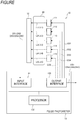
- FIGURE exemplifies a configuration of a pulse photometry system 10 in accordance with an embodiment.
- the pulse photometry system 10 may include a first emitter 111, a second emitter 112, a detector 12, and a pulse photometer 13.
- the first emitter 111 may be configured to emit a first light L1 including a first wavelength ⁇ 1.
- the first emitter 111 may be configured to include a light-emitting element configured to emit a light including the first wavelength ⁇ 1, or may also be configured so that the light of the first wavelength ⁇ 1 is emitted by enabling a light of a wavelength, which is different from the first wavelength ⁇ 1, emitted from the light-emitting element to pass through an appropriate optical element.
- the light-emitting element include a light-emitting diode (LED), a laser diode (LD), an EL element and the like.
- the second emitter 112 may be configured to emit a second light L2 including a second wavelength ⁇ 2.
- the second wavelength ⁇ 2 is different from the first wavelength ⁇ 1.
- the second emitter 112 may be configured to include a light-emitting element configured to emit a light including the second wavelength ⁇ 2, or may also be configured so that the light of the second wavelength ⁇ 2 is emitted by enabling a light of a wavelength, which is different from the second wavelength ⁇ 2, emitted from the light-emitting element to pass through an appropriate optical element.
- the light-emitting element include a light-emitting diode (LED), a laser diode (LD), an EL element and the like.
- the detector 12 may be configured to include a light-detecting element configured to output a detection signal corresponding to an intensity of an incident light.
- the detection signal may be an analog signal or a digital signal.
- Examples of the light-detecting element include a photo diode, a photo transistor, a photo resistor and the like having sensitivity to at least the first wavelength ⁇ 1 and the second wavelength ⁇ 2.
- the first emitter 111, the second emitter 112, and the detector 12 are configured to be attached to a body 20 of a subject.
- the first light L1 emitted from the first emitter 111 and the second light L2 emitted from the second emitter 112 pass through the body 20 and are incident on the detector 12.
- the first emitter 111 and the second emitter 112 are arranged to face the detector 12 with the body 20 being sandwiched therebetween, so that the first light L1 and the second light L2 passing through the body 20 are incident on the detector 12.
- the detector 12 may also be arranged adjacent to the first emitter 111 and the second emitter 112 without the body 20 being sandwiched therebetween. In this case, the first light L1 and the second light L2 reflected on the body 20 are incident on the detector 12.
- the pulse photometer 13 may include an input interface 131, one or more processors 132, and an output interface 133.
- the input interface 131 may be configured to detect a detection signal output from the detector 12.
- the input interface 131 may include an appropriate conversion circuit including an A/D converter.
- One or more processors 132 are configured to cause the first emitter 111 and the second emitter 112 to emit the first light L1 and the second light L2. Specifically, a first control signal CS1 for causing the first emitter 111 to emit the first light L1 and a second control signal CS2 for causing the second emitter 112 to emit the second light L2 are output from the output interface 133.
- the first control signal CS1 and the second control signal CS2 may be analog signals or digital signals.
- the output interface 133 may include an appropriate conversion circuit including a D/A converter.
- the detector 12 may be configured to output, as the detection signal, a first detection signal DS1 corresponding to an incident intensity of the first light L1 and a second detection signal DS2 corresponding to an incident intensity of the second light.
- the first detection signal DS1 is an example of the first signal.
- the second detection signal DS2 is an example of the second signal.
- the input interface 131 of the pulse photometer 13 may be configured to receive the first detection signal DS1 and the second detection signal DS2.
- the one or more processors 132 of the pulse photometer 13 are configured to calculate a first blood light absorber concentration ⁇ 1 in the body 20 (namely, a concentration of a first blood light absorber in the body 20) of the subject, based on the first detection signal DS1 and the second detection signal DS2.
- the first blood light absorber include oxyhemoglobin (O2Hb), deoxyhemoglobin (RHb), carboxyhemoglobin (COHb), methemoglobin (MetHb), and the like.
- the first light L1 emitted from the first emitter 111 is absorbed by the arterial blood, the venous blood, tissues, and the like when passing through the body 20 of the subject. Therefore, the intensity of the first light L1 incident on the detector 12 is reduced as compared to the intensity upon emission from the first emitter 111. That is, as a ratio of the emission intensity from the first emitter 111 and the incident intensity on the detector 12, an absorbance A1 of the first light L1 can be defined.
- the second light L2 emitted from the second emitter 112 is absorbed by the arterial blood, the venous blood, tissues, and the like when passing through the body 20 of the subject. Therefore, the intensity of the second light L2 incident on the detector 12 is reduced as compared to the intensity upon emission from the second emitter 112. That is, as a ratio of the emission intensity from the second emitter 112 and the incident intensity on the detector 12, an absorbance A2 of the second light L2 can be defined.
- the arterial vessel pulsates with the heartbeat of the subject, so that a thickness of the arterial vessel through which the first light L1 and the second light L2 pass varies.
- an amount of the arterial blood that absorbs the first light L1 and the second light L2 varies. Therefore, the intensity of the first light L1 and the intensity of the second light L2 incident on the detector 12 vary due to the blood pulsation in the subject, so that the absorbance A1 of the first light L1 and the absorbance A2 of the second light L2 vary.
- Variations of absorbance are defined as a first variation ⁇ A1 and a second variation ⁇ A2 respectively.
- the first blood light absorber has a wavelength dependency on the absorbance.
- the first wavelength ⁇ 1 and the second wavelength ⁇ 2 are selected as two wavelengths that show a significant difference in absorbance. It is known that the first blood light absorber concentration ⁇ 1 can be calculated based on a ratio ( ⁇ A1/ ⁇ A2) of the first variation ⁇ A1 and the second variation ⁇ A2.
- the first blood light absorber concentration ⁇ 1 to be calculated is an approximate value based on assumption that the absorption by the light absorber in the arterial blood is significantly greater than the absorption by the venous blood and tissues. In other words, there is room for improvement on calculation accuracy of the blood light absorber concentration by considering the light absorption by the venous blood and tissues.
- the thickness of the arterial vessel increases with the pulsation
- the thickness of at least one of the venous vessel and tissues decreases, and vice versa.
- This individual difference may be one of error factors of measurement by the pulse photometry. By reducing the error, it is possible to improve the calculation accuracy of the blood light absorber concentration.
- the first correction amount ⁇ 1 and the second correction amount ⁇ 2 are expressed by following equations.
- ⁇ 1 a 1 + a 2 ⁇ f ⁇ A 1 + a 3 ⁇ f ⁇ A 2
- ⁇ 2 b 1 + b 2 ⁇ f ⁇ A 1 + b 3 ⁇ f ⁇ A 2
- a1, a2, a3, b1, b2, and b3 are constants. Each of a1, a2, a3, b1, b2, and b3 may be 0 (zero). However, a case where a1, a2, a3, b1, b2, and b3 are all 0 at the same time is excluded.
- f( ⁇ A1) is an n th -order function of the first variation ⁇ A1 (n: an integer of 1 or greater).
- the function f( ⁇ A1) included in the first correction amount ⁇ 1 and the function f( ⁇ A1) included in the second correction amount ⁇ 2 may be the same or different from each other.
- f( ⁇ A2) is an n th -order function of the second variation ⁇ A2 (n: an integer of 1 or greater).
- the function f( ⁇ A2) included in the first correction amount ⁇ 1 and the function f( ⁇ A2) included in the second correction amount ⁇ 2 may be the same or different from each other.
- Each constant and each function are statistically determined so as to reduce the error caused due to the individual difference, based on test data and clinical data obtained from a plurality of subjects for the first blood light absorber concentration ⁇ 1.
- the first correction amount ⁇ 1 is become a constant term.
- the constant a1 is an example of the first constant.
- the constant b2 and the constant b3 are 0, the second correction amount ⁇ 2 becomes a constant term.
- the constant b1 is an example of the second constant. In a case where at least one of the first correction amount ⁇ 1 and the second correction amount ⁇ 2 is a constant term, it is possible to suppress an increase in calculation load of the one or more processors 132 for calculation of the concentration ⁇ 1.
- At least one of the constant a2, the constant a3, the constant b1 and the constant b2 has a value
- at least one of the first correction amount ⁇ 1 and the second correction amount ⁇ 2 becomes a variable in which the light intensity of the first light L1 and the light intensity of the second light L2, which are actually incident on the detector 12, are reflected.
- the blood light absorber it is possible to calculate two blood light absorber concentrations (or saturations) by using the first light L1 and the second light L2.
- concentrations or saturations
- a concentration of total hemoglobin and a concentration of water in blood may be exemplified.
- the one or more processors 132 can calculate at least one blood light absorber concentration, based on a value obtained by adding the first correction amount ⁇ 1 to the first variation ⁇ A1 and a value obtained by adding the second correction amount ⁇ 2 to the second variation ⁇ A2.
- the first correction amount ⁇ 1 is based on at least one of the constant a1, the function f( ⁇ A1) of the first variation and the function f( ⁇ A2) of the second variation, which are statistically determined.
- the second correction amount ⁇ 2 is based on at least one of the constant b1, the function f( ⁇ A1) of the first variation and the function f( ⁇ A2) of the second variation, which are statistically determined.
- the one or more processors 132 are configured to output a first output signal OS1 corresponding to the first blood light absorber concentration ⁇ 1 from the output interface 133.
- the first output signal OS1 is provided to appropriate processing. Examples of the appropriate processing include calculation of a value that can be acquired based on the concentration ⁇ 1, display of at least one of a value of the concentration ⁇ 1 and a value acquired based on the concentration ⁇ 1, a notification operation based on at least one of a value of the concentration ⁇ 1 and a value acquired based on the concentration ⁇ 1, and the like.
- the pulse photometry system 10 may include a third emitter 113.
- the third emitter 113 is configured to emit a third light L3 including a third wavelength ⁇ 3.
- the third wavelength ⁇ 3 is different from the first wavelength ⁇ 1 and the second wavelength ⁇ 2.
- the third emitter 113 may also be configured to include a light-emitting element configured to emit a light including the third wavelength ⁇ 3 or may also be configured so that the light of the third wavelength ⁇ 3 is emitted by enabling a light of a wavelength, which is different from the third wavelength ⁇ 3, emitted from the light-emitting element to pass through an appropriate optical element.
- the light-emitting element include a light-emitting diode (LED), a laser diode (LD), an EL element and the like.
- the detector 12 is required to have a light-receiving element having sensitivity to the third wavelength ⁇ 3.
- the third emitter 113 is configured to be attached to the body 20 of the subject.
- the third emitter 113 is arranged so that the third light L3 passes through the body 20 and is then incident on the detector 12.
- the third emitter 113 may also be arranged so that the third light L3 is reflected on the body 20 and is then incident on the detector 12.
- the one or more processors 132 are configured to cause the third emitter 113 to emit the third light L3.
- a third control signal CS3 for causing the third emitter 113 to emit the third light L3 is output from the output interface 133 at a timing different from the first control signal CS1 and the second control signal CS2.
- the third control signal CS3 may be an analog signal or a digital signal.
- the detector 12 When the third light L3 passing through the body 20 is incident on the detector 12, the detector 12 outputs a third detection signal DS3 corresponding to an incident intensity of the third light L3.
- the third detection signal DS3 is an example of the third signal.
- the input interface 131 of the pulse photometer 13 is configured to receive the third detection signal DS3, in addition to the first detection signal DS1 and the second detection signal DS2.
- the one or more processors 132 of the pulse photometer 13 are configured to calculate at least one blood light absorber concentration in the body 20 of the subject, based on the first detection signal DS1, the second detection signal DS2, and the third detection signal DS3.
- an absorbance A3 of the third light L3 can also be defined.
- a third variation ⁇ A3 corresponding to a variation of the absorbance A3 due to blood pulsation of the subject can be defined.
- the first correction amount ⁇ 1 and the second correction amount ⁇ 2 that are used so as to calculate the first blood light absorber concentration ⁇ 1 are expressed as follows.
- ⁇ 1 a 1 + a 2 ⁇ f ⁇ A 1 + a 3 ⁇ f ⁇ A 2 + a 4 ⁇ f ⁇ A 3
- ⁇ 2 b 1 + b 2 ⁇ f ⁇ A 1 + b 3 ⁇ f ⁇ A 2 + b 4 ⁇ f ⁇ A 3
- a4 and b4 are constants. Each of a4 and b4 may be 0 (zero). However, a case where the constants a1 to a4 and the constants b1 to b4 are all 0 at the same time is excluded.
- f( ⁇ A3) is an n th -order function of the third variation ⁇ A3 (n: an integer of 1 or greater). The function f( ⁇ A3) included in the first correction amount ⁇ 1 and the function f( ⁇ A3) included in the second correction amount ⁇ 2 may be the same or different from each other.
- a second blood light absorber concentration ⁇ 2 (namely, a concentration of a second blood light absorber) by using the third light L3.
- a concentration of oxyhemoglobin and a concentration of carboxyhemoglobin in the arterial blood can be individually calculated.
- the one or more processors 132 are configured to calculate a second blood light absorber concentration ⁇ 2, based on a ratio of a value obtained by adding a third correction amount ⁇ 3 to the third variation ⁇ A3 and a value obtained by adding the first correction amount ⁇ 1 to the first variation ⁇ A1 or a value obtained by adding the second correction amount ⁇ 2 to the second variation ⁇ A2. That is, a following equation is presented.
- c1, c2, c3, and c4 are constants. Each of c1, c2, c3 and c4 may be 0 (zero). However, a case where the constants c1 to c4 and the constants a1 to a4 or the constants b1 to b4 are all 0 at the same time is excluded.
- the function f( ⁇ A1), the function f( ⁇ A2), and the function f( ⁇ A3) included in the third correction amount ⁇ 3 may be each the same as or different from the function f( ⁇ A1), the function f( ⁇ A2), and the function f( ⁇ A3) included in each of the first correction amount ⁇ 1 and the second correction amount ⁇ 2.
- the third correction amount ⁇ 3 becomes a constant term.
- the constant c1 is an example of the third constant.
- the third wavelength ⁇ 3 is selected as a wavelength that shows a significant difference in the absorbance of the second blood light absorber with respect to the first wavelength ⁇ 1 or the second wavelength ⁇ 2.
- Each constant and each function relating to the third variation ⁇ A3 are statistically determined so as to suppress the effect of the individual difference with respect to the light absorption of the venous blood and tissues, based on test data and clinical data obtained from a plurality of subjects for the second blood light absorber concentration ⁇ 2.
- the one or more processors 132 are configured to output a second output signal OS2 corresponding to the second blood light absorber concentration ⁇ 2 from the output interface 133.
- the second output signal OS2 is provided to appropriate processing. Examples of the appropriate processing include calculation of a value that can be acquired based on the concentration ⁇ 2, display of at least one of a value of the concentration ⁇ 2 and a value acquired based on the concentration ⁇ 2, a notification operation based on at least one of a value of the concentration ⁇ 2 and a value acquired based on the concentration ⁇ 2, and the like.
- the calculation accuracy of the second blood light absorber concentration ⁇ 2 can also be enhanced, based on the principle described with respect to the calculation of the first blood light absorber concentration ⁇ 1.
- the concentrations of each of the plurality of light absorbers included in the blood not only increase or decrease individually but also influence each other.
- the increase or decrease in the second blood light absorber concentration ⁇ 2 may affect the increase or decrease in the first blood light absorber concentration ⁇ 1.
- the equation for calculating the first blood light absorber concentration ⁇ 1 by using the first light L1 and the second light L2 includes, in the correction term, the information about the third light L3 that is used so as to calculate the second blood light absorber concentration ⁇ 2. Therefore, when calculating the first blood light absorber concentration ⁇ 1, the effect of the second blood light absorber concentration ⁇ 2 can be taken into consideration. Thereby, it is possible to enhance the calculation accuracy of the first blood light absorber concentration ⁇ 1. The same also applies to the second blood light absorber concentration ⁇ 2.
- the pulse photometry system 10 may include a fourth emitter 114.
- the fourth emitter 114 is configured to emit a fourth light L4 including a fourth wavelength ⁇ 4.
- the fourth wavelength ⁇ 4 is different from the first wavelength ⁇ 1, the second wavelength ⁇ 2, and the third wavelength ⁇ 3.
- the fourth emitter 114 may also be configured to include a light-emitting element configured to emit a light including the fourth wavelength ⁇ 4 or may also be configured so that the light of the fourth wavelength ⁇ 4 is emitted by enabling a light of a wavelength, which is different from the fourth wavelength ⁇ 4, emitted from the light-emitting element to pass through an appropriate optical element.
- the light-emitting element include a light-emitting diode (LED), a laser diode (LD), an EL element and the like.
- the detector 12 is required to have a light-receiving element having sensitivity to the fourth wavelength ⁇ 4.
- the fourth emitter 114 is configured to be attached to the body 20 of the subject.
- the fourth emitter 114 is arranged so that the fourth light L4 passes through the body 20 and is then incident on the detector 12.
- the fourth emitter 114 may also be arranged so that the fourth light L4 is reflected on the body 20 and is then incident on the detector 12.
- the one or more processors 132 are configured to cause the fourth emitter 114 to emit the fourth light L4.
- a fourth control signal CS4 for causing the fourth emitter 114 to emit the fourth light L4 is output from the output interface 133 at a timing different from the first control signal CS1, the second control signal CS2, and the third control signal CS3.
- the fourth control signal CS4 may be an analog signal or a digital signal.
- the detector 12 When the fourth light L4 passing through the body 20 is incident on the detector 12, the detector 12 outputs a fourth detection signal DS4 corresponding to an incident intensity of the fourth light L4.
- the fourth detection signal DS4 is an example of the fourth signal.
- the input interface 131 of the pulse photometer 13 is configured to receive the fourth detection signal DS4, in addition to the first detection signal DS1, the second detection signal DS2, and the third detection signal DS3.
- the one or more processors 132 of the pulse photometer 13 are configured to calculate at least one blood light absorber concentration in the body 20 of the subject, based on the first detection signal DS1, the second detection signal DS2, the third detection signal DS3, and the fourth detection signal DS4.
- an absorbance A4 of the fourth light L4 can also be defined.
- a fourth variation ⁇ A4 corresponding to a variation of the absorbance A4 due to blood pulsation of the subject can be defined.
- the first correction amount ⁇ 1 and the second correction amount ⁇ 2 that are used so as to calculate the first blood light absorber concentration ⁇ 1 are expressed as follows.
- ⁇ 1 a 1 + a 2 ⁇ f ⁇ A 1 + a 3 ⁇ f ⁇ A 2 + a 4 ⁇ f ⁇ A 3 + a 5 ⁇ f ⁇ A 4
- ⁇ 2 b 1 + b 2 ⁇ f ⁇ A 1 + b 3 ⁇ f ⁇ A 2 + b 4 ⁇ f ⁇ A 3 + b 5 ⁇ f ⁇ A 4
- a5 and b5 are constants. Each of a5 and b5 may be 0 (zero). However, a case where the constants a1 to a5 and the constants b1 to b5 are all 0 at the same time is excluded.
- f( ⁇ A4) is an n th -order function of the fourth variation ⁇ A4 (n: an integer of 1 or greater).
- the function f( ⁇ A4) included in the first correction amount ⁇ 1 and the function f( ⁇ A4) included in the second correction amount ⁇ 2 may be the same or different from each other.
- the third correction amount ⁇ 3 that is used so as to calculate the second blood light absorber concentration ⁇ 2 is expressed by a following equation.
- ⁇ 3 c 1 + c 2 ⁇ f ⁇ A 1 + c 3 ⁇ f ⁇ A 2 + c 4 ⁇ f ⁇ A 3 + c 5 ⁇ f ⁇ A 4
- c5 is a constant. c5 may be 0 (zero). However, a case where the constants a1 to a5, the constants b1 to b5 and the constant c1 to c5 are all 0 at the same time is excluded.
- the function f( ⁇ A1), the function f( ⁇ A2), the function f( ⁇ A3), and the function f( ⁇ A4) included in the third correction amount ⁇ 3 may be each the same as or different from the function f( ⁇ A1), the function f( ⁇ A2), the function f( ⁇ A3), and the function f( ⁇ A4) included in each of the first correction amount ⁇ 1 and the second correction amount ⁇ 2.
- a third blood light absorber concentration ⁇ 3 (namely, a concentration of a third blood light absorber) by using the fourth light L4.
- a concentration of oxyhemoglobin, a concentration of deoxyhemoglobin and a concentration of carboxyhemoglobin in the arterial blood can be individually calculated.
- the one or more processors 132 are configured to calculate the third blood light absorber concentration ⁇ 3, based on a ratio of a value obtained by adding a fourth correction amount ⁇ 4 to the fourth variation ⁇ A4 and a value obtained by adding the first correction amount ⁇ 1 to the first variation ⁇ A1, a value obtained by adding the second correction amount ⁇ 2 to the second variation ⁇ A2 or a value obtained by adding the third correction amount ⁇ 3 to the third variation ⁇ A3. That is, a following equation is presented.
- d1, d2, d3, d4, and d5 are constants. Each of d1, d2, d3, d4, and d5 may be 0 (zero). However, a case where the constants d1 to d5, the constants a1 to a5, the constants b1 to b5 or the constants c1 to c5 in the equation are all 0 at the same time is excluded.
- the function f( ⁇ A1), the function f( ⁇ A2), the function f( ⁇ A3), and the function f( ⁇ A4) included in the fourth correction amount ⁇ 4 may be each the same as or different from the function f( ⁇ A1), the function f( ⁇ A2), the function f( ⁇ A3), and the function f( ⁇ A4) included in each of the first correction amount ⁇ 1, the second correction amount ⁇ 2, and the third correction amount ⁇ 3.
- the fourth correction amount ⁇ 4 becomes a constant term.
- the constant d1 is an example of the fourth constant.
- the fourth wavelength ⁇ 4 is selected as a wavelength that shows a significant difference in the absorbance of the third blood light absorber with respect to the first wavelength ⁇ 1, the second wavelength ⁇ 2 or the third wavelength ⁇ 3.
- Each constant and each function relating to the fourth variation ⁇ A4 are statistically determined so as to suppress the effect of the individual difference with respect to the light absorption of the venous blood and tissues, based on test data and clinical data obtained from a plurality of subjects for the third blood light absorber concentration ⁇ 3.
- the one or more processors 132 are configured to output a third output signal OS3 corresponding to the third blood light absorber concentration ⁇ 3 from the output interface 133.
- the third output signal OS3 is provided to appropriate processing. Examples of the appropriate processing include calculation of a value that can be acquired based on the concentration ⁇ 3, display of at least one of a value of the concentration ⁇ 3 and a value acquired based on the concentration ⁇ 3, a notification operation based on at least one of a value of the concentration ⁇ 3 and a value acquired based on the concentration ⁇ 3, and the like.
- the calculation accuracy of the third blood light absorber concentration ⁇ 3 can also be enhanced, based on the principle described with respect to the calculation of the first blood light absorber concentration ⁇ 1.
- the concentrations of each of the plurality of light absorbers included in the blood not only increase or decrease individually but also influence each other.
- the increase or decrease in the second blood light absorber concentration ⁇ 2 and the increase or decrease in the third blood light absorber concentration ⁇ 3 may affect the increase or decrease in the first blood light absorber concentration ⁇ 1.
- the equation for calculating the first blood light absorber concentration ⁇ 1 by using the first light L1 and the second light L2 includes, in the correction term, the information about the third light L3 that is used so as to calculate the second blood light absorber concentration ⁇ 2 and the information about the fourth light L4 that is used so as to calculate the third blood light absorber concentration ⁇ 3.
- the effects of the second blood light absorber concentration ⁇ 2 and the third blood light absorber concentration ⁇ 3 can be taken into consideration. Since the number of the blood light absorbers whose effects can be taken into consideration increases, it is possible to further enhance the calculation accuracy of the first blood light absorber concentration ⁇ 1. The same also applies to the second blood light absorber concentration ⁇ 2 and the third blood light absorber concentration ⁇ 3.
- the pulse photometry system 10 may include a fifth emitter 115.
- the fifth emitter 115 is configured to emit a fifth light L5 including a fifth wavelength ⁇ 5.
- the fifth wavelength ⁇ 5 is different from the first wavelength ⁇ 1, the second wavelength ⁇ 2, the third wavelength ⁇ 3, and the fourth wavelength ⁇ 4.
- the fifth emitter 115 may also be configured to include a light-emitting element configured to emit a light including the fifth wavelength ⁇ 5 or may also be configured so that the light of the fifth wavelength ⁇ 5 is emitted by enabling a light of a wavelength, which is different from the fifth wavelength ⁇ 5, emitted from the light-emitting element to pass through an appropriate optical element.
- the light-emitting element include a light-emitting diode (LED), a laser diode (LD), an EL element and the like.
- the detector 12 is required to have a light-receiving element having sensitivity to the fifth wavelength ⁇ 5.
- the fifth emitter 115 is configured to be attached to the body 20 of the subject.
- the fifth emitter 115 is arranged so that the fifth light L5 passes through the body 20 and is then incident on the detector 12.
- the fifth emitter 115 may also be arranged so that the fifth light L5 is reflected on the body 20 and is then incident on the detector 12.
- the one or more processors 132 are configured to cause the fifth emitter 115 to emit the fifth light L5.
- a fifth control signal CS5 for causing the fifth emitter 115 to emit the fifth light L5 is output from the output interface 133 at a timing different from the first control signal CS1, the second control signal CS2, the third control signal CS3, and the fourth control signal CS4.
- the fifth control signal CS5 may be an analog signal or a digital signal.
- the detector 12 When the fifth light L5 passing through the body 20 is incident on the detector 12, the detector 12 outputs a fifth detection signal DS5 corresponding to an incident intensity of the fifth light L5.
- the fifth detection signal DS5 is an example of the fifth signal.
- the input interface 131 of the pulse photometer 13 is configured to receive the fifth detection signal DS5, in addition to the first detection signal DS1, the second detection signal DS2, the third detection signal DS3, and the fourth detection signal DS4.
- the one or more processors 132 of the pulse photometer 13 are configured to calculate at least one blood light absorber concentration in the body 20 of the subject, based on the first detection signal DS1, the second detection signal DS2, the third detection signal DS3, the fourth detection signal DS4, and the fifth detection signal DS5.
- an absorbance A5 of the fifth light L5 can also be defined.
- a fifth variation ⁇ A5 corresponding to a variation of the absorbance A5 due to blood pulsation of the subject can be defined.
- the first correction amount ⁇ 1 and the second correction amount ⁇ 2 that are used so as to calculate the first blood light absorber concentration ⁇ 1 are expressed as follows.
- ⁇ 1 a 1 + a 2 ⁇ f ⁇ A 1 + a 3 ⁇ f ⁇ A 2 + a 4 ⁇ f ⁇ A 3 + a 5 ⁇ f ⁇ A 4 + a 6 ⁇ f ⁇ A 5
- ⁇ 2 b 1 + b 2 ⁇ f ⁇ A 1 + b 3 ⁇ f ⁇ A 2 + b 4 ⁇ f ⁇ A 3 + b 5 ⁇ f ⁇ A 4 + b 6 ⁇ f ⁇ A 5
- a6 and b6 are constants. Each of a6 and b6 may be 0 (zero). However, a case where the constants a1 to a6 and the constants b1 to b6 are all 0 at the same time is excluded.
- f( ⁇ A5) is an n th -order function of the fifth variation ⁇ A5 (n: an integer of 1 or greater).
- the function f( ⁇ A5) included in the first correction amount ⁇ 1 and the function f( ⁇ A5) included in the second correction amount ⁇ 2 may be the same or different from each other.
- the third correction amount ⁇ 3 that is used so as to calculate the second blood light absorber concentration ⁇ 2 is expressed by a following equation.
- ⁇ 3 c 1 + c 2 ⁇ f ⁇ A 1 + c 3 ⁇ f ⁇ A 2 + c 4 ⁇ f ⁇ A 3 + c 5 ⁇ f ⁇ A 4 + c 6 ⁇ f ⁇ A 5
- c6 is a constant.
- c6 may be 0 (zero).
- the constants a1 to a6 the constants b1 to b6 and the constant c1 to c6 are all 0 at the same time is excluded.
- the function f( ⁇ A1), the function f( ⁇ A2), the function f( ⁇ A3), the function f( ⁇ A4), and the function f( ⁇ A5) included in the third correction amount ⁇ 3 may be each the same as or different from the function f( ⁇ A1), the function f( ⁇ A2), the function f( ⁇ A3), the function f( ⁇ A4), and the function f( ⁇ A5) included in each of the first correction amount ⁇ 1 and the second correction amount ⁇ 2.
- a fourth correction amount ⁇ 4 that is used so as to calculate the third blood light absorber concentration ⁇ 3 is expressed by a following equation.
- ⁇ 4 d 1 + d 2 ⁇ f ⁇ A 1 + d 3 ⁇ f ⁇ A 2 + d 4 ⁇ f ⁇ A 3 + d 5 ⁇ f ⁇ A 4 + d 6 ⁇ f ⁇ A 5
- d6 is a constant. d6 may be 0 (zero). However, a case where the constants a1 to a6, the constants b1 to b6, the constant c1 to c6 and the constants d1 to d6 are all 0 at the same time is excluded.
- the function f( ⁇ A1), the function f( ⁇ A2), the function f( ⁇ A3), the function f( ⁇ A4), and the function f( ⁇ A5) included in the fourth correction amount ⁇ 4 may be each the same as or different from the function f( ⁇ A1), the function f( ⁇ A2), the function f( ⁇ A3), the function f( ⁇ A4), and the function f( ⁇ A5) included in each of the first correction amount ⁇ 1, the second correction amount ⁇ 2, and the third correction amount ⁇ 3.
- a fourth blood light absorber concentration ⁇ 4 (namely, a concentration of a fourth blood light absorber) by using the fifth light L5.
- a concentration of oxyhemoglobin, a concentration of deoxyhemoglobin, a concentration of carboxyhemoglobin and a concentration of methemoglobin in the arterial blood can be individually calculated.
- the one or more processors 132 are configured to calculate the fourth blood light absorber concentration ⁇ 4, based on a ratio of a value obtained by adding a fifth correction amount ⁇ 5 to the fifth variation ⁇ A5 and a value obtained by adding the first correction amount ⁇ 1 to the first variation ⁇ A1, a value obtained by adding the second correction amount ⁇ 2 to the second variation ⁇ A2, a value obtained by adding the third correction amount ⁇ 3 to the third variation ⁇ A3 or a value obtained by adding the fourth correction amount ⁇ 4 to the fourth variation ⁇ A4. That is, a following equation is presented.
- the fifth correction amount ⁇ 5 is expressed by a following equation.
- ⁇ 5 e 1 + e 2 ⁇ f ⁇ A 1 + e 3 ⁇ f ⁇ A 2 + e 4 ⁇ f ⁇ A 3 + e 5 ⁇ f ⁇ A 4 + e 6 ⁇ f ⁇ A 5
- e1, e2, e3, e4, e5, and e6 are constants. Each of e1, e2, e3, e4, e5, and e6 may be 0 (zero). However, a case where the constants e1 to e6, the constants a1 to a6, the constants b1 to b6, the constants c1 to c6 or the constants d1 to d6 in the equation are all 0 at the same time is excluded.
- the function f( ⁇ A1), the function f( ⁇ A2), the function f( ⁇ A3), the function f( ⁇ A4), and the function f( ⁇ A5) included in the fifth correction amount ⁇ 5 may be each the same as or different from the function f( ⁇ A1), the function f( ⁇ A2), the function f( ⁇ A3), the function f( ⁇ A4), and the function f( ⁇ A5) included in each of the first correction amount ⁇ 1, the second correction amount ⁇ 2, the third correction amount ⁇ 3, and the fourth correction amount ⁇ 4.
- the fifth correction amount ⁇ 5 becomes a constant term.
- the constant e1 is an example of the fifth constant.
- the fifth wavelength ⁇ 5 is selected as a wavelength that shows a significant difference in the absorbance of the fourth blood light absorber with respect to the first wavelength ⁇ 1, the second wavelength ⁇ 2, the third wavelength ⁇ 3, or the fourth wavelength ⁇ 4.
- Each constant and each function relating to the fifth variation ⁇ A5 are statistically determined so as to suppress the effect of the individual difference with respect to the light absorption of the venous blood and tissues, based on test data and clinical data obtained from a plurality of subjects for the fourth blood light absorber concentration ⁇ 4.
- the one or more processors 132 are configured to output a fourth output signal OS4 corresponding to the fourth blood light absorber concentration ⁇ 4 from the output interface 133.
- the fourth output signal OS4 is provided to appropriate processing. Examples of the appropriate processing include calculation of a value that can be acquired based on the concentration ⁇ 4, display of at least one of a value of the concentration ⁇ 4 and a value acquired based on the concentration ⁇ 4, a notification operation based on at least one of a value of the concentration ⁇ 4 and a value acquired based on the concentration ⁇ 4, and the like.
- the calculation accuracy of the fourth blood light absorber concentration ⁇ 4 can also be enhanced, based on the principle described with respect to the calculation of the first blood light absorber concentration ⁇ 1.
- the concentrations of each of the plurality of light absorbers included in the blood not only increase or decrease individually but also influence each other.
- the increase or decrease in the second blood light absorber concentration ⁇ 2 the increase or decrease in the third blood light absorber concentration ⁇ 3 and the increase or decrease in the fourth blood light absorber concentration ⁇ 4 may affect the increase or decrease in the first blood light absorber concentration ⁇ 1.
- the equation for calculating the first blood light absorber concentration ⁇ 1 by using the first light L1 and the second light L2 includes, in the correction term, the information about the third light L3 that is used so as to calculate the second blood light absorber concentration ⁇ 2, the information about the fourth light L4 that is used so as to calculate the third blood light absorber concentration ⁇ 3, and the information about the fifth light L5 that is used so as to calculate the fourth blood light absorber concentration ⁇ 4. Therefore, when calculating the first blood light absorber concentration ⁇ 1, the effects of the second blood light absorber concentration ⁇ 2, the third blood light absorber concentration ⁇ 3 and the fourth blood light absorber concentration ⁇ 4 can be taken into consideration.
- the number of the blood light absorbers whose effects can be taken into consideration increases, it is possible to further enhance the calculation accuracy of the first blood light absorber concentration ⁇ 1.
- the same also applies to the second blood light absorber concentration ⁇ 2, the third blood light absorber concentration ⁇ 3, and the fourth blood light absorber concentration ⁇ 4.
- the one or more processors 132 having the function as described above may be implemented by one or more general-purpose microprocessors configured to operate in cooperation with one or more general-purpose memories.
- a CPU, an MPU and a GPU may be exemplified.
- a ROM and a RAM may be exemplified.
- a computer program configured to execute the above-described processing may be stored in the ROM.
- the ROM is an example of the storage medium in which the computer program is stored.
- the one or more general-purpose microprocessors are configured to designate at least a part of the computer program stored on the ROM and to develop the same on the RAM, thereby executing the above-described processing in cooperation with the RAM
- the computer program may be pre-installed in the one or more general-purpose memories or may be downloaded from an external server via a communication network and installed in the one or more general-purpose memories.
- the external server is an example of the storage medium in which the computer program is stored.
- the one or more processors 132 may also be implemented by a dedicated integrated circuit such as a microcontroller, an ASIC, an FPGA and the like capable of executing the computer program.
- the computer program is pre-installed in a storage device included in the dedicated integrated circuit.
- the storage device is an example of the storage medium in which the computer program is stored.
- the one or more processors 132 may also be implemented by a combination of one or more general-purpose microprocessor and a dedicated integrated circuit.
- the embodiment is just exemplary for easy understanding of the invention.
- the configurations of the embodiment can be appropriately changed and improved without departing from the gist of the invention.
- the pulse photometry system 10 may have a configuration where six or more different wavelengths are used, according to the number and types of the blood light absorbers for which it is required to calculate the concentrations.
- Other examples of the blood light absorber include bilirubin and glucose.
- Examples of the blood light absorber whose concentration is to be calculated include materials that are generated in the body of the subject, and pigments that are injected into the blood vessel for contrast examination and the like.
Landscapes
- Life Sciences & Earth Sciences (AREA)
- Health & Medical Sciences (AREA)
- Physics & Mathematics (AREA)
- Heart & Thoracic Surgery (AREA)
- Molecular Biology (AREA)
- Pathology (AREA)
- Engineering & Computer Science (AREA)
- Biomedical Technology (AREA)
- Veterinary Medicine (AREA)
- Medical Informatics (AREA)
- Biophysics (AREA)
- Surgery (AREA)
- Animal Behavior & Ethology (AREA)
- General Health & Medical Sciences (AREA)
- Public Health (AREA)
- Optics & Photonics (AREA)
- Spectroscopy & Molecular Physics (AREA)
- Measurement Of The Respiration, Hearing Ability, Form, And Blood Characteristics Of Living Organisms (AREA)
- Measuring Pulse, Heart Rate, Blood Pressure Or Blood Flow (AREA)
Abstract
Description
- The invention relates to a pulse photometer configured to calculate a concentration of a blood light absorber in a subject. The invention also relates to a pulse photometry system including the pulse photometer, and a computer program that can be executed by one or more processors of the pulse photometer.
- A pulse photometry system disclosed in Japanese Patent No.
4,196,209 - The intensity of the light of each wavelength in the detector varies according to blood pulsation in the subject. The variation over time of the intensity of the light of a specific wavelength due to the pulsation is acquired as a pulse wave signal associated with the light of the wavelength.
- An amplitude of the pulse wave signal associated with the light of the specific wavelength corresponds to a variation of absorbance at the time when the light of the wavelength passes through the body. The concentration of the blood light absorber is calculated based on a ratio of variations of absorbance obtained for the lights of the plurality of wavelengths.
- An object of the invention is to enhance calculation accuracy of a concentration of a blood light absorber in a subject.
- A pulse photometer related to a first aspect of the invention includes: an input interface configured to receive a first signal, which corresponds to an intensity of a first light including a first wavelength passing through a body of a subject, and a second signal, which corresponds to an intensity of a second light including a second wavelength passing through the body; and one or more processors configured to calculate a concentration of at least one blood light absorber in the subject, based on the first signal and the second signal. The one or more processors are configured to: acquire a first variation corresponding to a variation of the first light due to blood pulsation in the subject, acquire a second variation corresponding to a variation of the second light due to the pulsation, and calculate the concentration of the at least one blood light absorber, based on a value obtained by adding a first correction amount to the first variation and a value obtained by adding a second correction amount to the second variation. The first correction amount is based on at least one of a first constant, a function of the first variation and a function of the second variation, which are statistically determined, and the second correction amount is based on at least one of a second constant, the function of the first variation and the function of the second variation, which are statistically determined
- A pulse photometry system related to a second aspect of the invention includes: a first emitter configured to emit a first light including a first wavelength; a second emitter configured to emit a second light including a second wavelength; a detector configured to output a first signal, which corresponds to an intensity of the first light passing through a body of a subject, and a second signal, which corresponds to an intensity of the second light passing through the body; and one or more processors configured to calculate a concentration of at least one blood light absorber in the subject, based on the first signal and the second signal. The one or more processors are configured to: acquire a first variation corresponding to a variation of the first light due to blood pulsation in the subject, acquire a second variation corresponding to a variation of the second light due to the pulsation, and calculate the concentration of the at least one blood light absorber, based on a value obtained by adding a first correction amount to the first variation and a value obtained by adding a second correction amount to the second variation. The first correction amount is based on at least one of a first constant, a function of the first variation and a function of the second variation, which are statistically determined, and the second correction amount is based on at least one of a second constant, the function of the first variation and the function of the second variation, which are statistically determined.
- A computer program related to a third aspect of the invention is capable of being executed by one or more processors of a pulse photometer. When executed, the computer program causes the pulse photometer to: receive a first signal, which corresponds to an intensity of a first light including a first wavelength passing through a body of a subject; receive a second signal, which corresponds to an intensity of a second light including a second wavelength passing through the body; acquire a first variation corresponding to a variation of the first light due to blood pulsation in the subject, acquire a second variation corresponding to a variation of the second light due to the pulsation, and calculate the concentration of the at least one blood light absorber in the subject, based on a value obtained by adding a first correction amount to the first variation and a value obtained by adding a second correction amount to the second variation. The first correction amount is based on at least one of a first constant, a function of the first variation and a function of the second variation, which are statistically determined, and the second correction amount is based on at least one of a second constant, the function of the first variation and the function of the second variation, which are statistically determined.
- Exemplary embodiments of the invention will be described in detail based on the following figures, in which:
- FIGURE is a diagram exemplifying a configuration of a pulse photometry system in accordance with an embodiment.
- Hereinafter, an example of an embodiment will be described in detail with reference to the attached drawings.
- FIGURE exemplifies a configuration of a
pulse photometry system 10 in accordance with an embodiment. Thepulse photometry system 10 may include afirst emitter 111, asecond emitter 112, adetector 12, and apulse photometer 13. - The
first emitter 111 may be configured to emit a first light L1 including a first wavelength λ1. Thefirst emitter 111 may be configured to include a light-emitting element configured to emit a light including the first wavelength λ1, or may also be configured so that the light of the first wavelength λ1 is emitted by enabling a light of a wavelength, which is different from the first wavelength λ1, emitted from the light-emitting element to pass through an appropriate optical element. Examples of the light-emitting element include a light-emitting diode (LED), a laser diode (LD), an EL element and the like. - The
second emitter 112 may be configured to emit a second light L2 including a second wavelength λ2. The second wavelength λ2 is different from the first wavelength λ1. Thesecond emitter 112 may be configured to include a light-emitting element configured to emit a light including the second wavelength λ2, or may also be configured so that the light of the second wavelength λ2 is emitted by enabling a light of a wavelength, which is different from the second wavelength λ2, emitted from the light-emitting element to pass through an appropriate optical element. Examples of the light-emitting element include a light-emitting diode (LED), a laser diode (LD), an EL element and the like. - The
detector 12 may be configured to include a light-detecting element configured to output a detection signal corresponding to an intensity of an incident light. The detection signal may be an analog signal or a digital signal. Examples of the light-detecting element include a photo diode, a photo transistor, a photo resistor and the like having sensitivity to at least the first wavelength λ1 and the second wavelength λ2. - The
first emitter 111, thesecond emitter 112, and thedetector 12 are configured to be attached to abody 20 of a subject. The first light L1 emitted from thefirst emitter 111 and the second light L2 emitted from thesecond emitter 112 pass through thebody 20 and are incident on thedetector 12. In the present example, thefirst emitter 111 and thesecond emitter 112 are arranged to face thedetector 12 with thebody 20 being sandwiched therebetween, so that the first light L1 and the second light L2 passing through thebody 20 are incident on thedetector 12. Thedetector 12 may also be arranged adjacent to thefirst emitter 111 and thesecond emitter 112 without thebody 20 being sandwiched therebetween. In this case, the first light L1 and the second light L2 reflected on thebody 20 are incident on thedetector 12. - The
pulse photometer 13 may include aninput interface 131, one ormore processors 132, and anoutput interface 133. - The
input interface 131 may be configured to detect a detection signal output from thedetector 12. When the detection signal output from thedetector 12 is an analog signal, theinput interface 131 may include an appropriate conversion circuit including an A/D converter. - One or
more processors 132 are configured to cause thefirst emitter 111 and thesecond emitter 112 to emit the first light L1 and the second light L2. Specifically, a first control signal CS1 for causing thefirst emitter 111 to emit the first light L1 and a second control signal CS2 for causing thesecond emitter 112 to emit the second light L2 are output from theoutput interface 133. The first control signal CS1 and the second control signal CS2 may be analog signals or digital signals. When the first control signal CS1 and the second control signal CS2 are analog signals, theoutput interface 133 may include an appropriate conversion circuit including a D/A converter. - Thereby, the first light L1 and the second light L2 passing through the
body 20 are incident on thedetector 12. Thedetector 12 may be configured to output, as the detection signal, a first detection signal DS1 corresponding to an incident intensity of the first light L1 and a second detection signal DS2 corresponding to an incident intensity of the second light. The first detection signal DS1 is an example of the first signal. The second detection signal DS2 is an example of the second signal. - The
input interface 131 of thepulse photometer 13 may be configured to receive the first detection signal DS1 and the second detection signal DS2. The one ormore processors 132 of thepulse photometer 13 are configured to calculate a first blood light absorber concentration Φ1 in the body 20 (namely, a concentration of a first blood light absorber in the body 20) of the subject, based on the first detection signal DS1 and the second detection signal DS2. Examples of the first blood light absorber include oxyhemoglobin (O2Hb), deoxyhemoglobin (RHb), carboxyhemoglobin (COHb), methemoglobin (MetHb), and the like. - The first light L1 emitted from the
first emitter 111 is absorbed by the arterial blood, the venous blood, tissues, and the like when passing through thebody 20 of the subject. Therefore, the intensity of the first light L1 incident on thedetector 12 is reduced as compared to the intensity upon emission from thefirst emitter 111. That is, as a ratio of the emission intensity from thefirst emitter 111 and the incident intensity on thedetector 12, an absorbance A1 of the first light L1 can be defined. - Same or similarly, the second light L2 emitted from the
second emitter 112 is absorbed by the arterial blood, the venous blood, tissues, and the like when passing through thebody 20 of the subject. Therefore, the intensity of the second light L2 incident on thedetector 12 is reduced as compared to the intensity upon emission from thesecond emitter 112. That is, as a ratio of the emission intensity from thesecond emitter 112 and the incident intensity on thedetector 12, an absorbance A2 of the second light L2 can be defined. - The arterial vessel pulsates with the heartbeat of the subject, so that a thickness of the arterial vessel through which the first light L1 and the second light L2 pass varies. In other words, an amount of the arterial blood that absorbs the first light L1 and the second light L2 varies. Therefore, the intensity of the first light L1 and the intensity of the second light L2 incident on the
detector 12 vary due to the blood pulsation in the subject, so that the absorbance A1 of the first light L1 and the absorbance A2 of the second light L2 vary. Variations of absorbance are defined as a first variation ΔA1 and a second variation ΔA2 respectively. - The first blood light absorber has a wavelength dependency on the absorbance. The first wavelength λ1 and the second wavelength λ2 are selected as two wavelengths that show a significant difference in absorbance. It is known that the first blood light absorber concentration Φ1 can be calculated based on a ratio (ΔA1/ΔA2) of the first variation ΔA1 and the second variation ΔA2.
- As described above, the first light L1 and the second light L2 are absorbed not only by the arterial blood but also the venous blood and tissues. Therefore, the first blood light absorber concentration Φ1 to be calculated is an approximate value based on assumption that the absorption by the light absorber in the arterial blood is significantly greater than the absorption by the venous blood and tissues. In other words, there is room for improvement on calculation accuracy of the blood light absorber concentration by considering the light absorption by the venous blood and tissues.
- For example, if it is assumed that a distance between the
detector 12 and each of thefirst emitter 111 and thesecond emitter 112 is left unchanged, when the thickness of the arterial vessel increases with the pulsation, the thickness of at least one of the venous vessel and tissues decreases, and vice versa. However, the degree and extent of the effect on the venous vessel and tissues due to the change in thickness of the arterial vessel are different for each person. This individual difference may be one of error factors of measurement by the pulse photometry. By reducing the error, it is possible to improve the calculation accuracy of the blood light absorber concentration. - In the present embodiment, the one or
more processors 132 are configured to calculate the first blood light absorber concentration Φ1, based on a ratio of a value obtained by adding a first correction amount α1 to the first variation ΔA1 and a value obtained by adding a second correction amount α2 to the second variation ΔA2. That is, a following equation is presented.
- Here, the first correction amount α1 and the second correction amount α2 are expressed by following equations.


- Here, a1, a2, a3, b1, b2, and b3 are constants. Each of a1, a2, a3, b1, b2, and b3 may be 0 (zero). However, a case where a1, a2, a3, b1, b2, and b3 are all 0 at the same time is excluded. f(ΔA1) is an nth-order function of the first variation ΔA1 (n: an integer of 1 or greater). The function f(ΔA1) included in the first correction amount α1 and the function f(ΔA1) included in the second correction amount α2 may be the same or different from each other. f(ΔA2) is an nth-order function of the second variation ΔA2 (n: an integer of 1 or greater). The function f(ΔA2) included in the first correction amount α1 and the function f(ΔA2) included in the second correction amount α2 may be the same or different from each other.
- Each constant and each function are statistically determined so as to reduce the error caused due to the individual difference, based on test data and clinical data obtained from a plurality of subjects for the first blood light absorber concentration Φ1.
- In a case where the constant a2 and the constant a3 are 0, the first correction amount α1 is become a constant term. In this case, the constant a1 is an example of the first constant. In a case where the constant b2 and the constant b3 are 0, the second correction amount α2 becomes a constant term. In this case, the constant b1 is an example of the second constant. In a case where at least one of the first correction amount α1 and the second correction amount α2 is a constant term, it is possible to suppress an increase in calculation load of the one or
more processors 132 for calculation of the concentration Φ1. - In a case where at least one of the constant a2, the constant a3, the constant b1 and the constant b2 has a value, at least one of the first correction amount α1 and the second correction amount α2 becomes a variable in which the light intensity of the first light L1 and the light intensity of the second light L2, which are actually incident on the
detector 12, are reflected. In this case, it is possible to further reduce the error due to the individual difference for the subject to be used for calculation of the concentration Φ1. - Depending on types of the blood light absorber to be used for calculation, it is possible to calculate two blood light absorber concentrations (or saturations) by using the first light L1 and the second light L2. For example, in a case where it is assumed that there is no abnormal hemoglobin such as carboxyhemoglobin, methemoglobin and the like in hemoglobin in the arterial blood, it is possible to specify a concentration of deoxyhemoglobin by specifying a concentration of oxyhemoglobin, and vice versa. That is, in a case where it can be assumed that there are two types of light absorbers in the blood system, when a concentration of one type is specified, a concentration of the other type can be specified. As another example, a relationship between a concentration of total hemoglobin and a concentration of water in blood may be exemplified.
- Therefore, the one or
more processors 132 can calculate at least one blood light absorber concentration, based on a value obtained by adding the first correction amount α1 to the first variation ΔA1 and a value obtained by adding the second correction amount α2 to the second variation ΔA2. The first correction amount α1 is based on at least one of the constant a1, the function f(ΔA1) of the first variation and the function f(ΔA2) of the second variation, which are statistically determined. The second correction amount α2 is based on at least one of the constant b1, the function f(ΔA1) of the first variation and the function f(ΔA2) of the second variation, which are statistically determined. - As exemplified in FIGURE, the one or
more processors 132 are configured to output a first output signal OS1 corresponding to the first blood lightabsorber concentration Φ 1 from theoutput interface 133. The first output signal OS1 is provided to appropriate processing. Examples of the appropriate processing include calculation of a value that can be acquired based on the concentration Φ1, display of at least one of a value of the concentration Φ1 and a value acquired based on the concentration Φ1, a notification operation based on at least one of a value of the concentration Φ1 and a value acquired based on the concentration Φ1, and the like. - As exemplified in FIGURE, the
pulse photometry system 10 may include athird emitter 113. - The
third emitter 113 is configured to emit a third light L3 including a third wavelength λ3. The third wavelength λ3 is different from the first wavelength λ1 and the second wavelength λ2. Thethird emitter 113 may also be configured to include a light-emitting element configured to emit a light including the third wavelength λ3 or may also be configured so that the light of the third wavelength λ3 is emitted by enabling a light of a wavelength, which is different from the third wavelength λ3, emitted from the light-emitting element to pass through an appropriate optical element. Examples of the light-emitting element include a light-emitting diode (LED), a laser diode (LD), an EL element and the like. - In this case, the
detector 12 is required to have a light-receiving element having sensitivity to the third wavelength λ3. - The
third emitter 113 is configured to be attached to thebody 20 of the subject. In the present example, thethird emitter 113 is arranged so that the third light L3 passes through thebody 20 and is then incident on thedetector 12. Thethird emitter 113 may also be arranged so that the third light L3 is reflected on thebody 20 and is then incident on thedetector 12. - In this case, the one or
more processors 132 are configured to cause thethird emitter 113 to emit the third light L3. Specifically, a third control signal CS3 for causing thethird emitter 113 to emit the third light L3 is output from theoutput interface 133 at a timing different from the first control signal CS1 and the second control signal CS2. The third control signal CS3 may be an analog signal or a digital signal. - When the third light L3 passing through the
body 20 is incident on thedetector 12, thedetector 12 outputs a third detection signal DS3 corresponding to an incident intensity of the third light L3. The third detection signal DS3 is an example of the third signal. - The
input interface 131 of thepulse photometer 13 is configured to receive the third detection signal DS3, in addition to the first detection signal DS1 and the second detection signal DS2. The one ormore processors 132 of thepulse photometer 13 are configured to calculate at least one blood light absorber concentration in thebody 20 of the subject, based on the first detection signal DS1, the second detection signal DS2, and the third detection signal DS3. - Same or similarly to the first light L1 and the second light L2, an absorbance A3 of the third light L3 can also be defined. In addition, a third variation ΔA3 corresponding to a variation of the absorbance A3 due to blood pulsation of the subject can be defined.
- In the present example, the first correction amount α1 and the second correction amount α2 that are used so as to calculate the first blood light absorber concentration Φ1 are expressed as follows.


- Here, a4 and b4 are constants. Each of a4 and b4 may be 0 (zero). However, a case where the constants a1 to a4 and the constants b1 to b4 are all 0 at the same time is excluded. f(ΔA3) is an nth-order function of the third variation ΔA3 (n: an integer of 1 or greater). The function f(ΔA3) included in the first correction amount α1 and the function f(ΔA3) included in the second correction amount α2 may be the same or different from each other.
- In addition, it is possible to individually calculate a second blood light absorber concentration Φ2 (namely, a concentration of a second blood light absorber) by using the third light L3. For example, a concentration of oxyhemoglobin and a concentration of carboxyhemoglobin in the arterial blood can be individually calculated. Specifically, the one or
more processors 132 are configured to calculate a second blood light absorber concentration Φ2, based on a ratio of a value obtained by adding a third correction amount α3 to the third variation ΔA3 and a value obtained by adding the first correction amount α1 to the first variation ΔA1 or a value obtained by adding the second correction amount α2 to the second variation ΔA2. That is, a following equation is presented.

- Here, the third correction amount α3 is expressed by a following equation.

- Here, c1, c2, c3, and c4 are constants. Each of c1, c2, c3 and c4 may be 0 (zero). However, a case where the constants c1 to c4 and the constants a1 to a4 or the constants b1 to b4 are all 0 at the same time is excluded. The function f(ΔA1), the function f(ΔA2), and the function f(ΔA3) included in the third correction amount α3 may be each the same as or different from the function f(ΔA1), the function f(ΔA2), and the function f(ΔA3) included in each of the first correction amount α1 and the second correction amount α2.
- In a case where the constant c2, the constant c3 and the constant c4 are 0, the third correction amount α3 becomes a constant term. In this case, the constant c1 is an example of the third constant.
- That is, the third wavelength λ3 is selected as a wavelength that shows a significant difference in the absorbance of the second blood light absorber with respect to the first wavelength λ1 or the second wavelength λ2. Each constant and each function relating to the third variation ΔA3 are statistically determined so as to suppress the effect of the individual difference with respect to the light absorption of the venous blood and tissues, based on test data and clinical data obtained from a plurality of subjects for the second blood light absorber concentration Φ2.
- The one or
more processors 132 are configured to output a second output signal OS2 corresponding to the second blood light absorber concentration Φ2 from theoutput interface 133. The second output signal OS2 is provided to appropriate processing. Examples of the appropriate processing include calculation of a value that can be acquired based on the concentration Φ2, display of at least one of a value of the concentration Φ2 and a value acquired based on the concentration Φ2, a notification operation based on at least one of a value of the concentration Φ2 and a value acquired based on the concentration Φ2, and the like. - According to the above configuration, the calculation accuracy of the second blood light absorber concentration Φ2 can also be enhanced, based on the principle described with respect to the calculation of the first blood light absorber concentration Φ1.
- Note that, in a case where three different wavelengths are used, it is not necessarily required to output calculation results of a plurality of blood light absorber concentrations. In the present example, only one calculation result of the first blood light
absorber concentration Φ 1 and the second blood light absorber concentration Φ2 may be output. Also in this case, it is possible to enhance the calculation accuracy of each concentration, as compared to the case where the two wavelengths are used. - The concentrations of each of the plurality of light absorbers included in the blood not only increase or decrease individually but also influence each other. For example, the increase or decrease in the second blood light absorber concentration Φ2 may affect the increase or decrease in the first blood light absorber concentration Φ1. The equation for calculating the first blood light absorber concentration Φ1 by using the first light L1 and the second light L2 includes, in the correction term, the information about the third light L3 that is used so as to calculate the second blood light absorber concentration Φ2. Therefore, when calculating the first blood light absorber concentration Φ1, the effect of the second blood light absorber concentration Φ2 can be taken into consideration. Thereby, it is possible to enhance the calculation accuracy of the first blood light absorber concentration Φ1. The same also applies to the second blood light absorber concentration Φ2.
- As exemplified in FIGURE, the
pulse photometry system 10 may include a fourth emitter 114. - The fourth emitter 114 is configured to emit a fourth light L4 including a fourth wavelength λ4. The fourth wavelength λ4 is different from the first wavelength λ1, the second wavelength λ2, and the third wavelength λ3. The fourth emitter 114 may also be configured to include a light-emitting element configured to emit a light including the fourth wavelength λ4 or may also be configured so that the light of the fourth wavelength λ4 is emitted by enabling a light of a wavelength, which is different from the fourth wavelength λ4, emitted from the light-emitting element to pass through an appropriate optical element. Examples of the light-emitting element include a light-emitting diode (LED), a laser diode (LD), an EL element and the like.
- In this case, the
detector 12 is required to have a light-receiving element having sensitivity to the fourth wavelength λ4. - The fourth emitter 114 is configured to be attached to the
body 20 of the subject. In the present example, the fourth emitter 114 is arranged so that the fourth light L4 passes through thebody 20 and is then incident on thedetector 12. The fourth emitter 114 may also be arranged so that the fourth light L4 is reflected on thebody 20 and is then incident on thedetector 12. - In this case, the one or
more processors 132 are configured to cause the fourth emitter 114 to emit the fourth light L4. Specifically, a fourth control signal CS4 for causing the fourth emitter 114 to emit the fourth light L4 is output from theoutput interface 133 at a timing different from the first control signal CS1, the second control signal CS2, and the third control signal CS3. The fourth control signal CS4 may be an analog signal or a digital signal. - When the fourth light L4 passing through the
body 20 is incident on thedetector 12, thedetector 12 outputs a fourth detection signal DS4 corresponding to an incident intensity of the fourth light L4. The fourth detection signal DS4 is an example of the fourth signal. - The
input interface 131 of thepulse photometer 13 is configured to receive the fourth detection signal DS4, in addition to the first detection signal DS1, the second detection signal DS2, and the third detection signal DS3. The one ormore processors 132 of thepulse photometer 13 are configured to calculate at least one blood light absorber concentration in thebody 20 of the subject, based on the first detection signal DS1, the second detection signal DS2, the third detection signal DS3, and the fourth detection signal DS4. - Same or similarly to the first light L1, the second light L2, and the third light L3, an absorbance A4 of the fourth light L4 can also be defined. In addition, a fourth variation ΔA4 corresponding to a variation of the absorbance A4 due to blood pulsation of the subject can be defined.
- In the present example, the first correction amount α1 and the second correction amount α2 that are used so as to calculate the first blood light absorber concentration Φ1 are expressed as follows.


- Here, a5 and b5 are constants. Each of a5 and b5 may be 0 (zero). However, a case where the constants a1 to a5 and the constants b1 to b5 are all 0 at the same time is excluded. f(ΔA4) is an nth-order function of the fourth variation ΔA4 (n: an integer of 1 or greater). The function f(ΔA4) included in the first correction amount α1 and the function f(ΔA4) included in the second correction amount α2 may be the same or different from each other.
- In the present example, the third correction amount α3 that is used so as to calculate the second blood light absorber concentration Φ2 is expressed by a following equation.

- Here, c5 is a constant. c5 may be 0 (zero). However, a case where the constants a1 to a5, the constants b1 to b5 and the constant c1 to c5 are all 0 at the same time is excluded. The function f(ΔA1), the function f(ΔA2), the function f(ΔA3), and the function f(ΔA4) included in the third correction amount α3 may be each the same as or different from the function f(ΔA1), the function f(ΔA2), the function f(ΔA3), and the function f(ΔA4) included in each of the first correction amount α1 and the second correction amount α2.
- In addition, it is possible to individually calculate a third blood light absorber concentration Φ3 (namely, a concentration of a third blood light absorber) by using the fourth light L4. For example, a concentration of oxyhemoglobin, a concentration of deoxyhemoglobin and a concentration of carboxyhemoglobin in the arterial blood can be individually calculated. Specifically, the one or
more processors 132 are configured to calculate the third blood light absorber concentration Φ3, based on a ratio of a value obtained by adding a fourth correction amount α4 to the fourth variation ΔA4 and a value obtained by adding the first correction amount α1 to the first variation ΔA1, a value obtained by adding the second correction amount α2 to the second variation ΔA2 or a value obtained by adding the third correction amount α3 to the third variation ΔA3. That is, a following equation is presented.


- Here, the fourth correction amount α4 is expressed by a following equation.

- Here, d1, d2, d3, d4, and d5 are constants. Each of d1, d2, d3, d4, and d5 may be 0 (zero). However, a case where the constants d1 to d5, the constants a1 to a5, the constants b1 to b5 or the constants c1 to c5 in the equation are all 0 at the same time is excluded. The function f(ΔA1), the function f(ΔA2), the function f(ΔA3), and the function f(ΔA4) included in the fourth correction amount α4 may be each the same as or different from the function f(ΔA1), the function f(ΔA2), the function f(ΔA3), and the function f(ΔA4) included in each of the first correction amount α1, the second correction amount α2, and the third correction amount α3.
- In a case where the constant d2, the constant d3, the constant d4, and the constant d5 are 0, the fourth correction amount α4 becomes a constant term. In this case, the constant d1 is an example of the fourth constant.
- That is, the fourth wavelength λ4 is selected as a wavelength that shows a significant difference in the absorbance of the third blood light absorber with respect to the first wavelength λ1, the second wavelength λ2 or the third wavelength λ3. Each constant and each function relating to the fourth variation ΔA4 are statistically determined so as to suppress the effect of the individual difference with respect to the light absorption of the venous blood and tissues, based on test data and clinical data obtained from a plurality of subjects for the third blood light absorber concentration Φ3.
- The one or
more processors 132 are configured to output a third output signal OS3 corresponding to the third blood light absorber concentration Φ3 from theoutput interface 133. The third output signal OS3 is provided to appropriate processing. Examples of the appropriate processing include calculation of a value that can be acquired based on the concentration Φ3, display of at least one of a value of the concentration Φ3 and a value acquired based on the concentration Φ3, a notification operation based on at least one of a value of the concentration Φ3 and a value acquired based on the concentration Φ3, and the like. - According to the above configuration, the calculation accuracy of the third blood light absorber concentration Φ3 can also be enhanced, based on the principle described with respect to the calculation of the first blood light absorber concentration Φ1.
- Note that, in a case where four different wavelengths are used, it is not necessarily required to output calculation results of a plurality of blood light absorber concentrations. In the present example, only one calculation result of the first blood light
absorber concentration Φ 1, the second blood light absorber concentration Φ2, and the third blood light absorber concentration Φ3 may be output. Also in this case, it is possible to enhance the calculation accuracy of each concentration, as compared to the case where the two wavelengths are used. - As described above, the concentrations of each of the plurality of light absorbers included in the blood not only increase or decrease individually but also influence each other. For example, the increase or decrease in the second blood light absorber concentration Φ2 and the increase or decrease in the third blood light absorber concentration Φ3 may affect the increase or decrease in the first blood light absorber concentration Φ1. The equation for calculating the first blood light absorber concentration Φ1 by using the first light L1 and the second light L2 includes, in the correction term, the information about the third light L3 that is used so as to calculate the second blood light absorber concentration Φ2 and the information about the fourth light L4 that is used so as to calculate the third blood light absorber concentration Φ3. Therefore, when calculating the first blood light absorber concentration Φ1, the effects of the second blood light absorber concentration Φ2 and the third blood light absorber concentration Φ3 can be taken into consideration. Since the number of the blood light absorbers whose effects can be taken into consideration increases, it is possible to further enhance the calculation accuracy of the first blood light absorber concentration Φ1. The same also applies to the second blood light absorber concentration Φ 2 and the third blood light absorber concentration Φ3.
- As exemplified in FIGURE, the
pulse photometry system 10 may include afifth emitter 115. - The
fifth emitter 115 is configured to emit a fifth light L5 including a fifth wavelength λ5. The fifth wavelength λ5 is different from the first wavelength λ1, the second wavelength λ2, the third wavelength λ3, and the fourth wavelength λ4. Thefifth emitter 115 may also be configured to include a light-emitting element configured to emit a light including the fifth wavelength λ5 or may also be configured so that the light of the fifth wavelength λ5 is emitted by enabling a light of a wavelength, which is different from the fifth wavelength λ5, emitted from the light-emitting element to pass through an appropriate optical element. Examples of the light-emitting element include a light-emitting diode (LED), a laser diode (LD), an EL element and the like. - In this case, the
detector 12 is required to have a light-receiving element having sensitivity to the fifth wavelength λ5. - The
fifth emitter 115 is configured to be attached to thebody 20 of the subject. In the present example, thefifth emitter 115 is arranged so that the fifth light L5 passes through thebody 20 and is then incident on thedetector 12. Thefifth emitter 115 may also be arranged so that the fifth light L5 is reflected on thebody 20 and is then incident on thedetector 12. - In this case, the one or
more processors 132 are configured to cause thefifth emitter 115 to emit the fifth light L5. Specifically, a fifth control signal CS5 for causing thefifth emitter 115 to emit the fifth light L5 is output from theoutput interface 133 at a timing different from the first control signal CS1, the second control signal CS2, the third control signal CS3, and the fourth control signal CS4. The fifth control signal CS5 may be an analog signal or a digital signal. - When the fifth light L5 passing through the
body 20 is incident on thedetector 12, thedetector 12 outputs a fifth detection signal DS5 corresponding to an incident intensity of the fifth light L5. The fifth detection signal DS5 is an example of the fifth signal. - The
input interface 131 of thepulse photometer 13 is configured to receive the fifth detection signal DS5, in addition to the first detection signal DS1, the second detection signal DS2, the third detection signal DS3, and the fourth detection signal DS4. The one ormore processors 132 of thepulse photometer 13 are configured to calculate at least one blood light absorber concentration in thebody 20 of the subject, based on the first detection signal DS1, the second detection signal DS2, the third detection signal DS3, the fourth detection signal DS4, and the fifth detection signal DS5. - Same or similarly to the first light L1, the second light L2, the third light L3, and the fourth light L4, an absorbance A5 of the fifth light L5 can also be defined. In addition, a fifth variation ΔA5 corresponding to a variation of the absorbance A5 due to blood pulsation of the subject can be defined.
- In the present example, the first correction amount α1 and the second correction amount α2 that are used so as to calculate the first blood light absorber concentration Φ1 are expressed as follows.


- Here, a6 and b6 are constants. Each of a6 and b6 may be 0 (zero). However, a case where the constants a1 to a6 and the constants b1 to b6 are all 0 at the same time is excluded. f(ΔA5) is an nth-order function of the fifth variation ΔA5 (n: an integer of 1 or greater). The function f(ΔA5) included in the first correction amount α1 and the function f(ΔA5) included in the second correction amount α2 may be the same or different from each other.
- In the present example, the third correction amount α3 that is used so as to calculate the second blood light absorber concentration Φ2 is expressed by a following equation.

- Here, c6 is a constant. c6 may be 0 (zero). However, a case where the constants a1 to a6, the constants b1 to b6 and the constant c1 to c6 are all 0 at the same time is excluded. The function f(ΔA1), the function f(ΔA2), the function f(ΔA3), the function f(ΔA4), and the function f(ΔA5) included in the third correction amount α3 may be each the same as or different from the function f(ΔA1), the function f(ΔA2), the function f(ΔA3), the function f(ΔA4), and the function f(ΔA5) included in each of the first correction amount α1 and the second correction amount α2.
- In the present example, a fourth correction amount α4 that is used so as to calculate the third blood light absorber concentration Φ3 is expressed by a following equation.

- Here, d6 is a constant. d6 may be 0 (zero). However, a case where the constants a1 to a6, the constants b1 to b6, the constant c1 to c6 and the constants d1 to d6 are all 0 at the same time is excluded. The function f(ΔA1), the function f(ΔA2), the function f(ΔA3), the function f(ΔA4), and the function f(ΔA5) included in the fourth correction amount α4 may be each the same as or different from the function f(ΔA1), the function f(ΔA2), the function f(ΔA3), the function f(ΔA4), and the function f(ΔA5) included in each of the first correction amount α1, the second correction amount α2, and the third correction amount α3.
- In addition, it is possible to individually calculate a fourth blood light absorber concentration Φ4 (namely, a concentration of a fourth blood light absorber) by using the fifth light L5. For example, a concentration of oxyhemoglobin, a concentration of deoxyhemoglobin, a concentration of carboxyhemoglobin and a concentration of methemoglobin in the arterial blood can be individually calculated. Specifically, the one or
more processors 132 are configured to calculate the fourth blood light absorber concentration Φ4, based on a ratio of a value obtained by adding a fifth correction amount α5 to the fifth variation ΔA5 and a value obtained by adding the first correction amount α1 to the first variation ΔA1, a value obtained by adding the second correction amount α2 to the second variation ΔA2, a value obtained by adding the third correction amount α3 to the third variation ΔA3 or a value obtained by adding the fourth correction amount α4 to the fourth variation ΔA4. That is, a following equation is presented.


- Here, the fifth correction amount α5 is expressed by a following equation.

- Here, e1, e2, e3, e4, e5, and e6 are constants. Each of e1, e2, e3, e4, e5, and e6 may be 0 (zero). However, a case where the constants e1 to e6, the constants a1 to a6, the constants b1 to b6, the constants c1 to c6 or the constants d1 to d6 in the equation are all 0 at the same time is excluded. The function f(ΔA1), the function f(ΔA2), the function f(ΔA3), the function f(ΔA4), and the function f(ΔA5) included in the fifth correction amount α5 may be each the same as or different from the function f(ΔA1), the function f(ΔA2), the function f(ΔA3), the function f(ΔA4), and the function f(ΔA5) included in each of the first correction amount α1, the second correction amount α2, the third correction amount α3, and the fourth correction amount α4.
- In a case where the constant e2, the constant e3, the constant e4, the constant e5, and the constant e6 are 0, the fifth correction amount α5 becomes a constant term. In this case, the constant e1 is an example of the fifth constant.
- That is, the fifth wavelength λ5 is selected as a wavelength that shows a significant difference in the absorbance of the fourth blood light absorber with respect to the first wavelength λ1, the second wavelength λ2, the third wavelength λ3, or the fourth wavelength λ 4. Each constant and each function relating to the fifth variation ΔA5 are statistically determined so as to suppress the effect of the individual difference with respect to the light absorption of the venous blood and tissues, based on test data and clinical data obtained from a plurality of subjects for the fourth blood light absorber concentration Φ4.
- The one or
more processors 132 are configured to output a fourth output signal OS4 corresponding to the fourth blood light absorber concentration Φ4 from theoutput interface 133. The fourth output signal OS4 is provided to appropriate processing. Examples of the appropriate processing include calculation of a value that can be acquired based on the concentration Φ4, display of at least one of a value of the concentration Φ4 and a value acquired based on the concentration Φ4, a notification operation based on at least one of a value of the concentration Φ4 and a value acquired based on the concentration Φ4, and the like. - According to the above configuration, the calculation accuracy of the fourth blood light absorber concentration Φ4 can also be enhanced, based on the principle described with respect to the calculation of the first blood light absorber concentration Φ1.
- Note that, in a case where five different wavelengths are used, it is not necessarily required to output calculation results of a plurality of blood light absorber concentrations. In the present example, only one calculation result of the first blood light
absorber concentration Φ 1, the second blood light absorber concentration Φ2, the third blood light absorber concentration Φ3, and the fourth blood light absorber concentration Φ4 may be output. Also in this case, it is possible to enhance the calculation accuracy of each concentration, as compared to the case where the two wavelengths are used. - As described above, the concentrations of each of the plurality of light absorbers included in the blood not only increase or decrease individually but also influence each other. For example, the increase or decrease in the second blood light absorber concentration Φ2, the increase or decrease in the third blood light absorber concentration Φ3 and the increase or decrease in the fourth blood light absorber concentration Φ4 may affect the increase or decrease in the first blood light absorber concentration Φ1. The equation for calculating the first blood light absorber concentration Φ1 by using the first light L1 and the second light L2 includes, in the correction term, the information about the third light L3 that is used so as to calculate the second blood light absorber concentration Φ2, the information about the fourth light L4 that is used so as to calculate the third blood light absorber concentration Φ3, and the information about the fifth light L5 that is used so as to calculate the fourth blood light absorber concentration Φ4. Therefore, when calculating the first blood light absorber concentration Φ1, the effects of the second blood light absorber concentration Φ2, the third blood light absorber concentration Φ3 and the fourth blood light absorber concentration Φ4 can be taken into consideration. Since the number of the blood light absorbers whose effects can be taken into consideration increases, it is possible to further enhance the calculation accuracy of the first blood light absorber concentration Φ1. The same also applies to the second blood light absorber concentration Φ2, the third blood light absorber concentration Φ3, and the fourth blood light absorber concentration Φ4.
- The one or
more processors 132 having the function as described above may be implemented by one or more general-purpose microprocessors configured to operate in cooperation with one or more general-purpose memories. As the one or more general-purpose microprocessors, a CPU, an MPU and a GPU may be exemplified. As the one or more general-purpose memories, a ROM and a RAM may be exemplified. In this case, a computer program configured to execute the above-described processing may be stored in the ROM. The ROM is an example of the storage medium in which the computer program is stored. The one or more general-purpose microprocessors are configured to designate at least a part of the computer program stored on the ROM and to develop the same on the RAM, thereby executing the above-described processing in cooperation with the RAM The computer program may be pre-installed in the one or more general-purpose memories or may be downloaded from an external server via a communication network and installed in the one or more general-purpose memories. In this case, the external server is an example of the storage medium in which the computer program is stored. - The one or
more processors 132 may also be implemented by a dedicated integrated circuit such as a microcontroller, an ASIC, an FPGA and the like capable of executing the computer program. In this case, the computer program is pre-installed in a storage device included in the dedicated integrated circuit. The storage device is an example of the storage medium in which the computer program is stored. The one ormore processors 132 may also be implemented by a combination of one or more general-purpose microprocessor and a dedicated integrated circuit. - The embodiment is just exemplary for easy understanding of the invention. The configurations of the embodiment can be appropriately changed and improved without departing from the gist of the invention.
- The
pulse photometry system 10 may have a configuration where six or more different wavelengths are used, according to the number and types of the blood light absorbers for which it is required to calculate the concentrations. Other examples of the blood light absorber include bilirubin and glucose. - Examples of the blood light absorber whose concentration is to be calculated include materials that are generated in the body of the subject, and pigments that are injected into the blood vessel for contrast examination and the like.
Claims (10)
- A pulse photometer comprising:an input interface configured to receive a first signal, which corresponds to an intensity of a first light including a first wavelength passing through a body of a subject, and a second signal, which corresponds to an intensity of a second light including a second wavelength passing through the body; andone or more processors configured to calculate a concentration of at least one blood light absorber in the subject, based on the first signal and the second signal,wherein the one or more processors are configured to:acquire a first variation corresponding to a variation of the first light due to blood pulsation in the subject,acquire a second variation corresponding to a variation of the second light due to the pulsation, andcalculate the concentration of the at least one blood light absorber, based on a value obtained by adding a first correction amount to the first variation and a value obtained by adding a second correction amount to the second variation,wherein the first correction amount is based on at least one of a first constant, a function of the first variation and a function of the second variation, which are statistically determined, andwherein the second correction amount is based on at least one of a second constant, the function of the first variation and the function of the second variation, which are statistically determined.
- The pulse photometer according to Claim 1, wherein the input interface is configured to receive a third signal, which corresponds to an intensity of a third light including a third wavelength passing through the body,
wherein the one or more processors are configured to calculate the concentration of the at least one blood light absorber, based on the first signal, the second signal and the third signal,
wherein the one or more processors are configured to acquire a third variation corresponding to a variation of the third light due to the blood pulsation,
wherein the first correction amount is based on at least one of the first constant, the function of the first variation, the function of the second variation and a function of the third variation, and
wherein the second correction amount is based on at least one of the second constant, the function of the first variation, the function of the second variation and the function of the third variation. - The pulse photometer according to Claim 2, wherein the input interface is configured to receive a fourth signal, which corresponds to an intensity of a fourth light including a fourth wavelength passing through the body,
wherein the one or more processors are configured to calculate the concentration of the at least one blood light absorber, based on the first signal, the second signal, the third signal and the fourth signal,
wherein the one or more processors are configured to acquire a fourth variation corresponding to a variation of the fourth light due to the blood pulsation,
wherein the first correction amount is based on at least one of the first constant, the function of the first variation, the function of the second variation, the function of the third variation, and a function of the fourth variation, and
wherein the second correction amount is based on at least one of the second constant, the function of the first variation, the function of the second variation, the function of the third variation, and the function of the fourth variation. - The pulse photometer according to Claim 3, wherein the input interface is configured to receive a fifth signal, which corresponds to an intensity of a fifth light including a fifth wavelength passing through the body,
wherein the one or more processors are configured to calculate the concentration of the at least one blood light absorber, based on the first signal, the second signal, the third signal, the fourth signal and the fifth signal,
wherein the one or more processors are configured to acquire a fifth variation corresponding to a variation of the fifth light due to the blood pulsation,
wherein the first correction amount is based on at least one of the first constant, the function of the first variation, the function of the second variation, the function of the third variation, the function of the fourth variation and a function of the fifth variation, and
wherein the second correction amount is based on at least one of the second constant, the function of the first variation, the function of the second variation, the function of the third variation, the function of the fourth variation and the function of the fifth variation. - The pulse photometer according to Claim 1, wherein the input interface is configured to receive a third signal, which corresponds to an intensity of a third light including a third wavelength passing through the body,
wherein the at least one blood light absorber comprises a first blood light absorber and a second blood light absorber,
wherein the one or more processors are configured to acquire a third variation corresponding to a variation of the third light due to the blood pulsation,
wherein the one or more processors are configured to calculate a concentration of the first blood light absorber, based on a value obtained by adding the first correction amount to the first variation and the value obtained by adding the second correction amount to the second variation,
wherein the one or more processors are configured to calculate a concentration of the second blood light absorber, based on a value obtained by adding a third correction amount to the third variation and the value obtained by adding the first correction amount to the first variation or the value obtained by adding the second correction amount to the second variation, and
wherein the third correction amount is based on at least one of a third constant, the function of the first variation, the function of the second variation and a function of the third variation, which are statistically determined. - The pulse photometer according to Claim 5, wherein the input interface is configured to receive a fourth signal, which corresponds to an intensity of a fourth light including a fourth wavelength passing through the body,
wherein the at least one blood light absorber comprises a third blood light absorber,
wherein the one or more processors are configured to acquire a fourth variation corresponding to a variation of the fourth light due to the blood pulsation,
wherein the one or more processors are configured to calculate a concentration of the third blood light absorber, based on a value obtained by adding a fourth correction amount to the fourth variation, and the value obtained by adding the first correction amount to the first variation, the value obtained by adding the second correction amount to the second variation or the value obtained by adding the third correction amount to the third variation, and
wherein the fourth correction amount is based on at least one of a fourth constant, the function of the first variation, the function of the second variation, the function of the third variation and a function of the fourth variation, which are statistically determined. - The pulse photometer according to Claim 6, wherein the input interface is configured to receive a fifth signal, which corresponds to an intensity of a fifth light including a fifth wavelength passing through the body,
wherein the at least one blood light absorber comprises a fourth blood light absorber,
wherein the one or more processors are configured to acquire a fifth variation corresponding to a variation of the fifth light due to the blood pulsation,
wherein the one or more processors are configured to calculate a concentration of the fourth blood light absorber, based on a value obtained by adding a fifth correction amount to the fifth variation, and the value obtained by adding the first correction amount to the first variation, the value obtained by adding the second correction amount to the second variation, the value obtained by adding the third correction amount to the third variation or a value obtained by adding the fourth correction amount to the fourth variation, and
wherein the fifth correction amount is based on at least one of a fifth constant, the function of the first variation, the function of the second variation, the function of the third variation, the function of the fourth variation and a function of the fifth variation, which are statistically determined. - The pulse photometer according to one of Claims 1 to 7, wherein the at least one blood light absorber is at least one of oxyhemoglobin, deoxyhemoglobin, carboxyhemoglobin, and methemoglobin.
- A pulse photometry system comprising:a first emitter configured to emit a first light including a first wavelength;a second emitter configured to emit a second light including a second wavelength;a detector configured to output a first signal, which corresponds to an intensity of the first light passing through a body of a subject, and a second signal, which corresponds to an intensity of the second light passing through the body; andone or more processors configured to calculate a concentration of at least one blood light absorber in the subject, based on the first signal and the second signal,wherein the one or more processors are configured to:acquire a first variation corresponding to a variation of the first light due to blood pulsation in the subject,acquire a second variation corresponding to a variation of the second light due to the pulsation, andcalculate the concentration of the at least one blood light absorber, based on a value obtained by adding a first correction amount to the first variation and a value obtained by adding a second correction amount to the second variation,wherein the first correction amount is based on at least one of a first constant, a function of the first variation and a function of the second variation, which are statistically determined, andwherein the second correction amount is based on at least one of a second constant, the function of the first variation and the function of the second variation, which are statistically determined.
- A computer program capable of being executed by one or more processors of a pulse photometer,
when executed, the computer program causing the pulse photometer to:receive a first signal, which corresponds to an intensity of a first light including a first wavelength passing through a body of a subject;receive a second signal, which corresponds to an intensity of a second light including a second wavelength passing through the body;acquire a first variation corresponding to a variation of the first light due to blood pulsation in the subject,acquire a second variation corresponding to a variation of the second light due to the pulsation, andcalculate the concentration of the at least one blood light absorber in the subject, based on a value obtained by adding a first correction amount to the first variation and a value obtained by adding a second correction amount to the second variation,wherein the first correction amount is based on at least one of a first constant, a function of the first variation and a function of the second variation, which are statistically determined, andwherein the second correction amount is based on at least one of a second constant, the function of the first variation and the function of the second variation, which are statistically determined.
Applications Claiming Priority (1)
| Application Number | Priority Date | Filing Date | Title |
|---|---|---|---|
| JP2020088252A JP7449165B2 (en) | 2020-05-20 | 2020-05-20 | Pulse photometer, pulse photometry system, and computer program |
Publications (3)
| Publication Number | Publication Date |
|---|---|
| EP3912549A2 true EP3912549A2 (en) | 2021-11-24 |
| EP3912549A3 EP3912549A3 (en) | 2021-12-01 |
| EP3912549B1 EP3912549B1 (en) | 2025-04-30 |
Family
ID=75914399
Family Applications (1)
| Application Number | Title | Priority Date | Filing Date |
|---|---|---|---|
| EP21173560.0A Active EP3912549B1 (en) | 2020-05-20 | 2021-05-12 | Pulse photometer, pulse photometry system and computer program |
Country Status (3)
| Country | Link |
|---|---|
| US (1) | US12245856B2 (en) |
| EP (1) | EP3912549B1 (en) |
| JP (1) | JP7449165B2 (en) |
Families Citing this family (1)
| Publication number | Priority date | Publication date | Assignee | Title |
|---|---|---|---|---|
| CN117858662A (en) | 2022-08-09 | 2024-04-09 | 株式会社藤田医科器械 | Biological information detection device and biological information detection method |
Citations (1)
| Publication number | Priority date | Publication date | Assignee | Title |
|---|---|---|---|---|
| JP4196209B2 (en) | 2003-06-30 | 2008-12-17 | 日本光電工業株式会社 | Signal processing method and pulse photometer using the same |
Family Cites Families (7)
| Publication number | Priority date | Publication date | Assignee | Title |
|---|---|---|---|---|
| WO2000001294A1 (en) * | 1998-07-04 | 2000-01-13 | Whitland Research Limited | Non-invasive measurement of blood analytes |
| US7025728B2 (en) | 2003-06-30 | 2006-04-11 | Nihon Kohden Corporation | Method for reducing noise, and pulse photometer using the method |
| US8109882B2 (en) * | 2007-03-09 | 2012-02-07 | Nellcor Puritan Bennett Llc | System and method for venous pulsation detection using near infrared wavelengths |
| JP2010082246A (en) | 2008-09-30 | 2010-04-15 | Panasonic Electric Works Co Ltd | Method for processing measurement data of biological spectrum |
| US10524704B2 (en) * | 2015-03-04 | 2020-01-07 | Nihon Kohden Corporation | Pulse photometer and method for calculating concentration of light absorber in blood |
| JP6703841B2 (en) | 2015-03-04 | 2020-06-03 | 日本光電工業株式会社 | Pulse photometer and method for calculating blood light-absorbing substance concentration |
| US10966642B2 (en) * | 2015-06-03 | 2021-04-06 | Koninklijke Philips N.V. | Photoplethysmography apparatus |
-
2020
- 2020-05-20 JP JP2020088252A patent/JP7449165B2/en active Active
-
2021
- 2021-05-12 EP EP21173560.0A patent/EP3912549B1/en active Active
- 2021-05-17 US US17/321,682 patent/US12245856B2/en active Active
Patent Citations (1)
| Publication number | Priority date | Publication date | Assignee | Title |
|---|---|---|---|---|
| JP4196209B2 (en) | 2003-06-30 | 2008-12-17 | 日本光電工業株式会社 | Signal processing method and pulse photometer using the same |
Also Published As
| Publication number | Publication date |
|---|---|
| JP7449165B2 (en) | 2024-03-13 |
| US20210361202A1 (en) | 2021-11-25 |
| US12245856B2 (en) | 2025-03-11 |
| EP3912549A3 (en) | 2021-12-01 |
| JP2021180796A (en) | 2021-11-25 |
| EP3912549B1 (en) | 2025-04-30 |
Similar Documents
| Publication | Publication Date | Title |
|---|---|---|
| US4854699A (en) | Backscatter oximeter | |
| CN102641126B (en) | For the sensor of the blood characteristics of non-intruding monitor person under inspection, equipment and method | |
| CN103249362B (en) | System, method for optical measurement of blood parameters | |
| US5720284A (en) | Apparatus for measuring hemoglobin | |
| US8649838B2 (en) | Wavelength switching for pulse oximetry | |
| US20120165629A1 (en) | Systems and methods of monitoring a patient through frequency-domain photo migration spectroscopy | |
| CN107666860B (en) | Photoplethysmography device | |
| US20160066863A1 (en) | METHOD AND APPARATUS FOR DETERMINING SpO2 OF A SUBJECT FROM AN OPTICAL MEASUREMENT | |
| US10582885B2 (en) | Device and method for noninvasively determining the hematocrit value of a subject | |
| JPH0371135B2 (en) | ||
| EP3174462A1 (en) | Hemoglobin detection and photoplethysmography using spectral modulation | |
| CN113197553A (en) | Electronic device and biological information detection method | |
| EP3912549B1 (en) | Pulse photometer, pulse photometry system and computer program | |
| KR102339446B1 (en) | Whole blood so2 sensor | |
| US20190298175A1 (en) | Biological information measurement apparatus and biological information measurement method | |
| JP6703841B2 (en) | Pulse photometer and method for calculating blood light-absorbing substance concentration | |
| KR102166444B1 (en) | Non invasive glucose meter using nir spectroscopy and method of measuring glucose meter using the same | |
| JP2024060460A (en) | Oxygen saturation measurement device, oxygen saturation measurement method, and oxygen saturation measurement program | |
| EP3064137B1 (en) | Pulse photometer and method for calculating concentration of light absorber in blood | |
| JP6741485B2 (en) | Pulse photometer and reliability evaluation method for calculated values of blood light-absorbing substance concentration | |
| EP3135198B1 (en) | Pulse photometer and method for evaluating reliability of calculated value of blood light absorber concentration | |
| EP3967226A1 (en) | Probe and system for pulse photometry | |
| CN118076877A (en) | Optical determination of cardiovascular variability parameters independent of skin contribution | |
| US20240049996A1 (en) | Nirs / tissue oximetry based method to measure arterial blood oxygen saturation from pulsatile hemoglobin waveforms | |
| JP2019097771A (en) | Pulse oximeter and probe for biological information measurement |
Legal Events
| Date | Code | Title | Description |
|---|---|---|---|
| PUAI | Public reference made under article 153(3) epc to a published international application that has entered the european phase |
Free format text: ORIGINAL CODE: 0009012 |
|
| STAA | Information on the status of an ep patent application or granted ep patent |
Free format text: STATUS: THE APPLICATION HAS BEEN PUBLISHED |
|
| PUAL | Search report despatched |
Free format text: ORIGINAL CODE: 0009013 |
|
| AK | Designated contracting states |
Kind code of ref document: A2 Designated state(s): AL AT BE BG CH CY CZ DE DK EE ES FI FR GB GR HR HU IE IS IT LI LT LU LV MC MK MT NL NO PL PT RO RS SE SI SK SM TR |
|
| AK | Designated contracting states |
Kind code of ref document: A3 Designated state(s): AL AT BE BG CH CY CZ DE DK EE ES FI FR GB GR HR HU IE IS IT LI LT LU LV MC MK MT NL NO PL PT RO RS SE SI SK SM TR |
|
| RIC1 | Information provided on ipc code assigned before grant |
Ipc: A61B 5/1455 20060101ALI20211025BHEP Ipc: A61B 5/145 20060101ALI20211025BHEP Ipc: A61B 5/00 20060101AFI20211025BHEP |
|
| STAA | Information on the status of an ep patent application or granted ep patent |
Free format text: STATUS: REQUEST FOR EXAMINATION WAS MADE |
|
| 17P | Request for examination filed |
Effective date: 20220325 |
|
| RBV | Designated contracting states (corrected) |
Designated state(s): AL AT BE BG CH CY CZ DE DK EE ES FI FR GB GR HR HU IE IS IT LI LT LU LV MC MK MT NL NO PL PT RO RS SE SI SK SM TR |
|
| GRAP | Despatch of communication of intention to grant a patent |
Free format text: ORIGINAL CODE: EPIDOSNIGR1 |
|
| STAA | Information on the status of an ep patent application or granted ep patent |
Free format text: STATUS: GRANT OF PATENT IS INTENDED |
|
| INTG | Intention to grant announced |
Effective date: 20241213 |
|
| RAP3 | Party data changed (applicant data changed or rights of an application transferred) |
Owner name: NIHON KOHDEN CORPORATION |
|
| GRAS | Grant fee paid |
Free format text: ORIGINAL CODE: EPIDOSNIGR3 |
|
| GRAA | (expected) grant |
Free format text: ORIGINAL CODE: 0009210 |
|
| STAA | Information on the status of an ep patent application or granted ep patent |
Free format text: STATUS: THE PATENT HAS BEEN GRANTED |
|
| AK | Designated contracting states |
Kind code of ref document: B1 Designated state(s): AL AT BE BG CH CY CZ DE DK EE ES FI FR GB GR HR HU IE IS IT LI LT LU LV MC MK MT NL NO PL PT RO RS SE SI SK SM TR |
|
| REG | Reference to a national code |
Ref country code: CH Ref legal event code: EP Ref country code: GB Ref legal event code: FG4D |
|
| REG | Reference to a national code |
Ref country code: DE Ref legal event code: R096 Ref document number: 602021029875 Country of ref document: DE |
|
| REG | Reference to a national code |
Ref country code: IE Ref legal event code: FG4D |
|
| PGFP | Annual fee paid to national office [announced via postgrant information from national office to epo] |
Ref country code: DE Payment date: 20250521 Year of fee payment: 5 |
|
| PGFP | Annual fee paid to national office [announced via postgrant information from national office to epo] |
Ref country code: AT Payment date: 20250721 Year of fee payment: 5 |
|
| REG | Reference to a national code |
Ref country code: NL Ref legal event code: MP Effective date: 20250430 |
|
| REG | Reference to a national code |
Ref country code: AT Ref legal event code: MK05 Ref document number: 1789254 Country of ref document: AT Kind code of ref document: T Effective date: 20250430 |
|
| PG25 | Lapsed in a contracting state [announced via postgrant information from national office to epo] |
Ref country code: PT Free format text: LAPSE BECAUSE OF FAILURE TO SUBMIT A TRANSLATION OF THE DESCRIPTION OR TO PAY THE FEE WITHIN THE PRESCRIBED TIME-LIMIT Effective date: 20250901 Ref country code: ES Free format text: LAPSE BECAUSE OF FAILURE TO SUBMIT A TRANSLATION OF THE DESCRIPTION OR TO PAY THE FEE WITHIN THE PRESCRIBED TIME-LIMIT Effective date: 20250430 Ref country code: FI Free format text: LAPSE BECAUSE OF FAILURE TO SUBMIT A TRANSLATION OF THE DESCRIPTION OR TO PAY THE FEE WITHIN THE PRESCRIBED TIME-LIMIT Effective date: 20250430 |
|
| REG | Reference to a national code |
Ref country code: LT Ref legal event code: MG9D |
|
| PG25 | Lapsed in a contracting state [announced via postgrant information from national office to epo] |
Ref country code: GR Free format text: LAPSE BECAUSE OF FAILURE TO SUBMIT A TRANSLATION OF THE DESCRIPTION OR TO PAY THE FEE WITHIN THE PRESCRIBED TIME-LIMIT Effective date: 20250731 Ref country code: NO Free format text: LAPSE BECAUSE OF FAILURE TO SUBMIT A TRANSLATION OF THE DESCRIPTION OR TO PAY THE FEE WITHIN THE PRESCRIBED TIME-LIMIT Effective date: 20250730 |
|
| PG25 | Lapsed in a contracting state [announced via postgrant information from national office to epo] |
Ref country code: NL Free format text: LAPSE BECAUSE OF FAILURE TO SUBMIT A TRANSLATION OF THE DESCRIPTION OR TO PAY THE FEE WITHIN THE PRESCRIBED TIME-LIMIT Effective date: 20250430 Ref country code: PL Free format text: LAPSE BECAUSE OF FAILURE TO SUBMIT A TRANSLATION OF THE DESCRIPTION OR TO PAY THE FEE WITHIN THE PRESCRIBED TIME-LIMIT Effective date: 20250430 |
|
| PG25 | Lapsed in a contracting state [announced via postgrant information from national office to epo] |
Ref country code: BG Free format text: LAPSE BECAUSE OF FAILURE TO SUBMIT A TRANSLATION OF THE DESCRIPTION OR TO PAY THE FEE WITHIN THE PRESCRIBED TIME-LIMIT Effective date: 20250430 |
|
| PG25 | Lapsed in a contracting state [announced via postgrant information from national office to epo] |
Ref country code: HR Free format text: LAPSE BECAUSE OF FAILURE TO SUBMIT A TRANSLATION OF THE DESCRIPTION OR TO PAY THE FEE WITHIN THE PRESCRIBED TIME-LIMIT Effective date: 20250430 |
|
| PG25 | Lapsed in a contracting state [announced via postgrant information from national office to epo] |
Ref country code: AT Free format text: LAPSE BECAUSE OF FAILURE TO SUBMIT A TRANSLATION OF THE DESCRIPTION OR TO PAY THE FEE WITHIN THE PRESCRIBED TIME-LIMIT Effective date: 20250430 |
|
| PG25 | Lapsed in a contracting state [announced via postgrant information from national office to epo] |
Ref country code: RS Free format text: LAPSE BECAUSE OF FAILURE TO SUBMIT A TRANSLATION OF THE DESCRIPTION OR TO PAY THE FEE WITHIN THE PRESCRIBED TIME-LIMIT Effective date: 20250731 |
|
| PG25 | Lapsed in a contracting state [announced via postgrant information from national office to epo] |
Ref country code: IS Free format text: LAPSE BECAUSE OF FAILURE TO SUBMIT A TRANSLATION OF THE DESCRIPTION OR TO PAY THE FEE WITHIN THE PRESCRIBED TIME-LIMIT Effective date: 20250830 |
|
| PG25 | Lapsed in a contracting state [announced via postgrant information from national office to epo] |
Ref country code: LV Free format text: LAPSE BECAUSE OF FAILURE TO SUBMIT A TRANSLATION OF THE DESCRIPTION OR TO PAY THE FEE WITHIN THE PRESCRIBED TIME-LIMIT Effective date: 20250430 |
|
| REG | Reference to a national code |
Ref country code: CH Ref legal event code: H13 Free format text: ST27 STATUS EVENT CODE: U-0-0-H10-H13 (AS PROVIDED BY THE NATIONAL OFFICE) Effective date: 20251223 |
|
| PG25 | Lapsed in a contracting state [announced via postgrant information from national office to epo] |
Ref country code: DK Free format text: LAPSE BECAUSE OF FAILURE TO SUBMIT A TRANSLATION OF THE DESCRIPTION OR TO PAY THE FEE WITHIN THE PRESCRIBED TIME-LIMIT Effective date: 20250430 Ref country code: SM Free format text: LAPSE BECAUSE OF FAILURE TO SUBMIT A TRANSLATION OF THE DESCRIPTION OR TO PAY THE FEE WITHIN THE PRESCRIBED TIME-LIMIT Effective date: 20250430 |
|
| PG25 | Lapsed in a contracting state [announced via postgrant information from national office to epo] |
Ref country code: LU Free format text: LAPSE BECAUSE OF NON-PAYMENT OF DUE FEES Effective date: 20250512 |
|
| PG25 | Lapsed in a contracting state [announced via postgrant information from national office to epo] |
Ref country code: CH Free format text: LAPSE BECAUSE OF NON-PAYMENT OF DUE FEES Effective date: 20250531 |
|
| PG25 | Lapsed in a contracting state [announced via postgrant information from national office to epo] |
Ref country code: CZ Free format text: LAPSE BECAUSE OF FAILURE TO SUBMIT A TRANSLATION OF THE DESCRIPTION OR TO PAY THE FEE WITHIN THE PRESCRIBED TIME-LIMIT Effective date: 20250430 |
|
| PG25 | Lapsed in a contracting state [announced via postgrant information from national office to epo] |
Ref country code: EE Free format text: LAPSE BECAUSE OF FAILURE TO SUBMIT A TRANSLATION OF THE DESCRIPTION OR TO PAY THE FEE WITHIN THE PRESCRIBED TIME-LIMIT Effective date: 20250430 |
|
| PG25 | Lapsed in a contracting state [announced via postgrant information from national office to epo] |
Ref country code: RO Free format text: LAPSE BECAUSE OF FAILURE TO SUBMIT A TRANSLATION OF THE DESCRIPTION OR TO PAY THE FEE WITHIN THE PRESCRIBED TIME-LIMIT Effective date: 20250430 Ref country code: SK Free format text: LAPSE BECAUSE OF FAILURE TO SUBMIT A TRANSLATION OF THE DESCRIPTION OR TO PAY THE FEE WITHIN THE PRESCRIBED TIME-LIMIT Effective date: 20250430 |
|
| PG25 | Lapsed in a contracting state [announced via postgrant information from national office to epo] |
Ref country code: IT Free format text: LAPSE BECAUSE OF FAILURE TO SUBMIT A TRANSLATION OF THE DESCRIPTION OR TO PAY THE FEE WITHIN THE PRESCRIBED TIME-LIMIT Effective date: 20250430 |
|
| REG | Reference to a national code |
Ref country code: BE Ref legal event code: MM Effective date: 20250531 |
|
| PG25 | Lapsed in a contracting state [announced via postgrant information from national office to epo] |
Ref country code: MC Free format text: LAPSE BECAUSE OF FAILURE TO SUBMIT A TRANSLATION OF THE DESCRIPTION OR TO PAY THE FEE WITHIN THE PRESCRIBED TIME-LIMIT Effective date: 20250430 |
|
| REG | Reference to a national code |
Ref country code: DE Ref legal event code: R097 Ref document number: 602021029875 Country of ref document: DE |
|
| PLBE | No opposition filed within time limit |
Free format text: ORIGINAL CODE: 0009261 |
|
| STAA | Information on the status of an ep patent application or granted ep patent |
Free format text: STATUS: NO OPPOSITION FILED WITHIN TIME LIMIT |
|
| REG | Reference to a national code |
Ref country code: CH Ref legal event code: L10 Free format text: ST27 STATUS EVENT CODE: U-0-0-L10-L00 (AS PROVIDED BY THE NATIONAL OFFICE) Effective date: 20260311 |
|
| 26N | No opposition filed |
Effective date: 20260202 |
|
| PGFP | Annual fee paid to national office [announced via postgrant information from national office to epo] |
Ref country code: GB Payment date: 20260323 Year of fee payment: 6 |
|
| PG25 | Lapsed in a contracting state [announced via postgrant information from national office to epo] |
Ref country code: IE Free format text: LAPSE BECAUSE OF NON-PAYMENT OF DUE FEES Effective date: 20250512 |
|
| PG25 | Lapsed in a contracting state [announced via postgrant information from national office to epo] |
Ref country code: BE Free format text: LAPSE BECAUSE OF NON-PAYMENT OF DUE FEES Effective date: 20250531 |
|
| PG25 | Lapsed in a contracting state [announced via postgrant information from national office to epo] |
Ref country code: FR Free format text: LAPSE BECAUSE OF NON-PAYMENT OF DUE FEES Effective date: 20250630 |