EP3911176B1 - A colored beverage having a neutral ph - Google Patents
A colored beverage having a neutral ph Download PDFInfo
- Publication number
- EP3911176B1 EP3911176B1 EP19805302.7A EP19805302A EP3911176B1 EP 3911176 B1 EP3911176 B1 EP 3911176B1 EP 19805302 A EP19805302 A EP 19805302A EP 3911176 B1 EP3911176 B1 EP 3911176B1
- Authority
- EP
- European Patent Office
- Prior art keywords
- carrageenan
- phycocyanin
- liquid foodstuff
- sulphated
- pectin
- Prior art date
- Legal status (The legal status is an assumption and is not a legal conclusion. Google has not performed a legal analysis and makes no representation as to the accuracy of the status listed.)
- Active
Links
Images
Classifications
-
- A—HUMAN NECESSITIES
- A23—FOODS OR FOODSTUFFS; TREATMENT THEREOF, NOT COVERED BY OTHER CLASSES
- A23L—FOODS, FOODSTUFFS OR NON-ALCOHOLIC BEVERAGES, NOT OTHERWISE PROVIDED FOR; PREPARATION OR TREATMENT THEREOF
- A23L2/00—Non-alcoholic beverages; Dry compositions or concentrates therefor; Preparation or treatment thereof
- A23L2/52—Adding ingredients
- A23L2/58—Colouring agents
-
- A—HUMAN NECESSITIES
- A23—FOODS OR FOODSTUFFS; TREATMENT THEREOF, NOT COVERED BY OTHER CLASSES
- A23B—PRESERVATION OF FOODS, FOODSTUFFS OR NON-ALCOHOLIC BEVERAGES; CHEMICAL RIPENING OF FRUIT OR VEGETABLES
- A23B70/00—Preservation of non-alcoholic beverages
- A23B70/10—Preservation of non-alcoholic beverages by addition of preservatives
-
- A—HUMAN NECESSITIES
- A23—FOODS OR FOODSTUFFS; TREATMENT THEREOF, NOT COVERED BY OTHER CLASSES
- A23B—PRESERVATION OF FOODS, FOODSTUFFS OR NON-ALCOHOLIC BEVERAGES; CHEMICAL RIPENING OF FRUIT OR VEGETABLES
- A23B70/00—Preservation of non-alcoholic beverages
- A23B70/30—Preservation of non-alcoholic beverages by heating
-
- A—HUMAN NECESSITIES
- A23—FOODS OR FOODSTUFFS; TREATMENT THEREOF, NOT COVERED BY OTHER CLASSES
- A23L—FOODS, FOODSTUFFS OR NON-ALCOHOLIC BEVERAGES, NOT OTHERWISE PROVIDED FOR; PREPARATION OR TREATMENT THEREOF
- A23L2/00—Non-alcoholic beverages; Dry compositions or concentrates therefor; Preparation or treatment thereof
- A23L2/02—Non-alcoholic beverages; Dry compositions or concentrates therefor; Preparation or treatment thereof containing fruit or vegetable juices
-
- A—HUMAN NECESSITIES
- A23—FOODS OR FOODSTUFFS; TREATMENT THEREOF, NOT COVERED BY OTHER CLASSES
- A23L—FOODS, FOODSTUFFS OR NON-ALCOHOLIC BEVERAGES, NOT OTHERWISE PROVIDED FOR; PREPARATION OR TREATMENT THEREOF
- A23L2/00—Non-alcoholic beverages; Dry compositions or concentrates therefor; Preparation or treatment thereof
- A23L2/52—Adding ingredients
- A23L2/68—Acidifying substances
-
- A—HUMAN NECESSITIES
- A23—FOODS OR FOODSTUFFS; TREATMENT THEREOF, NOT COVERED BY OTHER CLASSES
- A23L—FOODS, FOODSTUFFS OR NON-ALCOHOLIC BEVERAGES, NOT OTHERWISE PROVIDED FOR; PREPARATION OR TREATMENT THEREOF
- A23L2/00—Non-alcoholic beverages; Dry compositions or concentrates therefor; Preparation or treatment thereof
- A23L2/70—Clarifying or fining of non-alcoholic beverages; Removing unwanted matter
- A23L2/84—Clarifying or fining of non-alcoholic beverages; Removing unwanted matter using microorganisms or biological material, e.g. enzymes
-
- A—HUMAN NECESSITIES
- A23—FOODS OR FOODSTUFFS; TREATMENT THEREOF, NOT COVERED BY OTHER CLASSES
- A23L—FOODS, FOODSTUFFS OR NON-ALCOHOLIC BEVERAGES, NOT OTHERWISE PROVIDED FOR; PREPARATION OR TREATMENT THEREOF
- A23L29/00—Foods or foodstuffs containing additives; Preparation or treatment thereof
- A23L29/20—Foods or foodstuffs containing additives; Preparation or treatment thereof containing gelling or thickening agents
- A23L29/206—Foods or foodstuffs containing additives; Preparation or treatment thereof containing gelling or thickening agents of vegetable origin
- A23L29/231—Pectin; Derivatives thereof
-
- A—HUMAN NECESSITIES
- A23—FOODS OR FOODSTUFFS; TREATMENT THEREOF, NOT COVERED BY OTHER CLASSES
- A23L—FOODS, FOODSTUFFS OR NON-ALCOHOLIC BEVERAGES, NOT OTHERWISE PROVIDED FOR; PREPARATION OR TREATMENT THEREOF
- A23L29/00—Foods or foodstuffs containing additives; Preparation or treatment thereof
- A23L29/20—Foods or foodstuffs containing additives; Preparation or treatment thereof containing gelling or thickening agents
- A23L29/206—Foods or foodstuffs containing additives; Preparation or treatment thereof containing gelling or thickening agents of vegetable origin
- A23L29/256—Foods or foodstuffs containing additives; Preparation or treatment thereof containing gelling or thickening agents of vegetable origin from seaweeds, e.g. alginates, agar or carrageenan
-
- A—HUMAN NECESSITIES
- A23—FOODS OR FOODSTUFFS; TREATMENT THEREOF, NOT COVERED BY OTHER CLASSES
- A23L—FOODS, FOODSTUFFS OR NON-ALCOHOLIC BEVERAGES, NOT OTHERWISE PROVIDED FOR; PREPARATION OR TREATMENT THEREOF
- A23L5/00—Preparation or treatment of foods or foodstuffs, in general; Food or foodstuffs obtained thereby; Materials therefor
- A23L5/40—Colouring or decolouring of foods
- A23L5/42—Addition of dyes or pigments, e.g. in combination with optical brighteners
- A23L5/46—Addition of dyes or pigments, e.g. in combination with optical brighteners using dyes or pigments of microbial or algal origin
-
- C—CHEMISTRY; METALLURGY
- C12—BIOCHEMISTRY; BEER; SPIRITS; WINE; VINEGAR; MICROBIOLOGY; ENZYMOLOGY; MUTATION OR GENETIC ENGINEERING
- C12G—WINE; PREPARATION THEREOF; ALCOHOLIC BEVERAGES; PREPARATION OF ALCOHOLIC BEVERAGES NOT PROVIDED FOR IN SUBCLASSES C12C OR C12H
- C12G3/00—Preparation of other alcoholic beverages
- C12G3/04—Preparation of other alcoholic beverages by mixing, e.g. for preparation of liqueurs
-
- A—HUMAN NECESSITIES
- A23—FOODS OR FOODSTUFFS; TREATMENT THEREOF, NOT COVERED BY OTHER CLASSES
- A23V—INDEXING SCHEME RELATING TO FOODS, FOODSTUFFS OR NON-ALCOHOLIC BEVERAGES AND LACTIC OR PROPIONIC ACID BACTERIA USED IN FOODSTUFFS OR FOOD PREPARATION
- A23V2002/00—Food compositions, function of food ingredients or processes for food or foodstuffs
Definitions
- the present invention relates to a color stabilized liquid foodstuff containing a phycocyanin from spirulina-extract.
- Beverages and colored beverages are known in the art.
- the use of natural food pigments over synthetic ones has increased in the food industry, due to increased consumer demands. While several natural pigments have been applied to low acid beverages, having a pH greater than 4.6, there is a need for a stable blue pigment which can be used on its own or blended with other pigments to deliver a range of colors including but not limited to green, purple, brown, and black.
- US2018271119 discloses the use of phycocyanin derived from Galdieria sulphuraria , which is capable of growing at both high temperature and low pH, for use in beverages.
- the increased acid stability of phycocyanin (and allophycocyanin) extracted from Galdieria sulphuaria might be explained by the differences in the amino acid sequence in comparison to phycocyanin from commercially available spirulina (such as Arthrospira platensis , Arthrospira maxima , ect.).
- Galdieria sulphuraria phycocyanin extracts have not yet been approved or undergone long term testing, as Spirulina derived phycocyanin has.
- Selig, et al. discloses the use of beet-pectin to stabilize phycocyanin from a Spirulina-extract at pH 6.8 in an aqueous solution.
- Beet-pectin appears to be effective at pH 6.8, but is not stable upon thermal treatment, up to 120°C which is common in the food industry.
- Dewi, et al. discloses a spirulina-extract encapsulated in ⁇ -carrageenan for use in an aqueous solution.
- Phycocyanin from a Spirulina-extract , is to-date the only natural blue pigment approved by the US-FDA (FR Doc No: 2013-19550) and European Union as a coloring food. It is sold in liquid or in powder form for use as blue pigment in foods.
- Phycocyanin however, has the disadvantage of being unstable in aqueous systems between pH 2.7-6 where protein aggregation occurs, and also instable under thermal treatment, leading to loss of color which limits the use of phycocyanin in low acid foodstuffs.
- phycocyanin has limited use for its food coloring properties in beverages, such as in for example non-alcoholic and alcoholic drinks, which have a pH greater than 4.6.
- Health conscious customers demand a wide range of naturally colored beverages, and phycocyanin is to-date the only available natural blue pigment.
- the inventors have found a solution to stabilize the blue color, from a phycocyanin containing spirulina-extract, in liquid foodstuffs.
- the present invention relates to a liquid foodstuff comprising
- the liquid foodstuff according to the invention has an increased color stability over the heating process as well as storage duration.
- the negative effects are aggregation/precipitation, color fading, color hue changes and lack of stability over time (weeks or months), as foodstuffs need to withstand long transport and varying storage conditions.
- liquid foodstuff according to the invention are color stability and prevention of aggregation/precipitation; thereby enabling beverages to be naturally colored; for example, in blue and blue-based colors.
- the liquid foodstuff of the invention contains multi-sulphated-carrageenan and/or pectin, a phycocyanin containing spirulina-extract and a chelator, preferably at a pH between 4.6 and 8.
- the liquid foodstuff may further contain other components like for example sweeteners, stabilizers, chelating agents, acids, proteins, salts, flavors, vitamins, minerals, pigments, and preservatives.
- the liquid foodstuff may have a blue color due to the phycocyanin content, but other colors based on blue may be obtained by way of mixing other pigments in with the liquid foodstuff.
- the liquid foodstuff may contain other pigments, such as safflomin (safflower), anthocyanin, carotenoid, betanin, annatto, lycopene, curcumin and chlorophyll.
- the pigments may be added to the blue colored phycocyanin containing liquid foodstuff to blend into other colors, such as for example green using safflomin.
- the liquid foodstuff may contain additives and/or preservatives, such as salts, sorbic acid, salt of sorbate, benzoic acid, salt of benzoate, sodium hexametaphosphate, natamycin, nisin and sulfites.
- additives and/or preservatives such as salts, sorbic acid, salt of sorbate, benzoic acid, salt of benzoate, sodium hexametaphosphate, natamycin, nisin and sulfites.
- the liquid foodstuff preferably has a solvent content of 60-99 wt%, more preferably between 75-98 wt%, most preferably between 83-97 wt%.
- the solvent consists of water and optionally ethanol (ethylalcohol).
- ethanol ethylalcohol
- the liquid foodstuff contains between 0.1-20 wt%, preferably between 0.5-17 wt%, more preferably between 1-15 wt%, most preferably between 3-10 wt% ethanol.
- the wt% is defined as the weight % of a component relative to the total weight of the liquid foodstuff, unless defined otherwise.
- the liquid foodstuff is a beverage, such as a coconut water, alkaline water, coffee beverages, fruit or vegetable drink, smoothie, dairy beverage, dairy alternatives, nut milks, nutritional drink, and/or alcoholic beverage.
- a beverage such as a coconut water, alkaline water, coffee beverages, fruit or vegetable drink, smoothie, dairy beverage, dairy alternatives, nut milks, nutritional drink, and/or alcoholic beverage.
- the liquid foodstuff's color can be required to be stable over a long period of time (through transport and storage over weeks or months), at pH greater than 4.6.
- the color also needs to be stable after the liquid food product is subject to high temperature, up to 120 °C, as these temperatures are commonly used in the food industry in processes such as high temperature short time pasteurization to ensure food safety.
- the liquid foodstuff contains a phycocyanin containing spirulina-extract.
- the phycocyanin containing spirulina-extract can be a water extract of for example Arthrospira platensis and Arthrospira maxima.
- Spirulina is a cyanobacteria that contains carbohydrates, lipids, fiber, minerals and amongst other proteins, phycobiliproteins.
- the phycobiliproteins comprise of C-phycocyanin and allophycocyanin.
- Phycocyanins exhibit the blue color of the liquid foodstuffs according to the present invention.
- the total phycocyanin content (which is the sum of the C-phycocyanin and allophycocyanin) in phycocyanin containing spirulina-extracts may vary by manufacturers and may typically range from 0.7-45.0 wt%. It is also possible to apply higher concentrations of phycocyanins.
- the phycocyanin containing spirulina-extract may also be known as Spirulina color concentrate, as for example EXBERRY ® Shade Blue Powder.
- the phycocyanin containing spirulina-extract may be in liquid or dry (powder or granule) form and may contain diluents such as water, invert sugar, sucrose, and/or maltodextrin as example.
- diluents such as water, invert sugar, sucrose, and/or maltodextrin as example.
- liquid and dry forms of phycocyanin containing spirulina-extract are applicable.
- the liquid foodstuff preferably contains a dissolved phycocyanin from a spirulina-extract.
- the liquid foodstuff contains a multi-sulphated carrageenan or combination of multi-sulphated carrageenan.
- the liquid foodstuff preferably contains dissolved multi-sulphated carrageenan.
- Carrageenans are viewed as dissolved, when an aqueous solution is clear to the eye, and does not show sediment or floating particulates.
- Carrageenans are sourced from seaweed and they are highly flexible molecules that can form curling helical structures. Carrageenans are characterized as linear polysaccharides with repeating galactose units. Carrageenans are classified by the degree of sulfonation. Examples of mono-sulphated carrageenans are ⁇ -carrageenan, ⁇ -carrageenan and ⁇ -carrageenan. Examples of di-sulphated carrageenans are ⁇ -carrageenan, ⁇ -carrageenan, ⁇ -carrageenan and ⁇ -carrageenan. Examples of trisulphated carrageenans are ⁇ -carrageenan and v-carrageenan.
- Multi-sulphated carrageenans are carrageenans containing at least 2 sulphate groups, preferably 2 or 3 sulphate groups per disaccharide unit.
- the multi-sulphated carrageenan can be a hydrolyzed multi-sulphated carrageenan preferably by thermal treatment of a non-degraded multi-sulphated carrageenan under acidic pH conditions.
- the pH is between 1.4 and 4 for hydrolysis of the glycosidic bonds, and preferably the temperature is between 20 - 98°C for hydrolysis of the glycosidic bonds, more preferably between 55 and 98 °C.
- the concentration of carrageenan can be quantified by the content of galactose.
- the quantification of galactose allows to determine if the glyosidic bond or also the galactose monomer unit gets degraded by the hydrolysis conditions.
- a possibility to quantify galactose is the quantification of monosaccharides after acid hydrolysis.
- Hydrolysis of carrageenan is performed with 72 % sulphuric acid (H 2 SO 4 ) for 30 min at 30 °C, followed by further hydrolysis after dilution to 6% sulphuric acid (H 2 OS 4 ) for 3 hours at 100 °C.
- the amount of monosaccharides rhamnose, galactosamine, arabinose, glucosamine, galactose, glucose, mannose, xylose, galacturonic acid and glucuronic acid in the hydrolysate can be quantitatively analyzed by High Performance Anion Exchange Chromatography with Pulsed Amperometric Detection (HPAEC-PAD) on a gold electrode. Analyses are performed with an ICS-5000 DP pump, AS-AP autosampler, DC column compartment and ED electrochemical detector (Thermo Scientific). The neutral monosaccharides are eluted using a gradient of 18 mM sodium hydroxide and 200 mM sodium hydroxide with 75 mM sodium acetate. Data analysis is done with Chromeleon software version 7.2 (Thermo Scientific). Quantitative analyses are carried out using standard solutions of the monosaccharides (Sigma-Aldrich).
- the degree of sulphonation can be quantified by the amount of Sulphur.
- a possibility to quantify Sulphur is based on the combustion of the sample at temperatures above 1000°C and reduction of the released Sulphur to Sulphur dioxide (Elementar Vario Max Cube).
- the amount of Sulphur is quantified by an IR detector which is calibrated using a calibration curve of sulfadiazine.
- the viscosity of the carrageenan solutions was characterized by viscometry. Viscosity measurements were taken using an Anton Paar Rheometer MCR 302 (Switzerland). Flow curves were measured with a shear rate (1/s) range from 1 to 300 at 20°C. To compare different carrageenan solutions, the viscosity at a shear rate of 100/s is used.
- the preferred multi-sulphated carrageenans of the invention are ⁇ -carrageenan, ⁇ -carrageenan, ⁇ -carrageenan, ⁇ -carrageenan, ⁇ -carrageenan and v-carrageenan, the hydrolysed products of ⁇ -carrageenan, ⁇ -carrageenan, ⁇ -carrageenan, ⁇ -carrageenan, ⁇ -carrageenan and v-carrageenan; more preferred are ⁇ -carrageenan and ⁇ -carrageenan, and its hydrolyzed products and most preferred is ⁇ -carrageenan and hydrolyzed ⁇ -carrageenan.
- Mixtures of multi-sulphated carrageenans can also be used.
- the multi-sulphated carrageenans to be used in the present invention have preferably a viscosity between 1 and 3000 mPas, when dissolved as a 4 wt% solution in water at a pH of 5.5.
- the multi-sulphated carrageenan content of the liquid foodstuff is between 0.003 - 0.6 wt%, preferably between 0.01 - 0.5 wt%, more preferably between 0.02 - 0.3 wt%, most preferably 0.03 - 0.2 wt%.
- the dissolved multi-sulphated carrageenans and phycocyanin from a spirulina-extract are preferably present within the liquid foodstuff at a weight ratio between 1:1 - 100:1, preferably between 2:1 - 50:1, more preferably between 3:1 - 25:1, most preferably between 4:1 - 15:1.
- Pectin is a heteropolysaccharide contained in the primary cell walls of plants. It is generally used as a stabilizer, gelling agent, or thickener in foodstuff. Pectins are classified as high-methoxy (HM) or low-methoxy (LM). The degree of methylation determines the classification. High methoxy pectins contain more than 50% of the carboxyl groups are methylated and less than 50% methylation are called low methoxy (LM) pectins.
- HM high-methoxy
- LM low methoxy
- HM-pectins can form a gel under acidic conditions in the presence of high sugar concentrations, while LM-pectins form gels by interaction with divalent cations, particularly Ca 2+ .
- the chemical composition of pectin varies based upon source material with most common materials being citrus peels, apple pomace, and sugar beet pulp. Regardless of source materials and degree of methylation pectins are applicable to stabilize phycocyanin at neutral pH and processing temperature greater than 80°C when used in combination with a chelator.
- pectin in combination with a chelator shows an unexpected synergistic effect of color stability upon heat treatment.
- the pectin content of the liquid foodstuff is between 0.003 - 0.6 wt%, preferably between 0.01 - 0.5 wt%, more preferably between 0.02 - 0.3 wt%, most preferably 0.03 - 0.2 wt%.
- the dissolved multi-sulphated carrageenans and/or pectin and phycocyanin from a spirulina-extract are preferably present within the liquid foodstuff at a weight ratio between 1:1 - 100:1, preferably between 2:1 - 50:1, more preferably between 3:1 - 25:1, most preferably between 4:1 - 15:1.
- the color performance is assessed using a spectrophotometer and measuring absorbance at 620, 650 and 750 nm.
- the standard method for phycocyanin determination was established by Yoshikawa & Belay (2008) to calculate the native phycocyanin content (mg/mL) from photometric measurements. It relies upon absorbance measurements at 620 and 650 nm and the extinction coefficients of C-phycocyanin and allophycocyanin at these wavelengths at pH 6.0.
- the dosage level of phycocyanin containing spirulina-extract is multiplied by the total phycocyanin content in the phycocyanin containing spirulina-extract.
- the phycocyanin content of the liquid foodstuff is preferably between 0.003 - 0.07 wt%, preferably 0.006 - 0.05 wt%, and most preferably 0.008 - 0.04 wt%.
- the challenge with phycocyanins is the stability during or after thermal treatment, which can lead to color loss and precipitation.
- Precipitation occurs in the pH range of 2.7 - 6.0 and for low acid foodstuff the critical range is between 4.6 - 6.0.
- Precipitation can be avoided when the pH is above 6.0 or delayed when the solution is in a gel or semi-solid form.
- the aggregation/precipitation is assessed visually. High absorbance at 750 nm after blending or thermal processing indicates a strong potential for protein aggregation.
- the pH of the beverage according to the invention is between 4.6 - 10, more preferably between 5 - 9, most preferably between 5.5 - 8.
- the liquid foodstuff contains at least one chelator, which may also be referred to as chelating agents.
- Chelators are binding agents that influence the chemical and/or physical state of the molecules/atoms they bind by forming chelates. Chelators can improve color retention and have been found to work synergistically with the multi-sulphated carrageenans and pectin.
- Chelating agents can be synthetic and natural compounds and include the group of ethylene diamine tetra acetic acid and/or its Na, K, Ca salts (EDTA), L-glutamic acid N,N-diacetic acid tetrasodium salt (GLDA), galactaric acid, sodium hexametaphosphate, glutathione, metallotheionein, 2,3-dimerapto-1-propanesulfonic acid, chlorella, garlic, cilantro, selenium, milk thistle, vitamin C, vitamin E, citrates, grape seed extract, quercetin, and lipoic acid.
- EDTA ethylene diamine tetra acetic acid and/or its Na, K, Ca salts
- GLDA L-glutamic acid N,N-diacetic acid tetrasodium salt
- galactaric acid sodium hexametaphosphate
- glutathione glutathione
- metallotheionein 2,3-dimerapto-1-
- the chelating agents are preferably selected from the group of ethylene diamine tetra acetic acid and/or its Na, K, Ca salts (EDTA) and L-glutamic acid N,N-diacetic acid tetrasodium salt (GLDA).
- EDTA is considered to be ethylene diamine tetra acetic acid together with its Na, K, Ca salts, like for example calcium disodium ethylenediaminetetraacetate, disodium ethylenediaminetetraacetate, tetrasodium ethylenediaminetetraacetate, dipotassium ethylenediaminetetraacetate, and tripotassium ethylenediaminetetraacetate.
- CaNa 2 EDTA calcium disodium ethylenediaminetetraacetate is abbreviated to CaNa 2 EDTA
- disodium ethylenediaminetetraacetate is abbreviated to Na 2 EDTA
- tetrasodium ethylenediaminetetraacetate is abbreviated to Na 4 EDTA
- dipotassium ethylenediaminetetraacetate is abbreviated to K 2 EDTA
- tripotassium ethylenediaminetetraacetate is abbreviated to K 3 EDTA.
- the chelating agent is preferably present between 1 - 2000 ppm in the liquid foodstuff.
- 1 ppm of chelating agent is to be understood as 0.0001 wt%; for example, 30 ppm of EDTA are 0.003 wt%.
- EDTA is preferably present between 1 - 100 ppm, preferably 10 - 50 ppm, most preferably 20 - 40 ppm.
- the EDTA and phycocyanin from a spirulina-extract are preferably present within the liquid foodstuff at a weight ratio between 2:1 - 1:300, preferably between 1:1 - 1:25, most preferably 1:2 - 1:15.
- the multi-sulphated carrageenans and/or pectin in combination with a chelator such as EDTA showed a surprisingly high increase in color retention and extended shelf life after thermal treatment and/or in the presence of ethyl alcohol at neutral pH.
- the liquid foodstuff is a beverage comprising between 0.003 - 0.6 wt% of ⁇ -carrageenan, between 0.003 - 0.07 wt% of phycocyanin from a spirulina-extract and a chelating agent, wherein the weight ratio of ⁇ -carrageenan to phycocyanin from a spirulina-extract is between 1:1 - 100:1.
- the chelating is EDTA. More preferably the chelating agent EDTA is present in an amount between 1 and 100 ppm.
- the liquid foodstuff is a beverage comprising between 0.01 - 0.5 wt% of ⁇ -carrageenan, phycocyanin from a spirulina-extract and a chelating agent and wherein the weight ratio of ⁇ -carrageenan to phycocyanin from a spirulina-extract is between 2:1 - 50:1.
- the chelating agent is EDTA present in an amount from 10 - 50 ppm.
- the pH is between 4.6 - 10.
- Liquid foodstuffs are typically transported and stored before being consumed. To assure that these liquid foodstuffs do not spoil and are safe for consumption, thermal processes such as retort or UHT (Ultra High Temperature) are used for shelf stable low acid foodstuff. Pasteurization (73°C for 15 seconds) or High Pressure Processing (300 - 600 MPa) may be used for refrigerated short shelf life products (60 days). Liquid foodstuffs can also be preserved through water activity and alcohol content. Preservatives may be added for additional microbiological control.
- thermal processes such as retort or UHT (Ultra High Temperature) are used for shelf stable low acid foodstuff. Pasteurization (73°C for 15 seconds) or High Pressure Processing (300 - 600 MPa) may be used for refrigerated short shelf life products (60 days).
- Liquid foodstuffs can also be preserved through water activity and alcohol content. Preservatives may be added for additional microbiological control.
- the multi-sulphated carrageenans and/or pectin in combination with a chelator such as EDTA showed a surprisingly high increase in color retention and extended shelf life after thermal treatment and/or use of preservatives.
- the liquid foodstuff can be obtained according to a process comprising the following steps:
- the multi-sulphated carrageenans can be hydrolyzed with heat and acid to reduce viscosity and neutralized to a pH of at least 5.0 before blending with phycocyanin in step a).
- the phycocyanins, multi-sulphated carrageenans and/or pectin, and EDTA are preferably dissolved in the liquid feedstock. Dissolved means that the phycocyanins, carrageenans and/or pectin, and EDTA stay in the solution. The solution is clear to the eye and no sediment or floating particles are observed.
- Multi-sulphated carrageenan and/or pectin can be dry blended with a non-acidic carbohydrate such as sucrose or maltodextrin to improve dissolution of the multi-sulphated carrageenan.
- the term 'comprising' does not exclude the presence of other elements.
- a description on a product/composition comprising certain components also discloses a product/composition consisting of these components.
- the product/composition consisting of these components may be advantageous in that it offers a simpler, more economical process for the preparation of the product/composition.
- a description on a process comprising certain steps also discloses a process consisting of these steps. The process consisting of these steps may be advantageous in that it offers a simpler, more economical process.
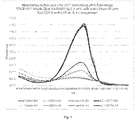
- Figure 1 Absorbance spectra of aqueous liquid foodstuff at pH 6.5 before and after UHT processing (135 °C for 6 seconds) with and without ⁇ -carrageenan and EDTA.
- the combination of ⁇ -carrageenan with Na 2 EDTA had the best color retention post thermal processing.
- hydrocolloids were investigated to determine which ones prevented phycocyanin aggregation in an aqueous solution near the isoelectric point of spirulina proteins, ⁇ pH 4.0. Seven hydrocolloids were tested at a dosage level of 0.05 wt% in a 7 wt% sucrose solution at pH 4.0 with EXBERRY ® Shade Blue Powder 60000002 phycocyanin containing spirulina-extract at 0.5 wt% (equating to 0.012 wt% phycocyanin). The beverage solution was thermally processed to 85°C (microwave) and filled hot into PET bottles and cooled in a water bath to less than 35 °C.
- Table 2 shows the total phycocyanin content of the control sample and with the addition of seven different hydrocolloids before and after processing and whether any precipitation was observed.
- Table 2 Precipitation and total phycocyanin (PC) content before and after UHT thermal processing at pH 6.5.
- Aqueous solutions were prepared containing 7 wt% sucrose solution, EXBERRY ® Shade Blue Powder 60000002 at 0.5 wt% (equating to 0.0117 wt% phycocyanin), Na 2 EDTA at 30 ppm, and seven hydrocolloids at a dosage level of 0.05 wt%.
- Trisodium citrate or citric acid was added to the final solution to reach a pH of 6.5.
- the beverages were processed to 135°C for 6 seconds and filled at ambient temperature into sterile bottles as the product is low acid and the higher temperatures are needed to control for pathogens.
- Total phycocyanin content was determined before and after processing and through 6 weeks in accelerated storage at 32 °C in a hotbox.
- the Yoshikawa & Belay (2008) method was modified as solution were measured at pH 6.5 vs. 6.0.
- Table 3 shows the total phycocyanin content for the control sample (no hydrocolloid or Na 2 EDTA), the addition of Na 2 EDTA at 30 ppm, and seven hydrocolloids at 0.05 wt% with 30 ppm Na 2 EDTA before and after processing and through six weeks of accelerated storage at 32°C.
- Table 3 Total phycocyanin (PC) content before and after UHT thermal processing at pH 6.5 and through 6 weeks at 32 °C storage.
- Total PC (g/L) Before Heat Total PC (g/L) After Heat %Loss with heat Total PC (g/L) 3 wk (32°C) Total PC (g/L) 6 wk (32°C) % Improvement vs.
- Figure 1 shows the change in absorbance before and after thermal processing of the four solutions tested.
- Table 4 Total Phycocyanin content through 6 weeks 32 °C storage of UHT processed pH 6.5 beverage solutions Total Phycocyanin (mg/mL) content % Improvement from Control Before Heat After Heat Week 3 Week 6 Control 0.143 0.017 0.020 0.014 Na2 EDTA 0.140 0.032 0.024 0.024 77% ⁇ -carrageenan 0.136 0.017 0.014 0.011 -22% ⁇ -carrageenan + Na2 EDTA 0.133 0.047 0.037 0.032 134%
- the alcohol containing beverages were analyzed by photometer within 2 hours (T0) after batching and after 3 and 6 weeks of accelerated storage at 32 °C.
Landscapes
- Chemical & Material Sciences (AREA)
- Life Sciences & Earth Sciences (AREA)
- Engineering & Computer Science (AREA)
- Health & Medical Sciences (AREA)
- Food Science & Technology (AREA)
- Polymers & Plastics (AREA)
- Nutrition Science (AREA)
- Zoology (AREA)
- Dispersion Chemistry (AREA)
- Wood Science & Technology (AREA)
- Organic Chemistry (AREA)
- Microbiology (AREA)
- Molecular Biology (AREA)
- Biochemistry (AREA)
- Bioinformatics & Cheminformatics (AREA)
- General Engineering & Computer Science (AREA)
- General Health & Medical Sciences (AREA)
- Genetics & Genomics (AREA)
- Coloring Foods And Improving Nutritive Qualities (AREA)
- Jellies, Jams, And Syrups (AREA)
- Non-Alcoholic Beverages (AREA)
- Medicinal Preparation (AREA)
- Polysaccharides And Polysaccharide Derivatives (AREA)
Description
- The present invention relates to a color stabilized liquid foodstuff containing a phycocyanin from spirulina-extract.
- Beverages and colored beverages are known in the art. The use of natural food pigments over synthetic ones has increased in the food industry, due to increased consumer demands. While several natural pigments have been applied to low acid beverages, having a pH greater than 4.6, there is a need for a stable blue pigment which can be used on its own or blended with other pigments to deliver a range of colors including but not limited to green, purple, brown, and black.
-
US2018271119 discloses the use of phycocyanin derived from Galdieria sulphuraria, which is capable of growing at both high temperature and low pH, for use in beverages. The increased acid stability of phycocyanin (and allophycocyanin) extracted from Galdieria sulphuaria might be explained by the differences in the amino acid sequence in comparison to phycocyanin from commercially available spirulina (such as Arthrospira platensis, Arthrospira maxima, ect.). But Galdieria sulphuraria phycocyanin extracts have not yet been approved or undergone long term testing, as Spirulina derived phycocyanin has. - Selig, et al. discloses the use of beet-pectin to stabilize phycocyanin from a Spirulina-extract at pH 6.8 in an aqueous solution. Beet-pectin appears to be effective at pH 6.8, but is not stable upon thermal treatment, up to 120°C which is common in the food industry.
- Dewi, et al. discloses a spirulina-extract encapsulated in κ-carrageenan for use in an aqueous solution.
- Phycocyanin, from a Spirulina-extract, is to-date the only natural blue pigment approved by the US-FDA (FR Doc No: 2013-19550) and European Union as a coloring food. It is sold in liquid or in powder form for use as blue pigment in foods. Phycocyanin, however, has the disadvantage of being unstable in aqueous systems between pH 2.7-6 where protein aggregation occurs, and also instable under thermal treatment, leading to loss of color which limits the use of phycocyanin in low acid foodstuffs. Thus, phycocyanin has limited use for its food coloring properties in beverages, such as in for example non-alcoholic and alcoholic drinks, which have a pH greater than 4.6. Health conscious customers demand a wide range of naturally colored beverages, and phycocyanin is to-date the only available natural blue pigment. Hence, there is a need to stabilize phycocyanin when used in beverages which undergo thermal treatment or in cold filled alcoholic beverages.
- The inventors have found a solution to stabilize the blue color, from a phycocyanin containing spirulina-extract, in liquid foodstuffs.
- The present invention relates to a liquid foodstuff comprising
- a. a spirulina-extract comprising phycocyanin,
- b. at least one multi-sulphated carrageenan and/or pectin
- c. a chelating agent
- d. a solvent,
- wherein the amount of multi-sulphated carrageenan and/or pectin is between 0.003 and 0.6 wt%,
- wherein the weight ratio between multi-sulphated carrageenan or pectin and phycocyanin ranges between 1:1 and 100:1,
- wherein the chelating agent is present between 1 - 2000 ppm,
- wherein the solvent consists of water and optionally ethanol,
- wherein the amount of solvent ranges between 60-99 wt%,
- wherein the wt% are relative to the total weight of the liquid foodstuff.
- The liquid foodstuff according to the invention has an increased color stability over the heating process as well as storage duration. The negative effects are aggregation/precipitation, color fading, color hue changes and lack of stability over time (weeks or months), as foodstuffs need to withstand long transport and varying storage conditions.
- Advantages of the liquid foodstuff according to the invention are color stability and prevention of aggregation/precipitation; thereby enabling beverages to be naturally colored; for example, in blue and blue-based colors.
- The liquid foodstuff of the invention contains multi-sulphated-carrageenan and/or pectin, a phycocyanin containing spirulina-extract and a chelator, preferably at a pH between 4.6 and 8.
- The liquid foodstuff may further contain other components like for example sweeteners, stabilizers, chelating agents, acids, proteins, salts, flavors, vitamins, minerals, pigments, and preservatives.
- The liquid foodstuff may have a blue color due to the phycocyanin content, but other colors based on blue may be obtained by way of mixing other pigments in with the liquid foodstuff. The liquid foodstuff may contain other pigments, such as safflomin (safflower), anthocyanin, carotenoid, betanin, annatto, lycopene, curcumin and chlorophyll. The pigments may be added to the blue colored phycocyanin containing liquid foodstuff to blend into other colors, such as for example green using safflomin. The liquid foodstuff may contain additives and/or preservatives, such as salts, sorbic acid, salt of sorbate, benzoic acid, salt of benzoate, sodium hexametaphosphate, natamycin, nisin and sulfites.
- The liquid foodstuff preferably has a solvent content of 60-99 wt%, more preferably between 75-98 wt%, most preferably between 83-97 wt%. The solvent consists of water and optionally ethanol (ethylalcohol). When ethanol is present typically, the liquid foodstuff contains between 0.1-20 wt%, preferably between 0.5-17 wt%, more preferably between 1-15 wt%, most preferably between 3-10 wt% ethanol.
- The wt% is defined as the weight % of a component relative to the total weight of the liquid foodstuff, unless defined otherwise.
- Preferably the liquid foodstuff is a beverage, such as a coconut water, alkaline water, coffee beverages, fruit or vegetable drink, smoothie, dairy beverage, dairy alternatives, nut milks, nutritional drink, and/or alcoholic beverage.
- The liquid foodstuff's color can be required to be stable over a long period of time (through transport and storage over weeks or months), at pH greater than 4.6. The color also needs to be stable after the liquid food product is subject to high temperature, up to 120 °C, as these temperatures are commonly used in the food industry in processes such as high temperature short time pasteurization to ensure food safety.
- The liquid foodstuff contains a phycocyanin containing spirulina-extract.
- The phycocyanin containing spirulina-extract can be a water extract of for example Arthrospira platensis and Arthrospira maxima. Spirulina is a cyanobacteria that contains carbohydrates, lipids, fiber, minerals and amongst other proteins, phycobiliproteins. The phycobiliproteins comprise of C-phycocyanin and allophycocyanin. Phycocyanins exhibit the blue color of the liquid foodstuffs according to the present invention. The total phycocyanin content (which is the sum of the C-phycocyanin and allophycocyanin) in phycocyanin containing spirulina-extracts may vary by manufacturers and may typically range from 0.7-45.0 wt%. It is also possible to apply higher concentrations of phycocyanins. The phycocyanin containing spirulina-extract may also be known as Spirulina color concentrate, as for example EXBERRY® Shade Blue Powder. The phycocyanin containing spirulina-extract may be in liquid or dry (powder or granule) form and may contain diluents such as water, invert sugar, sucrose, and/or maltodextrin as example. For use in this invention, liquid and dry forms of phycocyanin containing spirulina-extract are applicable.
- The liquid foodstuff preferably contains a dissolved phycocyanin from a spirulina-extract.
- The liquid foodstuff contains a multi-sulphated carrageenan or combination of multi-sulphated carrageenan.
- The liquid foodstuff preferably contains dissolved multi-sulphated carrageenan. Carrageenans are viewed as dissolved, when an aqueous solution is clear to the eye, and does not show sediment or floating particulates.
- Carrageenans are sourced from seaweed and they are highly flexible molecules that can form curling helical structures. Carrageenans are characterized as linear polysaccharides with repeating galactose units. Carrageenans are classified by the degree of sulfonation. Examples of mono-sulphated carrageenans are κ-carrageenan, γ-carrageenan and α-carrageenan. Examples of di-sulphated carrageenans are ι-carrageenan, δ-carrageenan, µ-carrageenan and θ-carrageenan. Examples of trisulphated carrageenans are λ-carrageenan and v-carrageenan.
- Multi-sulphated carrageenans are carrageenans containing at least 2 sulphate groups, preferably 2 or 3 sulphate groups per disaccharide unit.
- In some embodiments the multi-sulphated carrageenan can be a non-degraded carrageenan
- In some embodiments the multi-sulphated carrageenan can be a hydrolyzed multi-sulphated carrageenan preferably by thermal treatment of a non-degraded multi-sulphated carrageenan under acidic pH conditions.
- Thermal treatment of carrageenan solutions at acidic pH leads to a hydrolysis of the glycosidic bonds (α(1-3) and β(1-4) bonds) connecting the alternating D-galactose residues. Thus, the average molecular weight was shown to decrease with increasing hydrolysis duration (Singh & Jacobsson, 1994). In addition, a good correlation of the measured viscosity and the molecular weight was observed, meaning that with decreasing molecular weight the viscosity decreases (Singh & Jacobsson, 1994). Preferably the pH is between 1.4 and 4 for hydrolysis of the glycosidic bonds, and preferably the temperature is between 20 - 98°C for hydrolysis of the glycosidic bonds, more preferably between 55 and 98 °C.
- Due to the uniform backbone structure, the concentration of carrageenan can be quantified by the content of galactose. In addition, the quantification of galactose allows to determine if the glyosidic bond or also the galactose monomer unit gets degraded by the hydrolysis conditions.
- A possibility to quantify galactose is the quantification of monosaccharides after acid hydrolysis. Hydrolysis of carrageenan is performed with 72 % sulphuric acid (H2SO4) for 30 min at 30 °C, followed by further hydrolysis after dilution to 6% sulphuric acid (H2OS4) for 3 hours at 100 °C. The amount of monosaccharides rhamnose, galactosamine, arabinose, glucosamine, galactose, glucose, mannose, xylose, galacturonic acid and glucuronic acid in the hydrolysate can be quantitatively analyzed by High Performance Anion Exchange Chromatography with Pulsed Amperometric Detection (HPAEC-PAD) on a gold electrode. Analyses are performed with an ICS-5000 DP pump, AS-AP autosampler, DC column compartment and ED electrochemical detector (Thermo Scientific). The neutral monosaccharides are eluted using a gradient of 18 mM sodium hydroxide and 200 mM sodium hydroxide with 75 mM sodium acetate. Data analysis is done with Chromeleon software version 7.2 (Thermo Scientific). Quantitative analyses are carried out using standard solutions of the monosaccharides (Sigma-Aldrich).
- Analysis of galactose content of the used lambda carrageenan powders shows a galactose content of 50-55 wt%.
- Quantification of the galactose content in hydrolyzed carrageenan solutions showed comparable galactose contents as related to the initial amounts of used carrageenan powder. These results demonstrate that a hydrolysis of carrageenan at pH ≥ 1.5 and temperatures ≤ 95°C result in the hydrolysis of the glycosidic bonds but do not degrade the galactose unit itself.
- In addition, the degree of sulphonation can be quantified by the amount of Sulphur. A possibility to quantify Sulphur is based on the combustion of the sample at temperatures above 1000°C and reduction of the released Sulphur to Sulphur dioxide (Elementar Vario Max Cube). The amount of Sulphur is quantified by an IR detector which is calibrated using a calibration curve of sulfadiazine.
- The viscosity of the carrageenan solutions was characterized by viscometry. Viscosity measurements were taken using an Anton Paar Rheometer MCR 302 (Switzerland). Flow curves were measured with a shear rate (1/s) range from 1 to 300 at 20°C. To compare different carrageenan solutions, the viscosity at a shear rate of 100/s is used.
- The preferred multi-sulphated carrageenans of the invention are ι-carrageenan, δ-carrageenan, µ-carrageenan, θ-carrageenan, λ-carrageenan and v-carrageenan, the hydrolysed products of ι-carrageenan, δ-carrageenan, µ-carrageenan, θ-carrageenan, λ-carrageenan and v-carrageenan; more preferred are ι-carrageenan and λ-carrageenan, and its hydrolyzed products and most preferred is λ-carrageenan and hydrolyzed λ-carrageenan.
- Mixtures of multi-sulphated carrageenans can also be used.
- The multi-sulphated carrageenans to be used in the present invention have preferably a viscosity between 1 and 3000 mPas, when dissolved as a 4 wt% solution in water at a pH of 5.5.
- The multi-sulphated carrageenan content of the liquid foodstuff is between 0.003 - 0.6 wt%, preferably between 0.01 - 0.5 wt%, more preferably between 0.02 - 0.3 wt%, most preferably 0.03 - 0.2 wt%.
- The dissolved multi-sulphated carrageenans and phycocyanin from a spirulina-extract are preferably present within the liquid foodstuff at a weight ratio between 1:1 - 100:1, preferably between 2:1 - 50:1, more preferably between 3:1 - 25:1, most preferably between 4:1 - 15:1.
- Instead of using a multi-sulphated carrageenan, it is also possible to apply pectin to stabilize the phycocyanin in combination with a chelator. Pectin is a heteropolysaccharide contained in the primary cell walls of plants. It is generally used as a stabilizer, gelling agent, or thickener in foodstuff. Pectins are classified as high-methoxy (HM) or low-methoxy (LM). The degree of methylation determines the classification. High methoxy pectins contain more than 50% of the carboxyl groups are methylated and less than 50% methylation are called low methoxy (LM) pectins. HM-pectins can form a gel under acidic conditions in the presence of high sugar concentrations, while LM-pectins form gels by interaction with divalent cations, particularly Ca2+. The chemical composition of pectin varies based upon source material with most common materials being citrus peels, apple pomace, and sugar beet pulp. Regardless of source materials and degree of methylation pectins are applicable to stabilize phycocyanin at neutral pH and processing temperature greater than 80°C when used in combination with a chelator.
- The use of pectin in combination with a chelator shows an unexpected synergistic effect of color stability upon heat treatment.
- The pectin content of the liquid foodstuff is between 0.003 - 0.6 wt%, preferably between 0.01 - 0.5 wt%, more preferably between 0.02 - 0.3 wt%, most preferably 0.03 - 0.2 wt%.
- The dissolved multi-sulphated carrageenans and/or pectin and phycocyanin from a spirulina-extract are preferably present within the liquid foodstuff at a weight ratio between 1:1 - 100:1, preferably between 2:1 - 50:1, more preferably between 3:1 - 25:1, most preferably between 4:1 - 15:1.
- The color performance is assessed using a spectrophotometer and measuring absorbance at 620, 650 and 750 nm. The standard method for phycocyanin determination was established by Yoshikawa & Belay (2008) to calculate the native phycocyanin content (mg/mL) from photometric measurements. It relies upon absorbance measurements at 620 and 650 nm and the extinction coefficients of C-phycocyanin and allophycocyanin at these wavelengths at pH 6.0.
- The phycocyanin content in a spirulina-extract is calculated using Yoshikawa & Belay (2008) method at pH 6.0 which is listed below.


- To determine the amount of phycocyanin added to a liquid foodstuff, the dosage level of phycocyanin containing spirulina-extract is multiplied by the total phycocyanin content in the phycocyanin containing spirulina-extract.
- The phycocyanin content of the liquid foodstuff is preferably between 0.003 - 0.07 wt%, preferably 0.006 - 0.05 wt%, and most preferably 0.008 - 0.04 wt%.
- The challenge with phycocyanins is the stability during or after thermal treatment, which can lead to color loss and precipitation. Precipitation occurs in the pH range of 2.7 - 6.0 and for low acid foodstuff the critical range is between 4.6 - 6.0. Precipitation can be avoided when the pH is above 6.0 or delayed when the solution is in a gel or semi-solid form. The aggregation/precipitation is assessed visually. High absorbance at 750 nm after blending or thermal processing indicates a strong potential for protein aggregation.
- Preferably the pH of the beverage according to the invention is between 4.6 - 10, more preferably between 5 - 9, most preferably between 5.5 - 8.
- The liquid foodstuff contains at least one chelator, which may also be referred to as chelating agents.
- Chelators are binding agents that influence the chemical and/or physical state of the molecules/atoms they bind by forming chelates. Chelators can improve color retention and have been found to work synergistically with the multi-sulphated carrageenans and pectin.
- Chelating agents can be synthetic and natural compounds and include the group of ethylene diamine tetra acetic acid and/or its Na, K, Ca salts (EDTA), L-glutamic acid N,N-diacetic acid tetrasodium salt (GLDA), galactaric acid, sodium hexametaphosphate, glutathione, metallotheionein, 2,3-dimerapto-1-propanesulfonic acid, chlorella, garlic, cilantro, selenium, milk thistle, vitamin C, vitamin E, citrates, grape seed extract, quercetin, and lipoic acid.
- The chelating agents are preferably selected from the group of ethylene diamine tetra acetic acid and/or its Na, K, Ca salts (EDTA) and L-glutamic acid N,N-diacetic acid tetrasodium salt (GLDA). EDTA is considered to be ethylene diamine tetra acetic acid together with its Na, K, Ca salts, like for example calcium disodium ethylenediaminetetraacetate, disodium ethylenediaminetetraacetate, tetrasodium ethylenediaminetetraacetate, dipotassium ethylenediaminetetraacetate, and tripotassium ethylenediaminetetraacetate.
- Calcium disodium ethylenediaminetetraacetate is abbreviated to CaNa2 EDTA, disodium ethylenediaminetetraacetate is abbreviated to Na2 EDTA, tetrasodium ethylenediaminetetraacetate is abbreviated to Na4 EDTA, dipotassium ethylenediaminetetraacetate is abbreviated to K2 EDTA, and tripotassium ethylenediaminetetraacetate is abbreviated to K3 EDTA.
- The chelating agent is preferably present between 1 - 2000 ppm in the liquid foodstuff. 1 ppm of chelating agent is to be understood as 0.0001 wt%; for example, 30 ppm of EDTA are 0.003 wt%.
- EDTA is preferably present between 1 - 100 ppm, preferably 10 - 50 ppm, most preferably 20 - 40 ppm.
- The EDTA and phycocyanin from a spirulina-extract are preferably present within the liquid foodstuff at a weight ratio between 2:1 - 1:300, preferably between 1:1 - 1:25, most preferably 1:2 - 1:15.
- The multi-sulphated carrageenans and/or pectin in combination with a chelator such as EDTA showed a surprisingly high increase in color retention and extended shelf life after thermal treatment and/or in the presence of ethyl alcohol at neutral pH.
- In an embodiment the liquid foodstuff is a beverage comprising between 0.003 - 0.6 wt% of λ-carrageenan, between 0.003 - 0.07 wt% of phycocyanin from a spirulina-extract and a chelating agent, wherein the weight ratio of λ-carrageenan to phycocyanin from a spirulina-extract is between 1:1 - 100:1. Preferably the chelating is EDTA. More preferably the chelating agent EDTA is present in an amount between 1 and 100 ppm.
- In an embodiment the liquid foodstuff is a beverage comprising between 0.01 - 0.5 wt% of λ-carrageenan, phycocyanin from a spirulina-extract and a chelating agent and wherein the weight ratio of λ-carrageenan to phycocyanin from a spirulina-extract is between 2:1 - 50:1. Preferably the chelating agent is EDTA present in an amount from 10 - 50 ppm. Preferably the pH is between 4.6 - 10.
- Liquid foodstuffs are typically transported and stored before being consumed. To assure that these liquid foodstuffs do not spoil and are safe for consumption, thermal processes such as retort or UHT (Ultra High Temperature) are used for shelf stable low acid foodstuff. Pasteurization (73°C for 15 seconds) or High Pressure Processing (300 - 600 MPa) may be used for refrigerated short shelf life products (60 days). Liquid foodstuffs can also be preserved through water activity and alcohol content. Preservatives may be added for additional microbiological control.
- A considerable blue color loss is observed upon UHT processing (137°C for 6 seconds) for low acid foodstuffs.
- The multi-sulphated carrageenans and/or pectin in combination with a chelator such as EDTA showed a surprisingly high increase in color retention and extended shelf life after thermal treatment and/or use of preservatives.
- The liquid foodstuff can be obtained according to a process comprising the following steps:
- a) Adding and dissolving the multi-sulphated carrageenans and/or pectin in water and mixing until the multi-sulphated carrageenans and/or pectin are dissolved, as determined by visual observation.
- b) Adding the phycocyanin containing spirulina-extract, and mixing until dissolved at a pH of at least 5, preferably between 5 and 10;
- c) Adding a chelating agent, such as EDTA;
- d) Optionally adding a sweetener, flavor, vitamin, mineral, salt, buffer, juice, or other beverage components;
- e) Optionally adding other pigments, such as anthocyanins;
- f) Adding solvents to obtain the total volume, such as water and alcohol;
- g) Treating the mixture of a)-f) by either thermally processing the liquid to at least 65 °C and filling it into a container; filling the liquid into a container and thermally processing the filled package to at least 100°C or no thermal treatment and cold filling into a container and controlling by formulation (alcohol or water activity), addition of preservatives or high pressure.
- The multi-sulphated carrageenans can be hydrolyzed with heat and acid to reduce viscosity and neutralized to a pH of at least 5.0 before blending with phycocyanin in step a).
- The phycocyanins, multi-sulphated carrageenans and/or pectin, and EDTA are preferably dissolved in the liquid feedstock. Dissolved means that the phycocyanins, carrageenans and/or pectin, and EDTA stay in the solution. The solution is clear to the eye and no sediment or floating particles are observed.
- Multi-sulphated carrageenan and/or pectin can be dry blended with a non-acidic carbohydrate such as sucrose or maltodextrin to improve dissolution of the multi-sulphated carrageenan.
- It is noted that the invention relates to all possible combinations of features described herein, preferred in particular are those combinations of features that are present in the claims. It will therefore be appreciated that all combinations of features relating to the composition according to the invention; all combinations of features relating to the process according to the invention and all combinations of features relating to the composition according to the invention and features relating to the process according to the invention are described herein.
- It is further noted that the term 'comprising' does not exclude the presence of other elements. However, it is also to be understood that a description on a product/composition comprising certain components also discloses a product/composition consisting of these components. The product/composition consisting of these components may be advantageous in that it offers a simpler, more economical process for the preparation of the product/composition. Similarly, it is also to be understood that a description on a process comprising certain steps also discloses a process consisting of these steps. The process consisting of these steps may be advantageous in that it offers a simpler, more economical process.
- The invention is now elucidated by way of the following examples, without however being limited thereto.
- Buchweitz, M. (2016). 17 - Natural Solutions for Blue Colors in Food. In R. Carle, & R. M. Schweiggert (Eds.), Handbook on Natural Pigments in Food and Beverages (pp. 355-384): Woodhead Publishing.
- Dewi, E. N. et al. 2017, "Physical characteristics of phycocyanin from Spirulina microcapsules using different coating materials with freeze drying method", IOP Conf. Ser.: Earth Environ. Sci. 55.
- Selig, M.J., et al., (2017), "Protection of blue color in a spirulina derived phycocyanin extract from proteolytic and thermal degradation via complexation with beet-pectin", Food Hydrocolloids .
- Singh, Satish K. and Jacobsson, Sven P.(1996). Kinetics of acid hydrolysis of κ-carrageenan as determined by molecular weight (SEC-MALLSRI), gel breaking strength, and viscosity measurements. Carbohydrate Polymers, 23, 89-103.Yoshikawa & Belay (2008) Yoshikawa, N., & Belay, A. (2008). Single-Laboratory Validation of a Method for the Determination of c-Phycocyanin and Allophycocyanin in Spirulina (Arthrospira) Supplements and Raw Materials by Spectrophotometry. Journal of AOAC International, 91, 524-529.
-
Figure 1 : Absorbance spectra of aqueous liquid foodstuff at pH 6.5 before and after UHT processing (135 °C for 6 seconds) with and without λ-carrageenan and EDTA. The combination of λ-carrageenan with Na2 EDTA had the best color retention post thermal processing. - Various hydrocolloids were investigated to determine which ones prevented phycocyanin aggregation in an aqueous solution near the isoelectric point of spirulina proteins, ~ pH 4.0. Seven hydrocolloids were tested at a dosage level of 0.05 wt% in a 7 wt% sucrose solution at pH 4.0 with EXBERRY®
Shade Blue Powder 60000002 phycocyanin containing spirulina-extract at 0.5 wt% (equating to 0.012 wt% phycocyanin). The beverage solution was thermally processed to 85°C (microwave) and filled hot into PET bottles and cooled in a water bath to less than 35 °C. - Spirulina aggregation occurred in control, K-carrageenan, and guar gum. No precipitation occurred in lambda carrageenan, iota carrageenan, HM pectin (citrus and apple), xanthan, and gum acacia. (see table 1).
Table 1: Aggregation of spirulina proteins in aqueous solution after thermal processing at pH 4 Control λ-carragee nan I-carrageen an K-carragee nan HM Pectin (citrus/apple) Xanthan Gum Acacia Guar Gum Yes No No Yes No No No Yes - To expand upon learnings in experiment 1.1, seven hydrocolloids were tested at a dosage level of 0.05 wt% in a 7 wt% sucrose solution at pH 6.5 with EXBERRY®
Shade Blue Powder 60000002 at 0.5 wt% (equating to 0.0117 wt% phycocyanin) to determine if color retention is improved. Trisodium citrate or citric acid was added to the final solution to adjust the pH to 6.5. The beverages were processed to 135°C for 6 seconds and filled at ambient temperature into sterile bottles as the product is low acid and the higher temperatures are needed to control for pathogens. - Total phycocyanin content was determined before and after processing. The Yoshikawa & Belay (2008) method was modified and instead of diluting the sample to adjust pH to 6.0, the solution was measured as is at pH 6.5.
- No aggregation or precipitation was observed after thermal processing at pH 6.5, however, color loss was significant >85% after thermal processing for the control sample (no hydrocolloid) and all seven hydrocolloids. In experiment 1.2 no chelating agents were present.
- Table 2 shows the total phycocyanin content of the control sample and with the addition of seven different hydrocolloids before and after processing and whether any precipitation was observed.
Table 2: Precipitation and total phycocyanin (PC) content before and after UHT thermal processing at pH 6.5. Total PC (mg/mL) Before Heat Total PC (mg/mL) After Heat % Loss after heating Precipitation Control 0.117 0.016 86% No λ-carrageenan 0.114 0.016 86% No I- Carrageenan 0.116 0.015 87% No K-Carrageenan 0.118 0.017 86% No Xanthan Gum 0.117 0.017 86% No Gum Arabic 0.118 0.017 86% No HM Pectin (citrus/apple) 0.116 0.017 86% No HM Pectin (sugar beet) 0.112 0.015 87% No - As the hydrocolloids on their own had no impact to color retention during thermal processing and protein aggregation is not a concern above a pH of 6.0, an experiment was conducted to determine the influence of a chelator, in particular Na2 EDTA at 30 ppm on its own and in combination with the same seven hydrocolloids in experiment 1.2.
- Aqueous solutions were prepared containing 7 wt% sucrose solution, EXBERRY®
Shade Blue Powder 60000002 at 0.5 wt% (equating to 0.0117 wt% phycocyanin), Na2 EDTA at 30 ppm, and seven hydrocolloids at a dosage level of 0.05 wt%. Trisodium citrate or citric acid was added to the final solution to reach a pH of 6.5. The beverages were processed to 135°C for 6 seconds and filled at ambient temperature into sterile bottles as the product is low acid and the higher temperatures are needed to control for pathogens. - Total phycocyanin content was determined before and after processing and through 6 weeks in accelerated storage at 32 °C in a hotbox. The Yoshikawa & Belay (2008) method was modified as solution were measured at pH 6.5 vs. 6.0.
- No aggregation or precipitation was observed after thermal processing at pH 6.5. The combination of Na2 EDTA with λ-carrageenan, ι-carrageenan, and HM pectin (citrus/apple and sugar beet) had the best color retention post processing and through six weeks of storage at 32 °C. The color of the beverage after thermal processing and through six weeks of storage remained blue for the Na2 EDTA with λ-carrageenan, ι-carrageenan, HM sugar beet pectin, and HM citrus/apple pectin samples. Surprisingly, the color retention of EDTA with xanthan, gum arabic, and κ-carrageenan was worse than EDTA alone and the color was greenish blue.
- Table 3 shows the total phycocyanin content for the control sample (no hydrocolloid or Na2 EDTA), the addition of Na2 EDTA at 30 ppm, and seven hydrocolloids at 0.05 wt% with 30 ppm Na2 EDTA before and after processing and through six weeks of accelerated storage at 32°C.
Table 3: Total phycocyanin (PC) content before and after UHT thermal processing at pH 6.5 and through 6 weeks at 32 °C storage. Total PC (g/L) Before Heat Total PC (g/L) After Heat %Loss with heat Total PC (g/L) 3 wk (32°C) Total PC (g/L) 6 wk (32°C) % Improvement vs. Control Control 0.117 0.016 86% 0.012 0.010 Na2EDTA 0.118 0.034 71% 0.028 0.024 145% λ Carrageenan + Na2 EDTA 0.115 0.046 60% 0.035 0.029 197% ι Carrageenan + Na2 EDTA 0.118 0.040 66% 0.029 0.025 152% κ Carrageenan + Na2 EDTA 0.118 0.033 72% 0.026 0.017 72% Xanthan Gum + Na2 EDTA 0.120 0.029 76% 0.018 0.016 59% Gum Arabic + Na2 EDTA 0.118 0.032 73% 0.024 0.021 113% HM Pectin (citrus/apple) + Na2 EDTA 0.116 0.042 64% 0.031 0.026 168% HM Pectin (sugar beet) + Na2 EDTA 0.112 0.041 63% 0.029 0.025 154% - To confirm findings from experiment 1.3, a follow-up experiment was conducted with EXBERRY®
Shade Blue Powder 60000002 at 0.6 wt% (equating to 0.014 wt% phycocyanin) and sucrose at 7 wt % at pH 6.5 with combinations of Na2 EDTA at 30 ppm and Ticaloid® 750 λ-carrageenan (TIC GUMS) at 0.05 wt%. The solutions were analyzed by photometer before and after UHT processing (135°C) and at week 3 and 6 in 32°C hotbox storage. A total of four beverages were tested: control, λ-carrageenan, Na2 EDTA, and λ-carrageenan with Na2 EDTA at pH 6.5. - The results (see table 4) confirm that λ-carrageenan on its own will not improve phycocyanin color stability at neutral pH. Almost all the phycocyanin blue color in the control and λ-carrageenan samples were destroyed during thermal processing and the resulting color was grey. While λ-carrageenan on its own did not improve color retention, the combination of λ-carrageenan with Na2 EDTA was the best performing sample after thermal processing and through 6 weeks storage at 32°C. The total phycocyanin content of the Na2 EDTA and carrageenan sample was 134% higher than control sample (see table 4). Na2 EDTA only sample was also significantly better than control with a 77% improvement in total phycocyanin content over control.
Figure 1 shows the change in absorbance before and after thermal processing of the four solutions tested.Table 4: Total Phycocyanin content through 6 weeks 32 °C storage of UHT processed pH 6.5 beverage solutions Total Phycocyanin (mg/mL) content % Improvement from Control Before Heat After Heat Week 3 Week 6 Control 0.143 0.017 0.020 0.014 Na2 EDTA 0.140 0.032 0.024 0.024 77% λ-carrageenan 0.136 0.017 0.014 0.011 -22% λ-carrageenan + Na2 EDTA 0.133 0.047 0.037 0.032 134% - An experiment was conducted with EXBERRY®
Shade Blue Powder 60000002 at 0.5 wt% (equating to 0.012 wt% phycocyanin), 7 wt% sucrose, and 15 wt% ethylalcohol. Na2 EDTA at 30 ppm and/or Ticaloid® 750 (TIC GUMS) λ-carrageenan at 0.05 wt% was added to determine if phycocyanin containing spirulina concentrate can be stabilized in alcohol containing beverages. The pH of the solutions were measured and the results were between 7 - 9. No acids or buffers were added to the solutions as pH measurements of alcohol containing solutions are not accurate. - All formulas were cold filled and the order of addition was as follows:
- 1) Dry blend λ-carrageenan with sugar and add to 50 wt% of total water (room temperature). Mix until fully hydrated (if used).
- 2) Add phycocyanin containing spirulina concentrate and mix until dissolved.
- 3) Add Na2 EDTA (if used).
- 4) Add remaining water and alcohol.
- The alcohol containing beverages were analyzed by photometer within 2 hours (T0) after batching and after 3 and 6 weeks of accelerated storage at 32 °C.
- Photometric measurements at T0, 3 weeks and 6 weeks are in Table . The results show that spirulina is stabilized by Na2 EDTA and λ-carrageenan with Na2 EDTA.
Table 5: Color Stability of Phycocyanin Containing Spirulina-Extract in 15wt% Alcohol after 6 weeks at 32°C Total Phycocyanin (mg/mL) content in 15wt% Alcohol Beverage through 6 weeks @ 32 °C 7wt% Sucrose and 0.5wt% EXBERRY® Shade Blue Powder 60000002Total Phycocyanin (mg/mL) T0 3 weeks 6 weeks % Loss 15% ETOH Control 0.092 0.032 0.024 74% 15% ETOH λ-carrageenan 0.05wt% 0.090 0.032 0.023 74% 15% ETOH Na2 EDTA 30 ppm 0.094 0.052 0.044 53% 15% ETOH λ-carrageenan+ Na2 EDTA 0.092 0.051 0.043 54%
Claims (15)
- A liquid foodstuff comprisinga. a spirulina-extract comprising phycocyaninb. at least one multi-sulphated carrageenan and/or pectinc. a chelating agentd. a solvent,i. wherein the amount of multi-sulphated carrageenan and/or pectin is between 0.003 and 0.6 wt%,ii. wherein the weight ratio between multi-sulphated carrageenan and/or pectin and phycocyanin ranges between 1:1 and 100:1,iii. wherein the chelating agent is present between 1 - 2000 ppm,iv. wherein the solvent consists of water and optionally ethanol,v. wherein the amount of solvent ranges between 60-99 wt%,vi. wherein the wt% are relative to the total weight of the liquid foodstuff.
- The liquid foodstuff according to claim 1, wherein the solvent content is between 75-98 wt%, most preferably between 83-97 wt%.
- The liquid foodstuff according to claim 1 or 2, wherein the solvent consists of water and optionally ethanol (ethylalcohol).
- The liquid foodstuff according to any one of claims 1-3, wherein the foodstuff contains between 0.1-20 wt%, preferably between 0.5-17 wt%, more preferably between 1-15 wt%, most preferably between 3-10 wt% ethanol.
- The composition according to anyone of claims 1-4, wherein the multi-sulphated carrageenan is a non-degraded occurring carrageenan.
- The composition according to anyone of claims 1-4, wherein the multi-sulphated carrageenan is a hydrolyzed carrageenan.
- The liquid foodstuff according to anyone of claims 1 - 6, wherein the multi-sulphated carrageenans are selected ι-carrageenan, δ-carrageenan, µ-carrageenan, θ-carrageenan, λ-carrageenan and v-carrageenan, the hydrolysed products of ι-carrageenan, δ-carrageenan, µ-carrageenan, θ-carrageenan, λ-carrageenan and v-carrageenan; more preferred are ι-carrageenan and λ-carrageenan, and its hydrolyzed products and most preferred is λ-carrageenan and hydrolyzed λ-carrageenan.
- The liquid foodstuff according to any one of claims 1-7, wherein the multi-sulphated carrageenan content of the liquid foodstuff is between 0.003 - 0.6 wt%, preferably between 0.01 - 0.5 wt%, more preferably between 0.02 - 0.3 wt%, most preferably 0.03 - 0.2 wt%.
- The liquid foodstuff according to any one of claims 1-8, wherein the pectin content of the liquid foodstuff is between 0.003 - 0.6 wt%, preferably between 0.01 - 0.5 wt%, more preferably between 0.02 - 0.3 wt%, most preferably 0.03 - 0.2 wt%.
- The liquid foodstuff according to any one of claims 1-9, wherein the phycocyanin content is between 0.003 - 0.07 wt%, preferably 0.006 - 0.05 wt%, and most preferably 0.008 - 0.04 wt%.
- The liquid foodstuff according to any one of claims 1-10, wherein the dissolved multi-sulphated carrageenans and/or pectin and phycocyanin from a spirulina-extract are preferably present within the liquid foodstuff at a weight ratio between 2:1 - 50:1, more preferably between 3:1 - 25:1, most preferably between 4:1 - 15:1.
- The liquid foodstuff according to any one of claims 1-11, wherein the chelating agent is selected from the group of ethylene diamine tetra acetic acid and/or its Na, K, Ca salts (EDTA) andL-glutamic acid N,N-diacetic acid tetrasodium salt (GLDA).
- The liquid foodstuff according to any one of claims 1-12, wherein the chelating agent is EDTA, which is preferably present between 1 - 100 ppm, preferably 10 - 50 ppm, most preferably 20 - 40 ppm.
- The liquid foodstuff according to any one of claims 1-13, wherein EDTA and phycocyanin from a spirulina-extract are preferably present within the liquid foodstuff at a weight ratio between 2:1 - 1:300, preferably between 1:1 - 1:25, most preferably 1:2 - 1:15.
- Process for preparing the liquid foodstuff according to anyone of claims 1-14, wherein the process comprises the steps:a. Adding and dissolving the multi-sulphated carrageenans and/or pectin in water and mixing until the multi-sulphated carrageenans and/or pectin are dissolved, as determined by visual observation.b. Adding the phycocyanin containing spirulina-extract, and mixing until dissolved at a pH of at least 5;c. Adding a chelating agent, such as for example EDTA;d. Optionally adding a sweetener, flavor, vitamin, mineral, salt, buffer, juice, or other beverage components;e. Optionally adding other pigments, such as anthocyanins;f. Adding solvents to obtain the total volume, such as water and alcohol;g. Treating the mixture of a)-f) by either thermally processing the liquid to at least 65 °C and filling it into a container; filling the liquid into a container and thermally processing the filled package to at least 100°C or no thermal treatment and cold filling into a container and controlling by formulation (alcohol or water activity) addition of preservatives or high pressure.
Applications Claiming Priority (9)
| Application Number | Priority Date | Filing Date | Title |
|---|---|---|---|
| US201962794104P | 2019-01-18 | 2019-01-18 | |
| US201962794094P | 2019-01-18 | 2019-01-18 | |
| US201962794074P | 2019-01-18 | 2019-01-18 | |
| US201962794083P | 2019-01-18 | 2019-01-18 | |
| EP19156394.9A EP3692804A1 (en) | 2019-01-18 | 2019-02-11 | A colored beverage having a low ph |
| EP19156440.0A EP3692803A1 (en) | 2019-01-18 | 2019-02-11 | A composition comprising spirulina-extract |
| EP19156444.2A EP3692806A1 (en) | 2019-02-11 | 2019-02-11 | A colored beverage having a neutral ph |
| EP19156427.7A EP3692805A1 (en) | 2019-01-18 | 2019-02-11 | A colored liquid foodstuff having a low ph |
| PCT/EP2019/081840 WO2020148005A1 (en) | 2019-01-18 | 2019-11-19 | A colored beverage having a neutral ph |
Publications (2)
| Publication Number | Publication Date |
|---|---|
| EP3911176A1 EP3911176A1 (en) | 2021-11-24 |
| EP3911176B1 true EP3911176B1 (en) | 2023-01-11 |
Family
ID=71613706
Family Applications (7)
| Application Number | Title | Priority Date | Filing Date |
|---|---|---|---|
| EP19156440.0A Withdrawn EP3692803A1 (en) | 2019-01-18 | 2019-02-11 | A composition comprising spirulina-extract |
| EP19156394.9A Withdrawn EP3692804A1 (en) | 2019-01-18 | 2019-02-11 | A colored beverage having a low ph |
| EP19156427.7A Withdrawn EP3692805A1 (en) | 2019-01-18 | 2019-02-11 | A colored liquid foodstuff having a low ph |
| EP19805296.1A Active EP3911175B1 (en) | 2019-01-18 | 2019-11-19 | A colored beverage having a low ph |
| EP19805295.3A Active EP3911174B1 (en) | 2019-01-18 | 2019-11-19 | A colored foodstuff having a low ph |
| EP19805298.7A Active EP3911173B1 (en) | 2019-01-18 | 2019-11-19 | A composition comprising spirulina-extract |
| EP19805302.7A Active EP3911176B1 (en) | 2019-01-18 | 2019-11-19 | A colored beverage having a neutral ph |
Family Applications Before (6)
| Application Number | Title | Priority Date | Filing Date |
|---|---|---|---|
| EP19156440.0A Withdrawn EP3692803A1 (en) | 2019-01-18 | 2019-02-11 | A composition comprising spirulina-extract |
| EP19156394.9A Withdrawn EP3692804A1 (en) | 2019-01-18 | 2019-02-11 | A colored beverage having a low ph |
| EP19156427.7A Withdrawn EP3692805A1 (en) | 2019-01-18 | 2019-02-11 | A colored liquid foodstuff having a low ph |
| EP19805296.1A Active EP3911175B1 (en) | 2019-01-18 | 2019-11-19 | A colored beverage having a low ph |
| EP19805295.3A Active EP3911174B1 (en) | 2019-01-18 | 2019-11-19 | A colored foodstuff having a low ph |
| EP19805298.7A Active EP3911173B1 (en) | 2019-01-18 | 2019-11-19 | A composition comprising spirulina-extract |
Country Status (3)
| Country | Link |
|---|---|
| US (4) | US11297854B1 (en) |
| EP (7) | EP3692803A1 (en) |
| WO (4) | WO2020148002A1 (en) |
Families Citing this family (7)
| Publication number | Priority date | Publication date | Assignee | Title |
|---|---|---|---|---|
| WO2022053142A1 (en) * | 2020-09-11 | 2022-03-17 | B Blue Nutraceuticals | Beverage comprising phycocyanin |
| US20230389583A1 (en) * | 2020-10-14 | 2023-12-07 | Dupont Nutrition Biosciences Aps | Food ingredient |
| JPWO2023281936A1 (en) * | 2021-07-06 | 2023-01-12 | ||
| CA3229695A1 (en) * | 2021-08-24 | 2023-03-02 | Matthieu COURBALAY | Improved stabilization of phycocyanins in acidic compositions |
| NL2034869B1 (en) * | 2023-05-19 | 2024-12-03 | Ful Foods B V | An acidic phycocyanin- and hydrocolloid-containing composition and preparation thereof |
| FR3159728A1 (en) | 2024-03-04 | 2025-09-05 | Kermeur Industrie | SWEETENED FOOD DRINK BASED ON A NATURAL GREEN COLORANT AND METHOD FOR PRODUCING THE SAME |
| CN119257204A (en) * | 2024-08-01 | 2025-01-07 | 江苏省沿海开发投资有限公司 | A method for improving the color stability of phycocyanin, phycocyanin-polysaccharide complex and application thereof |
Family Cites Families (11)
| Publication number | Priority date | Publication date | Assignee | Title |
|---|---|---|---|---|
| US3378541A (en) * | 1965-03-17 | 1968-04-16 | Warner Lambert Pharmaceutical | Method for depolymerizing carrageenans and products produced thereby |
| FR2552307B1 (en) * | 1983-09-27 | 1989-04-14 | Gervais Danone Sa | IMPROVEMENTS RELATING TO TOPPING COMPOSITIONS FOR FOOD PRODUCTS SUCH AS MILKY DESSERTS |
| DE102005019458A1 (en) * | 2005-04-25 | 2006-10-26 | Grünenthal GmbH | Composition, useful in the preparation of pellets and the multi-particular-presentation form, comprises cefuroximaxetil and carrageenan of the group of lambda carrageenan, tau carrageenan and kappa carrageenan |
| US20080260908A1 (en) * | 2007-04-23 | 2008-10-23 | Pepsico, Inc. | Stabilizer System For Food And Beverage Products |
| JP5581689B2 (en) * | 2009-12-24 | 2014-09-03 | 味の素株式会社 | Emulsified composition |
| EP2833724B1 (en) * | 2012-04-04 | 2019-09-18 | Société des Produits Nestlé S.A. | Shelf-stable acidified dairy or dairy-like products and methods for making sam |
| BR112015020158A2 (en) * | 2013-02-26 | 2017-07-18 | Nestec Sa | ready to drink dairy chocolate drinks |
| CN105813471A (en) * | 2013-12-18 | 2016-07-27 | 巴斯夫欧洲公司 | Stabilized phycocyanin for blue color |
| CN107708444A (en) * | 2015-06-30 | 2018-02-16 | Wm.雷格利Jr.公司 | Contain the edible composition for stabilizing natural colorant |
| FR3041653B1 (en) | 2015-09-25 | 2017-12-29 | Fermentalg | PROCESS FOR CULTIVATION OF ALGAE, PARTICULARLY UNICELLULAR RED ALGAE (ARUS) |
| ES3002966T3 (en) * | 2017-01-20 | 2025-03-10 | Adm Wild Europe Gmbh & Co Kg | Liquid composition comprising phycocyanin |
-
2019
- 2019-02-11 EP EP19156440.0A patent/EP3692803A1/en not_active Withdrawn
- 2019-02-11 EP EP19156394.9A patent/EP3692804A1/en not_active Withdrawn
- 2019-02-11 EP EP19156427.7A patent/EP3692805A1/en not_active Withdrawn
- 2019-11-19 EP EP19805296.1A patent/EP3911175B1/en active Active
- 2019-11-19 WO PCT/EP2019/081790 patent/WO2020148002A1/en not_active Ceased
- 2019-11-19 EP EP19805295.3A patent/EP3911174B1/en active Active
- 2019-11-19 WO PCT/EP2019/081792 patent/WO2020148003A1/en not_active Ceased
- 2019-11-19 US US17/423,624 patent/US11297854B1/en active Active
- 2019-11-19 WO PCT/EP2019/081806 patent/WO2020148004A1/en not_active Ceased
- 2019-11-19 US US17/423,525 patent/US12382977B2/en active Active
- 2019-11-19 EP EP19805298.7A patent/EP3911173B1/en active Active
- 2019-11-19 EP EP19805302.7A patent/EP3911176B1/en active Active
- 2019-11-19 WO PCT/EP2019/081840 patent/WO2020148005A1/en not_active Ceased
- 2019-11-19 US US17/423,511 patent/US11439163B2/en active Active
- 2019-11-19 US US17/423,559 patent/US11517032B2/en active Active
Also Published As
| Publication number | Publication date |
|---|---|
| EP3911174A1 (en) | 2021-11-24 |
| EP3911176A1 (en) | 2021-11-24 |
| EP3911173B1 (en) | 2023-01-11 |
| EP3911175B1 (en) | 2023-01-11 |
| WO2020148002A1 (en) | 2020-07-23 |
| EP3692803A1 (en) | 2020-08-12 |
| EP3911175A1 (en) | 2021-11-24 |
| EP3911174B1 (en) | 2023-01-11 |
| US20220039435A1 (en) | 2022-02-10 |
| WO2020148003A1 (en) | 2020-07-23 |
| US11517032B2 (en) | 2022-12-06 |
| EP3911173A1 (en) | 2021-11-24 |
| US20220039440A1 (en) | 2022-02-10 |
| EP3692804A1 (en) | 2020-08-12 |
| WO2020148005A1 (en) | 2020-07-23 |
| US20220087291A1 (en) | 2022-03-24 |
| US20220039434A1 (en) | 2022-02-10 |
| US11439163B2 (en) | 2022-09-13 |
| US12382977B2 (en) | 2025-08-12 |
| US11297854B1 (en) | 2022-04-12 |
| WO2020148004A1 (en) | 2020-07-23 |
| EP3692805A1 (en) | 2020-08-12 |
Similar Documents
| Publication | Publication Date | Title |
|---|---|---|
| US11297854B1 (en) | Colored beverage having a neutral pH | |
| EP2741621B1 (en) | Shelf stable, low water liquid beverage concentrates | |
| US20220015398A1 (en) | Composition comprising spirulina extract | |
| Türkyılmaz et al. | Effects of pasteurization and storage on turbidity and copigmentation in pomegranate juices clarified with various hydrocolloid combinations | |
| MX2012005599A (en) | Process for producing a heat-treated soy protein-containing acidic beverage and product obtained thereby. | |
| EP3692806A1 (en) | A colored beverage having a neutral ph | |
| US20240407416A1 (en) | Improved stabilization of phycocyanins in acidic compositions | |
| JP7248486B2 (en) | Containerized green juice-containing jelly drink that retains its green color for a long period of time | |
| MX2012005905A (en) | Reconstitutable soy protein-containing particulate composition and preparation thereof. | |
| DE69505795T2 (en) | MANUFACTURING METHOD FOR FOODSTUFFS, FILLED CLOSED CONTAINERS AND CASE COMPOUND USE | |
| JP2020171233A (en) | A packaged green juice beverage that can retain its flavor in the acidic region | |
| KR101375933B1 (en) | Container-packed beverage containing vegetable juice and/or fruit juice | |
| Alqahtani et al. | Synergistic Impact of Inulin and Date Syrup Fortification on Physicochemical, Sensory and Stability of Functional Components of Hassawi Lime Juice Under Cold and Hot Treatment. | |
| EP4609724A1 (en) | Acid-resistant gardenia blue preparation | |
| NL2034869B1 (en) | An acidic phycocyanin- and hydrocolloid-containing composition and preparation thereof | |
| US20240365827A1 (en) | Clean label shelf-stable flavor delivery systems | |
| JP2017131127A (en) | Acai-containing beverage and method for reducing astringency |
Legal Events
| Date | Code | Title | Description |
|---|---|---|---|
| STAA | Information on the status of an ep patent application or granted ep patent |
Free format text: STATUS: UNKNOWN |
|
| STAA | Information on the status of an ep patent application or granted ep patent |
Free format text: STATUS: THE INTERNATIONAL PUBLICATION HAS BEEN MADE |
|
| PUAI | Public reference made under article 153(3) epc to a published international application that has entered the european phase |
Free format text: ORIGINAL CODE: 0009012 |
|
| STAA | Information on the status of an ep patent application or granted ep patent |
Free format text: STATUS: REQUEST FOR EXAMINATION WAS MADE |
|
| 17P | Request for examination filed |
Effective date: 20210812 |
|
| AK | Designated contracting states |
Kind code of ref document: A1 Designated state(s): AL AT BE BG CH CY CZ DE DK EE ES FI FR GB GR HR HU IE IS IT LI LT LU LV MC MK MT NL NO PL PT RO RS SE SI SK SM TR |
|
| DAV | Request for validation of the european patent (deleted) | ||
| DAX | Request for extension of the european patent (deleted) | ||
| GRAP | Despatch of communication of intention to grant a patent |
Free format text: ORIGINAL CODE: EPIDOSNIGR1 |
|
| STAA | Information on the status of an ep patent application or granted ep patent |
Free format text: STATUS: GRANT OF PATENT IS INTENDED |
|
| INTG | Intention to grant announced |
Effective date: 20220907 |
|
| GRAS | Grant fee paid |
Free format text: ORIGINAL CODE: EPIDOSNIGR3 |
|
| GRAA | (expected) grant |
Free format text: ORIGINAL CODE: 0009210 |
|
| STAA | Information on the status of an ep patent application or granted ep patent |
Free format text: STATUS: THE PATENT HAS BEEN GRANTED |
|
| AK | Designated contracting states |
Kind code of ref document: B1 Designated state(s): AL AT BE BG CH CY CZ DE DK EE ES FI FR GB GR HR HU IE IS IT LI LT LU LV MC MK MT NL NO PL PT RO RS SE SI SK SM TR |
|
| REG | Reference to a national code |
Ref country code: GB Ref legal event code: FG4D |
|
| REG | Reference to a national code |
Ref country code: CH Ref legal event code: EP |
|
| REG | Reference to a national code |
Ref country code: DE Ref legal event code: R096 Ref document number: 602019024369 Country of ref document: DE |
|
| REG | Reference to a national code |
Ref country code: IE Ref legal event code: FG4D |
|
| REG | Reference to a national code |
Ref country code: AT Ref legal event code: REF Ref document number: 1542849 Country of ref document: AT Kind code of ref document: T Effective date: 20230215 |
|
| REG | Reference to a national code |
Ref country code: NL Ref legal event code: FP |
|
| REG | Reference to a national code |
Ref country code: LT Ref legal event code: MG9D |
|
| REG | Reference to a national code |
Ref country code: AT Ref legal event code: MK05 Ref document number: 1542849 Country of ref document: AT Kind code of ref document: T Effective date: 20230111 |
|
| P01 | Opt-out of the competence of the unified patent court (upc) registered |
Effective date: 20230530 |
|
| PG25 | Lapsed in a contracting state [announced via postgrant information from national office to epo] |
Ref country code: RS Free format text: LAPSE BECAUSE OF FAILURE TO SUBMIT A TRANSLATION OF THE DESCRIPTION OR TO PAY THE FEE WITHIN THE PRESCRIBED TIME-LIMIT Effective date: 20230111 Ref country code: PT Free format text: LAPSE BECAUSE OF FAILURE TO SUBMIT A TRANSLATION OF THE DESCRIPTION OR TO PAY THE FEE WITHIN THE PRESCRIBED TIME-LIMIT Effective date: 20230511 Ref country code: NO Free format text: LAPSE BECAUSE OF FAILURE TO SUBMIT A TRANSLATION OF THE DESCRIPTION OR TO PAY THE FEE WITHIN THE PRESCRIBED TIME-LIMIT Effective date: 20230411 Ref country code: LV Free format text: LAPSE BECAUSE OF FAILURE TO SUBMIT A TRANSLATION OF THE DESCRIPTION OR TO PAY THE FEE WITHIN THE PRESCRIBED TIME-LIMIT Effective date: 20230111 Ref country code: LT Free format text: LAPSE BECAUSE OF FAILURE TO SUBMIT A TRANSLATION OF THE DESCRIPTION OR TO PAY THE FEE WITHIN THE PRESCRIBED TIME-LIMIT Effective date: 20230111 Ref country code: HR Free format text: LAPSE BECAUSE OF FAILURE TO SUBMIT A TRANSLATION OF THE DESCRIPTION OR TO PAY THE FEE WITHIN THE PRESCRIBED TIME-LIMIT Effective date: 20230111 Ref country code: ES Free format text: LAPSE BECAUSE OF FAILURE TO SUBMIT A TRANSLATION OF THE DESCRIPTION OR TO PAY THE FEE WITHIN THE PRESCRIBED TIME-LIMIT Effective date: 20230111 Ref country code: AT Free format text: LAPSE BECAUSE OF FAILURE TO SUBMIT A TRANSLATION OF THE DESCRIPTION OR TO PAY THE FEE WITHIN THE PRESCRIBED TIME-LIMIT Effective date: 20230111 |
|
| PG25 | Lapsed in a contracting state [announced via postgrant information from national office to epo] |
Ref country code: SE Free format text: LAPSE BECAUSE OF FAILURE TO SUBMIT A TRANSLATION OF THE DESCRIPTION OR TO PAY THE FEE WITHIN THE PRESCRIBED TIME-LIMIT Effective date: 20230111 Ref country code: PL Free format text: LAPSE BECAUSE OF FAILURE TO SUBMIT A TRANSLATION OF THE DESCRIPTION OR TO PAY THE FEE WITHIN THE PRESCRIBED TIME-LIMIT Effective date: 20230111 Ref country code: IS Free format text: LAPSE BECAUSE OF FAILURE TO SUBMIT A TRANSLATION OF THE DESCRIPTION OR TO PAY THE FEE WITHIN THE PRESCRIBED TIME-LIMIT Effective date: 20230511 Ref country code: GR Free format text: LAPSE BECAUSE OF FAILURE TO SUBMIT A TRANSLATION OF THE DESCRIPTION OR TO PAY THE FEE WITHIN THE PRESCRIBED TIME-LIMIT Effective date: 20230412 Ref country code: FI Free format text: LAPSE BECAUSE OF FAILURE TO SUBMIT A TRANSLATION OF THE DESCRIPTION OR TO PAY THE FEE WITHIN THE PRESCRIBED TIME-LIMIT Effective date: 20230111 |
|
| REG | Reference to a national code |
Ref country code: DE Ref legal event code: R097 Ref document number: 602019024369 Country of ref document: DE |
|
| PG25 | Lapsed in a contracting state [announced via postgrant information from national office to epo] |
Ref country code: SM Free format text: LAPSE BECAUSE OF FAILURE TO SUBMIT A TRANSLATION OF THE DESCRIPTION OR TO PAY THE FEE WITHIN THE PRESCRIBED TIME-LIMIT Effective date: 20230111 Ref country code: RO Free format text: LAPSE BECAUSE OF FAILURE TO SUBMIT A TRANSLATION OF THE DESCRIPTION OR TO PAY THE FEE WITHIN THE PRESCRIBED TIME-LIMIT Effective date: 20230111 Ref country code: EE Free format text: LAPSE BECAUSE OF FAILURE TO SUBMIT A TRANSLATION OF THE DESCRIPTION OR TO PAY THE FEE WITHIN THE PRESCRIBED TIME-LIMIT Effective date: 20230111 Ref country code: DK Free format text: LAPSE BECAUSE OF FAILURE TO SUBMIT A TRANSLATION OF THE DESCRIPTION OR TO PAY THE FEE WITHIN THE PRESCRIBED TIME-LIMIT Effective date: 20230111 Ref country code: CZ Free format text: LAPSE BECAUSE OF FAILURE TO SUBMIT A TRANSLATION OF THE DESCRIPTION OR TO PAY THE FEE WITHIN THE PRESCRIBED TIME-LIMIT Effective date: 20230111 |
|
| PLBE | No opposition filed within time limit |
Free format text: ORIGINAL CODE: 0009261 |
|
| STAA | Information on the status of an ep patent application or granted ep patent |
Free format text: STATUS: NO OPPOSITION FILED WITHIN TIME LIMIT |
|
| PG25 | Lapsed in a contracting state [announced via postgrant information from national office to epo] |
Ref country code: SK Free format text: LAPSE BECAUSE OF FAILURE TO SUBMIT A TRANSLATION OF THE DESCRIPTION OR TO PAY THE FEE WITHIN THE PRESCRIBED TIME-LIMIT Effective date: 20230111 |
|
| 26N | No opposition filed |
Effective date: 20231012 |
|
| PG25 | Lapsed in a contracting state [announced via postgrant information from national office to epo] |
Ref country code: SI Free format text: LAPSE BECAUSE OF FAILURE TO SUBMIT A TRANSLATION OF THE DESCRIPTION OR TO PAY THE FEE WITHIN THE PRESCRIBED TIME-LIMIT Effective date: 20230111 |
|
| PG25 | Lapsed in a contracting state [announced via postgrant information from national office to epo] |
Ref country code: IT Free format text: LAPSE BECAUSE OF FAILURE TO SUBMIT A TRANSLATION OF THE DESCRIPTION OR TO PAY THE FEE WITHIN THE PRESCRIBED TIME-LIMIT Effective date: 20230111 |
|
| PG25 | Lapsed in a contracting state [announced via postgrant information from national office to epo] |
Ref country code: MC Free format text: LAPSE BECAUSE OF FAILURE TO SUBMIT A TRANSLATION OF THE DESCRIPTION OR TO PAY THE FEE WITHIN THE PRESCRIBED TIME-LIMIT Effective date: 20230111 |
|
| PG25 | Lapsed in a contracting state [announced via postgrant information from national office to epo] |
Ref country code: LU Free format text: LAPSE BECAUSE OF NON-PAYMENT OF DUE FEES Effective date: 20231119 |
|
| PG25 | Lapsed in a contracting state [announced via postgrant information from national office to epo] |
Ref country code: MC Free format text: LAPSE BECAUSE OF FAILURE TO SUBMIT A TRANSLATION OF THE DESCRIPTION OR TO PAY THE FEE WITHIN THE PRESCRIBED TIME-LIMIT Effective date: 20230111 Ref country code: LU Free format text: LAPSE BECAUSE OF NON-PAYMENT OF DUE FEES Effective date: 20231119 |
|
| REG | Reference to a national code |
Ref country code: BE Ref legal event code: MM Effective date: 20231130 |
|
| PG25 | Lapsed in a contracting state [announced via postgrant information from national office to epo] |
Ref country code: BE Free format text: LAPSE BECAUSE OF NON-PAYMENT OF DUE FEES Effective date: 20231130 |
|
| PG25 | Lapsed in a contracting state [announced via postgrant information from national office to epo] |
Ref country code: BE Free format text: LAPSE BECAUSE OF NON-PAYMENT OF DUE FEES Effective date: 20231130 |
|
| PG25 | Lapsed in a contracting state [announced via postgrant information from national office to epo] |
Ref country code: BG Free format text: LAPSE BECAUSE OF FAILURE TO SUBMIT A TRANSLATION OF THE DESCRIPTION OR TO PAY THE FEE WITHIN THE PRESCRIBED TIME-LIMIT Effective date: 20230111 |
|
| PG25 | Lapsed in a contracting state [announced via postgrant information from national office to epo] |
Ref country code: BG Free format text: LAPSE BECAUSE OF FAILURE TO SUBMIT A TRANSLATION OF THE DESCRIPTION OR TO PAY THE FEE WITHIN THE PRESCRIBED TIME-LIMIT Effective date: 20230111 |
|
| PG25 | Lapsed in a contracting state [announced via postgrant information from national office to epo] |
Ref country code: CY Free format text: LAPSE BECAUSE OF FAILURE TO SUBMIT A TRANSLATION OF THE DESCRIPTION OR TO PAY THE FEE WITHIN THE PRESCRIBED TIME-LIMIT; INVALID AB INITIO Effective date: 20191119 |
|
| PG25 | Lapsed in a contracting state [announced via postgrant information from national office to epo] |
Ref country code: HU Free format text: LAPSE BECAUSE OF FAILURE TO SUBMIT A TRANSLATION OF THE DESCRIPTION OR TO PAY THE FEE WITHIN THE PRESCRIBED TIME-LIMIT; INVALID AB INITIO Effective date: 20191119 |
|
| REG | Reference to a national code |
Ref country code: CH Ref legal event code: U11 Free format text: ST27 STATUS EVENT CODE: U-0-0-U10-U11 (AS PROVIDED BY THE NATIONAL OFFICE) Effective date: 20251201 |
|
| PG25 | Lapsed in a contracting state [announced via postgrant information from national office to epo] |
Ref country code: TR Free format text: LAPSE BECAUSE OF FAILURE TO SUBMIT A TRANSLATION OF THE DESCRIPTION OR TO PAY THE FEE WITHIN THE PRESCRIBED TIME-LIMIT Effective date: 20230111 |
|
| PGFP | Annual fee paid to national office [announced via postgrant information from national office to epo] |
Ref country code: NL Payment date: 20251119 Year of fee payment: 7 |
|
| PGFP | Annual fee paid to national office [announced via postgrant information from national office to epo] |
Ref country code: DE Payment date: 20251119 Year of fee payment: 7 |
|
| PGFP | Annual fee paid to national office [announced via postgrant information from national office to epo] |
Ref country code: GB Payment date: 20251121 Year of fee payment: 7 |
|
| PGFP | Annual fee paid to national office [announced via postgrant information from national office to epo] |
Ref country code: FR Payment date: 20251126 Year of fee payment: 7 |
|
| PGFP | Annual fee paid to national office [announced via postgrant information from national office to epo] |
Ref country code: CH Payment date: 20251201 Year of fee payment: 7 |
|
| PGFP | Annual fee paid to national office [announced via postgrant information from national office to epo] |
Ref country code: IE Payment date: 20251121 Year of fee payment: 7 |