EP3910838A1 - Transmission method for hybrid automatic repeat feedback information, network device and terminal - Google Patents
Transmission method for hybrid automatic repeat feedback information, network device and terminal Download PDFInfo
- Publication number
- EP3910838A1 EP3910838A1 EP19908657.0A EP19908657A EP3910838A1 EP 3910838 A1 EP3910838 A1 EP 3910838A1 EP 19908657 A EP19908657 A EP 19908657A EP 3910838 A1 EP3910838 A1 EP 3910838A1
- Authority
- EP
- European Patent Office
- Prior art keywords
- slot
- harq
- ack
- mini
- transmission
- Prior art date
- Legal status (The legal status is an assumption and is not a legal conclusion. Google has not performed a legal analysis and makes no representation as to the accuracy of the status listed.)
- Granted
Links
Images


Classifications
-
- H—ELECTRICITY
- H04—ELECTRIC COMMUNICATION TECHNIQUE
- H04W—WIRELESS COMMUNICATION NETWORKS
- H04W72/00—Local resource management
- H04W72/12—Wireless traffic scheduling
- H04W72/1263—Mapping of traffic onto schedule, e.g. scheduled allocation or multiplexing of flows
- H04W72/1273—Mapping of traffic onto schedule, e.g. scheduled allocation or multiplexing of flows of downlink data flows
-
- H—ELECTRICITY
- H04—ELECTRIC COMMUNICATION TECHNIQUE
- H04L—TRANSMISSION OF DIGITAL INFORMATION, e.g. TELEGRAPHIC COMMUNICATION
- H04L1/00—Arrangements for detecting or preventing errors in the information received
- H04L1/12—Arrangements for detecting or preventing errors in the information received by using return channel
- H04L1/16—Arrangements for detecting or preventing errors in the information received by using return channel in which the return channel carries supervisory signals, e.g. repetition request signals
- H04L1/18—Automatic repetition systems, e.g. Van Duuren systems
- H04L1/1806—Go-back-N protocols
-
- H—ELECTRICITY
- H04—ELECTRIC COMMUNICATION TECHNIQUE
- H04L—TRANSMISSION OF DIGITAL INFORMATION, e.g. TELEGRAPHIC COMMUNICATION
- H04L1/00—Arrangements for detecting or preventing errors in the information received
- H04L1/12—Arrangements for detecting or preventing errors in the information received by using return channel
- H04L1/16—Arrangements for detecting or preventing errors in the information received by using return channel in which the return channel carries supervisory signals, e.g. repetition request signals
- H04L1/1607—Details of the supervisory signal
-
- H—ELECTRICITY
- H04—ELECTRIC COMMUNICATION TECHNIQUE
- H04L—TRANSMISSION OF DIGITAL INFORMATION, e.g. TELEGRAPHIC COMMUNICATION
- H04L1/00—Arrangements for detecting or preventing errors in the information received
- H04L1/12—Arrangements for detecting or preventing errors in the information received by using return channel
- H04L1/16—Arrangements for detecting or preventing errors in the information received by using return channel in which the return channel carries supervisory signals, e.g. repetition request signals
- H04L1/18—Automatic repetition systems, e.g. Van Duuren systems
- H04L1/1812—Hybrid protocols; Hybrid automatic repeat request [HARQ]
-
- H—ELECTRICITY
- H04—ELECTRIC COMMUNICATION TECHNIQUE
- H04L—TRANSMISSION OF DIGITAL INFORMATION, e.g. TELEGRAPHIC COMMUNICATION
- H04L1/00—Arrangements for detecting or preventing errors in the information received
- H04L1/12—Arrangements for detecting or preventing errors in the information received by using return channel
- H04L1/16—Arrangements for detecting or preventing errors in the information received by using return channel in which the return channel carries supervisory signals, e.g. repetition request signals
- H04L1/18—Automatic repetition systems, e.g. Van Duuren systems
- H04L1/1829—Arrangements specially adapted for the receiver end
- H04L1/1848—Time-out mechanisms
-
- H—ELECTRICITY
- H04—ELECTRIC COMMUNICATION TECHNIQUE
- H04L—TRANSMISSION OF DIGITAL INFORMATION, e.g. TELEGRAPHIC COMMUNICATION
- H04L1/00—Arrangements for detecting or preventing errors in the information received
- H04L1/12—Arrangements for detecting or preventing errors in the information received by using return channel
- H04L1/16—Arrangements for detecting or preventing errors in the information received by using return channel in which the return channel carries supervisory signals, e.g. repetition request signals
- H04L1/18—Automatic repetition systems, e.g. Van Duuren systems
- H04L1/1829—Arrangements specially adapted for the receiver end
- H04L1/1854—Scheduling and prioritising arrangements
-
- H—ELECTRICITY
- H04—ELECTRIC COMMUNICATION TECHNIQUE
- H04L—TRANSMISSION OF DIGITAL INFORMATION, e.g. TELEGRAPHIC COMMUNICATION
- H04L1/00—Arrangements for detecting or preventing errors in the information received
- H04L1/12—Arrangements for detecting or preventing errors in the information received by using return channel
- H04L1/16—Arrangements for detecting or preventing errors in the information received by using return channel in which the return channel carries supervisory signals, e.g. repetition request signals
- H04L1/18—Automatic repetition systems, e.g. Van Duuren systems
- H04L1/1829—Arrangements specially adapted for the receiver end
- H04L1/1861—Physical mapping arrangements
-
- H—ELECTRICITY
- H04—ELECTRIC COMMUNICATION TECHNIQUE
- H04L—TRANSMISSION OF DIGITAL INFORMATION, e.g. TELEGRAPHIC COMMUNICATION
- H04L27/00—Modulated-carrier systems
- H04L27/26—Systems using multi-frequency codes
- H04L27/2601—Multicarrier modulation systems
- H04L27/2602—Signal structure
- H04L27/26025—Numerology, i.e. varying one or more of symbol duration, subcarrier spacing, Fourier transform size, sampling rate or down-clocking
-
- H—ELECTRICITY
- H04—ELECTRIC COMMUNICATION TECHNIQUE
- H04L—TRANSMISSION OF DIGITAL INFORMATION, e.g. TELEGRAPHIC COMMUNICATION
- H04L5/00—Arrangements affording multiple use of the transmission path
- H04L5/0001—Arrangements for dividing the transmission path
- H04L5/0003—Two-dimensional division
- H04L5/0005—Time-frequency
- H04L5/0007—Time-frequency the frequencies being orthogonal, e.g. OFDM(A) or DMT
-
- H—ELECTRICITY
- H04—ELECTRIC COMMUNICATION TECHNIQUE
- H04L—TRANSMISSION OF DIGITAL INFORMATION, e.g. TELEGRAPHIC COMMUNICATION
- H04L5/00—Arrangements affording multiple use of the transmission path
- H04L5/0001—Arrangements for dividing the transmission path
- H04L5/0003—Two-dimensional division
- H04L5/0005—Time-frequency
- H04L5/0007—Time-frequency the frequencies being orthogonal, e.g. OFDM(A) or DMT
- H04L5/0008—Wavelet-division
-
- H—ELECTRICITY
- H04—ELECTRIC COMMUNICATION TECHNIQUE
- H04L—TRANSMISSION OF DIGITAL INFORMATION, e.g. TELEGRAPHIC COMMUNICATION
- H04L5/00—Arrangements affording multiple use of the transmission path
- H04L5/003—Arrangements for allocating sub-channels of the transmission path
- H04L5/0053—Allocation of signalling, i.e. of overhead other than pilot signals
-
- H—ELECTRICITY
- H04—ELECTRIC COMMUNICATION TECHNIQUE
- H04L—TRANSMISSION OF DIGITAL INFORMATION, e.g. TELEGRAPHIC COMMUNICATION
- H04L5/00—Arrangements affording multiple use of the transmission path
- H04L5/003—Arrangements for allocating sub-channels of the transmission path
- H04L5/0053—Allocation of signalling, i.e. of overhead other than pilot signals
- H04L5/0055—Physical resource allocation for ACK/NACK
-
- H—ELECTRICITY
- H04—ELECTRIC COMMUNICATION TECHNIQUE
- H04W—WIRELESS COMMUNICATION NETWORKS
- H04W72/00—Local resource management
- H04W72/04—Wireless resource allocation
- H04W72/044—Wireless resource allocation based on the type of the allocated resource
- H04W72/0446—Resources in time domain, e.g. slots or frames
-
- H—ELECTRICITY
- H04—ELECTRIC COMMUNICATION TECHNIQUE
- H04W—WIRELESS COMMUNICATION NETWORKS
- H04W72/00—Local resource management
- H04W72/20—Control channels or signalling for resource management
- H04W72/23—Control channels or signalling for resource management in the downlink direction of a wireless link, i.e. towards a terminal
-
- H—ELECTRICITY
- H04—ELECTRIC COMMUNICATION TECHNIQUE
- H04W—WIRELESS COMMUNICATION NETWORKS
- H04W76/00—Connection management
- H04W76/30—Connection release
- H04W76/34—Selective release of ongoing connections
Definitions
- the present disclosure relates to the field of communication technology, in particular to a transmission method for Hybrid Automatic Repeat reQuest (HARQ) feedback information, a network device and a terminal.
- HARQ Hybrid Automatic Repeat reQuest
- a Physical Downlink Control Channel (PDCCH) carrying its scheduling information indicates scheduling timing (i.e., K0) between the PDSCH and the PDCCH) and HARQ-Acknowledgement (ACK) timing (i.e., K1) between the PDSCH and a corresponding HARQ-ACK).
- scheduling timing i.e., K0
- ACK HARQ-Acknowledgement
- a slot offset K0 between a slot where the PDSCH is located and a slot where Downlink Control Information (DCI) is located is indicated through a time-domain resource assignment indicator field in a DCI format used by the PDCCH.
- DCI Downlink Control Information
- the quantity K1 of slots between the end of the PDSCH and the beginning of the HARQ-ACK is indicated by a PDSCH-to- HARQ-ACK timing indicator field in the DCI format, i.e., the PDSCH transmitted within a slot is used to transmit the HARQ-ACK within a slot n+K1.
- a universal set of K1 is ⁇ 0, 1, 2, 3, 4, 5, 6, 7, 8, 9, 10, 11, 12, 13, 14, 15 ⁇ , and usually at most 8 values are configured for a terminal.
- An object of the present disclosure is to provide a transmission method for HARQ feedback information, a network device and a terminal, so as to solve the problem about how to perform HARQ-ACK feedback when granularity of the HARQ-ACK timing between downlink transmission and the transmission of the HARQ-ACK changes.
- the present disclosure provides the following technical solutions.
- the present disclosure provides in some embodiments a transmission method for HARQ feedback information realized by a network device, including: determining a transmission position of an HARQ-ACK in accordance with a transmission position of downlink transmission and feedback timing of the HARQ-ACK for the downlink transmission, granularity of the feedback timing being smaller than one slot; and receiving the HARQ-ACK at the transmission position of the HARQ-ACK.
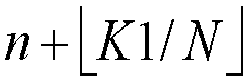
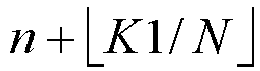
- the determining the transmission position of the HARQ-ACK includes, when the transmission position of the downlink transmission is a slot n, determining the transmission position of the HARQ-ACK as a slot n + ⁇ K 1 / N ⁇ , where K1 represents a value of the feedback timing of the HARQ-ACK and it is an integer, the granularity of the feedback timing is 1/N slot, and N is a predetermined integer greater than 1.
- the determining the transmission position of the HARQ-ACK includes, when the transmission position of the downlink transmission is a slot n, determining the transmission position of the HARQ-ACK as a slot n + ⁇ K 1 / N ⁇ , where K1 represents a value of the feedback timing of the HARQ-ACK and it is an integer, the granularity of the feedback timing is 1/N slot, and N is a predetermined integer greater than 1.
- the determining the transmission position of the HARQ-ACK includes, when the transmission position of the downlink transmission is a slot n, determining the transmission position of the HARQ-ACK as a slot ⁇ n + K 1 ⁇ or n + ⁇ K 1 ⁇ , where K1 represents a value of the feedback timing of the HARQ-ACK and it is an integral multiple of 1/N, the granularity of the feedback timing is 1/N slot, and N is a predetermined integer greater than 1.
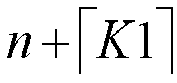
- the determining the transmission position of the HARQ-ACK includes, when the transmission position of the downlink transmission is a slot n, determining the transmission position of the HARQ-ACK as a slot ⁇ n + K 1 ⁇ or n + ⁇ K 1 ⁇ , where K1 represents a value of the feedback timing of the HARQ-ACK and it is an integral multiple of 1/N, the granularity of the feedback timing is 1/N slot, and N is a predetermined integer greater than 1.
- the determining the transmission position of the HARQ-ACK includes, when the transmission position of the downlink transmission is a slot n, determining the transmission position of the HARQ-ACK as a mini-slot n ⁇ N+K1, where N represents the quantity of mini-slots within one slot.
- the mini-slot index n ⁇ N+K1 of the mini-slot is greater than a maximum mini-slot index within a radio frame
- the mini-slot index is (n ⁇ N+K1) modT, where T represents the quantity of mini-slots in the radio frame.
- the downlink transmission includes the transmission of a Physical Downlink Shared Channel (PDSCH), the transmission of a Physical Downlink Control Channel (PDCCH) indicating Semi-Persistent Scheduling (SPS) PDSCH release or a Downlink Control Information (DCI) indicating SPS PDSCH release, or a SPS PDSCH release.
- PDSCH Physical Downlink Shared Channel
- PDCCH Physical Downlink Control Channel
- DCI Downlink Control Information
- the present disclosure provides in some embodiments a transmission method for HARQ feedback information realized by a terminal, including: determining a transmission position of an HARQ-ACK in accordance with a transmission position of downlink transmission and feedback timing of the HARQ-ACK for the downlink transmission, granularity of the feedback timing being smaller than one slot; and transmitting the HARQ-ACK at the transmission position of the HARQ-ACK.
- the determining the transmission position of the HARQ-ACK includes, when the transmission position of the downlink transmission is a slot n, determining the transmission position of the HARQ-ACK as a slot n + ⁇ K 1 / N ⁇ , where K1 represents a value of the feedback timing of the HARQ-ACK and it is an integer, the granularity of the feedback timing is 1/N slot, and N is a predetermined integer greater than 1.
- the determining the transmission position of the HARQ-ACK includes, when the transmission position of the downlink transmission is a slot n, determining the transmission position of the HARQ-ACK as a slot n + ⁇ K 1 / N ⁇ , where K1 represents a value of the feedback timing of the HARQ-ACK and it is an integer, the granularity of the feedback timing is 1/N slot, and N is a predetermined integer greater than 1.
- the determining the transmission position of the HARQ-ACK includes, when the transmission position of the downlink transmission is a slot n, determining the transmission position of the HARQ-ACK as a slot ⁇ n + K 1 ⁇ or n + ⁇ K 1 ⁇ , where K1 represents a value of the feedback timing of the HARQ-ACK and it is an integral multiple of 1/N, the granularity of the feedback timing is 1/N slot, and N is a predetermined integer greater than 1.
- the determining the transmission position of the HARQ-ACK includes, when the transmission position of the downlink transmission is a slot n, determining the transmission position of the HARQ-ACK as a slot ⁇ n + K 1 ⁇ or n + ⁇ K 1 ⁇ , where K1 represents a value of the feedback timing of the HARQ-ACK and it is an integral multiple of 1/N, the granularity of the feedback timing is 1/N slot, and N is a predetermined integer greater than 1.
- the determining the transmission position of the HARQ-ACK includes, when the transmission position of the downlink transmission is a slot n, determining the transmission position of the HARQ-ACK as a mini-slot n ⁇ N+K1, where N represents the quantity of mini-slots within one slot.
- the mini-slot index n ⁇ N+K1 of the mini-slot is greater than a maximum mini-slot index within a radio frame
- the mini-slot index is (n ⁇ N+K1) modT, where T represents the quantity of mini-slots in the radio frame.
- the downlink transmission includes the transmission of a Physical Downlink Shared Channel (PDSCH), the transmission of a Physical Downlink Control Channel (PDCCH) indicating Semi-Persistent Scheduling (SPS) PDSCH release or a Downlink Control Information (DCI) indicating SPS PDSCH release, or a SPS PDSCH release.
- PDSCH Physical Downlink Shared Channel
- PDCCH Physical Downlink Control Channel
- DCI Downlink Control Information
- the present disclosure provides in some embodiments a network device, including: a processing module configured to determine a transmission position of an HARQ-ACK in accordance with a transmission position of downlink transmission and feedback timing of the HARQ-ACK for the downlink transmission, granularity of the feedback timing being smaller than one slot; and a transceiver module configured to receive the HARQ-ACK at the transmission position of the HARQ-ACK.
- the present disclosure provides in some embodiments a terminal, including: a processing module configured to determine a transmission position of an HARQ-ACK in accordance with a transmission position of downlink transmission and feedback timing of the HARQ-ACK for the downlink transmission, granularity of the feedback timing being smaller than one slot; and a transceiver module configured to transmit the HARQ-ACK at the transmission position of the HARQ-ACK.
- the present disclosure provides in some embodiments a communication device, including a processor configured to: determine a transmission position of an HARQ-ACK in accordance with a transmission position of downlink transmission and feedback timing of the HARQ-ACK for the downlink transmission, and receive the HARQ-ACK at the transmission position of the HARQ-ACK; or determine a transmission position of an HARQ-ACK in accordance with a transmission position of downlink transmission and feedback timing of the HARQ-ACK for the downlink transmission, and transmit the HARQ-ACK at the transmission position of the HARQ-ACK.
- Granularity of the feedback timing is smaller than one slot.
- the present disclosure provides in some embodiments a computer-readable storage medium including an instruction.
- the instruction is executed by a computer to implement the above-mentioned methods.
- the present disclosure has the following beneficial effect.
- appropriate HARQ-ACK timing may be determined in accordance with the transmission position of the downlink transmission and the feedback timing of the HARQ-ACK, so as to normally feed back the HARQ-ACK for the downlink transmission.
- the present disclosure provides in some embodiments a transmission method for HARQ feedback information realized by a network device, which includes the following steps.
- Step 21 determining a transmission position of an HARQ-ACK in accordance with a transmission position of downlink transmission and feedback timing of the HARQ-ACK for the downlink transmission, granularity of the feedback timing being smaller than one slot.
- the downlink transmission may include the transmission of a Physical Downlink Shared Channel (PDSCH), the transmission of a Physical Downlink Control Channel (PDCCH) indicating Semi-Persistent Scheduling (SPS) PDSCH release or a Downlink Control Information (DCI) indicating SPS PDSCH release, or a SPS PDSCH release.
- PDSCH Physical Downlink Shared Channel
- PDCCH Physical Downlink Control Channel
- DCI Downlink Control Information
- Step 22 receiving the HARQ-ACK at the transmission position of the HARQ-ACK.
- appropriate HARQ-ACK timing may be determined in accordance with the transmission position of the downlink transmission and the feedback timing of the HARQ-ACK, so as to normally feed back the HARQ-ACK for the downlink transmission.
- Step 21 of determining the transmission position of the HARQ-ACK may include Step 211 of, when the transmission position of the downlink transmission is a slot n, determining the transmission position of the HARQ-ACK as a slot n + ⁇ K 1 / N ⁇ , where K1 represents a value of the feedback timing of the HARQ-ACK and it is an integer, the granularity of the feedback timing is 1/N slot, and N is a predetermined integer greater than 1.
- K1 is ⁇ 0, 1, 2, 3, 4, 5, 6, 7, 8.... ⁇
- N represents the quantity of basic units of the feedback timing within one slot, the quantity of mini-slots within one slot, or the quantity of mini-slots for transmitting a PUCCH within one slot.
- K1 is 1, it represents a length of 1/N slot.
- whether one basic unit includes 3 or 4 symbols may be predefined or pre-configured.
- a first PUCCH within one slot may have a basic unit with a length of 3 symbols
- a second PUCCH may have a basic unit with a length of 4 symbols
- a third PUCCH may have a basic unit with a length of 3 symbols
- a fourth PUCCH may have a basic unit with a length of 4 symbols.
- the lengths of the basic units for the PUCCHs may also be replaced with each other.
- the first PUCCH may have a basic unit with a length of 4 symbols
- the second PUCCH may have a basic unit with a length of 3 symbols
- the third PUCCH may have a basic unit with a length of 3 symbols
- the fourth PUCCH may have a basic unit with a length of 4 symbols.
- a part of the determined slot where the HARQ-ACK is transmitted may be determined in the following modes.
- one slot may be divided into two parts, i.e., a first half slot and a second half slot.
- one slot may be divided into two parts, i.e., a first half slot and a second half slot.
- Step 21 of determining the transmission position of the HARQ-ACK may include Step 212 of, when the transmission position of the downlink transmission is a slot n, determining the transmission position of the HARQ-ACK as a slot n + ⁇ K 1 / N ⁇ , where K1 represents a value of the feedback timing of the HARQ-ACK and it is an integer, the granularity of the feedback timing is 1/N slot, and N is a predetermined integer greater than 1.
- K1 is ⁇ 0, 1, 2, 3, 4, 5, 6, 7, 8.... ⁇
- N represents the quantity of basic units of the feedback timing within one slot, the quantity of mini-slots within one slot, or the quantity of mini-slots for transmitting a PUCCH within one slot.
- K1 is 1, it represents a length of 1/N slot.
- whether one basic unit includes 3 or 4 symbols may be predefined or pre-configured.
- a first PUCCH within one slot may have a basic unit with a length of 3 symbols
- a second PUCCH may have a basic unit with a length of 4 symbols
- a third PUCCH may have a basic unit with a length of 3 symbols
- a fourth PUCCH may have a basic unit with a length of 4 symbols.
- the lengths of the basic units for the PUCCHs may also be replaced with each other.
- the first PUCCH may have a basic unit with a length of 4 symbols
- the second PUCCH may have a basic unit with a length of 3 symbols
- the third PUCCH may have a basic unit with a length of 3 symbols
- the fourth PUCCH may have a basic unit with a length of 4 symbols.
- a part of the determined slot where the HARQ-ACK is transmitted may be determined as follows.
- one slot may be divided into two parts, i.e., a first half slot and a second half slot.
- K1 is an integer
- K1 ⁇ 2, 3, 4, 5 ⁇ .
- the terminal may determine that an HARQ-ACK for the PDSCH is transmitted within the slot n + ⁇ K 1 / N ⁇ in accordance with a value of K1 indicated by an HARQ-ACK timing indicator field in DCI used by a PDCCH for scheduling the PDSCH (PDSCH-to-HARQ-timing-indicator field).
- the terminal may further determine one PUCCH resource in preconfigured PUCCH resources in accordance with a PUCCH resource indicator field in the DCI, and a starting symbol of the resource needs to be within the first half slot of the slot n+2.
- the terminal may transmit the HARQ-ACK for the PDSCH within the slot n on one PUCCH within the first half slot within the slot n+2.
- the terminal may further determine one PUCCH resource in preconfigured PUCCH resources in accordance with a PUCCH resource indicator field in the DCI, and a starting symbol of the resource needs to be within the second half slot of the slot n+2.
- the terminal may transmit the HARQ-ACK for the PDSCH within the slot n+1 on a PUCCH within the second half slot of the slot n+2.
- a base station may determine that the HARQ-ACK for the PDSCH within the slot n is received on a PUCCH resource within the first half slot of the slot n+2 and the HARQ-ACK for the PDSCH within the slot n+1 is received on a PUCCH resource within the second half slot within the slot n+2.
- Step 21 of determining the transmission position of the HARQ-ACK may include Step 213 of, when the transmission position of the downlink transmission is a slot n, determining the transmission position of the HARQ-ACK as a slot ⁇ n + K 1 ⁇ or n + ⁇ K 1 ⁇ , where K1 represents a value of the feedback timing of the HARQ-ACK and it is an integral multiple of 1/N, the granularity of the feedback timing is 1/N slot, and N is a predetermined integer greater than 1.
- K1 is ⁇ 0, 0.5, 1, 1.5, 2, 2.5, 3, 3.5, 4.... ⁇
- N represents the quantity of basic units of the feedback timing within one slot, the quantity of mini-slots within one slot, or the quantity of mini-slots for transmitting a PUCCH within one slot.
- K1 is 1/N, it represents a length of 1/N slot, and when K1 is 1, it presents a length of one slot.
- whether one basic unit includes 3 or 4 symbols may be predefined or pre-configured.
- a first PUCCH within one slot may have a basic unit with a length of 3 symbols
- a second PUCCH may have a basic unit with a length of 4 symbols
- a third PUCCH may have a basic unit with a length of 3 symbols
- a fourth PUCCH may have a basic unit with a length of 4 symbols.
- the lengths of the basic units for the PUCCHs may also be replaced with each other.
- the first PUCCH may have a basic unit with a length of 4 symbols
- the second PUCCH may have a basic unit with a length of 3 symbols
- the third PUCCH may have a basic unit with a length of 3 symbols
- the fourth PUCCH may have a basic unit with a length of 4 symbols.
- a part of the determined slot where the HARQ-ACK is transmitted may be determined in the following modes.
- one slot may be divided into two parts, i.e., a first half slot and a second half slot.
- one slot may be divided into two parts, i.e., a first half slot and a second half slot.
- K1>0 and (K1 ⁇ N-1) mod N 0, i.e., K1 is a decimal, it may be determined that the HARQ-ACK is transmitted with the first half slot of the slot ⁇ n + K 1 ⁇ or n + ⁇ K 1 ⁇ .
- K1 is an integer
- one slot may be divided into two parts, i.e., a first half slot and a second half slot.
- Step 21 of determining the transmission position of the HARQ-ACK may include Step 214 of, when the transmission position of the downlink transmission is a slot n, determining the transmission position of the HARQ-ACK as a slot ⁇ n + K 1 ⁇ or n + ⁇ K 1 ⁇ , where K1 represents a value of the feedback timing of the HARQ-ACK and it is an integral multiple of 1/N, the granularity of the feedback timing is 1/N slot, and N is a predetermined integer greater than 1.
- K1 is ⁇ 0, 0.5, 1, 1.5, 2, 2.5, 3, 3.5, 4.... ⁇
- N represents the quantity of basic units of the feedback timing within one slot, the quantity of mini-slots within one slot, or the quantity of mini-slots for transmitting a PUCCH within one slot.
- K1 is 1/N, it represents a length of 1/N slot, and when K1 is 1, it presents a length of one slot.
- whether one basic unit includes 3 or 4 symbols may be predefined or pre-configured.
- a first PUCCH within one slot may have a basic unit with a length of 3 symbols
- a second PUCCH may have a basic unit with a length of 4 symbols
- a third PUCCH may have a basic unit with a length of 3 symbols
- a fourth PUCCH may have a basic unit with a length of 4 symbols.
- the lengths of the basic units for the PUCCHs may also be replaced with each other.
- the first PUCCH may have a basic unit with a length of 4 symbols
- the second PUCCH may have a basic unit with a length of 3 symbols
- the third PUCCH may have a basic unit with a length of 3 symbols
- the fourth PUCCH may have a basic unit with a length of 4 symbols.
- a part of the determined slot where the HARQ-ACK is transmitted may be determined as follows.
- one slot may be divided into two parts, i.e., a first half slot and a second half slot.
- the terminal may determine that an HARQ-ACK for the PDSCH is transmitted within the slot n + ⁇ K 1 ⁇ in accordance with a value of K1 indicated by an HARQ-ACK timing indicator field in DCI used by a PDCCH for scheduling the PDSCH (PDSCH-to-HARQ-timing-indicator field).
- the terminal may further determine one PUCCH resource in preconfigured PUCCH resources in accordance with a PUCCH resource indicator field in the DCI, and a starting symbol of the resource needs to be within the first half slot of the slot n+2.
- the terminal may transmit the HARQ-ACK for the PDSCH within the slot n on one PUCCH within the first half slot within the slot n+2.
- the terminal may further determine one PUCCH resource in preconfigured PUCCH resources in accordance with a PUCCH resource indicator field in the DCI, and a starting symbol of the resource needs to be within the second half slot of the slot n+2.
- the terminal may transmit the HARQ-ACK for the PDSCH within the slot n+1 on a PUCCH within the second half slot of the slot n+2.
- the base station may determine that the HARQ-ACK for the PDSCH within the slot n is received on a PUCCH resource within the first half slot of the slot n+2 and the HARQ-ACK for the PDSCH within the slot n+1 is received on a PUCCH resource within the second half slot within the slot n+2.
- the mini-slot index may be (n ⁇ N+K1) modT, where T represents the quantity of mini-slots in the radio frame.
- K1 is an integer
- K1 ⁇ 2,3,4,5 ⁇
- the HARQ-ACK may be transmitted within the mini-slot n ⁇ N+K1
- the terminal may determine that an HARQ-ACK for the PDSCH is transmitted within the mini-slot n ⁇ N+K1 in accordance with a value of K1 indicated by an HARQ-ACK timing indicator field in DCI used by a PDCCH for scheduling the PDSCH (PDSCH-to-HARQ-timing-indicator field).
- the mini-slot 2n+4 is equivalent to the first half slot of the slot n+2, so the terminal may further determine one PUCCH resource in preconfigured PUCCH resources in accordance with a PUCCH resource indicator field in the DCI, and a starting symbol of the resource needs to be within the mini-slot 2n+4, i.e., the first half slot of the slot n+2.
- the terminal may transmit the HARQ-ACK for the PDSCH within the slot n on one PUCCH within the mini-slot 2n+4.
- the terminal may determine that an HARQ-ACK for the PDSCH is transmitted within a mini-slot (n+1) ⁇ N+K1 in accordance with a value of K1 indicated by an HARQ-ACK timing indicator field in DCI used by a PDCCH for scheduling the PDSCH (PDSCH-to-HARQ-timing-indicator field).
- the mini-slot 2n+5 is equivalent to the second half slot of the slot n+2, so the terminal may further determine one PUCCH resource in preconfigured PUCCH resources in accordance with a PUCCH resource indicator field in the DCI, and a starting symbol of the resource needs to be within the mini-slot 2n+5, i.e., the second half slot of the slot n+2.
- the terminal may transmit the HARQ-ACK for the PDSCH within the slot n+1 on a PUCCH within the mini-slot 2n+5.
- the base station may determine that the HARQ-ACK for the PDSCH within the slot n is received on a PUCCH resource within the mini-slot 2n+4 and the HARQ-ACK for the PDSCH within the slot n+1 is received on a PUCCH resource within the mini-slot 2n+5.
- the index corresponding to the SCS may be acquired from the following Table 4.2-1 in Section 4.2 "numerologies" in 3GPP TS 38.211, where ⁇ represents the SCS, and ⁇ represents the index corresponding to the SCS.
- ⁇ ⁇ 2 ⁇ ⁇ 15 [kHz] Cyclic prefix 0 15 Normal 1 30 Normal 2 60 Normal, Extended 3 120 Normal 4 240 Normal
- the feedback timing may be determined in accordance with an actual value of K1 with the slot as a starting point, so as to determine the slot where the actual PUCCH transmission is located and a portion of the PUCCH within the slot.
- the PUCCH may be transmitted within the second half slot of the slot n+1.
- Values of n and n' may be the same or different, depending on a difference between an uplink SCS and a downlink SCS.
- appropriate HARQ-ACK timing may be determined in accordance with the transmission position of the downlink transmission and the feedback timing of the HARQ-ACK, so as to normally feed back the HARQ-ACK for the downlink transmission.
- the present disclosure further provides in some embodiments a transmission method for HARQ feedback information realized by a terminal, which includes: Step 61 of determining a transmission position of an HARQ-ACK in accordance with a transmission position of downlink transmission and feedback timing of the HARQ-ACK for the downlink transmission, granularity of the feedback timing being smaller than one slot; and Step 62 of transmitting the HARQ-ACK at the transmission position of the HARQ-ACK.
- Step 61 of determining the transmission position of the HARQ-ACK may include, when the transmission position of the downlink transmission is a slot n, determining the transmission position of the HARQ-ACK as a slot n + ⁇ K 1 / N ⁇ , where K1 represents a value of the feedback timing of the HARQ-ACK and it is an integer, the granularity of the feedback timing is 1/N slot, and N is a predetermined integer greater than 1.
- the HARQ-ACK may be transmitted in a first part, an N th part, a first mini-slot, an N th mini-slot, a mini-slot with an index of 0, or a mini-slot with an index of N-1 in N parts of the slot n + ⁇ K 1 / N ⁇ ;
- Step 61 of determining the transmission position of the HARQ-ACK may include, when the transmission position of the downlink transmission is a slot n, determining the transmission position of the HARQ-ACK as a slot n + ⁇ K 1 / N ⁇ , where K1 represents a value of the feedback timing of the HARQ-ACK and it is an integer, the granularity of the feedback timing is 1/N slot, and N is a predetermined integer greater than 1.
- Step 61 of determining the transmission position of the HARQ-ACK may include, when the transmission position of the downlink transmission is a slot n, determining the transmission position of the HARQ-ACK as a slot ⁇ n + K 1 ⁇ or n + ⁇ K 1 ⁇ , where K1 represents a value of the feedback timing of the HARQ-ACK and it is an integral multiple of 1/N, the granularity of the feedback timing is 1/N slot, and N is a predetermined integer greater than 1.
- the HARQ-ACK may be transmitted in a first part, an N th part, a first mini-slot, an N th mini-slot, a mini-slot with an index of 0, or a mini-slot with an index of N-1 in N parts of the slot ⁇ n + K 1 ⁇ or n + ⁇ K 1 ⁇ ;
- Step 61 of determining the transmission position of the HARQ-ACK may include, when the transmission position of the downlink transmission is a slot n, determining the transmission position of the HARQ-ACK as a slot ⁇ n + K 1 ⁇ or n + ⁇ K 1 ⁇ , where K1 represents a value of the feedback timing of the HARQ-ACK and it is an integral multiple of 1/N, the granularity of the feedback timing is 1/N slot, and N is a predetermined integer greater than 1.
- Step 61 of determining the transmission position of the HARQ-ACK may include, when the transmission position of the downlink transmission is a slot n, determining the transmission position of the HARQ-ACK as a mini-slot n ⁇ N+K1, where N represents the quantity of mini-slots within one slot.
- the mini-slot index may be (n ⁇ N+K1) modT, where T represents the quantity of mini-slots in the radio frame.
- the downlink transmission may include the transmission of a Physical Downlink Shared Channel (PDSCH), the transmission of a Physical Downlink Control Channel (PDCCH) indicating Semi-Persistent Scheduling (SPS) PDSCH release or a Downlink Control Information (DCI) indicating SPS PDSCH release, or a SPS PDSCH release.
- PDSCH Physical Downlink Shared Channel
- PDCCH Physical Downlink Control Channel
- DCI Downlink Control Information
- appropriate HARQ-ACK timing may be determined in accordance with the transmission position of the downlink transmission and the feedback timing of the HARQ-ACK, so as to normally feed back the HARQ-ACK for the downlink transmission.
- the present disclosure further provides in some embodiments a network device 70, which includes: a processing module 72 configured to determine a transmission position of an HARQ-ACK in accordance with a transmission position of downlink transmission and feedback timing of the HARQ-ACK for the downlink transmission, granularity of the feedback timing being smaller than one slot; and a transceiver module 71 configured to receive the HARQ-ACK at the transmission position of the HARQ-ACK.
- a processing module 72 configured to determine a transmission position of an HARQ-ACK in accordance with a transmission position of downlink transmission and feedback timing of the HARQ-ACK for the downlink transmission, granularity of the feedback timing being smaller than one slot
- a transceiver module 71 configured to receive the HARQ-ACK at the transmission position of the HARQ-ACK.
- the processing module 72 is specifically configured to, when the transmission position of the downlink transmission is a slot n, determine the transmission position of the HARQ-ACK as a slot n + ⁇ K 1 / N ⁇ , where K1 represents a value of the feedback timing of the HARQ-ACK and it is an integer, the granularity of the feedback timing is 1/N slot, and N is a predetermined integer greater than 1.
- the HARQ-ACK may be transmitted in a first part, an N th part, a first mini-slot, an N th mini-slot, a mini-slot with an index of 0, or a mini-slot with an index of N-1 in N parts of the slot n + ⁇ K 1 / N ⁇ ;
- the processing module 72 is specifically configured to, when the transmission position of the downlink transmission is a slot n, determine the transmission position of the HARQ-ACK as a slot n + ⁇ K 1 / N ⁇ , where K1 represents a value of the feedback timing of the HARQ-ACK and it is an integer, the granularity of the feedback timing is 1/N slot, and N is a predetermined integer greater than 1.
- the processing module 72 is specifically configured to, when the transmission position of the downlink transmission is a slot n, determine the transmission position of the HARQ-ACK as a slot ⁇ n + K 1 ⁇ or n + ⁇ K 1 ⁇ , where K1 represents a value of the feedback timing of the HARQ-ACK and it is an integral multiple of 1/N, the granularity of the feedback timing is 1/N slot, and N is a predetermined integer greater than 1.
- the HARQ-ACK may be transmitted in a first part, an N th part, a first mini-slot, an N th mini-slot, a mini-slot with an index of 0, or a mini-slot with an index of N-1 in N parts of the slot ⁇ n + K 1 ⁇ or n + ⁇ K 1 ⁇ ;
- the processing module 72 is specifically configured to, when the transmission position of the downlink transmission is a slot n, determine the transmission position of the HARQ-ACK as a slot ⁇ n + K 1 ⁇ or n + ⁇ K 1 ⁇ where K1 represents a value of the feedback timing of the HARQ-ACK and it is an integral multiple of 1/N, the granularity of the feedback timing is 1/N slot, and N is a predetermined integer greater than 1.
- the processing module 72 is specifically configured to, when the transmission position of the downlink transmission is a slot n, determine the transmission position of the HARQ-ACK as a mini-slot n ⁇ N+K1, where N represents the quantity of mini-slots within one slot.
- the mini-slot index may be (n ⁇ N+K1) modT, where T represents the quantity of mini-slots in the radio frame.
- the downlink transmission may include the transmission of a Physical Downlink Shared Channel (PDSCH), the transmission of a Physical Downlink Control Channel (PDCCH) indicating Semi-Persistent Scheduling (SPS) PDSCH release or a Downlink Control Information (DCI) indicating SPS PDSCH release, or a SPS PDSCH release.
- PDSCH Physical Downlink Shared Channel
- PDCCH Physical Downlink Control Channel
- DCI Downlink Control Information
- the network device may be a device corresponding to the method in FIG. 2 , and it may be a base station. All implementation modes in the method may be applied to the network device with a same technical effect.
- the network device may further include a storage module 73.
- the transceiver module 71 may be connected to the processing module 72 and the storage module 73 via a bus interface. A function of the transceiver module 71 may be achieved by the processing module 72, and a function of the processing module 72 may also be achieved by the transceiver module 71.
- the transceiver module 71 may be specifically implemented as a transceiver
- the processing module 72 may be specifically implemented as a processor
- the storage module 73 may be specifically implemented as a memory.
- the present disclosure further provides in some embodiments a terminal 80, which includes: a processing module 82 configured to determine a transmission position of an HARQ-ACK in accordance with a transmission position of downlink transmission and feedback timing of the HARQ-ACK for the downlink transmission, granularity of the feedback timing being smaller than one slot; and a transceiver module 81 configured to transmit the HARQ-ACK at the transmission position of the HARQ-ACK.
- a processing module 82 configured to determine a transmission position of an HARQ-ACK in accordance with a transmission position of downlink transmission and feedback timing of the HARQ-ACK for the downlink transmission, granularity of the feedback timing being smaller than one slot
- a transceiver module 81 configured to transmit the HARQ-ACK at the transmission position of the HARQ-ACK.
- the processing module 82 is specifically configured to, when the transmission position of the downlink transmission is a slot n, determine the transmission position of the HARQ-ACK as a slot n + ⁇ K 1 / N ⁇ , where K1 represents a value of the feedback timing of the HARQ-ACK and it is an integer, the granularity of the feedback timing is 1/N slot, and N is a predetermined integer greater than 1.
- the HARQ-ACK may be transmitted in a first part, an N th part, a first mini-slot, an N th mini-slot, a mini-slot with an index of 0, or a mini-slot with an index of N-1 in N parts of the slot n + ⁇ K 1 / N ⁇ ;
- the processing module 82 is specifically configured to, when the transmission position of the downlink transmission is a slot n, determine the transmission position of the HARQ-ACK as a slot n + ⁇ K 1 / N ⁇ , where K1 represents a value of the feedback timing of the HARQ-ACK and it is an integer, the granularity of the feedback timing is 1/N slot, and N is a predetermined integer greater than 1.
- the processing module 82 is specifically configured to, when the transmission position of the downlink transmission is a slot n, determine the transmission position of the HARQ-ACK as a slot ⁇ n + K 1 ⁇ or n + ⁇ K 1 ⁇ , where K1 represents a value of the feedback timing of the HARQ-ACK and it is an integral multiple of 1/N, the granularity of the feedback timing is 1/N slot, and N is a predetermined integer greater than 1.
- the HARQ-ACK may be transmitted in a first part, an N th part, a first mini-slot, an N th mini-slot, a mini-slot with an index of 0, or a mini-slot with an index of N-1 in N parts of the slot ⁇ n + K 1 ⁇ or n + ⁇ K 1 ⁇ ;
- the processing module 82 is specifically configured to, when the transmission position of the downlink transmission is a slot n, determine the transmission position of the HARQ-ACK as a slot ⁇ n + K 1 ⁇ or n + ⁇ K 1 ⁇ , where K1 represents a value of the feedback timing of the HARQ-ACK and it is an integral multiple of 1/N, the granularity of the feedback timing is 1/N slot, and N is a predetermined integer greater than 1.
- the processing module 82 is specifically configured to, when the transmission position of the downlink transmission is a slot n, determining the transmission position of the HARQ-ACK as a mini-slot n ⁇ N+K1, where N represents the quantity of mini-slots within one slot.
- the mini-slot index may be (n ⁇ N+K1) modT, where T represents the quantity of mini-slots in the radio frame.
- the downlink transmission may include the transmission of a Physical Downlink Shared Channel (PDSCH), the transmission of a Physical Downlink Control Channel (PDCCH) indicating Semi-Persistent Scheduling (SPS) PDSCH release or a Downlink Control Information (DCI) indicating SPS PDSCH release, or a SPS PDSCH release.
- PDSCH Physical Downlink Shared Channel
- PDCCH Physical Downlink Control Channel
- DCI Downlink Control Information
- the terminal may be a device corresponding to the method in FIG. 6 . All implementation modes in the method may be applied to the terminal with a same technical effect.
- the terminal may further include a storage module 83.
- the transceiver module 81 may be connected to the processing module 82 and the storage module 83 via a bus interface. A function of the transceiver module 81 may be achieved by the processing module 82, and a function of the processing module 82 may also be achieved by the transceiver module 81.
- the transceiver module 81 may be specifically implemented as a transceiver
- the processing module 82 may be specifically implemented as a processor
- the storage module 83 may be specifically implemented as a memory.
- the present disclosure further provides in some embodiments a communication device.
- the communication device is the above-mentioned network device, it includes a processor configured to achieve the following functions: determining a transmission position of an HARQ-ACK in accordance with a transmission position of downlink transmission and feedback timing of the HARQ-ACK for the downlink transmission, granularity of the feedback timing being smaller than one slot; and receiving the HARQ-ACK at the transmission position of the HARQ-ACK.
- the network device may be a device corresponding to the method in FIG. 2 . All implementation modes in the method may be applied to the network device with a same technical effect.
- the present disclosure further provides in some embodiments a communication device.
- the communication device is the above-mentioned terminal, it includes a processor configured to achieve the following functions: determining a transmission position of an HARQ-ACK in accordance with a transmission position of downlink transmission and feedback timing of the HARQ-ACK for the downlink transmission, granularity of the feedback timing being smaller than one slot; and transmitting the HARQ-ACK at the transmission position of the HARQ-ACK.
- the terminal may be a device corresponding to the method in FIG. 6 . All implementation modes in the method may be applied to the terminal with a same technical effect.
- the present disclosure further provides in some embodiments a computer-readable storage medium including an instruction.
- the instruction is executed by a computer, so as to implement the method in FIG. 2 or FIG. 6 .
- appropriate HARQ-ACK timing may be determined in accordance with the transmission position of the downlink transmission and the feedback timing of the HARQ-ACK, so as to normally feed back the HARQ-ACK for the downlink transmission.
- the device and method may be implemented in any other ways.
- the embodiments for the apparatus are merely for illustrative purposes, and the modules or units are provided merely on the basis of their logic functions. During the actual application, some modules or units may be combined together or integrated into another system. Alternatively, some functions of the module or units may be omitted or not executed.
- the coupling connection, direct coupling connection or communication connection between the modules or units may be implemented via interfaces, and the indirect coupling connection or communication connection between the modules or units may be implemented in an electrical or mechanical form or in any other form.
- the units may be, or may not be, physically separated from each other.
- the units for displaying may be, or may not be, physical units, i.e., they may be arranged at an identical position, or distributed on a plurality of network elements. Parts or all of the units may be selected in accordance with the practical need, so as to achieve the purpose of the present disclosure.
- the functional units in the embodiments of the present disclosure may be integrated into a processing unit, or the functional units may exist independently, or two or more functional units may be combined together.
- the functional units are implemented in a software form and sold or used as a separate product, they may be stored in a computer-readable medium.
- the technical solutions of the present disclosure partial or full, or parts of the technical solutions of the present disclosure contributing to the related art, may appear in the form of software products, which may be stored in a storage medium and include several instructions so as to enable computer equipment (a personal computer, a server or network equipment) to execute all or parts of the steps of the method according to the embodiments of the present disclosure.
- the storage medium includes any medium capable of storing therein program codes, e.g., a universal serial bus (USB) flash disk, a mobile hard disk (HD), a read-only memory (ROM), a random access memory (RAM), a magnetic disk or an optical disk.
- program codes e.g., a universal serial bus (USB) flash disk, a mobile hard disk (HD), a read-only memory (ROM), a random access memory (RAM), a magnetic disk or an optical disk.
- the members and/or steps may be subdivided and/or recombined, which shall also be deemed as equivalents of the present disclosure.
- the steps for executing the above-mentioned processings may be performed in a chronological order. Of course, some steps may also be performed in parallel, or independently of each other.
- the purposes of the present disclosure may also be implemented by one program or a set of programs running on any computing device, e.g., a known general-purpose computer, or implemented merely by a program product including programs codes capable of implementing the method or device.
- this program product and a storage medium storing therein the program product also constitute a part of the present disclosure.
- the storage medium may be any known storage medium or a storage medium that may occur in future.
- the members and/or steps may be subdivided and/or recombined, which shall also be deemed as equivalents of the present disclosure.
- the steps for executing the above-mentioned processings may be performed in a chronological order. Of course, some steps may also be performed in parallel, or independently of each other.
- the computer program may be stored in a computer-readable storage medium, and it may be executed so as to implement the steps in the above-mentioned method embodiments.
- the storage medium may be a magnetic disk, an optical disk, an ROM or an RAM
- the embodiments of the present disclosure may be implemented by hardware, software, firmware, middleware, microcode or a combination thereof.
- the processor may include one or more of an Application Specific Integrated Circuits (ASIC), a Digital Signal Processor (DSP), a DSP device (DSPD), a Programmable Logic Device (PLD), a Field-Programmable Gate Array (FPGA), a general-purpose processor, a controller, a microcontroller, a microprocessor, any other electronic unit capable of achieving the functions in the present disclosure, or a combination thereof.
- ASIC Application Specific Integrated Circuits
- DSP Digital Signal Processor
- DSPD DSP device
- PLD Programmable Logic Device
- FPGA Field-Programmable Gate Array
- the scheme in the embodiments of the present disclosure may be implemented through modules capable of achieving the functions in the present disclosure (e.g., processes or functions).
- Software codes may be stored in the memory and executed by the processor.
- the memory may be implemented inside or outside the processor.
Landscapes
- Engineering & Computer Science (AREA)
- Signal Processing (AREA)
- Computer Networks & Wireless Communication (AREA)
- Physics & Mathematics (AREA)
- Mathematical Physics (AREA)
- Mobile Radio Communication Systems (AREA)
- Detection And Prevention Of Errors In Transmission (AREA)
Abstract
Description
- This application claims a priority of the
Chinese patent application No. 201910028426.0 filed on January 11, 2019 - The present disclosure relates to the field of communication technology, in particular to a transmission method for Hybrid Automatic Repeat reQuest (HARQ) feedback information, a network device and a terminal.
- Along with the development and change in the demand for mobile communication services, with respect to a future mobile communication system, many organizations, e.g., International Telecommunication Union (ITU), have started to study a new ratio communication system (i.e., a 5th-Generation (5G) New Radio Access Technology (RAT) (5G NR)). Flexible timing is supported in the 5G NR.
- For a Physical Downlink Shared Channel (PDSCH), a Physical Downlink Control Channel (PDCCH) carrying its scheduling information indicates scheduling timing (i.e., K0) between the PDSCH and the PDCCH) and HARQ-Acknowledgement (ACK) timing (i.e., K1) between the PDSCH and a corresponding HARQ-ACK).
- To be specific, a slot offset K0 between a slot where the PDSCH is located and a slot where Downlink Control Information (DCI) is located is indicated through a time-domain resource assignment indicator field in a DCI format used by the PDCCH.
- The quantity K1 of slots between the end of the PDSCH and the beginning of the HARQ-ACK is indicated by a PDSCH-to- HARQ-ACK timing indicator field in the DCI format, i.e., the PDSCH transmitted within a slot is used to transmit the HARQ-ACK within a slot n+K1.
- As shown in
FIG. 1 , a universal set of K1 is {0, 1, 2, 3, 4, 5, 6, 7, 8, 9, 10, 11, 12, 13, 14, 15}, and usually at most 8 values are configured for a terminal. A value of K1 is in unit of slot, i.e., K1=1 represents that an interval is one slot. - When the transmission of an Ultra-Reliable Low Latency Communications (URLLC) service is supported, a lower transmission latency is required.
- Hence, the definition about granularity of a feedback latency which is smaller than one slot, e.g., a half slot or a quarter slot, has been proposed.
- When the granularity of the feedback latency has been reduced, no change occurs for the scheduling of the PDSCH transmission, i.e., K0 is still in unit of slot. At this time, there is no definite method for determining a transmission position of the HARQ-ACK corresponding to the PDSCH in accordance with a transmission position of the PDSCH and K1.
- An object of the present disclosure is to provide a transmission method for HARQ feedback information, a network device and a terminal, so as to solve the problem about how to perform HARQ-ACK feedback when granularity of the HARQ-ACK timing between downlink transmission and the transmission of the HARQ-ACK changes.
- In order to solve the above problem, the present disclosure provides the following technical solutions.
- In one aspect, the present disclosure provides in some embodiments a transmission method for HARQ feedback information realized by a network device, including: determining a transmission position of an HARQ-ACK in accordance with a transmission position of downlink transmission and feedback timing of the HARQ-ACK for the downlink transmission, granularity of the feedback timing being smaller than one slot; and receiving the HARQ-ACK at the transmission position of the HARQ-ACK.
- In some possible embodiments of the present disclosure, the determining the transmission position of the HARQ-ACK includes, when the transmission position of the downlink transmission is a slot n, determining the transmission position of the HARQ-ACK as a slot

- In some possible embodiments of the present disclosure, when K1=0, the HARQ-ACK is transmitted in a first part, an Nth part, a first mini-slot, an Nth mini-slot, a mini-slot with an index of 0, or a mini-slot with an index of N-1 within N parts of the slot


- In some possible embodiments of the present disclosure, the determining the transmission position of the HARQ-ACK includes, when the transmission position of the downlink transmission is a slot n, determining the transmission position of the HARQ-ACK as a slot

- In some possible embodiments of the present disclosure, when K1 mod N=i, the HARQ-ACK is transmitted in an (i+1)th part, an (i+1)th mini-slot or a mini-slot with an index of i within N parts of the slot

- In some possible embodiments of the present disclosure, the determining the transmission position of the HARQ-ACK includes, when the transmission position of the downlink transmission is a slot n, determining the transmission position of the HARQ-ACK as a slot


- In some possible embodiments of the present disclosure, when K1=0, the HARQ-ACK is transmitted in a first part, an Nth part, a first mini-slot, an Nth mini-slot, a mini-slot with an index of 0, or a mini-slot with an index of N-1 within N parts of the slot


- In some possible embodiments of the present disclosure, the determining the transmission position of the HARQ-ACK includes, when the transmission position of the downlink transmission is a slot n, determining the transmission position of the HARQ-ACK as a slot


- In some possible embodiments of the present disclosure, when (K1∗N) mod N=i, the HARQ-ACK is transmitted in an (i+1)th part, an (i+1)th mini-slot or a mini-slot with an index of i within N parts of the slot


- In some possible embodiments of the present disclosure, the determining the transmission position of the HARQ-ACK includes, when the transmission position of the downlink transmission is a slot n, determining the transmission position of the HARQ-ACK as a mini-slot n∗N+K1, where N represents the quantity of mini-slots within one slot.
- In some possible embodiments of the present disclosure, when the mini-slot index n∗N+K1 of the mini-slot is greater than a maximum mini-slot index within a radio frame, the mini-slot index is (n∗N+K1) modT, where T represents the quantity of mini-slots in the radio frame.
- In some possible embodiments of the present disclosure, the downlink transmission includes the transmission of a Physical Downlink Shared Channel (PDSCH), the transmission of a Physical Downlink Control Channel (PDCCH) indicating Semi-Persistent Scheduling (SPS) PDSCH release or a Downlink Control Information (DCI) indicating SPS PDSCH release, or a SPS PDSCH release.
- In some possible embodiments of the present disclosure, when a Sub-Carrier Spacing (SCS) of a Physical Uplink Control Channel (PUCCH) carrying the HARQ-ACK is different from an SCS of the downlink transmission, n is replaced with a reference index ñ determined in accordance with the SCS of the PUCCH and the SCS of the downlink transmission, and

- In another aspect, the present disclosure provides in some embodiments a transmission method for HARQ feedback information realized by a terminal, including: determining a transmission position of an HARQ-ACK in accordance with a transmission position of downlink transmission and feedback timing of the HARQ-ACK for the downlink transmission, granularity of the feedback timing being smaller than one slot; and transmitting the HARQ-ACK at the transmission position of the HARQ-ACK.
- In some possible embodiments of the present disclosure, the determining the transmission position of the HARQ-ACK includes, when the transmission position of the downlink transmission is a slot n, determining the transmission position of the HARQ-ACK as a slot

- In some possible embodiments of the present disclosure, when K1=0, the HARQ-ACK is transmitted in a first part, an Nth part, a first mini-slot, an Nth mini-slot, a mini-slot with an index of 0, or a mini-slot with an index of N-1 within N parts of the slot


- In some possible embodiments of the present disclosure, the determining the transmission position of the HARQ-ACK includes, when the transmission position of the downlink transmission is a slot n, determining the transmission position of the HARQ-ACK as a slot

- In some possible embodiments of the present disclosure, when K1 mod N=i, the HARQ-ACK is transmitted in an (i+1)th part, an (i+1)th mini-slot or a mini-slot with an index of i within N parts of the slot

- In some possible embodiments of the present disclosure, the determining the transmission position of the HARQ-ACK includes, when the transmission position of the downlink transmission is a slot n, determining the transmission position of the HARQ-ACK as a slot


- In some possible embodiments of the present disclosure, when K1=0, the HARQ-ACK is transmitted in a first part, an Nth part, a first mini-slot, an Nth mini-slot, a mini-slot with an index of 0, or a mini-slot with an index of N-1 within N parts of the slot


- In some possible embodiments of the present disclosure, the determining the transmission position of the HARQ-ACK includes, when the transmission position of the downlink transmission is a slot n, determining the transmission position of the HARQ-ACK as a slot


- In some possible embodiments of the present disclosure, when (K1∗N) mod N=i, the HARQ-ACK is transmitted in an (i+1)th part, an (i+1)th mini-slot or a mini-slot with an index of i within N parts of the slot


- In some possible embodiments of the present disclosure, the determining the transmission position of the HARQ-ACK includes, when the transmission position of the downlink transmission is a slot n, determining the transmission position of the HARQ-ACK as a mini-slot n∗N+K1, where N represents the quantity of mini-slots within one slot.
- In some possible embodiments of the present disclosure, when the mini-slot index n∗N+K1 of the mini-slot is greater than a maximum mini-slot index within a radio frame, the mini-slot index is (n∗N+K1) modT, where T represents the quantity of mini-slots in the radio frame.
- In some possible embodiments of the present disclosure, the downlink transmission includes the transmission of a Physical Downlink Shared Channel (PDSCH), the transmission of a Physical Downlink Control Channel (PDCCH) indicating Semi-Persistent Scheduling (SPS) PDSCH release or a Downlink Control Information (DCI) indicating SPS PDSCH release, or a SPS PDSCH release.
- In some possible embodiments of the present disclosure, when an SCS of a PUCCH carrying the HARQ-ACK is different from an SCS of the downlink transmission, n is replaced with a reference index ñ determined in accordance with the SCS of the PUCCH and the SCS of the downlink transmission, and

- In yet another aspect, the present disclosure provides in some embodiments a network device, including: a processing module configured to determine a transmission position of an HARQ-ACK in accordance with a transmission position of downlink transmission and feedback timing of the HARQ-ACK for the downlink transmission, granularity of the feedback timing being smaller than one slot; and a transceiver module configured to receive the HARQ-ACK at the transmission position of the HARQ-ACK.
- In still yet another aspect, the present disclosure provides in some embodiments a terminal, including: a processing module configured to determine a transmission position of an HARQ-ACK in accordance with a transmission position of downlink transmission and feedback timing of the HARQ-ACK for the downlink transmission, granularity of the feedback timing being smaller than one slot; and a transceiver module configured to transmit the HARQ-ACK at the transmission position of the HARQ-ACK.
- In still yet another aspect, the present disclosure provides in some embodiments a communication device, including a processor configured to: determine a transmission position of an HARQ-ACK in accordance with a transmission position of downlink transmission and feedback timing of the HARQ-ACK for the downlink transmission, and receive the HARQ-ACK at the transmission position of the HARQ-ACK; or determine a transmission position of an HARQ-ACK in accordance with a transmission position of downlink transmission and feedback timing of the HARQ-ACK for the downlink transmission, and transmit the HARQ-ACK at the transmission position of the HARQ-ACK. Granularity of the feedback timing is smaller than one slot.
- In still yet another aspect, the present disclosure provides in some embodiments a computer-readable storage medium including an instruction. The instruction is executed by a computer to implement the above-mentioned methods.
- The present disclosure has the following beneficial effect.
- According to the embodiments of the present disclosure, when the granularity of the feedback timing of the HARQ-ACK has been reduced, appropriate HARQ-ACK timing may be determined in accordance with the transmission position of the downlink transmission and the feedback timing of the HARQ-ACK, so as to normally feed back the HARQ-ACK for the downlink transmission.
-
-
FIG. 1 is a schematic view showing a downlink scheduling sequence and feedback timing of an HARQ-ACK in the related art; -
FIG. 2 is a flow chart of a transmission method for HARQ feedback information realized by a network device according to one embodiment of the present disclosure; -
FIG. 3 is a schematic view showing feedback timing of an HARQ-ACK according to one embodiment of the present disclosure; -
FIG. 4 is another schematic view showing the feedback timing of the HARQ-ACK according to one embodiment of the present disclosure; -
FIG. 5 is yet another schematic view showing the feedback timing of the HARQ-ACK according to one embodiment of the present disclosure; -
FIG. 6 is a flow chart of a transmission method for HARQ feedback information realized by a terminal according to one embodiment of the present disclosure; -
FIG. 7 is a schematic view showing architecture of the network device according to one embodiment of the present disclosure; and -
FIG. 8 is a schematic view showing architecture of the terminal according to one embodiment of the present disclosure. - The present disclosure will be described hereinafter in conjunction with the drawings and embodiments. The following embodiments are for illustrative purposes only, but shall not be used to limit the scope of the present disclosure. Actually, the embodiments are provided so as to facilitate the understanding of the scope of the present disclosure.
- As shown in
FIG. 2 , the present disclosure provides in some embodiments a transmission method for HARQ feedback information realized by a network device, which includes the following steps. - Step 21: determining a transmission position of an HARQ-ACK in accordance with a transmission position of downlink transmission and feedback timing of the HARQ-ACK for the downlink transmission, granularity of the feedback timing being smaller than one slot. Here, the downlink transmission may include the transmission of a Physical Downlink Shared Channel (PDSCH), the transmission of a Physical Downlink Control Channel (PDCCH) indicating Semi-Persistent Scheduling (SPS) PDSCH release or a Downlink Control Information (DCI) indicating SPS PDSCH release, or a SPS PDSCH release.
- Step 22: receiving the HARQ-ACK at the transmission position of the HARQ-ACK.
- According to the embodiments of the present disclosure, when the granularity of the feedback timing of the HARQ-ACK has been reduced, appropriate HARQ-ACK timing may be determined in accordance with the transmission position of the downlink transmission and the feedback timing of the HARQ-ACK, so as to normally feed back the HARQ-ACK for the downlink transmission.
- In a possible embodiment of the present disclosure, in a first implementation mode, Step 21 of determining the transmission position of the HARQ-ACK may include Step 211 of, when the transmission position of the downlink transmission is a slot n, determining the transmission position of the HARQ-ACK as a slot

- Here, for example, K1 is {0, 1, 2, 3, 4, 5, 6, 7, 8....}, and N represents the quantity of basic units of the feedback timing within one slot, the quantity of mini-slots within one slot, or the quantity of mini-slots for transmitting a PUCCH within one slot. When K1 is 1, it represents a length of 1/N slot.
- For example, when the basic unit of the feedback timing is a half slot, N=2, or when it is predefined that one slot includes 2 mini-slots or 2 mini-slots for transmitting the PUCCH, N=2. When N=2, K1=1 represents a length of a half slot, e.g., 7 symbols.
- For another example, when the basic unit of the feedback timing is 1/4 slot, N=4, or when it is predefined that one slot includes 4 mini-slots or 4 mini-slots for transmitting the PUCCH, N=4. When N=4, K1=1 represents a length of 1/4 slot, e.g., 3 or 4 symbols. To be specific, whether one basic unit includes 3 or 4 symbols may be predefined or pre-configured. For example, a first PUCCH within one slot may have a basic unit with a length of 3 symbols, a second PUCCH may have a basic unit with a length of 4 symbols, a third PUCCH may have a basic unit with a length of 3 symbols, and a fourth PUCCH may have a basic unit with a length of 4 symbols. Of course, the lengths of the basic units for the PUCCHs may also be replaced with each other. For example, the first PUCCH may have a basic unit with a length of 4 symbols, the second PUCCH may have a basic unit with a length of 3 symbols, the third PUCCH may have a basic unit with a length of 3 symbols, and the fourth PUCCH may have a basic unit with a length of 4 symbols.
- In the specific implementation of Step 211, a part of the determined slot where the HARQ-ACK is transmitted may be determined in the following modes.
- Mode A: when K1=0, the HARQ-ACK may be transmitted in a first part, an Nth part, a first mini-slot, an Nth mini-slot, a mini-slot with an index of 0, or a mini-slot with an index of N-1 in N parts of the slot


- For example, when N=2, one slot may be divided into two parts, i.e., a first half slot and a second half slot. When K1=0, it may be determined that the HARQ-ACK is transmitted within the second half slot of the slot


- Mode B: when (K1+N-1) mod N=i, the HARQ-ACK may be transmitted in the (i+1)th part, the (i+1)th mini-slot or the mini-slot with an index of i in the N parts of the slot

- For example, when N=2, one slot may be divided into two parts, i.e., a first half slot and a second half slot.
- When (K1+N-1) mod N=0, i.e., K1 is an odd number, it may be determined that the HARQ-ACK is transmitted within the first half slot of the slot

- When (K1+N-1) mod N=1, i.e., K1 is an even number, it may be determined that the HARQ-ACK is transmitted within the second half slot of the slot

- In a possible embodiment of the present disclosure, in a second implementation mode, Step 21 of determining the transmission position of the HARQ-ACK may include Step 212 of, when the transmission position of the downlink transmission is a slot n, determining the transmission position of the HARQ-ACK as a slot

- Here, for example, K1 is {0, 1, 2, 3, 4, 5, 6, 7, 8....}, and N represents the quantity of basic units of the feedback timing within one slot, the quantity of mini-slots within one slot, or the quantity of mini-slots for transmitting a PUCCH within one slot. When K1 is 1, it represents a length of 1/N slot.
- For example, when the basic unit of the feedback timing is a half slot, N=2, or when it is predefined that one slot includes 2 mini-slots or 2 mini-slots for transmitting the PUCCH, N=2. When N=2, K1=1 represents a length of a half slot, e.g., 7 symbols.
- For another example, when the basic unit of the feedback timing is 1/4 slot, N=4, or when it is predefined that one slot includes 4 mini-slots or 4 mini-slots for transmitting the PUCCH, N=4. When N=4, K1=1 represents a length of 1/4 slot, e.g., 3 or 4 symbols. To be specific, whether one basic unit includes 3 or 4 symbols may be predefined or pre-configured. For example, a first PUCCH within one slot may have a basic unit with a length of 3 symbols, a second PUCCH may have a basic unit with a length of 4 symbols, a third PUCCH may have a basic unit with a length of 3 symbols, and a fourth PUCCH may have a basic unit with a length of 4 symbols. Of course, the lengths of the basic units for the PUCCHs may also be replaced with each other. For example, the first PUCCH may have a basic unit with a length of 4 symbols, the second PUCCH may have a basic unit with a length of 3 symbols, the third PUCCH may have a basic unit with a length of 3 symbols, and the fourth PUCCH may have a basic unit with a length of 4 symbols.
- In the specific implementation of Step 212, a part of the determined slot where the HARQ-ACK is transmitted may be determined as follows.
- When K1 mod N=i, the HARQ-ACK may be transmitted in an (i+1)th part, an (i+1)th mini-slot or a mini-slot with an index of i in N parts of the slot

- For example, when N=2, one slot may be divided into two parts, i.e., a first half slot and a second half slot. When K1 mod N=0, i.e., when K1 is an even number, it may be determined that the HARQ-ACK is transmitted within the first half slot of the slot
- To be specific, in the second implementation mode for determining the transmission position of the HARQ-ACK, as shown in
FIG. 3 , it is presumed that K1 is an integer, K1=1 represents a length of a half slot, and it is defined that K1={2, 3, 4, 5}. At a terminal side, when a terminal has received one PDSCH within the slot n, the terminal may determine that an HARQ-ACK for the PDSCH is transmitted within the slot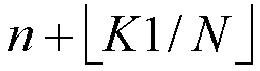
- For example, when K1=4 as indicated in the DCI, the terminal may determine that the HARQ-ACK for the PDSCH is transmitted within a slot

slot n+ 2. Hence, the terminal may transmit the HARQ-ACK for the PDSCH within the slot n on one PUCCH within the first half slot within theslot n+ 2. - When the terminal has received one PDSCH within a slot n+1, the terminal may determine that an HARQ-ACK for the PDSCH is transmitted within a slot


slot n+ 2. Hence, the terminal may transmit the HARQ-ACK for the PDSCH within the slot n+1 on a PUCCH within the second half slot of theslot n+ 2. - At a base station side, like that mentioned hereinabove, a base station may determine that the HARQ-ACK for the PDSCH within the slot n is received on a PUCCH resource within the first half slot of the slot n+2 and the HARQ-ACK for the PDSCH within the slot n+1 is received on a PUCCH resource within the second half slot within the
slot n+ 2. - In a possible embodiment of the present disclosure, in a third implementation mode, Step 21 of determining the transmission position of the HARQ-ACK may include Step 213 of, when the transmission position of the downlink transmission is a slot n, determining the transmission position of the HARQ-ACK as a slot


- Here, for example, K1 is {0, 0.5, 1, 1.5, 2, 2.5, 3, 3.5, 4....}, and N represents the quantity of basic units of the feedback timing within one slot, the quantity of mini-slots within one slot, or the quantity of mini-slots for transmitting a PUCCH within one slot. When K1 is 1/N, it represents a length of 1/N slot, and when K1 is 1, it presents a length of one slot.
- For example, when the basic unit of the feedback timing is a half slot, N=2, or when it is predefined that one slot includes 2 mini-slots or 2 mini-slots for transmitting the PUCCH, N=2. When N=2, K1=0.5 represents a length of a half slot, e.g., 7 symbols.
- For another example, when the basic unit of the feedback timing is 1/4 slot, N=4, or when it is predefined that one slot includes 4 mini-slots or 4 mini-slots for transmitting the PUCCH, N=4. When N=4, K1=0.25 represents a length of 1/4 slot, e.g., 3 or 4 symbols. To be specific, whether one basic unit includes 3 or 4 symbols may be predefined or pre-configured. For example, a first PUCCH within one slot may have a basic unit with a length of 3 symbols, a second PUCCH may have a basic unit with a length of 4 symbols, a third PUCCH may have a basic unit with a length of 3 symbols, and a fourth PUCCH may have a basic unit with a length of 4 symbols. Of course, the lengths of the basic units for the PUCCHs may also be replaced with each other. For example, the first PUCCH may have a basic unit with a length of 4 symbols, the second PUCCH may have a basic unit with a length of 3 symbols, the third PUCCH may have a basic unit with a length of 3 symbols, and the fourth PUCCH may have a basic unit with a length of 4 symbols.
- In the specific implementation of Step 213, a part of the determined slot where the HARQ-ACK is transmitted may be determined in the following modes.
- Mode C: when K1=0, the HARQ-ACK may be transmitted in a first part, an Nth part, a first mini-slot, an Nth mini-slot, a mini-slot with an index of 0, or a mini-slot with an index of N-1 in N parts of the slot


- For example, when N=2, one slot may be divided into two parts, i.e., a first half slot and a second half slot. When K1=0, the HARQ-ACK may be transmitted within the second half slot of the slot


- Mode D: when (K1∗N+N-1) mod N=i, the HARQ-ACK may be transmitted in the (i+1)th part, the (i+1)th mini-slot or the mini-slot with an index of i in the N parts of the slot


- For example, when N=2, one slot may be divided into two parts, i.e., a first half slot and a second half slot.
- When (K1∗N+N-1) mod N=0, i.e., K1 is a decimal, it may be determined that the HARQ-ACK is transmitted within the first half slot of the slot


- When (K1∗N+N-1) mod N==1, i.e., K1 is an integer, it may be determined that the HARQ-ACK is transmitted within the second half slot of the slot

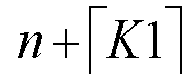
- In a possible embodiment of the present disclosure, in a first implementation mode, Step 21 of determining the transmission position of the HARQ-ACK may include Step 214 of, when the transmission position of the downlink transmission is a slot n, determining the transmission position of the HARQ-ACK as a slot


- Here, for example, K1 is {0, 0.5, 1, 1.5, 2, 2.5, 3, 3.5, 4....}, and N represents the quantity of basic units of the feedback timing within one slot, the quantity of mini-slots within one slot, or the quantity of mini-slots for transmitting a PUCCH within one slot. When K1 is 1/N, it represents a length of 1/N slot, and when K1 is 1, it presents a length of one slot.
- For example, when the basic unit of the feedback timing is a half slot, N=2, or when it is predefined that one slot includes 2 mini-slots or 2 mini-slots for transmitting the PUCCH, N=2. When N=2, K1=0.5 represents a length of a half slot, e.g., 7 symbols.
- For another example, when the basic unit of the feedback timing is 1/4 slot, N=4, or when it is predefined that one slot includes 4 mini-slots or 4 mini-slots for transmitting the PUCCH, N=4. When N=4, K1=0.25 represents a length of 1/4 slot, e.g., 3 or 4 symbols. To be specific, whether one basic unit includes 3 or 4 symbols may be predefined or pre-configured. For example, a first PUCCH within one slot may have a basic unit with a length of 3 symbols, a second PUCCH may have a basic unit with a length of 4 symbols, a third PUCCH may have a basic unit with a length of 3 symbols, and a fourth PUCCH may have a basic unit with a length of 4 symbols. Of course, the lengths of the basic units for the PUCCHs may also be replaced with each other. For example, the first PUCCH may have a basic unit with a length of 4 symbols, the second PUCCH may have a basic unit with a length of 3 symbols, the third PUCCH may have a basic unit with a length of 3 symbols, and the fourth PUCCH may have a basic unit with a length of 4 symbols.
- In the specific implementation of Step 214, a part of the determined slot where the HARQ-ACK is transmitted may be determined as follows.
When (K1∗N) mod N=i, the HARQ-ACK may be transmitted in an (i+1)th part, an (i+1)th mini-slot or a mini-slot with an index of i in N parts of the slot

- For example, when N=2, one slot may be divided into two parts, i.e., a first half slot and a second half slot.
- When (K1∗N) mod N=0, i.e., K1 is an integer, it may be determined that the HARQ-ACK is transmitted within the first half slot of the slot


- When (K1∗N) mod N=1, i.e., K1 is a decimal, it may be determined that the HARQ-ACK is transmitted within the second half slot of the slot
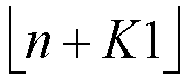

- In the fourth implementation mode of
Step 21, as shown inFIG. 4 , it is defined that K1={1, 1.5, 2, 2.5},K1=0.5 represents a length of a half slot, and K1=1 represents a length of one slot. At the terminal side, when the terminal has received one PDSCH within the slot n, the terminal may determine that an HARQ-ACK for the PDSCH is transmitted within the slot
- For example, when K1=2 as indicated in the DCI, the terminal may determine that the HARQ-ACK for the PDSCH is transmitted within a slot

slot n+ 2. Hence, the terminal may transmit the HARQ-ACK for the PDSCH within the slot n on one PUCCH within the first half slot within theslot n+ 2. - When the terminal has received one PDSCH within a slot n+1, the terminal may determine that an HARQ-ACK for the PDSCH is transmitted within a slot


slot n+ 2. Hence, the terminal may transmit the HARQ-ACK for the PDSCH within the slot n+1 on a PUCCH within the second half slot of theslot n+ 2. - At the base station side, like that mentioned hereinabove, the base station may determine that the HARQ-ACK for the PDSCH within the slot n is received on a PUCCH resource within the first half slot of the slot n+2 and the HARQ-ACK for the PDSCH within the slot n+1 is received on a PUCCH resource within the second half slot within the
slot n+ 2. - In a possible embodiment of the present disclosure, in a fifth implementation mode, Step 21 of determining the transmission position of the HARQ-ACK may include Step 215 of, when the transmission position of the downlink transmission is a slot n, determining the transmission position of the HARQ-ACK as a mini-slot n∗, where N represents the quantity of mini-slots within one slot, and for an index i of the mini-slot, i=0, 1, 2, ...N-1. When the mini-slot index n∗N+K1 of the mini-slot is greater than a maximum mini-slot index within a radio frame, the mini-slot index may be (n∗N+K1) modT, where T represents the quantity of mini-slots in the radio frame.
- During the implementation, as shown in
FIG. 5 , it is presumed that K1 is an integer, K1=1 represents a length of a half slot, K1={2,3,4,5}, and N=2. At the terminal side, one slot may be divided into N mini-slots each with a mini-slot index i, where i=0, 1. For the downlink transmission within the slot n, the HARQ-ACK may be transmitted within the mini-slot n∗N+K1 - When the terminal has received one PDSCH within the slot n, the terminal may determine that an HARQ-ACK for the PDSCH is transmitted within the mini-slot n∗N+K1 in accordance with a value of K1 indicated by an HARQ-ACK timing indicator field in DCI used by a PDCCH for scheduling the PDSCH (PDSCH-to-HARQ-timing-indicator field).
- For example, when K1=4 as indicated in the DCI, the terminal may determine that the HARQ-ACK for the PDSCH is transmitted within a mini-slot n∗N+K1=2n+4. The mini-slot 2n+4 is equivalent to the first half slot of the slot n+2, so the terminal may further determine one PUCCH resource in preconfigured PUCCH resources in accordance with a PUCCH resource indicator field in the DCI, and a starting symbol of the resource needs to be within the mini-slot 2n+4, i.e., the first half slot of the
slot n+ 2. Hence, the terminal may transmit the HARQ-ACK for the PDSCH within the slot n on one PUCCH within the mini-slot 2n+4. - When the terminal has received one PDSCH within a slot n+1, the terminal may determine that an HARQ-ACK for the PDSCH is transmitted within a mini-slot (n+1)∗N+K1 in accordance with a value of K1 indicated by an HARQ-ACK timing indicator field in DCI used by a PDCCH for scheduling the PDSCH (PDSCH-to-HARQ-timing-indicator field).
- For example, when K1=3 as indicated in the DCI, the terminal may determine that the HARQ-ACK for the PDSCH is transmitted within a mini-slot (n+1)∗N+K1 =2n+5. The mini-slot 2n+5 is equivalent to the second half slot of the slot n+2, so the terminal may further determine one PUCCH resource in preconfigured PUCCH resources in accordance with a PUCCH resource indicator field in the DCI, and a starting symbol of the resource needs to be within the mini-slot 2n+5, i.e., the second half slot of the
slot n+ 2. Hence, the terminal may transmit the HARQ-ACK for the PDSCH within the slot n+1 on a PUCCH within the mini-slot 2n+5. - At the base station side, like that mentioned hereinabove, the base station may determine that the HARQ-ACK for the PDSCH within the slot n is received on a PUCCH resource within the mini-slot 2n+4 and the HARQ-ACK for the PDSCH within the slot n+1 is received on a PUCCH resource within the mini-slot 2n+5.
- In the embodiments of the present disclosure, when an SCS of a PUCCH carrying the HARQ-ACK is different from an SCS of the downlink transmission, n may be replaced with a reference index ñ determined in accordance with the SCS of the PUCCH and the SCS of the downlink transmission, and
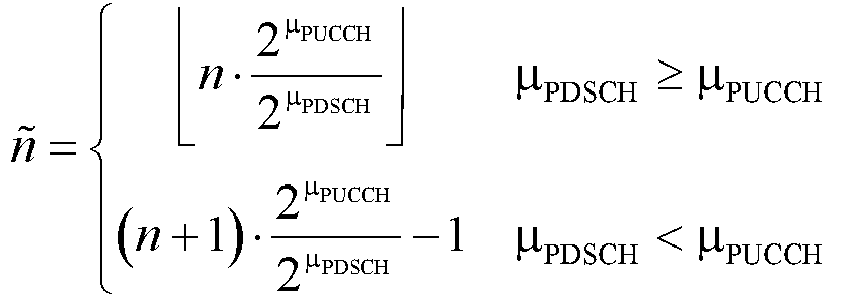
- The index corresponding to the SCS may be acquired from the following Table 4.2-1 in Section 4.2 "numerologies" in 3GPP TS 38.211, where Δƒ represents the SCS, and µ represents the index corresponding to the SCS.
µ Δƒ = 2 µ ·15 [kHz] Cyclic prefix 0 15 Normal 1 30 Normal 2 60 Normal, Extended 3 120 Normal 4 240 Normal - Alternatively, a position corresponding to K1=0 is defined as a slot for PUCCH transmission comprising the downlink transmission, a last slot for PUCCH transmission comprising the downlink transmission, or a first slot for PUCCH transmission comprising the downlink transmission. In other words, after a slot where the PUCCH is located has been found in the case of K1=0, the feedback timing may be determined in accordance with an actual value of K1 with the slot as a starting point, so as to determine the slot where the actual PUCCH transmission is located and a portion of the PUCCH within the slot. For example, a slot where the downlink transmission is performed is n', and the slot n is determined as a slot where the PUCCH corresponding to the downlink transmission is located when K1=0. When K1=1 as actually indicated in the DCI for the downlink transmission, it means that the transmission position of the PUCCH is a position which is located after the slot n, as a starting point, at an interval of three basic units of the feedback timing. For example, based on the above-mentioned second mode, the PUCCH may be transmitted within the second half slot of the
slot n+ 1. Values of n and n' may be the same or different, depending on a difference between an uplink SCS and a downlink SCS. - According to the embodiments of the present disclosure, when the granularity of the feedback timing of the HARQ-ACK has been reduced, appropriate HARQ-ACK timing may be determined in accordance with the transmission position of the downlink transmission and the feedback timing of the HARQ-ACK, so as to normally feed back the HARQ-ACK for the downlink transmission.
- As shown in
FIG. 6 , the present disclosure further provides in some embodiments a transmission method for HARQ feedback information realized by a terminal, which includes: Step 61 of determining a transmission position of an HARQ-ACK in accordance with a transmission position of downlink transmission and feedback timing of the HARQ-ACK for the downlink transmission, granularity of the feedback timing being smaller than one slot; andStep 62 of transmitting the HARQ-ACK at the transmission position of the HARQ-ACK. -
Step 61 of determining the transmission position of the HARQ-ACK may include, when the transmission position of the downlink transmission is a slot n, determining the transmission position of the HARQ-ACK as a slot
- When K1=0, the HARQ-ACK may be transmitted in a first part, an Nth part, a first mini-slot, an Nth mini-slot, a mini-slot with an index of 0, or a mini-slot with an index of N-1 in N parts of the slot


-
Step 61 of determining the transmission position of the HARQ-ACK may include, when the transmission position of the downlink transmission is a slot n, determining the transmission position of the HARQ-ACK as a slot
- When K1 mod N=i, the HARQ-ACK may be transmitted in an (i+1)th part, an (i+1)th mini-slot or a mini-slot with an index of i in N parts of the slot

-
Step 61 of determining the transmission position of the HARQ-ACK may include, when the transmission position of the downlink transmission is a slot n, determining the transmission position of the HARQ-ACK as a slot

- When K1=0, the HARQ-ACK may be transmitted in a first part, an Nth part, a first mini-slot, an Nth mini-slot, a mini-slot with an index of 0, or a mini-slot with an index of N-1 in N parts of the slot


-
Step 61 of determining the transmission position of the HARQ-ACK may include, when the transmission position of the downlink transmission is a slot n, determining the transmission position of the HARQ-ACK as a slot

- When (K1∗N) mod N=i, the HARQ-ACK may be transmitted in an (i+1)th part, an (i+1)th mini-slot or a mini-slot with an index of i in N parts of the slot


-
Step 61 of determining the transmission position of the HARQ-ACK may include, when the transmission position of the downlink transmission is a slot n, determining the transmission position of the HARQ-ACK as a mini-slot n∗N+K1, where N represents the quantity of mini-slots within one slot. - When the mini-slot index n∗N+K1 of the mini-slot is greater than a maximum mini-slot index within a radio frame, the mini-slot index may be (n∗N+K1) modT, where T represents the quantity of mini-slots in the radio frame.
- The downlink transmission may include the transmission of a Physical Downlink Shared Channel (PDSCH), the transmission of a Physical Downlink Control Channel (PDCCH) indicating Semi-Persistent Scheduling (SPS) PDSCH release or a Downlink Control Information (DCI) indicating SPS PDSCH release, or a SPS PDSCH release.
- When an SCS of a PUCCH carrying the HARQ-ACK is different from an SCS of the downlink transmission, n may be replaced with a reference index ñ determined in accordance with the SCS of the PUCCH and the SCS of the downlink transmission, and

- According to the embodiments of the present disclosure, when the granularity of the feedback timing of the HARQ-ACK has been reduced, appropriate HARQ-ACK timing may be determined in accordance with the transmission position of the downlink transmission and the feedback timing of the HARQ-ACK, so as to normally feed back the HARQ-ACK for the downlink transmission.
- As shown in
FIG. 7 , the present disclosure further provides in some embodiments anetwork device 70, which includes: aprocessing module 72 configured to determine a transmission position of an HARQ-ACK in accordance with a transmission position of downlink transmission and feedback timing of the HARQ-ACK for the downlink transmission, granularity of the feedback timing being smaller than one slot; and atransceiver module 71 configured to receive the HARQ-ACK at the transmission position of the HARQ-ACK. - The
processing module 72 is specifically configured to, when the transmission position of the downlink transmission is a slot n, determine the transmission position of the HARQ-ACK as a slot
- When K1=0, the HARQ-ACK may be transmitted in a first part, an Nth part, a first mini-slot, an Nth mini-slot, a mini-slot with an index of 0, or a mini-slot with an index of N-1 in N parts of the slot


- The
processing module 72 is specifically configured to, when the transmission position of the downlink transmission is a slot n, determine the transmission position of the HARQ-ACK as a slot
- When K1 mod N=i, the HARQ-ACK may be transmitted in an (i+1)th part, an (i+1)th mini-slot or a mini-slot with an index of i in N parts of the slot

- The
processing module 72 is specifically configured to, when the transmission position of the downlink transmission is a slot n, determine the transmission position of the HARQ-ACK as a slot

- When K1=0, the HARQ-ACK may be transmitted in a first part, an Nth part, a first mini-slot, an Nth mini-slot, a mini-slot with an index of 0, or a mini-slot with an index of N-1 in N parts of the slot


- The
processing module 72 is specifically configured to, when the transmission position of the downlink transmission is a slot n, determine the transmission position of the HARQ-ACK as a slot

- When (K1∗N) mod N=i, the HARQ-ACK may be transmitted in an (i+1)th part, an (i+1)th mini-slot or a mini-slot with an index of i in N parts of the slot


- The
processing module 72 is specifically configured to, when the transmission position of the downlink transmission is a slot n, determine the transmission position of the HARQ-ACK as a mini-slot n∗N+K1, where N represents the quantity of mini-slots within one slot. - When the mini-slot index n∗N+K1 of the mini-slot is greater than a maximum mini-slot index within a radio frame, the mini-slot index may be (n∗N+K1) modT, where T represents the quantity of mini-slots in the radio frame.
- The downlink transmission may include the transmission of a Physical Downlink Shared Channel (PDSCH), the transmission of a Physical Downlink Control Channel (PDCCH) indicating Semi-Persistent Scheduling (SPS) PDSCH release or a Downlink Control Information (DCI) indicating SPS PDSCH release, or a SPS PDSCH release.
- When an SCS of a PUCCH carrying the HARQ-ACK is different from an SCS of the downlink transmission, n may be replaced with a reference index ñ determined in accordance with the SCS of the PUCCH and the SCS of the downlink transmission, and

- It should be appreciated that, the network device may be a device corresponding to the method in
FIG. 2 , and it may be a base station. All implementation modes in the method may be applied to the network device with a same technical effect. The network device may further include astorage module 73. Thetransceiver module 71 may be connected to theprocessing module 72 and thestorage module 73 via a bus interface. A function of thetransceiver module 71 may be achieved by theprocessing module 72, and a function of theprocessing module 72 may also be achieved by thetransceiver module 71. Here, thetransceiver module 71 may be specifically implemented as a transceiver, theprocessing module 72 may be specifically implemented as a processor, and thestorage module 73 may be specifically implemented as a memory. - As shown in
FIG. 8 , the present disclosure further provides in some embodiments a terminal 80, which includes: aprocessing module 82 configured to determine a transmission position of an HARQ-ACK in accordance with a transmission position of downlink transmission and feedback timing of the HARQ-ACK for the downlink transmission, granularity of the feedback timing being smaller than one slot; and atransceiver module 81 configured to transmit the HARQ-ACK at the transmission position of the HARQ-ACK. - The
processing module 82 is specifically configured to, when the transmission position of the downlink transmission is a slot n, determine the transmission position of the HARQ-ACK as a slot
- When K1=0, the HARQ-ACK may be transmitted in a first part, an Nth part, a first mini-slot, an Nth mini-slot, a mini-slot with an index of 0, or a mini-slot with an index of N-1 in N parts of the slot


- The
processing module 82 is specifically configured to, when the transmission position of the downlink transmission is a slot n, determine the transmission position of the HARQ-ACK as a slot
- When K1 mod N=i, the HARQ-ACK may be transmitted in an (i+1)th part, an (i+1)th mini-slot or a mini-slot with an index of i in N parts of the slot

- The
processing module 82 is specifically configured to, when the transmission position of the downlink transmission is a slot n, determine the transmission position of the HARQ-ACK as a slot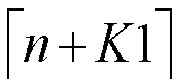

- When K1=0, the HARQ-ACK may be transmitted in a first part, an Nth part, a first mini-slot, an Nth mini-slot, a mini-slot with an index of 0, or a mini-slot with an index of N-1 in N parts of the slot


- The
processing module 82 is specifically configured to, when the transmission position of the downlink transmission is a slot n, determine the transmission position of the HARQ-ACK as a slot

When (K1∗N) mod N=i, the HARQ-ACK may be transmitted in an (i+1)th part, an (i+1)th mini-slot or a mini-slot with an index of i in N parts of the slot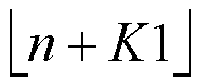

- The
processing module 82 is specifically configured to, when the transmission position of the downlink transmission is a slot n, determining the transmission position of the HARQ-ACK as a mini-slot n∗N+K1, where N represents the quantity of mini-slots within one slot. - When the mini-slot index n∗N+K1 of the mini-slot is greater than a maximum mini-slot index within a radio frame, the mini-slot index may be (n∗N+K1) modT, where T represents the quantity of mini-slots in the radio frame.
- The downlink transmission may include the transmission of a Physical Downlink Shared Channel (PDSCH), the transmission of a Physical Downlink Control Channel (PDCCH) indicating Semi-Persistent Scheduling (SPS) PDSCH release or a Downlink Control Information (DCI) indicating SPS PDSCH release, or a SPS PDSCH release.
- When an SCS of a PUCCH carrying the HARQ-ACK is different from an SCS of the downlink transmission, n may be replaced with a reference index ñ determined in accordance with the SCS of the PUCCH and the SCS of the downlink transmission, and
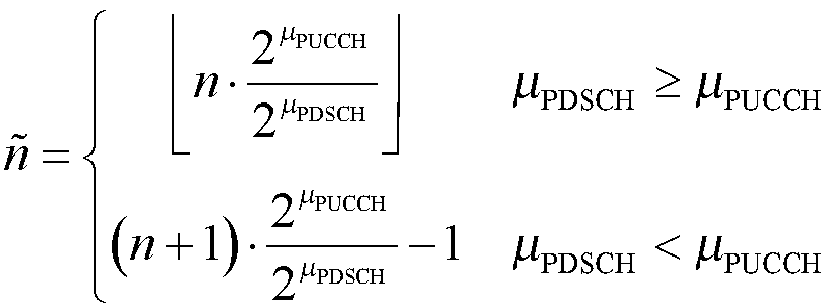
- It should be appreciated that, the terminal may be a device corresponding to the method in
FIG. 6 . All implementation modes in the method may be applied to the terminal with a same technical effect. The terminal may further include astorage module 83. Thetransceiver module 81 may be connected to theprocessing module 82 and thestorage module 83 via a bus interface. A function of thetransceiver module 81 may be achieved by theprocessing module 82, and a function of theprocessing module 82 may also be achieved by thetransceiver module 81. Here, thetransceiver module 81 may be specifically implemented as a transceiver, theprocessing module 82 may be specifically implemented as a processor, and thestorage module 83 may be specifically implemented as a memory. - The present disclosure further provides in some embodiments a communication device. When the communication device is the above-mentioned network device, it includes a processor configured to achieve the following functions: determining a transmission position of an HARQ-ACK in accordance with a transmission position of downlink transmission and feedback timing of the HARQ-ACK for the downlink transmission, granularity of the feedback timing being smaller than one slot; and receiving the HARQ-ACK at the transmission position of the HARQ-ACK. The network device may be a device corresponding to the method in
FIG. 2 . All implementation modes in the method may be applied to the network device with a same technical effect. - The present disclosure further provides in some embodiments a communication device. When the communication device is the above-mentioned terminal, it includes a processor configured to achieve the following functions: determining a transmission position of an HARQ-ACK in accordance with a transmission position of downlink transmission and feedback timing of the HARQ-ACK for the downlink transmission, granularity of the feedback timing being smaller than one slot; and transmitting the HARQ-ACK at the transmission position of the HARQ-ACK. The terminal may be a device corresponding to the method in
FIG. 6 . All implementation modes in the method may be applied to the terminal with a same technical effect. - The present disclosure further provides in some embodiments a computer-readable storage medium including an instruction. The instruction is executed by a computer, so as to implement the method in
FIG. 2 orFIG. 6 . - According to the embodiments of the present disclosure, appropriate HARQ-ACK timing may be determined in accordance with the transmission position of the downlink transmission and the feedback timing of the HARQ-ACK, so as to normally feed back the HARQ-ACK for the downlink transmission.
- It should be appreciated that, units and steps described in the embodiments of the present disclosure may be implemented in the form of electronic hardware, or a combination of a computer program and the electronic hardware. Whether or not these functions are executed by hardware or software depends on specific applications or design constraints of the technical solution. Different methods may be adopted with respect to the specific applications so as to achieve the described functions, without departing from the scope of the present disclosure.
- It should be further appreciated that, for convenience and clarification, operation procedures of the system, device and units described hereinabove may refer to the corresponding procedures in the method embodiment, and thus will not be particularly defined herein.
- It should be further appreciated that, the device and method may be implemented in any other ways. For example, the embodiments for the apparatus are merely for illustrative purposes, and the modules or units are provided merely on the basis of their logic functions. During the actual application, some modules or units may be combined together or integrated into another system. Alternatively, some functions of the module or units may be omitted or not executed. In addition, the coupling connection, direct coupling connection or communication connection between the modules or units may be implemented via interfaces, and the indirect coupling connection or communication connection between the modules or units may be implemented in an electrical or mechanical form or in any other form.
- The units may be, or may not be, physically separated from each other. The units for displaying may be, or may not be, physical units, i.e., they may be arranged at an identical position, or distributed on a plurality of network elements. Parts or all of the units may be selected in accordance with the practical need, so as to achieve the purpose of the present disclosure.
- In addition, the functional units in the embodiments of the present disclosure may be integrated into a processing unit, or the functional units may exist independently, or two or more functional units may be combined together.
- In the case that the functional units are implemented in a software form and sold or used as a separate product, they may be stored in a computer-readable medium. Based on this, the technical solutions of the present disclosure, partial or full, or parts of the technical solutions of the present disclosure contributing to the related art, may appear in the form of software products, which may be stored in a storage medium and include several instructions so as to enable computer equipment (a personal computer, a server or network equipment) to execute all or parts of the steps of the method according to the embodiments of the present disclosure. The storage medium includes any medium capable of storing therein program codes, e.g., a universal serial bus (USB) flash disk, a mobile hard disk (HD), a read-only memory (ROM), a random access memory (RAM), a magnetic disk or an optical disk.
- It should be further appreciated that, according to the device and the method in the embodiments of the present disclosure, the members and/or steps may be subdivided and/or recombined, which shall also be deemed as equivalents of the present disclosure. In addition, the steps for executing the above-mentioned processings may be performed in a chronological order. Of course, some steps may also be performed in parallel, or independently of each other. It should be further appreciated that, after reading the descriptions of the present disclosure, it is able for a person skilled in the art, using a basic programming skill, to implement any or all steps of the method and any or all members of the device in any computing device (including a processor and a storage medium) or a network consisting of the computing devices, in the form of hardware, firmware, software or a combination thereof.
- Hence, the purposes of the present disclosure may also be implemented by one program or a set of programs running on any computing device, e.g., a known general-purpose computer, or implemented merely by a program product including programs codes capable of implementing the method or device. In other words, this program product and a storage medium storing therein the program product also constitute a part of the present disclosure. Obviously, the storage medium may be any known storage medium or a storage medium that may occur in future. It should be further appreciated that, according to the device and the method in the embodiments of the present disclosure, the members and/or steps may be subdivided and/or recombined, which shall also be deemed as equivalents of the present disclosure. In addition, the steps for executing the above-mentioned processings may be performed in a chronological order. Of course, some steps may also be performed in parallel, or independently of each other.
- It should be further appreciated that, all or parts of the steps in the method may be implemented by related hardware under the control of a computer program. The computer program may be stored in a computer-readable storage medium, and it may be executed so as to implement the steps in the above-mentioned method embodiments. The storage medium may be a magnetic disk, an optical disk, an ROM or an RAM
- It should be further appreciated that, the embodiments of the present disclosure may be implemented by hardware, software, firmware, middleware, microcode or a combination thereof. For the hardware implementation, the processor may include one or more of an Application Specific Integrated Circuits (ASIC), a Digital Signal Processor (DSP), a DSP device (DSPD), a Programmable Logic Device (PLD), a Field-Programmable Gate Array (FPGA), a general-purpose processor, a controller, a microcontroller, a microprocessor, any other electronic unit capable of achieving the functions in the present disclosure, or a combination thereof.
- For the software implementation, the scheme in the embodiments of the present disclosure may be implemented through modules capable of achieving the functions in the present disclosure (e.g., processes or functions). Software codes may be stored in the memory and executed by the processor. The memory may be implemented inside or outside the processor.
- The above embodiments are for illustrative purposes only, but the present disclosure is not limited thereto. Obviously, a person skilled in the art may make further modifications and improvements without departing from the spirit of the present disclosure, and these modifications and improvements shall also fall within the scope of the present disclosure.
Claims (30)
- A transmission method for Hybrid Automatic Repeat reQuest (HARQ) feedback information realized by a network device, comprising:determining a transmission position of an HARQ-Acknowledgement (ACK) in accordance with a transmission position of downlink transmission and feedback timing of the HARQ-ACK for the downlink transmission, wherein granularity of the feedback timing is smaller than one slot; andreceiving the HARQ-ACK at the transmission position of the HARQ-ACK.
- The method according to claim 1, wherein the determining the transmission position of the HARQ-ACK comprises, when the transmission position of the downlink transmission is a slot n, determining the transmission position of the HARQ-ACK as a slot

wherein K1 represents a value of the feedback timing of the HARQ-ACK and is an integer, the granularity of the feedback timing is 1/N slot, and N is a predetermined integer greater than 1. - The method according to claim 2, wherein when K1=0, the HARQ-ACK is transmitted in a first part, an Nth part, a first mini-slot, an Nth mini-slot, a mini-slot with an index of 0, or a mini-slot with an index of N-1 within N parts of the slot

 when (K1+N-1) mod N=i, the HARQ-ACK is transmitted in an (i+1)th part, an (i+1)th mini-slot or a mini-slot with an index of i within N parts of the slot
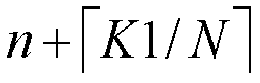 wherein i=0, 1, 2, ..., N-1, and the N parts are N parts not overlapping each other and acquired through dividing one slot in a chronological order or an ascending order of indices of Orthogonal Frequency Division Multiplexing (OFDM) symbols, or the N parts are N mini-slots within one slot.
 - The method according to claim 1, wherein the determining the transmission position of the HARQ-ACK comprises, when the transmission position of the downlink transmission is a slot n, determining the transmission position of the HARQ-ACK as a slot

wherein K1 represents a value of the feedback timing of the HARQ-ACK and is an integer, the granularity of the feedback timing is 1/N slot, and N is a predetermined integer greater than 1. - The method according to claim 4, wherein when K1 mod N=i, the HARQ-ACK is transmitted in an (i+1)th part, an (i+1)th mini-slot or a mini-slot with an index of i within N parts of the slot

wherein i=0, 1, 2, ..., N-1, and the N parts are N parts not overlapping each other and acquired through dividing one slot in a chronological order or an ascending order of indices of OFDM symbols, or the N parts are N mini-slots within one slot. - The method according to claim 1, wherein the determining the transmission position of the HARQ-ACK comprises, when the transmission position of the downlink transmission is a slot n, determining the transmission position of the HARQ-ACK as a slot

 wherein K1 represents a value of the feedback timing of the HARQ-ACK and is an integral multiple of 1/N, the granularity of the feedback timing is 1/N slot, and N is a predetermined integer greater than 1.
 - The method according to claim 6, wherein when K1=0, the HARQ-ACK is transmitted in a first part, an Nth part, a first mini-slot, an Nth mini-slot, a mini-slot with an index of 0, or a mini-slot with an index of N-1 within N parts of the slot


when (K1∗N+N-1) mod N=i, the HARQ-ACK is transmitted in an (i+1)th part, an (i+1)th mini-slot or a mini-slot with an index of i within N parts of the slot

- The method according to claim 1, wherein the determining the transmission position of the HARQ-ACK comprises, when the transmission position of the downlink transmission is a slot n, determining the transmission position of the HARQ-ACK as a slot

 wherein K1 represents a value of the feedback timing of the HARQ-ACK and is an integral multiple of 1/N, the granularity of the feedback timing is 1/N slot, and N is a predetermined integer greater than 1.
 - The method according to claim 8, wherein when (K1∗N) mod N=i, the HARQ-ACK is transmitted in an (i+1)th part, an (i+1)th mini-slot or a mini-slot with an index of i within N parts of the slot

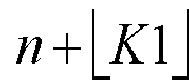
wherein i=0, 1, 2, ..., N-1, and the N parts are N parts not overlapping each other and acquired through dividing one slot in a chronological order or an ascending order of indices of OFDM symbols, or the N parts are N mini-slots within one slot. - The method according to claim 1, wherein the determining the transmission position of the HARQ-ACK comprises, when the transmission position of the downlink transmission is a slot n, determining the transmission position of the HARQ-ACK as a mini-slot n∗N+K1, wherein N represents the quantity of mini-slots within one slot.
- The method according to claim 10, wherein when the mini-slot index n∗N+K1 of the mini-slot is greater than a maximum mini-slot index within a radio frame, the mini-slot index is (n∗N+K1) modT, wherein T represents the quantity of mini-slots in the radio frame.
- The method according to claim 1, wherein the downlink transmission comprises the transmission of a Physical Downlink Shared Channel (PDSCH), the transmission of a Physical Downlink Control Channel (PDCCH) indicating Semi-Persistent Scheduling (SPS) PDSCH release or a Downlink Control Information (DCI) indicating SPS PDSCH release, or a SPS PDSCH release.
- The method according to any one of claims 2 to 11, wherein when a Sub-Carrier Spacing (SCS) of a Physical Uplink Control Channel (PUCCH) carrying the HARQ-ACK is different from a SCS of the downlink transmission, the method further comprises:the index n is replaced with a reference index ñ determined in accordance with the SCS of the PUCCH and the SCS of the downlink transmission, and

, wherein µ PUCCH represents an index corresponding to the SCS of the PUCCH, and µ PDSCH represents an index corresponding to the SCS of the downlink transmission; ora position corresponding to K1=0 is defined as a slot for PUCCH transmission comprising the downlink transmission, a last slot for PUCCH transmission comprising the downlink transmission, or a first slot for PUCCH transmission comprising the downlink transmission. - A transmission method for Hybrid Automatic Repeat reQuest (HARQ) feedback information realized by a terminal, comprising:determining a transmission position of an HARQ-Acknowledgement (ACK) in accordance with a transmission position of downlink transmission and feedback timing of the HARQ-ACK for the downlink transmission, wherein granularity of the feedback timing is smaller than one slot; andtransmitting the HARQ-ACK at the transmission position of the HARQ-ACK.
- The method according to claim 14, wherein the determining the transmission position of the HARQ-ACK comprises, when the transmission position of the downlink transmission is a slot n, determining the transmission position of the HARQ-ACK as a slot

wherein K1 represents a value of the feedback timing of the HARQ-ACK and is an integer, the granularity of the feedback timing is 1/N slot, and N is a predetermined integer greater than 1. - The method according to claim 15, wherein when K1=0, the HARQ-ACK is transmitted in a first part, an Nth part, a first mini-slot, an Nth mini-slot, a mini-slot with an index of 0, or a mini-slot with an index of N-1 within N parts of the slot

 when (K1+N-1) mod N=i, the HARQ-ACK is transmitted in the (i+1)th part, the (i+1)th mini-slot or the mini-slot with an index of i within N parts of the slot
 wherein i=0, 1, 2, ..., N-1, and the N parts are N parts not overlapping each other and acquired through dividing one slot in a chronological order or an ascending order of indices of Orthogonal Frequency Division Multiplexing (OFDM) symbols, or N mini-slots within one slot.
 - The method according to claim 14, wherein when the transmission position of the downlink transmission is a slot n, determining the transmission position of the HARQ-ACK as a slot

wherein K1 represents a value of the feedback timing of the HARQ-ACK and is an integer, the granularity of the feedback timing is 1/N slot, and N is a predetermined integer greater than 1. - The method according to claim 17, wherein when K1 mod N=i, the HARQ-ACK is transmitted in an (i+1)th part, an (i+1)th mini-slot or a mini-slot with an index of i within N parts of the slot

wherein i=0, 1, 2, ..., N-1, and the N parts are N parts not overlapping each other and acquired through dividing one slot in a chronological order or an ascending order of indices of OFDM symbols, or N mini-slots within one slot. - The method according to claim 14, wherein when the transmission position of the downlink transmission is a slot n, determining the transmission position of the HARQ-ACK as a slot


wherein K1 represents a value of the feedback timing of the HARQ-ACK and is an integral multiple of 1/N, the granularity of the feedback timing is 1/N slot, and N is a predetermined integer greater than 1. - The method according to claim 19, wherein when K1=0, the HARQ-ACK is transmitted in a first part, an Nth part, a first mini-slot, an Nth mini-slot, a mini-slot with an index of 0, or a mini-slot with an index of N-1 within N parts of the slot


when (K1∗N+N-1) mod N=i, the HARQ-ACK is transmitted in the (i+1)th part, the (i+1)th mini-slot or the mini-slot with an index of i within N parts of the slot

- The method according to claim 14, wherein the determining the transmission position of the HARQ-ACK comprises, when the transmission position of the downlink transmission is a slot n, determining the transmission position of the HARQ-ACK as a slot

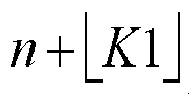
- The method according to claim 21, wherein when (K1∗N) mod N=i, the HARQ-ACK is transmitted in an (i+1)th part, an (i+1)th mini-slot or a mini-slot with an index of i within N parts of the slot


- The method according to claim 14, wherein the determining the transmission position of the HARQ-ACK comprises, when the transmission position of the downlink transmission is a slot n, determining the transmission position of the HARQ-ACK as a mini-slot n∗N+K1, wherein N represents the quantity of mini-slots within one slot.
- The method according to claim 23, wherein when the mini-slot index n∗N+K1 of the mini-slot is greater than a maximum mini-slot index within a radio frame, the mini-slot index is (n∗N+K1) modT, wherein T represents the quantity of mini-slots in the radio frame.
- The method according to claim 14, wherein the downlink transmission comprises the transmission of a Physical Downlink Shared Channel (PDSCH), the transmission of a Physical Downlink Control Channel (PDCCH) indicating Semi-Persistent Scheduling (SPS) PDSCH release or a Downlink Control Information (DCI) indicating SPS PDSCH release, or a SPS PDSCH release.
- The method according to any one of claims 15 to 24, wherein when a Sub-Carrier Spacing (SCS) of a Physical Uplink Control Channel (PUCCH) carrying the HARQ-ACK is different from a Sub Carrier Spacing (SCS) of the downlink transmission, n is replaced with a reference index ñ determined in accordance with the SCS of the PUCCH and the SCS of the downlink transmission, and

a position corresponding to K1=0 is defined as a slot for PUCCH transmission comprising the downlink transmission, a last slot for PUCCH transmission comprising the downlink transmission, or a first slot for PUCCH transmission comprising the downlink transmission. - A network device, comprising:a processing module configured to determine a transmission position of a Hybrid Automatic Repeat reQuest-Acknowledgement (HARQ-ACK) in accordance with a transmission position of downlink transmission and feedback timing of the HARQ-ACK for the downlink transmission, wherein granularity of the feedback timing is smaller than one slot; anda transceiver module configured to receive the HARQ-ACK at the transmission position of the HARQ-ACK.
- A terminal, comprising:a processing module configured to determine a transmission position of a Hybrid Automatic Repeat reQuest-Acknowledgement (HARQ-ACK) in accordance with a transmission position of downlink transmission and feedback timing of the HARQ-ACK for the downlink transmission, wherein granularity of the feedback timing is smaller than one slot; anda transceiver module configured to transmit the HARQ-ACK at the transmission position of the HARQ-ACK.
- A communication device, comprising a processor configured to execute the method according to any one of claims 1 to 13 or the method according to any one of claims 14 to 26.
- A computer-readable storage medium storing therein an instruction, wherein the instruction is executed by a computer so as to execute the method according to any one of claims 1 to 13 or the method according to any one of claims 14 to 26.
Applications Claiming Priority (2)
| Application Number | Priority Date | Filing Date | Title |
|---|---|---|---|
| CN201910028426.0A CN111435868B (en) | 2019-01-11 | 2019-01-11 | Transmission method, network device and terminal for hybrid automatic retransmission feedback information |
| PCT/CN2019/129105 WO2020143478A1 (en) | 2019-01-11 | 2019-12-27 | Transmission method for hybrid automatic repeat feedback information, network device and terminal |
Publications (3)
| Publication Number | Publication Date |
|---|---|
| EP3910838A1 true EP3910838A1 (en) | 2021-11-17 |
| EP3910838A4 EP3910838A4 (en) | 2022-03-30 |
| EP3910838B1 EP3910838B1 (en) | 2023-05-03 |
Family
ID=71520224
Family Applications (1)
| Application Number | Title | Priority Date | Filing Date |
|---|---|---|---|
| EP19908657.0A Active EP3910838B1 (en) | 2019-01-11 | 2019-12-27 | Transmission method for hybrid automatic repeat feedback information, network device and terminal |
Country Status (6)
| Country | Link |
|---|---|
| US (1) | US12200698B2 (en) |
| EP (1) | EP3910838B1 (en) |
| KR (1) | KR102645480B1 (en) |
| CN (1) | CN111435868B (en) |
| TW (1) | TWI743639B (en) |
| WO (1) | WO2020143478A1 (en) |
Families Citing this family (6)
| Publication number | Priority date | Publication date | Assignee | Title |
|---|---|---|---|---|
| CN111435899B (en) * | 2019-02-15 | 2021-08-24 | 维沃移动通信有限公司 | Hybrid automatic repeat request HARQ feedback method, terminal and network device |
| US20230050066A1 (en) * | 2020-02-10 | 2023-02-16 | Sony Group Corporation | Telecommunications apparatus and methods |
| US12212419B2 (en) * | 2020-07-20 | 2025-01-28 | Qualcomm Incorporated | Switching between HARQ feedback granularities |
| JP7599002B2 (en) * | 2020-07-21 | 2024-12-12 | ノキア テクノロジーズ オサケユイチア | Triggered hybrid automatic repeat request acknowledgment reporting for downlink semi-persistent scheduled data transmissions - Patents.com |
| CN116114198B (en) * | 2020-11-24 | 2024-07-23 | Oppo广东移动通信有限公司 | Transmission method, transmitting device and receiving device |
| CN115189814A (en) * | 2021-04-01 | 2022-10-14 | 华为技术有限公司 | HARQ feedback method, device and computer readable storage medium |
Family Cites Families (12)
| Publication number | Priority date | Publication date | Assignee | Title |
|---|---|---|---|---|
| US8605748B2 (en) * | 2009-12-08 | 2013-12-10 | Electronics And Telecommunications Research Institute | Communication method |
| CN107231218B (en) * | 2016-03-25 | 2021-07-30 | 大唐移动通信设备有限公司 | ACK/NACK feedback method and related equipment |
| CN107332646B (en) * | 2016-04-29 | 2021-05-11 | 中兴通讯股份有限公司 | HARQ-ACK transmission method and device |
| CN107733548B (en) * | 2016-08-10 | 2023-04-18 | 华为技术有限公司 | Information transmission method and related device |
| US10306630B2 (en) * | 2016-09-29 | 2019-05-28 | Sharp Kabushiki Kaisha | Systems and methods for determining frame structure and association timing |
| WO2018080212A2 (en) * | 2016-10-27 | 2018-05-03 | 주식회사 케이티 | Method and device for scheduling uplink control channel in next generation wireless network |
| CN108289015B (en) * | 2017-01-09 | 2023-04-07 | 北京三星通信技术研究有限公司 | Method and equipment for sending HARQ-ACK/NACK (hybrid automatic repeat request/acknowledgement) and downlink transmission method and equipment |
| EP3603256B1 (en) * | 2017-03-21 | 2020-05-13 | Telefonaktiebolaget LM Ericsson (publ) | Network node and method in a wireless communications network |
| US20180367262A1 (en) * | 2017-06-14 | 2018-12-20 | Mediatek Inc. | Techniques of transmitting harq-ack feedback by user equipment |
| CN109152004B (en) * | 2017-06-15 | 2023-07-28 | 中国移动通信有限公司研究院 | Mini-slot indication and determination method, communication device and computer storage medium |
| KR101975341B1 (en) | 2017-06-15 | 2019-05-07 | 엘지전자 주식회사 | Method and device for transmitting and receiving Acknowledgement information between a user equipment and base station in a wireless communication system |
| US20180367263A1 (en) * | 2017-06-15 | 2018-12-20 | Sharp Laboratories Of America, Inc. | Downlink Control Signaling to Enable Preemption and CBG-Based (Re)Transmission |
-
2019
- 2019-01-11 CN CN201910028426.0A patent/CN111435868B/en active Active
- 2019-12-27 EP EP19908657.0A patent/EP3910838B1/en active Active
- 2019-12-27 US US17/422,112 patent/US12200698B2/en active Active
- 2019-12-27 KR KR1020217025058A patent/KR102645480B1/en active Active
- 2019-12-27 WO PCT/CN2019/129105 patent/WO2020143478A1/en not_active Ceased
- 2019-12-30 TW TW108148354A patent/TWI743639B/en active
Also Published As
| Publication number | Publication date |
|---|---|
| KR20210111300A (en) | 2021-09-10 |
| EP3910838B1 (en) | 2023-05-03 |
| US20220116970A1 (en) | 2022-04-14 |
| CN111435868A (en) | 2020-07-21 |
| KR102645480B1 (en) | 2024-03-07 |
| EP3910838A4 (en) | 2022-03-30 |
| US12200698B2 (en) | 2025-01-14 |
| TW202027444A (en) | 2020-07-16 |
| WO2020143478A1 (en) | 2020-07-16 |
| TWI743639B (en) | 2021-10-21 |
| CN111435868B (en) | 2021-08-24 |
Similar Documents
| Publication | Publication Date | Title |
|---|---|---|
| EP3910838B1 (en) | Transmission method for hybrid automatic repeat feedback information, network device and terminal | |
| CN113574948B (en) | Method and apparatus for multiplexing UCI | |
| JP2022097648A (en) | Methods, terminal devices, and network devices for determining feedback information | |
| US10057889B2 (en) | Resource assignment method and device | |
| US11381356B2 (en) | Data transmission method and terminal | |
| EP3855655A1 (en) | Method and device for transmitting hybrid automatic repeat request acknowledgement codebook | |
| EP2381735A1 (en) | Method for physical uplink control channel of large bandwidth system | |
| EP2747306A1 (en) | Method and device for indicating control channel | |
| EP2592778B1 (en) | Method of handling shortened resource block for MTC and related communication device | |
| KR20210009329A (en) | Channel arrangement method and terminal, storage medium, electronic device | |
| US20130010741A1 (en) | Method and device for transmitting control format indicator value | |
| US20200036586A1 (en) | Data transmission method and device | |
| CN114158122B (en) | A data transmission method, terminal and base station | |
| US11464037B2 (en) | Method and apparatus for transmitting uplink control information (UCI) | |
| EP3927059A1 (en) | Scheduling timing determination method, terminal and network side device | |
| EP3410796B1 (en) | Method and apparatus for transmitting and detecting downlink control information | |
| EP3958490A1 (en) | Method and apparatus for sending and receiving harq-ack message | |
| EP3713125A1 (en) | Method, apparatus and system for transmitting uplink control information, and storage medium | |
| US11395317B2 (en) | Information sending and receiving method, and information sending and receiving apparatus | |
| EP3780840A1 (en) | Wireless resource scheduling | |
| US12439385B2 (en) | Subframe type notification and determination methods and device | |
| CN118614017B (en) | Methods and apparatus for determining the HARQ-ACK codebook for each DCI | |
| US12418924B2 (en) | Physical downlink shared channel reception method and device, physical downlink shared channel transmission method and device, apparatus and medium | |
| WO2017121208A1 (en) | Method and device for determining transmission time interval (tti) | |
| US20240064755A1 (en) | Method and apparatus for time domain resource allocation |
Legal Events
| Date | Code | Title | Description |
|---|---|---|---|
| STAA | Information on the status of an ep patent application or granted ep patent |
Free format text: STATUS: THE INTERNATIONAL PUBLICATION HAS BEEN MADE |
|
| PUAI | Public reference made under article 153(3) epc to a published international application that has entered the european phase |
Free format text: ORIGINAL CODE: 0009012 |
|
| STAA | Information on the status of an ep patent application or granted ep patent |
Free format text: STATUS: REQUEST FOR EXAMINATION WAS MADE |
|
| 17P | Request for examination filed |
Effective date: 20210714 |
|
| AK | Designated contracting states |
Kind code of ref document: A1 Designated state(s): AL AT BE BG CH CY CZ DE DK EE ES FI FR GB GR HR HU IE IS IT LI LT LU LV MC MK MT NL NO PL PT RO RS SE SI SK SM TR |
|
| A4 | Supplementary search report drawn up and despatched |
Effective date: 20220225 |
|
| RIC1 | Information provided on ipc code assigned before grant |
Ipc: H04L 5/00 20060101ALI20220221BHEP Ipc: H04L 1/18 20060101AFI20220221BHEP |
|
| DAV | Request for validation of the european patent (deleted) | ||
| DAX | Request for extension of the european patent (deleted) | ||
| GRAP | Despatch of communication of intention to grant a patent |
Free format text: ORIGINAL CODE: EPIDOSNIGR1 |
|
| STAA | Information on the status of an ep patent application or granted ep patent |
Free format text: STATUS: GRANT OF PATENT IS INTENDED |
|
| INTG | Intention to grant announced |
Effective date: 20221219 |
|
| GRAS | Grant fee paid |
Free format text: ORIGINAL CODE: EPIDOSNIGR3 |
|
| GRAA | (expected) grant |
Free format text: ORIGINAL CODE: 0009210 |
|
| STAA | Information on the status of an ep patent application or granted ep patent |
Free format text: STATUS: THE PATENT HAS BEEN GRANTED |
|
| AK | Designated contracting states |
Kind code of ref document: B1 Designated state(s): AL AT BE BG CH CY CZ DE DK EE ES FI FR GB GR HR HU IE IS IT LI LT LU LV MC MK MT NL NO PL PT RO RS SE SI SK SM TR |
|
| REG | Reference to a national code |
Ref country code: GB Ref legal event code: FG4D |
|
| REG | Reference to a national code |
Ref country code: DE Ref legal event code: R096 Ref document number: 602019028550 Country of ref document: DE |
|
| REG | Reference to a national code |
Ref country code: AT Ref legal event code: REF Ref document number: 1565581 Country of ref document: AT Kind code of ref document: T Effective date: 20230515 Ref country code: CH Ref legal event code: EP |
|
| REG | Reference to a national code |
Ref country code: IE Ref legal event code: FG4D |
|
| P01 | Opt-out of the competence of the unified patent court (upc) registered |
Effective date: 20230512 |
|
| REG | Reference to a national code |
Ref country code: LT Ref legal event code: MG9D |
|
| REG | Reference to a national code |
Ref country code: NL Ref legal event code: MP Effective date: 20230503 |
|
| REG | Reference to a national code |
Ref country code: AT Ref legal event code: MK05 Ref document number: 1565581 Country of ref document: AT Kind code of ref document: T Effective date: 20230503 |
|
| PG25 | Lapsed in a contracting state [announced via postgrant information from national office to epo] |
Ref country code: SE Free format text: LAPSE BECAUSE OF FAILURE TO SUBMIT A TRANSLATION OF THE DESCRIPTION OR TO PAY THE FEE WITHIN THE PRESCRIBED TIME-LIMIT Effective date: 20230503 Ref country code: PT Free format text: LAPSE BECAUSE OF FAILURE TO SUBMIT A TRANSLATION OF THE DESCRIPTION OR TO PAY THE FEE WITHIN THE PRESCRIBED TIME-LIMIT Effective date: 20230904 Ref country code: NO Free format text: LAPSE BECAUSE OF FAILURE TO SUBMIT A TRANSLATION OF THE DESCRIPTION OR TO PAY THE FEE WITHIN THE PRESCRIBED TIME-LIMIT Effective date: 20230803 Ref country code: NL Free format text: LAPSE BECAUSE OF FAILURE TO SUBMIT A TRANSLATION OF THE DESCRIPTION OR TO PAY THE FEE WITHIN THE PRESCRIBED TIME-LIMIT Effective date: 20230503 Ref country code: ES Free format text: LAPSE BECAUSE OF FAILURE TO SUBMIT A TRANSLATION OF THE DESCRIPTION OR TO PAY THE FEE WITHIN THE PRESCRIBED TIME-LIMIT Effective date: 20230503 Ref country code: AT Free format text: LAPSE BECAUSE OF FAILURE TO SUBMIT A TRANSLATION OF THE DESCRIPTION OR TO PAY THE FEE WITHIN THE PRESCRIBED TIME-LIMIT Effective date: 20230503 |
|
| PG25 | Lapsed in a contracting state [announced via postgrant information from national office to epo] |
Ref country code: RS Free format text: LAPSE BECAUSE OF FAILURE TO SUBMIT A TRANSLATION OF THE DESCRIPTION OR TO PAY THE FEE WITHIN THE PRESCRIBED TIME-LIMIT Effective date: 20230503 Ref country code: PL Free format text: LAPSE BECAUSE OF FAILURE TO SUBMIT A TRANSLATION OF THE DESCRIPTION OR TO PAY THE FEE WITHIN THE PRESCRIBED TIME-LIMIT Effective date: 20230503 Ref country code: LV Free format text: LAPSE BECAUSE OF FAILURE TO SUBMIT A TRANSLATION OF THE DESCRIPTION OR TO PAY THE FEE WITHIN THE PRESCRIBED TIME-LIMIT Effective date: 20230503 Ref country code: LT Free format text: LAPSE BECAUSE OF FAILURE TO SUBMIT A TRANSLATION OF THE DESCRIPTION OR TO PAY THE FEE WITHIN THE PRESCRIBED TIME-LIMIT Effective date: 20230503 Ref country code: IS Free format text: LAPSE BECAUSE OF FAILURE TO SUBMIT A TRANSLATION OF THE DESCRIPTION OR TO PAY THE FEE WITHIN THE PRESCRIBED TIME-LIMIT Effective date: 20230903 Ref country code: HR Free format text: LAPSE BECAUSE OF FAILURE TO SUBMIT A TRANSLATION OF THE DESCRIPTION OR TO PAY THE FEE WITHIN THE PRESCRIBED TIME-LIMIT Effective date: 20230503 Ref country code: GR Free format text: LAPSE BECAUSE OF FAILURE TO SUBMIT A TRANSLATION OF THE DESCRIPTION OR TO PAY THE FEE WITHIN THE PRESCRIBED TIME-LIMIT Effective date: 20230804 |
|
| PG25 | Lapsed in a contracting state [announced via postgrant information from national office to epo] |
Ref country code: FI Free format text: LAPSE BECAUSE OF FAILURE TO SUBMIT A TRANSLATION OF THE DESCRIPTION OR TO PAY THE FEE WITHIN THE PRESCRIBED TIME-LIMIT Effective date: 20230503 |
|
| PG25 | Lapsed in a contracting state [announced via postgrant information from national office to epo] |
Ref country code: SK Free format text: LAPSE BECAUSE OF FAILURE TO SUBMIT A TRANSLATION OF THE DESCRIPTION OR TO PAY THE FEE WITHIN THE PRESCRIBED TIME-LIMIT Effective date: 20230503 |
|
| PG25 | Lapsed in a contracting state [announced via postgrant information from national office to epo] |
Ref country code: SM Free format text: LAPSE BECAUSE OF FAILURE TO SUBMIT A TRANSLATION OF THE DESCRIPTION OR TO PAY THE FEE WITHIN THE PRESCRIBED TIME-LIMIT Effective date: 20230503 Ref country code: SK Free format text: LAPSE BECAUSE OF FAILURE TO SUBMIT A TRANSLATION OF THE DESCRIPTION OR TO PAY THE FEE WITHIN THE PRESCRIBED TIME-LIMIT Effective date: 20230503 Ref country code: RO Free format text: LAPSE BECAUSE OF FAILURE TO SUBMIT A TRANSLATION OF THE DESCRIPTION OR TO PAY THE FEE WITHIN THE PRESCRIBED TIME-LIMIT Effective date: 20230503 Ref country code: EE Free format text: LAPSE BECAUSE OF FAILURE TO SUBMIT A TRANSLATION OF THE DESCRIPTION OR TO PAY THE FEE WITHIN THE PRESCRIBED TIME-LIMIT Effective date: 20230503 Ref country code: DK Free format text: LAPSE BECAUSE OF FAILURE TO SUBMIT A TRANSLATION OF THE DESCRIPTION OR TO PAY THE FEE WITHIN THE PRESCRIBED TIME-LIMIT Effective date: 20230503 Ref country code: CZ Free format text: LAPSE BECAUSE OF FAILURE TO SUBMIT A TRANSLATION OF THE DESCRIPTION OR TO PAY THE FEE WITHIN THE PRESCRIBED TIME-LIMIT Effective date: 20230503 |
|
| REG | Reference to a national code |
Ref country code: DE Ref legal event code: R097 Ref document number: 602019028550 Country of ref document: DE |
|
| PLBE | No opposition filed within time limit |
Free format text: ORIGINAL CODE: 0009261 |
|
| STAA | Information on the status of an ep patent application or granted ep patent |
Free format text: STATUS: NO OPPOSITION FILED WITHIN TIME LIMIT |
|
| 26N | No opposition filed |
Effective date: 20240206 |
|
| PG25 | Lapsed in a contracting state [announced via postgrant information from national office to epo] |
Ref country code: SI Free format text: LAPSE BECAUSE OF FAILURE TO SUBMIT A TRANSLATION OF THE DESCRIPTION OR TO PAY THE FEE WITHIN THE PRESCRIBED TIME-LIMIT Effective date: 20230503 |
|
| PG25 | Lapsed in a contracting state [announced via postgrant information from national office to epo] |
Ref country code: SI Free format text: LAPSE BECAUSE OF FAILURE TO SUBMIT A TRANSLATION OF THE DESCRIPTION OR TO PAY THE FEE WITHIN THE PRESCRIBED TIME-LIMIT Effective date: 20230503 Ref country code: IT Free format text: LAPSE BECAUSE OF FAILURE TO SUBMIT A TRANSLATION OF THE DESCRIPTION OR TO PAY THE FEE WITHIN THE PRESCRIBED TIME-LIMIT Effective date: 20230503 |
|
| REG | Reference to a national code |
Ref country code: CH Ref legal event code: PL |
|
| PG25 | Lapsed in a contracting state [announced via postgrant information from national office to epo] |
Ref country code: LU Free format text: LAPSE BECAUSE OF NON-PAYMENT OF DUE FEES Effective date: 20231227 |
|
| PG25 | Lapsed in a contracting state [announced via postgrant information from national office to epo] |
Ref country code: MC Free format text: LAPSE BECAUSE OF FAILURE TO SUBMIT A TRANSLATION OF THE DESCRIPTION OR TO PAY THE FEE WITHIN THE PRESCRIBED TIME-LIMIT Effective date: 20230503 |
|
| REG | Reference to a national code |
Ref country code: BE Ref legal event code: MM Effective date: 20231231 |
|
| PG25 | Lapsed in a contracting state [announced via postgrant information from national office to epo] |
Ref country code: MC Free format text: LAPSE BECAUSE OF FAILURE TO SUBMIT A TRANSLATION OF THE DESCRIPTION OR TO PAY THE FEE WITHIN THE PRESCRIBED TIME-LIMIT Effective date: 20230503 Ref country code: LU Free format text: LAPSE BECAUSE OF NON-PAYMENT OF DUE FEES Effective date: 20231227 |
|
| REG | Reference to a national code |
Ref country code: IE Ref legal event code: MM4A |
|
| PG25 | Lapsed in a contracting state [announced via postgrant information from national office to epo] |
Ref country code: IE Free format text: LAPSE BECAUSE OF NON-PAYMENT OF DUE FEES Effective date: 20231227 |
|
| PG25 | Lapsed in a contracting state [announced via postgrant information from national office to epo] |
Ref country code: BE Free format text: LAPSE BECAUSE OF NON-PAYMENT OF DUE FEES Effective date: 20231231 |
|
| PG25 | Lapsed in a contracting state [announced via postgrant information from national office to epo] |
Ref country code: CH Free format text: LAPSE BECAUSE OF NON-PAYMENT OF DUE FEES Effective date: 20231231 |
|
| PG25 | Lapsed in a contracting state [announced via postgrant information from national office to epo] |
Ref country code: IE Free format text: LAPSE BECAUSE OF NON-PAYMENT OF DUE FEES Effective date: 20231227 Ref country code: CH Free format text: LAPSE BECAUSE OF NON-PAYMENT OF DUE FEES Effective date: 20231231 Ref country code: BE Free format text: LAPSE BECAUSE OF NON-PAYMENT OF DUE FEES Effective date: 20231231 |
|
| PG25 | Lapsed in a contracting state [announced via postgrant information from national office to epo] |
Ref country code: BG Free format text: LAPSE BECAUSE OF FAILURE TO SUBMIT A TRANSLATION OF THE DESCRIPTION OR TO PAY THE FEE WITHIN THE PRESCRIBED TIME-LIMIT Effective date: 20230503 |
|
| PG25 | Lapsed in a contracting state [announced via postgrant information from national office to epo] |
Ref country code: BG Free format text: LAPSE BECAUSE OF FAILURE TO SUBMIT A TRANSLATION OF THE DESCRIPTION OR TO PAY THE FEE WITHIN THE PRESCRIBED TIME-LIMIT Effective date: 20230503 |
|
| PG25 | Lapsed in a contracting state [announced via postgrant information from national office to epo] |
Ref country code: CY Free format text: LAPSE BECAUSE OF FAILURE TO SUBMIT A TRANSLATION OF THE DESCRIPTION OR TO PAY THE FEE WITHIN THE PRESCRIBED TIME-LIMIT; INVALID AB INITIO Effective date: 20191227 |
|
| PG25 | Lapsed in a contracting state [announced via postgrant information from national office to epo] |
Ref country code: HU Free format text: LAPSE BECAUSE OF FAILURE TO SUBMIT A TRANSLATION OF THE DESCRIPTION OR TO PAY THE FEE WITHIN THE PRESCRIBED TIME-LIMIT; INVALID AB INITIO Effective date: 20191227 |
|
| PG25 | Lapsed in a contracting state [announced via postgrant information from national office to epo] |
Ref country code: TR Free format text: LAPSE BECAUSE OF FAILURE TO SUBMIT A TRANSLATION OF THE DESCRIPTION OR TO PAY THE FEE WITHIN THE PRESCRIBED TIME-LIMIT Effective date: 20230503 |
|
| PGFP | Annual fee paid to national office [announced via postgrant information from national office to epo] |
Ref country code: DE Payment date: 20251211 Year of fee payment: 7 |
|
| PGFP | Annual fee paid to national office [announced via postgrant information from national office to epo] |
Ref country code: GB Payment date: 20251219 Year of fee payment: 7 |
|
| PGFP | Annual fee paid to national office [announced via postgrant information from national office to epo] |
Ref country code: FR Payment date: 20251229 Year of fee payment: 7 |