EP3910811A1 - Codebook constraint and codebook parameter determination method and apparatus - Google Patents
Codebook constraint and codebook parameter determination method and apparatus Download PDFInfo
- Publication number
- EP3910811A1 EP3910811A1 EP19909158.8A EP19909158A EP3910811A1 EP 3910811 A1 EP3910811 A1 EP 3910811A1 EP 19909158 A EP19909158 A EP 19909158A EP 3910811 A1 EP3910811 A1 EP 3910811A1
- Authority
- EP
- European Patent Office
- Prior art keywords
- coefficients
- codebook
- value
- restricted
- indication information
- Prior art date
- Legal status (The legal status is an assumption and is not a legal conclusion. Google has not performed a legal analysis and makes no representation as to the accuracy of the status listed.)
- Pending
Links
Images
Classifications
-
- H—ELECTRICITY
- H04—ELECTRIC COMMUNICATION TECHNIQUE
- H04B—TRANSMISSION
- H04B7/00—Radio transmission systems, i.e. using radiation field
- H04B7/02—Diversity systems; Multi-antenna system, i.e. transmission or reception using multiple antennas
- H04B7/04—Diversity systems; Multi-antenna system, i.e. transmission or reception using multiple antennas using two or more spaced independent antennas
- H04B7/0413—MIMO systems
- H04B7/0456—Selection of precoding matrices or codebooks, e.g. using matrices antenna weighting
- H04B7/0486—Selection of precoding matrices or codebooks, e.g. using matrices antenna weighting taking channel rank into account
-
- H—ELECTRICITY
- H04—ELECTRIC COMMUNICATION TECHNIQUE
- H04B—TRANSMISSION
- H04B7/00—Radio transmission systems, i.e. using radiation field
- H04B7/02—Diversity systems; Multi-antenna system, i.e. transmission or reception using multiple antennas
- H04B7/04—Diversity systems; Multi-antenna system, i.e. transmission or reception using multiple antennas using two or more spaced independent antennas
- H04B7/0408—Diversity systems; Multi-antenna system, i.e. transmission or reception using multiple antennas using two or more spaced independent antennas using two or more beams, i.e. beam diversity
-
- H—ELECTRICITY
- H04—ELECTRIC COMMUNICATION TECHNIQUE
- H04B—TRANSMISSION
- H04B7/00—Radio transmission systems, i.e. using radiation field
- H04B7/02—Diversity systems; Multi-antenna system, i.e. transmission or reception using multiple antennas
- H04B7/04—Diversity systems; Multi-antenna system, i.e. transmission or reception using multiple antennas using two or more spaced independent antennas
- H04B7/0413—MIMO systems
- H04B7/0456—Selection of precoding matrices or codebooks, e.g. using matrices antenna weighting
-
- H—ELECTRICITY
- H04—ELECTRIC COMMUNICATION TECHNIQUE
- H04B—TRANSMISSION
- H04B7/00—Radio transmission systems, i.e. using radiation field
- H04B7/02—Diversity systems; Multi-antenna system, i.e. transmission or reception using multiple antennas
- H04B7/04—Diversity systems; Multi-antenna system, i.e. transmission or reception using multiple antennas using two or more spaced independent antennas
- H04B7/0413—MIMO systems
- H04B7/0456—Selection of precoding matrices or codebooks, e.g. using matrices antenna weighting
- H04B7/0478—Special codebook structures directed to feedback optimisation
- H04B7/0481—Special codebook structures directed to feedback optimisation using subset selection of codebooks
-
- H—ELECTRICITY
- H04—ELECTRIC COMMUNICATION TECHNIQUE
- H04B—TRANSMISSION
- H04B7/00—Radio transmission systems, i.e. using radiation field
- H04B7/02—Diversity systems; Multi-antenna system, i.e. transmission or reception using multiple antennas
- H04B7/04—Diversity systems; Multi-antenna system, i.e. transmission or reception using multiple antennas using two or more spaced independent antennas
- H04B7/06—Diversity systems; Multi-antenna system, i.e. transmission or reception using multiple antennas using two or more spaced independent antennas at the transmitting station
- H04B7/0613—Diversity systems; Multi-antenna system, i.e. transmission or reception using multiple antennas using two or more spaced independent antennas at the transmitting station using simultaneous transmission
- H04B7/0615—Diversity systems; Multi-antenna system, i.e. transmission or reception using multiple antennas using two or more spaced independent antennas at the transmitting station using simultaneous transmission of weighted versions of same signal
- H04B7/0617—Diversity systems; Multi-antenna system, i.e. transmission or reception using multiple antennas using two or more spaced independent antennas at the transmitting station using simultaneous transmission of weighted versions of same signal for beam forming
-
- H—ELECTRICITY
- H04—ELECTRIC COMMUNICATION TECHNIQUE
- H04B—TRANSMISSION
- H04B7/00—Radio transmission systems, i.e. using radiation field
- H04B7/02—Diversity systems; Multi-antenna system, i.e. transmission or reception using multiple antennas
- H04B7/04—Diversity systems; Multi-antenna system, i.e. transmission or reception using multiple antennas using two or more spaced independent antennas
- H04B7/06—Diversity systems; Multi-antenna system, i.e. transmission or reception using multiple antennas using two or more spaced independent antennas at the transmitting station
- H04B7/0613—Diversity systems; Multi-antenna system, i.e. transmission or reception using multiple antennas using two or more spaced independent antennas at the transmitting station using simultaneous transmission
- H04B7/0615—Diversity systems; Multi-antenna system, i.e. transmission or reception using multiple antennas using two or more spaced independent antennas at the transmitting station using simultaneous transmission of weighted versions of same signal
- H04B7/0619—Diversity systems; Multi-antenna system, i.e. transmission or reception using multiple antennas using two or more spaced independent antennas at the transmitting station using simultaneous transmission of weighted versions of same signal using feedback from receiving side
- H04B7/0636—Feedback format
- H04B7/0639—Using selective indices, e.g. of a codebook, e.g. pre-distortion matrix index [PMI] or for beam selection
Definitions
- the disclosure relates to the field of communication technology, in particular to codebook restriction and codebook parameter determination methods and apparatuses.
- a Type II codebook which supports a rank 1 codebook and a rank 2 codebook on the basis of a manner of linear combination for beams in an orthogonal beam group.
- p r , l , i WB represents a wideband amplitude quantization factor which acts on a beam i in the beam group, a polarization directions r and the layer 1;
- p r , l , i SB represents a sub-band amplitude quantization factor which acts on the beam i in the beam group, the polarization directions r and the layer 1;
- c r,l,i represents a sub-band phase quantization factor which acts on the beam i in the beam group, the polarization directions r and the layer 1.
- Codebook sub-set restriction is to make a base station indicate a terminal that some codewords or some codebook parameters are prohibited, on the one hand, control of the base station over UE feedback is achieved, and on the other hand, the computation complexity of UE may be lowered.
- the Type II codebook supports both restriction to rank RI and restriction to the beams, wherein the restriction to the beams is used for controlling the terminal to fail in feeding back codewords in some beam directions so as to avoid interference.
- beam sub-set restriction in Rel-15 is divided into two parts, that is, one part is restriction to a candidate beam set of synthetic beams b k 1 , k 2 and the other part is restriction to a value of a wideband amplitude p r , l , i WB corresponding to a restricted beam.
- Embodiments of the disclosure provide codebook restriction and codebook parameter determination methods and apparatuses so as to prevent the generation of a beam with an orientation bringing about interference, thereby preventing interference.
- an embodiment of the disclosure provides a codebook restriction method, including:
- the codebook sub-set restriction indication information is determined for indicating that one or more beam groups in the candidate combining beam set are restricted and that the coefficients in the first coefficient set corresponding to each of beams in the beam groups are restricted, and the codebook sub-set restriction indication information is sent to the terminal, thereby preventing the generation of the beam with the orientation bringing about interference and then preventing interference.
- the one or more beam groups in the candidate combining beam set are formed through one of the following manners:
- a coefficient in the first coefficient set corresponding to each of the beams in the one or more beam groups is used for generating a weight of the beam on each sub-band.
- the coefficients in the first coefficient set are restricted for limiting the following:
- the pre-defining first function is a sum of all the amplitude coefficients, or a maximum value in all the amplitude coefficients, or a maximum value of wideband amplitude coefficients, or a maximum value in all difference amplitude coefficients, or a maximum value of the wideband amplitude coefficients and a maximum value in all the difference amplitude coefficients, or a maximum value of products of the wideband amplitude coefficients and the difference amplitude coefficients, or a maximum value of the wideband amplitude coefficients and a sum of all the difference amplitude coefficients, or a sum of products of the wideband amplitude coefficients and each of the difference amplitude coefficients; and the pre-defining second function is a sum of all the phase coefficients, or a maximum value of all the phase coefficients, or a minimum value of phase differences in all the phase coefficients.
- the codebook sub-set restriction indication information is further used for indicating that one or more base vector groups in a candidate base vector set are restricted.
- the base vector groups are formed through one of the following manners:
- the codebook sub-set restriction indication information is further used for indicating that coefficients in a second coefficient set corresponding to each of base vectors in the one or more restricted base vector groups are restricted.
- the coefficients in the second coefficient set corresponding to each of the base vectors are restricted for limiting the following:
- the pre-defining fourth function is a sum of all the amplitude coefficients, or a maximum value in all the amplitude coefficients, or a maximum value of wideband amplitude coefficients, or a maximum value in all difference amplitude coefficients, or a maximum value of the wideband amplitude coefficients and a maximum value in all the difference amplitude coefficients, or a maximum value of products of the wideband amplitude coefficients and the difference amplitude coefficients, or a maximum value of the wideband amplitude coefficients and a sum of all the difference amplitude coefficients, or a sum of products of the wideband amplitude coefficients and each of the difference amplitude coefficients; and the pre-defining fifth function is a sum of all the phase coefficients, or a maximum value in all the phase coefficients, or a minimum value of phase differences in all the phase coefficients.
- the codebook sub-set restriction indication information is further used for indicating that all base vectors in the one or more restricted base vector groups is not used for codebook configuration and feedback.
- the codebook sub-set restriction indication information is further used for restricting a value of a number of the base vectors corresponding to one or more beams.
- the codebook sub-set restriction indication information is further used for restricting a value of a number of coefficients which are zero in all codebook coefficients.
- an embodiment of the disclosure provides a codebook parameter determination method, including:
- the codebook sub-set restriction indication information is further used for indicating that one or more base vector groups in a candidate base vector set are restricted.
- the codebook sub-set restriction indication information is further used for indicating that coefficients in a second coefficient set corresponding to each of base vectors in the one or more restricted base vector groups are restricted.
- the codebook sub-set restriction indication information is further used for indicating that all base vectors in the one or more restricted base vector groups is not used for codebook configuration and feedback.
- the codebook sub-set restriction indication information is further used for restricting a value of a number of the base vectors corresponding to one or more beams.
- the codebook sub-set restriction indication information is further used for restricting a value of a number of coefficients which are zero in all codebook coefficients.
- the method further includes: sending the codebook parameters to a base station.
- an embodiment of the disclosure provides a codebook restriction apparatus, including:
- the one or more beam groups in the candidate combining beam set are formed through one of the following manners:
- a coefficient in the first coefficient set corresponding to each of the beams in the one or more beam groups is used for generating a weight of the beam on each sub-band.
- the coefficients in the first coefficient set are restricted for limiting the following:
- the pre-defining first function is a sum of all the amplitude coefficients, or a maximum value in all the amplitude coefficients, or a maximum value of wideband amplitude coefficients, or a maximum value in all difference amplitude coefficients, or a maximum value of the wideband amplitude coefficients and a maximum value in all the difference amplitude coefficients, or a maximum value of products of the wideband amplitude coefficients and the difference amplitude coefficients, or a maximum value of the wideband amplitude coefficients and a sum of all the difference amplitude coefficients, or a sum of products of the wideband amplitude coefficients and each of the difference amplitude coefficients; and the pre-defining second function is a sum of all the phase coefficients, or a maximum value in all the phase coefficients, or a minimum value of phase differences in all the phase coefficients.
- the codebook sub-set restriction indication information is further used for indicating that one or more base vector groups in a candidate base vector set are restricted.
- the base vector groups are formed through one of the following manners:
- the codebook sub-set restriction indication information is further used for indicating that coefficients in a second coefficient set corresponding to each of the base vectors in one or more restricted base vector groups are restricted.
- the coefficients in the second coefficient set corresponding to each of the base vectors are restricted for limiting the following:
- the pre-defining fourth function is a sum of all the amplitude coefficients, or a maximum value in all the amplitude coefficients, or a maximum value of wideband amplitude coefficients, or a maximum value in all difference amplitude coefficients, or a maximum value of the wideband amplitude coefficients and a maximum value in all the difference amplitude coefficients, or a maximum value of products of the wideband amplitude coefficients and the difference amplitude coefficients, or a maximum value of the wideband amplitude coefficients and a sum of all the difference amplitude coefficients, or a sum of products of the wideband amplitude coefficients and each of the difference amplitude coefficients; and the pre-defining fifth function is a sum of all the phase coefficients, or a maximum value in all the phase coefficients, or a minimum value of phase differences in all the phase coefficients.
- the codebook sub-set restriction indication information is further used for indicating that all base vectors in the one or more restricted base vector groups is not used for codebook configuration and feedback.
- the codebook sub-set restriction indication information is further used for restricting a value of a number of the base vectors corresponding to one or more beams.
- the codebook sub-set restriction indication information is further used for restricting a value of a number of coefficients which are zero in all codebook coefficients.
- an embodiment of the disclosure provides a codebook parameter determination apparatus, including:
- the codebook sub-set restriction indication information is further used for indicating that one or more base vector groups in a candidate base vector set are restricted.
- the codebook sub-set restriction indication information is further used for indicating that coefficients in a second coefficient set corresponding to each of base vectors in the one or more restricted base vector groups are restricted.
- the codebook sub-set restriction indication information is further used for indicating that all base vectors in the one or more restricted base vector groups is not used for codebook configuration and feedback.
- the codebook sub-set restriction indication information is further used for restricting a value of a number of the base vectors corresponding to one or more beams.
- the codebook sub-set restriction indication information is further used for restricting a value of a number of coefficients which are zero in all codebook coefficients.
- the processor is further used for calling the program instructions stored in the memory to: sending the codebook parameters to a base station.
- an embodiment of the disclosure provides another codebook restriction apparatus, including:
- an embodiment of the disclosure provides another codebook parameter determination apparatus, including:
- Another embodiment of the disclosure provides a computer storage medium storing a computer executable instruction used for make a computer execute any one of the methods described above.
- GSM Global System of Mobile communication
- CDMA Code Division Multiple Access
- WCDMA Wideband Code Division Multiple Access
- GPRS General Packet Radio Service
- LTE Long Term Evolution
- LTE-A Advanced long term evolution
- UMTS Universal Mobile Telecommunication System
- NR New Radio
- UE User Equipment
- MS Mobile Station
- RAN Radio Access Network
- the user equipment may be the mobile telephone (or called a "cell" phone), a computer with a wireless communication function, etc. or may be a portable or pocket or hand-held or computer built-in or vehicle-mounted mobile apparatus.
- a base station may refer to equipment which communicates with a wireless terminal on an air interface in an access network through one or more sectors.
- the base station may be used for interconverting a received air frame and an IP group, serving as a router between the wireless terminal and the rest part of the access network, wherein the rest part of the access network may include an internet protocol (IP) network.
- IP internet protocol
- the base station may coordinate attribute management of the air interface.
- the base station may be a Base Transceiver Station (BTS) in GSM or CDMA, or a NodeB in TD-SCDMA or WCDMA, or an evolutional Node B (eNodeB or an eNB or an e-NodeB) in LTE, or a gNB in 5G NR, which is not limited here.
- BTS Base Transceiver Station
- eNodeB or an eNB or an e-NodeB evolutional Node B
- LTE Long Term Evolution-NodeB
- gNB 5G NR
- a Type II codebook is defined in an NR system.
- a Type II codebook in Rel-15 is based on linear combination for orthogonal beams and is high in channel quantization precision but high in feedback overhead.
- a Type II codebook with low-overhead is provided in Rel-16, which is based on a method of linear combination for the orthogonal beams and sub-band coefficient compression. According to a Type II codebook structure with low-overhead of Rel-16, the embodiments of the disclosure provide codebook sub-set restriction and codebook parameter determination methods and apparatuses, which may control directions of the linearly combined beams and then prevent interference.
- the methods and the apparatuses are based on the same application concept, and as the principle of solving problems of the methods is similar to that of solving problems of the apparatuses, implementations of the apparatuses and the methods may be referred to each other, and repetition is omitted.
- the technical solutions provided by the embodiments of the disclosure may be applied to various systems, especially, the 5G system, e.g., the Global System of Mobile communication (GSM), the Code Division Multiple Access (CDMA) system, the Wideband Code Division Multiple Access (WCDMA) system, the General Packet Radio Service (GPRS) system, the Long Term Evolution (LTE) system, an LTE frequency division duplex (FDD) system, an LTE time division duplex (TDD), the universal mobile telecommunication system (UMTS), a worldwide interoperability for microwave access (WiMAX) system, the 5G system, the 5G NR system, etc.
- GSM Global System of Mobile communication
- CDMA Code Division Multiple Access
- WCDMA Wideband Code Division Multiple Access
- GPRS General Packet Radio Service
- LTE Long Term Evolution
- FDD frequency division duplex
- TDD LTE time division duplex
- UMTS universal mobile telecommunication system
- WiMAX worldwide interoperability for microwave access
- the various systems include terminal devices
- the terminal devices mentioned in the embodiments of the disclosure may refer to devices providing voice and/or data connectivity for a user, hand-held devices with a wireless connection function, or other processing devices connected to a wireless modem.
- names of the terminal devices may differ, for example, in the 5G system, the terminal devices may be called user equipment (UE).
- UE user equipment
- Wireless terminal devices may communicate with one or more core networks through RAN and may be mobile terminal devices, e.g., the mobile phone (or called the "cell" phone) and a computer with the mobile terminal devices, for example, a portable or pocket or hand-held or computer built-in or vehicle-mounted mobile apparatus, which exchange languages and/or data with a wireless access network, and for example, a personal communication service (PCS) telephone, a cordless telephone, a session initiated protocol (SIP) phone, a wireless local loop (WLL) station, a personal digital assistant (PDA), etc.
- PCS personal communication service
- SIP session initiated protocol
- WLL wireless local loop
- PDA personal digital assistant
- the wireless terminal devices may be also called a system, a subscriber unit, a subscriber station, a mobile station, a mobile, a remote station, an access point, a remote terminal, an access terminal, a user terminal, a user agent and a user device, which is not defined in the embodiments of the disclosure.
- the network devices mentioned in the embodiments of the disclosure may be a base station, and the base station may include a plurality of cells. According to different specific application occasions, the base station may be also called the access point, or devices which communicates with the wireless terminal devices on the air interface in the access network through one or more sectors, or have other names.
- the network devices may be used for interconverting the received air frame and the internet protocol (IP) group, serving as the router between the wireless terminal devices and the rest part of the access network, wherein the rest part of the access network may include an internet protocol (IP) communication network.
- IP internet protocol
- the network devices may coordinate attribute management of the air interface.
- the network devices mentioned in the embodiments of the disclosure may be a base transceiver station (BTS) in the global system for mobile communications (GSM) or the code division multiple access (CDMA), or the NodeB in the wide-band code division multiple access (WCDMA), or the evolutional node B (eNB or e-NodeB) in the long term evolution (LTE) system, a 5G base station in a next generation system, or a home evolved node B (HeNB), a relay node, a femto, a pico, etc., which is not defined in the embodiments of the disclosure.
- BTS base transceiver station
- GSM global system for mobile communications
- CDMA code division multiple access
- WCDMA wide-band code division multiple access
- eNB or e-NodeB evolutional node B
- LTE long term evolution
- HeNB home evolved node B
- relay node a relay node
- femto femto
- pico etc.
- An embodiment of the disclosure provides a new codebook sub-set restriction method capable of achieving beam restriction to a codebook.
- the restriction method includes one or combination of more of the following restriction manners:
- a codebook sub-set restriction method includes: a base station indicates that one or more beam groups in a candidate combining beam set are restricted and that coefficients (first coefficients) in a coefficient set (a first coefficient set) corresponding to each beam in the one or more beam groups are restricted.
- the beam groups of the candidate combining beam set may be that a plurality of beams mutually orthogonal with each other in the set are in one group, or a plurality of beams adjacent to each other are in one group.
- a coefficient in the first coefficient set corresponding to the beam is used for generating a weight of the beam on each sub-band.
- the first coefficients are restricted so as to limit a value of each amplitude coefficient in all coefficients in the set, or a value of a pre-defining first function of part of or all of the amplitude coefficients; or limit a value of each phase coefficient in all the coefficients in the set, or a value of a pre-defining second function of part of or all of the phase coefficients; or limit a value of each of amplitude coefficients and a value of each of phase coefficients in all the coefficients, or a value of a pre-defining third function of part of or all of the amplitude coefficients and the phase coefficients.
- the pre-defining first function may be a sum of all the amplitude coefficients, or a maximum value in all the amplitude coefficients, or a maximum value of wideband amplitude coefficients, or a maximum value in all difference amplitude coefficients, or a maximum value of the wideband amplitude coefficients and a maximum value in all the difference amplitude coefficients, or a maximum value of products of the wideband amplitude coefficients and the difference amplitude coefficients, or a maximum value of the wideband amplitude coefficients and a sum of all the difference amplitude coefficients, or a sum of products of the wideband amplitude coefficients and each of the difference amplitude coefficients.
- the pre-defining second function may be a sum of all the phase coefficients, or a maximum value in all the phase coefficients, or a minimum value of phase differences in all the phase coefficients.
- the base station may further indicate that one or more base vector groups in a candidate base vector set are restricted.
- the codebook sub-set restriction indication information is further used for indicating that one or more base vector groups in the candidate base vector set are restricted.
- the base vector groups may be that a plurality of base vectors mutually orthogonal with each other in the candidate base vector set are in one group, or a plurality of base vectors adjacent to each other are in one group.
- the codebook sub-set restriction indication information is further used for indicating that coefficients (second coefficients) in a coefficient set (a second coefficient set) corresponding to each of base vectors in the one or more restricted base vector groups are restricted.
- the second coefficients are restricted so as to limit a value of each of amplitude coefficients in all coefficients in the second coefficient set, or a value of a pre-defining fourth function of part of or all of the amplitude coefficients; or limit a value of each of phase coefficients in all the coefficients in the second coefficient set, or a value of a pre-defining fifth function of part of or all of the phase coefficients; or limit a value of each of amplitude coefficients and a value of each of phase coefficients in all the coefficients in the second coefficient set, or a value of a pre-defining sixth function of part of or all of the amplitude coefficients and the phase coefficients.
- the pre-defining fourth function may be a sum of all the amplitude coefficients, or a maximum value in all the amplitude coefficients, or a maximum value of wideband amplitude coefficients, or a maximum value in all difference amplitude coefficients, or a maximum value of the wideband amplitude coefficients and a maximum value in all the difference amplitude coefficients, or a maximum value of products of the wideband amplitude coefficients and the difference amplitude coefficients, or a maximum value of the wideband amplitude coefficients and a sum of all the difference amplitude coefficients, or a sum of products of the wideband amplitude coefficients and each of the difference amplitude coefficients.
- the pre-defining fifth function may be a sum of all the phase coefficients, or a maximum value in all the phase coefficients, or a minimum value of phase differences in all the phase coefficients.
- the codebook sub-set restriction indication information is further used for indicating that all base vectors in the one or more restricted base vector groups may not be used for codebook configuration and feedback.
- the base station may further restrict a value of a number of base vectors corresponding to one or more beams.
- the codebook sub-set restriction indication information is further used for restricting the value of a number of the base vectors corresponding to the one or more beams.
- the base station may further restrict a value of a number of coefficients which are zero in feedback coefficients.
- the codebook sub-set restriction indication information is further used for restricting a value of a number of coefficients which are zero in all codebook coefficients.
- the codebook sub-set restriction indication information of the base station is received, and codebook parameters are calculated in an optional parameter range indicated by the codebook sub-set restriction information.
- the calculated codebook parameters are fed back to the base station.
- an antenna port number is N1 and N2, wherein N1 represents an antenna port number of a first dimension and N2 represents an antenna port number of a second dimension.
- Oversampling factors of beams in a codebook are O1 and O2.
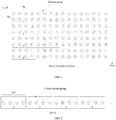
- the system appoints that the N1N2 beams adjacent to each other are in one group, and 0102 groups exist totally, as shown in FIG. 1 .
- a length of a candidate base vector is N
- the number of vectors in a candidate base vector set is N ⁇ O3
- O3 represents an oversampling factor.
- the system pre-defines that O3 beams adjacent to each other in a set of N ⁇ O3 candidate beam vectors are in one group, and N groups exits totally, as shown in FIG. 2 .
- 2L numbers of beams in W 1 include L different beams.
- a coefficient set corresponding to each of the beams is composed of two rows in W ⁇ 2 .
- a coefficient set corresponding to a first beam b k 1 0 k 2 0 includes an amplitude coefficient set ⁇ p 0,0 p 0,1 ⁇ p 0, M -1 ,p L, 0 p L, 1 ⁇ p L,M- 1 ⁇ and a phase coefficient set ⁇ c 0,0 c 0,1 ⁇ c 0, M -1 , c L, 0 c L, 1 ⁇ c L,M -1 ⁇ .
- a coefficient set corresponding to a second beam b k 1 1 k 2 1 includes an amplitude coefficient set ⁇ p 1,0 p 1,1 ⁇ p 1 ,M -1 , p L +1,0 p L +1,1 ⁇ p L +1 ,M -1 ⁇ and a phase coefficient set ⁇ c 1,0 c 1,1 ⁇ c 1, M -1 , c L +1,0 c L +1,1 ⁇ c L +1 ,M -1 ⁇ , and so on.
- a coefficient set corresponding to each of the beams is composed of one row in W ⁇ 2 .
- a coefficient set corresponding to each of the base vectors is composed of one column in W ⁇ 2 .
- a coefficient set corresponding to a first base vector [ ⁇ 0,0 ⁇ 0,1 ⁇ ⁇ 0 ,N -1 ] H includes an amplitude coefficient set ⁇ p 0,0 p 1,0 ⁇ p 2 L -1,0 ⁇ and a phase coefficient set ⁇ c 0,0 c 1,0 ⁇ c 2 L -1,0 ⁇ .
- a coefficient set corresponding to a second base vector [ ⁇ 1,0 ⁇ 1,1 ⁇ ⁇ 1, N -1] H includes an amplitude coefficient set ⁇ p 0,1 p 1,1 ⁇ p 2 L -1,1 ⁇ and a phase coefficient set ⁇ c 0,1 c 1,1 ⁇ c 2 L -1,1 ⁇ , and so on.
- the system appoints that a coefficient in the coefficient set corresponding to each of the beams is restricted so as to limit a value of a maximum amplitude coefficient in the set. Meanwhile the system appoints that a coefficient in the coefficient set corresponding to each of the base vectors is restricted so as to limit a value of a maximum amplitude coefficient in the set.
- the base station indicates through high-level signaling that 2 beam groups (e.g., beam groups 1 and 2 in FIG. 1 ) in the candidate beam set are restricted, and indicates that 2 base vector groups (e.g., base vector groups 2 and 3 in FIG. 2 ) in the candidate base vector set are restricted, and meanwhile indicates that a maximum amplitude value in the amplitude coefficient set of the coefficient set corresponding to each beam of the 8 beams in beam group 1 and the 8 beams in beam group 2 is restricted to be P max , which may be selected from amplitude coefficient quantization values of the Type II codebook.
- high-level signaling indicates that amplitudes of the 16 beams are restricted to be ⁇ P max1 P max2 ⁇ P max16 ⁇ .
- a maximum amplitude value in the amplitude coefficient set of the coefficient set corresponding to each base vector of 4 base vectors in base vector group 2 and 4 base vectors in base vector group 3 is restricted to be Q max , which may be selected from the amplitude coefficient quantization values of the Type II codebook.
- Q max which may be selected from the amplitude coefficient quantization values of the Type II codebook.
- high-level signaling indicates that amplitudes of the 8 base vectors are restricted to be ⁇ Q max1 Q max2 ⁇ Q max8 ⁇ .
- the terminal calculates feedback coefficients of the Type II codebook according to the above restriction conditions and reports the feedback coefficients to the base station.
- the system appoints that a coefficient in a coefficient set corresponding to each beam are restricted so as to limit a value of a sum of all amplitude coefficients in the set; and meanwhile the system appoints that each restricted base vector may not be used in a codebook.
- the base station indicates through high-level signaling that 2 beam groups (e.g., beam groups 1 and 2 in FIG. 1 ) in a candidate beam set are restricted, high-level signaling indicates that amplitudes of 8 beams in beam group 1 and 8 beams in beam group 2 are restricted to be ⁇ P max1 P max2 ⁇ P max16 ⁇ , which may be selected from amplitude coefficient quantization values of the Type II codebook.
- 2 beam groups e.g., beam groups 1 and 2 in FIG. 1
- high-level signaling indicates that amplitudes of 8 beams in beam group 1 and 8 beams in beam group 2 are restricted to be ⁇ P max1 P max2 ⁇ P max16 ⁇ , which may be selected from amplitude coefficient quantization values of the Type II codebook.
- the high-level signaling indicates that 2 base vector groups (e.g., base vector groups 2 and 3 in FIG. 2 ) in the candidate base vector set are restricted, and these 8 base vectors may not be used by the terminal.
- 2 base vector groups e.g., base vector groups 2 and 3 in FIG. 2
- the terminal calculates feedback coefficients of the Type II codebook according to the above restriction conditions and reports the feedback coefficients to the base station.
- a candidate base vector set of each beam or a value of the number of base vectors corresponding to each beam may further be indicated through high-level signaling.
- candidate base vectors which may be selected by each beam are indicated through a bitmap of 2 L ⁇ NO 3 , as shown in the following table.
- a candidate base vector group which may be selected by each beam is indicated through a position of 2L ⁇ N.
- the base vector may be used when a bit value is 1, otherwise, the base vector may not be used.
- a value of the number of the base vectors corresponding to each beam may be further restricted, namely, a value of Mi in each row in W ⁇ 2 is restricted.
- an antenna port number is N1 and N2, wherein N1 represents an antenna port number of a first dimension and N2 represents an antenna port number of a second dimension.
- Oversampling factors of beams in a codebook are O1 and O2.
- the system appoints that N1N2 beams adjacent to each other are in one group, and 0102 groups exit totally, as shown in FIG. 1 .
- a length of a candidate base vector is N
- the number of vectors in a candidate base vector set is N ⁇ O3
- O3 represents an oversampling factor.
- the system pre-defines that O3 beams adjacent to each other in a set of N ⁇ O3 candidate beam vectors are in one group, and N groups exits totally, as shown in FIG. 2 .
- p i 1 represents a wideband amplitude coefficient
- p i , j 2 represents a difference amplitude coefficient
- 2L beams in W 1 include L different beams.
- a coefficient set corresponding to each beam is composed of two rows in W ⁇ 2 .
- a coefficient set corresponding to a first beam b k 1 0 k 2 0 includes a wideband amplitude coefficient set p 0 1 p L 1 and a difference amplitude coefficient set p 0,0 2 p 0,1 2 ⁇ p 0 , M ⁇ 1 2 , p L , 0 2 p L , 1 2 ⁇ p L , M ⁇ 1 2 , and a phase coefficient set ⁇ c 0,0 c 0,1 ⁇ c 0, M -1 , c L, 0 c L ,1 ⁇ c L,M -1 ⁇ .
- a coefficient set corresponding to a second beam b k 1 1 k 2 1 includes a wideband amplitude coefficient set p 1 1 p L + 1 1 , and a difference amplitude coefficient set p 1,0 2 p 1,1 2 ⁇ p 1 , M ⁇ 1 2 , p L + 1,0 2 p L + 1,1 2 ⁇ p L + 1 , M ⁇ 1 2 , and a phase coefficient set ⁇ c 1,0 c 1,1 ⁇ c 1 ,M -1 , c L +1,0 c L +1,1 ⁇ c L +1 ,M -1 ⁇ , and so on.
- a coefficient set corresponding to each of the beams is composed of one row in W ⁇ 2 .
- a coefficient set corresponding to each of the base vectors is composed of one column in W ⁇ 2 .
- a coefficient set corresponding to a first base vector [ ⁇ 0,0 ⁇ 0,1 ⁇ ⁇ 0 ,N -1 ] H includes a difference amplitude coefficient set p 0,0 2 p 1,0 2 ⁇ p 2 L ⁇ 1,0 2 , a wideband amplitude coefficient set p 0 1 p 1 1 ⁇ p 2 L ⁇ 1 1 and a phase coefficient set ⁇ c 0,0 c 1,0 ⁇ c 2 L -1,0 ⁇ .
- a coefficient set corresponding to a second base vector [ ⁇ 1,0 ⁇ 1,1 ⁇ f 1, N -1 ] H includes a difference amplitude coefficient set p 0,1 2 p 1,1 2 ⁇ p 2 L ⁇ 1,1 2 , a wideband amplitude coefficient set p 0 1 p 1 1 ⁇ p 2 L ⁇ 1 1 , and a phase coefficient set ⁇ c 0,1 c 1,1 ⁇ c 2 L -1,1 ⁇ , and so on.
- the system appoints that a coefficient in the coefficient set corresponding to each beam is restricted so as to limit a value of a wideband amplitude coefficient in the set and a value of a maximum difference amplitude coefficient; and meanwhile the system appoints thata coefficient in the coefficient set corresponding to each base vector is restricted so as to limit a value of a maximum difference amplitude coefficient in the set.
- the base station indicates through high-level signaling that 2 beam groups (e.g., beam groups 1 and 2 in FIG. 1 ) in the candidate beam set are restricted, and that 2 base vector groups (e.g., base vector groups 2 and 3 in FIG. 2 ) in the candidate base vector set are restricted, and meanwhile indicates that a wideband amplitude value in the amplitude coefficient set of the coefficient set corresponding to each beam of the 8 beams in beam group 1 and the 8 beams in beam group 2 is restricted to be P max WB , which may be selected from wideband amplitude coefficient quantization values of the Type II codebook.
- 2 beam groups e.g., beam groups 1 and 2 in FIG. 1
- 2 base vector groups e.g., base vector groups 2 and 3 in FIG. 2
- P max WB which may be selected from wideband amplitude coefficient quantization values of the Type II codebook.
- high-level signaling indicates that wideband amplitudes of the 16 beams are restricted to be P max 1 WB P max 2 WB ⁇ P max 16 WB .
- a maximum difference amplitude value in the amplitude coefficient set of the coefficient set corresponding to each beam of the 8 beams in beam group 1 and the 8 beams in beam group 2 is restricted to be P max , which may be selected from difference amplitude coefficient quantization values of the Type II codebook.
- high-level signaling indicates that difference amplitudes of the 16 beams are restricted to be ⁇ P max1 P max2 ⁇ P max16 ⁇ .
- a maximum difference amplitude value in the amplitude coefficient set of the coefficient set corresponding to each base vector of 4 base vectors in base vector group 2 and 4 base vectors in base vector group 3 is restricted to be Q max , which may be selected from difference amplitude coefficient quantization values of the Type II codebook.
- Q max may be selected from difference amplitude coefficient quantization values of the Type II codebook.
- high-level signaling indicates that amplitudes of the 8 base vectors are restricted to be ⁇ Q max1 Q max2 ⁇ Q max8 ⁇ .
- a maximum of products of width amplitude values and difference amplitude values in an amplitude coefficient set of the coefficient set corresponding to each base vector of 4 base vectors in base vector group 2 and 4 base vectors in base vector group 3 is restricted to be O max , which may be selected from wideband amplitude coefficient quantization vales of the Type II codebook.
- O max which may be selected from wideband amplitude coefficient quantization vales of the Type II codebook.
- high-level signaling indicates that amplitudes of the 8 base vectors are restricted to be ⁇ O max1 O max2 ⁇ O max8 ⁇ .
- the terminal calculates feedback coefficients of the Type II codebook according to the above restriction conditions and reports the feedback coefficients to the base station.
- an antenna port number is N1 and N2, wherein N1 represents an antenna port number of a first dimension and N2 represents an antenna port number of a second dimension.
- Oversampling factors of beams in a codebook are O1 and O2.
- the system appoints that N1N2 beams adjacent to each other are in one group, and 0102 groups exit totally, as shown in FIG. 1 .
- a length of a candidate base vector is N
- the number of vectors in a candidate base vector set is N ⁇ O3
- O3 represents an oversampling factor.
- the system makes a pre-defining that O3 beams adjacent to each other in a set of the N ⁇ O3 candidate beam vectors are in one group, and N groups exist totally, as shown in FIG. 2 .
- q i 1 represents a wideband amplitude coefficient
- p i , j 2 represents a difference amplitude coefficient
- 2L beams in W 1 include L different beams.
- a coefficient set corresponding to each beam is composed of two rows in W ⁇ 2 .
- a coefficient set corresponding to a first beam b k 1 0 k 2 0 includes a wideband amplitude coefficient set q 0 1 q 1 1 ⁇ q M ⁇ 1 1 and a difference amplitude coefficient set p 0,0 2 p 0,1 2 ⁇ p 0 , M ⁇ 1 2 , p L , 0 2 p L , 1 2 ⁇ p L , M ⁇ 1 2 , and a phase coefficient set ⁇ c 0,0 c 0,1 ⁇ c 0, M -1 , c L, 0 c L ,1 ⁇ c L,M -1 ⁇ .
- a coefficient set corresponding to a second beam b k 1 1 k 2 1 includes a wideband amplitude coefficient set q 0 1 q 1 1 ⁇ q M ⁇ 1 1 and a difference amplitude coefficient set p 1,0 2 p 1,1 2 ⁇ p 1 , M ⁇ 1 2 , p L + 1,0 2 p L + 1,1 2 ⁇ p L + 1 , M ⁇ 1 2 , and a phase coefficient set ⁇ c 1,0 c 1,1 ⁇ c 1, M -1 , c L +1,0 c L +1,1 ⁇ c L +1, M -1 ⁇ , and so on.
- a coefficient set corresponding to a first base vector [ ⁇ 0,0 ⁇ 0,1 ⁇ ⁇ 0 ,N -1 ] H includes a difference amplitude coefficient set p 0,0 2 p 1,0 2 ⁇ p 2 L ⁇ 1,0 2 , a wideband amplitude coefficient q 0 1 , and a phase coefficient set ⁇ c 0,0 c 1,0 ⁇ c 2 L -1,0 ⁇ .
- a coefficient set corresponding to a second base vector [ ⁇ 1,0 ⁇ 1,1 ⁇ ⁇ 1, N -1 ] H includes a difference amplitude coefficient set p 0,1 2 p 1,1 2 ⁇ p 2 L ⁇ 1,1 2 , a wideband amplitude coefficient q 1 1 , and a phase coefficient set ⁇ c 0,1 c 1,1 ⁇ c 2 L -1,1 ⁇ , and so on.
- the system appoints that the coefficients in the coefficient set corresponding to each base vector are restricted so as to limit a value of wideband amplitude coefficients in the set.
- a base station indicates that a maximum difference amplitude value in the amplitude coefficient set of the coefficient set corresponding to each base vector of 4 base vectors in base vector group 2 and 4 base vectors in base vector group 3 is restricted to be Q max WB , which may be selected from wideband amplitude coefficient quantization values of the Type II codebook.
- High-level signaling indicates that amplitudes of the 8 base vectors are restricted to be Q max 1 WB Q max 2 WB ⁇ Q max 8 WB .
- the terminal determines according to a channel estimation result that when a third base vector in W ⁇ is a second base vector in the 8 restricted base vectors, coefficients in W ⁇ 2 are restricted to meet a relation: q 2 1 ⁇ Q max2 WB .
- the terminal calculates feedback coefficients of the Type II codebook according to the above restriction conditions and reports the feedback coefficients to the base station.
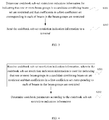
- an embodiment of the disclosure provides a codebook restriction method, including the following steps.
- codebook sub-set restriction indication information is determined for indicating that one or more beam groups in a candidate combining beam set are restricted and that coefficients in a first coefficient set corresponding to each of beams in the one or more beam groups are restricted.
- the codebook sub-set restriction indication information is sent to a terminal.
- the codebook sub-set restriction indication information is determined for indicating that one or more beam groups in the candidate combining beam set are restricted and that one or more coefficients in the first coefficient set corresponding to each beam in the beam groups is restricted, and the codebook sub-set restriction indication information is sent to the terminal, wherein be restricted means that one or more beam groups are controlled through signaling, and thus a coefficient value range or a function value range of coefficients corresponding to the beams in the beam groups are limited.
- the beam direction may be adjusted so as to prevent the beams from pointing to some directions, thereby preventing the generation of a beam with an orientation bringing about interference and then preventing interference.
- the one or more beam groups in the candidate combining beam set are formed through one of the following manners:
- a coefficient in the first coefficient set corresponding to each of the beams in the one or more beam groups is used for generating a weight of the beam on each sub-band.
- the coefficients in the first coefficient set are restricted for limiting the following:
- the pre-defining first function is a sum of all the amplitude coefficients, or a maximum value in all the amplitude coefficients, or a maximum value of wideband amplitude coefficients, or a maximum value in all difference amplitude coefficients, or a maximum value of the wideband amplitude coefficients and a maximum value in all the difference amplitude coefficients, or a maximum value of products of the wideband amplitude coefficients and the difference amplitude coefficients, or a maximum value of the wideband amplitude coefficients and a sum of all the difference amplitude coefficients, or a sum of products of the wideband amplitude coefficients and each of the difference amplitude coefficients; and the pre-defining second function is a sum of all the phase coefficients, or a maximum value of all the phase coefficients, or a minimum value of phase differences in all the phase coefficients.
- the codebook sub-set restriction indication information is further used for indicating that one or more base vector groups in a candidate base vector set are restricted.
- the base vector groups are formed through one of the following manners:
- the codebook sub-set restriction indication information is further used for indicating that coefficients in a second coefficient set corresponding to each of base vectors in the one or more restricted base vector groups are restricted.
- the coefficients in the second coefficient set corresponding to each of the base vectors are restricted for limiting the following:
- the pre-defining fourth function is a sum of all the amplitude coefficients, or a maximum value in all the amplitude coefficients, or a maximum value of wideband amplitude coefficients, or a maximum value in all difference amplitude coefficients, or a maximum value of the wideband amplitude coefficients and a maximum value in all the difference amplitude coefficients, or a maximum value of products of the wideband amplitude coefficients and the difference amplitude coefficients, or a maximum value of the wideband amplitude coefficients and a sum of all the difference amplitude coefficients, or a sum of products of the wideband amplitude coefficients and each of the difference amplitude coefficients; and the pre-defining fifth function is a sum of all the phase coefficients, or a maximum value in all the phase coefficients, or a minimum value of phase differences in all the phase coefficients.
- the codebook sub-set restriction indication information is further used for indicating that all base vectors in the one or more restricted base vector groups may not be used for codebook configuration and feedback.
- the codebook sub-set restriction indication information is further used for restricting a value of a number of the base vectors corresponding to one or more beams.
- the codebook sub-set restriction indication information is further used for restricting a value of a number of coefficients which are zero in all codebook coefficients.
- an embodiment of the disclosure provides a codebook parameter determination method, including the following steps.
- codebook sub-set restriction indication information is received, wherein the codebook sub-set restriction indication information is used for indicating that one or more beam groups in a candidate combining beam set are restricted, and that coefficients in a first coefficient set corresponding to each of beams in the one or more beam groups are restricted.
- codebook parameters are determined according to the codebook sub-set restriction indication information.
- the codebook sub-set restriction indication information is further used for indicating that one or more base vector groups in a candidate base vector set are restricted.
- the codebook sub-set restriction indication information is further used for indicating that coefficients in a second coefficient set corresponding to each of base vectors in the one or more restricted base vector groups are restricted.
- the codebook sub-set restriction indication information is further used for indicating that all base vectors in the one or more restricted base vector groups may not be used for codebook configuration and feedback.
- the codebook sub-set restriction indication information is further used for restricting a value of a number of the base vectors corresponding to one or more beams.
- the codebook sub-set restriction indication information is further used for restricting a value of a number of coefficients which are zero in all codebook coefficients.
- the method further includes: sending the codebook parameters to a base station.
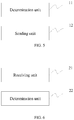
- an embodiment of the disclosure provides a codebook restriction apparatus, including:
- an embodiment of the disclosure provides a codebook parameter determination apparatus, including:
- division of the units in the embodiments of the disclosure is exemplary and is only a logical function division, and other division manners are allowed during actual implementations.
- all the function units in the various embodiments of the disclosure may be integrated into one processing unit, or all the units may exit physically independently, or two or more units may be integrated into one unit.
- the integrated units may be achieved in a manner of hardware or in a manner of software function units.
- the integrated units may be stored in a computer readable storage medium.
- the technical solutions of the disclosure may be essentially embodied in a manner of a software product, or part of the technical solutions making contributions to the prior art may be embodied in a manner of a software product, or part of or all of the technical solutions may be embodied in a manner of a software product.
- the computer software product is stored in a storage medium, including a plurality of instructions for making a computer device (may be a personal computer, a server, a network device, etc.) or a processor execute all or part of the steps of the methods of the various embodiments of the disclosure.
- the mentioned storage medium includes: a USB flash disk, a mobile hard disk drive, a Read-only Memory (ROM), a Random Access Memory (RAM), a diskette, or a compact disc and other various media capable of storing program codes.
- an embodiment of the disclosure provides another codebook restriction apparatus, including:
- the one or more beam groups in the candidate combining beam set are formed through one of the following manners:
- a coefficient in the first coefficient set corresponding to each of the beams in the one or more beam groups is used for generating a weight of the beam on each sub-band.
- the coefficients in the first coefficient set are restricted for limiting the following:
- the pre-defining first function is a sum of all the amplitude coefficients, or a maximum value in all the amplitude coefficients, or a maximum value of wideband amplitude coefficients, or a maximum value in all difference amplitude coefficients, or a maximum value of the wideband amplitude coefficients and a maximum value in all the difference amplitude coefficients, or a maximum value of products of the wideband amplitude coefficients and the difference amplitude coefficients, or a maximum value of the wideband amplitude coefficients and a sum of all the difference amplitude coefficients, or a sum of products of the wideband amplitude coefficients and each of the difference amplitude coefficients; and the pre-defining second function is a sum of all the phase coefficients, or a maximum value in all the phase coefficients, or a minimum value of phase differences in all the phase coefficients.
- the codebook sub-set restriction indication information is further used for indicating that one or more base vector groups in a candidate base vector set are restricted.
- the base vector groups are formed through one of the following manners:
- the codebook sub-set restriction indication information is further used for indicating that coefficients in a second coefficient set corresponding to each of the base vectors in one or more restricted base vector groups are restricted.
- the coefficients in the second coefficient set corresponding to each of the base vectors are restricted for limiting the following:
- the pre-defining fourth function is a sum of all the amplitude coefficients, or a maximum value in all the amplitude coefficients, or a maximum value of wideband amplitude coefficients, or a maximum value in all difference amplitude coefficients, or a maximum value of the wideband amplitude coefficients and a maximum value in all the difference amplitude coefficients, or a maximum value of products of the wideband amplitude coefficients and the difference amplitude coefficients, or a maximum value of the wideband amplitude coefficients and a sum of all the difference amplitude coefficients, or a sum of products of the wideband amplitude coefficients and each of the difference amplitude coefficients; and the pre-defining fifth function is a sum of all the phase coefficients, or a maximum value in all the phase coefficients, or a minimum value of phase differences in all the phase coefficients.
- the codebook sub-set restriction indication information is further used for indicating that all the base vectors in one or more restricted base vector groups may not be used for codebook configuration and feedback.
- the codebook sub-set restriction indication information is further used for restricting a value of a number of the base vectors corresponding to one or more beams.
- the codebook sub-set restriction indication information is further used for restricting a value of a number of coefficients which are zero in all codebook coefficients.
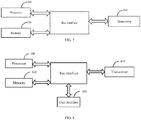
- the transceiver 510 is configured to receive and send data under control of the processor 500.
- a bus architecture may include any number of interconnecting buses and bridges, specifically linking various circuits of one or more processors represented by the processor 500 and the memories represented by the memory 520.
- the bus architecture may further link other various circuits like peripheral devices, a voltage stabilizer, a power management circuit, etc., which are known to those in the art and will not be further described herein.
- a bus interface provides an interface.
- the transceiver 510 may be a plurality of elements, namely including a transmitter and a receiver, providing units for communicating with other various devices on a transmission medium.
- the processor 500 is in charge of managing the bus architecture and general processing.
- the memory 520 may store data used during executing operation of the processor 500.
- the processor 500 may be a central processing unit (CPU), an Application Specific Integrated Circuit (ASIC), a Field-Programmable Gate Array (FPGA), or a Complex Programmable Logic Device (CPLD).
- CPU central processing unit
- ASIC Application Specific Integrated Circuit
- FPGA Field-Programmable Gate Array
- CPLD Complex Programmable Logic Device
- an embodiment of the disclosure provides a codebook parameter determination apparatus, including:
- the codebook sub-set restriction indication information is further used for indicating that one or more base vector groups in a candidate base vector set are restricted.
- the codebook sub-set restriction indication information is further used for indicating that coefficients in a second coefficient set corresponding to each of base vectors in the one or more restricted base vector groups are restricted.
- the codebook sub-set restriction indication information is further used for indicating that all the base vectors in one or more restricted base vector groups may not be used for codebook configuration and feedback.
- the codebook sub-set restriction indication information is further used for restricting a value of a number of the base vectors corresponding to one or more beams.
- the codebook sub-set restriction indication information is further used for restricting a value of a number of coefficients which are zero in all codebook coefficients.
- the processor 600 is further used for calling the program instructions stored in the memory to: send the codebook parameters to a base station through a transceiver 610.
- the transceiver 610 is configured to receive and send data under control of the processor 600.
- a bus architecture may include any number of interconnecting buses and bridges, specifically linking various circuits of one or more processors represented by the processor 600 and the memories represented by the memory 620.
- the bus architecture may further link other various circuits like peripheral devices, a voltage stabilizer, a power management circuit, etc., which are known to those in the art and will not be further described herein.
- a bus interface provides an interface.
- the transceiver 610 may be a plurality of elements, namely including a transmitter and a receiver, providing units for communicating with other various devices on a transmission medium.
- a user interface 630 may be an interface capable of being internally or externally connected with needed devices including but is not limited to a keypad, a display, a loudspeaker, a microphone, a joystick, etc.
- the processor 600 is in charge of managing the bus architecture and general processing, and the memory 620 may store data used during executing operation of the processor 600.
- the processor 600 may be a central processing unit (CPU), an Application Specific Integrated Circuit (ASIC), a Field-Programmable Gate Array (FPGA), or a Complex Programmable Logic Device (CPLD).
- CPU central processing unit
- ASIC Application Specific Integrated Circuit
- FPGA Field-Programmable Gate Array
- CPLD Complex Programmable Logic Device
- the apparatus provided by the embodiment of the disclosure may be a computing device which may be, specifically, a desk-top computer, a portable computer, a smart phone, a tablet PC, a Personal Digital Assistant (PDA), etc.
- the computing device may include the central processing unit (CPU), a memory, an input/output device, etc.
- the input device may include a keyboard, a mouse, a touch screen, etc.
- the output device may include a display device, e.g., a Liquid Crystal Display (LCD), a Cathode Ray Tube (CRT), etc.
- LCD Liquid Crystal Display
- CRT Cathode Ray Tube
- the memory may include a read-only memory (ROM) and a random access memory (RAM) and provides the program instructions and data stored herein for the processor.
- ROM read-only memory
- RAM random access memory
- the memory may be used for storing program of any one of the methods provided by the embodiments of the disclosure.
- the processor calls the program instructions stored in the memory and is used for executing any one of the methods provided by the embodiments of the disclosure according to the obtained program instructions.
- An embodiment of the disclosure provides a computer storage medium used for storing computer program instructions used by the apparatuses provided by the embodiments of the disclosure, which include program for executing any one of the methods provided by the embodiments of the disclosure.
- the computer storage medium may be any applicable medium or data storage devices which may be accessed by a computer, including but is not limited to a magnetic memory (e.g., a floppy disk, a hard disk, a magnetic tape, a magnetooptical disk (MO), etc.), an optical memory (e.g., CD, DVD, BD, HVD, etc.), and a semiconductor memory (e.g., ROM, EPROM, EEPROM, a NAND FLASH, a solid state drive (SSD)), etc.
- a magnetic memory e.g., a floppy disk, a hard disk, a magnetic tape, a magnetooptical disk (MO), etc.
- an optical memory e.g., CD, DVD, BD, HVD, etc.
- semiconductor memory e.g., ROM, EPROM, EEPROM, a NAND FLASH, a solid state drive (SSD)
- the methods provided by the embodiments of the disclosure may be applied to terminal devices, or network devices.
- the terminal devices may be also called User Equipment (UE for short), a mobile station (MS for short), a mobile terminal, etc.
- the terminal may have a capacity of communicating with one or more core networks through a Radio Access Network (RAN), for example, the terminal may be a mobile phone (or called a "cell" phone), or a mobile computer, etc.
- the terminal may further be a portable or pocket or hand-held or computer built-in or vehicle-mounted mobile device.
- the network devices may be a base station (e.g., an access point), referring to devices for communicating with a wireless terminal on an air interface in an access network through one or more sectors.
- the base station may be used for interconverting a received air frame and an IP group, serving as router between the wireless terminal and the rest part of the access network.
- the rest part of the access network may include an internet protocol (IP) network.
- IP internet protocol
- the base station may further coordinate attribute management of the air interface.
- the base station may be a Base Transceiver Station (BTS) in GSM or CDMA, or a NodeB in WCDMA, or an evolutional Node B (NodeB or eNB or e-NodeB) in LTE, or a gNB in a 5G system, etc., which is not limited here.
- BTS Base Transceiver Station
- NodeB or eNB or e-NodeB evolutional Node B
- LTE Long Term Evolutional Node B
- gNB 5G system
- the flows of the methods may be achieved through a software program which may be stored in the storage medium, and when the stored software program is called, the steps of the methods are executed.
- the coefficients in the coefficient set corresponding to each beam and/or each base vector or the functions of the coefficients are restricted, thereby preventing the generation of beams with some orientations and then preventing interference.
- the embodiments of the present invention may be provided as the methods, the system, or the computer program product.
- the present invention may adopt manners of a complete hardware embodiment, a complete software embodiment, or a software and hardware combined embodiment.
- the present invention may adopt a manner of a computer program product implemented on one or more computer applicable storage media (including but is not limited to a disk memory, CD-ROM, an optical memory, etc.) including computer applicable program codes.
- the present invention is described in reference to the flowchart and/or a block diagram of the methods, the devices (system) and the computer program product according to the embodiments of the present invention. It should be understood that each flow and/or block in the flowchart and/or the block diagram, and combination of flows and/or blocks in the flowchart and/or block diagram may be implemented through the computer program instructions. These computer program instructions may be provided for a processor of a general-purpose computer, a special-purpose computer, an embedded processor or other programmable data processing devices so as to generate a machine, so that an apparatus for achieving appointed functions in one or more flows in the flowchart and/or one or more blocks in the block diagram is generated through the instructions executed by the processor of the computer or other programmable data processing devices.
- These computer program instructions may also be stored in a computer readable memory capable of guiding the computer or other programmable data processing devices to work in a specified manner, so that the instructions stored in the computer readable memory may generate a product including an instruction apparatus, and the instruction apparatus achieves the appointed functions in one or more flows in the flowchart and/or one or more blocks in the block diagram.
- These computer program instructions may also be loaded onto the computer or other programmable data processing devices, so that a series of operation steps may be executed on the computer or other programmable devices to generate processing achieved by the computer, then the instructions executed on the computer or other programmable devices provide steps for achieving the appointed functions in one or more flows in the flowchart and/or one or more blocks in the block diagram.
Landscapes
- Engineering & Computer Science (AREA)
- Computer Networks & Wireless Communication (AREA)
- Signal Processing (AREA)
- Physics & Mathematics (AREA)
- Mathematical Physics (AREA)
- Mobile Radio Communication Systems (AREA)
- Radio Transmission System (AREA)
Abstract
Description
- The disclosure claims priority to the
Chinese Patent Application No. 201910017133.2 Chinese Patent Application No. 201910112862.6 - The disclosure relates to the field of communication technology, in particular to codebook restriction and codebook parameter determination methods and apparatuses.
- In NR Rel-15, a Type II codebook is defined, which supports a
rank 1 codebook and arank 2 codebook on the basis of a manner of linear combination for beams in an orthogonal beam group. As for one sub-band, therank 1 codebook is shown as:
rank 2 codebook is shown as:

1 ,k2 represents orthogonal beams, 2D (Two-Dimensional) Discrete Fourier Transform (DFT) is adopted, as for vectors, r=0, 1, represents a first polarization direction and a second polarization direction in a dual-polarization antenna array, and 1=0, 1 represents a layer.
layer 1;
layer 1; and cr,l,i represents a sub-band phase quantization factor which acts on the beam i in the beam group, the polarization directions r and thelayer 1. - Codebook sub-set restriction is to make a base station indicate a terminal that some codewords or some codebook parameters are prohibited, on the one hand, control of the base station over UE feedback is achieved, and on the other hand, the computation complexity of UE may be lowered. In Rel-15, the Type II codebook supports both restriction to rank RI and restriction to the beams, wherein the restriction to the beams is used for controlling the terminal to fail in feeding back codewords in some beam directions so as to avoid interference. As for the above codebook structure, beam sub-set restriction in Rel-15 is divided into two parts, that is, one part is restriction to a candidate beam set of synthetic beams b k
1 ,k2 and the other part is restriction to a value of a wideband amplitude
- To sum up, a Type II codebook with low-overhead is defined in NR Rel-16, which compresses a coefficient of each sub-band and feeds back compressed coefficients to the base station. For example, rank=1, and as for all sub-bands, the codebook may be shown as:

- Embodiments of the disclosure provide codebook restriction and codebook parameter determination methods and apparatuses so as to prevent the generation of a beam with an orientation bringing about interference, thereby preventing interference.
- On a network side, e.g., a base station side, an embodiment of the disclosure provides a codebook restriction method, including:
- determining codebook sub-set restriction indication information for indicating that one or more beam groups in a candidate combining beam set are restricted and that coefficients in a first coefficient set corresponding to each of beams in the beam groups are restricted; and
- sending the codebook sub-set restriction indication information to a terminal.
- Through the method, the codebook sub-set restriction indication information is determined for indicating that one or more beam groups in the candidate combining beam set are restricted and that the coefficients in the first coefficient set corresponding to each of beams in the beam groups are restricted, and the codebook sub-set restriction indication information is sent to the terminal, thereby preventing the generation of the beam with the orientation bringing about interference and then preventing interference.
- Optionally, the one or more beam groups in the candidate combining beam set are formed through one of the following manners:
-
manner 1, a plurality of beams mutually orthogonal with each other in the candidate combining beam set are in one beam group; and -
manner 2, a plurality of beams adjacent to each other in the candidate combining beam set are in one beam group. - Optionally, a coefficient in the first coefficient set corresponding to each of the beams in the one or more beam groups is used for generating a weight of the beam on each sub-band.
- Optionally, the coefficients in the first coefficient set are restricted for limiting the following:
- limiting a value of each amplitude coefficient among all the coefficients in the first coefficient set, or a value of a pre-defining first function of part of or all of the amplitude coefficients; or
- limiting a value of each phase coefficient among all the coefficients in the first coefficient set, or a value of a pre-defining second function of part of or all of the phase coefficients; or
- limiting a value of each of amplitude coefficients and a value of each of phase coefficients among all the coefficients in the first coefficient set, or a value of a pre-defining third function of part of or all of the amplitude coefficients and the phase coefficients.
- Optionally, the pre-defining first function is a sum of all the amplitude coefficients, or a maximum value in all the amplitude coefficients, or a maximum value of wideband amplitude coefficients, or a maximum value in all difference amplitude coefficients, or a maximum value of the wideband amplitude coefficients and a maximum value in all the difference amplitude coefficients, or a maximum value of products of the wideband amplitude coefficients and the difference amplitude coefficients, or a maximum value of the wideband amplitude coefficients and a sum of all the difference amplitude coefficients, or a sum of products of the wideband amplitude coefficients and each of the difference amplitude coefficients; and
the pre-defining second function is a sum of all the phase coefficients, or a maximum value of all the phase coefficients, or a minimum value of phase differences in all the phase coefficients. - Optionally, the codebook sub-set restriction indication information is further used for indicating that one or more base vector groups in a candidate base vector set are restricted.
- Optionally, the base vector groups are formed through one of the following manners:
-
manner 1, a plurality of base vectors mutually orthogonal with each other in the candidate base vector set are in one base vector group; and -
manner 2, a plurality of base vectors adjacent to each other in the candidate base vector set are in one base vector group. - Optionally, the codebook sub-set restriction indication information is further used for indicating that coefficients in a second coefficient set corresponding to each of base vectors in the one or more restricted base vector groups are restricted.
- Optionally, the coefficients in the second coefficient set corresponding to each of the base vectors are restricted for limiting the following:
- limiting a value of each amplitude coefficient among all coefficients in the second coefficient set corresponding to each of the base vectors, or a value of a pre-defining fourth function of part of or all of the amplitude coefficients; or
- limiting a value of each phase coefficient among all the coefficients in the second coefficient set corresponding to each of the base vectors, or a value of a pre-defining fifth function of part of or all of the phase coefficients; or
- limiting a value of each of amplitude coefficients and a value of each of phase coefficients among all the coefficients in the second coefficient set corresponding to each of the base vectors, or a value of a pre-defining sixth function of part of or all of the amplitude coefficients and the phase coefficients.
- Optionally, the pre-defining fourth function is a sum of all the amplitude coefficients, or a maximum value in all the amplitude coefficients, or a maximum value of wideband amplitude coefficients, or a maximum value in all difference amplitude coefficients, or a maximum value of the wideband amplitude coefficients and a maximum value in all the difference amplitude coefficients, or a maximum value of products of the wideband amplitude coefficients and the difference amplitude coefficients, or a maximum value of the wideband amplitude coefficients and a sum of all the difference amplitude coefficients, or a sum of products of the wideband amplitude coefficients and each of the difference amplitude coefficients; and
the pre-defining fifth function is a sum of all the phase coefficients, or a maximum value in all the phase coefficients, or a minimum value of phase differences in all the phase coefficients. - Optionally, the codebook sub-set restriction indication information is further used for indicating that all base vectors in the one or more restricted base vector groups is not used for codebook configuration and feedback.
- Optionally, the codebook sub-set restriction indication information is further used for restricting a value of a number of the base vectors corresponding to one or more beams.
- Optionally, the codebook sub-set restriction indication information is further used for restricting a value of a number of coefficients which are zero in all codebook coefficients.
- Correspondingly, on a terminal side, an embodiment of the disclosure provides a codebook parameter determination method, including:
- receiving codebook sub-set restriction indication information, wherein the codebook sub-set restriction indication information is used for indicating that one or more beam groups in a candidate combining beam set are restricted, and that coefficients in a first coefficient set corresponding to each of beams in the one or more beam groups are restricted; and
- determining codebook parameters according to the codebook sub-set restriction indication information.
- Optionally, the codebook sub-set restriction indication information is further used for indicating that one or more base vector groups in a candidate base vector set are restricted.
- Optionally, the codebook sub-set restriction indication information is further used for indicating that coefficients in a second coefficient set corresponding to each of base vectors in the one or more restricted base vector groups are restricted.
- Optionally, the codebook sub-set restriction indication information is further used for indicating that all base vectors in the one or more restricted base vector groups is not used for codebook configuration and feedback.
- Optionally, the codebook sub-set restriction indication information is further used for restricting a value of a number of the base vectors corresponding to one or more beams.
- Optionally, the codebook sub-set restriction indication information is further used for restricting a value of a number of coefficients which are zero in all codebook coefficients.
- Optionally, the method further includes:
sending the codebook parameters to a base station. - On a network side, e.g., a base station side, an embodiment of the disclosure provides a codebook restriction apparatus, including:
- a memory, configured to store program instructions; and
- a processor, configured to call the program instructions stored in the memory to:
- determine codebook sub-set restriction indication information for indicating that one or more beam groups in a candidate combining beam set are restricted and that coefficients in a first coefficient set corresponding to each of beams in the beam groups are restricted; and
- send the codebook sub-set restriction indication information to a terminal.
- Optionally, the one or more beam groups in the candidate combining beam set are formed through one of the following manners:
-
manner 1, a plurality of beams mutually orthogonal with each other in the candidate combining beam set are in one beam group; and -
manner 2, a plurality of beams adjacent to each other in the candidate combining beam set are in one beam group. - Optionally, a coefficient in the first coefficient set corresponding to each of the beams in the one or more beam groups is used for generating a weight of the beam on each sub-band.
- Optionally, the coefficients in the first coefficient set are restricted for limiting the following:
- limiting a value of each amplitude coefficient among all coefficients in the first coefficient set, or a value of a pre-defining first function of part of or all of the amplitude coefficients; or
- limiting a value of each phase coefficient among all the coefficients in the first coefficient set, or a value of a pre-defining second function of part of or all of the phase coefficients; or
- limiting a value of each of amplitude coefficients and a value of each of phase coefficients among all the coefficients in the first coefficient set, or a value of a pre-defining third function of part of or all of the amplitude coefficients and the phase coefficients.
- Optionally, the pre-defining first function is a sum of all the amplitude coefficients, or a maximum value in all the amplitude coefficients, or a maximum value of wideband amplitude coefficients, or a maximum value in all difference amplitude coefficients, or a maximum value of the wideband amplitude coefficients and a maximum value in all the difference amplitude coefficients, or a maximum value of products of the wideband amplitude coefficients and the difference amplitude coefficients, or a maximum value of the wideband amplitude coefficients and a sum of all the difference amplitude coefficients, or a sum of products of the wideband amplitude coefficients and each of the difference amplitude coefficients; and
the pre-defining second function is a sum of all the phase coefficients, or a maximum value in all the phase coefficients, or a minimum value of phase differences in all the phase coefficients. - Optionally, the codebook sub-set restriction indication information is further used for indicating that one or more base vector groups in a candidate base vector set are restricted.
- Optionally, the base vector groups are formed through one of the following manners:
-
manner 1, a plurality of base vectors mutually orthogonal with each other in the candidate base vector set are in one base vector group; and -
manner 2, a plurality of base vectors adjacent to each other in the candidate base vector set are in one base vector group. - Optionally, the codebook sub-set restriction indication information is further used for indicating that coefficients in a second coefficient set corresponding to each of the base vectors in one or more restricted base vector groups are restricted.
- Optionally, the coefficients in the second coefficient set corresponding to each of the base vectors are restricted for limiting the following:
- limiting a value of each of the amplitude coefficients in all the coefficients in the second coefficient set corresponding to each of the base vectors, or a value of a pre-defining fourth function of part of or all of the amplitude coefficients; or
- limiting a value of each of the phase coefficients in all the coefficients in the second coefficient set corresponding to each of the base vectors, or a value of a pre-defining fifth function of part of or all of the phase coefficients; or
- limiting a value of each of amplitude coefficients and a value of each of phase coefficients in all the coefficients in the second coefficient set corresponding to each of the base vectors, or a value of a pre-defining sixth function of part of or all of the amplitude coefficients and the phase coefficients.
- Optionally, the pre-defining fourth function is a sum of all the amplitude coefficients, or a maximum value in all the amplitude coefficients, or a maximum value of wideband amplitude coefficients, or a maximum value in all difference amplitude coefficients, or a maximum value of the wideband amplitude coefficients and a maximum value in all the difference amplitude coefficients, or a maximum value of products of the wideband amplitude coefficients and the difference amplitude coefficients, or a maximum value of the wideband amplitude coefficients and a sum of all the difference amplitude coefficients, or a sum of products of the wideband amplitude coefficients and each of the difference amplitude coefficients; and
the pre-defining fifth function is a sum of all the phase coefficients, or a maximum value in all the phase coefficients, or a minimum value of phase differences in all the phase coefficients. - Optionally, the codebook sub-set restriction indication information is further used for indicating that all base vectors in the one or more restricted base vector groups is not used for codebook configuration and feedback.
- Optionally, the codebook sub-set restriction indication information is further used for restricting a value of a number of the base vectors corresponding to one or more beams.
- Optionally, the codebook sub-set restriction indication information is further used for restricting a value of a number of coefficients which are zero in all codebook coefficients.
- On a terminal side, an embodiment of the disclosure provides a codebook parameter determination apparatus, including:
- a memory, configured to store program instructions; and
- a processor, configured to call the program instructions stored in the memory, and according to obtained programs, perform:
- receive codebook sub-set restriction indication information, wherein the codebook sub-set restriction indication information is used for indicating that one or more beam groups in a candidate combining beam set are restricted, and that coefficients in a first coefficient set corresponding to each of beams in the one or more beam groups are restricted; and
- determine codebook parameters according to the codebook sub-set restriction indication information.
- Optionally, the codebook sub-set restriction indication information is further used for indicating that one or more base vector groups in a candidate base vector set are restricted.
- Optionally, the codebook sub-set restriction indication information is further used for indicating that coefficients in a second coefficient set corresponding to each of base vectors in the one or more restricted base vector groups are restricted.
- Optionally, the codebook sub-set restriction indication information is further used for indicating that all base vectors in the one or more restricted base vector groups is not used for codebook configuration and feedback.
- Optionally, the codebook sub-set restriction indication information is further used for restricting a value of a number of the base vectors corresponding to one or more beams.
- Optionally, the codebook sub-set restriction indication information is further used for restricting a value of a number of coefficients which are zero in all codebook coefficients.
- Optionally, the processor is further used for calling the program instructions stored in the memory to:
sending the codebook parameters to a base station. - On a network side, an embodiment of the disclosure provides another codebook restriction apparatus, including:
- a determination unit, configured to determine the codebook sub-set restriction indication information used for indicating that one or more beam groups in a candidate combining beam set are restricted, and that coefficients in a first coefficient set corresponding to each of beams in the one or more beam groups are restricted; and
- a sending unit, configured to send the codebook sub-set restriction indication information to a terminal.
- On a terminal side, an embodiment of the disclosure provides another codebook parameter determination apparatus, including:
- a receiving unit, configured to receive codebook sub-set restriction indication information, wherein the codebook sub-set restriction indication information is used for indicating that one or more beam groups in a candidate combining beam set are restricted, and that coefficients in a first coefficient set corresponding to each of beams in the one or more beam groups are restricted; and
- a determination unit, configured to determine codebook parameters according to the codebook sub-set restriction indication information.
- Another embodiment of the disclosure provides a computer storage medium storing a computer executable instruction used for make a computer execute any one of the methods described above.
- In order to more clearly describe technical solutions in embodiments of the disclosure, accompanying drawings needed in description of the embodiments will be briefly introduced below. Obviously, the drawings described below only serve as some embodiments of the disclosure, and those ordinarily skilled in the art may obtain other drawings according to these drawings without creative work.
-
FIG. 1 is a schematic diagram of beam groups of a candidate beam set provided by an embodiment of the disclosure. -
FIG. 2 is a schematic diagram of beam groups of a candidate base vector set provided by an embodiment of the disclosure. -
FIG. 3 is a schematic flowchart of a codebook restriction method provided by an embodiment of the disclosure. -
FIG. 4 is a schematic flowchart of a codebook parameter determination method provided by an embodiment of the disclosure. -
FIG. 5 is a schematic structural diagram of a codebook restriction apparatus provided by an embodiment of the disclosure. -
FIG. 6 is a schematic structural diagram of a codebook parameter determination apparatus provided by an embodiment of the disclosure. -
FIG. 7 is a schematic structural diagram of another codebook restriction apparatus provided by an embodiment of the disclosure. -
FIG. 8 is a schematic structural diagram of another codebook parameter determination apparatus provided by an embodiment of the disclosure. - In order to make objectives, technical solutions and advantages of embodiments of the present invention clearer, the technical solutions in the embodiments of the present invention will be described clearly and completely below in combination with accompanying drawings in the embodiments of the present invention. Obviously, the described embodiments are some, but not all of the embodiments of the present invention. On the basis of the embodiments in the present invention, all other embodiments obtained by those ordinarily skilled in the art without creative work belong to the protection scope of the present invention.
- It should be understood that the technical solutions of the present invention may be applied to various communication systems, e.g., a Global System of Mobile communication (GSM), a Code Division Multiple Access (CDMA) system, a Wideband Code Division Multiple Access (WCDMA) system, a General Packet Radio Service (GPRS), a Long Term Evolution (LTE) system, an Advanced long term evolution (LTE-A) system, a Universal Mobile Telecommunication System (UMTS), and a New Radio (NR), etc.
- It also should be understood that in the embodiments of the present invention, User Equipment (UE) includes but is not limited to a Mobile Station (MS), a Mobile Terminal, a Mobile Telephone, a handset, portable equipment, etc. The user equipment may communicate with one or more core networks through a Radio Access Network (RAN), for example, the user equipment may be the mobile telephone (or called a "cell" phone), a computer with a wireless communication function, etc. or may be a portable or pocket or hand-held or computer built-in or vehicle-mounted mobile apparatus.
- In the embodiments of the present invention, a base station (e.g., an access point) may refer to equipment which communicates with a wireless terminal on an air interface in an access network through one or more sectors. The base station may be used for interconverting a received air frame and an IP group, serving as a router between the wireless terminal and the rest part of the access network, wherein the rest part of the access network may include an internet protocol (IP) network. The base station may coordinate attribute management of the air interface. For example, the base station may be a Base Transceiver Station (BTS) in GSM or CDMA, or a NodeB in TD-SCDMA or WCDMA, or an evolutional Node B (eNodeB or an eNB or an e-NodeB) in LTE, or a gNB in 5G NR, which is not limited here.
- A Type II codebook is defined in an NR system. A Type II codebook in Rel-15 is based on linear combination for orthogonal beams and is high in channel quantization precision but high in feedback overhead. A Type II codebook with low-overhead is provided in Rel-16, which is based on a method of linear combination for the orthogonal beams and sub-band coefficient compression. According to a Type II codebook structure with low-overhead of Rel-16, the embodiments of the disclosure provide codebook sub-set restriction and codebook parameter determination methods and apparatuses, which may control directions of the linearly combined beams and then prevent interference.
- The methods and the apparatuses are based on the same application concept, and as the principle of solving problems of the methods is similar to that of solving problems of the apparatuses, implementations of the apparatuses and the methods may be referred to each other, and repetition is omitted.
- The technical solutions provided by the embodiments of the disclosure may be applied to various systems, especially, the 5G system, e.g., the Global System of Mobile communication (GSM), the Code Division Multiple Access (CDMA) system, the Wideband Code Division Multiple Access (WCDMA) system, the General Packet Radio Service (GPRS) system, the Long Term Evolution (LTE) system, an LTE frequency division duplex (FDD) system, an LTE time division duplex (TDD), the universal mobile telecommunication system (UMTS), a worldwide interoperability for microwave access (WiMAX) system, the 5G system, the 5G NR system, etc. The various systems include terminal devices and network devices.
- The terminal devices mentioned in the embodiments of the disclosure may refer to devices providing voice and/or data connectivity for a user, hand-held devices with a wireless connection function, or other processing devices connected to a wireless modem. In the different systems, names of the terminal devices may differ, for example, in the 5G system, the terminal devices may be called user equipment (UE). Wireless terminal devices may communicate with one or more core networks through RAN and may be mobile terminal devices, e.g., the mobile phone (or called the "cell" phone) and a computer with the mobile terminal devices, for example, a portable or pocket or hand-held or computer built-in or vehicle-mounted mobile apparatus, which exchange languages and/or data with a wireless access network, and for example, a personal communication service (PCS) telephone, a cordless telephone, a session initiated protocol (SIP) phone, a wireless local loop (WLL) station, a personal digital assistant (PDA), etc. The wireless terminal devices may be also called a system, a subscriber unit, a subscriber station, a mobile station, a mobile, a remote station, an access point, a remote terminal, an access terminal, a user terminal, a user agent and a user device, which is not defined in the embodiments of the disclosure.
- The network devices mentioned in the embodiments of the disclosure may be a base station, and the base station may include a plurality of cells. According to different specific application occasions, the base station may be also called the access point, or devices which communicates with the wireless terminal devices on the air interface in the access network through one or more sectors, or have other names. The network devices may be used for interconverting the received air frame and the internet protocol (IP) group, serving as the router between the wireless terminal devices and the rest part of the access network, wherein the rest part of the access network may include an internet protocol (IP) communication network. The network devices may coordinate attribute management of the air interface. For example, the network devices mentioned in the embodiments of the disclosure may be a base transceiver station (BTS) in the global system for mobile communications (GSM) or the code division multiple access (CDMA), or the NodeB in the wide-band code division multiple access (WCDMA), or the evolutional node B (eNB or e-NodeB) in the long term evolution (LTE) system, a 5G base station in a next generation system, or a home evolved node B (HeNB), a relay node, a femto, a pico, etc., which is not defined in the embodiments of the disclosure.
- All the embodiments of the disclosure will be described in detail below in combination with the accompanying drawings of the description. It should be noted that the showing sequence of the embodiments of the disclosure only represent the sequential order of the embodiments, but not priority of the technical solutions provided by the embodiments.
- An embodiment of the disclosure provides a new codebook sub-set restriction method capable of achieving beam restriction to a codebook. The restriction method includes one or combination of more of the following restriction manners:
- combining beams are restricted;
- coefficients corresponding to the restricted combining beams are restricted;
- base vectors for compression are restricted; and
- coefficients corresponding to the restricted base vectors are restricted.
- Through the codebook sub-set restriction method, beams with some directions may be avoided, thereby preventing interference.
- Specifically, for example, on a base station side, a codebook sub-set restriction method includes: a base station indicates that one or more beam groups in a candidate combining beam set are restricted and that coefficients (first coefficients) in a coefficient set (a first coefficient set) corresponding to each beam in the one or more beam groups are restricted.
- Optionally, the beam groups of the candidate combining beam set may be that a plurality of beams mutually orthogonal with each other in the set are in one group, or a plurality of beams adjacent to each other are in one group.
- Optionally, a coefficient in the first coefficient set corresponding to the beam is used for generating a weight of the beam on each sub-band.
- Optionally, the first coefficients are restricted so as to limit a value of each amplitude coefficient in all coefficients in the set, or a value of a pre-defining first function of part of or all of the amplitude coefficients; or limit a value of each phase coefficient in all the coefficients in the set, or a value of a pre-defining second function of part of or all of the phase coefficients; or limit a value of each of amplitude coefficients and a value of each of phase coefficients in all the coefficients, or a value of a pre-defining third function of part of or all of the amplitude coefficients and the phase coefficients.
- Optionally, the pre-defining first function may be a sum of all the amplitude coefficients, or a maximum value in all the amplitude coefficients, or a maximum value of wideband amplitude coefficients, or a maximum value in all difference amplitude coefficients, or a maximum value of the wideband amplitude coefficients and a maximum value in all the difference amplitude coefficients, or a maximum value of products of the wideband amplitude coefficients and the difference amplitude coefficients, or a maximum value of the wideband amplitude coefficients and a sum of all the difference amplitude coefficients, or a sum of products of the wideband amplitude coefficients and each of the difference amplitude coefficients. The pre-defining second function may be a sum of all the phase coefficients, or a maximum value in all the phase coefficients, or a minimum value of phase differences in all the phase coefficients.
- Optionally, the base station may further indicate that one or more base vector groups in a candidate base vector set are restricted. Namely, the codebook sub-set restriction indication information is further used for indicating that one or more base vector groups in the candidate base vector set are restricted.
- Optionally, the base vector groups may be that a plurality of base vectors mutually orthogonal with each other in the candidate base vector set are in one group, or a plurality of base vectors adjacent to each other are in one group.
- Optionally, the codebook sub-set restriction indication information is further used for indicating that coefficients (second coefficients) in a coefficient set (a second coefficient set) corresponding to each of base vectors in the one or more restricted base vector groups are restricted.
- Optionally, the second coefficients are restricted so as to limit a value of each of amplitude coefficients in all coefficients in the second coefficient set, or a value of a pre-defining fourth function of part of or all of the amplitude coefficients; or limit a value of each of phase coefficients in all the coefficients in the second coefficient set, or a value of a pre-defining fifth function of part of or all of the phase coefficients; or limit a value of each of amplitude coefficients and a value of each of phase coefficients in all the coefficients in the second coefficient set, or a value of a pre-defining sixth function of part of or all of the amplitude coefficients and the phase coefficients.
- Optionally, the pre-defining fourth function may be a sum of all the amplitude coefficients, or a maximum value in all the amplitude coefficients, or a maximum value of wideband amplitude coefficients, or a maximum value in all difference amplitude coefficients, or a maximum value of the wideband amplitude coefficients and a maximum value in all the difference amplitude coefficients, or a maximum value of products of the wideband amplitude coefficients and the difference amplitude coefficients, or a maximum value of the wideband amplitude coefficients and a sum of all the difference amplitude coefficients, or a sum of products of the wideband amplitude coefficients and each of the difference amplitude coefficients. The pre-defining fifth function may be a sum of all the phase coefficients, or a maximum value in all the phase coefficients, or a minimum value of phase differences in all the phase coefficients.
- Optionally, the codebook sub-set restriction indication information is further used for indicating that all base vectors in the one or more restricted base vector groups may not be used for codebook configuration and feedback.
- Optionally, the base station may further restrict a value of a number of base vectors corresponding to one or more beams. Namely, the codebook sub-set restriction indication information is further used for restricting the value of a number of the base vectors corresponding to the one or more beams.
- Optionally, the base station may further restrict a value of a number of coefficients which are zero in feedback coefficients. Namely, the codebook sub-set restriction indication information is further used for restricting a value of a number of coefficients which are zero in all codebook coefficients.
- Correspondingly, on a terminal side: the codebook sub-set restriction indication information of the base station is received, and codebook parameters are calculated in an optional parameter range indicated by the codebook sub-set restriction information.
- Optionally, the calculated codebook parameters are fed back to the base station.
- Several specific embodiments are given below for illustration.
- Hypothetically, an antenna port number is N1 and N2, wherein N1 represents an antenna port number of a first dimension and N2 represents an antenna port number of a second dimension. Oversampling factors of beams in a codebook are O1 and O2. In this case, a candidate combining beam set includes N1O1N2O2 beams, each of the beams is represented as

FIG. 1 . - Hypothetically, a length of a candidate base vector is N, the number of vectors in a candidate base vector set is N∗O3, and O3 represents an oversampling factor. Each candidate base vector may be represented as [ƒ i,0 ƒ i,1 ··· ƒ i,N-1] H,i = 0,1, ···, N·O 3 ―1. The system pre-defines that O3 beams adjacent to each other in a set of N∗O3 candidate beam vectors are in one group, and N groups exits totally, as shown in
FIG. 2 . - When Rank=1, a structure of a Type II codebook is shown as:

- Herein, 2L numbers of beams in W 1 include L different beams. Among the L different beams, a coefficient set corresponding to each of the beams is composed of two rows in W̃ 2. For example, a coefficient set corresponding to a first
beam 
beam 
- It should be noted that if 2L numbers of beams in W 1 differ with one another, a coefficient set corresponding to each of the beams is composed of one row in W̃ 2. In M base vectors in W f , a coefficient set corresponding to each of the base vectors is composed of one column in W̃ 2. For example, a coefficient set corresponding to a first base vector [ƒ 0,0 ƒ 0,1 ··· ƒ 0,N-1] H includes an amplitude coefficient set {p 0,0 p 1,0 ··· p 2L-1,0} and a phase coefficient set {c 0,0 c 1,0 ··· c 2L-1,0}. A coefficient set corresponding to a second base vector [ƒ 1,0 ƒ 1,1 ··· ƒ 1,N-1] H includes an amplitude coefficient set {p 0,1 p 1,1 ··· p 2L-1,1} and a phase coefficient set {c 0,1 c 1,1 ··· c 2L-1,1}, and so on.
- The system appoints that a coefficient in the coefficient set corresponding to each of the beams is restricted so as to limit a value of a maximum amplitude coefficient in the set. Meanwhile the system appoints that a coefficient in the coefficient set corresponding to each of the base vectors is restricted so as to limit a value of a maximum amplitude coefficient in the set.
- The base station indicates through high-level signaling that 2 beam groups (e.g.,
beam groups FIG. 1 ) in the candidate beam set are restricted, and indicates that 2 base vector groups (e.g.,base vector groups FIG. 2 ) in the candidate base vector set are restricted, and meanwhile indicates that a maximum amplitude value in the amplitude coefficient set of the coefficient set corresponding to each beam of the 8 beams inbeam group 1 and the 8 beams inbeam group 2 is restricted to be P max, which may be selected from amplitude coefficient quantization values of the Type II codebook. For example, high-level signaling indicates that amplitudes of the 16 beams are restricted to be {P max1 P max2 ··· P max16}. When the terminal determines according to a channel estimation result that a second beam in the L beams in W 1 is a third beam in the 16 restricted beams, coefficients in W̃ 2 are restricted to meet a relation:

- Besides, it is indicated that a maximum amplitude value in the amplitude coefficient set of the coefficient set corresponding to each base vector of 4 base vectors in
base vector group base vector group 3 is restricted to be Q max, which may be selected from the amplitude coefficient quantization values of the Type II codebook. For example, high-level signaling indicates that amplitudes of the 8 base vectors are restricted to be {Q max1 Q max2 ··· Q max8}. When the terminal determines according to the channel estimation result that a third base vector in W ƒ is a second base vector of the 8 restricted base vectors, coefficients in W̃ 2 are restricted to meet a relation:
- The terminal calculates feedback coefficients of the Type II codebook according to the above restriction conditions and reports the feedback coefficients to the base station.
- The system appoints that a coefficient in a coefficient set corresponding to each beam are restricted so as to limit a value of a sum of all amplitude coefficients in the set; and meanwhile the system appoints that each restricted base vector may not be used in a codebook.
- The base station indicates through high-level signaling that 2 beam groups (e.g.,
beam groups FIG. 1 ) in a candidate beam set are restricted, high-level signaling indicates that amplitudes of 8 beams inbeam group 1 and 8 beams inbeam group 2 are restricted to be {P max1 P max2 ··· P max16}, which may be selected from amplitude coefficient quantization values of the Type II codebook. When a terminal determines according to a channel estimation result that a second beam in L beams in W 1 is a third beam in the 16 restricted beams, coefficients in W̃ 2 are restricted to meet a relation:

- Meanwhile, the high-level signaling indicates that 2 base vector groups (e.g.,
base vector groups FIG. 2 ) in the candidate base vector set are restricted, and these 8 base vectors may not be used by the terminal. - The terminal calculates feedback coefficients of the Type II codebook according to the above restriction conditions and reports the feedback coefficients to the base station.
- When the base vectors corresponding to each beam in W 1 may differ, M values of each row in W̃ 2 may differ, and hypothetically, a value of an ith row is represented as Mi.
- In this case, besides the above restriction indications, a candidate base vector set of each beam or a value of the number of base vectors corresponding to each beam may further be indicated through high-level signaling. For example, candidate base vectors which may be selected by each beam are indicated through a bitmap of 2L × NO 3 , as shown in the following table. Or a candidate base vector group which may be selected by each beam is indicated through a position of 2L×N.
Beam index in W1 Base vector 0 Base vector 1Base vector 2... Base vector NO3-1 0 1 1 0 0 1 1 0 1 1 ... 2L-1 0 0 1 ··· 1 - As show in the table, the base vector may be used when a bit value is 1, otherwise, the base vector may not be used.
- Besides, a value of the number of the base vectors corresponding to each beam may be further restricted, namely, a value of Mi in each row in W̃ 2 is restricted.
- Hypothetically, an antenna port number is N1 and N2, wherein N1 represents an antenna port number of a first dimension and N2 represents an antenna port number of a second dimension. Oversampling factors of beams in a codebook are O1 and O2. In this case, a candidate combining beam set includes N1O1N2O2 beams, each of the beams is represented as b k1(i)k2(i),k 1 = 0,1, ···, N 1 O 1 ―1,k 2 = 0,1, ···, N 2 O 2 ―1. The system appoints that N1N2 beams adjacent to each other are in one group, and 0102 groups exit totally, as shown in
FIG. 1 . - Hypothetically, a length of a candidate base vector is N, the number of vectors in a candidate base vector set is N∗O3, and O3 represents an oversampling factor. Each candidate base vector may be represented as [ƒ i,0 ƒ i,1 ··· ƒ i,N-1] H,i = 0,1, ···, N·O 3 ―1. The system pre-defines that O3 beams adjacent to each other in a set of N∗O3 candidate beam vectors are in one group, and N groups exits totally, as shown in
FIG. 2 . - When Rank=1, a structure of a Type II codebook is shown as:

- Herein,


beam 
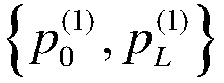

beam 


- It should be noted that if 2L beams in W 1 differ with one another, a coefficient set corresponding to each of the beams is composed of one row in W̃ 2. In M base vectors in W ƒ , a coefficient set corresponding to each of the base vectors is composed of one column in W̃ 2 . For example, a coefficient set corresponding to a first base vector [ƒ 0,0 ƒ 0,1 ··· ƒ 0,N-1] H includes a difference amplitude coefficient set


- The system appoints that a coefficient in the coefficient set corresponding to each beam is restricted so as to limit a value of a wideband amplitude coefficient in the set and a value of a maximum difference amplitude coefficient; and meanwhile the system appoints thata coefficient in the coefficient set corresponding to each base vector is restricted so as to limit a value of a maximum difference amplitude coefficient in the set.
- The base station indicates through high-level signaling that 2 beam groups (e.g.,
beam groups FIG. 1 ) in the candidate beam set are restricted, and that 2 base vector groups (e.g.,base vector groups FIG. 2 ) in the candidate base vector set are restricted, and meanwhile indicates that a wideband amplitude value in the amplitude coefficient set of the coefficient set corresponding to each beam of the 8 beams inbeam group 1 and the 8 beams inbeam group 2 is restricted to be

beam group 1 and the 8 beams inbeam group 2 is restricted to be P max, which may be selected from difference amplitude coefficient quantization values of the Type II codebook. For example, high-level signaling indicates that difference amplitudes of the 16 beams are restricted to be {P max1 P max2 ··· P max16}. The terminal determines according to a channel estimation result that when a second beam in the L beams in W 1 is a third beam in the 16 restricted beams, coefficients in W̃ 2 are restricted to meet a relation:

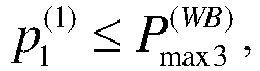

- Besides, it is indicated that a maximum difference amplitude value in the amplitude coefficient set of the coefficient set corresponding to each base vector of 4 base vectors in
base vector group base vector group 3 is restricted to be Q max, which may be selected from difference amplitude coefficient quantization values of the Type II codebook. For example, high-level signaling indicates that amplitudes of the 8 base vectors are restricted to be {Q max1 Q max2 ··· Q max8}. A terminal determines according to the channel estimation result that when a third base vector in a W f is a second base vector in the 8 restricted base vectors, coefficients in W̃ 2 are restricted to meet a relation:
- Or, it is indicated that a maximum of products of width amplitude values and difference amplitude values in an amplitude coefficient set of the coefficient set corresponding to each base vector of 4 base vectors in
base vector group base vector group 3 is restricted to be O max , which may be selected from wideband amplitude coefficient quantization vales of the Type II codebook. For example, high-level signaling indicates that amplitudes of the 8 base vectors are restricted to be {O max1 O max2 ··· O max8}. The terminal determines according to the channel estimation result that when a third base vector in W ƒ is a second base vector in the 8 restricted base vectors, coefficients in W̃ 2 are restricted to meet a relation:
- The terminal calculates feedback coefficients of the Type II codebook according to the above restriction conditions and reports the feedback coefficients to the base station.
- Hypothetically, an antenna port number is N1 and N2, wherein N1 represents an antenna port number of a first dimension and N2 represents an antenna port number of a second dimension. Oversampling factors of beams in a codebook are O1 and O2. In this case, a candidate combining beam set includes N1O1N2O2 beams, and each of the beams is represented as

FIG. 1 . - Hypothetically, a length of a candidate base vector is N, the number of vectors in a candidate base vector set is N∗O3, and O3 represents an oversampling factor. Each candidate base vector may be represented as [ƒ i,0 ƒ i,1 ··· ƒ i,N-1] H ,i = 0,1, ···, N·O 3 ―1. The system makes a pre-defining that O3 beams adjacent to each other in a set of the N∗O3 candidate beam vectors are in one group, and N groups exist totally, as shown in
FIG. 2 . - When Rank=1, a structure of a Type II codebook is shown as:

- Herein,


beam 


beam 


- It should be noted that if the 2L beams in W 1 differ with one another, the coefficient set corresponding to each beam is composed of one row in W̃ 2. In M base vectors in W ƒ , the coefficient set corresponding to each base vector is composed of one column in W̃ 2. For example, a coefficient set corresponding to a first base vector [ƒ 0,0 ƒ 0,1 ··· ƒ 0,N-1] H includes a difference amplitude coefficient set


amplitude coefficient 
- The system appoints that the coefficients in the coefficient set corresponding to each base vector are restricted so as to limit a value of wideband amplitude coefficients in the set.
- A base station indicates that a maximum difference amplitude value in the amplitude coefficient set of the coefficient set corresponding to each base vector of 4 base vectors in
base vector group base vector group 3 is restricted to be


- The terminal calculates feedback coefficients of the Type II codebook according to the above restriction conditions and reports the feedback coefficients to the base station.
- To sum up, on a base station side, as shown in
FIG. 3 , an embodiment of the disclosure provides a codebook restriction method, including the following steps. - S101, codebook sub-set restriction indication information is determined for indicating that one or more beam groups in a candidate combining beam set are restricted and that coefficients in a first coefficient set corresponding to each of beams in the one or more beam groups are restricted.
- S102, the codebook sub-set restriction indication information is sent to a terminal.
- Through the method, the codebook sub-set restriction indication information is determined for indicating that one or more beam groups in the candidate combining beam set are restricted and that one or more coefficients in the first coefficient set corresponding to each beam in the beam groups is restricted, and the codebook sub-set restriction indication information is sent to the terminal, wherein be restricted means that one or more beam groups are controlled through signaling, and thus a coefficient value range or a function value range of coefficients corresponding to the beams in the beam groups are limited.
- Accordingly, as the orientation of the final beam is determined by the candidate combining beam set and coefficients in the coefficient set, through control over the coefficients in the coefficient set, the beam direction may be adjusted so as to prevent the beams from pointing to some directions, thereby preventing the generation of a beam with an orientation bringing about interference and then preventing interference.
- Optionally, the one or more beam groups in the candidate combining beam set are formed through one of the following manners:
-
manner 1, a plurality of beams mutually orthogonal with each other in the candidate combining beam set are in one beam group; and -
manner 2, a plurality of beams adjacent to each other in the candidate combining beam set are in one beam group. - Optionally, a coefficient in the first coefficient set corresponding to each of the beams in the one or more beam groups is used for generating a weight of the beam on each sub-band.
- Optionally, the coefficients in the first coefficient set are restricted for limiting the following:
- limiting a value of each amplitude coefficient among all the coefficients in the first coefficient set, or a value of a pre-defining first function of part of or all of the amplitude coefficients; or
- limiting a value of each phase coefficient among all the coefficients in the first coefficient set, or a value of a pre-defining second function of part of or all of the phase coefficients; or
- limiting a value of each of amplitude coefficients and a value of each of phase coefficients among all the coefficients in the first coefficient set, or a value of a pre-defining third function of part of or all of the amplitude coefficients and the phase coefficients.
- Optionally, the pre-defining first function is a sum of all the amplitude coefficients, or a maximum value in all the amplitude coefficients, or a maximum value of wideband amplitude coefficients, or a maximum value in all difference amplitude coefficients, or a maximum value of the wideband amplitude coefficients and a maximum value in all the difference amplitude coefficients, or a maximum value of products of the wideband amplitude coefficients and the difference amplitude coefficients, or a maximum value of the wideband amplitude coefficients and a sum of all the difference amplitude coefficients, or a sum of products of the wideband amplitude coefficients and each of the difference amplitude coefficients; and
the pre-defining second function is a sum of all the phase coefficients, or a maximum value of all the phase coefficients, or a minimum value of phase differences in all the phase coefficients. - Optionally, the codebook sub-set restriction indication information is further used for indicating that one or more base vector groups in a candidate base vector set are restricted.
- Optionally, the base vector groups are formed through one of the following manners:
-
manner 1, a plurality of base vectors mutually orthogonal with each other in the candidate base vector set are in one base vector group; and -
manner 2, a plurality of base vectors adjacent to each other in the candidate base vector set are in one base vector group. - Optionally, the codebook sub-set restriction indication information is further used for indicating that coefficients in a second coefficient set corresponding to each of base vectors in the one or more restricted base vector groups are restricted.
- Optionally, the coefficients in the second coefficient set corresponding to each of the base vectors are restricted for limiting the following:
- limiting a value of each amplitude coefficient among all coefficients in the second coefficient set corresponding to each of the base vectors, or a value of a pre-defining fourth function of part of or all of the amplitude coefficients; or
- limiting a value of each phase coefficient among all the coefficients in the second coefficient set corresponding to each of the base vectors, or a value of a pre-defining fifth function of part of or all of the phase coefficients; or
- limiting a value of each of amplitude coefficients and a value of each of phase coefficients among all the coefficients in the second coefficient set corresponding to each of the base vectors, or a value of a pre-defining sixth function of part of or all of the amplitude coefficients and the phase coefficients.
- Optionally, the pre-defining fourth function is a sum of all the amplitude coefficients, or a maximum value in all the amplitude coefficients, or a maximum value of wideband amplitude coefficients, or a maximum value in all difference amplitude coefficients, or a maximum value of the wideband amplitude coefficients and a maximum value in all the difference amplitude coefficients, or a maximum value of products of the wideband amplitude coefficients and the difference amplitude coefficients, or a maximum value of the wideband amplitude coefficients and a sum of all the difference amplitude coefficients, or a sum of products of the wideband amplitude coefficients and each of the difference amplitude coefficients; and
the pre-defining fifth function is a sum of all the phase coefficients, or a maximum value in all the phase coefficients, or a minimum value of phase differences in all the phase coefficients. - Optionally, the codebook sub-set restriction indication information is further used for indicating that all base vectors in the one or more restricted base vector groups may not be used for codebook configuration and feedback.
- Optionally, the codebook sub-set restriction indication information is further used for restricting a value of a number of the base vectors corresponding to one or more beams.
- Optionally, the codebook sub-set restriction indication information is further used for restricting a value of a number of coefficients which are zero in all codebook coefficients.
- Correspondingly, on a terminal side, as shown in
FIG. 4 , an embodiment of the disclosure provides a codebook parameter determination method, including the following steps. - S201, codebook sub-set restriction indication information is received, wherein the codebook sub-set restriction indication information is used for indicating that one or more beam groups in a candidate combining beam set are restricted, and that coefficients in a first coefficient set corresponding to each of beams in the one or more beam groups are restricted.
- S202, codebook parameters are determined according to the codebook sub-set restriction indication information.
- Optionally, the codebook sub-set restriction indication information is further used for indicating that one or more base vector groups in a candidate base vector set are restricted.
- Optionally, the codebook sub-set restriction indication information is further used for indicating that coefficients in a second coefficient set corresponding to each of base vectors in the one or more restricted base vector groups are restricted.
- Optionally, the codebook sub-set restriction indication information is further used for indicating that all base vectors in the one or more restricted base vector groups may not be used for codebook configuration and feedback.
- Optionally, the codebook sub-set restriction indication information is further used for restricting a value of a number of the base vectors corresponding to one or more beams.
- Optionally, the codebook sub-set restriction indication information is further used for restricting a value of a number of coefficients which are zero in all codebook coefficients.
- Optionally, the method further includes: sending the codebook parameters to a base station.
- On a network side, as shown in
FIG. 5 , an embodiment of the disclosure provides a codebook restriction apparatus, including: - a
determination unit 11, configured to determine the codebook sub-set restriction indication information used for indicating that one or more beam groups in a candidate combining beam set are restricted, and that coefficients in a first coefficient set corresponding to each of beams in the one or more beam groups are restricted; and - a sending
unit 12, configured to send the codebook sub-set restriction indication information to a terminal. - On a terminal side, as shown in
FIG. 6 , an embodiment of the disclosure provides a codebook parameter determination apparatus, including: - a receiving
unit 21, configured to receive codebook sub-set restriction indication information, wherein the codebook sub-set restriction indication information is used for indicating that one or more beam groups in a candidate combining beam set are restricted, and that coefficients in a first coefficient set corresponding to each of beams in the one or more beam groups are restricted; and - a
determination unit 22, configured to determine codebook parameters according to the codebook sub-set restriction indication information. - It should be noted that division of the units in the embodiments of the disclosure is exemplary and is only a logical function division, and other division manners are allowed during actual implementations. Besides, all the function units in the various embodiments of the disclosure may be integrated into one processing unit, or all the units may exit physically independently, or two or more units may be integrated into one unit. The integrated units may be achieved in a manner of hardware or in a manner of software function units.
- If the integrated units are achieved in a manner of software function units and are sold or used as an independent product, the integrated units may be stored in a computer readable storage medium. Based on this understanding, the technical solutions of the disclosure may be essentially embodied in a manner of a software product, or part of the technical solutions making contributions to the prior art may be embodied in a manner of a software product, or part of or all of the technical solutions may be embodied in a manner of a software product. The computer software product is stored in a storage medium, including a plurality of instructions for making a computer device (may be a personal computer, a server, a network device, etc.) or a processor execute all or part of the steps of the methods of the various embodiments of the disclosure. The mentioned storage medium includes: a USB flash disk, a mobile hard disk drive, a Read-only Memory (ROM), a Random Access Memory (RAM), a diskette, or a compact disc and other various media capable of storing program codes.
- On a network side, e.g., a base station side, as shown in
FIG. 7 , an embodiment of the disclosure provides another codebook restriction apparatus, including: - a
memory 520, configured to store program instructions; and - a
processor 500, configured to call the program instructions stored in the memory to:- determine codebook sub-set restriction indication information for indicating that one or more beam groups in a candidate combining beam set are restricted and that coefficients in a first coefficient set corresponding to each of beams in the beam groups are restricted; and
- send the codebook sub-set restriction indication information to a terminal through a
transceiver 510.
- Optionally, the one or more beam groups in the candidate combining beam set are formed through one of the following manners:
-
manner 1, a plurality of beams mutually orthogonal with each other in the candidate combining beam set are in one beam group; and -
manner 2, a plurality of beams adjacent to each other in the candidate combining beam set are in one beam group. - Optionally, a coefficient in the first coefficient set corresponding to each of the beams in the one or more beam groups is used for generating a weight of the beam on each sub-band.
- Optionally, the coefficients in the first coefficient set are restricted for limiting the following:
- limiting a value of each amplitude coefficient among all coefficients in the first coefficient set, or a value of a pre-defining first function of part of or all of the amplitude coefficients; or
- limiting a value of each phase coefficient among all the coefficients in the first coefficient set, or a value of a pre-defining second function of part of or all of the phase coefficients; or
- limiting a value of each of amplitude coefficients and a value of each of phase coefficients among all the coefficients in the first coefficient set, or a value of a pre-defining third function of part of or all of the amplitude coefficients and the phase coefficients.
- Optionally, the pre-defining first function is a sum of all the amplitude coefficients, or a maximum value in all the amplitude coefficients, or a maximum value of wideband amplitude coefficients, or a maximum value in all difference amplitude coefficients, or a maximum value of the wideband amplitude coefficients and a maximum value in all the difference amplitude coefficients, or a maximum value of products of the wideband amplitude coefficients and the difference amplitude coefficients, or a maximum value of the wideband amplitude coefficients and a sum of all the difference amplitude coefficients, or a sum of products of the wideband amplitude coefficients and each of the difference amplitude coefficients; and
the pre-defining second function is a sum of all the phase coefficients, or a maximum value in all the phase coefficients, or a minimum value of phase differences in all the phase coefficients. - Optionally, the codebook sub-set restriction indication information is further used for indicating that one or more base vector groups in a candidate base vector set are restricted.
- Optionally, the base vector groups are formed through one of the following manners:
-
manner 1, a plurality of base vectors mutually orthogonal with each other in the candidate base vector set are in one base vector group; and -
manner 2, a plurality of base vectors adjacent to each other in the candidate base vector set are in one base vector group. - Optionally, the codebook sub-set restriction indication information is further used for indicating that coefficients in a second coefficient set corresponding to each of the base vectors in one or more restricted base vector groups are restricted.
- Optionally, the coefficients in the second coefficient set corresponding to each of the base vectors are restricted for limiting the following:
- limiting a value of each of the amplitude coefficients in all the coefficients in the second coefficient set corresponding to each of the base vectors, or a value of a pre-defining fourth function of part of or all of the amplitude coefficients; or
- limiting a value of each of the phase coefficients in all the coefficients in the second coefficient set corresponding to each of the base vectors, or a value of a pre-defining fifth function of part of or all of the phase coefficients; or
- limiting a value of each of amplitude coefficients and a value of each of phase coefficients in all the coefficients in the second coefficient set corresponding to each of the base vectors, or a value of a pre-defining sixth function of part of or all of the amplitude coefficients and the phase coefficients.
- Optionally, the pre-defining fourth function is a sum of all the amplitude coefficients, or a maximum value in all the amplitude coefficients, or a maximum value of wideband amplitude coefficients, or a maximum value in all difference amplitude coefficients, or a maximum value of the wideband amplitude coefficients and a maximum value in all the difference amplitude coefficients, or a maximum value of products of the wideband amplitude coefficients and the difference amplitude coefficients, or a maximum value of the wideband amplitude coefficients and a sum of all the difference amplitude coefficients, or a sum of products of the wideband amplitude coefficients and each of the difference amplitude coefficients; and
the pre-defining fifth function is a sum of all the phase coefficients, or a maximum value in all the phase coefficients, or a minimum value of phase differences in all the phase coefficients. - Optionally, the codebook sub-set restriction indication information is further used for indicating that all the base vectors in one or more restricted base vector groups may not be used for codebook configuration and feedback.
- Optionally, the codebook sub-set restriction indication information is further used for restricting a value of a number of the base vectors corresponding to one or more beams.
- Optionally, the codebook sub-set restriction indication information is further used for restricting a value of a number of coefficients which are zero in all codebook coefficients.
- The
transceiver 510 is configured to receive and send data under control of theprocessor 500. - In
FIG. 7 , a bus architecture may include any number of interconnecting buses and bridges, specifically linking various circuits of one or more processors represented by theprocessor 500 and the memories represented by thememory 520. The bus architecture may further link other various circuits like peripheral devices, a voltage stabilizer, a power management circuit, etc., which are known to those in the art and will not be further described herein. A bus interface provides an interface. Thetransceiver 510 may be a plurality of elements, namely including a transmitter and a receiver, providing units for communicating with other various devices on a transmission medium. Theprocessor 500 is in charge of managing the bus architecture and general processing. Thememory 520 may store data used during executing operation of theprocessor 500. - The
processor 500 may be a central processing unit (CPU), an Application Specific Integrated Circuit (ASIC), a Field-Programmable Gate Array (FPGA), or a Complex Programmable Logic Device (CPLD). - On a terminal side, as shown in
FIG. 8 , an embodiment of the disclosure provides a codebook parameter determination apparatus, including: - a
memory 620, configured to store program instructions; and - a
processor 600, configured to call the program instructions stored in the memory to:- receive codebook sub-set restriction indication information, wherein the codebook sub-set restriction indication information is used for indicating that one or more beam groups in a candidate combining beam set are restricted and that coefficients in a first coefficient set corresponding to each of beams in the one or more beam groups are restricted; and
- determine codebook parameters according to the codebook sub-set restriction indication information.
- Optionally, the codebook sub-set restriction indication information is further used for indicating that one or more base vector groups in a candidate base vector set are restricted.
- Optionally, the codebook sub-set restriction indication information is further used for indicating that coefficients in a second coefficient set corresponding to each of base vectors in the one or more restricted base vector groups are restricted.
- Optionally, the codebook sub-set restriction indication information is further used for indicating that all the base vectors in one or more restricted base vector groups may not be used for codebook configuration and feedback.
- Optionally, the codebook sub-set restriction indication information is further used for restricting a value of a number of the base vectors corresponding to one or more beams.
- Optionally, the codebook sub-set restriction indication information is further used for restricting a value of a number of coefficients which are zero in all codebook coefficients.
- Optionally, the
processor 600 is further used for calling the program instructions stored in the memory to:
send the codebook parameters to a base station through atransceiver 610. - The
transceiver 610 is configured to receive and send data under control of theprocessor 600. - In
FIG. 8 , a bus architecture may include any number of interconnecting buses and bridges, specifically linking various circuits of one or more processors represented by theprocessor 600 and the memories represented by thememory 620. The bus architecture may further link other various circuits like peripheral devices, a voltage stabilizer, a power management circuit, etc., which are known to those in the art and will not be further described herein. A bus interface provides an interface. Thetransceiver 610 may be a plurality of elements, namely including a transmitter and a receiver, providing units for communicating with other various devices on a transmission medium. As for different user equipment, auser interface 630 may be an interface capable of being internally or externally connected with needed devices including but is not limited to a keypad, a display, a loudspeaker, a microphone, a joystick, etc. - The
processor 600 is in charge of managing the bus architecture and general processing, and thememory 620 may store data used during executing operation of theprocessor 600. - Optionally, the
processor 600 may be a central processing unit (CPU), an Application Specific Integrated Circuit (ASIC), a Field-Programmable Gate Array (FPGA), or a Complex Programmable Logic Device (CPLD). - The apparatus provided by the embodiment of the disclosure may be a computing device which may be, specifically, a desk-top computer, a portable computer, a smart phone, a tablet PC, a Personal Digital Assistant (PDA), etc. The computing device may include the central processing unit (CPU), a memory, an input/output device, etc. The input device may include a keyboard, a mouse, a touch screen, etc. The output device may include a display device, e.g., a Liquid Crystal Display (LCD), a Cathode Ray Tube (CRT), etc.
- The memory may include a read-only memory (ROM) and a random access memory (RAM) and provides the program instructions and data stored herein for the processor. In the embodiments of the disclosure, the memory may be used for storing program of any one of the methods provided by the embodiments of the disclosure.
- The processor calls the program instructions stored in the memory and is used for executing any one of the methods provided by the embodiments of the disclosure according to the obtained program instructions.
- An embodiment of the disclosure provides a computer storage medium used for storing computer program instructions used by the apparatuses provided by the embodiments of the disclosure, which include program for executing any one of the methods provided by the embodiments of the disclosure.
- The computer storage medium may be any applicable medium or data storage devices which may be accessed by a computer, including but is not limited to a magnetic memory (e.g., a floppy disk, a hard disk, a magnetic tape, a magnetooptical disk (MO), etc.), an optical memory (e.g., CD, DVD, BD, HVD, etc.), and a semiconductor memory (e.g., ROM, EPROM, EEPROM, a NAND FLASH, a solid state drive (SSD)), etc.
- The methods provided by the embodiments of the disclosure may be applied to terminal devices, or network devices.
- The terminal devices may be also called User Equipment (UE for short), a mobile station (MS for short), a mobile terminal, etc. Optionally, the terminal may have a capacity of communicating with one or more core networks through a Radio Access Network (RAN), for example, the terminal may be a mobile phone (or called a "cell" phone), or a mobile computer, etc. For example, the terminal may further be a portable or pocket or hand-held or computer built-in or vehicle-mounted mobile device.
- The network devices may be a base station (e.g., an access point), referring to devices for communicating with a wireless terminal on an air interface in an access network through one or more sectors. The base station may be used for interconverting a received air frame and an IP group, serving as router between the wireless terminal and the rest part of the access network. The rest part of the access network may include an internet protocol (IP) network. The base station may further coordinate attribute management of the air interface. For example, the base station may be a Base Transceiver Station (BTS) in GSM or CDMA, or a NodeB in WCDMA, or an evolutional Node B (NodeB or eNB or e-NodeB) in LTE, or a gNB in a 5G system, etc., which is not limited here.
- The flows of the methods may be achieved through a software program which may be stored in the storage medium, and when the stored software program is called, the steps of the methods are executed.
- To sum up, in the embodiments of the disclosure, the coefficients in the coefficient set corresponding to each beam and/or each base vector or the functions of the coefficients are restricted, thereby preventing the generation of beams with some orientations and then preventing interference.
- Those skilled in the art should understand the embodiments of the present invention may be provided as the methods, the system, or the computer program product. Thus, the present invention may adopt manners of a complete hardware embodiment, a complete software embodiment, or a software and hardware combined embodiment. Besides, the present invention may adopt a manner of a computer program product implemented on one or more computer applicable storage media (including but is not limited to a disk memory, CD-ROM, an optical memory, etc.) including computer applicable program codes.
- The present invention is described in reference to the flowchart and/or a block diagram of the methods, the devices (system) and the computer program product according to the embodiments of the present invention. It should be understood that each flow and/or block in the flowchart and/or the block diagram, and combination of flows and/or blocks in the flowchart and/or block diagram may be implemented through the computer program instructions. These computer program instructions may be provided for a processor of a general-purpose computer, a special-purpose computer, an embedded processor or other programmable data processing devices so as to generate a machine, so that an apparatus for achieving appointed functions in one or more flows in the flowchart and/or one or more blocks in the block diagram is generated through the instructions executed by the processor of the computer or other programmable data processing devices.
- These computer program instructions may also be stored in a computer readable memory capable of guiding the computer or other programmable data processing devices to work in a specified manner, so that the instructions stored in the computer readable memory may generate a product including an instruction apparatus, and the instruction apparatus achieves the appointed functions in one or more flows in the flowchart and/or one or more blocks in the block diagram.
- These computer program instructions may also be loaded onto the computer or other programmable data processing devices, so that a series of operation steps may be executed on the computer or other programmable devices to generate processing achieved by the computer, then the instructions executed on the computer or other programmable devices provide steps for achieving the appointed functions in one or more flows in the flowchart and/or one or more blocks in the block diagram.
- Although the preferred embodiments of the present inventions are described, those skilled in the art may make other changes and modifications for these embodiments once they know the basic creative concept. Therefore, the appended claims intend to be constructed as including the preferred embodiments and all changes and modifications which fall in the scope of the present invention.
- Apparently, those skilled in the art may make various changes and variations for the embodiments of the present invention without departing from the spirit and scope of the embodiments of the present invention. In this case, if these changes and variations of the embodiments of the present invention belong to the scope of the claims and the equivalent art thereof, the present invention intends to include these changes and variations.
Claims (39)
- A codebook restriction method, comprising:determining codebook sub-set restriction indication information for indicating that one or more beam groups in a candidate combining beam set are restricted and that coefficients in a first coefficient set corresponding to each of beams in the one or more beam groups are restricted; andsending the codebook sub-set restriction indication information to a terminal.
- The method according to claim 1, wherein the one or more beam groups in the candidate combining beam set are formed through one of the following manners:manner 1, a plurality of beams mutually orthogonal with each other in the candidate combining beam set are in one beam group; andmanner 2, a plurality of beams adjacent to each other in the candidate combining beam set are in one beam group.
- The method according to claim 1, wherein a coefficient in the first coefficient set corresponding to each of the beams in the one or more beam groups is used for generating a weight of the beam on each sub-band.
- The method according to claim 1, wherein the coefficients in the first coefficient set are restricted for limiting the following:limiting a value of each amplitude coefficient among all the coefficients in the first coefficient set, or a value of a pre-defining first function of part of or all of the amplitude coefficients; orlimiting a value of each phase coefficient among all the coefficients in the first coefficient set, or a value of a pre-defining second function of part of or all of the phase coefficients; orlimiting a value of each of amplitude coefficients and a value of each of phase coefficients among all the coefficients in the first coefficient set, or a value of a pre-defining third function of part of or all of the amplitude coefficients and the phase coefficients.
- The method according to claim 4, whereinthe pre-defining first function is a sum of all the amplitude coefficients, or a maximum value in all the amplitude coefficients, or a maximum value of wideband amplitude coefficients, or a maximum value in all difference amplitude coefficients, or a maximum value of the wideband amplitude coefficients and a maximum value in all the difference amplitude coefficients, or a maximum value of products of the wideband amplitude coefficients and the difference amplitude coefficients, or a maximum value of the wideband amplitude coefficients and a sum of all the difference amplitude coefficients, or a sum of products of the wideband amplitude coefficients and each of the difference amplitude coefficients; andthe pre-defining second function is a sum of all the phase coefficients, or a maximum value of all the phase coefficients, or a minimum value of phase differences in all the phase coefficients.
- The method according to claim 1, wherein the codebook sub-set restriction indication information is further used for indicating that one or more base vector groups in a candidate base vector set are restricted.
- The method according to claim 6, wherein the base vector groups are formed through one of the following manners:manner 1, a plurality of base vectors mutually orthogonal with each other in the candidate base vector set are in one base vector group; andmanner 2, a plurality of base vectors adjacent to each other in the candidate base vector set are in one base vector group.
- The method according to claim 6, wherein the codebook sub-set restriction indication information is further used for indicating that coefficients in a second coefficient set corresponding to each of base vectors in the one or more restricted base vector groups are restricted.
- The method according to claim 8, wherein the coefficients in the second coefficient set corresponding to each of the base vectors are restricted for limiting the following:limiting a value of each amplitude coefficient among all coefficients in the second coefficient set corresponding to each of the base vectors, or a value of a pre-defining fourth function of part of or all of the amplitude coefficients; orlimiting a value of each phase coefficient among all the coefficients in the second coefficient set corresponding to each of the base vectors, or a value of a pre-defining fifth function of part of or all of the phase coefficients; orlimiting a value of each of amplitude coefficients and a value of each of phase coefficients among all the coefficients in the second coefficient set corresponding to each of the base vectors, or a value of a pre-defining sixth function of part of or all of the amplitude coefficients and the phase coefficients.
- The method according to claim 9, whereinthe pre-defining fourth function is a sum of all the amplitude coefficients, or a maximum value in all the amplitude coefficients, or a maximum value of wideband amplitude coefficients, or a maximum value in all difference amplitude coefficients, or a maximum value of the wideband amplitude coefficients and a maximum value in all the difference amplitude coefficients, or a maximum value of products of the wideband amplitude coefficients and the difference amplitude coefficients, or a maximum value of the wideband amplitude coefficients and a sum of all the difference amplitude coefficients, or a sum of products of the wideband amplitude coefficients and each of the difference amplitude coefficients; andthe pre-defining fifth function is a sum of all the phase coefficients, or a maximum value in all the phase coefficients, or a minimum value of phase differences in all the phase coefficients.
- The method according to claim 6, wherein the codebook sub-set restriction indication information is further used for indicating that all base vectors in the one or more restricted base vector groups is not used for codebook configuration and feedback.
- A codebook parameter determination method, comprising:receiving codebook sub-set restriction indication information, wherein the codebook sub-set restriction indication information is used for indicating that one or more beam groups in a candidate combining beam set are restricted, and that coefficients in a first coefficient set corresponding to each of beams in the one or more beam groups are restricted; anddetermining codebook parameters according to the codebook sub-set restriction indication information.
- The method according to claim 12, wherein the codebook sub-set restriction indication information is further used for indicating that one or more base vector groups in a candidate base vector set are restricted.
- The method according to claim 12, wherein the codebook sub-set restriction indication information is further used for indicating that coefficients in a second coefficient set corresponding to each of base vectors in the one or more restricted base vector groups are restricted.
- The method according to claim 12, wherein the codebook sub-set restriction indication information is further used for indicating that all base vectors in the one or more restricted base vector groups is not used for codebook configuration and feedback.
- The method according to claim 12, wherein the codebook sub-set restriction indication information is further used for restricting a value of a number of base vectors corresponding to one or more beams.
- The method according to claim 12, wherein the codebook sub-set restriction indication information is further used for restricting a value of a number of coefficients which are zero in all codebook coefficients.
- The method according to any one of claims 12 to 17, further comprising:
sending the codebook parameters to a base station. - A codebook restriction apparatus, comprising:a memory, configured to store program instructions; anda processor, configured to call the program instructions stored in the memory to:determine codebook sub-set restriction indication information for indicating that one or more beam groups in a candidate combining beam set are restricted and that coefficients in a first coefficient set corresponding to each of beams in the beam groups are restricted; andsend the codebook sub-set restriction indication information to a terminal.
- The apparatus according to claim 19, wherein the one or more beam groups in the candidate combining beam set are formed through one of the following manners:manner 1, a plurality of beams mutually orthogonal with each other in the candidate combining beam set are in one beam group; andmanner 2, a plurality of beams adjacent to each other in the candidate combining beam set are in one beam group.
- The apparatus according to claim 19, wherein a coefficient in the first coefficient set corresponding to each of the beams in the one or more beam groups is used for generating a weight of the beam on each sub-band.
- The apparatus according to claim 19, wherein the coefficients in the first coefficient set are restricted for limiting the following:limiting a value of each amplitude coefficient among all coefficients in the first coefficient set, or a value of a pre-defining first function of part of or all of the amplitude coefficients; orlimiting a value of each phase coefficient among all the coefficients in the first coefficient set, or a value of a pre-defining second function of part of or all of the phase coefficients; orlimiting a value of each of amplitude coefficients and a value of each of phase coefficients among all the coefficients in the first coefficient set, or a value of a pre-defining third function of part of or all of the amplitude coefficients and the phase coefficients.
- The apparatus according to claim 22, whereinthe pre-defining first function is a sum of all the amplitude coefficients, or a maximum value in all the amplitude coefficients, or a maximum value of wideband amplitude coefficients, or a maximum value in all difference amplitude coefficients, or a maximum value of the wideband amplitude coefficients and a maximum value in all the difference amplitude coefficients, or a maximum value of products of the wideband amplitude coefficients and the difference amplitude coefficients, or a maximum value of the wideband amplitude coefficients and a sum of all the difference amplitude coefficients, or a sum of products of the wideband amplitude coefficients and each of the difference amplitude coefficients; andthe pre-defining second function is a sum of all the phase coefficients, or a maximum value in all the phase coefficients, or a minimum value of phase differences in all the phase coefficients.
- The apparatus according to claim 19, wherein the codebook sub-set restriction indication information is further used for indicating that one or more base vector groups in a candidate base vector set are restricted.
- The apparatus according to claim 24, wherein the base vector groups are formed through one of the following manners:manner 1, a plurality of base vectors mutually orthogonal with each other in the candidate base vector set are in one base vector group; andmanner 2, a plurality of base vectors adjacent to each other in the candidate base vector set are in one base vector group.
- The apparatus according to claim 24, wherein the codebook sub-set restriction indication information is further used for indicating that coefficients in a second coefficient set corresponding to each of base vectors in the one or more restricted base vector groups are restricted.
- The apparatus according to claim 26, wherein the coefficients in the second coefficient set corresponding to each of the base vectors are restricted for limiting the following:limiting a value of each amplitude coefficient in all coefficients in the second coefficient set corresponding to each of the base vectors, or a value of a pre-defining fourth function of part of or all of the amplitude coefficients; orlimiting a value of each phase coefficient in all the coefficients in the second coefficient set corresponding to each of the base vectors, or a value of a pre-defining fifth function of part of or all of the phase coefficients; orlimiting a value of each of amplitude coefficients and a value of each of phase coefficients in all the coefficients in the second coefficient set corresponding to each of the base vectors, or a value of a pre-defining sixth function of part of or all of the amplitude coefficients and the phase coefficients.
- The apparatus according to claim 27, whereinthe pre-defining fourth function is a sum of all the amplitude coefficients, or a maximum value in all the amplitude coefficients, or a maximum value of wideband amplitude coefficients, or a maximum value in all difference amplitude coefficients, or a maximum value of the wideband amplitude coefficients and a maximum value in all the difference amplitude coefficients, or a maximum value of products of the wideband amplitude coefficients and the difference amplitude coefficients, or a maximum value of the wideband amplitude coefficients and a sum of all the difference amplitude coefficients, or a sum of products of the wideband amplitude coefficients and each of the difference amplitude coefficients; andthe pre-defining fifth function is a sum of all the phase coefficients, or a maximum value in all the phase coefficients, or a minimum value of phase differences in all the phase coefficients.
- The apparatus according to claim 24, wherein the codebook sub-set restriction indication information is further used for indicating that all base vectors in the one or more restricted base vector groups is not used for codebook configuration and feedback.
- A codebook parameter determination apparatus, comprising:a memory, configured to store program instructions; anda processor, configured to call the program instructions stored in the memory to:receive codebook sub-set restriction indication information, wherein the codebook sub-set restriction indication information is used for indicating that one or more beam groups in a candidate combining beam set are restricted, and that coefficients in a first coefficient set corresponding to each of beams in the one or more beam groups are restricted; anddetermine codebook parameters according to the codebook sub-set restriction indication information.
- The apparatus according to claim 30, wherein the codebook sub-set restriction indication information is further used for indicating that one or more base vector groups in a candidate base vector set are restricted.
- The apparatus according to claim 30, wherein the codebook sub-set restriction indication information is further used for indicating that coefficients in a second coefficient set corresponding to each of base vectors in the one or more restricted base vector groups are restricted.
- The apparatus according to claim 30, wherein the codebook sub-set restriction indication information is further used for indicating that all base vectors in the one or more restricted base vector groups is not used for codebook configuration and feedback.
- The apparatus according to claim 30, wherein the codebook sub-set restriction indication information is further used for restricting a value of a number of base vectors corresponding to one or more beams.
- The apparatus according to claim 30, wherein the codebook sub-set restriction indication information is further used for restricting a value of a number of coefficients which are zero in all codebook coefficients.
- The apparatus according to any one of claims 30 to 35, wherein the processor is further used for calling the program instructions stored in the memory to:
send the codebook parameters to a base station. - A codebook restriction apparatus, comprising:a determination unit, configured to determine codebook sub-set restriction indication information used for indicating that one or more beam groups in a candidate combining beam set are restricted, and that coefficients in a first coefficient set corresponding to each of beams in the one or more beam groups are restricted; anda sending unit, configured to send the codebook sub-set restriction indication information to a terminal.
- A codebook parameter determination apparatus, comprising:a receiving unit, configured to receive codebook sub-set restriction indication information, wherein the codebook sub-set restriction indication information is used for indicating that one or more beam groups in a candidate combining beam set are restricted, and that coefficients in a first coefficient set corresponding to each of beams in the one or more beam groups are restricted; anda determination unit, configured to determine codebook parameters according to the codebook sub-set restriction indication information.
- A computer storage medium storing a computer executable instruction used for making a computer execute the method according to any one of claims 1 to 18.
Applications Claiming Priority (3)
| Application Number | Priority Date | Filing Date | Title |
|---|---|---|---|
| CN201910017133 | 2019-01-08 | ||
| CN201910112862.6A CN111416641B (en) | 2019-01-08 | 2019-02-13 | Codebook constraint, codebook parameter determination method and device |
| PCT/CN2019/128463 WO2020143456A1 (en) | 2019-01-08 | 2019-12-25 | Codebook constraint and codebook parameter determination method and apparatus |
Publications (2)
| Publication Number | Publication Date |
|---|---|
| EP3910811A1 true EP3910811A1 (en) | 2021-11-17 |
| EP3910811A4 EP3910811A4 (en) | 2022-03-16 |
Family
ID=71492665
Family Applications (1)
| Application Number | Title | Priority Date | Filing Date |
|---|---|---|---|
| EP19909158.8A Pending EP3910811A4 (en) | 2019-01-08 | 2019-12-25 | Codebook constraint and codebook parameter determination method and apparatus |
Country Status (6)
| Country | Link |
|---|---|
| US (1) | US11838084B2 (en) |
| EP (1) | EP3910811A4 (en) |
| KR (1) | KR102558335B1 (en) |
| CN (1) | CN111416641B (en) |
| TW (1) | TWI737108B (en) |
| WO (1) | WO2020143456A1 (en) |
Families Citing this family (4)
| Publication number | Priority date | Publication date | Assignee | Title |
|---|---|---|---|---|
| CN111416641B (en) | 2019-01-08 | 2021-08-03 | 大唐移动通信设备有限公司 | Codebook constraint, codebook parameter determination method and device |
| CN113630161B (en) * | 2021-06-21 | 2022-10-18 | 上海移远通信技术股份有限公司 | Method and device for generating beam codebook, electronic equipment and storage medium |
| US12562939B2 (en) * | 2022-04-05 | 2026-02-24 | Qualcomm Incorporated | Beam selection using oversampled beamforming codebooks and channel estimates |
| US20240291550A1 (en) * | 2023-02-24 | 2024-08-29 | Samsung Electronics Co., Ltd. | Spatial combining of ul in mimo systems |
Family Cites Families (13)
| Publication number | Priority date | Publication date | Assignee | Title |
|---|---|---|---|---|
| CN101425832B (en) | 2008-11-10 | 2012-09-26 | 中兴通讯股份有限公司 | Adaptive multiuser wave beam forming method based on wide nulling |
| CN102082637B (en) * | 2010-09-16 | 2015-03-25 | 电信科学技术研究院 | Method and equipment for processing codebook subset constraint |
| CN103973409A (en) | 2013-01-31 | 2014-08-06 | 富士通株式会社 | Precoding device and transmitter including the precoding device |
| EP3514979A1 (en) * | 2014-07-30 | 2019-07-24 | Huawei Technologies Co., Ltd. | Method for measuring downlink channel quality, transmit end, receive end, and system |
| US9654195B2 (en) | 2014-11-17 | 2017-05-16 | Samsung Electronics Co., Ltd. | Methods to calculate linear combination pre-coders for MIMO wireless communication systems |
| WO2016164073A1 (en) * | 2015-04-08 | 2016-10-13 | Intel Corporation | Codebook subset restriction for a full dimensional multiple-input multiple-output system |
| CN106301506B (en) * | 2015-05-15 | 2020-03-13 | 电信科学技术研究院 | Codebook subset constraint method and device |
| CA3052397C (en) * | 2017-03-31 | 2022-01-11 | Lg Electronics Inc. | Method for transmitting uplink data in wireless communication system and apparatus therefor |
| US10389426B2 (en) * | 2017-04-25 | 2019-08-20 | Samsung Electronics Co., Ltd. | Method and apparatus for higher rank CSI reporting in advanced wireless communication systems |
| JP6728481B2 (en) | 2017-06-14 | 2020-07-22 | エルジー エレクトロニクス インコーポレイティド | Method and apparatus for transmitting/receiving channel state information in wireless communication system |
| CN110800244B (en) * | 2017-06-28 | 2022-05-27 | Lg电子株式会社 | Method for transmitting and receiving channel state information-reference signal in wireless communication system and apparatus therefor |
| CN108093481B (en) | 2017-11-28 | 2023-04-18 | 中兴通讯股份有限公司 | Method and device for transmitting beam recovery information, and beam detection method and device |
| CN111416641B (en) | 2019-01-08 | 2021-08-03 | 大唐移动通信设备有限公司 | Codebook constraint, codebook parameter determination method and device |
-
2019
- 2019-02-13 CN CN201910112862.6A patent/CN111416641B/en active Active
- 2019-12-25 US US17/421,723 patent/US11838084B2/en active Active
- 2019-12-25 WO PCT/CN2019/128463 patent/WO2020143456A1/en not_active Ceased
- 2019-12-25 KR KR1020217025051A patent/KR102558335B1/en active Active
- 2019-12-25 EP EP19909158.8A patent/EP3910811A4/en active Pending
- 2019-12-31 TW TW108148556A patent/TWI737108B/en active
Also Published As
| Publication number | Publication date |
|---|---|
| TW202037088A (en) | 2020-10-01 |
| CN111416641A (en) | 2020-07-14 |
| CN111416641B (en) | 2021-08-03 |
| WO2020143456A1 (en) | 2020-07-16 |
| KR20210111832A (en) | 2021-09-13 |
| EP3910811A4 (en) | 2022-03-16 |
| KR102558335B1 (en) | 2023-07-20 |
| TWI737108B (en) | 2021-08-21 |
| US11838084B2 (en) | 2023-12-05 |
| US20220085858A1 (en) | 2022-03-17 |
Similar Documents
| Publication | Publication Date | Title |
|---|---|---|
| US11451361B2 (en) | System and method for reporting signal quality information | |
| EP4580245A1 (en) | Measurement reporting method and apparatus, and terminal and network device | |
| EP3910811A1 (en) | Codebook constraint and codebook parameter determination method and apparatus | |
| EP4391678A1 (en) | Signal transmission power control method and apparatus | |
| US12593251B2 (en) | Timing advance in layer 1/layer 2 intercell mobility | |
| CN114071500B (en) | Measurement method, device and storage medium for positioning | |
| CN110868245B (en) | Information transmission method and equipment | |
| US20220393838A1 (en) | System and Method for Reporting Signal Quality Information | |
| EP4319343A1 (en) | Method and apparatus for positioning terminal device, and storage medium | |
| EP4340449A1 (en) | Inter-cell measurement reporting method, device, apparatus, and storage medium | |
| EP4021113A1 (en) | Information transmission method and device | |
| EP4597864A1 (en) | Channel state information reporting method, terminal, and network device | |
| EP4572206A1 (en) | Dmrs port determining method and apparatus, device, and storage medium | |
| EP4597854A1 (en) | Uplink transmission method, terminal, network device, apparatus, and storage medium | |
| EP4362342A1 (en) | Channel state information sending method and apparatus, and channel state information receiving method and apparatus | |
| EP4319354A1 (en) | Information reporting method, network side configuration method, apparatus, device and storage medium | |
| CN115379397B (en) | Data processing method, device, equipment and storage medium | |
| EP4340244A1 (en) | Codebook indication method and apparatus, and storage medium | |
| EP4280745A1 (en) | Beam indication method and apparatus, and storage medium | |
| US20230283432A1 (en) | Information transmission method and apparatus, and storage medium | |
| EP4319016A1 (en) | Port indication information reporting method and terminal | |
| EP4598199A1 (en) | Information determination method, apparatus, terminal and network device | |
| EP4135462B1 (en) | Data transmission method and apparatus | |
| EP4654711A1 (en) | Multi-carrier data processing method, apparatus, terminal, and network side device | |
| EP4648528A1 (en) | Data transmission method and apparatus |
Legal Events
| Date | Code | Title | Description |
|---|---|---|---|
| STAA | Information on the status of an ep patent application or granted ep patent |
Free format text: STATUS: THE INTERNATIONAL PUBLICATION HAS BEEN MADE |
|
| PUAI | Public reference made under article 153(3) epc to a published international application that has entered the european phase |
Free format text: ORIGINAL CODE: 0009012 |
|
| STAA | Information on the status of an ep patent application or granted ep patent |
Free format text: STATUS: REQUEST FOR EXAMINATION WAS MADE |
|
| 17P | Request for examination filed |
Effective date: 20210803 |
|
| AK | Designated contracting states |
Kind code of ref document: A1 Designated state(s): AL AT BE BG CH CY CZ DE DK EE ES FI FR GB GR HR HU IE IS IT LI LT LU LV MC MK MT NL NO PL PT RO RS SE SI SK SM TR |
|
| A4 | Supplementary search report drawn up and despatched |
Effective date: 20220210 |
|
| RIC1 | Information provided on ipc code assigned before grant |
Ipc: H04L 5/00 20060101ALI20220204BHEP Ipc: H04B 7/0456 20170101AFI20220204BHEP |
|
| DAV | Request for validation of the european patent (deleted) | ||
| DAX | Request for extension of the european patent (deleted) | ||
| STAA | Information on the status of an ep patent application or granted ep patent |
Free format text: STATUS: EXAMINATION IS IN PROGRESS |
|
| 17Q | First examination report despatched |
Effective date: 20230426 |