EP3909922A1 - Composite glass materials made of photosensitive glasses and glass ceramics - Google Patents
Composite glass materials made of photosensitive glasses and glass ceramics Download PDFInfo
- Publication number
- EP3909922A1 EP3909922A1 EP21183748.9A EP21183748A EP3909922A1 EP 3909922 A1 EP3909922 A1 EP 3909922A1 EP 21183748 A EP21183748 A EP 21183748A EP 3909922 A1 EP3909922 A1 EP 3909922A1
- Authority
- EP
- European Patent Office
- Prior art keywords
- glass
- lithium
- zinc aluminosilicate
- ceramic
- lithium zinc
- Prior art date
- Legal status (The legal status is an assumption and is not a legal conclusion. Google has not performed a legal analysis and makes no representation as to the accuracy of the status listed.)
- Granted
Links
Images





Classifications
-
- C—CHEMISTRY; METALLURGY
- C03—GLASS; MINERAL OR SLAG WOOL
- C03C—CHEMICAL COMPOSITION OF GLASSES, GLAZES OR VITREOUS ENAMELS; SURFACE TREATMENT OF GLASS; SURFACE TREATMENT OF FIBRES OR FILAMENTS MADE FROM GLASS, MINERALS OR SLAGS; JOINING GLASS TO GLASS OR OTHER MATERIALS
- C03C3/00—Glass compositions
- C03C3/04—Glass compositions containing silica
- C03C3/076—Glass compositions containing silica with 40% to 90% silica, by weight
- C03C3/11—Glass compositions containing silica with 40% to 90% silica, by weight containing halogen or nitrogen
- C03C3/112—Glass compositions containing silica with 40% to 90% silica, by weight containing halogen or nitrogen containing fluorine
-
- C—CHEMISTRY; METALLURGY
- C03—GLASS; MINERAL OR SLAG WOOL
- C03B—MANUFACTURE, SHAPING, OR SUPPLEMENTARY PROCESSES
- C03B25/00—Annealing glass products
- C03B25/02—Annealing glass products in a discontinuous way
-
- C—CHEMISTRY; METALLURGY
- C03—GLASS; MINERAL OR SLAG WOOL
- C03B—MANUFACTURE, SHAPING, OR SUPPLEMENTARY PROCESSES
- C03B25/00—Annealing glass products
- C03B25/02—Annealing glass products in a discontinuous way
- C03B25/025—Glass sheets
-
- C—CHEMISTRY; METALLURGY
- C03—GLASS; MINERAL OR SLAG WOOL
- C03B—MANUFACTURE, SHAPING, OR SUPPLEMENTARY PROCESSES
- C03B27/00—Tempering or quenching glass products
- C03B27/012—Tempering or quenching glass products by heat treatment, e.g. for crystallisation; Heat treatment of glass products before tempering by cooling
-
- C—CHEMISTRY; METALLURGY
- C03—GLASS; MINERAL OR SLAG WOOL
- C03B—MANUFACTURE, SHAPING, OR SUPPLEMENTARY PROCESSES
- C03B32/00—Thermal after-treatment of glass products not provided for in groups C03B19/00, C03B25/00 - C03B31/00 or C03B37/00, e.g. crystallisation, eliminating gas inclusions or other impurities; Hot-pressing vitrified, non-porous, shaped glass products
- C03B32/02—Thermal crystallisation, e.g. for crystallising glass bodies into glass-ceramic articles
-
- C—CHEMISTRY; METALLURGY
- C03—GLASS; MINERAL OR SLAG WOOL
- C03C—CHEMICAL COMPOSITION OF GLASSES, GLAZES OR VITREOUS ENAMELS; SURFACE TREATMENT OF GLASS; SURFACE TREATMENT OF FIBRES OR FILAMENTS MADE FROM GLASS, MINERALS OR SLAGS; JOINING GLASS TO GLASS OR OTHER MATERIALS
- C03C10/00—Devitrified glass ceramics, i.e. glass ceramics having a crystalline phase dispersed in a glassy phase and constituting at least 50% by weight of the total composition
-
- C—CHEMISTRY; METALLURGY
- C03—GLASS; MINERAL OR SLAG WOOL
- C03C—CHEMICAL COMPOSITION OF GLASSES, GLAZES OR VITREOUS ENAMELS; SURFACE TREATMENT OF GLASS; SURFACE TREATMENT OF FIBRES OR FILAMENTS MADE FROM GLASS, MINERALS OR SLAGS; JOINING GLASS TO GLASS OR OTHER MATERIALS
- C03C10/00—Devitrified glass ceramics, i.e. glass ceramics having a crystalline phase dispersed in a glassy phase and constituting at least 50% by weight of the total composition
- C03C10/0018—Devitrified glass ceramics, i.e. glass ceramics having a crystalline phase dispersed in a glassy phase and constituting at least 50% by weight of the total composition containing SiO2, Al2O3 and monovalent metal oxide as main constituents
- C03C10/0027—Devitrified glass ceramics, i.e. glass ceramics having a crystalline phase dispersed in a glassy phase and constituting at least 50% by weight of the total composition containing SiO2, Al2O3 and monovalent metal oxide as main constituents containing SiO2, Al2O3, Li2O as main constituents
-
- C—CHEMISTRY; METALLURGY
- C03—GLASS; MINERAL OR SLAG WOOL
- C03C—CHEMICAL COMPOSITION OF GLASSES, GLAZES OR VITREOUS ENAMELS; SURFACE TREATMENT OF GLASS; SURFACE TREATMENT OF FIBRES OR FILAMENTS MADE FROM GLASS, MINERALS OR SLAGS; JOINING GLASS TO GLASS OR OTHER MATERIALS
- C03C23/00—Other surface treatment of glass not in the form of fibres or filaments
- C03C23/0005—Other surface treatment of glass not in the form of fibres or filaments by irradiation
- C03C23/002—Other surface treatment of glass not in the form of fibres or filaments by irradiation by ultraviolet light
-
- C—CHEMISTRY; METALLURGY
- C03—GLASS; MINERAL OR SLAG WOOL
- C03C—CHEMICAL COMPOSITION OF GLASSES, GLAZES OR VITREOUS ENAMELS; SURFACE TREATMENT OF GLASS; SURFACE TREATMENT OF FIBRES OR FILAMENTS MADE FROM GLASS, MINERALS OR SLAGS; JOINING GLASS TO GLASS OR OTHER MATERIALS
- C03C23/00—Other surface treatment of glass not in the form of fibres or filaments
- C03C23/0005—Other surface treatment of glass not in the form of fibres or filaments by irradiation
- C03C23/0025—Other surface treatment of glass not in the form of fibres or filaments by irradiation by a laser beam
-
- C—CHEMISTRY; METALLURGY
- C03—GLASS; MINERAL OR SLAG WOOL
- C03C—CHEMICAL COMPOSITION OF GLASSES, GLAZES OR VITREOUS ENAMELS; SURFACE TREATMENT OF GLASS; SURFACE TREATMENT OF FIBRES OR FILAMENTS MADE FROM GLASS, MINERALS OR SLAGS; JOINING GLASS TO GLASS OR OTHER MATERIALS
- C03C23/00—Other surface treatment of glass not in the form of fibres or filaments
- C03C23/007—Other surface treatment of glass not in the form of fibres or filaments by thermal treatment
-
- C—CHEMISTRY; METALLURGY
- C03—GLASS; MINERAL OR SLAG WOOL
- C03C—CHEMICAL COMPOSITION OF GLASSES, GLAZES OR VITREOUS ENAMELS; SURFACE TREATMENT OF GLASS; SURFACE TREATMENT OF FIBRES OR FILAMENTS MADE FROM GLASS, MINERALS OR SLAGS; JOINING GLASS TO GLASS OR OTHER MATERIALS
- C03C3/00—Glass compositions
- C03C3/04—Glass compositions containing silica
- C03C3/076—Glass compositions containing silica with 40% to 90% silica, by weight
- C03C3/078—Glass compositions containing silica with 40% to 90% silica, by weight containing an oxide of a divalent metal, e.g. an oxide of zinc
-
- C—CHEMISTRY; METALLURGY
- C03—GLASS; MINERAL OR SLAG WOOL
- C03C—CHEMICAL COMPOSITION OF GLASSES, GLAZES OR VITREOUS ENAMELS; SURFACE TREATMENT OF GLASS; SURFACE TREATMENT OF FIBRES OR FILAMENTS MADE FROM GLASS, MINERALS OR SLAGS; JOINING GLASS TO GLASS OR OTHER MATERIALS
- C03C3/00—Glass compositions
- C03C3/04—Glass compositions containing silica
- C03C3/076—Glass compositions containing silica with 40% to 90% silica, by weight
- C03C3/083—Glass compositions containing silica with 40% to 90% silica, by weight containing aluminium oxide or an iron compound
- C03C3/085—Glass compositions containing silica with 40% to 90% silica, by weight containing aluminium oxide or an iron compound containing an oxide of a divalent metal
-
- C—CHEMISTRY; METALLURGY
- C03—GLASS; MINERAL OR SLAG WOOL
- C03C—CHEMICAL COMPOSITION OF GLASSES, GLAZES OR VITREOUS ENAMELS; SURFACE TREATMENT OF GLASS; SURFACE TREATMENT OF FIBRES OR FILAMENTS MADE FROM GLASS, MINERALS OR SLAGS; JOINING GLASS TO GLASS OR OTHER MATERIALS
- C03C3/00—Glass compositions
- C03C3/04—Glass compositions containing silica
- C03C3/076—Glass compositions containing silica with 40% to 90% silica, by weight
- C03C3/095—Glass compositions containing silica with 40% to 90% silica, by weight containing rare earths
-
- C—CHEMISTRY; METALLURGY
- C03—GLASS; MINERAL OR SLAG WOOL
- C03C—CHEMICAL COMPOSITION OF GLASSES, GLAZES OR VITREOUS ENAMELS; SURFACE TREATMENT OF GLASS; SURFACE TREATMENT OF FIBRES OR FILAMENTS MADE FROM GLASS, MINERALS OR SLAGS; JOINING GLASS TO GLASS OR OTHER MATERIALS
- C03C3/00—Glass compositions
- C03C3/04—Glass compositions containing silica
- C03C3/076—Glass compositions containing silica with 40% to 90% silica, by weight
- C03C3/11—Glass compositions containing silica with 40% to 90% silica, by weight containing halogen or nitrogen
-
- C—CHEMISTRY; METALLURGY
- C03—GLASS; MINERAL OR SLAG WOOL
- C03C—CHEMICAL COMPOSITION OF GLASSES, GLAZES OR VITREOUS ENAMELS; SURFACE TREATMENT OF GLASS; SURFACE TREATMENT OF FIBRES OR FILAMENTS MADE FROM GLASS, MINERALS OR SLAGS; JOINING GLASS TO GLASS OR OTHER MATERIALS
- C03C4/00—Compositions for glass with special properties
- C03C4/04—Compositions for glass with special properties for photosensitive glass
-
- C—CHEMISTRY; METALLURGY
- C03—GLASS; MINERAL OR SLAG WOOL
- C03C—CHEMICAL COMPOSITION OF GLASSES, GLAZES OR VITREOUS ENAMELS; SURFACE TREATMENT OF GLASS; SURFACE TREATMENT OF FIBRES OR FILAMENTS MADE FROM GLASS, MINERALS OR SLAGS; JOINING GLASS TO GLASS OR OTHER MATERIALS
- C03C2204/00—Glasses, glazes or enamels with special properties
- C03C2204/04—Opaque glass, glaze or enamel
-
- Y—GENERAL TAGGING OF NEW TECHNOLOGICAL DEVELOPMENTS; GENERAL TAGGING OF CROSS-SECTIONAL TECHNOLOGIES SPANNING OVER SEVERAL SECTIONS OF THE IPC; TECHNICAL SUBJECTS COVERED BY FORMER USPC CROSS-REFERENCE ART COLLECTIONS [XRACs] AND DIGESTS
- Y02—TECHNOLOGIES OR APPLICATIONS FOR MITIGATION OR ADAPTATION AGAINST CLIMATE CHANGE
- Y02P—CLIMATE CHANGE MITIGATION TECHNOLOGIES IN THE PRODUCTION OR PROCESSING OF GOODS
- Y02P40/00—Technologies relating to the processing of minerals
- Y02P40/50—Glass production, e.g. reusing waste heat during processing or shaping
- Y02P40/57—Improving the yield, e-g- reduction of reject rates
Definitions
- the lithium zinc aluminosilicate glass is "positively" photosensitive; i.e., a lithium-based glass ceramic is formed in the portion of the glass that is exposed to the UV radiation while the transparent lithium zinc aluminosilicate glass remains in those regions that are not exposed to the UV radiation.
- the lithium-based glass ceramic is "opalized”; i.e., opaque or translucent, or in some embodiments opalescent. Compressive and tensile stress at the interface of the lithium-based glass-ceramic and lithium zinc aluminosilicate glass may be used to frustrate to crack propagation in such a composite glass/glass ceramic article. Methods of making composite glass articles comprising such lithium-based glass ceramics and lithium zinc aluminosilicate glasses are also provided.
- a fourth aspect of the disclosure is to provide a method of making a composite glass article comprising a lithium zinc aluminosilicate glass and a lithium-based glass ceramic.
- the lithium-based glass ceramic comprises a residual glass phase and a ceramic phase, wherein the ceramic phase comprises a lithium aluminosilicate phase having a lithium aluminosilicate ⁇ -quartz structure, and a residual glass phase.
- the method comprises: providing a lithium zinc aluminosilicate precursor glass comprising at least one sensitizing agent and at least one nucleating agent, wherein the lithium zinc aluminosilicate glass is positively photosensitive; exposing a first region of the lithium zinc aluminosilicate precursor glass to ultraviolet radiation having a wavelength in a range from about 248 nm to about 360 nm, wherein a second region of the lithium zinc aluminosilicate precursor glass is unexposed to the ultraviolet radiation; heating the lithium zinc aluminosilicate precursor glass at a first temperature for a first time period; and heating the lithium zinc aluminosilicate precursor glass at a second temperature for a second time period to form the lithium-based glass ceramic in the first region.
- composite glass article and “composite glass ceramic articles” are used in their broadest sense to include any object made wholly or partly of glass and glass ceramic. Unless otherwise specified, all compositions are expressed in terms of weight percent (wt%).
- binder and “ceramming” refer to a heat treatment (or heat treatments) or process in which a precursor glass is converted to a glass-ceramic.
- glass ceramic refers to a material comprising a glass phase and a crystalline ceramic phase, wherein the ceramic phase accounts for or comprises at least 50 volume percent of the material.
- glass ceramic and crystalline are equivalent terms and may be used interchangeably herein.
- the term "opal” refers to an opaque, optically dense, white, and/or light scattering glass, ceramic, or glass ceramic material that may, but does not have to, have opalescent properties.
- the term “opalizing” refers to a process of transforming a glass, ceramic, or glass ceramic material into an opal material.
- An opal or opalized material comprises at least one crystalline or ceramic phase in which the crystalline particles have a mean particle size that is within or greater than the wavelength range of visible light (400 nm-750 nm).
- the term “translucent” refers to a material that transmits and diffuses light such that objects beyond the material cannot be seen clearly with the unaided eye.
- the terms “reverse photosensitive,” “negative photosensitive,” and “negatively photosensitive” refer to a material and process whereby a region of the material exposed to electromagnetic radiation remains clear, while an unexposed remainder of the material becomes opalized or translucent when the material is subsequently heated at a temperature greater than room temperature.
- the terms “positive photosensitive” and “positively photosensitive” refer to a material and process whereby a region of the material exposed to electromagnetic radiation becomes opalized or translucent, while the unexposed remainder of the material remains clear.
- a glass that is, for example, referred to as being “substantially free of TiO 2 " or “free of TiO 2 " is one in which TiO 2 is not actively added or batched into the glass, but may be present in very small amounts (e.g., ⁇ 100 ppm or, in some embodiments, ⁇ 50 ppm) as a contaminant.
- the photosensitive lithium zinc aluminosilicate glass is negatively photosensitive; i.e., a region of the material exposed to ultraviolet radiation and subsequently heat treated or cerammed remains transparent, while the remainder of the material that is not exposed to, or shielded from, such radiation and is subsequently heat treated at a temperature of at least about 500°C becomes opalized or translucent.
- the photosensitive glass comprises a nucleating agent and a sensitizing agent such as, but not limited, to fluorine.
- the silver metal nuclei are not formed. Consequently, crystals of the various ceramic phases may grow to larger sizes in those regions of the glass that are not exposed to the UV radiation, in some embodiments rendering these regions opal - i.e., opaque or, at a minimum, translucent.
- the crystallites formed in this unexposed region are at least as large as the wavelength of visible light (400 nm-750 nm). In some embodiments, the crystallites formed in the unexposed region are greater than 1 ⁇ m in size.
- LiF is the only crystallizing phase, whereas both LiF and LAS phases crystallize at higher temperatures.
- Silver metal nucleates the LiF and either silver metal or LiF nucleates the LAS phase.
- Unexposed regions are devoid of silver precipitates, and LiF is presumably the nucleating phase for LAS in these regions.
- the negatively photosensitive glass and glass ceramic described hereinabove also comprise fluorine.
- Fluorine not only provides photosensitivity, but also ensures extensive nucleation of the crystal phases in the unexposed region of the precursor glass. Without fluorine, the unexposed regions appear to crystallize in an uncontrolled manner, leading to fracture and crumbling of the material at temperatures of 550°C or greater.
- the negatively photosensitive lithium zinc aluminosilicate glass comprises: from about 60 wt% to about 80 wt% SiO 2 (i.e., 60 wt% ⁇ SiO 2 ⁇ 80 wt%); from about 3 wt% to about 12 wt% Al 2 O 3 (i.e., 3 wt% ⁇ Al 2 O 3 ⁇ 12 wt%); from about 2 wt% to about 10 wt% Li 2 O (i.e., 2 wt% ⁇ Li 2 O ⁇ 10 wt%); from 0 wt% to about 5 wt% K 2 O (i.e., 0 wt% ⁇ K 2 O ⁇ 5 wt%); from greater than 0 wt% to about 10 wt% F - (i.e., 0 wt% ⁇ F - ⁇ 10 wt%); from greater than 0 wt% to about 2 wt% CeO 2 (i.e
- the negatively photosensitive lithium zinc aluminosilicate glass comprises: from about 66 wt% to about 76 wt% SiO 2 (i.e., 66 wt% ⁇ SiO 2 ⁇ 76 wt%); from about 5 wt% to about 9 wt% Al 2 O 3 (i.e., 5 wt% ⁇ Al 2 O 3 ⁇ 9 wt%); from about 5 wt% to about 8 wt% Li 2 O (i.e., 5 wt% ⁇ Li 2 O ⁇ 8 wt%); from greater than 0 wt% to about 1 wt% K 2 O (i.e., 0 wt% ⁇ K 2 O ⁇ 1 wt%); from greater than 0 wt% to about 6 wt% F - (i.e., 0 wt% ⁇ F - ⁇ 6 wt%); from greater than 0 wt% to about 0.1 wt%
- the photosensitive lithium zinc aluminosilicate glass may comprise from greater than 0 wt% to about 0.03 wt% Ag (i.e., 0 wt% ⁇ Ag ⁇ 0.03 wt%). In some embodiments, the photosensitive lithium zinc aluminosilicate glass may comprise from about 2 wt% to about 4 wt% F - (i.e., 2 wt% ⁇ F - ⁇ 4 wt%) or from about 2 wt% to about 3.5 wt% F - (i.e., 2 wt% ⁇ F - ⁇ 3.5 wt%).
- the negatively photosensitive lithium zinc aluminosilicate glass may include up to about 0.5, 0.4, 0.3, 0.2, or 0.1 wt% Na 2 O (i.e., 0 wt% ⁇ Na 2 O ⁇ 0.5 wt%) and, in some embodiments, is free of Na 2 O.
- the photosensitive lithium zinc aluminosilicate glass is free of at least one of MgO, P 2 O 5 , TiO 2 , and ZrO 2 .
- Non-limiting examples of these negatively photosensitive lithium zinc aluminosilicate glasses are listed in Table 1. Exposure to UV radiation followed by heat treatment at 500°C or more or, in some embodiments, 550°C or more leaves the exposed region clear and the surrounding unexposed regions, in some embodiments, hazy or even opalized.
- the lithium zinc aluminosilicate glass is positively photosensitive; i.e., a region of the material, exposed to ultraviolet radiation having a wavelength in a range from about 248 nm to about 360 nm and later heat treated separately at a first temperature and at a second temperature becomes opalized or translucent, while the unexposed remainder of the material remains clear following such heat treatments.
- the positively photosensitive lithium zinc aluminosilicate glass may, in some embodiments, be obtained by altering the composition of the negatively photosensitive glass-ceramic or precursor glass, described hereinabove and subjecting the precursor glass to an additional heat treatment.
- the positively photosensitive lithium zinc aluminosilicate glass comprises: from about 65 wt% to about 80 wt % SiO 2 (65 wt% ⁇ SiO 2 ⁇ 80 wt%); up to about 1 wt% K 2 O (0 wt% ⁇ K 2 O ⁇ 1 wt%); from about 3 wt% to about 12 wt% ZnO (3 wt% ⁇ ZnO ⁇ 12 wt%); up to about 10 wt% Br - (0 wt% ⁇ Br - ⁇ 10 wt%); from about 5 wt% to about 16 wt% Al 2 O 3 (5 wt% ⁇ Al 2 O 3 ⁇ 16 wt%); from greater than 0 wt% to about 2 wt% CeO 2 (0 wt% ⁇ CeO 2 ⁇ 2 wt%); from greater than 0 wt% to about 2 wt% Ag (0 wt% ⁇ Ag ⁇ 2 w
- the positively photosensitive lithium zinc aluminosilicate glass comprises: from about 68 wt% to about 78 wt % SiO 2 (68 wt% ⁇ SiO 2 ⁇ 78 wt%); up to about 1 wt% K 2 O (0 wt% ⁇ K 2 O ⁇ 1 wt%); from about 5 wt% to about 10 wt% ZnO (5 wt% ⁇ ZnO ⁇ 10 wt%); up to about 10 wt% Br - (0 wt% ⁇ Br - ⁇ 10 wt%); from about 5 wt% to about 14 wt% Al 2 O 3 (5 wt% ⁇ Al 2 O 3 ⁇ 14 wt%); from about 0.01 wt% to about 0.07 wt% CeO 2 (0.01 wt% ⁇ CeO 2 ⁇ 0.07 wt%); from about 0.01 wt% to about 0.05 wt% Ag (0.01 wt% wt%
- the positively photosensitive lithium zinc aluminosilicate precursor glass may be produced by adding ZrO 2 to the negatively photosensitive lithium zinc aluminosilicate composition.
- ZrO 2 Non-limiting examples of these glasses are listed in Table 2 below.
- Example 16 in Table 2 is an exemplary composition of the photonegative glass ceramic and glass.
- the positively photosensitive lithium zinc aluminosilicate glass comprises: from about 72 wt% to about 76 wt % SiO 2 (72 wt% ⁇ SiO 2 ⁇ 76 wt%); from about 0.5 wt% to about 1 wt% K 2 O (0.5 wt% ⁇ K 2 O ⁇ 1 wt%); from about 5 wt% to about 7 wt% ZnO (5 wt% ⁇ ZnO ⁇ 7 wt%); from about 0.5 wt% to about 0.8 wt% Br - (0.5 wt% ⁇ Br - ⁇ 0.8 wt%); from about 6 wt% to about 8 wt% Al 2 O 3 (6 wt% ⁇ Al 2 O 3 ⁇ 8 wt%); from about 0.01 wt% to about 0.04 wt% CeO 2 (0.01 wt% ⁇ CeO 2 ⁇ 0.04 wt%); from about 0.03 wt
- FIG. 2 is a XRD pattern obtained for an opalized portion of a sample having composition 18 that was exposed to UV radiation, subsequently heat treated first at 575°C for two hours, cooled to room temperature, and then heat treated again at 575°C for two hours.
- the XRD pattern shows that the dominant phase has the stuffed ⁇ -quartz Li-aluminosilicate (virgilite Li x Al x Si 3-x O 8 ) crystal structure.
- Table 2 shows that the dominant phase has the stuffed ⁇ -quartz Li-aluminosilicate (virgilite Li x Al x Si 3-x O 8 ) crystal structure.
- the positively photosensitive lithium zinc aluminosilicate precursor glass is produced by increasing the alumina content relative to that of SiO 2 in the negatively photosensitive lithium aluminosilicate composition.
- the positively photosensitive precursor glass comprises: from about 68 wt% to about 76 wt % SiO 2 (68 wt% ⁇ SiO 2 ⁇ 76 wt%); from about 0.5 wt% to about 1 wt% K 2 O (0.5 wt% ⁇ K 2 O ⁇ 1 wt%); from about 5 wt% to about 8 wt% ZnO (5 wt% ⁇ ZnO ⁇ 8 wt%); from about 0.5 wt% to about 1.0 wt% Br - (0.5 wt% ⁇ Br - ⁇ 1.0 wt%); from about 7 wt% to about 14 wt% Al 2 O 3 (7 wt% ⁇ Al 2 O 3 ⁇ 12 wt%); from about 0.
- Both samples have opalized regions 110 - and, in sample G, 112 and 114 - where exposed to UV radiation.
- the XRD pattern obtained for example 22/sample G indicates that the major phase in the opalized regions has the "stuffed ⁇ -quartz" lithium-aluminosilicate (virgilite) Li x Al x Si 3-x O 8 crystal structure.
- Table 3 Compositions of positively photosensitive lithium zinc aluminosilicate precursor glasses in which alumina content is increased relative to that of SiO 2 .
- Example 21 22 23 24 25 26 Wt% Wt% Wt% Wt% Wt% Wt% SiO 2 73.89 72.14 73.80 71.98 70.11 68.31 K 2 O 0.77 0.76 0.78 0.81 0.87 0.92 ZnO 5.99 5.94 6.56 7.02 7.46 7.93 Br - 0.71 0.70 0.72 0.76 0.82 0.87 Al 2 O 3 9.14 11.04 7.85 8.41 9.02 9.51 CeO 2 0.03 0.03 0.03 0.06 0.06 Ag 0.04 0.04 0.04 0.04 0.04 0.04 Li 2 O 7.17 7.11 7.77 8.32 8.84 9.39 Na 2 O 0.03 0.03 0.03 0.03 0.03 0.03 F - 2.23 2.21 2.42 2.59 2.75 2.93 ZrO 2 0.00 0.00 0.00 0.00 0.00 0.00
- a positively photosensitive glass-ceramic and precursor glass may be obtained by increasing the ZnO concentration relative to the alumina and silica content in the negatively photosensitive lithium aluminosilicate composition.
- the positively photosensitive glass precursor glass comprises: from about 68 wt% to about 77 wt % SiO 2 (68 wt% ⁇ SiO 2 ⁇ 77 wt%); from about 0.5 wt% to about 1 wt% K 2 O (0.5 wt% ⁇ K 2 O ⁇ 1 wt%); from about 6 wt% to about 10 wt% ZnO (6 wt% ⁇ ZnO ⁇ 10 wt%); from about 0.5 wt% to about 1.0 wt% Br - (0.5 wt% ⁇ Br - ⁇ 1 wt%); from about 7 wt% to about 10 wt% Al 2 O 3 (7 wt% ⁇ Al 2 O 3 ⁇ 10 wt%); from about 0.02 wt% to about 0.05 wt% CeO 2 (0.02 wt% ⁇ CeO 2 ⁇ 0.05 wt%); from about 0.02 wt% to about 0.05 wt% CeO
- compositions of non-limiting examples of these positively photosensitive lithium zinc aluminosilicate glasses are listed in Table 4 below.
- the glass-ceramic may, in some embodiments, be obtained by first exposing the positively photosensitive precursor glass to ultraviolet light followed by a first heat treatment at about 575°C for two hours, then cooling the precursor glass to room temperature (about 25°C) and later heating the precursor glass at about 575°C for two hours to form the glass ceramic.
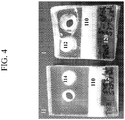
- FIG. 4 is a photograph of samples of examples 28 (H in FIG. 4 ) and 30 (I in FIG. 4 ) following irradiation and heat treatments. Both samples have opalized region 110 - and, in sample H, 114, and in sample I, 112 - where the material was exposed to UV radiation.
- the positively photosensitive lithium zinc aluminosilicate precursor glasses may be obtained by replacing fluorine with bromine.
- the precursor glass may comprise up to about 10 wt% or, in some embodiments, up to about 1 wt% Br.
- the positively photosensitive lithium zinc aluminosilicate precursor glass may comprise: from about 70 wt% to about 78 wt % SiO 2 (70 wt% ⁇ SiO 2 ⁇ 78 wt%); from about 0.5 wt% to about 1 wt% K 2 O (0.5 wt% ⁇ K 2 O ⁇ 1 wt%); from about 5 wt% to about 7 wt% ZnO (5 wt% ⁇ ZnO ⁇ 7 wt%); from about 0 wt% to about 10 wt% Br - (0.5 wt% ⁇ Br - ⁇ 10 wt%); from about 6 wt% to about 8 wt% Al 2 O 3 (6 wt% ⁇ Al 2 O 3 ⁇ 8 wt%); from about 0.02 wt% to about 0.05 wt% CeO 2 (0.02 wt% ⁇ CeO 2 ⁇ 0.05 wt%); from about 0.02 wtt
- Non-limiting examples of these glasses and glass-ceramics are listed in Table 5 below.
- the XRD patterns obtained for samples having the composition listed for example 34 indicate that the major phase in the opalized regions has the "stuffed ⁇ -quartz" lithium-aluminosilicate (virgilite) Li x Al x Si 3-x O 8 crystal structure. Although these samples were heat treated at different temperatures, no discernable difference in the XRD data was observed. Table 5. Compositions of positively photosensitive lithium zinc aluminosilicate precursor glasses in which fluorine is replaced by bromine.
- Example 32 33 34 35 36 37 38 Wt% Wt% Wt% Wt% Wt% Wt% Wt% SiO 2 77.98 77.36 76.75 73.00 72.45 71.91 70.58 K 2 O 0.80 0.79 0.79 0.75 0.74 0.74 0.72 ZnO 6.21 6.16 6.11 5.82 5.77 5.73 5.62 Br - 0 0 0 6.40 6.35 6.30 9.50 Al 2 O 3 7.44 7.38 7.32 6.96 6.91 6.86 6.73 CeO 2 0.04 0.04 0.04 0.04 0.04 0.04 0.04 0.04 Ag 0.03 0.03 0.03 0.03 0.03 0.03 0.03 0.03 Li 2 O 7.45 7.39 7.33 6.98 6.92 6.87 6.74 Na 2 O 0.80 0.79 0.79 0.75 0.74 0.03 0.03 F - 0 0.78 1.59 0 0.75 1.49 0
- a composite glass article comprising a lithium-based glass ceramic and a photosensitive lithium zinc aluminosilicate glass.
- the composite glass article comprises a first region and a second region.
- the first region comprises a lithium-based glass ceramic comprising a ceramic phase and a residual glass phase.
- the ceramic phase comprises a lithium aluminosilicate (LAS) phase having a lithium aluminosilicate stuffed ⁇ -quartz structure, such as described hereinabove.
- the lithium-based glass ceramic is free of at least one of Na 2 O, MgO, P 2 O 5 , TiO 2 , ZrO 2 , or bromine.
- the LAS phase comprises at least about 50 volume percent of the glass ceramic region.
- the negatively photosensitive lithium zinc aluminosilicate glass comprises: from about 66 wt% to about 76 wt% SiO 2 (i.e., 66 wt% ⁇ SiO 2 76 wt%); from about 5 wt% to about 9 wt% Al 2 O 3 (i.e., 5 wt% ⁇ Al 2 O 3 ⁇ 9 wt%); from about 5 wt% to about 8 wt% Li 2 O (i.e., 5 wt% ⁇ Li 2 O ⁇ 8 wt%); from greater than 0 wt% to about 1 wt% K 2 O (i.e., 0 wt% ⁇ K 2 O ⁇ 1 wt%); from greater than 0 wt% to about 6 wt% F - (i.e., 0 wt% ⁇ F - ⁇ 6 wt%); from greater than 0 wt% to about 0.1 wt% CeO
- the positively photosensitive lithium zinc aluminosilicate glass comprises: from about 72 wt% to about 76 wt % SiO 2 (72 wt% ⁇ SiO 2 ⁇ 76 wt%); from about 0.5 wt% to about 1 wt% K 2 O (0.5 wt% ⁇ K 2 O ⁇ 1 wt%); from about 5 wt% to about 7 wt% ZnO (5 wt% ⁇ ZnO ⁇ 7 wt%); from about 0.5 wt% to about 0.8 wt% Br - (0.5 wt% ⁇ Br - ⁇ 0.8 wt%); from about 6 wt% to about 8 wt% Al 2 O 3 (6 wt% ⁇ Al 2 O 3 ⁇ 8 wt%); from about 0.01 wt% to about 0.04 wt% CeO 2 (0.01 wt% ⁇ CeO 2 ⁇ 0.04 wt%); from about 0.03 wt
- the positively photosensitive lithium zinc aluminosilicate glass comprises: from about 68 wt% to about 77 wt % SiO 2 (68 wt% ⁇ SiO 2 ⁇ 77 wt%); from about 0.5 wt% to about 1 wt% K 2 O (0.5 wt% ⁇ K 2 O ⁇ 1 wt%); from about 6 wt% to about 10 wt% ZnO (6 wt% ⁇ ZnO ⁇ 10 wt%); from about 0.5 wt% to about 1.0 wt% Br - (0.5 wt% ⁇ Br - ⁇ 1 wt%); from about 7 wt% to about 10 wt% Al 2 O 3 (7 wt% ⁇ Al 2 O 3 ⁇ 10 wt%); from about 0.02 wt% to about 0.05 wt% CeO 2 (0.02 wt% ⁇ CeO 2 ⁇ 0.05 wt%); from about 0.02 wtt% to about
- the first region (the lithium-based glass ceramic) and the second region (the lithium zinc aluminosilicate glass) of the composite glass articles described herein may be arranged in an array.
- the array may, in some embodiments, be a regular, repeated pattern, which may be either short range (i.e., having/extending in a dimension of up to about 1 mm or less) or long range (i.e., having a dimension/extending in a dimension of greater than 1 mm).
- Such an array may be formed by selectively irradiating portions of the precursor glass with UV light in a predetermined pattern, or by shielding a portion of the precursor glass from the UV light.
- volume of the lithium-based glass ceramic experiences a 50% greater volume decrease relative to the lithium zinc aluminosilicate glass, which results in a build-up of compressive stress in the lithium-based glass ceramic and tensile stress in the lithium zinc aluminosilicate glass at the boundary of the glass ceramic/glass interface.
- the nature of the compressive and tensile stresses that develop under this condition provides a stress region that is capable of deflecting a propagating crack.
- FIGS. 6A and 6B are microscopic images of a composite glass article under non-polarized light and polarized light, respectively.
- Composite glass article 600 comprises a lithium-based glass ceramic 620 and a lithium zinc aluminosilicate glass 610. Stress 614 at the interface between the lithium-based glass ceramic 620 and the lithium zinc aluminosilicate glass 610, which is induced by the photo-elastic effect, is visible under polarized light ( FIG. 6B ).
- a method of making the composite glass article described hereinabove from a positively photosensitive lithium zinc aluminosilicate precursor glass is provided.
- the composite glass article comprises a lithium zinc aluminosilicate glass and a lithium-based glass ceramic.
- the lithium-based glass ceramic comprises a residual glass phase and a ceramic phase comprising a stuffed ⁇ -quartz lithium-aluminosilicate (virgilite, or Li x Al x Si 3-x O 8 ) crystal structure and, in some embodiments, a crystalline LiF phase.
- the lithium-based glass ceramic in some embodiments, may be opalized or translucent.
- a first region of the positively photosensitive lithium zinc aluminosilicate precursor glass is exposed to ultraviolet radiation having a wavelength in a range from about 248 nm to about 360 nm while a second region of the lithium zinc aluminosilicate glass is unexposed (i.e., not exposed) to the ultraviolet radiation.
- the first region is irradiated with a UV laser such as, for example, a 355 nm pulsed laser or the like, or a beam of continuous UV light such as, for example, a 310 nm Hg arc lamp; while a second region of the precursor glass is not irradiated with UV radiation.
- the second region of the precursor glass may be shielded from the UV radiation.
- Such shielding may include an opaque or reflective film, such as those known in the art, which is applied to the surface of the second region.
- the UV radiation may, in some embodiments, have a wavelength of 355 nm, 10Hz frequency, and 6.5 W/cm 2 energy.
- the UV laser or focused beam is rastered across at least the portion of the negatively photosensitive lithium zinc aluminosilicate precursor glass.
- the precursor glass may be irradiated for 5 seconds with UV light rastered across the material at a rate of 10 mm/sec.
- the positively photosensitive lithium zinc aluminosilicate precursor glass may be continuously irradiated with UV light for a fixed time period (e.g., for about 1 minute, or for times ranging from about 5 to about 10 seconds, or, in some embodiments, for up to two hours).
Landscapes
- Chemical & Material Sciences (AREA)
- Engineering & Computer Science (AREA)
- Materials Engineering (AREA)
- Organic Chemistry (AREA)
- Life Sciences & Earth Sciences (AREA)
- Chemical Kinetics & Catalysis (AREA)
- General Chemical & Material Sciences (AREA)
- Geochemistry & Mineralogy (AREA)
- Physics & Mathematics (AREA)
- Ceramic Engineering (AREA)
- Crystallography & Structural Chemistry (AREA)
- Thermal Sciences (AREA)
- Health & Medical Sciences (AREA)
- Toxicology (AREA)
- Dispersion Chemistry (AREA)
- Optics & Photonics (AREA)
- Glass Compositions (AREA)
- Re-Forming, After-Treatment, Cutting And Transporting Of Glass Products (AREA)
Abstract
Description
- This application claims the benefit of priority under 35 U.S.C. § 119 of
U.S. Provisional Application Serial No. 62/287,157 filed on January 26, 2016 - The disclosure relates to photosensitive glass. More particularly, the disclosure relates to photosensitive glasses that can be treated to form glass ceramics. Even more particularly, the disclosure relates to photosensitive lithium zinc aluminosilicate glasses and glass ceramics that may include both transparent and opaque or translucent (i.e., opalized) regions.
- Glass-ceramics are nominally produced by a thermal process in which the as-made glass is thermally treated to produce a controlled crystalline phase. Cerium and silver photosensitizers have been used in glass systems, such as FOTOFORM™ and FOTA-LITE™, to produce photosensitive materials in which the crystal content is well below the 50% level that typically defines a glass ceramic. In such glass systems, an opal (i.e., opaque, optically dense, white, light scattering) phase containing NaF is formed in regions of the glass that are exposed to short wavelength light followed by heat treatment, while unexposed regions of the glass remain clear.
- Photosensitive lithium zinc aluminosilicate glasses that can be selectively cerammed to provide patterned regions of glass and glass ceramic, and composite glass articles made from such glasses and glass ceramics are provided. When these glasses are exposed to ultraviolet (UV) radiation and thermally treated (cerammed), a lithium-based glass ceramic having a β-quartz crystal structure is formed in selected regions of the glass. In some embodiments, the lithium zinc aluminosilicate glass is "negatively" photosensitive; i.e., a lithium-based glass ceramic is formed in the portion of the glass that is not exposed to, or shielded from, the UV radiation while the transparent lithium zinc aluminosilicate glass remains in those regions that are exposed to the UV radiation. In other embodiments, the lithium zinc aluminosilicate glass is "positively" photosensitive; i.e., a lithium-based glass ceramic is formed in the portion of the glass that is exposed to the UV radiation while the transparent lithium zinc aluminosilicate glass remains in those regions that are not exposed to the UV radiation. In some embodiments, the lithium-based glass ceramic is "opalized"; i.e., opaque or translucent, or in some embodiments opalescent. Compressive and tensile stress at the interface of the lithium-based glass-ceramic and lithium zinc aluminosilicate glass may be used to frustrate to crack propagation in such a composite glass/glass ceramic article. Methods of making composite glass articles comprising such lithium-based glass ceramics and lithium zinc aluminosilicate glasses are also provided.
- Accordingly, one aspect of the disclosure is to provide a composite glass article comprising a first region and a second region. The first region comprises a lithium-based glass ceramic. The lithium-based glass ceramic comprises a residual glass phase and a ceramic phase comprising a lithium aluminosilicate phase having a lithium aluminosilicate stuffed β-quartz structure. The second region comprises a lithium zinc aluminosilicate glass comprising at least one sensitizing agent and at least one nucleating agent. The lithium zinc aluminosilicate glass is photosensitive to ultraviolet radiation having a wavelength in a range from about 248 nm to about 360 nm.
- A second aspect of the disclosure is to provide a lithium zinc aluminosilicate glass comprising at least one sensitizing agent and at least one nucleating agent, wherein the lithium zinc aluminosilicate glass is photosensitive to radiation having a wavelength in a range from about 248 nm to about 360 nm.
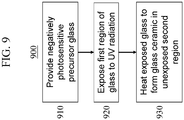
- A third aspect of the disclosure is to provide a method of making a composite glass article comprising a lithium zinc aluminosilicate glass and a lithium-based glass ceramic. The lithium-based glass ceramic comprises a residual glass phase and a ceramic phase, wherein the ceramic phase comprises a lithium aluminosilicate phase having a lithium aluminosilicate β-quartz structure. The method comprises: providing a lithium zinc aluminosilicate precursor glass comprising at least one sensitizing agent and at least one nucleating agent, wherein the lithium zinc aluminosilicate glass is negatively photosensitive; exposing a first region of the lithium zinc aluminosilicate precursor glass with ultraviolet radiation having a wavelength in a range from about 248 nm to about 360 nm, wherein a second region of the lithium zinc aluminosilicate glass is unexposed to the ultraviolet radiation; and heating the exposed lithium zinc aluminosilicate precursor glass to form the lithium-based glass ceramic in the second region.
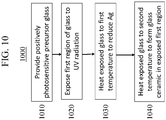
- A fourth aspect of the disclosure is to provide a method of making a composite glass article comprising a lithium zinc aluminosilicate glass and a lithium-based glass ceramic. The lithium-based glass ceramic comprises a residual glass phase and a ceramic phase, wherein the ceramic phase comprises a lithium aluminosilicate phase having a lithium aluminosilicate β-quartz structure, and a residual glass phase. The method comprises: providing a lithium zinc aluminosilicate precursor glass comprising at least one sensitizing agent and at least one nucleating agent, wherein the lithium zinc aluminosilicate glass is positively photosensitive; exposing a first region of the lithium zinc aluminosilicate precursor glass to ultraviolet radiation having a wavelength in a range from about 248 nm to about 360 nm, wherein a second region of the lithium zinc aluminosilicate precursor glass is unexposed to the ultraviolet radiation; heating the lithium zinc aluminosilicate precursor glass at a first temperature for a first time period; and heating the lithium zinc aluminosilicate precursor glass at a second temperature for a second time period to form the lithium-based glass ceramic in the first region.
- These and other aspects, advantages, and salient features will become apparent from the following detailed description, the accompanying drawings, and the appended claims.
-
-
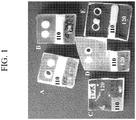
FIGURE 1 is a photograph of positively photosensitive lithium zinc aluminosilicate precursor glass/glass-ceramic samples in which ZrO2 was added to a negatively photosensitive lithium zinc aluminosilicate precursor glass composition; -
FIGURE 2 is an x-ray diffraction pattern obtained for an opalized portion of a sample that was exposed to UV radiation, heat treated first at 575°C for two hours, cooled to room temperature, and then heat treated at 575°C for two hours; -
FIGURE 3 is a photograph of two samples following exposure to ultraviolet radiation, and heat treatments at a first temperature and a second temperature; -
FIGURE 4 is a photograph of two samples following exposure to ultraviolet radiation, and heat treatments at a first temperature and a second temperature; -
FIGURE 5A is a plot of thermal expansion as function of temperature for the lithium-based glass ceramic of the composite glass article described herein; -
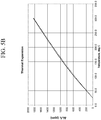
FIGURE 5B is a plot of thermal expansion as function of temperature for the lithium zinc aluminosilicate glass described herein; -
FIGURE 6 shows a microscopic image of a composite glass article viewed under non-polarized light (A) and under polarized light (B); -
FIGURE 7 is a photograph showing the internal stress produced in a patterned composite glass article comprising a positively photosensitive lithium zinc aluminosilicate glass and the lithium-based glass ceramic described herein; -
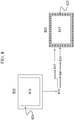
FIGURE 8 is a schematic representation of a patterned composite glass article described herein; -
FIGURE 9 is a flow chart describing a method of making a composite glass article from a negatively photosensitive lithium zinc aluminosilicate precursor glass; and -
FIGURE 10 is a flow chart describing a method of making a composite glass article from a positively photosensitive lithium zinc aluminosilicate precursor glass. - In the following description, like reference characters designate like or corresponding parts throughout the several views shown in the figures. It is also understood that, unless otherwise specified, terms such as "top," "bottom," "outward," "inward," and the like are words of convenience and are not to be construed as limiting terms. In addition, whenever a group is described as comprising at least one of a group of elements and combinations thereof, it is understood that the group may comprise, consist essentially of, or consist of any number of those elements recited, either individually or in combination with each other. Similarly, whenever a group is described as consisting of at least one of a group of elements or combinations thereof, it is understood that the group may consist of any number of those elements recited, either individually or in combination with each other. Unless otherwise specified, a range of values, when recited, includes both the upper and lower limits of the range as well as any ranges therebetween. As used herein, the indefinite articles "a," "an," and the corresponding definite article "the" mean "at least one" or "one or more," unless otherwise specified. It also is understood that the various features disclosed in the specification and the drawings can be used in any and all combinations.
- As used herein, the terms "composite glass article" and "composite glass ceramic articles" are used in their broadest sense to include any object made wholly or partly of glass and glass ceramic. Unless otherwise specified, all compositions are expressed in terms of weight percent (wt%). As used herein, the terms "ceram" and "ceramming" refer to a heat treatment (or heat treatments) or process in which a precursor glass is converted to a glass-ceramic.
- As used herein, the term "glass ceramic" refers to a material comprising a glass phase and a crystalline ceramic phase, wherein the ceramic phase accounts for or comprises at least 50 volume percent of the material. The terms "glass ceramic" and "crystalline" are equivalent terms and may be used interchangeably herein.
- As used herein, the term "opal" refers to an opaque, optically dense, white, and/or light scattering glass, ceramic, or glass ceramic material that may, but does not have to, have opalescent properties. The term "opalizing" refers to a process of transforming a glass, ceramic, or glass ceramic material into an opal material. An opal or opalized material comprises at least one crystalline or ceramic phase in which the crystalline particles have a mean particle size that is within or greater than the wavelength range of visible light (400 nm-750 nm). As used herein, the term "translucent" refers to a material that transmits and diffuses light such that objects beyond the material cannot be seen clearly with the unaided eye.
- As used herein, the terms "reverse photosensitive," "negative photosensitive," and "negatively photosensitive" refer to a material and process whereby a region of the material exposed to electromagnetic radiation remains clear, while an unexposed remainder of the material becomes opalized or translucent when the material is subsequently heated at a temperature greater than room temperature. Conversely, the terms "positive photosensitive" and "positively photosensitive" refer to a material and process whereby a region of the material exposed to electromagnetic radiation becomes opalized or translucent, while the unexposed remainder of the material remains clear.
- It is noted that the terms "substantially" and "about" may be utilized herein to represent the inherent degree of uncertainty that may be attributed to any quantitative comparison, value, measurement, or other representation. These terms are also utilized herein to represent the degree by which a quantitative representation may vary from a stated reference without resulting in a change in the basic function of the subject matter at issue. Thus, a glass that is, for example, referred to as being "substantially free of TiO2" or "free of TiO2" is one in which TiO2 is not actively added or batched into the glass, but may be present in very small amounts (e.g., ≤ 100 ppm or, in some embodiments, ≤ 50 ppm) as a contaminant.
- Referring to the drawings in general, it will be understood that the illustrations are for the purpose of describing particular embodiments and are not intended to limit the disclosure or appended claims thereto. The drawings are not necessarily to scale, and certain features and certain views of the drawings may be shown exaggerated in scale or in schematic in the interest of clarity and conciseness.
- In one aspect, a photosensitive lithium zinc aluminosilicate glass is provided. The glass comprises at least one sensitizing agent and at least one nucleating agent. The lithium zinc aluminosilicate glass is photosensitive to ultraviolet (UV) radiation having a wavelength in a range from about 248 nm to about 360 nm. In some embodiments, the at least one sensitizing agent may include, but is not limited to, at least one of silver and cerium. The at least one nucleating agent may include, but is not limited to, silver and/or at least one halogen or halide. In some embodiments, the at least one nucleating agent comprises at least one of fluorine, chlorine, and bromine. In particular embodiments, the at least one nucleating agent comprises fluorine and/or bromine.
- In some embodiments, the photosensitive lithium zinc aluminosilicate glass is negatively photosensitive; i.e., a region of the material exposed to ultraviolet radiation and subsequently heat treated or cerammed remains transparent, while the remainder of the material that is not exposed to, or shielded from, such radiation and is subsequently heat treated at a temperature of at least about 500°C becomes opalized or translucent. In such embodiments, the photosensitive glass comprises a nucleating agent and a sensitizing agent such as, but not limited, to fluorine. Silver, which acts as the nucleating agent in the exposed portion of the glass, has a face-centered crystal (FCC) structure with a lattice constant of 0.408 nm, whereas LiF has a FCC structure with a lattice constant of 0.407 nm. Because the Ag lattice constant closely matches that of LiF, Ag serves as highly effective nucleating agent for LiF. The multiplicity of these nucleation sites is so great and the nucleation is so prolific that the LiF crystals do not grow to a size at which they noticeably scatter light, thus making the exposed region transparent. In some embodiments, the crystallites formed in this exposed region are smaller than the wavelength of visible light (400 nm-750 nm). In some embodiments, the crystallites formed in the exposed region are less than 100 nm in size.
- In those regions of the negatively photosensitive lithium zinc aluminosilicate glass that are not exposed (also referred to herein as "unexposed") to such radiation, the silver metal nuclei are not formed. Consequently, crystals of the various ceramic phases may grow to larger sizes in those regions of the glass that are not exposed to the UV radiation, in some embodiments rendering these regions opal - i.e., opaque or, at a minimum, translucent. In some embodiments, the crystallites formed in this unexposed region are at least as large as the wavelength of visible light (400 nm-750 nm). In some embodiments, the crystallites formed in the unexposed region are greater than 1 µm in size. When heated at a temperature of at least about 500°C, a lithium-based glass ceramic comprising a crystalline ceramic phase and a residual glass is formed in those regions of the glass that are not exposed to such radiation.
- Depending on the heat treatment temperature, the crystalline ceramic phase in the region of the precursor glass that is not exposed to UV radiation comprises lithium aluminosilicate (LAS, or Virgilite), which has a β-quartz crystal structure, and lithium fluoride (LiF, or Griceite). The LAS phase may be described as a "stuffed β-quartz" phase in which LiAl2O3 occupies SiO2 sites within the crystal structure. In some embodiments, LAS is the dominant crystal phase; i.e., LAS comprises the majority of the crystalline phases present in the ceramic. The ceramic phase may further comprise LiF. In some embodiments, the LAS phase comprises at least about 50 volume percent of the glass ceramic. The lithium zinc aluminosilicate glass is clear and transparent as made, but, in some embodiments, when not exposed to UV radiation in the 248-360 nm ranges and heat treated ("cerammed"), opalizes when reheated to a temperature of at least about 540°C.
- At temperatures below about 540°C, LiF is the only crystallizing phase, whereas both LiF and LAS phases crystallize at higher temperatures. Silver metal nucleates the LiF and either silver metal or LiF nucleates the LAS phase. Unexposed regions, however, are devoid of silver precipitates, and LiF is presumably the nucleating phase for LAS in these regions.
- The negatively photosensitive glass and glass ceramic described hereinabove also comprise fluorine. Fluorine not only provides photosensitivity, but also ensures extensive nucleation of the crystal phases in the unexposed region of the precursor glass. Without fluorine, the unexposed regions appear to crystallize in an uncontrolled manner, leading to fracture and crumbling of the material at temperatures of 550°C or greater.
- When exposed to electromagnetic radiation having a wavelength in a range from about 248 nm to about 360 nm and then heated at temperatures of 500°C or more or, in some embodiments, 550°C or more, for a period ranging from about 0.5 hours to about 8 hours, about 1 hour to about 8 hours, about 1 hour to about 7 hours, about 1 hour to about 6 hours, about 0.5 hours to about 7 hours, about 0.5 hours to about 6 hours, about 2 hour to about 6 hours, or about 1 hour to about 5 hours, the negatively photosensitive lithium zinc aluminosilicate glass is substantially free of crystalline material of sufficient size (< 10 nm) that are detectable by x-ray powder diffraction techniques that are known in the art and routinely used to determine crystal size.
- In some embodiments, the negatively photosensitive lithium zinc aluminosilicate glass comprises: from about 60 wt% to about 80 wt% SiO2 (i.e., 60 wt% ≤ SiO2 ≤ 80 wt%); from about 3 wt% to about 12 wt% Al2O3 (i.e., 3 wt% ≤ Al2O3 ≤ 12 wt%); from about 2 wt% to about 10 wt% Li2O (i.e., 2 wt% ≤ Li2O ≤ 10 wt%); from 0 wt% to about 5 wt% K2O (i.e., 0 wt% ≤ K2O ≤ 5 wt%); from greater than 0 wt% to about 10 wt% F- (i.e., 0 wt% < F- ≤ 10 wt%); from greater than 0 wt% to about 2 wt% CeO2 (i.e., 0 wt% < CeO2 ≤ 2 wt%); from greater than 0 wt% to about 2 wt% Ag (i.e., 0 wt% < Ag ≤ 2 wt%); and from greater than 0 wt% to about 10 wt% ZnO (i.e., 0 wt% < ZnO ≤ 10 wt%).
- In some embodiments, the negatively photosensitive lithium zinc aluminosilicate glass comprises: from about 66 wt% to about 76 wt% SiO2 (i.e., 66 wt% ≤ SiO2 ≤ 76 wt%); from about 5 wt% to about 9 wt% Al2O3 (i.e., 5 wt% ≤ Al2O3 ≤ 9 wt%); from about 5 wt% to about 8 wt% Li2O (i.e., 5 wt% ≤ Li2O ≤ 8 wt%); from greater than 0 wt% to about 1 wt% K2O (i.e., 0 wt% < K2O ≤ 1 wt%); from greater than 0 wt% to about 6 wt% F- (i.e., 0 wt% < F- ≤ 6 wt%); from greater than 0 wt% to about 0.1 wt% CeO2 (i.e., 0 wt% < CeO2 ≤ 0.1 wt%); from greater than 0 wt% to about 0.05 wt% Ag (i.e., 0 wt% < Ag ≤ 0.05 wt%); and from about 6 wt% to about 8 wt% ZnO (i.e., 6 wt% ≤ ZnO ≤ 8 wt%).
- In some embodiments, the negatively photosensitive lithium zinc aluminosilicate glass may comprise from about 6 wt% to about 8 wt% Li2O (i.e., 6 wt% ≤ Li2O ≤ 8 wt%). In some embodiments, the photosensitive lithium zinc aluminosilicate glass may comprise from about 0.5 wt% to about 1 wt% K2O (i.e., 0.5 wt% ≤ K2O ≤ 1 wt%). In some embodiments, the photosensitive lithium zinc aluminosilicate glass may comprise from about 0.03 wt% to about 0.09 wt% CeO2 (i.e., 0.03 wt% ≤ CeO2 ≤ 0.09 wt%). In some embodiments, the photosensitive lithium zinc aluminosilicate glass may comprise from greater than 0 wt% to about 0.03 wt% Ag (i.e., 0 wt% < Ag ≤ 0.03 wt%). In some embodiments, the photosensitive lithium zinc aluminosilicate glass may comprise from about 2 wt% to about 4 wt% F- (i.e., 2 wt% ≤ F- ≤ 4 wt%) or from about 2 wt% to about 3.5 wt% F-(i.e., 2 wt% ≤ F- ≤ 3.5 wt%). In some embodiments, the photosensitive lithium zinc aluminosilicate glass may comprise up to about 1.5 wt% Br- (i.e., 0 wt% ≤ Br- ≤ 4 wt%), or from about 0.3 wt% to about 1.5 wt% Br- (i.e., 0.3 wt% ≤ Br- ≤ 1.5 wt%), or from about 0.3 wt% to about 1.3 wt% Br (i.e., 0.3 wt% ≤ Br- ≤ 1.3 wt%). In some embodiments, the glass is free of bromine.
- In some embodiments, the negatively photosensitive lithium zinc aluminosilicate glass may include up to about 0.5, 0.4, 0.3, 0.2, or 0.1 wt% Na2O (i.e., 0 wt% ≤ Na2O ≤ 0.5 wt%) and, in some embodiments, is free of Na2O. In some embodiments, the photosensitive lithium zinc aluminosilicate glass is free of at least one of MgO, P2O5, TiO2, and ZrO2. Non-limiting examples of these negatively photosensitive lithium zinc aluminosilicate glasses are listed in Table 1. Exposure to UV radiation followed by heat treatment at 500°C or more or, in some embodiments, 550°C or more leaves the exposed region clear and the surrounding unexposed regions, in some embodiments, hazy or even opalized.

- In other embodiments, the lithium zinc aluminosilicate glass is positively photosensitive; i.e., a region of the material, exposed to ultraviolet radiation having a wavelength in a range from about 248 nm to about 360 nm and later heat treated separately at a first temperature and at a second temperature becomes opalized or translucent, while the unexposed remainder of the material remains clear following such heat treatments. The positively photosensitive lithium zinc aluminosilicate glass may, in some embodiments, be obtained by altering the composition of the negatively photosensitive glass-ceramic or precursor glass, described hereinabove and subjecting the precursor glass to an additional heat treatment.
- In some embodiments, the positively photosensitive lithium zinc aluminosilicate glass comprises: from about 65 wt% to about 80 wt % SiO2 (65 wt% ≤ SiO2 ≤ 80 wt%); up to about 1 wt% K2O (0 wt% ≤ K2O ≤ 1 wt%); from about 3 wt% to about 12 wt% ZnO (3 wt% ≤ ZnO ≤ 12 wt%); up to about 10 wt% Br- (0 wt% ≤ Br- ≤ 10 wt%); from about 5 wt% to about 16 wt% Al2O3 (5 wt% ≤ Al2O3 ≤ 16 wt%); from greater than 0 wt% to about 2 wt% CeO2 (0 wt% < CeO2 ≤ 2 wt%); from greater than 0 wt% to about 2 wt% Ag (0 wt% < Ag ≤ 2 wt%); from about 2 wt% to about 14 wt% Li2O (2 wt% ≤ Li2O ≤ 14 wt%); up to about 1 wt% Na2O (0 wt% ≤ Na2O ≤ 1 wt%); from about 0 wt% to about 5 wt% F- (0 wt% ≤ F- ≤ 5 wt%); and up to about 8 wt% ZrO2 (0 wt% ≤ ZrO2 ≤ 8 wt%).
- In some embodiments, the positively photosensitive lithium zinc aluminosilicate glass comprises: from about 68 wt% to about 78 wt % SiO2 (68 wt% ≤ SiO2 ≤ 78 wt%); up to about 1 wt% K2O (0 wt% ≤ K2O ≤ 1 wt%); from about 5 wt% to about 10 wt% ZnO (5 wt% ≤ ZnO ≤ 10 wt%); up to about 10 wt% Br- (0 wt% ≤ Br- ≤ 10 wt%); from about 5 wt% to about 14 wt% Al2O3 (5 wt% ≤ Al2O3 ≤ 14 wt%); from about 0.01 wt% to about 0.07 wt% CeO2 (0.01 wt% ≤ CeO2 ≤ 0.07 wt%); from about 0.01 wt% to about 0.05 wt% Ag (0.01 wt% ≤ Ag ≤ 0.05 wt%); from about 5 wt% to about 10 wt% Li2O (5 wt% ≤ Li2O ≤ 10 wt%); up to about 1 wt% Na2O (0 wt% ≤ Na2O ≤ 1 wt%); from about 0 wt% to about 3 wt% F- (0 wt% ≤ F- ≤ 3 wt%); and up to about 5 wt% ZrO2 (0 wt% ≤ ZrO2 ≤ 5 wt%).
- In some embodiments, the positively photosensitive lithium zinc aluminosilicate precursor glass may be produced by adding ZrO2 to the negatively photosensitive lithium zinc aluminosilicate composition. Non-limiting examples of these glasses are listed in Table 2 below. Example 16 in Table 2 is an exemplary composition of the photonegative glass ceramic and glass. In these embodiments, the positively photosensitive lithium zinc aluminosilicate glass comprises: from about 72 wt% to about 76 wt % SiO2 (72 wt% ≤ SiO2 ≤ 76 wt%); from about 0.5 wt% to about 1 wt% K2O (0.5 wt% ≤ K2O ≤ 1 wt%); from about 5 wt% to about 7 wt% ZnO (5 wt% ≤ ZnO ≤ 7 wt%); from about 0.5 wt% to about 0.8 wt% Br- (0.5 wt% ≤ Br- ≤ 0.8 wt%); from about 6 wt% to about 8 wt% Al2O3 (6 wt% ≤ Al2O3 ≤ 8 wt%); from about 0.01 wt% to about 0.04 wt% CeO2 (0.01 wt% ≤ CeO2 ≤ 0.04 wt%); from about 0.03 wt% to about 0.05 wt% Ag (0.03 wt% ≤ Ag ≤ 0.05 wt%); from about 6 wt% to about 8 wt% Li2O (6 wt% ≤ Li2O ≤ 8 wt%); up to about 0.05 wt% Na2O (0 wt% ≤ Na2O ≤ 0.05 wt%); from about 2 wt% to about 3 wt% F- (2 wt% ≤ F- ≤ 3 wt%); and from about 0.5 wt% to about 5 wt% ZrO2 (0.5 wt% ≤ ZrO2 ≤ 5 wt%).
-
FIG. 1 is a photograph of samples in which ZrO2 was added to the negatively photosensitive lithium zinc aluminosilicate precursor glass composition. The resulting glasses are positively photosensitive, with the opalized ceramic phase present in those portions of the samples that were exposed to UV radiation and a lithium zinc aluminosilicate glass phase present in those portions of the samples that were not exposed to UV radiation. Samples A and B each have composition 19 (containing 2.92 wt% ZrO2) and samples C, D, and E each have composition 20 (containing 3.85 wt% ZrO2) listed in Table 2. Heat treatment times and temperatures that were used to form the lithium-based glass ceramics in examples 19 and 20 are listed in Table 2A.Exposed portions 110 of samples A-E inFIG. 1 are opalized whileunexposed portions 120 remain clear. X-Ray diffraction (XRD) analysis of the opalized material indicates the presence of a virgilite Li-aluminosilicate phase.FIG. 2 is a XRD pattern obtained for an opalized portion of a sample having composition 18 that was exposed to UV radiation, subsequently heat treated first at 575°C for two hours, cooled to room temperature, and then heat treated again at 575°C for two hours. The XRD pattern shows that the dominant phase has the stuffed β-quartz Li-aluminosilicate (virgilite LixAlxSi3-xO8) crystal structure.Table 2. Compositions of positively photosensitive lithium zinc aluminosilicate precursor glasses in which ZrO2 was added to a negatively photosensitive lithium zinc aluminosilicate glass composition. Example 16 17 18 19 20 Wt% Wt% Wt% Wt% Wt% SiO2 75.68 75.04 74.19 73.46 72.76 K2O 0.77 0.77 0.76 0.76 0.76 ZnO 6.04 5.99 5.91 5.85 5.80 Br- 0.71 0.57 0.69 0.69 0.68 Al2O3 7.22 7.15 7.09 7.01 6.94 CeO2 0.03 0.03 0.03 0.03 0.03 Ag 0.04 0.04 0.04 0.04 0.04 Li2O 7.23 7.17 7.09 7.02 6.95 Na2O 0.03 0.03 0.03 0.03 0.03 F- 2.25 2.23 2.21 2.18 2.16 ZrO2 0.00 0.99 1.96 2.92 3.85 Table 2A. Heat treatment times and temperatures for glass ceramic samples shown in FIG. 1. FIG. 1 Example/ composition First heat treatment Second heat treatment A 20 2 hours at 550° 2 hours at 650° B 20 2 hours at 550° 2 hours at 600° C 19 2 hours at 675° 2 hours at 675° D 19 2 hours at 675° 2 hours at 675° E 19 2 hours at 650° 2 hours at 650° - In other embodiments, the positively photosensitive lithium zinc aluminosilicate precursor glass is produced by increasing the alumina content relative to that of SiO2 in the negatively photosensitive lithium aluminosilicate composition. In these embodiments, the positively photosensitive precursor glass comprises: from about 68 wt% to about 76 wt % SiO2 (68 wt% ≤ SiO2 ≤ 76 wt%); from about 0.5 wt% to about 1 wt% K2O (0.5 wt% ≤ K2O ≤ 1 wt%); from about 5 wt% to about 8 wt% ZnO (5 wt% ≤ ZnO ≤ 8 wt%); from about 0.5 wt% to about 1.0 wt% Br- (0.5 wt% ≤ Br- ≤ 1.0 wt%); from about 7 wt% to about 14 wt% Al2O3 (7 wt% ≤ Al2O3 ≤ 12 wt%); from about 0.01 wt% to about 0.07 wt% CeO2 (0.01 wt% ≤ CeO2 ≤ 0.07 wt%); from about 0.03 wt% to about 0.05 wt% Ag (0.03 wt% ≤ Ag ≤ 0.05 wt%); from about 7 wt% to about 9 wt% Li2O (7 wt% ≤ Li2O ≤ 9 wt%); up to about 0.05 wt% Na2O (0 wt% ≤ Na2O ≤ 0.05 wt%); and from about 2 wt% to about 3 wt% F- (2 wt% ≤ F- ≤ 3 wt%). Non-limiting examples of these glasses and glass-ceramics are listed in Table 3 below. The alumina content in examples 21 and 22 were increased by 2 wt% and 4 wt%, respectively, relative to the composition of reference example 16, listed in Table 1. Example 21 was first heated at 575°C for two hours and then cooled to room temperature (about 25°C) and later heated at 575°C for two hours, whereas example 22 was first heated at 550°C for two hours and then cooled to room temperature and later heated at 575°C for two hours.
FIG. 3 is a photograph of samples of examples 21 (F inFIG. 3 ) and 22 (G inFIG. 3 ) following irradiation and heat treatments. Both samples have opalized regions 110 - and, in sample G, 112 and 114 - where exposed to UV radiation. The XRD pattern obtained for example 22/sample G indicates that the major phase in the opalized regions has the "stuffed β-quartz" lithium-aluminosilicate (virgilite) LixAlxSi3-xO8 crystal structure.Table 3. Compositions of positively photosensitive lithium zinc aluminosilicate precursor glasses in which alumina content is increased relative to that of SiO2. Example 21 22 23 24 25 26 Wt% Wt% Wt% Wt% Wt% Wt% SiO2 73.89 72.14 73.80 71.98 70.11 68.31 K2O 0.77 0.76 0.78 0.81 0.87 0.92 ZnO 5.99 5.94 6.56 7.02 7.46 7.93 Br- 0.71 0.70 0.72 0.76 0.82 0.87 Al2O3 9.14 11.04 7.85 8.41 9.02 9.51 CeO2 0.03 0.03 0.03 0.03 0.06 0.06 Ag 0.04 0.04 0.04 0.04 0.04 0.04 Li2O 7.17 7.11 7.77 8.32 8.84 9.39 Na2O 0.03 0.03 0.03 0.03 0.03 0.03 F- 2.23 2.21 2.42 2.59 2.75 2.93 ZrO2 0.00 0.00 - While ZnO is a constituent of the negatively photosensitive glass-ceramic and precursor glasses, a positively photosensitive glass-ceramic and precursor glass may be obtained by increasing the ZnO concentration relative to the alumina and silica content in the negatively photosensitive lithium aluminosilicate composition. In these embodiments, the positively photosensitive glass precursor glass comprises: from about 68 wt% to about 77 wt % SiO2 (68 wt% ≤ SiO2 ≤ 77 wt%); from about 0.5 wt% to about 1 wt% K2O (0.5 wt% ≤ K2O ≤ 1 wt%); from about 6 wt% to about 10 wt% ZnO (6 wt% ≤ ZnO ≤ 10 wt%); from about 0.5 wt% to about 1.0 wt% Br- (0.5 wt% ≤ Br- ≤ 1 wt%); from about 7 wt% to about 10 wt% Al2O3 (7 wt% ≤ Al2O3 ≤ 10 wt%); from about 0.02 wt% to about 0.05 wt% CeO2 (0.02 wt% ≤ CeO2 ≤ 0.05 wt%); from about 0.02 wt% to about 0.05 wt% Ag (0.03 wt% ≤ Ag ≤ 0.05 wt%); from about 7 wt% to about 10 wt% Li2O (7 wt% ≤ Li2O ≤ 10 wt%); up to about 0.05 wt% Na2O (0 wt% ≤ Na2O ≤ 0.05 wt%); from about 1 wt% to about 3 wt% F- (1 wt% ≤ F- ≤ 3 wt%), and up to about 4 wt% ZrO2 (0 wt% ≤ ZrO2 ≤ 4 wt%). Compositions of non-limiting examples of these positively photosensitive lithium zinc aluminosilicate glasses are listed in Table 4 below. The glass-ceramic may, in some embodiments, be obtained by first exposing the positively photosensitive precursor glass to ultraviolet light followed by a first heat treatment at about 575°C for two hours, then cooling the precursor glass to room temperature (about 25°C) and later heating the precursor glass at about 575°C for two hours to form the glass ceramic.
FIG. 4 is a photograph of samples of examples 28 (H inFIG. 4 ) and 30 (I inFIG. 4 ) following irradiation and heat treatments. Both samples have opalized region 110 - and, in sample H, 114, and in sample I, 112 - where the material was exposed to UV radiation. The XRD pattern obtained for examples 30/sample I (FIG. 4 ) indicates that the major phase in the opalized regions has the "stuffed β-quartz" lithium-aluminosilicate (virgilite) LixAlxSi3-xO8 crystal structure.Table 4. Compositions of positively photosensitive lithium zinc aluminosilicate precursor glasses in which the ZnO concentration is increased relative to the alumina and SiO2 content. Example TVY TVZ TWA TWB TWC Wt% Wt% Wt% Wt% Wt% SiO2 73.84 73.19 72.89 76.20 70.97 K2O 0.77 0.78 0.79 0.79 0.74 ZnO 6.56 9.05 7.45 6.16 6.31 Br- 0.72 0.71 0.70 0.70 0.69 Al2O3 7.86 7.02 8.96 7.36 7.55 CeO2 0.04 0.04 0.04 0.04 0.04 Ag 0.03 0.03 0.03 0.03 0.03 Li2O 7.77 7.77 8.32 8.84 9.39 Na2O 0.03 0.03 0.03 0.03 0.03 F- 2.25 2.18 2.17 1.84 2.33 ZrO 20 0 0 0 3.84 - In other embodiments, the positively photosensitive lithium zinc aluminosilicate precursor glasses may be obtained by replacing fluorine with bromine. In such embodiments, the precursor glass may comprise up to about 10 wt% or, in some embodiments, up to about 1 wt% Br. In these embodiments, the positively photosensitive lithium zinc aluminosilicate precursor glass may comprise: from about 70 wt% to about 78 wt % SiO2 (70 wt% ≤ SiO2 ≤ 78 wt%); from about 0.5 wt% to about 1 wt% K2O (0.5 wt% ≤ K2O ≤ 1 wt%); from about 5 wt% to about 7 wt% ZnO (5 wt% ≤ ZnO ≤ 7 wt%); from about 0 wt% to about 10 wt% Br- (0.5 wt% ≤ Br- ≤ 10 wt%); from about 6 wt% to about 8 wt% Al2O3 (6 wt% ≤ Al2O3 ≤ 8 wt%); from about 0.02 wt% to about 0.05 wt% CeO2 (0.02 wt% ≤ CeO2 ≤ 0.05 wt%); from about 0.02 wt% to about 0.05 wt% Ag (0.02 wt% ≤ Ag ≤ 0.05 wt%); from about 6 wt% to about 8 wt% Li2O (6 wt% ≤ Li2O ≤ 8 wt%); up to about 1 wt% Na2O (0 wt% ≤ Na2O ≤ 1 wt%); and from 0 wt% to about 3 wt% F- (0 wt% ≤ F- ≤ 3 wt%). Non-limiting examples of these glasses and glass-ceramics are listed in Table 5 below. The XRD patterns obtained for samples having the composition listed for example 34 indicate that the major phase in the opalized regions has the "stuffed β-quartz" lithium-aluminosilicate (virgilite) LixAlxSi3-xO8 crystal structure. Although these samples were heat treated at different temperatures, no discernable difference in the XRD data was observed.
Table 5. Compositions of positively photosensitive lithium zinc aluminosilicate precursor glasses in which fluorine is replaced by bromine. Example 32 33 34 35 36 37 38 Wt% Wt% Wt% Wt% Wt% Wt% Wt% SiO2 77.98 77.36 76.75 73.00 72.45 71.91 70.58 K2O 0.80 0.79 0.79 0.75 0.74 0.74 0.72 ZnO 6.21 6.16 6.11 5.82 5.77 5.73 5.62 Br -0 0 0 6.40 6.35 6.30 9.50 Al2O3 7.44 7.38 7.32 6.96 6.91 6.86 6.73 CeO2 0.04 0.04 0.04 0.04 0.04 0.04 0.04 Ag 0.03 0.03 0.03 0.03 0.03 0.03 0.03 Li2O 7.45 7.39 7.33 6.98 6.92 6.87 6.74 Na2O 0.80 0.79 0.79 0.75 0.74 0.03 0.03 F -0 0.78 1.59 0 0.75 1.49 0 - In another aspect, a composite glass article comprising a lithium-based glass ceramic and a photosensitive lithium zinc aluminosilicate glass is provided. The composite glass article comprises a first region and a second region. The first region comprises a lithium-based glass ceramic comprising a ceramic phase and a residual glass phase. The ceramic phase comprises a lithium aluminosilicate (LAS) phase having a lithium aluminosilicate stuffed β-quartz structure, such as described hereinabove. In some embodiments, the lithium-based glass ceramic is free of at least one of Na2O, MgO, P2O5, TiO2, ZrO2, or bromine. In some embodiments, the LAS phase comprises at least about 50 volume percent of the glass ceramic region.
- The second region comprises a lithium zinc aluminosilicate glass that is photosensitive to ultraviolet radiation having a wavelength in a range from about 248 nm to about 360 nm, such as those described hereinabove. The lithium zinc aluminosilicate glass comprises at least one sensitizing agent and at least one nucleating agent. In some embodiments, the at least one sensitizing agent may include, but is not limited to, at least one of silver or cerium. The at least one nucleating agent may include, but is not limited to, silver and/or at least one halogen or halide. In some embodiments, the at least one nucleating agent comprises at least one of fluorine, chlorine, or bromine. In particular embodiments, the at least one nucleating agent comprises fluorine or bromine.
- In some embodiments, the first region is opaque or translucent. In some embodiments, the lithium zinc aluminosilicate glass is transparent.
- In some embodiments, the lithium zinc aluminosilicate glass is negatively photosensitive with respect to the ultraviolet radiation; i.e., a region of the glass exposed to ultraviolet radiation and subsequently heat treated or cerammed remains clear, while the remainder of the material that is not exposed to, or shielded from, such radiation and heat treated becomes opalized or translucent when heat treated or cerammed. In those embodiments in which the second region comprises a negatively photosensitive lithium zinc aluminosilicate glass, the first region, which comprises the lithium-based glass ceramic, is not exposed (i.e., is "unexposed") to UV radiation.
- In some embodiments, the negatively photosensitive lithium zinc aluminosilicate glass comprises: from about 66 wt% to about 76 wt% SiO2 (i.e., 66 wt% ≤ SiO2 76 wt%); from about 5 wt% to about 9 wt% Al2O3 (i.e., 5 wt% ≤ Al2O3 ≤ 9 wt%); from about 5 wt% to about 8 wt% Li2O (i.e., 5 wt% ≤ Li2O ≤ 8 wt%); from greater than 0 wt% to about 1 wt% K2O (i.e., 0 wt% < K2O ≤ 1 wt%); from greater than 0 wt% to about 6 wt% F- (i.e., 0 wt% < F- ≤ 6 wt%); from greater than 0 wt% to about 0.1 wt% CeO2 (i.e., 0 wt% < CeO2 ≤ 0.1 wt%); from greater than 0 wt% to about 0.05 wt% Ag (i.e., 0 wt% < Ag ≤ 0.05 wt%); and from about 6 wt% to about 8 wt% ZnO (i.e., 6 wt% ≤ ZnO ≤ 8 wt%).
- In other embodiments, the second region comprises a positively photosensitive lithium zinc aluminosilicate glass; i.e., a region of the glass, exposed to ultraviolet radiation having a wavelength in a range from about 248 nm to about 360 nm becomes opalized or translucent when later heat treated separately at a first temperature and at a second temperature, while the unexposed remainder of the material remains clear following such heat treatments. These positively photosensitive glasses have been previously described hereinabove, and comprise: from about 68 wt% to about 78 wt % SiO2 (68 wt% ≤ SiO2 ≤ 78 wt%); up to about 1 wt% K2O (0 wt% ≤ K2O ≤ 1 wt%); from about 5 wt% to about 10 wt% ZnO (4 wt% ≤ ZnO ≤ 8 wt%); up to about 10 wt% Br- (0 wt% ≤ Br- ≤ 10 wt%); from about 5 wt% to about 14 wt% Al2O3 (5 wt% ≤ Al2O3 ≤ 12 wt%); from about 0.01 wt% to about 0.07 wt% CeO2 (0.01 wt% ≤ CeO2 ≤ 0.07 wt%); from about 0.01 wt% to about 0.05 wt% Ag (0.01 wt% ≤ Ag ≤ 0.05 wt%); from about 5 wt% to about 10 wt% Li2O (5 wt% ≤ Li2O ≤ 10 wt%); up to about 1 wt% Na2O (0 wt% ≤ Na2O ≤ 1 wt%); from about 0 wt% to about 3 wt% F- (0 wt% ≤ F- ≤ 3 wt%); and up to about 5 wt% ZrO2 (0 wt% ≤ ZrO2 ≤ 5 wt%).
- In some embodiments, the positively photosensitive lithium zinc aluminosilicate glass comprises: from about 72 wt% to about 76 wt % SiO2 (72 wt% ≤ SiO2 ≤ 76 wt%); from about 0.5 wt% to about 1 wt% K2O (0.5 wt% ≤ K2O ≤ 1 wt%); from about 5 wt% to about 7 wt% ZnO (5 wt% ≤ ZnO ≤ 7 wt%); from about 0.5 wt% to about 0.8 wt% Br- (0.5 wt% ≤ Br- ≤ 0.8 wt%); from about 6 wt% to about 8 wt% Al2O3 (6 wt% ≤ Al2O3 ≤ 8 wt%); from about 0.01 wt% to about 0.04 wt% CeO2 (0.01 wt% ≤ CeO2 ≤ 0.04 wt%); from about 0.03 wt% to about 0.05 wt% Ag (0.03 wt% ≤ Ag ≤ 0.05 wt%); from about 6 wt% to about 8 wt% Li2O (6 wt% ≤ Li2O ≤ 8 wt%); up to about 0.05 wt% Na2O (0 wt% ≤ Na2O ≤ 0.05 wt%); from about 2 wt% to about 3 wt% F- (2 wt% ≤ F- ≤ 3 wt%); and from about 0.5 wt% to about 5 wt% ZrO2 (0.5 wt% ≤ ZrO2 ≤ 5 wt%).
- In some embodiments, the positively photosensitive lithium zinc aluminosilicate glass comprises: from about 68 wt% to about 76 wt % SiO2 (68 wt% ≤ SiO2 ≤ 76 wt%); from about 0.5 wt% to about 1 wt% K2O (0.5 wt% ≤ K2O ≤ 1 wt%); from about 5 wt% to about 8 wt% ZnO (5 wt% ≤ ZnO ≤ 8 wt%); from about 0.5 wt% to about 1.0 wt% Br- (0.5 wt% ≤ Br- ≤ 1.0 wt%); from about 7 wt% to about 14 wt% Al2O3 (7 wt% ≤ Al2O3 ≤ 12 wt%); from about 0.01 wt% to about 0.07 wt% CeO2 (0.01 wt% ≤ CeO2 ≤ 0.07 wt%); from about 0.03 wt% to about 0.05 wt% Ag (0.03 wt% ≤ Ag ≤ 0.05 wt%); from about 7 wt% to about 9 wt% Li2O (7 wt% ≤ Li2O ≤ 9 wt%); up to about 0.05 wt% Na2O (0 wt% ≤ Na2O ≤ 0.05 wt%); and from about 2 wt% to about 3 wt% F- (2 wt% ≤ F- ≤ 3 wt%).
- In some embodiments, the positively photosensitive lithium zinc aluminosilicate glass comprises: from about 68 wt% to about 77 wt % SiO2 (68 wt% ≤ SiO2 ≤ 77 wt%); from about 0.5 wt% to about 1 wt% K2O (0.5 wt% ≤ K2O ≤ 1 wt%); from about 6 wt% to about 10 wt% ZnO (6 wt% ≤ ZnO ≤ 10 wt%); from about 0.5 wt% to about 1.0 wt% Br- (0.5 wt% ≤ Br- ≤ 1 wt%); from about 7 wt% to about 10 wt% Al2O3 (7 wt% ≤ Al2O3 ≤ 10 wt%); from about 0.02 wt% to about 0.05 wt% CeO2 (0.02 wt% ≤ CeO2 ≤ 0.05 wt%); from about 0.02 wt% to about 0.05 wt% Ag (0.03 wt% ≤ Ag ≤ 0.05 wt%); from about 7 wt% to about 10 wt% Li2O (7 wt% ≤ Li2O ≤ 10 wt%); up to about 0.05 wt% Na2O (0 wt% ≤ Na2O ≤ 0.05 wt%); from about 1 wt% to about 3 wt% F- (1 wt% ≤ F- ≤ 3 wt%), and up to about 4 wt% ZrO2 (0 wt% ≤ ZrO2 ≤ 4 wt%).
- In some embodiments, the positively photosensitive lithium zinc aluminosilicate glass comprises: from about 70 wt% to about 78 wt % SiO2 (70 wt% ≤ SiO2 ≤ 78 wt%); from about 0.5 wt% to about 1 wt% K2O (0.5 wt% ≤ K2O ≤ 1 wt%); from about 5 wt% to about 7 wt% ZnO (5 wt% ≤ ZnO ≤ 7 wt%); from about 0 wt% to about 10 wt% Br- (0.5 wt% ≤ Br- ≤ 10 wt%); from about 6 wt% to about 8 wt% Al2O3 (6 wt% ≤ Al2O3 ≤ 8 wt%); from about 0.02 wt% to about 0.05 wt% CeO2 (0.02 wt% ≤ CeO2 ≤ 0.05 wt%); from about 0.02 wt% to about 0.05 wt% Ag (0.02 wt% ≤ Ag ≤ 0.05 wt%); from about 6 wt% to about 8 wt% Li2O (6 wt% ≤ Li2O ≤ 8 wt%); up to about 1 wt% Na2O (0 wt% ≤ Na2O ≤ 1 wt%); and from 0 wt% to about 3 wt% F- (0 wt% ≤ F- ≤ 3 wt%).
- In some embodiments, the first region (the lithium-based glass ceramic) and the second region (the lithium zinc aluminosilicate glass) of the composite glass articles described herein may be randomly dispersed throughout the composite glass article. In other embodiments, the first region and second region are spatially separate from each other.
- In some embodiments, the first region (the lithium-based glass ceramic) and the second region (the lithium zinc aluminosilicate glass) of the composite glass articles described herein may be arranged in an array. The array may, in some embodiments, be a regular, repeated pattern, which may be either short range (i.e., having/extending in a dimension of up to about 1 mm or less) or long range (i.e., having a dimension/extending in a dimension of greater than 1 mm). Such an array may be formed by selectively irradiating portions of the precursor glass with UV light in a predetermined pattern, or by shielding a portion of the precursor glass from the UV light.
- In some embodiments, the lithium-based glass ceramic has a thermal expansion ΔL1/L1 and the lithium zinc aluminosilicate glass has a thermal expansion ΔL2/L2 measured between room temperature and a second temperature T, wherein 25°C ≤ T ≤ 300°C, where ΔLi is the change in dimension Li of the lithium-based glass ceramic and the lithium zinc aluminosilicate glass over the temperature range measured. This thermal expansion differential places the lithium zinc aluminosilicate glass in tension and the lithium-based glass ceramic in compression at the boundary between the glass and ceramic phases, thereby increasing the mechanical strength of the composite glass article.
- Thermal expansion of the lithium-based glass ceramic and the lithium zinc aluminosilicate glass of the composite glass article are plotted as function of temperature in
FIGS. 5A and5B , respectively. As seen inFIGS. 5A and5B , the lithium-based glass ceramic undergoes a 0.6% decrease in volume as it cools from the thermal development temperature of 600°C, whereas the lithium zinc aluminosilicate glass undergoes a 0.3% decrease in volume upon cooling from the thermal development temperature. Thus volume of the lithium-based glass ceramic experiences a 50% greater volume decrease relative to the lithium zinc aluminosilicate glass, which results in a build-up of compressive stress in the lithium-based glass ceramic and tensile stress in the lithium zinc aluminosilicate glass at the boundary of the glass ceramic/glass interface. The nature of the compressive and tensile stresses that develop under this condition provides a stress region that is capable of deflecting a propagating crack. - The induced stress between the lithium-based glass ceramic and the lithium zinc aluminosilicate glass may be observed in the resulting optical birefringence and on the microscopic level as well.
FIGS. 6A and 6B are microscopic images of a composite glass article under non-polarized light and polarized light, respectively.Composite glass article 600 comprises a lithium-based glass ceramic 620 and a lithiumzinc aluminosilicate glass 610. Stress 614 at the interface between the lithium-based glass ceramic 620 and the lithiumzinc aluminosilicate glass 610, which is induced by the photo-elastic effect, is visible under polarized light (FIG. 6B ). -
FIG. 7 is a photograph showing the internal stress produced by the patterned composite glass article comprising the negatively photosensitive lithium zinc aluminosilicate glass and the lithium-based glass ceramic described herein. The sample is viewed between crossed polarizers, and the magnitude of the stress is seen through the photo-elastic effect (i.e., stress-induced birefringence). The composite glass article comprises lithiumzinc aluminosilicate glass 710 surrounded by the lithium-basedglass ceramic 720. The negatively photosensitive lithium zinc aluminosilicate glass incomposite glass article 700 has the composition of example 16 (Table 2). When viewed between crossed polarizers, stress patterns 715 appear in theglass regions 710 surrounded by theglass ceramic region 720. - By introducing compressive and tensile stress at the boundary interface of the glass-ceramic and lithium zinc aluminosilicate glass, the patterned composite glass articles described herein may be used to frustrate crack propagation from the edges of such an article. Such an article is schematically shown in
FIG. 8 .Composite glass article 805 comprises afirst region 815 comprising a lithium zinc aluminosilicate glass and a second region comprising a lithium-basedglass ceramic 815. Both the lithium zinc aluminosilicate glass and the lithium-base glass ceramic are described herein. If the lithium zinc aluminosilicate glass is positively photosensitive, acentral portion 810 of theprecursor glass 800 is not exposed to UV radiation, while aperipheral portion 820 of theprecursor glass 800 is exposed to UV radiation. Following exposure to the UV radiation (830 inFIG. 8 ), the precursor lithium zinc aluminosilicate glass is then heated to and held at a first temperature for a predetermined period of time and cooled to room temperature (840), and then heated to and held at a second temperature for a predetermined period of time and cooled to room temperature (850) to form the lithium-based glass ceramic andcomposite glass article 805. A glass-ceramic is formed in the exposedperipheral portion 820, wherein a compressive stress (815 inFIG. 8 ) exists within the lithium-based glass ceramic and a tensile stress is created in the lithium zinc aluminosilicate glass at the interface between the lithium zinc aluminosilicate glass and lithium-based glass ceramic. This interfacial stress frustrates the propagation of cracks from the edges of thecomposite glass article 805. - In those instances in which the lithium zinc aluminosilicate glass is negatively photosensitive,
central portion 810 of theprecursor glass 800 is exposed to UV radiation, whileperipheral portion 820 of theprecursor glass 800 is not exposed to UV radiation. Following exposure to the UV radiation (830 inFIG. 8 ), the precursor lithium zinc aluminosilicate glass is then heated to and held at a first temperature for a predetermined period of time and cooled to room temperature (845) to form the lithium-based glass ceramic andcomposite glass article 805. - In another aspect, a method of making the composite glass article described hereinabove from a negatively photosensitive lithium zinc aluminosilicate precursor glass (precursor glass) is provided. The composite glass article comprises a lithium zinc aluminosilicate glass and a lithium-based glass ceramic. The lithium-based glass ceramic comprises a residual glass phase and a ceramic phase comprising a stuffed β-quartz lithium-aluminosilicate (virgilite, or LixAlxSi3-xO8) crystal structure and, in some embodiments, a crystalline LiF phase. The lithium-based glass ceramic, in some embodiments, may be opalized or translucent.
- A flow chart describing the method is shown in
FIG. 9 . In afirst step 910 ofmethod 900, a negatively photosensitive lithium zinc aluminosilicate precursor glass comprising at least one sensitizing agent and at least one nucleating agent is provided. The precursor glass may be formed by those means known in the art including down-draw (fusion- or slot-draw), up draw, float methods, casting, molding, or the like. - In a
second step 920, a first region of the negatively photosensitive lithium zinc aluminosilicate precursor glass is exposed to ultraviolet radiation having a wavelength in a range from about 248 nm to about 360 nm, while a second region of the negatively photosensitive lithium zinc aluminosilicate precursor glass is unexposed to the ultraviolet radiation. In some embodiments, the first region is irradiated with a UV laser such as, for example, a 355 nm pulsed laser or the like, or a beam of continuous UV light such as, for example, a 310 nm Hg arc lamp; while a second region of the precursor glass is not irradiated with (i.e., unexposed to) the UV radiation. In other embodiments, the second region of the precursor glass may be shielded from the UV radiation. Such shielding may include an opaque or reflective film, such as those known in the art, which is applied to the surface of the second region. As previously described hereinabove, the UV radiation may, in some embodiments, have a wavelength of 355 nm, 10Hz frequency, and a fluence of 6.5 W/cm2. In some embodiments, the UV laser or beam is rastered across at least the portion of the negatively photosensitive lithium zinc aluminosilicate precursor glass. For example, the precursor glass may be irradiated for 5 seconds with UV light rastered across the material at a rate of 10 mm/sec. In other embodiments, the negatively photosensitive lithium zinc aluminosilicate precursor glass may be continuously irradiated with UV light for a fixed time period (e.g., for about 1 minute, or for times ranging from about 5 to about 10 seconds). - The UV-exposed negatively photosensitive lithium zinc aluminosilicate precursor glass is then heated to form the lithium-based glass ceramic in the second region, thereby forming the composite glass article (step 930). In some embodiments, the exposed lithium zinc aluminosilicate precursor glass is heated at a temperature in a range from about 550°C to about 650°C for at least about 2 hours. In some embodiments, the crystalline lithium-aluminosilicate and LiF phases (when present) in the second region, which was not exposed to the UV radiation, have crystal sizes of at least as large as the wavelength of visible light (≥ 400 nm) and thus scatter light and are opalized, rendering the ceramic phase opaque or translucent. In some embodiments, however, the crystal sizes in the second region are sufficiently small so as to not scatter or appreciably refract light, thus rendering the ceramic phase transparent.
- In yet another aspect, a method of making the composite glass article described hereinabove from a positively photosensitive lithium zinc aluminosilicate precursor glass (precursor glass) is provided. The composite glass article comprises a lithium zinc aluminosilicate glass and a lithium-based glass ceramic. The lithium-based glass ceramic comprises a residual glass phase and a ceramic phase comprising a stuffed β-quartz lithium-aluminosilicate (virgilite, or LixAlxSi3-xO8) crystal structure and, in some embodiments, a crystalline LiF phase. The lithium-based glass ceramic, in some embodiments, may be opalized or translucent.
- A flow chart describing the method is shown in
FIG. 10 . In afirst step 1010 ofmethod 1000, a positively photosensitive lithium zinc aluminosilicate precursor glass comprising at least one sensitizing agent and at least one nucleating agent is provided. The precursor glass may be formed by those means known in the art including down-draw (fusion- or slot-draw), up draw, float methods, casting, molding, or the like. - In a
second step 1020, a first region of the positively photosensitive lithium zinc aluminosilicate precursor glass is exposed to ultraviolet radiation having a wavelength in a range from about 248 nm to about 360 nm while a second region of the lithium zinc aluminosilicate glass is unexposed (i.e., not exposed) to the ultraviolet radiation. In some embodiments, the first region is irradiated with a UV laser such as, for example, a 355 nm pulsed laser or the like, or a beam of continuous UV light such as, for example, a 310 nm Hg arc lamp; while a second region of the precursor glass is not irradiated with UV radiation. In other embodiments, the second region of the precursor glass may be shielded from the UV radiation. Such shielding may include an opaque or reflective film, such as those known in the art, which is applied to the surface of the second region. As previously described hereinabove, the UV radiation may, in some embodiments, have a wavelength of 355 nm, 10Hz frequency, and 6.5 W/cm2 energy. In some embodiments, the UV laser or focused beam is rastered across at least the portion of the negatively photosensitive lithium zinc aluminosilicate precursor glass. For example, the precursor glass may be irradiated for 5 seconds with UV light rastered across the material at a rate of 10 mm/sec. In other embodiments, the positively photosensitive lithium zinc aluminosilicate precursor glass may be continuously irradiated with UV light for a fixed time period (e.g., for about 1 minute, or for times ranging from about 5 to about 10 seconds, or, in some embodiments, for up to two hours). - Following exposure to the UV radiation, the lithium zinc aluminosilicate precursor glass is heated at a first temperature for a first predetermined time period to reduce silver using cerium as an optical intermediate (Step 1030). In some embodiments, the first temperature is in a range from about 550°C to about 700°C, and the first predetermined time period ranges from about 0.5 hours to about 4 hours. The precursor glass is and then cooled to room temperature (approximately 25°C) (not shown). The exposed precursor glass is then heated at a second temperature for a second predetermined time period to form a lithium-based glass ceramic in the first region, wherein the glass ceramic comprises a residual glass phase and a ceramic phase comprising a stuffed β-quartz lithium-aluminosilicate (virgilite, or LixAlxSi3-xO8) crystal structure and, in some embodiments, a crystalline LiF phase (Step 1040), and thereby forming the composite glass article. In some embodiments, the second temperature is in a range from about 500°C to about 700°C, and the second predetermined time period ranges from about 0.5 hours to about 4 hours. Finally, the composite glass article is cooled to room temperature (approximately 25°C) (not shown).
- While typical embodiments have been set forth for the purpose of illustration, the foregoing description should not be deemed to be a limitation on the scope of the disclosure or appended claims. Accordingly, various modifications, adaptations, and alternatives may occur to one skilled in the art without departing from the spirit and scope of the present disclosure or appended claims.
- Embodiments of the invention include the following:
- 1. A composite glass article comprising a first region and a second region in contact with the first region at an interface, the first region comprising a lithium-based glass ceramic, the lithium-based glass ceramic comprising a ceramic phase and a residual glass phase, wherein the ceramic phase comprises a lithium aluminosilicate phase having a lithium aluminosilicate stuffed β-quartz structure, and the second region comprising a lithium zinc aluminosilicate glass, wherein the lithium zinc aluminosilicate glass is transparent and comprises at least one sensitizing agent and at least one nucleating agent.
- 2. The composite glass article of [1], wherein the first region is spatially separate from the second region.
- 3. The composite glass article of [1] or [2], wherein the lithium zinc aluminosilicate glass is transparent.
- 4. The composite glass article of any of [1]-[3], wherein the first region is opaque or translucent.
- 5. The composite glass article of any of [1]-[4], wherein the lithium-based glass ceramic is under a compressive stress at the interface and the lithium zinc aluminosilicate glass is under a tensile stress at the interface.
- 6. The composite glass article of any of [1]-[5], wherein the at least one sensitizing agent comprises at least one of silver and cerium.
- 7. The composite glass article of any of [1]-[6], wherein the at least one nucleating agent comprises at least one halogen.
- 8. The composite glass article of [7], wherein the at least one halogen comprises fluorine.
- 9. The composite glass article of [7] or [8], wherein the at least one halogen comprises at least one of bromine and chlorine.
- 10. The composite glass article of any of [1]-[9], wherein the second region has been exposed to ultraviolet radiation having a wavelength in a range from about 248 nm to about 360 nm.
- 11. The composite glass article of [10], wherein the lithium zinc aluminosilicate glass comprises: from 66 wt% to about 76 wt% SiO2; from about 5 wt% to about 9 wt% Al2O3; from about 5 wt% to about 8 wt% Li2O; from greater than 0 wt% to about 1 wt% K2O; from greater than 0 wt% to about 6 wt% F-; from greater than 0 wt% to about 0.1 wt% CeO2; from greater than 0 wt% to about 0.05 wt% Ag; and from about 6 wt% to about 8 wt% ZnO.
- 12. The composite glass article of any of [1]-[9], wherein the first region has been exposed to ultraviolet radiation having a wavelength in a range from about 248 nm to about 360 nm.
- 13. The composite glass article of [12], wherein the lithium zinc aluminosilicate glass comprises: from about 68 wt% to about 78 wt% SiO2; up to about 1 wt% K2O; from about 5 wt% to about 10 wt% ZnO; up to about 10 wt% Br-; from about 5 wt% to about 14 wt% Al2O3; from about 0.01 wt% to about 0.07 wt% CeO2; from about 0.01 wt% to about 0.05 wt% Ag; from about 5 wt% to about 10 wt% Li2O; up to about 1 wt% Na2O; from about 0 wt% to about 3 wt% F-; and up to about 5 wt% ZrO2.
- 14. The composite glass article of [12] or [13], wherein the lithium zinc aluminosilicate glass comprises: from about 72 wt% to about 76 wt % SiO2; from about 0.5 wt% to about 1 wt% K2O; from about 5 wt% to about 7 wt% ZnO; from about 0.5 wt% to about 0.8 wt% Br-; from about 6 wt% to about 8 wt% Al2O3; from about 0.01 wt% to about 0.04 wt% CeO2; from about 0.03 wt% to about 0.05 wt% Ag; from about 6 wt% to about 8 wt% Li2O; up to about 0.05 wt% Na2O; from about 2 wt% to about 3 wt% F-; and from about 0.5 wt% to about 5 wt% ZrO2..
- 15. The composite glass article of [12] or [13], wherein the lithium zinc aluminosilicate glass comprises: from about 68 wt% to about 76 wt % SiO2; from about 0.5 wt% to about 1 wt% K2O; from about 5 wt% to about 8 wt% ZnO; from about 0.5 wt% to about 1.0 wt% Br-; from about 7 wt% to about 14 wt% Al2O3; from about 0.01 wt% to about 0.07 wt% CeO2; from about 0.03 wt% to about 0.05 wt% Ag; from about 7 wt% to about 9 wt% Li2O; up to about 0.05 wt% Na2O; and from about 2 wt% to about 3 wt% F-.
- 16. The composite glass article of [12] or [13], wherein the lithium zinc aluminosilicate glass comprises: from about 68 wt% to about 77 wt % SiO2; from about 0.5 wt% to about 1 wt% K2O; from about 6 wt% to about 10 wt% ZnO; from about 0.5 wt% to about 1.0 wt% Br-; from about 7 wt% to about 10 wt% Al2O3; from about 0.02 wt% to about 0.05 wt% CeO2; from about 0.02 wt% to about 0.05 wt% Ag; from about 7 wt% to about 10 wt% Li2O; up to about 0.05 wt% Na2O; from about 1 wt% to about 3 wt% F-, and up to about 4 wt% ZrO2.
- 17. The composite glass article of [12] or [13], wherein the lithium zinc aluminosilicate glass comprises: from about 70 wt% to about 78 wt % SiO2; from about 0.5 wt% to about 1 wt% K2O; from about 5 wt% to about 7 wt% ZnO; from about 0 wt% to about 10 wt% Br-; from about 6 wt% to about 8 wt% Al2O3; from about 0.02 wt% to about 0.05 wt% CeO2; from about 0.02 wt% to about 0.05 wt% Ag; from about 6 wt% to about 8 wt% Li2O; up to about 1 wt% Na2O; and from 0 wt% to about 3 wt% F-.
- 18. The composite glass article of any of [1]-[17], wherein the glass ceramic is free of at least one of Na2O, MgO, P2O5, TiO2, ZrO2, and bromine.
- 19. The composite glass article of any of [1]-[18], wherein the lithium aluminosilicate phase comprises at least 50 volume percent of the lithium-based glass ceramic.
- 20. The composite glass article of any of [1]-[19], wherein the first region and the second region form a patterned array.
- 21. A lithium zinc aluminosilicate glass comprising at least one sensitizing agent and at least one nucleating agent, wherein the lithium zinc aluminosilicate glass is photosensitive to radiation having a wavelength in a range from about 248 nm to about 360 nm.
- 22. The lithium zinc aluminosilicate glass of [21], wherein the at least one sensitizing agent comprises at least one of silver and cerium.
- 23. The lithium zinc aluminosilicate glass of [21] or [22], wherein the at least one nucleating agent comprises at least one halogen.
- 24. The lithium zinc aluminosilicate glass of [22] or [23], wherein the at least one nucleating agent comprises fluorine.
- 25. The lithium zinc aluminosilicate glass of any of [22]-[26], wherein the at least one halogen comprises at least one of bromine and chlorine.
- 26. The lithium zinc aluminosilicate glass of any of [21]-[25], wherein the lithium zinc aluminosilicate glass is negatively photosensitive to ultraviolet radiation having a wavelength in a range from about 248 nm to about 360 nm.
- 27. The lithium zinc aluminosilicate glass of [26], wherein the lithium zinc aluminosilicate glass comprises: from 66 wt% to about 76 wt% SiO2; from about 5 wt% to about 9 wt% Al2O3; from about 5 wt% to about 8 wt% Li2O; from greater than 0 wt% to about 1 wt% K2O; from greater than 0 wt% to about 6 wt% F-; from greater than 0 wt% to about 0.1 wt% CeO2; from greater than 0 wt% to about 0.05 wt% Ag; and from about 6 wt% to about 8 wt% ZnO.
- 28. The lithium zinc aluminosilicate glass of any of [21]-[27], wherein the photosensitive glass is free of at least one of Na2O, MgO, P2O5, TiO2, ZrO2, and bromine.
- 29. The lithium zinc aluminosilicate glass of any of [21]-[28], wherein the lithium zinc aluminosilicate glass is positively photosensitive to ultraviolet radiation having a wavelength in a range from about 248 nm to about 360 nm.
- 30. The lithium zinc aluminosilicate glass of [29], wherein the lithium zinc aluminosilicate glass comprises: from about 68 wt% to about 78 wt % SiO2; up to about 1 wt% K2O; from about 5 wt% to about 10 wt% ZnO; up to about 10 wt% Br-; from about 5 wt% to about 14 wt% Al2O3; from about 0.01 wt% to about 0.07 wt% CeO2; from about 0.01 wt% to about 0.05 wt% Ag; from about 5 wt% to about 10 wt% Li2O; up to about 1 wt% Na2O; from about 0 wt% to about 3 wt% F-; and up to about 5 wt% ZrO2.
- 31. The lithium zinc aluminosilicate glass of [29] or [30], wherein the lithium zinc aluminosilicate glass comprises: from about 72 wt% to about 76 wt % SiO2; from about 0.5 wt% to about 1 wt% K2O; from about 5 wt% to about 7 wt% ZnO; from about 0.5 wt% to about 0.8 wt% Br-; from about 6 wt% to about 8 wt% Al2O3; from about 0.01 wt% to about 0.04 wt% CeO2; from about 0.03 wt% to about 0.05 wt% Ag; from about 6 wt% to about 8 wt% Li2O; up to about 0.05 wt% Na2O; from about 2 wt% to about 3 wt% F-; and from about 0.5 wt% to about 5 wt% ZrO2.
- 32. The lithium zinc aluminosilicate glass of any of [29]-[31], wherein the lithium zinc aluminosilicate glass comprises: from about 68 wt% to about 76 wt % SiO2; from about 0.5 wt% to about 1 wt% K2O; from about 5 wt% to about 8 wt% ZnO; from about 0.5 wt% to about 1.0 wt% Br-; from about 7 wt% to about 14 wt% Al2O3; from about 0.01 wt% to about 0.07 wt% CeO2; from about 0.03 wt% to about 0.05 wt% Ag; from about 7 wt% to about 9 wt% Li2O; up to about 0.05 wt% Na2O; and from about 2 wt% to about 3 wt% F-.
- 33. The lithium zinc aluminosilicate glass of any of [29]-[32], wherein the lithium zinc aluminosilicate glass comprises: from about 68 wt% to about 77 wt % SiO2; from about 0.5 wt% to about 1 wt% K2O; from about 6 wt% to about 10 wt% ZnO; from about 0.5 wt% to about 1.0 wt% Br-; from about 7 wt% to about 10 wt% Al2O3; from about 0.02 wt% to about 0.05 wt% CeO2; from about 0.02 wt% to about 0.05 wt% Ag; from about 7 wt% to about 10 wt% Li2O; up to about 0.05 wt% Na2O; from about 1 wt% to about 3 wt% F-, and up to about 4 wt% ZrO2.
- 34. The lithium zinc aluminosilicate glass of any of [29]-[33], wherein the lithium zinc aluminosilicate glass comprises: from about 70 wt% to about 78 wt % SiO2; from about 0.5 wt% to about 1 wt% K2O; from about 5 wt% to about 7 wt% ZnO; from about 0 wt% to about 10 wt% Br-; from about 6 wt% to about 8 wt% Al2O3; from about 0.02 wt% to about 0.05 wt% CeO2; from about 0.02 wt% to about 0.05 wt% Ag; from about 6 wt% to about 8 wt% Li2O; up to about 1 wt% Na2O; and from 0 wt% to about 3 wt% F-.
- 35. A method of making a composite glass article, the composite glass article comprising a lithium zinc aluminosilicate glass and a lithium-based glass ceramic, the lithium-based glass ceramic comprising a ceramic phase, the ceramic phase comprising a lithium aluminosilicate phase having a lithium aluminosilicate β-quartz structure, and residual glass phase, the method comprising:
- a. providing a lithium zinc aluminosilicate precursor glass, the lithium zinc aluminosilicate glass comprising at least one sensitizing agent and at least one nucleating agent, wherein the lithium zinc aluminosilicate glass is negatively photosensitive;
- b. exposing a first region of the lithium zinc aluminosilicate precursor glass to ultraviolet radiation having a wavelength in a range from about 248 nm to about 360 nm, while a second region of the lithium zinc aluminosilicate precursor glass is unexposed to the ultraviolet radiation; and
- c. heating the exposed lithium zinc aluminosilicate precursor glass to form the lithium-based glass ceramic in the second region, thereby forming the composite glass article.
- 36. The method of [35], wherein the lithium zinc aluminosilicate precursor glass comprises: from about 66 wt% to about 76 wt% SiO2; from about 5 wt% to about 9 wt% Al2O3; from about 5 wt% to about 8 wt% Li2O; from greater than 0 wt% to about 1 wt% K2O; from greater than 0 wt% to about 6 wt% F-; from greater than 0 wt% to about 0.5 wt% CeO2; from greater than 0 wt% to about 0.5 wt% Ag; and from about 6 wt% to about 8 wt% ZnO
- 37. The method of [35] or [36], wherein heating the exposed lithium zinc aluminosilicate precursor glass comprises heating the exposed lithium zinc aluminosilicate glass at a temperature in a range from about 550°C to about 650°C.
- 38. The method of any of [35]-[37], wherein heating the exposed lithium zinc aluminosilicate precursor glass comprises heating the exposed lithium zinc aluminosilicate glass for at least about 2 hours.
- 39. The method of any of [35]-[38], wherein the at least one sensitizing agent comprises at least one of silver and cerium.
- 40. The method of any of [35]-[39], wherein the at least one nucleating agent comprises at least one halogen.
- 41. The method of any of [35]-[40], wherein the second region is opaque or translucent.
- 42. The method of any of [35]-[41], wherein the lithium aluminosilicate phase comprises at least 50 volume percent of the lithium-based glass ceramic.
- 43. A method of making a composite glass article, the composite glass article comprising a lithium zinc aluminosilicate glass and a lithium-based glass ceramic, the lithium-based glass ceramic comprising a ceramic phase, the ceramic phase comprising a lithium aluminosilicate phase having a lithium aluminosilicate β-quartz structure, and residual glass phase, the method comprising:
- a. providing a lithium zinc aluminosilicate precursor glass, the lithium zinc aluminosilicate glass comprising at least one sensitizing agent and at least one nucleating agent, wherein the lithium zinc aluminosilicate glass is positively photosensitive;
- b. exposing a first region of the lithium zinc aluminosilicate precursor glass with ultraviolet radiation having a wavelength in a range from about 248 nm to about 360 nm while a second region of the lithium zinc aluminosilicate glass is unexposed to the ultraviolet radiation;
- c. heating the lithium zinc aluminosilicate precursor glass at a first temperature for a first time period to reduce silver; and
- d. heating the lithium zinc aluminosilicate precursor glass at a second temperature for a second time period to form the lithium-based glass ceramic in the first region, thereby forming the composite glass article.
- 44. The method of [43], wherein the first temperature is in a range from about 550°C to about 675°C and the first time period is in a range from about 0.5 hours to about 4 hours.
- 45. The method of [43] or [44], wherein the second temperature is in a range from about 550°C to about 675°C and the second time period is in a range from about 0.5 hours to about 4 hours.
- 46. The method of any of [43]-[45], wherein the lithium aluminosilicate phase comprises at least 50 volume percent of the lithium-based glass ceramic.
- 47. The method of any of [43]-[46], further comprising the step of cooling the lithium zinc aluminosilicate precursor glass to room temperature after heating at the first temperature for about 0.5 hours to about 4 hours.
- 48. The method of any of [43]-[47], wherein the lithium zinc aluminosilicate precursor glass comprises: from about 68 wt% to about 78 wt % SiO2; up to about 1 wt% K2O; from about 5 wt% to about 10 wt% ZnO; up to about 10 wt% Br-; from about 5 wt% to about 14 wt% Al2O3; from about 0.01 wt% to about 0.07 wt% CeO2; from about 0.01 wt% to about 0.05 wt% Ag; from about 5 wt% to about 10 wt% Li2O; up to about 1 wt% Na2O; from about 0 wt% to about 3 wt% F-; and up to about 5 wt% ZrO2.
- 49. The method of any of [43]-[48], wherein the first region is opaque or translucent.
Claims (15)
- A composite glass article comprising a first region and a second region in contact with the first region at an interface, the first region comprising a lithium-based glass ceramic, the lithium-based glass ceramic comprising a ceramic phase and a residual glass phase, wherein the ceramic phase comprises a lithium aluminosilicate phase having a lithium aluminosilicate stuffed β-quartz structure, and the second region comprising a lithium zinc aluminosilicate glass, wherein the lithium zinc aluminosilicate glass is transparent, comprises at least one sensitizing agent and at least one nucleating agent and is positively photosensitive to ultraviolet radiation.
- The composite glass article of claim 1, wherein the first region is spatially separate from the second region.
- The composite glass article of claim 1 or claim 2, wherein the lithium-based glass ceramic is under a compressive stress at the interface between the lithium-based glass ceramic and the lithium zinc aluminosilicate glass and the lithium zinc aluminosilicate glass is under a tensile stress at the interface.
- The composite glass article of any of claims 1-3, wherein the at least one sensitizing agent comprises at least one of silver and cerium.
- The composite glass article of any of claims 1-4, wherein the at least one nucleating agent comprises at least one halogen.
- The composite glass article of claim 5, wherein the at least one halogen comprises at least one of fluorine, bromine and chlorine.
- The composite glass article of any of claims 1 to 6, wherein the lithium zinc aluminosilicate glass comprises: from about 68 wt% to about 78 wt % SiO2; up to about 1 wt% K2O; from about 5 wt% to about 10 wt% ZnO; up to about 10 wt% Br-; from about 5 wt% to about 14 wt% Al2O3; from about 0.01 wt% to about 0.07 wt% CeO2; from about 0.01 wt% to about 0.05 wt% Ag; from about 5 wt% to about 10 wt% Li2O; up to about 1 wt% Na2O; from about 0 wt% to about 3 wt% F-; and up to about 5 wt% ZrO2.
- The composite glass article of any of claims 1 to 6, wherein the lithium zinc aluminosilicate glass comprises: from about 72 wt% to about 76 wt % SiO2; from about 0.5 wt% to about 1 wt% K2O; from about 5 wt% to about 7 wt% ZnO; from about 0.5 wt% to about 0.8 wt% Br-; from about 6 wt% to about 8 wt% Al2O3; from about 0.01 wt% to about 0.04 wt% CeO2; from about 0.03 wt% to about 0.05 wt% Ag; from about 6 wt% to about 8 wt% Li2O; up to about 0.05 wt% Na2O; from about 2 wt% to about 3 wt% F-; and from about 0.5 wt% to about 5 wt% ZrO2.
- The composite glass article of any of claims 1 to 6, wherein the lithium zinc aluminosilicate glass comprises: from about 68 wt% to about 77 wt % SiO2; from about 0.5 wt% to about 1 wt% K2O; from about 6 wt% to about 10 wt% ZnO; from about 0.5 wt% to about 1.0 wt% Br-; from about 7 wt% to about 10 wt% Al2O3; from about 0.02 wt% to about 0.05 wt% CeO2; from about 0.02 wt% to about 0.05 wt% Ag; from about 7 wt% to about 10 wt% Li2O; up to about 0.05 wt% Na2O; from about 1 wt% to about 3 wt% F-, and up to about 4 wt% ZrO2.
- The composite glass article of any of claims 1 to 6, wherein the lithium zinc aluminosilicate glass comprises: from about 70 wt% to about 78 wt % SiO2; from about 0.5 wt% to about 1 wt% K2O; from about 5 wt% to about 7 wt% ZnO; from about 0 wt% to about 10 wt% Br-; from about 6 wt% to about 8 wt% Al2O3; from about 0.02 wt% to about 0.05 wt% CeO2; from about 0.02 wt% to about 0.05 wt% Ag; from about 6 wt% to about 8 wt% Li2O; up to about 1 wt% Na2O; and from 0 wt% to about 3 wt% F-.
- The composite glass article of any of claims 1-10, wherein the glass ceramic is free of at least one of Na2O, MgO, P2O5, TiO2, ZrO2, and bromine.
- The composite glass article of any of claims 1-11, wherein the lithium aluminosilicate phase comprises at least 50 volume percent of the lithium-based glass ceramic.
- A method of making a composite glass article, the composite glass article comprising a lithium zinc aluminosilicate glass and a lithium-based glass ceramic, the lithium-based glass ceramic comprising a ceramic phase, the ceramic phase comprising a lithium aluminosilicate phase having a lithium aluminosilicate β-quartz structure, and residual glass phase, the method comprising:a. providing a lithium zinc aluminosilicate precursor glass, the lithium zinc aluminosilicate glass comprising at least one sensitizing agent and at least one nucleating agent, wherein the lithium zinc aluminosilicate glass is positively photosensitive;b. exposing a first region of the lithium zinc aluminosilicate precursor glass with ultraviolet radiation having a wavelength in a range from about 248 nm to about 360 nm while a second region of the lithium zinc aluminosilicate glass is unexposed to the ultraviolet radiation;c. heating the lithium zinc aluminosilicate precursor glass at a first temperature for a first time period to reduce silver; andd. heating the lithium zinc aluminosilicate precursor glass at a second temperature for a second time period to form the lithium-based glass ceramic in the first region, thereby forming the composite glass article.
- The method of claim 13, wherein the first temperature is in a range from about 550°C to about 675°C and the first time period is in a range from about 0.5 hours to about 4 hours; and
the second temperature is in a range from about 550°C to about 675°C and the second time period is in a range from about 0.5 hours to about 4 hours. - The method of claim 13 or claim 14, wherein the lithium zinc aluminosilicate precursor glass comprises: from about 68 wt% to about 78 wt % SiO2; up to about 1 wt% K2O; from about 5 wt% to about 10 wt% ZnO; up to about 10 wt% Br-; from about 5 wt% to about 14 wt% Al2O3; from about 0.01 wt% to about 0.07 wt% CeO2; from about 0.01 wt% to about 0.05 wt% Ag; from about 5 wt% to about 10 wt% Li2O; up to about 1 wt% Na2O; from about 0 wt% to about 3 wt% F-; and up to about 5 wt% ZrO2.
Applications Claiming Priority (3)
| Application Number | Priority Date | Filing Date | Title |
|---|---|---|---|
| US201662287157P | 2016-01-26 | 2016-01-26 | |
| EP17703906.2A EP3408237B1 (en) | 2016-01-26 | 2017-01-26 | Photosensitive glasses and glass ceramics and composite glass materials made therefrom |
| PCT/US2017/015176 WO2017132406A1 (en) | 2016-01-26 | 2017-01-26 | Photosensitive glasses and glass ceramics and composite glass materials made therefrom |
Related Parent Applications (2)
| Application Number | Title | Priority Date | Filing Date |
|---|---|---|---|
| EP17703906.2A Division-Into EP3408237B1 (en) | 2016-01-26 | 2017-01-26 | Photosensitive glasses and glass ceramics and composite glass materials made therefrom |
| EP17703906.2A Division EP3408237B1 (en) | 2016-01-26 | 2017-01-26 | Photosensitive glasses and glass ceramics and composite glass materials made therefrom |
Publications (2)
| Publication Number | Publication Date |
|---|---|
| EP3909922A1 true EP3909922A1 (en) | 2021-11-17 |
| EP3909922B1 EP3909922B1 (en) | 2024-10-09 |
Family
ID=57985096
Family Applications (2)
| Application Number | Title | Priority Date | Filing Date |
|---|---|---|---|
| EP17703906.2A Not-in-force EP3408237B1 (en) | 2016-01-26 | 2017-01-26 | Photosensitive glasses and glass ceramics and composite glass materials made therefrom |
| EP21183748.9A Active EP3909922B1 (en) | 2016-01-26 | 2017-01-26 | Composite glass materials made of photosensitive glasses and glass ceramics |
Family Applications Before (1)
| Application Number | Title | Priority Date | Filing Date |
|---|---|---|---|
| EP17703906.2A Not-in-force EP3408237B1 (en) | 2016-01-26 | 2017-01-26 | Photosensitive glasses and glass ceramics and composite glass materials made therefrom |
Country Status (7)
| Country | Link |
|---|---|
| US (3) | US10703671B2 (en) |
| EP (2) | EP3408237B1 (en) |
| JP (1) | JP6983786B2 (en) |
| KR (1) | KR102690495B1 (en) |
| CN (2) | CN108698910B (en) |
| TW (1) | TWI740888B (en) |
| WO (1) | WO2017132406A1 (en) |
Families Citing this family (10)
| Publication number | Priority date | Publication date | Assignee | Title |
|---|---|---|---|---|
| US10651781B2 (en) * | 2017-08-24 | 2020-05-12 | Corning Incorporated | Glass roof shingle |
| WO2019213364A1 (en) * | 2018-05-03 | 2019-11-07 | Corning Incorporated | Glass angle limiting filters, methods for making the same, and pulse oximeters including the same |
| CN110937805B (en) * | 2019-11-04 | 2022-03-11 | 中国建筑材料科学研究总院有限公司 | Photoetching lithium-aluminum-silicon glass material and preparation method and application thereof |
| CN110683760A (en) * | 2019-11-13 | 2020-01-14 | 上海高诚创意科技集团有限公司 | Anti-falling microcrystalline glass and preparation method and application thereof |
| EP3845504A1 (en) * | 2019-12-30 | 2021-07-07 | Ivoclar Vivadent AG | Method for producing a multicoloured dental restoration |
| JP7426507B2 (en) * | 2021-01-29 | 2024-02-01 | 株式会社五鈴精工硝子 | Phase splitting opal glass |
| CN117447075B (en) * | 2023-10-23 | 2025-09-02 | 中国计量大学 | Rare earth ion doped LiF glass-ceramic and preparation method thereof |
| WO2025131402A1 (en) * | 2023-12-20 | 2025-06-26 | Schott Ag | Glasses for local index modification by ultrashort pulse laser treatment and devices comprising the same |
| CN118495808A (en) * | 2024-04-22 | 2024-08-16 | 成都光明光电股份有限公司 | Photosensitive glass material, photosensitive glass-ceramic and photosensitive glass-ceramic product |
| CN118545906A (en) * | 2024-04-22 | 2024-08-27 | 成都光明光电有限责任公司 | Photosensitive glass and photosensitive microcrystalline glass |
Citations (3)
| Publication number | Priority date | Publication date | Assignee | Title |
|---|---|---|---|---|
| US2651145A (en) * | 1950-07-07 | 1953-09-08 | Corning Glass Works | Photosensitively opacifiable glass |
| US3663193A (en) * | 1969-06-30 | 1972-05-16 | Corning Glass Works | Strengthened photosensitive opal glass |
| US20040180773A1 (en) * | 2003-02-03 | 2004-09-16 | Schott Glas | Photostructurable body and process for treating a glass and/or a glass-ceramic |
Family Cites Families (25)
| Publication number | Priority date | Publication date | Assignee | Title |
|---|---|---|---|---|
| BE493137A (en) * | 1949-01-07 | |||
| BE502760A (en) * | 1950-07-07 | |||
| BE638175A (en) | 1962-10-03 | |||
| US3788865A (en) * | 1964-07-31 | 1974-01-29 | C Babcock | Crystallized glass ceramics and process for forming same |
| US4017318A (en) * | 1976-01-02 | 1977-04-12 | Corning Glass Works | Photosensitive colored glasses |
| US4092139A (en) * | 1977-03-16 | 1978-05-30 | Corning Glass Works | Process for making colored photosensitive glass |
| US4134747A (en) * | 1977-03-16 | 1979-01-16 | Corning Glass Works | Method of forming transparent and opaque portions in a reducing atmosphere glass |
| US4309217A (en) * | 1980-08-25 | 1982-01-05 | Corning Glass Works | Polychromatic glasses and method |
| US4549894A (en) * | 1984-06-06 | 1985-10-29 | Corning Glass Works | Ultraviolet absorbing photochromic glass of low silver content |
| JPS63166736A (en) | 1986-07-12 | 1988-07-09 | Sumita Kogaku Glass Seizosho:Kk | Low expansion photosensitive crystallized glass |
| US4979975A (en) * | 1989-08-07 | 1990-12-25 | Corning Incorporated | Fast response photosensitive opal glasses |
| US5019538A (en) * | 1989-11-13 | 1991-05-28 | Coring Incorporated | Colored photosensitive opal glasses |
| JP3219705B2 (en) * | 1996-11-14 | 2001-10-15 | 株式会社オハラ | Glass ceramic substrate for magnetic information storage media |
| JP3311308B2 (en) * | 1998-03-03 | 2002-08-05 | 株式会社オハラ | Glass ceramic substrate for perpendicular magnetic recording media |
| US6511793B1 (en) * | 1999-03-24 | 2003-01-28 | Lg Electronics Inc. | Method of manufacturing microstructure using photosensitive glass substrate |
| WO2004033382A1 (en) | 2002-10-04 | 2004-04-22 | Corning Incorporated | Lens array, method for fabricating the lens array and photosensitive glass plate |
| US7829489B2 (en) * | 2007-05-31 | 2010-11-09 | Corning Incorporated | Low CTE photomachinable glass |
| PT2377830T (en) * | 2010-04-16 | 2016-07-18 | Ivoclar Vivadent Ag | Lithium silicate glass ceramic and glass with transition metal oxide |
| US8883663B2 (en) * | 2010-11-30 | 2014-11-11 | Corning Incorporated | Fusion formed and ion exchanged glass-ceramics |
| US9340451B2 (en) | 2013-02-28 | 2016-05-17 | Corning Incorporated | Machining of fusion-drawn glass laminate structures containing a photomachinable layer |
| US9440878B2 (en) | 2013-02-28 | 2016-09-13 | Corning Incorporated | Fusion formable lithium aluminosilicate glass ceramic |
| US9701573B2 (en) * | 2013-09-06 | 2017-07-11 | Corning Incorporated | High strength glass-ceramics having lithium disilicate and beta-spodumene structures |
| KR101962063B1 (en) | 2015-05-18 | 2019-03-25 | 코닝 인코포레이티드 | Photo-formable glass-ceramics comprising a nephelin crystalline phase |
| WO2020112466A1 (en) * | 2018-11-30 | 2020-06-04 | Corning Incorporated | Ion exchangeable, opaque gahnite-spinel glass ceramics with high hardness and modulus |
| JP2025166736A (en) | 2024-04-24 | 2025-11-06 | トヨタ自動車株式会社 | Information processing device |
-
2017
- 2017-01-24 US US15/413,731 patent/US10703671B2/en active Active
- 2017-01-26 JP JP2018538707A patent/JP6983786B2/en not_active Expired - Fee Related
- 2017-01-26 TW TW106103166A patent/TWI740888B/en not_active IP Right Cessation
- 2017-01-26 CN CN201780011026.8A patent/CN108698910B/en not_active Expired - Fee Related
- 2017-01-26 EP EP17703906.2A patent/EP3408237B1/en not_active Not-in-force
- 2017-01-26 CN CN202110942225.9A patent/CN113603359B/en active Active
- 2017-01-26 WO PCT/US2017/015176 patent/WO2017132406A1/en not_active Ceased
- 2017-01-26 KR KR1020187024090A patent/KR102690495B1/en active Active
- 2017-01-26 EP EP21183748.9A patent/EP3909922B1/en active Active
-
2020
- 2020-04-21 US US16/854,326 patent/US11453611B2/en active Active
-
2022
- 2022-08-17 US US17/889,781 patent/US12479759B2/en active Active
Patent Citations (3)
| Publication number | Priority date | Publication date | Assignee | Title |
|---|---|---|---|---|
| US2651145A (en) * | 1950-07-07 | 1953-09-08 | Corning Glass Works | Photosensitively opacifiable glass |
| US3663193A (en) * | 1969-06-30 | 1972-05-16 | Corning Glass Works | Strengthened photosensitive opal glass |
| US20040180773A1 (en) * | 2003-02-03 | 2004-09-16 | Schott Glas | Photostructurable body and process for treating a glass and/or a glass-ceramic |
Also Published As
| Publication number | Publication date |
|---|---|
| US11453611B2 (en) | 2022-09-27 |
| KR20180100241A (en) | 2018-09-07 |
| EP3408237B1 (en) | 2021-09-08 |
| KR102690495B1 (en) | 2024-07-31 |
| US20200247714A1 (en) | 2020-08-06 |
| CN108698910A (en) | 2018-10-23 |
| EP3909922B1 (en) | 2024-10-09 |
| US20220388895A1 (en) | 2022-12-08 |
| TWI740888B (en) | 2021-10-01 |
| US20170210665A1 (en) | 2017-07-27 |
| TW201731790A (en) | 2017-09-16 |
| EP3408237A1 (en) | 2018-12-05 |
| JP6983786B2 (en) | 2021-12-17 |
| JP2019502646A (en) | 2019-01-31 |
| WO2017132406A1 (en) | 2017-08-03 |
| CN113603359B (en) | 2024-01-02 |
| US12479759B2 (en) | 2025-11-25 |
| CN108698910B (en) | 2021-09-03 |
| US10703671B2 (en) | 2020-07-07 |
| CN113603359A (en) | 2021-11-05 |
Similar Documents
| Publication | Publication Date | Title |
|---|---|---|
| US12479759B2 (en) | Photosensitive glasses and glass ceramics and composite glass materials made therefrom | |
| JP7756995B2 (en) | Transparent near-infrared shielding glass ceramic | |
| CN110997586A (en) | Crystallized glass and chemically strengthened glass | |
| CN110958992A (en) | Chemically strengthened glass and method for producing same | |
| JP6417526B2 (en) | Photoformable glass-ceramics containing a meteorite crystalline phase | |
| GB2075002A (en) | Production of polarizing glasses | |
| CN114466828B (en) | Glass-ceramic and chemically strengthened glass | |
| TWI891974B (en) | Polarized glass and optical isolators | |
| JP2023041251A (en) | crystallized glass | |
| JP2005289790A (en) | Crystallized glass and device for optical communications using the same | |
| TW202423869A (en) | Glass having a colored layer, the maximum transmittance of which in the visible light region is 20% or less | |
| CN118108425A (en) | Glass |
Legal Events
| Date | Code | Title | Description |
|---|---|---|---|
| PUAI | Public reference made under article 153(3) epc to a published international application that has entered the european phase |
Free format text: ORIGINAL CODE: 0009012 |
|
| STAA | Information on the status of an ep patent application or granted ep patent |
Free format text: STATUS: THE APPLICATION HAS BEEN PUBLISHED |
|
| AC | Divisional application: reference to earlier application |
Ref document number: 3408237 Country of ref document: EP Kind code of ref document: P |
|
| AK | Designated contracting states |
Kind code of ref document: A1 Designated state(s): AL AT BE BG CH CY CZ DE DK EE ES FI FR GB GR HR HU IE IS IT LI LT LU LV MC MK MT NL NO PL PT RO RS SE SI SK SM TR |
|
| B565 | Issuance of search results under rule 164(2) epc |
Effective date: 20210927 |
|
| STAA | Information on the status of an ep patent application or granted ep patent |
Free format text: STATUS: REQUEST FOR EXAMINATION WAS MADE |
|
| 17P | Request for examination filed |
Effective date: 20220510 |
|
| RBV | Designated contracting states (corrected) |
Designated state(s): AL AT BE BG CH CY CZ DE DK EE ES FI FR GB GR HR HU IE IS IT LI LT LU LV MC MK MT NL NO PL PT RO RS SE SI SK SM TR |
|
| GRAP | Despatch of communication of intention to grant a patent |
Free format text: ORIGINAL CODE: EPIDOSNIGR1 |
|
| STAA | Information on the status of an ep patent application or granted ep patent |
Free format text: STATUS: GRANT OF PATENT IS INTENDED |
|
| INTG | Intention to grant announced |
Effective date: 20240502 |
|
| GRAS | Grant fee paid |
Free format text: ORIGINAL CODE: EPIDOSNIGR3 |
|
| P01 | Opt-out of the competence of the unified patent court (upc) registered |
Free format text: CASE NUMBER: APP_44614/2024 Effective date: 20240731 |
|
| GRAA | (expected) grant |
Free format text: ORIGINAL CODE: 0009210 |
|
| STAA | Information on the status of an ep patent application or granted ep patent |
Free format text: STATUS: THE PATENT HAS BEEN GRANTED |
|
| AC | Divisional application: reference to earlier application |
Ref document number: 3408237 Country of ref document: EP Kind code of ref document: P |
|
| AK | Designated contracting states |
Kind code of ref document: B1 Designated state(s): AL AT BE BG CH CY CZ DE DK EE ES FI FR GB GR HR HU IE IS IT LI LT LU LV MC MK MT NL NO PL PT RO RS SE SI SK SM TR |
|
| REG | Reference to a national code |
Ref country code: CH Ref legal event code: EP |
|
| REG | Reference to a national code |
Ref country code: DE Ref legal event code: R096 Ref document number: 602017085477 Country of ref document: DE |
|
| REG | Reference to a national code |
Ref country code: IE Ref legal event code: FG4D |
|
| PGFP | Annual fee paid to national office [announced via postgrant information from national office to epo] |
Ref country code: GB Payment date: 20241212 Year of fee payment: 9 |
|
| PGFP | Annual fee paid to national office [announced via postgrant information from national office to epo] |
Ref country code: FR Payment date: 20241216 Year of fee payment: 9 |
|
| REG | Reference to a national code |
Ref country code: LT Ref legal event code: MG9D |
|
| REG | Reference to a national code |
Ref country code: NL Ref legal event code: MP Effective date: 20241009 |
|
| REG | Reference to a national code |
Ref country code: AT Ref legal event code: MK05 Ref document number: 1730459 Country of ref document: AT Kind code of ref document: T Effective date: 20241009 |
|
| PG25 | Lapsed in a contracting state [announced via postgrant information from national office to epo] |
Ref country code: NL Free format text: LAPSE BECAUSE OF FAILURE TO SUBMIT A TRANSLATION OF THE DESCRIPTION OR TO PAY THE FEE WITHIN THE PRESCRIBED TIME-LIMIT Effective date: 20241009 |
|
| PG25 | Lapsed in a contracting state [announced via postgrant information from national office to epo] |
Ref country code: NL Free format text: LAPSE BECAUSE OF FAILURE TO SUBMIT A TRANSLATION OF THE DESCRIPTION OR TO PAY THE FEE WITHIN THE PRESCRIBED TIME-LIMIT Effective date: 20241009 |
|
| PG25 | Lapsed in a contracting state [announced via postgrant information from national office to epo] |
Ref country code: IS Free format text: LAPSE BECAUSE OF FAILURE TO SUBMIT A TRANSLATION OF THE DESCRIPTION OR TO PAY THE FEE WITHIN THE PRESCRIBED TIME-LIMIT Effective date: 20250209 Ref country code: HR Free format text: LAPSE BECAUSE OF FAILURE TO SUBMIT A TRANSLATION OF THE DESCRIPTION OR TO PAY THE FEE WITHIN THE PRESCRIBED TIME-LIMIT Effective date: 20241009 Ref country code: PT Free format text: LAPSE BECAUSE OF FAILURE TO SUBMIT A TRANSLATION OF THE DESCRIPTION OR TO PAY THE FEE WITHIN THE PRESCRIBED TIME-LIMIT Effective date: 20250210 |
|
| PGFP | Annual fee paid to national office [announced via postgrant information from national office to epo] |
Ref country code: DE Payment date: 20241217 Year of fee payment: 9 |
|
| PG25 | Lapsed in a contracting state [announced via postgrant information from national office to epo] |
Ref country code: FI Free format text: LAPSE BECAUSE OF FAILURE TO SUBMIT A TRANSLATION OF THE DESCRIPTION OR TO PAY THE FEE WITHIN THE PRESCRIBED TIME-LIMIT Effective date: 20241009 |
|
| PG25 | Lapsed in a contracting state [announced via postgrant information from national office to epo] |
Ref country code: BG Free format text: LAPSE BECAUSE OF FAILURE TO SUBMIT A TRANSLATION OF THE DESCRIPTION OR TO PAY THE FEE WITHIN THE PRESCRIBED TIME-LIMIT Effective date: 20241009 |
|
| PG25 | Lapsed in a contracting state [announced via postgrant information from national office to epo] |
Ref country code: ES Free format text: LAPSE BECAUSE OF FAILURE TO SUBMIT A TRANSLATION OF THE DESCRIPTION OR TO PAY THE FEE WITHIN THE PRESCRIBED TIME-LIMIT Effective date: 20241009 |
|
| PG25 | Lapsed in a contracting state [announced via postgrant information from national office to epo] |
Ref country code: NO Free format text: LAPSE BECAUSE OF FAILURE TO SUBMIT A TRANSLATION OF THE DESCRIPTION OR TO PAY THE FEE WITHIN THE PRESCRIBED TIME-LIMIT Effective date: 20250109 |
|
| PG25 | Lapsed in a contracting state [announced via postgrant information from national office to epo] |
Ref country code: GR Free format text: LAPSE BECAUSE OF FAILURE TO SUBMIT A TRANSLATION OF THE DESCRIPTION OR TO PAY THE FEE WITHIN THE PRESCRIBED TIME-LIMIT Effective date: 20250110 Ref country code: LV Free format text: LAPSE BECAUSE OF FAILURE TO SUBMIT A TRANSLATION OF THE DESCRIPTION OR TO PAY THE FEE WITHIN THE PRESCRIBED TIME-LIMIT Effective date: 20241009 Ref country code: AT Free format text: LAPSE BECAUSE OF FAILURE TO SUBMIT A TRANSLATION OF THE DESCRIPTION OR TO PAY THE FEE WITHIN THE PRESCRIBED TIME-LIMIT Effective date: 20241009 |
|
| PG25 | Lapsed in a contracting state [announced via postgrant information from national office to epo] |
Ref country code: PL Free format text: LAPSE BECAUSE OF FAILURE TO SUBMIT A TRANSLATION OF THE DESCRIPTION OR TO PAY THE FEE WITHIN THE PRESCRIBED TIME-LIMIT Effective date: 20241009 |
|
| PG25 | Lapsed in a contracting state [announced via postgrant information from national office to epo] |
Ref country code: RS Free format text: LAPSE BECAUSE OF FAILURE TO SUBMIT A TRANSLATION OF THE DESCRIPTION OR TO PAY THE FEE WITHIN THE PRESCRIBED TIME-LIMIT Effective date: 20250109 |
|
| PG25 | Lapsed in a contracting state [announced via postgrant information from national office to epo] |
Ref country code: SM Free format text: LAPSE BECAUSE OF FAILURE TO SUBMIT A TRANSLATION OF THE DESCRIPTION OR TO PAY THE FEE WITHIN THE PRESCRIBED TIME-LIMIT Effective date: 20241009 |
|
| PG25 | Lapsed in a contracting state [announced via postgrant information from national office to epo] |
Ref country code: DK Free format text: LAPSE BECAUSE OF FAILURE TO SUBMIT A TRANSLATION OF THE DESCRIPTION OR TO PAY THE FEE WITHIN THE PRESCRIBED TIME-LIMIT Effective date: 20241009 |
|
| REG | Reference to a national code |
Ref country code: DE Ref legal event code: R097 Ref document number: 602017085477 Country of ref document: DE |
|
| PG25 | Lapsed in a contracting state [announced via postgrant information from national office to epo] |
Ref country code: EE Free format text: LAPSE BECAUSE OF FAILURE TO SUBMIT A TRANSLATION OF THE DESCRIPTION OR TO PAY THE FEE WITHIN THE PRESCRIBED TIME-LIMIT Effective date: 20241009 |
|
| PG25 | Lapsed in a contracting state [announced via postgrant information from national office to epo] |
Ref country code: RO Free format text: LAPSE BECAUSE OF FAILURE TO SUBMIT A TRANSLATION OF THE DESCRIPTION OR TO PAY THE FEE WITHIN THE PRESCRIBED TIME-LIMIT Effective date: 20241009 |
|
| PG25 | Lapsed in a contracting state [announced via postgrant information from national office to epo] |
Ref country code: SK Free format text: LAPSE BECAUSE OF FAILURE TO SUBMIT A TRANSLATION OF THE DESCRIPTION OR TO PAY THE FEE WITHIN THE PRESCRIBED TIME-LIMIT Effective date: 20241009 |
|
| PG25 | Lapsed in a contracting state [announced via postgrant information from national office to epo] |
Ref country code: CZ Free format text: LAPSE BECAUSE OF FAILURE TO SUBMIT A TRANSLATION OF THE DESCRIPTION OR TO PAY THE FEE WITHIN THE PRESCRIBED TIME-LIMIT Effective date: 20241009 |
|
| PG25 | Lapsed in a contracting state [announced via postgrant information from national office to epo] |
Ref country code: IT Free format text: LAPSE BECAUSE OF FAILURE TO SUBMIT A TRANSLATION OF THE DESCRIPTION OR TO PAY THE FEE WITHIN THE PRESCRIBED TIME-LIMIT Effective date: 20241009 |
|
| PLBE | No opposition filed within time limit |
Free format text: ORIGINAL CODE: 0009261 |
|
| STAA | Information on the status of an ep patent application or granted ep patent |
Free format text: STATUS: NO OPPOSITION FILED WITHIN TIME LIMIT |
|
| REG | Reference to a national code |
Ref country code: CH Ref legal event code: PL |
|
| PG25 | Lapsed in a contracting state [announced via postgrant information from national office to epo] |
Ref country code: SE Free format text: LAPSE BECAUSE OF FAILURE TO SUBMIT A TRANSLATION OF THE DESCRIPTION OR TO PAY THE FEE WITHIN THE PRESCRIBED TIME-LIMIT Effective date: 20241009 |
|
| PG25 | Lapsed in a contracting state [announced via postgrant information from national office to epo] |
Ref country code: LU Free format text: LAPSE BECAUSE OF NON-PAYMENT OF DUE FEES Effective date: 20250126 Ref country code: MC Free format text: LAPSE BECAUSE OF FAILURE TO SUBMIT A TRANSLATION OF THE DESCRIPTION OR TO PAY THE FEE WITHIN THE PRESCRIBED TIME-LIMIT Effective date: 20241009 |
|
| 26N | No opposition filed |
Effective date: 20250710 |
|
| PG25 | Lapsed in a contracting state [announced via postgrant information from national office to epo] |
Ref country code: BE Free format text: LAPSE BECAUSE OF NON-PAYMENT OF DUE FEES Effective date: 20250131 |
|
| PG25 | Lapsed in a contracting state [announced via postgrant information from national office to epo] |
Ref country code: CH Free format text: LAPSE BECAUSE OF NON-PAYMENT OF DUE FEES Effective date: 20250131 |
|
| REG | Reference to a national code |
Ref country code: BE Ref legal event code: MM Effective date: 20250131 |
|
| PG25 | Lapsed in a contracting state [announced via postgrant information from national office to epo] |
Ref country code: IE Free format text: LAPSE BECAUSE OF NON-PAYMENT OF DUE FEES Effective date: 20250126 |
|
| PG25 | Lapsed in a contracting state [announced via postgrant information from national office to epo] |
Ref country code: CY Free format text: LAPSE BECAUSE OF FAILURE TO SUBMIT A TRANSLATION OF THE DESCRIPTION OR TO PAY THE FEE WITHIN THE PRESCRIBED TIME-LIMIT Effective date: 20241009 |
|
| PG25 | Lapsed in a contracting state [announced via postgrant information from national office to epo] |
Ref country code: TR Free format text: LAPSE BECAUSE OF FAILURE TO SUBMIT A TRANSLATION OF THE DESCRIPTION OR TO PAY THE FEE WITHIN THE PRESCRIBED TIME-LIMIT Effective date: 20241009 |
|
| PG25 | Lapsed in a contracting state [announced via postgrant information from national office to epo] |
Ref country code: LT Free format text: LAPSE BECAUSE OF FAILURE TO SUBMIT A TRANSLATION OF THE DESCRIPTION OR TO PAY THE FEE WITHIN THE PRESCRIBED TIME-LIMIT Effective date: 20241009 |