EP3909284B1 - Optimal network function data path discovery for 5g core - Google Patents
Optimal network function data path discovery for 5g core Download PDFInfo
- Publication number
- EP3909284B1 EP3909284B1 EP20738011.4A EP20738011A EP3909284B1 EP 3909284 B1 EP3909284 B1 EP 3909284B1 EP 20738011 A EP20738011 A EP 20738011A EP 3909284 B1 EP3909284 B1 EP 3909284B1
- Authority
- EP
- European Patent Office
- Prior art keywords
- ran
- upf
- target
- source
- module
- Prior art date
- Legal status (The legal status is an assumption and is not a legal conclusion. Google has not performed a legal analysis and makes no representation as to the accuracy of the status listed.)
- Active
Links
Images




Classifications
-
- H—ELECTRICITY
- H04—ELECTRIC COMMUNICATION TECHNIQUE
- H04W—WIRELESS COMMUNICATION NETWORKS
- H04W24/00—Supervisory, monitoring or testing arrangements
- H04W24/02—Arrangements for optimising operational condition
-
- H—ELECTRICITY
- H04—ELECTRIC COMMUNICATION TECHNIQUE
- H04W—WIRELESS COMMUNICATION NETWORKS
- H04W40/00—Communication routing or communication path finding
- H04W40/02—Communication route or path selection, e.g. power-based or shortest path routing
-
- H—ELECTRICITY
- H04—ELECTRIC COMMUNICATION TECHNIQUE
- H04W—WIRELESS COMMUNICATION NETWORKS
- H04W36/00—Hand-off or reselection arrangements
- H04W36/14—Reselecting a network or an air interface
-
- H—ELECTRICITY
- H04—ELECTRIC COMMUNICATION TECHNIQUE
- H04W—WIRELESS COMMUNICATION NETWORKS
- H04W36/00—Hand-off or reselection arrangements
- H04W36/14—Reselecting a network or an air interface
- H04W36/142—Reselecting a network or an air interface over the same radio air interface technology
-
- H—ELECTRICITY
- H04—ELECTRIC COMMUNICATION TECHNIQUE
- H04W—WIRELESS COMMUNICATION NETWORKS
- H04W40/00—Communication routing or communication path finding
- H04W40/24—Connectivity information management, e.g. connectivity discovery or connectivity update
- H04W40/246—Connectivity information discovery
-
- H—ELECTRICITY
- H04—ELECTRIC COMMUNICATION TECHNIQUE
- H04W—WIRELESS COMMUNICATION NETWORKS
- H04W36/00—Hand-off or reselection arrangements
- H04W36/12—Reselecting a serving backbone network switching or routing node
-
- H—ELECTRICITY
- H04—ELECTRIC COMMUNICATION TECHNIQUE
- H04W—WIRELESS COMMUNICATION NETWORKS
- H04W84/00—Network topologies
- H04W84/02—Hierarchically pre-organised networks, e.g. paging networks, cellular networks, WLAN [Wireless Local Area Network] or WLL [Wireless Local Loop]
- H04W84/04—Large scale networks; Deep hierarchical networks
- H04W84/042—Public Land Mobile systems, e.g. cellular systems
Definitions
- the present disclosure relates to 5G Core network for mobile communication, and relates more particularly to a method and an apparatus for optimizing network function (NF) data path discovery for, e.g., 5G Core network operation or operation of any other types of mobile networks such as LTE (4G), 3G, Wi-Fi, loT networks handling user data transmission.
- NF network function
- 5G Core has defined network function (NF) and architecture that support service-based architecture (SBA).
- Fig. 1 shows an example embodiment of the service-based architecture, which includes: User Plane Function (UPF) module 101; Network Repository Function (NRF) module 102 (e.g., utilizing associated interface Nnrf); Data Network (DN) 103; User Equipment (UE) 104; Radio Access Network (RAN) 105; Authentication Server Function (AUSF) module 106 (e.g., utilizing associated interface Nausf); Access and Mobility Management Function (AMF) module 107 (e.g., utilizing associated interface Namf); Application Function (AF) module 108 (e.g., utilizing associated interface Na); Network Exposure Function (NEF) module 109 (e.g., utilizing associated interface Nnef); Network Slice Selection Function (NSSF) module 110 (e.g., utilizing associated interface Nnssf); Policy Control Function (PCF) module 111 (e.g., utilizing associated interface Npcf); Ses
- NFs e.g., UPF, NRF, SMF, etc.
- NRF module can be a network entity that supports NF registration, NF discovery and Subscribe/Notification services.
- all NFs register themselves with the NRF module.
- each respective NF registers the list of micro-services or NF Services that the respective NF can provide to other NFs.
- the NF that is registering its services is called a Provider NF.
- the first NF wants to use the services provided by a second NF
- the first NF which is called a Consumer NF
- queries the NRF using selected input parameters and the NRF returns the best suited Provider NF credentials to the Consumer NF.
- UPF also referred to as Data Plane Function (DPF)
- SMF Data Plane Function
- An SMF can also perform UPF discovery on a need basis.
- an SMF queries an NRF asking for a UPF instance which can serve a UE in the present region.
- the NRF responds to the SMF with the information regarding the most appropriate UPF, and the SMF inserts the most appropriate UPF in the data path between a RAN and a Packet Data Unit Session Anchor (PSA).
- PSA Packet Data Unit Session Anchor
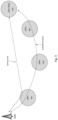
- Fig. 2 shows an example of a comparison of an optimal data path versus a suboptimal data path between the PSA and the UPF facing the RAN.
- the UE 104 moves starting from Region 1, to Region 2, and then to Region 3.
- the UPF1 is selected as PSA by SMF 112.
- the SMF 112 queries the NRF 102 to identify UPF2 as the node best suited to serve Region 2, and UPF2 is put in the data path, using an N9 tunnel created between UPF2 and UPF1.
- the SMF 112 queries the NRF 102 to identify UPF3 as the node best suited to serve Region 3, and UPF3 is put in the data path, using an N9 tunnel created between UPF3 and UPF2.
- the above-described path-selection technique by the SMF 112 fails to identify an optimal path, i.e., a direct path from UPF4 to UPF1, since the SMF 112 does not have an overview of available optimal path. This problem is exacerbated when the UE 104 moves progressively further away from Region 1 (shown as R#1) to Region N (shown as R#n), as shown in Fig. 3 .
- the above-described incremental additions of the UPF fails to consider any load increase occurring for a particular UPF after the particular UPF has been selected for the path.
- the present invention relates to a method for optimizing user plane function (UPF) module selection for a data path in 5G Core network operation serving a user equipment (UE) as claimed in claim 1.
- UPF user plane function
- the present invention further relates to a system for optimizing user plane function (UPF) module selection among a plurality of UPF modules for a data path in 5G Core network operation serving a user equipment (UE), as claimed in claim 11.
- UPF user plane function
- an SMF is able to obtain an overview of available optimal path.
- each NF when provisioned in the network, registers itself with NRF over the Service based interface using the service APIs exposed by the NRF, and then periodically updates the NRF about the NF's present load over the same SBI interface with the NRF.
- the NRF obtains complete information regarding the network topology, the NFs' present load, and the relative capacities of the NFs.
- the NRF uses these information items to assist in the determination of the complete optimal path from the RAN to the PSA.
- an SMF when an SMF wants to insert an Intermediate UPF (I-UPF) into a data path, instead of querying the NRF for an instance of UPF serving the present geographical area (e.g., of the UE) and then deciding on the UPF insertion locally based on the present geographical area, the SMF queries the NRF for the complete optimal path between the RAN and the PSA.
- I-UPF Intermediate UPF
- the NRF can employ a dynamic programming methodology, e.g., Dijkstra's shortest path algorithm or Floyd-Warshall shortest path algorithm, to derive the optimal shortest path between the RAN and the PSA.
- a dynamic programming methodology e.g., Dijkstra's shortest path algorithm or Floyd-Warshall shortest path algorithm
- the I-UPF load is taken into consideration in calculating the optimal shortest path between the RAN and the PSA.
- all the NFs e.g., UPFs
- all the NFs register themselves with the NRF during NF bring-up using the service-based interface between the respective NF and the NRF, and ii) periodically update the NRF about the NFs' present load by using the service-based interface between the respective NF and the NRF.
- the NRF obtains complete information regarding the network topology, complete information regarding the present NFs' load, and complete information regarding the relative capacities of the NFs.
- Such information at the NRF can be used to determine the complete optimal path from the RAN to the PSA.
- the optimal path would be UPF4 to UPF1
- the optimal path would be UPFn to UPF1.
- an SMF when an SMF wants to insert an Intermediate UPF (I-UPF) into a data path, instead of querying the NRF for an instance of UPF serving the present geographical area (e.g., of the UE) and then deciding on the UPF insertion locally based on the present geographical area, the SMF queries the NRF for the complete optimal path between the RAN and the PSA.
- I-UPF Intermediate UPF
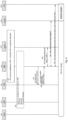
- Fig. 4 shows an example call flow for determining an optimal path between the RAN and the PSA as the UE moves from one region to another.
- PDU session is established, I-UPF-11011 (e.g., corresponding to UPF2 shown in Fig. 2 ) is inserted into the data path by the SMF 112, and PSA 1013 forms the initial data path when the UE is in the initial region.
- the presence of one or more triggers for updating the Session Management (SM) context in SMF 112 is checked.
- the triggers can include, e.g., the following: A) Xn hand-over (Xn HO); B) N2 hand-over (N2 HO); and C) service request.
- Xn HO procedure can be used to hand over a UE from a source NG-RAN to a target NG-RAN when the UE is moving out of the coverage area of the source NG-RAN, and a signaling connection exists between the source NG-RAN and the target NG-RAN.
- N2 HO procedure can be used when the UE is moving out of the coverage area of the source NG-RAN and no signaling connection exists between the source NG-RAN and the target NG-RAN, in which case the source NG-RAN initiates a hand-over to the target NG-RAN by signaling to the SMF 112, via the AMF 107, that the UE is moving out of the coverage area of the source NG-RAN.
- CM-IDLE Connection Management Idle
- the Session Management (SM) context in the SMF 112 sends, at 403, a request for discovery of optimal data path to the NRF 102.
- the NRF 102 responds to the SMF 112, based on the information available to the NRF 102 and the current region of the UE, what the optimal data path between the RAN and the PSA 1013 is, e.g., a new I-UPF-3 1012 (e.g., corresponding to UPF 4 shown in Fig. 2 ).
- the SMF 112 performs a PDU session release with the I-UPF-1 1011.
- the SMF 112 establishes a PDU session with the new I-UPF-3 1012.
- the SMF 112 modifies the PDU session with the PSA 1013 by updating the new I-UPF-3 1012 endpoint information.
- Fig. 5 illustrates an example of a complete network topology as a connected graph, with Nodes V1-V4, edges represented by connecting lines, and respective edge costs shown by underlined numerical values 1, 2, 3, 4, 7, 8, 9 and 10.
- Node A represents a RAN
- Node B represents UPF (PSA)
- the Nodes V1 through V4 represent I-UPFs.
- the NRF 102 stores, views and/or analyzes the complete network topology as a connected graph (e.g., including the locations of the UPFs and the edge costs of respective connections each linking a pair of network elements, e.g., I-UPFs, RAN and PSA, within the network) shown in Fig.
- the NRF 102 assists the SMF (e.g., SMF 112 shown in FIGS. 1 , 2 and 4 ) in the optimal overall path selection, instead of just providing the single NF level detail.
- the NRF 102 can employ a dynamic programming methodology, e.g., Dijkstra's shortest path algorithm or Floyd-Warshall shortest path algorithm, to derive the optimal shortest path between the RAN and the PSA, which shortest path for the example topology represented in Fig. 5 is A -> V1 -> V4 -> B.
- Dijkstra's shortest path algorithm e.g., Dijkstra's shortest path algorithm or Floyd-Warshall shortest path algorithm
- Other methodologies can be utilized, and the present disclosure is not intended to be limited to the Dijkstra's shortest path algorithm or Floyd-Warshall shortest path algorithm.
- Fig. 6 illustrates a connected graph corresponding to the connected graph shown in Fig. 5 , with the addition of UPF load indication represented by bracketed numerical values (1) through (4) for the corresponding I-UPF nodes V1 through V4.
- every NF e.g., UPF
- every NF periodically updates its respective load to the NRF, and the NRF adds the load information regarding the nodes to the edge costs to calculate the optimal path between the RAN and the PSA.
- the optimal path selection by the above-described method results in a fewer number of UPFs in the data path, which in turn leads to lesser GTP overhead due to fewer N9 tunnels in the data path.
- a method of optimizing user plane function (UPF) module selection for a data path in 5G Core network operation serving a user equipment (UE) includes: registering, by each of a plurality of UPF modules, the each respective UPF module with a network repository function (NRF) module; updating, by each of the plurality of UPF modules, the NRF module with information regarding the each respective UPF module's present load; sending, by a session management function (SMF) module, a request to the NRF module for discovery of optimal data path between a radio access network (RAN) and a packet data unit session anchor (PSA), for serving a present region of the UE; and determining, by the NRF module, the optimal data path between the RAN and the PSA, for serving the present region of the UE.
- NRF network repository function
- the optimal data path can be determined based on an overall network topology of the 5G Core network, the overall network topology including at least the locations of the plurality of UPF modules.
- the overall network topology can further include edge costs of respective connections each linking a pair of network elements, and the network elements can include at least the plurality of UPF modules, the RAN and the PSA.
- the overall network topology can further include a load of at least one intermediate UPF (I-UPF).
- the sending of the request to the NRF module for discovery of optimal data path can be triggered when at least one of the following occurs: i) Xn hand-over (Xn HO), in which a UE is handed over from a source NG-RAN to a target NG-RAN and a signaling connection exists between the source NG-RAN and the target NG-RAN; ii) N2 hand-over (N2 HO), in which a UE is handed over from a source NG-RAN to a target NG-RAN using signaling to the SMF and no signaling connection exists between the source NG-RAN and the target NG-RAN; and iii) a service request.
- Xn HO Xn hand-over
- N2 HO N2 hand-over
- a system for optimizing user plane function (UPF) module selection among a plurality of UPF modules for a data path in 5G Core network operation serving a user equipment (UE) includes: a network repository function (NRF) module configured to register each of the plurality of UPF modules, wherein each of the plurality of UPF modules updates the NRF module with information regarding each respective UPF module's present load; and a session management function (SMF) module configured to send a request to the NRF module for discovery of optimal data path between a radio access network (RAN) and a packet data unit session anchor (PSA), for serving a present region of the UE; wherein the NRF module is configured to determine the optimal data path between the RAN and the PSA, for serving the present region of the UE.
- NRF network repository function
- PSA packet data unit session anchor
- the NRF module can be configured to determine the optimal data path based on an overall network topology of the 5G Core network, the overall network topology including at least the locations of the plurality of UPF modules.
- the overall network topology can further include edge costs of respective connections each linking a pair of network elements, and the network elements can include at least the plurality of UPF modules, the RAN and the PSA.
- the overall network topology can further include a load of at least one intermediate UPF (I-UPF).
- the sending of the request to the NRF module for discovery of optimal data path can be triggered when at least one of the following occurs: i) Xn hand-over (Xn HO), in which a UE is handed over from a source NG-RAN to a target NG-RAN and a signaling connection exists between the source NG-RAN and the target NG-RAN; ii) N2 hand-over (N2 HO), in which a UE is handed over from a source NG-RAN to a target NG-RAN using signaling to the SMF and no signaling connection exists between the source NG-RAN and the target NG-RAN; and iii) a service request.
- Xn HO Xn hand-over
- N2 HO N2 hand-over
Landscapes
- Engineering & Computer Science (AREA)
- Computer Networks & Wireless Communication (AREA)
- Signal Processing (AREA)
- Mobile Radio Communication Systems (AREA)
Description
- The present disclosure relates to 5G Core network for mobile communication, and relates more particularly to a method and an apparatus for optimizing network function (NF) data path discovery for, e.g., 5G Core network operation or operation of any other types of mobile networks such as LTE (4G), 3G, Wi-Fi, loT networks handling user data transmission.
- 5G Core (5GC) has defined network function (NF) and architecture that support service-based architecture (SBA).
Fig. 1 shows an example embodiment of the service-based architecture, which includes: User Plane Function (UPF)module 101; Network Repository Function (NRF) module 102 (e.g., utilizing associated interface Nnrf); Data Network (DN) 103; User Equipment (UE) 104; Radio Access Network (RAN) 105; Authentication Server Function (AUSF) module 106 (e.g., utilizing associated interface Nausf); Access and Mobility Management Function (AMF) module 107 (e.g., utilizing associated interface Namf); Application Function (AF) module 108 (e.g., utilizing associated interface Na); Network Exposure Function (NEF) module 109 (e.g., utilizing associated interface Nnef); Network Slice Selection Function (NSSF) module 110 (e.g., utilizing associated interface Nnssf); Policy Control Function (PCF) module 111 (e.g., utilizing associated interface Npcf); Session Management Function (SMF) module 112 (e.g., utilizing associated interface Nsmf); and Unified Data Management (UDM) module 113 (e.g., utilizing associated interface Nudm). The above-mentioned NFs (e.g., UPF, NRF, SMF, etc.) can be implemented, e.g., as software programs executed by computer processors. Therefore, as used in the present disclosure, the various NFs are interchangeably referred to as network "functions" and/or network "function modules." Further detailed description of NRF and UPF modules are provided below. - NRF module can be a network entity that supports NF registration, NF discovery and Subscribe/Notification services. In a 5G network, all NFs register themselves with the NRF module. During registration, each respective NF registers the list of micro-services or NF Services that the respective NF can provide to other NFs. The NF that is registering its services is called a Provider NF. When a first NF wants to use the services provided by a second NF, the first NF, which is called a Consumer NF, queries the NRF using selected input parameters, and the NRF returns the best suited Provider NF credentials to the Consumer NF.
- User plane services are offered by a UPF (also referred to as Data Plane Function (DPF)), and an SMF performs the session management for the user plane services. An SMF can also perform UPF discovery on a need basis. As an example, an SMF queries an NRF asking for a UPF instance which can serve a UE in the present region. The NRF responds to the SMF with the information regarding the most appropriate UPF, and the SMF inserts the most appropriate UPF in the data path between a RAN and a Packet Data Unit Session Anchor (PSA). Such individual discovery and insertion of a UPF, when repeated sequentially, often leads to a non-optimal data path between the PSA and the UPF facing the RAN, in large part due to the failure to consider i) the increased load on previously present UPFs in the path, and ii) the latency between the subsequently identified UPF and adjacent UPFs.
-
Fig. 2 shows an example of a comparison of an optimal data path versus a suboptimal data path between the PSA and the UPF facing the RAN. In the example shown inFig. 2 , the UE 104 moves starting fromRegion 1, toRegion 2, and then toRegion 3. When the UE 104 first registers inRegion 1, the UPF1 is selected as PSA by SMF 112. When the UE 104 moves out of region served by UPF1 (i.e., Region 1) intoRegion 2, theSMF 112 queries the NRF 102 to identify UPF2 as the node best suited to serveRegion 2, and UPF2 is put in the data path, using an N9 tunnel created between UPF2 and UPF1. Next, when the UE 104 moves fromRegion 2 toRegion 3, theSMF 112 queries the NRF 102 to identify UPF3 as the node best suited to serveRegion 3, and UPF3 is put in the data path, using an N9 tunnel created between UPF3 and UPF2. - The above-described path-selection technique by the
SMF 112 fails to identify an optimal path, i.e., a direct path from UPF4 to UPF1, since theSMF 112 does not have an overview of available optimal path. This problem is exacerbated when the UE 104 moves progressively further away from Region 1 (shown as R#1) to Region N (shown as R#n), as shown inFig. 3 . In addition, the above-described incremental additions of the UPF fails to consider any load increase occurring for a particular UPF after the particular UPF has been selected for the path. - Document by NOKIA et al., "23.501 6.3.3: NRF for UPF", 3GPP DRAFT, vol. SA WG2, no. Sophia Antipolis, France, 29 August 2017, makes proposals to modify TS 23.501 and discloses the use of the NRF for UPF selection by the SMF; however, the above mentioned issues are not solved.
- The present invention relates to a method for optimizing user plane function (UPF) module selection for a data path in 5G Core network operation serving a user equipment (UE) as claimed in
claim 1. - The present invention further relates to a system for optimizing user plane function (UPF) module selection among a plurality of UPF modules for a data path in 5G Core network operation serving a user equipment (UE), as claimed in claim 11.
- According to an aspect of the invention, by utilizing an NRF, an SMF is able to obtain an overview of available optimal path.
- In an exemplary embodiment according to the present disclosure, each NF (e.g., UPF) when provisioned in the network, registers itself with NRF over the Service based interface using the service APIs exposed by the NRF, and then periodically updates the NRF about the NF's present load over the same SBI interface with the NRF. In this manner, the NRF obtains complete information regarding the network topology, the NFs' present load, and the relative capacities of the NFs. The NRF uses these information items to assist in the determination of the complete optimal path from the RAN to the PSA.
- In another embodiment according to the present disclosure, when an SMF wants to insert an Intermediate UPF (I-UPF) into a data path, instead of querying the NRF for an instance of UPF serving the present geographical area (e.g., of the UE) and then deciding on the UPF insertion locally based on the present geographical area, the SMF queries the NRF for the complete optimal path between the RAN and the PSA.
- In another embodiment, the NRF can employ a dynamic programming methodology, e.g., Dijkstra's shortest path algorithm or Floyd-Warshall shortest path algorithm, to derive the optimal shortest path between the RAN and the PSA.
- In another embodiment, the I-UPF load is taken into consideration in calculating the optimal shortest path between the RAN and the PSA.
-
-
Fig. 1 shows an example of the known service-based architecture. -
Fig. 2 shows an example of a comparison of an optimal data path versus a suboptimal data path between the PSA and the UPF facing the RAN. -
Fig. 3 shows another example of a comparison of an optimal data path versus a suboptimal data path between the PSA and the UPF facing the RAN. -
Fig. 4 shows an example call flow for determining an optimal path between the RAN and the PSA of the present disclosure. -
Fig. 5 illustrates an example of a complete network topology as a connected graph. -
Fig. 6 illustrates another example of a complete network topology as a connected graph. - In an example embodiment, all the NFs (e.g., UPFs) i) register themselves with the NRF during NF bring-up using the service-based interface between the respective NF and the NRF, and ii) periodically update the NRF about the NFs' present load by using the service-based interface between the respective NF and the NRF. In this manner, the NRF obtains complete information regarding the network topology, complete information regarding the present NFs' load, and complete information regarding the relative capacities of the NFs. Such information at the NRF can be used to determine the complete optimal path from the RAN to the PSA. In the example shown in
Fig. 2 , the optimal path would be UPF4 to UPF1, and in the example shown inFig. 3 , the optimal path would be UPFn to UPF1. - In an example embodiment according to the present disclosure, when an SMF wants to insert an Intermediate UPF (I-UPF) into a data path, instead of querying the NRF for an instance of UPF serving the present geographical area (e.g., of the UE) and then deciding on the UPF insertion locally based on the present geographical area, the SMF queries the NRF for the complete optimal path between the RAN and the PSA.
-
Fig. 4 shows an example call flow for determining an optimal path between the RAN and the PSA as the UE moves from one region to another. At 401, PDU session is established, I-UPF-11011 (e.g., corresponding to UPF2 shown inFig. 2 ) is inserted into the data path by theSMF 112, andPSA 1013 forms the initial data path when the UE is in the initial region. At 402, the presence of one or more triggers for updating the Session Management (SM) context inSMF 112 is checked. The triggers can include, e.g., the following: A) Xn hand-over (Xn HO); B) N2 hand-over (N2 HO); and C) service request. Xn HO procedure can be used to hand over a UE from a source NG-RAN to a target NG-RAN when the UE is moving out of the coverage area of the source NG-RAN, and a signaling connection exists between the source NG-RAN and the target NG-RAN. N2 HO procedure can be used when the UE is moving out of the coverage area of the source NG-RAN and no signaling connection exists between the source NG-RAN and the target NG-RAN, in which case the source NG-RAN initiates a hand-over to the target NG-RAN by signaling to theSMF 112, via theAMF 107, that the UE is moving out of the coverage area of the source NG-RAN. Service Request procedure can be triggered by the UE when it is in Connection Management Idle (CM-IDLE) state (a state in which the UE does not have an active connection with the network) and wants to send uplink signaling messages or user data, or is responding to a paging message from the network. - When at least one of these procedures is triggered, the Session Management (SM) context in the
SMF 112 sends, at 403, a request for discovery of optimal data path to theNRF 102. At 404, the NRF 102 responds to theSMF 112, based on the information available to theNRF 102 and the current region of the UE, what the optimal data path between the RAN and thePSA 1013 is, e.g., a new I-UPF-3 1012 (e.g., corresponding to UPF 4 shown inFig. 2 ). At 405, the SMF 112 performs a PDU session release with the I-UPF-1 1011. At 406, the SMF 112 establishes a PDU session with the new I-UPF-3 1012. At 407, theSMF 112 modifies the PDU session with thePSA 1013 by updating the new I-UPF-3 1012 endpoint information. -
Fig. 5 illustrates an example of a complete network topology as a connected graph, with Nodes V1-V4, edges represented by connecting lines, and respective edge costs shown by underlinednumerical values NRF 102 stores, views and/or analyzes the complete network topology as a connected graph (e.g., including the locations of the UPFs and the edge costs of respective connections each linking a pair of network elements, e.g., I-UPFs, RAN and PSA, within the network) shown inFig. 5 , and theNRF 102 assists the SMF (e.g.,SMF 112 shown inFIGS. 1 ,2 and4 ) in the optimal overall path selection, instead of just providing the single NF level detail. In one example embodiment, theNRF 102 can employ a dynamic programming methodology, e.g., Dijkstra's shortest path algorithm or Floyd-Warshall shortest path algorithm, to derive the optimal shortest path between the RAN and the PSA, which shortest path for the example topology represented inFig. 5 is A -> V1 -> V4 -> B. Other methodologies can be utilized, and the present disclosure is not intended to be limited to the Dijkstra's shortest path algorithm or Floyd-Warshall shortest path algorithm. -
Fig. 6 illustrates a connected graph corresponding to the connected graph shown inFig. 5 , with the addition of UPF load indication represented by bracketed numerical values (1) through (4) for the corresponding I-UPF nodes V1 through V4. In this manner, an example embodiment according to the present disclosure can take into consideration the I-UPF load in calculating the optimal shortest path between the RAN and the PSA. In the example embodiment, every NF (e.g., UPF) periodically updates its respective load to the NRF, and the NRF adds the load information regarding the nodes to the edge costs to calculate the optimal path between the RAN and the PSA. - The optimal path selection by the above-described method results in a fewer number of UPFs in the data path, which in turn leads to lesser GTP overhead due to fewer N9 tunnels in the data path.
- A method of optimizing user plane function (UPF) module selection for a data path in 5G Core network operation serving a user equipment (UE) includes: registering, by each of a plurality of UPF modules, the each respective UPF module with a network repository function (NRF) module; updating, by each of the plurality of UPF modules, the NRF module with information regarding the each respective UPF module's present load; sending, by a session management function (SMF) module, a request to the NRF module for discovery of optimal data path between a radio access network (RAN) and a packet data unit session anchor (PSA), for serving a present region of the UE; and determining, by the NRF module, the optimal data path between the RAN and the PSA, for serving the present region of the UE. In this example method, the optimal data path can be determined based on an overall network topology of the 5G Core network, the overall network topology including at least the locations of the plurality of UPF modules. The overall network topology can further include edge costs of respective connections each linking a pair of network elements, and the network elements can include at least the plurality of UPF modules, the RAN and the PSA. In addition, the overall network topology can further include a load of at least one intermediate UPF (I-UPF).
- In an example method, the sending of the request to the NRF module for discovery of optimal data path can be triggered when at least one of the following occurs: i) Xn hand-over (Xn HO), in which a UE is handed over from a source NG-RAN to a target NG-RAN and a signaling connection exists between the source NG-RAN and the target NG-RAN; ii) N2 hand-over (N2 HO), in which a UE is handed over from a source NG-RAN to a target NG-RAN using signaling to the SMF and no signaling connection exists between the source NG-RAN and the target NG-RAN; and iii) a service request.
- A system for optimizing user plane function (UPF) module selection among a plurality of UPF modules for a data path in 5G Core network operation serving a user equipment (UE) includes: a network repository function (NRF) module configured to register each of the plurality of UPF modules, wherein each of the plurality of UPF modules updates the NRF module with information regarding each respective UPF module's present load; and a session management function (SMF) module configured to send a request to the NRF module for discovery of optimal data path between a radio access network (RAN) and a packet data unit session anchor (PSA), for serving a present region of the UE; wherein the NRF module is configured to determine the optimal data path between the RAN and the PSA, for serving the present region of the UE. In this example system, the NRF module can be configured to determine the optimal data path based on an overall network topology of the 5G Core network, the overall network topology including at least the locations of the plurality of UPF modules. The overall network topology can further include edge costs of respective connections each linking a pair of network elements, and the network elements can include at least the plurality of UPF modules, the RAN and the PSA. In addition, the overall network topology can further include a load of at least one intermediate UPF (I-UPF).
- In one example system, the sending of the request to the NRF module for discovery of optimal data path can be triggered when at least one of the following occurs: i) Xn hand-over (Xn HO), in which a UE is handed over from a source NG-RAN to a target NG-RAN and a signaling connection exists between the source NG-RAN and the target NG-RAN; ii) N2 hand-over (N2 HO), in which a UE is handed over from a source NG-RAN to a target NG-RAN using signaling to the SMF and no signaling connection exists between the source NG-RAN and the target NG-RAN; and iii) a service request.
- The techniques and embodiments described herein are exemplary, and should not be construed as implying any specific limitation on the present disclosure. It should be understood that various alternatives, combinations and modifications could be devised by those skilled in the art. For example, steps associated with the processes described herein can be performed in any order, unless otherwise specified or dictated by the steps themselves. The above description is illustrative, and is not intended to be restrictive. One of ordinary skill in the art may make numerous modifications and/or changes without departing from the general scope of the disclosure.
- As has been described, the above-described embodiments (and/or aspects thereof) can be used in combination with each other. Additionally, modifications can be made to adapt a particular situation or material to the teachings of the various embodiments without departing from the scope of the claims. Many other embodiments will also be apparent to those of skill in the art upon reviewing the above description. The present disclosure is intended to embrace all such alternatives, modifications and variances that fall within the scope of the appended claims.
- Some embodiments may be described using the expression "one embodiment" or "an embodiment" along with their derivatives. These terms mean that a particular feature, structure, or characteristic described in connection with the embodiment is included in at least one embodiment. The appearances of the phrase "an embodiment" in various places in the specification are not necessarily all referring to the same embodiment.
-
- 5GC
- 5th Generation Core Network
- 5GS
- 5th Generation System
- AF
- Application Function
- AMF
- Access and Mobility Management Function
- AUSF
- Authentication Server Function
- BP
- Branching Point
- DN
- Data Network
- DPF
- Data Plane Function
- DPI
- Deep Packet Inspection
- ICMP
- Internet Control Message Protocol
- I-UPF
- Intermediate User Plane Function
- IoT
- Internet of things
- LMF
- Location Management Function
- LTE
- Long Term Evolution
- MTU
- Maximum Traffic Unit
- NEF
- Network Exposure Function
- NF
- Network Function
- NG-RAN
- Next Generation Radio Access Network
- NMAP
- Network Mapper
- Nnrf
- Service-based interface exhibited by NRF
- NRF
- Network Repository Function
- NSSF
- Network Slice Selection Function
- PCF
- Policy Control Function
- PDU
- Packet Data Unit
- PSA
- Packet Data Unit (PDU) Session Anchor
- RAN
- Radio Access Network
- SMF
- Session Management Function
- UDM
- Unified Data Management
- UE
- User Equipment
- UL
- Uplink
- ULCL
- Uplink Classifier
- UPF
- User Plane Function
Claims (20)
- A method of optimizing user plane function, UPF, module (101) selection for a data path in 5G Core network operation serving a user equipment, UE, (104) comprising:registering, by each of a plurality of UPF modules, the each respective UPF module with a network repository function, NRF, module (102);updating, by each of the plurality of UPF modules, the NRF module with information regarding the each respective UPF module's present load;sending, by a session management function, SMF, module (112), a request to the NRF module for discovery of optimal data path between a radio access network, RAN, (105) and a packet data unit session anchor, PSA, (1013) for serving a present region of the UE; anddetermining, by the NRF module, the optimal data path between the RAN and the PSA, for serving the present region of the UE.
- The method of claim 1, wherein the optimal data path is determined based on an overall network topology of the 5G Core network, the overall network topology comprising at least the locations of the plurality of UPF modules.
- The method of claim 2, wherein the overall network topology further comprises edge costs of respective connections each linking a pair of network elements, and wherein the network elements comprise at least the plurality of UPF modules, the RAN and the PSA.
- The method of claim 3, wherein the overall network topology further comprises a load of at least one intermediate UPF, I-UPF (1012).
- The method of claim 1, wherein the optimal data path is determined based on an overall network topology of the 5G Core network, the overall network topology comprising at least edge costs of respective connections each linking a pair of network elements, and wherein the network elements comprise at least the plurality of UPF modules, the RAN and the PSA.
- The method of claim 5, wherein the overall network topology further comprises a load of at least one intermediate UPF, I-UPF (1012).
- The method of claim 1, wherein the optimal data path is determined based on an overall network topology of the 5G Core network, the overall network topology comprising at least a load of at least one intermediate UPF, I-UPF (1012).
- The method of claim 1, wherein the sending of the request to the NRF module (102) for discovery of optimal data path is triggered (402) when at least one of the following occurs: i) Xn hand-over, Xn HO, in which a UE is handed over from a source NG-RAN to a target NG-RAN and a signaling connection exists between the source NG-RAN and the target NG-RAN; ii) N2 hand-over, N2 HO, in which a UE is handed over from a source NG-RAN to a target NG-RAN using signaling to the SMF (112) and no signaling connection exists between the source NG-RAN and the target NG-RAN; and iii) a service request.
- The method of claim 2, wherein the sending of the request to the NRF module (102) for discovery of optimal data path is triggered (402) when at least one of the following occurs: i) Xn hand-over, Xn HO, in which a UE is handed over from a source NG-RAN to a target NG-RAN and a signaling connection exists between the source NG-RAN and the target NG-RAN; ii) N2 hand-over, N2 HO, in which a UE is handed over from a source NG-RAN to a target NG-RAN using signaling to the SMF (112) and no signaling connection exists between the source NG-RAN and the target NG-RAN; and iii) a service request.
- The method of claim 5, wherein the sending of the request to the NRF module (102) for discovery of optimal data path is triggered (402) when at least one of the following occurs: i) Xn hand-over, Xn HO, in which a UE is handed over from a source NG-RAN to a target NG-RAN and a signaling connection exists between the source NG-RAN and the target NG-RAN; ii) N2 hand-over, N2 HO, in which a UE is handed over from a source NG-RAN to a target NG-RAN using signaling to the SMF (112) and no signaling connection exists between the source NG-RAN and the target NG-RAN; and iii) a service request.
- A system for optimizing user plane function, UPF, module (101) selection among a plurality of UPF modules for a data path in 5G Core network operation serving a user equipment, UE, (104) the system comprising:a network repository function, NRF, module (102) configured to register each of the plurality of UPF modules, wherein each of the plurality of UPF modules updates the NRF module with information regarding each respective UPF module's present load; anda session management function, SMF, module (112) configured to send a request to the NRF module for discovery of optimal data path between a radio access network, RAN, (105) and a packet data unit session anchor, PSA, (1013) for serving a present region of the UE;wherein the NRF module is configured to determine the optimal data path between the RAN and the PSA, for serving the present region of the UE.
- The system of claim 11, wherein the NRF module (102) is configured to determine the optimal data path based on an overall network topology of the 5G Core network, the overall network topology comprising at least the locations of the plurality of UPF modules.
- The system of claim 12, wherein the overall network topology further comprises edge costs of respective connections each linking a pair of network elements, and wherein the network elements comprise at least the plurality of UPF modules, the RAN and the PSA.
- The system of claim 13, wherein the overall network topology further comprises a load of at least one intermediate UPF, I-UPF.
- The system of claim 11, wherein the NRF module (102) is configured to determine the optimal data path based on an overall network topology of the 5G Core network, the overall network topology comprising at least edge costs of respective connections each linking a pair of network elements, and wherein the network elements comprise at least the plurality of UPF modules, the RAN and the PSA.
- The system of claim 15, wherein the overall network topology further comprises a load of at least one intermediate UPF, I-UPF (1012).
- The system of claim 11, wherein the NRF module is configured to determine the optimal data path based on an overall network topology of the 5G Core network, the overall network topology comprising at least a load of at least one intermediate UPF, I-UPF (1012).
- The system of claim 11, wherein the sending of the request to the NRF module (102) for discovery of optimal data path is triggered (402) when at least one of the following occurs: i) Xn hand-over, Xn HO, in which a UE is handed over from a source NG-RAN to a target NG-RAN and a signaling connection exists between the source NG-RAN and the target NG-RAN; ii) N2 hand-over, N2 HO, in which a UE is handed over from a source NG-RAN to a target NG-RAN using signaling to the SMF (112) and no signaling connection exists between the source NG-RAN and the target NG-RAN; and iii) a service request.
- The system of claim 12, wherein the sending of the request to the NRF module (102) for discovery of optimal data path is triggered (402) when at least one of the following occurs: i) Xn hand-over, Xn HO, in which a UE is handed over from a source NG-RAN to a target NG-RAN and a signaling connection exists between the source NG-RAN and the target NG-RAN; ii) N2 hand-over, N2 HO, in which a UE is handed over from a source NG-RAN to a target NG-RAN using signaling to the SMF (112) and no signaling connection exists between the source NG-RAN and the target NG-RAN; and iii) a service request.
- The system of claim 15, wherein the sending of the request to the NRF module (102) for discovery of optimal data path is triggered (402) when at least one of the following occurs: i) Xn hand-over, Xn HO, in which a UE is handed over from a source NG-RAN to a target NG-RAN and a signaling connection exists between the source NG-RAN and the target NG-RAN; ii) N2 hand-over, N2 HO, in which a UE is handed over from a source NG-RAN to a target NG-RAN using signaling to the SMF (112) and no signaling connection exists between the source NG-RAN and the target NG-RAN; and iii) a service request.
Applications Claiming Priority (2)
| Application Number | Priority Date | Filing Date | Title |
|---|---|---|---|
| US201962789800P | 2019-01-08 | 2019-01-08 | |
| PCT/US2020/012508 WO2020146327A1 (en) | 2019-01-08 | 2020-01-07 | Optimal network function data path discovery for 5g core |
Publications (3)
| Publication Number | Publication Date |
|---|---|
| EP3909284A1 EP3909284A1 (en) | 2021-11-17 |
| EP3909284A4 EP3909284A4 (en) | 2022-10-12 |
| EP3909284B1 true EP3909284B1 (en) | 2025-04-02 |
Family
ID=71520841
Family Applications (1)
| Application Number | Title | Priority Date | Filing Date |
|---|---|---|---|
| EP20738011.4A Active EP3909284B1 (en) | 2019-01-08 | 2020-01-07 | Optimal network function data path discovery for 5g core |
Country Status (3)
| Country | Link |
|---|---|
| US (1) | US12101707B2 (en) |
| EP (1) | EP3909284B1 (en) |
| WO (1) | WO2020146327A1 (en) |
Families Citing this family (29)
| Publication number | Priority date | Publication date | Assignee | Title |
|---|---|---|---|---|
| US11818607B2 (en) | 2011-10-26 | 2023-11-14 | Dish Network Technologies India Private Limited | Apparatus systems and methods for proximity-based service discovery and session sharing |
| US11477694B1 (en) | 2021-08-27 | 2022-10-18 | Dish Wireless L.L.C. | User plane function (UPF) load balancing based on central processing unit (CPU) and memory utilization of the user equipment (UE) in the UPF |
| US9936351B2 (en) | 2011-10-26 | 2018-04-03 | Sling Media Pvt Ltd | Apparatus systems and methods for proximity-based service discovery and session sharing |
| CN114079674B (en) * | 2020-08-10 | 2023-02-21 | 大唐移动通信设备有限公司 | Data processing method, user plane function and device |
| EP4262244A4 (en) * | 2020-12-31 | 2024-02-07 | Huawei Technologies Co., Ltd. | METHOD AND APPARATUS FOR DETERMINING A MEC ACCESS POINT |
| US11374983B1 (en) | 2021-01-29 | 2022-06-28 | Sprint Communications Company L.P. | Media content service delivery in a wireless communication network |
| US20250031131A1 (en) * | 2021-06-22 | 2025-01-23 | Nokia Technologies Oy | Apparatus, methods, and computer programs |
| US12088495B2 (en) * | 2021-07-08 | 2024-09-10 | T-Mobile Usa, Inc. | Intelligent route selection for low latency services |
| US11582641B1 (en) | 2021-08-12 | 2023-02-14 | Dish Wireless L.L.C. | User plane function (UPF) load balancing based on current UPF load and thresholds that depend on UPF capacity |
| WO2023028527A1 (en) * | 2021-08-25 | 2023-03-02 | Interdigital Patent Holdings, Inc. | Authorization, creation, and management of personal networks |
| US11483738B1 (en) | 2021-08-26 | 2022-10-25 | Dish Wireless L.L.C. | User plane function (UPF) load balancing based on network data analytics to predict load of user equipment |
| US11627492B2 (en) | 2021-08-26 | 2023-04-11 | Dish Wireless L.L.C. | User plane function (UPF) load balancing based on special considerations for low latency traffic |
| US11595851B1 (en) | 2021-08-27 | 2023-02-28 | Dish Wireless L.L.C. | User plane function (UPF) load balancing supporting multiple slices |
| US11950138B2 (en) | 2021-11-17 | 2024-04-02 | Dish Wireless L.L.C. | Predictive user plane function (UPF) load balancing based on network data analytics |
| US12581353B2 (en) | 2022-04-15 | 2026-03-17 | Boost SubscriberCo L.L.C. | Utilization of virtualized distributed units at cell sites |
| US12587452B2 (en) | 2022-04-15 | 2026-03-24 | Boost SubscriberCo L.L.C. | Containerization of telecommunication network functions |
| US12126455B2 (en) | 2022-04-15 | 2024-10-22 | Dish Wireless L.L.C. | Management of redundant links |
| CN115103423B (en) * | 2022-06-15 | 2023-05-16 | 中国联合网络通信集团有限公司 | Service information determining method, device, electronic equipment and storage medium |
| CN117440460A (en) * | 2022-07-15 | 2024-01-23 | 中国电信股份有限公司 | Virtual networking method, virtual networking device, network equipment and storage medium |
| CN115396979B (en) * | 2022-08-23 | 2024-09-27 | 中国联合网络通信集团有限公司 | A communication method, device, server and storage medium |
| US12481533B2 (en) | 2022-10-26 | 2025-11-25 | Dish Wireless L.L.C. | Updated atomic deterministic next action |
| US12483909B2 (en) | 2022-10-26 | 2025-11-25 | Dish Wireless L.L.C. | Repair atomic deterministic next action |
| US12445955B2 (en) | 2022-10-27 | 2025-10-14 | Dish Wireless L.L.C. | Backup site identification |
| US12538194B2 (en) | 2022-10-27 | 2026-01-27 | Dish Wireless L.L.C. | Antenna identification tool |
| CN115865695B (en) * | 2022-11-23 | 2024-12-03 | 博瑞得科技有限公司 | Cross-professional data association-based 5G private network resource topology generation method and device |
| US12177092B2 (en) | 2022-12-12 | 2024-12-24 | Dish Wireless L.L.C. | AI driven 5G network and service management solution |
| US12549964B2 (en) | 2022-12-30 | 2026-02-10 | Boost SubscriberCo L.L.C. | Utilization of probes to detect anomalies and dynamically adjust network parameters |
| CN120238449A (en) * | 2023-12-29 | 2025-07-01 | 中兴通讯股份有限公司 | A network topology path measurement and selection method and device |
| US12413486B1 (en) | 2024-03-11 | 2025-09-09 | T-Mobile Usa, Inc. | Telecommunications system to timely send producer network function status notifications to consumer network functions |
Family Cites Families (18)
| Publication number | Priority date | Publication date | Assignee | Title |
|---|---|---|---|---|
| US8589541B2 (en) * | 2009-01-28 | 2013-11-19 | Headwater Partners I Llc | Device-assisted services for protecting network capacity |
| EP3703418A3 (en) * | 2011-06-24 | 2020-11-18 | Vodafone IP Licensing limited | Telecommunication networks |
| KR20140124116A (en) * | 2013-04-16 | 2014-10-24 | 삼성전자주식회사 | Apparatus and method for optimizing data-path in mobile communication network |
| US9271197B2 (en) * | 2013-05-22 | 2016-02-23 | Futurewei Technologies, Inc. | System and method for distributed evolved packet core architecture |
| US10448239B2 (en) * | 2017-02-06 | 2019-10-15 | Qualcomm Incorporated | Mechanism to enable optimized user plane anchoring for minimization of user plane relocation due to user equipment mobility |
| CN109041136B (en) * | 2017-06-12 | 2020-07-03 | 电信科学技术研究院 | Method for inserting SMF and AMF entity |
| CN109379206B (en) * | 2017-08-07 | 2022-04-22 | 华为技术有限公司 | Management method of network function information and related equipment |
| US10349335B2 (en) * | 2017-10-27 | 2019-07-09 | Cisco Technology, Inc. | Methods and apparatus for use in selecting a connection path for low-latency, deterministic multi-hop D2D communications |
| CN111615844B (en) * | 2018-01-08 | 2022-04-19 | 瑞典爱立信有限公司 | Method and apparatus for selecting a session management entity serving a wireless communication device |
| US10834636B2 (en) * | 2018-01-10 | 2020-11-10 | Ofinno, Llc | Discovery and selection of UPF for uplink classifier |
| CN117544941A (en) * | 2018-01-12 | 2024-02-09 | 华为技术有限公司 | Session management method, device and system |
| CN110167003B (en) * | 2018-01-12 | 2023-10-20 | 华为技术有限公司 | Session management method, device and system |
| EP3753377A4 (en) * | 2018-02-15 | 2021-12-01 | Nokia Solutions and Networks Oy | Coordinated selection of ran and core user plane components in a wireless communications network |
| WO2019168458A1 (en) * | 2018-02-28 | 2019-09-06 | Telefonaktiebolaget Lm Ericsson (Publ) | Requesting flexible user-plane services in a service-based architecture |
| US10609154B2 (en) * | 2018-03-30 | 2020-03-31 | Ofinno, Llc | Data transmission over user plane for cellular IoT |
| KR102481161B1 (en) * | 2018-04-05 | 2022-12-23 | 텔레폰악티에볼라겟엘엠에릭슨(펍) | Provide SMF service area information |
| US11019668B2 (en) * | 2018-04-09 | 2021-05-25 | Ofinno, Llc | PDU session establishment for cellular IoT |
| US10924518B2 (en) * | 2018-06-29 | 2021-02-16 | Cisco Technology, Inc. | UPF programming over enhanced N9 interface |
-
2020
- 2020-01-07 EP EP20738011.4A patent/EP3909284B1/en active Active
- 2020-01-07 WO PCT/US2020/012508 patent/WO2020146327A1/en not_active Ceased
-
2021
- 2021-06-22 US US17/353,944 patent/US12101707B2/en active Active
Also Published As
| Publication number | Publication date |
|---|---|
| WO2020146327A1 (en) | 2020-07-16 |
| EP3909284A4 (en) | 2022-10-12 |
| US12101707B2 (en) | 2024-09-24 |
| EP3909284A1 (en) | 2021-11-17 |
| US20210314842A1 (en) | 2021-10-07 |
Similar Documents
| Publication | Publication Date | Title |
|---|---|---|
| US12101707B2 (en) | Optimal network function data path discovery for 5G core | |
| US11381956B2 (en) | Obtaining of UE policy | |
| CN113767672B (en) | Mobile communication core network apparatus and method for managing wireless communication after inserting an intermediate session management function | |
| EP3703339B1 (en) | Session processing method, device, and system | |
| EP3817453B1 (en) | Communication method and apparatus | |
| US12563452B2 (en) | Selection of edge application server | |
| US20210099943A1 (en) | Method and Function for Handling Traffic for an Application | |
| US11973641B2 (en) | Deploying edge computing | |
| US12177127B2 (en) | Method and apparatus for user plane resource selection for 5G core | |
| US20210014720A1 (en) | Relocation Method and Apparatus | |
| CN113438664A (en) | Session path optimization method and device | |
| EP4262244A1 (en) | Method and device for determining mec access point | |
| US12166846B2 (en) | Control plane network function device, user plane network function device, and packet processing method using same | |
| US20240396796A1 (en) | Dccf-dccf coordination | |
| WO2022238910A1 (en) | Framework for dynamic resource management within a shared slice | |
| CN111919463B (en) | Method and device for call setup failure control | |
| CN115152253A (en) | Reporting service for dynamic status information on data links | |
| US20250385842A1 (en) | Supporting analytics for an access gateway function via a network data analytics function | |
| US20250338338A1 (en) | Systems and methods for preventing user device pinging in asynchronous communication mode | |
| EP4664839A1 (en) | Supporting analytics for an access gateway function via a network data analytics function | |
| US20250220537A1 (en) | Seamless handover of a protocol data unit session | |
| CN113395680B (en) | Selection of edge application servers | |
| US20250106679A1 (en) | Systems and methods for seamlessly providing quality of service continuity in a wireless network | |
| CN114915928A (en) | Filtering rule configuration and data transmission method and related device |
Legal Events
| Date | Code | Title | Description |
|---|---|---|---|
| STAA | Information on the status of an ep patent application or granted ep patent |
Free format text: STATUS: THE INTERNATIONAL PUBLICATION HAS BEEN MADE |
|
| PUAI | Public reference made under article 153(3) epc to a published international application that has entered the european phase |
Free format text: ORIGINAL CODE: 0009012 |
|
| STAA | Information on the status of an ep patent application or granted ep patent |
Free format text: STATUS: REQUEST FOR EXAMINATION WAS MADE |
|
| 17P | Request for examination filed |
Effective date: 20210701 |
|
| AK | Designated contracting states |
Kind code of ref document: A1 Designated state(s): AL AT BE BG CH CY CZ DE DK EE ES FI FR GB GR HR HU IE IS IT LI LT LU LV MC MK MT NL NO PL PT RO RS SE SI SK SM TR |
|
| DAV | Request for validation of the european patent (deleted) | ||
| DAX | Request for extension of the european patent (deleted) | ||
| A4 | Supplementary search report drawn up and despatched |
Effective date: 20220908 |
|
| RIC1 | Information provided on ipc code assigned before grant |
Ipc: H04W 36/12 20090101ALN20220902BHEP Ipc: H04W 40/24 20090101ALN20220902BHEP Ipc: H04W 36/00 20090101ALI20220902BHEP Ipc: H04W 24/02 20090101AFI20220902BHEP |
|
| P01 | Opt-out of the competence of the unified patent court (upc) registered |
Effective date: 20230601 |
|
| GRAP | Despatch of communication of intention to grant a patent |
Free format text: ORIGINAL CODE: EPIDOSNIGR1 |
|
| STAA | Information on the status of an ep patent application or granted ep patent |
Free format text: STATUS: GRANT OF PATENT IS INTENDED |
|
| RIC1 | Information provided on ipc code assigned before grant |
Ipc: H04W 36/12 20090101ALN20241001BHEP Ipc: H04W 40/24 20090101ALN20241001BHEP Ipc: H04W 36/14 20090101ALI20241001BHEP Ipc: H04W 36/00 20090101ALI20241001BHEP Ipc: H04W 24/02 20090101AFI20241001BHEP |
|
| INTG | Intention to grant announced |
Effective date: 20241029 |
|
| RIC1 | Information provided on ipc code assigned before grant |
Ipc: H04W 36/12 20090101ALN20241018BHEP Ipc: H04W 40/24 20090101ALN20241018BHEP Ipc: H04W 36/14 20090101ALI20241018BHEP Ipc: H04W 36/00 20090101ALI20241018BHEP Ipc: H04W 24/02 20090101AFI20241018BHEP |
|
| GRAS | Grant fee paid |
Free format text: ORIGINAL CODE: EPIDOSNIGR3 |
|
| GRAA | (expected) grant |
Free format text: ORIGINAL CODE: 0009210 |
|
| STAA | Information on the status of an ep patent application or granted ep patent |
Free format text: STATUS: THE PATENT HAS BEEN GRANTED |
|
| AK | Designated contracting states |
Kind code of ref document: B1 Designated state(s): AL AT BE BG CH CY CZ DE DK EE ES FI FR GB GR HR HU IE IS IT LI LT LU LV MC MK MT NL NO PL PT RO RS SE SI SK SM TR |
|
| REG | Reference to a national code |
Ref country code: GB Ref legal event code: FG4D |
|
| REG | Reference to a national code |
Ref country code: CH Ref legal event code: EP |
|
| REG | Reference to a national code |
Ref country code: IE Ref legal event code: FG4D |
|
| REG | Reference to a national code |
Ref country code: DE Ref legal event code: R096 Ref document number: 602020048718 Country of ref document: DE |
|
| REG | Reference to a national code |
Ref country code: NL Ref legal event code: MP Effective date: 20250402 |
|
| PG25 | Lapsed in a contracting state [announced via postgrant information from national office to epo] |
Ref country code: NL Free format text: LAPSE BECAUSE OF FAILURE TO SUBMIT A TRANSLATION OF THE DESCRIPTION OR TO PAY THE FEE WITHIN THE PRESCRIBED TIME-LIMIT Effective date: 20250402 |
|
| REG | Reference to a national code |
Ref country code: AT Ref legal event code: MK05 Ref document number: 1782497 Country of ref document: AT Kind code of ref document: T Effective date: 20250402 |
|
| PG25 | Lapsed in a contracting state [announced via postgrant information from national office to epo] |
Ref country code: PT Free format text: LAPSE BECAUSE OF FAILURE TO SUBMIT A TRANSLATION OF THE DESCRIPTION OR TO PAY THE FEE WITHIN THE PRESCRIBED TIME-LIMIT Effective date: 20250804 Ref country code: ES Free format text: LAPSE BECAUSE OF FAILURE TO SUBMIT A TRANSLATION OF THE DESCRIPTION OR TO PAY THE FEE WITHIN THE PRESCRIBED TIME-LIMIT Effective date: 20250402 Ref country code: FI Free format text: LAPSE BECAUSE OF FAILURE TO SUBMIT A TRANSLATION OF THE DESCRIPTION OR TO PAY THE FEE WITHIN THE PRESCRIBED TIME-LIMIT Effective date: 20250402 |
|
| REG | Reference to a national code |
Ref country code: LT Ref legal event code: MG9D |
|
| PG25 | Lapsed in a contracting state [announced via postgrant information from national office to epo] |
Ref country code: NO Free format text: LAPSE BECAUSE OF FAILURE TO SUBMIT A TRANSLATION OF THE DESCRIPTION OR TO PAY THE FEE WITHIN THE PRESCRIBED TIME-LIMIT Effective date: 20250702 Ref country code: GR Free format text: LAPSE BECAUSE OF FAILURE TO SUBMIT A TRANSLATION OF THE DESCRIPTION OR TO PAY THE FEE WITHIN THE PRESCRIBED TIME-LIMIT Effective date: 20250703 |
|
| PG25 | Lapsed in a contracting state [announced via postgrant information from national office to epo] |
Ref country code: PL Free format text: LAPSE BECAUSE OF FAILURE TO SUBMIT A TRANSLATION OF THE DESCRIPTION OR TO PAY THE FEE WITHIN THE PRESCRIBED TIME-LIMIT Effective date: 20250402 |
|
| PG25 | Lapsed in a contracting state [announced via postgrant information from national office to epo] |
Ref country code: BG Free format text: LAPSE BECAUSE OF FAILURE TO SUBMIT A TRANSLATION OF THE DESCRIPTION OR TO PAY THE FEE WITHIN THE PRESCRIBED TIME-LIMIT Effective date: 20250402 |
|
| PG25 | Lapsed in a contracting state [announced via postgrant information from national office to epo] |
Ref country code: HR Free format text: LAPSE BECAUSE OF FAILURE TO SUBMIT A TRANSLATION OF THE DESCRIPTION OR TO PAY THE FEE WITHIN THE PRESCRIBED TIME-LIMIT Effective date: 20250402 |
|
| PG25 | Lapsed in a contracting state [announced via postgrant information from national office to epo] |
Ref country code: AT Free format text: LAPSE BECAUSE OF FAILURE TO SUBMIT A TRANSLATION OF THE DESCRIPTION OR TO PAY THE FEE WITHIN THE PRESCRIBED TIME-LIMIT Effective date: 20250402 |
|
| PG25 | Lapsed in a contracting state [announced via postgrant information from national office to epo] |
Ref country code: RS Free format text: LAPSE BECAUSE OF FAILURE TO SUBMIT A TRANSLATION OF THE DESCRIPTION OR TO PAY THE FEE WITHIN THE PRESCRIBED TIME-LIMIT Effective date: 20250702 |
|
| PG25 | Lapsed in a contracting state [announced via postgrant information from national office to epo] |
Ref country code: IS Free format text: LAPSE BECAUSE OF FAILURE TO SUBMIT A TRANSLATION OF THE DESCRIPTION OR TO PAY THE FEE WITHIN THE PRESCRIBED TIME-LIMIT Effective date: 20250802 |
|
| PG25 | Lapsed in a contracting state [announced via postgrant information from national office to epo] |
Ref country code: LV Free format text: LAPSE BECAUSE OF FAILURE TO SUBMIT A TRANSLATION OF THE DESCRIPTION OR TO PAY THE FEE WITHIN THE PRESCRIBED TIME-LIMIT Effective date: 20250402 |
|
| REG | Reference to a national code |
Ref country code: DE Ref legal event code: R097 Ref document number: 602020048718 Country of ref document: DE |
|
| PG25 | Lapsed in a contracting state [announced via postgrant information from national office to epo] |
Ref country code: DK Free format text: LAPSE BECAUSE OF FAILURE TO SUBMIT A TRANSLATION OF THE DESCRIPTION OR TO PAY THE FEE WITHIN THE PRESCRIBED TIME-LIMIT Effective date: 20250402 Ref country code: SM Free format text: LAPSE BECAUSE OF FAILURE TO SUBMIT A TRANSLATION OF THE DESCRIPTION OR TO PAY THE FEE WITHIN THE PRESCRIBED TIME-LIMIT Effective date: 20250402 |
|
| PG25 | Lapsed in a contracting state [announced via postgrant information from national office to epo] |
Ref country code: CZ Free format text: LAPSE BECAUSE OF FAILURE TO SUBMIT A TRANSLATION OF THE DESCRIPTION OR TO PAY THE FEE WITHIN THE PRESCRIBED TIME-LIMIT Effective date: 20250402 |
|
| PG25 | Lapsed in a contracting state [announced via postgrant information from national office to epo] |
Ref country code: EE Free format text: LAPSE BECAUSE OF FAILURE TO SUBMIT A TRANSLATION OF THE DESCRIPTION OR TO PAY THE FEE WITHIN THE PRESCRIBED TIME-LIMIT Effective date: 20250402 |
|
| PG25 | Lapsed in a contracting state [announced via postgrant information from national office to epo] |
Ref country code: SK Free format text: LAPSE BECAUSE OF FAILURE TO SUBMIT A TRANSLATION OF THE DESCRIPTION OR TO PAY THE FEE WITHIN THE PRESCRIBED TIME-LIMIT Effective date: 20250402 Ref country code: RO Free format text: LAPSE BECAUSE OF FAILURE TO SUBMIT A TRANSLATION OF THE DESCRIPTION OR TO PAY THE FEE WITHIN THE PRESCRIBED TIME-LIMIT Effective date: 20250402 |
|
| PG25 | Lapsed in a contracting state [announced via postgrant information from national office to epo] |
Ref country code: IT Free format text: LAPSE BECAUSE OF FAILURE TO SUBMIT A TRANSLATION OF THE DESCRIPTION OR TO PAY THE FEE WITHIN THE PRESCRIBED TIME-LIMIT Effective date: 20250402 |
|
| PLBE | No opposition filed within time limit |
Free format text: ORIGINAL CODE: 0009261 |
|
| STAA | Information on the status of an ep patent application or granted ep patent |
Free format text: STATUS: NO OPPOSITION FILED WITHIN TIME LIMIT |
|
| REG | Reference to a national code |
Ref country code: CH Ref legal event code: L10 Free format text: ST27 STATUS EVENT CODE: U-0-0-L10-L00 (AS PROVIDED BY THE NATIONAL OFFICE) Effective date: 20260211 |
|
| 26N | No opposition filed |
Effective date: 20260105 |
|
| PGFP | Annual fee paid to national office [announced via postgrant information from national office to epo] |
Ref country code: GB Payment date: 20260127 Year of fee payment: 7 |
|
| PGFP | Annual fee paid to national office [announced via postgrant information from national office to epo] |
Ref country code: DE Payment date: 20260128 Year of fee payment: 7 |