EP3907852B1 - An emergency driver for supplying emergency lighting means - Google Patents
An emergency driver for supplying emergency lighting means Download PDFInfo
- Publication number
- EP3907852B1 EP3907852B1 EP20173097.5A EP20173097A EP3907852B1 EP 3907852 B1 EP3907852 B1 EP 3907852B1 EP 20173097 A EP20173097 A EP 20173097A EP 3907852 B1 EP3907852 B1 EP 3907852B1
- Authority
- EP
- European Patent Office
- Prior art keywords
- emergency
- driver
- lighting means
- converter
- network
- Prior art date
- Legal status (The legal status is an assumption and is not a legal conclusion. Google has not performed a legal analysis and makes no representation as to the accuracy of the status listed.)
- Active
Links
Images

Classifications
-
- H—ELECTRICITY
- H02—GENERATION; CONVERSION OR DISTRIBUTION OF ELECTRIC POWER
- H02J—ELECTRIC POWER NETWORKS; CIRCUIT ARRANGEMENTS OR SYSTEMS FOR SUPPLYING OR DISTRIBUTING ELECTRIC POWER; SYSTEMS FOR STORING ELECTRIC ENERGY
- H02J9/00—Circuit arrangements for emergency or stand-by power supply, e.g. for emergency lighting
- H02J9/04—Circuit arrangements for emergency or stand-by power supply, e.g. for emergency lighting in which the distribution system is disconnected from the normal source and connected to a standby source
- H02J9/06—Circuit arrangements for emergency or stand-by power supply, e.g. for emergency lighting in which the distribution system is disconnected from the normal source and connected to a standby source with automatic change-over, e.g. UPS systems
- H02J9/062—Circuit arrangements for emergency or stand-by power supply, e.g. for emergency lighting in which the distribution system is disconnected from the normal source and connected to a standby source with automatic change-over, e.g. UPS systems for AC powered loads
- H02J9/065—Circuit arrangements for emergency or stand-by power supply, e.g. for emergency lighting in which the distribution system is disconnected from the normal source and connected to a standby source with automatic change-over, e.g. UPS systems for AC powered loads for lighting purposes
Definitions
- the invention relates to an emergency driver for supplying emergency lighting means.
- the invention further relates to a method for supplying emergency lighting means.
- Emergency lighting systems typically are designed to operate, upon mains failure, emergency lighting means off a central or decentral battery.
- Self-contained and centralized systems both usually rely on a single source for emergency operation. However, once the single source of energy for emergency operation is depleted, the emergency operation is ended as there is no alternative source available. There is no opportunity to extend emergency duration. Moreover, the lamp or emergency lighting means does not support alternative sources during emergency operation.
- Document US 2015/0008844 A1 discloses a lighting power supply system including a mains input converter operable to provide power, a controller operable to control at least one element of the lighting system, a controller bus and a controller interface operable to provide control signals from the bus to the lighting system.
- An auxiliary converter powers the lighting system from the bus and it may allow the controller to continue to be powered when the mains input is absent and an emergency battery is depleted.
- an emergency driver for supplying emergency lighting means is provided.
- the emergency driver is configured to be powered, during operation of the emergency lighting means, selectively from: a local battery associated to the emergency driver or a DC network supplying DC power to DC terminals of the driver, wherein the emergency driver comprises a first circuitry configured to charge the local battery with DC power supplied to the DC terminals, and a second circuitry having the function to drive the emergency lighting means from the local battery and the function to drive the DC power supplied to the DC terminals.
- the emergency driver is furthermore configured to supply power from the local battery to the DC terminals in order to supply the DC bus.
- the emergency driver comprises two controlled switches, wherein the switches are configured to connect or disconnect the driver from the DC network.
- the emergency driver further comprises a bidirectional DC-DC converter, wherein the DC-DC converter is configured to interface the local battery with the DC terminals.
- the emergency driver comprises a further DC-DC converter, wherein the further DC-Dc converter is configured to drive the lighting means.
- the further DC-DC converter is a buck-boost converter.
- the emergency driver further comprises communication capabilities configured to demand power assistance from the DC network.
- the emergency driver 101 is configured to be powered, during operation of the emergency lighting means 104, selectively from:
- the local battery 102 of the driver 101 is providing energy to the DC network.
- the local battery 102 shall start reducing slow and gradually its discharge current until the battery 102 is completely depleted or reaches a pre-defined cut-off level.
- a synchronization signal might be used to synchronise the reduction of the discharge current with the emergency sources connected to the DC network 103, to ensure the DC network maintains balanced.
- the LED driver 101 can continue its operation being supplied from the DC network 103.
- Fig. 4 shows an embodiment of a method 400 for supplying emergency lighting means 104.
- This method has the advantage that a secure smooth transition from local battery 102 supply to DC network supply, while in emergency, is provided.
Landscapes
- Business, Economics & Management (AREA)
- Emergency Management (AREA)
- Engineering & Computer Science (AREA)
- Power Engineering (AREA)
- Circuit Arrangement For Electric Light Sources In General (AREA)
Description
- The invention relates to an emergency driver for supplying emergency lighting means. The invention further relates to a method for supplying emergency lighting means.
- Emergency lighting systems typically are designed to operate, upon mains failure, emergency lighting means off a central or decentral battery. Self-contained and centralized systems both usually rely on a single source for emergency operation. However, once the single source of energy for emergency operation is depleted, the emergency operation is ended as there is no alternative source available. There is no opportunity to extend emergency duration. Moreover, the lamp or emergency lighting means does not support alternative sources during emergency operation.
- Document
US 2015/0008844 A1 discloses a lighting power supply system including a mains input converter operable to provide power, a controller operable to control at least one element of the lighting system, a controller bus and a controller interface operable to provide control signals from the bus to the lighting system. An auxiliary converter powers the lighting system from the bus and it may allow the controller to continue to be powered when the mains input is absent and an emergency battery is depleted. - Thus, it is an objective to provide an improved emergency driver for supplying emergency lighting means.
- The object of the present invention is achieved by the solution provided in the enclosed independent claims. Advantageous implementations of the present invention are further defined in the dependent claims.
- According to a first aspect of the invention, an emergency driver for supplying emergency lighting means is provided.
- The emergency driver is configured to be powered, during operation of the emergency lighting means, selectively from: a local battery associated to the emergency driver or a DC network supplying DC power to DC terminals of the driver, wherein the emergency driver comprises a first circuitry configured to charge the local battery with DC power supplied to the DC terminals, and a second circuitry having the function to drive the emergency lighting means from the local battery and the function to drive the DC power supplied to the DC terminals. This has the advantage to smoothly transfer the lamp or emergency lighting means supply from its local battery to the DC network. In an embodiment, the emergency driver is furthermore configured to supply power from the local battery to the DC terminals in order to supply the DC bus.
- In an embodiment, the emergency driver comprises a MOSFET bridge rectifier.
- According to the invention the emergency driver comprises two controlled switches, wherein the switches are configured to connect or disconnect the driver from the DC network.
- If the switches are turned on, then the local battery is charged and the emergency lighting means is supplied by the DC network.
- In an embodiment, if the switches are turned off, then the local battery is configured to supply the emergency lighting means.
- In an embodiment, the emergency lighting means comprises a LED module.
- In an embodiment, the emergency driver further comprises a bidirectional DC-DC converter, wherein the DC-DC converter is configured to interface the local battery with the DC terminals.
- In an embodiment, the DC-DC converter is a bidirectional switched isolated converter, such as e.g. flyback converter.
- In an embodiment, the emergency driver comprises a further DC-DC converter, wherein the further DC-Dc converter is configured to drive the lighting means.
- In an embodiment, the further DC-DC converter is a buck-boost converter.
- In an embodiment, the emergency driver further comprises communication capabilities configured to demand power assistance from the DC network.
- According to a second aspect, the invention relates to a method for supplying emergency lighting means, comprising: charging a local battery with DC power supplied to DC terminals, and driving the emergency lighting means from the local battery or the DC power supplied to the DC terminals.
- The invention will be explained in the followings together with the figures.
- Fig. 1
- shows an embodiment of an emergency driver for supplying emergency lighting means;
- Fig. 2
- shows a further embodiment of an emergency driver for supplying emergency lighting means;
- Fig. 3
- shows a further embodiment of an emergency driver for supplying emergency lighting means; and
- Fig. 4
- shows an embodiment of a method for supplying emergency lighting means.
- Aspects of the present invention are described herein in the context of an emergency driver for supplying emergency lighting means.
- The present invention is described more fully hereinafter with reference to the accompanying drawings, in which various aspects of the present invention are shown. This invention however may be embodied in many different forms and should not be construed as limited to the various aspects of the present invention presented through this disclosure. Rather, these aspects are provided so that this disclosure will be thorough and complete, and will fully convey the scope of the present invention to those skilled in the art. The various aspects of the present invention illustrated in the drawings may not be drawn to scale. Rather, the dimensions of the various features may be expanded or reduced for clarity. In addition, some of the drawings may be simplified for clarity. Thus, the drawings may not depict all of the components of a given apparatus.
- Various aspects of an emergency driver for supplying emergency lighting means will be presented.
- The term "LED luminaire" shall mean a luminaire with a light source comprising one or more LEDs. LEDs are well-known in the art, and therefore, will only briefly be discussed to provide a complete description of the invention.
- It is further understood that the aspect of the present invention might contain integrated circuits that are readily manufacturable using conventional semiconductor technologies, such as complementary metal-oxide semiconductor technology, short "CMOS". In addition, the aspects of the present invention may be implemented with other manufacturing processes for making optical as well as electrical devices. Reference will now be made in detail to implementations of the exemplary aspects as illustrated in the accompanying drawings. The same references signs will be used throughout the drawings and the following detailed descriptions to refer to the same or like parts.
- Now referring to
Fig. 1 , an embodiment of asystem 100 comprising anemergency driver 101 for supplying emergency lighting means 104 is shown. - The
emergency driver 101 is configured to be powered, during operation of the emergency lighting means 104, selectively from: - a
local battery 102 associated to theemergency driver 101; or - a
DC network 103 supplying DC power to DC terminals of thedriver 101. - Moreover, the
emergency driver 101 comprises: - a
first circuitry 105 configured to charge thelocal battery 102 with DC power supplied to the DC terminals; and - a
second circuitry 106 configured to drive the emergency lighting means 104 from thelocal battery 102 or the DC power supplied to the DC terminals. - According to an embodiment, the
emergency driver 101 is arranged such that during ongoing emergency operation (operation of the preferably LED based emergency lighting modules 104) a smooth transition from thelocal battery 102 to theDC network 103 supply is achieved, especially when the local battery status reaches a predefined minimal voltage level of thelocal battery 102 and the emergency lighting means 104 are then driven off the central battery. - The
emergency driver 101 can then demand, via a communication to a central bus manager, to have power assistance from the DC bus. - Therefore, the
emergency driver 101 has the capability to be powered (during operation of the emergency lighting means 104) from its associatedlocal battery 102 but also from theDC network 103. Optionally, it can further have communication capabilities to demand the power assistance from theDC network 103. - As the
battery 102 starts to run flat, the battery output voltage shall be raised until it matches the network voltage. The lamp or emergency lighting module or load 104 shall follow this increase in its input voltage. This implies that the load should have the ability to work with a variety of inputs voltages, including the maximum network voltage. - Once, both the battery output and load are adjusted, the connection shall be established to the network. The load is then supplied by the network, while the network also gets energy from the
battery 102. As the battery voltage drops close to low voltage battery cut off, LVBCO, the discharge current reduces in steps as the new battery current increases in steps. - This provides the advantage of transferring the lamp supply smoothly and to continue the emergency operation. Therefore, there is a smooth load transfer of the load from a self-contained
battery 102 to the DC network system. -
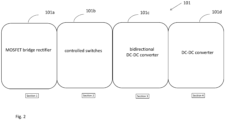
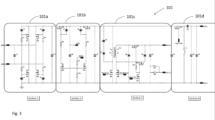
Fig. 2 and3 show a further embodiment of anemergency driver 101 for supplying emergency lighting means 104. - In semi-centralized emergency systems, SCEMS, a DC voltage can be maintained in maintained mode and in emergency mode. This voltage can be used to charge the batteries and supply the maintained loads. In emergency mode, this voltage can be used as primary source for loads with no local battery and loads with local batteries, but those same batteries may not meet the duration requirements.
- In emergency mode, the DC Bus voltage is maintained by a group of batteries, from the bus manager (a device responsible to secure the maintained mode voltage and manage all the loads and sources connected to the DC Network) or from devices with self-contained batteries, capable of sharing the battery energy.
- Self-contained devices will be supplied first by the local battery, before switching to the DC bus.
- In
figure 2 , a concept of a self-contained emergency driver comprising a local battery supply with remote supply capability is presented. - The driver is separated into four sections, as schematically shown in
Figs. 2 and3 : - section 1: a
MOSFET bridge rectifier 101a guarantees low loss bidirectional flow of energy. This ensures that thedriver 101 can be supplied by an external source and can also provide energy to other drivers/load connected to the DC bus; - section 2: two controlled
switches 101b connect and disconnect thedriver 101 from theDC network 103. This means that theLED driver 101 can operate at a different voltage than theDC network 103, for example while in emergency mode. It can also operate directly from the battery voltage. These switches can be configured to be on in maintained mode, allowing the batteries to be charged and theLED driver 101 to be supplied by theDC network 103. In emergency mode, they can be configured to be turned off, if thelocal battery 102 is capable of supplying theLED driver 101. If not, the switches can be configured to be turned on and theLED driver 101 can be supplied by theDC network 103. This provides the advantage that several switches are used to isolate the different levels of voltages necessary to secure a smooth transition; - section 3: a bidirectional DC-
DC converter 101c, in the embodiment shown inFig. 3 a bidirectional flyback, is used to interface thebattery 102 with the mains rail of thedriver 101. This can be used to charge and discharge thebattery 102 with specific currents. The battery voltage can be used to increase to match the rail voltage if necessary. - section 4: a DC-
DC converter 101d is used to drive theLEDs 104. In the embodiment inFig. 3 , a buck-boost converter is shown. The input of theconverter 101d can be connected to the main rail of thedriver 101. In maintained mode, if the LEDs are on, thedriver 101 can be supplied by theDC network 103 by turning on the switches insection section 2 can be turned off if thelocal battery 102 is to be used. The circuit of the charger,section 3, can be by-passed by an additional circuit to improve the emergency mode efficiency. - Therefore, advantageously, a secure smooth transition from
local battery supply 102 to DC network supply, while in emergency mode, is achieved. If this transition is not smoothly secured, light flicker will be visible. - As the
local battery 102 of thedriver 101 depletes, the supply of theLED driver 101 shall be transferred from thebattery 101 to theDC network 103. This transfer can be preceded by a communication signal sent by thedriver 101 to the bus manager informing about the additional load that is about to be transferred to the DC bus. The switches ofsection 2 should be off while thelamp driver 101d is being fully supplied by thelocal battery 102. The lamp supply can be connected to the main rail of thedriver 101. This means that, if an additional switch is used to connect the battery directly to theLED driver 101 input to improve efficiency, it should be turned off before the transition to the DC network. Previous to that, the battery DC-DC converter should start discharging the battery, if it was not already guaranteeing supply to the main rail. - The battery DC-DC converter can increase the main railvoltage slow and gradually until it matches the instantaneous DC network voltage. The switches of
section 2 are then turned on. - In this configuration, the
local battery 102 of thedriver 101 is providing energy to the DC network. Thelocal battery 102 shall start reducing slow and gradually its discharge current until thebattery 102 is completely depleted or reaches a pre-defined cut-off level. A synchronization signal might be used to synchronise the reduction of the discharge current with the emergency sources connected to theDC network 103, to ensure the DC network maintains balanced. - Once the
local battery 102 is completely depleted or reaches a pre-defined cut-off level, it shall stop discharging. TheLED driver 101 can continue its operation being supplied from theDC network 103. -
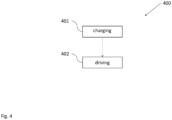
Fig. 4 shows an embodiment of amethod 400 for supplying emergency lighting means 104. - The
method 400 for supplying emergency lighting means, comprises the steps of: - charging 401 a
local battery 102 with DC power supplied to DC terminals; and - driving 402 the emergency lighting means 104 from the
local battery 102 or the DC power supplied to the DC terminals. - This method has the advantage that a secure smooth transition from
local battery 102 supply to DC network supply, while in emergency, is provided. - All features of all embodiments described, shown and/or claimed herein can be combined with each other.
- While various embodiments of the present invention have been described above, it should be understood that they have been presented by way of example only and not limitation.
- All features of all embodiments described, shown and/or claimed herein can be combined with each other.
- The scope of the invention should be defined in accordance with the following claims.
Claims (10)
- An emergency driver (101) for supplying emergency lighting means (104), wherein the emergency driver (101) is configured to be powered, during operation of the emergency lighting means (104), selectively from:- a local battery (102) associated to the emergency driver (101); or- a DC network (103) supplying DC power to DC terminals of the driver (104);wherein the emergency driver (101) comprises:- a first circuitry (105) configured to charge the local battery (102) with DC power supplied to the DC terminals; and- a second circuitry (106) configured to have the capability to drive the emergency lighting means (104) from the local battery (102) and to have the capability to drive the emergency lighting means (104) from the DC power supplied to the DC terminals, characterized by- two controlled switches (101b), wherein the switches (101b) are configured to connect or disconnect the driver from the DC network (103), wherein, if the switches (101b) are turned on, then the local battery (102) is charged and the emergency lighting means (104) is supplied by the DC network (103).
- The emergency driver (101) of claim 1, wherein the emergency driver (104) is furthermore configured to supply power from said local battery (102) to the DC terminals in order to supply a DC bus.
- The emergency driver (101) of claim 1 or 2, wherein the emergency driver (101) comprises a MOSFET bridge rectifier (101a).
- The emergency driver (101) of any one of the preceding claims, wherein the emergency lighting means (104) comprises a LED module.
- The emergency driver (101) of any one of the preceding claims, wherein the emergency driver (101) further comprises a bidirectional DC-DC converter (101c), wherein the DC-DC converter (101c) is configured to interface the local battery (102) with the DC terminals.
- The emergency driver (101) of claim 5, wherein the DC-DC converter (101c) is a bidirectional switched isolated converter, such as e.g. a bidirectional flyback converter.
- The emergency driver (101) of any one of the preceding claims, wherein the emergency driver (101) comprises a further DC-DC converter (101d), wherein the further DC-Dc converter (101d) is configured to drive the lighting means (104).
- The emergency driver (101) of claim 6 or 7, wherein the further DC-DC converter (101d) is a buck-boost converter.
- The emergency driver (101) of any one of the preceding claims, wherein the emergency driver (101) further comprises communication capabilities configured to demand power assistance from the DC network (103).
- A method (400) for supplying emergency lighting means (104), comprising:- charging (401) a local battery (102) with DC power supplied to DC terminals; and- driving (402) the emergency lighting means (104) from the local battery (102) or the DC power supplied to the DC terminals;- connecting or disconnecting a driver from a DC network (103) via two controlled switches (101b); and- charging the local battery (102) and suppling the emergency lighting means (104) by the DC network (103) if the switches (101b) are turned on.
Priority Applications (1)
| Application Number | Priority Date | Filing Date | Title |
|---|---|---|---|
| EP20173097.5A EP3907852B1 (en) | 2020-05-06 | 2020-05-06 | An emergency driver for supplying emergency lighting means |
Applications Claiming Priority (1)
| Application Number | Priority Date | Filing Date | Title |
|---|---|---|---|
| EP20173097.5A EP3907852B1 (en) | 2020-05-06 | 2020-05-06 | An emergency driver for supplying emergency lighting means |
Publications (2)
| Publication Number | Publication Date |
|---|---|
| EP3907852A1 EP3907852A1 (en) | 2021-11-10 |
| EP3907852B1 true EP3907852B1 (en) | 2025-07-02 |
Family
ID=70553957
Family Applications (1)
| Application Number | Title | Priority Date | Filing Date |
|---|---|---|---|
| EP20173097.5A Active EP3907852B1 (en) | 2020-05-06 | 2020-05-06 | An emergency driver for supplying emergency lighting means |
Country Status (1)
| Country | Link |
|---|---|
| EP (1) | EP3907852B1 (en) |
Families Citing this family (1)
| Publication number | Priority date | Publication date | Assignee | Title |
|---|---|---|---|---|
| EP4586459A1 (en) * | 2024-01-11 | 2025-07-16 | Tridonic GmbH & Co. KG | Emergency power supply unit, psu, for a lighting control bus |
Family Cites Families (4)
| Publication number | Priority date | Publication date | Assignee | Title |
|---|---|---|---|---|
| GB2499016B (en) * | 2012-02-03 | 2016-08-03 | Tridonic Uk Ltd | Lighting power supply |
| GB2546117B (en) * | 2016-01-11 | 2021-11-24 | Tridonic Gmbh & Co Kg | Emergency lighting unit with AC power charging |
| GB2553283B (en) * | 2016-08-23 | 2022-03-16 | Tridonic Gmbh & Co Kg | Emergency lighting |
| GB2563680B (en) * | 2017-06-19 | 2022-06-01 | Tridonic Gmbh & Co Kg | Driver for emergency lighting |
-
2020
- 2020-05-06 EP EP20173097.5A patent/EP3907852B1/en active Active
Also Published As
| Publication number | Publication date |
|---|---|
| EP3907852A1 (en) | 2021-11-10 |
Similar Documents
| Publication | Publication Date | Title |
|---|---|---|
| US11404901B2 (en) | Emergency lighting system | |
| US20180254658A1 (en) | Automotive dual voltage battery charging system | |
| US9815541B2 (en) | Boat with electric drive | |
| EP2299556B1 (en) | Battery charging and electrical energy delivery system and battery operated system | |
| US20230134008A1 (en) | Bi-directional dc-dc converter | |
| CA2350486A1 (en) | Uninterruptible power supply with plurality of inverters | |
| HK1203702A1 (en) | Multi-directional converter comprising three ports and a single transformer for electric vehicles | |
| CN115995974A (en) | Converter system for transmitting power | |
| JP2020018078A (en) | Power supply system for electric vehicle | |
| CN212579619U (en) | Energy supply device for a rail vehicle and rail vehicle | |
| CN111032423A (en) | Variable power charging | |
| CN109560601B (en) | Uninterruptible power running device | |
| US6717288B2 (en) | Multiple-voltage power supply circuitry for motor vehicles | |
| CN117136483A (en) | car charger | |
| CN120150323B (en) | Wide-voltage bidirectional charge-discharge device and control method thereof | |
| JP2013150524A (en) | Electric vehicle | |
| EP3907852B1 (en) | An emergency driver for supplying emergency lighting means | |
| US20030025399A1 (en) | System, method and apparatus for connecting electrical sources in series under full load | |
| WO2009034420A2 (en) | Power system and control method thereof | |
| US20240317110A1 (en) | Vehicle On-Board Electrical System Including A Battery Connection Circuit Having A Converter And Configurably Connectable Load Terminals On Either Side Of The DC-DC Converter | |
| US9300149B2 (en) | Regulator, battery charging apparatus and battery charging method to prevent voltage of a battery from increasing beyond a full-charge voltage during chattering | |
| CN115104233A (en) | Emergency lighting system | |
| US20160094062A1 (en) | Switched-mode power supply having at least one power circuit and at least one auxiliary power supply unit | |
| CN115483675B (en) | Power supply switching device and multi-input power supply | |
| CN119968748A (en) | DC transformer arrangement, energy supply system and method for discharging an intermediate circuit capacitor |
Legal Events
| Date | Code | Title | Description |
|---|---|---|---|
| PUAI | Public reference made under article 153(3) epc to a published international application that has entered the european phase |
Free format text: ORIGINAL CODE: 0009012 |
|
| STAA | Information on the status of an ep patent application or granted ep patent |
Free format text: STATUS: THE APPLICATION HAS BEEN PUBLISHED |
|
| AK | Designated contracting states |
Kind code of ref document: A1 Designated state(s): AL AT BE BG CH CY CZ DE DK EE ES FI FR GB GR HR HU IE IS IT LI LT LU LV MC MK MT NL NO PL PT RO RS SE SI SK SM TR |
|
| B565 | Issuance of search results under rule 164(2) epc |
Effective date: 20201008 |
|
| STAA | Information on the status of an ep patent application or granted ep patent |
Free format text: STATUS: REQUEST FOR EXAMINATION WAS MADE |
|
| 17P | Request for examination filed |
Effective date: 20220504 |
|
| RBV | Designated contracting states (corrected) |
Designated state(s): AL AT BE BG CH CY CZ DE DK EE ES FI FR GB GR HR HU IE IS IT LI LT LU LV MC MK MT NL NO PL PT RO RS SE SI SK SM TR |
|
| GRAP | Despatch of communication of intention to grant a patent |
Free format text: ORIGINAL CODE: EPIDOSNIGR1 |
|
| STAA | Information on the status of an ep patent application or granted ep patent |
Free format text: STATUS: GRANT OF PATENT IS INTENDED |
|
| INTG | Intention to grant announced |
Effective date: 20250306 |
|
| GRAS | Grant fee paid |
Free format text: ORIGINAL CODE: EPIDOSNIGR3 |
|
| GRAA | (expected) grant |
Free format text: ORIGINAL CODE: 0009210 |
|
| STAA | Information on the status of an ep patent application or granted ep patent |
Free format text: STATUS: THE PATENT HAS BEEN GRANTED |
|
| P01 | Opt-out of the competence of the unified patent court (upc) registered |
Free format text: CASE NUMBER: APP_21112/2025 Effective date: 20250505 |
|
| AK | Designated contracting states |
Kind code of ref document: B1 Designated state(s): AL AT BE BG CH CY CZ DE DK EE ES FI FR GB GR HR HU IE IS IT LI LT LU LV MC MK MT NL NO PL PT RO RS SE SI SK SM TR |
|
| REG | Reference to a national code |
Ref country code: GB Ref legal event code: FG4D |
|
| REG | Reference to a national code |
Ref country code: CH Ref legal event code: EP |
|
| REG | Reference to a national code |
Ref country code: DE Ref legal event code: R096 Ref document number: 602020053646 Country of ref document: DE |
|
| REG | Reference to a national code |
Ref country code: IE Ref legal event code: FG4D |
|
| REG | Reference to a national code |
Ref country code: DE Ref legal event code: R084 Ref document number: 602020053646 Country of ref document: DE |
|
| REG | Reference to a national code |
Ref country code: NL Ref legal event code: MP Effective date: 20250702 |
|
| PG25 | Lapsed in a contracting state [announced via postgrant information from national office to epo] |
Ref country code: PT Free format text: LAPSE BECAUSE OF FAILURE TO SUBMIT A TRANSLATION OF THE DESCRIPTION OR TO PAY THE FEE WITHIN THE PRESCRIBED TIME-LIMIT Effective date: 20251103 |
|
| PG25 | Lapsed in a contracting state [announced via postgrant information from national office to epo] |
Ref country code: NL Free format text: LAPSE BECAUSE OF FAILURE TO SUBMIT A TRANSLATION OF THE DESCRIPTION OR TO PAY THE FEE WITHIN THE PRESCRIBED TIME-LIMIT Effective date: 20250702 |
|
| REG | Reference to a national code |
Ref country code: AT Ref legal event code: MK05 Ref document number: 1810398 Country of ref document: AT Kind code of ref document: T Effective date: 20250702 |
|
| PG25 | Lapsed in a contracting state [announced via postgrant information from national office to epo] |
Ref country code: IS Free format text: LAPSE BECAUSE OF FAILURE TO SUBMIT A TRANSLATION OF THE DESCRIPTION OR TO PAY THE FEE WITHIN THE PRESCRIBED TIME-LIMIT Effective date: 20251102 |
|
| PG25 | Lapsed in a contracting state [announced via postgrant information from national office to epo] |
Ref country code: NO Free format text: LAPSE BECAUSE OF FAILURE TO SUBMIT A TRANSLATION OF THE DESCRIPTION OR TO PAY THE FEE WITHIN THE PRESCRIBED TIME-LIMIT Effective date: 20251002 |
|
| REG | Reference to a national code |
Ref country code: LT Ref legal event code: MG9D |
|
| PG25 | Lapsed in a contracting state [announced via postgrant information from national office to epo] |
Ref country code: AT Free format text: LAPSE BECAUSE OF FAILURE TO SUBMIT A TRANSLATION OF THE DESCRIPTION OR TO PAY THE FEE WITHIN THE PRESCRIBED TIME-LIMIT Effective date: 20250702 |
|
| PG25 | Lapsed in a contracting state [announced via postgrant information from national office to epo] |
Ref country code: FI Free format text: LAPSE BECAUSE OF FAILURE TO SUBMIT A TRANSLATION OF THE DESCRIPTION OR TO PAY THE FEE WITHIN THE PRESCRIBED TIME-LIMIT Effective date: 20250702 |
|
| PG25 | Lapsed in a contracting state [announced via postgrant information from national office to epo] |
Ref country code: HR Free format text: LAPSE BECAUSE OF FAILURE TO SUBMIT A TRANSLATION OF THE DESCRIPTION OR TO PAY THE FEE WITHIN THE PRESCRIBED TIME-LIMIT Effective date: 20250702 |
|
| PG25 | Lapsed in a contracting state [announced via postgrant information from national office to epo] |
Ref country code: GR Free format text: LAPSE BECAUSE OF FAILURE TO SUBMIT A TRANSLATION OF THE DESCRIPTION OR TO PAY THE FEE WITHIN THE PRESCRIBED TIME-LIMIT Effective date: 20251003 |
|
| PG25 | Lapsed in a contracting state [announced via postgrant information from national office to epo] |
Ref country code: CZ Free format text: LAPSE BECAUSE OF FAILURE TO SUBMIT A TRANSLATION OF THE DESCRIPTION OR TO PAY THE FEE WITHIN THE PRESCRIBED TIME-LIMIT Effective date: 20250702 Ref country code: SE Free format text: LAPSE BECAUSE OF FAILURE TO SUBMIT A TRANSLATION OF THE DESCRIPTION OR TO PAY THE FEE WITHIN THE PRESCRIBED TIME-LIMIT Effective date: 20250702 |
|
| PG25 | Lapsed in a contracting state [announced via postgrant information from national office to epo] |
Ref country code: LV Free format text: LAPSE BECAUSE OF FAILURE TO SUBMIT A TRANSLATION OF THE DESCRIPTION OR TO PAY THE FEE WITHIN THE PRESCRIBED TIME-LIMIT Effective date: 20250702 |
|
| PG25 | Lapsed in a contracting state [announced via postgrant information from national office to epo] |
Ref country code: PL Free format text: LAPSE BECAUSE OF FAILURE TO SUBMIT A TRANSLATION OF THE DESCRIPTION OR TO PAY THE FEE WITHIN THE PRESCRIBED TIME-LIMIT Effective date: 20250702 Ref country code: BG Free format text: LAPSE BECAUSE OF FAILURE TO SUBMIT A TRANSLATION OF THE DESCRIPTION OR TO PAY THE FEE WITHIN THE PRESCRIBED TIME-LIMIT Effective date: 20250702 |
|
| PG25 | Lapsed in a contracting state [announced via postgrant information from national office to epo] |
Ref country code: RS Free format text: LAPSE BECAUSE OF FAILURE TO SUBMIT A TRANSLATION OF THE DESCRIPTION OR TO PAY THE FEE WITHIN THE PRESCRIBED TIME-LIMIT Effective date: 20251002 |
|
| PG25 | Lapsed in a contracting state [announced via postgrant information from national office to epo] |
Ref country code: ES Free format text: LAPSE BECAUSE OF FAILURE TO SUBMIT A TRANSLATION OF THE DESCRIPTION OR TO PAY THE FEE WITHIN THE PRESCRIBED TIME-LIMIT Effective date: 20250702 |
|
| PG25 | Lapsed in a contracting state [announced via postgrant information from national office to epo] |
Ref country code: SM Free format text: LAPSE BECAUSE OF FAILURE TO SUBMIT A TRANSLATION OF THE DESCRIPTION OR TO PAY THE FEE WITHIN THE PRESCRIBED TIME-LIMIT Effective date: 20250702 |
|
| PGFP | Annual fee paid to national office [announced via postgrant information from national office to epo] |
Ref country code: GB Payment date: 20260304 Year of fee payment: 7 |
|
| PG25 | Lapsed in a contracting state [announced via postgrant information from national office to epo] |
Ref country code: DK Free format text: LAPSE BECAUSE OF FAILURE TO SUBMIT A TRANSLATION OF THE DESCRIPTION OR TO PAY THE FEE WITHIN THE PRESCRIBED TIME-LIMIT Effective date: 20250702 |
|
| PG25 | Lapsed in a contracting state [announced via postgrant information from national office to epo] |
Ref country code: IT Free format text: LAPSE BECAUSE OF FAILURE TO SUBMIT A TRANSLATION OF THE DESCRIPTION OR TO PAY THE FEE WITHIN THE PRESCRIBED TIME-LIMIT Effective date: 20250702 |
|
| PG25 | Lapsed in a contracting state [announced via postgrant information from national office to epo] |
Ref country code: SK Free format text: LAPSE BECAUSE OF FAILURE TO SUBMIT A TRANSLATION OF THE DESCRIPTION OR TO PAY THE FEE WITHIN THE PRESCRIBED TIME-LIMIT Effective date: 20250702 Ref country code: EE Free format text: LAPSE BECAUSE OF FAILURE TO SUBMIT A TRANSLATION OF THE DESCRIPTION OR TO PAY THE FEE WITHIN THE PRESCRIBED TIME-LIMIT Effective date: 20250702 |