EP3907847B1 - Cell balancing apparatus, battery apparatus including the same, and cell balancing method - Google Patents
Cell balancing apparatus, battery apparatus including the same, and cell balancing method Download PDFInfo
- Publication number
- EP3907847B1 EP3907847B1 EP20890183.5A EP20890183A EP3907847B1 EP 3907847 B1 EP3907847 B1 EP 3907847B1 EP 20890183 A EP20890183 A EP 20890183A EP 3907847 B1 EP3907847 B1 EP 3907847B1
- Authority
- EP
- European Patent Office
- Prior art keywords
- battery
- battery cell
- inductor
- transistor
- cell
- Prior art date
- Legal status (The legal status is an assumption and is not a legal conclusion. Google has not performed a legal analysis and makes no representation as to the accuracy of the status listed.)
- Active
Links
Images



Classifications
-
- H—ELECTRICITY
- H02—GENERATION; CONVERSION OR DISTRIBUTION OF ELECTRIC POWER
- H02J—ELECTRIC POWER NETWORKS; CIRCUIT ARRANGEMENTS OR SYSTEMS FOR SUPPLYING OR DISTRIBUTING ELECTRIC POWER; SYSTEMS FOR STORING ELECTRIC ENERGY
- H02J7/00—Circuit arrangements for charging or discharging batteries or for supplying loads from batteries
- H02J7/50—Circuit arrangements for charging or discharging batteries or for supplying loads from batteries acting upon multiple batteries simultaneously or sequentially
- H02J7/52—Circuit arrangements for charging or discharging batteries or for supplying loads from batteries acting upon multiple batteries simultaneously or sequentially for charge balancing, e.g. equalisation of charge between batteries
- H02J7/56—Active balancing, e.g. using capacitor-based, inductor-based or DC-DC converters
-
- H—ELECTRICITY
- H01—ELECTRIC ELEMENTS
- H01M—PROCESSES OR MEANS, e.g. BATTERIES, FOR THE DIRECT CONVERSION OF CHEMICAL ENERGY INTO ELECTRICAL ENERGY
- H01M10/00—Secondary cells; Manufacture thereof
- H01M10/42—Methods or arrangements for servicing or maintenance of secondary cells or secondary half-cells
- H01M10/4285—Testing apparatus
-
- H—ELECTRICITY
- H01—ELECTRIC ELEMENTS
- H01M—PROCESSES OR MEANS, e.g. BATTERIES, FOR THE DIRECT CONVERSION OF CHEMICAL ENERGY INTO ELECTRICAL ENERGY
- H01M10/00—Secondary cells; Manufacture thereof
- H01M10/42—Methods or arrangements for servicing or maintenance of secondary cells or secondary half-cells
- H01M10/4207—Methods or arrangements for servicing or maintenance of secondary cells or secondary half-cells for several batteries or cells simultaneously or sequentially
-
- H—ELECTRICITY
- H01—ELECTRIC ELEMENTS
- H01M—PROCESSES OR MEANS, e.g. BATTERIES, FOR THE DIRECT CONVERSION OF CHEMICAL ENERGY INTO ELECTRICAL ENERGY
- H01M10/00—Secondary cells; Manufacture thereof
- H01M10/42—Methods or arrangements for servicing or maintenance of secondary cells or secondary half-cells
- H01M10/425—Structural combination with electronic components, e.g. electronic circuits integrated to the outside of the casing
-
- H—ELECTRICITY
- H01—ELECTRIC ELEMENTS
- H01M—PROCESSES OR MEANS, e.g. BATTERIES, FOR THE DIRECT CONVERSION OF CHEMICAL ENERGY INTO ELECTRICAL ENERGY
- H01M10/00—Secondary cells; Manufacture thereof
- H01M10/42—Methods or arrangements for servicing or maintenance of secondary cells or secondary half-cells
- H01M10/44—Methods for charging or discharging
- H01M10/441—Methods for charging or discharging for several batteries or cells simultaneously or sequentially
-
- H—ELECTRICITY
- H01—ELECTRIC ELEMENTS
- H01M—PROCESSES OR MEANS, e.g. BATTERIES, FOR THE DIRECT CONVERSION OF CHEMICAL ENERGY INTO ELECTRICAL ENERGY
- H01M10/00—Secondary cells; Manufacture thereof
- H01M10/42—Methods or arrangements for servicing or maintenance of secondary cells or secondary half-cells
- H01M10/48—Accumulators combined with arrangements for measuring, testing or indicating the condition of cells, e.g. the level or density of the electrolyte
- H01M10/482—Accumulators combined with arrangements for measuring, testing or indicating the condition of cells, e.g. the level or density of the electrolyte for several batteries or cells simultaneously or sequentially
-
- H—ELECTRICITY
- H01—ELECTRIC ELEMENTS
- H01M—PROCESSES OR MEANS, e.g. BATTERIES, FOR THE DIRECT CONVERSION OF CHEMICAL ENERGY INTO ELECTRICAL ENERGY
- H01M50/00—Constructional details or processes of manufacture of the non-active parts of electrochemical cells other than fuel cells, e.g. hybrid cells
- H01M50/50—Current conducting connections for cells or batteries
- H01M50/502—Interconnectors for connecting terminals of adjacent batteries; Interconnectors for connecting cells outside a battery casing
- H01M50/509—Interconnectors for connecting terminals of adjacent batteries; Interconnectors for connecting cells outside a battery casing characterised by the type of connection, e.g. mixed connections
- H01M50/51—Connection only in series
-
- B—PERFORMING OPERATIONS; TRANSPORTING
- B60—VEHICLES IN GENERAL
- B60L—PROPULSION OF ELECTRICALLY-PROPELLED VEHICLES; SUPPLYING ELECTRIC POWER FOR AUXILIARY EQUIPMENT OF ELECTRICALLY-PROPELLED VEHICLES; ELECTRODYNAMIC BRAKE SYSTEMS FOR VEHICLES IN GENERAL; MAGNETIC SUSPENSION OR LEVITATION FOR VEHICLES; MONITORING OPERATING VARIABLES OF ELECTRICALLY-PROPELLED VEHICLES; ELECTRIC SAFETY DEVICES FOR ELECTRICALLY-PROPELLED VEHICLES
- B60L2240/00—Control parameters of input or output; Target parameters
- B60L2240/40—Drive Train control parameters
- B60L2240/54—Drive Train control parameters related to batteries
- B60L2240/547—Voltage
-
- B—PERFORMING OPERATIONS; TRANSPORTING
- B60—VEHICLES IN GENERAL
- B60L—PROPULSION OF ELECTRICALLY-PROPELLED VEHICLES; SUPPLYING ELECTRIC POWER FOR AUXILIARY EQUIPMENT OF ELECTRICALLY-PROPELLED VEHICLES; ELECTRODYNAMIC BRAKE SYSTEMS FOR VEHICLES IN GENERAL; MAGNETIC SUSPENSION OR LEVITATION FOR VEHICLES; MONITORING OPERATING VARIABLES OF ELECTRICALLY-PROPELLED VEHICLES; ELECTRIC SAFETY DEVICES FOR ELECTRICALLY-PROPELLED VEHICLES
- B60L58/00—Methods or circuit arrangements for monitoring or controlling batteries or fuel cells, specially adapted for electric vehicles
- B60L58/10—Methods or circuit arrangements for monitoring or controlling batteries or fuel cells, specially adapted for electric vehicles for monitoring or controlling batteries
- B60L58/18—Methods or circuit arrangements for monitoring or controlling batteries or fuel cells, specially adapted for electric vehicles for monitoring or controlling batteries of two or more battery modules
- B60L58/22—Balancing the charge of battery modules
-
- H—ELECTRICITY
- H01—ELECTRIC ELEMENTS
- H01M—PROCESSES OR MEANS, e.g. BATTERIES, FOR THE DIRECT CONVERSION OF CHEMICAL ENERGY INTO ELECTRICAL ENERGY
- H01M10/00—Secondary cells; Manufacture thereof
- H01M10/42—Methods or arrangements for servicing or maintenance of secondary cells or secondary half-cells
- H01M10/425—Structural combination with electronic components, e.g. electronic circuits integrated to the outside of the casing
- H01M2010/4271—Battery management systems including electronic circuits, e.g. control of current or voltage to keep battery in healthy state, cell balancing
-
- H—ELECTRICITY
- H01—ELECTRIC ELEMENTS
- H01M—PROCESSES OR MEANS, e.g. BATTERIES, FOR THE DIRECT CONVERSION OF CHEMICAL ENERGY INTO ELECTRICAL ENERGY
- H01M2220/00—Batteries for particular applications
- H01M2220/20—Batteries in motive systems, e.g. vehicle, ship, plane
-
- Y—GENERAL TAGGING OF NEW TECHNOLOGICAL DEVELOPMENTS; GENERAL TAGGING OF CROSS-SECTIONAL TECHNOLOGIES SPANNING OVER SEVERAL SECTIONS OF THE IPC; TECHNICAL SUBJECTS COVERED BY FORMER USPC CROSS-REFERENCE ART COLLECTIONS [XRACs] AND DIGESTS
- Y02—TECHNOLOGIES OR APPLICATIONS FOR MITIGATION OR ADAPTATION AGAINST CLIMATE CHANGE
- Y02E—REDUCTION OF GREENHOUSE GAS [GHG] EMISSIONS, RELATED TO ENERGY GENERATION, TRANSMISSION OR DISTRIBUTION
- Y02E60/00—Enabling technologies; Technologies with a potential or indirect contribution to GHG emissions mitigation
- Y02E60/10—Energy storage using batteries
-
- Y—GENERAL TAGGING OF NEW TECHNOLOGICAL DEVELOPMENTS; GENERAL TAGGING OF CROSS-SECTIONAL TECHNOLOGIES SPANNING OVER SEVERAL SECTIONS OF THE IPC; TECHNICAL SUBJECTS COVERED BY FORMER USPC CROSS-REFERENCE ART COLLECTIONS [XRACs] AND DIGESTS
- Y02—TECHNOLOGIES OR APPLICATIONS FOR MITIGATION OR ADAPTATION AGAINST CLIMATE CHANGE
- Y02T—CLIMATE CHANGE MITIGATION TECHNOLOGIES RELATED TO TRANSPORTATION
- Y02T10/00—Road transport of goods or passengers
- Y02T10/60—Other road transportation technologies with climate change mitigation effect
- Y02T10/70—Energy storage systems for electromobility, e.g. batteries
Definitions
- the described technology relates to a cell balancing apparatus, a battery apparatus including a cell balancing apparatus, and a cell balancing method.
- a cell balancing circuit is designed in a battery management system (BMS) to improve the voltage deviation.
- BMS battery management system
- a passive cell balancing circuit that maintains a balance between battery cells by consuming energy of a battery cell with a relatively high voltage as heat of resistance may be used.
- a balancing current in accordance with the trend of increasing the capacity of the battery cell because the balancing current is limited due to heat through a resistor.
- an active cell balancing circuit has been proposed that transfers the energy of a battery cell with a relatively high voltage to a battery cell with a relatively low voltage.
- many elements are required to implement the active cell balancing circuit, there is a problem that the cost of the cell balancing circuit is increased.
- balancing circuits can be found for instance in DE 10 2008 043611 A1 , CN 204 947 676 U or US 2012/046892 A1 .
- An embodiment provides a battery apparatus and a cell balancing method of the battery apparatus, for reducing the cost of a cell balancing circuit.
- the cost can be reduced by reducing the number of elements in a cell balancing circuit.
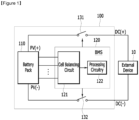
- FIG. 1 is a drawing showing a battery apparatus according to an embodiment.
- a battery apparatus 100 has a structure that can be electrically connected to an external device 10.
- the battery apparatus 100 When the external device 10 is a load, the battery apparatus 100 is discharged by operating as a power supply that supplies power to the load 10.
- the external device 10 When the external device 10 is a charger, the battery apparatus 100 is charged by receiving external power through the charger 10.
- the external device 10 operating as the load may be, for example, an electronic device, a mobility apparatus, or an energy storage system (ESS).
- the mobility apparatus may be, for example, an electric vehicle, a hybrid vehicle, or a smart mobility.
- the battery apparatus 100 includes a battery pack 110, a battery management system (BMS) 120, and switches 131 and 132.
- BMS battery management system
- the battery pack 110 includes a plurality of battery cells (not shown) that are electrically connected.
- the battery cell may be a rechargeable battery.
- the battery pack 110 may include a battery module in which a predetermined number of battery cells are connected in series. In some embodiments, a predetermined number of battery modules may be connected in series or in parallel in the battery pack 110 to supply desired power.
- the battery pack 110 is connected to the battery management system 120 through wiring.
- the battery management system 120 may collect and analyze various information related to the battery cells including information on the battery cells to control charging and discharging of the battery cells, cell balancing, a protection operation, and also control operations of the switches 131 and 132.
- the battery management system 120 includes a cell balancing circuit 121 and a processing circuitry 122.
- the cell balancing circuit 121 corresponds to the battery module of battery pack 110.
- a plurality of cell balancing circuits 121 corresponding to the plurality of battery modules respectively may be provided.
- the cell balancing circuit 121 performs cell balancing between an outer battery cell and an inner battery cell among a plurality of battery cells connected in series.
- the cell balancing circuit 121 performs the cell balancing under control of the processing circuitry 122 when the cell balancing is required.
- the switches 131 and 132 are connected between the battery pack 110 and the external device 10 to control electrical connection between the battery pack 110 and the external device 10.
- the switch 131 may be connected between a positive output terminal PV(+) to which a positive voltage of the battery pack 110 is output and a positive link terminal DC(+) to be connected to the external device 10
- the switch 132 may be connected between a negative output terminal PV(-) to which a negative voltage of the battery pack 110 is output and a negative link terminal DC(-) to be connected to the external device 10.
- the switches 131 and 132 may be transistors or relays.
- the processing circuitry 122 controls an operation of the cell balancing circuit 121 and operations of the switches 131 and 132.
- the processing circuitry 122 may be a circuit including a processor, and the processor may be, for example, a micro controller unit (MCU).
- the processing circuitry 122 may further include a driver that controls a switching operation of the cell balancing circuit 122 according to the control of the processor.
- the battery management system 120 may further include a cell voltage monitoring circuit (not shown).
- the processing circuitry 122 may determine whether balancing is required based on a voltage of the battery cell detected by the cell voltage monitoring circuit.
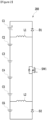
- FIG. 2 is a drawing showing an example of a balancing circuit of a battery management system
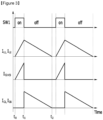
- FIG. 3 is a drawing showing signal timing and current of a balancing circuit shown in FIG. 2
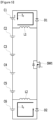
- FIG. 4 and FIG. 5 are drawings showing a current path of a balancing circuit shown in FIG. 2 .
- the number of battery cells included in a battery module and connected in series is assumed to be six, but is not limited to six.
- a cell balancing circuit 200 includes a transistor SW1, inductors L1 and L2, and diodes D1 and D2.
- a first terminal of the inductor L1 is connected to a contact between an outermost battery cell C1 in a positive electrode direction among a plurality of battery cells C1, C2, C3, C4, C5, and C6, and a battery cell C2 adjacent to the outermost battery cell C1, i.e., a negative electrode of the outermost battery cell C1 and a positive electrode of the adjacent battery cell C2.
- the diode D1 is connected between a positive electrode of the outermost battery cell C1 and a second terminal of the inductor L1. Specifically, a cathode of diode D1 is connected to the positive electrode of the outermost battery cell C1, and an anode of diode D1 is connected to the second terminal of the inductor L1.
- a first terminal of the inductor L2 is connected to a contact between an outermost battery cell C6 in a negative electrode direction among the plurality of battery cells C1 to C6 and a battery cell C5 adjacent to the outermost battery cell C6, i.e., a positive electrode of the outermost battery cell C6 and a negative electrode of the adjacent battery cell C5.
- the diode D2 is connected between a negative electrode of the outermost battery cell C6 and a second terminal of the inductor L2. Specifically, an anode of diode D2 is connected to the negative electrode of the outermost battery cell C6, and a cathode of diode D2 is connected to the second terminal of the inductor L2.
- the transistor SW1 is connected between the second terminal of inductor L1 (i.e., the anode of the diode D1) and the second terminal of inductor L2 (i.e., the cathode of the diode D2). Specifically, a first terminal of the transistor SW1 is connected to the second terminal of the inductor L1, and a second terminal of the transistor SW1 is connected to the second terminal of the inductor L2.
- the transistor SW1 may be turned on or off in response to a control signal that is transferred to its control terminal from a processing circuitry (122 of FIG. 1 ), for example, a driver of the processing circuitry 122.
- the transistor SW1 may be a metal-oxide semiconductor field-effect transistor (MOSFET).
- the transistor SW1 may have a body diode. As shown in FIG. 2 , the transistor SW1 may be an n-channel transistor, for example an NMOS transistor. In this case, the transistor SW1 has a drain, a source and a gate as the first terminal, the second terminal and the control terminal, respectively.
- the transistor SW1 when balancing is required, the transistor SW1 is turned on in response to a control signal from a processing circuitry (122 of FIG. 1 ) at t 0 . Then, a current path I 1 is formed through the inner battery cells C2 to C5 among the plurality of battery cells, the inductor L1, the transistor SW1, and the inductor L2. Currents I L1 and I L2 flowing through the inductors L1 and L2 gradually increase by voltages of the inner battery cells C2 to C5, and a current I C2-C5 flowing through the inner battery cells C2 to C5 also gradually increases. That is, during a period from t 0 to t 1 , energy of the inner battery cells C2 to C5 may be injected into the inductors L1 and L2.
- the transistor SW1 is turned off at t 1 so that a current path I 2 is formed through the inductor L1, the diode D1, and the outermost battery cell C1 in the positive electrode direction, and a current path I 3 is formed through the inductor L2, the outermost battery cell C6 in the negative electrode direction, and the diode D2.
- the currents I L1 and I L2 flowing through the inductors L1 and L2 are supplied to the outermost battery cells C1 and C6, so the currents I L1 and I L2 flowing through the inductors L1 and L2 gradually decrease, and currents I C1 and I C6 flowing through the outermost battery cells C1 and C6 also gradually decrease.
- t 2 may be a time point when the currents I L1 and I L2 flowing through the inductors L1 and L2 become zero.
- the processing circuitry 122 may repeat an operation (t 0 to t 1 ) of injecting the currents I L1 and I L2 into the inductors L1 and L2 and an operation of (t 1 to t 2 ) of charging the outermost battery cells C1 and C6 with the current flowing through the inductors L1 and L2 until the balancing is complete.
- the diodes D1 and D2 are used as active elements to form the current paths among the outermost battery cells C1 and C6 and the inductors L1 and L2, other active elements may be used instead of the diodes D1 and D2.
- Transistors may be used instead of the diodes D1 and D2.
- the transistor SW1 When the transistor SW1 is turned on, the transistors used instead of the diodes may be turned off, and when the transistor SW1 is turned off, the transistors used instead of the diodes may be turned on.
- the transistors used instead of the diodes may be maintained in the off-state regardless of the on/off of the transistor SW1. In this case, the currents injected into the inductors L1 and L2 may be transmitted to the outermost battery cells C1 and C6 through body diodes of the transistors, respectively.
- the outermost battery cell When a battery apparatus (100 of FIG. 1 ) supplies energy to an external device (10 of FIG. 1 ), as shown in FIG. 6 , the outermost battery cell may be first discharged because a temperature of the outermost battery cell in a battery module is low. Energy of the inner battery cells C2 to C6 can be transferred to the outermost battery cells through the inductors L1 and L2 to perform the balancing. In addition, the number of elements can be reduced compared to a conventional active cell balancing circuit that uses an inductor and a transistor for each battery cell, thereby reducing the cost of the cell balancing circuit.
- the outermost battery cell can be first charged compared to the inner battery cell.
- the balancing may be performed by transferring the energy of the outermost battery cell to the inner battery cell.
- the cell balancing circuit shown in FIG. 2 may not transfer the energy of the outermost battery cell to the inner battery cell.
- FIG. 8 is a drawing showing an example of a balancing circuit of a battery management system according to an embodiment
- FIG. 9 is a drawing showing signal timing and current of a balancing circuit shown in FIG. 8
- FIG. 10 and FIG. 11 are drawings showing a current path of a balancing circuit shown in FIG. 8 .
- the number of battery cells included in a battery module and connected in series is assumed to be six, but is not limited to six.
- a cell balancing circuit 800 includes transistors SW1, SW2, and SW3, inductors L1 and L2, and diodes D3 and D4.
- the transistor SW1 and the inductors L1 and L2 have a similar connection relationship with those of the cell balancing circuit 200 described with reference to FIG. 2 .
- a first terminal of the inductor L1 is connected to a contact between an outermost battery cell C1 in a positive electrode direction among a plurality of battery cells C1 to C6, and a battery cell C2 adjacent to the outermost battery cell C1, i.e., a negative electrode of the outermost battery cell C1 and a positive electrode of the adjacent battery cell C2.
- the transistor SW2 is connected between a positive electrode of the outermost battery cell C1 and a second terminal of the inductor L1. Specifically, a first terminal of transistor SW2 is connected to the positive electrode of the outermost battery cell C1, and a second terminal of transistor SW2 is connected to the second terminal of the inductor L1.
- a first terminal of the inductor L2 is connected to a contact between an outermost battery cell C6 in a negative electrode direction among the plurality of battery cells C1 to C6 and a battery cell C5 adjacent to the outermost battery cell C6, i.e., a positive electrode of the outermost battery cell C6 and a negative electrode of the adjacent battery cell C5.
- the transistor SW3 is connected between a negative electrode of the outermost battery cell C6 and a second terminal of the inductor L2. Specifically, a first terminal of transistor SW2 is connected to the second terminal of inductor L2, and a second terminal of transistor SW2 is connected to the negative electrode of outermost battery cell C6.
- the diode D3 is connected between a negative electrode of battery cell C5 adjacent to the outermost battery cell C6 in the negative electrode direction (i.e., the positive electrode of the outermost battery cell C6 and the first terminal of the inductor L2) and the second terminal of the inductor L1 (i.e., the second terminal of the transistor SW2). Specifically, an anode of diode D3 is connected to the negative electrode of the adjacent battery cell C5, and a cathode of diode D3 is connected to the second terminal of the inductor L1.
- the diode D4 is connected between a positive electrode of the battery cell C2 adjacent to the outermost battery cell C1 in the positive electrode direction (i.e., the negative electrode of outermost battery cell C1 and the first terminal of the inductor L2) and the second terminal of inductor L1 (i.e., the second terminal of transistor SW2). Specifically, a cathode of diode D4 is connected to the positive electrode of the adjacent battery cell C2, and an anode of diode D4 is connected to the second terminal of the inductor L2.
- the transistor SW1 is connected between the second terminal of the inductor L1 (i.e., the second terminal of the transistor SW2 and the cathode of the diode D3) and the second terminal of the inductor L2 (i.e., the first terminal of the transistor SW3 and the anode of diode D4). Specifically, a first terminal of the transistor SW1 is connected to the second terminal of the inductor L1, and a second terminal of the transistor SW1 is connected to the second terminal of the inductor L2.
- the transistors SW1, SW2, and SW3 may be turned on or off in response to control signals that are transferred to their control terminals from a processing circuitry (122 of FIG. 1 ), for example, a driver of the processing circuitry 122.
- the transistors SW1, SW2, and SW3 may be metal-oxide semiconductor field-effect transistors (MOSFETs).
- MOSFETs metal-oxide semiconductor field-effect transistors
- the transistors SW1, SW2, and SW3 may have body diodes.
- the transistors SW1, SW2, and SW3 may be n-channel transistors, for example, NMOS transistors.
- each of the transistors SW1, SW2, and SW3 has a drain, a source and a gate as the first terminal, the second terminal and the control terminal, respectively.
- the transistors SW2 and SW3 are turned on in response to a control signal from a processing circuitry (122 of FIG. 1 ) at t 0 . Then, a current path I 1 is formed through the outermost battery cell C1 in the positive electrode direction, the transistor SW2 and the inductor L1, and a current path I 2 is formed through the outermost battery cell C6 in the negative electrode direction, the inductor L2, and the transistor SW3.
- the transistor SW2 and SW3 are turned off at t 1 so that a current path I 3 is formed through the inductor L1, the inner battery cells C2 to C5, and the diode D3, and a current path I 4 is formed through the inductor L2, the diode D4, and the inner battery cells C2 to C5.
- the currents I L1 and I L2 flowing through the inductors L1 and L2 are supplied to the inner battery cells C2 to C5, so the currents I L1 and I L2 flowing through the inductors L1 and L2 gradually decrease, and a current I C2-C5 flowing through the inner battery cells C2 to C5 also gradually decreases.
- t 2 may be a time point when the currents I L1 and I L2 flowing through the inductors L1 and L2 become zero.
- the processing circuitry 122 may repeat an operation (t 0 to t 1 ) of injecting the currents I L1 and I L2 into the inductors L1 and L2 and an operation (t 1 to t 2 ) of charging the outermost battery cells C1 and C6 with the currents flowing through the inductors L1 and L2 until the balancing is complete.
- the balancing may be performed by repeating an operation of turning on and an operation of turning off the transistor SW1 as described with reference to FIG. 3 to FIG. 5 .
- the processing circuitry 122 first turns on the transistor SW1 to form a current path through the inner battery cells C2 to C5, the inductor L1, the transistor SW1, and the inductor L2. Accordingly, energy of the inner battery cells C2 to C5 can be injected into the inductors L1 and L2.
- the processing circuitry 122 turns off the transistor SW1 to form a current path through the inductor L1, the transistor SW2 and the outermost battery cell C1 in the positive electrode direction, and a current path through the inductor L2, the outermost battery cell C6 in the negative electrode direction, and the transistor SW3. Accordingly, the energy injected into the inductors L1 and L2 are supplied to the outermost battery cells C1 and C6, so the outermost battery cells C1 and C6 can be charged.
- the two current paths for supplying the energy to the outermost battery cells C1 and C6 may be formed through the body diode of transistor SW2 and the body diode of transistor SW3, respectively.
- the transistors SW2 and SW3 may be turned off when the transistor SW1 is turned on, and the transistors SW2 and SW3 may be turned on when the transistor SW1 is turned off.
- the transistors SW2 and SW3 may be maintained in the off-state regardless of on/off of the transistor SW1.
- the battery apparatus As described above, according to another embodiment, as in a case where the battery apparatus (100 of FIG. 1 ) is charged, when the voltage of the outermost battery cell is higher than the voltage of the inner battery cell, the energy of the outermost battery cell can be transferred to the inner battery cell to perform the balancing. In addition, as in a case where the battery apparatus 100 supplies energy to an external device (10 of FIG. 1 ), when the voltage of the outermost battery cell is lower than the voltage of the inner battery cell, the energy of the inner battery cell can be transferred to the outermost battery cell to perform the balancing.
Landscapes
- Engineering & Computer Science (AREA)
- General Chemical & Material Sciences (AREA)
- Chemical & Material Sciences (AREA)
- Chemical Kinetics & Catalysis (AREA)
- Electrochemistry (AREA)
- Manufacturing & Machinery (AREA)
- Power Engineering (AREA)
- Life Sciences & Earth Sciences (AREA)
- Sustainable Development (AREA)
- Sustainable Energy (AREA)
- Transportation (AREA)
- Mechanical Engineering (AREA)
- Microelectronics & Electronic Packaging (AREA)
- Charge And Discharge Circuits For Batteries Or The Like (AREA)
- Secondary Cells (AREA)
Description
- The described technology relates to a cell balancing apparatus, a battery apparatus including a cell balancing apparatus, and a cell balancing method.
- Inside a battery pack, a plurality of battery cells are connected in series or in parallel. Voltage deviation between the battery cells may cause over-discharge or over-charge of the battery cells, and also reduce lifetime of the battery cells. A cell balancing circuit is designed in a battery management system (BMS) to improve the voltage deviation.
- As the cell balancing circuit, a passive cell balancing circuit that maintains a balance between battery cells by consuming energy of a battery cell with a relatively high voltage as heat of resistance may be used. In this case, there is a problem in that it is difficult to increase a balancing current in accordance with the trend of increasing the capacity of the battery cell because the balancing current is limited due to heat through a resistor. To address this issue, an active cell balancing circuit has been proposed that transfers the energy of a battery cell with a relatively high voltage to a battery cell with a relatively low voltage. However, since many elements are required to implement the active cell balancing circuit, there is a problem that the cost of the cell balancing circuit is increased.
- An example of balancing circuits can be found for instance in
DE 10 2008 043611 A1 ,CN 204 947 676 U orUS 2012/046892 A1 . - An embodiment provides a battery apparatus and a cell balancing method of the battery apparatus, for reducing the cost of a cell balancing circuit.
- The present disclosure provides systems as defined by the independent claims 1 and 9. Preferred embodiments are defined in the appended dependent claims.
- According to one embodiment, the cost can be reduced by reducing the number of elements in a cell balancing circuit.
-
-
FIG. 1 is a drawing showing a battery apparatus according to an embodiment. -
FIG. 2 is a drawing showing an example of a balancing circuit of a battery management system not covered by the present invention. -
FIG. 3 is a drawing showing signal timing and current of a balancing circuit shown inFIG. 2 . -
FIG. 4 andFIG. 5 are drawings showing a current path of a balancing circuit shown inFIG. 2 . -
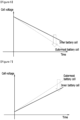
FIG. 6 is a diagram showing cell voltages of an outermost battery cell and an inner battery cell during discharge. -
FIG. 7 is a diagram showing cell voltages of an outermost battery cell and an inner battery cell during charging. -
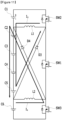
FIG. 8 is a drawing showing an example of a balancing circuit of a battery management system according of an embodiment. -
FIG. 9 is a drawing showing signal timing and current of a balancing circuit shown inFIG. 8 . -
FIG. 10 andFIG. 11 are drawings showing a current path of a balancing circuit shown inFIG. 8 . - The drawings and the following detailed description are to be regarded as illustrative in nature and not restrictive, the scope of the present invention being defined by the appended claims.
- Like reference numerals designate like elements throughout the specification.
- When it is described that an element is "connected" to another element, it should be understood that the element may be directly connected to the other element or connected to the other element through a third element. On the other hand, when it is described that an element is "directly connected" to another element, it should be understood that the element is connected to the other element through no third element.
- As used herein, a singular form may be intended to include a plural form as well, unless the explicit expression such as "one" or "single" is used.
-
FIG. 1 is a drawing showing a battery apparatus according to an embodiment. - Referring to
FIG. 1 , abattery apparatus 100 has a structure that can be electrically connected to anexternal device 10. When theexternal device 10 is a load, thebattery apparatus 100 is discharged by operating as a power supply that supplies power to theload 10. When theexternal device 10 is a charger, thebattery apparatus 100 is charged by receiving external power through thecharger 10. - The
external device 10 operating as the load may be, for example, an electronic device, a mobility apparatus, or an energy storage system (ESS). The mobility apparatus may be, for example, an electric vehicle, a hybrid vehicle, or a smart mobility. - The
battery apparatus 100 includes abattery pack 110, a battery management system (BMS) 120, andswitches - The
battery pack 110 includes a plurality of battery cells (not shown) that are electrically connected. In some embodiments, the battery cell may be a rechargeable battery. Thebattery pack 110 may include a battery module in which a predetermined number of battery cells are connected in series. In some embodiments, a predetermined number of battery modules may be connected in series or in parallel in thebattery pack 110 to supply desired power. - The
battery pack 110 is connected to thebattery management system 120 through wiring. Thebattery management system 120 may collect and analyze various information related to the battery cells including information on the battery cells to control charging and discharging of the battery cells, cell balancing, a protection operation, and also control operations of theswitches - The
battery management system 120 includes acell balancing circuit 121 and aprocessing circuitry 122. Thecell balancing circuit 121 corresponds to the battery module ofbattery pack 110. In some embodiments, when thebattery pack 110 includes a plurality of battery modules, a plurality ofcell balancing circuits 121 corresponding to the plurality of battery modules respectively may be provided. Thecell balancing circuit 121 performs cell balancing between an outer battery cell and an inner battery cell among a plurality of battery cells connected in series. Thecell balancing circuit 121 performs the cell balancing under control of theprocessing circuitry 122 when the cell balancing is required. - The
switches battery pack 110 and theexternal device 10 to control electrical connection between thebattery pack 110 and theexternal device 10. For example, theswitch 131 may be connected between a positive output terminal PV(+) to which a positive voltage of thebattery pack 110 is output and a positive link terminal DC(+) to be connected to theexternal device 10, and theswitch 132 may be connected between a negative output terminal PV(-) to which a negative voltage of thebattery pack 110 is output and a negative link terminal DC(-) to be connected to theexternal device 10. In some embodiments, theswitches - The
processing circuitry 122 controls an operation of thecell balancing circuit 121 and operations of theswitches processing circuitry 122 may be a circuit including a processor, and the processor may be, for example, a micro controller unit (MCU). In addition, theprocessing circuitry 122 may further include a driver that controls a switching operation of thecell balancing circuit 122 according to the control of the processor. - In some embodiments, the
battery management system 120 may further include a cell voltage monitoring circuit (not shown). Theprocessing circuitry 122 may determine whether balancing is required based on a voltage of the battery cell detected by the cell voltage monitoring circuit. - Hereinafter, a cell balancing circuit of a battery management system not covered by the present invention is described with reference to
FIG. 2 to FIG. 5 . -
FIG. 2 is a drawing showing an example of a balancing circuit of a battery management system, andFIG. 3 is a drawing showing signal timing and current of a balancing circuit shown inFIG. 2 , andFIG. 4 andFIG. 5 are drawings showing a current path of a balancing circuit shown inFIG. 2 . InFIG. 2 to FIG. 5 , for convenience, the number of battery cells included in a battery module and connected in series is assumed to be six, but is not limited to six. - Referring to
FIG. 2 , acell balancing circuit 200 includes a transistor SW1, inductors L1 and L2, and diodes D1 and D2. - A first terminal of the inductor L1 is connected to a contact between an outermost battery cell C1 in a positive electrode direction among a plurality of battery cells C1, C2, C3, C4, C5, and C6, and a battery cell C2 adjacent to the outermost battery cell C1, i.e., a negative electrode of the outermost battery cell C1 and a positive electrode of the adjacent battery cell C2. The diode D1 is connected between a positive electrode of the outermost battery cell C1 and a second terminal of the inductor L1. Specifically, a cathode of diode D1 is connected to the positive electrode of the outermost battery cell C1, and an anode of diode D1 is connected to the second terminal of the inductor L1.
- A first terminal of the inductor L2 is connected to a contact between an outermost battery cell C6 in a negative electrode direction among the plurality of battery cells C1 to C6 and a battery cell C5 adjacent to the outermost battery cell C6, i.e., a positive electrode of the outermost battery cell C6 and a negative electrode of the adjacent battery cell C5. The diode D2 is connected between a negative electrode of the outermost battery cell C6 and a second terminal of the inductor L2. Specifically, an anode of diode D2 is connected to the negative electrode of the outermost battery cell C6, and a cathode of diode D2 is connected to the second terminal of the inductor L2.
- The transistor SW1 is connected between the second terminal of inductor L1 (i.e., the anode of the diode D1) and the second terminal of inductor L2 (i.e., the cathode of the diode D2). Specifically, a first terminal of the transistor SW1 is connected to the second terminal of the inductor L1, and a second terminal of the transistor SW1 is connected to the second terminal of the inductor L2. The transistor SW1 may be turned on or off in response to a control signal that is transferred to its control terminal from a processing circuitry (122 of
FIG. 1 ), for example, a driver of theprocessing circuitry 122. The transistor SW1 may be a metal-oxide semiconductor field-effect transistor (MOSFET). In this case, the transistor SW1 may have a body diode. As shown inFIG. 2 , the transistor SW1 may be an n-channel transistor, for example an NMOS transistor. In this case, the transistor SW1 has a drain, a source and a gate as the first terminal, the second terminal and the control terminal, respectively. - Referring to
FIG. 3 andFIG. 4 , when balancing is required, the transistor SW1 is turned on in response to a control signal from a processing circuitry (122 ofFIG. 1 ) at t0. Then, a current path I1 is formed through the inner battery cells C2 to C5 among the plurality of battery cells, the inductor L1, the transistor SW1, and the inductor L2. Currents IL1 and IL2 flowing through the inductors L1 and L2 gradually increase by voltages of the inner battery cells C2 to C5, and a current IC2-C5 flowing through the inner battery cells C2 to C5 also gradually increases. That is, during a period from t0 to t1, energy of the inner battery cells C2 to C5 may be injected into the inductors L1 and L2. - Next, referring to
FIG. 3 andFIG. 5 , the transistor SW1 is turned off at t1 so that a current path I2 is formed through the inductor L1, the diode D1, and the outermost battery cell C1 in the positive electrode direction, and a current path I3 is formed through the inductor L2, the outermost battery cell C6 in the negative electrode direction, and the diode D2. Accordingly, the currents IL1 and IL2 flowing through the inductors L1 and L2 are supplied to the outermost battery cells C1 and C6, so the currents IL1 and IL2 flowing through the inductors L1 and L2 gradually decrease, and currents IC1 and IC6 flowing through the outermost battery cells C1 and C6 also gradually decrease. That is, energy injected into the inductors L1 and L2 during the period from t1 to t2 is supplied to the outermost battery cells C1 and C6, so the outermost battery cells C1 and C6 can be charged. Here, t2 may be a time point when the currents IL1 and IL2 flowing through the inductors L1 and L2 become zero. - Next, the
processing circuitry 122 may repeat an operation (t0 to t1) of injecting the currents IL1 and IL2 into the inductors L1 and L2 and an operation of (t1 to t2) of charging the outermost battery cells C1 and C6 with the current flowing through the inductors L1 and L2 until the balancing is complete. - Although it is shown in
FIG. 2 that the diodes D1 and D2 are used as active elements to form the current paths among the outermost battery cells C1 and C6 and the inductors L1 and L2, other active elements may be used instead of the diodes D1 and D2. Transistors may be used instead of the diodes D1 and D2. When the transistor SW1 is turned on, the transistors used instead of the diodes may be turned off, and when the transistor SW1 is turned off, the transistors used instead of the diodes may be turned on. The transistors used instead of the diodes may be maintained in the off-state regardless of the on/off of the transistor SW1. In this case, the currents injected into the inductors L1 and L2 may be transmitted to the outermost battery cells C1 and C6 through body diodes of the transistors, respectively. - When a battery apparatus (100 of
FIG. 1 ) supplies energy to an external device (10 ofFIG. 1 ), as shown inFIG. 6 , the outermost battery cell may be first discharged because a temperature of the outermost battery cell in a battery module is low. Energy of the inner battery cells C2 to C6 can be transferred to the outermost battery cells through the inductors L1 and L2 to perform the balancing. In addition, the number of elements can be reduced compared to a conventional active cell balancing circuit that uses an inductor and a transistor for each battery cell, thereby reducing the cost of the cell balancing circuit. - When the
battery apparatus 100 is charged through theexternal device 10 which is a charger, as shown inFIG. 7 , the outermost battery cell can be first charged compared to the inner battery cell. In this case, the balancing may be performed by transferring the energy of the outermost battery cell to the inner battery cell. However, the cell balancing circuit shown inFIG. 2 may not transfer the energy of the outermost battery cell to the inner battery cell. - Hereinafter, a cell balancing circuit that can transfer energy of an outermost battery cell to an inner battery cell is described with reference to
FIG. 8 to FIG. 11 . -
FIG. 8 is a drawing showing an example of a balancing circuit of a battery management system according to an embodiment,FIG. 9 is a drawing showing signal timing and current of a balancing circuit shown inFIG. 8 , andFIG. 10 andFIG. 11 are drawings showing a current path of a balancing circuit shown inFIG. 8 . InFIG. 8 to FIG. 11 , for convenience, the number of battery cells included in a battery module and connected in series is assumed to be six, but is not limited to six. - Referring to
FIG. 8 , acell balancing circuit 800 includes transistors SW1, SW2, and SW3, inductors L1 and L2, and diodes D3 and D4. - The transistor SW1 and the inductors L1 and L2 have a similar connection relationship with those of the
cell balancing circuit 200 described with reference toFIG. 2 . - A first terminal of the inductor L1 is connected to a contact between an outermost battery cell C1 in a positive electrode direction among a plurality of battery cells C1 to C6, and a battery cell C2 adjacent to the outermost battery cell C1, i.e., a negative electrode of the outermost battery cell C1 and a positive electrode of the adjacent battery cell C2. The transistor SW2 is connected between a positive electrode of the outermost battery cell C1 and a second terminal of the inductor L1. Specifically, a first terminal of transistor SW2 is connected to the positive electrode of the outermost battery cell C1, and a second terminal of transistor SW2 is connected to the second terminal of the inductor L1.
- A first terminal of the inductor L2 is connected to a contact between an outermost battery cell C6 in a negative electrode direction among the plurality of battery cells C1 to C6 and a battery cell C5 adjacent to the outermost battery cell C6, i.e., a positive electrode of the outermost battery cell C6 and a negative electrode of the adjacent battery cell C5. The transistor SW3 is connected between a negative electrode of the outermost battery cell C6 and a second terminal of the inductor L2. Specifically, a first terminal of transistor SW2 is connected to the second terminal of inductor L2, and a second terminal of transistor SW2 is connected to the negative electrode of outermost battery cell C6.
- The diode D3 is connected between a negative electrode of battery cell C5 adjacent to the outermost battery cell C6 in the negative electrode direction (i.e., the positive electrode of the outermost battery cell C6 and the first terminal of the inductor L2) and the second terminal of the inductor L1 (i.e., the second terminal of the transistor SW2). Specifically, an anode of diode D3 is connected to the negative electrode of the adjacent battery cell C5, and a cathode of diode D3 is connected to the second terminal of the inductor L1. The diode D4 is connected between a positive electrode of the battery cell C2 adjacent to the outermost battery cell C1 in the positive electrode direction (i.e., the negative electrode of outermost battery cell C1 and the first terminal of the inductor L2) and the second terminal of inductor L1 (i.e., the second terminal of transistor SW2). Specifically, a cathode of diode D4 is connected to the positive electrode of the adjacent battery cell C2, and an anode of diode D4 is connected to the second terminal of the inductor L2.
- The transistor SW1 is connected between the second terminal of the inductor L1 (i.e., the second terminal of the transistor SW2 and the cathode of the diode D3) and the second terminal of the inductor L2 (i.e., the first terminal of the transistor SW3 and the anode of diode D4). Specifically, a first terminal of the transistor SW1 is connected to the second terminal of the inductor L1, and a second terminal of the transistor SW1 is connected to the second terminal of the inductor L2.
- The transistors SW1, SW2, and SW3 may be turned on or off in response to control signals that are transferred to their control terminals from a processing circuitry (122 of
FIG. 1 ), for example, a driver of theprocessing circuitry 122. In some embodiments, the transistors SW1, SW2, and SW3 may be metal-oxide semiconductor field-effect transistors (MOSFETs). In this case, the transistors SW1, SW2, and SW3 may have body diodes. In one embodiment, as shown inFIG. 8 , the transistors SW1, SW2, and SW3 may be n-channel transistors, for example, NMOS transistors. In this case, each of the transistors SW1, SW2, and SW3 has a drain, a source and a gate as the first terminal, the second terminal and the control terminal, respectively. - Referring to
FIG. 9 andFIG. 10 , when balancing is required to transfer energy of the outermost battery cells C1 and C6 to the inner battery cells C2 to C5, the transistors SW2 and SW3 are turned on in response to a control signal from a processing circuitry (122 ofFIG. 1 ) at t0. Then, a current path I1 is formed through the outermost battery cell C1 in the positive electrode direction, the transistor SW2 and the inductor L1, and a current path I2 is formed through the outermost battery cell C6 in the negative electrode direction, the inductor L2, and the transistor SW3. Currents IL1 and IL2 flowing through the inductors L1 and L2 gradually increase by voltages of the outermost battery cells C1 and C6, and currents IC1 and IC6 flowing through the outermost battery cells C1 and C6 also gradually increase. That is, the energy of the outermost battery cells C1 and C6 may be injected into the inductors L1 and L2 during a period from t0 to t1. - Next, referring to
FIG. 9 andFIG. 11 , the transistor SW2 and SW3 are turned off at t1 so that a current path I3 is formed through the inductor L1, the inner battery cells C2 to C5, and the diode D3, and a current path I4 is formed through the inductor L2, the diode D4, and the inner battery cells C2 to C5. The currents IL1 and IL2 flowing through the inductors L1 and L2 are supplied to the inner battery cells C2 to C5, so the currents IL1 and IL2 flowing through the inductors L1 and L2 gradually decrease, and a current IC2-C5 flowing through the inner battery cells C2 to C5 also gradually decreases. That is, the energy injected into the inductors L1 and L2 during the period from t1 to t2 is supplied to the inner battery cells C2-C5, so the inner battery cells C2 to C5 can be charged. Here, t2 may be a time point when the currents IL1 and IL2 flowing through the inductors L1 and L2 become zero. - Next, the
processing circuitry 122 may repeat an operation (t0 to t1) of injecting the currents IL1 and IL2 into the inductors L1 and L2 and an operation (t1 to t2) of charging the outermost battery cells C1 and C6 with the currents flowing through the inductors L1 and L2 until the balancing is complete. - On the other hand, when balancing is required to transfer energy of the inner battery cells C2 to C5 to the outermost battery cells C1 and C6, the balancing may be performed by repeating an operation of turning on and an operation of turning off the transistor SW1 as described with reference to
FIG. 3 to FIG. 5 . - Specifically, as shown in
FIG. 2 , theprocessing circuitry 122 first turns on the transistor SW1 to form a current path through the inner battery cells C2 to C5, the inductor L1, the transistor SW1, and the inductor L2. Accordingly, energy of the inner battery cells C2 to C5 can be injected into the inductors L1 and L2. - Next, the
processing circuitry 122 turns off the transistor SW1 to form a current path through the inductor L1, the transistor SW2 and the outermost battery cell C1 in the positive electrode direction, and a current path through the inductor L2, the outermost battery cell C6 in the negative electrode direction, and the transistor SW3. Accordingly, the energy injected into the inductors L1 and L2 are supplied to the outermost battery cells C1 and C6, so the outermost battery cells C1 and C6 can be charged. - In some embodiments, the two current paths for supplying the energy to the outermost battery cells C1 and C6 may be formed through the body diode of transistor SW2 and the body diode of transistor SW3, respectively. In one embodiment, the transistors SW2 and SW3 may be turned off when the transistor SW1 is turned on, and the transistors SW2 and SW3 may be turned on when the transistor SW1 is turned off. In another embodiment, the transistors SW2 and SW3 may be maintained in the off-state regardless of on/off of the transistor SW1.
- As described above, according to another embodiment, as in a case where the battery apparatus (100 of
FIG. 1 ) is charged, when the voltage of the outermost battery cell is higher than the voltage of the inner battery cell, the energy of the outermost battery cell can be transferred to the inner battery cell to perform the balancing. In addition, as in a case where thebattery apparatus 100 supplies energy to an external device (10 ofFIG. 1 ), when the voltage of the outermost battery cell is lower than the voltage of the inner battery cell, the energy of the inner battery cell can be transferred to the outermost battery cell to perform the balancing. - The foregoing description and drawings are provided to better illustrate the teachings of the invention, but the scope of the present invention is defined by the appended claims.
Claims (9)
- A battery apparatus comprising a cell balancing apparatus (200), a processing circuitry (122) and a battery module, the battery module comprising:a first battery cell (C1), a plurality of second battery cells (C2,..., C5), and a third battery cell (C6) connected in series, wherein the first battery cell and the third battery cell are outermost battery cells of the battery module and the plurality of second battery cells are inner battery cells of the battery module, wherein the first battery cell is an outermost battery cell in a positive electrode direction, and the third battery cell is an outermost battery cell in a negative electrode direction;the cell balancing apparatus comprising:a first inductor (L1) having a first terminal connected to a negative electrode of the first battery cell (C1);a second inductor (L2) having a first terminal connected to a positive electrode of the third battery cell (C6);a first transistor (SW1) connected between a second terminal of the first inductor and a second terminal of the second inductor, wherein the first transistor is configured to connect when turned on and disconnect when turned off the second terminal of the first inductor with the second terminal of the second inductor;a second transistor (SW2) connected between the positive electrode of the first battery cell and the second terminal of the first inductor, wherein the second transistor is configured to connect when turned on and disconnect when turned off the positive electrode of the first battery cell with the second terminal of the first inductor;a third transistor (SW3) connected between the second terminal of the second inductor and the negative electrode of the third battery cell, wherein the third transistor is configured to connect when turned on and disconnect when turned off the negative electrode of the third battery cell with the second terminal of the second inductor;a first diode (D4) having a cathode connected to a negative electrode of the first battery cell (C1) and an anode connected to the second terminal of the inductor (L2); anda second diode (D3) having a cathode connected to the second terminal of the first inductor (L1) and an anode connected to the positive electrode of the third battery cell (C6); andwherein the processing circuitry (122) is configured to control an operation of turning on and an operation of turning off the first transistor, the second transistor and the third transistor, wherein the processing circuitry is configured to repeat the operation of turning on and the operation of turning off the second transistor and the third transistor during cell balancing for transferring energy of the first battery cell and the third battery cell to the plurality of second battery cells.
- The battery apparatus of claim 1, wherein the processing circuitry is configured to repeat the operation of turning on and the operation of turning off the first transistor during cell balancing for transferring energy of the second battery cells to the first battery cell and third battery cell.
- The battery apparatus of claim 2, wherein each of the second transistor and the third transistors has a body diode.
- The battery apparatus of claim 2 or 3, wherein the processing circuitry is configured to transfer energy of the second battery cells to the first battery cell and the third battery cell by:in a first period, injecting a current into the first inductor and the second inductor through a first current path (11) formed through the second battery cells, the first inductor, and the second inductor; andin a second period, transferring the current injected into the first inductor to the first battery cell through a second current path (12) formed through the first inductor and the first battery cell, and transferring the current injected into the second inductor to the third battery cell through a third current path (13) formed through the second inductor and the third battery cell.
- The battery apparatus of the combination of Claims 3 and 4, wherein the first transistor (SW1) is configured to form the first current path, the body diode of the second transistor (SW2) is configured to form the second current path, and the body diode of the third transistor (SW3) is configured to form the third current path.
- The battery apparatus of claim 4, wherein the first transistor (SW1) is configured to form the first current path, the second transistor (SW2) is configured to form the second current path, and the third transistor (SW3) is configured to form the third current path.
- The battery apparatus of any one of claims 1 to 4, wherein the processing circuitry is configured to transfer energy of the first battery cell and the third battery cell to the second battery cells by:in a third period, injecting a current into the first inductor through a fourth current path (11) formed through the first battery cell and the first inductor, and injecting a current into the second inductor through a fifth current path (I2) formed through the third battery cell and the second inductor; andin a fourth period, transferring the current injected into the first inductor to the second battery cells through a sixth current path (I3) formed through the first inductor and the second battery cells, and transferring the current injected into the second inductor to the second battery cells through a seventh current path (14) formed through the second inductor and the second battery cells.
- The battery apparatus of claim 7, wherein the first transistor is configured to form the fourth current path, the second transistor is configured to form the fifth current path, the first diode (D4) is configured to form the seventh current path, and the second diode (D3) is configured to form the sixth current path.
- A cell balancing method of the battery apparatus according to anyone of claims 4 to 8, the cell balancing method comprising:in response to voltages of the first battery cell and the third battery cell being lower than voltages of the second battery cells, transferring energy of the second battery cells to the first battery cell and the third battery cell; andin response to the voltages of the first battery cell and the third battery cell being higher than the voltages of the second battery cells, transferring energy of the first battery cell and the third battery cell to the second battery cells.
Applications Claiming Priority (2)
| Application Number | Priority Date | Filing Date | Title |
|---|---|---|---|
| KR1020190147975A KR102821612B1 (en) | 2019-11-18 | 2019-11-18 | Cell balancing apparatus, battery apparatus including the same, and cell balancing method |
| PCT/KR2020/014327 WO2021101083A1 (en) | 2019-11-18 | 2020-10-20 | Cell balancing apparatus, battery apparatus including same, and cell balancing method |
Publications (3)
| Publication Number | Publication Date |
|---|---|
| EP3907847A1 EP3907847A1 (en) | 2021-11-10 |
| EP3907847A4 EP3907847A4 (en) | 2022-06-01 |
| EP3907847B1 true EP3907847B1 (en) | 2025-01-08 |
Family
ID=75980161
Family Applications (1)
| Application Number | Title | Priority Date | Filing Date |
|---|---|---|---|
| EP20890183.5A Active EP3907847B1 (en) | 2019-11-18 | 2020-10-20 | Cell balancing apparatus, battery apparatus including the same, and cell balancing method |
Country Status (8)
| Country | Link |
|---|---|
| US (2) | US12424856B2 (en) |
| EP (1) | EP3907847B1 (en) |
| JP (1) | JP7440186B2 (en) |
| KR (1) | KR102821612B1 (en) |
| CN (1) | CN113348583B (en) |
| ES (1) | ES3007219T3 (en) |
| HU (1) | HUE070054T2 (en) |
| WO (1) | WO2021101083A1 (en) |
Families Citing this family (3)
| Publication number | Priority date | Publication date | Assignee | Title |
|---|---|---|---|---|
| TWI795749B (en) * | 2021-03-24 | 2023-03-11 | 邑達電子股份有限公司 | Battery pack and serial structure of battery packs |
| WO2024144175A1 (en) * | 2022-12-26 | 2024-07-04 | 주식회사 엘지에너지솔루션 | Module balancing method and battery management system employing same |
| KR20250085171A (en) | 2023-12-05 | 2025-06-12 | 국립한밭대학교 산학협력단 | Battery Cell balancing device and its control method |
Family Cites Families (27)
| Publication number | Priority date | Publication date | Assignee | Title |
|---|---|---|---|---|
| CA2231260A1 (en) * | 1998-03-06 | 1999-09-06 | William G. Dunford | Battery equalizer |
| FI19992660A7 (en) * | 1999-12-10 | 2001-06-11 | Abb Industry Oy | Voltage division equalization circuit of capacitors |
| JP4621635B2 (en) * | 2006-07-05 | 2011-01-26 | Fdk株式会社 | Series cell voltage balance correction circuit |
| JP4590379B2 (en) | 2006-08-01 | 2010-12-01 | Fdk株式会社 | System for charging / discharging multiple series storage cells |
| EP2135339A4 (en) * | 2007-03-20 | 2012-11-07 | Enerdel Inc | SYSTEM AND METHOD FOR BALANCING A CHARGING STATUS OF SERIES CONNECTED CELLS |
| DE102008043611A1 (en) * | 2008-11-10 | 2010-05-12 | Robert Bosch Gmbh | Method for adjusting electric voltages of two electric storage units, involves connecting storage unit with winding of coil for its excitation and connecting winding to other storage unit which is loaded by excited coil |
| KR101431278B1 (en) | 2008-12-19 | 2014-08-20 | 주식회사 엘지화학 | Secondary battery with improved uniformity of temperature distribution |
| DE102009002468A1 (en) | 2009-04-17 | 2010-10-21 | Robert Bosch Gmbh | Determining the internal resistance of a battery cell of a traction battery when using inductive cell balancing |
| US9831690B2 (en) * | 2009-11-19 | 2017-11-28 | Robert Bosch Gmbh | Method and device for balancing electrical voltages in electrical accumulator units |
| EP2400622A3 (en) | 2010-06-28 | 2012-03-14 | Nxp B.V. | Inductive cell balancing |
| KR20120011363A (en) * | 2010-07-26 | 2012-02-08 | 한국전기연구원 | Charge balancing device and method and system-connected battery charge / discharge system using same |
| CN102111003B (en) * | 2011-02-21 | 2013-07-17 | 成都芯源系统有限公司 | Novel battery equalization circuit and adjusting method thereof |
| EP2541728A2 (en) * | 2011-06-30 | 2013-01-02 | Kabushiki Kaisha Toyota Jidoshokki | Cell balancing device |
| JP2013121241A (en) * | 2011-12-07 | 2013-06-17 | Toyota Industries Corp | Battery equalization device and method |
| TWI501507B (en) * | 2012-07-13 | 2015-09-21 | 蔡富生 | Method and apparatus for battery unit control by means of virtual battery mechanism |
| US9583957B2 (en) * | 2012-09-10 | 2017-02-28 | Silicon Works Co., Ltd. | Cell balancing integrated circuit, cell balancing system, and cell balancing method |
| JP6234049B2 (en) * | 2013-04-09 | 2017-11-22 | NExT−e Solutions株式会社 | Balance correction device and power storage system |
| DE102013021535A1 (en) * | 2013-12-18 | 2015-06-18 | Liebherr-Components Biberach Gmbh | Electrical energy storage device with balancing circuit |
| CN204046239U (en) * | 2014-08-25 | 2014-12-24 | 北京航盛新能科技有限公司 | A kind of charging/discharging active equalization circuit for lithium ion power battery pack |
| CN204947878U (en) | 2015-09-02 | 2016-01-06 | 北京印刷学院 | Inertia energy storage electromagnetic conversion city underground train vibration absorber |
| CN204947676U (en) * | 2015-09-15 | 2016-01-06 | 华南理工大学 | A kind of battery pack layering equalizing circuit |
| CN105515130A (en) | 2016-02-14 | 2016-04-20 | 华南理工大学 | Battery pack equalization circuit adopting general-divide structure |
| US10063070B2 (en) * | 2016-11-25 | 2018-08-28 | National Chung Shan Institute Of Science And Technology | Battery active balancing system |
| KR101856037B1 (en) | 2017-02-02 | 2018-05-09 | 포항공과대학교 산학협력단 | Method for balancing battery module using single inductor |
| CN106981905A (en) * | 2017-05-24 | 2017-07-25 | 深圳市沃特玛电池有限公司 | Battery equalizing circuit and method |
| KR102236384B1 (en) | 2017-10-27 | 2021-04-05 | 주식회사 엘지화학 | Apparatus for battery balancing and battery pack including the same |
| KR101957841B1 (en) * | 2018-11-16 | 2019-03-13 | 현형호 | Solar Power Storage Battery Balancing Device |
-
2019
- 2019-11-18 KR KR1020190147975A patent/KR102821612B1/en active Active
-
2020
- 2020-10-20 JP JP2021543435A patent/JP7440186B2/en active Active
- 2020-10-20 ES ES20890183T patent/ES3007219T3/en active Active
- 2020-10-20 US US17/421,575 patent/US12424856B2/en active Active
- 2020-10-20 HU HUE20890183A patent/HUE070054T2/en unknown
- 2020-10-20 CN CN202080010183.9A patent/CN113348583B/en active Active
- 2020-10-20 WO PCT/KR2020/014327 patent/WO2021101083A1/en not_active Ceased
- 2020-10-20 EP EP20890183.5A patent/EP3907847B1/en active Active
-
2025
- 2025-08-25 US US19/309,068 patent/US20250392139A1/en active Pending
Also Published As
| Publication number | Publication date |
|---|---|
| HUE070054T2 (en) | 2025-05-28 |
| KR102821612B1 (en) | 2025-06-16 |
| US20250392139A1 (en) | 2025-12-25 |
| KR20210060208A (en) | 2021-05-26 |
| EP3907847A4 (en) | 2022-06-01 |
| CN113348583B (en) | 2024-05-14 |
| ES3007219T3 (en) | 2025-03-19 |
| EP3907847A1 (en) | 2021-11-10 |
| JP7440186B2 (en) | 2024-02-28 |
| US20220085623A1 (en) | 2022-03-17 |
| JP2022518922A (en) | 2022-03-17 |
| US12424856B2 (en) | 2025-09-23 |
| WO2021101083A1 (en) | 2021-05-27 |
| CN113348583A (en) | 2021-09-03 |
Similar Documents
| Publication | Publication Date | Title |
|---|---|---|
| US9013148B2 (en) | Lithium-ion battery pack and method of charge/discharge equalizing | |
| US20250392139A1 (en) | Cell balancing apparatus, battery apparatus including the same, and cell balancing method | |
| JP4343173B2 (en) | Battery cell balancing system that equalizes the state of charge between series connected electrical energy storage units | |
| EP3576241B1 (en) | Battery system | |
| KR101893045B1 (en) | Charge balancing system for batteries | |
| EP3396809B1 (en) | Battery balancing device and method | |
| CN112119562B (en) | Storage system | |
| WO2010114806A1 (en) | Power management circuit for rechargeable battery stack | |
| US9077189B2 (en) | Battery protection circuit module device | |
| EP3620321A1 (en) | Power supply system | |
| US20120249058A1 (en) | Auxiliary battery charging apparatus | |
| EP3863141A1 (en) | Battery system | |
| EP3337002B1 (en) | Battery system and control unit for a battery system | |
| KR20100119467A (en) | System and method for managing battery | |
| US20250007012A1 (en) | Battery device and balancing method | |
| EP4108496B1 (en) | Bidirectional power supply system for powering a battery management system of an electric vehicle | |
| US11444337B2 (en) | Solid state switch driver circuit for a battery system | |
| KR20200003633A (en) | A compact type integrated battery cell status monitoring and balancing device, system, and its control method for an electric vehicle | |
| EP3560060A1 (en) | High power flash battery system and method thereof | |
| US20250192593A1 (en) | Battery pack group and driving method thereof | |
| EP3708403B1 (en) | Solid state switch driver circuit for a battery system | |
| US20260051762A1 (en) | System and method for controlling charging and discharging of battery | |
| KR20230168369A (en) | Cell balancing circuit and battery system including the same | |
| WO2025254136A1 (en) | Transistor drive circuit | |
| CN118991548A (en) | Charging and discharging control method, energy storage device and electric vehicle |
Legal Events
| Date | Code | Title | Description |
|---|---|---|---|
| STAA | Information on the status of an ep patent application or granted ep patent |
Free format text: STATUS: THE INTERNATIONAL PUBLICATION HAS BEEN MADE |
|
| PUAI | Public reference made under article 153(3) epc to a published international application that has entered the european phase |
Free format text: ORIGINAL CODE: 0009012 |
|
| STAA | Information on the status of an ep patent application or granted ep patent |
Free format text: STATUS: REQUEST FOR EXAMINATION WAS MADE |
|
| 17P | Request for examination filed |
Effective date: 20210804 |
|
| AK | Designated contracting states |
Kind code of ref document: A1 Designated state(s): AL AT BE BG CH CY CZ DE DK EE ES FI FR GB GR HR HU IE IS IT LI LT LU LV MC MK MT NL NO PL PT RO RS SE SI SK SM TR |
|
| RAP3 | Party data changed (applicant data changed or rights of an application transferred) |
Owner name: LG ENERGY SOLUTION, LTD. |
|
| A4 | Supplementary search report drawn up and despatched |
Effective date: 20220429 |
|
| RIC1 | Information provided on ipc code assigned before grant |
Ipc: H01M 10/48 20060101ALI20220422BHEP Ipc: H01M 10/44 20060101ALI20220422BHEP Ipc: B60L 58/22 20190101ALI20220422BHEP Ipc: H02J 7/00 20060101AFI20220422BHEP |
|
| DAV | Request for validation of the european patent (deleted) | ||
| DAX | Request for extension of the european patent (deleted) | ||
| GRAP | Despatch of communication of intention to grant a patent |
Free format text: ORIGINAL CODE: EPIDOSNIGR1 |
|
| STAA | Information on the status of an ep patent application or granted ep patent |
Free format text: STATUS: GRANT OF PATENT IS INTENDED |
|
| INTG | Intention to grant announced |
Effective date: 20240716 |
|
| GRAS | Grant fee paid |
Free format text: ORIGINAL CODE: EPIDOSNIGR3 |
|
| GRAJ | Information related to disapproval of communication of intention to grant by the applicant or resumption of examination proceedings by the epo deleted |
Free format text: ORIGINAL CODE: EPIDOSDIGR1 |
|
| GRAL | Information related to payment of fee for publishing/printing deleted |
Free format text: ORIGINAL CODE: EPIDOSDIGR3 |
|
| STAA | Information on the status of an ep patent application or granted ep patent |
Free format text: STATUS: REQUEST FOR EXAMINATION WAS MADE |
|
| P01 | Opt-out of the competence of the unified patent court (upc) registered |
Free format text: CASE NUMBER: APP_44507/2024 Effective date: 20240731 |
|
| GRAP | Despatch of communication of intention to grant a patent |
Free format text: ORIGINAL CODE: EPIDOSNIGR1 |
|
| STAA | Information on the status of an ep patent application or granted ep patent |
Free format text: STATUS: GRANT OF PATENT IS INTENDED |
|
| INTC | Intention to grant announced (deleted) | ||
| INTG | Intention to grant announced |
Effective date: 20241002 |
|
| GRAA | (expected) grant |
Free format text: ORIGINAL CODE: 0009210 |
|
| STAA | Information on the status of an ep patent application or granted ep patent |
Free format text: STATUS: THE PATENT HAS BEEN GRANTED |
|
| AK | Designated contracting states |
Kind code of ref document: B1 Designated state(s): AL AT BE BG CH CY CZ DE DK EE ES FI FR GB GR HR HU IE IS IT LI LT LU LV MC MK MT NL NO PL PT RO RS SE SI SK SM TR |
|
| REG | Reference to a national code |
Ref country code: GB Ref legal event code: FG4D |
|
| REG | Reference to a national code |
Ref country code: CH Ref legal event code: EP |
|
| REG | Reference to a national code |
Ref country code: DE Ref legal event code: R096 Ref document number: 602020044654 Country of ref document: DE |
|
| REG | Reference to a national code |
Ref country code: IE Ref legal event code: FG4D |
|
| REG | Reference to a national code |
Ref country code: ES Ref legal event code: FG2A Ref document number: 3007219 Country of ref document: ES Kind code of ref document: T3 Effective date: 20250319 |
|
| REG | Reference to a national code |
Ref country code: LT Ref legal event code: MG9D |
|
| REG | Reference to a national code |
Ref country code: NL Ref legal event code: MP Effective date: 20250108 |
|
| REG | Reference to a national code |
Ref country code: HU Ref legal event code: AG4A Ref document number: E070054 Country of ref document: HU |
|
| REG | Reference to a national code |
Ref country code: AT Ref legal event code: MK05 Ref document number: 1758970 Country of ref document: AT Kind code of ref document: T Effective date: 20250108 |
|
| PG25 | Lapsed in a contracting state [announced via postgrant information from national office to epo] |
Ref country code: NL Free format text: LAPSE BECAUSE OF FAILURE TO SUBMIT A TRANSLATION OF THE DESCRIPTION OR TO PAY THE FEE WITHIN THE PRESCRIBED TIME-LIMIT Effective date: 20250108 |
|
| PG25 | Lapsed in a contracting state [announced via postgrant information from national office to epo] |
Ref country code: RS Free format text: LAPSE BECAUSE OF FAILURE TO SUBMIT A TRANSLATION OF THE DESCRIPTION OR TO PAY THE FEE WITHIN THE PRESCRIBED TIME-LIMIT Effective date: 20250408 |
|
| PG25 | Lapsed in a contracting state [announced via postgrant information from national office to epo] |
Ref country code: FI Free format text: LAPSE BECAUSE OF FAILURE TO SUBMIT A TRANSLATION OF THE DESCRIPTION OR TO PAY THE FEE WITHIN THE PRESCRIBED TIME-LIMIT Effective date: 20250108 |
|
| PG25 | Lapsed in a contracting state [announced via postgrant information from national office to epo] |
Ref country code: PL Free format text: LAPSE BECAUSE OF FAILURE TO SUBMIT A TRANSLATION OF THE DESCRIPTION OR TO PAY THE FEE WITHIN THE PRESCRIBED TIME-LIMIT Effective date: 20250108 |
|
| PG25 | Lapsed in a contracting state [announced via postgrant information from national office to epo] |
Ref country code: NO Free format text: LAPSE BECAUSE OF FAILURE TO SUBMIT A TRANSLATION OF THE DESCRIPTION OR TO PAY THE FEE WITHIN THE PRESCRIBED TIME-LIMIT Effective date: 20250408 Ref country code: IS Free format text: LAPSE BECAUSE OF FAILURE TO SUBMIT A TRANSLATION OF THE DESCRIPTION OR TO PAY THE FEE WITHIN THE PRESCRIBED TIME-LIMIT Effective date: 20250508 |
|
| PG25 | Lapsed in a contracting state [announced via postgrant information from national office to epo] |
Ref country code: HR Free format text: LAPSE BECAUSE OF FAILURE TO SUBMIT A TRANSLATION OF THE DESCRIPTION OR TO PAY THE FEE WITHIN THE PRESCRIBED TIME-LIMIT Effective date: 20250108 |
|
| PG25 | Lapsed in a contracting state [announced via postgrant information from national office to epo] |
Ref country code: LV Free format text: LAPSE BECAUSE OF FAILURE TO SUBMIT A TRANSLATION OF THE DESCRIPTION OR TO PAY THE FEE WITHIN THE PRESCRIBED TIME-LIMIT Effective date: 20250108 Ref country code: PT Free format text: LAPSE BECAUSE OF FAILURE TO SUBMIT A TRANSLATION OF THE DESCRIPTION OR TO PAY THE FEE WITHIN THE PRESCRIBED TIME-LIMIT Effective date: 20250508 |
|
| PG25 | Lapsed in a contracting state [announced via postgrant information from national office to epo] |
Ref country code: BG Free format text: LAPSE BECAUSE OF FAILURE TO SUBMIT A TRANSLATION OF THE DESCRIPTION OR TO PAY THE FEE WITHIN THE PRESCRIBED TIME-LIMIT Effective date: 20250108 Ref country code: GR Free format text: LAPSE BECAUSE OF FAILURE TO SUBMIT A TRANSLATION OF THE DESCRIPTION OR TO PAY THE FEE WITHIN THE PRESCRIBED TIME-LIMIT Effective date: 20250409 |
|
| PG25 | Lapsed in a contracting state [announced via postgrant information from national office to epo] |
Ref country code: AT Free format text: LAPSE BECAUSE OF FAILURE TO SUBMIT A TRANSLATION OF THE DESCRIPTION OR TO PAY THE FEE WITHIN THE PRESCRIBED TIME-LIMIT Effective date: 20250108 |
|
| PG25 | Lapsed in a contracting state [announced via postgrant information from national office to epo] |
Ref country code: SE Free format text: LAPSE BECAUSE OF FAILURE TO SUBMIT A TRANSLATION OF THE DESCRIPTION OR TO PAY THE FEE WITHIN THE PRESCRIBED TIME-LIMIT Effective date: 20250108 |
|
| PG25 | Lapsed in a contracting state [announced via postgrant information from national office to epo] |
Ref country code: SM Free format text: LAPSE BECAUSE OF FAILURE TO SUBMIT A TRANSLATION OF THE DESCRIPTION OR TO PAY THE FEE WITHIN THE PRESCRIBED TIME-LIMIT Effective date: 20250108 |
|
| REG | Reference to a national code |
Ref country code: DE Ref legal event code: R097 Ref document number: 602020044654 Country of ref document: DE |
|
| PG25 | Lapsed in a contracting state [announced via postgrant information from national office to epo] |
Ref country code: DK Free format text: LAPSE BECAUSE OF FAILURE TO SUBMIT A TRANSLATION OF THE DESCRIPTION OR TO PAY THE FEE WITHIN THE PRESCRIBED TIME-LIMIT Effective date: 20250108 |
|
| PGFP | Annual fee paid to national office [announced via postgrant information from national office to epo] |
Ref country code: GB Payment date: 20250922 Year of fee payment: 6 |
|
| PGFP | Annual fee paid to national office [announced via postgrant information from national office to epo] |
Ref country code: FR Payment date: 20250925 Year of fee payment: 6 |
|
| PG25 | Lapsed in a contracting state [announced via postgrant information from national office to epo] |
Ref country code: EE Free format text: LAPSE BECAUSE OF FAILURE TO SUBMIT A TRANSLATION OF THE DESCRIPTION OR TO PAY THE FEE WITHIN THE PRESCRIBED TIME-LIMIT Effective date: 20250108 Ref country code: CZ Free format text: LAPSE BECAUSE OF FAILURE TO SUBMIT A TRANSLATION OF THE DESCRIPTION OR TO PAY THE FEE WITHIN THE PRESCRIBED TIME-LIMIT Effective date: 20250108 |
|
| PG25 | Lapsed in a contracting state [announced via postgrant information from national office to epo] |
Ref country code: RO Free format text: LAPSE BECAUSE OF FAILURE TO SUBMIT A TRANSLATION OF THE DESCRIPTION OR TO PAY THE FEE WITHIN THE PRESCRIBED TIME-LIMIT Effective date: 20250108 |
|
| PG25 | Lapsed in a contracting state [announced via postgrant information from national office to epo] |
Ref country code: SK Free format text: LAPSE BECAUSE OF FAILURE TO SUBMIT A TRANSLATION OF THE DESCRIPTION OR TO PAY THE FEE WITHIN THE PRESCRIBED TIME-LIMIT Effective date: 20250108 |
|
| PGFP | Annual fee paid to national office [announced via postgrant information from national office to epo] |
Ref country code: HU Payment date: 20251029 Year of fee payment: 6 |
|
| PLBE | No opposition filed within time limit |
Free format text: ORIGINAL CODE: 0009261 |
|
| STAA | Information on the status of an ep patent application or granted ep patent |
Free format text: STATUS: NO OPPOSITION FILED WITHIN TIME LIMIT |
|
| 26N | No opposition filed |
Effective date: 20251009 |
|
| PGFP | Annual fee paid to national office [announced via postgrant information from national office to epo] |
Ref country code: DE Payment date: 20250922 Year of fee payment: 6 |
|
| PG25 | Lapsed in a contracting state [announced via postgrant information from national office to epo] |
Ref country code: IT Free format text: LAPSE BECAUSE OF FAILURE TO SUBMIT A TRANSLATION OF THE DESCRIPTION OR TO PAY THE FEE WITHIN THE PRESCRIBED TIME-LIMIT Effective date: 20250108 |
|
| PGFP | Annual fee paid to national office [announced via postgrant information from national office to epo] |
Ref country code: ES Payment date: 20251117 Year of fee payment: 6 |