EP3907618A1 - Explainable artificial intelligence modeling and simulation system and method - Google Patents
Explainable artificial intelligence modeling and simulation system and method Download PDFInfo
- Publication number
- EP3907618A1 EP3907618A1 EP20736068.6A EP20736068A EP3907618A1 EP 3907618 A1 EP3907618 A1 EP 3907618A1 EP 20736068 A EP20736068 A EP 20736068A EP 3907618 A1 EP3907618 A1 EP 3907618A1
- Authority
- EP
- European Patent Office
- Prior art keywords
- workflow
- algorithms
- simulation
- workflow model
- model
- Prior art date
- Legal status (The legal status is an assumption and is not a legal conclusion. Google has not performed a legal analysis and makes no representation as to the accuracy of the status listed.)
- Pending
Links
Images



Classifications
-
- G—PHYSICS
- G06—COMPUTING OR CALCULATING; COUNTING
- G06F—ELECTRIC DIGITAL DATA PROCESSING
- G06F11/00—Error detection; Error correction; Monitoring
- G06F11/30—Monitoring
- G06F11/34—Recording or statistical evaluation of computer activity, e.g. of down time, of input/output operation ; Recording or statistical evaluation of user activity, e.g. usability assessment
- G06F11/3457—Performance evaluation by simulation
-
- G—PHYSICS
- G06—COMPUTING OR CALCULATING; COUNTING
- G06F—ELECTRIC DIGITAL DATA PROCESSING
- G06F11/00—Error detection; Error correction; Monitoring
- G06F11/30—Monitoring
- G06F11/34—Recording or statistical evaluation of computer activity, e.g. of down time, of input/output operation ; Recording or statistical evaluation of user activity, e.g. usability assessment
- G06F11/3447—Performance evaluation by modeling
-
- G—PHYSICS
- G06—COMPUTING OR CALCULATING; COUNTING
- G06F—ELECTRIC DIGITAL DATA PROCESSING
- G06F11/00—Error detection; Error correction; Monitoring
- G06F11/30—Monitoring
- G06F11/3003—Monitoring arrangements specially adapted to the computing system or computing system component being monitored
- G06F11/302—Monitoring arrangements specially adapted to the computing system or computing system component being monitored where the computing system component is a software system
-
- G—PHYSICS
- G06—COMPUTING OR CALCULATING; COUNTING
- G06F—ELECTRIC DIGITAL DATA PROCESSING
- G06F11/00—Error detection; Error correction; Monitoring
- G06F11/30—Monitoring
- G06F11/3065—Monitoring arrangements determined by the means or processing involved in reporting the monitored data
- G06F11/3086—Monitoring arrangements determined by the means or processing involved in reporting the monitored data where the reporting involves the use of self describing data formats, i.e. metadata, markup languages, human readable formats
-
- G—PHYSICS
- G06—COMPUTING OR CALCULATING; COUNTING
- G06F—ELECTRIC DIGITAL DATA PROCESSING
- G06F8/00—Arrangements for software engineering
- G06F8/30—Creation or generation of source code
- G06F8/34—Graphical or visual programming
-
- G—PHYSICS
- G06—COMPUTING OR CALCULATING; COUNTING
- G06N—COMPUTING ARRANGEMENTS BASED ON SPECIFIC COMPUTATIONAL MODELS
- G06N3/00—Computing arrangements based on biological models
- G06N3/02—Neural networks
- G06N3/04—Architecture, e.g. interconnection topology
- G06N3/045—Combinations of networks
-
- G—PHYSICS
- G06—COMPUTING OR CALCULATING; COUNTING
- G06N—COMPUTING ARRANGEMENTS BASED ON SPECIFIC COMPUTATIONAL MODELS
- G06N3/00—Computing arrangements based on biological models
- G06N3/02—Neural networks
- G06N3/04—Architecture, e.g. interconnection topology
- G06N3/0464—Convolutional networks [CNN, ConvNet]
-
- G—PHYSICS
- G06—COMPUTING OR CALCULATING; COUNTING
- G06N—COMPUTING ARRANGEMENTS BASED ON SPECIFIC COMPUTATIONAL MODELS
- G06N3/00—Computing arrangements based on biological models
- G06N3/02—Neural networks
- G06N3/08—Learning methods
-
- G—PHYSICS
- G06—COMPUTING OR CALCULATING; COUNTING
- G06N—COMPUTING ARRANGEMENTS BASED ON SPECIFIC COMPUTATIONAL MODELS
- G06N3/00—Computing arrangements based on biological models
- G06N3/02—Neural networks
- G06N3/08—Learning methods
- G06N3/09—Supervised learning
-
- G—PHYSICS
- G06—COMPUTING OR CALCULATING; COUNTING
- G06N—COMPUTING ARRANGEMENTS BASED ON SPECIFIC COMPUTATIONAL MODELS
- G06N3/00—Computing arrangements based on biological models
- G06N3/02—Neural networks
- G06N3/08—Learning methods
- G06N3/098—Distributed learning, e.g. federated learning
-
- G—PHYSICS
- G06—COMPUTING OR CALCULATING; COUNTING
- G06N—COMPUTING ARRANGEMENTS BASED ON SPECIFIC COMPUTATIONAL MODELS
- G06N3/00—Computing arrangements based on biological models
- G06N3/02—Neural networks
- G06N3/10—Interfaces, programming languages or software development kits, e.g. for simulating neural networks
- G06N3/105—Shells for specifying net layout
-
- G—PHYSICS
- G06—COMPUTING OR CALCULATING; COUNTING
- G06N—COMPUTING ARRANGEMENTS BASED ON SPECIFIC COMPUTATIONAL MODELS
- G06N5/00—Computing arrangements using knowledge-based models
- G06N5/04—Inference or reasoning models
- G06N5/045—Explanation of inference; Explainable artificial intelligence [XAI]; Interpretable artificial intelligence
-
- G—PHYSICS
- G06—COMPUTING OR CALCULATING; COUNTING
- G06T—IMAGE DATA PROCESSING OR GENERATION, IN GENERAL
- G06T7/00—Image analysis
- G06T7/0002—Inspection of images, e.g. flaw detection
- G06T7/0004—Industrial image inspection
-
- G—PHYSICS
- G06—COMPUTING OR CALCULATING; COUNTING
- G06V—IMAGE OR VIDEO RECOGNITION OR UNDERSTANDING
- G06V10/00—Arrangements for image or video recognition or understanding
- G06V10/20—Image preprocessing
- G06V10/25—Determination of region of interest [ROI] or a volume of interest [VOI]
-
- G—PHYSICS
- G06—COMPUTING OR CALCULATING; COUNTING
- G06V—IMAGE OR VIDEO RECOGNITION OR UNDERSTANDING
- G06V10/00—Arrangements for image or video recognition or understanding
- G06V10/20—Image preprocessing
- G06V10/32—Normalisation of the pattern dimensions
-
- G—PHYSICS
- G06—COMPUTING OR CALCULATING; COUNTING
- G06T—IMAGE DATA PROCESSING OR GENERATION, IN GENERAL
- G06T2207/00—Indexing scheme for image analysis or image enhancement
- G06T2207/20—Special algorithmic details
- G06T2207/20084—Artificial neural networks [ANN]
Definitions
- the present disclosure relates to explainable artificial intelligence (AI) technology, and more particularly, to a system and a method which generate an AI workflow model capable of image conversion, measurement, and image search, by selecting/assembling an algorithm suitable for a workflow created/edited according to a subject area of a semiconductor, display manufacturing process, and perform a simulation.
- AI artificial intelligence
- AI algorithms may be developed in a somewhat closed way, depending on individual ability, based on R languages, Python languages, and performance of AI algorithms may be evaluated and verified by individual criteria. Therefore, many AI algorithms should be continuously managed and controlled by people to maintain expected performance of AI and to stably operate, and thus there is a limit to unmanned intellectualization.
- the related-art technology development process for AI algorithms may proceed in a somewhat personalized pattern, for example, in a method in which an analyzer designs, develops, and verifies in its individual development environment, and then, applies in order to satisfy unit requirements, and also, processes of understanding of performance and enhancement/distribution/discarding which change according to an environment may be manually performed, and therefore, there is a problem that it is not easy to enhance and share technology.
- an object of the present disclosure is to provide an AI modeling and simulation system and method, which can visualize connection of algorithms based on a workflow and can automatically verify performance by an integrated simulation, and can perform centralized management for intercomparison of performance by simulating a plurality of AI algorithms based on a workflow, simultaneously, can visualize connection of algorithms based on a workflow and can automatically verify performance by an integrated simulation, and can process results of classification and analysis to explain causes/grounds by images and standardized shape data.
- an explainable AI modeling and simulation method includes the steps of: when an algorithm suitable for a workflow created and edited according to a subject area is selected from pre-stored algorithms, designing an AI workflow model; and, when input information is inputted, performing a simulation for an AI workflow model with respect to the input information.
- the AI workflow model may be provided by visualizing a workflow and an algorithm selected to suit the workflow.
- the algorithms may be classified and stored in libraries of respective processes, such that the algorithms are assembled according to each process with respect to a data pre-processing process, a learning/classification process, a data post-processing process, and an iterative learning/classification process.
- the AI workflow model may perform an image normalization process, a learning process, and an image feature analysis process in sequence, may extract image features by measuring an area of interest, and may generate explanation data based on the image features.
- the step of performing the simulation may include: a step of, when a plurality of deep learning AI workflow models or a plurality of machine learning AI workflow models are designed, registering a simulation for each AI workflow model; and a step of performing the registered respective simulations.
- the explainable AI modeling and simulation method may further include: a step of, when the respective simulations are performed, comparing and evaluating performance of the respective AI workflow models in real time, based on results of performing the respective simulations; and a step of continuously distributing or changing an optimal AI workflow model according to a result of comparing and evaluating in real time.
- the step of performing the registered respective simulations may include performing the respective simulations simultaneously under the same condition, by using a distributed management environment which performs distributed management with respect to data related to each deep learning AI workflow model or machine learning AI workflow model.
- the input information may be image data that is acquired in a processing process.
- the step of comparing and evaluating may include selecting a first deep learning AI workflow model having the highest accuracy from among the plurality of deep learning AI workflow models which are simulated, and selecting a first machine learning AI workflow model having the same result calculated as the first deep learning AI workflow model, and the step of distributing or changing may include distributing or changing the selected first machine learning AI workflow model.
- the step of performing the registered respective simulations may include: a step of, when image data is inputted, dividing the image data into analysis unit areas, determining whether there is a defect in each area, and determining a grade according to a result of determining; a step of extracting image features by measuring an area of interest which is determined as having a defect; a step of searching similar images of the image features; a step of estimating a fault-causing factor by analyzing commonality of the similar images; and a step of generating explanation data including the fault-causing factor.
- the step of extracting the image features by measuring the area which is determined as having the defect may use any one algorithm of Find Defect, Validate Defect, GMM Classification, NCC Classification, Monitor Defect, and Extract Feature.
- an explainable AI modeling and simulation system may include: a storage unit configured to store algorithms; and a processor configured to, when an algorithm suitable for a workflow created/edited according to a subject area is selected from pre-stored algorithms, design an AI workflow model, and, when input information is inputted, perform a simulation for an AI workflow model with respect to the input information.
- connection of algorithms can be visualized based on a workflow, and performance can be automatically verified by an integrated simulation, and a plurality of workflow-based AI algorithms can be simulated simultaneously and performance thereof can be compared.
- results of classification and analysis can be made to explain causes/grounds with images and standardized data, and accordingly, a performance improvement direction can be suggested.
- Embodiments of the present disclosure provide a system and a method for providing an explainable AI simulation platform.
- the 'explainable AI' refers to AI technology for extracting data which can explain causes/grounds as a result of classifying and analyzing by using AI.
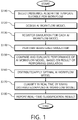
- FIG. 1 is a flowchart provided to explain an explainable AI modeling and simulation method according to an embodiment of the present disclosure.
- an AI modeling and simulation system may assemble the selected algorithms (S110) and may design an AI workflow model (S120).
- the algorithms may be a plurality of deep learning algorithms or machine learning algorithms.
- the AI modeling and simulation system may register a simulation for each AI workflow model (S130), and, when input information is inputted, may perform the registered respective simulations with respect to the input information (S140).
- the AI modeling and simulation system may continuously compare and evaluate performance of the designed respective AI workflow models, based on the results of performing the respective simulations (S150), and may continuously distribute or change an optimal AI workflow model according to the result of comparing and evaluating, and may apply the optimal AI workflow model to a processing process (S160).
- the AI modeling and simulation system may classify results of performing the optimal AI workflow model distributed and applied to the processing process in real time (S170), and may perform a reporting operation for verifying and confirming the real-time classifying results (S180).
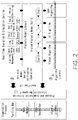
- FIG. 2 is a view provided to explain a process of designing an AI workflow model.
- the explainable AI modeling and simulation system according to an embodiment of the present disclosure relates to AI operation simulation platform technology for automating a development-verification-distribution-operation process of an AI algorithm for each process in the manufacturing industry, and for increasing operation efficiency, and may support main processes which are necessarily required to achieve various kinds of unmanned/automated manufacturing examination processes, which are referred to as interpretation and classification of the main object of Industry 4.0, Visual Information, such as learning classification algorithm modeling, algorithm asset management, parallel simulation performance and automatic algorithm performance verification, identifying of a result of performing a distributed algorithm as an image and shape data.
- Visual Information such as learning classification algorithm modeling, algorithm asset management, parallel simulation performance and automatic algorithm performance verification, identifying of a result of performing a distributed algorithm as an image and shape data.
- the explainable AI modeling and simulation system relates to technology for providing a development-operation-verification-distribution management system of an AI algorithm, which will continuously increase as AI-based manufacturing advancement is increasingly accelerated, and for explaining suitability of a developed AI algorithm with data.
- the present system can visualize connection of algorithms based on a workflow and can automatically verify performance by an integrated simulation, and can perform centralized management for intercomparison of performance by simulating a plurality of workflow-based deep learning algorithms and a plurality of machine learning algorithms simultaneously under the same condition, can implement explainable AI by selecting a deep learning algorithm having optimal accuracy, based on the result of simulating the deep learning algorithms and the machine learning algorithms simultaneously under the same condition, and by selecting/applying a machine learning algorithm having the same result value as the selected deep learning algorithm, can visualize connection of algorithms based on a workflow and automatically verify performance by an integrated simulation, and can process results of classification and analysis to explain causes/grounds by images and standardized shape data.
- the explainable AI modeling and simulation system may assemble selected algorithms when algorithms suitable for a workflow created/edited according to a subject area are selected from pre-stored algorithms, and may design an AI workflow model.
- the pre-stored algorithms may include image processing algorithms and AI learning/classification algorithms, and the image processing algorithms and the AI learning/classification algorithms may be classified and stored in an arbitrarily edited library or a library for each process.
- the image processing algorithms may include an algorithm for an image normalization process, an algorithm for a learning process, and an algorithm for an image feature analysis process, and a user may select algorithms suitable for a created/edited workflow from among the algorithm for the image normalization process, the algorithm for the learning process, and the algorithm for the image feature analysis process, and may assemble the algorithms.
- any one algorithm of Load Object, Normalize, Rotate Image, and Working Domain may be selected.
- any one algorithm of GMM Learning and NCC Learning may be selected.
- any one algorithm of Find Defect, Validate Defect, GMM Classification, NCC Classification, Monitor Defect, and Extract Feature may be selected.
- the AI learning/classification algorithms may include an algorithm for a data pre-processing process, an algorithm for a learning/classification process, an algorithm for a data post-processing process, and an algorithm for an iterative learning/classification process.
- the explainable AI modeling and simulation system may perform algorithm management, AI workflow model management, image data management, registration and performance of a simulation regarding an AI workflow model, distribution and application through a user interface outputted on a screen.
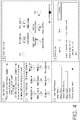
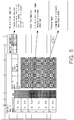
- FIG. 4 is a view illustrating an AI workflow model
- FIG. 5 is a view illustrating a screen for managing image data
- FIG. 6 is a view illustrating a screen for managing an algorithm
- FIG. 7 is a view illustrating a screen providing a visualized AI workflow model.
- the explainable AI modeling and simulation system may design an AI workflow model through a user interface as shown in FIG. 4 .
- the user interface for designing the AI workflow model may include an analysis subject area, an image processing and AI learning/classification area, an algorithm property, a model workflow area, and a data & log area.
- the analysis subject area may be used to select a subject area in the form of a tree, to generate a library of a new AI workflow model, or to select a library of an AI workflow model stored, and the image processing and AI learning/classification area may be used to select/assemble an algorithm in a library in which algorithms are stored, and to design an AI workflow model through the user interface.
- the algorithm property area may be used to select or set property information including an input and output parameter of an algorithm through a user interface, and the model workflow area may provide an AI workflow model by visualizing.
- the data & log area may be used to identify a history, a log, data after an algorithm configurating an AI workflow model is executed.
- the user interface for managing image data which is inputted to the designed AI workflow model, may include an analysis target image list area, a_defect type image list area, and an original image area.
- the analysis target image list area may be used to register or receive image data to be analyzed.
- the defect type image list area displays a list of analysis target images according to each process or each defect type, and the original image area may display an original image from which image features are detected to allow a user to view the original image closely.
- the user interface for managing an algorithm may include an algorithm list area, an algorithm details area, and a defect, process, feature variable list area.
- the algorithm list area may display data processing, image processing, and an AI learning/classification algorithm list
- the algorithm details information area may display an algorithm type, a path to an executed file, a type of an executed file, node type information.
- the defect, process, feature variable list area may display a defect type list to be applied to the algorithm, a process list, and an algorithm version (feature variable group) list.
- the user interface for providing a visualized AI workflow model may include an analysis subject library area, an algorithm workflow canvas area, an immediate performance result viewer area, and an algorithm node list area as shown in FIG. 7 .
- the analysis subject library area may display an analysis model list for each subject area, and may be used for a user to manage a designed analysis model according to a subject area.
- the algorithm workflow canvas area may be used to design a workflow through algorithm node selection, connection, property setup.
- the immediate performance result viewer area may be used to perform an AI workflow model and to identify a result of performing.
- the algorithm node list area may display selectable data processing, image processing, AI learning/classification algorithm node list when algorithm modeling is performed.
- FIG. 8 is a view provided to explain a process of performing a simulation for each AI workflow model.
- the explainable AI modeling and simulation system may select/assemble various algorithms, may design a plurality of deep learning AI workflow models or a plurality of machine learning AI workflow models, may register simulations regarding the plurality of deep learning AI workflow models or the plurality of machine learning AI workflow models when the plurality of deep learning AI workflow models or the plurality of machine learning AI workflow models are designed, and may perform the registered respective simulations.
- the explainable AI modeling and simulation system may perform respective simulations simultaneously under the same conditions, by using a distributed management environment for distributed management of data related to the plurality of deep learning AI workflow models or the plurality of machine learning AI workflow models.
- the distributed management environment refers to an environment in which a plurality of servers connected in a chain form performs distributed management with respect to data related to their respective AI workflow models.
- FIG. 9 is a view provided to explain a process of verifying an AI workflow model and a simulation.
- the explainable AI modeling and simulation system may perform registered respective simulations by using a distributed management environment, may compare and evaluate performance based on the results of performing the respective simulations, may continuously distribute or change an optimal AI workflow model having verified performance, and may optimize the AI workflow model through cumulative and iterative learning/verification regarding additional image/classification results, which are continuously generated during an operation.
- the explainable AI modeling and simulation system may compare and evaluate results of respective simulations performed simultaneously, while cumulatively increasing a size of a verification area, may select a first deep learning AI workflow model having the highest accuracy from among the plurality of deep learning AI workflow models, with reference to the results of evaluating, may select a first machine learning AI workflow model having the same result calculated as the first deep learning AI workflow model, and may distribute the first machine learning AI workflow model, or may compare and evaluate results of respective simulations performed simultaneously, while constantly maintaining a size of a verification area, may select a first deep learning AI workflow model having the highest accuracy from among the plurality of deep learning AI workflow models, with reference to the results of evaluating, may select a first machine learning AI workflow model having the same result calculated as the first deep learning workflow model, and may distribute the first machine learning AI workflow model.
- the explainable AI modeling and simulation system may continuously make additional images/classification results be cumulatively and iteratively learned/verified, thereby continuously optimizing the AI workflow model.
- FIG. 10 is a view illustrating an optimal model of an AI workflow model.
- the explainable AI modeling and simulation system may perform auto evaluation with respect to performance of the designed AI workflow model.
- the explainable AI modeling and simulation system may evaluate performance of the AI workflow model by selecting an optimal model having the highest accuracy of validity checking in a section within a saturation point through automated comparison of results of learning and classification.
- FIG. 11 is a view provided to explain a process of evaluating an optimal simulation between AI workflow models.
- the explainable AI modeling and simulation system may perform simulations with respect to image data acquired in a processing process, by using respective AI workflow models, and may select an optimal AI workflow model by comparing the results of performing respective simulations for the AI workflow models. In this case, if the result as shown in FIG. 11 is calculated, a B model having the highest accuracy may be selected and distributed.
- FIG. 12 is a view provided to explain a process of classifying AI workflow models and evaluating performance.
- the explainable AI modeling and simulation system may manage learning data/model by classifying AI workflow models and evaluating and monitoring performance.
- the explainable AI modeling and simulation system may analyze variability in purity and accuracy according to dates, types, and may suggest a key enhancement point needed to be enhanced.
- FIG. 13 is a view provided to explain a process of determining a grade by determining whether there is a defect in each area in a process of performing a simulation for each AI workflow model.
- the explainable AI modeling and simulation system may perform an image normalization process, a learning process, and an image feature analysis process in sequence when image data is inputted, and may extract image features by measuring an area of interest.
- the explainable AI modeling and simulation system may divide the image data into analysis unit areas, and may determine whether there is a defect in each area and may determine a grade according to the result of determining.
- the grade according to the result of determining may be a grade regarding a significant difference in shapes according to a predetermined condition.
- the explainable AI modeling and simulation system may extract image features by measuring the area of interest that is determined as having a defect.
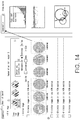
- FIG. 14 is a view provided to explain a process of analyzing commonality of similar images in the process of performing a simulation for each AI workflow model, estimating a fault-causing factor, and generating explanation data.
- the explainable AI modeling and simulation system may calculate information on sizes, areas, etc. of image features, which are extracted by measuring the area of interest determined as having a defect, may classify the images, may search similar images of the image features, and may analyze commonality of the similar images.
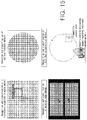
- the explainable AI modeling and simulation system may estimate a fault-causing factor according to the result of analyzing commonality of similar images as shown in FIG. 15 , and may generate explanation data including the estimated fault-causing factor.
- the explainable AI modeling and simulation system may search similar images of the image features in each predetermined similarity section, and may provide the searched similar images.
- the explainable AI modeling and simulation system may estimate the fault-causing factor by using similar images that are searched in a section having the highest similarity, and, if it is difficult to estimate a fault-causing factor due a small sample, the system may analyze commonality of similar images by estimating a fault-causing factor by using similar images that are searched in a section which is lower than the highest-similarity section by one level.
- the explainable AI modeling and simulation system can estimate a fault-causing factor and may generate explanation data including the estimated fault-causing factor in various fields, such as the field of recognition and classification of microscopic organisms in waste water, the field of detection and classification of surface flatness defects, the field of recognition and classification of material edge damage, the field of detection of electron microscope images by using an AI algorithm, and recognition and classification of distribution patterns.
- FIG. 16 is a block diagram of an explainable AI modeling and simulation system according to another embodiment of the present disclosure.
- the explainable AI modeling and simulation system may include a communication unit 110, a processor 120, and a storage unit 130 as shown in FIG. 16 .
- the communication unit 110 is a means for connecting communication with a plurality of servers for a process facility management system or a distributed management environment, and may be used to receive image data acquired in the processing process or to distribute an AI workflow model having verified performance.
- the processor 120 may design an AI workflow model, may register a simulation regarding the designed AI workflow model, and, when information is inputted, may perform registered simulations with respect to the inputted information, simultaneously, by using a distributed management environment.
- the processor 120 may compare, evaluate, and verify performance based on the result of performing simulations, and may distribute a AI workflow model the performance of which is verified.
- the storage unit 130 is a storage medium that stores programs and information necessary for operations of the processor 120.
- the storage unit 130 may classify and store image data, algorithms, AI workflow models, simulations in an arbitrarily edited library or a library for each process.
- the technical concept of the present disclosure may be applied to a computer-readable recording medium which records a computer program for performing functions of the apparatus and the method according to the present embodiment.
- the technical concept according to various embodiments of the present disclosure may be implemented in the form of a computer-readable code recorded on the computer-readable recording medium.
- the computer-readable recording medium may be any data storage device that can be read by a computer and can store data.
- the computer-readable recording medium may be a read only memory (ROM), a random access memory (RAM), a CD-ROM, a magnetic tape, a floppy disk, an optical disk, a hard disk drive, or the like.
- a computer-readable code or program that is stored in the computer readable recording medium may be transmitted via a network connected between computers.
Landscapes
- Engineering & Computer Science (AREA)
- Theoretical Computer Science (AREA)
- Physics & Mathematics (AREA)
- General Engineering & Computer Science (AREA)
- General Physics & Mathematics (AREA)
- Software Systems (AREA)
- Computing Systems (AREA)
- Mathematical Physics (AREA)
- Computational Linguistics (AREA)
- Data Mining & Analysis (AREA)
- Artificial Intelligence (AREA)
- Evolutionary Computation (AREA)
- Quality & Reliability (AREA)
- Life Sciences & Earth Sciences (AREA)
- General Health & Medical Sciences (AREA)
- Molecular Biology (AREA)
- Biophysics (AREA)
- Biomedical Technology (AREA)
- Health & Medical Sciences (AREA)
- Computer Hardware Design (AREA)
- Multimedia (AREA)
- Medical Informatics (AREA)
- Library & Information Science (AREA)
- Computer Vision & Pattern Recognition (AREA)
- Bioinformatics & Cheminformatics (AREA)
- Bioinformatics & Computational Biology (AREA)
- Evolutionary Biology (AREA)
- Management, Administration, Business Operations System, And Electronic Commerce (AREA)
- Image Analysis (AREA)
Abstract
Description
- The present disclosure relates to explainable artificial intelligence (AI) technology, and more particularly, to a system and a method which generate an AI workflow model capable of image conversion, measurement, and image search, by selecting/assembling an algorithm suitable for a workflow created/edited according to a subject area of a semiconductor, display manufacturing process, and perform a simulation.
- AI algorithms may be developed in a somewhat closed way, depending on individual ability, based on R languages, Python languages, and performance of AI algorithms may be evaluated and verified by individual criteria. Therefore, many AI algorithms should be continuously managed and controlled by people to maintain expected performance of AI and to stably operate, and thus there is a limit to unmanned intellectualization.
- In addition, the related-art technology development process for AI algorithms may proceed in a somewhat personalized pattern, for example, in a method in which an analyzer designs, develops, and verifies in its individual development environment, and then, applies in order to satisfy unit requirements, and also, processes of understanding of performance and enhancement/distribution/discarding which change according to an environment may be manually performed, and therefore, there is a problem that it is not easy to enhance and share technology.
- In addition, there is a growing trend toward algorithms of an open source-based deep learning technique and many algorithms are developing in recent years. However, in order to apply the algorithms to real world, it may be determined whether to distribute the algorithms by directly and continuously checking suitability of determination by AI.
- However, there are many AI algorithms according to regions or requirements, and it may be difficult to check and verify AI algorithms one by one, which are periodically required to be remodeled by reflecting changing manufacturing data. To this end, many AI algorithms fail to be optimized. That is, faults of performance frequently occur due to failure of management of change in algorithms.
- The present disclosure has been developed in order to address the above-discussed deficiencies of the prior art, and an object of the present disclosure is to provide an AI modeling and simulation system and method, which can visualize connection of algorithms based on a workflow and can automatically verify performance by an integrated simulation, and can perform centralized management for intercomparison of performance by simulating a plurality of AI algorithms based on a workflow, simultaneously, can visualize connection of algorithms based on a workflow and can automatically verify performance by an integrated simulation, and can process results of classification and analysis to explain causes/grounds by images and standardized shape data.
- According to an embodiment of the present disclosure to achieve the above-described object, an explainable AI modeling and simulation method includes the steps of: when an algorithm suitable for a workflow created and edited according to a subject area is selected from pre-stored algorithms, designing an AI workflow model; and, when input information is inputted, performing a simulation for an AI workflow model with respect to the input information.
- The AI workflow model may be provided by visualizing a workflow and an algorithm selected to suit the workflow.
- The algorithms may be classified and stored in libraries of respective processes, such that the algorithms are assembled according to each process with respect to a data pre-processing process, a learning/classification process, a data post-processing process, and an iterative learning/classification process.
- When image data is inputted, the AI workflow model may perform an image normalization process, a learning process, and an image feature analysis process in sequence, may extract image features by measuring an area of interest, and may generate explanation data based on the image features.
- The step of performing the simulation may include: a step of, when a plurality of deep learning AI workflow models or a plurality of machine learning AI workflow models are designed, registering a simulation for each AI workflow model; and a step of performing the registered respective simulations.
- According to an embodiment of the present disclosure, the explainable AI modeling and simulation method may further include: a step of, when the respective simulations are performed, comparing and evaluating performance of the respective AI workflow models in real time, based on results of performing the respective simulations; and a step of continuously distributing or changing an optimal AI workflow model according to a result of comparing and evaluating in real time.
- In addition, the step of performing the registered respective simulations may include performing the respective simulations simultaneously under the same condition, by using a distributed management environment which performs distributed management with respect to data related to each deep learning AI workflow model or machine learning AI workflow model.
- The input information may be image data that is acquired in a processing process.
- The step of comparing and evaluating may include selecting a first deep learning AI workflow model having the highest accuracy from among the plurality of deep learning AI workflow models which are simulated, and selecting a first machine learning AI workflow model having the same result calculated as the first deep learning AI workflow model, and the step of distributing or changing may include distributing or changing the selected first machine learning AI workflow model.
- The step of performing the registered respective simulations may include: a step of, when image data is inputted, dividing the image data into analysis unit areas, determining whether there is a defect in each area, and determining a grade according to a result of determining; a step of extracting image features by measuring an area of interest which is determined as having a defect; a step of searching similar images of the image features; a step of estimating a fault-causing factor by analyzing commonality of the similar images; and a step of generating explanation data including the fault-causing factor.
- The step of extracting the image features by measuring the area which is determined as having the defect may use any one algorithm of Find Defect, Validate Defect, GMM Classification, NCC Classification, Monitor Defect, and Extract Feature.
- According to another embodiment of the present disclosure, an explainable AI modeling and simulation system may include: a storage unit configured to store algorithms; and a processor configured to, when an algorithm suitable for a workflow created/edited according to a subject area is selected from pre-stored algorithms, design an AI workflow model, and, when input information is inputted, perform a simulation for an AI workflow model with respect to the input information.
- According to embodiments of the present disclosure as described above, connection of algorithms can be visualized based on a workflow, and performance can be automatically verified by an integrated simulation, and a plurality of workflow-based AI algorithms can be simulated simultaneously and performance thereof can be compared.
- In addition, according to various embodiments, results of classification and analysis can be made to explain causes/grounds with images and standardized data, and accordingly, a performance improvement direction can be suggested.
-
-
FIG. 1 is a flowchart provided to explain an explainable AI modeling and simulation method according to an embodiment of the present disclosure; -
FIG. 2 is a view provided to explain a process of designing an AI workflow model; -
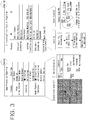
FIG. 3 is a view illustrating an algorithm; -
FIG. 4 is a view illustrating an AI workflow model; -
FIG. 5 is a view illustrating a screen for managing image data; -
FIG. 6 is a view illustrating a screen for managing an algorithm; -
FIG. 7 is a view illustrating a screen providing a visualized AI workflow model; -
FIG. 8 is a view provided to explain a process of performing a simulation for each AI workflow model; -
FIG. 9 is a view provided to explain a process of verifying an AI workflow model and a simulation; -
FIG. 10 is a view illustrating an optimal model of an AI workflow model; -
FIG. 11 is a view provided to explain a process of evaluating an optimal simulation between AI workflow models; -
FIG. 12 is a view provided to explain a process of classifying AI workflow models and evaluating performance; -
FIG. 13 is a view provided to explain a process of determining a grade by determining whether there is a defect in each region in a process of performing a simulation for each AI workflow model; -
FIG. 14 is a view provided to explain a process of analyzing commonality of similar images, estimating a fault-causing factor, and generating explanation data in a process of performing a simulation for each AI workflow model; -
FIG. 15 is a view illustrating various image fault-causing factors; and -
FIG. 16 is a block diagram of an explainable AI modeling and simulation system according to another embodiment of the present disclosure. - Hereinafter, the present disclosure will be described in detail with reference to the accompanying drawings.
- Embodiments of the present disclosure provide a system and a method for providing an explainable AI simulation platform.
- Herein, the 'explainable AI' refers to AI technology for extracting data which can explain causes/grounds as a result of classifying and analyzing by using AI.
-
FIG. 1 is a flowchart provided to explain an explainable AI modeling and simulation method according to an embodiment of the present disclosure. In the explainable AI modeling and simulation method according to an embodiment of the present disclosure, when algorithms suitable for a workflow created/edited according to a subject area are selected from pre-stored algorithms, an AI modeling and simulation system may assemble the selected algorithms (S110) and may design an AI workflow model (S120). - In this case, the algorithms may be a plurality of deep learning algorithms or machine learning algorithms.
- In addition, when a plurality of AI workflow models are designed, the AI modeling and simulation system may register a simulation for each AI workflow model (S130), and, when input information is inputted, may perform the registered respective simulations with respect to the input information (S140).
- When the respective simulations are performed simultaneously under the same condition, the AI modeling and simulation system may continuously compare and evaluate performance of the designed respective AI workflow models, based on the results of performing the respective simulations (S150), and may continuously distribute or change an optimal AI workflow model according to the result of comparing and evaluating, and may apply the optimal AI workflow model to a processing process (S160).
- In addition, the AI modeling and simulation system may classify results of performing the optimal AI workflow model distributed and applied to the processing process in real time (S170), and may perform a reporting operation for verifying and confirming the real-time classifying results (S180).
-
FIG. 2 is a view provided to explain a process of designing an AI workflow model. The explainable AI modeling and simulation system according to an embodiment of the present disclosure relates to AI operation simulation platform technology for automating a development-verification-distribution-operation process of an AI algorithm for each process in the manufacturing industry, and for increasing operation efficiency, and may support main processes which are necessarily required to achieve various kinds of unmanned/automated manufacturing examination processes, which are referred to as interpretation and classification of the main object of Industry 4.0, Visual Information, such as learning classification algorithm modeling, algorithm asset management, parallel simulation performance and automatic algorithm performance verification, identifying of a result of performing a distributed algorithm as an image and shape data. - Furthermore, the explainable AI modeling and simulation system according to an embodiment of the present disclosure relates to technology for providing a development-operation-verification-distribution management system of an AI algorithm, which will continuously increase as AI-based manufacturing advancement is increasingly accelerated, and for explaining suitability of a developed AI algorithm with data. The present system can visualize connection of algorithms based on a workflow and can automatically verify performance by an integrated simulation, and can perform centralized management for intercomparison of performance by simulating a plurality of workflow-based deep learning algorithms and a plurality of machine learning algorithms simultaneously under the same condition, can implement explainable AI by selecting a deep learning algorithm having optimal accuracy, based on the result of simulating the deep learning algorithms and the machine learning algorithms simultaneously under the same condition, and by selecting/applying a machine learning algorithm having the same result value as the selected deep learning algorithm, can visualize connection of algorithms based on a workflow and automatically verify performance by an integrated simulation, and can process results of classification and analysis to explain causes/grounds by images and standardized shape data.
- To perform these functions, the explainable AI modeling and simulation system according to an embodiment of the present disclosure may assemble selected algorithms when algorithms suitable for a workflow created/edited according to a subject area are selected from pre-stored algorithms, and may design an AI workflow model.
- Herein, the pre-stored algorithms may include image processing algorithms and AI learning/classification algorithms, and the image processing algorithms and the AI learning/classification algorithms may be classified and stored in an arbitrarily edited library or a library for each process.
- The image processing algorithms may include an algorithm for an image normalization process, an algorithm for a learning process, and an algorithm for an image feature analysis process, and a user may select algorithms suitable for a created/edited workflow from among the algorithm for the image normalization process, the algorithm for the learning process, and the algorithm for the image feature analysis process, and may assemble the algorithms.
- As the algorithm for the image normalization process, any one algorithm of Load Object, Normalize, Rotate Image, and Working Domain may be selected.
- As the algorithm for the learning process, any one algorithm of GMM Learning and NCC Learning may be selected.
- As the algorithm for the image feature analysis, any one algorithm of Find Defect, Validate Defect, GMM Classification, NCC Classification, Monitor Defect, and Extract Feature may be selected.
- The AI learning/classification algorithms may include an algorithm for a data pre-processing process, an algorithm for a learning/classification process, an algorithm for a data post-processing process, and an algorithm for an iterative learning/classification process.
- As illustrated in
FIGS. 4 to 7 , the explainable AI modeling and simulation system according to an embodiment of the present disclosure may perform algorithm management, AI workflow model management, image data management, registration and performance of a simulation regarding an AI workflow model, distribution and application through a user interface outputted on a screen. - Specifically,
FIG. 4 is a view illustrating an AI workflow model,FIG. 5 is a view illustrating a screen for managing image data, andFIG. 6 is a view illustrating a screen for managing an algorithm.FIG. 7 is a view illustrating a screen providing a visualized AI workflow model. - The explainable AI modeling and simulation system may design an AI workflow model through a user interface as shown in
FIG. 4 . - In this case, the user interface for designing the AI workflow model may include an analysis subject area, an image processing and AI learning/classification area, an algorithm property, a model workflow area, and a data & log area.
- The analysis subject area may be used to select a subject area in the form of a tree, to generate a library of a new AI workflow model, or to select a library of an AI workflow model stored, and the image processing and AI learning/classification area may be used to select/assemble an algorithm in a library in which algorithms are stored, and to design an AI workflow model through the user interface.
- The algorithm property area may be used to select or set property information including an input and output parameter of an algorithm through a user interface, and the model workflow area may provide an AI workflow model by visualizing.
- In addition, the data & log area may be used to identify a history, a log, data after an algorithm configurating an AI workflow model is executed.
- In addition, as shown in
FIG. 5 , the user interface for managing image data, which is inputted to the designed AI workflow model, may include an analysis target image list area, a_defect type image list area, and an original image area. - The analysis target image list area may be used to register or receive image data to be analyzed.
- The defect type image list area displays a list of analysis target images according to each process or each defect type, and the original image area may display an original image from which image features are detected to allow a user to view the original image closely.
- In addition, as shown in
FIG. 6 , the user interface for managing an algorithm may include an algorithm list area, an algorithm details area, and a defect, process, feature variable list area. - The algorithm list area may display data processing, image processing, and an AI learning/classification algorithm list, and the algorithm details information area may display an algorithm type, a path to an executed file, a type of an executed file, node type information.
- The defect, process, feature variable list area may display a defect type list to be applied to the algorithm, a process list, and an algorithm version (feature variable group) list.
- The user interface for providing a visualized AI workflow model may include an analysis subject library area, an algorithm workflow canvas area, an immediate performance result viewer area, and an algorithm node list area as shown in
FIG. 7 . - The analysis subject library area may display an analysis model list for each subject area, and may be used for a user to manage a designed analysis model according to a subject area.
- The algorithm workflow canvas area may be used to design a workflow through algorithm node selection, connection, property setup.
- The immediate performance result viewer area may be used to perform an AI workflow model and to identify a result of performing.
- The algorithm node list area may display selectable data processing, image processing, AI learning/classification algorithm node list when algorithm modeling is performed.
-
FIG. 8 is a view provided to explain a process of performing a simulation for each AI workflow model. In order to provide a development-operation-verification-distribution management system of an AI algorithm and to explain suitability of a developed AI algorithm with data, the explainable AI modeling and simulation system according to an embodiment of the present disclosure may select/assemble various algorithms, may design a plurality of deep learning AI workflow models or a plurality of machine learning AI workflow models, may register simulations regarding the plurality of deep learning AI workflow models or the plurality of machine learning AI workflow models when the plurality of deep learning AI workflow models or the plurality of machine learning AI workflow models are designed, and may perform the registered respective simulations. - Specifically, the explainable AI modeling and simulation system may perform respective simulations simultaneously under the same conditions, by using a distributed management environment for distributed management of data related to the plurality of deep learning AI workflow models or the plurality of machine learning AI workflow models.
- Herein, the distributed management environment refers to an environment in which a plurality of servers connected in a chain form performs distributed management with respect to data related to their respective AI workflow models.
-
FIG. 9 is a view provided to explain a process of verifying an AI workflow model and a simulation. The explainable AI modeling and simulation system according to an embodiment of the present disclosure may perform registered respective simulations by using a distributed management environment, may compare and evaluate performance based on the results of performing the respective simulations, may continuously distribute or change an optimal AI workflow model having verified performance, and may optimize the AI workflow model through cumulative and iterative learning/verification regarding additional image/classification results, which are continuously generated during an operation. - For example, the explainable AI modeling and simulation system may compare and evaluate results of respective simulations performed simultaneously, while cumulatively increasing a size of a verification area, may select a first deep learning AI workflow model having the highest accuracy from among the plurality of deep learning AI workflow models, with reference to the results of evaluating, may select a first machine learning AI workflow model having the same result calculated as the first deep learning AI workflow model, and may distribute the first machine learning AI workflow model, or may compare and evaluate results of respective simulations performed simultaneously, while constantly maintaining a size of a verification area, may select a first deep learning AI workflow model having the highest accuracy from among the plurality of deep learning AI workflow models, with reference to the results of evaluating, may select a first machine learning AI workflow model having the same result calculated as the first deep learning workflow model, and may distribute the first machine learning AI workflow model.
- Even when an optimal AI workflow model applied to a processing process is operated after being applied to the processing process, the explainable AI modeling and simulation system may continuously make additional images/classification results be cumulatively and iteratively learned/verified, thereby continuously optimizing the AI workflow model.
-
FIG. 10 is a view illustrating an optimal model of an AI workflow model. When an AI workflow model is designed, the explainable AI modeling and simulation system according to an embodiment of the present disclosure may perform auto evaluation with respect to performance of the designed AI workflow model. - Specifically, the explainable AI modeling and simulation system may evaluate performance of the AI workflow model by selecting an optimal model having the highest accuracy of validity checking in a section within a saturation point through automated comparison of results of learning and classification.
-
FIG. 11 is a view provided to explain a process of evaluating an optimal simulation between AI workflow models. As shown inFIG. 11 , the explainable AI modeling and simulation system according to an embodiment of the present disclosure may perform simulations with respect to image data acquired in a processing process, by using respective AI workflow models, and may select an optimal AI workflow model by comparing the results of performing respective simulations for the AI workflow models. In this case, if the result as shown inFIG. 11 is calculated, a B model having the highest accuracy may be selected and distributed. -
FIG. 12 is a view provided to explain a process of classifying AI workflow models and evaluating performance. The explainable AI modeling and simulation system according to an embodiment of the present disclosure may manage learning data/model by classifying AI workflow models and evaluating and monitoring performance. - Specifically, the explainable AI modeling and simulation system may analyze variability in purity and accuracy according to dates, types, and may suggest a key enhancement point needed to be enhanced.
-
FIG. 13 is a view provided to explain a process of determining a grade by determining whether there is a defect in each area in a process of performing a simulation for each AI workflow model. The explainable AI modeling and simulation system according to an embodiment of the present disclosure may perform an image normalization process, a learning process, and an image feature analysis process in sequence when image data is inputted, and may extract image features by measuring an area of interest. - Specifically, when image data is inputted for quality guarantee, test, measurement in a processing process, the explainable AI modeling and simulation system may divide the image data into analysis unit areas, and may determine whether there is a defect in each area and may determine a grade according to the result of determining. In this case, the grade according to the result of determining may be a grade regarding a significant difference in shapes according to a predetermined condition.
- In addition, when the grade is determined according to the result of determining, the explainable AI modeling and simulation system may extract image features by measuring the area of interest that is determined as having a defect.
-
FIG. 14 is a view provided to explain a process of analyzing commonality of similar images in the process of performing a simulation for each AI workflow model, estimating a fault-causing factor, and generating explanation data. - The explainable AI modeling and simulation system according to the present embodiment may calculate information on sizes, areas, etc. of image features, which are extracted by measuring the area of interest determined as having a defect, may classify the images, may search similar images of the image features, and may analyze commonality of the similar images.
- In addition, the explainable AI modeling and simulation system may estimate a fault-causing factor according to the result of analyzing commonality of similar images as shown in
FIG. 15 , and may generate explanation data including the estimated fault-causing factor. - Herein, the explainable AI modeling and simulation system may search similar images of the image features in each predetermined similarity section, and may provide the searched similar images.
- Through this, the explainable AI modeling and simulation system may estimate the fault-causing factor by using similar images that are searched in a section having the highest similarity, and, if it is difficult to estimate a fault-causing factor due a small sample, the system may analyze commonality of similar images by estimating a fault-causing factor by using similar images that are searched in a section which is lower than the highest-similarity section by one level.
- As shown in
FIG. 15 , the explainable AI modeling and simulation system can estimate a fault-causing factor and may generate explanation data including the estimated fault-causing factor in various fields, such as the field of recognition and classification of microscopic organisms in waste water, the field of detection and classification of surface flatness defects, the field of recognition and classification of material edge damage, the field of detection of electron microscope images by using an AI algorithm, and recognition and classification of distribution patterns. -
FIG. 16 is a block diagram of an explainable AI modeling and simulation system according to another embodiment of the present disclosure. The explainable AI modeling and simulation system according to an embodiment may include acommunication unit 110, aprocessor 120, and astorage unit 130 as shown inFIG. 16 . - The
communication unit 110 is a means for connecting communication with a plurality of servers for a process facility management system or a distributed management environment, and may be used to receive image data acquired in the processing process or to distribute an AI workflow model having verified performance. - When an algorithm suitable for a workflow created/edited according to a subject area is selected from pre-stored algorithms, the
processor 120 may design an AI workflow model, may register a simulation regarding the designed AI workflow model, and, when information is inputted, may perform registered simulations with respect to the inputted information, simultaneously, by using a distributed management environment. - In addition, the
processor 120 may compare, evaluate, and verify performance based on the result of performing simulations, and may distribute a AI workflow model the performance of which is verified. - The
storage unit 130 is a storage medium that stores programs and information necessary for operations of theprocessor 120. In addition, thestorage unit 130 may classify and store image data, algorithms, AI workflow models, simulations in an arbitrarily edited library or a library for each process. - The technical concept of the present disclosure may be applied to a computer-readable recording medium which records a computer program for performing functions of the apparatus and the method according to the present embodiment. In addition, the technical concept according to various embodiments of the present disclosure may be implemented in the form of a computer-readable code recorded on the computer-readable recording medium. The computer-readable recording medium may be any data storage device that can be read by a computer and can store data. For example, the computer-readable recording medium may be a read only memory (ROM), a random access memory (RAM), a CD-ROM, a magnetic tape, a floppy disk, an optical disk, a hard disk drive, or the like. A computer-readable code or program that is stored in the computer readable recording medium may be transmitted via a network connected between computers.
- In addition, while preferred embodiments of the present disclosure have been illustrated and described, the present disclosure is not limited to the above-described specific embodiments. Various changes can be made by a person skilled in the art without departing from the scope of the present disclosure claimed in claims, and also, changed embodiments should not be understood as being separate from the technical concept or prospect of the present disclosure.
Claims (12)
- An explainable AI modeling and simulation method comprising the steps of:when an algorithm suitable for a workflow created and edited according to a subject area is selected from pre-stored algorithms, designing an AI workflow model; andwhen input information is inputted, performing a simulation for an AI workflow model with respect to the input information.
- The method of claim 1, wherein the AI workflow model is provided by visualizing a workflow and an algorithm selected to suit the workflow.
- The method of claim 1, wherein the algorithms are classified and stored in libraries of respective processes, such that the algorithms are assembled according to each process with respect to a data pre-processing process, a learning/classification process, a data post-processing process, and an iterative learning/classification process.
- The method of claim 3, wherein, when image data is inputted, the AI workflow model is configured to perform an image normalization process, a learning process, and an image feature analysis process in sequence, to extract image features by measuring an area of interest, and to generate explanation data based on the image features.
- The method of claim 1, wherein the step of performing the simulation comprises:a step of, when a plurality of deep learning AI workflow models or a plurality of machine learning AI workflow models are designed, registering a simulation for each AI workflow model; anda step of performing the registered respective simulations.
- The method of claim 5, further comprising:a step of, when the respective simulations are performed, comparing and evaluating performance of the respective AI workflow models in real time, based on results of performing the respective simulations; anda step of continuously distributing or changing an optimal AI workflow model according to a result of comparing and evaluating in real time.
- The method of claim 6, wherein the step of performing the registered respective simulations comprises performing the respective simulations simultaneously under the same condition, by using a distributed management environment which performs distributed management with respect to data related to each deep learning AI workflow model or machine learning AI workflow model.
- The method of claim 6, wherein the input information is image data that is acquired in a processing process.
- The method of claim 6, wherein the step of comparing and evaluating comprises selecting a first deep learning AI workflow model having the highest accuracy from among the plurality of deep learning AI workflow models which are simulated, and selecting a first machine learning AI workflow model having the same result calculated as the first deep learning AI workflow model, and
wherein the step of distributing or changing comprises distributing or changing the selected first machine learning AI workflow model. - The method of claim 6, wherein the step of performing the registered respective simulations comprises:a step of, when image data is inputted, dividing the image data into analysis unit areas, determining whether there is a defect in each area, and determining a grade according to a result of determining;a step of extracting image features by measuring an area of interest which is determined as having a defect;a step of searching similar images of the image features;a step of estimating a fault-causing factor by analyzing commonality of the similar images; anda step of generating explanation data including the fault-causing factor.
- The method of claim 10, wherein the step of extracting the image features by measuring the area which is determined as having the defect uses any one algorithm of Find Defect, Validate Defect, GMM Classification, NCC Classification, Monitor Defect, and Extract Feature.
- An explainable AI modeling and simulation system, comprising:a storage unit configured to store algorithms; anda processor configured to, when an algorithm suitable for a workflow created/edited according to a subject area is selected from pre-stored algorithms, design an AI workflow model, and, when input information is inputted, perform a simulation for an AI workflow model with respect to the input information.
Applications Claiming Priority (2)
| Application Number | Priority Date | Filing Date | Title |
|---|---|---|---|
| KR1020190000998A KR102142205B1 (en) | 2019-01-04 | 2019-01-04 | Explainable AI Modeling and Simulation System and Method |
| PCT/KR2020/000022 WO2020141882A1 (en) | 2019-01-04 | 2020-01-02 | Explainable artificial intelligence modeling and simulation system and method |
Publications (2)
| Publication Number | Publication Date |
|---|---|
| EP3907618A1 true EP3907618A1 (en) | 2021-11-10 |
| EP3907618A4 EP3907618A4 (en) | 2022-09-21 |
Family
ID=71407378
Family Applications (1)
| Application Number | Title | Priority Date | Filing Date |
|---|---|---|---|
| EP20736068.6A Pending EP3907618A4 (en) | 2019-01-04 | 2020-01-02 | EXPLANATORY ARTIFICIAL INTELLIGENCE MODELING AND SIMULATION SYSTEM AND METHOD |
Country Status (4)
| Country | Link |
|---|---|
| US (1) | US12032469B2 (en) |
| EP (1) | EP3907618A4 (en) |
| KR (1) | KR102142205B1 (en) |
| WO (1) | WO2020141882A1 (en) |
Families Citing this family (32)
| Publication number | Priority date | Publication date | Assignee | Title |
|---|---|---|---|---|
| KR102338304B1 (en) * | 2020-10-20 | 2021-12-13 | 주식회사 뉴로코어 | A facility- simulator based job scheduling system using reinforcement deep learning |
| KR102854526B1 (en) * | 2020-11-26 | 2025-09-03 | 인하대학교 산학협력단 | A method and system of switching specialized lightweight neural networks for concept-drift adaptation in resource-constrained mobile devices |
| KR102284539B1 (en) * | 2020-11-30 | 2021-08-02 | 주식회사 애자일소다 | Machine learning based artificial intelligence model learning, development, deployment and operation system service method using the same |
| KR102528505B1 (en) * | 2020-12-10 | 2023-05-08 | 주식회사 인터엑스 | Customized Autonomous Artificial Intelligence Platform Using Manufacturing Process Data |
| KR102278284B1 (en) * | 2021-02-23 | 2021-07-16 | 주식회사 에이아이노미스 | Apparatus and method for producing deep learning model using nested editable block |
| CN112990561B (en) * | 2021-03-04 | 2023-01-20 | 广东工业大学 | Industrial industry chain cooperative decision-making method based on workflow model |
| KR102633843B1 (en) | 2021-03-31 | 2024-02-07 | 한국과학기술연구원 | Real-time acoustic simulation method and system based on artificial intelligence |
| KR20220152022A (en) * | 2021-05-07 | 2022-11-15 | 삼성전자주식회사 | Electronic device corresponding to a node included in a blockchain network and method of operating the same |
| US11977367B2 (en) * | 2021-05-12 | 2024-05-07 | United Microelectronics Corp. | Command script editing method, command script editor and graphic user interface |
| US20230169408A1 (en) * | 2021-11-30 | 2023-06-01 | International Business Machines Corporation | Annotation of a Machine Learning Pipeline with Operational Semantics |
| US12411709B2 (en) | 2021-11-30 | 2025-09-09 | International Business Machines Corporation | Annotation of a machine learning pipeline with operational semantics |
| US12423591B2 (en) | 2021-11-30 | 2025-09-23 | International Business Machines Corporation | Annotation of a machine learning pipeline with operational semantics to support distributed lineage tracking |
| KR102694136B1 (en) * | 2021-12-30 | 2024-08-13 | 앤츠이엔씨 주식회사 | Oil gas plant equipment failure prediction and diagnosis system based on artificial intelligence |
| KR102709541B1 (en) | 2022-05-16 | 2024-09-25 | 고려대학교 산학협력단 | Autonomous method to operate simulators with reinforcement learning, device and recording medium for performing the method |
| KR102842503B1 (en) * | 2022-06-24 | 2025-08-05 | 주식회사 뉴로코어 | A neural network-based factory scheduling system independent of product type and number of types |
| KR102951410B1 (en) | 2022-07-15 | 2026-04-10 | 삼성디스플레이 주식회사 | Method of detecting anomaly of device for manufacturing display |
| KR102930962B1 (en) * | 2022-08-17 | 2026-02-25 | 쿠팡 주식회사 | Method and appartus for managing an artificial intelligence model related service |
| US20240070350A1 (en) * | 2022-08-23 | 2024-02-29 | International Business Machines Corporation | Workflow simulation with environment simulation |
| KR102524758B1 (en) * | 2022-09-26 | 2023-04-25 | (주)시큐레이어 | Method for providing data masking information based on explainable artificial intelligence server using the same |
| WO2024106751A1 (en) * | 2022-11-15 | 2024-05-23 | 주식회사 인비전랩 | Method for automatically generating artificial intelligence model |
| KR102728153B1 (en) * | 2022-11-24 | 2024-11-08 | 주식회사 인제니오에이아이 | System and method for de-identification processing of data based on machine learning and computer program for the same |
| EP4379602A1 (en) * | 2022-11-29 | 2024-06-05 | Frequentis AG | Method for certification of periodically adapted machine learning models |
| KR102700445B1 (en) * | 2022-12-02 | 2024-08-29 | 주식회사 와이즈넛 | System for generating automatically machine learning model pipeline based on data |
| KR102943833B1 (en) | 2022-12-16 | 2026-03-25 | 한국과학기술원 | Method for providing explanation to AI(Artificial Intelligence) model based on plug and play mode |
| CN116523068A (en) * | 2023-04-07 | 2023-08-01 | 迈塔沃斯(武汉)科技有限公司 | Simulation system for AI algorithm training |
| KR102630391B1 (en) * | 2023-08-29 | 2024-01-30 | (주)시큐레이어 | Method for providing image data masking information based on explainable artificial intelligence and learning server using the same |
| KR102630394B1 (en) * | 2023-08-29 | 2024-01-30 | (주)시큐레이어 | Method for providing table data analysis information based on explainable artificial intelligence and learning server using the same |
| WO2025244150A1 (en) * | 2024-05-22 | 2025-11-27 | 주식회사 인제니오에이아이 | System and method for de-identification processing of data on basis of machine learning, and computer program therefor |
| US12282719B1 (en) * | 2024-05-22 | 2025-04-22 | Airia LLC | Building and simulating execution of managed artificial intelligence pipelines |
| US12277246B1 (en) | 2024-06-10 | 2025-04-15 | Airia LLC | Derived permissions for stored outputs from artificial intelligence agents |
| KR102810607B1 (en) * | 2024-06-24 | 2025-05-22 | (주)바이브컴퍼니 | Simulation engine having self-evolutional function based on open source and Simulation method using thereof |
| WO2026095394A1 (en) * | 2024-10-29 | 2026-05-07 | 주식회사 루닛 | Method and apparatus for analyzing performance of machine learning model |
Family Cites Families (13)
| Publication number | Priority date | Publication date | Assignee | Title |
|---|---|---|---|---|
| KR100621971B1 (en) * | 2004-03-04 | 2006-09-08 | 한국과학기술원 | Workflow Model Simulation Apparatus and Method Based on Workflow System |
| US20050256818A1 (en) * | 2004-04-30 | 2005-11-17 | Xerox Corporation | Workflow auto generation from user constraints and hierarchical dependence graphs for workflows |
| US7502763B2 (en) * | 2005-07-29 | 2009-03-10 | The Florida International University Board Of Trustees | Artificial neural network design and evaluation tool |
| JP4872702B2 (en) | 2007-02-16 | 2012-02-08 | 日本電気株式会社 | Distributed workflow simulation system, method, and program |
| US8463006B2 (en) * | 2007-04-17 | 2013-06-11 | Francine J. Prokoski | System and method for using three dimensional infrared imaging to provide detailed anatomical structure maps |
| US7676294B2 (en) * | 2007-09-27 | 2010-03-09 | Rockwell Automation Technologies, Inc. | Visualization of workflow in an industrial automation environment |
| US8380642B2 (en) * | 2008-12-03 | 2013-02-19 | Schlumberger Technology Corporation | Methods and systems for self-improving reasoning tools |
| KR101345068B1 (en) * | 2013-06-12 | 2013-12-26 | 성결대학교 산학협력단 | System and method for workflow modeling and simulation |
| US20160358099A1 (en) * | 2015-06-04 | 2016-12-08 | The Boeing Company | Advanced analytical infrastructure for machine learning |
| WO2017138220A1 (en) | 2016-02-12 | 2017-08-17 | ソニー株式会社 | Information processing method and information processing device |
| US11468318B2 (en) * | 2017-03-17 | 2022-10-11 | Portland State University | Frame interpolation via adaptive convolution and adaptive separable convolution |
| KR101888637B1 (en) | 2017-03-20 | 2018-08-14 | 한국생산기술연구원 | Analysis methodology and platform architecture system for big data based on manufacturing specialized algorithm template |
| KR20180130925A (en) * | 2017-05-30 | 2018-12-10 | 국방과학연구소 | Artificial intelligent device generating a learning image for machine running and control method thereof |
-
2019
- 2019-01-04 KR KR1020190000998A patent/KR102142205B1/en active Active
-
2020
- 2020-01-02 EP EP20736068.6A patent/EP3907618A4/en active Pending
- 2020-01-02 WO PCT/KR2020/000022 patent/WO2020141882A1/en not_active Ceased
- 2020-01-02 US US17/420,237 patent/US12032469B2/en active Active
Also Published As
| Publication number | Publication date |
|---|---|
| US12032469B2 (en) | 2024-07-09 |
| EP3907618A4 (en) | 2022-09-21 |
| KR20200092447A (en) | 2020-08-04 |
| US20220066905A1 (en) | 2022-03-03 |
| WO2020141882A1 (en) | 2020-07-09 |
| KR102142205B1 (en) | 2020-08-06 |
Similar Documents
| Publication | Publication Date | Title |
|---|---|---|
| US12032469B2 (en) | Explainable artificial intelligence modeling and simulation system and method | |
| TWI750553B (en) | Method of defect detection on a specimen and system thereof | |
| JP6905954B2 (en) | Optimization of unknown defect removal for automatic defect classification | |
| US10964013B2 (en) | System, method for training and applying defect classifiers in wafers having deeply stacked layers | |
| EP3480735A1 (en) | Inspection apparatus, data generation apparatus, data generation method, and data generation program | |
| KR102386536B1 (en) | Determination of one or more characteristics of a pattern of interest on a specimen | |
| KR102956982B1 (en) | Machine learning-based classification of defects in semiconductor specimens | |
| CN117392042A (en) | Defect detection method, defect detection equipment and storage medium | |
| CN118196555A (en) | Generate training data that can be used to inspect semiconductor samples | |
| US20150179400A1 (en) | Defect Discovery and Inspection Sensitivity Optimization Using Automated Classification of Corresponding Electron Beam Images | |
| CN118378196B (en) | Industrial control host abnormal behavior identification method based on multi-mode data fusion | |
| JP5080526B2 (en) | Method and apparatus for data analysis | |
| CN117932394A (en) | Electronic component fault management method and system | |
| US20260027664A1 (en) | Method for performing a maintenance or repair of a rotor blade of a wind turbine | |
| KR102685359B1 (en) | Method of examining specimens and system thereof | |
| US20250199064A1 (en) | Detecting a Function Section in a Representation of a Quantum Circuit | |
| JP2006292615A (en) | Appearance inspection apparatus, appearance inspection method, program for causing computer to function as appearance inspection apparatus, and recording medium | |
| KR20230068445A (en) | Automatic quality inspection device and method of hole image based on artificial intelligence | |
| CN114155412A (en) | Deep learning model iteration method, device, equipment and storage medium | |
| KR102813799B1 (en) | Method and apparatus for acoustic emissions testing | |
| Mazzochin et al. | Mobile software for automated segmentation, counting, and management of wood logs | |
| JP7496470B2 (en) | Techniques for analyzing and detecting execution artifacts in microwell plates - Patents.com | |
| Sousa et al. | Graph Theory Approach to Quantify Uncertainty of Performance Measures | |
| Shyamala Devi et al. | Inner Convolutional Layer Optimized AlexNet Based Broken Egg Classification | |
| CN120594047A (en) | A method for detecting surface finish of an optical lens required for a display device |
Legal Events
| Date | Code | Title | Description |
|---|---|---|---|
| STAA | Information on the status of an ep patent application or granted ep patent |
Free format text: STATUS: THE INTERNATIONAL PUBLICATION HAS BEEN MADE |
|
| PUAI | Public reference made under article 153(3) epc to a published international application that has entered the european phase |
Free format text: ORIGINAL CODE: 0009012 |
|
| STAA | Information on the status of an ep patent application or granted ep patent |
Free format text: STATUS: REQUEST FOR EXAMINATION WAS MADE |
|
| 17P | Request for examination filed |
Effective date: 20210630 |
|
| AK | Designated contracting states |
Kind code of ref document: A1 Designated state(s): AL AT BE BG CH CY CZ DE DK EE ES FI FR GB GR HR HU IE IS IT LI LT LU LV MC MK MT NL NO PL PT RO RS SE SI SK SM TR |
|
| DAV | Request for validation of the european patent (deleted) | ||
| DAX | Request for extension of the european patent (deleted) | ||
| A4 | Supplementary search report drawn up and despatched |
Effective date: 20220819 |
|
| RIC1 | Information provided on ipc code assigned before grant |
Ipc: G06V 10/32 20220101ALN20220812BHEP Ipc: G06V 10/25 20220101ALN20220812BHEP Ipc: G06N 3/04 20060101ALN20220812BHEP Ipc: G06N 3/10 20060101ALI20220812BHEP Ipc: G06F 8/34 20180101ALI20220812BHEP Ipc: G06T 7/00 20170101ALI20220812BHEP Ipc: G06N 3/08 20060101ALI20220812BHEP Ipc: G06F 11/34 20060101AFI20220812BHEP |
|
| STAA | Information on the status of an ep patent application or granted ep patent |
Free format text: STATUS: EXAMINATION IS IN PROGRESS |
|
| 17Q | First examination report despatched |
Effective date: 20240327 |