EP3907282A1 - Preparation of virus-like particles for accurate analysis and immunization against corona viruses - Google Patents
Preparation of virus-like particles for accurate analysis and immunization against corona viruses Download PDFInfo
- Publication number
- EP3907282A1 EP3907282A1 EP20178779.3A EP20178779A EP3907282A1 EP 3907282 A1 EP3907282 A1 EP 3907282A1 EP 20178779 A EP20178779 A EP 20178779A EP 3907282 A1 EP3907282 A1 EP 3907282A1
- Authority
- EP
- European Patent Office
- Prior art keywords
- virus
- protein
- proteins
- particle
- avirulent
- Prior art date
- Legal status (The legal status is an assumption and is not a legal conclusion. Google has not performed a legal analysis and makes no representation as to the accuracy of the status listed.)
- Withdrawn
Links
Images

Classifications
-
- C—CHEMISTRY; METALLURGY
- C12—BIOCHEMISTRY; BEER; SPIRITS; WINE; VINEGAR; MICROBIOLOGY; ENZYMOLOGY; MUTATION OR GENETIC ENGINEERING
- C12N—MICROORGANISMS OR ENZYMES; COMPOSITIONS THEREOF; PROPAGATING, PRESERVING, OR MAINTAINING MICROORGANISMS; MUTATION OR GENETIC ENGINEERING; CULTURE MEDIA
- C12N7/00—Viruses; Bacteriophages; Compositions thereof; Preparation or purification thereof
-
- A—HUMAN NECESSITIES
- A61—MEDICAL OR VETERINARY SCIENCE; HYGIENE
- A61K—PREPARATIONS FOR MEDICAL, DENTAL OR TOILETRY PURPOSES
- A61K39/00—Medicinal preparations containing antigens or antibodies
- A61K39/12—Viral antigens
-
- A—HUMAN NECESSITIES
- A61—MEDICAL OR VETERINARY SCIENCE; HYGIENE
- A61P—SPECIFIC THERAPEUTIC ACTIVITY OF CHEMICAL COMPOUNDS OR MEDICINAL PREPARATIONS
- A61P31/00—Antiinfectives, i.e. antibiotics, antiseptics, chemotherapeutics
- A61P31/12—Antivirals
- A61P31/14—Antivirals for RNA viruses
-
- C—CHEMISTRY; METALLURGY
- C07—ORGANIC CHEMISTRY
- C07K—PEPTIDES
- C07K14/00—Peptides having more than 20 amino acids; Gastrins; Somatostatins; Melanotropins; Derivatives thereof
- C07K14/005—Peptides having more than 20 amino acids; Gastrins; Somatostatins; Melanotropins; Derivatives thereof from viruses
-
- A—HUMAN NECESSITIES
- A61—MEDICAL OR VETERINARY SCIENCE; HYGIENE
- A61K—PREPARATIONS FOR MEDICAL, DENTAL OR TOILETRY PURPOSES
- A61K39/00—Medicinal preparations containing antigens or antibodies
- A61K2039/51—Medicinal preparations containing antigens or antibodies comprising whole cells, viruses or DNA/RNA
- A61K2039/525—Virus
- A61K2039/5258—Virus-like particles
-
- C—CHEMISTRY; METALLURGY
- C12—BIOCHEMISTRY; BEER; SPIRITS; WINE; VINEGAR; MICROBIOLOGY; ENZYMOLOGY; MUTATION OR GENETIC ENGINEERING
- C12N—MICROORGANISMS OR ENZYMES; COMPOSITIONS THEREOF; PROPAGATING, PRESERVING, OR MAINTAINING MICROORGANISMS; MUTATION OR GENETIC ENGINEERING; CULTURE MEDIA
- C12N2770/00—MICROORGANISMS OR ENZYMES; COMPOSITIONS THEREOF; PROPAGATING, PRESERVING, OR MAINTAINING MICROORGANISMS; MUTATION OR GENETIC ENGINEERING; CULTURE MEDIA ssRNA viruses positive-sense
- C12N2770/00011—Details
- C12N2770/20011—Coronaviridae
-
- C—CHEMISTRY; METALLURGY
- C12—BIOCHEMISTRY; BEER; SPIRITS; WINE; VINEGAR; MICROBIOLOGY; ENZYMOLOGY; MUTATION OR GENETIC ENGINEERING
- C12N—MICROORGANISMS OR ENZYMES; COMPOSITIONS THEREOF; PROPAGATING, PRESERVING, OR MAINTAINING MICROORGANISMS; MUTATION OR GENETIC ENGINEERING; CULTURE MEDIA
- C12N2770/00—MICROORGANISMS OR ENZYMES; COMPOSITIONS THEREOF; PROPAGATING, PRESERVING, OR MAINTAINING MICROORGANISMS; MUTATION OR GENETIC ENGINEERING; CULTURE MEDIA ssRNA viruses positive-sense
- C12N2770/00011—Details
- C12N2770/20011—Coronaviridae
- C12N2770/20022—New viral proteins or individual genes, new structural or functional aspects of known viral proteins or genes
-
- C—CHEMISTRY; METALLURGY
- C12—BIOCHEMISTRY; BEER; SPIRITS; WINE; VINEGAR; MICROBIOLOGY; ENZYMOLOGY; MUTATION OR GENETIC ENGINEERING
- C12N—MICROORGANISMS OR ENZYMES; COMPOSITIONS THEREOF; PROPAGATING, PRESERVING, OR MAINTAINING MICROORGANISMS; MUTATION OR GENETIC ENGINEERING; CULTURE MEDIA
- C12N2770/00—MICROORGANISMS OR ENZYMES; COMPOSITIONS THEREOF; PROPAGATING, PRESERVING, OR MAINTAINING MICROORGANISMS; MUTATION OR GENETIC ENGINEERING; CULTURE MEDIA ssRNA viruses positive-sense
- C12N2770/00011—Details
- C12N2770/20011—Coronaviridae
- C12N2770/20023—Virus like particles [VLP]
-
- C—CHEMISTRY; METALLURGY
- C12—BIOCHEMISTRY; BEER; SPIRITS; WINE; VINEGAR; MICROBIOLOGY; ENZYMOLOGY; MUTATION OR GENETIC ENGINEERING
- C12N—MICROORGANISMS OR ENZYMES; COMPOSITIONS THEREOF; PROPAGATING, PRESERVING, OR MAINTAINING MICROORGANISMS; MUTATION OR GENETIC ENGINEERING; CULTURE MEDIA
- C12N2770/00—MICROORGANISMS OR ENZYMES; COMPOSITIONS THEREOF; PROPAGATING, PRESERVING, OR MAINTAINING MICROORGANISMS; MUTATION OR GENETIC ENGINEERING; CULTURE MEDIA ssRNA viruses positive-sense
- C12N2770/00011—Details
- C12N2770/20011—Coronaviridae
- C12N2770/20034—Use of virus or viral component as vaccine, e.g. live-attenuated or inactivated virus, VLP, viral protein
Definitions
- the present invention regards new avirulent virus-like particles and their use as analytical reagents and for vaccination against viruses, in particular corona viruses.
- Immunization against new emerging viral infections and their accurate detection i.e. level of immunity in a person
- levels of immunity in a person are tightly coupled as both require agents that mimic the virus as close as possible, yet obviously are not infectious.
- an analytical reagent performs best if it best matches with the agent that triggered the formation of the specific set of antibodies, since all humans have different antibodies. If an analytical reagent for detection of the level of immunity is ill matching the agent (e.g. a virus), the use of the analytical reagent will result in wrong positive and wrong negative results on the level of immunity of a person.
- the same benefit of an as perfect as possible match between the analytical reagent and the agent of interest is found in the development of a vaccine, as now the immune system of a person is to be triggered and trained as accurately as possible to later recognize again a most similar agent (i.e. the virus trying to infect the person).
- VLP virus-like particles
- the mimicking action's quality depends on the molecular orientation, identity of the subunits of the structure and the overall wetting behavior of the object, its size and charge. Each factor is known per se and extensively discussed in the scientific literature.
- corona viruses are very important for virus types with complex surfaces, such as corona viruses, as their spike proteins protrude far into the surrounding liquid, whilst providing a complex local environment at the 1 to 10 nm resolution between the spike protein and the virus hull. Since this local microenvironment is at the same size than a typical antibody, corona viruses are notoriously difficult to target. One reason for this may be that antibodies have to interact with a mobile (i.e. conformational flexible) target, whilst being hindered in adapting a specific configuration when trying to sneak between hull components and hull spike proteins.
- the so-called gold standard for a virus mimicry would be a complete outer shell of a virus, with all components identical or essentially identical to the ones of the infectious virus itself.
- a number of strategies have been developed over the decade, to either use existing, known viruses and modify them with a motive of the target virus (e.g. change a protein at the outer surface of the carrier), or to inactivate the virus. Later strategy appears attractive as it would provide a perfect copy of the target virus, but a non-reproductive/infective one. In theory, this sounds easy, but in practice, the inactivation is a delicate balance between the key needs:
- the inactivation In such a procedure, the inactivation must work so good that it does not miss a single virus out of 10 billion viruses, often better than not missing a single virus out of over 10 to the power of 14 viruses.
- Such quality requirements result in over-inactivation, i.e. the average inactivated virus is so heavily damaged that it does not anymore much resemble the original version (i.e. the target).
- the analysis of blood serum of a population is a second topic that requires the same surrogates / mimics as above.
- the outcome of a vaccination is measured by the presence of antibodies in a person after a given time post vaccination. It is also of high interest to know which persons in a population have already had a given infection (i.e. they are immune or at least less prone to infection than others), or to measure their level of immunity. Since humans build a large variety of antibodies, detection either requires a large range of low quality virus surrogates or moieties displaying characteristic parts of a virus, or a test method could use a near perfect surrogate / mimic of the virus and thus identify any possible immune reaction against its (infectious) counterpart (i.e. the real virus).
- the avirulent virus-like particle is manifested by the features that it comprising the spike protein S of a target corona virus and at least two and preferably 3 shell-forming proteins being further membrane proteins of corona viruses, said shell-forming proteins being the structural envelope protein E and the membrane protein M and preferably also the nucleoprotein N, said virus-like particle comprising a protein shell and a glycosylation pattern obtainable by expression in mammalian cells.
- the further membrane proteins can be proteins of corona viruses other than the target virus, in preferred embodiments of the avirulent virus-like particle the further membrane proteins are proteins of the target corona virus.
- the target virus is selected from the group consisting of members of coronaviridae, betacoronaviruses, Sars-CoV 1, Mers-CoV and in particular Sars CoV 2.
- a preferred mammalian cell is selected from the group consisting of CHO cells, like ExpiCHO, or human cell lines, like HEK903T, HT-1080, PER.C6, CAP, HuH-7 and HKB-11.
- a further aspect of the present invention is a method for producing an avirulent virus-like particle as described above, wherein
- avirulent virus-like particles as described above for analyzing antibodies against the target virus in a mammalian sample, in particular a blood sample, a use of an avirulent virus-like particle as described above as effective substance of a vaccine, an analytical agent comprising at least one kind of an avirulent virus-like particle as described above, a vaccine comprising at least one kind of avirulent virus-like particles as described above a method for producing nucleic acid sequences encoding the spike protein S of a target corona virus and at least two and preferably three shell-forming proteins being further membrane proteins of corona viruses, said shell-forming proteins being the structural envelope protein E and the membrane protein M and optionally and preferably also the nucleoprotein N, said nucleic acids optionally also comprising transcriptional and translational control elements and wherein said nucleic acids are adapted or optimized for chemical synthesis and preferably also for expression in mammalian cells, said method comprising
- PCA in general oligonucleotides or polynucleotides of up to about 1000 bp length are obtainable.
- polynucleotides i.e. up to 4000 bp or even 10000 bp step (iv) has to be performed.
- transfection vector preferably a plasmid, comprising a nucleic acid sequence as described above and/or a mammalian cell comprising the nucleic acid sequences, i.e. the polypeptides encoding the S-protein, the M-protein, the E-protein and optionally and preferably the N-protein as described above.
- Step (iii) can also comprise an amplification step.
- the transfection vector or plasmid can comprise all elements needed for protein expression prior to protein insertion or such elements can be introduced together with the protein encoding sequence.
- plasmids they can be multiplied in e.g. bacteria, like E. coli and then harvested according to known methods.
- the mammalian cells can be obtained by co-transfecting them with a multitude of plasmids comprising the polynucleotides encoding the three or preferably four proteins needed for the VLP formation.
- the second task indicated above is time critical. If a virus spreads, the time lag between recognizing emergence of a mutation and action in the form of providing a new vaccination, and being able to accurately detect presence of immunity / titer in the population directly translates into severity of the infection.
- a new vaccine could be manufactured within days of detection of a new mutation, and being distributed to people that potentially got close to the source of that new mutation.
- Such readily adaptable and available vaccinations are not yet realized, and cannot be done within the hitherto existing pharmaceutical knowledge and capability.
- both the detection and the vaccination are dynamic, i.e. for a given virus, different mutations can occur at different locations and at different times so that the detection and fight against said viral disease demands a string of reagents, an array of reagents, that may differ locally and in time.
- array dependent of time and location
- reagents for detection
- vaccines may be called a "dynamic detection and vaccination reagent group”.
- this array of reagents the knowledge on where and how to apply its components (the detection component of the array with the materially important part being the VLP, also called analytical reagent) and the corresponding vaccines (similar or even identical to the key component of the analytical reagent) are encompassed by the term "dynamic detection and vaccination reagent group”.
- such a “dynamic detection and vaccination reagent group” may consist first of at least two reagents (typically liquid formulations containing at least one kind of VLPs, wherein each reagent has another kind or composition of VLPs, i.e. the VLPs of the different kinds differ in terms of at least the relevant protein structure and / or the folding of at least the relevant protein, in general the S-protein.
- the "dynamic detection and vaccination reagent group” may grow over the course of an infection, and become diverse with partially different components for a given geographic region and/or time (beginning, peak, fading out part of an epidemic).
- the "dynamic detection and vaccination reagent group” may be represented by a matrix containing the individual components. For practical reasons it may be advantageous to use one axis for geography, and another one for time, but other grouping or arrays can be used.
- the group may also just be two or a few, like 2 to 10 reagents in the case of a small group and many, like more than 10 reagents in the case of large groups.
- the "dynamic detection and vaccination reagent group” may comprise a basic composition common to all reagents, said basic composition containing the individual VLPs of each reagent.
- a suitable method for such fast reaction is a method for producing a nucleic acid sequence encoding a mutated protein, in general the spike protein S of a target corona virus that bears said at least one mutation, said method comprising (provided that the VLP against the original virus has already been synthesized as described above and partial sequences are available from said synthesis)
- Step (iii) is performed in case of large polynucleotides, i.e. polynucleotides of more than e.g. 1000 bp.
- transfection vector comprising such a mutated nucleic acid sequence and/or a mammalian cell comprising such mutated nucleic acid sequence besides of polynucleotides encoding other, in general not mutated proteins needed for VLP production are further aspects of the present invention.
- Such vectors/plasmids and mammalian cells, besides of the mutations, are as described above.
- an avirulent VLP directed to the original virus or an avirulent VLP directed to a mutation can be the active substance of an analytical agent / reagent or of a vaccine.
- the analytical agent / reagent or the vaccine comprises a combination of at least a first and a second avirulent virus-like particle, said first and said second avirulent virus-like particles having S-proteins of the original virus and a mutation or the S-proteins of different mutations of one and the same original virus, said original virus and said mutation or said two mutations differing in at least one different amino acid and/or at least one deletion and/or at least one insertion of an amino-acid residue,
- At least two analytical agents / reagents and/or at least two vaccines are the components of a "dynamic detection and vaccination reagent group”.
- the analytical agents / reagents or the vaccine contain solvents, additives, preservatives, adjuvants and other components, or/and - in the case of analytical agents /re-agents - binding agents to link the VLP to analytical equipment, sample holders, plates etc.
- Suitable components for formulations of analytical agents and /or vaccines are known to the skilled person.
- non-VLP materials are of less interest in this invention and it shall be understood that two components of a "dynamic detection and vaccination reagent group" shall be considered identical if their VLP(s) are identical with regard to their sequence and functionality. For clarity, two components of a "dynamic detection and vaccination reagent group” shall be considered identical even if their non-VLPs are different or if different amounts or types of such non-VLP materials are contained.
- a dynamic detection and vaccination reagent group is different from a vaccine, or an analytical assay for a given detection task in that
- the present invention describes a VLP with two applications. These are: First, the VLP can be used for the detection of the level of immunity against a coronavirus in a typical immunoassay. The reagent excels against other, less precise reagents, in terms of specificity and the lower level of false negative or false positive results. Second, the essentially same VLP is useful in the preparation of a vaccine against the same virus.
- the inventive avirulent VLP differs from previous attempts to develop similar VLP in that
- the present invention describes a group of two VLPs that are similar to one another, but represent an original virus and a first mutation of it. Both reagents of this group can be used for the detection of the level of immunity against a specific coronavirus in a typical immunoassay. It is obviously advantageous to then report the immunity against the original and the mutated virus.
- the two VLPs can be present in one and the same reagent. In such case, whether only the information about immunity or not or the information against which virus is obtainable depends on the distinguishability or the labelling of the VLPs, respectively.
- a mutation is a change in one or several nucleic acids in the coding sequence (genome level view) resulting in a change of one or several amino acids (in the expression level view).
- a mutation can be a single point mutation (single nucleotide changed, affording a change of one amino acid in the expressed protein), or multiple changes, but limited to nucleotide changes resulting in a maximum of 20 % of all amino acids, if the mutation is a naturally occurring one, or limited to mutations that change the original proteins form or function in a most essential way, if the mutation is an artificially generated sequence, since e.g. computationally generated sequences can be changed over larger areas, while essentially keeping the function of the protein.
- the present invention describes an immunoassay that uses VLPs as an analytical agent / reagent.
- VLPs as an analytical agent / reagent.
- a suitable sample handling system e.g. a modified polystyrene plate
- the inventive VLPs may also be used free flowing in a solution, e.g. when using a metal nanoparticle based color assay.
- the immunoassay may often be commercially used years or months ahead of a potential use as vaccine, since the regulatory approval process for vaccines typically takes years.
- the delayed use as vaccine does not preclude, however, the early use of the inventive VLPs for the detection of a level of immunity.
- the present invention provides a "dynamic detection and vaccination reagent group" to fight a broadly progressing infection with various subtypes of a virus, or mutations.
- Such subtypes or mutations may be present geographically (i.e. at the same time appearing at different locations), or sequentially (i.e. at different times, appearing at the same location).
- the group is started as a small group if a new virus is detected, and grows over time, when a virus adapts and changes.
- the VLPs are further characterized by the following features:
- the diameter of avirulent VLP particles of the present invention is on average 105 nanometer with a standard-deviation of 21 nanometer. (The actual data found are 105.31 and +/- 21.30 nm as standard deviation.)
- the VLPs of the present invention consist of spherical vesicles composed of an inner aqueous phase enclosed by a membrane envelope.
- the membrane protein components are further characterized by the following N-glycosylation pattern at distinct asparagine residues characterized by Endoglycosidase H and Peptide-N-glycosidase F sensitive high-mannose N-glycans, afucosylated and fucosylated hybrid-type glycans and glycans from the complex type.
- amino acid positions refer to a DNA construct with one additional amino acid inserted directly after the start codon.
- the VLPs are preferably produced by a method involving the chemical synthesis of the protein encoding polynucleotides.
- the protein sequence is "reverse-translated" into the coding sequence in a manner optimized for chemical synthesis and preferably also for expression in mammalian cells. This means that in a first step the DNA or RNA sequence is reduced in repetitive nucleotides or short repetitive sequences at least in putative end regions of oligonucleotides using the degeneration of the genetic code. Simultaneously or subsequently oligonucleotides of about 50 to 100 bp length are determined having unambiguous ends so that connection of such oligonucleotides, e.g.
- PCR can be used to amplify the nucleotide sequences until the desired number of nucleotide sequences of desired length are obtained.
- the oligonucleotide or polynucleotide sequence obtainable via PCA in general is a sequence of about 1000 bp length.
- Longer polynucleotides are obtainable via enzymatic reaction, e.g. by ligases, or via isothermal assembly provided that the sticky ends of the short polynucleotides are suitable.
- Via enzymatic ligation or isothermal assembly long polynucleotides of 4000 to 10000 bp length are obtainable.
- the optimization of the polynucleotide sequence for chemical synthesis can be done by means of a computer. Firms offering such service and even the synthesized polynucleotide exist. One of them is Gigabases AG, Switzerland.
- each encoding one of the proteins are synthesized, they are introduced into expression plasmids or vectors suitable for protein expression in mammalian cells.
- the plasmids can be multiplied in e.g. bacterial cells like E. coli.
- mammalian cells are able to take up a multitude of plasmids, i.e. up to 50 or even up to 100 plasmids
- mammalian cells can be co-transfected with a mixture of the plasmids for the expression of at least three, preferably all four proteins.
- Co-transfection with plasmids encoding three or four different proteins has proved possible since it was found that the VLPs are self-assembling in the "correct" manner irrespective of the number of plasmids for a specific protein in a cell as long as the polynucleotides for all necessary proteins are present.
- This self-assembling provides the further advantage that the VLP production can be accelerated by optimizing the plasmid composition so that most cells get the number of plasmids of each kind that is needed for expression of each of the proteins in the needed amount.
- the oligonucleotides or polynucleotide encoding the full mutated protein or parts thereof can either be adapted via site-directed mutagenesis or - in particular if many mutations should simultaneously be introduced - via new synthesis of the respective one or more oligonucleotides or polynucleotides.
- a synthetic nucleic acid sequence containing the protein-coding sequences for the expression of the structural envelope protein E, the membrane protein M and the nucleoprotein N from Corona virus Sars-2 or MHVA59 and the surface protein S of Sars-2-CoV were sequence optimized for chemical synthesis and ordered from a long-chain oligonucleotide manufacturer (Gigabases AG, Switzerland).
- Protein-coding sequences were PCR amplified from synthetic DNA templates using oligo-nucleotide primers that added flanking restriction enzyme sites and appropriate translation initiation signals, corresponding to the consensus Kozak sequence upstream of start codons. PCR amplification was performed with Phusion polymerase (New England Biolabs).
- PCR products were separated on agarose-gel electrophoresis, and products of the correct size were isolated and purified over a Nucleo-Spin Column (Macherey-Nagel). Purified PCR products were subsequently cloned into mammalian expression vectors pCi and pcDNA3.4 under control of the SV40 promoter or CMV promoter. Cloning of PCR insert into linearized pCi vector was carried out by isothermal assembly using 100 ng of PCR amplicons and 100 ng of vector DNA. Insert and vector DNA was incubated with T5-exonuclease, Taq-ligase and Phusion polymerase (New England Biolabs) for one hour at 50 oC.
- Plasmids were electro-porated into Escherichia coli and transformants were selected on Lurian-Broth (LB) agar plates supplemented with ampicillin. Plasmids were isolated from single colonies and sequence verified by Sanger-Sequencing. Expression plasmid series for MHV and Sars2 proteins were purified using the plasmid Midi-prep Kit (Macherey Nagel) to produce VLP in cell-lines through co-expression of the E, M, N and S-protein.
- the said synthetic nucleic acid molecules were introduced into a mammalian expression cell-line ExpiCHO-S (6 x 10⁶ cells per ml) by co-transfection of purified plasmids using ExpiFectamine CHO Transfection kit (Thermo LTC).
- ExpiCHO-S cells were cultivated in ExpiCHO expression medium (supplemented with 100 ⁇ g/ml ampicillin and 100 ⁇ g/ml streptomycine) at 37 oC, 8% CO2 for 5-7 days on an orbital shaker, in 125ml cell-culture flask (Corning, No. 431405) with an initial culture volume of 25ml.
- Example 2 Electron microscopic analysis of VLPs to detect VLP displaying the Sars-2-CoV S-protein.
- Goat anti-mouse antibodies coupled to gold nanoparticles were used to detect a primary mouse antibody recognizing the Sars-2 Spike-protein (MBS 434247, MyBioSource Inc.) through scanning transmission electron microscopy.
- Carbon-coated copper-mesh grids (Piano EM) were treated with poly-L-Lysine (0.01%, sterile filtered, Sigma Aldrich) for 10 min. After washing with distilled H 2 O, the grids were floated on 5 ⁇ l drops of cleared cell-culture supernatant containing VLPs for 20 min.
- PBS phosphate buffered saline
- MBS 434247 Sars-2-CoV Spike Protein
- MBS 434247 Sars-2-CoV Spike Protein
- the grids were incubated for 1 hour with a gold labeled secondary Goat antibody against mouse (IgG, H+L) coupled to Alexa Fluor® 488 and labeled with 10 nm colloidal gold (Invitrogen).
Landscapes
- Health & Medical Sciences (AREA)
- Life Sciences & Earth Sciences (AREA)
- Chemical & Material Sciences (AREA)
- Virology (AREA)
- Organic Chemistry (AREA)
- Medicinal Chemistry (AREA)
- General Health & Medical Sciences (AREA)
- Genetics & Genomics (AREA)
- Microbiology (AREA)
- Engineering & Computer Science (AREA)
- Biochemistry (AREA)
- Zoology (AREA)
- Pharmacology & Pharmacy (AREA)
- Animal Behavior & Ethology (AREA)
- Wood Science & Technology (AREA)
- Public Health (AREA)
- Veterinary Medicine (AREA)
- Immunology (AREA)
- Molecular Biology (AREA)
- Bioinformatics & Cheminformatics (AREA)
- Nuclear Medicine, Radiotherapy & Molecular Imaging (AREA)
- General Engineering & Computer Science (AREA)
- Mycology (AREA)
- Biomedical Technology (AREA)
- Biotechnology (AREA)
- Communicable Diseases (AREA)
- General Chemical & Material Sciences (AREA)
- Oncology (AREA)
- Epidemiology (AREA)
- Chemical Kinetics & Catalysis (AREA)
- Gastroenterology & Hepatology (AREA)
- Biophysics (AREA)
- Proteomics, Peptides & Aminoacids (AREA)
- Medicines Containing Antibodies Or Antigens For Use As Internal Diagnostic Agents (AREA)
- Peptides Or Proteins (AREA)
- Micro-Organisms Or Cultivation Processes Thereof (AREA)
Abstract
An avirulent virus-like particle comprising the spike protein S of a target corona virus and at least two and preferably 3 shell-forming proteins being further membrane proteins of corona viruses, said shell-forming proteins being the structural envelope protein E and the membrane protein M and optionally and preferably also the nucle-oprotein N, said virus-like particle comprising a protein shell and a glycosylation pattern obtainable by expression in mammalian cells is described as well as its use as analytical agent and as active ingredient in vaccines.
Description
- The present invention regards new avirulent virus-like particles and their use as analytical reagents and for vaccination against viruses, in particular corona viruses.
- Immunization against new emerging viral infections and their accurate detection (i.e. level of immunity in a person) are tightly coupled as both require agents that mimic the virus as close as possible, yet obviously are not infectious. In the case of accurate detection of the level of immunity, an analytical reagent performs best if it best matches with the agent that triggered the formation of the specific set of antibodies, since all humans have different antibodies. If an analytical reagent for detection of the level of immunity is ill matching the agent (e.g. a virus), the use of the analytical reagent will result in wrong positive and wrong negative results on the level of immunity of a person.
- Interestingly enough, the same benefit of an as perfect as possible match between the analytical reagent and the agent of interest (i.e. the virus) is found in the development of a vaccine, as now the immune system of a person is to be triggered and trained as accurately as possible to later recognize again a most similar agent (i.e. the virus trying to infect the person).
- For viruses, so called virus-like particles (VLP) have been developed in a great variety using a number of surrogates for the virus's core and most components from its shell. This strategy has been successful in many cases, but its overall degree of protection is limited by its quality of the match.
- The mimicking action's quality depends on the molecular orientation, identity of the subunits of the structure and the overall wetting behavior of the object, its size and charge. Each factor is known per se and extensively discussed in the scientific literature.
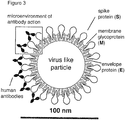
- This relationship is very important for virus types with complex surfaces, such as corona viruses, as their spike proteins protrude far into the surrounding liquid, whilst providing a complex local environment at the 1 to 10 nm resolution between the spike protein and the virus hull. Since this local microenvironment is at the same size than a typical antibody, corona viruses are notoriously difficult to target. One reason for this may be that antibodies have to interact with a mobile (i.e. conformational flexible) target, whilst being hindered in adapting a specific configuration when trying to sneak between hull components and hull spike proteins.
- The so-called gold standard for a virus mimicry would be a complete outer shell of a virus, with all components identical or essentially identical to the ones of the infectious virus itself. A number of strategies have been developed over the decade, to either use existing, known viruses and modify them with a motive of the target virus (e.g. change a protein at the outer surface of the carrier), or to inactivate the virus. Later strategy appears attractive as it would provide a perfect copy of the target virus, but a non-reproductive/infective one. In theory, this sounds easy, but in practice, the inactivation is a delicate balance between the key needs:
- a) Complete inactivation of the virus, as if even a single virus survives the inactivation, it may infect a person undergoing vaccination and then cause an outbreak. Hence, the quality measures are enormous, both for avoiding mixing during production, i.e. a case where some parts of the vaccine manufacturing is getting in contact with the final product, and to make sure all of the material is inactivated (batch homogeneity)
- b) Keeping the inactivated virus's molecular recognition properties as identical to the target virus (infective) as possible. This is more difficult than it sounds, since either the inactivation is done through a chemical derivatization, e.g. crosslinking with formaldehyde or glutaraldehyde, or thermally or through other physico/chemical means. In all cases, the inactivation must change vital parts of the virus to a point where it is truly damaged.
- In such a procedure, the inactivation must work so good that it does not miss a single virus out of 10 billion viruses, often better than not missing a single virus out of over 10 to the power of 14 viruses. Such quality requirements result in over-inactivation, i.e. the average inactivated virus is so heavily damaged that it does not anymore much resemble the original version (i.e. the target).
- As a result of this, it is of high interest, to develop precise methods to prepare virus surrogates / virus mimics with a quality protocol that allows regulatory authorities and manufacturers to easily follow the preparation in a most detailed way.
- The analysis of blood serum of a population is a second topic that requires the same surrogates / mimics as above. The outcome of a vaccination (successful immunization or not) is measured by the presence of antibodies in a person after a given time post vaccination. It is also of high interest to know which persons in a population have already had a given infection (i.e. they are immune or at least less prone to infection than others), or to measure their level of immunity. Since humans build a large variety of antibodies, detection either requires a large range of low quality virus surrogates or moieties displaying characteristic parts of a virus, or a test method could use a near perfect surrogate / mimic of the virus and thus identify any possible immune reaction against its (infectious) counterpart (i.e. the real virus).
- There is a third, most important factor in this development, and it is linked to the often rapid mutation of such viruses over the course of an infection. Since easy to target parts of a virus' shell are rapidly fought by the human immune system, there is always a huge evolutionary pressure on the virus to mutate in directions where it is more and more elusive. As infections progress, an original virus may develop new forms (mutations) that then have better or worse infectious properties and allow the virus to better (or less) replicate. In any case, an original vaccination may then fail, as the above evolutionary pressure will guide the virus away from easy to target moieties of its shape. If new versions of a virus emerge, they will be per definition different to the earlier ones particularly when it concerns the key parts targeted in the previous vaccination strategy.
- Hence, it is a general object of the invention to provide an improved virus mimicry or surrogate that will have at least the first of the following two tasks:
- (i) To serve as an analytical agent to help identification of immunity (titer) in humans and /or to serve as part of a vaccination, and
- (ii) To be quickly adaptable to new forms of a virus (i.e. a mutation)
- Now, in order to implement these and still further objects of the invention, which will become more readily apparent as the description proceeds, the avirulent virus-like particle is manifested by the features that it comprising the spike protein S of a target corona virus and at least two and preferably 3 shell-forming proteins being further membrane proteins of corona viruses, said shell-forming proteins being the structural envelope protein E and the membrane protein M and preferably also the nucleoprotein N, said virus-like particle comprising a protein shell and a glycosylation pattern obtainable by expression in mammalian cells.
- While the further membrane proteins can be proteins of corona viruses other than the target virus, in preferred embodiments of the avirulent virus-like particle the further membrane proteins are proteins of the target corona virus.
- In another embodiment the target virus is selected from the group consisting of members of coronaviridae, betacoronaviruses, Sars-CoV 1, Mers-CoV and in particular Sars CoV 2.
- A preferred mammalian cell is selected from the group consisting of CHO cells, like ExpiCHO, or human cell lines, like HEK903T, HT-1080, PER.C6, CAP, HuH-7 and HKB-11.
- A further aspect of the present invention is a method for producing an avirulent virus-like particle as described above, wherein
- (i) nucleotide sequences, in particular DNA sequences, each encoding the S-protein or one of the shell-forming proteins and optionally transcriptional and translational control elements is chemically synthesized by de novo DNA synthesis,
- (ii) a mammalian cell is transfected with at least three, preferably four of said nucleotide sequences and cultured
- (iii) the avirulent virus-like particles produced by said mammalian cell are harvested.
- Further aspects of the present invention regard
a use of the avirulent virus-like particles as described above for analyzing antibodies against the target virus in a mammalian sample, in particular a blood sample,
a use of an avirulent virus-like particle as described above as effective substance of a vaccine,
an analytical agent comprising at least one kind of an avirulent virus-like particle as described above,
a vaccine comprising at least one kind of avirulent virus-like particles as described above
a method for producing nucleic acid sequences encoding the spike protein S of a target corona virus and at least two and preferably three shell-forming proteins being further membrane proteins of corona viruses, said shell-forming proteins being the structural envelope protein E and the membrane protein M and optionally and preferably also the nucleoprotein N, said nucleic acids optionally also comprising transcriptional and translational control elements and wherein said nucleic acids are adapted or optimized for chemical synthesis and preferably also for expression in mammalian cells, said method comprising - (i) determining short partial sequences, i.e. oligonucleotides, having unique ends and preferably a length of 50 to 100 bp
- (ii) chemically synthesizing said oligonucleotides
- (iii) combining two or more of said oligonucleotides to larger partial sequences and optionally repeating this step until partial sequences of desired length are obtained, this step being e.g. performed by polymerase chain assembly (PCA),
- (iv) optionally combining two or more of the sequences of step (iii) to obtain the nucleic acid sequences, i.e. the polypeptides, encoding the spike protein S of the target corona virus and the shell-forming proteins, e.g. by means of enzymatic ligation or isothermal assembly.
- By PCA in general oligonucleotides or polynucleotides of up to about 1000 bp length are obtainable. For lager polynucleotides, i.e. up to 4000 bp or even 10000 bp step (iv) has to be performed.
- Other objects of the present invention are a transfection vector preferably a plasmid, comprising a nucleic acid sequence as described above and/or
a mammalian cell comprising the nucleic acid sequences, i.e. the polypeptides encoding the S-protein, the M-protein, the E-protein and optionally and preferably the N-protein as described above. - Step (iii) can also comprise an amplification step.
- The transfection vector or plasmid can comprise all elements needed for protein expression prior to protein insertion or such elements can be introduced together with the protein encoding sequence. In case of plasmids, they can be multiplied in e.g. bacteria, like E. coli and then harvested according to known methods.
- The mammalian cells can be obtained by co-transfecting them with a multitude of plasmids comprising the polynucleotides encoding the three or preferably four proteins needed for the VLP formation.
- The second task indicated above is time critical. If a virus spreads, the time lag between recognizing emergence of a mutation and action in the form of providing a new vaccination, and being able to accurately detect presence of immunity / titer in the population directly translates into severity of the infection.
- In an ideal case, a new vaccine could be manufactured within days of detection of a new mutation, and being distributed to people that potentially got close to the source of that new mutation. Such readily adaptable and available vaccinations are not yet realized, and cannot be done within the hitherto existing pharmaceutical knowledge and capability.
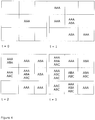
- In such an understanding, both the detection and the vaccination are dynamic, i.e. for a given virus, different mutations can occur at different locations and at different times so that the detection and fight against said viral disease demands a string of reagents, an array of reagents, that may differ locally and in time. Such array (dependent of time and location) of reagents (for detection), also termed analytical agents or analytical reagents, and vaccines may be called a "dynamic detection and vaccination reagent group". In the context of this invention, this array of reagents, the knowledge on where and how to apply its components (the detection component of the array with the materially important part being the VLP, also called analytical reagent) and the corresponding vaccines (similar or even identical to the key component of the analytical reagent) are encompassed by the term "dynamic detection and vaccination reagent group".
- For practical purposes, such a "dynamic detection and vaccination reagent group" may consist first of at least two reagents (typically liquid formulations containing at least one kind of VLPs, wherein each reagent has another kind or composition of VLPs, i.e. the VLPs of the different kinds differ in terms of at least the relevant protein structure and / or the folding of at least the relevant protein, in general the S-protein. The "dynamic detection and vaccination reagent group" may grow over the course of an infection, and become diverse with partially different components for a given geographic region and/or time (beginning, peak, fading out part of an epidemic).
- The "dynamic detection and vaccination reagent group" may be represented by a matrix containing the individual components. For practical reasons it may be advantageous to use one axis for geography, and another one for time, but other grouping or arrays can be used. The group may also just be two or a few, like 2 to 10 reagents in the case of a small group and many, like more than 10 reagents in the case of large groups.
- The "dynamic detection and vaccination reagent group" may comprise a basic composition common to all reagents, said basic composition containing the individual VLPs of each reagent.
- As indicated above, in case of rapidly mutating viruses, it is important to be able to react to such mutations very fast. A suitable method for such fast reaction is a method for producing a nucleic acid sequence encoding a mutated protein, in general the spike protein S of a target corona virus that bears said at least one mutation, said method comprising (provided that the VLP against the original virus has already been synthesized as described above and partial sequences are available from said synthesis)
- (i) chemically synthesizing one or more short partial sequence, oligonucleotides, each comprising at least one mutation,
- (ii) combining said one or more oligonucleotides comprising said mutations with each other and/or with at least one further short partial sequence to obtain a larger mutated partial sequence, optionally repeating this step until a partial sequence of desired length is obtained, e.g. via polymerase chain assembly (PCA)
- (iii) optionally combining said larger mutated partial sequences with each other and/or with at least one larger partial sequence to obtain the nucleic acid sequence, the polypeptide, encoding the mutated protein, in particular the spike protein S of the mutated target corona virus.
- Step (iii) is performed in case of large polynucleotides, i.e. polynucleotides of more than e.g. 1000 bp.
- In an alternative embodiment that is especially suitable if only few, like one nucleotide have/has mutated, instead of chemical synthesis site-directed mutagenesis can be applied in any of the above indicated steps.
- Also a transfection vector comprising such a mutated nucleic acid sequence and/or a mammalian cell comprising such mutated nucleic acid sequence besides of polynucleotides encoding other, in general not mutated proteins needed for VLP production are further aspects of the present invention. Such vectors/plasmids and mammalian cells, besides of the mutations, are as described above.
- An avirulent VLP directed to the original virus or an avirulent VLP directed to a mutation can be the active substance of an analytical agent / reagent or of a vaccine. In a further embodiment, the analytical agent / reagent or the vaccine comprises a combination of at least a first and a second avirulent virus-like particle, said first and said second avirulent virus-like particles having S-proteins of the original virus and a mutation or the S-proteins of different mutations of one and the same original virus, said original virus and said mutation or said two mutations differing in at least one different amino acid and/or at least one deletion and/or at least one insertion of an amino-acid residue,
- At least two analytical agents / reagents and/or at least two vaccines are the components of a "dynamic detection and vaccination reagent group".
- The analytical agents / reagents or the vaccine contain solvents, additives, preservatives, adjuvants and other components, or/and - in the case of analytical agents /re-agents - binding agents to link the VLP to analytical equipment, sample holders, plates etc. Suitable components for formulations of analytical agents and /or vaccines are known to the skilled person.
- Since suitable non-VLP materials are known, the non-VLP materials are of less interest in this invention and it shall be understood that two components of a "dynamic detection and vaccination reagent group" shall be considered identical if their VLP(s) are identical with regard to their sequence and functionality. For clarity, two components of a "dynamic detection and vaccination reagent group" shall be considered identical even if their non-VLPs are different or if different amounts or types of such non-VLP materials are contained.
- A dynamic detection and vaccination reagent group is different from a vaccine, or an analytical assay for a given detection task in that
- (a) it is a group of reagents or vaccines, meaning that there are at least two such reagents or vaccines, and for analysis or vaccination only part of said reagents or vaccines is used at a time and a geographic location,
- (b) the members of the group may change over time, and they are depending on geographic location and time, and - preferably -
- (c) at least one member of the group is both useful for the detection of antibodies in a population and it is useful as a component in the manufacturing of a corresponding vaccine,
- (d) the group's size and composition reacts on mutations and changes in the virus in that its size and the composition of the analytical agents /reagents and/or vaccines it comprises can be rapidly adapted,
- (e) the members of the group are similar to one another as they are used against the same type of virus derived from the same original infection (onset of a spread of infections), and this similarity can be recognized through the similarity of large parts of the coded proteins.
- Typical changes and modifications in a protein as a result of a mutation in a virus are known to the person skilled in the art. Due to this dynamic, the same "dynamic detection and vaccination reagent group" shall be assumed to still be present if one or more member(s) of such reagent group or vaccination is/are changed as a result of a mutation.
- In one embodiment, the present invention describes a VLP with two applications. These are: First, the VLP can be used for the detection of the level of immunity against a coronavirus in a typical immunoassay. The reagent excels against other, less precise reagents, in terms of specificity and the lower level of false negative or false positive results. Second, the essentially same VLP is useful in the preparation of a vaccine against the same virus.
- The inventive avirulent VLP differs from previous attempts to develop similar VLP in that
- (i) it has been obtained starting from molecularly defined entities that comprise the nucleotide sequence encoding the spike or S-protein and the nucleotide sequences encoding at least two, preferably three further shell proteins, i.e. the structural envelope or E-protein and the membrane or M-protein and optionally and preferably also the nucleoprotein or N-protein, said nucleotide sequences being adapted/optimized for chemical synthesis and preferably also for protein expression in mammalian cells, and
- (ii) said VLP having been produced in mammalian cells.
- In one of the embodiments, the present invention describes a group of two VLPs that are similar to one another, but represent an original virus and a first mutation of it. Both reagents of this group can be used for the detection of the level of immunity against a specific coronavirus in a typical immunoassay. It is obviously advantageous to then report the immunity against the original and the mutated virus. In an alternative embodiment, the two VLPs can be present in one and the same reagent. In such case, whether only the information about immunity or not or the information against which virus is obtainable depends on the distinguishability or the labelling of the VLPs, respectively.
- In the context of this invention, a mutation is a change in one or several nucleic acids in the coding sequence (genome level view) resulting in a change of one or several amino acids (in the expression level view). A mutation can be a single point mutation (single nucleotide changed, affording a change of one amino acid in the expressed protein), or multiple changes, but limited to nucleotide changes resulting in a maximum of 20 % of all amino acids, if the mutation is a naturally occurring one, or limited to mutations that change the original proteins form or function in a most essential way, if the mutation is an artificially generated sequence, since e.g. computationally generated sequences can be changed over larger areas, while essentially keeping the function of the protein.
- As already indicated above, in yet a further embodiment, the present invention describes an immunoassay that uses VLPs as an analytical agent / reagent. The details of attaching such reagent to a suitable sample handling system, e.g. a modified polystyrene plate, is well known to the person skilled in the art. In an alternative embodiment, the inventive VLPs may also be used free flowing in a solution, e.g. when using a metal nanoparticle based color assay.
- The immunoassay may often be commercially used years or months ahead of a potential use as vaccine, since the regulatory approval process for vaccines typically takes years. The delayed use as vaccine does not preclude, however, the early use of the inventive VLPs for the detection of a level of immunity.
- In yet another embodiment, also already addressed above, the present invention provides a "dynamic detection and vaccination reagent group" to fight a broadly progressing infection with various subtypes of a virus, or mutations. Such subtypes or mutations may be present geographically (i.e. at the same time appearing at different locations), or sequentially (i.e. at different times, appearing at the same location). For practical reasons, the group is started as a small group if a new virus is detected, and grows over time, when a virus adapts and changes.
- The invention will be better understood and objects other than those set forth above will become apparent when consideration is given to the following detailed description thereof. Such description makes reference to the annexed drawings, wherein:
-
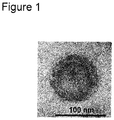
Figure 1 is a transmission electron microscopy (TEM) image of a VLP after staining with uranylacetate on carbon-coated cooper grids. -
Figure 2 is a TEM image showing goat anti-mouse antibodies coupled to gold nanoparticles detecting a primary mouse antibody recognizing the Sars-2 Spike-protein. -
Figure 3 shows the microenvironment of antibody action. -
Figure 4 schematically shows the development of virus mutations and respectively the dynamic detection and vaccination reagent group. - In one embodiment of the present invention, the VLPs are further characterized by the following features:
- The diameter of avirulent VLP particles of the present invention is on average 105 nanometer with a standard-deviation of 21 nanometer. (The actual data found are 105.31 and +/- 21.30 nm as standard deviation.)
- The VLPs of the present invention consist of spherical vesicles composed of an inner aqueous phase enclosed by a membrane envelope.
- The aqueous phase comprises the N protein as sole protein- if any - and no virus RNA or DNA.
- The membrane envelope consists of a lipid bilayer in which the integral membrane glycoproteins, the M-protein, the S-protein and the E-protein are embedded to form the membrane envelope portion of the VLPs. Whereby:
- The M-protein is the most abundant structural protein component of the VLP envelope (with more than 50% of the membrane surface covered by the M-protein).
- The S-protein is the second most abundant component of the VLP envelope and
- The E-protein is a minor structural protein component (with less than 10% of the membrane surface covered by the E-protein).
- The membrane protein components are further characterized by the following N-glycosylation pattern at distinct asparagine residues characterized by Endoglycosidase H and Peptide-N-glycosidase F sensitive high-mannose N-glycans, afucosylated and fucosylated hybrid-type glycans and glycans from the complex type.
- The following amino acid positions refer to a DNA construct with one additional amino acid inserted directly after the start codon.
- The M-protein is predominately N-glycosylated at five N-linked glycan sites annotated by the amino acid positions (N6), (N22), (N44), (N122) and (N204).
- The E protein is predominately N-glycosylated at two N-linked glycan sites annotated by the amino acid positions (N49) and (N67).
- The S protein is N-glycosylated at twenty two N-linked glycan sites annotated by the amino acid positions (N18), (N62), (N75), (N123), (N150), (N166), (N235), (N283), (N332), (N344), (N604), (N617), (N658), (N710), (N718), (N802), (N1075), (N1099), (N1135), (N1159), (N1174) and (N1195).
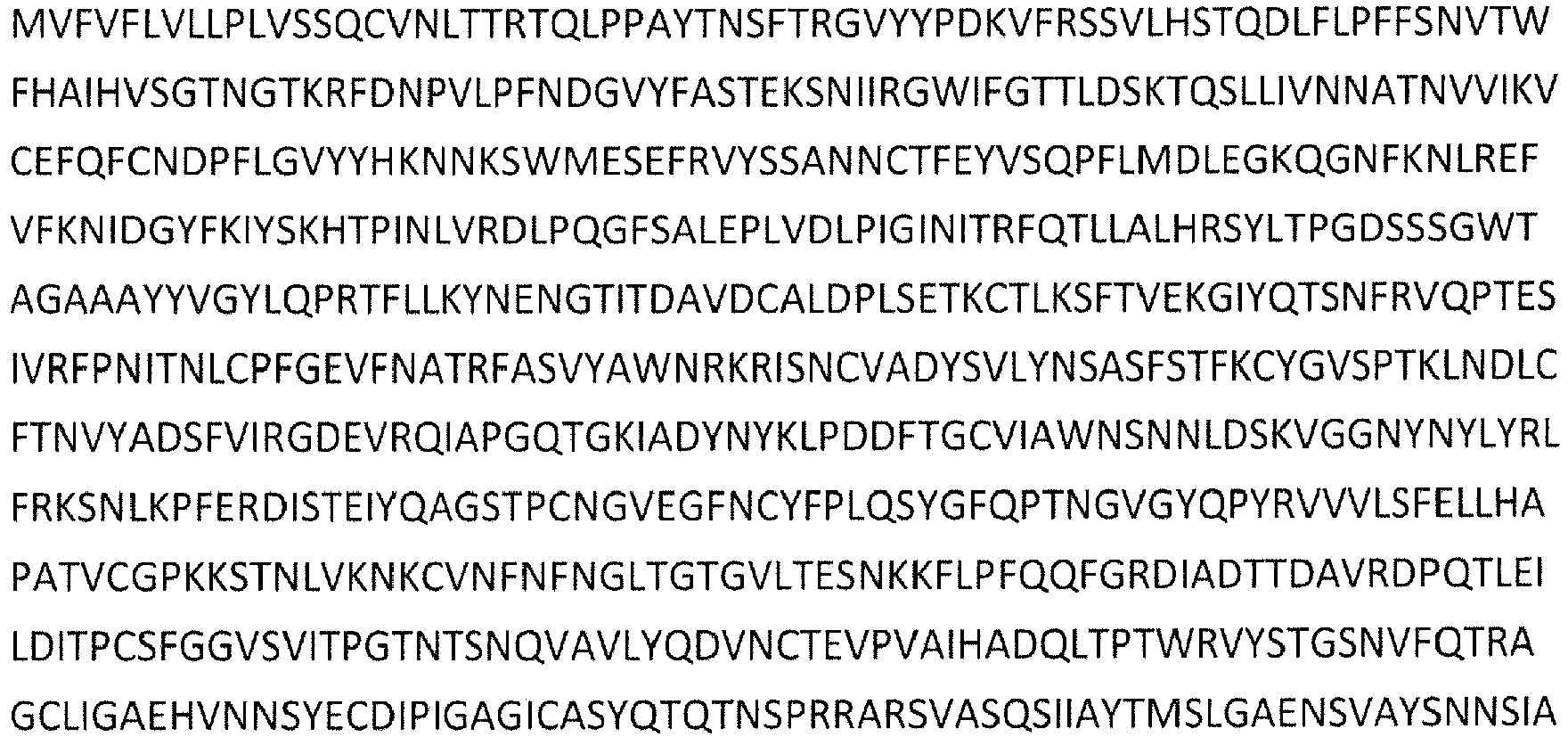
- The protein sequences of a Sars-2-CoV that has been found in an early stage of the pandemic and that can be viewed as original sequences but with an added valine directly after the start methionine for improved translation are as follows:
- Envelope protein E

- Membrane protein M

- Nucleoprotein
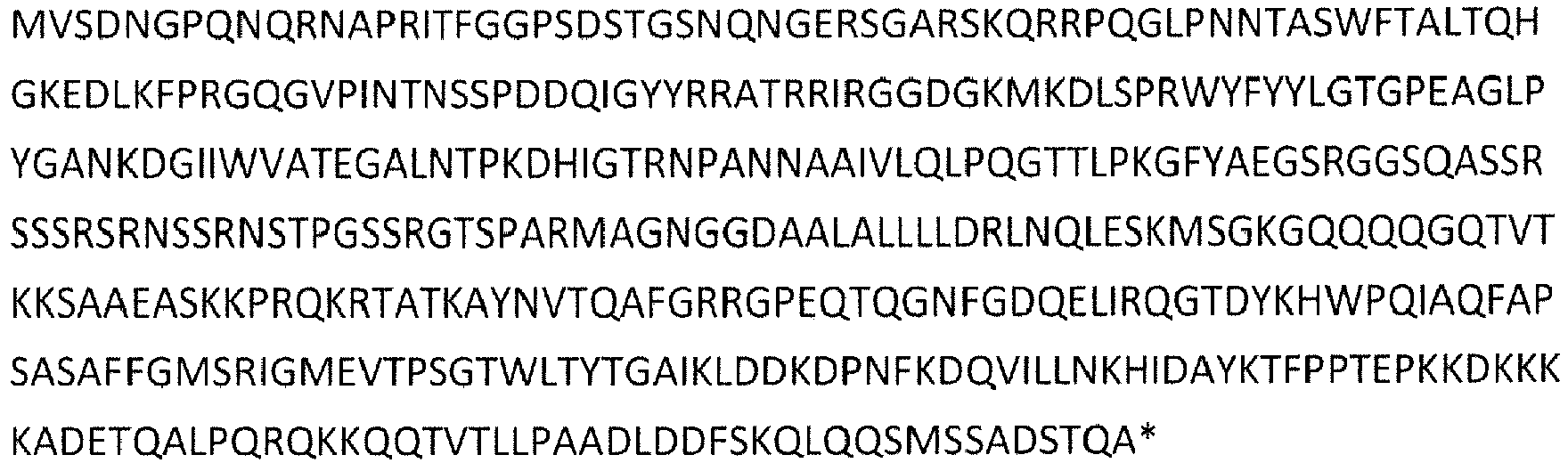
- Surface proteins S

- As already indicated above, the VLPs are preferably produced by a method involving the chemical synthesis of the protein encoding polynucleotides. For fast chemical synthesis the protein sequence is "reverse-translated" into the coding sequence in a manner optimized for chemical synthesis and preferably also for expression in mammalian cells. This means that in a first step the DNA or RNA sequence is reduced in repetitive nucleotides or short repetitive sequences at least in putative end regions of oligonucleotides using the degeneration of the genetic code. Simultaneously or subsequently oligonucleotides of about 50 to 100 bp length are determined having unambiguous ends so that connection of such oligonucleotides, e.g. via PCA, results in one predetermined polynucleotide sequence. This step can be repeated until the oligonucleotides or polynucleotides of desired length are obtained. PCR can be used to amplify the nucleotide sequences until the desired number of nucleotide sequences of desired length are obtained.
- The oligonucleotide or polynucleotide sequence obtainable via PCA in general is a sequence of about 1000 bp length. Longer polynucleotides are obtainable via enzymatic reaction, e.g. by ligases, or via isothermal assembly provided that the sticky ends of the short polynucleotides are suitable. Via enzymatic ligation or isothermal assembly long polynucleotides of 4000 to 10000 bp length are obtainable. The optimization of the polynucleotide sequence for chemical synthesis can be done by means of a computer. Firms offering such service and even the synthesized polynucleotide exist. One of them is Gigabases AG, Switzerland.
- Once the full length polynucleotides, each encoding one of the proteins, are synthesized, they are introduced into expression plasmids or vectors suitable for protein expression in mammalian cells. The plasmids can be multiplied in e.g. bacterial cells like E. coli.
- Since mammalian cells are able to take up a multitude of plasmids, i.e. up to 50 or even up to 100 plasmids, mammalian cells can be co-transfected with a mixture of the plasmids for the expression of at least three, preferably all four proteins. Co-transfection with plasmids encoding three or four different proteins has proved possible since it was found that the VLPs are self-assembling in the "correct" manner irrespective of the number of plasmids for a specific protein in a cell as long as the polynucleotides for all necessary proteins are present.
- This self-assembling provides the further advantage that the VLP production can be accelerated by optimizing the plasmid composition so that most cells get the number of plasmids of each kind that is needed for expression of each of the proteins in the needed amount.
- If one or more mutations occur, the oligonucleotides or polynucleotide encoding the full mutated protein or parts thereof can either be adapted via site-directed mutagenesis or - in particular if many mutations should simultaneously be introduced - via new synthesis of the respective one or more oligonucleotides or polynucleotides.
- While a full synthesis of a long protein today may still take up to about 5 weeks, it is expected that the technique improves over the next years so that such synthesis will only take a few days. Already today the reaction on a mutation can be fast, provided that different lengths of oligonucleotides and short polynucleotides are kept on stock.
- A synthetic nucleic acid sequence containing the protein-coding sequences for the expression of the structural envelope protein E, the membrane protein M and the nucleoprotein N from Corona virus Sars-2 or MHVA59 and the surface protein S of Sars-2-CoV were sequence optimized for chemical synthesis and ordered from a long-chain oligonucleotide manufacturer (Gigabases AG, Switzerland). Protein-coding sequences were PCR amplified from synthetic DNA templates using oligo-nucleotide primers that added flanking restriction enzyme sites and appropriate translation initiation signals, corresponding to the consensus Kozak sequence upstream of start codons. PCR amplification was performed with Phusion polymerase (New England Biolabs). PCR products were separated on agarose-gel electrophoresis, and products of the correct size were isolated and purified over a Nucleo-Spin Column (Macherey-Nagel). Purified PCR products were subsequently cloned into mammalian expression vectors pCi and pcDNA3.4 under control of the SV40 promoter or CMV promoter. Cloning of PCR insert into linearized pCi vector was carried out by isothermal assembly using 100 ng of PCR amplicons and 100 ng of vector DNA. Insert and vector DNA was incubated with T5-exonuclease, Taq-ligase and Phusion polymerase (New England Biolabs) for one hour at 50 ºC. To clone PCR products into pcDNA3.4 vector, terminal A-overhangs were added to amplicons using Taq polymerase prior performing a Topo-TA cloning reaction (Topo-TA pcDNA3.4 Kit, Thermo Fisher). Plasmids were electro-porated into Escherichia coli and transformants were selected on Lurian-Broth (LB) agar plates supplemented with ampicillin. Plasmids were isolated from single colonies and sequence verified by Sanger-Sequencing. Expression plasmid series for MHV and Sars2 proteins were purified using the plasmid Midi-prep Kit (Macherey Nagel) to produce VLP in cell-lines through co-expression of the E, M, N and S-protein.
- The said synthetic nucleic acid molecules were introduced into a mammalian expression cell-line ExpiCHO-S (6 x 10⁶ cells per ml) by co-transfection of purified plasmids using ExpiFectamine CHO Transfection kit (Thermo LTC). ExpiCHO-S cells were cultivated in ExpiCHO expression medium (supplemented with 100µg/ml ampicillin and 100µg/ml streptomycine) at 37 ºC, 8% CO2 for 5-7 days on an orbital shaker, in 125ml cell-culture flask (Corning, No. 431405) with an initial culture volume of 25ml. After 18-22 h post transfection, 6ml of the ExpiCHO Feed (Thermo, LTC) and 150ul of ExpiCHO Enhancer (Thermo, LTC) was added to the cell cultures. The cell-culture supernatants were harvested and cleared from cells through a low spin centrifugation step. VLPs were then harvested from the cleared supernatant and VLP production was confirmed by transmission electron microscopy (TEM) after staining with uranylacetate on carbon-coated cooper grids and imaging on a TEM instrument. VLP of 100nm diameter were observed and confirmed by TEM (
Figure 1 ). - Goat anti-mouse antibodies coupled to gold nanoparticles (A31561, Invitrogen) were used to detect a primary mouse antibody recognizing the Sars-2 Spike-protein (MBS 434247, MyBioSource Inc.) through scanning transmission electron microscopy. Carbon-coated copper-mesh grids (Piano EM) were treated with poly-L-Lysine (0.01%, sterile filtered, Sigma Aldrich) for 10 min. After washing with distilled H2O, the grids were floated on 5 µl drops of cleared cell-culture supernatant containing VLPs for 20 min. The grids were washed in phosphate buffered saline (PBS, pH=7.4, LTC) three times and incubated with a monoclonal mouse antibody against the Sars-2-CoV Spike Protein (MBS 434247, MyBioSource Inc.) for 1 hour. For the negative control, PBS was used instead of the antibody. After washing with PBS four times, the grids were incubated for 1 hour with a gold labeled secondary Goat antibody against mouse (IgG, H+L) coupled to Alexa Fluor® 488 and labeled with 10 nm colloidal gold (Invitrogen). After further washing three times in PBS, the samples were fixed in 2.5 % Glutaraldehyde (Sigma Aldrich) in PBS for 15 min, washed three times in distilled H2O and subsequently stained with 1% phosphotungstic acid (pH=7, sterile filtered, Sigma Aldrich) for 1 min. After air drying of the grids, the samples were examined using scanning transmission electron microscopy (STEM, FEI, Nova NanoSEM 450). Pictures were taken at 29 kV. VLP particles of 100 nm diameter were found to be specifically decorated with the high density 10 nm Au particles (
Figure 2 ) demonstrating presence of the Sars-2-CoV S-protein on the surface of VLPs. - While there are shown and described presently preferred embodiments of the invention, it is to be distinctly understood that the invention is not limited thereto but may be otherwise variously embodied and practiced within the scope of the following claims.


Claims (17)
- An avirulent virus-like particle comprising the spike protein S of a target corona virus and at least two and preferably 3 shell-forming proteins being further membrane proteins of corona viruses, said shell-forming proteins being the structural envelope protein E and the membrane protein M and optionally and preferably also the nucleoprotein N, said virus-like particle comprising a protein shell and a glycosylation pattern obtainable by expression in mammalian cells.
- The avirulent virus-like particle of claim 1, wherein the further membrane proteins are proteins of the target corona virus.
- The avirulent virus-like particle of claim 1 or 2, wherein the target virus is selected from the group consisting of members of coronaviridae, betacoronaviruses, Sars-CoV 1, Mers-CoV and in particular Sars-CoV 2.
- The avirulent virus-like particle of any one of the preceding claims, wherein the mammalian cell is selected from the group consisting of CHO cells, like ExpiCHO, or human cell lines HEK903T, HT-1080, PER.C6,CAP, HuH-7 and HKB-11
- A method for producing an avirulent virus-like particle of any one of claims 1 to 4, wherein(i) nucleotide sequences, in particular DNA sequences, each encoding the S-protein or one of the shell-forming proteins and optionally transcriptional and translational control elements is chemically synthesized by de novo DNA synthesis,(ii) a mammalian cell is transfected with at least three, preferably four of said nucleotide sequences and cultured(iii) the avirulent virus-like particles produced by said mammalian cell are harvested.
- Use of the avirulent virus-like particles of any one of claims 1 to 4 for analyzing antibodies against the target virus in a mammalian sample, in particular a blood sample.
- Use of an avirulent virus-like particle of any one of claims 1 to 4 as effective substance of a vaccine.
- An analytical agent comprising at least one kind of an avirulent virus-like particle of any one of claims 1 to 4.
- The analytical agent of claim 8 comprising a combination of at least a first and a second avirulent virus-like particle, said first and said second avirulent virus-like particles having S-proteins of the original virus and a mutation or S-proteins of different mutations of one and the same original virus, said original virus and said mutation or said two mutations differing in at least one different amino acid and/or at least one deletion and/or at least one insertion of an amino-acid residue.
- A vaccine comprising at least one kind of avirulent virus-like particles of any one of claims 1 to 4.
- The vaccine of claim 10 comprising a combination of at least a first and a second avirulent virus-like particle, said first and said second virus-like particles having S-proteins of the original virus and a mutation or S-proteins of different mutations of one and the same original virus, said original virus and said mutation or said two mutations differing in at least one different amino acid and/or at least one deletion and/or at least one insertion of an amino-acid residue.
- A method for producing nucleic acid sequences encoding the spike protein S of a target corona virus and at least two and preferably three shell-forming proteins being further membrane proteins of corona viruses, said shell-forming proteins being the structural envelope protein E and the membrane protein M and optionally and preferably also the nucleoprotein N, said nucleic acids optionally also comprising transcriptional and translational control elements and wherein said nucleic acids are adapted or optimized for chemical synthesis and preferably also for expression in mammalian cells, said method comprising(i) determining short partial sequences, i.e. oligonucleotides, having unique ends and preferably a length of 50 to 100 bp(ii) chemically synthesizing said oligonucleotides(iii) combining two or more of said oligonucleotides to larger partial sequences and optionally repeating this step until partial sequences of desired length are obtained, this step being e.g. performed by PCA,(iv) optionally combining two or more of the sequences of step (iii) to obtain the nucleic acid sequences, i.e. the polynucleotides encoding the spike protein S of the target corona virus and the shell-forming proteins, e.g. by means of enzymatic ligation or isothermal assembly.
- A method for producing a nucleic acid sequence encoding the spike protein S of a target corona virus that is a mutation, said method comprising(i) chemically synthesizing one or more short partial sequences, oligonucleotides, each comprising at least one mutation,(ii) combining said one or more oligonucleotides comprising said mutations with each other and/or with at least one further short partial sequence to obtain a larger mutated partial sequence, optionally repeating this step until a partial sequence of desired length is obtained, e.g. via PCA(iii) optionally combining said larger mutated partial sequences with each other or with at least one larger partial sequence to obtain the nucleic acid sequence, the polypeptide encoding the mutated protein, in particular the spike protein S of the mutated target corona virus .
- A polynucleotide obtainable by the method of claim 12 or 13.
- A transfection vector or plasmid for protein expression in mammalian cells comprising a polynucleotide of claim 14.
- A mammalian cell comprising a polynucleotide of claim 14 or a vector or plasmid of claim 15.
- A dynamic detection and vaccination reagent group comprising at least two analytical agents/reagents and /or at least two vaccines, each of the agents/reagents and/or vaccines comprising at least one kind of VLPs, said VLPs being dependent on geographical location and/or time.
Priority Applications (1)
| Application Number | Priority Date | Filing Date | Title |
|---|---|---|---|
| PCT/EP2021/062050 WO2021224414A1 (en) | 2020-05-08 | 2021-05-06 | Preparation of virus-like particles for accurate analysis and immunization against corona viruses |
Applications Claiming Priority (1)
| Application Number | Priority Date | Filing Date | Title |
|---|---|---|---|
| EP20173772 | 2020-05-08 |
Publications (1)
| Publication Number | Publication Date |
|---|---|
| EP3907282A1 true EP3907282A1 (en) | 2021-11-10 |
Family
ID=70680323
Family Applications (1)
| Application Number | Title | Priority Date | Filing Date |
|---|---|---|---|
| EP20178779.3A Withdrawn EP3907282A1 (en) | 2020-05-08 | 2020-06-08 | Preparation of virus-like particles for accurate analysis and immunization against corona viruses |
Country Status (2)
| Country | Link |
|---|---|
| EP (1) | EP3907282A1 (en) |
| WO (1) | WO2021224414A1 (en) |
Cited By (2)
| Publication number | Priority date | Publication date | Assignee | Title |
|---|---|---|---|---|
| EP4114452A1 (en) * | 2020-03-03 | 2023-01-11 | Rocketvax AG | Fully synthetic, long-chain nucleic acid for vaccine production to protect against coronaviruses |
| RU2839841C1 (en) * | 2024-11-14 | 2025-05-13 | Федеральное бюджетное учреждение науки "Государственный научный центр вирусологии и биотехнологии "Вектор" Федеральной службы по надзору в сфере защиты прав потребителей и благополучия человека (ФБУН ГНЦ ВБ "Вектор" Роспотребнадзора) | PLASMID DNA CARTRIDGE pVAX-C3-polyA, PLASMID DNA MATRIX pVAX-C3-RBD-polyA FOR mRNA SYNTHESIS AND POLYNUCLEOTIDE VACCINE AGAINST SARS-CoV-2, WHICH IS MOLECULES mRNA-C3-RBD-polyA WHICH INDUCE SARS-CoV-2-SPECIFIC ANTIBODIES |
Citations (1)
| Publication number | Priority date | Publication date | Assignee | Title |
|---|---|---|---|---|
| WO2016160761A2 (en) * | 2015-03-30 | 2016-10-06 | Boehringer Ingelheim Vetmedica, Inc. | Pcv2 orf2 carrier platform |
-
2020
- 2020-06-08 EP EP20178779.3A patent/EP3907282A1/en not_active Withdrawn
-
2021
- 2021-05-06 WO PCT/EP2021/062050 patent/WO2021224414A1/en not_active Ceased
Patent Citations (1)
| Publication number | Priority date | Publication date | Assignee | Title |
|---|---|---|---|---|
| WO2016160761A2 (en) * | 2015-03-30 | 2016-10-06 | Boehringer Ingelheim Vetmedica, Inc. | Pcv2 orf2 carrier platform |
Non-Patent Citations (5)
| Title |
|---|
| HEATHER SWANN ET AL: "Minimal system for assembly of SARS-CoV-2 virus like particles", BIORXIV, 1 June 2020 (2020-06-01), pages 1 - 20, XP055743660, Retrieved from the Internet <URL:http://biorxiv.org/lookup/doi/10.1101/2020.06.01.128058> [retrieved on 20201026], DOI: 10.1101/2020.06.01.128058 * |
| MORTOLA E ET AL: "Efficient assembly and release of SARS coronavirus-like particles by a heterologous expression system", FEBS LETTERS, ELSEVIER, AMSTERDAM, NL, vol. 576, no. 1-2, 8 October 2004 (2004-10-08), pages 174 - 178, XP004596251, ISSN: 0014-5793, DOI: 10.1016/J.FEBSLET.2004.09.009 * |
| PUSHKO PETER ET AL: "Virus-like particles displaying H5, H7, H9 hemagglutinins and N1 neuraminidase elicit protective immunity to heterologous avian influenza viruses in chickens", VIROLOGY, vol. 501, 15 January 2017 (2017-01-15), pages 176 - 182, XP029866271, ISSN: 0042-6822, DOI: 10.1016/J.VIROL.2016.12.001 * |
| Y. L. SIU ET AL: "The M, E, and N Structural Proteins of the Severe Acute Respiratory Syndrome Coronavirus Are Required for Efficient Assembly, Trafficking, and Release of Virus-Like Particles", JOURNAL OF VIROLOGY, vol. 82, no. 22, 27 August 2008 (2008-08-27), US, pages 11318 - 11330, XP055743700, ISSN: 0022-538X, DOI: 10.1128/JVI.01052-08 * |
| YEH ET AL: "978. Production of SARS Coronavirus-Like Particles That Bind Host Cells and Serve as Vaccine Antigen", MOLECULAR THERAPY, CELL PRESS, US, vol. 11, 15 August 2005 (2005-08-15), pages 378, XP005016317, ISSN: 1525-0016 * |
Cited By (2)
| Publication number | Priority date | Publication date | Assignee | Title |
|---|---|---|---|---|
| EP4114452A1 (en) * | 2020-03-03 | 2023-01-11 | Rocketvax AG | Fully synthetic, long-chain nucleic acid for vaccine production to protect against coronaviruses |
| RU2839841C1 (en) * | 2024-11-14 | 2025-05-13 | Федеральное бюджетное учреждение науки "Государственный научный центр вирусологии и биотехнологии "Вектор" Федеральной службы по надзору в сфере защиты прав потребителей и благополучия человека (ФБУН ГНЦ ВБ "Вектор" Роспотребнадзора) | PLASMID DNA CARTRIDGE pVAX-C3-polyA, PLASMID DNA MATRIX pVAX-C3-RBD-polyA FOR mRNA SYNTHESIS AND POLYNUCLEOTIDE VACCINE AGAINST SARS-CoV-2, WHICH IS MOLECULES mRNA-C3-RBD-polyA WHICH INDUCE SARS-CoV-2-SPECIFIC ANTIBODIES |
Also Published As
| Publication number | Publication date |
|---|---|
| WO2021224414A1 (en) | 2021-11-11 |
Similar Documents
| Publication | Publication Date | Title |
|---|---|---|
| EP4345453B1 (en) | High throughput epitope identification and t cell receptor specificity determination using loadable detection molecules | |
| Cross et al. | Studies on influenza haemagglutinin fusion peptide mutants generated by reverse genetics | |
| Vijayachandran et al. | Robots, pipelines, polyproteins: enabling multiprotein expression in prokaryotic and eukaryotic cells | |
| JP5513398B2 (en) | Directed evolution using proteins containing unnatural amino acids | |
| US9309536B2 (en) | Recombinant virus-like particles encoded by multi-gene vector | |
| Quast et al. | Automated production of functional membrane proteins using eukaryotic cell-free translation systems | |
| CA2132306C (en) | Selection methods | |
| CN112898437B (en) | New coronavirus antigen and preparation method and application thereof | |
| CN119930767B (en) | RSV pre-fusion F protein mutant and application thereof | |
| Wong et al. | Characterizing and engineering post-translational modifications with high-throughput cell-free expression | |
| CN116715737A (en) | The target antigen of the B cell epitope of the novel coronavirus receptor binding domain and its expression and application in Peg pili display | |
| WO2021224414A1 (en) | Preparation of virus-like particles for accurate analysis and immunization against corona viruses | |
| US20220073904A1 (en) | Devices and methods for display of encoded peptides, polypeptides, and proteins on dna | |
| Ulbrich et al. | Distinct roles for nucleic acid in in vitro assembly of purified Mason-Pfizer monkey virus CANC proteins | |
| US20030082579A1 (en) | Protein arrays and methods and systems for producing the same | |
| US20130295131A1 (en) | Generation of antigenic virus-like particles through protein-protein linkages | |
| Hodder et al. | Analysis of pathotype-specific structural features and cleavage activation of Newcastle disease virus membrane glycoproteins using antipeptide antibodies | |
| US20100304375A1 (en) | Influenza Virus Genome Replication and Transcription System in Yeast Cells | |
| Hale et al. | E. coli RNA polymerase promoters on superhelical SV40 DNA are highly selective targets for chemical modification | |
| WO2004027057A1 (en) | Method of analyzing organelle-localized protein and materials for analysis | |
| JP2001526054A (en) | Methods and cells for screening combinatorial libraries | |
| JP2005514915A (en) | Methods for generating, selecting and identifying compounds that bind to a target molecule | |
| CN112375741A (en) | Cell strain for high expression of SARS-COV2-RBD and method thereof | |
| WO2021054774A1 (en) | Tag protein for increasing water solubility and heat stability of target protein, and fusion protein comprising same | |
| Gray | Creating VACCINES drop by drop |
Legal Events
| Date | Code | Title | Description |
|---|---|---|---|
| PUAI | Public reference made under article 153(3) epc to a published international application that has entered the european phase |
Free format text: ORIGINAL CODE: 0009012 |
|
| STAA | Information on the status of an ep patent application or granted ep patent |
Free format text: STATUS: THE APPLICATION HAS BEEN PUBLISHED |
|
| AK | Designated contracting states |
Kind code of ref document: A1 Designated state(s): AL AT BE BG CH CY CZ DE DK EE ES FI FR GB GR HR HU IE IS IT LI LT LU LV MC MK MT NL NO PL PT RO RS SE SI SK SM TR |
|
| B565 | Issuance of search results under rule 164(2) epc |
Effective date: 20210323 |
|
| STAA | Information on the status of an ep patent application or granted ep patent |
Free format text: STATUS: THE APPLICATION IS DEEMED TO BE WITHDRAWN |
|
| 18D | Application deemed to be withdrawn |
Effective date: 20220511 |