EP3907212A1 - Metal-free method for oxidative cleavage of vic-diols to carboxylic acids - Google Patents
Metal-free method for oxidative cleavage of vic-diols to carboxylic acids Download PDFInfo
- Publication number
- EP3907212A1 EP3907212A1 EP20382372.9A EP20382372A EP3907212A1 EP 3907212 A1 EP3907212 A1 EP 3907212A1 EP 20382372 A EP20382372 A EP 20382372A EP 3907212 A1 EP3907212 A1 EP 3907212A1
- Authority
- EP
- European Patent Office
- Prior art keywords
- process according
- optionally substituted
- halide
- methyl
- substituted
- Prior art date
- Legal status (The legal status is an assumption and is not a legal conclusion. Google has not performed a legal analysis and makes no representation as to the accuracy of the status listed.)
- Withdrawn
Links
- 238000000034 method Methods 0.000 title claims abstract description 30
- 150000001735 carboxylic acids Chemical class 0.000 title claims abstract description 8
- 238000007248 oxidative elimination reaction Methods 0.000 title abstract description 18
- 150000004820 halides Chemical class 0.000 claims abstract description 14
- 239000007800 oxidant agent Substances 0.000 claims abstract description 14
- 239000003054 catalyst Substances 0.000 claims abstract description 11
- 230000001590 oxidative effect Effects 0.000 claims abstract description 9
- -1 1,1-dimethylethyl (t-butyl) Chemical group 0.000 claims description 44
- 125000002496 methyl group Chemical group [H]C([H])([H])* 0.000 claims description 23
- XLYOFNOQVPJJNP-UHFFFAOYSA-N water Substances O XLYOFNOQVPJJNP-UHFFFAOYSA-N 0.000 claims description 21
- WEVYAHXRMPXWCK-UHFFFAOYSA-N Acetonitrile Chemical compound CC#N WEVYAHXRMPXWCK-UHFFFAOYSA-N 0.000 claims description 17
- 239000000203 mixture Substances 0.000 claims description 15
- YMWUJEATGCHHMB-UHFFFAOYSA-N Dichloromethane Chemical compound ClCCl YMWUJEATGCHHMB-UHFFFAOYSA-N 0.000 claims description 14
- DKGAVHZHDRPRBM-UHFFFAOYSA-N Tert-Butanol Chemical group CC(C)(C)O DKGAVHZHDRPRBM-UHFFFAOYSA-N 0.000 claims description 13
- 238000003776 cleavage reaction Methods 0.000 claims description 13
- XEKOWRVHYACXOJ-UHFFFAOYSA-N Ethyl acetate Chemical compound CCOC(C)=O XEKOWRVHYACXOJ-UHFFFAOYSA-N 0.000 claims description 12
- 125000003837 (C1-C20) alkyl group Chemical group 0.000 claims description 9
- 239000002904 solvent Substances 0.000 claims description 9
- 125000001449 isopropyl group Chemical group [H]C([H])([H])C([H])(*)C([H])([H])[H] 0.000 claims description 8
- IAZDPXIOMUYVGZ-UHFFFAOYSA-N Dimethylsulphoxide Chemical compound CS(C)=O IAZDPXIOMUYVGZ-UHFFFAOYSA-N 0.000 claims description 7
- 125000001072 heteroaryl group Chemical group 0.000 claims description 7
- CSCPPACGZOOCGX-UHFFFAOYSA-N Acetone Chemical compound CC(C)=O CSCPPACGZOOCGX-UHFFFAOYSA-N 0.000 claims description 6
- ZMXDDKWLCZADIW-UHFFFAOYSA-N N,N-Dimethylformamide Chemical compound CN(C)C=O ZMXDDKWLCZADIW-UHFFFAOYSA-N 0.000 claims description 6
- 229910052736 halogen Inorganic materials 0.000 claims description 6
- 150000002367 halogens Chemical group 0.000 claims description 6
- 125000006736 (C6-C20) aryl group Chemical group 0.000 claims description 5
- 150000000180 1,2-diols Chemical class 0.000 claims description 5
- CHKVPAROMQMJNQ-UHFFFAOYSA-M potassium bisulfate Chemical compound [K+].OS([O-])(=O)=O CHKVPAROMQMJNQ-UHFFFAOYSA-M 0.000 claims description 5
- 229910000343 potassium bisulfate Inorganic materials 0.000 claims description 5
- 229910052939 potassium sulfate Inorganic materials 0.000 claims description 5
- OTYBMLCTZGSZBG-UHFFFAOYSA-L potassium sulfate Chemical compound [K+].[K+].[O-]S([O-])(=O)=O OTYBMLCTZGSZBG-UHFFFAOYSA-L 0.000 claims description 5
- WYURNTSHIVDZCO-UHFFFAOYSA-N Tetrahydrofuran Chemical compound C1CCOC1 WYURNTSHIVDZCO-UHFFFAOYSA-N 0.000 claims description 4
- ZUOUZKKEUPVFJK-UHFFFAOYSA-N diphenyl Chemical compound C1=CC=CC=C1C1=CC=CC=C1 ZUOUZKKEUPVFJK-UHFFFAOYSA-N 0.000 claims description 4
- 125000001495 ethyl group Chemical group [H]C([H])([H])C([H])([H])* 0.000 claims description 4
- 125000004108 n-butyl group Chemical group [H]C([H])([H])C([H])([H])C([H])([H])C([H])([H])* 0.000 claims description 4
- 125000003136 n-heptyl group Chemical group [H]C([H])([H])C([H])([H])C([H])([H])C([H])([H])C([H])([H])C([H])([H])C([H])([H])* 0.000 claims description 4
- 125000000740 n-pentyl group Chemical group [H]C([H])([H])C([H])([H])C([H])([H])C([H])([H])C([H])([H])* 0.000 claims description 4
- 125000004123 n-propyl group Chemical group [H]C([H])([H])C([H])([H])C([H])([H])* 0.000 claims description 4
- 239000002798 polar solvent Substances 0.000 claims description 4
- 125000001995 cyclobutyl group Chemical group [H]C1([H])C([H])([H])C([H])(*)C1([H])[H] 0.000 claims description 3
- 125000000113 cyclohexyl group Chemical group [H]C1([H])C([H])([H])C([H])([H])C([H])(*)C([H])([H])C1([H])[H] 0.000 claims description 3
- 125000001511 cyclopentyl group Chemical group [H]C1([H])C([H])([H])C([H])([H])C([H])(*)C1([H])[H] 0.000 claims description 3
- 125000001559 cyclopropyl group Chemical group [H]C1([H])C([H])([H])C1([H])* 0.000 claims description 3
- 125000003392 indanyl group Chemical group C1(CCC2=CC=CC=C12)* 0.000 claims description 3
- 229910052751 metal Inorganic materials 0.000 claims description 3
- 239000002184 metal Substances 0.000 claims description 3
- ZAMOUSCENKQFHK-UHFFFAOYSA-N Chlorine atom Chemical compound [Cl] ZAMOUSCENKQFHK-UHFFFAOYSA-N 0.000 claims description 2
- 229910052784 alkaline earth metal Inorganic materials 0.000 claims description 2
- 150000001342 alkaline earth metals Chemical class 0.000 claims description 2
- 235000010290 biphenyl Nutrition 0.000 claims description 2
- 239000004305 biphenyl Substances 0.000 claims description 2
- 150000001649 bromium compounds Chemical group 0.000 claims description 2
- KTUQUZJOVNIKNZ-UHFFFAOYSA-N butan-1-ol;hydrate Chemical compound O.CCCCO KTUQUZJOVNIKNZ-UHFFFAOYSA-N 0.000 claims description 2
- 239000000460 chlorine Substances 0.000 claims description 2
- 229910052801 chlorine Inorganic materials 0.000 claims description 2
- 125000001624 naphthyl group Chemical group 0.000 claims description 2
- LYGJENNIWJXYER-UHFFFAOYSA-N nitromethane Chemical compound C[N+]([O-])=O LYGJENNIWJXYER-UHFFFAOYSA-N 0.000 claims description 2
- 125000001997 phenyl group Chemical group [H]C1=C([H])C([H])=C(*)C([H])=C1[H] 0.000 claims description 2
- YLQBMQCUIZJEEH-UHFFFAOYSA-N tetrahydrofuran Natural products C=1C=COC=1 YLQBMQCUIZJEEH-UHFFFAOYSA-N 0.000 claims description 2
- 125000001712 tetrahydronaphthyl group Chemical group C1(CCCC2=CC=CC=C12)* 0.000 claims description 2
- 150000002194 fatty esters Chemical class 0.000 abstract description 3
- 239000003960 organic solvent Substances 0.000 abstract description 3
- 239000002253 acid Substances 0.000 description 11
- 238000006243 chemical reaction Methods 0.000 description 10
- 230000007017 scission Effects 0.000 description 9
- CSNNHWWHGAXBCP-UHFFFAOYSA-L Magnesium sulfate Chemical compound [Mg+2].[O-][S+2]([O-])([O-])[O-] CSNNHWWHGAXBCP-UHFFFAOYSA-L 0.000 description 6
- 125000003118 aryl group Chemical group 0.000 description 5
- FBUKVWPVBMHYJY-UHFFFAOYSA-N nonanoic acid Chemical compound CCCCCCCCC(O)=O FBUKVWPVBMHYJY-UHFFFAOYSA-N 0.000 description 5
- 239000007858 starting material Substances 0.000 description 5
- VVWPSAPZUZXYCM-UHFFFAOYSA-N 9-methoxy-9-oxononanoic acid Chemical compound COC(=O)CCCCCCCC(O)=O VVWPSAPZUZXYCM-UHFFFAOYSA-N 0.000 description 4
- WNLRTRBMVRJNCN-UHFFFAOYSA-N adipic acid Chemical compound OC(=O)CCCCC(O)=O WNLRTRBMVRJNCN-UHFFFAOYSA-N 0.000 description 4
- WPYMKLBDIGXBTP-UHFFFAOYSA-N benzoic acid Chemical compound OC(=O)C1=CC=CC=C1 WPYMKLBDIGXBTP-UHFFFAOYSA-N 0.000 description 4
- 125000000753 cycloalkyl group Chemical group 0.000 description 4
- BDJRBEYXGGNYIS-UHFFFAOYSA-N nonanedioic acid Chemical compound OC(=O)CCCCCCCC(O)=O BDJRBEYXGGNYIS-UHFFFAOYSA-N 0.000 description 4
- 239000000243 solution Substances 0.000 description 4
- JOXIMZWYDAKGHI-UHFFFAOYSA-N toluene-4-sulfonic acid Chemical compound CC1=CC=C(S(O)(=O)=O)C=C1 JOXIMZWYDAKGHI-UHFFFAOYSA-N 0.000 description 4
- VACHUYIREGFMSP-UHFFFAOYSA-N 9,10-dihydroxyoctadecanoic acid Chemical compound CCCCCCCCC(O)C(O)CCCCCCCC(O)=O VACHUYIREGFMSP-UHFFFAOYSA-N 0.000 description 3
- OKKJLVBELUTLKV-UHFFFAOYSA-N Methanol Chemical compound OC OKKJLVBELUTLKV-UHFFFAOYSA-N 0.000 description 3
- IJXHLVMUNBOGRR-UHFFFAOYSA-N Methyl nonanoate Natural products CCCCCCCCC(=O)OC IJXHLVMUNBOGRR-UHFFFAOYSA-N 0.000 description 3
- HEMHJVSKTPXQMS-UHFFFAOYSA-M Sodium hydroxide Chemical compound [OH-].[Na+] HEMHJVSKTPXQMS-UHFFFAOYSA-M 0.000 description 3
- 125000000217 alkyl group Chemical group 0.000 description 3
- 125000004432 carbon atom Chemical group C* 0.000 description 3
- 125000004122 cyclic group Chemical group 0.000 description 3
- 150000002009 diols Chemical class 0.000 description 3
- 125000000623 heterocyclic group Chemical group 0.000 description 3
- IHPDTPWNFBQHEB-UHFFFAOYSA-N hydrobenzoin Chemical compound C=1C=CC=CC=1C(O)C(O)C1=CC=CC=C1 IHPDTPWNFBQHEB-UHFFFAOYSA-N 0.000 description 3
- 125000004435 hydrogen atom Chemical group [H]* 0.000 description 3
- 229910052943 magnesium sulfate Inorganic materials 0.000 description 3
- NJEDSUGZRZKYSE-UHFFFAOYSA-N methyl 9,10-dioxooctadecanoate Chemical compound CCCCCCCCC(=O)C(=O)CCCCCCCC(=O)OC NJEDSUGZRZKYSE-UHFFFAOYSA-N 0.000 description 3
- 239000012074 organic phase Substances 0.000 description 3
- 125000000446 sulfanediyl group Chemical group *S* 0.000 description 3
- PFURGBBHAOXLIO-PHDIDXHHSA-N trans-cyclohexane-1,2-diol Chemical compound O[C@@H]1CCCC[C@H]1O PFURGBBHAOXLIO-PHDIDXHHSA-N 0.000 description 3
- 239000005711 Benzoic acid Substances 0.000 description 2
- RTZKZFJDLAIYFH-UHFFFAOYSA-N Diethyl ether Chemical compound CCOCC RTZKZFJDLAIYFH-UHFFFAOYSA-N 0.000 description 2
- WQDUMFSSJAZKTM-UHFFFAOYSA-N Sodium methoxide Chemical compound [Na+].[O-]C WQDUMFSSJAZKTM-UHFFFAOYSA-N 0.000 description 2
- HEDRZPFGACZZDS-MICDWDOJSA-N Trichloro(2H)methane Chemical compound [2H]C(Cl)(Cl)Cl HEDRZPFGACZZDS-MICDWDOJSA-N 0.000 description 2
- 150000007513 acids Chemical class 0.000 description 2
- 239000001361 adipic acid Substances 0.000 description 2
- 235000011037 adipic acid Nutrition 0.000 description 2
- 125000003342 alkenyl group Chemical group 0.000 description 2
- 125000003545 alkoxy group Chemical group 0.000 description 2
- 125000000304 alkynyl group Chemical group 0.000 description 2
- 125000003710 aryl alkyl group Chemical group 0.000 description 2
- 125000000499 benzofuranyl group Chemical group O1C(=CC2=C1C=CC=C2)* 0.000 description 2
- 235000010233 benzoic acid Nutrition 0.000 description 2
- 125000000609 carbazolyl group Chemical group C1(=CC=CC=2C3=CC=CC=C3NC12)* 0.000 description 2
- 125000003178 carboxy group Chemical group [H]OC(*)=O 0.000 description 2
- 150000001875 compounds Chemical class 0.000 description 2
- 125000004093 cyano group Chemical group *C#N 0.000 description 2
- 125000000392 cycloalkenyl group Chemical group 0.000 description 2
- 125000001316 cycloalkyl alkyl group Chemical group 0.000 description 2
- 239000012153 distilled water Substances 0.000 description 2
- 230000032050 esterification Effects 0.000 description 2
- 238000005886 esterification reaction Methods 0.000 description 2
- 125000004446 heteroarylalkyl group Chemical group 0.000 description 2
- 125000005842 heteroatom Chemical group 0.000 description 2
- 125000004415 heterocyclylalkyl group Chemical group 0.000 description 2
- 239000001257 hydrogen Substances 0.000 description 2
- 229910052739 hydrogen Inorganic materials 0.000 description 2
- 125000002887 hydroxy group Chemical group [H]O* 0.000 description 2
- 125000001841 imino group Chemical group [H]N=* 0.000 description 2
- 235000019341 magnesium sulphate Nutrition 0.000 description 2
- 125000000449 nitro group Chemical group [O-][N+](*)=O 0.000 description 2
- GYHFUZHODSMOHU-UHFFFAOYSA-N nonanal Chemical compound CCCCCCCCC=O GYHFUZHODSMOHU-UHFFFAOYSA-N 0.000 description 2
- 230000003647 oxidation Effects 0.000 description 2
- 238000007254 oxidation reaction Methods 0.000 description 2
- 125000004043 oxo group Chemical group O=* 0.000 description 2
- 239000011541 reaction mixture Substances 0.000 description 2
- 125000001424 substituent group Chemical group 0.000 description 2
- 238000006467 substitution reaction Methods 0.000 description 2
- RGCVYEOTYJCNOS-UHFFFAOYSA-N (4-cyano-2-methylphenyl)boronic acid Chemical compound CC1=CC(C#N)=CC=C1B(O)O RGCVYEOTYJCNOS-UHFFFAOYSA-N 0.000 description 1
- GPYDWIIQNNHYJO-UHFFFAOYSA-N 13-methoxy-13-oxotridecanoic acid Chemical compound COC(=O)CCCCCCCCCCCC(O)=O GPYDWIIQNNHYJO-UHFFFAOYSA-N 0.000 description 1
- 125000006088 2-oxoazepinyl group Chemical group 0.000 description 1
- 125000004638 2-oxopiperazinyl group Chemical group O=C1N(CCNC1)* 0.000 description 1
- 125000004637 2-oxopiperidinyl group Chemical group O=C1N(CCCC1)* 0.000 description 1
- 125000005986 4-piperidonyl group Chemical group 0.000 description 1
- ZCYVEMRRCGMTRW-UHFFFAOYSA-N 7553-56-2 Chemical compound [I] ZCYVEMRRCGMTRW-UHFFFAOYSA-N 0.000 description 1
- IMYZYCNQZDBZBQ-UHFFFAOYSA-M 9,10-epoxyoctadecanoate Chemical compound CCCCCCCCC1OC1CCCCCCCC([O-])=O IMYZYCNQZDBZBQ-UHFFFAOYSA-M 0.000 description 1
- WLGDDELKYAWBBL-UHFFFAOYSA-N 9-oxononanoic acid Chemical compound OC(=O)CCCCCCCC=O WLGDDELKYAWBBL-UHFFFAOYSA-N 0.000 description 1
- OKTJSMMVPCPJKN-UHFFFAOYSA-N Carbon Chemical compound [C] OKTJSMMVPCPJKN-UHFFFAOYSA-N 0.000 description 1
- MYMOFIZGZYHOMD-UHFFFAOYSA-N Dioxygen Chemical compound O=O MYMOFIZGZYHOMD-UHFFFAOYSA-N 0.000 description 1
- LFQSCWFLJHTTHZ-UHFFFAOYSA-N Ethanol Chemical compound CCO LFQSCWFLJHTTHZ-UHFFFAOYSA-N 0.000 description 1
- 229910003893 H2WO4 Inorganic materials 0.000 description 1
- 238000005481 NMR spectroscopy Methods 0.000 description 1
- 229910019093 NaOCl Inorganic materials 0.000 description 1
- DRUKNYVQGHETPO-UHFFFAOYSA-N Nonanedioic acid dimethyl ester Natural products COC(=O)CCCCCCCC(=O)OC DRUKNYVQGHETPO-UHFFFAOYSA-N 0.000 description 1
- 229910004679 ONO2 Inorganic materials 0.000 description 1
- 239000005643 Pelargonic acid Substances 0.000 description 1
- VYPSYNLAJGMNEJ-UHFFFAOYSA-N Silicium dioxide Chemical compound O=[Si]=O VYPSYNLAJGMNEJ-UHFFFAOYSA-N 0.000 description 1
- XOLBLPGZBRYERU-UHFFFAOYSA-N SnO2 Inorganic materials O=[Sn]=O XOLBLPGZBRYERU-UHFFFAOYSA-N 0.000 description 1
- UIIMBOGNXHQVGW-UHFFFAOYSA-M Sodium bicarbonate Chemical class [Na+].OC([O-])=O UIIMBOGNXHQVGW-UHFFFAOYSA-M 0.000 description 1
- 125000000641 acridinyl group Chemical group C1(=CC=CC2=NC3=CC=CC=C3C=C12)* 0.000 description 1
- 125000005073 adamantyl group Chemical group C12(CC3CC(CC(C1)C3)C2)* 0.000 description 1
- 239000000654 additive Substances 0.000 description 1
- 150000001299 aldehydes Chemical class 0.000 description 1
- 239000003513 alkali Substances 0.000 description 1
- 150000001350 alkyl halides Chemical class 0.000 description 1
- 150000001408 amides Chemical class 0.000 description 1
- 239000007864 aqueous solution Substances 0.000 description 1
- 125000002785 azepinyl group Chemical group 0.000 description 1
- 125000002393 azetidinyl group Chemical group 0.000 description 1
- 229910052788 barium Inorganic materials 0.000 description 1
- 125000003785 benzimidazolyl group Chemical group N1=C(NC2=C1C=CC=C2)* 0.000 description 1
- 125000002047 benzodioxolyl group Chemical group O1OC(C2=C1C=CC=C2)* 0.000 description 1
- 125000004619 benzopyranyl group Chemical group O1C(C=CC2=C1C=CC=C2)* 0.000 description 1
- 125000001164 benzothiazolyl group Chemical group S1C(=NC2=C1C=CC=C2)* 0.000 description 1
- 125000004196 benzothienyl group Chemical group S1C(=CC2=C1C=CC=C2)* 0.000 description 1
- 125000004541 benzoxazolyl group Chemical group O1C(=NC2=C1C=CC=C2)* 0.000 description 1
- 230000015572 biosynthetic process Effects 0.000 description 1
- 230000002051 biphasic effect Effects 0.000 description 1
- 239000012267 brine Substances 0.000 description 1
- 229910052792 caesium Inorganic materials 0.000 description 1
- 229910052791 calcium Inorganic materials 0.000 description 1
- 229910052799 carbon Inorganic materials 0.000 description 1
- BVKZGUZCCUSVTD-UHFFFAOYSA-N carbonic acid Chemical compound OC(O)=O BVKZGUZCCUSVTD-UHFFFAOYSA-N 0.000 description 1
- 239000012159 carrier gas Substances 0.000 description 1
- 230000003197 catalytic effect Effects 0.000 description 1
- 239000003153 chemical reaction reagent Substances 0.000 description 1
- 125000003016 chromanyl group Chemical group O1C(CCC2=CC=CC=C12)* 0.000 description 1
- 125000000259 cinnolinyl group Chemical group N1=NC(=CC2=CC=CC=C12)* 0.000 description 1
- 125000005507 decahydroisoquinolyl group Chemical group 0.000 description 1
- 238000001514 detection method Methods 0.000 description 1
- 238000011161 development Methods 0.000 description 1
- 235000014113 dietary fatty acids Nutrition 0.000 description 1
- 238000005906 dihydroxylation reaction Methods 0.000 description 1
- 125000005594 diketone group Chemical group 0.000 description 1
- 125000005879 dioxolanyl group Chemical group 0.000 description 1
- ASLHVQCNFUOEEN-UHFFFAOYSA-N dioxomolybdenum;dihydrochloride Chemical compound Cl.Cl.O=[Mo]=O ASLHVQCNFUOEEN-UHFFFAOYSA-N 0.000 description 1
- 229910001882 dioxygen Inorganic materials 0.000 description 1
- UKMSUNONTOPOIO-UHFFFAOYSA-N docosanoic acid Chemical compound CCCCCCCCCCCCCCCCCCCCCC(O)=O UKMSUNONTOPOIO-UHFFFAOYSA-N 0.000 description 1
- 150000002148 esters Chemical class 0.000 description 1
- 229930195729 fatty acid Natural products 0.000 description 1
- 239000000194 fatty acid Substances 0.000 description 1
- 150000004665 fatty acids Chemical class 0.000 description 1
- 125000002541 furyl group Chemical group 0.000 description 1
- 239000007789 gas Substances 0.000 description 1
- 238000007429 general method Methods 0.000 description 1
- PCHJSUWPFVWCPO-UHFFFAOYSA-N gold Chemical compound [Au] PCHJSUWPFVWCPO-UHFFFAOYSA-N 0.000 description 1
- 239000010931 gold Substances 0.000 description 1
- 229910052737 gold Inorganic materials 0.000 description 1
- 229910001385 heavy metal Inorganic materials 0.000 description 1
- 239000001307 helium Substances 0.000 description 1
- 229910052734 helium Inorganic materials 0.000 description 1
- SWQJXJOGLNCZEY-UHFFFAOYSA-N helium atom Chemical compound [He] SWQJXJOGLNCZEY-UHFFFAOYSA-N 0.000 description 1
- 239000002638 heterogeneous catalyst Substances 0.000 description 1
- 239000002815 homogeneous catalyst Substances 0.000 description 1
- 125000002883 imidazolyl group Chemical group 0.000 description 1
- 238000010348 incorporation Methods 0.000 description 1
- 125000003387 indolinyl group Chemical group N1(CCC2=CC=CC=C12)* 0.000 description 1
- 125000003406 indolizinyl group Chemical group C=1(C=CN2C=CC=CC12)* 0.000 description 1
- 125000001041 indolyl group Chemical group 0.000 description 1
- 229910052740 iodine Inorganic materials 0.000 description 1
- 239000011630 iodine Substances 0.000 description 1
- 125000003384 isochromanyl group Chemical group C1(OCCC2=CC=CC=C12)* 0.000 description 1
- 125000004594 isoindolinyl group Chemical group C1(NCC2=CC=CC=C12)* 0.000 description 1
- 125000000904 isoindolyl group Chemical group C=1(NC=C2C=CC=CC12)* 0.000 description 1
- 238000002955 isolation Methods 0.000 description 1
- 125000005956 isoquinolyl group Chemical group 0.000 description 1
- 125000004628 isothiazolidinyl group Chemical group S1N(CCC1)* 0.000 description 1
- 125000001786 isothiazolyl group Chemical group 0.000 description 1
- 125000003965 isoxazolidinyl group Chemical group 0.000 description 1
- 125000000842 isoxazolyl group Chemical group 0.000 description 1
- 150000002576 ketones Chemical class 0.000 description 1
- 229910052744 lithium Inorganic materials 0.000 description 1
- 229910052749 magnesium Inorganic materials 0.000 description 1
- 230000014759 maintenance of location Effects 0.000 description 1
- 238000004519 manufacturing process Methods 0.000 description 1
- 239000000463 material Substances 0.000 description 1
- RITHLQKJQSKUAO-UHFFFAOYSA-N methyl 9,10-dihydroxyoctadecanoate Chemical class CCCCCCCCC(O)C(O)CCCCCCCC(=O)OC RITHLQKJQSKUAO-UHFFFAOYSA-N 0.000 description 1
- 125000002757 morpholinyl group Chemical group 0.000 description 1
- 239000002105 nanoparticle Substances 0.000 description 1
- 125000004593 naphthyridinyl group Chemical group N1=C(C=CC2=CC=CN=C12)* 0.000 description 1
- 150000002825 nitriles Chemical class 0.000 description 1
- 150000002828 nitro derivatives Chemical class 0.000 description 1
- 125000002868 norbornyl group Chemical group C12(CCC(CC1)C2)* 0.000 description 1
- 125000005060 octahydroindolyl group Chemical group N1(CCC2CCCCC12)* 0.000 description 1
- 125000005061 octahydroisoindolyl group Chemical group C1(NCC2CCCCC12)* 0.000 description 1
- 238000006053 organic reaction Methods 0.000 description 1
- 125000001715 oxadiazolyl group Chemical group 0.000 description 1
- 125000000160 oxazolidinyl group Chemical group 0.000 description 1
- 125000005968 oxazolinyl group Chemical group 0.000 description 1
- 125000002971 oxazolyl group Chemical group 0.000 description 1
- 125000005476 oxopyrrolidinyl group Chemical group 0.000 description 1
- 229910052760 oxygen Inorganic materials 0.000 description 1
- 238000005949 ozonolysis reaction Methods 0.000 description 1
- 239000008194 pharmaceutical composition Substances 0.000 description 1
- 125000001791 phenazinyl group Chemical group C1(=CC=CC2=NC3=CC=CC=C3N=C12)* 0.000 description 1
- 125000001484 phenothiazinyl group Chemical group C1(=CC=CC=2SC3=CC=CC=C3NC12)* 0.000 description 1
- 125000001644 phenoxazinyl group Chemical group C1(=CC=CC=2OC3=CC=CC=C3NC12)* 0.000 description 1
- 125000004592 phthalazinyl group Chemical group C1(=NN=CC2=CC=CC=C12)* 0.000 description 1
- 125000004193 piperazinyl group Chemical group 0.000 description 1
- 125000003386 piperidinyl group Chemical group 0.000 description 1
- BASFCYQUMIYNBI-UHFFFAOYSA-N platinum Chemical compound [Pt] BASFCYQUMIYNBI-UHFFFAOYSA-N 0.000 description 1
- 229910052700 potassium Inorganic materials 0.000 description 1
- 238000000425 proton nuclear magnetic resonance spectrum Methods 0.000 description 1
- 125000001042 pteridinyl group Chemical group N1=C(N=CC2=NC=CN=C12)* 0.000 description 1
- 238000000746 purification Methods 0.000 description 1
- 125000000561 purinyl group Chemical group N1=C(N=C2N=CNC2=C1)* 0.000 description 1
- 125000003373 pyrazinyl group Chemical group 0.000 description 1
- 125000002098 pyridazinyl group Chemical group 0.000 description 1
- 125000004076 pyridyl group Chemical group 0.000 description 1
- 125000000714 pyrimidinyl group Chemical group 0.000 description 1
- 125000000719 pyrrolidinyl group Chemical group 0.000 description 1
- 125000000168 pyrrolyl group Chemical group 0.000 description 1
- 125000002294 quinazolinyl group Chemical group N1=C(N=CC2=CC=CC=C12)* 0.000 description 1
- 125000005493 quinolyl group Chemical group 0.000 description 1
- 125000001567 quinoxalinyl group Chemical group N1=C(C=NC2=CC=CC=C12)* 0.000 description 1
- 125000004621 quinuclidinyl group Chemical group N12C(CC(CC1)CC2)* 0.000 description 1
- 238000011084 recovery Methods 0.000 description 1
- 238000011160 research Methods 0.000 description 1
- 125000006413 ring segment Chemical group 0.000 description 1
- 229910052701 rubidium Inorganic materials 0.000 description 1
- 229920006395 saturated elastomer Polymers 0.000 description 1
- QRUBYZBWAOOHSV-UHFFFAOYSA-M silver trifluoromethanesulfonate Chemical compound [Ag+].[O-]S(=O)(=O)C(F)(F)F QRUBYZBWAOOHSV-UHFFFAOYSA-M 0.000 description 1
- 229910052708 sodium Inorganic materials 0.000 description 1
- SUKJFIGYRHOWBL-UHFFFAOYSA-N sodium hypochlorite Chemical compound [Na+].Cl[O-] SUKJFIGYRHOWBL-UHFFFAOYSA-N 0.000 description 1
- JQWHASGSAFIOCM-UHFFFAOYSA-M sodium periodate Chemical compound [Na+].[O-]I(=O)(=O)=O JQWHASGSAFIOCM-UHFFFAOYSA-M 0.000 description 1
- MFRIHAYPQRLWNB-UHFFFAOYSA-N sodium tert-butoxide Chemical compound [Na+].CC(C)(C)[O-] MFRIHAYPQRLWNB-UHFFFAOYSA-N 0.000 description 1
- HPALAKNZSZLMCH-UHFFFAOYSA-M sodium;chloride;hydrate Chemical compound O.[Na+].[Cl-] HPALAKNZSZLMCH-UHFFFAOYSA-M 0.000 description 1
- 229910052712 strontium Inorganic materials 0.000 description 1
- 150000003462 sulfoxides Chemical class 0.000 description 1
- 229910052717 sulfur Inorganic materials 0.000 description 1
- QAOWNCQODCNURD-UHFFFAOYSA-N sulfuric acid Substances OS(O)(=O)=O QAOWNCQODCNURD-UHFFFAOYSA-N 0.000 description 1
- 125000003718 tetrahydrofuranyl group Chemical group 0.000 description 1
- 125000001412 tetrahydropyranyl group Chemical group 0.000 description 1
- 125000001113 thiadiazolyl group Chemical group 0.000 description 1
- 125000006090 thiamorpholinyl sulfone group Chemical group 0.000 description 1
- 125000006089 thiamorpholinyl sulfoxide group Chemical group 0.000 description 1
- 125000001984 thiazolidinyl group Chemical group 0.000 description 1
- 125000002769 thiazolinyl group Chemical group 0.000 description 1
- 125000000335 thiazolyl group Chemical group 0.000 description 1
- 125000001544 thienyl group Chemical group 0.000 description 1
- 125000004568 thiomorpholinyl group Chemical group 0.000 description 1
- 230000009466 transformation Effects 0.000 description 1
- 125000001425 triazolyl group Chemical group 0.000 description 1
- CMPGARWFYBADJI-UHFFFAOYSA-L tungstic acid Chemical compound O[W](O)(=O)=O CMPGARWFYBADJI-UHFFFAOYSA-L 0.000 description 1
Images

Classifications
-
- C—CHEMISTRY; METALLURGY
- C07—ORGANIC CHEMISTRY
- C07C—ACYCLIC OR CARBOCYCLIC COMPOUNDS
- C07C51/00—Preparation of carboxylic acids or their salts, halides or anhydrides
- C07C51/16—Preparation of carboxylic acids or their salts, halides or anhydrides by oxidation
- C07C51/295—Preparation of carboxylic acids or their salts, halides or anhydrides by oxidation with inorganic bases, e.g. by alkali fusion
-
- C—CHEMISTRY; METALLURGY
- C07—ORGANIC CHEMISTRY
- C07C—ACYCLIC OR CARBOCYCLIC COMPOUNDS
- C07C51/00—Preparation of carboxylic acids or their salts, halides or anhydrides
- C07C51/16—Preparation of carboxylic acids or their salts, halides or anhydrides by oxidation
- C07C51/31—Preparation of carboxylic acids or their salts, halides or anhydrides by oxidation of cyclic compounds with ring-splitting
-
- C—CHEMISTRY; METALLURGY
- C07—ORGANIC CHEMISTRY
- C07C—ACYCLIC OR CARBOCYCLIC COMPOUNDS
- C07C67/00—Preparation of carboxylic acid esters
- C07C67/475—Preparation of carboxylic acid esters by splitting of carbon-to-carbon bonds and redistribution, e.g. disproportionation or migration of groups between different molecules
Definitions
- the invention relates to a simple and efficient metal-free method for oxidative cleavage of vic -diols, in particular those derived from fatty esters, to the corresponding carboxylic acids, using a cheap, safe and environmentally friendly oxidant under mild conditions wherein oxone® is used as an oxidant and a halide as a catalyst in presence of the accurate organic solvent.
- the oxidative cleavage of 1,2-diols is a very useful synthetic organic reaction, whose research, in aspects such as the finding of more sustainable methods or the scope of the reaction, still deserves an active interest.
- One example is the cleavage of diols derived from fatty acids, to produce shorter acids and diacids, such as pelargonic (nonanoic) and azelaic (nonanodioic) acids from 9,10-dihydroxystearate, considered as a safe alternative for the risky ozonolysis ( Santacesaria et al., Ind. Eng. Chem. Res., 2000, 39, 2766-2771 ).
- the oxidative cleavage has been coupled to the dihydroxylation reaction, for example by addition of Co(OAc) as a second catalyst in the reaction mixture containing H 2 O 2 and H 2 WO 4 , or by using a stoichiometric oxidant, such as NaIO 4 or NaOCl.
- Co(OAc) as a second catalyst in the reaction mixture containing H 2 O 2 and H 2 WO 4
- a stoichiometric oxidant such as NaIO 4 or NaOCl.
- the oxidative cleavage of 9,10-dihydroxystearate with O 2 and NaOH has been reported with supported gold nanoparticles as catalyst ( Kulik et al. Green Chem., 2014, 16, 1799-1806 ).
- the corresponding aldehydes can be obtained by cleavage of 9,10-dihydroxystearate with H 2 O 2 catalysed by WO 3 /MCM-41, or by cleavage of 9,10-epoxystearate with H 2 O 2 catalysed by WO 3 /mesoporous-SnO 2 in a release-and-capture catalytic system ( Lu et al. Green Chem., 2019, 21, 560-566 ).
- the oxidation methods with environmentally friendly oxidants require the use of heavy metal catalysts, whereas the metal-free methods use rather expensive or environmentally unfriendly oxidants.
- the present invention discloses a novel method of transformation of vic -diols under environmentally friendly conditions, using oxone® (2KHSO 5 ⁇ KHSO 4 ⁇ K 2 SO 4 ) to cleavage the C-C bond and to get carboxylic acids.
- oxone® 2KHSO 5 ⁇ KHSO 4 ⁇ K 2 SO 4
- the reaction has been studied using syn-9,10-dihydroxystearate as starting material, and obtaining pelargonic acid and azelaic acid monomethyl ester as the only final products with a conversion higher than 90%.
- the present invention relates to a process of cleavage of 1,2-diols, in particular those derived from fatty esters, to the corresponding carboxylic acids, under mild conditions with the presence of oxone®/ halide.
- a first aspect of the present invention related to process for producing carboxylic acids which comprises a cleavage reaction of 1,2-diols, using 2KHSO 5 ⁇ KHSO 4 ⁇ K 2 SO 4 as an oxidant and a halide of formula MX n , wherein M is an alkaline or alkaline earth metal, X is a halogen and n is 1 or 2, as a catalyst, in presence of a solvent, at a temperature that ranges between 20 to 60 °C, according to the following scheme: wherein R 1 and R 2 are independently selected from an optionally substituted C 1 -C 20 alkyl group, optionally substituted C 6 -C 20 aryl group, optionally substituted C 5 -C 14 heteroaryl group, and -RCOOR', wherein R and R' are independently an optionally substituted C 1 -C 20 alkyl group.
- the amount of 2KHSO 5 ⁇ KHSO 4 ⁇ K 2 SO 4 ranges between 2 and 10 equivalents; more preferably 3 to 5 equivalents are used.
- the role of the halide MX n was shown to be essential, as no conversion was observed without this catalyst under the same conditions. Therefore, in another preferred embodiment the amount of this halide ranges between 5 and 100 mol% equivalents; more preferably 20 to 40 mol% equivalents are used.
- the metal M in the halide is selected from an alkaline (Li, Na, K, Rb, Cs) or an alkaline earth (Mg, Ca, Sr, Ba).
- the halogen X in the alkali halide is selected from bromide or chlorine.
- the halide is KBr.
- the solvent is a mixture of an organic polar solvent and water, wherein the organic polar solvent is selected from an alcohol (e.g. tert-butanol), an ether (e.g. tetrahydrofuran), an ester (e.g. ethyl acetate), a nitrile (e.g. acetonitrile), a nitrocompound (e.g. nitromethane), a haloalkane (e.g. dichloromethane), an amide (e.g. dimethyl formamide), a sulfoxide (e.g. dimethylsulfoxide), a ketone (e.g. acetone) or a mixture thereof; more preferably the solvent in the cleavage reaction is acetonitrile/water or tert-butanol/water.
- the organic polar solvent is selected from an alcohol (e.g. tert-butanol), an ether (e.g. tetrahydro
- reaction takes place at a temperature that ranges between 10 to 80 °C, more preferably from 20 to 40°C.
- R 1 is an optionally substituted C 1 -C 20 alkyl group; even more preferred is a C 1 -C 20 alkyl group selected from methyl, ethyl, n-propyl, 1-methylethyl (isopropyl), n-butyl, 1,1-dimethylethyl (t-butyl), n-pentyl, n-heptyl, n-octyl, n-nonyl, n- n-decyl, n-undecyl, and n-dodecyl.
- R 1 and R 2 form together an optionally substituted C 3 -C 12 cycloalkyl group; even more preferred is a C 3 -C 12 cycloalkyl group selected from cyclopropyl, cyclobutyl, cyclopentyl, and cyclohexyl.
- R 1 and R 2 are independently an optionally substituted C 6 -C 20 aryl group; even more preferred is a C 6 -C 20 aryl group selected from phenyl, naphthyl, tetrahydronapthyl, indanyl, and biphenyl.
- R 2 is -RCOOR', wherein R and R' an optionally substituted C 1 -C 20 alkyl group, selected from methyl, ethyl, n-propyl, 1-methylethyl (isopropyl), n-butyl, 1,1-dimethylethyl (t-butyl), n-pentyl, n-heptyl, n-octyl, n-nonyl, n-n-decyl, n-undecyl, and n-dodecyl.
- R and R' an optionally substituted C 1 -C 20 alkyl group, selected from methyl, ethyl, n-propyl, 1-methylethyl (isopropyl), n-butyl, 1,1-dimethylethyl (t-butyl), n-pentyl, n-heptyl, n-octyl, n
- alkyl' refers to a straight or branched hydrocarbon chain radical consisting solely of carbon and hydrogen atoms, containing no unsaturation, having from one to twenty carbon atoms, and which is attached to the rest of the molecule by a single bond.
- cycloalkyl refers to a non-aromatic mono or multicyclic ring system of about 3 to 12 carbon atoms such as cyclopropyl, cyclobutyl, cyclopentyl, and cyclohexyl.
- multicyclic cycloalkyl groups include perhydronapththyl, bridged cyclic groups, e.g. adamantyl and norbornyl groups, and spirobicyclic groups, e.g., spiro[4,4]non-2-yl.
- aryl refers to aromatic radicals having in the range of 6 up to 20 carbon atoms.
- heteroaryl refers to an optionally substituted 5 to 14 members aromatic ring having one or more heteroatoms selected from N, O, and S as ring atoms.
- the heteroaryl may be a mono-, bi- or tricyclic ring system.
- heterocyclic ring or “heteroaryl” radicals include, but are not limited to, oxazolyl, thiazolyl, imidazolyl, pyrrolyl, furanyl, pyridinyl, pyrimidinyl, pyrazinyl, benzofuranyl, indolyl, benzothiazolyl, benzoxazolyl, carbazolyl, quinolyl , isoquinolyl, azetidinyl, acridinyl, benzodioxolyl, benzodioxanyl, benzofuranyl, carbazolyl, cinnolinyl, dioxolanyl, indolizinyl, naphthyridinyl, perhydroazepinyl, phenazinyl, phenothiazinyl, phenoxazinyl, phthalazinyl, pteridinyl, purinyl,
- Substitution or the combinations of substituents envisioned by this invention are preferably those that result in the formation of a stable or chemically feasible compound.
- stable refers to the compounds or the structure that are not substantially altered when subjected to conditions to allow for their isolation, production, detection and preferably their recovery, purification and incorporation into a pharmaceutical composition.
- the reactions were monitored using an Agilent 7890A equipped with a FID detector.
- the capillary column was a ZB-5HT Inferno: 30 m ⁇ 0.25 mm ⁇ 0.25 ⁇ m. Helium was used as carrier gas at 17 psi in column head.
- Injector temperature 280 °C.
- Detector temperature 250 °C.
- Oven program 70°C (4 min), 25°C min-1 to 150°C (0 min) and 5°C min-1 to 250°C (15 min).
- the NMR analysis was carried out after esterification. To a solution of the mixture of carboxylic acids (150 mg) in methanol (3 mL), concentrated sulfuric acid (2 drops) was added. The solution was heated at 65°C overnight. The acid was neutralized with saturated NaHCO3 aqueous solution and the products were extracted with ethyl acetate (15 mL). The organic phase was washed with water (2 ⁇ 15 mL), dried with anhydrous MgSO4, and filtered. The organic solvents were evaporated under reduced pressure.
- Example 1 was repeated but using 10 mL MeCN/H 2 O (9:1 v:v) as solvent instead of t BuOH/H 2 O (3:1 v:v).
- the mixture of nonanoic (pelargonic) acid and nonanodioic (azelaic) acid monomethyl ester (1:1 molar ratio) was obtained with 89% yield.
- Example 2 was repeated but without adding KBr to the reaction mixture. No conversion was detected after 24 h.
- the solvent was evaporated under reduced pressure to get a mixture of unconverted methyl syn-9,10-dihydroxystearate (45%), methyl 9(10)-hydroxy-10(9)-oxostearate (47%) and methyl 9,10-dioxostearate (8%).
- Example 1 was repeated but using the anti-isomer as starting material.
- the mixture of nonanoic (pelargonic) acid and nonanodioic (azelaic) acid monomethyl ester (1:1 molar ratio) was obtained with 90% yield.
- Example 2 was repeated but using methyl syn-13,14-dihydroxybehenate (docosanoate) as starting material.
- the mixture of nonanoic (pelargonic) acid and tridecanodioic acid monomethyl ester (1:1 molar ratio) was obtained with 85% yield.
- Example 2 was repeated but using trans-cyclohexane-1,2-diol as starting material. Adipic acid was obtained with 70% yield.
- Example 1 was repeated but using meso-hydrobenzoin as starting material. Benzoic acid was obtained with 65% yield.
Landscapes
- Chemical & Material Sciences (AREA)
- Organic Chemistry (AREA)
- Engineering & Computer Science (AREA)
- Oil, Petroleum & Natural Gas (AREA)
- Inorganic Chemistry (AREA)
- Organic Low-Molecular-Weight Compounds And Preparation Thereof (AREA)
Abstract
Description
- The invention relates to a simple and efficient metal-free method for oxidative cleavage of vic-diols, in particular those derived from fatty esters, to the corresponding carboxylic acids, using a cheap, safe and environmentally friendly oxidant under mild conditions wherein oxone® is used as an oxidant and a halide as a catalyst in presence of the accurate organic solvent.
- The oxidative cleavage of 1,2-diols is a very useful synthetic organic reaction, whose research, in aspects such as the finding of more sustainable methods or the scope of the reaction, still deserves an active interest. One example is the cleavage of diols derived from fatty acids, to produce shorter acids and diacids, such as pelargonic (nonanoic) and azelaic (nonanodioic) acids from 9,10-dihydroxystearate, considered as a safe alternative for the risky ozonolysis (Santacesaria et al., Ind. Eng. Chem. Res., 2000, 39, 2766-2771).
- In some cases, the oxidative cleavage has been coupled to the dihydroxylation reaction, for example by addition of Co(OAc) as a second catalyst in the reaction mixture containing H2O2 and H2WO4, or by using a stoichiometric oxidant, such as NaIO4 or NaOCl. The oxidative cleavage of 9,10-dihydroxystearate with O2 and NaOH has been reported with supported gold nanoparticles as catalyst (Kulik et al. Green Chem., 2014, 16, 1799-1806). The corresponding aldehydes (nonanal and 9-oxononanoic acid) can be obtained by cleavage of 9,10-dihydroxystearate with H2O2 catalysed by WO3/MCM-41, or by cleavage of 9,10-epoxystearate with H2O2 catalysed by WO3/mesoporous-SnO2 in a release-and-capture catalytic system (Lu et al. Green Chem., 2019, 21, 560-566). Hence, the oxidation methods with environmentally friendly oxidants require the use of heavy metal catalysts, whereas the metal-free methods use rather expensive or environmentally unfriendly oxidants.
- Recently, other methods for oxidative cleavage of different vic-diols have been reported. Some of them use molecular oxygen as an oxidant with either homogeneous catalysts, such as AgOTf in basic (NaOMe) medium, or heterogeneous catalysts, for example a mixture of Pt/C and V2O5, or a Mn layered mixed oxide. Other oxidants have been used in combination with metal catalysts, such as NMO with perruthenate, or DMSO with MoO2Cl2. However, metal-free methods are scarce, including the use of hypervalent iodine oxidants and nitroxyl radicals as catalysts, and the O2/NaOtBu system.
- As can be seen, the methods described suffer from the need for costly reagents or the poor performance with aliphatic diols. Hence, the development of new metal-free methods of oxidative cleavage of diols, using cheap and environmentally friendly oxidants, and suitable for aliphatic diols is still a problem to be solved.
- The present invention discloses a novel method of transformation of vic-diols under environmentally friendly conditions, using oxone® (2KHSO5·KHSO4·K2SO4) to cleavage the C-C bond and to get carboxylic acids. Particularly, the reaction has been studied using syn-9,10-dihydroxystearate as starting material, and obtaining pelargonic acid and azelaic acid monomethyl ester as the only final products with a conversion higher than 90%.
- When an alternative method for oxidation using aqueous H2O2 as an oxidant and a mixture of KBr (40 mol%) and p-toluenesulfonic acid (40 mol%) as catalyst in a biphasic dichloromethane/water medium was applied to methyl syn-9,10-dihydroxystearate, the conversion was much lower (55%) and the observed products were methyl 9,10-dioxostearate (diketone) and methyl 9(10)-hydroxy-10(9)-oxostearate (hydroxyketone), whereas the cleavage of the 1,2-diol products were not detected (see Example 3).
- Therefore, the present invention relates to a process of cleavage of 1,2-diols, in particular those derived from fatty esters, to the corresponding carboxylic acids, under mild conditions with the presence of oxone®/ halide.
- A first aspect of the present invention related to process for producing carboxylic acids which comprises a cleavage reaction of 1,2-diols, using 2KHSO5·KHSO4·K2SO4 as an oxidant and a halide of formula MXn, wherein M is an alkaline or alkaline earth metal, X is a halogen and n is 1 or 2, as a catalyst, in presence of a solvent, at a temperature that ranges between 20 to 60 °C, according to the following scheme:

- In a preferred embodiment the amount of 2KHSO5·KHSO4·K2SO4 ranges between 2 and 10 equivalents; more preferably 3 to 5 equivalents are used.
- The role of the halide MXn was shown to be essential, as no conversion was observed without this catalyst under the same conditions. Therefore, in another preferred embodiment the amount of this halide ranges between 5 and 100 mol% equivalents; more preferably 20 to 40 mol% equivalents are used.
- In another preferred embodiment the metal M in the halide is selected from an alkaline (Li, Na, K, Rb, Cs) or an alkaline earth (Mg, Ca, Sr, Ba).
- In another preferred embodiment the halogen X in the alkali halide is selected from bromide or chlorine.
- In another preferred embodiment the halide is KBr.
- In another preferred embodiment the solvent is a mixture of an organic polar solvent and water, wherein the organic polar solvent is selected from an alcohol (e.g. tert-butanol), an ether (e.g. tetrahydrofuran), an ester (e.g. ethyl acetate), a nitrile (e.g. acetonitrile), a nitrocompound (e.g. nitromethane), a haloalkane (e.g. dichloromethane), an amide (e.g. dimethyl formamide), a sulfoxide (e.g. dimethylsulfoxide), a ketone (e.g. acetone) or a mixture thereof; more preferably the solvent in the cleavage reaction is acetonitrile/water or tert-butanol/water.
- In another preferred embodiment the reaction takes place at a temperature that ranges between 10 to 80 °C, more preferably from 20 to 40°C.
- In another preferred embodiment R1 is an optionally substituted C1-C20 alkyl group; even more preferred is a C1-C20 alkyl group selected from methyl, ethyl, n-propyl, 1-methylethyl (isopropyl), n-butyl, 1,1-dimethylethyl (t-butyl), n-pentyl, n-heptyl, n-octyl, n-nonyl, n- n-decyl, n-undecyl, and n-dodecyl.
- In another preferred embodiment R1 and R2 form together an optionally substituted C3-C12 cycloalkyl group; even more preferred is a C3-C12 cycloalkyl group selected from cyclopropyl, cyclobutyl, cyclopentyl, and cyclohexyl.
- In another preferred embodiment R1 and R2 are independently an optionally substituted C6-C20 aryl group; even more preferred is a C6-C20 aryl group selected from phenyl, naphthyl, tetrahydronapthyl, indanyl, and biphenyl.
- In another preferred embodiment R2 is -RCOOR', wherein R and R' an optionally substituted C1-C20 alkyl group, selected from methyl, ethyl, n-propyl, 1-methylethyl (isopropyl), n-butyl, 1,1-dimethylethyl (t-butyl), n-pentyl, n-heptyl, n-octyl, n-nonyl, n-n-decyl, n-undecyl, and n-dodecyl.
- The term 'alkyl' as used herein refers to a straight or branched hydrocarbon chain radical consisting solely of carbon and hydrogen atoms, containing no unsaturation, having from one to twenty carbon atoms, and which is attached to the rest of the molecule by a single bond.
- The term "cycloalkyl" as used herein refers to a non-aromatic mono or multicyclic ring system of about 3 to 12 carbon atoms such as cyclopropyl, cyclobutyl, cyclopentyl, and cyclohexyl. Examples of multicyclic cycloalkyl groups include perhydronapththyl, bridged cyclic groups, e.g. adamantyl and norbornyl groups, and spirobicyclic groups, e.g., spiro[4,4]non-2-yl.
- The term "aryl" as used herein refers to aromatic radicals having in the range of 6 up to 20 carbon atoms.
- The term "heteroaryl" as used herein refers to an optionally substituted 5 to 14 members aromatic ring having one or more heteroatoms selected from N, O, and S as ring atoms. The heteroaryl may be a mono-, bi- or tricyclic ring system. Examples of such "heterocyclic ring" or "heteroaryl" radicals include, but are not limited to, oxazolyl, thiazolyl, imidazolyl, pyrrolyl, furanyl, pyridinyl, pyrimidinyl, pyrazinyl, benzofuranyl, indolyl, benzothiazolyl, benzoxazolyl, carbazolyl, quinolyl , isoquinolyl, azetidinyl, acridinyl, benzodioxolyl, benzodioxanyl, benzofuranyl, carbazolyl, cinnolinyl, dioxolanyl, indolizinyl, naphthyridinyl, perhydroazepinyl, phenazinyl, phenothiazinyl, phenoxazinyl, phthalazinyl, pteridinyl, purinyl, quinazolinyl, quinoxalinyl, tetrazoyl, tetrahydroisoquinolyl, piperidinyl, piperazinyl, 2-oxopiperazinyl, 2-oxopiperidinyl, 2-oxopyrrolidinyl, 2-oxoazepinyl, azepinyl, 4-piperidonyl, pyrrolidinyl, pyridazinyl, oxazolinyl, oxazolidinyl, triazolyl, indanyl, isoxazolyl, isoxazolidinyl, morpholinyl, thiazolinyl, thiazolidinyl, isothiazolyl, quinuclidinyl, isothiazolidinyl, isoindolyl, indolinyl, isoindolinyl, octahydroindolyl, octahydroisoindolyl, decahydroisoquinolyl, benzimidazolyl, thiadiazolyl, benzopyranyl, tetrahydrofuryl, tetrahydropyranyl, thienyl, benzothienyl, thiamorpholinyl, thiamorpholinyl sulfoxide, thiamorpholinyl sulfone, dioxaphospholanyl, oxadiazolyl, chromanyl, and isochromanyl.
- The term "substituted" unless otherwise specified, refers to substitution with any one or any combination of the following substituents and may be the same or different which one or more are selected from the groups such as hydrogen, hydroxy, halogen, carboxyl, cyano, nitro, oxo (=O), thio(=S), substituted or unsubstituted alkyl, substituted or unsubstituted alkoxy, substituted or unsubstituted alkenyl, substituted or unsubstituted alkynyl, substituted or unsubstituted cycloalkyl, substituted or unsubstituted cycloalkenyl, substituted or unsubstituted cycloalkylalkyl, substituted or unsubstituted cycloalkenylalkyl, substituted or unsubstituted heterocyclyl, substituted or unsubstituted heterocyclylalkyl, substituted or unsubstituted aryl, substituted or unsubstituted arylalkyl, substituted or unsubstituted heteroaryl, substituted or unsubstituted heteroarylalkyl, -COOR', -C(O)R', -C(S)R', -C(O)NR'R", -C(O)ONR'R", -NR'R", -NR'CONR'R", -N(R')SOR", -N(R')SO2R", -(=N-N(R')R"), - NR'C(O)OR", -NR'R", -NR'C(O)R"-, -NR'C(S)R" -NR'C(S)NR"R"', -SONR'R"-, -SO2NR'R"-, -OR', - OR'C(O)NR"R"', -OR'C(O)OR"-, -OC(O)R', -OC(O)NR'R",- R'NR"C(O)R"', -R'OR", - R'C(O)OR", -R'C(O)NR"R"', -R'C(O)R", -R'OC(O)R", -SR', -SOR', -SO2R', -ONO2 wherein R', R" and R'" in each of the above groups can be hydrogen, hydroxy, halogen, carboxyl, cyano, nitro, oxo (=O), thio(=S), imino (=NR'), substituted or unsubstituted alkyl, substituted or unsubstituted alkoxy, substituted or unsubstituted alkenyl, substituted or unsubstituted alkynyl, substituted or unsubstituted cycloalkyl, substituted or unsubstituted cycloalkenyl, substituted or unsubstituted cycloalkylalkyl, substituted or unsubstituted cycloalkenylalkyl, substituted or unsubstituted heterocyclyl, substituted or unsubstituted heterocyclylalkyl, substituted or unsubstituted aryl, substituted or unsubstituted arylalkyl, substituted or unsubstituted heteroaryl, substituted or unsubstituted heteroarylalkyl, or any two of R', R" and R"' may be joined to form a substituted or unsubstituted saturated or unsaturated 3-10 membered ring, which may optionally include heteroatoms which may be the same or different and are selected from O, NRX or S or form oxo (=O), thio(=S) or imino (=NR'). Substitution or the combinations of substituents envisioned by this invention are preferably those that result in the formation of a stable or chemically feasible compound. The term stable as used herein refers to the compounds or the structure that are not substantially altered when subjected to conditions to allow for their isolation, production, detection and preferably their recovery, purification and incorporation into a pharmaceutical composition.
- Unless otherwise defined, all technical and scientific terms used herein have the same meaning as commonly understood by one of ordinary skilled in the art to which this invention belongs. Methods and materials similar or equivalent to those described herein can be used in the practice of the present invention. Throughout the description and claims the word "comprise" and its variations are not intended to exclude other technical features, additives, components, or steps. Additional objects, advantages and features of the invention will become apparent to those skilled in the art upon examination of the description or may be learned by practice of the invention. The following examples, drawings are provided by way of illustration and are not intended to be limiting of the present invention.
-
-
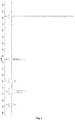
Fig. 1 . Gas chromatogram of the oxidative cleavage of methyl syn-9,10-dihydroxystearate with oxone/KBr. -
Fig. 2 . 1H-NMR spectrum of the mixture of methyl nonanoate and dimethyl azelate obtained by esterification of the crude of the oxidative cleavage. - The reactions were monitored using an Agilent 7890A equipped with a FID detector. The capillary column was a ZB-5HT Inferno: 30 m × 0.25 mm × 0.25 µm. Helium was used as carrier gas at 17 psi in column head. Injector temperature: 280 °C. Detector temperature: 250 °C. Oven program: 70°C (4 min), 25°C min-1 to 150°C (0 min) and 5°C min-1 to 250°C (15 min).
- Cleavage of methyl 9,10-dihydroxystearates (
Fig. 1 ): nonanoic acid, 9.2 min; azelaic acid monomethyl ester, 13.0 min; methyl syn-9,10-dihydroxystearate, 28.1 min; methyl anti-9,10-dihydroxystearate, 28.3 min. - Other detected products: methyl 9,10-dioxostearate, 24.8 min; methyl 9(10)-hydroxy-10(9)-oxostearate, 26.7 min.
- Cleavage of methyl syn-13,14-dihydroxydocosanoate: nonanoic acid, 9.2 min; tridecanedioic acid monomethyl ester, 19.5 min; methyl syn-13,14-dihydroxydocosanoate, 38.6 min.
- Cleavage of simple diols: trans-cyclohexane-1,2-diol, 7.2 min; benzoic acid, 8.6 min; adipic acid, 10.5 min; meso-hydrobenzoin, 16.8 min.
- To a solution of methyl syn-9,10-dihydroxystearate (165.3 mg, 0.5 mmol) in 4 mL tBuOH/H2O (3:1 v:v), were added 12 mg of KBr (0.1 mmol, 20 mol%) and 614.7 mg of Oxone® (2.0 mmol) and the mixture was stirred at room temperature for 24 h. The reaction crude was diluted with distilled water (15 mL) and the products were extracted with ethyl acetate (3 × 10 mL). The combined organic phases were washed with brine (10 mL), dried with anhydrous MgSO4, and filtered. The solvents were evaporated under reduced pressure to get a mixture of nonanoic (pelargonic) acid and nonanodioic (azelaic) acid monomethyl ester in 1:1 molar ratio (92% yield).
- The NMR analysis was carried out after esterification. To a solution of the mixture of carboxylic acids (150 mg) in methanol (3 mL), concentrated sulfuric acid (2 drops) was added. The solution was heated at 65°C overnight. The acid was neutralized with saturated NaHCO3 aqueous solution and the products were extracted with ethyl acetate (15 mL). The organic phase was washed with water (2 × 15 mL), dried with anhydrous MgSO4, and filtered. The organic solvents were evaporated under reduced pressure.
1H-RMN (CDCl3, δ ppm, 400 MHz): 3.64 (s, 9H), 2.28 (t, 6H, J=8 Hz), 1.67-1.53 (m, 6H), 1.36-1.22 (m, 16H), 0.86 (t, 3H, J=8 Hz) (Fig. 2 ). - Example 1 was repeated but using 10 mL MeCN/H2O (9:1 v:v) as solvent instead of tBuOH/H2O (3:1 v:v). The mixture of nonanoic (pelargonic) acid and nonanodioic (azelaic) acid monomethyl ester (1:1 molar ratio) was obtained with 89% yield.
- Example 2 was repeated but without adding KBr to the reaction mixture. No conversion was detected after 24 h.
- To a solution of methyl syn-9,10-dihydroxystearate (165.3 mg, 0.5 mmol) in 1 mL CH2Cl2/H2O (9:1 v:v), were added 24 mg of KBr (0.2 mmol, 40 mol%), 34,4 mg of p-toluenesulfonic acid (0.2 mmol, 40 mol%) and 68 µL of 60% H2O2 (1.5 mmol) and the mixture was stirred at room temperature for 24 h. The reaction crude was diluted with distilled water (15 mL) and the products were extracted with dichloromethane (3 × 10 mL). The combined organic phases were dried with anhydrous MgSO4, and filtered. The solvent was evaporated under reduced pressure to get a mixture of unconverted methyl syn-9,10-dihydroxystearate (45%), methyl 9(10)-hydroxy-10(9)-oxostearate (47%) and methyl 9,10-dioxostearate (8%).
- Example 1 was repeated but using the anti-isomer as starting material. The mixture of nonanoic (pelargonic) acid and nonanodioic (azelaic) acid monomethyl ester (1:1 molar ratio) was obtained with 90% yield.
- Example 2 was repeated but using methyl syn-13,14-dihydroxybehenate (docosanoate) as starting material. The mixture of nonanoic (pelargonic) acid and tridecanodioic acid monomethyl ester (1:1 molar ratio) was obtained with 85% yield.
- Example 2 was repeated but using trans-cyclohexane-1,2-diol as starting material. Adipic acid was obtained with 70% yield.
- Example 1 was repeated but using meso-hydrobenzoin as starting material. Benzoic acid was obtained with 65% yield.
Claims (15)
- A process for producing carboxylic acids which comprises a cleavage reaction of 1,2-diols, using 2KHSO5·KHSO4·K2SO4 as an oxidant and a halide of formula MXn , wherein M is an alkaline or alkaline earth metal, X is a halogen and n is 1 or 2, as a catalyst, in presence of a solvent, at a temperature that ranges between 20 to 60 °C, according to the following scheme:

- Process according to claim 1, wherein the amount of 2KHSO5·KHSO4·K2SO4 ranges between 3 and 5 equivalents.
- Process according to any preceding claim, wherein the amount of halide ranges between 20 and 40 mol% equivalents.
- Process according to any preceding claim, wherein the metal M in the halide is selected from an alkaline or an alkaline earth.
- Process according to any preceding claim, wherein the halogen X in the halide is selected from bromide or chlorine.
- Process according to any preceding claim, wherein the halide is KBr
- Process according to any preceding claim, wherein the solvent is from a mixture of an organic polar solvent and water.
- Process according to claim 7, wherein the organic polar solvent is selected from tert-butanol, tetrahydrofuran, ethyl acetate, acetonitrile, nitromethane, dichloromethane, dimethyl formamide, dimethylsulfoxide, and acetone, or a mixture thereof.
- Process according claim 8, wherein the solvent in the cleavage reaction is acetonitrile/water or tert-butanol/water.
- Process according to any preceding claim, wherein the temperature ranges between 10 to 80 °C.
- Process according to claim 10, wherein the temperature ranges from 20 to 40°C.
- Process according to any preceding claim, wherein R1 is an optionally substituted C1-C20 alkyl group, selected from methyl, ethyl, n-propyl, 1-methylethyl (isopropyl), n-butyl, 1,1-dimethylethyl (t-butyl), n-pentyl, n-heptyl, n-octyl, n-nonyl, n- n-decyl, n-undecyl, and n-dodecyl
- Process according to any claims 1 to 9, wherein R1 and R2 form together an optionally substituted C3-C12 cycloalkyl group selected from cyclopropyl, cyclobutyl, cyclopentyl, and cyclohexyl.
- Process according to any claims 1 to 9, wherein R1 and R2 are independently an optionally substituted C6-C20 aryl group selected from phenyl, naphthyl, tetrahydronapthyl, indanyl, and biphenyl.
- Process according to any preceding claim, wherein R2 is -RCOOR', wherein R and R' an optionally substituted C1-C20 alkyl group, selected from methyl, ethyl, n-propyl, 1-methylethyl (isopropyl), n-butyl, 1,1-dimethylethyl (t-butyl), n-pentyl, n-heptyl, n-octyl, n-nonyl, n- n-decyl, n-undecyl, and n-dodecyl.
Priority Applications (2)
| Application Number | Priority Date | Filing Date | Title |
|---|---|---|---|
| EP20382372.9A EP3907212A1 (en) | 2020-05-06 | 2020-05-06 | Metal-free method for oxidative cleavage of vic-diols to carboxylic acids |
| PCT/EP2021/060944 WO2021224063A1 (en) | 2020-05-06 | 2021-04-27 | Metal-free method for oxidative cleavage of vic-diols to carboxylic acids |
Applications Claiming Priority (1)
| Application Number | Priority Date | Filing Date | Title |
|---|---|---|---|
| EP20382372.9A EP3907212A1 (en) | 2020-05-06 | 2020-05-06 | Metal-free method for oxidative cleavage of vic-diols to carboxylic acids |
Publications (1)
| Publication Number | Publication Date |
|---|---|
| EP3907212A1 true EP3907212A1 (en) | 2021-11-10 |
Family
ID=70779637
Family Applications (1)
| Application Number | Title | Priority Date | Filing Date |
|---|---|---|---|
| EP20382372.9A Withdrawn EP3907212A1 (en) | 2020-05-06 | 2020-05-06 | Metal-free method for oxidative cleavage of vic-diols to carboxylic acids |
Country Status (2)
| Country | Link |
|---|---|
| EP (1) | EP3907212A1 (en) |
| WO (1) | WO2021224063A1 (en) |
-
2020
- 2020-05-06 EP EP20382372.9A patent/EP3907212A1/en not_active Withdrawn
-
2021
- 2021-04-27 WO PCT/EP2021/060944 patent/WO2021224063A1/en not_active Ceased
Non-Patent Citations (5)
| Title |
|---|
| KULIK ET AL., GREEN CHEM., vol. 16, 2014, pages 1799 - 1806 |
| KULIK ET AL., GREEN CHEM., vol. 16, 2014, pages 1799 - 1806, XP002800614 * |
| LU ET AL., GREEN CHEM., vol. 21, 2019, pages 560 - 566 |
| SANTACESARIA E ET AL: "Oxidative Cleavage of the Double Bond of Monoenic Fatty Chains in Two Steps: A New Promising Route to Azelaic Acid and Other Industrial Products", INDUSTRIAL & ENGINEERING CHEMISTRY RESEARCH, AMERICAN CHEMICAL SOCIETY, vol. 39, no. 8, 1 January 2000 (2000-01-01), pages 2766 - 2771, XP002371496, ISSN: 0888-5885, DOI: 10.1021/IE990920U * |
| SANTACESARIA, IND. ENG. CHEM. RES., vol. 39, 2000, pages 2766 - 2771 |
Also Published As
| Publication number | Publication date |
|---|---|
| WO2021224063A1 (en) | 2021-11-11 |
Similar Documents
| Publication | Publication Date | Title |
|---|---|---|
| EP2430010B1 (en) | Oxidation of furfural compounds | |
| Mukhopadhyay et al. | Cobalt (II)-catalyzed conversion of allylic alcohols/acetates to allylic amides in the presence of nitriles | |
| Pradhan et al. | Fe (DS) 3, an efficient Lewis acid-surfactant-combined catalyst (LASC) for the one pot synthesis of chromeno [4, 3-b] chromene derivatives by assembling the basic building blocks | |
| US10167267B2 (en) | Conversion and purification of biomass | |
| Sathicq et al. | Alkyl carbonate derivatives of furanics: A family of bio-based stable compounds | |
| Hu et al. | Efficient and selective palladium-catalyzed direct oxidative esterification of benzylic alcohols under aerobic conditions | |
| CN105837416B (en) | A kind of method that copper complex catalyzing alcohols selective oxidation prepares aldehydes or ketones | |
| Tada et al. | Direct aerobic photo-oxidative syntheses of aromatic methyl esters from methyl aromatics using anthraquinone-2, 3-dicarboxylic acid as organophotocatalyst | |
| Robinson et al. | Mesoporous aluminosilicate promoted protection and deprotection of carbonyl compounds | |
| WO2014179156A1 (en) | 5-(hydroxymethyl) furan-2-carbaldehyde (hmf) sulfonates and process for synthesis thereof | |
| JP6449907B2 (en) | Synthesis of furan derivatives of R-glucoside, sugar alcohol, reducing sugar alcohol and reducing sugar alcohol | |
| Lü et al. | Study on the selectivity in the electrophilic monofluorination of 2, 3-allenoates with Selectfluor™: an efficient synthesis of 4-fluoro-2 (5 H)-furanones and 3-fluoro-4-oxo-2 (E)-alkenoates | |
| WO2021224063A1 (en) | Metal-free method for oxidative cleavage of vic-diols to carboxylic acids | |
| Ghahnavie et al. | Caffeine-catalyzed green synthesis of biscoumarins: Caffeine-catalyzed green synthesis of biscoumarins | |
| Ogawa et al. | Iron-catalyzed direct-type hydroxymethylation of 1, 3-dicarbonyl compounds in water | |
| Fraile et al. | Metal-free method for oxidative cleavage of vic-diols to carboxylic acids | |
| Mao et al. | Cobalt‐catalyzed Aerobic Oxidation of Eugenol to Vanillin and Vanillic Acid | |
| Kumar et al. | Retracted Article: Organocatalytic stereoselective synthesis of passifloricin A | |
| CN105418566A (en) | Synthesis method for ambroxide | |
| Lemus et al. | Lewis acid catalyzed enlargement of cyclic β‐alkoxyenals and one‐pot synthesis of polyfunctional enoxysilanes derived from aucubin with trimethylsilyldiazomethane | |
| KR101002795B1 (en) | Novel retinyl ascorbate compounds and preparation method thereof | |
| Sridhar et al. | Stereoselective Synthesis of cis‐Fused Perhydrofuro [2, 3‐b] furan Derivatives from Sugar‐Derived Allyl Vinyl Ethers | |
| CN105503907B (en) | The method of enantioselective synthesis Vinca Alkaloids | |
| RU2813024C1 (en) | Method of producing 2-oxoadamantane-1-carboxylic acid | |
| Cheng et al. | General and practical approach to the syntheses of linear homoallylic alcohols |
Legal Events
| Date | Code | Title | Description |
|---|---|---|---|
| PUAI | Public reference made under article 153(3) epc to a published international application that has entered the european phase |
Free format text: ORIGINAL CODE: 0009012 |
|
| STAA | Information on the status of an ep patent application or granted ep patent |
Free format text: STATUS: THE APPLICATION HAS BEEN PUBLISHED |
|
| AK | Designated contracting states |
Kind code of ref document: A1 Designated state(s): AL AT BE BG CH CY CZ DE DK EE ES FI FR GB GR HR HU IE IS IT LI LT LU LV MC MK MT NL NO PL PT RO RS SE SI SK SM TR |
|
| B565 | Issuance of search results under rule 164(2) epc |
Effective date: 20201105 |
|
| STAA | Information on the status of an ep patent application or granted ep patent |
Free format text: STATUS: REQUEST FOR EXAMINATION WAS MADE |
|
| 17P | Request for examination filed |
Effective date: 20220104 |
|
| RBV | Designated contracting states (corrected) |
Designated state(s): AL AT BE BG CH CY CZ DE DK EE ES FI FR GB GR HR HU IE IS IT LI LT LU LV MC MK MT NL NO PL PT RO RS SE SI SK SM TR |
|
| STAA | Information on the status of an ep patent application or granted ep patent |
Free format text: STATUS: THE APPLICATION HAS BEEN WITHDRAWN |
|
| 18W | Application withdrawn |
Effective date: 20220208 |