EP3905788A1 - Link aggregation implementation method and related product - Google Patents
Link aggregation implementation method and related product Download PDFInfo
- Publication number
- EP3905788A1 EP3905788A1 EP20737995.9A EP20737995A EP3905788A1 EP 3905788 A1 EP3905788 A1 EP 3905788A1 EP 20737995 A EP20737995 A EP 20737995A EP 3905788 A1 EP3905788 A1 EP 3905788A1
- Authority
- EP
- European Patent Office
- Prior art keywords
- network resource
- target
- wireless networks
- network
- link
- Prior art date
- Legal status (The legal status is an assumption and is not a legal conclusion. Google has not performed a legal analysis and makes no representation as to the accuracy of the status listed.)
- Granted
Links
Images



Classifications
-
- H—ELECTRICITY
- H04—ELECTRIC COMMUNICATION TECHNIQUE
- H04W—WIRELESS COMMUNICATION NETWORKS
- H04W4/00—Services specially adapted for wireless communication networks; Facilities therefor
- H04W4/02—Services making use of location information
- H04W4/021—Services related to particular areas, e.g. point of interest [POI] services, venue services or geofences
-
- H—ELECTRICITY
- H04—ELECTRIC COMMUNICATION TECHNIQUE
- H04W—WIRELESS COMMUNICATION NETWORKS
- H04W48/00—Access restriction; Network selection; Access point selection
- H04W48/18—Selecting a network or a communication service
-
- H—ELECTRICITY
- H04—ELECTRIC COMMUNICATION TECHNIQUE
- H04W—WIRELESS COMMUNICATION NETWORKS
- H04W72/00—Local resource management
- H04W72/50—Allocation or scheduling criteria for wireless resources
- H04W72/54—Allocation or scheduling criteria for wireless resources based on quality criteria
- H04W72/542—Allocation or scheduling criteria for wireless resources based on quality criteria using measured or perceived quality
-
- H—ELECTRICITY
- H04—ELECTRIC COMMUNICATION TECHNIQUE
- H04W—WIRELESS COMMUNICATION NETWORKS
- H04W72/00—Local resource management
- H04W72/50—Allocation or scheduling criteria for wireless resources
- H04W72/56—Allocation or scheduling criteria for wireless resources based on priority criteria
-
- H—ELECTRICITY
- H04—ELECTRIC COMMUNICATION TECHNIQUE
- H04W—WIRELESS COMMUNICATION NETWORKS
- H04W76/00—Connection management
- H04W76/10—Connection setup
- H04W76/15—Setup of multiple wireless link connections
-
- H—ELECTRICITY
- H04—ELECTRIC COMMUNICATION TECHNIQUE
- H04L—TRANSMISSION OF DIGITAL INFORMATION, e.g. TELEGRAPHIC COMMUNICATION
- H04L45/00—Routing or path finding of packets in data switching networks
- H04L45/24—Multipath
- H04L45/245—Link aggregation, e.g. trunking
-
- H—ELECTRICITY
- H04—ELECTRIC COMMUNICATION TECHNIQUE
- H04L—TRANSMISSION OF DIGITAL INFORMATION, e.g. TELEGRAPHIC COMMUNICATION
- H04L47/00—Traffic control in data switching networks
- H04L47/70—Admission control; Resource allocation
- H04L47/82—Miscellaneous aspects
- H04L47/826—Involving periods of time
-
- H—ELECTRICITY
- H04—ELECTRIC COMMUNICATION TECHNIQUE
- H04W—WIRELESS COMMUNICATION NETWORKS
- H04W88/00—Devices specially adapted for wireless communication networks, e.g. terminals, base stations or access point devices
- H04W88/02—Terminal devices
- H04W88/06—Terminal devices adapted for operation in multiple networks or having at least two operational modes, e.g. multi-mode terminals
Definitions
- the disclosure relates to a field of communication technologies, specifically to a method for implementing link aggregation and a related product.
- link aggregation refers to performing link aggregation by randomly selecting two wireless networks. Therefore, it is a problem to be solved how to improve intelligence of the link aggregation.
- Embodiments of the disclosure provides a method for implementing link aggregation and a related product, which may enhance intelligence of link aggregation.
- embodiments of the disclosure provide a method for implementing link aggregation which is applied to an electronic device.
- the method includes: obtaining multiple wireless networks by performing network search, each wireless network corresponding to a respective access point device and a respective historical record of network resource allocation corresponding to link aggregation; determining a target historical record of network resource allocation corresponding to at least one foreground application from multiple historical records of network resource allocation corresponding to the multiple wireless networks, and obtaining multiple historical records of network resource allocation, each wireless network corresponding to a respective target historical record of network resource allocation; determining a priority order of the multiple wireless networks based on the multiple target historical records of network resource allocation; and performing a link aggregation by selecting at least two wireless networks from the multiple wireless networks based on the priority order.
- embodiments of the disclosure provide a device for implementing link aggregation, which is integrated into an electronic device.
- the device includes a searching unit, a determining unit and a network accessing unit,
- embodiments of the disclosure provide an electronic device.
- the electronic device includes a processor, a memory, a communication interface, and one or more programs.
- the one or more programs are stored in the memory and are configured to be executed by the processor.
- the one or more programs include instructions for executing embodiments in the first aspect of the disclosure.
- embodiments of the disclosure provide a computer-readable storage medium.
- the computer-readable storage medium stores computer programs for electrical data exchange.
- the computer programs cause a computer to execute some or all of embodiments in the first aspect of the disclosure.
- inventions of the disclosure provide a computer program product.
- the computer program product includes a non-transitory computer-readable storage medium having computer programs stored thereon.
- the computer programs cause a computer to execute some or all of embodiments in the first aspect of the disclosure.
- the computer program product may be a software installation package.
- the multiple wireless networks are obtained by performing the network search when the current network rate is less than the preset network rate.
- Each wireless network corresponds to an access point device and a historical record of network resource allocation corresponding to the link aggregation.
- the target historical record of network resource allocation corresponding to the at least one foreground application is determined from the multiple historical records of network resource allocation corresponding to the multiple wireless networks, and the multiple target historical records of network resource allocation are obtained.
- Each wireless network corresponds to a target historical record of network resource allocation.
- the priority order is determined for the multiple wireless networks based on the multiple target historical records of network resource allocation.
- the link aggregation is performed by selecting the at least two wireless networks from the multiple wireless networks based on the priority order. Therefore, when the network rate of a single network is poor, the priority order of accessing the wireless networks may be determined based on the historical records of network resource allocation corresponding to the wireless networks, and the link aggregation is implemented by selecting the wireless networks based on the priority order, to improve the intelligence of link aggregation.
- the electronic device 101 may connect a mobile data network 103.
- the mobile data network is a communication network configured to transmit data services.
- Wi-Fi 102 is a technology for allowing the electronic device to connect a wireless local area network, usually adopting such as 2.4G UHF or 5G SHF ISM (industrial, scientific and medical index) radio frequency band.
- Bluetooth 104 is a wireless technology standard and may achieve short-distance data exchange between fixed devices, mobile devices and personal are networks of buildings, etc.
- Wireless-Fidelity is a wireless connection manner.
- An electronic device may include a Wi-Fi module (also referred to as a Wi-Fi communication module) to enable the electronic device to have a Wi-Fi function.
- the electronic device may search for Wi-Fi hotspots and connect a wireless network through a Wi-Fi hotspot.
- a Wi-Fi data link is a data connection path established between the electronic device and the wireless network through a Wi-Fi communication module interface.
- link aggregation refers to that a device can use two or more network interfaces to connect the network.
- a mobile phone can access the internet using both the Wi-Fi and data network (cellular network, also refers to as mobile data network), or two or more Wi-Fi networks simultaneously based on the link aggregation.
- Smart Link Aggregation refers to smartly allocating the user requirement on accessing internet to different internet access interfaces (such as a cellular communication module interface, a Wi-Fi communication module interface).
- Link aggregation requires at least two or more available networks, and thus a precondition of the SLA is that the Wi-Fi and the data network coexist.
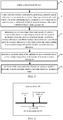
- FIG. 1B is a flowchart illustrating a method for implementing link aggregation according to embodiments of the disclosure, The method is applied to an electronic device and includes the following.
- multiple wireless networks are obtained by performing network search.
- Each wireless network corresponding to a respective access point device and a respective historical record of network resource allocation corresponding to a link aggregation.
- Embodiments of the application may be applied to an indoor environment, such as a smart home environment.
- the smart home environment includes multiple smart home devices, and each smart home device may be deemed as an access point device.
- the access point device may be at least one of a smart television, a smart washing machine, a smart air conditioner, a smart water heater, a tablet computer, a smart phone, a smart door, a smart massage chair, a smart dryer, a smart electric rice cooker, a smart soybean milk machine, a smart water dispenser, etc., which is not limited in the disclosure.
- the electronic device may initiate the Wi-Fi module to perform wireless network search to obtain the multiple wireless networks.
- Each wireless network corresponds to an access point device and a historical record of network resource allocation corresponding to the link aggregation. No matter which access point device is used to implement the link aggregation, a corresponding historical record of network resource allocation is generated.
- Each historical record of network resource allocation corresponds to a respective allocation ratio coefficient of network resource ranging from 0 to 1.
- the historical record of network resource allocation may include the following information: an IP (Internet protocol) address of the access point device, time when achieving the link aggregation, a foreground application when implementing the link aggregation, a device identifier of a device for implementing the link aggregation (e.g., an IP address, a MAC (Media Access Control) address, a SIM (Subscriber Identity Module) card number, an IMEI (International Mobile Equipment Identity), an ICCID (Integrated Circuit Card Identity)).
- IP Internet protocol
- a device identifier of a device for implementing the link aggregation e.g., an IP address, a MAC (Media Access Control) address, a SIM (Subscriber Identity Module) card number, an IMEI (International Mobile Equipment Identity), an ICCID (Integrated Circuit Card Identity)
- a target historical record of network resource allocation corresponding to at least one foreground application is determined from the historical records of network resource allocation corresponding to the multiple wireless networks, and multiple target historical records of network resource allocation are obtained.
- Each wireless network corresponds to a respective target historical record of network resource allocation.
- the above-mentioned foreground application may be at least one of desktop application, game application, instant messaging application, screen locking application, payment application, browser application, video-related application, etc., which is not limited here.
- there may be one or more foreground applications For example, when being in a split-screen mode, there may be multiple foreground applications. For an electronic device with a foldable screen, there may be multiple foreground applications. For an electronic device with a two-sided screen, there may be 2 foreground applications.
- a respective historical record of network resource allocation can be generated.
- the electronic device may determine a respective target historical record of network resource allocation for each foreground application from the historical records of network resource allocation corresponding to the wireless networks, and obtain the multiple target historical records of network resource allocation.
- Each wireless network corresponds to a respective target historical record of network resource allocation.
- the electronic device may determine the target historical records of network resource allocation for one or more foreground applications from the historical records of network resource allocation corresponding to the multiple wireless networks, and the historical records of network resource allocation may include at least one of application identifier of the foreground application, operation mode corresponding to the foreground application (such as a split screen mode, a foldable screen mode, a single screen mode, a double-sided screen mode, or the like), an allocation rate coefficient of network resource, which is not limited here.
- application identifier of the foreground application such as a split screen mode, a foldable screen mode, a single screen mode, a double-sided screen mode, or the like
- an allocation rate coefficient of network resource which is not limited here.
- determining the target historical record of network resource allocation corresponding to each of the at least one foreground application from the historical records of network resource allocation corresponding to the multiple wireless networks and obtaining the multiple target historical records of network resource allocation may include 21 and 22.
- one foreground application is selected from the at least one foreground application as a target foreground application.
- a target historical record of network resource allocation corresponding to the current foreground application and the preset operation mode is determined from the historical records of network resource allocation corresponding to the multiple wireless networks and multiple target historical records of network resource allocation are obtained.
- the preset operation mode may be at least one of single screen mode, split screen mode, foldable screen mode, and double-sided screen mode, which is not limited here.
- a corresponding historical record of network resource allocation is determined based on the foreground application running on the electronic device and the operation mode corresponding to the foreground application. For example, while the electronic device is in the preset operation mode, the electronic device can select a foreground application from the at least one foreground application as a target foreground application and determine the target historical record of network resource allocation corresponding to the target foreground application and the preset operation mode from the historical records of network resource allocation of the multiple wireless networks, and thus obtain the multiple target historical records of network resource allocation.
- a historical record of network resource allocation matching the foreground application and the preset operation mode may be obtained, which helps to implement the link aggregation reasonably and improve the intelligence of the link aggregation.
- a priority order of the multiple wireless networks is determined based on the multiple target historical records of network resource allocation.
- the electronic device may determine the priority order of the multiple wireless networks based on the multiple target historical records of network resource allocation.
- determining the priority order of the multiple wireless networks based on the multiple target historical records of network resource allocation at 103 may include 31 to 33.
- determining the evaluation value corresponding to each wireless network in the multiple wireless networks based on the multiple allocation ratio coefficient ratios of network resource and obtaining the multiple evaluation values may include 321-324.
- a target number of the target allocation ratio coefficients of network resource included in an allocation ratio coefficient set i of network resource is determined and a target average value of all allocation ratio coefficients of network resource is determined.
- the allocation ratio coefficient set i of network resource is any one of the multiple allocation ratio coefficient sets of network resource.
- a target second weight is determined based on the target first weight.
- the sum of the target first weight and the target second weight is 1.
- the mapping relationship between numbers and first weights can be stored in the electronic device, where the sum of the first weight and the second weight is 1. Further, the performance of each wireless network is evaluated on the two dimensions of the number and the average value.
- the electronic device may determine the target number of the target allocation ratio coefficients of network resource in the allocation ratio coefficient set i of network resource and a target average value of all allocation ratio coefficients of network resource, determine the target first weight corresponding to the target number based on the preset mapping relationship between numbers and first weights, and obtain the target second weight.
- the evaluation value corresponding to the allocation ratio coefficient set i of network resource the target first weight + the target average value * the target second weight.
- the link aggregation is performed by selecting at least two wireless networks from the multiple wireless networks based on the priority order.
- the electronic device can perform the link aggregation by selecting at least two wireless networks from the multiple wireless networks based on the priority order. Therefore, stability of the network of the electronic device may be ensured as much as possible.
- an electronic device can acquire a foreground application and determine a condition of network resource allocation of multiple access point devices for the foreground application, determine selection priorities for the link aggregation based on the condition of network resource allocation, and perform the link aggregation by selecting two access point devices with high priorities based on the selection priorities. Therefore, the performance of the network of the electronic device can be improved.
- Performing the link aggregation by selecting at least two wireless networks from the multiple wireless networks based on the priority order in 104 may include 41-43.
- multiple distances are obtained by determining a respective distance between the indoor location and an access point device corresponding to each one of the multiple wireless networks.
- At 43 at least two distances less than a preset distance are selected from the multiple distances, and the link aggregation is performed by selecting at least two wireless networks from multiple wireless networks corresponding to the at least two distances based on the priority order.
- A1 and A2 can be considered.
- the network search is executed when the current network rate is lower than a preset network rate.
- the preset network rate may be set by the user or default by system.
- the electronic device can obtain the current network rate, and 101 can be executed when the current network rate is lower than a preset network rate. Since the low network rate influences the user experience, link aggregation can be executed when the network rate is low to enhance the online experience of the user.
- the electronic device when the electronic device initiates the SLA function, the electronic device can perform 101 as described above.
- B1 and B2 may be included.
- the network search is executed when the quantity of electricity is greater than a preset quantity threshold.
- the preset quantity threshold may be set by the user or default by system.
- the SLA may increase power consumption of the electronic device to a certain degree, in order to ensure smooth execution of the SLA function, the electronic device may detect the current quantity of electricity of the electronic device. When the current quantity of electricity of the electronic device is greater than the preset quantity threshold, the network search is executed.
- performing the link aggregation based on the two wireless networks may include C1 to C3.
- link quality of a first Wi-Fi data link and link quality of a second Wi-Fi data link are detected.
- an allocation ratio of data packet of the first Wi-Fi data link to the second Wi-Fi data link is determined based on the link quality of the first Wi-Fi data link and the link quality of the second Wi-Fi data link.
- the link quality of the Wi-Fi data link may be determined by uplink and downlink data transmission rate, round-trip delay, and bit error rate of the Wi-Fi data link.
- the Wi-Fi data link may include a Wi-Fi data uplink and a Wi-Fi data downlink.
- the quality of the Wi-Fi data uplink may be determined by the uplink data transmission rate, round-trip delay and bit error rate of the Wi-Fi data link.
- the quality of the Wi-Fi data downlink may be determined by the downlink data transmission rate, round-trip delay and bit error rate of the Wi-Fi data link.
- the electronic device can initiate the SLA function before 101.
- the electronic device can further enable dual Wi-Fi connection simultaneously.
- detecting the link quality of the first Wi-Fi data link by the electronic device may include the following.
- the data transmission rate, the round-trip delay, and the bit error rate of the first Wi-Fi data link are measured by the electronic device.
- the link quality of the first Wi-Fi data link is determined based on the round-trip delay, the data transmission rate, and the bit error rate of the first Wi-Fi data link.
- Detecting the link quality of the second Wi-Fi data link by the electronic device may include the following.
- the data transmission rate, the round-trip delay, and the bit error rate of the second Wi-Fi data link are measured by the electronic device.
- the link quality of the second Wi-Fi data link is determined based on the round-trip delay, the data transmission rate, and the bit error rate of the second Wi-Fi data link.
- the link quality of the first Wi-Fi data link is better than that of the second Wi-Fi data link, it is determined that the allocation ratio of data packet of the first Wi-Fi data link to the second Wi-Fi data link is greater than 1. If the link quality of the second Wi-Fi data link is better than that of the first Wi-Fi data link, it is determined that the allocation ratio of data packet of the second Wi-Fi data link to the first Wi-Fi data link is greater than 1.
- a quality score of the Wi-Fi data link can be obtained by scoring the link quality of the Wi-Fi data link may be scored based on the uplink and downlink data transmission rate, round-trip delay, and bit error rate of the Wi-Fi data link.
- the electronic device may use a ratio of the quality score of the first Wi-Fi data link to the quality score of the second Wi-Fi data link as the allocation ratio of data packet of the first Wi-Fi data link to the second Wi-Fi data link.
- the link quality of the first Wi-Fi data link is level 1, and the quality level of the second Wi-Fi data link is level 1.
- the allocation ratio of data packet between the first Wi-Fi data link and the second Wi-Fi data link is 1 : 1.
- the link quality of the first Wi-Fi data link is level 1, and the quality level of the second Wi-Fi data link is level 2.
- the allocation ratio of data packet of the first Wi-Fi data link to the second Wi-Fi data link is 1 : 2.
- the link quality of the first Wi-Fi data link is level 1, and the link quality of the second Wi-Fi data link is level 3.
- the allocation ratio of data packet of the first Wi-Fi data link to the second Wi-Fi data link is 1 : 3.
- the link quality of the first Wi-Fi data link is level 1, and the quality level of the second Wi-Fi data link is level 4.
- the allocation ratio of data packet of the first Wi-Fi data link to the second Wi-Fi data link is 1 : 4.
- the link quality of the first Wi-Fi data link is level 1, and the quality level of the second Wi-Fi data link is level 5. In this case, the allocation ratio of data packet of the first Wi-Fi data link to the second Wi-Fi data link is 1 : 5.
- an electronic device can send an uplink data packet and receive a downlink data packet.
- a data packet to be transmitted may be an uplink data packet or a downlink data packet.
- the electronic device may transmit the uplink data packet by allocating the uplink data packet to the first Wi-Fi data uplink and the second Wi-Fi data uplink.
- the electronic device may transmit the downlink data packet by allocating the downlink data packet to the first Wi-Fi data downlink and the second Wi-Fi data downlink.
- the data packet to be transmitted may be initiated by different services of the electronic device.
- the data packet to be transmitted may be initiated by any one of video service, game service, voice service, and instant messaging service.
- detecting the link quality of the first Wi-Fi data link and the link quality of the second Wi-Fi data link may include the following.
- a maximum data transmission rate of the first Wi-Fi data link and a maximum data transmission rate of the second Wi-Fi data link are measured by the electronic device.
- the link quality of the first Wi-Fi data link and the link quality of the second Wi-Fi data link are determined based on the maximum data transmission rate of the first Wi-Fi data link and the maximum data transmission rate of the second Wi-Fi data link.
- the electronic device can determine the allocation ratio of data packet of the first Wi-Fi data link to the second Wi-Fi data link based on the ratio of the link quality of the first Wi-Fi data link to the link quality of the second Wi-Fi data link.
- the link quality of the first Wi-Fi data link is 0.2
- the link quality of the second Wi-Fi data link is 0.8
- the allocation ratio of data packet of the first Wi-Fi data link to the second Wi-Fi data link is 2 : 8.
- the maximum data transmission rate of the second Wi-Fi data link and the maximum data transmission rate of the first Wi-Fi data link can be corrected by data increment calculation rate on the wifil and wifi2 receiving (rx) interfaces.
- the data increment calculation rate on the wifil and the wifi2 receiving (rx) interfaces is counted every Is (second), and the maximum data transmission rate of the first WiFi data link and the maximum data transmission rate of the second Wi-Fi data link are corrected by the data increment calculation rate.
- the corrected max_speed_wifi1 is the maximum one between max_speed_wifi1 and tmp_speed
- the corrected max_speed_wifi2 is the maximum one between max_speed_wifi2 and tmp_
- the maximum data transmission rate of the second Wi-Fi data link and the maximum data transmission rate of the first Wi-Fi data link can be corrected by calculating the Round-Trip Time (rtt).
- the electronic device may calculate the time delay on two interfaces (Wi-Fi communication module interface 1 and Wi-Fi communication module interface 2) based on the rtt of the TCP (transmission control protocol) protocol, and one data link only calculates the rtt of a first request after three handshakes, for example, rrt of http get, http post.
- Three handshakes refer to three acknowledgement processes for establishing the TCP connection.
- the TCP counts the rtt through the tcp_rtt_estimator() function and calculates the retransmission timeout (RTO). Therefore, the time delay is calculated by the tcp_rtt_estimator() function.
- the electronic device determines a current first RTT of the first Wi-Fi data link and a current first RTT of the second Wi-Fi data link respectively, which includes the following.
- the electronic device determines a second RTT by running one TCP.
- Embodiments of the disclosure consider the data transmission rate and the round-trip time, which may improve calculation accuracy of link quality with the two Wi-Fi data links.
- the multiple wireless networks are obtained by performing the network search.
- Each wireless network corresponds to an access point device and a historical record of network resource allocation corresponding to the link aggregation.
- the target historical record of network resource allocation corresponding to the at least one foreground application is determined from the multiple historical records of network resource allocation corresponding to the multiple wireless networks, and the multiple target historical records of network resource allocation are obtained.
- Each wireless network corresponds to a target historical record of network resource allocation.
- the priority order is determined for the multiple wireless networks based on the multiple target historical records of network resource allocation.
- the link aggregation is performed by selecting the at least two wireless networks from the multiple wireless networks based on the priority order.
- multiple wireless networks are obtained by performing network search when the current network rate is lower than a preset network rate.
- Each wireless network corresponds to a respective access point device and a respective historical record of network resource allocation corresponding to a link aggregation.
- a target historical record of network resource allocation corresponding to at least one foreground application is determined from the historical records of network resource allocation corresponding to the multiple wireless networks, and multiple target historical records of network resource allocation are obtained.
- FIG. 3 is a block diagram illustrating an electronic device 300 according to embodiments of the disclosure.
- the electronic device 300 includes a processor 310, a memory 320, a communication interface 330 and one or more programs 321.
- the one or more programs 321 are stored in the memory 320 and configured to be executed by the processor 310.
- the one or more programs 321 include instructions configured to execute the following.
- a target historical record of network resource allocation corresponding to at least one foreground application is determined from the historical records of network resource allocation corresponding to the multiple wireless networks, and multiple target historical records of network resource allocation are obtained.
- Each wireless network corresponds to a respective target historical record of network resource allocation.
- a link aggregation is implemented by selecting at least two wireless networks from the multiple wireless networks based on the priority level.
- the multiple wireless networks are obtained by performing the network search.
- Each wireless network corresponds to an access point device and a historical record of network resource allocation corresponding to the link aggregation.
- the target historical record of network resource allocation corresponding to the at least one foreground application is determined from the multiple historical records of network resource allocation corresponding to the multiple wireless networks, and the multiple target historical records of network resource allocation are obtained.
- Each wireless network corresponds to a target historical record of network resource allocation.
- the priority order is determined for the multiple wireless networks based on the multiple target historical records of network resource allocation.
- the link aggregation is performed by selecting the at least two wireless networks from the multiple wireless networks based on the priority order.
- the one or more programs 321 include instructions configured to execute the following.
- One foreground application is selected from the at least one foreground application as a target foreground application while the electronic device is in a preset operation mode.
- a target historical record of network resource allocation corresponding to the target foreground application and the preset operation mode from the historical records of network resource allocation of the multiple wireless networks, and the multiple target historical records of network resource allocation are obtained.
- the one or more programs 321 include instructions configured to execute the following.
- a target allocation ratio coefficient of network resource corresponding to each one of the multiple target historical records of network resource allocation, and multiple allocation ratio coefficient sets of network resource are obtained.
- Each allocation ratio coefficient set of network resource includes at least one target allocation ratio coefficient of network resource.
- a respective evaluation value corresponding to each wireless network of the multiple wireless networks is determined based on the multiple allocation ratio coefficient sets of network resource.
- a target number of the target allocation ratio coefficients of network resource included in an allocation ratio coefficient i of network resource is determined and a target average value of all allocation ratio coefficients of network resource is determined.
- the allocation rate coefficient set i of network resource is any one of the multiple allocation ratio coefficient sets of network resource.
- a second target weight is determined based on the target first weight.
- the sum of the target first weight and the target second weight is 1.
- the evaluation value corresponding to the allocation ratio coefficient set i of network resource is obtained through computing based on the target first weight, the target average value and the target second weight.
- the one or more programs 321 include instructions configured to execute the following.
- a respective distance between the indoor location and an access point device corresponding to each wireless network of the multiple wireless networks is determined, and multiple distances are obtained.
- Link quality of a first Wi-Fi data link and link quality of a second Wi-Fi data link are detected.
- Data packets are transmitted by allocating the data packets to be transmitted to the first Wi-Fi data link and the second Wi-Fi data link based on the allocation ratio of data packet.
- the one or more programs 321 include instructions configured to execute the following.
- the one or more programs 321 further include instructions configured to execute the following.
- a current network rate is obtained.
- the one or more programs 321 further include instructions configured to execute the following.
- a current quantity of electricity of the electronic device is detected.
- the network search is performed when the current quantity of electricity is greater than a preset quantity threshold.
- the electronic device includes hardware structures and/or software modules that execute various functions in order to implement the above functions.
- the disclosure may be implemented in the form of a hardware or a combination of a hardware and a computer software. Whether a function is executed by a hardware or a computer software driven by a hardware depends on the specific application and design constraints of the technical solution. Those skilled in the art may adopt different methods for each specific application to implement the described functions, but such implementation should not be considered beyond the scope of the disclosure.
- Embodiments of the disclosure may divide the functional units of the electronic device according to the above method examples, for example, various functional units may be divided corresponding to various functions, and two or more functions may be integrated in one processing unit.
- the above integrated unit may be implemented in the form of a hardware or in the form of a software functional unit. It should be noted that, the division of units in embodiments of the disclosure is illustrative, only a logical function division. There may be another division method in the actual implementation.
- FIG. 4A is a block diagram illustrating composition of functional units of a device 400 for implementing link aggregation according to embodiments of the disclosure.
- the device 400 for implementing link aggregation is integrated into an electronic device includes a searching unit 401, a determining unit 402 and a network accessing unit 403.
- the searching unit 401 is configured to obtain multiple wireless networks by performing network search.
- Each wireless network corresponds to a respective access point device and a respective historical record of network resource allocation corresponding to a link aggregation.
- the determining unit 402 is configured to determine a target historical record of network resource allocation corresponding to at least one foreground application from the historical records of network resource allocation corresponding to the multiple wireless networks, and obtain multiple target historical records of network resource allocation. Each wireless network corresponds to a respective target historical record of network resource allocation. Further, the determining unit 402 is configured to determine a priority order of the multiple wireless networks based on the multiple target historical records of network resource allocation.
- the network accessing unit 403 is configured to perform a link aggregation by selecting at least two wireless networks from the multiple wireless networks based on the priority order.
- the multiple wireless networks are obtained by performing the network search.
- Each wireless network corresponds to an access point device and a historical record of network resource allocation corresponding to the link aggregation.
- the target historical record of network resource allocation corresponding to the at least one foreground application is determined from the multiple historical records of network resource allocation corresponding to the multiple wireless networks, and the multiple target historical records of network resource allocation are obtained.
- Each wireless network corresponds to a target historical record of network resource allocation.
- the priority order is determined for the multiple wireless networks based on the multiple target historical records of network resource allocation.
- the link aggregation is performed by selecting the at least two wireless networks from the multiple wireless networks based on the priority order.
- a priority order of accessing the wireless networks may be determined based on the historical records of network resource allocation corresponding to the wireless networks, and the link aggregation is implemented by selecting the wireless networks based on the priority order, to improve the intelligence of link aggregation.
- the determining unit 402 is further configured to: selecting a foreground application from the at least one foreground application as a target foreground application while the electronic device is in a preset operation mode; and determine a target historical record of network resource allocation corresponding to the target foreground application and the preset operation mode from the historical records of network resource allocation corresponding to the multiple wireless networks, and obtaining the multiple target historical records of network resource allocation.
- the determining unit 402 is further configured to obtain a respective allocation ratio coefficient of network resource corresponding to each target historical record of network resource allocation of the multiple target historical records of network resource allocation and obtain multiple allocation ratio coefficient sets of network resource, in which each allocation ratio coefficient set of network resource includes at least one target allocation ratio coefficients of network resource; determine a respective evaluation value corresponding to each wireless network of the multiple wireless networks based on the multiple allocation ratio coefficient sets of network resource and obtain multiple evaluation values; and determine the priority order of the multiple wireless networks based on the multiple evaluation values.
- the determining unit 402 is further configured to determine a target number of the target allocation ratio coefficients of network resource in an allocation ratio coefficient i of network resource, determine a target average value of all allocation ratio coefficients of network resource, in which the allocation ratio coefficient set i of network resource is any one of the multiple allocation ratio coefficient sets of network resource; determine a target first weight corresponding to the target number based on a preset mapping relationship between numbers and first weights; determine a target second weight based on the target first weight, in which a sum of the target first weight and the target second weight is 1; obtain an evaluation value corresponding to the allocation ratio coefficient set i of network resource by calculating based on the target first weight, the target average value and the target second weight.
- the network accessing unit 404 is further configured to obtain an indoor position corresponding to the electronic device; determine a respective distance between the indoor location and an access point device corresponding to each wireless network of the multiple wireless networks, and obtain multiple distance values; and select at least two distance values less than a preset distance value from the multiple distance values, and perform the link aggregation by selecting the at least two wireless networks from the wireless networks corresponding to the at least two distances based on the priority order.
- the network accessing unit 403 in performing the link aggregation by selecting the at least two wireless networks from the wireless networks corresponding to the at least two distances based on the priority order, is further configured to detect link quality of a first Wi-Fi data link and link quality of a second Wi-Fi data link; determine an allocation ratio of data packet of the first Wi-Fi data link to the second Wi-Fi data link based on the link quality of the first Wi-Fi data link and the link quality of the second Wi-Fi data link; and transmit data packets by allocating the data packets to be transmitted to the first Wi-Fi data link and the second Wi-Fi data link based on the allocation ratio of data packet.
- the network accessing unit 403 in detecting the link quality of the first Wi-Fi data link, is further configured to: measure a data transmission rate, a round-trip delay and a bit error rate of the first Wi-Fi data link, and determine the link quality of the first Wi-Fi data link based on the round-trip delay, the data transmission rate, and the bit error rate of the first Wi-Fi data link.
- FIG. 4B is another variant structure of a device for implementing link aggregation as illustrated in FIG. 4A .
- the device of FIG. 4B may further include an obtaining unit 404.
- the obtaining unit 404 is configured to obtain a current network rate.
- the searching unit 401 is configured to execute the network search when the current network rate is lower than a preset network rate.
- FIG. 4C is another variant structure of the device for implementing link aggregation as illustrated in FIG. 4A .
- the device of FIG. 4C may further include a detecting unit 405.
- the detecting unit 405 is configured to detect a current quantity of electricity of the electronic device.
- the searching unit 401 is configured to perform the network search when the current quantity of electricity is greater than a preset quantity threshold.
- Embodiments of the disclosure further provide another electronic device.
- the electronic device may be a mobile phone, a tablet computer, a personal digital assistant (PDA), a point of sales (POS) a vehicle-mounted computer, etc.
- PDA personal digital assistant
- POS point of sales
- the electronic device is the mobile phone to describe the disclosure.
- FIG. 5 is a block diagram illustrating a partial structure of a mobile phone related with an electronic device according to embodiments of the disclosure.
- the mobile phone includes a radio frequency (RF) circuit 910, a memory 920, an input unit 930, a display unit 940, a sensor 950, an audio circuit 960, a wireless fidelity (Wi-Fi) module 970, a processor 980, and a power supply 990.
- RF radio frequency
- the RF circuit 910 may be configured to receive and transmit information.
- the RF circuit 910 includes, but is not limited to, an antenna, at least one amplifier, a transceiver, a coupler, a low noise amplifier (LNA), a duplexer, etc.
- the RF circuit 910 may further communicate with networks and other devices over wireless communications.
- the wireless communication may use any communication standard or protocol, including but not limited to a Global System of Mobile Communication (GSMX), a General Packet Radio Service (GPRS), a Code Division Multiple Access (CDMA), a Wideband Code Division Multiple Access (WCDMA), a Long Term Evolution (LTE), an e-mail, a Short Message Service (SMS), etc.
- GSMX Global System of Mobile Communication
- GPRS General Packet Radio Service
- CDMA Code Division Multiple Access
- WCDMA Wideband Code Division Multiple Access
- LTE Long Term Evolution
- SMS Short Message Service
- the memory 920 may be configured to store software programs and modules.
- the processor 980 executes various functional applications and data processing of the mobile phone by running the software programs and modules stored in the memory 920.
- the memory 920 may include a program storage area and a data storage area.
- the program storage area may store operation systems and application programs required by at least one function.
- the data storage area may store data created based on the use of the mobile phone.
- the memory 920 may include a high-speed random-access memory, a non-volatile memory, such as at least one magnetic disk storage device, a flash memory device, or other non-volatile solid-state storage devices.
- the input unit 930 may be configured to receive input digital or character information, and generate key signal inputs related to user configuration and function control of the mobile phone.
- the input unit 930 may include a fingerprint recognition module 931 and other input device 932.
- the fingerprint recognition module 931 may collect the fingerprint data of the user.
- the input unit 930 may further include other input devices 932.
- other input devices 932 may include but are not limited to one or more of touch screen, physical keyboard, function keys (such as volume control buttons, switch buttons, etc.), trackball, mouse, joystick, etc.
- the display unit 940 may be configured to display information input by a user or information provided to a user and various menus of the mobile phone.
- the display unit 940 may include a display screen 941.
- the display screen 941 can be configured in the form of liquid crystal display (LCD), organic light emitting diode (OLED), or or inorganic light emitting diode.
- the mobile phone may further include at least one sensor 950, such as optical sensor, motion sensor, pressure sensor, temperature sensor, and other sensors.
- the optical sensor may include ambient light sensor (also referred to as light sensor) and proximity sensor.
- the ambient light sensor may adjust the backlight brightness of the mobile phone based on the brightness of the ambient light, thereby adjusting the brightness of the display screen 941.
- the proximity sensor may turn off the display screen 941 and/or the backlight when the mobile phone moves to the ear.
- the accelerometer sensor may detect the magnitude of the acceleration in each direction (generally three-axis), detect the magnitude and direction of gravity when static, applied to applications of recognizing the attitude of the mobile phone (such as horizontal and vertical screen switching, magnetometer attitude calibration) and application of recognizing vibration (such as a pedometer, knock), etc.
- applications of recognizing the attitude of the mobile phone such as horizontal and vertical screen switching, magnetometer attitude calibration
- applications of recognizing vibration such as a pedometer, knock
- sensors equipped on the mobile phone such as a gyroscope, a barometer, a hygrometer, a thermometer, an infrared sensor, descriptions of those sensors are not repeated here.
- the audio circuit 960, the speaker 961, and the microphone 962 may provide an audio interface between the user and the mobile phone.
- the audio circuit 960 may convert electrical data and transmit converted electrical data to the speaker 961.
- the speaker 961 converts the received electrical data into a sound signal and play the sound signal.
- the microphone 962 converts the collected sound signal to an electrical signal which is received and converted by the audio circuit 960 to audio data.
- the audio data is processed by an audio data playback processor 980, and the processed audio data is transmitted to another mobile phone via the RF circuit 910, or to a memory 920 for further processing.
- Wi-Fi is a short-range wireless transmission technology.
- the mobile phone may help the user to send and receive emails, browse web pages and access streaming media through the Wi-Fi module 970, which provides wireless broadband Internet access for the user.
- FIG. 5 illustrates the Wi-Fi module 970, it is to be understood that the Wi-Fi module 970 is not a necessary component of the mobile phone, and may be omitted as desired without altering the essence of the disclosure.
- the processor 980 as a control center of the mobile phone, connects various components of the mobile phone through various interfaces and circuits, runs or executes software programs and/or modules in the memory 920 and calls the data stored in the memory 920 to execute various functions and processing data of the mobile phone, to further entirely monitor the mobile phone.
- the processor 980 may include one or more processing units.
- the processor 980 may be integrated with an application processor and a modem processor.
- the application processor mainly deals with an operating system, a user interface and an application program.
- the modem processor mainly deals with wireless communication. It is to be understood that the above modem may be not integrated in the processor 980.
- the mobile phone further includes the power supply 990 for powering various components, such as a battery.
- the power supply can be logically connected to the processor 980 through a power management system, thereby implementing functions such as charging, discharging, and power consumption management through the power management system.
- the mobile phone may further include a camera 9100.
- the camera 9100 is configured to capture images and videos and transmit the captured images and videos to the processor 980 for processing.
- the mobile phone may further include a Bluetooth module, which is not be repeated here.
- each block of the method process may be implemented based on the structure of the mobile phone.
- Embodiments of the disclosure further provide a computer storage medium.
- the computer storage medium is configured to store computer programs for electrical data exchange.
- the computer programs are configured to cause a computer to execute some or all of the method embodiments described above.
- the computer can be an electronic device.
- Embodiments of the disclosure further provide a computer program product.
- the computer program product includes a non-transitory computer-readable storage medium for storing computer programs.
- the computer programs may be operated to cause a computer to execute some or all of the method embodiments.
- the computer program product may be a software installation package.
- the computer can be an electronic device.
- the disclosed device may be implemented in other ways.
- the above device embodiments are merely illustrative, such as division of units, only a logical function division.
- the coupling or direct coupling or communication connection of each other shown or discussed may be an indirect coupling or communication connection through some interfaces, devices, or units, which may be in electrical or other forms.
- the above units described as separate parts may or may not be physically separated, the parts shown as units may or may not be physical units, which may be located in one place, or may be distributed to multiple network units. Some or all units may be selected according to the actual requirements to achieve the purpose of the disclosure.
- functional units in embodiments of the disclosure may be integrated in a processing unit, or may be physically existed separately, or two or more units may be integrated in one unit.
- the above integrated unit may be implemented in the form of a hardware or in the form of a software functional unit.
- An integrated unit may be stored in a computer readable memory if it is implemented in the form of a software function unit and sold and used as an independent product.
- the technical solution of the present disclosure essentially or partly contributing to the prior art, or all or part of the technical solution may be embodied in the form of a software product, which is stored in a memory, including several instructions configured to operate a computer device (which may be a personal computer, a server or a network device, etc.) to perform all or part of the blocks of various embodiments of the disclosure.
- the forgoing memory includes a USB disk, a read-only memory (ROM), a random-access memory (RAM), a mobile hard disk, a magnetic disk or an optical disk, and other media that may store program codes.
- a computer readable memory which may be a flash disk, a ROM, a RAM, a magnetic disk or an optical disk, etc.
Landscapes
- Engineering & Computer Science (AREA)
- Computer Networks & Wireless Communication (AREA)
- Signal Processing (AREA)
- Computer Security & Cryptography (AREA)
- Quality & Reliability (AREA)
- Mobile Radio Communication Systems (AREA)
Abstract
Description
- The disclosure relates to a field of communication technologies, specifically to a method for implementing link aggregation and a related product.
- With development of mobile communication technologies, a user has high demand for data communication, and an electronic device (such as a mobile phone, a tablet computer, etc.) on the market is increasingly prone to use a link aggregation technology. At present, link aggregation refers to performing link aggregation by randomly selecting two wireless networks. Therefore, it is a problem to be solved how to improve intelligence of the link aggregation.
- Embodiments of the disclosure provides a method for implementing link aggregation and a related product, which may enhance intelligence of link aggregation.
- In a first aspect, embodiments of the disclosure provide a method for implementing link aggregation which is applied to an electronic device. The method includes: obtaining multiple wireless networks by performing network search, each wireless network corresponding to a respective access point device and a respective historical record of network resource allocation corresponding to link aggregation; determining a target historical record of network resource allocation corresponding to at least one foreground application from multiple historical records of network resource allocation corresponding to the multiple wireless networks, and obtaining multiple historical records of network resource allocation, each wireless network corresponding to a respective target historical record of network resource allocation; determining a priority order of the multiple wireless networks based on the multiple target historical records of network resource allocation; and performing a link aggregation by selecting at least two wireless networks from the multiple wireless networks based on the priority order.
- In a second aspect, embodiments of the disclosure provide a device for implementing link aggregation, which is integrated into an electronic device. The device includes a searching unit, a determining unit and a network accessing unit,
- the searching unit is configured to obtain multiple wireless networks by performing network search, each wireless network corresponding to a respective access point device and a respective historical record of network resource allocation corresponding to a link aggregation;
- the determining unit is configured to determine a target historical record of network resource allocation corresponding to at least one foreground application from the historical records of network resource allocation corresponding to the multiple wireless networks, and obtain multiple target historical records of network resource allocation, each wireless network corresponding to a respective target historical record of network resource allocation; and determine a priority order of the multiple wireless networks based on the multiple target historical records of network resource allocation;
- the network accessing unit is configured to, perform a link aggregation by selecting at least two wireless networks from the multiple wireless networks based on the priority order.
- In a third aspect, embodiments of the disclosure provide an electronic device. The electronic device includes a processor, a memory, a communication interface, and one or more programs. The one or more programs are stored in the memory and are configured to be executed by the processor. The one or more programs include instructions for executing embodiments in the first aspect of the disclosure.
- In a fourth aspect, embodiments of the disclosure provide a computer-readable storage medium. The computer-readable storage medium stores computer programs for electrical data exchange. The computer programs cause a computer to execute some or all of embodiments in the first aspect of the disclosure.
- In a fifth aspect, embodiments of the disclosure provide a computer program product. The computer program product includes a non-transitory computer-readable storage medium having computer programs stored thereon. The computer programs cause a computer to execute some or all of embodiments in the first aspect of the disclosure. The computer program product may be a software installation package.
- It can be seen that, with the method for implementing link aggregation according to embodiments of the disclosure applied to an electronic device, the multiple wireless networks are obtained by performing the network search when the current network rate is less than the preset network rate. Each wireless network corresponds to an access point device and a historical record of network resource allocation corresponding to the link aggregation. The target historical record of network resource allocation corresponding to the at least one foreground application is determined from the multiple historical records of network resource allocation corresponding to the multiple wireless networks, and the multiple target historical records of network resource allocation are obtained. Each wireless network corresponds to a target historical record of network resource allocation. The priority order is determined for the multiple wireless networks based on the multiple target historical records of network resource allocation. The link aggregation is performed by selecting the at least two wireless networks from the multiple wireless networks based on the priority order. Therefore, when the network rate of a single network is poor, the priority order of accessing the wireless networks may be determined based on the historical records of network resource allocation corresponding to the wireless networks, and the link aggregation is implemented by selecting the wireless networks based on the priority order, to improve the intelligence of link aggregation.
- In order to explain the technical solutions in embodiments of the disclosure or the related art clearly, the drawings described in embodiments or the related art will be briefly introduced below. Obviously, the drawings described as below are only some embodiments of the disclosure. Those skilled in the art may obtain other drawings from these drawings without creative work.
-
FIG. 1A is an example diagram illustrating a system architecture of a wireless communication system where an electronic device is located according to embodiments of the disclosure. -
FIG. 1B is a flowchart illustrating a method for implementing link aggregation according to embodiments of the disclosure. -
FIG. 2 is a flowchart illustrating another method for implementing link aggregation according to embodiments of the disclosure. -
FIG. 3 is a schematic diagram illustrating a structure of an electronic device according to embodiments of the disclosure. -
FIG. 4A is a block diagram illustrating composition of functional units of a device for implementing link aggregation according to embodiments of the disclosure. -
FIG. 4B is another block diagram illustrating composition of functional units of a device for implementing link aggregation according to embodiments of the disclosure. -
FIG. 4C is another block diagram illustrating composition of functional units of a device for implementing link aggregation according to embodiments of the disclosure. -
FIG. 5 is a schematic diagram illustrating a structure of an electronic device according to embodiments of the disclosure. - In order to make those skilled in the art well understand the technical solutions of the disclosure, the technical solutions in embodiments of the disclosure will be described clearly and completely in combination with the accompanying drawings in embodiments of the disclosure. Obviously, embodiments described are only a part of embodiments of the disclosure, rather than all embodiments. On the basis of embodiments of the disclosure, all other embodiments obtained by those skilled in the art without creative work are within the protection scope of the disclosure.
- Terms "first", "second" or similar terms used in the description and the appended claims are configured only to distinguish different objects, rather than describe a specific order. In addition, terms "comprise" and "have" and their variations are intended to cover non-exclusive inclusions. For example, a process, method, system, product, or apparatus containing a series of blocks or units is not limited to the listed blocks or units, but may optionally further include blocks or units that are not listed, or may optionally further include blocks or units inherent to such process, method or apparatus.
- Reference herein to "embodiment" means that features, structures, or characteristics described in this embodiment may be included in at least one other embodiment of the disclosure. Appearances of this term in various places of the description are not necessarily all referring to the same embodiment, nor separate or alternative to other embodiments. Those skilled in the art will understand explicitly and implicitly that the embodiments described herein may be combined with other embodiments.
- The electronic device mentioned in embodiments of the disclosure may be an electronic device having an ability of implementing link aggregation. The electronic device may include all kinds of handheld devices with wireless communication function, vehicle-mounted devices, wearable devices, computing devices or other processing devices connected to wireless modems, as well as various kinds of user equipment (UE), mobile stations (MS), terminal devices, etc.
- Embodiments of the disclosure will be described in detail below.
- As illustrated in
FIG. 1A , in the present disclosure, theelectronic device 101 may connect amobile data network 103. The mobile data network is a communication network configured to transmit data services. Wi-Fi 102 is a technology for allowing the electronic device to connect a wireless local area network, usually adopting such as 2.4G UHF or 5G SHF ISM (industrial, scientific and medical index) radio frequency band.Bluetooth 104 is a wireless technology standard and may achieve short-distance data exchange between fixed devices, mobile devices and personal are networks of buildings, etc. - In embodiments of the disclosure, Wireless-Fidelity, referred to as Wi-Fi, is a wireless connection manner. An electronic device may include a Wi-Fi module (also referred to as a Wi-Fi communication module) to enable the electronic device to have a Wi-Fi function. The electronic device may search for Wi-Fi hotspots and connect a wireless network through a Wi-Fi hotspot. A Wi-Fi data link is a data connection path established between the electronic device and the wireless network through a Wi-Fi communication module interface. When the electronic device is connected to the network via the Wi-Fi hotspot, it is possible to save traffic fees without accessing the networks of operators such as ChinaMobile, Unicom, and ChinaNet.
- In embodiments of the disclosure, link aggregation refers to that a device can use two or more network interfaces to connect the network. For example, a mobile phone can access the internet using both the Wi-Fi and data network (cellular network, also refers to as mobile data network), or two or more Wi-Fi networks simultaneously based on the link aggregation. Smart Link Aggregation (SLA) refers to smartly allocating the user requirement on accessing internet to different internet access interfaces (such as a cellular communication module interface, a Wi-Fi communication module interface). Link aggregation requires at least two or more available networks, and thus a precondition of the SLA is that the Wi-Fi and the data network coexist.
- As illustrated in
FIG. 1B, FIG. 1B is a flowchart illustrating a method for implementing link aggregation according to embodiments of the disclosure, The method is applied to an electronic device and includes the following. - At 101, multiple wireless networks are obtained by performing network search. Each wireless network corresponding to a respective access point device and a respective historical record of network resource allocation corresponding to a link aggregation.
- Embodiments of the application may be applied to an indoor environment, such as a smart home environment. The smart home environment includes multiple smart home devices, and each smart home device may be deemed as an access point device. The access point device may be at least one of a smart television, a smart washing machine, a smart air conditioner, a smart water heater, a tablet computer, a smart phone, a smart door, a smart massage chair, a smart dryer, a smart electric rice cooker, a smart soybean milk machine, a smart water dispenser, etc., which is not limited in the disclosure.
- In detail, in embodiments of the disclosure, the electronic device may initiate the Wi-Fi module to perform wireless network search to obtain the multiple wireless networks. Each wireless network corresponds to an access point device and a historical record of network resource allocation corresponding to the link aggregation. No matter which access point device is used to implement the link aggregation, a corresponding historical record of network resource allocation is generated. Each historical record of network resource allocation corresponds to a respective allocation ratio coefficient of network resource ranging from 0 to 1. The historical record of network resource allocation may include the following information: an IP (Internet protocol) address of the access point device, time when achieving the link aggregation, a foreground application when implementing the link aggregation, a device identifier of a device for implementing the link aggregation (e.g., an IP address, a MAC (Media Access Control) address, a SIM (Subscriber Identity Module) card number, an IMEI (International Mobile Equipment Identity), an ICCID (Integrated Circuit Card Identity)). In detail, every time when the link aggregation is performed between the electronic device and an additional access point device, a corresponding historical record of network resource allocation is generated.
- At 102, a target historical record of network resource allocation corresponding to at least one foreground application is determined from the historical records of network resource allocation corresponding to the multiple wireless networks, and multiple target historical records of network resource allocation are obtained. Each wireless network corresponds to a respective target historical record of network resource allocation.
- The above-mentioned foreground application may be at least one of desktop application, game application, instant messaging application, screen locking application, payment application, browser application, video-related application, etc., which is not limited here. Further, in embodiments of the disclosure, there may be one or more foreground applications. For example, when being in a split-screen mode, there may be multiple foreground applications. For an electronic device with a foldable screen, there may be multiple foreground applications. For an electronic device with a two-sided screen, there may be 2 foreground applications.
- In detail, when each wireless network performs the link aggregation, a respective historical record of network resource allocation can be generated. As described above, the electronic device may determine a respective target historical record of network resource allocation for each foreground application from the historical records of network resource allocation corresponding to the wireless networks, and obtain the multiple target historical records of network resource allocation. Each wireless network corresponds to a respective target historical record of network resource allocation. In detail, the electronic device may determine the target historical records of network resource allocation for one or more foreground applications from the historical records of network resource allocation corresponding to the multiple wireless networks, and the historical records of network resource allocation may include at least one of application identifier of the foreground application, operation mode corresponding to the foreground application (such as a split screen mode, a foldable screen mode, a single screen mode, a double-sided screen mode, or the like), an allocation rate coefficient of network resource, which is not limited here.
- In some embodiments, at 102, determining the target historical record of network resource allocation corresponding to each of the at least one foreground application from the historical records of network resource allocation corresponding to the multiple wireless networks and obtaining the multiple target historical records of network resource allocation may include 21 and 22.
- At 21, while the electronic device is in a preset operation mode, one foreground application is selected from the at least one foreground application as a target foreground application.
- At 22, a target historical record of network resource allocation corresponding to the current foreground application and the preset operation mode is determined from the historical records of network resource allocation corresponding to the multiple wireless networks and multiple target historical records of network resource allocation are obtained.
- The preset operation mode may be at least one of single screen mode, split screen mode, foldable screen mode, and double-sided screen mode, which is not limited here. In detail, a corresponding historical record of network resource allocation is determined based on the foreground application running on the electronic device and the operation mode corresponding to the foreground application. For example, while the electronic device is in the preset operation mode, the electronic device can select a foreground application from the at least one foreground application as a target foreground application and determine the target historical record of network resource allocation corresponding to the target foreground application and the preset operation mode from the historical records of network resource allocation of the multiple wireless networks, and thus obtain the multiple target historical records of network resource allocation. As a result, a historical record of network resource allocation matching the foreground application and the preset operation mode may be obtained, which helps to implement the link aggregation reasonably and improve the intelligence of the link aggregation.
- At 103, a priority order of the multiple wireless networks is determined based on the multiple target historical records of network resource allocation.
- Based on big data, generally, the larger the allocation ratio coefficient of network resource in a historical record of network resource allocation of a certain wireless network, the higher the priority is. However, based on a large number of data, performance of each wireless network may be grasped macroscopically, to avoid inaccurate analysis through single data. Therefore, in embodiments of the disclosure, the electronic device may determine the priority order of the multiple wireless networks based on the multiple target historical records of network resource allocation.
- Optionally, determining the priority order of the multiple wireless networks based on the multiple target historical records of network resource allocation at 103 may include 31 to 33.
- At 31, one or more target allocation ratio coefficients of network resource corresponding to each target historical record of network resource allocation of the multiple historical records of network recourse allocation are obtained, and multiple allocation ratio coefficient sets of network resource are obtained. Each allocation ratio coefficient set of network resource includes at least one target allocation ratio coefficient of network resource.
- At 32, a respective evaluation value corresponding to each wireless network in the multiple wireless networks is determined based on the multiple allocation ratio coefficient ratios of network resource, and multiple evaluation values are obtained.
- At 33, the priority order of the multiple wireless networks is determined based on the multiple evaluation values.
- In detail, the electronic device may obtain the target allocation ratio coefficient of network resource corresponding to each target historical record of network resource allocation in the multiple target historical records of network resource allocation and obtain the multiple allocation ratio coefficient sets of network resource. Each wireless network corresponding to a respective allocation ratio coefficient set of network resource. Each allocation ratio coefficient set of network resource includes at least one target allocation ratio coefficient of network resource. Further, the electronic device can determine the evaluation value corresponding to each wireless network in the multiple wireless networks based on the multiple allocation ratio coefficient sets of network resource, obtain the multiple evaluation values, and determine the priority order of the multiple wireless networks based on the multiple evaluation values. For example, an average value corresponding to each allocation ratio coefficient set of network resource may be calculated, and the priority order of the multiple wireless networks can be determined based on a descending order of the average values.
- Further, optionally, at 32, determining the evaluation value corresponding to each wireless network in the multiple wireless networks based on the multiple allocation ratio coefficient ratios of network resource and obtaining the multiple evaluation values may include 321-324.
- At 321, a target number of the target allocation ratio coefficients of network resource included in an allocation ratio coefficient set i of network resource is determined and a target average value of all allocation ratio coefficients of network resource is determined. The allocation ratio coefficient set i of network resource is any one of the multiple allocation ratio coefficient sets of network resource.
- At 322, a target first weight corresponding to the target number is determined based on a preset mapping relationship between numbers and first weights.
- At 323, a target second weight is determined based on the target first weight. The sum of the target first weight and the target second weight is 1.
- At 324, the evaluation value corresponding to the allocation ratio coefficient set i of network resource is obtained by calculating based on the target first weight, the target average value and the target second weight.
- In detail, the mapping relationship between numbers and first weights can be stored in the electronic device, where the sum of the first weight and the second weight is 1. Further, the performance of each wireless network is evaluated on the two dimensions of the number and the average value. Taking the allocation ratio coefficient set i of network resource as an example, where the allocation ratio coefficient set i of network resource is any one of the multiple allocation ratio coefficient sets of network resource, the electronic device may determine the target number of the target allocation ratio coefficients of network resource in the allocation ratio coefficient set i of network resource and a target average value of all allocation ratio coefficients of network resource, determine the target first weight corresponding to the target number based on the preset mapping relationship between numbers and first weights, and obtain the target second weight. In this case, the evaluation value corresponding to the allocation ratio coefficient set i of network resource = the target first weight + the target average value * the target second weight. By evaluating the wireless network based on the number and average value of each allocation ratio coefficient of network resource of the wireless network, a high-performance wireless network may be selected appropriately to a certain extent for the link aggregation.
- At 104, the link aggregation is performed by selecting at least two wireless networks from the multiple wireless networks based on the priority order.
- On a certain extent, the higher the priority is, the better the performance of the network is. The electronic device can perform the link aggregation by selecting at least two wireless networks from the multiple wireless networks based on the priority order. Therefore, stability of the network of the electronic device may be ensured as much as possible.
- For example, in a smart home environment, an electronic device can acquire a foreground application and determine a condition of network resource allocation of multiple access point devices for the foreground application, determine selection priorities for the link aggregation based on the condition of network resource allocation, and perform the link aggregation by selecting two access point devices with high priorities based on the selection priorities. Therefore, the performance of the network of the electronic device can be improved.
- Performing the link aggregation by selecting at least two wireless networks from the multiple wireless networks based on the priority order in 104 may include 41-43.
- At 41, an indoor position corresponding to the electronic device is obtained.
- At 42, multiple distances are obtained by determining a respective distance between the indoor location and an access point device corresponding to each one of the multiple wireless networks.
- At 43, at least two distances less than a preset distance are selected from the multiple distances, and the link aggregation is performed by selecting at least two wireless networks from multiple wireless networks corresponding to the at least two distances based on the priority order.
- The preset distance may be set by the user or default by system. The electronic device can determine the indoor location corresponding to the electronic device through an indoor positioning technology, and the closer the access point device to the electronic device, the better the stability is. In detail, since the position of the each access point device is fixed, the distance between the indoor position and the access point device corresponding to each wireless network in the multiple wireless networks may be determined, the multiple distances can be determined, at least two distance values smaller than the preset distance value are selected from the multiple distance values, and the link aggregation is performed by selecting at least two wireless networks from multiple wireless networks corresponding to the at least two distances based on the priority order. Therefore, the link aggregation network stability may be guaranteed.
- Optionally, before the above 101, A1 and A2 can be considered.
- At A1, a current network rate is obtained.
- At A2, the network search is executed when the current network rate is lower than a preset network rate.
- The preset network rate may be set by the user or default by system. In detail, the electronic device can obtain the current network rate, and 101 can be executed when the current network rate is lower than a preset network rate. Since the low network rate influences the user experience, link aggregation can be executed when the network rate is low to enhance the online experience of the user.
- Optionally, when the electronic device initiates the SLA function, the electronic device can perform 101 as described above.
- Optionally, before 101, B1 and B2 may be included.
- At B1, a quantity of electricity of the electronic device is detected.
- At B2, the network search is executed when the quantity of electricity is greater than a preset quantity threshold.
- The preset quantity threshold may be set by the user or default by system. In detail, the SLA may increase power consumption of the electronic device to a certain degree, in order to ensure smooth execution of the SLA function, the electronic device may detect the current quantity of electricity of the electronic device. When the current quantity of electricity of the electronic device is greater than the preset quantity threshold, the network search is executed.
- Optionally, during the process of executing 104 of performing the link aggregation by selecting at least two wireless networks from the multiple wireless networks based on the priority order, in a case where the at least two wireless networks include two Wi-Fi data networks, performing the link aggregation based on the two wireless networks may include C1 to C3.
- At C1, link quality of a first Wi-Fi data link and link quality of a second Wi-Fi data link are detected.
- At C2, an allocation ratio of data packet of the first Wi-Fi data link to the second Wi-Fi data link is determined based on the link quality of the first Wi-Fi data link and the link quality of the second Wi-Fi data link.
- At C3, transmitting data packets by allocating the data packets to be transmitted to the first Wi-Fi data link and the second Wi-Fi data link based on the allocation ratio of data packet.
- The link quality of the Wi-Fi data link may be determined by uplink and downlink data transmission rate, round-trip delay, and bit error rate of the Wi-Fi data link. The higher the uplink and downlink data transmission rate, the smaller the round-trip delay, and the lower the bit error rate, the higher the link quality of the Wi-Fi data link is. The lower the uplink and downlink data transmission rate, the greater the round-trip delay, the higher the bit error rate, the lower the link quality of the Wi-Fi data link is.
- The Wi-Fi data link may include a Wi-Fi data uplink and a Wi-Fi data downlink. The quality of the Wi-Fi data uplink may be determined by the uplink data transmission rate, round-trip delay and bit error rate of the Wi-Fi data link. The quality of the Wi-Fi data downlink may be determined by the downlink data transmission rate, round-trip delay and bit error rate of the Wi-Fi data link.
- The bit error rate is an index measuring accuracy of data transmission within a specified time. That is, the bit error rate = error bits in transmission/ total transmitted bit number * 100%.
- The electronic device can initiate the SLA function before 101. The electronic device can further enable dual Wi-Fi connection simultaneously.
- When the electronic device initiates the SLA function, the electronic device can send a network request to a network side to enable the data network, so that the electronic device may initiate a first Wi-Fi network and a second Wi-Fi network simultaneously and use both the two Wi-Fi networks.
- Optionally, detecting the link quality of the first Wi-Fi data link by the electronic device may include the following.
- The data transmission rate, the round-trip delay, and the bit error rate of the first Wi-Fi data link are measured by the electronic device. The link quality of the first Wi-Fi data link is determined based on the round-trip delay, the data transmission rate, and the bit error rate of the first Wi-Fi data link.
- Detecting the link quality of the second Wi-Fi data link by the electronic device may include the following.
- The data transmission rate, the round-trip delay, and the bit error rate of the second Wi-Fi data link are measured by the electronic device. The link quality of the second Wi-Fi data link is determined based on the round-trip delay, the data transmission rate, and the bit error rate of the second Wi-Fi data link.
- In embodiments of the disclosure, if the link quality of the first Wi-Fi data link is better than that of the second Wi-Fi data link, it is determined that the allocation ratio of data packet of the first Wi-Fi data link to the second Wi-Fi data link is greater than 1. If the link quality of the second Wi-Fi data link is better than that of the first Wi-Fi data link, it is determined that the allocation ratio of data packet of the second Wi-Fi data link to the first Wi-Fi data link is greater than 1.
- A quality score of the Wi-Fi data link can be obtained by scoring the link quality of the Wi-Fi data link may be scored based on the uplink and downlink data transmission rate, round-trip delay, and bit error rate of the Wi-Fi data link. The electronic device may use a ratio of the quality score of the first Wi-Fi data link to the quality score of the second Wi-Fi data link as the allocation ratio of data packet of the first Wi-Fi data link to the second Wi-Fi data link.
- The electronic device may further determine a quality level of the first Wi-Fi data link based on the quality score of the first Wi-Fi data link, determine a quality level of the second Wi-Fi data link based on the quality score of the second Wi-Fi data link, and determine the allocation ratio of data packet of the first Wi-Fi data link to the second Wi-Fi data link based on the quality level of the first Wi-Fi data link and the quality level of the second Wi-Fi data link. Certainly, the allocation ratio of data packet of the first Wi-Fi data link to the second Wi-Fi data link may be determined based on a ratio of the quality level of the first Wi-Fi data link to the quality level of the second Wi-Fi data link. As an example, the link quality of the first Wi-Fi data link is level 1, and the quality level of the second Wi-Fi data link is level 1. In this case, the allocation ratio of data packet between the first Wi-Fi data link and the second Wi-Fi data link is 1 : 1. As another example, the link quality of the first Wi-Fi data link is level 1, and the quality level of the second Wi-Fi data link is level 2. In this case, the allocation ratio of data packet of the first Wi-Fi data link to the second Wi-Fi data link is 1 : 2. As still another example, the link quality of the first Wi-Fi data link is level 1, and the link quality of the second Wi-Fi data link is level 3. In this case, the allocation ratio of data packet of the first Wi-Fi data link to the second Wi-Fi data link is 1 : 3. As yet another example, the link quality of the first Wi-Fi data link is level 1, and the quality level of the second Wi-Fi data link is level 4. In this case, the allocation ratio of data packet of the first Wi-Fi data link to the second Wi-Fi data link is 1 : 4. As yet another example, the link quality of the first Wi-Fi data link is level 1, and the quality level of the second Wi-Fi data link is level 5. In this case, the allocation ratio of data packet of the first Wi-Fi data link to the second Wi-Fi data link is 1 : 5.
- In embodiments of the disclosure, an electronic device can send an uplink data packet and receive a downlink data packet. A data packet to be transmitted may be an uplink data packet or a downlink data packet. For the uplink data packet, the electronic device may transmit the uplink data packet by allocating the uplink data packet to the first Wi-Fi data uplink and the second Wi-Fi data uplink. For the downlink data packet, the electronic device may transmit the downlink data packet by allocating the downlink data packet to the first Wi-Fi data downlink and the second Wi-Fi data downlink.
- The data packet to be transmitted may be initiated by different services of the electronic device. For example, the data packet to be transmitted may be initiated by any one of video service, game service, voice service, and instant messaging service.
- Optionally, at C1, detecting the link quality of the first Wi-Fi data link and the link quality of the second Wi-Fi data link may include the following.
- A maximum data transmission rate of the first Wi-Fi data link and a maximum data transmission rate of the second Wi-Fi data link are measured by the electronic device. The link quality of the first Wi-Fi data link and the link quality of the second Wi-Fi data link are determined based on the maximum data transmission rate of the first Wi-Fi data link and the maximum data transmission rate of the second Wi-Fi data link.
- In embodiments of the disclosure, the link quality of the first Wi-Fi data link and the link quality of the second Wi-Fi data link may be calculated based on the following formula:


- The electronic device can determine the allocation ratio of data packet of the first Wi-Fi data link to the second Wi-Fi data link based on the ratio of the link quality of the first Wi-Fi data link to the link quality of the second Wi-Fi data link.
- For example, the link quality of the first Wi-Fi data link is 0.2, and the link quality of the second Wi-Fi data link is 0.8. In this case, the allocation ratio of data packet of the first Wi-Fi data link to the second Wi-Fi data link is 2 : 8.
- Optionally, the maximum data transmission rate of the second Wi-Fi data link and the maximum data transmission rate of the first Wi-Fi data link can be corrected by data increment calculation rate on the wifil and wifi2 receiving (rx) interfaces.
- For example, the data increment calculation rate on the wifil and the wifi2 receiving (rx) interfaces is counted every Is (second), and the maximum data transmission rate of the first WiFi data link and the maximum data transmission rate of the second Wi-Fi data link are corrected by the data increment calculation rate.


- Optionally, the maximum data transmission rate of the second Wi-Fi data link and the maximum data transmission rate of the first Wi-Fi data link can be corrected by calculating the Round-Trip Time (rtt).
- For example, the electronic device may calculate the time delay on two interfaces (Wi-Fi communication module interface 1 and Wi-Fi communication module interface 2) based on the rtt of the TCP (transmission control protocol) protocol, and one data link only calculates the rtt of a first request after three handshakes, for example, rrt of http get, http post. Three handshakes refer to three acknowledgement processes for establishing the TCP connection. The TCP counts the rtt through the tcp_rtt_estimator() function and calculates the retransmission timeout (RTO). Therefore, the time delay is calculated by the tcp_rtt_estimator() function.
- The electronic device determines a current first RTT of the first Wi-Fi data link and a current first RTT of the second Wi-Fi data link respectively, which includes the following.
- The electronic device determines a second RTT by running one TCP.
- The electronic device obtains a third RTT that was determined last one on the first Wi-Fi communication module and a third RTT that was determined last one on the second Wi-Fi communication module.
- The electronic device determines the current first RTT of the first Wi-Fi communication module and the current first RTT of the second Wi-Fi communication module based on the determined second RTT, the third RTT determined last time on the first Wi-Fi communication module and the third RTT determined last time on the second Wi-Fi communication module.
- In detail, the current first RTT of the first Wi-Fi data link and the current first RTT of the second Wi-Fi data link are calculated by the following formulas:


- Embodiments of the disclosure consider the data transmission rate and the round-trip time, which may improve calculation accuracy of link quality with the two Wi-Fi data links.
- It can be seen that, with the method for implementing link aggregation according to embodiments of the disclosure applied to an electronic device, the multiple wireless networks are obtained by performing the network search. Each wireless network corresponds to an access point device and a historical record of network resource allocation corresponding to the link aggregation. The target historical record of network resource allocation corresponding to the at least one foreground application is determined from the multiple historical records of network resource allocation corresponding to the multiple wireless networks, and the multiple target historical records of network resource allocation are obtained. Each wireless network corresponds to a target historical record of network resource allocation. The priority order is determined for the multiple wireless networks based on the multiple target historical records of network resource allocation. The link aggregation is performed by selecting the at least two wireless networks from the multiple wireless networks based on the priority order. Therefore, a priority order of accessing the wireless networks may be determined based on the historical records of network resource allocation corresponding to the wireless networks, and the link aggregation is implemented by selecting the wireless networks based on the priority order, to improve the intelligence of link aggregation.
- As illustrated in
FIG. 2 which is in accordance with embodiments of the aboveFIG. 1B ,FIG. 2 is a flowchart illustrating a method for implementing link aggregation according to embodiments of the disclosure. As illustrated in figure, the method includes the following. - At 201, a current network rate is obtained.
- At 202, multiple wireless networks are obtained by performing network search when the current network rate is lower than a preset network rate. Each wireless network corresponds to a respective access point device and a respective historical record of network resource allocation corresponding to a link aggregation.
- At 203, a target historical record of network resource allocation corresponding to at least one foreground application is determined from the historical records of network resource allocation corresponding to the multiple wireless networks, and multiple target historical records of network resource allocation are obtained. Each wireless network corresponding to a respective target historical record of network resource allocation.
- At 204, a priority order of the multiple wireless networks is determined based on the multiple target historical records of network resource allocation.
- At 205, the link aggregation is performed by selecting at least two wireless networks from the multiple wireless networks based on the priority order.
- Details of 201 to 205 may refer to the corresponding descriptions in the method for implementing link aggregation as described in
FIG. 1B , which are not repeated here. - It can be seen that, with the method for implementing link aggregation according to embodiments of the disclosure applied to an electronic device, the multiple wireless networks are obtained by performing the network search when the current network rate is less than the preset network rate. Each wireless network corresponds to an access point device and a historical record of network resource allocation corresponding to the link aggregation. The target historical record of network resource allocation corresponding to the at least one foreground application is determined from the multiple historical records of network resource allocation corresponding to the multiple wireless networks, and the multiple target historical records of network resource allocation are obtained. Each wireless network corresponds to a target historical record of network resource allocation. The priority order is determined for the multiple wireless networks based on the multiple target historical records of network resource allocation. The link aggregation is performed by selecting the at least two wireless networks from the multiple wireless networks based on the priority order. Therefore, when the network rate of a single network is poor, the priority order of accessing the wireless networks may be determined based on the historical records of network resource allocation corresponding to the wireless networks, and the link aggregation is implemented by selecting the wireless networks based on the priority order, to improve the intelligence of link aggregation.
- As illustrated in
FIG. 3 that is in accordance with the embodiments as illustrated inFIG. 1B andFIG. 2, FIG. 3 is a block diagram illustrating anelectronic device 300 according to embodiments of the disclosure. As illustrated in the figure, theelectronic device 300 includes aprocessor 310, amemory 320, acommunication interface 330 and one ormore programs 321. The one ormore programs 321 are stored in thememory 320 and configured to be executed by theprocessor 310. The one ormore programs 321 include instructions configured to execute the following. - Multiple wireless networks are obtained by performing network search. Each wireless network corresponds to a respective access point device and a historical record of network resource allocation corresponding to a link aggregation.
- A target historical record of network resource allocation corresponding to at least one foreground application is determined from the historical records of network resource allocation corresponding to the multiple wireless networks, and multiple target historical records of network resource allocation are obtained. Each wireless network corresponds to a respective target historical record of network resource allocation.
- A priority order of the multiple wireless networks is determined based on the multiple target historical records of network resource allocation.
- A link aggregation is implemented by selecting at least two wireless networks from the multiple wireless networks based on the priority level.
- It can be seen that, with the electronic device according to embodiments of the disclosure, the multiple wireless networks are obtained by performing the network search. Each wireless network corresponds to an access point device and a historical record of network resource allocation corresponding to the link aggregation. The target historical record of network resource allocation corresponding to the at least one foreground application is determined from the multiple historical records of network resource allocation corresponding to the multiple wireless networks, and the multiple target historical records of network resource allocation are obtained. Each wireless network corresponds to a target historical record of network resource allocation. The priority order is determined for the multiple wireless networks based on the multiple target historical records of network resource allocation. The link aggregation is performed by selecting the at least two wireless networks from the multiple wireless networks based on the priority order. Therefore, a priority order of accessing the wireless networks may be determined based on the historical records of network resource allocation corresponding to the wireless networks, and the link aggregation is implemented by selecting the wireless networks based on the priority order, to improve the intelligence of link aggregation.
- In a possible example, for determining the target historical record of network resource allocation corresponding to the at least one foreground application from the historical records of network resource allocation corresponding to the multiple wireless networks and determining the multiple target historical records of network resource allocation, the one or
more programs 321 include instructions configured to execute the following. - One foreground application is selected from the at least one foreground application as a target foreground application while the electronic device is in a preset operation mode.
- A target historical record of network resource allocation corresponding to the target foreground application and the preset operation mode from the historical records of network resource allocation of the multiple wireless networks, and the multiple target historical records of network resource allocation are obtained.
- In a possible example, in determining the priority order of the multiple wireless networks based on the multiple target historical records of network resource allocation, the one or
more programs 321 include instructions configured to execute the following. - A target allocation ratio coefficient of network resource corresponding to each one of the multiple target historical records of network resource allocation, and multiple allocation ratio coefficient sets of network resource are obtained. Each allocation ratio coefficient set of network resource includes at least one target allocation ratio coefficient of network resource.
- A respective evaluation value corresponding to each wireless network of the multiple wireless networks is determined based on the multiple allocation ratio coefficient sets of network resource.
- The priority level of the multiple wireless networks based on the evaluation values.
- In a possible example, in determining the evaluation value corresponding to each wireless network of the multiple wireless networks based on the multiple allocation ratio coefficient sets of network resource, the one or
more programs 321 include instructions configured to execute the following. - A target number of the target allocation ratio coefficients of network resource included in an allocation ratio coefficient i of network resource is determined and a target average value of all allocation ratio coefficients of network resource is determined. The allocation rate coefficient set i of network resource is any one of the multiple allocation ratio coefficient sets of network resource.
- A target first weight corresponding to the target number is determined based on a preset mapping relationship between numbers and first weights.
- A second target weight is determined based on the target first weight. The sum of the target first weight and the target second weight is 1.
- The evaluation value corresponding to the allocation ratio coefficient set i of network resource is obtained through computing based on the target first weight, the target average value and the target second weight.
- In a possible example, in performing the link aggregation by selecting the at least two wireless networks from the multiple wireless networks based on the priority order, the one or
more programs 321 include instructions configured to execute the following. - An indoor position corresponding to the electronic device is obtained.
- A respective distance between the indoor location and an access point device corresponding to each wireless network of the multiple wireless networks is determined, and multiple distances are obtained.
- Selecting at least two distances less than a preset distance from the multiple distances, and performing the link aggregation by selecting the at least two wireless networks from multiple wireless networks corresponding to the at least two distances based on the priority level.
- In a possible example, in a case where the at least two wireless networks include two Wi-Fi data networks, in performing the link aggregation by selecting the at least two wireless networks from the wireless networks corresponding to the at least two distances, the one or
more programs 321 include instructions configured to execute the following. - Link quality of a first Wi-Fi data link and link quality of a second Wi-Fi data link are detected.
- An allocation ratio of data packet of the first Wi-Fi data link to the second Wi-Fi data link is determined based on the link quality of the first Wi-Fi data link and the link quality of the second Wi-Fi data link.
- Data packets are transmitted by allocating the data packets to be transmitted to the first Wi-Fi data link and the second Wi-Fi data link based on the allocation ratio of data packet.
- In a possible example, in detecting the link quality of the first Wi-Fi data link, the one or
more programs 321 include instructions configured to execute the following. - A data transmission rate, a round-trip delay and a bit error rate of the first Wi-Fi data link are measured. The link quality of the first Wi-Fi data link is determined based on the round-trip delay, the data transmission rate, and the bit error rate of the first Wi-Fi data link.
- In a possible example, the one or
more programs 321 further include instructions configured to execute the following. - A current network rate is obtained.
- The network search is performed when the current network rate is lower than a preset network rate.
- In a possible example, the one or
more programs 321 further include instructions configured to execute the following. - A current quantity of electricity of the electronic device is detected.
- The network search is performed when the current quantity of electricity is greater than a preset quantity threshold.
- The technical solutions of embodiments of the disclosure are mainly introduced from the perspective of execution process at method side. It could be understood that, the electronic device includes hardware structures and/or software modules that execute various functions in order to implement the above functions. Those skilled in the related art should be easily aware that, in combination with the units and algorithm steps of the examples described in embodiments of the disclosure, the disclosure may be implemented in the form of a hardware or a combination of a hardware and a computer software. Whether a function is executed by a hardware or a computer software driven by a hardware depends on the specific application and design constraints of the technical solution. Those skilled in the art may adopt different methods for each specific application to implement the described functions, but such implementation should not be considered beyond the scope of the disclosure.
- Embodiments of the disclosure may divide the functional units of the electronic device according to the above method examples, for example, various functional units may be divided corresponding to various functions, and two or more functions may be integrated in one processing unit. The above integrated unit may be implemented in the form of a hardware or in the form of a software functional unit. It should be noted that, the division of units in embodiments of the disclosure is illustrative, only a logical function division. There may be another division method in the actual implementation.
-
FIG. 4A is a block diagram illustrating composition of functional units of adevice 400 for implementing link aggregation according to embodiments of the disclosure. Thedevice 400 for implementing link aggregation is integrated into an electronic device includes a searchingunit 401, a determiningunit 402 and anetwork accessing unit 403. - The searching
unit 401 is configured to obtain multiple wireless networks by performing network search. Each wireless network corresponds to a respective access point device and a respective historical record of network resource allocation corresponding to a link aggregation. - The determining
unit 402 is configured to determine a target historical record of network resource allocation corresponding to at least one foreground application from the historical records of network resource allocation corresponding to the multiple wireless networks, and obtain multiple target historical records of network resource allocation. Each wireless network corresponds to a respective target historical record of network resource allocation. Further, the determiningunit 402 is configured to determine a priority order of the multiple wireless networks based on the multiple target historical records of network resource allocation. - The
network accessing unit 403 is configured to perform a link aggregation by selecting at least two wireless networks from the multiple wireless networks based on the priority order. - It can be seen that, with the device for implementing link aggregation according to embodiments of the disclosure, the multiple wireless networks are obtained by performing the network search. Each wireless network corresponds to an access point device and a historical record of network resource allocation corresponding to the link aggregation. The target historical record of network resource allocation corresponding to the at least one foreground application is determined from the multiple historical records of network resource allocation corresponding to the multiple wireless networks, and the multiple target historical records of network resource allocation are obtained. Each wireless network corresponds to a target historical record of network resource allocation. The priority order is determined for the multiple wireless networks based on the multiple target historical records of network resource allocation. The link aggregation is performed by selecting the at least two wireless networks from the multiple wireless networks based on the priority order. Therefore, a priority order of accessing the wireless networks may be determined based on the historical records of network resource allocation corresponding to the wireless networks, and the link aggregation is implemented by selecting the wireless networks based on the priority order, to improve the intelligence of link aggregation.
- In a possible example, in determining the target historical record of network resource allocation corresponding to the at least one foreground application from the historical records of network resource allocation corresponding to the multiple wireless networks and obtaining the multiple target historical records of network resource allocation, the determining
unit 402 is further configured to: selecting a foreground application from the at least one foreground application as a target foreground application while the electronic device is in a preset operation mode; and determine a target historical record of network resource allocation corresponding to the target foreground application and the preset operation mode from the historical records of network resource allocation corresponding to the multiple wireless networks, and obtaining the multiple target historical records of network resource allocation. - In a possible example, in determining a priority order of the multiple wireless networks based on the multiple target historical records of network resource allocation, the determining
unit 402 is further configured to obtain a respective allocation ratio coefficient of network resource corresponding to each target historical record of network resource allocation of the multiple target historical records of network resource allocation and obtain multiple allocation ratio coefficient sets of network resource, in which each allocation ratio coefficient set of network resource includes at least one target allocation ratio coefficients of network resource; determine a respective evaluation value corresponding to each wireless network of the multiple wireless networks based on the multiple allocation ratio coefficient sets of network resource and obtain multiple evaluation values; and determine the priority order of the multiple wireless networks based on the multiple evaluation values. - In a possible example, in determining the respective evaluation value corresponding to each wireless network of the multiple wireless networks based on the multiple allocation ratio coefficient sets of network resource and obtaining the multiple evaluation values, the determining
unit 402 is further configured to determine a target number of the target allocation ratio coefficients of network resource in an allocation ratio coefficient i of network resource, determine a target average value of all allocation ratio coefficients of network resource, in which the allocation ratio coefficient set i of network resource is any one of the multiple allocation ratio coefficient sets of network resource; determine a target first weight corresponding to the target number based on a preset mapping relationship between numbers and first weights; determine a target second weight based on the target first weight, in which a sum of the target first weight and the target second weight is 1; obtain an evaluation value corresponding to the allocation ratio coefficient set i of network resource by calculating based on the target first weight, the target average value and the target second weight. - In a possible example, in performing the link aggregation by selecting the at least two wireless networks based on the priority order, the
network accessing unit 404 is further configured to obtain an indoor position corresponding to the electronic device; determine a respective distance between the indoor location and an access point device corresponding to each wireless network of the multiple wireless networks, and obtain multiple distance values; and select at least two distance values less than a preset distance value from the multiple distance values, and perform the link aggregation by selecting the at least two wireless networks from the wireless networks corresponding to the at least two distances based on the priority order. - In a possible example, when the at least two wireless networks include two Wi-Fi data networks, in performing the link aggregation by selecting the at least two wireless networks from the wireless networks corresponding to the at least two distances based on the priority order, the
network accessing unit 403 is further configured to detect link quality of a first Wi-Fi data link and link quality of a second Wi-Fi data link; determine an allocation ratio of data packet of the first Wi-Fi data link to the second Wi-Fi data link based on the link quality of the first Wi-Fi data link and the link quality of the second Wi-Fi data link; and transmit data packets by allocating the data packets to be transmitted to the first Wi-Fi data link and the second Wi-Fi data link based on the allocation ratio of data packet. - In a possible example, in detecting the link quality of the first Wi-Fi data link, the
network accessing unit 403 is further configured to: measure a data transmission rate, a round-trip delay and a bit error rate of the first Wi-Fi data link, and determine the link quality of the first Wi-Fi data link based on the round-trip delay, the data transmission rate, and the bit error rate of the first Wi-Fi data link. - In a possible example, as illustrated in
FIG. 4B, FIG. 4B is another variant structure of a device for implementing link aggregation as illustrated inFIG. 4A . Compared withFIG. 4A , the device ofFIG. 4B may further include an obtainingunit 404. - The obtaining
unit 404 is configured to obtain a current network rate. - The searching
unit 401 is configured to execute the network search when the current network rate is lower than a preset network rate. - In a possible example, as illustrated in
FIG. 4C, FIG. 4C is another variant structure of the device for implementing link aggregation as illustrated inFIG. 4A . Compared withFIG. 4A , the device ofFIG. 4C may further include a detectingunit 405. - The detecting
unit 405 is configured to detect a current quantity of electricity of the electronic device. The searchingunit 401 is configured to perform the network search when the current quantity of electricity is greater than a preset quantity threshold. - Embodiments of the disclosure further provide another electronic device. As illustrated in
FIG. 5 , for convenience of description, only the part relevant to embodiments of the disclosure is illustrated, and the detailed technical details are undisclosed, details can refer to the method embodiments. The electronic device may be a mobile phone, a tablet computer, a personal digital assistant (PDA), a point of sales (POS) a vehicle-mounted computer, etc. In some examples, the electronic device is the mobile phone to describe the disclosure. -
FIG. 5 is a block diagram illustrating a partial structure of a mobile phone related with an electronic device according to embodiments of the disclosure. As illustrated inFIG. 5 , the mobile phone includes a radio frequency (RF)circuit 910, amemory 920, aninput unit 930, adisplay unit 940, asensor 950, anaudio circuit 960, a wireless fidelity (Wi-Fi)module 970, aprocessor 980, and apower supply 990. Those skilled in the art will appreciate that the structure of the mobile phone illustrated inFIG. 5 does not constitute a limitation on a mobile phone, which may include more or fewer components than illustrated in figure, or the components can be combined, or the structure can include different component arrangements. - The various constituent components of the mobile phone will be described in detail in combination with
FIG. 5 . - The
RF circuit 910 may be configured to receive and transmit information. Generally, theRF circuit 910 includes, but is not limited to, an antenna, at least one amplifier, a transceiver, a coupler, a low noise amplifier (LNA), a duplexer, etc. In addition, theRF circuit 910 may further communicate with networks and other devices over wireless communications. The wireless communication may use any communication standard or protocol, including but not limited to a Global System of Mobile Communication (GSMX), a General Packet Radio Service (GPRS), a Code Division Multiple Access (CDMA), a Wideband Code Division Multiple Access (WCDMA), a Long Term Evolution (LTE), an e-mail, a Short Message Service (SMS), etc. - The
memory 920 may be configured to store software programs and modules. Theprocessor 980 executes various functional applications and data processing of the mobile phone by running the software programs and modules stored in thememory 920. Thememory 920 may include a program storage area and a data storage area. The program storage area may store operation systems and application programs required by at least one function. The data storage area may store data created based on the use of the mobile phone. In addition, thememory 920 may include a high-speed random-access memory, a non-volatile memory, such as at least one magnetic disk storage device, a flash memory device, or other non-volatile solid-state storage devices. - The
input unit 930 may be configured to receive input digital or character information, and generate key signal inputs related to user configuration and function control of the mobile phone. In detail, theinput unit 930 may include afingerprint recognition module 931 andother input device 932. Thefingerprint recognition module 931 may collect the fingerprint data of the user. In addition to thefingerprint recognition module 931, theinput unit 930 may further includeother input devices 932. In detail,other input devices 932 may include but are not limited to one or more of touch screen, physical keyboard, function keys (such as volume control buttons, switch buttons, etc.), trackball, mouse, joystick, etc. - The
display unit 940 may be configured to display information input by a user or information provided to a user and various menus of the mobile phone. Thedisplay unit 940 may include adisplay screen 941. Optionally, thedisplay screen 941 can be configured in the form of liquid crystal display (LCD), organic light emitting diode (OLED), or or inorganic light emitting diode. - The mobile phone may further include at least one
sensor 950, such as optical sensor, motion sensor, pressure sensor, temperature sensor, and other sensors. In detail, the optical sensor may include ambient light sensor (also referred to as light sensor) and proximity sensor. The ambient light sensor may adjust the backlight brightness of the mobile phone based on the brightness of the ambient light, thereby adjusting the brightness of thedisplay screen 941. The proximity sensor may turn off thedisplay screen 941 and/or the backlight when the mobile phone moves to the ear. As a kind of motion sensor, the accelerometer sensor may detect the magnitude of the acceleration in each direction (generally three-axis), detect the magnitude and direction of gravity when static, applied to applications of recognizing the attitude of the mobile phone (such as horizontal and vertical screen switching, magnetometer attitude calibration) and application of recognizing vibration (such as a pedometer, knock), etc. For other sensors equipped on the mobile phone such as a gyroscope, a barometer, a hygrometer, a thermometer, an infrared sensor, descriptions of those sensors are not repeated here. - The
audio circuit 960, thespeaker 961, and themicrophone 962 may provide an audio interface between the user and the mobile phone. Theaudio circuit 960 may convert electrical data and transmit converted electrical data to thespeaker 961. Thespeaker 961 converts the received electrical data into a sound signal and play the sound signal. Themicrophone 962 converts the collected sound signal to an electrical signal which is received and converted by theaudio circuit 960 to audio data. The audio data is processed by an audiodata playback processor 980, and the processed audio data is transmitted to another mobile phone via theRF circuit 910, or to amemory 920 for further processing. - Wi-Fi is a short-range wireless transmission technology. The mobile phone may help the user to send and receive emails, browse web pages and access streaming media through the Wi-
Fi module 970, which provides wireless broadband Internet access for the user. AlthoughFIG. 5 illustrates the Wi-Fi module 970, it is to be understood that the Wi-Fi module 970 is not a necessary component of the mobile phone, and may be omitted as desired without altering the essence of the disclosure. - The
processor 980, as a control center of the mobile phone, connects various components of the mobile phone through various interfaces and circuits, runs or executes software programs and/or modules in thememory 920 and calls the data stored in thememory 920 to execute various functions and processing data of the mobile phone, to further entirely monitor the mobile phone. Optionally, theprocessor 980 may include one or more processing units. In some examples, theprocessor 980 may be integrated with an application processor and a modem processor. The application processor mainly deals with an operating system, a user interface and an application program. The modem processor mainly deals with wireless communication. It is to be understood that the above modem may be not integrated in theprocessor 980. - The mobile phone further includes the
power supply 990 for powering various components, such as a battery. In some examples, the power supply can be logically connected to theprocessor 980 through a power management system, thereby implementing functions such as charging, discharging, and power consumption management through the power management system. - The mobile phone may further include a
camera 9100. Thecamera 9100 is configured to capture images and videos and transmit the captured images and videos to theprocessor 980 for processing. - The mobile phone may further include a Bluetooth module, which is not be repeated here.
- In embodiments illustrated in
FIG. 1B andFIG. 2 , each block of the method process may be implemented based on the structure of the mobile phone. - Embodiments of the disclosure further provide a computer storage medium. The computer storage medium is configured to store computer programs for electrical data exchange. The computer programs are configured to cause a computer to execute some or all of the method embodiments described above. The computer can be an electronic device.
- Embodiments of the disclosure further provide a computer program product. The computer program product includes a non-transitory computer-readable storage medium for storing computer programs. The computer programs may be operated to cause a computer to execute some or all of the method embodiments. The computer program product may be a software installation package. The computer can be an electronic device.
- It should be noted that, for simple description, each foregoing method embodiment is described as a series of action combinations, however, those skilled in the art will appreciate that the disclosure is not limited by the order of acts described, since certain blocks may be performed in other sequences or simultaneously in accordance with the disclosure. In addition, those skilled in the art should understand that embodiments described in the specification are preferred embodiments, and the actions and modes involved are not necessarily required by the disclosure.
- In the above embodiments, the descriptions of various embodiments have their own emphasis, and some embodiments have not been described in detail, and others may refer to related descriptions of other embodiments.
- In several embodiments according to the disclosure, it is to be understood that the disclosed device may be implemented in other ways. For example, the above device embodiments are merely illustrative, such as division of units, only a logical function division. There may be additional division modes when actual implementation, such as a plurality of units or components may be combined or may be integrated into another system, or some features may be omitted, or not performed. The coupling or direct coupling or communication connection of each other shown or discussed may be an indirect coupling or communication connection through some interfaces, devices, or units, which may be in electrical or other forms.
- The above units described as separate parts may or may not be physically separated, the parts shown as units may or may not be physical units, which may be located in one place, or may be distributed to multiple network units. Some or all units may be selected according to the actual requirements to achieve the purpose of the disclosure.
- In addition, functional units in embodiments of the disclosure may be integrated in a processing unit, or may be physically existed separately, or two or more units may be integrated in one unit. The above integrated unit may be implemented in the form of a hardware or in the form of a software functional unit.
- An integrated unit may be stored in a computer readable memory if it is implemented in the form of a software function unit and sold and used as an independent product.
- On the basis of such an understanding, the technical solution of the present disclosure essentially or partly contributing to the prior art, or all or part of the technical solution may be embodied in the form of a software product, which is stored in a memory, including several instructions configured to operate a computer device (which may be a personal computer, a server or a network device, etc.) to perform all or part of the blocks of various embodiments of the disclosure. The forgoing memory includes a USB disk, a read-only memory (ROM), a random-access memory (RAM), a mobile hard disk, a magnetic disk or an optical disk, and other media that may store program codes.
- Those skilled in the art may understand that all or some of the blocks in the above embodiments may be implemented by instructing relevant hardware through a program, and the program may be stored in a computer readable memory which may be a flash disk, a ROM, a RAM, a magnetic disk or an optical disk, etc.
- The above are detailed descriptions of embodiments of the disclosure. Specific examples are applied to elaborate principles and implementations of the disclosure. The description of the above embodiments are only configured to help understand the method and core concepts of the disclosure; at the same time, for those skilled in the art, there may be changes in the specific implementation and application scope according to the idea of the disclosure. In summary, the contents of the summary should not be construed as a limitation of the disclosure.
Claims (20)
- A method for implementing link aggregation, applied to an electronic device, the method comprising:obtaining multiple wireless networks by performing network search, each wireless network corresponding to a respective access point device and a respective historical record of network resource allocation corresponding to a link aggregation;determining a target historical record of network resource allocation corresponding to at least one foreground application from multiple historical records of network resource allocation and obtaining multiple target historical records of network resource allocation, each wireless network corresponding to a respective target historical record of network resource allocation;determining a priority order of the multiple wireless networks based on the multiple target historical records of network resource allocation; andperforming a link aggregation by selecting at least two wireless networks from the multiple wireless networks based on the priority order.
- The method of claim 1, wherein determining the target historical record of network resource allocation corresponding to the at least one foreground application from the multiple historical records of network resource allocation and obtaining the multiple target historical records of network resource allocation comprises:selecting one of the at least one foreground application as a target foreground application while the electronic device is in a preset operation mode; anddetermining a target historical record of network resource allocation corresponding to the target foreground application and the preset operation mode from the multiple historical records of network resource allocation corresponding to the multiple wireless networks, and obtaining the multiple target historical records of network resource allocation.
- The method of claim 1 or 2, wherein determining the priority order of the multiple wireless networks based on the multiple target historical records of network resource allocation comprises:obtaining at least one target allocation ratio coefficient of network resource corresponding to each of the multiple target historical records of network resource allocation, and obtaining multiple allocation ratio coefficient sets of network resource, each allocation ratio coefficient set of network resource including at least one target allocation ratio coefficient of network resource;determining a respective evaluation value of each of the multiple wireless networks based on the multiple allocation ratio coefficient sets of network resource, and obtaining multiple evaluation values; anddetermining the priority order of the multiple wireless networks based on the multiple evaluation values.
- The method of claim 3, wherein determining the respective evaluation value of each of the multiple wireless networks based on the multiple allocation ratio coefficient sets of network resource, and obtaining the multiple evaluation values comprises:determining the target number of the target allocation ratio coefficients of network resource included in an allocation ratio coefficient set i of network resource, the allocation ratio coefficient set i of network resource being any one of the multiple allocation ratio coefficient sets of network resources;determining a target first weight corresponding to the target number based on a preset mapping relationship between numbers and first weights;determining a target second weight based on the target first weight, a sum of the target first weight and the target second weight being 1; andobtaining the evaluation value corresponding to the allocation ratio coefficient set i of network resource based on the target first weight, the target average value, and the target set weight.
- The method of any one of claims 1 to 4, wherein performing the link aggregation by selecting at least two wireless networks from the multiple wireless networks based on the priority order comprises:obtaining an indoor position corresponding to the electronic device;determining a respective distance between the indoor position and an access point device corresponding to each of the multiple wireless networks, and obtaining multiple distances;selecting at least two distances less than a preset distance from the multiple distances, and performing the link aggregation by selecting the at least two wireless networks from wireless networks corresponding to the at least two distances.
- The method of claim 5, in a case where the at least two wireless networks include 2 Wi-Fi data networks, performing the link aggregation by selecting the at least two wireless networks from the wireless networks corresponding to the at least two distances based on the priority order comprises:detecting link quality of a first Wi-Fi data link, and detecting link quality of a second Wi-Fi data link;determining an allocation ratio of data packet of the first Wi-Fi data link to the second Wi-Fi data link based on the link quality of the first Wi-Fi data link and the link quality of the second Wi-Fi data link; andtransmitting data packets by allocating the data packets to be transmitted to the first Wi-Fi data link and the second Wi-Fi data link based on the allocation ratio of data packet.
- The method of claim 6, wherein detecting the link quality of the first Wi-Fi data link comprises:
measuring a data transmission rate, a round-trip delay and a bit error rate of the first Wi-Fi data link, and determining the link quality of the first Wi-Fi data link based on the round-trip delay, the data transmission rate, and the bit error rate of the first Wi-Fi data link. - The method of any one of claims 1 to 7, further comprising:obtaining a current network rate; andperforming the network search when the current network rate is less than a preset network rate.
- The method of any one of claims 1 to 7, further comprising:detecting a current quantity of electricity of the electronic device; andperforming the network search when the current quantity of electricity is greater than a preset quantity threshold.
- A device for implementing link aggregation, applied to an electronic device, the device comprising a searching unit, a determining unit, and a network accessing unit,wherein the searching unit is configured to obtain multiple wireless networks by performing network search, each wireless network corresponding to a respective access point device and a respective historical record of network resource allocation corresponding to a link aggregation;the determining unit is configured to determine a target historical record of network resource allocation corresponding to at least one foreground application from the multiple historical records of network resource allocation and obtain multiple target historical records of network resource allocation, each wireless network corresponding to a respective target historical record of network resource allocation; and determine a priority order of the multiple wireless networks based on the multiple target historical records of network resource allocation; andthe network accessing unit is configured to perform a link aggregation by selecting at least two wireless networks from the multiple wireless networks based on the priority order.
- The device of claim 10, wherein in determining the target historical record of network resource allocation corresponding to the at least one foreground application from the multiple historical records of network resource allocation corresponding to the multiple wireless networks, and obtaining the multiple target historical records of network resource allocation, the determining unit is further configured to:select one of the at least one foreground application as a target foreground application while the electronic device is in a preset operation mode; anddetermine a target historical record of network resource allocation corresponding to the target foreground application and the preset operation mode from the multiple historical records of network resource allocation corresponding to the multiple wireless networks, and obtain the multiple target historical records of network resource allocation.
- The device of claim 10 or 11, in determining the priority order of the multiple wireless networks based on the multiple target historical records of network resource allocation, the determining unit is further configured to:obtain at least one target allocation ratio coefficient of network resource corresponding to each of the multiple target historical records of network resource allocation, and obtain multiple allocation ratio coefficient sets of network resource, each allocation ratio coefficient set of network resource including at least one target allocation ratio coefficient of network resource;determine a respective evaluation value of each wireless network of the multiple wireless networks based on the multiple allocation ratio coefficient sets of network resource, and obtain multiple evaluation values; anddetermine the priority order of the multiple wireless networks based on the multiple evaluation values.
- The device of claim 12, wherein in determining the respective evaluation value of each wireless network of the multiple wireless networks based on the multiple allocation ratio coefficient sets of network resource and obtaining the multiple evaluation values, the determining unit is further configured to:determine the target number of the target allocation ratio coefficients of network resource included in an allocation ratio coefficient set i of network resource, the allocation ratio coefficient set i of network resource being any one of the multiple allocation ratio coefficient sets of network resources;determine a target first weight corresponding to the target number based on a preset mapping relationship between numbers and first weights;determine a target second weight based on the target first weight, a sum of the target first weight and the target second weight being 1; andobtain the evaluation value corresponding to the allocation ratio coefficient set i of network resource based on the target first weight, the target average value, and the target set weight.
- The device of any one of claims 10 to 13, wherein in performing the link aggregation by selecting at least two wireless networks from the multiple wireless networks based on the priority order, the network accessing unit is further configured to:obtain an indoor position corresponding to the electronic device;determine a respective distance between the indoor position and an access point device corresponding to each of the multiple wireless networks, and obtain multiple distances;select at least two distances less than a preset distance from the multiple distances, and perform the link aggregation by selecting the at least two wireless networks from wireless networks corresponding to the at least two distances.
- The device of claim 14, in a case where the at least two wireless networks include 2 Wi-Fi data networks, in performing the link aggregation by selecting the at least two wireless networks from the wireless networks corresponding to the at least two distances based on the priority order, the network accessing unit is further configured to:detect link quality of a first Wi-Fi data link, and detect link quality of a second Wi-Fi data link;determine an allocation ratio of data packet of the first Wi-Fi data link to the second Wi-Fi data link based on the link quality of the first Wi-Fi data link and the link quality of the second Wi-Fi data link; andtransmit data packets by allocating the data packets to be transmitted to the first Wi-Fi data link and the second Wi-Fi data link based on the allocation ratio of data packet.
- The device of claim 15, wherein in detecting the link quality of the first Wi-Fi data link, the network accessing unit is further configured to:
measure a data transmission rate, a round-trip delay and a bit error rate of the first Wi-Fi data link, and determine the link quality of the first Wi-Fi data link based on the round-trip delay, the data transmission rate, and the bit error rate of the first Wi-Fi data link. - The device of any one of claims 10 to 16, further comprising an obtaining unit, wherein the obtaining unit is configured to obtain a current network rate; and
the searching unit is configured to perform the network search when the current network rate is less than a preset network rate. - An electronic device, comprising a processor, a memory, a communication interface, and one or more programs, wherein the one or more programs are stored in the memory and are configured to be executed by the processor, the one or more programs comprise instructions for executing a method of any one of claims 1 to 9.
- A computer-readable storage medium, having computer programs for electrical data exchange stored thereon, wherein the computer programs cause a computer to execute a method of any one of claims 1 to 9.
- A computer program product, comprising a non-transitory computer-readable storage medium having computer programs stored thereon, wherein the computer programs cause a computer to execute a method of any one of claims 1 to 9.
Applications Claiming Priority (2)
| Application Number | Priority Date | Filing Date | Title |
|---|---|---|---|
| CN201910027554.3A CN109640379B (en) | 2019-01-11 | 2019-01-11 | Link aggregation implementation method and related product |
| PCT/CN2020/070493 WO2020143579A1 (en) | 2019-01-11 | 2020-01-06 | Link aggregation implementation method and related product |
Publications (3)
| Publication Number | Publication Date |
|---|---|
| EP3905788A1 true EP3905788A1 (en) | 2021-11-03 |
| EP3905788A4 EP3905788A4 (en) | 2022-03-09 |
| EP3905788B1 EP3905788B1 (en) | 2023-12-13 |
Family
ID=66060655
Family Applications (1)
| Application Number | Title | Priority Date | Filing Date |
|---|---|---|---|
| EP20737995.9A Active EP3905788B1 (en) | 2019-01-11 | 2020-01-06 | Link aggregation implementation method and related device |
Country Status (4)
| Country | Link |
|---|---|
| US (1) | US11973684B2 (en) |
| EP (1) | EP3905788B1 (en) |
| CN (1) | CN109640379B (en) |
| WO (1) | WO2020143579A1 (en) |
Families Citing this family (5)
| Publication number | Priority date | Publication date | Assignee | Title |
|---|---|---|---|---|
| CN109640379B (en) * | 2019-01-11 | 2020-09-18 | Oppo广东移动通信有限公司 | Link aggregation implementation method and related product |
| CN109803325B (en) * | 2019-02-12 | 2020-12-22 | Oppo广东移动通信有限公司 | Data offloading method, device, mobile terminal and storage medium |
| CN113709900B (en) * | 2020-05-20 | 2023-07-18 | 华为技术有限公司 | A control method for terminal network connection and its medium and chip |
| US12245027B2 (en) * | 2021-09-22 | 2025-03-04 | Qualcomm Incorporated | Physical uplink channel handling based on channel security |
| CN114125935B (en) * | 2021-11-29 | 2025-02-25 | 展讯通信(上海)有限公司 | A data link aggregation method, device, storage medium and aggregation device |
Family Cites Families (19)
| Publication number | Priority date | Publication date | Assignee | Title |
|---|---|---|---|---|
| US9756468B2 (en) * | 2009-07-08 | 2017-09-05 | Dejero Labs Inc. | System and method for providing data services on vehicles |
| JP5935572B2 (en) * | 2012-07-27 | 2016-06-15 | 富士通株式会社 | Base station apparatus and packet distribution method |
| CN102970157B (en) | 2012-10-31 | 2016-01-27 | 杭州华三通信技术有限公司 | Link failure processing method, IRF member device and data communication equipment |
| JP6280204B2 (en) * | 2013-03-12 | 2018-02-14 | リバダ ネットワークス エルエルシーRivada Networks Llc | Method and system for dynamic spectrum arbitration |
| CA2917271C (en) * | 2013-07-05 | 2019-03-05 | Jian Xu | Method and apparatus for forwarding data for small cell in wireless communication system |
| US9900923B2 (en) * | 2013-11-01 | 2018-02-20 | Qualcomm Incorporated | Techniques for using carrier aggregation in dual connectivity wireless communications |
| CN103825839B (en) * | 2014-03-17 | 2017-12-29 | 新华三技术有限公司 | A kind of message transmitting method and equipment based on aggregated links |
| US10070461B2 (en) * | 2015-05-15 | 2018-09-04 | Mediatek Inc. | QoS provisioning for LTE-WLAN aggregation |
| CN105120509A (en) * | 2015-06-26 | 2015-12-02 | 努比亚技术有限公司 | Network access method and device |
| CN106411731B (en) * | 2015-07-27 | 2020-06-05 | 中兴通讯股份有限公司 | A method and device for self-negotiation LACP protocol reference system and reference port |
| CN106453111B (en) * | 2015-08-11 | 2020-12-22 | 中兴通讯股份有限公司 | Traffic management method and device based on aggregated link |
| CN105722248A (en) * | 2016-01-29 | 2016-06-29 | 努比亚技术有限公司 | Network speed superposing device and method |
| US10548072B2 (en) * | 2016-06-02 | 2020-01-28 | Avago Technologies International Sales Pte. Limited | Wireless network selection |
| US9930713B2 (en) * | 2016-08-19 | 2018-03-27 | Intel IP Corporation | Multi-band link aggregation setup frames |
| CN109067571B (en) * | 2018-07-24 | 2021-10-15 | Oppo广东移动通信有限公司 | Electronic device, network configuration method and storage medium thereof |
| CN108881012B (en) * | 2018-08-23 | 2020-09-11 | Oppo广东移动通信有限公司 | Link Aggregation Method and Related Products |
| CN108777666B (en) * | 2018-08-23 | 2020-10-09 | Oppo广东移动通信有限公司 | Shunting method for link aggregation and related equipment |
| CN113261327B (en) * | 2019-01-08 | 2025-07-04 | 苹果公司 | Random Access Channel (RACH) optimization and automatic neighbor relationship creation for 5G networks |
| CN109640379B (en) * | 2019-01-11 | 2020-09-18 | Oppo广东移动通信有限公司 | Link aggregation implementation method and related product |
-
2019
- 2019-01-11 CN CN201910027554.3A patent/CN109640379B/en not_active Expired - Fee Related
-
2020
- 2020-01-06 WO PCT/CN2020/070493 patent/WO2020143579A1/en not_active Ceased
- 2020-01-06 EP EP20737995.9A patent/EP3905788B1/en active Active
-
2021
- 2021-07-07 US US17/369,634 patent/US11973684B2/en active Active
Also Published As
| Publication number | Publication date |
|---|---|
| US20210336874A1 (en) | 2021-10-28 |
| WO2020143579A1 (en) | 2020-07-16 |
| CN109640379A (en) | 2019-04-16 |
| EP3905788A4 (en) | 2022-03-09 |
| CN109640379B (en) | 2020-09-18 |
| EP3905788B1 (en) | 2023-12-13 |
| US11973684B2 (en) | 2024-04-30 |
Similar Documents
| Publication | Publication Date | Title |
|---|---|---|
| US12041646B2 (en) | Packet offloading method, mobile terminal, and storage medium | |
| US11812304B2 (en) | Method and device for data allocation, mobile terminal, and storage medium | |
| US11973684B2 (en) | Link aggregation implementation method and related product | |
| US10959124B2 (en) | Uplink data transmission method, terminal, network side device and system | |
| CN113518085B (en) | Data transmission method based on multiple channels and related device | |
| WO2020207229A1 (en) | Data transmission method and related apparatus | |
| CN111800794B (en) | Method and equipment for determining position of demodulation reference signal | |
| EP3614729A1 (en) | Method for link aggregation and related devices | |
| CN109617802B (en) | Link Aggregation Implementation Method and Related Products | |
| US11088954B2 (en) | Link detection method and related apparatus | |
| WO2020164521A1 (en) | Data packet distribution method and apparatus, and mobile terminal and storage medium | |
| US10880839B2 (en) | Power control method and link and related product | |
| CN115412988B (en) | Method, device, terminal device and storage medium for selecting a cell for terminal device | |
| CN110890950B (en) | Signal processing method, access network equipment and terminal equipment | |
| WO2019036851A1 (en) | Channel state information measurement and feedback method and related product | |
| US20250048137A1 (en) | Information processing method and apparatus, and communication device and storage medium | |
| CN107104760B (en) | Method for transmitting data packet, client and server | |
| CN117083815A (en) | Panel status processing methods, communication equipment and storage media | |
| CN109587765B (en) | Link Aggregation Implementation Method and Related Products | |
| CN109495931B (en) | Data transmission method for link aggregation and related device | |
| CN107896382B (en) | Network switching control method and device | |
| CN108156653B (en) | Data transmission method and device | |
| WO2019000365A1 (en) | Data transmission method and related product | |
| CN109644377B (en) | Uplink data transmission method, terminal, network side equipment and system | |
| CN120050704A (en) | Method, device, terminal equipment and storage medium for reporting measurement report |
Legal Events
| Date | Code | Title | Description |
|---|---|---|---|
| STAA | Information on the status of an ep patent application or granted ep patent |
Free format text: STATUS: THE INTERNATIONAL PUBLICATION HAS BEEN MADE |
|
| PUAI | Public reference made under article 153(3) epc to a published international application that has entered the european phase |
Free format text: ORIGINAL CODE: 0009012 |
|
| STAA | Information on the status of an ep patent application or granted ep patent |
Free format text: STATUS: REQUEST FOR EXAMINATION WAS MADE |
|
| 17P | Request for examination filed |
Effective date: 20210727 |
|
| AK | Designated contracting states |
Kind code of ref document: A1 Designated state(s): AL AT BE BG CH CY CZ DE DK EE ES FI FR GB GR HR HU IE IS IT LI LT LU LV MC MK MT NL NO PL PT RO RS SE SI SK SM TR |
|
| A4 | Supplementary search report drawn up and despatched |
Effective date: 20220203 |
|
| RIC1 | Information provided on ipc code assigned before grant |
Ipc: H04W 72/10 20090101ALI20220128BHEP Ipc: H04W 76/15 20180101ALI20220128BHEP Ipc: H04W 48/18 20090101AFI20220128BHEP |
|
| DAV | Request for validation of the european patent (deleted) | ||
| DAX | Request for extension of the european patent (deleted) | ||
| GRAP | Despatch of communication of intention to grant a patent |
Free format text: ORIGINAL CODE: EPIDOSNIGR1 |
|
| STAA | Information on the status of an ep patent application or granted ep patent |
Free format text: STATUS: GRANT OF PATENT IS INTENDED |
|
| RIC1 | Information provided on ipc code assigned before grant |
Ipc: H04W 88/06 20090101ALN20230629BHEP Ipc: H04L 47/70 20220101ALN20230629BHEP Ipc: H04L 45/24 20220101ALN20230629BHEP Ipc: H04W 76/15 20180101ALI20230629BHEP Ipc: H04W 72/56 20230101ALI20230629BHEP Ipc: H04W 48/18 20090101AFI20230629BHEP |
|
| INTG | Intention to grant announced |
Effective date: 20230721 |
|
| GRAS | Grant fee paid |
Free format text: ORIGINAL CODE: EPIDOSNIGR3 |
|
| GRAA | (expected) grant |
Free format text: ORIGINAL CODE: 0009210 |
|
| STAA | Information on the status of an ep patent application or granted ep patent |
Free format text: STATUS: THE PATENT HAS BEEN GRANTED |
|
| AK | Designated contracting states |
Kind code of ref document: B1 Designated state(s): AL AT BE BG CH CY CZ DE DK EE ES FI FR GB GR HR HU IE IS IT LI LT LU LV MC MK MT NL NO PL PT RO RS SE SI SK SM TR |
|
| REG | Reference to a national code |
Ref country code: GB Ref legal event code: FG4D |
|
| REG | Reference to a national code |
Ref country code: CH Ref legal event code: EP |
|
| REG | Reference to a national code |
Ref country code: DE Ref legal event code: R096 Ref document number: 602020022710 Country of ref document: DE |
|
| REG | Reference to a national code |
Ref country code: IE Ref legal event code: FG4D |
|
| P01 | Opt-out of the competence of the unified patent court (upc) registered |
Effective date: 20240110 |
|
| PG25 | Lapsed in a contracting state [announced via postgrant information from national office to epo] |
Ref country code: GR Free format text: LAPSE BECAUSE OF FAILURE TO SUBMIT A TRANSLATION OF THE DESCRIPTION OR TO PAY THE FEE WITHIN THE PRESCRIBED TIME-LIMIT Effective date: 20240314 |
|
| REG | Reference to a national code |
Ref country code: LT Ref legal event code: MG9D |
|
| PG25 | Lapsed in a contracting state [announced via postgrant information from national office to epo] |
Ref country code: LT Free format text: LAPSE BECAUSE OF FAILURE TO SUBMIT A TRANSLATION OF THE DESCRIPTION OR TO PAY THE FEE WITHIN THE PRESCRIBED TIME-LIMIT Effective date: 20231213 |
|
| REG | Reference to a national code |
Ref country code: NL Ref legal event code: MP Effective date: 20231213 |
|
| PG25 | Lapsed in a contracting state [announced via postgrant information from national office to epo] |
Ref country code: ES Free format text: LAPSE BECAUSE OF FAILURE TO SUBMIT A TRANSLATION OF THE DESCRIPTION OR TO PAY THE FEE WITHIN THE PRESCRIBED TIME-LIMIT Effective date: 20231213 |
|
| PG25 | Lapsed in a contracting state [announced via postgrant information from national office to epo] |
Ref country code: LT Free format text: LAPSE BECAUSE OF FAILURE TO SUBMIT A TRANSLATION OF THE DESCRIPTION OR TO PAY THE FEE WITHIN THE PRESCRIBED TIME-LIMIT Effective date: 20231213 Ref country code: GR Free format text: LAPSE BECAUSE OF FAILURE TO SUBMIT A TRANSLATION OF THE DESCRIPTION OR TO PAY THE FEE WITHIN THE PRESCRIBED TIME-LIMIT Effective date: 20240314 Ref country code: ES Free format text: LAPSE BECAUSE OF FAILURE TO SUBMIT A TRANSLATION OF THE DESCRIPTION OR TO PAY THE FEE WITHIN THE PRESCRIBED TIME-LIMIT Effective date: 20231213 Ref country code: BG Free format text: LAPSE BECAUSE OF FAILURE TO SUBMIT A TRANSLATION OF THE DESCRIPTION OR TO PAY THE FEE WITHIN THE PRESCRIBED TIME-LIMIT Effective date: 20240313 |
|
| REG | Reference to a national code |
Ref country code: AT Ref legal event code: MK05 Ref document number: 1641534 Country of ref document: AT Kind code of ref document: T Effective date: 20231213 |
|
| PG25 | Lapsed in a contracting state [announced via postgrant information from national office to epo] |
Ref country code: NL Free format text: LAPSE BECAUSE OF FAILURE TO SUBMIT A TRANSLATION OF THE DESCRIPTION OR TO PAY THE FEE WITHIN THE PRESCRIBED TIME-LIMIT Effective date: 20231213 |
|
| PG25 | Lapsed in a contracting state [announced via postgrant information from national office to epo] |
Ref country code: SE Free format text: LAPSE BECAUSE OF FAILURE TO SUBMIT A TRANSLATION OF THE DESCRIPTION OR TO PAY THE FEE WITHIN THE PRESCRIBED TIME-LIMIT Effective date: 20231213 Ref country code: RS Free format text: LAPSE BECAUSE OF FAILURE TO SUBMIT A TRANSLATION OF THE DESCRIPTION OR TO PAY THE FEE WITHIN THE PRESCRIBED TIME-LIMIT Effective date: 20231213 Ref country code: NO Free format text: LAPSE BECAUSE OF FAILURE TO SUBMIT A TRANSLATION OF THE DESCRIPTION OR TO PAY THE FEE WITHIN THE PRESCRIBED TIME-LIMIT Effective date: 20240313 Ref country code: NL Free format text: LAPSE BECAUSE OF FAILURE TO SUBMIT A TRANSLATION OF THE DESCRIPTION OR TO PAY THE FEE WITHIN THE PRESCRIBED TIME-LIMIT Effective date: 20231213 Ref country code: LV Free format text: LAPSE BECAUSE OF FAILURE TO SUBMIT A TRANSLATION OF THE DESCRIPTION OR TO PAY THE FEE WITHIN THE PRESCRIBED TIME-LIMIT Effective date: 20231213 Ref country code: HR Free format text: LAPSE BECAUSE OF FAILURE TO SUBMIT A TRANSLATION OF THE DESCRIPTION OR TO PAY THE FEE WITHIN THE PRESCRIBED TIME-LIMIT Effective date: 20231213 |
|
| PG25 | Lapsed in a contracting state [announced via postgrant information from national office to epo] |
Ref country code: IS Free format text: LAPSE BECAUSE OF FAILURE TO SUBMIT A TRANSLATION OF THE DESCRIPTION OR TO PAY THE FEE WITHIN THE PRESCRIBED TIME-LIMIT Effective date: 20240413 |
|
| PG25 | Lapsed in a contracting state [announced via postgrant information from national office to epo] |
Ref country code: CZ Free format text: LAPSE BECAUSE OF FAILURE TO SUBMIT A TRANSLATION OF THE DESCRIPTION OR TO PAY THE FEE WITHIN THE PRESCRIBED TIME-LIMIT Effective date: 20231213 Ref country code: AT Free format text: LAPSE BECAUSE OF FAILURE TO SUBMIT A TRANSLATION OF THE DESCRIPTION OR TO PAY THE FEE WITHIN THE PRESCRIBED TIME-LIMIT Effective date: 20231213 |
|
| PG25 | Lapsed in a contracting state [announced via postgrant information from national office to epo] |
Ref country code: SK Free format text: LAPSE BECAUSE OF FAILURE TO SUBMIT A TRANSLATION OF THE DESCRIPTION OR TO PAY THE FEE WITHIN THE PRESCRIBED TIME-LIMIT Effective date: 20231213 |
|
| PG25 | Lapsed in a contracting state [announced via postgrant information from national office to epo] |
Ref country code: SM Free format text: LAPSE BECAUSE OF FAILURE TO SUBMIT A TRANSLATION OF THE DESCRIPTION OR TO PAY THE FEE WITHIN THE PRESCRIBED TIME-LIMIT Effective date: 20231213 Ref country code: SK Free format text: LAPSE BECAUSE OF FAILURE TO SUBMIT A TRANSLATION OF THE DESCRIPTION OR TO PAY THE FEE WITHIN THE PRESCRIBED TIME-LIMIT Effective date: 20231213 Ref country code: RO Free format text: LAPSE BECAUSE OF FAILURE TO SUBMIT A TRANSLATION OF THE DESCRIPTION OR TO PAY THE FEE WITHIN THE PRESCRIBED TIME-LIMIT Effective date: 20231213 Ref country code: IT Free format text: LAPSE BECAUSE OF FAILURE TO SUBMIT A TRANSLATION OF THE DESCRIPTION OR TO PAY THE FEE WITHIN THE PRESCRIBED TIME-LIMIT Effective date: 20231213 Ref country code: IS Free format text: LAPSE BECAUSE OF FAILURE TO SUBMIT A TRANSLATION OF THE DESCRIPTION OR TO PAY THE FEE WITHIN THE PRESCRIBED TIME-LIMIT Effective date: 20240413 Ref country code: EE Free format text: LAPSE BECAUSE OF FAILURE TO SUBMIT A TRANSLATION OF THE DESCRIPTION OR TO PAY THE FEE WITHIN THE PRESCRIBED TIME-LIMIT Effective date: 20231213 Ref country code: CZ Free format text: LAPSE BECAUSE OF FAILURE TO SUBMIT A TRANSLATION OF THE DESCRIPTION OR TO PAY THE FEE WITHIN THE PRESCRIBED TIME-LIMIT Effective date: 20231213 Ref country code: AT Free format text: LAPSE BECAUSE OF FAILURE TO SUBMIT A TRANSLATION OF THE DESCRIPTION OR TO PAY THE FEE WITHIN THE PRESCRIBED TIME-LIMIT Effective date: 20231213 |
|
| PG25 | Lapsed in a contracting state [announced via postgrant information from national office to epo] |
Ref country code: PL Free format text: LAPSE BECAUSE OF FAILURE TO SUBMIT A TRANSLATION OF THE DESCRIPTION OR TO PAY THE FEE WITHIN THE PRESCRIBED TIME-LIMIT Effective date: 20231213 Ref country code: PT Free format text: LAPSE BECAUSE OF FAILURE TO SUBMIT A TRANSLATION OF THE DESCRIPTION OR TO PAY THE FEE WITHIN THE PRESCRIBED TIME-LIMIT Effective date: 20240415 |
|
| PG25 | Lapsed in a contracting state [announced via postgrant information from national office to epo] |
Ref country code: PT Free format text: LAPSE BECAUSE OF FAILURE TO SUBMIT A TRANSLATION OF THE DESCRIPTION OR TO PAY THE FEE WITHIN THE PRESCRIBED TIME-LIMIT Effective date: 20240415 Ref country code: PL Free format text: LAPSE BECAUSE OF FAILURE TO SUBMIT A TRANSLATION OF THE DESCRIPTION OR TO PAY THE FEE WITHIN THE PRESCRIBED TIME-LIMIT Effective date: 20231213 |
|
| REG | Reference to a national code |
Ref country code: CH Ref legal event code: PL |
|
| PG25 | Lapsed in a contracting state [announced via postgrant information from national office to epo] |
Ref country code: LU Free format text: LAPSE BECAUSE OF NON-PAYMENT OF DUE FEES Effective date: 20240106 |
|
| REG | Reference to a national code |
Ref country code: DE Ref legal event code: R097 Ref document number: 602020022710 Country of ref document: DE |
|
| PG25 | Lapsed in a contracting state [announced via postgrant information from national office to epo] |
Ref country code: LU Free format text: LAPSE BECAUSE OF NON-PAYMENT OF DUE FEES Effective date: 20240106 Ref country code: MC Free format text: LAPSE BECAUSE OF FAILURE TO SUBMIT A TRANSLATION OF THE DESCRIPTION OR TO PAY THE FEE WITHIN THE PRESCRIBED TIME-LIMIT Effective date: 20231213 |
|
| PG25 | Lapsed in a contracting state [announced via postgrant information from national office to epo] |
Ref country code: DK Free format text: LAPSE BECAUSE OF FAILURE TO SUBMIT A TRANSLATION OF THE DESCRIPTION OR TO PAY THE FEE WITHIN THE PRESCRIBED TIME-LIMIT Effective date: 20231213 |
|
| PG25 | Lapsed in a contracting state [announced via postgrant information from national office to epo] |
Ref country code: BE Free format text: LAPSE BECAUSE OF NON-PAYMENT OF DUE FEES Effective date: 20240131 |
|
| PLBE | No opposition filed within time limit |
Free format text: ORIGINAL CODE: 0009261 |
|
| STAA | Information on the status of an ep patent application or granted ep patent |
Free format text: STATUS: NO OPPOSITION FILED WITHIN TIME LIMIT |
|
| PG25 | Lapsed in a contracting state [announced via postgrant information from national office to epo] |
Ref country code: CH Free format text: LAPSE BECAUSE OF NON-PAYMENT OF DUE FEES Effective date: 20240131 |
|
| PG25 | Lapsed in a contracting state [announced via postgrant information from national office to epo] |
Ref country code: SI Free format text: LAPSE BECAUSE OF FAILURE TO SUBMIT A TRANSLATION OF THE DESCRIPTION OR TO PAY THE FEE WITHIN THE PRESCRIBED TIME-LIMIT Effective date: 20231213 |
|
| PG25 | Lapsed in a contracting state [announced via postgrant information from national office to epo] |
Ref country code: SI Free format text: LAPSE BECAUSE OF FAILURE TO SUBMIT A TRANSLATION OF THE DESCRIPTION OR TO PAY THE FEE WITHIN THE PRESCRIBED TIME-LIMIT Effective date: 20231213 Ref country code: DK Free format text: LAPSE BECAUSE OF FAILURE TO SUBMIT A TRANSLATION OF THE DESCRIPTION OR TO PAY THE FEE WITHIN THE PRESCRIBED TIME-LIMIT Effective date: 20231213 Ref country code: CH Free format text: LAPSE BECAUSE OF NON-PAYMENT OF DUE FEES Effective date: 20240131 Ref country code: BE Free format text: LAPSE BECAUSE OF NON-PAYMENT OF DUE FEES Effective date: 20240131 |
|
| REG | Reference to a national code |
Ref country code: BE Ref legal event code: MM Effective date: 20240131 |
|
| 26N | No opposition filed |
Effective date: 20240916 |
|
| GBPC | Gb: european patent ceased through non-payment of renewal fee |
Effective date: 20240313 |
|
| PG25 | Lapsed in a contracting state [announced via postgrant information from national office to epo] |
Ref country code: GB Free format text: LAPSE BECAUSE OF NON-PAYMENT OF DUE FEES Effective date: 20240313 |
|
| PG25 | Lapsed in a contracting state [announced via postgrant information from national office to epo] |
Ref country code: FR Free format text: LAPSE BECAUSE OF NON-PAYMENT OF DUE FEES Effective date: 20240213 |
|
| PG25 | Lapsed in a contracting state [announced via postgrant information from national office to epo] |
Ref country code: IE Free format text: LAPSE BECAUSE OF NON-PAYMENT OF DUE FEES Effective date: 20240106 |
|
| PG25 | Lapsed in a contracting state [announced via postgrant information from national office to epo] |
Ref country code: IE Free format text: LAPSE BECAUSE OF NON-PAYMENT OF DUE FEES Effective date: 20240106 Ref country code: GB Free format text: LAPSE BECAUSE OF NON-PAYMENT OF DUE FEES Effective date: 20240313 Ref country code: FR Free format text: LAPSE BECAUSE OF NON-PAYMENT OF DUE FEES Effective date: 20240213 |
|
| PG25 | Lapsed in a contracting state [announced via postgrant information from national office to epo] |
Ref country code: CY Free format text: LAPSE BECAUSE OF FAILURE TO SUBMIT A TRANSLATION OF THE DESCRIPTION OR TO PAY THE FEE WITHIN THE PRESCRIBED TIME-LIMIT; INVALID AB INITIO Effective date: 20200106 |
|
| PG25 | Lapsed in a contracting state [announced via postgrant information from national office to epo] |
Ref country code: HU Free format text: LAPSE BECAUSE OF FAILURE TO SUBMIT A TRANSLATION OF THE DESCRIPTION OR TO PAY THE FEE WITHIN THE PRESCRIBED TIME-LIMIT; INVALID AB INITIO Effective date: 20200106 |
|
| PG25 | Lapsed in a contracting state [announced via postgrant information from national office to epo] |
Ref country code: FI Free format text: LAPSE BECAUSE OF FAILURE TO SUBMIT A TRANSLATION OF THE DESCRIPTION OR TO PAY THE FEE WITHIN THE PRESCRIBED TIME-LIMIT Effective date: 20231213 |
|
| PG25 | Lapsed in a contracting state [announced via postgrant information from national office to epo] |
Ref country code: TR Free format text: LAPSE BECAUSE OF FAILURE TO SUBMIT A TRANSLATION OF THE DESCRIPTION OR TO PAY THE FEE WITHIN THE PRESCRIBED TIME-LIMIT Effective date: 20231213 |
|
| PGFP | Annual fee paid to national office [announced via postgrant information from national office to epo] |
Ref country code: DE Payment date: 20260126 Year of fee payment: 7 |