EP3905253B1 - Rapid and stable method for evaluating individual animal genome breeding values - Google Patents
Rapid and stable method for evaluating individual animal genome breeding values Download PDFInfo
- Publication number
- EP3905253B1 EP3905253B1 EP19903054.5A EP19903054A EP3905253B1 EP 3905253 B1 EP3905253 B1 EP 3905253B1 EP 19903054 A EP19903054 A EP 19903054A EP 3905253 B1 EP3905253 B1 EP 3905253B1
- Authority
- EP
- European Patent Office
- Prior art keywords
- matrix
- genetic
- individuals
- information
- variance
- Prior art date
- Legal status (The legal status is an assumption and is not a legal conclusion. Google has not performed a legal analysis and makes no representation as to the accuracy of the status listed.)
- Active
Links
Images

Classifications
-
- G—PHYSICS
- G16—INFORMATION AND COMMUNICATION TECHNOLOGY [ICT] SPECIALLY ADAPTED FOR SPECIFIC APPLICATION FIELDS
- G16B—BIOINFORMATICS, i.e. INFORMATION AND COMMUNICATION TECHNOLOGY [ICT] SPECIALLY ADAPTED FOR GENETIC OR PROTEIN-RELATED DATA PROCESSING IN COMPUTATIONAL MOLECULAR BIOLOGY
- G16B20/00—ICT specially adapted for functional genomics or proteomics, e.g. genotype-phenotype associations
- G16B20/20—Allele or variant detection, e.g. single nucleotide polymorphism [SNP] detection
-
- G—PHYSICS
- G06—COMPUTING OR CALCULATING; COUNTING
- G06F—ELECTRIC DIGITAL DATA PROCESSING
- G06F17/00—Digital computing or data processing equipment or methods, specially adapted for specific functions
- G06F17/10—Complex mathematical operations
- G06F17/18—Complex mathematical operations for evaluating statistical data, e.g. average values, frequency distributions, probability functions, regression analysis
-
- G—PHYSICS
- G16—INFORMATION AND COMMUNICATION TECHNOLOGY [ICT] SPECIALLY ADAPTED FOR SPECIFIC APPLICATION FIELDS
- G16B—BIOINFORMATICS, i.e. INFORMATION AND COMMUNICATION TECHNOLOGY [ICT] SPECIALLY ADAPTED FOR GENETIC OR PROTEIN-RELATED DATA PROCESSING IN COMPUTATIONAL MOLECULAR BIOLOGY
- G16B40/00—ICT specially adapted for biostatistics; ICT specially adapted for bioinformatics-related machine learning or data mining, e.g. knowledge discovery or pattern finding
-
- G—PHYSICS
- G16—INFORMATION AND COMMUNICATION TECHNOLOGY [ICT] SPECIALLY ADAPTED FOR SPECIFIC APPLICATION FIELDS
- G16B—BIOINFORMATICS, i.e. INFORMATION AND COMMUNICATION TECHNOLOGY [ICT] SPECIALLY ADAPTED FOR GENETIC OR PROTEIN-RELATED DATA PROCESSING IN COMPUTATIONAL MOLECULAR BIOLOGY
- G16B40/00—ICT specially adapted for biostatistics; ICT specially adapted for bioinformatics-related machine learning or data mining, e.g. knowledge discovery or pattern finding
- G16B40/20—Supervised data analysis
Definitions
- the invention relates to the technical field of animal breeding, in particular to a fast and stable genomic breeding value evaluating method for animal individuals.
- genomic selection as a power tool for genome statistical analysis, is widely applied to predict and estimate genetic value (breeding value) of complex traits in plant and animal breeding, increasingly in human genetics studies.
- Genetic value breeding value
- EMAI EMAI
- Previous popular variance component estimation algorithms used in genomic selection such as EMAI, need iterative computation and the computational complexity of each iteration is very high.
- Previous genomic selection programs need to compute the inverse matrix of a genomic affinity relationship matrix and the computing time is increasing rapidly with the increased genotyped sample size.
- the invention aims to solve the technical problem of providing a fast and stable genomic breeding value evaluating method for animal individuals for deficiency existing in the prior art.
- the HE-AI algorithm based BLUP namely best linear unbiased prediction
- HIBLUP Haseman-Elston
- AI Average Information
- HIBLUP best linear unbiased prediction program makes whole use of pedigree, phenotypic and genotypic information to predict genetic (additive and dominant) effects for each individual animal as well as effect values for each SNP marker, and the most advanced genomic breeding value prediction and variance component estimation algorithm are realized to realize genomic selection.
- the technical solution adopted by the invention according to claim 1 is a fast and stable genomic breeding value evaluating method for animal individuals, which is characterized in that Haseman-Elston (HE) regression and Average Information (AI) algorithms based on best linear unbiased prediction (HIBLUP) program is adopted to perform genomic breeding value prediction using phenotype, genotype and pedigree information, and a final output includes estimated genetic value of individuals, additive effect and dominant effect values of each individual, and back solution values of each genetic marker effect used on genotyping chips.
- the fast and stable genomic breeding value evaluating method for animal individuals specifically includes the following steps:
- the average information (AI) iteration algorithm can be described as parts:
- the technical scheme is adopted to generate the following beneficial effects: according to the fast and stable genomic breeding value evaluating method for animal individuals, provided by the invention, a combined strategy of Haseman-Elston (HE) regression and Average Information (AI) algorithms is used to efficiently obtain a stable estimation of variance components,
- the HE-AI algorithm based BLUP namely best linear unbiased prediction
- HIBLUP Haseman-Elston
- AI Average Information
- FIG. 1 shows a flow chart of a fast and stable genomic breeding value evaluating method for animal individuals according to embodiments of the invention.
- the fast and stable genomic breeding value evaluating method for animal individuals specifically includes the following steps:
- the average information (AI) iteration algorithm can be described as parts:
- Haseman-Elston (HE) regression and Average Information (AI) algorithms based on best linear unbiased prediction (HIBLUP) program in pig genomic selection can be used to shorten the breeding cycle (time interval), increase the selection accuracy and accelerate genetic gain for traits under selection.
- HE Haseman-Elston
- AI Average Information
- the application mainly includes following steps: obtaining genotype data, pedigree data and phenotype data; preparing above described datasets in Haseman-Elston (HE) regression and Average Information (AI) algorithms based on best linear unbiased prediction (HIBLUP) program input data format; running Haseman-Elston (HE) regression and Average Information (AI) algorithms based on best linear unbiased prediction (HIBLUP) program to get estimated breeding value (EBV) of each individual; computing the selection index using EBVs of multiple traits; and ranking individuals by comprehensive selection index and providing a list of selection candidates.
- HIBLUP best linear unbiased prediction
- AI estimated breeding value
Landscapes
- Engineering & Computer Science (AREA)
- Physics & Mathematics (AREA)
- Life Sciences & Earth Sciences (AREA)
- Health & Medical Sciences (AREA)
- Bioinformatics & Cheminformatics (AREA)
- Theoretical Computer Science (AREA)
- Data Mining & Analysis (AREA)
- Medical Informatics (AREA)
- Evolutionary Biology (AREA)
- Bioinformatics & Computational Biology (AREA)
- Biophysics (AREA)
- Spectroscopy & Molecular Physics (AREA)
- General Health & Medical Sciences (AREA)
- Biotechnology (AREA)
- General Physics & Mathematics (AREA)
- Databases & Information Systems (AREA)
- Software Systems (AREA)
- Mathematical Physics (AREA)
- Pure & Applied Mathematics (AREA)
- Mathematical Optimization (AREA)
- Mathematical Analysis (AREA)
- Computational Mathematics (AREA)
- Proteomics, Peptides & Aminoacids (AREA)
- Public Health (AREA)
- Genetics & Genomics (AREA)
- Molecular Biology (AREA)
- Chemical & Material Sciences (AREA)
- Bioethics (AREA)
- Artificial Intelligence (AREA)
- Computer Vision & Pattern Recognition (AREA)
- Epidemiology (AREA)
- Analytical Chemistry (AREA)
- Evolutionary Computation (AREA)
- Probability & Statistics with Applications (AREA)
- Algebra (AREA)
- Operations Research (AREA)
- General Engineering & Computer Science (AREA)
- Measuring Or Testing Involving Enzymes Or Micro-Organisms (AREA)
- Information Retrieval, Db Structures And Fs Structures Therefor (AREA)
Description
- The invention relates to the technical field of animal breeding, in particular to a fast and stable genomic breeding value evaluating method for animal individuals.
- With the development of a high-density single-nucleotide polymorphisms (SNPs) genotyping technique covering the whole genome, genomic selection (prediction), as a power tool for genome statistical analysis, is widely applied to predict and estimate genetic value (breeding value) of complex traits in plant and animal breeding, increasingly in human genetics studies. Estimation of variance components is probably the most time consuming part in the process of genomic selection. Previous popular variance component estimation algorithms used in genomic selection, such as EMAI, need iterative computation and the computational complexity of each iteration is very high. Previous genomic selection programs need to compute the inverse matrix of a genomic affinity relationship matrix and the computing time is increasing rapidly with the increased genotyped sample size. The document by ALILOO H ET AL: "Including nonadditive genetic effects in mating programs to maximize dairy farm profitability",JOURNAL OF DAIRY SCIENCE, vol. 100, no. 2, 1 January 2017 (2017-01-01), pages 1203-1222, relates to including nonadditive effects to maximize dairy farm profitability and discloses the back solving additive effects and the dominant effect value of the SNP marker.
- The invention aims to solve the technical problem of providing a fast and stable genomic breeding value evaluating method for animal individuals for deficiency existing in the prior art. The HE-AI algorithm based BLUP (namely best linear unbiased prediction) is called "HIBLUP", Haseman-Elston (HE) regression and Average Information (AI) algorithms based on best linear unbiased prediction (HIBLUP) program makes whole use of pedigree, phenotypic and genotypic information to predict genetic (additive and dominant) effects for each individual animal as well as effect values for each SNP marker, and the most advanced genomic breeding value prediction and variance component estimation algorithm are realized to realize genomic selection.
- To solve the above-mentioned technical problem, the technical solution adopted by the invention according to claim 1 is a fast and stable genomic breeding value evaluating method for animal individuals, which is characterized in that Haseman-Elston (HE) regression and Average Information (AI) algorithms based on best linear unbiased prediction (HIBLUP) program is adopted to perform genomic breeding value prediction using phenotype, genotype and pedigree information, and a final output includes estimated genetic value of individuals, additive effect and dominant effect values of each individual, and back solution values of each genetic marker effect used on genotyping chips. The fast and stable genomic breeding value evaluating method for animal individuals specifically includes the following steps:
- step 1: performing numeralization on genotypes, coding genotypes of AA, AB and BB as 0, 1, and 2, respectively, constructing a relationship A (affinity correlation) matrix and a G (state correlation) matrix among individuals based on pedigree information using a Henderson tabular method and genomic information using a VanRaden method, respectively, and then constructing a mixture correlation matrix H among the animal individuals according to information of both an A matrix and a G matrix, with following equation:

assigning the individuals to two different groups based on whether the animal individuals in the groups have genotyping information or not, wherein the group with footer "1" represents individuals that only have pedigree information but do not have genomic typing information, the group with footer "2" represents individuals that have both pedigree and genomic typing information, A11 and A22 represent affinity correlation matrices among individuals within group "1" and group "2", A12 represents the affinity correlation matrices among individuals between the group "1" and the group "2", A21 is a transpose matrix of A12, , G represents the state correlation matrix and α is a relationship reconciliation percentage for combing G matrix and A22 matrix; - step 2: deriving genetic variance and residual variance from H matrix and phenotype value using Haseman-Elston (HE) regression algorithm with following equation:

wherein E represents expected value, Y represents phenotypic value vector,


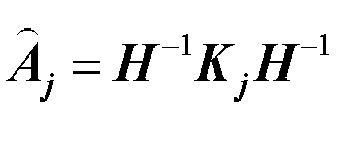
- step 3: setting the genetic variance and the residual variance from Haseman-Elston (HE) regression as prior values of subsequent average information (AI) iteration, then deriving the genetic variance and the residual variance using average information (AI) iteration algorithm to the convergent standard, and obtaining estimated genetic parameters, wherein the genetic parameters include the genetic variance and the residual variance;
- The average information (AI) iteration algorithm can be described as parts:
- a. Newton-Raphson algorithm:

wherein θ is genetic parameters to be estimated, k is number of iterations,
- b. Fisher scoring method, wherein the inverse matrix of Hes is replaced by its expectation matrix F, obtaining

- the AI matrix can be calculated by

- and parameters are estimated with following equation:

- step 4: using genetic parameters estimated in step 3 to solve a mixed model equation using Henderson's method 3, and getting an estimated breeding value for each individual, wherein the mixed model equation is described as:

-
 represents an estimated fixed effect vector, and
 represents an estimated breeding value vector;
- step 5: computing the additive effects of each single nucleotide polymorphism (SNP) marker in genotyping chips with a back solving method, wherein a computing equation can be described as:

- wherein â is an additive effect value vector of SNP markers, m is number of the SNP markers, M' is the matrix for additive marker covariates, and pi and qi are allele frequency of the ith SNP genetic markers; and
- step 6: when the genotypes of AA, AB, and BB alleles are coded as 0, 1, and 0, respectively, processing a dominant model using the same procedure of step 2 to step 5, and back solving the dominant effect value of each SNP marker.
- the AI matrix can be calculated by
- The technical scheme is adopted to generate the following beneficial effects: according to the fast and stable genomic breeding value evaluating method for animal individuals, provided by the invention, a combined strategy of Haseman-Elston (HE) regression and Average Information (AI) algorithms is used to efficiently obtain a stable estimation of variance components, The HE-AI algorithm based BLUP (namely best linear unbiased prediction) is called "HIBLUP", Haseman-Elston (HE) regression and Average Information (AI) algorithms based on best linear unbiased prediction (HIBLUP) program makes whole use of pedigree, phenotypic and genotypic information to predict genetic (additive and dominant) effects for each individual animal as well as effect values for each SNP marker, and the most advanced genomic breeding value prediction and variance component estimation algorithm are realized to realize genomic selection.
-
FIG. 1 shows a flow chart of a fast and stable genomic breeding value evaluating method for animal individuals according to embodiments of the invention. - The specific implementations of the invention are described in more detail below with reference to the accompanying drawings and embodiments. The following embodiments are intended to illustrate the invention, rather than to limit the scope of the invention.
- As shown in
FIG. 1 , the method of the embodiment is described as follows. - According to the fast and stable genomic breeding value evaluating method for animal individuals, Haseman-Elston (HE) regression and Average Information (AI) algorithms based on best linear unbiased prediction (HIBLUP) program is adopted to perform genomic breeding value prediction using phenotype, genotype and pedigree information, and a final output includes estimated genetic value of individuals, additive effect and dominant effect values of each individual, and back solution values of each genetic marker effect used on genotyping chips. The fast and stable genomic breeding value evaluating method for animal individuals specifically includes the following steps:
- step 1: performing numeralization on genotypes, coding genotypes of AA, AB and BB as 0, 1, and 2, respectively, constructing a relationship A (affinity correlation) matrix and a G (state correlation) matrix among individuals based on pedigree information using a Henderson tabular method and genomic information using a VanRaden method, respectively, and then constructing a mixture correlation matrix H among the animal individuals according to the information of both an A matrix and a G matrix, with following equation, wherein the matrix includes information from the A matrix and the G matrix, as shown in the below equation:

assigning the individuals to two different groups based on whether the animal individuals in the groups have genotyping information or not, wherein the group with footer "1" represents individuals that only have pedigree information but do not have genomic typing information, the group with footer "2" represents individuals that have both pedigree and genomic typing information, A11 and A22 represent affinity correlation matrices among individuals within group "1" and group "2", A12 represents the affinity correlation matrices among individuals between the group "1" and the group "2", A21 is a transpose matrix of A12, G represents the state correlation matrix and α is a relationship reconciliation percentage for combing G matrix and A22 matrix; - step 2: deriving genetic variance and residual variance from H matrix and phenotype value using Haseman-Elston (HE) regression algorithm with following equation:

wherein E represents expected value, Y represents phenotypic value vector,


- step 3: setting the genetic variance and the residual variance from Haseman-Elston (HE) regression as prior values of subsequent average information (AI) iteration, then deriving the genetic variance and the residual variance using average information (AI) iteration algorithm to the convergent standard, and obtaining estimated genetic parameters, wherein the genetic parameters include the genetic variance and the residual variance;
- The average information (AI) iteration algorithm can be described as parts:
- a. Newton-Raphson algorithm:

wherein Θ is genetic parameters to be estimated, k is number of iterations,
- b. Fisher scoring method, wherein the inverse matrix of Hes is replaced by its expectation matrix F, obtaining

- the AI matrix can be calculated by;

- and parameters are estimated with following equation:
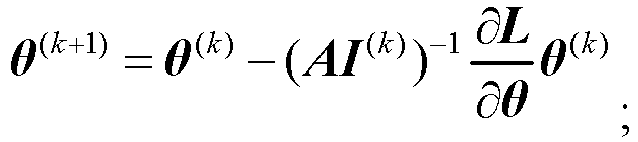
- step 4: using genetic parameters estimated in step 3 to solve a mixed model equation using Henderson's method 3, and getting an estimated breeding value for each individual, wherein the mixed model equation is described as:

-
 represents an estimated fixed effect vector, and
 represents an estimated breeding value vector;
- step 5: computing the additive effects of each single nucleotide polymorphism (SNP) marker in genotyping chips with a back solving method, wherein a computing equation can be described as:

- wherein â is an additive effect value vector of SNP markers, m is number of the SNP markers, M' is the matrix for additive marker covariates, and pi and qi are allele frequency of the ith SNP genetic markers; and
- step 6: when the genotypes of AA, AB, and BB alleles are coded as 0, 1, and 0, respectively, processing a dominant model using the same procedure of step 2 to step 5, and back solving the dominant effect value of each SNP marker.
- the AI matrix can be calculated by;
- The application of Haseman-Elston (HE) regression and Average Information (AI) algorithms based on best linear unbiased prediction (HIBLUP) program in pig genomic selection can be used to shorten the breeding cycle (time interval), increase the selection accuracy and accelerate genetic gain for traits under selection. The application mainly includes following steps: obtaining genotype data, pedigree data and phenotype data; preparing above described datasets in Haseman-Elston (HE) regression and Average Information (AI) algorithms based on best linear unbiased prediction (HIBLUP) program input data format; running Haseman-Elston (HE) regression and Average Information (AI) algorithms based on best linear unbiased prediction (HIBLUP) program to get estimated breeding value (EBV) of each individual; computing the selection index using EBVs of multiple traits; and ranking individuals by comprehensive selection index and providing a list of selection candidates.
- Finally, it should be noted that the above embodiments are merely intended to describe the technical solutions of the invention, rather than to limit the invention.
Claims (1)
- A fast and stable genomic breeding value evaluating method for animal individuals carried out by a computer, wherein Haseman-Elston (HE) regression and Average Information (AI) algorithms based on best linear unbiased prediction (HIBLUP) program is adopted to perform genomic breeding value prediction using phenotype, genotype and pedigree information, and a final output includes estimated genetic value of individuals, additive effect and dominant effect values of each individual, and back solution values of each genetic marker effect used on genotyping chips; the method includes the following steps:step 1: performing numeralization on genotypes, coding genotypes of AA, AB and BB as 0, 1, and 2, respectively, constructing a relationship A (affinity correlation) matrix and a G (state correlation) matrix among individuals based on pedigree information using a Henderson tabular method and genomic information using a VanRaden method, respectively, and then constructing a mixture correlation matrix H among the animal individuals according to information of both an A matrix and a G matrix, with following equation:
 step 2: deriving genetic variance and residual variance from H matrix and phenotype value using Haseman-Elston (HE) regression algorithm with following equation:


 step 3: setting the genetic variance and the residual variance from Haseman-Elston (HE) regression as prior values of subsequent average information (AI) iteration, then deriving the genetic variance and the residual variance using average information (AI) iteration algorithm to the convergent standard, and obtaining estimated genetic parameters, wherein the genetic parameters include the genetic variance and the residual variance;step 4: using genetic parameters estimated in step 3 to solve a mixed model equation using Henderson's method 3, and getting an estimated breeding value for each individual, wherein the mixed model equation is described as:
 represents an estimated fixed effect vector, and
 represents an estimated breeding value vector;
 step 5: computing the additive effects of each single nucleotide polymorphism (SNP) marker in genotyping chips with a back solving method, wherein a computing equation is described as:
 step 6: when genotypes of AA, AB, and BB alleles are coded as 0, 1, and 0, respectively, processing a dominant model using the same procedure of step 2 to step 5, and back solving the dominant effect value of each SNP marker,
wherein the average information (AI) iteration algorithm in step 3 is described as parts:a. Newton-Raphson algorithm: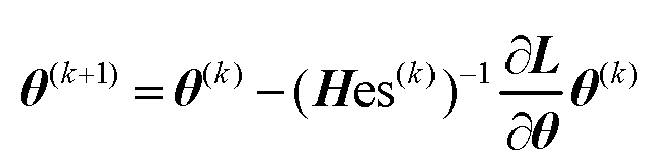
 b. Fisher scoring method, wherein the inverse matrix of Hes is replaced by its expectation matrix F, obtaining
 an average information (AI) matrix is calculated by
 and parameters are estimated with following equation:
Applications Claiming Priority (2)
| Application Number | Priority Date | Filing Date | Title |
|---|---|---|---|
| CN201811620927.XA CN109524059B (en) | 2018-12-28 | 2018-12-28 | A fast and stable method for evaluating the breeding value of individual animal genomes |
| PCT/CN2019/071514 WO2020133588A1 (en) | 2018-12-28 | 2019-01-14 | Rapid and stable method for evaluating individual animal genome breeding values |
Publications (3)
| Publication Number | Publication Date |
|---|---|
| EP3905253A1 EP3905253A1 (en) | 2021-11-03 |
| EP3905253A4 EP3905253A4 (en) | 2022-09-07 |
| EP3905253B1 true EP3905253B1 (en) | 2024-10-16 |
Family
ID=65797805
Family Applications (1)
| Application Number | Title | Priority Date | Filing Date |
|---|---|---|---|
| EP19903054.5A Active EP3905253B1 (en) | 2018-12-28 | 2019-01-14 | Rapid and stable method for evaluating individual animal genome breeding values |
Country Status (6)
| Country | Link |
|---|---|
| US (1) | US20220076781A1 (en) |
| EP (1) | EP3905253B1 (en) |
| CN (1) | CN109524059B (en) |
| DK (1) | DK3905253T3 (en) |
| ES (1) | ES3000012T3 (en) |
| WO (1) | WO2020133588A1 (en) |
Families Citing this family (21)
| Publication number | Priority date | Publication date | Assignee | Title |
|---|---|---|---|---|
| CN110060783A (en) * | 2019-04-16 | 2019-07-26 | 广州影子科技有限公司 | Authentication method, authentication device and the Verification System for grade of preventing epidemic |
| GB2599289A (en) * | 2019-05-14 | 2022-03-30 | Agriculture And Food Dev Authority Teagasc | A method and system for estimation of the breeding value of an animal for eating quality and/or commercial yield prediction |
| CN110317884A (en) * | 2019-07-30 | 2019-10-11 | 河南省农业科学院畜牧兽医研究所 | A kind of quick selected reproduction method of beef cattle system ancestral |
| CN110459265B (en) * | 2019-08-14 | 2022-07-05 | 中国农业科学院作物科学研究所 | Method for improving prediction accuracy of whole genome |
| CN112750494B (en) * | 2021-01-22 | 2024-04-09 | 贵州大学 | Individual genome breeding value method for evaluating phenotypic traits of fragrant pigs |
| CN112837750B (en) * | 2021-02-07 | 2024-06-21 | 深圳华优益生物技术有限公司 | A method and device for predicting animal and plant breeding values |
| CN113223606B (en) * | 2021-05-13 | 2022-05-27 | 浙江大学 | Genome selection method for genetic improvement of complex traits |
| CN113555063A (en) * | 2021-07-28 | 2021-10-26 | 仲恺农业工程学院 | Threshold character genome breeding value estimation method based on SNP chip and application |
| CN113517020A (en) * | 2021-08-04 | 2021-10-19 | 华中农业大学 | Rapid and accurate animal genome matching analysis method |
| CN114639446B (en) * | 2022-04-01 | 2024-03-15 | 中国海洋大学 | A method to estimate aquatic animal genome breeding value based on MCP sparse deep neural network model |
| CN114743601B (en) * | 2022-04-18 | 2023-02-03 | 中国农业科学院农业基因组研究所 | Breeding method, device and equipment based on multigroup data and deep learning |
| CN115588465B (en) * | 2022-10-19 | 2023-05-23 | 温州医科大学 | Screening method and system for character related genes |
| CN118038965B (en) * | 2022-11-02 | 2025-02-11 | 中国农业大学 | A breeding information processing method and device |
| CN115910205B (en) * | 2022-11-07 | 2026-01-02 | 新疆农垦科学院 | A Method for Differentiating Maize Heterogeneous Groups Based on Marker Dominance Effect Weights |
| CN115732027B (en) * | 2022-11-25 | 2026-02-13 | 北京市农林科学院 | A genomic selection method and its application in the breeding of autopolyploid species |
| CN117852824B (en) * | 2024-01-09 | 2024-09-03 | 内蒙古盛健农牧业工程技术研究有限公司 | Intelligent milk goat breeding condition monitoring management system |
| CN118609649B (en) * | 2024-01-17 | 2025-01-24 | 中国农业大学 | A method, device and storage medium for joint genetic evaluation of multiple varieties of genomes |
| CN118412035B (en) * | 2024-04-23 | 2025-02-18 | 四川农业大学 | Breeding selection optimization method, system, equipment and medium based on BLUP model |
| CN118503603B (en) * | 2024-05-23 | 2024-11-22 | 四川农业大学 | BLUP model solution method, system, device and medium for avoiding kinship matrix inversion |
| CN119068994A (en) * | 2024-08-13 | 2024-12-03 | 四川农业大学 | A genome-wide selection approach for genetic improvement of multiple traits |
| CN120564826B (en) * | 2025-07-29 | 2026-04-14 | 中国农业科学院北京畜牧兽医研究所 | Pure genome prediction method integrating hybridization information |
Family Cites Families (7)
| Publication number | Priority date | Publication date | Assignee | Title |
|---|---|---|---|---|
| JP2005129024A (en) * | 2003-09-30 | 2005-05-19 | Mitsubishi Research Institute Inc | An algorithm that estimates and tests the relationship between haplotypes and quantitative phenotypes |
| US20150181822A1 (en) * | 2013-12-31 | 2015-07-02 | Dow Agrosciences Llc | Selection based on optimal haploid value to create elite lines |
| CN103914632A (en) * | 2014-02-26 | 2014-07-09 | 中国农业大学 | Method for rapidly evaluating genome breeding value and application |
| CN105052729B (en) * | 2015-08-31 | 2017-12-22 | 华中农业大学 | A kind of method based on by selection site Index Assessment plant and animal species Breeding Potential |
| CN106022005B (en) * | 2016-05-21 | 2019-02-05 | 安徽省农业科学院畜牧兽医研究所 | A kind of bayes method of continuous trait and threshold character genomic breeding value Combined estimator |
| CN107338321B (en) * | 2017-08-29 | 2020-05-19 | 集美大学 | A method for determining the optimal number of SNPs and its genomic selection breeding for production performance of large yellow croaker by screening markers |
| CN107590364A (en) * | 2017-08-29 | 2018-01-16 | 集美大学 | A kind of quick bayes method of new estimation genomic breeding value |
-
2018
- 2018-12-28 CN CN201811620927.XA patent/CN109524059B/en active Active
-
2019
- 2019-01-14 EP EP19903054.5A patent/EP3905253B1/en active Active
- 2019-01-14 US US17/417,007 patent/US20220076781A1/en not_active Abandoned
- 2019-01-14 ES ES19903054T patent/ES3000012T3/en active Active
- 2019-01-14 WO PCT/CN2019/071514 patent/WO2020133588A1/en not_active Ceased
- 2019-01-14 DK DK19903054.5T patent/DK3905253T3/en active
Non-Patent Citations (8)
| Title |
|---|
| ALILOO H ET AL: "Including nonadditive genetic effects in mating programs to maximize dairy farm profitability", JOURNAL OF DAIRY SCIENCE, vol. 100, no. 2, 1 January 2017 (2017-01-01), pages 1203 - 1222, XP029895889, ISSN: 0022-0302, DOI: 10.3168/JDS.2016-11261 * |
| CHRISTENSEN OLE F ET AL: "Genomic prediction when some animals are not genotyped", GENETICS SELECTION EVOLUTION, vol. 42, no. 1, 1 December 2010 (2010-12-01), FR, XP093137731, ISSN: 1297-9686, Retrieved from the Internet <URL:https://gsejournal.biomedcentral.com/counter/pdf/10.1186/1297-9686-42-2.pdf> DOI: 10.1186/1297-9686-42-2 * |
| GILMOUR ARTHUR R. ET AL: "Average Information REML: An Efficient Algorithm for Variance Parameter Estimation in Linear Mixed Models", BIOMETRICS, vol. 51, no. 4, 1 December 1995 (1995-12-01), Hoboken, USA, pages 1440, XP093137523, ISSN: 0006-341X, Retrieved from the Internet <URL:https://dx.doi.org/10.2307/2533274> DOI: 10.2307/2533274 * |
| HASEMAN J. K. ET AL: "The investigation of linkage between a quantitative trait and a marker locus", BEHAVIOR GENETICS, vol. 2, no. 1, 1 March 1972 (1972-03-01), New York, pages 3 - 19, XP093137247, ISSN: 0001-8244, Retrieved from the Internet <URL:https://ibg.colorado.edu/cdrom2023/faculty/boomsma/haseman%20elston%20BG1972.pdf> DOI: 10.1007/BF01066731 * |
| HENDERSON C. R.: "A Simple Method for Computing the Inverse of a Numerator Relationship Matrix Used in Prediction of Breeding Values", BIOMETRICS, vol. 32, no. 1, 1 March 1976 (1976-03-01), Hoboken, USA, pages 69, XP093137472, ISSN: 0006-341X, Retrieved from the Internet <URL:https://dx.doi.org/10.2307/2529339> DOI: 10.2307/2529339 * |
| HENDERSON C. R.: "Estimation of Variance and Covariance Components", BIOMETRICS, vol. 9, no. 2, 1 June 1953 (1953-06-01), Hoboken, USA, pages 226, XP093137529, ISSN: 0006-341X, Retrieved from the Internet <URL:http://www.stat.yale.edu/~hz68/619/Henderson1953.pdf> DOI: 10.2307/3001853 * |
| LILIN YIN ET AL: "HIPBLUP: an integration of statistical models on the BLUP framework for efficient genetic evaluation using big genomic data", NUCLEIC ACID RESEARCH, vol. 51, no. 8, 22 February 2023 (2023-02-22) * |
| NEVES H H R ET AL: "Genetic variability of residual variance of production traits in Nellore beef cattle", LIVESTOCK SCIENCE, ELSEVIER, AMSTERDAM, NL, vol. 142, no. 1, 16 July 2011 (2011-07-16), pages 164 - 169, XP028104850, ISSN: 1871-1413, [retrieved on 20110726], DOI: 10.1016/J.LIVSCI.2011.07.010 * |
Also Published As
| Publication number | Publication date |
|---|---|
| ES3000012T3 (en) | 2025-02-27 |
| EP3905253A4 (en) | 2022-09-07 |
| EP3905253A1 (en) | 2021-11-03 |
| US20220076781A1 (en) | 2022-03-10 |
| CN109524059B (en) | 2023-02-28 |
| DK3905253T3 (en) | 2024-12-02 |
| CN109524059A (en) | 2019-03-26 |
| WO2020133588A1 (en) | 2020-07-02 |
Similar Documents
| Publication | Publication Date | Title |
|---|---|---|
| EP3905253A1 (en) | Rapid and stable method for evaluating individual animal genome breeding values | |
| Misztal et al. | Current status of genomic evaluation | |
| Terhorst et al. | Robust and scalable inference of population history from hundreds of unphased whole genomes | |
| Ober et al. | Using whole-genome sequence data to predict quantitative trait phenotypes in Drosophila melanogaster | |
| Korte et al. | A mixed-model approach for genome-wide association studies of correlated traits in structured populations | |
| Martini et al. | Epistasis and covariance: how gene interaction translates into genomic relationship | |
| Lee et al. | An efficient variance component approach implementing an average information REML suitable for combined LD and linkage mapping with a general complex pedigree | |
| Alvarenga et al. | Comparing alternative single-step GBLUP approaches and training population designs for genomic evaluation of crossbred animals | |
| Chen et al. | Genome-wide association analyses based on broadly different specifications for prior distributions, genomic windows, and estimation methods | |
| Illingworth et al. | Inferring genome-wide recombination landscapes from advanced intercross lines: application to yeast crosses | |
| Zhang et al. | On the use of GBLUP and its extension for GWAS with additive and epistatic effects | |
| Vandenplas et al. | Genetic groups in single-step single nucleotide polymorphism best linear unbiased predictor | |
| Shchur et al. | Estimating population split times and migration rates from historical effective population sizes | |
| Feng et al. | The LASSO and sparse least squares regression methods for SNP selection in predicting quantitative traits | |
| Feng et al. | Generalized genetic association study with samples of related individuals | |
| Chang et al. | Score statistics for mapping quantitative trait loci | |
| Zeng et al. | A nested mixture model for genomic prediction using whole-genome SNP genotypes | |
| CN120108495B (en) | A parameter-free Bayesian genomic selection method for Huaxi cattle | |
| Pei et al. | Inferring the ancestry of parents and grandparents from genetic data | |
| Kasarda et al. | Fine-scale analysis of six beef cattle breeds revealed patterns of their genomic diversity | |
| Hu | Estimating the correlation of pairwise relatedness along chromosomes | |
| Feng et al. | Two-stage association tests for genome-wide association studies based on family data with arbitrary family structure | |
| Laval et al. | Maximum-likelihood and Markov chain Monte Carlo approaches to estimate inbreeding and effective size from allele frequency changes | |
| Guo et al. | MTML: an efficient multitrait multilocus GWAS method based on the Cauchy combination test | |
| Deus et al. | Genetic structure and diversity of Santa Inês sheep flocks in Central-Northern Brazil |
Legal Events
| Date | Code | Title | Description |
|---|---|---|---|
| STAA | Information on the status of an ep patent application or granted ep patent |
Free format text: STATUS: THE INTERNATIONAL PUBLICATION HAS BEEN MADE |
|
| PUAI | Public reference made under article 153(3) epc to a published international application that has entered the european phase |
Free format text: ORIGINAL CODE: 0009012 |
|
| STAA | Information on the status of an ep patent application or granted ep patent |
Free format text: STATUS: REQUEST FOR EXAMINATION WAS MADE |
|
| 17P | Request for examination filed |
Effective date: 20210628 |
|
| AK | Designated contracting states |
Kind code of ref document: A1 Designated state(s): AL AT BE BG CH CY CZ DE DK EE ES FI FR GB GR HR HU IE IS IT LI LT LU LV MC MK MT NL NO PL PT RO RS SE SI SK SM TR |
|
| DAV | Request for validation of the european patent (deleted) | ||
| DAX | Request for extension of the european patent (deleted) | ||
| REG | Reference to a national code |
Ref country code: DE Ref legal event code: R079 Free format text: PREVIOUS MAIN CLASS: G16B0020000000 Ipc: G16B0020200000 Ref document number: 602019060642 Country of ref document: DE |
|
| A4 | Supplementary search report drawn up and despatched |
Effective date: 20220804 |
|
| RIC1 | Information provided on ipc code assigned before grant |
Ipc: G16B 40/20 20190101ALI20220729BHEP Ipc: G16B 20/20 20190101AFI20220729BHEP |
|
| P01 | Opt-out of the competence of the unified patent court (upc) registered |
Effective date: 20230527 |
|
| STAA | Information on the status of an ep patent application or granted ep patent |
Free format text: STATUS: EXAMINATION IS IN PROGRESS |
|
| 17Q | First examination report despatched |
Effective date: 20240313 |
|
| GRAP | Despatch of communication of intention to grant a patent |
Free format text: ORIGINAL CODE: EPIDOSNIGR1 |
|
| STAA | Information on the status of an ep patent application or granted ep patent |
Free format text: STATUS: GRANT OF PATENT IS INTENDED |
|
| INTG | Intention to grant announced |
Effective date: 20240806 |
|
| GRAS | Grant fee paid |
Free format text: ORIGINAL CODE: EPIDOSNIGR3 |
|
| GRAA | (expected) grant |
Free format text: ORIGINAL CODE: 0009210 |
|
| STAA | Information on the status of an ep patent application or granted ep patent |
Free format text: STATUS: THE PATENT HAS BEEN GRANTED |
|
| AK | Designated contracting states |
Kind code of ref document: B1 Designated state(s): AL AT BE BG CH CY CZ DE DK EE ES FI FR GB GR HR HU IE IS IT LI LT LU LV MC MK MT NL NO PL PT RO RS SE SI SK SM TR |
|
| REG | Reference to a national code |
Ref country code: GB Ref legal event code: FG4D |
|
| REG | Reference to a national code |
Ref country code: CH Ref legal event code: EP Ref country code: DE Ref legal event code: R096 Ref document number: 602019060642 Country of ref document: DE |
|
| REG | Reference to a national code |
Ref country code: IE Ref legal event code: FG4D |
|
| REG | Reference to a national code |
Ref country code: DK Ref legal event code: T3 Effective date: 20241129 |
|
| REG | Reference to a national code |
Ref country code: NL Ref legal event code: FP |
|
| REG | Reference to a national code |
Ref country code: LT Ref legal event code: MG9D |
|
| REG | Reference to a national code |
Ref country code: ES Ref legal event code: FG2A Ref document number: 3000012 Country of ref document: ES Kind code of ref document: T3 Effective date: 20250227 |
|
| REG | Reference to a national code |
Ref country code: AT Ref legal event code: MK05 Ref document number: 1733624 Country of ref document: AT Kind code of ref document: T Effective date: 20241016 |
|
| PG25 | Lapsed in a contracting state [announced via postgrant information from national office to epo] |
Ref country code: PT Free format text: LAPSE BECAUSE OF FAILURE TO SUBMIT A TRANSLATION OF THE DESCRIPTION OR TO PAY THE FEE WITHIN THE PRESCRIBED TIME-LIMIT Effective date: 20250217 Ref country code: HR Free format text: LAPSE BECAUSE OF FAILURE TO SUBMIT A TRANSLATION OF THE DESCRIPTION OR TO PAY THE FEE WITHIN THE PRESCRIBED TIME-LIMIT Effective date: 20241016 Ref country code: IS Free format text: LAPSE BECAUSE OF FAILURE TO SUBMIT A TRANSLATION OF THE DESCRIPTION OR TO PAY THE FEE WITHIN THE PRESCRIBED TIME-LIMIT Effective date: 20250216 |
|
| PG25 | Lapsed in a contracting state [announced via postgrant information from national office to epo] |
Ref country code: FI Free format text: LAPSE BECAUSE OF FAILURE TO SUBMIT A TRANSLATION OF THE DESCRIPTION OR TO PAY THE FEE WITHIN THE PRESCRIBED TIME-LIMIT Effective date: 20241016 |
|
| PG25 | Lapsed in a contracting state [announced via postgrant information from national office to epo] |
Ref country code: BG Free format text: LAPSE BECAUSE OF FAILURE TO SUBMIT A TRANSLATION OF THE DESCRIPTION OR TO PAY THE FEE WITHIN THE PRESCRIBED TIME-LIMIT Effective date: 20241016 |
|
| PG25 | Lapsed in a contracting state [announced via postgrant information from national office to epo] |
Ref country code: NO Free format text: LAPSE BECAUSE OF FAILURE TO SUBMIT A TRANSLATION OF THE DESCRIPTION OR TO PAY THE FEE WITHIN THE PRESCRIBED TIME-LIMIT Effective date: 20250116 |
|
| PG25 | Lapsed in a contracting state [announced via postgrant information from national office to epo] |
Ref country code: LV Free format text: LAPSE BECAUSE OF FAILURE TO SUBMIT A TRANSLATION OF THE DESCRIPTION OR TO PAY THE FEE WITHIN THE PRESCRIBED TIME-LIMIT Effective date: 20241016 Ref country code: GR Free format text: LAPSE BECAUSE OF FAILURE TO SUBMIT A TRANSLATION OF THE DESCRIPTION OR TO PAY THE FEE WITHIN THE PRESCRIBED TIME-LIMIT Effective date: 20250117 Ref country code: AT Free format text: LAPSE BECAUSE OF FAILURE TO SUBMIT A TRANSLATION OF THE DESCRIPTION OR TO PAY THE FEE WITHIN THE PRESCRIBED TIME-LIMIT Effective date: 20241016 |
|
| PG25 | Lapsed in a contracting state [announced via postgrant information from national office to epo] |
Ref country code: PL Free format text: LAPSE BECAUSE OF FAILURE TO SUBMIT A TRANSLATION OF THE DESCRIPTION OR TO PAY THE FEE WITHIN THE PRESCRIBED TIME-LIMIT Effective date: 20241016 |
|
| PG25 | Lapsed in a contracting state [announced via postgrant information from national office to epo] |
Ref country code: RS Free format text: LAPSE BECAUSE OF FAILURE TO SUBMIT A TRANSLATION OF THE DESCRIPTION OR TO PAY THE FEE WITHIN THE PRESCRIBED TIME-LIMIT Effective date: 20250116 |
|
| PG25 | Lapsed in a contracting state [announced via postgrant information from national office to epo] |
Ref country code: SM Free format text: LAPSE BECAUSE OF FAILURE TO SUBMIT A TRANSLATION OF THE DESCRIPTION OR TO PAY THE FEE WITHIN THE PRESCRIBED TIME-LIMIT Effective date: 20241016 |
|
| REG | Reference to a national code |
Ref country code: DE Ref legal event code: R097 Ref document number: 602019060642 Country of ref document: DE |
|
| PG25 | Lapsed in a contracting state [announced via postgrant information from national office to epo] |
Ref country code: EE Free format text: LAPSE BECAUSE OF FAILURE TO SUBMIT A TRANSLATION OF THE DESCRIPTION OR TO PAY THE FEE WITHIN THE PRESCRIBED TIME-LIMIT Effective date: 20241016 |
|
| PG25 | Lapsed in a contracting state [announced via postgrant information from national office to epo] |
Ref country code: RO Free format text: LAPSE BECAUSE OF FAILURE TO SUBMIT A TRANSLATION OF THE DESCRIPTION OR TO PAY THE FEE WITHIN THE PRESCRIBED TIME-LIMIT Effective date: 20241016 |
|
| PG25 | Lapsed in a contracting state [announced via postgrant information from national office to epo] |
Ref country code: SK Free format text: LAPSE BECAUSE OF FAILURE TO SUBMIT A TRANSLATION OF THE DESCRIPTION OR TO PAY THE FEE WITHIN THE PRESCRIBED TIME-LIMIT Effective date: 20241016 |
|
| PG25 | Lapsed in a contracting state [announced via postgrant information from national office to epo] |
Ref country code: CZ Free format text: LAPSE BECAUSE OF FAILURE TO SUBMIT A TRANSLATION OF THE DESCRIPTION OR TO PAY THE FEE WITHIN THE PRESCRIBED TIME-LIMIT Effective date: 20241016 |
|
| PG25 | Lapsed in a contracting state [announced via postgrant information from national office to epo] |
Ref country code: IT Free format text: LAPSE BECAUSE OF FAILURE TO SUBMIT A TRANSLATION OF THE DESCRIPTION OR TO PAY THE FEE WITHIN THE PRESCRIBED TIME-LIMIT Effective date: 20241016 |
|
| PLBE | No opposition filed within time limit |
Free format text: ORIGINAL CODE: 0009261 |
|
| STAA | Information on the status of an ep patent application or granted ep patent |
Free format text: STATUS: NO OPPOSITION FILED WITHIN TIME LIMIT |
|
| REG | Reference to a national code |
Ref country code: CH Ref legal event code: PL |
|
| PG25 | Lapsed in a contracting state [announced via postgrant information from national office to epo] |
Ref country code: SE Free format text: LAPSE BECAUSE OF FAILURE TO SUBMIT A TRANSLATION OF THE DESCRIPTION OR TO PAY THE FEE WITHIN THE PRESCRIBED TIME-LIMIT Effective date: 20241016 |
|
| PG25 | Lapsed in a contracting state [announced via postgrant information from national office to epo] |
Ref country code: LU Free format text: LAPSE BECAUSE OF NON-PAYMENT OF DUE FEES Effective date: 20250114 Ref country code: MC Free format text: LAPSE BECAUSE OF FAILURE TO SUBMIT A TRANSLATION OF THE DESCRIPTION OR TO PAY THE FEE WITHIN THE PRESCRIBED TIME-LIMIT Effective date: 20241016 |
|
| 26N | No opposition filed |
Effective date: 20250717 |
|
| PG25 | Lapsed in a contracting state [announced via postgrant information from national office to epo] |
Ref country code: CH Free format text: LAPSE BECAUSE OF NON-PAYMENT OF DUE FEES Effective date: 20250131 |
|
| PGFP | Annual fee paid to national office [announced via postgrant information from national office to epo] |
Ref country code: GB Payment date: 20251218 Year of fee payment: 8 |
|
| PGFP | Annual fee paid to national office [announced via postgrant information from national office to epo] |
Ref country code: DK Payment date: 20251222 Year of fee payment: 8 |
|
| PG25 | Lapsed in a contracting state [announced via postgrant information from national office to epo] |
Ref country code: IE Free format text: LAPSE BECAUSE OF NON-PAYMENT OF DUE FEES Effective date: 20250114 |
|
| PGFP | Annual fee paid to national office [announced via postgrant information from national office to epo] |
Ref country code: NL Payment date: 20260121 Year of fee payment: 8 |
|
| PGFP | Annual fee paid to national office [announced via postgrant information from national office to epo] |
Ref country code: ES Payment date: 20260203 Year of fee payment: 8 |
|
| PGFP | Annual fee paid to national office [announced via postgrant information from national office to epo] |
Ref country code: DE Payment date: 20260127 Year of fee payment: 8 |
|
| PGFP | Annual fee paid to national office [announced via postgrant information from national office to epo] |
Ref country code: BE Payment date: 20260121 Year of fee payment: 8 |
|
| PGFP | Annual fee paid to national office [announced via postgrant information from national office to epo] |
Ref country code: FR Payment date: 20260123 Year of fee payment: 8 |