EP3905153A1 - Motion analysis device, motion analysis method, and motion analysis program - Google Patents
Motion analysis device, motion analysis method, and motion analysis program Download PDFInfo
- Publication number
- EP3905153A1 EP3905153A1 EP19904165.8A EP19904165A EP3905153A1 EP 3905153 A1 EP3905153 A1 EP 3905153A1 EP 19904165 A EP19904165 A EP 19904165A EP 3905153 A1 EP3905153 A1 EP 3905153A1
- Authority
- EP
- European Patent Office
- Prior art keywords
- motion
- deviating
- operator
- unit
- analysis device
- Prior art date
- Legal status (The legal status is an assumption and is not a legal conclusion. Google has not performed a legal analysis and makes no representation as to the accuracy of the status listed.)
- Granted
Links
Images



Classifications
-
- G—PHYSICS
- G06—COMPUTING OR CALCULATING; COUNTING
- G06Q—INFORMATION AND COMMUNICATION TECHNOLOGY [ICT] SPECIALLY ADAPTED FOR ADMINISTRATIVE, COMMERCIAL, FINANCIAL, MANAGERIAL OR SUPERVISORY PURPOSES; SYSTEMS OR METHODS SPECIALLY ADAPTED FOR ADMINISTRATIVE, COMMERCIAL, FINANCIAL, MANAGERIAL OR SUPERVISORY PURPOSES, NOT OTHERWISE PROVIDED FOR
- G06Q10/00—Administration; Management
- G06Q10/06—Resources, workflows, human or project management; Enterprise or organisation planning; Enterprise or organisation modelling
- G06Q10/063—Operations research, analysis or management
- G06Q10/0639—Performance analysis of employees; Performance analysis of enterprise or organisation operations
-
- G—PHYSICS
- G05—CONTROLLING; REGULATING
- G05B—CONTROL OR REGULATING SYSTEMS IN GENERAL; FUNCTIONAL ELEMENTS OF SUCH SYSTEMS; MONITORING OR TESTING ARRANGEMENTS FOR SUCH SYSTEMS OR ELEMENTS
- G05B19/00—Program-control systems
- G05B19/02—Program-control systems electric
- G05B19/418—Total factory control, i.e. centrally controlling a plurality of machines, e.g. direct or distributed numerical control [DNC], flexible manufacturing systems [FMS], integrated manufacturing systems [IMS] or computer integrated manufacturing [CIM]
- G05B19/4183—Total factory control, i.e. centrally controlling a plurality of machines, e.g. direct or distributed numerical control [DNC], flexible manufacturing systems [FMS], integrated manufacturing systems [IMS] or computer integrated manufacturing [CIM] characterised by data acquisition, e.g. workpiece identification
-
- G—PHYSICS
- G05—CONTROLLING; REGULATING
- G05B—CONTROL OR REGULATING SYSTEMS IN GENERAL; FUNCTIONAL ELEMENTS OF SUCH SYSTEMS; MONITORING OR TESTING ARRANGEMENTS FOR SUCH SYSTEMS OR ELEMENTS
- G05B19/00—Program-control systems
- G05B19/02—Program-control systems electric
- G05B19/418—Total factory control, i.e. centrally controlling a plurality of machines, e.g. direct or distributed numerical control [DNC], flexible manufacturing systems [FMS], integrated manufacturing systems [IMS] or computer integrated manufacturing [CIM]
- G05B19/41875—Total factory control, i.e. centrally controlling a plurality of machines, e.g. direct or distributed numerical control [DNC], flexible manufacturing systems [FMS], integrated manufacturing systems [IMS] or computer integrated manufacturing [CIM] characterised by quality surveillance of production
-
- G—PHYSICS
- G06—COMPUTING OR CALCULATING; COUNTING
- G06Q—INFORMATION AND COMMUNICATION TECHNOLOGY [ICT] SPECIALLY ADAPTED FOR ADMINISTRATIVE, COMMERCIAL, FINANCIAL, MANAGERIAL OR SUPERVISORY PURPOSES; SYSTEMS OR METHODS SPECIALLY ADAPTED FOR ADMINISTRATIVE, COMMERCIAL, FINANCIAL, MANAGERIAL OR SUPERVISORY PURPOSES, NOT OTHERWISE PROVIDED FOR
- G06Q10/00—Administration; Management
- G06Q10/06—Resources, workflows, human or project management; Enterprise or organisation planning; Enterprise or organisation modelling
- G06Q10/063—Operations research, analysis or management
- G06Q10/0631—Resource planning, allocation, distributing or scheduling for enterprises or organisations
- G06Q10/06311—Scheduling, planning or task assignment for a person or group
- G06Q10/063112—Skill-based matching of a person or a group to a task
-
- G—PHYSICS
- G06—COMPUTING OR CALCULATING; COUNTING
- G06Q—INFORMATION AND COMMUNICATION TECHNOLOGY [ICT] SPECIALLY ADAPTED FOR ADMINISTRATIVE, COMMERCIAL, FINANCIAL, MANAGERIAL OR SUPERVISORY PURPOSES; SYSTEMS OR METHODS SPECIALLY ADAPTED FOR ADMINISTRATIVE, COMMERCIAL, FINANCIAL, MANAGERIAL OR SUPERVISORY PURPOSES, NOT OTHERWISE PROVIDED FOR
- G06Q50/00—Information and communication technology [ICT] specially adapted for implementation of business processes of specific business sectors, e.g. utilities or tourism
- G06Q50/04—Manufacturing
-
- G—PHYSICS
- G05—CONTROLLING; REGULATING
- G05B—CONTROL OR REGULATING SYSTEMS IN GENERAL; FUNCTIONAL ELEMENTS OF SUCH SYSTEMS; MONITORING OR TESTING ARRANGEMENTS FOR SUCH SYSTEMS OR ELEMENTS
- G05B2219/00—Program-control systems
- G05B2219/30—Nc systems
- G05B2219/31—From computer integrated manufacturing till monitoring
- G05B2219/31027—Computer assisted manual assembly CAA, display operation, tool, result
-
- G—PHYSICS
- G05—CONTROLLING; REGULATING
- G05B—CONTROL OR REGULATING SYSTEMS IN GENERAL; FUNCTIONAL ELEMENTS OF SUCH SYSTEMS; MONITORING OR TESTING ARRANGEMENTS FOR SUCH SYSTEMS OR ELEMENTS
- G05B2219/00—Program-control systems
- G05B2219/30—Nc systems
- G05B2219/35—Nc in input of data, input till input file format
- G05B2219/35494—Online documentation, manual, procedures, operator, user guidance, assistance
-
- Y—GENERAL TAGGING OF NEW TECHNOLOGICAL DEVELOPMENTS; GENERAL TAGGING OF CROSS-SECTIONAL TECHNOLOGIES SPANNING OVER SEVERAL SECTIONS OF THE IPC; TECHNICAL SUBJECTS COVERED BY FORMER USPC CROSS-REFERENCE ART COLLECTIONS [XRACs] AND DIGESTS
- Y02—TECHNOLOGIES OR APPLICATIONS FOR MITIGATION OR ADAPTATION AGAINST CLIMATE CHANGE
- Y02P—CLIMATE CHANGE MITIGATION TECHNOLOGIES IN THE PRODUCTION OR PROCESSING OF GOODS
- Y02P90/00—Enabling technologies with a potential contribution to greenhouse gas [GHG] emissions mitigation
- Y02P90/02—Total factory control, e.g. smart factories, flexible manufacturing systems [FMS] or integrated manufacturing systems [IMS]
-
- Y—GENERAL TAGGING OF NEW TECHNOLOGICAL DEVELOPMENTS; GENERAL TAGGING OF CROSS-SECTIONAL TECHNOLOGIES SPANNING OVER SEVERAL SECTIONS OF THE IPC; TECHNICAL SUBJECTS COVERED BY FORMER USPC CROSS-REFERENCE ART COLLECTIONS [XRACs] AND DIGESTS
- Y02—TECHNOLOGIES OR APPLICATIONS FOR MITIGATION OR ADAPTATION AGAINST CLIMATE CHANGE
- Y02P—CLIMATE CHANGE MITIGATION TECHNOLOGIES IN THE PRODUCTION OR PROCESSING OF GOODS
- Y02P90/00—Enabling technologies with a potential contribution to greenhouse gas [GHG] emissions mitigation
- Y02P90/30—Computing systems specially adapted for manufacturing
Definitions
- the present invention relates to a motion analysis device, a motion analysis method, and a motion analysis program.
- one or more cameras may be installed on a manufacturing line of a product to record a motion of an operator in an image or a moving image. Further, there are cases in which image recognition processing may be performed on a captured image or moving image to analyze the motion of the operator.
- Patent Literature 1 describes a motion deviation management system which determines the presence or absence of an operating deviation for performed operating content, records deviation record data including information indicating an occurrence of deviation, operating content identification information, and a product serial number, and determines that a product to be shipped cannot be shipped if there is a record of "operating deviation" in the manufacturing record of the product to be shipped and the deviation record corresponding to the operating deviation does not have information of "deviation confirmed.”
- Patent Literature 1 Japanese Patent Laid-Open No. 2017-21397
- the present invention provides a motion analysis device, a motion analysis method, and a motion analysis program capable of making it difficult for a motion deviating from the standard to recur.
- a motion analysis device is equipped with an acquisition unit which acquires time-sequential information indicating motions of an operator; a detection unit which detects a deviating motion deviating from a standard motion among the motions of the operator on the basis of the time-sequential information; and an output unit which outputs advice for improving the deviating motion.
- the fact that the motion of the operator deviates from the standard motion may be determined by quantitatively calculating a degree of coincidence (or a degree of divergence) between the motions and determining that the degree of coincidence is equal to or less than a threshold value.
- the threshold value may be predetermined, or may be statistically determined on the basis of the degree of coincidence between the motions of a plurality of operators and the standard motion.
- the operator when the deviating motion is detected, since the advice for improving the motion is output, the operator can recognize that the deviating motion has been performed and can know how to improve the motion. Therefore, the motion deviating from the standard does not easily recur.
- the motion analysis device may further include a determination unit which determines a difficulty level of the improvement on the basis of a type of the deviating motion, wherein the output unit may output advice according to the determined difficulty level of the improvement.
- the difficulty level of improvement may be stored in advance for each type of deviating motion.
- the motion analysis device may further include an estimation unit which estimates an effect expected from the improvement.
- the effect may include reduction of a motion time of the operator.
- the motion analysis device may further include a correction unit which corrects the difficulty level depending on a proficiency level of the motion of the operator.
- the proficiency level may be input from the outside for each operator, or may be calculated by the motion analysis device.
- the motion analysis device may further include a calculation unit which compares the time-sequential information with time-sequential information indicating the standard motion and calculates the proficiency level.
- the proficiency level of the operator can be calculated by comparing the normal motion of the operator with the standard motion, and the proficiency level can be automatically calculated without inputting the proficiency level of the operator from the outside.
- the output unit may output the advice in a manner according to the proficiency level.
- the mode according to the proficiency level may be a mode in which, when the proficiency level is high, the advice regarding the deviating motion with a high difficulty level of improvement is shown, and when the proficiency level is low, the advice regarding the deviating motion with a low difficulty level of improvement level is shown.
- advice suitable for the proficiency level of the operator is output, motivation to work on improvement can be given, and improvement of deviating motion is easily established.
- the time-sequential information may include motion information including coordinate values indicating the motion of the operator, and the detection unit may detect the deviating motion on the basis of comparison between the motion information and standard motion information including the coordinate value indicating the standard motion.
- the calculation load can be further reduced and the deviating motion can be detected.
- a motion analysis method includes acquiring time-sequential information indicating motions of an operator; detecting a deviating motion deviating from a standard motion among the motions of the operator on the basis of the time-sequential information; and outputting advice for improving the deviating motion.
- the operator when the deviating motion is detected, since the advice for improving the motion is output, the operator can recognize that the deviating motion has been performed and can know how to improve the motion. Therefore, the motion deviating from the standard does not easily recur.
- a motion analysis program causes a calculation unit provided in a motion analysis device to function as an acquisition unit which acquires time-sequential information indicating motions of an operator, a detection unit which detects a deviating motion deviating from a standard motion among the motions of the operator on the basis of the time-sequential information, and an output unit which outputs advice for improving the deviating motion.
- the operator when the deviating motion is detected, since the advice for improving the motion is output, the operator can recognize that the deviating motion has been performed and can know how to improve the motion. Therefore, the motion deviating from the standard does not easily recur.
- the present invention it is possible to provide a motion analysis device, a motion analysis method, and a motion analysis program capable of making a motion deviating from the standard less likely to recur.
- the present embodiment an embodiment according to one aspect of the present invention (hereinafter referred to as “the present embodiment”) will be described with reference to the drawings.
- the same reference numerals indicate components having the same or similar configurations.
- a motion analysis system 100 is equipped with a first photographing unit 20a, a second photographing unit 20b, and a third photographing unit 20c that photograph a moving image showing a motion of an operator executed in a certain operating region R.
- the operating region R of this example is a region including an entire production line
- the operating region R may be an arbitrary region, and may be, for example, a region in which a predetermined process is performed or a region in which a predetermined element motion is performed.
- an element motion is a unit motion performed by an operator, and examples thereof include motions such as picking of parts, arrangement of parts, fixing of parts, and packing of products.
- three processes are performed in the operating region R, and the first photographing unit 20a, the second photographing unit 20b, and the third photographing unit 20c may each photograph a moving image of the hands of an operator who executes a predetermined process.
- the first operator A1 can execute motions such as picking, arrangement, and fixing of a first component
- a second operator A2 can execute motions such as picking, arranging, and fixing of a second component.
- the first operator A1 and the second operator A2 are collectively referred to as an operator A.
- the motion analysis system 100 includes a motion analysis device 10.
- the motion analysis device 10 is equipped with a detection unit that detects a deviating motion that deviates from a standard motion among the motions of the operator A on the basis of time-sequential information indicating the motion of the operator A such as a moving image, and an output unit that outputs advice for improving the deviating motion. Further, the motion analysis device 10 is equipped with a display unit 10f that displays advice.
- the fact that the motion of the operator deviates from the standard motion may be determined by quantitatively calculating a degree of coincidence between the motions and determining that the degree of coincidence is equal to or less than a threshold value.
- the degree of deviation between the motions may be quantitatively calculated, and it may be determined whether there is a deviating motion when the degree of deviation is equal to or greater than the threshold value.
- the threshold value may be predetermined, or may be statistically determined on the basis of the degree of coincidence (or a degree of divergence) between the motions of a plurality of operators and the standard motions.
- the standard motion may be a standard motion that the operator needs to follow.
- the detection unit may detect the deviating motion on the condition that the degree of coincidence between the time-sequential information indicating the motion of the operator A and the time-sequential information indicating the standard motion is equal to or less than the threshold value.
- the standard motion is a standard motion
- the detection unit detects the deviating motion on the condition that the degree of coincidence between the time-sequential information indicating the motion of the operator A and the time-sequential information indicating the standard motion is equal to or less than the threshold value.
- the display unit 10f displays advice for improving the deviating motion.
- the display unit 10f may display a graph showing a difficulty level of improvement and an effect expected from the improvement together with the advice. Further, the display unit 10f may display a moving image showing the motion of the operator A and a moving image showing the standard motion together.
- the motion analysis device 10 when the deviating motion is detected, because the advice for improving the motion is output, the operator A can recognize that the deviating motion is performed, and can know how to improve the motion. Therefore, the motion deviating from the standard does not easily recur.
- the motion analysis system 100 is equipped with a first photographing unit 20a, a second photographing unit 20b, a third photographing unit 20c, and a motion analysis device 10.
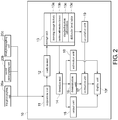
- the motion analysis device 10 is equipped with an acquisition unit 11, an analysis unit 12, a storage unit 13, a detection unit 14, an output unit 15, a determination unit 16, a correction unit 17, an estimation unit 18, a calculation unit 19, and a display unit 10f.
- the first photographing unit 20a, the second photographing unit 20b, and the third photographing unit 20c may each be made up of a general-purpose camera, and may photograph a moving image including the scene in which the first operator A1 and the second operator A2 perform motions in the operating region R.
- the first photographing unit 20a, the second photographing unit 20b, and the third photographing unit 20c may each photograph a part of the operating region R, and may photograph a moving image of a region narrower than the operating region R. Specifically, a moving image that is a close-up of the motions executed by the first operator A1 and the second operator A2 may be photographed.
- the first photographing unit 20a, the second photographing unit 20b, and the third photographing unit 20c may, for example, photograph a moving image that is a close-up of the hands of the first operator A1 and the second operator A2.
- the first photographing unit 20a, the second photographing unit 20b, and the third photographing unit 20c may photograph a plurality of moving images in which a plurality of portions of the operating region R are photographed.
- the first photographing unit 20a mainly photographs a moving image in which the first operator A1 executes the motion
- the third photographing unit 20c mainly photographs the moving image in which the second operator A2 executes the motion
- the second photographing unit 20b may photograph both the moving image in which the first operator A1 executes the motion and the moving image in which the second operator A2 executes the motion.
- the first photographing unit 20a, the second photographing unit 20b, and the third photographing unit 20c may photograph moving images in which different processes are each executed at a plurality of positions in the operating region R.
- the acquisition unit 11 acquires time-sequential information indicating the motion of the operator A.
- the time-sequential information may be a moving image showing the motion of the operator A.
- the time-sequential information may be information on coordinate values indicating the motion of the operator A measured by motion capture.
- the time-sequential information (moving image in this example) acquired by the acquisition unit 11 is transmitted to the storage unit 13 and stored as a moving image history 13a.
- the analysis unit 12 analyzes the moving image showing the motion of the operator A and calculates the motion information including the coordinate values indicating the motion of the operator A.
- the motion information may be information indicating a displacement of a typical position of the body of the operator A.
- the typical position of the operator's body may be one position of the body, or may be typically a plurality of positions.
- the motion information may be information indicating a position of a joint of the operator A in a skeleton model.
- the analysis unit 12 may calculate motion information including the coordinate values showing the motion of the operator A from the moving image, using the technology disclosed by, for example, Zhe Cao, and three others, "Realtime Multi-Person 2D Pose Estimation using Part Affinity Fields," arXiv: 1611.08050, 2016 .
- the storage unit 13 stores a moving image history 13a, a motion information history 13b, standard motion information 13c, and a difficulty level table 13d.
- the moving image history 13a includes a history of moving images photographed by the first photographing unit 20a, the second photographing unit 20b, and the third photographing unit 20c.
- the motion information history 13b includes a history of motion information calculated by the analysis unit 12. Here, the motion information history 13b may be stored for each operator.
- the standard motion information 13c includes a history of standard motion information including coordinate values indicating the standard motion.
- the standard motion information may be calculated by the analysis unit 12 on the basis of the moving image showing the standard motion.
- the difficulty level table 13d is a table that summarizes the types of deviating motions and the difficulty levels for improving the deviating motion.
- the detection unit 14 detects the deviating motion that deviates from the standard motion among the motions of the operator A on the basis of the time-sequential information.
- the detection unit 14 may detect the deviating motion on the basis of comparison between the motion information including the coordinate values indicating the motion of the operator A and standard motion information including the coordinate values indicating the standard motion.
- the detection unit 14 calculates, for example, a square error between the coordinate value indicating the position of the predetermined joint of the operator A included in the motion information and the coordinate value indicating the position of the predetermined joint of the operator included in the standard motion information.
- the motion of the operator A at that time may be detected as a deviating motion.
- the deviating motion can be detected, by further reducing the calculation load.
- the output unit 15 outputs advice for improving the deviating motion.
- the advice that is output by the output unit 15 may be displayed on the display unit 10f. Further, the advice that is output by the output unit 15 may be transmitted to an external device.
- the advice that is output by the output unit 15 may include information presented in various modes to users such as administrators and operators.
- the advice that is output by the output unit 15 may include, for example, voice, a still image, a moving image, and tactile feedback such as vibration.
- the output unit 15 may be configured to output the advice itself or may be configured to output data for outputting the advice to an external device such as a monitor.
- the determination unit 16 determines the difficulty level of improvement on the basis of the type of deviating motion.
- the determination unit 16 may determine the type of deviating motion detected by the detection unit 14, and may determine the difficulty level for improving the deviating motion by referring to the difficulty level table 13d.
- the output unit 15 may output advice according to the determined difficulty level of improvement. For example, when the difficulty level of improvement is high, detailed advice may be output as compared with a case where the difficulty level of improvement is low. In this way, it is possible to show the difficulty level of improvement to the operator who performed the deviating motion or show the difficulty level of improvement to the administrator, and to estimate how much effort will be required for improvement.
- the correction unit 17 corrects the difficulty level of improvement of the deviating motion according to a proficiency level of the motion of the operator.
- the correction unit 17 may correct the difficulty level to a high level, and may not use the difficulty level listed in the difficulty level table 13d as it is. Further, when the proficiency level of the motion of the operator is higher than that of other operators, the correction unit 17 corrects the difficulty level to a low level and may not use the difficulty level listed in the difficulty level table 13d as it is.
- the proficiency level may be input from the outside for each operator, or may be calculated by the motion analysis device 10.
- the correction unit 17 can correct the difficulty level of improvement of the deviating motion and show a more appropriate difficulty level. This makes it possible to more accurately predict how much effort will be required for improvement.
- the estimation unit 18 estimates the effect expected from improvement of the deviating motion.
- the estimation unit 18 may estimate the effect expected from the improvement according to the type of deviating motion.
- the estimation unit 18 estimating the effect of the improvement and showing the effect expected from the improvement of the deviating motion to the operator or the manager, it is possible to give motivation to work on the improvement, and improvements of the deviating motion are easily established.
- the effect expected from the improvement may include a reduction in the motion time of the operator. As a result, it is possible to quantitatively show how much the motion time is shortened by improving the deviating motion and motivate the operator or the manager to work on the improvement, and the improvement of the deviating motion is easily established.
- the calculation unit 19 compares the time-sequential information indicating the motion of the operator with the time-sequential information indicating the standard motion, and calculates the proficiency level of the motion of the operator. For example, when the motion time of the operator is shorter than the standard motion time, the calculation unit 19 may calculate the proficiency level of the motion of the operator to a high degree, and when the motion time of the operator is longer than the standard motion time, the calculation unit 19 may calculate the proficiency level of the motion of the operator to a low level.
- the motion time is the time required for the motion by the operator, and may be calculated on the basis of the time-sequential information indicating the motion of the operator.
- the standard motion time is the time required for the standard motion, and may be calculated on the basis of the time-sequential information indicating the standard motion.
- the proficiency level of the operator can be calculated by comparing the normal motion of the operator with the standard motion, and the proficiency level can be automatically calculated without inputting the proficiency level of the operator from the outside.
- the output unit 15 may output advice in a mode according to the proficiency level.
- the mode according to the proficiency level may be a mode in which, when the proficiency level is high, advice regarding the deviating motion with a high difficulty level of improvement is shown, and when the proficiency level is low, advice on the deviating motion with a low difficulty level of improvement is shown. For example, when a list of advice on improvements is displayed, if the proficiency level is high, the advice may be listed in order of high difficulty level of improvement, and if the proficiency level is low, the advice may be listed in order of low difficulty level of improvement.
- the advice on improvements when the advice on improvements is selectively displayed, if the proficiency level is high, the advice regarding the deviating motion with high difficulty level of improvement may be selected and displayed, and if the proficiency level is low, the advice regarding the deviating motion with low difficulty level of improvement level may be displayed.
- advice suitable for the proficiency level of the operator can be output, motivation to work on the improvement can be given, and improvement of deviating motion can be easily established.
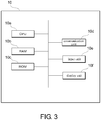
- the motion analysis device 10 has a central processing unit (CPU) 10a corresponding to the calculation device, a random access memory (RAM) 10b corresponding to the storage unit 13, a read only memory (ROM) 10c corresponding to the storage unit 13, a communication unit 10d, an input unit 10e, and a display unit 10f.
- CPU central processing unit
- RAM random access memory
- ROM read only memory
- Each of the configurations is connected to each other via a bus so that data can be transmitted and received.
- the motion analysis device 10 may be realized, using a plurality of computers.
- the CPU 10a is a control unit that controls execution of a program stored in the RAM 10b or the ROM 10c, calculates data, and processes data.
- the CPU 10a is a calculation device that detects a deviating motion deviating from the standard motion and executes a program (motion analysis program) that outputs advice for improving the deviating motion.
- the CPU 10a receives various input data from the input unit 10e and the communication unit 10d, displays the calculation result of the input data on the display unit 10f, and stores the calculation result in the RAM 10b or the ROM 10c.
- the RAM 10b is a part of the storage unit 13 capable of writing data, and may be made up of, for example, a semiconductor storage element.
- the RAM 10b stores data such as an motion analysis program executed by the CPU 10a, and data such as the moving image history 13a, the motion information history 13b, the standard motion information 13c, and the difficulty level table 13d.
- the ROM 10c is a part of the storage unit 13 capable of reading data, and may be made up of, for example, a semiconductor storage element.
- the ROM 10c stores, for example, a motion analysis program and data that is not rewritten.
- the communication unit 10d is an interface which connects the motion analysis device 10 to an external device.
- the communication unit 10d is connected to the first photographing unit 20a, the second photographing unit 20b, and the third photographing unit 20c by, for example, a local area network (LAN), and may receive the moving image from the first photographing unit 20a, the second photographing unit 20b, and the third photographing unit 20c.
- the communication unit 10d may be connected to the Internet to receive a moving image or motion information via the Internet. Further, the communication unit 10d may transmit the captured moving image and the output advice to the external device via the Internet.
- the input unit 10e receives data input from the user, and may include, for example, a keyboard, a mouse, and a touch panel.
- the display unit 10f visually displays the calculation result by the CPU 10a, and may be configured by, for example, a liquid crystal display (LCD). An example of the screen displayed on the display unit 10f will be described in detail later.
- LCD liquid crystal display
- the motion analysis program may be stored in a storage medium readable by a computer such as RAM 10b or ROM 10c and provided, or may be provided via a communication network connected by the communication unit 10d.
- a computer such as RAM 10b or ROM 10c
- the motion analysis device 10 when the CPU 10a executes the motion analysis program, the motion of the acquisition unit 11, the analysis unit 12, the detection unit 14, the output unit 15, the determination unit 16, the correction unit 17, the estimation unit 18 and the calculation unit 19 described using Fig. 2 are realized.
- These physical configurations are examples and do not necessarily have to be independent configurations.
- the motion analysis device 10 may include a large-scale integration (LSI) in which the CPU 10a and the RAM 10b or ROM 10c are integrated.
- LSI large-scale integration
- Fig. 4 is a diagram showing an example of advice that is output by the motion analysis device 10 according to the present embodiment.
- a graph D1 showing the expected effect by improving the deviating motion a legend D2 explaining the difficulty level of the improvement, and an improvement advice D3 are shown.
- the deviating motion is a motion that deviates from "standing close to parts and tools", “taking parts at the same time with both hands”, “assembling in the air”, “supporting with one hand and working with one hand” and “performing the time-consuming automatic inspection first".
- the output unit 15 outputs a graph D1 showing the effect expected by improving the deviating motion.
- Graph D1 shows the excess time from the ideal motion time by a stacked histogram.
- the ideal motion time is the motion time when the deviation motion is not performed.
- the ideal motion time is 30 seconds, whereas the time actually required for motion of the operator is less than 60 seconds.
- Graph D1 shows the excess time caused by each deviating motion as a histogram, and visually shows how much the motion time is shortened when the deviating motion is improved and the ideal motion can be performed.
- Legend D2 shows the contents of the difficulty level table 13d, and shows that as the number of stars is large, the deviating motion has high difficulty level to be improved.
- the difficulty level of improvement of the deviating motion regarding "standing near a part or tool” is “1 (one star)", and the difficulty level of improvement is the lowest among those listed.
- the difficulty level of improvement of the deviating motion regarding "taking parts at the same time with both hands” is “2 (two stars)"
- the difficulty level of improvement of the deviating motion regarding "assembling in the air” is “2 (two stars)”.
- the difficulty level of improvement of the deviating motion regarding "supporting with one hand and working with one hand” is "3 (three stars)”.
- the difficulty level of improvement of the deviating motion regarding "performing time-consuming automatic inspection first” is "5 (five stars)", and the difficulty level of improvement is the highest among those listed.
- Advice D3 includes the content of instructing which of the multiple types of deviating motions performed by the operator need to be improved, and the reason for the improvement.
- current advice start with difficulty level 1 "stand close to parts and tool”
- the content that instructs the improvement of the deviating motion regarding "standing near the parts and tools” is described.
- advice D3 in assembly process 2, when standing near the electric screwdriver, there is no waste of reaching for the tool", and the reason for improvement is described.
- advice D3 in assembly process 2, when standing near the electric screwdriver, there is no waste of reaching for the tool
- the reason for improvement is described. In this way, when a deviating motion is detected, since advice for improving the motion is output, the operator can recognize that the deviating motion has been performed and can know how to improve the motion. Therefore, the motion deviating from the standard is hard to recur.
- the output unit 15 outputs advice in order of low difficulty level of improvement. That is, among the five types of deviating motions shown in the graph D1 and the legend D2, the content instructing the improvement of the deviating motions regarding "standing near a part or tool", which is the lowest difficulty level of improvement, is shown.
- the deviating motion can be improved in order of low difficulty level of improvement, the resistance of the operator or the manager working on the improvement can be reduced, and the probability that the deviating motion will reoccur can be further reduced.
- the output unit 15 may output advice in order of the great effect estimated by the estimation unit 18.
- the output unit 15 may output the advice for improving the detected multiple types of deviating motions in order of the great expected reduction in the motion time. More specifically, in the case of this example, since the deviation motion regarding "performing the time-consuming automatic inspection first" has the largest reduction in the motion time expected by the improvement, the output unit 15 may indicate the content instructing the improvement of the deviating motion regarding "performing time-consuming automatic inspection first". In this way, the deviating motion can be improved in order of the great expected effect of the improvement, the motivation for the operator or the manager working on the improvement can be increased, and the probability that the deviating motion will reoccur can be reduced.
- Fig. 5 is a diagram showing an example of the determination result T1 of the deviating motion by the motion analysis device 10 according to the present embodiment. Fig. 5 shows whether the deviating motion is detected in each process for each type of deviating motion.
- the motion analysis device 10 may store the presence or absence of the deviating motion for each process by storing the determination result T1 of the deviating motion. Further, the motion analysis device 10 may store the determination result T1 of the deviating motion for each operator or each time zone.
- Fig. 6 is a diagram showing an example of the deviating motion table T2 referred to by the motion analysis device 10 according to the present embodiment.
- the deviating motion table T2 of this example is a table summarizing specific deviating motions for each type of deviating motion.
- the types of deviating motions indicate the types such as "the time-consuming automatic inspection has not been completed first”, “cannot work with one hand while supporting it with one hand”, “not assembled in the air”, “parts are not taken with both hands at the same time” and “not standing near parts and tools”.
- the motion analysis device 10 may output the legend D2 shown in Fig. 4 with reference to the deviating motion table T2.
- the motion analysis device 10 may specify not only the type of the deviating motion but also the specific content of the deviating motion, referring to the deviating motion table T2.
- Fig. 7 is a diagram showing an example of the advice table T3 referred to by the motion analysis device 10 according to the present embodiment.
- the advice table T3 is a table summarizing advice for deviating motions detected in each process.
- a deviating motion of "not standing near the electric screwdriver” is detected, and the advice "in assembly process 2, when standing near the electric screwdriver, there is no waste of reaching for the tool” is stored for the deviating motion.
- the motion analysis device 10 may output the advice that "in assembly process 2, when standing near the electric screwdriver, there is no waste of reaching for the tool” is stored for the deviating motion", referring to the advice table T3.
- the advice D3 shown in Fig. 4 is an example in which the advice is output according to the advice table T3 of this example.
- Fig. 8 is a flowchart of the advice output process executed by the motion analysis system 100 according to the present embodiment.
- the first photographing unit 20a, the second photographing unit 20b, and the third photographing unit 20c photograph a moving image showing the motion of the operator (S10).
- the motion analysis device 10 calculates motion information including coordinate values indicating the motion of the operator on the basis of the moving image (S11). Further, the motion analysis device 10 detects the deviating motion on the basis of comparison between the motion information and the standard motion information (S12).
- the motion analysis device 10 determines the difficulty level of improvement on the basis of the type of deviating motion (S13).
- the motion analysis device 10 may determine the difficulty level for improving the deviating motion by referring to the difficulty level table 13d.
- the motion analysis device 10 calculates the proficiency level of motions regarding the operator (S14).
- the proficiency level of the motion may be calculated by comparing, for example, the motion time of the operator with the motion time of the standard motion.
- the motion analysis device 10 corrects the difficulty level depending on the proficiency level (S15).
- the motion analysis device 10 may correct the difficulty level to be high for an operator with low proficiency level, and may correct the difficulty level to be low for an operator with high proficiency level.
- the motion analysis device 10 estimates the effect expected from the improvement and generates a graph (S16).
- the effect expected by the improvement may be the reduction range of the motion time, and the graph may visually show how much the motion time is shortened by the improvement of the deviating motion.
- the motion analysis device 10 generates advice for improving the deviating motion (S17). The details of the advice generation process will be described with reference to the following figure.
- the motion analysis device 10 displays the advice, the difficulty level, and the graph on the display unit 10f (S18).
- the motion analysis device 10 may output advice, difficulty level, and a graph to an external device. Thys, the advice output process is completed.
- Fig. 9 is a flowchart of the advice generation process executed by the motion analysis system 100 according to the present embodiment.
- the motion analysis device 10 determines whether to give priority to the advice regarding the deviating motion with a low difficult level of improvement (S171). Whether to give priority to advice regarding the deviating motion with a low difficulty level of improvement may be selectable by the user and may be set in advance.
- the motion analysis device 10 When giving priority to advice regarding the deviating motion with a low difficulty level of improvement (S171: YES), the motion analysis device 10 generates advice in order of low difficulty level of improvement (S172). On the other hand, when the advice regarding the deviating motion with a low difficulty level of improvement is not prioritized (S171: NO), the motion analysis device 10 generates the advice in order of the great effect expected by the improvement (S173). Thus, the advice generation process is completed.
- the embodiment of the present invention can also be described as the following appendix. However, the embodiment of the present invention is not limited to the embodiment described in the following appendix. Moreover, the embodiment of the present invention may be a form in which the description between the appendices is replaced or combined.
- the motion analysis device (10) according to Appendix 3 or 4, in which the output unit (15) outputs a graph showing the effect.
- the motion analysis device (10) according to any one of Appendices 3 to 5, in which the output unit (15) outputs the advice in order of the great effect estimated by the estimation unit (18).
- the motion analysis device (10) according to any one of Appendices 2 to 6, in which the output unit (15) outputs the advice in order of low difficulty level.
- the motion analysis device (10) according to any one of Appendices 2 to 7, further including a correction unit (17) which corrects the difficulty level depending on a proficiency level of the motion of the operator.
- the motion analysis device (10) according to any one of Appendices 2 to 7, further including a calculation unit (19) which compares the time-sequential information with time-sequential information indicating the standard motion and calculates the proficiency level.
- the motion analysis device (10) according to any one of Appendices 1 to 10,
- a motion analysis method including:
- a motion analysis program which causes a calculation unit provided in a motion analysis device (10) to function as
Landscapes
- Business, Economics & Management (AREA)
- Engineering & Computer Science (AREA)
- Human Resources & Organizations (AREA)
- General Physics & Mathematics (AREA)
- Economics (AREA)
- Physics & Mathematics (AREA)
- Strategic Management (AREA)
- Quality & Reliability (AREA)
- Educational Administration (AREA)
- Entrepreneurship & Innovation (AREA)
- Tourism & Hospitality (AREA)
- Theoretical Computer Science (AREA)
- Marketing (AREA)
- Manufacturing & Machinery (AREA)
- General Business, Economics & Management (AREA)
- Development Economics (AREA)
- Automation & Control Theory (AREA)
- General Engineering & Computer Science (AREA)
- Game Theory and Decision Science (AREA)
- Operations Research (AREA)
- Health & Medical Sciences (AREA)
- General Health & Medical Sciences (AREA)
- Primary Health Care (AREA)
- General Factory Administration (AREA)
- User Interface Of Digital Computer (AREA)
- Management, Administration, Business Operations System, And Electronic Commerce (AREA)
- Measurement Of The Respiration, Hearing Ability, Form, And Blood Characteristics Of Living Organisms (AREA)
Abstract
Description
- The present invention relates to a motion analysis device, a motion analysis method, and a motion analysis program.
- In a related art, one or more cameras may be installed on a manufacturing line of a product to record a motion of an operator in an image or a moving image. Further, there are cases in which image recognition processing may be performed on a captured image or moving image to analyze the motion of the operator.
- For example, the following
Patent Literature 1 describes a motion deviation management system which determines the presence or absence of an operating deviation for performed operating content, records deviation record data including information indicating an occurrence of deviation, operating content identification information, and a product serial number, and determines that a product to be shipped cannot be shipped if there is a record of "operating deviation" in the manufacturing record of the product to be shipped and the deviation record corresponding to the operating deviation does not have information of "deviation confirmed." - [Patent Literature 1]
Japanese Patent Laid-Open No. 2017-21397 - When a motion of an operator is analyzed and a deviation from a standard is detected, there are cases in which a product may not be shipped if quality is to be guaranteed, for example, as in
Patent Literature 1. However, with such measures, because the deviating motion occurs repeatedly after that, the yield of the product may not be improved. - Therefore, the present invention provides a motion analysis device, a motion analysis method, and a motion analysis program capable of making it difficult for a motion deviating from the standard to recur.
- A motion analysis device according to an aspect of the present disclosure is equipped with an acquisition unit which acquires time-sequential information indicating motions of an operator; a detection unit which detects a deviating motion deviating from a standard motion among the motions of the operator on the basis of the time-sequential information; and an output unit which outputs advice for improving the deviating motion. Here, the fact that the motion of the operator deviates from the standard motion may be determined by quantitatively calculating a degree of coincidence (or a degree of divergence) between the motions and determining that the degree of coincidence is equal to or less than a threshold value. The threshold value may be predetermined, or may be statistically determined on the basis of the degree of coincidence between the motions of a plurality of operators and the standard motion.
- According to this aspect, when the deviating motion is detected, since the advice for improving the motion is output, the operator can recognize that the deviating motion has been performed and can know how to improve the motion. Therefore, the motion deviating from the standard does not easily recur.
- In the above aspect, the motion analysis device may further include a determination unit which determines a difficulty level of the improvement on the basis of a type of the deviating motion, wherein the output unit may output advice according to the determined difficulty level of the improvement. Here, the difficulty level of improvement may be stored in advance for each type of deviating motion.
- According to this aspect, it is possible to show the difficulty level of improvement to the operator who performed the deviating motion or show the difficulty level of improvement to the manager, and it is possible to predict how much effort will be required for improvement.
- In the above aspect, the motion analysis device may further include an estimation unit which estimates an effect expected from the improvement.
- According to this aspect, by showing the operator or the manager the effect expected from the improvement of the deviating motion, it is possible to give motivation to work on the improvement, and the improvement of the deviating motion is easily established.
- In the above aspect, the effect may include reduction of a motion time of the operator.
- According to this aspect, it is possible to quantitatively show how much the motion time is shortened by the improvement of the deviating motion, and it is possible to motivate the operator or the manager to work on the improvement, and the improvement of the deviating motion is easily established.
- In the above aspect, the motion analysis device may further include a correction unit which corrects the difficulty level depending on a proficiency level of the motion of the operator. Here, the proficiency level may be input from the outside for each operator, or may be calculated by the motion analysis device.
- According to this aspect, when there are individual differences in the proficiency level of the motion of the operator, it is possible to correct the difficulty level of improvement of the deviating motion and show a more appropriate difficulty level. This makes it possible to more accurately predict how much effort will be required for improvement.
- In the above aspect, the motion analysis device may further include a calculation unit which compares the time-sequential information with time-sequential information indicating the standard motion and calculates the proficiency level.
- According to this aspect, the proficiency level of the operator can be calculated by comparing the normal motion of the operator with the standard motion, and the proficiency level can be automatically calculated without inputting the proficiency level of the operator from the outside.
- In the above aspect, the output unit may output the advice in a manner according to the proficiency level. Here, the mode according to the proficiency level may be a mode in which, when the proficiency level is high, the advice regarding the deviating motion with a high difficulty level of improvement is shown, and when the proficiency level is low, the advice regarding the deviating motion with a low difficulty level of improvement level is shown.
- According to this aspect, advice suitable for the proficiency level of the operator is output, motivation to work on improvement can be given, and improvement of deviating motion is easily established.
- In the above aspect, the time-sequential information may include motion information including coordinate values indicating the motion of the operator, and the detection unit may detect the deviating motion on the basis of comparison between the motion information and standard motion information including the coordinate value indicating the standard motion.
- According to this aspect, since the motion of the operator and the standard motion can be easily compared by comparing the coordinate values, the calculation load can be further reduced and the deviating motion can be detected.
- A motion analysis method according to another aspect of the present disclosure includes acquiring time-sequential information indicating motions of an operator; detecting a deviating motion deviating from a standard motion among the motions of the operator on the basis of the time-sequential information; and outputting advice for improving the deviating motion.
- According to this aspect, when the deviating motion is detected, since the advice for improving the motion is output, the operator can recognize that the deviating motion has been performed and can know how to improve the motion. Therefore, the motion deviating from the standard does not easily recur.
- A motion analysis program according to another aspect of the present disclosure causes a calculation unit provided in a motion analysis device to function as an acquisition unit which acquires time-sequential information indicating motions of an operator, a detection unit which detects a deviating motion deviating from a standard motion among the motions of the operator on the basis of the time-sequential information, and an output unit which outputs advice for improving the deviating motion.
- According to this aspect, when the deviating motion is detected, since the advice for improving the motion is output, the operator can recognize that the deviating motion has been performed and can know how to improve the motion. Therefore, the motion deviating from the standard does not easily recur.
- According to the present invention, it is possible to provide a motion analysis device, a motion analysis method, and a motion analysis program capable of making a motion deviating from the standard less likely to recur.
-
-
Fig. 1 is a diagram showing a summary of a motion analysis system according to an embodiment of the present invention. -
Fig. 2 is a diagram showing a functional block of the motion analysis system according to the present embodiment. -
Fig. 3 is a diagram showing a physical configuration of a motion analysis device according to the present embodiment. -
Fig. 4 is a diagram showing an example of advice that is output by the motion analysis device according to the present embodiment. -
Fig. 5 is a diagram showing an example of a determination result of a deviating motion by the motion analysis device according to the present embodiment. -
Fig. 6 is a diagram showing an example of a deviating motion table referred to by the motion analysis device according to the present embodiment. -
Fig. 7 is a diagram showing an example of an advice table referred to by the motion analysis device according to the present embodiment. -
Fig. 8 is a flowchart of an advice output process executed by the motion analysis system according to the present embodiment. -
Fig. 9 is a flowchart of an advice generation process executed by the motion analysis device according to the present embodiment. - Hereinafter, an embodiment according to one aspect of the present invention (hereinafter referred to as "the present embodiment") will be described with reference to the drawings. In the figures, the same reference numerals indicate components having the same or similar configurations.
- First, an example of a situation in which the present invention is applied will be described using
Fig. 1 . Amotion analysis system 100 according to the present embodiment is equipped with a first photographingunit 20a, a second photographingunit 20b, and a third photographingunit 20c that photograph a moving image showing a motion of an operator executed in a certain operating region R. Although the operating region R of this example is a region including an entire production line, the operating region R may be an arbitrary region, and may be, for example, a region in which a predetermined process is performed or a region in which a predetermined element motion is performed. Here, an element motion is a unit motion performed by an operator, and examples thereof include motions such as picking of parts, arrangement of parts, fixing of parts, and packing of products. In the present embodiment, three processes are performed in the operating region R, and the first photographingunit 20a, the second photographingunit 20b, and the third photographingunit 20c may each photograph a moving image of the hands of an operator who executes a predetermined process. - In this example, a case in which a first operator A1 and a second operator A2 perform a predetermined motion in the operating region R will be described. The first operator A1 can execute motions such as picking, arrangement, and fixing of a first component, and a second operator A2 can execute motions such as picking, arranging, and fixing of a second component. Hereinafter, the first operator A1 and the second operator A2 are collectively referred to as an operator A.
- The
motion analysis system 100 includes amotion analysis device 10. Themotion analysis device 10 is equipped with a detection unit that detects a deviating motion that deviates from a standard motion among the motions of the operator A on the basis of time-sequential information indicating the motion of the operator A such as a moving image, and an output unit that outputs advice for improving the deviating motion. Further, themotion analysis device 10 is equipped with adisplay unit 10f that displays advice. Here, the fact that the motion of the operator deviates from the standard motion may be determined by quantitatively calculating a degree of coincidence between the motions and determining that the degree of coincidence is equal to or less than a threshold value. The degree of deviation between the motions may be quantitatively calculated, and it may be determined whether there is a deviating motion when the degree of deviation is equal to or greater than the threshold value. Here, the threshold value may be predetermined, or may be statistically determined on the basis of the degree of coincidence (or a degree of divergence) between the motions of a plurality of operators and the standard motions. - Here, the standard motion may be a standard motion that the operator needs to follow. When the standard motion is the standard motion, the detection unit may detect the deviating motion on the condition that the degree of coincidence between the time-sequential information indicating the motion of the operator A and the time-sequential information indicating the standard motion is equal to or less than the threshold value. Hereinafter, a case will be described in which the standard motion is a standard motion, and the detection unit detects the deviating motion on the condition that the degree of coincidence between the time-sequential information indicating the motion of the operator A and the time-sequential information indicating the standard motion is equal to or less than the threshold value.
- The
display unit 10f displays advice for improving the deviating motion. Thedisplay unit 10f may display a graph showing a difficulty level of improvement and an effect expected from the improvement together with the advice. Further, thedisplay unit 10f may display a moving image showing the motion of the operator A and a moving image showing the standard motion together. - As described above, according to the
motion analysis device 10 according to the present embodiment, when the deviating motion is detected, because the advice for improving the motion is output, the operator A can recognize that the deviating motion is performed, and can know how to improve the motion. Therefore, the motion deviating from the standard does not easily recur. - Next, an example of the functional configuration of the
motion analysis system 100 according to the present embodiment will be described usingFig. 2 . Themotion analysis system 100 is equipped with a first photographingunit 20a, a second photographingunit 20b, a third photographingunit 20c, and amotion analysis device 10. Themotion analysis device 10 is equipped with anacquisition unit 11, ananalysis unit 12, astorage unit 13, adetection unit 14, anoutput unit 15, adetermination unit 16, acorrection unit 17, anestimation unit 18, acalculation unit 19, and adisplay unit 10f. - The first photographing
unit 20a, the second photographingunit 20b, and the third photographingunit 20c may each be made up of a general-purpose camera, and may photograph a moving image including the scene in which the first operator A1 and the second operator A2 perform motions in the operating region R. The first photographingunit 20a, the second photographingunit 20b, and the third photographingunit 20c may each photograph a part of the operating region R, and may photograph a moving image of a region narrower than the operating region R. Specifically, a moving image that is a close-up of the motions executed by the first operator A1 and the second operator A2 may be photographed. The first photographingunit 20a, the second photographingunit 20b, and the third photographingunit 20c may, for example, photograph a moving image that is a close-up of the hands of the first operator A1 and the second operator A2. - Further, the first photographing
unit 20a, the second photographingunit 20b, and the third photographingunit 20c may photograph a plurality of moving images in which a plurality of portions of the operating region R are photographed. For example, the first photographingunit 20a mainly photographs a moving image in which the first operator A1 executes the motion, the third photographingunit 20c mainly photographs the moving image in which the second operator A2 executes the motion, and the second photographingunit 20b may photograph both the moving image in which the first operator A1 executes the motion and the moving image in which the second operator A2 executes the motion. Further, the first photographingunit 20a, the second photographingunit 20b, and the third photographingunit 20c may photograph moving images in which different processes are each executed at a plurality of positions in the operating region R. - The
acquisition unit 11 acquires time-sequential information indicating the motion of the operator A. Here, the time-sequential information may be a moving image showing the motion of the operator A. However, the time-sequential information may be information on coordinate values indicating the motion of the operator A measured by motion capture. The time-sequential information (moving image in this example) acquired by theacquisition unit 11 is transmitted to thestorage unit 13 and stored as a movingimage history 13a. - <Analysis unit>
- The
analysis unit 12 analyzes the moving image showing the motion of the operator A and calculates the motion information including the coordinate values indicating the motion of the operator A. The motion information may be information indicating a displacement of a typical position of the body of the operator A. The typical position of the operator's body may be one position of the body, or may be typically a plurality of positions. The motion information may be information indicating a position of a joint of the operator A in a skeleton model. Theanalysis unit 12 may calculate motion information including the coordinate values showing the motion of the operator A from the moving image, using the technology disclosed by, for example, Zhe Cao, and three others, "Realtime Multi-Person 2D Pose Estimation using Part Affinity Fields," arXiv: 1611.08050, 2016. - The
storage unit 13 stores a movingimage history 13a, amotion information history 13b,standard motion information 13c, and a difficulty level table 13d. The movingimage history 13a includes a history of moving images photographed by the first photographingunit 20a, the second photographingunit 20b, and the third photographingunit 20c. Themotion information history 13b includes a history of motion information calculated by theanalysis unit 12. Here, themotion information history 13b may be stored for each operator. Thestandard motion information 13c includes a history of standard motion information including coordinate values indicating the standard motion. The standard motion information may be calculated by theanalysis unit 12 on the basis of the moving image showing the standard motion. The difficulty level table 13d is a table that summarizes the types of deviating motions and the difficulty levels for improving the deviating motion. - The
detection unit 14 detects the deviating motion that deviates from the standard motion among the motions of the operator A on the basis of the time-sequential information. Thedetection unit 14 may detect the deviating motion on the basis of comparison between the motion information including the coordinate values indicating the motion of the operator A and standard motion information including the coordinate values indicating the standard motion. Thedetection unit 14 calculates, for example, a square error between the coordinate value indicating the position of the predetermined joint of the operator A included in the motion information and the coordinate value indicating the position of the predetermined joint of the operator included in the standard motion information. When the calculated value is equal to or greater than the threshold value, the motion of the operator A at that time may be detected as a deviating motion. In this way, by utilizing the motion information including the coordinate values indicating the motion of the operator, because it is possible to easily compare the motion of the operator with the standard motion by comparing the coordinate values, the deviating motion can be detected, by further reducing the calculation load. - The
output unit 15 outputs advice for improving the deviating motion. The advice that is output by theoutput unit 15 may be displayed on thedisplay unit 10f. Further, the advice that is output by theoutput unit 15 may be transmitted to an external device. The advice that is output by theoutput unit 15 may include information presented in various modes to users such as administrators and operators. The advice that is output by theoutput unit 15 may include, for example, voice, a still image, a moving image, and tactile feedback such as vibration. Theoutput unit 15 may be configured to output the advice itself or may be configured to output data for outputting the advice to an external device such as a monitor. - The
determination unit 16 determines the difficulty level of improvement on the basis of the type of deviating motion. Thedetermination unit 16 may determine the type of deviating motion detected by thedetection unit 14, and may determine the difficulty level for improving the deviating motion by referring to the difficulty level table 13d. Further, theoutput unit 15 may output advice according to the determined difficulty level of improvement. For example, when the difficulty level of improvement is high, detailed advice may be output as compared with a case where the difficulty level of improvement is low. In this way, it is possible to show the difficulty level of improvement to the operator who performed the deviating motion or show the difficulty level of improvement to the administrator, and to estimate how much effort will be required for improvement. - The
correction unit 17 corrects the difficulty level of improvement of the deviating motion according to a proficiency level of the motion of the operator. When the proficiency level of the motion of the operator is low as compared with other operators, thecorrection unit 17 may correct the difficulty level to a high level, and may not use the difficulty level listed in the difficulty level table 13d as it is. Further, when the proficiency level of the motion of the operator is higher than that of other operators, thecorrection unit 17 corrects the difficulty level to a low level and may not use the difficulty level listed in the difficulty level table 13d as it is. Here, the proficiency level may be input from the outside for each operator, or may be calculated by themotion analysis device 10. When there are individual differences in the proficiency level of the motion of the operator, thecorrection unit 17 can correct the difficulty level of improvement of the deviating motion and show a more appropriate difficulty level. This makes it possible to more accurately predict how much effort will be required for improvement. - The
estimation unit 18 estimates the effect expected from improvement of the deviating motion. Theestimation unit 18 may estimate the effect expected from the improvement according to the type of deviating motion. By theestimation unit 18 estimating the effect of the improvement and showing the effect expected from the improvement of the deviating motion to the operator or the manager, it is possible to give motivation to work on the improvement, and improvements of the deviating motion are easily established. Further, the effect expected from the improvement may include a reduction in the motion time of the operator. As a result, it is possible to quantitatively show how much the motion time is shortened by improving the deviating motion and motivate the operator or the manager to work on the improvement, and the improvement of the deviating motion is easily established. - The
calculation unit 19 compares the time-sequential information indicating the motion of the operator with the time-sequential information indicating the standard motion, and calculates the proficiency level of the motion of the operator. For example, when the motion time of the operator is shorter than the standard motion time, thecalculation unit 19 may calculate the proficiency level of the motion of the operator to a high degree, and when the motion time of the operator is longer than the standard motion time, thecalculation unit 19 may calculate the proficiency level of the motion of the operator to a low level. Here, the motion time is the time required for the motion by the operator, and may be calculated on the basis of the time-sequential information indicating the motion of the operator. Further, the standard motion time is the time required for the standard motion, and may be calculated on the basis of the time-sequential information indicating the standard motion. In this way, the proficiency level of the operator can be calculated by comparing the normal motion of the operator with the standard motion, and the proficiency level can be automatically calculated without inputting the proficiency level of the operator from the outside. - The
output unit 15 may output advice in a mode according to the proficiency level. Here, the mode according to the proficiency level may be a mode in which, when the proficiency level is high, advice regarding the deviating motion with a high difficulty level of improvement is shown, and when the proficiency level is low, advice on the deviating motion with a low difficulty level of improvement is shown. For example, when a list of advice on improvements is displayed, if the proficiency level is high, the advice may be listed in order of high difficulty level of improvement, and if the proficiency level is low, the advice may be listed in order of low difficulty level of improvement. Further, when the advice on improvements is selectively displayed, if the proficiency level is high, the advice regarding the deviating motion with high difficulty level of improvement may be selected and displayed, and if the proficiency level is low, the advice regarding the deviating motion with low difficulty level of improvement level may be displayed. As a result, advice suitable for the proficiency level of the operator can be output, motivation to work on the improvement can be given, and improvement of deviating motion can be easily established. - Next, an example of the hardware configuration of the
motion analysis device 10 according to the present embodiment will be described usingFig. 3 . Themotion analysis device 10 has a central processing unit (CPU) 10a corresponding to the calculation device, a random access memory (RAM) 10b corresponding to thestorage unit 13, a read only memory (ROM) 10c corresponding to thestorage unit 13, acommunication unit 10d, aninput unit 10e, and adisplay unit 10f. Each of the configurations is connected to each other via a bus so that data can be transmitted and received. In this example, although a case in which themotion analysis device 10 is made up of a single computer will be described, themotion analysis device 10 may be realized, using a plurality of computers. - The
CPU 10a is a control unit that controls execution of a program stored in theRAM 10b or theROM 10c, calculates data, and processes data. TheCPU 10a is a calculation device that detects a deviating motion deviating from the standard motion and executes a program (motion analysis program) that outputs advice for improving the deviating motion. TheCPU 10a receives various input data from theinput unit 10e and thecommunication unit 10d, displays the calculation result of the input data on thedisplay unit 10f, and stores the calculation result in theRAM 10b or theROM 10c. - The
RAM 10b is a part of thestorage unit 13 capable of writing data, and may be made up of, for example, a semiconductor storage element. TheRAM 10b stores data such as an motion analysis program executed by theCPU 10a, and data such as the movingimage history 13a, themotion information history 13b, thestandard motion information 13c, and the difficulty level table 13d. - The
ROM 10c is a part of thestorage unit 13 capable of reading data, and may be made up of, for example, a semiconductor storage element. TheROM 10c stores, for example, a motion analysis program and data that is not rewritten. - The
communication unit 10d is an interface which connects themotion analysis device 10 to an external device. Thecommunication unit 10d is connected to the first photographingunit 20a, the second photographingunit 20b, and the third photographingunit 20c by, for example, a local area network (LAN), and may receive the moving image from the first photographingunit 20a, the second photographingunit 20b, and the third photographingunit 20c. Further, thecommunication unit 10d may be connected to the Internet to receive a moving image or motion information via the Internet. Further, thecommunication unit 10d may transmit the captured moving image and the output advice to the external device via the Internet. - The
input unit 10e receives data input from the user, and may include, for example, a keyboard, a mouse, and a touch panel. - The
display unit 10f visually displays the calculation result by theCPU 10a, and may be configured by, for example, a liquid crystal display (LCD). An example of the screen displayed on thedisplay unit 10f will be described in detail later. - The motion analysis program may be stored in a storage medium readable by a computer such as
RAM 10b orROM 10c and provided, or may be provided via a communication network connected by thecommunication unit 10d. In themotion analysis device 10, when theCPU 10a executes the motion analysis program, the motion of theacquisition unit 11, theanalysis unit 12, thedetection unit 14, theoutput unit 15, thedetermination unit 16, thecorrection unit 17, theestimation unit 18 and thecalculation unit 19 described usingFig. 2 are realized. These physical configurations are examples and do not necessarily have to be independent configurations. For example, themotion analysis device 10 may include a large-scale integration (LSI) in which theCPU 10a and theRAM 10b orROM 10c are integrated. -
Fig. 4 is a diagram showing an example of advice that is output by themotion analysis device 10 according to the present embodiment. InFig. 4 , a graph D1 showing the expected effect by improving the deviating motion, a legend D2 explaining the difficulty level of the improvement, and an improvement advice D3 are shown. In this example, the deviating motion is a motion that deviates from "standing close to parts and tools", "taking parts at the same time with both hands", "assembling in the air", "supporting with one hand and working with one hand" and "performing the time-consuming automatic inspection first". - The
output unit 15 outputs a graph D1 showing the effect expected by improving the deviating motion. Graph D1 shows the excess time from the ideal motion time by a stacked histogram. Here, the ideal motion time is the motion time when the deviation motion is not performed. According to the graph D1, the ideal motion time is 30 seconds, whereas the time actually required for motion of the operator is less than 60 seconds. Graph D1 shows the excess time caused by each deviating motion as a histogram, and visually shows how much the motion time is shortened when the deviating motion is improved and the ideal motion can be performed. By displaying the graph D1 in this way, the expected effect of the improvement of the deviating motion can be visually shown, motivation working on the improvement can be given to the operator or the manager, and the improvement of the deviating motion is easily established. - Legend D2 shows the contents of the difficulty level table 13d, and shows that as the number of stars is large, the deviating motion has high difficulty level to be improved. In the case of this example, the difficulty level of improvement of the deviating motion regarding "standing near a part or tool" is "1 (one star)", and the difficulty level of improvement is the lowest among those listed. In addition, the difficulty level of improvement of the deviating motion regarding "taking parts at the same time with both hands" is "2 (two stars)", and the difficulty level of improvement of the deviating motion regarding "assembling in the air" is "2 (two stars)". Furthermore, the difficulty level of improvement of the deviating motion regarding "supporting with one hand and working with one hand" is "3 (three stars)". Finally, the difficulty level of improvement of the deviating motion regarding "performing time-consuming automatic inspection first" is "5 (five stars)", and the difficulty level of improvement is the highest among those listed.
- Operators and managers can easily compare the difficulty levels shown in Graph D1 and Legend D2 to easily understand what difficulty level deviating motions can be improved and how much the motion time can be shortened.
- Advice D3 includes the content of instructing which of the multiple types of deviating motions performed by the operator need to be improved, and the reason for the improvement. In this example, as "current advice", start with
difficulty level 1 "stand close to parts and tool", and the content that instructs the improvement of the deviating motion regarding "standing near the parts and tools" is described. Further, in this example, as advice D3, "inassembly process 2, when standing near the electric screwdriver, there is no waste of reaching for the tool", and the reason for improvement is described. In this way, when a deviating motion is detected, since advice for improving the motion is output, the operator can recognize that the deviating motion has been performed and can know how to improve the motion. Therefore, the motion deviating from the standard is hard to recur. - In this example, the
output unit 15 outputs advice in order of low difficulty level of improvement. That is, among the five types of deviating motions shown in the graph D1 and the legend D2, the content instructing the improvement of the deviating motions regarding "standing near a part or tool", which is the lowest difficulty level of improvement, is shown. As a result, the deviating motion can be improved in order of low difficulty level of improvement, the resistance of the operator or the manager working on the improvement can be reduced, and the probability that the deviating motion will reoccur can be further reduced. - However, the
output unit 15 may output advice in order of the great effect estimated by theestimation unit 18. In the case of this example, since the effect of the improvement is measured by the motion time that can be shortened, theoutput unit 15 may output the advice for improving the detected multiple types of deviating motions in order of the great expected reduction in the motion time. More specifically, in the case of this example, since the deviation motion regarding "performing the time-consuming automatic inspection first" has the largest reduction in the motion time expected by the improvement, theoutput unit 15 may indicate the content instructing the improvement of the deviating motion regarding "performing time-consuming automatic inspection first". In this way, the deviating motion can be improved in order of the great expected effect of the improvement, the motivation for the operator or the manager working on the improvement can be increased, and the probability that the deviating motion will reoccur can be reduced. -
Fig. 5 is a diagram showing an example of the determination result T1 of the deviating motion by themotion analysis device 10 according to the present embodiment.Fig. 5 shows whether the deviating motion is detected in each process for each type of deviating motion. - In this example, for the deviating motion of "not standing near the electric screwdriver", "deviation" is detected in the process of "
assembly 2". On the other hand, the process "assembly 3" is indicated by "O", indicating that the deviating motion was not detected. Further, in the process of "assembly 1", "packing 1" and "packing 2", the deviating motion of "not standing near the electric screwdriver" is not detected and is indicated by "-". - The
motion analysis device 10 may store the presence or absence of the deviating motion for each process by storing the determination result T1 of the deviating motion. Further, themotion analysis device 10 may store the determination result T1 of the deviating motion for each operator or each time zone. -
Fig. 6 is a diagram showing an example of the deviating motion table T2 referred to by themotion analysis device 10 according to the present embodiment. The deviating motion table T2 of this example is a table summarizing specific deviating motions for each type of deviating motion. - In this example, the types of deviating motions indicate the types such as "the time-consuming automatic inspection has not been completed first", "cannot work with one hand while supporting it with one hand", "not assembled in the air", "parts are not taken with both hands at the same time" and "not standing near parts and tools". The
motion analysis device 10 may output the legend D2 shown inFig. 4 with reference to the deviating motion table T2. - In this example, as the specific content of the deviating motion, the content of "not standing near the electric screwdriver" is shown for the type of deviating motion "not standing near the parts or tools". When the
motion analysis device 10 detects the deviating motion, themotion analysis device 10 may specify not only the type of the deviating motion but also the specific content of the deviating motion, referring to the deviating motion table T2. -
Fig. 7 is a diagram showing an example of the advice table T3 referred to by themotion analysis device 10 according to the present embodiment. The advice table T3 is a table summarizing advice for deviating motions detected in each process. - In this example, in the process of "
assembly 2", a deviating motion of "not standing near the electric screwdriver" is detected, and the advice "inassembly process 2, when standing near the electric screwdriver, there is no waste of reaching for the tool" is stored for the deviating motion. When themotion analysis device 10 detects a deviating motion of "not standing near the electric screwdriver" in the process of "assembly 2", themotion analysis device 10 may output the advice that "inassembly process 2, when standing near the electric screwdriver, there is no waste of reaching for the tool" is stored for the deviating motion", referring to the advice table T3. The advice D3 shown inFig. 4 is an example in which the advice is output according to the advice table T3 of this example. -
Fig. 8 is a flowchart of the advice output process executed by themotion analysis system 100 according to the present embodiment. First, the first photographingunit 20a, the second photographingunit 20b, and the third photographingunit 20c photograph a moving image showing the motion of the operator (S10). - The
motion analysis device 10 calculates motion information including coordinate values indicating the motion of the operator on the basis of the moving image (S11). Further, themotion analysis device 10 detects the deviating motion on the basis of comparison between the motion information and the standard motion information (S12). - After that, the
motion analysis device 10 determines the difficulty level of improvement on the basis of the type of deviating motion (S13). Themotion analysis device 10 may determine the difficulty level for improving the deviating motion by referring to the difficulty level table 13d. - The
motion analysis device 10 calculates the proficiency level of motions regarding the operator (S14). The proficiency level of the motion may be calculated by comparing, for example, the motion time of the operator with the motion time of the standard motion. - The
motion analysis device 10 corrects the difficulty level depending on the proficiency level (S15). Themotion analysis device 10 may correct the difficulty level to be high for an operator with low proficiency level, and may correct the difficulty level to be low for an operator with high proficiency level. - The
motion analysis device 10 estimates the effect expected from the improvement and generates a graph (S16). Here, the effect expected by the improvement may be the reduction range of the motion time, and the graph may visually show how much the motion time is shortened by the improvement of the deviating motion. - The
motion analysis device 10 generates advice for improving the deviating motion (S17). The details of the advice generation process will be described with reference to the following figure. - Finally, the
motion analysis device 10 displays the advice, the difficulty level, and the graph on thedisplay unit 10f (S18). Themotion analysis device 10 may output advice, difficulty level, and a graph to an external device. Thys, the advice output process is completed. -
Fig. 9 is a flowchart of the advice generation process executed by themotion analysis system 100 according to the present embodiment. First, themotion analysis device 10 determines whether to give priority to the advice regarding the deviating motion with a low difficult level of improvement (S171). Whether to give priority to advice regarding the deviating motion with a low difficulty level of improvement may be selectable by the user and may be set in advance. - When giving priority to advice regarding the deviating motion with a low difficulty level of improvement (S171: YES), the
motion analysis device 10 generates advice in order of low difficulty level of improvement (S172). On the other hand, when the advice regarding the deviating motion with a low difficulty level of improvement is not prioritized (S171: NO), themotion analysis device 10 generates the advice in order of the great effect expected by the improvement (S173). Thus, the advice generation process is completed. - The embodiment of the present invention can also be described as the following appendix. However, the embodiment of the present invention is not limited to the embodiment described in the following appendix. Moreover, the embodiment of the present invention may be a form in which the description between the appendices is replaced or combined.
- A motion analysis device (10) equipped with:
- an acquisition unit (11) which acquires time-sequential information indicating motions of an operator,
- a detection unit (14) which detects a deviating motion deviating from a standard motion among the motions of the operator, on the basis of the time-sequential information, and
- an output unit (15) which outputs a piece of advice for improving the deviating motion.
- The motion analysis device (10) described in
Appendix 1, further including a determination unit (16) which determines a difficulty level of the improvement on the basis of a type of the deviating motion,
in which the output unit (15) outputs a piece of advice according to the determined difficulty level of the improvement. - The motion analysis device (10) described in
Appendix 2, further including an estimation unit (18) which estimates an effect expected by the improvement. - The motion analysis device (10) described in
Appendix 3, in which the effect includes a reduction of a motion time of the operator. - The motion analysis device (10) according to
Appendix 3 or 4, in which the output unit (15) outputs a graph showing the effect. - The motion analysis device (10) according to any one of
Appendices 3 to 5, in which the output unit (15) outputs the advice in order of the great effect estimated by the estimation unit (18). - The motion analysis device (10) according to any one of
Appendices 2 to 6, in which the output unit (15) outputs the advice in order of low difficulty level. - The motion analysis device (10) according to any one of
Appendices 2 to 7, further including a correction unit (17) which corrects the difficulty level depending on a proficiency level of the motion of the operator. - The motion analysis device (10) according to any one of
Appendices 2 to 7, further including
a calculation unit (19) which compares the time-sequential information with time-sequential information indicating the standard motion and calculates the proficiency level. - The motion analysis device described in Appendix 9, in which the output unit (15) outputs the advice in a manner according to the proficiency level.
- The motion analysis device (10) according to any one of
Appendices 1 to 10, - in which the time-sequential information includes motion information including coordinate values indicating the motion of the operator, and
- the detection unit (14) detects the deviating motion, on the basis of comparison between the motion information and standard motion information including the coordinate value indicating the standard motion.
- A motion analysis method including:
- acquiring time-sequential information indicating motions of an operator;
- detecting a deviating motion deviating from a standard motion among the motions of the operator, on the basis of the time-sequential information; and
- outputting a piece of advice for improving the deviating motion.
- A motion analysis program which causes a calculation unit provided in a motion analysis device (10) to function as
- an acquisition unit (11) which acquires time-sequential information indicating motions of an operator,
- a detection unit (14) which detects a deviating motion deviating from a standard motion among the motions of the operator, on the basis of the time-sequential information, and
- an output unit (15) which outputs a piece of advice for improving the deviating motion.
- A motion analysis system (100) including
- a photographing unit (20a, 20b, 20c) which photographs a moving image showing motions of an operator;
- a detection unit (14) which detects a deviating motion deviating from a standard motion among the motions of the operator, on the basis of the time-sequential information;
- an output unit (15) which outputs a piece of advice for improving the deviating motion; and
- a display unit which displays the advice.
Claims (10)
- A motion analysis device comprising:an acquisition unit which acquires time-sequential information indicating motions of an operator;a detection unit which detects a deviating motion deviating from a standard motion among the motions of the operator on the basis of the time-sequential information; andan output unit which outputs advice for improving the deviating motion.
- The motion analysis device according to claim 1, further comprising:a determination unit which determines a difficulty level of the improvement on the basis of a type of the deviating motion,wherein the output unit outputs advice according to the determined difficulty level of the improvement.
- The motion analysis device according to claim 2, further comprising:
an estimation unit which estimates an effect expected from the improvement. - The motion analysis device according to claim 3, wherein the effect includes a reduction of a motion time of the operator.
- The motion analysis device according to any one of claims 2 to 4, further comprising:
a correction unit which corrects the difficulty level depending on a proficiency level of the motion of the operator. - The motion analysis device according to claim 5, further comprising:
a calculation unit which compares the time-sequential information with time-sequential information indicating the standard motion and calculates the proficiency level. - The motion analysis device according to claim 6, wherein the output unit outputs the advice in a manner according to the proficiency level.
- The motion analysis device according to any one of claims 1 to 7, wherein the time-sequential information includes motion information including coordinate values indicating the motion of the operator, and
the detection unit detects the deviating motion on the basis of comparison between the motion information and standard motion information including the coordinate value indicating the standard motion. - A motion analysis method comprising:acquiring time-sequential information indicating motions of an operator;detecting a deviating motion deviating from a standard motion among the motions of the operator on the basis of the time-sequential information; andoutputting advice for improving the deviating motion.
- A motion analysis program which causes a calculation unit provided in a motion analysis device to function asan acquisition unit which acquires time-sequential information indicating motions of an operator,a detection unit which detects a deviating motion deviating from a standard motion among the motions of the operator on the basis of the time-sequential information, andan output unit which outputs advice for improving the deviating motion.
Applications Claiming Priority (2)
| Application Number | Priority Date | Filing Date | Title |
|---|---|---|---|
| JP2018243183A JP7026890B2 (en) | 2018-12-26 | 2018-12-26 | Motion analysis device, motion analysis method and motion analysis program |
| PCT/JP2019/009129 WO2020136924A1 (en) | 2018-12-26 | 2019-03-07 | Motion analysis device, motion analysis method, and motion analysis program |
Publications (3)
| Publication Number | Publication Date |
|---|---|
| EP3905153A1 true EP3905153A1 (en) | 2021-11-03 |
| EP3905153A4 EP3905153A4 (en) | 2022-09-07 |
| EP3905153B1 EP3905153B1 (en) | 2025-12-24 |
Family
ID=71126261
Family Applications (1)
| Application Number | Title | Priority Date | Filing Date |
|---|---|---|---|
| EP19904165.8A Active EP3905153B1 (en) | 2018-12-26 | 2019-03-07 | Motion analysis device, motion analysis method, and motion analysis program |
Country Status (4)
| Country | Link |
|---|---|
| EP (1) | EP3905153B1 (en) |
| JP (1) | JP7026890B2 (en) |
| CN (1) | CN112567401B (en) |
| WO (1) | WO2020136924A1 (en) |
Cited By (1)
| Publication number | Priority date | Publication date | Assignee | Title |
|---|---|---|---|---|
| WO2025076026A1 (en) * | 2023-10-02 | 2025-04-10 | Fisher-Rosemount Systems, Inc. | Automated industrial process recipe generation |
Families Citing this family (4)
| Publication number | Priority date | Publication date | Assignee | Title |
|---|---|---|---|---|
| JP2024003554A (en) * | 2022-06-27 | 2024-01-15 | トヨタ自動車株式会社 | Cause tracing system, cause tracing method, and cause tracing program |
| JP2024043979A (en) * | 2022-09-20 | 2024-04-02 | 株式会社Ollo | Program and information processing method |
| JP7858011B2 (en) * | 2023-09-22 | 2026-05-13 | ソフトバンクグループ株式会社 | system |
| WO2026070024A1 (en) * | 2024-09-25 | 2026-04-02 | 日本電気株式会社 | Advice provision device, advice provision method, program, and evaluation device |
Family Cites Families (18)
| Publication number | Priority date | Publication date | Assignee | Title |
|---|---|---|---|---|
| JPH07254024A (en) * | 1994-03-15 | 1995-10-03 | Hitachi Ltd | Work efficiency diagnosis method and system |
| JP2006320424A (en) * | 2005-05-17 | 2006-11-30 | Tama Tlo Kk | Action teaching apparatus and method |
| US9734464B2 (en) * | 2007-09-11 | 2017-08-15 | International Business Machines Corporation | Automatically generating labor standards from video data |
| KR101284505B1 (en) * | 2009-12-07 | 2013-07-16 | 신닛테츠스미킨 카부시키카이샤 | Operation support device, operation support method, and computer readable recording medium recording computer program |
| JP2013156800A (en) * | 2012-01-30 | 2013-08-15 | Bodyshop Eiichi Co Ltd | Process control system and process management program |
| JP5957323B2 (en) * | 2012-07-19 | 2016-07-27 | Juki株式会社 | Line balance improvement measure providing device, line balance improvement measure extraction method, and line balance improvement measure extraction program |
| JP6524619B2 (en) * | 2014-08-18 | 2019-06-05 | 株式会社リコー | Locus drawing apparatus, locus drawing method, locus drawing system, and program |
| JP2016048422A (en) * | 2014-08-27 | 2016-04-07 | 沖電気工業株式会社 | Information processing apparatus, information processing system, information processing method, and program |
| US10037504B2 (en) * | 2015-02-12 | 2018-07-31 | Wipro Limited | Methods for determining manufacturing waste to optimize productivity and devices thereof |
| JP6609414B2 (en) * | 2015-03-23 | 2019-11-20 | 株式会社富士通エフサス | Work distribution support device, work distribution support program, and work distribution support method |
| JP2017021397A (en) | 2015-07-07 | 2017-01-26 | 株式会社 日立産業制御ソリューションズ | Work deviation management system and work deviation management method |
| CN106408161A (en) * | 2016-08-29 | 2017-02-15 | 广州丰捷企业管理服务有限公司 | Method and system for improving sewing assembly line work production efficiency |
| US10437240B2 (en) * | 2016-09-13 | 2019-10-08 | Toyota Motor Engineering & Manufacturing North America, Inc. | Manufacturing evaluation system |
| KR20190075096A (en) * | 2016-10-21 | 2019-06-28 | 트룸프 베르크초이그마쉬넨 게엠베하 + 코. 카게 | Manufacturing control based on internal personal tracking in the metalworking industry |
| JP6834353B2 (en) * | 2016-10-31 | 2021-02-24 | 株式会社リコー | Image processing equipment, image processing systems, image processing methods and programs |
| JP6945373B2 (en) * | 2017-07-24 | 2021-10-06 | 株式会社日立製作所 | Work improvement support system |
| JP2019028559A (en) * | 2017-07-26 | 2019-02-21 | Hrソリューションズ株式会社 | Work analyzing device, work analyzing method, and program |
| CN108549333B (en) * | 2018-02-26 | 2020-07-24 | 厦门盈趣科技股份有限公司 | Production line collective operation intelligent analysis and improvement method and system |
-
2018
- 2018-12-26 JP JP2018243183A patent/JP7026890B2/en active Active
-
2019
- 2019-03-07 CN CN201980052150.8A patent/CN112567401B/en active Active
- 2019-03-07 WO PCT/JP2019/009129 patent/WO2020136924A1/en not_active Ceased
- 2019-03-07 EP EP19904165.8A patent/EP3905153B1/en active Active
Cited By (1)
| Publication number | Priority date | Publication date | Assignee | Title |
|---|---|---|---|---|
| WO2025076026A1 (en) * | 2023-10-02 | 2025-04-10 | Fisher-Rosemount Systems, Inc. | Automated industrial process recipe generation |
Also Published As
| Publication number | Publication date |
|---|---|
| EP3905153A4 (en) | 2022-09-07 |
| JP2020106954A (en) | 2020-07-09 |
| WO2020136924A1 (en) | 2020-07-02 |
| CN112567401A (en) | 2021-03-26 |
| JP7026890B2 (en) | 2022-03-01 |
| CN112567401B (en) | 2024-06-07 |
| EP3905153B1 (en) | 2025-12-24 |
Similar Documents
| Publication | Publication Date | Title |
|---|---|---|
| EP3905153B1 (en) | Motion analysis device, motion analysis method, and motion analysis program | |
| US11551134B2 (en) | Information processing apparatus, information processing method, and storage medium | |
| US20180174062A1 (en) | Root cause analysis for sequences of datacenter states | |
| WO2020039882A1 (en) | Discrimination device and machine learning method | |
| US11521392B2 (en) | Image processing apparatus and image processing method for image analysis process | |
| US11392871B2 (en) | Work support device, work support method, and work support program | |
| US10963739B2 (en) | Learning device, learning method, and learning program | |
| US9600893B2 (en) | Image processing device, method, and medium for discriminating a type of input image using non-common regions | |
| JP2019101919A (en) | Information processor, information processing method, computer program, and storage medium | |
| US11754985B2 (en) | Information processing apparatus, information processing method and computer program product | |
| US20210192771A1 (en) | Calculation system, calculation method, and storage medium | |
| JP2019193019A (en) | Work analysis device and work analysis method | |
| US8036922B2 (en) | Apparatus and computer-readable program for estimating man-hours for software tests | |
| WO2019134578A1 (en) | Equipment compatibility test method and apparatus, electronic device and medium | |
| JP6331270B2 (en) | Information processing system, information processing method, and program | |
| WO2023008330A1 (en) | Work situation analysis system and work situation analysis method | |
| US20240112498A1 (en) | Image analysis device and method | |
| EP4270277A1 (en) | Work behavior recognition system and work behavior recognition method | |
| CN112106012B (en) | Estimation method, recording medium, and estimation device | |
| JP6504180B2 (en) | Anomaly detection device, anomaly detection method and anomaly detection program | |
| JP7315022B2 (en) | Machine learning device, machine learning method, and machine learning program | |
| CN110083540B (en) | Interface testing method and device | |
| US20190364202A1 (en) | Image processing apparatus and image processing method | |
| JP7794952B2 (en) | work analysis device | |
| US12340334B2 (en) | Skill index provision device, skill index provision method, and program |
Legal Events
| Date | Code | Title | Description |
|---|---|---|---|
| STAA | Information on the status of an ep patent application or granted ep patent |
Free format text: STATUS: THE INTERNATIONAL PUBLICATION HAS BEEN MADE |
|
| PUAI | Public reference made under article 153(3) epc to a published international application that has entered the european phase |
Free format text: ORIGINAL CODE: 0009012 |
|
| STAA | Information on the status of an ep patent application or granted ep patent |
Free format text: STATUS: REQUEST FOR EXAMINATION WAS MADE |
|
| 17P | Request for examination filed |
Effective date: 20210210 |
|
| AK | Designated contracting states |
Kind code of ref document: A1 Designated state(s): AL AT BE BG CH CY CZ DE DK EE ES FI FR GB GR HR HU IE IS IT LI LT LU LV MC MK MT NL NO PL PT RO RS SE SI SK SM TR |
|
| DAV | Request for validation of the european patent (deleted) | ||
| DAX | Request for extension of the european patent (deleted) | ||
| A4 | Supplementary search report drawn up and despatched |
Effective date: 20220808 |
|
| RIC1 | Information provided on ipc code assigned before grant |
Ipc: G06Q 50/04 20120101ALI20220802BHEP Ipc: G05B 23/02 20060101ALI20220802BHEP Ipc: G05B 19/418 20060101ALI20220802BHEP Ipc: G06Q 10/06 20120101AFI20220802BHEP |
|
| STAA | Information on the status of an ep patent application or granted ep patent |
Free format text: STATUS: EXAMINATION IS IN PROGRESS |
|
| 17Q | First examination report despatched |
Effective date: 20230621 |
|
| GRAP | Despatch of communication of intention to grant a patent |
Free format text: ORIGINAL CODE: EPIDOSNIGR1 |
|
| STAA | Information on the status of an ep patent application or granted ep patent |
Free format text: STATUS: GRANT OF PATENT IS INTENDED |
|
| INTG | Intention to grant announced |
Effective date: 20250829 |
|
| GRAS | Grant fee paid |
Free format text: ORIGINAL CODE: EPIDOSNIGR3 |
|
| GRAA | (expected) grant |
Free format text: ORIGINAL CODE: 0009210 |
|
| STAA | Information on the status of an ep patent application or granted ep patent |
Free format text: STATUS: THE PATENT HAS BEEN GRANTED |
|
| AK | Designated contracting states |
Kind code of ref document: B1 Designated state(s): AL AT BE BG CH CY CZ DE DK EE ES FI FR GB GR HR HU IE IS IT LI LT LU LV MC MK MT NL NO PL PT RO RS SE SI SK SM TR |
|
| REG | Reference to a national code |
Ref country code: CH Ref legal event code: F10 Free format text: ST27 STATUS EVENT CODE: U-0-0-F10-F00 (AS PROVIDED BY THE NATIONAL OFFICE) Effective date: 20251224 Ref country code: GB Ref legal event code: FG4D |
|
| REG | Reference to a national code |
Ref country code: DE Ref legal event code: R096 Ref document number: 602019079686 Country of ref document: DE |
|
| REG | Reference to a national code |
Ref country code: LT Ref legal event code: MG9D |
|
| PG25 | Lapsed in a contracting state [announced via postgrant information from national office to epo] |
Ref country code: NO Free format text: LAPSE BECAUSE OF FAILURE TO SUBMIT A TRANSLATION OF THE DESCRIPTION OR TO PAY THE FEE WITHIN THE PRESCRIBED TIME-LIMIT Effective date: 20260324 |
|
| PGFP | Annual fee paid to national office [announced via postgrant information from national office to epo] |
Ref country code: DE Payment date: 20260326 Year of fee payment: 8 |
|
| PG25 | Lapsed in a contracting state [announced via postgrant information from national office to epo] |
Ref country code: HR Free format text: LAPSE BECAUSE OF FAILURE TO SUBMIT A TRANSLATION OF THE DESCRIPTION OR TO PAY THE FEE WITHIN THE PRESCRIBED TIME-LIMIT Effective date: 20251224 Ref country code: FI Free format text: LAPSE BECAUSE OF FAILURE TO SUBMIT A TRANSLATION OF THE DESCRIPTION OR TO PAY THE FEE WITHIN THE PRESCRIBED TIME-LIMIT Effective date: 20251224 |
|
| PG25 | Lapsed in a contracting state [announced via postgrant information from national office to epo] |
Ref country code: RS Free format text: LAPSE BECAUSE OF FAILURE TO SUBMIT A TRANSLATION OF THE DESCRIPTION OR TO PAY THE FEE WITHIN THE PRESCRIBED TIME-LIMIT Effective date: 20260324 |
|
| PG25 | Lapsed in a contracting state [announced via postgrant information from national office to epo] |
Ref country code: LV Free format text: LAPSE BECAUSE OF FAILURE TO SUBMIT A TRANSLATION OF THE DESCRIPTION OR TO PAY THE FEE WITHIN THE PRESCRIBED TIME-LIMIT Effective date: 20251224 |
|
| REG | Reference to a national code |
Ref country code: NL Ref legal event code: MP Effective date: 20251224 |
|
| PG25 | Lapsed in a contracting state [announced via postgrant information from national office to epo] |
Ref country code: BG Free format text: LAPSE BECAUSE OF FAILURE TO SUBMIT A TRANSLATION OF THE DESCRIPTION OR TO PAY THE FEE WITHIN THE PRESCRIBED TIME-LIMIT Effective date: 20251224 |
|
| REG | Reference to a national code |
Ref country code: AT Ref legal event code: MK05 Ref document number: 1871466 Country of ref document: AT Kind code of ref document: T Effective date: 20251224 |
|
| PG25 | Lapsed in a contracting state [announced via postgrant information from national office to epo] |
Ref country code: NL Free format text: LAPSE BECAUSE OF FAILURE TO SUBMIT A TRANSLATION OF THE DESCRIPTION OR TO PAY THE FEE WITHIN THE PRESCRIBED TIME-LIMIT Effective date: 20251224 |
|
| PG25 | Lapsed in a contracting state [announced via postgrant information from national office to epo] |
Ref country code: LT Free format text: LAPSE BECAUSE OF FAILURE TO SUBMIT A TRANSLATION OF THE DESCRIPTION OR TO PAY THE FEE WITHIN THE PRESCRIBED TIME-LIMIT Effective date: 20251224 |
|
| PG25 | Lapsed in a contracting state [announced via postgrant information from national office to epo] |
Ref country code: SM Free format text: LAPSE BECAUSE OF FAILURE TO SUBMIT A TRANSLATION OF THE DESCRIPTION OR TO PAY THE FEE WITHIN THE PRESCRIBED TIME-LIMIT Effective date: 20251224 |
|
| PG25 | Lapsed in a contracting state [announced via postgrant information from national office to epo] |
Ref country code: ES Free format text: LAPSE BECAUSE OF FAILURE TO SUBMIT A TRANSLATION OF THE DESCRIPTION OR TO PAY THE FEE WITHIN THE PRESCRIBED TIME-LIMIT Effective date: 20251224 |
|
| PG25 | Lapsed in a contracting state [announced via postgrant information from national office to epo] |
Ref country code: PL Free format text: LAPSE BECAUSE OF FAILURE TO SUBMIT A TRANSLATION OF THE DESCRIPTION OR TO PAY THE FEE WITHIN THE PRESCRIBED TIME-LIMIT Effective date: 20251224 |
|
| PG25 | Lapsed in a contracting state [announced via postgrant information from national office to epo] |
Ref country code: IT Free format text: LAPSE BECAUSE OF FAILURE TO SUBMIT A TRANSLATION OF THE DESCRIPTION OR TO PAY THE FEE WITHIN THE PRESCRIBED TIME-LIMIT Effective date: 20251224 |
|
| PG25 | Lapsed in a contracting state [announced via postgrant information from national office to epo] |
Ref country code: AT Free format text: LAPSE BECAUSE OF FAILURE TO SUBMIT A TRANSLATION OF THE DESCRIPTION OR TO PAY THE FEE WITHIN THE PRESCRIBED TIME-LIMIT Effective date: 20251224 |
|
| PG25 | Lapsed in a contracting state [announced via postgrant information from national office to epo] |
Ref country code: EE Free format text: LAPSE BECAUSE OF FAILURE TO SUBMIT A TRANSLATION OF THE DESCRIPTION OR TO PAY THE FEE WITHIN THE PRESCRIBED TIME-LIMIT Effective date: 20251224 |
|
| PG25 | Lapsed in a contracting state [announced via postgrant information from national office to epo] |
Ref country code: IS Free format text: LAPSE BECAUSE OF FAILURE TO SUBMIT A TRANSLATION OF THE DESCRIPTION OR TO PAY THE FEE WITHIN THE PRESCRIBED TIME-LIMIT Effective date: 20260424 Ref country code: PT Free format text: LAPSE BECAUSE OF FAILURE TO SUBMIT A TRANSLATION OF THE DESCRIPTION OR TO PAY THE FEE WITHIN THE PRESCRIBED TIME-LIMIT Effective date: 20260424 |
|
| PG25 | Lapsed in a contracting state [announced via postgrant information from national office to epo] |
Ref country code: CZ Free format text: LAPSE BECAUSE OF FAILURE TO SUBMIT A TRANSLATION OF THE DESCRIPTION OR TO PAY THE FEE WITHIN THE PRESCRIBED TIME-LIMIT Effective date: 20251224 |
|
| PG25 | Lapsed in a contracting state [announced via postgrant information from national office to epo] |
Ref country code: SK Free format text: LAPSE BECAUSE OF FAILURE TO SUBMIT A TRANSLATION OF THE DESCRIPTION OR TO PAY THE FEE WITHIN THE PRESCRIBED TIME-LIMIT Effective date: 20251224 |
|
| PG25 | Lapsed in a contracting state [announced via postgrant information from national office to epo] |
Ref country code: SE Free format text: LAPSE BECAUSE OF FAILURE TO SUBMIT A TRANSLATION OF THE DESCRIPTION OR TO PAY THE FEE WITHIN THE PRESCRIBED TIME-LIMIT Effective date: 20251224 |