EP3905150B1 - Method of managing engine cooler maintenance schedule - Google Patents
Method of managing engine cooler maintenance schedule Download PDFInfo
- Publication number
- EP3905150B1 EP3905150B1 EP21171703.8A EP21171703A EP3905150B1 EP 3905150 B1 EP3905150 B1 EP 3905150B1 EP 21171703 A EP21171703 A EP 21171703A EP 3905150 B1 EP3905150 B1 EP 3905150B1
- Authority
- EP
- European Patent Office
- Prior art keywords
- engine cooler
- orientation
- aircraft
- engine
- cooler
- Prior art date
- Legal status (The legal status is an assumption and is not a legal conclusion. Google has not performed a legal analysis and makes no representation as to the accuracy of the status listed.)
- Active
Links
Images



Classifications
-
- B—PERFORMING OPERATIONS; TRANSPORTING
- B64—AIRCRAFT; AVIATION; COSMONAUTICS
- B64F—GROUND OR AIRCRAFT-CARRIER-DECK INSTALLATIONS SPECIALLY ADAPTED FOR USE IN CONNECTION WITH AIRCRAFT; DESIGNING, MANUFACTURING, ASSEMBLING, CLEANING, MAINTAINING OR REPAIRING AIRCRAFT, NOT OTHERWISE PROVIDED FOR; HANDLING, TRANSPORTING, TESTING OR INSPECTING AIRCRAFT COMPONENTS, NOT OTHERWISE PROVIDED FOR
- B64F5/00—Designing, manufacturing, assembling, cleaning, maintaining or repairing aircraft, not otherwise provided for; Handling, transporting, testing or inspecting aircraft components, not otherwise provided for
- B64F5/60—Testing or inspecting aircraft components or systems
-
- B—PERFORMING OPERATIONS; TRANSPORTING
- B33—ADDITIVE MANUFACTURING TECHNOLOGY
- B33Y—ADDITIVE MANUFACTURING, i.e. MANUFACTURING OF THREE-DIMENSIONAL [3D] OBJECTS BY ADDITIVE DEPOSITION, ADDITIVE AGGLOMERATION OR ADDITIVE LAYERING, e.g. BY 3D PRINTING, STEREOLITHOGRAPHY OR SELECTIVE LASER SINTERING
- B33Y80/00—Products made by additive manufacturing
-
- B—PERFORMING OPERATIONS; TRANSPORTING
- B64—AIRCRAFT; AVIATION; COSMONAUTICS
- B64D—EQUIPMENT FOR FITTING IN OR TO AIRCRAFT; FLIGHT SUITS; PARACHUTES; ARRANGEMENT OR MOUNTING OF POWER PLANTS OR PROPULSION TRANSMISSIONS IN AIRCRAFT
- B64D33/00—Arrangement in aircraft of power plant parts or auxiliaries not otherwise provided for
- B64D33/08—Arrangement in aircraft of power plant parts or auxiliaries not otherwise provided for of power plant cooling systems
-
- F—MECHANICAL ENGINEERING; LIGHTING; HEATING; WEAPONS; BLASTING
- F02—COMBUSTION ENGINES; HOT-GAS OR COMBUSTION-PRODUCT ENGINE PLANTS
- F02C—GAS-TURBINE PLANTS; AIR INTAKES FOR JET-PROPULSION PLANTS; CONTROLLING FUEL SUPPLY IN AIR-BREATHING JET-PROPULSION PLANTS
- F02C7/00—Features, components parts, details or accessories, not provided for in, or of interest apart form groups F02C1/00 - F02C6/00; Air intakes for jet-propulsion plants
- F02C7/12—Cooling of plants
-
- F—MECHANICAL ENGINEERING; LIGHTING; HEATING; WEAPONS; BLASTING
- F28—HEAT EXCHANGE IN GENERAL
- F28D—HEAT-EXCHANGE APPARATUS, NOT PROVIDED FOR IN ANOTHER SUBCLASS, IN WHICH THE HEAT-EXCHANGE MEDIA DO NOT COME INTO DIRECT CONTACT
- F28D11/00—Heat-exchange apparatus employing moving conduits
-
- F—MECHANICAL ENGINEERING; LIGHTING; HEATING; WEAPONS; BLASTING
- F28—HEAT EXCHANGE IN GENERAL
- F28D—HEAT-EXCHANGE APPARATUS, NOT PROVIDED FOR IN ANOTHER SUBCLASS, IN WHICH THE HEAT-EXCHANGE MEDIA DO NOT COME INTO DIRECT CONTACT
- F28D7/00—Heat-exchange apparatus having stationary tubular conduit assemblies for both heat-exchange media, the media being in contact with different sides of a conduit wall
- F28D7/16—Heat-exchange apparatus having stationary tubular conduit assemblies for both heat-exchange media, the media being in contact with different sides of a conduit wall the conduits being arranged in parallel spaced relation
-
- F—MECHANICAL ENGINEERING; LIGHTING; HEATING; WEAPONS; BLASTING
- F28—HEAT EXCHANGE IN GENERAL
- F28F—DETAILS OF HEAT-EXCHANGE AND HEAT-TRANSFER APPARATUS, OF GENERAL APPLICATION
- F28F19/00—Preventing the formation of deposits or corrosion, e.g. by using filters or scrapers
-
- F—MECHANICAL ENGINEERING; LIGHTING; HEATING; WEAPONS; BLASTING
- F28—HEAT EXCHANGE IN GENERAL
- F28F—DETAILS OF HEAT-EXCHANGE AND HEAT-TRANSFER APPARATUS, OF GENERAL APPLICATION
- F28F27/00—Control arrangements or safety devices specially adapted for heat-exchange or heat-transfer apparatus
-
- F—MECHANICAL ENGINEERING; LIGHTING; HEATING; WEAPONS; BLASTING
- F28—HEAT EXCHANGE IN GENERAL
- F28F—DETAILS OF HEAT-EXCHANGE AND HEAT-TRANSFER APPARATUS, OF GENERAL APPLICATION
- F28F9/00—Casings; Header boxes; Auxiliary supports for elements; Auxiliary members within casings
- F28F9/02—Header boxes; End plates
- F28F9/026—Header boxes; End plates with static flow control means, e.g. with means for uniformly distributing heat exchange media into conduits
- F28F9/027—Header boxes; End plates with static flow control means, e.g. with means for uniformly distributing heat exchange media into conduits in the form of distribution pipes
- F28F9/0275—Header boxes; End plates with static flow control means, e.g. with means for uniformly distributing heat exchange media into conduits in the form of distribution pipes with multiple branch pipes
-
- G—PHYSICS
- G06—COMPUTING OR CALCULATING; COUNTING
- G06Q—INFORMATION AND COMMUNICATION TECHNOLOGY [ICT] SPECIALLY ADAPTED FOR ADMINISTRATIVE, COMMERCIAL, FINANCIAL, MANAGERIAL OR SUPERVISORY PURPOSES; SYSTEMS OR METHODS SPECIALLY ADAPTED FOR ADMINISTRATIVE, COMMERCIAL, FINANCIAL, MANAGERIAL OR SUPERVISORY PURPOSES, NOT OTHERWISE PROVIDED FOR
- G06Q10/00—Administration; Management
- G06Q10/20—Administration of product repair or maintenance
-
- G—PHYSICS
- G06—COMPUTING OR CALCULATING; COUNTING
- G06Q—INFORMATION AND COMMUNICATION TECHNOLOGY [ICT] SPECIALLY ADAPTED FOR ADMINISTRATIVE, COMMERCIAL, FINANCIAL, MANAGERIAL OR SUPERVISORY PURPOSES; SYSTEMS OR METHODS SPECIALLY ADAPTED FOR ADMINISTRATIVE, COMMERCIAL, FINANCIAL, MANAGERIAL OR SUPERVISORY PURPOSES, NOT OTHERWISE PROVIDED FOR
- G06Q50/00—Information and communication technology [ICT] specially adapted for implementation of business processes of specific business sectors, e.g. utilities or tourism
- G06Q50/40—Business processes related to the transportation industry
-
- B—PERFORMING OPERATIONS; TRANSPORTING
- B64—AIRCRAFT; AVIATION; COSMONAUTICS
- B64D—EQUIPMENT FOR FITTING IN OR TO AIRCRAFT; FLIGHT SUITS; PARACHUTES; ARRANGEMENT OR MOUNTING OF POWER PLANTS OR PROPULSION TRANSMISSIONS IN AIRCRAFT
- B64D45/00—Aircraft indicators or protectors not otherwise provided for
- B64D2045/0085—Devices for aircraft health monitoring, e.g. monitoring flutter or vibration
-
- F—MECHANICAL ENGINEERING; LIGHTING; HEATING; WEAPONS; BLASTING
- F05—INDEXING SCHEMES RELATING TO ENGINES OR PUMPS IN VARIOUS SUBCLASSES OF CLASSES F01-F04
- F05D—INDEXING SCHEME FOR ASPECTS RELATING TO NON-POSITIVE-DISPLACEMENT MACHINES OR ENGINES, GAS-TURBINES OR JET-PROPULSION PLANTS
- F05D2260/00—Function
- F05D2260/80—Diagnostics
-
- F—MECHANICAL ENGINEERING; LIGHTING; HEATING; WEAPONS; BLASTING
- F28—HEAT EXCHANGE IN GENERAL
- F28D—HEAT-EXCHANGE APPARATUS, NOT PROVIDED FOR IN ANOTHER SUBCLASS, IN WHICH THE HEAT-EXCHANGE MEDIA DO NOT COME INTO DIRECT CONTACT
- F28D21/00—Heat-exchange apparatus not covered by any of the groups F28D1/00 - F28D20/00
- F28D2021/0019—Other heat exchangers for particular applications; Heat exchange systems not otherwise provided for
- F28D2021/0021—Other heat exchangers for particular applications; Heat exchange systems not otherwise provided for for aircrafts or cosmonautics
-
- F—MECHANICAL ENGINEERING; LIGHTING; HEATING; WEAPONS; BLASTING
- F28—HEAT EXCHANGE IN GENERAL
- F28F—DETAILS OF HEAT-EXCHANGE AND HEAT-TRANSFER APPARATUS, OF GENERAL APPLICATION
- F28F2210/00—Heat exchange conduits
- F28F2210/02—Heat exchange conduits with particular branching, e.g. fractal conduit arrangements
-
- F—MECHANICAL ENGINEERING; LIGHTING; HEATING; WEAPONS; BLASTING
- F28—HEAT EXCHANGE IN GENERAL
- F28F—DETAILS OF HEAT-EXCHANGE AND HEAT-TRANSFER APPARATUS, OF GENERAL APPLICATION
- F28F2280/00—Mounting arrangements; Arrangements for facilitating assembling or disassembling of heat exchanger parts
- F28F2280/10—Movable elements, e.g. being pivotable
-
- Y—GENERAL TAGGING OF NEW TECHNOLOGICAL DEVELOPMENTS; GENERAL TAGGING OF CROSS-SECTIONAL TECHNOLOGIES SPANNING OVER SEVERAL SECTIONS OF THE IPC; TECHNICAL SUBJECTS COVERED BY FORMER USPC CROSS-REFERENCE ART COLLECTIONS [XRACs] AND DIGESTS
- Y02—TECHNOLOGIES OR APPLICATIONS FOR MITIGATION OR ADAPTATION AGAINST CLIMATE CHANGE
- Y02T—CLIMATE CHANGE MITIGATION TECHNOLOGIES RELATED TO TRANSPORTATION
- Y02T50/00—Aeronautics or air transport
- Y02T50/60—Efficient propulsion technologies, e.g. for aircraft
Definitions
- the present disclosure relates to engine coolers.
- the present disclosure relates to managing an engine cooler maintenance schedule.
- second ECS pack 14B generally parallels that of first ECS pack 14A, discussed above.
- second ECS pack 14B and its components second ECS pack 14B operates in the same or substantially the same manner as that of first ECS pack 14A and its components.
- first ECS pack 14A and its components also extends to second ECS pack 14B and its corollary components (e.g., first FIDH 16A to second FIDH 14B, etc.).
- first ECS pack 14A and its components can be used to describe second ECS pack 14B and its components, a full description of second ECS pack 14B is herein omitted in the interest of avoiding undue repetition.
- FIGS. 2-3 The same or similar comparison also extends to the descriptions of FIGS. 2-3 provided herein.
- ECS assembly 10 is mounted within a portion of an aircraft.
- First ECS pack 14A is fluidly connected to numerous fluid sources such as an engine, an auxiliary power unit, a source of ambient air, a cabin, a cockpit, and/or a source of ram air of the aircraft.
- First FIDH 16A is mounted to a side of first heat exchanger 20A and to first ACM 18A. In other illustrative embodiments, first FIDH 16A can be replaced with another component or removed all together from first ECS pack 14A.
- First ACM 18A is fluidly connected to first FIDH 16A.
- First heat exchanger 20A is mounted to and fluidly connected with first FIDH 16A.
- First bleed inlet port 22A is mounted and fluidly connected to an end of first heat exchanger 20A.
- First RAM inlet port 24A is mounted to and fluidly connected with a side-face of first heat exchanger 20A.
- First RAM outlet port 26A is mounted and fluidly connected to an end of FIDH 16
- Rotational axis 30 is an axis of rotation of engine cooler 28.
- Inlet port 32 and outlet port 34 are fluidic ports for transferring a fluid (e.g., air).
- Pipes 36 are elongate tubes with fluidic passages extending therethrough.
- First cold inlet face 38 and second cold outlet face 40 are opposing side-faces of engine cooler 28.
- Hot flow 42 is a flow of hot air such as bleed air from the aircraft engine.
- Cold flow 44 is a flow of cold air such as from RAM air.
- First region 46 and second region 48 are corners of engine cooler 28. In another example, first region 46 and second region 48 can each extend a length of an edge of engine cooler 28.
- Rotational axis 30 passes through a mid-point of engine cooler 28.
- rotational axis 30 passes vertically through engine cooler 28 due to engine cooler 28 being symmetric about a vertical plane.
- rotational axis 30 or another rotational axis can also pass through the midpoint of engine cooler 28 and perpendicular to the up-down orientation of rotational axis 30 shown here in FIG. 2 .
- Engine cooler 28 transfers thermal energy between hot flow 42 and cold flow 44.
- Rotational axis 30 serves as an axis about which engine cooler 28 can be rotated about in order to reverse the relative directions of hot flow 44 and cold flow 46 through engine cooler 28.
- inlet port 32 receives hot flow 42 and transfers hot flow 42 into pipes 36.
- inlet port 32 would become an outlet port as hot flow 42 would be passing from pipes 36 to inlet port 32 and out of engine cooler 28.
- first region 46 that had been subjected to high amounts of thermal energy stress will be on the opposite corner where first region 46 is not going to be stressed further and second region 48 (the other low thermal energy stress corner) will be exposed to some of the thermal fatigue cycles because second region 48 will receive high temperature air from outlet port 34 (which will be an inlet port due to the 180° rotation).
- outlet port 34 which will be an inlet port due to the 180° rotation.
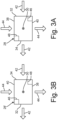
- FIG. 3A is a simplified schematic view of engine cooler 28 in a first installation orientation N and shows rotational axis 30, inlet port 32, outlet port 34, first face 38, second face 40, hot flow 42, cold flow 44, first region 46, and second region 48. Pipes 36 are omitted here for clarity.
- FIG. 3B is a simplified schematic view of engine cooler 28' in a second installation orientation N+1 and shows rotational axis 30, inlet port 32, outlet port 34, first face 38, second face 40, hot flow 42, cold flow 44, first region 46, and second region 48.
- FIGS. 3A and 3B will be discussed in tandem.
- engine cooler 28 is shown as occupying installation orientation N which involves inlet port 32 receiving hot flow 42, outlet port 34 porting out hot flow 42, first face 38 receiving cold flow 44, and second face 40 porting out cold flow 44.
- first region 46 represents a corner of engine cooler 28 that gets the hottest due to its positioning relative to hot flow 42 and cold flow 44.
- hot flow 42 contains the highest amount of thermal energy as hot flow 42 first enters into engine cooler 28 through inlet port 32. Then, as hot flow 42 passes down engine cooler 28, hot flow 42 is subjected to transfer of thermal energy as cold flow 44 passes across engine cooler 28.
- second region 48 represents a corner of engine cooler 28 that is the coldest due to its positioning relative to hot flow 42 and cold flow 44.
- the orientation of the engine cooler can be recorded in the aircraft maintenance database.
- the orientation of the first heat exchanger and a date of service can be marked onto a placard of the first heat exchanger.
- An orientation N+1 and/or a corresponding date of service can be marked onto a placard of the first heat exchanger.
Landscapes
- Engineering & Computer Science (AREA)
- Business, Economics & Management (AREA)
- Physics & Mathematics (AREA)
- Mechanical Engineering (AREA)
- General Engineering & Computer Science (AREA)
- Human Resources & Organizations (AREA)
- Thermal Sciences (AREA)
- Chemical & Material Sciences (AREA)
- Combustion & Propulsion (AREA)
- Economics (AREA)
- Strategic Management (AREA)
- General Business, Economics & Management (AREA)
- General Physics & Mathematics (AREA)
- Theoretical Computer Science (AREA)
- Marketing (AREA)
- Tourism & Hospitality (AREA)
- Aviation & Aerospace Engineering (AREA)
- Manufacturing & Machinery (AREA)
- Entrepreneurship & Innovation (AREA)
- Operations Research (AREA)
- Quality & Reliability (AREA)
- Transportation (AREA)
- Materials Engineering (AREA)
- Health & Medical Sciences (AREA)
- General Health & Medical Sciences (AREA)
- Primary Health Care (AREA)
- Heat-Exchange Devices With Radiators And Conduit Assemblies (AREA)
Description
- In general, the present disclosure relates to engine coolers. In particular, the present disclosure relates to managing an engine cooler maintenance schedule.
- In high temperature engine coolers, localized differences in temperature gradients on engine cooler parts result in uneven distribution of thermal stresses and loads on those parts, over extended operation. The uneven distribution of thermal stresses and loads can cause localized thermal fatigue cracks from the engine coolers being subjected to repeated high thermal gradients. Such fatigue cracks often limit the useful service life of the engine coolers. Engine coolers are disclosed in
EP 1464575 ,US 2019/285364 andEP 2051036 . Specifically,EP 1464575 discloses an arrangement involving the reduction of thermal stress on a heat exchanger comprising two heat exchange portions such that the life of the heat exchanger can be extended.US 2019/285364 discloses a plate-fin heat exchanger comprising a heat exchanger core, a hot medium path and a cold medium path.EP 2051036 discloses individual heat exchangers that can be pivoted around an axis of rotation or linearly displaced for cleaning purposes. - A method of tracking an engine cooler in an aircraft is provided as defined by
claim 1. - The present summary is provided only by way of example, and not limitation. Other aspects of the present disclosure will be appreciated in view of the entirety of the present disclosure, including the entire text, claims, and accompanying figures.
-
-
FIG. 1 is a perspective view of a section of an environmental control system with a dual heat exchanger assembly. -
FIG. 2 is a perspective view of an engine cooler. -
FIG. 3A is a simplified schematic view of the engine cooler in a first installation orientation. -
FIG. 3B is a simplified schematic view of the engine cooler in a second installation orientation. -
FIG. 4 is a flowchart of a method of communicating maintenance data. -
FIG. 5 is a flowchart of method of managing a maintenance schedule of the engine coolers. - While the above-identified figures set forth one or more embodiments of the present disclosure, other embodiments are also contemplated, as noted in the discussion. In all cases, this disclosure presents embodiments by way of representation and not limitation. It should be understood that numerous other modifications and embodiments can be devised by those skilled in the art, which fall within the scope of the invention as defined by the claims. The figures may not be drawn to scale, and applications and embodiments of the present disclosure may include features and components not specifically shown in the drawings.
- Localized differences in temperature gradients on engine cooler parts can result in uneven distribution of thermal stresses and loads on those parts, over extended operation. To ameliorate those stresses, prognostic health management ("PHM") integrating data from 2D matrix or radio-frequency identification ("RFID") tags, human-readable placards, and aircraft maintenance databases ("AMDs") for a given engine cooler is used to facilitate tracking of the engine cooler's orientation and expected accumulated thermal stresses. Due to a symmetric design of the engine cooler, an orientation of the engine cooler can be adjusted (e.g. rotated and/or reversed) at suitable maintenance intervals based on this data to minimize local thermal fatigue and extend the serve life of the engine cooler.
-
FIG. 1 is a perspective view of environmental control system assembly 10 ("ECS assembly 10") and showscenterline axis 12 andfirst ECS pack 14A with first faninlet diffuser housing 16A ("FIDH 16A"), firstair cycle machine 18A ("ACM 18A"),first heat exchanger 20A, first bleedinlet port 22A, firstRAM inlet port 24A, and first RAM outlet port 26A.FIG. 1 also showssecond ECS pack 14B withsecond FIDH 16B, second ACM 18Bsecond heat exchanger 20B, second bleedinlet port 22B, secondRAM inlet port 24B, and secondRAM outlet port 26B. - As discussed herein, the structure and operation of
second ECS pack 14B generally parallels that offirst ECS pack 14A, discussed above. For example, regardingsecond ECS pack 14B and its components,second ECS pack 14B operates in the same or substantially the same manner as that offirst ECS pack 14A and its components. Accordingly, the following description offirst ECS pack 14A and its components also extends tosecond ECS pack 14B and its corollary components (e.g., first FIDH 16A tosecond FIDH 14B, etc.). As such, because the description offirst ECS pack 14A and its components can be used to describesecond ECS pack 14B and its components, a full description ofsecond ECS pack 14B is herein omitted in the interest of avoiding undue repetition. The same or similar comparison also extends to the descriptions ofFIGS. 2-3 provided herein. -
ECS assembly 10 is an assembly of first andsecond ECS packs Centerline axis 12 is a major axis of the aircraft and is disposed at a midpoint between first andsecond ECS packs pack 14A is an environmental control system. In this non-limiting embodiment, first ECSpack 14A is an environmental control system for an aircraft. First FIDH 16A is a fan inlet diffuser housing. First ACM 18A is an air cycle machine.First heat exchanger 20A is a heat exchanger with a plurality of fins for transferring thermal energy between the fins and a fluid (e.g., air). First bleedinlet port 22A is an inlet port for bleed air. FirstRAM inlet port 24A is an inlet port for ram air. First RAM outlet port 26A is an outlet port for RAM air. -
ECS assembly 10 is mounted within a portion of an aircraft. First ECSpack 14A is fluidly connected to numerous fluid sources such as an engine, an auxiliary power unit, a source of ambient air, a cabin, a cockpit, and/or a source of ram air of the aircraft. First FIDH 16A is mounted to a side offirst heat exchanger 20A and to first ACM 18A. In other illustrative embodiments, first FIDH 16A can be replaced with another component or removed all together fromfirst ECS pack 14A. First ACM 18A is fluidly connected to first FIDH 16A.First heat exchanger 20A is mounted to and fluidly connected with first FIDH 16A. First bleedinlet port 22A is mounted and fluidly connected to an end offirst heat exchanger 20A. FirstRAM inlet port 24A is mounted to and fluidly connected with a side-face offirst heat exchanger 20A. First RAM outlet port 26A is mounted and fluidly connected to an end of FIDH 16A. -
ECS assembly 10 withfirst ECS pack 14A andsecond ECS pack 14B controls and manages the transfer of thermal energy and pressures among the different sources of air throughout the aircraft. First FIDH 16A receives and transfers air away fromfirst heat exchanger 20A. First ACM 18A assists with changes to the pressure, temperature, and/or humidity of air passing through first ACM 18A.First heat exchanger 20A conditions a flow of air passing throughfirst heat exchanger 20A. First bleedinlet port 22A guides and transfers a flow of bleed air intofirst heat exchanger 20A. FirstRAM inlet port 24A receives a flow of ram air from ambient and transfers that air tofirst heat exchanger 20A. First RAM outlet port 26A transfers a flow of air out of FIDH 16A. - Here,
first heat exchanger 20A andsecond heat exchanger 20B are symmetric aboutcenterline axis 12 such that bothfirst heat exchanger 20A andsecond heat exchanger 20B can be rotated aboutcenterline axis 12 and installed in the other's initial position. For example,first heat exchanger 20A can be removed fromfirst ECS pack 14A, rotated 180 ° aboutcenterline axis 12, and reinstalled intosecond ECS pack 14B. Likewise,second heat exchanger 20B can be removed fromsecond ECS pack 14B, rotated 180° aboutcenterline axis 12, and reinstalled intofirst ECS pack 14A. The subsequent descriptions and methodology discussed with respect toFIGS. 2-5 can also be applied toECS assembly 10 in order to determine whenfirst heat exchanger 20A and/orsecond heat exchanger 20B need to or should be flipped/rotated and installed in a new position. -
FIG. 2 is a perspective view of engine cooler 28 and showsrotational axis 30,inlet port 32,outlet port 34,pipes 36, firstcold inlet face 38, secondcold outlet face 40,hot flow 42,cold flow 44,first region 46, andsecond region 48. Throughout this disclosure, the terms, elements, and/or components of "engine cooler" and "heat exchanger" can be used interchangeably. -
Engine cooler 28 is an additively manufactured fractal heat exchanger core. In this example,engine cooler 28 is symmetric about a vertical plane (with vertical being in an upward direction inFIG. 2 ) through a midpoint ofengine cooler 28. Also, in this example engine cooler 28 includes a slight arc or curve frominlet port 32 tooutlet port 34. In other embodiments, engine cooler 28 can include a non-arcuate shape such as a cuboid. In this example, engine cooler 28 include a symmetric design such that the hot and cold circuits are reversible. -
Rotational axis 30 is an axis of rotation ofengine cooler 28.Inlet port 32 andoutlet port 34 are fluidic ports for transferring a fluid (e.g., air).Pipes 36 are elongate tubes with fluidic passages extending therethrough. Firstcold inlet face 38 and secondcold outlet face 40 are opposing side-faces ofengine cooler 28.Hot flow 42 is a flow of hot air such as bleed air from the aircraft engine.Cold flow 44 is a flow of cold air such as from RAM air.First region 46 andsecond region 48 are corners ofengine cooler 28. In another example,first region 46 andsecond region 48 can each extend a length of an edge ofengine cooler 28. -
Rotational axis 30 passes through a mid-point ofengine cooler 28. In this example,rotational axis 30 passes vertically through engine cooler 28 due to engine cooler 28 being symmetric about a vertical plane. In an example where engine cooler 28 includes a cuboid configuration,rotational axis 30 or another rotational axis can also pass through the midpoint of engine cooler 28 and perpendicular to the up-down orientation ofrotational axis 30 shown here inFIG. 2 . -
Inlet port 32 is disposed on a first end of engine cooler 28 and is fluidly connected topipes 36.Outlet port 34 is disposed on an opposite end of engine cooler 28 frominlet port 32 and is fluidly connected topipes 36.Pipes 36 extend between and are fluidly connected toinlet port 32 andoutlet port 34.First face 38 is disposed on a first side ofengine cooler 28.Second face 40 is disposed on an opposite side of engine cooler 28 fromfirst face 38.Hot flow 42 passes through and inside ofinlet port 32,outlet port 34, andpipes 36.Cold flow 44 enters into engine cooler 28 acrossfirst face 38, passes through gaps and spaces betweenindividual pipes 36, and exits out of engine cooler 28 throughsecond face 40.First region 46 is disposed on an end ofpipes 36 adjacent to and immediately downstream frominlet port 32.Second region 48 is disposed on an end ofpipes 36 opposite fromfirst region 46 and is adjacent to and immediately upstream fromoutlet port 34. -
Engine cooler 28 transfers thermal energy betweenhot flow 42 andcold flow 44.Rotational axis 30 serves as an axis about which engine cooler 28 can be rotated about in order to reverse the relative directions ofhot flow 44 andcold flow 46 throughengine cooler 28. In this example,inlet port 32 receiveshot flow 42 and transfershot flow 42 intopipes 36. Whereas, in another example with engine cooler 28 being rotated 180° aboutrotational axis 30,inlet port 32 would become an outlet port ashot flow 42 would be passing frompipes 36 toinlet port 32 and out ofengine cooler 28. - In this example,
outlet port 34 receiveshot flow 42 frompipes 36 and transfershot flow 42 out ofengine cooler 28. In this example,pipes 36 transporthot flow 42 frominlet port 32 tooutlet port 34. Also, due topipes 36 being spaced from each other, the spaces betweenindividual pipes 36 provide an area through which cold flow 44 flows. Ascold flow 44 flows across exterior surfaces ofpipes 36, thermal energy is transferred fromhot flow 42 passing throughpipes 36, across the physical material ofpipes 36, and intocold flow 44 passing across the surfaces ofpipes 36. In this way, engine cooler 28 transfers thermal energy fromhot flow 42 tocold flow 44. In this example,cold flow 44 enters into engine cooler 28 throughfirst face 38. Likewise,cold flow 44 exits engine cooler 28 throughsecond face 40.Hot flow 42 carries thermal energy intoheat exchange core 28. Ashot flow 42 passes throughpipes 36, thermal energy is transferred fromhot flow 42 tocold flow 44 acrosspipes 36. - In this example,
first region 46 represents a corner of engine cooler 28 that gets the hottest due to its positioning relative tohot flow 42 andcold flow 44. For example, ashot flow 42 passes intopipes 36,hot flow 42 contains the highest amount of thermal energy ashot flow 42 first enters intopipes 36. Then, ashot flow 42 passes downpipes 36,hot flow 42 is subjected to transfer of thermal energy ascold flow 44 passes acrosspipes 36. Also, in this example,second region 48 represents a corner of engine cooler 28 that is the coldest due to its positioning relative tohot flow 42 andcold flow 44. For example, ashot flow 42 passes intopipes 36,hot flow 42 contains the lowest amount of thermal energy ashot flow 42 is about to exitpipes 36. In addition, the location ofsecond region 48 is right atfirst face 38 where cold flow 44 is entering intoengine cooler 28 and wherecold flow 44 is at its coldest (e.g., has the lowest amount of thermal energy). - Here, because engine cooler 28 is symmetrical,
engine cooler 28 has the capability to rotate aboutrotational axis 30 thus making the outlet the inlet and the inlet the outlet for both the hot and the cold sides ofengine cooler 28. For example, rotating engine cooler 28 aboutrotational axis 30, will makeinlet port 32 into an outlet andoutlet port 34 into an inlet as well as causingfirst face 38 to become an outlet side-face andsecond face 40 to become an inlet side-face ofengine cooler 28. After engine cooler 28 has been rotated 180° aboutrotational axis 30,engine cooler 28 is then reinstalled back into position. - In rotating engine cooler 28 180° about
rotational axis 30,first region 46 that had been subjected to high amounts of thermal energy stress will be on the opposite corner wherefirst region 46 is not going to be stressed further and second region 48 (the other low thermal energy stress corner) will be exposed to some of the thermal fatigue cycles becausesecond region 48 will receive high temperature air from outlet port 34 (which will be an inlet port due to the 180° rotation). (See e.g.,figures 3A and 3B for further discussion of the rotation/reversal of engine cooler 28). -
FIG. 3A is a simplified schematic view of engine cooler 28 in a first installation orientation N and showsrotational axis 30,inlet port 32,outlet port 34,first face 38,second face 40,hot flow 42,cold flow 44,first region 46, andsecond region 48.Pipes 36 are omitted here for clarity.FIG. 3B is a simplified schematic view of engine cooler 28' in a second installation orientation N+1 and showsrotational axis 30,inlet port 32,outlet port 34,first face 38,second face 40,hot flow 42,cold flow 44,first region 46, andsecond region 48.FIGS. 3A and 3B will be discussed in tandem. - In
FIG. 3A ,engine cooler 28 is shown as occupying installation orientation N which involvesinlet port 32 receivinghot flow 42,outlet port 34 porting outhot flow 42,first face 38 receivingcold flow 44, andsecond face 40 porting outcold flow 44. In orientation N,first region 46 represents a corner of engine cooler 28 that gets the hottest due to its positioning relative tohot flow 42 andcold flow 44. For example,hot flow 42 contains the highest amount of thermal energy ashot flow 42 first enters into engine cooler 28 throughinlet port 32. Then, ashot flow 42 passes down engine cooler 28,hot flow 42 is subjected to transfer of thermal energy ascold flow 44 passes acrossengine cooler 28. Likewise,second region 48 represents a corner of engine cooler 28 that is the coldest due to its positioning relative tohot flow 42 andcold flow 44. For example, ashot flow 42 passes through engine cooler 28,hot flow 42 contains the lowest amount of thermal energy ashot flow 42 is about to exitengine cooler 28. In addition, the location ofsecond region 48 is right atfirst face 38 where cold flow 44 is entering intoengine cooler 28 and wherecold flow 44 is at its coldest (has the lowest amount of thermal energy). - In
FIG. 3B , engine cooler 28' is shown as occupying installation orientation N+1. In orientation N+1, engine cooler 28' has been rotated 180° from orientation N aboutrotational axis 30. Due to this 180° rotation, engine cooler 28' is oriented such thatoutlet port 34 receiveshot flow 42,inlet port 32 ports outhot flow 42,second face 40 receivescold flow 44, andfirst face 38 ports outcold flow 44. In this orientation N+1,second region 48 represents a corner of engine cooler 28' that gets the hottest due to its positioning relative tohot flow 42 andcold flow 44. For example,hot flow 42 contains the highest amount of thermal energy ashot flow 42 first enters into engine cooler 28' throughoutlet port 34. Then, ashot flow 42 passes down engine cooler 28',hot flow 42 is subjected to transfer of thermal energy ascold flow 44 passes across engine cooler 28'. Likewise,first region 46 represents a corner of engine cooler 28' that is the coldest due to its positioning relative tohot flow 42 andcold flow 44. For example, ashot flow 42 passes through engine cooler 28',hot flow 42 contains the lowest amount of thermal energy ashot flow 42 is about to exit engine cooler 28' throughinlet port 32. In addition, the location offirst region 46 is right atsecond face 40 where cold flow 44 is entering into engine cooler 28' and wherecold flow 44 is at its coldest (has the lowest amount of thermal energy). - In
rotating engine cooler 28 between orientation N and orientation N+1, the higher amount of thermal fatigue subjected to the corner of engine cooler 28 positioned nearest the inlet ofhot flow 42 and nearest the outflow of cold flow 44 (e.g.,first region 46 in engine cooler 28 andsecond region 48 in engine cooler 28') is not always applied to the same spot. A certain amount of thermal fatigue or wear is applied tofirst region 46 while engine cooler 28 occupies orientation N for so many operation cycles, and then gets rotated into orientation N+1 so thatsecond region 48 can be subjected to higher amounts of thermal fatigue. In this way, the thermal fatigue to due high temperatures gradients can be distributed across bothfirst region 46 andsecond region 48 resulting in distribution of any correlated damage and an increase in the life expectancy ofengine cooler 28. -
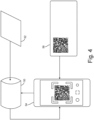
FIG. 4 is a flowchart of communicating maintenance data and showsAMD 50,PHM data 52,optical scanner 54, andplacard 56. -
AMD 50 is an aircraft maintenance database.PHM data 52 is prognostic health management ("PHM") data. In this example,PHM data 52 includes a cycle count or a number of duty cycles of the aircraft, the aircraft engine, and/or ofengine cooler 28.PHM data 52 can also include a number of service hours, aircraft identification, and an orientation/position ofengine cooler 28.Optical scanner 54 is a device for optically scanning an item. In this example,optical scanner 54 includes a camera as part of a handheld unit such as a cellular telephone. In another example,optical scanner 54 can be a device configured to optically scan a RFID tag such as an RFID scanner or a smartphone (e.g., running an iOS or Android OS). In other examples,optical scanner 54 can be a device configured to read data via one or more forms of automatic identification and data capture.Placard 56 is a label or a signage plate. In this example,placard 56 includes a dot matrix label. In another example,placard 56 can include a label or an engravement. - In this example,
AMD 50 is an electronic database disposed separately from the aircraft. In this example,PHM data 52 can be produced by and/or tracked by the aircraft. In this example,optical scanner 54 is connected via a wired or wireless connection toAMD 50.Placard 56 is mounted onto one of ECS packs 14A or 14B, first orsecond heat exchanger engine cooler 28. - In this example,
AMD 50 stores and tracks a maintenance schedule for the aircraft.PHM data 52 is used to track relevant data of the aircraft and is used byAMD 50 to determine and suggest appropriate maintenance events.Optical scanner 54 functions by optically scanning information stored onengine cooler 28 and communicating that information toAMD 50. For example,optical scanner 54 scans placard 56 in response to an action by the mechanic.Placard 56 contains and stores information to be scanned byoptical scanner 54 and to visually indicate information to a mechanic. - In one example, a method of communicating maintenance data includes marking
engine cooler 28. Here, engine cooler 28 can be marked with at least one of a placard, a dot matrix label, an RFID tag, and an engravement. The marking onengine cooler 28 is scanned with an optical sensor. Here, the marking can be stored onplacard 56. A first orientation N of engine cooler 28 is detected based on the scanned part marking. The detected orientation of the engine cooler is reported toAMD 50. For example, a mechanic can enter the orientation of engine cooler 28 intoAMD 50 as engine cooler 28 goes on to or comes off the aircraft to aid in determining the next position/orientation ofengine cooler 28. A recommendation of installation position is provided byAMD 50 based on the detected orientation of engine cooler 28 and onPHM data 52 of the aircraft. In this example, the recommendation of installation is based on a tracked number of duty cycles, which is tracked byAMD 50.Engine cooler 28 is then installed into position onto the aircraft based on the recommended installation position fromAMD 50. - In this example, providing the recommendation of installation position includes instructing a mechanic with
AMD 50 to install engine cooler 28 in one of either the first orientation N or a second orientation N+1, which is rotated 180° from first orientation N. Here, the instruction is based on updated maintenance records and on information inAMD 50. - In another example, a method of tracking an engine cooler in an aircraft includes recording an orientation of engine cooler 28 as orientation N. Here, recording the orientation of engine cooler 28 can include recording the orientation of engine cooler 28 in
AMD 50.PHM data 52 of the aircraft is tracked. In this example,PHM data 52 can include a cycle count, a number of duty cycles, and/or a number of operation hours of the aircraft. A maintenance check of the aircraft is performed based on the trackedPHM data 52. A determination is made withAMD 50 as to whether to rotate an orientation of engine cooler 28 based on the trackedPHM data 52 of the aircraft. A recommendation is provided byAMD 50 as to whether to rotateengine cooler 28.Engine cooler 28 is either rotated or not rotated based on the recommendation ofAMD 50 as to whether to rotateengine cooler 28. Here, rotatingengine cooler 28 can include rotating engine cooler 28 180° about a centerline axis (e.g., rotational axis 30) ofengine cooler 28. The orientation of engine cooler 28 is then recorded as orientation N+1. - In one example, there can be a visible reference mark on engine cooler 28 that indicates to the mechanic which way to orient engine cooler 28 relative to its previous position. For example, a physical or inked demarcation can be placed adjacent to
inlet 34. Then, looking towards the engine outlet, the demarcation might be to the right for orientation N. At the next rotation (i.e., orientation N+1), the demarcation would be on the left side (looking towards the engine outlet). Instructions could then be communicated viaoptical scanner 54 or by other instructions. In another example, a gyroscope sensor can be used to sense the orientation of engine cooler 28 and indicate to the mechanic which way to orient engine cooler 28 relative to its previous position. The gyroscope sensor can be a part of or separate fromoptical scanner 54. For example, the gyroscope sensor (e.g., of optical scanner 54) can be placed in alignment with a placard (e.g., a QR code placard) onengine cooler 28. With the gyroscope sensor in place onengine cooler 28, the orientation of engine cooler can be determined based on the sensed orientation of the gyroscope sensor. Instructions could then be communicated viaoptical scanner 54 or by other instructions whether the orientation of engine cooler 28 needed to be switched or to remain as-is.. -
FIG. 5 is a flowchart ofmethod 100 of managing a maintenance schedule ofengine cooler 28.Method 100 includes steps 102-138. - Step 102 includes installing engine cooler 28 on to an engine. Step 104 includes marking the orientation of engine cooler 28 and a date of service onto
placard 56 ofengine cooler 28. In another embodiment, step 104 can be replaced with scanning the placard and uploading the information toAMD 50. Step 104 could include scanning a data matrix onengine cooler 28. Then, the information from scanning the data matrix can be digitally reported to or entered directly intoAMD 50. Step 106 includes recording an orientation N inAMD 50 that identifies a position ofengine cooler 28. Step 108 includes operating the aircraft. Step 110 includes tracking a cycle count of the aircraft. In one example, a cycle count of the aircraft can be or be based on a number of service hours of the engine cooler, the engine, and/or of the aircraft. - Step 112 includes determining if the tracked cycle count meets a first threshold value. Here, the threshold value can be a predetermined amount of cycle counts or service hours of the engine cooler, the engine, and/or of the aircraft. If the tracked cycle count does not meet the first threshold value, then the aircraft is returned to operation as shown in
step 114. If the tracked cycle count does meet the first threshold value, then the method proceeds to step 116. - Step 116 includes performing a maintenance check of the aircraft. In one example, the maintenance check can be a regularly scheduled A-check, B-check, or a C-check of the aircraft. Step 118 includes removing engine cooler 28 from the aircraft. Step 118 also includes
steps 120 through 124. Step 120 includes inspecting engine cooler 28 during the maintenance check. Step 122 includes determining a need for repairing or cleaning engine cooler 28 based on the inspection ofengine cooler 28. For example, if engine cooler 28 shows signs of a crack, a deposit of dirt, or a sign of localized thermal fatigue, then engine cooler 28 can be cleaned and/or repaired as necessary to address these issues. If there is a need for repairing or cleaning engine cooler 28 based on the inspection, then the cleaning or repairing is completed asstep 124. Afterstep 124 is completed, then the method proceeds to step 126. If there is not a need for repairing or cleaning engine cooler 28 based on the inspection, then the method proceeds to step 126, bypassingstep 124. - Step 126 includes determining whether engine cooler 28 needs to be rotated. Here, determining whether to rotate engine cooler 28 is based on whether engine cooler 28 has met a second threshold amount of cycle counts or service hours since engine cooler 28 was last rotated. In another example, determining whether to rotate engine cooler 28 can be based on whether engine cooler 28 shows signs of thermal fatigue. If engine cooler 28 meets the threshold value of cycle counts or service hours, then the method proceeds to step 128. Here, a number of cycle counts and service hours is stored and tracked in
AMD 50. Additionally, the previous orientation of engine cooler 28 is stored inAMD 50, so thatAMD 50 can instruct the user (e.g., mechanic) as to which position/orientation engine cooler 28 was removed from and which position/orientation engine cooler 28 should be replaced into. If engine cooler 28 does not meet the threshold value of cycle counts or service hours, then the method proceeds to step 136. - Step 128 includes reversing an orientation of
engine cooler 28. In this example, reversing the orientation of engine cooler 28 can include rotating engine cooler 28 180° about a first centerline axis (e.g., rotational axis 30) ofengine cooler 28. Step 130 includes marking orientation N+1 and a corresponding date of service ontoplacard 56 ofengine cooler 28. In another embodiment, step 130 can be optional if the placard is scanned and the scanned information uploaded toAMD 50. In such an embodiment,AMD 50 could then advise what the next recommended position of engine cooler 28 should be using optical scanner 54 (e.g., smartphone). Step 132 includes updatingAMD 50 to indicate the reversed orientation of engine cooler 28 as orientation N+1. Step 134 includes scanning the updatedAMD 50 withoptical scanner 54 to determine a value of the orientation. Step 136 includes replacing engine cooler 28 into the aircraft. Step 138 includes returning the aircraft to regular operation. - A method of tracking an engine cooler in an aircraft includes recording an orientation of the engine cooler as orientation N. Prognostic health management data of the aircraft is tracked. A maintenance check of the aircraft is performed based on the tracked prognostic health management data. Whether to rotate an orientation of the engine cooler is determined with an aircraft maintenance database based on the tracked prognostic health management data of the aircraft. A recommendation is provided by the aircraft maintenance database as to whether to rotate the engine cooler. The orientation of the engine cooler is recorded as orientation N+1.
- The method of the preceding paragraph can optionally include, additionally and/or alternatively, any one or more of the following steps, features, configurations and/or additional components.
- The orientation of the engine cooler can be recorded in the aircraft maintenance database.
- The prognostic health management data can comprise a cycle count of the aircraft.
- The engine cooler can be rotated by a user based on the recommendation of the aircraft maintenance database as to whether to rotate the engine cooler.
- The engine cooler 180° can be rotated about a first centerline axis of the engine cooler.
- A method of managing an orientation of an engine cooler includes marking the engine cooler. The marking on the engine cooler is scanned with a scanner. A first orientation N of the engine cooler is detected based on the scanned marking. The detected orientation of the engine cooler is reported to the aircraft maintenance database. Maintenance records, of the aircraft maintenance database, are updated with the reported detected orientation of the engine cooler. A recommendation of installation position is provided based on the detected orientation of the engine cooler and on prognostic health management data of the aircraft. The engine cooler is installed onto the aircraft based on the recommended installation position from the aircraft maintenance database.
- The method of the preceding paragraph can optionally include, additionally and/or alternatively, any one or more of the following steps, features, configurations and/or additional components.
- The recommendation of installation can be based on a tracked number of duty cycles, an amount of which is tracked by the aircraft maintenance database.
- A user can be instructed with the aircraft maintenance database to install the engine cooler in one of either the first orientation N or a second orientation N+1, wherein the second N+1 orientation can be rotated 180° from first orientation N, wherein the instruction can be based on updated maintenance records and/or on information in the aircraft maintenance database.
- The engine cooler can be marked with at least one of a placard, a dot matrix label, a radio-frequency identification tag, and an engravement.
- The marking can be scanned with an optical sensor or a radio-frequency identification reader.
- A method of managing maintenance of an environmental control system of an aircraft includes installing a first heat exchanger as part of the environmental control system. An orientation N identifying a position of the first heat exchanger is recorded in an aircraft maintenance database. A cycle count of the aircraft is tracked with a cycle counter. A maintenance check of the aircraft is performed when the tracked cycle count reaches a threshold value. The first heat exchanger is removed from the aircraft. Whether to rotate an orientation of the heat exchanger is determined based on the tracked cycle count of the aircraft. An orientation of the heat exchanger is reversed. The aircraft maintenance database is updated to indicate the reversed orientation of the first heat exchanger as orientation N+1. The first heat exchanger is replaced into the aircraft.
- The method of the preceding paragraph can optionally include, additionally and/or alternatively, any one or more of the following steps, features, configurations and/or additional components.
- The first heat exchanger can be inspected during the maintenance check, the need for cleaning or repairing the first exchanger can be identified based on the inspection of the first heat exchanger, and/or at least one of cleaning and repairing of the first heat exchanger can be performed.
- The first engine cooler can be inspected for a crack, a deposit of dirt, or a sign of localized thermal fatigue.
- The updated aircraft maintenance database can be scanned to determine a value of the orientation.
- The orientation of the first heat exchanger and a date of service can be marked onto a placard of the first heat exchanger.
- An orientation N+1 and/or a corresponding date of service can be marked onto a placard of the first heat exchanger.
- While the invention has been described with reference to an exemplary embodiment(s), it will be understood by those skilled in the art that various changes may be made without departing from the scope of the invention as defined by the claims. For example, the terms, elements, and/or components of "engine cooler" and "heat exchanger" can be used interchangeably amongst every embodiment disclosed herein and throughout the claims provided herewith. In addition, many modifications may be made to adapt a particular situation or material to the teachings of the invention without departing from the scope of the claims. Therefore, it is intended that the invention not be limited to the particular embodiment(s) disclosed, but that the invention will include all embodiments falling within the scope of the appended claims.
Claims (12)
- A method of tracking an orientation of an engine cooler in an aircraft, the method comprising:recording, in an aircraft maintenance database (50), the orientation of the engine cooler (28) as orientation N;tracking prognostic health management data (52) of the aircraft;performing a maintenance check of the aircraft based on the tracked prognostic health management data;determining, with the aircraft maintenance database (50), whether to rotate an orientation of the engine cooler (28) based on the tracked prognostic health management data (52) of the aircraft;providing, with the aircraft maintenance database (50), a recommendation as to whether to rotate the engine cooler (28);rotating, by a user, the engine cooler (28) based on the recommendation of the aircraft maintenance database (50) as to whether to rotate the engine cooler (28); andrecording the orientation of the engine cooler (28) as orientation N+1.
- The method of claim 1, wherein the prognostic health management data (52) comprises a cycle count of the aircraft.
- The method of claim 1 or 2, wherein rotating the engine cooler (28) comprises rotating the engine cooler (28) 180° about a first centerline axis (30) of the engine cooler (28).
- The method of any preceding claim, wherein performing the maintenance check of the aircraft comprises:marking the engine cooler (28); andscanning, with a scanner (54), the marking on the engine cooler (28).
- The method of any preceding claim, wherein the tracked prognostic health management data (52) of the aircraft comprises a tracked number of duty cycles, an amount of which is tracked by the aircraft maintenance database (50).
- The method of any preceding claim, wherein the recommendation as to whether to rotate the engine cooler (28) comprises instructing a user, with the aircraft maintenance database (50), to install the engine cooler (28) in one of either the first orientation N or a second orientation N+1, wherein the second N+1 orientation is rotated 180° from first orientation N, wherein the instruction is based on updated maintenance records and on information in the aircraft maintenance database (50).
- The method of any of claims 4 to 6, wherein the marking comprises marking the engine cooler with at least one of a placard, a dot matrix label, a radio-frequency identification tag, and an engravement.
- The method of any of claims 4 to 7, wherein scanning the marking on the part comprises scanning the marking with an optical sensor or a radio-frequency identification reader.
- The method of any preceding claim, further comprising:inspecting, the engine cooler (28);identifying the need for cleaning or repairing the engine cooler (28) based on the inspection of the engine cooler (28); andperforming at least one of cleaning and repairing of the engine cooler (28).
- The method of claim 9, wherein identifying the need for cleaning or repairing comprises inspecting the engine cooler (28) for a crack, a deposit of dirt, or a sign of localized thermal fatigue.
- The method of any preceding claim, further comprising marking the orientation of the engine cooler (28) and a date of service onto a placard of the engine cooler (28).
- The method of any preceding claim, further comprising marking orientation N+1 and a corresponding date of service onto a placard of the engine cooler (28).
Applications Claiming Priority (1)
| Application Number | Priority Date | Filing Date | Title |
|---|---|---|---|
| US202063018886P | 2020-05-01 | 2020-05-01 |
Publications (2)
| Publication Number | Publication Date |
|---|---|
| EP3905150A1 EP3905150A1 (en) | 2021-11-03 |
| EP3905150B1 true EP3905150B1 (en) | 2025-01-08 |
Family
ID=75786904
Family Applications (1)
| Application Number | Title | Priority Date | Filing Date |
|---|---|---|---|
| EP21171703.8A Active EP3905150B1 (en) | 2020-05-01 | 2021-04-30 | Method of managing engine cooler maintenance schedule |
Country Status (2)
| Country | Link |
|---|---|
| US (1) | US11905041B2 (en) |
| EP (1) | EP3905150B1 (en) |
Families Citing this family (1)
| Publication number | Priority date | Publication date | Assignee | Title |
|---|---|---|---|---|
| AU2018255490B2 (en) * | 2017-04-21 | 2023-02-02 | Commonwealth Scientific And Industrial Research Organisation | Flow distribution system |
Family Cites Families (12)
| Publication number | Priority date | Publication date | Assignee | Title |
|---|---|---|---|---|
| US7000425B2 (en) | 2003-03-12 | 2006-02-21 | Hamilton Sundstrand | Manifold for pack and a half condensing cycle pack with combined heat exchangers |
| DE102007049932A1 (en) | 2007-10-18 | 2009-04-23 | Agco Gmbh | Connection element for a fluid-carrying pivotable component |
| US9157685B2 (en) | 2010-04-10 | 2015-10-13 | Christopher J. Dixon | Heat exchanger maintenance technique |
| WO2013071258A1 (en) * | 2011-11-11 | 2013-05-16 | Icubate, Inc. | Systems and methods for performing amplicon rescue multiplex polymerase chain reaction (pcr) |
| US9666958B2 (en) * | 2014-12-08 | 2017-05-30 | Commscope Technologies Llc | Capacitively coupled connector junctions having parallel signal paths and related connectors and methods |
| US10139795B2 (en) | 2015-10-19 | 2018-11-27 | The Boeing Company | System and method for environmental control system diagnosis and prognosis |
| US11041677B2 (en) | 2016-01-04 | 2021-06-22 | Raytheon Technologies Corporation | Heat exchanger for cooling medium temperature reduction |
| US10345830B2 (en) | 2016-05-03 | 2019-07-09 | United Technologies Corporation | Thermal management system control and heat exchanger life extension |
| US10794289B2 (en) * | 2016-08-09 | 2020-10-06 | General Electric Company | Modulated turbine component cooling |
| IT201600124444A1 (en) * | 2016-12-07 | 2018-06-07 | Marini Spa | PRODUCTION AND DISTRIBUTION SYSTEM OF BITUMINOUS CONGLOMERATES |
| US10794644B2 (en) | 2017-03-28 | 2020-10-06 | Uop Llc | Detecting and correcting thermal stresses in heat exchangers in a petrochemical plant or refinery |
| US10801790B2 (en) | 2018-03-16 | 2020-10-13 | Hamilton Sundstrand Corporation | Plate fin heat exchanger flexible manifold structure |
-
2021
- 2021-04-28 US US17/243,256 patent/US11905041B2/en active Active
- 2021-04-30 EP EP21171703.8A patent/EP3905150B1/en active Active
Also Published As
| Publication number | Publication date |
|---|---|
| US11905041B2 (en) | 2024-02-20 |
| EP3905150A1 (en) | 2021-11-03 |
| US20210339889A1 (en) | 2021-11-04 |
Similar Documents
| Publication | Publication Date | Title |
|---|---|---|
| EP3905150B1 (en) | Method of managing engine cooler maintenance schedule | |
| US8190282B2 (en) | Work management apparatus, picking carriage, work performance collection system, rework measurement system, workability management system, rework measurement measuring method, work performance collection method, workability management method and workability management program | |
| US6027022A (en) | Quality control apparatus and method using a bar code data entry system | |
| US6036087A (en) | Production history information apparatus and method using a bar code system | |
| US20100109839A1 (en) | System and Method of Using Rewritable Paper for Displaying Product Information on Product Displays | |
| US7916030B2 (en) | RFID system and bearing components for rolling mill | |
| CN100542813C (en) | Solder Paste Printing System | |
| US20180322714A1 (en) | Methods, systems, mobile devices and software products for automatic data processing in the maintenance of engine or vehicle systems | |
| US20120033850A1 (en) | Methods and systems for optical asset recognition and location tracking | |
| Al Hanbali et al. | Spare parts supply with incoming quality control and inspection errors in condition based maintenance | |
| CN108496125A (en) | Qualitative data manages system | |
| CN114819652B (en) | Intelligent fixed asset management method and system based on block chain | |
| US8610575B2 (en) | RFID system and components for rolling mill | |
| CN116151738A (en) | A warehouse management system | |
| CN113177653A (en) | System and method for predictive analytics of assets | |
| US20010000086A1 (en) | Task indicator decals for preventive maintenance and condition monitoring systems | |
| JP4990224B2 (en) | Seal member for fluid product manufacturing plant equipment with RFID tag attached and method for attaching the same | |
| US10378426B2 (en) | Useful life prediction system for cooling components | |
| CN109541539A (en) | A kind of pipeline section intelligent-tracking localization method based on RFID | |
| CN111488754A (en) | Mounting components of internal combustion engines using wireless tags | |
| Chan et al. | Reliability analysis and maintenance policy of radiators for a large fleet of buses | |
| JP6955231B2 (en) | Maintenance support system | |
| KR102827823B1 (en) | Recycling method and system for reuse and sale of equipment and parts for building it infrastructure | |
| CN115130240A (en) | An intelligent blind plate configuration analysis system and method based on three-dimensional model analysis | |
| EP3168792A1 (en) | Method and system for automatic data processing in the maintenance of engine systems |
Legal Events
| Date | Code | Title | Description |
|---|---|---|---|
| PUAI | Public reference made under article 153(3) epc to a published international application that has entered the european phase |
Free format text: ORIGINAL CODE: 0009012 |
|
| STAA | Information on the status of an ep patent application or granted ep patent |
Free format text: STATUS: THE APPLICATION HAS BEEN PUBLISHED |
|
| AK | Designated contracting states |
Kind code of ref document: A1 Designated state(s): AL AT BE BG CH CY CZ DE DK EE ES FI FR GB GR HR HU IE IS IT LI LT LU LV MC MK MT NL NO PL PT RO RS SE SI SK SM TR |
|
| B565 | Issuance of search results under rule 164(2) epc |
Effective date: 20210907 |
|
| STAA | Information on the status of an ep patent application or granted ep patent |
Free format text: STATUS: REQUEST FOR EXAMINATION WAS MADE |
|
| 17P | Request for examination filed |
Effective date: 20220503 |
|
| RBV | Designated contracting states (corrected) |
Designated state(s): AL AT BE BG CH CY CZ DE DK EE ES FI FR GB GR HR HU IE IS IT LI LT LU LV MC MK MT NL NO PL PT RO RS SE SI SK SM TR |
|
| STAA | Information on the status of an ep patent application or granted ep patent |
Free format text: STATUS: EXAMINATION IS IN PROGRESS |
|
| 17Q | First examination report despatched |
Effective date: 20220711 |
|
| REG | Reference to a national code |
Ref country code: DE Ref legal event code: R079 Free format text: PREVIOUS MAIN CLASS: G06Q0010000000 Ipc: G06Q0010200000 Ref country code: DE Ref legal event code: R079 Ref document number: 602021024565 Country of ref document: DE Free format text: PREVIOUS MAIN CLASS: G06Q0010000000 Ipc: G06Q0010200000 |
|
| GRAP | Despatch of communication of intention to grant a patent |
Free format text: ORIGINAL CODE: EPIDOSNIGR1 |
|
| STAA | Information on the status of an ep patent application or granted ep patent |
Free format text: STATUS: GRANT OF PATENT IS INTENDED |
|
| RIC1 | Information provided on ipc code assigned before grant |
Ipc: B64D 45/00 20060101ALN20240725BHEP Ipc: F28D 21/00 20060101ALN20240725BHEP Ipc: F28D 11/00 20060101ALI20240725BHEP Ipc: G06Q 50/40 20240101ALI20240725BHEP Ipc: F02C 7/12 20060101ALI20240725BHEP Ipc: B64D 33/08 20060101ALI20240725BHEP Ipc: F28F 27/00 20060101ALI20240725BHEP Ipc: F28F 19/00 20060101ALI20240725BHEP Ipc: F28F 9/02 20060101ALI20240725BHEP Ipc: F28D 7/16 20060101ALI20240725BHEP Ipc: B33Y 80/00 20150101ALI20240725BHEP Ipc: G06Q 10/20 20230101AFI20240725BHEP |
|
| INTG | Intention to grant announced |
Effective date: 20240806 |
|
| GRAS | Grant fee paid |
Free format text: ORIGINAL CODE: EPIDOSNIGR3 |
|
| GRAA | (expected) grant |
Free format text: ORIGINAL CODE: 0009210 |
|
| STAA | Information on the status of an ep patent application or granted ep patent |
Free format text: STATUS: THE PATENT HAS BEEN GRANTED |
|
| AK | Designated contracting states |
Kind code of ref document: B1 Designated state(s): AL AT BE BG CH CY CZ DE DK EE ES FI FR GB GR HR HU IE IS IT LI LT LU LV MC MK MT NL NO PL PT RO RS SE SI SK SM TR |
|
| REG | Reference to a national code |
Ref country code: GB Ref legal event code: FG4D |
|
| REG | Reference to a national code |
Ref country code: CH Ref legal event code: EP |
|
| REG | Reference to a national code |
Ref country code: DE Ref legal event code: R096 Ref document number: 602021024565 Country of ref document: DE |
|
| REG | Reference to a national code |
Ref country code: IE Ref legal event code: FG4D |
|
| REG | Reference to a national code |
Ref country code: LT Ref legal event code: MG9D |
|
| REG | Reference to a national code |
Ref country code: NL Ref legal event code: MP Effective date: 20250108 |
|
| REG | Reference to a national code |
Ref country code: AT Ref legal event code: MK05 Ref document number: 1758833 Country of ref document: AT Kind code of ref document: T Effective date: 20250108 |
|
| PG25 | Lapsed in a contracting state [announced via postgrant information from national office to epo] |
Ref country code: NL Free format text: LAPSE BECAUSE OF FAILURE TO SUBMIT A TRANSLATION OF THE DESCRIPTION OR TO PAY THE FEE WITHIN THE PRESCRIBED TIME-LIMIT Effective date: 20250108 |
|
| PG25 | Lapsed in a contracting state [announced via postgrant information from national office to epo] |
Ref country code: RS Free format text: LAPSE BECAUSE OF FAILURE TO SUBMIT A TRANSLATION OF THE DESCRIPTION OR TO PAY THE FEE WITHIN THE PRESCRIBED TIME-LIMIT Effective date: 20250408 |
|
| PG25 | Lapsed in a contracting state [announced via postgrant information from national office to epo] |
Ref country code: FI Free format text: LAPSE BECAUSE OF FAILURE TO SUBMIT A TRANSLATION OF THE DESCRIPTION OR TO PAY THE FEE WITHIN THE PRESCRIBED TIME-LIMIT Effective date: 20250108 |
|
| PG25 | Lapsed in a contracting state [announced via postgrant information from national office to epo] |
Ref country code: PL Free format text: LAPSE BECAUSE OF FAILURE TO SUBMIT A TRANSLATION OF THE DESCRIPTION OR TO PAY THE FEE WITHIN THE PRESCRIBED TIME-LIMIT Effective date: 20250108 |
|
| PGFP | Annual fee paid to national office [announced via postgrant information from national office to epo] |
Ref country code: DE Payment date: 20250319 Year of fee payment: 5 |
|
| PG25 | Lapsed in a contracting state [announced via postgrant information from national office to epo] |
Ref country code: ES Free format text: LAPSE BECAUSE OF FAILURE TO SUBMIT A TRANSLATION OF THE DESCRIPTION OR TO PAY THE FEE WITHIN THE PRESCRIBED TIME-LIMIT Effective date: 20250108 |
|
| PG25 | Lapsed in a contracting state [announced via postgrant information from national office to epo] |
Ref country code: NO Free format text: LAPSE BECAUSE OF FAILURE TO SUBMIT A TRANSLATION OF THE DESCRIPTION OR TO PAY THE FEE WITHIN THE PRESCRIBED TIME-LIMIT Effective date: 20250408 Ref country code: IS Free format text: LAPSE BECAUSE OF FAILURE TO SUBMIT A TRANSLATION OF THE DESCRIPTION OR TO PAY THE FEE WITHIN THE PRESCRIBED TIME-LIMIT Effective date: 20250508 |
|
| PG25 | Lapsed in a contracting state [announced via postgrant information from national office to epo] |
Ref country code: HR Free format text: LAPSE BECAUSE OF FAILURE TO SUBMIT A TRANSLATION OF THE DESCRIPTION OR TO PAY THE FEE WITHIN THE PRESCRIBED TIME-LIMIT Effective date: 20250108 |
|
| PG25 | Lapsed in a contracting state [announced via postgrant information from national office to epo] |
Ref country code: LV Free format text: LAPSE BECAUSE OF FAILURE TO SUBMIT A TRANSLATION OF THE DESCRIPTION OR TO PAY THE FEE WITHIN THE PRESCRIBED TIME-LIMIT Effective date: 20250108 Ref country code: PT Free format text: LAPSE BECAUSE OF FAILURE TO SUBMIT A TRANSLATION OF THE DESCRIPTION OR TO PAY THE FEE WITHIN THE PRESCRIBED TIME-LIMIT Effective date: 20250508 |
|
| PG25 | Lapsed in a contracting state [announced via postgrant information from national office to epo] |
Ref country code: BG Free format text: LAPSE BECAUSE OF FAILURE TO SUBMIT A TRANSLATION OF THE DESCRIPTION OR TO PAY THE FEE WITHIN THE PRESCRIBED TIME-LIMIT Effective date: 20250108 Ref country code: GR Free format text: LAPSE BECAUSE OF FAILURE TO SUBMIT A TRANSLATION OF THE DESCRIPTION OR TO PAY THE FEE WITHIN THE PRESCRIBED TIME-LIMIT Effective date: 20250409 |
|
| PG25 | Lapsed in a contracting state [announced via postgrant information from national office to epo] |
Ref country code: AT Free format text: LAPSE BECAUSE OF FAILURE TO SUBMIT A TRANSLATION OF THE DESCRIPTION OR TO PAY THE FEE WITHIN THE PRESCRIBED TIME-LIMIT Effective date: 20250108 |
|
| PG25 | Lapsed in a contracting state [announced via postgrant information from national office to epo] |
Ref country code: SE Free format text: LAPSE BECAUSE OF FAILURE TO SUBMIT A TRANSLATION OF THE DESCRIPTION OR TO PAY THE FEE WITHIN THE PRESCRIBED TIME-LIMIT Effective date: 20250108 |
|
| PG25 | Lapsed in a contracting state [announced via postgrant information from national office to epo] |
Ref country code: SM Free format text: LAPSE BECAUSE OF FAILURE TO SUBMIT A TRANSLATION OF THE DESCRIPTION OR TO PAY THE FEE WITHIN THE PRESCRIBED TIME-LIMIT Effective date: 20250108 |
|
| REG | Reference to a national code |
Ref country code: DE Ref legal event code: R097 Ref document number: 602021024565 Country of ref document: DE |
|
| PG25 | Lapsed in a contracting state [announced via postgrant information from national office to epo] |
Ref country code: DK Free format text: LAPSE BECAUSE OF FAILURE TO SUBMIT A TRANSLATION OF THE DESCRIPTION OR TO PAY THE FEE WITHIN THE PRESCRIBED TIME-LIMIT Effective date: 20250108 |
|
| PG25 | Lapsed in a contracting state [announced via postgrant information from national office to epo] |
Ref country code: CZ Free format text: LAPSE BECAUSE OF FAILURE TO SUBMIT A TRANSLATION OF THE DESCRIPTION OR TO PAY THE FEE WITHIN THE PRESCRIBED TIME-LIMIT Effective date: 20250108 Ref country code: EE Free format text: LAPSE BECAUSE OF FAILURE TO SUBMIT A TRANSLATION OF THE DESCRIPTION OR TO PAY THE FEE WITHIN THE PRESCRIBED TIME-LIMIT Effective date: 20250108 |
|
| PG25 | Lapsed in a contracting state [announced via postgrant information from national office to epo] |
Ref country code: RO Free format text: LAPSE BECAUSE OF FAILURE TO SUBMIT A TRANSLATION OF THE DESCRIPTION OR TO PAY THE FEE WITHIN THE PRESCRIBED TIME-LIMIT Effective date: 20250108 |
|
| PG25 | Lapsed in a contracting state [announced via postgrant information from national office to epo] |
Ref country code: SK Free format text: LAPSE BECAUSE OF FAILURE TO SUBMIT A TRANSLATION OF THE DESCRIPTION OR TO PAY THE FEE WITHIN THE PRESCRIBED TIME-LIMIT Effective date: 20250108 |
|
| PLBE | No opposition filed within time limit |
Free format text: ORIGINAL CODE: 0009261 |
|
| STAA | Information on the status of an ep patent application or granted ep patent |
Free format text: STATUS: NO OPPOSITION FILED WITHIN TIME LIMIT |
|
| REG | Reference to a national code |
Ref country code: CH Ref legal event code: L10 Free format text: ST27 STATUS EVENT CODE: U-0-0-L10-L00 (AS PROVIDED BY THE NATIONAL OFFICE) Effective date: 20251119 |
|
| REG | Reference to a national code |
Ref country code: CH Ref legal event code: H13 Free format text: ST27 STATUS EVENT CODE: U-0-0-H10-H13 (AS PROVIDED BY THE NATIONAL OFFICE) Effective date: 20251125 |
|
| PG25 | Lapsed in a contracting state [announced via postgrant information from national office to epo] |
Ref country code: LU Free format text: LAPSE BECAUSE OF NON-PAYMENT OF DUE FEES Effective date: 20250430 |
|
| 26N | No opposition filed |
Effective date: 20251009 |
|
| PG25 | Lapsed in a contracting state [announced via postgrant information from national office to epo] |
Ref country code: MC Free format text: LAPSE BECAUSE OF FAILURE TO SUBMIT A TRANSLATION OF THE DESCRIPTION OR TO PAY THE FEE WITHIN THE PRESCRIBED TIME-LIMIT Effective date: 20250108 |
|
| REG | Reference to a national code |
Ref country code: BE Ref legal event code: MM Effective date: 20250430 |
|
| PG25 | Lapsed in a contracting state [announced via postgrant information from national office to epo] |
Ref country code: BE Free format text: LAPSE BECAUSE OF NON-PAYMENT OF DUE FEES Effective date: 20250430 |
|
| PG25 | Lapsed in a contracting state [announced via postgrant information from national office to epo] |
Ref country code: CH Free format text: LAPSE BECAUSE OF NON-PAYMENT OF DUE FEES Effective date: 20250430 |
|
| PG25 | Lapsed in a contracting state [announced via postgrant information from national office to epo] |
Ref country code: IT Free format text: LAPSE BECAUSE OF FAILURE TO SUBMIT A TRANSLATION OF THE DESCRIPTION OR TO PAY THE FEE WITHIN THE PRESCRIBED TIME-LIMIT Effective date: 20250108 |
|
| PGFP | Annual fee paid to national office [announced via postgrant information from national office to epo] |
Ref country code: GB Payment date: 20260319 Year of fee payment: 6 |
|
| PG25 | Lapsed in a contracting state [announced via postgrant information from national office to epo] |
Ref country code: IE Free format text: LAPSE BECAUSE OF NON-PAYMENT OF DUE FEES Effective date: 20250430 |
|
| PGFP | Annual fee paid to national office [announced via postgrant information from national office to epo] |
Ref country code: FR Payment date: 20260319 Year of fee payment: 6 |