EP3905117A1 - Systems and methods for detecting patterns within video content - Google Patents
Systems and methods for detecting patterns within video content Download PDFInfo
- Publication number
- EP3905117A1 EP3905117A1 EP21168989.8A EP21168989A EP3905117A1 EP 3905117 A1 EP3905117 A1 EP 3905117A1 EP 21168989 A EP21168989 A EP 21168989A EP 3905117 A1 EP3905117 A1 EP 3905117A1
- Authority
- EP
- European Patent Office
- Prior art keywords
- images
- video
- user
- management system
- detection category
- Prior art date
- Legal status (The legal status is an assumption and is not a legal conclusion. Google has not performed a legal analysis and makes no representation as to the accuracy of the status listed.)
- Ceased
Links
Images




Classifications
-
- G—PHYSICS
- G06—COMPUTING OR CALCULATING; COUNTING
- G06V—IMAGE OR VIDEO RECOGNITION OR UNDERSTANDING
- G06V10/00—Arrangements for image or video recognition or understanding
- G06V10/20—Image preprocessing
- G06V10/25—Determination of region of interest [ROI] or a volume of interest [VOI]
-
- G—PHYSICS
- G06—COMPUTING OR CALCULATING; COUNTING
- G06T—IMAGE DATA PROCESSING OR GENERATION, IN GENERAL
- G06T7/00—Image analysis
- G06T7/20—Analysis of motion
- G06T7/246—Analysis of motion using feature-based methods, e.g. the tracking of corners or segments
- G06T7/248—Analysis of motion using feature-based methods, e.g. the tracking of corners or segments involving reference images or patches
-
- G—PHYSICS
- G06—COMPUTING OR CALCULATING; COUNTING
- G06V—IMAGE OR VIDEO RECOGNITION OR UNDERSTANDING
- G06V10/00—Arrangements for image or video recognition or understanding
- G06V10/70—Arrangements for image or video recognition or understanding using pattern recognition or machine learning
- G06V10/77—Processing image or video features in feature spaces; using data integration or data reduction, e.g. principal component analysis [PCA] or independent component analysis [ICA] or self-organising maps [SOM]; Blind source separation
- G06V10/778—Active pattern-learning, e.g. online learning of image or video features
- G06V10/7784—Active pattern-learning, e.g. online learning of image or video features based on feedback from supervisors
- G06V10/7788—Active pattern-learning, e.g. online learning of image or video features based on feedback from supervisors the supervisor being a human, e.g. interactive learning with a human teacher
-
- G—PHYSICS
- G06—COMPUTING OR CALCULATING; COUNTING
- G06V—IMAGE OR VIDEO RECOGNITION OR UNDERSTANDING
- G06V20/00—Scenes; Scene-specific elements
- G06V20/40—Scenes; Scene-specific elements in video content
- G06V20/41—Higher-level, semantic clustering, classification or understanding of video scenes, e.g. detection, labelling or Markovian modelling of sport events or news items
-
- G—PHYSICS
- G06—COMPUTING OR CALCULATING; COUNTING
- G06V—IMAGE OR VIDEO RECOGNITION OR UNDERSTANDING
- G06V20/00—Scenes; Scene-specific elements
- G06V20/40—Scenes; Scene-specific elements in video content
- G06V20/46—Extracting features or characteristics from the video content, e.g. video fingerprints, representative shots or key frames
-
- G—PHYSICS
- G06—COMPUTING OR CALCULATING; COUNTING
- G06V—IMAGE OR VIDEO RECOGNITION OR UNDERSTANDING
- G06V20/00—Scenes; Scene-specific elements
- G06V20/50—Context or environment of the image
- G06V20/52—Surveillance or monitoring of activities, e.g. for recognising suspicious objects
-
- G—PHYSICS
- G06—COMPUTING OR CALCULATING; COUNTING
- G06V—IMAGE OR VIDEO RECOGNITION OR UNDERSTANDING
- G06V20/00—Scenes; Scene-specific elements
- G06V20/40—Scenes; Scene-specific elements in video content
- G06V20/44—Event detection
Definitions
- the present disclosure relates generally to video management systems, and more particularly to systems and methods for detecting patterns within video content.
- Known video management systems used in security surveillance can include a plurality of cameras and workstations.
- the recording and storage of the video data streams in some cases, may be triggered using video motion detection (VMD).
- VMD video motion detection
- a large percentage of the motion-triggered recordings contain unwanted motion or activity.
- the unwanted motion or activity may be a weather condition, which may trigger a false alarm.
- the video management system may store video clips that are not needed, and further a user may needlessly be alerted to the unwanted motion including the weather condition.
- the present disclosure relates generally to video management systems, and more particularly to systems and methods for detecting patterns within video content.
- the video management system may identify movement within a video data stream (e.g., video content) and may use pattern analytics to identify and categorize the movement within the video data stream. In some cases, the video management system may notify a user of the movement within the video data stream.
- a method of processing video images in a video management system having a video camera includes receiving images from the video camera and analyzing the images to look for patterns that indicate changes between subsequent images.
- a pattern indicating changes between subsequent images is detected by the video management system, the pattern is displayed for a user and the video management system solicits from the user an indication of whether the pattern indicating changes between subsequent images belongs to a true detection category or a false detection category. Patterns that belong to the false detection category are saved, so that they can be learned for identifying similar images in the future. In some cases, patterns that belong to the true detection category may also be saved, for similar reasons.
- Images are subsequently received from the video camera and are analyzed to look for patterns that indicate changes between subsequent images.
- the pattern indicating changes between subsequent images is compared by the video management system to those patterns that were previously saved and categorized in the false detection category.
- the pattern indicating changes between subsequent images is determined by the video management system to match one of the previously saved patterns categorized in the false detection category, the user is not notified.
- the pattern indicating changes between subsequent images is displayed for the user and the video management system solicits from the user an indication of whether the pattern indicating changes between subsequent images belongs to a true detection category or a false detection category. Patterns that belong to the false detection category are saved. In some cases, patterns that belong to the true detection category may also be saved.
- a method of reducing false positives in a video management system which may include a video camera, may include a learning mode and an operational mode.
- the method may include, the video management system receiving images from the video camera, and analyzing the images to look for patterns indicating movement or appearance of objects.
- the pattern may be displayed for a user, and the video management system may solicit from a user an indication of whether the pattern indicating movement or appearance of objects belongs to a true detection category or a false detection category.
- the method may further include saving patterns indicating movement or appearance of objects that belong to the false detection category for subsequent use when in the operational mode. In some cases, patterns that belong to the true detection category may also be saved.
- the video management system may receive images from the video camera and may analyze the images to look for patterns indicating movement or appearance of objects.
- the video management system may compare the pattern indicating movement to those previously categorized into the false detection category.
- the video management system may not alert the user, and when the pattern indicating movement or appearance of objects is determined to not match a pattern in the false detection category, the video management system may alert the user.
- a method of reducing false positives in a video management system including a video camera may include receiving a first plurality of images from a video camera, and comparing the first plurality of images to a reference image to look for pixel changes from one image to the next, which may indicate the appearance or movement of one or more objects.
- the method may include determining when the first plurality of images differ from the reference image in a way that indicates appearance or movement of objects, and when so may issue an alert to a user.
- the user may classify the first plurality of images into one of two or more predefined categories.
- the method may include analyzing a subsequent second plurality of images to determine whether the second plurality of images differ from the reference image in a way that indicates the appearance or movement of objects, and when so determining whether the appearance or movement of objects in the second plurality of images matches the appearance or movement of objects in the first plurality of images, and may issue an alert to the user when it is determined that the appearance or movement of objects in the second plurality of images does not match the appearance or movement of objects in the first plurality of images and the user classified the first plurality of images into a first one of the predefined categories, and may not issue an alert to the user when it is determined that the appearance or movement of objects in the second plurality of images does match the appearance or movement of objects in the first plurality of images, and the user classified the first plurality of images into the first one of the predefined categories.
- a system for finding anomalies in a scene may include a video camera for capturing a plurality of images of the scene, a memory which may be operatively coupled to the video camera that received the plurality of images from the video camera.
- the memory may store a library of previously identified patterns.
- a pattern analytics module may be operatively coupled to the memory, and the pattern analytics module may be configured to compare the plurality of images to the library of previously identified patterns, and may determine whether the plurality of images represent an anomaly relative to the previously identified patterns.
- the pattern analytics module may present the plurality of images to a user for manual classification of the plurality of images into one or more predefined categories.
- the pattern analytics module may automatically classify the plurality of images into a corresponding one of the predefined categories.
- references in the specification to "an embodiment”, “some embodiments”, “other embodiments”, etc., indicate that the embodiment described may include a particular feature, structure, or characteristic, but every embodiment may not necessarily include the particular feature, structure, or characteristic. Moreover, such phrases are not necessarily referring to the same embodiment. Further, when a particular feature, structure, or characteristic is described in connection with an embodiment, it is contemplated that the feature, structure, or characteristic may be applied to other embodiments whether or not explicitly described unless clearly stated to the contrary.
- Video management systems may include, for example, a network connected device, network equipment, a remote monitoring station, a surveillance system deployed in a secure area, a closed circuit television (CCTV), security cameras, networked video recorders, and panel controllers. While video management systems with video processing controllers are used as an example below, it should be recognized that the concepts disclosed herein can be applied to video management systems more generally.
- CCTV closed circuit television
- FIG 1 is a schematic view of an illustrative video management system (VMS) 10 having a video processing controller 11 in communication with one or more remotely located video surveillance cameras 12a, 12b, 12c, and 11d (hereinafter generally referenced as cameras 12). While a total of four video surveillance cameras 12 are shown, it will be appreciated that this is merely illustrative, as there may be any number of video surveillance cameras 12.
- the video processing controller 11 may be configured to communicate with and control one or more components of the video management system 10.
- the video processing controller 11 may communicate with the one or more components (e.g., cameras 12 and workstation 20) of the video management system 10 via a wired or wireless link (not shown).
- the video processing controller 11 may communicate over one or more wired or wireless networks that may accommodate remote access and/or control of the video processing controller 11 via another device such as a smart phone, tablet, e-reader, laptop computer, personal computer, or the like.
- the network may be a wireless local area network (LAN).
- the network may be a wide area network or global network (WAN) including, for example, the Internet.
- the wireless local area network may provide a wireless access point and/or a network host device that is separate from the video processing controller 11.
- the wireless local area network may provide a wireless access point and/or a network host device that is part of the video processing controller 11.
- the wireless local area network may include a local domain name server (DNS), but this is not required for all embodiments.
- the wireless local area network may be an ad-hoc wireless network, but this is not required.
- the video processing controller 11 may be programmed to communicate over the network with an external web service hosted by one or more external web server(s).
- the video processing controller 11 may be configured to upload selected data via the network to the external web service where it may be collected and stored on the external web server.
- the data may be indicative of the performance of the video management system 10.
- the video processing controller 11 may be configured to receive and/or download selected data, settings and/or services sometimes including software updates from the external web service over the network. The data, settings and/or services may be received automatically from the web service, downloaded periodically in accordance with a control algorithm, and/or download in response to a user request.
- remote access and/or control of the video processing controller 11 may be provided over a first network and/or a second network.
- a variety of remote wireless devices may be used to access and/or control the video processing controller 11 from a remote location (e.g., remote from the video processing controller 11) over the first network and/or the second network including, but not limited to, mobile phones including smart phones, tablet computers, laptop or personal computers, wireless network-enabled key fobs, e-readers, and/or the like.
- the remote wireless devices are configured to communicate wirelessly over the first network and/or the second network with the video processing controller 11 via one or more wireless communication protocols including, but not limited to, cellular communication, ZigBee, REDLINKTM, Bluetooth, WiFi, IrDA, dedicated short range communication (DSRC), EnOcean, and/or any other suitable common or proprietary wireless protocol, as desired.
- the network may be a wide area network or global network (WAN) including, for example, the Internet.
- the wireless local area network may provide a wireless access point and/or a network host device that is separate from the video processing controller 11.
- the wireless local area network may provide a wireless access point and/or a network host device that is part of the video processing controller 11.
- the wireless local area network may include a local domain name server (DNS), but this is not required for all embodiments.
- the wireless local area network may be an ad-hoc wireless network, but this is not required.
- the video processing controller 11 may be in communication with the one or more remotely located video surveillance cameras 12.
- the cameras 12 may be located along a periphery or scattered throughout an area that is being watched by the cameras 12.
- the cameras 12 may be controlled via a control panel that may, for example, be part of the video processing controller 11. In some instances, the control panel (not illustrated) may be distinct from the video processing controller 11. It will be appreciated that in some cases, the video processing controller 11 may be located near one or more of the cameras 12.
- the video processing controller 11 may be remote from the cameras 12. In some cases, the video processing controller 11 may actually be disposed within one or more of the cameras 12.
- the video processing controller 11 may operate under the control of one or more programs loaded from a non-transitory computer-readable, such as a memory 14.
- the video management system 10 may include a workstation 20, which may be used to display images provided by the cameras 12 to security personnel, for example on a display 21.
- the workstation 20 may be a personal computer, for example, or may be a terminal connected to a cloud-based processing system.
- the workstation 20 may include a display 21 and a user interface 22.
- the user interface 22 may include a data input device such as a keyboard, a keypad, a joystick, a touch pad, and the like, but this is not required.
- the video processing controller 11 may additionally or alternatively include a remote user interface that facilitates a user's interactions with the video processing controller 11.
- the remote user interface may be provided by a number of portable devices (not shown), such as for example, but not limited to, remote internet devices, including a smart phone, a tablet computer, a laptop computer, or a desktop computer.
- the user interface 22 may communicate with the video processing controller 11 via a router such as, for example, a Wi-Fi or Internet router.
- the user interface 22 may communicate with the video processing controller 11 via a cloud (not shown).
- the video processing controller 11 may be configured to receive signals from a video camera (e.g., the cameras 12) via an I/O 18 and may also receive commands or other instructions from a remote location such as the aforementioned remote devices via the I/O 18.
- the video processing controller 11 may be configured to output processed images to portable devices via the cloud, and/or to the workstation 20 via the I/O 18.
- the video processing controller 11 e.g., a microprocessor, microcontroller, etc.
- the video processing controller 11 may be configured to receive signals from the one or more cameras (such as the cameras 12a, 12b, 12c, and 12d, as shown in Figure 1 ) that is/are positioned in different spaces within an area.
- the video processing controller 11 may be configured to receive a signal from the cameras 12 located throughout an area, via the one or more inputs (e.g., I/O 18).
- the I/O 18 may be a wireless receiver or a wireless transceiver.
- the cameras 12, as shown in Figure 1 may include closed circuit television (CCTV) hardware, such as security cameras, networked video recorders, panel controllers, and/or any other suitable camera.
- CCTV closed circuit television
- the video processing controller 11 may receive one or more images from the cameras 12 and may analyze the images in order to identify any patterns indicating changes within the images. Changes within the images may, for example, indicate movement. Movement may include things that are of interest and may also include things that are not of interest. Examples of movement that are of interest may include a person walking at a time and location in which a person is not expected. An example of expected movement may be, for example, seeing a number of school buses pulling into the school parking lot shortly before school gets out for the day. Such movement may not be of interest. Another example of movement that is not of interest includes weather. In some cases, as shown, the video processing controller 11 may include a pattern analytics module 16.
- the video management system 10 may look for patterns in pixel changes. This can include, for example, amount of change, location, size and spatial distribution of the changed pixels, in both the spatial and temporal domains.
- a particular pattern may include video segments of heavy rain, which may manifest itself in changed pixels in streaks with moderate pixel intensity changes.
- Another particular pattern may include video segments of heavy snow, which may manifest itself in changed pixels in streaks with heavier pixel intensity changes.
- the user may be able to label these patterns as "heavy rain” and "heavy snow", respectively, as separate categories.
- the user may be able to combine these patterns as "extreme weather”.
- the video management system 10 may subsequently determine that patterns that match these are to be discarded, and not stored or shown to the user.
- Metadata used in this case may include: pixel changes (frame to frame difference, accumulated pixel change over a time window, or pixel value change comparing to a statistical based background model, etc.), image coordinate of the changed pixels, size/shape of the blob of changed pixels, how scattered and how spatially distributed the changed pixels are, how fast the pixel change takes place etc.
- Another use case example which would use the same metadata, pertains to identifying patterns from light flickering due to a faulty light. This may include a light flashing on and off, for example. A user may confirm that this is a true detection of something worth noticing, and therefore should be an alert so that building maintenance folks can replace the faulty light bulb.
- Another use case example pertains to identifying patterns of presence and movement of people and/or specific objects in a scene that have a similar schedule, the route they take etc. - which indicates the occurrence of certain building services. Anomalies may indicate the absence of the occurrence of these regular activities, and may therefore correspond to service not being delivered.
- Example of patterns that the pattern analyzer can identify include but are not limited to cleaning services inside the building, such as the appearance of cleaning crew and their route going around various areas in the building. Another example is garbage collection service. Another example is a school bus or shuttle bus schedule.
- the user can name each of these patterns with a user friendly name, "e.g. cleaning crew after hours", and can also select the "lack of' such service, which would result in an alert or a new event entry in the database, store the video as evidence, so that it can be raised with the service provider about service not delivered.
- the metadata used here may include: people (may be dressed in uniform that the system can recognize), objects (e.g. cleaning supplies, garbage containers, garbage truck etc.) time of day, day of week, duration of stay of these people, areas (cameras) they appear in the building. These are just examples of metadata that may be used.
- Another use case involves detecting potential shoplifter behavior. For example, most shoppers may exhibit patterns in how they hold their heads, how they look at the merchandise, etc. Conversely, a shoplifter may exhibit different patterns, such as how they look at the merchandise, how they possibly look around to see if their behavior has been spotted, and the like. Metadata that may be useful include person detection, face detection (and recognition), head pose detection, gaze detection, identity and counts of merchandise removed from the shelf, duration of the person's remaining in front of a particular shelf and their movement path within the store.
- metadata may be extracted from the images and/or live video streams even when pixel changes are not detected. Extracting metadata in response to detecting pixel changes that can indicate the appearance and/or movement of one or more objects is merely an example of when metadata may be extracted.
- the pattern analytics module 16 may play a part in analyzing images and/or live video streams in order to detect any patterns indicating movement within the images. For example, the pattern analytics module 16 may continually analyze an image captured by one or more of the cameras 12 to look for changes. In some cases, a reference image may be stored, and continuous image comparison and analysis of the images received from the cameras 12 may be performed by the pattern analytics module 16. When a difference is detected between the current captured image and the reference image, the pattern analytics module 16 may determine that an object has been detected. In some cases, the pattern analytics module 16 may analyze the image that differs from the reference image to determine if there is a pattern indicating movement.
- the pattern analytics module 16 may be trained to identify patterns indicating movement in the captured images, often by the movement of the object, and/or other object characteristics. In either case, the pattern analytics module 16 may be configured to look for a pattern indicating movement, within the captured images and/or live video stream.
- the pattern analytics module 16 may be configured to classify one or more of the patterns indicating movement within the captured images into one of two or more predefined categories.
- the two or more predefined categories may include a true detection category and/or a false detection category.
- a true detection category may include patterns, sometimes indicating movement, that show things that the user indicates they are interested in seeing. This may, for example, be things that are out of the ordinary. People in the parking lot at 3am may be something that would be out of the ordinary, and thus would qualify for the true detection category.
- the false detection category for example, may include patterns, sometimes indicating movement, that show things that the user indicates they are not interested in seeing again.
- the pattern analytics module 16 may be configured to provide a notification (e.g., an alert) to a user, as discussed with reference to Figures 3 and 4 .
- the patterns indicating movement may include an object such as a moving human and/or a moving animal.
- the pattern analytics module 16 may be configured to recognize the moving object, and thereby classify the images containing the moving object into the true detection category.
- the pattern analytics module 16 may include a filter feature, which eliminates reporting filtered objects and/or patterns indicating movement that fall within the false detection category. When one or more objects and/or patterns indicating movement fall within the false detection category, the pattern analytics module 16 may "filter out" these objects and/or patterns indicating movement so as to not provide a notification (e.g., an alert) to a user.
- the pattern analytics module 16 may be configured to recognize a weather condition (e.g., rain, snow, etc.), thereby classifying the images containing the weather condition into the false detection category.
- FIG 2 is a schematic block diagram of an illustrative video management system 100.
- the video management system 10a may be considered as an example of the video management system 10 of Figure 1 .
- the video management system 10a may include a video camera, such as camera 24 which may be operatively coupled to a memory 26.
- the camera 24 may be considered as an example of one of the cameras 12, for example.
- the memory 26 may include a library 25 stored within the memory 26.
- the video management system 10a may further include a pattern analytics module 28, which may be operatively coupled to the memory 26.
- the pattern analytics module 28 may be considered an example of the pattern analytics module 16 of Figure 1 .
- the memory 26 may temporarily store one or more images received from the camera 24.
- the memory 26 may also store software that is used to provide the functionality of the pattern analytics module 28.
- the memory 26 may be any suitable type of storage device including, but not limited to, RAM, ROM, EPROM, flash memory, a hard drive, and/or the like.
- the memory 24 may include the library 25.
- the library 25 may include previously identified patterns indicating movement.
- the library 25 may store patterns indicating movement that fall within the true detection category and/or the false detection category.
- the true detection category may include patterns that a user may be interested in seeing.
- the true detection category may include people in the parking lot at 3:00am.
- the true detection category may include a person shoplifting, a delivery truck delivering goods, clips of blacklisted persons, etc.
- the false detection category may include patterns that a user may not be interested in seeing.
- the false detection category may include a video showing rain or snow falling, a tree branch blowing in the wind, expected movements of people within a space (e.g., a group of people in a lunch room at noon), etc. Having the patterns indicating movement that fall within the true detection category and/or the false detection category stored in the library 25 may reduce false positives in the video management system (e.g., video management system 10, video management system 10a).
- the pattern analytics module 28 may be configured to compare a video stream to stored images within the library 25 and automatically classify the video stream into one of the true detection category or the false detection category. In some cases, when images are classified into the true detection category, the pattern analytics module may be configured to alert the user. In other cases, when the images are classified into the false detection category, the pattern analytics module may not be configured to alert the user.
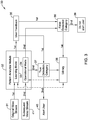
- FIG 3 is a schematic block diagram showing an illustrative method 30 for reducing false positives in the video management system 10, wherein the video management system 10 receives video content received from a video source (e.g., cameras 12).
- a video processing controller e.g., the video processing controller 11 as shown in Figure 1
- the original video stream 31 may be received by the video processing controller 11 from a video surveillance camera (e.g., the cameras 12 as shown in Figure 1 ), which may be disposed within an area.
- the original video stream 31 may include an image, a plurality of images, and/or a series of images.
- the original video stream 31 may alternatively be a stored video or a video clip.
- the original video stream 31 may alternatively or additionally include one or more static images.
- the video processing controller may pass the original video stream 31 through a pattern analytics module 32.
- the pattern analytics module 32 may include a learning mode 33 and an operational mode 34.
- the original video stream 31 may be passed through the learning mode 33 within the pattern analytics module 32.
- the original video stream 31 (e.g., an image or a series of images) may be analyzed to look for patterns indicating movement.
- analyzing the original video stream 31 may include comparing the original video stream 31 to a reference image and analyzing the original video stream 31 to determine if there are any differences between the original video stream 31 and the reference image.
- a determination is made that there is a pattern indicating movement.
- the series of images may be analyzed to look for changes in a particular image within the series of images relative to a previous image in the series of images. In this case, when changes are found in two or more sequential images, a determination is made that there is a pattern indicating movement.
- the pattern analytics module 32 may identify pixels that represent a moving object.
- the pattern analytics module 32 may perform facial recognition, motion trajectory analysis, vehicle analysis, scene classification, and/or the like. For example, the pattern analytics module 32 may recognize a weather condition (e.g., rain or snow), by recognizing changes in pixels between sequential images.
- the pattern analytics module 32 may analyze motion and trajectory of recognized objects (e.g., a person, a vehicle, etc.) and identify a regular, recurring pattern (e.g., an expected movement) based on a time of the event. When the known, recurring pattern deviates from the normal time of the event, and an unexpected moving object is detected, the pattern analytics module 16 may determine an anomaly within the scene has occurred.
- the pattern analytics module 32 may identify a scene (e.g., images within the original video stream 31) which is too crowded, such as, for example, too many people in a particular area at a particular time of day and/or too many vehicles in an area at an odd time.
- a scene e.g., images within the original video stream 31
- too crowded such as, for example, too many people in a particular area at a particular time of day and/or too many vehicles in an area at an odd time.
- the original video stream 31 containing a pattern indicating movement, an expected or unexpected moving object, and/or an anomaly may be passed to block 35 in which user feedback is solicited from a user.
- the pattern analytics module 32 may be configured to learn, over time, patterns that are of interest to the user based on the feedback provided by the user.
- the pattern analytics module 32 may also learn, over time, patterns that are not of interest to the user.
- the original video stream 31 containing a pattern indicating movement, an expected or unexpected moving object, and/or an anomaly may be displayed to a user on a display (e.g., display 21 of Figure 1 ).
- the user may view the original video stream 31 containing a pattern indicating movement, an expected or unexpected moving object, and/or an anomaly, and the user may provide feedback which may include classifying the pattern indicating movement, the expected or unexpected moving object, and/or the anomaly into one of two or more predefined categories.
- the user may classify the images received from the pattern analytics module 32 into one of a false detection category 36 or a true detection category 37.
- the user may classify an image containing a weather condition in the false detection category 36.
- the user may classify an image containing an expected moving object in the false detection category 36. Images and/or patterns indicating movement that are classified in the false detection category 36 may then be saved in a library 38 for subsequent use when in the operational mode 34.
- the library 38 may be stored in a memory (e.g., the memory 14 of Figure 1 ), which may be accessed by the pattern analytics module 32 when in the operational mode 34.
- the user may classify an image containing an unexpected moving object in the true detection category 37. Images and/or patterns indicating movement that are classified in the true detection category 37 may then be saved in the library 38 for subsequent use when in the operational mode 34.
- the images and/or patterns indicating movement that are stored in the library (e.g., the memory) may be stored for a period of time that is dependent of the category to which the images and/or patterns indicating movement were classified.
- a user may be presented with patterns indicating movement, expected or unexpected moving objects, and/or anomalies such as, weather conditions, lights flickering, unusually crowded spaces, unusual trajectory of moving objects, clips of shoppers, clips of specific individuals, clips of vehicles, clips of a specific violation, and/or the like. These are just examples.
- a subsequent video stream 41 may be passed through the operational mode 34 of the pattern analytics module 32.
- the subsequent video stream 41 may be analyzed to look for a pattern indicating movement, an expected or an unexpected moving object, and/or an anomaly.
- the images may be compared to the stored library 38 to determine whether the images containing a pattern indicating movement, an expected or an unexpected moving object, and/or an anomaly match a pattern stored in the false detection category 36 within the library 38.
- the video management system 10 when it is determined that the images containing a pattern indicating movement, an expected or an unexpected moving object, and/or an anomaly do match a pattern stored in the false detection category 36 within the library 38, the video management system 10 does not alert a user, as indicated at block 39. In some cases, when the images containing a pattern indicating movement, an expected or an unexpected moving object, and/or an anomaly are determined not to match a pattern stored in the false detection category 36 within the library 38, the video management system sends an alert to the user, at block 40. In some cases when the images containing a pattern indicating movement, an expected or an unexpected moving object, and/or an anomaly are determined to match a pattern stored in the true detection category 37, the video management system 10 may automatically alert a user, as indicated at block 40.
- FIG 4 is a schematic block diagram showing an illustrative method 50 for reducing false positives in the video management system 10.
- a video processing controller e.g., the video processing controller 11 as shown in Figure 1
- the first plurality of images 51 may be received by the video processing controller from a video surveillance camera (e.g., the cameras 12 as shown in Figure 1 ), which may be disposed within an area.
- the first plurality of images 51 may include an image, a plurality of images, and/or a series of images.
- the first plurality of images 51 may alternatively be a stored video or a video clip.
- the first plurality of images 51 may also be one or more static images.
- the video processing controller may pass the first plurality of images 51 through a pattern analytics module 52.
- the pattern analytics module 52 may analyze the first plurality of images 51 by comparing the first plurality of images 51 to a reference image, and analyzing the first plurality of images 51 to determine if the first plurality of images 51 differs from a reference image in a way that indicates movement of objects, as indicated by block 53.
- the video management system 10 alerts a user, as indicated by block 54.
- the video management system 10 classifies any non-moving objects, as indicated at block 55, and in some cases may not notify or otherwise alert the user.
- the user may view the first plurality of images 51 containing moving objects (e.g., a pattern indicating movement, an expected or unexpected moving object, and/or an anomaly), and the user may provide feedback which may include classifying the moving objects into one of two or more predefined categories, as indicated by block 56.
- moving objects e.g., a pattern indicating movement, an expected or unexpected moving object, and/or an anomaly
- the user may classify the images received from the pattern analytics module 52 into one of a false detection category 57 or a true detection category 58.
- the images that have been classified in the false detection category 57 and/or the true detection category 58 may be stored in a library (e.g., library 150 in Figure 2 ).
- a second plurality of images 60 may be passed through the pattern analytics module 52.
- the pattern analytics module 52 may analyze the second plurality of images 60 to determine if the second plurality of images 60 differs from a reference image in a way that indicates movement of objects, as indicated by block 61.
- the movement of the objects is analyzed to determine whether the movement of objects in the second plurality of images 60 matches the movement of objects in the first plurality of images 51. For example, when it is determined that the movement of objects in the second plurality of images 60 does not match the movement of objects in the first plurality of images 51, the second plurality of images 60 are determined to fall within the true detection category 58, as indicated by block 54.
- the second plurality of images 60 are determined to fall within the false detection category 57, and objects may be classified, as indicated at block 55.
- movement patterns may be identified as indicated at block 62.
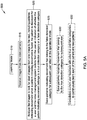
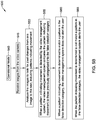
- FIGS 5A-5B are flow diagrams showing an illustrative method 500 for reducing false positives in a video management system including a video camera.
- the method 500 may include a learning mode 510 (see Figure 5A ) and an operational mode 540 (see Figure 5B ).
- the video management system may receive images from the video camera, as referenced at block 515.
- the images received from the video camera may include a plurality of video clips, a live video stream, static images, and/or the like.
- the video management system may analyze the images to look for pixel changes from one image to the next, including patterns indicating movement, and when a pattern indicating movement is found, the pattern may be displayed for a user.
- the video management system may solicit, from the user, an indication of whether the pattern indicating movement belongs to a true detection category or a false detection category, as referenced by block 520.
- analyzing the images to look for patterns indicating movement may include comparing the images to a reference image. The images may further me analyzed to determine whether the images differ from the reference image, and when the images differ from the reference image, a determination may be made that there is a pattern indicating movement.
- analyzing the images to look for patterns indicating movement may include analyzing a series of images captured by the video camera to look for changes in a particular image in the series of images relative to a previous image in the series of images.
- the video management system may save the patterns indicating movement that belong to the false detection category for subsequent use (e.g., when in the operational mode 540), as referenced by block 525.
- the false detection category may include a weather condition and/or an expected movement of an object.
- the video management system may save the patterns indicating movement that belong to the true detection category for subsequent use (e.g., when in the operational mode 540), as referenced by dashed line block 530.
- the true detection category may include an unexpected moving object.
- the pattern indicating movement that may fall within the false detection category and/or the true detection category may include a moving human.
- the video management system may consolidate current user feedback with prior true and false categories in order to continuously learn each of the current and new patterns, for example.
- the method may include the operational mode 540.
- the video management system may receive images from the video camera, as referenced by block 545.
- the video management system may analyze the images to look for pixel changes from one image to the next, including patterns indicating movement, as referenced by block 550.
- the video management system may compare the pattern indicating movement to those previously categorized into the false detection category, as referenced by block 555.
- the video management system may compare the pattern indicating movement to those previously categorized into the true detection category.
- the video management system may not alert the user, as referenced by block 560, and in some cases, when the pattern indicating movement is determined not to match a pattern in the false detection category, the video management system may alert the user, as referenced by block 565.
- the video management system may automatically alert the user.
- FIG. 6 is a flow diagram showing an illustrative method 600 for reducing false positives in a video management system including a video camera.
- the method 600 may include receiving a first plurality of images from a video camera, as referenced by block 610, and the first plurality of images may be compared to a reference image, as referenced by block 620.
- the images received from the video camera may include a plurality of video clips, a live video stream, static images, and/or the like.
- the method 600 may include determining when the first plurality of images differ from the reference image in a way that indicates appearance or movement of objects, and when so, issuing an alert to a user.
- the user may classify the first plurality of images into one of two or more predefined categories, as referenced by block 630.
- the two or more predefined categories may include a false detection category and a true detection category.
- the method 600 may include the video management system determining whether the appearance or movement of objects indicated in the first plurality of images represents an anomaly, and if not, the video management system may not issue an alert to the user to classify the first plurality of images into one of two or more predefined categories, as referenced by dashed line block 640.
- the method 600 may further include analyzing a subsequent second plurality of images to determine whether the second plurality of images differ from the reference image in a way that indicates appearance or movement of objects, and when so, may determine whether the appearance or movement of objects in the second plurality of images matches the appearance or movement of objects in the first plurality of images, as referenced by block 650.
- the video management system may issue an alert to the user when it is determined that the appearance or movement of objects in the second plurality of images does not match the appearance or movement of objects in the first plurality of images, and the user classified the first plurality of images into a first one of the predefined categories, as referenced by block 660.
- the first one of the predefined categories may be the false detection category.
- the video management system may alert the user as the appearance or movement of objects in the second plurality of images is not within the false detection category. In some cases, the video management system may not issue an alert to the user when it is determined that the appearance or movement of objects in the second plurality of images does match the appearance or movement of objects in the first plurality of images, and the user classified the first plurality of images into the first one of the predefined categories (e.g., the false detection category). In some cases, the second plurality of images may be classified in the true detection category. In this case, the video management system may issue an alert the user.
Landscapes
- Engineering & Computer Science (AREA)
- Theoretical Computer Science (AREA)
- Physics & Mathematics (AREA)
- General Physics & Mathematics (AREA)
- Multimedia (AREA)
- Databases & Information Systems (AREA)
- Computer Vision & Pattern Recognition (AREA)
- Software Systems (AREA)
- Artificial Intelligence (AREA)
- Computing Systems (AREA)
- Evolutionary Computation (AREA)
- General Health & Medical Sciences (AREA)
- Medical Informatics (AREA)
- Health & Medical Sciences (AREA)
- Computational Linguistics (AREA)
- Alarm Systems (AREA)
- Closed-Circuit Television Systems (AREA)
Abstract
Description
- The present disclosure relates generally to video management systems, and more particularly to systems and methods for detecting patterns within video content.
- Known video management systems (VMS) used in security surveillance can include a plurality of cameras and workstations. The recording and storage of the video data streams in some cases, may be triggered using video motion detection (VMD). In some cases, a large percentage of the motion-triggered recordings contain unwanted motion or activity. In many cases, the unwanted motion or activity may be a weather condition, which may trigger a false alarm. In such cases, the video management system may store video clips that are not needed, and further a user may needlessly be alerted to the unwanted motion including the weather condition. As such, it may be desirable for a video management system to recognize such unwanted motion that may create false alarms, for example, thereby reducing false positives in the video management systems.
- The present disclosure relates generally to video management systems, and more particularly to systems and methods for detecting patterns within video content. Generally, the video management system may identify movement within a video data stream (e.g., video content) and may use pattern analytics to identify and categorize the movement within the video data stream. In some cases, the video management system may notify a user of the movement within the video data stream.
- In an example, a method of processing video images in a video management system having a video camera includes receiving images from the video camera and analyzing the images to look for patterns that indicate changes between subsequent images. When a pattern indicating changes between subsequent images is detected by the video management system, the pattern is displayed for a user and the video management system solicits from the user an indication of whether the pattern indicating changes between subsequent images belongs to a true detection category or a false detection category. Patterns that belong to the false detection category are saved, so that they can be learned for identifying similar images in the future. In some cases, patterns that belong to the true detection category may also be saved, for similar reasons. Images are subsequently received from the video camera and are analyzed to look for patterns that indicate changes between subsequent images. When a pattern indicating changes between subsequent images is detected by the video management system, the pattern indicating changes between subsequent images is compared by the video management system to those patterns that were previously saved and categorized in the false detection category. When the pattern indicating changes between subsequent images is determined by the video management system to match one of the previously saved patterns categorized in the false detection category, the user is not notified. When the pattern indicating changes between subsequent images is determined by the video management system to not match one of the previously saved patterns categorized in the false detection category, the pattern indicating changes between subsequent images is displayed for the user and the video management system solicits from the user an indication of whether the pattern indicating changes between subsequent images belongs to a true detection category or a false detection category. Patterns that belong to the false detection category are saved. In some cases, patterns that belong to the true detection category may also be saved.
- In one example, a method of reducing false positives in a video management system which may include a video camera, may include a learning mode and an operational mode. When in the learning mode, the method may include, the video management system receiving images from the video camera, and analyzing the images to look for patterns indicating movement or appearance of objects. When a pattern indicating movement or appearance of objects is found, the pattern may be displayed for a user, and the video management system may solicit from a user an indication of whether the pattern indicating movement or appearance of objects belongs to a true detection category or a false detection category. The method may further include saving patterns indicating movement or appearance of objects that belong to the false detection category for subsequent use when in the operational mode. In some cases, patterns that belong to the true detection category may also be saved. When subsequently in the operational mode, the video management system may receive images from the video camera and may analyze the images to look for patterns indicating movement or appearance of objects. When a pattern indicating movement or appearance of objects is detected by the video management system, the video management system may compare the pattern indicating movement to those previously categorized into the false detection category. When the pattern indicating movement or appearance of objects is determined to match a pattern in the false detection category, the video management system may not alert the user, and when the pattern indicating movement or appearance of objects is determined to not match a pattern in the false detection category, the video management system may alert the user.
- In another example, a method of reducing false positives in a video management system including a video camera may include receiving a first plurality of images from a video camera, and comparing the first plurality of images to a reference image to look for pixel changes from one image to the next, which may indicate the appearance or movement of one or more objects. The method may include determining when the first plurality of images differ from the reference image in a way that indicates appearance or movement of objects, and when so may issue an alert to a user. In response, the user may classify the first plurality of images into one of two or more predefined categories. The method may include analyzing a subsequent second plurality of images to determine whether the second plurality of images differ from the reference image in a way that indicates the appearance or movement of objects, and when so determining whether the appearance or movement of objects in the second plurality of images matches the appearance or movement of objects in the first plurality of images, and may issue an alert to the user when it is determined that the appearance or movement of objects in the second plurality of images does not match the appearance or movement of objects in the first plurality of images and the user classified the first plurality of images into a first one of the predefined categories, and may not issue an alert to the user when it is determined that the appearance or movement of objects in the second plurality of images does match the appearance or movement of objects in the first plurality of images, and the user classified the first plurality of images into the first one of the predefined categories.
- In another example, a system for finding anomalies in a scene may include a video camera for capturing a plurality of images of the scene, a memory which may be operatively coupled to the video camera that received the plurality of images from the video camera. The memory may store a library of previously identified patterns. A pattern analytics module may be operatively coupled to the memory, and the pattern analytics module may be configured to compare the plurality of images to the library of previously identified patterns, and may determine whether the plurality of images represent an anomaly relative to the previously identified patterns. When it is determined that the plurality of images represent an anomaly relative to the previously identified patterns, the pattern analytics module may present the plurality of images to a user for manual classification of the plurality of images into one or more predefined categories. When it is determined that the plurality of images does not represent an anomaly relative to the previously identified patterns, the pattern analytics module may automatically classify the plurality of images into a corresponding one of the predefined categories.
- The preceding summary is provided to facilitate an understanding of some of the innovative features unique to the present disclosure and is not intended to be a full description. A full appreciation of the disclosure can be gained by taking the entire specification, claims, figures, and abstract as a whole.
- The disclosure may be more completely understood in consideration of the following description of various examples in connection with the accompanying drawings, in which:
-
Figure 1 is a schematic view of an illustrative video management system having a video processing controller in communication with one or more remotely located video surveillance cameras; -
Figure 2 is a schematic block diagram of an illustrative video management system; -
Figure 3 is a schematic block diagram showing an illustrative method for reducing false positives in the video management system; -
Figure 4 is a schematic block diagram showing an illustrative method for reducing false positives in the video management system; -
Figure 5A is a flow diagram showing an illustrative method for reducing false positives in a video management system including a video camera; -
Figure 5B is a flow diagram showing an illustrative method for reducing false positives in a video management system including a video camera; and -
Figure 6 is a flow diagram showing an illustrative method for reducing false positives in a video management system including a video camera. - While the disclosure is amenable to various modifications and alternative forms, specifics thereof have been shown by way of example in the drawings and will be described in detail. It should be understood, however, that the intention is not to limit the disclosure to the particular examples described. On the contrary, the intention is to cover all modifications, equivalents, and alternatives falling within the spirit and scope of the disclosure.
- The following description should be read with reference to the drawings, in which like elements in different drawings are numbered in like fashion. The drawings, which are not necessarily to scale, depict examples that are not intended to limit the scope of the disclosure. Although examples are illustrated for the various elements, those skilled in the art will recognize that many of the examples provided have suitable alternatives that may be utilized.
- All numbers are herein assumed to be modified by the term "about", unless the content clearly dictates otherwise. The recitation of numerical ranged by endpoints includes all numbers subsumed within that range (e.g., 1 to 5 includes, 1, 1.5, 2, 2.75, 3, 3.8, 4, and 5).
- As used in this specification and the appended claims, the singular forms "a", "an", and "the" include the plural referents unless the content clearly dictates otherwise. As used in this specification and the appended claims, the term "or" is generally employed in its sense including "and/or" unless the content clearly dictates otherwise.
- It is noted that references in the specification to "an embodiment", "some embodiments", "other embodiments", etc., indicate that the embodiment described may include a particular feature, structure, or characteristic, but every embodiment may not necessarily include the particular feature, structure, or characteristic. Moreover, such phrases are not necessarily referring to the same embodiment. Further, when a particular feature, structure, or characteristic is described in connection with an embodiment, it is contemplated that the feature, structure, or characteristic may be applied to other embodiments whether or not explicitly described unless clearly stated to the contrary.
- The present disclosure relates generally to video management systems used in connection with surveillance systems. Video management systems may include, for example, a network connected device, network equipment, a remote monitoring station, a surveillance system deployed in a secure area, a closed circuit television (CCTV), security cameras, networked video recorders, and panel controllers. While video management systems with video processing controllers are used as an example below, it should be recognized that the concepts disclosed herein can be applied to video management systems more generally.
-
Figure 1 is a schematic view of an illustrative video management system (VMS) 10 having avideo processing controller 11 in communication with one or more remotely locatedvideo surveillance cameras video processing controller 11 may be configured to communicate with and control one or more components of thevideo management system 10. For example, thevideo processing controller 11 may communicate with the one or more components (e.g., cameras 12 and workstation 20) of thevideo management system 10 via a wired or wireless link (not shown). Additionally, thevideo processing controller 11 may communicate over one or more wired or wireless networks that may accommodate remote access and/or control of thevideo processing controller 11 via another device such as a smart phone, tablet, e-reader, laptop computer, personal computer, or the like. In some cases, the network may be a wireless local area network (LAN). In some cases, the network may be a wide area network or global network (WAN) including, for example, the Internet. In some cases, the wireless local area network may provide a wireless access point and/or a network host device that is separate from thevideo processing controller 11. In other cases, the wireless local area network may provide a wireless access point and/or a network host device that is part of thevideo processing controller 11. In some cases, the wireless local area network may include a local domain name server (DNS), but this is not required for all embodiments. In some cases, the wireless local area network may be an ad-hoc wireless network, but this is not required. - In some cases, the
video processing controller 11 may be programmed to communicate over the network with an external web service hosted by one or more external web server(s). Thevideo processing controller 11 may be configured to upload selected data via the network to the external web service where it may be collected and stored on the external web server. In some cases, the data may be indicative of the performance of thevideo management system 10. Additionally, thevideo processing controller 11 may be configured to receive and/or download selected data, settings and/or services sometimes including software updates from the external web service over the network. The data, settings and/or services may be received automatically from the web service, downloaded periodically in accordance with a control algorithm, and/or download in response to a user request. - Depending upon the application and/or where the
video management system 10 user is located, remote access and/or control of thevideo processing controller 11 may be provided over a first network and/or a second network. A variety of remote wireless devices may be used to access and/or control thevideo processing controller 11 from a remote location (e.g., remote from the video processing controller 11) over the first network and/or the second network including, but not limited to, mobile phones including smart phones, tablet computers, laptop or personal computers, wireless network-enabled key fobs, e-readers, and/or the like. In many cases, the remote wireless devices are configured to communicate wirelessly over the first network and/or the second network with thevideo processing controller 11 via one or more wireless communication protocols including, but not limited to, cellular communication, ZigBee, REDLINK™, Bluetooth, WiFi, IrDA, dedicated short range communication (DSRC), EnOcean, and/or any other suitable common or proprietary wireless protocol, as desired. In some cases, the network may be a wide area network or global network (WAN) including, for example, the Internet. In some cases, the wireless local area network may provide a wireless access point and/or a network host device that is separate from thevideo processing controller 11. In other cases, the wireless local area network may provide a wireless access point and/or a network host device that is part of thevideo processing controller 11. In some cases, the wireless local area network may include a local domain name server (DNS), but this is not required for all embodiments. In some cases, the wireless local area network may be an ad-hoc wireless network, but this is not required. - As discussed above, the
video processing controller 11 may be in communication with the one or more remotely located video surveillance cameras 12. The cameras 12 may be located along a periphery or scattered throughout an area that is being watched by the cameras 12. The cameras 12 may be controlled via a control panel that may, for example, be part of thevideo processing controller 11. In some instances, the control panel (not illustrated) may be distinct from thevideo processing controller 11. It will be appreciated that in some cases, thevideo processing controller 11 may be located near one or more of the cameras 12. Thevideo processing controller 11 may be remote from the cameras 12. In some cases, thevideo processing controller 11 may actually be disposed within one or more of the cameras 12. Thevideo processing controller 11 may operate under the control of one or more programs loaded from a non-transitory computer-readable, such as amemory 14. Thevideo management system 10 may include aworkstation 20, which may be used to display images provided by the cameras 12 to security personnel, for example on adisplay 21. Theworkstation 20 may be a personal computer, for example, or may be a terminal connected to a cloud-based processing system. - The
workstation 20 may include adisplay 21 and auser interface 22. Theuser interface 22 may include a data input device such as a keyboard, a keypad, a joystick, a touch pad, and the like, but this is not required. In some cases, thevideo processing controller 11 may additionally or alternatively include a remote user interface that facilitates a user's interactions with thevideo processing controller 11. For example, the remote user interface may be provided by a number of portable devices (not shown), such as for example, but not limited to, remote internet devices, including a smart phone, a tablet computer, a laptop computer, or a desktop computer. In some cases, theuser interface 22 may communicate with thevideo processing controller 11 via a router such as, for example, a Wi-Fi or Internet router. In some cases, theuser interface 22 may communicate with thevideo processing controller 11 via a cloud (not shown). - The
video processing controller 11 may be configured to receive signals from a video camera (e.g., the cameras 12) via an I/O 18 and may also receive commands or other instructions from a remote location such as the aforementioned remote devices via the I/O 18. Thevideo processing controller 11 may be configured to output processed images to portable devices via the cloud, and/or to theworkstation 20 via the I/O 18. The video processing controller 11 (e.g., a microprocessor, microcontroller, etc.), may be operatively coupled to thememory 14 and the I/O 18. As noted with respect toFigure 1 , thevideo processing controller 11 may be configured to receive signals from the one or more cameras (such as thecameras Figure 1 ) that is/are positioned in different spaces within an area. In some cases, thevideo processing controller 11 may be configured to receive a signal from the cameras 12 located throughout an area, via the one or more inputs (e.g., I/O 18). In some cases, the I/O 18 may be a wireless receiver or a wireless transceiver. The cameras 12, as shown inFigure 1 , may include closed circuit television (CCTV) hardware, such as security cameras, networked video recorders, panel controllers, and/or any other suitable camera. - The
video processing controller 11 may receive one or more images from the cameras 12 and may analyze the images in order to identify any patterns indicating changes within the images. Changes within the images may, for example, indicate movement. Movement may include things that are of interest and may also include things that are not of interest. Examples of movement that are of interest may include a person walking at a time and location in which a person is not expected. An example of expected movement may be, for example, seeing a number of school buses pulling into the school parking lot shortly before school gets out for the day. Such movement may not be of interest. Another example of movement that is not of interest includes weather. In some cases, as shown, thevideo processing controller 11 may include apattern analytics module 16. While discussed with respect to processing live or substantially live video feeds, it will be appreciated that stored images such as playing back video feeds, or even video clips, may be similarly processed. If a particular video clip is incorrectly characterized, thevideo management system 10 allows the user the opportunity to correct this. - There are a number of illustrative use cases that may be of interest for the
video management system 10. In one use case, thevideo management system 10 may look for patterns in pixel changes. This can include, for example, amount of change, location, size and spatial distribution of the changed pixels, in both the spatial and temporal domains. As an example, a particular pattern may include video segments of heavy rain, which may manifest itself in changed pixels in streaks with moderate pixel intensity changes. Another particular pattern may include video segments of heavy snow, which may manifest itself in changed pixels in streaks with heavier pixel intensity changes. The user may be able to label these patterns as "heavy rain" and "heavy snow", respectively, as separate categories. The user may be able to combine these patterns as "extreme weather". Thevideo management system 10 may subsequently determine that patterns that match these are to be discarded, and not stored or shown to the user. - Metadata used in this case may include: pixel changes (frame to frame difference, accumulated pixel change over a time window, or pixel value change comparing to a statistical based background model, etc.), image coordinate of the changed pixels, size/shape of the blob of changed pixels, how scattered and how spatially distributed the changed pixels are, how fast the pixel change takes place etc.
- Another use case example, which would use the same metadata, pertains to identifying patterns from light flickering due to a faulty light. This may include a light flashing on and off, for example. A user may confirm that this is a true detection of something worth noticing, and therefore should be an alert so that building maintenance folks can replace the faulty light bulb.
- Another use case example pertains to identifying patterns of presence and movement of people and/or specific objects in a scene that have a similar schedule, the route they take etc. - which indicates the occurrence of certain building services. Anomalies may indicate the absence of the occurrence of these regular activities, and may therefore correspond to service not being delivered. Example of patterns that the pattern analyzer can identify include but are not limited to cleaning services inside the building, such as the appearance of cleaning crew and their route going around various areas in the building. Another example is garbage collection service. Another example is a school bus or shuttle bus schedule. In some cases, the user can name each of these patterns with a user friendly name, "e.g. cleaning crew after hours", and can also select the "lack of' such service, which would result in an alert or a new event entry in the database, store the video as evidence, so that it can be raised with the service provider about service not delivered.
- The metadata used here may include: people (may be dressed in uniform that the system can recognize), objects (e.g. cleaning supplies, garbage containers, garbage truck etc.) time of day, day of week, duration of stay of these people, areas (cameras) they appear in the building. These are just examples of metadata that may be used.
- Another use case involves detecting potential shoplifter behavior. For example, most shoppers may exhibit patterns in how they hold their heads, how they look at the merchandise, etc. Conversely, a shoplifter may exhibit different patterns, such as how they look at the merchandise, how they possibly look around to see if their behavior has been spotted, and the like. Metadata that may be useful include person detection, face detection (and recognition), head pose detection, gaze detection, identity and counts of merchandise removed from the shelf, duration of the person's remaining in front of a particular shelf and their movement path within the store.
- In some cases, metadata may be extracted from the images and/or live video streams even when pixel changes are not detected. Extracting metadata in response to detecting pixel changes that can indicate the appearance and/or movement of one or more objects is merely an example of when metadata may be extracted.
- As will be discussed, the
pattern analytics module 16 may play a part in analyzing images and/or live video streams in order to detect any patterns indicating movement within the images. For example, thepattern analytics module 16 may continually analyze an image captured by one or more of the cameras 12 to look for changes. In some cases, a reference image may be stored, and continuous image comparison and analysis of the images received from the cameras 12 may be performed by thepattern analytics module 16. When a difference is detected between the current captured image and the reference image, thepattern analytics module 16 may determine that an object has been detected. In some cases, thepattern analytics module 16 may analyze the image that differs from the reference image to determine if there is a pattern indicating movement. In other cases, rather than storing a reference image, thepattern analytics module 16 may be trained to identify patterns indicating movement in the captured images, often by the movement of the object, and/or other object characteristics. In either case, thepattern analytics module 16 may be configured to look for a pattern indicating movement, within the captured images and/or live video stream. - In some cases, the
pattern analytics module 16 may be configured to classify one or more of the patterns indicating movement within the captured images into one of two or more predefined categories. The two or more predefined categories may include a true detection category and/or a false detection category. A true detection category, for example, may include patterns, sometimes indicating movement, that show things that the user indicates they are interested in seeing. This may, for example, be things that are out of the ordinary. People in the parking lot at 3am may be something that would be out of the ordinary, and thus would qualify for the true detection category. The false detection category, for example, may include patterns, sometimes indicating movement, that show things that the user indicates they are not interested in seeing again. For example, video showing rain or snow falling, while demonstrating movement, may be considered by the user as providing a false positive (movement, but nothing of interest). A tree branch blowing in the wind may be another good example of a false positive that would be categorized in the false detection category. The false detection category may also include examples of people. As an example, a video may show a group of people at the coffee maker every day at 8:30am. If this is expected, and not out of the ordinary, the user may instruct thevideo processing controller 11 to ignore this. When one or more patterns indicating movement falls within the true detection category, thepattern analytics module 16 may be configured to provide a notification (e.g., an alert) to a user, as discussed with reference toFigures 3 and4 . For example, in some cases, the patterns indicating movement may include an object such as a moving human and/or a moving animal. Thepattern analytics module 16 may be configured to recognize the moving object, and thereby classify the images containing the moving object into the true detection category. - In some cases, the
pattern analytics module 16 may include a filter feature, which eliminates reporting filtered objects and/or patterns indicating movement that fall within the false detection category. When one or more objects and/or patterns indicating movement fall within the false detection category, thepattern analytics module 16 may "filter out" these objects and/or patterns indicating movement so as to not provide a notification (e.g., an alert) to a user. In one example, thepattern analytics module 16 may be configured to recognize a weather condition (e.g., rain, snow, etc.), thereby classifying the images containing the weather condition into the false detection category. -
Figure 2 is a schematic block diagram of an illustrative video management system 100. In some instances, thevideo management system 10a may be considered as an example of thevideo management system 10 ofFigure 1 . In some instances, thevideo management system 10a may include a video camera, such ascamera 24 which may be operatively coupled to amemory 26. Thecamera 24 may be considered as an example of one of the cameras 12, for example. In some cases, thememory 26 may include alibrary 25 stored within thememory 26. Thevideo management system 10a may further include apattern analytics module 28, which may be operatively coupled to thememory 26. Thepattern analytics module 28 may be considered an example of thepattern analytics module 16 ofFigure 1 . - The
memory 26 may temporarily store one or more images received from thecamera 24. Thememory 26 may also store software that is used to provide the functionality of thepattern analytics module 28. Thememory 26 may be any suitable type of storage device including, but not limited to, RAM, ROM, EPROM, flash memory, a hard drive, and/or the like. As discussed, thememory 24 may include thelibrary 25. Thelibrary 25 may include previously identified patterns indicating movement. For example, in some instances, thelibrary 25 may store patterns indicating movement that fall within the true detection category and/or the false detection category. As previously discussed with reference toFigure 1 , the true detection category may include patterns that a user may be interested in seeing. For example, the true detection category may include people in the parking lot at 3:00am. In other examples, the true detection category may include a person shoplifting, a delivery truck delivering goods, clips of blacklisted persons, etc. The false detection category may include patterns that a user may not be interested in seeing. For example, the false detection category may include a video showing rain or snow falling, a tree branch blowing in the wind, expected movements of people within a space (e.g., a group of people in a lunch room at noon), etc. Having the patterns indicating movement that fall within the true detection category and/or the false detection category stored in thelibrary 25 may reduce false positives in the video management system (e.g.,video management system 10,video management system 10a). For example, thepattern analytics module 28 may be configured to compare a video stream to stored images within thelibrary 25 and automatically classify the video stream into one of the true detection category or the false detection category. In some cases, when images are classified into the true detection category, the pattern analytics module may be configured to alert the user. In other cases, when the images are classified into the false detection category, the pattern analytics module may not be configured to alert the user. -
Figure 3 is a schematic block diagram showing anillustrative method 30 for reducing false positives in thevideo management system 10, wherein thevideo management system 10 receives video content received from a video source (e.g., cameras 12). A video processing controller (e.g., thevideo processing controller 11 as shown inFigure 1 ) may receive anoriginal video stream 31. Theoriginal video stream 31 may be received by thevideo processing controller 11 from a video surveillance camera (e.g., the cameras 12 as shown inFigure 1 ), which may be disposed within an area. Theoriginal video stream 31 may include an image, a plurality of images, and/or a series of images. Theoriginal video stream 31 may alternatively be a stored video or a video clip. Theoriginal video stream 31 may alternatively or additionally include one or more static images. In some cases, the video processing controller may pass theoriginal video stream 31 through apattern analytics module 32. Thepattern analytics module 32 may include a learningmode 33 and anoperational mode 34. Theoriginal video stream 31 may be passed through the learningmode 33 within thepattern analytics module 32. When in the learningmode 33, the original video stream 31 (e.g., an image or a series of images) may be analyzed to look for patterns indicating movement. For example, in some cases, analyzing theoriginal video stream 31 may include comparing theoriginal video stream 31 to a reference image and analyzing theoriginal video stream 31 to determine if there are any differences between theoriginal video stream 31 and the reference image. In some cases, when an image of theoriginal video stream 31 differs from the reference image, a determination is made that there is a pattern indicating movement. In other cases, when theoriginal video stream 31 includes a series of images, the series of images may be analyzed to look for changes in a particular image within the series of images relative to a previous image in the series of images. In this case, when changes are found in two or more sequential images, a determination is made that there is a pattern indicating movement. - In some cases, the
pattern analytics module 32 may identify pixels that represent a moving object. In some cases, thepattern analytics module 32 may perform facial recognition, motion trajectory analysis, vehicle analysis, scene classification, and/or the like. For example, thepattern analytics module 32 may recognize a weather condition (e.g., rain or snow), by recognizing changes in pixels between sequential images. In some cases, thepattern analytics module 32 may analyze motion and trajectory of recognized objects (e.g., a person, a vehicle, etc.) and identify a regular, recurring pattern (e.g., an expected movement) based on a time of the event. When the known, recurring pattern deviates from the normal time of the event, and an unexpected moving object is detected, thepattern analytics module 16 may determine an anomaly within the scene has occurred. In one example, thepattern analytics module 32 may identify a scene (e.g., images within the original video stream 31) which is too crowded, such as, for example, too many people in a particular area at a particular time of day and/or too many vehicles in an area at an odd time. - As can be seen, when in the learning
mode 33, theoriginal video stream 31 containing a pattern indicating movement, an expected or unexpected moving object, and/or an anomaly, may be passed to block 35 in which user feedback is solicited from a user. Thepattern analytics module 32 may be configured to learn, over time, patterns that are of interest to the user based on the feedback provided by the user. Thepattern analytics module 32 may also learn, over time, patterns that are not of interest to the user. Atblock 35, theoriginal video stream 31 containing a pattern indicating movement, an expected or unexpected moving object, and/or an anomaly, may be displayed to a user on a display (e.g., display 21 ofFigure 1 ). The user may view theoriginal video stream 31 containing a pattern indicating movement, an expected or unexpected moving object, and/or an anomaly, and the user may provide feedback which may include classifying the pattern indicating movement, the expected or unexpected moving object, and/or the anomaly into one of two or more predefined categories. For example, the user may classify the images received from thepattern analytics module 32 into one of afalse detection category 36 or atrue detection category 37. In one example, the user may classify an image containing a weather condition in thefalse detection category 36. In another example, the user may classify an image containing an expected moving object in thefalse detection category 36. Images and/or patterns indicating movement that are classified in thefalse detection category 36 may then be saved in alibrary 38 for subsequent use when in theoperational mode 34. Thelibrary 38 may be stored in a memory (e.g., thememory 14 ofFigure 1 ), which may be accessed by thepattern analytics module 32 when in theoperational mode 34. In another example, the user may classify an image containing an unexpected moving object in thetrue detection category 37. Images and/or patterns indicating movement that are classified in thetrue detection category 37 may then be saved in thelibrary 38 for subsequent use when in theoperational mode 34. The images and/or patterns indicating movement that are stored in the library (e.g., the memory) may be stored for a period of time that is dependent of the category to which the images and/or patterns indicating movement were classified. - In some examples, a user may be presented with patterns indicating movement, expected or unexpected moving objects, and/or anomalies such as, weather conditions, lights flickering, unusually crowded spaces, unusual trajectory of moving objects, clips of shoppers, clips of specific individuals, clips of vehicles, clips of a specific violation, and/or the like. These are just examples.
- As shown in
Figure 3 , asubsequent video stream 41 may be passed through theoperational mode 34 of thepattern analytics module 32. When in theoperational mode 34, thesubsequent video stream 41 may be analyzed to look for a pattern indicating movement, an expected or an unexpected moving object, and/or an anomaly. When thesubsequent video stream 41 is determined to contain images including a pattern indicating movement, an expected or an unexpected moving object, and/or an anomaly, the images may be compared to the storedlibrary 38 to determine whether the images containing a pattern indicating movement, an expected or an unexpected moving object, and/or an anomaly match a pattern stored in thefalse detection category 36 within thelibrary 38. In some cases, when it is determined that the images containing a pattern indicating movement, an expected or an unexpected moving object, and/or an anomaly do match a pattern stored in thefalse detection category 36 within thelibrary 38, thevideo management system 10 does not alert a user, as indicated atblock 39. In some cases, when the images containing a pattern indicating movement, an expected or an unexpected moving object, and/or an anomaly are determined not to match a pattern stored in thefalse detection category 36 within thelibrary 38, the video management system sends an alert to the user, atblock 40. In some cases when the images containing a pattern indicating movement, an expected or an unexpected moving object, and/or an anomaly are determined to match a pattern stored in thetrue detection category 37, thevideo management system 10 may automatically alert a user, as indicated atblock 40. -
Figure 4 is a schematic block diagram showing anillustrative method 50 for reducing false positives in thevideo management system 10. Similar to the method ofFigure 3 , a video processing controller (e.g., thevideo processing controller 11 as shown inFigure 1 ) may receive a first plurality ofimages 51. The first plurality ofimages 51 may be received by the video processing controller from a video surveillance camera (e.g., the cameras 12 as shown inFigure 1 ), which may be disposed within an area. The first plurality ofimages 51 may include an image, a plurality of images, and/or a series of images. The first plurality ofimages 51 may alternatively be a stored video or a video clip. The first plurality ofimages 51 may also be one or more static images. In some cases, the video processing controller may pass the first plurality ofimages 51 through apattern analytics module 52. Thepattern analytics module 52 may analyze the first plurality ofimages 51 by comparing the first plurality ofimages 51 to a reference image, and analyzing the first plurality ofimages 51 to determine if the first plurality ofimages 51 differs from a reference image in a way that indicates movement of objects, as indicated byblock 53. When it is determined that the first plurality ofimages 51 includes moving objects, thevideo management system 10 alerts a user, as indicated byblock 54. When it is determined that the first plurality ofimages 51 does not include moving objects, thevideo management system 10 classifies any non-moving objects, as indicated atblock 55, and in some cases may not notify or otherwise alert the user. - When the user has received the alert, the user may view the first plurality of
images 51 containing moving objects (e.g., a pattern indicating movement, an expected or unexpected moving object, and/or an anomaly), and the user may provide feedback which may include classifying the moving objects into one of two or more predefined categories, as indicated byblock 56. For example, the user may classify the images received from thepattern analytics module 52 into one of afalse detection category 57 or atrue detection category 58. In some cases, the images that have been classified in thefalse detection category 57 and/or thetrue detection category 58, may be stored in a library (e.g., library 150 inFigure 2 ). - As shown in
Figure 4 , a second plurality ofimages 60 may be passed through thepattern analytics module 52. Thepattern analytics module 52 may analyze the second plurality ofimages 60 to determine if the second plurality ofimages 60 differs from a reference image in a way that indicates movement of objects, as indicated byblock 61. When it is determined that the second plurality ofimages 60 includes movement of objects, the movement of the objects is analyzed to determine whether the movement of objects in the second plurality ofimages 60 matches the movement of objects in the first plurality ofimages 51. For example, when it is determined that the movement of objects in the second plurality ofimages 60 does not match the movement of objects in the first plurality ofimages 51, the second plurality ofimages 60 are determined to fall within thetrue detection category 58, as indicated byblock 54. In another example, when it is determined that the movement of objects in the second plurality ofimages 60 does match the movement of objects in the first plurality ofimages 51, the second plurality ofimages 60 are determined to fall within thefalse detection category 57, and objects may be classified, as indicated atblock 55. Alternatively, if there is a second indication of movement, movement patterns may be identified as indicated atblock 62. -
Figures 5A-5B are flow diagrams showing anillustrative method 500 for reducing false positives in a video management system including a video camera. Themethod 500 may include a learning mode 510 (seeFigure 5A ) and an operational mode 540 (seeFigure 5B ). When in thelearning mode 510, the video management system may receive images from the video camera, as referenced atblock 515. The images received from the video camera may include a plurality of video clips, a live video stream, static images, and/or the like. The video management system may analyze the images to look for pixel changes from one image to the next, including patterns indicating movement, and when a pattern indicating movement is found, the pattern may be displayed for a user. The video management system may solicit, from the user, an indication of whether the pattern indicating movement belongs to a true detection category or a false detection category, as referenced by block 520. While in thelearning mode 510, analyzing the images to look for patterns indicating movement may include comparing the images to a reference image. The images may further me analyzed to determine whether the images differ from the reference image, and when the images differ from the reference image, a determination may be made that there is a pattern indicating movement. In some cases, while in thelearning mode 510, analyzing the images to look for patterns indicating movement may include analyzing a series of images captured by the video camera to look for changes in a particular image in the series of images relative to a previous image in the series of images. When changes are found in two or more sequential images, a determination is made that there is a pattern indicating movement. The video management system may save the patterns indicating movement that belong to the false detection category for subsequent use (e.g., when in the operational mode 540), as referenced byblock 525. In some examples, the false detection category may include a weather condition and/or an expected movement of an object. In some cases, the video management system may save the patterns indicating movement that belong to the true detection category for subsequent use (e.g., when in the operational mode 540), as referenced by dashedline block 530. In some examples, the true detection category may include an unexpected moving object. In some cases, the pattern indicating movement that may fall within the false detection category and/or the true detection category may include a moving human. In some cases, the video management system may consolidate current user feedback with prior true and false categories in order to continuously learn each of the current and new patterns, for example. - Subsequent to the
learning mode 510, the method may include theoperational mode 540. When in theoperational mode 540, the video management system may receive images from the video camera, as referenced byblock 545. The video management system may analyze the images to look for pixel changes from one image to the next, including patterns indicating movement, as referenced byblock 550. In some cases, when a pattern indicating movement is detected by the video management system, the video management system may compare the pattern indicating movement to those previously categorized into the false detection category, as referenced byblock 555. In some cases, when a pattern indicating movement is detected by the video management system, the video management system may compare the pattern indicating movement to those previously categorized into the true detection category. When the pattern indicating movement is determined to match a pattern in the false detection category, the video management system may not alert the user, as referenced byblock 560, and in some cases, when the pattern indicating movement is determined not to match a pattern in the false detection category, the video management system may alert the user, as referenced byblock 565. When the pattern indicating movement is determined to match a pattern indicating movement saved in the true detection category, the video management system may automatically alert the user. -
Figure 6 is a flow diagram showing anillustrative method 600 for reducing false positives in a video management system including a video camera. Themethod 600 may include receiving a first plurality of images from a video camera, as referenced byblock 610, and the first plurality of images may be compared to a reference image, as referenced byblock 620. The images received from the video camera may include a plurality of video clips, a live video stream, static images, and/or the like. Themethod 600 may include determining when the first plurality of images differ from the reference image in a way that indicates appearance or movement of objects, and when so, issuing an alert to a user. In response, the user may classify the first plurality of images into one of two or more predefined categories, as referenced byblock 630. The two or more predefined categories may include a false detection category and a true detection category. In some cases, themethod 600 may include the video management system determining whether the appearance or movement of objects indicated in the first plurality of images represents an anomaly, and if not, the video management system may not issue an alert to the user to classify the first plurality of images into one of two or more predefined categories, as referenced by dashed line block 640. - The
method 600 may further include analyzing a subsequent second plurality of images to determine whether the second plurality of images differ from the reference image in a way that indicates appearance or movement of objects, and when so, may determine whether the appearance or movement of objects in the second plurality of images matches the appearance or movement of objects in the first plurality of images, as referenced by block 650. In some cases, the video management system may issue an alert to the user when it is determined that the appearance or movement of objects in the second plurality of images does not match the appearance or movement of objects in the first plurality of images, and the user classified the first plurality of images into a first one of the predefined categories, as referenced by block 660. For example, the first one of the predefined categories may be the false detection category. In this case, the video management system may alert the user as the appearance or movement of objects in the second plurality of images is not within the false detection category. In some cases, the video management system may not issue an alert to the user when it is determined that the appearance or movement of objects in the second plurality of images does match the appearance or movement of objects in the first plurality of images, and the user classified the first plurality of images into the first one of the predefined categories (e.g., the false detection category). In some cases, the second plurality of images may be classified in the true detection category. In this case, the video management system may issue an alert the user. -
- Example 1. A method of reducing false positives in a video management system including a video camera, the method including a learning mode and an operational mode, the method comprising:
- when in the learning mode, the video management system:
- receives images from the video camera;
- analyzes the images to look for patterns indicating movement;
- when a pattern indicating movement is found, the pattern is displayed for a user and the video management system solicits from the user an indication of whether the pattern indicating movement belongs to a true detection category or a false detection category;
- saving patterns indicating movement that belong to the false detection category for subsequent use when in the operational mode;
- when subsequently in the operational mode, the video management system:
- receives images from the video camera;
- analyzes the images to look for patterns indicating movement;
- when a pattern indicating movement is detected by the video management system, the video management system compares the pattern indicating movement to those previously categorized into the false detection category;
- when the pattern indicating movement is determined to match a pattern in the false detection category, the video management system does not alert the user; and
- when the pattern indicating movement is determined to not match a pattern in the false detection category, the video management system alerts the user.
- when in the learning mode, the video management system:
- Example 2. The method of example 1, further comprising when in the learning mode, saving patterns indicating movement that belong to the true detection category for subsequent use.
- Example 3. The method of example 2, wherein when a pattern indicating movement is found during the operational mode, and matches a pattern indicating movement saved in the true detection category, automatically alerting the user.
- Example 4. The method of example 2, wherein the true detection category includes an unexpected moving object.
- Example 5. The method of example 1, wherein analyzing the images to look for patterns indicating movement while in the learning mode includes:
- comparing the images to a reference image;
- analyzing the images to determine whether the images differs from the reference image; and
- when the images differ from the reference image, a determination is made that there is a pattern indicating movement.
- Example 6. The method of example 1, wherein analyzing the images to look for patterns indicating movement while in the learning mode includes:
- analyzing a series of images captured by the video camera to look for changes in a particular image in the series of images relative to a previous image in the series of images; and
- when changes are found in two or more sequential images, a determination is made that there is a pattern indicating movement.
- Example 7. The method of example 1, further comprising identifying, within the pattern indicating movement, a moving human.
- Example 8. The method of example 1, wherein the false detection category includes a weather condition.
- Example 9. The method of example 1, wherein the false detection category includes an expected movement of an object.
- Example 10. The method of example 1, wherein the images are one of a plurality of video clips or a live video stream.
- Example 11. A method of reducing false positives in a video management system including a video camera, the method comprising:
- receiving a first plurality of images from a video camera;
- comparing the first plurality of images to a reference image;
- determining when the first plurality of images differ from the reference image in a way that indicates movement of objects, and when so, issuing an alert to a user, and in response the user classifies the first plurality of images into one of two or more predefined categories;
- analyzing a subsequent second plurality of images to determine whether the second plurality of images differ from the reference image in a way that indicates movement of objects, and when so, determining whether the movement of objects in the second plurality of images matches the movement of objects in the first plurality of images;
- issuing an alert to the user when it is determined that the movement of objects in the second plurality of images does not match the movement of objects in the first plurality of images and the user classified the first plurality of images into a first one of the predefined categories; and
- not issuing an alert to the user when it is determined that the movement of objects in the second plurality of images does match the movement of objects in the first plurality of images and the user classified the first plurality of images into the first one of the predefined categories.
- Example 12. The method of example 11, wherein the two or more predefined categories includes one of a false detection category and a true detection category, wherein the first one of the predefined categories is the false detection category.
- Example 13. The method of example 12, further comprising classifying the second plurality of images in the true detection category.
- Example 14. The method of example 12, further comprising determining whether the movement of objects indicated in the first plurality of images represents an anomaly, and if not, not issuing an alert to the user to classify the first plurality of images into one of two or more predefined categories.
- Example 15. The method of example 11, wherein the plurality images is one of a plurality of video clips or a live video stream.
- Example 16. A system for finding anomalies in a scene, comprising:
- a video camera for capturing a plurality of images of the scene;
- a memory operatively coupled to the video camera that receives the plurality of images from the video camera, the memory stores a library of previously identified patterns;
- a pattern analytics module operatively coupled to the memory, the pattern analytics module configured to:
- compare the plurality of images to the library of previously identified patterns;
- determine whether the plurality of images represent an anomaly relative to the previously identified patterns;
- when it is determined that the plurality of images represent an anomaly relative to the previously identified patterns, present the plurality of images to a user for manual classification of the plurality of images into one of two or more predefined categories; and
- when it is determined that the plurality of images do not represent an anomaly relative to the previously identified patterns, automatically classify the plurality of images into a corresponding one of the two or more predefined categories.
- Example 17. The system of example 16, wherein the two or more predefined categories include to a true detection category and a false detection category, wherein when the plurality of images do not represent an anomaly relative to the previously identified patterns and are automatically classified into the false detection category, no alert is issued to the user.
- Example 18. The system of example 17, wherein when the plurality of images do not represent an anomaly relative to the previously identified patterns and are automatically classified into the true detection category, an alert is issued to the user.
- Example 19. The system of example 16, wherein the pattern analytics module is configured to learn over time patterns that are of interest to the user.
- Example 20. The system of example 16, wherein the pattern analytics module is configured to store the plurality of images in the memory for a period of time that is dependent on the predefined category to which the plurality of images were classified.
- Having thus described several illustrative embodiments of the present disclosure, those of skill in the art will readily appreciate that yet other embodiments may be made and used within the scope of the claims hereto attached. It will be understood, however, that this disclosure is, in many respects, only illustrative. Changes may be made in details, particularly in matters of shape, size, arrangement of parts, and exclusion and order of steps, without exceeding the scope of the disclosure. The disclosure's scope is, of course, defined in the language in which the appended claims are expressed.
Claims (15)
- A method of processing video images in a video management system including a video camera, the method comprising:receiving images from the video camera;analyzing the images to look for patterns that indicate changes between successive images;when a pattern indicating changes between successive images is detected by the video management system, the pattern is displayed for a user and the video management system solicits from the user an indication of whether the pattern indicating changes between successive images belongs to a true detection category or a false detection category;saving patterns that belong to the false detection category;subsequently receiving images from the video camera;analyzing the images to look for patterns that indicate changes between successive images;when a pattern indicating changes between successive images is detected by the video management system, the pattern indicating changes between successive images is compared by the video management system to those patterns that were previously saved and categorized in the false detection category;when the pattern indicating changes between successive images is determined by the video management system to match one of the previously saved patterns categorized in the false detection category, not notifying the user;when the pattern indicating changes between successive images is determined by the video management system to not match one of the previously saved patterns categorized in the false detection category, the pattern indicating changes between successive images is displayed for the user and the video management system solicits from the user an indication of whether the pattern indicating changes between successive images belongs to a true detection category or a false detection category; andsaving patterns that belong to the false detection category.
- The method of claim 1, further comprising saving patterns indicating changes between successive images that are indicated by the user as belonging to the true detection category for subsequent use.
- The method of claim 2, wherein when a pattern indicating changes between successive images is found that matches a pattern indicating changes in the images saved in the true detection category, automatically alerting the user.
- The method of claim 2, wherein the true detection category includes an unexpected moving object.
- The method of claim 1, wherein analyzing the images to look for patterns indicating changes between successive images includes:comparing the images to a reference image;analyzing the images to determine whether the images differs from the reference image; andwhen the images differ from the reference image, a determination is made that there is a pattern indicating changes between successive images.
- The method of claim 1, wherein analyzing the images to look for patterns indicating changes between successive images includes:analyzing a series of images captured by the video camera to look for changes in a particular image in the series of images relative to a previous image in the series of images; andwhen changes are found in two or more sequential images, a determination is made that there is a pattern indicating changes between successive images.
- The method of claim 1, further comprising identifying a human.
- The method of claim 1, wherein the false detection category includes a weather condition.
- The method of claim 1, wherein the false detection category includes an expected movement of an object or a person.
- The method of claim 1, wherein the images are one of a plurality of video clips or a live video stream.
- A method of reducing false positives in a video management system including a video camera, the method comprising:receiving a first plurality of images from a video camera;comparing the first plurality of images to a reference image;determining when the first plurality of images differ from the reference image in a way that indicates movement or presence of objects, and when so, issuing an alert to a user, and in response the user classifies the first plurality of images into one of two or more predefined categories;analyzing a subsequent second plurality of images to determine whether the second plurality of images differ from the reference image in a way that indicates movement or presence of objects, and when so, determining whether the movement or presence of objects in the second plurality of images matches the movement or presence of objects in the first plurality of images;issuing an alert to the user when it is determined that the movement or presence of objects in the second plurality of images does not match the movement or presence of objects in the first plurality of images and the user classified the first plurality of images into a first one of the predefined categories; andnot issuing an alert to the user when it is determined that the movement or presence of objects in the second plurality of images does match the movement or presence of objects in the first plurality of images and the user classified the first plurality of images into the first one of the predefined categories.
- The method of claim 11, wherein the two or more predefined categories includes one of a false detection category and a true detection category, wherein the first one of the predefined categories is the false detection category.
- The method of claim 12, further comprising classifying the second plurality of images in the true detection category.
- The method of claim 12, further comprising determining whether the movement or presence of objects indicated in the first plurality of images represents an anomaly, and if not, not issuing an alert to the user to classify the first plurality of images into one of two or more predefined categories.
- The method of claim 11, wherein the plurality images is one of a plurality of video clips or a live video stream.
Applications Claiming Priority (1)
| Application Number | Priority Date | Filing Date | Title |
|---|---|---|---|
| US16/863,352 US11138439B1 (en) | 2020-04-30 | 2020-04-30 | Systems and methods for detecting patterns within video content |
Publications (1)
| Publication Number | Publication Date |
|---|---|
| EP3905117A1 true EP3905117A1 (en) | 2021-11-03 |
Family
ID=75581381
Family Applications (1)
| Application Number | Title | Priority Date | Filing Date |
|---|---|---|---|
| EP21168989.8A Ceased EP3905117A1 (en) | 2020-04-30 | 2021-04-16 | Systems and methods for detecting patterns within video content |
Country Status (2)
| Country | Link |
|---|---|
| US (2) | US11138439B1 (en) |
| EP (1) | EP3905117A1 (en) |
Families Citing this family (7)
| Publication number | Priority date | Publication date | Assignee | Title |
|---|---|---|---|---|
| US11922697B1 (en) * | 2022-05-02 | 2024-03-05 | Ambarella International Lp | Dynamically adjusting activation sensor parameters on security cameras using computer vision |
| US12608938B2 (en) | 2022-11-14 | 2026-04-21 | Cisco Technology, Inc. | Self-supervised learning for video analytics |
| US12518529B2 (en) | 2022-11-15 | 2026-01-06 | Cisco Technology, Inc. | Reflection detection in video analytics |
| US12524670B2 (en) | 2022-12-23 | 2026-01-13 | Cisco Technology, Inc. | Automated ground truth generation using a neuro-symbolic metamodel |
| US12548371B2 (en) | 2023-02-09 | 2026-02-10 | Cisco Technology, Inc. | Behavioral group analytics for video |
| US12536800B2 (en) | 2023-02-23 | 2026-01-27 | Cisco Technology, Inc. | Privacy preserving person reidentification |
| US12499683B1 (en) * | 2024-12-02 | 2025-12-16 | Motorola Solutions, Inc. | System and method for verifying an event from a camera with an event from a device proximate to the camera |
Citations (3)
| Publication number | Priority date | Publication date | Assignee | Title |
|---|---|---|---|---|
| US20060045354A1 (en) * | 2004-07-28 | 2006-03-02 | Keith Hanna | Method and apparatus for improved video surveillance through classification of detected objects |
| US20160042621A1 (en) * | 2014-06-13 | 2016-02-11 | William Daylesford Hogg | Video Motion Detection Method and Alert Management |
| US9906722B1 (en) * | 2016-04-07 | 2018-02-27 | Ambarella, Inc. | Power-saving battery-operated camera |
Family Cites Families (9)
| Publication number | Priority date | Publication date | Assignee | Title |
|---|---|---|---|---|
| US6028626A (en) | 1995-01-03 | 2000-02-22 | Arc Incorporated | Abnormality detection and surveillance system |
| US6769066B1 (en) | 1999-10-25 | 2004-07-27 | Visa International Service Association | Method and apparatus for training a neural network model for use in computer network intrusion detection |
| US7908237B2 (en) | 2007-06-29 | 2011-03-15 | International Business Machines Corporation | Method and apparatus for identifying unexpected behavior of a customer in a retail environment using detected location data, temperature, humidity, lighting conditions, music, and odors |
| GB2492246B (en) * | 2008-03-03 | 2013-04-10 | Videoiq Inc | Dynamic object classification |
| US20100162286A1 (en) | 2008-11-24 | 2010-06-24 | Digitalsmiths Corporation | Systems and methods for analyzing trends in video consumption based on embedded video metadata |
| US8167430B2 (en) | 2009-08-31 | 2012-05-01 | Behavioral Recognition Systems, Inc. | Unsupervised learning of temporal anomalies for a video surveillance system |
| US9396400B1 (en) * | 2015-07-30 | 2016-07-19 | Snitch, Inc. | Computer-vision based security system using a depth camera |
| US10636173B1 (en) * | 2017-09-28 | 2020-04-28 | Alarm.Com Incorporated | Dynamic calibration of surveillance devices |
| US10706701B2 (en) * | 2018-01-12 | 2020-07-07 | Qognify Ltd. | System and method for dynamically ordering video channels according to rank of abnormal detection |
-
2020
- 2020-04-30 US US16/863,352 patent/US11138439B1/en active Active
-
2021
- 2021-04-16 EP EP21168989.8A patent/EP3905117A1/en not_active Ceased
- 2021-09-07 US US17/468,515 patent/US11704889B2/en active Active
Patent Citations (3)
| Publication number | Priority date | Publication date | Assignee | Title |
|---|---|---|---|---|
| US20060045354A1 (en) * | 2004-07-28 | 2006-03-02 | Keith Hanna | Method and apparatus for improved video surveillance through classification of detected objects |
| US20160042621A1 (en) * | 2014-06-13 | 2016-02-11 | William Daylesford Hogg | Video Motion Detection Method and Alert Management |
| US9906722B1 (en) * | 2016-04-07 | 2018-02-27 | Ambarella, Inc. | Power-saving battery-operated camera |
Also Published As
| Publication number | Publication date |
|---|---|
| US11704889B2 (en) | 2023-07-18 |
| US20210397849A1 (en) | 2021-12-23 |
| US11138439B1 (en) | 2021-10-05 |
Similar Documents
| Publication | Publication Date | Title |
|---|---|---|
| US11704889B2 (en) | Systems and methods for detecting patterns within video content | |
| KR102750667B1 (en) | Anomaly detection method, system and computer readable medium | |
| CN100504942C (en) | Intelligent video monitoring equipment module and system and monitoring method thereof | |
| AU2014214545B2 (en) | A surveillance system | |
| CA2824330C (en) | An integrated intelligent server based system and method/systems adapted to facilitate fail-safe integration and/or optimized utilization of various sensory inputs | |
| US9704393B2 (en) | Integrated intelligent server based system and method/systems adapted to facilitate fail-safe integration and/or optimized utilization of various sensory inputs | |
| US7796029B2 (en) | Event detection system using electronic tracking devices and video devices | |
| US20110025847A1 (en) | Service management using video processing | |
| KR101716365B1 (en) | Module-based intelligent video surveillance system and antitheft method for real-time detection of livestock theft | |
| US20180278894A1 (en) | Surveillance system | |
| US20110231419A1 (en) | Systems, methods and articles for video analysis reporting | |
| US20100013656A1 (en) | Area monitoring using prototypical tracks | |
| US20180357247A1 (en) | Behavior-aware security systems and associated methods | |
| US20100007738A1 (en) | Method of advanced person or object recognition and detection | |
| KR101377029B1 (en) | The apparatus and method of monitoring cctv with control moudule | |
| EP2926296A2 (en) | Systems and methods to classify moving airplanes in airports | |
| US11288519B2 (en) | Object counting and classification for image processing | |
| CN121052982A (en) | An AI-based dynamic monitoring system for campus safety risks | |
| CN105095891A (en) | Human face capturing method, device and system | |
| Ilić | The Integration of Artificial Intelligence and Computer Vision in Large-Scale Video Surveillance of Railway Stations | |
| US12175797B2 (en) | Erratic behavior detection in a video stream | |
| US12591980B2 (en) | Ground plane filtering of video events | |
| CN114125372B (en) | Video surveillance method, device, equipment and storage medium | |
| JP2023168733A (en) | Intruder detection system and program | |
| US20230419729A1 (en) | Predicting need for guest assistance by determining guest behavior based on machine learning model analysis of video data |
Legal Events
| Date | Code | Title | Description |
|---|---|---|---|
| PUAI | Public reference made under article 153(3) epc to a published international application that has entered the european phase |
Free format text: ORIGINAL CODE: 0009012 |
|
| STAA | Information on the status of an ep patent application or granted ep patent |
Free format text: STATUS: REQUEST FOR EXAMINATION WAS MADE |
|
| 17P | Request for examination filed |
Effective date: 20210416 |
|
| AK | Designated contracting states |
Kind code of ref document: A1 Designated state(s): AL AT BE BG CH CY CZ DE DK EE ES FI FR GB GR HR HU IE IS IT LI LT LU LV MC MK MT NL NO PL PT RO RS SE SI SK SM TR |
|
| B565 | Issuance of search results under rule 164(2) epc |
Effective date: 20210922 |
|
| STAA | Information on the status of an ep patent application or granted ep patent |
Free format text: STATUS: EXAMINATION IS IN PROGRESS |
|
| 17Q | First examination report despatched |
Effective date: 20230126 |
|
| P01 | Opt-out of the competence of the unified patent court (upc) registered |
Effective date: 20230523 |
|
| STAA | Information on the status of an ep patent application or granted ep patent |
Free format text: STATUS: THE APPLICATION HAS BEEN REFUSED |
|
| 18R | Application refused |
Effective date: 20250205 |