EP3905066A1 - Intent recognition optimization processing method, apparatus, device, storage medium and computer program product - Google Patents
Intent recognition optimization processing method, apparatus, device, storage medium and computer program product Download PDFInfo
- Publication number
- EP3905066A1 EP3905066A1 EP21170101.6A EP21170101A EP3905066A1 EP 3905066 A1 EP3905066 A1 EP 3905066A1 EP 21170101 A EP21170101 A EP 21170101A EP 3905066 A1 EP3905066 A1 EP 3905066A1
- Authority
- EP
- European Patent Office
- Prior art keywords
- intent
- corpus
- recognition result
- original
- original corpus
- Prior art date
- Legal status (The legal status is an assumption and is not a legal conclusion. Google has not performed a legal analysis and makes no representation as to the accuracy of the status listed.)
- Ceased
Links
Images



Classifications
-
- G—PHYSICS
- G06—COMPUTING OR CALCULATING; COUNTING
- G06F—ELECTRIC DIGITAL DATA PROCESSING
- G06F16/00—Information retrieval; Database structures therefor; File system structures therefor
- G06F16/30—Information retrieval; Database structures therefor; File system structures therefor of unstructured textual data
- G06F16/33—Querying
- G06F16/332—Query formulation
- G06F16/3329—Natural language query formulation
-
- G—PHYSICS
- G06—COMPUTING OR CALCULATING; COUNTING
- G06F—ELECTRIC DIGITAL DATA PROCESSING
- G06F40/00—Handling natural language data
- G06F40/30—Semantic analysis
- G06F40/35—Discourse or dialogue representation
-
- G—PHYSICS
- G06—COMPUTING OR CALCULATING; COUNTING
- G06F—ELECTRIC DIGITAL DATA PROCESSING
- G06F16/00—Information retrieval; Database structures therefor; File system structures therefor
- G06F16/30—Information retrieval; Database structures therefor; File system structures therefor of unstructured textual data
- G06F16/33—Querying
- G06F16/3331—Query processing
- G06F16/334—Query execution
- G06F16/3344—Query execution using natural language analysis
-
- G—PHYSICS
- G06—COMPUTING OR CALCULATING; COUNTING
- G06F—ELECTRIC DIGITAL DATA PROCESSING
- G06F16/00—Information retrieval; Database structures therefor; File system structures therefor
- G06F16/30—Information retrieval; Database structures therefor; File system structures therefor of unstructured textual data
- G06F16/35—Clustering; Classification
-
- G—PHYSICS
- G06—COMPUTING OR CALCULATING; COUNTING
- G06F—ELECTRIC DIGITAL DATA PROCESSING
- G06F16/00—Information retrieval; Database structures therefor; File system structures therefor
- G06F16/30—Information retrieval; Database structures therefor; File system structures therefor of unstructured textual data
- G06F16/35—Clustering; Classification
- G06F16/355—Creation or modification of classes or clusters
-
- G—PHYSICS
- G06—COMPUTING OR CALCULATING; COUNTING
- G06F—ELECTRIC DIGITAL DATA PROCESSING
- G06F40/00—Handling natural language data
- G06F40/30—Semantic analysis
-
- G—PHYSICS
- G06—COMPUTING OR CALCULATING; COUNTING
- G06N—COMPUTING ARRANGEMENTS BASED ON SPECIFIC COMPUTATIONAL MODELS
- G06N20/00—Machine learning
-
- G—PHYSICS
- G06—COMPUTING OR CALCULATING; COUNTING
- G06Q—INFORMATION AND COMMUNICATION TECHNOLOGY [ICT] SPECIALLY ADAPTED FOR ADMINISTRATIVE, COMMERCIAL, FINANCIAL, MANAGERIAL OR SUPERVISORY PURPOSES; SYSTEMS OR METHODS SPECIALLY ADAPTED FOR ADMINISTRATIVE, COMMERCIAL, FINANCIAL, MANAGERIAL OR SUPERVISORY PURPOSES, NOT OTHERWISE PROVIDED FOR
- G06Q30/00—Commerce
- G06Q30/02—Marketing; Price estimation or determination; Fundraising
- G06Q30/0281—Customer communication at a business location, e.g. providing product or service information, consulting
-
- G—PHYSICS
- G06—COMPUTING OR CALCULATING; COUNTING
- G06Q—INFORMATION AND COMMUNICATION TECHNOLOGY [ICT] SPECIALLY ADAPTED FOR ADMINISTRATIVE, COMMERCIAL, FINANCIAL, MANAGERIAL OR SUPERVISORY PURPOSES; SYSTEMS OR METHODS SPECIALLY ADAPTED FOR ADMINISTRATIVE, COMMERCIAL, FINANCIAL, MANAGERIAL OR SUPERVISORY PURPOSES, NOT OTHERWISE PROVIDED FOR
- G06Q30/00—Commerce
- G06Q30/02—Marketing; Price estimation or determination; Fundraising
- G06Q30/0282—Rating or review of business operators or products
-
- G—PHYSICS
- G06—COMPUTING OR CALCULATING; COUNTING
- G06Q—INFORMATION AND COMMUNICATION TECHNOLOGY [ICT] SPECIALLY ADAPTED FOR ADMINISTRATIVE, COMMERCIAL, FINANCIAL, MANAGERIAL OR SUPERVISORY PURPOSES; SYSTEMS OR METHODS SPECIALLY ADAPTED FOR ADMINISTRATIVE, COMMERCIAL, FINANCIAL, MANAGERIAL OR SUPERVISORY PURPOSES, NOT OTHERWISE PROVIDED FOR
- G06Q30/00—Commerce
- G06Q30/06—Buying, selling or leasing transactions
- G06Q30/0601—Electronic shopping [e-shopping]
- G06Q30/0633—Managing shopping lists, e.g. compiling or processing purchase lists
Definitions
- the present application relates to the field of internet technologies and, in particular, to an intent recognition optimization processing method, an apparatus, a device, a storage medium and a computer program product.
- intent recognition of the acquired corpus is one of the important contents thereof.
- intent recognition model or an artificial tagger can select intents from the intent set for corpus tagging.
- the fixed intent set obtained by learning is used for selecting the intent therein by the intent recognition model or the artificial tagger to perform the corpus tagging.
- Embodiments of the present application provide an intent recognition optimization processing method, an apparatus, a device, a storage medium and a computer program product, which are used to solve the problem of low intent recognition efficiency and unguaranteed accuracy caused by too fine or too vague intent classification.
- an intent recognition optimization processing method including:
- the optimization of the first intent set is achieved according to the model recognition result and artificial tagging result of each original corpus, i.e. according to the predictive intent and objective intent of each original corpus.
- the practicality of the optimization manner of the intent set is high and the optimization reference factors are diversity, and the recognition efficiency and the recognition accuracy of the intent recognition model can be significantly improved when performing intent recognition using the second intent set obtained through the optimization.
- the performing optimization processing on the first intent set, according to the first recognition result and the second recognition result of each original corpus, to obtain a second intent set includes:
- the performing optimization processing on the first intent set, according to the first corpus number and the second corpus number corresponding to each intent in the first intent set, to obtain a second intent set includes:
- Determining whether any two intents need to be merged according to the accuracy rates of the first intent set before and after merging the two intents in a first intent set and thus a second intent set with higher-precision can be obtained by simplifying the number of intents and classification of intents in the first intent set, which can effectively improve the recognition efficiency and recognition accuracy of intent recognition, and is conducive to achieving more efficient and intelligent automation service.
- the first accuracy rate is the ratio of a sum of the second corpus number corresponding to all intents in the first intent set to a sum of the first corpus number corresponding to all intents in the first intent set; and the second accuracy rate is the ratio of a sum of the second corpus number corresponding to all intents in the third intent set to a sum of the first corpus number corresponding to all intents in the third intent set.
- Determining whether this any two intents need to be merged according to the accuracy rates of the intent sets before and after merging any two intents in the first intent set can benefits the optimization of the intent set, and thus the technical effect of dual improvements of intent recognition efficiency and recognition accuracy can be achieved.
- the acquiring the second recognition result of each original corpus includes:
- Determining the valuable corpus according to the first recognition result of each original corpus, and acquiring the artificial recognition result of each valuable corpus, are beneficial to reduce the workload of the artificial corpus tagging, and the optimization efficiency of intent recognition optimization can be effectively improved without compromising the optimization effect.
- the first recognition result of each original corpus further includes an intent confidence of each intent in the first intent set corresponding to the original corpus; and the determining, according to the first recognition result of each original corpus, a tagging value of each original corpus, includes:
- the determined valuable corpus can represent all the original corpus, and thus the optimization effect is good and the optimization efficiency is high by using the valuable corpus to optimize the intent set.
- the acquiring the second recognition result of each original corpus includes: determining that the second recognition result of an original corpus is the same tagging result as the first recognition result, if the second recognition result of the original corpus is not acquired.
- the original corpus When a modeling recognition result of an original corpus is approved by the artificial tagger, the original corpus can be skipped without tagging and the artificial recognition result of the original corpus is determined to be the same as the model recognition result, which is beneficial reduce the workload of artificial taggers and improve the efficiency of the intent set optimization.
- the method further includes: selecting an intent from the second intent set to perform corpus tagging using the intent recognition model after the second intent set is obtained.
- Performing corpus intent recognition using the second intent set during the daily work of the intent recognition model after the optimized second intent set is obtained is beneficial to improve the accuracy and recognition efficiency of corpus intent recognition.
- the method further includes: training the intent recognition model according to the second recognition result of each original corpus.
- Retraining the intent recognition model to achieve the optimization work of the intent recognition model by using artificial recognition result of each original corpus, i.e. according to objective intent of each original corpus, is beneficial to improve the recognition precision and recognition efficiency of the corpus intent recognition and to improve service effect of the automatic question and answering service.
- an intent recognition optimization processing apparatus including:
- the first processing unit includes:
- the second processing subunit includes:
- the first accuracy rate is the ratio of a sum of the second corpus number corresponding to all intents in the first intent set to a sum of the first corpus number corresponding to all intents in the first intent set; and the second accuracy rate is the ratio of a sum of the second corpus number corresponding to all intents in the third intent set to a sum of the first corpus number corresponding to all intents in the third intent set.
- the third acquisition unit includes:
- the first recognition result of each original corpus further includes an intent confidence of each intent in the first intent set corresponding to the original corpus; and the third processing subunit includes:
- the third acquisition unit further includes: a fourth processing subunit, configured to determine that the second recognition result of an original corpus is the same tagging result as the first recognition result, if the second recognition result of the original corpus is not acquired.
- the apparatus further includes: a second processing unit, configured to train the intent recognition model according to the second recognition result of each original corpus.
- the apparatus further includes: a third processing unit, configured to select an intent from the second intent set to perform corpus tagging using the intent recognition model after the second intent set is obtained.
- an electronic device including:
- a non-transitory computer readable storage medium storing computer instructions
- the computer instructions are used to implement the method provided in any implementation of the first aspect.
- a computer program product which includes: a computer program, the computer program is stored in a readable storage medium, at least one processor of the electronic device can read the computer program from the readable storage medium, and the at least one processor executes the computer program such that the electronic device executes the method provided in any implementation of the first aspect.
- One of the embodiments of aforementioned application has the following advantages or benefits: a reasonable classification granularity of the intent in the intent set, high intent recognition efficiency, and a good effect of the intent recognition.
- the technical means including: acquiring a first intent set and at least one original corpus; acquiring a first recognition result of each original corpus, where the first recognition result of any one of the original corpus includes a first intent corresponding to the original corpus recognized by an intent recognition model; acquiring a second recognition result of each original corpus, where the second recognition result of any one of the original corpus includes a second intent corresponding to the original corpus obtained through artificial recognition; and performing optimization processing on the first intent set to obtain a second intent set according to the first recognition result and the second recognition result of each original corpus, the problem of low intent recognition efficiency and unguaranteed accuracy due to the too fine or too vague intent classification granularity of the intent set in the intent recognition related technology is overcome.
- the automatic question and answering service has been widely promoted and applied, for example, in common areas such as e-commerce customer service, information query, self-service order processing, and search using engine search, automatic question and answer services are widely used.
- the server obtains a corpus entered by a user, recognizes an intent and slot of the obtained corpus, and then returns the answer to the question matching the corpus or provides corresponding services, where intent recognition of the acquired corpus is one of the important contents thereof.
- intent recognition of the acquired corpus is one of the important contents thereof.
- the fixed intent set obtained by learning is used for selecting the intent therein by the intent recognition model or the artificial tagger to perform the corpus tagging.
- the intent recognition optimization processing method, the apparatus, the device, and the storage medium provided in this application are intended to solve the above technical problems.
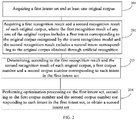
- FIG. 1 is an intent recognition optimization processing method provided by an embodiment of the present application. As shown in the FIG. 1 , the method includes: Step 101, acquiring a first intent set and at least one original corpus.
- the execution entity of this embodiment is a terminal device or a server or a controller provided on the terminal device, or other apparatuses or devices that can execute this embodiment.
- the execution entity is the application software set on the terminal device as an example for description.
- the first intent set obtained is the original intent set before optimization, including at least one category of intent.
- the function of the first intent set is for intent recognition model or artificial tagger to select intents for corpus tagging.
- the first intent set used in different application scenarios for corpus intent recognition is different.
- the first set of intents used in corpus intent recognition includes intents of purchase, product information consultation, product orientation selection, preferential consultation, etc.
- the first intent set used in corpus intent recognition includes intents of basic information, consulting coach, consulting address, general greeting, consulting registration, etc., and the first intent set used in different application scenarios is different.
- the at least one original corpus acquired may be an untagged original corpus, or a corpus that has been tagged using an intent recognition model, in which case the first recognition result that has been tagged using the intent recognition model is included.
- the corpus tagged with the intent recognition model in the working process of the automatic question-answering service can be selected, and the first intent set and the intent recognition model can be optimized by obtaining historical data in the working process of the automatic question answering service.
- Step 102 acquiring a first recognition result of each original corpus, where the first recognition result of any one of the original corpus includes a first intent corresponding to the original corpus recognized by an intent recognition model.
- the intent recognition model is used to perform intent recognition and tagging each unlabeled original corpus to obtain the first recognition result tagged with the intent recognition model.
- the first recognition result of each tagged original corpus is directly obtained.
- the first recognition result of any one of the original corpus includes the first intent corresponding to the original corpus recognized by the intent recognition model, that is, the first recognition result is the model recognition result, and the first intent is the predictive intent of the original corpus.
- the first recognition result of any one of the original corpus includes not only the first intent corresponding to the original corpus recognized by the intent recognition model, but also the intent confidence of the original corpus corresponding to each intent in the first intent set.
- the method for determining the intent confidence can be implemented by using the existing technology, which will not be repeated in this application.
- Step 103 acquiring a second recognition result of each original corpus, where the second recognition result of any one of the original corpus includes a second intent corresponding to the original corpus obtained through artificial recognition.
- the objective intent corresponding to each original corpus needs to be used, where the objective intent corresponding to each original corpus is an intent recognized artificially.
- the second recognition result of each original corpus is acquired through intent recognition and corpus tagging each original corpus by artificial tagger.
- the second recognition result of any one of the original corpus includes the second intent corresponding to the original corpus obtained through artificial recognition, that is, the second recognition result is an artificial recognition result, and the second intent is an objective intent.
- the first intent set is displayed to the artificial tagger for the artificial tagger to select the intent in the first intent set for corpus tagging, which can effectively reduce the professional requirements of corpus tagging and at the same time help improve the efficiency of corpus tagging.
- the first recognition result of each original corpus is displayed to the artificial tagger for the artificial tagger to judge the tagging result.
- the original corpus can be skipped directly, and at this time, it is assumed that the second recognition result of the original corpus is the same as the first recognition result, which can effectively improve the efficiency of artificial tagging of the original corpus, thereby effectively improving the optimization efficiency of the first intent set, and conducive to improving the optimization efficiency of the intent recognition model.
- Step 104 performing optimization processing on the first intent set to obtain a second intent set according to the first recognition result and the second recognition result of each original corpus.
- the first intent set according to the first recognition result and the second recognition result of each original corpus, that is, according to the model recognition result and artificial recognition result of each original corpus.
- the second recognition result is the second intent corresponding to the artificially recognized original corpus, that is, the objective intent of the original corpus, according to the objective intent and predictive intent of each original corpus
- the correct recognition result and the deviation recognition result corresponding to each of the intent in the first intent set can be determined.
- the correct recognition result is the number of original corpus of which the objective intent and the predictive intent are the same
- the deviation recognition result is the number of original corpus of which the objective intent is different from the predictive intent.
- the second intent set After obtaining the second intent set, performing corpus tagging to other corpora to realize automatic question-answer services by using the intent recognition model to select intents in the second intent set; also could be performing other optimization work by corpus tagging an intent selected in the second intent set for corpus tagging by artificial tagger. Since the second intent set is an optimized intent set, using the second intent set to perform intent recognition processing of the corpus realizes the optimization of corpus intent recognition.
- the second intent set is obtained by means of: acquiring a first intent set and at least one original corpus; acquiring a first recognition result of each original corpus, where the first recognition result of any one of the original corpus includes a first intent corresponding to the original corpus recognized by an intent recognition model; acquiring a second recognition result of each original corpus, where the second recognition result of any one of the original corpus includes a second intent corresponding to the original corpus obtained through artificial recognition; and performing optimization processing on the first intent set according to the first recognition result and the second recognition result of each original corpus.
- the optimization of the first intent set is performed according to the first recognition result and the second recognition result of each original corpus, i.e., according to the model recognition result and manual recognition result of each original corpus, where the method of optimizing an intent set is simple, and the optimization reference factors are diversified, and thus it is beneficial to realize effective intent set optimization, and then, it is beneficial to improve the recognition accuracy and efficiency of intent recognition by optimizing the intent set.
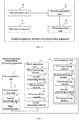
- FIG. 2 is a schematic flowchart of another intent recognition optimization processing method provided by an embodiment of the present application. As shown in the FIG. 2 , the method includes: Step 201, acquiring a first intent set and at least one original corpus.
- step 101 in FIG. 1 specifically, for this step, reference may be made to step 101 in FIG. 1 , and details are not described herein again.
- Step 202 acquiring a first recognition result and a second recognition result of each original corpus, where the first recognition result of any one of the original corpus includes a first intent corresponding to the original corpus recognized by the intent recognition model and the second recognition result includes a second intent corresponding to the original corpus obtained through artificial recognition.
- a greater confidence information entropy represents that the intent confidence of each intent in the first intent set corresponding to the original corpus is more average, which indicates that the uncertainty of the predictive intent of the original corpus is higher, and thus the tagging value of the original corpus is higher.
- a greater highest intent confidence represents that the original corpus is more concentrated to a certain intent, and thus the uncertainty of the predictive intent is lower, and the tagging value is lower; a larger confidence difference between the highest intent confidence and the second highest intent confidence represents that the original corpus is more concentrated to a certain intent, and thus the uncertainty of the predictive intent is lower, and the tagging value is lower.
- the second recognition result of the valuable corpus can also be used to retrain the intent recognition model to optimize the intent recognition model, which has a high efficiency and a significant optimization effect.
- the classification mark is conducive to helping the artificial tagger to quickly learn the value of each original corpus, and thus can help the artificial tagger adjust the tagging speed and unit tagging time according to the tagging value, which can effectively improve the efficiency of obtaining the second recognition result of the original corpus.
- a red mark to identify the original corpus that the tagging value thereof is higher than the first set threshold
- use a green mark to identify the original corpus that the tagging value thereof is lower than the second set threshold
- use a yellow mark to identify the original corpus that the tagging value thereof is higher than the first set threshold and lower than the second set threshold. It can be used for artificial tagger to intuitively and quickly learn the value of each original corpus based on the mark in color of the original corpus. When the second recognition result of the original corpus is obtained, the artificial tagger can be prompted to focus on tagging the original corpuses with mark in red or mark in yellow.
- Step 203 determining, according to the first recognition result and the second recognition result of each original corpus, a first corpus number and a second corpus number corresponding to each intent in the first intent set.
- the intent recognition model selects one of the intents from the first intent set as the first intent (that is, the predictive intent) of the original corpus, and when using the artificial tagger to recognize the original corpus, the artificial tagger also selects one of the intents from the first intent set as the second intent (that is, the objective intent) of the original corpus. Therefore, for the acquired at least one original corpus, the set of first intent of the at least one original corpus is a subset of the first intent set, and the set of second intent set is also a subset of the first intent set.
- Determining the first corpus number and the second corpus number corresponding to any intent in the first intent set includes: determining, according to the first recognition result of each of the original corpus, the number of the original corpus that the first intent thereof is the one of the original corpus as the first corpus number; determining, according to the second recognition result of each of the original corpus that the first intent thereof is the one of the first intent set, the number of original corpus that the second intent thereof is the one of the first intent set as the second corpus number.
- the model recognition result of the original corpus is the same as the artificial recognition result, that is, when the predictive intent of the original corpus is the same as the objective intent, it is determined that the model recognition result of the original corpus is correct.
- the first corpus number is the number of original corpus that the first intent thereof is the one in the said intent, determine, according to the second recognition result of each of the original corpus that the first intent thereof is the said intent, the number of original corpus that the second intent thereof is the said intent as the second corpus number.
- the ratio of the second corpus number to the first corpus number corresponding to an intent is higher, the accuracy of intent recognition for the intent is higher and the intent recognition effect corresponding to the intent is better.
- Step 204 performing optimization processing on the first intent set, according to the first corpus number and the second corpus number corresponding to each intent in the first intent set, to obtain a second intent set.
- the first intent set includes at least one intent
- the granularity of intent classification which is too fine or too vague, will affect the recognition efficiency and recognition accuracy of the intent recognition. Therefore, it is necessary to determine whether to optimize the intent set and how to optimize the intent set according to the accuracy of the intent set.
- the first accuracy rate is a ratio of a sum of the second corpus number corresponding to all intents in the first intent set to a sum of the first corpus number corresponding to all intents in the first intent set; and the second accuracy rate is the ratio of a sum of the second corpus number corresponding to all intents in the third intent set to a sum of the first corpus number corresponding to all intents in the third intent set.
- FIG. 2a is a schematic diagram of an intent merging according to an embodiment of the present application.
- the first corpus number corresponding to intent A, intent B, and intent C in the first intent set are 6, 7, and 7, respectively.
- the second corpus number corresponding to intent A, intent B, and intent C in the first intent set are 1, 3, and 4, respectively.
- the first accuracy rate of the first intent set is 0.4. Assuming that intent A and intent B are merged to obtain intent D.
- the first corpus number of the merged third intent set is 13, 7, respectively.
- the second corpus number is 10, 4, respectively, and the second accuracy rate of the third intent set is 0.7.
- the second accuracy rate is higher than the first accuracy rate, indicating that the design of the intent classification in the third intent set is more reasonable, and the intent classification of the first intent set needs to be merged.
- This example is an illustrative description of the first intent set.
- the number of intents in the first intent set is too much and the granularity of intent classification is too fine, for example, in the automatic question-answering service about hotel orders, there are as many as dozens of intents in a common intent set, using the intent recognition model to select intents in the first intent set with unreasonable classification and very fine classification for corpus intent recognition has the disadvantages that the efficiency of intent recognition is low and the recognition accuracy is affected.
- Use the method of this embodiment to simplify the number of intents and the classification of intents in a concentration of intents on the basis of ensuring the accuracy of intent recognition, which can effectively improve the recognition efficiency of intent recognition and is beneficial to realize more efficient and intelligent automated services.
- use the second recognition result of the original corpus to retrain the intent recognition model to optimize the intent recognition model that is, use the objective intent of the original corpus to train the intent recognition model to obtain an intent recognition model with better performance and higher recognition accuracy.
- the method of using the second recognition result of the original corpus to train the intent recognition model can be implemented by using existing technology, which will not be repeated in this application.
- acquire a first intent set and at least one original corpus acquire a first recognition result and a second recognition result of each original corpus, where the first recognition result of any one of the original corpus includes a first intent corresponding to the original corpus recognized by the intent recognition model and the second recognition result includes a second intent corresponding to the original corpus obtained through artificial recognition; determine, according to the first recognition result and the second recognition result of each original corpus, a first corpus number and a second corpus number corresponding to each intent in the first intent set; and perform optimization processing on the first intent set, according to the first corpus number and the second corpus number corresponding to each intent in the first intent set, to obtain a second intent set.
- the first corpus number and the second corpus number corresponding to each of the intent in the first intent set merge any two intents in the first intent set, and judge whether the accuracy of the intent set before and after the merge is improved.
- the accuracy rate increases, it means that the two intents are poorly distinguishable, and their corresponding original corpus is less different, and thus the answers to questions or services provided according to the two intents can't specifically address different needs of users.
- the intent classification is too fine or too vague for the two intents, so it is necessary to merge the two intents.
- an intent set with optimized intent classification can be obtained.
- the number of intents in the optimized intent set can be effectively simplified, which is conducive to improving the recognition efficiency and recognition accuracy of intent recognition, and is conducive to improving the service effect of the automatic question-answering service.
- the intent set optimization method is simple. When automatic question-answering service products is provided to service providers, service providers can optimize the intent set and intent recognition model by using artificial corpus tagging. The method for optimizing automatic question-answering service product is simple and the optimization efficiency is high.
- FIG. 3 is a schematic structural diagram of an intent recognition optimization processing apparatus according to an embodiment of the present application. As shown in the FIG. 3 , the apparatus includes:
- the second intent set is obtained by means of: acquiring a first intent set and at least one original corpus; acquiring a first recognition result of each original corpus, where the first recognition result of any one of the original corpus includes a first intent corresponding to the original corpus recognized by an intent recognition model; acquiring a second recognition result of each original corpus, where the second recognition result of any one of the original corpus includes a second intent corresponding to the original corpus obtained through artificial recognition; and performing optimization processing on the first intent set according to the first recognition result and the second recognition result of each original corpus.
- the optimization of the first intent set is performed according to the first recognition result and the second recognition result of each original corpus, i.e., according to the model recognition result and manual recognition result of each original corpus, where the method of optimizing an intent set is simple, and the optimization reference factors are diversified, and thus it is beneficial to realize effective intent set optimization, and then, it is beneficial to improve the recognition accuracy and efficiency of intent recognition by optimizing the intent set.
- FIG. 4 is a schematic structural diagram of another intent recognition optimization processing apparatus according to an embodiment of the present application.
- the first processing unit 4 including:
- the second processing subunit 42 includes:
- the first accuracy rate is a ratio of a sum of the second corpus number corresponding to all intents in the first intent set to a sum of the first corpus number corresponding to all intents in the first intent set; and the second accuracy rate is the ratio of a sum of the second corpus number corresponding to all intents in the third intent set to a sum of the first corpus number corresponding to all intents in the third intent set.
- the third acquisition unit 3 includes:
- the first recognition result of each original corpus further includes an intent confidence of each intent in the first intent set corresponding to the original corpus; and the third processing subunit 31 includes:
- the third acquisition unit 3 further includes: a fourth processing subunit 33, configured to determine that the second recognition result of an original corpus is the same tagging result as the first recognition result, if the second recognition result of the original corpus is not acquired.
- the apparatus further includes:
- acquire a first intent set and at least one original corpus acquire a first recognition result and a second recognition result of each original corpus, where the first recognition result of any one of the original corpus includes a first intent corresponding to the original corpus recognized by the intent recognition model and the second recognition result includes a second intent corresponding to the original corpus obtained through artificial recognition; determine, according to the first recognition result and the second recognition result of each original corpus, a first corpus number and a second corpus number corresponding to each intent in the first intent set; and perform optimization processing on the first intent set, according to the first corpus number and the second corpus number corresponding to each intent in the first intent set, to obtain a second intent set.
- the first corpus number and the second corpus number corresponding to each of the intent in the first intent set merge any two intents in the first intent set, and judge whether the accuracy of the intent set before and after the merge is improved.
- the accuracy rate increases, it means that the two intents are poorly distinguishable, and their corresponding original corpus is less different, and thus the answers to questions or services provided according to the two intents can't specifically address different needs of users.
- the intent classification is too fine or too vague for the two intents, so it is necessary to merge the two intents.
- an intent set with optimized intent classification can be obtained.
- the number of intents in the optimized intent set can be effectively simplified, which is conducive to improving the recognition efficiency and recognition accuracy of intent recognition, and is conducive to improving the service effect of the automatic question-answering service.
- the intent set optimization method is simple. When automatic question-answering service products is provided to service providers, service providers can optimize the intent set and intent recognition model by using artificial corpus tagging. The method for optimizing automatic question-answering service product is simple and the optimization efficiency is high.
- the present application also provides an electronic device and a readable storage medium.
- FIG. 5 it is a schematic structural diagram of an intent recognition optimization processing device according to intent recognition optimization an embodiment of the present application.
- Electronic devices are intended to represent various forms of digital computers, such as laptop computers, desktop computers, workstations, personal digital assistants, servers, blade servers, mainframe computers, and other suitable computers.
- Electronic devices can also represent various forms of mobile devices, such as personal digital processing, cellular phones, smart phones, wearable devices, and other similar computing devices.
- the components shown herein, their connections and relationships, and their functions are merely examples, and are not intended to limit the implementation of the application described and/or required herein.
- the electronic device includes: one or more processors 501, memory 502, and interfaces for connecting various components, including a high-speed interface and a low-speed interface.
- the various components are connected to each other by using different buses, and can be installed on a common motherboard or installed in other ways as required.
- the processor may process instructions executed in the electronic device, including instructions stored in or on the memory to display graphical information of the GUI on an external input/output device (such as a display device coupled to an interface).
- an external input/output device such as a display device coupled to an interface.
- multiple processors and/or multiple buses may be used with multiple memories and multiple memories if necessary.
- multiple electronic devices can be connected, and each device provides some necessary operations (for example, as a server array, a group of blade servers, or a multi-processor system).
- a processor 501 is taken as an example.
- the memory 502 is a non-transitory computer-readable storage medium provided by this application.
- the memory stores instructions that can be executed by at least one processor, so that the at least one processor executes the intent recognition optimization processing method provided in this application.
- the non-transitory computer-readable storage medium of the present application stores computer instructions, and the computer instructions are used to make a computer execute the intent recognition optimization processing method provided by the present application.
- the memory 502 can be used to store non-transitory software programs, non-transitory computer executable programs, and modules, such as the program instructions/modules corresponding to the intent recognition optimization processing method in the embodiment of the application.
- the processor 501 executes various functional applications and data processing of the server by running non-transitory software programs, instructions, and modules stored in the memory 502, that is, implementing the intent recognition optimization processing method in the foregoing method embodiment.
- the memory 502 may include an area for storing program and an area for storing data, where the area for storing program can store an operating system and an application program required by at least one function; the storage data area may store data and the like created according to the use of electronic device for intent recognition optimization processing.
- the memory 502 may include a high-speed random access memory, and may also include a non-transitory memory, such as at least one magnetic disk storage component, a flash memory component, or other non-transitory solid-state storage components.
- the memory 502 may optionally include a memory remotely provided with respect to the processor 501, and these remote memories may be connected to an electronic device for intent recognition optimization processing via a network. Examples of the aforementioned networks include, but are not limited to, the internet, corporate intranets, local area networks, mobile communication networks, and combinations thereof.
- the electronic device of the intent recognition optimization processing method may further include: input apparatus 503 and output apparatus 504.
- the processor 501, the memory 502, the input apparatus 503, and the output apparatus 504 may be connected by a bus or other means.
- the bus connection is taken as an example in FIG. 5 .
- the input apparatus 503 can receive inputted number or character information, and generate key signal input related to user settings and function control of the electronic device for intent recognition optimization processing. For example, touch screen, keypad, mouse, track pad, touch pad, pointing stick, one or more mouse buttons, track ball, joystick and other input apparatus.
- the output device 504 may include a display device, an auxiliary lighting apparatus (for example, LED), a tactile feedback apparatus (for example, a vibration motor), and the like.
- the display device may include, but is not limited to, a liquid crystal display (LCD), a light emitting diode (LED) display, and a plasma display. In some embodiments, the display device may be a touch screen.
- implementations of the systems and technologies described herein can be implemented in digital electronic circuit systems, integrated circuit systems, application specific ASICs (application specific integrated circuits), computer hardware, firmware, software, and/or combinations thereof.
- These various implementations may include: implemented in one or more computer programs, the one or more computer programs may be executed and/or interpreted on a programmable system including at least one programmable processor, and the programmable processor may be a dedicated or general programmable processor, which can receive data and instructions from the storage system, at least one input apparatus, and at least one output apparatus, and transmit the data and instructions to the storage system, the at least one input apparatus, and the at least one output apparatus.
- the program product includes: a computer program, the computer program is stored in a readable storage medium, at least one processor of the electronic device can read the computer program from a readable storage medium, and at least one processor executes the computer program to make the electronic device execute the solution provided by any one of the foregoing embodiments.
- machine-readable medium and “computer-readable medium” refer to any computer program product, device, and/or apparatus used to provide machine instructions and/or data to a programmable processor (For example, magnetic disks, optical disks, memory, programmable logic devices (PLD)), including machine-readable media that receive machine instructions as machine-readable signals.
- machine-readable signal refers to any signal used to provide machine instructions and/or data to a programmable processor.
- the systems and techniques described here can be implemented on a computer that has: display apparatuses used to display information to users (for example, CRT (Cathode Ray Tube) or LCD (Liquid Crystal Display) monitors); as well as a keyboard and a pointing apparatus (for example, a mouse or a trackball), the user can provide input to the computer through the keyboard and the pointing apparatus.
- display apparatuses used to display information to users
- LCD Liquid Crystal Display
- a keyboard and a pointing apparatus for example, a mouse or a trackball
- Other types of apparatuses can also be used to provide interaction with users; for example, the feedback provided to the user can be any form of sensory feedback (for example, visual feedback, auditory feedback, or tactile feedback);and can use any form (including sound input, voice input or tactile input) to receive input from the user.
- the systems and technologies described herein can be implemented in a computing system that includes back-end components (for example, as a data server), or a computing system that includes middleware components (for example, an application server), or a computing system that includes front-end components (for example, a user computer with a graphical user interface or web browser, through which the user can interact with the implementation of the system and technology described herein), or any combination of back-end components, middleware components, or front-end components in a computing system.
- the components of the system can be connected to each other through any form or medium of digital data communication (for example, a communication network). Examples of communication networks include: local area network (LAN), wide area network (WAN), and the Internet.
- the computer system can include clients and servers.
- the client and server are generally far away from each other and usually interact through a communication network.
- the relationship between the client and the server is generated through computer programs running on the corresponding computers and having a client-server relationship with each other.
- the above-mentioned embodiments can refer to each other and learn from each other, and the same or similar steps and nouns will not be repeated.
Landscapes
- Engineering & Computer Science (AREA)
- Theoretical Computer Science (AREA)
- Physics & Mathematics (AREA)
- General Physics & Mathematics (AREA)
- General Engineering & Computer Science (AREA)
- Business, Economics & Management (AREA)
- Artificial Intelligence (AREA)
- Data Mining & Analysis (AREA)
- Computational Linguistics (AREA)
- Databases & Information Systems (AREA)
- Accounting & Taxation (AREA)
- Finance (AREA)
- Mathematical Physics (AREA)
- Strategic Management (AREA)
- Development Economics (AREA)
- Economics (AREA)
- Marketing (AREA)
- General Business, Economics & Management (AREA)
- General Health & Medical Sciences (AREA)
- Health & Medical Sciences (AREA)
- Audiology, Speech & Language Pathology (AREA)
- Human Computer Interaction (AREA)
- Game Theory and Decision Science (AREA)
- Entrepreneurship & Innovation (AREA)
- Software Systems (AREA)
- Computing Systems (AREA)
- Medical Informatics (AREA)
- Evolutionary Computation (AREA)
- Computer Vision & Pattern Recognition (AREA)
- Image Analysis (AREA)
- Information Retrieval, Db Structures And Fs Structures Therefor (AREA)
- Machine Translation (AREA)
- Character Discrimination (AREA)
Abstract
Description
- The present application relates to the field of internet technologies and, in particular, to an intent recognition optimization processing method, an apparatus, a device, a storage medium and a computer program product.
- With rapid development of internet technologies, the automatic question and answering service has been widely promoted and applied, where intent recognition of the acquired corpus is one of the important contents thereof. In the process of intent recognition of the corpus, it is necessary to determine and provide an intent set in advance, so that an intent recognition model or an artificial tagger can select intents from the intent set for corpus tagging.
- In the prior art, after obtaining the intent set by learning the sample data, the fixed intent set obtained by learning is used for selecting the intent therein by the intent recognition model or the artificial tagger to perform the corpus tagging.
- However, when the classification granularity of the intent set obtained by learning is too fine or too vague, the recognition efficiency and the accuracy rate of the corpus intent recognition would be significantly affected, which in turn affects the rate and the accuracy of the corpus tagging.
- Embodiments of the present application provide an intent recognition optimization processing method, an apparatus, a device, a storage medium and a computer program product, which are used to solve the problem of low intent recognition efficiency and unguaranteed accuracy caused by too fine or too vague intent classification.
- In a first aspect of the present application, an intent recognition optimization processing method is provided, including:
- acquiring a first intent set and at least one original corpus;
- acquiring a first recognition result of each original corpus, where the first recognition result of any one of the original corpus includes a first intent corresponding to the original corpus recognized by an intent recognition model;
- acquiring a second recognition result of each original corpus, where the second recognition result of any one of the original corpus includes a second intent corresponding to the original corpus obtained through artificial recognition; and
- performing optimization processing on the first intent set, according to the first recognition result and the second recognition result of each original corpus, to obtain a second intent set.
- The optimization of the first intent set is achieved according to the model recognition result and artificial tagging result of each original corpus, i.e. according to the predictive intent and objective intent of each original corpus. The practicality of the optimization manner of the intent set is high and the optimization reference factors are diversity, and the recognition efficiency and the recognition accuracy of the intent recognition model can be significantly improved when performing intent recognition using the second intent set obtained through the optimization.
- Further, the performing optimization processing on the first intent set, according to the first recognition result and the second recognition result of each original corpus, to obtain a second intent set, includes:
- determining, according to the first recognition result and the second recognition result of each original corpus, a first corpus number and a second corpus number corresponding to each intent in the first intent set; and
- performing optimization processing on the first intent set, according to the first corpus number and the second corpus number corresponding to each intent in the first intent set, to obtain a second intent set; and
- where the determining a first corpus number and a second corpus number of corresponding to each intent in the first intent set, includes performing following steps for each intent in the first intent set:
- determining, according to the first recognition result of each of the original corpus, the number of original corpus that the first intent thereof is the one of the first intent set as the first corpus number; and
- determining, according to the second recognition result of each of the original corpus that the first intent thereof is the one of the first intent set, the number of original corpus that the second intent thereof is the one of the first intent set as the second corpus number.
- By means of performing optimization processing on the first intent set according to the first corpus number and the second corpus number corresponding to each intent in the first intent set, i.e. according to the number of original corpus corresponding to each intent in the first intent set that the predictive intent of the original corpus is the one of the first intent set, and the number of original corpus corresponding to each intent in the first intent set that both the objective intent and the predictive intent are the one of the first intent set, where the optimization reference factors are diversified and the optimization effect is good.
- Further, the performing optimization processing on the first intent set, according to the first corpus number and the second corpus number corresponding to each intent in the first intent set, to obtain a second intent set, includes:
- determining a first accuracy rate of the first intent set, according to the first corpus number and the second corpus number corresponding to each intent in the first intent set;
- repeating following steps, until whether every two intents in the first intent set need to be merged is determined: determining, according to the first corpus number and the second corpus number corresponding to any two intents in the first intent set, a second accuracy rate corresponding to a third intent set obtained by merging the two intents, and determining that the two intents need to be merged when the second accuracy rate is higher than the first accuracy rate; and
- merging any two intents that need to be merged in the first intent set, to obtain the second intent set.
- Determining whether any two intents need to be merged according to the accuracy rates of the first intent set before and after merging the two intents in a first intent set, and thus a second intent set with higher-precision can be obtained by simplifying the number of intents and classification of intents in the first intent set, which can effectively improve the recognition efficiency and recognition accuracy of intent recognition, and is conducive to achieving more efficient and intelligent automation service.
- Further, the first accuracy rate is the ratio of a sum of the second corpus number corresponding to all intents in the first intent set to a sum of the first corpus number corresponding to all intents in the first intent set; and the second accuracy rate is the ratio of a sum of the second corpus number corresponding to all intents in the third intent set to a sum of the first corpus number corresponding to all intents in the third intent set.
- Determining whether this any two intents need to be merged according to the accuracy rates of the intent sets before and after merging any two intents in the first intent set, can benefits the optimization of the intent set, and thus the technical effect of dual improvements of intent recognition efficiency and recognition accuracy can be achieved.
- Further, the acquiring the second recognition result of each original corpus includes:
- determining a tagging value of each original corpus according to the first recognition result of each original corpus, and determining an original corpus that the tagging value thereof exceeds a set threshold as a valuable corpus, to obtain at least one valuable corpus; and
- acquiring the second recognition result of each valuable corpus.
- Determining the valuable corpus according to the first recognition result of each original corpus, and acquiring the artificial recognition result of each valuable corpus, are beneficial to reduce the workload of the artificial corpus tagging, and the optimization efficiency of intent recognition optimization can be effectively improved without compromising the optimization effect.
- Further, the first recognition result of each original corpus further includes an intent confidence of each intent in the first intent set corresponding to the original corpus; and the determining, according to the first recognition result of each original corpus, a tagging value of each original corpus, includes:
- determining, according to an intent confidence of each intent in the first intent set corresponding to the original corpus, a confidence information entropy, a highest intent confidence and a secondary highest intent confidence corresponding to each of the original corpus; and
- determining, according to the confidence information entropy, the highest intent confidence and the secondary highest intent confidence corresponding to each of the original corpus, a tagging value of each of the original corpus.
- By means of determining the valuable corpus according to the intent confidence of each intent in the first intent set corresponding to the original corpus, the determined valuable corpus can represent all the original corpus, and thus the optimization effect is good and the optimization efficiency is high by using the valuable corpus to optimize the intent set. Further, the acquiring the second recognition result of each original corpus includes:
determining that the second recognition result of an original corpus is the same tagging result as the first recognition result, if the second recognition result of the original corpus is not acquired. - When a modeling recognition result of an original corpus is approved by the artificial tagger, the original corpus can be skipped without tagging and the artificial recognition result of the original corpus is determined to be the same as the model recognition result, which is beneficial reduce the workload of artificial taggers and improve the efficiency of the intent set optimization.
- Further, the method further includes: selecting an intent from the second intent set to perform corpus tagging using the intent recognition model after the second intent set is obtained.
- Performing corpus intent recognition using the second intent set during the daily work of the intent recognition model after the optimized second intent set is obtained, is beneficial to improve the accuracy and recognition efficiency of corpus intent recognition.
- Further, the method further includes: training the intent recognition model according to the second recognition result of each original corpus.
- Retraining the intent recognition model to achieve the optimization work of the intent recognition model by using artificial recognition result of each original corpus, i.e. according to objective intent of each original corpus, is beneficial to improve the recognition precision and recognition efficiency of the corpus intent recognition and to improve service effect of the automatic question and answering service.
- In a second aspect of the present application, an intent recognition optimization processing apparatus is provided, including:
- a first acquisition unit, configured to acquire a first intent set and at least one original corpus;
- a second acquisition unit, configured to acquire a first recognition result of each original corpus, where the first recognition result of any one of the original corpus includes a first intent corresponding to the original corpus recognized by an intent recognition model;
- a third acquisition unit, configured to acquire a second recognition result of each original corpus, wherein the second recognition result of any one of the original corpus includes a second intent corresponding to the original corpus obtained through artificial recognition; and;
- a first processing unit, configured to perform optimization processing on the first intent set, according to the first recognition result and the second recognition result of each original corpus, to obtain a second intent set.
- Further, the first processing unit includes:
- a first processing subunit, configured to determine a first corpus number and a second corpus number corresponding to each intent in the first intent set according to the first recognition result and the second recognition result of each original corpus; and
- a second processing subunit, configured to perform optimization processing on the first intent set to obtain a second intent set according to the first corpus number and the second corpus number corresponding to each intent in the first intent set; and
- where the determining a first corpus number and a second corpus number corresponding to each intent in the first intent set, includes:
- determining, according to the first recognition result of each of the original corpus, the number of original corpus that the first intent thereof is the one of the first intent set as the first corpus number; and
- determining, according to the second recognition result of each of the original corpus that the first intent thereof is the one of the first intent set, the number of original corpus that the second intent thereof is the one of the first intent set as the second corpus number.
- Further, the second processing subunit, includes:
- a first processing module, configured to determine a first accuracy rate of the first intent set, according to the first corpus number and the second corpus number corresponding to each intent in the first intent set;
- a second processing module, configured to repeat following steps, until whether every two intents in the first intent set need to be merged is determined: determining, according to the first corpus number and the second corpus number corresponding to any two intents in the first intent set, a second accuracy rate corresponding to a third intent set obtained by merging the two intents, and determining that the two intents need to be merged when the second accuracy rate is higher than the first accuracy rate; and
- a third processing module, configured to merge any two intents that need to be merged in the first intent set, to obtain the second intent set.
- Further, the first accuracy rate is the ratio of a sum of the second corpus number corresponding to all intents in the first intent set to a sum of the first corpus number corresponding to all intents in the first intent set; and the second accuracy rate is the ratio of a sum of the second corpus number corresponding to all intents in the third intent set to a sum of the first corpus number corresponding to all intents in the third intent set.
- Further, the third acquisition unit includes:
- a third processing subunit, configured to determine a tagging value of each original corpus according to the first recognition result of each original corpus, and determine an original corpus that the tagging value thereof exceeds a set threshold as a valuable corpus, to obtain at least one valuable corpus; and
- a first acquisition subunit, configured to acquire the second recognition result of each valuable corpus.
- Further, the first recognition result of each original corpus further includes an intent confidence of each intent in the first intent set corresponding to the original corpus; and the third processing subunit includes:
- a fourth processing module, configured to determine a confidence information entropy, a highest intent confidence and a secondary highest intent confidence corresponding to each original corpus according to the intent confidence of each intent in the first intent set corresponding to the original corpus; and
- a fifth processing module, configured to determine a tagging value of each original corpus according to the confidence information entropy, the highest intent confidence and the secondary highest intent confidence corresponding to each original corpus.
- Further, the third acquisition unit further includes:
a fourth processing subunit, configured to determine that the second recognition result of an original corpus is the same tagging result as the first recognition result, if the second recognition result of the original corpus is not acquired. - Further, the apparatus further includes:
a second processing unit, configured to train the intent recognition model according to the second recognition result of each original corpus. - Further, the apparatus further includes:
a third processing unit, configured to select an intent from the second intent set to perform corpus tagging using the intent recognition model after the second intent set is obtained. - In a third aspect of the present application, an electronic device is provided, including:
- at least one processor; and
- a memory communicatively coupled to the at least one processor; where
- the memory is configured to store computer instructions executable by the at least one processor, the computer instructions being executed by the at least one processor to enable the at least one processor to implement the method provided in any implementation of the first aspect.
- In a fourth aspect of the present application, a non-transitory computer readable storage medium storing computer instructions is provided, and the computer instructions are used to implement the method provided in any implementation of the first aspect.
- In a fifth aspect of the present application, a computer program product is provided, which includes: a computer program, the computer program is stored in a readable storage medium, at least one processor of the electronic device can read the computer program from the readable storage medium, and the at least one processor executes the computer program such that the electronic device executes the method provided in any implementation of the first aspect.
- One of the embodiments of aforementioned application has the following advantages or benefits: a reasonable classification granularity of the intent in the intent set, high intent recognition efficiency, and a good effect of the intent recognition. By adopting the technical means including: acquiring a first intent set and at least one original corpus; acquiring a first recognition result of each original corpus, where the first recognition result of any one of the original corpus includes a first intent corresponding to the original corpus recognized by an intent recognition model; acquiring a second recognition result of each original corpus, where the second recognition result of any one of the original corpus includes a second intent corresponding to the original corpus obtained through artificial recognition; and performing optimization processing on the first intent set to obtain a second intent set according to the first recognition result and the second recognition result of each original corpus, the problem of low intent recognition efficiency and unguaranteed accuracy due to the too fine or too vague intent classification granularity of the intent set in the intent recognition related technology is overcome.
- Other effects of the aforementioned possible implementations will be described below in conjunction with specific embodiments.
- The accompanying drawings are for a better understanding of the present solution and are not intended to limit the application.
-
FIG. 1 is a schematic flowchart of an intent recognition optimization processing method provided by an embodiment of the present application; -
FIG. 2 is a schematic flowchart of another intent recognition optimization processing method provided by an embodiment of the present application; -
FIG. 2a is a schematic diagram of an intent merging according to an embodiment of the present application; -
FIG.3 is a schematic structural diagram of an intent recognition optimization processing apparatus according to an embodiment of the present application; -
FIG. 4 is a schematic structural diagram of another intent recognition optimization processing apparatus according to an embodiment of the present application; -
FIG. 5 is a schematic structural diagram of an intent recognition optimization processing device according to an embodiment of the present application. - The following describes exemplary embodiments of the present application with reference to the accompanying drawings, which include various details of the embodiments of the present application to facilitate understanding, and should be regarded as merely exemplary. Therefore, those of ordinary skilled in the art should realize that various changes and modifications can be made to the embodiments described herein without departing from the scope and spirit of the present application. Likewise, for clarity and conciseness, descriptions of well-known functions and structures are omitted in the following description.
- Application scenarios of this application: with rapid development of internet technologies, the automatic question and answering service has been widely promoted and applied, for example, in common areas such as e-commerce customer service, information query, self-service order processing, and search using engine search, automatic question and answer services are widely used. During the automatic question and answer service, the server obtains a corpus entered by a user, recognizes an intent and slot of the obtained corpus, and then returns the answer to the question matching the corpus or provides corresponding services, where intent recognition of the acquired corpus is one of the important contents thereof. In the process of intent recognition of the corpus, it is necessary to determine and provide an intent set in advance, so that an intent recognition model or an artificial tagger can select intents from the intent set for corpus tagging. In the prior art, after obtaining the intent set by learning the sample data, the fixed intent set obtained by learning is used for selecting the intent therein by the intent recognition model or the artificial tagger to perform the corpus tagging.
- However, when the classification granularity of the intent set obtained by learning is too fine or too vague, the recognition efficiency and the accuracy rate of the corpus intent recognition would be significantly affected, which in turn affects the rate and the accuracy of the corpus tagging.
- The intent recognition optimization processing method, the apparatus, the device, and the storage medium provided in this application are intended to solve the above technical problems.
-
FIG. 1 is an intent recognition optimization processing method provided by an embodiment of the present application. As shown in theFIG. 1 , the method includes:
Step 101, acquiring a first intent set and at least one original corpus. - In this embodiment, specifically, the execution entity of this embodiment is a terminal device or a server or a controller provided on the terminal device, or other apparatuses or devices that can execute this embodiment. In this embodiment, the execution entity is the application software set on the terminal device as an example for description.
- The first intent set obtained is the original intent set before optimization, including at least one category of intent. The function of the first intent set is for intent recognition model or artificial tagger to select intents for corpus tagging. The first intent set used in different application scenarios for corpus intent recognition is different. Exemplarily, in the e-commerce customer service, the first set of intents used in corpus intent recognition includes intents of purchase, product information consultation, product orientation selection, preferential consultation, etc. In fitness self-service, the first intent set used in corpus intent recognition includes intents of basic information, consulting coach, consulting address, general greeting, consulting registration, etc., and the first intent set used in different application scenarios is different.
- The at least one original corpus acquired may be an untagged original corpus, or a corpus that has been tagged using an intent recognition model, in which case the first recognition result that has been tagged using the intent recognition model is included. Specifically, the corpus tagged with the intent recognition model in the working process of the automatic question-answering service can be selected, and the first intent set and the intent recognition model can be optimized by obtaining historical data in the working process of the automatic question answering service.
-
Step 102, acquiring a first recognition result of each original corpus, where the first recognition result of any one of the original corpus includes a first intent corresponding to the original corpus recognized by an intent recognition model. - In this embodiment, specifically, when the acquired original corpus is an untagged corpus, the intent recognition model is used to perform intent recognition and tagging each unlabeled original corpus to obtain the first recognition result tagged with the intent recognition model. When the acquired original corpus is a tagged corpus, the first recognition result of each tagged original corpus is directly obtained. The first recognition result of any one of the original corpus includes the first intent corresponding to the original corpus recognized by the intent recognition model, that is, the first recognition result is the model recognition result, and the first intent is the predictive intent of the original corpus. The first recognition result of any one of the original corpus includes not only the first intent corresponding to the original corpus recognized by the intent recognition model, but also the intent confidence of the original corpus corresponding to each intent in the first intent set. The method for determining the intent confidence can be implemented by using the existing technology, which will not be repeated in this application.
-
Step 103, acquiring a second recognition result of each original corpus, where the second recognition result of any one of the original corpus includes a second intent corresponding to the original corpus obtained through artificial recognition. - In this embodiment, specifically, in the optimization processing of the first intent set or the intent recognition model, the objective intent corresponding to each original corpus needs to be used, where the objective intent corresponding to each original corpus is an intent recognized artificially. The second recognition result of each original corpus is acquired through intent recognition and corpus tagging each original corpus by artificial tagger. The second recognition result of any one of the original corpus includes the second intent corresponding to the original corpus obtained through artificial recognition, that is, the second recognition result is an artificial recognition result, and the second intent is an objective intent.
- When acquiring the second recognition result of each original corpus, the first intent set is displayed to the artificial tagger for the artificial tagger to select the intent in the first intent set for corpus tagging, which can effectively reduce the professional requirements of corpus tagging and at the same time help improve the efficiency of corpus tagging. When the acquired original corpus is an already tagged corpus, the first recognition result of each original corpus is displayed to the artificial tagger for the artificial tagger to judge the tagging result. When the artificial tagger agrees to the first recognition result of a certain original corpus, the original corpus can be skipped directly, and at this time, it is assumed that the second recognition result of the original corpus is the same as the first recognition result, which can effectively improve the efficiency of artificial tagging of the original corpus, thereby effectively improving the optimization efficiency of the first intent set, and conducive to improving the optimization efficiency of the intent recognition model.
-
Step 104, performing optimization processing on the first intent set to obtain a second intent set according to the first recognition result and the second recognition result of each original corpus. - In this embodiment, specifically, optimizing the first intent set, according to the first recognition result and the second recognition result of each original corpus, that is, according to the model recognition result and artificial recognition result of each original corpus. Since the second recognition result is the second intent corresponding to the artificially recognized original corpus, that is, the objective intent of the original corpus, according to the objective intent and predictive intent of each original corpus, the correct recognition result and the deviation recognition result corresponding to each of the intent in the first intent set can be determined. The correct recognition result is the number of original corpus of which the objective intent and the predictive intent are the same, and the deviation recognition result is the number of original corpus of which the objective intent is different from the predictive intent. Thus whether the classification of intent in the first intent set is reasonable can be determined, and the second intent set is obtained by optimizing the first intent set.
- After obtaining the second intent set, performing corpus tagging to other corpora to realize automatic question-answer services by using the intent recognition model to select intents in the second intent set; also could be performing other optimization work by corpus tagging an intent selected in the second intent set for corpus tagging by artificial tagger. Since the second intent set is an optimized intent set, using the second intent set to perform intent recognition processing of the corpus realizes the optimization of corpus intent recognition.
- In this embodiment, the second intent set is obtained by means of: acquiring a first intent set and at least one original corpus; acquiring a first recognition result of each original corpus, where the first recognition result of any one of the original corpus includes a first intent corresponding to the original corpus recognized by an intent recognition model; acquiring a second recognition result of each original corpus, where the second recognition result of any one of the original corpus includes a second intent corresponding to the original corpus obtained through artificial recognition; and performing optimization processing on the first intent set according to the first recognition result and the second recognition result of each original corpus. The optimization of the first intent set is performed according to the first recognition result and the second recognition result of each original corpus, i.e., according to the model recognition result and manual recognition result of each original corpus, where the method of optimizing an intent set is simple, and the optimization reference factors are diversified, and thus it is beneficial to realize effective intent set optimization, and then, it is beneficial to improve the recognition accuracy and efficiency of intent recognition by optimizing the intent set.
-
FIG. 2 is a schematic flowchart of another intent recognition optimization processing method provided by an embodiment of the present application. As shown in theFIG. 2 , the method includes:
Step 201, acquiring a first intent set and at least one original corpus. - In this embodiment, specifically, for this step, reference may be made to step 101 in
FIG. 1 , and details are not described herein again. -
Step 202, acquiring a first recognition result and a second recognition result of each original corpus, where the first recognition result of any one of the original corpus includes a first intent corresponding to the original corpus recognized by the intent recognition model and the second recognition result includes a second intent corresponding to the original corpus obtained through artificial recognition. - In this embodiment, specifically, before acquiring the second recognition result of each original corpus, in order to improve the optimization efficiency of intent recognition optimization and reduce the workload of artificial tagger, determine a tagging value of each original corpus according to the first recognition result of each original corpus, and obtain the valuable corpus by filtering the acquired original corpus according to the tagging value of each original corpus, display the obtained valuable corpus to the artificial tagger, and obtain the second recognition result of the valuable corpus of the artificial tagger.
- Determining the confidence information entropy, the highest intent confidence and the second highest intent confidence of the original corpus according to the intent confidence of each of the intent in the first intent set corresponding to any one of the original corpus. A greater confidence information entropy represents that the intent confidence of each intent in the first intent set corresponding to the original corpus is more average, which indicates that the uncertainty of the predictive intent of the original corpus is higher, and thus the tagging value of the original corpus is higher. A greater highest intent confidence represents that the original corpus is more concentrated to a certain intent, and thus the uncertainty of the predictive intent is lower, and the tagging value is lower; a larger confidence difference between the highest intent confidence and the second highest intent confidence represents that the original corpus is more concentrated to a certain intent, and thus the uncertainty of the predictive intent is lower, and the tagging value is lower.
- Using characters s, m, d to respectively represent the confidence information entropy, the highest intent confidence, and the difference between the highest intent confidence and the second highest intent confidence of any original corpus, and normalize s, m, d respectively, and then the tagging value of the original corpus is determined as v=(1-s+m+d)/3. Take the original corpus that the tagging value thereof exceeds a set threshold as the valuable corpus, obtain the second recognition result of the valuable corpus and perform optimization processing on the first intent set according to the first recognition result and the second recognition result of the valuable corpus, according to which, the workload of the artificial tagger can be effectively reduced without affecting the optimization effect of the intent set, and the optimization efficiency of the intent set can be improved. The second recognition result of the valuable corpus can also be used to retrain the intent recognition model to optimize the intent recognition model, which has a high efficiency and a significant optimization effect.
- After determining the tagging value of each original corpus, classify and mark the original corpus according to preset division thresholds, and send the original corpus with the classification mark to the artificial tagger for corpus tagging according to the classification mark, where the artificial tagger can determine whether to pay extra attention or quickly browse for tagging according to the classification mark. When the artificial tagger is faced with a large amount of original corpuses, the classification mark is conducive to helping the artificial tagger to quickly learn the value of each original corpus, and thus can help the artificial tagger adjust the tagging speed and unit tagging time according to the tagging value, which can effectively improve the efficiency of obtaining the second recognition result of the original corpus. Exemplarily, use a red mark to identify the original corpus that the tagging value thereof is higher than the first set threshold; use a green mark to identify the original corpus that the tagging value thereof is lower than the second set threshold; and use a yellow mark to identify the original corpus that the tagging value thereof is higher than the first set threshold and lower than the second set threshold. It can be used for artificial tagger to intuitively and quickly learn the value of each original corpus based on the mark in color of the original corpus. When the second recognition result of the original corpus is obtained, the artificial tagger can be prompted to focus on tagging the original corpuses with mark in red or mark in yellow.
-
Step 203, determining, according to the first recognition result and the second recognition result of each original corpus, a first corpus number and a second corpus number corresponding to each intent in the first intent set. - In this embodiment, specifically, when using the intent recognition model to recognize the original corpus, the intent recognition model selects one of the intents from the first intent set as the first intent (that is, the predictive intent) of the original corpus, and when using the artificial tagger to recognize the original corpus, the artificial tagger also selects one of the intents from the first intent set as the second intent (that is, the objective intent) of the original corpus. Therefore, for the acquired at least one original corpus, the set of first intent of the at least one original corpus is a subset of the first intent set, and the set of second intent set is also a subset of the first intent set.
- Determining the first corpus number and the second corpus number corresponding to any intent in the first intent set, includes: determining, according to the first recognition result of each of the original corpus, the number of the original corpus that the first intent thereof is the one of the original corpus as the first corpus number; determining, according to the second recognition result of each of the original corpus that the first intent thereof is the one of the first intent set, the number of original corpus that the second intent thereof is the one of the first intent set as the second corpus number. For any original corpus, when the model recognition result of the original corpus is the same as the artificial recognition result, that is, when the predictive intent of the original corpus is the same as the objective intent, it is determined that the model recognition result of the original corpus is correct. Determine the first corpus number of any intent in the first intent set, where the first corpus number is the number of original corpus that the first intent thereof is the one in the said intent, determine, according to the second recognition result of each of the original corpus that the first intent thereof is the said intent, the number of original corpus that the second intent thereof is the said intent as the second corpus number. When the ratio of the second corpus number to the first corpus number corresponding to an intent is higher, the accuracy of intent recognition for the intent is higher and the intent recognition effect corresponding to the intent is better.
-
Step 204, performing optimization processing on the first intent set, according to the first corpus number and the second corpus number corresponding to each intent in the first intent set, to obtain a second intent set. - In this embodiment, specifically, the first intent set includes at least one intent, and the granularity of intent classification, which is too fine or too vague, will affect the recognition efficiency and recognition accuracy of the intent recognition. Therefore, it is necessary to determine whether to optimize the intent set and how to optimize the intent set according to the accuracy of the intent set.
- Determining a first accuracy rate of the first intent set, according to the first corpus number and the second corpus number corresponding to each intent in the first intent set; repeat following steps, until whether every two intents in the first intent set need to be merged is determined: determining, according to the first corpus number and the second corpus number corresponding to any two intents in the first intent set, a second accuracy rate corresponding to a third intent set obtained by merging the two intents, and determining that the two intents need to be merged when the second accuracy rate is higher than the first accuracy rate; merging any two intents that need to be merged in the first intent set, to obtain the second intent set. The first accuracy rate is a ratio of a sum of the second corpus number corresponding to all intents in the first intent set to a sum of the first corpus number corresponding to all intents in the first intent set; and the second accuracy rate is the ratio of a sum of the second corpus number corresponding to all intents in the third intent set to a sum of the first corpus number corresponding to all intents in the third intent set.
-
FIG. 2a is a schematic diagram of an intent merging according to an embodiment of the present application. The first corpus number corresponding to intent A, intent B, and intent C in the first intent set are 6, 7, and 7, respectively. The second corpus number corresponding to intent A, intent B, and intent C in the first intent set are 1, 3, and 4, respectively. The first accuracy rate of the first intent set is 0.4. Assuming that intent A and intent B are merged to obtain intent D. The first corpus number of the merged third intent set is 13, 7, respectively. The second corpus number is 10, 4, respectively, and the second accuracy rate of the third intent set is 0.7. The second accuracy rate is higher than the first accuracy rate, indicating that the design of the intent classification in the third intent set is more reasonable, and the intent classification of the first intent set needs to be merged. This example is an illustrative description of the first intent set. When the number of intents in the first intent set is too much and the granularity of intent classification is too fine, for example, in the automatic question-answering service about hotel orders, there are as many as dozens of intents in a common intent set, using the intent recognition model to select intents in the first intent set with unreasonable classification and very fine classification for corpus intent recognition has the disadvantages that the efficiency of intent recognition is low and the recognition accuracy is affected. Use the method of this embodiment to simplify the number of intents and the classification of intents in a concentration of intents on the basis of ensuring the accuracy of intent recognition, which can effectively improve the recognition efficiency of intent recognition and is beneficial to realize more efficient and intelligent automated services. - After completing the optimization processing for the first intent set, use the optimized second intent set to participate in the intent recognition of the corpus which is specifically used for the intent recognition model or manual annotators to select intents from the second intent set for intent recognition and corpus annotation.
- In a possible implementation, use the second recognition result of the original corpus to retrain the intent recognition model to optimize the intent recognition model, that is, use the objective intent of the original corpus to train the intent recognition model to obtain an intent recognition model with better performance and higher recognition accuracy. The method of using the second recognition result of the original corpus to train the intent recognition model can be implemented by using existing technology, which will not be repeated in this application.
- In this embodiment, acquire a first intent set and at least one original corpus; acquire a first recognition result and a second recognition result of each original corpus, where the first recognition result of any one of the original corpus includes a first intent corresponding to the original corpus recognized by the intent recognition model and the second recognition result includes a second intent corresponding to the original corpus obtained through artificial recognition; determine, according to the first recognition result and the second recognition result of each original corpus, a first corpus number and a second corpus number corresponding to each intent in the first intent set; and perform optimization processing on the first intent set, according to the first corpus number and the second corpus number corresponding to each intent in the first intent set, to obtain a second intent set. According to the first corpus number and the second corpus number corresponding to each of the intent in the first intent set, merge any two intents in the first intent set, and judge whether the accuracy of the intent set before and after the merge is improved. When the accuracy rate increases, it means that the two intents are poorly distinguishable, and their corresponding original corpus is less different, and thus the answers to questions or services provided according to the two intents can't specifically address different needs of users. There is a problem that the intent classification is too fine or too vague for the two intents, so it is necessary to merge the two intents. Obviously, after determining whether any two intents in the first intent set need to be merged, and after merging the intents that need to be merged, an intent set with optimized intent classification can be obtained. The number of intents in the optimized intent set can be effectively simplified, which is conducive to improving the recognition efficiency and recognition accuracy of intent recognition, and is conducive to improving the service effect of the automatic question-answering service. The intent set optimization method is simple. When automatic question-answering service products is provided to service providers, service providers can optimize the intent set and intent recognition model by using artificial corpus tagging. The method for optimizing automatic question-answering service product is simple and the optimization efficiency is high.
-
FIG. 3 is a schematic structural diagram of an intent recognition optimization processing apparatus according to an embodiment of the present application. As shown in theFIG. 3 , the apparatus includes: - a
first acquisition unit 1, configured to acquire a first intent set and at least one original corpus; - a
second acquisition unit 2, configured to acquire a first recognition result of each original corpus, where the first recognition result of any one of the original corpus includes a first intent corresponding to the original corpus recognized by the intent recognition model; - a
third acquisition unit 3, configured to acquire a second recognition result of each original corpus, where the second recognition result of any one of the original corpus includes a second intent corresponding to the original corpus obtained through artificial recognition; - a
first processing unit 4, configured to perform optimization processing on the first intent set, according to the first recognition result and the second recognition result of each original corpus, to obtain a second intent set. - In this embodiment, the second intent set is obtained by means of: acquiring a first intent set and at least one original corpus; acquiring a first recognition result of each original corpus, where the first recognition result of any one of the original corpus includes a first intent corresponding to the original corpus recognized by an intent recognition model; acquiring a second recognition result of each original corpus, where the second recognition result of any one of the original corpus includes a second intent corresponding to the original corpus obtained through artificial recognition; and performing optimization processing on the first intent set according to the first recognition result and the second recognition result of each original corpus. The optimization of the first intent set is performed according to the first recognition result and the second recognition result of each original corpus, i.e., according to the model recognition result and manual recognition result of each original corpus, where the method of optimizing an intent set is simple, and the optimization reference factors are diversified, and thus it is beneficial to realize effective intent set optimization, and then, it is beneficial to improve the recognition accuracy and efficiency of intent recognition by optimizing the intent set.
-
FIG. 4 is a schematic structural diagram of another intent recognition optimization processing apparatus according to an embodiment of the present application. On the basis ofFIG. 3 , as shown inFIG. 4 ,
thefirst processing unit 4, including: - a
first processing subunit 41, configured to determine a first corpus number and a second corpus number corresponding to each intent in the first intent set according to the first recognition result and the second recognition result of each original corpus; and - a
second processing subunit 42, configured to perform optimization processing on the first intent set to obtain a second intent set according to the first corpus number and the second corpus number corresponding to each intent in the first intent set; and - the determining the first corpus number and the second corpus number corresponding to any intent in the first intent set, includes:
- determining, according to the first recognition result of each of the original corpus, the number of the original corpus that the first intent thereof is the one of the first intent set as the first corpus number; and
- determining, according to the second recognition result of each of the original corpus that the first intent thereof is the one of the first intent set, the number of original corpus that the second intent thereof is the one of the first intent set as the second corpus number.
- The
second processing subunit 42 includes: - a
first processing module 421, configured to determine a first accuracy rate of the first intent set, according to the first corpus number and the second corpus number corresponding to each intent in the first intent set; - a
second processing module 422, configured to repeat following steps, until whether every two intents in the first intent set need to be merged is determined: determining, according to the first corpus number and the second corpus number corresponding to any two intents in the first intent set, a second accuracy rate corresponding to a third intent set obtained by merging the two intents, and determining that the two intents need to be merged when the second accuracy rate is higher than the first accuracy rate; and - a
third processing module 423, configured to merge any two intents that need to be merged in the first intent set, to obtain the second intent set. - The first accuracy rate is a ratio of a sum of the second corpus number corresponding to all intents in the first intent set to a sum of the first corpus number corresponding to all intents in the first intent set; and the second accuracy rate is the ratio of a sum of the second corpus number corresponding to all intents in the third intent set to a sum of the first corpus number corresponding to all intents in the third intent set.
- The
third acquisition unit 3 includes: - a
third processing subunit 31, configured to determine a tagging value of each original corpus according to the first recognition result of each original corpus, and determine an original corpus that the tagging value thereof exceeds a set threshold as a valuable corpus, to obtain at least one valuable corpus; and - a
first acquisition subunit 32, configured to acquire the second recognition result of each valuable corpus. - The first recognition result of each original corpus further includes an intent confidence of each intent in the first intent set corresponding to the original corpus; and the
third processing subunit 31 includes: - a
fourth processing module 311, configured to determine a confidence information entropy, a highest intent confidence and a secondary highest intent confidence corresponding to each original corpus according to the intent confidence of each intent in the first intent set corresponding to the original corpus; and - a
fifth processing module 312, configured to determine a tagging value of each original corpus according to the confidence information entropy, the highest intent confidence and the secondary highest intent confidence corresponding to each original corpus. - The
third acquisition unit 3 further includes:
afourth processing subunit 33, configured to determine that the second recognition result of an original corpus is the same tagging result as the first recognition result, if the second recognition result of the original corpus is not acquired. - The apparatus further includes:
- a
second processing unit 5, configured to train the intent recognition model according to the second recognition result of each original corpus. - the apparatus further includes:
athird processing unit 6, configured to select an intent from the second intent set optimized by intent recognition to perform corpus tagging using the intent recognition model after the second intent set is obtained. - In this embodiment, acquire a first intent set and at least one original corpus; acquire a first recognition result and a second recognition result of each original corpus, where the first recognition result of any one of the original corpus includes a first intent corresponding to the original corpus recognized by the intent recognition model and the second recognition result includes a second intent corresponding to the original corpus obtained through artificial recognition; determine, according to the first recognition result and the second recognition result of each original corpus, a first corpus number and a second corpus number corresponding to each intent in the first intent set; and perform optimization processing on the first intent set, according to the first corpus number and the second corpus number corresponding to each intent in the first intent set, to obtain a second intent set. According to the first corpus number and the second corpus number corresponding to each of the intent in the first intent set, merge any two intents in the first intent set, and judge whether the accuracy of the intent set before and after the merge is improved. When the accuracy rate increases, it means that the two intents are poorly distinguishable, and their corresponding original corpus is less different, and thus the answers to questions or services provided according to the two intents can't specifically address different needs of users. There is a problem that the intent classification is too fine or too vague for the two intents, so it is necessary to merge the two intents. Obviously, after determining whether any two intents in the first intent set need to be merged, and after merging the intents that need to be merged, an intent set with optimized intent classification can be obtained. The number of intents in the optimized intent set can be effectively simplified, which is conducive to improving the recognition efficiency and recognition accuracy of intent recognition, and is conducive to improving the service effect of the automatic question-answering service. The intent set optimization method is simple. When automatic question-answering service products is provided to service providers, service providers can optimize the intent set and intent recognition model by using artificial corpus tagging. The method for optimizing automatic question-answering service product is simple and the optimization efficiency is high.
- According to the embodiments of the present application, the present application also provides an electronic device and a readable storage medium.
- As shown in
FIG. 5 , it is a schematic structural diagram of an intent recognition optimization processing device according to intent recognition optimization an embodiment of the present application. Electronic devices are intended to represent various forms of digital computers, such as laptop computers, desktop computers, workstations, personal digital assistants, servers, blade servers, mainframe computers, and other suitable computers. Electronic devices can also represent various forms of mobile devices, such as personal digital processing, cellular phones, smart phones, wearable devices, and other similar computing devices. The components shown herein, their connections and relationships, and their functions are merely examples, and are not intended to limit the implementation of the application described and/or required herein. - As shown in
FIG. 5 , the electronic device includes: one ormore processors 501,memory 502, and interfaces for connecting various components, including a high-speed interface and a low-speed interface. The various components are connected to each other by using different buses, and can be installed on a common motherboard or installed in other ways as required. The processor may process instructions executed in the electronic device, including instructions stored in or on the memory to display graphical information of the GUI on an external input/output device (such as a display device coupled to an interface). In other embodiments, multiple processors and/or multiple buses may be used with multiple memories and multiple memories if necessary. Similarly, multiple electronic devices can be connected, and each device provides some necessary operations (for example, as a server array, a group of blade servers, or a multi-processor system). InFIG. 5 , aprocessor 501 is taken as an example. - The
memory 502 is a non-transitory computer-readable storage medium provided by this application. The memory stores instructions that can be executed by at least one processor, so that the at least one processor executes the intent recognition optimization processing method provided in this application. The non-transitory computer-readable storage medium of the present application stores computer instructions, and the computer instructions are used to make a computer execute the intent recognition optimization processing method provided by the present application. - As a non-transitory computer-readable storage medium, the
memory 502 can be used to store non-transitory software programs, non-transitory computer executable programs, and modules, such as the program instructions/modules corresponding to the intent recognition optimization processing method in the embodiment of the application. (For example, theacquisition unit 1, thefirst processing unit 2 and thesecond processing unit 3 shown inFIG. 3 )Theprocessor 501 executes various functional applications and data processing of the server by running non-transitory software programs, instructions, and modules stored in thememory 502, that is, implementing the intent recognition optimization processing method in the foregoing method embodiment. - The
memory 502 may include an area for storing program and an area for storing data, where the area for storing program can store an operating system and an application program required by at least one function; the storage data area may store data and the like created according to the use of electronic device for intent recognition optimization processing. In addition, thememory 502 may include a high-speed random access memory, and may also include a non-transitory memory, such as at least one magnetic disk storage component, a flash memory component, or other non-transitory solid-state storage components. In some embodiments, thememory 502 may optionally include a memory remotely provided with respect to theprocessor 501, and these remote memories may be connected to an electronic device for intent recognition optimization processing via a network. Examples of the aforementioned networks include, but are not limited to, the internet, corporate intranets, local area networks, mobile communication networks, and combinations thereof. - The electronic device of the intent recognition optimization processing method may further include:
input apparatus 503 andoutput apparatus 504. Theprocessor 501, thememory 502, theinput apparatus 503, and theoutput apparatus 504 may be connected by a bus or other means. The bus connection is taken as an example inFIG. 5 . - The
input apparatus 503 can receive inputted number or character information, and generate key signal input related to user settings and function control of the electronic device for intent recognition optimization processing. For example, touch screen, keypad, mouse, track pad, touch pad, pointing stick, one or more mouse buttons, track ball, joystick and other input apparatus. Theoutput device 504 may include a display device, an auxiliary lighting apparatus (for example, LED), a tactile feedback apparatus (for example, a vibration motor), and the like. The display device may include, but is not limited to, a liquid crystal display (LCD), a light emitting diode (LED) display, and a plasma display. In some embodiments, the display device may be a touch screen. - Various implementations of the systems and technologies described herein can be implemented in digital electronic circuit systems, integrated circuit systems, application specific ASICs (application specific integrated circuits), computer hardware, firmware, software, and/or combinations thereof. These various implementations may include: implemented in one or more computer programs, the one or more computer programs may be executed and/or interpreted on a programmable system including at least one programmable processor, and the programmable processor may be a dedicated or general programmable processor, which can receive data and instructions from the storage system, at least one input apparatus, and at least one output apparatus, and transmit the data and instructions to the storage system, the at least one input apparatus, and the at least one output apparatus.
- According to the embodiment of the present application, where the present application also provides a computer program product, the program product includes: a computer program, the computer program is stored in a readable storage medium, at least one processor of the electronic device can read the computer program from a readable storage medium, and at least one processor executes the computer program to make the electronic device execute the solution provided by any one of the foregoing embodiments.
- These computing programs (also called programs, software, software applications, or code) include machine instructions for programmable processors, and can use high-level process and/or object-oriented programming language, and/or assembly/machine language to implement these calculation programs. As used herein, the terms "machine-readable medium" and "computer-readable medium" refer to any computer program product, device, and/or apparatus used to provide machine instructions and/or data to a programmable processor (For example, magnetic disks, optical disks, memory, programmable logic devices (PLD)), including machine-readable media that receive machine instructions as machine-readable signals. The term "machine-readable signal" refers to any signal used to provide machine instructions and/or data to a programmable processor.
- In order to provide interaction with users, the systems and techniques described here can be implemented on a computer that has: display apparatuses used to display information to users (for example, CRT (Cathode Ray Tube) or LCD (Liquid Crystal Display) monitors); as well as a keyboard and a pointing apparatus (for example, a mouse or a trackball), the user can provide input to the computer through the keyboard and the pointing apparatus. Other types of apparatuses can also be used to provide interaction with users; for example, the feedback provided to the user can be any form of sensory feedback (for example, visual feedback, auditory feedback, or tactile feedback);and can use any form (including sound input, voice input or tactile input) to receive input from the user.
- The systems and technologies described herein can be implemented in a computing system that includes back-end components (for example, as a data server), or a computing system that includes middleware components (for example, an application server), or a computing system that includes front-end components (for example, a user computer with a graphical user interface or web browser, through which the user can interact with the implementation of the system and technology described herein), or any combination of back-end components, middleware components, or front-end components in a computing system. The components of the system can be connected to each other through any form or medium of digital data communication (for example, a communication network). Examples of communication networks include: local area network (LAN), wide area network (WAN), and the Internet.
- The computer system can include clients and servers. The client and server are generally far away from each other and usually interact through a communication network. The relationship between the client and the server is generated through computer programs running on the corresponding computers and having a client-server relationship with each other.
- For the principles and beneficial effects of the intent recognition optimization processing system provided in this embodiment, refer to the principles and beneficial effects of the intent recognition optimization processing method in
FIG. 1 to FIG. 2 , and details are not repeated here. - For the principles and beneficial effects of the intent recognition optimization processing method provided in this embodiment, refer to the principles and beneficial effects of the intent recognition optimization processing method in
FIG. 1 to FIG. 2 , and details are not repeated here. - In the embodiments of the present application, the above-mentioned embodiments can refer to each other and learn from each other, and the same or similar steps and nouns will not be repeated.
- It should be understood that the various forms of processes shown above can be used to reorder, add or delete steps. For example, the steps described in the present application can be performed in parallel, sequentially, or in a different order, as long as the desired result of the technical solution disclosed in the present application can be achieved, this is not limited herein.
- The foregoing specific implementations do not constitute a limitation on the protection scope of the present application. Those skilled in the art should understand that various modifications, combinations, sub-combinations and substitutions can be made according to design requirements and other factors. Any modifications, equivalent replacements and improvements made within the spirit and principles of this application shall be included in the scope of protection of this application.
Claims (17)
- An intent recognition optimization processing method, characterized by comprising:acquiring (101) a first intent set and at least one original corpus;acquiring (102) a first recognition result of each original corpus, wherein the first recognition result of any one of original corpus comprises a first intent corresponding to the original corpus recognized by an intent recognition model;acquiring (103) a second recognition result of each original corpus, wherein the second recognition result of any one of the original corpus includes a second intent corresponding to the original corpus obtained through artificial recognition; andperforming (104) optimization processing on the first intent set, according to the first recognition result and the second recognition result of each original corpus, to obtain a second intent set.
- The method according to claim 1, wherein, the performing (104) optimization processing on the first intent set, according to the first recognition result and the second recognition result of each original corpus, to obtain a second intent set, comprises:determining (203), according to the first recognition result and the second recognition result of each original corpus, a first corpus number and a second corpus number corresponding to each intent in the first intent set respectively; andperforming (204) optimization processing on the first intent set, according to the first corpus number and the second corpus number corresponding to each intent in the first intent set, to obtain a second intent set; andwherein the determining (203) a first corpus number and a second corpus number corresponding to each intent in the first intent set, comprises performing following steps for each intent in the first intent set:determining, according to the first recognition result of each of the original corpus, the number of original corpus that the first intent thereof is the one of the first intent set as the first corpus number; anddetermining, according to the second recognition result of each of the original corpus that the first intent thereof is the one of the first intent set, the number of original corpus that the second intent thereof is the one of the first intent set as the second corpus number.
- The method according to claim 2, wherein, the performing (204) optimization processing on the first intent set, according to the first corpus number and the second corpus number corresponding to each intent in the first intent set, to obtain a second intent set, comprises:determining a first accuracy rate of the first intent set, according to the first corpus number and the second corpus number corresponding to each intent in the first intent set;repeating following steps, until whether every two intents in the first intent set need to be merged is determined: determining, according to the first corpus number and the second corpus number corresponding to any two intents in the first intent set, a second accuracy rate corresponding to a third intent set obtained by merging the two intents, and determining that the two intents need to be merged when the second accuracy rate is higher than the first accuracy rate; andmerging any two intents that need to be merged in the first intent set, to obtain the second intent set.
- The method according to claim 3, wherein, the first accuracy rate is a ratio of a sum of the second corpus number corresponding to all intents in the first intent set to a sum of the first corpus number corresponding to all intents in the first intent set; and the second accuracy rate is a ratio of a sum of the second corpus number corresponding to all intents in the third intent set to a sum of the first corpus number corresponding to all intents in the third intent set.
- The method according to claim 1, wherein, the acquiring (103) the second recognition result of each original corpus comprises:determining a tagging value of each original corpus according to the first recognition result of each original corpus, and determining an original corpus that the tagging value thereof exceeds a set threshold as a valuable corpus, to obtain at least one valuable corpus; andacquiring the second recognition result of each valuable corpus; and/or,determining that the second recognition result of an original corpus is the same recognition result as the first recognition result, if the second recognition result of the original corpus is not acquired.
- The method according to claim 5, wherein, the first recognition result of each original corpus further comprises an intent confidence of each intent in the first intent set corresponding to the original corpus; and
the determining, according to the first recognition result of each original corpus, a tagging value of each original corpus, comprises:determining, according to an intent confidence of each intent in the first intent set corresponding to the original corpus, a confidence information entropy, a highest intent confidence and a secondary highest intent confidence corresponding to each of the original corpus;determining, according to the confidence information entropy, the highest intent confidence and the secondary highest intent confidence corresponding to each of the original corpus, a tagging value of each of the original corpus. - The method according to any one of the claims 1 to 6, wherein, the method further comprises: selecting an intent from the second intent set to perform corpus tagging using the intent recognition model after the second intent set is obtained; and/or,
the method further comprises: training the intent recognition model according to the second recognition result of each original corpus. - An intent recognition optimization processing apparatus, characterized by comprising:a first acquisition unit (1), configured to acquire a first intent set and at least one original corpus;a second acquisition unit (2), configured to acquire a first recognition result of each original corpus, wherein the first recognition result of any one of the original corpus comprises a first intent corresponding to the original corpus recognized by an intent recognition model;a third acquisition unit (3), configured to acquire a second recognition result of each original corpus, wherein the second recognition result of any one of the original corpus includes a second intent corresponding to the original corpus obtained through artificial recognition; anda first processing unit (4), configured to perform optimization processing on the first intent set, according to the first recognition result and the second recognition result of each original corpus, to obtain a second intent set.
- The apparatus according to claim 8, wherein, the first processing unit (4) comprises:a first processing subunit (41), configured to determine, according to the first recognition result of each of the original corpus, the number of original corpus that the first intent thereof is the one of the first intent set as a first corpus number; and determine, according to the second recognition result of each of the original corpus that the first intent thereof is the one of the first intent set, the number of original corpus that the second intent thereof is the one of the first intent set as a second corpus number; anda second processing subunit (42), configured to perform optimization processing on the first intent set to obtain a second intent set according to the first corpus number and the second corpus number corresponding to each intent in the first intent set.
- The apparatus according to claim 9, wherein, the second processing subunit (42) comprises:a first processing module (421), configured to determine a first accuracy rate of the first intent set, according to the first corpus number and the second corpus number corresponding to each intent in the first intent set;a second processing module (422), configured to repeat following steps, until whether every two intents in the first intent set need to be merged is determined: determining, according to the first corpus number and the second corpus number corresponding to any two intents in the first intent set, a second accuracy rate corresponding to a third intent set obtained by merging the two intents, and determining that the two intents need to be merged when the second accuracy rate is higher than the first accuracy rate; anda third processing module (423), configured to merge any two intents that need to be merged in the first intent set, to obtain the second intent set.
- The apparatus according to claim 10, wherein, the first accuracy rate is a ratio of a sum of the second corpus number corresponding to all intents in the first intent set to a sum of the first corpus number corresponding to all intents in the first intent set; and the second accuracy rate is the ratio of a sum of the second corpus number corresponding to all intents in the third intent set to a sum of the first corpus number corresponding to all intents in the third intent set.
- The apparatus according to claim 8, wherein, the third acquisition unit (3) comprises:a third processing subunit (31), configured to determine a tagging value of each original corpus according to the first recognition result of each original corpus, and determine an original corpus that the tagging value thereof exceeds a set threshold as a valuable corpus, to obtain at least one valuable corpus; anda first acquisition subunit (32), configured to acquire the second recognition result of each valuable corpus; and/or,a fourth processing subunit (33), configured to determine that the second recognition result of an original corpus is the same tagging result as the first recognition result, if the second recognition result of the original corpus is not acquired.
- The apparatus according to claim 12, wherein, the first recognition result of each original corpus further comprises an intent confidence of each intent in the first intent set corresponding to the original corpus; and the third processing subunit (31) comprises:a fourth processing module (311), configured to determine a confidence information entropy, a highest intent confidence and a secondary highest intent confidence corresponding to each original corpus according to the intent confidence of each intent in the first intent set corresponding to the original corpus; anda fifth processing module (312), configured to determine a tagging value of each original corpus according to the confidence information entropy, the highest intent confidence and the secondary highest intent confidence corresponding to each original corpus.
- The apparatus according to any one of the claims 8 to 13, wherein, the apparatus further comprises:a second processing unit (5), configured to train the intent recognition model according to the second recognition result of each of the original corpus; and/or,a third processing unit (6), configured to select an intent from the second intent set to perform corpus tagging using the intent recognition model after the second intent set is obtained.
- An electric device, characterized by comprising:at least one processor; anda memory communicatively coupled to the at least one processor; whereinthe memory is configured to store computer instructions executable by the at least one processor, the computer instructions being executed by the at least one processor to enable the at least one processor to implement the method according to any one of claims 1 to 7.
- A non-transitory computer-readable storage medium storing computer instructions, characterized in that the computer instructions are used to cause the computer to execute the method according to any one of claims 1 to 7.
- A computer program product, characterized by comprising a computer program, when executed by a processor, implements the method according to any one of claims 1 to 7.
Applications Claiming Priority (1)
| Application Number | Priority Date | Filing Date | Title |
|---|---|---|---|
| CN202010432368.0A CN111611366B (en) | 2020-05-20 | 2020-05-20 | Intention recognition optimization processing method, device, equipment and storage medium |
Publications (1)
| Publication Number | Publication Date |
|---|---|
| EP3905066A1 true EP3905066A1 (en) | 2021-11-03 |
Family
ID=72203488
Family Applications (1)
| Application Number | Title | Priority Date | Filing Date |
|---|---|---|---|
| EP21170101.6A Ceased EP3905066A1 (en) | 2020-05-20 | 2021-04-23 | Intent recognition optimization processing method, apparatus, device, storage medium and computer program product |
Country Status (5)
| Country | Link |
|---|---|
| US (1) | US11972219B2 (en) |
| EP (1) | EP3905066A1 (en) |
| JP (1) | JP7198800B2 (en) |
| KR (1) | KR102642835B1 (en) |
| CN (1) | CN111611366B (en) |
Families Citing this family (7)
| Publication number | Priority date | Publication date | Assignee | Title |
|---|---|---|---|---|
| CN112287108B (en) * | 2020-10-29 | 2022-08-16 | 四川长虹电器股份有限公司 | Intention recognition optimization method in field of Internet of things |
| CN113792540B (en) * | 2021-09-18 | 2024-03-22 | 平安科技(深圳)有限公司 | Method for updating intention recognition model and related equipment |
| CN116127058A (en) * | 2021-11-15 | 2023-05-16 | 广州视源电子科技股份有限公司 | Method, device, computer equipment and storage medium for correcting result of intention classification |
| CN115269798A (en) * | 2022-07-27 | 2022-11-01 | 联想诺谛(北京)智能科技有限公司 | Data processing method and device |
| CN115391539B (en) * | 2022-08-31 | 2026-01-09 | 中国银行股份有限公司 | Methods, devices and electronic equipment for processing corpus data |
| CN115577089B (en) * | 2022-11-24 | 2023-03-10 | 零犀(北京)科技有限公司 | Method, device, equipment and storage medium for optimizing nodes in conversation process |
| CN116578885A (en) * | 2023-03-31 | 2023-08-11 | 联想诺谛(北京)智能科技有限公司 | Data processing method, device and electronic equipment |
Citations (1)
| Publication number | Priority date | Publication date | Assignee | Title |
|---|---|---|---|---|
| CN108897869A (en) * | 2018-06-29 | 2018-11-27 | 北京百度网讯科技有限公司 | Corpus labeling method, device, equipment and storage medium |
Family Cites Families (22)
| Publication number | Priority date | Publication date | Assignee | Title |
|---|---|---|---|---|
| JP2011215742A (en) * | 2010-03-31 | 2011-10-27 | Nec Corp | Dialogue system, and method for updating dialogue flow and program |
| US10453117B1 (en) * | 2016-06-29 | 2019-10-22 | Amazon Technologies, Inc. | Determining domains for natural language understanding |
| US10600406B1 (en) * | 2017-03-20 | 2020-03-24 | Amazon Technologies, Inc. | Intent re-ranker |
| US11238855B1 (en) * | 2017-09-26 | 2022-02-01 | Amazon Technologies, Inc. | Voice user interface entity resolution |
| JP7095254B2 (en) | 2017-10-10 | 2022-07-05 | トヨタ自動車株式会社 | Dialogue system and domain determination method |
| JP6654611B2 (en) * | 2017-12-05 | 2020-02-26 | 株式会社日立製作所 | Growth type dialogue device |
| US11182565B2 (en) * | 2018-02-23 | 2021-11-23 | Samsung Electronics Co., Ltd. | Method to learn personalized intents |
| CN110674287A (en) * | 2018-06-07 | 2020-01-10 | 阿里巴巴集团控股有限公司 | Method and device for establishing hierarchical intention system |
| CN110619050B (en) * | 2018-06-20 | 2023-05-09 | 华为技术有限公司 | Intention recognition method and device |
| US12079579B2 (en) * | 2018-09-19 | 2024-09-03 | Huawei Technologies Co., Ltd. | Intention identification model learning method, apparatus, and device |
| US11551004B2 (en) * | 2018-11-13 | 2023-01-10 | Asapp, Inc. | Intent discovery with a prototype classifier |
| CN109376361A (en) * | 2018-11-16 | 2019-02-22 | 北京九狐时代智能科技有限公司 | A kind of intension recognizing method and device |
| CN111563209B (en) * | 2019-01-29 | 2023-06-30 | 株式会社理光 | Method and device for identifying intention and computer readable storage medium |
| CN109871446B (en) | 2019-01-31 | 2023-06-06 | 平安科技(深圳)有限公司 | Rejection method, electronic device and storage medium in intent recognition |
| CN110162775B (en) * | 2019-03-11 | 2024-08-20 | 腾讯科技(深圳)有限公司 | Method, device and computer equipment for determining the accuracy of intention recognition |
| US11256868B2 (en) * | 2019-06-03 | 2022-02-22 | Microsoft Technology Licensing, Llc | Architecture for resolving ambiguous user utterance |
| CN110427467B (en) * | 2019-06-26 | 2022-10-11 | 深圳追一科技有限公司 | Question-answer processing method, device, computer equipment and storage medium |
| KR102280692B1 (en) * | 2019-08-12 | 2021-07-22 | 엘지전자 주식회사 | Intelligent voice recognizing method, apparatus, and intelligent computing device |
| CN110503143B (en) * | 2019-08-14 | 2024-03-19 | 平安科技(深圳)有限公司 | Threshold selection method, device, storage medium and device based on intention recognition |
| KR20190107289A (en) * | 2019-08-30 | 2019-09-19 | 엘지전자 주식회사 | Artificial robot and method for speech recognitionthe same |
| US11749265B2 (en) * | 2019-10-04 | 2023-09-05 | Disney Enterprises, Inc. | Techniques for incremental computer-based natural language understanding |
| CN111178055B (en) * | 2019-12-18 | 2022-07-29 | 华为技术有限公司 | Corpus identification method, apparatus, terminal device and medium |
-
2020
- 2020-05-20 CN CN202010432368.0A patent/CN111611366B/en active Active
- 2020-12-22 JP JP2020212529A patent/JP7198800B2/en active Active
- 2020-12-30 US US17/138,042 patent/US11972219B2/en active Active
-
2021
- 2021-04-13 KR KR1020210047848A patent/KR102642835B1/en active Active
- 2021-04-23 EP EP21170101.6A patent/EP3905066A1/en not_active Ceased
Patent Citations (1)
| Publication number | Priority date | Publication date | Assignee | Title |
|---|---|---|---|---|
| CN108897869A (en) * | 2018-06-29 | 2018-11-27 | 北京百度网讯科技有限公司 | Corpus labeling method, device, equipment and storage medium |
Also Published As
| Publication number | Publication date |
|---|---|
| JP7198800B2 (en) | 2023-01-04 |
| US11972219B2 (en) | 2024-04-30 |
| KR102642835B1 (en) | 2024-02-29 |
| US20210365639A1 (en) | 2021-11-25 |
| KR20210049045A (en) | 2021-05-04 |
| JP2021082304A (en) | 2021-05-27 |
| CN111611366B (en) | 2023-08-11 |
| CN111611366A (en) | 2020-09-01 |
Similar Documents
| Publication | Publication Date | Title |
|---|---|---|
| US11972219B2 (en) | Intent recognition optimization processing method, apparatus, and storage medium | |
| US11928432B2 (en) | Multi-modal pre-training model acquisition method, electronic device and storage medium | |
| KR102725045B1 (en) | Question and answer processing, language model training method, device, equipment and storage medium | |
| KR102475235B1 (en) | Method for resource sorting, method for training sorting model and corresponding apparatuses | |
| EP3923160A1 (en) | Method, apparatus, device and storage medium for training model | |
| EP3866025A1 (en) | Natural language and knowledge graph-based method and device for representating learning | |
| US20210200956A1 (en) | Method and apparatus for processing questions and answers, electronic device and storage medium | |
| US20220100786A1 (en) | Method and apparatus for training retrieval model, device and computer storage medium | |
| KR20210056961A (en) | Semantic processing method, device, electronic equipment and medium | |
| US11704326B2 (en) | Generalization processing method, apparatus, device and computer storage medium | |
| CN117271811A (en) | A human-computer interaction system and device based on artificial intelligence | |
| CN119938831A (en) | Document retrieval method and device, electronic device, and computer-readable storage medium | |
| EP3961433A2 (en) | Data annotation method and apparatus, electronic device and storage medium | |
| CN111666417B (en) | Method, device, electronic equipment and readable storage medium for generating synonyms | |
| CN119168093B (en) | Question-answering information processing methods, model training methods, devices, electronic devices and media | |
| CN119377255B (en) | Method and device for generating SQL (structured query language) based on semantic alignment and layering agents | |
| US20260120358A1 (en) | Method for generating multimodal text, method for acquiring multimodal text, device and medium | |
| CN112559716A (en) | Recognition method and device of conversation state, electronic equipment and storage medium | |
| EP3822822A1 (en) | Relationship network generation method and device, electronic apparatus, and storage medium | |
| CN114416775A (en) | Data processing method and device, electronic equipment and computer readable storage medium | |
| WO2026098205A1 (en) | Network cluster data acquisition method and apparatus | |
| HK40118060B (en) | Network cluster data acquisition method and device | |
| HK40118060A (en) | Network cluster data acquisition method and device | |
| CN120144839A (en) | Data processing method, device, electronic device and storage medium based on large model | |
| WO2024077646A1 (en) | Incremental query method based on linear programming |
Legal Events
| Date | Code | Title | Description |
|---|---|---|---|
| PUAI | Public reference made under article 153(3) epc to a published international application that has entered the european phase |
Free format text: ORIGINAL CODE: 0009012 |
|
| STAA | Information on the status of an ep patent application or granted ep patent |
Free format text: STATUS: REQUEST FOR EXAMINATION WAS MADE |
|
| 17P | Request for examination filed |
Effective date: 20210423 |
|
| AK | Designated contracting states |
Kind code of ref document: A1 Designated state(s): AL AT BE BG CH CY CZ DE DK EE ES FI FR GB GR HR HU IE IS IT LI LT LU LV MC MK MT NL NO PL PT RO RS SE SI SK SM TR |
|
| B565 | Issuance of search results under rule 164(2) epc |
Effective date: 20210930 |
|
| STAA | Information on the status of an ep patent application or granted ep patent |
Free format text: STATUS: EXAMINATION IS IN PROGRESS |
|
| 17Q | First examination report despatched |
Effective date: 20220629 |
|
| STAA | Information on the status of an ep patent application or granted ep patent |
Free format text: STATUS: THE APPLICATION HAS BEEN REFUSED |
|
| 18R | Application refused |
Effective date: 20231114 |