EP3904562A1 - Multiple-layer electroplated aluminum coatings over steel substrates and deposition method - Google Patents
Multiple-layer electroplated aluminum coatings over steel substrates and deposition method Download PDFInfo
- Publication number
- EP3904562A1 EP3904562A1 EP21171147.8A EP21171147A EP3904562A1 EP 3904562 A1 EP3904562 A1 EP 3904562A1 EP 21171147 A EP21171147 A EP 21171147A EP 3904562 A1 EP3904562 A1 EP 3904562A1
- Authority
- EP
- European Patent Office
- Prior art keywords
- aluminum
- layer
- steel substrate
- compact
- electroplated
- Prior art date
- Legal status (The legal status is an assumption and is not a legal conclusion. Google has not performed a legal analysis and makes no representation as to the accuracy of the status listed.)
- Pending
Links
- 229910052782 aluminium Inorganic materials 0.000 title claims abstract description 214
- XAGFODPZIPBFFR-UHFFFAOYSA-N aluminium Chemical compound [Al] XAGFODPZIPBFFR-UHFFFAOYSA-N 0.000 title claims abstract description 214
- 239000000758 substrate Substances 0.000 title claims abstract description 158
- 229910000831 Steel Inorganic materials 0.000 title claims abstract description 146
- 239000010959 steel Substances 0.000 title claims abstract description 146
- 238000000576 coating method Methods 0.000 title claims abstract description 145
- 239000002365 multiple layer Substances 0.000 title claims abstract description 55
- 238000000151 deposition Methods 0.000 title claims abstract description 30
- 239000010410 layer Substances 0.000 claims abstract description 136
- 239000011248 coating agent Substances 0.000 claims abstract description 87
- 229910000838 Al alloy Inorganic materials 0.000 claims abstract description 77
- 238000009713 electroplating Methods 0.000 claims abstract description 46
- 238000000034 method Methods 0.000 claims abstract description 40
- 239000000463 material Substances 0.000 claims abstract description 23
- XLYOFNOQVPJJNP-UHFFFAOYSA-N water Substances O XLYOFNOQVPJJNP-UHFFFAOYSA-N 0.000 claims description 49
- 150000003839 salts Chemical class 0.000 claims description 40
- 239000011148 porous material Substances 0.000 claims description 34
- 239000002608 ionic liquid Substances 0.000 claims description 33
- -1 aluminum-manganese Chemical compound 0.000 claims description 31
- 238000005260 corrosion Methods 0.000 claims description 24
- 230000007797 corrosion Effects 0.000 claims description 24
- 238000012360 testing method Methods 0.000 claims description 24
- 230000008021 deposition Effects 0.000 claims description 22
- 238000005530 etching Methods 0.000 claims description 16
- UFHFLCQGNIYNRP-UHFFFAOYSA-N Hydrogen Chemical compound [H][H] UFHFLCQGNIYNRP-UHFFFAOYSA-N 0.000 claims description 14
- 239000001257 hydrogen Substances 0.000 claims description 13
- 229910052739 hydrogen Inorganic materials 0.000 claims description 13
- 230000007935 neutral effect Effects 0.000 claims description 13
- 229910000914 Mn alloy Inorganic materials 0.000 claims description 11
- AZDRQVAHHNSJOQ-UHFFFAOYSA-N alumane Chemical class [AlH3] AZDRQVAHHNSJOQ-UHFFFAOYSA-N 0.000 claims description 11
- 150000002696 manganese Chemical class 0.000 claims description 11
- 239000002356 single layer Substances 0.000 abstract description 2
- FAPWRFPIFSIZLT-UHFFFAOYSA-M Sodium chloride Chemical compound [Na+].[Cl-] FAPWRFPIFSIZLT-UHFFFAOYSA-M 0.000 description 22
- 239000012153 distilled water Substances 0.000 description 20
- 238000007747 plating Methods 0.000 description 18
- 239000000243 solution Substances 0.000 description 17
- VSCWAEJMTAWNJL-UHFFFAOYSA-K aluminium trichloride Chemical compound Cl[Al](Cl)Cl VSCWAEJMTAWNJL-UHFFFAOYSA-K 0.000 description 14
- 238000005259 measurement Methods 0.000 description 14
- 229910052751 metal Inorganic materials 0.000 description 14
- 239000002184 metal Substances 0.000 description 14
- VYZAMTAEIAYCRO-UHFFFAOYSA-N Chromium Chemical compound [Cr] VYZAMTAEIAYCRO-UHFFFAOYSA-N 0.000 description 12
- 239000000203 mixture Substances 0.000 description 11
- 239000011780 sodium chloride Substances 0.000 description 11
- 238000005275 alloying Methods 0.000 description 10
- 229910052799 carbon Inorganic materials 0.000 description 9
- 238000006243 chemical reaction Methods 0.000 description 9
- 239000011651 chromium Substances 0.000 description 9
- 239000011572 manganese Substances 0.000 description 9
- 239000007921 spray Substances 0.000 description 9
- 229910045601 alloy Inorganic materials 0.000 description 8
- 239000000956 alloy Substances 0.000 description 8
- BDOSMKKIYDKNTQ-UHFFFAOYSA-N cadmium atom Chemical compound [Cd] BDOSMKKIYDKNTQ-UHFFFAOYSA-N 0.000 description 8
- 238000004210 cathodic protection Methods 0.000 description 8
- 238000010586 diagram Methods 0.000 description 8
- 238000004070 electrodeposition Methods 0.000 description 8
- 229910052748 manganese Inorganic materials 0.000 description 8
- PWHULOQIROXLJO-UHFFFAOYSA-N Manganese Chemical class [Mn] PWHULOQIROXLJO-UHFFFAOYSA-N 0.000 description 7
- 229910052793 cadmium Inorganic materials 0.000 description 7
- XKRFYHLGVUSROY-UHFFFAOYSA-N Argon Chemical compound [Ar] XKRFYHLGVUSROY-UHFFFAOYSA-N 0.000 description 6
- 150000003242 quaternary ammonium salts Chemical class 0.000 description 6
- MQAYPFVXSPHGJM-UHFFFAOYSA-M trimethyl(phenyl)azanium;chloride Chemical compound [Cl-].C[N+](C)(C)C1=CC=CC=C1 MQAYPFVXSPHGJM-UHFFFAOYSA-M 0.000 description 6
- 229910018131 Al-Mn Inorganic materials 0.000 description 5
- 229910018461 Al—Mn Inorganic materials 0.000 description 5
- 229910021380 Manganese Chloride Inorganic materials 0.000 description 5
- GLFNIEUTAYBVOC-UHFFFAOYSA-L Manganese chloride Chemical compound Cl[Mn]Cl GLFNIEUTAYBVOC-UHFFFAOYSA-L 0.000 description 5
- 229910052804 chromium Inorganic materials 0.000 description 5
- 239000007789 gas Substances 0.000 description 5
- JEIPFZHSYJVQDO-UHFFFAOYSA-N iron(III) oxide Inorganic materials O=[Fe]O[Fe]=O JEIPFZHSYJVQDO-UHFFFAOYSA-N 0.000 description 5
- 239000011565 manganese chloride Substances 0.000 description 5
- 125000001997 phenyl group Chemical group [H]C1=C([H])C([H])=C(*)C([H])=C1[H] 0.000 description 5
- 239000011253 protective coating Substances 0.000 description 5
- 125000001424 substituent group Chemical group 0.000 description 5
- PXELHGDYRQLRQO-UHFFFAOYSA-N 1-butyl-1-methylpyrrolidin-1-ium Chemical class CCCC[N+]1(C)CCCC1 PXELHGDYRQLRQO-UHFFFAOYSA-N 0.000 description 4
- 230000015572 biosynthetic process Effects 0.000 description 4
- 150000001875 compounds Chemical class 0.000 description 4
- DIOQZVSQGTUSAI-UHFFFAOYSA-N decane Chemical compound CCCCCCCCCC DIOQZVSQGTUSAI-UHFFFAOYSA-N 0.000 description 4
- 150000002500 ions Chemical class 0.000 description 4
- 235000002867 manganese chloride Nutrition 0.000 description 4
- 229940099607 manganese chloride Drugs 0.000 description 4
- 241000221535 Pucciniales Species 0.000 description 3
- NINIDFKCEFEMDL-UHFFFAOYSA-N Sulfur Chemical compound [S] NINIDFKCEFEMDL-UHFFFAOYSA-N 0.000 description 3
- 150000001450 anions Chemical class 0.000 description 3
- 229910052786 argon Inorganic materials 0.000 description 3
- 238000007739 conversion coating Methods 0.000 description 3
- 238000004090 dissolution Methods 0.000 description 3
- 150000003949 imides Chemical class 0.000 description 3
- OKTJSMMVPCPJKN-UHFFFAOYSA-N Carbon Chemical compound [C] OKTJSMMVPCPJKN-UHFFFAOYSA-N 0.000 description 2
- 229910000975 Carbon steel Inorganic materials 0.000 description 2
- YMWUJEATGCHHMB-UHFFFAOYSA-N Dichloromethane Chemical compound ClCCl YMWUJEATGCHHMB-UHFFFAOYSA-N 0.000 description 2
- PXHVJJICTQNCMI-UHFFFAOYSA-N Nickel Chemical compound [Ni] PXHVJJICTQNCMI-UHFFFAOYSA-N 0.000 description 2
- RWRDLPDLKQPQOW-UHFFFAOYSA-N Pyrrolidine Chemical class C1CCNC1 RWRDLPDLKQPQOW-UHFFFAOYSA-N 0.000 description 2
- 125000000217 alkyl group Chemical group 0.000 description 2
- 125000003118 aryl group Chemical group 0.000 description 2
- 238000005282 brightening Methods 0.000 description 2
- 239000003795 chemical substances by application Substances 0.000 description 2
- 239000003792 electrolyte Substances 0.000 description 2
- 238000009472 formulation Methods 0.000 description 2
- 238000010438 heat treatment Methods 0.000 description 2
- BHEPBYXIRTUNPN-UHFFFAOYSA-N hydridophosphorus(.) (triplet) Chemical compound [PH] BHEPBYXIRTUNPN-UHFFFAOYSA-N 0.000 description 2
- 239000007788 liquid Substances 0.000 description 2
- 238000002161 passivation Methods 0.000 description 2
- 238000001878 scanning electron micrograph Methods 0.000 description 2
- 229910052717 sulfur Inorganic materials 0.000 description 2
- 239000011593 sulfur Substances 0.000 description 2
- 238000007740 vapor deposition Methods 0.000 description 2
- ZXMGHDIOOHOAAE-UHFFFAOYSA-N 1,1,1-trifluoro-n-(trifluoromethylsulfonyl)methanesulfonamide Chemical compound FC(F)(F)S(=O)(=O)NS(=O)(=O)C(F)(F)F ZXMGHDIOOHOAAE-UHFFFAOYSA-N 0.000 description 1
- BTBUEUYNUDRHOZ-UHFFFAOYSA-N Borate Chemical compound [O-]B([O-])[O-] BTBUEUYNUDRHOZ-UHFFFAOYSA-N 0.000 description 1
- CPELXLSAUQHCOX-UHFFFAOYSA-M Bromide Chemical compound [Br-] CPELXLSAUQHCOX-UHFFFAOYSA-M 0.000 description 1
- 229910000925 Cd alloy Inorganic materials 0.000 description 1
- VEXZGXHMUGYJMC-UHFFFAOYSA-M Chloride anion Chemical compound [Cl-] VEXZGXHMUGYJMC-UHFFFAOYSA-M 0.000 description 1
- 229920000742 Cotton Polymers 0.000 description 1
- LFQSCWFLJHTTHZ-UHFFFAOYSA-N Ethanol Chemical compound CCO LFQSCWFLJHTTHZ-UHFFFAOYSA-N 0.000 description 1
- KRHYYFGTRYWZRS-UHFFFAOYSA-M Fluoride anion Chemical compound [F-] KRHYYFGTRYWZRS-UHFFFAOYSA-M 0.000 description 1
- 229910000922 High-strength low-alloy steel Inorganic materials 0.000 description 1
- AFVFQIVMOAPDHO-UHFFFAOYSA-N Methanesulfonic acid Chemical compound CS(O)(=O)=O AFVFQIVMOAPDHO-UHFFFAOYSA-N 0.000 description 1
- ZOKXTWBITQBERF-UHFFFAOYSA-N Molybdenum Chemical compound [Mo] ZOKXTWBITQBERF-UHFFFAOYSA-N 0.000 description 1
- 229910000990 Ni alloy Inorganic materials 0.000 description 1
- 229910019142 PO4 Inorganic materials 0.000 description 1
- NQRYJNQNLNOLGT-UHFFFAOYSA-N Piperidine Chemical class C1CCNCC1 NQRYJNQNLNOLGT-UHFFFAOYSA-N 0.000 description 1
- 239000005864 Sulphur Substances 0.000 description 1
- HCHKCACWOHOZIP-UHFFFAOYSA-N Zinc Chemical compound [Zn] HCHKCACWOHOZIP-UHFFFAOYSA-N 0.000 description 1
- QCWXUUIWCKQGHC-UHFFFAOYSA-N Zirconium Chemical compound [Zr] QCWXUUIWCKQGHC-UHFFFAOYSA-N 0.000 description 1
- 150000001260 acyclic compounds Chemical class 0.000 description 1
- 239000000654 additive Substances 0.000 description 1
- 230000004888 barrier function Effects 0.000 description 1
- 125000001797 benzyl group Chemical group [H]C1=C([H])C([H])=C(C([H])=C1[H])C([H])([H])* 0.000 description 1
- 125000002619 bicyclic group Chemical group 0.000 description 1
- 125000000484 butyl group Chemical group [H]C([*])([H])C([H])([H])C([H])([H])C([H])([H])[H] 0.000 description 1
- 229940075397 calomel Drugs 0.000 description 1
- 125000004093 cyano group Chemical group *C#N 0.000 description 1
- 150000001923 cyclic compounds Chemical class 0.000 description 1
- ZOMNIUBKTOKEHS-UHFFFAOYSA-L dimercury dichloride Chemical compound Cl[Hg][Hg]Cl ZOMNIUBKTOKEHS-UHFFFAOYSA-L 0.000 description 1
- 238000001035 drying Methods 0.000 description 1
- 239000002659 electrodeposit Substances 0.000 description 1
- 239000008151 electrolyte solution Substances 0.000 description 1
- 238000006056 electrooxidation reaction Methods 0.000 description 1
- 238000005516 engineering process Methods 0.000 description 1
- 125000001495 ethyl group Chemical group [H]C([H])([H])C([H])([H])* 0.000 description 1
- 238000002474 experimental method Methods 0.000 description 1
- 150000004820 halides Chemical class 0.000 description 1
- 235000012907 honey Nutrition 0.000 description 1
- 150000002431 hydrogen Chemical class 0.000 description 1
- XMBWDFGMSWQBCA-UHFFFAOYSA-N hydrogen iodide Chemical compound I XMBWDFGMSWQBCA-UHFFFAOYSA-N 0.000 description 1
- 150000004693 imidazolium salts Chemical class 0.000 description 1
- 239000011261 inert gas Substances 0.000 description 1
- WPBNNNQJVZRUHP-UHFFFAOYSA-L manganese(2+);methyl n-[[2-(methoxycarbonylcarbamothioylamino)phenyl]carbamothioyl]carbamate;n-[2-(sulfidocarbothioylamino)ethyl]carbamodithioate Chemical compound [Mn+2].[S-]C(=S)NCCNC([S-])=S.COC(=O)NC(=S)NC1=CC=CC=C1NC(=S)NC(=O)OC WPBNNNQJVZRUHP-UHFFFAOYSA-L 0.000 description 1
- 229910001507 metal halide Inorganic materials 0.000 description 1
- 150000005309 metal halides Chemical class 0.000 description 1
- 125000002496 methyl group Chemical group [H]C([H])([H])* 0.000 description 1
- JZMJDSHXVKJFKW-UHFFFAOYSA-M methyl sulfate(1-) Chemical compound COS([O-])(=O)=O JZMJDSHXVKJFKW-UHFFFAOYSA-M 0.000 description 1
- 238000002156 mixing Methods 0.000 description 1
- 238000012986 modification Methods 0.000 description 1
- 230000004048 modification Effects 0.000 description 1
- 229910052750 molybdenum Inorganic materials 0.000 description 1
- 239000011733 molybdenum Substances 0.000 description 1
- 125000002950 monocyclic group Chemical group 0.000 description 1
- 229910052759 nickel Inorganic materials 0.000 description 1
- QJGQUHMNIGDVPM-UHFFFAOYSA-N nitrogen group Chemical group [N] QJGQUHMNIGDVPM-UHFFFAOYSA-N 0.000 description 1
- 125000002347 octyl group Chemical group [H]C([*])([H])C([H])([H])C([H])([H])C([H])([H])C([H])([H])C([H])([H])C([H])([H])C([H])([H])[H] 0.000 description 1
- 150000002894 organic compounds Chemical class 0.000 description 1
- 239000003960 organic solvent Substances 0.000 description 1
- NBIIXXVUZAFLBC-UHFFFAOYSA-K phosphate Chemical compound [O-]P([O-])([O-])=O NBIIXXVUZAFLBC-UHFFFAOYSA-K 0.000 description 1
- 239000010452 phosphate Substances 0.000 description 1
- 150000004714 phosphonium salts Chemical group 0.000 description 1
- 238000010248 power generation Methods 0.000 description 1
- 125000001436 propyl group Chemical group [H]C([*])([H])C([H])([H])C([H])([H])[H] 0.000 description 1
- 238000010926 purge Methods 0.000 description 1
- 230000001105 regulatory effect Effects 0.000 description 1
- 239000004576 sand Substances 0.000 description 1
- 241000894007 species Species 0.000 description 1
- 238000003756 stirring Methods 0.000 description 1
- 239000000126 substance Substances 0.000 description 1
- BDHFUVZGWQCTTF-UHFFFAOYSA-M sulfonate Chemical compound [O-]S(=O)=O BDHFUVZGWQCTTF-UHFFFAOYSA-M 0.000 description 1
- RWSOTUBLDIXVET-UHFFFAOYSA-O sulfonium group Chemical group [SH3+] RWSOTUBLDIXVET-UHFFFAOYSA-O 0.000 description 1
- 125000005463 sulfonylimide group Chemical group 0.000 description 1
- 238000012956 testing procedure Methods 0.000 description 1
- JOXIMZWYDAKGHI-UHFFFAOYSA-N toluene-4-sulfonic acid Chemical compound CC1=CC=C(S(O)(=O)=O)C=C1 JOXIMZWYDAKGHI-UHFFFAOYSA-N 0.000 description 1
- ITMCEJHCFYSIIV-UHFFFAOYSA-M triflate Chemical compound [O-]S(=O)(=O)C(F)(F)F ITMCEJHCFYSIIV-UHFFFAOYSA-M 0.000 description 1
- ZNEOHLHCKGUAEB-UHFFFAOYSA-N trimethylphenylammonium Chemical class C[N+](C)(C)C1=CC=CC=C1 ZNEOHLHCKGUAEB-UHFFFAOYSA-N 0.000 description 1
- 229910052725 zinc Inorganic materials 0.000 description 1
- 239000011701 zinc Substances 0.000 description 1
- 229910052726 zirconium Inorganic materials 0.000 description 1
Images




Classifications
-
- C—CHEMISTRY; METALLURGY
- C25—ELECTROLYTIC OR ELECTROPHORETIC PROCESSES; APPARATUS THEREFOR
- C25D—PROCESSES FOR THE ELECTROLYTIC OR ELECTROPHORETIC PRODUCTION OF COATINGS; ELECTROFORMING; APPARATUS THEREFOR
- C25D3/00—Electroplating: Baths therefor
- C25D3/02—Electroplating: Baths therefor from solutions
- C25D3/42—Electroplating: Baths therefor from solutions of light metals
- C25D3/44—Aluminium
-
- C—CHEMISTRY; METALLURGY
- C23—COATING METALLIC MATERIAL; COATING MATERIAL WITH METALLIC MATERIAL; CHEMICAL SURFACE TREATMENT; DIFFUSION TREATMENT OF METALLIC MATERIAL; COATING BY VACUUM EVAPORATION, BY SPUTTERING, BY ION IMPLANTATION OR BY CHEMICAL VAPOUR DEPOSITION, IN GENERAL; INHIBITING CORROSION OF METALLIC MATERIAL OR INCRUSTATION IN GENERAL
- C23C—COATING METALLIC MATERIAL; COATING MATERIAL WITH METALLIC MATERIAL; SURFACE TREATMENT OF METALLIC MATERIAL BY DIFFUSION INTO THE SURFACE, BY CHEMICAL CONVERSION OR SUBSTITUTION; COATING BY VACUUM EVAPORATION, BY SPUTTERING, BY ION IMPLANTATION OR BY CHEMICAL VAPOUR DEPOSITION, IN GENERAL
- C23C22/00—Chemical surface treatment of metallic material by reaction of the surface with a reactive liquid, leaving reaction products of surface material in the coating, e.g. conversion coatings, passivation of metals
- C23C22/05—Chemical surface treatment of metallic material by reaction of the surface with a reactive liquid, leaving reaction products of surface material in the coating, e.g. conversion coatings, passivation of metals using aqueous solutions
- C23C22/06—Chemical surface treatment of metallic material by reaction of the surface with a reactive liquid, leaving reaction products of surface material in the coating, e.g. conversion coatings, passivation of metals using aqueous solutions using aqueous acidic solutions with pH less than 6
- C23C22/24—Chemical surface treatment of metallic material by reaction of the surface with a reactive liquid, leaving reaction products of surface material in the coating, e.g. conversion coatings, passivation of metals using aqueous solutions using aqueous acidic solutions with pH less than 6 containing hexavalent chromium compounds
-
- C—CHEMISTRY; METALLURGY
- C23—COATING METALLIC MATERIAL; COATING MATERIAL WITH METALLIC MATERIAL; CHEMICAL SURFACE TREATMENT; DIFFUSION TREATMENT OF METALLIC MATERIAL; COATING BY VACUUM EVAPORATION, BY SPUTTERING, BY ION IMPLANTATION OR BY CHEMICAL VAPOUR DEPOSITION, IN GENERAL; INHIBITING CORROSION OF METALLIC MATERIAL OR INCRUSTATION IN GENERAL
- C23C—COATING METALLIC MATERIAL; COATING MATERIAL WITH METALLIC MATERIAL; SURFACE TREATMENT OF METALLIC MATERIAL BY DIFFUSION INTO THE SURFACE, BY CHEMICAL CONVERSION OR SUBSTITUTION; COATING BY VACUUM EVAPORATION, BY SPUTTERING, BY ION IMPLANTATION OR BY CHEMICAL VAPOUR DEPOSITION, IN GENERAL
- C23C22/00—Chemical surface treatment of metallic material by reaction of the surface with a reactive liquid, leaving reaction products of surface material in the coating, e.g. conversion coatings, passivation of metals
- C23C22/05—Chemical surface treatment of metallic material by reaction of the surface with a reactive liquid, leaving reaction products of surface material in the coating, e.g. conversion coatings, passivation of metals using aqueous solutions
- C23C22/06—Chemical surface treatment of metallic material by reaction of the surface with a reactive liquid, leaving reaction products of surface material in the coating, e.g. conversion coatings, passivation of metals using aqueous solutions using aqueous acidic solutions with pH less than 6
- C23C22/34—Chemical surface treatment of metallic material by reaction of the surface with a reactive liquid, leaving reaction products of surface material in the coating, e.g. conversion coatings, passivation of metals using aqueous solutions using aqueous acidic solutions with pH less than 6 containing fluorides or complex fluorides
-
- C—CHEMISTRY; METALLURGY
- C23—COATING METALLIC MATERIAL; COATING MATERIAL WITH METALLIC MATERIAL; CHEMICAL SURFACE TREATMENT; DIFFUSION TREATMENT OF METALLIC MATERIAL; COATING BY VACUUM EVAPORATION, BY SPUTTERING, BY ION IMPLANTATION OR BY CHEMICAL VAPOUR DEPOSITION, IN GENERAL; INHIBITING CORROSION OF METALLIC MATERIAL OR INCRUSTATION IN GENERAL
- C23C—COATING METALLIC MATERIAL; COATING MATERIAL WITH METALLIC MATERIAL; SURFACE TREATMENT OF METALLIC MATERIAL BY DIFFUSION INTO THE SURFACE, BY CHEMICAL CONVERSION OR SUBSTITUTION; COATING BY VACUUM EVAPORATION, BY SPUTTERING, BY ION IMPLANTATION OR BY CHEMICAL VAPOUR DEPOSITION, IN GENERAL
- C23C22/00—Chemical surface treatment of metallic material by reaction of the surface with a reactive liquid, leaving reaction products of surface material in the coating, e.g. conversion coatings, passivation of metals
- C23C22/05—Chemical surface treatment of metallic material by reaction of the surface with a reactive liquid, leaving reaction products of surface material in the coating, e.g. conversion coatings, passivation of metals using aqueous solutions
- C23C22/06—Chemical surface treatment of metallic material by reaction of the surface with a reactive liquid, leaving reaction products of surface material in the coating, e.g. conversion coatings, passivation of metals using aqueous solutions using aqueous acidic solutions with pH less than 6
- C23C22/34—Chemical surface treatment of metallic material by reaction of the surface with a reactive liquid, leaving reaction products of surface material in the coating, e.g. conversion coatings, passivation of metals using aqueous solutions using aqueous acidic solutions with pH less than 6 containing fluorides or complex fluorides
- C23C22/37—Chemical surface treatment of metallic material by reaction of the surface with a reactive liquid, leaving reaction products of surface material in the coating, e.g. conversion coatings, passivation of metals using aqueous solutions using aqueous acidic solutions with pH less than 6 containing fluorides or complex fluorides containing also hexavalent chromium compounds
-
- C—CHEMISTRY; METALLURGY
- C25—ELECTROLYTIC OR ELECTROPHORETIC PROCESSES; APPARATUS THEREFOR
- C25D—PROCESSES FOR THE ELECTROLYTIC OR ELECTROPHORETIC PRODUCTION OF COATINGS; ELECTROFORMING; APPARATUS THEREFOR
- C25D3/00—Electroplating: Baths therefor
- C25D3/02—Electroplating: Baths therefor from solutions
- C25D3/04—Electroplating: Baths therefor from solutions of chromium
- C25D3/10—Electroplating: Baths therefor from solutions of chromium characterised by the organic bath constituents used
-
- C—CHEMISTRY; METALLURGY
- C25—ELECTROLYTIC OR ELECTROPHORETIC PROCESSES; APPARATUS THEREFOR
- C25D—PROCESSES FOR THE ELECTROLYTIC OR ELECTROPHORETIC PRODUCTION OF COATINGS; ELECTROFORMING; APPARATUS THEREFOR
- C25D3/00—Electroplating: Baths therefor
- C25D3/66—Electroplating: Baths therefor from melts
- C25D3/665—Electroplating: Baths therefor from melts from ionic liquids
-
- C—CHEMISTRY; METALLURGY
- C25—ELECTROLYTIC OR ELECTROPHORETIC PROCESSES; APPARATUS THEREFOR
- C25D—PROCESSES FOR THE ELECTROLYTIC OR ELECTROPHORETIC PRODUCTION OF COATINGS; ELECTROFORMING; APPARATUS THEREFOR
- C25D5/00—Electroplating characterised by the process; Pretreatment or after-treatment of workpieces
- C25D5/18—Electroplating using modulated, pulsed or reversing current
-
- C—CHEMISTRY; METALLURGY
- C25—ELECTROLYTIC OR ELECTROPHORETIC PROCESSES; APPARATUS THEREFOR
- C25D—PROCESSES FOR THE ELECTROLYTIC OR ELECTROPHORETIC PRODUCTION OF COATINGS; ELECTROFORMING; APPARATUS THEREFOR
- C25D5/00—Electroplating characterised by the process; Pretreatment or after-treatment of workpieces
- C25D5/60—Electroplating characterised by the structure or texture of the layers
- C25D5/623—Porosity of the layers
-
- C—CHEMISTRY; METALLURGY
- C23—COATING METALLIC MATERIAL; COATING MATERIAL WITH METALLIC MATERIAL; CHEMICAL SURFACE TREATMENT; DIFFUSION TREATMENT OF METALLIC MATERIAL; COATING BY VACUUM EVAPORATION, BY SPUTTERING, BY ION IMPLANTATION OR BY CHEMICAL VAPOUR DEPOSITION, IN GENERAL; INHIBITING CORROSION OF METALLIC MATERIAL OR INCRUSTATION IN GENERAL
- C23C—COATING METALLIC MATERIAL; COATING MATERIAL WITH METALLIC MATERIAL; SURFACE TREATMENT OF METALLIC MATERIAL BY DIFFUSION INTO THE SURFACE, BY CHEMICAL CONVERSION OR SUBSTITUTION; COATING BY VACUUM EVAPORATION, BY SPUTTERING, BY ION IMPLANTATION OR BY CHEMICAL VAPOUR DEPOSITION, IN GENERAL
- C23C2222/00—Aspects relating to chemical surface treatment of metallic material by reaction of the surface with a reactive medium
- C23C2222/10—Use of solutions containing trivalent chromium but free of hexavalent chromium
-
- C—CHEMISTRY; METALLURGY
- C25—ELECTROLYTIC OR ELECTROPHORETIC PROCESSES; APPARATUS THEREFOR
- C25D—PROCESSES FOR THE ELECTROLYTIC OR ELECTROPHORETIC PRODUCTION OF COATINGS; ELECTROFORMING; APPARATUS THEREFOR
- C25D5/00—Electroplating characterised by the process; Pretreatment or after-treatment of workpieces
- C25D5/34—Pretreatment of metallic surfaces to be electroplated
- C25D5/36—Pretreatment of metallic surfaces to be electroplated of iron or steel
-
- C—CHEMISTRY; METALLURGY
- C25—ELECTROLYTIC OR ELECTROPHORETIC PROCESSES; APPARATUS THEREFOR
- C25D—PROCESSES FOR THE ELECTROLYTIC OR ELECTROPHORETIC PRODUCTION OF COATINGS; ELECTROFORMING; APPARATUS THEREFOR
- C25D7/00—Electroplating characterised by the article coated
-
- Y—GENERAL TAGGING OF NEW TECHNOLOGICAL DEVELOPMENTS; GENERAL TAGGING OF CROSS-SECTIONAL TECHNOLOGIES SPANNING OVER SEVERAL SECTIONS OF THE IPC; TECHNICAL SUBJECTS COVERED BY FORMER USPC CROSS-REFERENCE ART COLLECTIONS [XRACs] AND DIGESTS
- Y10—TECHNICAL SUBJECTS COVERED BY FORMER USPC
- Y10T—TECHNICAL SUBJECTS COVERED BY FORMER US CLASSIFICATION
- Y10T428/00—Stock material or miscellaneous articles
- Y10T428/12—All metal or with adjacent metals
- Y10T428/12493—Composite; i.e., plural, adjacent, spatially distinct metal components [e.g., layers, joint, etc.]
- Y10T428/12736—Al-base component
- Y10T428/12764—Next to Al-base component
Definitions
- aspects generally relate to aluminum and aluminum alloy electroplating compositions, methods of electroplating aluminum and aluminum alloys, and electroplated coatings of aluminum and aluminum alloys.
- Cadmium coatings are used as a sacrificial coating to protect steel from corrosion. Since cadmium's corrosion potential is more negative than that of steel, cadmium coatings will corrode preferentially to protect steel. Electroplated cadmium coatings have been used extensively as protective coatings for aerospace and military applications. Although cadmium coatings provide excellent technical performance, cadmium coatings are heavily regulated.
- a coated steel substrate comprises a multiple-layer electroplated aluminum coating over a steel substrate.
- the multiple-layer electroplated aluminum coating comprises one or more porous layers and one or more compact layers.
- the one or more porous layers comprise a material selected from a group consisting of aluminum and aluminum alloys.
- the one or more compact layers comprise a material selected from a group consisting of aluminum and aluminum alloys.
- a method of depositing a multiple-layer aluminum coating over a steel substrate includes electroplating one or more porous aluminum layers over the steel substrate.
- the one or more porous aluminum layers comprise a material selected from a group consisting of aluminum and aluminum alloys.
- One or more compact aluminum layers are electroplated over the steel substrate.
- the one or more compact aluminum layers comprise a material selected from a group consisting of aluminum and aluminum alloys.
- a coated steel substrate comprises a high strength steel substrate.
- a multiple-layer electroplated aluminum coating is formed over the high strength steel substrate.
- the multiple-layer electroplated aluminum coating comprises one or more porous layers and one or more compact layers.
- the one or more porous layers comprise a material selected from a group consisting of aluminum and aluminum alloys.
- the one or more compact layers comprise a material selected from a group consisting of aluminum and aluminum alloys.
- the one or more porous layers have pore sizes of about 2 ⁇ m or more.
- the one or more compact layers have pore sizes of about 0.2 ⁇ m or less.
- Each of the one or more porous layers has a thickness from about 0.3 ⁇ m to about 3 ⁇ m.
- Each of the one or more compact layers has a thickness from about 0.3 ⁇ m to about 3 ⁇ m.
- compositions, an element or a group of elements are preceded with the transitional phrase “comprising,” it is understood that we also contemplate the same composition or group of elements with transitional phrases “consisting essentially of,” “consisting of,” “selected from the group of consisting of,” or “I”” preceding the recitation of the composition, element, or elements and vice versa, e.g., the terms “comprising,” “consisting essentially of,” “consisting of” also include the product of the combinations of elements listed after the term.
- ranges from any lower limit may be combined with any upper limit to recite a range not explicitly recited, as well as, ranges from any lower limit may be combined with any other lower limit to recite a range not explicitly recited, in the same way, ranges from any upper limit may be combined with any other upper limit to recite a range not explicitly recited.
- ranges from any upper limit may be combined with any other upper limit to recite a range not explicitly recited.
- within a range includes every point or individual value between its end points even though not explicitly recited. Thus, every point or individual value may serve as its own lower or upper limit combined with any other point or individual value or any other lower or upper limit, to recite a range not explicitly recited.
- Aluminum and/or aluminum alloy coatings as described herein can provide corrosion resistance and can pass a hydrogen embrittlement (HE) test.
- HE tests are performed according to ASTM F 519 using Type 1a.1 specimens having a notch.
- the coatings provide cathodic protection and low hydrogen embrittlement of steel substrates.
- the aluminum and/or aluminum alloy coatings are applied by an electrodeposition process from an ionic liquid electrolyte plating bath.
- the aluminum and/or aluminum alloy can be deposited by direct current and/or pulsed current.
- the aluminum and/or aluminum alloy can be deposited as single layers and/or multiple layers.
- aluminum alloy as used herein means 80% or more aluminum by weight and 20% or less alloying element(s) by weight.
- Aluminum and/or aluminum alloy coatings can be deposited on components of aircrafts, spacecrafts, watercrafts, land vehicles, engines, propulsion structure, space re-entry vehicle structures, power-generation turbines, and other metal components.
- aluminum and/or aluminum alloys can be disposed on one or more surface of aircraft components to form one or more corrosion resistant aluminum and/or aluminum alloy coatings on the aircraft components.
- the aluminum and/or aluminum alloy coatings can be applied to steel substrates.
- the steel substrates can be carbon steels with low-carbon content (lower than 0.2% C), medium-carbon content (between 0.2-0.5% C), or high-carbon content (more than 0.5% C).
- the steel substrates can be low alloy steels (alloys with not more than 8% of alloying elements) or high-alloy steels (alloys with more than 8% alloying elements).
- other alloying elements include nickel, chromium, and molybdenum to increase strength and toughness.
- the steel substrate is a medium-carbon ultra-high strength low-alloy steel (referred herein as "high strength steel") containing between about 0.2 and 0.5% of carbon and not more than 8% of total alloying elements.
- high strength steels include structural steels with yield strengths that can exceed 1380 MPa (200 ksi).
- high strength steels include steels with AISI/SAE designations of 4130, 4140, 4340, or other designations.
- the present aluminum and/or aluminum alloy coatings can be used in place of cadmium or nickel alloy protective coatings.
- the aluminum and/or aluminum alloy coatings are deposited by electroplating in ionic liquids.
- Ionic liquids have very low vapor pressures and low flammability and are more environmentally preferred than organic solvents.
- Ionic liquids are salts in which the ions are poorly coordinated, which results in these salts being liquid below 100°C. Some salts form ionic liquids at room temperature (also known as room temperature ionic liquids (RTILs)). While ordinary liquids are predominantly made of electrically neutral molecules, ionic liquids are largely made of ions and short-lived ion pairs.
- the ionic liquid can comprise a nitrogen-containing compound, a phosphorous-containing compound, or a sulfur-containing compound.
- the nitrogen-containing compound can be selected from a group consisting of aromatic salts, N-alkyl-pyridinium salts, N-alkyl-N'-alkyl' imidazolium salts, N-alkyl-N-alkyl' pyrrolidinium salts, N-alkyl-N-alkyl' piperidinium salts, and other quaternary ammonium salts.
- aromatic salts include a quaternary ammonium salt with at least one of the substituents being a phenyl or a quaternary ammonium salt with at least one of the substituents being a benzyl.
- the nitrogen-containing compound is a quaternary ammonium salt with at least one of the substituents being a phenyl, such as trimethylphenylammonium salt.
- the nitrogen-containing compound is a N-alkyl-N-alkyl' pyrrolidinium cation of formula (I): wherein R and R' independently represent an alkyl group.
- R and R' each can represent a Ci-Cs alkyl group such as, among others, a methyl, an ethyl, a propyl, a butyl, or an octyl group.
- the nitrogen-containing compound is a N-alkyl-N-alkyl' pyrrolidinium salt of 1-butyl-1-methylpyrrolidinium salt.
- the phosphorous-containing compounds can be suitable quaternary phosphonium salts.
- the sulfur-containing compounds can be suitable tertiary sulfonium salts.
- the counter-anion of any of these salts may be, a sulfonylimide containing anion (such as bis(trifluoromethylsulfonyl)imide), a cyano-containing anion (such as dicyanamide), a sulphur-containing anion (such as methylsulfate), a sulfonate (such as methanesulfonate, tosylate or trifluoromethanesulfonate), a phosphate (such as hexafluorophosphate), a borate (such as tetrafluoroborate), or a halide such as fluoride, chloride, bromide or iodide.
- anion such as bis(trifluoromethylsulfonyl)imide
- a cyano-containing anion such as dicyanamide
- a sulphur-containing anion such as methylsulfate
- a sulfonate such as methanes
- the ionic liquid may be a nitrogen-containing compound of a phenyl substituted quaternary ammonium halide, such as trimethylphenylammonium chloride (TMPAC).
- TMPAC trimethylphenylammonium chloride
- the ionic liquid may be a nitrogen-containing compound of a N-alkyl-N-alkyl' pyrrolidinium sulfonylimide, such as 1-Butyl-1-methylpyrrolidinium bis(trifluoromethysulfonyl) imide (BMP.TFSI).
- An aluminum or aluminum alloy can be deposited by electroplating in an ionic liquid.
- alloying elements with aluminum include manganese, zirconium, zinc, other alloying elements, and combinations thereof in which the aluminum alloy comprises 80% or more aluminum by weight and 20% or less alloying element(s) by weight.
- An electroplating bath include a metal salt of aluminum and a metal salt of the alloying element (if any).
- the metal salts can be metal halides.
- an aluminum salt can be an aluminum halide, such as aluminum chloride (AICI3).
- a manganese salt can be an anhydrous manganese halide, such as anhydrous manganese chloride (MnCl 2 ).
- the counter-anion of the ionic liquid and the counter-anion of metal salt may be the same to improve the solubility of both components.
- an aluminum salt without any other metal salts is provided in the electroplating bath to electroplate a pure aluminum layer.
- an aluminum salt and a manganese metal salts are provided in the electroplating bath to electroplate an aluminum-manganese alloy layer.
- an aluminum salt, such as an aluminum halide, and a manganese salt, such as a manganese halide can be provided to the electroplating bath in an aluminum salt to manganese salt molar ratio of about 50:1 to about 2:1, such as about 9:1 to 4:1.
- the composition of the aluminum-manganese alloy can be controlled by the molar ratio of aluminum salt to manganese salt.
- the aluminum-manganese alloy layer comprises aluminum from about 80 wt percent to about 90 wt percent and comprises manganese from about 10 wt percent to about 20 wt percent of the total composition of the alloy layer.
- Manganese increases hardness and enhances corrosion resistance to the aluminum alloy layer in comparison to aluminum alone. Excess of manganese in the aluminum alloy layer can make the layer brittle and can cause the alloy layer to peel off a substrate. Excess of manganese in the aluminum alloy layer can decrease the compatibility of the alloy layer with conversion coatings applied thereon.
- the plating bath formulation comprise a mixture of a metal salt and an ionic liquid in a molar ratio from about 2:1 to about 1:1. If the molar ratio is too low, there will be not enough concentration of active metal species to electrodeposit metal to form the metal coating. If the molar ratio is too high, the metal salt may not be soluble within the ionic liquid.
- the plating bath may optionality include other additives, such as brightening agents.
- brightening agents include organic compounds such as large organic cyclic compounds, bicyclic compounds, monocyclic compounds, acyclic compound, and combinations thereof.
- the plating bath formulation is preferably anhydrous and the electroplating is conducted under a dry inert gas stream in order to reduce contact of the electrolyte with ambient moisture. Although absorbed moisture degrades ionic liquids and hinders electroplating, an accurate control of moisture in the electrochemical cell is not a requirement.
- the porosity versus compactness of the deposited aluminum or aluminum alloy coating can be determined by one of more of the following factors: a type of ionic liquid, a mode of electrodeposition (i.e., direct current, bipolar pulsed current, unipolar pulsed current), an alloying element of the coating, and other factors. All of the aluminum or aluminum alloy coatings are receptive to chrome conversion coatings, such as Alodine 1200 (hexavalent Cr) chrome conversions or SurTec 650 (trivalent Cr) chrome conversions.
- Open circuit potential is used as a criterion for the corrosion behavior of the aluminum or aluminum alloy coating over a substrate, such as a steel substrate.
- the OCP is a parameter which indicates the thermodynamic tendency of a material to electrochemical oxidation in a corrosive medium.
- the open circuit potential (OCP) of these aluminum and aluminum alloy coatings over substrates, such as steel substrates are measured for 14 days in distilled water to indicate sacrificial corrosion protection in neutral water and in 3.5% NaCl solution to indicate sacrificial corrosion protection in salt water.
- electrochemical cells are made with the coated aluminum or aluminum alloy surface as the working electrode and a calomel electrode as the reference electrode. The temperature of the cell during an OCP measurement is maintained at about 30°C. If the OCP of the aluminum or aluminum alloy coating over a substrate is more negative in comparison to a bare substrate, then the aluminum or aluminum alloy coating provides sacrificial corrosion protection to the substrate.
- the aluminum and/or aluminum coatings can be electroplated on a cathode substrate, such as a steel substrate, by direct current applied to the cathode substrate.
- FIG. 1A is a diagram of one example of an electroplating waveform 10 showing direct current applied to a cathode substrate.
- a current density from about 1 mA/cm 2 to about 100 mA/cm 2 , such as from 5 mA/cm 2 to about 25 mA/cm 2 , can be applied to a cathode substrate.
- the current density to the cathode substrate is the amount of current per exposed surface area of the cathode substrate within the plating bath.
- electroplating an aluminum or aluminum alloy layer by direct current in an ionic liquid of a quaternary ammonium salt with at least one of the substituents being a phenyl, such as TMPAC forms a compact aluminum or aluminum alloy layer.
- the term "compact' layer as used herein is a layer having pore sizes of about 0.2 ⁇ m or less.
- a compact layer can provide barrier protection by slowing down ingress of corrosive ions and other species to the underlying substrate.
- a compact layer can provide corrosion sacrificial protection.
- electroplating an aluminum or aluminum alloy layer by direct current in an ionic liquid of a quaternary ammonium salt with at least one of the substituents being a phenyl provides cathodic protection in salt water and in neutral water as determined by OCP.
- electroplating an aluminum or aluminum alloy by direct current in an ionic liquid of an N-alkyl-N-alkyl' pyrrolidinium sulfonylimide forms a porous aluminum or aluminum alloy layer having pore sizes of about 2 ⁇ m or more.
- electroplating an aluminum or aluminum alloy by direct current in an ionic liquid of an N-alkyl-N-alkyl' pyrrolidinium sulfonylimide provides cathodic protection in salt water but not in neutral water as determined by OCP.
- These aluminum coatings after chromium conversion have a salt spray testing lifetime (ASTM B 117) of over 500 hrs without formation of red rust.
- electroplating an aluminum-manganese alloy by direct current in any suitable ionic liquid forms a compact aluminum-manganese layer having pore sizes of about 0.2 ⁇ m or less.
- electroplating an aluminum-manganese alloy by direct current in any suitable ionic liquid provides cathodic protection in salt water and in neutral water as determined by OCP.
- Pore size is a measure of the internal dimensions of a pore. It may be taken to be the internal diameter or width of a pore.
- the aluminum and/or aluminum coatings can be electroplated by bipolar pulsed current to a cathode substrate.
- FIG. 1B is a diagram of one example of an electroplating waveform 20 showing bipolar pulses applied to a cathode substrate.
- bipolar pulsed current comprises a plurality of deposition pulses 22 and plurality of etching pulses 24.
- each of the deposition pulses 22 has a duration from about 100 ms to about 1,000 ms
- each of etching pulses 24 has a duration from about 100 ms to about 1,000 ms.
- a current density of each of the deposition pulses 22 is from about 5 mA/cm 2 to about 25 mA/cm 2
- a current density of each of the etching pulses 24 is from about 0.5 mA/cm 2 to about 5 mA/cm 2
- electroplating an aluminum or aluminum alloy layer by bipolar pulsed current forms a compact aluminum or aluminum alloy layer having pore sizes of about 0.2 ⁇ m or less.
- electroplating an aluminum or aluminum alloy layer by bipolar pulsed current provides cathodic protection in salt water and in neutral water as determined by OCP. These aluminum coatings after chromium conversion have a salt spray testing lifetime (ASTM B 117) of over 1,000 hrs without formation of red rust.
- the aluminum and/or aluminum coatings can be electroplated by unipolar pulsed current to a cathode substrate.
- FIG. 1C is a diagram of one example of an electroplating waveform 30 showing unipolar pulses applied to a cathode substrate.
- unipolar pulsed current comprises a plurality of ON pulses 32 and plurality of OFF pulses 34.
- each ON pulse has a duration from about 100 ms to about 500 ms, and each OFF pulse having a duration from about 100 ms to about 500 ms.
- the current density of the ON pulses 32 is from about 5 mA/cm 2 to about 25 mA/cm 2 .
- electroplating an aluminum or aluminum alloy layer by unipolar pulsed current forms a compact aluminum or aluminum alloy layer having pore sizes of about 0.2 ⁇ m or less.
- electroplating an aluminum or aluminum alloy layer by bipolar pulsed current provides cathodic protection in salt water and in neutral water as determined by OCP.
- unipolar pulsed current avoids undesirable passivation of the aluminum anode of the electroplating system. Undesirable passivation of the aluminum anode may occur during etching or reverse-plating of the cathode substrate which causes electroplating of aluminum onto the anode. Freshly deposited aluminum over the anode may hinder dissolution of the anode in the forward pulse or deposition pulse.
- These aluminum coatings after chromium conversion have a salt spray testing lifetime (ASTM B 117) of over 1,000 hrs without formation of red rust.
- FIG. 1D is a diagram of another example of an electroplating waveform 40 showing unipolar pulses applied to the cathode substrate.
- the aluminum and/or aluminum coatings can be electroplated by unipolar pulsed current to a cathode substrate with a plurality of high current pulses 42 and a plurality of low current pulses 44.
- high current pulses 42 can be deposition pulses applied to the cathode substrate with a current density of about 5 mA/cm 2 or more and low current pulses 44 can be deposition pulses applied to the cathode substrate with a current density greater than zero and less than 5 mA/cm 2 .
- the pulsed current to the cathode substrate are shown in FIGS. 1B-C as rectangular waveforms.
- the pulsed current can also be other waveforms, such as saw-tooth waveforms, sinusoidal waveform, curved waveforms, trapezoidal waveforms, and triangular waveforms.
- FIG. 2 is a schematic cross-section view of one example of a multiple layer aluminum coating 110 over a substrate 100, such as a steel substrate.
- the multiple layer aluminum coating 110 comprises one or more porous layers 112 and one or more compact layers 114.
- the one or more porous layers 112 comprise aluminum or an aluminum alloy.
- the one or more compact layers 114 comprise aluminum or an aluminum alloy.
- Each of the one or more porous layers 112 can have a thickness from about 0.3 ⁇ m to about 3 ⁇ m.
- Each of the one or more compact layers 114 can have a thickness from about 0.3 ⁇ m to about 3 ⁇ m.
- a porous layer 112 or a compact layer 114 having a thickness of less than 0.3 ⁇ m may be undesirably discontinuous.
- a porous layer 112 having a thickness of over 3 ⁇ m may reduce the overall strength of the multiple layer aluminum coating 110.
- a compact layer 114 having a thickness of over 3 ⁇ m may hinder the escape of trapped hydrogen gas and may cause hydrogen embrittlement of the underlying substrate.
- the multiple layer aluminum coating 110 has a total thickness from about 10 ⁇ m to about 40 ⁇ m and provides sacrificial corrosion protection.
- electroplating a multiple-layer aluminum coating with one or more porous layers and one or more compact layers provides cathodic protection in salt water and in neutral water.
- These coatings after chromium conversion have a salt spray testing lifetime (ASTM B 117) of over 1,000 hrs, such as over 1,500 hrs, without formation of red rust.
- ASTM B 117 salt spray testing lifetime
- the one or porous layers 112 of the multiple layer aluminum coating 110 help to release gases, like hydrogen, trapped during electroplating.
- the one or more compact layers 114 of the multiple layer aluminum coating 110 help to provide cathodic protection in salt water and in neutral water. The release of trapped gases reduces hydrogen embrittlement of the underlying substrate while increases the salt spray corrosion of the multiple-layer aluminum coating.
- the presents aluminum and aluminum coatings each passes a hydrogen embrittlement (HE) test.
- HE tests are performed according to ASTM F 519 using Type 1a.1 specimens having a notch.
- a load is applied to a notch on a high strength steel 4340 specimen (Type 1a.1) without any coating to determine an average notch fracture strength (NFS) value based from three uncoated samples.
- the average NFS for the high strength steel 4340 sample is determined to be 3,953 Kg.
- the aluminum or aluminum alloy coated specimens were loaded to 75% of NFS and held at this load for 200 hours.
- the aluminum or aluminum alloy coated specimens passes HE tests if no fracturing is observed.
- One or more porous layers 112 and one or more compact layer 114 provide a multiple layer aluminum coating 110 with corrosion resistance provide to a steel substrate in salt water and in neutral water as determined by OCP.
- the electroplating process to form the multiple-layer electroplated aluminum coating 110 utilizes environmentally preferred compositions and processes.
- Electrodeposition processes were carried out on sand blasted steel coupons by applying direct current electroplating and pulsed current electroplating.
- Anhydrous aluminum chloride was dissolved in trimethylphenylammonium chloride (TMPAC) at 60°C to create the electrolytic solution.
- the concentration of ionic liquid (TMPAC) was kept at 30-35 mol% to which 65-70 mol% of anhydrous AICI3 was added to prepare the solution.
- Mixing of the above two chemicals was carried out under argon purging.
- the coatings were deposited in closed cell under continuous supply of argon gas to restrict the entry of air or moisture in the bath.
- Electrodeposition of aluminum was carried out at 60°C with 4-8 mA/cm 2 applied current density over steel coupons used as the cathodes with a pure aluminum sheet used as the anode. The deposited plate was cleaned with alcohol and left for drying.
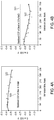
- FIGS. 3A-B are graphs of OCP measurements of the aluminum coating on high strength steel 4130 substrates in distilled water ( FIG. 3A ) and in 3.5 % NaCl solution ( FIG. 3B ).
- Line 310 represents the rest potential of the bare steel substrate.
- Lines 312, 314, 316 represent three steel substrates with the aluminum coating.
- the aluminum coatings provide some sacrificial protection to the steel substrate in distilled water since the coatings generally had more negative OCP values compared to the bare steel substrate.
- the aluminum coatings provided sacrificial protection to the steel substrate in salt water since the coatings had more negative OCP values compared to the bare steel substrate.
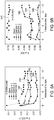
- FIGS. 7A-B are graphs of OCP measurements of the multiple-layer aluminum coatings on high strength steel 4130 substrates in distilled water ( FIG. 7A ) and in 3.5 % NaCl solution ( FIG. 7B ).
- Line 360 represents the rest potential of the bare steel substrate.
- Lines 362, 364, 366 represent three steel substrates with the multiple-layer aluminum coating.
- the multiple-layer aluminum coatings provided sacrificial protection to the steel substrate in distilled water since the coatings had more negative OCP values compared to the bare steel substrate.
- FIG. 7B the multiple-layer aluminum coatings provided sacrificial protection to the steel substrate in salt water since the coatings had more negative OCP values compared to the bare steel substrate.
- anhydrous aluminum chloride 45 g was dissolved in 125 ml of ionic liquid of 1-Butyl-1-methylpyrrolidinium bis(trifluoromethysulfonyl)imide and the clear solution was obtained by heating at 100°C. After complete dissolution of aluminum chloride (transparent honey color solution) anhydrous manganese chloride (0.08-0.1 M) was added to the solution. After the addition of anhydrous manganese chloride, 25 ml of n-decane was added in the cell to prevent the entry of moisture in the cell as manganese chloride dissolves slowly. Also, the addition of n-decane prevents the blackening of the coating due to moisture. Stirring of solution continued for 1 hour.
- Al-Mn electrodeposition was carried out in closed cell under continuous supply of Ar gas to restrict the entry of air or moisture in the bath at 100°C at 8-12 mA/cm 2 applied current density as in the case of pure Al electrodeposition. This ionic liquid is more stable in air and moisture.
- the anodes were placed at both sides of the cathode to get uniform deposition.
- the electrodeposition was carried out on the steel coupons for 2 hours. After completion of the deposition experiment, the cathode was wiped with cotton soaked in CH 2 Cl 2 .
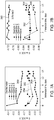
- FIGS. 8A-B are graphs of OCP measurements of Al-Mn (85 weight percent Al, 15 weight percent Mn) coating on high strength steel 4130 substrates in distilled water ( FIG. 8A ) and in 3.5 % NaCl solution ( FIG. 8B ).
- Line 370 represents the rest potential of the bare steel substrate.
- Lines 372, 374, 376 represent three steel substrates with an Al-Mn coating.
- the Al-Mn coatings provide some sacrificial protection to the steel substrate in distilled water since the coatings generally had more negative OCP values compared to the bare steel substrate.
- the Al-Mn coatings provided sacrificial protection to the steel substrate in salt water since the coatings had more negative OCP values compared to the bare steel substrate.
- HE tests were done according to ASTM F 519 using Type 1a.1 test specimens. Aluminum and aluminum alloys were deposited on the middle portion of the bar including the notch area. The samples were baked at 190°C for 24 hrs before testing. Prior to HE testing of coated samples, the uncoated samples were tested for 200 hrs and no failure was observed. Average notch fracture strength (NFS) value based from three uncoated samples was determined to be 3953 Kg. The Al and Al alloy coated specimens were loaded to 75% NFS and held at this load for 200 hours. No fracturing was observed, indicating that these coatings pass the HE test.
- NFS Average notch fracture strength
Landscapes
- Chemical & Material Sciences (AREA)
- Engineering & Computer Science (AREA)
- Chemical Kinetics & Catalysis (AREA)
- Materials Engineering (AREA)
- Metallurgy (AREA)
- Organic Chemistry (AREA)
- Electrochemistry (AREA)
- General Chemical & Material Sciences (AREA)
- Mechanical Engineering (AREA)
- Electroplating Methods And Accessories (AREA)
- Electroplating And Plating Baths Therefor (AREA)
Abstract
Description
- Aspects generally relate to aluminum and aluminum alloy electroplating compositions, methods of electroplating aluminum and aluminum alloys, and electroplated coatings of aluminum and aluminum alloys.
- Cadmium coatings are used as a sacrificial coating to protect steel from corrosion. Since cadmium's corrosion potential is more negative than that of steel, cadmium coatings will corrode preferentially to protect steel. Electroplated cadmium coatings have been used extensively as protective coatings for aerospace and military applications. Although cadmium coatings provide excellent technical performance, cadmium coatings are heavily regulated.
- Several protective coatings have been developed as alternatives to cadmium. While some of these coatings work well for low-strength carbon steels or low-alloy steels, these coatings are unsuitable for coatings of high-strength steels due to the susceptibility of these steels to hydrogen embrittlement (HE). Aluminum protective coatings are being explored as protective coatings to steel since aluminum's reduction potential is negative to steel. Aluminum coatings deposited by vapor deposition have been explored. However, vapor deposition over large and complex shaped substrates is difficult. Therefore, there is a need for improved methods, compositions, and coatings over steel substrates.
- In certain aspects, a coated steel substrate comprises a multiple-layer electroplated aluminum coating over a steel substrate. The multiple-layer electroplated aluminum coating comprises one or more porous layers and one or more compact layers. The one or more porous layers comprise a material selected from a group consisting of aluminum and aluminum alloys. The one or more compact layers comprise a material selected from a group consisting of aluminum and aluminum alloys.
- In certain aspects, a method of depositing a multiple-layer aluminum coating over a steel substrate includes electroplating one or more porous aluminum layers over the steel substrate. The one or more porous aluminum layers comprise a material selected from a group consisting of aluminum and aluminum alloys. One or more compact aluminum layers are electroplated over the steel substrate. The one or more compact aluminum layers comprise a material selected from a group consisting of aluminum and aluminum alloys.
- In certain aspects, a coated steel substrate comprises a high strength steel substrate. A multiple-layer electroplated aluminum coating is formed over the high strength steel substrate. The multiple-layer electroplated aluminum coating comprises one or more porous layers and one or more compact layers. The one or more porous layers comprise a material selected from a group consisting of aluminum and aluminum alloys. The one or more compact layers comprise a material selected from a group consisting of aluminum and aluminum alloys. The one or more porous layers have pore sizes of about 2 µm or more. The one or more compact layers have pore sizes of about 0.2 µm or less. Each of the one or more porous layers has a thickness from about 0.3 µm to about 3 µm. Each of the one or more compact layers has a thickness from about 0.3 µm to about 3 µm.
- So that the manner in which the above recited features of the present disclosure can be understood in detail, a more particular description of the disclosure, briefly summarized above, may be had by reference to aspects, some of which are illustrated in the appended drawings. It is to be noted, however, that the appended drawings illustrate only exemplary aspects and are therefore not to be considered limiting of its scope, may admit to other equally effective aspects.
-
FIG. 1A is a diagram of one example of an electroplating waveform showing direct current applied to a cathode substrate. -
FIG. 1B is a diagram of one example of an electroplating waveform showing bipolar pulses applied to a cathode substrate. -
FIG. 1C is a diagram of one example of an electroplating waveform showing unipolar pulses applied to the cathode substrate. -
FIG. 1D is a diagram of another example of an electroplating waveform showing unipolar pulses applied to the cathode substrate. -
FIG. 2 is a schematic cross-section view of one example of a multiple-layered aluminum coating over a substrate -
FIGS. 3A-B are graphs of OCP measurements of an aluminum coating on high strength steel substrates in distilled water and in a NaCl solution. -
FIGS. 4A-B are graphs of OCP measurements of an aluminum coating on high strength steel substrates in distilled water and in a NaCl solution. -
FIG. 5 is a graph of OCP measurements of an aluminum coating on high strength steel substrates in distilled water. -
FIGS. 6A-B are graphs of OCP measurements of an aluminum coating on high strength steel substrates in distilled water and in a NaCl solution. -
FIGS. 7A-B are graphs of OCP measurements of a multiple-layer aluminum coating on high strength steel substrates in distilled water and in a NaCl solution. -
FIGS. 8A-B are graphs of OCP measurements of an aluminum-manganese alloy coating on high strength steel substrates in distilled water and in a NaCl solution. - To facilitate understanding, identical reference numerals have been used, where possible, to designate identical elements that are common to the figures. It is contemplated that elements and features of one aspect may be beneficially incorporated in other aspects without further recitation.
- Some aspects will now be described in greater detail below, including specific aspects, versions and examples, but the present disclosure is not limited to these aspects, versions or examples, which are included to enable a person having ordinary skill in the art to make and use aspects, when the information in the present disclosure is combined with available information and technology.
- Various terms as used herein are defined below. To the extent a term used in a claim is not defined below, it should be given the broadest definition persons in the pertinent art have given that term as reflected in one or more printed publications or issued patents.
- All documents described herein are incorporated by reference herein, including any priority documents and/or testing procedures to the extent they are not inconsistent with this text. As is apparent from the foregoing general description and the specific aspects, while forms of the aspects have been illustrated and described, various modifications can be made without departing from the scope of the present disclosure. Accordingly, it is not intended that the present disclosure be limited thereby. Likewise, the term "comprising" is considered synonymous with the term "including." Likewise whenever a composition, an element or a group of elements is preceded with the transitional phrase "comprising," it is understood that we also contemplate the same composition or group of elements with transitional phrases "consisting essentially of," "consisting of," "selected from the group of consisting of," or "I"" preceding the recitation of the composition, element, or elements and vice versa, e.g., the terms "comprising," "consisting essentially of," "consisting of" also include the product of the combinations of elements listed after the term.
- For the sake of brevity, only certain ranges are explicitly disclosed herein. However, ranges from any lower limit may be combined with any upper limit to recite a range not explicitly recited, as well as, ranges from any lower limit may be combined with any other lower limit to recite a range not explicitly recited, in the same way, ranges from any upper limit may be combined with any other upper limit to recite a range not explicitly recited. Additionally, within a range includes every point or individual value between its end points even though not explicitly recited. Thus, every point or individual value may serve as its own lower or upper limit combined with any other point or individual value or any other lower or upper limit, to recite a range not explicitly recited.
- Aluminum and/or aluminum alloy coatings as described herein can provide corrosion resistance and can pass a hydrogen embrittlement (HE) test. HE tests are performed according to ASTM F 519 using Type 1a.1 specimens having a notch. For example, the coatings provide cathodic protection and low hydrogen embrittlement of steel substrates. The aluminum and/or aluminum alloy coatings are applied by an electrodeposition process from an ionic liquid electrolyte plating bath. The aluminum and/or aluminum alloy can be deposited by direct current and/or pulsed current. The aluminum and/or aluminum alloy can be deposited as single layers and/or multiple layers.
- The term "aluminum alloy" as used herein means 80% or more aluminum by weight and 20% or less alloying element(s) by weight.
- Aluminum and/or aluminum alloy coatings can be deposited on components of aircrafts, spacecrafts, watercrafts, land vehicles, engines, propulsion structure, space re-entry vehicle structures, power-generation turbines, and other metal components. For example, aluminum and/or aluminum alloys can be disposed on one or more surface of aircraft components to form one or more corrosion resistant aluminum and/or aluminum alloy coatings on the aircraft components.
- The aluminum and/or aluminum alloy coatings can be applied to steel substrates. The steel substrates can be carbon steels with low-carbon content (lower than 0.2% C), medium-carbon content (between 0.2-0.5% C), or high-carbon content (more than 0.5% C). The steel substrates can be low alloy steels (alloys with not more than 8% of alloying elements) or high-alloy steels (alloys with more than 8% alloying elements). In additional to carbon, other alloying elements include nickel, chromium, and molybdenum to increase strength and toughness. In certain aspects, the steel substrate is a medium-carbon ultra-high strength low-alloy steel (referred herein as "high strength steel") containing between about 0.2 and 0.5% of carbon and not more than 8% of total alloying elements. Examples of high strength steels include structural steels with yield strengths that can exceed 1380 MPa (200 ksi). Examples of high strength steels include steels with AISI/SAE designations of 4130, 4140, 4340, or other designations.
- The present aluminum and/or aluminum alloy coatings can be used in place of cadmium or nickel alloy protective coatings. The aluminum and/or aluminum alloy coatings are deposited by electroplating in ionic liquids. Ionic liquids have very low vapor pressures and low flammability and are more environmentally preferred than organic solvents. Ionic liquids are salts in which the ions are poorly coordinated, which results in these salts being liquid below 100°C. Some salts form ionic liquids at room temperature (also known as room temperature ionic liquids (RTILs)). While ordinary liquids are predominantly made of electrically neutral molecules, ionic liquids are largely made of ions and short-lived ion pairs. The ionic liquid can comprise a nitrogen-containing compound, a phosphorous-containing compound, or a sulfur-containing compound.
- The nitrogen-containing compound can be selected from a group consisting of aromatic salts, N-alkyl-pyridinium salts, N-alkyl-N'-alkyl' imidazolium salts, N-alkyl-N-alkyl' pyrrolidinium salts, N-alkyl-N-alkyl' piperidinium salts, and other quaternary ammonium salts. Examples of nitrogen-containing compounds of aromatic salts include a quaternary ammonium salt with at least one of the substituents being a phenyl or a quaternary ammonium salt with at least one of the substituents being a benzyl. In certain aspects, the nitrogen-containing compound is a quaternary ammonium salt with at least one of the substituents being a phenyl, such as trimethylphenylammonium salt. In certain aspects, the nitrogen-containing compound is a N-alkyl-N-alkyl' pyrrolidinium cation of formula (I):

- The counter-anion of any of these salts may be, a sulfonylimide containing anion (such as bis(trifluoromethylsulfonyl)imide), a cyano-containing anion (such as dicyanamide), a sulphur-containing anion (such as methylsulfate), a sulfonate (such as methanesulfonate, tosylate or trifluoromethanesulfonate), a phosphate (such as hexafluorophosphate), a borate (such as tetrafluoroborate), or a halide such as fluoride, chloride, bromide or iodide.
- In certain aspects, the ionic liquid may be a nitrogen-containing compound of a phenyl substituted quaternary ammonium halide, such as trimethylphenylammonium chloride (TMPAC). In certain aspects, the ionic liquid may be a nitrogen-containing compound of a N-alkyl-N-alkyl' pyrrolidinium sulfonylimide, such as 1-Butyl-1-methylpyrrolidinium bis(trifluoromethysulfonyl) imide (BMP.TFSI).
- An aluminum or aluminum alloy can be deposited by electroplating in an ionic liquid. Examples of alloying elements with aluminum include manganese, zirconium, zinc, other alloying elements, and combinations thereof in which the aluminum alloy comprises 80% or more aluminum by weight and 20% or less alloying element(s) by weight. An electroplating bath include a metal salt of aluminum and a metal salt of the alloying element (if any). The metal salts can be metal halides. For example, an aluminum salt can be an aluminum halide, such as aluminum chloride (AICI3). For example, a manganese salt can be an anhydrous manganese halide, such as anhydrous manganese chloride (MnCl2). In certain aspects, the counter-anion of the ionic liquid and the counter-anion of metal salt may be the same to improve the solubility of both components.
- In certain aspects, an aluminum salt without any other metal salts is provided in the electroplating bath to electroplate a pure aluminum layer. In certain aspects, an aluminum salt and a manganese metal salts are provided in the electroplating bath to electroplate an aluminum-manganese alloy layer. For example, an aluminum salt, such as an aluminum halide, and a manganese salt, such as a manganese halide, can be provided to the electroplating bath in an aluminum salt to manganese salt molar ratio of about 50:1 to about 2:1, such as about 9:1 to 4:1. The composition of the aluminum-manganese alloy can be controlled by the molar ratio of aluminum salt to manganese salt. In certain aspects, the aluminum-manganese alloy layer comprises aluminum from about 80 wt percent to about 90 wt percent and comprises manganese from about 10 wt percent to about 20 wt percent of the total composition of the alloy layer. Manganese increases hardness and enhances corrosion resistance to the aluminum alloy layer in comparison to aluminum alone. Excess of manganese in the aluminum alloy layer can make the layer brittle and can cause the alloy layer to peel off a substrate. Excess of manganese in the aluminum alloy layer can decrease the compatibility of the alloy layer with conversion coatings applied thereon.
- The plating bath formulation comprise a mixture of a metal salt and an ionic liquid in a molar ratio from about 2:1 to about 1:1. If the molar ratio is too low, there will be not enough concentration of active metal species to electrodeposit metal to form the metal coating. If the molar ratio is too high, the metal salt may not be soluble within the ionic liquid.
- The plating bath may optionality include other additives, such as brightening agents. Examples of brightening agents include organic compounds such as large organic cyclic compounds, bicyclic compounds, monocyclic compounds, acyclic compound, and combinations thereof.
- The plating bath formulation is preferably anhydrous and the electroplating is conducted under a dry inert gas stream in order to reduce contact of the electrolyte with ambient moisture. Although absorbed moisture degrades ionic liquids and hinders electroplating, an accurate control of moisture in the electrochemical cell is not a requirement.
- In certain aspects, the porosity versus compactness of the deposited aluminum or aluminum alloy coating can be determined by one of more of the following factors: a type of ionic liquid, a mode of electrodeposition (i.e., direct current, bipolar pulsed current, unipolar pulsed current), an alloying element of the coating, and other factors. All of the aluminum or aluminum alloy coatings are receptive to chrome conversion coatings, such as Alodine 1200 (hexavalent Cr) chrome conversions or SurTec 650 (trivalent Cr) chrome conversions.
- Open circuit potential (OCP) is used as a criterion for the corrosion behavior of the aluminum or aluminum alloy coating over a substrate, such as a steel substrate. The OCP is a parameter which indicates the thermodynamic tendency of a material to electrochemical oxidation in a corrosive medium. The open circuit potential (OCP) of these aluminum and aluminum alloy coatings over substrates, such as steel substrates, are measured for 14 days in distilled water to indicate sacrificial corrosion protection in neutral water and in 3.5% NaCl solution to indicate sacrificial corrosion protection in salt water. For OCP measurements, electrochemical cells are made with the coated aluminum or aluminum alloy surface as the working electrode and a calomel electrode as the reference electrode. The temperature of the cell during an OCP measurement is maintained at about 30°C. If the OCP of the aluminum or aluminum alloy coating over a substrate is more negative in comparison to a bare substrate, then the aluminum or aluminum alloy coating provides sacrificial corrosion protection to the substrate.
- In certain aspects, the aluminum and/or aluminum coatings can be electroplated on a cathode substrate, such as a steel substrate, by direct current applied to the cathode substrate.
FIG. 1A is a diagram of one example of anelectroplating waveform 10 showing direct current applied to a cathode substrate. For example, a current density from about 1 mA/cm2 to about 100 mA/cm2, such as from 5 mA/cm2 to about 25 mA/cm2, can be applied to a cathode substrate. The current density to the cathode substrate is the amount of current per exposed surface area of the cathode substrate within the plating bath. - In certain aspects, electroplating an aluminum or aluminum alloy layer by direct current in an ionic liquid of a quaternary ammonium salt with at least one of the substituents being a phenyl, such as TMPAC, forms a compact aluminum or aluminum alloy layer. The term "compact' layer as used herein is a layer having pore sizes of about 0.2 µm or less. A compact layer can provide barrier protection by slowing down ingress of corrosive ions and other species to the underlying substrate. A compact layer can provide corrosion sacrificial protection. In certain aspects, electroplating an aluminum or aluminum alloy layer by direct current in an ionic liquid of a quaternary ammonium salt with at least one of the substituents being a phenyl provides cathodic protection in salt water and in neutral water as determined by OCP.
- In certain aspects, electroplating an aluminum or aluminum alloy by direct current in an ionic liquid of an N-alkyl-N-alkyl' pyrrolidinium sulfonylimide, such as (BMP.TFSI), forms a porous aluminum or aluminum alloy layer having pore sizes of about 2 µm or more. In certain aspects, electroplating an aluminum or aluminum alloy by direct current in an ionic liquid of an N-alkyl-N-alkyl' pyrrolidinium sulfonylimide provides cathodic protection in salt water but not in neutral water as determined by OCP. These aluminum coatings after chromium conversion have a salt spray testing lifetime (ASTM B 117) of over 500 hrs without formation of red rust.
- In certain aspects, electroplating an aluminum-manganese alloy by direct current in any suitable ionic liquid forms a compact aluminum-manganese layer having pore sizes of about 0.2 µm or less. In certain aspects, electroplating an aluminum-manganese alloy by direct current in any suitable ionic liquid provides cathodic protection in salt water and in neutral water as determined by OCP.
- Pore size is a measure of the internal dimensions of a pore. It may be taken to be the internal diameter or width of a pore.
- In certain aspects, the aluminum and/or aluminum coatings can be electroplated by bipolar pulsed current to a cathode substrate.
FIG. 1B is a diagram of one example of anelectroplating waveform 20 showing bipolar pulses applied to a cathode substrate. In the example ofFIG. 1B , bipolar pulsed current comprises a plurality ofdeposition pulses 22 and plurality ofetching pulses 24. In certain aspects, each of thedeposition pulses 22 has a duration from about 100 ms to about 1,000 ms, and each ofetching pulses 24 has a duration from about 100 ms to about 1,000 ms. In certain aspects, a current density of each of thedeposition pulses 22 is from about 5 mA/cm2 to about 25 mA/cm2, and a current density of each of theetching pulses 24 is from about 0.5 mA/cm2 to about 5 mA/cm2. In certain aspects, electroplating an aluminum or aluminum alloy layer by bipolar pulsed current forms a compact aluminum or aluminum alloy layer having pore sizes of about 0.2 µm or less. In certain aspects, electroplating an aluminum or aluminum alloy layer by bipolar pulsed current provides cathodic protection in salt water and in neutral water as determined by OCP. These aluminum coatings after chromium conversion have a salt spray testing lifetime (ASTM B 117) of over 1,000 hrs without formation of red rust. - In certain aspects, the aluminum and/or aluminum coatings can be electroplated by unipolar pulsed current to a cathode substrate.
FIG. 1C is a diagram of one example of anelectroplating waveform 30 showing unipolar pulses applied to a cathode substrate. In the example ofFIG. 1C , unipolar pulsed current comprises a plurality ofON pulses 32 and plurality ofOFF pulses 34. In certain aspects, each ON pulse has a duration from about 100 ms to about 500 ms, and each OFF pulse having a duration from about 100 ms to about 500 ms. In certain aspects, the current density of theON pulses 32 is from about 5 mA/cm2 to about 25 mA/cm2. In certain aspects, electroplating an aluminum or aluminum alloy layer by unipolar pulsed current forms a compact aluminum or aluminum alloy layer having pore sizes of about 0.2 µm or less. In certain aspects, electroplating an aluminum or aluminum alloy layer by bipolar pulsed current provides cathodic protection in salt water and in neutral water as determined by OCP. In certain aspects, unipolar pulsed current avoids undesirable passivation of the aluminum anode of the electroplating system. Undesirable passivation of the aluminum anode may occur during etching or reverse-plating of the cathode substrate which causes electroplating of aluminum onto the anode. Freshly deposited aluminum over the anode may hinder dissolution of the anode in the forward pulse or deposition pulse. These aluminum coatings after chromium conversion have a salt spray testing lifetime (ASTM B 117) of over 1,000 hrs without formation of red rust. -
FIG. 1D is a diagram of another example of anelectroplating waveform 40 showing unipolar pulses applied to the cathode substrate. As shown inFIG. 1D , the aluminum and/or aluminum coatings can be electroplated by unipolar pulsed current to a cathode substrate with a plurality of highcurrent pulses 42 and a plurality of lowcurrent pulses 44. For example, highcurrent pulses 42 can be deposition pulses applied to the cathode substrate with a current density of about 5 mA/cm2 or more and lowcurrent pulses 44 can be deposition pulses applied to the cathode substrate with a current density greater than zero and less than 5 mA/cm2. - The pulsed current to the cathode substrate are shown in
FIGS. 1B-C as rectangular waveforms. In other aspects, the pulsed current can also be other waveforms, such as saw-tooth waveforms, sinusoidal waveform, curved waveforms, trapezoidal waveforms, and triangular waveforms. -
FIG. 2 is a schematic cross-section view of one example of a multiplelayer aluminum coating 110 over asubstrate 100, such as a steel substrate. The multiplelayer aluminum coating 110 comprises one or moreporous layers 112 and one or morecompact layers 114. The one or moreporous layers 112 comprise aluminum or an aluminum alloy. The one or morecompact layers 114 comprise aluminum or an aluminum alloy. Each of the one or moreporous layers 112 can have a thickness from about 0.3 µm to about 3 µm. Each of the one or morecompact layers 114 can have a thickness from about 0.3 µm to about 3 µm. Aporous layer 112 or acompact layer 114 having a thickness of less than 0.3 µm may be undesirably discontinuous. Aporous layer 112 having a thickness of over 3 µm may reduce the overall strength of the multiplelayer aluminum coating 110. Acompact layer 114 having a thickness of over 3 µm may hinder the escape of trapped hydrogen gas and may cause hydrogen embrittlement of the underlying substrate. In certain aspects, the multiplelayer aluminum coating 110 has a total thickness from about 10 µm to about 40 µm and provides sacrificial corrosion protection. - In certain aspects, electroplating a multiple-layer aluminum coating with one or more porous layers and one or more compact layers provides cathodic protection in salt water and in neutral water. These coatings after chromium conversion have a salt spray testing lifetime (ASTM B 117) of over 1,000 hrs, such as over 1,500 hrs, without formation of red rust. Not wishing to be bound by theory unless specifically set forth in the claims, it is believed that the one or
porous layers 112 of the multiplelayer aluminum coating 110 help to release gases, like hydrogen, trapped during electroplating. The one or morecompact layers 114 of the multiplelayer aluminum coating 110 help to provide cathodic protection in salt water and in neutral water. The release of trapped gases reduces hydrogen embrittlement of the underlying substrate while increases the salt spray corrosion of the multiple-layer aluminum coating. - The presents aluminum and aluminum coatings each passes a hydrogen embrittlement (HE) test. HE tests are performed according to ASTM F 519 using Type 1a.1 specimens having a notch. For HE testing, a load is applied to a notch on a high strength steel 4340 specimen (Type 1a.1) without any coating to determine an average notch fracture strength (NFS) value based from three uncoated samples. The average NFS for the high strength steel 4340 sample is determined to be 3,953 Kg. The aluminum or aluminum alloy coated specimens were loaded to 75% of NFS and held at this load for 200 hours. The aluminum or aluminum alloy coated specimens passes HE tests if no fracturing is observed.
- One or more
porous layers 112 and one or morecompact layer 114 provide a multiplelayer aluminum coating 110 with corrosion resistance provide to a steel substrate in salt water and in neutral water as determined by OCP. The electroplating process to form the multiple-layer electroplatedaluminum coating 110 utilizes environmentally preferred compositions and processes. - The present disclosure provides, among others, the following aspects, each of which may be considered as optionally including any alternate aspects.
-
Clause 1. A coated steel substrate comprising a steel substrate and a multiple-layer electroplated aluminum coating over the steel substrate, the multiple-layer electroplated aluminum coating comprises at least one porous layer and at least one compact layer, the at least one porous layer comprising a material selected from a group consisting of aluminum and aluminum alloys and the at least one compact layer comprising a material selected from a group consisting of aluminum and aluminum alloys. -
Clause 2. The coated steel substrate of any of theclauses 1 or 3-7, wherein the at least one porous layer has a plurality of pores having a pore size of about 2 µm or more and wherein the at least one compact layer has a plurality of pores having a pore size of about 0.2 µm or less. -
Clause 3. The coated steel substrate of any of the clauses 1-2 or 4-7, wherein the at least one porous layer has a thickness from about 0.3 µm to about 3 µm and the at least one compact layer has a thickness from about 0.3 µm to about 3 µm. -
Clause 4. The coated steel substrate of any of the clauses 1-3 or 5-7, wherein the multiple-layer electroplated aluminum coating comprises from one to fifty porous layers and from one to fifty compact layers. - Clause 5. The coated steel substrate of any of the clauses 1-4 or 6-7, wherein the multiple-layer electroplated aluminum coating is configured to provide sacrificial corrosion protection of over 1,000 hrs under ASTM B 117.
-
Clause 6. The coated steel substrate of any of the clauses 1-5 or 7, wherein the multiple-layer electroplated aluminum coating passes a hydrogen embrittlement (HE) test performed according to ASTM F 519 using Type 1a.1 specimens having a notch. - Clause 7. The coated steel substrate of any of the clauses 1-6, wherein the multiple-layer electroplated aluminum coating provides sacrificial corrosion protection to the steel substrate in neutral water and in salt water.
-
Clause 8. A method of depositing a multiple-layer aluminum coating over a steel substrate comprising electroplating one or more porous aluminum coatings over the steel substrate, the one or more porous aluminum layers comprise a material selected from a group consisting of aluminum and aluminum alloys, electroplating one or more compact aluminum layers over the steel substrate and the one or more compact aluminum layers comprising a material selected from a group consisting of aluminum and aluminum alloys. -
Clause 9. The method of any of theclauses 8 or 10-16, wherein the one or more compact aluminum layers are electroplated utilizing a direct current. -
Clause 10. The method of any of the clauses 8-9 or 11-16, wherein the one or more compact aluminum layers are electroplated utilizing a pulsed current. - Clause 11. The method of any of the clauses 8-10 or 13-16, wherein the pulsed current is a unipolar pulsed current comprising a plurality of ON pulses and a plurality of OFF pulses, each of the plurality of ON pulses having a current density from about 5 mA/cm2 to about 25 mA/cm2, each of the plurality of ON pulses having a duration from about 100 ms to about 500 ms, and each of the plurality of OFF pulses having a duration from about 100 ms to about 500 ms.
-
Clause 12. The method of any of the clauses 8-10 or 13-16, wherein the pulsed current is a bipolar pulsed current comprising a plurality of deposition pulses and a plurality of etching pulses, each of the plurality of deposition pulses having a current density from about 5 mA/cm2 to about 25 mA/cm2, each of the plurality of etching pulses having a current density from about 0.5 mA/cm2 to about 5 mA/cm2, each of the plurality of deposition pulses having a duration from about 100 ms to about 1,000 ms, and each of the plurality of etching pulses having a duration from about 100 ms to about 1,000 ms. - Clause 13. The method of any of the clauses 8-12 or 14-16, wherein the one or more compact aluminum layers comprise an aluminum-manganese alloy electroplated in an electroplating bath including an aluminum salt and a manganese salt.
- Clause 14. The method of clause 13, wherein the electroplating bath includes the aluminum salt and the manganese salt in a molar ratio from about 9:1 to about 4:1.
-
Clause 15. The method of clause 13, wherein the aluminum-manganese alloy comprises aluminum from about 80 weight percent to about 90 weight percent and manganese from about 10 weight percent to about 20 weight percent. -
Clause 16. The method of any of the clauses 8-15, wherein the one or more porous aluminum layers are electroplated in an ionic liquid of an N-alkyl-N-alkyl' pyrrolidinium sulfonylimide utilizing a direct current. - Clause 17. A coated steel substrate comprising a high strength steel substrate and a multiple-layer electroplated aluminum coating over the steel substrate, the multiple-layer electroplated aluminum coating comprising at least one porous layer and at least one compact layer, the at least one porous layer comprising a material selected from a group consisting of aluminum and aluminum alloys, and the at least one compact layer comprising a material selected from a group consisting of aluminum and aluminum alloys, wherein the at least one porous layer has a plurality of pores having a pore size of about 2 µm or more and wherein the at least one compact layer has a plurality of pores having a pore size of about 0.2 µm or less, wherein the at least one porous layer has a thickness from about 0.3 µm to about 3 µm, wherein the at least one compact layer has a thickness from about 0.3 µm to about 3 µm.
- Clause 18. The coated steel substrate of any of the clauses 17 or 19-21, wherein the multiple-layer electroplated aluminum coating is configured to provide sacrificial corrosion protection of over 1,000 hrs under ASTM B 117.
- Clause 19. The coated steel substrate of any of the clauses 17-18 or 20-21, wherein the multiple-layer electroplated aluminum coating passes a hydrogen embrittlement (HE) test performed according to ASTM F 519 using Type 1a.1 specimens having a notch.
-
Clause 20. The coated steel substrate of any of the clauses 17-19 or 21, wherein the at least one porous layer is electroplated by direct current and wherein the at least one compact layer is electroplated by pulsed current, wherein the multiple-layer electroplated aluminum coating is configured to provide corrosion resistance to the steel substrate in neutral water and in salt water. - Clause 21. The coated steel substrate of any of the clauses 17-20, wherein the multiple layer aluminum coating has a thickness from about 10 µm to about 40 µm and provides sacrificial corrosion protection.
-
Clause 22. A method of depositing an aluminum layer or aluminum alloy layer over a steel substrate, comprising disposing a surface of the steel substrate in a plating bath, wherein the plating bath comprises an ionic liquid and a metal salt of aluminum, wherein aluminum is electroplated over the steel substrate to form a compact layer, the compact layer having a plurality of pores having a pore size of about 0.2 µm or less. - Clause 23. The method of any of the
clauses 22 or 27-28, wherein aluminum is electroplated utilizing a unipolar pulsed current comprising a plurality of ON pulses and a plurality of OFF pulses, each of the plurality of ON pulses having a current density from about 5 mA/cm2 to about 25 mA/cm2, each of the plurality of ON pulses having a duration from about 100 ms to about 500 ms, and each of the plurality of OFF pulses having a duration from about 100 ms to about 500 ms -
Clause 24. The method of any of theclauses 22 or 27-28, wherein aluminum is electroplated utilizing a bipolar pulsed current comprising a plurality of deposition pulses and a plurality of etching pulses, each of the plurality of deposition pulses having a current density from about 5 mA/cm2 to about 25 mA/cm2, each of the plurality of etching pulses having a current density from about 0.5 mA/cm2 to about 5 mA/cm2, each of the plurality of deposition pulses having a duration from about 100 ms to about 1,000 ms, and each of the plurality of etching pulses having a duration from about 100 ms to about 1,000 ms. - Clause 25. The method of any of the
clauses 22 or 27-28, wherein the plating bath further includes a manganese salt, and wherein an aluminum-manganese alloy is electroplated to form the compact layer. - Clause 26. The method of clause 25, wherein the aluminum-manganese alloy comprises aluminum from about 80 weight percent to about 90 weight percent and manganese from about 10 weight percent to about 20 weight percent.
- Clause 27. The method of any of the clauses 22-26 or 28, wherein the compact layer has a thickness from about 0.3 µm to about 3 µm.
- Clause 28. The method of any of the clauses 22-27, wherein the compact layer provides sacrificial corrosion protection to the steel substrate.
- Clause 29. A method of depositing an aluminum layer or aluminum alloy layer over a steel substrate, comprising disposing a surface of the steel substrate in a plating bath, the plating bath comprising an ionic liquid and a metal salt of aluminum, the aluminum is electroplated over the steel substrate to form a porous layer, wherein the porous layer having a plurality of pores having a pore size of about 2 µm or more.
-
Clause 30. The method of any of the clauses 29 or 31-33, and wherein aluminum is electroplated utilizing a direct current. - Clause 31. The method of any of the clauses 29-30 or 32-33, wherein the porous layer has a thickness from about 0.3 µm to about 3 µm.
-
Clause 32. The method of any of the clauses 29-31 or 33, further comprising releasing hydrogen gas through the pores of the porous layer during electroplating, and wherein the coated steel substrate passes a hydrogen embrittlement (HE) test performed according to ASTM F 519 using Type 1a.1 specimens having a notch. - Clause 33. The method of any of the clauses 29-32, wherein the porous layer provides sacrificial corrosion protection to the steel substrate.
-
Clause 34. A method of depositing a multiple-layer aluminum or aluminum alloy coating over a steel substrate comprising disposing a surface of the steel substrate in a plating bath, the plating bath comprises an ionic liquid and a metal salt of aluminum, wherein the multiple-layer aluminum or aluminum alloy coating is deposited over the surface of the steel substrate, wherein one or more aluminum or aluminum alloy layers of the multiple-layer aluminum or aluminum alloy coating are electroplated by utilizing direct current, and/or one or more aluminum or aluminum alloy layers of the multiple-layer aluminum or aluminum alloy coating are electroplated by utilizing pulsed current. - Clause 35. The method of any of the
clauses 34 or 36-39, wherein the pulsed current is a unipolar pulsed current comprising a plurality of ON pulses and a plurality of OFF pulses, each of the ON pulses having a current density from about 5 mA/cm2 to about 25 mA/cm2, each of the ON pulses having a duration from about 100 ms to about 500 ms, and each of the OFF pulses having a duration from about 100 ms to about 500 ms. - Clause 36. The method of any of the clauses 34-35 or 37-39, wherein the pulsed current is a bipolar pulsed current comprising a plurality of deposition pulses and a plurality of etching pulses, each of the deposition pulses having a current density from about 5 mA/cm2 to about 25 mA/cm2, each of the etching pulses having a current density from about 0.5 mA/cm2 to about 5 mA/cm2, each of the deposition pulses having a duration from about 100 ms to about 1,000 ms, and each of the etching pulses having a duration from about 100 ms to about 1,000 ms.
- Clause 37. The method of any of the clauses 34-36 or 38-39, wherein the direct current is applied at a current density from about 5 mA/cm2 to about 20 mA/cm2.
- Clause 38. The method of any of the clauses 34-37 or 39, wherein the ionic liquid comprises an N-alkyl-N-alkyl' pyrrolidinium sulfonylimide.
- Clause 39. The method of any of the clauses 34-38, wherein the plating bath further comprises a manganese salt and the plating bath includes the aluminum salt and the manganese salt in a molar ratio from about 9:1 to about 4:1.
- Electrodeposition processes were carried out on sand blasted steel coupons by applying direct current electroplating and pulsed current electroplating.
- Anhydrous aluminum chloride was dissolved in trimethylphenylammonium chloride (TMPAC) at 60°C to create the electrolytic solution. The concentration of ionic liquid (TMPAC) was kept at 30-35 mol% to which 65-70 mol% of anhydrous AICI3 was added to prepare the solution. Mixing of the above two chemicals was carried out under argon purging. The coatings were deposited in closed cell under continuous supply of argon gas to restrict the entry of air or moisture in the bath. Electrodeposition of aluminum was carried out at 60°C with 4-8 mA/cm2 applied current density over steel coupons used as the cathodes with a pure aluminum sheet used as the anode. The deposited plate was cleaned with alcohol and left for drying.
-
FIGS. 3A-B are graphs of OCP measurements of the aluminum coating on high strength steel 4130 substrates in distilled water (FIG. 3A ) and in 3.5 % NaCl solution (FIG. 3B ).Line 310 represents the rest potential of the bare steel substrate.Lines FIG. 3A , the aluminum coatings provide some sacrificial protection to the steel substrate in distilled water since the coatings generally had more negative OCP values compared to the bare steel substrate. As shown inFIG. 3B , the aluminum coatings provided sacrificial protection to the steel substrate in salt water since the coatings had more negative OCP values compared to the bare steel substrate. - 36 g of anhydrous aluminum chloride was dissolved in 100ml of ionic liquid '1-Butyl-1-methylpyrrolidinium bis(trifluoromethysulfonyl)imide' (BMP.TFSI) and the clear solution was obtained by heating at 100°C. Aluminum electrodeposition was carried out in closed cell under continuous supply of argon gas to restrict the entry of air or moisture in the bath at 100°C at 8-12 mA/cm2 applied current density. This ionic liquid is more stable in air and moisture. The anodes were placed at both sides of cathode to get uniform deposition.
- (a) Direct Current: The coatings were deposited using direct current with a current density of at 8 mA/cm2. A deposition time of about 2 hours gave aluminum coatings of thickness about 30 µm. Samples of the aluminum plated steel substrates with a chrome conversion coating (utilizing Alodine 1200) were subjected to a salt spray test. The samples passed for over 550 hrs without signs of red rusts. Rusting began about 600 hrs.
FIGS. 4A-B are graphs of OCP measurements of the aluminum coating on high strength steel 4130 substrates in distilled water (FIG. 4A ) and in 3.5 % NaCl solution (FIG. 4B ).Line 320 represents the rest potential of the bare steel substrate.Line 322 represents a steel substrates with the aluminum coating. As shown inFIG. 4A , the aluminum coating did not provide sacrificial protection to the steel substrate in distilled water since the coating had a more positive OCP values compared to the bare steel substrate. As shown inFIG. 4B , the aluminum coating provides sacrificial protection to the steel substrate in salt water since the coating had a more negative OCP values compared to the bare steel substrate. A SEM image of the aluminum coating shows that the coating has high porosity with pore sizes of about 10 µm. It is believed that distilled water can penetrate the pores of the aluminum coating shifting the OCP of the coating. - (b) Bipolar pulse current: The coatings were deposited at 10 mA/cm2 for 500 ms and the polarity was reversed for 500 ms for dissolution to take place at cathode at a current density of 1 mA/cm2. For a plating time of about 3 hours the thickness of aluminum coating was about 24 µm. Samples of the aluminum coated steel substrates with a chrome conversion (utilizing an Alodine 1200, containing hexavalent Cr) were subjected to a salt spray test. The samples passed for over 1,000 hrs without signs of red rusts.
FIG. 5 is a graph of OCP measurements of the aluminum coatings on high strength steel 4130 substrates in distilled water.Line 330 represents the rest potential of the bare steel substrate.Lines - (c) Unipolar pulse current (ton and toff mode): The coatings were deposited in unipolar pulse current mode at 12 mA/cm2 current density using ton = toff = 250 ms. For a plating time of about 2 hours the thickness of aluminum coating was about 24 µm. Samples of the aluminum coated steel substrates chrome conversion coated with Surtec 650 (containing trivalent Cr) and were subjected to a salt spray test. The samples passed for over 1,000 hrs without signs of red rusts.
FIGS. 6A-B are graphs of OCP measurements of the aluminum coating on high strength steel 4130 substrates in distilled water (FIG. 6A ) and in 3.5 % NaCl solution (FIG. 6B ).Line 340 represents the rest potential of the bare steel substrate.Lines FIG. 6A , the aluminum coatings provide sacrificial protection to the steel substrate in distilled water since the coatings had more negative OCP values compared to the bare steel substrate. As shown inFIG. 6B , the aluminum coatings provided sacrificial protection to the steel substrate in salt water since the coatings had more negative OCP values compared to the bare steel substrate. - (d) Layer by layer using direct current and unipolar pulse current alternatively to form a multiple-layer aluminum coating. For a plating time of about 2 hours the thickness of aluminum coating was about 25 µm. The aluminum coated steel substrates with a chrome conversion (Surtec 650) were subjected to a salt spray test. The samples passed for over 1,000 hrs without signs of red rust.
-
FIGS. 7A-B are graphs of OCP measurements of the multiple-layer aluminum coatings on high strength steel 4130 substrates in distilled water (FIG. 7A ) and in 3.5 % NaCl solution (FIG. 7B ).Line 360 represents the rest potential of the bare steel substrate.Lines FIG. 7A , the multiple-layer aluminum coatings provided sacrificial protection to the steel substrate in distilled water since the coatings had more negative OCP values compared to the bare steel substrate. As shown inFIG. 7B , the multiple-layer aluminum coatings provided sacrificial protection to the steel substrate in salt water since the coatings had more negative OCP values compared to the bare steel substrate. - 45 g of anhydrous aluminum chloride was dissolved in 125 ml of ionic liquid of 1-Butyl-1-methylpyrrolidinium bis(trifluoromethysulfonyl)imide and the clear solution was obtained by heating at 100°C. After complete dissolution of aluminum chloride (transparent honey color solution) anhydrous manganese chloride (0.08-0.1 M) was added to the solution. After the addition of anhydrous manganese chloride, 25 ml of n-decane was added in the cell to prevent the entry of moisture in the cell as manganese chloride dissolves slowly. Also, the addition of n-decane prevents the blackening of the coating due to moisture. Stirring of solution continued for 1 hour. Al-Mn electrodeposition was carried out in closed cell under continuous supply of Ar gas to restrict the entry of air or moisture in the bath at 100°C at 8-12 mA/cm2 applied current density as in the case of pure Al electrodeposition. This ionic liquid is more stable in air and moisture. The anodes were placed at both sides of the cathode to get uniform deposition. The electrodeposition was carried out on the steel coupons for 2 hours. After completion of the deposition experiment, the cathode was wiped with cotton soaked in CH2Cl2.
-
FIGS. 8A-B are graphs of OCP measurements of Al-Mn (85 weight percent Al, 15 weight percent Mn) coating on high strength steel 4130 substrates in distilled water (FIG. 8A ) and in 3.5 % NaCl solution (FIG. 8B ).Line 370 represents the rest potential of the bare steel substrate.Lines FIG. 8A , the Al-Mn coatings provide some sacrificial protection to the steel substrate in distilled water since the coatings generally had more negative OCP values compared to the bare steel substrate. As shown inFIG. 8B , the Al-Mn coatings provided sacrificial protection to the steel substrate in salt water since the coatings had more negative OCP values compared to the bare steel substrate. - Hydrogen Embrittlement (HE) tests were done according to ASTM F 519 using Type 1a.1 test specimens. Aluminum and aluminum alloys were deposited on the middle portion of the bar including the notch area. The samples were baked at 190°C for 24 hrs before testing. Prior to HE testing of coated samples, the uncoated samples were tested for 200 hrs and no failure was observed. Average notch fracture strength (NFS) value based from three uncoated samples was determined to be 3953 Kg. The Al and Al alloy coated specimens were loaded to 75% NFS and held at this load for 200 hours. No fracturing was observed, indicating that these coatings pass the HE test.
- While the foregoing is directed to aspects of the present disclosure, other and further aspects of the disclosure may be devised without departing from the basic scope thereof, and the scope thereof is determined by the claims that follow.
Claims (15)
- A coated steel substrate, comprising:a steel substrate; anda multiple-layer electroplated aluminum coating over the steel substrate, the multiple-layer electroplated aluminum coating comprising at least one porous layer and at least one compact layer, the at least one porous layer comprising a material selected from a group consisting of aluminum and aluminum alloys and the at least one compact layer comprising a material selected from a group consisting of aluminum and aluminum alloys.
- The coated steel substrate of claim 1, wherein the at least one porous layer has a plurality of pores having a pore size of about 2 µm or more and wherein the at least one compact layer has a plurality of pores having a pore size of about 0.2 µm or less.
- The coated steel substrate of claim 1 or 2, wherein the at least one porous layer has a thickness from about 0.3 µm to about 3 µm and the at least one compact layer has a thickness from about 0.3 µm to about 3 µm.
- The coated steel substrate of any of claims 1-3, wherein the multiple-layer electroplated aluminum coating comprises from one to fifty porous layers and from one to fifty compact layers.
- The coated steel substrate of any of claims 1-4, wherein the multiple-layer electroplated aluminum coating is configured to provide sacrificial corrosion protection of over 1,000 hrs under ASTM B 117.
- The coated steel substrate of any of claims 1-5, wherein the multiple-layer electroplated aluminum coating passes a hydrogen embrittlement (HE) test performed according to ASTM F 519 using Type 1a.1 specimens having a notch.
- The coated steel substrate of any of claims 1-6, wherein the multiple-layer electroplated aluminum coating provides sacrificial corrosion protection to the steel substrate in neutral water and in salt water.
- A method of depositing a multiple-layer aluminum coating over a steel substrate, comprising:electroplating one or more porous aluminum layers over the steel substrate, the one or more porous aluminum layers comprising a material selected from a group consisting of aluminum and aluminum alloys; andelectroplating one or more compact aluminum layers over the steel substrate, and the one or more compact aluminum layers comprising a material selected from a group consisting of aluminum and aluminum alloys.
- The method of claim 8, wherein the one or more compact aluminum layers are electroplated utilizing a direct current.
- The method of claim 8 or 9, wherein the one or more compact aluminum layers are electroplated utilizing a pulsed current, wherein the pulsed current is optionally a unipolar pulsed current comprising a plurality of ON pulses and a plurality of OFF pulses, each of the plurality of ON pulses having a current density from about 5 mA/cm2 to about 25 mA/cm2, each of the plurality of ON pulses having a duration from about 100 ms to about 500 ms, and each of the plurality OFF pulses having a duration from about 100 ms to about 500 ms or alternatively the pulsed current is a bipolar pulsed current comprising a plurality of deposition pulses and a plurality of etching pulses, each of the plurality of deposition pulses having a current density from about 5 mA/cm2 to about 25 mA/cm2, each of the plurality of etching pulses having a current density from about 0.5 mA/cm2 to about 5 mA/cm2, each of the plurality of deposition pulses having a duration from about 100 ms to about 1,000 ms, and each of the plurality etching pulses having a duration from about 100 ms to about 1,000 ms.
- The method of any of claims 8-10, wherein the one or more compact aluminum layers comprise an aluminum-manganese alloy electroplated in an electroplating bath including an aluminum salt and a manganese salt, wherein the electroplating bath optionally includes the aluminum salt and the manganese salt in a molar ratio from about 9:1 to about 4:1.
- The method of any of claims 8-11, wherein the one or more porous aluminum layers are electroplated in an ionic liquid of an N-alkyl-N-alkyl' pyrrolidinium sulfonylimide utilizing a direct current.
- A coated steel substrate, comprising:a high strength steel substrate; anda multiple-layer electroplated aluminum coating over the steel substrate, the multiple-layer electroplated aluminum coating comprising at least one porous layer and at least one compact layer, the at least one porous layer comprising a material selected from a group consisting of aluminum and aluminum alloys, and the at least one compact layer comprising a material selected from a group consisting of aluminum and aluminum alloys,wherein the at least one porous layer has a plurality of pores having a pore size of about 2 µm or more and wherein the at least one compact layer has a plurality of pores having a pore size of about 0.2 µm or less,wherein the at least one porous layer has a thickness from about 0.3 µm to about 3 µm and the at least one compact layer has a thickness from about 0.3 µm to about 3 µm.
- The coated steel substrate of claim 13, wherein the multiple-layer electroplated aluminum coating is configured to provide sacrificial corrosion protection of over 1,000 hrs under ASTM B 117 and/or wherein the multiple-layer electroplated aluminum coating passes a hydrogen embrittlement (HE) test performed according to ASTM F 519 using Type 1a.1 specimens having a notch.
- The coated steel substrate of claim 13 or 14, wherein the multiple layer aluminum coating has a thickness from about 10 µm to about 40 µm and provides sacrificial corrosion protection.
Applications Claiming Priority (1)
| Application Number | Priority Date | Filing Date | Title |
|---|---|---|---|
| US16/863,282 US11661665B2 (en) | 2020-04-30 | 2020-04-30 | Aluminum and aluminum alloy electroplated coatings |
Publications (1)
| Publication Number | Publication Date |
|---|---|
| EP3904562A1 true EP3904562A1 (en) | 2021-11-03 |
Family
ID=75746221
Family Applications (1)
| Application Number | Title | Priority Date | Filing Date |
|---|---|---|---|
| EP21171147.8A Pending EP3904562A1 (en) | 2020-04-30 | 2021-04-29 | Multiple-layer electroplated aluminum coatings over steel substrates and deposition method |
Country Status (2)
| Country | Link |
|---|---|
| US (2) | US11661665B2 (en) |
| EP (1) | EP3904562A1 (en) |
Families Citing this family (2)
| Publication number | Priority date | Publication date | Assignee | Title |
|---|---|---|---|---|
| US20250019856A1 (en) | 2023-07-12 | 2025-01-16 | The Boeing Company | Surface preparation for electrolytic inorganic finishes |
| CN119016729A (en) * | 2024-07-19 | 2024-11-26 | 南方科技大学 | A workpiece using holes to resist hydrogen embrittlement and a preparation method thereof |
Citations (6)
| Publication number | Priority date | Publication date | Assignee | Title |
|---|---|---|---|---|
| US2446350A (en) * | 1944-02-29 | 1948-08-03 | William Marsh Rice Inst For Th | Electrodeposition of aluminum |
| US4904355A (en) * | 1988-04-26 | 1990-02-27 | Nisshin Steel Co., Ltd. | Plating bath for electrodeposition of aluminum and plating process making use of the bath |
| US20140178710A1 (en) * | 2012-12-20 | 2014-06-26 | United Technologies Corporation | Alloying interlayer for electroplated aluminum on aluminum alloys |
| CN104499013A (en) * | 2014-12-19 | 2015-04-08 | 中国工程物理研究院材料研究所 | Room temperature ionic liquids electroplating method for electroplating aluminum on RAFM (Reduced Activation Ferritic/martensitic) steel surface |
| US10106866B2 (en) * | 2013-12-24 | 2018-10-23 | Posco | Magnesium-aluminum coated steel sheet |
| US10577686B2 (en) * | 2017-06-09 | 2020-03-03 | The Boeing Company | Corrosion resistant and low embrittlement aluminum alloy coatings on steel by magnetron sputtering |
Family Cites Families (25)
| Publication number | Priority date | Publication date | Assignee | Title |
|---|---|---|---|---|
| US3048497A (en) * | 1958-02-18 | 1962-08-07 | Moller Goran August | Process of coating base metals with aluminum |
| IL44151A (en) | 1974-02-06 | 1976-10-31 | Ramat Gan | Electrolyte for the electrodeposition of aluminum and process for such electrodeposition |
| US3929611A (en) | 1974-07-19 | 1975-12-30 | Ametek Inc | Electrodepositing of aluminum |
| DE3202265A1 (en) | 1982-01-25 | 1983-07-28 | Siemens AG, 1000 Berlin und 8000 München | ELECTROLYTE FOR GALVANIC DEPOSITION OF ALUMINUM |
| US4966660A (en) * | 1987-07-13 | 1990-10-30 | Nisshin Steel Co., Ltd. | Process for electrodeposition of aluminum on metal sheet |
| CA2304551A1 (en) * | 1997-09-23 | 1999-04-01 | Valerij Leontievich Steblianko | Electro-plating process |
| US7250102B2 (en) | 2002-04-30 | 2007-07-31 | Alumiplate Incorporated | Aluminium electroplating formulations |
| DE10224089A1 (en) * | 2002-05-31 | 2003-12-11 | Studiengesellschaft Kohle Mbh | Process for the preparation of organo-aluminum complexes and their use for the production of electrolyte solutions for the electrochemical deposition of aluminum-magnesium alloys |
| US7579067B2 (en) * | 2004-11-24 | 2009-08-25 | Applied Materials, Inc. | Process chamber component with layered coating and method |
| US9068270B2 (en) | 2008-10-15 | 2015-06-30 | Hitachi Metals, Ltd. | Aluminum electroplating solution and method for forming aluminum plating film |
| US20120006688A1 (en) | 2009-03-18 | 2012-01-12 | Basf Se | Electrolyte and surface-active additives for the electrochemical deposition of smooth, dense aluminum layers from ionic liquids |
| US8350724B2 (en) | 2009-04-02 | 2013-01-08 | GM Global Technology Operations LLC | Rear parking assist on full rear-window head-up display |
| US20130168258A1 (en) | 2010-09-30 | 2013-07-04 | Hitachi, Ltd. | Aluminum electroplating solution |
| US10190227B2 (en) | 2013-03-14 | 2019-01-29 | Xtalic Corporation | Articles comprising an electrodeposited aluminum alloys |
| US20150101935A1 (en) | 2013-10-14 | 2015-04-16 | United Technologies Corporation | Apparatus and method for ionic liquid electroplating |
| US9758888B2 (en) | 2014-05-06 | 2017-09-12 | Apple Inc. | Preparation of metal substrate surfaces for electroplating in ionic liquids |
| DE102014109315C5 (en) * | 2014-07-03 | 2022-02-24 | Thyssenkrupp Ag | Process for manufacturing metal profiles |
| US10208391B2 (en) | 2014-10-17 | 2019-02-19 | Ut-Battelle, Llc | Aluminum trihalide-neutral ligand ionic liquids and their use in aluminum deposition |
| US20170009360A1 (en) * | 2015-04-08 | 2017-01-12 | Xtalic Corporation | Electrodeposited current collectors |
| EP3088571B1 (en) | 2015-04-28 | 2021-06-02 | The Boeing Company | Environmentally friendly aluminum coatings as sacrificial coatings for high strength steel alloys |
| US10590514B2 (en) * | 2016-07-01 | 2020-03-17 | Xtalic Corporation | Nanostructured aluminum zirconium alloys for improved anodization |
| US11365488B2 (en) * | 2016-09-08 | 2022-06-21 | Modumetal, Inc. | Processes for providing laminated coatings on workpieces, and articles made therefrom |
| CN111108236A (en) * | 2017-06-01 | 2020-05-05 | 鲁米士德科技公司 | Methods and compositions for electrochemical deposition of metal-rich layers in aqueous solutions |
| US20190074121A1 (en) * | 2017-07-10 | 2019-03-07 | Xtalic Corporation | Magnets comprising a coating including an aluminum layer |
| JP7079842B2 (en) * | 2018-02-22 | 2022-06-02 | 住友電気工業株式会社 | Porous metal |
-
2020
- 2020-04-30 US US16/863,282 patent/US11661665B2/en active Active
-
2021
- 2021-04-29 EP EP21171147.8A patent/EP3904562A1/en active Pending
-
2023
- 2023-05-08 US US18/144,482 patent/US12371807B2/en active Active
Patent Citations (6)
| Publication number | Priority date | Publication date | Assignee | Title |
|---|---|---|---|---|
| US2446350A (en) * | 1944-02-29 | 1948-08-03 | William Marsh Rice Inst For Th | Electrodeposition of aluminum |
| US4904355A (en) * | 1988-04-26 | 1990-02-27 | Nisshin Steel Co., Ltd. | Plating bath for electrodeposition of aluminum and plating process making use of the bath |
| US20140178710A1 (en) * | 2012-12-20 | 2014-06-26 | United Technologies Corporation | Alloying interlayer for electroplated aluminum on aluminum alloys |
| US10106866B2 (en) * | 2013-12-24 | 2018-10-23 | Posco | Magnesium-aluminum coated steel sheet |
| CN104499013A (en) * | 2014-12-19 | 2015-04-08 | 中国工程物理研究院材料研究所 | Room temperature ionic liquids electroplating method for electroplating aluminum on RAFM (Reduced Activation Ferritic/martensitic) steel surface |
| US10577686B2 (en) * | 2017-06-09 | 2020-03-03 | The Boeing Company | Corrosion resistant and low embrittlement aluminum alloy coatings on steel by magnetron sputtering |
Non-Patent Citations (3)
| Title |
|---|
| CROSS SAMUEL R ET AL: "Modeling localized corrosion with an effective medium approximation", CORROSION SCIENCE, OXFORD, GB, vol. 116, 30 December 2016 (2016-12-30), pages 53 - 65, XP029913845, ISSN: 0010-938X, DOI: 10.1016/J.CORSCI.2016.12.013 * |
| O'MEARA M ET AL: "Deposition of aluminum using ionic liquids", METAL FINISHING : DEVOTED EXCLUSIVELY TO METALLIC SURFACE TREATMENTS, ELSEVIER, NEW YORK, NY, US, vol. 107, no. 7-8, 1 July 2009 (2009-07-01), pages 38 - 39, XP026746492, ISSN: 0026-0576, [retrieved on 20090701], DOI: 10.1016/S0026-0576(09)80204-3 * |
| SIPENG GU ET AL: "Investigation of Atmospheric Pressure CVD-Produced Aluminum Coatings for the Protection of Steel from Corrosion", CHEMICAL VAPOR DEPOSITION, WILEY-VCH VERLAG, WEINHEIM, DE, vol. 16, no. 7-8-9, 1 September 2010 (2010-09-01), pages 231 - 238, XP001556451, ISSN: 0948-1907, DOI: 10.1002/CVDE.201006845 * |
Also Published As
| Publication number | Publication date |
|---|---|
| US20210340686A1 (en) | 2021-11-04 |
| US11661665B2 (en) | 2023-05-30 |
| US12371807B2 (en) | 2025-07-29 |
| US20230392275A1 (en) | 2023-12-07 |
Similar Documents
| Publication | Publication Date | Title |
|---|---|---|
| US12371807B2 (en) | Aluminum and aluminum alloy electroplated coatings | |
| Bakkar et al. | Electrodeposition onto magnesium in air and water stable ionic liquids: from corrosion to successful plating | |
| US7196221B2 (en) | Ionic liquids and their use | |
| Cui et al. | Duplex-layered manganese phosphate conversion coating on AZ31 Mg alloy and its initial formation mechanism | |
| Zhang et al. | Electroless deposition of Ni–W–P coating on AZ91D magnesium alloy | |
| Sheela et al. | Zinc–nickel alloy electrodeposits for water electrolysis | |
| Baldwin et al. | The corrosion resistance of electrodeposited zinc-nickel alloy coatings | |
| Singh et al. | Development of corrosion-resistant electroplating on AZ91 Mg alloy by employing air and water-stable eutectic based ionic liquid bath | |
| JP7253881B2 (en) | Compositionally modulated zinc-iron multilayer coating | |
| Alfantazi et al. | Corrosion properties of pulse-plated zinc-nickel alloy coatings | |
| US11826981B2 (en) | Compositionally modulated zinc-manganese multilayered coatings | |
| Kirilova et al. | Corrosion behaviour of Zn–Co compositionally modulated multilayers electrodeposited from single and dual baths | |
| Nakazato | Electrochemical behavior and corrosion study of electrodeposits of Zn and Zn-Fe-Co on steel | |
| US4721656A (en) | Electroplating aluminum alloys from organic solvent baths and articles coated therewith | |
| Vathsala et al. | Electrochemical generation of Zn-chitosan composite coating on mild steel and its corrosion studies | |
| AU2018278343B2 (en) | Methods and compositions for electrochemical deposition of metal rich layers in aqueous solutions | |
| Rodríguez et al. | Influence of the deposition conditions on the properties of D16 AM clad alloy, dip-coated in Ce-containing baths | |
| Tripathy et al. | Aluminum electroplating on steel from a fused bromide electrolyte | |
| Castro et al. | Adhesion and corrosion studies of a lithium based conversion coating film on the 2024 aluminum alloy | |
| US11408078B2 (en) | Method for the anti-corrosion and cleaning pretreatment of metal components | |
| Maizelis | Microhardness of multilayer [(Zn-Ni) base/(Zn-Ni) add] n coatings depending on the nanoscale sublayer thickness | |
| Semedo et al. | Evaluation of corrosion resistance of Znx-Mn1-x coatings electrodeposited on 1020 carbon steel rotating electrode from choline chloride and urea at eutectic composition | |
| Zhong et al. | Selective brush plating a tin-zinc alloy for sacrificial corrosion protection | |
| Lemmadi et al. | Hardness and corrosion resistance of Zn coatings on mild steel obtained by electrodeposition and hot-dip galvanization | |
| Bozzini et al. | Anodic behaviour of amorphous NiP/tin multilayers in an acidic chloride solution |
Legal Events
| Date | Code | Title | Description |
|---|---|---|---|
| PUAI | Public reference made under article 153(3) epc to a published international application that has entered the european phase |
Free format text: ORIGINAL CODE: 0009012 |
|
| STAA | Information on the status of an ep patent application or granted ep patent |
Free format text: STATUS: THE APPLICATION HAS BEEN PUBLISHED |
|
| AK | Designated contracting states |
Kind code of ref document: A1 Designated state(s): AL AT BE BG CH CY CZ DE DK EE ES FI FR GB GR HR HU IE IS IT LI LT LU LV MC MK MT NL NO PL PT RO RS SE SI SK SM TR |
|
| B565 | Issuance of search results under rule 164(2) epc |
Effective date: 20210929 |
|
| STAA | Information on the status of an ep patent application or granted ep patent |
Free format text: STATUS: REQUEST FOR EXAMINATION WAS MADE |
|
| 17P | Request for examination filed |
Effective date: 20220428 |
|
| RBV | Designated contracting states (corrected) |
Designated state(s): AL AT BE BG CH CY CZ DE DK EE ES FI FR GB GR HR HU IE IS IT LI LT LU LV MC MK MT NL NO PL PT RO RS SE SI SK SM TR |
|
| RAP3 | Party data changed (applicant data changed or rights of an application transferred) |
Owner name: THE BOEING COMPANY |