EP3904013A1 - System for assisting an operator in a work station - Google Patents
System for assisting an operator in a work station Download PDFInfo
- Publication number
- EP3904013A1 EP3904013A1 EP20171569.5A EP20171569A EP3904013A1 EP 3904013 A1 EP3904013 A1 EP 3904013A1 EP 20171569 A EP20171569 A EP 20171569A EP 3904013 A1 EP3904013 A1 EP 3904013A1
- Authority
- EP
- European Patent Office
- Prior art keywords
- operator
- sensors
- robot
- electronic controller
- active exoskeleton
- Prior art date
- Legal status (The legal status is an assumption and is not a legal conclusion. Google has not performed a legal analysis and makes no representation as to the accuracy of the status listed.)
- Granted
Links
Images



Classifications
-
- B—PERFORMING OPERATIONS; TRANSPORTING
- B25—HAND TOOLS; PORTABLE POWER-DRIVEN TOOLS; MANIPULATORS
- B25J—MANIPULATORS; CHAMBERS PROVIDED WITH MANIPULATION DEVICES
- B25J9/00—Program-controlled manipulators
- B25J9/0006—Exoskeletons, i.e. resembling a human figure
-
- A—HUMAN NECESSITIES
- A61—MEDICAL OR VETERINARY SCIENCE; HYGIENE
- A61H—PHYSICAL THERAPY APPARATUS, e.g. DEVICES FOR LOCATING OR STIMULATING REFLEX POINTS IN THE BODY; ARTIFICIAL RESPIRATION; MASSAGE; BATHING DEVICES FOR SPECIAL THERAPEUTIC OR HYGIENIC PURPOSES OR SPECIFIC PARTS OF THE BODY
- A61H3/00—Appliances for aiding patients or disabled persons to walk about
-
- B—PERFORMING OPERATIONS; TRANSPORTING
- B25—HAND TOOLS; PORTABLE POWER-DRIVEN TOOLS; MANIPULATORS
- B25J—MANIPULATORS; CHAMBERS PROVIDED WITH MANIPULATION DEVICES
- B25J19/00—Accessories fitted to manipulators, e.g. for monitoring, for viewing; Safety devices combined with or specially adapted for use in connection with manipulators
- B25J19/06—Safety devices
-
- G—PHYSICS
- G06—COMPUTING OR CALCULATING; COUNTING
- G06N—COMPUTING ARRANGEMENTS BASED ON SPECIFIC COMPUTATIONAL MODELS
- G06N3/00—Computing arrangements based on biological models
- G06N3/02—Neural networks
- G06N3/04—Architecture, e.g. interconnection topology
-
- G—PHYSICS
- G06—COMPUTING OR CALCULATING; COUNTING
- G06N—COMPUTING ARRANGEMENTS BASED ON SPECIFIC COMPUTATIONAL MODELS
- G06N3/00—Computing arrangements based on biological models
- G06N3/02—Neural networks
- G06N3/08—Learning methods
-
- A—HUMAN NECESSITIES
- A61—MEDICAL OR VETERINARY SCIENCE; HYGIENE
- A61H—PHYSICAL THERAPY APPARATUS, e.g. DEVICES FOR LOCATING OR STIMULATING REFLEX POINTS IN THE BODY; ARTIFICIAL RESPIRATION; MASSAGE; BATHING DEVICES FOR SPECIAL THERAPEUTIC OR HYGIENIC PURPOSES OR SPECIFIC PARTS OF THE BODY
- A61H2201/00—Characteristics of apparatus not provided for in the preceding codes
- A61H2201/16—Physical interface with patient
- A61H2201/1602—Physical interface with patient kind of interface, e.g. head rest, knee support or lumbar support
- A61H2201/165—Wearable interfaces
-
- A—HUMAN NECESSITIES
- A61—MEDICAL OR VETERINARY SCIENCE; HYGIENE
- A61H—PHYSICAL THERAPY APPARATUS, e.g. DEVICES FOR LOCATING OR STIMULATING REFLEX POINTS IN THE BODY; ARTIFICIAL RESPIRATION; MASSAGE; BATHING DEVICES FOR SPECIAL THERAPEUTIC OR HYGIENIC PURPOSES OR SPECIFIC PARTS OF THE BODY
- A61H2201/00—Characteristics of apparatus not provided for in the preceding codes
- A61H2201/16—Physical interface with patient
- A61H2201/1657—Movement of interface, i.e. force application means
- A61H2201/1659—Free spatial automatic movement of interface within a working area, e.g. Robot
-
- A—HUMAN NECESSITIES
- A61—MEDICAL OR VETERINARY SCIENCE; HYGIENE
- A61H—PHYSICAL THERAPY APPARATUS, e.g. DEVICES FOR LOCATING OR STIMULATING REFLEX POINTS IN THE BODY; ARTIFICIAL RESPIRATION; MASSAGE; BATHING DEVICES FOR SPECIAL THERAPEUTIC OR HYGIENIC PURPOSES OR SPECIFIC PARTS OF THE BODY
- A61H2201/00—Characteristics of apparatus not provided for in the preceding codes
- A61H2201/50—Control means thereof
- A61H2201/5007—Control means thereof computer controlled
-
- A—HUMAN NECESSITIES
- A61—MEDICAL OR VETERINARY SCIENCE; HYGIENE
- A61H—PHYSICAL THERAPY APPARATUS, e.g. DEVICES FOR LOCATING OR STIMULATING REFLEX POINTS IN THE BODY; ARTIFICIAL RESPIRATION; MASSAGE; BATHING DEVICES FOR SPECIAL THERAPEUTIC OR HYGIENIC PURPOSES OR SPECIFIC PARTS OF THE BODY
- A61H2201/00—Characteristics of apparatus not provided for in the preceding codes
- A61H2201/50—Control means thereof
- A61H2201/5058—Sensors or detectors
- A61H2201/5071—Pressure sensors
-
- A—HUMAN NECESSITIES
- A61—MEDICAL OR VETERINARY SCIENCE; HYGIENE
- A61H—PHYSICAL THERAPY APPARATUS, e.g. DEVICES FOR LOCATING OR STIMULATING REFLEX POINTS IN THE BODY; ARTIFICIAL RESPIRATION; MASSAGE; BATHING DEVICES FOR SPECIAL THERAPEUTIC OR HYGIENIC PURPOSES OR SPECIFIC PARTS OF THE BODY
- A61H2230/00—Measuring physical parameters of the user
- A61H2230/04—Heartbeat characteristics, e.g. E.G.C., blood pressure modulation
- A61H2230/06—Heartbeat rate
- A61H2230/065—Heartbeat rate used as a control parameter for the apparatus
-
- A—HUMAN NECESSITIES
- A61—MEDICAL OR VETERINARY SCIENCE; HYGIENE
- A61H—PHYSICAL THERAPY APPARATUS, e.g. DEVICES FOR LOCATING OR STIMULATING REFLEX POINTS IN THE BODY; ARTIFICIAL RESPIRATION; MASSAGE; BATHING DEVICES FOR SPECIAL THERAPEUTIC OR HYGIENIC PURPOSES OR SPECIFIC PARTS OF THE BODY
- A61H2230/00—Measuring physical parameters of the user
- A61H2230/08—Other bio-electrical signals
- A61H2230/085—Other bio-electrical signals used as a control parameter for the apparatus
-
- A—HUMAN NECESSITIES
- A61—MEDICAL OR VETERINARY SCIENCE; HYGIENE
- A61H—PHYSICAL THERAPY APPARATUS, e.g. DEVICES FOR LOCATING OR STIMULATING REFLEX POINTS IN THE BODY; ARTIFICIAL RESPIRATION; MASSAGE; BATHING DEVICES FOR SPECIAL THERAPEUTIC OR HYGIENIC PURPOSES OR SPECIFIC PARTS OF THE BODY
- A61H2230/00—Measuring physical parameters of the user
- A61H2230/65—Impedance, e.g. skin conductivity; capacitance, e.g. galvanic skin response [GSR]
- A61H2230/655—Impedance, e.g. skin conductivity; capacitance, e.g. galvanic skin response [GSR] used as a control parameter for the apparatus
Definitions
- Such assistance apparatus include, for instance, collaborative robots capable of assisting operators in conducting operations or conducting part of the workload themselves, and exoskeletons wearable by operators in order to receive an effect of assistance in maintaining postures wherein the muscular apparatus of the operator is under strain for prolonged periods of time.
- the system for assisting the operator 1 in the work station 2 further comprises at least one active exoskeleton 6, wherein "active exoskeleton” refers to an exoskeleton comprising one or more electrically operated actuators.
- the active exoskeleton 6 is wearable by the operator 1 for receiving assistance in the execution of one or more operations and, preferably, for receiving assistance in maintaining postures in which the muscles of the operator 1 are contracted for prolonged periods of time.
- the electric motor 10 comprises a motor shaft 10B, capable of driving the rotation of a driven shaft 11 by means of a belt reducer transmission 12. Being the driven shaft 11 linked to the elastic device, such elastic device is deformed by the rotation and consequently delivers a resisting torque which results in a supporting effect felt by the operator 1 in the forward reclining movement of the torso.
- the robot electronic controller E R controls the collaborative robot 12 so that it cooperates in an optimal way with the operator 1.
- the robot electronic controller E R commands movements of the collaborative robot 12 within the work station 2 so as to avoid that it collides with the operator 1, thus ensuring safe work conditions and reducing the risk that the operator 1 is accidentally injured.
- the robot electronic controller E R controls the collaborative robot 12 so that it conducts complementary operations to the operations conducted by the operator 1.
- the collaborative robot 12 may deliver work tools to the operator 1, or conduct part of the workload of the operator 1.
Landscapes
- Engineering & Computer Science (AREA)
- Health & Medical Sciences (AREA)
- Theoretical Computer Science (AREA)
- Physics & Mathematics (AREA)
- General Health & Medical Sciences (AREA)
- Life Sciences & Earth Sciences (AREA)
- General Physics & Mathematics (AREA)
- Artificial Intelligence (AREA)
- Data Mining & Analysis (AREA)
- Evolutionary Computation (AREA)
- Biophysics (AREA)
- Molecular Biology (AREA)
- Computing Systems (AREA)
- General Engineering & Computer Science (AREA)
- Biomedical Technology (AREA)
- Mathematical Physics (AREA)
- Software Systems (AREA)
- Computational Linguistics (AREA)
- Robotics (AREA)
- Mechanical Engineering (AREA)
- Epidemiology (AREA)
- Pain & Pain Management (AREA)
- Physical Education & Sports Medicine (AREA)
- Rehabilitation Therapy (AREA)
- Animal Behavior & Ethology (AREA)
- Public Health (AREA)
- Veterinary Medicine (AREA)
- Manipulator (AREA)
- Prostheses (AREA)
Abstract
Description
- The present invention relates to a system for assisting an operator in a work station.
- Apparatus for assisting operators in work stations in conducting their operations has been known and used for some time.
- Such assistance apparatus include, for instance, collaborative robots capable of assisting operators in conducting operations or conducting part of the workload themselves, and exoskeletons wearable by operators in order to receive an effect of assistance in maintaining postures wherein the muscular apparatus of the operator is under strain for prolonged periods of time.
- There has recently been an interest in the development of systems where such assistance apparatus are controlled so as to cooperate with each other in order to optimize the working conditions of the operator receiving assistance from them.
- An example of such systems is described in the US patent application
US 2019099877 A1 , which relates to an exoskeleton wearable by an operator in a work station. In an embodiment, an electronic control unit that communicates with an external robot and sends command signals to the exoskeleton is associated to the exoskeleton so as to prevent the risk of accidental collisions between the operator wearing it and the robot. - However, this system is not very functional and is uncomfortable for the operator wearing the exoskeleton, as the prevention of collisions between the operator and the external robot is carried out by the electronic control unit by detecting the position of the robot and consequently controlling movements of the exoskeleton.
- Furthermore, although this system is effective in preventing collisions between the operator and the external robot, it is limited to this function, without providing for any active cooperation between the robot and the exoskeleton in assisting the operator in conducting his/her operations.
- The need therefore remains for systems that are more comfortable for the operator, and wherein the assistance apparatus actively cooperate with each other for relieving the efforts of the operator and safeguarding his/her health, while at the same time achieving an increase in efficiency and productivity, thanks to an effective division of tasks between operator and robot.
- An object of the present invention is therefore to implement a system of the type mentioned at the beginning of the present description wherein the assistance apparatus actively cooperate with each other in order both to alleviate the efforts of the operator and safeguard his/her health and also to enable the operator to operate more efficiently.
- A further object of the present invention is to implement a system of the type above mentioned, which is comfortable for the operator.
- A further object of the present invention is to implement a system of the type above mentioned, wherein the collaborative activity of the robot is able to automatically and dynamically adapt to the physical and physiological features of the operator in all conditions of use of the system.
- In view of achieving one or more of the abovementioned objectives, the invention relates to a system for assisting an operator in a work station, the system comprising:
- at least one collaborative robot configured for conducting one or more operations in an open, non-protected space, adjacent to an operator and in cooperation with the operator, with a robot electronic controller associated to the at least one collaborative robot,
- at least one active exoskeleton including one or more electrically operated actuators, wearable by an operator for receiving assistance in conducting one or more operations,
- a plurality of sensors associable to the body of the operator and configured for detecting at least one parameter selected from heart rate, metabolic consumption, skin conductivity, surface electromyography, pressure at the interface between the active exoskeleton and the body of the operator, movement of the operator and relative orientation of the body districts of the operator,
- at least one system electronic controller configured for receiving signals by the plurality of sensors and for sending signals to the one or more actuators of the at least one active exoskeleton and to the robot electronic controller based on an elaboration of signals received from the plurality of sensors,
wherein the system electronic controller is configured and programmed for dynamically controlling the functioning of the one or more actuators of the at least one active exoskeleton and the functioning of the at least one collaborative robot as a function of parameters detected by the plurality of sensors so as to avoid collisions or injuries between the collaborative robot and the operator or conditions of lack of safety for the operator, and so as to enable the collaborative robot to cooperate with the operator by assuming positions suited to the physical and physiological features, to the workload and to the postures of the operator. - The detection of the above-mentioned physiological parameters by the plurality of sensors allows to detect the fatigue level of the operator during the work activity, so the system electronic controller controls the active exoskeleton and the collaborative robot so that they provide for an assistance consistent with the fatigue level of the operator. The detection of the parameters of movement and of relative orientation of the body districts of the operator by the plurality of sensors allows the system electronic controller to control the position of the collaborative robot so that the risk of collisions between the operator and the collaborative robot is reduced and that the work station is safer and more comfortable.
- In an embodiment, at least some of the sensors are associable to the at least one active exoskeleton so as to be in contact with the body of the operator, with reference to the worn condition of the at least one active exoskeleton.
- In an embodiment, at least some of the sensors are associable to a garment intended to be worn by the operator, and wherein the at least one active exoskeleton is worn by the operator over such garment.
- In an embodiment, at least some of the sensors are associable directly to the body of the operator.
- Preferably, at least some of the sensors are associable to the body of the operator at at least one body district of the operator selected from arms, legs and torso.
- In the preferred embodiment, the at least one active exoskeleton comprises:
- an upper structure for the engagement of the torso of the operator and a lower structure for the engagement of the legs of the operator,
- the upper structure and the lower structure being pivotally connected to each other around an axis,
- at least one elastic device operatively interposed between the upper structure and the lower structure,
- at least one electric motor operatively arranged in series with the at least one elastic device, between the upper structure and the lower structure, and actionable by the system electronic controller for dynamically controlling the extent of deformation of the at least one elastic device.
- Preferably, the at least one elastic device is selected from a spiral spring and an elastic joint.
- In an embodiment, the at least one system electronic controller comprises an artificial neural network configured for learning the movements and the physical and physiological features of the operator and for consequently elaborating both signals to send to the robot controller for allowing the collaborative robot to operate in a manner consistent with the movements and the physical and physiological features of the operator and command signals for the one or more actuators of the at least one active exoskeleton.
- In this way, the system electronic controller stores the parameters detected by the plurality of sensors for a specific operator and the type of control which is set on the collaborative robot and on the active exoskeleton based on such parameters. Therefore, when the assistance system is used by several different operators, the system electronic controller stores the parameters detected by the plurality of sensors and the optimal control of the collaborative robot and of the active exoskeleton for each individual operator. This makes it easier for the system electronic controller to provide the specific operator who is using the assistance system at that time with an optimal assistance.
- Further characteristics and advantages of the invention will become apparent from the description that follows with reference to the attached drawings, provided purely by way of non-limiting example, wherein:
-
Figure 1 is a perspective view of a work station wherein an operator who receives assistance from the system subject of the present invention is located, -
Figure 2 is a perspective view of a garment comprising suitable sensors for the detection of parameters from the operator, -
Figure 3 is a perspective view of an operator having a plurality of sensors in contact with the body, -
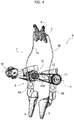
Figure 4 is a perspective view of a preferred example of an active exoskeleton comprised in the system subject of the present invention, and -
Figure 5 is a schematic representation of the functioning of the system subject of the present invention. - In
Figure 1 ,numeral 1 indicates in its entirety an operator who conducts his/her working operations within a work station, referenced bynumeral 2. Thanks to the characteristics of the system which is here described, thework station 2 can be an open, fenceless space within a factory. - In the example illustrated in
Figure 1 , theoperator 1 is intent on lifting aworkpiece 3, but it is understood that theoperator 1 may be engaged in conducting any type of operation required within awork station 2. - The
work station 2 comprises a system for assisting theoperator 1 in conducting the working operation, so as to minimize his/her fatigue level and to optimize his/her work performance. - In particular, this system comprises a plurality of sensors S associable to the body of the
operator 1 for the detection of one or more parameters. - The sensors S are configured for detecting one or more physiological parameters, which are indicative of the fatigue level of the
operator 1, and/or one or more movement parameters, which are indicative of the position and of the orientation of theoperator 1 in thework station 2. - Examples of parameters which are detected by sensors S are the heart rate, the metabolic consumption, the skin conductivity, the surface electromyography, the pressure at the interface between an active exoskeleton worn by the
operator 1 and the body of theoperator 1, the movement of theoperator 1 and the relative orientation of the body districts of theoperator 1. It is understood that it is possible to carry out detections in which the above parameters are detected all together, individually or in groups. - It is understood that the number, the type and the shape of the sensors S which are associated to the body of the
operator 1 may vary in different embodiments, based also on parameters which are intended to be detected. For instance, if you want to perform a surface electromyography for detecting the activation of the muscles of theoperator 1 or a detection of the heart rate of theoperator 1, the sensors consist of electrodes usually used in the art for this type of detections. - In an embodiment, the sensors S are associated to a
garment 4 intended to be worn by anoperator 1, so that when theoperator 1 wears the garment, the sensors S are in contact with the body of theoperator 1. - In the example shown in
Figure 2 ,such garment 4 is a shirt. However, it is understood that such example is non-limiting, since also embodiments wherein the sensors S are associated togarments 4 other than a shirt, for example a tracksuit as shown inFigure 5 , fall under the scope defined by the present description. - In the example shown in
Figure 2 , the sensors S are of a substantially circular or elliptic shape, and are arranged at the areas of the shirt intended to be in contact with the chest and with the arms of theoperator 1 wearing the shirt. - Nevertheless, such characteristics are non-limiting, since the sensors S may also be of shape and size other than the ones represented in
Figure 2 and may be arranged in areas of the shirt intended to be in contact with other body districts of theoperator 1, such as for instance the forearm, the abdomen, the back and, if thegarment 4 to which the sensors S are associated is a tracksuit, the legs, as shown inFigure 5 . - In an embodiment, the sensors S are associated directly to the body of the
operator 1, as represented by way of example inFigure 3 . - In the example shown in
Figure 3 , the sensors S are arranged at the torso, the arms, the hands, the legs and the feet of theoperator 1. This characteristic is non-limiting, since it is possible that in other embodiments the sensors S are arranged also at body districts of theoperator 1 different than shown inFigure 3 , for instance at the abdomen, the forearm or the neck of theoperator 1. - In the embodiment shown in
Figure 3 , the sensors S are supported in pockets ofsupport structures 5, which are used to keep the sensors S stationary at the body district where the detection of the parameter or of the parameters of interest is intended to be conducted. - In the example shown in
Figure 3 , thesupport structures 5 are portions of fabric shaped so that they can be worn at the various body districts of theoperator 1. It is understood that the shape of thesupport structures 5 may also be different than the one shown inFigure 3 , being suitable any type of shape capable of keeping the sensors S in the desired position and in contact with the body of theoperator 1. - Moreover, in embodiments not visible in the figures, the
support structures 5 are absent, as the sensors S are capable of remaining autonomously at the suitable body district for detecting the parameters. For example, in the case a surface electromyography or the detection of the heart rate of theoperator 1 is intended to be conducted, electrodes can be used that include an adhesive strip at the portion that comes into contact with the body of theoperator 1, capable of keeping the electrode attached to the skin, so thatsupport structures 5 are not required. - It is evident from the above description that the preferred body districts of the
operator 1 with which the sensors S are put in contact for conducting the detections of parameters are the arms, the legs and the torso. However, this characteristic is non-limiting, since the sensors S may be arranged at any other body district of theoperator 1 in which the detection of one or more parameters is intended to be conducted. - The system for assisting the
operator 1 in thework station 2 further comprises at least oneactive exoskeleton 6, wherein "active exoskeleton" refers to an exoskeleton comprising one or more electrically operated actuators. Theactive exoskeleton 6 is wearable by theoperator 1 for receiving assistance in the execution of one or more operations and, preferably, for receiving assistance in maintaining postures in which the muscles of theoperator 1 are contracted for prolonged periods of time. - It is understood that both embodiments wherein the system comprises only one
active exoskeleton 6 and embodiments wherein the system comprises more than oneactive exoskeleton 6, each for providing a corresponding body district of theoperator 1 who is wearing them with support, fall under the scope of the present description. In the embodiment wherein the system comprises more than oneactive exoskeleton 6, eachactive exoskeleton 6 comprises one or more corresponding electrically operated actuators. - In a preferred embodiment, the
active exoskeleton 6 is worn by theoperator 1 for receiving assistance in forward reclining movements of the torso, and is particularly useful when theoperator 1 has to remain for many hours in a row with the torso forward reclined or when theoperator 1 has to perform tasks, such as lifting weights, in the reclined position, as exemplified inFigure 1 . - However, this characteristic is non-limiting, since in embodiments not visible in the figures the
active exoskeleton 6 provides theoperator 1 with a different support, for example a support to movements of the muscles of the legs or to movements of the muscles of the arms. - A preferred example of
active exoskeleton 6 suitable for being worn by anoperator 1 has already been proposed by the same inventors in the European patent applicationEP 20162846 Figure 4 . - In this preferred example, the
active exoskeleton 6 is worn by theoperator 1 for receiving assistance in forward reclining movements of the torso, and comprises anupper structure 7, for the engagement of the torso of theoperator 1, and alower structure 8, for the engagement of the legs of theoperator 1. Theupper structure 7 and thelower structure 8 are pivotally connected with each other around an axis a. - As visible in
Figure 4 , theupper structure 7 comprises a pair oflateral uprights panel 8, provided for the support of the torso of theoperator 1 wearing theactive exoskeleton 6, while thelower structure 8 comprises twolower lateral semi-structures operator 1 respectively. In the embodiment shown, each of the twolower lateral semi-structures panel 9 of support for the leg of theoperator 1. - The
active exoskeleton 6 further comprises at least one elastic device, not visible inFigure 4 , preferably a spiral spring or an elastic joint, operatively interposed between theupper structure 7 and thelower structure 8, and at least oneelectric motor 10 operatively arranged in series with the elastic device, between theupper structure 7 and thelower structure 8. - The
electric motor 10 comprises amotor shaft 10B, capable of driving the rotation of a drivenshaft 11 by means of abelt reducer transmission 12. Being the drivenshaft 11 linked to the elastic device, such elastic device is deformed by the rotation and consequently delivers a resisting torque which results in a supporting effect felt by theoperator 1 in the forward reclining movement of the torso. - In an embodiment, the sensors S are associated to the structure of the
active exoskeleton 6 so as to be in contact with the body of theoperator 1, with reference to the condition of theactive exoskeleton 6 worn by theoperator 1. The association between the sensors S and theactive exoskeleton 6 may be performed in any type know in the art, for example by means of the use of an adhesive material. - In the embodiment wherein the
active exoskeleton 6 is the exoskeleton shown inFigure 4 , the sensors S are preferably arranged at thepanel 8 and/or thepanels 9. - In the embodiment wherein the
operator 1 wears agarment 4 in which the sensors S are integrated, theactive exoskeleton 6 is worn by theoperator 1 over thegarment 4. - The system for assisting the
operator 1 in conducting work operations further comprises at least onecollaborative robot 12, configured for conducting one or more operations adjacent to theoperator 1 and in cooperation with theoperator 1, wherein "collaborative robot" refers to a robot operating in an open space not protected by a fence or other means of protection. In other words, thecollaborative robot 12 operates in thesame work station 2 where theoperator 1 conducts his/her operations. - The
collaborative robot 12 is configured for cooperating with theoperator 1 in order to facilitate the conduction of his/her operations, for example by providing him/her with tools necessary for the work or by conducting actions complementary to the actions conducted by theoperator 1.Figure 1 is exemplificative of a situation in which thecollaborative robot 12 and theoperator 1 conduct complementary operations on products P to be worked which are arranged on aworktop 13 within thework station 2. - The
collaborative robot 12 further comprises a robot electronic controller ER associated to it. In particular, the electronic controller ER sends signals to thecollaborative robot 12 so as to control the actions which are conducted by thecollaborative robot 12 or the position of thecollaborative robot 12 within thework station 2. - It is understood that more than one
collaborative robot 12 may be present in thework station 2 for cooperating with theoperator 1. In such a case, eachcollaborative robot 12 is associated to a corresponding robot electronic controller ER. - It is understood that the
collaborative robot 12 may be any type of collaborative robot known in the art and suitable for being used in awork station 2. Typical examples of collaborative robots are robots equipped with sensorized coatings or casings, which allow the robot to stop when an excessive proximity of parts of the robot with respect to an external body is detected. - The system for assisting the
operator 1 further comprises at least one system electronic controller Es configured and programmed for receiving signals by the sensors S, which are elaborated by them based on the parameters detected from theoperator 1, and for sending signals to the one or more electrically operated actuators of theactive exoskeleton 6 and to the robot electronic controller ER based on the elaboration of signals detected by the sensors S. - In particular, the electrically operated actuators of the
active exoskeleton 6 worn by theoperator 1 are controlled by the system electronic controller Es based on the physiological parameters detected by the sensors S which are indicative of the fatigue level of theoperator 1, such as the heart rate, the surface electromyography, the skin conductivity and the metabolic consumption. - Moreover, the robot electronic controller ER is controlled by the system electronic controller Es based on the parameters indicative of the movement of the
operator 1 and on the position and relative orientation of his/her body districts. In this way, the electronic controller ER moves thecollaborative robot 12 so that theoperator 1 does not risk to collide with it and always operates safely. - In the preferred embodiment, the system electronic controller Es advantageously comprises an artificial neural network configured for learning the movements and the physical and physiological features of the
operator 1 and for consequently elaborating both signals to send to the robot electronic controller ER and command signals for the electrically operated actuators of theactive exoskeleton 6. It is understood that the definition "artificial neural network" as used herein refers to a circuit or a controller configured for performing an elaboration by means of a method of machine learning. - A scheme of the use of the embodiment shown in the figures is visible in
Figure 5 . Theoperator 1 who works within thework station 2 wears thegarment 4 in which the sensors S are integrated which, in the worn condition, are in contact with the body of theoperator 1. Over thegarment 4, theoperator 1 wears the active exoskeleton 6 (not visible on theoperator 1 inFigure 5 , for allowing the visualization of the garment 4), in order to receive support in maintaining the postures in which the muscles are contracted for prolonged times. Thecollaborative robot 12, which cooperates with theoperator 1 in conducting his/her work operations, is also present in thework station 2. - The sensors S detect physiological parameters of the
operator 1, namely heart rate, skin conductivity, surface electromyography, metabolic consumption, which are indicative of the fatigue level of theoperator 1, and parameters indicative of the movement and of the relative orientation of the body districts of theoperator 1. - Based on the detected parameters, the sensors S generate a plurality of signals, indicated as A1-A8 in
Figure 5 , and send them to the system electronic controller Es. Based on the signals received by the sensors S, the system electronic controller Es sends one or more signals B to the robot electronic controller ER, associated to thecollaborative robot 12, and one or more signals C to the electrically operated actuators of theactive exoskeleton 6. - Based on the signals B received from the system electronic controller Es, the robot electronic controller ER controls the
collaborative robot 12 so that it cooperates in an optimal way with theoperator 1. In particular, the robot electronic controller ER commands movements of thecollaborative robot 12 within thework station 2 so as to avoid that it collides with theoperator 1, thus ensuring safe work conditions and reducing the risk that theoperator 1 is accidentally injured. Moreover, the robot electronic controller ER controls thecollaborative robot 12 so that it conducts complementary operations to the operations conducted by theoperator 1. For example, thecollaborative robot 12 may deliver work tools to theoperator 1, or conduct part of the workload of theoperator 1. - Moreover, based on signals C received by the system electronic controller Es, the electrically operated actuators of the
active exoskeleton 6 are activated, deactivated or regulated so as to provide theoperator 1 wearing theactive exoskeleton 6 always with the optimal assistance, which is set based on the fatigue level detected with the elaboration of the parameters detected by the sensors S. - Thanks to the presence of the artificial neural network, the system electronic controller Es stores the physiological parameters and the movement parameters detected for every
operator 1 who uses the assistance system, and elaborates these parameters by means of methods of machine learning. As a consequence, an optimal control of thecollaborative robot 12 and of theactive exoskeleton 6 is set for everyoperator 1, so as to receive an assistance that is as adapted as possible to the physical and physiological features, to the postures and to the workload of theoperator 1, and as a function of the time and of the evolution of the physical state of theoperator 1 during the working period. - For example, depending on the height of the
operator 1, the artificial neural network is capable of storing the optimal position for the delivery of working tools from thecollaborative robot 12 to theoperator 1, so that every time thatspecific operator 1 uses the assistance system within thework station 2, thecollaborative robot 12 delivers the working tools to theoperator 1 at the stored position. - It is evident form the above description that the assistance system subject of the present invention is characterized by a high level of active cooperation among the involved apparatus. In fact, the system allows not only to avoid that the operator collides with the collaborative robot, but also to foster an active cooperation between the collaborative robot and the active exoskeleton so as to maximize the assistance felt by the operator and to make the working environment comfortable and safe.
- Moreover, unlike what has been described in the
US patent application US 2019099877 A1 cited at the beginning of the present description, collisions between the collaborative robot and the operator are prevented not by moving the exoskeleton - and thus the muscles of the operators - against the control of the operator, but simply by moving, braking or blocking the collaborative robot within the work station based on the parameters of movement and of relative orientations of the body districts that are detected by the sensors. This involves an increase in the comfort felt by the operator. - Studies and tests carried out by the Applicant has further proved that the parameters listed above, including physiological parameters aimed at determining the fatigue level of the operator and movement parameters aimed at determining the position of the operator within the work station in relation to the collaborative robot, if detected simultaneously by sensors in contact with the body of the operator, have a synergistic effect in ensuring an optimal control of the collaborative robot and of the active exoskeleton for assisting the operator in conducting his/her operations.
- Naturally, without prejudice to the principle of the invention, the details of construction and the embodiments may vary widely with respect to those described and illustrated purely by way of example, without departing from the scope of the present invention, as defined by the attached claims.
Claims (8)
- System for assisting an operator (1) in a work station (2), the system comprising:- at least one collaborative robot (12) configured for conducting one or more operations in an open, non-protected space, adjacent to an operator (1) and in cooperation with the operator (1), with a robot electronic controller (ER) associated to the at least one collaborative robot (12),- at least one active exoskeleton (6) including one or more electrically operated actuators, wearable by an operator (1) for receiving assistance in conducting one or more operations,- a plurality of sensors (S) associable to the body of the operator (1) and configured for detecting at least one parameter selected from heart rate, metabolic consumption, skin conductivity, surface electromyography, pressure at the interface between the at least one active exoskeleton (6) and the body of the operator (1), movement of the operator (1) and relative orientation of the body districts of the operator (1),- at least one system electronic controller (Es) configured for receiving signals (A1-A8) from said plurality of sensors (S) and for sending signals (B; C) to said one or more actuators of the at least one active exoskeleton (6) and to said robot electronic controller (ER) based on an elaboration of the signals (A1-A8) received from said plurality of sensors (S),wherein the system electronic controller (Es) is configured and programmed for dynamically controlling the functioning of said one or more actuators of the at least one active exoskeleton (6) and the functioning of the at least one collaborative robot (12) as a function of the parameters detected by said plurality of sensors (S) so as to avoid collisions or injuries between the collaborative robot (12) and the operator (1) or conditions of lack of safety for the operator (1), and so as to enable the collaborative robot (12) to cooperate with the operator (1) by assuming positions suited to the physical and physiological features, to the workload and to the postures of the operator (1).
- System according to claim 1, wherein at least some of said sensors (S) are associable to said at least one active exoskeleton (6) so as to be in contact with the body of the operator (1), with reference to the worn condition of the at least one active exoskeleton (6).
- System according to claim 1, wherein at least some of said sensors (S) are associable to a garment (4) intended to be worn by the operator (1), and wherein the at least one active exoskeleton (6) is worn by the operator (1) over said garment (4).
- System according to claim 1, wherein at least some of said sensors (S) are associable directly to the body of the operator (1).
- System according to any one of claims 2 to 4, wherein at least some of said sensors (S) are associable to the body of the operator (1) at at least one body district of the operator (1) selected from arms, legs and torso.
- System according to claim 1, wherein said at least one active exoskeleton (6) comprises:- an upper structure (7) for the engagement of the torso of the operator (1) and a lower structure (8) for the engagement of the legs of the operator (1),- said upper structure (7) and lower structure (8) being pivotally connected with each other around an axis (a),- at least one elastic device operatively interposed between said upper structure (7) and said lower structure (8),- at least one electric motor (10) operatively arranged in series with said at least one elastic device, between said upper structure (7) and said lower structure (8), and actionable by said system electronic controller (Es) for dynamically controlling the extent of deformation of said at least one elastic device.
- System according to claim 6, wherein said at least one elastic device is selected from a spiral spring and an elastic joint.
- System according to claim 1, wherein said at least one system electronic controller (Es) comprises an artificial neural network configured for learning the movements and the physical and physiological features of the operator (1) and for consequently elaborating both signals (B) to send to the robot electronic controller (ER) for allowing the collaborative robot (12) to operate consistently with the movements and the physical and physiological features of the operator (1), both command signals (C) for said one or more actuators of the at least one active exoskeleton (6).
Priority Applications (2)
| Application Number | Priority Date | Filing Date | Title |
|---|---|---|---|
| EP20171569.5A EP3904013B1 (en) | 2020-04-27 | 2020-04-27 | System for assisting an operator in a work station |
| US17/190,967 US12239597B2 (en) | 2020-04-27 | 2021-03-03 | System for assisting an operator in a work station |
Applications Claiming Priority (1)
| Application Number | Priority Date | Filing Date | Title |
|---|---|---|---|
| EP20171569.5A EP3904013B1 (en) | 2020-04-27 | 2020-04-27 | System for assisting an operator in a work station |
Publications (2)
| Publication Number | Publication Date |
|---|---|
| EP3904013A1 true EP3904013A1 (en) | 2021-11-03 |
| EP3904013B1 EP3904013B1 (en) | 2022-07-20 |
Family
ID=70553724
Family Applications (1)
| Application Number | Title | Priority Date | Filing Date |
|---|---|---|---|
| EP20171569.5A Active EP3904013B1 (en) | 2020-04-27 | 2020-04-27 | System for assisting an operator in a work station |
Country Status (2)
| Country | Link |
|---|---|
| US (1) | US12239597B2 (en) |
| EP (1) | EP3904013B1 (en) |
Families Citing this family (3)
| Publication number | Priority date | Publication date | Assignee | Title |
|---|---|---|---|---|
| WO2023076694A1 (en) * | 2021-11-01 | 2023-05-04 | Alpha Reactor Corporation | Robotic assistance device using reduction of cognitive load of a user |
| GR20230100016A (en) * | 2023-01-10 | 2024-08-19 | Κωνσταντινος Σταμουλη Μαμμας | COLLABORATIVE ROBOT-PORTABLE AND WEARABLE BY RESCUERS TEAM "COBOT" COMPLETE WITH COMPLEX OF EXOSKELETONS AND DIGITAL BIOMETRICS MEASURING DEVICES AND 5G CLOUD INTERNET COMPUTING AND 4K PSY ANALYSIS NETWORK FIAKI MEDICAL IMAGE FOR REAL-TIME REMOTE FIELD ASSESSMENT, CLASSIFICATION OF RISK (TRIAGE), DIAGNOSIS AND MAKING OF BEST DECISIONS BY SPECIALISTS FOR THE RAPID, CORRECT AND PERSONALIZED TREATMENT OF SEVERE PATIENTS AND THE SUPPORT OF THE "GOLDEN HOUR" IN PROFESSIONAL TREATMENT RAUMATOS |
| CN120095893A (en) * | 2025-04-24 | 2025-06-06 | 河北工程大学 | Active anti-collision device for human arms when humans and collaborative robots work together |
Citations (1)
| Publication number | Priority date | Publication date | Assignee | Title |
|---|---|---|---|---|
| US20190099877A1 (en) | 2017-09-29 | 2019-04-04 | Airbus Operations Gmbh | Exoskeleton System |
Family Cites Families (49)
| Publication number | Priority date | Publication date | Assignee | Title |
|---|---|---|---|---|
| US5155423A (en) * | 1986-02-18 | 1992-10-13 | Robotics Research Corporation | Industrial robot with servo |
| US4937759A (en) * | 1986-02-18 | 1990-06-26 | Robotics Research Corporation | Industrial robot with controller |
| US20060206167A1 (en) * | 2005-01-06 | 2006-09-14 | Flaherty J C | Multi-device patient ambulation system |
| US9844447B2 (en) * | 2010-04-09 | 2017-12-19 | Deka Products Limited Partnership | System and apparatus for robotic device and methods of using thereof |
| US9687377B2 (en) * | 2011-01-21 | 2017-06-27 | Bionx Medical Technologies, Inc. | Terrain adaptive powered joint orthosis |
| JP5915214B2 (en) * | 2012-02-01 | 2016-05-11 | セイコーエプソン株式会社 | Robot apparatus, assembling method, and assembling program |
| EP3004996B1 (en) * | 2013-05-30 | 2017-11-29 | Homayoon Kazerooni | User-coupled human-machine interface |
| JP5900462B2 (en) * | 2013-10-30 | 2016-04-06 | 株式会社安川電機 | MOVING BODY, MOVING BODY MOVING METHOD, ROBOT SYSTEM, AND WORKED PRODUCT MANUFACTURING METHOD |
| KR102073001B1 (en) * | 2013-11-29 | 2020-02-04 | 삼성전자주식회사 | Wearable robot and method for controlling the same |
| WO2015106278A2 (en) * | 2014-01-13 | 2015-07-16 | Massachusetts Institute Of Technology | Wearable robot assisting manual tasks |
| CN118252727A (en) * | 2014-09-19 | 2024-06-28 | 哈佛大学校长及研究员协会 | Method for assisting articulation of a user and wearable robotic system |
| AU2016290218A1 (en) * | 2015-07-06 | 2018-01-18 | Rewalk Robotics Ltd. | Methods and apparatuses for exoskeleton attachment |
| KR102452632B1 (en) * | 2015-08-17 | 2022-10-07 | 삼성전자주식회사 | A motion assist apparatus and a control method thereof |
| US11772270B2 (en) * | 2016-02-09 | 2023-10-03 | Cobalt Robotics Inc. | Inventory management by mobile robot |
| US9895799B2 (en) * | 2016-04-08 | 2018-02-20 | Patrick Michael Mullen | System for cooperation between a human and a robotic device |
| US9789023B1 (en) * | 2016-09-29 | 2017-10-17 | Lunghwa University Of Science And Technology | Multi-function lower limb ambulation rehabilitation and walking assist device |
| US11191653B2 (en) * | 2016-11-03 | 2021-12-07 | University Of New Brunswick | Powered lower limb devices and methods of control thereof |
| EP3342390A1 (en) * | 2016-12-29 | 2018-07-04 | ETH Zurich | Apparatus for supporting a limb of a user against gravity |
| WO2018136722A1 (en) * | 2017-01-19 | 2018-07-26 | Vanderbilt University | Wearable assistance devices and methods of operation |
| WO2018143620A2 (en) * | 2017-02-03 | 2018-08-09 | Samsung Electronics Co., Ltd. | Robot cleaner and method of controlling the same |
| US10828533B2 (en) * | 2017-02-23 | 2020-11-10 | Elwha Llc | Personal therapy and exercise monitoring and oversight devices, systems, and related methods |
| CN110997245A (en) * | 2017-03-08 | 2020-04-10 | 艾比力泰克医疗公司 | Upper torso enhancement system and method |
| DE102017105065A1 (en) * | 2017-03-09 | 2018-10-11 | BEKA Hospitec GmbH | Gait training procedure with sensor-based reduction or variation of the weight load |
| JP7144754B2 (en) * | 2017-04-26 | 2022-09-30 | 日本電産株式会社 | Articulated robots and articulated robot systems |
| EP3606707A2 (en) * | 2017-06-28 | 2020-02-12 | Google LLC | Machine learning methods and apparatus for semantic robotic grasping |
| US11259980B2 (en) * | 2017-07-31 | 2022-03-01 | Arizona Board Of Regents On Behalf Of Arizona State University | Soft inflatable exosuit for knee rehabilitation |
| US20190069957A1 (en) * | 2017-09-06 | 2019-03-07 | Verily Life Sciences Llc | Surgical recognition system |
| FR3071401A1 (en) * | 2017-09-25 | 2019-03-29 | Commissariat A L`Energie Atomique Et Aux Energies Alternatives | LOWER MEMBER OF EXOSQUELET WITH LOW ENERGY CONSUMPTION |
| US10766137B1 (en) * | 2017-11-03 | 2020-09-08 | Amazon Technologies, Inc. | Artificial intelligence system for modeling and evaluating robotic success at task performance |
| DE102017126259B4 (en) * | 2017-11-09 | 2019-08-01 | Universität Stuttgart | Exoskeleton system, control device and procedures |
| FR3074327B1 (en) * | 2017-11-27 | 2021-04-23 | Commissariat Energie Atomique | PROCESS FOR CONTROL OF A HANDLING ROBOT AND DEVICE IMPLEMENTING SUCH A PROCESS |
| EP3621773B1 (en) * | 2017-12-05 | 2023-10-04 | Google LLC | Viewpoint invariant visual servoing of robot end effector using recurrent neural network |
| US10492977B2 (en) * | 2017-12-14 | 2019-12-03 | Bionic Yantra Private Limited | Apparatus and system for limb rehabilitation |
| JP7037352B2 (en) * | 2017-12-26 | 2022-03-16 | 川崎重工業株式会社 | Transport system |
| JP7095407B2 (en) * | 2018-05-28 | 2022-07-05 | 株式会社ジェイテクト | Assist device |
| IL281716B2 (en) * | 2018-09-27 | 2025-05-01 | Quantum Surgical | Medical robot comprising automatic positioning means |
| US11197799B2 (en) * | 2018-10-17 | 2021-12-14 | Midea Group Co., Ltd. | System and method for generating pressure point maps based on remote-controlled haptic-interactions |
| WO2020113082A1 (en) * | 2018-11-28 | 2020-06-04 | College Park Industries, Inc. | Management of wireless transmission rate of control signals for power assistive devices |
| WO2020118148A2 (en) * | 2018-12-06 | 2020-06-11 | Zume, Inc. | Product spreader apparatus, system, and method |
| US11622905B2 (en) * | 2018-12-10 | 2023-04-11 | Arizona Board Of Regents On Behalf Of Northern Arizona University | Proportional joint-moment control for powered exoskeletons and prostheses |
| US11312012B2 (en) * | 2019-01-01 | 2022-04-26 | Giant Ai, Inc. | Software compensated robotics |
| WO2020141632A1 (en) * | 2019-01-02 | 2020-07-09 | 엘지전자 주식회사 | Wearable robot |
| US20200223071A1 (en) * | 2019-01-10 | 2020-07-16 | Seismic Holdings, Inc. | Exosuit systems and methods with accessory device support |
| EP3696733B1 (en) * | 2019-02-13 | 2024-03-27 | Siemens Aktiengesellschaft | Encoding and transferring scene and task dependent learning information into transferable neural network layers |
| US11903679B2 (en) * | 2019-08-30 | 2024-02-20 | AR & NS Investment, LLC | Artificial intelligence-based robotic system for physical therapy |
| US10906180B1 (en) * | 2020-01-30 | 2021-02-02 | 123IV, Inc. | Monitoring and maintaining an intravenous assembly without medical staff involvement for safe distancing enforcement |
| JP7707187B2 (en) * | 2020-03-24 | 2025-07-14 | エルダブリューティー3 エス.アール.エル. | SYSTEM AND METHOD FOR CONTROLLING INTERACTION BETWEEN AN OPERATOR AND A MACHINE - Patent application |
| US11305424B2 (en) * | 2020-05-22 | 2022-04-19 | Honda Motor Co., Ltd. | Generalized admittance control for robotic manipulators |
| US11833675B2 (en) * | 2020-06-22 | 2023-12-05 | Cilag Gmbh International | Structural exoskeleton for robotic surgical tool |
-
2020
- 2020-04-27 EP EP20171569.5A patent/EP3904013B1/en active Active
-
2021
- 2021-03-03 US US17/190,967 patent/US12239597B2/en active Active
Patent Citations (1)
| Publication number | Priority date | Publication date | Assignee | Title |
|---|---|---|---|---|
| US20190099877A1 (en) | 2017-09-29 | 2019-04-04 | Airbus Operations Gmbh | Exoskeleton System |
Non-Patent Citations (1)
| Title |
|---|
| KHALID AZFAR ET AL: "A methodology to develop collaborative robotic cyber physical systems for production environments", LOGISTICS RESEARCH, SPRINGER BERLIN HEIDELBERG, BERLIN/HEIDELBERG, vol. 9, no. 1, 8 November 2016 (2016-11-08), pages 1 - 15, XP036121116, ISSN: 1865-035X, [retrieved on 20161108], DOI: 10.1007/S12159-016-0151-X * |
Also Published As
| Publication number | Publication date |
|---|---|
| US12239597B2 (en) | 2025-03-04 |
| US20210330540A1 (en) | 2021-10-28 |
| EP3904013B1 (en) | 2022-07-20 |
Similar Documents
| Publication | Publication Date | Title |
|---|---|---|
| US12239597B2 (en) | System for assisting an operator in a work station | |
| US20250213381A1 (en) | Wearable devices for protecting against musculoskeletal injuries and enhancing performance | |
| KR102083035B1 (en) | Trunk supporting exoskeleton and method of use | |
| CN109571431B (en) | Exoskeleton system, work environment and method for supporting a person | |
| EP2665449B1 (en) | Adaptive arm support systems and methods for use | |
| EP3522838B1 (en) | Armlifting support device | |
| US20190224841A1 (en) | Exosuit systems and methods for monitoring working safety and performance | |
| CN104825258B (en) | The wearable function auxiliary mechanical arm of shoulder | |
| WO2006022057A1 (en) | Controller of walking assisting device | |
| EP3878602B1 (en) | Apparatus wearable by a subject for assisting forward reclining movements of the torso | |
| KR20170111279A (en) | Robot for assisting user to walk with lower body exoskeleton | |
| KR20110124924A (en) | Wearable Robot for Strength Support | |
| CN112809657A (en) | Load-mobile exoskeleton system and application method thereof | |
| KR102599247B1 (en) | Modular exoskeleton robot for gait assistance and rehabilitation equipment | |
| JP2018192564A (en) | Movement support device | |
| KR20160126334A (en) | Attitude control apparatus of wearable exoskeleton robot and method thereof | |
| RU2785828C1 (en) | Intuitive massage system of manipulator type (versions) | |
| US20250186296A1 (en) | Intuitive articulated arm-type massage system | |
| WO2018065476A1 (en) | Arm lifting support device | |
| WO2018004422A1 (en) | Ergonomic workstation | |
| JP6945201B2 (en) | Auxiliary device for long-term care | |
| JP2019135080A (en) | Assist suit | |
| RU201482U1 (en) | ASSISTING SIMULATOR ROBOT FOR RESTORING NORMAL WALK OF A HUMAN | |
| Inoue et al. | Development of Upper-Limb Power-Assist Machine Using Linkage Mechanism–Mechanism and its Fundamental Motion– | |
| JPH10243978A (en) | Medical equipment |
Legal Events
| Date | Code | Title | Description |
|---|---|---|---|
| PUAI | Public reference made under article 153(3) epc to a published international application that has entered the european phase |
Free format text: ORIGINAL CODE: 0009012 |
|
| STAA | Information on the status of an ep patent application or granted ep patent |
Free format text: STATUS: REQUEST FOR EXAMINATION WAS MADE |
|
| 17P | Request for examination filed |
Effective date: 20210527 |
|
| AK | Designated contracting states |
Kind code of ref document: A1 Designated state(s): AL AT BE BG CH CY CZ DE DK EE ES FI FR GB GR HR HU IE IS IT LI LT LU LV MC MK MT NL NO PL PT RO RS SE SI SK SM TR |
|
| B565 | Issuance of search results under rule 164(2) epc |
Effective date: 20201104 |
|
| GRAP | Despatch of communication of intention to grant a patent |
Free format text: ORIGINAL CODE: EPIDOSNIGR1 |
|
| STAA | Information on the status of an ep patent application or granted ep patent |
Free format text: STATUS: GRANT OF PATENT IS INTENDED |
|
| INTG | Intention to grant announced |
Effective date: 20220310 |
|
| GRAS | Grant fee paid |
Free format text: ORIGINAL CODE: EPIDOSNIGR3 |
|
| GRAA | (expected) grant |
Free format text: ORIGINAL CODE: 0009210 |
|
| STAA | Information on the status of an ep patent application or granted ep patent |
Free format text: STATUS: THE PATENT HAS BEEN GRANTED |
|
| AK | Designated contracting states |
Kind code of ref document: B1 Designated state(s): AL AT BE BG CH CY CZ DE DK EE ES FI FR GB GR HR HU IE IS IT LI LT LU LV MC MK MT NL NO PL PT RO RS SE SI SK SM TR |
|
| REG | Reference to a national code |
Ref country code: CH Ref legal event code: EP |
|
| REG | Reference to a national code |
Ref country code: DE Ref legal event code: R096 Ref document number: 602020004045 Country of ref document: DE |
|
| REG | Reference to a national code |
Ref country code: AT Ref legal event code: REF Ref document number: 1505240 Country of ref document: AT Kind code of ref document: T Effective date: 20220815 |
|
| REG | Reference to a national code |
Ref country code: IE Ref legal event code: FG4D |
|
| REG | Reference to a national code |
Ref country code: LT Ref legal event code: MG9D |
|
| REG | Reference to a national code |
Ref country code: NL Ref legal event code: MP Effective date: 20220720 |
|
| PG25 | Lapsed in a contracting state [announced via postgrant information from national office to epo] |
Ref country code: SE Free format text: LAPSE BECAUSE OF FAILURE TO SUBMIT A TRANSLATION OF THE DESCRIPTION OR TO PAY THE FEE WITHIN THE PRESCRIBED TIME-LIMIT Effective date: 20220720 Ref country code: RS Free format text: LAPSE BECAUSE OF FAILURE TO SUBMIT A TRANSLATION OF THE DESCRIPTION OR TO PAY THE FEE WITHIN THE PRESCRIBED TIME-LIMIT Effective date: 20220720 Ref country code: PT Free format text: LAPSE BECAUSE OF FAILURE TO SUBMIT A TRANSLATION OF THE DESCRIPTION OR TO PAY THE FEE WITHIN THE PRESCRIBED TIME-LIMIT Effective date: 20221121 Ref country code: NO Free format text: LAPSE BECAUSE OF FAILURE TO SUBMIT A TRANSLATION OF THE DESCRIPTION OR TO PAY THE FEE WITHIN THE PRESCRIBED TIME-LIMIT Effective date: 20221020 Ref country code: NL Free format text: LAPSE BECAUSE OF FAILURE TO SUBMIT A TRANSLATION OF THE DESCRIPTION OR TO PAY THE FEE WITHIN THE PRESCRIBED TIME-LIMIT Effective date: 20220720 Ref country code: LV Free format text: LAPSE BECAUSE OF FAILURE TO SUBMIT A TRANSLATION OF THE DESCRIPTION OR TO PAY THE FEE WITHIN THE PRESCRIBED TIME-LIMIT Effective date: 20220720 Ref country code: LT Free format text: LAPSE BECAUSE OF FAILURE TO SUBMIT A TRANSLATION OF THE DESCRIPTION OR TO PAY THE FEE WITHIN THE PRESCRIBED TIME-LIMIT Effective date: 20220720 Ref country code: FI Free format text: LAPSE BECAUSE OF FAILURE TO SUBMIT A TRANSLATION OF THE DESCRIPTION OR TO PAY THE FEE WITHIN THE PRESCRIBED TIME-LIMIT Effective date: 20220720 Ref country code: ES Free format text: LAPSE BECAUSE OF FAILURE TO SUBMIT A TRANSLATION OF THE DESCRIPTION OR TO PAY THE FEE WITHIN THE PRESCRIBED TIME-LIMIT Effective date: 20220720 |
|
| REG | Reference to a national code |
Ref country code: AT Ref legal event code: MK05 Ref document number: 1505240 Country of ref document: AT Kind code of ref document: T Effective date: 20220720 |
|
| PG25 | Lapsed in a contracting state [announced via postgrant information from national office to epo] |
Ref country code: PL Free format text: LAPSE BECAUSE OF FAILURE TO SUBMIT A TRANSLATION OF THE DESCRIPTION OR TO PAY THE FEE WITHIN THE PRESCRIBED TIME-LIMIT Effective date: 20220720 Ref country code: IS Free format text: LAPSE BECAUSE OF FAILURE TO SUBMIT A TRANSLATION OF THE DESCRIPTION OR TO PAY THE FEE WITHIN THE PRESCRIBED TIME-LIMIT Effective date: 20221120 Ref country code: HR Free format text: LAPSE BECAUSE OF FAILURE TO SUBMIT A TRANSLATION OF THE DESCRIPTION OR TO PAY THE FEE WITHIN THE PRESCRIBED TIME-LIMIT Effective date: 20220720 Ref country code: GR Free format text: LAPSE BECAUSE OF FAILURE TO SUBMIT A TRANSLATION OF THE DESCRIPTION OR TO PAY THE FEE WITHIN THE PRESCRIBED TIME-LIMIT Effective date: 20221021 |
|
| REG | Reference to a national code |
Ref country code: DE Ref legal event code: R097 Ref document number: 602020004045 Country of ref document: DE |
|
| PG25 | Lapsed in a contracting state [announced via postgrant information from national office to epo] |
Ref country code: SM Free format text: LAPSE BECAUSE OF FAILURE TO SUBMIT A TRANSLATION OF THE DESCRIPTION OR TO PAY THE FEE WITHIN THE PRESCRIBED TIME-LIMIT Effective date: 20220720 Ref country code: RO Free format text: LAPSE BECAUSE OF FAILURE TO SUBMIT A TRANSLATION OF THE DESCRIPTION OR TO PAY THE FEE WITHIN THE PRESCRIBED TIME-LIMIT Effective date: 20220720 Ref country code: DK Free format text: LAPSE BECAUSE OF FAILURE TO SUBMIT A TRANSLATION OF THE DESCRIPTION OR TO PAY THE FEE WITHIN THE PRESCRIBED TIME-LIMIT Effective date: 20220720 Ref country code: CZ Free format text: LAPSE BECAUSE OF FAILURE TO SUBMIT A TRANSLATION OF THE DESCRIPTION OR TO PAY THE FEE WITHIN THE PRESCRIBED TIME-LIMIT Effective date: 20220720 Ref country code: AT Free format text: LAPSE BECAUSE OF FAILURE TO SUBMIT A TRANSLATION OF THE DESCRIPTION OR TO PAY THE FEE WITHIN THE PRESCRIBED TIME-LIMIT Effective date: 20220720 |
|
| PLBE | No opposition filed within time limit |
Free format text: ORIGINAL CODE: 0009261 |
|
| STAA | Information on the status of an ep patent application or granted ep patent |
Free format text: STATUS: NO OPPOSITION FILED WITHIN TIME LIMIT |
|
| PG25 | Lapsed in a contracting state [announced via postgrant information from national office to epo] |
Ref country code: SK Free format text: LAPSE BECAUSE OF FAILURE TO SUBMIT A TRANSLATION OF THE DESCRIPTION OR TO PAY THE FEE WITHIN THE PRESCRIBED TIME-LIMIT Effective date: 20220720 Ref country code: EE Free format text: LAPSE BECAUSE OF FAILURE TO SUBMIT A TRANSLATION OF THE DESCRIPTION OR TO PAY THE FEE WITHIN THE PRESCRIBED TIME-LIMIT Effective date: 20220720 |
|
| 26N | No opposition filed |
Effective date: 20230421 |
|
| PG25 | Lapsed in a contracting state [announced via postgrant information from national office to epo] |
Ref country code: AL Free format text: LAPSE BECAUSE OF FAILURE TO SUBMIT A TRANSLATION OF THE DESCRIPTION OR TO PAY THE FEE WITHIN THE PRESCRIBED TIME-LIMIT Effective date: 20220720 |
|
| REG | Reference to a national code |
Ref country code: CH Ref legal event code: PL |
|
| PG25 | Lapsed in a contracting state [announced via postgrant information from national office to epo] |
Ref country code: LU Free format text: LAPSE BECAUSE OF NON-PAYMENT OF DUE FEES Effective date: 20230427 |
|
| REG | Reference to a national code |
Ref country code: BE Ref legal event code: MM Effective date: 20230430 |
|
| PG25 | Lapsed in a contracting state [announced via postgrant information from national office to epo] |
Ref country code: MC Free format text: LAPSE BECAUSE OF FAILURE TO SUBMIT A TRANSLATION OF THE DESCRIPTION OR TO PAY THE FEE WITHIN THE PRESCRIBED TIME-LIMIT Effective date: 20220720 |
|
| PG25 | Lapsed in a contracting state [announced via postgrant information from national office to epo] |
Ref country code: MC Free format text: LAPSE BECAUSE OF FAILURE TO SUBMIT A TRANSLATION OF THE DESCRIPTION OR TO PAY THE FEE WITHIN THE PRESCRIBED TIME-LIMIT Effective date: 20220720 Ref country code: LI Free format text: LAPSE BECAUSE OF NON-PAYMENT OF DUE FEES Effective date: 20230430 Ref country code: CH Free format text: LAPSE BECAUSE OF NON-PAYMENT OF DUE FEES Effective date: 20230430 |
|
| REG | Reference to a national code |
Ref country code: IE Ref legal event code: MM4A |
|
| PG25 | Lapsed in a contracting state [announced via postgrant information from national office to epo] |
Ref country code: BE Free format text: LAPSE BECAUSE OF NON-PAYMENT OF DUE FEES Effective date: 20230430 |
|
| PG25 | Lapsed in a contracting state [announced via postgrant information from national office to epo] |
Ref country code: IE Free format text: LAPSE BECAUSE OF NON-PAYMENT OF DUE FEES Effective date: 20230427 |
|
| PG25 | Lapsed in a contracting state [announced via postgrant information from national office to epo] |
Ref country code: IE Free format text: LAPSE BECAUSE OF NON-PAYMENT OF DUE FEES Effective date: 20230427 |
|
| PG25 | Lapsed in a contracting state [announced via postgrant information from national office to epo] |
Ref country code: BG Free format text: LAPSE BECAUSE OF FAILURE TO SUBMIT A TRANSLATION OF THE DESCRIPTION OR TO PAY THE FEE WITHIN THE PRESCRIBED TIME-LIMIT Effective date: 20220720 |
|
| PG25 | Lapsed in a contracting state [announced via postgrant information from national office to epo] |
Ref country code: BG Free format text: LAPSE BECAUSE OF FAILURE TO SUBMIT A TRANSLATION OF THE DESCRIPTION OR TO PAY THE FEE WITHIN THE PRESCRIBED TIME-LIMIT Effective date: 20220720 |
|
| GBPC | Gb: european patent ceased through non-payment of renewal fee |
Effective date: 20240427 |
|
| PG25 | Lapsed in a contracting state [announced via postgrant information from national office to epo] |
Ref country code: GB Free format text: LAPSE BECAUSE OF NON-PAYMENT OF DUE FEES Effective date: 20240427 |
|
| PG25 | Lapsed in a contracting state [announced via postgrant information from national office to epo] |
Ref country code: GB Free format text: LAPSE BECAUSE OF NON-PAYMENT OF DUE FEES Effective date: 20240427 |
|
| PGFP | Annual fee paid to national office [announced via postgrant information from national office to epo] |
Ref country code: DE Payment date: 20250319 Year of fee payment: 6 |
|
| PG25 | Lapsed in a contracting state [announced via postgrant information from national office to epo] |
Ref country code: CY Free format text: LAPSE BECAUSE OF FAILURE TO SUBMIT A TRANSLATION OF THE DESCRIPTION OR TO PAY THE FEE WITHIN THE PRESCRIBED TIME-LIMIT; INVALID AB INITIO Effective date: 20200427 |
|
| PG25 | Lapsed in a contracting state [announced via postgrant information from national office to epo] |
Ref country code: HU Free format text: LAPSE BECAUSE OF FAILURE TO SUBMIT A TRANSLATION OF THE DESCRIPTION OR TO PAY THE FEE WITHIN THE PRESCRIBED TIME-LIMIT; INVALID AB INITIO Effective date: 20200427 |
|
| PG25 | Lapsed in a contracting state [announced via postgrant information from national office to epo] |
Ref country code: TR Free format text: LAPSE BECAUSE OF FAILURE TO SUBMIT A TRANSLATION OF THE DESCRIPTION OR TO PAY THE FEE WITHIN THE PRESCRIBED TIME-LIMIT Effective date: 20220720 |
|
| PG25 | Lapsed in a contracting state [announced via postgrant information from national office to epo] |
Ref country code: SI Free format text: LAPSE BECAUSE OF FAILURE TO SUBMIT A TRANSLATION OF THE DESCRIPTION OR TO PAY THE FEE WITHIN THE PRESCRIBED TIME-LIMIT Effective date: 20220720 |
|
| PGFP | Annual fee paid to national office [announced via postgrant information from national office to epo] |
Ref country code: IT Payment date: 20260319 Year of fee payment: 7 |
|
| PGFP | Annual fee paid to national office [announced via postgrant information from national office to epo] |
Ref country code: FR Payment date: 20260320 Year of fee payment: 7 |