EP3903822A1 - Brain-penetrating ligand and drug carrier - Google Patents
Brain-penetrating ligand and drug carrier Download PDFInfo
- Publication number
- EP3903822A1 EP3903822A1 EP19902014.0A EP19902014A EP3903822A1 EP 3903822 A1 EP3903822 A1 EP 3903822A1 EP 19902014 A EP19902014 A EP 19902014A EP 3903822 A1 EP3903822 A1 EP 3903822A1
- Authority
- EP
- European Patent Office
- Prior art keywords
- cyclodextrin
- lactose
- modified
- dendrimer
- brain
- Prior art date
- Legal status (The legal status is an assumption and is not a legal conclusion. Google has not performed a legal analysis and makes no representation as to the accuracy of the status listed.)
- Pending
Links
Images




Classifications
-
- A—HUMAN NECESSITIES
- A61—MEDICAL OR VETERINARY SCIENCE; HYGIENE
- A61K—PREPARATIONS FOR MEDICAL, DENTAL OR TOILETRY PURPOSES
- A61K47/00—Medicinal preparations characterised by the non-active ingredients used, e.g. carriers or inert additives; Targeting or modifying agents chemically bound to the active ingredient
- A61K47/50—Medicinal preparations characterised by the non-active ingredients used, e.g. carriers or inert additives; Targeting or modifying agents chemically bound to the active ingredient the non-active ingredient being chemically bound to the active ingredient, e.g. polymer-drug conjugates
- A61K47/69—Medicinal preparations characterised by the non-active ingredients used, e.g. carriers or inert additives; Targeting or modifying agents chemically bound to the active ingredient the non-active ingredient being chemically bound to the active ingredient, e.g. polymer-drug conjugates the conjugate being characterised by physical or galenical forms, e.g. emulsion, particle, inclusion complex, stent or kit
- A61K47/6949—Medicinal preparations characterised by the non-active ingredients used, e.g. carriers or inert additives; Targeting or modifying agents chemically bound to the active ingredient the non-active ingredient being chemically bound to the active ingredient, e.g. polymer-drug conjugates the conjugate being characterised by physical or galenical forms, e.g. emulsion, particle, inclusion complex, stent or kit inclusion complexes, e.g. clathrates, cavitates or fullerenes
- A61K47/6951—Medicinal preparations characterised by the non-active ingredients used, e.g. carriers or inert additives; Targeting or modifying agents chemically bound to the active ingredient the non-active ingredient being chemically bound to the active ingredient, e.g. polymer-drug conjugates the conjugate being characterised by physical or galenical forms, e.g. emulsion, particle, inclusion complex, stent or kit inclusion complexes, e.g. clathrates, cavitates or fullerenes using cyclodextrin
-
- A—HUMAN NECESSITIES
- A61—MEDICAL OR VETERINARY SCIENCE; HYGIENE
- A61P—SPECIFIC THERAPEUTIC ACTIVITY OF CHEMICAL COMPOUNDS OR MEDICINAL PREPARATIONS
- A61P21/00—Drugs for disorders of the muscular or neuromuscular system
-
- A—HUMAN NECESSITIES
- A61—MEDICAL OR VETERINARY SCIENCE; HYGIENE
- A61P—SPECIFIC THERAPEUTIC ACTIVITY OF CHEMICAL COMPOUNDS OR MEDICINAL PREPARATIONS
- A61P21/00—Drugs for disorders of the muscular or neuromuscular system
- A61P21/04—Drugs for disorders of the muscular or neuromuscular system for myasthenia gravis
-
- A—HUMAN NECESSITIES
- A61—MEDICAL OR VETERINARY SCIENCE; HYGIENE
- A61P—SPECIFIC THERAPEUTIC ACTIVITY OF CHEMICAL COMPOUNDS OR MEDICINAL PREPARATIONS
- A61P25/00—Drugs for disorders of the nervous system
-
- A—HUMAN NECESSITIES
- A61—MEDICAL OR VETERINARY SCIENCE; HYGIENE
- A61P—SPECIFIC THERAPEUTIC ACTIVITY OF CHEMICAL COMPOUNDS OR MEDICINAL PREPARATIONS
- A61P25/00—Drugs for disorders of the nervous system
- A61P25/14—Drugs for disorders of the nervous system for treating abnormal movements, e.g. chorea, dyskinesia
-
- A—HUMAN NECESSITIES
- A61—MEDICAL OR VETERINARY SCIENCE; HYGIENE
- A61P—SPECIFIC THERAPEUTIC ACTIVITY OF CHEMICAL COMPOUNDS OR MEDICINAL PREPARATIONS
- A61P25/00—Drugs for disorders of the nervous system
- A61P25/14—Drugs for disorders of the nervous system for treating abnormal movements, e.g. chorea, dyskinesia
- A61P25/16—Anti-Parkinson drugs
-
- A—HUMAN NECESSITIES
- A61—MEDICAL OR VETERINARY SCIENCE; HYGIENE
- A61P—SPECIFIC THERAPEUTIC ACTIVITY OF CHEMICAL COMPOUNDS OR MEDICINAL PREPARATIONS
- A61P25/00—Drugs for disorders of the nervous system
- A61P25/18—Antipsychotics, i.e. neuroleptics; Drugs for mania or schizophrenia
-
- A—HUMAN NECESSITIES
- A61—MEDICAL OR VETERINARY SCIENCE; HYGIENE
- A61P—SPECIFIC THERAPEUTIC ACTIVITY OF CHEMICAL COMPOUNDS OR MEDICINAL PREPARATIONS
- A61P25/00—Drugs for disorders of the nervous system
- A61P25/24—Antidepressants
-
- A—HUMAN NECESSITIES
- A61—MEDICAL OR VETERINARY SCIENCE; HYGIENE
- A61P—SPECIFIC THERAPEUTIC ACTIVITY OF CHEMICAL COMPOUNDS OR MEDICINAL PREPARATIONS
- A61P25/00—Drugs for disorders of the nervous system
- A61P25/28—Drugs for disorders of the nervous system for treating neurodegenerative disorders of the central nervous system, e.g. nootropic agents, cognition enhancers, drugs for treating Alzheimer's disease or other forms of dementia
-
- A—HUMAN NECESSITIES
- A61—MEDICAL OR VETERINARY SCIENCE; HYGIENE
- A61P—SPECIFIC THERAPEUTIC ACTIVITY OF CHEMICAL COMPOUNDS OR MEDICINAL PREPARATIONS
- A61P3/00—Drugs for disorders of the metabolism
-
- A—HUMAN NECESSITIES
- A61—MEDICAL OR VETERINARY SCIENCE; HYGIENE
- A61P—SPECIFIC THERAPEUTIC ACTIVITY OF CHEMICAL COMPOUNDS OR MEDICINAL PREPARATIONS
- A61P31/00—Antiinfectives, i.e. antibiotics, antiseptics, chemotherapeutics
- A61P31/04—Antibacterial agents
-
- A—HUMAN NECESSITIES
- A61—MEDICAL OR VETERINARY SCIENCE; HYGIENE
- A61P—SPECIFIC THERAPEUTIC ACTIVITY OF CHEMICAL COMPOUNDS OR MEDICINAL PREPARATIONS
- A61P31/00—Antiinfectives, i.e. antibiotics, antiseptics, chemotherapeutics
- A61P31/12—Antivirals
-
- A—HUMAN NECESSITIES
- A61—MEDICAL OR VETERINARY SCIENCE; HYGIENE
- A61P—SPECIFIC THERAPEUTIC ACTIVITY OF CHEMICAL COMPOUNDS OR MEDICINAL PREPARATIONS
- A61P35/00—Antineoplastic agents
-
- A—HUMAN NECESSITIES
- A61—MEDICAL OR VETERINARY SCIENCE; HYGIENE
- A61P—SPECIFIC THERAPEUTIC ACTIVITY OF CHEMICAL COMPOUNDS OR MEDICINAL PREPARATIONS
- A61P43/00—Drugs for specific purposes, not provided for in groups A61P1/00-A61P41/00
-
- A—HUMAN NECESSITIES
- A61—MEDICAL OR VETERINARY SCIENCE; HYGIENE
- A61P—SPECIFIC THERAPEUTIC ACTIVITY OF CHEMICAL COMPOUNDS OR MEDICINAL PREPARATIONS
- A61P9/00—Drugs for disorders of the cardiovascular system
- A61P9/10—Drugs for disorders of the cardiovascular system for treating ischaemic or atherosclerotic diseases, e.g. antianginal drugs, coronary vasodilators, drugs for myocardial infarction, retinopathy, cerebrovascula insufficiency, renal arteriosclerosis
-
- C—CHEMISTRY; METALLURGY
- C08—ORGANIC MACROMOLECULAR COMPOUNDS; THEIR PREPARATION OR CHEMICAL WORKING-UP; COMPOSITIONS BASED THEREON
- C08B—POLYSACCHARIDES; DERIVATIVES THEREOF
- C08B37/00—Preparation of polysaccharides not provided for in groups C08B1/00 - C08B35/00; Derivatives thereof
- C08B37/0006—Homoglycans, i.e. polysaccharides having a main chain consisting of one single sugar, e.g. colominic acid
- C08B37/0009—Homoglycans, i.e. polysaccharides having a main chain consisting of one single sugar, e.g. colominic acid alpha-D-Glucans, e.g. polydextrose, alternan, glycogen; (alpha-1,4)(alpha-1,6)-D-Glucans; (alpha-1,3)(alpha-1,4)-D-Glucans, e.g. isolichenan or nigeran; (alpha-1,4)-D-Glucans; (alpha-1,3)-D-Glucans, e.g. pseudonigeran; Derivatives thereof
- C08B37/0012—Cyclodextrin [CD], e.g. cycle with 6 units (alpha), with 7 units (beta) and with 8 units (gamma), large-ring cyclodextrin or cycloamylose with 9 units or more; Derivatives thereof
-
- C—CHEMISTRY; METALLURGY
- C08—ORGANIC MACROMOLECULAR COMPOUNDS; THEIR PREPARATION OR CHEMICAL WORKING-UP; COMPOSITIONS BASED THEREON
- C08B—POLYSACCHARIDES; DERIVATIVES THEREOF
- C08B37/00—Preparation of polysaccharides not provided for in groups C08B1/00 - C08B35/00; Derivatives thereof
- C08B37/0006—Homoglycans, i.e. polysaccharides having a main chain consisting of one single sugar, e.g. colominic acid
- C08B37/0009—Homoglycans, i.e. polysaccharides having a main chain consisting of one single sugar, e.g. colominic acid alpha-D-Glucans, e.g. polydextrose, alternan, glycogen; (alpha-1,4)(alpha-1,6)-D-Glucans; (alpha-1,3)(alpha-1,4)-D-Glucans, e.g. isolichenan or nigeran; (alpha-1,4)-D-Glucans; (alpha-1,3)-D-Glucans, e.g. pseudonigeran; Derivatives thereof
- C08B37/0012—Cyclodextrin [CD], e.g. cycle with 6 units (alpha), with 7 units (beta) and with 8 units (gamma), large-ring cyclodextrin or cycloamylose with 9 units or more; Derivatives thereof
- C08B37/0015—Inclusion compounds, i.e. host-guest compounds, e.g. polyrotaxanes
-
- A—HUMAN NECESSITIES
- A61—MEDICAL OR VETERINARY SCIENCE; HYGIENE
- A61K—PREPARATIONS FOR MEDICAL, DENTAL OR TOILETRY PURPOSES
- A61K31/00—Medicinal preparations containing organic active ingredients
- A61K31/70—Carbohydrates; Sugars; Derivatives thereof
- A61K31/7088—Compounds having three or more nucleosides or nucleotides
- A61K31/713—Double-stranded nucleic acids or oligonucleotides
-
- A—HUMAN NECESSITIES
- A61—MEDICAL OR VETERINARY SCIENCE; HYGIENE
- A61K—PREPARATIONS FOR MEDICAL, DENTAL OR TOILETRY PURPOSES
- A61K9/00—Medicinal preparations characterised by special physical form
- A61K9/0012—Galenical forms characterised by the site of application
- A61K9/0019—Injectable compositions; Intramuscular, intravenous, arterial, subcutaneous administration; Compositions to be administered through the skin in an invasive manner
Definitions
- the present invention relates to a novel substance that permeates the blood-brain barrier and exhibits a property of penetrating into the brain.
- the present invention also relates to the use of the substance as a drug carrier for intracerebral delivery, and a pharmaceutical composition comprising the substance.
- Intractable brain diseases such as Alzheimer's disease and malignant brain tumors are diseases in which there are few effective treatment methods and the contribution of drugs to the treatment is low. For the treatment of these brain diseases, it is necessary to effectively deliver drugs into the brain.
- the brain since the brain has the blood-brain barrier (BBB), if a drug is administered orally or by injection, it is more difficult to obtain effective drug concentrations than in other organs.
- BBB blood-brain barrier
- a drug is administered orally or by injection, it is more difficult to obtain effective drug concentrations than in other organs.
- a large excess of the drug is present in the peripheral blood, which causes side effects such as renal and liver disorders.
- the obstacle to developments of therapeutic agents for brain diseases including intractable brain diseases is a strong biological barrier called the blood-brain barrier, which acts as a physical and dynamic barrier that separates blood from brain tissue fluid, strictly limiting passive diffusion of substances into the brain. Therefore, in order to deliver a target substance administered in the blood into the brain, it is necessary to develop an intracerebral penetrating ligand or a drug carrier for intracerebral delivery for efficiently permeating the blood-brain barrier.
- the vascular endothelial cells of the brain form a special structure in which the intercellular spaces provide tight junctions, and blood components hardly permeate through the intercellular spaces.
- targeting membrane surface proteins expressed on cerebrovascular endothelial cells has been proposed and developed. That is, it is a method of utilizing the function of a protein called a transporter that exists on the membrane surface for the uptake of a drug into the brain.
- drug carriers have been developed using brain-penetrating ligands such as glucose, insulin, transferrin and the like, targeting the glucose receptors, the insulin receptor, the transferrin receptor and the like expressed on cerebrovascular endothelial cells.
- Non-Patent Document 1 Anraku et al., Nat. Commun. 2017 Oct 17, 8 (1): 1001 ).
- this micelle when this micelle is intravenously administered to fasting mice and a glucose solution is administered 30 minutes later, the micelle is transcytosed at the blood-brain barrier and up to about 6% of the dose accumulates in the brain. Furthermore, it is shown that the micelle is significantly taken up by nerve cells in the brain after permeation through the blood-brain barrier.
- this technology since it is needed to administer the micelle in the fasted state and further to administer also a glucose solution, this technology has many restrictions when considering actual clinical use.
- Tf-WGA-PAMAM-PEG blood-brain barrier permeable nanocarrier
- G4 doxorubicin-enclosing dendrimer
- PAMAM-PEG PEG
- Tf brain-penetrating ligand transferrin
- WGA wheat germ agglutinin
- DDS Drug Delivery System
- a blood-brain barrier permeation carrier such as Tat, RVG-9R peptide, RDP peptide, Angiopep and the like, which DDSs use a cellular membrane permeating peptide
- Non-Patent Document 3 Hayasi et al., Mol Pharma. 9, 1645-1653, 2012 . Furthermore, the present inventors have reported lactose-modified ⁇ -cyclodextrin for the purpose of constructing a liver-penetrating cyclodextrin designed for the treatment of hepatosplenomegaly in Niemann-Pick disease type C (Non-Patent Document 4: Motoyama et al., Beilstein J Org. Chem. 13, 10-18, 2017 ).
- the present invention is to provide a novel substance having blood-brain barrier permeability.
- the present inventors have made intensive studies in order to solve the problem, and resultantly found that by modifying cyclodextrin or dendrimer/glucuronyl glucosyl-cyclodextrin with lactose, it becomes possible to permeate the blood-brain barrier, completing the present invention.
- the present invention includes the followings.
- the present invention provides a substance that permeates the blood-brain barrier and exhibits a property of penetrating into the brain, and its use.
- Cyclodextrin is an oligosaccharide in which 6, 7 or 8 glucoses are linked in a ring shape, and is called ⁇ -cyclodextrin, ⁇ -cyclodextrin, and ⁇ -cyclodextrin, respectively.
- lactose-modified cyclodextrin that can be used in the present invention is a compound in which hydroxyl groups of cyclodextrin ( ⁇ -cyclodextrin, ⁇ -cyclodextrin, or ⁇ -cyclodextrin) are randomly replaced with lactose, and for example, lactose-modified ⁇ -cyclodextrin is a compound in which 6-position hydroxyl groups of the seven glucoses of ⁇ -cyclodextrin are randomly replaced with lactose.
- the lactose-modified cyclodextrin is preferably a lactose-modified ⁇ -cyclodextrin.
- Cyclodextrins modified with lactose include any of either chemically modified or unmodified ⁇ , ⁇ , or ⁇ cyclodextrins.
- Common methods for chemically modifying cyclodextrin include, for example, methylation, hydroxyalkylation with such as hydroxyethyl or hydroxypropyl, glucosylation, maltosylation, alkylation, acylation, acetylation, sulfation, sulfobutylation, carboxymethylation, carboxyethylation, amination, carboxylation, tosylation, dimethylacetylation and the like.
- lactose-modified cyclodextrin is used to include lactose-modified chemically modified or unmodified ⁇ , ⁇ , or ⁇ cyclodextrins.
- the chemically modified cyclodextrin that constitutes a part of the lactose-modified cyclodextrin that can be used in the present invention can be an arbitrary chemically modified cyclodextrin as long as there is no problem of toxicity or the like when administered to a living body.
- the following chemically modified cyclodextrins can be used.
- Examples thereof include methyl- ⁇ -cyclodextrin; ethyl- ⁇ -cyclodextrin; amino- ⁇ -cyclodextrin; p-toluenesulfonyl- ⁇ -cyclodextrin; hydroxyalkyl- ⁇ -cyclodextrin; sulfoalkyl ether- ⁇ -cyclodextrin; carboxyalkyl- ⁇ -cyclodextrin; azido- ⁇ -cyclodextrin; maltosyl- ⁇ -cyclodextrin; glucosyl- ⁇ -cyclodextrin; glucuronyl glucosyl- ⁇ -cyclodextrin; methyl- ⁇ -cyclodextrin; ethyl- ⁇ -cyclodextrin; amino- ⁇ -cyclodextrin; p-toluenesulfonyl- ⁇ -cyclodextrin; hydroxyalkyl- ⁇ -cyclodextrin;
- It is preferably ⁇ -cyclodextrin, hydroxyalkyl- ⁇ -cyclodextrin or glucuronyl glucosyl- ⁇ -cyclodextrin (GUG- ⁇ -CyD), and further preferably hydroxypropyl- ⁇ -cyclodextrin or GUG- ⁇ -CyD.
- the degree of substitution of lactose against cyclodextrin in a lactose-modified cyclodextrin is not particularly limited, but is at least 1 or more, preferably 2 to 8, and further preferably 3 to 7.
- FIG. 1 shows the structure of one example of the lactose-modified ⁇ -cyclodextrin, where hydroxyl groups are replaced with lactose in all, that is 7 glucoses, and the degree of substitution of lactose (DSL) is 7.0.
- Cyclodextrin can also be lactose-modified using other synthetic methods, for example, using N-Propargyl- ⁇ -lactosylamide, where cyclodextrin and lactose are bound with triazolyl as a binder ( Chwalek et al., Org. Biomol. Chem., 2009, 7, 1680-1688 ). Furthermore, lactose can also be attached to cyclodextrin using any linker.
- the lactose-modified dendrimer/cyclodextrin conjugate used in the present invention is a compound in which the conjugate (CDE) of cyclodextrin (CyD) and a polyamide amine dendrimer is modified with lactose.
- the cyclodextrin constituting the cyclodextrin-polyamide amine dendrimer conjugate may be any of ⁇ , ⁇ or ⁇ -cyclodextrin, and these ⁇ , ⁇ or ⁇ -cyclodextrins include any of chemically modified or unmodified cyclodextrins.
- Common methods for chemically modifying cyclodextrin include, for example, methylation, hydroxyalkylation with such as hydroxyethyl or hydroxypropyl, glucosylation, maltosylation, alkylation, acylation, acetylation, sulfation, sulfobutylation, carboxymethylation, carboxyethylation, amination, carboxylation, tosylation, dimethylacetylation and the like.
- the chemically modified cyclodextrin can be any chemically modified cyclodextrin as long as there is no problem of toxicity or the like when administered to a living body, and examples thereof include the chemically modified ⁇ , ⁇ or ⁇ -cyclodextrins described above, and it is preferably ⁇ -cyclodextrin, hydroxyalkyl- ⁇ -cyclodextrin or glucuronyl glucosyl- ⁇ -cyclodextrin (GUG- ⁇ -CyD), and further preferably hydroxypropyl- ⁇ -cyclodextrin or GUG- ⁇ -CyD.
- the dendrimer/cyclodextrin conjugate that constitutes a part of the lactose-modified dendrimer/cyclodextrin conjugate used in the present invention is preferably a conjugate of glucuronyl glucosyl- ⁇ -cyclodextrin and a polyamide amine dendrimer (GUG- ⁇ -CDE).
- the polyamide amine dendrimer is a dendrimer having an alkylenediamine as a core, and the core alkylenediamine is not particularly limited, and examples thereof include dendrimers using commonly used types.
- the lactose-modified cyclodextrin or a derivative thereof means lactose-modified chemically modified or unmodified ⁇ , ⁇ or ⁇ -cyclodextrins or any of the cyclodextrins bound to a dendrimer.
- Modifications of lactose in the lactose-modified dendrimer/cyclodextrin include any of those in which the cyclodextrin molecule is modified with lactose, those in which the dendrimer molecule is modified with lactose, or those in which both the cyclodextrin molecule and the dendrimer molecule are modified with lactose.
- the conjugate (GUG- ⁇ -CDE) of glucuronyl glucosyl- ⁇ -cyclodextrin (GUG- ⁇ -CyD) and a polyamide amine dendrimer having an alkylenediamine as a core can be obtained by binding any GUG- ⁇ -CyD and any dendrimer according to a conventional method.
- 6-O- ⁇ -(4-O- ⁇ -D-glucuronyl) -D-glycosyl- ⁇ -cyclodextrin can be exemplified as GUG- ⁇ -CyD, but is not limited to this.
- the dendrimer includes, but not limited to, for example, the 2nd to 10th generation, preferably the 2nd to 6th generation, more preferably the 2nd or 3rd generation, and further preferably the 3rd generation dendrimers.
- the degree of substitution (DS) of cyclodextrin in GUG- ⁇ -CDE is 1 to 10, preferably 2 to 8, more preferably 2 to 6, and further preferably 3.
- the conjugate of GUG- ⁇ -CyD and a dendrimer preferably used in the present invention is a conjugate of 6-O- ⁇ -(4-O- ⁇ -D-glucuronyl)-D-glycosyl- ⁇ -cyclodextrin and a third-generation dendrimer.
- Specific examples thereof include, but not limited to, GUG- ⁇ -CDE (G3, DS3), GUG- ⁇ -CDE (G3, DS4), GUG- ⁇ -CDE (G2, DS3), or GUG- ⁇ -CDE (G4, DS3).
- lactose in the dendrimer/cyclodextrin conjugate can be carried out with reference to known reports.
- a cyclodextrin can be modified, and a dendrimer can also be modified.
- the lactose-modified dendrimer/cyclodextrin conjugate can be fabricated by any of a method of reacting a lactose-modified cyclodextrin and a dendrimer, a method of reacting a cyclodextrin and a lactose-modified dendrimer, or a method of modifying a dendrimer/cyclodextrin directly with lactose, but the method is not limited to them, and the method of reacting a lactose-modified cyclodextrin and a dendrimer is preferable.
- lactose-modification can be easily performed on highly reactive functional groups such as an amino group, a carboxyl group, a hydroxyl group and the like present in cyclodextrins or dendrimers.
- the lactose-modification of cyclodextrin can be carried out with reference to known reports, but not limited to, the above described method can be used.
- the lactose-modification of dendrimer can be conducted by using sodium cyanoborohydride (NaBH 3 CN) and performing a reductive amination reaction between an amino group of a polyamide amine dendrimer and a hydroxyl group at the 1-position of lactose, but the method is not limited to this.
- the degree of substitution of lactose in the lactose-modified dendrimer/cyclodextrin conjugate is not particularly limited.
- the degree of substitution of lactose against cyclodextrin is not particularly limited, but is at least 1 or more, preferably 2 to 8, and further preferably 3 to 7, and when the dendrimer moiety is modified with lactose, the degree of substitution of lactose against dendrimer is not particularly limited, but is at least 1 or more, preferably 2 to 8, and further preferably 3 to 7.
- the degree of substitution of lactose against one molecule of the dendrimer/cyclodextrin conjugate is not particularly limited, but at least 1 or more, preferably 2 or more, more preferably 3 or more, and further preferably 5 or more.
- the lactose-modified dendrimer/cyclodextrin conjugate can also be modified with PEG or the like, which is also included in the lactose-modified cyclodextrin derivative of the present invention.
- Modification with PEG can be performed by binding PEG to the dendrimer using a known method. By modifying with PEG, an improvement of the blood retention can be expected.
- the drug that can be used in the present invention includes, but is not limited to, for example, molecules that are substances in which the molecule itself exerts a physiological activity in the brain (hereinafter, may be simply referred to as a physiologically active substance) or substances exerting a function in the brain (hereinafter, may be simply referred to as intracerebral functional substance) (hereinafter, these may be collectively referred to as intracerebral active substances).
- the physiologically active substance includes, but is not limited to, for example, low molecular weight compounds, polypeptides, oligopeptides, proteins and nucleic acids.
- the low molecular weight compound includes, but is not limited to, compounds contained as an active ingredient in pharmaceuticals used for the treatment and/or prevention of various diseases related to the brain and the central nerve, for example, active ingredients of central nerve disease therapeutic agents, or compounds used for the treatment and/or prevention of brain diseases, for example, compounds having an antiinflammatory action for suppressing inflammation in the brain, compounds exhibiting an anti-cancer action, compounds that are active ingredients of antibacterial agents and antiviral agents for the treatment of intracerebral infections, and the like.
- complexes composed of these low molecular weight compounds and the lactose-modified cyclodextrin or lactose-modified dendrimer/cyclodextrin conjugate described above (hereinafter, these are collectively referred to as lactose-modified cyclodextrin or a derivative thereof) can be formed.
- the low molecular weight compound is encapsulated in a lactose-modified cyclodextrin or a derivative thereof.
- Such complexes are also a part of the present invention.
- peptides examples include physiologically active peptides, and peptides used for the treatment and/or prevention of diseases related to the brain and central nervous system. Specific examples thereof include, but not limited to, somatostatin, which regulates the expression of enzymes involved in the degradation of amyloid beta peptide in the brain, insulin, which controls the function of nerve cells in the brain, or other peptides related to the function of the brain and central nervous system, and their derivatives.
- Complexes composed of these peptides and the lactose-modified cyclodextrin or a derivative thereof of the present invention can be formed by using a known method. Examples thereof include, but not limited to, the following methods.
- the peptide By mixing the peptide as the target molecule and the lactose-modified cyclodextrin or a deriv ative thereof of the present invention, the peptide can be encapsulated in cyclodextrin to form a complex.
- the peptide and/or the lactose-modified cyclodextrin or a derivative thereof of the present invention may be chemically modified, and then the two may be bound to each other, and in some cases via a spacer.
- Such complexes are also a part of the present invention.
- the nucleic acid includes nucleic acids used for the treatment and/or prevention of diseases related to the brain and the central nervous system.
- nucleic acids for the treatment of various diseases by gene knockdown method or using RNA interference such as antisense nucleic acids (DNA and RNA), heteroduplex nucleic acids, siRNA and shRNA.
- RNA interference such as antisense nucleic acids (DNA and RNA), heteroduplex nucleic acids, siRNA and shRNA.
- Specific examples thereof include, but are not limited to, gene therapies for amyotrophic lateral sclerosis (ALS) and Parkinson's disease.
- ALS amyotrophic lateral sclerosis
- Complexes composed of these nucleic acids and the lactose-modified cyclodextrin or a derivative thereof of the present invention can be formed by using a known method. Examples thereof include, but are not limited to, the following methods.
- the nucleic acid By mixing the nucleic acid as the target molecule and the lactose-modified cyclodextrin or a derivative thereof of the present invention, the nucleic acid can be encapsulated in the cyclodextrin to form a complex.
- Such complexes are also a part of the present invention.
- the protein includes, but is not limited to, protein molecules having physiological activity in the brain, and proteins used for the treatment and/or prevention of diseases. Examples thereof include enzymes, antibodies, transcription factors, or specific parts constituting them.
- Complexes composed of these proteins and the lactose-modified cyclodextrin or a derivative thereof of the present invention can be formed by using a known method.
- the protein and/or the lactose-modified cyclodextrin or a derivative thereof of the present invention may be chemically modified, and then the two may be bound, and in some cases via a spacer, but the method is not limited to this.
- the protein and the lactose-modified cyclodextrin or a derivative thereof of the present invention may be bound in a non-covalent manner, for example electrostatically.
- Such complexes are also a part of the present invention.
- the drug that can be preferably used as the physiologically active substance includes, but is not limited to, for example, anticancer agents, antiparkinson's disease agents, antidementia agents, and psychotropic agents. Since the lactose-modified cyclodextrin or a derivative thereof of the present invention promotes the permeation of a molecule that does not permeate the blood-brain barrier or has low permeability, a complex composed of a molecule that exhibits a more effective medicinal effect based on the promotion of absorption into the brain and the lactose-modified cyclodextrin or a derivative thereof of the present invention can be formed, and a pharmaceutical composition containing the complex can be provided.
- the substance that exerts a function in the brain is a molecule that exerts a function other than physiological activity in the brain.
- Examples thereof include a molecule that serves as a marker in the brain, and a molecule that can be used for imaging a brain or a target in the brain (referred to as an intracerebral imaging molecule in the present specification).
- Examples thereof include, but are not limited to, compounds capable of visualizing targets in vivo, such as fluorescent dyes, quantum dots, nanomagnetic substances, nanogolds, intracellular molecule visualization reagents, and labeled molecules that can be detected by PET, and the like.
- Complexes composed of these substances and the lactose-modified cyclodextrin or a derivative thereof of the present invention can be formed by using a known method, and a pharmaceutical composition containing the complex can be provided.
- the lactose-modified cyclodextrin or a derivative thereof of the present invention can increase the blood-brain barrier permeability of a drug, and as a result, the drug can be delivered into the brain, thus, a substance having physiological activity in the brain or a substance exerting a function in the brain can be delivered into the brain, but the effect is not limited to this.
- the lactose-modified cyclodextrin or a derivative thereof of the present invention can form a complex with a drug, permeate the blood-brain barrier, and carry the drug into the brain, it is also a carrier for delivering the drug to the brain.
- the lactose-modified cyclodextrin or a derivative thereof of the present invention is used as a carrier for drug delivery into the brain, the type of cyclodextrin, the type of dendrimer, the degree of substitution of lactose and the like can be appropriately selected depending on the drug intended for delivery into the brain, and depending on the delivery purpose, for example, various conditions such as of delivery rate, delivery amount and the like.
- Various carriers have been reported to deliver molecules into the brain. Examples thereof include, but are not limited to, liposomes, nanocarriers, exosomes, micelles or microcapsules. Reports on these carriers can also be used as a reference in determining the conditions under which the lactose-modified cyclodextrin or a derivative thereof of the present invention is used as a carrier for drug delivery to the brain.
- the lactose-modified cyclodextrin or a derivative thereof of the present invention is taken up into the cell via a lactose-recognizing receptor or transporter present in cerebrovascular endothelial cells.
- the uptake of the lactose-modified cyclodextrin or a derivative thereof of the present invention into cerebrovascular endothelial cells is considered to be mediated by endocytosis. Therefore, the lactose-modified cyclodextrin or a derivative thereof of the present invention is also a brain-penetrating ligand.
- the lactose-modified cyclodextrin or a derivative thereof of the present invention can deliver a substance having physiological activity in the brain or a substance exerting a function in the brain into the brain, but itself has a property of penetrating into the brain, therefore, the lactose-modified cyclodextrin or a derivative thereof of the present invention itself can also be utilized as a molecule penetrating into the brain, for example, by labeling it (for example, with a radionuclide for PET, a fluorescent dye, etc.).
- the lactose-modified cyclodextrin or a derivative thereof of the present invention has cyclodextrin as a part thereof and can encapsulate a molecule to be delivered into the brain, and thus is excellent as a carrier for delivery into the brain or a brain-penetrating ligand.
- a complex containing the lactose-modified cyclodextrin or a derivative thereof of the present invention and a drug can be used as a pharmaceutical composition.
- the pharmaceutical composition comprising the complex of the present invention can be formulated and administered according to known methods. For example, it can be administered parenterally or orally to mammals including humans as it is as a liquid preparation or as a pharmaceutical composition in a suitable dosage form. Examples of the parenteral administration method include injections and patches (transdermal administration).
- the pharmaceutical composition comprising the complex of the present invention is preferably administered parenterally.
- the pharmaceutical composition comprising the complex of the present invention may appropriately contain any component as long as the effects of the drug and the lactose-modified cyclodextrin or a derivative thereof of the present invention are not impaired.
- Optional ingredients include, but are not limited to, cross-linking agents, solubilizers, emulsifiers, moisturizers, refreshing agents, inorganic powders, antioxidants, preservatives, coloring agents, flavoring agents, pH adjusters and stabilizers.
- the pharmaceutical composition of the present invention can be used as a pharmaceutical composition for preventing or treating a cranial nerve system disease or disorder.
- the cranial nerve system disease or disorder includes, but is not limited to, for example, Alzheimer's disease, malignant brain tumor, Parkinson's disease, Niemann-Pick disease type C, cerebral stroke, cerebral ischemia, dementia, muscular dystrophy, multiple sclerosis, amyotrophic lateral sclerosis, cystic fibrosis, Angelman's syndrome, Riddle Syndrome, myasthenia gravis, spinal muscle atrophy, Down's syndrome, Huntington's disease, schizophrenia, depression, Tauopathy disease, Pick's disease, Paget's disease, lysosome disease accompanied by brain damage, cancer, prion's disease, traumatic brain injury, and viral or bacterial central nervous system disorders, and the like.
- the dose of the complex composed of the lactose-modified cyclodextrin or a derivative thereof of the present invention and a drug to human is appropriately determined depending on the type of the active substance contained, the age, body weight, condition and sex of the subject to be administered, the administration method, and other conditions.
- the dose of the active substance may be about 0.01 mg/kg to about 10 mg/kg per day.
- a lactose-modified cyclodextrin (Lac- ⁇ -CyD) was produced as follows.
- coloring reagent anisaldehyde
- the labeled Cy5-Lac- ⁇ -CyD (DSL5.6) dissolved in physiological saline was subcutaneously injected into each BALB/c mouse (8 weeks old, male, 20 g) so as to be 20 mg/kg. Controls were injected with physiological saline. Mice were euthanized, and perfused with PBS and the brain was removed 0, 5, 10, 30, 60, and 180 minutes after administration. The removed brain was observed in an in vitro image spectrum (IVIS) (Ex: 535 nm, Em: DsRed). The results are shown in FIG. 8 . The brain collected 10 minutes after administration showed the strongest fluorescence.
- IVIS in vitro image spectrum
- hCMEC/D3 cells were seeded in transwells at 1.0 ⁇ 10 5 cells/well, and cultured at 37°C in a CO 2 incubator for 4 to 6 days. Prior to the start of the experiment, hCMEC/D3 cell monolayers were equilibrated in EBM-2 medium (37°C, 1.5 mL on the apical side, 2.6 mL on the basal side).
- EBM-2 medium 37°C, 1.5 mL on the apical side, 2.6 mL on the basal side.
- TRITC-GUG- ⁇ -CDE G3, DS3
- TRITC-Lac-GUG- ⁇ -CDE G3, DS3, DSL7 was dissolved in EBM-2 medium to a concentration of 10 ⁇ M, respectively, and replaced with the medium on the apical side.
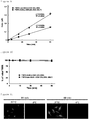
- TRITC-GUG- ⁇ -CDE or TRITC-Lac-GUG- ⁇ -CDE in EMB-2 medium on the basal side was measured. The results are shown in FIG. 9 .
- each permeation coefficient was as follows. [Table 1] P app to TRITC-Lac-GUG- ⁇ -CDE (G3, DS3, DSL7) of hCMEC/D3 Cell Monolayers TRITC-GUG- ⁇ -CDE (G3, DS3) TRITC-Lac-GUG- ⁇ -CDE (G3, DS3, DSL7) P app ( ⁇ 10 -4 cm/min) 1.4 ⁇ 0.056 2.9 ⁇ 0.130 *
- hCMEC/D3 cells were seeded in transwells at 1.0 ⁇ 10 5 cells/well, and cultured at 37°C in a CO 2 incubator for 4 to 6 days. Prior to the start of the experiment, hCMEC/D3 cell monolayers were equilibrated in EBM-2 medium (37°C, 2.0 mL on the apical side, 2.0 mL on the basal side).
- EBM-2 medium 37°C, 2.0 mL on the apical side, 2.0 mL on the basal side.
- TRITC-GUG- ⁇ -CDE (G3, DS3) or TRITC-Lac-GUG- ⁇ -CDE (G3, DS3, DSL7) was dissolved in EBM-2 medium to a concentration of 10 ⁇ M, respectively, and after warming to 37°C previously, the resultant medium was replaced with the medium on the apical side.
- hCMEC/D3 cells (1.0 ⁇ 10 4 cells/well) were treated with TRITC-Lac-GUG- ⁇ -CDE (G3, DS3, DSL7) for 30 and 60 minutes.
- the culture temperature used was 4°C or 37°C.
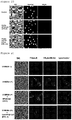
- the cells were observed with a fluorescence microscope. The results are shown in FIG. 11 . Observations are made at three independent points, and the figure shows a representative image.
- the result of measuring the fluorescence intensity with the BZ-II analyzer is shown in FIG. 12 . Since the uptake of TRITC-Lac-GUG- ⁇ -CDE did not occur at 4°C, it was found that TRITC-Lac-GUG- ⁇ -CDE was taken up into the cells through the endocytosis pathway.
- hCMEC/D3 cells (1.0 ⁇ 10 4 cells/well) were treated with TRITC-Lac-GUG- ⁇ -CDE (G3, DS3, DSL7) for 30 minutes and 60 minutes, in the presence of lactose (4 mM). After washing the cells with PBS, the cells were observed with a fluorescence microscope. The results are shown in FIG. 13 . Observations are made at three independent points, and the figure shows a representative image. The result of measuring the fluorescence intensity with the BZ-II analyzer is shown in FIG. 14 . It was confirmed that the uptake of TRITC-Lac-GUG- ⁇ -CDE was competitively inhibited by lactose. This result suggests that the uptake of TRITC-Lac-GUG- ⁇ -CDE is mediated by a receptor that recognizes lactose.
- SH-SY5Y cells (1.0 ⁇ 10 4 cells/well), which are human neuroblasts, were treated with TRITC-GUG- ⁇ -CDE (G3, DS3) and TRITC-Lac-GUG- ⁇ -CDE (G3, DS3, DSL7) for 60 minutes.
- the culture temperature used was 37°C.
- the fluorescence intensity of the cells was measured with the BZ-II analyzer. The results are shown in FIG. 15 . It was found that TRITC-Lac-GUG- ⁇ -CDE is also taken up by nerve cells.
- Hydroxypropyl- ⁇ -cyclodextrin was used as cyclodextrin, and a lactose-modified hydroxypropyl- ⁇ -cyclodextrin (Lac-HP- ⁇ -CyD) was synthesized as follows.
- the outline of the synthesis is shown in FIG. 16 .
- 10.5 mL of ethylenediamine was added to 1.0 g of HP- ⁇ -CyD, and the reaction was carried out using CDI.
- 1.0 g of the obtained NH 2 -HP- ⁇ -CyD (ethylenediamine) was dissolved in DMSO, and sodium cyanoborohydride (3.3 g) was added.
- lactose monohydrate (18.3 g) was added, and the mixture was stirred at 75°C for 48 hours.
- the lactose molar ratio to NH 2 -HP- ⁇ -CyD is 1:100.
- SH-SY5Y cells (1.0 ⁇ 10 5 cells), which are human neuroblasts, were seeded in a 24-well plate, incubated at 37°C for 24 hours, then, washed with PBS, and a medium supplemented with U18666A (7.5 ⁇ M) was added, and it was incubated for an additional 24 hours. Then, washed with PBS, and 150 ⁇ L of a medium (HBSS, FBS (-)) containing HP- ⁇ -CyD (DS4.4) (1.0, 10.0 and 20.0 mM) or Lac-HP- ⁇ -CyD (DSL3.0) (1.0, 10.0 and 20.0 mM) was added.
- Lac-HP- ⁇ -CyD (DSL3.0) and the control HP- ⁇ -CyD (DS4.0) were labeled with HiLyte fluorescent dye according to the manufacturer's manual. The following experiments were carried out using these.
- hCMEC/D3 cells which are human brain capillary endothelial cells
- the uptake of Lac-HP- ⁇ -CyD into cells was confirmed.
- hCMEC/D3 cells were seeded at 1.0 ⁇ 10 4 cells/glass dish and incubated at 37°C for 24 hours. Then, it was washed with PBS, and 150 ⁇ L of a medium containing HiLyte-HP- ⁇ -CyD (DS4.4, 1 mM) or HiLyte-Lac-HP- ⁇ -CyD (DSL3.0, 1 mM) was added, and incubated at 37°C for 1 hour. After washing with PBS, it was fixed with 4% paraformaldehyde.
- HiLyte-HP- ⁇ -CyD DS4.4, 1 mM
- HiLyte-Lac-HP- ⁇ -CyD DSL3.0, 1 mM
- hCMEC/D3 cells were seeded in the upper component of a transwell at 2.0 ⁇ 10 5 cells/well, incubated at 37°C for 5 days, then, the transepithelial electrical resistance (TEER) was measured.
- SH-SY5Y cells were seeded at 1.0 ⁇ 10 5 cells/well in a 6-well plate, which is a lower component, and incubated at 37°C for 1 day.
- SH-SY5Y cells Using SH-SY5Y cells, the amyloid ⁇ accumulation in the cells was measured. SH-SY5Y cells were seeded at 1.0 ⁇ 10 4 cells/glass dish and incubated at 37°C for 24 hours. Then, washed with PBS, 150 ⁇ L of a medium containing U18666A (7.5 ⁇ M) and HiLyte488-A ⁇ (purchased from AnaSpec) (250 nM) was added and incubated at 37°C for 24 hours.
- a medium containing U18666A 7.5 ⁇ M
- HiLyte488-A ⁇ purchased from AnaSpec
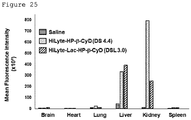
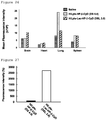
- mice (8 weeks old, male, 20 g) were intravenously injected with HiLyte-HP- ⁇ -CyD (DS4.4) or HiLyte-Lac-HP- ⁇ -CyD (DSL3.0) at a dose of 10 mg/kg. After 10 minutes, the mice were euthanized, perfused with PBS and each organ was collected. Each organ was observed by IVIS. The results of the fluorescence intensity of each organ are shown in FIG. 25 .
- FIG. 26 shows the expanded results of the fluorescence intensity of the brain, the heart, the lung, and the spleen, which are organs with low uptake. Further, FIG. 27 shows the result when the uptake into the brain is expressed with the control as 100. From this result, it was confirmed that Lac-HP- ⁇ -CyD significantly penetrated to the brain as compared with HP- ⁇ -CyD.
- lactose-modified cyclodextrin or dendrimer/glucuronyl glucosyl-cyclodextrin of the present invention permeates the blood-brain barrier, hence, it is useful as a carrier molecule for delivering a drug into the brain.
Landscapes
- Health & Medical Sciences (AREA)
- Chemical & Material Sciences (AREA)
- Life Sciences & Earth Sciences (AREA)
- Engineering & Computer Science (AREA)
- Medicinal Chemistry (AREA)
- General Health & Medical Sciences (AREA)
- Bioinformatics & Cheminformatics (AREA)
- Veterinary Medicine (AREA)
- Pharmacology & Pharmacy (AREA)
- Animal Behavior & Ethology (AREA)
- Public Health (AREA)
- Organic Chemistry (AREA)
- Chemical Kinetics & Catalysis (AREA)
- General Chemical & Material Sciences (AREA)
- Nuclear Medicine, Radiotherapy & Molecular Imaging (AREA)
- Neurology (AREA)
- Neurosurgery (AREA)
- Biomedical Technology (AREA)
- Psychiatry (AREA)
- Epidemiology (AREA)
- Physical Education & Sports Medicine (AREA)
- Biochemistry (AREA)
- Oncology (AREA)
- Psychology (AREA)
- Communicable Diseases (AREA)
- Polymers & Plastics (AREA)
- Orthopedic Medicine & Surgery (AREA)
- Materials Engineering (AREA)
- Molecular Biology (AREA)
- Virology (AREA)
- Pain & Pain Management (AREA)
- Hospice & Palliative Care (AREA)
- Diabetes (AREA)
- Hematology (AREA)
- Obesity (AREA)
- Urology & Nephrology (AREA)
- Vascular Medicine (AREA)
- Cardiology (AREA)
- Heart & Thoracic Surgery (AREA)
- Medicinal Preparation (AREA)
Abstract
Description
- The present invention relates to a novel substance that permeates the blood-brain barrier and exhibits a property of penetrating into the brain. The present invention also relates to the use of the substance as a drug carrier for intracerebral delivery, and a pharmaceutical composition comprising the substance.
- Intractable brain diseases such as Alzheimer's disease and malignant brain tumors are diseases in which there are few effective treatment methods and the contribution of drugs to the treatment is low. For the treatment of these brain diseases, it is necessary to effectively deliver drugs into the brain. However, since the brain has the blood-brain barrier (BBB), if a drug is administered orally or by injection, it is more difficult to obtain effective drug concentrations than in other organs. On the other hand, when trying to achieve an effective concentration in the brain by high-dose administration, a large excess of the drug is present in the peripheral blood, which causes side effects such as renal and liver disorders. In this way, the obstacle to developments of therapeutic agents for brain diseases including intractable brain diseases is a strong biological barrier called the blood-brain barrier, which acts as a physical and dynamic barrier that separates blood from brain tissue fluid, strictly limiting passive diffusion of substances into the brain. Therefore, in order to deliver a target substance administered in the blood into the brain, it is necessary to develop an intracerebral penetrating ligand or a drug carrier for intracerebral delivery for efficiently permeating the blood-brain barrier.
- The vascular endothelial cells of the brain form a special structure in which the intercellular spaces provide tight junctions, and blood components hardly permeate through the intercellular spaces. As one methodology for achieving delivery into the brain, targeting membrane surface proteins expressed on cerebrovascular endothelial cells has been proposed and developed. That is, it is a method of utilizing the function of a protein called a transporter that exists on the membrane surface for the uptake of a drug into the brain. So far, drug carriers have been developed using brain-penetrating ligands such as glucose, insulin, transferrin and the like, targeting the glucose receptors, the insulin receptor, the transferrin receptor and the like expressed on cerebrovascular endothelial cells.
- Examples of the above materials include, for example, a monoclonal antibody against the transferrin receptor (J-Brain Cargo (registered trademark) available from JCR Pharmaceuticals Co., Ltd.), a monoclonal antibody against the insulin receptor, and the like. Further, a high molecular weight micelle having a diameter of about 30 nm obtained by modifying glucose, which is a kind of intracerebral penetrating ligand, has been proposed (Non-Patent Document 1: Anraku et al., Nat. Commun. 2017 Oct 17, 8 (1): 1001). It is suggested that when this micelle is intravenously administered to fasting mice and a glucose solution is administered 30 minutes later, the micelle is transcytosed at the blood-brain barrier and up to about 6% of the dose accumulates in the brain. Furthermore, it is shown that the micelle is significantly taken up by nerve cells in the brain after permeation through the blood-brain barrier.
However, since it is needed to administer the micelle in the fasted state and further to administer also a glucose solution, this technology has many restrictions when considering actual clinical use. - Furthermore, it has been reported that a blood-brain barrier permeable nanocarrier (Tf-WGA-PAMAM-PEG) was constructed by modifying doxorubicin-enclosing dendrimer (G4) with PEG (PAMAM-PEG) and further imparting a brain-penetrating ligand transferrin (Tf) and wheat germ agglutinin (WGA) (Non-Patent Document 2: He et al., Biomaterials, 2011 Jan; 32 (2): 478-87). The blood-brain barrier permeability of Tf-WGA-PAMAM-PEG in the in vitro BBB model was increased approximately 2-fold compared to PAMAM-PEG. However, no studies have been conducted in vivo, and further, Tf and WGA are very expensive. Moreover, since these ligands have a high molecular weight, modification of the carriers significantly changes the properties of the carriers themselves. In addition, the proteinaceous ligand has a problem in terms of safety and quality since it may aggregate by physicochemical stimuli.
- As a different approach from the above, a Drug Delivery System (DDS) using a blood-brain barrier permeation carrier such as Tat, RVG-9R peptide, RDP peptide, Angiopep and the like, which DDSs use a cellular membrane permeating peptide has also been proposed.
- Although various drug carriers have been developed as described above, the delivery efficiency into the brain is still insufficient, and the search for a new brain-penetrating ligand or a drug carrier for intracerebral delivery is an issue.
- The present inventors have planned to construct a carrier targeting the liver and constructed and reported a lactose-modified dendrimer/α-cyclodextrin conjugate (Non-Patent Document 3: Hayasi et al., Mol Pharma. 9, 1645-1653, 2012). Furthermore, the present inventors have reported lactose-modified β-cyclodextrin for the purpose of constructing a liver-penetrating cyclodextrin designed for the treatment of hepatosplenomegaly in Niemann-Pick disease type C (Non-Patent Document 4: Motoyama et al., Beilstein J Org. Chem. 13, 10-18, 2017).
-
- Non-Patent Document 1: Anraku et al., Nat. Commun. 2017 Oct 17, 8(1):1001
- Non-Patent Document 2: He et al., Biomaterials, 2011 Jan;32 (2) :478-87
- Non-Patent Document 3: Hayasi et al., Mol Pharma. 9, 1645-1653, 2012
- Non-Patent Document 4: Motoyama et al., Beilstein J Org. Chem. 13, 10-18, 2017
- The present invention is to provide a novel substance having blood-brain barrier permeability.
- The present inventors have made intensive studies in order to solve the problem, and resultantly found that by modifying cyclodextrin or dendrimer/glucuronyl glucosyl-cyclodextrin with lactose, it becomes possible to permeate the blood-brain barrier, completing the present invention.
- The present invention includes the followings.
- [1] A pharmaceutical composition comprising a lactose-modified cyclodextrin or a derivative thereof, and a drug, wherein the lactose-modified cyclodextrin or a derivative thereof is contained to increase the blood-brain barrier permeability of the drug.
- [2] The pharmaceutical composition according to [1], wherein the lactose-modified cyclodextrin or a derivative thereof is a lactose-modified β-cyclodextrin or a lactose-modified dendrimer/glucuronyl glucosyl-β-cyclodextrin.
- [3] A pharmaceutical composition comprising a lactose-modified cyclodextrin or a derivative thereof, and a drug, wherein the drug is delivered into the brain by the lactose-modified cyclodextrin or a derivative thereof.
- [4] The pharmaceutical composition according to [3], wherein the lactose-modified cyclodextrin or a derivative thereof is a lactose-modified β-cyclodextrin or a lactose-modified dendrimer/glucuronyl glucosyl-β-cyclodextrin.
- [5] The pharmaceutical composition according to [1] or [3], wherein the lactose-modified cyclodextrin or a derivative thereof is a lactose-modified dendrimer/glucuronyl glucosyl-β-cyclodextrin.
- [6] The pharmaceutical composition according to [5], wherein the lactose-modified dendrimer/glucuronyl glucosyl-β-cyclodextrin is one in which at least the dendrimer molecule is modified with lactose.
- [7] The pharmaceutical composition according to [5] or [6], wherein the degree of substitution of cyclodextrin against dendrimer in the lactose-modified dendrimer/glucuronyl glucosyl-β-cyclodextrin is 1 to 10, preferably 2 to 8, more preferably 2 to 6.
- [8] The pharmaceutical composition according to any one of [1] to [7], wherein the degree of substitution of lactose against cyclodextrin or dendrimer in the lactose-modified cyclodextrin or a derivative thereof is 1 or more, preferably 2 to 8, more preferably 3 to 7.
- [9] A carrier for drug delivery into the brain comprising a lactose-modified cyclodextrin or a derivative thereof.
- [10] The carrier for drug delivery according to [9], wherein the lactose-modified cyclodextrin or a derivative thereof is a lactose-modified β-cyclodextrin or a lactose-modified dendrimer/glucuronyl glucosyl-β-cyclodextrin.
- [11] The carrier for drug delivery according to [9], wherein the lactose-modified cyclodextrin or a derivative thereof is a lactose-modified dendrimer/glucuronyl glucosyl-β-cyclodextrin.
- [12] The carrier for drug delivery according to [11], wherein the lactose-modified dendrimer/glucuronyl glucosyl-β-cyclodextrin is one in which at least the dendrimer molecule is modified with lactose.
- [13] The carrier for drug delivery according to [11] or [12], wherein the degree of substitution of cyclodextrin against dendrimer in the lactose-modified dendrimer/glucuronyl glucosyl-β-cyclodextrin is 1 to 10, preferably 2 to 8, more preferably 2 to 6.
- [14] The carrier for drug delivery according to any one of [9] to [13], wherein the degree of substitution of lactose against cyclodextrin or dendrimer in the lactose-modified cyclodextrin or a derivative thereof is 1 or more, preferably 2 to 8, more preferably 3 to 7.
- [15] The carrier for drug delivery according to any one of [9] to [14], wherein the carrier is used for delivering a drug into the brain through the blood-brain barrier.
- [16] A complex consisting of a drug to be delivered into the brain and a lactose-modified cyclodextrin or a derivative thereof.
- [17] The complex according to [16], wherein the lactose-modified cyclodextrin or a derivative thereof is a lactose-modified β-cyclodextrin or a lactose-modified dendrimer/glucuronyl glucosyl-β-cyclodextrin.
- [18] The complex according to [16], wherein the lactose-modified cyclodextrin or a derivative thereof is a lactose-modified dendrimer/glucuronyl glucosyl-β-cyclodextrin.
- [19] The complex according to [18], wherein the lactose-modified dendrimer/glucuronyl glucosyl-β-cyclodextrin is one in which at least the dendrimer molecule is modified with lactose.
- [20] The complex according to [18] or [19], wherein the degree of substitution of cyclodextrin against dendrimer in the lactose-modified dendrimer/glucuronyl glucosyl-β-cyclodextrin is 1 to 10, preferably 2 to 8, more preferably 2 to 6.
- [21] The complex according to any one of [16] to [20], wherein the degree of substitution of lactose against cyclodextrin or dendrimer in the lactose-modified cyclodextrin or a derivative thereof is 1 or more, preferably 2 to 8, more preferably 3 to 7.
- [22] The complex according to any one of [16] to [21], wherein the drug is delivered into the brain through the blood-brain barrier.
- [23] A brain-penetrating ligand for delivering a drug into the brain of subject, wherein the brain-penetrating ligand has a binding affinity to a transporter or a receptor that recognizes a lactose expressed in brain endothelial cells and contains lactose as a part of its molecule.
- [24] The brain-penetrating ligand according to [23], wherein the brain-penetrating ligand is a lactose-modified cyclodextrin or a derivative thereof.
- [25] The brain-penetrating ligand according to [24], wherein the lactose-modified cyclodextrin or a derivative thereof is a lactose-modified β-cyclodextrin or a lactose-modified dendrimer/glucuronyl glucosyl-β-cyclodextrin.
- [26] The brain-penetrating ligand according to [24], wherein the lactose-modified cyclodextrin or a derivative thereof is a lactose-modified dendrimer/glucuronyl glucosyl-β-cyclodextrin.
- [27] The brain-penetrating ligand according to [26], wherein the lactose-modified dendrimer/glucuronyl glucosyl-β-cyclodextrin is one in which at least the dendrimer molecule is modified with lactose.
- [28] The brain-penetrating ligand according to [26] or [27], wherein the degree of substitution of cyclodextrin against dendrimer in the lactose-modified dendrimer/glucuronyl glucosyl-β-cyclodextrin is 1 to 10, preferably 2 to 8, more preferably 2 to 6.
- [29] The brain-penetrating ligand according to any one of [23] to [28], wherein the degree of substitution of lactose against cyclodextrin or dendrimer in the lactose-modified cyclodextrin or a derivative thereof is 1 or more, preferably 2 to 8, more preferably 3 to 7.
- [30] Use of the brain-penetrating ligand according to any one of [23] to [29].
- [31] A lactose-modified dendrimer/glucuronyl glucosyl-β-cyclodextrin.
- [32] The lactose-modified dendrimer/glucuronyl glucosyl-β-cyclodextrin according to [31], wherein at least the dendrimer molecule is modified with lactose.
- [33] The lactose-modified dendrimer/glucuronyl glucosyl-β-cyclodextrin according to [31] or [32], wherein the degree of substitution of cyclodextrin against dendrimer is 1 to 10, preferably 2 to 8, more preferably 2 to 6 and the degree of substitution of lactose against cyclodextrin or dendrimer is 1 or more, preferably 2 to 8, more preferably 3 to 7.
- [34] The pharmaceutical composition according to any one of [1] to [8] for preventing or treating a cranial nerve system disease or disorder.
- [35] The pharmaceutical composition according to [34], wherein the cranial nerve system disease or disorder is selected from the group consisting of Alzheimer's disease, malignant brain tumor, Parkinson's disease, Niemann-Pick disease type C, cerebral stroke, cerebral ischemia, dementia, muscular dystrophy, multiple sclerosis, amyotrophic lateral sclerosis, cystic fibrosis, Angelman's syndrome, Riddle Syndrome, myasthenia gravis, spinal muscle atrophy, Down's syndrome, Huntington's disease, schizophrenia, depression, Tauopathy disease, Pick's disease, Paget's disease, lysosome disease accompanied by brain damage, cancer, prion's disease, traumatic brain injury, and viral or bacterial central nervous system disorders.
- [36] A method of administering a drug to a patient in need of administration of the drug into the brain, comprising administering to the patient a composition comprising a lactose-modified cyclodextrin or a derivative thereof and a drug encapsulated in the cyclodextrin or a derivative thereof.
- [37] The method according to [36], wherein the lactose-modified cyclodextrin or a derivative thereof is a lactose-modified β-cyclodextrin or a lactose-modified dendrimer/glucuronyl glucosyl-β-cyclodextrin.
- [38] The method according to [36], wherein the lactose-modified cyclodextrin or a derivative thereof is a lactose-modified dendrimer/glucuronyl glucosyl-β-cyclodextrin.
- [39] The method according to [38], wherein the lactose-modified dendrimer/glucuronyl glucosyl-β-cyclodextrin is one in which at least the dendrimer molecule is modified with lactose.
- [40] The method according to [38] or [39], wherein the degree of substitution of cyclodextrin against dendrimer in the lactose-modified dendrimer/glucuronyl glucosyl-β-cyclodextrin is 1 to 10,preferably 2 to 8, more preferably 2 to 6.
- [41] The method according to any one of [36] to [40], wherein the degree of substitution of lactose against cyclodextrin or dendrimer in the lactose-modified cyclodextrin or a derivative thereof is 1 or more, preferably 2 to 8, more preferably 3 to 7.
- [42] The method according to any one of [36] to [41], wherein the drug is delivered into the brain through the blood-brain barrier.
- [43] The method according to any one of [36] to [42], wherein the patient is a patient suffering from a neurological disease or disorder.
- [44] The method according to [43], wherein the neurological disease or disorder is selected from the group consisting of Alzheimer's disease, cerebral stroke, cerebral ischemia, dementia, muscular dystrophy, multiple sclerosis, amyotrophic lateral sclerosis, cystic fibrosis, Angelman's syndrome, Riddle Syndrome, myasthenia gravis, spinal muscle atrophy, Down's syndrome, Parkinson's disease, Huntington's disease, schizophrenia, depression, Tauopathy disease, Pick's disease, Paget's disease, lysosome disease accompanied by brain damage, cancer, prion's disease, traumatic brain injury, and viral or bacterial central nervous system disorders.
- The present invention provides a substance that permeates the blood-brain barrier and exhibits a property of penetrating into the brain, and its use.
-
-
FIG. 1 shows an example of the structure of β-cyclodextrin modified with lactose. -
FIG. 2 shows an example of the synthetic pathway that modifies β-cyclodextrin with lactose. 1: β-cyclodextrin (β-CyD), 2: chloro-β-CyD, 3: azide-β-CyD, 4: amino-β-CyD, and 5: lactose-modified β-CyD. -
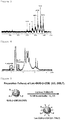
FIG. 3 shows the results of measuring the MALDI-TOF MS spectrum of Lac-β-CyD produced in Example 1. -
FIG. 4 shows the results of measuring the 1H-NMR spectrum of Lac-β-CyD produced in Example 1. -
FIG. 5 shows an example of the synthesis of a lactose-modified dendrimer/glucuronyl-β-cyclodextrin (Lac-GUG-β-CyD). -
FIG. 6 shows the results of developing Lac-GUG-β-CDE produced in Example 2 by thin layer chromatography with a developing solvent of 1-butanol/ethanol/water = 5/4/3. As the color former, p-anisaldehyde was used. Lactose was used as the control. -
FIG. 7 shows the results of measuring the 1H-NMR spectrum of Lac-GUG-β-CDE produced in Example 2. -
FIG. 8 shows the results obtained by subcutaneously administering Cy5-Lac-β-CyD (DSL5.6) in mice, and then collecting thebrain -
FIG. 9 shows the results of measuring the permeation amount of TRITC-GUG-β-CDE (G3, DS3) and TRITC-Lac-GUG-β-CDE (G3, DS3, DSL7) using the hCMEC/D3 cell monolayer. Each value shows the average of 4 experiments ± S. E. -
FIG. 10 shows the results of confirming the influence of TRITC-GUG-β-CDE (G3, DS3) and TRITC-Lac-GUG-β-CDE (G3, DS3, DSL7) on the tight junction of the hCMEC/D3 cell monolayer. Each value shows the average of 4 experiments ± S. E. -
FIG. 11 shows the results of observing cells with a fluorescence microscope, after treating hCMEC/D3 cells with TRITC-Lac-GUG-β-CDE (G3, DS3, DSL7) for 30 and 60 minutes at 4°C or 37°C. The figure shows typical images at three points. -
FIG. 12 shows the result of numerically expressing the fluorescence intensity in the observation ofFIG. 11 . Each value shows the average of 3 observations ± S. E. * indicates p<0.05 when compared with 37°C. -
FIG. 13 shows the results of observing the competitive inhibition of lactose against the uptake of TRITC-Lac-GUG-β-CDE (G3, DS3, DSL7) in hCMEC/D3 cells with a fluorescence microscope. The figure shows typical images at three points. -
FIG. 14 shows the result of numerically expressing the fluorescence intensity in the observation ofFIG. 13 . Each value shows the average of 3 observations ± S. E. * indicates p<0.05 when compared with the case where lactose is not added. -
FIG. 15 shows the results of confirming the uptake of TRITC-GUG-β-CDE (G3, DS3) and TRITC-Lac-GUG-β-CDE (G3, DS3, DSL7) into nerve cells using SH-SY5Y cells. Each value shows the average of 3 experiments ± S. E. * indicates p<0.05 when compared with TRITC-GUG-β-CDE. -
FIG. 16 shows an outline of the synthetic pathway of Lac-HP-β-cycledextrin. -
FIG. 17 shows the result of developing Lac-HP-β-CyD produced in Example 9 by thin layer chromatography with a developing solvent of ethanol/water = 9/1. Ninhydrin and p-anisaldehyde were used as color formers. c is Lac-HP-β-CyD. -
FIG. 18 shows the results of measuring the MALDI-TOF MS spectrum of Lac-HP-β-CyD produced in Example 9. -
FIG. 19 shows the results of measuring the 1H-NMR spectrum of Lac-HP-β-CyD produced in Example 9. -
FIG. 20 shows the results of confirming the influence of Lac-HP-β-CyD on cholesterol leakage using SH-SY5Y cells. Each value shows the average of two experiments ± S. E. -
FIG. 21 shows the results of confirming the uptake of HiLyte-Lac-HP-β-CyD into hCMEC/D3 cells. -
FIG. 22 shows the results of measuring the permeation amount of HiLyte-Lac-HP-β-CyD (DSL3.0) and HiLyte-HP-β-CyD (DS4.4) using the hCMEC/D3 cell monolayer. Each value shows the average of two experiments ± S. E. -
FIG. 23 shows the results of confirming the uptake of HiLyte-Lac-HP-β-CyD, which has permeated the hCMEC/D3 cell monolayer, into SH-SY5Y cells. -
FIG. 24 shows the results of confirming the accumulation of amyloid Aβ in H-SY5Y cells and the influence of Lac-HP-β-CyD on it. The experiment was performed once each, and the figure shows a typical image. -
FIG. 25 shows the result of confirming the distribution of HiLyte-Lac-β-CyD intravenously injected into mice to each organ. Three experiments were performed. An example of the result is shown. -
FIG. 26 is a view showing the results of penetration into the brain, the heart, the lung, and the spleen. -
FIG. 27 is a view showing the result of penetration into the brain. - Hereinafter, the present invention will be illustrated and described in detail with reference to the exemplary embodiments, along with the preferred methods and materials which can be used in practice of the present invention. Unless otherwise specified in the sentences, any technical terms and scientific terms used in the present specification, have the same meaning as those generally understood by those of ordinary skill in the art to which the present invention belongs. Any materials and methods equivalent or similar to those described in the present specification can be used for practicing the present invention. All publications and patents cited herein in connection with the present invention described herein are incorporated herein by reference, for example, as indicating methodology, materials, etc. that can be used in the present invention.
- In the present specification, when the expression "X to Y" is used, it is used to mean that X is included as the upper limit and Y is included as the upper limit, or that X is included as the lower limit and Y is included as the upper limit. As used herein, the term "about" is used to mean that ± 10% is allowed.
- Cyclodextrin is an oligosaccharide in which 6, 7 or 8 glucoses are linked in a ring shape, and is called α-cyclodextrin, β-cyclodextrin, and γ-cyclodextrin, respectively.
- The lactose-modified cyclodextrin that can be used in the present invention is a compound in which hydroxyl groups of cyclodextrin (α-cyclodextrin, β-cyclodextrin, or γ-cyclodextrin) are randomly replaced with lactose, and for example, lactose-modified β-cyclodextrin is a compound in which 6-position hydroxyl groups of the seven glucoses of β-cyclodextrin are randomly replaced with lactose. The lactose-modified cyclodextrin is preferably a lactose-modified β-cyclodextrin. Cyclodextrins modified with lactose include any of either chemically modified or unmodified α, β, or γ cyclodextrins. Common methods for chemically modifying cyclodextrin include, for example, methylation, hydroxyalkylation with such as hydroxyethyl or hydroxypropyl, glucosylation, maltosylation, alkylation, acylation, acetylation, sulfation, sulfobutylation, carboxymethylation, carboxyethylation, amination, carboxylation, tosylation, dimethylacetylation and the like. Thus, as used in the present specification, the term lactose-modified cyclodextrin is used to include lactose-modified chemically modified or unmodified α, β, or γ cyclodextrins.
- The chemically modified cyclodextrin that constitutes a part of the lactose-modified cyclodextrin that can be used in the present invention can be an arbitrary chemically modified cyclodextrin as long as there is no problem of toxicity or the like when administered to a living body. For example, the following chemically modified cyclodextrins can be used. Examples thereof include methyl-α-cyclodextrin; ethyl-α-cyclodextrin; amino-α-cyclodextrin; p-toluenesulfonyl-α-cyclodextrin; hydroxyalkyl-α-cyclodextrin; sulfoalkyl ether-α-cyclodextrin; carboxyalkyl-α-cyclodextrin; azido-α-cyclodextrin; maltosyl-α-cyclodextrin; glucosyl-α-cyclodextrin; glucuronyl glucosyl-α-cyclodextrin; methyl-β-cyclodextrin; ethyl-β-cyclodextrin; amino-β-cyclodextrin; p-toluenesulfonyl-β-cyclodextrin; hydroxyalkyl-β-cyclodextrin; sulfoalkyl ether-β-cyclodextrin; carboxyalkyl-β-cyclodextrin; azido-β-cyclodextrin; maltosyl-β-cyclodextrin; glucosyl-β-cyclodextrin; glucuronyl glucosyl-β-cyclodextrin; methyl-γ-cyclodextrin; ethyl-γ-cyclodextrin; amino-γ-cyclodextrin; p-toluenesulfonyl-γ-cyclodextrin; hydroxyalkyl-γ-cyclodextrin; sulfoalkyl ether-γ-cyclodextrin; carboxyalkyl-γ-cyclodextrin; azido-γ-cyclodextrin; maltosyl-γ-cyclodextrin; glucosyl-γ-cyclodextrin; glucuronyl glucosyl-γ-cyclodextrin and the like. It is preferably β-cyclodextrin, hydroxyalkyl-β-cyclodextrin or glucuronyl glucosyl-β-cyclodextrin (GUG-β-CyD), and further preferably hydroxypropyl-β-cyclodextrin or GUG-β-CyD.
- The degree of substitution of lactose against cyclodextrin in a lactose-modified cyclodextrin is not particularly limited, but is at least 1 or more, preferably 2 to 8, and further preferably 3 to 7.
FIG. 1 shows the structure of one example of the lactose-modified β-cyclodextrin, where hydroxyl groups are replaced with lactose in all, that is 7 glucoses, and the degree of substitution of lactose (DSL) is 7.0. - Substitution of lactose can be performed with reference to known reports, and examples thereof include, but not limited to, the report by the present inventors (Non-Patent Document 4). This document is incorporated herein by reference.
- Although not limited to this, for example, when lactose-modification is performed using β-cyclodextrin as an example, as shown in
FIG. 2 , the hydroxyl group at the 6-position of glucose of cyclodextrin is replaced with an amino group, and then, sodium cyanoborohydride (NaBH3CN) is used and a reductive amination reaction is performed with the hydroxyl group at the 1-position of lactose, thus, cyclodextrin can be modified with lactose. - Cyclodextrin can also be lactose-modified using other synthetic methods, for example, using N-Propargyl-β-lactosylamide, where cyclodextrin and lactose are bound with triazolyl as a binder (Chwalek et al., Org. Biomol. Chem., 2009, 7, 1680-1688). Furthermore, lactose can also be attached to cyclodextrin using any linker.
- The lactose-modified dendrimer/cyclodextrin conjugate used in the present invention is a compound in which the conjugate (CDE) of cyclodextrin (CyD) and a polyamide amine dendrimer is modified with lactose.
- The cyclodextrin constituting the cyclodextrin-polyamide amine dendrimer conjugate may be any of α, β or γ-cyclodextrin, and these α, β or γ-cyclodextrins include any of chemically modified or unmodified cyclodextrins. Common methods for chemically modifying cyclodextrin include, for example, methylation, hydroxyalkylation with such as hydroxyethyl or hydroxypropyl, glucosylation, maltosylation, alkylation, acylation, acetylation, sulfation, sulfobutylation, carboxymethylation, carboxyethylation, amination, carboxylation, tosylation, dimethylacetylation and the like. The chemically modified cyclodextrin can be any chemically modified cyclodextrin as long as there is no problem of toxicity or the like when administered to a living body, and examples thereof include the chemically modified α, β or γ-cyclodextrins described above, and it is preferably β-cyclodextrin, hydroxyalkyl-β-cyclodextrin or glucuronyl glucosyl-β-cyclodextrin (GUG-β-CyD), and further preferably hydroxypropyl-β-cyclodextrin or GUG-β-CyD.
- The dendrimer/cyclodextrin conjugate that constitutes a part of the lactose-modified dendrimer/cyclodextrin conjugate used in the present invention is preferably a conjugate of glucuronyl glucosyl-β-cyclodextrin and a polyamide amine dendrimer (GUG-β-CDE). The polyamide amine dendrimer is a dendrimer having an alkylenediamine as a core, and the core alkylenediamine is not particularly limited, and examples thereof include dendrimers using commonly used types.
- In the present specification, the lactose-modified cyclodextrin or a derivative thereof means lactose-modified chemically modified or unmodified α, β or γ-cyclodextrins or any of the cyclodextrins bound to a dendrimer. Modifications of lactose in the lactose-modified dendrimer/cyclodextrin include any of those in which the cyclodextrin molecule is modified with lactose, those in which the dendrimer molecule is modified with lactose, or those in which both the cyclodextrin molecule and the dendrimer molecule are modified with lactose.
- Hereinafter, it will be described that a conjugate (GUG-β-CDE) of glucuronyl glucosyl-β-cyclodextrin (GUG-β-CyD) and a polyamide amine dendrimer having an alkylenediamine as a core (hereinafter, may be simply referred to as "dendrimer") as an example, but the present invention is not limited to this.
- The conjugate (GUG-β-CDE) of glucuronyl glucosyl-β-cyclodextrin (GUG-β-CyD) and a polyamide amine dendrimer having an alkylenediamine as a core can be obtained by binding any GUG-β-CyD and any dendrimer according to a conventional method. 6-O-α-(4-O-α-D-glucuronyl) -D-glycosyl-β-cyclodextrin can be exemplified as GUG-β-CyD, but is not limited to this. The dendrimer includes, but not limited to, for example, the 2nd to 10th generation, preferably the 2nd to 6th generation, more preferably the 2nd or 3rd generation, and further preferably the 3rd generation dendrimers. The degree of substitution (DS) of cyclodextrin in GUG-β-CDE is 1 to 10, preferably 2 to 8, more preferably 2 to 6, and further preferably 3.
- The conjugate of GUG-β-CyD and a dendrimer preferably used in the present invention is a conjugate of 6-O-α-(4-O-α-D-glucuronyl)-D-glycosyl-β-cyclodextrin and a third-generation dendrimer. Specific examples thereof include, but not limited to, GUG-β-CDE (G3, DS3), GUG-β-CDE (G3, DS4), GUG-β-CDE (G2, DS3), or GUG-β-CDE (G4, DS3).
- Substitution of lactose in the dendrimer/cyclodextrin conjugate can be carried out with reference to known reports. In lactose-modification, a cyclodextrin can be modified, and a dendrimer can also be modified. For example, the lactose-modified dendrimer/cyclodextrin conjugate can be fabricated by any of a method of reacting a lactose-modified cyclodextrin and a dendrimer, a method of reacting a cyclodextrin and a lactose-modified dendrimer, or a method of modifying a dendrimer/cyclodextrin directly with lactose, but the method is not limited to them, and the method of reacting a lactose-modified cyclodextrin and a dendrimer is preferable. For example, lactose-modification can be easily performed on highly reactive functional groups such as an amino group, a carboxyl group, a hydroxyl group and the like present in cyclodextrins or dendrimers. The lactose-modification of cyclodextrin can be carried out with reference to known reports, but not limited to, the above described method can be used. For example, the lactose-modification of dendrimer can be conducted by using sodium cyanoborohydride (NaBH3CN) and performing a reductive amination reaction between an amino group of a polyamide amine dendrimer and a hydroxyl group at the 1-position of lactose, but the method is not limited to this.
- The degree of substitution of lactose in the lactose-modified dendrimer/cyclodextrin conjugate is not particularly limited. For example, when the cyclodextrin moiety is modified with lactose, the degree of substitution of lactose against cyclodextrin is not particularly limited, but is at least 1 or more, preferably 2 to 8, and further preferably 3 to 7, and when the dendrimer moiety is modified with lactose, the degree of substitution of lactose against dendrimer is not particularly limited, but is at least 1 or more, preferably 2 to 8, and further preferably 3 to 7. When the cyclodextrin and the dendrimer are randomly modified with lactose, the degree of substitution of lactose against one molecule of the dendrimer/cyclodextrin conjugate is not particularly limited, but at least 1 or more, preferably 2 or more, more preferably 3 or more, and further preferably 5 or more.
- The lactose-modified dendrimer/cyclodextrin conjugate can also be modified with PEG or the like, which is also included in the lactose-modified cyclodextrin derivative of the present invention. Modification with PEG can be performed by binding PEG to the dendrimer using a known method. By modifying with PEG, an improvement of the blood retention can be expected.
- The drug that can be used in the present invention includes, but is not limited to, for example, molecules that are substances in which the molecule itself exerts a physiological activity in the brain (hereinafter, may be simply referred to as a physiologically active substance) or substances exerting a function in the brain (hereinafter, may be simply referred to as intracerebral functional substance) (hereinafter, these may be collectively referred to as intracerebral active substances).
- The physiologically active substance includes, but is not limited to, for example, low molecular weight compounds, polypeptides, oligopeptides, proteins and nucleic acids.
- The low molecular weight compound includes, but is not limited to, compounds contained as an active ingredient in pharmaceuticals used for the treatment and/or prevention of various diseases related to the brain and the central nerve, for example, active ingredients of central nerve disease therapeutic agents, or compounds used for the treatment and/or prevention of brain diseases, for example, compounds having an antiinflammatory action for suppressing inflammation in the brain, compounds exhibiting an anti-cancer action, compounds that are active ingredients of antibacterial agents and antiviral agents for the treatment of intracerebral infections, and the like.
- Using a known method, complexes composed of these low molecular weight compounds and the lactose-modified cyclodextrin or lactose-modified dendrimer/cyclodextrin conjugate described above (hereinafter, these are collectively referred to as lactose-modified cyclodextrin or a derivative thereof) can be formed. Preferably, the low molecular weight compound is encapsulated in a lactose-modified cyclodextrin or a derivative thereof. Such complexes are also a part of the present invention.
- Examples of the peptides (polypeptides and oligopeptides) include physiologically active peptides, and peptides used for the treatment and/or prevention of diseases related to the brain and central nervous system. Specific examples thereof include, but not limited to, somatostatin, which regulates the expression of enzymes involved in the degradation of amyloid beta peptide in the brain, insulin, which controls the function of nerve cells in the brain, or other peptides related to the function of the brain and central nervous system, and their derivatives.
- Complexes composed of these peptides and the lactose-modified cyclodextrin or a derivative thereof of the present invention can be formed by using a known method. Examples thereof include, but not limited to, the following methods. By mixing the peptide as the target molecule and the lactose-modified cyclodextrin or a deriv ative thereof of the present invention, the peptide can be encapsulated in cyclodextrin to form a complex. Further, the peptide and/or the lactose-modified cyclodextrin or a derivative thereof of the present invention may be chemically modified, and then the two may be bound to each other, and in some cases via a spacer. Such complexes are also a part of the present invention.
- The nucleic acid includes nucleic acids used for the treatment and/or prevention of diseases related to the brain and the central nervous system. Examples thereof include, but are not limited to, nucleic acids for the treatment of various diseases by gene knockdown method or using RNA interference, such as antisense nucleic acids (DNA and RNA), heteroduplex nucleic acids, siRNA and shRNA. Specific examples thereof include, but are not limited to, gene therapies for amyotrophic lateral sclerosis (ALS) and Parkinson's disease.
- Complexes composed of these nucleic acids and the lactose-modified cyclodextrin or a derivative thereof of the present invention can be formed by using a known method. Examples thereof include, but are not limited to, the following methods. By mixing the nucleic acid as the target molecule and the lactose-modified cyclodextrin or a derivative thereof of the present invention, the nucleic acid can be encapsulated in the cyclodextrin to form a complex. Such complexes are also a part of the present invention.
- The protein includes, but is not limited to, protein molecules having physiological activity in the brain, and proteins used for the treatment and/or prevention of diseases. Examples thereof include enzymes, antibodies, transcription factors, or specific parts constituting them.
- Complexes composed of these proteins and the lactose-modified cyclodextrin or a derivative thereof of the present invention can be formed by using a known method. For example, the protein and/or the lactose-modified cyclodextrin or a derivative thereof of the present invention may be chemically modified, and then the two may be bound, and in some cases via a spacer, but the method is not limited to this. Alternatively, the protein and the lactose-modified cyclodextrin or a derivative thereof of the present invention may be bound in a non-covalent manner, for example electrostatically. Such complexes are also a part of the present invention.
- The drug that can be preferably used as the physiologically active substance includes, but is not limited to, for example, anticancer agents, antiparkinson's disease agents, antidementia agents, and psychotropic agents. Since the lactose-modified cyclodextrin or a derivative thereof of the present invention promotes the permeation of a molecule that does not permeate the blood-brain barrier or has low permeability, a complex composed of a molecule that exhibits a more effective medicinal effect based on the promotion of absorption into the brain and the lactose-modified cyclodextrin or a derivative thereof of the present invention can be formed, and a pharmaceutical composition containing the complex can be provided.
- The substance that exerts a function in the brain is a molecule that exerts a function other than physiological activity in the brain. Examples thereof include a molecule that serves as a marker in the brain, and a molecule that can be used for imaging a brain or a target in the brain (referred to as an intracerebral imaging molecule in the present specification). Examples thereof include, but are not limited to, compounds capable of visualizing targets in vivo, such as fluorescent dyes, quantum dots, nanomagnetic substances, nanogolds, intracellular molecule visualization reagents, and labeled molecules that can be detected by PET, and the like.
- Complexes composed of these substances and the lactose-modified cyclodextrin or a derivative thereof of the present invention can be formed by using a known method, and a pharmaceutical composition containing the complex can be provided.
- The lactose-modified cyclodextrin or a derivative thereof of the present invention can increase the blood-brain barrier permeability of a drug, and as a result, the drug can be delivered into the brain, thus, a substance having physiological activity in the brain or a substance exerting a function in the brain can be delivered into the brain, but the effect is not limited to this.
- Since the lactose-modified cyclodextrin or a derivative thereof of the present invention can form a complex with a drug, permeate the blood-brain barrier, and carry the drug into the brain, it is also a carrier for delivering the drug to the brain. When the lactose-modified cyclodextrin or a derivative thereof of the present invention is used as a carrier for drug delivery into the brain, the type of cyclodextrin, the type of dendrimer, the degree of substitution of lactose and the like can be appropriately selected depending on the drug intended for delivery into the brain, and depending on the delivery purpose, for example, various conditions such as of delivery rate, delivery amount and the like.
- Various carriers have been reported to deliver molecules into the brain. Examples thereof include, but are not limited to, liposomes, nanocarriers, exosomes, micelles or microcapsules. Reports on these carriers can also be used as a reference in determining the conditions under which the lactose-modified cyclodextrin or a derivative thereof of the present invention is used as a carrier for drug delivery to the brain.
- The following theories can be considered, though not bound by these theories. It is considered that the lactose-modified cyclodextrin or a derivative thereof of the present invention is taken up into the cell via a lactose-recognizing receptor or transporter present in cerebrovascular endothelial cells. In addition, the uptake of the lactose-modified cyclodextrin or a derivative thereof of the present invention into cerebrovascular endothelial cells is considered to be mediated by endocytosis. Therefore, the lactose-modified cyclodextrin or a derivative thereof of the present invention is also a brain-penetrating ligand.
- As described above, the lactose-modified cyclodextrin or a derivative thereof of the present invention can deliver a substance having physiological activity in the brain or a substance exerting a function in the brain into the brain, but itself has a property of penetrating into the brain, therefore, the lactose-modified cyclodextrin or a derivative thereof of the present invention itself can also be utilized as a molecule penetrating into the brain, for example, by labeling it (for example, with a radionuclide for PET, a fluorescent dye, etc.).
- The lactose-modified cyclodextrin or a derivative thereof of the present invention has cyclodextrin as a part thereof and can encapsulate a molecule to be delivered into the brain, and thus is excellent as a carrier for delivery into the brain or a brain-penetrating ligand.
- A complex containing the lactose-modified cyclodextrin or a derivative thereof of the present invention and a drug can be used as a pharmaceutical composition. The pharmaceutical composition comprising the complex of the present invention can be formulated and administered according to known methods. For example, it can be administered parenterally or orally to mammals including humans as it is as a liquid preparation or as a pharmaceutical composition in a suitable dosage form. Examples of the parenteral administration method include injections and patches (transdermal administration). The pharmaceutical composition comprising the complex of the present invention is preferably administered parenterally.
- The pharmaceutical composition comprising the complex of the present invention may appropriately contain any component as long as the effects of the drug and the lactose-modified cyclodextrin or a derivative thereof of the present invention are not impaired. Optional ingredients include, but are not limited to, cross-linking agents, solubilizers, emulsifiers, moisturizers, refreshing agents, inorganic powders, antioxidants, preservatives, coloring agents, flavoring agents, pH adjusters and stabilizers.
- The pharmaceutical composition of the present invention can be used as a pharmaceutical composition for preventing or treating a cranial nerve system disease or disorder. The cranial nerve system disease or disorder includes, but is not limited to, for example, Alzheimer's disease, malignant brain tumor, Parkinson's disease, Niemann-Pick disease type C, cerebral stroke, cerebral ischemia, dementia, muscular dystrophy, multiple sclerosis, amyotrophic lateral sclerosis, cystic fibrosis, Angelman's syndrome, Riddle Syndrome, myasthenia gravis, spinal muscle atrophy, Down's syndrome, Huntington's disease, schizophrenia, depression, Tauopathy disease, Pick's disease, Paget's disease, lysosome disease accompanied by brain damage, cancer, prion's disease, traumatic brain injury, and viral or bacterial central nervous system disorders, and the like.
- The dose of the complex composed of the lactose-modified cyclodextrin or a derivative thereof of the present invention and a drug to human is appropriately determined depending on the type of the active substance contained, the age, body weight, condition and sex of the subject to be administered, the administration method, and other conditions. For example, the dose of the active substance may be about 0.01 mg/kg to about 10 mg/kg per day.
- Hereinafter, the present invention will be specifically described with reference to examples, but the present invention is not limited to the following examples.
- Using β-cyclodextrin as cyclodextrin, a lactose-modified cyclodextrin (Lac-β-CyD) was produced as follows.
- It was produced by a step shown in
FIG. 2 in accordance with the description of Non-Patent Document 4 (Motoyama et al., Beilstein J Org. Chem. 13, 10-18, 2017). The yield of Lac-β-CyD was 25%. As a result of measuring the MALDI-TOF MS spectrum of Lac-β-CyD, the presence of tri-, tetra-, penta-, hexa-, and hepta-lactose-substituted β-CyD was confirmed as shown inFIG. 3 . The results of measuring the 1H-NMR spectrum of Lac-β-CyD are shown inFIG. 4 . The degree of substitution of lactose (DSL) of Lac-β-CyD was 5.6. - Using dendrimer/glucuronyl-β-cyclodextrin (GUG-β-CDE: G3, DS3) as the dendrimer/glucuronyl cyclodextrin, lactose-modification was performed as follows. The outline is shown in
FIG. 5 . - 1.5 mL of dendrimer (G3) was added to a test tube and evaporated. 95.9 mg of GUG-β-CyD and 22.0 mg of DMT-MM were dissolved in 0.5 mL of DMSO and the solution was added to the test tube. Then, after reacting at room temperature for 12 hours, dialysis (dialysis membrane: MWCO = 3,500) was performed for 7 days, then, the preparation was confirmed by TCL (developing solvent: 1-butanol/ethanol/water = 5:4:3 (v/v/v), coloring reagent: anisaldehyde), and the liquid was evaporated. After washing with excess ethanol under ice cooling, the precipitate was dissolved in distilled water. After freeze-drying, this product was obtained.
- 78.7 mg of GUG-β-CDE, 20.3 mg of Lactose-hydrate and 7.0 mg of sodium cyanoborohydride were added to a test tube and dissolved with 2.0 mL of 0.2 M borate buffer (pH 7.5). Then, after reacting at room temperature for 3 hours, dialysis was performed for 2 days (dialysis membrane: MWCO = 3,500), then, the preparation was confirmed by TCL (developing solvent: 1-butanol/ethanol/water = 5:4:3 (v/v/v), coloring reagent: anisaldehyde) (
Fig. 6 ), and the liquid was evaporated. After washing with excess ethanol under ice cooling, the precipitate was dissolved in distilled water. After freeze-drying, this product was obtained. - Then, the 1H-NMR spectrum of the produced Lac-GUG-β-CDE was measured. The results are shown in
FIG. 7 . The degree of substitution of GUG-β-CyD against one molecule of dendrimer was 3.0, and the degree of substitution of lactose (DSL) was 7.0. - The lactose-modified β-cyclodextrin produced in Example 1 was labeled with Cy5 as follows. 20 mg of Lac-β-CyD and 1 mg of Cy5 mono NHS ester were dissolved in 1 mL of Milli-Q and reacted at room temperature in the dark for 18 hours. Then, after dialysis in water for 48 hours (dialysis membrane (Spectra/Pore) MWCO: 1,000), the preparation was confirmed by TCL (developing solvent: 1-butanol/ethanol/water = 5:4:3 (v/v/v)), coloring reagent: anisaldehyde), and after freeze-drying, Cy5-labeled Lac-β-CyD was obtained.
- The labeled Cy5-Lac-β-CyD (DSL5.6) dissolved in physiological saline was subcutaneously injected into each BALB/c mouse (8 weeks old, male, 20 g) so as to be 20 mg/kg. Controls were injected with physiological saline. Mice were euthanized, and perfused with PBS and the brain was removed 0, 5, 10, 30, 60, and 180 minutes after administration. The removed brain was observed in an in vitro image spectrum (IVIS) (Ex: 535 nm, Em: DsRed). The results are shown in
FIG. 8 . The brain collected 10 minutes after administration showed the strongest fluorescence. - Using an in vitro blood-brain barrier model, the time-dependent permeation amount of Lac-GUG-β-CDE was evaluated as follows.
- First, Lac-GUG-β-CDE and the control GUG-β-CDE were labeled with TRITC as follows. 10 mg of GUG-β-CDE (G3, DS3) and 1 mg of TRITC were dissolved in 1 mL of DMSO and reacted at room temperature in the dark for 24 hours. Then, after 48 hours of dialysis in water (dialysis membrane (Spectra/Pore) MWCO: 3,500), preparation was confirmed by TCL (developing solvent: 1-butanol/ethanol/water = 5:4:3 (v/v/v), coloring reagent: anisaldehyde), and after freeze-drying, TRITC-labeled GUG-β-CDE (G3, DS3) was obtained.
- hCMEC/D3 cells were seeded in transwells at 1.0 × 10⁵ cells/well, and cultured at 37°C in a CO2 incubator for 4 to 6 days. Prior to the start of the experiment, hCMEC/D3 cell monolayers were equilibrated in EBM-2 medium (37°C, 1.5 mL on the apical side, 2.6 mL on the basal side). TRITC-GUG-β-CDE (G3, DS3) or TRITC-Lac-GUG-β-CDE (G3, DS3, DSL7) was dissolved in EBM-2 medium to a concentration of 10 µM, respectively, and replaced with the medium on the apical side. After 5, 15, 30, and 60 minutes, TRITC-GUG-β-CDE or TRITC-Lac-GUG-β-CDE in EMB-2 medium on the basal side was measured. The results are shown in
FIG. 9 . Moreover, each permeation coefficient was as follows.[Table 1] Papp to TRITC-Lac-GUG-β-CDE (G3, DS3, DSL7) of hCMEC/D3 Cell Monolayers TRITC-GUG-β-CDE (G3, DS3) TRITC-Lac-GUG-β-CDE (G3, DS3, DSL7) Papp (× 10-4 cm/min) 1.4±0.056 2.9±0.130 * - Each value shows the average of 4 experiments ± S.E. * indicates p<0.05 when compared with TRITC-GUG-β-CDE.
- The influences of TRITC-GUG-β-CDE (G3, DS3) and TRITC-Lac-GUG-β-CDE (G3, DS3, DSL7) on the tight junction of the blood-brain barrier were examined as follows.
- hCMEC/D3 cells were seeded in transwells at 1.0 × 10⁵ cells/well, and cultured at 37°C in a CO2 incubator for 4 to 6 days. Prior to the start of the experiment, hCMEC/D3 cell monolayers were equilibrated in EBM-2 medium (37°C, 2.0 mL on the apical side, 2.0 mL on the basal side). TRITC-GUG-β-CDE (G3, DS3) or TRITC-Lac-GUG-β-CDE (G3, DS3, DSL7) was dissolved in EBM-2 medium to a concentration of 10 µM, respectively, and after warming to 37°C previously, the resultant medium was replaced with the medium on the apical side. After 5, 15, 30, and 60 minutes, the influence on the tight junction was evaluated by measuring the trans-epithelial electrical resistance (TEER) of the monolayer. As shown in
FIG. 10 , neither TRITC-GUG-β-CDE nor TRITC-Lac-GUG-β-CDE reduced the tight junction of the cells. Therefore, it was suggested that it does not cause cell damage at the blood-brain barrier. - It was confirmed as follows whether the intracellular uptake of TRITC-Lac-GUG-β-CDE (G3, DS3, DSL7) is caused by endocytosis.
- hCMEC/D3 cells (1.0 × 10⁴ cells/well) were treated with TRITC-Lac-GUG-β-CDE (G3, DS3, DSL7) for 30 and 60 minutes. The culture temperature used was 4°C or 37°C. After washing the cells with PBS, the cells were observed with a fluorescence microscope. The results are shown in
FIG. 11 . Observations are made at three independent points, and the figure shows a representative image. The result of measuring the fluorescence intensity with the BZ-II analyzer is shown inFIG. 12 . Since the uptake of TRITC-Lac-GUG-β-CDE did not occur at 4°C, it was found that TRITC-Lac-GUG-β-CDE was taken up into the cells through the endocytosis pathway. - It was confirmed as follows whether or not the intracellular uptake of TRITC-Lac-GUG-β-CDE (G3, DS3, DSL7) was competitively inhibited by lactose.
- At a temperature of 37°C, hCMEC/D3 cells (1.0 × 10⁴ cells/well) were treated with TRITC-Lac-GUG-β-CDE (G3, DS3, DSL7) for 30 minutes and 60 minutes, in the presence of lactose (4 mM). After washing the cells with PBS, the cells were observed with a fluorescence microscope. The results are shown in
FIG. 13 . Observations are made at three independent points, and the figure shows a representative image. The result of measuring the fluorescence intensity with the BZ-II analyzer is shown inFIG. 14 . It was confirmed that the uptake of TRITC-Lac-GUG-β-CDE was competitively inhibited by lactose. This result suggests that the uptake of TRITC-Lac-GUG-β-CDE is mediated by a receptor that recognizes lactose. - It was confirmed as follows whether or not TRITC-Lac-GUG-β-CDE (G3, DS3, DSL7) was taken up into neuroblasts.
- SH-SY5Y cells (1.0 × 10⁴ cells/well), which are human neuroblasts, were treated with TRITC-GUG-β-CDE (G3, DS3) and TRITC-Lac-GUG-β-CDE (G3, DS3, DSL7) for 60 minutes. The culture temperature used was 37°C. After washing the cells with PBS, the fluorescence intensity of the cells was measured with the BZ-II analyzer. The results are shown in
FIG. 15 . It was found that TRITC-Lac-GUG-β-CDE is also taken up by nerve cells. - Hydroxypropyl-β-cyclodextrin was used as cyclodextrin, and a lactose-modified hydroxypropyl-β-cyclodextrin (Lac-HP-β-CyD) was synthesized as follows.
- The outline of the synthesis is shown in
FIG. 16 . 10.5 mL of ethylenediamine was added to 1.0 g of HP-β-CyD, and the reaction was carried out using CDI. 1.0 g of the obtained NH2-HP-β-CyD (ethylenediamine) was dissolved in DMSO, and sodium cyanoborohydride (3.3 g) was added. Further, lactose monohydrate (18.3 g) was added, and the mixture was stirred at 75°C for 48 hours. The lactose molar ratio to NH2-HP-β-CyD is 1:100. After dialysis (dialysis membrane: MWCO = 1,000 for 6 hours, MWCO = 500 to 1,000 for 48 hours), preparation was confirmed by TCL (developing solvent: ethanol/water = 9:1 (v/v), coloring reagent: ninhydrin or anisaldehyde) (Fig. 17 ), and after freeze-drying, this product was obtained. The MALDI-TOF MS spectrum and 1H-NMR spectrum of the obtained sample were measured. The results are shown inFIGs. 18 and 19 . The degree of substitution of lactose was 3.0. - SH-SY5Y cells (1.0 × 10⁵ cells), which are human neuroblasts, were seeded in a 24-well plate, incubated at 37°C for 24 hours, then, washed with PBS, and a medium supplemented with U18666A (7.5 µM) was added, and it was incubated for an additional 24 hours. Then, washed with PBS, and 150 µL of a medium (HBSS, FBS (-)) containing HP-β-CyD (DS4.4) (1.0, 10.0 and 20.0 mM) or Lac-HP-β-CyD (DSL3.0) (1.0, 10.0 and 20.0 mM) was added. After incubating at 37°C for 2 hours, the supernatant was collected and centrifuged (10,000). The cholesterol concentration and phospholipid concentration in the obtained supernatant were measured with cholesterol E-Test wako and phospholipid C-Test wako. The results are shown in
FIG. 20 . Lac-HP-β-CyD had less cholesterol leakage than HP-β-CyD. - Lac-HP-β-CyD (DSL3.0) and the control HP-β-CyD (DS4.0) were labeled with HiLyte fluorescent dye according to the manufacturer's manual. The following experiments were carried out using these.
- Using hCMEC/D3 cells, which are human brain capillary endothelial cells, the uptake of Lac-HP-β-CyD into cells was confirmed. hCMEC/D3 cells were seeded at 1.0 × 10⁴ cells/glass dish and incubated at 37°C for 24 hours. Then, it was washed with PBS, and 150 µL of a medium containing HiLyte-HP-β-CyD (DS4.4, 1 mM) or HiLyte-Lac-HP-β-CyD (DSL3.0, 1 mM) was added, and incubated at 37°C for 1 hour. After washing with PBS, it was fixed with 4% paraformaldehyde. After adding the Hoechst solution and incubating at 37°C for 30 minutes, fluorescence was observed with a confocal microscope. The results are shown in
FIG. 21 . It was confirmed that Lac-HP-β-CyD was significantly taken up into the cells as compared with HP-β-CyD. - Using hCMEC/D3 cells and SH-SY5Y cells, the influence on membrane permeability of HiLyte-Lac-HP-β-CyD was measured.
- hCMEC/D3 cells were seeded in the upper component of a transwell at 2.0 × 10⁵ cells/well, incubated at 37°C for 5 days, then, the transepithelial electrical resistance (TEER) was measured. SH-SY5Y cells were seeded at 1.0 × 10⁵ cells/well in a 6-well plate, which is a lower component, and incubated at 37°C for 1 day. Then, the media at the upper side and lower side were aspirated, and the EBM-2 medium containing HiLyte-HP-β-CyD (DS4.4, 1 mM) or HiLyte-Lac-HP-β-CyD (DSL3.0, 1 mM) was added to the upper side in an amount of 1.5 mL, and 2.6 mL of a medium containing no of them was added to the lower side. Over time (
upper side lower side FIG. 22 . Similar to Example 4, the permeation coefficient Papp (cm/sec) was calculated as follows.
- Q: Permeation amount (mol), A: Cell surface area (cm2),
- Co: Initial concentration (mol/mL)
- Each value shows the average of one experiment ± S.E.
- Further, at the time of 60 minutes, the lower side was washed with PBS and the fluorescence was observed with a confocal microscope. The results are shown in
FIG. 23 . From these results, it was confirmed that Lac-HP-β-CyD was significantly taken up into SH-SY5Y cells after BBB permeation as compared with HP-β-CyD. - Using SH-SY5Y cells, the amyloid β accumulation in the cells was measured. SH-SY5Y cells were seeded at 1.0 × 10⁴ cells/glass dish and incubated at 37°C for 24 hours. Then, washed with PBS, 150 µL of a medium containing U18666A (7.5 µM) and HiLyte488-Aβ (purchased from AnaSpec) (250 nM) was added and incubated at 37°C for 24 hours. After washing with PBS, 200 µL of a medium containing HP-β-CyD (DS4.4,1 mM) or Lac-HP-β-CyD (DSL3.0, 1 mM) was added, and the mixture was incubated at 37°C for 24 hours. After washing with PBS, 200 µL of a medium supplemented with Lysostacker (registered trademark) (final concentration: 100 nM) was added. After incubating for 30 minutes, it was fixed with 4% paraformaldehyde and the FIlipin solution was added. Incubation was performed at 37°C for 1 hour, and the fluorescence was observed with a confocal microscope. The results are shown in
FIG. 24 . It was observed that Lac-HP-β-CyD normalized the Aβ clearance by reducing the amount of cholesterol in cells. - BALB/c mice (8 weeks old, male, 20 g) were intravenously injected with HiLyte-HP-β-CyD (DS4.4) or HiLyte-Lac-HP-β-CyD (DSL3.0) at a dose of 10 mg/kg. After 10 minutes, the mice were euthanized, perfused with PBS and each organ was collected. Each organ was observed by IVIS. The results of the fluorescence intensity of each organ are shown in
FIG. 25 .FIG. 26 shows the expanded results of the fluorescence intensity of the brain, the heart, the lung, and the spleen, which are organs with low uptake. Further,FIG. 27 shows the result when the uptake into the brain is expressed with the control as 100. From this result, it was confirmed that Lac-HP-β-CyD significantly penetrated to the brain as compared with HP-β-CyD. - The above-described detailed description merely illustrates objects and subjects of the present invention, and does not limit the accompanying Claims. Without departing from the accompanying Claims, various modifications and alterations to the described embodiments will be apparent to those skilled in the art in view of the teachings herein.
- The lactose-modified cyclodextrin or dendrimer/glucuronyl glucosyl-cyclodextrin of the present invention permeates the blood-brain barrier, hence, it is useful as a carrier molecule for delivering a drug into the brain.
| Papp of HiLyte-Lac-HP-β-CyD (DSL 3.0) in hCMEC/D3 Cell Monolayers | |
| Papp (× 10-3 cm/min) | |
| HiLyte-HP-β-CyD (DS 4.4) | 0.62 |
| HiLyte-Lac-HP-β-CyD (DSL 3.0) | 2.24 |
Claims (33)
- A pharmaceutical composition comprising a lactose-modified cyclodextrin or a derivative thereof, and a drug, wherein the lactose-modified cyclodextrin or a derivative thereof is contained to increase the blood-brain barrier permeability of the drug.
- The pharmaceutical composition according to Claim 1, wherein the lactose-modified cyclodextrin or a derivative thereof is a lactose-modified β-cyclodextrin or a lactose-modified dendrimer/glucuronyl glucosyl-β-cyclodextrin.
- A pharmaceutical composition comprising a lactose-modified cyclodextrin or a derivative thereof, and a drug, wherein the drug is delivered into the brain by the lactose-modified cyclodextrin or a derivative thereof.
- The pharmaceutical composition according to Claim 3, wherein the lactose-modified cyclodextrin or a derivative thereof is a lactose-modified β-cyclodextrin or a lactose-modified dendrimer/glucuronyl glucosyl-β-cyclodextrin.
- The pharmaceutical composition according to Claim 1 or 3, wherein the lactose-modified cyclodextrin or a derivative thereof is a lactose-modified dendrimer/glucuronyl glucosyl-β-cyclodextrin.
- The pharmaceutical composition according to Claim 5, wherein the lactose-modified dendrimer/glucuronyl glucosyl-β-cyclodextrin is one in which at least the dendrimer molecule is modified with lactose.
- The pharmaceutical composition according to Claim 5 or 6, wherein the degree of substitution of cyclodextrin against dendrimer in the lactose-modified dendrimer/glucuronyl glucosyl-β-cyclodextrin is 1 to 10.
- The pharmaceutical composition according to any one of Claims 1 to 7, wherein the degree of substitution of lactose against cyclodextrin or dendrimer in the lactose-modified cyclodextrin or a derivative thereof is 1 or more.
- A carrier for drug delivery into the brain comprising a lactose-modified cyclodextrin or a derivative thereof.
- The carrier for drug delivery according to Claim 9, wherein the lactose-modified cyclodextrin or a derivative thereof is a lactose-modified β-cyclodextrin or a lactose-modified dendrimer/glucuronyl glucosyl-β-cyclodextrin.
- The carrier for drug delivery according to Claim 9, wherein the lactose-modified cyclodextrin or a derivative thereof is a lactose-modified dendrimer/glucuronyl glucosyl-β-cyclodextrin.
- The carrier for drug delivery according to Claim 11, wherein the lactose-modified dendrimer/glucuronyl glucosyl-β-cyclodextrin is one in which at least the dendrimer molecule is modified with lactose.
- The carrier for drug delivery according to Claim 11 or 12, wherein the degree of substitution of cyclodextrin against dendrimer in the lactose-modified dendrimer/glucuronyl glucosyl-β-cyclodextrin is 1 to 10.
- The carrier for drug delivery according to any one of Claims 9 to 13, wherein the degree of substitution of lactose against cyclodextrin or dendrimer in the lactose-modified cyclodextrin or a derivative thereof is 1 or more.
- The carrier for drug delivery according to any one of Claims 9 to 14, wherein the carrier is used for delivering a drug into the brain through the blood-brain barrier.
- A complex consisting of a drug and a lactose-modified cyclodextrin or a derivative thereof.
- The complex according to Claim 16, wherein the lactose-modified cyclodextrin or a derivative thereof is a lactose-modified β-cyclodextrin or a lactose-modified dendrimer/glucuronyl glucosyl-β-cyclodextrin.
- The complex according to Claim 16, wherein the lactose-modified cyclodextrin or a derivative thereof is a lactose-modified dendrimer/glucuronyl glucosyl-β-cyclodextrin.
- The complex according to Claim 18, wherein the lactose-modified dendrimer/glucuronyl glucosyl-β-cyclodextrin is one in which at least the dendrimer molecule is modified with lactose.
- The complex according to Claim 18 or 19, wherein the degree of substitution of cyclodextrin against dendrimer in the lactose-modified dendrimer/glucuronyl glucosyl-β-cyclodextrin is 1 to 10.
- The complex according to any one of Claims 16 to 20, wherein the degree of substitution of lactose against cyclodextrin or dendrimer in the lactose-modified cyclodextrin or a derivative thereof is 1 or more.
- The complex according to any one of Claims 16 to 21, wherein the drug is delivered into the brain through the blood-brain barrier.
- A brain-penetrating ligand for delivering a drug into the brain of subject, wherein the brain-penetrating ligand has a binding affinity to a transporter or a receptor that recognizes a lactose expressed in brain endothelial cells and contains lactose as a part of its molecule.
- The brain-penetrating ligand according to Claim 23, wherein the brain-penetrating ligand is a lactose-modified cyclodextrin or a derivative thereof.
- The brain-penetrating ligand according to Claim 24, wherein the lactose-modified cyclodextrin or a derivative thereof is a lactose-modified β-cyclodextrin or a lactose-modified dendrimer/glucuronyl glucosyl-β-cyclodextrin.
- The brain-penetrating ligand according to Claim 24, wherein the lactose-modified cyclodextrin or a derivative thereof is a lactose-modified dendrimer/glucuronyl glucosyl-β-cyclodextrin.
- The brain-penetrating ligand according to Claim 26, wherein the lactose-modified dendrimer/glucuronyl glucosyl-β-cyclodextrin is one in which at least the dendrimer molecule is modified with lactose.
- The brain-penetrating ligand according to Claim 26 or 27, wherein the degree of substitution of cyclodextrin against dendrimer in the lactose-modified dendrimer/glucuronyl glucosyl-β-cyclodextrin is 1 to 10.
- The brain-penetrating ligand according to any one of Claims 23 to 28, wherein the degree of substitution of lactose against cyclodextrin or dendrimer in the lactose-modified cyclodextrin or a derivative thereof is 1 or more.
- Use of the brain-penetrating ligand according to any one of Claims 23 to 29.
- A lactose-modified dendrimer/glucuronyl glucosyl-β-cyclodextrin.
- The lactose-modified dendrimer/glucuronyl glucosyl-β-cyclodextrin according to Claim 31, wherein at least the dendrimer molecule is modified with lactose.
- The lactose-modified dendrimer/glucuronyl glucosyl-β-cyclodextrin according to Claim 31 or 32, wherein the degree of substitution of cyclodextrin against dendrimer is 1 to 10 and the degree of substitution of lactose against cyclodextrin or dendrimer is 1 or more.
Applications Claiming Priority (3)
| Application Number | Priority Date | Filing Date | Title |
|---|---|---|---|
| JP2018245538 | 2018-12-27 | ||
| JP2019084043 | 2019-04-25 | ||
| PCT/JP2019/051421 WO2020138421A1 (en) | 2018-12-27 | 2019-12-27 | Brain-penetrating ligand and drug carrier |
Publications (2)
| Publication Number | Publication Date |
|---|---|
| EP3903822A1 true EP3903822A1 (en) | 2021-11-03 |
| EP3903822A4 EP3903822A4 (en) | 2022-08-31 |
Family
ID=71128027
Family Applications (1)
| Application Number | Title | Priority Date | Filing Date |
|---|---|---|---|
| EP19902014.0A Pending EP3903822A4 (en) | 2018-12-27 | 2019-12-27 | BRAIN-PENETRATING DRUG LIGAND AND CARRIER |
Country Status (4)
| Country | Link |
|---|---|
| US (1) | US12246071B2 (en) |
| EP (1) | EP3903822A4 (en) |
| JP (1) | JP7506378B2 (en) |
| WO (1) | WO2020138421A1 (en) |
Family Cites Families (10)
| Publication number | Priority date | Publication date | Assignee | Title |
|---|---|---|---|---|
| US5002935A (en) * | 1987-12-30 | 1991-03-26 | University Of Florida | Improvements in redox systems for brain-targeted drug delivery |
| JPH07126162A (en) * | 1993-10-28 | 1995-05-16 | Showa Denko Kk | Intracerebral administration agent of ascorbic acids |
| CN1278269A (en) * | 1997-11-07 | 2000-12-27 | 第一制药株式会社 | Piperazine-cyclodextrin complexes |
| US20030119761A1 (en) * | 2000-04-12 | 2003-06-26 | Christian Samuel T. | Novel pharmaceutical agents containing carbohydrate moieties and methods of their preparation and use |
| TWI321054B (en) * | 2000-12-19 | 2010-03-01 | California Inst Of Techn | Compositions containing inclusion complexes |
| JP2011103811A (en) * | 2009-11-18 | 2011-06-02 | Kumamoto Univ | Rna delivery reagent specific to hepatocyte |
| WO2011121645A1 (en) * | 2010-03-30 | 2011-10-06 | 国立大学法人熊本大学 | Amyloid fibril formation inhibitor |
| CA2962297A1 (en) * | 2013-10-01 | 2015-04-09 | Uti Limited Partnership | Amphiphilic cyclodextrin-based glycodendrimers |
| EP3308790A4 (en) * | 2015-06-10 | 2019-01-09 | National University Corporation Kumamoto University | NEW AMYLOID FIBRIL FORMATION INHIBITOR |
| US20180280537A1 (en) * | 2015-10-07 | 2018-10-04 | Uti Limited Partnership | Multifunctional polyanionic cyclodextrin dendrimers |
-
2019
- 2019-12-27 WO PCT/JP2019/051421 patent/WO2020138421A1/en not_active Ceased
- 2019-12-27 JP JP2020562498A patent/JP7506378B2/en active Active
- 2019-12-27 EP EP19902014.0A patent/EP3903822A4/en active Pending
- 2019-12-27 US US17/419,068 patent/US12246071B2/en active Active
Also Published As
| Publication number | Publication date |
|---|---|
| EP3903822A4 (en) | 2022-08-31 |
| US20220072150A1 (en) | 2022-03-10 |
| JPWO2020138421A1 (en) | 2021-11-18 |
| JP7506378B2 (en) | 2024-06-26 |
| US12246071B2 (en) | 2025-03-11 |
| WO2020138421A1 (en) | 2020-07-02 |
Similar Documents
| Publication | Publication Date | Title |
|---|---|---|
| Ruan et al. | Acid‐responsive transferrin dissociation and GLUT mediated exocytosis for increased blood–brain barrier transcytosis and programmed glioma targeting delivery | |
| dos Santos Rodrigues et al. | Development and screening of brain-targeted lipid-based nanoparticles with enhanced cell penetration and gene delivery properties | |
| Arora et al. | GLUT-1: an effective target to deliver brain-derived neurotrophic factor gene across the blood brain barrier | |
| Yuan et al. | Macrophage exosomes as natural nanocarriers for protein delivery to inflamed brain | |
| JP6267735B2 (en) | Glutathione-based drug delivery system | |
| Liu et al. | A dual-mediated liposomal drug delivery system targeting the brain: rational construction, integrity evaluation across the blood–brain barrier, and the transporting mechanism to glioma cells | |
| Xiang et al. | Enhancing siRNA-based cancer therapy using a new pH-responsive activatable cell-penetrating peptide-modified liposomal system | |
| Ying et al. | Dual-targeting daunorubicin liposomes improve the therapeutic efficacy of brain glioma in animals | |
| Arima et al. | Recent advances in cyclodextrin delivery techniques | |
| Sharma et al. | Grafting of cell-penetrating peptide to receptor-targeted liposomes improves their transfection efficiency and transport across blood–brain barrier model | |
| Cheong et al. | Superparamagnetic iron oxide nanoparticles-loaded chitosan-linoleic acid nanoparticles as an effective hepatocyte-targeted gene delivery system | |
| Heravi Shargh et al. | Chemosensitization of temozolomide-resistant pediatric diffuse midline glioma using potent nanoencapsulated forms of a N (3)-propargyl analogue | |
| Wang et al. | cRGD mediated redox and pH dual responsive poly (amidoamine) dendrimer-poly (ethylene glycol) conjugates for efficiently intracellular antitumor drug delivery | |
| Iachetta et al. | gH625-liposomes as tool for pituitary adenylate cyclase-activating polypeptide brain delivery | |
| WO2013059617A1 (en) | Liposome compositions and methods of use | |
| Zhang et al. | Multifunctional dendrimer/combretastatin A4 inclusion complexes enable in vitro targeted cancer therapy | |
| US12357702B2 (en) | Peptidic diagnostic compositions | |
| Safaei et al. | Enzyme-sensitive nanoparticles, smart TAT and cetuximab conjugated immunoliposomes to overcome multidrug resistance in breast cancer cells | |
| Hall et al. | Peptide/lipid-associated nucleic acids (PLANAs) as a multicomponent siRNA delivery system | |
| Han et al. | Convection-enhanced delivery of liposomal drugs for effective treatment of glioblastoma multiforme | |
| Gleason et al. | Intrinsically disordered protein micelles as vehicles for convection-enhanced drug delivery to glioblastoma multiforme | |
| US12246071B2 (en) | Brain-penetrating ligand and drug carrier | |
| US20190321487A1 (en) | Cyclodextrin conjugates | |
| Gao et al. | Polyplexes by polymerized dequalinium and bifunctional aptamer for mitochondrial targeting drug release to overcome drug resistance | |
| WO2016199892A1 (en) | Novel amyloid fibril formation inhibitor |
Legal Events
| Date | Code | Title | Description |
|---|---|---|---|
| STAA | Information on the status of an ep patent application or granted ep patent |
Free format text: STATUS: THE INTERNATIONAL PUBLICATION HAS BEEN MADE |
|
| PUAI | Public reference made under article 153(3) epc to a published international application that has entered the european phase |
Free format text: ORIGINAL CODE: 0009012 |
|
| STAA | Information on the status of an ep patent application or granted ep patent |
Free format text: STATUS: REQUEST FOR EXAMINATION WAS MADE |
|
| 17P | Request for examination filed |
Effective date: 20210727 |
|
| AK | Designated contracting states |
Kind code of ref document: A1 Designated state(s): AL AT BE BG CH CY CZ DE DK EE ES FI FR GB GR HR HU IE IS IT LI LT LU LV MC MK MT NL NO PL PT RO RS SE SI SK SM TR |
|
| DAV | Request for validation of the european patent (deleted) | ||
| DAX | Request for extension of the european patent (deleted) | ||
| A4 | Supplementary search report drawn up and despatched |
Effective date: 20220801 |
|
| RIC1 | Information provided on ipc code assigned before grant |
Ipc: C08B 37/16 20060101ALI20220726BHEP Ipc: A61K 47/69 20170101ALI20220726BHEP Ipc: A61K 47/61 20170101ALI20220726BHEP Ipc: A61K 47/40 20060101ALI20220726BHEP Ipc: A61P 43/00 20060101ALI20220726BHEP Ipc: A61P 35/00 20060101ALI20220726BHEP Ipc: A61P 31/12 20060101ALI20220726BHEP Ipc: A61P 31/04 20060101ALI20220726BHEP Ipc: A61P 25/28 20060101ALI20220726BHEP Ipc: A61P 25/24 20060101ALI20220726BHEP Ipc: A61P 25/18 20060101ALI20220726BHEP Ipc: A61P 25/16 20060101ALI20220726BHEP Ipc: A61P 25/14 20060101ALI20220726BHEP Ipc: A61P 25/00 20060101ALI20220726BHEP Ipc: A61P 21/04 20060101ALI20220726BHEP Ipc: A61P 21/00 20060101ALI20220726BHEP Ipc: A61P 9/10 20060101ALI20220726BHEP Ipc: A61P 3/00 20060101ALI20220726BHEP Ipc: A61K 45/00 20060101AFI20220726BHEP |
|
| STAA | Information on the status of an ep patent application or granted ep patent |
Free format text: STATUS: EXAMINATION IS IN PROGRESS |
|
| 17Q | First examination report despatched |
Effective date: 20240508 |