EP3903574A1 - Rebaudioside d-rich stevia plant - Google Patents
Rebaudioside d-rich stevia plant Download PDFInfo
- Publication number
- EP3903574A1 EP3903574A1 EP19901824.3A EP19901824A EP3903574A1 EP 3903574 A1 EP3903574 A1 EP 3903574A1 EP 19901824 A EP19901824 A EP 19901824A EP 3903574 A1 EP3903574 A1 EP 3903574A1
- Authority
- EP
- European Patent Office
- Prior art keywords
- seq
- plant
- allele
- present
- rebd
- Prior art date
- Legal status (The legal status is an assumption and is not a legal conclusion. Google has not performed a legal analysis and makes no representation as to the accuracy of the status listed.)
- Pending
Links
Classifications
-
- A—HUMAN NECESSITIES
- A23—FOODS OR FOODSTUFFS; TREATMENT THEREOF, NOT COVERED BY OTHER CLASSES
- A23L—FOODS, FOODSTUFFS OR NON-ALCOHOLIC BEVERAGES, NOT OTHERWISE PROVIDED FOR; PREPARATION OR TREATMENT THEREOF
- A23L33/00—Modifying nutritive qualities of foods; Dietetic products; Preparation or treatment thereof
- A23L33/10—Modifying nutritive qualities of foods; Dietetic products; Preparation or treatment thereof using additives
- A23L33/105—Plant extracts, their artificial duplicates or their derivatives
-
- A—HUMAN NECESSITIES
- A01—AGRICULTURE; FORESTRY; ANIMAL HUSBANDRY; HUNTING; TRAPPING; FISHING
- A01H—NEW PLANTS OR NON-TRANSGENIC PROCESSES FOR OBTAINING THEM; PLANT REPRODUCTION BY TISSUE CULTURE TECHNIQUES
- A01H1/00—Processes for modifying genotypes ; Plants characterised by associated natural traits
- A01H1/10—Processes for modifying non-agronomic quality output traits, e.g. for industrial processing; Value added, non-agronomic traits
- A01H1/101—Processes for modifying non-agronomic quality output traits, e.g. for industrial processing; Value added, non-agronomic traits involving biosynthetic or metabolic pathways, i.e. metabolic engineering, e.g. nicotine or caffeine
- A01H1/102—Processes for modifying non-agronomic quality output traits, e.g. for industrial processing; Value added, non-agronomic traits involving biosynthetic or metabolic pathways, i.e. metabolic engineering, e.g. nicotine or caffeine involving modified carbohydrate or sugar alcohol metabolism, e.g. starch biosynthesis
-
- A—HUMAN NECESSITIES
- A01—AGRICULTURE; FORESTRY; ANIMAL HUSBANDRY; HUNTING; TRAPPING; FISHING
- A01H—NEW PLANTS OR NON-TRANSGENIC PROCESSES FOR OBTAINING THEM; PLANT REPRODUCTION BY TISSUE CULTURE TECHNIQUES
- A01H1/00—Processes for modifying genotypes ; Plants characterised by associated natural traits
- A01H1/04—Processes of selection involving genotypic or phenotypic markers; Methods of using phenotypic markers for selection
- A01H1/045—Processes of selection involving genotypic or phenotypic markers; Methods of using phenotypic markers for selection using molecular markers
-
- A—HUMAN NECESSITIES
- A01—AGRICULTURE; FORESTRY; ANIMAL HUSBANDRY; HUNTING; TRAPPING; FISHING
- A01H—NEW PLANTS OR NON-TRANSGENIC PROCESSES FOR OBTAINING THEM; PLANT REPRODUCTION BY TISSUE CULTURE TECHNIQUES
- A01H1/00—Processes for modifying genotypes ; Plants characterised by associated natural traits
- A01H1/10—Processes for modifying non-agronomic quality output traits, e.g. for industrial processing; Value added, non-agronomic traits
- A01H1/101—Processes for modifying non-agronomic quality output traits, e.g. for industrial processing; Value added, non-agronomic traits involving biosynthetic or metabolic pathways, i.e. metabolic engineering, e.g. nicotine or caffeine
- A01H1/102—Processes for modifying non-agronomic quality output traits, e.g. for industrial processing; Value added, non-agronomic traits involving biosynthetic or metabolic pathways, i.e. metabolic engineering, e.g. nicotine or caffeine involving modified carbohydrate or sugar alcohol metabolism, e.g. starch biosynthesis
- A01H1/103—Non-starch polysaccharides, e.g. cellulose, fructans or levans
-
- A—HUMAN NECESSITIES
- A01—AGRICULTURE; FORESTRY; ANIMAL HUSBANDRY; HUNTING; TRAPPING; FISHING
- A01H—NEW PLANTS OR NON-TRANSGENIC PROCESSES FOR OBTAINING THEM; PLANT REPRODUCTION BY TISSUE CULTURE TECHNIQUES
- A01H4/00—Plant reproduction by tissue culture techniques ; Tissue culture techniques therefor
-
- A—HUMAN NECESSITIES
- A01—AGRICULTURE; FORESTRY; ANIMAL HUSBANDRY; HUNTING; TRAPPING; FISHING
- A01H—NEW PLANTS OR NON-TRANSGENIC PROCESSES FOR OBTAINING THEM; PLANT REPRODUCTION BY TISSUE CULTURE TECHNIQUES
- A01H5/00—Angiosperms, i.e. flowering plants, characterised by their plant parts; Angiosperms characterised otherwise than by their botanic taxonomy
- A01H5/12—Leaves
-
- A—HUMAN NECESSITIES
- A01—AGRICULTURE; FORESTRY; ANIMAL HUSBANDRY; HUNTING; TRAPPING; FISHING
- A01H—NEW PLANTS OR NON-TRANSGENIC PROCESSES FOR OBTAINING THEM; PLANT REPRODUCTION BY TISSUE CULTURE TECHNIQUES
- A01H6/00—Angiosperms, i.e. flowering plants, characterised by their botanic taxonomy
- A01H6/14—Asteraceae or Compositae, e.g. safflower, sunflower, artichoke or lettuce
- A01H6/1488—Stevia
-
- A—HUMAN NECESSITIES
- A23—FOODS OR FOODSTUFFS; TREATMENT THEREOF, NOT COVERED BY OTHER CLASSES
- A23L—FOODS, FOODSTUFFS OR NON-ALCOHOLIC BEVERAGES, NOT OTHERWISE PROVIDED FOR; PREPARATION OR TREATMENT THEREOF
- A23L2/00—Non-alcoholic beverages; Dry compositions or concentrates therefor; Preparation or treatment thereof
- A23L2/52—Adding ingredients
- A23L2/60—Sweeteners
-
- A—HUMAN NECESSITIES
- A23—FOODS OR FOODSTUFFS; TREATMENT THEREOF, NOT COVERED BY OTHER CLASSES
- A23L—FOODS, FOODSTUFFS OR NON-ALCOHOLIC BEVERAGES, NOT OTHERWISE PROVIDED FOR; PREPARATION OR TREATMENT THEREOF
- A23L33/00—Modifying nutritive qualities of foods; Dietetic products; Preparation or treatment thereof
- A23L33/20—Reducing nutritive value; Dietetic products with reduced nutritive value
-
- C—CHEMISTRY; METALLURGY
- C12—BIOCHEMISTRY; BEER; SPIRITS; WINE; VINEGAR; MICROBIOLOGY; ENZYMOLOGY; MUTATION OR GENETIC ENGINEERING
- C12Q—MEASURING OR TESTING PROCESSES INVOLVING ENZYMES, NUCLEIC ACIDS OR MICROORGANISMS; COMPOSITIONS OR TEST PAPERS THEREFOR; PROCESSES OF PREPARING SUCH COMPOSITIONS; CONDITION-RESPONSIVE CONTROL IN MICROBIOLOGICAL OR ENZYMOLOGICAL PROCESSES
- C12Q1/00—Measuring or testing processes involving enzymes, nucleic acids or microorganisms; Compositions therefor; Processes of preparing such compositions
- C12Q1/68—Measuring or testing processes involving enzymes, nucleic acids or microorganisms; Compositions therefor; Processes of preparing such compositions involving nucleic acids
- C12Q1/6876—Nucleic acid products used in the analysis of nucleic acids, e.g. primers or probes
- C12Q1/6888—Nucleic acid products used in the analysis of nucleic acids, e.g. primers or probes for detection or identification of organisms
- C12Q1/6895—Nucleic acid products used in the analysis of nucleic acids, e.g. primers or probes for detection or identification of organisms for plants, fungi or algae
-
- C—CHEMISTRY; METALLURGY
- C12—BIOCHEMISTRY; BEER; SPIRITS; WINE; VINEGAR; MICROBIOLOGY; ENZYMOLOGY; MUTATION OR GENETIC ENGINEERING
- C12Q—MEASURING OR TESTING PROCESSES INVOLVING ENZYMES, NUCLEIC ACIDS OR MICROORGANISMS; COMPOSITIONS OR TEST PAPERS THEREFOR; PROCESSES OF PREPARING SUCH COMPOSITIONS; CONDITION-RESPONSIVE CONTROL IN MICROBIOLOGICAL OR ENZYMOLOGICAL PROCESSES
- C12Q2600/00—Oligonucleotides characterized by their use
- C12Q2600/13—Plant traits
-
- C—CHEMISTRY; METALLURGY
- C12—BIOCHEMISTRY; BEER; SPIRITS; WINE; VINEGAR; MICROBIOLOGY; ENZYMOLOGY; MUTATION OR GENETIC ENGINEERING
- C12Q—MEASURING OR TESTING PROCESSES INVOLVING ENZYMES, NUCLEIC ACIDS OR MICROORGANISMS; COMPOSITIONS OR TEST PAPERS THEREFOR; PROCESSES OF PREPARING SUCH COMPOSITIONS; CONDITION-RESPONSIVE CONTROL IN MICROBIOLOGICAL OR ENZYMOLOGICAL PROCESSES
- C12Q2600/00—Oligonucleotides characterized by their use
- C12Q2600/156—Polymorphic or mutational markers
Definitions
- the present invention relates to a stevia plant with high content of rebaudioside D.
- Patent Literature 1 discloses a functional sweetener composition containing a vitamin, a high intensity sweetener, and a sweetness improving composition.
- Rebaudioside (hereinafter, also referred to as "Reb") is known as a sweet component contained in stevia extract.
- Stevia extract is obtained by extraction and purification from a stevia leaf.
- Stevia is a perennial plant of the family Asteraceae with Paraguay in the South America as its place of origin, and its scientific name is Stevia rebaudiana Bertoni.
- Stevia contains a component having approximately 300 or more times the sweetness of sugar and is therefore cultivated for use of this sweet component, extracted therefrom, as a natural sweetener.
- the presence of various glycosides such as RebA, RebB, RebC, RebD, RebE and RebD has been reported as Reb ( JP 2012-504552 A ).
- RebA is evaluated as a high intensity sweetener having good quality of sweetness and is widely used.
- the other Rebs have also been increasingly found to have their unique sweetnesses and associated tastes.
- Patent Literature 3 a stevia plant containing 3.28% of RebD per dried leaf is known.
- RebD reportedly has a good quality of taste, among steviol glycosides, but cannot be obtained in large amounts from natural stevia plants. Thus, the obtainment thereof is of concern.
- the present invention provides a high RebD-content stevia plant containing RebD at a high content as compared with the wild type stevia species, a method of producing such a plant, and a method of screening for such a plant.
- the present invention provides the following.
- the present invention enables the obtainment of a stevia plant richer in RebD and the provision of an approach for producing such a plant, a leaf obtainable from such a plant, and a food, a drink, etc. containing RebD obtained from this leaf.
- the present invention provides a high RebD-content stevia plant having at least one of the following features (1) to (4) (hereinafter, generically referred to as the "plant of the present invention” or “stevia plant of the present invention”).
- the total steviol glycoside is a generic name for measurable steviol glycosides and includes neither an unknown steviol glycoside nor a steviol glycoside present at a level less than the detection limit.
- the total steviol glycoside is any combination of two or more members selected from the group consisting of RebA, RebB, RebD, RebE, RebF, RebI, RebJ, RebK, RebM, RebN, RebO, RebQ, RebR, dulcoside A, rubusoside, steviol, steviolmonoside, steviolbioside and stevioside.
- the total steviol glycoside may consist of, for example, RebA, RebB, RebM, RebD, RebF, RebM and steviol.
- the total steviol glycoside may consist of RebA, RebB, RebM, RebD, RebF, RebM, RebN, RebO and steviol.
- the feature "comprising 3.3% or more of RebD per unit mass of dried leaf” means that, for example, RebD is contained at a ratio of 3.3% by mass or more (e.g. 1.65 mg or more) in dried leaf having a predetermined mass (e.g. 50 mg).
- the ratio of RebD per unit mass of dried leaf is not limited and may be, for example,3.3 % or more, 3.4 % or more, 3.5 % or more, 3.6 % or more, 3.7 % or more, 3.8 % or more, 3.9 % or more, 4.0 % or more, 4.1 % or more, 4.2 % or more, 4.3 % or more, 4.4 % or more, 4.5 % or more, 4.6 % or more, 4.7 % or more, 4.8 % or more, 4.9 % or more, 5.0 % or more, 5.1 % or more, 5.2 % or more, 5.3 % or more, 5.4 % or more, 5.5 % or more, 5.6 % or more, 5.7 % or more, 5.8 % or more, 5.9 % or more, 6.0 % or more, or the like, and is preferably 3.6% or more.
- the upper limit of the ratio of RebD per unit mass of dried leaf is not particularly limited and may be
- the dried leaf refers to a leaf having a water content decreased to 3 to 4% by weight by drying fresh leaves of the stevia plant of the present invention.
- the feature "comprising 2.6% or more of RebD and 0.4% or more of RebM per unit mass of dried leaf” means that, for example, RebD and RebM are contained at ratios of 2.6% by mass or more (e.g. 1.3 mg or more per 50 mg of dried leaf) and 0.4% by mass or more (e.g. 0.2 mg or more per 50 mg of dried leaf), respectively, in dried leaf having a predetermined mass (e.g. 50 mg).
- the ratios of RebD and RebM, when indicated by (ratio of RebD:ratio of RebM), per unit mass of dried leaf is not limited and may be, for example, (2.6 % or more : 0.4 % or more), (2.8 % or more : 0.4 % or more), (3 % or more : 0.4 % or more), (3.2 % or more : 0.4 % or more), (3.4 % or more : 0.4 % or more), (3.6 % or more : 0.4 % or more), (3.8 % or more : 0.4 % or more), (4 % or more : 0.4 % or more), (4.2 % or more : 0.4 % or more), (4.4 % or more : 0.4 % or more), (4.6 % or more : 0.4 % or more), (4.8 % or more : 0.4 % or more), (5 % or more : 0.4 % or more), (2.6 % or more : 0.5 % or more), (2.8
- the upper limit of the ratio of RebD per unit mass of dried leaf is not particularly limited and may be, for example, 20%, 15% or 10%.
- the upper limit of the ratio of RebM per unit mass of dried leaf is not particularly limited and may be, for example, 10%, 5% or 3%.
- the feature "comprising 3.7% or more in total of RebD and RebM per unit mass of dried leaf” means that, for example, the total mass of RebD and RebM contained in dried leaf having a predetermined mass (e.g. 50 mg) is 3.7 % by mass or more (e.g. 1.85 mg or more).
- the total ratio of RebD and RebM per unit mass of dried leaf is not limited and may be, for example, 3.7 % or more, 3.8 % or more, 3.9 % or more, 4.0 % or more, 4.1 % or more, 4.2 % or more, 4.3 % or more, 4.4 % or more, 4.5 % or more, 4.6 % or more, 4.7 % or more, 4.8 % or more, 4.9 % or more, 5.0 % or more, 5.1 % or more, 5.2 % or more, 5.3 % or more, 5.4 % or more, 5.5 % or more, 5.6 % or more, 5.7 % or more, 5.8 % or more, 5.9 % or more, 6.0 % or more, 6.1 % or more, 6.2 % or more, 6.3 % or more, 6.4 % or more, 6.5 % or more, 6.6 % or more, 6.7 % or more, 6.8 % or more, 6.9
- the feature "the total mass ratio of RebD and RebM to total steviol glycoside is 37.8% or more” means that, for example, when the total mass of RebD and RebM contained in a leaf (e.g. dried leaf or fresh leaf) is indicated by RebD + RebM/TSG% as the ratio to the total mass of steviol glycosides obtained from the leaf, the lower limit of the value of RebD + RebM/TSG is 37.8% or more.
- the value of RebD + RebM/TSG is not limited and may be, for example, 37.8 % or more, 37.9 % or more, 38.0 % or more, 38.1 % or more, 38.2 % or more, 38.3 % or more, 38.4 % or more, 38.5 % or more, 38.6 % or more, 38.7 % or more, 38.8 % or more, 38.9 % or more, 39.0 % or more, 39.2 % or more, 39.4 % or more, 39.6 % or more, 39.8 % or more, 40.0 % or more, 40.2 % or more, 40.4 % or more, 40.6 % or more, 40.8 % or more, 41.0 % or more, 41.2 % or more, 41.4 % or more, 41.6 % or more, 41.8 % or more, 42.0 % or more, 42.4 % or more, 42.8 % or more, 43.2 % or more
- the stevia plant of the present invention has a genetic feature of being homozygous for the allele wherein the base at the position corresponding to position 201 of SEQ ID NO: 1 is A (hereinafter, referred to as "genetic feature A of the present invention").
- the stevia plant of the present invention has at least one of the following genetic features (B-1) to (B-4) (hereinafter, referred to as "genetic feature B of the present invention").
- the stevia plant of the present invention has a genetic feature of being heterozygous for the allele wherein the base at the position corresponding to position 49 of SEQ ID NO: 6 is A (hereinafter, referred to as "genetic feature C of the present invention").
- the stevia plant of the present invention has genetic feature A and genetic feature B (i.e. at least one of genetic features B-1 to B-4 of the present invention) of the present invention.
- the stevia plant of the present invention has genetic feature A and genetic feature C of the present invention.
- the stevia plant of the present invention has genetic feature B and genetic feature C of the present invention.
- the stevia plant of the present invention has all of genetic features A to C of the present invention.
- position (or portion) corresponding to means the following.
- a sequence identical to a reference sequence e.g. SEQ ID NOs: 1 to 6, etc.
- it means a position or a portion in the sequence (e.g. 201, 40, 44, 41, 55-72, 49, etc.) present in the genome
- a sequence identical to the reference sequence is not present in the genome, it means a position or portion in a sequence in the genome corresponding to the reference sequence, which corresponds to the position or portion in the reference sequence.
- Whether or not a sequence identical to or corresponding to the reference sequence exists in the genome can be determined by, for example, amplifying genomic DNA of the stevia plant of interest with a primer capable of amplifying the reference sequence by PCR, sequencing the amplified product, and performing alignment analysis between the obtained sequence and the reference sequence.
- Non-limiting examples of a sequence corresponding to a reference sequence include, for example, a nucleotide sequence having a sequence identity of 60% or more, 70% or more, 75% or more, 80% or more, 81% or more, 82% or more, 83% or more, 84% or more, 85% or more, 86% or more, 87% or more, 88% or more, 89% or more, 90% or more, 91% or more, 92% or more, 93% or more, 94% or more, 95% or more, 96% or more, 97% or more, 98% or more, 98% or more, 98.1% or more, 98.4% or more, 98.7% or more, 99.2% or more, 99.5% or more, or 99.8% or more to the reference sequence.
- the position or portion corresponding to the position or portion in the reference sequence in the sequence corresponding to the reference sequence in the genome can be determined by taking into account the nucleotide sequence before and after the position or portion in the reference sequence and the like.
- a position or portion in the sequence corresponding to the reference sequence in the genome corresponding to a position or portion in the reference sequence can be determined by an alignment analysis of a reference sequence with a sequence corresponding to a reference sequence in the genome.
- the position corresponding to position 201 of SEQ ID NO: 1 of the genetic feature A of the present invention as an example, in case the genome of a stevia plant has a portion consisting of a nucleotide sequence identical to SEQ ID NO: 1, "the position corresponding to position 201 of SEQ ID NO: 1" is position 201 from the 5' end of the portion consisting of a nucleotide sequence identical to SEQ ID NO: 1 in the genome.
- the genome of a stevia plant has a portion consisting of a nucleotide sequence which is not identical to, but which corresponds to SEQ ID NO: 1, the genome does not have a portion consisting of a nucleotide sequence identical to SEQ ID NO: 1. Therefore, "the position corresponding to position 201 of SEQ ID NO: 1" does not necessarily correspond to position 201 from the 5' end of the portion corresponding to SEQ ID NO: 1. However, it is possible to identify "the position corresponding to position 201 of SEQ ID NO: 1" in the genome of such a stevia plant by taking into account the nucleotide sequence before and after the position 201 of SEQ ID NO: 1, and the like.
- the portion consisting of a nucleotide sequence corresponding to SEQ ID NO: 1 means, for instance, a portion consisting of a nucleotide sequence having a sequence identity of 60% or more, 70% or more, 75% or more, 80% or more, 81% or more, 82% or more, 83% or more, 84% or more, 85% or more, 86% or more, 87% or more, 88% or more, 89% or more, 90% or more, 91% or more, 92% or more, 93% or more, 94% or more, 95% or more, 96% or more, 97% or more, 98% or more, 98.1% or more, 98.4% or more, 98.7% or more, 99% or more, 99.2% or more, 99.5% or more, or 99.8% or more to the nucleotide sequence of SEQ ID NO: 1.
- the portion consisting of a nucleotide sequence corresponding to SEQ ID NO: 1 includes a portion of the genome of a stevia plant which can be amplified by PCR using a forward primer which hybridizes to a complementary sequence of a portion 15 to 25 bases long from the 5' end of SEQ ID NO: 1 and a reverse primer which hybridizes to a portion 15 to 25 bases long from the 3' end of SEQ ID NO: 1.
- genetic feature A of the present invention is used here as an example for explanation, but the same applies to genetic features B (including the genetic features B-1 to B-4) and C of the present invention.
- the portion consisting of a nucleotide sequence corresponding to SEQ ID NO: 1 includes, for instance, a portion of the genome of a stevia plant which can be amplified by PCR using a forward primer comprising the nucleotide sequence of SEQ ID NO: 7 and a reverse primer comprising the nucleotide sequence of SEQ ID NO: 8.
- the portion consisting of a nucleotide sequence corresponding to SEQ ID NO: 2 includes, for instance, a portion of the genome of a stevia plant which can be amplified by PCR using a forward primer comprising the nucleotide sequence of SEQ ID NO: 9 and a reverse primer comprising the nucleotide sequence of SEQ ID NO: 10.
- the portion consisting of a nucleotide sequence corresponding to SEQ ID NO: 3 includes, for instance, a portion of the genome of a stevia plant which can be amplified by PCR using a forward primer comprising the nucleotide sequence of SEQ ID NO: 11 and a reverse primer comprising the nucleotide sequence of SEQ ID NO: 12.
- the portion consisting of a nucleotide sequence corresponding to SEQ ID NO: 4" includes, for instance, a portion of the genome of a stevia plant which can be amplified by PCR using a forward primer comprising the nucleotide sequence of SEQ ID NO: 13 and a reverse primer comprising the nucleotide sequence of SEQ ID NO: 14.
- the portion consisting of a nucleotide sequence corresponding to SEQ ID NO: 5" includes, for instance, a portion of the genome of a stevia plant which can be amplified by PCR using a forward primer comprising the nucleotide sequence of SEQ ID NO: 15 and a reverse primer comprising the nucleotide sequence of SEQ ID NO: 16.
- the portion consisting of a nucleotide sequence corresponding to SEQ ID NO: 6 includes, for instance, a portion of the genome of a stevia plant which can be amplified by PCR using a forward primer comprising the nucleotide sequence of SEQ ID NO: 17 and a reverse primer comprising the nucleotide sequence of SEQ ID NO: 18.
- the allele wherein the base at the position corresponding to position 201 of SEQ ID NO: 1 is A comprises the nucleotide sequence of SEQ ID NO: 19, 20 or 21.
- the allele wherein the base at the position corresponding to position 40 of SEQ ID NO: 2 is T comprises the nucleotide sequence of SEQ ID NO: 22, 23 or 24.
- the allele wherein the base at the position corresponding to position 44 of SEQ ID NO: 3 is T comprises the nucleotide sequence of SEQ ID NO: 25, 26 or 27.
- the allele wherein the base at the position corresponding to position 41 of SEQ ID NO: 4 is C comprises the nucleotide sequence of SEQ ID NO: 28, 29 or 30.
- the allele wherein the portion corresponding to positions 55-72 of SEQ ID NO: 5 is deleted comprises the nucleotide sequence of SEQ ID NO: 31, 32 or 33.
- the allele wherein the base at the position corresponding to position 49 of SEQ ID NO: 6 is A comprises the nucleotide sequence of SEQ ID NO: 34, 35 or 36.
- a position selected from the group consisting of (A) a position corresponding to position 201 of SEQ ID NO: 1, (B-1) a position corresponding to position 40 of SEQ ID NO: 2, (B-2) a position corresponding to position 44 of SEQ ID NO: 3, (B-3) a position corresponding to position 41 of SEQ ID NO: 4, (B-4) a portion corresponding to positions 55-72 of SEQ ID NO: 5, and (C) a position corresponding to position 49 of SEQ ID NO: 6 may be generically referred to as a "polymorphic site of the present invention” or a "variation site of the present invention”.
- a variation selected from the group consisting of (A) a variation from C to A at a position corresponding to position 201 of SEQ ID NO: 1, (B-1) a variation from A to T at a position corresponding to position 40 of SEQ ID NO: 2, (B-2) a variation from C to T at a position corresponding to position 44 of SEQ ID NO: 3, (B-3) a variation from G to C at a position corresponding to position 41 of SEQ ID NO: 4, (B-4) a deletion of the portion corresponding to positions 55-72 of SEQ ID NO: 5, and (C) a variation from C to A at a position corresponding to position 49 of SEQ ID NO: 6 may be generically referred to as a "polymorphism of the present invention” or a "variation of the present invention”.
- the above genetic features can be detected by PCR method, TaqMan PCR method, sequencing method, microarray method, Invader method, TILLING method, RAD (random amplified polymorphic DNA) method, restriction fragment length polymorphism (RFLP) method, PCR-SSCP method, AFLP (amplified fragment length polymorphism) method, SSLP (simple sequence length polymorphism) method, CAPS (cleaved amplified polymorphic sequence) method, dCAPS (derived cleaved amplified polymorphic sequence) method, allele-specific oligonucleotide (ASO) method, ARMS method, denaturing gradient gel electrophoresis (DGGE) method, CCM (chemical cleavage of mismatch) method, DOL method, MALDI-TOF/MS method, TDI method, padlock probe method, molecular beacon method, DASH (dynamic allele specific hybridization) method, UCAN method, ECA method, PINPOINT method, PROBE (prim
- each genetic feature of the present invention is detectable using the following combination of a primer set and a restriction enzyme.
- a candidate plant has the genetic feature A
- a band of approximately 96 bp long e.g. SEQ ID NO: 41
- a band of approximately 100 bp e.g. SEQ ID NO: 42
- a forward primer having the nucleotide sequence shown in SEQ ID NO: 37
- a reverse primer having the nucleotide sequence shown in SEQ ID NO: 38
- the obtained PCR product approximately 196 bp long
- restriction enzyme Hpy188I e.g. SEQ ID NO: 39 or 40
- restriction enzyme-treated products of approximately 43 bp e.g. SEQ ID NO: 43
- approximately 57 bp e.g. SEQ ID NO: 44
- a candidate plant has the genetic feature B-1
- only a band of approximately 297 bp long is obtained by: performing PCR amplification using a forward primer having the nucleotide sequence shown in SEQ ID NO: 45 and a reverse primer having the nucleotide sequence shown in SEQ ID NO: 46 on the genomic DNA of the candidate plant; and treating the obtained PCR product (approximately 297 bp long: e.g. SEQ ID NO: 47 or 48) with a KpnI restriction enzyme.
- a restriction enzyme-treated product of approximately 258 bp e.g. SEQ ID NO: 49
- the candidate plant does not have the genetic feature B-1.
- a candidate plant has the genetic feature B-2
- only a band of approximately 383 bp long (e.g. SEQ ID NO: 52) is obtained by: performing PCR amplification using a forward primer having the nucleotide sequence shown in SEQ ID NO: 50 and a reverse primer having the nucleotide sequence shown in SEQ ID NO: 51 on the genomic DNA of the candidate plant; and treating the obtained PCR product (approximately 383 bp long: e.g. SEQ ID NO: 52 or 53) with an XbaI restriction enzyme.
- a restriction enzyme-treated product of approximately 344 bp e.g. SEQ ID NO: 54
- the candidate plant does not have the genetic feature B-2.
- a candidate plant has the genetic feature B-3
- only a band of approximately 390 bp long is obtained by: performing PCR amplification using a forward primer having the nucleotide sequence shown in SEQ ID NO: 55 and a reverse primer having the nucleotide sequence shown in SEQ ID NO: 56 on the genomic DNA of the candidate plant; and treating the obtained PCR product (approximately 390 bp long: e.g. SEQ ID NO: 57 or 58) with an AflII restriction enzyme.
- a restriction enzyme-treated product of approximately 347 bp e.g. SEQ ID NO: 59
- the candidate plant does not have the genetic feature B-3.
- a candidate plant has the genetic feature B-4
- a PCR product of approximately 140 bp e.g. SEQ ID NO: 62
- a reverse primer having the nucleotide sequence shown in SEQ ID NO: 61
- the candidate plant does not have the genetic feature B-4.
- a candidate plant has the genetic feature C
- a band of approximately 367 bp long e.g. SEQ ID NO: 66
- a band of approximately 321 bp e.g. SEQ ID NO: 68
- a forward primer having the nucleotide sequence shown in SEQ ID NO: 64 and a reverse primer having the nucleotide sequence shown in SEQ ID NO: 65 on the genomic DNA of the candidate plant and treating the obtained PCR product (approximately 367 bp long: e.g. SEQ ID NO: 66 or 67) with a restriction enzyme SpeI.
- a restriction enzyme-treated product of approximately 367 bp e.g. SEQ ID NO: 67
- the candidate plant does not have the genetic feature C.
- restriction enzyme treatment can be performed according to conditions recommended by the distributor of each restriction enzyme used.
- the steviol glycosides such as RebD and RebM can be extracted in the form of a liquid extract by reacting fresh leaf or dried leaf of the plant of the present invention with a suitable solvent (an aqueous solvent such as water or an organic solvent such as an alcohol, ether or acetone).
- a suitable solvent an aqueous solvent such as water or an organic solvent such as an alcohol, ether or acetone.
- Individual steviol glycosides for example, RebD and RebM, can be further purified from the liquid extract thus obtained by use of a method known in the art such as a gradient of ethyl acetate or any of other organic solvents:water, high performance liquid chromatography (HPLC), gas chromatography, time-of-flight mass spectrometry (TOF-MS), or ultra (high) performance liquid chromatography (UPLC).
- HPLC high performance liquid chromatography
- TOF-MS time-of-flight mass spectrometry
- UPLC ultra (high) performance liquid chromatography
- steviol glycosides such as RebD and RebM
- the contents of steviol glycosides such as RebD and RebM can be measured by a method described in Ohta et al., J. Appl. Glycosci., Vol. 57, No. 3 (2010 ) or WO2010/038911 , or a method described in Examples mentioned later.
- fresh leaf can be sampled from the stevia plant of the present invention, followed by measurement by LC/MS-MS.
- the plant of the present invention may include not only a whole plant but a plant organ (e.g. a leaf, a petal, a stem, a root, and a seed), a plant tissue (e.g. epidermis, phloem, soft tissue, xylem, vascular bundle, palisade tissue, and spongy tissue), various forms of plant cells (e.g. suspended cultured cells), a protoplast, a leaf section, a callus, and the like.
- the leaf may be the dried leaf mentioned above.
- the plant of the present invention may also include a tissue culture or a cultured plant cell. This is because the plant can be regenerated by culturing such a tissue culture or a cultured plant cell.
- tissue culture or the cultured plant cell of the plant of the present invention include, but are not limited to, embryos, meristem cells, pollens, leaves, roots, root apices, petals, protoplasts, leaf sections and calluses.
- the present invention provides a method of producing a high RebD-content stevia plant having at least one of the following features (1) to (4), the method comprising a step of crossing the stevia plant of the present invention with a second stevia plant (hereinafter, may be referred to as the "production method of the present invention").
- the high RebD-content stevia plant produced by the method has the same phenotype and genetic properties as those of the plant of the present invention.
- the ranges of the amounts of RebD, RebM and the total of RebD and RebM in the plant obtained by the production method of the present invention, and the ranges of the ratios of RebD and the total of RebD and RebM to total steviol glycoside are as described about the plant of the present invention.
- the plant obtained by the production method of the present invention has the genetic feature A of the present invention.
- the plant obtained by the production method of the present invention has the genetic feature B (i.e. at least one of the genetic features B-1 to B-4 of the present invention) of the present invention.
- the plant obtained by the production method of the present invention has the genetic feature C of the present invention.
- the plant obtained by the production method of the present invention has the genetic feature A and the genetic feature B (i.e. at least one of the genetic features B-1 to B-4 of the present invention) of the present invention.
- the plant obtained by the production method of the present invention has the genetic feature A and the genetic feature C of the present invention.
- the plant obtained by the production method of the present invention has the genetic feature B and the genetic feature C of the present invention. In a more preferable aspect, the plant obtained by the production method of the present invention has all of the genetic features A to C of the present invention.
- hybridizing means that the plant of the present invention (first generation (S1)) is crossed with a second plant (S1) to obtain a progeny plant thereof (plant produced by the production method of the present invention (second generation (S2)).
- the hybridizing method is preferably backcross.
- the "backcross” is an approach of further crossing a progeny plant (S2) generated between the plant of the present invention and the second plant, with the plant of the present invention (i.e. a plant having the genetic feature(s) of the present invention) (S1) to produce a plant having the genetic feature(s) of the present invention.
- the crossing is substantially backcross.
- the genetic polymorphism of the present invention is inheritable according to the Mendel's law.
- the phenotype correlating with the genetic polymorphism i.e. the high RebD-content phenotype, is also inheritable according to the Mendel's law.
- the plant of the present invention can also be produced by selfing.
- the selfing can be performed by the self-pollination of the stamen pollen of a plant of the present invention with the pistil of the plant of the present invention.
- the plant produced by the production method of the present invention has the same phenotype and genetic properties as those of the plant of the present invention, the plant produced by the production method of the present invention can be further crossed with a third stevia plant to produce a stevia plant having a phenotype equivalent to that of the plant of the present invention.
- the plant of the present invention may be produced by regenerating a plant by the culture of the tissue culture or the cultured plant cell mentioned above.
- the culture conditions are the same as those for culturing a tissue culture or a cultured plant cell of the wild type stevia plant and are known in the art ( Protocols for in vitro cultures and secondary metabolite analysis of aromatic and medicinal plants, Methods in molecular biology, vo. 1391, pp. 113-123 ).
- the plant of the present invention may be produced by introducing the variation of the present invention to the genome of a stevia plant.
- the introduction of the variation may be performed by a genetic modification approach or may be performed by a non-genetic modification approach.
- non-genetic modification approach include a method of inducing a variation in the gene of a host cell (or a host plant) without transfection with a foreign gene. Examples of such a method include a method of allowing a mutagen to act on a plant cell. Examples of such a mutagen include ethylmethanesulfonic acid (EMS) and sodium azide.
- EMS ethylmethanesulfonic acid
- the ethylmethanesulfonic acid can be used at a concentration such as 0.1%, 0.2%, 0.3%, 0.4%, 0.5%, 0.6%, 0.7%, 0.8%, 0.9%, or 1.0% to treat a plant cell.
- the treatment time is 1 to 48 hours, 2 to 36 hours, 3 to 30 hours, 4 to 28 hours, 5 to 26 hours, or 6 to 24 hours.
- the procedures themselves of the treatment are known in the art and can be performed by dipping a water-absorbed seed obtained through a water absorption process in a treatment solution containing the mutagen at the concentration described above for the treatment time described above.
- An alternative example of the non-genetic modification approach can be a method of irradiating a plant cell with radiation or light beam such as X ray, y ray, or ultraviolet ray.
- a cell irradiated using an appropriate dose (ultraviolet lamp intensity, distance, and time) of ultraviolet ray is cultured in a selective medium or the like, and then, a cell, a callus, or a plant having the trait of interest can be selected.
- the irradiation intensity is 0.01 to 100 Gr, 0.03 to 75 Gr, 0.05 to 50 Gr, 0.07 to 25 Gr, 0.09 to 20 Gr, 0.1 to 15 Gr, 0.1 to 10 Gr, 0.5 to 10 Gr, or 1 to 10 Gr.
- the irradiation distance is 1 cm to 200 m, 5 cm to 100 m, 7 cm to 75 m, 9 cm to 50 m, 10 cm to 30 m, 10 cm to 20 m, or 10 cm to 10 m.
- the irradiation time is 1 minute to 2 years, 2 minutes to 1 year, 3 minutes to 0.5 years, 4 minutes to 1 month, 5 minutes to 2 weeks, or 10 minutes to 1 week.
- the irradiation intensity, distance and time differ depending on the type of radiation or the state of the subject to be irradiated (cell, callus, or plant) and can be appropriately adjusted by those skilled in the art.
- plant cells may involve a mutation during culture. Therefore, it is preferred to regenerate a plant individual, for more stably maintaining the trait.
- the scope of the present invention does not exclude a plant obtained by the ex-post facto genetic recombination (e.g. genome editing) with the plant of the present invention as a host (e.g. a plant further provided with another trait by genetic recombination with the plant of the present invention as a host).
- the plant of the present invention or a plant having the same phenotype and genetic properties as those of the plant of the present invention can be screened for by detecting the genetic feature(s) of the present invention from a tissue of this plant.
- screening means that a plant of the present invention is discriminated from other plants to select the plant of the present invention.
- the present invention provides a method of screening for a high RebD-content stevia plant, comprising a step of detecting the presence and/or the absence of at least one of the genetic features A to C of the present invention from the genome of a test plant (hereinafter, may be referred to as the "screening method of the present invention").
- the genetic feature(s) to be detected is the genetic feature A of the present invention.
- the genetic feature(s) to be detected is the genetic feature B (i.e. at least one of the genetic features B-1 to B-4 of the present invention) of the present invention.
- the genetic feature(s) to be detected is the genetic feature C of the present invention.
- the genetic feature(s) to be detected is the genetic feature A and the genetic feature B (i.e. at least one of the genetic features B-1 to B-4 of the present invention) of the present invention.
- the genetic feature(s) to be detected is the genetic feature A and the genetic feature C of the present invention.
- the genetic feature(s) to be detected is the genetic feature B and the genetic feature C of the present invention.
- the genetic feature(s) to be detected is all of the genetic features A to C of the present invention.
- the screening method of the present invention may further comprise a step of selecting from among the test plants a plant in which the presence of at least one genetic feature of the above is detected.
- the presence of the genetic feature(s) of the present invention can be determined by detecting the presence of an allele selected from the group consisting of:
- the absence of the genetic feature(s) of the present invention can be determined by detecting the absence of an allele selected from the group consisting of:
- methods of detecting the genetic features of the present invention include, but not limited to, PCR method, TaqMan PCR method, sequencing method, microarray method, Invader method, TILLING method, RAD method, RFLP method, PCR-SSCP method, AFLP method, SSLP method, CAPS method, dCAPS method, ASO method, ARMS method, DGGE method, CCM method, DOL method, MALDI-TOF/MS method, TDI method, padlock probe method, molecular beacon method, DASH method, UCAN method, ECA method, PINPOINT method, PROBE method, VSET method, Survivor assay, Sniper assay, Luminex assay, GOOD method, LCx method, SNaPshot method, Mass ARRAY method, pyrosequencing method, SNP-IT method, melting curve analysis method, etc.
- the polymerase extension reaction proceeds because the primer hybridizes completely to the template if the template sample has the polymorphism, whereas if the template does not have the variation of the present invention, the extension reaction does not occur because the nucleotide at the 3' end of the primer mismatches the template.
- PCR amplification is performed using such a primer, and the amplification product is analyzed by agarose gel electrophoresis or the like, and if an amplification product of a predetermined size can be confirmed, the template as the sample has a variation, and if the amplification product is not present, it can be judged that the template does not have a variation.
- the genetic feature(s) of the present invention can be detected by designing the primer sequence so that the polymorphism of the present invention and the primer sequence do not overlap and the genetic variation of the present invention can be PCR amplified, and by sequencing the nucleotide sequence of the amplified nucleotide fragment.
- TaqMan PCR method uses fluorescently labeled allele-specific oligos and Taq DNA polymerases ( Livak, K. J. Genet). Anal. 14, 143 (1999 ); Morris T. et al., J. Clin. Microbiol. 34, 2933 (1996 )).
- the sequencing method is a method of analyzing the presence or absence of a variation by amplifying a region containing the variation by PCR and sequencing the DNA sequence using a Dye Terminator or the like ( Sambrook, Fritsch and Maniatis, "Molecular Cloning: A Laboratory Manual” 2nd Edition (1989), Cold Spring Harbor Laboratory Press ).
- a DNA microarray is one in which one end of a nucleotide probe is immobilized in an array on a support, and includes a DNA chip, a Gene chip, a microchip, a bead array, and the like. By using a probe containing a sequence complementary to the polymorphism of the present invention, the presence or absence of the polymorphism of the present invention can be comprehensively detected.
- DNA microarray assays such as DNA chips include GeneChip assays (see Affymetrix; U.S. Pat. Nos. 6,045,996 ; 5,925,525 ; and 5,858,659 ).
- the GeneChip technique utilizes a miniaturized, high density microarray of oligonucleotide probes affixed to a chip.
- the invader method combines the hybridization of two reporter probes specific for each allele of a polymorphism such as SNPs and one invader probe to template DNA and the cleavage of DNA by Cleavase enzyme with a special endonuclease activity which cleaves a DNA by recognizing its structure ( Livak, K. J. Biomol. Eng. 14, 143-149 (1999 ); Morris T. et al., J. Clin. Microbiol. 34, 2933 (1996 ); Lyamichev, V. et al., Science, 260, 778-783 (1993 ), and the like).
- TILLING Targeting Induced Local Lesions IN Genomes
- the genetic feature A of the present invention can be detected, without limitations, by CAPS method using a primer set that can amplify a region comprising a sequence shown in any of SEQ ID NOs: 19 to 21, and a restriction enzyme that cleaves the polynucleotides of SEQ ID NOs: 19 to 21 but does not cleave the polynucleotides of SEQ ID NOs: 75 to 77 or a restriction enzyme (e.g. Hpy188I) that does not cleave the polynucleotides of SEQ ID NOs: 19 to 21 but cleaves the polynucleotides of SEQ ID NOs: 75 to 77.
- the primer set include the following. Forward primer: ATGGTTTGGGAATAGCTCTGTTGTT (SEQ ID NO: 37)
- Reverse primer AGAACTTTGTTCTTGAACCTCTTG (SEQ ID NO: 38)
- the genetic feature B of the present invention can be detected, without limitations, by dCAPS method or the like using the following primer set and a restriction enzyme.
- the primer set is not limited to those having the sequences of SEQ ID NOs: 45, 46, 50, 51, 55, 56, 60 or 61.
- the forward primer can have in its 3' end a sequence from the 3' end of SEQ ID NO: 45, 50, 55 or 60 to 15 bases upstream thereof (see the table below)
- the reverse primer can have in its 3' end a sequence from the 3' end of SEQ ID NO: 46, 51, 56 or 61 to 15 bases upstream thereof (see the table below).
- Such a primer may be 15 to 50 bases long or 20 to 45 bases long.
- the primer set is not limited to those having the sequences of SEQ ID NOs: 45, 46, 50, 51, 55, 56, 60 or 61.
- the forward primer can have or comprise a sequence of any 15 or more consecutive bases in SEQ ID NO: 45, 50, 55 or 60
- the reverse primer can have or comprise a sequence of any 15 or more consecutive bases in SEQ ID NO: 46, 51, 56 or 61.
- Such a primer may be 15 to 50 bases long, 20 to 45 bases long, or 30 to 65 bases long as long as the arbitrary sequence of 15 or more consecutive bases is present at the 3' end.
- restriction enzymes to be combined with the above primers include the following. Table 2 Restriction enzyme to be combined with primer Primer Restriction enzyme (B-1), (B-1'), (B-1") KpnI (B-2), (B-2'), (B-2") XbaI (B-3), (B-3'), (B-3") AflII
- the genetic feature C of the present invention can be detected by dCAPS method using the following primer set and a restriction enzyme.
- a primer set comprising a forward primer comprising a sequence which is positioned at the 3' end and selected from SEQ ID NOs: 86 to 109, and an optional sequence which is added to the 5' end of the sequence and is of any consecutive upstream bases following position 28 of SEQ ID NO: 6 (e.g. a consecutive sequence of any length), and a reverse primer comprising a sequence (e.g. SEQ ID NO: 65 or 110) complementary to a sequence of any consecutive 20 bases or more which is positioned downstream of position 50 of SEQ ID NO: 6.
- the sequences of the primers can be optimized within a range that satisfies the conditions described above.
- Each of the primers may be 15 to 50 base long, 18 to 48 base long, 20 to 45 base long, 30 to 65 base long, or the like.
- a restriction enzyme appropriate for each of SEQ ID NOs: 86 to 109 is shown below. In the sequences described below "R” represents A or G and “Y” represents C or T. Table 3 Restriction enzyme appropriate for sequence contained in forward primer Sequence contained in forward primer Restriction enzyme TTCAGGTAATAAAAGGCCTT (SEQ ID NO: 86) DdeI TTCAGGTAATAAAAGGCACT (SEQ ID NO: 87) MaeI/SpeI TTCAGGTAATAAAAGGCTTA (SEQ ID NO: 88) AflII /MseI TTCAGGTAATAAAAGGCTTG (SEQ ID NO: 89) Bce83I TTCAGGTAATAAAAGGCCTC (SEQ ID NO: 90) BseMII TTCAGGTAATAAAAGGCACG (SEQ ID NO: 91) BsiI TTCAGGTAATAAAAGTCATG (SEQ ID NO: 92) BspHI /Hpy178III TTCAGG
- the genetic feature C of the present invention can be detected by dCAPS method using the following primer set and restriction enzyme.
- Table 4 Combination of primer set and restriction enzyme Sequence of forward primer Sequence of reverse primer Restriction enzyme SEQ ID NO: 111 SEQ ID NO: 65 DdeI SEQ ID NO: 112 SEQ ID NO: 65 MaeI /SpeI SEQ ID NO: 113 SEQ ID NO: 65 AflII /MseI SEQ ID NO: 114 SEQ ID NO: 65 Bce83I SEQ ID NO: 115 SEQ ID NO: 65 BseMII SEQ ID NO: 116 SEQ ID NO: 65 BsiI SEQ ID NO: 117 SEQ ID NO: 65 BspHI /Hpy178III SEQ ID NO: 118 SEQ ID NO: 65 SfeI SEQ ID NO: 119 SEQ ID NO: 65 SmlI SEQ ID NO: 120 SEQ ID NO: 65 EcoP15I SEQ ID NO: 121 SEQ ID NO:
- the screening methods of the present invention may further comprise a step of determining the RebD content of a tissue (e.g. a leave) of the test stevia plant tissue for which the genetic features of the present invention have been detected.
- the determination of the RebD content is as described in the section relating to the plant of the present invention.
- the screening method of the present invention may be applied to daughter plants obtained by selecting individuals with a higher content of RebD from among the test stevia plants in which the genetic feature(s) of the present invention is/are detected, and crossing the selected individuals with another stevia plants.
- the screening method of the present invention may comprise one or more of the following steps.
- Individuals with a high content of RebD of choice may be, for example, up to 50%, up to 40%, up to 30%, up to 20%, up to 10%, up to 5%, up to 4%, up to 3%, up to 2%, or up to 1% of the test stevia plants in which the genetic feature(s) of the present invention has/have been detected, with respect to the high content of RebD.
- Other stevia plants to be crossed may or may not contain the genetic feature(s) of the present invention.
- steps (iv) to (vii) can be repeated a plurality of times. In this way, stevia plants with a higher content of RebD can be screened.
- test stevia plant may be a natural plant or a non-transgenic plant.
- Non-transgenic plants are as described in the section relating to the plant of the present invention.
- the test stevia plant may include a stevia plant subjected to a mutagenesis treatment and a progeny plant thereof.
- the mutagenesis treatment is as described in the section relating to the plant of the present invention, and includes treatment with a mutagen, treatment with radiation or irradiation with light, and the like.
- the present invention also provides the above-mentioned primer set, e.g. the primer set comprising the forward primer of SEQ ID NO: 37 and the reverse primer of SEQ ID NO: 38, any one or more primer set(s) selected from the group consisting of the primer sets (B-1) to (B-4), (B-1') to (B-4') and (B-1") to (B-4") above, and/or the primer set described in Tables 2 and 3 above.
- the primer set comprising the forward primer of SEQ ID NO: 37 and the reverse primer of SEQ ID NO: 38
- any one or more primer set(s) selected from the group consisting of the primer sets (B-1) to (B-4), (B-1') to (B-4') and (B-1") to (B-4") above, and/or the primer set described in Tables 2 and 3 above.
- the present invention further provides a primer set capable of amplifying a region having a nucleotide sequence selected from the group consisting of SEQ ID NOs: 1 to 6, 69 to 74 by PCR, for example, a primer set with a forward primer comprising a nucleotide sequence of SEQ ID NO: 7 and a reverse primer comprising a nucleotide sequence of SEQ ID NO: 8, a primer set with a forward primer comprising a nucleotide sequence of SEQ ID NO: 9 and a reverse primer comprising a nucleotide sequence of SEQ ID NO: 10, a primer set with a forward primer comprising a nucleotide sequence of SEQ ID NO: 11 and a reverse primer comprising a nucleotide sequence of SEQ ID NO: 12, a primer set with a forward primer comprising a nucleotide sequence of SEQ ID NO: 13 and a reverse primer comprising a nucleotide sequence of SEQ ID NO: 14, a primer set with a forward
- the present invention provides a probe capable of detecting the presence and/or absence of the genetic features of the present invention, which may be referred to as the "probe of the present invention” hereinafter.
- the probe of the present invention may have a structure suitable for various detection methods for the presence and/or absence of the genetic feature(s) of the present invention.
- the probe of the present invention may comprise a nucleotide sequence complementary to a portion of a genome comprising a variation site of the present invention.
- Non-limiting examples of such probes include those comprising a nucleotide sequence selected from SEQ ID NOs: 19 to 36, 75 to 77, 135 to 149.
- SEQ ID NOs: 19 to 36 are specific for alleles comprising the variation of the present invention
- SEQ ID NOs: 75 to 77, 135 to 149 are specific for alleles not containing the variation of the present invention.
- the presence of the genetic feature(s) of the present invention may be detected by detection of an allele comprising the variation(s) of the present invention and/or by non-detection of an allele not comprising the variation(s) of the present invention, and the absence of the genetic feature(s) of the invention by non-detection of an allele comprising the variation(s) of the present invention and/or by detection of an allele not comprising the variation(s) of the present invention.
- the probes of the present invention preferably have a label.
- labels include fluorescent labels, luminescent labels, radioactive labels, dyes, enzymes, quenchers, binding moieties with detectable labels, and the like.
- the probe of the present invention has a nucleotide sequence selected from SEQ ID NOs: 19 to 36, 75 to 77, 135 to 149 and a label.
- the present invention further provides a kit, for example, a kit for screening, comprising a primer set that can amplify a region comprising a sequence shown in any of SEQ ID NOs: 19 to 21, for example, a primer set comprising the combination of a forward primer comprising the nucleotide sequence of SEQ ID NO: 7 and a reverse primer comprising the nucleotide sequence of SEQ ID NO: 8, and a restriction enzyme that cleaves the polynucleotides of SEQ ID NOs: 19 to 21 but does not cleave the polynucleotides of SEQ ID NOs: 75 to 77 or a restriction enzyme (e.g. Hpy188I) that does not cleave the polynucleotides of SEQ ID NOs: 19 to 21 but cleaves the polynucleotides of SEQ ID NOs: 75 to 77.
- a restriction enzyme e.g. Hpy188I
- the present invention further provides a kit, for example, a kit for screening comprising any one or more primer set(s) selected from the group consisting of the primer sets (B-1) to (B-4), (B-1') to (B-4') and (B-1") to (B-4"), and optionally a restriction enzyme.
- a kit for screening comprising any one or more primer set(s) selected from the group consisting of the primer sets (B-1) to (B-4), (B-1') to (B-4') and (B-1") to (B-4"), and optionally a restriction enzyme.
- the restriction enzyme contained in the kit is KpnI in the case of using any one or more primer set(s) selected from the group consisting of the primer sets (B-1), (B-1') and (B-1").
- the restriction enzyme contained in the kit is XbaI in the case of using any one or more primer set(s) selected from the group consisting of the primer sets (B-2), (B-2') and (B-2").
- the restriction enzyme contained in the kit is AflII in the case of using any one or more primer set(s) selected from the group consisting of the primer sets (B-3), (B-3') and (B-3").
- the present invention further provides a kit, for example, a kit for screening, comprising a primer set comprising the combination of a forward primer and a reverse primer shown in Tables 2 and 3 above, and a restriction enzyme appropriate therefor.
- the present invention also provides a screening kit comprising a primer set capable of amplifying by PCR a region having a nucleotide sequence selected from the group consisting of SEQ ID NOs: 1 to 6, 69 to 74, and a probe of the present invention.
- primer sets, probes and kits can be used to detect the genetic feature(s) of the present invention, used in the screening methods of the present invention, and the like.
- These primer sets and kits may also comprise an instruction including an explanation on the detection of genetic feature(s) of the present invention and on the screening method of the present invention, e.g. a written instruction, and media, e.g. a flexible disk, a CD, a DVD, a Blu-ray disk, a memory card, a USB memory, etc., having recorded thereon information regarding the method of use.
- the present invention provides a method of producing a RebD-containing extract, comprising a step of obtaining an extract from the plant of the present invention, or a seed or a leaf (e.g. dried leaf or fresh leaf) of the plant (hereinafter, may be referred to as the "extract production method of the present invention”).
- the present invention further provides a method of producing RebD, comprising a step of purifying RebD from an extract obtained by the extract production method of the present invention (hereinafter, may be referred to as the "RebD production method of the present invention”).
- the present invention provides a method of producing RebD or RebM, or both, comprising a step of obtaining an extract containing RebD or RebM, or both from the high RebD-content stevia plant of the present invention, the high RebD-content stevia plant screened for by the screening method of the present invention, or the high RebD-content stevia plant produced by the method of the present invention.
- the extract containing RebD or RebM, or both can be obtained by reacting fresh leaf or dried leaf of the plant of the present invention with a suitable solvent (an aqueous solvent such as water or an organic solvent such as an alcohol, ether or acetone).
- a suitable solvent an aqueous solvent such as water or an organic solvent such as an alcohol, ether or acetone.
- the RebD or the RebM, or both can be purified from the extract containing RebD or RebM, or both by use of a method known in the art such as a gradient of ethyl acetate or any of other organic solvents:water, high performance liquid chromatography (HPLC), gas chromatography, time-of-flight mass spectrometry (TOF-MS), or ultra (high) performance liquid chromatography (UPLC).
- HPLC high performance liquid chromatography
- TOF-MS time-of-flight mass spectrometry
- UPLC ultra (high) performance liquid chromatography
- the extract obtained by the extract production method of the present invention (hereinafter, may be referred to as the "extract of the present invention") comprises RebD or RebM, or both at higher content as compared with the wild type stevia species.
- the extract of the present invention may comprise RebD or RebM, or both at higher content by 300% or more, 400 % or more, 500 % or more, 600 % or more, 700 % or more, 800 % or more, 900 % or more, 1100 % or more, 1200 % or more, 1300 % or more, 1400 % or more, 1500 % or more, 1600 % or more, 1700 % or more, 1800 % or more, 1900 % or more, 2000 % or more, 2100 % or more, 2200 % or more, 2300 % or more, 2400 % or more, 2500 % or more, 2600 % or more, 2700 % or more, 2800 % or more, 2900 % or more, 3000 % or more, 3100 % or more, 3200 % or more, 3300 % or more, 3400 % or more, 3500 % or more, 3600 % or more, 3700 % or more, 3800 % or more, 3
- the present invention provides a method of producing a medicament, a flavour or a food or beverage, comprising a step of mixing the extract of the present invention and/or RebD or RebM, or both obtained by the method of producing RebD or RebM, or both according to the present invention with other component(s).
- the present invention further provides a novel medicament, flavour or food or beverage with increased content of RebD or RebM, or both, obtained by the production method.
- the food or beverage means a drink and a food.
- the present invention provides a novel medicament, flavour, drink or food and also provides a method of producing the medicament, the flavour, the drink or the food.
- the present invention provides nucleotide sequences relating to the plant of the present invention.
- Specific embodiments of the nucleotide sequences relating to the plant of the present invention having the genetic feature A of the present invention comprise or consist of a nucleotide sequence selected from SEQ ID NOs: 19 to 21 and 69.
- Specific embodiments of the nucleotide sequences relating to the plant of the present invention having the genetic feature B of the present invention i.e. at least one of the genetic features B-1 to B-4 of the present invention
- nucleotide sequences relating to the plant of the present invention having the genetic feature C of the present invention comprise or consist of a nucleotide sequence selected from SEQ ID NOs: 34 to 36 and 74.
- nucleotide sequences relating to the plant of the present invention having the genetic feature A and the genetic feature B of the present invention comprise a nucleotide sequence selected from SEQ ID NOs: 19 to 21 and 69 and a nucleotide sequence selected from SEQ ID NOs: 22 to 33 and 70 to 73.
- nucleotide sequences relating to the plant of the present invention having the genetic feature A of the present invention and the genetic feature C of the present invention comprise a nucleotide sequence selected from SEQ ID NOs: 19 to 21 and 69 and a nucleotide sequence selected from SEQ ID NOs: 34 to 36 and 74.
- nucleotide sequences relating to the plant of the present invention having the genetic feature B and the genetic feature C of the present invention comprise a nucleotide sequence selected from SEQ ID NOs: 22 to 33 and 70 to 73 and a nucleotide sequence selected from SEQ ID NOs: 34 to 36 and 74.
- nucleotide sequences relating to the plant of the present invention having all the genetic features A to C of the present invention comprise a nucleotide sequence selected from SEQ ID NOs: 19 to 21 and 69, a nucleotide sequence selected from SEQ ID NOs: 22 to 33 and 70 to 73 and a nucleotide sequence selected from SEQ ID NOs: 34 to 36 and 74.
- S1 generation Male stocks (PI) having a high TSG-content genetic feature were crossed with female stocks (P2) having a high RebM-content genetic feature to produce first filial generation (S1 generation) seeds. The seeds were seeded in a greenhouse within the Suntory research centre to obtain S1 generation seedlings.
- the high RebM-content genetic feature has at least one of the following features.
- the high TSG-content genetic feature has the following feature.
- Both P1 and P2 are progeny of individuals genetically modified by ethylmethanesulfonic acid (EMS) treatment.
- EMS ethylmethanesulfonic acid
- Genomic DNA was extracted from the fresh leaves of each individual tested in Example 1, and examined for the condition retaining the genetic features B-1 and C.
- PCR was performed using the primers given below.
- a restriction enzyme KpnI
- enzymatic reaction was performed at 37°C for treatment with the restriction enzyme.
- electrophoresis was performed using a microchip type electrophoresis apparatus LabChip GX Touch HT. The marker was identified on the basis of a band pattern after the electrophoresis.
- the primer sequences are as follows.
- PCR was performed using the primers given below.
- a restriction enzyme (SpeI) was added to the PCR product, and enzymatic reaction was performed at 37°C for treatment with the restriction enzyme.
- electrophoresis was performed using a microchip type electrophoresis apparatus LabChip GX Touch HT (Perkin Elmer). The marker was identified on the basis of a band pattern after the electrophoresis.
- A Homozygous for the allele wherein the base at the position corresponding to position 201 of SEQ ID NO: 1 is A.
- the present invention enables the more efficient provision of RebD and can therefore provide a medicament, a flavour or a food or beverage, etc. comprising a sufficient amount of RebD and thereby having good taste quality.
Landscapes
- Life Sciences & Earth Sciences (AREA)
- Health & Medical Sciences (AREA)
- Chemical & Material Sciences (AREA)
- Engineering & Computer Science (AREA)
- Botany (AREA)
- Developmental Biology & Embryology (AREA)
- Environmental Sciences (AREA)
- Biotechnology (AREA)
- Genetics & Genomics (AREA)
- General Health & Medical Sciences (AREA)
- Organic Chemistry (AREA)
- Proteomics, Peptides & Aminoacids (AREA)
- Analytical Chemistry (AREA)
- Molecular Biology (AREA)
- Physiology (AREA)
- Mycology (AREA)
- Nutrition Science (AREA)
- Food Science & Technology (AREA)
- Polymers & Plastics (AREA)
- Wood Science & Technology (AREA)
- Zoology (AREA)
- Physics & Mathematics (AREA)
- Natural Medicines & Medicinal Plants (AREA)
- Biochemistry (AREA)
- General Engineering & Computer Science (AREA)
- Bioinformatics & Cheminformatics (AREA)
- Biophysics (AREA)
- Microbiology (AREA)
- Immunology (AREA)
- Spectroscopy & Molecular Physics (AREA)
- Cell Biology (AREA)
- Breeding Of Plants And Reproduction By Means Of Culturing (AREA)
- Measuring Or Testing Involving Enzymes Or Micro-Organisms (AREA)
- Seasonings (AREA)
- Micro-Organisms Or Cultivation Processes Thereof (AREA)
- Medicinal Preparation (AREA)
- Cosmetics (AREA)
- Coloring Foods And Improving Nutritive Qualities (AREA)
- Saccharide Compounds (AREA)
- Microscoopes, Condenser (AREA)
Abstract
Description
- The present invention relates to a stevia plant with high content of rebaudioside D.
- In response to consumers' diversified needs, various drinks have been developed and are commercially available. Saccharides such as sucrose are components very commonly blended in drinks for the purpose of, for example, conferring sweetness. However, their influence on health due to excessive consumption has been pointed out. Thus, there are growing needs for lower calorie and naturally derived sweeteners. For example, Patent Literature 1 discloses a functional sweetener composition containing a vitamin, a high intensity sweetener, and a sweetness improving composition.
- Rebaudioside (hereinafter, also referred to as "Reb") is known as a sweet component contained in stevia extract. Stevia extract is obtained by extraction and purification from a stevia leaf. Stevia is a perennial plant of the family Asteraceae with Paraguay in the South America as its place of origin, and its scientific name is Stevia rebaudiana Bertoni. Stevia contains a component having approximately 300 or more times the sweetness of sugar and is therefore cultivated for use of this sweet component, extracted therefrom, as a natural sweetener. The presence of various glycosides such as RebA, RebB, RebC, RebD, RebE and RebD has been reported as Reb (
JP 2012-504552 A - Under these circumstances, a stevia plant containing 3.28% of RebD per dried leaf is known (Patent Literature 3).
-
- Patent Literature 1:
JP 2009-517043 A - Patent Literature 2: National Publication of Int. Pat. App.
2016-515814 - Patent Literature 3:
US2016/0057955A1 - RebD reportedly has a good quality of taste, among steviol glycosides, but cannot be obtained in large amounts from natural stevia plants. Thus, the obtainment thereof is of concern.
- The present invention provides a high RebD-content stevia plant containing RebD at a high content as compared with the wild type stevia species, a method of producing such a plant, and a method of screening for such a plant.
- In one aspect, the present invention provides the following.
- [1] A high rebaudioside D (RebD)-content stevia plant comprising 3.3% or more of RebD per unit mass of dried leaf.
- [2] The plant according to [1], wherein the plant is homozygous for the allele wherein the base at the position corresponding to position 201 of SEQ ID NO: 1 is A.
- [3] The plant according to [1] or [2], further having at least one of the following genetic features.
- (1) Homozygous for the allele wherein the base at the position corresponding to position 40 of SEQ ID NO: 2 is T.
- (2) Homozygous for the allele wherein the base at the position corresponding to position 44 of SEQ ID NO: 3 is T.
- (3) Homozygous for the allele wherein the base at the position corresponding to position 41 of SEQ ID NO: 4 is C.
- (4) Homozygous for the allele wherein the portion corresponding to positions 55-72 of SEQ ID NO: 5 is deleted.
- [4] The plant according to any one of [1] to [3], wherein the plant is heterozygous for the allele wherein the base at the position corresponding to position 49 of SEQ ID NO: 6 is A.
- [5] The plant according to any one of [1] to [4], wherein the plant is a non-genetically modified plant.
- [6] The plant according to any one of [1] to [5], wherein the plant includes a stevia plant subjected to a mutagenesis treatment and a progeny plant thereof.
- [7] A seed, a tissue, a tissue culture or a cell of the plant according to any one of [1] to [6].
- [8] The tissue, tissue culture or cell according to [7], which is selected from an embryo, a meristem cell, a pollen, a leaf, a root, a root apex, a petal, a protoplast, a leaf section and a callus.
- [9] A method of producing a high RebD-content stevia plant comprising 3.3% or more of RebD per unit mass of dried leaf, the method comprising a step of crossing the plant according to any one of [1] to [6] with a second stevia plant.
- [10] The method according to [9], wherein the second plant is the plant according to any one of [1] to [5].
- [11] An extract of the plant according to any one of [1] to [6], or of the seed, tissue, tissue culture or cell according to [7] or [8], wherein the extract comprises RebD.
- [12] A method of producing a RebD-containing extract, comprising a step of obtaining an extract from the plant according to any one of [1] to [6], or from the seed, tissue, tissue culture or cell according to [7] or [8].
- [13] A method of producing RebD, comprising a step of purifying RebD from the extract according to [11].
- [14] A method of producing a food or beverage, a sweetener composition, a flavour or a medicament, comprising:
- a step of providing an extract of the plant according to any one of [1] to [6], an extract of the seed, tissue, dried leaf, tissue culture or cell according to [7] or [8], or the extract according to [11]; and
- a step of adding the extract to a raw material for the food or beverage, sweetener composition, flavour or medicament.
- [15] A method of screening for a high RebD-content stevia plant, comprising a step of detecting from the genome of a test stevia plant the presence and/or the absence of a genetic feature of being homozygous for the allele wherein the base at the position corresponding to position 201 of SEQ ID NO: 1 is A.
- [16] The method according to [15], further comprising a step of detecting from the genome of a test stevia plant the presence and/or the absence of at least one of the following genetic features.
- (1) Homozygous for the allele wherein the base at the position corresponding to position 40 of SEQ ID NO: 2 is T.
- (2) Homozygous for the allele wherein the base at the position corresponding to position 44 of SEQ ID NO: 3 is T.
- (3) Homozygous for the allele wherein the base at the position corresponding to position 41 of SEQ ID NO: 4 is C.
- (4) Homozygous for the allele wherein the portion corresponding to positions 55-72 of SEQ ID NO: 5 is deleted.
- [17] The method according to [15] or [16], further comprising a step of detecting from the genome of a test stevia plant the presence and/or the absence of a genetic feature of being heterozygous for the allele wherein the base at the position corresponding to position 49 of SEQ ID NO: 6 is A.
- [18] The method according to any one of [15] to [17], wherein the step of detecting a genetic feature is performed by use of CAPS method, dCAPS method or TaqMan PCR method.
- [19] The method according to any one of [15] to [18], further comprising a step of measuring the content of a sweet component in a test stevia plant tissue.
- [20] A screening kit for a high RebD-content stevia plant, comprising a reagent for detecting the presence and/or the absence of a genetic feature of being homozygous for the allele wherein the base at the position corresponding to position 201 of SEQ ID NO: 1 is A.
- [21] The kit according to [20], further comprising a reagent for detecting the presence and/or the absence of at least one of the following genetic features (1) to (4).
- (1) Homozygous for the allele wherein the base at the position corresponding to position 40 of SEQ ID NO: 2 is T.
- (2) Homozygous for the allele wherein the base at the position corresponding to position 44 of SEQ ID NO: 3 is T.
- (3) Homozygous for the allele wherein the base at the position corresponding to position 41 of SEQ ID NO: 4 is C.
- (4) Homozygous for the allele wherein the portion corresponding to positions 55-72 of SEQ ID NO: 5 is deleted.
- [22] The kit according to [20] or [21], further comprising a reagent for detecting the presence and/or the absence of a genetic feature of being heterozygous for the allele wherein the base at the position corresponding to position 49 of SEQ ID NO: 6 is A.
- [23] The kit according to any one of [20] to [22], wherein the reagent comprises a primer and/or a probe for use in CAPS method, dCAPS method or TaqMan PCR method.
- [24] A method of producing a high RebD-content stevia plant, comprising a step of introducing a variation from C to A to a position corresponding to position 201 of SEQ ID NO: 1.
- [25] The method according to [24], wherein the introduction of the variation is performed by a mutagenesis treatment.
- The present invention enables the obtainment of a stevia plant richer in RebD and the provision of an approach for producing such a plant, a leaf obtainable from such a plant, and a food, a drink, etc. containing RebD obtained from this leaf.
- Hereinafter, the present invention will be described in detail. The embodiments are given below merely for illustrating the present invention and are not intended to limit the present invention by such embodiments. The present invention can be carried out in various modes without departing from the spirit of the present invention.
- Note that all documents, as well as laid-open application publications, patent application publications, and other patent documents cited herein are incorporated herein by reference. The present specification incorporates the contents of the specification and the drawings of
Japanese Patent Application No. 2018-248656, filed on December 28, 2018 - The present invention provides a high RebD-content stevia plant having at least one of the following features (1) to (4) (hereinafter, generically referred to as the "plant of the present invention" or "stevia plant of the present invention").
- (1) Comprising 3.3% or more of RebD per unit mass of dried leaf (hereinafter, referred to as the "plant A of the present invention" or "stevia plant A of the present invention").
- (2) Comprising 2.6% or more of RebD and 0.4% or more of RebM per unit mass of dried leaf (hereinafter, referred to as the "plant B of the present invention" or "stevia plant B of the present invention").
- (3) Comprising 3.7% or more in total of RebD and RebM per unit mass of dried leaf (hereinafter, referred to as the "plant C of the present invention" or "stevia plant C of the present invention").
- (4) The total mass ratio of RebD and RebM to total steviol glycoside is 37.8% or more (hereinafter, referred to as the "plant D of the present invention" or "stevia plant D of the present invention").
- The total steviol glycoside (TSG) is a generic name for measurable steviol glycosides and includes neither an unknown steviol glycoside nor a steviol glycoside present at a level less than the detection limit. Preferably, the total steviol glycoside is any combination of two or more members selected from the group consisting of RebA, RebB, RebD, RebE, RebF, RebI, RebJ, RebK, RebM, RebN, RebO, RebQ, RebR, dulcoside A, rubusoside, steviol, steviolmonoside, steviolbioside and stevioside. In a certain embodiment, the total steviol glycoside may consist of, for example, RebA, RebB, RebM, RebD, RebF, RebM and steviol. In another embodiment, the total steviol glycoside may consist of RebA, RebB, RebM, RebD, RebF, RebM, RebN, RebO and steviol.
- In the plant A of the present invention, the feature "comprising 3.3% or more of RebD per unit mass of dried leaf" means that, for example, RebD is contained at a ratio of 3.3% by mass or more (e.g. 1.65 mg or more) in dried leaf having a predetermined mass (e.g. 50 mg). In this embodiment, the ratio of RebD per unit mass of dried leaf is not limited and may be, for example,3.3 % or more, 3.4 % or more, 3.5 % or more, 3.6 % or more, 3.7 % or more, 3.8 % or more, 3.9 % or more, 4.0 % or more, 4.1 % or more, 4.2 % or more, 4.3 % or more, 4.4 % or more, 4.5 % or more, 4.6 % or more, 4.7 % or more, 4.8 % or more, 4.9 % or more, 5.0 % or more, 5.1 % or more, 5.2 % or more, 5.3 % or more, 5.4 % or more, 5.5 % or more, 5.6 % or more, 5.7 % or more, 5.8 % or more, 5.9 % or more, 6.0 % or more, or the like, and is preferably 3.6% or more. The upper limit of the ratio of RebD per unit mass of dried leaf is not particularly limited and may be, for example, 20%, 15% or 10%.
- In this context, the dried leaf refers to a leaf having a water content decreased to 3 to 4% by weight by drying fresh leaves of the stevia plant of the present invention.
- In the plant B of the present invention, the feature "comprising 2.6% or more of RebD and 0.4% or more of RebM per unit mass of dried leaf" means that, for example, RebD and RebM are contained at ratios of 2.6% by mass or more (e.g. 1.3 mg or more per 50 mg of dried leaf) and 0.4% by mass or more (e.g. 0.2 mg or more per 50 mg of dried leaf), respectively, in dried leaf having a predetermined mass (e.g. 50 mg). In this embodiment, the ratios of RebD and RebM, when indicated by (ratio of RebD:ratio of RebM), per unit mass of dried leaf is not limited and may be, for example, (2.6 % or more : 0.4 % or more), (2.8 % or more : 0.4 % or more), (3 % or more : 0.4 % or more), (3.2 % or more : 0.4 % or more), (3.4 % or more : 0.4 % or more), (3.6 % or more : 0.4 % or more), (3.8 % or more : 0.4 % or more), (4 % or more : 0.4 % or more), (4.2 % or more : 0.4 % or more), (4.4 % or more : 0.4 % or more), (4.6 % or more : 0.4 % or more), (4.8 % or more : 0.4 % or more), (5 % or more : 0.4 % or more), (2.6 % or more : 0.5 % or more), (2.8 % or more : 0.5 % or more), (3 % or more : 0.5 % or more), (3.2 % or more : 0.5 % or more), (3.4 % or more : 0.5 % or more), (3.6 % or more : 0.5 % or more), (3.8 % or more : 0.5 % or more), (4 % or more : 0.5 % or more), (4.2 % or more : 0.5 % or more), (4.4 % or more : 0.5 % or more), (4.6 % or more : 0.5 % or more), (4.8 % or more : 0.5 % or more), (5 % or more : 0.5 % or more), (2.6 % or more : 0.6 % or more), (2.8 % or more : 0.6 % or more), (3 % or more : 0.6 % or more), (3.2 % or more : 0.6 % or more), (3.4 % or more : 0.6 % or more), (3.6 % or more : 0.6 % or more), (3.8 % or more : 0.6 % or more), (4 % or more : 0.6 % or more), (4.2 % or more : 0.6 % or more), (4.4 % or more : 0.6 % or more), (4.6 % or more : 0.6 % or more), (4.8 % or more : 0.6 % or more), (5 % or more : 0.6 % or more), (2.6 % or more : 0.7 % or more), (2.8 % or more : 0.7 % or more), (3 % or more : 0.7 % or more), (3.2 % or more : 0.7 % or more), (3.4 % or more : 0.7 % or more), (3.6 % or more : 0.7 % or more), (3.8 % or more : 0.7 % or more), (4 % or more : 0.7 % or more), (4.2 % or more : 0.7 % or more), (4.4 % or more : 0.7 % or more), (4.6 % or more : 0.7 % or more), (4.8 % or more : 0.7 % or more), (5 % or more : 0.7 % or more), (2.6 % or more : 0.8 % or more), (2.8 % or more : 0.8 % or more), (3 % or more : 0.8 % or more), (3.2 % or more : 0.8 % or more), (3.4 % or more : 0.8 % or more), (3.6 % or more : 0.8 % or more), (3.8 % or more : 0.8 % or more), (4 % or more : 0.8 % or more), (4.2 % or more : 0.8 % or more), (4.4 % or more : 0.8 % or more), (4.6 % or more : 0.8 % or more), (4.8 % or more : 0.8 % or more), (5 % or more : 0.8 % or more), or the like, and is preferably (3.6% or more : 0.4% or more). The upper limit of the ratio of RebD per unit mass of dried leaf is not particularly limited and may be, for example, 20%, 15% or 10%. The upper limit of the ratio of RebM per unit mass of dried leaf is not particularly limited and may be, for example, 10%, 5% or 3%.
- In the plant C of the present invention, the feature "comprising 3.7% or more in total of RebD and RebM per unit mass of dried leaf" means that, for example, the total mass of RebD and RebM contained in dried leaf having a predetermined mass (e.g. 50 mg) is 3.7 % by mass or more (e.g. 1.85 mg or more). In this embodiment, the total ratio of RebD and RebM per unit mass of dried leaf is not limited and may be, for example, 3.7 % or more, 3.8 % or more, 3.9 % or more, 4.0 % or more, 4.1 % or more, 4.2 % or more, 4.3 % or more, 4.4 % or more, 4.5 % or more, 4.6 % or more, 4.7 % or more, 4.8 % or more, 4.9 % or more, 5.0 % or more, 5.1 % or more, 5.2 % or more, 5.3 % or more, 5.4 % or more, 5.5 % or more, 5.6 % or more, 5.7 % or more, 5.8 % or more, 5.9 % or more, 6.0 % or more, 6.1 % or more, 6.2 % or more, 6.3 % or more, 6.4 % or more, 6.5 % or more, 6.6 % or more, 6.7 % or more, 6.8 % or more, 6.9 % or more, 7.0 % or more, or the like, and is preferably 4.9 % or more. The upper limit of the total ratio of RebD and RebM per unit mass of dried leaf is not particularly limited and may be, for example, 25 %, 20 % or 15 %.
- In the plant D of the present invention, the feature "the total mass ratio of RebD and RebM to total steviol glycoside is 37.8% or more" means that, for example, when the total mass of RebD and RebM contained in a leaf (e.g. dried leaf or fresh leaf) is indicated by RebD + RebM/TSG% as the ratio to the total mass of steviol glycosides obtained from the leaf, the lower limit of the value of RebD + RebM/TSG is 37.8% or more. In this embodiment, the value of RebD + RebM/TSG is not limited and may be, for example, 37.8 % or more, 37.9 % or more, 38.0 % or more, 38.1 % or more, 38.2 % or more, 38.3 % or more, 38.4 % or more, 38.5 % or more, 38.6 % or more, 38.7 % or more, 38.8 % or more, 38.9 % or more, 39.0 % or more, 39.2 % or more, 39.4 % or more, 39.6 % or more, 39.8 % or more, 40.0 % or more, 40.2 % or more, 40.4 % or more, 40.6 % or more, 40.8 % or more, 41.0 % or more, 41.2 % or more, 41.4 % or more, 41.6 % or more, 41.8 % or more, 42.0 % or more, 42.4 % or more, 42.8 % or more, 43.2 % or more, 43.6 % or more, 44.0 % or more, 44.4 % or more, 44.8 % or more, 45.2 % or more, 45.6 % or more, 46.0 % or more, or the like, and is preferably 38.1% or more. The upper limit of the mass ratio of RebD + RebM to total steviol glycoside is not particularly limited and may be, for example, 85%, 75%, 65% or 55%.
- In embodiments, the stevia plant of the present invention has a genetic feature of being homozygous for the allele wherein the base at the position corresponding to position 201 of SEQ ID NO: 1 is A (hereinafter, referred to as "genetic feature A of the present invention").
- In other embodiments, the stevia plant of the present invention has at least one of the following genetic features (B-1) to (B-4) (hereinafter, referred to as "genetic feature B of the present invention").
- (B-1) Homozygous for the allele wherein the base at the position corresponding to position 40 of SEQ ID NO: 2 is T (hereinafter, referred to as the "genetic feature B-1 of the present invention").
- (B-2) Homozygous for the allele wherein the base at the position corresponding to position 44 of SEQ ID NO: 3 is T (hereinafter, referred to as the "genetic feature B-2 of the present invention").
- (B-3) Homozygous for the allele wherein the base at the position corresponding to position 41 of SEQ ID NO: 4 is C (hereinafter, referred to as the "genetic feature B-3 of the present invention").
- (B-4) Homozygous for the allele wherein the portion corresponding to positions 55-72 of SEQ ID NO: 5 is deleted (hereinafter, referred to as the "genetic feature B-4 of the present invention").
- In alternative embodiments, the stevia plant of the present invention has a genetic feature of being heterozygous for the allele wherein the base at the position corresponding to position 49 of SEQ ID NO: 6 is A (hereinafter, referred to as "genetic feature C of the present invention").
- In preferable embodiments, the stevia plant of the present invention has genetic feature A and genetic feature B (i.e. at least one of genetic features B-1 to B-4 of the present invention) of the present invention. In other preferable embodiments, the stevia plant of the present invention has genetic feature A and genetic feature C of the present invention. In alternative preferable embodiments, the stevia plant of the present invention has genetic feature B and genetic feature C of the present invention. In more preferable embodiments, the stevia plant of the present invention has all of genetic features A to C of the present invention.
- The phrase "position (or portion) corresponding to" means the following. In case a sequence identical to a reference sequence (e.g. SEQ ID NOs: 1 to 6, etc.) is present in the genome, it means a position or a portion in the sequence (e.g. 201, 40, 44, 41, 55-72, 49, etc.) present in the genome, and in case a sequence identical to the reference sequence is not present in the genome, it means a position or portion in a sequence in the genome corresponding to the reference sequence, which corresponds to the position or portion in the reference sequence. Whether or not a sequence identical to or corresponding to the reference sequence exists in the genome can be determined by, for example, amplifying genomic DNA of the stevia plant of interest with a primer capable of amplifying the reference sequence by PCR, sequencing the amplified product, and performing alignment analysis between the obtained sequence and the reference sequence. Non-limiting examples of a sequence corresponding to a reference sequence include, for example, a nucleotide sequence having a sequence identity of 60% or more, 70% or more, 75% or more, 80% or more, 81% or more, 82% or more, 83% or more, 84% or more, 85% or more, 86% or more, 87% or more, 88% or more, 89% or more, 90% or more, 91% or more, 92% or more, 93% or more, 94% or more, 95% or more, 96% or more, 97% or more, 98% or more, 98% or more, 98.1% or more, 98.4% or more, 98.7% or more, 99.2% or more, 99.5% or more, or 99.8% or more to the reference sequence. The position or portion corresponding to the position or portion in the reference sequence in the sequence corresponding to the reference sequence in the genome can be determined by taking into account the nucleotide sequence before and after the position or portion in the reference sequence and the like. For example, a position or portion in the sequence corresponding to the reference sequence in the genome corresponding to a position or portion in the reference sequence can be determined by an alignment analysis of a reference sequence with a sequence corresponding to a reference sequence in the genome.
- For instance, taking "the position corresponding to position 201 of SEQ ID NO: 1" of the genetic feature A of the present invention as an example, in case the genome of a stevia plant has a portion consisting of a nucleotide sequence identical to SEQ ID NO: 1, "the position corresponding to position 201 of SEQ ID NO: 1" is position 201 from the 5' end of the portion consisting of a nucleotide sequence identical to SEQ ID NO: 1 in the genome. On the other hand, in case the genome of a stevia plant has a portion consisting of a nucleotide sequence which is not identical to, but which corresponds to SEQ ID NO: 1, the genome does not have a portion consisting of a nucleotide sequence identical to SEQ ID NO: 1. Therefore, "the position corresponding to position 201 of SEQ ID NO: 1" does not necessarily correspond to position 201 from the 5' end of the portion corresponding to SEQ ID NO: 1. However, it is possible to identify "the position corresponding to position 201 of SEQ ID NO: 1" in the genome of such a stevia plant by taking into account the nucleotide sequence before and after the position 201 of SEQ ID NO: 1, and the like. For instance, one can identify "the position corresponding to position 201 of SEQ ID NO: 1" in the genome of a stevia plant by an alignment analysis of the nucleotide sequence of a portion corresponding to SEQ ID NO: 1" in the genome of a stevia plant and the nucleotide sequence of SEQ ID NO: 1.
- "The portion consisting of a nucleotide sequence corresponding to SEQ ID NO: 1" means, for instance, a portion consisting of a nucleotide sequence having a sequence identity of 60% or more, 70% or more, 75% or more, 80% or more, 81% or more, 82% or more, 83% or more, 84% or more, 85% or more, 86% or more, 87% or more, 88% or more, 89% or more, 90% or more, 91% or more, 92% or more, 93% or more, 94% or more, 95% or more, 96% or more, 97% or more, 98% or more, 98.1% or more, 98.4% or more, 98.7% or more, 99% or more, 99.2% or more, 99.5% or more, or 99.8% or more to the nucleotide sequence of SEQ ID NO: 1.
- In one embodiment, "the portion consisting of a nucleotide sequence corresponding to SEQ ID NO: 1" includes a portion of the genome of a stevia plant which can be amplified by PCR using a forward primer which hybridizes to a complementary sequence of a portion 15 to 25 bases long from the 5' end of SEQ ID NO: 1 and a reverse primer which hybridizes to a portion 15 to 25 bases long from the 3' end of SEQ ID NO: 1.
- For simplicity, genetic feature A of the present invention is used here as an example for explanation, but the same applies to genetic features B (including the genetic features B-1 to B-4) and C of the present invention.
- In specific embodiments, "the portion consisting of a nucleotide sequence corresponding to SEQ ID NO: 1" includes, for instance, a portion of the genome of a stevia plant which can be amplified by PCR using a forward primer comprising the nucleotide sequence of SEQ ID NO: 7 and a reverse primer comprising the nucleotide sequence of SEQ ID NO: 8.
- In specific embodiments, "the portion consisting of a nucleotide sequence corresponding to SEQ ID NO: 2" includes, for instance, a portion of the genome of a stevia plant which can be amplified by PCR using a forward primer comprising the nucleotide sequence of SEQ ID NO: 9 and a reverse primer comprising the nucleotide sequence of SEQ ID NO: 10.
- In specific embodiments, "the portion consisting of a nucleotide sequence corresponding to SEQ ID NO: 3" includes, for instance, a portion of the genome of a stevia plant which can be amplified by PCR using a forward primer comprising the nucleotide sequence of SEQ ID NO: 11 and a reverse primer comprising the nucleotide sequence of SEQ ID NO: 12.
- In specific embodiments, "the portion consisting of a nucleotide sequence corresponding to SEQ ID NO: 4" includes, for instance, a portion of the genome of a stevia plant which can be amplified by PCR using a forward primer comprising the nucleotide sequence of SEQ ID NO: 13 and a reverse primer comprising the nucleotide sequence of SEQ ID NO: 14.
- In specific embodiments, "the portion consisting of a nucleotide sequence corresponding to SEQ ID NO: 5" includes, for instance, a portion of the genome of a stevia plant which can be amplified by PCR using a forward primer comprising the nucleotide sequence of SEQ ID NO: 15 and a reverse primer comprising the nucleotide sequence of SEQ ID NO: 16.
- In specific embodiments, "the portion consisting of a nucleotide sequence corresponding to SEQ ID NO: 6" includes, for instance, a portion of the genome of a stevia plant which can be amplified by PCR using a forward primer comprising the nucleotide sequence of SEQ ID NO: 17 and a reverse primer comprising the nucleotide sequence of SEQ ID NO: 18.
- In specific embodiments, "the allele wherein the base at the position corresponding to position 201 of SEQ ID NO: 1 is A" comprises the nucleotide sequence of SEQ ID NO: 19, 20 or 21.
- In specific embodiments, "the allele wherein the base at the position corresponding to position 40 of SEQ ID NO: 2 is T" comprises the nucleotide sequence of SEQ ID NO: 22, 23 or 24.
- In specific embodiments, "the allele wherein the base at the position corresponding to position 44 of SEQ ID NO: 3 is T" comprises the nucleotide sequence of SEQ ID NO: 25, 26 or 27.
- In specific embodiments, "the allele wherein the base at the position corresponding to position 41 of SEQ ID NO: 4 is C" comprises the nucleotide sequence of SEQ ID NO: 28, 29 or 30.
- In specific embodiments, "the allele wherein the portion corresponding to positions 55-72 of SEQ ID NO: 5 is deleted" comprises the nucleotide sequence of SEQ ID NO: 31, 32 or 33.
- In specific embodiments, "the allele wherein the base at the position corresponding to position 49 of SEQ ID NO: 6 is A" comprises the nucleotide sequence of SEQ ID NO: 34, 35 or 36.
- Here, a position selected from the group consisting of (A) a position corresponding to position 201 of SEQ ID NO: 1, (B-1) a position corresponding to position 40 of SEQ ID NO: 2, (B-2) a position corresponding to position 44 of SEQ ID NO: 3, (B-3) a position corresponding to position 41 of SEQ ID NO: 4, (B-4) a portion corresponding to positions 55-72 of SEQ ID NO: 5, and (C) a position corresponding to position 49 of SEQ ID NO: 6 may be generically referred to as a "polymorphic site of the present invention" or a "variation site of the present invention".
- Also, a variation selected from the group consisting of (A) a variation from C to A at a position corresponding to position 201 of SEQ ID NO: 1, (B-1) a variation from A to T at a position corresponding to position 40 of SEQ ID NO: 2, (B-2) a variation from C to T at a position corresponding to position 44 of SEQ ID NO: 3, (B-3) a variation from G to C at a position corresponding to position 41 of SEQ ID NO: 4, (B-4) a deletion of the portion corresponding to positions 55-72 of SEQ ID NO: 5, and (C) a variation from C to A at a position corresponding to position 49 of SEQ ID NO: 6 may be generically referred to as a "polymorphism of the present invention" or a "variation of the present invention".
- The above genetic features can be detected by PCR method, TaqMan PCR method, sequencing method, microarray method, Invader method, TILLING method, RAD (random amplified polymorphic DNA) method, restriction fragment length polymorphism (RFLP) method, PCR-SSCP method, AFLP (amplified fragment length polymorphism) method, SSLP (simple sequence length polymorphism) method, CAPS (cleaved amplified polymorphic sequence) method, dCAPS (derived cleaved amplified polymorphic sequence) method, allele-specific oligonucleotide (ASO) method, ARMS method, denaturing gradient gel electrophoresis (DGGE) method, CCM (chemical cleavage of mismatch) method, DOL method, MALDI-TOF/MS method, TDI method, padlock probe method, molecular beacon method, DASH (dynamic allele specific hybridization) method, UCAN method, ECA method, PINPOINT method, PROBE (primer oligo base extension) method, VSET (very short extension) method, Survivor assay, Sniper assay, Luminex assay, GOOD method, LCx method, SNaPshot method, Mass ARRAY method, pyrosequencing method, SNP-IT method, melting curve analysis method, etc., but detection methods are not limited thereto.
- In specific embodiments, each genetic feature of the present invention is detectable using the following combination of a primer set and a restriction enzyme.
- In case a candidate plant has the genetic feature A, for example, a band of approximately 96 bp long (e.g. SEQ ID NO: 41) and a band of approximately 100 bp (e.g. SEQ ID NO: 42) are obtained by: performing PCR amplification using a forward primer having the nucleotide sequence shown in SEQ ID NO: 37 and a reverse primer having the nucleotide sequence shown in SEQ ID NO: 38 on the genomic DNA of the candidate plant; and treating the obtained PCR product (approximately 196 bp long) (e.g. SEQ ID NO: 39 or 40) with a restriction enzyme Hpy188I. On the other hand, when restriction enzyme-treated products of approximately 43 bp (e.g. SEQ ID NO: 43) and approximately 57 bp (e.g. SEQ ID NO: 44) are formed, the candidate plant does not have the genetic feature A.
- In case where a candidate plant has the genetic feature B-1, for example, only a band of approximately 297 bp long (e.g. SEQ ID NO: 47) is obtained by: performing PCR amplification using a forward primer having the nucleotide sequence shown in SEQ ID NO: 45 and a reverse primer having the nucleotide sequence shown in SEQ ID NO: 46 on the genomic DNA of the candidate plant; and treating the obtained PCR product (approximately 297 bp long: e.g. SEQ ID NO: 47 or 48) with a KpnI restriction enzyme. On the other hand, when a restriction enzyme-treated product of approximately 258 bp (e.g. SEQ ID NO: 49) is formed, the candidate plant does not have the genetic feature B-1.
- In case where a candidate plant has the genetic feature B-2, for example, only a band of approximately 383 bp long (e.g. SEQ ID NO: 52) is obtained by: performing PCR amplification using a forward primer having the nucleotide sequence shown in SEQ ID NO: 50 and a reverse primer having the nucleotide sequence shown in SEQ ID NO: 51 on the genomic DNA of the candidate plant; and treating the obtained PCR product (approximately 383 bp long: e.g. SEQ ID NO: 52 or 53) with an XbaI restriction enzyme. On the other hand, when a restriction enzyme-treated product of approximately 344 bp (e.g. SEQ ID NO: 54) is formed by the XbaI restriction enzyme treatment of the PCR product, the candidate plant does not have the genetic feature B-2.
- In case where a candidate plant has the genetic feature B-3, for example, only a band of approximately 390 bp long (e.g. SEQ ID NO: 57) is obtained by: performing PCR amplification using a forward primer having the nucleotide sequence shown in SEQ ID NO: 55 and a reverse primer having the nucleotide sequence shown in SEQ ID NO: 56 on the genomic DNA of the candidate plant; and treating the obtained PCR product (approximately 390 bp long: e.g. SEQ ID NO: 57 or 58) with an AflII restriction enzyme. On the other hand, when a restriction enzyme-treated product of approximately 347 bp (e.g. SEQ ID NO: 59) is formed, the candidate plant does not have the genetic feature B-3.
- In case where a candidate plant has the genetic feature B-4, for example, only a PCR product of approximately 140 bp (e.g. SEQ ID NO: 62) is formed by performing PCR amplification using a forward primer having the nucleotide sequence shown in SEQ ID NO: 60 and a reverse primer having the nucleotide sequence shown in SEQ ID NO: 61 on the genomic DNA of the candidate plant. On the other hand, when PCR products of 140 bp (e.g. SEQ ID NO: 62) and 158 bp (e.g. SEQ ID NO: 63) are formed, the candidate plant does not have the genetic feature B-4.
- In case a candidate plant has the genetic feature C, for example, a band of approximately 367 bp long (e.g. SEQ ID NO: 66) and a band of approximately 321 bp (e.g. SEQ ID NO: 68) are obtained by: performing PCR amplification using a forward primer having the nucleotide sequence shown in SEQ ID NO: 64 and a reverse primer having the nucleotide sequence shown in SEQ ID NO: 65 on the genomic DNA of the candidate plant; and treating the obtained PCR product (approximately 367 bp long: e.g. SEQ ID NO: 66 or 67) with a restriction enzyme SpeI. On the other hand, when only a restriction enzyme-treated product of approximately 367 bp (e.g. SEQ ID NO: 67) is formed, the candidate plant does not have the genetic feature C.
- The term "approximately" as to bp long described above means ±5 bp. The restriction enzyme treatment can be performed according to conditions recommended by the distributor of each restriction enzyme used.
- The steviol glycosides such as RebD and RebM can be extracted in the form of a liquid extract by reacting fresh leaf or dried leaf of the plant of the present invention with a suitable solvent (an aqueous solvent such as water or an organic solvent such as an alcohol, ether or acetone). For the extraction conditions, etc., see a method described in Ohta et al., J. Appl. Glycosci., Vol. 57, No. 3 (2010) or
WO2010/038911 , or a method described in Examples mentioned later. - Individual steviol glycosides, for example, RebD and RebM, can be further purified from the liquid extract thus obtained by use of a method known in the art such as a gradient of ethyl acetate or any of other organic solvents:water, high performance liquid chromatography (HPLC), gas chromatography, time-of-flight mass spectrometry (TOF-MS), or ultra (high) performance liquid chromatography (UPLC).
- The contents of steviol glycosides such as RebD and RebM can be measured by a method described in Ohta et al., J. Appl. Glycosci., Vol. 57, No. 3 (2010) or
WO2010/038911 , or a method described in Examples mentioned later. Specifically, fresh leaf can be sampled from the stevia plant of the present invention, followed by measurement by LC/MS-MS. - The plant of the present invention may include not only a whole plant but a plant organ (e.g. a leaf, a petal, a stem, a root, and a seed), a plant tissue (e.g. epidermis, phloem, soft tissue, xylem, vascular bundle, palisade tissue, and spongy tissue), various forms of plant cells (e.g. suspended cultured cells), a protoplast, a leaf section, a callus, and the like. The leaf may be the dried leaf mentioned above.
- The plant of the present invention may also include a tissue culture or a cultured plant cell. This is because the plant can be regenerated by culturing such a tissue culture or a cultured plant cell. Examples of the tissue culture or the cultured plant cell of the plant of the present invention include, but are not limited to, embryos, meristem cells, pollens, leaves, roots, root apices, petals, protoplasts, leaf sections and calluses.
- In an alternative aspect, the present invention provides a method of producing a high RebD-content stevia plant having at least one of the following features (1) to (4), the method comprising a step of crossing the stevia plant of the present invention with a second stevia plant (hereinafter, may be referred to as the "production method of the present invention").
- (1) Comprising 3.3% or more of RebD per unit mass of dried leaf.
- (2) Comprising 2.6% or more of RebD and 0.4% or more of RebM per unit mass of dried leaf.
- (3) Comprising 3.7% or more in total of RebD and RebM per unit mass of dried leaf.
- (4) The total mass ratio of RebD and RebM to total steviol glycoside is 37.8% or more.
- The high RebD-content stevia plant produced by the method has the same phenotype and genetic properties as those of the plant of the present invention.
- The ranges of the amounts of RebD, RebM and the total of RebD and RebM in the plant obtained by the production method of the present invention, and the ranges of the ratios of RebD and the total of RebD and RebM to total steviol glycoside are as described about the plant of the present invention.
- In one embodiment, the plant obtained by the production method of the present invention has the genetic feature A of the present invention. In another embodiment, the plant obtained by the production method of the present invention has the genetic feature B (i.e. at least one of the genetic features B-1 to B-4 of the present invention) of the present invention. In an alternative embodiment, the plant obtained by the production method of the present invention has the genetic feature C of the present invention. In a preferable embodiment, the plant obtained by the production method of the present invention has the genetic feature A and the genetic feature B (i.e. at least one of the genetic features B-1 to B-4 of the present invention) of the present invention. In another preferable embodiment, the plant obtained by the production method of the present invention has the genetic feature A and the genetic feature C of the present invention. In an alternative preferable embodiment, the plant obtained by the production method of the present invention has the genetic feature B and the genetic feature C of the present invention. In a more preferable aspect, the plant obtained by the production method of the present invention has all of the genetic features A to C of the present invention.
- In the production method of the present invention, "hybridizing" means that the plant of the present invention (first generation (S1)) is crossed with a second plant (S1) to obtain a progeny plant thereof (plant produced by the production method of the present invention (second generation (S2)). The hybridizing method is preferably backcross. The "backcross" is an approach of further crossing a progeny plant (S2) generated between the plant of the present invention and the second plant, with the plant of the present invention (i.e. a plant having the genetic feature(s) of the present invention) (S1) to produce a plant having the genetic feature(s) of the present invention. When the second plant (S1) for use in the production method of the present invention has the same phenotype and genetic properties as those of the plant of the present invention, the crossing is substantially backcross. The genetic polymorphism of the present invention is inheritable according to the Mendel's law. In association with this, the phenotype correlating with the genetic polymorphism, i.e. the high RebD-content phenotype, is also inheritable according to the Mendel's law.
- Alternatively, the plant of the present invention can also be produced by selfing. The selfing can be performed by the self-pollination of the stamen pollen of a plant of the present invention with the pistil of the plant of the present invention.
- Since the plant produced by the production method of the present invention has the same phenotype and genetic properties as those of the plant of the present invention, the plant produced by the production method of the present invention can be further crossed with a third stevia plant to produce a stevia plant having a phenotype equivalent to that of the plant of the present invention.
- In an alternative embodiment, the plant of the present invention may be produced by regenerating a plant by the culture of the tissue culture or the cultured plant cell mentioned above. The culture conditions are the same as those for culturing a tissue culture or a cultured plant cell of the wild type stevia plant and are known in the art (Protocols for in vitro cultures and secondary metabolite analysis of aromatic and medicinal plants, Methods in molecular biology, vo. 1391, pp. 113-123).
- In a further alternative embodiment, the plant of the present invention may be produced by introducing the variation of the present invention to the genome of a stevia plant. The introduction of the variation may be performed by a genetic modification approach or may be performed by a non-genetic modification approach. Examples of the "non-genetic modification approach" include a method of inducing a variation in the gene of a host cell (or a host plant) without transfection with a foreign gene. Examples of such a method include a method of allowing a mutagen to act on a plant cell. Examples of such a mutagen include ethylmethanesulfonic acid (EMS) and sodium azide. For example, the ethylmethanesulfonic acid (EMS) can be used at a concentration such as 0.1%, 0.2%, 0.3%, 0.4%, 0.5%, 0.6%, 0.7%, 0.8%, 0.9%, or 1.0% to treat a plant cell. The treatment time is 1 to 48 hours, 2 to 36 hours, 3 to 30 hours, 4 to 28 hours, 5 to 26 hours, or 6 to 24 hours. The procedures themselves of the treatment are known in the art and can be performed by dipping a water-absorbed seed obtained through a water absorption process in a treatment solution containing the mutagen at the concentration described above for the treatment time described above.
- An alternative example of the non-genetic modification approach can be a method of irradiating a plant cell with radiation or light beam such as X ray, y ray, or ultraviolet ray. In this case, a cell irradiated using an appropriate dose (ultraviolet lamp intensity, distance, and time) of ultraviolet ray is cultured in a selective medium or the like, and then, a cell, a callus, or a plant having the trait of interest can be selected. In this operation, the irradiation intensity is 0.01 to 100 Gr, 0.03 to 75 Gr, 0.05 to 50 Gr, 0.07 to 25 Gr, 0.09 to 20 Gr, 0.1 to 15 Gr, 0.1 to 10 Gr, 0.5 to 10 Gr, or 1 to 10 Gr. The irradiation distance is 1 cm to 200 m, 5 cm to 100 m, 7 cm to 75 m, 9 cm to 50 m, 10 cm to 30 m, 10 cm to 20 m, or 10 cm to 10 m. The irradiation time is 1 minute to 2 years, 2 minutes to 1 year, 3 minutes to 0.5 years, 4 minutes to 1 month, 5 minutes to 2 weeks, or 10 minutes to 1 week. The irradiation intensity, distance and time differ depending on the type of radiation or the state of the subject to be irradiated (cell, callus, or plant) and can be appropriately adjusted by those skilled in the art.
- Approaches such as cell fusion, anther culture (haploid induction), and remote crossing (haploid induction) are also known in the art.
- In general, plant cells may involve a mutation during culture. Therefore, it is preferred to regenerate a plant individual, for more stably maintaining the trait.
- The scope of the present invention does not exclude a plant obtained by the ex-post facto genetic recombination (e.g. genome editing) with the plant of the present invention as a host (e.g. a plant further provided with another trait by genetic recombination with the plant of the present invention as a host).
- The plant of the present invention or a plant having the same phenotype and genetic properties as those of the plant of the present invention can be screened for by detecting the genetic feature(s) of the present invention from a tissue of this plant. In this context, "screening" means that a plant of the present invention is discriminated from other plants to select the plant of the present invention.
- Thus, in an alternative aspect, the present invention provides a method of screening for a high RebD-content stevia plant, comprising a step of detecting the presence and/or the absence of at least one of the genetic features A to C of the present invention from the genome of a test plant (hereinafter, may be referred to as the "screening method of the present invention").
- In one embodiment, the genetic feature(s) to be detected is the genetic feature A of the present invention. In another embodiment, the genetic feature(s) to be detected is the genetic feature B (i.e. at least one of the genetic features B-1 to B-4 of the present invention) of the present invention. In an alternative embodiment, the genetic feature(s) to be detected is the genetic feature C of the present invention. In a preferable embodiment, the genetic feature(s) to be detected is the genetic feature A and the genetic feature B (i.e. at least one of the genetic features B-1 to B-4 of the present invention) of the present invention. In another preferable embodiment, the genetic feature(s) to be detected is the genetic feature A and the genetic feature C of the present invention. In an alternative preferable embodiment, the genetic feature(s) to be detected is the genetic feature B and the genetic feature C of the present invention. In a more preferable embodiment, the genetic feature(s) to be detected is all of the genetic features A to C of the present invention.
- The screening method of the present invention may further comprise a step of selecting from among the test plants a plant in which the presence of at least one genetic feature of the above is detected.
- The presence of the genetic feature(s) of the present invention can be determined by
detecting the presence of an allele selected from the group consisting of: - (A) an allele wherein the base at the position corresponding to position 201 of SEQ ID NO: 1 is A (e.g. an allele comprising the nucleotide sequence of SEQ ID NO: 69);
- (B-1) an allele wherein the base at the position corresponding to position 40 of SEQ ID NO: 2 is T (e.g. an allele comprising the nucleotide sequence of SEQ ID NO: 70);
- (B-2) an allele wherein the base at the position corresponding to position 44 of SEQ ID NO: 3 is T (e.g. an allele comprising the nucleotide sequence of SEQ ID NO: 71);
- (B-3) an allele wherein the base at the position corresponding to position 41 of SEQ ID NO: 4 is C (e.g. an allele comprising the nucleotide sequence of SEQ ID NO: 72);
- (B-4) an allele wherein the portion corresponding to positions 55-72 of SEQ ID NO: 5 is deleted (e.g. an allele comprising the nucleotide sequence of SEQ ID NO: 73); and
- (C) an allele wherein the base at the position corresponding to position 49 of SEQ ID NO: 6 is A (e.g. an allele comprising the nucleotide sequence of SEQ ID NO: 74); and/or
by detecting the absence of an allele selected from the group consisting of:- (a) an allele wherein the base at the position corresponding to position 201 of SEQ ID NO: 1 is C (e.g. an allele comprising the nucleotide sequence of SEQ ID NO: 1);
- (b-1) an allele wherein the base at the position corresponding to position 44 of SEQ ID NO: 2 is A (e.g. an allele comprising the nucleotide sequence of SEQ ID NO: 2);
- (b-2) an allele wherein the base at the position corresponding to position 40 of SEQ ID NO: 3 is C (e.g. an allele comprising the nucleotide sequence of SEQ ID NO: 3);
- (b-3) an allele wherein the base at the position corresponding to position 41 of SEQ ID NO: 4 is G (e.g. an allele comprising the nucleotide sequence of SEQ ID NO: 4);
- (b-4) an allele wherein the portion corresponding to positions 55-72 of SEQ ID NO: 5 is not deleted (e.g. an allele comprising the nucleotide sequence of SEQ ID NO: 5); and
- (c) an allele wherein the base at the position corresponding to position 49 of SEQ ID NO: 6 is C (e.g. an allele comprising the nucleotide sequence of SEQ ID NO: 6).
- The absence of the genetic feature(s) of the present invention can be determined by detecting the absence of an allele selected from the group consisting of:
- (A) an allele wherein the base at the position corresponding to position 201 of SEQ ID NO: 1 is A (e.g. an allele comprising the nucleotide sequence of SEQ ID NO: 69);
- (B-1) an allele wherein the base at the position corresponding to position 40 of SEQ ID NO: 2 is T (e.g. an allele comprising the nucleotide sequence of SEQ ID NO: 70);
- (B-2) an allele wherein the base at the position corresponding to position 44 of SEQ ID NO: 3 is T (e.g. an allele comprising the nucleotide sequence of SEQ ID NO: 71);
- (B-3) an allele wherein the base at the position corresponding to position 41 of SEQ ID NO: 4 is C (e.g. an allele comprising the nucleotide sequence of SEQ ID NO: 72);
- (B-4) an allele wherein the portion corresponding to positions 55-72 of SEQ ID NO: 5 is deleted (e.g. an allele comprising the nucleotide sequence of SEQ ID NO: 73); and
- (C) an allele wherein the base at the position corresponding to position 49 of SEQ ID NO: 6 is A (e.g. an allele comprising the nucleotide sequence of SEQ ID NO: 74); and/or
by detecting the presence of an allele selected from the group consisting of:- (a) an allele wherein the base at the position corresponding to position 201 of SEQ ID NO: 1 is C (e.g. an allele comprising the nucleotide sequence of SEQ ID NO: 1);
- (b-1) an allele wherein the base at the position corresponding to position 44 of SEQ ID NO: 2 is A (e.g. an allele comprising the nucleotide sequence of SEQ ID NO: 2);
- (b-2) an allele wherein the base at the position corresponding to position 40 of SEQ ID NO: 3 is C (e.g. an allele comprising the nucleotide sequence of SEQ ID NO: 3);
- (b-3) an allele wherein the base at the position corresponding to position 41 of SEQ ID NO: 4 is G (e.g. an allele comprising the nucleotide sequence of SEQ ID NO: 4);
- (b-4) an allele wherein the portion corresponding to positions 55-72 of SEQ ID NO: 5 is not deleted (e.g. an allele comprising the nucleotide sequence of SEQ ID NO: 5); and
- (c) an allele wherein the base at the position corresponding to position 49 of SEQ ID NO: 6 is C (e.g. an allele comprising the nucleotide sequence of SEQ ID NO: 6).
- Specific examples of methods of detecting the genetic features of the present invention include, but not limited to, PCR method, TaqMan PCR method, sequencing method, microarray method, Invader method, TILLING method, RAD method, RFLP method, PCR-SSCP method, AFLP method, SSLP method, CAPS method, dCAPS method, ASO method, ARMS method, DGGE method, CCM method, DOL method, MALDI-TOF/MS method, TDI method, padlock probe method, molecular beacon method, DASH method, UCAN method, ECA method, PINPOINT method, PROBE method, VSET method, Survivor assay, Sniper assay, Luminex assay, GOOD method, LCx method, SNaPshot method, Mass ARRAY method, pyrosequencing method, SNP-IT method, melting curve analysis method, etc.
- In the case of the PCR method, it is preferable to generate a primer such that the 3' end portion has a sequence complementary to the polymorphic site of the present invention. By using a primer designed in this way, the polymerase extension reaction proceeds because the primer hybridizes completely to the template if the template sample has the polymorphism, whereas if the template does not have the variation of the present invention, the extension reaction does not occur because the nucleotide at the 3' end of the primer mismatches the template. Therefore, PCR amplification is performed using such a primer, and the amplification product is analyzed by agarose gel electrophoresis or the like, and if an amplification product of a predetermined size can be confirmed, the template as the sample has a variation, and if the amplification product is not present, it can be judged that the template does not have a variation.
- Alternatively, the genetic feature(s) of the present invention can be detected by designing the primer sequence so that the polymorphism of the present invention and the primer sequence do not overlap and the genetic variation of the present invention can be PCR amplified, and by sequencing the nucleotide sequence of the amplified nucleotide fragment.
- For PCR and agarose gel electrophoresis see Sambrook, Fritsch and Maniatis, "Molecular Cloning: A Laboratory Manual" 2nd Edition (1989), Cold Spring Harbor Laboratory Press.
- TaqMan PCR method uses fluorescently labeled allele-specific oligos and Taq DNA polymerases (Livak, K. J. Genet). Anal. 14, 143 (1999); Morris T. et al., J. Clin. Microbiol. 34, 2933 (1996)).
- The sequencing method is a method of analyzing the presence or absence of a variation by amplifying a region containing the variation by PCR and sequencing the DNA sequence using a Dye Terminator or the like (Sambrook, Fritsch and Maniatis, "Molecular Cloning: A Laboratory Manual" 2nd Edition (1989), Cold Spring Harbor Laboratory Press).
- A DNA microarray is one in which one end of a nucleotide probe is immobilized in an array on a support, and includes a DNA chip, a Gene chip, a microchip, a bead array, and the like. By using a probe containing a sequence complementary to the polymorphism of the present invention, the presence or absence of the polymorphism of the present invention can be comprehensively detected. DNA microarray assays such as DNA chips include GeneChip assays (see Affymetrix;
U.S. Pat. Nos. 6,045,996 ;5,925,525 ; and5,858,659 ). The GeneChip technique utilizes a miniaturized, high density microarray of oligonucleotide probes affixed to a chip. - The invader method combines the hybridization of two reporter probes specific for each allele of a polymorphism such as SNPs and one invader probe to template DNA and the cleavage of DNA by Cleavase enzyme with a special endonuclease activity which cleaves a DNA by recognizing its structure (Livak, K. J. Biomol. Eng. 14, 143-149 (1999); Morris T. et al., J. Clin. Microbiol. 34, 2933 (1996); Lyamichev, V. et al., Science, 260, 778-783 (1993), and the like).
- TILLING (Targeting Induced Local Lesions IN Genomes) method is a method in which mutational mismatches in the genomes of a mutagenized mutant population are screened by PCR-amplification and CEL I nuclease-treatment.
- In one embodiment, the genetic feature A of the present invention can be detected, without limitations, by CAPS method using a primer set that can amplify a region comprising a sequence shown in any of SEQ ID NOs: 19 to 21, and a restriction enzyme that cleaves the polynucleotides of SEQ ID NOs: 19 to 21 but does not cleave the polynucleotides of SEQ ID NOs: 75 to 77 or a restriction enzyme (e.g. Hpy188I) that does not cleave the polynucleotides of SEQ ID NOs: 19 to 21 but cleaves the polynucleotides of SEQ ID NOs: 75 to 77. Non-limiting examples of the primer set include the following. Forward primer: ATGGTTTGGGAATAGCTCTGTTGTT (SEQ ID NO: 37) Reverse primer: AGAACTTTGTTCTTGAACCTCTTG (SEQ ID NO: 38)
- In one embodiment, the genetic feature B of the present invention can be detected, without limitations, by dCAPS method or the like using the following primer set and a restriction enzyme.
- (B-1) a primer set comprising a forward primer comprising the nucleotide sequence shown in SEQ ID NO: 45 and a reverse primer comprising the nucleotide sequence shown in SEQ ID NO: 46;
- (B-2) a primer set comprising a forward primer comprising the nucleotide sequence shown in SEQ ID NO: 50 and a reverse primer comprising the nucleotide sequence shown in SEQ ID NO: 51;
- (B-3) a primer set comprising a forward primer comprising the nucleotide sequence shown in SEQ ID NO: 55 and a reverse primer comprising the nucleotide sequence shown in SEQ ID NO: 56; and
- (B-4) a primer set comprising a forward primer comprising the nucleotide sequence shown in SEQ ID NO: 60 and a reverse primer comprising the nucleotide sequence shown in SEQ ID NO: 61.
- However, the primer set is not limited to those having the sequences of SEQ ID NOs: 45, 46, 50, 51, 55, 56, 60 or 61. For example, the forward primer can have in its 3' end a sequence from the 3' end of SEQ ID NO: 45, 50, 55 or 60 to 15 bases upstream thereof (see the table below), and the reverse primer can have in its 3' end a sequence from the 3' end of SEQ ID NO: 46, 51, 56 or 61 to 15 bases upstream thereof (see the table below). Such a primer may be 15 to 50 bases long or 20 to 45 bases long.
Table 1 Example of primer set Genetic feature (primer set name) Forward primer (sequence from the 3' end to 15 bases upstream thereof) Reverse primer (sequence from the 3' end to 15 bases upstream thereof) B-1 (B-1') 5'-CAAACAACCGGGTAC-3' (SEQ ID NO: 78) 5'-AGACATTGGCAACTC-3' (SEQ ID NO: 79) B-2 (B-2') 5'-ATTTATTGTATCTAG-3' (SEQ ID NO: 80) 5'-GTACACATGCTACAC-3' (SEQ ID NO: 81) B-3 (B-3') 5'-ACGAAACCCGCTTAA-3' (SEQ ID NO: 82) 5'- TAATCCTTGAATTAG-3' (SEQ ID NO: 83) B-4 (B-4') 5'-ACACGTATACTAATC-3' (SEQ ID NO: 84) 5'-CATGGTATGTACAAC-3' (SEQ ID NO: 85) - The primer set is not limited to those having the sequences of SEQ ID NOs: 45, 46, 50, 51, 55, 56, 60 or 61. For example, the forward primer can have or comprise a sequence of any 15 or more consecutive bases in SEQ ID NO: 45, 50, 55 or 60, and the reverse primer can have or comprise a sequence of any 15 or more consecutive bases in SEQ ID NO: 46, 51, 56 or 61.
- (B-1") A primer set comprising a forward primer having or comprising a sequence of any 15 or more consecutive bases in SEQ ID NO: 45 and a reverse primer having or comprising a sequence of any 15 or more consecutive bases in SEQ ID NO: 46;
- (B-2") a primer set comprising a forward primer having or comprising a sequence of any 15 or more consecutive bases in SEQ ID NO: 50 and a reverse primer having or comprising a sequence of any 15 or more consecutive bases in SEQ ID NO: 51;
- (B-3") a primer set comprising a forward primer having or comprising a sequence of any 15 or more consecutive bases in SEQ ID NO: 55 and a reverse primer having or comprising a sequence of any 15 or more consecutive bases in SEQ ID NO: 56; or
- (B-4") a primer set comprising a forward primer having or comprising a sequence of any 15 or more consecutive bases in SEQ ID NO: 60 and a reverse primer having or comprising a sequence of any 15 or more consecutive bases in SEQ ID NO: 61.
- Such a primer may be 15 to 50 bases long, 20 to 45 bases long, or 30 to 65 bases long as long as the arbitrary sequence of 15 or more consecutive bases is present at the 3' end.
- Examples of the restriction enzymes to be combined with the above primers include the following.
Table 2 Restriction enzyme to be combined with primer Primer Restriction enzyme (B-1), (B-1'), (B-1") KpnI (B-2), (B-2'), (B-2") XbaI (B-3), (B-3'), (B-3") AflII - In one embodiment, the genetic feature C of the present invention can be detected by dCAPS method using the following primer set and a restriction enzyme.
- A primer set comprising a forward primer comprising a sequence which is positioned at the 3' end and selected from SEQ ID NOs: 86 to 109, and an optional sequence which is added to the 5' end of the sequence and is of any consecutive upstream bases following position 28 of SEQ ID NO: 6 (e.g. a consecutive sequence of any length), and a reverse primer comprising a sequence (e.g. SEQ ID NO: 65 or 110) complementary to a sequence of any consecutive 20 bases or more which is positioned downstream of position 50 of SEQ ID NO: 6. The sequences of the primers can be optimized within a range that satisfies the conditions described above. For the optimization of primer design, see, for example, Sambrook and Russell, "Molecular Cloning: A Laboratory Manual" 3rd Edition (2001), Cold Spring Harbor Laboratory Press. Each of the primers may be 15 to 50 base long, 18 to 48 base long, 20 to 45 base long, 30 to 65 base long, or the like.
- A restriction enzyme appropriate for each of SEQ ID NOs: 86 to 109 is shown below. In the sequences described below "R" represents A or G and "Y" represents C or T.
Table 3 Restriction enzyme appropriate for sequence contained in forward primer Sequence contained in forward primer Restriction enzyme TTCAGGTAATAAAAGGCCTT (SEQ ID NO: 86) DdeI TTCAGGTAATAAAAGGCACT (SEQ ID NO: 87) MaeI/SpeI TTCAGGTAATAAAAGGCTTA (SEQ ID NO: 88) AflII /MseI TTCAGGTAATAAAAGGCTTG (SEQ ID NO: 89) Bce83I TTCAGGTAATAAAAGGCCTC (SEQ ID NO: 90) BseMII TTCAGGTAATAAAAGGCACG (SEQ ID NO: 91) BsiI TTCAGGTAATAAAAGTCATG (SEQ ID NO: 92) BspHI /Hpy178III TTCAGGTAATAAAAGGCTRT (SEQ ID NO: 93) SfeI TTCAGGTAATAAAAGGCTTR (SEQ ID NO: 94) SmlI TTCAGGTAATAAAAGGCAGC (SEQ ID NO: 95) EcoP15I TTCAGGTAATAAAAGGCYCG (SEQ ID NO: 96) AvaI TTCAGGTAATAAAAGTGATC (SEQ ID NO: 97) BclI TTCAGGTAATAAAAGGGAGG (SEQ ID NO: 98) BseRI TTCAGGTAATAAAAGGCTGC (SEQ ID NO: 99) CviRI /PstI TTCAGGTAATAAAAGGAACC (SEQ ID NO: 100) DrdII TTCAGGTAATAAAAGGCTGA (SEQ ID NO: 101) Eco57I TTCAGGTAATAAAAGGCTGG (SEQ ID NO: 102) GsuI TTCAGGTAATAAAAGGGGTG (SEQ ID NO: 103) HphI TTCAGGTAATAAAAGGTCTG (SEQ ID NO: 104) Hpy188I TTCAGGTAATAAAAGGGAAG (SEQ ID NO: 105) MboII TTCAGGTAATAAAAGGTCGT (SEQ ID NO: 106) Pfl1108I TTCAGGTAATAAAAGTTATA (SEQ ID NO: 107) PsiI TTCAGGTAATAAAAGGCTCG (SEQ ID NO: 108) TaqI /XhoI TTCAGGCGATAAAAGGCGTT (SEQ ID NO: 109) StySKI - In a specific embodiment, the genetic feature C of the present invention can be detected by dCAPS method using the following primer set and restriction enzyme.
Table 4 Combination of primer set and restriction enzyme Sequence of forward primer Sequence of reverse primer Restriction enzyme SEQ ID NO: 111 SEQ ID NO: 65 DdeI SEQ ID NO: 112 SEQ ID NO: 65 MaeI /SpeI SEQ ID NO: 113 SEQ ID NO: 65 AflII /MseI SEQ ID NO: 114 SEQ ID NO: 65 Bce83I SEQ ID NO: 115 SEQ ID NO: 65 BseMII SEQ ID NO: 116 SEQ ID NO: 65 BsiI SEQ ID NO: 117 SEQ ID NO: 65 BspHI /Hpy178III SEQ ID NO: 118 SEQ ID NO: 65 SfeI SEQ ID NO: 119 SEQ ID NO: 65 SmlI SEQ ID NO: 120 SEQ ID NO: 65 EcoP15I SEQ ID NO: 121 SEQ ID NO: 65 AvaI SEQ ID NO: 122 SEQ ID NO: 65 BclI SEQ ID NO: 123 SEQ ID NO: 65 BseRI SEQ ID NO: 124 SEQ ID NO: 65 CviRI /PstI SEQ ID NO: 125 SEQ ID NO: 65 DrdII SEQ ID NO: 126 SEQ ID NO: 65 Eco57I SEQ ID NO: 127 SEQ ID NO: 65 GsuI SEQ ID NO: 128 SEQ ID NO: 65 HphI SEQ ID NO: 129 SEQ ID NO: 65 Hpy188I SEQ ID NO: 130 SEQ ID NO: 65 MboII SEQ ID NO: 131 SEQ ID NO: 65 Pfl11081 SEQ ID NO: 132 SEQ ID NO: 65 PsiI SEQ ID NO: 133 SEQ ID NO: 65 TaqI /XhoI SEQ ID NO: 134 SEQ ID NO: 65 StySKI - The screening methods of the present invention may further comprise a step of determining the RebD content of a tissue (e.g. a leave) of the test stevia plant tissue for which the genetic features of the present invention have been detected. The determination of the RebD content is as described in the section relating to the plant of the present invention. In this embodiment, the screening method of the present invention may be applied to daughter plants obtained by selecting individuals with a higher content of RebD from among the test stevia plants in which the genetic feature(s) of the present invention is/are detected, and crossing the selected individuals with another stevia plants. Thus, the screening method of the present invention may comprise one or more of the following steps.
- (i) Detecting the genetic feature(s) of the present invention from the genome of a test stevia plant;
- (ii) determining the RebD content of the test stevia plant tissue in which the genetic feature(s) has/have been detected;
- (iii) selecting an individual with a higher content of RebD from among the test stevia plants in which the genetic feature(s) of the present invention has/have been detected;
- (iv) crossing the selected individual with a higher content of RebD with another stevia plant;
- (v) detecting the genetic feature(s) of the present invention from the genome of daughter plants obtained by crossing,
- (vi) measuring the RebD content of the tissue of the daughter plants in which the genetic feature(s) has/have been detected,
- (vii) selecting individuals having a higher RebD content from among the daughter plants in which the genetic features are detected.
- Individuals with a high content of RebD of choice may be, for example, up to 50%, up to 40%, up to 30%, up to 20%, up to 10%, up to 5%, up to 4%, up to 3%, up to 2%, or up to 1% of the test stevia plants in which the genetic feature(s) of the present invention has/have been detected, with respect to the high content of RebD. Other stevia plants to be crossed may or may not contain the genetic feature(s) of the present invention. In the above embodiment, steps (iv) to (vii) can be repeated a plurality of times. In this way, stevia plants with a higher content of RebD can be screened.
- In the screening method of the present invention, the test stevia plant may be a natural plant or a non-transgenic plant. Non-transgenic plants are as described in the section relating to the plant of the present invention.
- In the screening method of the present invention, the test stevia plant may include a stevia plant subjected to a mutagenesis treatment and a progeny plant thereof. The mutagenesis treatment is as described in the section relating to the plant of the present invention, and includes treatment with a mutagen, treatment with radiation or irradiation with light, and the like.
- The present invention also provides the above-mentioned primer set, e.g. the primer set comprising the forward primer of SEQ ID NO: 37 and the reverse primer of SEQ ID NO: 38, any one or more primer set(s) selected from the group consisting of the primer sets (B-1) to (B-4), (B-1') to (B-4') and (B-1") to (B-4") above, and/or the primer set described in Tables 2 and 3 above. The present invention further provides a primer set capable of amplifying a region having a nucleotide sequence selected from the group consisting of SEQ ID NOs: 1 to 6, 69 to 74 by PCR, for example, a primer set with a forward primer comprising a nucleotide sequence of SEQ ID NO: 7 and a reverse primer comprising a nucleotide sequence of SEQ ID NO: 8, a primer set with a forward primer comprising a nucleotide sequence of SEQ ID NO: 9 and a reverse primer comprising a nucleotide sequence of SEQ ID NO: 10, a primer set with a forward primer comprising a nucleotide sequence of SEQ ID NO: 11 and a reverse primer comprising a nucleotide sequence of SEQ ID NO: 12, a primer set with a forward primer comprising a nucleotide sequence of SEQ ID NO: 13 and a reverse primer comprising a nucleotide sequence of SEQ ID NO: 14, a primer set with a forward primer comprising a nucleotide sequence of SEQ ID NO: 15 and a reverse primer comprising a nucleotide sequence of SEQ ID NO: 16, and a primer set with a forward primer comprising a nucleotide sequence of SEQ ID NO: 17 and a reverse primer comprising a nucleotide sequence of SEQ ID NO: 18.
- In addition, the present invention provides a probe capable of detecting the presence and/or absence of the genetic features of the present invention, which may be referred to as the "probe of the present invention" hereinafter. The probe of the present invention may have a structure suitable for various detection methods for the presence and/or absence of the genetic feature(s) of the present invention. For example, the probe of the present invention may comprise a nucleotide sequence complementary to a portion of a genome comprising a variation site of the present invention. Non-limiting examples of such probes include those comprising a nucleotide sequence selected from SEQ ID NOs: 19 to 36, 75 to 77, 135 to 149. Of these sequences, SEQ ID NOs: 19 to 36 are specific for alleles comprising the variation of the present invention, and SEQ ID NOs: 75 to 77, 135 to 149 are specific for alleles not containing the variation of the present invention. The presence of the genetic feature(s) of the present invention may be detected by detection of an allele comprising the variation(s) of the present invention and/or by non-detection of an allele not comprising the variation(s) of the present invention, and the absence of the genetic feature(s) of the invention by non-detection of an allele comprising the variation(s) of the present invention and/or by detection of an allele not comprising the variation(s) of the present invention. The probes of the present invention preferably have a label. Non-limiting examples of such labels include fluorescent labels, luminescent labels, radioactive labels, dyes, enzymes, quenchers, binding moieties with detectable labels, and the like. In a specific embodiment, the probe of the present invention has a nucleotide sequence selected from SEQ ID NOs: 19 to 36, 75 to 77, 135 to 149 and a label.
- The present invention further provides a kit, for example, a kit for screening, comprising a primer set that can amplify a region comprising a sequence shown in any of SEQ ID NOs: 19 to 21, for example, a primer set comprising the combination of a forward primer comprising the nucleotide sequence of SEQ ID NO: 7 and a reverse primer comprising the nucleotide sequence of SEQ ID NO: 8, and a restriction enzyme that cleaves the polynucleotides of SEQ ID NOs: 19 to 21 but does not cleave the polynucleotides of SEQ ID NOs: 75 to 77 or a restriction enzyme (e.g. Hpy188I) that does not cleave the polynucleotides of SEQ ID NOs: 19 to 21 but cleaves the polynucleotides of SEQ ID NOs: 75 to 77.
- The present invention further provides a kit, for example, a kit for screening comprising any one or more primer set(s) selected from the group consisting of the primer sets (B-1) to (B-4), (B-1') to (B-4') and (B-1") to (B-4"), and optionally a restriction enzyme.
- In the kit, the restriction enzyme contained in the kit is KpnI in the case of using any one or more primer set(s) selected from the group consisting of the primer sets (B-1), (B-1') and (B-1").
- In the kit, the restriction enzyme contained in the kit is XbaI in the case of using any one or more primer set(s) selected from the group consisting of the primer sets (B-2), (B-2') and (B-2").
- In the kit, the restriction enzyme contained in the kit is AflII in the case of using any one or more primer set(s) selected from the group consisting of the primer sets (B-3), (B-3') and (B-3").
- The present invention further provides a kit, for example, a kit for screening, comprising a primer set comprising the combination of a forward primer and a reverse primer shown in Tables 2 and 3 above, and a restriction enzyme appropriate therefor.
- In another embodiment of the kit:
- in case the primer set comprises a forward primer having or comprising a sequence of any consecutive 15 bases or more in SEQ ID NO: 45, the restriction enzyme comprises KpnI;
- in case the primer set comprises a forward primer having or comprising a sequence of any contiguous 15 bases or more in SEQ ID NO: 50, the restriction enzyme comprises XbaI; and
- in case the primer set comprises a forward primer having or comprising a sequence of any consecutive 15 bases or more in SEQ ID NO: 55, the restriction enzyme comprises AflII.
- The present invention also provides a screening kit comprising a primer set capable of amplifying by PCR a region having a nucleotide sequence selected from the group consisting of SEQ ID NOs: 1 to 6, 69 to 74, and a probe of the present invention.
- These primer sets, probes and kits can be used to detect the genetic feature(s) of the present invention, used in the screening methods of the present invention, and the like. These primer sets and kits may also comprise an instruction including an explanation on the detection of genetic feature(s) of the present invention and on the screening method of the present invention, e.g. a written instruction, and media, e.g. a flexible disk, a CD, a DVD, a Blu-ray disk, a memory card, a USB memory, etc., having recorded thereon information regarding the method of use.
- In a further aspect, the present invention provides a method of producing a RebD-containing extract, comprising a step of obtaining an extract from the plant of the present invention, or a seed or a leaf (e.g. dried leaf or fresh leaf) of the plant (hereinafter, may be referred to as the "extract production method of the present invention"). The present invention further provides a method of producing RebD, comprising a step of purifying RebD from an extract obtained by the extract production method of the present invention (hereinafter, may be referred to as the "RebD production method of the present invention").
- Specifically, the present invention provides a method of producing RebD or RebM, or both, comprising a step of obtaining an extract containing RebD or RebM, or both from the high RebD-content stevia plant of the present invention, the high RebD-content stevia plant screened for by the screening method of the present invention, or the high RebD-content stevia plant produced by the method of the present invention.
- The extract containing RebD or RebM, or both can be obtained by reacting fresh leaf or dried leaf of the plant of the present invention with a suitable solvent (an aqueous solvent such as water or an organic solvent such as an alcohol, ether or acetone). For the extraction conditions, etc., see a method described in Ohta et al., J. Appl. Glycosci., Vol. 57, No. 3 (2010) or
WO2010/038911 , or a method described in Examples mentioned later. - The RebD or the RebM, or both can be purified from the extract containing RebD or RebM, or both by use of a method known in the art such as a gradient of ethyl acetate or any of other organic solvents:water, high performance liquid chromatography (HPLC), gas chromatography, time-of-flight mass spectrometry (TOF-MS), or ultra (high) performance liquid chromatography (UPLC).
- The extract obtained by the extract production method of the present invention (hereinafter, may be referred to as the "extract of the present invention") comprises RebD or RebM, or both at higher content as compared with the wild type stevia species.
- The extract of the present invention may comprise RebD or RebM, or both at higher content by 300% or more, 400 % or more, 500 % or more, 600 % or more, 700 % or more, 800 % or more, 900 % or more, 1100 % or more, 1200 % or more, 1300 % or more, 1400 % or more, 1500 % or more, 1600 % or more, 1700 % or more, 1800 % or more, 1900 % or more, 2000 % or more, 2100 % or more, 2200 % or more, 2300 % or more, 2400 % or more, 2500 % or more, 2600 % or more, 2700 % or more, 2800 % or more, 2900 % or more, 3000 % or more, 3100 % or more, 3200 % or more, 3300 % or more, 3400 % or more, 3500 % or more, 3600 % or more, 3700 % or more, 3800 % or more, 3900 % or more, 4000 % or more, 4100 % or more, 4200 % or more, 4300 % or more, 4400 % or more, 4500 % or more, 4600 % or more, 4700 % or more, 4800 % or more, 4900 % or more, or 5000 % or more
as compared with an extract obtained from the wild type stevia species. The extract of the present invention and the extract obtained from the wild type stevia species may be those obtained by the same process. - The extract of the present invention thus obtained and/or RebD or RebM, or both obtained by the method of producing RebD or RebM, or both according to the present invention can be mixed with other component(s) to produce a novel medicament, flavour or food or beverage with increased content of RebD or RebM, or both. Accordingly, in an alternative aspect, the present invention provides a method of producing a medicament, a flavour or a food or beverage, comprising a step of mixing the extract of the present invention and/or RebD or RebM, or both obtained by the method of producing RebD or RebM, or both according to the present invention with other component(s). The present invention further provides a novel medicament, flavour or food or beverage with increased content of RebD or RebM, or both, obtained by the production method. In this context, the food or beverage means a drink and a food. Thus, in a certain embodiment, the present invention provides a novel medicament, flavour, drink or food and also provides a method of producing the medicament, the flavour, the drink or the food.
- In another aspect, the present invention provides nucleotide sequences relating to the plant of the present invention. Specific embodiments of the nucleotide sequences relating to the plant of the present invention having the genetic feature A of the present invention comprise or consist of a nucleotide sequence selected from SEQ ID NOs: 19 to 21 and 69. Specific embodiments of the nucleotide sequences relating to the plant of the present invention having the genetic feature B of the present invention (i.e. at least one of the genetic features B-1 to B-4 of the present invention)comprise or consist of a nucleotide sequence selected from SEQ ID NOs: 22 to 33 and 70 to 73. Specific embodiments of the nucleotide sequences relating to the plant of the present invention having the genetic feature C of the present invention comprise or consist of a nucleotide sequence selected from SEQ ID NOs: 34 to 36 and 74. Specific embodiments of the nucleotide sequences relating to the plant of the present invention having the genetic feature A and the genetic feature B of the present invention comprise a nucleotide sequence selected from SEQ ID NOs: 19 to 21 and 69 and a nucleotide sequence selected from SEQ ID NOs: 22 to 33 and 70 to 73. Specific embodiments of the nucleotide sequences relating to the plant of the present invention having the genetic feature A of the present invention and the genetic feature C of the present invention comprise a nucleotide sequence selected from SEQ ID NOs: 19 to 21 and 69 and a nucleotide sequence selected from SEQ ID NOs: 34 to 36 and 74. Specific embodiments of the nucleotide sequences relating to the plant of the present invention having the genetic feature B and the genetic feature C of the present invention comprise a nucleotide sequence selected from SEQ ID NOs: 22 to 33 and 70 to 73 and a nucleotide sequence selected from SEQ ID NOs: 34 to 36 and 74. Specific embodiments of the nucleotide sequences relating to the plant of the present invention having all the genetic features A to C of the present invention comprise a nucleotide sequence selected from SEQ ID NOs: 19 to 21 and 69, a nucleotide sequence selected from SEQ ID NOs: 22 to 33 and 70 to 73 and a nucleotide sequence selected from SEQ ID NOs: 34 to 36 and 74.
- Hereinafter, the present invention will be described with reference to Experimental Examples, Examples, etc. However, the present invention is not limited by these specific embodiments.
- Male stocks (PI) having a high TSG-content genetic feature were crossed with female stocks (P2) having a high RebM-content genetic feature to produce first filial generation (S1 generation) seeds. The seeds were seeded in a greenhouse within the Suntory research centre to obtain S1 generation seedlings.
- The high RebM-content genetic feature has at least one of the following features.
- B-1: Homozygous for the allele wherein the base at the position corresponding to position 40 of SEQ ID NO: 2 is T.
- B-2: Homozygous for the allele wherein the base at the position corresponding to position 44 of SEQ ID NO: 3 is T.
- B-3: Homozygous for the allele wherein the base at the position corresponding to position 41 of SEQ ID NO: 4 is C.
- B-4: Homozygous for the allele wherein the portion corresponding to positions 55-72 of SEQ ID NO: 5 is deleted.
- An unpublished earlier application by the present applicant (
PCT/JP2018/038064 filed on October 12, 2018 - The high TSG-content genetic feature has the following feature.
- C: Heterozygous for the allele wherein the base at the position corresponding to position 49 of SEQ ID NO: 6 is A.
- An unpublished earlier application by the present applicant (
Japanese Patent Application No. 2018-144512 filed on July 31, 2018 - Both P1 and P2 are progeny of individuals genetically modified by ethylmethanesulfonic acid (EMS) treatment.
- An appropriate amount of fresh leaves was sampled from the P1, P2 and S1 generation individuals, 0.25 g of fresh leaves was dried by freeze drying, and 0.05 g of homogenized dry matter thereof was added into pure water. Extraction by ultrasonic treatment for 20 minutes, and centrifugation and filtration were performed to obtain 0.33 mL of a liquid extract. The concentrations (% by mass with respect to dried leaf) of RebA, RebB, RebC, RebD, RebF, RebM, RebN and RebO were quantitatively determined by LC/MS-MS analysis on this liquid extract in a LCMS8050 ion mode (Shimadzu LCMS8050), and the total sum thereof was regarded as the concentration of total steviol glycoside (TSG). The results are shown in the table below.
Table 5 Glycoside concentration in crossing parents and S1 generation individuals Individual number RebA (% by mass) RebD (% by mass) RebD/ TSG (%) RebM (% by mass) RebM/ TSG (%) RebD+ RebM (% by mass) RebD+RebM/ TSG (%) TSG (% by mass) P1 16.9 1.0 2.8 0.1 0.3 1.1 3.1 36 P2 2.8 0.5 12.2 0.4 9.8 0.9 22.0 4.1 S1-1 3.5 3.9 33.9 0.6 5.2 4.5 39.1 11.5 S1-2 4.0 3.6 31.9 0.7 6.2 4.3 38.1 11.3 S1-3 6.1 3.4 27.9 0.8 6.6 4.2 34.4 12.2 S1-4 6.8 2.5 20.5 0.6 4.9 3.1 25.4 12.2 S1-5 6.8 2.4 20.5 0.7 6.0 3.1 26.5 11.7 S1-6 7.2 1.5 13.6 1.0 9.1 2.5 22.7 11 S1-7 9.2 0.8 6.7 0.5 4.2 1.3 10.9 11.9 S1-8 6.2 0.8 5.6 0.1 0.7 0.9 6.3 14.4 S1-9 6.5 0.8 5.1 0.1 0.6 0.9 5.7 15.7 - As shown in the results, high RebD-content individuals having a RebD content exceeding 3.3% by mass based on dried leaf were obtained (S1-1 to S1-3) by the crossing of P1 with P2.
- Genomic DNA was extracted from the fresh leaves of each individual tested in Example 1, and examined for the condition retaining the genetic features B-1 and C.
- For the detection of the genetic feature B-1, PCR was performed using the primers given below. A restriction enzyme (KpnI) was added to the PCR product, and enzymatic reaction was performed at 37°C for treatment with the restriction enzyme. After the restriction enzyme treatment, electrophoresis was performed using a microchip type electrophoresis apparatus LabChip GX Touch HT. The marker was identified on the basis of a band pattern after the electrophoresis.
- The primer sequences are as follows.
- Fw primer: 5'-TAATCATCCAAACCCTAATCTCGCCAAACAACCGGGTAC-3'(SEQ ID NO: 45)
- Rv primer: 5'-GAGGAAGACATTGGCAACTC-3'(SEQ ID NO: 46)
- When a restriction enzyme-treated product of approximately 260 bp (e.g. SEQ ID NO: 49) was not formed by the KpnI restriction enzyme treatment of the obtained PCR product (approximately 297 bp long), the test subject was regarded as being positive for the genetic feature B-1.
- For the detection of the genetic feature C, PCR was performed using the primers given below. A restriction enzyme (SpeI) was added to the PCR product, and enzymatic reaction was performed at 37°C for treatment with the restriction enzyme. After the restriction enzyme treatment, electrophoresis was performed using a microchip type electrophoresis apparatus LabChip GX Touch HT (Perkin Elmer). The marker was identified on the basis of a band pattern after the electrophoresis.
- Forward primer: 5'-TTATTTAATGATCCAATGGAGGGGGTGATTCAGGTAATAAAAGGCACT-3' (SEQ ID NO: 64)
- Reverse primer: 5'-TGAGGGTTCTCAATTGATTTCCGATTGG-3' (SEQ ID NO: 65)
- When a restriction enzyme-treated product of approximately 321 bp (e.g. SEQ ID NO: 68) was formed by the SpeI restriction enzyme treatment of the obtained PCR product of approximately 367 bp (e.g. SEQ ID NO: 66 or 67), the test subject was regarded as being positive for the genetic feature C.
- The results are shown in Table 5 below. In the table, a circle mark represents that the corresponding variation was detected, and an X mark represents that the corresponding variation was not detected.
Table 6 Individual number Genetic feature B-1 C P1 X O P2 O X S1-1 O O S1-2 O O S1-3 O O S1-4 O O S1-5 O O S1-6 O O S1-7 O O S1-8 X O S1-9 X O - As shown in the results, individuals retaining the genetic feature B-1 tended to have a higher RebM content than that of individuals not retaining the genetic feature B-1, and individuals retaining the genetic feature C tended to have higher TSG content than that of individuals not retaining the genetic feature C. This supports the results shown in the earlier applications by the present applicant.
- In order to find a marker for identifying individuals with high RebD content, genomic DNA was extracted from the fresh leaves of each individual and sequenced with NGS (HiSeq 2500, Illumina, Inc.). As a result, the following genetic feature was found only in the individuals with high RebD content.
- A: Homozygous for the allele wherein the base at the position corresponding to position 201 of SEQ ID NO: 1 is A.
- As shown in the results, all the individuals with high RebD content (S1-1 to S1-3) retained the genetic features A, B-1 and C and tended to have a higher RebD content than that of individuals not retaining the genetic feature A.
- The present invention enables the more efficient provision of RebD and can therefore provide a medicament, a flavour or a food or beverage, etc. comprising a sufficient amount of RebD and thereby having good taste quality.


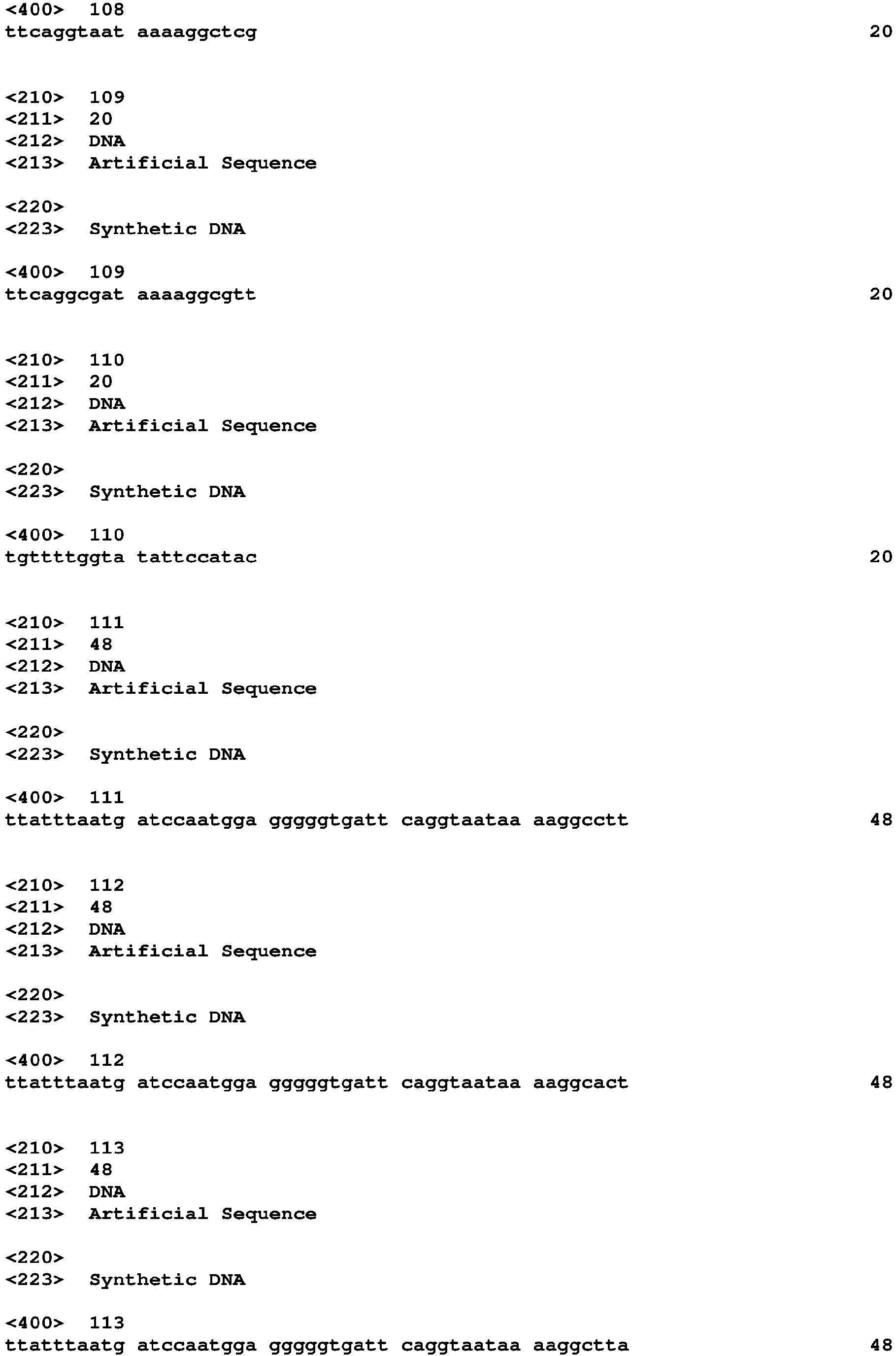
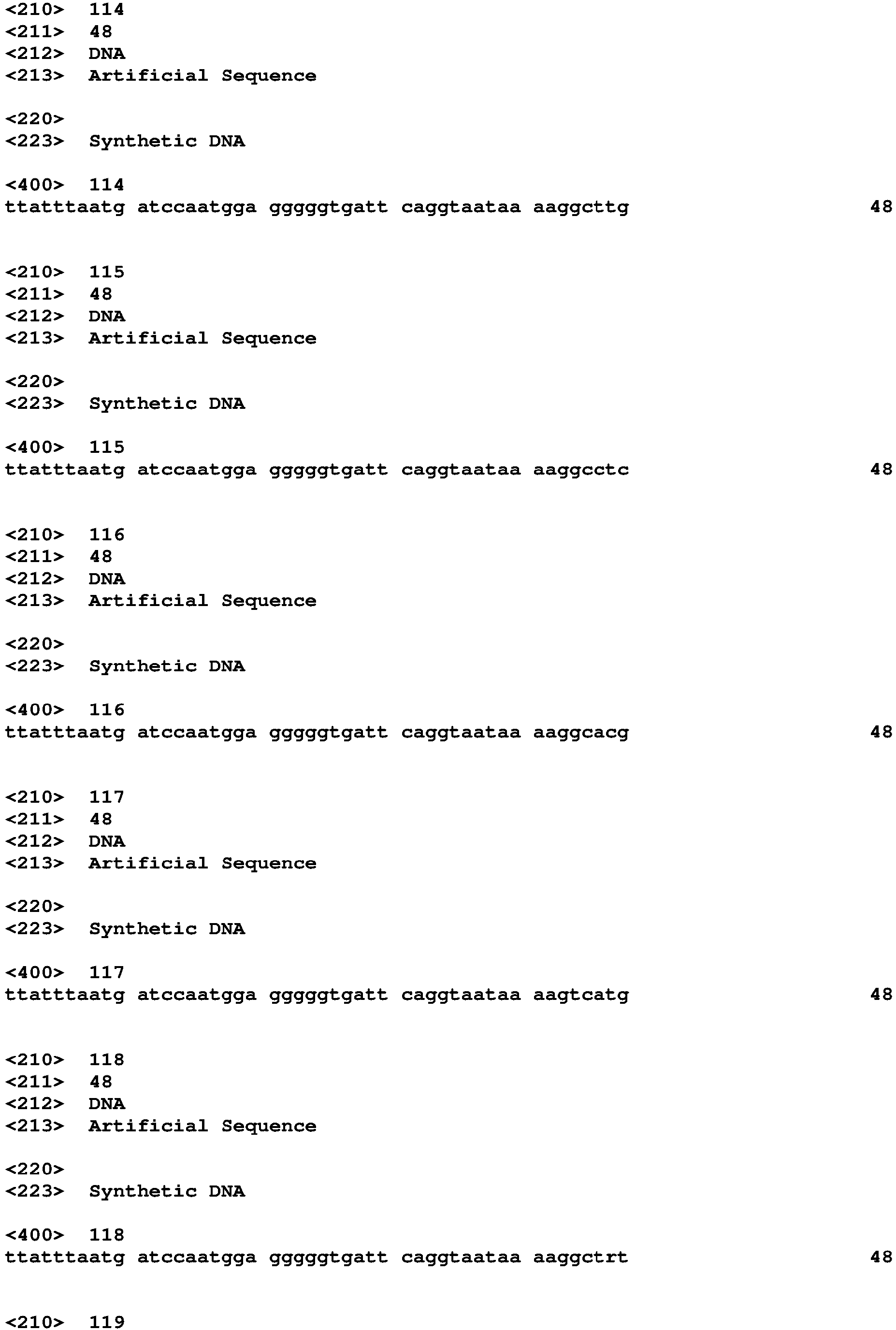
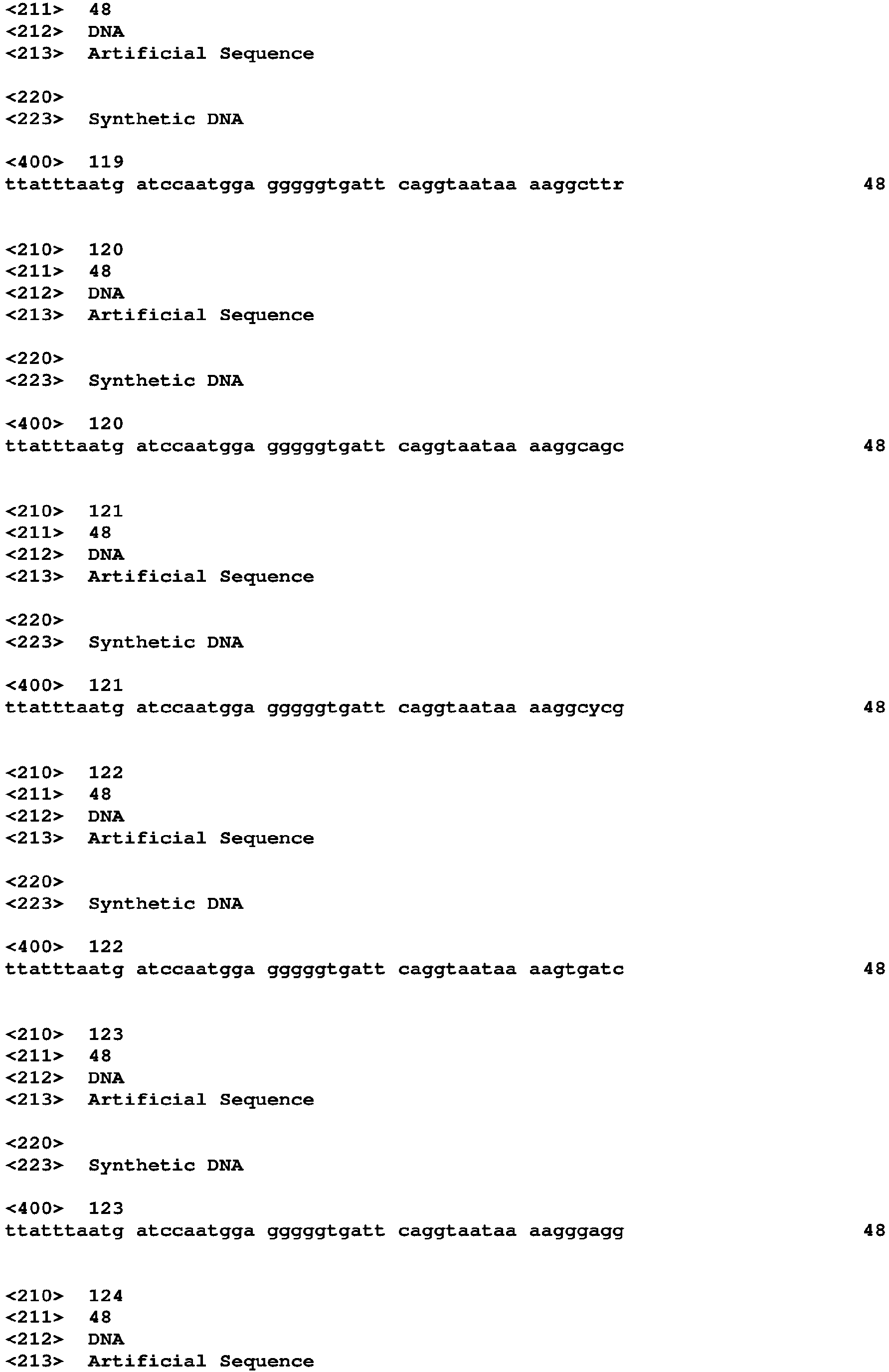


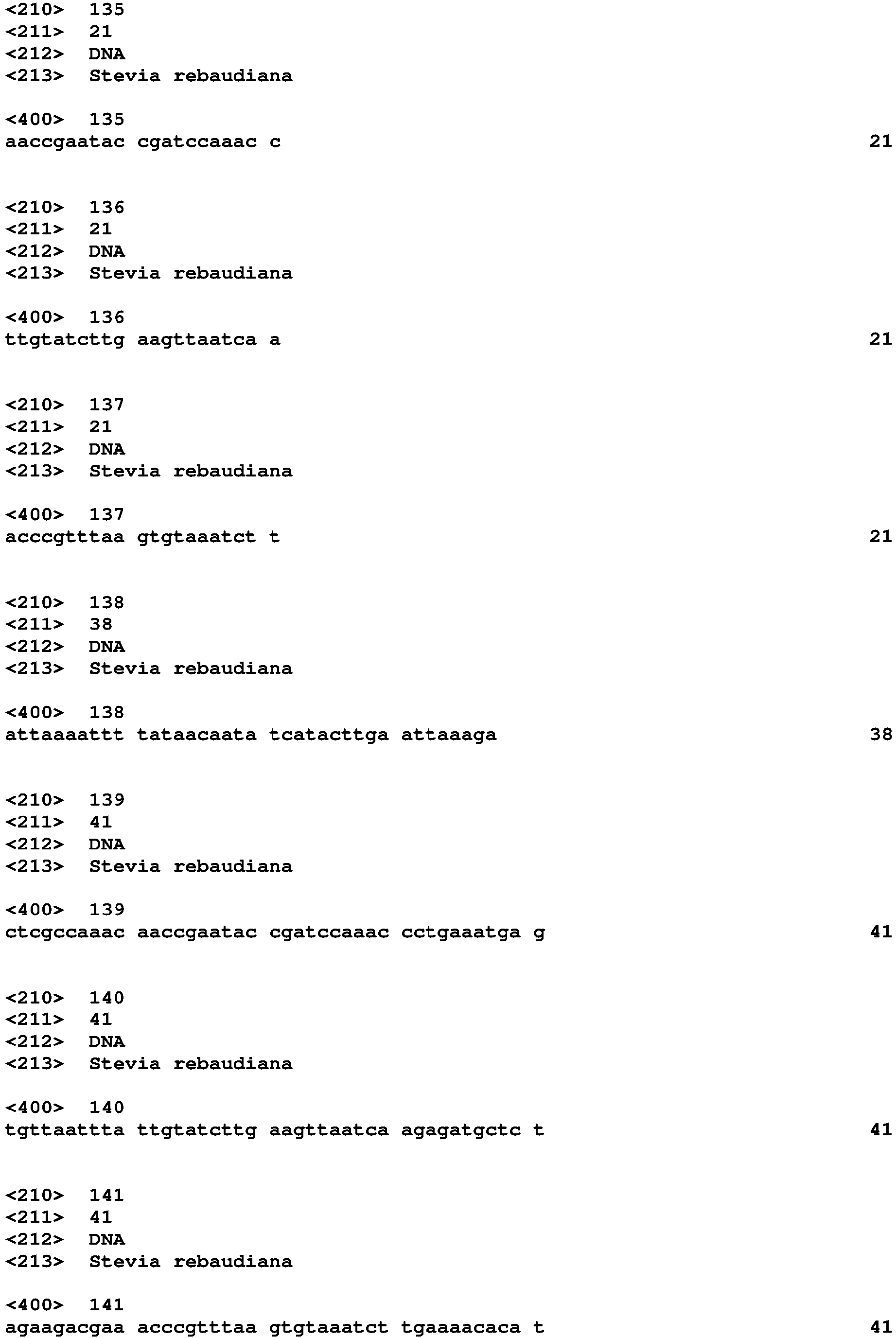


Claims (25)
- A high rebaudioside D (RebD)-content stevia plant comprising 3.3% or more of RebD per unit mass of dried leaf.
- Plant according to claim 1, wherein the plant is homozygous for the allele wherein the base at the position corresponding to position 201 of SEQ ID NO: 1 is A.
- The plant according to claim 1 or 2, further having at least one of the following genetic features.(1) Homozygous for the allele wherein the base at the position corresponding to position 40 of SEQ ID NO: 2 is T.(2) Homozygous for the allele wherein the base at the position corresponding to position 44 of SEQ ID NO: 3 is T.(3) Homozygous for the allele wherein the base at the position corresponding to position 41 of SEQ ID NO: 4 is C.(4) Homozygous for the allele wherein the portion corresponding to positions 55-72 of SEQ ID NO: 5 is deleted.
- Plant according to any one of claims 1 to 3, wherein the plant is heterozygous for the allele wherein the base at the position corresponding to position 49 of SEQ ID NO: 6 is A.
- Plant according to any one of claims 1 to 4, wherein the plant is a non-genetically modified plant.
- Plant according to any one of claims 1 to 5, wherein the plant includes a stevia plant subjected to a mutagenesis treatment and a progeny plant thereof.
- Seed, tissue, tissue culture or cell of a plant according to any one of claims 1 to 6.
- Tissue, tissue culture or cell according to claim 7, which is selected from an embryo, meristem cell, pollen, leaf, root, root apex, petal, protoplast, leaf section and callus.
- A method of producing a high RebD-content stevia plant comprising 3.3% or more of RebD per unit mass of dried leaf, the method comprising a step of crossing a plant according to any one of claims 1 to 6 with a second stevia plant.
- A method according to claim 9, wherein the second plant is a plant according to any one of claims 1 to 5.
- An extract of a plant according to any one of claims 1 to 6, or of a seed, tissue, tissue culture or cell according to claim 7 or 8, wherein the extract comprises RebD.
- A method of producing a RebD-containing extract, comprising a step of obtaining an extract from a plant according to any one of claims 1 to 6, or from a seed, tissue, tissue culture or cell according to claim 7 or 8.
- A method of producing RebD, comprising a step of purifying RebD from an extract according to claim 11.
- A method of producing a food or beverage, sweetener composition, flavour or medicament, comprising:a step of providing an extract of a plant according to any one of claims 1 to 6, an extract of a seed, tissue, dried leaf, tissue culture or cell according to claim 7 or 8, or an extract according to claim 11; anda step of adding the extract to a raw material for the food or beverage, sweetener composition, flavour or medicament.
- A method of screening for a high RebD-content stevia plant, comprising a step of detecting from the genome of a test stevia plant the presence and/or the absence of a genetic feature of being homozygous for the allele wherein the base at the position corresponding to position 201 of SEQ ID NO: 1 is A.
- Method according to claim 15, further comprising a step of detecting from the genome of a test stevia plant the presence and/or the absence of at least one of the following genetic features.(1) Homozygous for the allele wherein the base at the position corresponding to position 40 of SEQ ID NO: 2 is T.(2) Homozygous for the allele wherein the base at the position corresponding to position 44 of SEQ ID NO: 3 is T.(3) Homozygous for the allele wherein the base at the position corresponding to position 41 of SEQ ID NO: 4 is C.(4) Homozygous for the allele wherein the portion corresponding to positions 55-72 of SEQ ID NO: 5 is deleted.
- Method according to claim 15 or 16, further comprising a step of detecting from the genome of a test stevia plant the presence and/or the absence of a genetic feature of being heterozygous for the allele wherein the base at the position corresponding to position 49 of SEQ ID NO: 6 is A.
- Method according to any one of claims 15 to 17, wherein the step of detecting a genetic feature is performed by the use of a CAPS method, dCAPS method or TaqMan PCR method.
- Method according to any one of claims 15 to 18, further comprising a step of measuring the content of a sweet component in a test stevia plant tissue.
- A screening kit for a high RebD-content stevia plant, comprising a reagent for detecting the presence and/or the absence of a genetic feature of being homozygous for the allele wherein the base at the position corresponding to position 201 of SEQ ID NO: 1 is A.
- Kit according to claim 20, further comprising a reagent for detecting the presence and/or the absence of at least one of the following genetic features (1) to (4).(1) Homozygous for the allele wherein the base at the position corresponding to position 40 of SEQ ID NO: 2 is T.(2) Homozygous for the allele wherein the base at the position corresponding to position 44 of SEQ ID NO: 3 is T.(3) Homozygous for the allele wherein the base at the position corresponding to position 41 of SEQ ID NO: 4 is C.(4) Homozygous for the allele wherein the portion corresponding to positions 55-72 of SEQ ID NO: 5 is deleted.
- Kit according to claim 20 or 21, further comprising a reagent for detecting the presence and/or the absence of a genetic feature of being heterozygous for the allele wherein the base at the position corresponding to position 49 of SEQ ID NO: 6 is A.
- Kit according to any one of claims 20 to 22, wherein the reagent comprises a primer and/or a probe for use in a CAPS method, dCAPS method or TaqMan PCR method.
- A method of producing a high RebD-content stevia plant, comprising a step of introducing a variation from C to A at a position corresponding to position 201 of SEQ ID NO: 1.
- Method according to claim 24, wherein the introduction of the variation is performed by a mutagenesis treatment.
Applications Claiming Priority (2)
| Application Number | Priority Date | Filing Date | Title |
|---|---|---|---|
| JP2018248656 | 2018-12-28 | ||
| PCT/JP2019/051299 WO2020138364A1 (en) | 2018-12-28 | 2019-12-26 | Rebaudioside d-rich stevia plant |
Publications (2)
| Publication Number | Publication Date |
|---|---|
| EP3903574A1 true EP3903574A1 (en) | 2021-11-03 |
| EP3903574A4 EP3903574A4 (en) | 2022-09-21 |
Family
ID=71129535
Family Applications (1)
| Application Number | Title | Priority Date | Filing Date |
|---|---|---|---|
| EP19901824.3A Pending EP3903574A4 (en) | 2018-12-28 | 2019-12-26 | STEVIA PLANT RICH IN REBAUDIOSIDE D |
Country Status (11)
| Country | Link |
|---|---|
| US (1) | US20220087124A1 (en) |
| EP (1) | EP3903574A4 (en) |
| JP (1) | JP7520722B2 (en) |
| CN (1) | CN113226017A (en) |
| AR (1) | AR117736A1 (en) |
| AU (1) | AU2019415370A1 (en) |
| BR (1) | BR112021012541A2 (en) |
| MY (1) | MY209955A (en) |
| PE (1) | PE20211964A1 (en) |
| PY (1) | PY19107846A (en) |
| WO (1) | WO2020138364A1 (en) |
Families Citing this family (4)
| Publication number | Priority date | Publication date | Assignee | Title |
|---|---|---|---|---|
| CN115551347A (en) * | 2020-05-12 | 2022-12-30 | 三得利控股株式会社 | Stevia plant body rich in rebaudioside E |
| EP4166153A4 (en) * | 2020-05-12 | 2024-05-29 | Suntory Holdings Limited | STEVIA PLANT RICH IN REBAUDIOSIDE D |
| WO2022220152A1 (en) * | 2021-04-15 | 2022-10-20 | サントリーホールディングス株式会社 | Stevia plant rich in nutritional component |
| PY2454282A (en) * | 2023-06-30 | 2025-03-27 | Suntory Holdings Ltd | STEVIA PLANT WITH A HIGH REBAUDIOSIDE N CONTENT |
Family Cites Families (14)
| Publication number | Priority date | Publication date | Assignee | Title |
|---|---|---|---|---|
| US5925525A (en) | 1989-06-07 | 1999-07-20 | Affymetrix, Inc. | Method of identifying nucleotide differences |
| US5858659A (en) | 1995-11-29 | 1999-01-12 | Affymetrix, Inc. | Polymorphism detection |
| US6045996A (en) | 1993-10-26 | 2000-04-04 | Affymetrix, Inc. | Hybridization assays on oligonucleotide arrays |
| US8377491B2 (en) | 2005-11-23 | 2013-02-19 | The Coca-Cola Company | High-potency sweetener composition with vitamin and compositions sweetened therewith |
| ES2592377T3 (en) | 2008-10-03 | 2016-11-29 | Morita Kagaku Kogyo Co., Ltd. | New steviol glycosides |
| PE20200961A1 (en) * | 2013-03-15 | 2020-09-24 | Cargill Inc | STEVIA PLANTS WITH INCREASED REBAUDIOSIDE D CONTENT |
| WO2016036578A1 (en) * | 2014-09-02 | 2016-03-10 | Purecircle Sdn Bhd | Stevia extracts |
| US10370673B2 (en) * | 2014-09-26 | 2019-08-06 | Purecircle Sdn Bhd | Single nucleotide polymorphism (SNP) markers for stevia |
| WO2016090460A1 (en) * | 2014-12-08 | 2016-06-16 | Qibin Wang | High rebaudioside-c plant varietal and compositions extracted therefrom with high rebaudioside-c and total steviol glycoside content |
| CN109006460B (en) * | 2015-01-23 | 2022-03-22 | 谱赛科美国公司 | Preparation of New Stevia Variety 817096 Puxing 5 and Steviol Glycosides with High RD Content |
| WO2016134449A1 (en) * | 2015-02-24 | 2016-09-01 | Qibin Wang | High rebaudioside-a plant varietal, methods of extraction and purification therefrom, of compositions with enhanced rebaudioside-a content and uses of said composition |
| JP6728215B2 (en) | 2015-04-01 | 2020-07-22 | ロレックス・ソシエテ・アノニムRolex Sa | Mechanism for winding and/or modifying at least one timepiece function and a device for selecting the timepiece function |
| JP2018144512A (en) | 2017-03-01 | 2018-09-20 | 株式会社ジェイテクト | Steering control device |
| AU2018350050A1 (en) * | 2017-10-12 | 2020-04-02 | Suntory Holdings Limited | Rebaudioside M-rich stevia plant |
-
2019
- 2019-12-23 AR ARP190103854A patent/AR117736A1/en unknown
- 2019-12-26 AU AU2019415370A patent/AU2019415370A1/en not_active Withdrawn
- 2019-12-26 US US17/418,050 patent/US20220087124A1/en not_active Abandoned
- 2019-12-26 BR BR112021012541-8A patent/BR112021012541A2/en unknown
- 2019-12-26 MY MYPI2021003599A patent/MY209955A/en unknown
- 2019-12-26 PY PY201919107846A patent/PY19107846A/en unknown
- 2019-12-26 WO PCT/JP2019/051299 patent/WO2020138364A1/en not_active Ceased
- 2019-12-26 JP JP2020562456A patent/JP7520722B2/en active Active
- 2019-12-26 CN CN201980085757.6A patent/CN113226017A/en active Pending
- 2019-12-26 EP EP19901824.3A patent/EP3903574A4/en active Pending
- 2019-12-26 PE PE2021001071A patent/PE20211964A1/en unknown
Also Published As
| Publication number | Publication date |
|---|---|
| EP3903574A4 (en) | 2022-09-21 |
| PE20211964A1 (en) | 2021-10-04 |
| AR117736A1 (en) | 2021-08-25 |
| PY19107846A (en) | 2020-07-09 |
| CN113226017A (en) | 2021-08-06 |
| WO2020138364A1 (en) | 2020-07-02 |
| BR112021012541A2 (en) | 2021-09-14 |
| JP7520722B2 (en) | 2024-07-23 |
| US20220087124A1 (en) | 2022-03-24 |
| JPWO2020138364A1 (en) | 2021-11-04 |
| MY209955A (en) | 2025-08-15 |
| AU2019415370A1 (en) | 2021-07-15 |
Similar Documents
| Publication | Publication Date | Title |
|---|---|---|
| US12317798B2 (en) | Rebaudioside M-rich stevia plant | |
| EP4166153A1 (en) | Rebaudioside d-rich stevia plant | |
| US11732313B2 (en) | High-sweetening-content stevia plant and method for screening same | |
| US20220087124A1 (en) | Rebaudioside d-rich stevia plant | |
| US12389848B2 (en) | Stevia plant having high rebaudioside M content ratio and screening method for same | |
| US12295306B2 (en) | Stevia plant having less ability to form flower buds | |
| US12391953B2 (en) | Stevia plant having less ability to form pollens | |
| JP2024012453A (en) | Stevia plant with low tyramine content | |
| US12338498B2 (en) | High steviol glycoside-containing stevia plant and method for screening same | |
| EP4151083A1 (en) | Stevia plant with high content of rebaudioside e |
Legal Events
| Date | Code | Title | Description |
|---|---|---|---|
| STAA | Information on the status of an ep patent application or granted ep patent |
Free format text: STATUS: THE INTERNATIONAL PUBLICATION HAS BEEN MADE |
|
| PUAI | Public reference made under article 153(3) epc to a published international application that has entered the european phase |
Free format text: ORIGINAL CODE: 0009012 |
|
| STAA | Information on the status of an ep patent application or granted ep patent |
Free format text: STATUS: REQUEST FOR EXAMINATION WAS MADE |
|
| 17P | Request for examination filed |
Effective date: 20210624 |
|
| AK | Designated contracting states |
Kind code of ref document: A1 Designated state(s): AL AT BE BG CH CY CZ DE DK EE ES FI FR GB GR HR HU IE IS IT LI LT LU LV MC MK MT NL NO PL PT RO RS SE SI SK SM TR |
|
| DAV | Request for validation of the european patent (deleted) | ||
| DAX | Request for extension of the european patent (deleted) | ||
| A4 | Supplementary search report drawn up and despatched |
Effective date: 20220822 |
|
| RIC1 | Information provided on ipc code assigned before grant |
Ipc: C12Q 1/6895 20180101ALI20220816BHEP Ipc: C12Q 1/686 20180101ALI20220816BHEP Ipc: C12Q 1/6858 20180101ALI20220816BHEP Ipc: A23L 33/105 20160101ALI20220816BHEP Ipc: A23L 2/60 20060101ALI20220816BHEP Ipc: A01H 5/12 20180101ALI20220816BHEP Ipc: A01H 6/14 20180101ALI20220816BHEP Ipc: A23L 33/20 20160101ALI20220816BHEP Ipc: A01H 4/00 20060101ALI20220816BHEP Ipc: A01H 1/04 20060101ALI20220816BHEP Ipc: A01H 1/00 20060101AFI20220816BHEP |
|
| STAA | Information on the status of an ep patent application or granted ep patent |
Free format text: STATUS: EXAMINATION IS IN PROGRESS |
|
| 17Q | First examination report despatched |
Effective date: 20250602 |