EP3903508B1 - Mixed-reality audio intelligibility control - Google Patents
Mixed-reality audio intelligibility control Download PDFInfo
- Publication number
- EP3903508B1 EP3903508B1 EP19845740.0A EP19845740A EP3903508B1 EP 3903508 B1 EP3903508 B1 EP 3903508B1 EP 19845740 A EP19845740 A EP 19845740A EP 3903508 B1 EP3903508 B1 EP 3903508B1
- Authority
- EP
- European Patent Office
- Prior art keywords
- value
- audio
- parameter values
- processing parameter
- audio processing
- Prior art date
- Legal status (The legal status is an assumption and is not a legal conclusion. Google has not performed a legal analysis and makes no representation as to the accuracy of the status listed.)
- Active
Links
Images



Classifications
-
- H—ELECTRICITY
- H04—ELECTRIC COMMUNICATION TECHNIQUE
- H04R—LOUDSPEAKERS, MICROPHONES, GRAMOPHONE PICK-UPS OR LIKE ACOUSTIC ELECTROMECHANICAL TRANSDUCERS; ELECTRIC HEARING AIDS; PUBLIC ADDRESS SYSTEMS
- H04R3/00—Circuits for transducers
- H04R3/04—Circuits for transducers for correcting frequency response
-
- G—PHYSICS
- G06—COMPUTING OR CALCULATING; COUNTING
- G06F—ELECTRIC DIGITAL DATA PROCESSING
- G06F3/00—Input arrangements for transferring data to be processed into a form capable of being handled by the computer; Output arrangements for transferring data from processing unit to output unit, e.g. interface arrangements
- G06F3/01—Input arrangements or combined input and output arrangements for interaction between user and computer
- G06F3/011—Arrangements for interaction with the human body, e.g. for user immersion in virtual reality
-
- G—PHYSICS
- G10—MUSICAL INSTRUMENTS; ACOUSTICS
- G10L—SPEECH ANALYSIS TECHNIQUES OR SPEECH SYNTHESIS; SPEECH RECOGNITION; SPEECH OR VOICE PROCESSING TECHNIQUES; SPEECH OR AUDIO CODING OR DECODING
- G10L25/00—Speech or voice analysis techniques not restricted to a single one of groups G10L15/00 - G10L21/00
- G10L25/48—Speech or voice analysis techniques not restricted to a single one of groups G10L15/00 - G10L21/00 specially adapted for particular use
-
- H—ELECTRICITY
- H04—ELECTRIC COMMUNICATION TECHNIQUE
- H04S—STEREOPHONIC SYSTEMS
- H04S7/00—Indicating arrangements; Control arrangements, e.g. balance control
- H04S7/30—Control circuits for electronic adaptation of the sound field
- H04S7/307—Frequency adjustment, e.g. tone control
-
- G—PHYSICS
- G10—MUSICAL INSTRUMENTS; ACOUSTICS
- G10L—SPEECH ANALYSIS TECHNIQUES OR SPEECH SYNTHESIS; SPEECH RECOGNITION; SPEECH OR VOICE PROCESSING TECHNIQUES; SPEECH OR AUDIO CODING OR DECODING
- G10L21/00—Speech or voice signal processing techniques to produce another audible or non-audible signal, e.g. visual or tactile, in order to modify its quality or its intelligibility
- G10L21/02—Speech enhancement, e.g. noise reduction or echo cancellation
- G10L21/0316—Speech enhancement, e.g. noise reduction or echo cancellation by changing the amplitude
- G10L21/0364—Speech enhancement, e.g. noise reduction or echo cancellation by changing the amplitude for improving intelligibility
-
- H—ELECTRICITY
- H04—ELECTRIC COMMUNICATION TECHNIQUE
- H04R—LOUDSPEAKERS, MICROPHONES, GRAMOPHONE PICK-UPS OR LIKE ACOUSTIC ELECTROMECHANICAL TRANSDUCERS; ELECTRIC HEARING AIDS; PUBLIC ADDRESS SYSTEMS
- H04R2499/00—Aspects covered by H04R or H04S not otherwise provided for in their subgroups
- H04R2499/10—General applications
- H04R2499/15—Transducers incorporated in visual displaying devices, e.g. televisions, computer displays, laptops
Definitions
- Modern computing applications may capture and playback audio of a user's speech.
- Such applications include videoconferencing applications, multi-player gaming applications, and audio messaging applications.
- the audio often suffers from poor quality both at capture and playback.
- a typical microphone used to capture speech audio for a computing application is built-in to a user device, such as a smartphone, tablet or notebook computer.
- These microphones capture low-quality audio which exhibits, for example, low signal-to-noise ratios and low sampling rates.
- Even off-board, consumer-grade microphones provide poor quality audio when used in a typical audio-unfriendly physical environment.
- a user typically lacks the knowledge and/or the time to control audio processing so as to improve the intelligibility of the recorded audio during playback.
- Such control would involve the tuning of several individual audio processing parameters over several iterative steps. Such steps cannot be easily hardcoded due to differences in voice pitch, frequencies, etc.
- US 2011/0221656 A1 describes an interactive, head-mounted eyepiece with an electrically adjustable liquid lens that adjusts a focus of the displayed content for the user.
- the electrically adjustable lens may be of the type wherein the lens is moved back and forth with a small worm drive.
- the electrically adjustable lens may be of the type that uses two liquids, a conducting liquid and a non-conducting liquid.
- the liquid lens may instead be a tunable liquid crystal cell, in which a non-uniform magnetic field is used to shape the liquid crystal and adjust a focus for the user.
- US 2015/0281853 A1 describes that systems and methods disclosed herein provide for low cost hearing assistance to improve intelligible hearing for those with normal hearing and to greatly improve hearing intelligibility for those with hearing problems.
- One goal of the systems and methods disclosed herein is to make hearing assistance algorithms easily accessible and available by implementing such algorithms using non-dedicated hardware platforms such as non-dedicated mobile computing devices, e.g., smartphones, PDA's and the like.
- the systems and method of the present disclosure integrate hearing assistance algorithms with multi-media algorithms in an API stack (similar to the implementation of audio effects such as stereo widening and psychoacoustic bass enhancement) thereby addressing processing delay concerns.
- WO2020/033228 A1 describes techniques and devices which include a memory configured to store audio data within a first audio zone, or a second audio zone in a layered soundfield.
- the memory is coupled to one or more processors and the memory is configured to store the audio data in the first audio zone and the second audio data in the layered soundfield.
- the one or more processors are configured to receive an interaction command to control the audio data in the first audio zone and the second audio zone in the layered soundfield, and generate one or more indicators that the interaction command was received to control the audio data, in the first audio zone or the second audio zone of the layered soundfield.
- Embodiments described herein provide a technical solution to the technical problem of addressing poor-quality speech audio playback in a computing environment.
- multiple audio processing parameters are abstracted into a single, multidimensional user control.
- such a control may support simple interaction, reduce complexity and efficiently increase intelligibility of recorded speech content.
- FIG. 1 illustrates a mixed-reality environment according to some embodiments. Some embodiments may be used in conjunction with mixed-, augmented-, and/or virtual-reality systems, as well as in conventional computer display systems.
- a user is looking at a mixed-reality display while physically located within in environment 110. Every object shown in FIG. 1 is also located in environment 110 (i.e., the user sees the "real" object), except for user 120.
- the image of user 120 may be acquired by a camera of a remote system and provided to the mixed-reality display via a communication application (e.g., a videoconferencing application).
- the mixed-reality display operates to insert an image of user 720 into the scene viewed by the current user.
- Controls 130 and 140 may be displayed as holographic images or in any other image format. Each of controls 130 and 140 is associated with a respective slider 135 and 145. According to some embodiments, the current user manipulates a slider 135 or 145 using an input device (e.g., a hand, a mixed-reality controller) to set a value corresponding to the associated control 130 or 140.
- an input device e.g., a hand, a mixed-reality controller
- Controls 130 and 140 may be manipulated to affect the processing of speech audio being played back to the user within environment 110.
- speech audio signals of the current user or of user 120 may be recorded and played back in environment 110 such that it may be perceived by the current user.
- Moving either of slider 135 or 145 changes values of two or more audio processing parameters used to process the audio signals prior to playback thereof.
- Loudness control 130 is bipolar with selectable values ranging from -50 to 50 in increments of one. Embodiments are not limited to this range or granularity of values. According to some embodiments, selection of values less than 0 (e.g., via slider 135) will increase the compression (if any) applied to the speech audio signals. Compression reduces the dynamic range of the signals, causing quiet sounds to become louder, and loud sounds to become quieter. Selection of values greater than 0 will cause expansion of the signal (e.g., to compensate for strong compression from recording hardware). Expansion increases the dynamic range of the signal, causing quiet sounds to become quieter, and louder sounds to become louder.
- EQ control 140 is unipolar with selectable values ranging from 0 to 100 in increments of one. Embodiments are also not limited to this range or granularity of values. Increasing the value of EQ control 140 increases the frequency (i.e., the bandwidth) of an equalization filter applied to the input speech audio signal. In some embodiments, such control facilitates the application of an equalization filter corresponding to the speaker's voice. Increasing the value of EQ control 140 may also change the profile (shape) of the equalization filter. For example, as the bandwidth moves up in frequency range, the size of the equalization filter changes due to the logarithmic relationship between frequency and perception.
- Embodiments are not limited to two multimodal controls, nor to a slider input metaphor.
- One or more multimodal controls may be displayed, and each control may comprise any suitable type of control (control knob, selectable buttons, etc.) that are or become known.
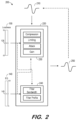
- FIG. 2 is a block diagram of system 200 to process speech audio signals based on multimodal audio control values according to some embodiments.
- processing system 220 receives input speech audio signal 210 and generates output speech audio signal 250 based on control values received from a user via controls 130 and 140.
- Processing system 220 may comprise any one or more suitable computing devices, including but not limited a desktop or laptop computer, a computer server, and a mixed-reality headset.
- the single value selected using Loudness control 130 may determine several audio processing parameter values represented within Loudness processing component 230. For example, based on a value selected by slider 135 of Loudness control 130, processing component 230 may determine one or more parameter values defining a compression function, one or more parameter values defining a limiting function, one or more parameter values defining an attack function, and one or more parameter values defining a gain function. Each determination may be based on a calculation associating loudness values with one or more parameter values of each processing function.
- the single value selected using EQ control 140 may also determine several audio processing parameter values, represented within EQ processing component 240. Based on a value selected by slider 145 of EQ control 140, processing component 240 may determine an equalization filter bandwidth range and an equalization filter profile. According to some embodiments, ranges of values of EQ control 140 correspond to respective pre-defined bandwidth ranges and filter profiles. For example, values between 0 and 30 may correspond to a first bandwidth range and a first filter profile, values between 30 and 80 may correspond to a second bandwidth range and a second filter profile, and values between 80 and 100 may correspond to a third bandwidth range and a third filter profile. In some embodiments, component 240 calculates the equalization filter bandwidth range and the equalization filter profile based on the selected value of EQ control 140.
- component 240 may determine the equalization processing parameter values based at least in part on the selected value of loudness control 130.
- component 230 may determine the loudness-related processing parameter values based at least in part on the selected value of EQ control 130.
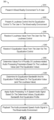
- FIG. 3 is a flow diagram of process 300 according to some embodiments.
- Process 300 and the other processes described herein may be performed using any suitable combination of hardware and software.
- Software program code embodying these processes may be stored by any non-transitory tangible medium, including a fixed disk, a volatile or non-volatile random access memory, a DVD, a Flash drive, or a magnetic tape, and executed by any number of processing units, including but not limited to processors, processor cores, and processor threads. Embodiments are not limited to the examples described below.
- a mixed-reality environment is presented to a user at S310.
- the mixed-reality environment may be presented via execution of an application such as a videoconferencing, gaming, or other application providing audio recording and playback.
- the mixed-reality environment may include zero or more real objects and zero or more computer-generated images in the user's field of vision.
- the mixed-reality environment may be presented by a mixed-reality headset, a flat-panel display, or any suitable one or more systems.
- S320 a loudness control and an equalization control are presented to the user in the mixed-reality environment.
- S320 may comprise presentation of Loudness control 130 and EQ control 140 as holographic images or in any other image format.
- the controls may be presented in response to a command input by the user via an input device.
- the command may comprise a command to open a Settings or Audio menu associated with the application.
- the command is a hand gesture and the input device is a motion sensor.
- a Loudness value is received from the user via the Loudness control at S330, and an EQ value is received from the user at S340.
- the user may manipulate slider 135 or 145 using an input device (e.g., a hand, a mixed-reality controller) to set a value corresponding to the associated control 130 or 140.
- an input device e.g., a hand, a mixed-reality controller
- the user may input the Loudness and EQ values in response to hearing speech audio signals played back in the mixed-reality environment. For example, the user may speak and hear his own voice played back through loudspeakers, or may hear another user's (e.g., user 120's) speech audio signals being played back. These audio signals are processed based on an initial set of audio-processing parameters, an initial equalization filter bandwidth, and an initial equalization filter profile.
- the user may then manipulate one or both of controls 130 and 140 in an attempt to increase the intelligibility of the played back speech audio signals. If the user chooses to manipulate only one control, only one of a Loudness value and an EQ are received at S330 and S340.
- values are determined for a plurality of loudness-related audio processing parameters based on the received Loudness value. As described above, the determination at S350 may also be based on the received EQ value. Examples of Loudness-related audio processing parameters for which values may be determined at S350 include but are not limited to Compression, Limiting, Attack Value and Gain.
- the value of a parameter may be determined at S350 based on a function associated with the parameter which takes the user-provided Loudness value as input, based on a look-up table for which the user-provided Loudness value is an index, or by any other suitable mechanism.
- An equalization bandwidth and an equalization profile are determined at S360 based on the received equalization value.
- certain ranges of equalization values correspond to respective pre-defined bandwidths and equalization profiles. Accordingly, a pre-defined bandwidth and equalization profile may be determined at S360 by identifying a range in which the received equalization value falls.
- the equalization filter bandwidth range and the equalization filter profile are calculated based on functions which take the received equalization value as input. Such functions may also depend on the received Loudness value.
- Audio processing is then applied to received speech audio signals at S370.
- the audio processing utilizes the values determined for various audio processing parameters at S350, and the equalization bandwidth and equalization profile determined at S360. It should be noted that if no Loudness value or equalization value is received from a user at S330 or S340, the initial speech audio signal processing and equalization scheme continues to be used.
- the processed speech audio signal is played back in the mixed-reality environment at S380. Flow then returns to S330, at which point the user may again choose to manipulate the Loudness control and/or the EQ control to increase the intelligibility of the played back signal. If so, flow continues therefrom as described above.
- FIG. 4 illustrates system 400 including components for determining the initial audio processing scheme.
- frequency and loudness detection component 460 may determine a frequency and loudness based on input signal 410 and pass these values to component 430 for determination of initial values of Compression, Limiting, Attack and Gain audio processing parameters, and to component 440 for determination of an initial equalization frequency bandwidth and equalization profile.
- component 460 may determine a signal-to-noise ratio (and/or decibel level) level associated with input signal 410 and component 430 changes compression, limiting and scaling values based on the detected ratio and/or level.
- Component 460 may also estimate a fundamental frequency of signal 410 used by component 440 to determine an initial equalization frequency bandwidth and equalization profile.
- FIG. 5 is a view of head-mounted audio/video device 500 which may support multimodal audio controls in a mixed-reality environment according to some embodiments. Embodiments are not limited to device 500.
- Device 500 includes a speaker system for presenting spatialized sound and a display for presenting images to a wearer thereof.
- the images may completely occupy the wearer's field of view, or may be presented within the wearer's field of view such that the wearer may still view other objects in her vicinity.
- the images may be holographic.
- Device 500 may also include sensors (e.g., cameras and accelerometers) for determining the position and motion of device 500 in three-dimensional space with six degrees of freedom. Data received from the sensors may assist in determining the size, position, orientation and visibility of images displayed to a wearer.
- sensors e.g., cameras and accelerometers
- device 500 executes process 300.
- FIG. 6 is an internal block diagram of some of the components of device 500 according to some embodiments. Each component may be implemented using any combination of hardware and software.
- Device 500 includes a wireless networking component to receive and transmit application/environment data.
- the data may be received via execution of a communication application on device 500 and/or on a computing system to which device 500 is wirelessly coupled.
- the data may include remotely-recorded speech audio signals but embodiments are not limited thereto.
- the sensors of device 500 may detect room acoustics and the position of objects within the room, as well as the position of device 500 within the room.
- the audio processing component of device 500 may utilize this information to process the speech audio signals generated according to some embodiments.
- the thus-processed audio signals are then provided to the spatial loudspeaker system of device 500 for playback and perception by the wearer.
- device 500 may also include a graphics processor to assist in presenting images on its display.
- images may comprise mixed-reality images of multimodal audio controls as depicted in FIG. 1 .
- FIG. 7 illustrates virtual machine-based system 700 according to some embodiments.
- System 700 may be cloud-implemented and may include any number of virtual machines, virtual servers and cloud storage instances.
- System 700 may execute an application providing mixed-reality experience and audio processing according to some embodiments.
- Device 710 may communicate with the application executed by system 700 to provide recorded speech audio signals thereto.
- System 700 may receive the speech audio signals, process the signals, and provide the processed speech signals to device 710.
- device 710 may play back the signals and present one or more multimodal controls to a user in a mixed-reality environment.
- the user may manipulate one or more of the controls to transmit one or more control values to system 700.
- system 700 determines two or more audio processing parameter values associated with speech intelligibility, processes speech audio signals received from device 710 based thereon, and returns the processed signals to device 710.
- Device 710 may further process the received speech signals prior to playback, for example based on context information local to device 710.
- Each functional component described herein may be implemented at least in part in computer hardware, in program code and/or in one or more computing systems executing such program code as is known in the art.
- Such a computing system may include one or more processing units which execute processor-executable program code stored in a memory system.
- each component or device described herein may be implemented by any number of devices in communication via any number of other public and/or private networks. Two or more of such computing devices may be located remote from one another and may communicate with one another via any known manner of network(s) and/or a dedicated connection. Each component or device may comprise any number of hardware and/or software elements suitable to provide the functions described herein as well as any other functions.
- any computing device used in an implementation of a system may include a processor to execute program code such that the computing device operates as described herein.
- All systems and processes discussed herein may be embodied in program code stored on one or more non-transitory computer-readable media.
- Such media may include, for example, a hard disk, a DVD-ROM, a Flash drive, magnetic tape, and solid state Random Access Memory (RAM) or Read Only Memory (ROM) storage units.
- RAM Random Access Memory
- ROM Read Only Memory
Landscapes
- Engineering & Computer Science (AREA)
- Physics & Mathematics (AREA)
- Acoustics & Sound (AREA)
- Signal Processing (AREA)
- Human Computer Interaction (AREA)
- Audiology, Speech & Language Pathology (AREA)
- Health & Medical Sciences (AREA)
- Computational Linguistics (AREA)
- Multimedia (AREA)
- General Engineering & Computer Science (AREA)
- Theoretical Computer Science (AREA)
- Quality & Reliability (AREA)
- General Physics & Mathematics (AREA)
- Circuit For Audible Band Transducer (AREA)
- User Interface Of Digital Computer (AREA)
Description
- Modern computing applications may capture and playback audio of a user's speech. Such applications include videoconferencing applications, multi-player gaming applications, and audio messaging applications. The audio often suffers from poor quality both at capture and playback.
- For example, a typical microphone used to capture speech audio for a computing application is built-in to a user device, such as a smartphone, tablet or notebook computer. These microphones capture low-quality audio which exhibits, for example, low signal-to-noise ratios and low sampling rates. Even off-board, consumer-grade microphones provide poor quality audio when used in a typical audio-unfriendly physical environment.
- Moreover, a user typically lacks the knowledge and/or the time to control audio processing so as to improve the intelligibility of the recorded audio during playback. Such control would involve the tuning of several individual audio processing parameters over several iterative steps. Such steps cannot be easily hardcoded due to differences in voice pitch, frequencies, etc.
- Systems are desired to provide improved speech intelligibility via intuitive and efficient user control over speech audio processing.
-
US 2011/0221656 A1 describes an interactive, head-mounted eyepiece with an electrically adjustable liquid lens that adjusts a focus of the displayed content for the user. The electrically adjustable lens may be of the type wherein the lens is moved back and forth with a small worm drive. Alternatively, the electrically adjustable lens may be of the type that uses two liquids, a conducting liquid and a non-conducting liquid. The liquid lens may instead be a tunable liquid crystal cell, in which a non-uniform magnetic field is used to shape the liquid crystal and adjust a focus for the user. -
US 2015/0281853 A1 describes that systems and methods disclosed herein provide for low cost hearing assistance to improve intelligible hearing for those with normal hearing and to greatly improve hearing intelligibility for those with hearing problems. One goal of the systems and methods disclosed herein is to make hearing assistance algorithms easily accessible and available by implementing such algorithms using non-dedicated hardware platforms such as non-dedicated mobile computing devices, e.g., smartphones, PDA's and the like. In exemplary embodiments, the systems and method of the present disclosure integrate hearing assistance algorithms with multi-media algorithms in an API stack (similar to the implementation of audio effects such as stereo widening and psychoacoustic bass enhancement) thereby addressing processing delay concerns. -
WO2020/033228 A1 describes techniques and devices which include a memory configured to store audio data within a first audio zone, or a second audio zone in a layered soundfield. The memory is coupled to one or more processors and the memory is configured to store the audio data in the first audio zone and the second audio data in the layered soundfield. The one or more processors are configured to receive an interaction command to control the audio data in the first audio zone and the second audio zone in the layered soundfield, and generate one or more indicators that the interaction command was received to control the audio data, in the first audio zone or the second audio zone of the layered soundfield. - The invention is set out in the appended set of claims.
-
-
FIG. 1 depicts a mixed-reality environment including multimodal audio controls according to some embodiments; -
FIG. 2 is a block diagram of a system to process speech audio signals based on multimodal audio control values according to some embodiments; -
FIG. 3 is a flow diagram of a process speech audio signals based on multimodal audio control values according to some embodiments; -
FIG. 4 is a block diagram of a system to process speech audio signals based on multimodal audio control values according to some embodiments; -
FIG. 5 depicts an audio/video device to display multimodal audio controls and implement speech audio signal processing according to some embodiments; -
FIG. 6 is an internal block diagram of an audio/video device to display multimodal audio controls and implement speech audio signal processing according to some embodiments; and -
FIG. 7 is a block diagram of a cloud computing system which may implement speech audio signal processing according to some embodiments. - The following description is provided to enable any person in the art to make and use the described embodiments. Various modifications, however, will remain apparent to those in the art.
- Embodiments described herein provide a technical solution to the technical problem of addressing poor-quality speech audio playback in a computing environment. According to some embodiments, multiple audio processing parameters are abstracted into a single, multidimensional user control. In a mixed-reality environment, such a control may support simple interaction, reduce complexity and efficiently increase intelligibility of recorded speech content.
- As an initial introduction to some embodiments,
FIG. 1 illustrates a mixed-reality environment according to some embodiments. Some embodiments may be used in conjunction with mixed-, augmented-, and/or virtual-reality systems, as well as in conventional computer display systems. - According to the example, a user is looking at a mixed-reality display while physically located within in
environment 110. Every object shown inFIG. 1 is also located in environment 110 (i.e., the user sees the "real" object), except foruser 120. The image ofuser 120 may be acquired by a camera of a remote system and provided to the mixed-reality display via a communication application (e.g., a videoconferencing application). As is known in the art, the mixed-reality display operates to insert an image of user 720 into the scene viewed by the current user. -
Environment 110 includesLoudness control 130 andEQ control 140.Controls controls respective slider slider control -
Controls environment 110. For example, speech audio signals of the current user or ofuser 120 may be recorded and played back inenvironment 110 such that it may be perceived by the current user. Moving either ofslider - According to one example,
Loudness control 130 is bipolar with selectable values ranging from -50 to 50 in increments of one. Embodiments are not limited to this range or granularity of values. According to some embodiments, selection of values less than 0 (e.g., via slider 135) will increase the compression (if any) applied to the speech audio signals. Compression reduces the dynamic range of the signals, causing quiet sounds to become louder, and loud sounds to become quieter. Selection of values greater than 0 will cause expansion of the signal (e.g., to compensate for strong compression from recording hardware). Expansion increases the dynamic range of the signal, causing quiet sounds to become quieter, and louder sounds to become louder. - Also according to an example,
EQ control 140 is unipolar with selectable values ranging from 0 to 100 in increments of one. Embodiments are also not limited to this range or granularity of values. Increasing the value ofEQ control 140 increases the frequency (i.e., the bandwidth) of an equalization filter applied to the input speech audio signal. In some embodiments, such control facilitates the application of an equalization filter corresponding to the speaker's voice. Increasing the value ofEQ control 140 may also change the profile (shape) of the equalization filter. For example, as the bandwidth moves up in frequency range, the size of the equalization filter changes due to the logarithmic relationship between frequency and perception. - Embodiments are not limited to two multimodal controls, nor to a slider input metaphor. One or more multimodal controls may be displayed, and each control may comprise any suitable type of control (control knob, selectable buttons, etc.) that are or become known.
-
FIG. 2 is a block diagram ofsystem 200 to process speech audio signals based on multimodal audio control values according to some embodiments. Generally,processing system 220 receives inputspeech audio signal 210 and generates outputspeech audio signal 250 based on control values received from a user viacontrols Processing system 220 may comprise any one or more suitable computing devices, including but not limited a desktop or laptop computer, a computer server, and a mixed-reality headset. - As shown, the single value selected using
Loudness control 130 may determine several audio processing parameter values represented withinLoudness processing component 230. For example, based on a value selected byslider 135 ofLoudness control 130,processing component 230 may determine one or more parameter values defining a compression function, one or more parameter values defining a limiting function, one or more parameter values defining an attack function, and one or more parameter values defining a gain function. Each determination may be based on a calculation associating loudness values with one or more parameter values of each processing function. - The single value selected using
EQ control 140 may also determine several audio processing parameter values, represented withinEQ processing component 240. Based on a value selected byslider 145 ofEQ control 140,processing component 240 may determine an equalization filter bandwidth range and an equalization filter profile. According to some embodiments, ranges of values ofEQ control 140 correspond to respective pre-defined bandwidth ranges and filter profiles. For example, values between 0 and 30 may correspond to a first bandwidth range and a first filter profile, values between 30 and 80 may correspond to a second bandwidth range and a second filter profile, and values between 80 and 100 may correspond to a third bandwidth range and a third filter profile. In some embodiments,component 240 calculates the equalization filter bandwidth range and the equalization filter profile based on the selected value ofEQ control 140. - As illustrated by the dashed lines of
FIG. 2 , in someembodiments component 240 may determine the equalization processing parameter values based at least in part on the selected value ofloudness control 130. Similarly,component 230 may determine the loudness-related processing parameter values based at least in part on the selected value ofEQ control 130. -
FIG. 3 is a flow diagram ofprocess 300 according to some embodiments.Process 300 and the other processes described herein may be performed using any suitable combination of hardware and software. Software program code embodying these processes may be stored by any non-transitory tangible medium, including a fixed disk, a volatile or non-volatile random access memory, a DVD, a Flash drive, or a magnetic tape, and executed by any number of processing units, including but not limited to processors, processor cores, and processor threads. Embodiments are not limited to the examples described below. - A mixed-reality environment is presented to a user at S310. The mixed-reality environment may be presented via execution of an application such as a videoconferencing, gaming, or other application providing audio recording and playback. The mixed-reality environment may include zero or more real objects and zero or more computer-generated images in the user's field of vision. The mixed-reality environment may be presented by a mixed-reality headset, a flat-panel display, or any suitable one or more systems.
- At S320, a loudness control and an equalization control are presented to the user in the mixed-reality environment. As described with respect to
FIG. 1 , S320 may comprise presentation ofLoudness control 130 andEQ control 140 as holographic images or in any other image format. - The controls may be presented in response to a command input by the user via an input device. The command may comprise a command to open a Settings or Audio menu associated with the application. In some embodiments, the command is a hand gesture and the input device is a motion sensor.
- A Loudness value is received from the user via the Loudness control at S330, and an EQ value is received from the user at S340. Continuing with the
FIG. 1 example, the user may manipulateslider control - The user may input the Loudness and EQ values in response to hearing speech audio signals played back in the mixed-reality environment. For example, the user may speak and hear his own voice played back through loudspeakers, or may hear another user's (e.g.,
user 120's) speech audio signals being played back. These audio signals are processed based on an initial set of audio-processing parameters, an initial equalization filter bandwidth, and an initial equalization filter profile. - The user may then manipulate one or both of
controls - Next, at S350, values are determined for a plurality of loudness-related audio processing parameters based on the received Loudness value. As described above, the determination at S350 may also be based on the received EQ value. Examples of Loudness-related audio processing parameters for which values may be determined at S350 include but are not limited to Compression, Limiting, Attack Value and Gain. The value of a parameter may be determined at S350 based on a function associated with the parameter which takes the user-provided Loudness value as input, based on a look-up table for which the user-provided Loudness value is an index, or by any other suitable mechanism.
- An equalization bandwidth and an equalization profile are determined at S360 based on the received equalization value. In some embodiments, certain ranges of equalization values correspond to respective pre-defined bandwidths and equalization profiles. Accordingly, a pre-defined bandwidth and equalization profile may be determined at S360 by identifying a range in which the received equalization value falls. In some embodiments, the equalization filter bandwidth range and the equalization filter profile are calculated based on functions which take the received equalization value as input. Such functions may also depend on the received Loudness value.
- Audio processing is then applied to received speech audio signals at S370. The audio processing utilizes the values determined for various audio processing parameters at S350, and the equalization bandwidth and equalization profile determined at S360. It should be noted that if no Loudness value or equalization value is received from a user at S330 or S340, the initial speech audio signal processing and equalization scheme continues to be used.
- The processed speech audio signal is played back in the mixed-reality environment at S380. Flow then returns to S330, at which point the user may again choose to manipulate the Loudness control and/or the EQ control to increase the intelligibility of the played back signal. If so, flow continues therefrom as described above.
- As mentioned above, an initial audio processing scheme is applied prior to user selection of Loudness or EQ values.
FIG. 4 illustratessystem 400 including components for determining the initial audio processing scheme. Specifically, frequency andloudness detection component 460 may determine a frequency and loudness based oninput signal 410 and pass these values tocomponent 430 for determination of initial values of Compression, Limiting, Attack and Gain audio processing parameters, and tocomponent 440 for determination of an initial equalization frequency bandwidth and equalization profile. - For example,
component 460 may determine a signal-to-noise ratio (and/or decibel level) level associated withinput signal 410 andcomponent 430 changes compression, limiting and scaling values based on the detected ratio and/or level.Component 460 may also estimate a fundamental frequency ofsignal 410 used bycomponent 440 to determine an initial equalization frequency bandwidth and equalization profile. -
FIG. 5 is a view of head-mounted audio/video device 500 which may support multimodal audio controls in a mixed-reality environment according to some embodiments. Embodiments are not limited todevice 500. -
Device 500 includes a speaker system for presenting spatialized sound and a display for presenting images to a wearer thereof. The images may completely occupy the wearer's field of view, or may be presented within the wearer's field of view such that the wearer may still view other objects in her vicinity. The images may be holographic. -
Device 500 may also include sensors (e.g., cameras and accelerometers) for determining the position and motion ofdevice 500 in three-dimensional space with six degrees of freedom. Data received from the sensors may assist in determining the size, position, orientation and visibility of images displayed to a wearer. - According to some embodiments,
device 500 executesprocess 300.FIG. 6 is an internal block diagram of some of the components ofdevice 500 according to some embodiments. Each component may be implemented using any combination of hardware and software. -
Device 500 includes a wireless networking component to receive and transmit application/environment data. The data may be received via execution of a communication application ondevice 500 and/or on a computing system to whichdevice 500 is wirelessly coupled. The data may include remotely-recorded speech audio signals but embodiments are not limited thereto. - The sensors of
device 500 may detect room acoustics and the position of objects within the room, as well as the position ofdevice 500 within the room. The audio processing component ofdevice 500 may utilize this information to process the speech audio signals generated according to some embodiments. The thus-processed audio signals are then provided to the spatial loudspeaker system ofdevice 500 for playback and perception by the wearer. - As shown in
FIG. 6 ,device 500 may also include a graphics processor to assist in presenting images on its display. Such images may comprise mixed-reality images of multimodal audio controls as depicted inFIG. 1 . -
FIG. 7 illustrates virtual machine-basedsystem 700 according to some embodiments.System 700 may be cloud-implemented and may include any number of virtual machines, virtual servers and cloud storage instances.System 700 may execute an application providing mixed-reality experience and audio processing according to some embodiments. -
Device 710 may communicate with the application executed bysystem 700 to provide recorded speech audio signals thereto.System 700 may receive the speech audio signals, process the signals, and provide the processed speech signals todevice 710. - As described above,
device 710 may play back the signals and present one or more multimodal controls to a user in a mixed-reality environment. The user may manipulate one or more of the controls to transmit one or more control values tosystem 700. For each of the one or more control values,system 700 determines two or more audio processing parameter values associated with speech intelligibility, processes speech audio signals received fromdevice 710 based thereon, and returns the processed signals todevice 710.Device 710 may further process the received speech signals prior to playback, for example based on context information local todevice 710. - Each functional component described herein may be implemented at least in part in computer hardware, in program code and/or in one or more computing systems executing such program code as is known in the art. Such a computing system may include one or more processing units which execute processor-executable program code stored in a memory system.
- The foregoing diagrams represent logical architectures for describing processes according to some embodiments, and actual implementations may include more or different components arranged in other manners. Other topologies may be used in conjunction with other embodiments. Moreover, each component or device described herein may be implemented by any number of devices in communication via any number of other public and/or private networks. Two or more of such computing devices may be located remote from one another and may communicate with one another via any known manner of network(s) and/or a dedicated connection. Each component or device may comprise any number of hardware and/or software elements suitable to provide the functions described herein as well as any other functions. For example, any computing device used in an implementation of a system according to some embodiments may include a processor to execute program code such that the computing device operates as described herein.
- All systems and processes discussed herein may be embodied in program code stored on one or more non-transitory computer-readable media. Such media may include, for example, a hard disk, a DVD-ROM, a Flash drive, magnetic tape, and solid state Random Access Memory (RAM) or Read Only Memory (ROM) storage units. Embodiments are therefore not limited to any specific combination of hardware and software.
Claims (8)
- A computing system (500) located in a physical environment (110), the computing system (500) comprising:a mixed-reality display;a loudspeaker system; andone or more processing units to execute processor-executable program code to cause the computing system to:present (S310) a mixed-reality environment on the mixed-reality display, wherein the mixed-reality environment includes real objects of the physical environment and an image of a remote user (120) acquired by a camera of a remote system;present (S320) a first audio control and a second audio control within the mixed-reality environment;receive (S330) a user manipulation of the first audio control within the mixed-reality environment to select a first value, the selected first value being a value of a first audio parameter associated with speech intelligibility, wherein the first audio parameter is loudness;receive (S340) a user manipulation of a second audio control within the mixed-reality environment to select a second value, the selected second value being a value of a second audio parameter associated with speech intelligibility, wherein the second audio parameter is equalization;determine (S350) a first two or more audio processing parameter values associated with speech intelligibility based on the selected first value, wherein the first two or more audio processing parameter values comprise a compression value and a limiting value;determine (S360) a second two or more audio processing parameter values associated with speech intelligibility based on the selected second value and on the
selected first value, wherein the second two or more audio processing parameter values comprise an equalization filter bandwidth and an equalization filter profile;apply (S370) audio processing to first speech audio signals based on the determined first two or more audio processing parameter values and the determined second two or more audio processing parameter values to generate second speech audio signals, wherein the first speech audio signals are recorded speech audio signals of the remote user (120); andtransmit (S380) the second speech audio signals to the loudspeaker system for playback. - A computing system according to Claim 1, wherein the first two or more audio processing parameter values are determined based on the selected first value and the selected second value.
- A computing system according to Claim 1, wherein determination of the second two or more audio processing parameter values comprises determination of a third two or more audio processing parameter values if the selected second value is within a first range of values, determination of a fourth two or more audio processing parameter values if the selected second value is within a second range of values, and determination of a fifth two or more audio processing parameter values if the selected second value is within a third range of t values, and wherein at least one of the first, second and third ranges is smaller than another one of the first, second and third ranges.
- A computer system according to Claim 1, wherein the first two or more audio processing parameter values are determined based on a look-up table for which the selected first value is an index.
- A computer system according to Claim 1, wherein ranges of the selected second value correspond to predefined bandwidth ranges and filter profiles.
- A computer-implemented method comprising:presenting (S310) a mixed-reality environment to a user located in a physical environment (110), wherein the mixed-reality environment includes real objects of the physical environment (110) and an image of a remote user (120) acquired by a camera of a remote system;presenting (S320) a first audio control and a second audio control to the user within the mixed-reality environment;detecting (S330) a manipulation by the user of the first audio control within the mixed-reality environment;determining (S330) a first value based on the manipulation, the first value being a first audio parameter associated with speech intelligibility, wherein the first audio parameter is loudness;detecting (S340) a second manipulation by the user of the second audio control within the mixed-reality environment;determining (S340) a second value based on the second manipulation, the second value being a second audio parameter associated with speech intelligibility, wherein the second audio parameter is equalization;determining (S350) a first two or more audio processing parameter values associated with speech intelligibility based on the first value and the second value, wherein the first two or more audio processing parameter values comprise a compression value and a limiting value;determining (S360) a second two or more audio processing parameter values associated with speech intelligibility based on the first value and the second value, wherein the second two or more audio processing parameter values comprise an equalization filter bandwidth and an equalization filter profile;receiving first speech audio signals, wherein the first speech audio signals are recorded speech audio signals of the remote user (120);applying (S370) audio processing to the first speech audio signals based on the determined first two or more audio processing parameter values and on the determined second two or more - related audio processing parameter values to generate second speech audio signals; andtransmitting (S380) the second speech audio signals to a loudspeaker system for playback to the user.
- A method according to Claim 6, wherein the first two or more audio processing parameter values are determined based on the determined first value and the determined second value.
- A method according to Claim 6, wherein determining the second two or more audio processing parameter values comprises determining a third two or more audio processing parameter values if the selected second value is within a first range of values, determining a fourth two or more audio processing parameter values if the selected second value is within a second range of values, and determining a fifth two or more audio
processing parameter values if the selected second value is within a third range of values, and wherein at least one of the first, second and third ranges is smaller than another one of the third, fourth and fifth ranges.
Applications Claiming Priority (2)
| Application Number | Priority Date | Filing Date | Title |
|---|---|---|---|
| US16/234,003 US10902864B2 (en) | 2018-12-27 | 2018-12-27 | Mixed-reality audio intelligibility control |
| PCT/US2019/067703 WO2020139725A1 (en) | 2018-12-27 | 2019-12-20 | Mixed-reality audio intelligibility control |
Publications (2)
| Publication Number | Publication Date |
|---|---|
| EP3903508A1 EP3903508A1 (en) | 2021-11-03 |
| EP3903508B1 true EP3903508B1 (en) | 2025-06-11 |
Family
ID=69375991
Family Applications (1)
| Application Number | Title | Priority Date | Filing Date |
|---|---|---|---|
| EP19845740.0A Active EP3903508B1 (en) | 2018-12-27 | 2019-12-20 | Mixed-reality audio intelligibility control |
Country Status (3)
| Country | Link |
|---|---|
| US (1) | US10902864B2 (en) |
| EP (1) | EP3903508B1 (en) |
| WO (1) | WO2020139725A1 (en) |
Families Citing this family (2)
| Publication number | Priority date | Publication date | Assignee | Title |
|---|---|---|---|---|
| DE102023117806B3 (en) | 2023-07-06 | 2024-07-18 | Audi Aktiengesellschaft | Method for adjusting a sound characteristic of an audio system and audio system and device |
| DE102023005435B3 (en) | 2023-07-06 | 2024-11-14 | Audi Aktiengesellschaft | Method for adjusting a sound characteristic of an audio system and audio system and device |
Citations (1)
| Publication number | Priority date | Publication date | Assignee | Title |
|---|---|---|---|---|
| US20200053464A1 (en) * | 2018-08-08 | 2020-02-13 | Qualcomm Incorporated | User interface for controlling audio zones |
Family Cites Families (10)
| Publication number | Priority date | Publication date | Assignee | Title |
|---|---|---|---|---|
| US7415120B1 (en) * | 1998-04-14 | 2008-08-19 | Akiba Electronics Institute Llc | User adjustable volume control that accommodates hearing |
| US7242784B2 (en) * | 2001-09-04 | 2007-07-10 | Motorola Inc. | Dynamic gain control of audio in a communication device |
| ATE491314T1 (en) * | 2006-04-05 | 2010-12-15 | Harman Becker Automotive Sys | METHOD FOR AUTOMATICALLY EQUALIZING A SOUND SYSTEM |
| AU2011220382A1 (en) | 2010-02-28 | 2012-10-18 | Microsoft Corporation | Local advertising content on an interactive head-mounted eyepiece |
| US9130527B2 (en) * | 2010-08-18 | 2015-09-08 | Dolby Laboratories Licensing Corporation | Method and system for controlling distortion in a critical frequency band of an audio signal |
| US10230346B2 (en) * | 2011-01-10 | 2019-03-12 | Zhinian Jing | Acoustic voice activity detection |
| US20150281853A1 (en) * | 2011-07-11 | 2015-10-01 | SoundFest, Inc. | Systems and methods for enhancing targeted audibility |
| CN107093991B (en) * | 2013-03-26 | 2020-10-09 | 杜比实验室特许公司 | Loudness normalization method and device based on target loudness |
| US9943253B2 (en) * | 2015-03-20 | 2018-04-17 | Innovo IP, LLC | System and method for improved audio perception |
| US10499177B2 (en) * | 2017-04-17 | 2019-12-03 | Harman International Industries, Incorporated | Volume control for individual sound zones |
-
2018
- 2018-12-27 US US16/234,003 patent/US10902864B2/en active Active
-
2019
- 2019-12-20 WO PCT/US2019/067703 patent/WO2020139725A1/en not_active Ceased
- 2019-12-20 EP EP19845740.0A patent/EP3903508B1/en active Active
Patent Citations (1)
| Publication number | Priority date | Publication date | Assignee | Title |
|---|---|---|---|---|
| US20200053464A1 (en) * | 2018-08-08 | 2020-02-13 | Qualcomm Incorporated | User interface for controlling audio zones |
Also Published As
| Publication number | Publication date |
|---|---|
| US10902864B2 (en) | 2021-01-26 |
| EP3903508A1 (en) | 2021-11-03 |
| US20200211578A1 (en) | 2020-07-02 |
| WO2020139725A1 (en) | 2020-07-02 |
Similar Documents
| Publication | Publication Date | Title |
|---|---|---|
| US12112094B2 (en) | Devices with enhanced audio | |
| US12267591B2 (en) | Video processing method and related electronic device | |
| JP6367258B2 (en) | Audio processing device | |
| US10635383B2 (en) | Visual audio processing apparatus | |
| CN113014983B (en) | Video playing method and device, storage medium and electronic equipment | |
| JP4262597B2 (en) | Sound system | |
| JP2015019371A5 (en) | ||
| US10303427B2 (en) | Moving audio from center speaker to peripheral speaker of display device for macular degeneration accessibility | |
| US20140241702A1 (en) | Dynamic audio perspective change during video playback | |
| JP2024075544A (en) | Method, device, equipment, and storage medium for hearing through environmental sound applied to VR | |
| US10902864B2 (en) | Mixed-reality audio intelligibility control | |
| GB2609749A (en) | Method and system for volume control | |
| US11487496B2 (en) | Controlling audio processing | |
| US20210037336A1 (en) | An apparatus and associated methods for telecommunications | |
| EP4005235B1 (en) | Dynamics processing across devices with differing playback capabilities | |
| JP2022544795A (en) | Audio binaural steering | |
| CN115956270B (en) | Audio processing method, device, equipment and storage medium | |
| US11882401B2 (en) | Setting a parameter value | |
| US20250294308A1 (en) | Customized binaural rendering of audio content | |
| CN117044233A (en) | Context aware soundscape control | |
| HK40074772B (en) | Dynamics processing across devices with differing playback capabilities | |
| HK40074772A (en) | Dynamics processing across devices with differing playback capabilities |
Legal Events
| Date | Code | Title | Description |
|---|---|---|---|
| STAA | Information on the status of an ep patent application or granted ep patent |
Free format text: STATUS: UNKNOWN |
|
| STAA | Information on the status of an ep patent application or granted ep patent |
Free format text: STATUS: THE INTERNATIONAL PUBLICATION HAS BEEN MADE |
|
| PUAI | Public reference made under article 153(3) epc to a published international application that has entered the european phase |
Free format text: ORIGINAL CODE: 0009012 |
|
| STAA | Information on the status of an ep patent application or granted ep patent |
Free format text: STATUS: REQUEST FOR EXAMINATION WAS MADE |
|
| 17P | Request for examination filed |
Effective date: 20210526 |
|
| AK | Designated contracting states |
Kind code of ref document: A1 Designated state(s): AL AT BE BG CH CY CZ DE DK EE ES FI FR GB GR HR HU IE IS IT LI LT LU LV MC MK MT NL NO PL PT RO RS SE SI SK SM TR |
|
| RAP3 | Party data changed (applicant data changed or rights of an application transferred) |
Owner name: MICROSOFT TECHNOLOGY LICENSING, LLC |
|
| DAV | Request for validation of the european patent (deleted) | ||
| DAX | Request for extension of the european patent (deleted) | ||
| STAA | Information on the status of an ep patent application or granted ep patent |
Free format text: STATUS: EXAMINATION IS IN PROGRESS |
|
| 17Q | First examination report despatched |
Effective date: 20230512 |
|
| GRAP | Despatch of communication of intention to grant a patent |
Free format text: ORIGINAL CODE: EPIDOSNIGR1 |
|
| STAA | Information on the status of an ep patent application or granted ep patent |
Free format text: STATUS: GRANT OF PATENT IS INTENDED |
|
| RIC1 | Information provided on ipc code assigned before grant |
Ipc: G10L 21/0364 20130101ALN20241219BHEP Ipc: G06F 3/01 20060101ALI20241219BHEP Ipc: H04S 7/00 20060101ALI20241219BHEP Ipc: H04R 3/04 20060101AFI20241219BHEP |
|
| INTG | Intention to grant announced |
Effective date: 20250107 |
|
| P01 | Opt-out of the competence of the unified patent court (upc) registered |
Free format text: CASE NUMBER: APP_6669/2025 Effective date: 20250208 |
|
| GRAS | Grant fee paid |
Free format text: ORIGINAL CODE: EPIDOSNIGR3 |
|
| GRAA | (expected) grant |
Free format text: ORIGINAL CODE: 0009210 |
|
| STAA | Information on the status of an ep patent application or granted ep patent |
Free format text: STATUS: THE PATENT HAS BEEN GRANTED |
|
| AK | Designated contracting states |
Kind code of ref document: B1 Designated state(s): AL AT BE BG CH CY CZ DE DK EE ES FI FR GB GR HR HU IE IS IT LI LT LU LV MC MK MT NL NO PL PT RO RS SE SI SK SM TR |
|
| REG | Reference to a national code |
Ref country code: GB Ref legal event code: FG4D |
|
| REG | Reference to a national code |
Ref country code: CH Ref legal event code: EP |
|
| REG | Reference to a national code |
Ref country code: IE Ref legal event code: FG4D |
|
| REG | Reference to a national code |
Ref country code: DE Ref legal event code: R096 Ref document number: 602019071103 Country of ref document: DE |
|
| PG25 | Lapsed in a contracting state [announced via postgrant information from national office to epo] |
Ref country code: ES Free format text: LAPSE BECAUSE OF FAILURE TO SUBMIT A TRANSLATION OF THE DESCRIPTION OR TO PAY THE FEE WITHIN THE PRESCRIBED TIME-LIMIT Effective date: 20250611 Ref country code: FI Free format text: LAPSE BECAUSE OF FAILURE TO SUBMIT A TRANSLATION OF THE DESCRIPTION OR TO PAY THE FEE WITHIN THE PRESCRIBED TIME-LIMIT Effective date: 20250611 |
|
| REG | Reference to a national code |
Ref country code: LT Ref legal event code: MG9D |
|
| PG25 | Lapsed in a contracting state [announced via postgrant information from national office to epo] |
Ref country code: NO Free format text: LAPSE BECAUSE OF FAILURE TO SUBMIT A TRANSLATION OF THE DESCRIPTION OR TO PAY THE FEE WITHIN THE PRESCRIBED TIME-LIMIT Effective date: 20250911 Ref country code: GR Free format text: LAPSE BECAUSE OF FAILURE TO SUBMIT A TRANSLATION OF THE DESCRIPTION OR TO PAY THE FEE WITHIN THE PRESCRIBED TIME-LIMIT Effective date: 20250912 |
|
| REG | Reference to a national code |
Ref country code: NL Ref legal event code: MP Effective date: 20250611 |
|
| PG25 | Lapsed in a contracting state [announced via postgrant information from national office to epo] |
Ref country code: BG Free format text: LAPSE BECAUSE OF FAILURE TO SUBMIT A TRANSLATION OF THE DESCRIPTION OR TO PAY THE FEE WITHIN THE PRESCRIBED TIME-LIMIT Effective date: 20250611 |
|
| PG25 | Lapsed in a contracting state [announced via postgrant information from national office to epo] |
Ref country code: HR Free format text: LAPSE BECAUSE OF FAILURE TO SUBMIT A TRANSLATION OF THE DESCRIPTION OR TO PAY THE FEE WITHIN THE PRESCRIBED TIME-LIMIT Effective date: 20250611 |
|
| PG25 | Lapsed in a contracting state [announced via postgrant information from national office to epo] |
Ref country code: RS Free format text: LAPSE BECAUSE OF FAILURE TO SUBMIT A TRANSLATION OF THE DESCRIPTION OR TO PAY THE FEE WITHIN THE PRESCRIBED TIME-LIMIT Effective date: 20250911 |
|
| PG25 | Lapsed in a contracting state [announced via postgrant information from national office to epo] |
Ref country code: LV Free format text: LAPSE BECAUSE OF FAILURE TO SUBMIT A TRANSLATION OF THE DESCRIPTION OR TO PAY THE FEE WITHIN THE PRESCRIBED TIME-LIMIT Effective date: 20250611 |
|
| PG25 | Lapsed in a contracting state [announced via postgrant information from national office to epo] |
Ref country code: NL Free format text: LAPSE BECAUSE OF FAILURE TO SUBMIT A TRANSLATION OF THE DESCRIPTION OR TO PAY THE FEE WITHIN THE PRESCRIBED TIME-LIMIT Effective date: 20250611 |
|
| PG25 | Lapsed in a contracting state [announced via postgrant information from national office to epo] |
Ref country code: PT Free format text: LAPSE BECAUSE OF FAILURE TO SUBMIT A TRANSLATION OF THE DESCRIPTION OR TO PAY THE FEE WITHIN THE PRESCRIBED TIME-LIMIT Effective date: 20251013 |
|
| REG | Reference to a national code |
Ref country code: AT Ref legal event code: MK05 Ref document number: 1803204 Country of ref document: AT Kind code of ref document: T Effective date: 20250611 |
|
| PG25 | Lapsed in a contracting state [announced via postgrant information from national office to epo] |
Ref country code: IS Free format text: LAPSE BECAUSE OF FAILURE TO SUBMIT A TRANSLATION OF THE DESCRIPTION OR TO PAY THE FEE WITHIN THE PRESCRIBED TIME-LIMIT Effective date: 20251011 |
|
| PGFP | Annual fee paid to national office [announced via postgrant information from national office to epo] |
Ref country code: DE Payment date: 20251126 Year of fee payment: 7 |
|
| PGFP | Annual fee paid to national office [announced via postgrant information from national office to epo] |
Ref country code: GB Payment date: 20251120 Year of fee payment: 7 |
|
| PG25 | Lapsed in a contracting state [announced via postgrant information from national office to epo] |
Ref country code: AT Free format text: LAPSE BECAUSE OF FAILURE TO SUBMIT A TRANSLATION OF THE DESCRIPTION OR TO PAY THE FEE WITHIN THE PRESCRIBED TIME-LIMIT Effective date: 20250611 Ref country code: SM Free format text: LAPSE BECAUSE OF FAILURE TO SUBMIT A TRANSLATION OF THE DESCRIPTION OR TO PAY THE FEE WITHIN THE PRESCRIBED TIME-LIMIT Effective date: 20250611 |
|
| PG25 | Lapsed in a contracting state [announced via postgrant information from national office to epo] |
Ref country code: CZ Free format text: LAPSE BECAUSE OF FAILURE TO SUBMIT A TRANSLATION OF THE DESCRIPTION OR TO PAY THE FEE WITHIN THE PRESCRIBED TIME-LIMIT Effective date: 20250611 |
|
| PG25 | Lapsed in a contracting state [announced via postgrant information from national office to epo] |
Ref country code: PL Free format text: LAPSE BECAUSE OF FAILURE TO SUBMIT A TRANSLATION OF THE DESCRIPTION OR TO PAY THE FEE WITHIN THE PRESCRIBED TIME-LIMIT Effective date: 20250611 |
|
| PG25 | Lapsed in a contracting state [announced via postgrant information from national office to epo] |
Ref country code: EE Free format text: LAPSE BECAUSE OF FAILURE TO SUBMIT A TRANSLATION OF THE DESCRIPTION OR TO PAY THE FEE WITHIN THE PRESCRIBED TIME-LIMIT Effective date: 20250611 |
|
| PG25 | Lapsed in a contracting state [announced via postgrant information from national office to epo] |
Ref country code: SK Free format text: LAPSE BECAUSE OF FAILURE TO SUBMIT A TRANSLATION OF THE DESCRIPTION OR TO PAY THE FEE WITHIN THE PRESCRIBED TIME-LIMIT Effective date: 20250611 Ref country code: RO Free format text: LAPSE BECAUSE OF FAILURE TO SUBMIT A TRANSLATION OF THE DESCRIPTION OR TO PAY THE FEE WITHIN THE PRESCRIBED TIME-LIMIT Effective date: 20250611 |
|
| REG | Reference to a national code |
Ref country code: DE Ref legal event code: R097 Ref document number: 602019071103 Country of ref document: DE |
|
| PG25 | Lapsed in a contracting state [announced via postgrant information from national office to epo] |
Ref country code: DK Free format text: LAPSE BECAUSE OF FAILURE TO SUBMIT A TRANSLATION OF THE DESCRIPTION OR TO PAY THE FEE WITHIN THE PRESCRIBED TIME-LIMIT Effective date: 20250611 |
|
| PG25 | Lapsed in a contracting state [announced via postgrant information from national office to epo] |
Ref country code: IT Free format text: LAPSE BECAUSE OF FAILURE TO SUBMIT A TRANSLATION OF THE DESCRIPTION OR TO PAY THE FEE WITHIN THE PRESCRIBED TIME-LIMIT Effective date: 20250611 |
|
| PLBE | No opposition filed within time limit |
Free format text: ORIGINAL CODE: 0009261 |
|
| STAA | Information on the status of an ep patent application or granted ep patent |
Free format text: STATUS: NO OPPOSITION FILED WITHIN TIME LIMIT |
|
| REG | Reference to a national code |
Ref country code: CH Ref legal event code: L10 Free format text: ST27 STATUS EVENT CODE: U-0-0-L10-L00 (AS PROVIDED BY THE NATIONAL OFFICE) Effective date: 20260423 |