EP3903237B1 - Methods and apparatus to detect adversarial malware - Google Patents
Methods and apparatus to detect adversarial malware Download PDFInfo
- Publication number
- EP3903237B1 EP3903237B1 EP19839597.2A EP19839597A EP3903237B1 EP 3903237 B1 EP3903237 B1 EP 3903237B1 EP 19839597 A EP19839597 A EP 19839597A EP 3903237 B1 EP3903237 B1 EP 3903237B1
- Authority
- EP
- European Patent Office
- Prior art keywords
- program
- malware
- feature
- features
- adversarial
- Prior art date
- Legal status (The legal status is an assumption and is not a legal conclusion. Google has not performed a legal analysis and makes no representation as to the accuracy of the status listed.)
- Active
Links
Images





Classifications
-
- G—PHYSICS
- G06—COMPUTING OR CALCULATING; COUNTING
- G06F—ELECTRIC DIGITAL DATA PROCESSING
- G06F21/00—Security arrangements for protecting computers, components thereof, programs or data against unauthorised activity
- G06F21/50—Monitoring users, programs or devices to maintain the integrity of platforms, e.g. of processors, firmware or operating systems
- G06F21/55—Detecting local intrusion or implementing counter-measures
- G06F21/56—Computer malware detection or handling, e.g. anti-virus arrangements
- G06F21/566—Dynamic detection, i.e. detection performed at run-time, e.g. emulation, suspicious activities
-
- G—PHYSICS
- G06—COMPUTING OR CALCULATING; COUNTING
- G06N—COMPUTING ARRANGEMENTS BASED ON SPECIFIC COMPUTATIONAL MODELS
- G06N3/00—Computing arrangements based on biological models
- G06N3/02—Neural networks
- G06N3/08—Learning methods
- G06N3/088—Non-supervised learning, e.g. competitive learning
-
- G—PHYSICS
- G06—COMPUTING OR CALCULATING; COUNTING
- G06F—ELECTRIC DIGITAL DATA PROCESSING
- G06F21/00—Security arrangements for protecting computers, components thereof, programs or data against unauthorised activity
- G06F21/50—Monitoring users, programs or devices to maintain the integrity of platforms, e.g. of processors, firmware or operating systems
- G06F21/52—Monitoring users, programs or devices to maintain the integrity of platforms, e.g. of processors, firmware or operating systems during program execution, e.g. stack integrity ; Preventing unwanted data erasure; Buffer overflow
- G06F21/53—Monitoring users, programs or devices to maintain the integrity of platforms, e.g. of processors, firmware or operating systems during program execution, e.g. stack integrity ; Preventing unwanted data erasure; Buffer overflow by executing in a restricted environment, e.g. sandbox or secure virtual machine
-
- G—PHYSICS
- G06—COMPUTING OR CALCULATING; COUNTING
- G06F—ELECTRIC DIGITAL DATA PROCESSING
- G06F21/00—Security arrangements for protecting computers, components thereof, programs or data against unauthorised activity
- G06F21/50—Monitoring users, programs or devices to maintain the integrity of platforms, e.g. of processors, firmware or operating systems
- G06F21/55—Detecting local intrusion or implementing counter-measures
- G06F21/552—Detecting local intrusion or implementing counter-measures involving long-term monitoring or reporting
-
- G—PHYSICS
- G06—COMPUTING OR CALCULATING; COUNTING
- G06F—ELECTRIC DIGITAL DATA PROCESSING
- G06F21/00—Security arrangements for protecting computers, components thereof, programs or data against unauthorised activity
- G06F21/50—Monitoring users, programs or devices to maintain the integrity of platforms, e.g. of processors, firmware or operating systems
- G06F21/55—Detecting local intrusion or implementing counter-measures
- G06F21/554—Detecting local intrusion or implementing counter-measures involving event detection and direct action
-
- G—PHYSICS
- G06—COMPUTING OR CALCULATING; COUNTING
- G06N—COMPUTING ARRANGEMENTS BASED ON SPECIFIC COMPUTATIONAL MODELS
- G06N20/00—Machine learning
-
- G—PHYSICS
- G06—COMPUTING OR CALCULATING; COUNTING
- G06N—COMPUTING ARRANGEMENTS BASED ON SPECIFIC COMPUTATIONAL MODELS
- G06N3/00—Computing arrangements based on biological models
- G06N3/02—Neural networks
- G06N3/04—Architecture, e.g. interconnection topology
- G06N3/045—Combinations of networks
-
- G—PHYSICS
- G06—COMPUTING OR CALCULATING; COUNTING
- G06N—COMPUTING ARRANGEMENTS BASED ON SPECIFIC COMPUTATIONAL MODELS
- G06N3/00—Computing arrangements based on biological models
- G06N3/02—Neural networks
- G06N3/04—Architecture, e.g. interconnection topology
- G06N3/0499—Feedforward networks
-
- G—PHYSICS
- G06—COMPUTING OR CALCULATING; COUNTING
- G06N—COMPUTING ARRANGEMENTS BASED ON SPECIFIC COMPUTATIONAL MODELS
- G06N3/00—Computing arrangements based on biological models
- G06N3/02—Neural networks
- G06N3/08—Learning methods
- G06N3/084—Backpropagation, e.g. using gradient descent
-
- G—PHYSICS
- G06—COMPUTING OR CALCULATING; COUNTING
- G06N—COMPUTING ARRANGEMENTS BASED ON SPECIFIC COMPUTATIONAL MODELS
- G06N3/00—Computing arrangements based on biological models
- G06N3/02—Neural networks
- G06N3/08—Learning methods
- G06N3/09—Supervised learning
-
- G—PHYSICS
- G06—COMPUTING OR CALCULATING; COUNTING
- G06F—ELECTRIC DIGITAL DATA PROCESSING
- G06F21/00—Security arrangements for protecting computers, components thereof, programs or data against unauthorised activity
- G06F21/50—Monitoring users, programs or devices to maintain the integrity of platforms, e.g. of processors, firmware or operating systems
- G06F21/55—Detecting local intrusion or implementing counter-measures
- G06F21/56—Computer malware detection or handling, e.g. anti-virus arrangements
- G06F21/567—Computer malware detection or handling, e.g. anti-virus arrangements using dedicated hardware
-
- G—PHYSICS
- G06—COMPUTING OR CALCULATING; COUNTING
- G06F—ELECTRIC DIGITAL DATA PROCESSING
- G06F2221/00—Indexing scheme relating to security arrangements for protecting computers, components thereof, programs or data against unauthorised activity
- G06F2221/03—Indexing scheme relating to G06F21/50, monitoring users, programs or devices to maintain the integrity of platforms
- G06F2221/033—Test or assess software
-
- G—PHYSICS
- G06—COMPUTING OR CALCULATING; COUNTING
- G06N—COMPUTING ARRANGEMENTS BASED ON SPECIFIC COMPUTATIONAL MODELS
- G06N3/00—Computing arrangements based on biological models
- G06N3/02—Neural networks
- G06N3/08—Learning methods
- G06N3/082—Learning methods modifying the architecture, e.g. adding, deleting or silencing nodes or connections
Definitions
- This disclosure relates generally to malware detection, and, more particularly, to methods and apparatus to detect adversarial malware.
- Malware e.g., viruses, worms, trojans, ransomware
- Malware is malicious software that is disseminated by attackers to launch a wide range of security attacks, such as stealing user's private information, hijacking devices remotely to deliver massive spam emails, and infiltrating user's online account credentials. Malware has caused serious damages and significant financial loss to many computer and Internet users.
- malware detection In order to protect users against the evolving threats malware poses, its detection is of utmost concern to the anti-malware industry, researchers, and end users. Recently, systems using machine learning techniques have been increasingly applied and successfully deployed in malware detection. However, the effectiveness of machine learning techniques relies on the training data, testing data, and real world data having similar characteristics. This assumption can be violated by an adversary who creates adversarial malware by specifically modifying (e.g., adding) features (e.g., a behavior, an action, a function call, an application programming interface (API) call, a data access, a uniform resource locator (URL) call, etc.) of malware to avoid detection. The feature modifications made to create adversarial malware are specifically chosen to mask, disguise, etc.
- features e.g., a behavior, an action, a function call, an application programming interface (API) call, a data access, a uniform resource locator (URL) call, etc.
- malware contained in the adversarial malware from being detected.
- the careful manipulation of the malware can be used to exploit vulnerabilities of a machine learning engine (e.g., trick, manipulate, etc. the machine learning engine), thereby compromising its security.
- a machine learning engine e.g., trick, manipulate, etc. the machine learning engine
- conventional machine learning is susceptible to an adversary who maliciously releases and identifies adversarial malware as a benign program that is unknowingly used by another party to train a machine learning engine.
- the added features are specifically chosen to mask aspects of the malware so the modified program is classified as benign rather than malware.
- an adversary modifies features and re-tests their adversarial malware using a machine learning engine trained by another until the adversarial malware is mistakenly classified as benign.
- FIG. 1 is a block diagram of an example adversarial malware detector 100 constructed in accordance with teachings of this disclosure.
- the example adversarial malware detector 100 of FIG. 1 includes an example collector 104.
- the example collector 104 of FIG. 1 obtains the program 102 by, for example, querying another system (e.g., a computer, a server, etc.), receiving the program 102 from another system, etc.
- the collector 104 loads the program 102 into the memory of a processing platform for subsequent processing.
- the adversarial malware detector 100 of FIG. 1 includes an example sandbox 106, and an example feature extractor 108.
- the example sandbox 106 of FIG. 1 is a testing environment in which the execution, operation and processes of each program 102 is not affected by other running programs (e.g., machine executable instructions executing on a processor that implements the adversarial malware detector 100), and do not affect other running programs.
- the example sandbox 106 allows suspicious software and files potentially containing malware or malicious code to be safely observed, tested, evaluated, etc.
- the example feature extractor 108 of FIG. 1 identifies the features of each program 102 as the program 102 executes in the sandbox 106.
- the feature extractor 108 observes features that are useful to a machine learning engine 110 for classifying the program 102 using, for example, static analysis, dynamic analysis, etc.
- Example observed features include aspects of the program 102, such as behaviors, actions, function calls, API calls, data accesses, URL calls, etc.
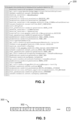
- FIG. 2 is an example log file containing a listing of example features 200 identified by the example feature extractor 108 for a program of the DREBIN test set having a SHA5 value of 00c8de6b31090c32b65f8c30d7227488d2bce5353b31bedf5461419ff463072d.
- the example adversarial malware detector 100 of FIG. 1 includes an example feature vector former 114 to form a feature representation 112 that represents the characterizing features of each program 102 to be classified.
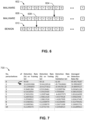
- An example feature vector 300 that may be used to form a feature representation 112 is shown in FIG. 3 .
- the example feature vector 300 of FIG. 3 has a plurality of entries (one of which is designated at reference numeral 302) that correspond to respective features of a universe of features.
- an entry 302 has a first value (e.g., zero) when the respective feature is not present, and the entry 302 has a second value (e.g., one) when the respective feature is present.
- the universe of features is the superset of features across a plurality of programs 102 used to train the machine learning engine 110.
- a feature is perturbed by changing the value of its corresponding entry 302 from the first value to the second value, or vice versa.
- the example adversarial malware detector 100 of FIG. 1 includes the example machine learning engine 110.
- Inputs of the machine learning engine 110 for a program 102 are the entries of the feature representation 112 (e.g., formed according to the example feature vector 300) of the program 102.
- the example machine learning engine 110 outputs a first value 116 that represents a likelihood (e.g., a classification probability) that the program 102 being classified is benign, and outputs a second value 118 that represents a likelihood (e.g., a classification probability) that the program 102 being classified is malware.
- the machine learning engine 110 of FIG. 1 is a deep neural network having multiple interconnected layers, each layer having a plurality of interconnected nodes.
- the interconnections between nodes and layers have associated coefficients (e.g., weights) that represent the strength of the interconnections.
- the coefficients form a classification model 120 that is implemented (e.g., carried out by) the machine learning engine 110.
- the machine learning engine 110 includes an input layer, two hidden layers and an output layer.
- the dimension of the input layer is the number of features in a feature vector (e.g., 14406).
- An example first hidden layer is a first dense layer and dropout with a dimension of 200.
- An example second hidden layer is a second dense layer and dropout with a dimension of 200.
- An example output layer includes an activation function and has a dimension of 2.
- the example adversarial malware detector 100 of FIG. 1 includes an example decider 122.
- the example decider 122 of FIG. 1 uses the classification probabilities 116 and 118 to decide benign vs. malware. For example, if the classification probability 116 is larger than the classification probability 118, the decider 122 classifies the program 102 as benign, and, if the classification probability 118 is larger than the classification probability 116, the decider 122 classifies the program 102 as malware.
- the decider 122 For each program 102 classified by the decider 122 as benign, the decider 122 allows the benign program 124 to be subsequently used, opened, executed, transferred, etc. For each program 102 classified by the decider 122 as malware, the decider 122 blocks, quarantines, segregates, etc. the malware 126 such that the malware 126 cannot be used, opened, executed, transferred, etc.
- the coefficients of the classification model 120 implemented by the example machine learning engine 110 can be trained using supervised learning and a set of programs having known classifications (e.g., the DREBIN test set 402).
- the DREBIN test set has 41129 benign programs 404, and 1870 malware programs 406.
- Each program of the DREBIN test set 402 is processed through the sandbox 106, the feature extractor 108, and the feature vector former 114 to form a feature representation 112.
- Each feature representation 112 is passed through the machine learning engine 110, and resultant classifications made by the under training machine learning engine 110 are compared to- a known classification 408 corresponding to the feature representation 112.
- the machine learning engine 110 uses, for example, backpropagation, to update the coefficients of the classification model 120 based on whether the classification probabilities 116, 118 correspond with the known classifications 408.
- programs 102 are processed through the sandbox 106, the feature extractor 108, and the feature vector former 114 to form a feature representation 112.
- Each feature representation 112 is input to the machine learning engine 110 to obtain the classification probabilities 116, 118.
- the decider 122 classifies the associated program 102 based on its classification probabilities 116, 118.
- the DREBIN test set 402 can be classified by the machine learning engine 110 implementing the model 120 and its results tabulated, as shown in the example table 500 of FIG. 5 .
- the example machine learning engine 110 of FIG. 1 can be used to classify programs 102 of the DREBIN test set 402 with approximately ninety-nine percent (99%) accuracy.
- an attacker modifies malware having a first feature representation 602 to include a first additional feature 604, which results in a second modified feature representation 606. Because the second modified feature representation 606 still results in a malware classification, the attacker further modifies the second modified feature representation 606 to add a second additional feature 608, which results in a third modified feature representation 610.
- the resultant program which is now adversarial malware, includes the original malware plus the additionally added first feature 604 and the additionally added second feature 608.
- the adversarial malware represented by the feature representation 610 would be classified as benign by conventional machine learning, even though it contains the original malware, because the added first feature 604 and the added second feature 606 mask the original malware from detection.
- features are only added to create adversarial malware. Removal of an original feature from the malware could keep the malware from operating as intended, e.g., may change the functionality of the malware.
- FIG. 7 is a table 700 of classification statistics for different numbers of feature perturbations. As shown in the table 700 of FIG. 7 , as the number of perturbations of a feature representation increases (e.g., from no perturbations to one perturbation), the accuracy of malware detection dramatically decreases from 90.7% to 52.6% for the training set. Thus, as shown, an adversary can hide malware by modifying its feature representation, so it becomes incorrectly classified as benign.
- the example adversarial malware detector 100 of FIG. 1 includes an example feature perturber 128.
- the example feature perturber 128 of FIG. 1 and the machine learning engine 110 identify when a program that is being classified as benign by the machine learning engine 110 is actually adversarial malware (e.g., it originated from a malware through one or more feature perturbations). If the feature perturber 128, by iteratively, progressively, sequentially, etc. removing one or more features of a program, causes the classification of the program to change from benign to malware, the adversarial malware detector 100 identifies the program as adversarial malware.
- Such adversarial malware contains certain extraneous but carefully computed behaviors that were adversarially added to the program to increase its likelihood of evading detection. In some examples where features are only added to create adversarial malware, only features are removed when detecting adversarial malware.
- the example machine learning engine 110 classifies a program 102 as benign based on its feature representation 802 (see FIG. 8 )
- the example feature perturber 128 of FIG. 1 perturbs the feature representation 802 to remove a trial feature 804, forming a perturbed feature representation 806.
- the trial feature 804 is selected for being a potentially adversarially added feature to mask malware.
- the machine learning engine 110 re-classifies the program 102 based on the perturbed feature representation 806. If the perturbed feature representation 806 is still classified as benign as shown in FIG. 8 , further trial perturbations to remove further potential adversarially added features, and re-classifications may be performed. In the example of FIG.
- the program 102 is classified as malware. If the program 102 remains classified as benign after the trial perturbations, the original program 102 is considered to be a presumably actually benign program. If the program 102 is classified as malware at any stage, the decider 122 classifies the original program 102 as malware masquerading as a fake benign program. Feature perturbation and classification are ended when the program 102 is classified as malware or until the number of steps (e.g., perturbations) crosses a predefined threshold (e.g., two).
- a predefined threshold e.g., two).
- the example feature perturber 128 selects an entry 302 of the feature representation 112 for the program 102 having a value of one (e.g., feature found in the program 102 being classified).
- the entry 302 is selected for representing a feature that, if removed, would increase (e.g., maximize, etc.) the likelihood of the machine learning engine 110 classifying the modified feature vector as malware.
- likelihoods are computed using the Jacobian-based saliency map approach (JSMA) attack method modified to identify features, that when changed from 1 to 0, will increase the likelihood of a program's classification changing from benign to malware.
- the JSMA attack method is designed to select perturbations based on the characteristics of the model 120 that increases the likelihood of a changed classification.
- attack methodologies e.g., CleverHans, Fast Gradient Step Method (FGSM), DeepFool, etc.
- FGSM Fast Gradient Step Method
- DeepFool DeepFool
- iterating over ones and/or combinations of features e.g., iterating over ones and/or combinations of features.
- different attack methodologies are used to choose features for perturbations in parallel.
- different attack methodologies are used to choose features for perturbations sequentially, and/or in parallel.
- genuine benign samples could potentially be classified as malware after feature perturbation. Such sample would represent a false positive. In an example empirical study, only a small proportion (2-3%) of genuine benign samples were classified as malware after feature perturbation. Under such circumstances, changes to reduce false positives may also increase false negatives. Thus, an attack method may be tuned to tradeoff false positives and false negatives.
- false positives found with a test set are fed back into the training set as benign, and the model 120 re-trained. For instance, let's say a feature vector X is being classified as benign but on removing certain features using the examples of this disclosure to form a modified feature vector Xmod is mis-classified as malware even though it is a known to be benign.
- X would be incorrectly marked adversarial.
- existing malware detectors that can detect well known benign samples (e.g., using white-lists) are used so that genuine benign samples are not marked as adversarial.
- the example adversarial malware detector 100 includes an example controller 130.
- the example controller 130 of FIG. 1 coordinates the operations of the machine learning engine 110, the decider 122 and the feature perturber 128.
- the controller 130 controls the machine learning engine 110 and the decider 122 to classify a program 102 based on its feature representation 112. If the program 102 is classified by the decider 122 as benign, the controller 130 controls the feature perturber 128 to perturb a feature of the feature representation 112, and then controls the machine learning engine 110 and the decider 122 to re-classify the program based on the modified feature representation 112.
- the controller 130 continues controlling the feature perturber 128, the machine learning engine 110, and the decider 122 until the program 102 is classified as malware or until the number of steps (e.g., perturbations) crosses a predefined threshold (e.g., two).
- a predefined threshold e.g., two
- While an example manner of implementing the adversarial malware detector 100 is illustrated in FIG. 1 , one or more of the elements, processes and/or devices illustrated in FIG. 4 may be combined, divided, re-arranged, omitted, eliminated and/or implemented in any other way.
- the example collector 104, the example sandbox 106, the example feature extractor 108, the example machine learning engine 110, the example feature vector former 114, the example decider 122, the example feature perturber 128, the controller 130 and/or, more generally, the example adversarial malware detector 100 of FIG. 1 may be implemented by hardware, software, firmware and/or any combination of hardware, software and/or firmware.
- 1 could be implemented by one or more analog or digital circuit(s), logic circuits, programmable processor(s), programmable controller(s), graphics processing unit(s) (GPU(s)), digital signal processor(s) (DSP(s)), application specific integrated circuit(s) (ASIC(s)), programmable logic device(s) (PLD(s)), field programmable logic device(s) (FPLD(s)), and/or field programmable gate array(s) (FPGA(s)).
- At least one of the example collector 104, the example sandbox 106, the example feature extractor 108, the example machine learning engine 110, the example feature vector former 114, the example decider 122, the example feature perturber 128, the controller 130 and/or, the example adversarial malware detector 100 is/are hereby expressly defined to include a non-transitory computer-readable storage device or storage disk such as a memory, a digital versatile disk (DVD), a compact disc (CD), a Blu-ray disk, etc. including the software and/or firmware.
- the example adversarial malware detector 100 may include one or more elements, processes and/or devices in addition to, or instead of, those illustrated in FIG. 1 , and/or may include more than one of any or all of the illustrated elements, processes and devices.
- the phrase "in communication,” including variations thereof, encompasses direct communication and/or indirect communication through one or more intermediary components, and does not require direct physical (e.g., wired) communication and/or constant communication, but rather additionally includes selective communication at periodic intervals, scheduled intervals, aperiodic intervals, and/or one-time events.
- FIG. 9 is a block diagram of an example feature perturber 900 that may be used to implement the example feature perturber 128 of FIG. 1 .
- the example feature perturber 900 includes an example gradient determiner 902.
- the example gradient determiner 902 uses the JSMA attack process. For example, the gradient determiner 902 computes gradients of a model F with respect to an unknown X to estimate the direction in which a perturbation in X would change F's output.
- X is a feature representation 112
- F 0 (X), Fi(X) are the classification probabilities 116, 118.
- the example feature perturber 900 includes an example perturbation selector 904.
- the example perturbation selector 904 selects the feature perturbation representing a large (e.g., largest, maximum, etc.) positive gradient toward a benign classification.
- the example feature perturber 900 includes a feature vector modifier 906.
- the example feature vector modifier 906 modifies the entry of a feature representation 112 (e.g., the entry 302 of the feature vector 300) corresponding to the largest positive gradient toward a benign classification to remove the feature from the feature vector (e.g., change its entry from one to zero).
- the modified feature representation formed by the feature vector modifier 906 is routed through the machine learning engine 110 for re-classification.
- the example feature perturber 900 was tested using 1870 adversarial malware unknowns using the JSMA attack process. Using the example adversarial malware detector 100 and the example feature perturber 900, 95.61% of the adversarial unknowns were correctly identified as malware. Of 12,000 genuine benign programs from the DREBIN test set 402, only 2.63% were incorrectly identified as malware.
- any of the example gradient determiner 902, the example perturbation selector 904, the example feature vector modifier 906, and/or, more generally, the example feature perturber 900 could be implemented by one or more analog or digital circuit(s), logic circuits, programmable processor(s), programmable controller(s), GPU(s), DSP(s), ASIC(s), PLD(s), FPLD(s), and/or FPGA(s).
- example feature perturber 900 of FIG. 9 may include one or more elements, processes and/or devices in addition to, or instead of, those illustrated in FIG. 9 , and/or may include more than one of any or all of the illustrated elements, processes and devices.
- FIG. 10 A flowchart representative of example hardware logic, machine-readable instructions, hardware implemented state machines, and/or any combination thereof for implementing the adversarial malware detector 100 of FIG. 1 is shown in FIG. 10 .
- the machine-readable instructions may be a program or portion of a program for execution by a computer processor such as the processor 1210 shown in the example processor platform 1200 discussed below in connection with FIG. 12 .
- the program may be embodied in software stored on a non-transitory computer-readable storage medium such as a compact disc read-only memory (CD-ROM), a floppy disk, a hard drive, a DVD, a Blu-ray disk, or a memory associated with the processor 1210, but the entire program and/or parts thereof could alternatively be executed by a device other than the processor 1210 and/or embodied in firmware or dedicated hardware.
- a non-transitory computer-readable storage medium such as a compact disc read-only memory (CD-ROM), a floppy disk, a hard drive, a DVD, a Blu-ray disk, or a memory associated with the processor 1210, but the entire program and/or parts thereof could alternatively be executed by a device other than the processor 1210 and/or embodied in firmware or dedicated hardware.
- a non-transitory computer-readable storage medium such as a compact disc read-only memory (CD-ROM), a floppy disk, a hard drive, a DVD, a
- any or all of the blocks may be implemented by one or more hardware circuits (e.g., discrete and/or integrated analog and/or digital circuitry, an FPGA, an ASIC, a comparator, an operational-amplifier (op-amp), a logic circuit, etc.) structured to perform the corresponding operation without executing software or firmware.
- hardware circuits e.g., discrete and/or integrated analog and/or digital circuitry, an FPGA, an ASIC, a comparator, an operational-amplifier (op-amp), a logic circuit, etc.
- the example program of FIG. 10 begins at block 1002, where the example feature extractor 108 observes the example sandbox 106 to extract the features of a program 102 (block 1002).
- the example feature vector former 114 forms a feature representation 112 for the program 102 (block 1004).
- the feature representation is formed based on the example feature vector 300 of FIG. 3 .
- the example machine learning engine 110 and the example decider 122 classify the program 102 based on the feature representation 112 (block 1006).
- the program 102 is classified as malware (block 1008), and no feature perturbations have been performed (block 1010), the program 102 is identified as malware 126 (block 1012), and is blocked, quarantined, segregated, etc. so the malware 126 cannot be used, opened, executed, transferred, etc. (block 1014). Control exits from the example program of FIG. 10 .
- the program 102 is identified as a fake benign program, i.e., is adversarial malware (block 1016), and is blocked, quarantined, segregated, etc. so the malware 126 cannot be used, opened, executed, transferred, etc. (block 1014). Control exits from the example program of FIG. 10 .
- the example feature perturber 128 perturbs one or more features of the feature representation 112 to create a modified feature representation (block 1020).
- the machine learning engine 110 and the decider 122 re-classify the program 102 based on the modified feature representation 112 (block 1006).
- Block 1018 if a maximum number of feature perturbations (e.g., two) has been reached (block 1018), the program 102 is classified as benign (block 1022), and the program 102 is allowed to be subsequently used, opened, executed, transferred, etc. (block 1024). Control exits from the example program of FIG. 10 .
- a maximum number of feature perturbations e.g., two
- FIG. 11 A flowchart representative of example hardware logic, machine-readable instructions, hardware implemented state machines, and/or any combination thereof for implementing the example feature perturber 128 of FIG. 1 and/or the example feature perturber 900 of FIG. 9 is shown in FIG. 11 .
- the machine-readable instructions may be a program or portion of a program for execution by a computer processor such as the processor 1210 shown in the example processor platform 1200 discussed below in connection with FIG. 12 .
- the program may be embodied in software stored on a non-transitory computer-readable storage medium such as a compact disc read-only memory (CD-ROM), a floppy disk, a hard drive, a DVD, a Blu-ray disk, or a memory associated with the processor 1210, but the entire program and/or parts thereof could alternatively be executed by a device other than the processor 1210 and/or embodied in firmware or dedicated hardware.
- a non-transitory computer-readable storage medium such as a compact disc read-only memory (CD-ROM), a floppy disk, a hard drive, a DVD, a Blu-ray disk, or a memory associated with the processor 1210, but the entire program and/or parts thereof could alternatively be executed by a device other than the processor 1210 and/or embodied in firmware or dedicated hardware.
- a non-transitory computer-readable storage medium such as a compact disc read-only memory (CD-ROM), a floppy disk, a hard drive, a DVD, a
- any or all of the blocks may be implemented by one or more hardware circuits (e.g., discrete and/or integrated analog and/or digital circuitry, an FPGA, an ASIC, a comparator, an operational-amplifier (op-amp), a logic circuit, etc.) structured to perform the corresponding operation without executing software or firmware.
- hardware circuits e.g., discrete and/or integrated analog and/or digital circuitry, an FPGA, an ASIC, a comparator, an operational-amplifier (op-amp), a logic circuit, etc.
- the example perturbation selector 904 selects the feature perturbation that represents the largest gradient in the direction of benign (block 1104), and the example feature vector modifier 906 modifies the selected feature in the feature representation 112 (block 1106). Control exits from the example program of FIG. 11 .
- FIGS. 10 and 11 may be implemented using executable instructions (e.g., computer and/or machine-readable instructions) stored on a non-transitory computer and/or machine-readable medium such as a hard disk drive, a flash memory, a read-only memory, a CD-ROM, a DVD, a cache, a random-access memory and/or any other storage device or storage disk in which information is stored for any duration (e.g., for extended time periods, permanently, for brief instances, for temporarily buffering, and/or for caching of the information).
- a non-transitory computer-readable medium is expressly defined to include any type of computer-readable storage device and/or storage disk and to exclude propagating signals and to exclude transmission media.
- A, B, and/or C refers to any combination or subset of A, B, C such as (1) A alone, (2) B alone, (3) C alone, (4) A with B, (5) A with C, (6) B with C, and (7) A with B and with C.
- the phrase "at least one of A and B" is intended to refer to implementations including any of (1) at least one A, (2) at least one B, and (3) at least one A and at least one B.
- the phrase "at least one of A or B" is intended to refer to implementations including any of (1) at least one A, (2) at least one B, and (3) at least one A and at least one B.
- the phrase "at least one of A and B" is intended to refer to implementations including any of (1) at least one A, (2) at least one B, and (3) at least one A and at least one B.
- the phrase "at least one of A or B" is intended to refer to implementations including any of (1) at least one A, (2) at least one B, and (3) at least one A and at least one B.
- FIG. 12 is a block diagram of an example processor platform 1200 structured to execute the instructions of FIGS. 10 and 11 to implement the example adversarial malware detector 100 of FIG. 1 .
- the processor platform 1200 can be, for example, a server, a personal computer, a workstation, a self-learning machine (e.g., a neural network), a mobile device (e.g., a cell phone, a smart phone, a tablet such as an IPAD TM ), a personal digital assistant (PDA), an Internet appliance, a DVD player, a CD player, a digital video recorder, a Blu-ray player, a gaming console, a personal video recorder, a set top box, a headset or other wearable device, or any other type of computing device.
- a self-learning machine e.g., a neural network
- a mobile device e.g., a cell phone, a smart phone, a tablet such as an IPAD TM
- PDA personal digital assistant
- an Internet appliance
- the processor platform 1200 of the illustrated example includes a processor 1210.
- the processor 1210 of the illustrated example is hardware.
- the processor 1210 can be implemented by one or more integrated circuits, logic circuits, microprocessors, GPUs, DSPs, or controllers from any desired family or manufacturer.
- the hardware processor may be a semiconductor based (e.g., silicon based) device.
- the processor implements the example collector 104, the example sandbox 106, the example feature extractor 108, the example machine learning engine 110, the example feature vector former 114, the example decider 122, the example feature perturbers 128, 900, the example controller 130, the example gradient determiner 902, the example perturbation selector 904, and the example feature vector modifier 906.
- the processor 1210 of the illustrated example includes a local memory 1212 (e.g., a cache).
- the processor 1210 of the illustrated example is in communication with a main memory including a volatile memory 1214 and a non-volatile memory 1216 via a bus 1218.
- the volatile memory 1214 may be implemented by Synchronous Dynamic Random Access Memory (SDRAM), Dynamic Random Access Memory (DRAM), RAMBUS ® Dynamic Random Access Memory (RDRAM ® ) and/or any other type of random access memory device.
- the non-volatile memory 1216 may be implemented by flash memory and/or any other desired type of memory device. Access to the main memory 1214, 1216 is controlled by a memory controller. While not shown, programs 102, feature representations 112, benign programs 124, and malware 126 can be stored in the main memory 1214, 1216.
- the processor platform 1200 of the illustrated example also includes an interface circuit 1220.
- the interface circuit 1220 may be implemented by any type of interface standard, such as an Ethernet interface, a universal serial bus (USB), a Bluetooth ® interface, a near field communication (NFC) interface, and/or a PCI express interface.
- one or more input devices 1222 are connected to the interface circuit 1220.
- the input device(s) 1222 permit(s) a user to enter data and/or commands into the processor 1210.
- the input device(s) can be implemented by, for example, an audio sensor, a microphone, a camera (still or video), a keyboard, a button, a mouse, a touchscreen, a track-pad, a trackball, isopoint and/or a voice recognition system.
- One or more output devices 1224 are also connected to the interface circuit 1220 of the illustrated example.
- the output devices 1224 can be implemented, for example, by display devices (e.g., a light emitting diode (LED), an organic light emitting diode (OLED), a liquid crystal display (LCD), a cathode ray tube display (CRT), an in-place switching (IPS) display, a touchscreen, etc.), a tactile output device, a printer and/or speaker.
- the interface circuit 1220 of the illustrated example thus, typically includes a graphics driver card, a graphics driver chip and/or a graphics driver processor.
- the interface circuit 1220 of the illustrated example also includes a communication device such as a transmitter, a receiver, a transceiver, a modem, a residential gateway, a wireless access point, and/or a network interface to facilitate exchange of data with external machines (e.g., computing devices of any kind) via a network 1226.
- the communication can be via, for example, an Ethernet connection, a digital subscriber line (DSL) connection, a telephone line connection, a coaxial cable system, a satellite system, a line-of-site wireless system, a cellular telephone system, etc.
- DSL digital subscriber line
- the processor platform 1200 of the illustrated example also includes one or more mass storage devices 1228 for storing software and/or data.
- mass storage devices 1228 include floppy disk drives, hard drive disks, CD drives, Blu-ray disk drives, redundant array of independent disks (RAID) systems, and DVD drives.
- Coded instructions 1232 including the coded instructions of FIG. 10 and/or FIG. 11 and coefficients of the model 120 may be stored in the mass storage device 1228, in the volatile memory 1214, in the non-volatile memory 1216, and/or on a removable non-transitory computer-readable storage medium such as a CD-ROM or a DVD 1234.
- the coded instructions 1232 are distributed to the computer 1200, and possibly other computers, by a server 1236 via the network 1226.
- the server 1236 is part of a computer software and distribution system.
- the example server 1236 may, additionally, and/or alternatively, distribute updates to the coded instructions 1232 and/or the coefficients of the model 120.
- the coded instructions 1232 and/or the coefficients of the model 120 are distributed via a removable non-transitory computer-readable storage medium such as the CD-ROM or the DVD 1234.
- the CD-ROM or the DVD 1234 is purchased from a retailer, a manufacturer, etc.
- the coded instructions 1232 and/or the coefficients of the model 120 are installed onto the computer 1200 when the computer 1200 is configured and/or manufactured. From the foregoing, it will be appreciated that example methods, apparatus and articles of manufacture have been disclosed that detect adversarial malware. From the foregoing, it will be appreciated that methods, apparatus and articles of manufacture have been disclosed which enhance the operations of a computer to detect adversarial malware and prevent, block, etc. malware attacks.
- the disclosed methods, apparatus and articles of manufacture improve the efficiency of using a computing device by preventing malware attacks that could prevent the computing device from operating as intended. Furthermore, example methods, apparatus, and/or articles of manufacture disclosed herein identify and overcome malware attacks that cause conventional computing device to cease operating as intended. The disclosed methods, apparatus and articles of manufacture are accordingly directed to one or more improvement(s) in the functioning of a computer or computing device.
Landscapes
- Engineering & Computer Science (AREA)
- Theoretical Computer Science (AREA)
- Software Systems (AREA)
- Physics & Mathematics (AREA)
- General Engineering & Computer Science (AREA)
- Computer Security & Cryptography (AREA)
- General Physics & Mathematics (AREA)
- Computing Systems (AREA)
- Mathematical Physics (AREA)
- Evolutionary Computation (AREA)
- General Health & Medical Sciences (AREA)
- Data Mining & Analysis (AREA)
- Health & Medical Sciences (AREA)
- Artificial Intelligence (AREA)
- Computer Hardware Design (AREA)
- Computational Linguistics (AREA)
- Biomedical Technology (AREA)
- Life Sciences & Earth Sciences (AREA)
- Biophysics (AREA)
- Molecular Biology (AREA)
- Computer Vision & Pattern Recognition (AREA)
- Medical Informatics (AREA)
- Virology (AREA)
- Information Retrieval, Db Structures And Fs Structures Therefor (AREA)
Description
- This disclosure relates generally to malware detection, and, more particularly, to methods and apparatus to detect adversarial malware.
- Malware (e.g., viruses, worms, trojans, ransomware) is malicious software that is disseminated by attackers to launch a wide range of security attacks, such as stealing user's private information, hijacking devices remotely to deliver massive spam emails, and infiltrating user's online account credentials. Malware has caused serious damages and significant financial loss to many computer and Internet users.
- The article "Attack and Defence of Dynamic Analysis-Based, Adversarial Neural Malware Detection Models" (Stokes et al.; DOI:10.1109/MILCOM.2018.8599855) relates to different strategies of crafting adversarial samples for dynamic analysis and a study of effects of two defensive mechanisms against crafted adversarial samples including the distillation and ensemble defences.
- The article "Generic Black-Box End-to-End Attack Against State of the Art API Call Based Malware" (Rosenberg et al.; arXiv:1707.05970.) relates to a black-box attack against API call based machine learning malware classifiers, focusing on generating adversarial sequences combining API calls and static features that will be misclassified by the classifier without affecting the malware functionality.
- The invention is defined in the appended independent claims.
-
-
FIG. 1 illustrates an example adversarial malware detector constructed in accordance with teachings of this disclosure, and shown in an example environment of use. -
FIG. 2 illustrates an example log file with a list of features of an example program. -
FIG. 3 illustrates an example feature vector that may be used to form a feature representation. -
FIG. 4 is a block diagram of an example system for training the example machine learning engine ofFIG. 1 . -
FIG. 5 is a table of example training results for the example adversarial malware detector ofFIG. 1 . -
FIG. 6 is a diagram of example adversarial feature perturbations. -
FIG. 7 is a table of example classification results in the presence of adversarial feature perturbations. -
FIG. 8 is a diagram of example feature perturbations to detect adversarial feature perturbations. -
FIG. 9 is a block diagram of an example feature perturber that may be used to implement the example feature perturber ofFIG. 1 . -
FIG. 10 is a flowchart representative of example hardware logic or machine-readable instructions for implementing the example adversarial malware detector ofFIG. 1 to perform malware detection. -
FIG. 11 is a flowchart representative of example hardware logic or machine-readable instructions for implementing the feature perturber ofFIG. 1 and/or the feature perturber ofFIG. 9 to perturb feature representations. -
FIG. 12 illustrates an example processor platform structured to execute the example machine-readable instructions ofFIG. 9 and/orFIG. 10 . - In general, the same reference numbers will be used throughout the drawing(s) and accompanying written description to refer to the same or like parts. The figures are not to scale. Connecting lines or connectors shown in the various figures presented are intended to represent example functional relationships and/or physical or logical couplings between the various elements.
- In order to protect users against the evolving threats malware poses, its detection is of utmost concern to the anti-malware industry, researchers, and end users. Recently, systems using machine learning techniques have been increasingly applied and successfully deployed in malware detection. However, the effectiveness of machine learning techniques relies on the training data, testing data, and real world data having similar characteristics. This assumption can be violated by an adversary who creates adversarial malware by specifically modifying (e.g., adding) features (e.g., a behavior, an action, a function call, an application programming interface (API) call, a data access, a uniform resource locator (URL) call, etc.) of malware to avoid detection. The feature modifications made to create adversarial malware are specifically chosen to mask, disguise, etc. the malware contained in the adversarial malware from being detected. The careful manipulation of the malware can be used to exploit vulnerabilities of a machine learning engine (e.g., trick, manipulate, etc. the machine learning engine), thereby compromising its security. For example, conventional machine learning is susceptible to an adversary who maliciously releases and identifies adversarial malware as a benign program that is unknowingly used by another party to train a machine learning engine. The added features are specifically chosen to mask aspects of the malware so the modified program is classified as benign rather than malware. In another example, an adversary modifies features and re-tests their adversarial malware using a machine learning engine trained by another until the adversarial malware is mistakenly classified as benign.
- The teachings of this disclosure can used to detect modification(s) of the features of malware by an adversary to form adversarial malware, thereby enabling adversarial malware attacks, that would go undetected by conventional malware detectors, to be blocked. Reference will now be made in detail to non-limiting examples, some of which are illustrated in the accompanying drawings.
-
FIG. 1 is a block diagram of an exampleadversarial malware detector 100 constructed in accordance with teachings of this disclosure. To obtain input data (e.g., a program 102), the exampleadversarial malware detector 100 ofFIG. 1 includes anexample collector 104. Theexample collector 104 ofFIG. 1 obtains theprogram 102 by, for example, querying another system (e.g., a computer, a server, etc.), receiving theprogram 102 from another system, etc. In some examples, thecollector 104 loads theprogram 102 into the memory of a processing platform for subsequent processing. - To determine the features of each
program 102 to be classified by the exampleadversarial malware detector 100, theadversarial malware detector 100 ofFIG. 1 includes anexample sandbox 106, and anexample feature extractor 108. Theexample sandbox 106 ofFIG. 1 is a testing environment in which the execution, operation and processes of eachprogram 102 is not affected by other running programs (e.g., machine executable instructions executing on a processor that implements the adversarial malware detector 100), and do not affect other running programs. Theexample sandbox 106 allows suspicious software and files potentially containing malware or malicious code to be safely observed, tested, evaluated, etc. - The
example feature extractor 108 ofFIG. 1 identifies the features of eachprogram 102 as theprogram 102 executes in thesandbox 106. Thefeature extractor 108 observes features that are useful to amachine learning engine 110 for classifying theprogram 102 using, for example, static analysis, dynamic analysis, etc. Example observed features include aspects of theprogram 102, such as behaviors, actions, function calls, API calls, data accesses, URL calls, etc.FIG. 2 is an example log file containing a listing of example features 200 identified by theexample feature extractor 108 for a program of the DREBIN test set having a SHA5 value of 00c8de6b31090c32b65f8c30d7227488d2bce5353b31bedf5461419ff463072d. - The example
adversarial malware detector 100 ofFIG. 1 includes an example feature vector former 114 to form afeature representation 112 that represents the characterizing features of eachprogram 102 to be classified. Anexample feature vector 300 that may be used to form afeature representation 112 is shown inFIG. 3 . Theexample feature vector 300 ofFIG. 3 has a plurality of entries (one of which is designated at reference numeral 302) that correspond to respective features of a universe of features. In the illustrated example ofFIG. 3 , anentry 302 has a first value (e.g., zero) when the respective feature is not present, and theentry 302 has a second value (e.g., one) when the respective feature is present. The universe of features is the superset of features across a plurality ofprograms 102 used to train themachine learning engine 110. A feature is perturbed by changing the value of itscorresponding entry 302 from the first value to the second value, or vice versa. - To classify
programs 102, the exampleadversarial malware detector 100 ofFIG. 1 includes the examplemachine learning engine 110. Inputs of themachine learning engine 110 for aprogram 102 are the entries of the feature representation 112 (e.g., formed according to the example feature vector 300) of theprogram 102. The examplemachine learning engine 110 outputs afirst value 116 that represents a likelihood (e.g., a classification probability) that theprogram 102 being classified is benign, and outputs asecond value 118 that represents a likelihood (e.g., a classification probability) that theprogram 102 being classified is malware. When reference is made to the classification of afeature representation 112 by inputting thefeature representation 112 to themachine learning engine 110, it should be understood that it is theprogram 102 as represented by thefeature representation 112 that is being classified. Similarly, when a modified, perturbed, etc.feature representation 112 is classified by inputting the modifiedfeature representation 112 to themachine learning engine 110, it is theprogram 102 as if it had been corresponding modified form that is being classified. - In some examples, the
machine learning engine 110 ofFIG. 1 is a deep neural network having multiple interconnected layers, each layer having a plurality of interconnected nodes. The interconnections between nodes and layers have associated coefficients (e.g., weights) that represent the strength of the interconnections. The coefficients form aclassification model 120 that is implemented (e.g., carried out by) themachine learning engine 110. In some examples, themachine learning engine 110 includes an input layer, two hidden layers and an output layer. The dimension of the input layer is the number of features in a feature vector (e.g., 14406). An example first hidden layer is a first dense layer and dropout with a dimension of 200. An example second hidden layer is a second dense layer and dropout with a dimension of 200. An example output layer includes an activation function and has a dimension of 2. - To decide whether a
program 102 being classified is benign or malware, the exampleadversarial malware detector 100 ofFIG. 1 includes anexample decider 122. Theexample decider 122 ofFIG. 1 uses theclassification probabilities classification probability 116 is larger than theclassification probability 118, thedecider 122 classifies theprogram 102 as benign, and, if theclassification probability 118 is larger than theclassification probability 116, thedecider 122 classifies theprogram 102 as malware. - For each
program 102 classified by thedecider 122 as benign, thedecider 122 allows thebenign program 124 to be subsequently used, opened, executed, transferred, etc. For eachprogram 102 classified by thedecider 122 as malware, thedecider 122 blocks, quarantines, segregates, etc. themalware 126 such that themalware 126 cannot be used, opened, executed, transferred, etc. - As shown in
FIG. 4 , the coefficients of theclassification model 120 implemented by the examplemachine learning engine 110 can be trained using supervised learning and a set of programs having known classifications (e.g., the DREBIN test set 402). The DREBIN test set has 41129benign programs 404, and 1870malware programs 406. Each program of the DREBIN test set 402 is processed through thesandbox 106, thefeature extractor 108, and the feature vector former 114 to form afeature representation 112. Eachfeature representation 112 is passed through themachine learning engine 110, and resultant classifications made by the under trainingmachine learning engine 110 are compared to- a knownclassification 408 corresponding to thefeature representation 112. Themachine learning engine 110 uses, for example, backpropagation, to update the coefficients of theclassification model 120 based on whether theclassification probabilities classifications 408. - During use of the
adversarial malware detector 100 to classifyprograms 102,programs 102 are processed through thesandbox 106, thefeature extractor 108, and the feature vector former 114 to form afeature representation 112. Eachfeature representation 112 is input to themachine learning engine 110 to obtain theclassification probabilities decider 122 classifies the associatedprogram 102 based on itsclassification probabilities machine learning engine 110 implementing themodel 120 and its results tabulated, as shown in the example table 500 ofFIG. 5 . As shown, the examplemachine learning engine 110 ofFIG. 1 can be used to classifyprograms 102 of the DREBIN test set 402 with approximately ninety-nine percent (99%) accuracy. - Conventional machine learning is susceptible to adversarial malware. In an illustrated example attack shown in
FIG. 6 , an attacker modifies malware having afirst feature representation 602 to include a firstadditional feature 604, which results in a second modifiedfeature representation 606. Because the second modifiedfeature representation 606 still results in a malware classification, the attacker further modifies the second modifiedfeature representation 606 to add a secondadditional feature 608, which results in a third modifiedfeature representation 610. In the illustrated example, the resultant program, which is now adversarial malware, includes the original malware plus the additionally addedfirst feature 604 and the additionally addedsecond feature 608. The adversarial malware represented by thefeature representation 610 would be classified as benign by conventional machine learning, even though it contains the original malware, because the addedfirst feature 604 and the addedsecond feature 606 mask the original malware from detection. In some examples, features are only added to create adversarial malware. Removal of an original feature from the malware could keep the malware from operating as intended, e.g., may change the functionality of the malware. -
FIG. 7 is a table 700 of classification statistics for different numbers of feature perturbations. As shown in the table 700 ofFIG. 7 , as the number of perturbations of a feature representation increases (e.g., from no perturbations to one perturbation), the accuracy of malware detection dramatically decreases from 90.7% to 52.6% for the training set. Thus, as shown, an adversary can hide malware by modifying its feature representation, so it becomes incorrectly classified as benign. - To combat adversarial malware, the example
adversarial malware detector 100 ofFIG. 1 includes anexample feature perturber 128. Theexample feature perturber 128 ofFIG. 1 and themachine learning engine 110 identify when a program that is being classified as benign by themachine learning engine 110 is actually adversarial malware (e.g., it originated from a malware through one or more feature perturbations). If thefeature perturber 128, by iteratively, progressively, sequentially, etc. removing one or more features of a program, causes the classification of the program to change from benign to malware, theadversarial malware detector 100 identifies the program as adversarial malware. Such adversarial malware contains certain extraneous but carefully computed behaviors that were adversarially added to the program to increase its likelihood of evading detection. In some examples where features are only added to create adversarial malware, only features are removed when detecting adversarial malware. - When the example
machine learning engine 110 classifies aprogram 102 as benign based on its feature representation 802 (seeFIG. 8 ), theexample feature perturber 128 ofFIG. 1 perturbs thefeature representation 802 to remove atrial feature 804, forming aperturbed feature representation 806. Thetrial feature 804 is selected for being a potentially adversarially added feature to mask malware. Themachine learning engine 110 re-classifies theprogram 102 based on theperturbed feature representation 806. If theperturbed feature representation 806 is still classified as benign as shown inFIG. 8 , further trial perturbations to remove further potential adversarially added features, and re-classifications may be performed. In the example ofFIG. 8 , after one further trial perturbedfeature representation 808 is formed, theprogram 102 is classified as malware. If theprogram 102 remains classified as benign after the trial perturbations, theoriginal program 102 is considered to be a presumably actually benign program. If theprogram 102 is classified as malware at any stage, thedecider 122 classifies theoriginal program 102 as malware masquerading as a fake benign program. Feature perturbation and classification are ended when theprogram 102 is classified as malware or until the number of steps (e.g., perturbations) crosses a predefined threshold (e.g., two). - For each perturbation, the
example feature perturber 128 selects anentry 302 of thefeature representation 112 for theprogram 102 having a value of one (e.g., feature found in theprogram 102 being classified). Theentry 302 is selected for representing a feature that, if removed, would increase (e.g., maximize, etc.) the likelihood of themachine learning engine 110 classifying the modified feature vector as malware. In some examples, likelihoods are computed using the Jacobian-based saliency map approach (JSMA) attack method modified to identify features, that when changed from 1 to 0, will increase the likelihood of a program's classification changing from benign to malware. The JSMA attack method is designed to select perturbations based on the characteristics of themodel 120 that increases the likelihood of a changed classification. However, other attack methodologies (e.g., CleverHans, Fast Gradient Step Method (FGSM), DeepFool, etc.) may be used. For example, iterating over ones and/or combinations of features. According to the invention, different attack methodologies are used to choose features for perturbations in parallel. In some examples, different attack methodologies are used to choose features for perturbations sequentially, and/or in parallel. - In some instances, genuine benign samples could potentially be classified as malware after feature perturbation. Such sample would represent a false positive. In an example empirical study, only a small proportion (2-3%) of genuine benign samples were classified as malware after feature perturbation. Under such circumstances, changes to reduce false positives may also increase false negatives. Thus, an attack method may be tuned to tradeoff false positives and false negatives. In some disclosed examples, false positives found with a test set are fed back into the training set as benign, and the
model 120 re-trained. For instance, let's say a feature vector X is being classified as benign but on removing certain features using the examples of this disclosure to form a modified feature vector Xmod is mis-classified as malware even though it is a known to be benign. Thus, X would be incorrectly marked adversarial. As this is a false positive, we can feed Xmod into the training set as a benign sample, and retrain our model so that such mistakes are not repeated in future for similar samples. Additionally, and/or alternatively, existing malware detectors that can detect well known benign samples (e.g., using white-lists) are used so that genuine benign samples are not marked as adversarial. - To control the example
adversarial malware detector 100 ofFIG. 1 , the exampleadversarial malware detector 100 includes anexample controller 130. Theexample controller 130 ofFIG. 1 , among other things, coordinates the operations of themachine learning engine 110, thedecider 122 and thefeature perturber 128. For example, thecontroller 130 controls themachine learning engine 110 and thedecider 122 to classify aprogram 102 based on itsfeature representation 112. If theprogram 102 is classified by thedecider 122 as benign, thecontroller 130 controls thefeature perturber 128 to perturb a feature of thefeature representation 112, and then controls themachine learning engine 110 and thedecider 122 to re-classify the program based on the modifiedfeature representation 112. Thecontroller 130 continues controlling thefeature perturber 128, themachine learning engine 110, and thedecider 122 until theprogram 102 is classified as malware or until the number of steps (e.g., perturbations) crosses a predefined threshold (e.g., two). - While an example manner of implementing the
adversarial malware detector 100 is illustrated inFIG. 1 , one or more of the elements, processes and/or devices illustrated inFIG. 4 may be combined, divided, re-arranged, omitted, eliminated and/or implemented in any other way. Further, theexample collector 104, theexample sandbox 106, theexample feature extractor 108, the examplemachine learning engine 110, the example feature vector former 114, theexample decider 122, theexample feature perturber 128, thecontroller 130 and/or, more generally, the exampleadversarial malware detector 100 ofFIG. 1 may be implemented by hardware, software, firmware and/or any combination of hardware, software and/or firmware. Thus, for example, any of theexample collector 104, theexample sandbox 106, theexample feature extractor 108, the examplemachine learning engine 110, the example feature vector former 114, theexample decider 122, theexample feature perturber 128, thecontroller 130 and/or, more generally, the exampleadversarial malware detector 100 ofFIG. 1 could be implemented by one or more analog or digital circuit(s), logic circuits, programmable processor(s), programmable controller(s), graphics processing unit(s) (GPU(s)), digital signal processor(s) (DSP(s)), application specific integrated circuit(s) (ASIC(s)), programmable logic device(s) (PLD(s)), field programmable logic device(s) (FPLD(s)), and/or field programmable gate array(s) (FPGA(s)). When reading any of the apparatus or system claims of this patent to cover a purely software and/or firmware implementation, at least one of theexample collector 104, theexample sandbox 106, theexample feature extractor 108, the examplemachine learning engine 110, the example feature vector former 114, theexample decider 122, theexample feature perturber 128, thecontroller 130 and/or, the exampleadversarial malware detector 100 is/are hereby expressly defined to include a non-transitory computer-readable storage device or storage disk such as a memory, a digital versatile disk (DVD), a compact disc (CD), a Blu-ray disk, etc. including the software and/or firmware. Further still, the exampleadversarial malware detector 100 may include one or more elements, processes and/or devices in addition to, or instead of, those illustrated inFIG. 1 , and/or may include more than one of any or all of the illustrated elements, processes and devices. As used herein, the phrase "in communication," including variations thereof, encompasses direct communication and/or indirect communication through one or more intermediary components, and does not require direct physical (e.g., wired) communication and/or constant communication, but rather additionally includes selective communication at periodic intervals, scheduled intervals, aperiodic intervals, and/or one-time events. -
FIG. 9 is a block diagram of anexample feature perturber 900 that may be used to implement theexample feature perturber 128 ofFIG. 1 . To determine likelihoods that different feature perturbations would result in a change in classification, theexample feature perturber 900 includes anexample gradient determiner 902. Theexample gradient determiner 902 uses the JSMA attack process. For example, thegradient determiner 902 computes gradients of a model F with respect to an unknown X to estimate the direction in which a perturbation in X would change F's output. Here F(X)=[F0(X), Fi(X)] represents themachine learning engine 110, X is afeature representation 112, and F0(X), Fi(X) are theclassification probabilities - To choose feature perturbations, the
example feature perturber 900 includes anexample perturbation selector 904. Theexample perturbation selector 904 selects the feature perturbation representing a large (e.g., largest, maximum, etc.) positive gradient toward a benign classification. The gradients can be obtained from a Jacobian Matrix, which can be expressed mathematically as
- To modify feature representations (e.g., feature vectors), the
example feature perturber 900 includes afeature vector modifier 906. The examplefeature vector modifier 906 modifies the entry of a feature representation 112 (e.g., theentry 302 of the feature vector 300) corresponding to the largest positive gradient toward a benign classification to remove the feature from the feature vector (e.g., change its entry from one to zero). The modified feature representation formed by thefeature vector modifier 906 is routed through themachine learning engine 110 for re-classification. - The
example feature perturber 900 was tested using 1870 adversarial malware unknowns using the JSMA attack process. Using the exampleadversarial malware detector 100 and theexample feature perturber 900, 95.61% of the adversarial unknowns were correctly identified as malware. Of 12,000 genuine benign programs from the DREBIN test set 402, only 2.63% were incorrectly identified as malware. - While an example manner of implementing the
example feature perturber 128 ofFIG. 1 is illustrated inFIG. 9 , one or more of the elements, processes and/or devices illustrated inFIG. 9 may be combined, divided, re-arranged, omitted, eliminated and/or implemented in any other way. Further, theexample gradient determiner 902, theexample perturbation selector 904, the examplefeature vector modifier 906, and/or, more generally, theexample feature perturber 900 ofFIG. 9 may be implemented by hardware, software, firmware and/or any combination of hardware, software and/or firmware. Thus, for example, any of theexample gradient determiner 902, theexample perturbation selector 904, the examplefeature vector modifier 906, and/or, more generally, theexample feature perturber 900 could be implemented by one or more analog or digital circuit(s), logic circuits, programmable processor(s), programmable controller(s), GPU(s), DSP(s), ASIC(s), PLD(s), FPLD(s), and/or FPGA(s). When reading any of the apparatus or system claims of this patent to cover a purely software and/or firmware implementation, at least one of thegradient determiner 902, theperturbation selector 904, thefeature vector modifier 906, and thefeature perturber 900 ofFIG. 9 is/are hereby expressly defined to include a non-transitory computer-readable storage device or storage disk such as a memory, a DVD, a CD, a Blu-ray disk, etc. including the software and/or firmware. Further still, theexample feature perturber 900 ofFIG. 9 may include one or more elements, processes and/or devices in addition to, or instead of, those illustrated inFIG. 9 , and/or may include more than one of any or all of the illustrated elements, processes and devices. - A flowchart representative of example hardware logic, machine-readable instructions, hardware implemented state machines, and/or any combination thereof for implementing the
adversarial malware detector 100 ofFIG. 1 is shown inFIG. 10 . The machine-readable instructions may be a program or portion of a program for execution by a computer processor such as theprocessor 1210 shown in theexample processor platform 1200 discussed below in connection withFIG. 12 . The program may be embodied in software stored on a non-transitory computer-readable storage medium such as a compact disc read-only memory (CD-ROM), a floppy disk, a hard drive, a DVD, a Blu-ray disk, or a memory associated with theprocessor 1210, but the entire program and/or parts thereof could alternatively be executed by a device other than theprocessor 1210 and/or embodied in firmware or dedicated hardware. Further, although the example program is described with reference to the flowchart illustrated inFIG. 10 , many other methods of implementing the exampleadversarial malware detector 100 may alternatively be used. For example, the order of execution of the blocks may be changed, and/or some of the blocks described may be changed, eliminated, or combined. Additionally, and/or alternatively, any or all of the blocks may be implemented by one or more hardware circuits (e.g., discrete and/or integrated analog and/or digital circuitry, an FPGA, an ASIC, a comparator, an operational-amplifier (op-amp), a logic circuit, etc.) structured to perform the corresponding operation without executing software or firmware. - The example program of
FIG. 10 begins atblock 1002, where theexample feature extractor 108 observes theexample sandbox 106 to extract the features of a program 102 (block 1002). The example feature vector former 114 forms afeature representation 112 for the program 102 (block 1004). In some examples, the feature representation is formed based on theexample feature vector 300 ofFIG. 3 . The examplemachine learning engine 110 and theexample decider 122 classify theprogram 102 based on the feature representation 112 (block 1006). - If the
program 102 is classified as malware (block 1008), and no feature perturbations have been performed (block 1010), theprogram 102 is identified as malware 126 (block 1012), and is blocked, quarantined, segregated, etc. so themalware 126 cannot be used, opened, executed, transferred, etc. (block 1014). Control exits from the example program ofFIG. 10 . - Returning to block 1010, if a feature perturbation has been performed (block 1010), the
program 102 is identified as a fake benign program, i.e., is adversarial malware (block 1016), and is blocked, quarantined, segregated, etc. so themalware 126 cannot be used, opened, executed, transferred, etc. (block 1014). Control exits from the example program ofFIG. 10 . - Returning to block 1008, if the
program 102 is classified as benign (block 1008) and a maximum number of feature perturbations has not been reached (block 1018), theexample feature perturber 128 perturbs one or more features of thefeature representation 112 to create a modified feature representation (block 1020). Themachine learning engine 110 and thedecider 122 re-classify theprogram 102 based on the modified feature representation 112 (block 1006). - Returning to block 1018, if a maximum number of feature perturbations (e.g., two) has been reached (block 1018), the
program 102 is classified as benign (block 1022), and theprogram 102 is allowed to be subsequently used, opened, executed, transferred, etc. (block 1024). Control exits from the example program ofFIG. 10 . - A flowchart representative of example hardware logic, machine-readable instructions, hardware implemented state machines, and/or any combination thereof for implementing the
example feature perturber 128 ofFIG. 1 and/or theexample feature perturber 900 ofFIG. 9 is shown inFIG. 11 . The machine-readable instructions may be a program or portion of a program for execution by a computer processor such as theprocessor 1210 shown in theexample processor platform 1200 discussed below in connection withFIG. 12 . The program may be embodied in software stored on a non-transitory computer-readable storage medium such as a compact disc read-only memory (CD-ROM), a floppy disk, a hard drive, a DVD, a Blu-ray disk, or a memory associated with theprocessor 1210, but the entire program and/or parts thereof could alternatively be executed by a device other than theprocessor 1210 and/or embodied in firmware or dedicated hardware. Further, although the example program is described with reference to the flowchart illustrated inFIG. 11 , many other methods of implementing theexample feature perturber 128 ofFIG. 1 and/or theexample feature perturber 900 ofFIG. 9 may alternatively be used. For example, the order of execution of the blocks may be changed, and/or some of the blocks described may be changed, eliminated, or combined. Additionally, and/or alternatively, any or all of the blocks may be implemented by one or more hardware circuits (e.g., discrete and/or integrated analog and/or digital circuitry, an FPGA, an ASIC, a comparator, an operational-amplifier (op-amp), a logic circuit, etc.) structured to perform the corresponding operation without executing software or firmware. - The example program of
FIG. 11 begins atblock 1102, where theexample gradient determiner 902 computes gradients of a model F with respect to an X having a known classification to estimate the direction in which a perturbation in X would change F's output, where F(X)=[F0(X), Fi(X)] represents themachine learning engine 110, X is afeature representation 112, and F0(X), Fi(X) are theclassification probabilities 116, 118 (block 1102). Theexample perturbation selector 904 selects the feature perturbation that represents the largest gradient in the direction of benign (block 1104), and the examplefeature vector modifier 906 modifies the selected feature in the feature representation 112 (block 1106). Control exits from the example program ofFIG. 11 . - As mentioned above, the example processes of
FIGS. 10 and11 may be implemented using executable instructions (e.g., computer and/or machine-readable instructions) stored on a non-transitory computer and/or machine-readable medium such as a hard disk drive, a flash memory, a read-only memory, a CD-ROM, a DVD, a cache, a random-access memory and/or any other storage device or storage disk in which information is stored for any duration (e.g., for extended time periods, permanently, for brief instances, for temporarily buffering, and/or for caching of the information). As used herein, the term non-transitory computer-readable medium is expressly defined to include any type of computer-readable storage device and/or storage disk and to exclude propagating signals and to exclude transmission media. - "Including" and "comprising" (and all forms and tenses thereof) are used herein to be open ended terms. Thus, whenever a claim employs any form of "include" or "comprise" (e.g., comprises, includes, comprising, including, having, etc.) as a preamble or within a claim recitation of any kind, it is to be understood that additional elements, terms, etc. may be present without falling outside the scope of the corresponding claim or recitation. As used herein, when the phrase "at least" is used as the transition term in, for example, a preamble of a claim, it is open-ended in the same manner as the term "comprising" and "including" are open ended. The term "and/or" when used, for example, in a form such as A, B, and/or C refers to any combination or subset of A, B, C such as (1) A alone, (2) B alone, (3) C alone, (4) A with B, (5) A with C, (6) B with C, and (7) A with B and with C. As used herein in the context of describing structures, components, items, objects and/or things, the phrase "at least one of A and B" is intended to refer to implementations including any of (1) at least one A, (2) at least one B, and (3) at least one A and at least one B. Similarly, as used herein in the context of describing structures, components, items, objects and/or things, the phrase "at least one of A or B" is intended to refer to implementations including any of (1) at least one A, (2) at least one B, and (3) at least one A and at least one B. As used herein in the context of describing the performance or execution of processes, instructions, actions, activities and/or steps, the phrase "at least one of A and B" is intended to refer to implementations including any of (1) at least one A, (2) at least one B, and (3) at least one A and at least one B. Similarly, as used herein in the context of describing the performance or execution of processes, instructions, actions, activities and/or steps, the phrase "at least one of A or B" is intended to refer to implementations including any of (1) at least one A, (2) at least one B, and (3) at least one A and at least one B.
-
FIG. 12 is a block diagram of anexample processor platform 1200 structured to execute the instructions ofFIGS. 10 and11 to implement the exampleadversarial malware detector 100 ofFIG. 1 . Theprocessor platform 1200 can be, for example, a server, a personal computer, a workstation, a self-learning machine (e.g., a neural network), a mobile device (e.g., a cell phone, a smart phone, a tablet such as an IPAD™), a personal digital assistant (PDA), an Internet appliance, a DVD player, a CD player, a digital video recorder, a Blu-ray player, a gaming console, a personal video recorder, a set top box, a headset or other wearable device, or any other type of computing device. - The
processor platform 1200 of the illustrated example includes aprocessor 1210. Theprocessor 1210 of the illustrated example is hardware. For example, theprocessor 1210 can be implemented by one or more integrated circuits, logic circuits, microprocessors, GPUs, DSPs, or controllers from any desired family or manufacturer. The hardware processor may be a semiconductor based (e.g., silicon based) device. In this example, the processor implements theexample collector 104, theexample sandbox 106, theexample feature extractor 108, the examplemachine learning engine 110, the example feature vector former 114, theexample decider 122, theexample feature perturbers example controller 130, theexample gradient determiner 902, theexample perturbation selector 904, and the examplefeature vector modifier 906. - The
processor 1210 of the illustrated example includes a local memory 1212 (e.g., a cache). Theprocessor 1210 of the illustrated example is in communication with a main memory including avolatile memory 1214 and anon-volatile memory 1216 via abus 1218. Thevolatile memory 1214 may be implemented by Synchronous Dynamic Random Access Memory (SDRAM), Dynamic Random Access Memory (DRAM), RAMBUS® Dynamic Random Access Memory (RDRAM®) and/or any other type of random access memory device. Thenon-volatile memory 1216 may be implemented by flash memory and/or any other desired type of memory device. Access to themain memory programs 102, featurerepresentations 112,benign programs 124, andmalware 126 can be stored in themain memory - The
processor platform 1200 of the illustrated example also includes aninterface circuit 1220. Theinterface circuit 1220 may be implemented by any type of interface standard, such as an Ethernet interface, a universal serial bus (USB), a Bluetooth® interface, a near field communication (NFC) interface, and/or a PCI express interface. - In the illustrated example, one or
more input devices 1222 are connected to theinterface circuit 1220. The input device(s) 1222 permit(s) a user to enter data and/or commands into theprocessor 1210. The input device(s) can be implemented by, for example, an audio sensor, a microphone, a camera (still or video), a keyboard, a button, a mouse, a touchscreen, a track-pad, a trackball, isopoint and/or a voice recognition system. - One or
more output devices 1224 are also connected to theinterface circuit 1220 of the illustrated example. Theoutput devices 1224 can be implemented, for example, by display devices (e.g., a light emitting diode (LED), an organic light emitting diode (OLED), a liquid crystal display (LCD), a cathode ray tube display (CRT), an in-place switching (IPS) display, a touchscreen, etc.), a tactile output device, a printer and/or speaker. Theinterface circuit 1220 of the illustrated example, thus, typically includes a graphics driver card, a graphics driver chip and/or a graphics driver processor. - The
interface circuit 1220 of the illustrated example also includes a communication device such as a transmitter, a receiver, a transceiver, a modem, a residential gateway, a wireless access point, and/or a network interface to facilitate exchange of data with external machines (e.g., computing devices of any kind) via anetwork 1226. The communication can be via, for example, an Ethernet connection, a digital subscriber line (DSL) connection, a telephone line connection, a coaxial cable system, a satellite system, a line-of-site wireless system, a cellular telephone system, etc. - The
processor platform 1200 of the illustrated example also includes one or moremass storage devices 1228 for storing software and/or data. Examples of suchmass storage devices 1228 include floppy disk drives, hard drive disks, CD drives, Blu-ray disk drives, redundant array of independent disks (RAID) systems, and DVD drives. -
Coded instructions 1232 including the coded instructions ofFIG. 10 and/orFIG. 11 and coefficients of themodel 120 may be stored in themass storage device 1228, in thevolatile memory 1214, in thenon-volatile memory 1216, and/or on a removable non-transitory computer-readable storage medium such as a CD-ROM or aDVD 1234. In some examples, the codedinstructions 1232 are distributed to thecomputer 1200, and possibly other computers, by aserver 1236 via thenetwork 1226. In some examples, theserver 1236 is part of a computer software and distribution system. Theexample server 1236 may, additionally, and/or alternatively, distribute updates to the codedinstructions 1232 and/or the coefficients of themodel 120. Additionally, and/or alternatively, the codedinstructions 1232 and/or the coefficients of themodel 120 are distributed via a removable non-transitory computer-readable storage medium such as the CD-ROM or theDVD 1234. In some examples, the CD-ROM or theDVD 1234 is purchased from a retailer, a manufacturer, etc. In some examples, the codedinstructions 1232 and/or the coefficients of themodel 120 are installed onto thecomputer 1200 when thecomputer 1200 is configured and/or manufactured. From the foregoing, it will be appreciated that example methods, apparatus and articles of manufacture have been disclosed that detect adversarial malware. From the foregoing, it will be appreciated that methods, apparatus and articles of manufacture have been disclosed which enhance the operations of a computer to detect adversarial malware and prevent, block, etc. malware attacks. The disclosed methods, apparatus and articles of manufacture improve the efficiency of using a computing device by preventing malware attacks that could prevent the computing device from operating as intended. Furthermore, example methods, apparatus, and/or articles of manufacture disclosed herein identify and overcome malware attacks that cause conventional computing device to cease operating as intended. The disclosed methods, apparatus and articles of manufacture are accordingly directed to one or more improvement(s) in the functioning of a computer or computing device.
Claims (12)
- A computer implemented method for detecting adversarial malware, the method comprising:loading a program (102) into memory;executing the program (102) in a sandbox (106);classifying, by a machine learning engine (110), the program (102) as benign or malware based on identifying, in the sandbox (106), a first set of features; andwhen the program (102) is classified as benign, identifying, by utilizing a plurality of attack methodologies in parallel, a second set of features representing a first modification of the program for re-classification of the program by the machine learning engine (110).
- A method as claimed in claim 1, in which the first set of features is identified by static analysis of the program (102).
- A method as claimed in any one of the preceding claims, which includes classifying the program as adversarial malware when the second set of features is classified as malware.
- A method as claimed in any one of the preceding claims, in which the identifying is accomplished by determining a gradient associated with the first set of features.
- A method as claimed in any one of the preceding claims, further including identifying the first set of features using a Jacobian-based saliency map approach.
- A method as claimed in claim 2, further including identifying the second set of features by utilizing at least two attack methodologies sequentially.
- A method as claimed in claim 1 including forming a feature vector having entries for a universe of features, and further performing at least one of:setting a first one of the entries to have a first value when a corresponding one of the first set of features is present; andsetting the first one of the entries to have a second value when the corresponding one of the first set of the features is not present; andinputting the feature vector to the machine learning engine (110) to classify the program (106).
- A method as claimed in any one of claims 3-6 which, when the second set of features is classified as benign,identifying a third set of features representing a second modification of the program (102),classifying the program (106) as adversarial malware when the machine learning engine (110) classifies the third feature representation as malware; andclassifying the program (106) as benign when the machine learning engine (110) classifies the third feature representation as benign.
- A method as claimed in any of the previous claims including using a machine learning engine to re-classify the program.
- A method as claimed in any of the previous claims including classifying the program (102) as benign after a threshold number features has been identified.
- An apparatus comprising means to perform a method as claimed in any preceding claim.
- Machine-readable storage including machine-readable instructions that, when executed by a computer, cause the computer to carry out a method as claimed in any of claims 1-10.
Applications Claiming Priority (2)
| Application Number | Priority Date | Filing Date | Title |
|---|---|---|---|
| US16/235,306 US11200318B2 (en) | 2018-12-28 | 2018-12-28 | Methods and apparatus to detect adversarial malware |
| PCT/US2019/067682 WO2020139721A1 (en) | 2018-12-28 | 2019-12-19 | Methods and apparatus to detect adversarial malware |
Publications (2)
| Publication Number | Publication Date |
|---|---|
| EP3903237A1 EP3903237A1 (en) | 2021-11-03 |
| EP3903237B1 true EP3903237B1 (en) | 2024-10-30 |
Family
ID=69182725
Family Applications (1)
| Application Number | Title | Priority Date | Filing Date |
|---|---|---|---|
| EP19839597.2A Active EP3903237B1 (en) | 2018-12-28 | 2019-12-19 | Methods and apparatus to detect adversarial malware |
Country Status (3)
| Country | Link |
|---|---|
| US (1) | US11200318B2 (en) |
| EP (1) | EP3903237B1 (en) |
| WO (1) | WO2020139721A1 (en) |
Families Citing this family (24)
| Publication number | Priority date | Publication date | Assignee | Title |
|---|---|---|---|---|
| US12566742B2 (en) | 2017-01-06 | 2026-03-03 | Crowdstrike, Inc. | Applications of machine learning models to a binary search engine based on an inverted index of byte sequences |
| US11709811B2 (en) * | 2017-01-06 | 2023-07-25 | Crowdstrike, Inc. | Applications of machine learning models to a binary search engine based on an inverted index of byte sequences |
| IL281410B2 (en) * | 2018-09-15 | 2024-02-01 | Quantum Star Tech Inc | Bit-level data generation and artificial intelligence techniques and architectures for data protection |
| CN112334917A (en) * | 2018-12-31 | 2021-02-05 | 英特尔公司 | Safeguarding systems powered by artificial intelligence |
| JP7188194B2 (en) * | 2019-03-07 | 2022-12-13 | 富士通株式会社 | Policy improvement method, policy improvement program, and policy improvement device |
| US11070572B2 (en) | 2019-07-09 | 2021-07-20 | Mcafee, Llc | Methods, systems, articles of manufacture and apparatus for producing generic IP reputation through cross-protocol analysis |
| US10846407B1 (en) * | 2020-02-11 | 2020-11-24 | Calypso Ai Corp | Machine learning model robustness characterization |
| CN113837210B (en) * | 2020-06-23 | 2026-04-10 | 腾讯科技(深圳)有限公司 | Mini-program classification methods, devices, equipment, and computer-readable storage media |
| US11601463B2 (en) * | 2020-07-28 | 2023-03-07 | The Boeing Company | Cybersecurity threat modeling and analysis with text miner and data flow diagram editor |
| CN112231703B (en) * | 2020-11-09 | 2022-08-05 | 北京理工大学 | Malicious software countermeasure sample generation method combined with API fuzzy processing technology |
| US11907334B2 (en) * | 2020-12-08 | 2024-02-20 | International Business Machines Corporation | Neural network negative rule extraction |
| US20220269784A1 (en) | 2021-02-25 | 2022-08-25 | Quantum Star Technologies Inc. | N-dimensional model techniques and architectures for data protection |
| TW202240453A (en) * | 2021-04-01 | 2022-10-16 | 中央研究院 | Method and computer for learning corredpondence between malicious behaviors and execution trace of malware and method for implementing neural network |
| US12536282B2 (en) * | 2021-06-24 | 2026-01-27 | Mcafee, Llc | Methods and apparatus for machine learning based malware detection and visualization with raw bytes |
| US12056241B2 (en) * | 2021-12-27 | 2024-08-06 | Acronis International Gmbh | Integrated static and dynamic analysis for malware detection |
| CN114282182B (en) * | 2021-12-28 | 2025-09-19 | 中国农业银行股份有限公司 | Method, device and server for generating countermeasure software |
| CA3250656A1 (en) * | 2022-07-27 | 2024-02-01 | Sagar Defence Engineering Private Limited | Self-learning command & control module for navigation (genisys) and system thereof |
| CN115249048B (en) * | 2022-09-16 | 2023-01-10 | 西南民族大学 | An Adversarial Sample Generation Method |
| US12505213B2 (en) | 2022-10-04 | 2025-12-23 | Dell Products L.P. | Cyber recovery forensics kit configured to maintain communication and send return malware |
| US12505214B2 (en) | 2022-10-14 | 2025-12-23 | Dell Products L.P. | Cyber recovery forensic kit—application-based granularity |
| CN116305124B (en) * | 2023-03-09 | 2025-10-17 | 华中科技大学 | Malicious software detection method and system |
| US12468809B2 (en) * | 2023-04-07 | 2025-11-11 | Crowdstrike, Inc. | Applying diffusion models in adversarial purification and adversarial sample generation in cybersecurity |
| CN119203133B (en) * | 2024-09-04 | 2025-09-30 | 浙江大学 | A Contrastive Learning-Based Adversarial Android Malware Detection Method |
| US20250225277A1 (en) * | 2025-02-18 | 2025-07-10 | Bubblr Inc. | Sensitive data protection |
Family Cites Families (41)
| Publication number | Priority date | Publication date | Assignee | Title |
|---|---|---|---|---|
| US9100425B2 (en) * | 2010-12-01 | 2015-08-04 | Cisco Technology, Inc. | Method and apparatus for detecting malicious software using generic signatures |
| US9609456B2 (en) * | 2012-05-14 | 2017-03-28 | Qualcomm Incorporated | Methods, devices, and systems for communicating behavioral analysis information |
| US9690635B2 (en) * | 2012-05-14 | 2017-06-27 | Qualcomm Incorporated | Communicating behavior information in a mobile computing device |
| US9245120B2 (en) * | 2012-07-13 | 2016-01-26 | Cisco Technologies, Inc. | Method and apparatus for retroactively detecting malicious or otherwise undesirable software as well as clean software through intelligent rescanning |
| US9292688B2 (en) * | 2012-09-26 | 2016-03-22 | Northrop Grumman Systems Corporation | System and method for automated machine-learning, zero-day malware detection |
| US11126720B2 (en) * | 2012-09-26 | 2021-09-21 | Bluvector, Inc. | System and method for automated machine-learning, zero-day malware detection |
| US9686023B2 (en) * | 2013-01-02 | 2017-06-20 | Qualcomm Incorporated | Methods and systems of dynamically generating and using device-specific and device-state-specific classifier models for the efficient classification of mobile device behaviors |
| US9491187B2 (en) * | 2013-02-15 | 2016-11-08 | Qualcomm Incorporated | APIs for obtaining device-specific behavior classifier models from the cloud |
| US10713358B2 (en) * | 2013-03-15 | 2020-07-14 | Fireeye, Inc. | System and method to extract and utilize disassembly features to classify software intent |
| US10176428B2 (en) * | 2014-03-13 | 2019-01-08 | Qualcomm Incorporated | Behavioral analysis for securing peripheral devices |
| US9721212B2 (en) * | 2014-06-04 | 2017-08-01 | Qualcomm Incorporated | Efficient on-device binary analysis for auto-generated behavioral models |
| EP3139297B1 (en) * | 2014-06-11 | 2019-04-03 | Nippon Telegraph and Telephone Corporation | Malware determination device, malware determination system, malware determination method, and program |
| US10504035B2 (en) * | 2015-06-23 | 2019-12-10 | Microsoft Technology Licensing, Llc | Reasoning classification based on feature pertubation |
| US10943181B2 (en) * | 2015-06-26 | 2021-03-09 | Microsoft Technology Licensing, Llc | Just in time classifier training |
| US9781139B2 (en) * | 2015-07-22 | 2017-10-03 | Cisco Technology, Inc. | Identifying malware communications with DGA generated domains by discriminative learning |
| US10121108B2 (en) * | 2015-07-31 | 2018-11-06 | Bluvector, Inc. | System and method for in-situ classifier retraining for malware identification and model heterogeneity |
| US10230749B1 (en) * | 2016-02-29 | 2019-03-12 | Palo Alto Networks, Inc. | Automatically grouping malware based on artifacts |
| US20180020024A1 (en) * | 2016-07-14 | 2018-01-18 | Qualcomm Incorporated | Methods and Systems for Using Self-learning Techniques to Protect a Web Application |
| US20180018459A1 (en) * | 2016-07-15 | 2018-01-18 | Trustlook Inc. | Notification of Maliciousness Categorization of Application Programs for Mobile Devices |
| US20200184072A1 (en) * | 2017-06-23 | 2020-06-11 | Nec Corporation | Analysis device, log analysis method, and recording medium |
| US11526601B2 (en) * | 2017-07-12 | 2022-12-13 | The Regents Of The University Of California | Detection and prevention of adversarial deep learning |
| US10542034B1 (en) * | 2017-08-14 | 2020-01-21 | Symantec Corporation | Providing adversarial perturbations to media |
| US10733294B2 (en) * | 2017-09-11 | 2020-08-04 | Intel Corporation | Adversarial attack prevention and malware detection system |
| US11995518B2 (en) * | 2017-12-20 | 2024-05-28 | AT&T Intellect al P Property I, L.P. | Machine learning model understanding as-a-service |
| US10841333B2 (en) * | 2018-01-08 | 2020-11-17 | Sophos Limited | Malware detection using machine learning |
| US11941491B2 (en) * | 2018-01-31 | 2024-03-26 | Sophos Limited | Methods and apparatus for identifying an impact of a portion of a file on machine learning classification of malicious content |
| CA3033014A1 (en) * | 2018-02-07 | 2019-08-07 | Royal Bank Of Canada | Robust pruned neural networks via adversarial training |
| US11195120B2 (en) * | 2018-02-09 | 2021-12-07 | Cisco Technology, Inc. | Detecting dataset poisoning attacks independent of a learning algorithm |
| US11341277B2 (en) * | 2018-04-20 | 2022-05-24 | Nec Corporation | Method and system for securing machine learning models |
| US11520899B2 (en) * | 2018-05-17 | 2022-12-06 | Royal Bank Of Canada | System and method for machine learning architecture with adversarial attack defense |
| US11386328B2 (en) * | 2018-05-30 | 2022-07-12 | Robert Bosch Gmbh | Method, apparatus and computer program for generating robust automated learning systems and testing trained automated learning systems |
| US11222114B2 (en) * | 2018-08-01 | 2022-01-11 | International Business Machines Corporation | Time and frequency domain analysis of bytecode for malware detection |
| US10984104B2 (en) * | 2018-08-28 | 2021-04-20 | AlienVault, Inc. | Malware clustering based on analysis of execution-behavior reports |
| US11275841B2 (en) * | 2018-09-12 | 2022-03-15 | Adversa Ai Ltd | Combination of protection measures for artificial intelligence applications against artificial intelligence attacks |
| US11568261B2 (en) * | 2018-10-26 | 2023-01-31 | Royal Bank Of Canada | System and method for max-margin adversarial training |
| US11036857B2 (en) * | 2018-11-15 | 2021-06-15 | International Business Machines Corporation | Protecting a machine learning model |
| US10880328B2 (en) * | 2018-11-16 | 2020-12-29 | Accenture Global Solutions Limited | Malware detection |
| RU2724710C1 (en) * | 2018-12-28 | 2020-06-25 | Акционерное общество "Лаборатория Касперского" | System and method of classifying objects of computer system |
| RU2739865C2 (en) * | 2018-12-28 | 2020-12-29 | Акционерное общество "Лаборатория Касперского" | System and method of detecting a malicious file |
| US11392689B2 (en) * | 2019-03-28 | 2022-07-19 | Crowdstrike, Inc. | Computer-security violation detection using coordinate vectors |
| US10846407B1 (en) * | 2020-02-11 | 2020-11-24 | Calypso Ai Corp | Machine learning model robustness characterization |
-
2018
- 2018-12-28 US US16/235,306 patent/US11200318B2/en active Active
-
2019
- 2019-12-19 EP EP19839597.2A patent/EP3903237B1/en active Active
- 2019-12-19 WO PCT/US2019/067682 patent/WO2020139721A1/en not_active Ceased
Also Published As
| Publication number | Publication date |
|---|---|
| US11200318B2 (en) | 2021-12-14 |
| US20200210575A1 (en) | 2020-07-02 |
| WO2020139721A1 (en) | 2020-07-02 |
| EP3903237A1 (en) | 2021-11-03 |
Similar Documents
| Publication | Publication Date | Title |
|---|---|---|
| US11200318B2 (en) | Methods and apparatus to detect adversarial malware | |
| US11921851B1 (en) | System and method for improved end-to-end cybersecurity machine learning and deployment | |
| US11856021B2 (en) | Detecting and mitigating poison attacks using data provenance | |
| Ibitoye et al. | The Threat of Adversarial Attacks on Machine Learning in Network Security--A Survey | |
| EP3654216B1 (en) | Computer-security event security-violation detection | |
| US10956477B1 (en) | System and method for detecting malicious scripts through natural language processing modeling | |
| CA2984383C (en) | Cascading classifiers for computer security applications | |
| US10341363B1 (en) | Dynamically remote tuning of a malware content detection system | |
| US9832211B2 (en) | Computing device to detect malware | |
| US10397266B1 (en) | Verifying that the influence of a user data point has been removed from a machine learning classifier | |
| US10623426B1 (en) | Building a ground truth dataset for a machine learning-based security application | |
| Li et al. | Deep learning backdoors | |
| CN106682495A (en) | Safety protection method and safety protection device | |
| US9239922B1 (en) | Document exploit detection using baseline comparison | |
| Hurley et al. | Real-time ransomware detection through adaptive behavior fingerprinting for improved cybersecurity resilience and defense | |
| Al-Fawa'reh et al. | Malware detection by eating a whole APK | |
| US11599635B2 (en) | Methods and apparatus to improve detection of malware based on ecosystem specific data | |
| WO2017193036A1 (en) | Machine learning model for malware dynamic analysis | |
| US12468809B2 (en) | Applying diffusion models in adversarial purification and adversarial sample generation in cybersecurity | |
| Vanjire et al. | Behavior-based malware detection system approach for mobile security using machine learning | |
| Sara et al. | Static analysis based malware detection for Zero-day attacks in android applications | |
| Yu et al. | AI-powered GUI attack and its defensive methods | |
| Varshney et al. | Machine Learning Based Malware Detection System | |
| Kozák et al. | Effectiveness of adversarial benign and malware examples in evasion and poisoning attacks | |
| Abosaeeda et al. | A malware detection and classification using artificial neural networks: A review |
Legal Events
| Date | Code | Title | Description |
|---|---|---|---|
| STAA | Information on the status of an ep patent application or granted ep patent |
Free format text: STATUS: UNKNOWN |
|
| STAA | Information on the status of an ep patent application or granted ep patent |
Free format text: STATUS: THE INTERNATIONAL PUBLICATION HAS BEEN MADE |
|
| PUAI | Public reference made under article 153(3) epc to a published international application that has entered the european phase |
Free format text: ORIGINAL CODE: 0009012 |
|
| STAA | Information on the status of an ep patent application or granted ep patent |
Free format text: STATUS: REQUEST FOR EXAMINATION WAS MADE |
|
| 17P | Request for examination filed |
Effective date: 20210628 |
|
| AK | Designated contracting states |
Kind code of ref document: A1 Designated state(s): AL AT BE BG CH CY CZ DE DK EE ES FI FR GB GR HR HU IE IS IT LI LT LU LV MC MK MT NL NO PL PT RO RS SE SI SK SM TR |
|
| DAV | Request for validation of the european patent (deleted) | ||
| DAX | Request for extension of the european patent (deleted) | ||
| STAA | Information on the status of an ep patent application or granted ep patent |
Free format text: STATUS: EXAMINATION IS IN PROGRESS |
|
| 17Q | First examination report despatched |
Effective date: 20240104 |
|
| REG | Reference to a national code |
Ref country code: DE Free format text: PREVIOUS MAIN CLASS: G06N0003040000 Ref country code: DE Ref legal event code: R079 Ref document number: 602019061244 Country of ref document: DE Free format text: PREVIOUS MAIN CLASS: G06N0003040000 Ipc: G06N0003045000 |
|
| GRAP | Despatch of communication of intention to grant a patent |
Free format text: ORIGINAL CODE: EPIDOSNIGR1 |
|
| STAA | Information on the status of an ep patent application or granted ep patent |
Free format text: STATUS: GRANT OF PATENT IS INTENDED |
|
| RIC1 | Information provided on ipc code assigned before grant |
Ipc: G06N 3/082 20230101ALN20240507BHEP Ipc: G06F 21/55 20130101ALI20240507BHEP Ipc: G06N 3/088 20230101ALI20240507BHEP Ipc: G06N 3/084 20230101ALI20240507BHEP Ipc: G06N 3/045 20230101AFI20240507BHEP |
|
| INTG | Intention to grant announced |
Effective date: 20240524 |
|
| GRAS | Grant fee paid |
Free format text: ORIGINAL CODE: EPIDOSNIGR3 |
|
| GRAA | (expected) grant |
Free format text: ORIGINAL CODE: 0009210 |
|
| STAA | Information on the status of an ep patent application or granted ep patent |
Free format text: STATUS: THE PATENT HAS BEEN GRANTED |
|
| AK | Designated contracting states |
Kind code of ref document: B1 Designated state(s): AL AT BE BG CH CY CZ DE DK EE ES FI FR GB GR HR HU IE IS IT LI LT LU LV MC MK MT NL NO PL PT RO RS SE SI SK SM TR |
|
| REG | Reference to a national code |
Ref country code: GB Ref legal event code: FG4D |
|
| REG | Reference to a national code |
Ref country code: CH Ref legal event code: EP |
|
| P01 | Opt-out of the competence of the unified patent court (upc) registered |
Free format text: CASE NUMBER: APP_52739/2024 Effective date: 20240920 |
|
| REG | Reference to a national code |
Ref country code: IE Ref legal event code: FG4D |
|
| REG | Reference to a national code |
Ref country code: DE Ref legal event code: R096 Ref document number: 602019061244 Country of ref document: DE |
|
| REG | Reference to a national code |
Ref country code: LT Ref legal event code: MG9D |
|
| REG | Reference to a national code |
Ref country code: NL Ref legal event code: MP Effective date: 20241030 |
|
| PG25 | Lapsed in a contracting state [announced via postgrant information from national office to epo] |
Ref country code: PT Free format text: LAPSE BECAUSE OF FAILURE TO SUBMIT A TRANSLATION OF THE DESCRIPTION OR TO PAY THE FEE WITHIN THE PRESCRIBED TIME-LIMIT Effective date: 20250228 Ref country code: HR Free format text: LAPSE BECAUSE OF FAILURE TO SUBMIT A TRANSLATION OF THE DESCRIPTION OR TO PAY THE FEE WITHIN THE PRESCRIBED TIME-LIMIT Effective date: 20241030 Ref country code: IS Free format text: LAPSE BECAUSE OF FAILURE TO SUBMIT A TRANSLATION OF THE DESCRIPTION OR TO PAY THE FEE WITHIN THE PRESCRIBED TIME-LIMIT Effective date: 20250228 |
|
| PG25 | Lapsed in a contracting state [announced via postgrant information from national office to epo] |
Ref country code: FI Free format text: LAPSE BECAUSE OF FAILURE TO SUBMIT A TRANSLATION OF THE DESCRIPTION OR TO PAY THE FEE WITHIN THE PRESCRIBED TIME-LIMIT Effective date: 20241030 Ref country code: NL Free format text: LAPSE BECAUSE OF FAILURE TO SUBMIT A TRANSLATION OF THE DESCRIPTION OR TO PAY THE FEE WITHIN THE PRESCRIBED TIME-LIMIT Effective date: 20241030 |
|
| REG | Reference to a national code |
Ref country code: AT Ref legal event code: MK05 Ref document number: 1737643 Country of ref document: AT Kind code of ref document: T Effective date: 20241030 |
|
| PG25 | Lapsed in a contracting state [announced via postgrant information from national office to epo] |
Ref country code: BG Free format text: LAPSE BECAUSE OF FAILURE TO SUBMIT A TRANSLATION OF THE DESCRIPTION OR TO PAY THE FEE WITHIN THE PRESCRIBED TIME-LIMIT Effective date: 20241030 |
|
| PG25 | Lapsed in a contracting state [announced via postgrant information from national office to epo] |
Ref country code: ES Free format text: LAPSE BECAUSE OF FAILURE TO SUBMIT A TRANSLATION OF THE DESCRIPTION OR TO PAY THE FEE WITHIN THE PRESCRIBED TIME-LIMIT Effective date: 20241030 |
|
| PG25 | Lapsed in a contracting state [announced via postgrant information from national office to epo] |
Ref country code: NO Free format text: LAPSE BECAUSE OF FAILURE TO SUBMIT A TRANSLATION OF THE DESCRIPTION OR TO PAY THE FEE WITHIN THE PRESCRIBED TIME-LIMIT Effective date: 20250130 |
|
| PG25 | Lapsed in a contracting state [announced via postgrant information from national office to epo] |
Ref country code: LV Free format text: LAPSE BECAUSE OF FAILURE TO SUBMIT A TRANSLATION OF THE DESCRIPTION OR TO PAY THE FEE WITHIN THE PRESCRIBED TIME-LIMIT Effective date: 20241030 Ref country code: GR Free format text: LAPSE BECAUSE OF FAILURE TO SUBMIT A TRANSLATION OF THE DESCRIPTION OR TO PAY THE FEE WITHIN THE PRESCRIBED TIME-LIMIT Effective date: 20250131 Ref country code: AT Free format text: LAPSE BECAUSE OF FAILURE TO SUBMIT A TRANSLATION OF THE DESCRIPTION OR TO PAY THE FEE WITHIN THE PRESCRIBED TIME-LIMIT Effective date: 20241030 |
|
| PG25 | Lapsed in a contracting state [announced via postgrant information from national office to epo] |
Ref country code: PL Free format text: LAPSE BECAUSE OF FAILURE TO SUBMIT A TRANSLATION OF THE DESCRIPTION OR TO PAY THE FEE WITHIN THE PRESCRIBED TIME-LIMIT Effective date: 20241030 |
|
| PG25 | Lapsed in a contracting state [announced via postgrant information from national office to epo] |
Ref country code: RS Free format text: LAPSE BECAUSE OF FAILURE TO SUBMIT A TRANSLATION OF THE DESCRIPTION OR TO PAY THE FEE WITHIN THE PRESCRIBED TIME-LIMIT Effective date: 20250130 |
|
| PG25 | Lapsed in a contracting state [announced via postgrant information from national office to epo] |
Ref country code: SM Free format text: LAPSE BECAUSE OF FAILURE TO SUBMIT A TRANSLATION OF THE DESCRIPTION OR TO PAY THE FEE WITHIN THE PRESCRIBED TIME-LIMIT Effective date: 20241030 |
|
| PG25 | Lapsed in a contracting state [announced via postgrant information from national office to epo] |
Ref country code: MC Free format text: LAPSE BECAUSE OF FAILURE TO SUBMIT A TRANSLATION OF THE DESCRIPTION OR TO PAY THE FEE WITHIN THE PRESCRIBED TIME-LIMIT Effective date: 20241030 |
|
| PG25 | Lapsed in a contracting state [announced via postgrant information from national office to epo] |
Ref country code: DK Free format text: LAPSE BECAUSE OF FAILURE TO SUBMIT A TRANSLATION OF THE DESCRIPTION OR TO PAY THE FEE WITHIN THE PRESCRIBED TIME-LIMIT Effective date: 20241030 |
|
| PG25 | Lapsed in a contracting state [announced via postgrant information from national office to epo] |
Ref country code: EE Free format text: LAPSE BECAUSE OF FAILURE TO SUBMIT A TRANSLATION OF THE DESCRIPTION OR TO PAY THE FEE WITHIN THE PRESCRIBED TIME-LIMIT Effective date: 20241030 |
|
| PG25 | Lapsed in a contracting state [announced via postgrant information from national office to epo] |
Ref country code: RO Free format text: LAPSE BECAUSE OF FAILURE TO SUBMIT A TRANSLATION OF THE DESCRIPTION OR TO PAY THE FEE WITHIN THE PRESCRIBED TIME-LIMIT Effective date: 20241030 |
|
| PG25 | Lapsed in a contracting state [announced via postgrant information from national office to epo] |
Ref country code: SK Free format text: LAPSE BECAUSE OF FAILURE TO SUBMIT A TRANSLATION OF THE DESCRIPTION OR TO PAY THE FEE WITHIN THE PRESCRIBED TIME-LIMIT Effective date: 20241030 |
|
| PG25 | Lapsed in a contracting state [announced via postgrant information from national office to epo] |
Ref country code: CZ Free format text: LAPSE BECAUSE OF FAILURE TO SUBMIT A TRANSLATION OF THE DESCRIPTION OR TO PAY THE FEE WITHIN THE PRESCRIBED TIME-LIMIT Effective date: 20241030 |
|
| PG25 | Lapsed in a contracting state [announced via postgrant information from national office to epo] |
Ref country code: IT Free format text: LAPSE BECAUSE OF FAILURE TO SUBMIT A TRANSLATION OF THE DESCRIPTION OR TO PAY THE FEE WITHIN THE PRESCRIBED TIME-LIMIT Effective date: 20241030 |
|
| REG | Reference to a national code |
Ref country code: CH Ref legal event code: PL Ref country code: DE Ref legal event code: R097 Ref document number: 602019061244 Country of ref document: DE |
|
| PG25 | Lapsed in a contracting state [announced via postgrant information from national office to epo] |
Ref country code: LU Free format text: LAPSE BECAUSE OF NON-PAYMENT OF DUE FEES Effective date: 20241219 |
|
| PLBE | No opposition filed within time limit |
Free format text: ORIGINAL CODE: 0009261 |
|
| STAA | Information on the status of an ep patent application or granted ep patent |
Free format text: STATUS: NO OPPOSITION FILED WITHIN TIME LIMIT |
|
| PG25 | Lapsed in a contracting state [announced via postgrant information from national office to epo] |
Ref country code: SE Free format text: LAPSE BECAUSE OF FAILURE TO SUBMIT A TRANSLATION OF THE DESCRIPTION OR TO PAY THE FEE WITHIN THE PRESCRIBED TIME-LIMIT Effective date: 20241030 |
|
| GBPC | Gb: european patent ceased through non-payment of renewal fee |
Effective date: 20250130 |
|
| 26N | No opposition filed |
Effective date: 20250731 |
|
| REG | Reference to a national code |
Ref country code: BE Ref legal event code: MM Effective date: 20241231 |
|
| PG25 | Lapsed in a contracting state [announced via postgrant information from national office to epo] |
Ref country code: GB Free format text: LAPSE BECAUSE OF NON-PAYMENT OF DUE FEES Effective date: 20250130 Ref country code: BE Free format text: LAPSE BECAUSE OF NON-PAYMENT OF DUE FEES Effective date: 20241231 |
|
| PG25 | Lapsed in a contracting state [announced via postgrant information from national office to epo] |
Ref country code: CH Free format text: LAPSE BECAUSE OF NON-PAYMENT OF DUE FEES Effective date: 20241231 |
|
| PG25 | Lapsed in a contracting state [announced via postgrant information from national office to epo] |
Ref country code: IE Free format text: LAPSE BECAUSE OF NON-PAYMENT OF DUE FEES Effective date: 20241219 |
|
| PGFP | Annual fee paid to national office [announced via postgrant information from national office to epo] |
Ref country code: DE Payment date: 20250930 Year of fee payment: 7 |
|
| PGFP | Annual fee paid to national office [announced via postgrant information from national office to epo] |
Ref country code: FR Payment date: 20251008 Year of fee payment: 7 |
|
| PG25 | Lapsed in a contracting state [announced via postgrant information from national office to epo] |
Ref country code: TR Free format text: LAPSE BECAUSE OF FAILURE TO SUBMIT A TRANSLATION OF THE DESCRIPTION OR TO PAY THE FEE WITHIN THE PRESCRIBED TIME-LIMIT Effective date: 20241030 |
|
| PG25 | Lapsed in a contracting state [announced via postgrant information from national office to epo] |
Ref country code: SI Free format text: LAPSE BECAUSE OF FAILURE TO SUBMIT A TRANSLATION OF THE DESCRIPTION OR TO PAY THE FEE WITHIN THE PRESCRIBED TIME-LIMIT Effective date: 20241030 |
|
| PG25 | Lapsed in a contracting state [announced via postgrant information from national office to epo] |
Ref country code: LT Free format text: LAPSE BECAUSE OF FAILURE TO SUBMIT A TRANSLATION OF THE DESCRIPTION OR TO PAY THE FEE WITHIN THE PRESCRIBED TIME-LIMIT Effective date: 20241030 |