EP3901884A1 - Object recommendation using ambient mindsets - Google Patents
Object recommendation using ambient mindsets Download PDFInfo
- Publication number
- EP3901884A1 EP3901884A1 EP20305404.4A EP20305404A EP3901884A1 EP 3901884 A1 EP3901884 A1 EP 3901884A1 EP 20305404 A EP20305404 A EP 20305404A EP 3901884 A1 EP3901884 A1 EP 3901884A1
- Authority
- EP
- European Patent Office
- Prior art keywords
- objects
- utility
- user
- computer
- measures
- Prior art date
- Legal status (The legal status is an assumption and is not a legal conclusion. Google has not performed a legal analysis and makes no representation as to the accuracy of the status listed.)
- Pending
Links
Images

Classifications
-
- G—PHYSICS
- G06—COMPUTING OR CALCULATING; COUNTING
- G06Q—INFORMATION AND COMMUNICATION TECHNOLOGY [ICT] SPECIALLY ADAPTED FOR ADMINISTRATIVE, COMMERCIAL, FINANCIAL, MANAGERIAL OR SUPERVISORY PURPOSES; SYSTEMS OR METHODS SPECIALLY ADAPTED FOR ADMINISTRATIVE, COMMERCIAL, FINANCIAL, MANAGERIAL OR SUPERVISORY PURPOSES, NOT OTHERWISE PROVIDED FOR
- G06Q30/00—Commerce
- G06Q30/02—Marketing; Price estimation or determination; Fundraising
- G06Q30/0241—Advertisements
- G06Q30/0251—Targeted advertisements
- G06Q30/0261—Targeted advertisements based on user location
-
- G—PHYSICS
- G06—COMPUTING OR CALCULATING; COUNTING
- G06F—ELECTRIC DIGITAL DATA PROCESSING
- G06F16/00—Information retrieval; Database structures therefor; File system structures therefor
- G06F16/90—Details of database functions independent of the retrieved data types
- G06F16/95—Retrieval from the web
- G06F16/953—Querying, e.g. by the use of web search engines
- G06F16/9537—Spatial or temporal dependent retrieval, e.g. spatiotemporal queries
-
- G—PHYSICS
- G06—COMPUTING OR CALCULATING; COUNTING
- G06F—ELECTRIC DIGITAL DATA PROCESSING
- G06F16/00—Information retrieval; Database structures therefor; File system structures therefor
- G06F16/20—Information retrieval; Database structures therefor; File system structures therefor of structured data, e.g. relational data
- G06F16/24—Querying
- G06F16/245—Query processing
- G06F16/2457—Query processing with adaptation to user needs
- G06F16/24578—Query processing with adaptation to user needs using ranking
-
- G—PHYSICS
- G06—COMPUTING OR CALCULATING; COUNTING
- G06F—ELECTRIC DIGITAL DATA PROCESSING
- G06F16/00—Information retrieval; Database structures therefor; File system structures therefor
- G06F16/20—Information retrieval; Database structures therefor; File system structures therefor of structured data, e.g. relational data
- G06F16/29—Geographical information databases
-
- G—PHYSICS
- G06—COMPUTING OR CALCULATING; COUNTING
- G06F—ELECTRIC DIGITAL DATA PROCESSING
- G06F16/00—Information retrieval; Database structures therefor; File system structures therefor
- G06F16/90—Details of database functions independent of the retrieved data types
- G06F16/95—Retrieval from the web
- G06F16/953—Querying, e.g. by the use of web search engines
- G06F16/9535—Search customisation based on user profiles and personalisation
-
- G—PHYSICS
- G06—COMPUTING OR CALCULATING; COUNTING
- G06F—ELECTRIC DIGITAL DATA PROCESSING
- G06F16/00—Information retrieval; Database structures therefor; File system structures therefor
- G06F16/90—Details of database functions independent of the retrieved data types
- G06F16/95—Retrieval from the web
- G06F16/953—Querying, e.g. by the use of web search engines
- G06F16/9536—Search customisation based on social or collaborative filtering
-
- G—PHYSICS
- G06—COMPUTING OR CALCULATING; COUNTING
- G06F—ELECTRIC DIGITAL DATA PROCESSING
- G06F16/00—Information retrieval; Database structures therefor; File system structures therefor
- G06F16/90—Details of database functions independent of the retrieved data types
- G06F16/95—Retrieval from the web
- G06F16/953—Querying, e.g. by the use of web search engines
- G06F16/9538—Presentation of query results
-
- G—PHYSICS
- G06—COMPUTING OR CALCULATING; COUNTING
- G06Q—INFORMATION AND COMMUNICATION TECHNOLOGY [ICT] SPECIALLY ADAPTED FOR ADMINISTRATIVE, COMMERCIAL, FINANCIAL, MANAGERIAL OR SUPERVISORY PURPOSES; SYSTEMS OR METHODS SPECIALLY ADAPTED FOR ADMINISTRATIVE, COMMERCIAL, FINANCIAL, MANAGERIAL OR SUPERVISORY PURPOSES, NOT OTHERWISE PROVIDED FOR
- G06Q30/00—Commerce
- G06Q30/06—Buying, selling or leasing transactions
- G06Q30/0601—Electronic shopping [e-shopping]
- G06Q30/0631—Recommending goods or services
-
- H—ELECTRICITY
- H04—ELECTRIC COMMUNICATION TECHNIQUE
- H04W—WIRELESS COMMUNICATION NETWORKS
- H04W4/00—Services specially adapted for wireless communication networks; Facilities therefor
- H04W4/02—Services making use of location information
- H04W4/029—Location-based management or tracking services
Definitions
- the present disclosure relates to object recommendation.
- the present disclosure relates to multi-objective optimization for object recommendation.
- Recommender systems have shortened the exploratory search for everyday activities like following the news, watching series, and shopping. These recommendations are a result of learning implicit preferences of a user using their historical activities. However, the current situation of a user is more important than past activities for recommendations, such as location-based recommendations or Points-of-Interest (POIs) recommendations.
- PIs Points-of-Interest
- POIs Points-of-Interest
- location-based applications such as user profiling, localized advertising, tour planning, bike sharing, and urban management.
- POI recommendation is a prominent application in location-based services, where the goal is to predict the POIs users might prefer to visit in the near future, based on their historical activities ( Jie Bao, Yu Zheng, David Wilkie, and Mohamed Mokbel: "Recommendations in location-based social networks: a survey", Geolnformatica, 2015 ). In these systems, the current context and situational needs of the user are often not considered by the recommendation engine.
- POI exploration i.e., exploratory POI search
- Result exploration enables users to have more control over the content and demonstrate their actual context and situational needs.
- recommendation results are not flexible enough to be controlled by the end-user, the exploration process can be easily managed just by exploring a different set of keywords.
- the exploration process becomes burdensome and less expeditious for the user. It is important for users to incorporate their actual context and situational needs into recommendation and exploration of POIs, but current methods do not satisfy this requirement to a full extent.
- Context is by default materialized as the current time and location of the user. Geographical context is modeled in the form of "distance", following the Tobler's intuition that near things are more related than distant things.
- the spatial characteristics of POIs have been enriched with a temporal context in a separate abstraction layer. While these approaches capture some aspects of user needs, there are still many fundamental facets of needs, which have remained unaddressed. For example, an intent of a user, an actual situation of a user, and an emotion of a user cannot be easily captured with the above context paradigms.
- the context is not limited to time and / or location, but also to an intent of a user at the time of receiving recommendations. For instance, different POIs should be recommended in case the user is hungry, or in case the user is seeking some personal relaxation time.
- users may not trust in what they get from the recommender, i.e., algorithmic anxiety due to the cold start problem and session-based interactions with the system. Users may want to know why they received certain POIs as recommendation results.
- the challenge of recommendation transparency is a long-standing problem.
- the present disclosure presents methods and systems for object recommendation.
- a computer-implemented method of object recommendation comprises receiving an input from a user and selecting a mindset from a plurality of mindsets based on the input.
- the mindset comprises a label and a sequence of a plurality of utility measures.
- a utility measure may be a function that provides a score based on one or more properties of one or more objects.
- the method further comprises determining a set of objects of a plurality of objects based at least in part on the sequence of the plurality of utility measures and at least one approximation ratio. Each approximation ratio of the at least one approximation ratio corresponds to a different utility measure.
- the set of objects is provided to the user.
- an approximation ratio provides recommendations that cover the preferences of a specific user without requiring any data about the user.
- the present invention combines recommendations relating to the specific context of a user's needs by covering a broad spectrum of user preferences and security concerns of the user. The user does not need to specify specific questions to get recommendations that can reveal information about the user, which protects the privacy of the user. Accordingly, security is improved compared to recommender systems where the user has to formulate a search query and thus inevitably offers information about his psychological state. For example, a user would phrase a query differently in a happy mood compared to a sad mood. This information is secure in the present recommender system.
- the step of determining a set of objects comprises calculating scores for different sets of objects using at least two utility measures of the plurality of utility measures, wherein at least one utility measure of the at least two utility measures provides an optimal score for the set of objects compared to different sets of objects.
- the at least two utility measures may form a sequence.
- a utility measure of the at least two utility measures may provide a score for the set of objects that is within a range, the range being defined by an optimal score of a different set of objects and an approximation ratio corresponding to the utility measure.
- the different sets of objects may be selected by replacing a first set of objects with a second set of objects by replacing at least a first object in the first set of objects with a second object until a last utility measure of the at least two utility measures provides for an optimal score for the second set of objects and all prior utility measures in the sequence of utility measures each provide a score for the second set of objects that is within a range, the range being defined by an optimal score of a different set of objects and an approximation ratio corresponding to a respective utility measure of the prior utility measures.
- the different sets of objects may be selected by replacing a first set of objects with a second set of objects by replacing a first object in the first set of objects with a second object, wherein a last utility measure of the at least two utility measures provides individual scores for all objects of a set of objects, and wherein the last utility measure provides a lower individual score for the first object compared to the individual score for the second object.
- the different sets of objects may be selected by replacing a first set of objects with a second set of objects using a Monte-Carlo method. By calculating individual scores, the optimal set of objects may be determined in an efficient and fast manner.
- the computer-implemented method comprises, prior to the step of determining a set of objects, determining the plurality of objects, such as a subset of objects of a larger set of objects, based on at least one of a location of the user, preferences of the user and a time or date associated with the input of the user.
- the time or date may be at least one of a time of a current day, a day of a current week, and a season of a current year.
- the plurality of objects may be determined based on a location of the user. The location of the user may be calculated or determined. Reducing the initial number of objects or candidates for the recommendation reduces the amount of data to be processed for finding the optimal set of objects.
- the set of objects are determined based on the location of the user.
- the mindset is combined with another mindset and the set of objects is based on the combined mindsets.
- the plurality of objects may comprise Points-of-Interest, POIs.
- a learning model learns preferences of the user based on user inputs and modifies the mindsets and / or the at least one approximation ratio in accordance with the preferences of the user. This allows effective recommendations.
- the sequence of the plurality of utility measures may be a predefined sequence. An order of a utility measure in the sequence of utility measures may correspond to a priority or an importance of the utility measures for the mindset in determining the set of objects.
- a computer-readable storage medium having computer-executable instructions stored thereon is provided. When executed by one or more processors, the computer-executable instructions perform the method for object recommendation described above.
- an apparatus comprising processing circuitry.
- the processing circuitry is configured to perform the method for object recommendation described above.
- Described herein are systems and methods for object recommendation. For purposes of explanation, numerous examples and specific details are set forth in order to provide a thorough understanding of the described embodiments. Embodiments as defined by the claims may include some or all of the features in these examples alone or in combination with other features described below, and may further include modifications and equivalents of the features and concepts described herein.
- the illustrative embodiments will be described with reference to the drawings wherein elements and structures are indicated by reference numbers. Further, where an embodiment is a method, steps and elements of the method may be combinable in parallel or sequential execution. As far as they are not contradictory, all embodiments described below can be combined with each other.
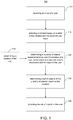
- FIG. 1 is a process flow diagram of an exemplary method 100 of object recommendation in accordance with an embodiment.
- the method comprises receiving an input from a user.
- the method comprises receiving an input from a user.
- the input indicates a mindset of a plurality of mindsets.
- a mindset is selected based on the user input.
- the user may select a mindset based on a label of the mindset presented to the user.
- the label may describe the mindset in a manner so that the user understands the function of the mindset.
- the label may describe needs of users, such as "I'm hungry".
- the mindset comprises a sequence of a plurality of utility measures or functions. Different mindsets of the plurality of mindsets may comprise at least one of: a different number of utility measures, a different sequence of utility measures, and different utility measures.
- a utility measure provides a score for an object and / or set of objects with respect to at least one property of the object or set of objects.
- Each mindset or the respective label may be formalized as a search query template.
- a mindset may bias recommendations towards the user's needs.
- the mindsets may correspond to categories such as "I'm hungry” and "Surprise me", presented on an interface of a recommender.
- a location of the user may be determined.
- the location of the user may be determined by a tracking system, such as a Global Positioning System (GPS) tracking system or Real-time locating systems (RTLS).
- GPS Global Positioning System
- RTLS Real-time locating systems
- the location of the user is determined by means of a Wi-Fi positioning system.
- the method may comprise the step of determining a plurality of objects based on at least one of a location of the user, preferences of the user and a time or date associated with the input of the user.
- the plurality of objects may be determined from a dataset and may be a subset of objects stored in the dataset. This preselection of relevant objects allows a fast and efficient computation to determine a set of objects that are recommended to the user. For example, the computation can be performed offline on a mobile device.
- the time or date may be at least one of a time of a current day, a day of a current week, and a season of a current year.
- a plurality of objects and / or a set of objects are determined based on the location of the user.
- Objects may be any kind of candidates or items that can be recommended to a user.
- objects may comprise Points-of-Interest (POls).
- POI Points-of-Interest
- a POI is a specific point location that someone may find useful or interesting.
- Typical examples of POIs are businesses (which includes restaurants, cafes, and banks), transportation centers (which include train and bus stations, airports), monuments, geographic formations, etc.
- each object in the dataset is associated with a time or a period, such as morning, afternoon, or evening, and the object is only retrieved for a specific time or a specific period, which is associated with the input of the user or corresponds to preferences of the user.
- a set may comprise one or more elements, e.g. a set may comprise one, two, three, four, five or 15 elements, and may be called bundle in the following description.
- a set of objects of a plurality of objects is determined based on the mindset.
- the set of objects may be determined based at least in part on the plurality of utility measures, the sequence of the plurality of utility measures specific for the mindset and at least one approximation ratio.
- Each approximation ratio of the at least one approximation ratio corresponds to a different utility measure.
- An approximation ratio may define a range used in finding an optimal set of objects. The range may soften an optimization process so that a set of objects is regarded as an optimal set of objects although it does not provide an optimal score for all utility measures used in the optimization process.
- the method comprises providing the set of objects to the user.
- Providing the set of objects to the user may comprise displaying the set of objects to the user, e.g., displaying the set of objects on a display of a mobile device of the user or on a display of a car.
- the user may select one of the objects or perform another interaction with the system, such as selecting a different mindset of interest for the user.
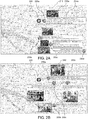
- FIGS. 2A and 2B An example of how the set of objects may be displayed to the user is illustrated in FIGS. 2A and 2B .
- the objects are shown as POIs.
- FIG. 2A shows a map 210 of a part of a city, in this example Paris.
- a location 220 of the user may be indicated. It is assumed that the user is at the George Pompidou Center (in 18th district of Paris) in the evening.
- FIG. 2A shows a set of POIs 230a, 230b, 230c and 230d, which have been recommended to the user. These POIs 230a - 230d may have been determined in accordance with the method of an embodiment.
- the set of POIs 230a - 230d may correspond to a specific mindset, such as to the mindset labeled "I'm new here". For the mindset, four POIs may be recommended, marked with circles, which may be colored.
- the number of POIs in a set of POIs is not limited to four.
- the number of POIs in a set of POIs may be predefined or selected by a user and can comprise one or more elements.
- Each POI of a set of POIs may comprise a brief explanation of the POI, such as explanation 234a, and additional data, such as an image 232a.
- Each POI of the set of POIs can be selected by the user. For example, a user may select a POI 230c of the set of POIs 230a - 230d. This may comprise clicking a touchscreen of a device to select the POI.
- alternative methods can be used to select a POI, such as a voice command or an input on a virtual or physical keyboard.
- FIG. 2B shows a different recommendation of POIs 250a - 250d in view 240, namely a recommendation for a mindset labeled "What's free?".
- each POI of the set of POIs 250a - 250d can be selected by the user.
- a user can start navigation to the POI or perform a new selection according to some or all steps of the method according to FIG. 1 for a new recommendation of sets of POIs.
- the user input or interaction of the last selection may be taken into account for a new recommendation.
- the way users can select their mindsets e.g., "Me time", "I'm hungry" enables users to enforce their context to the recommendation system and may bias the results towards what they are interested to receive, without revealing detail about themselves by typing explicit queries.
- Mindsets can be quantified, e.g., to determine a POI bundle (i.e., a set of POIs) which are relevant to the mindset.
- Quantified mindsets mirror a transparent explanation of how the POIs are selected for recommendation to users.
- Each mindset may comprise semantics of how the interestingness of POIs are computed.
- Mindset quantification may be defined as follows.
- Definition 1 (Mindset quantification). Mindset quantification is to find a POI bundle with k POIs ( k being predefined or user-defined) which are relevant to the actual context of the user, encapsulated in form of mindsets. Table 1: Exemplary mindsets with their labels (column 1), paraphrased descriptions (column 2), and an order of the POI utility measures (column 3).
- Mindset functions may comprise one or several utility measures, i.e., measures that provide a score for an object, such as an interestingness score for POIs.
- a higher scored POI or set of POIs is more interesting, and hence has higher chances to be recommended and to be explored by the user.
- a POI utility measure f 2 P ⁇ [0,1] may return a value between 0 and 1 which reflects the extent of interestingness for one or more POIs.
- Different utility measures can be considered for POIs, such as "popularity”, “surprisingness", and “diversity”.
- Table 2 Descriptions of exemplary POI utility measures ( P ⁇ P) to quantify mindsets.
- Utility measure Description popularity P ) normalized average number of check-ins of P prestige ( P ) normalized average rating score of P recency ( P ) inverse difference between the current date and the average insertion date of P coverage(P) an area of a convex hull induced by the geographical location of POIs in P normalized by the size of the city surprisingness(P) normalized Jaccard distance between POI categories of P and POI categories of other POIs category ( P, cat ) normalized Jaccard similarity between the set category and the categories of P diversity ( P ) normalized average pairwise Jaccard distance between sets of POI categories in P size ( P ) normalized average radius of POIs in P freeness ( P ) inverse normalized average cost of P crowd(P) normalized number of people currently present at P
- Table 2 lists POI utility measures. For recommending objects different from POIs, different utility measures may be used. Furthermore, the number of utility measures is not limited and the utility measures may be defined in different ways based on the available data. For example, the "category" measure may use traditional POI categories of interest (e.g., cafe, bar, health and fitness). Accordingly, the dataset from which the scores are calculated needs to comprise an indication of a category.
- the "category" measure may use traditional POI categories of interest (e.g., cafe, bar, health and fitness). Accordingly, the dataset from which the scores are calculated needs to comprise an indication of a category.
- the utility measures may be defined as maximization objectives, i.e., the larger the value of these measures, the more ideal the POI becomes to be recommended to the user.
- minimization objectives with a subscript marked with the symbol ⁇ (shown in the third column in Table 1).
- the system should return a bundle or set of objects, such as a bundle of POIs, which optimizes m. func (. ) .
- m. func (.) is identified with one single objective (i.e., one single utility measure)
- a straightforward single-objective algorithm can be employed to return objects with an optimal value of m.func (. ) .
- each mindset may comprise or may be associated with more than one utility measure. For instance, regarding the mindset m8 (What's free?) as shown in Table 1, it can be seen that not only it is a function of "freeness”, but also of "popularity”, “recency”, and "diversity”.
- POIs recommended for m8 should not only be free of cost, but they also need to have large number of check-ins (i.e., being popular), represent a recently opened/updated business (i.e., being recent), and be diverse to cover different regions of the city.
- the third column of Table 1 exemplarily lists a subset of utility measures for each mindset.
- MOO multi-objective optimization
- the order of importance for the utility measures can be derived from user data or a user study.
- fi ⁇ fj means that the utility measure fi is more important (has a higher priority) than fj for a specific mindset.
- a qualitative experiment showed that the "freeness” measure is the most important, followed by "popularity”. Accordingly, lexicographic optimization can be used to optimize mindset functions.
- the third column in Table 1 illustrates an exemplary Fm for each mindset.
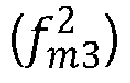
- a mindset may define an order for a sequence of utility measures. For example, optimizing m.func(.) may comprise optimizing f m 1 first, then f m 2 , and so on. Lexicographic optimization of mindset functions may be defined as follows.
- P is a maximizer of f m i , subject to P being the maximizer of the sub-problem up to ( i - 1), i.e., ⁇ j ⁇ i, f m j P ⁇ f m j * , where f m j * is the maximal value for the j- th objective and the corresponding mindset function or utility measure, found in the j -th optimization sub-problem.
- f m j * may not be the same as the maximum of f m j considered independently, because new constraints are introduced for each sub-problem.
- all measures are assumed to be maximization objectives. In case of minimization, other than all objectives getting minimized, other constraints stay the same.
- the order of importance is a soft priority between utility measures, because the predefined order may not perfectly correspond to the opinion of everyone. Accordingly, some margin can be considered, and precedent objectives do not dominate all other consecutive objectives strictly. Hence, an approximated (i.e. softened) multi-objective optimization approach is used, where "good enough" results can be preserved. This provides for a robust recommender system.
- x' is a ⁇ -maximizer of the function f (x) if and only if f ( x ') ⁇ (1 - ).
- f * is the maximum value of f (x).
- x' is a ⁇ -minimizer of the function f (x) if and only if f ( x' ) ⁇ (1+ ).
- f * is the minimum value of f (x).
- P is a ⁇ -maximizer of f m i , subject to P being ⁇ -maximizer of the sub-problem up to ( i - 1), i.e., ⁇ j ⁇ i, f m j P ⁇ 1 ⁇ ⁇ . f m j * , where f m j * is the maximal value for the j -th objective and the corresponding mindset function or utility measure, found in the j -th optimization sub-problem.
- the constraint in Definition 3 becomes f m j P ⁇ ( 1 + ⁇ ) ⁇ f m j * .
- the approximated lexicographic optimization refines gradually an initial set of candidate solutions (the set composed of all ⁇ -maximizers of f m 1 ) by introducing more constraints as the order i increases.
- recursive sub-problems have to be solved. For example, the method can stop as soon as, for some i , only one solution P * remains.
- the approximation ratio ⁇ softens the condition of precedent objectives.
- ⁇ m ⁇ m 1 , ⁇ m 2 ... ⁇ m Fm
- ⁇ m i ⁇ ⁇ m is the approximation ratio of the utility measure f m i ⁇ F m .
- the values in ⁇ m reflect the degree of dominance.
- a low value of ⁇ m i means that its corresponding measure f m i dominates its ensuing measures.
- a high value of ⁇ m i means that f m i + 1 is mostly independent from the optimal value of f m i .
- a crowdsourcing study can be used.
- a study has been performed in Amazon Mechanical Turk (AMT) with 402 participants.
- AMT population size 500 K
- the minimum number of participants needed for a 95% confidence level and 5% error margin can be calculated to be 384, using Survey Monkey's sample size calculator.
- 18 more users have been recruited than the minimum to cover incomplete tasks. They were tasked to score the relevance of utility measures to mindsets.
- the order of importance can be derived from the user experiment, with relevance scores coming from the mass.
- the relevance scores define the degree of dominance ⁇ m i for each utility measure f m i .
- m.func(.) Given the approximated lexicographic optimization model (Definition 3) enriched with ⁇ lists, m.func(.) can be optimized for a given mindset m .
- Algorithm 1 applies approximated lexicographic optimization of several utility measures, in order to quantify a given mindset, according to an embodiment.
- the quantification implies that relevant POIs are selected for mindsets.
- mindsets enable users to control which POIs they get by receiving POIs, which are in-line with their needs.
- the needs may be encapsulated as an explicit signal in different mindsets.
- Algorithm 1 illustrates the main steps according to an embodiment.
- the algorithm admits as input a mindset m , the bundle size (i.e. a desired number of POIs to return, denoted as k ), and a subset of candidate POIs P .
- the subset P r contains POIs, which match the actual time, date and / or location of the user.
- the algorithm checks each utility measure in their order enforced in Fm, and optimizes one measure at a time (lines 2 to 7). Each optimization process has at most T iterations to improve the optimized value (line 3). After at most T iterations, the algorithm stops optimizing f m i and jumps to optimizing f m i + 1 .
- the method is a discrete hill-climbing-method, starting from a single feasible solution (line 1).
- Each step in the hill-climbing strategy corresponds to changing one POI of the current bundle by another one from the candidate subset, in order to improve (and even to maximize) the utility function of the current order, while satisfying the constraints induced by the previous orders.
- the choice of the optimal feasible pair may be done by enumerating all possible pairs (there are k ⁇ ( n - k ) such pairs, where n is the number of POIs in the subset Pr ) and checking for the existence of an optimal pair and its corresponding candidate bundle P' (see line 4).
- the bundle P is initialized for f m 1 , either with a random set of k POIs, or representative POIs of the city under investigation (function initialize() in line 1).
- a more efficient heuristic is used to identify the optimal feasible pair of POIs to be swapped (changing P into P').
- the utility measure can be linearly decomposed into the individual utility of each of its constitutive POI (this is the case of the "popularity", “prestige”, “recency”, “freeness” and “crowd” utility measure)
- optimizing f m i P ⁇ amounts to selecting p ⁇ P with the minimum individual utility and p' ⁇ P r ⁇ P with the maximum individual utility.
- an approximate sampling strategy e.g. Monte-Carlo with rejection, if the constraints are not satisfied
- While online services such as “AroundMe” enable users to explore their nearby region by selecting explicit POI categories (e.g., museums, historical landmarks), mindsets capture implicit intents of users (e.g., “Let's learn”) which are more challenging to capture.
- explicit POI categories e.g., museums, historical landmarks
- implicit intents of users e.g., “Let's learn”
- Mindsets can be independent entities or may be combined with each other. For example, an intent of a user may be captured with a combination of two or more mindsets. Mindsets may be combined directly by selecting multiple mindsets by a user. Alternatively or additionally, mindsets may be combined in an indirect manner by selecting different mindsets in different iterations, wherein each result of one iteration affects the result of the subsequent result of the subsequent iteration. By selecting different mindsets during multiple iterations of the method for object recommendation, results of subsequent iterations may be influenced by previous selections of results by a user.
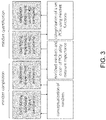
- FIG. 3 illustrates a process flow diagram of an example of a method for determining mindsets.
- mindsets which are also called "Ambient Mindsets”
- two consecutive steps may be performed: mindset compilation, and mindset quantification.
- the concept of mindsets may be introduced to a first group of participants and a set of initial mindsets is built. Then, the feedback from the participants is used to refine the mindsets for the needs of users, such as POI needs of new locals.
- a computational model for mindsets is used to enable an automatic selection of relevant subsets of POIs.
- a lexicographic multi-objective optimization (MOO) of utility measures is used to quantify respective mindsets.
- Mindset compilation Innovating a new set of category-based interfaces poses the limitation of uninformative labels for end-users who are accustomed to traditional categories. An ideal set of categories should not comprise too many in number yet cover all possible situations for exploring the recommendation results. They should also be consistent across individuals, i.e., the category labels should relay the same meaning for every user.
- the labels and the description of the mindsets may be based on data, such as user preferences, of a plurality of users. For example, the data of the plurality of users may be obtained by an in-lab card-sorting workshop. Additionally, an initial set of mindsets may be tested in the field with potential users, by embedding the mindsets into the prototype of a POI recommender system. Thus, the mindsets and the conceptual design of the mindsets can be validated and / or modified with user feedback.
- Mindset quantification Once mindsets were conceptually defined, a next step may be to find a quantified formalization of their semantics in order to automate categorizing POIs into different mindsets.
- Mindset semantics may be formalized as a set of utility measures, e.g., "popularity", “surprisingness”, and “diversity”. Utility measures evaluate the interestingness of POIs, where a more interesting POI has higher chances to be recommended.
- Utility measures evaluate the interestingness of POIs, where a more interesting POI has higher chances to be recommended.
- Using the insights from a qualitative user study a list of utility measures in the decreasing order of importance can be identified for each mindset. Then, an approximated lexicographic multi-objective optimization method can be applied to select relevant POIs for mindsets.
- the methodology for the compilation and quantification of POIs into mindsets can be validated with a quantitative experiment in a user study, e.g. on Amazon Mechanical Turk (AMT).
- AMT Amazon Mechanical Turk
- the method of compiling mindsets may comprise an internal card-sorting workshop and a qualitative experiment in the field with potential users.
- the qualitative experiment can be conducted with new locals, i.e. people who have recently moved to a new city, as participants. Based on the insights from the participants, mindsets can be defined for new locals. Then, mindsets can be quantified.
- a relevant set of POIs is selected for a mindset, using lexicographic multi-objective optimization of POI utility measures.
- the methodology for compiling and quantifying mindsets can be validated with an extensive quantitative experiment.
- Some or all of the method steps may be implemented by a computer in that they are executed by (or using) a processor, a microprocessor, an electronic circuit or processing circuitry.
- the embodiments described above may be implemented in hardware or in software.
- the implementation can be performed using a non-transitory storage medium such as a computer-readable storage medium, for example a floppy disc, a DVD, a Blu-Ray, a CD, a ROM, a PROM, and EPROM, an EEPROM or a FLASH memory.
- a computer-readable storage medium for example a floppy disc, a DVD, a Blu-Ray, a CD, a ROM, a PROM, and EPROM, an EEPROM or a FLASH memory.
- Such computer-readable media can be any available media that can be accessed by a general-purpose or special-purpose computer system.
- embodiments can be implemented as a computer program product with a program code or computer-executable instructions, the program code or computer-executable instructions being operative for performing one of the methods when the computer program product runs on a computer.
- the program code or the computer-executable instructions may be stored on a computer-readable storage medium.
- a storage medium (or a data carrier, or a computer-readable medium) comprises, stored thereon, the computer program or the computer-executable instructions for performing one of the methods described herein when it is performed by a processor.
- an apparatus comprises one or more processors and the storage medium mentioned above.
- an apparatus comprises means, for example processing circuitry like, e.g., a processor communicating with a memory, the means being configured to, or adapted to perform one of the methods described herein.
- a further embodiment comprises a computer having installed thereon the computer program or instructions for performing one of the methods described herein.
- FIG 4 which comprises server 400 and one or more client devices 402 that communicate over a network 404 (which may be wireless and / or wired) such as the Internet for data exchange.
- Server 400 and the client devices 402 include a data processor 412 and memory 413 such as a hard disk.
- the client devices 402 may be any device that communicates with server 400, including autonomous vehicle 402b, robot 402c, computer 402d, or cell phone 402e.
- the method according to the embodiment of FIG 1 may be performed at server 400.
- the methods according to the embodiments of FIG 1 may be performed at client device 402 partially or completely.
- the methods may be performed at a different server or on a plurality of servers in a distributed manner.
- Mindsets allow an extension of the user context of conventional systems, and allow to capture an actual situation, an emotion of a user, and intents of the user. Mindsets may be time-aware / time-dependent.
- the inventors have recognized that POI recommendations based on mindsets increase security, since users do not have to share personal data to get recommendations. The idea is that because no preferences or historical data is available from the user, the mindsets can function as catalysts and help users to describe their needs and consequently come up with a list of recommended POIs to explore. The concept of mindsets thus enables effective recommendations.
- Ambient mindsets are a set of categories for mobile object recommendation, such as POI recommendation and exploration on the interface level for end-user interaction with the intelligent system. Unlike existing POI categories, such as Museums and Restaurants, which describe the characteristics of the POIs, mindsets such as "I'm hungry" and “Surprise me” describe the characteristics of the user instead. This approach notably accommodates users who do not have enough prior knowledge about their current location to describe the characteristics of the POIs available in that location. In an embodiment, 9 mindsets have been defined, tailored to the POI recommendation and exploration activities of the new locals, i.e. people who have recently relocated to a new city. This set of mindsets may be derived by involving new locals as participants in a qualitative experiment.
- Ambient Mindsets is a novel dimension of contextuality, which aims to capture the actual situation, emotion, and intents of the user.
- the mindsets such as "I'm hungry” and “Surprise me” enable users to explicitly state their situational requirement.
- Each mindset is an explicit exploration direction that enables recommendations more oriented towards the user's needs.
- the mindset "Let's learn” limits the exploration options to POIs such as museums and libraries, and biases the recommendation results towards those genres of POIs.
- the incorporation of mindsets makes POI recommendation more aware of user needs, and POI exploration easier and faster to perform.
- the key factors in the conceptual design of mindsets are as follows.
- Explicit signal may capture the mental state of the user, and hence are explicit signals of user needs for recommendation. Instead of hidden signals, such as time and location, this signal provides rich information on the user's intent, which enables recommendation and exploration systems to return results that are more relevant.
- Ambiguous exploration Users might only have a vague idea of what they need, either because they are oblivious about the available content, or because they are not able to describe their needs for the system.
- the user In these exploratory settings, the user is not in any particular mindset to begin with, but he/she is open to explore the content.
- the mindsets support disambiguation of user needs and aid performing an exploration of the recommended content.
Landscapes
- Engineering & Computer Science (AREA)
- Databases & Information Systems (AREA)
- Theoretical Computer Science (AREA)
- Physics & Mathematics (AREA)
- General Physics & Mathematics (AREA)
- Data Mining & Analysis (AREA)
- General Engineering & Computer Science (AREA)
- Business, Economics & Management (AREA)
- Accounting & Taxation (AREA)
- Finance (AREA)
- Strategic Management (AREA)
- Development Economics (AREA)
- Economics (AREA)
- Marketing (AREA)
- General Business, Economics & Management (AREA)
- Computer Networks & Wireless Communication (AREA)
- Signal Processing (AREA)
- Remote Sensing (AREA)
- Computational Linguistics (AREA)
- Entrepreneurship & Innovation (AREA)
- Game Theory and Decision Science (AREA)
- Information Retrieval, Db Structures And Fs Structures Therefor (AREA)
Abstract
Description
- The present disclosure relates to object recommendation. In particular, the present disclosure relates to multi-objective optimization for object recommendation.
- Recommender systems have shortened the exploratory search for everyday activities like following the news, watching series, and shopping. These recommendations are a result of learning implicit preferences of a user using their historical activities. However, the current situation of a user is more important than past activities for recommendations, such as location-based recommendations or Points-of-Interest (POIs) recommendations.
- Recommending and exploring Points-of-Interest (POIs) are emerging in various location-based applications, such as user profiling, localized advertising, tour planning, bike sharing, and urban management. POI recommendation is a prominent application in location-based services, where the goal is to predict the POIs users might prefer to visit in the near future, based on their historical activities (Jie Bao, Yu Zheng, David Wilkie, and Mohamed Mokbel: "Recommendations in location-based social networks: a survey", Geolnformatica, 2015). In these systems, the current context and situational needs of the user are often not considered by the recommendation engine. On the other hand, POI exploration (i.e., exploratory POI search) aims to enable users to navigate through a plethora of POIs in a guided fashion, and gradually land on a subset of interest. Result exploration enables users to have more control over the content and demonstrate their actual context and situational needs. While recommendation results are not flexible enough to be controlled by the end-user, the exploration process can be easily managed just by exploring a different set of keywords. However, with a large number of available POIs, the exploration process becomes burdensome and less expeditious for the user. It is important for users to incorporate their actual context and situational needs into recommendation and exploration of POIs, but current methods do not satisfy this requirement to a full extent.
- In the literature, contextuality is proposed to incorporate user needs in POI recommendation and exploration systems. Context is by default materialized as the current time and location of the user. Geographical context is modeled in the form of "distance", following the Tobler's intuition that near things are more related than distant things. In addition, the spatial characteristics of POIs have been enriched with a temporal context in a separate abstraction layer. While these approaches capture some aspects of user needs, there are still many fundamental facets of needs, which have remained unaddressed. For example, an intent of a user, an actual situation of a user, and an emotion of a user cannot be easily captured with the above context paradigms.
- Conventional approaches propose various models to compile categories and help users navigate in the space of POIs.
US 10,289,648 B1 US 10,018,480 B2 US 8 983 973 B2 discloses systems and methods for ranking POIs that make use of a geographic location of the user, an initial prior voting of POIs by the user, information from the user's social networks and search inputs related to the traversing route of the user. Once categories are compiled, different approaches are proposed to explore and recommend POIs. InCN 104731846 A , by collecting data on the user's behavior, food recipes and nutrition recommendations are generated through a multi-target optimization. - However, conventional methods often rely on information about a single user and thus provide results specific to the behavior of the user. Accordingly, these methods are prone to inaccurate recommendations when the settings of the user would be used by different users with a different behavior. These methods provide recommendations based on a specific behavior of a user and cannot recover to provide accurate results for different users.
- Traditionally, the problem of POI recommendation is defined as learning implicit preferences of a user according to historical check-ins of the user (Jie Bao, Yu Zheng, David Wilkie, and Mohamed Mokbel: "Recommendations in location-based social networks: a survey", Geolnformatica, 2015). To solve this problem, an approach is to employ memory-based and model-based Collaborative Filtering (CF) as de facto methods, where the check-ins matrix is used for learning preferences (Betim Berjani and Thorsten Strufe: "A recommendation system for spots in location-based online social networks", in Proceedings of the 4th workshop on social network systems, 2011).
- However, this approach requires personal data of the user. Obtaining personal data of a user provides a security risk for the user, since this data may be intercepted. Moreover, when conventional methods do not have access to the personal data of a user a plurality of functions of these state-of-the-art methods cannot be used or the method may not function in a desired way. This problem is also known under the term "the cold start challenge".
- State-of-the-art methods show fundamental problems. Some of these problems are:
The problem of cold start, which arises when a user with a limited history of interactions with a system asks for recommendations. Data sparsity refers to the lack of data for identifying similarities between users. Many users employ POI services without signing in. As a result, no social graph (i.e., friendship relations) can be retrieved. A typical recommendation system, which relies on historical data and user similarities for personalized and socialized recommendations, is unable to output results in the presence of cold start and data sparsity. There are two kinds of users which may cause a cold start: (i) a new user with no history, (ii) a user with privacy concerns who does not want his/her data to be exploited. - Another challenge for a recommender is to integrate the context of the user into the recommendation process. The context is not limited to time and / or location, but also to an intent of a user at the time of receiving recommendations. For instance, different POIs should be recommended in case the user is hungry, or in case the user is seeking some personal relaxation time.
- Further, users may not trust in what they get from the recommender, i.e., algorithmic anxiety due to the cold start problem and session-based interactions with the system. Users may want to know why they received certain POIs as recommendation results. The challenge of recommendation transparency is a long-standing problem.
- Finally, conventional methods are not very robust to changes. For example, once a user or the behavior of a user changes, the recommendations may not be effective or accurate, since the recommendations are based on outdated data.
- Accordingly, there is a need in the art to address these problems for object recommendation. It is therefore desirable to provide an improved method of object recommendation that overcomes the above disadvantages of the prior art. Specifically, it is desirable to provide a method that accurately, efficiently, and effectively generates object recommendations in a secure and robust manner.
- To address the challenges in the state of the art, a novel approach for object recommendation based on mindsets is provided. The present disclosure presents methods and systems for object recommendation.
- In an embodiment, a computer-implemented method of object recommendation comprises receiving an input from a user and selecting a mindset from a plurality of mindsets based on the input. The mindset comprises a label and a sequence of a plurality of utility measures. A utility measure may be a function that provides a score based on one or more properties of one or more objects. The method further comprises determining a set of objects of a plurality of objects based at least in part on the sequence of the plurality of utility measures and at least one approximation ratio. Each approximation ratio of the at least one approximation ratio corresponds to a different utility measure. Finally, the set of objects is provided to the user.
- By recommending objects determined based on a mindset, the privacy of a user can be protected, which increases the security. Moreover, an approximation ratio provides recommendations that cover the preferences of a specific user without requiring any data about the user. The present invention combines recommendations relating to the specific context of a user's needs by covering a broad spectrum of user preferences and security concerns of the user. The user does not need to specify specific questions to get recommendations that can reveal information about the user, which protects the privacy of the user. Accordingly, security is improved compared to recommender systems where the user has to formulate a search query and thus inevitably offers information about his psychological state. For example, a user would phrase a query differently in a happy mood compared to a sad mood. This information is secure in the present recommender system. Conventional systems provide user-specific recommendations. However, if a user changes or if a plurality of "wrong" inputs are made that do not correspond to the preferences of a user, the method of the present invention can recover due to the approximation ratio, which provides for a robust recommender system.
- According to an aspect, the step of determining a set of objects comprises calculating scores for different sets of objects using at least two utility measures of the plurality of utility measures, wherein at least one utility measure of the at least two utility measures provides an optimal score for the set of objects compared to different sets of objects. The at least two utility measures may form a sequence. A utility measure of the at least two utility measures may provide a score for the set of objects that is within a range, the range being defined by an optimal score of a different set of objects and an approximation ratio corresponding to the utility measure. This provides a robust recommender system for providing recommendations in an effective manner.
- The different sets of objects may be selected by replacing a first set of objects with a second set of objects by replacing at least a first object in the first set of objects with a second object until a last utility measure of the at least two utility measures provides for an optimal score for the second set of objects and all prior utility measures in the sequence of utility measures each provide a score for the second set of objects that is within a range, the range being defined by an optimal score of a different set of objects and an approximation ratio corresponding to a respective utility measure of the prior utility measures. Alternatively or additionally, the different sets of objects may be selected by replacing a first set of objects with a second set of objects by replacing a first object in the first set of objects with a second object, wherein a last utility measure of the at least two utility measures provides individual scores for all objects of a set of objects, and wherein the last utility measure provides a lower individual score for the first object compared to the individual score for the second object. In one embodiment, the different sets of objects may be selected by replacing a first set of objects with a second set of objects using a Monte-Carlo method. By calculating individual scores, the optimal set of objects may be determined in an efficient and fast manner.
- According to aspects, the computer-implemented method comprises, prior to the step of determining a set of objects, determining the plurality of objects, such as a subset of objects of a larger set of objects, based on at least one of a location of the user, preferences of the user and a time or date associated with the input of the user. The time or date may be at least one of a time of a current day, a day of a current week, and a season of a current year. Alternatively or additionally, the plurality of objects may be determined based on a location of the user. The location of the user may be calculated or determined. Reducing the initial number of objects or candidates for the recommendation reduces the amount of data to be processed for finding the optimal set of objects. In one embodiment, the set of objects are determined based on the location of the user.
- In an aspect, the mindset is combined with another mindset and the set of objects is based on the combined mindsets. The plurality of objects may comprise Points-of-Interest, POIs. In an aspect, a learning model learns preferences of the user based on user inputs and modifies the mindsets and / or the at least one approximation ratio in accordance with the preferences of the user. This allows effective recommendations. The sequence of the plurality of utility measures may be a predefined sequence. An order of a utility measure in the sequence of utility measures may correspond to a priority or an importance of the utility measures for the mindset in determining the set of objects.
- In a further embodiment, a computer-readable storage medium having computer-executable instructions stored thereon is provided. When executed by one or more processors, the computer-executable instructions perform the method for object recommendation described above.
- In a further embodiment, an apparatus comprising processing circuitry is provided. The processing circuitry is configured to perform the method for object recommendation described above.
- The following detailed description and accompanying drawings provide a more detailed understanding of the nature and advantages of the present invention.
- The accompanying drawings are incorporated into and form a part of the specification for the purpose of explaining the principles of the embodiments. The drawings are not to be construed as limiting the embodiments to only the illustrated and described embodiments of how they can be made and used. Further features and advantages will become apparent from the following and more particularly from the description of the embodiments, as illustrated in the accompanying drawings, wherein:
-
FIG. 1 illustrates a process flow diagram of a method for object recommendation in accordance with at least one embodiment, -
FIGS. 2A and 2B illustrate examples of an application in accordance with an embodiment, -
FIG. 3 illustrates a process flow diagram of a method for determining mindsets in accordance with embodiments, and -
FIG. 4 illustrates an example architecture in which the disclosed methods may be performed. - Described herein are systems and methods for object recommendation. For purposes of explanation, numerous examples and specific details are set forth in order to provide a thorough understanding of the described embodiments. Embodiments as defined by the claims may include some or all of the features in these examples alone or in combination with other features described below, and may further include modifications and equivalents of the features and concepts described herein. The illustrative embodiments will be described with reference to the drawings wherein elements and structures are indicated by reference numbers. Further, where an embodiment is a method, steps and elements of the method may be combinable in parallel or sequential execution. As far as they are not contradictory, all embodiments described below can be combined with each other.
-
FIG. 1 is a process flow diagram of anexemplary method 100 of object recommendation in accordance with an embodiment. In the method comprises receiving an input from a user. - At
step 102, the method comprises receiving an input from a user. The input indicates a mindset of a plurality of mindsets. Instep 110, a mindset is selected based on the user input. For example, the user may select a mindset based on a label of the mindset presented to the user. The label may describe the mindset in a manner so that the user understands the function of the mindset. For example, the label may describe needs of users, such as "I'm hungry". Furthermore, the mindset comprises a sequence of a plurality of utility measures or functions. Different mindsets of the plurality of mindsets may comprise at least one of: a different number of utility measures, a different sequence of utility measures, and different utility measures. A utility measure provides a score for an object and / or set of objects with respect to at least one property of the object or set of objects. Each mindset or the respective label may be formalized as a search query template. A mindset may bias recommendations towards the user's needs. The mindsets may correspond to categories such as "I'm hungry" and "Surprise me", presented on an interface of a recommender. - At
step 118, a location of the user may be determined. The location of the user may be determined by a tracking system, such as a Global Positioning System (GPS) tracking system or Real-time locating systems (RTLS). In an embodiment, the location of the user is determined by means of a Wi-Fi positioning system. - At
step 120, the method may comprise the step of determining a plurality of objects based on at least one of a location of the user, preferences of the user and a time or date associated with the input of the user. The plurality of objects may be determined from a dataset and may be a subset of objects stored in the dataset. This preselection of relevant objects allows a fast and efficient computation to determine a set of objects that are recommended to the user. For example, the computation can be performed offline on a mobile device. The time or date may be at least one of a time of a current day, a day of a current week, and a season of a current year. In an embodiment, a plurality of objects and / or a set of objects are determined based on the location of the user. Objects may be any kind of candidates or items that can be recommended to a user. For example, objects may comprise Points-of-Interest (POls). A POI is a specific point location that someone may find useful or interesting. Typical examples of POIs are businesses (which includes restaurants, cafes, and banks), transportation centers (which include train and bus stations, airports), monuments, geographic formations, etc. - While embodiments of the summary and the description are described with respect to point-of-interest recommendation, those skilled in the art will appreciate that the following embodiments may be used for object or candidate recommendations, where one or more objects and / or candidates are provided to the user. The dataset may be retrieved from a server or a computer remote to a computing device, e.g., a mobile computing device or a car, on which the
method 100 is performed. In an embodiment, each object in the dataset is associated with a time or a period, such as morning, afternoon, or evening, and the object is only retrieved for a specific time or a specific period, which is associated with the input of the user or corresponds to preferences of the user. By retrieving objects only for a specific time or a specific period, the data to be processed for determining a set of objects to be recommended to the user may be reduced. A set may comprise one or more elements, e.g. a set may comprise one, two, three, four, five or 15 elements, and may be called bundle in the following description. - At
step 130, a set of objects of a plurality of objects is determined based on the mindset. Specifically, the set of objects may be determined based at least in part on the plurality of utility measures, the sequence of the plurality of utility measures specific for the mindset and at least one approximation ratio. Each approximation ratio of the at least one approximation ratio corresponds to a different utility measure. An approximation ratio may define a range used in finding an optimal set of objects. The range may soften an optimization process so that a set of objects is regarded as an optimal set of objects although it does not provide an optimal score for all utility measures used in the optimization process. - At
step 140, the method comprises providing the set of objects to the user. Providing the set of objects to the user may comprise displaying the set of objects to the user, e.g., displaying the set of objects on a display of a mobile device of the user or on a display of a car. After the set of objects is provided to the user, the user may select one of the objects or perform another interaction with the system, such as selecting a different mindset of interest for the user. - An example of how the set of objects may be displayed to the user is illustrated in
FIGS. 2A and 2B . In the examples ofFIGS. 2A and 2B , the objects are shown as POIs. -
FIG. 2A shows amap 210 of a part of a city, in this example Paris. In themap 210, alocation 220 of the user may be indicated. It is assumed that the user is at the George Pompidou Center (in 18th district of Paris) in the evening. Further,FIG. 2A shows a set ofPOIs POIs 230a - 230d may have been determined in accordance with the method of an embodiment. The set ofPOIs 230a - 230d may correspond to a specific mindset, such as to the mindset labeled "I'm new here". For the mindset, four POIs may be recommended, marked with circles, which may be colored. However, the number of POIs in a set of POIs is not limited to four. The number of POIs in a set of POIs may be predefined or selected by a user and can comprise one or more elements. - Each POI of a set of POIs may comprise a brief explanation of the POI, such as
explanation 234a, and additional data, such as animage 232a. Each POI of the set of POIs can be selected by the user. For example, a user may select a POI 230c of the set ofPOIs 230a - 230d. This may comprise clicking a touchscreen of a device to select the POI. However, alternative methods can be used to select a POI, such as a voice command or an input on a virtual or physical keyboard. -
FIG. 2B shows a different recommendation ofPOIs 250a - 250d inview 240, namely a recommendation for a mindset labeled "What's free?". Again, each POI of the set ofPOIs 250a - 250d can be selected by the user. In response to a selection of a POI, a user can start navigation to the POI or perform a new selection according to some or all steps of the method according toFIG. 1 for a new recommendation of sets of POIs. The user input or interaction of the last selection may be taken into account for a new recommendation. The way users can select their mindsets (e.g., "Me time", "I'm hungry") enables users to enforce their context to the recommendation system and may bias the results towards what they are interested to receive, without revealing detail about themselves by typing explicit queries. - Mindsets can be quantified, e.g., to determine a POI bundle (i.e., a set of POIs) which are relevant to the mindset. Quantified mindsets mirror a transparent explanation of how the POIs are selected for recommendation to users. Each mindset may comprise semantics of how the interestingness of POIs are computed. Mindset quantification may be defined as follows.
- Definition 1 (Mindset quantification). Mindset quantification is to find a POI bundle with k POIs (k being predefined or user-defined) which are relevant to the actual context of the user, encapsulated in form of mindsets.
Table 1: Exemplary mindsets with their labels (column 1), paraphrased descriptions (column 2), and an order of the POI utility measures (column 3). Mindset label Description Order of utility measures m1: I'm new here towards touristic POIs about the popular attractions in the city popularity 


m2: Surprise me towards POIs which haven't been visited before by the user and are uncommon (seldom visited) surprisingness 


m3: Let's exercise towards POIs related to physical exercises like swimming pools, parks, gyms, and mountains category 


m4: Me time towards POIs related to activities to treat oneself and and have solo time to unwind and relax category 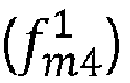


m5: I'm hungry towards getting faster access to food-related POIs nearby category 


m6: Let's learn towards POIs such as museums, libraries and cultural landmarks category → prestige 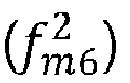


m7: Hidden gems towards small intriguing local POIs that are highly rated but not necessarily popular popularity⊥ 


m8: What's free? towards POIs without any costs freeness 


m9: Meet people towards social POIs to meet new people category 


- A mindset m may be defined as a tuple m = 〈label, func(.)〉, where m. label provides a concise description of the mindset (exemplarily shown in the first column of Table 1), and m.func(. ) quantifies the mindset m by defining semantics of POI interestingness. m.func(. ) may be a function that evaluates POIs based on the mindset m. For instance, in the case m. label = "I'm hungry", m. func(. ) is formulated in a way to increase the interestingness of restaurants and coffee shops. Also in the case of m. label = "let's learn", m. func(. ) biases museums, libraries and cultural landmarks.
- Mindset functions may comprise one or several utility measures, i.e., measures that provide a score for an object, such as an interestingness score for POIs. A higher scored POI or set of POIs is more interesting, and hence has higher chances to be recommended and to be explored by the user. Given the set of all POIs P, a POI utility measure f : 2 P → [0,1] may return a value between 0 and 1 which reflects the extent of interestingness for one or more POIs. Different utility measures can be considered for POIs, such as "popularity", "surprisingness", and "diversity".
Table 2: Descriptions of exemplary POI utility measures (P ⊆ P) to quantify mindsets. Utility measure Description popularity(P) normalized average number of check-ins of P prestige(P) normalized average rating score of P recency(P) inverse difference between the current date and the average insertion date of P coverage(P) an area of a convex hull induced by the geographical location of POIs in P normalized by the size of the city surprisingness(P) normalized Jaccard distance between POI categories of P and POI categories of other POIs category(P, cat) normalized Jaccard similarity between the set category and the categories of P diversity(P) normalized average pairwise Jaccard distance between sets of POI categories in P size(P) normalized average radius of POIs in P freeness(P) inverse normalized average cost of P crowd(P) normalized number of people currently present at P - Table 2 lists POI utility measures. For recommending objects different from POIs, different utility measures may be used. Furthermore, the number of utility measures is not limited and the utility measures may be defined in different ways based on the available data. For example, the "category" measure may use traditional POI categories of interest (e.g., cafe, bar, health and fitness). Accordingly, the dataset from which the scores are calculated needs to comprise an indication of a category.
- For the "category" function, POI categories need to be specified. Table 3 shows examples of specific categories for each mindset. As shown in Table 3, mindsets m1, m7 and m8 may not be related to the "category" measure, hence are not shown in Table 3. Accordingly, for these mindsets no categories need to be specified.
Table 3: Categories of interest for mindsets Mindset Categories of interest m2: Surprise me entertainment, art, gallery, sculpture, zoo, bookstore m3: Let's exercise sport fields, park, health and fitness, bowling, tennis court, ice skating m4: Me time outdoor, food, tea room, bar, coffee shop m5: I'm hungry food (e.g. restaurants, grocery stores, convenience stores, fast food) m6: Let's learn museum, performing art, historical site, gallery, exhibit m9: Meet people social club, bar, pub, event, nightlife spot, spiritual center - The utility measures may be defined as maximization objectives, i.e., the larger the value of these measures, the more ideal the POI becomes to be recommended to the user. In contrast, we denote the minimization objectives with a subscript marked with the symbol ⊥ (shown in the third column in Table 1).
- As an example, the utility measure "popularity" can be defined as the number of annual visits of a POI or an average number of annual visits of a plurality of POIs. Given that the "Great Pyramids" of Egypt and "Notre Dame Cathedral" of France receive 14.7 million and 13 million annual visitors respectively, and "Niagara Falls" receives the greatest number of visitors (i.e., 30 million), the popularity (Great Pyramids) = 0.49, popularity (Notre Dame) = 0.43, and popularity(Great Pyramids, Notre Dame) = 0.46 (the average of the two). {Great Pyramids, Notre Dame, Niagara Falls} ⊆ P, where popularity (Niagara Falls) = 1. The set of all utility measures is denoted as F.
- In case the user requests a mindset m, the system should return a bundle or set of objects, such as a bundle of POIs, which optimizes m. func(. ). In the case where m. func(.) is identified with one single objective (i.e., one single utility measure), then a straightforward single-objective algorithm can be employed to return objects with an optimal value of m.func(. ). However, each mindset may comprise or may be associated with more than one utility measure. For instance, regarding the mindset m8 (What's free?) as shown in Table 1, it can be seen that not only it is a function of "freeness", but also of "popularity", "recency", and "diversity". Accordingly, POIs recommended for m8 should not only be free of cost, but they also need to have large number of check-ins (i.e., being popular), represent a recently opened/updated business (i.e., being recent), and be diverse to cover different regions of the city. The third column of Table 1 exemplarily lists a subset of utility measures for each mindset.
- When each mindset is described with more than one utility measure or utility function, optimizing m.func(. ) for a mindset m becomes a multi-objective optimization (MOO) problem. A system whose functionality depends on MOO is often denoted as a complex system. In lexicographic optimization, it is assumed that objectives are sorted in decreasing order of importance. Hence, the MOO boils down to solving one single-objective problem at a time in order of importance.
- The order of importance for the utility measures can be derived from user data or a user study. As shown in the third column of Table 1, the term fi → fj means that the utility measure fi is more important (has a higher priority) than fj for a specific mindset. For instance for m8, a qualitative experiment showed that the "freeness" measure is the most important, followed by "popularity". Accordingly, lexicographic optimization can be used to optimize mindset functions.
- Therefore, a mindset comprises a sequence


- Definition 2 (Lexicographic optimization). Given a mindset m and an object (e.g. POI) bundle P ⊆ P, m.func(P) is optimized lexicographically, if the recursive conditions (i) and (ii) are met: (i) P is a maximizer of
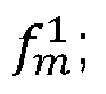


- In Definition 2,


- The lexicographic nature of the optimization makes it highly sensitive to optimal values of precedent objectives. For instance, assume the mindset m8 (What's free?) is requested where


- In an embodiment, the order of importance is a soft priority between utility measures, because the predefined order may not perfectly correspond to the opinion of everyone. Accordingly, some margin can be considered, and precedent objectives do not dominate all other consecutive objectives strictly. Hence, an approximated (i.e. softened) multi-objective optimization approach is used, where "good enough" results can be preserved. This provides for a robust recommender system.
- Given an approximation ratio ζ = [0, 1], x' is a ζ -maximizer of the function f (x) if and only if f (x ') ≥ (1 - ).f *, where f * is the maximum value of f (x). Similarly, x' is a ζ -minimizer of the function f (x) if and only if f (x') ≤ (1+ ).f * where f * is the minimum value of f (x). The idea of ζ - optimization allows for approximated lexicographic optimization.
- Definition 3 (Approximated lexicographic optimization). Given a mindset m, a POI bundle P ⊆ P, and an approximation ratio ζ = [0,1], m.func(P) is optimized ζ -lexicographically, if the recursive conditions (i) and (ii) are met: P is a ζ -maximizer of


- In embodiments of minimization objectives, the constraint in Definition 3 becomes


- The approximation ratio ζ softens the condition of precedent objectives. In the above example with the POI bundles P and P ', P ' would be accepted in a ζ -lexicographical configuration, where ζ ≥ 0.1. While ζ in general is useful in widening the horizons of optimization, its value changes the process of optimization drastically. In case ζ = 0.0, no approximation will be applied. In case ζ = 1.0, no order will be preserved and objectives will be optimized independently.
- For each mindset m, a list


- To determine values in a list ψ, a crowdsourcing study can be used. In an experiment, a study has been performed in Amazon Mechanical Turk (AMT) with 402 participants. With an AMT population size of 500K, the minimum number of participants needed for a 95% confidence level and 5% error margin can be calculated to be 384, using Survey Monkey's sample size calculator. In the experiment, 18 more users have been recruited than the minimum to cover incomplete tasks. They were tasked to score the relevance of utility measures to mindsets. The order of importance can be derived from the user experiment, with relevance scores coming from the mass. The relevance scores define the degree of dominance


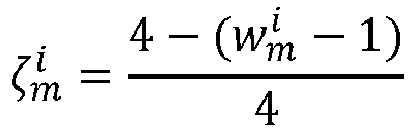
Table 4: Approximation ratios ψ calculated for utility measures for approximate lexicographic optimization. 


m1: I'm new here 0.27 0.20 0.34 0.46 0.32 0.32 m2: Surprise me 0.21 0.38 0.23 0.36 0.40 - m3: Let's exercise 0.19 0.33 0.23 0.35 - - m4: Me time 0.21 0.23 0.21 0.34 0.24 - m5: I'm hungry 0.17 0.20 0.20 0.43 - - m6: Let's learn 0.18 0.22 0.28 0.19 0.31 - m7: Hidden gems 0.27 0.23 0.32 0.38 0.25 - m8: What's free? 0.17 0.24 0.39 0.21 - - m9: Meet people 0.20 0.27 0.22 0.38 0.32 0.28 - Table 4 illustrates the approximation ratios that have been obtained from this crowdsourcing study. For instance, it can be observed that

measure 

- Given the approximated lexicographic optimization model (Definition 3) enriched with ψ lists, m.func(.) can be optimized for a given mindset m.

-
Algorithm 1 applies approximated lexicographic optimization of several utility measures, in order to quantify a given mindset, according to an embodiment. The quantification implies that relevant POIs are selected for mindsets. Hence, mindsets enable users to control which POIs they get by receiving POIs, which are in-line with their needs. The needs may be encapsulated as an explicit signal in different mindsets. -
Algorithm 1 illustrates the main steps according to an embodiment. The algorithm admits as input a mindset m, the bundle size (i.e. a desired number of POIs to return, denoted as k), and a subset of candidate POIs P. The subset Pr contains POIs, which match the actual time, date and / or location of the user. Given the inputs, the algorithm checks each utility measure in their order enforced in Fm, and optimizes one measure at a time (lines 2 to 7). Each optimization process has at most T iterations to improve the optimized value (line 3). After at most T iterations, the algorithm stops optimizing


- For several classes of utility measures, instead of relying on the brute-force enumeration strategy, in an embodiment, a more efficient heuristic is used to identify the optimal feasible pair of POIs to be swapped (changing P into P'). In particular, if the utility measure can be linearly decomposed into the individual utility of each of its constitutive POI (this is the case of the "popularity", "prestige", "recency", "freeness" and "crowd" utility measure), optimizing

- While online services such as "AroundMe" enable users to explore their nearby region by selecting explicit POI categories (e.g., museums, historical landmarks), mindsets capture implicit intents of users (e.g., "Let's learn") which are more challenging to capture.
- Mindsets can be independent entities or may be combined with each other. For example, an intent of a user may be captured with a combination of two or more mindsets. Mindsets may be combined directly by selecting multiple mindsets by a user. Alternatively or additionally, mindsets may be combined in an indirect manner by selecting different mindsets in different iterations, wherein each result of one iteration affects the result of the subsequent result of the subsequent iteration. By selecting different mindsets during multiple iterations of the method for object recommendation, results of subsequent iterations may be influenced by previous selections of results by a user.
-
FIG. 3 illustrates a process flow diagram of an example of a method for determining mindsets. To determine or obtain mindsets, which are also called "Ambient Mindsets", two consecutive steps may be performed: mindset compilation, and mindset quantification. In the compilation phase, the concept of mindsets may be introduced to a first group of participants and a set of initial mindsets is built. Then, the feedback from the participants is used to refine the mindsets for the needs of users, such as POI needs of new locals. In the quantification phase, a computational model for mindsets is used to enable an automatic selection of relevant subsets of POIs. In particular, a lexicographic multi-objective optimization (MOO) of utility measures is used to quantify respective mindsets. - Mindset compilation. Innovating a new set of category-based interfaces poses the limitation of uninformative labels for end-users who are accustomed to traditional categories. An ideal set of categories should not comprise too many in number yet cover all possible situations for exploring the recommendation results. They should also be consistent across individuals, i.e., the category labels should relay the same meaning for every user. The labels and the description of the mindsets may be based on data, such as user preferences, of a plurality of users. For example, the data of the plurality of users may be obtained by an in-lab card-sorting workshop. Additionally, an initial set of mindsets may be tested in the field with potential users, by embedding the mindsets into the prototype of a POI recommender system. Thus, the mindsets and the conceptual design of the mindsets can be validated and / or modified with user feedback.
- Mindset quantification. Once mindsets were conceptually defined, a next step may be to find a quantified formalization of their semantics in order to automate categorizing POIs into different mindsets. Mindset semantics may be formalized as a set of utility measures, e.g., "popularity", "surprisingness", and "diversity". Utility measures evaluate the interestingness of POIs, where a more interesting POI has higher chances to be recommended. Using the insights from a qualitative user study, a list of utility measures in the decreasing order of importance can be identified for each mindset. Then, an approximated lexicographic multi-objective optimization method can be applied to select relevant POIs for mindsets. Finally, the methodology for the compilation and quantification of POIs into mindsets can be validated with a quantitative experiment in a user study, e.g. on Amazon Mechanical Turk (AMT).
- The method of compiling mindsets may comprise an internal card-sorting workshop and a qualitative experiment in the field with potential users. The qualitative experiment can be conducted with new locals, i.e. people who have recently moved to a new city, as participants. Based on the insights from the participants, mindsets can be defined for new locals. Then, mindsets can be quantified. In an embodiment, a relevant set of POIs is selected for a mindset, using lexicographic multi-objective optimization of POI utility measures. Finally, the methodology for compiling and quantifying mindsets can be validated with an extensive quantitative experiment.
- While some specific embodiments have been described in detail above, it will be apparent to those skilled in the art that various modifications, variations, and improvements of the embodiments may be made in light of the above teachings and within the content of the appended claims without departing from the intended scope of the embodiments. In addition, those areas in which it is believed that those of ordinary skill in the art are familiar have not been described herein in order to not unnecessarily obscure the embodiments described herein. Accordingly, it is to be understood that the embodiments are not to be limited by the specific illustrative embodiments, but only by the scope of the appended claims.
- Although the above embodiments have been described in the context of method steps, they also represent a description of a corresponding component, module or feature of a corresponding apparatus or system.
- Some or all of the method steps may be implemented by a computer in that they are executed by (or using) a processor, a microprocessor, an electronic circuit or processing circuitry.
- The embodiments described above may be implemented in hardware or in software. The implementation can be performed using a non-transitory storage medium such as a computer-readable storage medium, for example a floppy disc, a DVD, a Blu-Ray, a CD, a ROM, a PROM, and EPROM, an EEPROM or a FLASH memory. Such computer-readable media can be any available media that can be accessed by a general-purpose or special-purpose computer system.
- Generally, embodiments can be implemented as a computer program product with a program code or computer-executable instructions, the program code or computer-executable instructions being operative for performing one of the methods when the computer program product runs on a computer. The program code or the computer-executable instructions may be stored on a computer-readable storage medium.
- In an embodiment, a storage medium (or a data carrier, or a computer-readable medium) comprises, stored thereon, the computer program or the computer-executable instructions for performing one of the methods described herein when it is performed by a processor. In a further embodiment, an apparatus comprises one or more processors and the storage medium mentioned above.
- In a further embodiment, an apparatus comprises means, for example processing circuitry like, e.g., a processor communicating with a memory, the means being configured to, or adapted to perform one of the methods described herein.
- A further embodiment comprises a computer having installed thereon the computer program or instructions for performing one of the methods described herein.
- The above-mentioned methods and embodiments may be implemented within an architecture such as illustrated in
FIG 4 , which comprisesserver 400 and one ormore client devices 402 that communicate over a network 404 (which may be wireless and / or wired) such as the Internet for data exchange.Server 400 and theclient devices 402 include a data processor 412 and memory 413 such as a hard disk. Theclient devices 402 may be any device that communicates withserver 400, includingautonomous vehicle 402b,robot 402c,computer 402d, orcell phone 402e. - More precisely in an embodiment, the method according to the embodiment of
FIG 1 may be performed atserver 400. In other embodiments, the methods according to the embodiments ofFIG 1 may be performed atclient device 402 partially or completely. In yet other embodiments, the methods may be performed at a different server or on a plurality of servers in a distributed manner. - A novel approach for object recommendation that is based on mindsets, which tackles the common challenges of cold start, contextuality, and explainability, is disclosed. Specifically, an efficient and robust method is disclosed for providing recommendations in a fast manner. Mindsets allow an extension of the user context of conventional systems, and allow to capture an actual situation, an emotion of a user, and intents of the user. Mindsets may be time-aware / time-dependent. The inventors have recognized that POI recommendations based on mindsets increase security, since users do not have to share personal data to get recommendations. The idea is that because no preferences or historical data is available from the user, the mindsets can function as catalysts and help users to describe their needs and consequently come up with a list of recommended POIs to explore. The concept of mindsets thus enables effective recommendations.
- The current method may be referred to as an "Ambient Mindset" method. Ambient mindsets are a set of categories for mobile object recommendation, such as POI recommendation and exploration on the interface level for end-user interaction with the intelligent system. Unlike existing POI categories, such as Museums and Restaurants, which describe the characteristics of the POIs, mindsets such as "I'm hungry" and "Surprise me" describe the characteristics of the user instead. This approach notably accommodates users who do not have enough prior knowledge about their current location to describe the characteristics of the POIs available in that location. In an embodiment, 9 mindsets have been defined, tailored to the POI recommendation and exploration activities of the new locals, i.e. people who have recently relocated to a new city. This set of mindsets may be derived by involving new locals as participants in a qualitative experiment.
- Ambient Mindsets is a novel dimension of contextuality, which aims to capture the actual situation, emotion, and intents of the user. The mindsets such as "I'm hungry" and "Surprise me" enable users to explicitly state their situational requirement. Each mindset is an explicit exploration direction that enables recommendations more oriented towards the user's needs. Hence, it is a bridge between POI recommendation and POI exploration. For instance, the mindset "Let's learn" limits the exploration options to POIs such as museums and libraries, and biases the recommendation results towards those genres of POIs. The incorporation of mindsets makes POI recommendation more aware of user needs, and POI exploration easier and faster to perform. The key factors in the conceptual design of mindsets are as follows.
- Explicit signal. Mindsets may capture the mental state of the user, and hence are explicit signals of user needs for recommendation. Instead of hidden signals, such as time and location, this signal provides rich information on the user's intent, which enables recommendation and exploration systems to return results that are more relevant.
- Obvious control. By selecting and changing the mindsets, users have a direct control over the recommended content. This helps users to avoid algorithmic anxiety, improve recommendation explainability, and build trust on the recommender system.
- Low engagement. Mindsets help users to get faster access to their favorite POIs, by donating only a short span of time. This supports the nature of mobile information needs, where users are on-the-move and have low engagement thresholds.
- Ambiguous exploration. Users might only have a vague idea of what they need, either because they are oblivious about the available content, or because they are not able to describe their needs for the system. In these exploratory settings, the user is not in any particular mindset to begin with, but he/she is open to explore the content. When the user only has an ambiguous intent or wants to browse without any initial intent, the mindsets support disambiguation of user needs and aid performing an exploration of the recommended content.
Claims (15)
- A computer-implemented method (100) of object recommendation, the computer-implemented method (100) comprising:receiving (102) an input from a user;selecting (110) a mindset from a plurality of mindsets based on a label of the mindset and the input, wherein the mindset comprises a sequence of a plurality of utility measures;determining (130) a set of objects of a plurality of objects based at least in part on the sequence of the plurality of utility measures and at least one approximation ratio, wherein each approximation ratio of the at least one approximation ratio corresponds to a different utility measure of the plurality of utility measures; andproviding (140) the set of objects to the user.
- The computer-implemented method of claim 1, wherein the step of determining a set of objects comprises calculating scores for different sets of objects using at least two utility measures of the plurality of utility measures, wherein at least one utility measure of the at least two utility measures provides an optimal score for the set of objects compared to different sets of objects.
- The computer-implemented method of claim 2, wherein a utility measure of the at least two utility measures provides a score for the set of objects that is within a range, the range being defined by an optimal score for the utility measure and an approximation ratio corresponding to the utility measure.
- The computer-implemented method of one of claims 2 and 3, wherein the different sets of objects are selected by at least one of:replacing a first set of objects with a second set of objects by replacing at least a first object in the first set of objects with a second object until a last utility measure of the at least two utility measures provides for an optimal score for the second set of objects and all prior utility measures in the sequence of utility measures each provide a score for the second set of objects that is within a range, the range being defined by an optimal score of a respective utility measure and an approximation ratio corresponding to the respective utility measure of the prior utility measures,replacing a third set of objects with a fourth set of objects by replacing a third object in the third set of objects with a fourth object, wherein a last utility measure of the at least two utility measures provides individual scores for all objects of the third set of objects, and wherein the last utility measure provides a lower individual score for the third object compared to an individual score for the fourth object, andreplacing a fifth set of objects with a sixth set of objects using a Monte-Carlo method.
- The computer-implemented method of one of claims 1 to 4, wherein different mindsets of the plurality of mindsets comprise at least one of: a different number of utility measures, a different sequence of utility measures, and different utility measures.
- The computer-implemented method of one of claims 1 to 5, wherein the computer-implemented method comprises, prior to the step of determining a set of objects, determining (120) the plurality of objects based on at least one of a location of the user, preferences of the user and a time or date associated with the input of the user.
- The computer-implemented method of claim 6, wherein the time or date is at least one of a time of a current day, a day of a current week, and a season of a current year, and / or
wherein the computer-implemented method further comprises determining the location of the user and determining the plurality of objects and / or the set of objects based on the location of the user. - The computer-implemented method of one of claims 1 to 7, wherein a utility measure provides a score for an object or set of objects with respect to at least one property of the object or set of objects, and / or
wherein the label comprises a search template for object recommendation. - The computer-implemented method of one of claims 1 to 8, wherein the mindset is combined with another mindset and the set of objects are determined based on the combined mindsets.
- The computer-implemented method of one of claims 1 to 9, wherein the plurality of objects comprise points-of-interest, POIs, and / or
wherein a utility measure of the plurality of utility measures is defined as one of:a normalized average number of visitors of a set ofa normalized average rating score of a set ofan inverse difference between a current date and an average insertion date of a set ofan area of a convex hull induced by a geographical location of POIs in a set of POIs normalized by a size of a city,a normalized Jaccard distance between POI categories of a set of POIs and POI categories of othera normalized Jaccard similarity between a set category and categories of a set ofa normalized average pairwise Jaccard distance between sets of POI categories in a set ofa normalized average radius of POIs in a set ofan inverse normalized average cost of a set of anda normalized number of people currently present at a set of POIs. - The computer-implemented method of one of claims 1 to 10, wherein a learning model learns preferences of the user based on user inputs and wherein the mindsets and / or the at least one approximation ratio are modified in accordance with the preferences of the user.
- The computer-implemented method of one of claims 1 to 11, wherein the sequence of the plurality of utility measures is a predefined sequence,
wherein the sequence of the plurality of utility measures and / or the at least one approximation ratio are based on user preferences of a plurality of users different from the user, and / or
wherein an order of a utility measure in the sequence of utility measures corresponds to a priority of the utility measures in determining the set of objects. - The computer-implemented method of one of claims 1 to 12, wherein the number of objects in the set of objects is specified by the user.
- A computer-readable storage medium (413) having computer-executable instructions stored thereon, which, when executed by one or more processors (412) perform the method of one of claims 1 to 13.
- An apparatus (400, 402) comprising one or more processors (412), the one or more processors (412) being configured to perform the method of one of claims 1 to 13.
Priority Applications (2)
| Application Number | Priority Date | Filing Date | Title |
|---|---|---|---|
| EP20305404.4A EP3901884A1 (en) | 2020-04-24 | 2020-04-24 | Object recommendation using ambient mindsets |
| US17/154,733 US11775604B2 (en) | 2020-04-24 | 2021-01-21 | Method of locating points of interest in a geographic area |
Applications Claiming Priority (1)
| Application Number | Priority Date | Filing Date | Title |
|---|---|---|---|
| EP20305404.4A EP3901884A1 (en) | 2020-04-24 | 2020-04-24 | Object recommendation using ambient mindsets |
Publications (1)
| Publication Number | Publication Date |
|---|---|
| EP3901884A1 true EP3901884A1 (en) | 2021-10-27 |
Family
ID=70775298
Family Applications (1)
| Application Number | Title | Priority Date | Filing Date |
|---|---|---|---|
| EP20305404.4A Pending EP3901884A1 (en) | 2020-04-24 | 2020-04-24 | Object recommendation using ambient mindsets |
Country Status (2)
| Country | Link |
|---|---|
| US (1) | US11775604B2 (en) |
| EP (1) | EP3901884A1 (en) |
Cited By (1)
| Publication number | Priority date | Publication date | Assignee | Title |
|---|---|---|---|---|
| CN118410247A (en) * | 2024-01-19 | 2024-07-30 | 滴图(北京)科技有限公司 | Position pushing method and device |
Families Citing this family (7)
| Publication number | Priority date | Publication date | Assignee | Title |
|---|---|---|---|---|
| KR101595797B1 (en) * | 2014-05-12 | 2016-02-22 | 네이버 주식회사 | Method, system and recording medium for providing map service, and file distribution system |
| IT202000021580A1 (en) * | 2020-09-11 | 2022-03-11 | Giorgio Garavelli | PROCEDURE AND EQUIPMENT FOR ORGANIZING DIGITAL AND CUSTOMIZED TOURIST ITINERARIES |
| US12385750B2 (en) * | 2020-12-29 | 2025-08-12 | Google Llc | Content delivery in real-time guided navigation |
| CN114495484B (en) * | 2021-12-17 | 2023-10-27 | 北京航空航天大学杭州创新研究院 | Bus stop location recommendation method based on multi-source data hierarchical graph clustering algorithm |
| CN115757877A (en) * | 2022-09-21 | 2023-03-07 | 清华大学 | POI recommendation method, device, equipment, storage medium and program product |
| CN116401473B (en) * | 2023-06-07 | 2023-08-15 | 上海维智卓新信息科技有限公司 | Evacuation location information recommendation method, electronic device and storage medium |
| CN117591751B (en) * | 2024-01-19 | 2024-04-26 | 国网湖北省电力有限公司信息通信公司 | Picture embedding-based interest point recommendation method and system based on upper-lower Wen Zhongcheng-degree fusion |
Citations (4)
| Publication number | Priority date | Publication date | Assignee | Title |
|---|---|---|---|---|
| US8983973B2 (en) | 2011-10-12 | 2015-03-17 | Mapquest, Inc. | Systems and methods for ranking points of interest |
| CN104731846A (en) | 2014-11-17 | 2015-06-24 | 陕西师范大学 | Individuation catering recommendation method and system based on multiple targets |
| US10018480B2 (en) | 2016-10-24 | 2018-07-10 | Google Llc | Point of interest selection based on a user request |
| US10289648B2 (en) | 2011-10-04 | 2019-05-14 | Google Llc | Enforcing category diversity |
Family Cites Families (13)
| Publication number | Priority date | Publication date | Assignee | Title |
|---|---|---|---|---|
| US20020055926A1 (en) * | 2000-11-06 | 2002-05-09 | Meir Dan | Open platform information on universal maps |
| US7747478B2 (en) | 2005-08-15 | 2010-06-29 | International Business Machines Corporation | Method of generating multiple recommendations for multi-objective available-to-sell (ATS) optimization problem |
| US9959700B2 (en) * | 2007-09-07 | 2018-05-01 | Veritone, Inc. | System and method for secured delivery of creatives |
| US9159034B2 (en) | 2007-11-02 | 2015-10-13 | Ebay Inc. | Geographically localized recommendations in a computing advice facility |
| US20130097162A1 (en) | 2011-07-08 | 2013-04-18 | Kelly Corcoran | Method and system for generating and presenting search results that are based on location-based information from social networks, media, the internet, and/or actual on-site location |
| US20130024203A1 (en) | 2011-07-20 | 2013-01-24 | Nternational Business Machines Corporation | Providing dynamic recommendations for points of interest utilizing automatically obtained collective telemetry to enhance user experience |
| US11151617B2 (en) * | 2012-03-09 | 2021-10-19 | Nara Logics, Inc. | Systems and methods for providing recommendations based on collaborative and/or content-based nodal interrelationships |
| CA2883298A1 (en) | 2012-08-27 | 2014-03-06 | Opera Solutions, Llc | System and method for combining multiple recommender systems |
| US10528999B2 (en) * | 2014-08-18 | 2020-01-07 | Yp Llc | Systems and methods for facilitating discovery and management of business information |
| US9329051B1 (en) | 2014-11-21 | 2016-05-03 | Honda Motor Co. Ltd. | Navigation system and method to scroll to user selected point of interests (POIs) |
| CN107133262B (en) | 2017-03-30 | 2019-09-06 | 浙江大学 | A Personalized POI Recommendation Method Based on Multi-influence Embedding |
| CN109508428B (en) | 2019-01-21 | 2021-03-12 | 宿州学院 | POI recommendation method based on true popularity of POI and implicit trust mining |
| CN109948066B (en) | 2019-04-16 | 2020-12-11 | 杭州电子科技大学 | Interest point recommendation method based on heterogeneous information network |
-
2020
- 2020-04-24 EP EP20305404.4A patent/EP3901884A1/en active Pending
-
2021
- 2021-01-21 US US17/154,733 patent/US11775604B2/en active Active
Patent Citations (4)
| Publication number | Priority date | Publication date | Assignee | Title |
|---|---|---|---|---|
| US10289648B2 (en) | 2011-10-04 | 2019-05-14 | Google Llc | Enforcing category diversity |
| US8983973B2 (en) | 2011-10-12 | 2015-03-17 | Mapquest, Inc. | Systems and methods for ranking points of interest |
| CN104731846A (en) | 2014-11-17 | 2015-06-24 | 陕西师范大学 | Individuation catering recommendation method and system based on multiple targets |
| US10018480B2 (en) | 2016-10-24 | 2018-07-10 | Google Llc | Point of interest selection based on a user request |
Non-Patent Citations (4)
| Title |
|---|
| "Method and System for Providing Mood based Navigation and Location Recommendations ED - Darl Kuhn", IP.COM, IP.COM INC., WEST HENRIETTA, NY, US, 1 November 2018 (2018-11-01), XP013180721, ISSN: 1533-0001 * |
| BEHROOZ OMIDVAR-TEHRANI ET AL: "SAGE: Interactive State-aware Point-of-Interest Recommendation", 7 February 2020 (2020-02-07), XP055705105, Retrieved from the Internet <URL:https://www.k4all.org/wp-content/uploads/2020/01/WSDMSUM20_paper_SAGE_Interactive_State_aware-Point_of_Interest_Recommendation.pdf> [retrieved on 20200615], DOI: 10.1145/1122445.1122456 * |
| BETIM BERJANITHORSTEN STRUFE: "A recommendation system for spots in location-based online social networks", PROCEEDINGS OF THE 4TH WORKSHOP ON SOCIAL NETWORK SYSTEMS, 2011 |
| JIE BAOYU ZHENGDAVID WILKIEMOHAMED MOKBEL: "Recommendations in location-based social networks: a survey", GEOLNFORMATICA, 2015 |
Cited By (1)
| Publication number | Priority date | Publication date | Assignee | Title |
|---|---|---|---|---|
| CN118410247A (en) * | 2024-01-19 | 2024-07-30 | 滴图(北京)科技有限公司 | Position pushing method and device |
Also Published As
| Publication number | Publication date |
|---|---|
| US11775604B2 (en) | 2023-10-03 |
| US20210334326A1 (en) | 2021-10-28 |
Similar Documents
| Publication | Publication Date | Title |
|---|---|---|
| US11775604B2 (en) | Method of locating points of interest in a geographic area | |
| US11490220B2 (en) | System and method for accurately and efficiently generating ambient point-of-interest recommendations | |
| Fogli et al. | Exploiting semantics for context-aware itinerary recommendation | |
| Zhao et al. | SAR: A sentiment-aspect-region model for user preference analysis in geo-tagged reviews | |
| Bhargava et al. | Who, what, when, and where: Multi-dimensional collaborative recommendations using tensor factorization on sparse user-generated data | |
| Biancalana et al. | An approach to social recommendation for context-aware mobile services | |
| Zeng et al. | A restaurant recommender system based on user preference and location in mobile environment | |
| Bartolini et al. | Recommending multimedia visiting paths in cultural heritage applications | |
| US11151617B2 (en) | Systems and methods for providing recommendations based on collaborative and/or content-based nodal interrelationships | |
| Braunhofer et al. | Selective contextual information acquisition in travel recommender systems | |
| Jones et al. | Geographic intention and modification in web search | |
| US20190340537A1 (en) | Personalized Match Score For Places | |
| US20140279196A1 (en) | System and methods for providing spatially segmented recommendations | |
| US20120136855A1 (en) | Mobile Query Suggestions With Time-Location Awareness | |
| Chen et al. | Attentive multi-task learning for group itinerary recommendation | |
| US20220207575A1 (en) | Systems and methods for providing recommendations based on collaborative and/or content-based nodal interrelationships | |
| Noorian Avval et al. | A hybrid recommender system using topic modeling and prefixspan algorithm in social media | |
| Menk et al. | Recommendation systems for tourism based on social networks: A survey | |
| EP2915063A1 (en) | Systems and methods for providing enhanced neural network genesis and recommendations to one or more users | |
| Noorian | A personalized context and sequence aware point of interest recommendation | |
| Yu et al. | An AI-driven social media recommender system leveraging smartphone and IoT data | |
| Stamatelatos et al. | Point-of-interest lists and their potential in recommendation systems | |
| Yin et al. | A tensor decomposition based collaborative filtering algorithm for time-aware POI recommendation in LBSN | |
| Yao et al. | Enhancing POI recommendations on social media: a sequential approach incorporating LSTM and user feedback | |
| Ma et al. | Sequential-hierarchical attention network: Exploring the hierarchical intention feature in poi recommendation |
Legal Events
| Date | Code | Title | Description |
|---|---|---|---|
| PUAI | Public reference made under article 153(3) epc to a published international application that has entered the european phase |
Free format text: ORIGINAL CODE: 0009012 |
|
| STAA | Information on the status of an ep patent application or granted ep patent |
Free format text: STATUS: THE APPLICATION HAS BEEN PUBLISHED |
|
| AK | Designated contracting states |
Kind code of ref document: A1 Designated state(s): AL AT BE BG CH CY CZ DE DK EE ES FI FR GB GR HR HU IE IS IT LI LT LU LV MC MK MT NL NO PL PT RO RS SE SI SK SM TR |
|
| B565 | Issuance of search results under rule 164(2) epc |
Effective date: 20200707 |
|
| STAA | Information on the status of an ep patent application or granted ep patent |
Free format text: STATUS: REQUEST FOR EXAMINATION WAS MADE |
|
| 17P | Request for examination filed |
Effective date: 20220426 |
|
| RBV | Designated contracting states (corrected) |
Designated state(s): AL AT BE BG CH CY CZ DE DK EE ES FI FR GB GR HR HU IE IS IT LI LT LU LV MC MK MT NL NO PL PT RO RS SE SI SK SM TR |
|
| STAA | Information on the status of an ep patent application or granted ep patent |
Free format text: STATUS: EXAMINATION IS IN PROGRESS |
|
| 17Q | First examination report despatched |
Effective date: 20230727 |
|
| STAA | Information on the status of an ep patent application or granted ep patent |
Free format text: STATUS: THE APPLICATION IS DEEMED TO BE WITHDRAWN |