EP3901808A1 - Analysis query response system, analysis query execution device, analysis query verification device, analysis query response method, and program - Google Patents
Analysis query response system, analysis query execution device, analysis query verification device, analysis query response method, and program Download PDFInfo
- Publication number
- EP3901808A1 EP3901808A1 EP19901217.0A EP19901217A EP3901808A1 EP 3901808 A1 EP3901808 A1 EP 3901808A1 EP 19901217 A EP19901217 A EP 19901217A EP 3901808 A1 EP3901808 A1 EP 3901808A1
- Authority
- EP
- European Patent Office
- Prior art keywords
- analysis
- analysis query
- verification
- query
- privacy
- Prior art date
- Legal status (The legal status is an assumption and is not a legal conclusion. Google has not performed a legal analysis and makes no representation as to the accuracy of the status listed.)
- Granted
Links
Images


Classifications
-
- G—PHYSICS
- G06—COMPUTING OR CALCULATING; COUNTING
- G06F—ELECTRIC DIGITAL DATA PROCESSING
- G06F21/00—Security arrangements for protecting computers, components thereof, programs or data against unauthorised activity
- G06F21/60—Protecting data
- G06F21/62—Protecting access to data via a platform, e.g. using keys or access control rules
- G06F21/6218—Protecting access to data via a platform, e.g. using keys or access control rules to a system of files or objects, e.g. local or distributed file system or database
- G06F21/6245—Protecting personal data, e.g. for financial or medical purposes
- G06F21/6254—Protecting personal data, e.g. for financial or medical purposes by anonymising data, e.g. decorrelating personal data from the owner's identification
-
- G—PHYSICS
- G06—COMPUTING OR CALCULATING; COUNTING
- G06F—ELECTRIC DIGITAL DATA PROCESSING
- G06F16/00—Information retrieval; Database structures therefor; File system structures therefor
- G06F16/20—Information retrieval; Database structures therefor; File system structures therefor of structured data, e.g. relational data
- G06F16/24—Querying
- G06F16/245—Query processing
- G06F16/2452—Query translation
-
- G—PHYSICS
- G06—COMPUTING OR CALCULATING; COUNTING
- G06F—ELECTRIC DIGITAL DATA PROCESSING
- G06F21/00—Security arrangements for protecting computers, components thereof, programs or data against unauthorised activity
- G06F21/30—Authentication, i.e. establishing the identity or authorisation of security principals
- G06F21/44—Program or device authentication
-
- G—PHYSICS
- G06—COMPUTING OR CALCULATING; COUNTING
- G06F—ELECTRIC DIGITAL DATA PROCESSING
- G06F21/00—Security arrangements for protecting computers, components thereof, programs or data against unauthorised activity
- G06F21/60—Protecting data
- G06F21/62—Protecting access to data via a platform, e.g. using keys or access control rules
- G06F21/6218—Protecting access to data via a platform, e.g. using keys or access control rules to a system of files or objects, e.g. local or distributed file system or database
- G06F21/6227—Protecting access to data via a platform, e.g. using keys or access control rules to a system of files or objects, e.g. local or distributed file system or database where protection concerns the structure of data, e.g. records, types, queries
-
- H—ELECTRICITY
- H04—ELECTRIC COMMUNICATION TECHNIQUE
- H04L—TRANSMISSION OF DIGITAL INFORMATION, e.g. TELEGRAPHIC COMMUNICATION
- H04L63/00—Network architectures or network communication protocols for network security
- H04L63/10—Network architectures or network communication protocols for network security for controlling access to devices or network resources
- H04L63/105—Multiple levels of security
-
- H—ELECTRICITY
- H04—ELECTRIC COMMUNICATION TECHNIQUE
- H04L—TRANSMISSION OF DIGITAL INFORMATION, e.g. TELEGRAPHIC COMMUNICATION
- H04L9/00—Cryptographic mechanisms or cryptographic arrangements for secret or secure communications; Network security protocols
- H04L9/08—Key distribution or management, e.g. generation, sharing or updating, of cryptographic keys or passwords
- H04L9/088—Usage controlling of secret information, e.g. techniques for restricting cryptographic keys to pre-authorized uses, different access levels, validity of crypto-period, different key- or password length, or different strong and weak cryptographic algorithms
-
- H—ELECTRICITY
- H04—ELECTRIC COMMUNICATION TECHNIQUE
- H04W—WIRELESS COMMUNICATION NETWORKS
- H04W12/00—Security arrangements; Authentication; Protecting privacy or anonymity
- H04W12/02—Protecting privacy or anonymity, e.g. protecting personally identifiable information [PII]
-
- H—ELECTRICITY
- H04—ELECTRIC COMMUNICATION TECHNIQUE
- H04L—TRANSMISSION OF DIGITAL INFORMATION, e.g. TELEGRAPHIC COMMUNICATION
- H04L2209/00—Additional information or applications relating to cryptographic mechanisms or cryptographic arrangements for secret or secure communication H04L9/00
- H04L2209/42—Anonymization, e.g. involving pseudonyms
Definitions
- the present invention relates to a privacy-preserving query response technology capable of requesting analysis while also preserving the privacy of data.
- Privacy-preserving query response is a model comprising a database apparatus that saves a plurality of personal data and a user apparatus that requests analysis of the personal data.
- the user apparatus creates a desired analysis query to perform on data in the database apparatus, and sends the analysis query to the database apparatus.
- the analysis query is written in some kind of programming language, for example.
- the database apparatus executes the sent analysis query on data held in the database apparatus itself, applies a privacy-preserving mechanism to the analysis execution result according to a privacy preservation indicator preset in the database apparatus, and replies to the user.
- An object of the present invention is to provide an analysis query response system, an analysis query execution apparatus, an analysis query verification apparatus, an analysis query response method, and a program capable of responding to more free-form analysis queries than the related art.
- An analysis query response system comprises a user terminal that generates and transmits an analysis query, and a database apparatus including an analysis query verification apparatus that includes a verification execution part that performs a first verification of whether the analysis query satisfies a predetermined privacy preservation indicator, and an analysis query execution apparatus that includes a personal data storage part that stores personal data and an analysis query execution and preservation part that, in a case where the first verification is successful, performs an analysis corresponding to the analysis query on the personal data read from the personal data storage part to acquire an analysis result, and applies a predetermined privacy-preserving mechanism to the acquired analysis result.
- an analysis query response system is provided with a database apparatus 2 that accumulates and saves a plurality of personal data, and a user terminal 1 which is a user apparatus that creates and transmits analysis queries to the database apparatus 2.
- the database apparatus 2 achieves a privacy-preserving query response to an arbitrarily created analysis query according to a predetermined privacy preservation indicator.
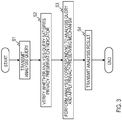
- the analysis query response method is achieved by, for example, causing the components of the analysis query response system to perform the process from step S1 to step S4 described in Fig. 3 and hereinafter.
- the database apparatus 2 includes a storage function that stores personal data, a verification function that verifies that a received analysis query may satisfy a privacy preservation indicator, and a privacy-preserving mechanism function that performs an analysis query on the personal data and applies a privacy-preserving mechanism.
- the storage function is achieved by a personal data storage part 211.
- the verification function is achieved by a verification execution part 222.
- the privacy-preserving mechanism function is achieved by an analysis query execution and preservation part 214.
- An analysis query is written in a programming language prespecified by the database apparatus 2 in advance.
- the database apparatus 2 and the user terminal 1 it is assumed that the execution environment of the programming language can be constructed.
- the related art "differential privacy” and “ACL2” are used as the "privacy preservation indicator” and the "programming language", respectively.
- a programming language having theorem-proving functions equal to or exceeding ACL2 in capability may also be used as the programming language.
- Reference literature 1 " User manual for the ACL2 Theorem Prover and the ACL2 Community Books", [online], [retrieved December 13, 2018], Internet ⁇ URL: http://www.cs.utexas.edu/users/moore/acl2/v8-0/combined-manual/index.html>
- Differential privacy is a privacy preservation indicator proposed by Reference literature 2, for example.
- the parameter ⁇ represents a predetermined number close to 0, Pr represents probability, and e represents the natural logarithm.
- differential privacy many techniques of the related art exist for determining an appropriate privacy-preserving mechanism M depending on the "behavior” of the analysis calculation q.
- the “behavior” of the analysis calculation q is called the "sensitivity" in the context of differential privacy.
- the privacy-preserving mechanism M(q(D)) q(D) + Lap( ⁇ q / ⁇ ) using a parameter ⁇ q called "global sensitivity" and Laplace noise Lap is known to satisfy ⁇ -differential privacy. Consequently, if the global sensitivity ⁇ q of q can be obtained for all analysis calculations q, it is possible to construct a privacy-preserving mechanism M.
- the meaning of the global sensitivity ⁇ q is "the maximum value of the difference that may occur in the case where there is at most one change (D ⁇ ⁇ D) in the input data into q".
- ACL2 is a programming language based on Common Lisp, and is a formal method and a theorem prover.
- ACL2 can be used to write functions that perform arbitrary calculations by combining basic calculations such as the four basic arithmetic operations. Also, with ACL2, a proof that a function "satisfies a certain property" can be written, and ACL2 is capable of verifying that the proof is correct.
- the present embodiment preserves privacy appropriately and responds with an analysis result to an analysis query written in ACL2.
- an initial value of the parameter ⁇ that represents a privacy budget allowed by the database apparatus 2 is at first set individually in each user terminal 1. Also, a library function group and a library theorem group to provide to the user terminal 1 may be written in ACL2 in the database apparatus 2, as necessary.
- the user terminal 1 generates and transmits an analysis query (step S1).
- the analysis query is assumed to contain at least information about a function q that performs an analysis calculation.
- the analysis query is generated under a predetermined privacy preservation indicator and a predetermined programming language.
- the user terminal 1 may additionally generate and transmit proof information, which is information related to a proof that the analysis query satisfies the predetermined privacy preservation indicator.
- the proof information may be proof information related to the global sensitivity of the analysis calculation corresponding to the analysis query.
- One example of the proof information is information about a proof that the global sensitivity of the function q satisfies the property ⁇ q ⁇ ⁇ d .
- the proof information is written in a predetermined programming language such as ACL2 for example.
- the analysis query and the proof information may also be written using the library function group and the library theorem group.
- the user terminal 1 may additionally transmit a privacy quantity that is consumed by the analysis query.
- the privacy quantity is the parameter ⁇ q for example.
- ⁇ d may be a constant, or a function that takes d and X as input variables.
- a 1 , ..., a n are predetermined numbers. Consequently, the user terminal 1 proves that
- the user terminal 1 can generate proof information related to the global sensitivity of an analysis calculation corresponding to an analysis query that is unknown to the database apparatus 2, without knowing the actual personal data.
- the database apparatus 2 is provided with an analysis query execution apparatus 21 and an analysis query verification apparatus 22 for example.
- the analysis query execution apparatus 21 is provided with a personal data storage part 211, an analysis query reception part 212, a verification request part 213, an analysis query execution and preservation part 214, and an analysis result transmission part 215.
- the analysis query verification apparatus 22 is provided with an analysis query reception part 221, a verification execution part 222, and a verification result transmission part 223.
- Personal data is stored in the personal data storage part 211.
- Personal data contains combinations of any information in any format, such as numerical values and character strings, for example.
- the analysis query reception part 212 receives an analysis query transmitted by the user terminal 1.
- the analysis query reception part 212 outputs the analysis query to the verification request part 213.
- the verification request part 213 outputs the analysis query and a verification request corresponding to the analysis query to the analysis query reception part 221 of the analysis query verification apparatus 22. Also, the verification request part 213 outputs the analysis query to the analysis query execution and preservation part 214.
- the analysis query reception part 221 outputs the analysis query and the verification request corresponding to the analysis query to the verification execution part 222.
- the verification execution part 222 receives the verification request corresponding to the analysis query and performs a first verification of whether the analysis query satisfies a predetermined privacy preservation indicator (step S2). The result of the first verification is output to the verification result transmission part 223.
- the analysis query together with the proof information are input into the verification request part 213 through the analysis query reception part 212, the verification request part 213, and the analysis query reception part 221.
- the verification execution part 222 may use the proof information to perform the first verification of whether the analysis query satisfies the predetermined privacy preservation indicator. By using the proof information, the first verification can be performed more easily.
- the verification execution part 222 executes ACL2 to verify that a proof claimed by the user terminal 1 is correct regarding a property of an analysis calculation q corresponding to the analysis query.
- the verification result transmission part 223 outputs the result of the first verification to the analysis query execution and preservation part 214.
- the analysis query execution and preservation part 214 determines whether the first verification is successful on the basis of the result of the first verification, and discards the analysis query if the first verification is unsuccessful.
- the analysis query execution and preservation part 214 performs an analysis corresponding to the analysis query on personal data read from the personal data storage part to acquire an analysis result, and applies a predetermined privacy-preserving mechanism to the acquired analysis result (step S3).
- the analysis query execution and preservation part 214 applies a privacy-preserving mechanism by deriving an upper bound on the global sensitivity from the proven property of the analysis calculation q, generating noise v so as to satisfy ⁇ q -differential privacy, and adding the generated noise v to the analysis result q(D).
- the analysis result after applying the privacy-preserving mechanism is q(D) + v.
- the analysis query together with the privacy quantity are input into the analysis query execution and preservation part 214 through the analysis query reception part 212 and the verification request part 213.
- the analysis query execution and preservation part 214 may additionally perform a second verification of whether the remainder of a predetermined privacy budget for the user terminal 1 exceeds the privacy quantity, and in the case where the first verification and the second verification are successful, the analysis query execution and preservation part 214 may perform an analysis corresponding to the analysis query on personal data read from the personal data storage part 211 to acquire an analysis result, and apply a predetermined privacy-preserving mechanism to the acquired analysis result.
- the analysis query execution and preservation part 214 compares the parameter ⁇ q expressing the privacy quantity to be consumed to the parameter ⁇ expressing the privacy budget, and executes the analysis query only if ⁇ q ⁇ ⁇ holds.
- the parameter ⁇ expressing the privacy budget is updated by the remainder ⁇ - ⁇ q obtained by subtracting the consumed privacy quantity ⁇ q from the parameter ⁇ expressing the privacy budget and saved.
- the analysis result generated by the analysis query execution and preservation part 214 is output to the analysis result transmission part 215.
- the analysis result transmission part 215 transmits the analysis result to the user terminal 1 (step S4).
- data may be exchanged directly between the components of the analysis query response system, or through a storage part not illustrated.
- the program stating the processing content can be recorded to a computer-readable recording medium.
- the computer-readable recording medium may be any type of medium such as a magnetic recording apparatus, an optical disc, a magneto-optical recording medium, or semiconductor memory, for example.
- the program is distributed by selling, transferring, or lending a portable recording medium such as a DVD or CD-ROM disc on which the program is recorded, for example.
- the program may also be stored in a storage apparatus of a server computer and distributed by transferring the program from the server computer to another computer over a network.
- the computer that executes such a computer first stores the program recorded on the portable recording medium or the program transferred from the server computer in its own storage apparatus, for example. Additionally, when executing processes, the computer loads the program stored in its own storage apparatus, and executes processes according to the loaded program. Also, as a different mode of executing the program, the computer may be configured to load the program directly from the portable recording medium and execute processes according to the program, and furthermore, every time the program is transferred to the computer from the server computer, the computer may be configured to execute processes according to the received program in succession.
- a configuration for executing the processes described above may also be achieved by what is called an application service provider (ASP) type service, in which processing functions are achieved by an execution instruction and a result acquisition only, without transferring the program from the server computer to the computer.
- ASP application service provider
- the program in this mode is assumed to include accompanying information conforming to the program for processing by an electronic computer (such as data that is not direct instructions to the computer, but has properties that stipulate processing by the computer).
- the apparatus is configured by causing the predetermined program to be executed on the computer, but at least a portion of the processing content may also be achieved in hardware.
Landscapes
- Engineering & Computer Science (AREA)
- Theoretical Computer Science (AREA)
- Computer Security & Cryptography (AREA)
- General Engineering & Computer Science (AREA)
- General Physics & Mathematics (AREA)
- Physics & Mathematics (AREA)
- Health & Medical Sciences (AREA)
- Databases & Information Systems (AREA)
- Bioethics (AREA)
- General Health & Medical Sciences (AREA)
- Computer Hardware Design (AREA)
- Software Systems (AREA)
- Signal Processing (AREA)
- Computer Networks & Wireless Communication (AREA)
- Computational Linguistics (AREA)
- Data Mining & Analysis (AREA)
- Medical Informatics (AREA)
- Computing Systems (AREA)
- Information Retrieval, Db Structures And Fs Structures Therefor (AREA)
Abstract
Description
- The present invention relates to a privacy-preserving query response technology capable of requesting analysis while also preserving the privacy of data.
- Recently, interest in the utilization of various information is growing. Particularly, there is increasing demand to utilize personal data, that is, information closely related to individuals, in various fields such as commerce, medical care, and welfare.
- On the other hand, utilizing personal data demands sufficient consideration for privacy, which refers to sensitive information included in personal data. Particularly, in the case of disclosing and providing analysis results such as statistics obtained from a plurality of personal data to another party, it is necessary to apply an appropriate privacy-preserving mechanism so that personal data cannot be deduced from the disclosed statistics.
- Such methods of attaining both privacy preservation and data disclosure are collectively referred to as "privacy-preserving data publishing".
- One model of privacy-preserving data publishing is called "privacy-preserving query response". This is a model comprising a database apparatus that saves a plurality of personal data and a user apparatus that requests analysis of the personal data. In privacy-preserving query response, first, the user apparatus creates a desired analysis query to perform on data in the database apparatus, and sends the analysis query to the database apparatus. The analysis query is written in some kind of programming language, for example.
- The database apparatus executes the sent analysis query on data held in the database apparatus itself, applies a privacy-preserving mechanism to the analysis execution result according to a privacy preservation indicator preset in the database apparatus, and replies to the user.
- Existing methods of achieving privacy-preserving query response include the methods in Non-patent
literatures -
- Non-patent literature 1: F. McSherry, "Privacy integrated queries: An Extensible Platform for Privacy-Preserving Data Analysis", In Proceedings of the 35th SIGMOD International Conference on Management of Data (SIGMOD), 2009.
- Non-patent literature 2: J. Hou, X.-Y. Li, T. Jung, Y. Wang, and D. Zheng, "CASTLE: Enhancing the utility of inequality query auditing without denial threats", TIFS, 2018.
- In the privacy-preserving query response achieved in the related art, only calculations by library functions, which are standardized calculations implemented and maintained on the database apparatus side, and analysis queries achievable by combinations of library functions can be sent as queries.
- If free-form analysis queries not dependent on library functions, such as analysis queries structured as combinations of basic calculations like the four basic arithmetic operations and equality comparisons, could be sent, a wider range of data utilization would be possible.
- However, an increasing degree of freedom in crafting analysis queries also makes it easier to craft malicious analysis queries intended to infringe on the privacy of the data, and there is a possibility that applying an appropriate privacy-preserving mechanism in the database apparatus may become difficult as a result.
- Consequently, the related art prevents privacy infringement by limiting the degree of freedom to only library functions and combinations thereof.
- An object of the present invention is to provide an analysis query response system, an analysis query execution apparatus, an analysis query verification apparatus, an analysis query response method, and a program capable of responding to more free-form analysis queries than the related art.
- An analysis query response system according to an aspect of the invention comprises a user terminal that generates and transmits an analysis query, and a database apparatus including an analysis query verification apparatus that includes a verification execution part that performs a first verification of whether the analysis query satisfies a predetermined privacy preservation indicator, and an analysis query execution apparatus that includes a personal data storage part that stores personal data and an analysis query execution and preservation part that, in a case where the first verification is successful, performs an analysis corresponding to the analysis query on the personal data read from the personal data storage part to acquire an analysis result, and applies a predetermined privacy-preserving mechanism to the acquired analysis result.
- By providing the database apparatus with a verification function that verifies whether an analysis query satisfies a predetermined privacy preservation indicator, it is possible to respond to analysis queries that are more free-form than the related art.
-
-
Fig. 1 is a diagram illustrating an example of a functional configuration of an analysis query response system. -
Fig. 2 is a diagram illustrating an example of a functional configuration of a database apparatus. -
Fig. 3 is a diagram illustrating an example of a processing procedure in an analysis query response method. - Hereinafter, embodiments of the present invention will be described in detail. Note that structural elements having the same function are denoted with the same reference numerals in the drawings, and duplicate description of such elements is omitted.
- As illustrated in
Fig. 1 for example, an analysis query response system is provided with adatabase apparatus 2 that accumulates and saves a plurality of personal data, and auser terminal 1 which is a user apparatus that creates and transmits analysis queries to thedatabase apparatus 2. As described later, thedatabase apparatus 2 achieves a privacy-preserving query response to an arbitrarily created analysis query according to a predetermined privacy preservation indicator. The analysis query response method is achieved by, for example, causing the components of the analysis query response system to perform the process from step S1 to step S4 described inFig. 3 and hereinafter. - The
database apparatus 2 includes a storage function that stores personal data, a verification function that verifies that a received analysis query may satisfy a privacy preservation indicator, and a privacy-preserving mechanism function that performs an analysis query on the personal data and applies a privacy-preserving mechanism. The storage function is achieved by a personaldata storage part 211. The verification function is achieved by averification execution part 222. The privacy-preserving mechanism function is achieved by an analysis query execution andpreservation part 214. - An analysis query is written in a programming language prespecified by the
database apparatus 2 in advance. In thedatabase apparatus 2 and theuser terminal 1, it is assumed that the execution environment of the programming language can be constructed. - In the embodiment to be described later, the related art "differential privacy" and "ACL2" (for example, see Reference literature 1) are used as the "privacy preservation indicator" and the "programming language", respectively. However, a programming language having theorem-proving functions equal to or exceeding ACL2 in capability may also be used as the programming language.
- Reference literature 1: "User manual for the ACL2 Theorem Prover and the ACL2 Community Books", [online], [retrieved December 13, 2018], Internet <URL: http://www.cs.utexas.edu/users/moore/acl2/v8-0/combined-manual/index.html>
- Differential privacy is a privacy preservation indicator proposed by
Reference literature 2, for example. - Reference literature 2: C. Dwork, "Differential privacy", In Proceedings of the International Colloquium on Automata, Languages and Programming (ICALP)(2), 112, 2006.
- In the definition of the privacy preservation indicator, for a plurality of data sets D, a different data set ~D in which only one data element is different, and a parameter ε, when an analysis calculation q and a privacy-preserving mechanism M satisfy the inequality Pr[M(q(D)) = x] ≤ eεPr[M(q(~D)) =x], the analysis calculation q and the privacy-preserving mechanism M are considered to satisfy ε-differential privacy. The parameter ε represents a predetermined number close to 0, Pr represents probability, and e represents the natural logarithm.
- The above inequality indicates that by applying the privacy-preserving mechanism M, the values q(D) and q(~D) obtained by inputting the two different data sets D and ~D into the analysis calculation q will be the same value x with a high probability. In other words, this means that it will be difficult to infer from the analysis result whether the original data of the analysis is D or ~D.
- In differential privacy, many techniques of the related art exist for determining an appropriate privacy-preserving mechanism M depending on the "behavior" of the analysis calculation q. The "behavior" of the analysis calculation q is called the "sensitivity" in the context of differential privacy.
- Particularly, the privacy-preserving mechanism M(q(D)) = q(D) + Lap(δq / ε) using a parameter δq called "global sensitivity" and Laplace noise Lap is known to satisfy ε-differential privacy. Consequently, if the global sensitivity δq of q can be obtained for all analysis calculations q, it is possible to construct a privacy-preserving mechanism M. The global sensitivity can be obtained as δq = maxD, ~ D(|q(D) - q(~D)|), for example. The meaning of the global sensitivity δq is "the maximum value of the difference that may occur in the case where there is at most one change (D→~D) in the input data into q".
- ACL2 is a programming language based on Common Lisp, and is a formal method and a theorem prover.
- Like Common Lisp, ACL2 can be used to write functions that perform arbitrary calculations by combining basic calculations such as the four basic arithmetic operations. Also, with ACL2, a proof that a function "satisfies a certain property" can be written, and ACL2 is capable of verifying that the proof is correct.
- The present embodiment preserves privacy appropriately and responds with an analysis result to an analysis query written in ACL2.
- In the present embodiment, an initial value of the parameter ε that represents a privacy budget allowed by the
database apparatus 2 is at first set individually in eachuser terminal 1. Also, a library function group and a library theorem group to provide to theuser terminal 1 may be written in ACL2 in thedatabase apparatus 2, as necessary. - The
user terminal 1 generates and transmits an analysis query (step S1). - The analysis query is assumed to contain at least information about a function q that performs an analysis calculation. The analysis query is generated under a predetermined privacy preservation indicator and a predetermined programming language.
- The
user terminal 1 may additionally generate and transmit proof information, which is information related to a proof that the analysis query satisfies the predetermined privacy preservation indicator. In the case where the predetermined privacy preservation indicator is ε-differential privacy, the proof information may be proof information related to the global sensitivity of the analysis calculation corresponding to the analysis query. One example of the proof information is information about a proof that the global sensitivity of the function q satisfies the property δq ≤ Δd. The proof information is written in a predetermined programming language such as ACL2 for example. - In the case where a library function group and a library theorem group provided by the
database apparatus 2 exist, the analysis query and the proof information may also be written using the library function group and the library theorem group. - Furthermore, the
user terminal 1 may additionally transmit a privacy quantity that is consumed by the analysis query. In the case where the predetermined privacy preservation indicator is ε-differential privacy, the privacy quantity is the parameter εq for example. - Note that the
user terminal 1 does not know the actual data D (and ~D and the like) on the database apparatus, and therefore is unable to compute the global sensitivity δq directly. For this reason, instead of D and ~D, the two of an input variable X = (x1, ..., xn) of the function q and an input variable ~X = (x1, ..., xi + d, ..., xn) obtained by using a variable d to modify an arbitrary position i (where 1 ≤ i ≤ n) of X are used to prove the property. In other words, if |q(X) - q(~X)| ≤ Δd is satisfied for arbitrary X and ~X, then the same is also true when (X, ~X) = (D, ~D), and therefore max(|q(D) - q(~D)|) ≤ Δd holds. Here, Δd may be a constant, or a function that takes d and X as input variables. - For example, in the case where the function q is the linear combination q(X) = Σ1≤k≤nakxk, q(~X) = (∑1≤k≤n, k≠iakxk) + ai(xi + d) = (∑i≤k≤nakxk) + aid gives |q(X) - q(~X)| = |aid| ≤ |maxi(ai)·d|, and when d matches the width of the range of actual data, Δd = |maxi(ai)·d| matches the global sensitivity of q. Here, a1, ..., an are predetermined numbers. Consequently, the
user terminal 1 proves that |q(X) - q(~X)| ≤ |maxi(ai)·d| for the variables X, ~X, and d. - For example, with this configuration, the
user terminal 1 can generate proof information related to the global sensitivity of an analysis calculation corresponding to an analysis query that is unknown to thedatabase apparatus 2, without knowing the actual personal data. - As illustrated in
Fig. 2 , thedatabase apparatus 2 is provided with an analysisquery execution apparatus 21 and an analysisquery verification apparatus 22 for example. - The analysis
query execution apparatus 21 is provided with a personaldata storage part 211, an analysisquery reception part 212, averification request part 213, an analysis query execution andpreservation part 214, and an analysisresult transmission part 215. - The analysis
query verification apparatus 22 is provided with an analysisquery reception part 221, averification execution part 222, and a verificationresult transmission part 223. - Personal data is stored in the personal
data storage part 211. Personal data contains combinations of any information in any format, such as numerical values and character strings, for example. - The analysis
query reception part 212 receives an analysis query transmitted by theuser terminal 1. The analysisquery reception part 212 outputs the analysis query to theverification request part 213. - The
verification request part 213 outputs the analysis query and a verification request corresponding to the analysis query to the analysisquery reception part 221 of the analysisquery verification apparatus 22. Also, theverification request part 213 outputs the analysis query to the analysis query execution andpreservation part 214. - The analysis
query reception part 221 outputs the analysis query and the verification request corresponding to the analysis query to theverification execution part 222. - The
verification execution part 222 receives the verification request corresponding to the analysis query and performs a first verification of whether the analysis query satisfies a predetermined privacy preservation indicator (step S2). The result of the first verification is output to the verificationresult transmission part 223. - Note that in the case where the
user terminal 1 outputs proof information, the analysis query together with the proof information are input into theverification request part 213 through the analysisquery reception part 212, theverification request part 213, and the analysisquery reception part 221. In this case, theverification execution part 222 may use the proof information to perform the first verification of whether the analysis query satisfies the predetermined privacy preservation indicator. By using the proof information, the first verification can be performed more easily. - For example, the
verification execution part 222 executes ACL2 to verify that a proof claimed by theuser terminal 1 is correct regarding a property of an analysis calculation q corresponding to the analysis query. - The verification
result transmission part 223 outputs the result of the first verification to the analysis query execution andpreservation part 214. - The analysis query execution and
preservation part 214 determines whether the first verification is successful on the basis of the result of the first verification, and discards the analysis query if the first verification is unsuccessful. - On the other hand, if the first verification is successful, the analysis query execution and
preservation part 214 performs an analysis corresponding to the analysis query on personal data read from the personal data storage part to acquire an analysis result, and applies a predetermined privacy-preserving mechanism to the acquired analysis result (step S3). - For example, the analysis query execution and
preservation part 214 applies a privacy-preserving mechanism by deriving an upper bound on the global sensitivity from the proven property of the analysis calculation q, generating noise v so as to satisfy εq-differential privacy, and adding the generated noise v to the analysis result q(D). In this case, the analysis result after applying the privacy-preserving mechanism is q(D) + v. The noise v may be generated as v = Lap(Δd / εq) as described above, or the noise v may be generated so as to satisfy εq-differential privacy according to another method. - Note that in the case where the
user terminal 1 additionally transmits a privacy quantity that is consumed by the analysis query, the analysis query together with the privacy quantity are input into the analysis query execution andpreservation part 214 through the analysisquery reception part 212 and theverification request part 213. - In this case, the analysis query execution and
preservation part 214 may additionally perform a second verification of whether the remainder of a predetermined privacy budget for theuser terminal 1 exceeds the privacy quantity, and in the case where the first verification and the second verification are successful, the analysis query execution andpreservation part 214 may perform an analysis corresponding to the analysis query on personal data read from the personaldata storage part 211 to acquire an analysis result, and apply a predetermined privacy-preserving mechanism to the acquired analysis result. - In other words, for example, in the case where the first verification is successful, the analysis query execution and
preservation part 214 compares the parameter εq expressing the privacy quantity to be consumed to the parameter ε expressing the privacy budget, and executes the analysis query only if εq ≤ ε holds. - Note that the parameter ε expressing the privacy budget is updated by the remainder ε - εq obtained by subtracting the consumed privacy quantity εq from the parameter ε expressing the privacy budget and saved.
- The analysis result generated by the analysis query execution and
preservation part 214 is output to the analysisresult transmission part 215. - The analysis
result transmission part 215 transmits the analysis result to the user terminal 1 (step S4). - According to the above, a privacy-preserving query response database apparatus for which analysis queries can be created more freely than the related art may be achieved.
- The foregoing describes embodiments of the present invention, but the specific configuration is not limited to these embodiments, and appropriate design modifications or the like within a scope that does not depart from the gist of the present invention obviously are to be included in the present invention.
- The various processes described in the embodiments not only may be executed in a time series following the order described, but may also be executed in parallel or individually according to the processing performance of the apparatus executing the process, or as needed.
- For example, data may be exchanged directly between the components of the analysis query response system, or through a storage part not illustrated.
- In the case where the various processing functions in each of the apparatuses described above are achieved by a computer, the processing content of the functions to be included in each apparatus is stated by a program. Additionally, by causing a computer to execute the program, the various processing functions in each of the above apparatuses are achieved on the computer
- The program stating the processing content can be recorded to a computer-readable recording medium. The computer-readable recording medium may be any type of medium such as a magnetic recording apparatus, an optical disc, a magneto-optical recording medium, or semiconductor memory, for example.
- Also, the program is distributed by selling, transferring, or lending a portable recording medium such as a DVD or CD-ROM disc on which the program is recorded, for example. Furthermore, the program may also be stored in a storage apparatus of a server computer and distributed by transferring the program from the server computer to another computer over a network.
- The computer that executes such a computer first stores the program recorded on the portable recording medium or the program transferred from the server computer in its own storage apparatus, for example. Additionally, when executing processes, the computer loads the program stored in its own storage apparatus, and executes processes according to the loaded program. Also, as a different mode of executing the program, the computer may be configured to load the program directly from the portable recording medium and execute processes according to the program, and furthermore, every time the program is transferred to the computer from the server computer, the computer may be configured to execute processes according to the received program in succession. Also, a configuration for executing the processes described above may also be achieved by what is called an application service provider (ASP) type service, in which processing functions are achieved by an execution instruction and a result acquisition only, without transferring the program from the server computer to the computer. Note that the program in this mode is assumed to include accompanying information conforming to the program for processing by an electronic computer (such as data that is not direct instructions to the computer, but has properties that stipulate processing by the computer).
- Also, in this mode, the apparatus is configured by causing the predetermined program to be executed on the computer, but at least a portion of the processing content may also be achieved in hardware.
-
- 1
- user terminal
- 2
- database apparatus
- 21
- analysis query execution apparatus
- 211
- personal data storage part
- 212
- analysis query reception part
- 213
- verification request part
- 214
- analysis query execution and preservation part
- 215
- analysis result transmission part
- 22
- analysis query verification apparatus
- 221
- analysis query reception part
- 222
- verification execution part
- 223
- verification result transmission part
Claims (8)
- An analysis query response system comprising:a user terminal that generates and transmits an analysis query; anda database apparatus including an analysis query verification apparatus that includes a verification execution part that performs a first verification of whether the analysis query satisfies a predetermined privacy preservation indicator, and an analysis query execution apparatus that includes a personal data storage part that stores personal data and an analysis query execution and preservation part that, in a case where the first verification is successful, performs an analysis corresponding to the analysis query on the personal data read from the personal data storage part to acquire an analysis result, and applies a predetermined privacy-preserving mechanism to the acquired analysis result.
- The analysis query response system according to Claim 1, whereinthe user terminal generates the analysis query under a predetermined privacy preservation indicator and a predetermined programming language, andthe analysis query execution and preservation part discards the analysis query in a case where the first verification is unsuccessful.
- The analysis query response system according to Claim 2, whereinthe user terminal additionally generates and transmits proof information, the proof information being information related to a proof that the analysis query satisfies the predetermined privacy preservation indicator, andthe verification execution part uses the proof information to perform the first verification of whether the analysis query satisfies the predetermined privacy preservation indicator.
- The analysis query response system according to Claim 3, whereinthe predetermined privacy preservation indicator is ε-differential privacy,the proof information is proof information related to a global sensitivity of an analysis calculation corresponding to the analysis query,the user terminal additionally transmits a privacy quantity that is consumed by the analysis query,the analysis query execution and preservation part additionally performs a second verification of whether a remainder of a predetermined privacy budget for the user terminal exceeds the privacy quantity, and in a case where the first verification and the second verification are successful, the analysis query execution and preservation part performs an analysis corresponding to the analysis query on personal data read from the personal data storage part to acquire an analysis result, and applies a predetermined privacy-preserving mechanism to the acquired analysis result, andthe analysis query execution and preservation part discards the analysis query in a case where either of the first verification and the second verification is unsuccessful.
- The analysis query execution apparatus of the analysis query response system according to any of Claims 1 to 4.
- The analysis query verification apparatus of the analysis query response system according to any of Claims 1 to 4, wherein
the analysis query verification apparatus further includes an analysis query reception part that receives the analysis query and a verification result transmission part that transmits a verification result from the verification execution part to the analysis query execution apparatus. - An analysis query response method comprising:a step of a user terminal generating and transmitting an analysis query;a step of a verification execution part of a database apparatus performing a first verification of whether the analysis query satisfies a predetermined privacy preservation indicator; anda step of an analysis query execution and preservation part of the database apparatus, in a case where the first verification is successful, performing an analysis corresponding to the analysis query on personal data read from a personal data storage part storing personal data to acquire an analysis result, and applying a predetermined privacy-preserving mechanism to the acquired analysis result.
- A program for causing a computer to function as each part of the analysis query execution apparatus according to Claim 5 or the analysis query verification apparatus according to Claim 6.
Applications Claiming Priority (2)
| Application Number | Priority Date | Filing Date | Title |
|---|---|---|---|
| JP2018238166 | 2018-12-20 | ||
| PCT/JP2019/049849 WO2020130082A1 (en) | 2018-12-20 | 2019-12-19 | Analysis query response system, analysis query execution device, analysis query verification device, analysis query response method, and program |
Publications (3)
| Publication Number | Publication Date |
|---|---|
| EP3901808A1 true EP3901808A1 (en) | 2021-10-27 |
| EP3901808A4 EP3901808A4 (en) | 2022-09-14 |
| EP3901808B1 EP3901808B1 (en) | 2023-10-11 |
Family
ID=71100817
Family Applications (1)
| Application Number | Title | Priority Date | Filing Date |
|---|---|---|---|
| EP19901217.0A Active EP3901808B1 (en) | 2018-12-20 | 2019-12-19 | Analysis query response system, analysis query execution device, analysis query verification device, analysis query response method, and program |
Country Status (6)
| Country | Link |
|---|---|
| US (1) | US12141322B2 (en) |
| EP (1) | EP3901808B1 (en) |
| JP (1) | JP7364595B2 (en) |
| CN (1) | CN113228022B (en) |
| AU (1) | AU2019407410B2 (en) |
| WO (1) | WO2020130082A1 (en) |
Families Citing this family (5)
| Publication number | Priority date | Publication date | Assignee | Title |
|---|---|---|---|---|
| WO2022061165A1 (en) * | 2020-09-18 | 2022-03-24 | Liveramp, Inc. | Analytics platform for federated private data |
| WO2022090067A1 (en) * | 2020-10-29 | 2022-05-05 | Koninklijke Philips N.V. | Method of anonymizing genomic data |
| WO2023058247A1 (en) * | 2021-10-08 | 2023-04-13 | 日本電信電話株式会社 | Safety evaluation indicator calculation device, safety evaluation indicator calculation method, and program |
| CN114490789B (en) * | 2022-01-26 | 2025-12-16 | 北京沃东天骏信息技术有限公司 | Query request processing method and device |
| US20250245373A1 (en) * | 2024-01-29 | 2025-07-31 | Snowflake Inc. | Database system using differential privacy domain |
Family Cites Families (16)
| Publication number | Priority date | Publication date | Assignee | Title |
|---|---|---|---|---|
| US10231077B2 (en) * | 2007-07-03 | 2019-03-12 | Eingot Llc | Records access and management |
| US9928379B1 (en) * | 2008-09-08 | 2018-03-27 | Steven Miles Hoffer | Methods using mediation software for rapid health care support over a secured wireless network; methods of composition; and computer program products therefor |
| US8661047B2 (en) * | 2010-05-17 | 2014-02-25 | Microsoft Corporation | Geometric mechanism for privacy-preserving answers |
| JP5903015B2 (en) * | 2012-08-17 | 2016-04-13 | 日本電信電話株式会社 | Information collection system |
| US20150286827A1 (en) * | 2012-12-03 | 2015-10-08 | Nadia Fawaz | Method and apparatus for nearly optimal private convolution |
| JP6310345B2 (en) * | 2014-06-30 | 2018-04-11 | 株式会社Nttドコモ | Privacy protection device, privacy protection method, and database creation method |
| CN104135362B (en) * | 2014-07-21 | 2017-06-16 | 南京大学 | A kind of availability calculations method of the data based on the issue of difference privacy |
| WO2016203752A1 (en) * | 2015-06-15 | 2016-12-22 | 日本電気株式会社 | Information processing device, information processing method, and storage medium |
| US10681088B2 (en) * | 2015-09-30 | 2020-06-09 | International Business Machines Corporation | Data security system |
| US20170124152A1 (en) * | 2015-11-02 | 2017-05-04 | LeapYear Technologies, Inc. | Differentially private processing and database storage |
| EP3449414B1 (en) * | 2016-04-29 | 2021-12-08 | Privitar Limited | Computer-implemented privacy engineering system and method |
| US11194864B2 (en) * | 2016-05-10 | 2021-12-07 | Aircloak Gmbh | Systems and methods for anonymized statistical database queries |
| CN106529327B9 (en) * | 2016-10-08 | 2023-02-03 | 西安电子科技大学 | Data access system and method for encrypted database in hybrid cloud environment |
| JP6719413B2 (en) * | 2017-03-28 | 2020-07-08 | 株式会社Kddi総合研究所 | Security gateway device, method, and program |
| CN108537055B (en) * | 2018-03-06 | 2022-04-05 | 南京邮电大学 | Privacy budget allocation and data release method and system for data query privacy protection |
| CN109977324B (en) * | 2019-03-28 | 2022-09-16 | 南京邮电大学 | A method and system for mining points of interest |
-
2019
- 2019-12-19 JP JP2020561513A patent/JP7364595B2/en active Active
- 2019-12-19 US US17/413,578 patent/US12141322B2/en active Active
- 2019-12-19 EP EP19901217.0A patent/EP3901808B1/en active Active
- 2019-12-19 WO PCT/JP2019/049849 patent/WO2020130082A1/en not_active Ceased
- 2019-12-19 CN CN201980083872.XA patent/CN113228022B/en active Active
- 2019-12-19 AU AU2019407410A patent/AU2019407410B2/en active Active
Also Published As
| Publication number | Publication date |
|---|---|
| EP3901808A4 (en) | 2022-09-14 |
| WO2020130082A1 (en) | 2020-06-25 |
| US12141322B2 (en) | 2024-11-12 |
| CN113228022B (en) | 2024-01-26 |
| AU2019407410B2 (en) | 2022-09-01 |
| JP7364595B2 (en) | 2023-10-18 |
| EP3901808B1 (en) | 2023-10-11 |
| AU2019407410A1 (en) | 2021-06-10 |
| JPWO2020130082A1 (en) | 2021-10-14 |
| US20220058290A1 (en) | 2022-02-24 |
| CN113228022A (en) | 2021-08-06 |
Similar Documents
| Publication | Publication Date | Title |
|---|---|---|
| EP3901808B1 (en) | Analysis query response system, analysis query execution device, analysis query verification device, analysis query response method, and program | |
| AU2024200809B2 (en) | Data protection via aggregation-based obfuscation | |
| EP3275115B1 (en) | Database server and client for query processing on encrypted data | |
| EP3278263B1 (en) | Computing on encrypted data using deferred evaluation | |
| US9111035B2 (en) | Methods, systems, and computer program products for analyzing an occurrence of an error in a computer program by restricting access to data identified as being sensitive information | |
| Meis et al. | Understanding the privacy goal intervenability | |
| CN118451420A (en) | Protecting workflows with rule-based data access security | |
| CN115730319A (en) | Data processing method, data processing device, computer equipment and storage medium | |
| JP6000175B2 (en) | Anonymization system, anonymization device, user device, anonymization method, and program | |
| Studiawan | Forensic analysis of iOS binary cookie files | |
| US12353590B2 (en) | Secure data processing | |
| Raschke et al. | A template-based policy generation interface for restful web services | |
| Squicciarini et al. | Policy driven node selection in MapReduce | |
| HK40084180B (en) | Data processing method, device, computer equipment and storage medium | |
| HK1249675B (en) | Data publishing method, device, server and storage medium |
Legal Events
| Date | Code | Title | Description |
|---|---|---|---|
| STAA | Information on the status of an ep patent application or granted ep patent |
Free format text: STATUS: THE INTERNATIONAL PUBLICATION HAS BEEN MADE |
|
| PUAI | Public reference made under article 153(3) epc to a published international application that has entered the european phase |
Free format text: ORIGINAL CODE: 0009012 |
|
| STAA | Information on the status of an ep patent application or granted ep patent |
Free format text: STATUS: REQUEST FOR EXAMINATION WAS MADE |
|
| 17P | Request for examination filed |
Effective date: 20210720 |
|
| AK | Designated contracting states |
Kind code of ref document: A1 Designated state(s): AL AT BE BG CH CY CZ DE DK EE ES FI FR GB GR HR HU IE IS IT LI LT LU LV MC MK MT NL NO PL PT RO RS SE SI SK SM TR |
|
| DAV | Request for validation of the european patent (deleted) | ||
| DAX | Request for extension of the european patent (deleted) | ||
| A4 | Supplementary search report drawn up and despatched |
Effective date: 20220812 |
|
| RIC1 | Information provided on ipc code assigned before grant |
Ipc: H04W 12/02 20090101ALI20220808BHEP Ipc: H04L 9/40 20220101ALI20220808BHEP Ipc: G06F 21/44 20130101ALI20220808BHEP Ipc: G06F 16/245 20190101ALI20220808BHEP Ipc: G06F 16/2452 20190101ALI20220808BHEP Ipc: G06F 21/62 20130101AFI20220808BHEP |
|
| GRAP | Despatch of communication of intention to grant a patent |
Free format text: ORIGINAL CODE: EPIDOSNIGR1 |
|
| STAA | Information on the status of an ep patent application or granted ep patent |
Free format text: STATUS: GRANT OF PATENT IS INTENDED |
|
| RIC1 | Information provided on ipc code assigned before grant |
Ipc: H04L 9/08 20060101ALI20230426BHEP Ipc: H04W 12/02 20090101ALI20230426BHEP Ipc: H04L 9/40 20220101ALI20230426BHEP Ipc: G06F 21/44 20130101ALI20230426BHEP Ipc: G06F 16/245 20190101ALI20230426BHEP Ipc: G06F 16/2452 20190101ALI20230426BHEP Ipc: G06F 21/62 20130101AFI20230426BHEP |
|
| INTG | Intention to grant announced |
Effective date: 20230515 |
|
| GRAS | Grant fee paid |
Free format text: ORIGINAL CODE: EPIDOSNIGR3 |
|
| GRAA | (expected) grant |
Free format text: ORIGINAL CODE: 0009210 |
|
| STAA | Information on the status of an ep patent application or granted ep patent |
Free format text: STATUS: THE PATENT HAS BEEN GRANTED |
|
| AK | Designated contracting states |
Kind code of ref document: B1 Designated state(s): AL AT BE BG CH CY CZ DE DK EE ES FI FR GB GR HR HU IE IS IT LI LT LU LV MC MK MT NL NO PL PT RO RS SE SI SK SM TR |
|
| REG | Reference to a national code |
Ref country code: GB Ref legal event code: FG4D |
|
| REG | Reference to a national code |
Ref country code: CH Ref legal event code: EP |
|
| REG | Reference to a national code |
Ref country code: DE Ref legal event code: R096 Ref document number: 602019039378 Country of ref document: DE |
|
| REG | Reference to a national code |
Ref country code: IE Ref legal event code: FG4D |
|
| REG | Reference to a national code |
Ref country code: LT Ref legal event code: MG9D |
|
| REG | Reference to a national code |
Ref country code: NL Ref legal event code: MP Effective date: 20231011 |
|
| REG | Reference to a national code |
Ref country code: AT Ref legal event code: MK05 Ref document number: 1620933 Country of ref document: AT Kind code of ref document: T Effective date: 20231011 |
|
| PG25 | Lapsed in a contracting state [announced via postgrant information from national office to epo] |
Ref country code: NL Free format text: LAPSE BECAUSE OF FAILURE TO SUBMIT A TRANSLATION OF THE DESCRIPTION OR TO PAY THE FEE WITHIN THE PRESCRIBED TIME-LIMIT Effective date: 20231011 |
|
| PG25 | Lapsed in a contracting state [announced via postgrant information from national office to epo] |
Ref country code: GR Free format text: LAPSE BECAUSE OF FAILURE TO SUBMIT A TRANSLATION OF THE DESCRIPTION OR TO PAY THE FEE WITHIN THE PRESCRIBED TIME-LIMIT Effective date: 20240112 |
|
| PG25 | Lapsed in a contracting state [announced via postgrant information from national office to epo] |
Ref country code: IS Free format text: LAPSE BECAUSE OF FAILURE TO SUBMIT A TRANSLATION OF THE DESCRIPTION OR TO PAY THE FEE WITHIN THE PRESCRIBED TIME-LIMIT Effective date: 20240211 |
|
| PG25 | Lapsed in a contracting state [announced via postgrant information from national office to epo] |
Ref country code: LT Free format text: LAPSE BECAUSE OF FAILURE TO SUBMIT A TRANSLATION OF THE DESCRIPTION OR TO PAY THE FEE WITHIN THE PRESCRIBED TIME-LIMIT Effective date: 20231011 |
|
| PG25 | Lapsed in a contracting state [announced via postgrant information from national office to epo] |
Ref country code: AT Free format text: LAPSE BECAUSE OF FAILURE TO SUBMIT A TRANSLATION OF THE DESCRIPTION OR TO PAY THE FEE WITHIN THE PRESCRIBED TIME-LIMIT Effective date: 20231011 |
|
| PG25 | Lapsed in a contracting state [announced via postgrant information from national office to epo] |
Ref country code: ES Free format text: LAPSE BECAUSE OF FAILURE TO SUBMIT A TRANSLATION OF THE DESCRIPTION OR TO PAY THE FEE WITHIN THE PRESCRIBED TIME-LIMIT Effective date: 20231011 |
|
| PG25 | Lapsed in a contracting state [announced via postgrant information from national office to epo] |
Ref country code: LT Free format text: LAPSE BECAUSE OF FAILURE TO SUBMIT A TRANSLATION OF THE DESCRIPTION OR TO PAY THE FEE WITHIN THE PRESCRIBED TIME-LIMIT Effective date: 20231011 Ref country code: IS Free format text: LAPSE BECAUSE OF FAILURE TO SUBMIT A TRANSLATION OF THE DESCRIPTION OR TO PAY THE FEE WITHIN THE PRESCRIBED TIME-LIMIT Effective date: 20240211 Ref country code: GR Free format text: LAPSE BECAUSE OF FAILURE TO SUBMIT A TRANSLATION OF THE DESCRIPTION OR TO PAY THE FEE WITHIN THE PRESCRIBED TIME-LIMIT Effective date: 20240112 Ref country code: ES Free format text: LAPSE BECAUSE OF FAILURE TO SUBMIT A TRANSLATION OF THE DESCRIPTION OR TO PAY THE FEE WITHIN THE PRESCRIBED TIME-LIMIT Effective date: 20231011 Ref country code: BG Free format text: LAPSE BECAUSE OF FAILURE TO SUBMIT A TRANSLATION OF THE DESCRIPTION OR TO PAY THE FEE WITHIN THE PRESCRIBED TIME-LIMIT Effective date: 20240111 Ref country code: AT Free format text: LAPSE BECAUSE OF FAILURE TO SUBMIT A TRANSLATION OF THE DESCRIPTION OR TO PAY THE FEE WITHIN THE PRESCRIBED TIME-LIMIT Effective date: 20231011 Ref country code: PT Free format text: LAPSE BECAUSE OF FAILURE TO SUBMIT A TRANSLATION OF THE DESCRIPTION OR TO PAY THE FEE WITHIN THE PRESCRIBED TIME-LIMIT Effective date: 20240212 |
|
| PG25 | Lapsed in a contracting state [announced via postgrant information from national office to epo] |
Ref country code: SE Free format text: LAPSE BECAUSE OF FAILURE TO SUBMIT A TRANSLATION OF THE DESCRIPTION OR TO PAY THE FEE WITHIN THE PRESCRIBED TIME-LIMIT Effective date: 20231011 Ref country code: RS Free format text: LAPSE BECAUSE OF FAILURE TO SUBMIT A TRANSLATION OF THE DESCRIPTION OR TO PAY THE FEE WITHIN THE PRESCRIBED TIME-LIMIT Effective date: 20231011 Ref country code: PL Free format text: LAPSE BECAUSE OF FAILURE TO SUBMIT A TRANSLATION OF THE DESCRIPTION OR TO PAY THE FEE WITHIN THE PRESCRIBED TIME-LIMIT Effective date: 20231011 Ref country code: NO Free format text: LAPSE BECAUSE OF FAILURE TO SUBMIT A TRANSLATION OF THE DESCRIPTION OR TO PAY THE FEE WITHIN THE PRESCRIBED TIME-LIMIT Effective date: 20240111 Ref country code: LV Free format text: LAPSE BECAUSE OF FAILURE TO SUBMIT A TRANSLATION OF THE DESCRIPTION OR TO PAY THE FEE WITHIN THE PRESCRIBED TIME-LIMIT Effective date: 20231011 Ref country code: HR Free format text: LAPSE BECAUSE OF FAILURE TO SUBMIT A TRANSLATION OF THE DESCRIPTION OR TO PAY THE FEE WITHIN THE PRESCRIBED TIME-LIMIT Effective date: 20231011 |
|
| PG25 | Lapsed in a contracting state [announced via postgrant information from national office to epo] |
Ref country code: DK Free format text: LAPSE BECAUSE OF FAILURE TO SUBMIT A TRANSLATION OF THE DESCRIPTION OR TO PAY THE FEE WITHIN THE PRESCRIBED TIME-LIMIT Effective date: 20231011 |
|
| REG | Reference to a national code |
Ref country code: DE Ref legal event code: R097 Ref document number: 602019039378 Country of ref document: DE |
|
| PG25 | Lapsed in a contracting state [announced via postgrant information from national office to epo] |
Ref country code: CZ Free format text: LAPSE BECAUSE OF FAILURE TO SUBMIT A TRANSLATION OF THE DESCRIPTION OR TO PAY THE FEE WITHIN THE PRESCRIBED TIME-LIMIT Effective date: 20231011 |
|
| PG25 | Lapsed in a contracting state [announced via postgrant information from national office to epo] |
Ref country code: SK Free format text: LAPSE BECAUSE OF FAILURE TO SUBMIT A TRANSLATION OF THE DESCRIPTION OR TO PAY THE FEE WITHIN THE PRESCRIBED TIME-LIMIT Effective date: 20231011 |
|
| PG25 | Lapsed in a contracting state [announced via postgrant information from national office to epo] |
Ref country code: SM Free format text: LAPSE BECAUSE OF FAILURE TO SUBMIT A TRANSLATION OF THE DESCRIPTION OR TO PAY THE FEE WITHIN THE PRESCRIBED TIME-LIMIT Effective date: 20231011 Ref country code: SK Free format text: LAPSE BECAUSE OF FAILURE TO SUBMIT A TRANSLATION OF THE DESCRIPTION OR TO PAY THE FEE WITHIN THE PRESCRIBED TIME-LIMIT Effective date: 20231011 Ref country code: RO Free format text: LAPSE BECAUSE OF FAILURE TO SUBMIT A TRANSLATION OF THE DESCRIPTION OR TO PAY THE FEE WITHIN THE PRESCRIBED TIME-LIMIT Effective date: 20231011 Ref country code: EE Free format text: LAPSE BECAUSE OF FAILURE TO SUBMIT A TRANSLATION OF THE DESCRIPTION OR TO PAY THE FEE WITHIN THE PRESCRIBED TIME-LIMIT Effective date: 20231011 Ref country code: DK Free format text: LAPSE BECAUSE OF FAILURE TO SUBMIT A TRANSLATION OF THE DESCRIPTION OR TO PAY THE FEE WITHIN THE PRESCRIBED TIME-LIMIT Effective date: 20231011 Ref country code: CZ Free format text: LAPSE BECAUSE OF FAILURE TO SUBMIT A TRANSLATION OF THE DESCRIPTION OR TO PAY THE FEE WITHIN THE PRESCRIBED TIME-LIMIT Effective date: 20231011 |
|
| REG | Reference to a national code |
Ref country code: CH Ref legal event code: PL |
|
| PLBE | No opposition filed within time limit |
Free format text: ORIGINAL CODE: 0009261 |
|
| STAA | Information on the status of an ep patent application or granted ep patent |
Free format text: STATUS: NO OPPOSITION FILED WITHIN TIME LIMIT |
|
| PG25 | Lapsed in a contracting state [announced via postgrant information from national office to epo] |
Ref country code: LU Free format text: LAPSE BECAUSE OF NON-PAYMENT OF DUE FEES Effective date: 20231219 |
|
| PG25 | Lapsed in a contracting state [announced via postgrant information from national office to epo] |
Ref country code: MC Free format text: LAPSE BECAUSE OF FAILURE TO SUBMIT A TRANSLATION OF THE DESCRIPTION OR TO PAY THE FEE WITHIN THE PRESCRIBED TIME-LIMIT Effective date: 20231011 |
|
| REG | Reference to a national code |
Ref country code: BE Ref legal event code: MM Effective date: 20231231 |
|
| PG25 | Lapsed in a contracting state [announced via postgrant information from national office to epo] |
Ref country code: MC Free format text: LAPSE BECAUSE OF FAILURE TO SUBMIT A TRANSLATION OF THE DESCRIPTION OR TO PAY THE FEE WITHIN THE PRESCRIBED TIME-LIMIT Effective date: 20231011 Ref country code: LU Free format text: LAPSE BECAUSE OF NON-PAYMENT OF DUE FEES Effective date: 20231219 |
|
| 26N | No opposition filed |
Effective date: 20240712 |
|
| REG | Reference to a national code |
Ref country code: IE Ref legal event code: MM4A |
|
| PG25 | Lapsed in a contracting state [announced via postgrant information from national office to epo] |
Ref country code: IE Free format text: LAPSE BECAUSE OF NON-PAYMENT OF DUE FEES Effective date: 20231219 |
|
| PG25 | Lapsed in a contracting state [announced via postgrant information from national office to epo] |
Ref country code: BE Free format text: LAPSE BECAUSE OF NON-PAYMENT OF DUE FEES Effective date: 20231231 |
|
| PG25 | Lapsed in a contracting state [announced via postgrant information from national office to epo] |
Ref country code: CH Free format text: LAPSE BECAUSE OF NON-PAYMENT OF DUE FEES Effective date: 20231231 |
|
| PG25 | Lapsed in a contracting state [announced via postgrant information from national office to epo] |
Ref country code: SI Free format text: LAPSE BECAUSE OF FAILURE TO SUBMIT A TRANSLATION OF THE DESCRIPTION OR TO PAY THE FEE WITHIN THE PRESCRIBED TIME-LIMIT Effective date: 20231011 |
|
| PG25 | Lapsed in a contracting state [announced via postgrant information from national office to epo] |
Ref country code: SI Free format text: LAPSE BECAUSE OF FAILURE TO SUBMIT A TRANSLATION OF THE DESCRIPTION OR TO PAY THE FEE WITHIN THE PRESCRIBED TIME-LIMIT Effective date: 20231011 Ref country code: IE Free format text: LAPSE BECAUSE OF NON-PAYMENT OF DUE FEES Effective date: 20231219 Ref country code: CH Free format text: LAPSE BECAUSE OF NON-PAYMENT OF DUE FEES Effective date: 20231231 Ref country code: BE Free format text: LAPSE BECAUSE OF NON-PAYMENT OF DUE FEES Effective date: 20231231 |
|
| PG25 | Lapsed in a contracting state [announced via postgrant information from national office to epo] |
Ref country code: FI Free format text: LAPSE BECAUSE OF FAILURE TO SUBMIT A TRANSLATION OF THE DESCRIPTION OR TO PAY THE FEE WITHIN THE PRESCRIBED TIME-LIMIT Effective date: 20231011 |
|
| PG25 | Lapsed in a contracting state [announced via postgrant information from national office to epo] |
Ref country code: CY Free format text: LAPSE BECAUSE OF FAILURE TO SUBMIT A TRANSLATION OF THE DESCRIPTION OR TO PAY THE FEE WITHIN THE PRESCRIBED TIME-LIMIT; INVALID AB INITIO Effective date: 20191219 |
|
| PG25 | Lapsed in a contracting state [announced via postgrant information from national office to epo] |
Ref country code: HU Free format text: LAPSE BECAUSE OF FAILURE TO SUBMIT A TRANSLATION OF THE DESCRIPTION OR TO PAY THE FEE WITHIN THE PRESCRIBED TIME-LIMIT; INVALID AB INITIO Effective date: 20191219 |
|
| PG25 | Lapsed in a contracting state [announced via postgrant information from national office to epo] |
Ref country code: TR Free format text: LAPSE BECAUSE OF FAILURE TO SUBMIT A TRANSLATION OF THE DESCRIPTION OR TO PAY THE FEE WITHIN THE PRESCRIBED TIME-LIMIT Effective date: 20231011 |
|
| PGFP | Annual fee paid to national office [announced via postgrant information from national office to epo] |
Ref country code: DE Payment date: 20251211 Year of fee payment: 7 |
|
| PGFP | Annual fee paid to national office [announced via postgrant information from national office to epo] |
Ref country code: GB Payment date: 20251219 Year of fee payment: 7 |
|
| PGFP | Annual fee paid to national office [announced via postgrant information from national office to epo] |
Ref country code: IT Payment date: 20251223 Year of fee payment: 7 |
|
| PGFP | Annual fee paid to national office [announced via postgrant information from national office to epo] |
Ref country code: FR Payment date: 20251229 Year of fee payment: 7 |
|
| REG | Reference to a national code |
Ref country code: DE Ref legal event code: R081 Ref document number: 602019039378 Country of ref document: DE Owner name: NTT, INC., JP Free format text: FORMER OWNER: NIPPON TELEGRAPH AND TELEPHONE CORPORATION, TOKYO, JP Ref country code: DE Ref legal event code: R082 Ref document number: 602019039378 Country of ref document: DE Representative=s name: DENNEMEYER & ASSOCIATES RECHTSANWALTSGESELLSCH, DE |