EP3901769A1 - Firmware for small mcu carrying a large set of features - Google Patents
Firmware for small mcu carrying a large set of features Download PDFInfo
- Publication number
- EP3901769A1 EP3901769A1 EP21168463.4A EP21168463A EP3901769A1 EP 3901769 A1 EP3901769 A1 EP 3901769A1 EP 21168463 A EP21168463 A EP 21168463A EP 3901769 A1 EP3901769 A1 EP 3901769A1
- Authority
- EP
- European Patent Office
- Prior art keywords
- feature set
- external memory
- microcontroller
- firmware
- image
- Prior art date
- Legal status (The legal status is an assumption and is not a legal conclusion. Google has not performed a legal analysis and makes no representation as to the accuracy of the status listed.)
- Granted
Links
Images


Classifications
-
- G—PHYSICS
- G06—COMPUTING OR CALCULATING; COUNTING
- G06F—ELECTRIC DIGITAL DATA PROCESSING
- G06F8/00—Arrangements for software engineering
- G06F8/60—Software deployment
- G06F8/65—Updates
- G06F8/654—Updates using techniques specially adapted for alterable solid state memories, e.g. for EEPROM or flash memories
-
- G—PHYSICS
- G06—COMPUTING OR CALCULATING; COUNTING
- G06F—ELECTRIC DIGITAL DATA PROCESSING
- G06F16/00—Information retrieval; Database structures therefor; File system structures therefor
- G06F16/90—Details of database functions independent of the retrieved data types
- G06F16/903—Querying
- G06F16/9035—Filtering based on additional data, e.g. user or group profiles
-
- G—PHYSICS
- G06—COMPUTING OR CALCULATING; COUNTING
- G06F—ELECTRIC DIGITAL DATA PROCESSING
- G06F21/00—Security arrangements for protecting computers, components thereof, programs or data against unauthorised activity
- G06F21/50—Monitoring users, programs or devices to maintain the integrity of platforms, e.g. of processors, firmware or operating systems
- G06F21/57—Certifying or maintaining trusted computer platforms, e.g. secure boots or power-downs, version controls, system software checks, secure updates or assessing vulnerabilities
- G06F21/572—Secure firmware programming, e.g. of basic input output system [BIOS]
-
- G—PHYSICS
- G06—COMPUTING OR CALCULATING; COUNTING
- G06F—ELECTRIC DIGITAL DATA PROCESSING
- G06F9/00—Arrangements for program control, e.g. control units
- G06F9/06—Arrangements for program control, e.g. control units using stored programs, i.e. using an internal store of processing equipment to receive or retain programs
- G06F9/44—Arrangements for executing specific programs
- G06F9/4401—Bootstrapping
- G06F9/4406—Loading of operating system
- G06F9/441—Multiboot arrangements, i.e. selecting an operating system to be loaded
-
- G—PHYSICS
- G06—COMPUTING OR CALCULATING; COUNTING
- G06F—ELECTRIC DIGITAL DATA PROCESSING
- G06F9/00—Arrangements for program control, e.g. control units
- G06F9/06—Arrangements for program control, e.g. control units using stored programs, i.e. using an internal store of processing equipment to receive or retain programs
- G06F9/44—Arrangements for executing specific programs
- G06F9/4401—Bootstrapping
- G06F9/4411—Configuring for operating with peripheral devices; Loading of device drivers
-
- G—PHYSICS
- G06—COMPUTING OR CALCULATING; COUNTING
- G06F—ELECTRIC DIGITAL DATA PROCESSING
- G06F9/00—Arrangements for program control, e.g. control units
- G06F9/06—Arrangements for program control, e.g. control units using stored programs, i.e. using an internal store of processing equipment to receive or retain programs
- G06F9/44—Arrangements for executing specific programs
- G06F9/445—Program loading or initiating
- G06F9/44536—Selecting among different versions
Definitions
- the present disclosure pertains to microcontrollers and feature capabilities.
- the disclosure reveals a controller and techniques for expanding its feature capabilities.
- Techniques may incorporate using an external memory to store feature sets that can be downloaded to an internal memory for intimate incorporation and usage by the controller.
- the external memory may be large in comparison to the internal memory.
- External storage of additional feature sets allows for use of a small and simple controller with access to numerous feature sets that otherwise could not be incorporated by the small controller.
- the present system and approach may incorporate one or more processors, computers, controllers, user interfaces, wireless and/or wire connections, and/or the like, in an implementation described and/or shown herein.
- This description may provide one or more illustrative and specific examples or ways of implementing the present system and approach. There may be numerous other examples or ways of implementing the system and approach.
- the burner controller may typically be a high-volume, low-cost device, so it does not necessarily use a high power central processing unit (CPU), and its low cost microcontroller unit (MCU) may usually have a constrained internal memory and processing speed.
- CPU central processing unit
- MCU microcontroller unit
- a device may be completely flexible but require more internal resources in an MCU to keep the device functionality available and running.
- Firmware inside the MCU may be more complex and have obviously a higher risk profile and since when there are more communication stacks, that may increase the risk of issues.
- a device may be relatively simple, and its MCU may be cheaper, smaller and less versatile. But when a customer decides to switch to a different functionality, the customer may need to buy new hardware.
- a boot loader may be a very simple piece of software that loads firmware from external media (e.g., a cheap external flash) to an MCU internal memory (i.e., a firmware upgrade) and verifies the signature upon a boot (i.e., a secure boot). But there may be another use case that is not necessarily utilized; however, it can bring interesting opportunities. If a device was equipped with an on-board flash memory (which it usually already is), this flash memory may be partitioned to contain various types of firmware such as firmware with a feature set A (e.g., Profinet firmware), firmware with a feature set B (EtherCat), and so on.
- a boot loader may select which firmware (i.e., feature set) customer wants, load it and boot it.
- the device may be sold to customers for a price of all features together, but utilize a smaller MCU and make resulting hardware and all features possible, plus have a cheaper design.
- boot loader intelligence may be expanded so it can get an ability to enable a feature set (i.e., certain firmware) only when activated explicitly by remote command. It is expected that to fulfill customer requirements, there may be a large set of communication protocols required to be supported.
- Newly developed devices that expect to be supporting wide range of features (e.g., communication protocols) may have several compiled firmware files stored in an external nonvolatile memory (flash) which is generally more inexpensive than related art approaches.
- flash nonvolatile memory
- MCU selection process it is possible to target lower-specification devices with a lower amount of internal flash and ram.
- the final products may be considered to be providing a superset of all features across all firmware files carried in an external memory.
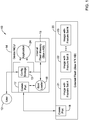
- Figure 1 is a diagram of a layout of the present system 10.
- a user or users' interface 12 may have a connection with a processor 24 of a device MCU 14.
- Application 24 uses a configuration storage 13, an internal flash memory 15 and coexists with boot loader 16.
- Boot loader 16 may be connected to an external flash unit 20 via communication ports 17 and 18.
- a selection may be made from images with feature sets 21-23.
- There may be a total of N feature sets from which to choose. N shall be greater than 1.
- External flash memory 20 may have a greater storage or memory capacity (i.e., hold more feature sets) than internal flash memory 15.
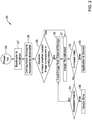
- Figure 2 is a diagram of a power-up procedure 25. After power up 26 boot loader 27 is initialized. Configuration storage 28 is accessed by boot loader 27. At symbol 29, a decision is made whether a loaded image corresponds to a configuration. If an answer is yes, then the image may be validated at symbol 31. After validation of the image, a question of whether the firmware is valid is noted at symbol 32. If the firmware is valid, then the application is booted as per step 33. If the firmware is not valid at symbol or step 32, then a question may be asked whether the failure is repeated at symbol 34. If the failure is repeated, then the error may be handled at step or symbol 35. If an answer is no, then an image may be loaded from an external storage at symbol or step 36. The image may be re-validated at step 31. Then symbols or steps 32 and 33 or 34 may be repeated.
- the procedure of the question asked at symbol 29 may instead be no rather than yes as indicated above.
- an image may be loaded from the external storage and be validated at step or symbol 31.
- steps or symbols 32 and 33 or 34 may be repeated as indicated above.
- Figure 3 is a diagram of a configuration change 40 within system 10.
- An application may be running at symbol 41.
- a user may want to use a different feature set according to symbol 42.
- An external memory may be scanned at step 43 for feature sets which may be presented to the user at step 44.
- the user may select a feature set at step 45.
- the device power may be cycled at step 46.
- Figure 4 is a diagram of a feature set change 50.
- An application may be running at symbol or step 51.
- a user may want to install a new feature set at step or symbol 52.
- a question may be asked whether space is available in an external memory. If the answer is yes, then the desired feature set image may be downloaded to the external memory at symbol or step 54.
- a question of whether the feature set image is valid and genuine may be asked. If an answer is yes, then success may be reported at symbol 56. If the answer is no, then an error is reported at step or symbol 57. Similarly, if the answer to the question whether there is no space available at the external memory at symbol 53, is no, then an error is reported at step or symbol 57.
- a burner controller unit system may incorporate a user interface, a microcontroller connected to the user interface, and an external memory connectable to the microcontroller.
- the microcontroller may incorporate an application handling the user interface, a configuration storage handled by the application and a boot loader, and an internal memory accessible by the application and the boot loader.
- the boot loader may be accessible by the application.
- the external memory may incorporate more storage capacity than a storage capacity of the internal memory.
- the internal memory can hold at least one feature set.
- the external memory can hold more feature sets than the internal memory.
- the external memory may incorporate a plurality of feature sets. Each feature set may be stored in a form of an image in the external memory.
- the internal memory may be partitioned to contain various types of firmware.
- the various types of firmware may incorporate a feature set A and a feature set B.
- the feature set A may incorporate a functionality that may or may not be incorporated to the feature set B.
- the boot loader may be initialized.
- the configuration storage may be accessed.
- the boot loader may load an image from the external memory to the internal memory.
- a question is whether a loaded image may correspond to a configuration in the configuration storage. If an answer to the question is yes, then the image may be validated.
- a second question is whether firmware of the image may be valid. If the firmware is valid, then a boot may be applied. If the firmware is invalid, then an error may be reported.
- the boot loader may be initialized.
- the configuration storage may be accessed.
- the boot loader may load an image from the external memory to the internal memory.
- a question may be asked whether a loaded image corresponds to a configuration in the configuration storage. If an answer to the question is no, then another image may be loaded from the external storage.
- the other image may be validated.
- a question may be asked whether the firmware of the other image is valid. If the firmware is valid, then a boot may be applied. If the firmware is invalid, then an error may be is reported.
- a configuration change may be implemented.
- the external memory may be scanned.
- Feature sets may be presented for selection.
- a feature set may be selected.
- the device may be reinitialized
- a new feature set may be installed. An inquiry may be made of whether space is available in the external memory. If space is unavailable in the external memory, then an error may be reported.
- a new feature set may be installed. An inquiry may be made of whether space is available in the external memory. If space is available, then a feature set may be downloaded to the external memory. An inquiry may be made to determine whether the feature set is valid and genuine. If an answer is yes, then a success may be reported. If the answer is no, then an error may be reported.
- An approach for enabling a small microcontroller unit to operate with a large number of feature sets may incorporate obtaining a microcontroller having an application with access to an internal memory and a boot loader with the same access, and finding an external memory connectable to the processor.
- the external memory may incorporate more storage capacity than a storage capacity of the internal memory.
- the storage capacity of the internal memory and the external memory may be proportional to a number of feature sets stored in the internal memory and the external memory.
- the approach may further incorporate doing a feature set addition or change for the microcontroller, incorporating determining which new feature set is to be selected for a microcontroller, checking for space available in the external memory for a new feature set, downloading a new feature set image to the external memory if storage capacity is available in the external memory, and determining whether the feature set image is valid and genuine.
- a feature set may represent a functionality that is distinct from a functionality of another feature set.
- the microcontroller may contain and use just one feature set.
- the microcontroller may have an internal memory that needs only to hold one feature set to be loaded and booted.
- the microcontroller may replace the present feature set with another feature set having the different functionality, loaded from the external memory.
- a controller unit may incorporate a microcontroller, and an external memory connectable to the microcontroller.
- the microcontroller may incorporate an application, a boot loader, a configuration storage accessible by the application and the boot loader, and an internal memory accessible by the application and the boot loader.
- the external memory may have more storage capacity than a storage capacity of the internal memory.
- the internal memory may hold at least one feature set, and the external memory may hold more feature sets than the internal memory.
- Changing a feature set in the internal memory for a different feature set may incorporate scanning an external memory for available feature sets, presenting the available feature sets for selection to a user, and checking a user selected feature set for validity and genuineness.
- the selected feature set may be downloaded from the external memory to the internal memory.
Landscapes
- Engineering & Computer Science (AREA)
- Software Systems (AREA)
- Theoretical Computer Science (AREA)
- General Engineering & Computer Science (AREA)
- Physics & Mathematics (AREA)
- General Physics & Mathematics (AREA)
- Computer Security & Cryptography (AREA)
- Computer Hardware Design (AREA)
- Databases & Information Systems (AREA)
- Computational Linguistics (AREA)
- Data Mining & Analysis (AREA)
- Stored Programmes (AREA)
Abstract
Description
- The present disclosure pertains to microcontrollers and feature capabilities.
- The disclosure reveals a controller and techniques for expanding its feature capabilities. Techniques may incorporate using an external memory to store feature sets that can be downloaded to an internal memory for intimate incorporation and usage by the controller. The external memory may be large in comparison to the internal memory. External storage of additional feature sets allows for use of a small and simple controller with access to numerous feature sets that otherwise could not be incorporated by the small controller.
-
-
Figure 1 is a diagram of a layout of the present system; -
Figure 2 is a diagram of a power-up procedure for the system; -
Figure 3 is a diagram of a configuration change within the system; and -
Figure 4 is a diagram of a feature set change within the system. - The present system and approach may incorporate one or more processors, computers, controllers, user interfaces, wireless and/or wire connections, and/or the like, in an implementation described and/or shown herein.
- This description may provide one or more illustrative and specific examples or ways of implementing the present system and approach. There may be numerous other examples or ways of implementing the system and approach.
- With a growing need for "connectivity" of each product, devices are becoming more expensive and more complex to fulfill customers' requirements. Typically, when a new product vision is developed, features, communication interfaces and protocols may be selected to provide as best as possible usability of the product in an end application. But one size does not necessarily fit all. Taking a burner controller with an Ethernet interface as a model example, this device may communicate via following protocols such as Ethernet/internet protocol (IP), Profinet, EtherCat, and so forth.
- The burner controller may typically be a high-volume, low-cost device, so it does not necessarily use a high power central processing unit (CPU), and its low cost microcontroller unit (MCU) may usually have a constrained internal memory and processing speed.
- State of the art may be noted. Now when it comes to a particular trade or skill, typically, the user may need a limited set of features. But to get as big market share as possible, the manufacturer should provide a device with all of the needed features. This may result into two solutions. A larger and more expensive MCU may implement all of the features, but need to develop more complicated firmware, and be tested while distributing devices with only a limited feature set, and the like, may bring in an issue with more device models to maintain, release process, manufacture, and so on. Again, speaking in a language of examples, one may have a device with a capability of all possible communication protocols. For example, the MCU of such a device may need to be big in an amount of FLASH, RAM, and processing power. Or for another example, one may sell two types of the same device, one running with, e.g., Profinet, and another one, EtherCat.
- In a first situation, a device may be completely flexible but require more internal resources in an MCU to keep the device functionality available and running. Firmware inside the MCU may be more complex and have obviously a higher risk profile and since when there are more communication stacks, that may increase the risk of issues.
- In a second situation, a device may be relatively simple, and its MCU may be cheaper, smaller and less versatile. But when a customer decides to switch to a different functionality, the customer may need to buy new hardware.
- An alternative may be noted. At the present time, newly developed devices may be equipped with boot loaders. A boot loader may be a very simple piece of software that loads firmware from external media (e.g., a cheap external flash) to an MCU internal memory (i.e., a firmware upgrade) and verifies the signature upon a boot (i.e., a secure boot). But there may be another use case that is not necessarily utilized; however, it can bring interesting opportunities. If a device was equipped with an on-board flash memory (which it usually already is), this flash memory may be partitioned to contain various types of firmware such as firmware with a feature set A (e.g., Profinet firmware), firmware with a feature set B (EtherCat), and so on. In this way, a single piece of hardware may be used to switch between completely different functionalities. A boot loader may select which firmware (i.e., feature set) customer wants, load it and boot it. The device may be sold to customers for a price of all features together, but utilize a smaller MCU and make resulting hardware and all features possible, plus have a cheaper design.
- Technical benefits of the present approach may include lower prices of hardware and software, and an MCU with less computational power and storage resources that can be used; features that are often used in mutually exclusive ways that do not have to directly coexist, which makes development easier. Expanding this approach further, boot loader intelligence may be expanded so it can get an ability to enable a feature set (i.e., certain firmware) only when activated explicitly by remote command. It is expected that to fulfill customer requirements, there may be a large set of communication protocols required to be supported.
- Newly developed devices that expect to be supporting wide range of features (e.g., communication protocols) may have several compiled firmware files stored in an external nonvolatile memory (flash) which is generally more inexpensive than related art approaches. During an MCU selection process, it is possible to target lower-specification devices with a lower amount of internal flash and ram. The final products may be considered to be providing a superset of all features across all firmware files carried in an external memory.
-
Figure 1 is a diagram of a layout of thepresent system 10. A user or users'interface 12 may have a connection with aprocessor 24 of adevice MCU 14.Application 24 uses aconfiguration storage 13, aninternal flash memory 15 and coexists withboot loader 16.Boot loader 16 may be connected to anexternal flash unit 20 viacommunication ports External flash memory 20 may have a greater storage or memory capacity (i.e., hold more feature sets) thaninternal flash memory 15. -
Figure 2 is a diagram of a power-up procedure 25. After power up 26boot loader 27 is initialized.Configuration storage 28 is accessed byboot loader 27. Atsymbol 29, a decision is made whether a loaded image corresponds to a configuration. If an answer is yes, then the image may be validated atsymbol 31. After validation of the image, a question of whether the firmware is valid is noted atsymbol 32. If the firmware is valid, then the application is booted as perstep 33. If the firmware is not valid at symbol orstep 32, then a question may be asked whether the failure is repeated atsymbol 34. If the failure is repeated, then the error may be handled at step orsymbol 35. If an answer is no, then an image may be loaded from an external storage at symbol orstep 36. The image may be re-validated atstep 31. Then symbols orsteps - The procedure of the question asked at
symbol 29 may instead be no rather than yes as indicated above. Then at symbol or step 36, an image may be loaded from the external storage and be validated at step orsymbol 31. Then steps orsymbols -
Figure 3 is a diagram of aconfiguration change 40 withinsystem 10. An application may be running atsymbol 41. A user may want to use a different feature set according tosymbol 42. An external memory may be scanned atstep 43 for feature sets which may be presented to the user atstep 44. The user may select a feature set atstep 45. Then, the device power may be cycled atstep 46. -
Figure 4 is a diagram of a feature setchange 50. An application may be running at symbol orstep 51. A user may want to install a new feature set at step orsymbol 52. Atsymbol 53, a question may be asked whether space is available in an external memory. If the answer is yes, then the desired feature set image may be downloaded to the external memory at symbol orstep 54. At symbol or step 55, a question of whether the feature set image is valid and genuine may be asked. If an answer is yes, then success may be reported atsymbol 56. If the answer is no, then an error is reported at step orsymbol 57. Similarly, if the answer to the question whether there is no space available at the external memory atsymbol 53, is no, then an error is reported at step orsymbol 57. - To recap, a burner controller unit system may incorporate a user interface, a microcontroller connected to the user interface, and an external memory connectable to the microcontroller. The microcontroller may incorporate an application handling the user interface, a configuration storage handled by the application and a boot loader, and an internal memory accessible by the application and the boot loader. The boot loader may be accessible by the application. The external memory may incorporate more storage capacity than a storage capacity of the internal memory.
- The internal memory can hold at least one feature set. The external memory can hold more feature sets than the internal memory.
- The external memory may incorporate a plurality of feature sets. Each feature set may be stored in a form of an image in the external memory.
- The internal memory may be partitioned to contain various types of firmware. The various types of firmware may incorporate a feature set A and a feature set B.
- The feature set A may incorporate a functionality that may or may not be incorporated to the feature set B.
- The boot loader may be initialized. The configuration storage may be accessed. The boot loader may load an image from the external memory to the internal memory. A question is whether a loaded image may correspond to a configuration in the configuration storage. If an answer to the question is yes, then the image may be validated. A second question is whether firmware of the image may be valid. If the firmware is valid, then a boot may be applied. If the firmware is invalid, then an error may be reported.
- The boot loader may be initialized. The configuration storage may be accessed. The boot loader may load an image from the external memory to the internal memory. A question may be asked whether a loaded image corresponds to a configuration in the configuration storage. If an answer to the question is no, then another image may be loaded from the external storage. The other image may be validated. A question may be asked whether the firmware of the other image is valid. If the firmware is valid, then a boot may be applied. If the firmware is invalid, then an error may be is reported.
- A configuration change may be implemented. The external memory may be scanned. Feature sets may be presented for selection. A feature set may be selected. The device may be reinitialized
- A new feature set may be installed. An inquiry may be made of whether space is available in the external memory. If space is unavailable in the external memory, then an error may be reported.
- A new feature set may be installed. An inquiry may be made of whether space is available in the external memory. If space is available, then a feature set may be downloaded to the external memory. An inquiry may be made to determine whether the feature set is valid and genuine. If an answer is yes, then a success may be reported. If the answer is no, then an error may be reported.
- An approach for enabling a small microcontroller unit to operate with a large number of feature sets, may incorporate obtaining a microcontroller having an application with access to an internal memory and a boot loader with the same access, and finding an external memory connectable to the processor. The external memory may incorporate more storage capacity than a storage capacity of the internal memory.
- The storage capacity of the internal memory and the external memory may be proportional to a number of feature sets stored in the internal memory and the external memory.
- The approach may further incorporate doing a feature set addition or change for the microcontroller, incorporating determining which new feature set is to be selected for a microcontroller, checking for space available in the external memory for a new feature set, downloading a new feature set image to the external memory if storage capacity is available in the external memory, and determining whether the feature set image is valid and genuine.
- A feature set may represent a functionality that is distinct from a functionality of another feature set.
- The microcontroller may contain and use just one feature set. The microcontroller may have an internal memory that needs only to hold one feature set to be loaded and booted.
- If the microcontroller needs a different functionality than that of the feature set presently set in it, then the microcontroller may replace the present feature set with another feature set having the different functionality, loaded from the external memory.
- A controller unit may incorporate a microcontroller, and an external memory connectable to the microcontroller. The microcontroller may incorporate an application, a boot loader, a configuration storage accessible by the application and the boot loader, and an internal memory accessible by the application and the boot loader. The external memory may have more storage capacity than a storage capacity of the internal memory.
- The internal memory may hold at least one feature set, and the external memory may hold more feature sets than the internal memory.
- Changing a feature set in the internal memory for a different feature set, may incorporate scanning an external memory for available feature sets, presenting the available feature sets for selection to a user, and checking a user selected feature set for validity and genuineness.
- If valid and genuine, the selected feature set may be downloaded from the external memory to the internal memory.
- Any publication or patent document noted herein may hereby be incorporated by reference to the same extent as if each individual publication or patent document was specifically and individually indicated to be incorporated by reference.
- In the present specification, some of the matter may be of a hypothetical or prophetic nature although stated in another manner or tense.
- Although the present system and/or approach has been described with respect to at least one illustrative example, many variations and modifications will become apparent to those skilled in the art upon reading the specification. It is therefore the intention that the appended claims be interpreted as broadly as possible in view of the related art to include all such variations and modifications.
Claims (15)
- A burner controller unit system comprising:a user interface;a microcontroller connected to the user interface; andan external memory connectable to the microcontroller; andwherein:the microcontroller comprises:an application handling the user interface;a configuration storage handled by the application and a boot loader; andan internal memory accessible by the application and the bootloader; andwherein:
the boot loader is accessible by application; andthe external memory comprises more storage capacity than a storage capacity of the internal memory. - The system of claim 1, wherein:the internal memory can hold at least one feature set; andthe external memory can hold more feature sets than the internal memory;
- The system of claim 2, wherein the external memory comprises:a plurality of feature sets; andwherein each feature set is stored in a form of an image in the external memory.
- The system of claim 2, wherein:the internal memory is partitioned to contain various types of firmware; andthe various types of firmware comprise a feature set A and a feature set B.
- The system of claim 4, wherein the feature set A incorporates a functionality that is or is not incorporated to the feature set B.
- The system of claim 1, wherein:the boot loader is initialized;the configuration storage is accessed;the boot loader loads an image from the external memory to the internal memory;a question is whether a loaded image corresponds to a configuration in the configuration storage;if an answer to the question is yes, then the image is validated;a second question is whether firmware of the image is valid;if the firmware is valid, then a boot is applied; andif the firmware is invalid, then an error is reported.
- The system of claim 1, wherein:the boot loader is initialized;the configuration storage is accessed;the boot loader loads an image from the external memory to the internal memory;a question is asked whether a loaded image corresponds to a configuration in the configuration storage;if an answer to the question is no, then another image is loaded from the external storage;the another image is validated;a question is asked whether the firmware of the another image is valid;if the firmware is valid, then a boot is applied; andif the firmware is invalid, then an error is reported.
- The system of claim 1, wherein:a configuration change is to be implemented;the external memory is scanned;feature sets are presented for selection;a feature set is selected; anddevice is reinitialized.
- The system of claim 1, wherein:a new feature set is to be installed;an inquiry is made of whether space is available in the external memory; andif space is unavailable in the external memory, then an error is reported.
- The system of claim 1, wherein:a new feature set is to be installed;an inquiry is made of whether space is available in the external memory;if space is available, then a feature set is downloaded to the external memory;an inquiry is made to determine whether the feature set is valid and genuine;if an answer is yes, then a success is reported; andif the answer is no, then an error is reported.
- A method for enabling a small microcontroller unit to operate with a large number of feature sets, comprising:obtaining a microcontroller having an application with access to an internal memory and a boot loader with the same access; andfinding an external memory connectable to the processor; andwherein the external memory comprises more storage capacity than a storage capacity of the internal memory.
- The method of claim 11, wherein the storage capacity of the internal memory and the external memory is proportional to a number of feature sets stored in the internal memory and the external memory.
- The method of claim 12, wherein doing a feature set change for the microcontroller, comprises:determining which new feature set is to be selected for a microcontroller;checking for space available in the external memory for a new feature set;downloading a new feature set image to the external memory if storage capacity is available in the external memory; anddetermining whether the feature set image is valid and genuine.
- The method of claim 12, wherein:a feature set represents a functionality that is distinct from a functionality of another feature set;the microcontroller can contain and use just one feature set; andthe microcontroller has an internal memory that needs only to hold one feature set to be loaded and booted.
- The method of claim 13, wherein if the microcontroller needs a different functionality than that of the feature set presently set in it, then the microcontroller can replace the present feature set with another feature set having the different functionality, loaded from the external memory.
Applications Claiming Priority (1)
| Application Number | Priority Date | Filing Date | Title |
|---|---|---|---|
| US16/853,187 US11640466B2 (en) | 2020-04-20 | 2020-04-20 | Firmware for small MCU carrying a large set of features |
Publications (2)
| Publication Number | Publication Date |
|---|---|
| EP3901769A1 true EP3901769A1 (en) | 2021-10-27 |
| EP3901769B1 EP3901769B1 (en) | 2025-06-04 |
Family
ID=75539097
Family Applications (1)
| Application Number | Title | Priority Date | Filing Date |
|---|---|---|---|
| EP21168463.4A Active EP3901769B1 (en) | 2020-04-20 | 2021-04-14 | Firmware for small mcu carrying a large set of features |
Country Status (2)
| Country | Link |
|---|---|
| US (1) | US11640466B2 (en) |
| EP (1) | EP3901769B1 (en) |
Families Citing this family (1)
| Publication number | Priority date | Publication date | Assignee | Title |
|---|---|---|---|---|
| EP4726539A3 (en) * | 2023-05-25 | 2026-05-13 | Flipper FZCO | Loading an executable in a memory management unit-less (mmu-less) device |
Citations (4)
| Publication number | Priority date | Publication date | Assignee | Title |
|---|---|---|---|---|
| US20050289248A1 (en) * | 2004-06-24 | 2005-12-29 | Transact Technologies Incorporated | Configurable printer and methods for configuring a printer |
| US20070143589A1 (en) * | 2005-12-15 | 2007-06-21 | Rawe Lawrence J | Method and apparatus for dynamically selecting one of multiple firmware images for booting an I/O controller |
| US20140075169A1 (en) * | 2012-09-07 | 2014-03-13 | Apple Inc. | Accessory booting over usb |
| US20190122472A1 (en) * | 2013-02-07 | 2019-04-25 | Ikeyless, Llc | Method and apparatus for implementing multi-vendor rolling code keyless entry systems |
Family Cites Families (8)
| Publication number | Priority date | Publication date | Assignee | Title |
|---|---|---|---|---|
| US6631520B1 (en) | 1999-05-14 | 2003-10-07 | Xilinx, Inc. | Method and apparatus for changing execution code for a microcontroller on an FPGA interface device |
| TWI316184B (en) | 2006-08-03 | 2009-10-21 | Etron Technology Inc | Programmable system-chip device and method of programming firmware |
| US8150039B2 (en) * | 2008-04-15 | 2012-04-03 | Apple Inc. | Single security model in booting a computing device |
| GB2481772B (en) * | 2009-04-29 | 2014-06-25 | Hewlett Packard Development Co | Bios image manager |
| KR101959359B1 (en) * | 2012-11-06 | 2019-03-18 | 에이치피프린팅코리아 유한회사 | Method for updating boot image for fast booting and image forming apparatus for performing the same |
| US9916451B2 (en) * | 2015-02-09 | 2018-03-13 | Dell Products L.P. | Information handling system boot pre-validation |
| KR102494241B1 (en) | 2016-08-18 | 2023-02-03 | 에스케이하이닉스 주식회사 | Memory system and operating method thereof |
| US11042383B2 (en) * | 2018-02-03 | 2021-06-22 | Insyde Software Corp. | System and method for boot speed optimization using non-volatile dual in-line memory modules |
-
2020
- 2020-04-20 US US16/853,187 patent/US11640466B2/en active Active
-
2021
- 2021-04-14 EP EP21168463.4A patent/EP3901769B1/en active Active
Patent Citations (4)
| Publication number | Priority date | Publication date | Assignee | Title |
|---|---|---|---|---|
| US20050289248A1 (en) * | 2004-06-24 | 2005-12-29 | Transact Technologies Incorporated | Configurable printer and methods for configuring a printer |
| US20070143589A1 (en) * | 2005-12-15 | 2007-06-21 | Rawe Lawrence J | Method and apparatus for dynamically selecting one of multiple firmware images for booting an I/O controller |
| US20140075169A1 (en) * | 2012-09-07 | 2014-03-13 | Apple Inc. | Accessory booting over usb |
| US20190122472A1 (en) * | 2013-02-07 | 2019-04-25 | Ikeyless, Llc | Method and apparatus for implementing multi-vendor rolling code keyless entry systems |
Also Published As
| Publication number | Publication date |
|---|---|
| EP3901769B1 (en) | 2025-06-04 |
| US20210326444A1 (en) | 2021-10-21 |
| US11640466B2 (en) | 2023-05-02 |
Similar Documents
| Publication | Publication Date | Title |
|---|---|---|
| US11438229B2 (en) | Systems and methods for operating system deployment and lifecycle management of a smart network interface card | |
| US9507604B2 (en) | Boot method and boot system | |
| US20060242395A1 (en) | Operating system boot from network location | |
| US7085921B2 (en) | Embedded OS PXE server | |
| US10853087B2 (en) | UEFI boot mode OS provisioning system | |
| CN103412769B (en) | External card parameter configuration, equipment and system | |
| US7533190B2 (en) | Network storage target boot and network connectivity through a common network device | |
| US11360783B2 (en) | Method and system for booting from a split BIOS image | |
| US8171276B2 (en) | Minimal startup mode for performing multiple-reboot configuration | |
| US6636958B2 (en) | Appliance server with a drive partitioning scheme that accommodates application growth in size | |
| US11086612B2 (en) | Sequence and update rules in firmware update services | |
| US12197939B2 (en) | Provisioning DPU management operating systems | |
| JP2013522788A (en) | Method, computer program, and apparatus for optimizing loading and booting of an operating system over a communication network in a computer system | |
| US10579801B2 (en) | Selecting and loading firmware volumes based on license | |
| US11640466B2 (en) | Firmware for small MCU carrying a large set of features | |
| CN115756496A (en) | Mirror image compiling method and device, computer readable storage medium and electronic equipment | |
| US7353377B2 (en) | Remotely providing basic input/output system to a client system | |
| US6708229B2 (en) | Configuring computer components | |
| US20250147796A1 (en) | Provisioning dpu management operating systems | |
| US12333015B2 (en) | System context-aware third party firmware safe assurance configuration | |
| CN106445571B (en) | Mainboard and starting method | |
| US20250036420A1 (en) | System bios method to offer resiliency using best-known configuration for third party firmware configuration | |
| CN113760577B (en) | Dynamic connection answering device, processing method, control device and storage medium | |
| US12210470B2 (en) | Systems, methods, and apparatus to identify functions for computational devices | |
| US20250173294A1 (en) | Systems, methods, and apparatus to identify functions for computational devices |
Legal Events
| Date | Code | Title | Description |
|---|---|---|---|
| PUAI | Public reference made under article 153(3) epc to a published international application that has entered the european phase |
Free format text: ORIGINAL CODE: 0009012 |
|
| STAA | Information on the status of an ep patent application or granted ep patent |
Free format text: STATUS: REQUEST FOR EXAMINATION WAS MADE |
|
| 17P | Request for examination filed |
Effective date: 20210414 |
|
| AK | Designated contracting states |
Kind code of ref document: A1 Designated state(s): AL AT BE BG CH CY CZ DE DK EE ES FI FR GB GR HR HU IE IS IT LI LT LU LV MC MK MT NL NO PL PT RO RS SE SI SK SM TR |
|
| B565 | Issuance of search results under rule 164(2) epc |
Effective date: 20210928 |
|
| STAA | Information on the status of an ep patent application or granted ep patent |
Free format text: STATUS: EXAMINATION IS IN PROGRESS |
|
| 17Q | First examination report despatched |
Effective date: 20230222 |
|
| P01 | Opt-out of the competence of the unified patent court (upc) registered |
Effective date: 20230414 |
|
| GRAP | Despatch of communication of intention to grant a patent |
Free format text: ORIGINAL CODE: EPIDOSNIGR1 |
|
| STAA | Information on the status of an ep patent application or granted ep patent |
Free format text: STATUS: GRANT OF PATENT IS INTENDED |
|
| INTG | Intention to grant announced |
Effective date: 20241220 |
|
| GRAS | Grant fee paid |
Free format text: ORIGINAL CODE: EPIDOSNIGR3 |
|
| GRAA | (expected) grant |
Free format text: ORIGINAL CODE: 0009210 |
|
| STAA | Information on the status of an ep patent application or granted ep patent |
Free format text: STATUS: THE PATENT HAS BEEN GRANTED |
|
| AK | Designated contracting states |
Kind code of ref document: B1 Designated state(s): AL AT BE BG CH CY CZ DE DK EE ES FI FR GB GR HR HU IE IS IT LI LT LU LV MC MK MT NL NO PL PT RO RS SE SI SK SM TR |
|
| REG | Reference to a national code |
Ref country code: GB Ref legal event code: FG4D |
|
| REG | Reference to a national code |
Ref country code: CH Ref legal event code: EP |
|
| REG | Reference to a national code |
Ref country code: DE Ref legal event code: R096 Ref document number: 602021031606 Country of ref document: DE |
|
| REG | Reference to a national code |
Ref country code: IE Ref legal event code: FG4D |
|
| REG | Reference to a national code |
Ref country code: NL Ref legal event code: MP Effective date: 20250604 |
|
| PG25 | Lapsed in a contracting state [announced via postgrant information from national office to epo] |
Ref country code: ES Free format text: LAPSE BECAUSE OF FAILURE TO SUBMIT A TRANSLATION OF THE DESCRIPTION OR TO PAY THE FEE WITHIN THE PRESCRIBED TIME-LIMIT Effective date: 20250604 Ref country code: FI Free format text: LAPSE BECAUSE OF FAILURE TO SUBMIT A TRANSLATION OF THE DESCRIPTION OR TO PAY THE FEE WITHIN THE PRESCRIBED TIME-LIMIT Effective date: 20250604 |
|
| REG | Reference to a national code |
Ref country code: LT Ref legal event code: MG9D |
|
| PG25 | Lapsed in a contracting state [announced via postgrant information from national office to epo] |
Ref country code: GR Free format text: LAPSE BECAUSE OF FAILURE TO SUBMIT A TRANSLATION OF THE DESCRIPTION OR TO PAY THE FEE WITHIN THE PRESCRIBED TIME-LIMIT Effective date: 20250905 Ref country code: NO Free format text: LAPSE BECAUSE OF FAILURE TO SUBMIT A TRANSLATION OF THE DESCRIPTION OR TO PAY THE FEE WITHIN THE PRESCRIBED TIME-LIMIT Effective date: 20250904 |
|
| PG25 | Lapsed in a contracting state [announced via postgrant information from national office to epo] |
Ref country code: PL Free format text: LAPSE BECAUSE OF FAILURE TO SUBMIT A TRANSLATION OF THE DESCRIPTION OR TO PAY THE FEE WITHIN THE PRESCRIBED TIME-LIMIT Effective date: 20250604 |
|
| PG25 | Lapsed in a contracting state [announced via postgrant information from national office to epo] |
Ref country code: BG Free format text: LAPSE BECAUSE OF FAILURE TO SUBMIT A TRANSLATION OF THE DESCRIPTION OR TO PAY THE FEE WITHIN THE PRESCRIBED TIME-LIMIT Effective date: 20250604 |
|
| PG25 | Lapsed in a contracting state [announced via postgrant information from national office to epo] |
Ref country code: HR Free format text: LAPSE BECAUSE OF FAILURE TO SUBMIT A TRANSLATION OF THE DESCRIPTION OR TO PAY THE FEE WITHIN THE PRESCRIBED TIME-LIMIT Effective date: 20250604 |
|
| PG25 | Lapsed in a contracting state [announced via postgrant information from national office to epo] |
Ref country code: RS Free format text: LAPSE BECAUSE OF FAILURE TO SUBMIT A TRANSLATION OF THE DESCRIPTION OR TO PAY THE FEE WITHIN THE PRESCRIBED TIME-LIMIT Effective date: 20250904 |
|
| PG25 | Lapsed in a contracting state [announced via postgrant information from national office to epo] |
Ref country code: LV Free format text: LAPSE BECAUSE OF FAILURE TO SUBMIT A TRANSLATION OF THE DESCRIPTION OR TO PAY THE FEE WITHIN THE PRESCRIBED TIME-LIMIT Effective date: 20250604 |
|
| PG25 | Lapsed in a contracting state [announced via postgrant information from national office to epo] |
Ref country code: NL Free format text: LAPSE BECAUSE OF FAILURE TO SUBMIT A TRANSLATION OF THE DESCRIPTION OR TO PAY THE FEE WITHIN THE PRESCRIBED TIME-LIMIT Effective date: 20250604 |
|
| PG25 | Lapsed in a contracting state [announced via postgrant information from national office to epo] |
Ref country code: PT Free format text: LAPSE BECAUSE OF FAILURE TO SUBMIT A TRANSLATION OF THE DESCRIPTION OR TO PAY THE FEE WITHIN THE PRESCRIBED TIME-LIMIT Effective date: 20251006 |
|
| REG | Reference to a national code |
Ref country code: AT Ref legal event code: MK05 Ref document number: 1800990 Country of ref document: AT Kind code of ref document: T Effective date: 20250604 |
|
| PG25 | Lapsed in a contracting state [announced via postgrant information from national office to epo] |
Ref country code: IS Free format text: LAPSE BECAUSE OF FAILURE TO SUBMIT A TRANSLATION OF THE DESCRIPTION OR TO PAY THE FEE WITHIN THE PRESCRIBED TIME-LIMIT Effective date: 20251004 |
|
| PG25 | Lapsed in a contracting state [announced via postgrant information from national office to epo] |
Ref country code: AT Free format text: LAPSE BECAUSE OF FAILURE TO SUBMIT A TRANSLATION OF THE DESCRIPTION OR TO PAY THE FEE WITHIN THE PRESCRIBED TIME-LIMIT Effective date: 20250604 Ref country code: SM Free format text: LAPSE BECAUSE OF FAILURE TO SUBMIT A TRANSLATION OF THE DESCRIPTION OR TO PAY THE FEE WITHIN THE PRESCRIBED TIME-LIMIT Effective date: 20250604 |
|
| PG25 | Lapsed in a contracting state [announced via postgrant information from national office to epo] |
Ref country code: CZ Free format text: LAPSE BECAUSE OF FAILURE TO SUBMIT A TRANSLATION OF THE DESCRIPTION OR TO PAY THE FEE WITHIN THE PRESCRIBED TIME-LIMIT Effective date: 20250604 |
|
| PG25 | Lapsed in a contracting state [announced via postgrant information from national office to epo] |
Ref country code: EE Free format text: LAPSE BECAUSE OF FAILURE TO SUBMIT A TRANSLATION OF THE DESCRIPTION OR TO PAY THE FEE WITHIN THE PRESCRIBED TIME-LIMIT Effective date: 20250604 |
|
| PG25 | Lapsed in a contracting state [announced via postgrant information from national office to epo] |
Ref country code: SK Free format text: LAPSE BECAUSE OF FAILURE TO SUBMIT A TRANSLATION OF THE DESCRIPTION OR TO PAY THE FEE WITHIN THE PRESCRIBED TIME-LIMIT Effective date: 20250604 Ref country code: RO Free format text: LAPSE BECAUSE OF FAILURE TO SUBMIT A TRANSLATION OF THE DESCRIPTION OR TO PAY THE FEE WITHIN THE PRESCRIBED TIME-LIMIT Effective date: 20250604 |
|
| PG25 | Lapsed in a contracting state [announced via postgrant information from national office to epo] |
Ref country code: IT Free format text: LAPSE BECAUSE OF FAILURE TO SUBMIT A TRANSLATION OF THE DESCRIPTION OR TO PAY THE FEE WITHIN THE PRESCRIBED TIME-LIMIT Effective date: 20250604 |
|
| REG | Reference to a national code |
Ref country code: DE Ref legal event code: R097 Ref document number: 602021031606 Country of ref document: DE |
|
| PLBE | No opposition filed within time limit |
Free format text: ORIGINAL CODE: 0009261 |
|
| STAA | Information on the status of an ep patent application or granted ep patent |
Free format text: STATUS: NO OPPOSITION FILED WITHIN TIME LIMIT |
|
| PG25 | Lapsed in a contracting state [announced via postgrant information from national office to epo] |
Ref country code: DK Free format text: LAPSE BECAUSE OF FAILURE TO SUBMIT A TRANSLATION OF THE DESCRIPTION OR TO PAY THE FEE WITHIN THE PRESCRIBED TIME-LIMIT Effective date: 20250604 |
|
| REG | Reference to a national code |
Ref country code: CH Ref legal event code: L10 Free format text: ST27 STATUS EVENT CODE: U-0-0-L10-L00 (AS PROVIDED BY THE NATIONAL OFFICE) Effective date: 20260416 |
|
| 26N | No opposition filed |
Effective date: 20260305 |