EP3901147B1 - Acylamino bridged heterocyclic compound, and composition and application thereof - Google Patents
Acylamino bridged heterocyclic compound, and composition and application thereof Download PDFInfo
- Publication number
- EP3901147B1 EP3901147B1 EP20745487.7A EP20745487A EP3901147B1 EP 3901147 B1 EP3901147 B1 EP 3901147B1 EP 20745487 A EP20745487 A EP 20745487A EP 3901147 B1 EP3901147 B1 EP 3901147B1
- Authority
- EP
- European Patent Office
- Prior art keywords
- alkyl
- substituted
- hydroxyl
- cycloalkyl
- alkoxy
- Prior art date
- Legal status (The legal status is an assumption and is not a legal conclusion. Google has not performed a legal analysis and makes no representation as to the accuracy of the status listed.)
- Active
Links
Images
Classifications
-
- C—CHEMISTRY; METALLURGY
- C07—ORGANIC CHEMISTRY
- C07D—HETEROCYCLIC COMPOUNDS
- C07D401/00—Heterocyclic compounds containing two or more hetero rings, having nitrogen atoms as the only ring hetero atoms, at least one ring being a six-membered ring with only one nitrogen atom
- C07D401/02—Heterocyclic compounds containing two or more hetero rings, having nitrogen atoms as the only ring hetero atoms, at least one ring being a six-membered ring with only one nitrogen atom containing two hetero rings
- C07D401/12—Heterocyclic compounds containing two or more hetero rings, having nitrogen atoms as the only ring hetero atoms, at least one ring being a six-membered ring with only one nitrogen atom containing two hetero rings linked by a chain containing hetero atoms as chain links
-
- A—HUMAN NECESSITIES
- A61—MEDICAL OR VETERINARY SCIENCE; HYGIENE
- A61K—PREPARATIONS FOR MEDICAL, DENTAL OR TOILETRY PURPOSES
- A61K31/00—Medicinal preparations containing organic active ingredients
- A61K31/33—Heterocyclic compounds
- A61K31/395—Heterocyclic compounds having nitrogen as a ring hetero atom, e.g. guanethidine or rifamycins
- A61K31/41—Heterocyclic compounds having nitrogen as a ring hetero atom, e.g. guanethidine or rifamycins having five-membered rings with two or more ring hetero atoms, at least one of which being nitrogen, e.g. tetrazole
- A61K31/415—1,2-Diazoles
-
- A—HUMAN NECESSITIES
- A61—MEDICAL OR VETERINARY SCIENCE; HYGIENE
- A61K—PREPARATIONS FOR MEDICAL, DENTAL OR TOILETRY PURPOSES
- A61K31/00—Medicinal preparations containing organic active ingredients
- A61K31/33—Heterocyclic compounds
- A61K31/395—Heterocyclic compounds having nitrogen as a ring hetero atom, e.g. guanethidine or rifamycins
- A61K31/435—Heterocyclic compounds having nitrogen as a ring hetero atom, e.g. guanethidine or rifamycins having six-membered rings with one nitrogen as the only ring hetero atom
- A61K31/44—Non condensed pyridines; Hydrogenated derivatives thereof
- A61K31/4427—Non condensed pyridines; Hydrogenated derivatives thereof containing further heterocyclic ring systems
- A61K31/4439—Non condensed pyridines; Hydrogenated derivatives thereof containing further heterocyclic ring systems containing a five-membered ring with nitrogen as a ring hetero atom, e.g. omeprazole
-
- A—HUMAN NECESSITIES
- A61—MEDICAL OR VETERINARY SCIENCE; HYGIENE
- A61P—SPECIFIC THERAPEUTIC ACTIVITY OF CHEMICAL COMPOUNDS OR MEDICINAL PREPARATIONS
- A61P17/00—Drugs for dermatological disorders
- A61P17/06—Antipsoriatics
-
- A—HUMAN NECESSITIES
- A61—MEDICAL OR VETERINARY SCIENCE; HYGIENE
- A61P—SPECIFIC THERAPEUTIC ACTIVITY OF CHEMICAL COMPOUNDS OR MEDICINAL PREPARATIONS
- A61P35/00—Antineoplastic agents
-
- A—HUMAN NECESSITIES
- A61—MEDICAL OR VETERINARY SCIENCE; HYGIENE
- A61P—SPECIFIC THERAPEUTIC ACTIVITY OF CHEMICAL COMPOUNDS OR MEDICINAL PREPARATIONS
- A61P37/00—Drugs for immunological or allergic disorders
-
- C—CHEMISTRY; METALLURGY
- C07—ORGANIC CHEMISTRY
- C07D—HETEROCYCLIC COMPOUNDS
- C07D401/00—Heterocyclic compounds containing two or more hetero rings, having nitrogen atoms as the only ring hetero atoms, at least one ring being a six-membered ring with only one nitrogen atom
- C07D401/14—Heterocyclic compounds containing two or more hetero rings, having nitrogen atoms as the only ring hetero atoms, at least one ring being a six-membered ring with only one nitrogen atom containing three or more hetero rings
-
- C—CHEMISTRY; METALLURGY
- C07—ORGANIC CHEMISTRY
- C07D—HETEROCYCLIC COMPOUNDS
- C07D405/00—Heterocyclic compounds containing both one or more hetero rings having oxygen atoms as the only ring hetero atoms, and one or more rings having nitrogen as the only ring hetero atom
- C07D405/14—Heterocyclic compounds containing both one or more hetero rings having oxygen atoms as the only ring hetero atoms, and one or more rings having nitrogen as the only ring hetero atom containing three or more hetero rings
-
- C—CHEMISTRY; METALLURGY
- C07—ORGANIC CHEMISTRY
- C07D—HETEROCYCLIC COMPOUNDS
- C07D413/00—Heterocyclic compounds containing two or more hetero rings, at least one ring having nitrogen and oxygen atoms as the only ring hetero atoms
- C07D413/02—Heterocyclic compounds containing two or more hetero rings, at least one ring having nitrogen and oxygen atoms as the only ring hetero atoms containing two hetero rings
- C07D413/12—Heterocyclic compounds containing two or more hetero rings, at least one ring having nitrogen and oxygen atoms as the only ring hetero atoms containing two hetero rings linked by a chain containing hetero atoms as chain links
-
- C—CHEMISTRY; METALLURGY
- C07—ORGANIC CHEMISTRY
- C07D—HETEROCYCLIC COMPOUNDS
- C07D413/00—Heterocyclic compounds containing two or more hetero rings, at least one ring having nitrogen and oxygen atoms as the only ring hetero atoms
- C07D413/14—Heterocyclic compounds containing two or more hetero rings, at least one ring having nitrogen and oxygen atoms as the only ring hetero atoms containing three or more hetero rings
-
- C—CHEMISTRY; METALLURGY
- C07—ORGANIC CHEMISTRY
- C07D—HETEROCYCLIC COMPOUNDS
- C07D417/00—Heterocyclic compounds containing two or more hetero rings, at least one ring having nitrogen and sulfur atoms as the only ring hetero atoms, not provided for by group C07D415/00
- C07D417/02—Heterocyclic compounds containing two or more hetero rings, at least one ring having nitrogen and sulfur atoms as the only ring hetero atoms, not provided for by group C07D415/00 containing two hetero rings
- C07D417/12—Heterocyclic compounds containing two or more hetero rings, at least one ring having nitrogen and sulfur atoms as the only ring hetero atoms, not provided for by group C07D415/00 containing two hetero rings linked by a chain containing hetero atoms as chain links
Definitions
- the present disclosure belongs to the field of medicinal chemistry, and particularly relates to acylamino bridged heterocyclic compounds, or diastereomers, enantiomers, solvates, or pharmaceutically acceptable salts thereof, and to pharmaceutical compositions thereof, and their use in the preparation of medicaments for the treatment of autoimmune diseases, tumors and neurodegenerative diseases related to receptor-interacting protein 1 kinase (RIPK1).
- RIPK1 receptor-interacting protein 1 kinase
- Apoptosis is the autonomous and orderly death of cells controlled by genes in order to maintain the stability of the body's internal environment. It plays an important role in the evolution of the organism, the stability of the internal environment, and the development of the system.
- Cell necrosis is a pathological process in which cells are affected by physical, chemical and other environmental factors, such as mechanical damage, poisons, microorganisms, radiation, etc., causing cell death.
- Necroptosis also known as programmed necrosis
- This process is a kind of programmed cell necrosis produced by stimulating death receptors with TNF- ⁇ , FasL or TRAIL. Morphologically, it is manifested as cell swelling, cell volume increasing, organelle dysfunction, damage to cell membrane integrity, release of cell contents, and mass production of ROS.
- Receptor-interacting protein 1 kinase belongs to the TKL family of serine/threonine protein kinases. Members of the RIPK serine/threonine kinase family have the same N-terminal kinase domain, but different binding domains. Studies have shown that receptor-interacting protein 1 can regulate the process of cell apoptosis.
- the death domain of RIPK-1 binds to death receptors such as TNFR1, Fas, TRAILR1, TRAILR2, etc., and they can also bind to other proteins containing death domains, such as TRADD, FADD, etc. Binding with the latter is a necessary condition for activating caspase-8 and inducing apoptosis.
- the intermediate structure of RIPK-1 is the RIPK isotype interaction target, through which RIPK-1 can interact with RIPK-3.
- Kelliher et al. found that mice with congenital defects of RIPK-1 died less than 3 days after birth due to a large number of cell apoptosis, which indicates that RIPK-1 is also involved in regulating cell apoptosis.
- cells with congenital RIPK-1 deficiency are quite sensitive to TNF-induced cell death, perhaps because such cells cannot effectively activate NF-kB.
- RIPK-1 and RIPK-3 are also involved in the process of cell necroptosis.
- death receptors TNFR1, Fas and TRAILR mediate cell apoptosis.
- Activating TNFR1 can trigger the ubiquitination of RIPK-1 through cIAP1 and cIAP2, and the ubiquitinated RIPK-1 determines whether the cell will continue to survive or die.
- the pan-caspase inhibitor z-VAD-fmk cell death will move toward to necroptosis.
- the activity of RIPK-1 is a key factor, which is regulated by FasL, TNF and TRAIL death receptors.
- necroptosis is related to a variety of diseases, including tumors, autoimmune diseases, degenerative diseases, inflammatory diseases and the like. Based on this, it can be known that RIP family kinases are closely related to the occurrence of tumors, autoimmune diseases, degenerative diseases, inflammatory diseases and other diseases.
- RIPK-1 inhibitors can protect from A ⁇ -induced neuronal death in vitro and reduce the proliferation of microglias.
- RIPK-1 inhibitors can improve their learning and memory abilities.
- RIPK-1 inhibitors are expected to be used in a variety of other neurodegenerative diseases including Parkinson's disease, amyotrophic lateral sclerosis, Huntington disease, etc.
- the present disclosure provides a class of acylamino bridged heterocyclic compounds, which exhibit good RIPK-1 inhibitory activity and can be used as RIPK-1 inhibitors in the preparation of a medicament for the treatment of tumors, autoimmune diseases, degenerative diseases, and inflammatory diseases.
- RIPK1 inhibitors disclosed in the WO 2018/109097 , WO 2014/125444 , WO 2017/109724 , WO 2017/136727 , WO 2018/044783 , WO 2011/025706 , and WO 2005/040152 .
- the compound represented by formula (I) provided by the present disclosure can be used to prepare medicaments for the treatment or prevention of diseases related to RIPK1.
- Q is NH, O or S
- a 3 is N, A 1 , and A 2 are each independently selected from N or CR 4 , R 4 is H, F, Cl or methyl; still alternatively, A 3 is N, A 1 , and A 2 are each independently CH.
- a 3 is N
- a 1 , A 2 are each independently selected from N or CR 4
- R 4 is H or F.
- Q is NH
- R 1 is C 3 -C 8 cycloalkyl, 4- to 8-membered heteroalicyclic group, or aryl or heteroaryl which is unsubstituted or substituted with 1 to 3 substituents selected from the group consisting of C 1 -C 10 alkyl, halogen, C 3 -C 8 cycloalkyl, halogenated C 1 -C 10 alkyl, cyano, hydroxyl, C 1 -C 6 alkylthio, -CO-R 5 , -SO 2 -R 5 , -SO-R 5 , -CONH-R 5 , -NR a R b , 4- to 8-membered heteroalicyclic group, C 2 -C 6 alkynyl, C 2 -C 6 alkenyl, C 1 -C 3 alkoxy C 1 -C 6 alkylthio, C 1 -C 10 alkyl substituted with hydroxyl, C 1 -C 6
- R 1 is cyclopropyl, cyclobutyl, cyclopentyl, cyclohexyl, oxetan-3-yl, tetrahydrofuran-3-yl, tetrahydropyran-4-yl, tetrahydropyran-3-yl, pyrrolidinyl, piperidinyl, piperazinyl, morpholinyl, thiomorpholinyl, or aryl or heteroaryl which is unsubstituted or substituted with 1 to 3 substituents selected from the group consisting of C 1 -C 10 alkyl, halogen, C 3 -C 8 cycloalkyl, halogenated C 1 -C 10 alkyl, cyano, hydroxyl, C 1 -C 6 alkylthio, -SO 2 -R 5 , -SO-R 5 , -CO-R 5 , -CONH-R 5 , -
- R 1 is
- R 1 is:
- R 5 is hydrogen, hydroxyl, C 1 -C 4 alkyl, C 1 -C 3 alkoxy C 1 -C 3 alkyl, C 1 -C 3 alkyl substituted with hydroxyl, cyclopropyl, cyclobutyl, cyclopentyl, cyclohexyl, or C 1 -C 3 alkyl which is substituted with 4-6 membered heteroalicyclic group selected from oxetanyl, azetidinyl, tetrahydrofuranyl, tetrahydro-2H-pyranyl, tetrahydropyrrolyl, piperidinyl, piperazinyl, morpholinyl, or thiomorpholinyl,
- R 6 is Ci-Cs alkyl, C 3 -C 6 cycloalkyl, 4-6 membered heteroalicyclic group, or C 1 -C 10 alkyl which is unsubstit
- 4- to 8-membered heteroalicyclic group described herein is oxetanyl, azetidinyl, tetrahydrofuranyl, tetrahydro-2H-pyranyl, tetrahydropyrrolyl, piperidinyl, piperazinyl, morpholinyl, thiomorpholinyl, 1,3-dioxolan-2-yl, etc.
- R 6 is 4-ethyl-4-hydroxyhexyl, 4-methyl-4-hydroxypentyl, 5-methyl-5-hydroxyhexyl, 2-methyl-2-hydroxypropyl, tetrahydro-2H-pyran-4-ylethyl, tetrahydro-2H-pyran-4-ylmethyl, tetrahydro-2H-pyran-2-ylmethyl, tetrahydro-2H-pyran-2-ylethyl, tetrahydrofuran-2-ylmethyl, tetrahydrofuran-3-ylmethyl, tetrahydrofuran-2-ylethyl, tetrahydrofuran-3-ylethyl, methoxypropyl, ethoxypropyl, tert-butoxypropyl, isobutoxypropyl, isopropoxypropyl, ethoxyethyl, tert-butoxyethyl, isobutoxyethyl, isobutoxyethy
- R a and R b are each independently selected from hydrogen, C 1 -C 3 alkyl, C 3 -C 6 cycloalkyl, C 1 -C 3 alkyl substituted with C 1 -C 3 alkoxy, C 1 -C 3 alkyl substituted with hydroxyl, C 3 -C 6 cycloalkyl C 1 -C 3 alkyl, C 1 -C 3 alkyl substituted with 4-6 membered heteroalicyclic group, C 1 -C 3 alkyl substituted with C 1 -C 3 alkylthio, or C 1 -C 3 alkyl substituted with substituted amino or unsubstituted amino, wherein the substituted amino is substituted with mono- or di-C 1 -C 3 alkyl.
- R 7 is hydrogen, fluorine, chlorine, methyl, or trifluoromethyl.
- R 1 is
- R 2 is cyclopropyl, cyclobutyl, cyclopentyl, cyclohexyl, cycloheptyl, cyclooctyl, 4,4-difluorocyclohexyl, bicyclo[2.2.1]heptyl, adamantyl, methyl, ethyl, propyl, isopropyl, butyl, isobutyl, sec-butyl, tert-butyl, pentyl, neopentyl, hexyl, 2-hydroxy-2-methylpropyl, 3,3-dimethylbutyl, 3-hydroxy-3-methylbutyl, cyclopropylmethyl, cyclopropylethyl, cyclopropylpropyl, cyclobutylmethyl, cyclobutylethyl, cyclobutylpropyl, cyclopentylmethyl, cyclopentylethyl,
- R 2 is 2,3-difluorophenyl, 3,5-difluorophenyl, 2,5-difluorophenyl, 2,4-difluorophenyl, 2,3,4-trifluorophenyl, 2,3,5-trifluorophenyl, 2,3,6-trifluorophenyl, 3,4,5-trifluorophenyl, 2,4,5-trifluorophenyl, 3-chloro-2-fluorophenyl, 2-chloro-3-fluorophenyl, 5-chloro-2-fluorophenyl, 2-chloro-5-fluorophenyl, 5-chloro-3-fluorophenyl, 3-chloro-5-fluorophenyl, 3-chloro-4-fluorophenyl, 4-chloro-3-fluorophenyl, 2-chloro-4-fluorophenyl, 4-chloro-2-fluorophenyl, 3-chloro-2,4-d
- R 3 is hydrogen, methyl, ethyl, hydroxyl, cyano, trifluoromethyl, fluorine, or chlorine.
- the pharmaceutically acceptable salt of the compound is selected from the group consisting of one or more of the following salts: hydrochloride, hydrobromide, hydroiodide, perchlorate, sulfate, nitrate, phosphate, formate, acetate, propionate, glycolate, lactate, succinate, maleate, tartrate, malate, citrate, fumarate, gluconate, benzoate, mandelate, methanesulfonate, isethionate, benzenesulfonate, oxalate, palmitate, 2-naphthalenesulfonate, p-toluenesulfonate, cyclohexylsulfamate, salicylate, hexonate, trifluoroacetate, aluminum salt, calcium salt, chloroprocaine salt, choline salt, diethanolamine salt, ethylenediamine salt, lithium salt, magnesium salt, potassium salt, sodium salt and zinc salt.
- the RIP1 related disease include ocular fundus disease, xerophthalmia, psoriasis, leucoderma, dermatitis, alopecia areata, rheumatoid arthritis, colitis, multiple sclerosis, systemic lupus erythematosus, Crohn's disease, atherosclerosis, pulmonary fibrosis, liver fibrosis, myelofibrosis, non-small cell lung cancer, small cell lung cancer, breast cancer, pancreatic cancer, glioma, glioblastoma, ovarian cancer, cervical cancer, colorectal cancer, melanoma, endometrial cancer, prostate cancer, bladder cancer, leukemia, gastric cancer, liver cancer
- compositions which includes the acylamino bridged heterocyclic compounds of the present disclosure, or diastereomers, enantiomers, solvates, or pharmaceutically acceptable salts thereof, and one or more pharmaceutically acceptable carriers or excipients.
- the pharmaceutical composition may also include one or more other therapeutic agents.
- the present disclosure also relates to a therapeutically effective amount of a compound of formula (I) or a salt thereof for use in treating diseases or disorders mediated by RIP1 kinase in a patient (human or other mammals, especially human) in need thereof.
- a patient human or other mammals, especially human
- the RIP1 kinase-mediated diseases or disorders include those mentioned above.
- alkyl represents a saturated straight-chain, or branched-chain hydrocarbon group with the specified number of carbon atoms.
- the term C 1 -C 10 alkyl represents an alkyl moiety containing 1 to 10 carbon atoms
- C 1 -C 3 alkyl represents an alkyl moiety containing 1 to 3 carbon atoms, such as, C 1 -C 6 alkyl including methyl, ethyl, propyl, isopropyl, n-butyl, isobutyl, sec-butyl, tert-butyl, n-pentyl, 3-(2-methyl)butyl, 2-pentyl, 2-methylbutyl, neopentyl, n-hexyl, 2-hexyl and 2-methylpentyl etc.
- Alkoxy is an alkyl-O- group formed by the previously described linear or branched alkyl group and - O-, for example, methoxy, ethoxy, etc.
- alkylthio is an alkyl-S- group formed by the previously described linear or branched alkyl group and -S-, for example, methylthio, ethylthio, etc.
- Alkenyl and alkynyl include straight chain, or branched alkenyl or alkynyl, the term C 2 -C 6 alkenyl or C 2 -C 6 alkynyl means a straight or branched chain hydrocarbon group having at least one alkenyl or alkynyl group.
- halogenated C 1 -C 10 alkyl represents a group having one or more halogen atoms, which may be the same or different, on one or more carbon atoms of the alkyl moiety comprising 1 to 10 carbon atoms.
- halogenated C 1 -C 10 alkyl may include, but are not limited to, -CF 3 (trifluoromethyl), -CCl 3 (trichloromethyl), 1,1-difluoroethyl, 2,2,2-trifluoroethyl and hexafluoroisopropyl, etc.
- halogenated C 1 -C 10 alkoxy represents a haloalkyl-O- group formed by the halogenated C 1 -C 10 alkyl group and -O-, for example, trifluoromethoxy, trichloromethoxy, etc.
- C 1 -C 3 acyl includes formyl (-CHO), acetyl (CH 3 CO-), propionyl (C 2 H 5 CO-).
- Cycloalkyl represents a non-aromatic, saturated, cyclic hydrocarbon group containing the specified number of carbon atoms.
- the term “(C 3 -C 6 ) cycloalkyl” refers to a non-aromatic cyclic hydrocarbon ring with 3-6 ring carbon atoms.
- Exemplary "(C 3 -C 6 ) cycloalkyl” includes cyclopropyl, cyclobutyl, cyclopentyl and cyclohexyl.
- aryl represents a group or moiety containing an aromatic monocyclic or bicyclic hydrocarbon atom group, which contains 6 to 12 carbon ring atoms and has at least one aromatic ring.
- aryl are phenyl, naphthyl, indenyl and indanyl.
- the aryl group is a phenyl group.
- heteroalicyclic group represents an unsubstituted or substituted stable 4- to 8-membered non-aromatic monocyclic saturated ring system, which consists of carbon atoms and 1 to 3 heteroatoms selected from N, O, or S, wherein, N and S heteroatoms can be arbitrarily oxidized, and N heteroatoms can also be arbitrarily quaternized.
- heterocycles include, but are not limited to, azetidinyl, oxetanyl, thietanyl, pyrrolidinyl, pyrrolinyl, pyrazolidinyl, pyrazolinyl, imidazolidinyl, imidazolinyl, oxazolinyl, thiazolinyl, tetrahydrofuranyl, dihydrofuranyl, tetrahydrothienyl, 1,3-dioxolanyl, piperidinyl, piperazinyl, tetrahydropyranyl, dihydropyranyl, tetrahydrothiopyranyl, 1,3-dioxanyl, 1,4-dioxanyl, 1,3-oxathiolanyl, 1,3-oxathianyl, 1,3-dithianyl, 1,4-oxathiolanyl, 1,4-oxathianyl, 1,
- heteroaryl represents a group or moiety containing an aromatic monocyclic or bicyclic group (which contains 5 to 10 ring atoms), which includes 1 to 3 heteroatoms independently selected from nitrogen, oxygen and sulfur.
- the term also includes bicyclic heterocyclic aryl, which contains an aryl ring moiety fused to a heterocycloalkyl ring moiety, or a heteroaryl ring moiety fused to a cycloalkyl ring moiety.
- it represents an unsubstituted or substituted stable 5- or 6-membered monocyclic aromatic ring system, and can also represents an unsubstituted or substituted benzene fused heteroaromatic ring system or bicyclic heteroaromatic ring system with 9 or 10 ring atoms, which are composed of carbon atoms and 1 to 3 heteroatoms selected from N, O, or S, where N, S heteroatoms can be oxidized, and N heteroatoms can also be quaternized.
- Heteroaryl groups can be connected to any heteroatom or carbon atom to form a stable structure.
- heteroaryl groups include, but are not limited to, furanyl, thienyl, pyrrolyl, imidazolyl, pyrazolyl, triazolyl, tetrazolyl, thiazolyl, oxazolyl, isoxazolyl, oxadiazolyl, thiadiazolyl, isothiazolyl, pyridyl, oxo-pyridyl (pyridyl-N-oxide), pyridazinyl, pyrazinyl, pyrimidinyl, triazinyl, benzofuranyl, isobenzofuranyl, 2,3-dihydrobenzofuranyl, 1,3-benzodioxolyl, dihydrobenzodioxinyl, benzothienyl, indazinyl, indolyl, isoindolyl, indolinyl, benzimidazolyl, dihydr
- carbonyl refers to the -C(O)- group.
- halogen and “halo” represent chlorine, fluorine, bromine or iodine substituents.
- “Hydroxy” is intended to mean the -OH group.
- cyano refers to the group -CN.
- each independently means that when more than one substituents are selected from a number of possible substituents, those substituents may be the same or different.
- the compounds of formula I, or diastereomers, enantiomers, or crystal forms and pharmaceutically acceptable salts thereof may exist in solvated and unsolvated forms.
- the solvated form can be a hydrate form.
- the present disclosure includes all these solvated forms and unsolvated forms.
- the compounds of the present disclosure may have asymmetric carbon atoms. According to their physical and chemical differences, such diastereomeric mixtures can be separated into single diastereomers by known, technically mature methods, such as chromatography or fractional crystallization.
- the separation of enantiomers can be carried out by first reacting with a suitable optically active compound, converting the enantiomeric mixture into a diastereomeric mixture, separating the diastereoisomers, and then the single diastereomers are transformed (hydrolyzed) into the corresponding pure enantiomers. All such isomers, including diastereomeric mixtures and pure enantiomers, are considered as part of the invention.
- the compound of the present disclosure as an active ingredient, and the method of preparing the same, are both included in the present disclosure.
- the crystalline form of some of the compounds may exist as polymorphs, and such forms may also be included in the present disclosure.
- some of the compounds may form solvates with water (i.e., hydrates) or common organic solvents, and such solvates are also included within the scope of the disclosure.
- the compounds of the disclosure may be used in the free form for treatment or, when appropriate, in the form of a pharmaceutically acceptable salt or other derivative for treatment.
- pharmaceutically acceptable salt refers to organic and inorganic salts of the compounds of the present disclosure which are suitable for use in human and lower animals without undue toxicity, irritation, allergic response, etc., and have reasonable benefit/risk ratio.
- Pharmaceutically acceptable salts of amines, carboxylic acids, phosphonates, and other types of compounds are well known in the art.
- the salt can be formed by reacting a compound of the disclosure with a suitable free base or acid, including, but not limited to, salts with inorganic acids such as hydrochloric acid, hydrobromic acid, phosphoric acid, sulfuric acid, perchloric acid or with organic acids such as acetic acid, oxalic acid, maleic acid, tartaric acid, citric acid, succinic acid, malonic acid.
- a suitable free base or acid including, but not limited to, salts with inorganic acids such as hydrochloric acid, hydrobromic acid, phosphoric acid, sulfuric acid, perchloric acid or with organic acids such as acetic acid, oxalic acid, maleic acid, tartaric acid, citric acid, succinic acid, malonic acid.
- inorganic acids such as hydrochloric acid, hydrobromic acid, phosphoric acid, sulfuric acid, perchloric acid
- organic acids such as acetic acid, oxalic acid, maleic acid, tartaric acid,
- salts include adipate, alginate, ascorbate, aspartate, besylate, benzoate, bisulfate, borate, butanoate, camphorate, camphorsulfonate, citrate, digluconate, lauryl sulfate, ethanesulfonate, formate, fumarate, glucoheptonate, glycerol phosphate, glyconate, hemisulfate, hexanoate, hydroiodide, 2-hydroxyethanesulfonate, lactobionate, lactate, laurate, lauryl sulfate, malate, maleate, mesylate, 2-naphthalenesulfonate, nicotinate, nitrate, oleate, palmitate, pamoate, pectate, persulphate, per-3-phenylpropionate, phosphate, picrate, propionate, stearate, sulfate,
- Representative alkali or alkaline earth metal salts include salts of sodium, lithium, potassium, calcium, magnesium, and the like.
- Other pharmaceutically acceptable salts include suitable non-toxic salts of ammonium, quaternary ammonium, and amine cations formed from halides, hydroxides, carboxylates, sulfates, phosphates, nitrates, lower alkyl sulfonates and aryl sulfonates.
- compositions of this disclosure comprise the compound of formula (I) described herein or a pharmaceutically acceptable salt thereof; an additional agent selected from a kinase inhibitory agent (small molecule, polypeptide, antibody, etc.), an immunosuppressant, an anticancer agent, an anti-viral agent, antiinflammatory agent, antifungal agent, antibiotic, or an anti-vascular hyperproliferation compound; and any pharmaceutically acceptable carrier, adjuvant or vehicle.
- a kinase inhibitory agent small molecule, polypeptide, antibody, etc.
- an immunosuppressant an anticancer agent
- an anti-viral agent antiinflammatory agent
- antifungal agent antifungal agent
- antibiotic antibiotic
- anti-vascular hyperproliferation compound any pharmaceutically acceptable carrier, adjuvant or vehicle.
- the compounds of the present disclosure may be used alone or in combination with one or more of other compounds of the present disclosure or with one or more of other agents.
- the therapeutic agents can be formulated for simultaneous or sequential administration at different times, or the therapeutic agents can be administered as a single composition.
- “combination therapy” it refers to the use of a compound of the disclosure in combination with another agent in the form of co-administration of each agent or sequential administration of each agent, in either case, for the purpose of achieving the optimal results.
- Co-administration includes dosage form for simultaneous delivery, as well as separate dosage forms for each compound.
- administration of the compounds of the disclosure can be combined with other therapies known in the art, for example, radiation therapy or cytostatic agents, cytotoxic agents, other anticancer agents, and the like as used in the treatment of cancer, in order to improve the symptoms of cancer.
- therapies known in the art for example, radiation therapy or cytostatic agents, cytotoxic agents, other anticancer agents, and the like as used in the treatment of cancer, in order to improve the symptoms of cancer.
- the administration sequence is not limited in the present disclosure.
- the compounds of the present disclosure may be administered before, simultaneously, or after other anticancer or cytotoxic agents.
- one or more compounds of formula (I) or salts thereof as an active ingredient can be intimately mixed with a pharmaceutical carrier, which is carried out according to a conventional pharmaceutical formulation technique.
- the carrier can be used in a wide variety of forms depending on the form of preparation which is designed for different administration modes (for example, oral or parenteral administration).
- Suitable pharmaceutically acceptable carriers are well known in the art. A description of some of these pharmaceutically acceptable carriers can be found in the Handbook of Pharmaceutical Excipients, published jointly by the American Pharmaceutical Association and the Pharmaceutical Society of Great Britain.
- the pharmaceutical composition of the present disclosure may have the following forms, for example, those suitable for oral administration, such as tablets, capsules, pills, powders, sustained release forms, solutions or suspensions; those for parenteral injections such as clear solutions, suspensions, emulsion; or those for topical use such as ointments, creams; or as a suppository for rectal administration.
- the pharmaceutical ingredients may also be presented in unit dosage form for single administration in a precise dosage.
- the pharmaceutical ingredient will include a conventional pharmaceutical carrier or excipient and a compound as an active ingredient prepared according to the present disclosure, and may also include other medical or pharmaceutical preparations, carriers, adjuvants, and the like.
- Therapeutic compounds can also be administered to mammals other than humans.
- the drug dosage for a mammal will depend on the species of the animal and its disease condition or its disordered condition.
- the therapeutic compound can be administered to the animal in the form of a capsule, a bolus, or a tablet or liquid.
- the therapeutic compound can also be introduced into the animal by injection or infusion.
- These drug forms are prepared in a traditional manner complying with standard veterinary practice.
- the therapeutic compounds can be mixed with the animal feed and fed to the animal, so that the concentrated feed additive or premix can be prepared by mixing ordinary animal feed.
- the present disclosure also includes the use of the compound of the present disclosure or a pharmaceutically acceptable derivative thereof, in the manufacture of medicaments for treating RIP1 related diseases, including ocular fundus disease, xerophthalmia, psoriasis, leucoderma, dermatitis, alopecia areata, rheumatoid arthritis, colitis, multiple sclerosis, systemic lupus erythematosus, Crohn's disease, atherosclerosis, pulmonary fibrosis, liver fibrosis, myelofibrosis, non-small cell lung cancer, small cell lung cancer, breast cancer, pancreatic cancer, glioma, glioblastoma, ovarian cancer, cervical cancer, colorectal cancer, melanoma, endometrial cancer, prostate cancer, bladder cancer, leukemia, gastric cancer, liver cancer, gastrointestinal stromal tumor, thyroid cancer, chronic myeloid leukemia, acute myeloid leukemia, non-Hodgkin'
- the present disclosure also provides a method for preparing the corresponding compounds.
- a variety of synthetic methods can be used to prepare the compounds described herein, including the method involved in the following examples.
- the compounds of the present disclosure, or pharmaceutically acceptable salts, diastereomers, enantiomers or hydrates thereof, can be synthesized using the following methods, synthetic methods known in the field of organic chemical synthesis, or variations of these methods understood by those skilled in the art. Preferred methods include, but are not limited to, the following methods.
- a series intermediates may include A and A', where A' can be further formed by hydrolysis of A.
- A can be prepared by the above two routes. In Route 2, Intermediate A is generated by the reaction of compound 3 and acid chloride 4 in a pyridine solvent at 110 degrees, and in Route 1, Intermediate A is synthesized by refluxing compound 1 and hydrazide 2.
- the synthetic method refers to WO2014125444A1 .
- 2-phenylpropionyl hydrazide (900mg, 5.5mmol) was dissolved in ethanol (15mL), ethyl thiooxamate (805mg, 6mmol) was adde, and reacted at 70°C for 3 hours. The reaction solution was cooled and filtered to afford 800mg of white solid. Xylene (20mL) was added to the solid, and reacted at 160°C under refluxing to remove water for 24 hours.
- step 2 The preparation was carried out in a similar manner to intermediate A-3 and A-4 (step 2 to step 3), except that in step 2, cyclopentylacetyl chloride was used in place of 2-phenylpropionyl chloride.
- Step 1 Tert-butyl 2-(2-ethoxy-1-imino-2-oxoethyl)hydrazine-1-carboxylate and 2-(benzyloxy)acetyl chloride in pyridine were reacted at 110°C to afford ethyl 5-((benzyloxy)methyl)-4H-1,2,4-triazol-3-carboxylate (see M. V Chudinov et al./ Bioorg. Med. Chem. Lett. 26(2016) 3223-3225 for detailed operations)
- Step 3 Synthesis of ethyl 5-(chloromethyl)-4H-1,2,4-triazole-3-carboxylate
- Step 4 Synthesis of ethyl 5-(morpholinomethyl)-4H-1,2,4-triazole-3-carboxylate
- Table 1 below shows the structure and synthesis of intermediates A-8 to A-28 and mass spectral data thereof, wherein intermediates A-8 to A-12 were prepared in a similar manner to intermediate A-3, without collecting the oxadiazole by-product, and the synthesis of intermediates A-13 and A-28 were carried out in a similar manner to the first step of synthesis of intermediate A-7.
- Table 1 shows the structure and synthesis of intermediates A-8 to A-28 and mass spectral data thereof, wherein intermediates A-8 to A-12 were prepared in a similar manner to intermediate A-3, without collecting the oxadiazole by-product, and the synthesis of intermediates A-13 and A-28 were carried out in a similar manner to the first step of synthesis of intermediate A-7.
- Table 1 shows the structure and synthesis of intermediates A-8 to A-28 and mass spectral data thereof, wherein intermediates A-8 to A-12 were prepared in a similar manner to intermediate A-3, without collecting the oxadiazole by-product, and the synthesis of intermediate
- Phenylacetylhydrazine (5g, 33.3mmol) was dissolved in anhydrous dichloromethane (100mL), triethylamine (6.74g, 66.7mmol) was added, and under argon protection, methyl oxalyl chloride (4.1g, 33.5mmol) was added dropwise at 0°C. The reaction solution was slowly warmed to 25°C. After 16 hours reaction, the solvent was evaporated to dryness, rinsed with mixture of petroleum ether/ethyl acetate, filtered, and the filter cake was re-dissolved in toluene (100mL), Lawson's reagent (26.9g, 66.5mmol) was added, heated to 110°C and reacted for 6 hours.
- Step 3 to Step 4 5-benzyl-N-(4-(1-isopropyl-3-(trifluoromethyl)-1H-pyrazol-5-yl)pyridin-2-yl)-4H-1,2,4-triazole-3-carboxamide
- the reaction solution was cooled to 25°C, and 2-bromo-4-fluoro-1-methylbenzene (321mg, 1.7mmol), Pd(dppf)Cl 2 (150mg, 0.2mmol) and an aqueous solution (1mL) of sodium carbonate (360mg, 3.4mmol) was added, and continued to react under argon protection at 100°C for 5 hours.
- the reaction solution was cooled and evaporated to dryness, and subjected to column chromatography to afford 240 mg of brown solid.
- Step 2 to Step 3 The preparation was carried out in a similar manner to Example 33, except that in step 1, 5,6,7,8-tetrahydronaphthalen-1-yl trifluoromethanesulfonate was used in place of 2-bromo-4-fluoro-1-methylbenzene.
- Step 2 to Step 3 The preparation was carried out in a similar manner to Example 33, except that in step 1, 3-chloro-5-cyclopropyl-2-methoxypyridine was used in place of 2-bromo-4-fluoro-1-methylbenzene, and reacted at 120°C.
- Step 3 Synthesis of 5-benzyl-N-(4-(5-cyclopropyl-2-methoxyphenyl)pyridin-2-yl)-4H-1,2,4-triazole-3-carboxamide
- Step 2 to Step 3 The preparation was carried out in a similar manner to Example 33, except that in step 1, 3-bromo-2-methoxy-5-methylpyridine was used in place of 2-bromo-4-fluoro-1-methylbenzene.
- Step 2 to Step 3 The preparation was carried out in a similar manner to Example 33, except that in step 1, 6-chloro-2-ethoxy-3-methylpyridine was used in place of 2-bromo-4-fluoro-1-methylbenzene, and reacted at 120°C.
- Step 1 Synthesis of tert-butyl (3-bromo-4-methylphenyl)carbamate
- 3-Bromo-4-methylaniline (1.86g, 10mmol) was placed in dichloromethane (25mL), 4-dimethylaminopyridine (120mg, 1mmol) and triethylamine (2g, 20mmol) were added, a solution of di-tert-butyl dicarbonate (2.4g, 11mmol) in dichloromethane (5mL) was added dropwise under argon protection at 0°C, and reacted at 25°C for 4 hours after the addition.
- reaction solution was diluted with dichloromethane, washed with saturated aqueous solution of ammonium chloride, washed with brine, dried over anhydrous sodium sulfate, evaporated to dryness and filtered to afford 2.84g crude product.
- Step 2 Synthesis of tert-butyl (3-bromo-4-methylphenyl)(methyl)carbamate
- reaction solution was quenched with saturated aqueous solution of ammonium chloride, diluted with ethyl acetate, washed with saturated aqueous solution of ammonium chloride and brine, dried over anhydrous sodium sulfate, filtered and evaporated to dryness, purified by column chromatography to afford 2.5 g.
- Step 5 to Step 6 The preparation was carried out in a similar manner to Example 33, except that in step 1, 3-bromo-N-(2-methoxyethyl)-N,4-dimethylaniline was used in place of 2-bromo-4-fluoro-1-methylbenzene.
- 3-bromo-4-methylaniline (1.12g, 6mmol) was dissolved in 6M hydrochloric acid solution, and at - 10°C, an aqueous solution (6mL) of sodium nitrite (1.04g, 15mmol) was slowly added dropwise. After reacting for 30 minutes, this mixture was added dropwise to an aqueous solution (15 mL) of potassium ethylxanthate (3.36g, 21mmol), reacted at 80°C for 20 minutes, and then cooled. The reaction solution was diluted with water, extracted with ether, the organic phase was dried over anhydrous sodium sulfate, filtered and evaporated to dryness.
- Step 2 to Step 4 Synthesis of 5-benzyl-N-(4-(5-((3-methoxypropyl)thio)-2-methylphenyl)pyridin-2-yl)-4H-1,2,4-triazole-3-carboxamide
- Step 6 and 7 The preparation was carried out in a similar manner to Example 33, except that in step 1, 2-bromo-3-methoxy-6-methylpyridine was used in place of 2-bromo-4-fluoro-1-methylbenzene.
- Example 60 The operation is the same as Example 60, but bromoethane was used in place of iodomethane in the first step, and in the third step, the nitration process only gets 3-ethoxy-6-methyl-2-nitropyridine N-oxide.
- step 1 The preparation was carried out in a similar manner to Example 33, except that in step 1, 4-bromo-2-ethyl-5-methoxypyridine (see Gonzalez, Javier et al/PCT Int. Appl., 2006018725, 23 Feb 2006 for its synthetic method) was used in place of 2-bromo-4-fluoro-1-methylbenzene.
- 4-bromo-2-ethyl-5-methoxypyridine see Gonzalez, Javier et al/PCT Int. Appl., 2006018725, 23 Feb 2006 for its synthetic method
- Step 2 to Step 3 The preparation was carried out in a similar manner to Example 33, except that in step 1, 2-bromo-4-(2-(tert-butoxy)ethoxy)-1-methylbenzene was used in place of 2-bromo-4-fluoro-1-methylbenzene.
- Methyltriphenylphosphonium bromide (1.25g, 3.5mmol) was placed in anhydrous tetrahydrofuran (7mL), and n-butyl lithium was added dropwise at -20°C under argon protection. After reacting at 0°C for 1 hour, 2-bromo-4-(2-(tert-butoxy)ethoxy)benzaldehyde (700mg, 2.3mmol) in anhydrous tetrahydrofuran (2.5mL) solution was added, heated to 25°C and reacted for 5 hours. The reaction solution was quenched with saturated ammonium chloride, extracted with ethyl acetate, dried over anhydrous sodium sulfate, filtered and evaporated to dryness, and the crude product was directly used in the next step.
- Step 3 to Step 4 The preparation was carried out in a similar manner to Example 33, except that in step 1, 2-bromo-4-(2-(tert-butoxy)ethoxy)-1-vinylbenzene was used in place of 2-bromo-4-fluoro-1-methylbenzene.
- step 1 (tetrahydro-2H-pyran-4-yl)methanol was used in place of 2-(tert-butoxy)ethan-1-ol, and in step 3, ethyl 5-(cyclopentylmethyl)-4H-1,2,4-triazole-3-carboxylate was used in place of ethyl 5-benzyl-4H-1,2,4-triazol-3-carboxylate.
- step 1 (tetrahydro-2H-pyran-4-yl)methanol was used in place of 2-(tert-butoxy)ethan-1-ol, and in step 3, ethyl 5-was used in place of ethyl 5-benzyl-4H-1,2,4-triazol-3-carboxylate.
- Step 1 to Step 2 Synthesis of 4-(5-(3-bromopropoxy)-2-methylphenyl)pyridin-2-amine
- Cyclobutanol (115mg, 1.6mmol) was dissolved in anhydrous tetrahydrofuran (3mL), and sodium hydride (60%, 65mg, 1.6mmol) was added under argon protection at 0°C. After 30 minutes of reaction, 4-(5-(3-bromopropoxy)-2-methylphenyl)pyridin-2-amine (200mg, 0.6mmol) in tetrahydrofuran was added dropwise, and reacted at 50°C for 4 hours.
- Step 4 Synthesis of 5-benzyl-N-(4-(5-(3-cyclobutoxypropoxy)-2-methylphenyl)pyridin-2-yl)-4H-1,2,4-triazole-3-carboxamide
- Step 2 to Step 4 5-benzyl-N-(4-(5-(2-(2-methoxyethoxy)ethoxy)-2-methylphenyl)pyridin-2-yl)-4H-1,2,4-triazole-3-carboxamide
- step 1 2-(tetrahydro-2H-pyran-4-yl)ethan-1-ol was used in place of 2-(2-methoxyethoxy)ethan-1-ol, and in step 3, ethyl 5-(cyclopentylmethyl)-4H-1,2,4-triazole-3-carboxylate was used in place of ethyl 5-benzyl-4H-1,2,4-triazol-3-carboxylate.
- step 4 of Example 55 The operation is the same as step 4 of Example 55, but 3-bromo-4-methylphenol was used in place of 3-bromo-N,4-dimethylaniline in the fourth step, and 5-chlorovaleronitrile was used in place of 1-bromo-2-methoxyethane in the fourth step.
- reaction was quenched with saturated ammonium chloride, extracted with ethyl acetate, washed with saturated brine, dried over anhydrous sodium sulfate, filtered and dried, and purified by column chromatography to afford 210 mg of product.
- Step 3 to Step 4 The preparation was carried out in a similar manner to Example 33, except that in step 1, 5-(3-bromo-4-methylphenoxy)-2-methylvaleronitrile was used in place of 2-bromo-4-fluoro-1-methylbenzene.
- Step 2 to Step 3 The preparation was carried out in a similar manner to Example 33, except that in step 1, 2-bromo-1-methoxy-3-methylbenzene was used in place of 2-bromo-4-fluoro-1-methylbenzene.
- Step 1 to Step 2 Synthesis of 4-(2-methyl-5-(octyloxy)phenyl)pyridin-2-amine
- Step 3 Intermediate 2 (98mg, 0.48mmol) was dissolved in DMF (3mL), 1-propanephosphonic acid cyclic anhydride (50%, 305mg, 0.48mmol), diisopropylethylamine (124mg, 0.96mmol) and 4-(2-methyl-5-(octyloxy)phenyl)pyridin-2-amine (100mg, 0.3mmol) were added, and reacted at 25°C for 16 hours. The reaction solution was diluted with water, extracted with dichloromethane, dried over anhydrous sodium sulfate, filtered, evaporated to dryness, and subjected to column chromatography and preparative liquid chromatography to afford 30mg of white solid.
- step 1 3-bromo-4-methylphenol was used in place of 2-bromo-3-methylphenol, and in step 3, ethyl 5-(cyclopentylmethyl)-4H-1,2,4-triazole-3-carboxylate was used in place of ethyl 5-benzyl-4H-1,2,4-triazol-3-carboxylate.
- step 1 3-bromo-4-methylphenol was used in place of 2-bromo-3-methylphenol, and in step 3, ethyl 5-(cyclohexylmethyl)-4H-1,2,4-triazol-3-carboxylate was used in place of ethyl 5-benzyl-4H-1,2,4-triazol-3-carboxylate.
- step 1 bromoethane was used in place of iodomethane, 3-bromo-4-chlorophenol was used in place of 2-bromo-3-methylphenol, and in step 2, 5-bromopyridin-3-amine was used in place of 4-bromopyridin-2-amine.
- step 1 2-bromopropane was used in place of iodomethane, 3-bromo-4-chlorophenol was used in place of 2-bromo-3-methylphenol, and in step 2, 5-bromopyridin-3-amine was used in place of 4-bromopyridin-2-amine.
- step 1 2-bromopropane was used in place of iodomethane, 3-bromo-4-methylphenol was used in place of 2-bromo-3-methylphenol, and in step 2, 5-bromopyridin-3-amine was used in place of 4-bromopyridin-2-amine.
- step 1 1-chloro-2-methylpropyl-2-ol was used in place of iodomethane, 3-bromo-4-methylphenol was used in place of 2-bromo-3-methylphenol, and in step 3, ethyl 5-(cyclopentylmethyl)-4H-1,2,4-triazole-3-carboxylate was used in place of ethyl 5-benzyl-4H-1,2,4-triazol-3-carboxylate.
- step 1 1-chloro-2-methylpropyl-2-ol was used in place of iodomethane, 3-bromo-4-methylphenol was used in place of 2-bromo-3-methylphenol, and in step 3, ethyl 5-(cyclohexylmethyl)-4H-1,2,4-triazol-3-carboxylate was used in place of ethyl 5-benzyl-4H-1,2,4-triazol-3-carboxylate.
- step 1 1-bromo-2-methoxyethane was used in place of iodomethane, 3-bromo-4-methylphenol was used in place of 2-bromo-3-methylphenol, and in step 2, 5-bromopyridin-3-amine was used in place of 4-bromopyridin-2-amine.
- step 1 1-bromo-2-methoxyethane was used in place of iodomethane, and 5-bromo-6-methylpyridin-3-ol (for the synthetic method refers to Lin, Nan-Homg et al/ U.S., 6437138, 20 Aug 2002 ) was used in place of 2-bromo-3-methylphenol.
- step 1 1-bromo-2-methoxyethane was used in place of iodomethane, 3-bromo-4-methylphenol was used in place of 2-bromo-3-methylphenol, and in step 3, methyl 5-benzyl-1,3,4-thiodiazol-2-carboxylate was used in place of ethyl 5-benzyl-4H-1,2,4-triazol-3-carboxylate.
- step 1 1-bromo-2-isopropoxyethane was used in place of iodomethane, and 5-bromo-6-methylpyridin-3-ol (for the synthetic method refers to Lin, Nan-Homg et al/ U.S., 6437138, 20 Aug 2002 ) was used in place of 2-bromo-3-methylphenol.
- step 1 1-bromo-3-methoxypropane was used in place of iodomethane, 3-bromo-4-methylphenol was used in place of 2-bromo-3-methylphenol, and in step 3, ethyl 5-(1-phenylethyl)-4H-1,2,4-triazol-3-carboxylate was used in place of ethyl 5-benzyl-4H-1,2,4-triazol-3-carboxylate.
- step 1 1-bromo-3-methoxypropane was used in place of iodomethane, and 3-bromo-4-methylphenol was used in place of 2-bromo-3-methylphenol, in step 3, ethyl 5-(1-phenylethyl)-1,3,4-oxadiazol-2-carboxylate was used in place of ethyl 5-benzyl-4H-1,2,4-triazol-3-carboxylate.
- step 1 1-bromo-3-methoxypropane was used in place of iodomethane, 3-bromo-4-methylphenol was used in place of 2-bromo-3-methylphenol, and in step 3, ethyl 5-(cyclopentylmethyl)-4H-1,2,4-triazole-3-carboxylate was used in place of ethyl 5-benzyl-4H-1,2,4-triazol-3-carboxylate.
- step 1 1-bromo-3-methoxypropane was used in place of iodomethane, 3-bromo-4-methylphenol was used in place of 2-bromo-3-methylphenol, and in step 3, ethyl 5-(cyclohexylmethyl)-4H-1,2,4-triazol-3-carboxylate was used in place of ethyl 5-benzyl-4H-1,2,4-triazol-3-carboxylate.
- step 1 1-bromo-3-methoxypropane was used in place of iodomethane, 3-bromo-4-methylphenol was used in place of 2-bromo-3-methylphenol, and in step 3, methyl 5-benzyl-1,3,4-thiodiazol-2-carboxylate was used in place of ethyl 5-benzyl-4H-1,2,4-triazol-3-carboxylate.
- step 1 (4-bromobutyl)(methyl)sulfane was used in place of iodomethane, and 3-bromo-4-methylphenol was used in place of 2-bromo-3-methylphenol.
- Step 1 Synthesis of methyl 4-(3-bromo-4-methylphenoxy)butanoate
- step 1 of Example 92 The operation is the same as step 1 of Example 92, but methyl 4-bromobutanoate was used in place of iodomethane in step 1, and 3-bromo-4-methylphenol was used in place of 2-bromo-3-methylphenol in step 1.
- Methyl 4-(3-bromo-4-methylphenoxy)butanoate (287mg, 1mmol) was dissolved in 7M ammonia in methanol, and reacted at 80°C for 36 hours in sealed tube. The reaction solution was cooled, evaporated to dryness, and used directly in the next step.
- Step 3 to Step 4 The preparation was carried out in a similar manner to Example 33, except that in step 1, 4-(3-bromo-4-methylphenoxy)butanamide was used in place of 2-bromo-4-fluoro-1-methylbenzene.
- Step 1 Synthesis of methyl 2-(3-bromo-4-methylphenoxy)acetate
- step 1 of Example 92 The operation is the same as step 1 of Example 92, but methyl bromoacetate was used in place of iodomethane in step 1, and 3-bromo-4-methylphenol was used in place of 2-bromo-3-methylphenol in step 1.
- Methyl 2-(3-bromo-4-methylphenoxy)acetate (259mg, 1mmol) and tetraisopropyl titanate (57mg, 0.2mmol) were dissolved in anhydrous tetrahydrofuran, and ethyl Grignard reagent (1M in THF, 2.5mL, 2.5mmol) slowly added at 0°C under argon protection. Then the mixture was slowly warmed to 25°C after the addition, and reacted for 4 hours.
- reaction solution is quenched with saturated solution of ammonium chloride, extracted with ethyl acetate, washed with saturated brine, dried over anhydrous sodium sulfate, filtered and evaporated to dryness, and used directly in the next step.
- Step 3 to Step 4 The preparation was carried out in a similar manner to Example 33, except that in step 1, 1-((3-bromo-4-methylphenoxy)methyl)cyclopropan-1-ol was used in place of 2-bromo-4-fluoro-1-methylbenzene.
- Step 1 Synthesis of methyl 4-(3-bromo-4-methylphenoxy)butanoate
- step 4 of Example 55 The operation is the same as step 4 of Example 55, but 3-bromo-4-methylphenol was used in place of 3-bromo-N,4-dimethylaniline in the fourth step, and methyl 4-bromobutanoate was used in place of 1-bromo-2-methoxyethane in the fourth step.
- Step 3 to Step 4 The preparation was carried out in a similar manner to Example 33, except that in step 1, 5-(3-bromo-4-methylphenoxy)-2-methylpentan-2-ol was used in place of 2-bromo-4-fluoro-1-methylbenzene.
- the preparation was carried out in a similar manner to Example 160, except that in step 2, ethylmagnesium bromide was used in place of methylmagnesium bromide, and in step 3, ethyl 5-(cyclopentylmethyl)-4H-1,2,4-triazole-3-carboxylate was used in place of ethyl 5-benzyl-4H-1,2,4-triazol-3-carboxylate.
- Example 176 5-(2-cyclopentylethyl)-N-(4-(5-((4-hydroxy-4-methylpentyl)oxy)-2-methylphenyl)pyridin-2-yl)-4H-1,2,4-triazole-3-carboxamide
- step 1 3-bromo-4-methylphenol was used in place of 2-bromo-3-methylphenol, bromoethane was used in place of iodomethane, and in step 2, 5-bromopyridin-3-amine was used in place of 4-bromopyridin-2-amine.
- Example 202 5-(2,3-difluorobenzyl)-N-(4-(5-((4-hydroxy-4-methylpentyl)oxy)-2-methylphenyl)pyridin-2-yl)-4H-1,2,4-triazole-3-carboxamide
- Example 205 5-(5-chloro-3-fluorobenzyl)-N-(4-(5-((4-hydroxy-4-methylpentyl)oxy)-2-methylphenyl)pyridin-2-yl)-4H-1,2,4-triazole-3-carboxamide
- step 1 methyl 5-bromopentanoate was used in place of methyl 4-bromobutanoate, and in step 4, ethyl 5-(cyclopentylmethyl)-4H-1,2,4-triazole-3-carboxylate was used in place of ethyl 5-benzyl-4H-1,2,4-triazol-3-carboxylate.
- step 1 The preparation was carried out in a similar manner to Example 92, except that in step 1, 5-bromo-1-pentanol was used in place of iodomethane, 3-bromo-4-methylphenol was used in place of 2-bromo-3-methylphenol, and in step 3, ethyl 5-(cyclopentylmethyl)-4H-1,2,4-triazole-3-carboxylate was used in place of ethyl 5-benzyl-4H-1,2,4-triazol-3-carboxylate.
- Example 85 The preparation was carried out in a similar manner to Example 85, except that in step 1, 2-(tetrahydro-2H-pyran-4-yl)ethan-1-ol was used in place of 2-(2-methoxyethoxy)ethan-1-ol, and in step 4, ethyl 5-(2-fluorobenzyl)-4H-1,2,4-triazol-3-carboxylate was used in place of ethyl 5-benzyl-4H-1,2,4-triazol-3-carboxylate.
- step 1 2-(tetrahydro-2H-pyran-4-yl)ethan-1-ol was used in place of 2-(2-methoxyethoxy)ethan-1-ol
- step 4 ethyl 5-(2-fluorobenzyl)-4H-1,2,4-triazol-3-carboxylate was used in place of ethyl 5-benzyl-4H-1,2,4-triazol-3-carboxylate.
- step 1 1-(2-chloroethyl)piperidine hydrochloride was used in place of iodomethane, 3-bromo-4-methylphenol was used in place of 2-bromo-3-methylphenol, and in step 3, ethyl 5-(2-fluorobenzyl)-4H-1,2,4-triazol-3-carboxylate was used in place of ethyl 5-benzyl-4H-1,2,4-triazol-3-carboxylate.
- step 1 1-(2-chloroethyl)piperidine hydrochloride was used in place of iodomethane, 3-bromo-4-methylphenol was used in place of 2-bromo-3-methylphenol, and in step 3, ethyl 5-(2,4-difluorobenzyl)-4H-1,2,4-triazol-3-carboxylate was used in place of ethyl 5-benzyl-4H-1,2,4-triazol-3-carboxylate.
- step 1 1-(2-chloroethyl)piperidine hydrochloride was used in place of iodomethane, 3-bromo-4-methylphenol was used in place of 2-bromo-3-methylphenol, and in step 3, ethyl 5-(2,5-difluorobenzyl)-4H-1,2,4-triazol-3-carboxylate was used in place of ethyl 5-benzyl-4H-1,2,4-triazol-3-carboxylate.
- step 1 1-(2-chloroethyl)piperidine hydrochloride was used in place of iodomethane, 3-bromo-4-methylphenol was used in place of 2-bromo-3-methylphenol, and in step 3, ethyl 5-(3,5-difluorobenzyl)-4H-1,2,4-triazol-3-carboxylate was used in place of ethyl 5-benzyl-4H-1,2,4-triazol-3-carboxylate.
- step 1 1-(2-chloroethyl)piperidine hydrochloride was used in place of iodomethane, 3-bromo-4-methylphenol was used in place of 2-bromo-3-methylphenol, and in step 3, ethyl 5-(2-fluoro-3-chlorobenzyl)-4H-1,2,4-triazol-3-carboxylate was used in place of ethyl 5-benzyl-4H-1,2,4-triazol-3-carboxylate.
- step 1 4-(chloromethyl)-1-methylpiperidine hydrochloride was used in place of iodomethane, 3-bromo-4-methylphenol was used in place of 2-bromo-3-methylphenol, and in step 3, ethyl 5-(2-fluorobenzyl)-4H-1,2,4-triazol-3-carboxylate was used in place of ethyl 5-benzyl-4H-1,2,4-triazol-3-carboxylate.
- Example 160 The preparation was carried out in a similar manner to Example 160, except that in step 1, 3-bromo-5-fluoro-4-methylphenol was used in place of 3-bromo-4-methylphenol, and in step 4, ethyl 5-(2-fluorobenzyl)-4H-1,2,4-triazol-3-carboxylate was used in place of ethyl 5-benzyl-4H-1,2,4-triazol-3-carboxylate.
- Example 160 The preparation was carried out in a similar manner to Example 160, except that in step 3, 5-chloro-4-bromopyridin-2-amine was used in place of 4-bromopyridin-2-amine, and in step 4, ethyl 5-(2-fluorobenzyl)-4H-1,2,4-triazol-3-carboxylate was used in place of ethyl 5-benzyl-4H-1,2,4-triazol-3-carboxylate.
- Example 160 The preparation was carried out in a similar manner to Example 160, except that in step 3, 5-chloro-4-bromopyridin-2-amine was used in place of 4-bromopyridin-2-amine, and in step 4, ethyl 5-(cyclohexylmethyl)-4H-1,2,4-triazol-3-carboxylate was used in place of ethyl 5-benzyl-4H-1,2,4-triazol-3-carboxylate.
- Example 160 The preparation was carried out in a similar manner to Example 160, except that in step 3, 4-bromo-5-methylpyridin-2-amine was used in place of 4-bromopyridin-2-amine, and in step 4, ethyl 5-(2-fluorobenzyl)-4H-1,2,4-triazol-3-carboxylate was used in place of ethyl 5-benzyl-4H-1,2,4-triazol-3-carboxylate.
- Example 160 The preparation was carried out in a similar manner to Example 160, except that in step 3, 4-bromo-5-methylpyridin-2-amine was used in place of 4-bromopyridin-2-amine, and in step 4, ethyl 5-(cyclohexylmethyl)-4H-1,2,4-triazol-3-carboxylate was used in place of ethyl 5-benzyl-4H-1,2,4-triazol-3-carboxylate.
- Example 160 The preparation was carried out in a similar manner to Example 160, except that in step 2, ethylmagnesium bromide was used in place of methylmagnesium bromide, in step 3, 5-fluoro-4-bromopyridin-2-amine was used in place of 4-bromopyridin-2-amine, and in step 4, ethyl 5-(2-fluorobenzyl)-4H-1,2,4-triazol-3-carboxylate was used in place of ethyl 5-benzyl-4H-1,2,4-triazol-3-carboxylate.
- Example 160 The preparation was carried out in a similar manner to Example 160, except that in step 2, ethylmagnesium bromide was used in place of methylmagnesium bromide, in step 3, 5-fluoro-4-bromopyridin-2-amine was used in place of 4-bromopyridin-2-amine, and in step 4, ethyl 5-(cyclohexylmethyl)-4H-1,2,4-triazol-3-carboxylate was used in place of ethyl 5-benzyl-4H-1,2,4-triazol-3-carboxylate.
- Example 160 The preparation was carried out in a similar manner to Example 160, except that in step 2, ethylmagnesium bromide was used in place of methylmagnesium bromide, in step 3, 5-chloro-4-bromopyridin-2-amine was used in place of 4-bromopyridin-2-amine, and in step 4, ethyl 5-(2-fluorobenzyl)-4H-1,2,4-triazol-3-carboxylate was used in place of ethyl 5-benzyl-4H-1,2,4-triazol-3-carboxylate.
- step 2 ethylmagnesium bromide was used in place of methylmagnesium bromide
- step 3 5-chloro-4-bromopyridin-2-amine was used in place of 4-bromopyridin-2-amine
- step 4 ethyl 5-(cyclohexylmethyl)-4H-1,2,4-triazol-3-carboxylate was used in place of ethyl 5-benzyl-4H-1,2,4-triazol-3-carboxylate.
- Example 160 The preparation was carried out in a similar manner to Example 160, except that in step 2, ethylmagnesium bromide was used in place of methylmagnesium bromide, in step 3, 5-methyl-4-bromopyridin-2-amine was used in place of 4-bromopyridin-2-amine, and in step 4, ethyl 5-(cyclohexylmethyl)-4H-1,2,4-triazol-3-carboxylate was used in place of ethyl 5-benzyl-4H-1,2,4-triazol-3-carboxylate.
- step 2 ethylmagnesium bromide was used in place of methylmagnesium bromide
- step 3 5-methyl-4-bromopyridin-2-amine was used in place of 4-bromopyridin-2-amine
- step 4 ethyl 5-(cyclohexylmethyl)-4H-1,2,4-triazol-3-carboxylate was used in place of ethyl 5-benzyl-4
- step 1 methyl 5-bromopentanoate was used in place of methyl 4-bromobutanoate, in step 3, 5-chloro-4-bromopyridin-2-amine was used in place of 4-bromopyridin-2-amine, and in step 4, ethyl 5-(2-fluorobenzyl)-4H-1,2,4-triazol-3-carboxylate was used in place of ethyl 5-benzyl-4H-1,2,4-triazol-3-carboxylate.
- step 1 methyl 5-bromopentanoate was used in place of methyl 4-bromobutanoate, in step 3, 5-chloro-4-bromopyridin-2-amine was used in place of 4-bromopyridin-2-amine, and in step 4, ethyl 5-(cyclohexylmethyl)-4H-1,2,4-triazol-3-carboxylate was used in place of ethyl 5-benzyl-4H-1,2,4-triazol-3-carboxylate.
- step 1 (tetrahydro-2H-pyran-4-yl)methanol was used in place of 2-(tert-butoxy)ethan-1-ol, in step 2, 5-chloro-4-bromopyridin-2-amine was used in place of 4-bromopyridin-2-amine, and in step 3, ethyl 5-(2-fluorobenzyl)-4H-1,2,4-triazol-3-carboxylate was used in place of ethyl 5-benzyl-4H-1,2,4-triazol-3-carboxylate.
- step 1 (tetrahydro-2H-pyran-4-yl)methanol was used in place of 2-(tert-butoxy)ethan-1-ol, in step 2, 5-chloro-4-bromopyridin-2-amine was used in place of 4-bromopyridin-2-amine, and in step 3, ethyl 5-(cyclohexylmethyl)-4H-1,2,4-triazol-3-carboxylate was used in place of ethyl 5-benzyl-4H-1,2,4-triazol-3-carboxylate.
- Example 251 N-(5-chloro-4-(2-methyl-5-(2-(tetrahydro-2H-pyran-4-yl)ethoxy)phenyl)pyridin-2-yl)-5-(2-fluorobenzyl)-4H-1,2,4-triazole-3-carboxamide
- step 1 2-(tetrahydro-2H-pyran-4-yl)ethan-1-ol was used in place of 2-(2-methoxyethoxy)ethan-1-ol
- step 3 5-chloro-4-bromopyridin-2-amine was used in place of 4-bromopyridin-2-amine
- step 4 ethyl 5-(2-fluorobenzyl)-4H-1,2,4-triazol-3-carboxylate was used in place of ethyl 5-benzyl-4H-1,2,4-triazol-3-carboxylate.
- step 1 2-(tetrahydro-2H-pyran-4-yl)ethan-1-ol was used in place of 2-(2-methoxyethoxy)ethan-1-ol
- step 3 5-chloro-4-bromopyridin-2-amine was used in place of 4-bromopyridin-2-amine
- step 4 ethyl 5-(cyclohexylmethyl)-4H-1,2,4-triazol-3-carboxylate was used in place of ethyl 5-benzyl-4H-1,2,4-triazol-3-carboxylate.
- step 1 2-(tetrahydro-2H-pyran-4-yl)ethan-1-ol was used in place of 2-(2-methoxyethoxy)ethan-1-ol
- step 3 5-methyl-4-bromopyridin-2-amine was used in place of 4-bromopyridin-2-amine
- step 4 ethyl 5-(2-fluorobenzyl)-4H-1,2,4-triazol-3-carboxylate was used in place of ethyl 5-benzyl-4H-1,2,4-triazol-3-carboxylate.
- step 1 2-(tetrahydro-2H-pyran-4-yl)ethan-1-ol was used in place of 2-(2-methoxyethoxy)ethan-1-ol
- step 3 5-methyl-4-bromopyridin-2-amine was used in place of 4-bromopyridin-2-amine
- step 4 ethyl 5-(cyclohexylmethyl)-4H-1,2,4-triazol-3-carboxylate was used in place of ethyl 5-benzyl-4H-1,2,4-triazol-3-carboxylate.
- Example 160 The preparation was carried out in a similar manner to Example 160, except that in step 1, 3-chloro-4-(trifluoromethyl)phenol was used in place of 3-bromo-4-methylphenol, and in step 4, ethyl 5-(2-fluorobenzyl)-4H-1,2,4-triazol-3-carboxylate was used in place of ethyl 5-benzyl-4H-1,2,4-triazol-3-carboxylate.
- Example 256 5-(3-fluorobenzyl)-N-(4-(5-((4-hydroxy-4-methylpentyl)oxy)-2-(trifluoromethyl)phenyl)pyridin-2-yl)-4H-1,2,4-triazole-3 -carboxamide
- Example 160 The preparation was carried out in a similar manner to Example 160, except that in step 1, 3-chloro-4-(trifluoromethyl)phenol was used in place of 3-bromo-4-methylphenol, and in step 4, ethyl 5-(3-fluorobenzyl)-4H-1,2,4-triazol-3-carboxylate was used in place of ethyl 5-benzyl-4H-1,2,4-triazol-3-carboxylate.
- Example 160 The preparation was carried out in a similar manner to Example 160, except that in step 1, 3-chloro-4-(trifluoromethyl)phenol was used in place of 3-bromo-4-methylphenol, and in step 4, ethyl 5-(4-fluorobenzyl)-4H-1,2,4-triazol-3-carboxylate was used in place of ethyl 5-benzyl-4H-1,2,4-triazol-3-carboxylate.
- Example 258 5-(cyclopentylmethyl)-N-(4-(5-((4-hydroxy-4-methylpentyl)oxy)-2-(trifluoromethyl)phenyl)pyridin-2-yl)-4H-1,2,4-triazole-3 -carboxamide
- Example 160 The preparation was carried out in a similar manner to Example 160, except that in step 1, 3-chloro-4-(trifluoromethyl)phenol was used in place of 3-bromo-4-methylphenol, and in step 4, ethyl 5-(cyclopentylmethyl)-4H-1,2,4-triazole-3-carboxylate was used in place of ethyl 5-benzyl-4H-1,2,4-triazol-3-carboxylate.
- Example 160 The preparation was carried out in a similar manner to Example 160, except that in step 1, 3-chloro-4-(trifluoromethyl)phenol was used in place of 3-bromo-4-methylphenol, and in step 4, ethyl 5-(cyclohexylmethyl)-4H-1,2,4-triazol-3-carboxylate was used in place of ethyl 5-benzyl-4H-1,2,4-triazol-3-carboxylate.
- step 1 3-chloro-4-(trifluoromethyl)phenol was used in place of 3-bromo-4-methylphenol
- step 4 ethyl 5-(cyclohexylmethyl)-4H-1,2,4-triazol-3-carboxylate was used in place of ethyl 5-benzyl-4H-1,2,4-triazol-3-carboxylate.
- step 1 3-chloro-4-(trifluoromethyl)phenol was used in place of 3-bromo-4-methylphenol, and in step 2, ethylmagnesium bromide was used in place of methylmagnesium bromide.
- Example 160 The preparation was carried out in a similar manner to Example 160, except that in step 1, 3-chloro-4-(trifluoromethyl)phenol was used in place of 3-bromo-4-methylphenol, in step 2, ethylmagnesium bromide was used in place of methylmagnesium bromide, and in step 4, ethyl 5-(2-fluorobenzyl)-4H-1,2,4-triazol-3-carboxylate was used in place of ethyl 5-benzyl-4H-1,2,4-triazol-3-carboxylate.
- step 1 3-chloro-4-(trifluoromethyl)phenol was used in place of 3-bromo-4-methylphenol, in step 2, ethylmagnesium bromide was used in place of methylmagnesium bromide, and in step 4, ethyl 5-(cyclopentylmethyl)-4H-1,2,4-triazole-3-carboxylate was used in place of ethyl 5-benzyl-4H-1,2,4-triazol-3-carboxylate.
- step 1 3-chloro-4-(trifluoromethyl)phenol was used in place of 3-bromo-4-methylphenol, in step 2, ethylmagnesium bromide was used in place of methylmagnesium bromide, and in step 4, ethyl 5-(cyclohexylmethyl)-4H-1,2,4-triazol-3-carboxylate was used in place of ethyl 5-benzyl-4H-1,2,4-triazol-3-carboxylate.
- Example 160 The preparation was carried out in a similar manner to Example 160, except that in step 1, 3-chloro-4-(trifluoromethyl)phenol was used in place of 3-bromo-4-methylphenol, methyl bromoacetate was used in place of methyl 4-bromobutanoate, and in step 4, ethyl 5-(2-fluorobenzyl)-4H-1,2,4-triazol-3-carboxylate was used in place of ethyl 5-benzyl-4H-1,2,4-triazol-3-carboxylate.
- Example 266 5-(cyclopentylmethyl)-N-(4-(5-(2-hydroxyl-2-methylpropoxy)-2-(trifluoromethyl)phenyl)pyridin-2-yl)-4H-1,2,4-triazole-3 -carboxamide
- Example 160 The preparation was carried out in a similar manner to Example 160, except that in step 1, 3-chloro-4-(trifluoromethyl)phenol was used in place of 3-bromo-4-methylphenol, methyl bromoacetate was used in place of methyl 4-bromobutanoate, and in step 4, ethyl 5-(cyclopentylmethyl)-4H-1,2,4-triazole-3-carboxylate was used in place of ethyl 5-benzyl-4H-1,2,4-triazol-3-carboxylate.
- step 1 3-chloro-4-(trifluoromethyl)phenol was used in place of 3-bromo-4-methylphenol, methyl bromoacetate was used in place of methyl 4-bromobutanoate, and in step 4, ethyl 5-(cyclohexylmethyl)-4H-1,2,4-triazol-3-carboxylate was used in place of ethyl 5-benzyl-4H-1,2,4-triazol-3-carboxylate.
- Example 160 The preparation was carried out in a similar manner to Example 160, except that in step 1, 3-chloro-4-(trifluoromethyl)phenol was used in place of 3-bromo-4-methylphenol, methyl 5-bromopentanoate was used in place of methyl 4-bromobutanoate, and in step 4, ethyl 5-(2-fluorobenzyl)-4H-1,2,4-triazol-3-carboxylate was used in place of ethyl 5-benzyl-4H-1,2,4-triazol-3-carboxylate.
- Example 160 The preparation was carried out in a similar manner to Example 160, except that in step 1, 3-chloro-4-(trifluoromethyl)phenol was used in place of 3-bromo-4-methylphenol, methyl 5-bromopentanoate was used in place of methyl 4-bromobutanoate, and in step 4, ethyl 5-(cyclopentylmethyl)-4H-1,2,4-triazole-3-carboxylate was used in place of ethyl 5-benzyl-4H-1,2,4-triazol-3-carboxylate.
- Example 160 The preparation was carried out in a similar manner to Example 160, except that in step 1, 3-chloro-4-(trifluoromethyl)phenol was used in place of 3-bromo-4-methylphenol, methyl 5-bromopentanoate was used in place of methyl 4-bromobutanoate, and in step 4, ethyl 5-(cyclohexylmethyl)-4H-1,2,4-triazol-3-carboxylate was used in place of ethyl 5-benzyl-4H-1,2,4-triazol-3-carboxylate.
- step 1 The preparation was carried out in a similar manner to Example 92, except that in step 1, 4-bromo-1-butanol was used in place of iodomethane, 3-chloro-4-(trifluoromethyl)phenol was used in place of 2-bromo-3-methylphenol, and in step 3, ethyl 5-(2-fluorobenzyl)-4H-1,2,4-triazol-3-carboxylate was used in place of ethyl 5-benzyl-4H-1,2,4-triazol-3-carboxylate.
- step 1 The preparation was carried out in a similar manner to Example 92, except that in step 1, 4-bromo-1-butanol was used in place of iodomethane, 3-chloro-4-(trifluoromethyl)phenol was used in place of 2-bromo-3-methylphenol, and in step 3, ethyl 5-(cyclopentylmethyl)-4H-1,2,4-triazol-3-carboxylate was used in place of ethyl 5-benzyl-4H-1,2,4-triazol-3-carboxylate.
- step 1 The preparation was carried out in a similar manner to Example 92, except that in step 1, 5-bromo-1-pentanol was used in place of iodomethane, 3-chloro-4-(trifluoromethyl)phenol was used in place of 2-bromo-3-methylphenol, and in step 3, ethyl 5-(2-fluorobenzyl)-4H-1,2,4-triazol-3-carboxylate was used in place of ethyl 5-benzyl-4H-1,2,4-triazol-3-carboxylate.
- step 1 The preparation was carried out in a similar manner to Example 92, except that in step 1, 5-bromo-1-pentanol was used in place of iodomethane, 3-chloro-4-(trifluoromethyl)phenol was used in place of 2-bromo-3-methylphenol, and in step 3, ethyl 5-(cyclopentylmethyl)-4H-1,2,4-triazol-3-carboxylate was used in place of ethyl 5-benzyl-4H-1,2,4-triazol-3-carboxylate.
- Example 278 5-(cyclohexylmethyl)-N-(4-(5-((5-hydroxypentyl)oxy)-2-(trifluoromethyl)phenyl)pyridin-2-yl)-4H-1,2,4-triazole-3 -carboxamide
- step 1 The preparation was carried out in a similar manner to Example 92, except that in step 1, 5-bromo-1-pentanol was used in place of iodomethane, 3-chloro-4-(trifluoromethyl)phenol was used in place of 2-bromo-3-methylphenol, and in step 3, ethyl 5-(cyclohexylmethyl)-4H-1,2,4-triazol-3-carboxylate was used in place of ethyl 5-benzyl-4H-1,2,4-triazol-3-carboxylate.
- Example 280 5-(2-fluorobenzyl)-N-(4-(5-(2-methoxyethoxy)-2-(trifluoromethyl)phenyl)pyridin-2-yl)-4H-1,2,4-triazole-3-carboxamide
- step 1 1-bromo-2-methoxyethane was used in place of iodomethane, 3-chloro-4-(trifluoromethyl)phenol was used in place of 2-bromo-3-methylphenol, and in step 3, ethyl 5-(2-fluorobenzyl)-4H-1,2,4-triazol-3-carboxylate was used in place of ethyl 5-benzyl-4H-1,2,4-triazol-3-carboxylate.
- step 1 1-bromo-2-methoxyethane was used in place of iodomethane, 3-chloro-4-(trifluoromethyl)phenol was used in place of 2-bromo-3-methylphenol, and in step 3, ethyl 5-(cyclopentylmethyl)-4H-1,2,4-triazol-3-carboxylate was used in place of ethyl 5-benzyl-4H-1,2,4-triazol-3-carboxylate.
- step 1 1-bromo-2-methoxyethane was used in place of iodomethane, 3-chloro-4-(trifluoromethyl)phenol was used in place of 2-bromo-3-methylphenol, and in step 3, ethyl 5-(cyclohexylmethyl)-4H-1,2,4-triazol-3-carboxylate was used in place of ethyl 5-benzyl-4H-1,2,4-triazol-3-carboxylate.
- step 1 1-bromo-2-ethoxyethane was used in place of iodomethane, 3-chloro-4-(trifluoromethyl)phenol was used in place of 2-bromo-3-methylphenol, and in step 3, ethyl 5-(2-fluorobenzyl)-4H-1,2,4-triazol-3-carboxylate was used in place of ethyl 5-benzyl-4H-1,2,4-triazol-3-carboxylate.
- step 1 1-bromo-2-ethoxyethane was used in place of iodomethane, 3-chloro-4-(trifluoromethyl)phenol was used in place of 2-bromo-3-methylphenol, and in step 3, ethyl 5-(cyclopentylmethyl)-4H-1,2,4-triazol-3-carboxylate was used in place of ethyl 5-benzyl-4H-1,2,4-triazol-3-carboxylate.
- step 1 1-bromo-2-ethoxyethane was used in place of iodomethane, 3-chloro-4-(trifluoromethyl)phenol was used in place of 2-bromo-3-methylphenol, and in step 3, ethyl 5-(cyclohexylmethyl)-4H-1,2,4-triazol-3-carboxylate was used in place of ethyl 5-benzyl-4H-1,2,4-triazol-3-carboxylate.
- step 1 1-bromo-2-isopropoxyethane was used in place of iodomethane, 3-chloro-4-(trifluoromethyl)phenol was used in place of 2-bromo-3-methylphenol, and in step 3, ethyl 5-(2-fluorobenzyl)-4H-1,2,4-triazol-3-carboxylate was used in place of ethyl 5-benzyl-4H-1,2,4-triazol-3-carboxylate.
- step 1 1-bromo-2-isopropoxyethane was used in place of iodomethane, 3-chloro-4-(trifluoromethyl)phenol was used in place of 2-bromo-3-methylphenol, and in step 3, ethyl 5-(cyclopentylmethyl)-4H-1,2,4-triazol-3-carboxylate was used in place of ethyl 5-benzyl-4H-1,2,4-triazol-3-carboxylate.
- step 1 1-bromo-2-isopropoxyethane was used in place of iodomethane, 3-chloro-4-(trifluoromethyl)phenol was used in place of 2-bromo-3-methylphenol, and in step 3, ethyl 5-(cyclohexylmethyl)-4H-1,2,4-triazol-3-carboxylate was used in place of ethyl 5-benzyl-4H-1,2,4-triazol-3-carboxylate.
- Example 64 The preparation was carried out in a similar manner to Example 64, except that in step 1, 3-chloro-4-(trifluoromethyl)phenol was used in place of 2-bromo-3-methylphenol, and in step 3, ethyl 5-(2-fluorobenzyl)-4H-1,2,4-triazol-3-carboxylate was used in place of ethyl 5-benzyl-4H-1,2,4-triazol-3-carboxylate.
- Example 64 The preparation was carried out in a similar manner to Example 64, except that in step 1, 3-chloro-4-(trifluoromethyl)phenol was used in place of 2-bromo-3-methylphenol, and in step 3, ethyl 5-(cyclopentylmethyl)-4H-1,2,4-triazol-3-carboxylate was used in place of ethyl 5-benzyl-4H-1,2,4-triazol-3-carboxylate.
- step 1 3-chloro-4-(trifluoromethyl)phenol was used in place of 2-bromo-3-methylphenol, and in step 3, ethyl 5-(cyclohexylmethyl)-4H-1,2,4-triazol-3-carboxylate was used in place of ethyl 5-benzyl-4H-1,2,4-triazol-3-carboxylate.
- step 1 1-bromo-3-methoxypropane was used in place of iodomethane, 3-chloro-4-(trifluoromethyl)phenol was used in place of 2-bromo-3-methylphenol, and in step 3, ethyl 5-(2-fluorobenzyl)-4H-1,2,4-triazol-3-carboxylate was used in place of ethyl 5-benzyl-4H-1,2,4-triazol-3-carboxylate.
- step 1 1-bromo-3-methoxypropane was used in place of iodomethane, 3-chloro-4-(trifluoromethyl)phenol was used in place of 2-bromo-3-methylphenol, and in step 3, ethyl 5-(cyclopentylmethyl)-4H-1,2,4-triazol-3-carboxylate was used in place of ethyl 5-benzyl-4H-1,2,4-triazol-3-carboxylate.
Landscapes
- Chemical & Material Sciences (AREA)
- Organic Chemistry (AREA)
- Health & Medical Sciences (AREA)
- Veterinary Medicine (AREA)
- Animal Behavior & Ethology (AREA)
- Public Health (AREA)
- General Health & Medical Sciences (AREA)
- Life Sciences & Earth Sciences (AREA)
- Medicinal Chemistry (AREA)
- Pharmacology & Pharmacy (AREA)
- Nuclear Medicine, Radiotherapy & Molecular Imaging (AREA)
- General Chemical & Material Sciences (AREA)
- Chemical Kinetics & Catalysis (AREA)
- Bioinformatics & Cheminformatics (AREA)
- Engineering & Computer Science (AREA)
- Immunology (AREA)
- Dermatology (AREA)
- Epidemiology (AREA)
- Pharmaceuticals Containing Other Organic And Inorganic Compounds (AREA)
- Plural Heterocyclic Compounds (AREA)
Description
- The present disclosure belongs to the field of medicinal chemistry, and particularly relates to acylamino bridged heterocyclic compounds, or diastereomers, enantiomers, solvates, or pharmaceutically acceptable salts thereof, and to pharmaceutical compositions thereof, and their use in the preparation of medicaments for the treatment of autoimmune diseases, tumors and neurodegenerative diseases related to receptor-interacting
protein 1 kinase (RIPK1). - In the early days, it was thought that there are two main ways of cell death, i.e., apoptosis and necrosis. Apoptosis is the autonomous and orderly death of cells controlled by genes in order to maintain the stability of the body's internal environment. It plays an important role in the evolution of the organism, the stability of the internal environment, and the development of the system. Cell necrosis is a pathological process in which cells are affected by physical, chemical and other environmental factors, such as mechanical damage, poisons, microorganisms, radiation, etc., causing cell death. In 2005, Degterev A et al. first discovered and reported an orderly cell necrosis process regulated by a series of biochemical molecules, and named it Necroptosis (also known as programmed necrosis). This process is a kind of programmed cell necrosis produced by stimulating death receptors with TNF-α, FasL or TRAIL. Morphologically, it is manifested as cell swelling, cell volume increasing, organelle dysfunction, damage to cell membrane integrity, release of cell contents, and mass production of ROS.
- Receptor-interacting
protein 1 kinase (RIPK1) belongs to the TKL family of serine/threonine protein kinases. Members of the RIPK serine/threonine kinase family have the same N-terminal kinase domain, but different binding domains. Studies have shown that receptor-interactingprotein 1 can regulate the process of cell apoptosis. The death domain of RIPK-1 binds to death receptors such as TNFR1, Fas, TRAILR1, TRAILR2, etc., and they can also bind to other proteins containing death domains, such as TRADD, FADD, etc. Binding with the latter is a necessary condition for activating caspase-8 and inducing apoptosis. The intermediate structure of RIPK-1 is the RIPK isotype interaction target, through which RIPK-1 can interact with RIPK-3. Kelliher et al. found that mice with congenital defects of RIPK-1 died less than 3 days after birth due to a large number of cell apoptosis, which indicates that RIPK-1 is also involved in regulating cell apoptosis. In addition, cells with congenital RIPK-1 deficiency are quite sensitive to TNF-induced cell death, perhaps because such cells cannot effectively activate NF-kB. - On the other hand, studies have also shown that RIPK-1 and RIPK-3 are also involved in the process of cell necroptosis. In most cell types, death receptors TNFR1, Fas and TRAILR mediate cell apoptosis. Activating TNFR1 can trigger the ubiquitination of RIPK-1 through cIAP1 and cIAP2, and the ubiquitinated RIPK-1 determines whether the cell will continue to survive or die. When the apoptosis pathway is blocked by the pan-caspase inhibitor z-VAD-fmk, cell death will move toward to necroptosis. In this process, the activity of RIPK-1 is a key factor, which is regulated by FasL, TNF and TRAIL death receptors.
- Recent studies have shown that the process of necroptosis is related to a variety of diseases, including tumors, autoimmune diseases, degenerative diseases, inflammatory diseases and the like. Based on this, it can be known that RIP family kinases are closely related to the occurrence of tumors, autoimmune diseases, degenerative diseases, inflammatory diseases and other diseases.
- For example, in the study of Alzheimer's disease, Claudia Balducci et al. found that activated microglia plays an important role in the evolution of Alzheimer's disease (Pharmacological Research. 2018; 130: 402-413). At the same time, microglias highly expresses RIPK-1, and RIPK-1 inhibitors can protect from Aβ-induced neuronal death in vitro and reduce the proliferation of microglias. Moreover, in Alzheimer-like mouse brains, RIPK-1 inhibitors can improve their learning and memory abilities. In addition to Alzheimer's disease, RIPK-1 inhibitors are expected to be used in a variety of other neurodegenerative diseases including Parkinson's disease, amyotrophic lateral sclerosis, Huntington disease, etc.
- At present, there are not many studies on RIPK-1 inhibitors, and only a small number of studies have entered the clinical stage. There is an urgent need for more research and development of drugs based on RIPK-1 inhibitors.
- The present disclosure provides a class of acylamino bridged heterocyclic compounds, which exhibit good RIPK-1 inhibitory activity and can be used as RIPK-1 inhibitors in the preparation of a medicament for the treatment of tumors, autoimmune diseases, degenerative diseases, and inflammatory diseases.
- There are RIPK1 inhibitors disclosed in the
WO 2018/109097 ,WO 2014/125444 ,WO 2017/109724 ,WO 2017/136727 ,WO 2018/044783 ,WO 2011/025706 , andWO 2005/040152 . - The compound represented by formula (I) provided by the present disclosure, or pharmaceutically acceptable salts, diastereomers, enantiomers, hydrates, or solvates thereof, can be used to prepare medicaments for the treatment or prevention of diseases related to RIPK1.

- In formula (I),
- Q is NH, O or S;
- A1, A2, and A3 are each independently selected from N or CR4 and at least one of A1, A2, and A3 is N, R4 is H, F, Cl or methyl;
- R1 is C3-C8 cycloalkyl, which is unsubstituted or substituted with 1 to 3 substituents selected from the group consisting of C1-C6 alkyl, C1-C6 alkoxy, C1-C6 alkylthio, C1-C3 acyl, hydroxyl, halogen, trifluoromethyl, cyano, -CONH2, oxo (=O) and -NRaRb,
- or 4- to 8-membered heteroalicyclic group, which is unsubstituted or substituted with 1 to 3 substituents selected from the group consisting of C1-C6 alkyl, C1-C6 alkoxy, C1-C6 alkylthio, C1-C3 acyl, hydroxyl, halogen, trifluoromethyl, cyano, -CONH2, oxo (=O) and -NRaRb,
- or aryl or heteroaryl, which is unsubstituted or substituted with 1 to 3 substituents selected from the group consisting of C1-C10 alkyl, halogen, C3-C8 cycloalkyl, halogenated C1-C10 alkyl, cyano, hydroxyl, C1-C6 alkylthio, -SO2-R5, -SO-R5, -CO-R5, -CONH-R5, -NHCO-R5, -R'-COO-R", -NRaRb, 4- to 8-membered heteroalicyclic group, C2-C6 alkynyl, C2-C6 alkenyl, C1-C3 alkoxy C1-C6 alkylthio, C1-C10 alkyl substituted with hydroxyl and/or C1-C6 alkoxy, C3-C8 cycloalkyl C1-C6 alkyl, (C3-C8 cycloalkyl)-O-(C1-C6 alkyl), C1-C6 alkyl substituted with 4- to 8-membered heteroalicyclic group, and -O-R6,
- the aryl group is a monocyclic or bicyclic group containing 6 to 12 carbon ring atoms and having at least one aromatic ring, the heteroaryl is a monocyclic or bicyclic group having 5 to 10 ring atoms and containing 1 to 3 heteroatoms selected from N, O, or S as ring atoms, the 4- to 8-membered heteroalicyclic group is a 4- to 8-membered heteroalicyclic group containing 1-2 atoms selected from N, O, or S as ring atoms,
- R5 is hydrogen, hydroxyl, C1-C6 alkyl, C1-C6 alkoxy C1-C6 alkyl, C1-C6 alkyl substituted with hydroxyl, C3-C8 cycloalkyl, or C1-C6 alkyl substituted with 4- to 8-membered heteroalicyclic group,
- R6 is C1-C10 alkyl, C3-C8 cycloalkyl, 4- to 8-membered heteroalicyclic group, or C1-C10 alkyl which is substituted with 1 to 3 susbtituents selected from the group consisting of hydroxyl, C1-C6 alkoxy, cyano, -NRaRb, C3-C8 cycloalkyloxy, -CONH-R5, C3-C8 cycloalkyl, C3-C8 cycloalkyl substituted with hydroxyl and/or C1-C4 alkyl, carboxylic, halogen, halogenated C1-C6 alkoxy, -SO2-R5, -SO-R5, -CO-R5, C2-C6 alkynyl, C2-C6 alkenyl, C1-C4 alkoxy C1-C6 alkoxy, 4- to 8-membered heteroalicyclic group, 4- to 8-membered heteroalicyclic group substituted with oxo, 4- to 8-membered heteroalicyclic group substituted with hydroxyl and/or C1-C4 alkyl, and C1-C6 alkylthio,
- R' is C2-C6 alkenylene, or C1-C6 alkylene,
- R" is hydrogen, C1-C6 alkyl, C1-C6 alkoxy C1-C6 alkyl, C1-C6 alkyl substituted with hydroxyl, C3-C8 cycloalkyl, or C1-C6 alkyl substituted with 4- to 8-membered heteroalicyclic group,
- Ra and Rb are each independently selected from hydrogen, C1-C6 alkyl, C3-C8 cycloalkyl, C1-C6 alkyl substituted with C1-C6 alkoxy, C1-C6 alkyl substituted with hydroxyl, C3-C8 cycloalkyl C1-C6 alkyl, C1-C6 alkyl substituted with 4- to 8-membered heteroalicyclic group, C1-C6 alkyl substituted with C1-C3 alkylthio, or C1-C6 alkyl substituted with substituted amino or unsubstituted amino, wherein the substituted amino is substituted with mono- or di-C1-C3 alkyl;
- R2 is C3-C8 cycloalkyl, which is unsubstituted or substituted with 1 to 3 substituents selected from the group consisting of C1-C6 alkyl, C1-C6 alkoxy, C1-C6 alkylthio, C1-C3 acyl, hydroxyl, halogen, trifluoromethyl, cyano, -CONH2, oxo (=O) and -NRcRd,
- or C7-C12 bridged cyclyl, which is unsubstituted or substituted with 1 to 3 substituents selected from the group consisting of C1-C6 alkyl, C1-C6 alkoxy, C1-C6 alkylthio, C1-C3 acyl, hydroxyl, halogen, trifluoromethyl, cyano, -CONH2, oxo (=O) and -NRcRd,
- or C1-C10 alkyl, which is unsubstituted or substituted with 1 to 3 substituents selected from the group consisting of C1-C6 alkoxy, C1-C6 alkylthio, C1-C3 acyl, hydroxyl, halogen, cyano, -CONH2, C3-C8 cycloalkyl, and -NRcRd,
- or -(CH2)n-Re, wherein Re is aryl or heteroaryl, which is unsubstituted or substituted with 1 to 3 substituents selected from the group consisting of C1-C6 alkyl, C1-C6 alkoxy, C1-C6 alkylthio, C1-C3 acyl, hydroxyl, halogen, trifluoromethyl, cyano, -CONH2, C3-C6 cycloalkyl, phenyl, naphthyl, C2-C6 alkynyl, C2-C6 alkenyl, and -NRcRd, wherein n is an integer from 0 to 3,
- or -(CH2)m-Rf, wherein Rf is 4- to 8-membered heteroalicyclic group, which is unsubstituted or substituted with 1 to 3 substituents selected from the group consisting of C1-C6 alkyl, C1-C6 alkoxy, C1-C6 alkylthio, C1-C3 acyl, hydroxyl, halogen, trifluoromethyl, cyano, -CONH2, oxo (=O) and -NRcRd, m is an integer from 0 to 3,
- the 4- to 8-membered heteroalicyclic group is a 4- to 8-membered heteroalicyclic group containing 1 to 2 atoms selected from N, O, or S as ring atoms,
- the aryl group is a monocyclic or bicyclic group containing 6 to 12 carbon ring atoms and having at least one aromatic ring, the heteroaryl is a monocyclic or bicyclic group having 5 to 10 ring atoms and containing 1 to 3 heteroatoms selected from N, O, or S as ring atoms,
- Rc and Rd are each independently selected from hydrogen, C1-C6 alkyl, C3-C8 cycloalkyl, C1-C6 alkyl substituted with C1-C6 alkoxy, C1-C6 alkyl substituted with hydroxyl, C3-C8 cycloalkyl C1-C6 alkyl, C1-C6 alkyl substituted with 4- to 8-membered heteroalicyclic group, C1-C6 alkyl substituted with C1-C3 alkylthio, or C1-C6 alkyl substituted with substituted amino or unsubstituted amino, wherein the substituted amino is substituted with mono- or di-C1-C3 alkyl;
- R3 is hydrogen, C1-C3 alkyl, hydroxyl, halogen, trifluoromethyl, or cyano.
- In some embodiments, alternatively, Q is NH, O or S;
- A1, A2, and A3 are each independently selected from N or CR4 and at least one of A1, A2, and A3 is N, R4 is H, F, Cl or methyl;
- R1 is C3-C8 cycloalkyl, which is unsubstituted or substituted with 1 to 3 substituents selected from the group consisting of C1-C6 alkyl, C1-C6 alkoxy, C1-C6 alkylthio, C1-C3 acyl, hydroxyl, halogen, trifluoromethyl, cyano, -CONH2, oxo (=O) and -NRaRb,
- or 4- to 8-membered heteroalicyclic group, which is unsubstituted or substituted with 1 to 3 substituents selected from the group consisting of C1-C6 alkyl, C1-C6 alkoxy, C1-C6 alkylthio, C1-C3 acyl, hydroxyl, halogen, trifluoromethyl, cyano, -CONH2, oxo (=O) and -NRaRb,
- or aryl or heteroaryl, which is unsubstituted or substituted with 1 to 3 substituents selected from the group consisting of C1-C10 alkyl, halogen, C3-C8 cycloalkyl, halogenated C1-C10 alkyl, cyano, hydroxyl, C1-C6 alkylthio, -SO2-R5, -SO-R5, -CO-R5, -CONH-R5, -NRaRb, 4- to 8-membered heteroalicyclic group, C2-C6 alkynyl, C2-C6 alkenyl, C1-C3 alkoxy C1-C6 alkylthio, C1-C10 alkyl substituted with hydroxyl, C1-C6 alkoxy C1-C10 alkyl, C3-C8 cycloalkyl C1-C6 alkyl, (C3-C8 cycloalkyl)-O-(C1-C6 alkyl), C1-C6 alkyl substituted with 4- to 8-membered heteroalicyclic group, and -O-R6,
- the aryl group is a monocyclic or bicyclic group containing 6 to 12 carbon ring atoms and having at least one aromatic ring, the heteroaryl is a monocyclic or bicyclic group having 5 to 10 ring atoms and containing 1 to 3 heteroatoms selected from N, O, or S as ring atoms, the 4- to 8-membered heteroalicyclic group is a 4- to 8-membered heteroalicyclic group containing 1 to 2 atoms selected from N, O, or S as ring atoms,
- R5 is hydrogen, hydroxyl, C1-C6 alkyl, C1-C6 alkoxy C1-C6 alkyl, C1-C6 alkyl substituted with hydroxyl, C3-C8 cycloalkyl, or C1-C6 alkyl substituted with 4- to 8-membered heteroalicyclic group,
- R6 is C1-C10 alkyl, C3-C8 cycloalkyl, 4- to 8-membered heteroalicyclic group, or C1-C10 alkyl which is substituted with 1 to 3 susbtituents selected from the group consisting of hydroxyl, C1-C6 alkoxy, cyano, -NRaRb, C3-C8 cycloalkyloxy, -CONH-R5, C3-C8 cycloalkyl, C3-C8 cycloalkyl substituted with hydroxyl and/or C1-C4 alkyl, carboxylic, halogen, halogenated C1-C6 alkoxy, -SO2-R5, -SO-R5, -CO-R5, C2-C6 alkynyl, C2-C6 alkenyl, C1-C4 alkoxy C1-C6 alkoxy, 4- to 8-membered heteroalicyclic group, 4- to 8-membered heteroalicyclic group substituted with oxo, 4- to 8-membered heteroalicyclic group substituted with hydroxyl and/or C1-C4 alkyl, and C1-C6 alkylthio,
- Ra and Rb are each independently selected from hydrogen, C1-C6 alkyl, C3-C8 cycloalkyl, C1-C6 alkyl substituted with C1-C6 alkoxy, C1-C6 alkyl substituted with hydroxyl, C3-C8 cycloalkyl C1-C6 alkyl, C1-C6 alkyl substituted with 4- to 8-membered heteroalicyclic group, C1-C6 alkyl substituted with C1-C3 alkylthio, or C1-C6 alkyl substituted with substituted amino or unsubstituted amino, wherein the substituted amino is substituted with mono- or di-C1-C3 alkyl;
- R2 is C3-C8 cycloalkyl, which is unsubstituted or substituted with 1 to 3 substituents selected from the group consisting of C1-C6 alkyl, C1-C6 alkoxy, C1-C6 alkylthio, C1-C3 acyl, hydroxyl, halogen, trifluoromethyl, cyano, -CONH2, oxo (=O) and -NRcRd,
- or C7-C12 bridged cyclyl, which is unsubstituted or substituted with 1 to 3 substituents selected from the group consisting of C1-C6 alkyl, C1-C6 alkoxy, C1-C6 alkylthio, C1-C3 acyl, hydroxyl, halogen, trifluoromethyl, cyano, -CONH2, oxo (=O) and -NRcRd,
- or C1-C10 alkyl, which is unsubstituted or substituted with 1 to 3 substituents selected from the group consisting of C1-C6 alkoxy, C1-C6 alkylthio, C1-C3 acyl, hydroxyl, halogen, cyano, -CONH2, C3-C8 cycloalkyl, and -NRcRd,
- or -(CH2)n-Re, wherein Re is aryl or heteroaryl, which is unsubstituted or substituted with 1 to 3 substituents selected from the group consisting of C1-C6 alkyl, C1-C6 alkoxy, C1-C6 alkylthio, C1-C3 acyl, hydroxyl, halogen, trifluoromethyl, cyano, -CONH2, C2-C6 alkynyl, C2-C6 alkenyl, and -NRcRd, wherein n is an integer from 0 to 3,
- or -(CH2)m-Rf, wherein Rf is 4- to 8-membered heteroalicyclic group, which is unsubstituted or substituted with 1 to 3 substituents selected from the group consisting of C1-C6 alkyl, C1-C6 alkoxy, C1-C6 alkylthio, C1-C3 acyl, hydroxyl, halogen, trifluoromethyl, cyano, -CONH2, oxo (=O) and -NRcRd, m is an integer from 0 to 3,
- the 4- to 8-membered heteroalicyclic group is a 4- to 8-membered heteroalicyclic group containing 1 to 2 atoms selected from N, O, or S as ring atoms,
- the aryl group is a monocyclic or bicyclic group containing 6 to 12 carbon ring atoms and having at least one aromatic ring, the heteroaryl is a monocyclic or bicyclic group having 5 to 10 ring atoms and containing 1 to 3 heteroatoms selected from N, O, or S as ring atoms,
- Rc and Rd are each independently selected from hydrogen, C1-C6 alkyl, C3-C8 cycloalkyl, C1-C6 alkyl substituted with C1-C6 alkoxy, C1-C6 alkyl substituted with hydroxyl, C3-C8 cycloalkyl C1-C6 alkyl, C1-C6 alkyl substituted with 4- to 8-membered heteroalicyclic group, C1-C6 alkyl substituted with C1-C3 alkylthio, or C1-C6 alkyl substituted with substituted amino or unsubstituted amino, wherein the substituted amino is substituted with mono- or di-C1-C3 alkyl;
- R3 is hydrogen, C1-C3 alkyl, hydroxyl, halogen, trifluoromethyl, or cyano.
- In some embodiments, alternatively, A3 is N, A1, and A2 are each independently selected from N or CR4, R4 is H, F, Cl or methyl; still alternatively, A3 is N, A1, and A2 are each independently CH.
- In some embodiments, alternatively, A3 is N, A1, A2 are each independently selected from N or CR4, R4 is H or F.
- In some embodiments, still alternatively, Q is NH.
- In some embodiments, alternatively, R1 is C3-C8 cycloalkyl, 4- to 8-membered heteroalicyclic group, or aryl or heteroaryl which is unsubstituted or substituted with 1 to 3 substituents selected from the group consisting of C1-C10 alkyl, halogen, C3-C8 cycloalkyl, halogenated C1-C10 alkyl, cyano, hydroxyl, C1-C6 alkylthio, -CO-R5, -SO2-R5, -SO-R5, -CONH-R5, -NRaRb, 4- to 8-membered heteroalicyclic group, C2-C6 alkynyl, C2-C6 alkenyl, C1-C3 alkoxy C1-C6 alkylthio, C1-C10 alkyl substituted with hydroxyl, C1-C6 alkoxy C1-C10 alkyl, C3-C8 cycloalkyl C1-C6 alkyl, (C3-C8 cycloalkyl)-O-(C1-C6 alkyl), C1-C6 alkyl substituted with 4- to 8-membered heteroalicyclic group, and -O-R6,
- the aryl group is phenyl, naphthyl,


- R5 is hydrogen, hydroxyl, C1-C6 alkyl, C1-C6 alkoxy C1-C6 alkyl, C1-C6 alkyl substituted with hydroxyl, C3-C8 cycloalkyl, or C1-C6 alkyl substituted with 4- to 8-membered heteroalicyclic group,
- R6 is C1-C10 alkyl, C3-C8 cycloalkyl, 4- to 8-membered heteroalicyclic group, or C1-C10 alkyl which is unsubstituted or substituted with 1 to 3 substituents selected from the group consisting of hydroxyl, C1-C6 alkoxy, cyano, -NRaRb, C3-C8 cycloalkyloxy, -CONH-R5, C3-C8 cycloalkyl, C3-C8 cycloalkyl substituted with hydroxyl and/or C1-C4 alkyl, carboxylic, halogen, halogenated C1-C6 alkoxy, -CO-R5, -SO2-R5, -SO-R5, C2-C6 alkynyl, C2-C6 alkenyl, C1-C4 alkoxy C1-C6 alkoxy, 4- to 8-membered heteroalicyclic group, 4- to 8-membered heteroalicyclic group substituted with oxo, 4- to 8-membered heteroalicyclic group substituted with hydroxyl and/or C1-C4 alkyl, or C1-C6 alkylthio,
- Ra and Rb are each independently selected from hydrogen, C1-C6 alkyl, C3-C8 cycloalkyl, C1-C6 alkyl substituted with C1-C6 alkoxy, C1-C6 alkyl substituted with hydroxyl, C3-C8 cycloalkyl C1-C6 alkyl, C1-C6 alkyl substituted with 4- to 8-membered heteroalicyclic group, C1-C6 alkyl substituted with C1-C3 alkylthio, or C1-C6 alkyl substituted with substituted amino or unsubstituted amino, wherein the substituted amino is substituted with mono- or di-C1-C3 alkyl.
- In some embodiments, alternatively, R1 is cyclopropyl, cyclobutyl, cyclopentyl, cyclohexyl, oxetan-3-yl, tetrahydrofuran-3-yl, tetrahydropyran-4-yl, tetrahydropyran-3-yl, pyrrolidinyl, piperidinyl, piperazinyl, morpholinyl, thiomorpholinyl, or aryl or heteroaryl which is unsubstituted or substituted with 1 to 3 substituents selected from the group consisting of C1-C10 alkyl, halogen, C3-C8 cycloalkyl, halogenated C1-C10 alkyl, cyano, hydroxyl, C1-C6 alkylthio, -SO2-R5, -SO-R5, -CO-R5, -CONH-R5, -NRaRb, 4- to 8-membered heteroalicyclic group, C2-C6 alkynyl, C2-C6 alkenyl, C1-C3 alkoxy C1-C6 alkylthio, C1-C10 alkyl substituted with hydroxyl, C1-C6 alkoxy C1-C10 alkyl, C3-C8 cycloalkyl C1-C6 alkyl, (C3-C8 cycloalkyl)-O-(C1-C6 alkyl), C1-C6 alkyl substituted with 4- to 8-membered heteroalicyclic group, and -O-R6,
- the aryl group is phenyl,


- R5 is hydrogen, C1-C6 alkyl, C1-C6 alkoxy C1-C6 alkyl, C1-C6 alkyl substituted with hydroxyl, C3-C8 cycloalkyl, or C1-C6 alkyl substituted with 4- to 8-membered heteroalicyclic group,
- R6 is C1-C10 alkyl, C3-C8 cycloalkyl, 4- to 8-membered heteroalicyclic group, or C1-C10 alkyl which is unsubstituted or substituted with 1 to 3 substituents selected from the group consisting of hydroxyl, C1-C6 alkoxy, cyano, -NRaRb, C3-C8 cycloalkyloxy, -CONH-R5, C3-C8 cycloalkyl, C3-C8 cycloalkyl substituted with hydroxyl and/or C1-C4 alkyl, carboxylic, halogen, halogenated C1-C6 alkoxy, -SO2-R5, -SO-R5, -CO-R5, C2-C6 alkynyl, C2-C6 alkenyl, C1-C4 alkoxy C1-C6 alkoxy, 4- to 8-membered heteroalicyclic group, 4- to 8-membered heteroalicyclic group substituted with oxo, 4- to 8-membered heteroalicyclic group substituted with hydroxyl and/or C1-C4 alkyl, or C1-C6 alkylthio,
- Ra and Rb are each independently selected from hydrogen, C1-C6 alkyl, C3-C8 cycloalkyl, C1-C6 alkyl substituted with C1-C6 alkoxy, C1-C6 alkyl substituted with hydroxyl, C3-C8 cycloalkyl C1-C6 alkyl, C1-C6 alkyl substituted with 4- to 8-membered heteroalicyclic group, C1-C6 alkyl substituted with C1-C3 alkylthio, or C1-C6 alkyl substituted with substituted amino or unsubstituted amino, wherein the substituted amino is substituted with mono- or di-C1-C3 alkyl.
- In some embodiments, alternatively, R1 is


- R7 is hydrogen, C1-C4 alkyl, C1-C3 alkoxy, halogen, hydroxyl, trifluoromethyl, trifluoromethoxy, cyano, C2-C4 alkynyl, C2-C4 alkenyl, C3-C4 cycloalkyl, or C1-C3 acyl;
- R8 is hydrogen, C1-C10 alkyl, halogen, C3-C8 cycloalkyl, halogenated C1-C10 alkyl, cyano, hydroxyl, C1-C6 alkylthio, -CO-R5, -SO2-R5, -SO-R5, -CONH-R5, -NRaRb, 4- to 8-membered heteroalicyclic group, C2-C6 alkynyl, C2-C6 alkenyl, C1-C3 alkoxy C1-C6 alkylthio, hydroxyl C1-C10 alkyl, C1-C6 alkoxy C1-C10 alkyl, C3-C8 cycloalkyl C1-C6 alkyl, (C3-C8 cycloalkyl)-O-(C1-C6 alkyl), C1-C6 alkyl substituted with 4- to 8-membered heteroalicyclic group, or -O-R6,
- the 4- to 8-membered heteroalicyclic group is a 4- to 8-membered heteroalicyclic group containing 1 to 2 atoms selected from N, O, or S as ring atoms,
- R5 is hydrogen, hydroxyl, C1-C6 alkyl, C1-C6 alkoxy C1-C6 alkyl, C1-C6 alkyl substituted with hydroxyl, C3-C8 cycloalkyl, or C1-C6 alkyl substituted with 4- to 8-membered heteroalicyclic group,
- R6 is C1-C10 alkyl, C3-C8 cycloalkyl, 4- to 8-membered heteroalicyclic group, or C1-C10 alkyl which is unsubstituted or substituted with 1 to 3 substituents selected from the group consisting of hydroxyl, C1-C6 alkoxy, cyano, -NRaRb, C3-C8 cycloalkyloxy, -CONH-R5, C3-C8 cycloalkyl, C3-C8 cycloalkyl substituted with hydroxyl and/or C1-C4 alkyl, carboxylic, halogen, halogenated C1-C6 alkoxy, -SO2-R5, -SO-R5, -CO-R5, C2-C6 alkynyl, C2-C6 alkenyl, C1-C4 alkoxy C1-C6 alkoxy, 4- to 8-membered heteroalicyclic group, 4- to 8-membered heteroalicyclic group substituted with oxo, 4- to 8-membered heteroalicyclic group substituted with hydroxyl and/or C1-C4 alkyl, and C1-C6 alkylthio,
- Ra and Rb are each independently selected from hydrogen, C1-C6 alkyl, C3-C8 cycloalkyl, C1-C6 alkyl substituted with C1-C6 alkoxy, C1-C6 alkyl substituted with hydroxyl, C3-C8 cycloalkyl C1-C6 alkyl, C1-C6 alkyl substituted with 4- to 8-membered heteroalicyclic group, C1-C6 alkyl substituted with C1-C3 alkylthio, or C1-C6 alkyl substituted with substituted amino or unsubstituted amino, wherein the substituted amino is substituted with mono- or di-C1-C3 alkyl.
- In some embodiments, alternatively, R1 is:

- R7 is hydrogen, methyl, ethyl, propyl, isopropyl, methoxy, ethoxy, propoxy, isopropoxy, fluorine, chlorine, hydroxyl, trifluoromethyl, trifluoromethoxy, cyano, ethynyl, propynyl, vinyl, propenyl, cyclopropyl, cyclobutyl, formyl, or acetyl;
- R8 is hydrogen, C1-C10 alkyl, halogen, C3-C8 cycloalkyl, halogenated C1-C10 alkyl, cyano, hydroxyl, C1-C6 alkylthio, -CO-R5, -SO2-R5, -SO-R5, -CONH-R5, -NRaRb, 4- to 8-membered heteroalicyclic group, C2-C6 alkynyl, C2-C6 alkenyl, C1-C3 alkoxy C1-C6 alkylthio, C1-C10 alkyl substituted with hydroxyl, C1-C6 alkoxy C1-C10 alkyl, C3-C8 cycloalkyl C1-C6 alkyl, (C3-C8 cycloalkyl)-O-(C1-C6 alkyl), C1-C6 alkyl substituted with 4- to 8-membered heteroalicyclic group, or -O-R6,
- the 4- to 8-membered heteroalicyclic group is heteroalicyclic group containing 1 to 2 atoms selected from N, O, or S as ring atoms,
- R5 is hydrogen, hydroxyl, C1-C6 alkyl, C1-C6 alkoxy C1-C6 alkyl, C1-C6 alkyl substituted with hydroxyl, C3-C8 cycloalkyl, or C1-C6 alkyl substituted with 4- to 8-membered heteroalicyclic group,
- R6 is C1-C10 alkyl, C3-C8 cycloalkyl, 4- to 8-membered heteroalicyclic group, or C1-C10 alkyl which is unsubstituted or substituted with 1 to 3 substituents selected from the group consisting of hydroxyl, C1-C6 alkoxy, cyano, -NRaRb, C3-C8 cycloalkyloxy, -CONH-R5, C3-C8 cycloalkyl, C3-C8 cycloalkyl substituted with hydroxyl and/or C1-C4 alkyl, carboxylic, halogen, halogenated C1-C6 alkoxy, -SO2-R5, -SO-R5, -CO-R5, C2-C6 alkynyl, C2-C6 alkenyl, C1-C4 alkoxy C1-C6 alkoxy, 4- to 8-membered heteroalicyclic group, 4- to 8-membered heteroalicyclic group substituted with oxo, 4- to 8-membered heteroalicyclic group substituted with hydroxyl and/or C1-C4 alkyl, and C1-C6 alkylthio,
- Ra and Rb are each independently selected from hydrogen, C1-C6 alkyl, C3-C8 cycloalkyl, C1-C6 alkyl substituted with C1-C6 alkoxy, C1-C6 alkyl substituted with hydroxyl, C3-C8 cycloalkyl C1-C6 alkyl, C1-C6 alkyl substituted with 4- to 8-membered heteroalicyclic group, C1-C6 alkyl substituted with C1-C3 alkylthio, or C1-C6 alkyl substituted with substituted amino or unsubstituted amino, wherein the substituted amino is substituted with mono- or di-C1-C3 alkyl.
- In some embodiments, alternatively, R5 is hydrogen, hydroxyl, C1-C4 alkyl, C1-C3 alkoxy C1-C3 alkyl, C1-C3 alkyl substituted with hydroxyl, cyclopropyl, cyclobutyl, cyclopentyl, cyclohexyl, or C1-C3 alkyl which is substituted with 4-6 membered heteroalicyclic group selected from oxetanyl, azetidinyl, tetrahydrofuranyl, tetrahydro-2H-pyranyl, tetrahydropyrrolyl, piperidinyl, piperazinyl, morpholinyl, or thiomorpholinyl,
In some embodiments, alternatively, R6 is Ci-Cs alkyl, C3-C6 cycloalkyl, 4-6 membered heteroalicyclic group, or C1-C10 alkyl which is unsubstituted or substituted with 1 to 3 substituents selected from the group consisting of hydroxyl, methoxy, ethoxy, propoxy, isopropoxy, butoxy, tert-butoxy, pentoxy, neopentoxy, cyano, amino, dimethylamino, diethylamino, cyclopropyloxy, cyclobutyloxy, cyclopentyloxy, cyclohexyloxy, -CONH-R5, cyclopropyl, cyclobutyl, cyclopentyl, cyclohexyl, cycloheptyl, cyclooctyl, C3-C8 cycloalkyl substituted with hydroxyl and/or C1-C4 alkyl, carboxyl, fluorine, chlorine, trifluoromethoxy, trichloromethoxy, methylsulfone, ethylsulfone, -SO-R5, -CO-R5, ethynyl, vinyl, methoxyethoxy, methoxypropoxy, ethoxyethoxy, ethoxypropoxy, 4- to 8-membered heteroalicyclic group, 4- to 8-membered heteroalicyclic group substituted with oxo, 4- to 8-membered heteroalicyclic group substituted with hydroxyl and/or C1-C4 alkyl, methylthio, ethylthio, and propylthio. Still alternatively, 4- to 8-membered heteroalicyclic group described herein is oxetanyl, azetidinyl, tetrahydrofuranyl, tetrahydro-2H-pyranyl, tetrahydropyrrolyl, piperidinyl, piperazinyl, morpholinyl, thiomorpholinyl, 1,3-dioxolan-2-yl, etc. - In some embodiments, still alternatively, R6 is 4-ethyl-4-hydroxyhexyl, 4-methyl-4-hydroxypentyl, 5-methyl-5-hydroxyhexyl, 2-methyl-2-hydroxypropyl, tetrahydro-2H-pyran-4-ylethyl, tetrahydro-2H-pyran-4-ylmethyl, tetrahydro-2H-pyran-2-ylmethyl, tetrahydro-2H-pyran-2-ylethyl, tetrahydrofuran-2-ylmethyl, tetrahydrofuran-3-ylmethyl, tetrahydrofuran-2-ylethyl, tetrahydrofuran-3-ylethyl, methoxypropyl, ethoxypropyl, tert-butoxypropyl, isobutoxypropyl, isopropoxypropyl, ethoxyethyl, tert-butoxyethyl, isobutoxyethyl, isopropoxyethyl, methoxyethyl, methoxybutyl, ethoxybutyl, tert-butoxybutyl, isobutoxybutyl, isopropoxybutyl, methoxyethoxyethyl, piperidin-1-ylethyl, piperidin-1-ylpropyl, 1-methylpiperidin-4-ylmethyl, 1-methylpiperidin-4-ylethyl, 1-methylpiperidin-4-ylpropyl, 1-methylpiperazin-4-ylethyl, 1-methylpiperazin-4-ylpropyl, methyl, ethyl, propyl, isopropyl, butyl, isobutyl, tert-butyl, pentyl, isopentyl, neopentyl, hexyl, heptyl, 3,3-dimethylbutyl, octyl, hydroxymethyl, hydroxyethyl, hydroxypropyl, hydroxybutyl, hydroxypentyl, hydroxyoctyl, hydroxyheptyl, cyanomethyl, cyanoethyl, cyanopropyl, cyanobutyl, 4-cyanopentyl, 4,4,4-trifluorobutyl, N,N-dimethylpropyl, N,N-dimethylethyl, N,N-diethylpropyl, N,N-diethylethyl, methylthiobutyl, methylthiomethyl, methylthioethyl, methylthiopropyl, methylsulfonylbutyl, methylsulfonylmethyl, methylsulfonylethyl, methylsulfonylpropyl, cycloheptylethyl, cycloheptylpropyl, cyclohexylethyl, cyclohexylpropyl, cyclopentylethyl, cyclopentylpropyl, allyl, penten-1-yl, oxetan-3-yl, tetrahydro-2H-pyran-4-yl, oxetan-3-ylmethyl, oxetan-3-ylethyl, fluoroethyl, fluoropropyl, fluorobutyl, cyclopropylethyl, cyclopropylpropyl, cyclopropylbutyl, cyclobutoxypropyl, cyclobutoxyethyl, cyclobutoxymethyl, cyclopropyl, cyclobutyl, cyclopentyl, cyclohexyl, cycloheptyl, cyclooctyl, -CH2CONH2, -(CH2)2CONH2, -(CH2)3CONH2,

- In some embodiments, alternatively, Ra and Rb are each independently selected from hydrogen, C1-C3 alkyl, C3-C6 cycloalkyl, C1-C3 alkyl substituted with C1-C3 alkoxy, C1-C3 alkyl substituted with hydroxyl, C3-C6 cycloalkyl C1-C3 alkyl, C1-C3 alkyl substituted with 4-6 membered heteroalicyclic group, C1-C3 alkyl substituted with C1-C3 alkylthio, or C1-C3 alkyl substituted with substituted amino or unsubstituted amino, wherein the substituted amino is substituted with mono- or di-C1-C3 alkyl.
- In some embodiments, still alternatively, R7 is hydrogen, fluorine, chlorine, methyl, or trifluoromethyl.
- In some embodiments, alternatively, R1 is


- R7 is hydrogen, C1-C4 alkyl, C1-C3 alkoxy, halogen, hydroxyl, trifluoromethyl, trifluoromethoxy, cyano, C2-C4 alkynyl, C2-C4 alkenyl, C3-C4 cycloalkyl, or C1-C3 acyl; still alternatively, R7 is hydrogen, fluorine, chlorine, methyl, or trifluoromethyl.
- R8 is hydrogen, C1-C10 alkyl, halogen, C3-C8 cycloalkyl, halogenated C1-C10 alkyl, cyano, hydroxyl, C1-C6 alkylthio, -CO-R5, -SO2-R5, -SO-R5, -CONH-R5, -NRaRb, 4- to 8-membered heteroalicyclic group, C2-C6 alkynyl, C2-C6 alkenyl, C1-C3 alkoxy C1-C6 alkylthio, C1-C10 alkyl substituted with hydroxyl, C1-C6 alkoxy C1-C10 alkyl, C3-C8 cycloalkyl C1-C6 alkyl, (C3-C8 cycloalkyl)-O-(C1-C6 alkyl), C1-C6 alkyl substituted with 4- to 8-membered heteroalicyclic group, or -O-R6,
- the 4- to 8-membered heteroalicyclic group is a 4- to 8-membered heteroalicyclic group containing 1 to 2 atoms selected from N, O, or S as ring atoms,
- R5 is hydrogen, hydroxyl, C1-C6 alkyl, C1-C6 alkoxy C1-C6 alkyl, C1-C6 alkyl substituted with hydroxyl, C3-C8 cycloalkyl, or C1-C6 alkyl substituted with 4- to 8-membered heteroalicyclic group,
- R6 is C1-C10 alkyl, C3-C8 cycloalkyl, 4- to 8-membered heteroalicyclic group, or C1-C10 alkyl which is unsubstituted or substituted with 1 to 3 substituents selected from the group consisting of hydroxyl, C1-C6 alkoxy, cyano, -NRaRb, C3-C8 cycloalkyloxy, -CONH-R5, C3-C8 cycloalkyl, C3-C8 cycloalkyl substituted with hydroxyl and/or C1-C4 alkyl, carboxylic, halogen, halogenated C1-C6 alkoxy, -SO2-R5, -SO-R5, -CO-R5, C2-C6 alkynyl, C2-C6 alkenyl, C1-C4 alkoxy C1-C6 alkoxy, 4- to 8-membered heteroalicyclic group, 4- to 8-membered heteroalicyclic group substituted with oxo, 4- to 8-membered heteroalicyclic group substituted with hydroxyl and/or C1-C4 alkyl, and C1-C6 alkylthio,
- Ra and Rb are each independently selected from hydrogen, C1-C6 alkyl, C3-C8 cycloalkyl, C1-C6 alkyl substituted with C1-C6 alkoxy, C1-C6 alkyl substituted with hydroxyl, C3-C8 cycloalkyl C1-C6 alkyl, C1-C6 alkyl substituted with 4- to 8-membered heteroalicyclic group, C1-C6 alkyl substituted with C1-C3 alkylthio, or C1-C6 alkyl substituted with substituted amino or unsubstituted amino, wherein the substituted amino is substituted with mono- or di-C1-C3 alkyl;
- R9 is hydrogen, C1-C4 alkyl, C1-C3 alkoxy, halogen, hydroxy, trifluoromethyl, trifluoromethoxy, cyano, C2-C4 alkynyl, C2-C4 alkenyl, C3-C4 Cycloalkyl, or C1-C3 acyl.
- In some embodiments, alternatively, R2 is C3-C8 cycloalkyl, which is unsubstituted or substituted with 1 to 3 substituents selected from the group consisting of methyl, ethyl, propyl, isopropyl, methoxy, ethoxy, propoxy, isopropoxy, methylthio, ethylthio, propylthio, formyl, acetyl, hydroxyl, fluorine, chlorine, trifluoromethyl, cyano, -CONH2, oxo (=O), amino, dimethylamino, and diethylamino,
- or C7-C10 bridged cyclyl, which is unsubstituted or substituted with 1 to 3 substituents selected from the group consisting of methyl, ethyl, propyl, isopropyl, methoxy, ethoxy, propoxy, isopropoxy, methylthio, ethylthio, propylthio, formyl, acetyl, hydroxyl, fluorine, chlorine, trifluoromethyl, cyano, -CONH2, oxo (=O), amino, dimethylamino, and diethylamino,
- or C1-C10 alkyl which is unsubstituted or substituted with 1 to 3 substituents selected from the group consisting of methoxy, ethoxy, propoxy, isopropoxy, methylthio, ethylthio, propylthio, formyl, acetyl, hydroxyl, fluorine, chlorine, cyano, -CONH2, cyclopropyl, cyclobutyl, cyclopentyl, cyclohexyl, amino, dimethylamino, and diethylamino,
- or -(CH2)n-Re, wherein Re is aryl or heteroaryl, which is unsubstituted or substituted with 1 to 3 substituents selected from the group consisting of methyl, ethyl, propyl, isopropyl, methoxy, ethoxy, propoxy, isopropoxy, methylthio, ethylthio, propylthio, formyl, acetyl, hydroxyl, fluorine, chlorine, trifluoromethyl, cyano, -CONH2, ethynyl, vinyl, amino, dimethylamino, and diethylamino, n is an integer from 0 to 3,
- or -(CH2)m-Rf, wherein Rf is 4- to 8-membered heteroalicyclic group, which is unsubstituted or substituted with 1 to 3 substituents selected from the group consisting of methyl, ethyl, propyl, isopropyl, methoxy, ethoxy, propoxy, isopropoxy, methylthio, ethylthio, propylthio, formyl, acetyl, hydroxyl, fluorine, chlorine, trifluoromethyl, cyano, -CONH2, oxo (=O), amino, dimethylamino, and diethylamino, m is an integer from 0 to 3,
- the 4- to 8-membered heteroalicyclic group contains 1 to 2 atoms selected from N, O, or S as ring atoms,
- the aryl group is phenyl, and the heteroaryl group is pyridyl, pyrimidinyl, pyrazolyl, oxazolyl, isoxazolyl, or thiazolyl.
- In some embodiments, alternatively, R2 is cyclopropyl, cyclobutyl, cyclopentyl, cyclohexyl, cycloheptyl, cyclooctyl, 4,4-difluorocyclohexyl, bicyclo[2.2.1]heptyl, adamantyl, methyl, ethyl, propyl, isopropyl, butyl, isobutyl, sec-butyl, tert-butyl, pentyl, neopentyl, hexyl, 2-hydroxy-2-methylpropyl, 3,3-dimethylbutyl, 3-hydroxy-3-methylbutyl, cyclopropylmethyl, cyclopropylethyl, cyclopropylpropyl, cyclobutylmethyl, cyclobutylethyl, cyclobutylpropyl, cyclopentylmethyl, cyclopentylethyl, cyclopentylpropyl, cyclohexylmethyl, cyclohexylethyl, cyclohexylpropyl, benzyl, phenethyl, phenyl, 2-fluorophenyl, 2-chlorophenyl, 2-methoxyphenyl, 2-cyanophenyl, 2-ethynylphenyl, 3-fluorophenyl, 3-chlorophenyl, 3-methoxyphenyl, 3-cyanophenyl, 3-ethynylphenyl, 4-fluorophenyl, 4-chlorophenyl, 4-methoxyphenyl, 4-cyanophenyl, 4-ethynylphenyl, 3,4-difluorophenyl, 3-cyano-4-methylphenyl, pyridin-2-yl, pyridin-3-yl, pyridine-4-yl, pyrimidin-2-yl, pyrimidin-4-yl, pyrimidin-5-yl, pyrazinyl, pyrazolyl, oxazolyl, isoxazolyl, thiazolyl, oxetan-3-yl, tetrahydrofuran-3-yl, tetrahydro-2H-pyran-4-yl, tetrahydropyrrolyl, piperidin-1-yl, piperazin-1-yl, morpholin-4-yl, methylpiperazin-4-yl, 1-methylpiperidin-4-yl, 1-acetylpiperidin-4-yl, 4-hydroxypiperidin-1-yl, 4-methyl-4-hydroxypiperidin-1-yl,


- In some embodiments, alternatively, R2 is 2,3-difluorophenyl, 3,5-difluorophenyl, 2,5-difluorophenyl, 2,4-difluorophenyl, 2,3,4-trifluorophenyl, 2,3,5-trifluorophenyl, 2,3,6-trifluorophenyl, 3,4,5-trifluorophenyl, 2,4,5-trifluorophenyl, 3-chloro-2-fluorophenyl, 2-chloro-3-fluorophenyl, 5-chloro-2-fluorophenyl, 2-chloro-5-fluorophenyl, 5-chloro-3-fluorophenyl, 3-chloro-5-fluorophenyl, 3-chloro-4-fluorophenyl, 4-chloro-3-fluorophenyl, 2-chloro-4-fluorophenyl, 4-chloro-2-fluorophenyl, 3-chloro-2,4-difluorophenyl, 5-chloro-2,4-difluorophenyl, 3-chloro-2,5-difluorophenyl, 3-chloro-2,6-difluorophenyl, 3-chloro-4,5-difluorophenyl, 2-chloro-4,5-difluorophenyl, 2-chloro-3,4-difluorophenyl, 2-chloro-3,5-difluorophenyl, 2-chloro-3,6-difluorophenyl, 4-chloro-2,3-difluorophenyl, 4-chloro-3,5-difluorophenyl, 4-chloro-2,5-difluorophenyl, 5-chloro-2,3 -difluorophenyl, 5 -chloro-3,4-difluorophenyl, 6-chloro-2,3 -difluorophenyl, 3 -fluoro-5 -methylphenyl, 4-fluoro-3-methylphenyl, 2-fluoro-3-methylphenyl, 2-fluoro-4-methylphenyl, 2-fluoro-5-methylphenyl, 3-fluoro-4-methylphenyl, 3-fluoro-2-methylphenyl, 3-fluoro-5-methoxyphenyl, 4-fluoro-3-methoxyphenyl, 2-fluoro-3-methoxyphenyl, 2-fluoro-4-methoxyphenyl, 2-fluoro-5-methoxyphenyl, 3-fluoro-4-methoxyphenyl, 3-fluoro-2-methoxyphenyl, 2-fluoro-3-trifluoromethylphenyl, 2-fluoro-4-trifluoromethylphenyl, 2-fluoro-5-trifluoromethylphenyl, 3-fluoro-2-trifluoromethylphenyl, 4-fluoro-2-trifluoromethylphenyl, 5-fluoro-2-trifluoromethylphenyl, 4-fluoro-3-trifluoromethylphenyl, 3-fluoro-4-trifluoromethylphenyl, 3-fluoro-5-trifluoromethylphenyl, 2-fluoro-5-ethylphenyl, 2-fluoro-5-cyclopropylphenyl, or 2-fluoro-5-phenylphenyl.
- In some embodiments, alternatively, R3 is hydrogen, methyl, ethyl, hydroxyl, cyano, trifluoromethyl, fluorine, or chlorine.
- Disclosed is a compound represented by formula (I), pharmaceutically acceptable salts, diastereomer, enantiomer, or solvate thereof,

- A3 is N, A1, and A2 are each independently selected from N or CR4, R4 is H, F, Cl or methyl, alternatively H or F;
- R1 is


- R7 is hydrogen, C1-C4 alkyl, C1-C3 alkoxy, halogen, hydroxyl, trifluoromethyl, trifluoromethoxy, cyano, C2-C4 alkynyl, C2-C4 alkenyl, C3-C4 cycloalkyl, or C1-C3 acyl;
- R8 is hydrogen, C1-C10 alkyl, halogen, C3-C8 cycloalkyl, halogenated C1-C10 alkyl, cyano, hydroxyl, C1-C6 alkylthio, -CO-R5, -SO2-R5, -SO-R5, -CONH-R5, -NRaRb, 4- to 8-membered heteroalicyclic group, C2-C6 alkynyl, C2-C6 alkenyl, C1-C3 alkoxy C1-C6 alkylthio, hydroxyl C1-C10 alkyl, C1-C6 alkoxy C1-C10 alkyl, C3-C8 cycloalkyl C1-C6 alkyl, (C3-C8 cycloalkyl)-O-(C1-C6 alkyl), C1-C6 alkyl substituted with 4- to 8-membered heteroalicyclic group, or -O-R6,
- the 4- to 8-membered heteroalicyclic group is a 4- to 8-membered heteroalicyclic group containing 1 to 2 atoms selected from N, O, or S as ring atoms,
- R5 is hydrogen, hydroxyl, C1-C6 alkyl, C1-C6 alkoxy C1-C6 alkyl, C1-C6 alkyl substituted with hydroxyl, C3-C8 cycloalkyl, or C1-C6 alkyl substituted with 4- to 8-membered heteroalicyclic group,
- R6 is C1-C10 alkyl, C3-C8 cycloalkyl, 4- to 8-membered heteroalicyclic group, or C1-C10 alkyl which is unsubstituted or substituted with 1 to 3 substituents selected from the group consisting of hydroxyl, C1-C6 alkoxy, cyano, -NRaRb, C3-C8 cycloalkyloxy, -CONH-R5, C3-C8 cycloalkyl, C3-C8 cycloalkyl substituted with hydroxyl and/or C1-C4 alkyl, carboxylic, halogen, halogenated C1-C6 alkoxy, -SO2-R5, -SO-R5, -CO-R5, C2-C6 alkynyl, C2-C6 alkenyl, C1-C4 alkoxy C1-C6 alkoxy, 4- to 8-membered heteroalicyclic group, 4- to 8-membered heteroalicyclic group substituted with oxo, 4- to 8-membered heteroalicyclic group substituted with hydroxyl and/or C1-C4 alkyl, or C1-C6 alkylthio,
- Ra and Rb are each independently selected from hydrogen, C1-C6 alkyl, C3-C8 cycloalkyl, C1-C6 alkyl substituted with C1-C6 alkoxy, C1-C6 alkyl substituted with hydroxyl, C3-C8 cycloalkyl C1-C6 alkyl, C1-C6 alkyl substituted with 4- to 8-membered heteroalicyclic group, C1-C6 alkyl substituted with C1-C3 alkylthio, or C1-C6 alkyl substituted with substituted amino or unsubstituted amino, wherein the substituted amino is substituted with mono- or di-C1-C3 alkyl,
- still alternatively, R1 is :

- R7 is hydrogen, methyl, ethyl, propyl, isopropyl, methoxy, ethoxy, propoxy, isopropoxy, fluorine, chlorine, hydroxyl, trifluoromethyl, trifluoromethoxy, cyano, ethynyl, propynyl, vinyl, propenyl, cyclopropyl, cyclobutyl, formyl, or acetyl; alternatively R7 is hydrogen, fluorine, chlorine, methyl, or trifluoromethyl;
- R8 is hydrogen, C1-C10 alkyl, halogen, C3-C8 cycloalkyl, halogenated C1-C10 alkyl, cyano, hydroxyl, C1-C6 alkylthio, -CO-R5, -SO2-R5, -SO-R5, -CONH-R5, -NRaRb, 4- to 8-membered heteroalicyclic group, C2-C6 alkynyl, C2-C6 alkenyl, C1-C3 alkoxy C1-C6 alkylthio, C1-C10 alkyl substituted with hydroxyl, C1-C6 alkoxy C1-C10 alkyl, C3-C8 cycloalkyl C1-C6 alkyl, (C3-C8 cycloalkyl)-O-(C1-C6 alkyl), C1-C6 alkyl substituted with 4- to 8-membered heteroalicyclic group, or -O-R6,
- the 4- to 8-membered heteroalicyclic group is heteroalicyclic group containing 1 to 2 atoms selected from N, O, or S as ring atoms,
- R5 is hydrogen, hydroxyl, C1-C4 alkyl, C1-C3 alkoxy C1-C3 alkyl, C1-C3 alkyl substituted with hydroxyl, cyclopropyl, cyclobutyl, cyclopentyl, cyclohexyl, or C1-C3 alkyl which is substituted with 4-6 membered heteroalicyclic group selected from oxetanyl, azetidinyl, tetrahydrofuranyl, tetrahydro-2H-pyranyl, tetrahydropyrrolyl, piperidinyl, piperazinyl, morpholinyl, or thiomorpholinyl,
- R6 is Ci-Cs alkyl, C3-C6 cycloalkyl, 4-6 membered heteroalicyclic group, or C1-C10 alkyl which is unsubstituted or substituted with 1 to 3 substituents selected from the group consisting of hydroxyl, methoxy, ethoxy, propoxy, isopropoxy, butoxy, tert-butoxy, pentoxy, neopentoxy, cyano, amino, dimethylamino, diethylamino, cyclopropyloxy, cyclobutyloxy, cyclopentyloxy, cyclohexyloxy, -CONH-R5, cyclopropyl, cyclobutyl, cyclopentyl, cyclohexyl, cycloheptyl, cyclooctyl, C3-C8 cycloalkyl substituted with hydroxyl and/or C1-C4 alkyl, carboxyl, fluorine, chlorine, trifluoromethoxy, trichloromethoxy, methylsulfone, ethylsulfone, -SO-R5, -CO-R5, ethynyl, vinyl, methoxyethoxy, methoxypropoxy, ethoxyethoxy, ethoxypropoxy, 4- to 8-membered heteroalicyclic group, 4- to 8-membered heteroalicyclic group substituted with oxo, 4- to 8-membered heteroalicyclic group substituted with hydroxyl and/or C1-C4 alkyl, methylthio, ethylthio, and propylthio. Still alternatively, 4- to 8-membered heteroalicyclic group described herein is oxetanyl, azetidinyl, tetrahydrofuranyl, tetrahydro-2H-pyranyl, tetrahydropyrrolyl, piperidinyl, piperazinyl, morpholinyl, thiomorpholinyl, 1,3-dioxolan-2-yl, etc.,
- still alternatively, R6 is 4-ethyl-4-hydroxyhexyl, 4-methyl-4-hydroxypentyl, 5-methyl-5-hydroxyhexyl, 2-methyl-2-hydroxypropyl, tetrahydro-2H-pyran-4-ylethyl, tetrahydro-2H-pyran-4-ylmethyl, tetrahydro-2H-pyran-2-ylmethyl, tetrahydro-2H-pyran-2-ylethyl, tetrahydrofuran-2-ylmethyl, tetrahydrofuran-3 -ylmethyl, tetrahydrofuran-2-ylethyl, tetrahydrofuran-3-ylethyl, methoxypropyl, ethoxypropyl, tert-butoxypropyl, isobutoxypropyl, isopropoxypropyl, ethoxyethyl, tert-butoxyethyl, isobutoxyethyl, isopropoxyethyl, methoxyethyl, methoxybutyl, ethoxybutyl, tert-butoxybutyl, isobutoxybutyl, isopropoxybutyl, methoxyethoxyethyl, piperidin-1-ylethyl, piperidin-1-ylpropyl, 1-methylpiperidin-4-ylmethyl, 1-methylpiperidin-4-ylethyl, 1-methylpiperidin-4-ylpropyl, 1-methylpiperazin-4-ylethyl, 1-methylpiperazin-4-ylpropyl, methyl, ethyl, propyl, isopropyl, butyl, isobutyl, tert-butyl, pentyl, isopentyl, neopentyl, hexyl, heptyl, 3,3-dimethylbutyl, octyl, hydroxymethyl, hydroxyethyl, hydroxypropyl, hydroxybutyl, hydroxypentyl, hydroxyoctyl, hydroxyheptyl, cyanomethyl, cyanoethyl, cyanopropyl, cyanobutyl, 4-cyanopentyl, 4,4,4-trifluorobutyl, N,N-dimethylpropyl, N,N-dimethylethyl, N,N-diethylpropyl, N,N-diethylethyl, methylthiobutyl, methylthiomethyl, methylthioethyl, methylthiopropyl, methylsulfonylbutyl, methylsulfonylmethyl, methylsulfonylethyl, methylsulfonylpropyl, cycloheptylethyl, cycloheptylpropyl, cyclohexylethyl, cyclohexylpropyl, cyclopentylethyl, cyclopentylpropyl, allyl, penten-1-yl, oxetan-3-yl, tetrahydro-2H-pyran-4-yl, oxetan-3-ylmethyl, oxetan-3-ylethyl, fluoroethyl, fluoropropyl, fluorobutyl, cyclopropylethyl, cyclopropylpropyl, cyclopropylbutyl, cyclobutoxypropyl, cyclobutoxyethyl, cyclobutoxymethyl, cyclopropyl, cyclobutyl, cyclopentyl, cyclohexyl, cycloheptyl, cyclooctyl, -CH2CONH2, -(CH2)2CONH2, -(CH2)3CONH2,

- Ra and Rb are each independently selected from hydrogen, C1-C3 alkyl, C3-C6 cycloalkyl, C1-C3 alkyl substituted with C1-C3 alkoxy, C1-C3 alkyl substituted with hydroxyl, C3-C6 cycloalkyl C1-C3 alkyl, C1-C3 alkyl substituted with 4-6 membered heteroalicyclic group, C1-C3 alkyl substituted with C1-C3 alkylthio, or C1-C3 alkyl substituted with substituted amino or unsubstituted amino, wherein the substituted amino is substituted with mono- or di-C1-C3 alkyl;
- R2 is C3-C8 cycloalkyl, which is unsubstituted or substituted with 1 to 3 substituents selected from the group consisting of methyl, ethyl, propyl, isopropyl, methoxy, ethoxy, propoxy, isopropoxy, methylthio, ethylthio, propylthio, formyl, acetyl, hydroxyl, fluorine, chlorine, trifluoromethyl, cyano, -CONH2, oxo (=O), amino, dimethylamino, and diethylamino,
- or C7-C10 bridged cyclyl, which is unsubstituted or substituted with 1 to 3 substituents selected from the group consisting of methyl, ethyl, propyl, isopropyl, methoxy, ethoxy, propoxy, isopropoxy, methylthio, ethylthio, propylthio, formyl, acetyl, hydroxyl, fluorine, chlorine, trifluoromethyl, cyano, -CONH2, oxo (=O), amino, dimethylamino, and diethylamino,
- or C1-C10 alkyl which is unsubstituted or substituted with 1 to 3 substituents selected from the group consisting of methoxy, ethoxy, propoxy, isopropoxy, methylthio, ethylthio, propylthio, formyl, acetyl, hydroxyl, fluorine, chlorine, cyano, -CONH2, cyclopropyl, cyclobutyl, cyclopentyl, cyclohexyl, amino, dimethylamino, and diethylamino,
- or -(CH2)n-Re, wherein Re is aryl or heteroaryl, which is unsubstituted or substituted with 1 to 3 substituents selected from the group consisting of methyl, ethyl, propyl, isopropyl, methoxy, ethoxy, propoxy, isopropoxy, methylthio, ethylthio, propylthio, formyl, acetyl, hydroxyl, fluorine, chlorine, trifluoromethyl, cyano, -CONH2, ethynyl, vinyl, amino, dimethylamino, and diethylamino, n is an integer from 0 to 3,
- or -(CH2)m-Rf, wherein Rf is 4- to 8-membered heteroalicyclic group, which is unsubstituted or substituted with 1 to 3 substituents selected from the group consisting of methyl, ethyl, propyl, isopropyl, methoxy, ethoxy, propoxy, isopropoxy, methylthio, ethylthio, propylthio, formyl, acetyl, hydroxyl, fluorine, chlorine, trifluoromethyl, cyano, -CONH2, oxo (=O), amino, dimethylamino, and diethylamino, m is an integer from 0 to 3,
- the 4- to 8-membered heteroalicyclic group contains 1 to 2 atoms selected from N, O, or S as ring atoms,
- the aryl group is phenyl, and the heteroaryl group is pyridyl, pyrimidinyl, pyrazolyl, oxazolyl, isoxazolyl, or thiazolyl;
- still alternatively, R2 is cyclopropyl, cyclobutyl, cyclopentyl, cyclohexyl, cycloheptyl, cyclooctyl, 4,4-difluorocyclohexyl, bicyclo[2.2.1]heptyl, adamantyl, methyl, ethyl, propyl, isopropyl, butyl, isobutyl, sec-butyl, tert-butyl, pentyl, neopentyl, hexyl, 2-hydroxy-2-methylpropyl, 3,3-dimethylbutyl, 3-hydroxy-3-methylbutyl, cyclopropylmethyl, cyclopropylethyl, cyclopropylpropyl, cyclobutylmethyl, cyclobutylethyl, cyclobutylpropyl, cyclopentylmethyl, cyclopentylethyl, cyclopentylpropyl, cyclohexylmethyl, cyclohexylethyl, cyclohexylpropyl, benzyl, phenethyl, phenyl, 2-fluorophenyl, 2-chlorophenyl, 2-methoxyphenyl, 2-cyanophenyl, 2-ethynylphenyl, 3-fluorophenyl, 3-chlorophenyl, 3-methoxyphenyl, 3-cyanophenyl, 3-ethynylphenyl, 4-fluorophenyl, 4-chlorophenyl, 4-methoxyphenyl, 4-cyanophenyl, 4-ethynylphenyl, 3,4-difluorophenyl, 3-cyano-4-methylphenyl, pyridin-2-yl, pyridin-3-yl, pyridine-4-yl, pyrimidin-2-yl, pyrimidin-4-yl, pyrimidin-5-yl, pyrazinyl, pyrazolyl, oxazolyl, isoxazolyl, thiazolyl, oxetan-3-yl, tetrahydrofuran-3-yl, tetrahydro-2H-pyran-4-yl, tetrahydropyrrolyl, piperidin-1-yl, piperazin-1-yl, morpholin-4-yl, methylpiperazin-4-yl, 1-methylpiperidin-4-yl, 1-acetylpiperidin-4-yl, 4-hydroxypiperidin-1-yl, 4-methyl-4-hydroxypiperidin-1-yl, 2,3-difluorophenyl, 3,5-difluorophenyl, 2,5-difluorophenyl, 2,4-difluorophenyl, 2,3,4-trifluorophenyl, 2,3,5-trifluorophenyl, 2,3,6-trifluorophenyl, 3,4,5-trifluorophenyl, 2,4,5-trifluorophenyl, 3-chloro-2-fluorophenyl, 2-chloro-3-fluorophenyl, 5-chloro-2-fluorophenyl, 2-chloro-5-fluorophenyl, 5-chloro-3-fluorophenyl, 3-chloro-5-fluorophenyl, 3-chloro-4-fluorophenyl, 4-chloro-3-fluorophenyl, 2-chloro-4-fluorophenyl, 4-chloro-2-fluorophenyl, 3-chloro-2,4-difluorophenyl, 5-chloro-2,4-difluorophenyl, 3-chloro-2,5-difluorophenyl, 3-chloro-2,6-difluorophenyl, 3-chloro-4,5-difluorophenyl, 2-chloro-4,5-difluorophenyl, 2-chloro-3,4-difluorophenyl, 2-chloro-3,5-difluorophenyl, 2-chloro-3,6-difluorophenyl, 4-chloro-2,3-difluorophenyl, 4-chloro-3,5-difluorophenyl, 4-chloro-2,5 -difluorophenyl, 5 -chloro-2,3 -difluorophenyl, 5 -chloro-3,4-difluorophenyl, 6-chloro-2,3 - difluorophenyl, 3-fluoro-5-methylphenyl, 4-fluoro-3-methylphenyl, 2-fluoro-3-methylphenyl, 2-fluoro-4-methylphenyl, 2-fluoro-5-methylphenyl, 3-fluoro-4-methylphenyl, 3-fluoro-2-methylphenyl, 3-fluoro-5-methoxyphenyl, 4-fluoro-3-methoxyphenyl, 2-fluoro-3-methoxyphenyl, 2-fluoro-4-methoxyphenyl, 2-fluoro-5-methoxyphenyl, 3-fluoro-4-methoxyphenyl, 3-fluoro-2-methoxyphenyl, 2-fluoro-3-trifluoromethylphenyl, 2-fluoro-4-trifluoromethylphenyl, 2-fluoro-5 -trifluoromethylphenyl, 3 -fluoro-2-trifluoromethylphenyl, 4-fluoro-2-trifluoromethylphenyl, 5 -fluoro-2-trifluoromethylphenyl, 4-fluoro-3 -trifluoromethylphenyl, 3 -fluoro-4-trifluoromethylphenyl, 3 -fluoro-5 -trifluoromethylphenyl, 2-fluoro-5 -ethylphenyl, 2-fluoro-5 -cyclopropylphenyl, 2-fluoro-5 -phenylphenyl,


- R3 is hydrogen, methyl, ethyl, hydroxyl, cyano, trifluoromethyl, fluorine, or chlorine, still alternatively hydrogen, fluorine, hydroxyl, or chlorine.
- In one particularly preferred embodiment, in formula (I),
- Q is NH;
- A1, and A2 are each CH;
- A3 is N;
- R1 is

- R7 is methyl, ethyl, propyl, isopropyl, fluorine, chlorine, trifluoromethyl, vinyl, or propenyl;
- R8 is cyano, C1-C3 alkoxy C1-C6 alkylthio, or -O-R6;
- R5 is C1-C6 alkyl;
- R6 is 4- to 8-membered heteroalicyclic group, or C1-C10 alkyl which is substituted with 1 to 3 substituents selected from the group consisting of hydroxyl, C1-C6 alkoxy, cyano, C3-C8 cycloalkyloxy, C3-C8 cycloalkyl, - SO2-R5, 4- to 8-membered heteroalicyclic group, and C1-C6 alkylthio;
- R2 is -(CH2)n-Re, wherein Re is aryl or heteroaryl, which is unsubstituted or substituted with 1 to 3 substituents selected from the group consisting of C1-C6 alkyl, C1-C6 alkoxy, C1-C6 alkylthio, C1-C3 acyl, hydroxyl, halogen, trifluoromethyl, cyano, -CONH2, C2-C6 alkynyl, C2-C6 alkenyl, and -NRcRd, wherein n is an integer from 0 to 3; Rc and Rd are each independently selected from hydrogen, C1-C6 alkyl, C3-C8 cycloalkyl, C1-C6 alkyl substituted with C1-C6 alkoxy, C1-C6 alkyl substituted with hydroxyl, C3-C8 cycloalkyl C1-C6 alkyl, C1-C6 alkyl substituted with 4- to 8-membered heteroalicyclic group, C1-C6 alkyl substituted with C1-C3 alkylthio, or C1-C6 alkyl substituted with substituted amino or unsubstituted amino, wherein the substituted amino is substituted with mono- or di-C1-C3 alkyl;
- the 4- to 8-membered heteroalicyclic group is a 4- to 8-membered heteroalicyclic group containing 1 to 2 atoms selected from N, O, or S as ring atoms;
- the aryl group is a monocyclic or bicyclic group containing 6 to 12 carbon ring atoms and having at least one aromatic ring, the heteroaryl is a monocyclic or bicyclic group having 5 to 10 ring atoms and containing 1 to 3 heteroatoms selected from N, O, or S as ring atoms; and
- R3 is hydrogen.
- In said particularly preferred embodiment, it is especially preferred that
- Q is NH;
- A1, and A2 are each CH;
- A3 is N;
- R1 is

- the aryl group is a monocyclic or bicyclic group containing 6 to 12 carbon ring atoms and having at least one aromatic ring, the heteroaryl is a monocyclic or bicyclic group having 5 to 10 ring atoms and containing 1 to 3 heteroatoms selected from N, O, or S as ring atoms; and
- According to some embodiments of the present disclosure, the pharmaceutically acceptable salt of the compound is selected from the group consisting of one or more of the following salts: hydrochloride, hydrobromide, hydroiodide, perchlorate, sulfate, nitrate, phosphate, formate, acetate, propionate, glycolate, lactate, succinate, maleate, tartrate, malate, citrate, fumarate, gluconate, benzoate, mandelate, methanesulfonate, isethionate, benzenesulfonate, oxalate, palmitate, 2-naphthalenesulfonate, p-toluenesulfonate, cyclohexylsulfamate, salicylate, hexonate, trifluoroacetate, aluminum salt, calcium salt, chloroprocaine salt, choline salt, diethanolamine salt, ethylenediamine salt, lithium salt, magnesium salt, potassium salt, sodium salt and zinc salt.
- Another aspect of the present disclosure relates to the application of the compound, pharmaceutically acceptable salt(s), diastereomer(s), enantiomer(s), or solvate(s) thereof in the preparation of a medicament for the treatment of RIP1 related diseases, Wherein, the RIP1 related disease include ocular fundus disease, xerophthalmia, psoriasis, leucoderma, dermatitis, alopecia areata, rheumatoid arthritis, colitis, multiple sclerosis, systemic lupus erythematosus, Crohn's disease, atherosclerosis, pulmonary fibrosis, liver fibrosis, myelofibrosis, non-small cell lung cancer, small cell lung cancer, breast cancer, pancreatic cancer, glioma, glioblastoma, ovarian cancer, cervical cancer, colorectal cancer, melanoma, endometrial cancer, prostate cancer, bladder cancer, leukemia, gastric cancer, liver cancer, gastrointestinal stromal tumor, thyroid cancer, chronic myeloid leukemia, acute myeloid leukemia, non-Hodgkin's lymphoma, nasopharyngeal cancer, esophageal cancer, brain tumor, B-cell and T-cell lymphoma, lymphoma, multiple myeloma, biliary cancer and sarcoma, cholangiocarcinoma, inflammatory bowel disease, ulcerative colitis, retinal detachment, retinitis pigmentosa, macular degeneration, pancreatitis, atopic dermatitis, spondyloarthritis, gout, SoJIA, Sjogren's syndrome, systemic scleroderma, antiphospholipid syndrome, vasculitis, osteoarthritis, non-alcoholic steatohepatitis, alcoholic steatohepatitis, autoimmune hepatitis, autoimmune hepatobiliary disease, primary sclerosing cholangitis, nephritis, celiac disease, autoimmune ITP, transplant rejection, ischemia-reperfusion injury of solid organs, sepsis, systemic inflammatory response syndrome, cerebrovascular accident, myocardial infarction, Huntington's disease, Alzheimer's disease, Parkinson's disease, allergic diseases, asthma, atopic dermatitis, multiple sclerosis, type I diabetes, Wegener's granulomatosis, pulmonary sarcoidosis, Behget's disease, interleukin-1 converzyme-related fever syndrome, chronic obstructive pulmonary disease, tumor necrosis factor receptor related periodic syndrome and periodontitis.
- Another aspect of the present disclosure provides a pharmaceutical composition, which includes the acylamino bridged heterocyclic compounds of the present disclosure, or diastereomers, enantiomers, solvates, or pharmaceutically acceptable salts thereof, and one or more pharmaceutically acceptable carriers or excipients.
- According to some embodiments of the application, the pharmaceutical composition may also include one or more other therapeutic agents.
- The present disclosure also relates to a therapeutically effective amount of a compound of formula (I) or a salt thereof for use in treating diseases or disorders mediated by RIP1 kinase in a patient (human or other mammals, especially human) in need thereof. The RIP1 kinase-mediated diseases or disorders include those mentioned above.
-
-
Figure 1 shows a Western Blot picture of the inhibition of RIPK1 phosphorylation by the compound of Example 2; -
Figure 2 shows the inhibitory rate of the compound of Example 2 on the inhibition of RIPK1 phosphorylation; -
Figure 3 shows the dilution flow chart for the compound of Assay Example 2. - Unless otherwise stated, the following terms used in this application (including the description and claims) have the definitions given below. In addition, the use of the term "comprising" and other forms such as "including", "containing" and "having" is not limiting. The chapter headings used herein are for organizational purposes only and should not be interpreted as limitations on the topics described.
- Unless otherwise specified, alkyl represents a saturated straight-chain, or branched-chain hydrocarbon group with the specified number of carbon atoms. The term C1-C10 alkyl represents an alkyl moiety containing 1 to 10 carbon atoms, similarly C1-C3 alkyl represents an alkyl moiety containing 1 to 3 carbon atoms, such as, C1-C6 alkyl including methyl, ethyl, propyl, isopropyl, n-butyl, isobutyl, sec-butyl, tert-butyl, n-pentyl, 3-(2-methyl)butyl, 2-pentyl, 2-methylbutyl, neopentyl, n-hexyl, 2-hexyl and 2-methylpentyl etc.
- When substituent terms such as "alkyl" are used in combination with other substituent terms, for example in the term "C1-C3 alkoxy C1-C6 alkylthio" or "C1-C10 alkyl substituted with hydroxyl", this linking substituent term (e.g. alkyl or alkylthio) is intended to include a divalent moiety, wherein the connection point is through the connection substituent. Examples of "C1-C3 alkoxy C1-C6 alkylthio" include, but are not limited to, methoxymethylthio, methoxyethylthio and ethoxypropylthio, etc. Examples of "C1-C10 alkyl substituted with hydroxyl" include, but are not limited to, hydroxymethyl, hydroxyethyl, and hydroxyisopropyl.
- Alkoxy is an alkyl-O- group formed by the previously described linear or branched alkyl group and - O-, for example, methoxy, ethoxy, etc. Similarly, alkylthio is an alkyl-S- group formed by the previously described linear or branched alkyl group and -S-, for example, methylthio, ethylthio, etc.
- Alkenyl and alkynyl include straight chain, or branched alkenyl or alkynyl, the term C2-C6 alkenyl or C2-C6 alkynyl means a straight or branched chain hydrocarbon group having at least one alkenyl or alkynyl group.
- The term "halogenated C1-C10 alkyl" represents a group having one or more halogen atoms, which may be the same or different, on one or more carbon atoms of the alkyl moiety comprising 1 to 10 carbon atoms. Examples of "halogenated C1-C10 alkyl" may include, but are not limited to, -CF3 (trifluoromethyl), -CCl3 (trichloromethyl), 1,1-difluoroethyl, 2,2,2-trifluoroethyl and hexafluoroisopropyl, etc. Similarly, the term "halogenated C1-C10 alkoxy" represents a haloalkyl-O- group formed by the halogenated C1-C10 alkyl group and -O-, for example, trifluoromethoxy, trichloromethoxy, etc.
- The term "C1-C3 acyl" includes formyl (-CHO), acetyl (CH3CO-), propionyl (C2H5CO-).
- The terms "-CO-R5, -SO2-R5, -SO-R5, -CONH-R5" represent


- "Cycloalkyl" represents a non-aromatic, saturated, cyclic hydrocarbon group containing the specified number of carbon atoms. For example, the term "(C3-C6) cycloalkyl" refers to a non-aromatic cyclic hydrocarbon ring with 3-6 ring carbon atoms. Exemplary "(C3-C6) cycloalkyl" includes cyclopropyl, cyclobutyl, cyclopentyl and cyclohexyl.
- The term "aryl" represents a group or moiety containing an aromatic monocyclic or bicyclic hydrocarbon atom group, which contains 6 to 12 carbon ring atoms and has at least one aromatic ring. Examples of "aryl" are phenyl, naphthyl, indenyl and indanyl. Generally, in the compounds of the present disclosure, the aryl group is a phenyl group.
- The term "heteroalicyclic group" as used herein, unless otherwise specified, represents an unsubstituted or substituted stable 4- to 8-membered non-aromatic monocyclic saturated ring system, which consists of carbon atoms and 1 to 3 heteroatoms selected from N, O, or S, wherein, N and S heteroatoms can be arbitrarily oxidized, and N heteroatoms can also be arbitrarily quaternized. Examples of such heterocycles include, but are not limited to, azetidinyl, oxetanyl, thietanyl, pyrrolidinyl, pyrrolinyl, pyrazolidinyl, pyrazolinyl, imidazolidinyl, imidazolinyl, oxazolinyl, thiazolinyl, tetrahydrofuranyl, dihydrofuranyl, tetrahydrothienyl, 1,3-dioxolanyl, piperidinyl, piperazinyl, tetrahydropyranyl, dihydropyranyl, tetrahydrothiopyranyl, 1,3-dioxanyl, 1,4-dioxanyl, 1,3-oxathiolanyl, 1,3-oxathianyl, 1,3-dithianyl, 1,4-oxathiolanyl, 1,4-oxathianyl, 1,4-dithianyl, morpholinyl, and thiomorpholinyl.
- The term "heteroaryl" as used herein represents a group or moiety containing an aromatic monocyclic or bicyclic group (which contains 5 to 10 ring atoms), which includes 1 to 3 heteroatoms independently selected from nitrogen, oxygen and sulfur. The term also includes bicyclic heterocyclic aryl, which contains an aryl ring moiety fused to a heterocycloalkyl ring moiety, or a heteroaryl ring moiety fused to a cycloalkyl ring moiety. Unless otherwise specified, it represents an unsubstituted or substituted stable 5- or 6-membered monocyclic aromatic ring system, and can also represents an unsubstituted or substituted benzene fused heteroaromatic ring system or bicyclic heteroaromatic ring system with 9 or 10 ring atoms, which are composed of carbon atoms and 1 to 3 heteroatoms selected from N, O, or S, where N, S heteroatoms can be oxidized, and N heteroatoms can also be quaternized. Heteroaryl groups can be connected to any heteroatom or carbon atom to form a stable structure. Illustrative examples of heteroaryl groups include, but are not limited to, furanyl, thienyl, pyrrolyl, imidazolyl, pyrazolyl, triazolyl, tetrazolyl, thiazolyl, oxazolyl, isoxazolyl, oxadiazolyl, thiadiazolyl, isothiazolyl, pyridyl, oxo-pyridyl (pyridyl-N-oxide), pyridazinyl, pyrazinyl, pyrimidinyl, triazinyl, benzofuranyl, isobenzofuranyl, 2,3-dihydrobenzofuranyl, 1,3-benzodioxolyl, dihydrobenzodioxinyl, benzothienyl, indazinyl, indolyl, isoindolyl, indolinyl, benzimidazolyl, dihydrobenzimidazolyl, benzoxazolyl, dihydrobenzoxazolyl, benzothiazolyl, benzoisothiazolyl, dihydrobenzisothiazolyl, indazolyl, imidazopyridyl, pyrazolopyridyl, benzotriazolyl, triazolopyridyl, purinyl, quinolinyl, tetrahydroquinolinyl, isoquinolinyl, tetrahydroisoquinolinyl, quinoxalinyl, cinnolinyl, phthalazinyl, quinazolinyl, 1,5-naphthyridinyl, 1,6- naphthyridinyl, 1,7- naphthyridinyl, 1,8- naphthyridinyl, and pteridyl.
- The term "carbonyl" refers to the -C(O)- group. The terms "halogen" and "halo" represent chlorine, fluorine, bromine or iodine substituents. "Oxo" represents the oxygen moiety with double bond; for example, it forms a carbonyl moiety (C=O) when it is directly attached to a carbon atom. "Hydroxy" is intended to mean the -OH group. As used herein, the term "cyano" refers to the group -CN.
- The term "each independently" means that when more than one substituents are selected from a number of possible substituents, those substituents may be the same or different.
- It is clear that the compounds of formula I, or diastereomers, enantiomers, or crystal forms and pharmaceutically acceptable salts thereof may exist in solvated and unsolvated forms. For example, the solvated form can be a hydrate form. The present disclosure includes all these solvated forms and unsolvated forms.
- The compounds of the present disclosure may have asymmetric carbon atoms. According to their physical and chemical differences, such diastereomeric mixtures can be separated into single diastereomers by known, technically mature methods, such as chromatography or fractional crystallization. The separation of enantiomers can be carried out by first reacting with a suitable optically active compound, converting the enantiomeric mixture into a diastereomeric mixture, separating the diastereoisomers, and then the single diastereomers are transformed (hydrolyzed) into the corresponding pure enantiomers. All such isomers, including diastereomeric mixtures and pure enantiomers, are considered as part of the invention.
- The compound of the present disclosure as an active ingredient, and the method of preparing the same, are both included in the present disclosure. Moreover, the crystalline form of some of the compounds may exist as polymorphs, and such forms may also be included in the present disclosure. Additionally, some of the compounds may form solvates with water (i.e., hydrates) or common organic solvents, and such solvates are also included within the scope of the disclosure.
- The compounds of the disclosure may be used in the free form for treatment or, when appropriate, in the form of a pharmaceutically acceptable salt or other derivative for treatment. As used herein, the term "pharmaceutically acceptable salt" refers to organic and inorganic salts of the compounds of the present disclosure which are suitable for use in human and lower animals without undue toxicity, irritation, allergic response, etc., and have reasonable benefit/risk ratio. Pharmaceutically acceptable salts of amines, carboxylic acids, phosphonates, and other types of compounds are well known in the art. The salt can be formed by reacting a compound of the disclosure with a suitable free base or acid, including, but not limited to, salts with inorganic acids such as hydrochloric acid, hydrobromic acid, phosphoric acid, sulfuric acid, perchloric acid or with organic acids such as acetic acid, oxalic acid, maleic acid, tartaric acid, citric acid, succinic acid, malonic acid. Or the salts may be obtained by methods well known in the art, such as ion exchange. Other pharmaceutically acceptable salts include adipate, alginate, ascorbate, aspartate, besylate, benzoate, bisulfate, borate, butanoate, camphorate, camphorsulfonate, citrate, digluconate, lauryl sulfate, ethanesulfonate, formate, fumarate, glucoheptonate, glycerol phosphate, glyconate, hemisulfate, hexanoate, hydroiodide, 2-hydroxyethanesulfonate, lactobionate, lactate, laurate, lauryl sulfate, malate, maleate, mesylate, 2-naphthalenesulfonate, nicotinate, nitrate, oleate, palmitate, pamoate, pectate, persulphate, per-3-phenylpropionate, phosphate, picrate, propionate, stearate, sulfate, thiocyanate, p-toluenesulfonate, undecanoate, and the like. Representative alkali or alkaline earth metal salts include salts of sodium, lithium, potassium, calcium, magnesium, and the like. Other pharmaceutically acceptable salts include suitable non-toxic salts of ammonium, quaternary ammonium, and amine cations formed from halides, hydroxides, carboxylates, sulfates, phosphates, nitrates, lower alkyl sulfonates and aryl sulfonates.
- Pharmaceutical compositions of this disclosure comprise the compound of formula (I) described herein or a pharmaceutically acceptable salt thereof; an additional agent selected from a kinase inhibitory agent (small molecule, polypeptide, antibody, etc.), an immunosuppressant, an anticancer agent, an anti-viral agent, antiinflammatory agent, antifungal agent, antibiotic, or an anti-vascular hyperproliferation compound; and any pharmaceutically acceptable carrier, adjuvant or vehicle.
- The compounds of the present disclosure may be used alone or in combination with one or more of other compounds of the present disclosure or with one or more of other agents. When administered in combination, the therapeutic agents can be formulated for simultaneous or sequential administration at different times, or the therapeutic agents can be administered as a single composition. By "combination therapy", it refers to the use of a compound of the disclosure in combination with another agent in the form of co-administration of each agent or sequential administration of each agent, in either case, for the purpose of achieving the optimal results. Co-administration includes dosage form for simultaneous delivery, as well as separate dosage forms for each compound. Thus, administration of the compounds of the disclosure can be combined with other therapies known in the art, for example, radiation therapy or cytostatic agents, cytotoxic agents, other anticancer agents, and the like as used in the treatment of cancer, in order to improve the symptoms of cancer. The administration sequence is not limited in the present disclosure. The compounds of the present disclosure may be administered before, simultaneously, or after other anticancer or cytotoxic agents.
- To prepare the pharmaceutical ingredient of the present disclosure, one or more compounds of formula (I) or salts thereof as an active ingredient can be intimately mixed with a pharmaceutical carrier, which is carried out according to a conventional pharmaceutical formulation technique. The carrier can be used in a wide variety of forms depending on the form of preparation which is designed for different administration modes (for example, oral or parenteral administration). Suitable pharmaceutically acceptable carriers are well known in the art. A description of some of these pharmaceutically acceptable carriers can be found in the Handbook of Pharmaceutical Excipients, published jointly by the American Pharmaceutical Association and the Pharmaceutical Society of Great Britain.
- The pharmaceutical composition of the present disclosure may have the following forms, for example, those suitable for oral administration, such as tablets, capsules, pills, powders, sustained release forms, solutions or suspensions; those for parenteral injections such as clear solutions, suspensions, emulsion; or those for topical use such as ointments, creams; or as a suppository for rectal administration. The pharmaceutical ingredients may also be presented in unit dosage form for single administration in a precise dosage. The pharmaceutical ingredient will include a conventional pharmaceutical carrier or excipient and a compound as an active ingredient prepared according to the present disclosure, and may also include other medical or pharmaceutical preparations, carriers, adjuvants, and the like.
- Therapeutic compounds can also be administered to mammals other than humans. The drug dosage for a mammal will depend on the species of the animal and its disease condition or its disordered condition. The therapeutic compound can be administered to the animal in the form of a capsule, a bolus, or a tablet or liquid. The therapeutic compound can also be introduced into the animal by injection or infusion. These drug forms are prepared in a traditional manner complying with standard veterinary practice. As an alternative, the therapeutic compounds can be mixed with the animal feed and fed to the animal, so that the concentrated feed additive or premix can be prepared by mixing ordinary animal feed.
- It is a further object of the present disclosure to provide a therapeutically effective amount of a composition containing the compound of the present disclosure for use in treating cancer in a subject in need thereof.
- The present disclosure also includes the use of the compound of the present disclosure or a pharmaceutically acceptable derivative thereof, in the manufacture of medicaments for treating RIP1 related diseases, including ocular fundus disease, xerophthalmia, psoriasis, leucoderma, dermatitis, alopecia areata, rheumatoid arthritis, colitis, multiple sclerosis, systemic lupus erythematosus, Crohn's disease, atherosclerosis, pulmonary fibrosis, liver fibrosis, myelofibrosis, non-small cell lung cancer, small cell lung cancer, breast cancer, pancreatic cancer, glioma, glioblastoma, ovarian cancer, cervical cancer, colorectal cancer, melanoma, endometrial cancer, prostate cancer, bladder cancer, leukemia, gastric cancer, liver cancer, gastrointestinal stromal tumor, thyroid cancer, chronic myeloid leukemia, acute myeloid leukemia, non-Hodgkin's lymphoma, nasopharyngeal cancer, esophageal cancer, brain tumor, B-cell and T-cell lymphoma, lymphoma, multiple myeloma, biliary cancer and sarcoma, cholangiocarcinoma, inflammatory bowel disease, ulcerative colitis, retinal detachment, retinitis pigmentosa, macular degeneration, pancreatitis, atopic dermatitis, spondyloarthritis, gout, SoJIA, Sjogren's syndrome, systemic scleroderma, antiphospholipid syndrome, vasculitis, osteoarthritis, non-alcoholic steatohepatitis, alcoholic steatohepatitis, autoimmune hepatitis, autoimmune hepatobiliary disease, primary sclerosing cholangitis, nephritis, celiac disease, autoimmune ITP, transplant rejection, ischemia-reperfusion injury of solid organs, sepsis, systemic inflammatory response syndrome, cerebrovascular accident, myocardial infarction, Huntington's disease, Alzheimer's disease, Parkinson's disease, allergic diseases, asthma, atopic dermatitis, multiple sclerosis, type I diabetes, Wegener's granulomatosis, pulmonary sarcoidosis, Behget's disease, interleukin-1 converzyme-related fever syndrome, chronic obstructive pulmonary disease, tumor necrosis factor receptor related periodic syndrome and periodontitis.
- The present disclosure also provides a method for preparing the corresponding compounds. A variety of synthetic methods can be used to prepare the compounds described herein, including the method involved in the following examples. The compounds of the present disclosure, or pharmaceutically acceptable salts, diastereomers, enantiomers or hydrates thereof, can be synthesized using the following methods, synthetic methods known in the field of organic chemical synthesis, or variations of these methods understood by those skilled in the art. Preferred methods include, but are not limited to, the following methods.
- In order to make the objectives, technical solutions and advantages of the present disclosure more clear, the present disclosure will be further described in detail below in conjunction with specific examples. It should be understood that the specific examples described here are only used to explain the present disclosure and are not intended to limit the present disclosure. If no specific technology or conditions are indicated in examples, the technology or conditions described in the literature in the art or the product specification shall be followed. If reagents or instruments used do not indicate manufacturers, they are all conventional products that are commercially available. The term "and/or" as used herein includes any and all combinations of one or more related listed items. The Example provided below can better illustrate the present disclosure, unless otherwise specified, all temperatures are in °C. The names of some compounds in this disclosure are generated by Chemdraw and translated into Chinese.
-

- A series intermediates may include A and A', where A' can be further formed by hydrolysis of A. A can be prepared by the above two routes. In
Route 2, Intermediate A is generated by the reaction of compound 3 and acid chloride 4 in a pyridine solvent at 110 degrees, and inRoute 1, Intermediate A is synthesized by refluxingcompound 1 andhydrazide 2. - The synthetic method refers to
WO2014125444A1 .
-

- 2-phenylpropionic acid (1g, 6.66mmol) was dissolved in thionyl chloride (10mL), and reacted at 85°C for 1 hour. The reaction solution was diluted with toluene and spin dried. The crude product was used directly in the next step.
- 2-phenylpropionyl chloride was dissolved in methanol (20mL), and reacted at 25°C for 2 hours. Hydrazine hydrate (10mL) was then added, and reacted at 80°C for 16 hours. The reaction solution was cooled, extracted with ethyl acetate, washed with saturated brine, dried over anhydrous sodium sulfate, filtered and evaporated to dryness, to afford 900mg of colorless oil. MS: 165 [M+H]+
- 2-phenylpropionyl hydrazide (900mg, 5.5mmol) was dissolved in ethanol (15mL), ethyl thiooxamate (805mg, 6mmol) was adde, and reacted at 70°C for 3 hours. The reaction solution was cooled and filtered to afford 800mg of white solid. Xylene (20mL) was added to the solid, and reacted at 160°C under refluxing to remove water for 24 hours. The reaction solution was cooled and concentrated, the crude product was rinsed with mixture of petroleum ether/ethyl acetate (10:1), to afford 300mg of ethyl 5-(1-phenylethyl)-4H-1,2,4-triazol-3-carboxylate as white solid. MS: 246 [M+H]+. The mother liquor was evaporated to dryness to afford 200mg of ethyl 5-(1-phenylethyl)-1,3,4-oxadiazol-2-carboxylate as yellow solid. MS: 247 [M+H]+.
-

- The preparation was carried out in a similar manner to intermediate A-3 and A-4 (
step 2 to step 3), except that instep 2, cyclopentylacetyl chloride was used in place of 2-phenylpropionyl chloride. -

- Step 1: Tert-butyl 2-(2-ethoxy-1-imino-2-oxoethyl)hydrazine-1-carboxylate and 2-(benzyloxy)acetyl chloride in pyridine were reacted at 110°C to afford ethyl 5-((benzyloxy)methyl)-4H-1,2,4-triazol-3-carboxylate (see M. V Chudinov et al./ Bioorg. Med. Chem. Lett. 26(2016) 3223-3225 for detailed operations)
- Ethyl 5-((benzyloxy)methyl)-4H-1,2,4-triazole-3-carboxylate (250mg, 1mmol) was dissolved in a mixture of ethanol and ethyl acetate (2:1, 3mL), palladium on carbon (10%, 25mg) was added, and was reacted for 5 hours under hydrogen atmosphere. The reaction was filtered through diatomaceous earth and the filtrate was evaporated to get 150mg of yellow solid. MS: 172 [M+H]+
- Ethyl 5-(hydroxymethyl)-4H-1,2,4-triazole-3-carboxylate (150mg, 0.9mmol) was dissolved in thionyl chloride (2mL), and reacted at 85°C for 7 hours. The reaction was cooled and diluted with toluene, and the resultant was spin dried to afford 160mg of yellow oil. MS: 190 [M+H]+
- Ethyl 5-(chloromethyl)-4H-1,2,4-triazole-3-carboxylate (160mg, 0.9mmol) was dissolved in tetrahydrofuran (2mL), diisopropylethylamine (220mg, 1.7mmol) and morpholine (150mg, 1.7mmol) were added, and reacted at 25°C for 5 hours. The reaction solution was evaporated to dryness, and purified by column chromatography to get 180mg of yellow solid. MS: 241 [M+H]+
- Table 1 below shows the structure and synthesis of intermediates A-8 to A-28 and mass spectral data thereof, wherein intermediates A-8 to A-12 were prepared in a similar manner to intermediate A-3, without collecting the oxadiazole by-product, and the synthesis of intermediates A-13 and A-28 were carried out in a similar manner to the first step of synthesis of intermediate A-7.
Table 1. Structures and synthesis of intermediates A-8 to A-28 and mass spectral data thereof Intermediate Structure Name Synthesis MS: [M+H]+ A-8 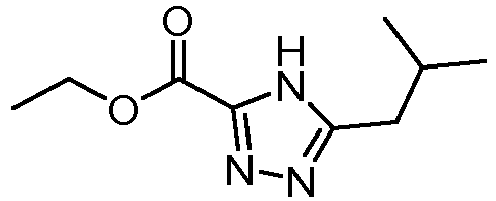
Ethyl 5-isobutyl-4H-1,2,4-triazol-5-carboxylate The operation was the same as the steps 2 to 3 of the preparation of intermediate A-3, but 3-methylbutyryl chloride was used in place of 2-phenylpropionyl chloride 198 A-9 
Ethyl 5-neopentyl-4H-1,2,4-triazol-5-carboxylate The operation was the same as the steps 2 to 3 of the preparation of intermediate A-3, but 3,3-dimethylbutyryl chloride was used in place of 2-phenylpropionyl chloride 212 A-10 
Ethyl 5-(cyclopropylmethyl)-4H-1,2,4-triazol-5-carboxylate The operation was the same as the steps 1 to 3 of the preparation of intermediate A-3, but 2-cyclopropylacetic acid was used in place of 2-phenylpropionic acid 196 A-11 
Ethyl 5-(cyclobutylmethyl)-4H-1,2,4-triazol-5-carboxylate The operation was the same as the steps 1 to 3 of the preparation of intermediate A-3, but 2-cyclobutylacetic acid was used in place of 2-phenylpropionic acid 210 A-12 
Ethyl 5-(cyclohexylmethyl)-4H-1,2,4-triazol-3-carboxylate The operation was the same as the steps 1 to 3 of the preparation of intermediate A-3, but cyclohexylacetic acid was used in place of 2-phenylpropionic acid 238 A-13 
Ethyl 5-((tetrahydro-2H-pyran-4-yl)methyl)-4H-1,2,4-triazol-3-carboxylate The operation was the same as the step 1 of the preparation of intermediate A-7, but 2-(tetrahydro-2H-pyran-4-yl)acetyl chloride was used in place of 2-(benzyloxy)acetyl chloride 240 A-14 
Ethyl 5-((4,4-difluorocyclohexyl)methyl )-4H-1,2,4-triazol-3-carboxylate The operation was the same as the step 1 of the preparation of intermediate A-7, but 2-(4,4-difluorocyclohexyl)acetyl chloride was used in place of 2-(benzyloxy)acetyl chloride 274 A-15 
Ethyl 5-(bicyclo[2.2.1]heptan-2-ylmethyl)-4H-1,2,4-triazol-3 -carboxylate The operation was the same as the step 1 of the preparation of intermediate A-7, but 2-(bicyclo[2.2.1]heptan-2-yl)acetyl chloride was used in place of 2-(benzyloxy)acetyl chloride 250 A-16 
Ethyl 5-(adamantan-1-yl)methyl)-4H-1,2,4-triazol-3 -carboxylate The operation was the same as the step 1 of the preparation of intermediate A-7, but 2-(adamantan-1-yl)acetyl chloride was used in place of 2-(benzyloxy)acetyl chloride 290 A-17 
Ethyl 5-(2-cyclopentylethyl)-4H-1,2,4-triazol-3-carboxylate The operation was the same as the step 1 of the preparation of intermediate A-7, but 3-cyclopentylpropionyl chloride was used in place of 2-(benzyloxy)acetyl chloride 238 A-18 
Ethyl 5-(phenethyl)-4H-1,2,4-triazol-3-carboxylate The operation was the same as the step 1 of the preparation of intermediate A-7, but 3-phenylpropionyl chloride was used in place of 2-(benzyloxy)acetyl chloride 246 A-19 
Ethyl 5-(2-fluorobenzyl)-4H-1,2,4-triazol-3-carboxylate The operation was the same as the step 1 of the preparation of intermediate A-7, but 2-(2-fluorophenyl)acetyl chloride was used in place of 2-(benzyloxy)acetyl chloride 250 A-20 
Ethyl 5-(3-fluorobenzyl)-4H-1,2,4-triazol-3-carboxylate The operation was the same as the step 1 of the preparation of intermediate A-7, but 2-(3-fluorophenyl)acetyl chloride was used in place of 2-(benzyloxy)acetyl chloride 250 A-21 
Ethyl 5-(3-chlorobenzyl)-4H-1,2,4-triazol-3-carboxylate The operation was the same as the step 1 of the preparation of intermediate A-7, but 2-(3-chlorophenyl)acetyl chloride was used in place of 2-(benzyloxy)acetyl chloride 266 A-22 
Ethyl 5-(3-methoxybenzyl)-4H-1,2,4-triazol-3 -carboxylate The operation was the same as the step 1 of the preparation of intermediate A-7, but 2-(3-methoxyphenyl)acetyl chloride was used in place of 2-(benzyloxy)acetyl chloride 262 A-23 
Ethyl 5-(3-cyanobenzyl)-4H-1,2,4-triazol-3-carboxylate The operation was the same as the step 1 of the preparation of intermediate A-7, but 2-(3-cyanophenyl)acetyl chloride was used in place of 2-(benzyloxy)acetyl chloride 257 A-24 
Ethyl 5-(4-fluorobenzyl)-4H-1,2,4-triazol-3-carboxylate The operation was the same as the step 1 of the preparation of intermediate A-7, but 2-(4-fluorophenyl)acetyl chloride was used in place of 2-(benzyloxy)acetyl chloride 250 A-25 
Ethyl 5-(4-chlorobenzyl)-4H-1,2,4-triazol-3-carboxylate The operation was the same as the step 1 of the preparation of intermediate A-7, but 2-(4-chlorophenyl)acetyl chloride was used in place of 2-(benzyloxy)acetyl chloride 266 A-26 
Ethyl 5-(4-methoxybenzyl)-4H-1,2,4-triazol-3 -carboxylate The operation was the same as the step 1 of the preparation of intermediate A-7, but 2-(4-methoxyphenyl)acetyl chloride was used in place of 2-(benzyloxy)acetyl chloride 262 A-27 
Ethyl 5-(4-cyanobenzyl)-4H-1,2,4-triazol-3-carboxylate The operation was the same as the step 1 of the preparation of intermediate A-7, but 2-(4-cyanophenyl)acetyl chloride was used in place of 2-(benzyloxy)acetyl chloride 257 A-28 
Ethyl 5-(3,4-difluorobenzyl)-4H-1,2,4-triazol-3 -carboxylate The operation was the same as the step 1 of the preparation of intermediate A-7, but 2-(3,4-difluorobenzyl)acetyl chloride was used in place of 2-(benzyloxy)acetyl chloride 268 -

- Phenylacetylhydrazine (5g, 33.3mmol) was dissolved in anhydrous dichloromethane (100mL), triethylamine (6.74g, 66.7mmol) was added, and under argon protection, methyl oxalyl chloride (4.1g, 33.5mmol) was added dropwise at 0°C. The reaction solution was slowly warmed to 25°C. After 16 hours reaction, the solvent was evaporated to dryness, rinsed with mixture of petroleum ether/ethyl acetate, filtered, and the filter cake was re-dissolved in toluene (100mL), Lawson's reagent (26.9g, 66.5mmol) was added, heated to 110°C and reacted for 6 hours. The reaction was cooled and diluted with ethyl acetate, washed with water, saturated aqueous solution of sodium bicarbonate and brine, the organic phase was dried over anhydrous sodium sulfate, filtered and evaporated to dryness, and purified by column chromatography to get 4g product. MS: 235 [M+H]+.
-

- 4-Bromopyridin-2-amine (173mg, 1mmol), phenylboronic acid (146mg, 1.2mmol), Pd(dppf)Cl2 (73mg, 0.1mmol) and sodium carbonate (160mg, 1.5mmol) were placed in a mixture of dioxane ( 4mL) and water (0.8mL), which was reacted at 100°C for 16 hours under argon protection. After cooling, the reaction solution was evaporated to dryness and subjected to column chromatography to afford 120mg of brown solid. MS: 171 [M+H]+.
- 4-Phenylpyridin-2-amine (120mg, 0.7mmol) was placed in dry xylene (3mL), to which trimethyl aluminum (3M, 0.7mL) was slowly added under argon protection, and reacted at 25°C for 1 hour. Then, intermediate 1 (197mg, 0.9mmol) was added, and reacted at 100°C for 16 hours. The reaction solution was cooled and diluted with methanol, evaporated to dryness and subjected to column chromatography and preparative liquid chromatography to afford 50mg of white solid. 1H NMR (400 MHz, DMSO-d 6) δ 14.65 (s, 1H), 9.90 (s, 1H), 8.49 - 8.38 (m, 2H), 7.82 - 7.71 (m, 2H), 7.62 - 7.45 (m, 4H), 7.40 - 7.30 (m, 4H), 7.30 - 7.18 (m, 1H), 4.18 (s, 2H). MS: 356 [M+H]+.
- The preparation was carried out in a similar manner to Example 1, except that in
step 1, o-methylphenylboronic acid was used in place of phenylboronic acid. 1H NMR (400 MHz, DMSO-d 6) δ 14.55 (s, 1H), 9.86 (s, 1H), 8.42 (d, J = 5.1 Hz, 1H), 8.13 (s, 1H), 7.51 - 7.34 (m, 3H), 7.34 - 7.30 (m, 4H), 7.30 - 7.23 (m, 2H), 7.21 (d, J = 5.1 Hz, 1H), 4.19 (s, 2H), 2.28 (s, 3H). MS: 370 [M+H]+.
- The preparation was carried out in a similar manner to Example 1, except that in
step 1, o-methoxyphenylboronic acid was used in place of phenylboronic acid. 1H NMR (400 MHz, DMSO-d 6) δ 14.58 (s, 1H), 9.82 (s, 1H), 8.37 (d, J = 5.2 Hz, 1H), 8.33 - 8.17 (m, 1H), 7.60 - 6.91 (m, 10H), 4.18 (s, 2H), 3.81 (s, 3H). MS: 386 [M+H]+. - The preparation was carried out in a similar manner to Example 1, except that in
step 1, o-ethoxyphenylboronic acid was used in place of phenylboronic acid. 1H NMR (400 MHz, DMSO-d 6) δ 14.60 (s, 1H), 9.80 (s, 1H), 8.62 - 8.40 (m, 1H), 8.38 (d, J = 5.2 Hz, 1H), 7.60 - 6.94 (m, 10H), 4.18 (s, 2H), 4.10 (q, J = 7.0 Hz, 2H), 1.32 (t, J = 6.9 Hz, 3H). MS: 400 [M+H]+.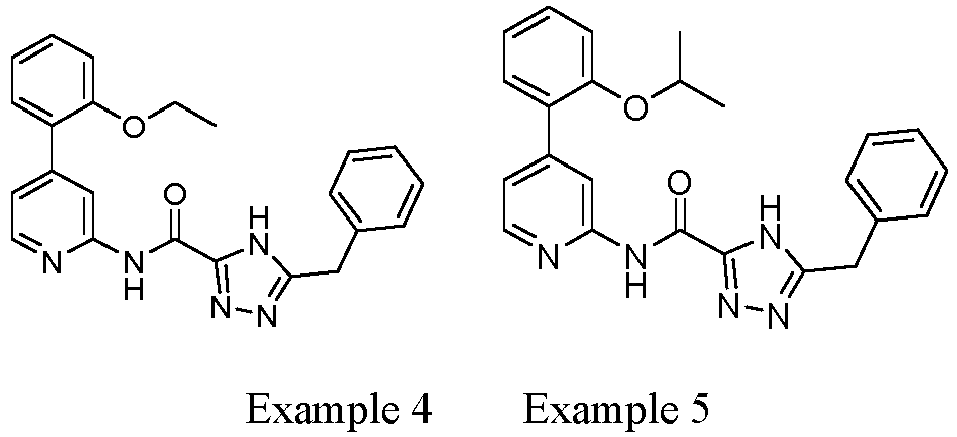
- The preparation was carried out in a similar manner to Example 1, except that in
step 1, 2-isopropyloxyphenylboronic acid was used in place of phenylboronic acid. 1H NMR (400 MHz, DMSO-d 6) δ 14.55 (s, 1H), 9.74 (s, 1H), 8.56 - 8.26 (m, 2H), 7.45 - 7.38 (m, 2H), 7.38 - 7.29 (m, 5H), 7.27 (d, J = 7.3 Hz, 1H), 7.19 (d, J = 8.6 Hz, 1H), 7.09 - 7.02 (m, 1H), 4.69 (p, J = 6.0 Hz, 1H), 4.19 (s, 2H), 1.27 (d, J = 6.0 Hz, 6H). MS: 414 [M+H]+. - The preparation was carried out in a similar manner to Example 1, except that in
step 1, 2-(trifluoromethoxy)phenylboronic acid was used in place of phenylboronic acid. 1H NMR (400 MHz, DMSO-d 6) δ 14.64 (s, 1H), 9.96 (s, 1H), 8.47 (d, J = 5.2 Hz, 1H), 8.30 (d, J = 1.5 Hz, 1H), 7.70-7.51 (m, 4H), 7.41-7.18 (m, 6H), 4.18 (s, 2H). MS: 440 [M+H]+.
- The preparation was carried out in a similar manner to Example 1, except that in
step 1, 2-chlorophenylboronic acid was used in place of phenylboronic acid. 1H NMR (600 MHz, DMSO-d 6) δ 14.65 (s, 1H), 9.95 (s, 1H), 8.46 (d, J = 5.1 Hz, 1H), 8.23 (d, J = 1.5 Hz, 1H), 7.68 - 7.60 (m, 1H), 7.56 - 7.46 (m, 3H), 7.39 -7.30 (m, 4H), 7.30 - 7.21 (m, 2H), 4.18 (s, 2H). MS: 390 [M+H]+. - The preparation was carried out in a similar manner to Example 1, except that in
step 1, 2-cyclopropylphenylboronic acid was used in place of phenylboronic acid. 1H NMR (400 MHz, DMSO-d 6) δ 14.56 (s, 1H), 9.87 (s, 1H), 8.43 (d, J = 5.1 Hz, 1H), 8.27 (s, 1H), 7.42 - 7.30 (m, 5H), 7.30 -7.20 (m, 4H), 7.10 - 7.01 (m, 1H), 4.18 (s, 2H), 1.91 - 1.77 (m, 1H), 0.95 - 0.81 (m, 2H), 0.79 - 0.63 (m, 2H). MS: 396 [M+H]+.
- The preparation was carried out in a similar manner to Example 1, except that in
step 1, 4-methoxyphenylboronic acid was used in place of phenylboronic acid. 1H NMR (400 MHz, DMSO-d 6) δ 14.60 (s, 1H), 9.82 (s, 1H), 8.48 - 8.29 (m, 2H), 7.80 - 7.66 (m, 2H), 7.47 (dd, J = 5.2, 1.8 Hz, 1H), 7.42 - 7.18 (m, 5H), 7.18 - 6.98 (m, 2H), 4.18 (s, 2H), 3.83 (s, 3H). MS: 386 [M+H]+. - The preparation was carried out in a similar manner to Example 1, except that in
step 1, 4-methoxy-2-methylphenylboronic acid was used in place of phenylboronic acid. 1H NMR (400 MHz, DMSO-d 6) δ 14.59 (s, 1H), 9.85 (s, 1H), 8.38 (d, J = 5.1 Hz, 1H), 8.10 (s, 1H), 7.47 -7.02 (m, 7H), 7.04 - 6.76 (m, 2H), 4.18 (s, 2H), 3.80 (s, 3H), 2.29 (s, 3H). MS: 400 [M+H]+.
- The preparation was carried out in a similar manner to Example 1, except that in
step 1, 4-chloro-2-methylphenylboronic acid was used in place of phenylboronic acid. 1H NMR (400 MHz, DMSO-d 6) δ 14.59 (s, 1H), 9.93 (s, 1H), 8.43 (d, J = 5.1 Hz, 1H), 8.10 (s, 1H), 7.48 (d, J = 2.1 Hz, 1H), 7.43-7.11 (m, 8H), 4.18 (s, 2H), 2.28 (s, 3H). MS: 404 [M+H]+. - The preparation was carried out in a similar manner to Example 1, except that in
step 1, 4-cyano-2-methylphenylboronic acid was used in place of phenylboronic acid. 1H NMR (400 MHz, DMSO-d 6) δ 14.60 (s, 1H), 10.00 (s, 1H), 8.47 (d, J = 5.1 Hz, 1H), 8.12 (s, 1H), 7.89 (s, 1H), 7.81 (d, J = 7.8 Hz, 1H), 7.49 (d, J = 7.9 Hz, 1H), 7.41 - 7.29 (m, 4H), 7.29 - 7.15 (m, 2H), 4.18 (s, 2H), 2.30 (s, 3H). MS: 395 [M+H]+.
- The preparation was carried out in a similar manner to Example 1, except that in
step 1, 2-chloro-5-methoxyphenylboronic acid was used in place of phenylboronic acid. 1H NMR (600 MHz, DMSO-d 6) δ 14.56 (s, 1H), 9.91 (s, 1H), 8.46 (d, J = 5.1 Hz, 1H), 8.23 (s, 1H), 7.53 (d, J = 8.8 Hz, 1H), 7.45 - 7.30 (m, 4H), 7.30 - 7.19 (m, 2H), 7.08 (dd, J = 8.8, 3.1 Hz, 1H), 7.03 (d, J = 3.0 Hz, 1H), 4.18 (s, 2H), 3.81 (s, 3H). MS: 420 [M+H]+. - The preparation was carried out in a similar manner to Example 1, except that in
step 1, 5-fluoro-2-methoxyphenylboronic acid was used in place of phenylboronic acid. 1H NMR (400 MHz, DMSO-d 6) δ 14.60 (s, 1H), 9.87 (s, 1H), 8.40 (d, J = 5.2 Hz, 1H), 8.32 (s, 1H), 7.51 -7.03 (m, 9H), 4.18 (s, 2H), 3.80 (s, 3H). MS: 404 [M+H]+.
- The preparation was carried out in a similar manner to Example 1, except that in
step 1, 5-chloro-2-methoxyphenylboronic acid was used in place of phenylboronic acid. 1H NMR (400 MHz, DMSO-d 6) δ 14.57 (s, 1H), 9.86 (s, 1H), 8.39 (d, J = 5.2 Hz, 1H), 8.28 (s, 1H), 7.50 (dd, J = 8.8, 2.7 Hz, 1H), 7.43 (d, J = 2.7 Hz, 1H), 7.40 - 7.29 (m, 5H), 7.29 - 7.15 (m, 2H), 4.18 (s, 2H), 3.81 (s, 3H). MS: 420 [M+H]+. - The preparation was carried out in a similar manner to Example 1, except that in
step 1, 2-methoxy-5-methylphenylboronic acid was used in place of phenylboronic acid. 1H NMR (400 MHz, DMSO-d 6) δ 14.55 (s, 1H), 9.79 (s, 1H), 8.36 (d, J = 5.2 Hz, 1H), 8.28 (s, 1H), 7.38 - 7.29 (m, 5H), 7.29 - 7.21 (m, 2H), 7.20 (d, J = 2.2 Hz, 1H), 7.07 (d, J = 8.4 Hz, 1H), 4.18 (s, 2H), 3.77 (s, 3H), 2.31 (s, 3H). MS: 400 [M+H]+.
- The preparation was carried out in a similar manner to Example 1, except that in
step 1, 5-isopropyl-2-methoxyphenylboronic acid was used in place of phenylboronic acid. 1H NMR (400 MHz, DMSO-d 6) δ 14.62 (s, 1H), 9.84 (s, 1H), 8.37 (d, J = 5.2 Hz, 1H), 8.29 (d, J = 1.5 Hz, 1H), 7.41 - 7.19 (m, 8H), 7.09 (d, J = 8.5 Hz, 1H), 4.18 (s, 2H), 3.78 (s, 3H), 2.91 (p, J = 6.9 Hz, 1H), 1.21 (d, J = 6.9 Hz, 6H). MS: 428 [M+H]+. - The preparation was carried out in a similar manner to Example 1, except that in
step 

- The preparation was carried out in a similar manner to Example 1, except that in
step 1, 2-methoxy-5-(trifluoromethyl)phenylboronic acid was used in place of phenylboronic acid. 1H NMR (400 MHz, DMSO-d 6) δ 14.55 (s, 1H), 9.86 (s, 1H), 8.42 (d, J = 5.2 Hz, 1H), 8.29 (s, 1H), 7.83 (dd, J = 8.9, 2.3 Hz, 1H), 7.69 (d, J = 2.3 Hz, 1H), 7.46 - 7.18 (m, 7H), 4.19 (s, 2H), 3.90 (s, 3H). MS: 454 [M+H]+. - The preparation was carried out in a similar manner to Example 1, except that in
step 1, 2-methyl-3-(4,4,5,5-tetramethyl-1,3,2-dioxaborolan-2-yl)pyridine was used in place of phenylboronic acid. 1H NMR (400 MHz, DMSO-d 6) δ 14.63 (s, 1H), 9.99 (s, 1H), 8.57 (dd, J = 4.9, 1.7 Hz, 1H), 8.48 (d, J = 5.1 Hz, 1H), 8.18 (d, J = 1.5 Hz, 1H), 7.73 (dd, J = 7.7, 1.8 Hz, 1H), 7.44 - 7.32 (m, 5H), 7.32 - 7.24 (m, 2H), 4.21 (s, 2H), 2.50 (s, 3H). MS: 371 [M+H]+.
- The preparation was carried out in a similar manner to Example 1, except that in
step 1, (2-methoxypyridin-3-yl)boronic acid was used in place of phenylboronic acid. 1H NMR (400 MHz, DMSO-d 6) δ 14.61 (s, 1H), 9.88 (s, 1H), 8.41 (d, J = 5.2 Hz, 1H), 8.37 (d, J = 1.5 Hz, 1H), 8.28 (dd, J = 5.0, 1.9 Hz, 1H), 7.88 (dd, J = 7.4, 1.9 Hz, 1H), 7.40 (dd, J = 5.2, 1.6 Hz, 1H), 7.38 - 7.29 (m, 4H), 7.29 - 7.21 (m, 1H), 7.17 (dd, J = 7.4, 4.9 Hz, 1H), 4.18 (s, 2H), 3.92 (s, 3H). MS: 387 [M+H]+. - The preparation was carried out in a similar manner to Example 1, except that in
step 1, (2-ethoxypyridin-3-yl)boronic acid was used in place of phenylboronic acid. 1H NMR (400 MHz, DMSO-d 6) δ 14.58 (s, 1H), 9.83 (s, 1H), 8.48 (s, 1H), 8.42 (d, J = 5.2 Hz, 1H), 8.26 (dd, J = 4.9, 1.9 Hz, 1H), 7.90 (dd, J = 7.4, 1.9 Hz, 1H), 7.42 (dd, J = 5.2, 1.6 Hz, 1H), 7.39 -7.30 (m, 4H), 7.30 - 7.21 (m, 1H), 7.15 (dd, J = 7.4, 4.9 Hz, 1H), 4.41 (q, J = 7.0 Hz, 2H), 4.18 (s, 2H), 1.34 (t, J = 7.0 Hz, 3H). MS: 401 [M+H]+.
- The preparation was carried out in a similar manner to Example 1, except that in
step 1, (2-isopropyloxypyridin-3-yl)boronic acid was used in place of phenylboronic acid. 1H NMR (400 MHz, DMSO-d 6) δ 14.59 (s, 1H), 9.81 (s, 1H), 8.52 (s, 1H), 8.41 (d, J = 5.2 Hz, 1H), 8.25 (dd, J = 4.9, 1.9 Hz, 1H), 7.89 (dd, J = 7.4, 1.9 Hz, 1H), 7.40 (dd, J = 5.2, 1.6 Hz, 1H), 7.38 -7.30 (m, 4H), 7.29 - 7.21 (m, 1H), 7.12 (dd, J = 7.4, 4.9 Hz, 1H), 5.39 (p, J = 6.2 Hz, 1H), 4.18 (s, 2H), 1.33 (d, J = 6.2 Hz, 6H). MS: 415 [M+H]+. - The preparation was carried out in a similar manner to Example 1, except that in
step 1, (3-methylpyridin-4-yl)boronic acid was used in place of phenylboronic acid. 1H NMR (400 MHz, DMSO-d 6) δ 14.58 (s, 1H), 9.97 (s, 1H), 8.58 (s, 1H), 8.53 (d, J = 5.0 Hz, 1H), 8.49 (d, J = 5.1 Hz, 1H), 8.15 (s, 1H), 7.39 - 7.30 (m, 5H), 7.30 - 7.22 (m, 2H), 4.18 (s, 2H), 2.28 (s, 3H). MS: 371 [M+H]+.
- The preparation was carried out in a similar manner to Example 1, except that in
step 1, (3-methoxypyridin-4-yl)boronic acid was used in place of phenylboronic acid. 1H NMR (400 MHz, DMSO-d 6) δ 14.56 (s, 1H), 9.91 (s, 1H), 8.56 (s, 1H), 8.45 (d, J = 5.2 Hz, 1H), 8.38 - 8.33 (m, 2H), 7.44 (d, J = 4.8 Hz, 1H), 7.39 (dd, J = 5.2, 1.6 Hz, 1H), 7.37 - 7.29 (m, 4H), 7.29 - 7.21 (m, 1H), 4.18 (s, 2H), 3.94 (s, 3H). MS: 387 [M+H]+. - The preparation was carried out in a similar manner to Example 1, except that in
step 1, 1-methyl-5-(4,4,5,5-tetramethyl-1,3,2-dioxaborolan-2-yl)-1H-pyrazole was used in place of phenylboronic acid. 1H NMR (400 MHz, DMSO-d 6) δ 14.66 (s, 1H), 10.00 (s, 1H), 8.47 (d, J = 5.2 Hz, 1H), 8.28 (d, J = 1.4 Hz, 1H), 7.55 (d, J = 1.9 Hz, 1H), 7.40 (dd, J = 5.2, 1.5 Hz, 1H), 7.38 - 7.29 (m, 4H), 7.29 - 7.21 (m, 1H), 6.63 (d, J = 1.9 Hz, 1H), 4.18 (s, 2H), 3.96 (s, 3H). MS: 360 [M+H]+.
- The preparation was carried out in a similar manner to Example 1, except that in
step - The preparation was carried out in a similar manner to Example 1, except that in
step 1, 1-methyl-5-(4,4,5,5-tetramethyl-1,3,2-dioxaborolan-2-yl)-3-(trifluoromethyl)-1H-pyrazole was used in place of phenylboronic acid. 1H NMR (400 MHz, DMSO-d 6) δ 14.59 (s, 1H), 10.08 (s, 1H), 8.65 - 8.41 (m, 1H), 8.31 (d, J = 3.7 Hz, 1H), 7.63 - 7.41 (m, 1H), 7.41 - 7.19 (m, 5H), 7.15 (d, J = 3.8 Hz, 1H), 4.19 (s, 2H), 4.04 (s, 3H). MS: 428 [M+H]+.
- The preparation was carried out in a similar manner to Example 1, except that in
step 1, o-methylphenylboronic acid was used in place of phenylboronic acid, and 5-bromopyridin-3-amine was used in place of 4-bromopyridin-2-amine. 1H NMR (600 MHz, DMSO-d 6) δ 14.61 (s, 1H), 10.80 (s, 1H), 9.02 (d, J = 2.4 Hz, 1H), 8.31 (d, J = 2.0 Hz, 1H), 8.27 - 8.11 (m, 1H), 7.57 - 7.12 (m, 9H), 4.17 (s, 2H), 2.27 (s, 3H). MS: 370 [M+H]+. - The preparation was carried out in a similar manner to Example 1, except that in
step 1, 2-chlorophenylboronic acid was used in place of phenylboronic acid, 5-bromopyridin-3-amine was used in place of 4-bromopyridin-2-amine. 1H NMR (600 MHz, DMSO-d 6) δ 14.59 (s, 1H), 10.84 (s, 1H), 9.04 (s, 1H), 8.53 - 8.23 (m, 2H), 7.66 - 7.58 (m, 1H), 7.54 - 7.45 (m, 3H), 7.37 - 7.31 (m, 2H), 7.31 - 7.28 (m, 2H), 7.28 - 7.22 (m, 1H), 4.18 (s, 2H). MS: 390 [M+H]+.
- The preparation was carried out in a similar manner to Example 1, except that in
step 1, 2-chloro-5-methoxyphenylboronic acid was used in place of phenylboronic acid, 5-bromopyridin-3-amine was used in place of 4-bromopyridin-2-amine. 1H NMR (600 MHz, DMSO-d 6) δ 14.59 (s, 1H), 10.82 (s, 1H), 9.04 (d, J = 2.4 Hz, 1H), 8.49 - 8.23 (m, 2H), 7.59 - 7.44 (m, 1H), 7.37 - 7.31 (m, 2H), 7.31 - 7.27 (m, 2H), 7.27 - 7.22 (m, 1H), 7.07 -7.02 (m, 2H), 4.18 (s, 2H), 3.81 (s, 3H). MS: 420 [M+H]+. -

- 3-(Trifluoromethyl)-1H-pyrazole (1.09g, 8mmol) was dissolved in anhydrous tetrahydrofuran (24mL), and under argon protection at 0°C, sodium hydride was added in batches (60%, 385mg, 9.6mmol). After reacting for 40 minutes, 2-bromopropane (1.28g, 10.4mmol) was added dropwise, and the reaction was warmed to 25°C and reacted for 16 hours. The reaction solution was quenched with saturated aqueous solution of ammonium chloride, and extracted with ethyl acetate. The organic phase was washed with saturated brine, dried over anhydrous sodium sulfate, filtered and evaporated to dryness, and purified by column chromatography to afford 300 mg of product, MS: 179 [M+H]+.
- 1-Isopropyl-3-(trifluoromethyl)-1H-pyrazole (300mg, 1.7mmol) was dissolved in anhydrous tetrahydrofuran (6mL), and under argon protection at -78°C, n-butyllithium (2.5M, 1mL, 2.5mmol) was added dropwise. After reacting at this temperature for 1 hour, trimethyl borate (351mg, 3.4mmol) was added, and slowly warmed up overnight. The reaction solution was quenched with saturated aqueous solution of ammonium chloride, and extracted with ethyl acetate. The organic phase was washed with saturated brine, dried over anhydrous sodium sulfate, filtered and evaporated to dryness, and purified by column chromatography to afford 70 mg of product, MS: 223 [M+H]+.
- The preparation was carried out in a similar manner to Example 1, except that in
step 1, (1-isopropyl-3-(trifluoromethyl)-1H-pyrazol-5-yl)boronic acid was used in place of phenylboronic acid. 1H NMR (400 MHz, DMSO-d 6) δ 14.61 (s, 1H), 10.08 (s, 1H), 8.54 (d, J = 5.1 Hz, 1H), 8.26 (s, 1H), 7.41 - 7.29 (m, 5H), 7.29 - 7.21 (m, 1H), 7.04 (s, 1H), 4.86 - 4.60 (m, 1H), 4.18 (s, 2H), 1.45 (d, J = 6.5 Hz, 6H). MS: 456 [M+H]+. -

- 4-Bromopyridin-2-amine (400mg, 2.3mmol), pinacol diborate (645mg, 2.5mmol), Pd(dppf)Cl2 (170mg, 0.2mmol) and potassium acetate (564mg, 5.8mmol) were placed in dioxane (12mL), and reacted at 85°C for 16 hours under argon protection. The reaction solution was cooled to 25°C, and 2-bromo-4-fluoro-1-methylbenzene (321mg, 1.7mmol), Pd(dppf)Cl2 (150mg, 0.2mmol) and an aqueous solution (1mL) of sodium carbonate (360mg, 3.4mmol) was added, and continued to react under argon protection at 100°C for 5 hours. The reaction solution was cooled and evaporated to dryness, and subjected to column chromatography to afford 240 mg of brown solid. MS: 203 [M+H]+.
- 4-(5-Fluoro-2-methylphenyl)pyridin-2-amine (0.7mmol) was placed in dry xylene (3mL), and trimethyl aluminum (3M, 0.7mL) was slowly added under argon protection. After reacting at 25°C for 1 hour, intermediate 1 (197mg, 0.9mmol) was added, and reacted at 100°C for 16 hours. The reaction solution was cooled and diluted with methanol, evaporated to dryness and subjected to column chromatography and preparative liquid chromatography to prepare the product. 1H NMR (400 MHz, DMSO-d 6) δ 14.62 (s, 1H), 9.96 (s, 1H), 8.44 (d, J = 5.1 Hz, 1H), 8.12 (d, J = 1.5 Hz, 1H), 7.54 -7.00 (m, 9H), 4.18 (s, 2H), 2.24 (s, 3H). MS: 388 [M+H]+.
- The preparation was carried out in a similar manner to Example 33, except that in
step 1, 2-bromo-4-chloro-1-methylbenzene was used in place of 2-bromo-4-fluoro-1-methylbenzene. 1H NMR (400 MHz, DMSO-d 6) δ 14.50 (s, 1H), 9.96 (s, 1H), 8.44 (d, J = 5.1 Hz, 1H), 8.11 (s, 1H), 7.57 -7.06 (m, 9H), 4.17 (s, 2H), 2.24 (s, 3H). MS: 404 [M+H]+.
- The preparation was carried out in a similar manner to Example 33, except that in
step 1, 2-bromo-4-cyano-1-methylbenzene was used in place of 2-bromo-4-fluoro-1-methylbenzene. 1H NMR (400 MHz, DMSO-d 6) δ 14.56 (s, 1H), 9.93 (s, 1H), 8.46 (d, J = 5.1 Hz, 1H), 8.14 (s, 1H), 7.74 (dd, J = 8.1, 2.0 Hz, 1H), 7.68 - 7.53 (m, 2H), 7.38 - 7.30 (m, 4H), 7.30 - 7.23 (m, 2H), 4.20 (s, 2H), 2.35 (s, 3H). MS: 395 [M+H]+. - The preparation was carried out in a similar manner to Example 33, except that in
step 1, 2-bromo-4-trifluoromethyl-1-methylbenzene was used in place of 2-bromo-4-fluoro-1-methylbenzene. 1H NMR (400 MHz, DMSO-d 6) δ 14.56 (s, 1H), 9.93 (s, 1H), 8.46 (d, J = 5.1 Hz, 1H), 8.14 (s, 1H), 7.74 (dd, J = 8.1, 2.0 Hz, 1H), 7.65 - 7.57 (m, 2H), 7.39 - 7.23 (m, 6H), 4.20 (s, 2H), 2.35 (s, 3H). MS: 438 [M+H]+.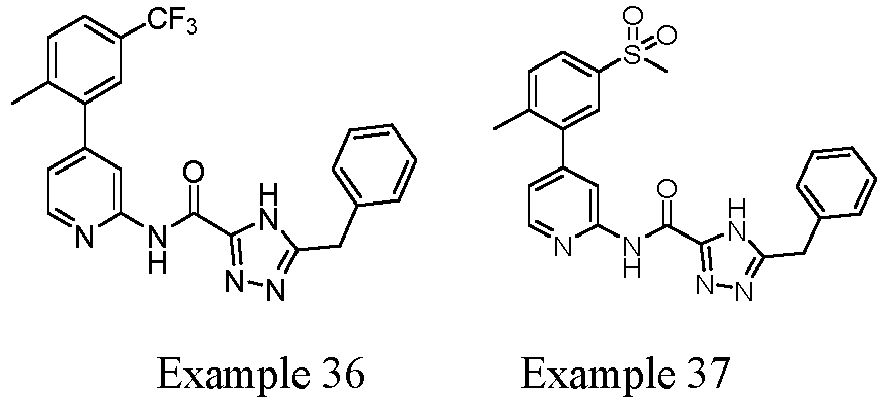
- The preparation was carried out in a similar manner to Example 33, except that in
step 1, 2-bromo-4-methylsulfonyl-1-methylbenzene was used in place of 2-bromo-4-fluoro-1-methylbenzene. 1H NMR (400 MHz, DMSO-d 6) δ 14.61 (s, 1H), 10.00 (s, 1H), 8.48 (d, J = 5.1 Hz, 1H), 8.15 (s, 1H), 7.91 (dd, J = 8.0, 2.1 Hz, 1H), 7.79 (d, J = 2.0 Hz, 1H), 7.66 (d, J = 8.1 Hz, 1H), 7.40 - 7.21 (m, 6H), 4.18 (s, 2H), 3.26 (s, 3H), 2.37 (s, 3H). MS: 448 [M+H]+. - The preparation was carried out in a similar manner to Example 33, except that in
step 1, 7-bromo-2,3-dihydrobenzofuran was used in place of 2-bromo-4-fluoro-1-methylbenzene. 1H NMR (600 MHz, DMSO-d6 ) δ 14.55 (s, 1H), 9.78 (s, 1H), 8.53 (s, 1H), 8.39 (d, J = 5.3 Hz, 1H), 7.52 (d, J = 5.3 Hz, 1H), 7.41 (d, J = 7.8 Hz, 1H), 7.38 - 7.30 (m, 5H), 7.27 (d, J = 7.2 Hz, 1H), 7.03 - 6.98 (m, 1H), 4.63 (t, J = 8.7 Hz, 2H), 4.18 (s, 2H), 3.27 (t, J = 8.7 Hz, 2H). MS: 398 [M+H]+.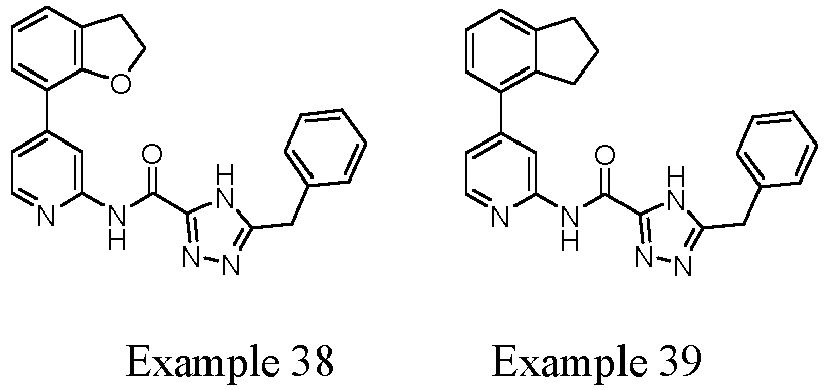
- The preparation was carried out in a similar manner to Example 33, except that in
step 1, 4-bromo-2,3-dihydro-1H-indene was used in place of 2-bromo-4-fluoro-1-methylbenzene. 1H NMR (400 MHz, DMSO-d 6) δ 14.62 (s, 1H), 9.89 (s, 1H), 8.42 (d, J = 5.1 Hz, 1H), 8.27 (d, J = 1.5 Hz, 1H), 7.60 - 7.12 (m, 9H), 4.18 (s, 2H), 3.04 - 2.88 (m, 4H), 2.11 - 1.95 (m, 2H). MS: 396 [M+H]+. - The preparation was carried out in a similar manner to Example 33, except that in
step 1, 5-bromochroman was used in place of 2-bromo-4-fluoro-1-methylbenzene. 1H NMR (400 MHz, DMSO-d 6) δ 14.60 (s, 1H), 9.90 (s, 1H), 8.41 (d, J = 5.1 Hz, 1H), 8.11 (s, 1H), 7.44 -7.30 (m, 4H), 7.30 -7.14 (m, 3H), 6.91 - 6.76 (m, 2H), 4.27 - 4.09 (m, 4H), 2.61 (t, J = 6.5 Hz, 2H), 1.95 - 1.78 (m, 2H). MS: 412 [M+H]+.
- The preparation was carried out in a similar manner to Example 33, except that in
step 1, 4-bromobenzo[d][1,3]dioxole was used in place of 2-bromo-4-fluoro-1-methylbenzene. 1H NMR (600 MHz, DMSO-d 6) δ 14.55 (s, 1H), 9.85 (s, 1H), 8.57 (s, 1H), 8.44 (d, J = 5.3 Hz, 1H), 7.55 (d, J = 5.3 Hz, 1H), 7.38 - 7.29 (m, 4H), 7.29 - 7.19 (m, 2H), 7.08 - 6.97 (m, 2H), 6.15 (s, 2H), 4.18 (s, 2H). MS: 400 [M+H]+. -

- The preparation was carried out in a similar manner to Example 33, except that in
step 1, 5-bromo-2,3-dihydrobenzo[b][1,4]dioxine was used in place of 2-bromo-4-fluoro-1-methylbenzene. 1H NMR (600 MHz, DMSO-d 6) δ 14.59 (s, 1H), 9.84 (s, 1H), 8.38 (d, J = 5.2 Hz, 1H), 8.29 (s, 1H), 7.39 - 7.29 (m, 5H), 7.29 - 7.21 (m, 1H), 7.02 - 6.92 (m, 3H), 4.34 - 4.25 (m, 4H), 4.17 (s, 2H). MS: 414 [M+H]+. -
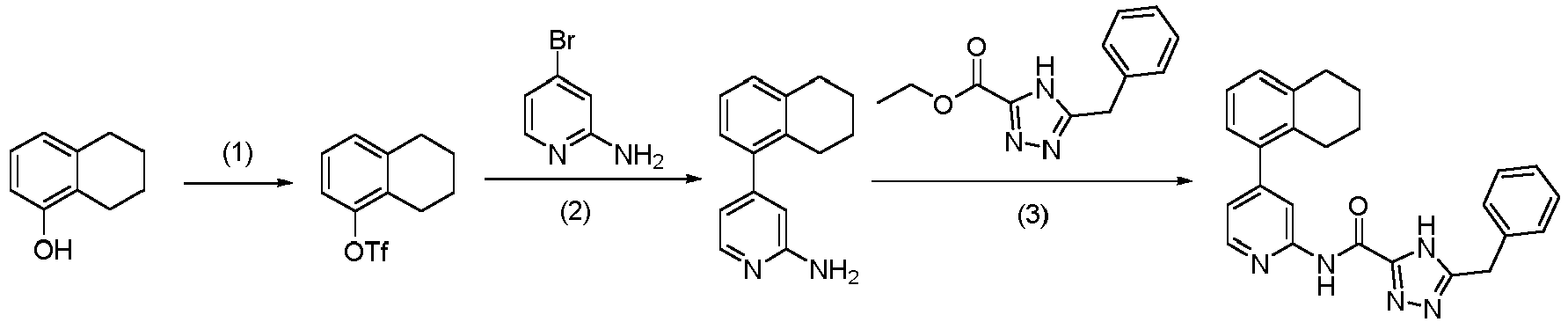
- 5,6,7,8-tetrahydronaphthalen-1-ol was dissolved in dichloromethane (600mg, 4mmol) and pyridine (480mg, 6.1mmol), trifluoromethanesulfonic anhydride (1.37g, 4.8mmol) was added dropwise under argon protection at 0°C, and the reaction was warmed to 25°C and reacted for 5 hours. The reaction solution was diluted with dichloromethane, washed with 1M HCl, washed with saturated brine, dried over anhydrous sodium sulfate, filtered and evaporated to dryness to afford 444mg of colorless oil. MS: 281 [M+H]+.
-
Step 2 to Step 3: The preparation was carried out in a similar manner to Example 33, except that instep 1, 5,6,7,8-tetrahydronaphthalen-1-yl trifluoromethanesulfonate was used in place of 2-bromo-4-fluoro-1-methylbenzene. 1H NMR (400 MHz, DMSO-d 6) δ 14.59 (s, 1H), 9.88 (s, 1H), 8.40 (d, J = 5.1 Hz, 1H), 8.07 (s, 1H), 7.40 - 7.29 (m, 4H), 7.29 - 7.12 (m, 4H), 7.03 (dd, J = 7.3, 1.6 Hz, 1H), 4.17 (s, 2H), 2.81 (t, J = 6.4 Hz, 2H), 2.56 (t, J = 6.2 Hz, 2H), 1.81 - 1.71 (m, 2H), 1.71 - 1.59 (m, 2H). MS: 410 [M+H]+. -

- 5-bromo-3-chloro-2-methoxypyridine (500mg, 2.2mmol), cyclopropylboronic acid (212mg, 2.5mmol), Pd(dppf)Cl2 (145mg, 0.2mmol) and potassium carbonate (930mg, 6.7 mmol) were placed in a mixture of dioxane (8mL) and water (2mL), and reacted for 16 hours under argon protection at 80°C. The reaction solution was evaporated to dryness and subjected to column chromatography to afford 165 mg of product, MS: 184 [M+H]+.
-
Step 2 to Step 3: The preparation was carried out in a similar manner to Example 33, except that instep 1, 3-chloro-5-cyclopropyl-2-methoxypyridine was used in place of 2-bromo-4-fluoro-1-methylbenzene, and reacted at 120°C. 1H NMR (400 MHz, DMSO-d 6) δ 14.59 (s, 1H), 9.87 (s, 1H), 8.40 (d, J = 5.2 Hz, 1H), 8.34 (s, 1H), 8.09 (d, J = 2.4 Hz, 1H), 7.51 (d, J = 2.4 Hz, 1H), 7.43 - 7.30 (m, 5H), 7.30 - 7.21 (m, 1H), 4.18 (s, 2H), 3.88 (s, 3H), 2.05 - 1.90 (m, 1H), 1.04 - 0.88 (m, 2H), 0.82 - 0.67 (m, 2H). MS: 427 [M+H]+. -

- The operation is the same as
step 1 of Example 44, but 5-bromo-2-methylphenol was used in place of 5-bromo-3-chloro-2-methoxypyridine. MS: 149 [M+H]+. - The preparation was carried out in a similar manner to Example 43, except that in
step 1, but 5-cyclopropyl-2-methylphenol was used in place of 5,6,7,8-tetrahydronaphthalen-1-ol. 1H NMR (400 MHz, DMSO-d 6) δ 14.58 (s, 1H), 9.90 (s, 1H), 8.41 (d, J = 5.1 Hz, 1H), 8.10 (s, 1H), 7.46 - 7.11 (m, 7H), 7.11 - 6.87 (m, 2H), 4.17 (s, 2H), 2.21 (s, 3H), 2.02 - 1.84 (m, 1H), 1.00 - 0.87 (m, 2H), 0.76 - 0.56 (m, 2H). MS: 410 [M+H]+. -

- The operation is the same as
step 1 of Example 1, but (5-bromo-2-methoxyphenyl)boronic acid was used in place of phenylboronic acid. MS: 279 [M+H]+. - The operation is the same as
step 1 of Example 44, but 4-(5-bromo-2-methoxyphenyl)pyridin-2-amine was used in place of 5-bromo-3-chloro-2-methoxypyridine. MS: 241 [M+H]+. - The operation is the same as
step 2 of Example 1, but 4-(5-cyclopropyl-2-methoxyphenyl)pyridin-2-amine was used in place of 4-phenylpyridin-2-amine. 1H NMR (400 MHz, DMSO-d 6) δ 14.54 (s, 1H), 9.79 (s, 1H), 8.36 (d, J = 5.2 Hz, 1H), 8.27 (s, 1H), 7.40-7.29 (m, 5H), 7.29-7.21 (m, 1H), 7.14 (dd, J = 8.5, 2.3 Hz, 1H), 7.11-7.03 (m, 2H), 4.18 (s, 2H), 3.76 (s, 3H), 2.00-1.88 (m, 1H), 0.97-0.86 (m, 2H), 0.70-0.58 (m, 2H). MS: 426 [M+H]+. -

- The operation is the same as
step 1 of Example 1, but cyclopent-1-en-1-ylboronic acid was used in place of phenylboronic acid. MS: 161 [M+H]+. - 4-(Cyclopent-1-en-1-yl)pyridin-2-amine (160mg, 1mmol) was dissolved in a mixture of ethanol (2mL) and ethyl acetate (1mL), to which a drop of hydrochloric acid and palladium on carbon (10%, 10mg) was added, and reacted for 16 hours under hydrogen atmosphere. The reaction solution was filtered through diatomaceous earth. The filtrate was evaporated to dryness, diluted with dichloromethane, washed with saturated aqueous solution of sodium carbonate, dried over anhydrous sodium sulfate, filtered and evaporated to dryness to afford 140 mg of yellow oil. MS: 163 [M+H]+.
- The operation is the same as
step 2 of Example 1, but 4-cyclopentylpyridin-2-amine was used in place of 4-phenylpyridin-2-amine. 1H NMR (400 MHz, DMSO-d 6) δ 14.61 (s, 1H), 9.70 (s, 1H), 8.23 (d, J = 5.1 Hz, 1H), 8.06 (d, J = 1.5 Hz, 1H), 7.42-7.29 (m, 4H), 7.29-7.18 (m, 1H), 7.09 (dd, J = 5.1, 1.5 Hz, 1H), 4.16 (s, 2H), 3.11-2.95 (m, 1H), 2.15-1.97 (m, 2H), 1.86-1.73 (m, 2H), 1.73-1.60 (m, 2H), 1.60-1.44 (m, 2H). MS: 348 [M+H]+. - The preparation was carried out in a similar manner to Example 47, except that in
step 1, cyclohex-1-en-1-ylboronic acid was used in place of cyclopent-1-en-1-ylboronic acid. 1H NMR (400 MHz, DMSO-d 6) δ 14.58 (s, 1H), 9.68 (s, 1H), 8.23 (d, J = 5.2 Hz, 1H), 8.04 (s, 1H), 7.39 - 7.28 (m, 4H), 7.28 - 7.19 (m, 1H), 7.12 -7.03 (m, 1H), 4.15 (s, 2H), 2.64 - 2.53 (m, 1H), 1.89 - 1.74 (m, 4H), 1.75 - 1.64 (m, 1H), 1.48 - 1.31 (m, 4H), 1.30 - 1.18 (m, 1H). MS: 362 [M+H]+.
- The preparation was carried out in a similar manner to Example 47, except that in
step 1, (3,6-dihydro-2H-pyran-4-yl)boronic acid was used in place of cyclopent-1-en-1-ylboronic acid. 1H NMR (400 MHz, DMSO-d 6) δ 14.53 (s, 1H), 9.69 (s, 1H), 8.27 (d, J = 5.2 Hz, 1H), 8.08 (s, 1H), 7.42-7.18 (m, 5H), 7.12 (d, J = 5.3 Hz, 1H), 4.19 (s, 2H), 4.02-3.86 (m, 2H), 3.53-3.37 (m, 2H), 2.95-2.78 (m, 1H), 1.81-1.52 (m, 4H).MS: 364 [M+H]+. -

- Anhydrous methanol (100mg, 3.1mmol) was dissolved in anhydrous DMF (3mL), and sodium hydride (60%, 115mg, 2.9mmol) was added under argon protection at 0°C. After reacting for 1 hour, 3-bromo-2-chloro-5-methylpyridine (400mg, 1.9mmol) in DMF (1mL) was added dropwise, and reacted at 60°C for 16 hours. MS: 202 [M+H]+.
-
Step 2 to Step 3: The preparation was carried out in a similar manner to Example 33, except that instep 1, 3-bromo-2-methoxy-5-methylpyridine was used in place of 2-bromo-4-fluoro-1-methylbenzene. 1H NMR (400 MHz, DMSO-d 6) δ 14.58 (s, 1H), 9.86 (s, 1H), 8.41 (d, J = 5.2 Hz, 1H), 8.36 (d, J = 1.5 Hz, 1H), 8.09 (d, J = 2.2 Hz, 1H), 7.72 (d, J = 2.3 Hz, 1H), 7.39 (dd, J = 5.2, 1.6 Hz, 1H), 7.38 - 7.29 (m, 4H), 7.29 - 7.21 (m, 1H), 4.18 (s, 2H), 3.88 (s, 3H), 2.30 (s, 3H). MS: 401 [M+H]+. - The preparation was carried out in a similar manner to Example 50, except that in
step 1, anhydrous ethanol was used in place of anhydrous methanol. 1H NMR (400 MHz, DMSO-d 6) δ 14.55 (s, 1H), 9.80 (s, 1H), 8.47 (s, 1H), 8.40 (d, J = 5.2 Hz, 1H), 8.07 (dd, J = 2.3, 1.0 Hz, 1H), 7.73 (d, J = 2.3 Hz, 1H), 7.41 (dd, J = 5.2, 1.6 Hz, 1H), 7.38 - 7.29 (m, 4H), 7.29 - 7.21 (m, 1H), 4.37 (q, J = 7.1 Hz, 2H), 4.18 (s, 2H), 2.29 (s, 3H), 1.32 (t, J = 7.0 Hz, 3H). MS: 415 [M+H]+.
- The preparation was carried out in a similar manner to Example 50, except that in
step 1, anhydrous isopropanol was used in place of anhydrous methanol. 1H NMR (400 MHz, DMSO-d 6) δ 14.63 (s, 1H), 9.91 - 9.71 (m, 1H), 8.51 (s, 1H), 8.40 (d, J = 5.2 Hz, 1H), 8.06 (d, J = 2.3 Hz, 1H), 7.73 (d, J = 2.4 Hz, 1H), 7.44 - 7.18 (m, 6H), 5.34 (p, J = 6.2 Hz, 1H), 4.18 (s, 2H), 2.28 (s, 3H), 1.31 (d, J = 6.2 Hz, 6H). MS: 429 [M+H]+. -

- Anhydrous ethanol (830mg, 18mmol) was dissolved in anhydrous tetrahydrofuran (10mL), and sodium hydride (60%, 600mg, 15mmol) was added at 0°C. After reacting for 30 minutes, 2,6-dichloro-3-methylpyridine (810mg, 5mmol) in tetrahydrofuran (5mL) was added, and reacted at 40°C for 24 hours. The reaction solution was quenched with saturated ammonium chloride, extracted with ethyl acetate, washed with saturated brine, dried over anhydrous sodium sulfate, filtered and evaporated to dryness, and purified by column chromatography to afford 300 mg of product. MS: 172 [M+H]+.
-
Step 2 to Step 3: The preparation was carried out in a similar manner to Example 33, except that instep 1, 6-chloro-2-ethoxy-3-methylpyridine was used in place of 2-bromo-4-fluoro-1-methylbenzene, and reacted at 120°C. 1H NMR (400 MHz, DMSO-d 6) δ 14.21 (s, 1H), 9.86 (s, 1H), 8.86 (d, J = 3.6 Hz, 1H), 8.53-8.32 (m, 1H), 7.84-7.77 (m, 1H), 7.71 (dd, J = 7.8, 3.6 Hz, 1H), 7.59 (dd, J = 7.8, 3.8 Hz, 1H), 7.40-7.30 (m, 4H), 7.27 (d, J = 7.0 Hz, 1H), 4.56-4.43 (m, 2H), 4.18 (s, 2H), 2.21 (s, 3H), 1.52-1.36 (m, 3H). MS: 415 [M+H]+. -

- The preparation was carried out in a similar manner to Example 53, except that in
step 1, 2-methoxyethanol was used in place of anhydrous ethanol. 1H NMR (400 MHz, DMSO-d 6) δ 14.54 (s, 1H), 9.87 (s, 1H), 8.85 (d, J = 1.3 Hz, 1H), 8.44 (d, J = 5.3 Hz, 1H), 7.81 (dd, J = 5.3, 1.6 Hz, 1H), 7.76 - 7.69 (m, 1H), 7.61 (d, J = 7.4 Hz, 1H), 7.40 - 7.29 (m, 4H), 7.29 - 7.20 (m, 1H), 4.64 - 4.51 (m, 2H), 4.18 (s, 2H), 3.82 - 3.73 (m, 2H), 3.45 (s, 3H), 2.22 (s, 3H). MS: 445 [M+H]+. -

- 3-Bromo-4-methylaniline (1.86g, 10mmol) was placed in dichloromethane (25mL), 4-dimethylaminopyridine (120mg, 1mmol) and triethylamine (2g, 20mmol) were added, a solution of di-tert-butyl dicarbonate (2.4g, 11mmol) in dichloromethane (5mL) was added dropwise under argon protection at 0°C, and reacted at 25°C for 4 hours after the addition. The reaction solution was diluted with dichloromethane, washed with saturated aqueous solution of ammonium chloride, washed with brine, dried over anhydrous sodium sulfate, evaporated to dryness and filtered to afford 2.84g crude product.
- Tert-butyl (3-bromo-4-methylphenyl)carbamate (2.84 g, 9.9mmol) was dissolved in DMF, and sodium hydride (60%, 475mg, 11.9mmol) was added in batches at 0°C. After reacting at 0°C for 30minutes, iodomethane (2.1g, 14.8mmol) was added dropwise, and reacted at 25°C for 3 hours. The reaction solution was quenched with saturated aqueous solution of ammonium chloride, diluted with ethyl acetate, washed with saturated aqueous solution of ammonium chloride and brine, dried over anhydrous sodium sulfate, filtered and evaporated to dryness, purified by column chromatography to afford 2.5 g.
- Tert-butyl (3-bromo-4-methylphenyl)(methyl)carbamate (2.5g, 8.3mmol) was dissolved in dichloromethane (25mL), trifluoroacetic acid (10mL) was added dropwise at 0°C, and reacted at 25°C for 3 hours. The reaction solution was concentrated, an aqueous solution of sodium carbonate was added dropwise to adjust the pH to 9, extracted with dichloromethane, dried over anhydrous sodium sulfate, filtered and evaporated to dryness to afford 1.5g of crude product. MS: 200 [M+H]+.
- 3-Bromo-N,4-dimethylaniline (200mg, 1mmol) was dissolved in DMF, potassium carbonate (275mg, 1.5mmol) and 1-bromo-2-methoxyethane (180mg, 1.3mmol) were added, and reacted for 24 hours at 70°C in sealed tube. The reaction solution was cooled, diluted with ethyl acetate, washed with saturated ammonium chloride and brine, dried over anhydrous sodium sulfate, filtered and evaporated to dryness to afford 180 mg of the product. MS: 258 [M+H]+.
- Step 5 to Step 6: The preparation was carried out in a similar manner to Example 33, except that in
step 1, 3-bromo-N-(2-methoxyethyl)-N,4-dimethylaniline was used in place of 2-bromo-4-fluoro-1-methylbenzene. 1H NMR (400 MHz, DMSO-d 6) δ 14.58 (s, 1H), 9.86 (s, 1H), 8.40 (d, J = 5.1 Hz, 1H), 8.11 (s, 1H), 7.38 - 7.29 (m, 4H), 7.27 (dd, J = 6.1, 2.5 Hz, 1H), 7.19 (dd, J = 5.1, 1.5 Hz, 1H), 7.12 (d, J = 8.5 Hz, 1H), 6.72 (dd, J = 8.5, 2.8 Hz, 1H), 6.55 (d, J = 2.8 Hz, 1H), 4.17 (s, 2H), 3.54 - 3.43 (m, 4H), 3.24 (s, 3H), 2.90 (s, 3H), 2.13 (s, 3H). MS: 457 [M+H]+. - The operation is the same as Example 55, but 1-bromo-2-ethoxyethane was used in place of 1-bromo-2-methoxyethane in step 4. 1H NMR (400 MHz, DMSO-d 6) δ 14.56 (s, 1H), 9.85 (s, 1H), 8.40 (d, J = 5.1 Hz, 1H), 8.11 (s, 1H), 7.46 - 7.29 (m, 4H), 7.27 (d, J = 6.5 Hz, 1H), 7.19 (dd, J = 5.2, 1.5 Hz, 1H), 7.12 (d, J = 8.5 Hz, 1H), 6.72 (dd, J = 8.5, 2.8 Hz, 1H), 6.55 (d, J = 2.8 Hz, 1H), 4.18 (s, 2H), 3.56 - 3.45 (m, 4H), 3.41 (q, J = 7.0 Hz, 2H), 2.90 (s, 3H), 2.13 (s, 3H), 1.07 (t, J = 7.0 Hz, 3H). MS: 471 [M+H]+.

- The operation is the same as Example 55, but 3-bromo-1-propanol was used in place of 1-bromo-2-methoxyethane in step 4. 1H NMR (400 MHz, DMSO-d 6) δ 14.58 (s, 1H), 9.88 (s, 1H), 8.40 (d, J = 5.1 Hz, 1H), 8.11 (s, 1H), 7.42 - 7.29 (m, 4H), 7.29 - 7.22 (m, 1H), 7.19 (dd, J = 5.1, 1.5 Hz, 1H), 7.12 (d, J = 8.5 Hz, 1H), 6.72 (dd, J = 8.5, 2.7 Hz, 1H), 6.54 (d, J = 2.7 Hz, 1H), 4.49 (t, J = 5.0 Hz, 1H), 4.17 (s, 2H), 3.51 - 3.36 (m, 4H), 2.86 (s, 3H), 2.13 (s, 3H), 1.73 - 1.55 (m, 2H). MS: 457 [M+H]+.
-

- The operation is the same as Example 55, but 1-bromo-3-methoxypropane was used in place of 1-bromo-2-methoxyethane in step 4. 1H NMR (400 MHz, DMSO-d 6) δ 14.56 (s, 1H), 9.88 (s, 1H), 8.40 (d, J = 5.1 Hz, 1H), 8.11 (s, 1H), 7.43 - 7.29 (m, 4H), 7.29 - 7.22 (m, 1H), 7.19 (dd, J = 5.1, 1.6 Hz, 1H), 7.13 (d, J = 8.5 Hz, 1H), 6.70 (dd, J = 8.5, 2.8 Hz, 1H), 6.54 (d, J = 2.8 Hz, 1H), 4.17 (s, 2H), 3.40 - 3.34 (m, 4H), 3.19 (s, 3H), 2.86 (s, 3H), 2.13 (s, 3H), 1.77 - 1.63 (m, 2H). MS: 471 [M+H]+.
-
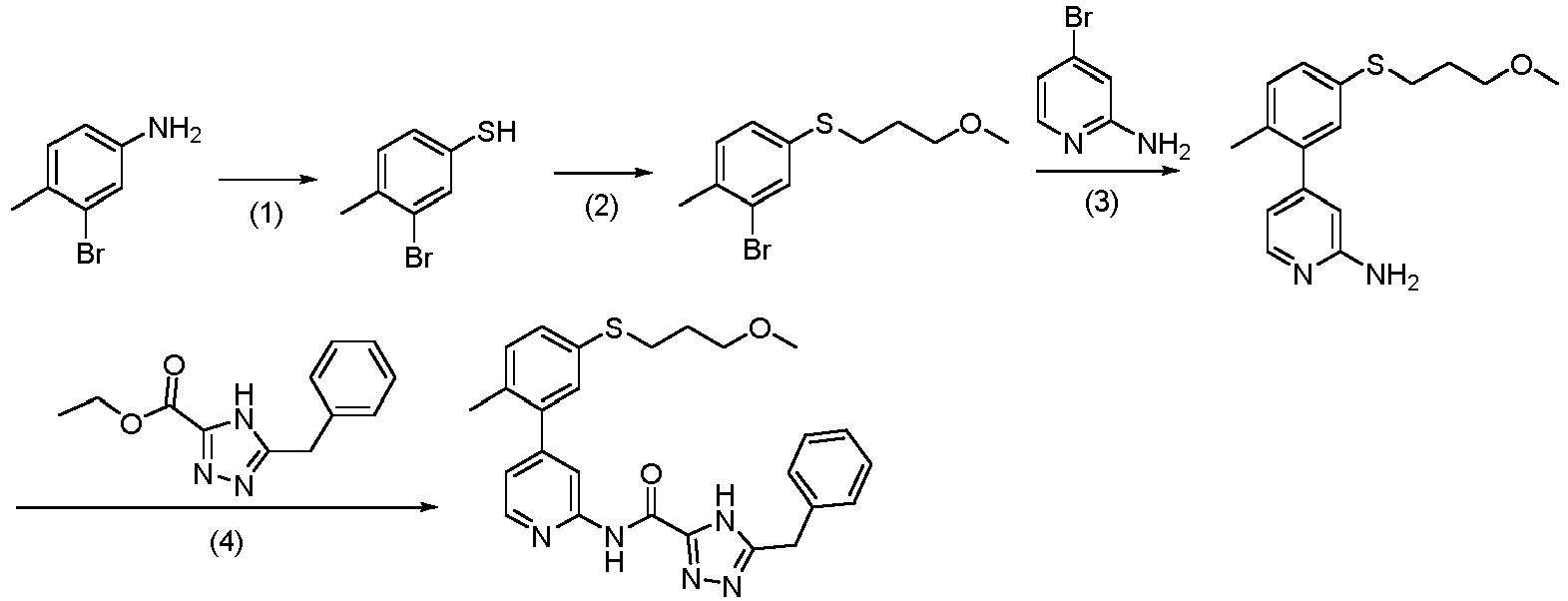
- 3-bromo-4-methylaniline (1.12g, 6mmol) was dissolved in 6M hydrochloric acid solution, and at - 10°C, an aqueous solution (6mL) of sodium nitrite (1.04g, 15mmol) was slowly added dropwise. After reacting for 30 minutes, this mixture was added dropwise to an aqueous solution (15 mL) of potassium ethylxanthate (3.36g, 21mmol), reacted at 80°C for 20 minutes, and then cooled. The reaction solution was diluted with water, extracted with ether, the organic phase was dried over anhydrous sodium sulfate, filtered and evaporated to dryness. The crude product was dissolved in ethanol (30mL), and potassium hydroxide (3.36g, 60mmol) in water (10mL) was added dropwise at 0°C, and reacted at 50 °C for 3 hours. The reaction solution was concentrated, diluted with water, adjusted to pH 4 with 6M hydrochloric acid, and extracted with ether. The organic phase was dried over anhydrous sodium sulfate, filtered and evaporated to dryness to afford 1g of crude product.MS: 203 [M+H]+.
- The operation is the same as steps 4 to 6 of Example 55, but 3-bromo-4-methylbenzenethiol was used in place of 3-bromo-N,4-dimethylaniline in the fourth step, and 1-bromo-3-methoxypropane was used in place of 1-bromo-2-methoxyethane in the fourth step. 1H NMR (400 MHz, DMSO-d 6) δ 14.59 (s, 1H), 9.92 (s, 1H), 8.43 (d, J = 5.1 Hz, 1H), 8.10 (s, 1H), 7.41 - 7.29 (m, 6H), 7.29 - 7.13 (m, 3H), 4.18 (s, 2H), 3.40 (t, J = 6.1 Hz, 2H), 3.19 (s, 3H), 3.00 (t, J = 7.2 Hz, 2H), 2.23 (s, 3H), 1.84 - 1.72 (m, 2H). MS: 474 [M+H]+.
-
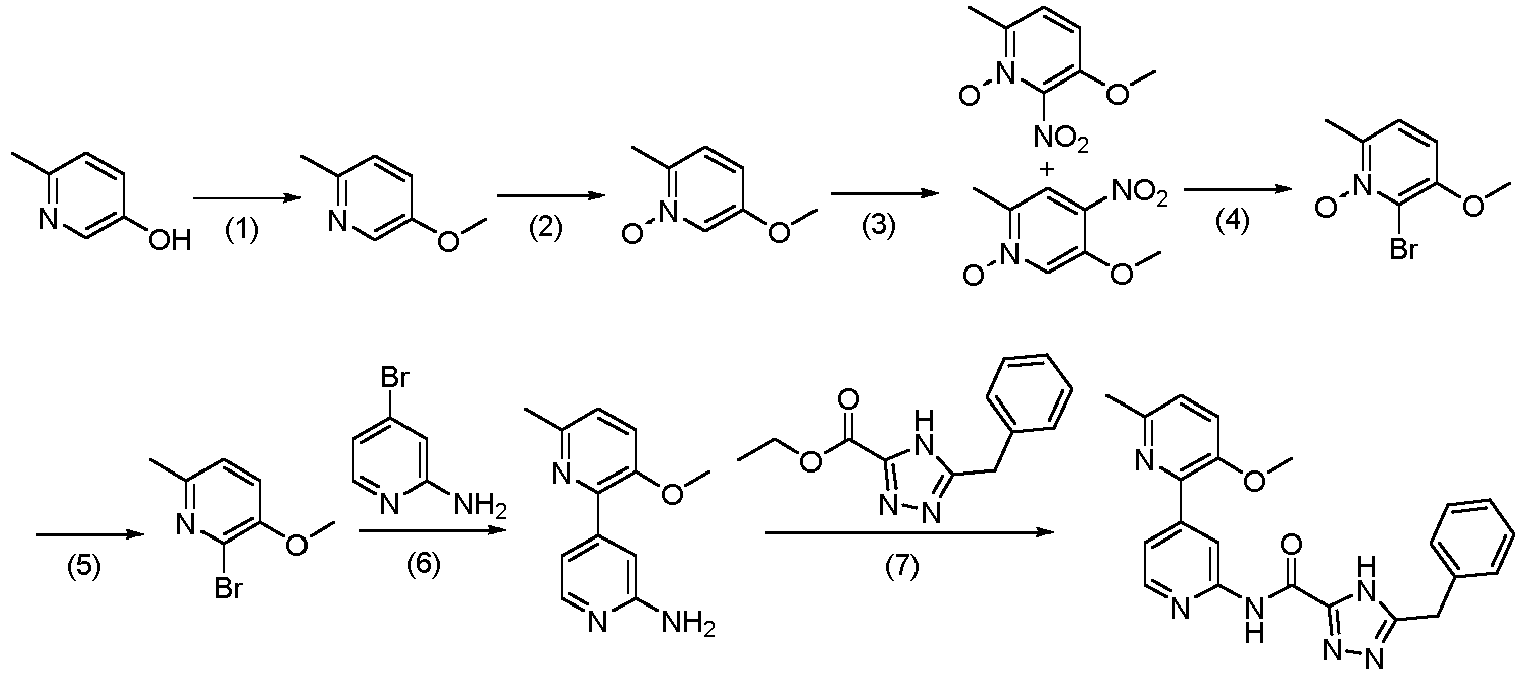
- The operation is the same as step 4 of Example 55, but iodomethane was used in place of 1-bromo-2-methoxyethane, and reacted at 50°C in sealed tube. MS: 124 [M+H]+.
- Synthesis was made with reference to the method in
Gonzalez, Javier et al/ PCT Int. Appl., 2006018725, 23 Feb 2006 . In the third step, the separated 3-methoxy-6-methyl-2-nitropyridine N-oxide was used for the subsequent reaction. - Step 6 and 7: The preparation was carried out in a similar manner to Example 33, except that in
step 1, 2-bromo-3-methoxy-6-methylpyridine was used in place of 2-bromo-4-fluoro-1-methylbenzene. 1H NMR (400 MHz, DMSO-d 6) δ 14.62 (s, 1H), 9.82 (s, 1H), 8.71 (s, 1H), 8.41 (d, J = 5.3 Hz, 1H), 7.68 (dd, J = 5.3, 1.5 Hz, 1H), 7.58 (d, J = 8.5 Hz, 1H), 7.40 - 7.29 (m, 5H), 7.29 - 7.22 (m, 1H), 4.18 (s, 2H), 3.87 (s, 3H), 3.33 (s, 3H). MS: 401 [M+H]+. - The operation is the same as step of Example 60, but 5-methoxy-2-methyl-4-nitropyridine N-oxide separated in the third step was used for the subsequent reaction. 1H NMR (400 MHz, DMSO-d 6) δ 14.61 (s, 1H), 9.93 (s, 1H), 8.46 (d, J = 5.2 Hz, 1H), 8.41 (s, 1H), 8.36 (s, 1H), 7.43 - 7.33 (m, 5H), 7.33 - 7.26 (m, 2H), 4.21 (s, 2H), 3.92 (s, 3H), 2.50 (s, 3H). MS: 401 [M+H]+.

- The operation is the same as Example 60, but bromoethane was used in place of iodomethane in the first step, and in the third step, the nitration process only gets 3-ethoxy-6-methyl-2-nitropyridine N-oxide. 1H NMR (400 MHz, DMSO-d 6) δ 14.70 (s, 1H), 9.80 (s, 1H), 8.84 (s, 1H), 8.41 (d, J = 5.3 Hz, 1H), 7.74 (dd, J = 5.3, 1.5 Hz, 1H), 7.55 (d, J = 8.5 Hz, 1H), 7.39-7.29 (m, 5H), 7.29-7.22 (m, 1H), 4.25-4.08 (m, 4H), 2.48 (s, 3H), 1.39 (t, J = 6.9 Hz, 3H). MS: 415 [M+H]+.
-

- The preparation was carried out in a similar manner to Example 33, except that in
step 1, 4-bromo-2-ethyl-5-methoxypyridine (seeGonzalez, Javier et al/PCT Int. Appl., 2006018725, 23 Feb 2006 for its synthetic method) was used in place of 2-bromo-4-fluoro-1-methylbenzene. 1H NMR (400 MHz, DMSO-d 6) δ 14.66 (s, 1H), 9.93 (s, 1H), 8.50 - 8.38 (m, 2H), 8.33 (d, J = 1.4 Hz, 1H), 7.43 -7.30 (m, 5H), 7.30 - 7.21 (m, 2H), 4.18 (s, 2H), 3.90 (s, 3H), 2.76 (q, J = 7.6 Hz, 2H), 1.24 (t, J = 7.6 Hz, 3H). MS: 415 [M+H]+. -

- 3-Bromo-4-methylphenol (187mg, 1mmol), 2-(tert-butoxy)ethan-1-ol (142mg, 1.2mmol) and triphenylphosphine (393mg, 1.5mmol) were placed in anhydrous tetrahydrofuran (3mL), diisopropyl azodicarboxylate (303mg, 1.5mmol) was added dropwise under argon protection at 0°C, and after the addition, reacted at 25°C for 16 hours. The reaction solution was evaporated to dryness and purified by column chromatography to afford 230 mg of colorless oil. MS: 287 [M+H]+.
-
Step 2 to Step 3: The preparation was carried out in a similar manner to Example 33, except that instep 1, 2-bromo-4-(2-(tert-butoxy)ethoxy)-1-methylbenzene was used in place of 2-bromo-4-fluoro-1-methylbenzene. 1H NMR (400 MHz, DMSO-d 6) δ 14.59 (s, 1H), 9.90 (s, 1H), 8.48 - 8.37 (m, 1H), 8.12 (s, 1H), 7.41 - 7.29 (m, 4H), 7.29 - 7.18 (m, 3H), 6.94 (dd, J = 8.4, 2.7 Hz, 1H), 6.83 (d, J = 2.7 Hz, 1H), 4.18 (s, 2H), 4.12 - 3.99 (m, 2H), 3.69 - 3.58 (m, 2H), 2.19 (s, 3H), 1.15 (s, 9H). MS: 486 [M+H]+. - The preparation was carried out in a similar manner to Example 64, except that in
step 1, tetrahydro-2H-pyran-4-ol was used in place of 2-(tert-butoxy)ethan-1-ol. 1H NMR (400 MHz, DMSO-d 6) δ 14.58 (s, 1H), 9.89 (s, 1H), 8.42 (d, J = 5.1 Hz, 1H), 8.11 (s, 1H), 7.40 - 7.29 (m, 4H), 7.29 - 7.14 (m, 3H), 6.99 (dd, J = 8.5, 2.7 Hz, 1H), 6.87 (d, J = 2.6 Hz, 1H), 4.65 - 4.54 (m, 1H), 4.20 (s, 2H), 3.89 - 3.76 (m, 2H), 3.52 - 3.41 (m, 2H), 2.18 (s, 3H), 2.02 - 1.88 (m, 2H), 1.66 - 1.50 (m, 2H). MS: 470 [M+H]+.
- The preparation was carried out in a similar manner to Example 64, except that in
step 1, oxetan-3-yl methanol was used in place of 2-(tert-butoxy)ethan-1-ol. 1H NMR (400 MHz, DMSO-d 6) δ 14.58 (s, 1H), 9.89 (s, 1H), 8.42 (d, J = 5.1 Hz, 1H), 8.12 (s, 1H), 7.45 - 7.14 (m, 7H), 6.97 (dd, J = 8.4, 2.8 Hz, 1H), 6.86 (d, J = 2.7 Hz, 1H), 4.78 - 4.64 (m, 2H), 4.48 - 4.36 (m, 2H), 4.22 (d, J = 6.8 Hz, 2H), 4.18 (s, 2H), 3.46 - 3.34 (m, 1H), 2.20 (s, 3H). MS: 456 [M+H]+. - The preparation was carried out in a similar manner to Example 64, except that in
step 1, (tetrahydro-2H-pyran-4-yl)methanol was used in place of 2-(tert-butoxy)ethan-1-ol. 1H NMR (400 MHz, DMSO-d 6) δ 14.59 (s, 1H), 9.91 (s, 1H), 8.42 (d, J = 5.1 Hz, 1H), 8.11 (s, 1H), 7.42 - 7.29 (m, 4H), 7.29 - 7.12 (m, 3H), 6.94 (dd, J = 8.4, 2.7 Hz, 1H), 6.82 (d, J = 2.7 Hz, 1H), 4.18 (s, 2H), 3.92 - 3.79 (m, 4H), 3.33 - 3.27 (m, 2H), 2.19 (s, 3H), 2.05 - 1.90 (m, 1H), 1.72 - 1.62 (m, 2H), 1.38 - 1.23 (m, 2H). MS: 484 [M+H]+.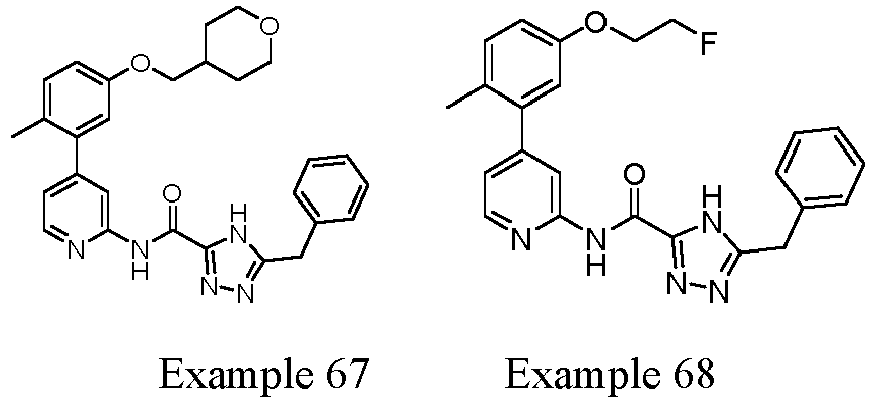
- The preparation was carried out in a similar manner to Example 64, except that in
step 1, 2-fluoro-1-ethanol was used in place of 2-(tert-butoxy)ethan-1-ol. 1H NMR (400 MHz, DMSO-d 6) δ 14.64 (s, 1H), 9.93 (s, 1H), 8.42 (d, J = 5.1 Hz, 1H), 8.12 (d, J = 1.5 Hz, 1H), 7.44 - 7.14 (m, 7H), 6.98 (dd, J = 8.4, 2.8 Hz, 1H), 6.87 (d, J = 2.7 Hz, 1H), 4.84 - 4.75 (m, 1H), 4.72 - 4.61 (m, 1H), 4.33 - 4.26 (m, 1H), 4.26 - 4.20 (m, 1H), 4.18 (s, 2H), 2.20 (s, 3H). MS: 432 [M+H]+. - The preparation was carried out in a similar manner to Example 64, except that in
step 1, 2-cyclopropyl-1-ethanol was used in place of 2-(tert-butoxy)ethan-1-ol. 1H NMR (400 MHz, DMSO-d 6) δ 14.60 (s, 1H), 9.90 (s, 1H), 8.42 (d, J = 5.0 Hz, 1H), 8.12 (s, 1H), 7.39 -7.30 (m, 4H), 7.30 - 7.19 (m, 3H), 6.94 (dd, J = 8.4, 2.7 Hz, 1H), 6.82 (d, J = 2.7 Hz, 1H), 4.18 (s, 2H), 4.03 (t, J = 6.6 Hz, 2H), 2.19 (s, 3H), 1.69 - 1.55 (m, 2H), 0.89 - 0.75 (m, 1H), 0.50 - 0.37 (m, 2H), 0.20 - 0.06 (m, 2H). MS: 454 [M+H]+.
- The preparation was carried out in a similar manner to Example 64, except that in
step 1, 2-isobutoxy-1-ethanol was used in place of 2-(tert-butoxy)ethan-1-ol. 1H NMR (400 MHz, DMSO-d 6) δ 14.57 (s, 1H), 9.89 (s, 1H), 8.42 (d, J = 5.1 Hz, 1H), 8.12 (s, 1H), 7.45 - 7.15 (m, 7H), 6.95 (dd, J = 8.4, 2.8 Hz, 1H), 6.84 (d, J = 2.7 Hz, 1H), 4.18 (s, 2H), 4.15 - 4.06 (m, 2H), 3.74 - 3.61 (m, 2H), 3.21 (d, J = 6.6 Hz, 2H), 2.19 (s, 3H), 1.88 - 1.68 (m, 1H), 0.84 (d, J = 6.7, 2.5 Hz, 6H). MS: 486 [M+H]+. - The preparation was carried out in a similar manner to Example 64, except that in
step 1, 1-(2-hydroxyethyl)pyrrolidin-2-one was used in place of 2-(tert-butoxy)ethan-1-ol. 1H NMR (400 MHz, DMSO-d 6) δ 14.54 (s, 1H), 9.91 (s, 1H), 8.42 (d, J = 5.1 Hz, 1H), 8.11 (s, 1H), 7.41 - 7.29 (m, 4H), 7.29 - 7.23 (m, 2H), 7.21 (dd, J = 5.0, 1.6 Hz, 1H), 6.95 (dd, J = 8.4, 2.7 Hz, 1H), 6.84 (d, J = 2.7 Hz, 1H), 4.17 (s, 2H), 4.09 (t, J = 5.5 Hz, 2H), 3.53 (t, J = 5.5 Hz, 2H), 3.45 (t, J = 7.0 Hz, 2H), 2.26 - 2.13 (m, 5H), 1.95 - 1.83 (m, 2H). MS: 497 [M+H]+.
- The preparation was carried out in a similar manner to Example 64, except that in
step 1, 3-(methylthio)-1-propanol was used in place of 2-(tert-butoxy)ethan-1-ol. 1H NMR (400 MHz, DMSO-d 6) δ 14.58 (s, 1H), 9.90 (s, 1H), 8.42 (d, J = 5.0 Hz, 1H), 8.11 (s, 1H), 7.42 - 7.29 (m, 4H), 7.29 - 7.23 (m, 2H), 7.21 (dd, J = 5.1, 1.6 Hz, 1H), 6.95 (dd, J = 8.4, 2.7 Hz, 1H), 6.83 (d, J = 2.7 Hz, 1H), 4.18 (s, 2H), 4.06 (t, J = 6.2 Hz, 2H), 2.61 (t, J = 7.2 Hz, 2H), 2.19 (s, 3H), 2.05 (s, 3H), 2.02 - 1.90 (m, 2H). MS: 474 [M+H]+. - The preparation was carried out in a similar manner to Example 64, except that in
step 1, 3-(methylsulfonyl)-1-propanol was used in place of 2-(tert-butoxy)ethan-1-ol. 1H NMR (400 MHz, DMSO-d 6) δ 14.56 (s, 1H), 9.88 (s, 1H), 8.42 (d, J = 5.1 Hz, 1H), 8.12 (s, 1H), 7.41 - 7.15 (m, 7H), 6.96 (dd, J = 8.4, 2.7 Hz, 1H), 6.85 (d, J = 2.7 Hz, 1H), 4.18 (s, 2H), 4.11 (t, J = 6.2 Hz, 2H), 3.31 - 3.23 (m, 2H), 3.01 (s, 3H), 2.20 (s, 3H), 2.17 - 2.05 (m, 2H). MS: 506 [M+H]+.
- The preparation was carried out in a similar manner to Example 64, except that in
step 1, 2-chloro-4-hydroxybenzonitrile was used in place of 3-bromo-4-methylphenol. 1H NMR (400 MHz, DMSO-d 6) δ 14.65 (s, 1H), 10.02 (s, 1H), 8.52 (d, J = 5.1 Hz, 1H), 8.34 (s, 1H), 7.94 (d, J = 9.2 Hz, 1H), 7.42 (d, J = 4.9 Hz, 1H), 7.39 - 7.30 (m, 4H), 7.30 - 7.18 (m, 3H), 4.23 (t, J = 4.6 Hz, 2H), 4.18 (s, 2H), 3.67 (t, J = 4.7 Hz, 2H), 1.15 (s, 9H). MS: 497 [M+H]+. - The preparation was carried out in a similar manner to Example 64, except that in step 3, ethyl 5-(cyclopentylmethyl)-4H-1,2,4-triazole-3-carboxylate was used in place of ethyl 5-benzyl-4H-1,2,4-triazol-3-carboxylate. 1H NMR (400 MHz, DMSO-d 6) δ 14.40 (s, 1H), 9.86 (s, 1H), 8.42 (d, J = 5.1 Hz, 1H), 8.14 (s, 1H), 7.32 - 7.13 (m, 2H), 6.95 (dd, J = 8.4, 2.8 Hz, 1H), 6.84 (d, J = 2.7 Hz, 1H), 4.09 - 4.00 (m, 2H), 3.67 - 3.57 (m, 2H), 2.78 (d, J = 7.5 Hz, 2H), 2.39 - 2.22 (m, 1H), 2.20 (s, 3H), 1.80 - 1.66 (m, 2H), 1.66 - 1.44 (m, 4H), 1.29 - 1.17 (m, 2H), 1.15 (s, 9H). MS: 478 [M+H]+.

- The preparation was carried out in a similar manner to Example 64, except that in step 3, ethyl 5-(cyclopentylmethyl)-1,3,4-oxadiazol-2-carboxylate was used in place of ethyl 5-benzyl-4H-1,2,4-triazol-3-carboxylate. 1H NMR (400 MHz, DMSO-d 6) δ 11.24 (s, 1H), 8.48 (d, J = 5.0 Hz, 1H), 7.99 (s, 1H), 7.33 - 7.20 (m, 2H), 6.95 (dd, J = 8.4, 2.7 Hz, 1H), 6.83 (d, J = 2.7 Hz, 1H), 4.10 - 3.99 (m, 2H), 3.67 - 3.58 (m, 2H), 2.97 (d, J = 7.4 Hz, 2H), 2.37 - 2.24 (m, 1H), 2.20 (s, 3H), 1.86 - 1.73 (m, 2H), 1.70 - 1.44 (m, 4H), 1.33 - 1.18 (m, 2H), 1.15 (s, 9H). MS: 479 [M+H]+.
-

- The preparation was carried out in a similar manner to Example 64, except that in step 3, ethyl 5-(cyclohexylmethyl)-4H-1,2,4-triazol-3-carboxylate was used in place of ethyl 5-benzyl-4H-1,2,4-triazol-3-carboxylate. 1H NMR (400 MHz, DMSO-d 6) δ 14.38 (s, 1H), 9.93 -9.76 (m, 1H), 8.42 (d, J = 5.1 Hz, 1H), 8.14 (s, 1H), 7.32 - 7.15 (m, 2H), 6.94 (dd, J = 8.5, 2.7 Hz, 1H), 6.83 (d, J = 2.7 Hz, 1H), 4.04 (t, J = 4.8 Hz, 2H), 3.63 (t, J = 4.9 Hz, 2H), 2.66 (d, J = 7.0 Hz, 2H), 2.20 (s, 3H), 1.83 - 1.53 (m, 6H), 1.30 - 1.06 (m, 12H), 1.06 - 0.88 (m, 2H). MS: 492 [M+H]+.
-
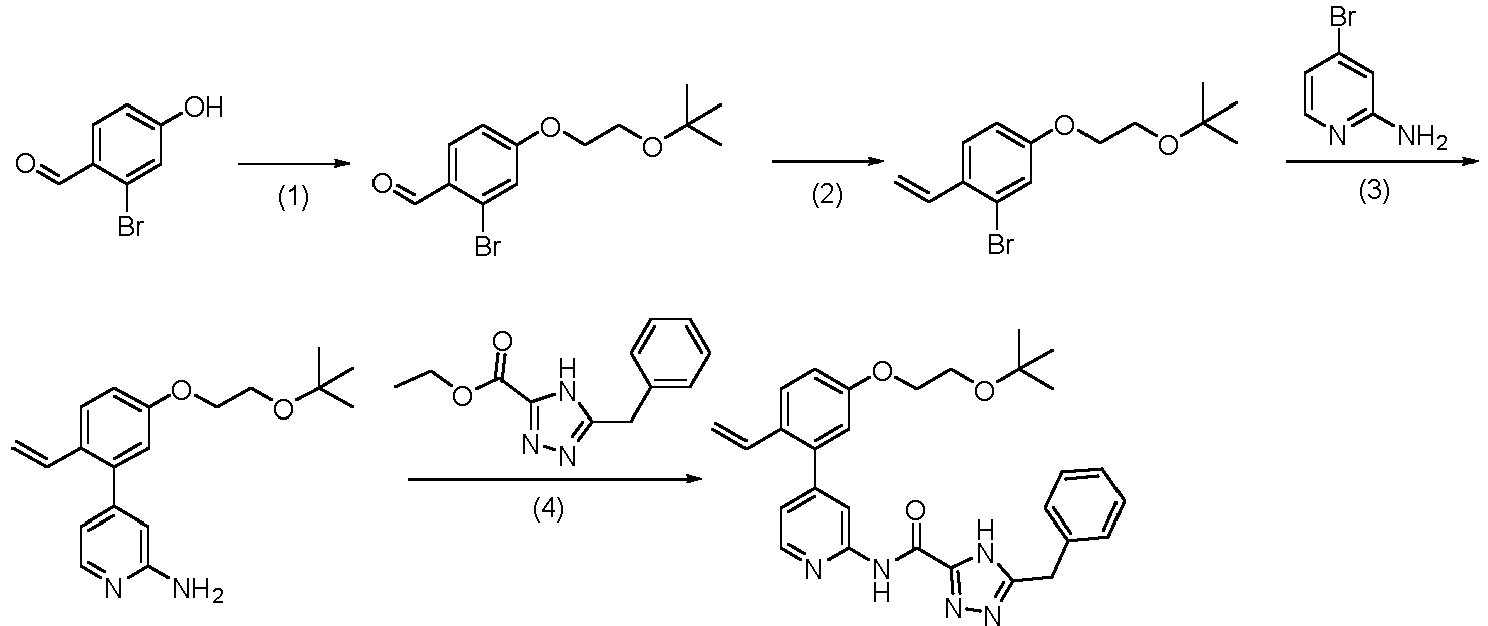
- The operation is the same as
step 1 of Example 64, but 2-bromo-4-hydroxybenzaldehyde was used in place of 2-bromo-3-methylphenol instep 1. - Methyltriphenylphosphonium bromide (1.25g, 3.5mmol) was placed in anhydrous tetrahydrofuran (7mL), and n-butyl lithium was added dropwise at -20°C under argon protection. After reacting at 0°C for 1 hour, 2-bromo-4-(2-(tert-butoxy)ethoxy)benzaldehyde (700mg, 2.3mmol) in anhydrous tetrahydrofuran (2.5mL) solution was added, heated to 25°C and reacted for 5 hours. The reaction solution was quenched with saturated ammonium chloride, extracted with ethyl acetate, dried over anhydrous sodium sulfate, filtered and evaporated to dryness, and the crude product was directly used in the next step.
- Step 3 to Step 4: The preparation was carried out in a similar manner to Example 33, except that in
step 1, 2-bromo-4-(2-(tert-butoxy)ethoxy)-1-vinylbenzene was used in place of 2-bromo-4-fluoro-1-methylbenzene. 1H NMR (400 MHz, DMSO-d 6) δ 14.54 (s, 1H), 9.92 (s, 1H), 8.43 (d, J = 5.1 Hz, 1H), 8.11 (s, 1H), 7.69 (d, J = 8.7 Hz, 1H), 7.38 -7.30 (m, 4H), 7.29 - 7.22 (m, 1H), 7.17 (dd, J = 5.0, 1.5 Hz, 1H), 7.06 (dd, J = 8.7, 2.6 Hz, 1H), 6.88 (d, J = 2.6 Hz, 1H), 6.55 (dd, J = 17.4, 11.0 Hz, 1H), 5.71 (d, J = 17.4 Hz, 1H), 5.15 (d, J = 11.1 Hz, 1H), 4.17 (s, 2H), 4.10 (t, J = 4.8 Hz, 2H), 3.64 (dd, J = 5.6, 4.0 Hz, 2H), 1.15 (s, 9H).MS: 498 [M+H]+. - The preparation was carried out in a similar manner to Example 64, except that in
step 1, (tetrahydro-2H-pyran-4-yl)methanol was used in place of 2-(tert-butoxy)ethan-1-ol, and in step 3, ethyl 5-(cyclopentylmethyl)-4H-1,2,4-triazole-3-carboxylate was used in place of ethyl 5-benzyl-4H-1,2,4-triazol-3-carboxylate. 1H NMR (400 MHz, DMSO-d 6) δ 14.41 (s, 1H), 9.86 (s, 1H), 8.42 (d, J = 5.1 Hz, 1H), 8.13 (s, 1H), 7.25 (d, J = 8.5 Hz, 1H), 7.21 (dd, J = 5.1, 1.6 Hz, 1H), 6.95 (dd, J = 8.4, 2.7 Hz, 1H), 6.82 (d, J = 2.7 Hz, 1H), 3.93 - 3.86 (m, 1H), 3.86 - 3.78 (m, 3H), 3.32 - 3.23 (m, 2H), 2.77 (d, J = 7.4 Hz, 2H), 2.35 - 2.22 (m, 1H), 2.19 (s, 3H), 2.06 - 1.92 (m, 1H), 1.79 - 1.44 (m, 8H), 1.40 - 1.12 (m, 4H). MS: 476 [M+H]+.
- The preparation was carried out in a similar manner to Example 64, except that in
step 1, (tetrahydro-2H-pyran-4-yl)methanol was used in place of 2-(tert-butoxy)ethan-1-ol, and in step 3, ethyl 5-was used in place of ethyl 5-benzyl-4H-1,2,4-triazol-3-carboxylate. 1H NMR (400 MHz, DMSO-d 6) δ 14.36 (s, 1H), 9.84 (s, 1H), 8.42 (d, J = 5.1 Hz, 1H), 8.13 (s, 1H), 7.34 - 7.12 (m, 2H), 6.94 (dd, J = 8.4, 2.7 Hz, 1H), 6.82 (d, J = 2.7 Hz, 1H), 3.93 - 3.79 (m, 4H), 3.40 - 3.31 (m, 3H), 2.72 - 2.62 (m, 2H), 2.19 (s, 3H), 2.07 - 1.92 (m, 1H), 1.84 - 1.70 (m, 1H), 1.70 - 1.53 (m, 6H), 1.41 - 1.05 (m, 5H), 1.05 - 0.90 (m, 2H). MS: 490 [M+H]+. -

- The operation is the same as
steps 1 to 2 of Example 64, but 3-bromopropyl-1-ol was used in place of 2-(tert-butoxy)ethan-1-ol instep 1. - Cyclobutanol (115mg, 1.6mmol) was dissolved in anhydrous tetrahydrofuran (3mL), and sodium hydride (60%, 65mg, 1.6mmol) was added under argon protection at 0°C. After 30 minutes of reaction, 4-(5-(3-bromopropoxy)-2-methylphenyl)pyridin-2-amine (200mg, 0.6mmol) in tetrahydrofuran was added dropwise, and reacted at 50°C for 4 hours. The reaction was cooled, quenched with saturated ammonium chloride, the reaction solution was evaporated, and purified by column chromatography to afford 40mg of product and 20mg of by-product 4-(5-allyloxy)-2-methylphenyl)pyridin-2-amine. MS: 313 [M+H]+ and MS: 241 [M+H]+
- The operation is the same as
step 2 of Example 1, but 4-(5-(3-cyclobutoxypropoxy)-2-methylphenyl)pyridin-2-amine was used in place of 4-phenylpyridin-2-amine. 1H NMR (400 MHz, DMSO-d 6) δ 14.58 (s, 1H), 9.88 (s, 1H), 8.42 (d, J = 5.1 Hz, 1H), 8.11 (s, 1H), 7.49 - 7.30 (m, 4H), 7.30 - 7.17 (m, 3H), 6.94 (dd, J = 8.4, 2.7 Hz, 1H), 6.82 (d, J = 2.7 Hz, 1H), 4.18 (s, 2H), 4.03 (t, J = 6.3 Hz, 2H), 3.93 - 3.81 (m, 1H), 3.42 - 3.39 (m, 2H), 2.19 (s, 3H), 2.16 - 2.06 (m, 2H), 1.96 - 1.85 (m, 2H), 1.85 - 1.71 (m, 2H), 1.66 - 1.53 (m, 1H), 1.50 - 1.36 (m, 1H). MS: 498 [M+H]+. - The operation is the same as Example 81, but the by-product 4-(5-allyloxy)-2-methylphenyl)pyridin-2-amine obtained in the third step was used for the subsequent reaction. 1H NMR (400 MHz, DMSO-d 6) δ 14.38 (s, 1H), 9.92 (s, 1H), 8.42 (d, J = 5.1 Hz, 1H), 8.11 (d, J = 1.5 Hz, 1H), 7.39 - 7.29 (m, 4H), 7.29 - 7.23 (m, 2H), 7.21 (dd, J = 5.1, 1.6 Hz, 1H), 6.96 (dd, J = 8.4, 2.8 Hz, 1H), 6.85 (d, J = 2.8 Hz, 1H), 6.11 - 5.96 (m, 1H), 5.45 - 5.32 (m, 1H), 5.32 - 5.19 (m, 1H), 4.64 - 4.53 (m, 2H), 4.17 (s, 2H), 2.19 (s, 3H). MS: 426 [M+H]+.

- The operation is the same as Example 81, but isopropanol was used in place of cyclobutanol in the third step. 1H NMR (400 MHz, DMSO-d 6) δ 14.57 (s, 1H), 9.89 (s, 1H), 8.41 (d, J = 5.1 Hz, 1H), 8.11 (s, 1H), 7.48 - 7.10 (m, 7H), 6.94 (dd, J = 8.4, 2.7 Hz, 1H), 6.82 (d, J = 2.7 Hz, 1H), 4.18 (s, 2H), 4.03 (t, J = 6.3 Hz, 2H), 3.58 - 3.44 (m, 3H), 2.19 (s, 3H), 1.95 - 1.80 (m, 2H), 1.06 (d, J = 6.1 Hz, 6H). MS: 486 [M+H]+.
-
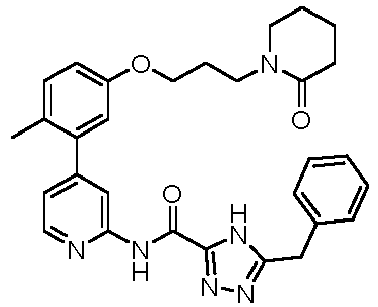
- The operation is the same as Example 81, but piperidin-2-one was used in place of cyclobutanol in the third step. 1H NMR (400 MHz, DMSO-d 6) δ 14.56 (s, 1H), 9.91 (s, 1H), 8.41 (d, J = 5.1 Hz, 1H), 8.11 (s, 1H), 7.46 - 7.11 (m, 7H), 6.93 (dd, J = 8.4, 2.7 Hz, 1H), 6.81 (d, J = 2.7 Hz, 1H), 4.17 (s, 2H), 3.98 (t, J = 6.3 Hz, 2H), 3.28 - 3.20 (m, 4H), 2.26 - 2.13 (m, 5H), 1.91 (t, J = 6.8 Hz, 2H), 1.77 - 1.61 (m, 4H). MS: 525 [M+H]+.
-

- 2-(2-methoxyethoxy)ethan-1-ol (1g, 8.3mmol) and triethylamine (2.1g, 20.8mmol) were dissolved in dichloromethane (30mL), p-toluenesulfonyl chloride (1.75g, 9.2mmol) was added at 0°C, and reacted at 25°C for 2 hours. Saturated aqueous solution of sodium bicarbonate was added, extracted with dichloromethane, dried over anhydrous sodium sulfate, filtered and evaporated to dryness to afford 1.8g of yellow oil.
- The operation is the same as steps 4 to 6 of Example 55, but 3-bromo-4-methylphenol was used in place of 3-bromo-N,4-dimethylaniline in the fourth step, 2-(2-methoxyethoxy)ethyl 4-methylbenzenesulfonate was used in place of 1-bromo-2-methoxyethane in the fourth step. 1H NMR (400 MHz, DMSO-d 6) δ 14.59 (s, 1H), 9.91 (s, 1H), 8.42 (d, J = 5.1 Hz, 1H), 8.12 (d, J = 1.4 Hz, 1H), 7.37 - 7.29 (m, 4H), 7.29 - 7.23 (m, 2H), 7.21 (dd, J = 5.1, 1.6 Hz, 1H), 6.95 (dd, J = 8.4, 2.8 Hz, 1H), 6.84 (d, J = 2.7 Hz, 1H), 4.17 (s, 2H), 4.14 - 4.05 (m, 2H), 3.76 - 3.67 (m, 2H), 3.61 - 3.53 (m, 2H), 3.47 - 3.41 (m, 2H), 3.23 (s, 3H), 2.19 (s, 3H). MS: 488 [M+H]+.
- The preparation was carried out in a similar manner to Example 85, except that in
step 1, oxetan-3-ol was used in place of 2-(2-methoxyethoxy)ethan-1-ol. 1H NMR (400 MHz, DMSO-d 6) δ 14.61 (s, 1H), 9.92 (s, 1H), 8.42 (d, J = 5.1 Hz, 1H), 8.10 (s, 1H), 7.43 - 7.30 (m, 4H), 7.30 - 7.23 (m, 2H), 7.20 (dd, J = 5.1, 1.5 Hz, 1H), 6.80 (dd, J = 8.4, 2.7 Hz, 1H), 6.69 (d, J = 2.7 Hz, 1H), 5.36 - 5.26 (m, 1H), 4.96 - 4.86 (m, 2H), 4.61 - 4.50 (m, 2H), 4.18 (s, 2H), 2.19 (s, 3H). MS: 442 [M+H]+.
- The preparation was carried out in a similar manner to Example 85, except that in
step 1,2-( tetrahydro-2H-pyran-4-yl)ethan-1-ol was used in place of 2-(2-methoxyethoxy)ethan-1-ol. 1H NMR (400 MHz, DMSO-d 6) δ 14.58 (s, 1H), 9.89 (s, 1H), 8.41 (d, J = 5.1 Hz, 1H), 8.11 (s, 1H), 7.49 - 7.14 (m, 7H), 6.94 (dd, J = 8.4, 2.7 Hz, 1H), 6.82 (d, J = 2.7 Hz, 1H), 4.18 (s, 2H), 4.02 (t, J = 6.3 Hz, 2H), 3.89 - 3.75 (m, 2H), 3.30 - 3.19 (m, 2H), 2.19 (s, 3H), 1.77 - 1.55 (m, 5H), 1.26 - 1.12 (m, 2H). MS: 498 [M+H]+. - The preparation was carried out in a similar manner to Example 85, except that in
step 1, 2-(tetrahydro-2H-pyran-4-yl)ethan-1-ol was used in place of 2-(2-methoxyethoxy)ethan-1-ol, and in step 3, ethyl 5-(cyclopentylmethyl)-4H-1,2,4-triazole-3-carboxylate was used in place of ethyl 5-benzyl-4H-1,2,4-triazol-3-carboxylate. 1H NMR (400 MHz, DMSO-d 6) δ 14.37 (s, 1H), 9.84 (s, 1H), 8.42 (d, J = 5.1 Hz, 1H), 8.13 (s, 1H), 7.30 - 7.16 (m, 2H), 6.94 (dd, J = 8.4, 2.7 Hz, 1H), 6.83 (d, J = 2.7 Hz, 1H), 4.09 - 3.98 (m, 2H), 3.88 - 3.76 (m, 2H), 3.32 - 3.21 (m, 2H), 2.85 - 2.72 (m, 2H), 2.36 - 2.22 (m, 1H), 2.19 (s, 3H), 1.79 - 1.45 (m, 11H), 1.31 - 1.14 (m, 4H). MS: 490 [M+H]+.
- The preparation was carried out in a similar manner to Example 85, except that in
step 1, 2-(tetrahydro-2H-pyran-4-yl)ethan-1-ol was used in place of 2-(2-methoxyethoxy)ethan-1-ol, and in step 3, ethyl 5-was used in place of ethyl 5-benzyl-4H-1,2,4-triazol-3-carboxylate. 1H NMR (400 MHz, DMSO-d 6) δ 14.37 (s, 1H), 9.85 (s, 1H), 8.42 (d, J = 5.1 Hz, 1H), 8.13 (s, 1H), 7.31 - 7.15 (m, 2H), 6.94 (dd, J = 8.4, 2.7 Hz, 1H), 6.83 (d, J = 2.7 Hz, 1H), 4.03 (t, J = 6.3 Hz, 2H), 3.87 - 3.75 (m, 2H), 3.32 - 3.21 (m, 2H), 2.67 (d, J = 7.0 Hz, 2H), 2.19 (s, 3H), 1.83 - 1.72 (m, 1H), 1.71 - 1.54 (m, 9H), 1.31 - 1.09 (m, 6H), 1.05 - 0.88 (m, 2H). MS: 504 [M+H]+. -

- The operation is the same as step 4 of Example 55, but 3-bromo-4-methylphenol was used in place of 3-bromo-N,4-dimethylaniline in the fourth step, and 5-chlorovaleronitrile was used in place of 1-bromo-2-methoxyethane in the fourth step.
- 5-(3-Bromo-4-methylphenoxy)valeronitrile (268mg, 1mmol) was dissolved in anhydrous tetrahydrofuran (2mL), and LDA (2M, 0.8mL, 1.6mmol) was added dropwise at -78°C under argon protection. After reacting for 1 hour, iodomethane (215mg, 1.5mmol) was added dropwise at the same temperature, the reaction was gradually warmed to 25°C, and reacted for 16 hours. The reaction was quenched with saturated ammonium chloride, extracted with ethyl acetate, washed with saturated brine, dried over anhydrous sodium sulfate, filtered and dried, and purified by column chromatography to afford 210 mg of product.
- Step 3 to Step 4: The preparation was carried out in a similar manner to Example 33, except that in
step 1, 5-(3-bromo-4-methylphenoxy)-2-methylvaleronitrile was used in place of 2-bromo-4-fluoro-1-methylbenzene. 1H NMR (400 MHz, DMSO-d 6) δ 14.63 (s, 1H), 9.91 (s, 1H), 8.42 (d, J = 5.1 Hz, 1H), 8.11 (s, 1H), 7.47 - 7.16 (m, 7H), 6.95 (dd, J = 8.4, 2.7 Hz, 1H), 6.83 (d, J = 2.7 Hz, 1H), 4.18 (s, 2H), 4.02 (t, J = 6.2 Hz, 2H), 2.99 - 2.84 (m, 1H), 2.19 (s, 3H), 1.93 - 1.74 (m, 2H), 1.74 - 1.60 (m, 2H), 1.24 (d, J = 7.0 Hz, 3H). MS: 481 [M+H]+. -

- The operation is the same as step of Example 90, but the product of the first step 5-(3-bromo-4-methylphenoxy)valeronitrile was used directly to carry out the third to fourth step reaction. 1H NMR (400 MHz, DMSO-d 6) δ 14.47 (s, 1H), 9.91 (s, 1H), 8.42 (d, J = 5.0 Hz, 1H), 8.11 (d, J = 1.4 Hz, 1H), 7.41 -7.30 (m, 4H), 7.29 - 7.18 (m, 3H), 6.94 (dd, J = 8.4, 2.7 Hz, 1H), 6.83 (d, J = 2.7 Hz, 1H), 4.17 (s, 2H), 4.02 (t, J = 6.1 Hz, 2H), 2.57 (t, J = 7.0 Hz, 2H), 2.19 (s, 3H), 1.93 - 1.59 (m, 4H). MS: 467 [M+H]+.
-

- 2-Bromo-3-methylphenol (374mg, 2mmol) was placed in acetonitrile (6mL), potassium carbonate (553mg, 4mmol) was added and stirred at 25°C for 1 hour. Iodomethane (426mg, 3mmol) was added, and reacted at 80°C for 16 hours in sealed tube. The reaction solution was diluted with ethyl acetate, and filtered. The filtrate was evaporated to dryness, and subjected to column chromatography to afford 340 mg of yellow oil. MS: 201 [M+H]+
-
Step 2 to Step 3: The preparation was carried out in a similar manner to Example 33, except that instep 1, 2-bromo-1-methoxy-3-methylbenzene was used in place of 2-bromo-4-fluoro-1-methylbenzene. 1H NMR (400 MHz, DMSO-d 6) δ 14.56 (s, 1H), 9.84 (s, 1H), 8.40 (dd, J = 5.0, 0.8 Hz, 1H), 7.96 (s, 1H), 7.46-7.30 (m, 5H), 7.30-7.17 (m, 1H), 7.04 (dd, J = 5.1, 1.5 Hz, 1H), 7.01-6.85 (m, 2H), 4.18 (s, 2H), 3.67 (s, 3H), 2.04 (s, 3H). MS: 400 [M+H]+. - The preparation was carried out in a similar manner to Example 92, except that in
step 1, bromoethane was used in place of iodomethane. 1H NMR (400 MHz, DMSO-d 6) δ 14.56 (s, 1H), 9.83 (s, 1H), 8.39 (d, J = 5.1 Hz, 1H), 7.99 (s, 1H), 7.43 - 7.29 (m, 4H), 7.29 - 7.16 (m, 2H), 7.05 (dd, J = 5.1, 1.5 Hz, 1H), 7.01 - 6.89 (m, 2H), 4.18 (s, 2H), 3.98 (q, J = 7.0 Hz, 2H), 2.05 (s, 3H), 1.13 (t, J = 7.0 Hz, 3H). MS: 414 [M+H]+.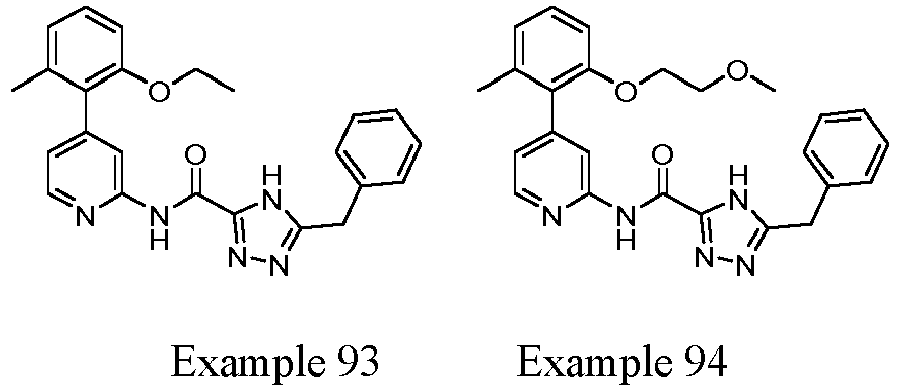
- The preparation was carried out in a similar manner to Example 92, except that in
step 1, 1-bromo-2-methoxyethane was used in place of iodomethane. 1H NMR (400 MHz, DMSO-d 6) δ 14.52 (s, 1H), 9.80 (s, 1H), 8.39 (d, J = 5.1 Hz, 1H), 8.00 (s, 1H), 7.39-7.30 (m, 4H), 7.30-7.20 (m, 2H), 7.06 (d, J = 5.1 Hz, 1H), 7.01-6.87 (m, 2H), 4.19 (s, 2H), 4.09-3.98 (m, 2H), 3.52-3.41 (m, 2H), 3.10 (s, 3H), 2.07 (s, 3H). MS: 444 [M+H]+. - The preparation was carried out in a similar manner to Example 92, except that in
step 1, 2-bromo-1-ethanol was used in place of iodomethane, and 3-bromo-2-methylphenol was used in place of 2-bromo-3-methylphenol. 1H NMR (400 MHz, DMSO-d 6) δ 14.60 (s, 1H), 9.93 (s, 1H), 8.41 (d, J = 5.0 Hz, 1H), 8.10 (d, J = 1.4 Hz, 1H), 7.50 - 7.21 (m, 6H), 7.16 (dd, J = 5.1, 1.6 Hz, 1H), 7.05 (d, J = 8.2 Hz, 1H), 6.85 (d, J = 7.5 Hz, 1H), 5.16 - 4.62 (m, 1H), 4.18 (s, 2H), 4.05 (t, J = 5.0 Hz, 2H), 3.76 (t, J = 5.0 Hz, 2H), 2.11 (s, 3H). MS: 430 [M+H]+.
- The preparation was carried out in a similar manner to Example 92, except that in
step 1, 1-bromo-2-methoxyethane was used in place of iodomethane, and 3-bromo-2-methylphenol was used in place of 2-bromo-3-methylphenol. 1H NMR (400 MHz, DMSO-d 6) δ 14.21 (s, 1H), 9.93 (s, 1H), 8.41 (d, J = 5.1 Hz, 1H), 8.10 (s, 1H), 7.54 - 7.20 (m, 6H), 7.16 (dd, J = 5.0, 1.5 Hz, 1H), 7.05 (d, J = 8.2 Hz, 1H), 6.86 (d, J = 7.6 Hz, 1H), 4.28 - 4.06 (m, 4H), 3.75 - 3.66 (m, 2H), 3.33 (s, 3H), 2.09 (s, 3H). MS: 444 [M+H]+. - The preparation was carried out in a similar manner to Example 92, except that in
step 1, 3-bromo-1-propanol was used in place of iodomethane, and 3-bromo-2-methylphenol was used in place of 2-bromo-3-methylphenol. 1H NMR (400 MHz, DMSO-d 6) δ 14.59 (s, 1H), 9.91 (s, 1H), 8.41 (d, J = 5.1 Hz, 1H), 8.08 (d, J = 1.4 Hz, 1H), 7.44-7.21 (m, 6H), 7.17 (dd, J = 5.1, 1.5 Hz, 1H), 7.05 (d, J = 8.2 Hz, 1H), 6.85 (d, J = 7.6 Hz, 1H), 4.58 (t, J = 5.0 Hz, 1H), 4.17 (s, 2H), 4.09 (t, J = 6.2 Hz, 2H), 3.64-3.56 (m, 2H), 2.08 (s, 3H), 1.95-1.84 (m, 2H). MS: 444 [M+H]+.
- The preparation was carried out in a similar manner to Example 92, except that in
step 1, 1-bromo-3-methoxypropane was used in place of iodomethane, and 3-bromo-2-methylphenol was used in place of 2-bromo-3-methylphenol. 1H NMR (400 MHz, DMSO-d 6) δ 14.65 (s, 1H), 9.92 (s, 1H), 8.51 - 8.31 (m, 1H), 8.20 - 7.99 (m, 1H), 7.42 -7.30 (m, 4H), 7.30 - 7.20 (m, 2H), 7.16 (dd, J = 5.1, 1.6 Hz, 1H), 7.04 (dd, J = 8.4, 1.1 Hz, 1H), 6.85 (dd, J = 7.7, 1.1 Hz, 1H), 4.17 (s, 2H), 4.07 (t, J = 6.2 Hz, 2H), 3.51 (t, J = 6.3 Hz, 2H), 3.25 (s, 3H), 2.08 (s, 3H), 2.04 - 1.91 (m, 2H). MS: 458 [M+H]+. -

- The preparation was carried out in a similar manner to Example 92, except that in
step 1, 4-bromo-1-butanol was used in place of iodomethane, and 3-bromo-2-methylphenol was used in place of 2-bromo-3-methylphenol. 1H NMR (400 MHz, DMSO-d 6) δ 14.59 (s, 1H), 9.90 (s, 1H), 8.41 (d, J = 5.0 Hz, 1H), 8.09 (s, 1H), 7.40-7.21 (m, 6H), 7.17 (d, J = 5.1 Hz, 1H), 7.04 (d, J = 8.2 Hz, 1H), 6.85 (d, J = 7.6 Hz, 1H), 4.53-4.41 (m, 1H), 4.17 (s, 2H), 4.04 (t, J = 6.3 Hz, 2H), 3.51-3.44 (m, 2H), 2.09 (s, 3H), 1.87-1.73 (m, 2H), 1.68-1.55 (m, 2H). MS: 458 [M+H]+. -

- The operation is the same as
steps 1 to 2 of Example 92, but 3-bromo-2-methylphenol was used in place of 2-bromo-3-methylphenol instep 1, and 1-bromooctane was used in place of iodomethane instep 1. MS: 313 [M+H]+. - Step 3: Intermediate 2 (98mg, 0.48mmol) was dissolved in DMF (3mL), 1-propanephosphonic acid cyclic anhydride (50%, 305mg, 0.48mmol), diisopropylethylamine (124mg, 0.96mmol) and 4-(2-methyl-5-(octyloxy)phenyl)pyridin-2-amine (100mg, 0.3mmol) were added, and reacted at 25°C for 16 hours. The reaction solution was diluted with water, extracted with dichloromethane, dried over anhydrous sodium sulfate, filtered, evaporated to dryness, and subjected to column chromatography and preparative liquid chromatography to afford 30mg of white solid. 1H NMR (400 MHz, DMSO-d 6) δ 14.74 (s, 1H), 9.92 (s, 1H), 8.41 (d, J = 5.1 Hz, 1H), 8.12 (d, J = 1.4 Hz, 1H), 7.41 - 7.29 (m, 4H), 7.29 - 7.13 (m, 3H), 6.91 (dd, J = 8.4, 2.7 Hz, 1H), 6.80 (d, J = 2.6 Hz, 1H), 4.17 (s, 2H), 3.95 (t, J = 6.5 Hz, 2H), 2.18 (s, 3H), 1.76 - 1.57 (m, 2H), 1.45 - 1.33 (m, 2H), 1.33 - 1.14 (m, 8H), 0.91 - 0.76 (m, 3H). MS: 498 [M+H]+.
- The preparation was carried out in a similar manner to Example 92, except that in
step 1, 3-bromo-4-methylphenol was used in place of 2-bromo-3-methylphenol. 1H NMR (600 MHz, DMSO-d 6) δ 14.60 (s, 1H), 9.89 (s, 1H), 8.42 (d, J = 5.1 Hz, 1H), 8.12 (s, 1H), 7.42 - 7.31 (m, 4H), 7.31 - 7.23 (m, 2H), 7.21 (dd, J = 5.0, 1.5 Hz, 1H), 6.94 (dd, J = 8.4, 2.8 Hz, 1H), 6.82 (d, J = 2.8 Hz, 1H), 4.18 (s, 2H), 3.77 (s, 3H), 2.19 (s, 3H). MS: 400 [M+H]+.
- The preparation was carried out in a similar manner to Example 92, except that in
step 1, 3-bromo-4-methylphenol was used in place of 2-bromo-3-methylphenol, and in step 3, ethyl 5-(cyclopentylmethyl)-4H-1,2,4-triazole-3-carboxylate was used in place of ethyl 5-benzyl-4H-1,2,4-triazol-3-carboxylate. 1H NMR (400 MHz, DMSO-d 6) δ 14.37 (s, 1H), 9.85 (s, 1H), 8.42 (d, J = 5.1 Hz, 1H), 8.14 (s, 1H), 7.27 (d, J = 8.4 Hz, 1H), 7.21 (d, J = 5.1 Hz, 1H), 6.95 (dd, J = 8.5, 2.8 Hz, 1H), 6.83 (d, J = 2.8 Hz, 1H), 3.77 (s, 3H), 2.78 (d, J = 7.5 Hz, 2H), 2.34 - 2.22 (m, 1H), 2.20 (s, 3H), 1.80 - 1.66 (m, 2H), 1.66 - 1.43 (m, 4H), 1.30 - 1.13 (m, 2H). MS: 392 [M+H]+. - The preparation was carried out in a similar manner to Example 92, except that in
step 1, 3-bromo-4-methylphenol was used in place of 2-bromo-3-methylphenol, and in step 3, ethyl 5-(cyclohexylmethyl)-4H-1,2,4-triazol-3-carboxylate was used in place of ethyl 5-benzyl-4H-1,2,4-triazol-3-carboxylate. 1H NMR (400 MHz, DMSO-d 6) δ 14.38 (s, 1H), 9.86 (s, 1H), 8.42 (d, J = 5.1 Hz, 1H), 8.14 (s, 1H), 7.34 - 7.16 (m, 2H), 7.03 - 6.88 (m, 1H), 6.83 (d, J = 2.9 Hz, 1H), 3.77 (s, 3H), 2.66 (d, J = 7.0 Hz, 2H), 2.19 (s, 3H), 1.83-1.52 (m, 6H), 1.30-1.06 (m, 3H), 1.06-0.86 (m, 2H). MS: 406 [M+H]+.
- The preparation was carried out in a similar manner to Example 92, except that in
step 1, 2-bromo-4-ethylphenol was used in place of 2-bromo-3-methylphenol. 1H NMR (400 MHz, DMSO-d 6) δ 14.59 (s, 1H), 9.83 (s, 1H), 8.36 (d, J = 5.2 Hz, 1H), 8.29 (d, J = 1.4 Hz, 1H), 7.54 - 7.16 (m, 8H), 7.09 (d, J = 8.4 Hz, 1H), 4.17 (s, 2H), 3.78 (s, 3H), 2.61 (q, J = 7.6 Hz, 2H), 1.19 (t, J = 7.5 Hz, 3H). MS: 414 [M+H]+. - The preparation was carried out in a similar manner to Example 92, except that in
step 1, bromoethane was used in place of iodomethane, 3-bromo-4-chlorophenol was used in place of 2-bromo-3-methylphenol, and instep 2, 5-bromopyridin-3-amine was used in place of 4-bromopyridin-2-amine. 1H NMR (400 MHz, DMSO-d 6) δ 14.60 (s, 1H), 10.82 (s, 1H), 9.03 (d, J = 2.3 Hz, 1H), 8.44 - 8.29 (m, 2H), 7.49 (d, J = 8.7 Hz, 1H), 7.39 - 7.20 (m, 5H), 7.08 - 6.97 (m, 2H), 4.17 (s, 2H), 4.08 (q, J = 7.0 Hz, 2H), 1.33 (t, J = 6.9 Hz, 3H). MS: 434 [M+H]+.
- The preparation was carried out in a similar manner to Example 92, except that in
step 1, bromoethane was used in place of iodomethane, and 3-bromo-4-chlorophenol was used in place of 2-bromo-3-methylphenol. 1H NMR (400 MHz, DMSO-d 6) δ 14.65 (s, 1H), 9.94 (s, 1H), 8.45 (d, J = 5.2 Hz, 1H), 8.23 (d, J = 1.5 Hz, 1H), 7.51 (d, J = 8.8 Hz, 1H), 7.40 - 7.30 (m, 4H), 7.30 - 7.20 (m, 2H), 7.06 (dd, J = 8.8, 3.1 Hz, 1H), 7.01 (d, J = 3.0 Hz, 1H), 4.18 (s, 2H), 4.08 (q, J = 7.0 Hz, 2H), 1.33 (t, J = 7.0 Hz, 3H). MS: 434 [M+H]+. - The preparation was carried out in a similar manner to Example 92, except that in
step 1, bromoethane was used in place of iodomethane, and 3-bromo-4-methoxyphenol was used in place of 2-bromo-3-methylphenol. 1H NMR (600 MHz, DMSO-d 6) δ 14.54 (s, 1H), 9.79 (s, 1H), 8.43 - 8.24 (m, 2H), 7.47 - 7.29 (m, 5H), 7.27 (d, J = 6.5 Hz, 1H), 7.10 (d, J = 9.0 Hz, 1H), 7.01 (dd, J = 9.0, 3.1 Hz, 1H), 6.94 (d, J = 3.1 Hz, 1H), 4.19 (s, 2H), 4.03 (q, J = 6.9 Hz, 2H), 3.75 (s, 3H), 1.32 (t, J = 6.9 Hz, 3H). MS: 430 [M+H]+.
- The preparation was carried out in a similar manner to Example 92, except that in
step 1, bromoethane was used in place of iodomethane, and 3-bromo-4-methylphenol was used in place of 2-bromo-3-methylphenol. 1H NMR (600 MHz, DMSO-d 6) δ 14.62 (s, 1H), 9.90 (s, 1H), 8.41 (d, J = 5.1 Hz, 1H), 8.11 (s, 1H), 7.41 - 7.30 (m, 4H), 7.30 - 7.22 (m, 2H), 7.20 (dd, J = 5.1, 1.5 Hz, 1H), 6.93 (dd, J = 8.4, 2.7 Hz, 1H), 6.80 (d, J = 2.7 Hz, 1H), 4.17 (s, 2H), 4.04 (q, J = 7.0 Hz, 2H), 2.19 (s, 3H), 1.32 (t, J = 7.0 Hz, 3H). MS: 414 [M+H]+. - The preparation was carried out in a similar manner to Example 92, except that in
step 1, bromoethane was used in place of iodomethane, and 5-bromo-3-methyl-1H-pyrazole was used in place of 2-bromo-3-methylphenol. 1H NMR (400 MHz, DMSO-d 6) δ 14.63 (s, 1H), 9.98 (s, 1H), 8.46 (d, J = 5.1 Hz, 1H), 8.35 - 8.14 (m, 1H), 7.51 - 7.15 (m, 6H), 6.35 (s, 1H), 4.29 - 3.95 (m, 4H), 2.21 (s, 3H), 1.36 (t, J = 7.2 Hz, 3H). MS: 388 [M+H]+.
- The preparation was carried out in a similar manner to Example 92, except that in
step 1, 2-bromopropane was used in place of iodomethane, 3-bromo-4-chlorophenol was used in place of 2-bromo-3-methylphenol, and instep 2, 5-bromopyridin-3-amine was used in place of 4-bromopyridin-2-amine. 1H NMR (600 MHz, DMSO-d 6) δ 14.64 (s, 1H), 10.83 (s, 1H), 9.04 (d, J = 2.2 Hz, 1H), 8.49 - 8.20 (m, 2H), 7.48 (dd, J = 8.6, 1.9 Hz, 1H), 7.41 - 7.31 (m, 2H), 7.31 - 7.28 (m, 2H), 7.28 - 7.22 (m, 1H), 7.07 - 6.98 (m, 2H), 4.74 - 4.64 (m, 1H), 4.18 (s, 2H), 1.28 (dd, J = 6.1, 1.9 Hz, 6H). MS: 448 [M+H]+. - The preparation was carried out in a similar manner to Example 92, except that in
step 1, 2-bromopropane was used in place of iodomethane, and 3-bromo-4-chlorophenol was used in place of 2-bromo-3-methylphenol. 1H NMR (400 MHz, DMSO-d 6) δ 14.66 (s, 1H), 9.94 (s, 1H), 8.45 (d, J = 5.1 Hz, 1H), 8.22 (s, 1H), 7.50 (dd, J = 8.8, 2.8 Hz, 1H), 7.41 - 7.30 (m, 4H), 7.30 - 7.22 (m, 2H), 7.09 - 7.02 (m, 1H), 6.99 (d, J = 3.0 Hz, 1H), 4.69 (p, J = 6.0 Hz, 1H), 4.17 (s, 2H), 1.28 (d, J = 6.1, 2.7 Hz, 6H). MS: 448 [M+H]+.
- The preparation was carried out in a similar manner to Example 92, except that in
step 1, 2-bromopropane was used in place of iodomethane, and 3-bromo-4-methoxyphenol was used in place of 2-bromo-3-methylphenol. 1H NMR (600 MHz, DMSO-d 6) δ 14.59 (s, 1H), 9.84 (s, 1H), 8.37 (d, J = 5.2 Hz, 1H), 8.30 (s, 1H), 7.40 - 7.29 (m, 5H), 7.29 - 7.22 (m, 1H), 7.09 (d, J = 9.0 Hz, 1H), 7.00 (dd, J = 8.9, 3.0 Hz, 1H), 6.93 (d, J = 3.0 Hz, 1H), 4.56 (p, J = 6.0 Hz, 1H), 4.18 (s, 2H), 3.75 (s, 3H), 1.25 (d, J = 6.0 Hz, 6H). MS: 444 [M+H]+. - The preparation was carried out in a similar manner to Example 92, except that in
step 1, 2-bromopropane was used in place of iodomethane, 3-bromo-4-methylphenol was used in place of 2-bromo-3-methylphenol, and instep 2, 5-bromopyridin-3-amine was used in place of 4-bromopyridin-2-amine. 1H NMR (400 MHz, DMSO-d 6) δ 14.62 (s, 1H), 10.79 (s, 1H), 9.02 (d, J = 2.3 Hz, 1H), 8.31 (d, J = 2.0 Hz, 1H), 8.25 - 8.08 (m, 1H), 7.42 - 7.16 (m, 6H), 6.88 (dd, J = 8.4, 2.7 Hz, 1H), 6.79 (d, J = 2.7 Hz, 1H), 4.62 (p, J = 6.0 Hz, 1H), 4.17 (s, 2H), 2.17 (s, 3H), 1.26 (d, J = 6.0 Hz, 6H). MS: 428 [M+H]+.
- The preparation was carried out in a similar manner to Example 92, except that in
step 1, 2-bromopropane was used in place of iodomethane, and 3-bromo-4-methylphenol was used in place of 2-bromo-3-methylphenol. 1H NMR (600 MHz, DMSO-d 6) δ 14.57 (s, 1H), 9.90 (s, 1H), 8.58 - 8.29 (m, 1H), 8.11 (s, 1H), 7.63 - 7.29 (m, 4H), 7.29 - 7.06 (m, 3H), 6.92 (d, J = 8.0 Hz, 1H), 6.78 (d, J = 3.5 Hz, 1H), 4.67 - 4.54 (m, 1H), 4.17 (s, 2H), 2.18 (s, 3H), 1.26 (d, J = 6.3, 3.3 Hz, 6H). MS: 428 [M+H]+. - The preparation was carried out in a similar manner to Example 92, except that in
step 1, 1-bromo-3,3-dimethylbutane was used in place of iodomethane, and 3-bromo-4-methylphenol was used in place of 2-bromo-3-methylphenol. 1H NMR (400 MHz, DMSO-d 6) δ 14.62 (s, 1H), 9.91 (s, 1H), 8.41 (d, J = 5.1 Hz, 1H), 8.11 (s, 1H), 7.48 - 7.13 (m, 7H), 6.94 (dd, J = 8.4, 2.7 Hz, 1H), 6.82 (d, J = 2.7 Hz, 1H), 4.17 (s, 2H), 4.02 (t, J = 7.2 Hz, 2H), 2.18 (s, 3H), 1.65 (t, J = 7.2 Hz, 2H), 0.95 (s, 9H). MS: 470 [M+H]+.
- The preparation was carried out in a similar manner to Example 92, except that in
step 1, 2-chloroacetamide was used in place of iodomethane, and 3-bromo-4-methylphenol was used in place of 2-bromo-3-methylphenol. 1H NMR (400 MHz, DMSO-d 6) δ 14.61 (s, 1H), 9.91 (s, 1H), 8.43 (d, J = 5.1 Hz, 1H), 8.12 (s, 1H), 7.54 (s, 1H), 7.42 - 7.30 (m, 5H), 7.30 - 7.22 (m, 2H), 7.20 (dd, J = 5.1, 1.6 Hz, 1H), 6.96 (dd, J = 8.4, 2.8 Hz, 1H), 6.88 (d, J = 2.8 Hz, 1H), 4.44 (s, 2H), 4.18 (s, 2H), 2.20 (s, 3H). MS: 443 [M+H]+. - The preparation was carried out in a similar manner to Example 92, except that in
step 1, 1-chloro-2-methylpropyl-2-ol was used in place of iodomethane, and 3-bromo-4-methylphenol was used in place of 2-bromo-3-methylphenol. 1H NMR (400 MHz, DMSO-d 6) δ 14.91 - 14.25 (m, 1H), 9.90 (s, 1H), 8.42 (d, J = 5.1 Hz, 1H), 8.12 (s, 1H), 7.45 - 7.13 (m, 7H), 6.95 (dd, J = 8.4, 2.7 Hz, 1H), 6.82 (d, J = 2.7 Hz, 1H), 4.61 (s, 1H), 4.18 (s, 2H), 3.73 (s, 2H), 2.19 (s, 3H), 1.19 (s, 6H). MS: 458 [M+H]+.
- The preparation was carried out in a similar manner to Example 92, except that in
step 1, 1-chloro-2-methylpropyl-2-ol was used in place of iodomethane, 3-bromo-4-methylphenol was used in place of 2-bromo-3-methylphenol, and in step 3, ethyl 5-(cyclopentylmethyl)-4H-1,2,4-triazole-3-carboxylate was used in place of ethyl 5-benzyl-4H-1,2,4-triazol-3-carboxylate. 1H NMR (400 MHz, DMSO-d 6) δ 14.42 (s, 1H), 9.87 (s, 1H), 8.42 (d, J = 5.1 Hz, 1H), 8.14 (d, J = 1.4 Hz, 1H), 7.32 - 7.17 (m, 2H), 6.95 (dd, J = 8.4, 2.7 Hz, 1H), 6.83 (d, J = 2.7 Hz, 1H), 4.63 (s, 1H), 3.73 (s, 2H), 2.78 (d, J = 7.5 Hz, 2H), 2.33 - 2.22 (m, 1H), 2.20 (s, 3H), 1.80 - 1.66 (m, 2H), 1.66 - 1.42 (m, 4H), 1.30 - 1.10 (m, 8H). MS: 450 [M+H]+. - The preparation was carried out in a similar manner to Example 92, except that in
step 1, 1-chloro-2-methylpropyl-2-ol was used in place of iodomethane, 3-bromo-4-methylphenol was used in place of 2-bromo-3-methylphenol, and in step 3, ethyl 5-(cyclohexylmethyl)-4H-1,2,4-triazol-3-carboxylate was used in place of ethyl 5-benzyl-4H-1,2,4-triazol-3-carboxylate. 1H NMR (400 MHz, DMSO-d 6) δ 14.37 (s, 1H), 9.85 (s, 1H), 8.42 (d, J = 5.1 Hz, 1H), 8.14 (s, 1H), 7.34-7.14 (m, 2H), 6.95 (dd, J = 8.5, 2.7 Hz, 1H), 6.83 (d, J = 2.8 Hz, 1H), 4.63 (s, 1H), 3.73 (s, 2H), 2.67 (d, J = 7.0 Hz, 2H), 2.20 (s, 3H), 1.84-1.53 (m, 6H), 1.31-1.05 (m, 9H), 1.05-0.88 (m, 2H). MS: 464 [M+H]+.
- The preparation was carried out in a similar manner to Example 92, except that in
step 1, bromoacetonitrile was used in place of iodomethane, and 3-bromo-4-methylphenol was used in place of 2-bromo-3-methylphenol. 1H NMR (400 MHz, DMSO-d 6) δ 14.57 (s, 1H), 9.91 (s, 1H), 8.44 (d, J = 5.1 Hz, 1H), 8.13 (s, 1H), 7.41-7.29 (m, 5H), 7.29-7.18 (m, 2H), 7.08 (dd, J = 8.4, 2.8 Hz, 1H), 6.99 (d, J = 2.8 Hz, 1H), 520 (s, 2H), 4.18 (s, 2H), 2.22 (s, 3H). MS: 425 [M+H]+. - The preparation was carried out in a similar manner to Example 92, except that in
step 1, 2-(bromomethyl)tetrahydrofuran was used in place of iodomethane, and 3-bromo-4-methylphenol was used in place of 2-bromo-3-methylphenol. 1H NMR (400 MHz, DMSO-d 6) δ 14.60 (s, 1H), 9.91 (s, 1H), 8.42 (d, J = 5.1 Hz, 1H), 8.11 (s, 1H), 7.44-7.29 (m, 4H), 7.29-7.12 (m, 3H), 6.94 (dd, J = 8.4, 2.7 Hz, 1H), 6.83 (d, J = 2.7 Hz, 1H), 4.26-4.07 (m, 3H), 4.02-3.86 (m, 2H), 3.82-3.72 (m, 1H), 3.72-3.61 (m, 1H), 2.19 (s, 3H), 2.06-1.92 (m, 1H), 1.92-1.73 (m, 2H), 1.73 - 1.58 (m, 1H). MS: 470 [M+H]+.

- The preparation was carried out in a similar manner to Example 92, except that in
step 1, 3-(bromomethyl)tetrahydrofuran was used in place of iodomethane, and 3-bromo-4-methylphenol was used in place of 2-bromo-3-methylphenol. 1H NMR (400 MHz, DMSO-d 6) δ 14.58 (s, 1H), 9.89 (s, 1H), 8.42 (d, J = 5.1 Hz, 1H), 8.11 (s, 1H), 7.41 - 7.30 (m, 4H), 7.30 - 7.23 (m, 2H), 7.21 (dd, J = 5.1, 1.6 Hz, 1H), 6.95 (dd, J = 8.4, 2.7 Hz, 1H), 6.84 (d, J = 2.7 Hz, 1H), 4.18 (s, 2H), 4.00 - 3.84 (m, 2H), 3.83 - 3.70 (m, 2H), 3.70 - 3.58 (m, 1H), 3.57 - 3.47 (m, 1H), 2.71 - 2.57 (m, 1H), 2.19 (s, 3H), 2.07 - 1.92 (m, 1H), 1.72 - 1.57 (m, 1H). MS: 470 [M+H]+. - The preparation was carried out in a similar manner to Example 92, except that in
step 1, 2-(bromomethyl)tetrahydro-2H-pyran was used in place of iodomethane, and 3-bromo-4-methylphenol was used in place of 2-bromo-3-methylphenol. 1H NMR (400 MHz, DMSO-d 6) δ 14.57 (s, 1H), 9.94 (s, 1H), 8.41 (d, J = 5.2 Hz, 1H), 8.11 (s, 1H), 7.41 - 7.29 (m, 4H), 7.29 - 7.15 (m, 3H), 6.93 (dd, J = 8.6, 2.7 Hz, 1H), 6.81 (d, J = 2.7 Hz, 1H), 4.17 (s, 2H), 3.97 - 3.81 (m, 3H), 3.63 - 3.56 (m, 2H), 2.18 (s, 3H), 1.85 - 1.73 (m, 1H), 1.68 - 1.57 (m, 1H), 1.55 - 1.39 (m, 3H), 1.37 - 1.16 (m, 1H). MS: 484 [M+H]+.
- The preparation was carried out in a similar manner to Example 92, except that in
step 1, 2-bromo-1-ethanol was used in place of iodomethane, and 2-bromophenol was used in place of 2-bromo-3-methylphenol. 1H NMR (600 MHz, DMSO-d 6) δ 14.54 (s, 1H), 9.78 (s, 1H), 8.47 - 8.26 (m, 2H), 7.46 - 7.39 (m, 3H), 7.37 - 7.31 (m, 4H), 7.26 (d, J = 7.3 Hz, 1H), 7.19 (d, J = 8.4 Hz, 1H), 7.12 - 7.07 (m, 1H), 4.76 (t, J = 5.5 Hz, 1H), 4.18 (s, 2H), 4.08 (t, J = 5.2 Hz, 2H), 3.78 - 3.67 (m, 2H). MS: 416 [M+H]+. - The preparation was carried out in a similar manner to Example 92, except that in
step 1, 2-bromo-1-ethanol was used in place of iodomethane, and 3-bromo-4-methylphenol was used in place of 2-bromo-3-methylphenol. 1H NMR (400 MHz, DMSO-d 6) δ 14.55 (s, 1H), 9.85 (s, 1H), 8.41 (d, J = 5.1 Hz, 1H), 8.13 (s, 1H), 7.44 - 7.14 (m, 7H), 6.95 (dd, J = 8.4, 2.7 Hz, 1H), 6.83 (d, J = 2.7 Hz, 1H), 4.85 (t, J = 5.5 Hz, 1H), 4.19 (s, 2H), 4.00 (t, J = 5.0 Hz, 2H), 3.77 - 3.62 (m, 2H), 2.19 (s, 3H). MS: 430 [M+H]+.
- The preparation was carried out in a similar manner to Example 92, except that in
step 1, 1-bromo-2-methoxyethane was used in place of iodomethane, and 2-bromophenol was used in place of 2-bromo-3-methylphenol. 1H NMR (600 MHz, DMSO-d 6) δ 14.61 (s, 1H), 9.81 (s, 1H), 8.42 - 8.32 (m, 2H), 7.46 - 7.40 (m, 2H), 7.39 (dd, J = 5.1, 1.6 Hz, 1H), 7.37 -7.30 (m, 4H), 7.29 - 7.23 (m, 1H), 7.19 (d, J = 8.4 Hz, 1H), 7.12 -7.08 (m, 1H), 4.22 - 4.14 (m, 4H), 3.69 - 3.63 (m, 2H), 3.22 (s, 3H). MS: 430 [M+H]+. - The preparation was carried out in a similar manner to Example 92, except that in
step 1, 1-bromo-2-methoxyethane was used in place of iodomethane, 3-bromo-4-methylphenol was used in place of 2-bromo-3-methylphenol, and instep 2, 5-bromopyridin-3-amine was used in place of 4-bromopyridin-2-amine. 1H NMR (400 MHz, DMSO-d 6) δ 14.49 (s, 1H), 10.72 (s, 1H), 9.02 (d, J = 2.3 Hz, 1H), 8.31 (d, J = 1.9 Hz, 1H), 8.25 - 8.16 (m, 1H), 7.39 - 7.19 (m, 6H), 6.92 (dd, J = 8.4, 2.7 Hz, 1H), 6.83 (d, J = 2.7 Hz, 1H), 4.17 (s, 2H), 4.13 - 4.05 (m, 2H), 3.69 - 3.61 (m, 2H), 3.30 (s, 3H), 2.18 (s, 3H). MS: 444 [M+H]+.
- The preparation was carried out in a similar manner to Example 92, except that in
step 1, 1-bromo-2-methoxyethane was used in place of iodomethane, and 3-bromo-4-methylphenol was used in place of 2-bromo-3-methylphenol. 1H NMR (400 MHz, DMSO-d 6) δ 14.55 (s, 1H), 9.85 (s, 1H), 8.41 (d, J = 5.1 Hz, 1H), 8.13 (s, 1H), 7.41 - 7.29 (m, 4H), 7.29 - 7.16 (m, 3H), 6.95 (dd, J = 8.4, 2.8 Hz, 1H), 6.83 (d, J = 2.8 Hz, 1H), 4.19 (s, 2H), 4.11 (t, J = 4.6 Hz, 2H), 3.65 (t, J = 4.6 Hz, 2H), 3.30 (s, 3H), 2.19 (s, 3H). MS: 444 [M+H]+. - The preparation was carried out in a similar manner to Example 92, except that in
step 1, 1-bromo-2-methoxyethane was used in place of iodomethane, and 5-bromo-6-methylpyridin-3-ol (for the synthetic method refers toLin, Nan-Homg et al/ U.S., 6437138, 20 Aug 2002 ) was used in place of 2-bromo-3-methylphenol. 1H NMR (400 MHz, DMSO-d 6) δ 14.62 (s, 1H), 9.97 (s, 1H), 8.46 (d, J = 5.1 Hz, 1H), 8.28 (d, J = 2.9 Hz, 1H), 8.16 (s, 1H), 7.42 - 7.20 (m, 7H), 4.28 - 4.11 (m, 4H), 3.66 (s, 2H), 3.30 (s, 3H), 2.39 (s, 3H). MS: 445 [M+H]+.
- The preparation was carried out in a similar manner to Example 92, except that in
step 1, 1-bromo-2-methoxyethane was used in place of iodomethane, 3-bromo-4-methylphenol was used in place of 2-bromo-3-methylphenol, and in step 3, methyl 5-benzyl-1,3,4-thiodiazol-2-carboxylate was used in place of ethyl 5-benzyl-4H-1,2,4-triazol-3-carboxylate. 1H NMR (400 MHz, DMSO-d 6) δ 10.84 (s, 1H), 8.47 (dd, J = 5.1, 0.7 Hz, 1H), 8.00 (dd, J = 1.6, 0.8 Hz, 1H), 7.44 - 7.20 (m, 7H), 6.94 (dd, J = 8.4, 2.7 Hz, 1H), 6.83 (d, J = 2.8 Hz, 1H), 4.58 (s, 2H), 4.14 - 4.05 (m, 2H), 3.69 - 3.60 (m, 2H), 3.30 (s, 3H), 2.19 (s, 3H). MS: 461 [M+H]+. - The preparation was carried out in a similar manner to Example 92, except that in
step 1, 1-bromo-2-ethoxyethane was used in place of iodomethane, and 3-bromo-4-methylphenol was used in place of 2-bromo-3-methylphenol. 1H NMR (400 MHz, DMSO-d 6) δ 14.62 (s, 1H), 9.91 (s, 1H), 8.42 (d, J = 5.1 Hz, 1H), 8.12 (s, 1H), 7.45 - 7.13 (m, 7H), 6.95 (dd, J = 8.4, 2.7 Hz, 1H), 6.84 (d, J = 2.7 Hz, 1H), 4.18 (s, 2H), 4.14 - 4.02 (m, 2H), 3.76 - 3.64 (m, 2H), 3.49 (q, J = 7.0 Hz, 2H), 2.19 (s, 3H), 1.12 (t, J = 7.0 Hz, 3H). MS: 458 [M+H]+.
- The preparation was carried out in a similar manner to Example 92, except that in
step 1, 1-bromo-2-isopropoxyethane was used in place of iodomethane, and 5-bromo-6-methylpyridin-3-ol (for the synthetic method refers toLin, Nan-Homg et al/ U.S., 6437138, 20 Aug 2002 ) was used in place of 2-bromo-3-methylphenol. 1H NMR (400 MHz, DMSO-d 6) δ 14.64 (s, 1H), 9.98 (s, 1H), 8.46 (d, J = 5.1 Hz, 1H), 8.27 (d, J = 2.9 Hz, 1H), 8.16 (s, 1H), 7.41 - 7.18 (m, 7H), 4.26 - 4.07 (m, 4H), 3.69 (s, 2H), 3.61 (p, J = 6.1 Hz, 1H), 2.39 (s, 3H), 1.09 (d, J = 6.0 Hz, 6H). MS: 473 [M+H]+. - The preparation was carried out in a similar manner to Example 92, except that in
step 1, 1-bromo-2-isopropoxyethane was used in place of iodomethane, and 3-bromo-4-methylphenol was used in place of 2-bromo-3-methylphenol. 1H NMR (400 MHz, DMSO-d 6) δ 14.62 (s, 1H), 9.90 (s, 1H), 8.42 (dd, J = 5.1, 0.8 Hz, 1H), 8.12 (s, 1H), 7.39 - 7.29 (m, 4H), 7.29 - 7.18 (m, 3H), 6.95 (dd, J = 8.4, 2.7 Hz, 1H), 6.83 (d, J = 2.8 Hz, 1H), 4.17 (s, 2H), 4.12 - 4.01 (m, 2H), 3.74 - 3.65 (m, 2H), 3.61 (p, J = 6.1 Hz, 1H), 2.19 (s, 3H), 1.10 (d, J = 6.1 Hz, 6H). MS: 472 [M+H]+.
- The preparation was carried out in a similar manner to Example 92, except that in
step 1, 2-bromo-N,N-dimethyl-1-ethylamine hydrochloride was used in place of iodomethane, and 3-bromo-4-methylphenol was used in place of 2-bromo-3-methylphenol. 1H NMR (400 MHz, DMSO-d 6) δ 14.89-14.02 (m, 1H), 9.90 (s, 1H), 8.42 (dd, J = 5.1, 0.8 Hz, 1H), 8.15-8.07 (m, 1H), 7.39-7.30 (m, 4H), 7.30-7.17 (m, 3H), 6.95 (dd, J = 8.4, 2.7 Hz, 1H), 6.83 (d, J = 2.7 Hz, 1H), 4.17 (s, 2H), 4.06 (t, J = 5.8 Hz, 2H), 2.62 (t, J = 5.8 Hz, 2H), 2.21 (s, 6H), 2.19 (s, 3H). MS: 457 [M+H]+. - The preparation was carried out in a similar manner to Example 92, except that in
step 1, 2-bromo-N,N-dimethyl-1-ethylamine hydrochloride was used in place of iodomethane, and 3-bromo-4-methylphenol was used in place of 2-bromo-3-methylphenol. 1H NMR (400 MHz, DMSO-d 6) δ 14.20 (s, 1H), 9.91 (s, 1H), 8.42 (d, J = 5.1 Hz, 1H), 8.11 (d, J = 1.5 Hz, 1H), 7.41-7.29 (m, 4H), 7.29 -7.18 (m, 3H), 6.94 (dd, J = 8.4, 2.7 Hz, 1H), 6.83 (d, J = 2.7 Hz, 1H), 4.18 (s, 2H), 4.05 (t, J = 6.0 Hz, 2H), 2.83 (t, J = 6.1 Hz, 2H), 2.60 (q, J = 7.1 Hz, 4H), 2.19 (s, 3H), 0.98 (t, J = 7.1 Hz, 6H). MS: 485 [M+H]+.
- The preparation was carried out in a similar manner to Example 92, except that in
step 1, 1-(2-chloroethyl)-4-methylpiperazine dihydrochloride was used in place of iodomethane, and 3-bromo-4-methylphenol was used in place of 2-bromo-3-methylphenol. 1H NMR (400 MHz, DMSO-d 6) δ 13.97 (s, 1H), 9.90 (s, 1H), 8.41 (d, J = 5.2 Hz, 1H), 8.12 (s, 1H), 7.40 - 7.15 (m, 7H), 6.94 (dd, J = 8.6, 2.8 Hz, 1H), 6.84 (d, J = 2.8 Hz, 1H), 4.17 (s, 2H), 4.08 (t, J = 5.9 Hz, 2H), 2.67 (t, J = 5.8 Hz, 2H), 2.46 (s, 4H), 2.30 (s, 4H), 2.19 (s, 3H), 2.13 (s, 3H). MS: 512 [M+H]+. - The preparation was carried out in a similar manner to Example 92, except that in
step 1, 2-(2-bromoethyl)-1,3-dioxolane was used in place of iodomethane, and 3-bromo-4-methylphenol was used in place of 2-bromo-3-methylphenol. 1H NMR (400 MHz, DMSO-d 6) δ 14.60 (s, 1H), 9.91 (s, 1H), 8.42 (d, J = 5.1 Hz, 1H), 8.11 (s, 1H), 7.45 - 7.15 (m, 7H), 6.94 (dd, J = 8.4, 2.7 Hz, 1H), 6.82 (d, J = 2.7 Hz, 1H), 4.98 (t, J = 4.9 Hz, 1H), 4.18 (s, 2H), 4.08 (t, J = 6.6 Hz, 2H), 3.96 - 3.84 (m, 2H), 3.84 - 3.71 (m, 2H), 2.19 (s, 3H), 2.10 - 1.95 (m, 2H). MS: 486 [M+H]+.

- The preparation was carried out in a similar manner to Example 92, except that in
step 1, 4-bromo-1,1,1-trifluorobutane was used in place of iodomethane, and 3-bromo-4-methylphenol was used in place of 2-bromo-3-methylphenol. 1H NMR (400 MHz, DMSO-d 6) δ 14.62 (s, 1H), 9.91 (s, 1H), 8.42 (d, J = 5.1 Hz, 1H), 8.12 (d, J = 1.5 Hz, 1H), 7.41 -7.30 (m, 4H), 7.30 - 7.23 (m, 2H), 7.21 (dd, J = 5.1, 1.6 Hz, 1H), 6.95 (dd, J = 8.4, 2.7 Hz, 1H), 6.84 (d, J = 2.7 Hz, 1H), 4.18 (s, 2H), 4.05 (t, J = 6.2 Hz, 2H), 2.47 - 2.31 (m, 2H), 2.19 (s, 3H), 1.99 - 1.85 (m, 2H). MS: 496 [M+H]+. - The preparation was carried out in a similar manner to Example 92, except that in
step 1, 3-bromo-N,N-dimethyl-1-propylamine hydrochloride was used in place of iodomethane, and 3-bromo-4-methylphenol was used in place of 2-bromo-3-methylphenol. 1H NMR (400 MHz, DMSO-d 6) δ 13.57 (s, 1H), 9.91 (s, 1H), 8.41 (d, J = 5.1 Hz, 1H), 8.13 (s, 1H), 7.39-7.29 (m, 4H), 7.29-7.14 (m, 3H), 6.92 (dd, J = 8.4, 2.6 Hz, 1H), 6.80 (d, J = 2.7 Hz, 1H), 4.17 (s, 2H), 3.99 (t, J = 6.4 Hz, 2H), 2.36 (t, J = 7.1 Hz, 2H), 2.18 (s, 3H), 2.14 (s, 6H), 1.89-1.77 (m, 2H). MS: 471 [M+H]+.
- The preparation was carried out in a similar manner to Example 92, except that in
step 1, 3-bromo-1-propanol was used in place of iodomethane, and 3-bromo-4-methylphenol was used in place of 2-bromo-3-methylphenol. 1H NMR (400 MHz, DMSO-d 6) δ 14.80 (s, 1H), 9.90 (s, 1H), 8.41 (d, J = 5.1 Hz, 1H), 8.11 (s, 1H), 7.38 -7.30 (m, 4H), 7.26 (dd, J = 7.5, 4.8 Hz, 2H), 7.21 (dd, J = 5.1, 1.6 Hz, 1H), 6.93 (dd, J = 8.4, 2.7 Hz, 1H), 6.81 (d, J = 2.7 Hz, 1H), 4.54 (t, J = 5.1 Hz, 1H), 4.17 (s, 2H), 4.04 (t, J = 6.4 Hz, 2H), 3.57 -3.52 (m, 2H), 2.19 (s, 3H), 1.91 - 1.79 (m, 2H). MS: 444 [M+H]+. - The preparation was carried out in a similar manner to Example 92, except that in
step 1, 1-bromo-3-methoxypropane was used in place of iodomethane, and 3-bromo-4-methylphenol was used in place of 2-bromo-3-methylphenol. 1H NMR (400 MHz, DMSO-d 6) δ 14.40 (s, 1H), 9.90 (s, 1H), 8.41 (dd, J = 5.2, 2.1 Hz, 1H), 8.11 (d, J = 1.6 Hz, 1H), 7.45-7.15 (m, 7H), 6.94 (dd, J = 8.4, 2.7 Hz, 1H), 6.81 (d, J = 2.6 Hz, 1H), 4.17 (s, 2H), 4.03 (t, J = 6.3 Hz, 2H), 3.48-3.44 (m, 2H), 3.23 (d, J = 2.1 Hz, 3H), 2.19 (d, J = 2.1 Hz, 3H), 2.02-1.85 (m, 2H). MS: 458 [M+H]+.
- The preparation was carried out in a similar manner to Example 92, except that in
step 1, 1-bromo-3-methoxypropane was used in place of iodomethane, 3-bromo-4-methylphenol was used in place of 2-bromo-3-methylphenol, and in step 3, ethyl 5-(1-phenylethyl)-4H-1,2,4-triazol-3-carboxylate was used in place of ethyl 5-benzyl-4H-1,2,4-triazol-3-carboxylate. 1H NMR (400 MHz, DMSO-d 6) δ 14.54 (s, 1H), 9.91 (s, 1H), 8.42 (d, J = 5.1 Hz, 1H), 8.12 (s, 1H), 7.44 - 7.28 (m, 4H), 7.29 - 7.17 (m, 3H), 6.94 (dd, J = 8.4, 2.7 Hz, 1H), 6.82 (d, J = 2.7 Hz, 1H), 4.41 (q, J = 7.2 Hz, 1H), 4.03 (t, J = 6.4 Hz, 2H), 3.46 (t, J = 6.3 Hz, 2H), 3.24 (s, 3H), 2.19 (s, 3H), 1.98 - 1.87 (m, 2H), 1.67 (d, J = 7.2 Hz, 3H). MS: 472 [M+H]+. - The preparation was carried out in a similar manner to Example 92, except that in
step 1, 1-bromo-3-methoxypropane was used in place of iodomethane, and 3-bromo-4-methylphenol was used in place of 2-bromo-3-methylphenol, in step 3, ethyl 5-(1-phenylethyl)-1,3,4-oxadiazol-2-carboxylate was used in place of ethyl 5-benzyl-4H-1,2,4-triazol-3-carboxylate. 1H NMR (400 MHz, DMSO-d 6) δ 11.29 (s, 1H), 8.46 (d, J = 5.1 Hz, 1H), 7.96 (s, 1H), 7.43 - 7.20 (m, 7H), 6.93 (dd, J = 8.4, 2.7 Hz, 1H), 6.80 (d, J = 2.7 Hz, 1H), 4.63 (q, J = 7.2 Hz, 1H), 4.02 (t, J = 6.4 Hz, 2H), 3.45 (t, J = 6.3 Hz, 2H), 3.34 (s, 3H), 2.18 (s, 3H), 1.98 - 1.87 (m, 2H), 1.71 (d, J = 7.2 Hz, 3H). MS: 473 [M+H]+.
- The preparation was carried out in a similar manner to Example 92, except that in
step 1, 1-bromo-3-methoxypropane was used in place of iodomethane, 3-bromo-4-methylphenol was used in place of 2-bromo-3-methylphenol, and in step 3, ethyl 5-(cyclopentylmethyl)-4H-1,2,4-triazole-3-carboxylate was used in place of ethyl 5-benzyl-4H-1,2,4-triazol-3-carboxylate. 1H NMR (400 MHz, DMSO-d 6) δ 14.38 (s, 1H), 9.84 (s, 1H), 8.42 (d, J = 5.1 Hz, 1H), 8.14 (s, 1H), 7.33 - 7.14 (m, 2H), 6.94 (dd, J = 8.4, 2.7 Hz, 1H), 6.82 (d, J = 2.7 Hz, 1H), 4.03 (t, J = 6.4 Hz, 2H), 3.46 (t, J = 6.3 Hz, 2H), 3.24 (s, 3H), 2.84-2.74 (m, 2H), 2.36-2.22 (m, 1H), 2.20 (s, 3H), 2.00-1.88 (m, 2H), 1.79-1.66 (m, 2H), 1.66-1.56 (m, 2H), 1.56-1.45 (m, 2H), 1.27-1.18 (m, 2H). MS: 450 [M+H]+. - The preparation was carried out in a similar manner to Example 92, except that in
step 1, 1-bromo-3-methoxypropane was used in place of iodomethane, 3-bromo-4-methylphenol was used in place of 2-bromo-3-methylphenol, and in step 3, ethyl 5-(cyclohexylmethyl)-4H-1,2,4-triazol-3-carboxylate was used in place of ethyl 5-benzyl-4H-1,2,4-triazol-3-carboxylate. 1H NMR (400 MHz, DMSO-d 6) δ 14.37 (s, 1H), 9.97 - 9.76 (m, 1H), 8.42 (d, J = 5.1 Hz, 1H), 8.13 (s, 1H), 7.34 - 7.12 (m, 2H), 6.94 (dd, J = 8.4, 2.7 Hz, 1H), 6.82 (d, J = 2.8 Hz, 1H), 4.03 (t, J = 6.4 Hz, 2H), 3.46 (t, J = 6.3 Hz, 2H), 3.24 (s, 3H), 2.67 (d, J = 7.0 Hz, 2H), 2.19 (s, 3H), 2.01 - 1.86 (m, 2H), 1.84 - 1.53 (m, 6H), 1.30 - 1.06 (m, 3H), 1.06 - 0.87 (m, 2H). MS: 464 [M+H]+.
- The preparation was carried out in a similar manner to Example 92, except that in
step 1, 1-bromo-3-methoxypropane was used in place of iodomethane, 3-bromo-4-methylphenol was used in place of 2-bromo-3-methylphenol, and in step 3, methyl 5-benzyl-1,3,4-thiodiazol-2-carboxylate was used in place of ethyl 5-benzyl-4H-1,2,4-triazol-3-carboxylate. 1H NMR (400 MHz, DMSO-d 6) δ 10.84 (s, 1H), 8.47 (dd, J = 5.1, 0.8 Hz, 1H), 7.99 (dd, J = 1.6, 0.8 Hz, 1H), 7.46 - 7.17 (m, 7H), 6.93 (dd, J = 8.4, 2.7 Hz, 1H), 6.81 (d, J = 2.7 Hz, 1H), 4.58 (s, 2H), 4.02 (t, J = 6.4 Hz, 2H), 3.46 (t, J = 6.3 Hz, 2H), 3.23 (s, 3H), 2.18 (s, 3H), 2.00 - 1.87 (m, 2H). MS: 475 [M+H]+. - The preparation was carried out in a similar manner to Example 92, except that in
step 1, 1-bromo-3-ethoxypropane was used in place of iodomethane, and 3-bromo-4-methylphenol was used in place of 2-bromo-3-methylphenol. 1H NMR (400 MHz, DMSO-d 6) δ 14.63 (s, 1H), 9.92 (s, 1H), 8.41 (d, J = 5.1 Hz, 1H), 8.11 (s, 1H), 7.46 - 7.29 (m, 4H), 7.29 - 7.14 (m, 3H), 6.94 (dd, J = 8.4, 2.7 Hz, 1H), 6.82 (d, J = 2.7 Hz, 1H), 4.18 (s, 2H), 4.03 (t, J = 6.4 Hz, 2H), 3.49 (t, J = 6.3 Hz, 2H), 3.41 (q, J = 7.0 Hz, 2H), 2.19 (s, 3H), 2.00 - 1.86 (m, 2H), 1.08 (t, J = 7.0 Hz, 3H). MS: 472 [M+H]+.
- The preparation was carried out in a similar manner to Example 92, except that in
step 1, 4-bromo-1-butanenitrile was used in place of iodomethane, and 3-bromo-4-methylphenol was used in place of 2-bromo-3-methylphenol. 1H NMR (400 MHz, DMSO-d 6) δ 14.59 (s, 1H), 9.91 (s, 1H), 8.42 (d, J = 5.1 Hz, 1H), 8.12 (s, 1H), 7.45 - 7.14 (m, 7H), 6.96 (dd, J = 8.4, 2.7 Hz, 1H), 6.85 (d, J = 2.7 Hz, 1H), 4.18 (s, 2H), 4.05 (t, J = 6.0 Hz, 2H), 2.65 (t, J = 7.1 Hz, 2H), 2.19 (s, 3H), 2.06 - 1.96 (m, 2H). MS: 453 [M+H]+. - The preparation was carried out in a similar manner to Example 92, except that in
step 1, 5-bromo-1-pentene was used in place of iodomethane, and 3-bromo-4-methylphenol was used in place of 2-bromo-3-methylphenol. 1H NMR (400 MHz, DMSO-d 6) δ 14.58 (s, 1H), 9.97 (s, 1H), 8.42 (d, J = 5.1 Hz, 1H), 8.11 (s, 1H), 7.44 - 7.16 (m, 7H), 6.94 (dd, J = 8.4, 2.7 Hz, 1H), 6.81 (d, J = 2.7 Hz, 1H), 5.94 - 5.77 (m, 1H), 5.62 - 5.40 (m, 1H), 5.12 - 4.91 (m, 1H), 4.18 (s, 2H), 4.06 - 3.91 (m, 2H), 2.44 - 2.32 (m, 1H), 2.19 (s, 3H), 1.87 - 1.72 (m, 1H), 1.69 - 1.55 (m, 2H). MS: 454 [M+H]+.
- The preparation was carried out in a similar manner to Example 92, except that in
step 1, (4-bromobutyl)(methyl)sulfane was used in place of iodomethane, and 3-bromo-4-methylphenol was used in place of 2-bromo-3-methylphenol. 1H NMR (400 MHz, DMSO-d 6) δ 14.62 (s, 1H), 9.91 (s, 1H), 8.41 (d, J = 5.1 Hz, 1H), 8.11 (s, 1H), 7.41 - 7.29 (m, 4H), 7.29 - 7.23 (m, 2H), 7.21 (dd, J = 5.1, 1.6 Hz, 1H), 6.94 (dd, J = 8.4, 2.7 Hz, 1H), 6.82 (d, J = 2.7 Hz, 1H), 4.17 (s, 2H), 4.00 (t, J = 6.4 Hz, 2H), 2.58 - 2.52 (m, 2H), 2.19 (s, 3H), 2.03 (s, 3H), 1.85 - 1.73 (m, 2H), 1.73 - 1.61 (m, 2H). MS: 488 [M+H]+. - The preparation was carried out in a similar manner to Example 92, except that in
step 1, 4-bromo-1-butanol was used in place of iodomethane, and 3-bromo-4-methylphenol was used in place of 2-bromo-3-methylphenol. 1H NMR (400 MHz, DMSO-d 6) δ 14.60 (s, 1H), 9.90 (s, 1H), 8.41 (d, J = 5.1 Hz, 1H), 8.11 (s, 1H), 7.39 - 7.29 (m, 4H), 7.29 - 7.22 (m, 2H), 7.21 (dd, J = 5.2, 1.6 Hz, 1H), 6.93 (dd, J = 8.4, 2.8 Hz, 1H), 6.81 (d, J = 2.7 Hz, 1H), 4.51 - 4.35 (m, 1H), 4.17 (s, 2H), 3.98 (t, J = 6.5 Hz, 2H), 3.44 (t, J = 6.4 Hz, 2H), 2.19 (s, 3H), 1.80 - 1.67 (m, 2H), 1.62 - 1.49 (m, 2H). MS: 458 [M+H]+.
- The preparation was carried out in a similar manner to Example 92, except that in
step 1, 1-bromo-4-methoxybutane was used in place of iodomethane, and 3-bromo-4-methylphenol was used in place of 2-bromo-3-methylphenol. 1H NMR (400 MHz, DMSO-d 6) δ 14.62 (s, 1H), 9.91 (s, 1H), 8.47 - 8.34 (m, 1H), 8.18 - 8.03 (m, 1H), 7.43 - 7.13 (m, 7H), 6.93 (dd, J = 8.4, 2.7 Hz, 1H), 6.81 (d, J = 2.7 Hz, 1H), 4.17 (s, 2H), 3.98 (t, J = 6.4 Hz, 2H), 3.35 (t, J = 6.3 Hz, 2H), 3.22 (s, 3H), 2.19 (s, 3H), 1.81 - 1.68 (m, 2H), 1.68 - 1.56 (m, 2H). MS: 472 [M+H]+. - The preparation was carried out in a similar manner to Example 92, except that in
step 1, 5-bromo-1-pentanol was used in place of iodomethane, and 3-bromo-4-methylphenol was used in place of 2-bromo-3-methylphenol. 1H NMR (400 MHz, DMSO-d 6) δ 14.61 (s, 1H), 9.91 (s, 1H), 8.41 (d, J = 5.1 Hz, 1H), 8.11 (s, 1H), 7.42-7.30 (m, 4H), 7.30-7.13 (m, 3H), 6.93 (dd, J = 8.4, 2.7 Hz, 1H), 6.81 (d, J = 2.7 Hz, 1H), 4.45-4.31 (m, 1H), 4.18 (s, 2H), 3.97 (t, J = 6.5 Hz, 2H), 3.46-3.36 (m, 2H), 2.19 (s, 3H), 1.70 (t, J = 6.9 Hz, 2H), 1.54-1.36 (m, 4H). MS: 472 [M+H]+.
- The preparation was carried out in a similar manner to Example 92, except that in
step 1, 8-bromo-1-octanol was used in place of iodomethane, and 3-bromo-4-methylphenol was used in place of 2-bromo-3-methylphenol. 1H NMR (400 MHz, DMSO-d 6) δ 14.64 (s, 1H), 9.92 (s, 1H), 8.41 (d, J = 5.1 Hz, 1H), 8.11 (d, J = 1.5 Hz, 1H), 7.42 - 7.11 (m, 7H), 6.92 (dd, J = 8.4, 2.7 Hz, 1H), 6.80 (d, J = 2.7 Hz, 1H), 4.46 - 4.24 (m, 1H), 4.17 (s, 2H), 3.96 (t, J = 6.5 Hz, 2H), 3.37 - 3.34 (m, 2H), 2.18 (s, 3H), 1.78 - 1.60 (m, 2H), 1.50 - 1.34 (m, 4H), 1.34 - 1.13 (m, 6H). MS: 514 [M+H]+. - The preparation was carried out in a similar manner to Example 92, except that in
step 1, bromocyclopropane was used in place of iodomethane, and 3-bromo-4-methylphenol was used in place of 2-bromo-3-methylphenol. 1H NMR (400 MHz, DMSO-d 6) δ 14.54 (s, 1H), 9.85 (s, 1H), 8.42 (d, J = 5.2 Hz, 1H), 8.13 (s, 1H), 7.39 - 7.30 (m, 4H), 7.30 - 7.23 (m, 2H), 7.23 - 7.18 (m, 1H), 7.05 (dd, J = 8.4, 2.7 Hz, 1H), 6.93 (d, J = 2.7 Hz, 1H), 4.19 (s, 2H), 3.91 - 3.82 (m, 1H), 2.20 (s, 3H), 0.83 - 0.71 (m, 2H), 0.71 - 0.60 (m, 2H). MS: 426 [M+H]+.
- The preparation was carried out in a similar manner to Example 92, except that in
step 1, bromocyclobutane was used in place of iodomethane, and 3-bromo-4-methylphenol was used in place of 2-bromo-3-methylphenol. 1H NMR (400 MHz, DMSO-d 6) δ 14.58 (s, 1H), 9.89 (s, 1H), 8.41 (d, J = 5.1 Hz, 1H), 8.11 (s, 1H), 7.40 - 7.29 (m, 4H), 7.29 - 7.15 (m, 3H), 6.84 (dd, J = 8.4, 2.7 Hz, 1H), 6.72 (d, J = 2.7 Hz, 1H), 4.77 - 4.64 (m, 1H), 4.18 (s, 2H), 2.46 - 2.35 (m, 2H), 2.18 (s, 3H), 2.11-1.94 (m, 2H), 1.83-1.70 (m, 1H), 1.70-1.54 (m, 1H). MS: 440 [M+H]+. -

- The operation is the same as
step 1 of Example 92, but methyl 4-bromobutanoate was used in place of iodomethane instep 1, and 3-bromo-4-methylphenol was used in place of 2-bromo-3-methylphenol instep 1. - Methyl 4-(3-bromo-4-methylphenoxy)butanoate (287mg, 1mmol) was dissolved in 7M ammonia in methanol, and reacted at 80°C for 36 hours in sealed tube. The reaction solution was cooled, evaporated to dryness, and used directly in the next step.
- Step 3 to Step 4: The preparation was carried out in a similar manner to Example 33, except that in
step 1, 4-(3-bromo-4-methylphenoxy)butanamide was used in place of 2-bromo-4-fluoro-1-methylbenzene. 1H NMR (400 MHz, DMSO-d 6) δ 14.63 (s, 1H), 9.91 (s, 1H), 8.42 (d, J = 5.1 Hz, 1H), 8.11 (s, 1H), 7.41-7.30 (m, 5H), 7.26 (dd, J = 7.6, 5.2 Hz, 2H), 7.21 (dd, J = 5.1, 1.6 Hz, 1H), 6.93 (dd, J = 8.4, 2.7 Hz, 1H), 6.88-6.67 (m, 2H), 4.18 (s, 2H), 3.97 (t, J = 6.4 Hz, 2H), 2.28-2.12 (m, 5H), 1.97-1.83 (m, 2H). MS: 471 [M+H]+. -

- The operation is the same as
steps 2 to 4 of Example 157, but methyl 3-bromo-4-methylbenzoate was used in place of methyl 4-(3-bromo-4-methylphenoxy)butanoate instep 2. 1H NMR (400 MHz, DMSO-d 6) δ 14.39 (s, 1H), 9.95 (s, 1H), 8.45 (d, J = 5.1 Hz, 1H), 8.15 (d, J = 5.3 Hz, 1H), 8.04 (d, J = 5.5 Hz, 1H), 7.86 (d, J = 7.5 Hz, 1H), 7.81 (d, J = 5.4 Hz, 1H), 7.51 - 7.42 (m, 1H), 7.42 - 7.30 (m, 5H), 7.30 - 7.18 (m, 2H), 4.18 (s, 2H), 2.33 (s, 3H). MS: 413 [M+H]+. -

- The operation is the same as
step 1 of Example 92, but methyl bromoacetate was used in place of iodomethane instep 1, and 3-bromo-4-methylphenol was used in place of 2-bromo-3-methylphenol instep 1. - Methyl 2-(3-bromo-4-methylphenoxy)acetate (259mg, 1mmol) and tetraisopropyl titanate (57mg, 0.2mmol) were dissolved in anhydrous tetrahydrofuran, and ethyl Grignard reagent (1M in THF, 2.5mL, 2.5mmol) slowly added at 0°C under argon protection. Then the mixture was slowly warmed to 25°C after the addition, and reacted for 4 hours. The reaction solution is quenched with saturated solution of ammonium chloride, extracted with ethyl acetate, washed with saturated brine, dried over anhydrous sodium sulfate, filtered and evaporated to dryness, and used directly in the next step.
- Step 3 to Step 4: The preparation was carried out in a similar manner to Example 33, except that in
step 1, 1-((3-bromo-4-methylphenoxy)methyl)cyclopropan-1-ol was used in place of 2-bromo-4-fluoro-1-methylbenzene. 1H NMR (400 MHz, DMSO-d 6) δ 14.54 (s, 1H), 9.90 (s, 1H), 8.42 (d, J = 5.1 Hz, 1H), 8.12 (s, 1H), 7.41 - 7.30 (m, 4H), 7.30 - 7.14 (m, 3H), 6.95 (dd, J = 8.4, 2.7 Hz, 1H), 6.84 (d, J = 2.8 Hz, 1H), 5.59 (s, 1H), 4.18 (s, 2H), 3.97 (s, 2H), 2.19 (s, 3H), 0.73 - 0.63 (m, 2H), 0.63 - 0.53 (m, 2H). MS: 456 [M+H]+. -

- The operation is the same as step 4 of Example 55, but 3-bromo-4-methylphenol was used in place of 3-bromo-N,4-dimethylaniline in the fourth step, and methyl 4-bromobutanoate was used in place of 1-bromo-2-methoxyethane in the fourth step.
- Methyl 4-(3-bromo-4-methylphenoxy)butanoate (287mg, 1mmol) was dissolved in anhydrous tetrahydrofuran (3mL), to which methylmagnesium bromide (3M, 1mL, 3mmol) was added dropwise under argon protection at 0°C, and reacted at 25°C for 2 hours. The reaction was quenched with saturated aqueous solution of ammonium chloride, extracted with dichloromethane, dried over anhydrous sodium sulfate, filtered and evaporated to dryness, and subjected to column chromatography to afford 260mg of product. MS: 287 [M+H]+.
- Step 3 to Step 4: The preparation was carried out in a similar manner to Example 33, except that in
step 1, 5-(3-bromo-4-methylphenoxy)-2-methylpentan-2-ol was used in place of 2-bromo-4-fluoro-1-methylbenzene. 1H NMR (400 MHz, DMSO-d 6) δ 14.57 (s, 1H), 9.88 (s, 1H), 8.42 (d, J = 5.1 Hz, 1H), 8.11 (s, 1H), 7.41 - 7.30 (m, 4H), 7.30 - 7.16 (m, 3H), 6.93 (dd, J = 8.4, 2.7 Hz, 1H), 6.80 (d, J = 2.7 Hz, 1H), 4.26 - 4.10 (m, 3H), 3.96 (t, J = 6.6 Hz, 2H), 2.19 (s, 3H), 1.82 - 1.68 (m, 2H), 1.54 - 1.40 (m, 2H), 1.09 (s, 6H). MS: 486 [M+H]+. -

- The operation is the same as
steps 2 to 4 of Example 160, but methyl 4-bromo-3-methylbenzoate was used in place of methyl 4-(3-bromo-4-methylphenoxy)butanoate instep 2 of Example 160 to carry out the reaction. In this step of reaction, two products of 2-(3-bromo-4-methylphenyl)propan-2-ol and 1-(3-bromo-4-methylphenyl)ethan-1-one were obtained, and 2-(3-bromo-4-methylphenyl)propan-2-ol was used for the subsequent reactions in the present Example. 1H NMR (400 MHz, DMSO-d 6) δ 14.58 (s, 1H), 9.87 (s, 1H), 8.41 (d, J = 5.1 Hz, 1H), 8.12 (s, 1H), 7.51 - 7.14 (m, 9H), 5.07 (s, 1H), 4.18 (s, 2H), 2.29 (s, 3H), 1.45 (s, 6H). MS: 428 [M+H]+. - The operation is the same as Example 161, but the product 1-(3-bromo-4-methylphenyl)ethan-1-one obtained in the first step was used for the subsequent reactions. 1H NMR (400 MHz, DMSO-d 6) δ 14.59 (s, 1H), 9.95 (s, 1H), 8.46 (d, J = 5.1 Hz, 1H), 8.14 (s, 1H), 7.99 - 7.93 (m, 1H), 7.93 - 7.84 (m, 1H), 7.43 (d, J = 8.0 Hz, 1H), 7.38 - 7.29 (m, 4H), 7.29 - 7.20 (m, 2H), 4.18 (s, 2H), 2.62 (s, 3H), 2.35 (s, 3H). MS: 412 [M+H]+.

- The preparation was carried out in a similar manner to Example 160, except that in
step 2, (butane-1,4-diyl)dimagnesium dibromide was used in place of methylmagnesium bromide. 1H NMR (400 MHz, DMSO-d 6) δ 14.39 (s, 1H), 9.92 (s, 1H), 8.41 (d, J = 5.2 Hz, 1H), 8.11 (s, 1H), 7.47 - 7.29 (m, 4H), 7.29 - 7.13 (m, 3H), 6.93 (dd, J = 8.4, 2.7 Hz, 1H), 6.80 (d, J = 2.7 Hz, 1H), 4.18 (s, 2H), 4.05 (s, 1H), 3.98 (t, J = 6.6 Hz, 2H), 2.19 (s, 3H), 1.87 - 1.33 (m, 12H). MS: 512 [M+H]+. - The preparation was carried out in a similar manner to Example 160, except that in
step 2, (pentane-1,5-diyl)dimagnesium dibromide was used in place of methylmagnesium bromide. 1H NMR (400 MHz, DMSO-d 6) δ 14.61 (s, 1H), 9.91 (s, 1H), 8.41 (d, J = 5.1 Hz, 1H), 8.11 (s, 1H), 7.49 - 7.29 (m, 4H), 7.29 - 7.12 (m, 3H), 6.92 (dd, J = 8.4, 2.7 Hz, 1H), 6.80 (d, J = 2.7 Hz, 1H), 4.17 (s, 2H), 4.01 - 3.86 (m, 3H), 2.19 (s, 3H), 1.75 (t, J= 8.3 Hz, 2H), 1.63 - 1.49 (m, 2H), 1.49 - 1.38 (m, 5H), 1.38 - 1.24 (m, 5H). MS: 526 [M+H]+.
- The preparation was carried out in a similar manner to Example 160, except that in
step 2, ethylmagnesium bromide was used in place of methylmagnesium bromide. 1H NMR (400 MHz, DMSO-d 6) δ 14.52 (s, 1H), 9.90 (s, 1H), 8.41 (d, J = 5.0 Hz, 1H), 8.11 (s, 1H), 7.40 - 7.28 (m, 4H), 7.28 - 7.22 (m, 2H), 7.21 (dd, J = 5.1, 1.5 Hz, 1H), 6.92 (dd, J = 8.4, 2.7 Hz, 1H), 6.80 (d, J = 2.7 Hz, 1H), 4.17 (s, 2H), 3.96 (t, J = 6.5 Hz, 2H), 3.88 (s, 1H), 2.19 (s, 3H), 1.74 - 1.63 (m, 2H), 1.48 - 1.38 (m, 2H), 1.34 (q, J = 7.4 Hz, 4H), 0.77 (t, J = 7.4 Hz, 6H). MS: 514 [M+H]+. - The preparation was carried out in a similar manner to Example 160, except that in
step 2, ethylmagnesium bromide was used in place of methylmagnesium bromide, and in step 3, ethyl 5-(cyclopentylmethyl)-4H-1,2,4-triazole-3-carboxylate was used in place of ethyl 5-benzyl-4H-1,2,4-triazol-3-carboxylate. 1H NMR (400 MHz, DMSO-d 6) δ 14.38 (s, 1H), 9.85 (s, 1H), 8.42 (d, J = 5.1 Hz, 1H), 8.13 (s, 1H), 7.32 - 7.12 (m, 2H), 6.93 (dd, J = 8.4, 2.7 Hz, 1H), 6.80 (d, J = 2.7 Hz, 1H), 3.96 (t, J = 6.5 Hz, 2H), 3.88 (s, 1H), 2.78 (d, J = 7.5 Hz, 2H), 2.36 - 2.21 (m, 1H), 2.19 (s, 3H), 1.79 - 1.47 (m, 8H), 1.47 - 1.38 (m, 2H), 1.34 (q, J = 7.4 Hz, 4H), 1.28 - 1.11 (m, 2H), 0.77 (t, J = 7.4 Hz, 6H). MS: 506 [M+H]+.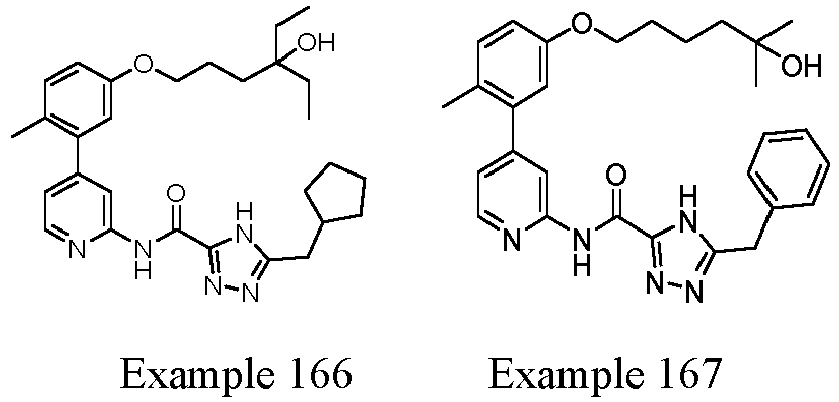
- The preparation was carried out in a similar manner to Example 160, except that in
step 1, methyl 5-bromopentanoate was used in place of methyl 4-bromobutanoate. 1H NMR (400 MHz, DMSO-d 6) δ 14.42 (s, 1H), 9.91 (s, 1H), 8.41 (d, J = 5.1 Hz, 1H), 8.11 (s, 1H), 7.41-7.29 (m, 4H), 7.29-7.22 (m, 2H), 7.21 (dd, J = 5.1, 1.5 Hz, 1H), 6.93 (dd, J = 8.4, 2.7 Hz, 1H), 6.81 (d, J = 2.7 Hz, 1H), 4.17 (s, 2H), 4.10 (s, 1H), 3.97 (t, J = 6.5 Hz, 2H), 2.19 (s, 3H), 1.68 (t, J = 6.9 Hz, 2H), 1.50-1.33 (m, 4H), 1.06 (s, 6H). MS: 500 [M+H]+. - The preparation was carried out in a similar manner to Example 160, except that in
step 1, tert-butyl (3-bromo-4-methylphenyl)(methyl)carbamate was used in place of 3-bromo-4-methylphenol. 1H NMR (400 MHz, DMSO-d 6) δ 14.62 (s, 1H), 9.88 (s, 1H), 8.40 (d, J = 5.1 Hz, 1H), 8.11 (s, 1H), 7.46 - 7.29 (m, 4H), 7.29 - 7.22 (m, 1H), 7.18 (dd, J = 5.0, 1.5 Hz, 1H), 7.12 (d, J = 8.5 Hz, 1H), 6.70 (dd, J = 8.5, 2.8 Hz, 1H), 6.52 (d, J = 2.7 Hz, 1H), 4.17 (s, 2H), 4.12 (s, 1H), 3.28 (t, J = 7.4 Hz, 2H), 2.86 (s, 3H), 2.13 (s, 3H), 1.63 - 1.46 (m, 2H), 1.42 - 1.27 (m, 2H), 1.05 (s, 6H). MS: 499 [M+H]+.

- The preparation was carried out in a similar manner to Example 160, except that in step 3, ethyl 5-isobutyl-4H-1,2,4-triazol-5-carboxylate was used in place of ethyl 5-benzyl-4H-1,2,4-triazol-3-carboxylate. 1H NMR(400 MHz, DMSO-d 6) δ 14.35 (s, 1H), 9.86 (s, 1H), 8.42 (d, J = 5.1 Hz, 1H), 8.13 (s, 1H), 7.33 - 7.16 (m, 2H), 6.93 (dd, J = 8.4, 2.7 Hz, 1H), 6.81 (d, J = 2.7 Hz, 1H), 4.19 (s, 1H), 3.97 (t, J = 6.6 Hz, 2H), 2.72 - 2.62 (m, 2H), 2.19 (s, 3H), 2.16 - 2.02 (m, 1H), 1.84 - 1.68 (m, 2H), 1.56 - 1.41 (m, 2H), 1.09 (s, 6H), 0.93 (d, J = 6.6 Hz, 6H). MS: 452 [M+H]+.
- The preparation was carried out in a similar manner to Example 160, except that in step 3, ethyl 5-neopentyl-4H-1,2,4-triazol-5-carboxylate was used in place of ethyl 5-benzyl-4H-1,2,4-triazol-3-carboxylate. 1H NMR (400 MHz, DMSO-d 6) δ 14.39 (s, 1H), 9.85 (s, 1H), 8.42 (d, J = 5.1 Hz, 1H), 8.15 (s, 1H), 7.31-7.16 (m, 2H), 6.93 (dd, J = 8.4, 2.7 Hz, 1H), 6.81 (d, J = 2.7 Hz, 1H), 4.18 (s, 1H), 3.97 (t, J = 6.6 Hz, 2H), 2.67 (s, 2H), 2.20 (s, 3H), 1.83-1.66 (m, 2H), 1.57-1.39 (m, 2H), 1.09 (s, 6H), 0.97 (s, 9H). MS: 466 [M+H]+.

- The preparation was carried out in a similar manner to Example 160, except that in step 3, ethyl 5-(cyclopropylmethyl)-4H-1,2,4-triazol-5-carboxylate was used in place of ethyl 5-benzyl-4H-1,2,4-triazol-3-carboxylate. 1H NMR (400 MHz, DMSO-d 6) δ 14.47 (s, 1H), 9.88 (s, 1H), 8.42 (d, J = 5.1 Hz, 1H), 8.14 (s, 1H), 7.37 - 7.16 (m, 2H), 6.93 (dd, J = 8.4, 2.6 Hz, 1H), 6.81 (d, J = 2.7 Hz, 1H), 4.18 (s, 1H), 3.97 (t, J = 6.5 Hz, 2H), 2.72 (d, J = 7.0 Hz, 2H), 2.19 (s, 3H), 1.83 - 1.66 (m, 2H), 1.55 - 1.39 (m, 2H), 1.18 - 1.03 (m, 7H), 0.59 - 0.46 (m, 2H), 0.33 - 0.22 (m, 2H). MS: 450 [M+H]+.
- The preparation was carried out in a similar manner to Example 160, except that in step 3, ethyl 5-(cyclobutylmethyl)-4H-1,2,4-triazol-5-carboxylate was used in place of ethyl 5-benzyl-4H-1,2,4-triazol-3-carboxylate. 1H NMR (400 MHz, DMSO-d 6) δ 14.36 (s, 1H), 9.85 (s, 1H), 8.42 (d, J = 5.1 Hz, 1H), 8.13 (s, 1H), 7.34 - 7.16 (m, 2H), 6.93 (dd, J = 8.4, 2.7 Hz, 1H), 6.81 (d, J = 2.7 Hz, 1H), 4.18 (s, 1H), 3.97 (t, J = 6.5 Hz, 2H), 2.88 (d, J = 7.5 Hz, 2H), 2.79 - 2.62 (m, 1H), 2.19 (s, 3H), 2.12 - 1.97 (m, 2H), 1.94 - 1.79 (m, 2H), 1.79 - 1.64 (m, 4H), 1.55 - 1.42 (m, 2H), 1.09 (s, 6H). MS: 464 [M+H]+.

- The preparation was carried out in a similar manner to Example 160, except that in step 3, ethyl 5-(cyclopentylmethyl)-4H-1,2,4-triazole-3-carboxylate was used in place of ethyl 5-benzyl-4H-1,2,4-triazol-3-carboxylate. 1H NMR (400 MHz, DMSO-d 6) δ 14.38 (s, 1H), 9.85 (s, 1H), 8.42 (d, J = 5.1 Hz, 1H), 8.14 (s, 1H), 7.33 - 7.16 (m, 2H), 6.93 (dd, J = 8.4, 2.7 Hz, 1H), 6.81 (d, J = 2.7 Hz, 1H), 4.19 (s, 1H), 3.96 (t, J = 6.6 Hz, 2H), 2.78 (d, J = 7.5 Hz, 2H), 2.34 - 2.22 (m, 1H), 2.19 (s, 3H), 1.83 - 1.66 (m, 4H), 1.66 - 1.55 (m, 2H), 1.55 - 1.41 (m, 4H), 1.27 - 1.18 (m, 2H), 1.09 (s, 6H). MS: 478 [M+H]+.
- The preparation was carried out in a similar manner to Example 160, except that in step 3, ethyl 5-(cyclopentylmethyl)-1,3,4-oxadiazol-2-carboxylate was used in place of ethyl 5-benzyl-4H-1,2,4-triazol-3-carboxylate. 1H NMR (400 MHz, DMSO-d 6) δ 11.23 (s, 1H), 8.47 (d, J = 5.1 Hz, 1H), 7.99 (s, 1H), 7.32 - 7.20 (m, 2H), 6.93 (dd, J = 8.4, 2.7 Hz, 1H), 6.81 (d, J = 2.7 Hz, 1H), 4.18 (s, 1H), 3.96 (t, J= 6.5 Hz, 2H), 2.97 (d, J = 7.4 Hz, 2H), 2.38 - 2.24 (m, 1H), 2.19 (s, 3H), 1.87 - 1.69 (m, 4H), 1.69 - 1.39 (m, 6H), 1.32 - 1.20 (m, 2H), 1.09 (s, 6H). MS: 479 [M+H]+.

- The preparation was carried out in a similar manner to Example 160, except that in step 3, ethyl 5-(cyclohexylmethyl)-4H-1,2,4-triazol-3-carboxylate was used in place of ethyl 5-benzyl-4H-1,2,4-triazol-3-carboxylate. 1H NMR (400 MHz, DMSO-d 6) δ 14.37 (s, 1H), 9.85 (s, 1H), 8.42 (d, J = 5.1 Hz, 1H), 8.13 (s, 1H), 7.31 - 7.17 (m, 2H), 6.93 (dd, J = 8.4, 2.7 Hz, 1H), 6.81 (d, J = 2.7 Hz, 1H), 4.18 (s, 1H), 3.97 (t, J = 6.6 Hz, 2H), 2.67 (d, J = 7.0 Hz, 2H), 2.19 (s, 3H), 1.84 - 1.70 (m, 3H), 1.70 - 1.56 (m, 5H), 1.54 - 1.41 (m, 2H), 1.29 - 1.15 (m, 3H), 1.09 (s, 6H), 1.05 - 0.89 (m, 2H). MS: 492 [M+H]+.
- The preparation was carried out in a similar manner to Example 160, except that in step 3, ethyl 5-(2-cyclopentylethyl)-4H-1,2,4-triazol-3-carboxylate was used in place of ethyl 5-benzyl-4H-1,2,4-triazol-3-carboxylate. 1H NMR (400 MHz, DMSO-d 6) δ 14.32 (s, 1H), 9.86 (s, 1H), 8.42 (d, J = 5.1 Hz, 1H), 8.13 (s, 1H), 7.33 - 7.15 (m, 2H), 6.93 (dd, J = 8.4, 2.7 Hz, 1H), 6.81 (d, J = 2.7 Hz, 1H), 4.18 (s, 1H), 3.97 (t, J = 6.5 Hz, 2H), 2.79 (t, J = 7.2 Hz, 2H), 2.19 (s, 3H), 1.84 - 1.66 (m, 7H), 1.66 - 1.39 (m, 6H), 1.18 - 0.98 (m, 8H). MS: 492 [M+H]+.

- The preparation was carried out in a similar manner to Example 160, except that in step 3, ethyl 5-((tetrahydro-2H-pyran-4-yl)methyl)-4H-1,2,4-triazol-3-carboxylate was used in place of ethyl 5-benzyl-4H-1,2,4-triazol-3-carboxylate. 1H NMR (400 MHz, DMSO-d 6) δ 14.41 (s, 1H), 9.87 (s, 1H), 8.42 (d, J = 5.1 Hz, 1H), 8.13 (s, 1H), 7.34 - 7.14 (m, 2H), 6.93 (dd, J = 8.4, 2.7 Hz, 1H), 6.81 (d, J = 2.7 Hz, 1H), 4.18 (s, 1H), 3.97 (t, J = 6.5 Hz, 2H), 3.89 - 3.78 (m, 2H), 3.31 - 3.19 (m, 2H), 2.73 (d, J = 7.1 Hz, 2H), 2.19 (s, 3H), 2.07 - 1.92 (m, 1H), 1.81 - 1.68 (m, 2H), 1.61 - 1.51 (m, 2H), 1.51 - 1.42 (m, 2H), 1.30 - 1.22 (m, 2H), 1.09 (s, 6H). MS: 494 [M+H]+.
- The preparation was carried out in a similar manner to Example 160, except that in step 3, ethyl 5-((4,4-difluorocyclohexyl)methyl)-4H-1,2,4-triazol-3-carboxylate was used in place of ethyl 5-benzyl-4H-1,2,4-triazol-3-carboxylate. 1H NMR (400 MHz, DMSO-d 6) δ 14.41 (s, 1H), 9.87 (s, 1H), 8.42 (d, J = 5.1 Hz, 1H), 8.13 (s, 1H), 7.32 - 7.13 (m, 2H), 6.93 (dd, J = 8.5, 2.6 Hz, 1H), 6.81 (d, J = 2.7 Hz, 1H), 4.18 (s, 1H), 3.97 (t, J = 6.6 Hz, 2H), 2.75 (d, J = 7.0 Hz, 2H), 2.19 (s, 3H), 2.09 - 1.64 (m, 9H), 1.55 - 1.40 (m, 2H), 1.35 - 1.23 (m, 2H), 1.09 (s, 6H). MS: 528 [M+H]+.

- The preparation was carried out in a similar manner to Example 160, except that in step 3, ethyl 5-(bicyclo[2.2.1]heptan-2-ylmethyl)-4H-1,2,4-triazol-3-carboxylate was used in place of ethyl 5-benzyl-4H-1,2,4-triazol-3-carboxylate. 1H NMR (400 MHz, DMSO-d 6) δ 14.32 (s, 1H), 9.86 (s, 1H), 8.42 (d, J = 5.1 Hz, 1H), 8.13 (s, 1H), 7.35 - 7.12 (m, 2H), 6.93 (dd, J = 8.4, 2.7 Hz, 1H), 6.81 (d, J = 2.7 Hz, 1H), 4.18 (s, 1H), 3.97 (t, J = 6.6 Hz, 2H), 3.17 (d, J = 4.1 Hz, 1H), 2.74 (dd, J = 14.6, 8.0 Hz, 1H), 2.59 (dd, J = 14.6, 7.7 Hz, 1H), 2.28 - 2.16 (m, 4H), 1.96 - 1.85 (m, 1H), 1.81 - 1.68 (m, 2H), 1.54 - 1.33 (m, 6H), 1.29 - 1.20 (m, 2H), 1.19 - 1.12 (m, 2H), 1.09 (s, 6H). MS: 504 [M+H]+.
- The preparation was carried out in a similar manner to Example 160, except that in step 3, ethyl 5-(adamantan-1-ylmethyl)-4H-1,2,4-triazol-3-carboxylate was used in place of ethyl 5-benzyl-4H-1,2,4-triazol-3-carboxylate. 1H NMR (400 MHz, DMSO-d 6) δ 14.32 (s, 1H), 9.83 (s, 1H), 8.39 (d, J = 5.1 Hz, 1H), 8.12 (s, 1H), 7.30 - 7.13 (m, 2H), 6.90 (dd, J = 8.4, 2.7 Hz, 1H), 6.78 (d, J = 2.7 Hz, 1H), 4.17 (s, 1H), 3.94 (t, J = 6.6 Hz, 2H), 2.51 (s, 2H), 2.17 (s, 3H), 1.95 - 1.83 (m, 3H), 1.79 - 1.66 (m, 2H), 1.66 - 1.57 (m, 3H), 1.57 - 1.38 (m, 11H), 1.06 (s, 6H). MS: 544 [M+H]+.
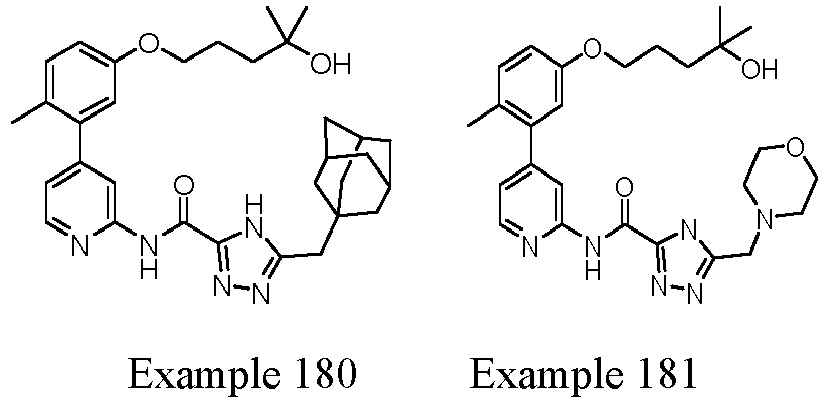
- The preparation was carried out in a similar manner to Example 160, except that in step 3, ethyl 5-(morpholinomethyl)-4H-1,2,4-triazol-3-carboxylate was used in place of ethyl 5-benzyl-4H-1,2,4-triazol-3-carboxylate. 1H NMR (400 MHz, DMSO-d 6) δ 14.09 (s, 1H), 9.95 (s, 1H), 8.42 (d, J = 5.1 Hz, 1H), 8.12 (s, 1H), 7.32 - 7.16 (m, 2H), 6.93 (dd, J = 8.4, 2.7 Hz, 1H), 6.81 (d, J = 2.7 Hz, 1H), 4.20 (s, 1H), 3.97 (t, J = 6.5 Hz, 2H), 3.71 (s, 2H), 3.59 (t, J = 4.6 Hz, 4H), 2.49 - 2.40 (m, 4H), 2.19 (s, 3H), 1.81 - 1.67 (m, 2H), 1.52 - 1.41 (m, 2H), 1.09 (s, 6H). MS: 495 [M+H]+.
- The preparation was carried out in a similar manner to Example 160, except that in step 3, ethyl 5-(phenethyl)-4H-1,2,4-triazol-3-carboxylate was used in place of ethyl 5-benzyl-4H-1,2,4-triazol-3-carboxylate. 1H NMR (400 MHz, DMSO-d 6) δ 14.43 (s, 1H), 9.89 (s, 1H), 8.43 (d, J = 5.2 Hz, 1H), 8.14 (s, 1H), 7.40-7.10 (m, 7H), 6.93 (dd, J = 8.4, 2.7 Hz, 1H), 6.81 (d, J = 2.7 Hz, 1H), 4.18 (s, 1H), 3.97 (t, J = 6.6 Hz, 2H), 3.22-2.99 (m, 4H), 2.20 (s, 3H), 1.84-1.66 (m, 2H), 1.57-1.37 (m, 2H), 1.09 (s, 6H). MS: 500 [M+H]+.

- The preparation was carried out in a similar manner to Example 160, except that in step 3, ethyl 5-(2-fluorobenzyl)-4H-1,2,4-triazol-3-carboxylate was used in place of ethyl 5-benzyl-4H-1,2,4-triazol-3-carboxylate. 1H NMR (400 MHz, DMSO-d 6) δ 14.65 (s, 1H), 9.90 (s, 1H), 8.41 (d, J = 5.1 Hz, 1H), 8.10 (s, 1H), 7.44 - 7.29 (m, 2H), 7.28 - 7.13 (m, 4H), 6.92 (dd, J = 8.4, 2.7 Hz, 1H), 6.80 (d, J = 2.7 Hz, 1H), 4.29 - 4.09 (m, 3H), 3.96 (t, J = 6.5 Hz, 2H), 2.18 (s, 3H), 1.83 - 1.68 (m, 2H), 1.52 - 1.39 (m, 2H), 1.09 (s, 6H). MS: 504 [M+H]+.
- The preparation was carried out in a similar manner to Example 160, except that in step 3, ethyl 5-(3-fluorobenzyl)-4H-1,2,4-triazol-3-carboxylate was used in place of ethyl 5-benzyl-4H-1,2,4-triazol-3-carboxylate. 1H NMR (400 MHz, DMSO-d 6) δ 13.74 (s, 1H), 9.93 (s, 1H), 8.41 (d, J = 5.1 Hz, 1H), 8.11 (s, 1H), 7.50-7.30 (m, 2H), 7.30-7.06 (m, 4H), 6.92 (d, J = 8.6 Hz, 1H), 6.80 (s, 1H), 4.34-4.06 (m, 3H), 3.96 (t, J = 6.6 Hz, 2H), 2.19 (s, 3H), 1.84-1.66 (m, 2H), 1.47 (t, J = 8.1 Hz, 2H), 1.09 (s, 6H).MS: 504 [M+H]+.


- The preparation was carried out in a similar manner to Example 160, except that in step 3, ethyl 5-(3-chlorobenzyl)-4H-1,2,4-triazol-3-carboxylate was used in place of ethyl 5-benzyl-4H-1,2,4-triazol-3-carboxylate. 1H NMR (400 MHz, DMSO-d 6) δ 14.54 (s, 1H), 9.95 (s, 1H), 8.42 (d, J = 5.1 Hz, 1H), 8.11 (s, 1H), 7.49 - 7.13 (m, 6H), 6.92 (dd, J = 8.4, 2.7 Hz, 1H), 6.80 (d, J = 2.7 Hz, 1H), 4.31 - 4.07 (m, 3H), 3.96 (t, J = 6.5 Hz, 2H), 2.19 (s, 3H), 1.83 - 1.66 (m, 2H), 1.54 - 1.38 (m, 2H), 1.09 (s, 6H). MS: 520 [M+H]+.
- The preparation was carried out in a similar manner to Example 160, except that in step 3, ethyl 5-(3-methoxybenzyl)-4H-1,2,4-triazol-3-carboxylate was used in place of ethyl 5-benzyl-4H-1,2,4-triazol-3-carboxylate. 1H NMR (400 MHz, DMSO-d 6) δ 14.66 (s, 1H), 9.92 (s, 1H), 8.41 (d, J = 5.1 Hz, 1H), 8.12 (s, 1H), 7.41 - 7.12 (m, 3H), 7.05 - 6.70 (m, 5H), 4.26 - 4.05 (m, 3H), 3.96 (t, J = 6.5 Hz, 2H), 3.74 (s, 3H), 2.19 (s, 3H), 1.83 - 1.65 (m, 2H), 1.56 - 1.37 (m, 2H), 1.09 (s, 6H). MS: 516 [M+H]+.

- The preparation was carried out in a similar manner to Example 160, except that in step 3, ethyl 5-(3-cyanobenzyl)-4H-1,2,4-triazol-3-carboxylate was used in place of ethyl 5-benzyl-4H-1,2,4-triazol-3-carboxylate. 1H NMR (400 MHz, DMSO-d 6) δ 14.69 (s, 1H), 9.98 (s, 1H), 8.42 (d, J = 5.1 Hz, 1H), 8.11 (s, 1H), 7.84 (s, 1H), 7.76 (d, J = 7.7 Hz, 1H), 7.69 (d, J = 7.8 Hz, 1H), 7.62 -7.51 (m, 1H), 7.30 - 7.17 (m, 2H), 6.93 (dd, J = 8.4, 2.7 Hz, 1H), 6.80 (d, J = 2.7 Hz, 1H), 4.27 (s, 2H), 4.19 (s, 1H), 3.96 (t, J = 6.5 Hz, 2H), 2.19 (s, 3H), 1.81 - 1.68 (m, 2H), 1.53 - 1.40 (m, 2H), 1.09 (s, 6H). MS: 511 [M+H]+.
- The preparation was carried out in a similar manner to Example 160, except that in step 3, ethyl 5-(4-fluorobenzyl)-4H-1,2,4-triazol-3-carboxylate was used in place of ethyl 5-benzyl-4H-1,2,4-triazol-3-carboxylate. 1H NMR (400 MHz, DMSO-d 6) δ 14.54 (s, 1H), 9.93 (s, 1H), 8.42 (d, J = 5.1 Hz, 1H), 8.11 (s, 1H), 7.46 - 7.31 (m, 2H), 7.31 - 7.10 (m, 4H), 6.93 (dd, J = 8.4, 2.7 Hz, 1H), 6.80 (d, J = 2.7 Hz, 1H), 4.29 - 4.08 (m, 3H), 3.96 (t, J = 6.5 Hz, 2H), 2.19 (s, 3H), 1.83 - 1.65 (m, 2H), 1.54 - 1.40 (m, 2H), 1.09 (s, 6H). MS: 504 [M+H]+.

- The preparation was carried out in a similar manner to Example 160, except that in step 3, ethyl 5-(4-chlorobenzyl)-4H-1,2,4-triazol-3-carboxylate was used in place of ethyl 5-benzyl-4H-1,2,4-triazol-3-carboxylate. 1H NMR (400 MHz, DMSO-d 6) δ 14.65 (s, 1H), 9.93 (s, 1H), 8.42 (d, J = 5.2 Hz, 1H), 8.11 (s, 1H), 7.51 - 7.29 (m, 4H), 7.29 - 7.13 (m, 2H), 6.93 (dd, J = 8.5, 2.8 Hz, 1H), 6.80 (d, J = 2.8 Hz, 1H), 4.28 - 4.07 (m, 3H), 3.96 (t, J = 6.6 Hz, 2H), 2.19 (s, 3H), 1.75 (t, J = 8.2 Hz, 2H), 1.54 - 1.39 (m, 2H), 1.09 (s, 6H). MS: 520 [M+H]+.
- The preparation was carried out in a similar manner to Example 160, except that in step 3, ethyl 5-(4-methoxybenzyl)-4H-1,2,4-triazol-3-carboxylate was used in place of ethyl 5-benzyl-4H-1,2,4-triazol-3-carboxylate. 1H NMR (400 MHz, DMSO-d 6) δ 14.59 (s, 1H), 9.89 (s, 1H), 8.41 (d, J = 5.1 Hz, 1H), 8.11 (s, 1H), 7.40 - 7.09 (m, 4H), 7.04 - 6.70 (m, 4H), 4.18 (s, 1H), 4.10 (s, 2H), 3.96 (t, J = 6.8 Hz, 2H), 2.19 (s, 3H), 1.83 - 1.64 (m, 2H), 1.57 - 1.35 (m, 2H), 1.09 (s, 6H). MS: 516 M+H+.

- The preparation was carried out in a similar manner to Example 160, except that in step 3, ethyl 5-(4-cyanobenzyl)-4H-1,2,4-triazol-3-carboxylate was used in place of ethyl 5-benzyl-4H-1,2,4-triazol-3-carboxylate. 1H NMR (400 MHz, DMSO-d 6) δ 14.65 (s, 1H), 9.95 (s, 1H), 8.42 (d, J = 5.1 Hz, 1H), 8.11 (s, 1H), 7.91 - 7.76 (m, 2H), 7.62 - 7.47 (m, 2H), 7.32 - 7.13 (m, 2H), 6.93 (dd, J = 8.4, 2.7 Hz, 1H), 6.80 (d, J = 2.7 Hz, 1H), 4.29 (s, 2H), 4.18 (s, 1H), 3.96 (t, J = 6.5 Hz, 2H), 2.19 (s, 3H), 1.81 - 1.67 (m, 2H), 1.53 - 1.41 (m, 2H), 1.09 (s, 6H). MS: 511 [M+H]+.
- The preparation was carried out in a similar manner to Example 160, except that in step 3, ethyl 5-(3,4-difluorobenzyl)-4H-1,2,4-triazol-3-carboxylate was used in place of ethyl 5-benzyl-4H-1,2,4-triazol-3-carboxylate. 1H NMR (400 MHz, DMSO-d 6) δ 14.62 (s, 1H), 9.96 (s, 1H), 8.42 (d, J = 5.1 Hz, 1H), 8.11 (d, J = 1.4 Hz, 1H), 7.51 - 7.32 (m, 2H), 7.32 - 7.13 (m, 3H), 6.93 (dd, J = 8.4, 2.7 Hz, 1H), 6.80 (d, J = 2.7 Hz, 1H), 4.25 - 4.12 (m, 3H), 3.96 (t, J = 6.5 Hz, 2H), 2.19 (s, 3H), 1.82 - 1.67 (m, 2H), 1.53 - 1.41 (m, 2H), 1.09 (s, 6H). MS: 522 [M+H]+.

- The preparation was carried out in a similar manner to Example 160, except that in
step 1, 2-chloro-4-hydroxybenzonitrile was used in place of 3-bromo-4-methylphenol. 1H NMR (400 MHz, DMSO-d 6) δ 14.54 (s, 1H), 10.04 (s, 1H), 8.52 (d, J = 5.1 Hz, 1H), 8.34 (d, J = 1.4 Hz, 1H), 7.94 (d, J = 8.5 Hz, 1H), 7.41 (dd, J = 5.1, 1.6 Hz, 1H), 7.38 - 7.29 (m, 4H), 7.29 - 7.15 (m, 3H), 4.27 - 4.08 (m, 5H), 1.87 - 1.72 (m, 2H), 1.56 - 1.41 (m, 2H), 1.10 (s, 6H). MS: 497 [M+H]+. - The preparation was carried out in a similar manner to Example 160, except that in
step 1, 3-chloro-4-(trifluoromethyl)phenol was used in place of 3-bromo-4-methylphenol. 1H NMR (400 MHz, DMSO-d 6) δ 14.61 (s, 1H), 9.96 (s, 1H), 8.43 (d, J = 5.1 Hz, 1H), 8.16 (s, 1H), 7.79 (d, J = 8.9 Hz, 1H), 7.43 - 7.29 (m, 4H), 7.29 - 7.22 (m, 1H), 7.22 - 7.11 (m, 2H), 6.97 (d, J = 2.5 Hz, 1H), 4.26 - 4.13 (m, 3H), 4.09 (t, J = 6.6 Hz, 2H), 1.86 - 1.69 (m, 2H), 1.54 - 1.39 (m, 2H), 1.09 (s, 6H). MS: 540 [M+H]+.

- The preparation was carried out in a similar manner to Example 64, except that in
step 1, 2-bromo-4-hydoxylbenzaldehyde was used in place of 3-bromo-4-methylphenol. 1H NMR (400 MHz, DMSO-d 6) δ 14.60 (s, 1H), 9.99 (s, 1H), 9.80 (s, 1H), 8.46 (d, J = 5.1 Hz, 1H), 8.16 (s, 1H), 7.96 (d, J = 8.7 Hz, 1H), 7.43 - 7.29 (m, 5H), 7.29 - 7.15 (m, 2H), 7.05 (d, J = 2.5 Hz, 1H), 4.28 - 4.20 (m, 2H), 4.18 (s, 2H), 3.73 - 3.61 (m, 2H), 1.15 (s, 9H). MS: 500 [M+H]+. - The preparation was carried out in a similar manner to Example 92, except that in
step 1, 3-bromo-4-methylphenol was used in place of 2-bromo-3-methylphenol, and instep 2, 5-bromopyridin-3-amine was used in place of 4-bromopyridin-2-amine. 1H NMR (600 MHz, DMSO-d 6) δ 14.54 (s, 1H), 10.75 (s, 1H), 9.02 (s, 1H), 8.32 (s, 1H), 8.21 (s, 1H), 7.43-7.18 (m, 6H), 6.91 (d, J = 8.2 Hz, 1H), 6.83 (s, 1H), 4.18 (s, 2H), 3.76 (s, 3H), 2.18 (s, 3H). MS: 400 [M+H]+.
- The preparation was carried out in a similar manner to Example 92, except that in
step 1, 3-bromo-4-methylphenol was used in place of 2-bromo-3-methylphenol, bromoethane was used in place of iodomethane, and instep 2, 5-bromopyridin-3-amine was used in place of 4-bromopyridin-2-amine. 1H NMR (600 MHz, DMSO-d 6) δ 14.49 (s, 1H), 10.70 (s, 1H), 9.02 (d, J = 2.4 Hz, 1H), 8.41 - 8.08 (m, 2H), 7.48 - 7.12 (m, 6H), 6.90 (dd, J = 8.4, 2.7 Hz, 1H), 6.80 (d, J = 2.7 Hz, 1H), 4.18 (s, 2H), 4.03 (q, J = 7.0 Hz, 2H), 2.18 (s, 3H), 1.32 (t, J = 7.0 Hz, 3H). MS: 414 [M+H]+. - The preparation was carried out in a similar manner to Example 92, except that in
step 1, 3-bromo-4-methylphenol was used in place of 2-bromo-3-methylphenol, and 1-bromobutane was used in place of iodomethane. 1H NMR (400 MHz, DMSO-d 6) δ 14.58 (s, 1H), 9.92 (s, 1H), 8.41 (d, J = 5.1 Hz, 1H), 8.11 (d, J = 1.5 Hz, 1H), 7.48 - 7.10 (m, 7H), 6.93 (dd, J = 8.4, 2.7 Hz, 1H), 6.81 (d, J = 2.7 Hz, 1H), 4.17 (s, 2H), 3.97 (t, J = 6.5 Hz, 2H), 2.19 (s, 3H), 1.83 - 1.54 (m, 2H), 1.54 - 1.27 (m, 2H), 0.92 (t, J = 7.4 Hz, 3H). MS: 442 [M+H]+.
- The preparation was carried out in a similar manner to Example 161, except that in
step 1, methyl 3-bromo-4-methylbenzoate was used in place of methyl 4-bromo-3-methylbenzoate. 1H NMR (400 MHz, DMSO-d 6) δ 14.59 (s, 1H), 9.89 (s, 1H), 8.42 (d, J = 5.1 Hz, 1H), 8.12 (d, J = 1.3 Hz, 1H), 7.42 (dd, J = 7.9, 2.0 Hz, 1H), 7.39 - 7.30 (m, 5H), 7.30 - 7.23 (m, 2H), 7.21 (dd, J = 5.1, 1.6 Hz, 1H), 5.05 (s, 1H), 4.17 (s, 2H), 2.25 (s, 3H), 1.43 (s, 6H). MS: 428 [M+H]+. - The preparation was carried out in a similar manner to Example 160, except that in step 4, ethyl 5-(3,5-difluorobenzyl)-4H-1,2,4-triazol-3-carboxylate was used in place of ethyl 5-benzyl-4H-1,2,4-triazol-3-carboxylate. 1H NMR (400 MHz, DMSO-d 6) δ 14.56 (s, 1H), 9.91 (s, 1H), 8.42 (d, J = 5.1 Hz, 1H), 8.12 (s, 1H), 7.29-7.03 (m, 5H), 6.93 (dd, J = 8.4, 2.7 Hz, 1H), 6.80 (d, J = 2.7 Hz, 1H), 4.26 (s, 2H), 4.18 (s, 1H), 3.96 (t, J = 6.6 Hz, 2H), 2.19 (s, 3H), 1.81-1.67 (m, 2H), 1.53-1.40 (m, 2H), 1.09 (s, 6H). MS: 522 [M+H]+.

- The preparation was carried out in a similar manner to Example 160, except that in step 4, ethyl 5-(2,4-difluorobenzyl)-4H-1,2,4-triazol-3-carboxylate was used in place of ethyl 5-benzyl-4H-1,2,4-triazol-3-carboxylate. 1H NMR (400 MHz, DMSO-d 6) δ 14.63 (s, 1H), 9.89 (s, 1H), 8.42 (d, J = 5.1 Hz, 1H), 8.11 (s, 1H), 7.57 - 7.38 (m, 1H), 7.38 - 7.17 (m, 3H), 7.17 - 7.01 (m, 1H), 6.93 (dd, J = 8.4, 2.7 Hz, 1H), 6.81 (d, J = 2.7 Hz, 1H), 4.28 - 4.11 (m, 3H), 3.97 (t, J = 6.5 Hz, 2H), 2.19 (s, 3H), 1.83 - 1.66 (m, 2H), 1.56 - 1.40 (m, 2H), 1.10 (s, 6H). MS: 522 [M+H]+.
- The preparation was carried out in a similar manner to Example 160, except that in step 4, ethyl 5-(2,3-difluorobenzyl)-4H-1,2,4-triazol-3-carboxylate was used in place of ethyl 5-benzyl-4H-1,2,4-triazol-3-carboxylate. 1H NMR (400 MHz, DMSO-d 6) δ 14.70 (s, 1H), 9.92 (s, 1H), 8.41 (d, J = 5.1 Hz, 1H), 8.10 (s, 1H), 7.47 - 7.30 (m, 1H), 7.30 - 7.12 (m, 4H), 6.93 (dd, J = 8.4, 2.7 Hz, 1H), 6.80 (d, J = 2.7 Hz, 1H), 4.27 (s, 2H), 4.17 (s, 1H), 3.96 (t, J = 6.5 Hz, 2H), 2.19 (s, 3H), 1.82 - 1.66 (m, 2H), 1.55 - 1.40 (m, 2H), 1.09 (s, 6H). MS: 522 [M+H]+.

- The preparation was carried out in a similar manner to Example 160, except that in step 4, ethyl 5-(2,5-difluorobenzyl)-4H-1,2,4-triazol-3-carboxylate was used in place of ethyl 5-benzyl-4H-1,2,4-triazol-3-carboxylate. 1H NMR (400 MHz, DMSO-d 6) δ 14.73 (s, 1H), 9.94 (s, 1H), 8.42 (d, J = 5.1 Hz, 1H), 8.11 (s, 1H), 7.42-7.11 (m, 5H), 6.93 (dd, J = 8.4, 2.7 Hz, 1H), 6.81 (d, J = 2.7 Hz, 1H), 4.22 (s, 2H), 4.17 (s, 1H), 3.97 (t, J = 6.5 Hz, 2H), 2.19 (s, 3H), 1.80-1.70 (m, 2H), 1.54-1.42 (m, 2H), 1.10 (s, 6H). MS: 522 [M+H]+.
- The preparation was carried out in a similar manner to Example 160, except that in step 4, ethyl 5-(5-chloro-2-fluorobenzyl)-4H-1,2,4-triazol-3-carboxylate was used in place of ethyl 5-benzyl-4H-1,2,4-triazol-3-carboxylate. 1H NMR (400 MHz, DMSO-d 6) δ 14.69 (s, 1H), 9.93 (s, 1H), 8.42 (d, J = 5.1 Hz, 1H), 8.10 (s, 1H), 7.53 (dd, J = 6.6, 2.7 Hz, 1H), 7.48 - 7.36 (m, 1H), 7.36 - 7.14 (m, 3H), 6.93 (dd, J = 8.4, 2.7 Hz, 1H), 6.80 (d, J = 2.7 Hz, 1H), 4.22 (s, 2H), 4.17 (s, 1H), 3.96 (t, J = 6.5 Hz, 2H), 2.19 (s, 3H), 1.83 - 1.68 (m, 2H), 1.55 - 1.42 (m, 2H), 1.09 (s, 6H). MS: 538 [M+H]+.


- The preparation was carried out in a similar manner to Example 160, except that in step 4, ethyl 5-(5-chloro-3-fluorobenzyl)-4H-1,2,4-triazol-3-carboxylate was used in place of ethyl 5-benzyl-4H-1,2,4-triazol-3-carboxylate. 1H NMR (400 MHz, DMSO-d 6) δ 14.56 (s, 1H), 9.91 (s, 1H), 8.42 (d, J = 5.1 Hz, 1H), 8.11 (s, 1H), 7.43-7.14 (m, 5H), 6.93 (dd, J = 8.4, 2.7 Hz, 1H), 6.80 (d, J = 2.7 Hz, 1H), 4.24 (s, 2H), 4.17 (s, 1H), 3.96 (t, J = 6.6 Hz, 2H), 2.19 (s, 3H), 1.82-1.68 (m, 2H), 1.52-1.42 (m, 2H), 1.09 (s, 6H). MS: 538 [M+H]+.
- The preparation was carried out in a similar manner to Example 160, except that in step 4, ethyl 5-(3-chloro-4-fluorobenzyl)-4H-1,2,4-triazol-3-carboxylate was used in place of ethyl 5-benzyl-4H-1,2,4-triazol-3-carboxylate. 1H NMR (400 MHz, DMSO-d 6) δ 14.61 (s, 1H), 9.95 (s, 1H), 8.42 (d, J = 5.1 Hz, 1H), 8.11 (s, 1H), 7.59 (dd, J = 7.2, 2.1 Hz, 1H), 7.47 - 7.29 (m, 2H), 7.29 - 7.15 (m, 2H), 6.93 (dd, J = 8.4, 2.7 Hz, 1H), 6.80 (d, J = 2.7 Hz, 1H), 4.24 - 4.14 (m, 3H), 3.96 (t, J = 6.6 Hz, 2H), 2.19 (s, 3H), 1.83 - 1.66 (m, 2H), 1.54 - 1.41 (m, 2H), 1.09 (s, 6H). MS: 538 [M+H]+.

- The preparation was carried out in a similar manner to Example 160, except that in step 4, ethyl 5-(3-fluoro-5-methylbenzyl)-4H-1,2,4-triazol-3-carboxylate was used in place of ethyl 5-benzyl-4H-1,2,4-triazol-3-carboxylate. 1H NMR (400 MHz, DMSO-d 6) δ 14.55 (s, 1H), 9.90 (s, 1H), 8.42 (d, J = 5.1 Hz, 1H), 8.11 (s, 1H), 7.32-7.14 (m, 2H), 7.03-6.86 (m, 4H), 6.80 (d, J = 2.7 Hz, 1H), 4.22-4.10 (m, 3H), 3.96 (t, J = 6.6 Hz, 2H), 2.30 (s, 3H), 2.19 (s, 3H), 1.82-1.68 (m, 2H), 1.54-1.42 (m, 2H), 1.09 (s, 6H). MS: 518 [M+H]+.
- The preparation was carried out in a similar manner to Example 160, except that in step 4, ethyl 5-(4-fluoro-3-methylbenzyl)-4H-1,2,4-triazol-3-carboxylate was used in place of ethyl 5-benzyl-4H-1,2,4-triazol-3-carboxylate. 1H NMR (400 MHz, DMSO-d 6) δ 14.53 (s, 1H), 9.89 (s, 1H), 8.42 (d, J = 5.1 Hz, 1H), 8.11 (s, 1H), 7.34 - 7.00 (m, 5H), 6.93 (dd, J = 8.4, 2.7 Hz, 1H), 6.80 (d, J = 2.7 Hz, 1H), 4.24 - 4.04 (m, 3H), 3.96 (t, J = 6.5 Hz, 2H), 2.27 - 2.12 (m, 6H), 1.83 - 1.67 (m, 2H), 1.56 - 1.41 (m, 2H), 1.09 (s, 6H). MS: 518 [M+H]+.

- The preparation was carried out in a similar manner to Example 160, except that in step 4, ethyl 5-(4-fluoro-3-methoxybenzyl)-4H-1,2,4-triazol-3-carboxylate was used in place of ethyl 5-benzyl-4H-1,2,4-triazol-3-carboxylate. 1H NMR (400 MHz, DMSO-d 6) δ 14.52 (s, 1H), 9.89 (s, 1H), 8.42 (d, J = 5.1 Hz, 1H), 8.11 (s, 1H), 7.30 - 7.08 (m, 4H), 6.93 (dd, J = 8.4, 2.7 Hz, 1H), 6.90 - 6.83 (m, 1H), 6.80 (d, J = 2.7 Hz, 1H), 4.22 - 4.09 (m, 3H), 3.96 (t, J = 6.5 Hz, 2H), 3.83 (s, 3H), 2.19 (s, 3H), 1.81 - 1.69 (m, 2H), 1.54 - 1.41 (m, 2H), 1.09 (s, 6H). MS: 534 [M+H]+.
- The preparation was carried out in a similar manner to Example 160, except that in step 4, ethyl 5-(2-fluoro-3-trifluoromethylbenzyl)-4H-1,2,4-triazol-3-carboxylate was used in place of ethyl 5-benzyl-4H-1,2,4-triazol-3-carboxylate. 1H NMR (400 MHz, DMSO-d 6) δ 14.69 (s, 1H), 9.91 (s, 1H), 8.41 (d, J = 5.1 Hz, 1H), 8.10 (s, 1H), 7.88 - 7.64 (m, 2H), 7.49 - 7.34 (m, 1H), 7.30 - 7.13 (m, 2H), 6.93 (dd, J = 8.4, 2.7 Hz, 1H), 6.80 (d, J = 2.7 Hz, 1H), 4.32 (s, 2H), 4.16 (s, 1H), 3.96 (t, J = 6.5 Hz, 2H), 2.19 (s, 3H), 1.81 - 1.69 (m, 2H), 1.53 - 1.41 (m, 2H), 1.09 (s, 6H). MS: 572 [M+H]+.

- The preparation was carried out in a similar manner to Example 160, except that in step 4, ethyl 5-(2-fluoro-5-trifluoromethylbenzyl)-4H-1,2,4-triazol-3-carboxylate was used in place of ethyl 5-benzyl-4H-1,2,4-triazol-3-carboxylate. 1H NMR (400 MHz, DMSO-d 6) δ 14.76 (s, 1H), 9.92 (s, 1H), 8.41 (d, J = 5.1 Hz, 1H), 8.10 (s, 1H), 7.90 (dd, J = 6.7, 2.4 Hz, 1H), 7.83-7.67 (m, 1H), 7.56-7.37 (m, 1H), 7.33-7.12 (m, 2H), 6.92 (dd, J = 8.4, 2.7 Hz, 1H), 6.80 (d, J = 2.7 Hz, 1H), 4.32 (s, 2H), 4.17 (s, 1H), 3.96 (t, J = 6.5 Hz, 2H), 2.18 (s, 3H), 1.80-1.68 (m, 2H), 1.52-1.41 (m, 2H), 1.09 (s, 6H). MS: 572 [M+H]+.
- The preparation was carried out in a similar manner to Example 160, except that in step 4, ethyl 5-(4-fluoro-3-trifluoromethylbenzyl)-4H-1,2,4-triazol-3-carboxylate was used in place of ethyl 5-benzyl-4H-1,2,4-triazol-3-carboxylate. 1H NMR (400 MHz, DMSO-d 6) δ 14.55 (s, 1H), 9.90 (s, 1H), 8.42 (d, J = 5.1 Hz, 1H), 8.11 (s, 1H), 7.84 - 7.76 (m, 1H), 7.76 - 7.67 (m, 1H), 7.50 (dd, J = 10.6, 8.8 Hz, 1H), 7.29 - 7.16 (m, 2H), 6.93 (dd, J = 8.4, 2.7 Hz, 1H), 6.80 (d, J = 2.7 Hz, 1H), 4.30 (s, 2H), 4.16 (s, 1H), 3.96 (t, J = 6.6 Hz, 2H), 2.19 (s, 3H), 1.82 - 1.66 (m, 2H), 1.52 - 1.42 (m, 2H), 1.09 (s, 6H). MS: 572 [M+H]+.

- The preparation was carried out in a similar manner to Example 160, except that in step 4, ethyl 5-(3-fluoro-5-trifluoromethylbenzyl)-4H-1,2,4-triazol-3-carboxylate was used in place of ethyl 5-benzyl-4H-1,2,4-triazol-3-carboxylate. 1H NMR (400 MHz, DMSO-d 6) δ 14.57 (s, 1H), 9.90 (s, 1H), 8.42 (d, J = 5.1 Hz, 1H), 8.12 (s, 1H), 7.70 - 7.50 (m, 3H), 7.30 - 7.15 (m, 2H), 6.93 (dd, J = 8.4, 2.7 Hz, 1H), 6.80 (d, J = 2.7 Hz, 1H), 4.36 (s, 2H), 4.17 (s, 1H), 3.96 (t, J = 6.5 Hz, 2H), 2.19 (s, 3H), 1.82 - 1.67 (m, 2H), 1.53 - 1.42 (m, 2H), 1.09 (s, 6H). MS: 572 [M+H]+.
- The preparation was carried out in a similar manner to Example 160, except that in step 4, ethyl 5-(2,3,4-trifluorobenzyl)-4H-1,2,4-triazol-3-carboxylate was used in place of ethyl 5-benzyl-4H-1,2,4-triazol-3-carboxylate. 1H NMR (400 MHz, DMSO-d 6) δ 14.60 (s, 1H), 9.87 (s, 1H), 8.42 (d, J = 5.1 Hz, 1H), 8.10 (s, 1H), 7.40 - 7.15 (m, 4H), 6.93 (dd, J = 8.4, 2.7 Hz, 1H), 6.80 (d, J = 2.7 Hz, 1H), 4.26 (s, 2H), 4.16 (s, 1H), 3.96 (t, J = 6.5 Hz, 2H), 2.19 (s, 3H), 1.80 - 1.66 (m, 2H), 1.53 - 1.41 (m, 2H), 1.09 (s, 6H). MS: 540 [M+H]+.

- The preparation was carried out in a similar manner to Example 160, except that in step 4, ethyl 5-(2,3,5-trifluorobenzyl)-4H-1,2,4-triazol-3-carboxylate was used in place of ethyl 5-benzyl-4H-1,2,4-triazol-3-carboxylate. 1H NMR (400 MHz, DMSO-d 6) δ 14.75 (s, 1H), 9.96 (s, 1H), 8.42 (d, J = 5.1 Hz, 1H), 8.10 (s, 1H), 7.58 - 7.41 (m, 1H), 7.33 - 7.13 (m, 3H), 7.01 - 6.87 (m, 1H), 6.80 (d, J = 2.7 Hz, 1H), 4.28 (s, 2H), 4.16 (s, 1H), 3.96 (t, J = 6.5 Hz, 2H), 2.19 (s, 3H), 1.81 - 1.67 (m, 2H), 1.52 - 1.42 (m, 2H), 1.09 (s, 6H). MS: 540 [M+H]+.
- The preparation was carried out in a similar manner to Example 160, except that in step 4, ethyl 5-(2,3,6-trifluorobenzyl)-4H-1,2,4-triazol-3-carboxylate was used in place of ethyl 5-benzyl-4H-1,2,4-triazol-3-carboxylate. 1H NMR (400 MHz, DMSO-d 6) δ 14.75 (s, 1H), 9.89 (s, 1H), 8.41 (d, J = 5.1 Hz, 1H), 8.08 (s, 1H), 7.59 - 7.42 (m, 1H), 7.31 - 7.12 (m, 3H), 6.92 (dd, J = 8.4, 2.7 Hz, 1H), 6.80 (d, J = 2.7 Hz, 1H), 4.25 (s, 2H), 4.17 (s, 1H), 3.96 (t, J = 6.5 Hz, 2H), 2.18 (s, 3H), 1.80 - 1.68 (m, 2H), 1.55 - 1.41 (m, 2H), 1.09 (s, 6H). MS: 540 [M+H]+.

- The preparation was carried out in a similar manner to Example 160, except that in step 4, ethyl 5-(3,4,5-trifluorobenzyl)-4H-1,2,4-triazol-3-carboxylate was used in place of ethyl 5-benzyl-4H-1,2,4-triazol-3-carboxylate. 1H NMR (400 MHz, DMSO-d 6) δ 14.66 (s, 1H), 10.00 (s, 1H), 8.42 (d, J = 5.1 Hz, 1H), 8.11 (s, 1H), 7.45 - 7.28 (m, 2H), 7.28 - 7.15 (m, 2H), 6.93 (dd, J = 8.4, 2.7 Hz, 1H), 6.81 (d, J = 2.7 Hz, 1H), 4.26 - 4.13 (m, 3H), 3.96 (t, J = 6.5 Hz, 2H), 2.19 (s, 3H), 1.81 - 1.67 (m, 2H), 1.52 - 1.41 (m, 2H), 1.09 (s, 6H). MS: 540 [M+H]+.
- The preparation was carried out in a similar manner to Example 160, except that in step 4, ethyl 5-(2,4,5-trifluorobenzyl)-4H-1,2,4-triazol-3-carboxylate was used in place of ethyl 5-benzyl-4H-1,2,4-triazol-3-carboxylate. 1H NMR (400 MHz, DMSO-d 6) δ 14.60 (s, 1H), 9.92 (s, 1H), 8.42 (d, J = 5.1 Hz, 1H), 8.10 (s, 1H), 7.73 - 7.46 (m, 2H), 7.30 - 7.14 (m, 2H), 6.93 (dd, J = 8.4, 2.7 Hz, 1H), 6.80 (d, J = 2.7 Hz, 1H), 4.24 - 4.13 (m, 3H), 3.96 (t, J = 6.5 Hz, 2H), 2.19 (s, 3H), 1.81 - 1.67 (m, 2H), 1.53 - 1.40 (m, 2H), 1.09 (s, 6H). MS: 540 [M+H]+.

- The preparation was carried out in a similar manner to Example 160, except that in step 4, ethyl 5-(pyridin-2-ylmethyl)-4H-1,2,4-triazol-3-carboxylate was used in place of ethyl 5-benzyl-4H-1,2,4-triazol-3-carboxylate. 1H NMR (400 MHz, DMSO-d 6) δ 14.65 (s, 1H), 9.89 (s, 1H), 8.54 - 8.45 (m, 1H), 8.41 (d, J = 5.1 Hz, 1H), 8.11 (s, 1H), 7.84 - 7.75 (m, 1H), 7.43 (d, J = 7.8 Hz, 1H), 7.34 - 7.17 (m, 3H), 6.93 (dd, J = 8.4, 2.7 Hz, 1H), 6.80 (d, J = 2.7 Hz, 1H), 4.34 (s, 2H), 4.17 (s, 1H), 3.96 (t, J = 6.5 Hz, 2H), 2.19 (s, 3H), 1.82 - 1.68 (m, 2H), 1.54 - 1.40 (m, 2H), 1.09 (s, 6H). MS: 487 [M+H]+.
- The preparation was carried out in a similar manner to Example 160, except that in step 4, ethyl 5-(pyridin-3-ylmethyl)-4H-1,2,4-triazol-3-carboxylate was used in place of ethyl 5-benzyl-4H-1,2,4-triazol-3-carboxylate. 1H NMR (400 MHz, DMSO-d 6) δ 14.66 (s, 1H), 9.95 (s, 1H), 8.58 (d, J = 2.2 Hz, 1H), 8.48 (dd, J = 4.8, 1.7 Hz, 1H), 8.41 (d, J = 5.1 Hz, 1H), 8.13 - 8.09 (m, 1H), 7.82 - 7.70 (m, 1H), 7.43 - 7.32 (m, 1H), 7.28 - 7.17 (m, 2H), 6.93 (dd, J = 8.4, 2.7 Hz, 1H), 6.80 (d, J = 2.8 Hz, 1H), 4.22 (s, 2H), 4.17 (s, 1H), 3.96 (t, J = 6.6 Hz, 2H), 2.19 (s, 3H), 1.81 - 1.69 (m, 2H), 1.54 - 1.42 (m, 2H), 1.09 (s, 6H). MS: 487 [M+H]+.


- The preparation was carried out in a similar manner to Example 160, except that in step 4, ethyl 5-(pyridin-4-ylmethyl)-4H-1,2,4-triazol-3-carboxylate was used in place of ethyl 5-benzyl-4H-1,2,4-triazol-3-carboxylate. 1H NMR (400 MHz, DMSO-d 6) δ 14.63 (s, 1H), 9.90 (s, 1H), 8.53 (d, J = 5.0 Hz, 2H), 8.42 (d, J = 5.2 Hz, 1H), 8.11 (s, 1H), 7.42 - 7.29 (m, 2H), 7.29 - 7.15 (m, 2H), 6.93 (dd, J = 8.4, 2.7 Hz, 1H), 6.81 (d, J = 2.7 Hz, 1H), 4.29 - 4.20 (m, 2H), 4.17 (s, 1H), 3.96 (t, J = 6.6 Hz, 2H), 2.19 (s, 3H), 1.83 - 1.68 (m, 2H), 1.55 - 1.42 (m, 2H), 1.09 (s, 6H). MS: 487 [M+H]+.
- The preparation was carried out in a similar manner to Example 160, except that in step 4, ethyl 5-(cycloheptylmethyl)-4H-1,2,4-triazol-3-carboxylate was used in place of ethyl 5-benzyl-4H-1,2,4-triazol-3-carboxylate. 1H NMR (400 MHz, DMSO-d 6) δ 14.37 (s, 1H), 9.85 (s, 1H), 8.42 (dd, J = 5.0, 0.8 Hz, 1H), 8.13 (s, 1H), 7.33 - 7.15 (m, 2H), 6.93 (dd, J = 8.4, 2.7 Hz, 1H), 6.81 (d, J = 2.7 Hz, 1H), 4.17 (s, 1H), 3.97 (t, J = 6.6 Hz, 2H), 2.69 (d, J = 7.3 Hz, 2H), 2.19 (s, 3H), 2.07 - 1.91 (m, 1H), 1.82 - 1.70 (m, 2H), 1.70 - 1.30 (m, 12H), 1.30 - 1.15 (m, 2H), 1.09 (s, 6H). MS: 506 [M+H]+.

- The preparation was carried out in a similar manner to Example 160, except that in
step 1, methyl 5-bromopentanoate was used in place of methyl 4-bromobutanoate, and in step 4, ethyl 5-(cyclopentylmethyl)-4H-1,2,4-triazole-3-carboxylate was used in place of ethyl 5-benzyl-4H-1,2,4-triazol-3-carboxylate. 1H NMR (400 MHz, DMSO-d 6) δ 14.37 (s, 1H), 9.83 (s, 1H), 8.42 (d, J = 5.2 Hz, 1H), 8.14 (s, 1H), 7.29 - 7.16 (m, 2H), 6.94 (dd, J = 8.4, 2.7 Hz, 1H), 6.82 (d, J = 2.7 Hz, 1H), 4.09 (s, 1H), 3.98 (t, J = 6.5 Hz, 2H), 2.79 (d, J = 7.5 Hz, 2H), 2.37 - 2.22 (m, 1H), 2.19 (s, 3H), 1.82 - 1.65 (m, 4H), 1.65 - 1.57 (m, 2H), 1.57 - 1.47 (m, 2H), 1.47 - 1.32 (m, 4H), 1.30 - 1.17 (m, 2H), 1.06 (s, 6H). MS: 492 [M+H]+. - The preparation was carried out in a similar manner to Example 92, except that in
step 1, 5-bromo-1-pentanol was used in place of iodomethane, 3-bromo-4-methylphenol was used in place of 2-bromo-3-methylphenol, and in step 3, ethyl 5-(cyclopentylmethyl)-4H-1,2,4-triazole-3-carboxylate was used in place of ethyl 5-benzyl-4H-1,2,4-triazol-3-carboxylate. 1H NMR (400 MHz, DMSO-d 6) δ 14.36 (s, 1H), 9.83 (s, 1H), 8.42 (d, J= 5.1 Hz, 1H), 8.14 (s, 1H), 7.29 - 7.16 (m, 2H), 6.93 (dd, J= 8.4, 2.7 Hz, 1H), 6.81 (d, J = 2.7 Hz, 1H), 4.37 (t, J = 5.1 Hz, 1H), 3.97 (t, J = 6.5 Hz, 2H), 3.51 - 3.36 (m, 2H), 2.79 (d, J= 7.5 Hz, 2H), 2.37 - 2.22 (m, 1H), 2.19 (s, 3H), 1.79 - 1.66 (m, 4H), 1.66 - 1.56 (m, 2H), 1.56 - 1.36 (m, 6H), 1.30 - 1.15 (m, 2H). MS: 464 [M+H]+.
- The preparation was carried out in a similar manner to Example 64, except that in
step 1, 2-cycloheptyl-1-ethanol was used in place of 2-(tert-butoxy)ethan-1-ol. 1H NMR (400 MHz, DMSO-d 6) δ 14.56 (s, 1H), 9.88 (s, 1H), 8.41 (d, J = 5.1 Hz, 1H), 8.11 (s, 1H), 7.44-7.30 (m, 4H), 7.30-7.14 (m, 3H), 6.93 (dd, J = 8.4, 2.7 Hz, 1H), 6.81 (d, J = 2.7 Hz, 1H), 4.18 (s, 2H), 3.99 (t, J = 6.3 Hz, 2H), 2.18 (s, 3H), 1.77-1.50 (m, 9H), 1.50 - 1.31 (m, 4H), 1.23 - 1.13 (m, 2H). MS: 510 [M+H]+. - The preparation was carried out in a similar manner to Example 85, except that in
step 1, 2-(tetrahydro-2H-pyran-4-yl)ethan-1-ol was used in place of 2-(2-methoxyethoxy)ethan-1-ol, and in step 4, ethyl 5-(2-fluorobenzyl)-4H-1,2,4-triazol-3-carboxylate was used in place of ethyl 5-benzyl-4H-1,2,4-triazol-3-carboxylate. 1H NMR (400 MHz, DMSO-d 6) δ 15.08-14.30 (m, 1H), 9.88 (s, 1H), 8.48-8.32 (m, 1H), 8.11 (s, 1H), 7.48-7.29 (m, 2H), 7.29-7.09 (m, 4H), 6.93 (d, J = 8.5 Hz, 1H), 6.82 (s, 1H), 4.21 (s, 2H), 4.01 (t, J = 6.4 Hz, 2H), 3.92-3.67 (m, 2H), 3.30-3.14 (m, 2H), 2.18 (s, 3H), 1.80-1.48 (m, 5H), 1.33-1.08 (m, 2H). MS: 516 [M+H]+.
- The preparation was carried out in a similar manner to Example 92, except that in
step 1, 2-(2-bromoethyl)tetrahydro-2H-pyran was used in place of iodomethane, and 3-bromo-4-methylphenol was used in place of 2-bromo-3-methylphenol. 1H NMR (400 MHz, DMSO-d 6) δ 14.59 (s, 1H), 9.91 (s, 1H), 8.41 (d, J = 5.1 Hz, 1H), 8.11 (s, 1H), 7.46 - 7.29 (m, 4H), 7.29 - 7.15 (m, 3H), 6.93 (dd, J = 8.4, 2.8 Hz, 1H), 6.81 (d, J = 2.8 Hz, 1H), 4.17 (s, 2H), 4.11 - 3.95 (m, 2H), 3.90 - 3.78 (m, 1H), 3.46 - 3.19 (m, 4H), 2.19 (s, 3H), 1.87 - 1.76 (m, 2H), 1.76 - 1.68 (m, 1H), 1.65 - 1.55 (m, 1H), 1.47 - 1.39 (m, 2H). MS: 498 [M+H]+. - The preparation was carried out in a similar manner to Example 92, except that in
step 1, 1-(2-chloroethyl)piperidine hydrochloride was used in place of iodomethane, and 3-bromo-4-methylphenol was used in place of 2-bromo-3-methylphenol. 1H NMR (400 MHz, DMSO-d 6) δ 14.59 (s, 1H), 9.91 (s, 1H), 8.41 (d, J = 5.2 Hz, 1H), 8.12 (s, 1H), 7.39 - 7.29 (m, 4H), 7.29 - 7.15 (m, 3H), 6.93 (dd, J = 8.4, 2.7 Hz, 1H), 6.83 (d, J = 2.8 Hz, 1H), 4.17 (s, 2H), 4.07 (t, J = 5.9 Hz, 2H), 2.64 (t, J = 5.9 Hz, 2H), 2.42 (t, J = 5.3 Hz, 4H), 2.19 (s, 3H), 1.55 - 1.41 (m, 4H), 1.41 - 1.27 (m, 2H). MS: 497 [M+H]+.
- The preparation was carried out in a similar manner to Example 92, except that in
step 1, 1-(2-chloroethyl)piperidine hydrochloride was used in place of iodomethane, 3-bromo-4-methylphenol was used in place of 2-bromo-3-methylphenol, and in step 3, ethyl 5-(2-fluorobenzyl)-4H-1,2,4-triazol-3-carboxylate was used in place of ethyl 5-benzyl-4H-1,2,4-triazol-3-carboxylate. 1H NMR (400 MHz, DMSO-d 6) δ 14.59 (s, 1H), 9.89 (s, 1H), 8.41 (d, J = 5.1 Hz, 1H), 8.11 (d, J = 1.4 Hz, 1H), 7.36 - 7.11 (m, 6H), 6.95 (dd, J = 8.4, 2.7 Hz, 1H), 6.84 (d, J = 2.7 Hz, 1H), 4.33 - 4.24 (m, 2H), 4.21 (s, 2H), 4.11 (t, J = 5.8 Hz, 2H), 2.75 (t, J = 5.8 Hz, 2H), 2.19 (s, 3H), 1.56 - 1.43 (m, 4H), 1.43 - 1.32 (m, 2H), 1.31 - 1.23 (m, 2H). MS: 515 [M+H]+. - The preparation was carried out in a similar manner to Example 92, except that in
step 1, 1-(2-chloroethyl)piperidine hydrochloride was used in place of iodomethane, 3-bromo-4-methylphenol was used in place of 2-bromo-3-methylphenol, and in step 3, ethyl 5-(2,4-difluorobenzyl)-4H-1,2,4-triazol-3-carboxylate was used in place of ethyl 5-benzyl-4H-1,2,4-triazol-3-carboxylate. 1H NMR (400 MHz, DMSO-d 6) δ 14.59 (s, 1H), 9.90 (s, 1H), 8.41 (d, J = 5.1 Hz, 1H), 8.11 (s, 1H), 7.52 - 7.40 (m, 1H), 7.31 - 7.16 (m, 3H), 7.13 - 7.04 (m, 1H), 6.94 (dd, J = 8.4, 2.8 Hz, 1H), 6.83 (d, J = 2.8 Hz, 1H), 4.18 (s, 2H), 4.07 (t, J = 5.9 Hz, 2H), 2.65 (t, J = 5.9 Hz, 2H), 2.47 - 2.35 (m, 4H), 2.19 (s, 3H), 1.55 - 1.41 (m, 4H), 1.41 - 1.28 (m, 2H). MS: 533 [M+H]+.
- The preparation was carried out in a similar manner to Example 92, except that in
step 1, 1-(2-chloroethyl)piperidine hydrochloride was used in place of iodomethane, 3-bromo-4-methylphenol was used in place of 2-bromo-3-methylphenol, and in step 3, ethyl 5-(2,5-difluorobenzyl)-4H-1,2,4-triazol-3-carboxylate was used in place of ethyl 5-benzyl-4H-1,2,4-triazol-3-carboxylate. 1H NMR (400 MHz, DMSO-d 6) δ 14.59 (s, 1H), 9.93 (s, 1H), 8.40 (d, J = 5.1 Hz, 1H), 8.12 (s, 1H), 7.45 - 7.03 (m, 5H), 7.03 - 6.67 (m, 2H), 4.20 (s, 2H), 4.07 (t, J = 5.9 Hz, 2H), 2.65 (t, J = 5.9 Hz, 2H), 2.50 - 2.33 (m, 4H), 2.18 (s, 3H), 1.62 - 1.41 (m, 4H), 1.41 - 1.21 (m, 2H). MS: 533 [M+H]+. - The preparation was carried out in a similar manner to Example 92, except that in
step 1, 1-(2-chloroethyl)piperidine hydrochloride was used in place of iodomethane, 3-bromo-4-methylphenol was used in place of 2-bromo-3-methylphenol, and in step 3, ethyl 5-(3,5-difluorobenzyl)-4H-1,2,4-triazol-3-carboxylate was used in place of ethyl 5-benzyl-4H-1,2,4-triazol-3-carboxylate. 1H NMR (400 MHz, DMSO-d 6) δ 14.54 (s, 1H), 9.99 (s, 1H), 8.42 (d, J = 5.1 Hz, 1H), 8.14-8.06 (m, 1H), 7.28-7.05 (m, 5H), 6.94 (dd, J = 8.4, 2.7 Hz, 1H), 6.84 (d, J = 2.7 Hz, 1H), 4.22 (s, 2H), 4.08 (t, J = 5.9 Hz, 2H), 2.66 (t, J = 5.9 Hz, 2H), 2.47-2.36 (m, 4H), 2.19 (s, 3H), 1.53-1.42 (m, 4H), 1.42-1.30 (m, 2H). MS: 533 [M+H]+.
- The preparation was carried out in a similar manner to Example 92, except that in
step 1, 1-(2-chloroethyl)piperidine hydrochloride was used in place of iodomethane, 3-bromo-4-methylphenol was used in place of 2-bromo-3-methylphenol, and in step 3, ethyl 5-(2-fluoro-3-chlorobenzyl)-4H-1,2,4-triazol-3-carboxylate was used in place of ethyl 5-benzyl-4H-1,2,4-triazol-3-carboxylate. 1H NMR (400 MHz, DMSO-d 6) δ 14.61 (s, 1H), 9.93 (s, 1H), 8.41 (d, J = 5.1 Hz, 1H), 8.10 (s, 1H), 7.57 - 7.48 (m, 1H), 7.43 - 7.36 (m, 1H), 7.28 - 7.17 (m, 3H), 6.94 (dd, J = 8.4, 2.7 Hz, 1H), 6.83 (d, J = 2.7 Hz, 1H), 4.26 (s, 2H), 4.08 (t, J = 5.9 Hz, 2H), 2.66 (t, J = 5.8 Hz, 2H), 2.46 - 2.38 (m, 4H), 2.19 (s, 3H), 1.53 - 1.43 (m, 4H), 1.37 (t, J = 6.2 Hz, 2H). MS: 549 [M+H]+. - The preparation was carried out in a similar manner to Example 92, except that in
step 1, 4-(chloromethyl)-1-methylpiperidine hydrochloride was used in place of iodomethane, 3-bromo-4-methylphenol was used in place of 2-bromo-3-methylphenol, and in step 3, ethyl 5-(2-fluorobenzyl)-4H-1,2,4-triazol-3-carboxylate was used in place of ethyl 5-benzyl-4H-1,2,4-triazol-3-carboxylate. 1H NMR (400 MHz, DMSO-d 6) δ 14.11 (s, 1H), 9.90 (s, 1H), 8.41 (d, J = 5.1 Hz, 1H), 8.10 (s, 1H), 7.44 - 7.30 (m, 2H), 7.28 - 7.14 (m, 4H), 6.93 (dd, J = 8.4, 2.7 Hz, 1H), 6.81 (d, J = 2.7 Hz, 1H), 4.19 (s, 2H), 3.97 (t, J = 6.6 Hz, 1H), 3.86 - 3.79 (m, 1H), 2.82 - 2.66 (m, 2H), 2.27 (s, 1H), 2.18 (s, 3H), 2.16 (s, 3H), 2.01-1.83 (m, 2H), 1.79 - 1.67 (m, 2H), 1.47 - 1.26 (m, 2H). MS: 515 [M+H]+.
- The preparation was carried out in a similar manner to Example 160, except that in
step 1, 3-bromo-5-fluoro-4-methylphenol was used in place of 3-bromo-4-methylphenol. 1H NMR (400 MHz, DMSO-d 6) δ 14.56 (s, 1H), 9.90 (s, 1H), 8.44 (d, J = 5.1 Hz, 1H), 8.11 (s, 1H), 7.39-7.30 (m, 4H), 7.24 (dd, J = 20.1, 5.8 Hz, 2H), 6.91 (dd, J = 11.7, 2.5 Hz, 1H), 6.70 (d, J = 2.1 Hz, 1H), 4.18 (d, J = 5.4 Hz, 3H), 3.99 (t, J = 6.6 Hz, 2H), 2.12-2.04 (m, 3H), 1.79-1.68 (m, 2H), 1.53-1.39 (m, 2H), 1.09 (s, 6H). MS: 504 [M+H]+. - The preparation was carried out in a similar manner to Example 160, except that in
step 1, 3-bromo-5-fluoro-4-methylphenol was used in place of 3-bromo-4-methylphenol, and in step 4, ethyl 5-(2-fluorobenzyl)-4H-1,2,4-triazol-3-carboxylate was used in place of ethyl 5-benzyl-4H-1,2,4-triazol-3-carboxylate. 1H NMR (400 MHz, DMSO-d 6) δ 14.67 (s, 1H), 9.92 (s, 1H), 8.43 (d, J = 5.1 Hz, 1H), 8.09 (s, 1H), 7.52 - 7.29 (m, 2H), 7.29 - 7.14 (m, 3H), 6.90 (dd, J = 11.7, 2.5 Hz, 1H), 6.70 (d, J = 2.5 Hz, 1H), 4.21 (s, 2H), 4.17 (s, 1H), 3.99 (t, J = 6.5 Hz, 2H), 2.07 (d, J = 2.2 Hz, 3H), 1.81 - 1.70 (m, 2H), 1.51 - 1.37 (m, 2H), 1.09 (s, 6H). MS: 522 [M+H]+.
- The preparation was carried out in a similar manner to Example 160, except that in
step 1, 5-bromo-2-fluoro-4-methylphenol was used in place of 3-bromo-4-methylphenol. 1H NMR (400 MHz, DMSO-d 6) δ 14.57 (s, 1H), 9.89 (s, 1H), 8.42 (d, J = 5.1 Hz, 1H), 8.10 (s, 1H), 7.40 - 7.29 (m, 4H), 7.29 - 7.15 (m, 3H), 7.03 (d, J = 8.7 Hz, 1H), 4.23 - 4.11 (m, 3H), 4.04 (t, J = 6.6 Hz, 2H), 2.19 (s, 3H), 1.76 (dd, J = 10.3, 6.0 Hz, 2H), 1.53 - 1.41 (m, 2H), 1.09 (s, 6H). MS: 504 [M+H]+. - The preparation was carried out in a similar manner to Example 160, except that in step 3, 5-chloro-4-bromopyridin-2-amine was used in place of 4-bromopyridin-2-amine, and in step 4, ethyl 5-(2-fluorobenzyl)-4H-1,2,4-triazol-3-carboxylate was used in place of ethyl 5-benzyl-4H-1,2,4-triazol-3-carboxylate. 1H NMR (400 MHz, DMSO-d 6) δ 14.60 (s, 1H), 10.06 (s, 1H), 8.54 (s, 1H), 8.05 (s, 1H), 7.44 - 7.30 (m, 2H), 7.28 - 7.16 (m, 3H), 6.95 (dd, J = 8.4, 2.7 Hz, 1H), 6.74 (d, J = 2.7 Hz, 1H), 4.21 (s, 2H), 4.16 (s, 1H), 3.95 (t, J = 6.6 Hz, 2H), 2.01 (s, 3H), 1.80 - 1.67 (m, 2H), 1.51 - 1.41 (m, 2H), 1.09 (s, 6H). MS: 538 [M+H]+.

- The preparation was carried out in a similar manner to Example 160, except that in step 3, 5-chloro-4-bromopyridin-2-amine was used in place of 4-bromopyridin-2-amine, and in step 4, ethyl 5-(cyclohexylmethyl)-4H-1,2,4-triazol-3-carboxylate was used in place of ethyl 5-benzyl-4H-1,2,4-triazol-3-carboxylate. 1H NMR (400 MHz, DMSO-d 6) δ 14.41 (s, 1H), 10.06 (s, 1H), 8.55 (s, 1H), 8.08 (s, 1H), 7.26 (d, J = 8.5 Hz, 1H), 6.95 (dd, J = 8.4, 2.7 Hz, 1H), 6.75 (d, J = 2.7 Hz, 1H), 4.17 (s, 1H), 3.95 (t, J = 6.6 Hz, 2H), 2.66 (d, J = 7.1 Hz, 2H), 2.01 (s, 3H), 1.84 - 1.56 (m, 9H), 1.52 - 1.41 (m, 2H), 1.20 - 1.12 (m, 2H), 1.09 (s, 6H), 1.05 - 0.90 (m, 2H). MS: 526 [M+H]+.
- The preparation was carried out in a similar manner to Example 160, except that in step 3, 4-bromo-5-methylpyridin-2-amine was used in place of 4-bromopyridin-2-amine, and in step 4, ethyl 5-(2-fluorobenzyl)-4H-1,2,4-triazol-3-carboxylate was used in place of ethyl 5-benzyl-4H-1,2,4-triazol-3-carboxylate. 1H NMR (400 MHz, DMSO-d 6) δ 14.58 (s, 1H), 9.75 (s, 1H), 8.30 (s, 1H), 7.87 (s, 1H), 7.44 - 7.29 (m, 2H), 7.29 - 7.14 (m, 3H), 6.90 (dd, J = 8.4, 2.7 Hz, 1H), 6.66 (d, J = 2.7 Hz, 1H), 4.20 (s, 2H), 4.17 (s, 1H), 3.94 (t, J = 6.6 Hz, 2H), 1.99 (s, 3H), 1.94 (s, 3H), 1.79 - 1.68 (m, 2H), 1.52 - 1.39 (m, 2H), 1.08 (s, 6H). MS: 518 [M+H]+.

- The preparation was carried out in a similar manner to Example 160, except that in step 3, 4-bromo-5-methylpyridin-2-amine was used in place of 4-bromopyridin-2-amine, and in step 4, ethyl 5-(cyclohexylmethyl)-4H-1,2,4-triazol-3-carboxylate was used in place of ethyl 5-benzyl-4H-1,2,4-triazol-3-carboxylate. 1H NMR (400 MHz, DMSO-d 6) δ 14.34 (s, 1H), 9.74 (s, 1H), 8.31 (s, 1H), 7.90 (s, 1H), 7.24 (d, J = 8.4 Hz, 1H), 6.91 (dd, J = 8.4, 2.7 Hz, 1H), 6.66 (d, J = 2.7 Hz, 1H), 4.18 (s, 1H), 3.94 (t, J = 6.6 Hz, 2H), 2.66 (d, J = 7.2 Hz, 2H), 2.00 (s, 3H), 1.95 (s, 3H), 1.82 - 1.57 (m, 8H), 1.52 - 1.40 (m, 2H), 1.24 - 1.13 (m, 3H), 1.08 (s, 6H), 1.05 - 0.90 (m, 2H). MS: 506 [M+H]+.
- The preparation was carried out in a similar manner to Example 160, except that in
step 2, ethylmagnesium bromide was used in place of methylmagnesium bromide, in step 3, 5-fluoro-4-bromopyridin-2-amine was used in place of 4-bromopyridin-2-amine, and in step 4, ethyl 5-(2-fluorobenzyl)-4H-1,2,4-triazol-3-carboxylate was used in place of ethyl 5-benzyl-4H-1,2,4-triazol-3-carboxylate. 1H NMR (400 MHz, DMSO-d 6) δ 14.64 (s, 1H), 10.08 (s, 1H), 8.47 (s, 1H), 8.06 (d, J= 5.6 Hz, 1H), 7.45 - 7.30 (m, 2H), 7.30 - 7.14 (m, 3H), 6.97 (dd, J = 8.5, 2.7 Hz, 1H), 6.83 (d, J = 2.7 Hz, 1H), 4.20 (s, 2H), 3.95 (t, J = 6.5 Hz, 2H), 3.87 (s, 1H), 2.09 (s, 3H), 1.73 - 1.59 (m, 2H), 1.46 - 1.38 (m, 2H), 1.34 (q, J = 7.4 Hz, 4H), 0.77 (t, J = 7.4 Hz, 6H). MS: 550 [M+H]+.
- The preparation was carried out in a similar manner to Example 160, except that in
step 2, ethylmagnesium bromide was used in place of methylmagnesium bromide, in step 3, 5-fluoro-4-bromopyridin-2-amine was used in place of 4-bromopyridin-2-amine, and in step 4, ethyl 5-(cyclohexylmethyl)-4H-1,2,4-triazol-3-carboxylate was used in place of ethyl 5-benzyl-4H-1,2,4-triazol-3-carboxylate. 1H NMR (400 MHz, DMSO-d 6) δ 14.38 (s, 1H), 10.02 (s, 1H), 8.48 (d, J = 1.2 Hz, 1H), 8.09 (d, J = 5.6 Hz, 1H), 7.27 (d, J = 8.5 Hz, 1H), 6.97 (dd, J = 8.4, 2.7 Hz, 1H), 6.84 (d, J = 2.7 Hz, 1H), 3.96 (t, J = 6.5 Hz, 2H), 3.87 (s, 1H), 2.66 (d, J = 7.0 Hz, 2H), 2.10 (s, 3H), 1.81 - 1.55 (m, 8H), 1.46 - 1.38 (m, 2H), 1.34 (q, J = 7.4 Hz, 4H), 1.26 - 1.06 (m, 3H), 1.03 - 0.90 (m, 2H), 0.77 (t, J = 7.4 Hz, 6H). MS: 538 [M+H]+. - The preparation was carried out in a similar manner to Example 160, except that in
step 2, ethylmagnesium bromide was used in place of methylmagnesium bromide, in step 3, 5-chloro-4-bromopyridin-2-amine was used in place of 4-bromopyridin-2-amine, and in step 4, ethyl 5-(2-fluorobenzyl)-4H-1,2,4-triazol-3-carboxylate was used in place of ethyl 5-benzyl-4H-1,2,4-triazol-3-carboxylate. 1H NMR (400 MHz, DMSO-d 6) δ 14.57 (s, 1H), 10.10 (s, 1H), 8.54 (s, 1H), 8.05 (s, 1H), 7.45 - 7.30 (m, 2H), 7.30 - 7.14 (m, 3H), 6.94 (dd, J = 8.4, 2.7 Hz, 1H), 6.74 (d, J = 2.7 Hz, 1H), 4.20 (s, 2H), 3.95 (t, J = 6.5 Hz, 2H), 3.86 (s, 1H), 2.00 (s, 3H), 1.73 - 1.60 (m, 2H), 1.46 - 1.38 (m, 2H), 1.34 (q, J = 7.4 Hz, 4H), 0.77 (t, J = 7.4 Hz, 6H). MS: 566 [M+H]+.
- The preparation was carried out in a similar manner to Example 160, except that in
step 2, ethylmagnesium bromide was used in place of methylmagnesium bromide, in step 3, 5-chloro-4-bromopyridin-2-amine was used in place of 4-bromopyridin-2-amine, and in step 4, ethyl 5-(cyclohexylmethyl)-4H-1,2,4-triazol-3-carboxylate was used in place of ethyl 5-benzyl-4H-1,2,4-triazol-3-carboxylate. 1H NMR (400 MHz, DMSO-d 6) δ 14.37 (s, 1H), 10.03 (s, 1H), 8.55 (s, 1H), 8.08 (s, 1H), 7.26 (d, J = 8.5 Hz, 1H), 6.95 (dd, J = 8.5, 2.7 Hz, 1H), 6.74 (d, J = 2.7 Hz, 1H), 3.95 (t, J = 6.6 Hz, 2H), 3.87 (s, 1H), 2.71 - 2.62 (m, 2H), 2.01 (s, 3H), 1.81 - 1.71 (m, 1H), 1.71 - 1.56 (m, 7H), 1.46 - 1.38 (m, 2H), 1.34 (q, J = 7.4 Hz, 4H), 1.29 - 1.14 (m, 3H), 1.03 - 0.90 (m, 2H), 0.77 (t, J = 7.5 Hz, 6H). MS: 554 [M+H]+. - The preparation was carried out in a similar manner to Example 160, except that in
step 2, ethylmagnesium bromide was used in place of methylmagnesium bromide, in step 3, 5-methyl-4-bromopyridin-2-amine was used in place of 4-bromopyridin-2-amine, and in step 4, ethyl 5-(cyclohexylmethyl)-4H-1,2,4-triazol-3-carboxylate was used in place of ethyl 5-benzyl-4H-1,2,4-triazol-3-carboxylate. 1H NMR (400 MHz, DMSO-d 6) δ 14.33 (s, 1H), 9.74 (s, 1H), 8.31 (s, 1H), 7.90 (s, 1H), 7.25 (d, J = 8.5 Hz, 1H), 6.91 (dd, J = 8.4, 2.7 Hz, 1H), 6.66 (d, J = 2.7 Hz, 1H), 3.94 (t, J = 6.5 Hz, 2H), 3.87 (s, 1H), 2.71 - 2.61 (m, 2H), 2.00 (s, 3H), 1.95 (s, 3H), 1.83 - 1.55 (m, 8H), 1.44 - 1.37 (m, 2H), 1.34 (q, J = 7.4 Hz, 4H), 1.23 - 1.09 (m, 3H), 1.04 - 0.91 (m, 2H), 0.77 (t, J = 7.4 Hz, 6H). MS: 534 [M+H]+.
- The preparation was carried out in a similar manner to Example 160, except that in
step 1, methyl 5-bromopentanoate was used in place of methyl 4-bromobutanoate, in step 3, 5-chloro-4-bromopyridin-2-amine was used in place of 4-bromopyridin-2-amine, and in step 4, ethyl 5-(2-fluorobenzyl)-4H-1,2,4-triazol-3-carboxylate was used in place of ethyl 5-benzyl-4H-1,2,4-triazol-3-carboxylate. 1H NMR (400 MHz, DMSO-d 6) δ 14.59 (s, 1H), 10.11 (s, 1H), 8.53 (s, 1H), 8.05 (s, 1H), 7.45 - 7.29 (m, 2H), 7.29 - 7.12 (m, 3H), 6.95 (d, J = 9.0 Hz, 1H), 6.75 (d, J = 2.7 Hz, 1H), 4.19 (s, 2H), 4.09 (s, 1H), 3.95 (t, J = 6.5 Hz, 2H), 2.00 (s, 3H), 1.74 - 1.59 (m, 2H), 1.51 - 1.37 (m, 4H), 1.06 (s, 6H). MS: 552 [M+H]+. - The preparation was carried out in a similar manner to Example 160, except that in
step 1, methyl 5-bromopentanoate was used in place of methyl 4-bromobutanoate, in step 3, 5-chloro-4-bromopyridin-2-amine was used in place of 4-bromopyridin-2-amine, and in step 4, ethyl 5-(cyclohexylmethyl)-4H-1,2,4-triazol-3-carboxylate was used in place of ethyl 5-benzyl-4H-1,2,4-triazol-3-carboxylate. 1H NMR (400 MHz, DMSO-d 6) δ 14.37 (s, 1H), 10.04 (s, 1H), 8.55 (s, 1H), 8.08 (s, 1H), 7.26 (d, J = 8.5 Hz, 1H), 6.96 (dd, J = 8.4, 2.7 Hz, 1H), 6.76 (d, J = 2.7 Hz, 1H), 4.09 (s, 1H), 3.96 (t, J = 6.5 Hz, 2H), 2.66 (d, J = 6.9 Hz, 2H), 2.01 (s, 3H), 1.65 (dd, J = 13.9, 9.1 Hz, 8H), 1.49 - 1.35 (m, 4H), 1.22 - 1.10 (m, 3H), 1.06 (s, 6H), 1.04 - 0.94 (m, 2H). MS: 540 [M+H]+.
- The preparation was carried out in a similar manner to Example 64, except that in
step 1, (tetrahydro-2H-pyran-4-yl)methanol was used in place of 2-(tert-butoxy)ethan-1-ol, instep 2, 5-chloro-4-bromopyridin-2-amine was used in place of 4-bromopyridin-2-amine, and in step 3, ethyl 5-(2-fluorobenzyl)-4H-1,2,4-triazol-3-carboxylate was used in place of ethyl 5-benzyl-4H-1,2,4-triazol-3-carboxylate. 1H NMR (400 MHz, DMSO-d 6) δ 14.60 (s, 1H), 10.05 (s, 1H), 8.53 (s, 1H), 8.06 (s, 1H), 7.47 - 7.29 (m, 2H), 7.29 - 7.11 (m, 3H), 6.96 (dd, J = 8.5, 2.8 Hz, 1H), 6.76 (d, J = 2.7 Hz, 1H), 4.23 (s, 2H), 3.92 - 3.78 (m, 4H), 3.32 - 3.26 (m, 2H), 2.01 (s, 3H), 1.99 - 1.92 (m, 1H), 1.73 - 1.59 (m, 2H), 1.37 - 1.26 (m, 2H). MS: 536 [M+H]+. - The preparation was carried out in a similar manner to Example 64, except that in
step 1, (tetrahydro-2H-pyran-4-yl)methanol was used in place of 2-(tert-butoxy)ethan-1-ol, instep 2, 5-chloro-4-bromopyridin-2-amine was used in place of 4-bromopyridin-2-amine, and in step 3, ethyl 5-(cyclohexylmethyl)-4H-1,2,4-triazol-3-carboxylate was used in place of ethyl 5-benzyl-4H-1,2,4-triazol-3-carboxylate. 1H NMR (400 MHz, DMSO-d 6) δ 14.41 (s, 1H), 10.07 (s, 1H), 8.55 (s, 1H), 8.08 (s, 1H), 7.26 (d, J = 8.5 Hz, 1H), 6.97 (dd, J = 8.5, 2.7 Hz, 1H), 6.77 (d, J = 2.7 Hz, 1H), 3.92 - 3.77 (m, 4H), 2.66 (d, J = 7.1 Hz, 2H), 2.02 (s, 3H), 1.97 (dd, J = 9.5, 5.2 Hz, 1H), 1.82 - 1.56 (m, 8H), 1.39 - 1.13 (m, 7H), 1.04 - 0.91 (m, 2H). MS: 524 [M+H]+.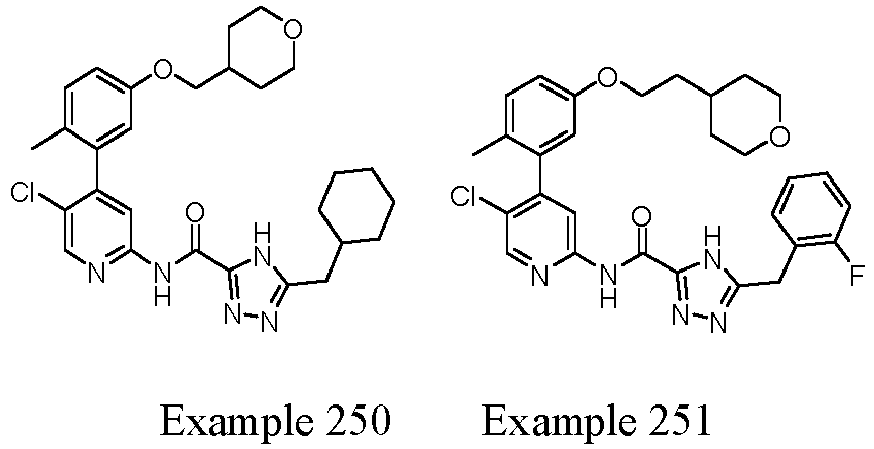
- The preparation was carried out in a similar manner to Example 85, except that in
step 1, 2-(tetrahydro-2H-pyran-4-yl)ethan-1-ol was used in place of 2-(2-methoxyethoxy)ethan-1-ol, in step 3, 5-chloro-4-bromopyridin-2-amine was used in place of 4-bromopyridin-2-amine, and in step 4, ethyl 5-(2-fluorobenzyl)-4H-1,2,4-triazol-3-carboxylate was used in place of ethyl 5-benzyl-4H-1,2,4-triazol-3-carboxylate. 1H NMR (400 MHz, DMSO-d 6) δ 14.66 (s, 1H), 10.12 (s, 1H), 8.54 (s, 1H), 8.05 (s, 1H), 7.44 - 7.29 (m, 2H), 7.28 - 7.15 (m, 3H), 6.96 (dd, J = 8.4, 2.7 Hz, 1H), 6.77 (d, J = 2.7 Hz, 1H), 4.20 (s, 2H), 4.00 (t, J = 6.3 Hz, 2H), 3.87 - 3.75 (m, 2H), 3.31 - 3.21 (m, 2H), 2.00 (s, 3H), 1.76 - 1.55 (m, 5H), 1.27 - 1.11 (m, 2H). MS: 550 [M+H]+. - The preparation was carried out in a similar manner to Example 85, except that in
step 1, 2-(tetrahydro-2H-pyran-4-yl)ethan-1-ol was used in place of 2-(2-methoxyethoxy)ethan-1-ol, in step 3, 5-chloro-4-bromopyridin-2-amine was used in place of 4-bromopyridin-2-amine, and in step 4, ethyl 5-(cyclohexylmethyl)-4H-1,2,4-triazol-3-carboxylate was used in place of ethyl 5-benzyl-4H-1,2,4-triazol-3-carboxylate. 1H NMR (400 MHz, DMSO-d 6) δ 14.39 (s, 1H), 10.06 (s, 1H), 8.55 (s, 1H), 8.08 (s, 1H), 7.26 (d, J = 8.5 Hz, 1H), 6.96 (dd, J = 8.4, 2.7 Hz, 1H), 6.77 (d, J = 2.7 Hz, 1H), 4.01 (t, J = 6.3 Hz, 2H), 3.86 - 3.76 (m, 2H), 3.30 - 3.20 (m, 2H), 2.71 - 2.61 (m, 2H), 2.01 (s, 3H), 1.82 - 1.55 (m, 11H), 1.29 - 1.08 (m, 5H), 1.05 - 0.89 (m, 2H). MS: 538 [M+H]+.

- The preparation was carried out in a similar manner to Example 85, except that in
step 1, 2-(tetrahydro-2H-pyran-4-yl)ethan-1-ol was used in place of 2-(2-methoxyethoxy)ethan-1-ol, in step 3, 5-methyl-4-bromopyridin-2-amine was used in place of 4-bromopyridin-2-amine, and in step 4, ethyl 5-(2-fluorobenzyl)-4H-1,2,4-triazol-3-carboxylate was used in place of ethyl 5-benzyl-4H-1,2,4-triazol-3-carboxylate. 1H NMR (400 MHz, DMSO-d 6) δ 14.59 (s, 1H), 9.76 (s, 1H), 8.30 (s, 1H), 7.87 (s, 1H), 7.46 - 7.28 (m, 2H), 7.28 - 7.12 (m, 3H), 6.91 (dd, J = 8.4, 2.7 Hz, 1H), 6.68 (d, J = 2.7 Hz, 1H), 4.20 (s, 2H), 3.99 (t, J = 6.3 Hz, 2H), 3.86 - 3.75 (m, 2H), 3.30 - 3.19 (m, 2H), 1.99 (s, 3H), 1.94 (s, 3H), 1.72 - 1.54 (m, 5H), 1.25 - 1.17 (m, 2H). MS: 530 [M+H]+. - The preparation was carried out in a similar manner to Example 85, except that in
step 1, 2-(tetrahydro-2H-pyran-4-yl)ethan-1-ol was used in place of 2-(2-methoxyethoxy)ethan-1-ol, in step 3, 5-methyl-4-bromopyridin-2-amine was used in place of 4-bromopyridin-2-amine, and in step 4, ethyl 5-(cyclohexylmethyl)-4H-1,2,4-triazol-3-carboxylate was used in place of ethyl 5-benzyl-4H-1,2,4-triazol-3-carboxylate. 1H NMR (400 MHz, DMSO-d 6) δ 14.34 (s, 1H), 9.74 (s, 1H), 8.31 (s, 1H), 7.91 (s, 1H), 7.24 (d, J = 8.5 Hz, 1H), 6.92 (dd, J = 8.5, 2.7 Hz, 1H), 6.69 (d, J = 2.7 Hz, 1H), 4.00 (t, J = 6.3 Hz, 2H), 3.81 (dd, J = 11.8, 4.3 Hz, 2H), 3.26 (t, J = 11.6 Hz, 2H), 2.66 (d, J = 7.1 Hz, 2H), 2.00 (s, 3H), 1.95 (s, 3H), 1.81 - 1.52 (m, 11H), 1.25 - 1.10 (m, 5H), 1.05 - 0.87 (m, 2H). MS: 518 [M+H]+.
- The preparation was carried out in a similar manner to Example 160, except that in
step 1, 3-chloro-4-(trifluoromethyl)phenol was used in place of 3-bromo-4-methylphenol, and in step 4, ethyl 5-(2-fluorobenzyl)-4H-1,2,4-triazol-3-carboxylate was used in place of ethyl 5-benzyl-4H-1,2,4-triazol-3-carboxylate. 1H NMR (400 MHz, DMSO-d 6) δ 14.66 (s, 1H), 9.94 (s, 1H), 8.43 (d, J = 5.1 Hz, 1H), 8.15 (s, 1H), 7.79 (d, J = 8.9 Hz, 1H), 7.45 - 7.29 (m, 2H), 7.26 - 7.12 (m, 4H), 6.96 (d, J = 2.6 Hz, 1H), 4.31 - 4.14 (m, 3H), 4.09 (t, J = 6.6 Hz, 2H), 1.86 - 1.67 (m, 2H), 1.53 - 1.39 (m, 2H), 1.09 (s, 6H). MS: 558 [M+H]+. - The preparation was carried out in a similar manner to Example 160, except that in
step 1, 3-chloro-4-(trifluoromethyl)phenol was used in place of 3-bromo-4-methylphenol, and in step 4, ethyl 5-(3-fluorobenzyl)-4H-1,2,4-triazol-3-carboxylate was used in place of ethyl 5-benzyl-4H-1,2,4-triazol-3-carboxylate. 1H NMR (400 MHz, DMSO-d 6) δ 14.62 (s, 1H), 10.00 (s, 1H), 8.44 (d, J = 5.1 Hz, 1H), 8.16 (s, 1H), 7.79 (d, J = 8.8 Hz, 1H), 7.44 - 7.33 (m, 1H), 7.24 - 7.05 (m, 5H), 6.97 (d, J = 2.5 Hz, 1H), 4.20 (d, J = 6.3 Hz, 3H), 4.09 (t, J = 6.6 Hz, 2H), 1.84 - 1.69 (m, 2H), 1.55 - 1.42 (m, 2H), 1.09 (s, 6H). MS: 558 [M+H]+.
- The preparation was carried out in a similar manner to Example 160, except that in
step 1, 3-chloro-4-(trifluoromethyl)phenol was used in place of 3-bromo-4-methylphenol, and in step 4, ethyl 5-(4-fluorobenzyl)-4H-1,2,4-triazol-3-carboxylate was used in place of ethyl 5-benzyl-4H-1,2,4-triazol-3-carboxylate. 1H NMR (400 MHz, DMSO-d 6) δ 14.61 (s, 1H), 9.97 (s, 1H), 8.43 (dd, J = 5.1, 0.8 Hz, 1H), 8.16 (s, 1H), 7.79 (d, J = 8.9 Hz, 1H), 7.43 - 7.32 (m, 2H), 7.23 - 7.11 (m, 4H), 6.97 (d, J = 2.5 Hz, 1H), 4.31 - 4.13 (m, 3H), 4.09 (t, J = 6.5 Hz, 2H), 1.86 - 1.69 (m, 2H), 1.54 - 1.41 (m, 2H), 1.09 (s, 6H). MS: 558 [M+H]+. - The preparation was carried out in a similar manner to Example 160, except that in
step 1, 3-chloro-4-(trifluoromethyl)phenol was used in place of 3-bromo-4-methylphenol, and in step 4, ethyl 5-(cyclopentylmethyl)-4H-1,2,4-triazole-3-carboxylate was used in place of ethyl 5-benzyl-4H-1,2,4-triazol-3-carboxylate. 1H NMR (400 MHz, DMSO-d 6) δ 14.39 (s, 1H), 9.90 (s, 1H), 8.44 (d, J = 5.1 Hz, 1H), 8.17 (s, 1H), 7.79 (d, J = 8.9 Hz, 1H), 7.26 - 7.13 (m, 2H), 6.97 (d, J = 2.6 Hz, 1H), 4.20 (s, 1H), 4.09 (t, J = 6.5 Hz, 2H), 2.78 (d, J = 7.4 Hz, 2H), 2.37 - 2.19 (m, 1H), 1.85 - 1.66 (m, 4H), 1.66 - 1.56 (m, 2H), 1.56 - 1.41 (m, 4H), 1.26 - 1.20 (m, 2H), 1.09 (s, 6H). MS: 532 [M+H]+.
- The preparation was carried out in a similar manner to Example 160, except that in
step 1, 3-chloro-4-(trifluoromethyl)phenol was used in place of 3-bromo-4-methylphenol, and in step 4, ethyl 5-(cyclohexylmethyl)-4H-1,2,4-triazol-3-carboxylate was used in place of ethyl 5-benzyl-4H-1,2,4-triazol-3-carboxylate. 1H NMR (400 MHz, DMSO-d 6) δ 14.37 (s, 1H), 9.89 (s, 1H), 8.44 (d, J = 5.1 Hz, 1H), 8.17 (s, 1H), 7.79 (d, J = 8.9 Hz, 1H), 7.28 - 7.12 (m, 2H), 6.97 (d, J = 2.6 Hz, 1H), 4.19 (s, 1H), 4.09 (t, J = 6.6 Hz, 2H), 2.67 (d, J = 7.0 Hz, 2H), 1.82 - 1.55 (m, 8H), 1.52 - 1.43 (m, 2H), 1.27 - 1.13 (m, 3H), 1.10 (s, 6H), 1.05 - 0.88 (m, 2H). MS: 546 [M+H]+. - The preparation was carried out in a similar manner to Example 160, except that in
step 1, 3-chloro-4-(trifluoromethyl)phenol was used in place of 3-bromo-4-methylphenol, and instep 2, ethylmagnesium bromide was used in place of methylmagnesium bromide. 1H NMR (400 MHz, DMSO-d 6) δ 14.61 (s, 1H), 9.95 (s, 1H), 8.51 - 8.36 (m, 1H), 8.15 (s, 1H), 7.79 (d, J = 8.9 Hz, 1H), 7.43 - 7.29 (m, 4H), 7.29 - 7.22 (m, 1H), 7.22 - 7.11 (m, 2H), 6.96 (d, J = 2.5 Hz, 1H), 4.17 (s, 2H), 4.08 (t, J = 6.5 Hz, 2H), 3.89 (s, 1H), 1.78 - 1.63 (m, 2H), 1.49 - 1.38 (m, 2H), 1.34 (q, J = 7.5 Hz, 4H), 0.77 (t, J = 7.5 Hz, 6H). MS: 568 [M+H]+.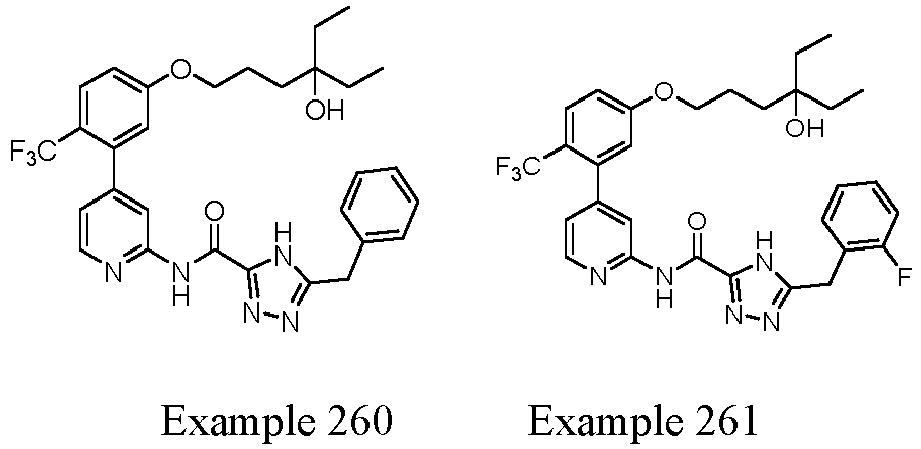
- The preparation was carried out in a similar manner to Example 160, except that in
step 1, 3-chloro-4-(trifluoromethyl)phenol was used in place of 3-bromo-4-methylphenol, instep 2, ethylmagnesium bromide was used in place of methylmagnesium bromide, and in step 4, ethyl 5-(2-fluorobenzyl)-4H-1,2,4-triazol-3-carboxylate was used in place of ethyl 5-benzyl-4H-1,2,4-triazol-3-carboxylate. 1H NMR (400 MHz, DMSO-d 6) δ 14.64 (s, 1H), 9.88 (d, J = 46.2 Hz, 1H), 8.42 (dd, J = 12.1, 5.2 Hz, 1H), 8.15 (s, 1H), 7.80 (dd, J = 8.7, 4.7 Hz, 1H), 7.48 - 7.32 (m, 3H), 7.22 - 7.15 (m, 3H), 6.96 (d, J = 2.6 Hz, 1H), 4.21 (s, 2H), 4.16 - 4.04 (m, 2H), 3.89 (s, 1H), 1.77 - 1.60 (m, 2H), 1.48 - 1.39 (m, 2H), 1.35 (q, J = 7.5 Hz, 4H), 0.78 (t, J = 7.4 Hz, 6H). MS: 586 [M+H]+. - The preparation was carried out in a similar manner to Example 160, except that in
step 1, 3-chloro-4-(trifluoromethyl)phenol was used in place of 3-bromo-4-methylphenol, instep 2, ethylmagnesium bromide was used in place of methylmagnesium bromide, and in step 4, ethyl 5-(cyclopentylmethyl)-4H-1,2,4-triazole-3-carboxylate was used in place of ethyl 5-benzyl-4H-1,2,4-triazol-3-carboxylate. 1H NMR (400 MHz, DMSO-d 6) δ 14.38 (s, 1H), 9.89 (s, 1H), 8.44 (d, J = 5.1 Hz, 1H), 8.17 (s, 1H), 7.79 (d, J = 8.9 Hz, 1H), 7.26 - 7.11 (m, 2H), 6.97 (d, J = 2.5 Hz, 1H), 4.09 (t, J = 6.5 Hz, 2H), 3.89 (s, 1H), 2.78 (d, J = 7.5 Hz, 2H), 2.36 - 2.18 (m, 1H), 1.79 - 1.66 (m, 4H), 1.66 - 1.47 (m, 4H), 1.47 - 1.39 (m, 2H), 1.35 (q, J = 7.5 Hz, 4H), 1.29 - 1.21 (m, 2H), 0.77 (t, J = 7.4 Hz, 6H). MS: 560 [M+H]+.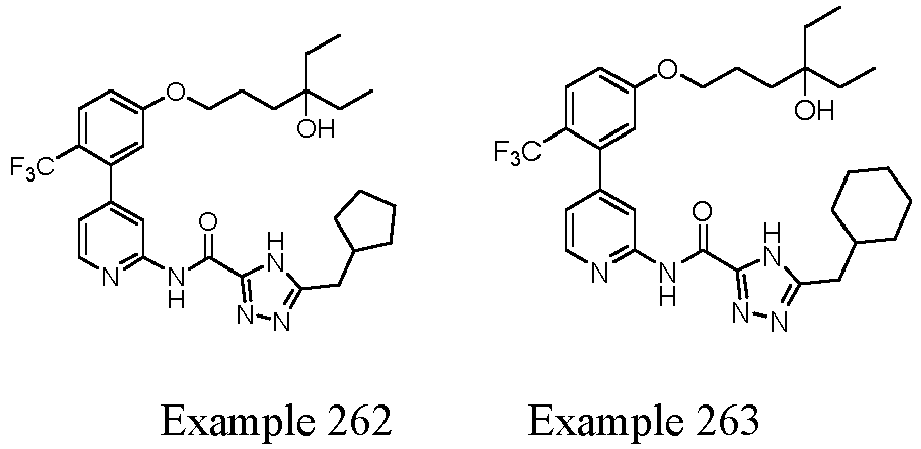
- The preparation was carried out in a similar manner to Example 160, except that in
step 1, 3-chloro-4-(trifluoromethyl)phenol was used in place of 3-bromo-4-methylphenol, instep 2, ethylmagnesium bromide was used in place of methylmagnesium bromide, and in step 4, ethyl 5-(cyclohexylmethyl)-4H-1,2,4-triazol-3-carboxylate was used in place of ethyl 5-benzyl-4H-1,2,4-triazol-3-carboxylate. 1H NMR (400 MHz, DMSO-d 6) δ 14.37 (s, 1H), 9.89 (s, 1H), 8.44 (d, J = 5.1 Hz, 1H), 8.17 (s, 1H), 7.79 (d, J = 8.9 Hz, 1H), 7.28 - 7.13 (m, 2H), 6.97 (d, J = 2.6 Hz, 1H), 4.09 (t, J = 6.5 Hz, 2H), 3.89 (s, 1H), 2.67 (d, J = 7.0 Hz, 2H), 1.83 - 1.56 (m, 8H), 1.51 - 1.39 (m, 2H), 1.35 (q, J = 7.5 Hz, 4H), 1.27 - 1.09 (m, 3H), 1.06 - 0.89 (m, 2H), 0.77 (t, J = 7.5 Hz, 6H). MS: 574 [M+H]+. - The preparation was carried out in a similar manner to Example 160, except that in
step 1, 3-chloro-4-(trifluoromethyl)phenol was used in place of 3-bromo-4-methylphenol, and methyl bromoacetate was used in place of methyl 4-bromobutanoate. 1H NMR (400 MHz, DMSO-d 6) δ 14.66 (s, 1H), 9.96 (s, 1H), 8.43 (d, J = 5.1 Hz, 1H), 8.16 (s, 1H), 7.79 (d, J = 8.8 Hz, 1H), 7.41-7.29 (m, 4H), 7.29 - 7.13 (m, 3H), 6.99 (d, J = 2.6 Hz, 1H), 4.69 (s, 1H), 4.17 (s, 2H), 3.85 (s, 2H), 1.20 (s, 6H). MS: 512 [M+H]+.
- The preparation was carried out in a similar manner to Example 160, except that in
step 1, 3-chloro-4-(trifluoromethyl)phenol was used in place of 3-bromo-4-methylphenol, methyl bromoacetate was used in place of methyl 4-bromobutanoate, and in step 4, ethyl 5-(2-fluorobenzyl)-4H-1,2,4-triazol-3-carboxylate was used in place of ethyl 5-benzyl-4H-1,2,4-triazol-3-carboxylate. 1H NMR (400 MHz, DMSO-d 6) δ 14.69 (s, 1H), 9.95 (s, 1H), 8.43 (d, J = 5.1 Hz, 1H), 8.15 (s, 1H), 7.79 (d, J = 8.9 Hz, 1H), 7.48 - 7.29 (m, 2H), 7.29 - 7.13 (m, 4H), 6.99 (d, J = 2.6 Hz, 1H), 4.68 (s, 1H), 4.20 (s, 2H), 3.85 (s, 2H), 1.20 (s, 6H). MS: 530 [M+H]+. - The preparation was carried out in a similar manner to Example 160, except that in
step 1, 3-chloro-4-(trifluoromethyl)phenol was used in place of 3-bromo-4-methylphenol, methyl bromoacetate was used in place of methyl 4-bromobutanoate, and in step 4, ethyl 5-(cyclopentylmethyl)-4H-1,2,4-triazole-3-carboxylate was used in place of ethyl 5-benzyl-4H-1,2,4-triazol-3-carboxylate. 1H NMR (400 MHz, DMSO-d 6) δ 14.40 (s, 1H), 9.91 (s, 1H), 8.44 (d, J = 5.1 Hz, 1H), 8.18 (s, 1H), 7.79 (d, J = 8.9 Hz, 1H), 7.27 - 7.14 (m, 2H), 7.00 (d, J = 2.6 Hz, 1H), 4.69 (s, 1H), 3.85 (s, 2H), 2.77 (d, J = 7.5 Hz, 2H), 2.34 - 2.20 (m, 1H), 1.79 - 1.66 (m, 2H), 1.66 - 1.56 (m, 2H), 1.56 - 1.43 (m, 2H), 1.23 - 1.14 (m, 8H). MS: 504 [M+H]+.
- The preparation was carried out in a similar manner to Example 160, except that in
step 1, 3-chloro-4-(trifluoromethyl)phenol was used in place of 3-bromo-4-methylphenol, methyl bromoacetate was used in place of methyl 4-bromobutanoate, and in step 4, ethyl 5-(cyclohexylmethyl)-4H-1,2,4-triazol-3-carboxylate was used in place of ethyl 5-benzyl-4H-1,2,4-triazol-3-carboxylate. 1H NMR (400 MHz, DMSO-d 6) δ 14.41 (s, 1H), 9.91 (s, 1H), 8.49-8.38 (m, 1H), 8.17 (d, J = 1.4 Hz, 1H), 7.79 (d, J = 8.9 Hz, 1H), 7.29-7.11 (m, 2H), 7.00 (d, J = 2.6 Hz, 1H), 4.69 (s, 1H), 3.85 (s, 2H), 2.66 (d, J = 7.1 Hz, 2H), 1.85-1.52 (m, 6H), 1.30-1.07 (m, 9H), 1.07-0.90 (m, 2H). MS: 518 [M+H]+. - The preparation was carried out in a similar manner to Example 160, except that in
step 1, 3-chloro-4-(trifluoromethyl)phenol was used in place of 3-bromo-4-methylphenol, and methyl 5-bromopentanoate was used in place of methyl 4-bromobutanoate. 1H NMR (400 MHz, DMSO-d 6) δ 14.62 (s, 1H), 9.95 (s, 1H), 8.43 (dd, J = 5.1, 0.8 Hz, 1H), 8.16 (s, 1H), 7.78 (d, J = 8.9 Hz, 1H), 7.44 - 7.29 (m, 4H), 7.29 - 7.22 (m, 1H), 7.22 - 7.10 (m, 2H), 6.98 (d, J = 2.6 Hz, 1H), 4.17 (s, 2H), 4.14 - 4.00 (m, 3H), 1.71 (t, J = 6.9 Hz, 2H), 1.51 - 1.32 (m, 4H), 1.06 (s, 6H). MS: 554 [M+H]+.
- The preparation was carried out in a similar manner to Example 160, except that in
step 1, 3-chloro-4-(trifluoromethyl)phenol was used in place of 3-bromo-4-methylphenol, methyl 5-bromopentanoate was used in place of methyl 4-bromobutanoate, and in step 4, ethyl 5-(2-fluorobenzyl)-4H-1,2,4-triazol-3-carboxylate was used in place of ethyl 5-benzyl-4H-1,2,4-triazol-3-carboxylate. 1H NMR (400 MHz, DMSO-d 6) δ 14.65 (s, 1H), 9.93 (s, 1H), 8.43 (d, J = 5.1 Hz, 1H), 8.15 (s, 1H), 7.78 (d, J = 8.9 Hz, 1H), 7.46 - 7.28 (m, 2H), 7.28 - 7.12 (m, 4H), 6.97 (d, J = 2.5 Hz, 1H), 4.21 (s, 2H), 4.15 - 4.02 (m, 3H), 1.71 (t, J = 7.0 Hz, 2H), 1.52 - 1.34 (m, 4H), 1.06 (s, 6H). MS: 572 [M+H]+. - The preparation was carried out in a similar manner to Example 160, except that in
step 1, 3-chloro-4-(trifluoromethyl)phenol was used in place of 3-bromo-4-methylphenol, methyl 5-bromopentanoate was used in place of methyl 4-bromobutanoate, and in step 4, ethyl 5-(cyclopentylmethyl)-4H-1,2,4-triazole-3-carboxylate was used in place of ethyl 5-benzyl-4H-1,2,4-triazol-3-carboxylate. 1H NMR (400 MHz, DMSO-d 6) δ 14.41 (s, 1H), 9.90 (s, 1H), 8.44 (dd, J = 5.1, 0.8 Hz, 1H), 8.17 (s, 1H), 7.79 (d, J = 8.9 Hz, 1H), 7.27 - 7.13 (m, 2H), 6.98 (d, J = 2.5 Hz, 1H), 4.17 - 4.01 (m, 3H), 2.78 (d, J = 7.4 Hz, 2H), 2.35 - 2.19 (m, 1H), 1.81 - 1.66 (m, 4H), 1.66 - 1.33 (m, 8H), 1.29 - 1.15 (m, 2H), 1.06 (s, 6H). MS: 546 [M+H]+.
- The preparation was carried out in a similar manner to Example 160, except that in
step 1, 3-chloro-4-(trifluoromethyl)phenol was used in place of 3-bromo-4-methylphenol, methyl 5-bromopentanoate was used in place of methyl 4-bromobutanoate, and in step 4, ethyl 5-(cyclohexylmethyl)-4H-1,2,4-triazol-3-carboxylate was used in place of ethyl 5-benzyl-4H-1,2,4-triazol-3-carboxylate. 1H NMR (400 MHz, DMSO-d 6) δ 14.38 (s, 1H), 9.90 (s, 1H), 8.43 (dd, J = 5.1, 0.8 Hz, 1H), 8.17 (s, 1H), 7.79 (d, J = 8.9 Hz, 1H), 7.27 - 7.12 (m, 2H), 6.98 (d, J = 2.5 Hz, 1H), 4.17 - 4.01 (m, 3H), 2.66 (d, J = 7.1 Hz, 2H), 1.86 - 1.55 (m, 8H), 1.51 - 1.33 (m, 4H), 1.28 - 1.09 (m, 3H), 1.06 (s, 6H), 1.04 - 0.89 (m, 2H). MS: 560 [M+H]+. - The preparation was carried out in a similar manner to Example 92, except that in
step 1, 4-bromo-1-butanol was used in place of iodomethane, and 3-chloro-4-(trifluoromethyl)phenol was used in place of 2-bromo-3-methylphenol. 1H NMR (400 MHz, DMSO-d 6) δ 14.59 (s, 1H), 9.95 (s, 1H), 8.43 (d, J = 5.1 Hz, 1H), 8.15 (s, 1H), 7.79 (d, J = 8.9 Hz, 1H), 7.39 - 7.29 (m, 4H), 7.29 - 7.22 (m, 1H), 7.22 - 7.14 (m, 2H), 6.98 (d, J = 2.6 Hz, 1H), 4.45 (t, J = 5.1 Hz, 1H), 4.17 (s, 2H), 4.11 (t, J = 6.5 Hz, 2H), 3.48 - 3.41 (m, 2H), 1.82 - 1.69 (m, 2H), 1.61 - 1.49 (m, 2H). MS: 512 [M+H]+.
- The preparation was carried out in a similar manner to Example 92, except that in
step 1, 4-bromo-1-butanol was used in place of iodomethane, 3-chloro-4-(trifluoromethyl)phenol was used in place of 2-bromo-3-methylphenol, and in step 3, ethyl 5-(2-fluorobenzyl)-4H-1,2,4-triazol-3-carboxylate was used in place of ethyl 5-benzyl-4H-1,2,4-triazol-3-carboxylate. 1H NMR (400 MHz, DMSO-d 6) δ 14.63 (s, 1H), 9.93 (s, 1H), 8.43 (d, J = 5.1 Hz, 1H), 8.15 (s, 1H), 7.79 (d, J = 8.9 Hz, 1H), 7.44-7.29 (m, 2H), 7.26-7.14 (m, 4H), 6.97 (d, J = 2.5 Hz, 1H), 4.45 (t, J = 5.1 Hz, 1H), 4.21 (s, 2H), 4.10 (t, J = 6.5 Hz, 2H), 3.48-3.40 (m, 2H), 1.81-1.70 (m, 2H), 1.61-1.50 (m, 2H). MS: 530 [M+H]+. - The preparation was carried out in a similar manner to Example 92, except that in
step 1, 4-bromo-1-butanol was used in place of iodomethane, 3-chloro-4-(trifluoromethyl)phenol was used in place of 2-bromo-3-methylphenol, and in step 3, ethyl 5-(cyclopentylmethyl)-4H-1,2,4-triazol-3-carboxylate was used in place of ethyl 5-benzyl-4H-1,2,4-triazol-3-carboxylate. 1H NMR (400 MHz, DMSO-d 6) δ 14.39 (s, 1H), 9.90 (s, 1H), 8.44 (d, J = 5.1 Hz, 1H), 8.17 (s, 1H), 7.79 (d, J = 8.9 Hz, 1H), 7.23 - 7.15 (m, 2H), 6.98 (d, J = 2.6 Hz, 1H), 4.45 (t, J = 5.2 Hz, 1H), 4.11 (t, J = 6.6 Hz, 2H), 3.49 - 3.39 (m, 2H), 2.77 (d, J = 7.5 Hz, 2H), 2.37 - 2.19 (m, 1H), 1.83 - 1.67 (m, 4H), 1.67 - 1.45 (m, 6H), 1.30 - 1.14 (m, 2H). MS: 504 [M+H]+.
- The preparation was carried out in a similar manner to Example 92, except that in
step 1, 5-bromo-1-pentanol was used in place of iodomethane, and 3-chloro-4-(trifluoromethyl)phenol was used in place of 2-bromo-3-methylphenol. 1H NMR (400 MHz, DMSO-d 6) δ 14.61 (s, 1H), 9.95 (s, 1H), 8.43 (d, J = 5.1 Hz, 1H), 8.15 (s, 1H), 7.79 (d, J = 8.9 Hz, 1H), 7.44 - 7.30 (m, 4H), 7.30 - 7.22 (m, 1H), 7.22 - 7.10 (m, 2H), 6.98 (d, J = 2.6 Hz, 1H), 4.37 (t, J = 5.1 Hz, 1H), 4.17 (s, 2H), 4.09 (t, J = 6.5 Hz, 2H), 3.42 - 3.38 (m, 2H), 1.80 - 1.68 (m, 2H), 1.54 - 1.36 (m, 4H). MS: 526 [M+H]+. - The preparation was carried out in a similar manner to Example 92, except that in
step 1, 5-bromo-1-pentanol was used in place of iodomethane, 3-chloro-4-(trifluoromethyl)phenol was used in place of 2-bromo-3-methylphenol, and in step 3, ethyl 5-(2-fluorobenzyl)-4H-1,2,4-triazol-3-carboxylate was used in place of ethyl 5-benzyl-4H-1,2,4-triazol-3-carboxylate. 1H NMR (400 MHz, DMSO-d 6) δ 14.67 (s, 1H), 9.94 (s, 1H), 8.43 (d, J = 5.0 Hz, 1H), 8.15 (s, 1H), 7.78 (d, J = 8.8 Hz, 1H), 7.47-7.29 (m, 2H), 7.29-7.12 (m, 4H), 6.97 (d, J = 2.6 Hz, 1H), 4.38 (d, J = 5.5 Hz, 1H), 4.20 (s, 2H), 4.09 (t, J = 6.5 Hz, 2H), 3.42-3.38 (m, 2H), 1.81-1.65 (m, 2H), 1.55-1.34 (m, 4H). MS: 544 [M+H]+.
- The preparation was carried out in a similar manner to Example 92, except that in
step 1, 5-bromo-1-pentanol was used in place of iodomethane, 3-chloro-4-(trifluoromethyl)phenol was used in place of 2-bromo-3-methylphenol, and in step 3, ethyl 5-(cyclopentylmethyl)-4H-1,2,4-triazol-3-carboxylate was used in place of ethyl 5-benzyl-4H-1,2,4-triazol-3-carboxylate. 1H NMR (400 MHz, DMSO-d 6) δ 14.39 (s, 1H), 9.90 (s, 1H), 8.44 (d, J = 5.1 Hz, 1H), 8.17 (s, 1H), 7.79 (d, J = 8.9 Hz, 1H), 7.28 - 7.12 (m, 2H), 6.98 (d, J = 2.6 Hz, 1H), 4.37 (t, J = 5.1 Hz, 1H), 4.09 (t, J = 6.5 Hz, 2H), 3.45 - 3.36 (m, 2H), 2.78 (d, J = 7.5 Hz, 2H), 2.36 - 2.21 (m, 1H), 1.81 - 1.66 (m, 4H), 1.66 - 1.38 (m, 8H), 1.28 - 1.15 (m, 2H). MS: 518 [M+H]+. - The preparation was carried out in a similar manner to Example 92, except that in
step 1, 5-bromo-1-pentanol was used in place of iodomethane, 3-chloro-4-(trifluoromethyl)phenol was used in place of 2-bromo-3-methylphenol, and in step 3, ethyl 5-(cyclohexylmethyl)-4H-1,2,4-triazol-3-carboxylate was used in place of ethyl 5-benzyl-4H-1,2,4-triazol-3-carboxylate. 1H NMR (400 MHz, DMSO-d 6) δ 14.36 (s, 1H), 9.89 (s, 1H), 8.44 (dd, J = 5.1, 0.8 Hz, 1H), 8.17 (s, 1H), 7.79 (d, J = 8.9 Hz, 1H), 7.28 - 7.12 (m, 2H), 6.98 (d, J = 2.6 Hz, 1H), 4.37 (t, J = 5.1 Hz, 1H), 4.09 (t, J = 6.5 Hz, 2H), 3.45 - 3.36 (m, 2H), 2.67 (d, J = 7.0 Hz, 2H), 1.83 - 1.53 (m, 8H), 1.53 - 1.36 (m, 4H), 1.26 - 1.15 (m, 3H), 1.03 - 0.90 (m, 2H). MS: 532 [M+H]+.
- The preparation was carried out in a similar manner to Example 92, except that in
step 1, 1-bromo-2-methoxyethane was used in place of iodomethane, and 3-chloro-4-(trifluoromethyl)phenol was used in place of 2-bromo-3-methylphenol. 1H NMR (400 MHz, DMSO-d 6) δ 14.62 (s, 1H), 9.96 (s, 1H), 8.44 (dd, J = 5.1, 0.8 Hz, 1H), 8.16 (d, J = 1.4 Hz, 1H), 7.79 (d, J = 8.9 Hz, 1H), 7.48 - 7.29 (m, 4H), 7.29 - 7.13 (m, 3H), 7.01 (d, J = 2.6 Hz, 1H), 4.28 - 4.20 (m, 2H), 4.17 (s, 2H), 3.73 - 3.62 (m, 2H), 3.30 (s, 3H). MS: 498 [M+H]+. - The preparation was carried out in a similar manner to Example 92, except that in
step 1, 1-bromo-2-methoxyethane was used in place of iodomethane, 3-chloro-4-(trifluoromethyl)phenol was used in place of 2-bromo-3-methylphenol, and in step 3, ethyl 5-(2-fluorobenzyl)-4H-1,2,4-triazol-3-carboxylate was used in place of ethyl 5-benzyl-4H-1,2,4-triazol-3-carboxylate. 1H NMR (400 MHz, DMSO-d 6) δ 14.68 (s, 1H), 9.95 (s, 1H), 8.43 (dd, J = 5.1, 0.8 Hz, 1H), 8.15 (s, 1H), 7.79 (d, J = 8.9 Hz, 1H), 7.46 - 7.28 (m, 2H), 7.28 - 7.07 (m, 4H), 7.00 (d, J = 2.5 Hz, 1H), 4.29 - 4.15 (m, 4H), 3.70 - 3.62 (m, 2H), 3.30 (s, 3H). MS: 516 [M+H]+.
- The preparation was carried out in a similar manner to Example 92, except that in
step 1, 1-bromo-2-methoxyethane was used in place of iodomethane, 3-chloro-4-(trifluoromethyl)phenol was used in place of 2-bromo-3-methylphenol, and in step 3, ethyl 5-(cyclopentylmethyl)-4H-1,2,4-triazol-3-carboxylate was used in place of ethyl 5-benzyl-4H-1,2,4-triazol-3-carboxylate. 1H NMR (400 MHz, DMSO-d 6) δ 14.42 (s, 1H), 9.91 (s, 1H), 8.44 (d, J = 5.1 Hz, 1H), 8.18 (s, 1H), 7.80 (d, J = 8.9 Hz, 1H), 7.32 - 7.12 (m, 2H), 7.01 (d, J = 2.6 Hz, 1H), 4.31 - 4.17 (m, 2H), 3.72 - 3.62 (m, 2H), 3.30 (s, 3H), 2.77 (d, J = 7.4 Hz, 2H), 2.37 - 2.18 (m, 1H), 1.79 - 1.66 (m, 2H), 1.66 - 1.44 (m, 4H), 1.29 - 1.12 (m, 2H). MS: 490 [M+H]+. - The preparation was carried out in a similar manner to Example 92, except that in step 1, 1-bromo-2-methoxyethane was used in place of iodomethane, 3-chloro-4-(trifluoromethyl)phenol was used in place of 2-bromo-3-methylphenol, and in step 3, ethyl 5-(cyclohexylmethyl)-4H-1,2,4-triazol-3-carboxylate was used in place of ethyl 5-benzyl-4H-1,2,4-triazol-3-carboxylate. 1H NMR (400 MHz, DMSO-d 6) δ 14.38 (s, 1H), 9.90 (s, 1H), 8.52 - 8.39 (m, 1H), 8.18 (s, 1H), 7.80 (d, J = 8.9 Hz, 1H), 7.30-7.14 (m, 2H), 7.01 (d, J = 2.6 Hz, 1H), 4.31 - 4.17 (m, 2H), 3.73 - 3.60 (m, 2H), 3.30 (s, 3H), 2.67 (d, J = 7.0 Hz, 2H), 1.83 - 1.54 (m, 6H), 1.27 - 1.12 (m, 3H), 1.04 - 0.91 (m, 2H). MS: 504 [M+H]+.

- The preparation was carried out in a similar manner to Example 92, except that in step 1, 1-bromo-2-ethoxyethane was used in place of iodomethane, and 3-chloro-4-(trifluoromethyl)phenol was used in place of 2-bromo-3-methylphenol. 1H NMR (400 MHz, DMSO-d 6) δ 14.61 (s, 1H), 9.96 (s, 1H), 8.43 (d, J = 5.1 Hz, 1H), 8.16 (s, 1H), 7.79 (d, J = 8.9 Hz, 1H), 7.43 - 7.09 (m, 7H), 7.01 (d, J = 2.6 Hz, 1H), 4.28 - 4.20 (m, 2H), 4.17 (s, 2H), 3.75 - 3.66 (m, 2H), 3.49 (q, J = 7.0 Hz, 2H), 1.11 (t, J = 7.0 Hz, 3H). MS: 512 [M+H]+.
- The preparation was carried out in a similar manner to Example 92, except that in step 1, 1-bromo-2-ethoxyethane was used in place of iodomethane, 3-chloro-4-(trifluoromethyl)phenol was used in place of 2-bromo-3-methylphenol, and in step 3, ethyl 5-(2-fluorobenzyl)-4H-1,2,4-triazol-3-carboxylate was used in place of ethyl 5-benzyl-4H-1,2,4-triazol-3-carboxylate. 1H NMR (400 MHz, DMSO-d 6) δ 14.67 (s, 1H), 9.94 (s, 1H), 8.48-8.37 (m, 1H), 8.15 (s, 1H), 7.79 (d, J = 8.8 Hz, 1H), 7.45-7.29 (m, 2H), 7.26-7.14 (m, 4H), 7.01 (d, J = 2.6 Hz, 1H), 4.30 - 4.14 (m, 4H), 3.74-3.64 (m, 2H), 3.49 (q, J = 7.0 Hz, 2H), 1.11 (t, J = 7.0 Hz, 3H). MS: 530 [M+H]+.

- The preparation was carried out in a similar manner to Example 92, except that in step 1, 1-bromo-2-ethoxyethane was used in place of iodomethane, 3-chloro-4-(trifluoromethyl)phenol was used in place of 2-bromo-3-methylphenol, and in step 3, ethyl 5-(cyclopentylmethyl)-4H-1,2,4-triazol-3-carboxylate was used in place of ethyl 5-benzyl-4H-1,2,4-triazol-3-carboxylate. 1H NMR (400 MHz, DMSO-d 6) δ 14.39 (s, 1H), 9.90 (s, 1H), 8.44 (d, J = 5.1 Hz, 1H), 8.18 (s, 1H), 7.80 (d, J = 8.9 Hz, 1H), 7.29 - 7.13 (m, 2H), 7.02 (d, J = 2.6 Hz, 1H), 4.29 - 4.17 (m, 2H), 3.76 - 3.65 (m, 2H), 3.49 (q, J = 7.0 Hz, 2H), 2.78 (d, J = 7.5 Hz, 2H), 2.35 - 2.18 (m, 1H), 1.79 - 1.67 (m, 2H), 1.67 - 1.44 (m, 4H), 1.30 - 1.16 (m, 2H), 1.11 (t, J = 7.0 Hz, 3H). MS: 504 [M+H]+.
- The preparation was carried out in a similar manner to Example 92, except that in step 1, 1-bromo-2-ethoxyethane was used in place of iodomethane, 3-chloro-4-(trifluoromethyl)phenol was used in place of 2-bromo-3-methylphenol, and in step 3, ethyl 5-(cyclohexylmethyl)-4H-1,2,4-triazol-3-carboxylate was used in place of ethyl 5-benzyl-4H-1,2,4-triazol-3-carboxylate. 1H NMR (400 MHz, DMSO-d 6) δ 14.40 (s, 1H), 9.90 (s, 1H), 8.44 (d, J = 5.1 Hz, 1H), 8.18 (s, 1H), 7.80 (d, J = 8.9 Hz, 1H), 7.28 - 7.13 (m, 2H), 7.02 (d, J = 2.6 Hz, 1H), 4.28 - 4.19 (m, 2H), 3.76 - 3.66 (m, 2H), 3.49 (q, J = 7.0 Hz, 2H), 2.66 (d, J = 7.0 Hz, 2H), 1.80 - 1.57 (m, 6H), 1.25 - 1.14 (m, 3H), 1.11 (t, J = 7.0 Hz, 3H), 1.06 - 0.91 (m, 2H). MS: 518 [M+H]+.

- The preparation was carried out in a similar manner to Example 92, except that in step 1, 1-bromo-2-isopropoxyethane was used in place of iodomethane, and 3-chloro-4-(trifluoromethyl)phenol was used in place of 2-bromo-3-methylphenol. 1H NMR (400 MHz, DMSO-d 6) δ 14.58 (s, 1H), 9.94 (s, 1H), 8.43 (dd, J = 5.0, 0.8 Hz, 1H), 8.16 (s, 1H), 7.79 (d, J = 8.9 Hz, 1H), 7.41-7.11 (m, 7H), 7.01 (d, J = 2.6 Hz, 1H), 4.25-4.12 (m, 4H), 3.74-3.67 (m, 2H), 3.62 (p, J = 6.1 Hz, 1H), 1.09 (d, J = 6.1 Hz, 6H). MS: 526 [M+H]+.
- The preparation was carried out in a similar manner to Example 92, except that in step 1, 1-bromo-2-isopropoxyethane was used in place of iodomethane, 3-chloro-4-(trifluoromethyl)phenol was used in place of 2-bromo-3-methylphenol, and in step 3, ethyl 5-(2-fluorobenzyl)-4H-1,2,4-triazol-3-carboxylate was used in place of ethyl 5-benzyl-4H-1,2,4-triazol-3-carboxylate. 1H NMR (400 MHz, DMSO-d 6) δ 14.68 (s, 1H), 9.94 (s, 1H), 8.43 (d, J = 5.1 Hz, 1H), 8.15 (s, 1H), 7.79 (d, J = 8.9 Hz, 1H), 7.48 - 7.28 (m, 2H), 7.28 - 7.11 (m, 4H), 7.01 (d, J = 2.6 Hz, 1H), 4.29 - 4.13 (m, 4H), 3.76 - 3.66 (m, 2H), 3.61 (p, J = 6.1 Hz, 1H), 1.09 (d, J = 6.1 Hz, 6H). MS: 544 [M+H]+.

- The preparation was carried out in a similar manner to Example 92, except that in step 1, 1-bromo-2-isopropoxyethane was used in place of iodomethane, 3-chloro-4-(trifluoromethyl)phenol was used in place of 2-bromo-3-methylphenol, and in step 3, ethyl 5-(cyclopentylmethyl)-4H-1,2,4-triazol-3-carboxylate was used in place of ethyl 5-benzyl-4H-1,2,4-triazol-3-carboxylate. 1H NMR (400 MHz, DMSO-d 6) δ 14.33 (s, 1H), 9.90 (s, 1H), 8.44 (d, J = 5.1 Hz, 1H), 8.18 (s, 1H), 7.79 (d, J = 8.9 Hz, 1H), 7.28 - 7.11 (m, 2H), 7.01 (d, J = 2.5 Hz, 1H), 4.26 - 4.15 (m, 2H), 3.75 - 3.67 (m, 2H), 3.62 (p, J = 6.1 Hz, 1H), 2.78 (d, J = 7.5 Hz, 2H), 2.36 - 2.21 (m, 1H), 1.78 - 1.66 (m, 2H), 1.66 - 1.44 (m, 4H), 1.24 - 1.16 (m, 2H), 1.09 (d, J = 6.1 Hz, 6H). MS: 518 [M+H]+.
- The preparation was carried out in a similar manner to Example 92, except that in step 1, 1-bromo-2-isopropoxyethane was used in place of iodomethane, 3-chloro-4-(trifluoromethyl)phenol was used in place of 2-bromo-3-methylphenol, and in step 3, ethyl 5-(cyclohexylmethyl)-4H-1,2,4-triazol-3-carboxylate was used in place of ethyl 5-benzyl-4H-1,2,4-triazol-3-carboxylate. 1H NMR (400 MHz, DMSO-d 6) δ 14.36 (s, 1H), 9.88 (s, 1H), 8.44 (d, J = 5.1 Hz, 1H), 8.17 (s, 1H), 7.79 (d, J = 8.9 Hz, 1H), 7.28 - 7.14 (m, 2H), 7.01 (d, J = 2.6 Hz, 1H), 4.25 - 4.16 (m, 2H), 3.75 - 3.67 (m, 2H), 3.62 (p, J = 6.1 Hz, 1H), 2.67 (d, J = 6.9 Hz, 2H), 1.84 - 1.54 (m, 6H), 1.24 - 1.13 (m, 3H), 1.09 (d, J = 6.1 Hz, 6H), 1.05 - 0.91 (m, 2H). MS: 532 [M+H]+.

- The preparation was carried out in a similar manner to Example 64, except that in step 1, 3-chloro-4-(trifluoromethyl)phenol was used in place of 2-bromo-3-methylphenol. 1H NMR (400 MHz, DMSO-d 6) δ 14.53 (s, 1H), 9.95 (s, 1H), 8.43 (d, J = 5.0 Hz, 1H), 8.16 (s, 1H), 7.79 (d, J = 8.9 Hz, 1H), 7.40 - 7.11 (m, 7H), 7.00 (d, J = 2.5 Hz, 1H), 4.22 - 4.10 (m, 4H), 3.69 - 3.59 (m, 2H), 1.14 (s, 9H). MS: 540 [M+H]+.
- The preparation was carried out in a similar manner to Example 64, except that in step 1, 3-chloro-4-(trifluoromethyl)phenol was used in place of 2-bromo-3-methylphenol, and in step 3, ethyl 5-(2-fluorobenzyl)-4H-1,2,4-triazol-3-carboxylate was used in place of ethyl 5-benzyl-4H-1,2,4-triazol-3-carboxylate. 1H NMR (400 MHz, DMSO-d 6) δ 14.67 (s, 1H), 9.94 (s, 1H), 8.43 (d, J = 5.2 Hz, 1H), 8.15 (s, 1H), 7.78 (d, J = 8.8 Hz, 1H), 7.51 - 7.27 (m, 2H), 7.27 -7.10 (m, 4H), 7.00 (d, J = 2.6 Hz, 1H), 4.28 - 4.09 (m, 4H), 3.65 (t, J = 4.8 Hz, 2H), 1.14 (s, 9H). MS: 558 [M+H]+.

- The preparation was carried out in a similar manner to Example 64, except that in step 1, 3-chloro-4-(trifluoromethyl)phenol was used in place of 2-bromo-3-methylphenol, and in step 3, ethyl 5-(cyclopentylmethyl)-4H-1,2,4-triazol-3-carboxylate was used in place of ethyl 5-benzyl-4H-1,2,4-triazol-3-carboxylate. 1H NMR (400 MHz, DMSO-d 6) δ 14.37 (s, 1H), 9.88 (s, 1H), 8.44 (d, J = 5.1 Hz, 1H), 8.18 (s, 1H), 7.79 (d, J = 8.9 Hz, 1H), 7.28-7.11 (m, 2H), 7.01 (d, J = 2.6 Hz, 1H), 4.24-4.11 (m, 2H), 3.71-3.60 (m, 2H), 2.78 (d, J = 7.5 Hz, 2H), 2.28 (p, J = 7.6 Hz, 1H), 1.79-1.66 (m, 2H), 1.66-1.43 (m, 4H), 1.25-1.20 (m, 2H), 1.15 (s, 9H). MS: 532 [M+H]+.
- The preparation was carried out in a similar manner to Example 64, except that in step 1, 3-chloro-4-(trifluoromethyl)phenol was used in place of 2-bromo-3-methylphenol, and in step 3, ethyl 5-(cyclohexylmethyl)-4H-1,2,4-triazol-3-carboxylate was used in place of ethyl 5-benzyl-4H-1,2,4-triazol-3-carboxylate. 1H NMR (400 MHz, DMSO-d 6) δ 14.32 (s, 1H), 9.89 (s, 1H), 8.44 (d, J = 5.1 Hz, 1H), 8.17 (s, 1H), 7.79 (d, J = 8.9 Hz, 1H), 7.29 - 7.12 (m, 2H), 7.01 (d, J = 2.6 Hz, 1H), 4.24 - 4.13 (m, 2H), 3.66 (dd, J = 5.5, 4.0 Hz, 2H), 2.67 (d, J = 7.0 Hz, 2H), 1.83 - 1.56 (m, 6H), 1.23 - 1.16 (m, 3H), 1.15 (s, 9H), 1.05 - 0.93 (m, 2H). MS: 546 [M+H]+.

- The preparation was carried out in a similar manner to Example 92, except that in step 1, 1-bromo-3-methoxypropane was used in place of iodomethane, and 3-chloro-4-(trifluoromethyl)phenol was used in place of 2-bromo-3-methylphenol. 1H NMR (400 MHz, DMSO-d 6) δ 14.61 (s, 1H), 9.96 (s, 1H), 8.43 (d, J = 5.1 Hz, 1H), 8.16 (s, 1H), 7.79 (d, J = 8.9 Hz, 1H), 7.42 - 7.29 (m, 4H), 7.29 - 7.23 (m, 1H), 7.23 - 7.12 (m, 2H), 6.98 (d, J = 2.6 Hz, 1H), 4.22 - 4.08 (m, 4H), 3.46 (t, J = 6.2 Hz, 2H), 3.23 (s, 3H), 2.02 - 1.90 (m, 2H). MS: 512 [M+H]+.
- The preparation was carried out in a similar manner to Example 92, except that in step 1, 1-bromo-3-methoxypropane was used in place of iodomethane, 3-chloro-4-(trifluoromethyl)phenol was used in place of 2-bromo-3-methylphenol, and in step 3, ethyl 5-(2-fluorobenzyl)-4H-1,2,4-triazol-3-carboxylate was used in place of ethyl 5-benzyl-4H-1,2,4-triazol-3-carboxylate. 1H NMR (400 MHz, DMSO-d 6) δ 14.67 (s, 1H), 9.94 (s, 1H), 8.43 (dd, J = 5.1, 0.8 Hz, 1H), 8.15 (s, 1H), 7.79 (d, J = 8.9 Hz, 1H), 7.46 - 7.28 (m, 2H), 7.28 - 7.12 (m, 4H), 6.98 (d, J = 2.6 Hz, 1H), 4.21 (s, 2H), 4.14 (t, J = 6.4 Hz, 2H), 3.46 (t, J = 6.2 Hz, 2H), 3.23 (s, 3H), 2.01 - 1.91 (m, 2H). MS: 530 [M+H]+.
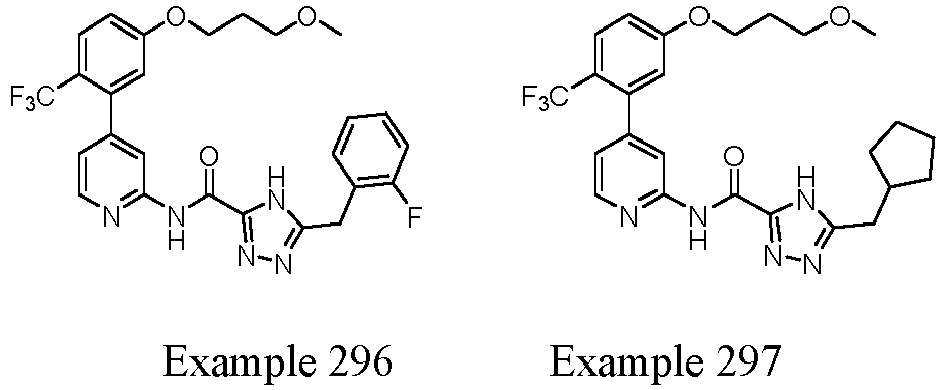
- The preparation was carried out in a similar manner to Example 92, except that in step 1, 1-bromo-3-methoxypropane was used in place of iodomethane, 3-chloro-4-(trifluoromethyl)phenol was used in place of 2-bromo-3-methylphenol, and in step 3, ethyl 5-(cyclopentylmethyl)-4H-1,2,4-triazol-3-carboxylate was used in place of ethyl 5-benzyl-4H-1,2,4-triazol-3-carboxylate. 1H NMR (400 MHz, DMSO-d 6) δ 14.40 (s, 1H), 9.91 (s, 1H), 8.44 (dd, J = 5.1, 0.8 Hz, 1H), 8.23 - 8.13 (m, 1H), 7.79 (d, J = 8.9 Hz, 1H), 7.28 - 7.12 (m, 2H), 6.99 (d, J = 2.5 Hz, 1H), 4.15 (t, J = 6.4 Hz, 2H), 3.46 (t, J = 6.2 Hz, 2H), 3.24 (s, 3H), 2.77 (d, J = 7.5 Hz, 2H), 2.36 - 2.19 (m, 1H), 2.04 - 1.91 (m, 2H), 1.78 - 1.66 (m, 2H), 1.66 - 1.44 (m, 4H), 1.29 - 1.14 (m, 2H). MS: 504 [M+H]+.
- The preparation was carried out in a similar manner to Example 92, except that in step 1, 1-bromo-3-methoxypropane was used in place of iodomethane, 3-chloro-4-(trifluoromethyl)phenol was used in place of 2-bromo-3-methylphenol, and in step 3, ethyl 5-(cyclohexylmethyl)-4H-1,2,4-triazol-3-carboxylate was used in place of ethyl 5-benzyl-4H-1,2,4-triazol-3-carboxylate. 1H NMR (400 MHz, DMSO-d 6) δ 14.38 (s, 1H), 9.90 (s, 1H), 8.49 - 8.39 (m, 1H), 8.17 (s, 1H), 7.79 (d, J = 8.8 Hz, 1H), 7.29 - 7.13 (m, 2H), 6.99 (d, J = 2.6 Hz, 1H), 4.15 (t, J = 6.4 Hz, 2H), 3.47 (t, J = 6.2 Hz, 2H), 3.24 (s, 3H), 2.67 (d, J = 7.0 Hz, 2H), 2.03 - 1.90 (m, 2H), 1.81 - 1.57 (m, 6H), 1.24 - 1.10 (m, 3H), 1.03 - 0.89 (m, 2H). MS: 518 [M+H]+.

- The preparation was carried out in a similar manner to Example 64, except that in step 1, (tetrahydro-2H-pyran-4-yl)methanol was used in place of 2-(tert-butoxy)ethan-1-ol, and 3-chloro-4-(trifluoromethyl)phenol was used in place of 2-bromo-3-methylphenol. 1H NMR (400 MHz, DMSO-d 6) δ 14.56 (s, 1H), 9.95 (s, 1H), 8.43 (d, J = 5.1 Hz, 1H), 8.16 (s, 1H), 7.79 (d, J = 8.9 Hz, 1H), 7.41 - 7.29 (m, 4H), 7.29 - 7.13 (m, 3H), 6.99 (d, J = 2.6 Hz, 1H), 4.17 (s, 2H), 3.97 (d, J = 6.5 Hz, 2H), 3.92 - 3.79 (m, 2H), 2.10 - 1.93 (m, 1H), 1.72 - 1.60 (m, 2H), 1.42 - 1.18 (m, 4H). MS: 538 [M+H]+.
- The preparation was carried out in a similar manner to Example 64, except that in step 1, (tetrahydro-2H-pyran-4-yl)methanol was used in place of 2-(tert-butoxy)ethan-1-ol, 3-chloro-4-(trifluoromethyl)phenol was used in place of 2-bromo-3-methylphenol, and in step 3, ethyl 5-(2-fluorobenzyl)-4H-1,2,4-triazol-3-carboxylate was used in place of ethyl 5-benzyl-4H-1,2,4-triazol-3-carboxylate. 1H NMR (400 MHz, DMSO-d 6) δ 14.66 (s, 1H), 9.94 (s, 1H), 8.43 (d, J = 5.1 Hz, 1H), 8.15 (s, 1H), 7.79 (d, J = 8.9 Hz, 1H), 7.45 - 7.29 (m, 2H), 7.26 - 7.13 (m, 4H), 6.99 (d, J = 2.6 Hz, 1H), 4.21 (s, 2H), 3.96 (d, J = 6.5 Hz, 2H), 3.92 - 3.80 (m, 2H), 2.09 - 1.91 (m, 1H), 1.72 - 1.62 (m, 2H), 1.41 - 1.16 (m, 4H). MS: 556 [M+H]+.

- The preparation was carried out in a similar manner to Example 64, except that in step 1, (tetrahydro-2H-pyran-4-yl)methanol was used in place of 2-(tert-butoxy)ethan-1-ol, 3-chloro-4-(trifluoromethyl)phenol was used in place of 2-bromo-3-methylphenol, and in step 3, ethyl 5-(3-fluorobenzyl)-4H-1,2,4-triazol-3-carboxylate was used in place of ethyl 5-benzyl-4H-1,2,4-triazol-3-carboxylate. 1H NMR (400 MHz, DMSO-d 6) δ 14.64 (s, 1H), 9.99 (s, 1H), 8.43 (d, J = 5.1 Hz, 1H), 8.16 (s, 1H), 7.79 (d, J = 8.9 Hz, 1H), 7.44 - 7.32 (m, 1H), 7.26 - 7.13 (m, 4H), 7.13 - 7.04 (m, 1H), 6.99 (d, J = 2.5 Hz, 1H), 4.21 (s, 2H), 3.96 (d, J = 6.5 Hz, 2H), 3.91 - 3.80 (m, 2H), 3.35 - 3.29 (m, 2H), 2.07 - 1.95 (m, 1H), 1.73 - 1.60 (m, 2H), 1.41 - 1.25 (m, 2H). MS: 556 [M+H]+.
- The preparation was carried out in a similar manner to Example 64, except that in step 1, (tetrahydro-2H-pyran-4-yl)methanol was used in place of 2-(tert-butoxy)ethan-1-ol, 3-chloro-4-(trifluoromethyl)phenol was used in place of 2-bromo-3-methylphenol, and in step 3, ethyl 5-(4-fluorobenzyl)-4H-1,2,4-triazol-3-carboxylate was used in place of ethyl 5-benzyl-4H-1,2,4-triazol-3-carboxylate. 1H NMR (400 MHz, DMSO-d 6) δ 14.53 (s, 1H), 9.91 (s, 1H), 8.43 (d, J = 5.1 Hz, 1H), 8.15 (s, 1H), 7.79 (d, J = 8.9 Hz, 1H), 7.42 - 7.31 (m, 2H), 7.26 - 7.09 (m, 4H), 6.99 (d, J = 2.5 Hz, 1H), 4.18 (s, 2H), 3.97 (d, J = 6.5 Hz, 2H), 3.92 - 3.79 (m, 2H), 3.33 - 3.31 (m, 2H), 2.13 - 1.92 (m, 1H), 1.74 - 1.60 (m, 2H), 1.42 - 1.23 (m, 2H). MS: 556 [M+H]+.

- The preparation was carried out in a similar manner to Example 64, except that in step 1, (tetrahydro2H-pyran-4-yl)methanol was used in place of 2-(tert-butoxy)ethan-1-ol, 3-chloro-4-(trifluoromethyl)phenol was used in place of 2-bromo-3-methylphenol, and in step 3, ethyl 5-(cyclopentylmethyl)-4H-1,2,4-triazol-3-carboxylate was used in place of ethyl 5-benzyl-4H-1,2,4-triazol-3-carboxylate. 1H NMR (400 MHz, DMSO-d 6) δ 14.37 (s, 1H), 9.89 (s, 1H), 8.44 (d, J = 5.0 Hz, 1H), 8.17 (s, 1H), 7.79 (d, J = 8.9 Hz, 1H), 7.25 - 7.14 (m, 2H), 6.99 (d, J = 2.5 Hz, 1H), 3.97 (d, J = 6.5 Hz, 2H), 3.91 - 3.81 (m, 2H), 3.33 - 3.26 (m, 2H), 2.78 (d, J = 7.5 Hz, 2H), 2.35 - 2.18 (m, 1H), 2.11 - 1.93 (m, 1H), 1.79 - 1.42 (m, 8H), 1.41 - 1.27 (m, 2H), 1.27-1.18 (m, 2H). MS: 530 [M+H]+.
- The preparation was carried out in a similar manner to Example 64, except that in step 1, (tetrahydro-2H-pyran-4-yl)methanol was used in place of 2-(tert-butoxy)ethan-1-ol, 3-chloro-4-(trifluoromethyl)phenol was used in place of 2-bromo-3-methylphenol, and in step 3, ethyl 5-(cyclohexylmethyl)-4H-1,2,4-triazol-3-carboxylate was used in place of ethyl 5-benzyl-4H-1,2,4-triazol-3-carboxylate.
- 1H NMR (400 MHz, DMSO-d 6) δ 14.38 (s, 1H), 9.90 (s, 1H), 8.44 (d, J = 5.1 Hz, 1H), 8.17 (s, 1H), 7.79 (d, J = 8.9 Hz, 1H), 7.29 - 7.13 (m, 2H), 7.00 (d, J = 2.6 Hz, 1H), 3.97 (d, J = 6.4 Hz, 2H), 3.92 - 3.79 (m, 2H), 3.37 - 3.33 (m, 2H), 2.67 (d, J = 7.0 Hz, 2H), 2.10 - 1.92 (m, 1H), 1.81 - 1.72 (m, 1H), 1.70 - 1.62 (m, 6H), 1.40 - 1.11 (m, 6H), 1.05 - 0.89 (m, 2H). MS: 544 [M+H]+.

- The preparation was carried out in a similar manner to Example 85, except that in step 1, 2-(tetrahydro-2H-pyran-4-yl)ethan-1-ol was used in place of 2-(2-methoxyethoxy)ethan-1-ol, and in step 2, 3-chloro-4-(trifluoromethyl)phenol was used in place of 2-bromo-3-methylphenol. 1H NMR (400 MHz, DMSO-d 6) δ 14.59 (s, 1H), 9.95 (s, 1H), 8.43 (d, J = 5.1 Hz, 1H), 8.16 (s, 1H), 7.78 (d, J = 8.9 Hz, 1H), 7.42 - 7.29 (m, 4H), 7.29 - 7.23 (m, 1H), 7.23 - 7.13 (m, 2H), 6.99 (d, J = 2.6 Hz, 1H), 4.25 - 4.06 (m, 4H), 3.89 - 3.71 (m, 2H), 3.29 - 3.16 (m, 2H), 1.77 - 1.65 (m, 3H), 1.65 - 1.53 (m, 2H), 1.29 - 1.18 (m, 2H). MS: 552 [M+H]+.
- The preparation was carried out in a similar manner to Example 85, except that in step 1, 2-(tetrahydro-2H-pyran-4-yl)ethan-1-ol was used in place of 2-(2-methoxyethoxy)ethan-1-ol, in step 2, 3-chloro-4-(trifluoromethyl)phenol was used in place of 2-bromo-3-methylphenol, and in step 4, ethyl 5-(2-fluorobenzyl)-4H-1,2,4-triazol-3-carboxylate was used in place of ethyl 5-benzyl-4H-1,2,4-triazol-3-carboxylate. 1H NMR (400 MHz, DMSO-d 6) δ 14.66 (s, 1H), 9.94 (s, 1H), 8.43 (d, J = 5.1 Hz, 1H), 8.15 (s, 1H), 7.78 (d, J = 8.9 Hz, 1H), 7.48 - 7.28 (m, 2H), 7.28 - 7.12 (m, 4H), 6.99 (d, J = 2.6 Hz, 1H), 4.21 (s, 2H), 4.14 (t, J = 6.1 Hz, 2H), 3.89 - 3.76 (m, 2H), 3.31 - 3.20 (m, 2H), 1.77 - 1.55 (m, 5H), 1.31 - 1.12 (m, 2H). MS: 570 [M+H]+.

- The preparation was carried out in a similar manner to Example 85, except that in step 1, 2-(tetrahydro-2H-pyran-4-yl)ethan-1-ol was used in place of 2-(2-methoxyethoxy)ethan-1-ol, in step 2, 3-chloro-4-(trifluoromethyl)phenol was used in place of 2-bromo-3-methylphenol, and in step 4, ethyl 5-(3-fluorobenzyl)-4H-1,2,4-triazol-3-carboxylate was used in place of ethyl 5-benzyl-4H-1,2,4-triazol-3-carboxylate. 1H NMR (400 MHz, DMSO-d 6) δ 14.57 (s, 1H), 9.97 (s, 1H), 8.44 (d, J = 5.1 Hz, 1H), 8.15 (s, 1H), 7.79 (d, J = 8.9 Hz, 1H), 7.45 - 7.32 (m, 1H), 7.23 - 7.13 (m, 4H), 7.13 - 7.05 (m, 1H), 7.00 (d, J = 2.6 Hz, 1H), 4.21 (s, 2H), 4.14 (t, J = 6.1 Hz, 2H), 3.93 - 3.72 (m, 2H), 3.32 - 3.21 (m, 2H), 1.75 - 1.57 (m, 5H), 1.29 - 1.13 (m, 2H). MS: 570 [M+H]+.
- The preparation was carried out in a similar manner to Example 85, except that in step 1, 2-(tetrahydro-2H-pyran-4-yl)ethan-1-ol was used in place of 2-(2-methoxyethoxy)ethan-1-ol, in step 2, 3-chloro-4-(trifluoromethyl)phenol was used in place of 2-bromo-3-methylphenol, and in step 4, ethyl 5-(4-fluorobenzyl)-4H-1,2,4-triazol-3-carboxylate was used in place of ethyl 5-benzyl-4H-1,2,4-triazol-3-carboxylate. 1H NMR (400 MHz, DMSO-d 6) δ 14.58 (s, 1H), 9.96 (s, 1H), 8.44 (d, J = 5.1 Hz, 1H), 8.16 (s, 1H), 7.79 (d, J = 8.9 Hz, 1H), 7.44 - 7.31 (m, 2H), 7.27 - 7.10 (m, 4H), 7.00 (d, J = 2.6 Hz, 1H), 4.23 - 4.10 (m, 4H), 3.87 - 3.77 (m, 2H), 3.31 - 3.20 (m, 2H), 1.79 - 1.57 (m, 5H), 1.30 - 1.14 (m, 2H). MS: 570 [M+H]+.


- The preparation was carried out in a similar manner to Example 85, except that in step 1, 2-(tetrahydro-2H-pyran-4-yl)ethan-1-ol was used in place of 2-(2-methoxyethoxy)ethan-1-ol, in step 2, 3-chloro-4-(trifluoromethyl)phenol was used in place of 2-bromo-3-methylphenol, and in step 4, ethyl 5-(cyclopentylmethyl)-4H-1,2,4-triazole-3-carboxylate was used in place of ethyl 5-benzyl-4H-1,2,4-triazol-3-carboxylate. 1H NMR (400 MHz, DMSO-d 6) δ 14.41 (s, 1H), 9.90 (s, 1H), 8.44 (d, J = 5.1 Hz, 1H), 8.17 (d, J = 1.4 Hz, 1H), 7.79 (d, J = 8.9 Hz, 1H), 7.25 - 7.14 (m, 2H), 7.00 (d, J = 2.5 Hz, 1H), 4.14 (t, J = 6.1 Hz, 2H), 3.93 - 3.69 (m, 2H), 3.30 - 3.23 (m, 2H), 2.77 (d, J = 7.5 Hz, 2H), 2.36 - 2.19 (m, 1H), 1.78 - 1.42 (m, 11H), 1.31 - 1.13 (m, 4H). MS: 544 [M+H]+.
- The preparation was carried out in a similar manner to Example 85, except that in step 1, 2-(tetrahydro-2H-pyran-4-yl)ethan-1-ol was used in place of 2-(2-methoxyethoxy)ethan-1-ol, in step 2, 3-chloro-4-(trifluoromethyl)phenol was used in place of 2-bromo-3-methylphenol, and in step 4, ethyl 5-(cyclohexylmethyl)-4H-1,2,4-triazol-3-carboxylate was used in place of ethyl 5-benzyl-4H-1,2,4-triazol-3-carboxylate. 1H NMR (400 MHz, DMSO-d 6) δ 14.38 (s, 1H), 9.90 (s, 1H), 8.44 (d, J = 5.0 Hz, 1H), 8.17 (s, 1H), 7.79 (d, J = 8.9 Hz, 1H), 7.25 - 7.14 (m, 2H), 7.00 (d, J = 2.5 Hz, 1H), 4.15 (t, J = 6.1 Hz, 2H), 3.88 - 3.76 (m, 2H), 3.30 - 3.21 (m, 2H), 2.67 (d, J = 7.0 Hz, 2H), 1.82 - 1.52 (m, 10H), 1.31 - 1.07 (m, 6H), 1.07 - 0.91 (m, 2H). MS: 558 [M+H]+.

- The preparation was carried out in a similar manner to Example 64, except that in step 1, 3-bromo-4-ethynylphenol was used in place of 3-bromo-4-methylphenol. 1H NMR (400 MHz, DMSO-d 6) δ 14.56 (s, 1H), 9.87 (s, 1H), 8.43 (d, J = 5.3 Hz, 1H), 8.37 (s, 1H), 7.57 (d, J = 8.5 Hz, 1H), 7.42 - 7.29 (m, 5H), 7.26 (s, 1H), 7.10 - 6.97 (m, 2H), 4.18 (s, 2H), 4.16 - 4.09 (m, 2H), 4.05 (s, 1H), 3.65 (t, J = 4.8 Hz, 2H), 1.15 (s, 9H). MS: 496 [M+H]+.
- The preparation was carried out in a similar manner to Example 160, except that in step 1, 3-bromo-4-fluorophenol was used in place of 3-bromo-4-methylphenol. 1H NMR (400 MHz, DMSO-d 6) δ 14.57 (s, 1H), 9.90 (s, 1H), 8.46 (d, J = 5.2 Hz, 1H), 8.35 (s, 1H), 7.40 (d, J = 5.2 Hz, 1H), 7.38 - 7.29 (m, 5H), 7.29 - 7.19 (m, 1H), 7.16 - 6.99 (m, 2H), 4.24 - 4.11 (m, 3H), 4.01 (t, J = 6.5 Hz, 2H), 1.84 - 1.69 (m, 2H), 1.55 - 1.43 (m, 2H), 1.10 (s, 6H). MS: 490 [M+H]+.

- The preparation was carried out in a similar manner to Example 160, except that in step 1, 3-bromo-4-fluorophenol was used in place of 3-bromo-4-methylphenol, and in step 4, ethyl 5-(2-fluorobenzyl)-4H-1,2,4-triazol-3-carboxylate was used in place of ethyl 5-benzyl-4H-1,2,4-triazol-3-carboxylate. 1H NMR (400 MHz, DMSO-d 6) δ 14.70 (s, 1H), 9.92 (s, 1H), 8.45 (d, J = 5.2 Hz, 1H), 8.34 (s, 1H), 7.48 - 7.26 (m, 4H), 7.26 - 7.15 (m, 2H), 7.15 - 6.99 (m, 2H), 4.26 - 4.14 (m, 3H), 4.01 (t, J = 6.5 Hz, 2H), 1.84 - 1.68 (m, 2H), 1.56 - 1.41 (m, 2H), 1.10 (s, 6H). MS: 508 [M+H]+.
- The preparation was carried out in a similar manner to Example 160, except that in step 1, 3-bromo-4-fluorophenol was used in place of 3-bromo-4-methylphenol, in step 2, ethylmagnesium bromide was used in place of methylmagnesium bromide, and in step 4, ethyl 5-(2-fluorobenzyl)-4H-1,2,4-triazol-3-carboxylate was used in place of ethyl 5-benzyl-4H-1,2,4-triazol-3-carboxylate. 1H NMR (400 MHz, DMSO-d 6) δ 14.21 (s, 1H), 9.91 (s, 1H), 8.45 (d, J = 5.2 Hz, 1H), 8.34 (s, 1H), 7.48 - 7.26 (m, 4H), 7.26 - 7.14 (m, 2H), 7.14 - 6.97 (m, 2H), 4.21 (s, 2H), 4.01 (t, J = 6.5 Hz, 2H), 3.91 - 3.88 (m, 1H), 1.77 - 1.57 (m, 2H), 1.48 - 1.39 (m, 2H), 1.35 (q, J = 7.5 Hz, 4H), 0.78 (t, J = 7.6 Hz, 6H). MS: 536 [M+H]+.


- The preparation was carried out in a similar manner to Example 64, except that in step 1, (tetrahydro-2H-pyran-4-yl)methanol was used in place of 2-(tert-butoxy)ethan-1-ol, 3-bromo-4-fluorophenol was used in place of 2-bromo-3-methylphenol, and in step 3, ethyl 5-(2-fluorobenzyl)-4H-1,2,4-triazol-3-carboxylate was used in place of ethyl 5-benzyl-4H-1,2,4-triazol-3-carboxylate. 1H NMR (400 MHz, DMSO-d 6) δ 14.63 (s, 1H), 9.89 (s, 1H), 8.45 (d, J = 5.2 Hz, 1H), 8.33 (s, 1H), 7.48 - 7.26 (m, 4H), 7.26 - 7.15 (m, 2H), 7.15 - 7.02 (m, 2H), 4.21 (s, 2H), 3.95 - 3.81 (m, 4H), 3.40 - 3.33 (m, 2H), 2.07 - 1.93 (m, 1H), 1.75 - 1.60 (m, 2H), 1.41 - 1.25 (m, 2H). MS: 506 [M+H]+.
- The preparation was carried out in a similar manner to Example 85, except that in step 1, 2-(tetrahydro-2H-pyran-4-yl)ethan-1-ol was used in place of 2-(2-methoxyethoxy)ethan-1-ol, in step 2, 3-bromo-4-fluorophenol was used in place of 3-bromo-4-methylphenol, and in step 4, ethyl 5-(2-fluorobenzyl)-4H-1,2,4-triazol-3-carboxylate was used in place of ethyl 5-benzyl-4H-1,2,4-triazol-3-carboxylate. 1H NMR (400 MHz, DMSO-d 6) δ 14.66 (s, 0H), 9.89 (s, 1H), 8.45 (d, J = 5.2 Hz, 1H), 8.33 (s, 1H), 7.46 - 7.26 (m, 4H), 7.26 - 7.16 (m, 2H), 7.13 (dd, J = 6.3, 3.1 Hz, 1H), 7.11 - 7.04 (m, 1H), 4.21 (s, 2H), 4.07 (t, J = 6.2 Hz, 2H), 3.87 - 3.77 (m, 2H), 3.27 (dd, J = 11.6, 2.1 Hz, 2H), 2.09 - 1.90 (m, 1H), 1.70 - 1.59 (m, 4H), 1.23 - 1.12 (m, 2H). MS: 520 [M+H]+.

- The preparation was carried out in a similar manner to Example 85, except that in step 1, 2-(tetrahydro-2H-pyran-4-yl)ethan-1-ol was used in place of 2-(2-methoxyethoxy)ethan-1-ol, in step 2, 3-bromo-4-fluorophenol was used in place of 3-bromo-4-methylphenol, and in step 4, ethyl 5-(cyclohexylmethyl)-4H-1,2,4-triazol-3-carboxylate was used in place of ethyl 5-benzyl-4H-1,2,4-triazol-3-carboxylate. 1H NMR (400 MHz, DMSO-d 6) δ 14.36 (s, 1H), 9.85 (s, 1H), 8.46 (d, J = 5.2 Hz, 1H), 8.37 (s, 1H), 7.41 (d, J = 5.2 Hz, 1H), 7.32 (dd, J = 10.4, 9.0 Hz, 1H), 7.13 (dd, J = 6.3, 3.1 Hz, 1H), 7.11-7.04 (m, 1H), 4.08 (t, J = 6.3 Hz, 2H), 3.88-3.76 (m, 2H), 3.30-3.20 (m, 2H), 2.68 (d, J = 7.1 Hz, 2H), 1.77-1.60 (m, 10H), 1.29-1.14 (m, 6H), 1.06-0.90 (m, 2H). MS: 508 [M+H]+.
- The preparation was carried out in a similar manner to Example 160, except that in step 1, 3-bromo-4-fluorophenol was used in place of 3-bromo-4-methylphenol, in step 3, 4-bromo-5-fluoropyridin-2-amine was used in place of 4-bromopyridin-2-amine, and in step 4, ethyl 5-(2-fluorobenzyl)-4H-1,2,4-triazol-3-carboxylate was used in place of ethyl 5-benzyl-4H-1,2,4-triazol-3-carboxylate. 1H NMR (400 MHz, DMSO-d 6) δ 14.59 (s, 1H), 10.07 (s, 1H), 8.51 (d, J = 1.4 Hz, 1H), 8.20 (d, J = 5.4 Hz, 1H), 7.44 - 7.29 (m, 3H), 7.26 - 7.16 (m, 2H), 7.15 - 7.04 (m, 2H), 4.21 (s, 2H), 4.17 (s, 1H), 4.00 (t, J = 6.5 Hz, 2H), 1.82 - 1.68 (m, 2H), 1.54 - 1.42 (m, 2H), 1.10 (s, 6H). MS: 526 [M+H]+.

- The preparation was carried out in a similar manner to Example 160, except that in step 1, 3-bromo-4-fluorophenol was used in place of 3-bromo-4-methylphenol, in step 3, 4-bromo-5-fluoropyridin-2-amine was used in place of 4-bromopyridin-2-amine, and in step 4, ethyl 5-(cyclohexylmethyl)-4H-1,2,4-triazol-3-carboxylate was used in place of ethyl 5-benzyl-4H-1,2,4-triazol-3-carboxylate. 1H NMR (400 MHz, DMSO-d 6) δ 14.35 (s, 1H), 10.04 (s, 1H), 8.52 (d, J = 1.4 Hz, 1H), 8.23 (d, J = 5.5 Hz, 1H), 7.40 - 7.26 (m, 1H), 7.17 - 7.03 (m, 2H), 4.18 (s, 1H), 4.00 (t, J = 6.5 Hz, 2H), 2.67 (d, J = 7.0 Hz, 2H), 1.84 - 1.71 (m, 3H), 1.71 - 1.61 (m, 4H), 1.55 - 1.44 (m, 2H), 1.29 - 1.12 (m, 4H), 1.10 (s, 6H), 1.05 - 0.92 (m, 2H). MS: 514 [M+H]+.
- The preparation was carried out in a similar manner to Example 160, except that in step 1, 3-bromo-4-fluorophenol was used in place of 3-bromo-4-methylphenol, in step 3, 4-bromo-5-chloropyridin-2-amine was used in place of 4-bromopyridin-2-amine, and in step 4, ethyl 5-(2-fluorobenzyl)-4H-1,2,4-triazol-3-carboxylate was used in place of ethyl 5-benzyl-4H-1,2,4-triazol-3-carboxylate. 1H NMR (400 MHz, DMSO-d 6) δ 14.61 (s, 1H), 10.10 (s, 1H), 8.56 (s, 1H), 8.18 (s, 1H), 7.51 - 7.14 (m, 5H), 7.14 - 7.04 (m, 1H), 6.99 (dd, J = 5.9, 3.1 Hz, 1H), 4.26 - 4.14 (m, 3H), 3.98 (t, J = 6.6 Hz, 2H), 1.83 - 1.67 (m, 2H), 1.54 - 1.39 (m, 2H), 1.09 (s, 6H). MS: 542 [M+H]+.

- The preparation was carried out in a similar manner to Example 160, except that in step 1, 3-bromo-4-fluorophenol was used in place of 3-bromo-4-methylphenol, in step 3, 4-bromo-5-chloropyridin-2-amine was used in place of 4-bromopyridin-2-amine, and in step 4, ethyl 5-(cyclohexylmethyl)-4H-1,2,4-triazol-3-carboxylate was used in place of ethyl 5-benzyl-4H-1,2,4-triazol-3-carboxylate. 1H NMR (400 MHz, DMSO-d 6) δ 14.38 (s, 1H), 10.08 (s, 1H), 8.58 (s, 1H), 8.20 (s, 1H), 7.37 - 7.26 (m, 1H), 7.14 - 7.06 (m, 1H), 7.00 (dd, J = 5.9, 3.1 Hz, 1H), 4.18 (s, 1H), 3.99 (t, J = 6.5 Hz, 2H), 2.72 - 2.61 (m, 2H), 1.83 - 1.71 (m, 3H), 1.71 - 1.62 (m, 4H), 1.51 - 1.43 (m, 2H), 1.28 - 1.11 (m, 4H), 1.10 (s, 6H), 1.06 - 0.90 (m, 2H). MS: 530 [M+H]+.
- The preparation was carried out in a similar manner to Example 160, except that in step 1, 3-bromo-4-fluorophenol was used in place of 3-bromo-4-methylphenol, in step 3, 5-methyl-4-bromopyridin-2-amine was used in place of 4-bromopyridin-2-amine, and in step 4, ethyl 5-(2-fluorobenzyl)-4H-1,2,4-triazol-3-carboxylate was used in place of ethyl 5-benzyl-4H-1,2,4-triazol-3-carboxylate. 1H NMR (400 MHz, DMSO-d 6) δ 14.64 (s, 1H), 9.83 (s, 1H), 8.33 (s, 1H), 8.00 (s, 1H), 7.49 - 7.12 (m, 5H), 7.12 - 6.97 (m, 1H), 6.90 (dd, J = 6.0, 3.1 Hz, 1H), 4.27 - 4.13 (m, 3H), 3.98 (t, J = 6.6 Hz, 2H), 2.12 (s, 3H), 1.83 - 1.67 (m, 2H), 1.53 - 1.42 (m, 2H), 1.09 (s, 6H). MS: 522 [M+H]+.

- The preparation was carried out in a similar manner to Example 160, except that in step 1, 3-bromo-4-fluorophenol was used in place of 3-bromo-4-methylphenol, in step 2, ethylmagnesium bromide was used in place of methylmagnesium bromide, in step 3, 5-chloro-4-bromopyridin-2-amine was used in place of 4-bromopyridin-2-amine, and in step 4, ethyl 5-(2-fluorobenzyl)-4H-1,2,4-triazol-3-carboxylate was used in place of ethyl 5-benzyl-4H-1,2,4-triazol-3-carboxylate. 1H NMR (400 MHz, DMSO-d 6) δ 14.65 (s, 1H), 10.14 (s, 1H), 8.57 (s, 1H), 8.17 (s, 1H), 7.46 - 7.25 (m, 3H), 7.25 - 7.15 (m, 2H), 7.14 - 7.05 (m, 1H), 6.99 (dd, J = 5.9, 3.1 Hz, 1H), 4.21 (s, 2H), 3.98 (t, J = 6.5 Hz, 2H), 3.88 (s, 1H), 1.75 - 1.61 (m, 2H), 1.48 - 1.38 (m, 2H), 1.34 (q, J = 7.4 Hz, 4H), 0.77 (t, J = 7.4 Hz, 6H). MS: 570 [M+H]+.
- The preparation was carried out in a similar manner to Example 160, except that in step 1, 3-bromo-4-fluorophenol was used in place of 3-bromo-4-methylphenol, in step 2, ethylmagnesium bromide was used in place of methylmagnesium bromide, in step 3, 5-chloro-4-bromopyridin-2-amine was used in place of 4-bromopyridin-2-amine, and in step 4, ethyl 5-(cyclohexylmethyl)-4H-1,2,4-triazol-3-carboxylate was used in place of ethyl 5-benzyl-4H-1,2,4-triazol-3-carboxylate. 1H NMR (400 MHz, DMSO-d 6) δ 14.38 (s, 1H), 10.08 (s, 1H), 8.58 (s, 1H), 8.20 (s, 1H), 7.39 - 7.23 (m, 1H), 7.15 - 7.04 (m, 1H), 6.99 (dd, J = 5.8, 3.1 Hz, 1H), 3.99 (t, J = 6.5 Hz, 2H), 3.88 (s, 1H), 2.67 (d, J = 6.9 Hz, 2H), 1.82 - 1.57 (m, 8H), 1.49 - 1.38 (m, 2H), 1.34 (q, J = 7.4 Hz, 4H), 1.28 - 1.09 (m, 3H), 1.06 - 0.91 (m, 2H), 0.77 (t, J = 7.5 Hz, 6H). MS: 558 [M+H]+.

- The preparation was carried out in a similar manner to Example 160, except that in step 1, methyl 5-bromopentanoate was used in place of methyl 4-bromobutanoate, 3-bromo-4-fluorophenol was used in place of 3-bromo-4-methylphenol, in step 3, 5-chloro-4-bromopyridin-2-amine was used in place of 4-bromopyridin-2-amine, and in step 4, ethyl 5-(2-fluorobenzyl)-4H-1,2,4-triazol-3-carboxylate was used in place of ethyl 5-benzyl-4H-1,2,4-triazol-3-carboxylate. 1H NMR (400 MHz, DMSO-d 6) δ 14.66 (s, 1H), 10.16 (s, 1H), 8.57 (s, 1H), 8.17 (s, 1H), 7.45 - 7.26 (m, 3H), 7.26 - 7.15 (m, 2H), 7.15 - 7.04 (m, 1H), 7.00 (dd, J = 5.8, 3.1 Hz, 1H), 4.21 (s, 2H), 4.10 (s, 1H), 3.99 (t, J = 6.4 Hz, 2H), 1.74 - 1.63 (m, 2H), 1.51 - 1.34 (m, 4H), 1.06 (s, 6H). MS: 556 [M+H]+.
- The preparation was carried out in a similar manner to Example 160, except that in step 1, methyl 5-bromopentanoate was used in place of methyl 4-bromobutanoate, 3-bromo-4-fluorophenol was used in place of 3-bromo-4-methylphenol, in step 3, 5-chloro-4-bromopyridin-2-amine was used in place of 4-bromopyridin-2-amine, and in step 4, ethyl 5-(cyclohexylmethyl)-4H-1,2,4-triazol-3-carboxylate was used in place of ethyl 5-benzyl-4H-1,2,4-triazol-3-carboxylate. 1H NMR (400 MHz, DMSO-d 6) δ 14.39 (s, 1H), 10.10 (s, 1H), 8.58 (s, 1H), 8.20 (s, 1H), 7.37 - 7.26 (m, 1H), 7.16 - 7.06 (m, 1H), 7.01 (dd, J = 5.8, 3.1 Hz, 1H), 4.10 (s, 1H), 4.00 (t, J = 6.5 Hz, 2H), 2.70 - 2.61 (m, 2H), 1.81 - 1.56 (m, 8H), 1.51 - 1.34 (m, 4H), 1.28 - 1.14 (m, 3H), 1.07 (s, 6H), 1.04 - 0.89 (m, 2H). MS: 544 [M+H]+.

- The preparation was carried out in a similar manner to Example 64, except that in step 1, (tetrahydro-2H-pyran-4-yl)methanol was used in place of 2-(tert-butoxy)ethan-1-ol, 3-bromo-4-fluorophenol was used in place of 3-bromo-4-methylphenol, in step 2, 5-fluoro-4-bromopyridin-2-amine was used in place of 4-bromopyridin-2-amine, and in step 3, ethyl 5-(2-fluorobenzyl)-4H-1,2,4-triazol-3-carboxylate was used in place of ethyl 5-benzyl-4H-1,2,4-triazol-3-carboxylate. 1H NMR (400 MHz, DMSO-d 6) δ 14.58 (s, 1H), 10.05 (s, 1H), 8.51 (s, 1H), 8.25 - 8.09 (m, 1H), 7.45 - 7.07 (m, 6H), 6.53 (s, 1H), 4.23 (s, 2H), 3.93 - 3.82 (m, 4H), 3.35 (d, J = 2.1 Hz, 2H), 2.05 - 1.92 (m, 1H), 1.72 - 1.61 (m, 2H), 1.39 - 1.24 (m, 2H). MS: 524 [M+H]+.
- The preparation was carried out in a similar manner to Example 64, except that in step 1, (tetrahydro-2H-pyran-4-yl)methanol was used in place of 2-(tert-butoxy)ethan-1-ol, 3-bromo-4-fluorophenol was used in place of 3-bromo-4-methylphenol, in step 2, 5-fluoro-4-bromopyridin-2-amine was used in place of 4-bromopyridin-2-amine, and in step 3, ethyl 5-(cyclohexylmethyl)-4H-1,2,4-triazol-3-carboxylate was used in place of ethyl 5-benzyl-4H-1,2,4-triazol-3-carboxylate. 1H NMR (400 MHz, DMSO-d 6) δ 14.35 (s, 1H), 10.03 (s, 1H), 8.55 - 8.49 (m, 1H), 8.24 (d, J = 5.4 Hz, 1H), 7.37 - 7.30 (m, 1H), 7.18 - 7.06 (m, 2H), 3.93 - 3.82 (m, 4H), 3.41 - 3.33 (m, 2H), 2.67 (d, J = 7.0 Hz, 2H), 2.05 - 1.90 (m, 1H), 1.83 - 1.55 (m, 8H), 1.40 - 1.26 (m, 2H), 1.26 - 1.06 (m, 3H), 1.06 - 0.91 (m, 2H). MS: 512 [M+H]+.
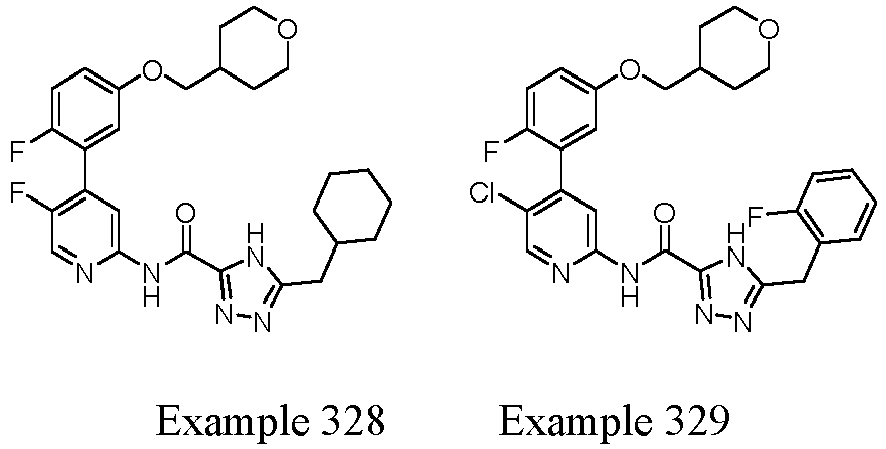
- The preparation was carried out in a similar manner to Example 64, except that in step 1, (tetrahydro-2H-pyran-4-yl)methanol was used in place of 2-(tert-butoxy)ethan-1-ol, 3-bromo-4-fluorophenol was used in place of 3-bromo-4-methylphenol, in step 2, 5-chloro-4-bromopyridin-2-amine was used in place of 4-bromopyridin-2-amine, and in step 3, ethyl 5-(2-fluorobenzyl)-4H-1,2,4-triazol-3-carboxylate was used in place of ethyl 5-benzyl-4H-1,2,4-triazol-3-carboxylate. 1H NMR (400 MHz, DMSO-d 6) δ 14.62 (s, 1H), 10.12 (s, 1H), 8.57 (s, 1H), 8.17 (s, 1H), 7.46 - 7.26 (m, 3H), 7.26 - 7.15 (m, 2H), 7.15 - 7.06 (m, 1H), 7.01 (dd, J = 5.9, 3.1 Hz, 1H), 4.21 (s, 2H), 3.92 - 3.76 (m, 4H), 3.33 - 3.25 (m, 2H), 2.04 - 1.91 (m, 1H), 1.72 - 1.59 (m, 2H), 1.41 - 1.25 (m, 2H). MS: 540 [M+H]+.
- The preparation was carried out in a similar manner to Example 64, except that in step 1, (tetrahydro-2H-pyran-4-yl)methanol was used in place of 2-(tert-butoxy)ethan-1-ol, 3-bromo-4-fluorophenol was used in place of 3-bromo-4-methylphenol, in step 2, 5-chloro-4-bromopyridin-2-amine was used in place of 4-bromopyridin-2-amine, and in step 3, ethyl 5-(cyclohexylmethyl)-4H-1,2,4-triazol-3-carboxylate was used in place of ethyl 5-benzyl-4H-1,2,4-triazol-3-carboxylate. 1H NMR (400 MHz, DMSO-d 6) δ 14.38 (s, 1H), 10.09 (s, 1H), 8.58 (s, 1H), 8.20 (s, 1H), 7.37 - 7.26 (m, 1H), 7.16 - 7.07 (m, 1H), 7.02 (dd, J = 5.9, 3.1 Hz, 1H), 3.93 - 3.82 (m, 4H), 3.34 - 3.27 (m, 2H), 2.71 - 2.63 (m, 2H), 2.06 - 1.92 (m, 1H), 1.85 - 1.52 (m, 8H), 1.39 - 1.14 (m, 5H), 1.06 - 0.90 (m, 2H). MS: 528 [M+H]+.

- The preparation was carried out in a similar manner to Example 64, except that in step 1, (tetrahydro-2H-pyran-4-yl)methanol was used in place of 2-(tert-butoxy)ethan-1-ol, 3-bromo-4-fluorophenol was used in place of 3-bromo-4-methylphenol, in step 2, 5-methyl-4-bromopyridin-2-amine was used in place of 4-bromopyridin-2-amine, and in step 3, ethyl 5-(2-fluorobenzyl)-4H-1,2,4-triazol-3-carboxylate was used in place of ethyl 5-benzyl-4H-1,2,4-triazol-3-carboxylate. 1H NMR (400 MHz, DMSO-d 6) δ 14.62 (s, 1H), 9.83 (s, 1H), 8.33 (s, 1H), 8.00 (s, 1H), 7.46 - 7.14 (m, 5H), 7.10 - 7.01 (m, 1H), 6.92 (dd, J = 5.9, 3.1 Hz, 1H), 4.20 (s, 2H), 3.95 - 3.76 (m, 4H), 3.32 - 3.24 (m, 2H), 2.12 (s, 3H), 2.05 - 1.92 (m, 1H), 1.74 - 1.61 (m, 2H), 1.39 - 1.24 (m, 2H). MS: 520 [M+H]+.
- The preparation was carried out in a similar manner to Example 64, except that in step 1, (tetrahydro-2H-pyran-4-yl)methanol was used in place of 2-(tert-butoxy)ethan-1-ol, 3-bromo-4-fluorophenol was used in place of 3-bromo-4-methylphenol, in step 2, 5-methyl-4-bromopyridin-2-amine was used in place of 4-bromopyridin-2-amine, and in step 3, ethyl 5-(cyclohexylmethyl)-4H-1,2,4-triazol-3-carboxylate was used in place of ethyl 5-benzyl-4H-1,2,4-triazol-3-carboxylate. 1H NMR (400 MHz, DMSO-d 6) δ 14.35 (s, 1H), 9.80 (s, 1H), 8.34 (s, 1H), 8.03 (s, 1H), 7.34-7.24 (m, 1H), 7.11-7.02 (m, 1H), 6.92 (dd, J = 6.0, 3.1 Hz, 1H), 3.93-3.79 (m, 4H), 3.33-3.27 (m, 2H), 2.70-2.62 (m, 2H), 2.13 (s, 3H), 2.05-1.93 (m, 1H), 1.82-1.55 (m, 8H), 1.40-1.14 (m, 5H), 1.05-0.90 (m, 2H). MS: 508 [M+H]+.

- The preparation was carried out in a similar manner to Example 85, except that in step 1, 2-(tetrahydro-2H-pyran-4-yl)ethan-1-ol was used in place of 2-(2-methoxyethoxy)ethan-1-ol, in step 2, 3-bromo-4-fluorophenol was used in place of 3-bromo-4-methylphenol, in step 3, 5-chloro-4-bromopyridin-2-amine was used in place of 4-bromopyridin-2-amine, and in step 4, ethyl 5-(2-fluorobenzyl)-4H-1,2,4-triazol-3-carboxylate was used in place of ethyl 5-benzyl-4H-1,2,4-triazol-3-carboxylate. 1H NMR (400 MHz, DMSO-d 6) δ 14.61 (s, 1H), 10.11 (s, 1H), 8.57 (s, 1H), 8.18 (s, 1H), 7.50-7.27 (m, 3H), 7.27-7.15 (m, 2H), 7.15-7.06 (m, 1H), 7.02 (dd, J = 5.9, 3.1 Hz, 1H), 4.22 (s, 2H), 4.04 (t, J = 6.3 Hz, 2H), 3.86-3.78 (m, 2H), 3.32-3.23 (m, 2H), 1.78-1.56 (m, 5H), 1.29-1.12 (m, 2H). MS: 554 [M+H]+.
- The preparation was carried out in a similar manner to Example 85, except that in step 1, 2-(tetrahydro-2H-pyran-4-yl)ethan-1-ol was used in place of 2-(2-methoxyethoxy)ethan-1-ol, in step 2, 3-bromo-4-fluorophenol was used in place of 3-bromo-4-methylphenol, in step 3, 5-chloro-4-bromopyridin-2-amine was used in place of 4-bromopyridin-2-amine, and in step 4, ethyl 5-(cyclohexylmethyl)-4H-1,2,4-triazol-3-carboxylate was used in place of ethyl 5-benzyl-4H-1,2,4-triazol-3-carboxylate. 1H NMR (400 MHz, DMSO-d 6) δ 14.38 (s, 1H), 10.08 (s, 1H), 8.58 (s, 1H), 8.20 (s, 1H), 7.36-7.25 (m, 1H), 7.16-7.06 (m, 1H), 7.02 (dd, J = 5.9, 3.1 Hz, 1H), 4.05 (t, J = 6.2 Hz, 2H), 3.87-3.78 (m, 2H), 3.31-3.24 (m, 2H), 2.67 (d, J = 7.0 Hz, 2H), 1.81-1.56 (m, 11H), 1.28-1.13 (m, 5H), 1.04-0.90 (m, 2H). MS: 542 [M+H]+.

- The preparation was carried out in a similar manner to Example 85, except that in step 1, 2-(tetrahydro-2H-pyran-4-yl)ethan-1-ol was used in place of 2-(2-methoxyethoxy)ethan-1-ol, in step 2, 3-bromo-4-fluorophenol was used in place of 3-bromo-4-methylphenol, in step 3, 5-methyl-4-bromopyridin-2-amine was used in place of 4-bromopyridin-2-amine, and in step 4, ethyl 5-(2-fluorobenzyl)-4H-1,2,4-triazol-3-carboxylate was used in place of ethyl 5-benzyl-4H-1,2,4-triazol-3-carboxylate. 1H NMR (400 MHz, DMSO-d 6) δ 14.69 (s, 1H), 9.86 (s, 1H), 8.33 (s, 1H), 8.00 (s, 1H), 7.45 - 7.14 (m, 5H), 7.11 - 7.01 (m, 1H), 6.92 (dd, J = 6.0, 3.1 Hz, 1H), 4.20 (s, 2H), 4.03 (t, J = 6.3 Hz, 2H), 3.86 - 3.78 (m, 2H), 3.30 - 3.24 (m, 2H), 2.12 (s, 3H), 1.77 - 1.54 (m, 5H), 1.30 - 1.08 (m, 2H). MS: 534 [M+H]+.
- The preparation was carried out in a similar manner to Example 85, except that in step 1, 2-(tetrahydro-2H-pyran-4-yl)ethan-1-ol was used in place of 2-(2-methoxyethoxy)ethan-1-ol, in step 2, 3-bromo-4-fluorophenol was used in place of 3-bromo-4-methylphenol, in step 3, 5-methyl-4-bromopyridin-2-amine was used in place of 4-bromopyridin-2-amine, and in step 4, ethyl 5-(cyclohexylmethyl)-4H-1,2,4-triazol-3-carboxylate was used in place of ethyl 5-benzyl-4H-1,2,4-triazol-3-carboxylate. 1H NMR (400 MHz, DMSO-d 6) δ 14.35 (s, 1H), 9.79 (s, 1H), 8.34 (s, 1H), 8.03 (s, 1H), 7.35 - 7.22 (m, 1H), 7.11 - 7.02 (m, 1H), 6.93 (dd, J = 6.0, 3.1 Hz, 1H), 4.04 (t, J = 6.3 Hz, 2H), 3.87 - 3.77 (m, 2H), 3.32 - 3.22 (m, 2H), 2.66 (d, J = 7.1 Hz, 2H), 2.13 (s, 3H), 1.81 - 1.55 (m, 11H), 1.30 - 1.11 (m, 5H), 1.05 - 0.89 (m, 2H). MS: 522 [M+H]+.

- The preparation was carried out in a similar manner to Example 160, except that in step 1, 3-bromo-4-chlorophenol was used in place of 3-bromo-4-methylphenol. 1H NMR (400 MHz, DMSO-d 6) δ 14.58 (s, 1H), 9.93 (s, 1H), 8.45 (d, J = 5.1 Hz, 1H), 8.23 (s, 1H), 7.51 (d, J = 8.8 Hz, 1H), 7.43 - 7.18 (m, 6H), 7.13 - 6.93 (m, 2H), 4.26 - 4.09 (m, 3H), 4.01 (t, J = 6.6 Hz, 2H), 1.83 - 1.69 (m, 2H), 1.53 - 1.41 (m, 2H), 1.09 (s, 6H). MS: 506 [M+H]+.
- The preparation was carried out in a similar manner to Example 160, except that in step 1, 3-bromo-4-chlorophenol was used in place of 3-bromo-4-methylphenol, and in step 4, ethyl 5-(2-fluorobenzyl)-4H-1,2,4-triazol-3-carboxylate was used in place of ethyl 5-benzyl-4H-1,2,4-triazol-3-carboxylate. 1H NMR (400 MHz, DMSO-d 6) δ 14.66 (s, 1H), 9.95 (s, 1H), 8.45 (d, J = 5.2 Hz, 1H), 8.21 (s, 1H), 7.51 (d, J = 8.8 Hz, 1H), 7.45 - 7.14 (m, 5H), 7.06 (dd, J = 8.7, 3.0 Hz, 1H), 7.01 (d, J = 3.0 Hz, 1H), 4.27 - 4.16 (m, 3H), 4.01 (t, J = 6.6 Hz, 2H), 1.83 - 1.69 (m, 2H), 1.53 - 1.39 (m, 2H), 1.09 (s, 6H). MS: 524 [M+H]+.

- The preparation was carried out in a similar manner to Example 160, except that in step 1, 3-bromo-4-chlorophenol was used in place of 3-bromo-4-methylphenol, and in step 4, ethyl 5-(3,4-difluorobenzyl)-4H-1,2,4-triazol-3-carboxylate was used in place of ethyl 5-benzyl-4H-1,2,4-triazol-3-carboxylate. 1H NMR (400 MHz, DMSO-d 6) δ 14.57 (s, 1H), 9.99 (s, 1H), 8.46 (d, J = 5.1 Hz, 1H), 8.22 (s, 1H), 7.51 (d, J = 8.8 Hz, 1H), 7.48 - 7.36 (m, 2H), 7.29 (dd, J = 5.1, 1.6 Hz, 1H), 7.22 - 7.14 (m, 1H), 7.06 (dd, J = 8.8, 3.0 Hz, 1H), 7.01 (d, J = 3.0 Hz, 1H), 4.26 - 4.13 (m, 3H), 4.01 (t, J = 6.6 Hz, 2H), 1.83 - 1.69 (m, 2H), 1.52 - 1.41 (m, 2H), 1.09 (s, 6H). MS: 542 [M+H]+.
- The preparation was carried out in a similar manner to Example 160, except that in step 1, 3-bromo-4-chlorophenol was used in place of 3-bromo-4-methylphenol, and in step 4, ethyl 5-(5-chloro-2-fluorobenzyl)-4H-1,2,4-triazol-3-carboxylate was used in place of ethyl 5-benzyl-4H-1,2,4-triazol-3-carboxylate. 1H NMR (400 MHz, DMSO-d 6) δ 14.62 (s, 1H), 9.94 (s, 1H), 8.46 (d, J = 5.1 Hz, 1H), 8.21 (s, 1H), 7.60 - 7.46 (m, 2H), 7.46 - 7.36 (m, 1H), 7.36 - 7.22 (m, 2H), 7.13 - 6.95 (m, 2H), 4.27 - 4.15 (m, 3H), 4.01 (t, J = 6.6 Hz, 2H), 1.82 - 1.69 (m, 2H), 1.52 - 1.41 (m, 2H), 1.09 (s, 6H). MS: 558 [M+H]+.

- The preparation was carried out in a similar manner to Example 160, except that in step 1, 3-bromo-4-chlorophenol was used in place of 3-bromo-4-methylphenol, and in step 4, ethyl 5-(3-chloro-5-fluorobenzyl)-4H-1,2,4-triazol-3-carboxylate was used in place of ethyl 5-benzyl-4H-1,2,4-triazol-3-carboxylate. 1H NMR (400 MHz, DMSO-d 6) δ 14.66 (s, 1H), 10.02 (s, 1H), 8.46 (d, J = 5.1 Hz, 1H), 8.22 (s, 1H), 7.51 (d, J = 8.8 Hz, 1H), 7.43 - 7.33 (m, 1H), 7.33 - 7.26 (m, 2H), 7.26 - 7.16 (m, 1H), 7.06 (dd, J = 8.8, 3.0 Hz, 1H), 7.01 (d, J = 3.0 Hz, 1H), 4.23 (s, 2H), 4.19 (s, 1H), 4.01 (t, J = 6.6 Hz, 2H), 1.82 - 1.69 (m, 2H), 1.53 - 1.42 (m, 2H), 1.09 (s, 6H). MS: 558 [M+H]+.
- The preparation was carried out in a similar manner to Example 160, except that in step 1, 3-bromo-4-chlorophenol was used in place of 3-bromo-4-methylphenol, and in step 4, ethyl 5-(3-chloro-4-fluorobenzyl)-4H-1,2,4-triazol-3-carboxylate was used in place of ethyl 5-benzyl-4H-1,2,4-triazol-3-carboxylate. 1H NMR (400 MHz, DMSO-d 6) δ 14.58 (s, 1H), 9.98 (s, 1H), 8.46 (d, J = 5.1 Hz, 1H), 8.22 (s, 1H), 7.59 (dd, J = 7.2, 2.0 Hz, 1H), 7.51 (d, J = 8.8 Hz, 1H), 7.43 - 7.32 (m, 2H), 7.29 (dd, J = 5.1, 1.6 Hz, 1H), 7.06 (dd, J = 8.8, 3.0 Hz, 1H), 7.01 (d, J = 3.0 Hz, 1H), 4.28 - 4.14 (m, 3H), 4.01 (t, J = 6.5 Hz, 2H), 1.82 - 1.70 (m, 2H), 1.52 - 1.42 (m, 2H), 1.09 (s, 6H). MS: 558 [M+H]+.

- The preparation was carried out in a similar manner to Example 160, except that in step 1, 3-bromo-4-chlorophenol was used in place of 3-bromo-4-methylphenol, and in step 4, ethyl 5-(4-fluoro-3-methoxybenzyl)-4H-1,2,4-triazol-3-carboxylate was used in place of ethyl 5-benzyl-4H-1,2,4-triazol-3-carboxylate. 1H NMR (400 MHz, DMSO-d 6) δ 14.52 (s, 1H), 9.92 (s, 1H), 8.46 (d, J = 5.1 Hz, 1H), 8.23 (s, 1H), 7.51 (d, J = 8.8 Hz, 1H), 7.31 - 7.25 (m, 1H), 7.20 - 7.12 (m, 2H), 7.06 (dd, J = 8.8, 3.0 Hz, 1H), 7.01 (d, J = 3.0 Hz, 1H), 6.89 - 6.83 (m, 1H), 4.24 - 4.11 (m, 3H), 4.01 (t, J = 6.5 Hz, 2H), 3.83 (s, 3H), 1.83 - 1.69 (m, 2H), 1.53 - 1.41 (m, 2H), 1.09 (s, 6H). MS: 554 [M+H]+.
- The preparation was carried out in a similar manner to Example 160, except that in step 1, 3-bromo-4-chlorophenol was used in place of 3-bromo-4-methylphenol, and in step 4, ethyl 5-(3-fluoro-5-methylbenzyl)-4H-1,2,4-triazol-3-carboxylate was used in place of ethyl 5-benzyl-4H-1,2,4-triazol-3-carboxylate. 1H NMR (400 MHz, DMSO-d 6) δ 14.58 (s, 1H), 9.96 (s, 1H), 8.46 (d, J = 5.1 Hz, 1H), 8.22 (s, 1H), 7.51 (d, J = 8.8 Hz, 1H), 7.28 (dd, J = 5.1, 1.6 Hz, 1H), 7.11 - 6.85 (m, 5H), 4.23 - 4.09 (m, 3H), 4.01 (t, J = 6.6 Hz, 2H), 2.30 (s, 3H), 1.82 - 1.70 (m, 2H), 1.55 - 1.39 (m, 2H), 1.09 (s, 6H). MS: 538 [M+H]+.

- The preparation was carried out in a similar manner to Example 160, except that in step 1, 3-bromo-4-chlorophenol was used in place of 3-bromo-4-methylphenol, and in step 4, ethyl 5-(4-fluoro-3-methylbenzyl)-4H-1,2,4-triazol-3-carboxylate was used in place of ethyl 5-benzyl-4H-1,2,4-triazol-3-carboxylate. 1H NMR (400 MHz, DMSO-d 6) δ 14.52 (s, 1H), 9.91 (s, 1H), 8.46 (d, J = 5.1 Hz, 1H), 8.22 (s, 1H), 7.51 (d, J = 8.8 Hz, 1H), 7.36 - 6.94 (m, 6H), 4.18 (s, 1H), 4.13 (s, 2H), 4.01 (t, J = 6.6 Hz, 2H), 2.21 (d, J = 2.0 Hz, 3H), 1.83 - 1.69 (m, 2H), 1.54 - 1.41 (m, 2H), 1.09 (s, 6H). MS: 538 [M+H]+.
- The preparation was carried out in a similar manner to Example 160, except that in step 1, 3-bromo-4-chlorophenol was used in place of 3-bromo-4-methylphenol, and in step 4, ethyl 5-(2-fluoro-3-(trifluoromethyl)benzyl)-4H-1,2,4-triazol-3-carboxylate was used in place of ethyl 5-benzyl-4H-1,2,4-triazol-3-carboxylate. 1H NMR (400 MHz, DMSO-d 6) δ 14.76 (s, 1H), 9.98 (s, 1H), 8.45 (d, J = 5.2 Hz, 1H), 8.21 (s, 1H), 7.86 - 7.65 (m, 2H), 7.57 - 7.34 (m, 2H), 7.28 (d, J = 5.1 Hz, 1H), 7.11 - 6.91 (m, 2H), 4.32 (s, 2H), 4.18 (s, 1H), 4.01 (t, J = 6.5 Hz, 2H), 1.83 - 1.66 (m, 2H), 1.55 - 1.39 (m, 2H), 1.09 (s, 6H). MS: 592 [M+H]+.

- The preparation was carried out in a similar manner to Example 160, except that in step 1, 3-bromo-4-chlorophenol was used in place of 3-bromo-4-methylphenol, and in step 4, ethyl 5-(2-fluoro-5-(trifluoromethyl)benzyl)-4H-1,2,4-triazol-3-carboxylate was used in place of ethyl 5-benzyl-4H-1,2,4-triazol-3-carboxylate. 1H NMR (400 MHz, DMSO-d 6) δ 14.65 (s, 1H), 9.92 (s, 1H), 8.45 (d, J = 5.1 Hz, 1H), 8.21 (s, 1H), 7.90 (d, J = 6.4 Hz, 1H), 7.78 (d, J = 8.8 Hz, 1H), 7.56-7.41 (m, 2H), 7.28 (dd, J = 5.2, 1.6 Hz, 1H), 7.11-6.93 (m, 2H), 4.32 (s, 2H), 4.18 (s, 1H), 4.01 (t, J = 6.6 Hz, 2H), 1.83-1.68 (m, 2H), 1.54-1.40 (m, 2H), 1.09 (s, 6H). MS: 592 [M+H]+.
- The preparation was carried out in a similar manner to Example 160, except that in step 1, 3-bromo-4-chlorophenol was used in place of 3-bromo-4-methylphenol, in step 4, ethyl 5-(3-fluoro-5-(trifluoromethyl)benzyl)-4H-1,2,4-triazol-3-carboxylate was used in place of ethyl 5-benzyl-4H-1,2,4-triazol-3-carboxylate. 1H NMR (400 MHz, DMSO-d 6) δ 14.66 (s, 1H), 10.02 (s, 1H), 8.46 (d, J = 5.1 Hz, 1H), 8.22 (s, 1H), 7.68 - 7.45 (m, 4H), 7.29 (dd, J = 5.1, 1.6 Hz, 1H), 7.12 - 6.94 (m, 2H), 4.34 (s, 2H), 4.19 (s, 1H), 4.01 (t, J= 6.6 Hz, 2H), 1.84 - 1.69 (m, 2H), 1.53 - 1.41 (m, 2H), 1.09 (s, 6H). MS: 592 [M+H]+.

- The preparation was carried out in a similar manner to Example 160, except that in step 1, 3-bromo-4-chlorophenol was used in place of 3-bromo-4-methylphenol, and in step 4, ethyl 5-(4-fluoro-3-(trifluoromethyl)benzyl)-4H-1,2,4-triazol-3-carboxylate was used in place of ethyl 5-benzyl-4H-1,2,4-triazol-3-carboxylate. 1H NMR (400 MHz, DMSO-d 6) δ 14.53 (s, 1H), 9.91 (s, 1H), 8.45 (d, J = 5.2 Hz, 1H), 8.20 (d, J = 20.8 Hz, 1H), 7.88-7.64 (m, 2H), 7.57-7.44 (m, 2H), 7.33-7.21 (m, 1H), 7.06 (dd, J = 8.9, 3.0 Hz, 1H), 7.01 (d, J = 3.0 Hz, 1H), 4.32 (s, 2H), 4.17 (s, 1H), 4.01 (t, J = 6.6 Hz, 2H), 1.82-1.70 (m, 2H), 1.52-1.41 (m, 2H), 1.09 (s, 6H). MS: 592 [M+H]+.
- The preparation was carried out in a similar manner to Example 160, except that in step 1, 3-bromo-4-chlorophenol was used in place of 3-bromo-4-methylphenol, and in step 4, ethyl 5-(5-ethyl-2-fluorobenzyl)-4H-1,2,4-triazol-3-carboxylate was used in place of ethyl 5-benzyl-4H-1,2,4-triazol-3-carboxylate. 1H NMR (400 MHz, DMSO-d 6) δ 14.58 (s, 1H), 9.88 (s, 1H), 8.45 (d, J = 5.2 Hz, 1H), 8.22 (s, 1H), 7.50 (d, J = 8.8 Hz, 1H), 7.35 - 6.93 (m, 6H), 4.25 - 4.09 (m, 3H), 4.09 - 3.93 (m, 2H), 2.58 (q, J = 7.6 Hz, 2H), 1.82 - 1.68 (m, 2H), 1.55 - 1.38 (m, 2H), 1.16 (t, J = 7.6 Hz 3H), 1.09 (s, 6H). MS: 552 [M+H]+.

- The preparation was carried out in a similar manner to Example 160, except that in step 1, 3-bromo-4-chlorophenol was used in place of 3-bromo-4-methylphenol, and in step 4, ethyl 5-(2,3,4-trifluorobenzyl)-4H-1,2,4-triazol-3-carboxylate was used in place of ethyl 5-benzyl-4H-1,2,4-triazol-3-carboxylate. 1H NMR (400 MHz, DMSO-d 6) δ 14.59 (s, 1H), 9.89 (s, 1H), 8.46 (d, J = 5.2 Hz, 1H), 8.22 (s, 1H), 7.51 (d, J = 8.8 Hz, 1H), 7.41 - 7.21 (m, 3H), 7.12 - 6.95 (m, 2H), 4.28 (s, 2H), 4.17 (s, 1H), 4.01 (t, J = 6.5 Hz, 2H), 1.84 - 1.69 (m, 2H), 1.53 - 1.39 (m, 2H), 1.09 (s, 6H). MS: 560 [M+H]+.
- The preparation was carried out in a similar manner to Example 160, except that in step 1, 3-bromo-4-chlorophenol was used in place of 3-bromo-4-methylphenol, and in step 4, ethyl 5-(2,3,5-trifluorobenzyl)-4H-1,2,4-triazol-3-carboxylate was used in place of ethyl 5-benzyl-4H-1,2,4-triazol-3-carboxylate. 1H NMR (400 MHz, DMSO-d 6) δ 14.75 (s, 1H), 10.01 (s, 1H), 8.46 (d, J = 5.1 Hz, 1H), 8.28 - 8.13 (m, 1H), 7.56 - 7.41 (m, 2H), 7.29 (dd, J = 5.1, 1.6 Hz, 1H), 7.25 - 7.14 (m, 1H), 7.10 - 6.95 (m, 2H), 4.28 (s, 2H), 4.17 (s, 1H), 4.01 (t, J = 6.6 Hz, 2H), 1.82 - 1.69 (m, 2H), 1.54 - 1.39 (m, 2H), 1.09 (s, 6H). MS: 560 [M+H]+.

- The preparation was carried out in a similar manner to Example 160, except that in step 1, 3-bromo-4-chlorophenol was used in place of 3-bromo-4-methylphenol, and in step 4, ethyl 5-(2,3,6-trifluorobenzyl)-4H-1,2,4-triazol-3-carboxylate was used in place of ethyl 5-benzyl-4H-1,2,4-triazol-3-carboxylate. 1H NMR (400 MHz, DMSO-d 6) δ 14.78 (s, 1H), 9.95 (s, 1H), 8.46 (d, J = 5.1 Hz, 1H), 8.20 (s, 1H), 7.58 - 7.42 (m, 2H), 7.29 (dd, J = 5.1, 1.6 Hz, 1H), 7.25 - 7.14 (m, 1H), 7.10 - 6.93 (m, 2H), 4.26 (s, 2H), 4.19 (s, 1H), 4.01 (t, J = 6.6 Hz, 2H), 1.84 - 1.69 (m, 2H), 1.53 - 1.39 (m, 2H), 1.10 (s, 6H). MS: 560 [M+H]+.
- The preparation was carried out in a similar manner to Example 160, except that in step 1, 3-bromo-4-chlorophenol was used in place of 3-bromo-4-methylphenol, and in step 4, ethyl 5-(3,4,5-trifluorobenzyl)-4H-1,2,4-triazol-3-carboxylate was used in place of ethyl 5-benzyl-4H-1,2,4-triazol-3-carboxylate. 1H NMR (400 MHz, DMSO-d 6) δ 14.61 (s, 1H), 10.04 (s, 1H), 8.47 (d, J = 5.1 Hz, 1H), 8.23 (s, 1H), 7.51 (d, J = 8.8 Hz, 1H), 7.41 - 7.23 (m, 3H), 7.08 - 6.97 (m, 2H), 4.26 - 4.15 (m, 3H), 4.01 (t, J = 6.6 Hz, 2H), 1.82 - 1.70 (m, 2H), 1.53 - 1.42 (m, 2H), 1.09 (s, 6H). MS: 560 [M+H]+.

- The preparation was carried out in a similar manner to Example 160, except that in step 1, 3-bromo-4-chlorophenol was used in place of 3-bromo-4-methylphenol, and in step 4, ethyl 5-(2,4,5-trifluorobenzyl)-4H-1,2,4-triazol-3-carboxylate was used in place of ethyl 5-benzyl-4H-1,2,4-triazol-3-carboxylate. 1H NMR (400 MHz, DMSO-d 6) δ 14.57 (s, 1H), 9.92 (s, 1H), 8.46 (d, J = 5.1 Hz, 1H), 8.22 (s, 1H), 7.72 - 7.44 (m, 3H), 7.29 (d, J = 4.8 Hz, 1H), 7.12 - 6.94 (m, 2H), 4.28 - 4.07 (m, 3H), 4.01 (t, J = 6.5 Hz, 2H), 1.83 - 1.66 (m, 2H), 1.55 - 1.39 (m, 2H), 1.09 (s, 6H). MS: 560 [M+H]+.
- The preparation was carried out in a similar manner to Example 160, except that in step 1, 3-bromo-4-chlorophenol was used in place of 3-bromo-4-methylphenol, and in step 4, ethyl 5-(cyclopentylmethyl)-4H-1,2,4-triazole-3-carboxylate was used in place of ethyl 5-benzyl-4H-1,2,4-triazol-3-carboxylate. 1H NMR (400 MHz, DMSO-d 6) δ 14.39 (s, 1H), 9.90 (s, 1H), 8.46 (d, J = 5.2 Hz, 1H), 8.24 (s, 1H), 7.51 (d, J = 8.8 Hz, 1H), 7.28 (dd, J = 5.1, 1.6 Hz, 1H), 7.12 - 6.96 (m, 2H), 4.19 (s, 1H), 4.02 (t, J = 6.5 Hz, 2H), 2.78 (d, J = 7.5 Hz, 2H), 2.36 - 2.20 (m, 1H), 1.82 - 1.66 (m, 4H), 1.66 - 1.57 (m, 2H), 1.57 - 1.43 (m, 4H), 1.24 - 1.20 (m, 2H), 1.09 (s, 6H). MS: 498 [M+H]+.

- The preparation was carried out in a similar manner to Example 160, except that in step 1, 3-bromo-4-chlorophenol was used in place of 3-bromo-4-methylphenol, and in step 4, ethyl 5-(cyclohexylmethyl)-4H-1,2,4-triazol-3-carboxylate was used in place of ethyl 5-benzyl-4H-1,2,4-triazol-3-carboxylate. 1H NMR (400 MHz, DMSO-d 6) δ 14.41 (s, 1H), 9.92 (s, 1H), 8.46 (d, J = 5.1 Hz, 1H), 8.30 - 8.18 (m, 1H), 7.51 (d, J = 8.8 Hz, 1H), 7.28 (dd, J = 5.1, 1.6 Hz, 1H), 7.13 - 6.94 (m, 2H), 4.21 (s, 1H), 4.01 (t, J = 6.5 Hz, 2H), 2.67 (d, J = 7.0 Hz, 2H), 1.87 - 1.55 (m, 8H), 1.51 - 1.41 (m, 2H), 1.21 - 1.12 (m, 3H), 1.09 (s, 6H), 1.05 - 0.89 (m, 2H). MS: 512 [M+H]+.
- The preparation was carried out in a similar manner to Example 160, except that in step 1, 3-bromo-4-chlorophenol was used in place of 3-bromo-4-methylphenol, and in step 4, ethyl 5-(pyrrolidin-1-ylmethyl)-4H-1,2,4-triazol-3-carboxylate was used in place of ethyl 5-benzyl-4H-1,2,4-triazol-3-carboxylate. 1H NMR (400 MHz, DMSO-d 6) δ 13.83 (s, 1H), 9.95 (s, 1H), 8.52 - 8.40 (m, 1H), 8.29 - 8.19 (m, 1H), 7.51 (d, J = 8.8 Hz, 1H), 7.27 (dd, J = 5.1, 1.6 Hz, 1H), 7.13 - 6.94 (m, 2H), 4.18 (s, 1H), 4.01 (t, J = 6.6 Hz, 2H), 3.82 (s, 2H), 2.60 - 2.53 (m, 4H), 1.85 - 1.63 (m, 6H), 1.55 - 1.42 (m, 2H), 1.09 (s, 6H). MS: 499 [M+H]+.

- The preparation was carried out in a similar manner to Example 160, except that in step 1, 3-bromo-4-chlorophenol was used in place of 3-bromo-4-methylphenol, and in step 2, ethylmagnesium bromide was used in place of methylmagnesium bromide. 1H NMR (400 MHz, DMSO-d 6) δ 14.64 (s, 1H), 9.96 (s, 1H), 8.45 (d, J = 5.1 Hz, 1H), 8.30 - 8.17 (m, 1H), 7.50 (d, J = 8.8 Hz, 1H), 7.44 - 7.18 (m, 6H), 7.13 - 6.92 (m, 2H), 4.18 (s, 2H), 4.00 (t, J = 6.5 Hz, 2H), 3.89 (s, 1H), 1.78 - 1.59 (m, 2H), 1.51 - 1.38 (m, 2H), 1.34 (q, J = 7.4 Hz, 4H), 0.77 (t, J = 7.4 Hz, 6H). MS: 534 [M+H]+.
- The preparation was carried out in a similar manner to Example 160, except that in step 1, 3-bromo-4-chlorophenol was used in place of 3-bromo-4-methylphenol, in step 2, ethylmagnesium bromide was used in place of methylmagnesium bromide, and in step 4, ethyl 5-(2-fluorobenzyl)-4H-1,2,4-triazol-3-carboxylate was used in place of ethyl 5-benzyl-4H-1,2,4-triazol-3-carboxylate. 1H NMR (400 MHz, DMSO-d 6) δ 14.68 (s, 1H), 9.94 (s, 1H), 8.45 (d, J = 5.1 Hz, 1H), 8.21 (d, J = 1.6 Hz, 1H), 7.50 (d, J = 8.8 Hz, 1H), 7.47 - 7.30 (m, 2H), 7.28 (dd, J = 5.1, 1.6 Hz, 1H), 7.25 - 7.16 (m, 2H), 7.05 (dd, J = 8.8, 3.0 Hz, 1H), 7.00 (d, J = 3.0 Hz, 1H), 4.21 (s, 2H), 4.01 (t, J = 6.5 Hz, 2H), 3.89 (s, 1H), 1.76 - 1.62 (m, 2H), 1.47 - 1.38 (m, 2H), 1.34 (q, J = 7.4 Hz, 4H), 0.77 (t, J = 7.5 Hz, 6H). MS: 552 [M+H]+.
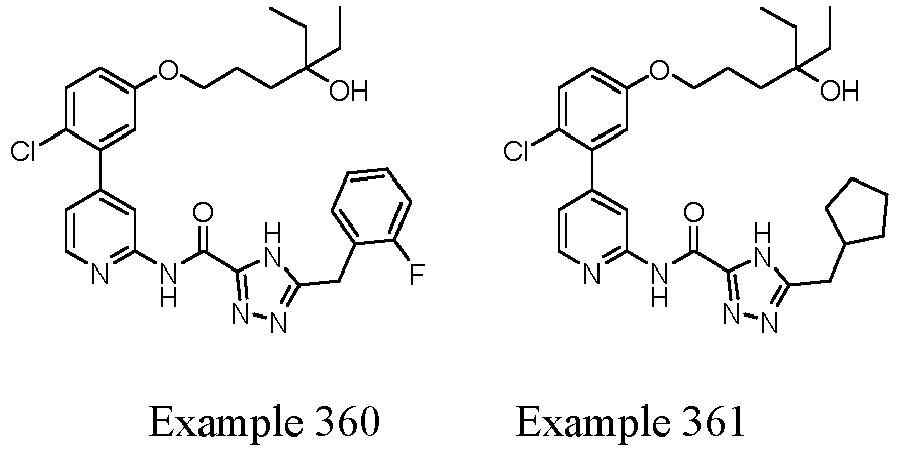
- The preparation was carried out in a similar manner to Example 160, except that in step 1, 3-bromo-4-chlorophenol was used in place of 3-bromo-4-methylphenol, in step 2, ethylmagnesium bromide was used in place of methylmagnesium bromide, and in step 4, ethyl 5-(cyclopentylmethyl)-4H-1,2,4-triazole-3-carboxylate was used in place of ethyl 5-benzyl-4H-1,2,4-triazol-3-carboxylate. 1H NMR (400 MHz, DMSO-d 6) δ 14.42 (s, 1H), 9.90 (s, 1H), 8.46 (dd, J = 5.1, 0.8 Hz, 1H), 8.32-8.18 (m, 1H), 7.51 (d, J = 8.8 Hz, 1H), 7.28 (dd, J = 5.1, 1.6 Hz, 1H), 7.12-6.94 (m, 2H), 4.01 (t, J = 6.5 Hz, 2H), 3.89 (s, 1H), 2.78 (d, J = 7.5 Hz, 2H), 2.36 - 2.19 (m, 1H), 1.80-1.64 (m, 4H), 1.64 - 1.47 (m, 4H), 1.47 - 1.29 (m, 6H), 1.29-1.14 (m, 2H), 0.77 (t, J = 7.4 Hz, 6H). MS: 526 [M+H]+.
- The preparation was carried out in a similar manner to Example 160, except that in step 1, 3-bromo-4-chlorophenol was used in place of 3-bromo-4-methylphenol, in step 2, ethylmagnesium bromide was used in place of methylmagnesium bromide, and in step 4, ethyl 5-(cyclohexylmethyl)-4H-1,2,4-triazol-3-carboxylate was used in place of ethyl 5-benzyl-4H-1,2,4-triazol-3-carboxylate. 1H NMR (400 MHz, DMSO-d 6) δ 14.40 (s, 1H), 9.90 (s, 1H), 8.46 (d, J = 5.1 Hz, 1H), 8.24 (d, J = 1.4 Hz, 1H), 7.51 (d, J = 8.8 Hz, 1H), 7.28 (dd, J = 5.1, 1.6 Hz, 1H), 7.16-6.95 (m, 2H), 4.01 (t, J = 6.5 Hz, 2H), 3.89 (s, 1H), 2.67 (d, J = 7.1 Hz, 2H), 1.86-1.56 (m, 8H), 1.48-1.39 (m, 2H), 1.35 (q, J = 7.5 Hz, 4H), 1.25-1.12 (m, 3H), 1.05-0.92 (m, 2H), 0.78 (t, J = 7.5 Hz, 6H). MS: 540 [M+H]+.

- The preparation was carried out in a similar manner to Example 160, except that in step 1, 3-bromo-4-chlorophenol was used in place of 3-bromo-4-methylphenol, and methyl bromoacetate was used in place of methyl 4-bromobutanoate. 1H NMR (400 MHz, DMSO-d 6) δ 14.63 (s, 1H), 9.96 (s, 1H), 8.55-8.39 (m, 1H), 8.29-8.16 (m, 1H), 7.51 (d, J = 8.8 Hz, 1H), 7.41-7.19 (m, 6H), 7.13-6.99 (m, 2H), 4.66 (s, 1H), 4.18 (s, 2H), 3.77 (s, 2H), 1.19 (s, 6H). MS: 478 [M+H]+.
- The preparation was carried out in a similar manner to Example 160, except that in step 1, 3-bromo-4-chlorophenol was used in place of 3-bromo-4-methylphenol, methyl bromoacetate was used in place of methyl 4-bromobutanoate, and in step 4, ethyl 5-(2-fluorobenzyl)-4H-1,2,4-triazol-3-carboxylate was used in place of ethyl 5-benzyl-4H-1,2,4-triazol-3-carboxylate. 1H NMR (400 MHz, DMSO-d 6) δ 14.70 (s, 1H), 9.94 (s, 1H), 8.45 (d, J = 5.1 Hz, 1H), 8.31 - 8.12 (m, 1H), 7.51 (d, J = 8.8 Hz, 1H), 7.47 - 7.26 (m, 3H), 7.26 - 7.13 (m, 2H), 7.13 - 6.96 (m, 2H), 4.66 (s, 1H), 4.21 (s, 2H), 3.77 (s, 2H), 1.19 (s, 6H). MS: 496 [M+H]+.

- The preparation was carried out in a similar manner to Example 160, except that in step 1, 3-bromo-4-chlorophenol was used in place of 3-bromo-4-methylphenol, methyl bromoacetate was used in place of methyl 4-bromobutanoate, and in step 4, ethyl 5-(cyclopentylmethyl)-4H-1,2,4-triazole-3-carboxylate was used in place of ethyl 5-benzyl-4H-1,2,4-triazol-3-carboxylate. 1H NMR (400 MHz, DMSO-d 6) δ 14.40 (s, 1H), 9.91 (s, 1H), 8.46 (dd, J = 5.1, 0.8 Hz, 1H), 8.34 - 8.19 (m, 1H), 7.52 (d, J = 8.8 Hz, 1H), 7.29 (dd, J = 5.1, 1.6 Hz, 1H), 7.15 - 6.93 (m, 2H), 4.66 (s, 1H), 3.78 (s, 2H), 2.78 (d, J = 7.5 Hz, 2H), 2.37 - 2.19 (m, 1H), 1.82 - 1.66 (m, 2H), 1.66 - 1.44 (m, 4H), 1.30 - 1.12 (m, 8H). MS: 470 [M+H]+.
- The preparation was carried out in a similar manner to Example 160, except that in step 1, 3-bromo-4-chlorophenol was used in place of 3-bromo-4-methylphenol, methyl bromoacetate was used in place of methyl 4-bromobutanoate, and in step 4, ethyl 5-(cyclohexylmethyl)-4H-1,2,4-triazol-3-carboxylate was used in place of ethyl 5-benzyl-4H-1,2,4-triazol-3-carboxylate. 1H NMR (400 MHz, DMSO-d 6) δ 14.39 (s, 1H), 9.90 (s, 1H), 8.46 (d, J = 5.1 Hz, 1H), 8.24 (d, J = 1.4 Hz, 1H), 7.52 (d, J = 8.8 Hz, 1H), 7.29 (dd, J = 5.1, 1.6 Hz, 1H), 7.16 - 6.95 (m, 2H), 4.66 (s, 1H), 3.78 (s, 2H), 2.67 (d, J = 7.0 Hz, 2H), 1.83 - 1.71 (m, 1H), 1.71 - 1.53 (m, 5H), 1.29 - 1.06 (m, 9H), 1.06 - 0.89 (m, 2H). MS: 484 [M+H]+.

- The preparation was carried out in a similar manner to Example 160, except that in step 1, 3-bromo-4-chlorophenol was used in place of 3-bromo-4-methylphenol, and methyl 5-bromopentanoate was used in place of methyl 4-bromobutanoate. 1H NMR (400 MHz, DMSO-d 6) δ 14.65 (s, 1H), 9.96 (s, 1H), 8.45 (dd, J = 5.1, 0.8 Hz, 1H), 8.23 (dd, J = 1.5, 0.8 Hz, 1H), 7.50 (d, J = 8.8 Hz, 1H), 7.45 - 7.20 (m, 6H), 7.13 - 6.97 (m, 2H), 4.18 (s, 2H), 4.10 (s, 1H), 4.02 (t, J = 6.5 Hz, 2H), 1.75 - 1.62 (m, 2H), 1.51 - 1.32 (m, 4H), 1.06 (s, 6H). MS: 520 [M+H]+.
- The preparation was carried out in a similar manner to Example 160, except that in step 1, 3-bromo-4-chlorophenol was used in place of 3-bromo-4-methylphenol, methyl 5-bromopentanoate was used in place of methyl 4-bromobutanoate, and in step 4, ethyl 5-(2-fluorobenzyl)-4H-1,2,4-triazol-3-carboxylate was used in place of ethyl 5-benzyl-4H-1,2,4-triazol-3-carboxylate. 1H NMR (400 MHz, DMSO-d 6) δ 14.71 (s, 1H), 9.94 (s, 1H), 8.44 (d, J = 5.1 Hz, 1H), 8.31 - 8.13 (m, 1H), 7.49 (d, J = 8.8 Hz, 1H), 7.45 - 7.30 (m, 2H), 7.27 (dd, J = 5.1, 1.6 Hz, 1H), 7.25 - 7.15 (m, 2H), 7.09 - 6.98 (m, 2H), 4.21 (s, 2H), 4.11 (s, 1H), 4.01 (t, J = 6.4 Hz, 2H), 1.69 (t, J = 7.0 Hz, 2H), 1.49 - 1.33 (m, 4H), 1.06 (s, 6H). MS: 538 [M+H]+.

- The preparation was carried out in a similar manner to Example 160, except that in step 1, 3-bromo-4-chlorophenol was used in place of 3-bromo-4-methylphenol, methyl 5-bromopentanoate was used in place of methyl 4-bromobutanoate, and in step 4, ethyl 5-(cyclopentylmethyl)-4H-1,2,4-triazole-3-carboxylate was used in place of ethyl 5-benzyl-4H-1,2,4-triazol-3-carboxylate. 1H NMR (400 MHz, DMSO-d 6) δ 14.42 (s, 1H), 9.90 (s, 1H), 8.46 (dd, J = 5.1, 0.8 Hz, 1H), 8.25 (dd, J = 1.6, 0.8 Hz, 1H), 7.51 (d, J = 8.8 Hz, 1H), 7.28 (dd, J = 5.1, 1.6 Hz, 1H), 7.11 - 6.96 (m, 2H), 4.10 (s, 1H), 4.02 (t, J = 6.5 Hz, 2H), 2.78 (d, J = 7.5 Hz, 2H), 2.36 - 2.19 (m, 1H), 1.79 - 1.65 (m, 4H), 1.65 - 1.33 (m, 8H), 1.30 - 1.15 (m, 2H), 1.06 (s, 6H). MS: 512 [M+H]+.
- The preparation was carried out in a similar manner to Example 160, except that in step 1, 3-bromo-4-chlorophenol was used in place of 3-bromo-4-methylphenol, methyl 5-bromopentanoate was used in place of methyl 4-bromobutanoate, and in step 4, ethyl 5-(cyclohexylmethyl)-4H-1,2,4-triazol-3-carboxylate was used in place of ethyl 5-benzyl-4H-1,2,4-triazol-3-carboxylate. 1H NMR (400 MHz, DMSO-d 6) δ 14.38 (s, 1H), 9.90 (s, 1H), 8.46 (d, J = 5.1 Hz, 1H), 8.24 (s, 1H), 7.51 (d, J = 8.8 Hz, 1H), 7.28 (dd, J = 5.1, 1.6 Hz, 1H), 7.13 - 6.97 (m, 2H), 4.10 (s, 1H), 4.03 (t, J = 6.4 Hz, 2H), 2.67 (d, J = 7.0 Hz, 2H), 1.84 - 1.58 (m, 7H), 1.52 - 1.35 (m, 4H), 1.31 - 1.10 (m, 4H), 1.06 (s, 6H), 1.02 - 0.92 (m, 2H). MS: 526 [M+H]+.
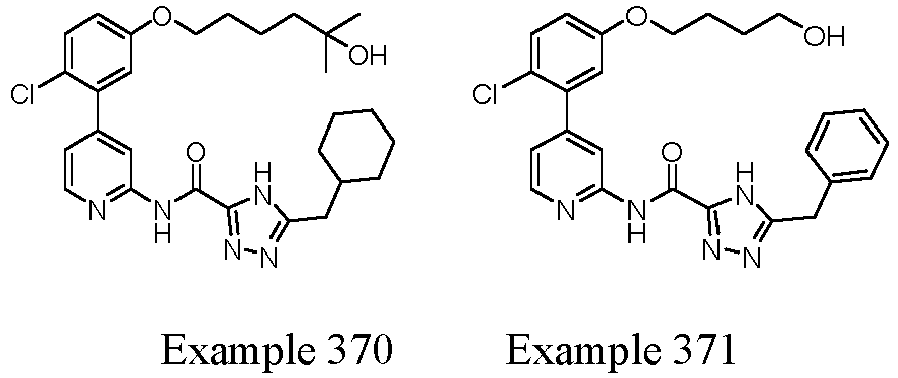
- The preparation was carried out in a similar manner to Example 92, except that in step 1, 4-bromo-1-butanol was used in place of iodomethane, and 3-bromo-4-chlorophenol was used in place of 2-bromo-3-methylphenol. 1H NMR (400 MHz, DMSO-d 6) δ 14.56 (s, 1H), 9.92 (s, 1H), 8.45 (d, J = 5.1 Hz, 1H), 8.22 (s, 1H), 7.51 (d, J = 8.8 Hz, 1H), 7.40 - 7.30 (m, 4H), 7.30 - 7.21 (m, 2H), 7.06 (dd, J = 8.8, 3.0 Hz, 1H), 7.02 (d, J = 3.0 Hz, 1H), 4.45 (t, J = 5.1 Hz, 1H), 4.18 (s, 2H), 4.03 (t, J = 6.5 Hz, 2H), 3.47 - 3.41 (m, 2H), 1.81 - 1.69 (m, 2H), 1.61 - 1.50 (m, 2H). MS: 478 [M+H]+.
- The preparation was carried out in a similar manner to Example 92, except that in step 1, 4-bromo-1-butanol was used in place of iodomethane, 3-bromo-4-chlorophenol was used in place of 2-bromo-3-methylphenol, and in step 3, ethyl 5-(2-fluorobenzyl)-4H-1,2,4-triazol-3-carboxylate was used in place of ethyl 5-benzyl-4H-1,2,4-triazol-3-carboxylate. 1H NMR (400 MHz, DMSO-d 6) δ 14.54 (s, 1H), 9.91 (s, 1H), 8.45 (d, J = 5.1 Hz, 1H), 8.21 (s, 1H), 7.51 (d, J = 8.8 Hz, 1H), 7.46 - 7.31 (m, 2H), 7.28 (d, J = 5.2 Hz, 1H), 7.26 - 7.15 (m, 2H), 7.11 - 6.98 (m, 2H), 4.45 (t, J = 5.2 Hz, 1H), 4.21 (s, 2H), 4.03 (t, J = 6.5 Hz, 2H), 3.46 - 3.42 (m, 2H), 1.80 - 1.67 (m, 2H), 1.62 - 1.49 (m, 2H). MS: 496 [M+H]+.

- The preparation was carried out in a similar manner to Example 92, except that in step 1, 4-bromo-1-butanol was used in place of iodomethane, 3-bromo-4-chlorophenol was used in place of 2-bromo-3-methylphenol, and in step 3, ethyl 5-(cyclopentylmethyl)-4H-1,2,4-triazol-3-carboxylate was used in place of ethyl 5-benzyl-4H-1,2,4-triazol-3-carboxylate. 1H NMR (400 MHz, DMSO-d 6) δ 14.38 (s, 1H), 9.88 (s, 1H), 8.46 (d, J = 5.2 Hz, 1H), 8.24 (s, 1H), 7.51 (d, J = 8.8 Hz, 1H), 7.29 (d, J = 5.0 Hz, 1H), 7.12 - 6.99 (m, 2H), 4.45 (t, J = 5.2 Hz, 1H), 4.04 (t, J = 6.5 Hz, 2H), 3.46 - 3.43 (m, 2H), 2.78 (d, J = 7.5 Hz, 2H), 2.31 - 2.23 (m, 1H), 1.78 - 1.68 (m, 4H), 1.65 - 1.48 (m, 6H), 1.25 - 1.22 (m, 2H). MS: 470 [M+H]+.
- The preparation was carried out in a similar manner to Example 92, except that in step 1, 4-bromo-1-butanol was used in place of iodomethane, 3-bromo-4-chlorophenol was used in place of 2-bromo-3-methylphenol, and in step 3, ethyl 5-(cyclohexylmethyl)-4H-1,2,4-triazol-3-carboxylate was used in place of ethyl 5-benzyl-4H-1,2,4-triazol-3-carboxylate. 1H NMR (400 MHz, DMSO-d 6) δ 14.39 (s, 1H), 9.89 (s, 1H), 8.46 (dd, J = 5.1, 0.8 Hz, 1H), 8.24 (d, J = 1.1 Hz, 1H), 7.51 (d, J = 8.8 Hz, 1H), 7.28 (dd, J = 5.1, 1.6 Hz, 1H), 7.13 - 6.98 (m, 2H), 4.45 (t, J = 5.2 Hz, 1H), 4.04 (t, J = 6.5 Hz, 2H), 3.47 - 3.41 (m, 2H), 2.67 (d, J = 7.0 Hz, 2H), 1.81 - 1.52 (m, 10H), 1.22 - 0.90 (m, 5H). MS: 484 [M+H]+.

- The preparation was carried out in a similar manner to Example 92, except that in step 1, 5-bromo-1-pentanol was used in place of iodomethane, and 3-bromo-4-chlorophenol was used in place of 2-bromo-3-methylphenol. 1H NMR (400 MHz, DMSO-d 6) δ 14.61 (s, 1H), 9.95 (s, 1H), 8.45 (d, J = 5.0 Hz, 1H), 8.22 (d, J = 1.6 Hz, 1H), 7.51 (d, J = 8.8 Hz, 1H), 7.39 - 7.30 (m, 4H), 7.30 - 7.19 (m, 2H), 7.06 (dd, J = 8.8, 3.0 Hz, 1H), 7.02 (d, J = 3.0 Hz, 1H), 4.44 - 4.30 (m, 1H), 4.18 (s, 2H), 4.02 (t, J = 6.5 Hz, 2H), 3.44 - 3.37 (m, 2H), 1.78 - 1.64 (m, 2H), 1.53 - 1.35 (m, 4H). MS: 492 [M+H]+.
- The preparation was carried out in a similar manner to Example 92, except that in step 1, 5-bromo-1-pentanol was used in place of iodomethane, 3-bromo-4-chlorophenol was used in place of 2-bromo-3-methylphenol, and in step 3, ethyl 5-(2-fluorobenzyl)-4H-1,2,4-triazol-3-carboxylate was used in place of ethyl 5-benzyl-4H-1,2,4-triazol-3-carboxylate. 1H NMR (400 MHz, DMSO-d 6) δ 14.68 (s, 1H), 9.94 (s, 1H), 8.45 (d, J = 5.2 Hz, 1H), 8.21 (d, J = 1.6 Hz, 1H), 7.50 (d, J = 8.8 Hz, 1H), 7.45 - 7.31 (m, 2H), 7.28 (dd, J = 5.1, 1.6 Hz, 1H), 7.26 - 7.13 (m, 2H), 7.11 - 6.99 (m, 2H), 4.38 (s, 1H), 4.21 (s, 2H), 4.01 (t, J = 6.5 Hz, 2H), 3.45 - 3.37 (m, 2H), 1.79 - 1.66 (m, 2H), 1.52 - 1.37 (m, 4H). MS: 510 [M+H]+.

- The preparation was carried out in a similar manner to Example 92, except that in step 1, 5-bromo-1-pentanol was used in place of iodomethane, 3-bromo-4-chlorophenol was used in place of 2-bromo-3-methylphenol, and in step 3, ethyl 5-(cyclopentylmethyl)-4H-1,2,4-triazol-3-carboxylate was used in place of ethyl 5-benzyl-4H-1,2,4-triazol-3-carboxylate. 1H NMR (400 MHz, DMSO-d 6) δ 14.38 (s, 1H), 9.89 (s, 1H), 8.46 (d, J = 5.1 Hz, 1H), 8.24 (s, 1H), 7.51 (d, J = 8.8 Hz, 1H), 7.28 (dd, J = 5.1, 1.6 Hz, 1H), 7.14 - 6.96 (m, 2H), 4.38 (t, J = 5.2 Hz, 1H), 4.02 (t, J = 6.5 Hz, 2H), 3.46 - 3.35 (m, 2H), 2.78 (d, J = 7.5 Hz, 2H), 2.36 - 2.20 (m, 1H), 1.80 - 1.67 (m, 4H), 1.67 - 1.38 (m, 8H), 1.30 - 1.15 (m, 2H). MS: 484 [M+H]+.
- The preparation was carried out in a similar manner to Example 92, except that in step 1, 5-bromo-1-pentanol was used in place of iodomethane, 3-bromo-4-chlorophenol was used in place of 2-bromo-3-methylphenol, and in step 3, ethyl 5-(cyclohexylmethyl)-4H-1,2,4-triazol-3-carboxylate was used in place of ethyl 5-benzyl-4H-1,2,4-triazol-3-carboxylate. 1H NMR (400 MHz, DMSO-d 6) δ 14.38 (s, 1H), 9.89 (s, 1H), 8.46 (d, J = 5.1 Hz, 1H), 8.24 (d, J = 1.5 Hz, 1H), 7.51 (d, J = 8.8 Hz, 1H), 7.28 (dd, J = 5.1, 1.6 Hz, 1H), 7.07 (dd, J = 8.8, 3.1 Hz, 1H), 7.02 (d, J = 3.0 Hz, 1H), 4.38 (t, J = 5.2 Hz, 1H), 4.02 (t, J = 6.5 Hz, 2H), 3.45-3.37 (m, 2H), 2.67 (d, J = 7.0 Hz, 2H), 1.84-1.54 (m, 8H), 1.52-1.36 (m, 4H), 1.27-1.11 (m, 3H), 1.04-0.91 (m, 2H). MS: 498 [M+H]+.
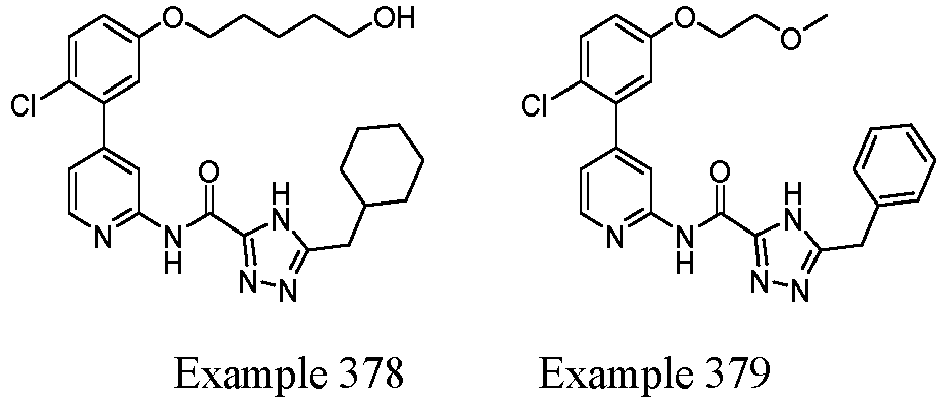
- The preparation was carried out in a similar manner to Example 92, except that in step 1, 1-bromo-2-methoxyethane was used in place of iodomethane, and 3-bromo-4-chlorophenol was used in place of 2-bromo-3-methylphenol. 1H NMR (400 MHz, DMSO-d 6) δ 14.63 (s, 1H), 9.96 (s, 1H), 8.45 (dd, J = 5.1, 0.8 Hz, 1H), 8.24 (dd, J = 1.6, 0.8 Hz, 1H), 7.51 (d, J = 8.7 Hz, 1H), 7.43 - 7.30 (m, 4H), 7.30 - 7.20 (m, 2H), 7.15 - 6.98 (m, 2H), 4.25 - 4.10 (m, 4H), 3.71 - 3.59 (m, 2H), 3.30 (s, 3H). MS: 464 [M+H]+.
- The preparation was carried out in a similar manner to Example 92, except that in step 1, 1-bromo-2-methoxyethane was used in place of iodomethane, 3-bromo-4-chlorophenol was used in place of 2-bromo-3-methylphenol, and in step 3, ethyl 5-(2-fluorobenzyl)-4H-1,2,4-triazol-3-carboxylate was used in place of ethyl 5-benzyl-4H-1,2,4-triazol-3-carboxylate. 1H NMR (400 MHz, DMSO-d 6) δ 14.69 (s, 1H), 9.94 (s, 1H), 8.56 - 8.38 (m, 1H), 8.31 - 8.14 (m, 1H), 7.51 (d, J = 8.8 Hz, 1H), 7.46 - 7.14 (m, 5H), 7.14 - 6.94 (m, 2H), 4.21 (s, 2H), 4.18 - 4.11 (m, 2H), 3.73 - 3.60 (m, 2H), 3.30 (s, 3H). MS: 482 [M+H]+.

- The preparation was carried out in a similar manner to Example 92, except that in
step 1, 1-bromo-2-methoxyethane was used in place of iodomethane, 3-bromo-4-chlorophenol was used in place of 2-bromo-3-methylphenol, and in step 3, ethyl 5-(cyclopentylmethyl)-4H-1,2,4-triazol-3-carboxylate was used in place of ethyl 5-benzyl-4H-1,2,4-triazol-3-carboxylate. 1H NMR (400 MHz, DMSO-d 6) δ 14.40 (s, 1H), 9.90 (s, 1H), 8.46 (d, J = 5.1 Hz, 1H), 8.25 (t, J = 1.1 Hz, 1H), 7.52 (d, J = 8.8 Hz, 1H), 7.29 (dd, J = 5.1, 1.6 Hz, 1H), 7.16 - 6.98 (m, 2H), 4.25 - 4.09 (m, 2H), 3.75 - 3.61 (m, 2H), 3.30 (s, 3H), 2.78 (d, J = 7.5 Hz, 2H), 2.37 - 2.18 (m, 1H), 1.81 - 1.67 (m, 2H), 1.67 - 1.44 (m, 4H), 1.32 - 1.13 (m, 2H). MS: 456 [M+H]+. - The preparation was carried out in a similar manner to Example 92, except that in
step 1, 1-bromo-2-methoxyethane was used in place of iodomethane, 3-bromo-4-chlorophenol was used in place of 2-bromo-3-methylphenol, and in step 3, ethyl 5-(cyclohexylmethyl)-4H-1,2,4-triazol-3-carboxylate was used in place of ethyl 5-benzyl-4H-1,2,4-triazol-3-carboxylate. 1H NMR (400 MHz, DMSO-d 6) δ 14.40 (s, 1H), 9.90 (s, 1H), 8.46 (d, J = 5.1 Hz, 1H), 8.25 (d, J = 1.5 Hz, 1H), 7.52 (d, J = 8.8 Hz, 1H), 7.29 (dd, J = 5.1, 1.6 Hz, 1H), 7.16 - 7.00 (m, 2H), 4.23 - 4.10 (m, 2H), 3.72 - 3.61 (m, 2H), 3.30 (s, 3H), 2.67 (d, J = 7.1 Hz, 2H), 1.85 - 1.53 (m, 6H), 1.28 - 1.11 (m, 3H), 1.03 - 0.90 (m, 2H). MS: 470 [M+H]+.
- The preparation was carried out in a similar manner to Example 92, except that in
step 1, 1-bromo-2-ethoxyethane was used in place of iodomethane, and 3-bromo-4-chlorophenol was used in place of 2-bromo-3-methylphenol. 1H NMR (400 MHz, DMSO-d 6) δ 14.60 (s, 1H), 9.94 (s, 1H), 8.46 (d, J = 5.2 Hz, 1H), 8.23 (s, 1H), 7.52 (d, J = 8.8 Hz, 1H), 7.43-7.30 (m, 4H), 7.30-7.22 (m, 2H), 7.18-6.97 (m, 2H), 4.22 - 4.11 (m, 4H), 3.73 - 3.66 (m, 2H), 3.49 (q, J = 7.0 Hz, 2H), 1.12 (t, J = 7.0 Hz, 3H). MS: 478 [M+H]+. - The preparation was carried out in a similar manner to Example 92, except that in
step 1, 1-bromo-2-ethoxyethane was used in place of iodomethane, 3-bromo-4-chlorophenol was used in place of 2-bromo-3-methylphenol, and in step 3, ethyl 5-(2-fluorobenzyl)-4H-1,2,4-triazol-3-carboxylate was used in place of ethyl 5-benzyl-4H-1,2,4-triazol-3-carboxylate. 1H NMR (400 MHz, DMSO-d 6) δ 14.68 (s, 1H), 9.94 (s, 1H), 8.45 (d, J = 5.2 Hz, 1H), 8.28 - 8.16 (m, 1H), 7.51 (d, J = 8.8 Hz, 1H), 7.46 - 7.13 (m, 5H), 7.13 - 6.97 (m, 2H), 4.21 (s, 2H), 4.18 - 4.09 (m, 2H), 3.75 - 3.63 (m, 2H), 3.49 (q, J = 7.0 Hz, 2H), 1.11 (t, J = 7.0 Hz, 3H). MS: 496 [M+H]+.
- The preparation was carried out in a similar manner to Example 92, except that in
step 1, 1-bromo-2-ethoxyethane was used in place of iodomethane, 3-bromo-4-chlorophenol was used in place of 2-bromo-3-methylphenol, and in step 3, ethyl 5-(cyclopentylmethyl)-4H-1,2,4-triazol-3-carboxylate was used in place of ethyl 5-benzyl-4H-1,2,4-triazol-3-carboxylate. 1H NMR (400 MHz, DMSO-d 6) δ 14.42 (s, 1H), 9.90 (s, 1H), 8.46 (dd, J = 5.1, 0.8 Hz, 1H), 8.25 (t, J = 1.1 Hz, 1H), 7.52 (d, J = 8.8 Hz, 1H), 7.29 (dd, J = 5.1, 1.6 Hz, 1H), 7.17-6.96 (m, 2H), 4.23-4.09 (m, 2H), 3.75-3.65 (m, 2H), 3.49 (q, J = 7.0 Hz, 2H), 2.78 (d, J = 7.5 Hz, 2H), 2.36-2.18 (m, 1H), 1.80-1.67 (m, 2H), 1.67-1.57 (m, 2H), 1.57-1.44 (m, 2H), 1.25-1.16 (m, 2H), 1.12 (t, J = 7.0 Hz, 3H). MS: 470 [M+H]+. - The preparation was carried out in a similar manner to Example 92, except that in
step 1, 1-bromo-2-ethoxyethane was used in place of iodomethane, 3-bromo-4-chlorophenol was used in place of 2-bromo-3-methylphenol, and in step 3, ethyl 5-(cyclohexylmethyl)-4H-1,2,4-triazol-3-carboxylate was used in place of ethyl 5-benzyl-4H-1,2,4-triazol-3-carboxylate. 1H NMR (400 MHz, DMSO-d 6) δ 14.41 (s, 1H), 9.90 (s, 1H), 8.46 (d, J = 5.1 Hz, 1H), 8.25 (s, 1H), 7.52 (d, J = 8.8 Hz, 1H), 7.29 (dd, J = 5.1, 1.7 Hz, 1H), 7.20 - 7.00 (m, 2H), 4.16 (dd, J = 5.6, 3.5 Hz, 2H), 3.70 (dd, J = 5.6, 3.4 Hz, 2H), 3.50 (q, J = 7.0 Hz, 2H), 2.67 (d, J = 7.0 Hz, 2H), 1.83 - 1.53 (m, 6H), 1.25 - 1.14 (m, 3H), 1.12 (t, J = 7.0 Hz, 3H), 1.06 - 0.88 (m, 2H). MS: 484 [M+H]+.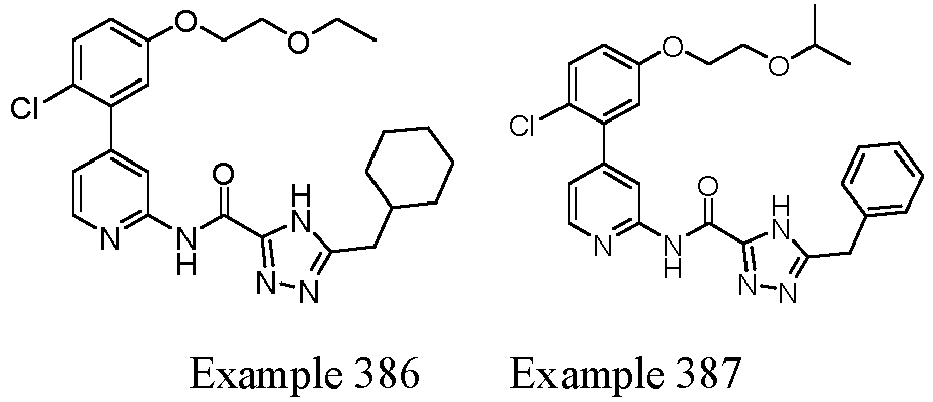
- The preparation was carried out in a similar manner to Example 92, except that in
step 1, 1-bromo-2-isopropoxyethane was used in place of iodomethane, and 3-bromo-4-chlorophenol was used in place of 2-bromo-3-methylphenol. 1H NMR (400 MHz, DMSO-d 6) δ 14.63 (s, 1H), 9.96 (s, 1H), 8.46 (dd, J = 5.1, 0.8 Hz, 1H), 8.29 - 8.16 (m, 1H), 7.51 (d, J = 8.7 Hz, 1H), 7.44 - 7.18 (m, 6H), 7.18 - 6.96 (m, 2H), 4.18 (s, 2H), 4.15 - 4.05 (m, 2H), 3.75 - 3.66 (m, 2H), 3.61 (p, J = 6.1 Hz, 1H), 1.09 (d, J = 6.0 Hz, 6H). MS: 492 [M+H]+. - The preparation was carried out in a similar manner to Example 92, except that in
step 1, 1-bromo-2-isopropoxyethane was used in place of iodomethane, 3-bromo-4-chlorophenol was used in place of 2-bromo-3-methylphenol, and in step 3, ethyl 5-(2-fluorobenzyl)-4H-1,2,4-triazol-3-carboxylate was used in place of ethyl 5-benzyl-4H-1,2,4-triazol-3-carboxylate. 1H NMR (400 MHz, DMSO-d 6) δ 14.68 (s, 1H), 9.94 (s, 1H), 8.45 (dd, J = 5.1, 0.8 Hz, 1H), 8.30 - 8.14 (m, 1H), 7.51 (d, J = 8.8 Hz, 1H), 7.46 - 7.25 (m, 3H), 7.25 - 7.13 (m, 2H), 7.13 - 6.97 (m, 2H), 4.21 (s, 2H), 4.17 - 4.06 (m, 2H), 3.74 - 3.65 (m, 2H), 3.61 (p, J = 6.1 Hz, 1H), 1.09 (d, J = 6.1 Hz, 6H). MS: 510 [M+H]+.
- The preparation was carried out in a similar manner to Example 92, except that in
step 1, 1-bromo-2-isopropoxyethane was used in place of iodomethane, 3-bromo-4-chlorophenol was used in place of 2-bromo-3-methylphenol, and in step 3, ethyl 5-(cyclopentylmethyl)-4H-1,2,4-triazol-3-carboxylate was used in place of ethyl 5-benzyl-4H-1,2,4-triazol-3-carboxylate. 1H NMR (400 MHz, DMSO-d 6) δ 14.42 (s, 1H), 9.90 (s, 1H), 8.46 (d, J = 5.1 Hz, 1H), 8.25 (d, J = 1.4 Hz, 1H), 7.52 (d, J = 8.7 Hz, 1H), 7.29 (dd, J = 5.1, 1.6 Hz, 1H), 7.19 - 6.99 (m, 2H), 4.22 - 4.05 (m, 2H), 3.75 - 3.66 (m, 2H), 3.62 (p, J = 6.1 Hz, 1H), 2.78 (d, J = 7.5 Hz, 2H), 2.36 - 2.20 (m, 1H), 1.84 - 1.66 (m, 2H), 1.66 - 1.46 (m, 4H), 1.26 - 1.18 (m, 2H), 1.10 (d, J= 6.1 Hz, 6H). MS: 484 [M+H]+. - The preparation was carried out in a similar manner to Example 92, except that in
step 1, 1-bromo-2-isopropoxyethane was used in place of iodomethane, 3-bromo-4-chlorophenol was used in place of 2-bromo-3-methylphenol, and in step 3, ethyl 5-(cyclohexylmethyl)-4H-1,2,4-triazol-3-carboxylate was used in place of ethyl 5-benzyl-4H-1,2,4-triazol-3-carboxylate. 1H NMR (400 MHz, DMSO-d 6) δ 14.40 (s, 1H), 9.90 (s, 1H), 8.47 (d, J = 5.2 Hz, 1H), 8.25 (s, 1H), 7.52 (d, J = 8.8 Hz, 1H), 7.29 (dd, J = 5.1, 1.6 Hz, 1H), 7.15 - 6.96 (m, 2H), 4.18 - 4.09 (m, 2H), 3.74 - 3.65 (m, 2H), 3.62 (p, J = 6.1 Hz, 1H), 2.67 (d, J = 7.1 Hz, 2H), 1.85 - 1.56 (m, 6H), 1.26 - 1.17 (m, 3H), 1.10 (d, J = 6.1 Hz, 6H), 1.05 - 0.91 (m, 2H). MS: 498 [M+H]+.
- The preparation was carried out in a similar manner to Example 64, except that in
step 1, 3-bromo-4-chlorophenol was used in place of 3-bromo-4-methylphenol. 1H NMR (400 MHz, DMSO-d 6) δ 14.58 (s, 1H), 9.93 (s, 1H), 8.45 (d, J = 5.2 Hz, 1H), 8.23 (s, 1H), 7.51 (d, J = 8.7 Hz, 1H), 7.43 - 7.18 (m, 6H), 7.14 - 6.97 (m, 2H), 4.18 (s, 2H), 4.13 - 4.00 (m, 2H), 3.64 (t, J = 4.8 Hz, 2H), 1.15 (s, 9H). MS: 506 [M+H]+. - The preparation was carried out in a similar manner to Example 64, except that in
step 1, 3-bromo-4-chlorophenol was used in place of 3-bromo-4-methylphenol, and in step 3, ethyl 5-(2-fluorobenzyl)-4H-1,2,4-triazol-3-carboxylate was used in place of ethyl 5-benzyl-4H-1,2,4-triazol-3-carboxylate. 1H NMR (400 MHz, DMSO-d 6) δ 14.61 (s, 1H), 9.90 (s, 1H), 8.45 (d, J = 5.1 Hz, 1H), 8.22 (s, 1H), 7.51 (d, J = 8.8 Hz, 1H), 7.45 - 7.31 (m, 2H), 7.28 (dd, J = 5.2, 1.6 Hz, 1H), 7.26 - 7.15 (m, 2H), 7.12 - 7.01 (m, 2H), 4.21 (s, 2H), 4.14 - 4.03 (m, 2H), 3.69 - 3.58 (m, 2H), 1.15 (s, 9H). MS: 524 [M+H]+.
- The preparation was carried out in a similar manner to Example 64, except that in
step 1, 3-bromo-4-chlorophenol was used in place of 3-bromo-4-methylphenol, and in step 3, ethyl 5-(cyclopentylmethyl)-4H-1,2,4-triazol-3-carboxylate was used in place of ethyl 5-benzyl-4H-1,2,4-triazol-3-carboxylate. 1H NMR (400 MHz, DMSO-d 6) δ 14.37 (s, 1H), 9.87 (s, 1H), 8.46 (d, J = 5.2 Hz, 1H), 8.25 (s, 1H), 7.51 (d, J = 8.7 Hz, 1H), 7.34 - 7.24 (m, 1H), 7.16 - 6.96 (m, 2H), 4.16 - 4.03 (m, 2H), 3.70 - 3.56 (m, 2H), 2.79 (d, J = 7.5 Hz, 2H), 2.37 - 2.22 (m, 1H), 1.80 - 1.66 (m, 2H), 1.66 - 1.57 (m, 2H), 1.57 - 1.41 (m, 2H), 1.29 - 1.18 (m, 2H), 1.15 (s, 9H). MS: 498 [M+H]+. - The preparation was carried out in a similar manner to Example 64, except that in
step 1, 3-bromo-4-chlorophenol was used in place of 3-bromo-4-methylphenol, and in step 3, ethyl 5-(cyclohexylmethyl)-4H-1,2,4-triazol-3-carboxylate was used in place of ethyl 5-benzyl-4H-1,2,4-triazol-3-carboxylate. 1H NMR (400 MHz, DMSO-d 6) δ 14.37 (s, 1H), 9.88 (s, 1H), 8.46 (d, J = 5.1 Hz, 1H), 8.25 (s, 1H), 7.52 (d, J = 8.7 Hz, 1H), 7.29 (dd, J = 5.1, 1.6 Hz, 1H), 7.13 - 7.00 (m, 2H), 4.17 - 4.03 (m, 2H), 3.70 - 3.60 (m, 2H), 2.67 (d, J = 7.0 Hz, 2H), 1.84 - 1.57 (m, 6H), 1.28 - 1.13 (m, 12H), 1.03 - 0.91 (m, 2H). MS: 512 [M+H]+.
- The preparation was carried out in a similar manner to Example 92, except that in
step 1, 1-bromo-3-methoxypropane was used in place of iodomethane, and 3-bromo-4-chlorophenol was used in place of 2-bromo-3-methylphenol. 1H NMR (400 MHz, DMSO-d 6) δ 14.63 (s, 1H), 9.96 (s, 1H), 8.45 (dd, J = 5.1, 0.8 Hz, 1H), 8.22 (d, J = 1.2 Hz, 1H), 7.51 (d, J = 8.8 Hz, 1H), 7.40-7.23 (m, 6H), 7.13-6.95 (m, 2H), 4.18 (s, 2H), 4.07 (t, J = 6.4 Hz, 2H), 3.46 (t, J = 6.2 Hz, 2H), 3.24 (s, 3H), 2.00-1.89 (m, 2H). MS: 478 [M+H]+. - The preparation was carried out in a similar manner to Example 92, except that in
step 1, 1-bromo-3-methoxypropane was used in place of iodomethane, 3-bromo-4-chlorophenol was used in place of 2-bromo-3-methylphenol, and in step 3, ethyl 5-(2-fluorobenzyl)-4H-1,2,4-triazol-3-carboxylate was used in place of ethyl 5-benzyl-4H-1,2,4-triazol-3-carboxylate. 1H NMR (400 MHz, DMSO-d 6) δ 14.69 (s, 1H), 9.94 (s, 1H), 8.45 (dd, J = 5.1, 0.8 Hz, 1H), 8.28 - 8.13 (m, 1H), 7.51 (d, J = 8.8 Hz, 1H), 7.44 - 7.31 (m, 2H), 7.28 (dd, J = 5.1, 1.6 Hz, 1H), 7.26 - 7.16 (m, 2H), 7.10 - 6.95 (m, 2H), 4.21 (s, 2H), 4.07 (t, J = 6.4 Hz, 2H), 3.46 (t, J = 6.2 Hz, 2H), 3.23 (s, 3H), 2.03 - 1.89 (m, 2H). MS: 496 [M+H]+.
- The preparation was carried out in a similar manner to Example 92, except that in
step 1, 1-bromo-3-methoxypropane was used in place of iodomethane, 3-bromo-4-chlorophenol was used in place of 2-bromo-3-methylphenol, and in step 3, ethyl 5-(cyclopentylmethyl)-4H-1,2,4-triazol-3-carboxylate was used in place of ethyl 5-benzyl-4H-1,2,4-triazol-3-carboxylate. 1H NMR (400 MHz, DMSO-d 6) δ 14.42 (s, 1H), 9.91 (s, 1H), 8.46 (dd, J = 5.1, 0.8 Hz, 1H), 8.24 (dd, J = 1.5, 0.8 Hz, 1H), 7.51 (d, J = 8.8 Hz, 1H), 7.28 (dd, J = 5.1, 1.6 Hz, 1H), 7.13 - 6.99 (m, 2H), 4.08 (t, J = 6.4 Hz, 2H), 3.46 (t, J = 6.3 Hz, 2H), 3.24 (s, 3H), 2.78 (d, J = 7.5 Hz, 2H), 2.36 - 2.18 (m, 1H), 2.00 - 1.89 (m, 2H), 1.79 - 1.67 (m, 2H), 1.67 - 1.44 (m, 4H), 1.30 - 1.15 (m, 2H). MS: 470 [M+H]+. - The preparation was carried out in a similar manner to Example 92, except that in
step 1, 1-bromo-3-methoxypropane was used in place of iodomethane, 3-bromo-4-chlorophenol was used in place of 2-bromo-3-methylphenol, and in step 3, ethyl 5-(cyclohexylmethyl)-4H-1,2,4-triazol-3-carboxylate was used in place of ethyl 5-benzyl-4H-1,2,4-triazol-3-carboxylate. 1H NMR (400 MHz, DMSO-d 6) δ 14.40 (s, 1H), 9.90 (s, 1H), 8.52 - 8.40 (m, 1H), 8.24 (d, J = 1.2 Hz, 1H), 7.51 (d, J = 8.8 Hz, 1H), 7.28 (dd, J = 5.1, 1.6 Hz, 1H), 7.14 - 6.96 (m, 2H), 4.07 (t, J = 6.4 Hz, 2H), 3.46 (t, J = 6.3 Hz, 2H), 3.24 (s, 3H), 2.67 (d, J = 7.1 Hz, 2H), 2.02 - 1.87 (m, 2H), 1.82 - 1.58 (m, 6H), 1.28 - 1.11 (m, 3H), 1.05 - 0.89 (m, 2H). MS: 484 [M+H]+.
- The preparation was carried out in a similar manner to Example 64, except that in
step 1, (tetrahydro-2H-pyran-4-yl)methanol was used in place of 2-(tert-butoxy)ethan-1-ol, and 3-bromo-4-chlorophenol was used in place of 3-bromo-4-methylphenol. 1H NMR (400 MHz, DMSO-d 6) δ 14.57 (s, 1H), 9.95 (s, 1H), 8.45 (d, J = 5.1 Hz, 1H), 8.22 (d, J = 1.5 Hz, 1H), 7.51 (d, J = 8.8 Hz, 1H), 7.42 -7.30 (m, 4H), 7.30 - 7.19 (m, 2H), 7.14 - 6.97 (m, 2H), 4.18 (s, 2H), 3.96 - 3.80 (m, 4H), 3.35 - 3.26 (m, 2H), 2.05 - 1.94 (m, 1H), 1.73 - 1.61 (m, 2H), 1.40 - 1.24 (m, 2H). MS: 504 [M+H]+. - The preparation was carried out in a similar manner to Example 64, except that in
step 1, (tetrahydro-2H-pyran-4-yl)methanol was used in place of 2-(tert-butoxy)ethan-1-ol, 3-bromo-4-chlorophenol was used in place of 3-bromo-4-methylphenol, and in step 3, ethyl 5-(2-fluorobenzyl)-4H-1,2,4-triazol-3-carboxylate was used in place of ethyl 5-benzyl-4H-1,2,4-triazol-3-carboxylate. 1H NMR (400 MHz, DMSO-d 6) δ 14.66 (s, 1H), 9.94 (s, 1H), 8.45 (d, J= 5.1 Hz, 1H), 8.21 (d, J = 1.5 Hz, 1H), 7.51 (d, J= 8.8 Hz, 1H), 7.47 - 7.12 (m, 5H), 7.12 - 6.95 (m, 2H), 4.21 (s, 2H), 3.95 - 3.79 (m, 4H), 3.33 - 3.26 (m, 2H), 2.06 - 1.92 (m, 1H), 1.75 - 1.62 (m, 2H), 1.41 - 1.19 (m, 2H). MS: 522 [M+H]+.
- The preparation was carried out in a similar manner to Example 64, except that in
step 1, (tetrahydro-2H-pyran-4-yl)methanol was used in place of 2-(tert-butoxy)ethan-1-ol, 3-bromo-4-chlorophenol was used in place of 3-bromo-4-methylphenol, and in step 3, ethyl 5-(cyclopentylmethyl)-4H-1,2,4-triazol-3-carboxylate was used in place of ethyl 5-benzyl-4H-1,2,4-triazol-3-carboxylate. 1H NMR (400 MHz, DMSO-d 6) δ 14.41 (s, 1H), 9.91 (s, 1H), 8.46 (d, J = 5.1 Hz, 1H), 8.30 - 8.19 (m, 1H), 7.51 (d, J = 8.8 Hz, 1H), 7.28 (dd, J = 5.1, 1.6 Hz, 1H), 7.15 - 6.97 (m, 2H), 3.94 - 3.81 (m, 4H), 3.32 - 3.22 (m, 2H), 2.78 (d, J = 7.5 Hz, 2H), 2.36 - 2.17 (m, 1H), 2.06 - 1.93 (m, 1H), 1.79 - 1.46 (m, 8H), 1.39 - 1.14 (m, 4H). MS: 496 [M+H]+. - The preparation was carried out in a similar manner to Example 64, except that in
step 1, (tetrahydro-2H-pyran-4-yl)methanol was used in place of 2-(tert-butoxy)ethan-1-ol, 3-bromo-4-chlorophenol was used in place of 3-bromo-4-methylphenol, and in step 3, ethyl 5-(cyclohexylmethyl)-4H-1,2,4-triazol-3-carboxylate was used in place of ethyl 5-benzyl-4H-1,2,4-triazol-3-carboxylate. 1H NMR (400 MHz, DMSO-d 6) δ 14.41 (s, 1H), 9.91 (s, 1H), 8.46 (d, J = 5.1 Hz, 1H), 8.24 (d, J = 1.6 Hz, 1H), 7.61 - 7.44 (m, 1H), 7.28 (dd, J = 5.1, 1.6 Hz, 1H), 7.18 - 6.96 (m, 2H), 4.00 - 3.80 (m, 4H), 3.33 - 3.23 (m, 2H), 2.67 (d, J = 7.0 Hz, 2H), 2.10 - 1.91 (m, 1H), 1.83 - 1.54 (m, 8H), 1.38 - 1.09 (m, 5H), 1.04 - 0.90 (m, 2H). MS: 510 [M+H]+.
- The preparation was carried out in a similar manner to Example 85, except that in
step 1, 2-(tetrahydro-2H-pyran-4-yl)ethan-1-ol was used in place of 2-(2-methoxyethoxy)ethan-1-ol, and instep 2, 3-bromo-4-chlorophenol was used in place of 3-bromo-4-methylphenol. 1H NMR (400 MHz, DMSO-d 6) δ 14.63 (s, 1H), 9.96 (s, 1H), 8.46 (d, J = 5.1 Hz, 1H), 8.23 (d, J = 1.5 Hz, 1H), 7.51 (d, J = 8.8 Hz, 1H), 7.41 - 7.21 (m, 6H), 7.12 - 7.00 (m, 2H), 4.18 (s, 2H), 4.07 (t, J = 6.2 Hz, 2H), 3.88 - 3.76 (m, 2H), 3.31 - 3.22 (m, 2H), 1.76 - 1.55 (m, 5H), 1.23 - 1.14 (m, 2H). MS: 518 [M+H]+. - The preparation was carried out in a similar manner to Example 85, except that in
step 1, 2-(tetrahydro-2H-pyran-4-yl)ethan-1-ol was used in place of 2-(2-methoxyethoxy)ethan-1-ol, instep 2, 3-bromo-4-chlorophenol was used in place of 3-bromo-4-methylphenol, and in step 4, ethyl 5-(2-fluorobenzyl)-4H-1,2,4-triazol-3-carboxylate was used in place of ethyl 5-benzyl-4H-1,2,4-triazol-3-carboxylate. 1H NMR (400 MHz, DMSO-d 6) δ 14.60 (s, 1H), 9.95 (s, 1H), 8.45 (d, J = 5.1 Hz, 1H), 8.28 - 8.14 (m, 1H), 7.51 (d, J = 8.7 Hz, 1H), 7.46 - 7.30 (m, 2H), 7.28 (dd, J = 5.1, 1.6 Hz, 1H), 7.26 - 7.12 (m, 2H), 7.12 - 7.00 (m, 2H), 4.20 (s, 2H), 4.07 (t, J = 6.2 Hz, 2H), 3.88 - 3.76 (m, 2H), 3.30 - 3.24 (m, 2H), 1.79 - 1.56 (m, 5H), 1.22 - 1.13 (m, 2H). MS: 536 [M+H]+.
- The preparation was carried out in a similar manner to Example 85, except that in
step 1, 2-(tetrahydro-2H-pyran-4-yl)ethan-1-ol was used in place of 2-(2-methoxyethoxy)ethan-1-ol, instep 2, 3-bromo-4-chlorophenol was used in place of 3-bromo-4-methylphenol, and in step 4, ethyl 5-(cyclopentylmethyl)-4H-1,2,4-triazole-3-carboxylate was used in place of ethyl 5-benzyl-4H-1,2,4-triazol-3-carboxylate. 1H NMR (400 MHz, DMSO-d 6) δ 14.42 (s, 1H), 9.91 (s, 1H), 8.46 (d, J = 5.1 Hz, 1H), 8.24 (d, J = 1.5 Hz, 1H), 7.51 (d, J = 8.7 Hz, 1H), 7.28 (dd, J = 5.1, 1.6 Hz, 1H), 7.14 - 6.99 (m, 2H), 4.07 (t, J = 6.2 Hz, 2H), 3.88 - 3.75 (m, 2H), 3.31 - 3.21 (m, 2H), 2.78 (d, J = 7.5 Hz, 2H), 2.36 - 2.19 (m, 1H), 1.78 - 1.55 (m, 9H), 1.55 - 1.46 (m, 2H), 1.26 - 1.19 (m, 4H). MS: 510 [M+H]+. - The preparation was carried out in a similar manner to Example 85, except that in
step 1, 2-(tetrahydro-2H-pyran-4-yl)ethan-1-ol was used in place of 2-(2-methoxyethoxy)ethan-1-ol, instep 2, 3-bromo-4-chlorophenol was used in place of 3-bromo-4-methylphenol, and in step 4, ethyl 5-(cyclohexylmethyl)-4H-1,2,4-triazol-3-carboxylate was used in place of ethyl 5-benzyl-4H-1,2,4-triazol-3-carboxylate. 1H NMR (400 MHz, DMSO-d 6) δ 14.42 (s, 1H), 9.91 (s, 1H), 8.46 (d, J = 5.1 Hz, 1H), 8.33 - 8.17 (m, 1H), 7.51 (d, J = 8.7 Hz, 1H), 7.28 (dd, J = 5.1, 1.6 Hz, 1H), 7.14 - 6.98 (m, 2H), 4.07 (t, J = 6.2 Hz, 2H), 3.87 - 3.76 (m, 2H), 3.30 - 3.21 (m, 2H), 2.67 (d, J = 7.1 Hz, 2H), 1.83 - 1.51 (m, 11H), 1.27 - 1.12 (m, 5H), 1.05 - 0.89 (m, 2H). MS: 524 [M+H]+.
- The preparation was carried out in a similar manner to Example 160, except that in
step 1, 3-bromo-4-chloro-5-fluorophenol was used in place of 3-bromo-4-methylphenol. 1H NMR (400 MHz, DMSO-d 6) δ 14.65 (s, 1H), 9.91 (s, 1H), 8.45 (d, J = 5.2 Hz, 1H), 8.34 (s, 1H), 7.46 - 7.26 (m, 4H), 7.26 - 7.15 (m, 2H), 7.15 - 7.02 (m, 2H), 4.21 (s, 2H), 4.10 (s, 1H), 4.02 (t, J = 6.4 Hz, 2H), 1.77 - 1.64 (m, 2H), 1.52 - 1.42 (m, 2H), 1.07 (s, 6H). MS: 524 [M+H]+. - The preparation was carried out in a similar manner to Example 160, except that in
step 1, 3-bromo-4-chloro-5-fluorophenol was used in place of 3-bromo-4-methylphenol, and in step 4, ethyl 5-(2-fluorobenzyl)-4H-1,2,4-triazol-3-carboxylate was used in place of ethyl 5-benzyl-4H-1,2,4-triazol-3-carboxylate. 1H NMR (400 MHz, DMSO-d 6) δ 14.62 (s, 1H), 9.98 (s, 1H), 8.47 (d, J = 5.2 Hz, 1H), 8.40 (d, J = 1.7 Hz, 1H), 7.58 (dd, J = 5.2, 1.7 Hz, 1H), 7.41 (dd, J = 9.8, 1.8 Hz, 1H), 7.35 - 7.31 (m, 4H), 7.29 - 7.23 (m, 1H), 4.29 - 4.20 (m, 3H), 4.18 (s, 2H), 1.89 - 1.77 (m, 2H), 1.58 - 1.47 (m, 2H), 1.12 (s, 6H). MS: 542 [M+H]+.
- The preparation was carried out in a similar manner to Example 160, except that in
step 1, 3-bromo-4-chlorophenol was used in place of 3-bromo-4-methylphenol, in step 3, 4-bromo-5-fluoropyridin-2-amine was used in place of 4-bromopyridin-2-amine, and in step 4, ethyl 5-(2-fluorobenzyl)-4H-1,2,4-triazol-3-carboxylate was used in place of ethyl 5-benzyl-4H-1,2,4-triazol-3-carboxylate. 1H NMR (400 MHz, DMSO-d 6) δ 14.68 (s, 1H), 10.13 (s, 1H), 8.51 (d, J = 1.1 Hz, 1H), 8.12 (d, J = 5.5 Hz, 1H), 7.53 (d, J = 8.7 Hz, 1H), 7.43 - 7.29 (m, 2H), 7.26 - 7.14 (m, 2H), 7.14 - 7.03 (m, 2H), 4.20 (s, 2H), 4.17 (s, 1H), 4.01 (t, J = 6.5 Hz, 2H), 1.83 - 1.69 (m, 2H), 1.52 - 1.42 (m, 2H), 1.09 (s, 6H). MS: 542 [M+H]+. - The preparation was carried out in a similar manner to Example 160, except that in
step 1, 3-bromo-4-chlorophenol was used in place of 3-bromo-4-methylphenol, in step 3, 4-bromo-5-fluoropyridin-2-amine was used in place of 4-bromopyridin-2-amine, and in step 4, ethyl 5-(cyclohexylmethyl)-4H-1,2,4-triazol-3-carboxylate was used in place of ethyl 5-benzyl-4H-1,2,4-triazol-3-carboxylate. 1H NMR (400 MHz, DMSO-d 6) δ 14.37 (s, 1H), 10.06 (s, 1H), 8.52 (d, J = 1.2 Hz, 1H), 8.15 (d, J = 5.5 Hz, 1H), 7.54 (d, J = 8.7 Hz, 1H), 7.15 - 7.04 (m, 2H), 4.17 (s, 1H), 4.01 (t, J = 6.6 Hz, 2H), 2.67 (d, J = 7.0 Hz, 2H), 1.82 - 1.56 (m, 8H), 1.52 - 1.41 (m, 2H), 1.28 - 1.12 (m, 3H), 1.09 (s, 6H), 1.05 - 0.90 (m, 2H). MS: 530 [M+H]+.
- The preparation was carried out in a similar manner to Example 160, except that in
step 1, 3-bromo-4-chlorophenol was used in place of 3-bromo-4-methylphenol, in step 3, 4-bromo-5-chloropyridin-2-amine was used in place of 4-bromopyridin-2-amine, and in step 4, ethyl 5-(2-fluorobenzyl)-4H-1,2,4-triazol-3-carboxylate was used in place of ethyl 5-benzyl-4H-1,2,4-triazol-3-carboxylate. 1H NMR (400 MHz, DMSO-d 6) δ 14.63 (s, 1H), 10.14 (s, 1H), 8.57 (s, 1H), 8.11 (s, 1H), 7.51 (d, J = 8.9 Hz, 1H), 7.44 - 7.29 (m, 2H), 7.26 - 7.15 (m, 2H), 7.08 (dd, J = 8.9, 3.0 Hz, 1H), 7.00 (d, J = 3.0 Hz, 1H), 4.25 - 4.14 (m, 3H), 3.99 (t, J = 6.6 Hz, 2H), 1.81 - 1.69 (m, 2H), 1.52 - 1.40 (m, 2H), 1.09 (s, 6H). MS: 558 [M+H]+. - The preparation was carried out in a similar manner to Example 160, except that in
step 1, 3-bromo-4-chlorophenol was used in place of 3-bromo-4-methylphenol, in step 3, 4-bromo-5-chloropyridin-2-amine was used in place of 4-bromopyridin-2-amine, and in step 4, ethyl 5-(cyclohexylmethyl)-4H-1,2,4-triazol-3-carboxylate was used in place of ethyl 5-benzyl-4H-1,2,4-triazol-3-carboxylate. 1H NMR (400 MHz, DMSO-d 6) δ 14.38 (s, 1H), 10.09 (s, 1H), 8.58 (s, 1H), 8.13 (s, 1H), 7.52 (d, J = 8.9 Hz, 1H), 7.09 (dd, J = 8.9, 3.0 Hz, 1H), 7.00 (d, J = 3.0 Hz, 1H), 4.18 (s, 1H), 4.00 (t, J = 6.6 Hz, 2H), 2.67 (d, J = 6.9 Hz, 2H), 1.82 - 1.55 (m, 8H), 1.52 - 1.42 (m, 2H), 1.28 - 1.12 (m, 3H), 1.09 (s, 6H), 1.05 - 0.87 (m, 2H). MS: 546 [M+H]+.
- The preparation was carried out in a similar manner to Example 160, except that in
step 1, 3-bromo-4-chlorophenol was used in place of 3-bromo-4-methylphenol, in step 3, 4-bromo-5-methylpyridin-2-amine was used in place of 4-bromopyridin-2-amine, and in step 4, ethyl 5-(2-fluorobenzyl)-4H-1,2,4-triazol-3-carboxylate was used in place of ethyl 5-benzyl-4H-1,2,4-triazol-3-carboxylate. 1H NMR (400 MHz, DMSO-d 6) δ 14.58 (s, 1H), 9.80 (s, 1H), 8.32 (s, 1H), 7.93 (s, 1H), 7.50 (d, J = 8.9 Hz, 1H), 7.45 - 7.28 (m, 2H), 7.28 - 7.14 (m, 2H), 7.05 (dd, J = 8.9, 3.0 Hz, 1H), 6.90 (d, J = 3.0 Hz, 1H), 4.26 - 4.12 (m, 3H), 3.99 (t, J = 6.6 Hz, 2H), 2.05 (s, 3H), 1.82 - 1.66 (m, 2H), 1.51 - 1.41 (m, 2H), 1.08 (s, 6H). MS: 538 [M+H]+. - The preparation was carried out in a similar manner to Example 160, except that in
step 1, 3-bromo-4-chlorophenol was used in place of 3-bromo-4-methylphenol, in step 3, 4-bromo-5-methylpyridin-2-amine was used in place of 4-bromopyridin-2-amine, and in step 4, ethyl 5-(cyclohexylmethyl)-4H-1,2,4-triazol-3-carboxylate was used in place of ethyl 5-benzyl-4H-1,2,4-triazol-3-carboxylate. 1H NMR (400 MHz, DMSO-d 6) δ 14.34 (s, 1H), 9.79 (s, 1H), 8.33 (s, 1H), 7.96 (s, 1H), 7.50 (d, J = 8.9 Hz, 1H), 7.05 (dd, J = 8.9, 3.0 Hz, 1H), 6.91 (d, J = 3.0 Hz, 1H), 4.18 (s, 1H), 3.99 (t, J = 6.6 Hz, 2H), 2.66 (d, J = 7.1 Hz, 2H), 2.05 (s, 3H), 1.82 - 1.56 (m, 8H), 1.52 - 1.41 (m, 2H), 1.30 - 1.12 (m, 3H), 1.09 (s, 6H), 1.04 - 0.90 (m, 2H). MS: 526 [M+H]+.
- The preparation was carried out in a similar manner to Example 160, except that in
step 1, 3-bromo-4-chlorophenol was used in place of 3-bromo-4-methylphenol, instep 2, ethylmagnesium bromide was used in place of methylmagnesium bromide, in step 3, 4-bromo-5-fluoropyridin-2-amine was used in place of 4-bromopyridin-2-amine, and in step 4, ethyl 5-(2-fluorobenzyl)-4H-1,2,4-triazol-3-carboxylate was used in place of ethyl 5-benzyl-4H-1,2,4-triazol-3-carboxylate. 1H NMR (400 MHz, DMSO-d 6) δ 14.65 (s, 1H), 10.13 (s, 1H), 8.51 (d, J = 1.1 Hz, 1H), 8.12 (d, J = 5.5 Hz, 1H), 7.53 (d, J = 8.7 Hz, 1H), 7.45 - 7.29 (m, 2H), 7.26 - 7.15 (m, 2H), 7.14 - 7.04 (m, 2H), 4.20 (s, 2H), 4.00 (t, J = 6.5 Hz, 2H), 3.87 (s, 1H), 1.76 - 1.61 (m, 2H), 1.47 - 1.38 (m, 2H), 1.34 (q, J = 7.5 Hz, 4H), 0.77 (t, J = 7.4 Hz, 6H). MS: 570 [M+H]+. - The preparation was carried out in a similar manner to Example 160, except that in
step 1, 3-bromo-4-chlorophenol was used in place of 3-bromo-4-methylphenol, instep 2, ethylmagnesium bromide was used in place of methylmagnesium bromide, in step 3, 4-bromo-5-fluoropyridin-2-amine was used in place of 4-bromopyridin-2-amine, and in step 4, ethyl 5-(cyclohexylmethyl)-4H-1,2,4-triazol-3-carboxylate was used in place of ethyl 5-benzyl-4H-1,2,4-triazol-3-carboxylate. 1H NMR (400 MHz, DMSO-d 6) δ 14.39 (s, 1H), 10.07 (s, 1H), 8.52 (d, J = 1.1 Hz, 1H), 8.15 (d, J = 5.5 Hz, 1H), 7.53 (d, J = 8.7 Hz, 1H), 7.13 - 7.04 (m, 2H), 4.01 (t, J = 6.5 Hz, 2H), 3.88 (s, 1H), 2.66 (d, J = 7.1 Hz, 2H), 1.82 - 1.55 (m, 8H), 1.46 - 1.39 (m, 2H), 1.34 (q, J = 7.5 Hz, 4H), 1.28 - 1.09 (m, 3H), 1.05 - 0.91 (m, 2H), 0.77 (t, J = 7.5 Hz, 6H). MS: 558 [M+H]+.
- The preparation was carried out in a similar manner to Example 160, except that in
step 1, 3-bromo-4-chlorophenol was used in place of 3-bromo-4-methylphenol, instep 2, ethylmagnesium bromide was used in place of methylmagnesium bromide, in step 3, 4-bromo-5-chloropyridin-2-amine was used in place of 4-bromopyridin-2-amine, and in step 4, ethyl 5-(2-fluorobenzyl)-4H-1,2,4-triazol-3-carboxylate was used in place of ethyl 5-benzyl-4H-1,2,4-triazol-3-carboxylate. 1H NMR (400 MHz, DMSO-d 6) δ 14.62 (s, 1H), 10.13 (s, 1H), 8.57 (s, 1H), 8.11 (s, 1H), 7.51 (d, J = 8.8 Hz, 1H), 7.46 - 7.29 (m, 2H), 7.26 - 7.15 (m, 2H), 7.08 (dd, J = 8.9, 3.0 Hz, 1H), 6.99 (d, J = 3.0 Hz, 1H), 4.21 (s, 2H), 3.99 (t, J = 6.5 Hz, 2H), 3.88 (s, 1H), 1.74 - 1.61 (m, 2H), 1.45 - 1.37 (m, 2H), 1.34 (q, J = 7.5 Hz, 4H), 0.77 (t, J = 7.5 Hz, 6H). MS: 586 [M+H]+. - The preparation was carried out in a similar manner to Example 160, except that in
step 1, 3-bromo-4-chlorophenol was used in place of 3-bromo-4-methylphenol, instep 2, ethylmagnesium bromide was used in place of methylmagnesium bromide, in step 3, 4-bromo-5-chloropyridin-2-amine was used in place of 4-bromopyridin-2-amine, and in step 4, ethyl 5-(cyclohexylmethyl)-4H-1,2,4-triazol-3-carboxylate was used in place of ethyl 5-benzyl-4H-1,2,4-triazol-3-carboxylate. 1H NMR (400 MHz, DMSO-d 6) δ 14.38 (s, 1H), 10.09 (s, 1H), 8.58 (s, 1H), 8.13 (s, 1H), 7.52 (d, J = 8.9 Hz, 1H), 7.09 (dd, J = 8.9, 3.0 Hz, 1H), 7.00 (d, J = 3.0 Hz, 1H), 4.00 (t, J = 6.5 Hz, 2H), 3.88 (s, 1H), 2.67 (d, J = 6.8 Hz, 2H), 1.82 - 1.56 (m, 8H), 1.48 - 1.38 (m, 2H), 1.34 (q, J = 7.4 Hz, 4H), 1.27 - 1.09 (m, 3H), 1.05 - 0.89 (m, 2H), 0.77 (t, J = 7.4 Hz, 6H). MS: 574 [M+H]+.
- The preparation was carried out in a similar manner to Example 160, except that in
step 1, methyl 5-bromopentanoate was used in place of methyl 4-bromobutanoate, 3-bromo-4-chlorophenol was used in place of 3-bromo-4-methylphenol, in step 3, 5-fluoro-4-bromopyridin-2-amine was used in place of 4-bromopyridin-2-amine, and in step 4, ethyl 5-(2-fluorobenzyl)-4H-1,2,4-triazol-3-carboxylate was used in place of ethyl 5-benzyl-4H-1,2,4-triazol-3-carboxylate. 1H NMR (400 MHz, DMSO-d 6) δ 14.58 (s, 1H), 10.05 (s, 1H), 8.52 (d, J = 15.7 Hz, 1H), 8.14 (d, J = 5.5 Hz, 1H), 7.53 (d, J = 8.6 Hz, 1H), 7.44 - 7.07 (m, 6H), 4.23 (s, 2H), 4.08 (s, 1H), 4.01 (t, J = 6.4 Hz, 2H), 1.76 - 1.63 (m, 2H), 1.50 - 1.33 (m, 4H), 1.06 (s, 6H). MS: 556 [M+H]+. - The preparation was carried out in a similar manner to Example 160, except that in
step 1, methyl 5-bromopentanoate was used in place of methyl 4-bromobutanoate, 3-bromo-4-chlorophenol was used in place of 3-bromo-4-methylphenol, in step 3, 5-chloro-4-bromopyridin-2-amine was used in place of 4-bromopyridin-2-amine, and in step 4, ethyl 5-(2-fluorobenzyl)-4H-1,2,4-triazol-3-carboxylate was used in place of ethyl 5-benzyl-4H-1,2,4-triazol-3-carboxylate. 1H NMR (400 MHz, DMSO-d 6) δ 14.60 (s, 1H), 10.11 (s, 1H), 8.56 (s, 1H), 8.12 (s, 1H), 7.51 (d, J = 8.9 Hz, 1H), 7.46 - 7.27 (m, 2H), 7.27 - 7.13 (m, 2H), 7.09 (dd, J = 8.9, 3.0 Hz, 1H), 7.01 (d, J = 3.0 Hz, 1H), 4.23 (s, 2H), 4.11 (s, 1H), 4.00 (t, J = 6.7 Hz, 2H), 1.74 - 1.62 (m, 2H), 1.48 - 1.29 (m, 4H), 1.06 (s, 6H). MS: 572 [M+H]+.
- The preparation was carried out in a similar manner to Example 160, except that in
step 1, methyl 5-bromopentanoate was used in place of methyl 4-bromobutanoate, 3-bromo-4-chlorophenol was used in place of 3-bromo-4-methylphenol, in step 3, 5-chloro-4-bromopyridin-2-amine was used in place of 4-bromopyridin-2-amine, and in step 4, ethyl 5-(cyclohexylmethyl)-4H-1,2,4-triazol-3-carboxylate was used in place of ethyl 5-benzyl-4H-1,2,4-triazol-3-carboxylate. 1H NMR (400 MHz, DMSO-d 6) δ 14.41 (s, 1H), 10.12 (s, 1H), 8.58 (s, 1H), 8.13 (s, 1H), 7.52 (d, J = 8.9 Hz, 1H), 7.10 (dd, J = 8.9, 3.0 Hz, 1H), 7.02 (d, J = 3.0 Hz, 1H), 4.10 (s, 1H), 4.01 (t, J = 6.7 Hz, 2H), 2.66 (d, J = 7.0 Hz, 2H), 1.83 - 1.40 (m, 11H), 1.30 - 1.08 (m, 4H), 1.06 (s, 6H), 1.03 - 0.88 (m, 2H). MS: 560 [M+H]+. - The preparation was carried out in a similar manner to Example 64, except that in
step 1, (tetrahydro-2H-pyran-4-yl)methanol was used in place of 2-(tert-butoxy)ethan-1-ol, 3-bromo-4-chlorophenol was used in place of 3-bromo-4-methylphenol, instep 2, 5-fluoro-4-bromopyridin-2-amine was used in place of 4-bromopyridin-2-amine, and in step 3, ethyl 5-(2-fluorobenzyl)-4H-1,2,4-triazol-3-carboxylate was used in place of ethyl 5-benzyl-4H-1,2,4-triazol-3-carboxylate. 1H NMR (400 MHz, DMSO-d 6) δ 14.64 (s, 1H), 10.13 (s, 1H), 8.51 (d, J = 1.2 Hz, 1H), 8.12 (d, J = 5.5 Hz, 1H), 7.53 (d, J = 8.5 Hz, 1H), 7.43-7.29 (m, 2H), 7.25-7.16 (m, 2H), 7.14-7.09 (m, 2H), 4.21 (s, 2H), 3.92-3.80 (m, 4H), 3.38 - 3.32 (m, 2H), 2.05 - 1.92 (m, 1H), 1.72 - 1.58 (m, 2H), 1.41 - 1.23 (m, 2H). MS: 540 [M+H]+.
- The preparation was carried out in a similar manner to Example 64, except that in
step 1, (tetrahydro-2H-pyran-4-yl)methanol was used in place of 2-(tert-butoxy)ethan-1-ol, 3-bromo-4-chlorophenol was used in place of 3-bromo-4-methylphenol, instep 2, 5-fluoro-4-bromopyridin-2-amine was used in place of 4-bromopyridin-2-amine, and in step 3, ethyl 5-(cyclohexylmethyl)-4H-1,2,4-triazol-3-carboxylate was used in place of ethyl 5-benzyl-4H-1,2,4-triazol-3-carboxylate. 1H NMR (400 MHz, DMSO-d 6) δ 14.39 (s, 1H), 10.07 (s, 1H), 8.52 (s, 1H), 8.15 (d, J = 5.5 Hz, 1H), 7.54 (d, J = 8.5 Hz, 1H), 7.17 - 7.07 (m, 2H), 3.94 - 3.82 (m, 4H), 3.37 - 3.30 (m, 2H), 2.66 (d, J = 7.1 Hz, 2H), 2.06 - 1.92 (m, 1H), 1.82 - 1.56 (m, 8H), 1.39 - 1.25 (m, 2H), 1.25 - 1.10 (m, 3H), 1.05 - 0.90 (m, 2H). MS: 528 [M+H]+. - The preparation was carried out in a similar manner to Example 64, except that in
step 1, (tetrahydro-2H-pyran-4-yl)methanol was used in place of 2-(tert-butoxy)ethan-1-ol, 3-bromo-4-chlorophenol was used in place of 3-bromo-4-methylphenol, instep 2, 5-chloro-4-bromopyridin-2-amine was used in place of 4-bromopyridin-2-amine, and in step 3, ethyl 5-(2-fluorobenzyl)-4H-1,2,4-triazol-3-carboxylate was used in place of ethyl 5-benzyl-4H-1,2,4-triazol-3-carboxylate. 1H NMR (400 MHz, DMSO-d 6) δ 14.63 (s, 1H), 10.14 (s, 1H), 8.57 (s, 1H), 8.11 (s, 1H), 7.52 (d, J = 8.9 Hz, 1H), 7.45-7.29 (m, 2H), 7.26-7.14 (m, 2H), 7.10 (dd, J = 8.9, 3.0 Hz, 1H), 7.02 (d, J = 3.0 Hz, 1H), 4.21 (s, 2H), 3.96-3.75 (m, 4H), 3.34-3.23 (m, 2H), 2.06-1.90 (m, 1H), 1.73-1.60 (m, 2H), 1.40-1.24 (m, 2H). MS: 556 [M+H]+.
- The preparation was carried out in a similar manner to Example 64, except that in
step 1, (tetrahydro-2H-pyran-4-yl)methanol was used in place of 2-(tert-butoxy)ethan-1-ol, 3-bromo-4-chlorophenol was used in place of 3-bromo-4-methylphenol, instep 2, 5-chloro-4-bromopyridin-2-amine was used in place of 4-bromopyridin-2-amine, and in step 3, ethyl 5-(cyclohexylmethyl)-4H-1,2,4-triazol-3-carboxylate was used in place of ethyl 5-benzyl-4H-1,2,4-triazol-3-carboxylate. 1H NMR (400 MHz, DMSO-d 6) δ 14.38 (s, 1H), 10.10 (s, 1H), 8.58 (s, 1H), 8.13 (s, 1H), 7.52 (d, J = 8.8 Hz, 1H), 7.11 (dd, J = 8.9, 3.0 Hz, 1H), 7.03 (d, J = 3.0 Hz, 1H), 3.95 - 3.81 (m, 4H), 3.34 - 3.26 (m, 2H), 2.66 (d, J = 7.0 Hz, 2H), 2.07 - 1.92 (m, 1H), 1.83 - 1.55 (m, 8H), 1.39 - 1.07 (m, 5H), 1.07 - 0.89 (m, 2H). MS: 544 [M+H]+. - The preparation was carried out in a similar manner to Example 64, except that in
step 1, (tetrahydro-2H-pyran-4-yl)methanol was used in place of 2-(tert-butoxy)ethan-1-ol, 3-bromo-4-chlorophenol was used in place of 3-bromo-4-methylphenol, instep 2, 4-bromo-5-methylpyridin-2-amine was used in place of 4-bromopyridin-2-amine, and in step 3, ethyl 5-(2-fluorobenzyl)-4H-1,2,4-triazol-3-carboxylate was used in place of ethyl 5-benzyl-4H-1,2,4-triazol-3-carboxylate. 1H NMR (400 MHz, DMSO-d 6) δ 14.59 (s, 1H), 9.81 (s, 1H), 8.32 (s, 1H), 7.93 (s, 1H), 7.50 (d, J = 8.8 Hz, 1H), 7.46 - 7.29 (m, 2H), 7.26 - 7.15 (m, 2H), 7.06 (dd, J = 8.9, 3.0 Hz, 1H), 6.92 (d, J = 3.0 Hz, 1H), 4.20 (s, 2H), 3.95 - 3.78 (m, 4H), 3.38 - 3.30 (m, 2H), 2.05 (s, 3H), 2.02 - 1.92 (m, 1H), 1.66 (dd, J = 12.8, 3.1 Hz, 2H), 1.39 - 1.24 (m, 2H). MS: 536 [M+H]+.
- The preparation was carried out in a similar manner to Example 64, except that in
step 1, (tetrahydro-2H-pyran-4-yl)methanol was used in place of 2-(tert-butoxy)ethan-1-ol, 3-bromo-4-chlorophenol was used in place of 3-bromo-4-methylphenol, instep 2, 4-bromo-5-methylpyridin-2-amine was used in place of 4-bromopyridin-2-amine, and in step 3, ethyl 5-(cyclohexylmethyl)-4H-1,2,4-triazol-3-carboxylate was used in place of ethyl 5-benzyl-4H-1,2,4-triazol-3-carboxylate. 1H NMR (400 MHz, DMSO-d 6) δ 14.35 (s, 1H), 9.79 (s, 1H), 8.33 (s, 1H), 7.96 (s, 1H), 7.51 (d, J = 8.9 Hz, 1H), 7.07 (dd, J = 8.9, 3.0 Hz, 1H), 6.93 (d, J = 3.0 Hz, 1H), 3.92 - 3.81 (m, 4H), 3.38 - 3.33 (m, 2H), 2.70 - 2.62 (m, 2H), 2.05 (s, 3H), 2.04 - 1.92 (m, 1H), 1.82 - 1.58 (m, 8H), 1.38 - 1.12 (m, 5H), 1.05 - 0.89 (m, 2H). MS: 524 [M+H]+. - The preparation was carried out in a similar manner to Example 85, except that in
step 1, 2-(tetrahydro-2H-pyran-4-yl)ethan-1-ol was used in place of 2-(2-methoxyethoxy)ethan-1-ol, instep 2, 3-bromo-4-chlorophenol was used in place of 3-bromo-4-methylphenol, in step 3, 4-bromo-5-fluoropyridin-2-amine was used in place of 4-bromopyridin-2-amine, and in step 4, ethyl 5-(2-fluorobenzyl)-4H-1,2,4-triazol-3-carboxylate was used in place of ethyl 5-benzyl-4H-1,2,4-triazol-3-carboxylate. 1H NMR (400 MHz, DMSO-d 6) δ 14.65 (s, 1H), 10.14 (s, 1H), 8.51 (d, J = 1.1 Hz, 1H), 8.12 (d, J = 5.5 Hz, 1H), 7.56 - 7.49 (m, 1H), 7.45 - 7.29 (m, 2H), 7.25 - 7.15 (m, 2H), 7.15 - 7.06 (m, 2H), 4.20 (s, 2H), 4.06 (t, J = 6.2 Hz, 2H), 3.87 - 3.76 (m, 2H), 3.35 - 3.28 (m, 2H), 1.77 - 1.55 (m, 5H), 1.29 - 1.12 (m, 2H). MS: 554 [M+H]+.
- The preparation was carried out in a similar manner to Example 85, except that in
step 1, 2-(tetrahydro-2H-pyran-4-yl)ethan-1-ol was used in place of 2-(2-methoxyethoxy)ethan-1-ol, 3-bromo-4-chlorophenol was used in place of 3-bromo-4-methylphenol, in step 3, 4-bromo-5-fluoropyridin-2-amine was used in place of 4-bromopyridin-2-amine, and in step 4, ethyl 5-(cyclohexylmethyl)-4H-1,2,4-triazol-3-carboxylate was used in place of ethyl 5-benzyl-4H-1,2,4-triazol-3-carboxylate. 1H NMR (400 MHz, DMSO-d 6) δ 14.38 (s, 1H), 10.07 (s, 1H), 8.52 (d, J = 1.2 Hz, 1H), 8.15 (d, J = 5.5 Hz, 1H), 7.57 - 7.48 (m, 1H), 7.17 - 7.08 (m, 2H), 4.07 (t, J = 6.2 Hz, 2H), 3.88 - 3.75 (m, 2H), 3.31 - 3.21 (m, 2H), 2.66 (d, J = 7.0 Hz, 2H), 1.83 - 1.55 (m, 12H), 1.30 - 1.12 (m, 4H), 1.05 - 0.90 (m, 2H). MS: 542 [M+H]+. - The preparation was carried out in a similar manner to Example 85, except that in
step 1, 2-(tetrahydro-2H-pyran-4-yl)ethan-1-ol was used in place of 2-(2-methoxyethoxy)ethan-1-ol, 3-bromo-4-chlorophenol was used in place of 3-bromo-4-methylphenol, in step 3, 4-bromo-5-chloropyridin-2-amine was used in place of 4-bromopyridin-2-amine, and in step 4, ethyl 5-(2-fluorobenzyl)-4H-1,2,4-triazol-3-carboxylate was used in place of ethyl 5-benzyl-4H-1,2,4-triazol-3-carboxylate. 1H NMR (400 MHz, DMSO-d 6) δ 14.64 (s, 1H), 10.15 (s, 1H), 8.57 (s, 1H), 8.10 (s, 1H), 7.51 (d, J = 8.9 Hz, 1H), 7.45 - 7.29 (m, 2H), 7.26 - 7.14 (m, 2H), 7.10 (dd, J = 8.9, 3.0 Hz, 1H), 7.03 (d, J = 3.0 Hz, 1H), 4.21 (s, 2H), 4.05 (t, J = 6.3 Hz, 2H), 3.86 - 3.74 (m, 2H), 3.31 - 3.19 (m, 2H), 1.76 - 1.54 (m, 5H), 1.27 - 1.13 (m, 2H). MS: 570 [M+H]+.
- The preparation was carried out in a similar manner to Example 85, except that in
step 1, 2-(tetrahydro-2H-pyran-4-yl)ethan-1-ol was used in place of 2-(2-methoxyethoxy)ethan-1-ol, 3-bromo-4-chlorophenol was used in place of 3-bromo-4-methylphenol, in step 3, 4-bromo-5-chloropyridin-2-amine was used in place of 4-bromopyridin-2-amine, and in step 4, ethyl 5-(cyclohexylmethyl)-4H-1,2,4-triazol-3-carboxylate was used in place of ethyl 5-benzyl-4H-1,2,4-triazol-3-carboxylate. 1H NMR (400 MHz, DMSO-d 6) δ 14.38 (s, 1H), 10.09 (s, 1H), 8.58 (s, 1H), 8.13 (s, 1H), 7.52 (d, J = 8.9 Hz, 1H), 7.10 (dd, J = 8.9, 3.0 Hz, 1H), 7.03 (d, J = 3.0 Hz, 1H), 4.05 (t, J = 6.4 Hz, 2H), 3.86 - 3.75 (m, 2H), 3.31 - 3.20 (m, 2H), 2.67 (d, J = 6.8 Hz, 2H), 1.82 - 1.54 (m, 11H), 1.28 - 1.13 (m, 5H), 1.05 - 0.89 (m, 2H). MS: 558 [M+H]+. - The preparation was carried out in a similar manner to Example 160, except that in step 3, 6-chloropyrimidin-4-amine was used in place of 4-bromopyridin-2-amine. 1H NMR (400 MHz, DMSO-d 6) δ 14.68 (s, 1H), 10.35 (s, 1H), 9.01 (d, J = 1.3 Hz, 1H), 8.24 (d, J = 1.3 Hz, 1H), 7.48 - 7.16 (m, 6H), 7.09 - 6.90 (m, 2H), 4.26 - 4.12 (m, 3H), 3.98 (t, J = 6.6 Hz, 2H), 2.31 (s, 3H), 1.86 - 1.66 (m, 2H), 1.56 - 1.40 (m, 2H), 1.09 (s, 6H). MS: 487 [M+H]+.

- The preparation was carried out in a similar manner to Example 160, except that in step 3, 6-chloropyrimidin-4-amine was used in place of 4-bromopyridin-2-amine, and in step 4, ethyl 5-(2-fluorobenzyl)-4H-1,2,4-triazol-3-carboxylate was used in place of ethyl 5-benzyl-4H-1,2,4-triazol-3-carboxylate. 1H NMR (400 MHz, DMSO-d 6) δ 14.73 (s, 1H), 10.33 (s, 1H), 9.01 (d, J = 1.2 Hz, 1H), 8.23 (d, J = 1.3 Hz, 1H), 7.51 - 7.29 (m, 2H), 7.29 - 7.13 (m, 3H), 7.08 - 6.91 (m, 2H), 4.22 (s, 2H), 4.18 (s, 1H), 3.97 (t, J = 6.6 Hz, 2H), 2.31 (s, 3H), 1.83 - 1.68 (m, 2H), 1.54 - 1.42 (m, 2H), 1.09 (s, 6H). MS: 505 [M+H]+.
- The preparation was carried out in a similar manner to Example 160, except that in step 3, 6-chloropyrimidin-4-amine was used in place of 4-bromopyridin-2-amine, and in step 4, ethyl 5-(3-fluorobenzyl)-4H-1,2,4-triazol-3-carboxylate was used in place of ethyl 5-benzyl-4H-1,2,4-triazol-3-carboxylate. 1H NMR (400 MHz, DMSO-d 6) δ 14.70 (s, 1H), 10.39 (s, 1H), 9.02 (d, J = 1.2 Hz, 1H), 8.24 (d, J = 1.2 Hz, 1H), 7.46 - 7.31 (m, 1H), 7.26 (d, J = 8.4 Hz, 1H), 7.23 - 7.14 (m, 2H), 7.14 - 7.06 (m, 1H), 7.03 (d, J = 2.7 Hz, 1H), 6.98 (dd, J = 8.3, 2.8 Hz, 1H), 4.22 (s, 2H), 4.18 (s, 1H), 3.98 (t, J = 6.6 Hz, 2H), 2.31 (s, 3H), 1.83 - 1.69 (m, 2H), 1.54 - 1.43 (m, 2H), 1.09 (s, 6H). MS: 505 [M+H]+.

- The preparation was carried out in a similar manner to Example 160, except that in step 3, 6-chloropyrimidin-4-amine was used in place of 4-bromopyridin-2-amine, and in step 4, ethyl 5-(2,4-difluorobenzyl)-4H-1,2,4-triazol-3-carboxylate was used in place of ethyl 5-benzyl-4H-1,2,4-triazol-3-carboxylate. 1H NMR (400 MHz, DMSO-d 6) δ 14.72 (s, 1H), 10.35 (s, 1H), 9.01 (d, J = 1.2 Hz, 1H), 8.23 (d, J = 1.2 Hz, 1H), 7.56-7.40 (m, 1H), 7.27 (dd, J = 10.8, 7.8 Hz, 2H), 7.16-7.06 (m, 1H), 7.06-6.91 (m, 2H), 4.25 - 4.13 (m, 3H), 3.97 (t, J = 6.5 Hz, 2H), 2.31 (s, 3H), 1.82 - 1.67 (m, 2H), 1.53 - 1.42 (m, 2H), 1.09 (s, 6H). MS: 523 [M+H]+.
- The preparation was carried out in a similar manner to Example 160, except that in step 3, 6-chloropyrimidin-4-amine was used in place of 4-bromopyridin-2-amine, and in step 4, ethyl 5-(2,5-difluorobenzyl)-4H-1,2,4-triazol-3-carboxylate was used in place of ethyl 5-benzyl-4H-1,2,4-triazol-3-carboxylate. 1H NMR (400 MHz, DMSO-d 6) δ 14.51 (s, 1H), 10.33 (s, 1H), 9.00 (d, J = 1.2 Hz, 1H), 8.24 (d, J = 1.3 Hz, 1H), 7.39 - 7.11 (m, 4H), 7.08 - 6.90 (m, 2H), 4.24 - 4.12 (m, 3H), 3.98 (t, J = 6.5 Hz, 2H), 2.31 (s, 3H), 1.82 - 1.69 (m, 2H), 1.53 - 1.42 (m, 2H), 1.10 (s, 6H). MS: 523 [M+H]+.

- The preparation was carried out in a similar manner to Example 160, except that in step 3, 6-chloropyrimidin-4-amine was used in place of 4-bromopyridin-2-amine, and in step 4, ethyl 5-(3,5-difluorobenzyl)-4H-1,2,4-triazol-3-carboxylate was used in place of ethyl 5-benzyl-4H-1,2,4-triazol-3-carboxylate. 1H NMR (400 MHz, DMSO-d 6) δ 14.73 (s, 1H), 10.44 (s, 1H), 9.02 (d, J = 1.2 Hz, 1H), 8.24 (d, J = 1.2 Hz, 1H), 7.26 (d, J = 8.4 Hz, 1H), 7.22 - 7.06 (m, 3H), 7.03 (d, J = 2.7 Hz, 1H), 6.98 (dd, J = 8.4, 2.8 Hz, 1H), 4.24 (s, 2H), 4.18 (s, 1H), 3.98 (t, J = 6.5 Hz, 2H), 2.31 (s, 3H), 1.82 - 1.68 (m, 2H), 1.53 - 1.43 (m, 2H), 1.09 (s, 6H). MS: 523 [M+H]+.
- The preparation was carried out in a similar manner to Example 160, except that in step 3, 6-chloropyrimidin-4-amine was used in place of 4-bromopyridin-2-amine, and in step 4, ethyl 5-(3-chloro-2-fluorobenzyl)-4H-1,2,4-triazol-3-carboxylate was used in place of ethyl 5-benzyl-4H-1,2,4-triazol-3-carboxylate. 1H NMR (400 MHz, DMSO-d 6) δ 14.71 (s, 1H), 10.31 (s, 1H), 9.01 (d, J = 1.2 Hz, 1H), 8.23 (d, J = 1.3 Hz, 1H), 7.60 - 7.45 (m, 1H), 7.45 - 7.33 (m, 1H), 7.33 - 7.15 (m, 2H), 7.08 - 6.91 (m, 2H), 4.27 (s, 2H), 4.18 (s, 1H), 3.97 (t, J = 6.5 Hz, 2H), 2.31 (s, 3H), 1.83 - 1.69 (m, 2H), 1.54 - 1.40 (m, 2H), 1.09 (s, 6H). MS: 539 [M+H]+.

- The preparation was carried out in a similar manner to Example 160, except that in step 3, 6-chloropyrimidin-4-amine was used in place of 4-bromopyridin-2-amine, and in step 4, ethyl 5-(cyclopentylmethyl)-4H-1,2,4-triazole-3-carboxylate was used in place of ethyl 5-benzyl-4H-1,2,4-triazol-3-carboxylate. 1H NMR (400 MHz, DMSO-d 6) δ 14.47 (s, 1H), 10.27 (s, 1H), 9.02 (d, J = 1.2 Hz, 1H), 8.26 (d, J = 1.3 Hz, 1H), 7.26 (d, J = 8.4 Hz, 1H), 7.09 - 6.90 (m, 2H), 4.18 (s, 1H), 3.98 (t, J = 6.5 Hz, 2H), 2.79 (d, J = 7.5 Hz, 2H), 2.32 (s, 3H), 2.30 - 2.18 (m, 1H), 1.82 - 1.67 (m, 4H), 1.67 - 1.56 (m, 2H), 1.56 - 1.43 (m, 4H), 1.25 - 1.21 (m, 2H), 1.10 (s, 6H). MS: 479 [M+H]+.
- The preparation was carried out in a similar manner to Example 160, except that in step 3, 6-chloropyrimidin-4-amine was used in place of 4-bromopyridin-2-amine, and in step 4, ethyl 5-(cyclohexylmethyl)-4H-1,2,4-triazol-3-carboxylate was used in place of ethyl 5-benzyl-4H-1,2,4-triazol-3-carboxylate. 1H NMR (400 MHz, DMSO-d 6) δ 14.42 (s, 1H), 10.28 (s, 1H), 9.02 (s, 1H), 8.26 (s, 1H), 7.26 (d, J = 8.4 Hz, 1H), 7.03 (d, J = 2.7 Hz, 1H), 6.99 (dd, J = 8.3, 2.8 Hz, 1H), 4.18 (s, 1H), 3.98 (t, J = 6.6 Hz, 2H), 2.67 (d, J = 7.0 Hz, 2H), 2.32 (s, 3H), 1.83 - 1.55 (m, 8H), 1.52 - 1.42 (m, 2H), 1.25 - 1.14 (m, 3H), 1.10 (s, 6H), 1.04 - 0.89 (m, 2H). MS: 493 [M+H]+.
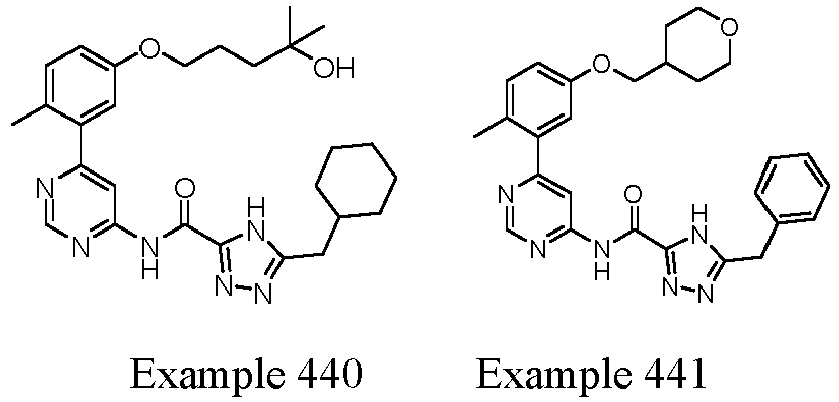
- The preparation was carried out in a similar manner to Example 64, except that in
step 1, (tetrahydro-2H-pyran-4-yl)methanol was used in place of 2-(tert-butoxy)ethan-1-ol, and instep 2, 6-chloropyrimidin-4-amine was used in place of 4-bromopyridin-2-amine. 1H NMR (400 MHz, DMSO-d 6) δ 14.68 (s, 1H), 10.34 (s, 1H), 9.02 (d, J = 1.2 Hz, 1H), 8.24 (d, J = 1.3 Hz, 1H), 7.39 - 7.29 (m, 4H), 7.29 - 7.22 (m, 2H), 7.04 (d, J = 2.7 Hz, 1H), 7.00 (dd, J = 8.3, 2.8 Hz, 1H), 4.19 (s, 2H), 3.92 - 3.80 (m, 4H), 3.33 - 3.28 (m, 2H), 2.31 (s, 3H), 2.05 - 1.93 (m, 1H), 1.76 - 1.62 (m, 2H), 1.39 - 1.26 (m, 2H). MS: 485 [M+H]+. - The preparation was carried out in a similar manner to Example 64, except that in
step 1, (tetrahydro-2H-pyran-4-yl)methanol was used in place of 2-(tert-butoxy)ethan-1-ol, instep 2, 6-chloropyrimidin-4-amine was used in place of 4-bromopyridin-2-amine, and in step 3, ethyl 5-(2-fluorobenzyl)-4H-1,2,4-triazol-3-carboxylate was used in place of ethyl 5-benzyl-4H-1,2,4-triazol-3-carboxylate. 1H NMR (400 MHz, DMSO-d 6) δ 14.75 (s, 1H), 10.34 (s, 1H), 9.01 (d, J = 1.3 Hz, 1H), 8.23 (d, J = 1.3 Hz, 1H), 7.46 - 7.30 (m, 2H), 7.30 - 7.16 (m, 3H), 7.04 (d, J = 2.8 Hz, 1H), 6.99 (dd, J = 8.4, 2.8 Hz, 1H), 4.22 (s, 2H), 3.92 - 3.79 (m, 4H), 3.32 - 3.25 (m, 2H), 2.31 (s, 3H), 2.05 - 1.92 (m, 1H), 1.73 - 1.62 (m, 2H), 1.40 - 1.26 (m, 2H). MS: 503 [M+H]+.
- The preparation was carried out in a similar manner to Example 64, except that in
step 1, (tetrahydro-2H-pyran-4-yl)methanol was used in place of 2-(tert-butoxy)ethan-1-ol, instep 2, 6-chloropyrimidin-4-amine was used in place of 4-bromopyridin-2-amine, and in step 3, ethyl 5-(cyclopentylmethyl)-4H-1,2,4-triazol-3-carboxylate was used in place of ethyl 5-benzyl-4H-1,2,4-triazol-3-carboxylate. 1H NMR (400 MHz, DMSO-d 6) δ 14.48 (s, 1H), 10.27 (s, 1H), 9.03 (d, J = 1.3 Hz, 1H), 8.26 (d, J = 1.3 Hz, 1H), 7.27 (d, J = 8.4 Hz, 1H), 7.05 (d, J = 2.8 Hz, 1H), 7.00 (dd, J = 8.3, 2.8 Hz, 1H), 3.93-3.81 (m, 4H), 3.33-3.29 (m, 2H), 2.79 (d, J = 7.5 Hz, 2H), 2.32 (s, 3H), 2.31-2.21 (m, 1H), 2.08-1.93 (m, 1H), 1.79-1.45 (m, 8H), 1.38-1.27 (m, 2H), 1.27-1.17 (m, 2H). MS: 477 [M+H]+. - The preparation was carried out in a similar manner to Example 64, except that in
step 1, (tetrahydro-2H-pyran-4-yl)methanol was used in place of 2-(tert-butoxy)ethan-1-ol, instep 2, 6-chloropyrimidin-4-amine was used in place of 4-bromopyridin-2-amine, and in step 3, ethyl 5-(cyclohexylmethyl)-4H-1,2,4-triazol-3-carboxylate was used in place of ethyl 5-benzyl-4H-1,2,4-triazol-3-carboxylate. 1H NMR (400 MHz, DMSO-d 6) δ 14.47 (s, 1H), 10.26 (s, 1H), 9.02 (d, J = 1.3 Hz, 1H), 8.25 (d, J = 1.3 Hz, 1H), 7.26 (d, J = 8.4 Hz, 1H), 7.05 (d, J = 2.7 Hz, 1H), 7.00 (dd, J = 8.4, 2.8 Hz, 1H), 3.92-3.81 (m, 4H), 3.37-3.32 (m, 2H), 2.67 (d, J = 7.1 Hz, 2H), 2.31 (s, 3H), 2.06-1.93 (m, 1H), 1.82-1.53 (m, 8H), 1.42-1.25 (m, 2H), 1.25-1.06 (m, 3H), 1.06-0.91 (m, 2H). MS: 491 [M+H]+.
- The preparation was carried out in a similar manner to Example 85, except that in
step 1, 2-(tetrahydro-2H-pyran-4-yl)ethan-1-ol was used in place of 2-(2-methoxyethoxy)ethan-1-ol, and instep 2, 6-chloropyrimidin-4-amine was used in place of 4-bromopyridin-2-amine. 1H NMR (400 MHz, DMSO-d 6) δ 14.68 (s, 1H), 10.35 (s, 1H), 9.02 (d, J = 1.2 Hz, 1H), 8.24 (d, J = 1.3 Hz, 1H), 7.45 - 7.17 (m, 6H), 7.17 - 6.86 (m, 2H), 4.19 (s, 2H), 4.04 (t, J = 6.3 Hz, 2H), 3.93 - 3.66 (m, 2H), 3.30 - 3.20 (m, 2H), 2.31 (s, 3H), 1.82 - 1.56 (m, 5H), 1.28 - 1.17 (m, 2H). MS: 499 [M+H]+. - The preparation was carried out in a similar manner to Example 85, except that in
step 1, 2-(tetrahydro-2H-pyran-4-yl)ethan-1-ol was used in place of 2-(2-methoxyethoxy)ethan-1-ol, in step 3, 6-chloropyrimidin-4-amine was used in place of 4-bromopyridin-2-amine, and in step 4, ethyl 5-(2-fluorobenzyl)-4H-1,2,4-triazol-3-carboxylate was used in place of ethyl 5-benzyl-4H-1,2,4-triazol-3-carboxylate. 1H NMR (400 MHz, DMSO-d 6) δ 14.71 (s, 1H), 10.34 (s, 1H), 9.01 (d, J = 1.2 Hz, 1H), 8.23 (d, J = 1.3 Hz, 1H), 7.47 - 7.29 (m, 2H), 7.29 - 7.15 (m, 3H), 7.08 - 6.93 (m, 2H), 4.22 (s, 2H), 4.03 (t, J = 6.3 Hz, 2H), 3.91 - 3.74 (m, 2H), 3.30 - 3.18 (m, 2H), 2.30 (s, 3H), 1.83 - 1.53 (m, 5H), 1.24 - 1.13 (m, 2H). MS: 517 [M+H]+.
- The preparation was carried out in a similar manner to Example 85, except that in
step 1, 2-(tetrahydro-2H-pyran-4-yl)ethan-1-ol was used in place of 2-(2-methoxyethoxy)ethan-1-ol, in step 3, 6-chloropyrimidin-4-amine was used in place of 4-bromopyridin-2-amine, and in step 4, ethyl 5-(cyclopentylmethyl)-4H-1,2,4-triazole-3-carboxylate was used in place of ethyl 5-benzyl-4H-1,2,4-triazol-3-carboxylate. 1H NMR (400 MHz, DMSO-d 6) δ 14.49 (s, 1H), 10.27 (s, 1H), 9.02 (d, J = 1.3 Hz, 1H), 8.25 (d, J = 1.3 Hz, 1H), 7.26 (d, J = 8.4 Hz, 1H), 7.12 - 6.83 (m, 2H), 4.04 (t, J = 6.3 Hz, 2H), 3.93 - 3.66 (m, 2H), 3.30 - 3.17 (m, 2H), 2.78 (d, J = 7.5 Hz, 2H), 2.31 (s, 3H), 2.29 - 2.14 (m, 1H), 1.80 - 1.43 (m, 11H), 1.26 - 1.14 (m, 4H). MS: 491 [M+H]+. - The preparation was carried out in a similar manner to Example 85, except that in
step 1, 2-(tetrahydro-2H-pyran-4-yl)ethan-1-ol was used in place of 2-(2-methoxyethoxy)ethan-1-ol, in step 3, 6-chloropyrimidin-4-amine was used in place of 4-bromopyridin-2-amine, and in step 4, ethyl 5-(cyclohexylmethyl)-4H-1,2,4-triazol-3-carboxylate was used in place of ethyl 5-benzyl-4H-1,2,4-triazol-3-carboxylate. 1H NMR (400 MHz, DMSO-d 6) δ 14.39 (s, 1H), 10.26 (s, 1H), 9.01 (s, 1H), 8.25 (s, 1H), 7.26 (d, J = 8.4 Hz, 1H), 7.05 (d, J = 2.8 Hz, 1H), 7.00 (dd, J = 8.4, 2.8 Hz, 1H), 4.04 (t, J = 6.3 Hz, 2H), 3.82 (dd, J = 11.2, 4.3 Hz, 2H), 3.28-3.22 (m, 2H), 2.67 (d, J = 7.0 Hz, 2H), 2.31 (s, 3H), 1.83-1.55 (m, 12H), 1.25-1.17 (m, 4H), 1.04-0.89 (m, 2H). MS: 505 [M+H]+.
- The preparation was carried out in a similar manner to Example 92, except that in
step 1, 1-(2-chloroethyl)piperidine hydrochloride was used in place of iodomethane, 3-bromo-4-methylphenol was used in place of 2-bromo-3-methylphenol, instep 2, 6-chloropyrimidin-4-amine was used in place of 4-bromopyridin-2-amine, and in step 3, ethyl 5-(2-fluorobenzyl)-4H-1,2,4-triazol-3-carboxylate was used in place of ethyl 5-benzyl-4H-1,2,4-triazol-3-carboxylate. 1H NMR (400 MHz, DMSO-d 6) δ 14.57 (s, 1H), 10.33 (s, 1H), 9.01 (d, J = 1.2 Hz, 1H), 8.23 (d, J = 1.3 Hz, 1H), 7.46-7.29 (m, 2H), 7.29-7.16 (m, 3H), 7.05 (d, J = 2.7 Hz, 1H), 7.00 (dd, J = 8.4, 2.8 Hz, 1H), 4.21 (s, 2H), 4.09 (t, J = 5.9 Hz, 2H), 2.67 (t, J = 5.9 Hz, 2H), 2.47-2.39 (m, 4H), 2.31 (s, 3H), 1.54-1.44 (m, 4H), 1.41-1.31 (m, 2H). MS: 516 [M+H]+. - The preparation was carried out in a similar manner to Example 160, except that in
step 1, 3-chloro-4-(trifluoromethyl)phenol was used in place of 3-bromo-4-methylphenol, and in step 3, 6-chloropyrimidin-4-amine was used in place of 4-bromopyridin-2-amine. 1H NMR (400 MHz, DMSO-d 6) δ 14.68 (s, 1H), 10.45 (s, 1H), 9.02 (d, J = 1.2 Hz, 1H), 8.25 (d, J = 1.2 Hz, 1H), 7.81 (d, J = 8.9 Hz, 1H), 7.38 - 7.29 (m, 4H), 7.29 - 7.20 (m, 2H), 7.11 (d, J = 2.6 Hz, 1H), 4.24 - 4.15 (m, 3H), 4.10 (t, J = 6.6 Hz, 2H), 1.84 - 1.69 (m, 2H), 1.54 - 1.41 (m, 2H), 1.10 (s, 6H). MS: 541 [M+H]+.
- The preparation was carried out in a similar manner to Example 160, except that in
step 1, 3-chloro-4-(trifluoromethyl)phenol was used in place of 3-bromo-4-methylphenol, in step 3, 6-chloropyrimidin-4-amine was used in place of 4-bromopyridin-2-amine, and in step 4, ethyl 5-(2-fluorobenzyl)-4H-1,2,4-triazol-3-carboxylate was used in place of ethyl 5-benzyl-4H-1,2,4-triazol-3-carboxylate. 1H NMR (400 MHz, DMSO-d6) δ 14.75 (s, 1H), 10.46 (s, 1H), 9.02 (d, J = 1.3 Hz, 1H), 8.24 (d, J = 1.3 Hz, 1H), 7.81 (d, J = 8.9 Hz, 1H), 7.45 - 7.30 (m, 2H), 7.27 - 7.16 (m, 3H), 7.11 (d, J = 2.6 Hz, 1H), 4.27 - 4.16 (m, 3H), 4.10 (t, J = 6.6 Hz, 2H), 1.86 - 1.71 (m, 2H), 1.55 - 1.42 (m, 2H), 1.10 (s, 6H). MS: 559 [M+H]+. - The preparation was carried out in a similar manner to Example 160, except that in
step 1, 3-chloro-4-(trifluoromethyl)phenol was used in place of 3-bromo-4-methylphenol, in step 3, 6-chloropyrimidin-4-amine was used in place of 4-bromopyridin-2-amine, and in step 4, ethyl 5-(cyclopentylmethyl)-4H-1,2,4-triazole-3-carboxylate was used in place of ethyl 5-benzyl-4H-1,2,4-triazol-3-carboxylate. 1H NMR (400 MHz, DMSO-d6) δ 14.54 (s, 1H), 10.39 (s, 1H), 9.03 (d, J = 1.3 Hz, 1H), 8.26 (d, J = 1.3 Hz, 1H), 7.81 (d, J = 8.9 Hz, 1H), 7.24 (dd, J = 8.7, 2.6 Hz, 1H), 7.12 (d, J = 2.6 Hz, 1H), 4.20 (s, 1H), 4.10 (t, J = 6.5 Hz, 2H), 2.78 (d, J = 7.5 Hz, 2H), 2.36 - 2.17 (m, 1H), 1.86 - 1.66 (m, 4H), 1.66 - 1.43 (m, 6H), 1.25 - 1.18 (m, 2H), 1.10 (s, 6H). MS: 533 [M+H]+.
- The preparation was carried out in a similar manner to Example 160, except that in
step 1, 3-chloro-4-(trifluoromethyl)phenol was used in place of 3-bromo-4-methylphenol, in step 3, 6-chloropyrimidin-4-amine was used in place of 4-bromopyridin-2-amine, and in step 4, ethyl 5-(cyclohexylmethyl)-4H-1,2,4-triazol-3-carboxylate was used in place of ethyl 5-benzyl-4H-1,2,4-triazol-3-carboxylate. 1H NMR (400 MHz, DMSO-d 6) δ 14.47 (s, 1H), 10.37 (s, 1H), 9.03 (d, J = 1.2 Hz, 1H), 8.26 (d, J = 1.3 Hz, 1H), 7.81 (d, J = 8.9 Hz, 1H), 7.24 (dd, J = 8.9, 2.6 Hz, 1H), 7.12 (d, J = 2.6 Hz, 1H), 4.20 (s, 1H), 4.10 (t, J = 6.6 Hz, 2H), 2.67 (d, J = 7.1 Hz, 2H), 1.85 - 1.54 (m, 8H), 1.54 - 1.41 (m, 2H), 1.23 - 1.16 (m, 3H), 1.10 (s, 6H), 1.05 - 0.89 (m, 2H). MS: 547 [M+H]+. - The preparation was carried out in a similar manner to Example 64, except that in
step 1, (tetrahydro-2H-pyran-4-yl)methanol was used in place of 2-(tert-butoxy)ethan-1-ol, 3-chloro-4-(trifluoromethyl)phenol was used in place of 3-bromo-4-methylphenol, and instep 2, 6-chloropyrimidin-4-amine was used in place of 4-bromopyridin-2-amine. 1H NMR (400 MHz, DMSO-d6) δ 14.65 (s, 1H), 10.45 (s, 1H), 9.02 (d, J = 1.2 Hz, 1H), 8.25 (d, J = 1.2 Hz, 1H), 7.81 (d, J = 8.9 Hz, 1H), 7.39 - 7.29 (m, 4H), 7.29 - 7.19 (m, 2H), 7.13 (d, J = 2.6 Hz, 1H), 4.19 (s, 2H), 3.98 (d, J = 6.5 Hz, 2H), 3.92-3.81 (m, 2H), 3.37-3.32 (m, 2H), 2.07 - 1.94 (m, 1H), 1.74 - 1.60 (m, 2H), 1.40 - 1.26 (m, 2H). MS: 539 [M+H]+.
- The preparation was carried out in a similar manner to Example 64, except that in
step 1, (tetrahydro-2H-pyran-4-yl)methanol was used in place of 2-(tert-butoxy)ethan-1-ol, 3-chloro-4-(trifluoromethyl)phenol was used in place of 3-bromo-4-methylphenol, instep 2, 6-chloropyrimidin-4-amine was used in place of 4-bromopyridin-2-amine, and in step 3, ethyl 5-(2-fluorobenzyl)-4H-1,2,4-triazol-3-carboxylate was used in place of ethyl 5-benzyl-4H-1,2,4-triazol-3-carboxylate. 1H NMR (400 MHz, DMSO-d6) δ 14.73 (s, 1H), 10.46 (s, 1H), 9.02 (d, J = 1.3 Hz, 1H), 8.24 (d, J = 1.3 Hz, 1H), 7.81 (d, J = 8.9 Hz, 1H), 7.49 - 7.28 (m, 2H), 7.28 - 7.07 (m, 4H), 4.22 (s, 2H), 3.97 (d, J = 6.5 Hz, 2H), 3.93 - 3.82 (m, 2H), 3.36 - 3.30 (m, 2H), 2.09 - 1.95 (m, 1H), 1.74 - 1.62 (m, 2H), 1.42 - 1.24 (m, 2H). MS: 557 [M+H]+. - The preparation was carried out in a similar manner to Example 64, except that in
step 1, (tetrahydro-2H-pyran-4-yl)methanol was used in place of 2-(tert-butoxy)ethan-1-ol, 3-chloro-4-(trifluoromethyl)phenol was used in place of 3-bromo-4-methylphenol, instep 2, 6-chloropyrimidin-4-amine was used in place of 4-bromopyridin-2-amine, and in step 3, ethyl 5-(cyclopentylmethyl)-4H-1,2,4-triazol-3-carboxylate was used in place of ethyl 5-benzyl-4H-1,2,4-triazol-3-carboxylate. 1H NMR (400 MHz, DMSO-d6) δ 14.47 (s, 1H), 10.38 (s, 1H), 9.03 (d, J = 1.2 Hz, 1H), 8.26 (d, J = 1.2 Hz, 1H), 7.81 (d, J = 8.9 Hz, 1H), 7.26 (dd, J = 8.8, 2.6 Hz, 1H), 7.14 (d, J = 2.6 Hz, 1H), 3.98 (d, J = 6.4 Hz, 2H), 3.93 - 3.83 (m, 2H), 3.43 - 3.36 (m, 2H), 2.78 (d, J = 7.5 Hz, 2H), 2.36 - 2.21 (m, 1H), 2.08 - 1.95 (m, 1H), 1.75 - 1.64 (m, 4H), 1.64 - 1.56 (m, 2H), 1.56 - 1.46 (m, 2H), 1.39 - 1.28 (m, 2H), 1.23 - 1.14 (m, 2H). MS: 531 [M+H]+.
- The preparation was carried out in a similar manner to Example 64, except that in
step 1, (tetrahydro-2H-pyran-4-yl)methanol was used in place of 2-(tert-butoxy)ethan-1-ol, 3-chloro-4-(trifluoromethyl)phenol was used in place of 3-bromo-4-methylphenol, instep 2, 6-chloropyrimidin-4-amine was used in place of 4-bromopyridin-2-amine, and in step 3, ethyl 5-(cyclohexylmethyl)-4H-1,2,4-triazol-3-carboxylate was used in place of ethyl 5-benzyl-4H-1,2,4-triazol-3-carboxylate. 1H NMR (400 MHz, DMSO-d6) δ 14.47 (s, 1H), 10.38 (s, 1H), 9.03 (d, J = 1.3 Hz, 1H), 8.26 (d, J = 1.3 Hz, 1H), 7.81 (d, J = 8.9 Hz, 1H), 7.26 (dd, J = 8.7, 2.6 Hz, 1H), 7.14 (d, J = 2.6 Hz, 1H), 3.98 (d, J = 6.5 Hz, 2H), 3.93 - 3.81 (m, 2H), 3.35 - 3.30 (m, 2H), 2.67 (d, J = 7.1 Hz, 2H), 2.11-1.96 (m, 1H), 1.83 - 1.57 (m, 8H), 1.42 -1.26 (m, 2H), 1.26 - 1.07 (m, 3H), 1.07 - 0.91 (m, 2H). MS: 545 [M+H]+. - The preparation was carried out in a similar manner to Example 85, except that in
step 1, 2-(tetrahydro-2H-pyran-4-yl)ethan-1-ol was used in place of 2-(2-methoxyethoxy)ethan-1-ol, instep 2, 3-chloro-4-(trifluoromethyl)phenol was used in place of 3-bromo-4-methylphenol, and in step 3, 6-chloropyrimidin-4-amine was used in place of 4-bromopyridin-2-amine. 1H NMR (400 MHz, DMSO-d 6) δ 14.59 (s, 1H), 10.47 (s, 1H), 9.02 (d, J = 1.2 Hz, 1H), 8.25 (d, J = 1.2 Hz, 1H), 7.80 (d, J = 8.9 Hz, 1H), 7.39 - 7.29 (m, 4H), 7.29 - 7.18 (m, 2H), 7.13 (d, J = 2.6 Hz, 1H), 4.25 - 4.10 (m, 4H), 3.88 - 3.76 (m, 2H), 3.27 - 3.23 (m, 2H), 1.77 - 1.65 (m, 3H), 1.65 - 1.56 (m, 2H), 1.26 - 1.19 (m, 2H). MS: 553 [M+H]+.
- The preparation was carried out in a similar manner to Example 85, except that in
step 1, 2-(tetrahydro-2H-pyran-4-yl)ethan-1-ol was used in place of 2-(2-methoxyethoxy)ethan-1-ol, instep 2, 3-chloro-4-(trifluoromethyl)phenol was used in place of 3-bromo-4-methylphenol, in step 3, 6-chloropyrimidin-4-amine was used in place of 4-bromopyridin-2-amine, and in step 4, ethyl 5-(2-fluorobenzyl)-4H-1,2,4-triazol-3-carboxylate was used in place of ethyl 5-benzyl-4H-1,2,4-triazol-3-carboxylate. 1H NMR (400 MHz, DMSO-d6) δ 14.70 (s, 1H), 10.47 (s, 1H), 9.02 (d, J = 1.2 Hz, 1H), 8.24 (d, J = 1.2 Hz, 1H), 7.80 (d, J = 8.9 Hz, 1H), 7.50-7.30 (m, 2H), 7.30-7.06 (m, 4H), 4.21 (s, 2H), 4.15 (t, J = 6.1 Hz, 2H), 3.88-3.76 (m, 2H), 3.29-3.18 (m, 2H), 1.71-1.56 (m, 4H), 1.30-1.13 (m, 3H). MS: 571 [M+H]+. - The preparation was carried out in a similar manner to Example 85, except that in
step 1, 2-(tetrahydro-2H-pyran-4-yl)ethan-1-ol was used in place of 2-(2-methoxyethoxy)ethan-1-ol, instep 2, 3-chloro-4-(trifluoromethyl)phenol was used in place of 3-bromo-4-methylphenol, in step 3, 6-chloropyrimidin-4-amine was used in place of 4-bromopyridin-2-amine, and in step 4, ethyl 5-(cyclopentylmethyl)-4H-1,2,4-triazole-3-carboxylate was used in place of ethyl 5-benzyl-4H-1,2,4-triazol-3-carboxylate. 1H NMR (400 MHz, DMSO-d6) δ 14.47 (s, 1H), 10.40 (s, 1H), 9.03 (s, 1H), 8.26 (s, 1H), 7.81 (d, J = 8.9 Hz, 1H), 7.26 (dd, J = 8.8, 2.6 Hz, 1H), 7.14 (d, J = 2.6 Hz, 1H), 4.16 (t, J = 6.0 Hz, 2H), 3.82 (dd, J = 10.8, 4.3 Hz, 2H), 3.29 - 3.21 (m, 2H), 2.78 (d, J = 7.5 Hz, 2H), 2.37 - 2.18 (m, 1H), 1.82 - 1.66 (m, 5H), 1.66 - 1.57 (m, 4H), 1.57 - 1.46 (m, 2H), 1.25 - 1.14 (m, 4H). MS: 545 [M+H]+.
- The preparation was carried out in a similar manner to Example 85, except that in
step 1, 2-(tetrahydro-2H-pyran-4-yl)ethan-1-ol was used in place of 2-(2-methoxyethoxy)ethan-1-ol, instep 2, 3-chloro-4-(trifluoromethyl)phenol was used in place of 3-bromo-4-methylphenol, in step 3, 6-chloropyrimidin-4-amine was used in place of 4-bromopyridin-2-amine, and in step 4, ethyl 5-(cyclohexylmethyl)-4H-1,2,4-triazol-3-carboxylate was used in place of ethyl 5-benzyl-4H-1,2,4-triazol-3-carboxylate. 1H NMR (400 MHz, DMSO-d 6) δ 14.47 (s, 1H), 10.40 (s, 1H), 9.03 (d, J = 1.2 Hz, 1H), 8.26 (d, J = 1.2 Hz, 1H), 7.81 (d, J = 8.9 Hz, 1H), 7.26 (dd, J = 8.7, 2.6 Hz, 1H), 7.14 (d, J = 2.6 Hz, 1H), 4.16 (t, J = 6.1 Hz, 2H), 3.90 -3.73 (m, 2H), 3.31-3.20 (m, 2H), 2.67 (d, J = 7.1 Hz, 2H), 1.83 - 1.54 (m, 11H), 1.24 - 1.06 (m, 5H), 1.06 - 0.89 (m, 2H). MS: 559 [M+H]+. - The preparation was carried out in a similar manner to Example 160, except that in
step 1, 3-bromo-4-chlorophenol was used in place of 3-bromo-4-methylphenol, and in step 3, 6-chloropyrimidin-4-amine was used in place of 4-bromopyridin-2-amine. 1H NMR (400 MHz, DMSO-d 6) δ 14.61 (s, 1H), 10.42 (s, 1H), 9.06 (d, J = 1.3 Hz, 1H), 8.45 (d, J = 1.3 Hz, 1H), 7.52 (d, J = 8.8 Hz, 1H), 7.38 - 7.30 (m, 4H), 7.30 - 7.22 (m, 1H), 7.20 (d, J = 3.0 Hz, 1H), 7.11 (dd, J = 8.8, 3.1 Hz, 1H), 4.27 - 4.13 (m, 3H), 4.01 (t, J = 6.5 Hz, 2H), 1.84 - 1.70 (m, 2H), 1.53 - 1.43 (m, 2H), 1.09 (s, 6H). MS: 507 [M+H]+.
- The preparation was carried out in a similar manner to Example 160, except that in
step 1, 3-bromo-4-chlorophenol was used in place of 3-bromo-4-methylphenol, in step 3, 6-chloropyrimidin-4-amine was used in place of 4-bromopyridin-2-amine, and in step 4, ethyl 5-(2-fluorobenzyl)-4H-1,2,4-triazol-3-carboxylate was used in place of ethyl 5-benzyl-4H-1,2,4-triazol-3-carboxylate. 1H NMR (400 MHz, DMSO-d 6) δ 14.71 (s, 1H), 10.42 (s, 1H), 9.05 (d, J = 1.2 Hz, 1H), 8.44 (d, J = 1.2 Hz, 1H), 7.52 (d, J = 8.8 Hz, 1H), 7.46 - 7.30 (m, 2H), 7.27 - 7.15 (m, 3H), 7.11 (dd, J = 8.8, 3.1 Hz, 1H), 4.31-4.14 (m, 3H), 4.01 (t, J = 6.6 Hz, 2H), 1.84 - 1.68 (m, 2H), 1.55 - 1.41 (m, 2H), 1.09 (s, 6H). MS: 525 [M+H]+. - The preparation was carried out in a similar manner to Example 160, except that in
step 1, 3-bromo-4-chlorophenol was used in place of 3-bromo-4-methylphenol, in step 3, 6-chloropyrimidin-4-amine was used in place of 4-bromopyridin-2-amine, and in step 4, ethyl 5-(cyclopentylmethyl)-4H-1,2,4-triazole-3-carboxylate was used in place of ethyl 5-benzyl-4H-1,2,4-triazol-3-carboxylate. 1H NMR (400 MHz, DMSO-d 6) δ 14.32 (s, 1H), 10.34 (s, 1H), 9.06 (d, J = 1.3 Hz, 1H), 8.46 (d, J = 1.2 Hz, 1H), 7.52 (d, J = 8.8 Hz, 1H), 7.21 (d, J = 3.1 Hz, 1H), 7.11 (dd, J = 8.8, 3.1 Hz, 1H), 4.19 (s, 1H), 4.02 (t, J = 6.5 Hz, 2H), 2.78 (d, J = 7.5 Hz, 2H), 2.37 - 2.20 (m, 1H), 1.85 - 1.66 (m, 4H), 1.66 - 1.42 (m, 6H), 1.25 - 1.16 (m, 2H), 1.10 (s, 6H). MS: 499 [M+H]+.
- The preparation was carried out in a similar manner to Example 160, except that in
step 1, 3-bromo-4-chlorophenol was used in place of 3-bromo-4-methylphenol, in step 3, 6-chloropyrimidin-4-amine was used in place of 4-bromopyridin-2-amine, and in step 4, ethyl 5-(cyclohexylmethyl)-4H-1,2,4-triazol-3-carboxylate was used in place of ethyl 5-benzyl-4H-1,2,4-triazol-3-carboxylate. 1H NMR (400 MHz, DMSO-d 6) δ 14.42 (s, 1H), 10.35 (s, 1H), 9.06 (s, 1H), 8.46 (s, 1H), 7.52 (d, J = 8.8 Hz, 1H), 7.21 (d, J = 3.0 Hz, 1H), 7.11 (dd, J = 8.9, 3.1 Hz, 1H), 4.19 (s, 1H), 4.02 (t, J = 6.5 Hz, 2H), 2.67 (d, J = 7.0 Hz, 2H), 1.84 - 1.55 (m, 8H), 1.55 - 1.41 (m, 2H), 1.26 - 1.14 (m, 3H), 1.10 (s, 6H), 1.05 - 0.91 (m, 2H). MS: 513 [M+H]+. - The preparation was carried out in a similar manner to Example 64, except that in
step 1, (tetrahydro-2H-pyran-4-yl)methanol was used in place of 2-(tert-butoxy)ethan-1-ol, 3-bromo-4-chlorophenol was used in place of 3-bromo-4-methylphenol, and instep 2, 6-chloropyrimidin-4-amine was used in place of 4-bromopyridin-2-amine. 1H NMR (400 MHz, DMSO-d 6) δ 14.59 (s, 1H), 10.42 (s, 1H), 9.06 (d, J = 1.3 Hz, 1H), 8.45 (d, J = 1.3 Hz, 1H), 7.52 (d, J = 8.9 Hz, 1H), 7.41 - 7.29 (m, 4H), 7.29 - 7.19 (m, 2H), 7.12 (dd, J = 8.9, 3.1 Hz, 1H), 4.18 (s, 2H), 3.97 - 3.82 (m, 4H), 3.30 - 3.28 (m, 2H), 2.05 - 1.93 (m, 1H), 1.75 - 1.60 (m, 2H), 1.40 - 1.25 (m, 2H). MS: 505 [M+H]+.
- The preparation was carried out in a similar manner to Example 64, except that in
step 1, (tetrahydro-2H-pyran-4-yl)methanol was used in place of 2-(tert-butoxy)ethan-1-ol, 3-bromo-4-chlorophenol was used in place of 3-bromo-4-methylphenol, instep 2, 6-chloropyrimidin-4-amine was used in place of 4-bromopyridin-2-amine, and in step 3, ethyl 5-(2-fluorobenzyl)-4H-1,2,4-triazol-3-carboxylate was used in place of ethyl 5-benzyl-4H-1,2,4-triazol-3-carboxylate. 1H NMR (400 MHz, DMSO-d 6) δ 14.66 (s, 1H), 10.41 (s, 1H), 9.05 (d, J = 1.2 Hz, 1H), 8.44 (d, J = 1.3 Hz, 1H), 7.52 (d, J = 8.8 Hz, 1H), 7.46 - 7.30 (m, 2H), 7.28 - 7.16 (m, 3H), 7.12 (dd, J = 8.9, 3.1 Hz, 1H), 4.21 (s, 2H), 3.94 - 3.81 (m, 4H), 3.31 - 3.29 (m, 2H), 2.09 - 1.92 (m, 1H), 1.73 - 1.60 (m, 2H), 1.40 - 1.25 (m, 2H). MS: 523 [M+H]+. - The preparation was carried out in a similar manner to Example 64, except that in
step 1, (tetrahydro-2H-pyran-4-yl)methanol was used in place of 2-(tert-butoxy)ethan-1-ol, 3-bromo-4-chlorophenol was used in place of 3-bromo-4-methylphenol, instep 2, 6-chloropyrimidin-4-amine was used in place of 4-bromopyridin-2-amine, and in step 3, ethyl 5-(cyclopentylmethyl)-4H-1,2,4-triazol-3-carboxylate was used in place of ethyl 5-benzyl-4H-1,2,4-triazol-3-carboxylate. 1H NMR (400 MHz, DMSO-d 6) δ 14.50 (s, 1H), 10.35 (s, 1H), 9.06 (d, J = 1.3 Hz, 1H), 8.46 (d, J = 1.3 Hz, 1H), 7.53 (d, J = 8.9 Hz, 1H), 7.23 (d, J = 3.1 Hz, 1H), 7.13 (dd, J = 8.8, 3.1 Hz, 1H), 3.95 - 3.81 (m, 4H), 3.31 - 3.28 (m, 2H), 2.78 (d, J = 7.5 Hz, 2H), 2.37 - 2.19 (m, 1H), 2.09 - 1.94 (m, 1H), 1.80 - 1.44 (m, 8H), 1.39 - 1.27 (m, 2H), 1.27 - 1.22 (m, 2H). MS: 497 [M+H]+.
- The preparation was carried out in a similar manner to Example 64, except that in
step 1, (tetrahydro-2H-pyran-4-yl)methanol was used in place of 2-(tert-butoxy)ethan-1-ol, 3-bromo-4-chlorophenol was used in place of 3-bromo-4-methylphenol, instep 2, 6-chloropyrimidin-4-amine was used in place of 4-bromopyridin-2-amine, and in step 3, ethyl 5-(cyclohexylmethyl)-4H-1,2,4-triazol-3-carboxylate was used in place of ethyl 5-benzyl-4H-1,2,4-triazol-3-carboxylate. 1H NMR (400 MHz, DMSO-d 6) δ 14.54 (s, 1H), 10.35 (s, 1H), 9.06 (d, J = 1.3 Hz, 1H), 8.46 (d, J = 1.2 Hz, 1H), 7.53 (d, J = 8.8 Hz, 1H), 7.23 (d, J = 3.1 Hz, 1H), 7.13 (dd, J = 8.9, 3.1 Hz, 1H), 3.98 - 3.82 (m, 4H), 3.31 - 3.28 (m, 2H), 2.67 (d, J = 7.0 Hz, 2H), 2.11 - 1.92 (m, 1H), 1.83 - 1.56 (m, 8H), 1.41 - 1.26 (m, 2H), 1.26 - 1.10 (m, 3H), 1.07 - 0.92 (m, 2H). MS: 511 [M+H]+. - The preparation was carried out in a similar manner to Example 85, except that in
step 1, 2-(tetrahydro-2H-pyran-4-yl)ethan-1-ol was used in place of 2-(2-methoxyethoxy)ethan-1-ol, instep 2, 3-bromo-4-chlorophenol was used in place of 3-bromo-4-methylphenol, and in step 3, 6-chloropyrimidin-4-amine was used in place of 4-bromopyridin-2-amine. 1H NMR (400 MHz, DMSO-d 6) δ 14.71 (s, 1H), 10.43 (s, 1H), 9.06 (d, J = 1.3 Hz, 1H), 8.44 (d, J = 1.3 Hz, 1H), 7.52 (d, J = 8.9 Hz, 1H), 7.37 - 7.30 (m, 4H), 7.29 - 7.21 (m, 2H), 7.12 (dd, J = 8.9, 3.1 Hz, 1H), 4.18 (s, 2H), 4.07 (t, J = 6.2 Hz, 2H), 3.90 - 3.73 (m, 2H), 3.28 - 3.20 (m, 2H), 1.77-1.56 (m, 5H), 1.30 - 1.15 (m, 2H). MS: 519 [M+H]+.
- The preparation was carried out in a similar manner to Example 85, except that in
step 1, 2-(tetrahydro-2H-pyran-4-yl)ethan-1-ol was used in place of 2-(2-methoxyethoxy)ethan-1-ol, instep 2, 3-bromo-4-chlorophenol was used in place of 3-bromo-4-methylphenol, in step 3, 6-chloropyrimidin-4-amine was used in place of 4-bromopyridin-2-amine, and in step 4, ethyl 5-(2-fluorobenzyl)-4H-1,2,4-triazol-3-carboxylate was used in place of ethyl 5-benzyl-4H-1,2,4-triazol-3-carboxylate. 1H NMR (400 MHz, DMSO-d 6) δ 14.34 (s, 1H), 10.58 (s, 1H), 9.04 (d, J = 1.3 Hz, 1H), 8.44 (d, J = 1.3 Hz, 1H), 7.51 (d, J = 8.9 Hz, 1H), 7.43 - 7.28 (m, 2H), 7.25 - 7.15 (m, 3H), 7.12 (dd, J = 8.8, 3.1 Hz, 1H), 4.19 (s, 2H), 4.07 (t, J = 6.2 Hz, 2H), 3.86 - 3.78 (m, 2H), 3.29 - 3.27 (m, 2H), 1.74 - 1.57 (m, 5H), 1.28 - 1.19 (m, 2H). MS: 537 [M+H]+. - The preparation was carried out in a similar manner to Example 85, except that in
step 1, 2-(tetrahydro-2H-pyran-4-yl)ethan-1-ol was used in place of 2-(2-methoxyethoxy)ethan-1-ol, instep 2, 3-bromo-4-chlorophenol was used in place of 3-bromo-4-methylphenol, in step 3, 6-chloropyrimidin-4-amine was used in place of 4-bromopyridin-2-amine, and in step 4, ethyl 5-(cyclopentylmethyl)-4H-1,2,4-triazole-3-carboxylate was used in place of ethyl 5-benzyl-4H-1,2,4-triazol-3-carboxylate. 1H NMR (400 MHz, DMSO-d 6) δ 14.39 (s, 1H), 10.33 (s, 1H), 9.06 (d, J = 1.3 Hz, 1H), 8.46 (d, J = 1.3 Hz, 1H), 7.52 (d, J = 8.8 Hz, 1H), 7.23 (d, J = 3.1 Hz, 1H), 7.13 (dd, J = 8.9, 3.1 Hz, 1H), 4.08 (t, J = 6.2 Hz, 2H), 3.89 - 3.77 (m, 2H), 3.28 - 3.23 (m, 2H), 2.82 - 2.75 (m, 2H), 2.36 - 2.21 (m, 1H), 1.77 - 1.56 (m, 10H), 1.56 - 1.46 (m, 2H), 1.24 - 1.16 (m, 3H). MS: 511 [M+H]+.
- The preparation was carried out in a similar manner to Example 85, except that in
step 1, 2-(tetrahydro-2H-pyran-4-yl)ethan-1-ol was used in place of 2-(2-methoxyethoxy)ethan-1-ol, instep 2, 3-bromo-4-chlorophenol was used in place of 3-bromo-4-methylphenol, in step 3, 6-chloropyrimidin-4-amine was used in place of 4-bromopyridin-2-amine, and in step 4, ethyl 5-(cyclohexylmethyl)-4H-1,2,4-triazol-3-carboxylate was used in place of ethyl 5-benzyl-4H-1,2,4-triazol-3-carboxylate. 1H NMR (400 MHz, DMSO-d 6) δ 14.42 (s, 1H), 10.36 (s, 1H), 9.06 (s, 1H), 8.46 (s, 1H), 7.52 (d, J = 8.8 Hz, 1H), 7.23 (d, J = 3.1 Hz, 1H), 7.12 (dd, J = 8.8, 3.1 Hz, 1H), 4.08 (t, J = 6.2 Hz, 2H), 3.86 - 3.78 (m, 2H), 3.28 - 3.23 (m, 2H), 2.67 (d, J = 7.1 Hz, 2H), 1.79 - 1.72 (m, 1H), 1.72 - 1.55 (m, 10H), 1.24 - 1.08 (m, 5H), 1.05 - 0.92 (m, 2H). MS: 525 [M+H]+. -

-
Steps 1 to 2 were carried out in a similar manner toSteps 1 to 2 of Example 160, except that 3-bromo-4-methylbenzenethio was used in place of 3-bromo-4-methylphenol. - Step 3: 5-((3-bromo-4-methylphenyl)thio)-2-methylpentan-2-ol (606mg, 2mmol) was dissolved in dichloromethane (6mL), m-chloroperoxybenzoic acid (520mg, 3mmol) was added in batches at 0°C, and reacted at 25°C for 1.5 hours. The reaction solution was diluted with dichloromethane, washed with saturated aqueous solution of sodium carbonate and saturated brine, dried over anhydrous sodium sulfate, filtered and evaporated to dryness, purified by column chromatography to afford 600mg of 5-((3-bromo-4-methylphenyl)sulfonyl)-2-methylpentan-2-ol.
- Steps 4 to 5 were carried out in a similar manner to Steps 3 to 4 of Example 160, except that 5-((3-bromo-4-methylphenyl)sulfonyl)-2-methylpentan-2-ol was used in place of 5-(3-bromo-4-methylphenoxy)-2-methylpentan-2-ol.
- 1H NMR (400 MHz, DMSO-d 6) δ 14.59 (s, 1H), 10.00 (s, 1H), 8.48 (d, J = 5.1 Hz, 1H), 8.15 (d, J = 1.5 Hz, 1H), 7.88 (dd, J = 8.1, 2.0 Hz, 1H), 7.74 (d, J = 2.0 Hz, 1H), 7.67 (d, J = 8.1 Hz, 1H), 7.40 - 7.20 (m, 6H), 4.20 (s, 1H), 4.18 (s, 2H), 3.32 - 3.23 (m, 2H), 2.38 (s, 3H), 1.71-1.55 (m, 2H), 1.44 - 1.32 (m, 2H), 1.02 (s, 6H). MS: 534 [M+H]+.
- The preparation was carried out in a similar manner to Example 474, except that in step 5, ethyl 5-(cyclopentylmethyl)-4H-1,2,4-triazol-3-carboxylate was used in place of ethyl 5-benzyl-4H-1,2,4-triazol-3-carboxylate. 1H NMR (400 MHz, DMSO-d 6) δ 14.41 (s, 1H), 9.94 (s, 1H), 8.49 (d, J = 5.1 Hz, 1H), 8.25 - 8.10 (m, 1H), 7.88 (dd, J = 8.0, 2.0 Hz, 1H), 7.75 (d, J = 2.0 Hz, 1H), 7.67 (d, J = 8.1 Hz, 1H), 7.29 (dd, J = 5.1, 1.6 Hz, 1H), 4.20 (s, 1H), 3.39 - 3.34 (m, 2H), 2.78 (d, J = 7.5 Hz, 2H), 2.39 (s, 3H), 2.35 - 2.18 (m, 1H), 1.81 - 1.67 (m, 2H), 1.67 - 1.56 (m, 4H), 1.56 - 1.45 (m, 2H), 1.44 - 1.33 (m, 2H), 1.26 - 1.18 (m, 2H), 1.03 (s, 6H). MS: 526 [M+H]+.

- The preparation was carried out in a similar manner to Example 160, except that in
step 1, 3-bromo-4-chlorophenol was used in place of 3-bromo-4-methylphenol, and in step 4, ethyl 5-((2-fluorophenyl)(hydroxyl)methyl)-4H-1,2,4-triazol-3-carboxylate was used in place of ethyl 5-benzyl-4H-1,2,4-triazol-3-carboxylate. 1H NMR (400 MHz, DMSO-d 6) δ 14.89 (s, 1H), 9.87 (s, 1H), 8.44 (d, J = 5.1 Hz, 1H), 8.20 (d, J = 1.5 Hz, 1H), 7.58 (s, 1H), 7.50 (d, J = 8.8 Hz, 1H), 7.43 - 7.34 (m, 1H), 7.32 - 7.16 (m, 3H), 7.05 (dd, J = 8.8, 3.0 Hz, 1H), 7.00 (d, J = 3.0 Hz, 1H), 6.77 (s, 1H), 6.15 (d, J = 4.9 Hz, 1H), 4.19 (s, 1H), 4.00 (t, J = 6.6 Hz, 2H), 1.82 - 1.70 (m, 2H), 1.52 - 1.41 (m, 2H), 1.09 (s, 6H). MS: 540 [M+H]+. - The preparation was carried out in a similar manner to Example 160, except that in
step 1, 3-bromo-4-chlorophenol was used in place of 3-bromo-4-methylphenol, and in step 4, ethyl (R)-5-(hydroxyl(phenyl)methyl)-4H-1,2,4-triazol-3-carboxylate was used in place of ethyl 5-benzyl-4H-1,2,4-triazol-3-carboxylate. 1H NMR (400 MHz, DMSO-d 6) δ 14.78 (s, 1H), 9.86 (s, 1H), 8.44 (d, J = 5.2 Hz, 1H), 8.22 (s, 1H), 7.54 - 7.44 (m, 3H), 7.44 - 7.34 (m, 2H), 7.34 - 7.23 (m, 2H), 7.06 (dd, J = 8.8, 3.0 Hz, 1H), 7.00 (d, J = 3.0 Hz, 1H), 6.71 (d, J = 4.3 Hz, 1H), 5.96 (d, J = 4.3 Hz, 1H), 4.18 (s, 1H), 4.01 (t, J = 6.5 Hz, 2H), 1.82 -1.68 (m, 2H), 1.53 - 1.41 (m, 2H), 1.09 (s, 6H). MS: 522 [M+H]+.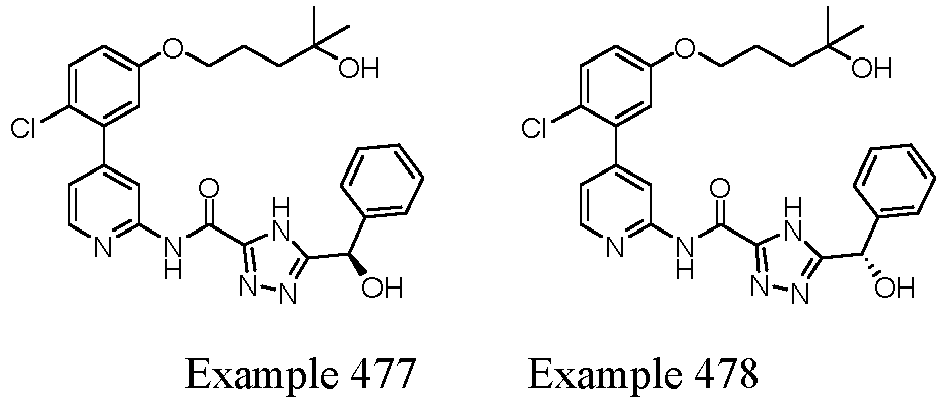
- The preparation was carried out in a similar manner to Example 160, except that in
step 1, 3-bromo-4-chlorophenol was used in place of 3-bromo-4-methylphenol, and in step 4, ethyl (S)-5-(hydroxyl(phenyl)methyl)-4H-1,2,4-triazol-3-carboxylate was used in place of ethyl 5-benzyl-4H-1,2,4-triazol-3-carboxylate. 1H NMR (400 MHz, DMSO-d 6) δ 14.78 (s, 1H), 9.88 (s, 1H), 8.45 (d, J = 5.1 Hz, 1H), 8.21 (s, 1H), 7.54 - 7.44 (m, 3H), 7.38 (t, J = 7.5 Hz, 2H), 7.34 - 7.24 (m, 2H), 7.06 (dd, J = 8.8, 3.0 Hz, 1H), 7.00 (d, J = 3.1 Hz, 1H), 6.71 (s, 1H), 5.95 (s, 1H), 4.19 (s, 1H), 4.01 (t, J = 6.6 Hz, 2H), 1.82 - 1.69 (m, 2H), 1.51 - 1.40 (m, 2H), 1.09 (s, 6H). MS: 522 [M+H]+. -

-
Steps 1 to 2 were carried out in a similar manner toSteps 1 to 2 of Example 47, except that (3,6-dihydro-2H-pyran-4-yl)boronic acid was used in place of cyclopent-1-en-1-ylboronic acid, and 5-bromo-2-methylphenol was used in place of 4-bromopyridin-2-amine. - Steps 3 to 5 were carried out in a similar manner to Example 43, except that 2-methyl-5-(tetrahydro-2H-pyran)-4-yl)phenol was used in place of 5,6,7,8-tetrahydronaphthalen-1-ol. 1H NMR (400 MHz, DMSO-d6) δ 14.59 (s, 1H), 9.90 (s, 1H), 8.41 (d, J = 5.1 Hz, 1H), 8.11 (d, J = 1.5 Hz, 1H), 7.45 - 7.29 (m, 4H), 7.29 - 7.13 (m, 5H), 4.18 (s, 2H), 4.01 - 3.91 (m, 2H), 3.50 - 3.41 (m, 2H), 2.85 - 2.71 (m, 1H), 2.28 (s, 3H), 1.81 - 1.64 (m, 4H). MS: 454 [M+H]+.
-

-
Step 1 was carried out in a similar manner to Step 2 of Example 78, except that 3-bromo-4-methylbenzaldehyde was used in place of 2-bromo-4-(2-(tert-butoxy)ethoxy)benzaldehyde, and trimethyl phosphonoacetate was used in place of methyltriphenylphosphonium bromide. -
Steps 2 to 3 were carried out in a similar manner to Example 33, except that methyl 3-(3-bromo-4-methylphenyl)acrylate was used in place of 2-bromo-4-fluoro-1-methylbenzene. 1H NMR (400 MHz, DMSO-d 6) δ 14.59 (s, 1H), 9.93 (s, 1H), 8.44 (d, J = 5.1 Hz, 1H), 8.13 (s, 1H), 7.77 - 7.62 (m, 3H), 7.42 (d, J = 8.0 Hz, 1H), 7.38 - 7.30 (m, 4H), 7.30 - 7.18 (m, 2H), 6.69 (d, J = 16.0 Hz, 1H), 4.18 (s, 2H), 3.72 (s, 3H), 2.29 (s, 3H). MS: 454 [M+H]+. -

- It was carried out in a similar manner to
steps 2 to 3 of Example 47, except that methyl (E)-3-(3-(2-aminopyridin-4-yl)-4-methylphenyl)acrylate (see Example 480 for the synthetic method) was used in place of 4-(cyclopent-1-en-1-yl)pyridin-2-amine, and ethyl 5-(cyclopentylmethyl)-4H-1,2,4-triazol-3-carboxylate was used in place of ethyl 5-benzyl-4H-1,2,4-triazol-3-carboxylate. - 1H NMR (400 MHz, DMSO-d 6) δ 14.43 (s, 1H), 9.86 (s, 1H), 8.42 (d, J = 5.1 Hz, 1H), 8.13 (d, J = 1.4 Hz, 1H), 7.35 - 7.17 (m, 3H), 7.14 (d, J = 1.8 Hz, 1H), 3.58 (s, 3H), 2.87 (t, J = 7.6 Hz, 2H), 2.82 - 2.72 (m, 2H), 2.66 (t, J = 7.6 Hz, 2H), 2.35 - 2.25 (m, 1H), 2.24 (s, 3H), 1.79 - 1.67 (m, 2H), 1.67 - 1.56 (m, 2H), 1.56 - 1.48 (m, 2H), 1.26 - 1.21 (m, 2H). MS: 448 [M+H]+.
-

- Step 1: The preparation was carried out in a similar manner to step 2 of Example 160, except that methyl 3-(3-(2-aminopyridin-4-yl)-4-methylphenyl)propionate was used in place of methyl 4-(3-bromo-4-methylphenoxy)butanoate.
- Step 2: The preparation was carried out in a similar manner to step 3 of Example 100, except that 4-(3-(2-aminopyridin-4-yl)-4-methylphenyl)-2-methylbutan-2-ol was used in place of 4-(2-methyl-5-(octyloxy)phenyl)pyridin-2-amine.
- 1H NMR (400 MHz, DMSO-d 6) δ 14.58 (s, 1H), 9.90 (s, 1H), 8.41 (d, J = 5.1 Hz, 1H), 8.11 (d, J = 1.4 Hz, 1H), 7.39 - 7.30 (m, 4H), 7.29 - 7.23 (m, 2H), 7.23 - 7.16 (m, 2H), 7.09 (d, J = 1.8 Hz, 1H), 4.24 (s, 1H), 4.18 (s, 2H), 2.70 - 2.59 (m, 2H), 2.24 (s, 3H), 1.71 - 1.60 (m, 2H), 1.13 (s, 6H). MS: 456 [M+H]+.
-
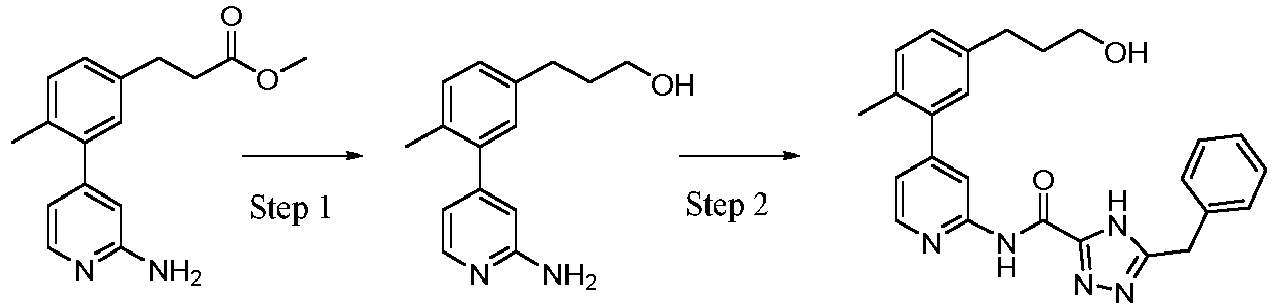
- Methyl 3-(3-(2-aminopyridin-4-yl)-4-methylphenyl)propionate (270mg, 1mmol) was placed in anhydrous tetrahydrofuran (3mL), and lithium aluminum hydride (115mg, 3mmol) was added in batches under argon protection at 0°C. After reacting at 50°C for 2 hours, the reaction solution was quenched with saturated ammonium chloride, diluted with dichloromethane, washed with saturated brine, dried over anhydrous sodium sulfate, filtered and evaporated to dryness, and purified by column chromatography to afford 150 mg of product.
- Step 2: It was carried out in a similar manner to step 2 of Example 1, except that 3-(3-(2-aminopyridin-4-yl)-4-methylphenyl)propanol was used in place of 4-phenylpyridin-2-amine.
- 1H NMR (400 MHz, DMSO-d 6) δ 14.47 (s, 1H), 9.90 (s, 1H), 8.41 (d, J = 5.1 Hz, 1H), 8.15 - 8.08 (m, 1H), 7.40 - 7.30 (m, 4H), 7.30 - 7.23 (m, 2H), 7.23 - 7.13 (m, 2H), 7.09 (d, J = 1.8 Hz, 1H), 4.67 - 4.34 (m, 1H), 4.17 (s, 2H), 3.41 (t, J = 6.4 Hz, 2H), 2.63 (t, J = 7.7 Hz, 2H), 2.24 (s, 3H), 1.80 - 1.66 (m, 2H). MS: 428 [M+H]+.
-

- It was carried out in a similar manner to
steps 2 to 4 of Example 160, except that 3-bromo-4-methylbenzaldehyde was used in place of methyl 4-(3-bromo-4-methylphenoxy)butanoate, and (3-methoxypropyl)magnesium bromide was used in place of methylmagnesium bromide. 1H NMR (400 MHz, DMSO-d 6) δ 14.48 (s, 1H), 9.90 (s, 1H), 8.42 (d, J = 5.1 Hz, 1H), 8.12 (s, 1H), 7.38-7.22 (m, 7H), 7.22-7.17 (m, 2H), 5.19 (d, J = 4.5 Hz, 1H), 4.67-4.43 (m, 1H), 4.18 (s, 2H), 3.29 (t, J = 6.3 Hz, 2H), 3.18 (s, 3H), 2.26 (s, 3H), 1.69-1.52 (m, 3H), 1.52-1.39 (m, 1H). MS: 472 [M+H]+. -

- 4-Bromo-2-methoxy-1-methylbenzene (500mg, 2.5mmol) was dissolved in anhydrous tetrahydrofuran (5mL), and n-butyl lithium (2.5M, 1mL, 2.5mmol) was added dropwise at -78°C under argon protection. After reacting at this temperature for 30 minutes, N-methoxy-N-methyl-2-(tetrahydro-2H-pyran-4-yl)acetamide (505mg, 2.7mmol) in anhydrous tetrahydrofuran (1mL) was added, warmed slowly, and reacted at room temperature for 2 hours. The reaction solution was quenched with saturated aqueous solution of ammonium chloride, extracted with ethyl acetate, the organic phase was washed with saturated brine, dried over anhydrous sodium sulfate, filtered and evaporated to dryness, and purified by column chromatography to afford 500 mg of product.
- 1-(3-Methoxy-4-methylphenyl)-2-(tetrahydro-2H-pyran-4-yl)ethan-1-one (500mg, 2.0mmol) was dissolved in anhydrous dichloromethane (5mL), a solution of boron tribromide in dichloromethane (1M, 3mL, 3mmol) was added dropwise at 0°C under argon protection, and the reaction was slowly warmed to room temperature and reacted for 2 hours. The reaction solution was quenched with saturated aqueous solution of ammonium chloride, extracted with dichloromethane, and the organic phase was washed with saturated brine, dried over anhydrous sodium sulfate, filtered and evaporated to dryness, and purified by column chromatography to afford 350mg of product.
- Steps 3 to 5 were carried out in a similar manner to Example 43, except that 1-(3-hydroxyl-4-methylphenyl)-2-(tetrahydro-2H-pyran-4-yl)ethan-1-one was used in place of 5,6,7,8-tetrahydronaphthalen-1-ol.
- 1H NMR (400 MHz, DMSO-d 6) δ 14.60 (s, 1H), 9.96 (s, 1H), 8.46 (d, J = 5.1 Hz, 1H), 8.14 (s, 1H), 7.96 (d, J = 1.7 Hz, 1H), 7.91 (dd, J = 7.9, 1.8 Hz, 1H), 7.43 (d, J = 7.9 Hz, 1H), 7.39-7.29 (m, 4H), 7.29-7.21 (m, 2H), 4.18 (s, 2H), 3.88-3.75 (m, 2H), 3.32-3.25 (m, 2H), 3.00 (d, J = 6.7 Hz, 2H), 2.35 (s, 3H), 2.20-2.05 (m, 1H), 1.66-1.54 (m, 2H), 1.34-1.22 (m, 2H). MS: 496 [M+H]+.
-

- It was carried out in a similar manner to Example 485, except that in step 5, ethyl 5-(cyclopentylmethyl)-4H-1,2,4-triazol-3-carboxylate was used in place of ethyl 5-benzyl-4H-1,2,4-triazol-3-carboxylate. 1H NMR (400 MHz, DMSO-d 6) δ 14.42 (s, 1H), 9.91 (s, 1H), 8.47 (d, J = 5.1 Hz, 1H), 8.16 (d, J = 1.4 Hz, 1H), 7.97 (d, J = 1.7 Hz, 1H), 7.92 (dd, J = 8.0, 1.8 Hz, 1H), 7.43 (d, J = 7.9 Hz, 1H), 7.25 (dd, J = 5.1, 1.6 Hz, 1H), 3.89 - 3.76 (m, 2H), 3.32 - 3.24 (m, 2H), 3.00 (d, J = 6.7 Hz, 2H), 2.78 (d, J = 7.5 Hz, 2H), 2.35 (s, 3H), 2.31 - 2.22 (m, 1H), 2.18 - 2.05 (m, 1H), 1.80 - 1.67 (m, 2H), 1.67 - 1.56 (m, 4H), 1.56 - 1.44 (m, 2H), 1.32 - 1.21 (m, 4H). MS: 488 [M+H]+.
-

- 3-Bromo-4-methylbenzoic acid (430mg, 2mmol), methyl 3-aminopropionate hydrochloride (280mg, 2mmol), T3P (2,4,6-tripropyl-l,3,5,2,4,6-trioxatriphosphorinane-2,4,6-trioxide) (950mg, 50%, 3mmol) and DIEA (780mg, 6mmol) were dissolved in dichloromethane (6mL), and reacted at 25°C for 2 hours. The reaction solution was diluted with dichloromethane, washed with saturated brine, dried over anhydrous sodium sulfate, filtered and evaporated to dryness, purified by column chromatography to afford 540mg of product.
-
Steps 2 to 4 were carried out in a similar manner tosteps 2 to 4 of Example 160, except that methyl 3-(3-bromo-4-methylbenzamido)propionate was used in place of methyl 4-(3-bromo-4-methylphenoxy)butanoate. - 1H NMR (400 MHz, DMSO-d 6) δ 14.54 (s, 1H), 9.94 (s, 1H), 8.50 - 8.38 (m, 2H), 8.14 (s, 1H), 7.82 (dd, J = 8.0, 1.9 Hz, 1H), 7.75 (d, J = 2.0 Hz, 1H), 7.45 (d, J = 8.0 Hz, 1H), 7.39 - 7.29 (m, 4H), 7.29 - 7.17 (m, 2H), 4.33 (s, 1H), 4.18 (s, 2H), 3.38 - 3.34 (m, 2H), 2.32 (s, 3H), 1.71 - 1.58 (m, 2H), 1.12 (s, 6H). MS: 499 [M+H]+.
- The preparation was carried out in a similar manner to Example 487, except that in step 4, ethyl 5-(cyclopentylmethyl)-4H-1,2,4-triazole-3-carboxylate was used in place of ethyl 5-benzyl-4H-1,2,4-triazol-3-carboxylate. 1H NMR (400 MHz, DMSO-d 6) δ 14.34 (s, 1H), 9.89 (s, 1H), 8.55 - 8.34 (m, 2H), 8.16 (s, 1H), 7.82 (dd, J = 8.0, 1.9 Hz, 1H), 7.75 (d, J = 1.9 Hz, 1H), 7.45 (d, J = 8.0 Hz, 1H), 7.26 (dd, J = 5.1, 1.6 Hz, 1H), 4.33 (s, 1H), 3.38 - 3.35 (m, 2H), 2.78 (d, J = 7.5 Hz, 2H), 2.32 (s, 3H), 2.30 - 2.19 (m, 1H), 1.83 - 1.68 (m, 2H), 1.68 - 1.56 (m, 4H), 1.56 - 1.41 (m, 2H), 1.26 - 1.20 (m, 2H), 1.13 (s, 6H). MS: 491 [M+H]+.

- The preparation was carried out in a similar manner to Example 487, except that in
step 1, monomethyl succinate was used in place of 3-bromo-4-methylbenzoic acid, and 3-bromo-4-methylaniline was used in place of methyl 3-aminopropionate hydrochloride. 1H NMR (400 MHz, DMSO-d 6) δ 14.56 (s, 1H), 9.97 (s, 1H), 9.86 (s, 1H), 8.42 (d, J = 5.3 Hz, 1H), 8.12 (s, 1H), 7.56 (d, J = 8.1 Hz, 2H), 7.40 - 7.30 (m, 4H), 7.30 - 7.22 (m, 2H), 7.22 - 7.15 (m, 1H), 4.25 (s, 1H), 4.19 (s, 2H), 2.41 - 2.30 (m, 2H), 2.21 (s, 3H), 1.73 - 1.61 (m, 2H), 1.10 (s, 6H). MS: 499 [M+H]+. - The preparation was carried out in a similar manner to Example 487, except that in
step 1, monomethyl succinate was used in place of 3-bromo-4-methyl benzoic acid, 3-bromo-4-methylaniline was used in place of methyl 3-aminopropionate hydrochloride, and in step 4, ethyl 5-(cyclopentylmethyl)-4H-1,2,4-triazole-3-carboxylate was used in place of ethyl 5-benzyl-4H-1,2,4-triazol-3-carboxylate. 1H NMR (400 MHz, DMSO-d 6) δ 14.37 (s, 1H), 9.98 (s, 1H), 9.83 (s, 1H), 8.42 (d, J = 5.2 Hz, 1H), 8.14 (s, 1H), 7.63 - 7.51 (m, 2H), 7.26 (d, J = 8.2 Hz, 1H), 7.19 (d, J = 5.2 Hz, 1H), 4.25 (s, 1H), 2.79 (d, J = 7.5 Hz, 2H), 2.41 - 2.32 (m, 2H), 2.32 - 2.24 (m, 1H), 2.22 (s, 3H), 1.79 - 1.44 (m, 8H), 1.25 - 1.19 (m, 2H), 1.10 (s, 6H). MS: 491 [M+H]+.
- The preparation was carried out in a similar manner to Example 160, except that in step 4, ethyl 5-(3-chloro-2-fluorobenzyl)-4H-1,2,4-triazol-3-carboxylate was used in place of ethyl 5-benzyl-4H-1,2,4-triazol-3-carboxylate. 1H NMR (400 MHz, DMSO-d 6) δ 14.73 (s, 1H), 9.92 (s, 1H), 8.41 (d, J = 5.0 Hz, 1H), 8.10 (s, 1H), 7.57 - 7.48 (m, 1H), 7.43 - 7.35 (m, 1H), 7.28 - 7.18 (m, 3H), 6.93 (dd, J = 8.4, 2.7 Hz, 1H), 6.80 (d, J = 2.7 Hz, 1H), 4.26 (s, 2H), 4.17 (s, 1H), 3.96 (t, J = 6.6 Hz, 2H), 2.19 (s, 3H), 1.82 - 1.65 (m, 2H), 1.54 - 1.42 (m, 2H), 1.09 (s, 6H). MS: 538 [M+H]+.
- The preparation was carried out in a similar manner to Example 160, except that in step 3, 5-fluoro-4-bromopyridin-2-amine was used in place of 4-bromopyridin-2-amine, and in step 4, ethyl 5-(2-fluorobenzyl)-4H-1,2,4-triazol-3-carboxylate was used in place of ethyl 5-benzyl-4H-1,2,4-triazol-3-carboxylate. 1H NMR (400 MHz, DMSO-d 6) δ 14.70 (s, 1H), 10.09 (s, 1H), 8.47 (s, 1H), 8.06 (d, J = 5.6 Hz, 1H), 7.46 - 7.30 (m, 2H), 7.30 - 7.14 (m, 3H), 6.97 (dd, J = 8.4, 2.7 Hz, 1H), 6.84 (d, J = 2.7 Hz, 1H), 4.20 (s, 2H), 4.17 (s, 1H), 3.95 (t, J = 6.6 Hz, 2H), 2.09 (s, 3H), 1.81 - 1.67 (m, 2H), 1.52 - 1.41 (m, 2H), 1.09 (s, 6H). MS: 522 [M+H]+.
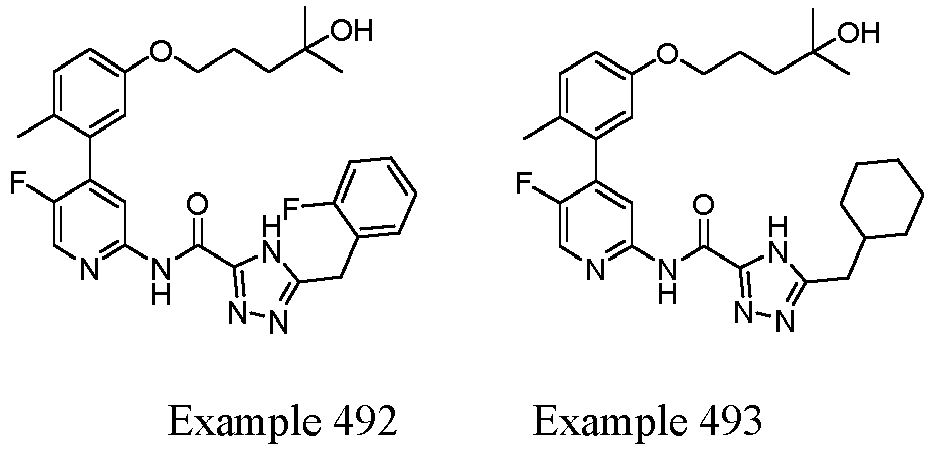
- The preparation was carried out in a similar manner to Example 160, except that in step 3, 5-fluoro-4-bromopyridin-2-amine was used in place of 4-bromopyridin-2-amine, and in step 4, ethyl 5-(cyclohexylmethyl)-4H-1,2,4-triazol-3-carboxylate was used in place of ethyl 5-benzyl-4H-1,2,4-triazol-3-carboxylate. 1H NMR (400 MHz, DMSO-d 6) δ 14.36 (s, 1H), 10.00 (s, 1H), 8.48 (s, 1H), 8.09 (d, J = 5.5 Hz, 1H), 7.27 (d, J = 8.4 Hz, 1H), 6.97 (dd, J = 8.4, 2.7 Hz, 1H), 6.84 (d, J = 2.7 Hz, 1H), 4.17 (s, 1H), 3.96 (t, J = 6.6 Hz, 2H), 2.66 (d, J = 7.0 Hz, 2H), 2.10 (s, 3H), 1.82 - 1.57 (m, 8H), 1.52 - 1.41 (m, 2H), 1.24 - 1.13 (m, 3H), 1.09 (s, 6H), 1.04 - 0.91 (m, 2H). MS: 510 [M+H]+.
- The preparation was carried out in a similar manner to Example 160, except that in
step 1, methyl 5-bromopentanoate was used in place of methyl 4-bromobutanoate, in step 3, 5-fluoro-4-bromopyridin-2-amine was used in place of 4-bromopyridin-2-amine, and in step 4, ethyl 5-(2-fluorobenzyl)-4H-1,2,4-triazol-3-carboxylate was used in place of ethyl 5-benzyl-4H-1,2,4-triazol-3-carboxylate. 1H NMR (400 MHz, DMSO-d 6) δ 14.58 (s, 1H), 10.02 (s, 1H), 8.47 (s, 1H), 8.06 (d, J= 5.5 Hz, 1H), 7.46 - 7.30 (m, 2H), 7.30 - 7.15 (m, 3H), 6.97 (dd, J = 8.5, 2.7 Hz, 1H), 6.85 (d, J = 2.7 Hz, 1H), 4.21 (s, 2H), 4.09 (s, 1H), 3.96 (t, J = 6.5 Hz, 2H), 2.09 (s, 3H), 1.68 (t, J = 6.8 Hz, 2H), 1.52 - 1.30 (m, 4H), 1.06 (s, 6H). MS: 536 [M+H]+.
- The preparation was carried out in a similar manner to Example 160, except that in
step 1, methyl 5-bromopentanoate was used in place of methyl 4-bromobutanoate, in step 3, 5-fluoro-4-bromopyridin-2-amine was used in place of 4-bromopyridin-2-amine, and in step 4, ethyl 5-(cyclohexylmethyl)-4H-1,2,4-triazol-3-carboxylate was used in place of ethyl 5-benzyl-4H-1,2,4-triazol-3-carboxylate. 1H NMR (400 MHz, DMSO-d 6) δ 14.34 (s, 1H), 9.99 (s, 1H), 8.48 (s, 1H), 8.09 (d, J = 5.5 Hz, 1H), 7.27 (d, J = 8.5 Hz, 1H), 6.98 (dd, J = 8.4, 2.7 Hz, 1H), 6.85 (d, J = 2.7 Hz, 1H), 4.09 (s, 1H), 3.97 (t, J = 6.5 Hz, 2H), 2.67 (d, J = 6.9 Hz, 2H), 2.10 (s, 3H), 1.79 - 1.57 (m, 8H), 1.47 - 1.39 (m, 3H), 1.24 - 1.10 (m, 4H), 1.06 (s, 6H), 1.02 - 0.90 (m, 2H). MS: 524 [M+H]+. - The preparation was carried out in a similar manner to Example 64, except that in
step 1, (tetrahydro-2H-pyran-4-yl)methanol was used in place of 2-(tert-butoxy)ethan-1-ol, instep 2, 5-fluoro-4-bromopyridin-2-amine was used in place of 4-bromopyridin-2-amine, and in step 3, ethyl 5-(2-fluorobenzyl)-4H-1,2,4-triazol-3-carboxylate was used in place of ethyl 5-benzyl-4H-1,2,4-triazol-3-carboxylate. 1H NMR (400 MHz, DMSO-d6) δ 14.59 (s, 1H), 10.02 (s, 1H), 8.47 (s, 1H), 8.06 (d, J = 5.4 Hz, 1H), 7.44 - 7.29 (m, 2H), 7.29 - 7.14 (m, 3H), 6.98 (dd, J = 8.4, 2.7 Hz, 1H), 6.86 (d, J = 2.7 Hz, 1H), 4.21 (s, 2H), 3.91 - 3.79 (m, 4H), 3.33 - 3.23 (m, 2H), 2.09 (s, 3H), 2.04 - 1.90 (m, 1H), 1.72 - 1.61 (m, 2H), 1.39 - 1.24 (m, 2H). MS: 520 [M+H]+.
- The preparation was carried out in a similar manner to Example 64, except that in
step 1, (tetrahydro-2H-pyran-4-yl)methanol was used in place of 2-(tert-butoxy)ethan-1-ol, instep 2, 5-fluoro-4-bromopyridin-2-amine was used in place of 4-bromopyridin-2-amine, and in step 3, ethyl 5-(cyclohexylmethyl)-4H-1,2,4-triazol-3-carboxylate was used in place of ethyl 5-benzyl-4H-1,2,4-triazol-3-carboxylate. 1H NMR (400 MHz, DMSO-d 6) δ 14.35 (s, 1H), 10.00 (s, 1H), 8.48 (s, 1H), 8.09 (d, J = 5.5 Hz, 1H), 7.28 (d, J = 8.5 Hz, 1H), 6.99 (dd, J = 8.4, 2.7 Hz, 1H), 6.86 (d, J = 2.7 Hz, 1H), 3.92 - 3.78 (m, 4H), 3.32 - 3.24 (m, 2H), 2.66 (d, J = 7.1 Hz, 2H), 2.10 (s, 3H), 2.04 - 1.91 (m, 1H), 1.81 - 1.55 (m, 8H), 1.36 - 1.15 (m, 5H), 1.04 - 0.93 (m, 2H). MS: 508 [M+H]+. - The preparation was carried out in a similar manner to Example 85, except that in
step 1, 2-(tetrahydro-2H-pyran-4-yl)ethan-1-ol was used in place of 2-(2-methoxyethoxy)ethan-1-ol, in step 3, 5-fluoro-4-bromopyridin-2-amine was used in place of 4-bromopyridin-2-amine, and in step 4, ethyl 5-(2-fluorobenzyl)-4H-1,2,4-triazol-3-carboxylate was used in place of ethyl 5-benzyl-4H-1,2,4-triazol-3-carboxylate. 1H NMR (400 MHz, DMSO-d 6) δ 14.66 (s, 1H), 10.09 (s, 1H), 8.47 (s, 1H), 8.06 (d, J = 5.6 Hz, 1H), 7.46 - 7.30 (m, 2H), 7.30 - 7.14 (m, 3H), 6.98 (dd, J = 8.5, 2.7 Hz, 1H), 6.86 (d, J = 2.7 Hz, 1H), 4.20 (s, 2H), 4.01 (t, J = 6.3 Hz, 2H), 3.81 (dd, J = 11.6, 4.2 Hz, 2H), 3.29 - 3.21 (m, 2H), 2.09 (s, 3H), 1.76 - 1.52 (m, 5H), 1.25 - 1.12 (m, 2H). MS: 534 [M+H]+.
- The preparation was carried out in a similar manner to Example 85, except that in
step 1, 2-(tetrahydro-2H-pyran-4-yl)ethan-1-ol was used in place of 2-(2-methoxyethoxy)ethan-1-ol, in step 3, 5-fluoro-4-bromopyridin-2-amine was used in place of 4-bromopyridin-2-amine, and in step 4, ethyl 5-(cyclohexylmethyl)-4H-1,2,4-triazol-3-carboxylate was used in place of ethyl 5-benzyl-4H-1,2,4-triazol-3-carboxylate. 1H NMR (400 MHz, DMSO-d 6) δ 14.35 (s, 1H), 9.99 (s, 1H), 8.47 (s, 1H), 8.09 (d, J = 5.6 Hz, 1H), 7.27 (d, J = 8.5 Hz, 1H), 6.98 (dd, J = 8.4, 2.7 Hz, 1H), 6.87 (d, J = 2.7 Hz, 1H), 4.02 (t, J = 6.3 Hz, 2H), 3.89 - 3.76 (m, 2H), 3.30 - 3.20 (m, 2H), 2.66 (d, J = 7.1 Hz, 2H), 2.10 (s, 3H), 1.80 - 1.55 (m, 11H), 1.30 - 1.13 (m, 5H), 1.04 - 0.92 (m, 2H). MS: 522 [M+H]+. - The preparation was carried out in a similar manner to Example 160, except that in
step 1, 3-bromo-4-fluorophenol was used in place of 3-bromo-4-methylphenol, methyl 5-bromopentanoate was used in place of methyl 4-bromobutanoate, and in step 4, ethyl 5-(2-fluorobenzyl)-4H-1,2,4-triazol-3-carboxylate was used in place of ethyl 5-benzyl-4H-1,2,4-triazol-3-carboxylate. 1H NMR (400 MHz, DMSO-d 6) δ 14.60 (s, 1H), 9.85 (s, 1H), 8.45 (d, J = 5.2 Hz, 1H), 8.35 (s, 1H), 7.51 - 7.15 (m, 6H), 7.15 - 7.00 (m, 2H), 4.23 (s, 2H), 4.11 (s, 1H), 4.02 (t, J = 6.4 Hz, 2H), 1.75 - 1.64 (m, 2H), 1.52 - 1.37 (m, 4H), 1.07 (s, 6H). MS: 522 [M+H]+.
- The preparation was carried out in a similar manner to Example 160, except that in
step 1, 3-bromo-4-chlorophenol was used in place of 3-bromo-4-methylphenol, and in step 4, ethyl 5-(3-chloro-2,4-difluorobenzyl)-4H-1,2,4-triazol-3-carboxylate was used in place of ethyl 5-benzyl-4H-1,2,4-triazol-3-carboxylate. 1H NMR (400 MHz, DMSO-d 6) δ 14.72 (s, 1H), 9.98 (s, 1H), 8.45 (d, J = 5.1 Hz, 1H), 8.21 (s, 1H), 7.57 - 7.44 (m, 2H), 7.38 - 7.25 (m, 2H), 7.06 (dd, J = 8.9, 3.0 Hz, 1H), 7.01 (d, J = 3.0 Hz, 1H), 4.26 (s, 2H), 4.18 (s, 1H), 4.01 (t, J = 6.5 Hz, 2H), 1.82 - 1.69 (m, 2H), 1.53 - 1.40 (m, 2H), 1.09 (s, 6H). MS: 576 [M+H]+. - The preparation was carried out in a similar manner to Example 160, except that in
step 1, 3-bromo-4-chlorophenol was used in place of 3-bromo-4-methylphenol, methyl 5-bromopentanoate was used in place of methyl 4-bromobutanoate, in step 3, 4-bromo-5-fluoropyridin-2-amine was used in place of 4-bromopyridin-2-amine, and in step 4, ethyl 5-(cyclohexylmethyl)-4H-1,2,4-triazol-3-carboxylate was used in place of ethyl 5-benzyl-4H-1,2,4-triazol-3-carboxylate. 1H NMR (400 MHz, DMSO-d 6) δ 14.35 (s, 1H), 10.04 (s, 1H), 8.52 (d, J = 1.2 Hz, 1H), 8.16 (d, J = 5.5 Hz, 1H), 7.53 (d, J = 8.6 Hz, 1H), 7.17 - 7.05 (m, 2H), 4.09 (s, 1H), 4.02 (t, J = 6.5 Hz, 2H), 2.67 (d, J = 7.1 Hz, 2H), 1.82 - 1.57 (m, 8H), 1.51 - 1.33 (m, 4H), 1.28 - 1.10 (m, 3H), 1.06 (s, 6H), 1.04 - 0.88 (m, 2H). Ms: 544 [M+H]+.
- The preparation was carried out in a similar manner to Example 160, except that in
step 1, 3-bromo-4-chlorophenol was used in place of 3-bromo-4-methylphenol, and in step 4, ethyl 5-(5-cyclopropyl-2-fluorobenzyl)-4H-1,2,4-triazol-3-carboxylate was used in place of ethyl 5-benzyl-4H-1,2,4-triazol-3-carboxylate. 1H NMR (400 MHz, DMSO-d 6) δ 14.56 (s, 1H), 9.89 (s, 1H), 8.45 (d, J = 5.2 Hz, 1H), 8.22 (s, 1H), 7.51 (d, J = 8.8 Hz, 1H), 7.28 (d, J = 5.2 Hz, 1H), 7.17-6.95 (m, 5H), 4.22-4.11 (m, 3H), 4.01 (t, J = 6.6 Hz, 2H), 1.95-1.85 (m, 1H), 1.82-1.69 (m, 2H), 1.53-1.41 (m, 2H), 1.09 (s, 6H), 0.97-0.88 (m, 2H), 0.68-0.57 (m, 2H). MS: 564 [M+H]+. -

- The preparation was carried out in a similar manner to Example 160, except that in
step 1, 3-bromo-4-chlorophenol was used in place of 3-bromo-4-methylphenol, and in step 4, ethyl 5-((4-fluoro-[1,1'-biphenyl]-3-yl)methyl)-4H-1,2,4-triazol-3-carboxylate was used in place of ethyl 5-benzyl-4H-1,2,4-triazol-3-carboxylate. 1H NMR (400 MHz, DMSO-d 6) δ 14.70 (s, 1H), 9.94 (s, 1H), 8.44 (d, J = 5.2 Hz, 1H), 8.21 (s, 1H), 7.82 - 7.68 (m, 1H), 7.68 - 7.56 (m, 3H), 7.56 - 7.41 (m, 3H), 7.41 - 7.22 (m, 3H), 7.14 - 6.89 (m, 2H), 4.29 (s, 2H), 4.17 (s, 1H), 4.00 (t, J = 6.6 Hz, 2H), 1.82 - 1.68 (m, 2H), 1.54 - 1.39 (m, 2H), 1.09 (s, 6H). MS: 600 [M+H]+. - Western blot was used to determine the effect of the test compounds on the phosphorylation of intracellular RIPK1 during the induction of programmed necrosis of HT29 cells, verifying the effect of compounds on RIPK1 phosphorylation, and initially estimating the IC50 range of compounds for RIPK1 phosphorylation.
-
Table 2. Main reagents and instruments used in assay example 1 Name Item No. Brand McCoy's 5A SH30200.01 Hyclone BCA Protein concentration determination kit P0012 Beyotime HT29 cells HTB-38 ATCC Phospho-RIP (Ser166) (D1L3S) Rabbit mAb 65746s CST RIP (D94C12) XP Rabbit mAb 3493s CST Anti-rabbit IgG (H+L) (DyLight 680 Conjugate) 5366s CST Anti-rabbit IgG (H+L) (DyLight 800 4X PEG Conjugate) 5151s CST β-Actin(8H10D10)Mouse mAb 3700s CST Precision Plus ProteinTM Dual Color Standards 1610374 Bio-Rad 10%Mini-PROTEAN® TGX Stain-Free™ Protein Gels 4568034 Bio-Rad AT-406 (SM-406) S2754 Selleck chem Z-VAD-FMK S7023 Selleck chem Human TNF-α 300-01A-10 Peprotech Electrophoresis power supply PowerPacTM basic electrophoresis power supply 1645050 Bio-Rad Mini-PROTEAN® Tetra electrophoresis tank 1658004 Bio-Rad Trans-Blot® TurboTM Trans-Blot Turbo Transfer System 1704155 Bio-Rad Odyssey CLXInfrared fluorescence scanning imaging system CLX-1688 LI-COR -
- 1. Cell collection and protein sample extraction
- a) HT29 cells in good condition were collected, resuspended in McCoy's 5A complete medium and counted, the cells were planted in a 12-well plate at a cell density of 2×10⁶/1 mL/well, and placed in a 37 °C cell culture incubator overnight.
- b) Z-VAD-FMK (at final concentration of 20µM) was added to the above 12-well plate, after 30 minutes, the inducer (where the final concentration of TNF-α is 20ng/mL, and the final concentration of AT-406 is 100nM), and test compounds of different concentrations were then added, and incubated in a cell incubator at 37°C for 7 hours.
- c) Preparation of complete lysate: A tube of aliquoted RIPA Lysis Buffer was taken, PMSF, Phosphatase Inhibitor, and Roche Protease Inhibitor were added after thawing (volume ratio: PMSF: RIPA=1:100; phosphatase inhibitor: RIPA=1:100; Roche protease inhibitor: RIPA=4:100), and placed on ice for later use.
- d) The cell culture medium supernatant was discarded, washed twice with PBS, 100 µL of the prepared complete cell lysate was added to each well, the cells were lysed on ice for 15 minutes, and shaked intermittently during the lysis;
- e) After the lysis is complete, the lysate was transferred to a 1.5 mL centrifuge tube labeled in advance and centrifuged at 4°C and 14000 rpm for 20 minutes;
- f) The supernatant was taken, transferred to a labeled 600 µL centrifuge tube, and placed on ice.
- g) The BCA kit was used to detect and the protein concentration was calculated;
- 2. The protein sample was mixed well with 4× loading buffer and heated in a metal bath at 100°C for 5 min to fully denature the protein and placed on ice to cool down.
- 3. 40-50 ug of protein sample to be determined or pre-stained two-color protein molecular weight standard were added to each well.
- 4. Electrophoresis was carried out at a voltage of 100 V under constant voltage conditions. After 30 minutes of electrophoresis, the voltage was increased to 120V, and the electrophoresis time was set to 120 minutes or appropriately extended. The electrophoresis could be stopped when the pre-stained two-color protein molecular weight standard band on the gel run out of the lower edge of the lane.
- 5. After the electrophoresis was over, the gel holder was removed, the short glass plate was gently pried up with the peeling spatula, the upper layer of concentrated gel was dicarded, the separation gel was gently peeled off and placed in the transfer buffer;
- 6. A moderately sized NC membrane was cut according to the size of the gel, soaked with pure water, and then immersed in the pre-cooled transfer buffer; at the same time the filter paper was soaked in the transfer buffer solution.
- 7. The transfer cartridge was assembled in the order of filter paper, NC membrane, gel, and filter paper, then the transfer cartridge was put into the Trans-Blot® Turbo, and the "Standard SD" program that comes with the instrument was called to complete the transfer.
- 8. The protein-loaden NC membrane was rinsed with deionized water, blocking solution was added to immerse the membrane, and blocked with slow shaking on a shaker at room temperature for 1 hour.
- 9. After the blocking was completed, the NC membrane was put into the antibody incubation box, the primary antibody was diluted at a ratio of 1:1000, after adding to the antibody incubation box, the box was incubated on a shaker at room temperature for 1 hour.
- 10. After the incubation was completed, the membrane was washed with TBST for 3 times, 10 minutes each time.
- 11. The secondary antibody was selected according to the source of the primary antibody, the secondary antibody was diluted with the diluent of the secondary antibody at a ratio of 1:10000~1:15000, and added into the antibody incubation box and the membrane was immersed therein, and incubated on a shaker at room temperature for 1 hour.
- 12. After the incubation was completed, the membrane was washed with TBST for 3 times, with 10 minutes each time.
- 13. The membrane was rinsed once with pure water, Odyssey CLX infrared fluorescence scanning imaging system was used to scan the membrane to afford an image, and the fluorescence intensity value was read at the same time.
- The inhibition rate of compounds on protein phosphorylation was calculated according to the fluorescence intensity value, and the calculation method is as follows:

- A: Fluorescence intensity value after treatment with IL-2 and compound
- B: Fluorescence intensity value after treatment with IL-2
- The compound of Example 2 was tested by the above method, and the results were shown in
Figure 1 and Figure 2. Figure 1 is a Western Blot picture of the inhibition of RIPK1 phosphorylation by the compound of different concentrations.Figure 2 is a quantitative calculation of the inhibition rate of RIPK1 phosphorylation based on the gray value of the band in the above picture. Therefore, it can be shown that the compound of Example 2 directly inhibit the phosphorylation activation of RIPK1. - In this assay example 2, under the condition of inducing programmed cell necrosis, different concentrations of the test compounds were added to test the IC50 of the rescue effect of the test compounds on the programmed necrosis.
-
Table 3. Main reagents and instruments used in Assay Example 2 Name Brand Item No./Name DMSO Sigma D2650 (100 mL) Trypan blue GENIA Stock G8003 McCOY's 5A Hylcone SH30200.01 CCK-8 Tongren Chemistry CK04 GSK2982772 Selleckchem S8484 AT-406 Selleckchem S2754 Z-VAD-FMK Selleckchem S7023 TNF-α PeproTech 300-01A HT29 ATCC HTB-38 Multi-function plate reader PerkinElmer Envision - Compounds: Dissolved in DMSO to make a 10 mM solution;
- TNF-α: The initial concentration was 100 µg/mL;
- Z-VAD-FMK: Dissolved in DMSO to make a 10 mM solution;
- AT-406: Dissolved in DMSO to make a 10 mM solution.
-
- 1) Compound dilution: All test compounds were dissolved in DMSO to prepare a 10 mM stock solution, and the first concentration gradient dilution of the test compounds was completed in DMSO. The gradient dilution factor was 4 times and 9 concentration gradients were made; A 40-fold overall dilution of all compounds was completed in the cell culture medium, and the resulting compound was 10× compound, which will be added to the wells of the 96-well plate containing cells, so that the final cell culture medium was 1 × the designed final concentration.
The general drug design is 9 concentration gradients, of which the highest final concentration is 25000 nM, the lowest concentration after 4-fold dilution of 9 concentrations is 0.38 nM, and the final concentration of DMSO in all wells is 0.25%. The compound dilution process is shown inFigure 3 . - 2) HT 29 cells in good growth condition were selected, trypsinized, the cells was collected by centrifugation, resuspended in McCOY's 5A complete medium (containing 10% FBS) and counted, and the number of cells and survival rate were recorded.
- 3) Cells were inoculated to the 60 wells in the middle of the 96-well culture plate at a density of 12000 cells/ 80 µL/well, surrounding wells were filled with sterile water, and incubated overnight.
- 4) 10 µL of the 10× compound diluted with the medium was added to the assay wells, 10 µL of McCOY's 5A complete medium containing 2.5% DMSO was added to the inducer-free wells and the control wells, mixed and shaked, and incubated for 30 minutes.
- 5) Then 10 µL of inducer mixture (TNF-α, AT-406, Z-VAD-FMK with the final concentration of 20 ng/mL, 1 µM, 20 µM) was added into the assay wells and control wells. 10 µL McCOY's 5A complete medium was added to wells without inducer. Cells were cultured in an incubator with 5% CO2, at 37°C.
- 6) After culturing for 16-20 hours, 10 µL of CCK-8 reagent was added to each well, and incubated for about 2 hours;
- 7) The OD value was read at 450 nm on the multi-function plate reader.
- 8) Data processing:

- A: The OD values of the wells without inducer (containing cells, CCK-8, without compound and inducer);
- X: OD values of assay wells (containing cells, CCK-8, compound, inducer);
- B: OD values of control wells (containing cells, CCK-8, inducer, without compound).
- Then the value were imported into Graphpad PrismS software for curve fitting and the IC50 values were calculated.
- Table 4 lists the determination results of some compounds of the present disclosure in inhibiting HT29 cell necrosis, wherein A represents IC50 is less than or equal to 100 nM, B represents IC50 is greater than 100 nM but less than or equal to 1000 nM, C represents IC50 is greater than 1000 nM but less than or equal to 10000 nM, D represents IC50 is greater than 10000 nM.
Table 4. the determination results of some compounds of the present disclosure in inhibiting necrosis of HT29 cells Example No. HT29 IC50 (nM) Example No. HT29 IC50 (nM) 1 C 101 B 2 B 102 B 3 C 103 B 4 C 104 C 5 D 105 D 6 C 106 C 7 B 107 C 8 C 108 C 9 D 109 C 10 C 110 D 11 C 111 A 12 B 112 C 13 C 113 D 14 C 114 B 15 C 115 B 16 C 116 B 17 D 117 A 18 C 118 A 19 C 119 A 20 B 120 B 21 C 121 A 22 C 122 A 23 D 123 A 24 B 124 C 25 C 125 B 26 B 126 C 27 C 127 NT 28 C 128 A 29 D 129 B 30 D 130 D 31 D 131 A 32 D 132 B 33 B 133 A 34 B 134 B 35 A 135 A 36 B 136 A 37 B 137 A 38 C 138 A 39 C 139 D 40 C 140 A 41 D 141 A 42 C 142 B 43 C 143 B 44 NT 144 A 45 B 145 A 46 C 146 C 47 D 147 A 48 D 148 A 49 C 149 A 50 C 150 A 51 C 151 A 52 D 152 A 53 D 153 A 54 D 154 A 55 B 155 B 56 B 156 B 57 B 157 B 58 B 158 C 59 A 159 A 60 D 160 A 61 C 161 B 62 D 162 B 63 C 163 A 64 A 164 A 65 A 165 A 66 A 166 A 67 A 167 A 68 B 168 B 69 A 169 A 70 A 170 B 71 A 171 B 72 A 172 A 73 A 173 A 74 B 174 B 75 A 175 A 76 D 176 A 77 A 177 A 78 A 178 A 79 A 179 A 80 A 180 A 81 A 181 C 82 B 182 B 83 A 183 A 84 A 184 A 85 A 185 A 86 A 186 B 87 A 187 A 88 A 188 A 89 A 189 A 90 A 190 B 91 A 191 B 92 B 192 A 93 C 193 A 94 C 194 A 95 B 195 A 96 B 196 D 97 B 197 D 98 B 198 B 99 B 199 C 100 B 200 A 201 A 353 A 202 A 354 B 203 A 355 B 204 A 356 A 205 B 357 A 206 B 358 D 207 B 359 A 208 B 360 A 209 B 361 A 210 B 362 A 211 B 363 A 212 B 364 A 213 C 365 A 214 A 366 A 215 A 367 A 216 A 368 A 217 B 369 A 218 A 370 A 219 A 371 A 220 A 372 A 221 B 373 A 222 A 374 A 223 A 375 A 224 A 376 A 225 A 377 A 226 A 378 A 227 A 379 B 228 B 380 A 229 B 381 A 230 B 382 A 231 B 383 A 232 B 384 A 233 C 385 A 234 A 386 A 235 A 387 A 236 A 388 A 237 A 389 A 238 A 390 A 239 A 391 A 240 B 392 A 241 B 393 A 242 A 394 A 243 A 395 A 244 A 396 A 245 A 397 A 246 B 398 A 247 B 399 A 248 B 400 A 249 B 401 A 250 A 402 A 251 A 403 A 252 A 404 A 253 B 405 A 254 B 406 A 255 A 407 D 256 A 408 D 257 A 409 A 258 A 410 A 259 A 411 B 260 A 412 B 261 A 413 B 262 A 414 B 263 A 415 A 264 A 416 A 265 B 417 B 266 A 418 B 267 A 419 A 268 A 420 B 269 A 421 B 270 A 422 A 271 A 423 A 272 A 424 B 273 A 425 B 274 A 426 B 275 A 427 B 276 A 428 A 277 A 429 A 278 A 430 B 279 A 431 B 280 A 432 A 281 A 433 A 282 A 434 A 283 A 435 A 284 A 436 A 285 A 437 B 286 A 438 B 287 A 439 A 288 A 440 A 289 A 441 A 290 A 442 A 291 A 443 A 292 A 444 A 293 A 445 A 294 A 446 A 295 A 447 A 296 A 448 A 297 A 449 B 298 A 450 A 299 A 451 A 300 A 452 A 301 A 453 A 302 A 454 A 303 A 455 A 304 A 456 A 305 A 457 A 306 A 458 A 307 A 459 A 308 A 460 A 309 A 461 A 310 A 462 A 311 B 463 A 312 B 464 A 313 B 465 A 314 B 466 A 315 B 467 A 316 B 468 A 317 A 469 A 318 A 470 A 319 A 471 A 320 B 472 A 321 B 473 A 322 B 474 B 323 B 475 A 324 B 476 B 325 B 477 C 326 B 478 B 327 A 479 B 328 A 480 A 329 B 481 B 330 B 482 A 331 C 483 B 332 C 484 A 333 B 485 B 334 B 486 A 335 C 487 B 336 C 488 A 337 A 489 B 338 A 490 A 339 B 491 B 340 B 492 A 341 B 493 A 342 B 494 A 343 C 495 A 344 B 496 A 345 B 497 A 346 B 498 A 347 B 499 A 348 C 500 B 349 D 501 B 350 B 502 A 351 B 503 C 352 B 504 B - The biological data provided by the present disclosure shows that the compounds of the present disclosure are beneficial for the treatment or prevention of diseases caused by abnormal RIP1 kinase. Therefore, the compounds of the present disclosure are beneficial to the treatment of diseases related to RIP1 including ocular fundus disease, xerophthalmia, psoriasis, leucoderma, dermatitis, alopecia areata, rheumatoid arthritis, colitis, multiple sclerosis, systemic lupus erythematosus, Crohn's disease, atherosclerosis, pulmonary fibrosis, liver fibrosis, myelofibrosis, non-small cell lung cancer, small cell lung cancer, breast cancer, pancreatic cancer, glioma, glioblastoma, ovarian cancer, cervical cancer, colorectal cancer, melanoma, endometrial cancer, prostate cancer, bladder cancer, leukemia, gastric cancer, liver cancer, gastrointestinal stromal tumor, thyroid cancer, chronic myeloid leukemia, acute myeloid leukemia, non-Hodgkin's lymphoma, nasopharyngeal cancer, esophageal cancer, brain tumor, B-cell and T-cell lymphoma, lymphoma, multiple myeloma, biliary cancer and sarcoma, cholangiocarcinoma, inflammatory bowel disease, ulcerative colitis, retinal detachment, retinitis pigmentosa, macular degeneration, pancreatitis, atopic dermatitis, spondyloarthritis, gout, SoJIA, Sjogren's syndrome, systemic scleroderma, antiphospholipid syndrome, vasculitis, osteoarthritis, non-alcoholic steatohepatitis, alcoholic steatohepatitis, autoimmune hepatitis, autoimmune hepatobiliary disease, primary sclerosing cholangitis, nephritis, celiac disease, autoimmune ITP, transplant rejection, ischemia-reperfusion injury of solid organs, sepsis, systemic inflammatory response syndrome, cerebrovascular accident, myocardial infarction, Huntington's disease, Alzheimer's disease, Parkinson's disease, allergic diseases, asthma, atopic dermatitis, multiple sclerosis, type I diabetes, Wegener's granulomatosis, pulmonary sarcoidosis, Behget's disease, interleukin-1 converzyme-related fever syndrome, chronic obstructive pulmonary disease, tumor necrosis factor receptor related periodic syndrome and periodontitis. The compounds of the present disclosure can be used as monotherapy or combination therapy, and can be used in combination with multiple compounds of the present disclosure or in combination with other drugs that are not included in the present disclosure.
Claims (14)
- A compound of formula (I), or the pharmaceutically acceptable salts, the diastereomers, the enantiomers, or the solvates thereof,
 Q is NH, O or S;A1, A2, and A3 are each independently selected from N or CR4 and at least one of A1, A2, and A3 is N, R4 is H, F, Cl or methyl;R1 is C3-C8 cycloalkyl, which is unsubstituted or substituted with 1 to 3 substituents selected from the group consisting of C1-C6 alkyl, C1-C6 alkoxy, C1-C6 alkylthio, C1-C3 acyl, hydroxyl, halogen, trifluoromethyl, cyano, -CONH2, oxo (=O) and -NRaRb,or 4- to 8-membered heteroalicyclic group, which is unsubstituted or substituted with 1 to 3 substituents selected from the group consisting of C1-C6 alkyl, C1-C6 alkoxy, C1-C6 alkylthio, C1-C3 acyl, hydroxyl, halogen, trifluoromethyl, cyano, -CONH2, oxo (=O) and -NRaRb,or aryl or heteroaryl, which is unsubstituted or substituted with 1 to 3 substituents selected from the group consisting of C1-C10 alkyl, halogen, C3-C8 cycloalkyl, halogenated C1-C10 alkyl, cyano, hydroxyl, C1-C6 alkylthio, -SO2-R5, -SO-R5, -CO-R5, -CONH-R5, -NHCO-R5, -R'-COO-R", -NRaRb, 4- to 8-membered heteroalicyclic group, C2-C6 alkynyl, C2-C6 alkenyl, C1-C3 alkoxy C1-C6 alkylthio, C1-C10 alkyl substituted with hydroxyl and/or C1-C6 alkoxy, C3-C8 cycloalkyl C1-C6 alkyl, (C3-C8 cycloalkyl)-O-(C1-C6 alkyl), C1-C6 alkyl substituted with 4-to 8-membered heteroalicyclic group, and -O-R6,the aryl group is a monocyclic or bicyclic group containing 6 to 12 carbon ring atoms and having at least one aromatic ring, the heteroaryl is a monocyclic or bicyclic group having 5 to 10 ring atoms and containing 1 to 3 heteroatoms selected from N, O, or S as ring atoms, the 4- to 8-membered heteroalicyclic group is a 4- to 8-membered heteroalicyclic group containing 1 to 2 atoms selected from N, O, or S as ring atoms,R5 is hydrogen, hydroxyl, C1-C6 alkyl, C1-C6 alkoxy C1-C6 alkyl, C1-C6 alkyl substituted with hydroxyl, C3-C8 cycloalkyl, or C1-C6 alkyl substituted with 4- to 8-membered heteroalicyclic group,R6 is C1-C10 alkyl, C3-C8 cycloalkyl, 4- to 8-membered heteroalicyclic group, or C1-C10 alkyl which is substituted with 1 to 3 susbtituents selected from the group consisting of hydroxyl, C1-C6 alkoxy, cyano, -NRaRb, C3-C8 cycloalkyloxy, -CONH-R5, C3-C8 cycloalkyl, C3-C8 cycloalkyl substituted with hydroxyl and/or C1-C4 alkyl, carboxylic, halogen, halogenated C1-C6 alkoxy, -SO2-R5, -SO-R5, -CO-R5, C2-C6 alkynyl, C2-C6 alkenyl, C1-C4 alkoxy C1-C6 alkoxy, 4- to 8-membered heteroalicyclic group, 4- to 8-membered heteroalicyclic group substituted with oxo, 4- to 8-membered heteroalicyclic group substituted with hydroxyl and/or C1-C4 alkyl, and C1-C6 alkylthio,R' is C2-C6 alkenylene, or C1-C6 alkylene,R" is hydrogen, C1-C6 alkyl, C1-C6 alkoxy C1-C6 alkyl, C1-C6 alkyl substituted with hydroxyl, C3-C8 cycloalkyl, or C1-C6 alkyl substituted with 4- to 8-membered heteroalicyclic group,Ra and Rb are each independently selected from hydrogen, C1-C6 alkyl, C3-C8 cycloalkyl, C1-C6 alkyl substituted with C1-C6 alkoxy, C1-C6 alkyl substituted with hydroxyl, C3-C8 cycloalkyl C1-C6 alkyl, C1-C6 alkyl substituted with 4- to 8-membered heteroalicyclic group, C1-C6 alkyl substituted with C1-C3 alkylthio, or C1-C6 alkyl substituted with substituted amino or unsubstituted amino, wherein the substituted amino is substituted with mono- or di-C1-C3 alkyl;R2 is C3-C8 cycloalkyl, which is unsubstituted or substituted with 1 to 3 substituents selected from the group consisting of C1-C6 alkyl, C1-C6 alkoxy, C1-C6 alkylthio, C1-C3 acyl, hydroxyl, halogen, trifluoromethyl, cyano, -CONH2, oxo (=O) and -NRcRd,or C7-C12 bridged cyclyl, which is unsubstituted or substituted with 1 to 3 substituents selected from the group consisting of C1-C6 alkyl, C1-C6 alkoxy, C1-C6 alkylthio, C1-C3 acyl, hydroxyl, halogen, trifluoromethyl, cyano, -CONH2, oxo (=O) and -NRcRd,or C1-C10 alkyl, which is unsubstituted or substituted with 1 to 3 substituents selected from the group consisting of C1-C6 alkoxy, C1-C6 alkylthio, C1-C3 acyl, hydroxyl, halogen, cyano, -CONH2, C3-C8 cycloalkyl, and -NRcRd,or -(CH2)n-Re, wherein Re is aryl or heteroaryl, which is unsubstituted or substituted with 1 to 3 substituents selected from the group consisting of C1-C6 alkyl, C1-C6 alkoxy, C1-C6 alkylthio, C1-C3 acyl, hydroxyl, halogen, trifluoromethyl, cyano, -CONH2, C3-C6 cycloalkyl, phenyl, naphthyl, C2-C6 alkynyl, C2-C6 alkenyl, and -NRcRd, wherein n is an integer from 0 to 3,or -(CH2)m-Rf, wherein Rf is 4- to 8-membered heteroalicyclic group, which is unsubstituted or substituted with 1 to 3 substituents selected from the group consisting of C1-C6 alkyl, C1-C6 alkoxy, C1-C6 alkylthio, C1-C3 acyl, hydroxyl, halogen, trifluoromethyl, cyano, -CONH2, oxo (=O) and -NRcRd, m is an integer from 0 to 3,the 4- to 8-membered heteroalicyclic group is a 4- to 8-membered heteroalicyclic group containing 1 to 2 atoms selected from N, O, or S as ring atoms,the aryl group is a monocyclic or bicyclic group containing 6 to 12 carbon ring atoms and having at least one aromatic ring, the heteroaryl is a monocyclic or bicyclic group having 5 to 10 ring atoms and containing 1 to 3 heteroatoms selected from N, O, or S as ring atoms,Rc and Rd are each independently selected from hydrogen, C1-C6 alkyl, C3-C8 cycloalkyl, C1-C6 alkyl substituted with C1-C6 alkoxy, C1-C6 alkyl substituted with hydroxyl, C3-C8 cycloalkyl C1-C6 alkyl, C1-C6 alkyl substituted with 4- to 8-membered heteroalicyclic group, C1-C6 alkyl substituted with C1-C3 alkylthio, or C1-C6 alkyl substituted with substituted amino or unsubstituted amino, wherein the substituted amino is substituted with mono- or di-C1-C3 alkyl;R3 is hydrogen, C1-C3 alkyl, hydroxyl, halogen, trifluoromethyl, or cyano.
 - The compound, the pharmaceutically acceptable salts, diastereomers, enantiomers, or solvates thereof according to claim 1, wherein, Q is NH, O or S;A1, A2, and A3 are each independently selected from N or CR4 and at least one of A1, A2, and A3 is N, R4 is H, F, Cl or methyl;R1 is C3-C8 cycloalkyl, which is unsubstituted or substituted with 1 to 3 substituents selected from the group consisting of C1-C6 alkyl, C1-C6 alkoxy, C1-C6 alkylthio, C1-C3 acyl, hydroxyl, halogen, trifluoromethyl, cyano, -CONH2, oxo (=O) and -NRaRb,or 4- to 8-membered heteroalicyclic group, which is unsubstituted or substituted with 1 to 3 substituents selected from the group consisting of C1-C6 alkyl, C1-C6 alkoxy, C1-C6 alkylthio, C1-C3 acyl, hydroxyl, halogen, trifluoromethyl, cyano, -CONH2, oxo (=O) and -NRaRb,or aryl or heteroaryl, which is unsubstituted or substituted with 1 to 3 substituents selected from the group consisting of C1-C10 alkyl, halogen, C3-C8 cycloalkyl, halogenated C1-C10 alkyl, cyano, hydroxyl, C1-C6 alkylthio, -SO2-R5, -SO-R5, -CO-R5, -CONH-R5, -NRaRb, 4- to 8-membered heteroalicyclic group, C2-C6 alkynyl, C2-C6 alkenyl, C1-C3 alkoxy C1-C6 alkylthio, C1-C10 alkyl substituted with hydroxyl, C1-C6 alkoxy C1-C10 alkyl, C3-C8 cycloalkyl C1-C6 alkyl, (C3-C8 cycloalkyl)-O-(C1-C6 alkyl), C1-C6 alkyl substituted with 4- to 8-membered heteroalicyclic group, and -O-R6,the aryl group is a monocyclic or bicyclic group containing 6 to 12 carbon ring atoms and having at least one aromatic ring, the heteroaryl is a monocyclic or bicyclic group having 5 to 10 ring atoms and containing 1 to 3 heteroatoms selected from N, O, or S as ring atoms, the 4- to 8-membered heteroalicyclic group is a 4- to 8-membered heteroalicyclic group containing 1 to 2 atoms selected from N, O, or S as ring atoms,R5 is hydrogen, hydroxyl, C1-C6 alkyl, C1-C6 alkoxy C1-C6 alkyl, C1-C6 alkyl substituted with hydroxyl, C3-C8 cycloalkyl, or C1-C6 alkyl substituted with 4- to 8-membered heteroalicyclic group,R6 is C1-C10 alkyl, C3-C8 cycloalkyl, 4- to 8-membered heteroalicyclic group, or C1-C10 alkyl which is substituted with 1 to 3 susbtituents selected from the group consisting of hydroxyl, C1-C6 alkoxy, cyano, -NRaRb, C3-C8 cycloalkyloxy, -CONH-R5, C3-C8 cycloalkyl, C3-C8 cycloalkyl substituted with hydroxyl and/or C1-C4 alkyl, carboxylic, halogen, halogenated C1-C6 alkoxy, -SO2-R5, -SO-R5, -CO-R5, C2-C6 alkynyl, C2-C6 alkenyl, C1-C4 alkoxy C1-C6 alkoxy, 4- to 8-membered heteroalicyclic group, 4- to 8-membered heteroalicyclic group substituted with oxo, 4- to 8-membered heteroalicyclic group substituted with hydroxyl and/or C1-C4 alkyl, and C1-C6 alkylthio,Ra and Rb are each independently selected from hydrogen, C1-C6 alkyl, C3-C8 cycloalkyl, C1-C6 alkyl substituted with C1-C6 alkoxy, C1-C6 alkyl substituted with hydroxyl, C3-C8 cycloalkyl C1-C6 alkyl, C1-C6 alkyl substituted with 4- to 8-membered heteroalicyclic group, C1-C6 alkyl substituted with C1-C3 alkylthio, or C1-C6 alkyl substituted with substituted amino or unsubstituted amino, wherein the substituted amino is substituted with mono- or di-C1-C3 alkyl;R2 is C3-C8 cycloalkyl, which is unsubstituted or substituted with 1 to 3 substituents selected from the group consisting of C1-C6 alkyl, C1-C6 alkoxy, C1-C6 alkylthio, C1-C3 acyl, hydroxyl, halogen, trifluoromethyl, cyano, -CONH2, oxo (=O) and -NRcRd,or C7-C12 bridged cyclyl, which is unsubstituted or substituted with 1 to 3 substituents selected from the group consisting of C1-C6 alkyl, C1-C6 alkoxy, C1-C6 alkylthio, C1-C3 acyl, hydroxyl, halogen, trifluoromethyl, cyano, -CONH2, oxo (=O) and -NRcRd,or C1-C10 alkyl, which is unsubstituted or substituted with 1 to 3 substituents selected from the group consisting of C1-C6 alkoxy, C1-C6 alkylthio, C1-C3 acyl, hydroxyl, halogen, cyano, -CONH2, C3-C8 cycloalkyl, and -NRcRd,or -(CH2)n-Re, wherein Re is aryl or heteroaryl, which is unsubstituted or substituted with 1 to 3 substituents selected from the group consisting of C1-C6 alkyl, C1-C6 alkoxy, C1-C6 alkylthio, C1-C3 acyl, hydroxyl, halogen, trifluoromethyl, cyano, -CONH2, C2-C6 alkynyl, C2-C6 alkenyl, and -NRcRd, wherein n is an integer from 0 to 3,or -(CH2)m-Rf, wherein Rf is 4- to 8-membered heteroalicyclic group, which is unsubstituted or substituted with 1 to 3 substituents selected from the group consisting of C1-C6 alkyl, C1-C6 alkoxy, C1-C6 alkylthio, C1-C3 acyl, hydroxyl, halogen, trifluoromethyl, cyano, -CONH2, oxo (=O) and -NRcRd, m is an integer from 0 to 3,the 4- to 8-membered heteroalicyclic group is a 4- to 8-membered heteroalicyclic group containing 1 to 2 atoms selected from N, O, or S as ring atoms,the aryl group is a monocyclic or bicyclic group containing 6 to 12 carbon ring atoms and having at least one aromatic ring, the heteroaryl is a monocyclic or bicyclic group having 5 to 10 ring atoms and containing 1 to 3 heteroatoms selected from N, O, or S as ring atoms,Rc and Rd are each independently selected from hydrogen, C1-C6 alkyl, C3-C8 cycloalkyl, C1-C6 alkyl substituted with C1-C6 alkoxy, C1-C6 alkyl substituted with hydroxyl, C3-C8 cycloalkyl C1-C6 alkyl, C1-C6 alkyl substituted with 4- to 8-membered heteroalicyclic group, C1-C6 alkyl substituted with C1-C3 alkylthio, or C1-C6 alkyl substituted with substituted amino or unsubstituted amino, wherein the substituted amino is substituted with mono- or di-C1-C3 alkyl;R3 is hydrogen, C1-C3 alkyl, hydroxyl, halogen, trifluoromethyl, or cyano.
- The compound, the pharmaceutically acceptable salts, diastereomers, enantiomers, or solvates thereof according to claim 1 or 2, wherein, A3 is N, A1, and A2 are each independently selected from N or CR4, R4 is H, F, Cl or methyl.
- The compound, the pharmaceutically acceptable salts, diastereomers, enantiomers, or solvates thereof according to any one of claims 1-3, wherein, Q is NH.
- The compound, the pharmaceutically acceptable salts, diastereomers, enantiomers, or solvates thereof according to any one of claims 1 to 4, wherein, R1 is C3-C8 cycloalkyl, 4- to 8-membered heteroalicyclic group, or aryl or heteroaryl which is unsubstituted or substituted with 1 to 3 substituents selected from the group consisting of C1-C10 alkyl, halogen, C3-C8 cycloalkyl, halogenated C1-C10 alkyl, cyano, hydroxyl, C1-C6 alkylthio, -CO-R5, -SO2-R5, -SO-R5, -CONH-R5, -NRaRb, 4- to 8-membered heteroalicyclic group, C2-C6 alkynyl, C2-C6 alkenyl, C1-C3 alkoxy C1-C6 alkylthio, C1-C10 alkyl substituted with hydroxyl, C1-C6 alkoxy C1-C10 alkyl, C3-C8 cycloalkyl C1-C6 alkyl, (C3-C8 cycloalkyl)-O-(C1-C6 alkyl), C1-C6 alkyl substituted with 4- to 8-membered heteroalicyclic group, and -O-R6,the aryl group is phenyl, naphthyl,

 R5 is hydrogen, hydroxyl, C1-C6 alkyl, C1-C6 alkoxy C1-C6 alkyl, C1-C6 alkyl substituted with hydroxyl, C3-C8 cycloalkyl, or C1-C6 alkyl substituted with 4- to 8-membered heteroalicyclic group,R6 is C1-C10 alkyl, C3-C8 cycloalkyl, 4- to 8-membered heteroalicyclic group, or C1-C10 alkyl which is unsubstituted or substituted with 1 to 3 substituents selected from the group consisting of hydroxyl, C1-C6 alkoxy, cyano, -NRaRb, C3-C8 cycloalkyloxy, -CONH-R5, C3-C8 cycloalkyl, C3-C8 cycloalkyl substituted with hydroxyl and/or C1-C4 alkyl, carboxylic, halogen, halogenated C1-C6 alkoxy, -CO-R5, -SO2-R5, -SO-R5, C2-C6 alkynyl, C2-C6 alkenyl, C1-C4 alkoxy C1-C6 alkoxy, 4- to 8-membered heteroalicyclic group, 4- to 8-membered heteroalicyclic group substituted with oxo, 4- to 8-membered heteroalicyclic group substituted with hydroxyl and/or C1-C4 alkyl, or C1-C6 alkylthio,Ra and Rb are each independently selected from hydrogen, C1-C6 alkyl, C3-C8 cycloalkyl, C1-C6 alkyl substituted with C1-C6 alkoxy, C1-C6 alkyl substituted with hydroxyl, C3-C8 cycloalkyl C1-C6 alkyl, C1-C6 alkyl substituted with 4- to 8-membered heteroalicyclic group, C1-C6 alkyl substituted with C1-C3 alkylthio, or C1-C6 alkyl substituted with substituted amino or unsubstituted amino, wherein the substituted amino is substituted with mono- or di-C1-C3 alkyl;preferably, wherein, R1 is cyclopropyl, cyclobutyl, cyclopentyl, cyclohexyl, oxetan-3-yl, tetrahydrofuran-3-yl, tetrahydropyran-4-yl, tetrahydropyran-3-yl, pyrrolidinyl, piperidinyl, piperazinyl, morpholinyl, thiomorpholinyl, or aryl or heteroaryl which is unsubstituted or substituted with 1 to 3 substituents selected from the group consisting of C1-C10 alkyl, halogen, C3-C8 cycloalkyl, halogenated C1-C10 alkyl, cyano, hydroxyl, C1-C6 alkylthio, -SO2-R5, -SO-R5, -CO-R5, -CONH-R5, -NRaRb, 4- to 8-membered heteroalicyclic group, C2-C6 alkynyl, C2-C6 alkenyl, C1-C3 alkoxy C1-C6 alkylthio, C1-C10 alkyl substituted with hydroxyl, C1-C6 alkoxy C1-C10 alkyl, C3-C8 cycloalkyl C1-C6 alkyl, (C3-C8 cycloalkyl)-O-(C1-C6 alkyl), C1-C6 alkyl substituted with 4- to 8-membered heteroalicyclic group, and -O-R6,the aryl group is phenyl,
 R5 is hydrogen, C1-C6 alkyl, C1-C6 alkoxy C1-C6 alkyl, C1-C6 alkyl substituted with hydroxyl, C3-C8 cycloalkyl, or C1-C6 alkyl substituted with 4- to 8-membered heteroalicyclic group,R6 is C1-C10 alkyl, C3-C8 cycloalkyl, 4- to 8-membered heteroalicyclic group, or C1-C10 alkyl which is unsubstituted or substituted with 1 to 3 substituents selected from the group consisting of hydroxyl, C1-C6 alkoxy, cyano, -NRaRb, C3-C8 cycloalkyloxy, -CONH-R5, C3-C8 cycloalkyl, C3-C8 cycloalkyl substituted with hydroxyl and/or C1-C4 alkyl, carboxylic, halogen, halogenated C1-C6 alkoxy, -SO2-R5, -SO-R5, -CO-R5, C2-C6 alkynyl, C2-C6 alkenyl, C1-C4 alkoxy C1-C6 alkoxy, 4- to 8-membered heteroalicyclic group, 4- to 8-membered heteroalicyclic group substituted with oxo, 4- to 8-membered heteroalicyclic group substituted with hydroxyl and/or C1-C4 alkyl, and C1-C6 alkylthio,Ra and Rb are each independently selected from hydrogen, C1-C6 alkyl, C3-C8 cycloalkyl, C1-C6 alkyl substituted with C1-C6 alkoxy, C1-C6 alkyl substituted with hydroxyl, C3-C8 cycloalkyl C1-C6 alkyl, C1-C6 alkyl substituted with 4- to 8-membered heteroalicyclic group, C1-C6 alkyl substituted with C1-C3 alkylthio, or C1-C6 alkyl substituted with substituted amino or unsubstituted amino, wherein the substituted amino is substituted with mono- or di-C1-C3 alkyl;preferably, wherein R1 is
 R7 is hydrogen, C1-C4 alkyl, C1-C3 alkoxy, halogen, hydroxyl, trifluoromethyl, trifluoromethoxy, cyano, C2-C4 alkynyl, C2-C4 alkenyl, C3-C4 cycloalkyl, or C1-C3 acyl;R8 is hydrogen, C1-C10 alkyl, halogen, C3-C8 cycloalkyl, halogenated C1-C10 alkyl, cyano, hydroxyl, C1-C6 alkylthio, -CO-R5, -SO2-R5, -SO-R5, -CONH-R5, -NRaRb, 4- to 8-membered heteroalicyclic group, C2-C6 alkynyl, C2-C6 alkenyl, C1-C3 alkoxy C1-C6 alkylthio, C1-C10 alkyl substituted with hydroxyl, C1-C6 alkoxy C1-C10 alkyl, C3-C8 cycloalkyl C1-C6 alkyl, (C3-C8 cycloalkyl)-O-(C1-C6 alkyl), C1-C6 alkyl substituted with 4- to 8-membered heteroalicyclic group, or -O-R6,the 4- to 8-membered heteroalicyclic group is a 4- to 8-membered heteroalicyclic group containing 1 to 2 atoms selected from N, O, or S as ring atoms,R5 is hydrogen, hydroxyl, C1-C6 alkyl, C1-C6 alkoxy C1-C6 alkyl, C1-C6 alkyl substituted with hydroxyl, C3-C8 cycloalkyl, or C1-C6 alkyl substituted with 4- to 8-membered heteroalicyclic group,R6 is C1-C10 alkyl, C3-C8 cycloalkyl, 4- to 8-membered heteroalicyclic group, or C1-C10 alkyl which is unsubstituted or substituted with 1 to 3 substituents selected from the group consisting of hydroxyl, C1-C6 alkoxy, cyano, -NRaRb, C3-C8 cycloalkyloxy, -CONH-R5, C3-C8 cycloalkyl, C3-C8 cycloalkyl substituted with hydroxyl and/or C1-C4 alkyl, carboxylic, halogen, halogenated C1-C6 alkoxy, -SO2-R5, -SO-R5, -CO-R5, C2-C6 alkynyl, C2-C6 alkenyl, C1-C4 alkoxy C1-C6 alkoxy, 4- to 8-membered heteroalicyclic group, 4- to 8-membered heteroalicyclic group substituted with oxo, 4- to 8-membered heteroalicyclic group substituted with hydroxyl and/or C1-C4 alkyl, C1-C6 alkylthio,Ra and Rb are each independently selected from hydrogen, C1-C6 alkyl, C3-C8 cycloalkyl, C1-C6 alkyl substituted with C1-C6 alkoxy, C1-C6 alkyl substituted with hydroxyl, C3-C8 cycloalkyl C1-C6 alkyl, C1-C6 alkyl substituted with 4- to 8-membered heteroalicyclic group, C1-C6 alkyl substituted with C1-C3 alkylthio, or C1-C6 alkyl substituted with substituted amino or unsubstituted amino, wherein the substituted amino is substituted with mono- or di-C1-C3 alkyl;preferably, wherein, R1 is
 R7 is hydrogen, C1-C4 alkyl, C1-C3 alkoxy, halogen, hydroxyl, trifluoromethyl, trifluoromethoxy, cyano, C2-C4 alkynyl, C2-C4 alkenyl, C3-C4 cycloalkyl, or C1-C3 acyl;R8 is hydrogen, C1-C10 alkyl, halogen, C3-C8 cycloalkyl, halogenated C1-C10 alkyl, cyano, hydroxyl, C1-C6 alkylthio, -CO-R5, -SO2-R5, -SO-R5, -CONH-R5, -NRaRb, 4- to 8-membered heteroalicyclic group, C2-C6 alkynyl, C2-C6 alkenyl, C1-C3 alkoxy C1-C6 alkylthio, C1-C10 alkyl substituted with hydroxyl, C1-C6 alkoxy C1-C10 alkyl, C3-C8 cycloalkyl C1-C6 alkyl, (C3-C8 cycloalkyl)-O-(C1-C6 alkyl), C1-C6 alkyl substituted with 4- to 8-membered heteroalicyclic group, or -O-R6,the 4- to 8-membered heteroalicyclic group is a 4- to 8-membered heteroalicyclic group containing 1 to 2 atoms selected from N, O, or S as ring atoms,R5 is hydrogen, hydroxyl, C1-C6 alkyl, C1-C6 alkoxy C1-C6 alkyl, C1-C6 alkyl substituted with hydroxyl, C3-C8 cycloalkyl, or C1-C6 alkyl substituted with 4- to 8-membered heteroalicyclic group,R6 is C1-C10 alkyl, C3-C8 cycloalkyl, 4- to 8-membered heteroalicyclic group, or C1-C10 alkyl which is unsubstituted or substituted with 1 to 3 substituents selected from the group consisting of hydroxyl, C1-C6 alkoxy, cyano, -NRaRb, C3-C8 cycloalkyloxy, -CONH-R5, C3-C8 cycloalkyl, C3-C8 cycloalkyl substituted with hydroxyl and/or C1-C4 alkyl, carboxylic, halogen, halogenated C1-C6 alkoxy, -SO2-R5, -SO-R5, -CO-R5, C2-C6 alkynyl, C2-C6 alkenyl, C1-C4 alkoxy C1-C6 alkoxy, 4- to 8-membered heteroalicyclic group, 4- to 8-membered heteroalicyclic group substituted with oxo, 4- to 8-membered heteroalicyclic group substituted with hydroxyl and/or C1-C4 alkyl, and C1-C6 alkylthio,Ra and Rb are each independently selected from hydrogen, C1-C6 alkyl, C3-C8 cycloalkyl, C1-C6 alkyl substituted with C1-C6 alkoxy, C1-C6 alkyl substituted with hydroxyl, C3-C8 cycloalkyl C1-C6 alkyl, C1-C6 alkyl substituted with 4- to 8-membered heteroalicyclic group, C1-C6 alkyl substituted with C1-C3 alkylthio, or C1-C6 alkyl substituted with substituted amino or unsubstituted amino, wherein the substituted amino is substituted with mono- or di-C1-C3 alkyl;R9 is hydrogen, C1-C4 alkyl, C1-C3 alkoxy, halogen, hydroxy, trifluoromethyl, trifluoromethoxy, cyano, C2-C4 alkynyl, C2-C4 alkenyl, C3-C4 Cycloalkyl, or C1-C3 acyl;preferably, wherein, R1 is:
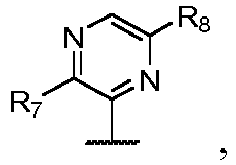 R7 is hydrogen, methyl, ethyl, propyl, isopropyl, methoxy, ethoxy, propoxy, isopropoxy, fluorine, chlorine, hydroxyl, trifluoromethyl, trifluoromethoxy, cyano, ethynyl, propynyl, vinyl, propenyl, cyclopropyl, cyclobutyl, formyl, or acetyl;R8 is hydrogen, C1-C10 alkyl, halogen, C3-C8 cycloalkyl, halogenated C1-C10 alkyl, cyano, hydroxyl, C1-C6 alkylthio, -CO-R5, -SO2-R5, -SO-R5, -CONH-R5, -NRaRb, 4- to 8-membered heteroalicyclic group, C2-C6 alkynyl, C2-C6 alkenyl, C1-C3 alkoxy C1-C6 alkylthio, C1-C10 alkyl substituted with hydroxyl, C1-C6 alkoxy C1-C10 alkyl, C3-C8 cycloalkyl C1-C6 alkyl, (C3-C8 cycloalkyl)-O-(C1-C6 alkyl), C1-C6 alkyl substituted with 4- to 8-membered heteroalicyclic group, or -O-R6,the 4- to 8-membered heteroalicyclic group is a 4- to 8-membered heteroalicyclic group containing 1 to 2 atoms selected from N, O, or S as ring atoms,R5 is hydrogen, hydroxyl, C1-C6 alkyl, C1-C6 alkoxy C1-C6 alkyl, C1-C6 alkyl substituted with hydroxyl, C3-C8 cycloalkyl, C1-C6 alkyl substituted with 4- to 8-membered heteroalicyclic group,R6 is C1-C10 alkyl, C3-C8 cycloalkyl, 4- to 8-membered heteroalicyclic group, or C1-C10 alkyl substituted with 1 to 3 susbtituents selected from hydroxyl, C1-C6 alkoxy, cyano, -NRaRb, C3-C8 cycloalkyloxy, -CONH-R5, C3-C8 cycloalkyl, C3-C8 cycloalkyl substituted with hydroxyl and/or C1-C4 alkyl, carboxylic, halogen, halogenated C1-C6 alkoxy, -SO2-R5, -SO-R5, -CO-R5, C2-C6 alkynyl, C2-C6 alkenyl, C1-C4 alkoxy C1-C6 alkoxy, 4- to 8-membered heteroalicyclic group, 4- to 8-membered heteroalicyclic group substituted with oxo, 4- to 8-membered heteroalicyclic group substituted with hydroxyl and/or C1-C4 alkyl, and C1-C6 alkylthio,Ra and Rb are each independently selected from hydrogen, C1-C6 alkyl, C3-C8 cycloalkyl, C1-C6 alkyl substituted with C1-C6 alkoxy, C1-C6 alkyl substituted with hydroxyl, C3-C8 cycloalkyl C1-C6 alkyl, C1-C6 alkyl substituted with 4- to 8-membered heteroalicyclic group, C1-C6 alkyl substituted with C1-C3 alkylthio, or C1-C6 alkyl substituted with substituted amino or unsubstituted amino, wherein the substituted amino is substituted with mono- or di-C1-C3 alkyl.
 - The compound, the pharmaceutically acceptable salts, diastereomers, enantiomers, or solvates thereof according to any one of claims 1 to 5, wherein, R2 is C3-C8 cycloalkyl, which is unsubstituted or substituted with 1 to 3 substituents selected from the group consisting of methyl, ethyl, propyl, isopropyl, methoxy, ethoxy, propoxy, isopropoxy, methylthio, ethylthio, propylthio, formyl, acetyl, hydroxyl, fluorine, chlorine, trifluoromethyl, cyano, -CONH2, oxo (=O), amino, dimethylamino, and diethylamino,or C7-C10 bridged cyclyl, which is unsubstituted or substituted with 1 to 3 substituents selected from the group consisting of methyl, ethyl, propyl, isopropyl, methoxy, ethoxy, propoxy, isopropoxy, methylthio, ethylthio, propylthio, formyl, acetyl, hydroxyl, fluorine, chlorine, trifluoromethyl, cyano, -CONH2, oxo (=O), amino, dimethylamino, and diethylamino,or C1-C10 alkyl, which is unsubstituted or substituted with 1 to 3 substituents selected from the group consisting of methoxy, ethoxy, propoxy, isopropoxy, methylthio, ethylthio, propylthio, formyl, acetyl, hydroxyl, fluorine, chlorine, cyano, -CONH2, cyclopropyl, cyclobutyl, cyclopentyl, cyclohexyl, amino, dimethylamino, and diethylamino,or -(CH2)n-Re, wherein Re is aryl or heteroaryl, which is unsubstituted or substituted with 1 to 3 substituents selected from the group consisting of methyl, ethyl, propyl, isopropyl, methoxy, ethoxy, propoxy, isopropoxy, methylthio, ethylthio, propylthio, formyl, acetyl, hydroxyl, fluorine, chlorine, trifluoromethyl, cyano, -CONH2, ethynyl, vinyl, amino, dimethylamino, and diethylamino, n is an integer from 0 to 3,or -(CH2)m-Rf, wherein Rf is 4- to 8-membered heteroalicyclic group, which is unsubstituted or substituted with 1 to 3 substituents selected from the group consisting of methyl, ethyl, propyl, isopropyl, methoxy, ethoxy, propoxy, isopropoxy, methylthio, ethylthio, propylthio, formyl, acetyl, hydroxyl, fluorine, chlorine, trifluoromethyl, cyano, -CONH2, oxo (=O), amino, dimethylamino, and diethylamino, m is an integer from 0 to 3,the 4- to 8-membered heteroalicyclic group contains 1 to 2 atoms selected from N, O, or S as ring atoms, the aryl group is phenyl, and the heteroaryl group is pyridyl, pyrimidinyl, pyrazolyl, oxazolyl, isoxazolyl, thiazolyl.
- The compound, the pharmaceutically acceptable salts, diastereomers, enantiomers, or solvates thereof according to claim 6, wherein, R2 is cyclopropyl, cyclobutyl, cyclopentyl, cyclohexyl, cycloheptyl, cyclooctyl, 4,4-difluorocyclohexyl, bicyclo[2.2.1]heptyl, adamantyl, methyl, ethyl, propyl, isopropyl, butyl, isobutyl, sec-butyl, tert-butyl, pentyl, neopentyl, hexyl, 2-hydroxy-2-methylpropyl, 3,3-dimethylbutyl, 3-hydroxy-3-methylbutyl, cyclopropylmethyl, cyclopropylethyl, cyclopropylpropyl, cyclobutylmethyl, cyclobutylethyl, cyclobutylpropyl, cyclopentylmethyl, cyclopentylethyl, cyclopentylpropyl, cyclohexylmethyl, cyclohexylethyl, cyclohexylpropyl, benzyl, phenethyl, phenyl, 2-fluorophenyl, 2-chlorophenyl, 2-methoxyphenyl, 2-cyanophenyl, 2-ethynylphenyl, 3-fluorophenyl, 3-chlorophenyl, 3-methoxyphenyl, 3-cyanophenyl, 3-ethynylphenyl, 4-fluorophenyl, 4-chlorophenyl, 4-methoxyphenyl, 4-cyanophenyl, 4-ethynylphenyl, 3,4-difluorophenyl, 3-cyano-4-methylphenyl, pyridin-2-yl, pyridin-3-yl, pyridine-4-yl, pyrimidin-2-yl, pyrimidin-4-yl, pyrimidin-5-yl, pyrazinyl, pyrazolyl, oxazolyl, isoxazolyl, thiazolyl, oxetan-3-yl, tetrahydrofuran-3-yl, tetrahydro-2H-pyran-4-yl, tetrahydropyrrolyl, piperidin-1-yl, piperazin-1-yl, morpholin-4-yl, methylpiperazin-4-yl, 1-methylpiperidin-4-yl, 1-acetylpiperidin-4-yl, 4-hydroxypiperidin-1-yl, 4-methyl-4-hydroxypiperidin-1-yl,


- The compound, the pharmaceutically acceptable salts, diastereomers, enantiomers, or solvates thereof according to claim 1, wherein, R2 is 2,3-difluorophenyl, 3,5-difluorophenyl, 2,5-difluorophenyl, 2,4-difluorophenyl, 2,3,4-trifluorophenyl, 2,3,5-trifluorophenyl, 2,3,6-trifluorophenyl, 3,4,5-trifluorophenyl, 2,4,5-trifluorophenyl, 3-chloro-2-fluorophenyl, 2-chloro-3-fluorophenyl, 5-chloro-2-fluorophenyl, 2-chloro-5-fluorophenyl, 5-chloro-3-fluorophenyl, 3-chloro-5-fluorophenyl, 3-chloro-4-fluorophenyl, 4-chloro-3-fluorophenyl, 2-chloro-4-fluorophenyl, 4-chloro-2-fluorophenyl, 3-chloro-2,4-difluorophenyl, 5-chloro-2,4-difluorophenyl, 3-chloro-2,5-difluorophenyl, 3-chloro-2,6-difluorophenyl, 3-chloro-4,5-difluorophenyl, 2-chloro-4,5-difluorophenyl, 2-chloro-3,4-difluorophenyl, 2-chloro-3,5-difluorophenyl, 2-chloro-3,6-difluorophenyl, 4-chloro-2,3-difluorophenyl, 4-chloro-3,5-difluorophenyl, 4-chloro-2,5-difluorophenyl, 5-chloro-2,3 -difluorophenyl, 5 -chloro-3,4-difluorophenyl, 6-chloro-2,3 -difluorophenyl, 3 -fluoro-5 -methylphenyl, 4-fluoro-3-methylphenyl, 2-fluoro-3-methylphenyl, 2-fluoro-4-methylphenyl, 2-fluoro-5-methylphenyl, 3-fluoro-4-methylphenyl, 3-fluoro-2-methylphenyl, 3-fluoro-5-methoxyphenyl, 4-fluoro-3-methoxyphenyl, 2-fluoro-3-methoxyphenyl, 2-fluoro-4-methoxyphenyl, 2-fluoro-5-methoxyphenyl, 3-fluoro-4-methoxyphenyl, 3-fluoro-2-methoxyphenyl, 2-fluoro-3-trifluoromethylphenyl, 2-fluoro-4-trifluoromethylphenyl, 2-fluoro-5-trifluoromethylphenyl, 3-fluoro-2-trifluoromethylphenyl, 4-fluoro-2-trifluoromethylphenyl, 5-fluoro-2-trifluoromethylphenyl, 4-fluoro-3-trifluoromethylphenyl, 3-fluoro-4-trifluoromethylphenyl, 3-fluoro-5-trifluoromethylphenyl, 2-fluoro-5-ethylphenyl, 2-fluoro-5-cyclopropylphenyl, or 2-fluoro-5-phenylphenyl.
- The compound, the pharmaceutically acceptable salts, diastereomers, enantiomers, or solvates thereof according to claim 1, wherein, R3 is hydrogen, methyl, ethyl, hydroxyl, cyano, trifluoromethyl, fluorine, or chlorine.
- The compound, the pharmaceutically acceptable salts, diastereomers, enantiomers, or solvates thereof according to claim 1,
 Q is NH;A1, and A2 are each CH;A3 is N;R1 is
 R7 is methyl, ethyl, propyl, isopropyl, fluorine, chlorine, trifluoromethyl, vinyl, or propenyl;R8 is cyano, C1-C3 alkoxy C1-C6 alkylthio, or -O-R6;R5 is C1-C6 alkyl;R6 is 4- to 8-membered heteroalicyclic group, or C1-C10 alkyl which is substituted with 1 to 3 substituents selected from the group consisting of hydroxyl, C1-C6 alkoxy, cyano, C3-C8 cycloalkyloxy, C3-C8 cycloalkyl, - SO2-R5, 4- to 8-membered heteroalicyclic group, and C1-C6 alkylthio;R2 is -(CH2)n-Re, wherein Re is aryl or heteroaryl, which is unsubstituted or substituted with 1 to 3 substituents selected from the group consisting of C1-C6 alkyl, C1-C6 alkoxy, C1-C6 alkylthio, C1-C3 acyl, hydroxyl, halogen, trifluoromethyl, cyano, -CONH2, C2-C6 alkynyl, C2-C6 alkenyl, and -NRcRd, wherein n is an integer from 0 to 3;Rc and Rd are each independently selected from hydrogen, C1-C6 alkyl, C3-C8 cycloalkyl, C1-C6 alkyl substituted with C1-C6 alkoxy, C1-C6 alkyl substituted with hydroxyl, C3-C8 cycloalkyl C1-C6 alkyl, C1-C6 alkyl substituted with 4- to 8-membered heteroalicyclic group, C1-C6 alkyl substituted with C1-C3 alkylthio, or C1-C6 alkyl substituted with substituted amino or unsubstituted amino, wherein the substituted amino is substituted with mono- or di-C1-C3 alkyl;the 4- to 8-membered heteroalicyclic group is a 4- to 8-membered heteroalicyclic group containing 1 to 2 atoms selected from N, O, or S as ring atoms;the aryl group is a monocyclic or bicyclic group containing 6 to 12 carbon ring atoms and having at least one aromatic ring, the heteroaryl is a monocyclic or bicyclic group having 5 to 10 ring atoms and containing 1 to 3 heteroatoms selected from N, O, or S as ring atoms;R3 is hydrogen.
 - The compound, the pharmaceutically acceptable salts, diastereomers, enantiomers, or solvates thereof according to claim 10, whereinQ is NH;A1, and A2 are each CH;A3 is N;R1 is
 R7 is methyl, chlorine, or trifluoromethyl;R8 is cyano, C1-C3 alkoxy C1-C6 alkylthio, or -O-R6;R6 is C1-C10 alkyl which is substituted with 1 to 3 substituents selected from hydroxyl;R2 is -(CH2)n-Re, wherein Re is aryl or heteroaryl, which is unsubstituted or substituted with 1 to 3 substituents selected from the group consisting of methyl, ethyl, propyl, isopropyl, methoxy, ethoxy, propoxy, isopropoxy, methylthio, ethylthio, propylthio, formyl, acetyl, hydroxyl, fluorine, chlorine, trifluoromethyl, cyano, -CONH2, ethynyl, vinyl, amino, dimethylamino, and diethylamino, n is an integer from 0 to 3,the aryl group is a monocyclic or bicyclic group containing 6 to 12 carbon ring atoms and having at least one aromatic ring, the heteroaryl is a monocyclic or bicyclic group having 5 to 10 ring atoms and containing 1 to 3 heteroatoms selected from N, O, or S as ring atoms;R3 is hydrogen.
 - The compound, the pharmaceutically acceptable salts, diastereomers, enantiomers, or solvates thereof according to claim 1 wherein the compound is selected from the following structures:


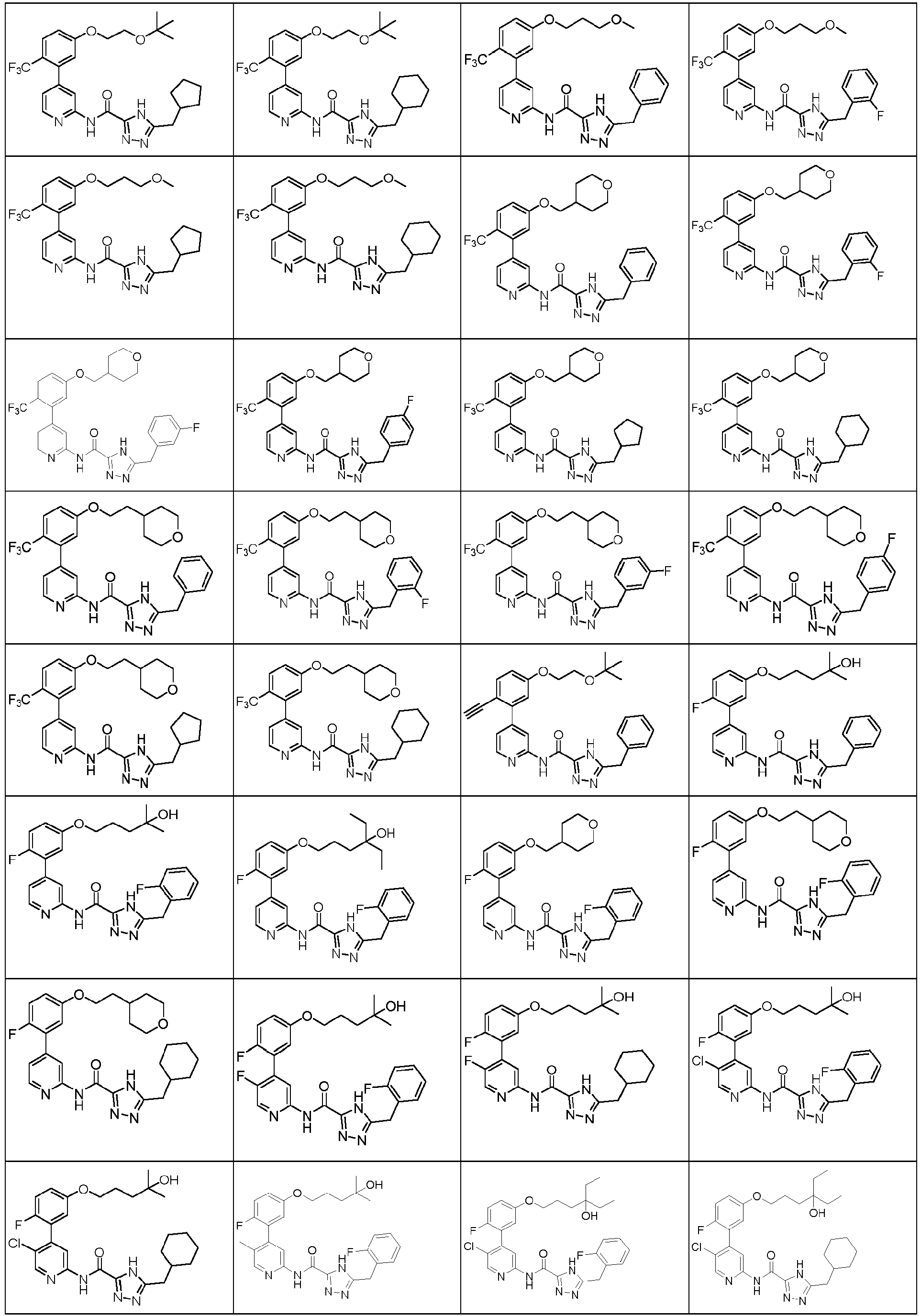


- The compound, the pharmaceutically acceptable salts, diastereomers, enantiomers, or solvates thereof according to any one of claims 1-12, for use in the treatment for RIP1-related diseases, wherein, the RIP1-related disease includes ocular fundus disease, xerophthalmia, psoriasis, leucoderma, dermatitis, alopecia areata, rheumatoid arthritis, colitis, multiple sclerosis, systemic lupus erythematosus, Crohn's disease, atherosclerosis, pulmonary fibrosis, liver fibrosis, myelofibrosis, non-small cell lung cancer, small cell lung cancer, breast cancer, pancreatic cancer, glioma, glioblastoma, ovarian cancer, cervical cancer, colorectal cancer, melanoma, endometrial cancer, prostate cancer, bladder cancer, leukemia, gastric cancer, liver cancer, gastrointestinal stromal tumor, thyroid cancer, chronic myeloid leukemia, acute myeloid leukemia, non-Hodgkin's lymphoma, nasopharyngeal cancer, esophageal cancer, brain tumor, B-cell and T-cell lymphoma, lymphoma, multiple myeloma, biliary cancer and sarcoma, cholangiocarcinoma, inflammatory bowel disease, ulcerative colitis, retinal detachment, retinitis pigmentosa, macular degeneration, pancreatitis, atopic dermatitis, spondyloarthritis, gout, SoJIA, Sjogren's syndrome, systemic scleroderma, antiphospholipid syndrome, vasculitis, osteoarthritis, non-alcoholic steatohepatitis, alcoholic steatohepatitis, autoimmune hepatitis, autoimmune hepatobiliary disease, primary sclerosing cholangitis, nephritis, celiac disease, autoimmune ITP, transplant rejection, ischemiareperfusion injury of solid organs, sepsis, systemic inflammatory response syndrome, cerebrovascular accident, myocardial infarction, Huntington's disease, Alzheimer's disease, Parkinson's disease, allergic diseases, asthma, atopic dermatitis, multiple sclerosis, type I diabetes, Wegener's granulomatosis, pulmonary sarcoidosis, Behget's disease, interleukin-1 converzyme-related fever syndrome, chronic obstructive pulmonary disease, tumor necrosis factor receptor related periodic syndrome and periodontitis.
- A pharmaceutical composition, comprising a compound, the pharmaceutically acceptable salts, diastereomers, enantiomers, or solvates thereof according to any one of claims 1-12, and one or more pharmaceutically acceptable carriers or excipients.
Applications Claiming Priority (3)
| Application Number | Priority Date | Filing Date | Title |
|---|---|---|---|
| CN201910071476 | 2019-01-25 | ||
| CN202010027582 | 2020-01-10 | ||
| PCT/CN2020/072738 WO2020151589A1 (en) | 2019-01-25 | 2020-01-17 | Acylamino bridged heterocyclic compound, and composition and application thereof |
Publications (3)
| Publication Number | Publication Date |
|---|---|
| EP3901147A1 EP3901147A1 (en) | 2021-10-27 |
| EP3901147A4 EP3901147A4 (en) | 2021-12-01 |
| EP3901147B1 true EP3901147B1 (en) | 2023-11-22 |
Family
ID=71736676
Family Applications (1)
| Application Number | Title | Priority Date | Filing Date |
|---|---|---|---|
| EP20745487.7A Active EP3901147B1 (en) | 2019-01-25 | 2020-01-17 | Acylamino bridged heterocyclic compound, and composition and application thereof |
Country Status (10)
| Country | Link |
|---|---|
| US (1) | US12435060B2 (en) |
| EP (1) | EP3901147B1 (en) |
| JP (1) | JP7268921B2 (en) |
| KR (1) | KR102769633B1 (en) |
| CN (1) | CN113166116B (en) |
| AU (1) | AU2020210455B2 (en) |
| CA (1) | CA3127701C (en) |
| SG (1) | SG11202108064XA (en) |
| TW (1) | TWI724753B (en) |
| WO (1) | WO2020151589A1 (en) |
Families Citing this family (5)
| Publication number | Priority date | Publication date | Assignee | Title |
|---|---|---|---|---|
| MX2021015319A (en) * | 2019-06-18 | 2022-04-07 | Hoffmann La Roche | JAK KINASE INHIBITORS BASED ON PYRAZOLOPYRIMIDINE SULPHONE AND USES THEREOF. |
| MX2023001979A (en) * | 2020-08-18 | 2023-02-27 | Hutchison Medipharma Ltd | Pyrimidinone compounds and uses thereof. |
| JP7805049B2 (en) * | 2022-01-04 | 2026-01-23 | 北京賽特明強医薬科技有限公司 | Carbonyl-bridged heterocyclic compounds, and compositions and uses thereof |
| CN116478135B (en) * | 2022-01-21 | 2026-02-03 | 中国科学院上海药物研究所 | Amide compound having RIPK1 inhibitory activity, process for producing the same and use thereof |
| CN120774899A (en) * | 2024-04-03 | 2025-10-14 | 中国科学院合肥物质科学研究院 | Pyrazole amide compound and application thereof |
Family Cites Families (12)
| Publication number | Priority date | Publication date | Assignee | Title |
|---|---|---|---|---|
| US6437138B1 (en) | 1996-06-06 | 2002-08-20 | Abbott Laboratories | 3-pyridyloxymethyl heterocyclic ether compounds useful in controlling chemical synaptic transmission |
| US6297258B1 (en) * | 1998-09-29 | 2001-10-02 | American Cyanamid Company | Substituted 3-cyanoquinolines |
| WO2005040152A1 (en) | 2003-10-20 | 2005-05-06 | E.I. Dupont De Nemours And Company | Heteroyclylphenyl-and heterocyclylpyridyl-substituted azolecarboxamides as herbicides |
| ES2361845T3 (en) | 2004-08-18 | 2011-06-22 | Pfizer, Inc. | RNA POLYMERASE INHIBITORS DEPENDING ON HEPATITIS C VIRUS RNA AND COMPOSITIONS AND TREATMENTS USING THE SAME. |
| US8669259B2 (en) | 2009-08-26 | 2014-03-11 | Merck Sharp & Dohme Corp. | Heterocyclic amide compounds as protein kinase inhibitors |
| TWI648273B (en) | 2013-02-15 | 2019-01-21 | 英商葛蘭素史克智慧財產發展有限公司 | Heterocyclic amides as kinase inhibitors (III) |
| TWI788830B (en) | 2015-07-02 | 2023-01-01 | 瑞士商赫孚孟拉羅股份公司 | Bicyclic lactams and methods of use thereof |
| US10961258B2 (en) * | 2015-12-21 | 2021-03-30 | Glaxosmithkline Intellectual Property Development Limited | Heterocyclic amides as kinase inhibitors |
| SG10201913587WA (en) | 2016-02-05 | 2020-02-27 | Denali Therapeutics Inc | Inhibitors of receptor-interacting protein kinase 1 |
| WO2018044783A1 (en) | 2016-08-29 | 2018-03-08 | Incyte Corporation | Heterocyclic compounds as immunomodulators |
| US11072607B2 (en) | 2016-12-16 | 2021-07-27 | Genentech, Inc. | Inhibitors of RIP1 kinase and methods of use thereof |
| SI3580220T1 (en) | 2017-02-13 | 2022-01-31 | Bristol-Myers Squibb Company | Aminotriazolopyridines as kinase inhibitors |
-
2020
- 2020-01-17 AU AU2020210455A patent/AU2020210455B2/en active Active
- 2020-01-17 KR KR1020217026708A patent/KR102769633B1/en active Active
- 2020-01-17 CA CA3127701A patent/CA3127701C/en active Active
- 2020-01-17 US US17/425,496 patent/US12435060B2/en active Active
- 2020-01-17 SG SG11202108064XA patent/SG11202108064XA/en unknown
- 2020-01-17 EP EP20745487.7A patent/EP3901147B1/en active Active
- 2020-01-17 JP JP2021542135A patent/JP7268921B2/en active Active
- 2020-01-17 CN CN202080006483.XA patent/CN113166116B/en active Active
- 2020-01-17 WO PCT/CN2020/072738 patent/WO2020151589A1/en not_active Ceased
- 2020-01-17 TW TW109101623A patent/TWI724753B/en not_active IP Right Cessation
Also Published As
| Publication number | Publication date |
|---|---|
| CA3127701A1 (en) | 2020-07-30 |
| AU2020210455A1 (en) | 2021-08-12 |
| TW202041507A (en) | 2020-11-16 |
| US20230026425A1 (en) | 2023-01-26 |
| US12435060B2 (en) | 2025-10-07 |
| CN113166116A (en) | 2021-07-23 |
| KR20210118893A (en) | 2021-10-01 |
| WO2020151589A1 (en) | 2020-07-30 |
| SG11202108064XA (en) | 2021-08-30 |
| CA3127701C (en) | 2023-08-15 |
| EP3901147A1 (en) | 2021-10-27 |
| EP3901147A4 (en) | 2021-12-01 |
| CN113166116B (en) | 2022-12-27 |
| JP7268921B2 (en) | 2023-05-08 |
| JP2022523655A (en) | 2022-04-26 |
| KR102769633B1 (en) | 2025-02-19 |
| TWI724753B (en) | 2021-04-11 |
| AU2020210455B2 (en) | 2023-02-02 |
Similar Documents
| Publication | Publication Date | Title |
|---|---|---|
| EP3901147A1 (en) | Acylamino bridged heterocyclic compound, and composition and application thereof | |
| CN113474338B (en) | Pyrazine derivative and application thereof in inhibiting SHP2 | |
| EP2721019B1 (en) | Therapeutically active compositions and their methods of use | |
| EP3068785B1 (en) | Substituted 4,5,6,7-tetrahydropyrazolo[1,5-a]pyrazine derivatives as casein kinase 1 d/e inhibitors | |
| TW201838966A (en) | Substituted dihydroindene-4-carboxamides and analogs thereof, and methods using same | |
| CN113748110A (en) | Substituted pyrimidine or pyridylamine derivatives, compositions and medical uses thereof | |
| BR112021011147A2 (en) | PYRAZOLYL-AMINO-PYRIMIDINIL DERIVATIVES BENZAMIDES AND COMPOSITIONS AND METHODS THEREOF | |
| EP3889138B1 (en) | Histone acetylase p300 inhibitor and use thereof | |
| CN109415358B (en) | 6-aminopyridin-3-ylthiazoles as ROR gamma t modulators | |
| EP4245757A1 (en) | Crystal form of free base of inhibitor containing bicyclic ring derivative and preparation method and application of crystal form | |
| EP4282868B1 (en) | Substituted pyrazolo[1,5-a]pyrimidine-7-amine derivative, and compositions and medical use thereof | |
| HK40058419B (en) | Acylamino bridged heterocyclic compound, and composition and application thereof | |
| HK40058419A (en) | Acylamino bridged heterocyclic compound, and composition and application thereof | |
| IL325314A (en) | Tyk2 inhibitors and compositions and methods thereof | |
| EP4446319A1 (en) | Carbonyl bridged heterocyclic compound, and composition and application thereof | |
| EP4089079A1 (en) | Ror gamma t inhibitor, preparation method therefor and use thereof | |
| HK40115319A (en) | Carbonyl bridged heterocyclic compound, and composition and application thereof | |
| WO2025066935A1 (en) | Compounds, compositions and methods thereof | |
| TW202235072A (en) | Heterocycle derivatives for treating trpm3 mediated disorders | |
| TW202611041A (en) | Compounds, compositions and methods thereof | |
| HK40083401A (en) | Ror gamma t inhibitor, preparation method therefor and use thereof | |
| EP3885346A1 (en) | Aminopyrimidine compound used for inhibiting activity of protein kinase | |
| HK1196130A (en) | Therapeutically active compositions and their methods of use | |
| HK1196130B (en) | Therapeutically active compositions and their methods of use | |
| HK40012561B (en) | Heteroaryl compounds and their use as mer inhibitors |
Legal Events
| Date | Code | Title | Description |
|---|---|---|---|
| STAA | Information on the status of an ep patent application or granted ep patent |
Free format text: STATUS: THE INTERNATIONAL PUBLICATION HAS BEEN MADE |
|
| PUAI | Public reference made under article 153(3) epc to a published international application that has entered the european phase |
Free format text: ORIGINAL CODE: 0009012 |
|
| STAA | Information on the status of an ep patent application or granted ep patent |
Free format text: STATUS: REQUEST FOR EXAMINATION WAS MADE |
|
| 17P | Request for examination filed |
Effective date: 20210723 |
|
| AK | Designated contracting states |
Kind code of ref document: A1 Designated state(s): AL AT BE BG CH CY CZ DE DK EE ES FI FR GB GR HR HU IE IS IT LI LT LU LV MC MK MT NL NO PL PT RO RS SE SI SK SM TR |
|
| A4 | Supplementary search report drawn up and despatched |
Effective date: 20211102 |
|
| RIC1 | Information provided on ipc code assigned before grant |
Ipc: A61P 37/00 20060101ALI20211026BHEP Ipc: A61P 35/00 20060101ALI20211026BHEP Ipc: A61P 17/06 20060101ALI20211026BHEP Ipc: A61K 31/415 20060101ALI20211026BHEP Ipc: C07D 417/12 20060101ALI20211026BHEP Ipc: C07D 413/12 20060101ALI20211026BHEP Ipc: C07D 405/14 20060101ALI20211026BHEP Ipc: C07D 401/14 20060101ALI20211026BHEP Ipc: C07D 401/12 20060101AFI20211026BHEP |
|
| REG | Reference to a national code |
Ref country code: HK Ref legal event code: DE Ref document number: 40058419 Country of ref document: HK |
|
| DAV | Request for validation of the european patent (deleted) | ||
| DAX | Request for extension of the european patent (deleted) | ||
| REG | Reference to a national code |
Ref legal event code: R079 Free format text: PREVIOUS MAIN CLASS: C07D0403120000 Ipc: C07D0401120000 Ref country code: DE Ref legal event code: R079 Ref document number: 602020021525 Country of ref document: DE Free format text: PREVIOUS MAIN CLASS: C07D0403120000 Ipc: C07D0401120000 |
|
| STAA | Information on the status of an ep patent application or granted ep patent |
Free format text: STATUS: EXAMINATION IS IN PROGRESS |
|
| RIC1 | Information provided on ipc code assigned before grant |
Ipc: A61P 37/00 20060101ALI20220509BHEP Ipc: A61P 35/00 20060101ALI20220509BHEP Ipc: A61P 17/06 20060101ALI20220509BHEP Ipc: A61K 31/415 20060101ALI20220509BHEP Ipc: C07D 417/12 20060101ALI20220509BHEP Ipc: C07D 413/12 20060101ALI20220509BHEP Ipc: C07D 405/14 20060101ALI20220509BHEP Ipc: C07D 401/14 20060101ALI20220509BHEP Ipc: C07D 401/12 20060101AFI20220509BHEP |
|
| 17Q | First examination report despatched |
Effective date: 20220602 |
|
| GRAP | Despatch of communication of intention to grant a patent |
Free format text: ORIGINAL CODE: EPIDOSNIGR1 |
|
| STAA | Information on the status of an ep patent application or granted ep patent |
Free format text: STATUS: GRANT OF PATENT IS INTENDED |
|
| INTG | Intention to grant announced |
Effective date: 20230202 |
|
| GRAJ | Information related to disapproval of communication of intention to grant by the applicant or resumption of examination proceedings by the epo deleted |
Free format text: ORIGINAL CODE: EPIDOSDIGR1 |
|
| STAA | Information on the status of an ep patent application or granted ep patent |
Free format text: STATUS: EXAMINATION IS IN PROGRESS |
|
| GRAP | Despatch of communication of intention to grant a patent |
Free format text: ORIGINAL CODE: EPIDOSNIGR1 |
|
| STAA | Information on the status of an ep patent application or granted ep patent |
Free format text: STATUS: GRANT OF PATENT IS INTENDED |
|
| INTC | Intention to grant announced (deleted) | ||
| INTG | Intention to grant announced |
Effective date: 20230620 |
|
| GRAS | Grant fee paid |
Free format text: ORIGINAL CODE: EPIDOSNIGR3 |
|
| GRAA | (expected) grant |
Free format text: ORIGINAL CODE: 0009210 |
|
| STAA | Information on the status of an ep patent application or granted ep patent |
Free format text: STATUS: THE PATENT HAS BEEN GRANTED |
|
| AK | Designated contracting states |
Kind code of ref document: B1 Designated state(s): AL AT BE BG CH CY CZ DE DK EE ES FI FR GB GR HR HU IE IS IT LI LT LU LV MC MK MT NL NO PL PT RO RS SE SI SK SM TR |
|
| REG | Reference to a national code |
Ref country code: GB Ref legal event code: FG4D |
|
| REG | Reference to a national code |
Ref country code: CH Ref legal event code: EP |
|
| REG | Reference to a national code |
Ref country code: DE Ref legal event code: R096 Ref document number: 602020021525 Country of ref document: DE |
|
| REG | Reference to a national code |
Ref country code: IE Ref legal event code: FG4D |
|
| REG | Reference to a national code |
Ref country code: LT Ref legal event code: MG9D |
|
| P01 | Opt-out of the competence of the unified patent court (upc) registered |
Effective date: 20240202 |
|
| REG | Reference to a national code |
Ref country code: NL Ref legal event code: MP Effective date: 20231122 |
|
| PG25 | Lapsed in a contracting state [announced via postgrant information from national office to epo] |
Ref country code: GR Free format text: LAPSE BECAUSE OF FAILURE TO SUBMIT A TRANSLATION OF THE DESCRIPTION OR TO PAY THE FEE WITHIN THE PRESCRIBED TIME-LIMIT Effective date: 20240223 |
|
| PG25 | Lapsed in a contracting state [announced via postgrant information from national office to epo] |
Ref country code: IS Free format text: LAPSE BECAUSE OF FAILURE TO SUBMIT A TRANSLATION OF THE DESCRIPTION OR TO PAY THE FEE WITHIN THE PRESCRIBED TIME-LIMIT Effective date: 20240322 |
|
| PG25 | Lapsed in a contracting state [announced via postgrant information from national office to epo] |
Ref country code: LT Free format text: LAPSE BECAUSE OF FAILURE TO SUBMIT A TRANSLATION OF THE DESCRIPTION OR TO PAY THE FEE WITHIN THE PRESCRIBED TIME-LIMIT Effective date: 20231122 |
|
| REG | Reference to a national code |
Ref country code: AT Ref legal event code: MK05 Ref document number: 1633741 Country of ref document: AT Kind code of ref document: T Effective date: 20231122 |
|
| PG25 | Lapsed in a contracting state [announced via postgrant information from national office to epo] |
Ref country code: NL Free format text: LAPSE BECAUSE OF FAILURE TO SUBMIT A TRANSLATION OF THE DESCRIPTION OR TO PAY THE FEE WITHIN THE PRESCRIBED TIME-LIMIT Effective date: 20231122 |
|
| PG25 | Lapsed in a contracting state [announced via postgrant information from national office to epo] |
Ref country code: AT Free format text: LAPSE BECAUSE OF FAILURE TO SUBMIT A TRANSLATION OF THE DESCRIPTION OR TO PAY THE FEE WITHIN THE PRESCRIBED TIME-LIMIT Effective date: 20231122 |
|
| PG25 | Lapsed in a contracting state [announced via postgrant information from national office to epo] |
Ref country code: ES Free format text: LAPSE BECAUSE OF FAILURE TO SUBMIT A TRANSLATION OF THE DESCRIPTION OR TO PAY THE FEE WITHIN THE PRESCRIBED TIME-LIMIT Effective date: 20231122 |
|
| PG25 | Lapsed in a contracting state [announced via postgrant information from national office to epo] |
Ref country code: NL Free format text: LAPSE BECAUSE OF FAILURE TO SUBMIT A TRANSLATION OF THE DESCRIPTION OR TO PAY THE FEE WITHIN THE PRESCRIBED TIME-LIMIT Effective date: 20231122 Ref country code: LT Free format text: LAPSE BECAUSE OF FAILURE TO SUBMIT A TRANSLATION OF THE DESCRIPTION OR TO PAY THE FEE WITHIN THE PRESCRIBED TIME-LIMIT Effective date: 20231122 Ref country code: IS Free format text: LAPSE BECAUSE OF FAILURE TO SUBMIT A TRANSLATION OF THE DESCRIPTION OR TO PAY THE FEE WITHIN THE PRESCRIBED TIME-LIMIT Effective date: 20240322 Ref country code: GR Free format text: LAPSE BECAUSE OF FAILURE TO SUBMIT A TRANSLATION OF THE DESCRIPTION OR TO PAY THE FEE WITHIN THE PRESCRIBED TIME-LIMIT Effective date: 20240223 Ref country code: ES Free format text: LAPSE BECAUSE OF FAILURE TO SUBMIT A TRANSLATION OF THE DESCRIPTION OR TO PAY THE FEE WITHIN THE PRESCRIBED TIME-LIMIT Effective date: 20231122 Ref country code: BG Free format text: LAPSE BECAUSE OF FAILURE TO SUBMIT A TRANSLATION OF THE DESCRIPTION OR TO PAY THE FEE WITHIN THE PRESCRIBED TIME-LIMIT Effective date: 20240222 Ref country code: AT Free format text: LAPSE BECAUSE OF FAILURE TO SUBMIT A TRANSLATION OF THE DESCRIPTION OR TO PAY THE FEE WITHIN THE PRESCRIBED TIME-LIMIT Effective date: 20231122 Ref country code: PT Free format text: LAPSE BECAUSE OF FAILURE TO SUBMIT A TRANSLATION OF THE DESCRIPTION OR TO PAY THE FEE WITHIN THE PRESCRIBED TIME-LIMIT Effective date: 20240322 |
|
| PG25 | Lapsed in a contracting state [announced via postgrant information from national office to epo] |
Ref country code: SE Free format text: LAPSE BECAUSE OF FAILURE TO SUBMIT A TRANSLATION OF THE DESCRIPTION OR TO PAY THE FEE WITHIN THE PRESCRIBED TIME-LIMIT Effective date: 20231122 Ref country code: RS Free format text: LAPSE BECAUSE OF FAILURE TO SUBMIT A TRANSLATION OF THE DESCRIPTION OR TO PAY THE FEE WITHIN THE PRESCRIBED TIME-LIMIT Effective date: 20231122 Ref country code: PL Free format text: LAPSE BECAUSE OF FAILURE TO SUBMIT A TRANSLATION OF THE DESCRIPTION OR TO PAY THE FEE WITHIN THE PRESCRIBED TIME-LIMIT Effective date: 20231122 Ref country code: NO Free format text: LAPSE BECAUSE OF FAILURE TO SUBMIT A TRANSLATION OF THE DESCRIPTION OR TO PAY THE FEE WITHIN THE PRESCRIBED TIME-LIMIT Effective date: 20240222 Ref country code: LV Free format text: LAPSE BECAUSE OF FAILURE TO SUBMIT A TRANSLATION OF THE DESCRIPTION OR TO PAY THE FEE WITHIN THE PRESCRIBED TIME-LIMIT Effective date: 20231122 Ref country code: HR Free format text: LAPSE BECAUSE OF FAILURE TO SUBMIT A TRANSLATION OF THE DESCRIPTION OR TO PAY THE FEE WITHIN THE PRESCRIBED TIME-LIMIT Effective date: 20231122 |
|
| PG25 | Lapsed in a contracting state [announced via postgrant information from national office to epo] |
Ref country code: DK Free format text: LAPSE BECAUSE OF FAILURE TO SUBMIT A TRANSLATION OF THE DESCRIPTION OR TO PAY THE FEE WITHIN THE PRESCRIBED TIME-LIMIT Effective date: 20231122 |
|
| PG25 | Lapsed in a contracting state [announced via postgrant information from national office to epo] |
Ref country code: CZ Free format text: LAPSE BECAUSE OF FAILURE TO SUBMIT A TRANSLATION OF THE DESCRIPTION OR TO PAY THE FEE WITHIN THE PRESCRIBED TIME-LIMIT Effective date: 20231122 |
|
| PG25 | Lapsed in a contracting state [announced via postgrant information from national office to epo] |
Ref country code: SK Free format text: LAPSE BECAUSE OF FAILURE TO SUBMIT A TRANSLATION OF THE DESCRIPTION OR TO PAY THE FEE WITHIN THE PRESCRIBED TIME-LIMIT Effective date: 20231122 |
|
| PG25 | Lapsed in a contracting state [announced via postgrant information from national office to epo] |
Ref country code: SM Free format text: LAPSE BECAUSE OF FAILURE TO SUBMIT A TRANSLATION OF THE DESCRIPTION OR TO PAY THE FEE WITHIN THE PRESCRIBED TIME-LIMIT Effective date: 20231122 Ref country code: SK Free format text: LAPSE BECAUSE OF FAILURE TO SUBMIT A TRANSLATION OF THE DESCRIPTION OR TO PAY THE FEE WITHIN THE PRESCRIBED TIME-LIMIT Effective date: 20231122 Ref country code: RO Free format text: LAPSE BECAUSE OF FAILURE TO SUBMIT A TRANSLATION OF THE DESCRIPTION OR TO PAY THE FEE WITHIN THE PRESCRIBED TIME-LIMIT Effective date: 20231122 Ref country code: IT Free format text: LAPSE BECAUSE OF FAILURE TO SUBMIT A TRANSLATION OF THE DESCRIPTION OR TO PAY THE FEE WITHIN THE PRESCRIBED TIME-LIMIT Effective date: 20231122 Ref country code: EE Free format text: LAPSE BECAUSE OF FAILURE TO SUBMIT A TRANSLATION OF THE DESCRIPTION OR TO PAY THE FEE WITHIN THE PRESCRIBED TIME-LIMIT Effective date: 20231122 Ref country code: DK Free format text: LAPSE BECAUSE OF FAILURE TO SUBMIT A TRANSLATION OF THE DESCRIPTION OR TO PAY THE FEE WITHIN THE PRESCRIBED TIME-LIMIT Effective date: 20231122 Ref country code: CZ Free format text: LAPSE BECAUSE OF FAILURE TO SUBMIT A TRANSLATION OF THE DESCRIPTION OR TO PAY THE FEE WITHIN THE PRESCRIBED TIME-LIMIT Effective date: 20231122 |
|
| REG | Reference to a national code |
Ref country code: DE Ref legal event code: R097 Ref document number: 602020021525 Country of ref document: DE |
|
| PG25 | Lapsed in a contracting state [announced via postgrant information from national office to epo] |
Ref country code: MC Free format text: LAPSE BECAUSE OF FAILURE TO SUBMIT A TRANSLATION OF THE DESCRIPTION OR TO PAY THE FEE WITHIN THE PRESCRIBED TIME-LIMIT Effective date: 20231122 |
|
| PG25 | Lapsed in a contracting state [announced via postgrant information from national office to epo] |
Ref country code: MC Free format text: LAPSE BECAUSE OF FAILURE TO SUBMIT A TRANSLATION OF THE DESCRIPTION OR TO PAY THE FEE WITHIN THE PRESCRIBED TIME-LIMIT Effective date: 20231122 |
|
| REG | Reference to a national code |
Ref country code: CH Ref legal event code: PL |
|
| PG25 | Lapsed in a contracting state [announced via postgrant information from national office to epo] |
Ref country code: LU Free format text: LAPSE BECAUSE OF NON-PAYMENT OF DUE FEES Effective date: 20240117 |
|
| PLBE | No opposition filed within time limit |
Free format text: ORIGINAL CODE: 0009261 |
|
| STAA | Information on the status of an ep patent application or granted ep patent |
Free format text: STATUS: NO OPPOSITION FILED WITHIN TIME LIMIT |
|
| PG25 | Lapsed in a contracting state [announced via postgrant information from national office to epo] |
Ref country code: LU Free format text: LAPSE BECAUSE OF NON-PAYMENT OF DUE FEES Effective date: 20240117 |
|
| PG25 | Lapsed in a contracting state [announced via postgrant information from national office to epo] |
Ref country code: BE Free format text: LAPSE BECAUSE OF NON-PAYMENT OF DUE FEES Effective date: 20240131 |
|
| PG25 | Lapsed in a contracting state [announced via postgrant information from national office to epo] |
Ref country code: CH Free format text: LAPSE BECAUSE OF NON-PAYMENT OF DUE FEES Effective date: 20240131 |
|
| PG25 | Lapsed in a contracting state [announced via postgrant information from national office to epo] |
Ref country code: SI Free format text: LAPSE BECAUSE OF FAILURE TO SUBMIT A TRANSLATION OF THE DESCRIPTION OR TO PAY THE FEE WITHIN THE PRESCRIBED TIME-LIMIT Effective date: 20231122 |
|
| 26N | No opposition filed |
Effective date: 20240823 |
|
| PG25 | Lapsed in a contracting state [announced via postgrant information from national office to epo] |
Ref country code: SI Free format text: LAPSE BECAUSE OF FAILURE TO SUBMIT A TRANSLATION OF THE DESCRIPTION OR TO PAY THE FEE WITHIN THE PRESCRIBED TIME-LIMIT Effective date: 20231122 Ref country code: CH Free format text: LAPSE BECAUSE OF NON-PAYMENT OF DUE FEES Effective date: 20240131 Ref country code: BE Free format text: LAPSE BECAUSE OF NON-PAYMENT OF DUE FEES Effective date: 20240131 |
|
| REG | Reference to a national code |
Ref country code: BE Ref legal event code: MM Effective date: 20240131 |
|
| PG25 | Lapsed in a contracting state [announced via postgrant information from national office to epo] |
Ref country code: IE Free format text: LAPSE BECAUSE OF NON-PAYMENT OF DUE FEES Effective date: 20240117 |
|
| PG25 | Lapsed in a contracting state [announced via postgrant information from national office to epo] |
Ref country code: IE Free format text: LAPSE BECAUSE OF NON-PAYMENT OF DUE FEES Effective date: 20240117 |
|
| PGFP | Annual fee paid to national office [announced via postgrant information from national office to epo] |
Ref country code: DE Payment date: 20250120 Year of fee payment: 6 |
|
| PGFP | Annual fee paid to national office [announced via postgrant information from national office to epo] |
Ref country code: FR Payment date: 20250102 Year of fee payment: 6 |
|
| PGFP | Annual fee paid to national office [announced via postgrant information from national office to epo] |
Ref country code: GB Payment date: 20250106 Year of fee payment: 6 |
|
| PG25 | Lapsed in a contracting state [announced via postgrant information from national office to epo] |
Ref country code: CY Free format text: LAPSE BECAUSE OF FAILURE TO SUBMIT A TRANSLATION OF THE DESCRIPTION OR TO PAY THE FEE WITHIN THE PRESCRIBED TIME-LIMIT; INVALID AB INITIO Effective date: 20200117 |
|
| PG25 | Lapsed in a contracting state [announced via postgrant information from national office to epo] |
Ref country code: HU Free format text: LAPSE BECAUSE OF FAILURE TO SUBMIT A TRANSLATION OF THE DESCRIPTION OR TO PAY THE FEE WITHIN THE PRESCRIBED TIME-LIMIT; INVALID AB INITIO Effective date: 20200117 |
|
| PG25 | Lapsed in a contracting state [announced via postgrant information from national office to epo] |
Ref country code: FI Free format text: LAPSE BECAUSE OF FAILURE TO SUBMIT A TRANSLATION OF THE DESCRIPTION OR TO PAY THE FEE WITHIN THE PRESCRIBED TIME-LIMIT Effective date: 20231122 |
|
| PG25 | Lapsed in a contracting state [announced via postgrant information from national office to epo] |
Ref country code: TR Free format text: LAPSE BECAUSE OF FAILURE TO SUBMIT A TRANSLATION OF THE DESCRIPTION OR TO PAY THE FEE WITHIN THE PRESCRIBED TIME-LIMIT Effective date: 20231122 |