EP3901135A1 - Sulfur extrusion from disulfides by carbenes - Google Patents
Sulfur extrusion from disulfides by carbenes Download PDFInfo
- Publication number
- EP3901135A1 EP3901135A1 EP20170862.5A EP20170862A EP3901135A1 EP 3901135 A1 EP3901135 A1 EP 3901135A1 EP 20170862 A EP20170862 A EP 20170862A EP 3901135 A1 EP3901135 A1 EP 3901135A1
- Authority
- EP
- European Patent Office
- Prior art keywords
- group
- substituted
- unsubstituted
- compound
- hydrogen atom
- Prior art date
- Legal status (The legal status is an assumption and is not a legal conclusion. Google has not performed a legal analysis and makes no representation as to the accuracy of the status listed.)
- Withdrawn
Links
- 229910052717 sulfur Inorganic materials 0.000 title description 33
- NINIDFKCEFEMDL-UHFFFAOYSA-N Sulfur Chemical compound [S] NINIDFKCEFEMDL-UHFFFAOYSA-N 0.000 title description 29
- 238000001125 extrusion Methods 0.000 title description 29
- 239000011593 sulfur Substances 0.000 title description 29
- 150000002019 disulfides Chemical class 0.000 title description 10
- 150000001875 compounds Chemical class 0.000 claims abstract description 100
- HZVOZRGWRWCICA-UHFFFAOYSA-N methanediyl Chemical compound [CH2] HZVOZRGWRWCICA-UHFFFAOYSA-N 0.000 claims abstract description 43
- 238000000034 method Methods 0.000 claims abstract description 41
- 125000002228 disulfide group Chemical group 0.000 claims abstract description 26
- 125000000101 thioether group Chemical group 0.000 claims abstract description 13
- 125000003118 aryl group Chemical group 0.000 claims description 57
- 125000000217 alkyl group Chemical group 0.000 claims description 53
- 125000004435 hydrogen atom Chemical group [H]* 0.000 claims description 50
- -1 1,3-bis(2,4,6-trimethylphenyl)-1,3-dihydro-2H-imidazol-2-ylidene, 1,3-bis(2,4,6-trimethylphenyl)imidazol-2-ylidene, 1,3-bis(2,6-diisopropylphenyl)imidazol-2-ylidene Chemical group 0.000 claims description 43
- 125000003342 alkenyl group Chemical group 0.000 claims description 39
- 125000004432 carbon atom Chemical group C* 0.000 claims description 39
- 125000001072 heteroaryl group Chemical group 0.000 claims description 34
- 125000000304 alkynyl group Chemical group 0.000 claims description 33
- 125000000753 cycloalkyl group Chemical group 0.000 claims description 31
- 108090000765 processed proteins & peptides Proteins 0.000 claims description 30
- 239000002904 solvent Substances 0.000 claims description 30
- 125000000392 cycloalkenyl group Chemical group 0.000 claims description 27
- WYURNTSHIVDZCO-UHFFFAOYSA-N Tetrahydrofuran Chemical compound C1CCOC1 WYURNTSHIVDZCO-UHFFFAOYSA-N 0.000 claims description 26
- WEVYAHXRMPXWCK-UHFFFAOYSA-N Acetonitrile Chemical compound CC#N WEVYAHXRMPXWCK-UHFFFAOYSA-N 0.000 claims description 24
- LFQSCWFLJHTTHZ-UHFFFAOYSA-N Ethanol Chemical compound CCO LFQSCWFLJHTTHZ-UHFFFAOYSA-N 0.000 claims description 21
- 239000002585 base Chemical class 0.000 claims description 20
- OKKJLVBELUTLKV-UHFFFAOYSA-N Methanol Chemical compound OC OKKJLVBELUTLKV-UHFFFAOYSA-N 0.000 claims description 18
- VLKZOEOYAKHREP-UHFFFAOYSA-N n-Hexane Chemical compound CCCCCC VLKZOEOYAKHREP-UHFFFAOYSA-N 0.000 claims description 16
- ADLVDYMTBOSDFE-UHFFFAOYSA-N 5-chloro-6-nitroisoindole-1,3-dione Chemical compound C1=C(Cl)C([N+](=O)[O-])=CC2=C1C(=O)NC2=O ADLVDYMTBOSDFE-UHFFFAOYSA-N 0.000 claims description 15
- YXFVVABEGXRONW-UHFFFAOYSA-N Toluene Chemical compound CC1=CC=CC=C1 YXFVVABEGXRONW-UHFFFAOYSA-N 0.000 claims description 15
- 229910052799 carbon Inorganic materials 0.000 claims description 11
- RTZKZFJDLAIYFH-UHFFFAOYSA-N Diethyl ether Chemical compound CCOCC RTZKZFJDLAIYFH-UHFFFAOYSA-N 0.000 claims description 8
- KFZMGEQAYNKOFK-UHFFFAOYSA-N Isopropanol Chemical compound CC(C)O KFZMGEQAYNKOFK-UHFFFAOYSA-N 0.000 claims description 8
- 102000004196 processed proteins & peptides Human genes 0.000 claims description 8
- XLYOFNOQVPJJNP-UHFFFAOYSA-N water Substances O XLYOFNOQVPJJNP-UHFFFAOYSA-N 0.000 claims description 8
- ZMXDDKWLCZADIW-UHFFFAOYSA-N N,N-Dimethylformamide Chemical compound CN(C)C=O ZMXDDKWLCZADIW-UHFFFAOYSA-N 0.000 claims description 7
- 125000005843 halogen group Chemical group 0.000 claims description 7
- 108010062877 Bacteriocins Proteins 0.000 claims description 6
- IAZDPXIOMUYVGZ-UHFFFAOYSA-N Dimethylsulphoxide Chemical compound CS(C)=O IAZDPXIOMUYVGZ-UHFFFAOYSA-N 0.000 claims description 6
- 229910052757 nitrogen Inorganic materials 0.000 claims description 6
- 125000004433 nitrogen atom Chemical group N* 0.000 claims description 6
- 150000003839 salts Chemical class 0.000 claims description 6
- 229920001184 polypeptide Polymers 0.000 claims description 5
- BVKZGUZCCUSVTD-UHFFFAOYSA-L Carbonate Chemical compound [O-]C([O-])=O BVKZGUZCCUSVTD-UHFFFAOYSA-L 0.000 claims description 3
- 150000004678 hydrides Chemical class 0.000 claims description 3
- 239000002608 ionic liquid Substances 0.000 claims description 3
- 239000002243 precursor Substances 0.000 claims description 3
- RYHBNJHYFVUHQT-UHFFFAOYSA-N 1,4-Dioxane Chemical compound C1COCCO1 RYHBNJHYFVUHQT-UHFFFAOYSA-N 0.000 claims description 2
- GSNUFIFRDBKVIE-UHFFFAOYSA-N DMF Natural products CC1=CC=C(C)O1 GSNUFIFRDBKVIE-UHFFFAOYSA-N 0.000 claims description 2
- 239000003513 alkali Substances 0.000 claims description 2
- FFUAGWLWBBFQJT-UHFFFAOYSA-N hexamethyldisilazane Chemical compound C[Si](C)(C)N[Si](C)(C)C FFUAGWLWBBFQJT-UHFFFAOYSA-N 0.000 claims description 2
- HEDRZPFGACZZDS-MICDWDOJSA-N Trichloro(2H)methane Chemical compound [2H]C(Cl)(Cl)Cl HEDRZPFGACZZDS-MICDWDOJSA-N 0.000 description 104
- VYPSYNLAJGMNEJ-UHFFFAOYSA-N Silicium dioxide Chemical compound O=[Si]=O VYPSYNLAJGMNEJ-UHFFFAOYSA-N 0.000 description 37
- 238000006243 chemical reaction Methods 0.000 description 34
- BWGNESOTFCXPMA-UHFFFAOYSA-N Dihydrogen disulfide Chemical compound SS BWGNESOTFCXPMA-UHFFFAOYSA-N 0.000 description 33
- 238000005160 1H NMR spectroscopy Methods 0.000 description 32
- YMWUJEATGCHHMB-UHFFFAOYSA-N Dichloromethane Chemical compound ClCCl YMWUJEATGCHHMB-UHFFFAOYSA-N 0.000 description 28
- 239000000047 product Substances 0.000 description 28
- BWHMMNNQKKPAPP-UHFFFAOYSA-L potassium carbonate Chemical compound [K+].[K+].[O-]C([O-])=O BWHMMNNQKKPAPP-UHFFFAOYSA-L 0.000 description 26
- UCKMPCXJQFINFW-UHFFFAOYSA-N Sulphide Chemical compound [S-2] UCKMPCXJQFINFW-UHFFFAOYSA-N 0.000 description 24
- 230000015572 biosynthetic process Effects 0.000 description 22
- 238000003786 synthesis reaction Methods 0.000 description 22
- 238000002474 experimental method Methods 0.000 description 21
- 238000000921 elemental analysis Methods 0.000 description 20
- 238000001644 13C nuclear magnetic resonance spectroscopy Methods 0.000 description 19
- 238000005033 Fourier transform infrared spectroscopy Methods 0.000 description 19
- 238000002844 melting Methods 0.000 description 19
- 230000008018 melting Effects 0.000 description 19
- 239000000377 silicon dioxide Substances 0.000 description 18
- 239000007787 solid Substances 0.000 description 16
- XEKOWRVHYACXOJ-UHFFFAOYSA-N Ethyl acetate Chemical compound CCOC(C)=O XEKOWRVHYACXOJ-UHFFFAOYSA-N 0.000 description 14
- 229910052681 coesite Inorganic materials 0.000 description 14
- 229910052906 cristobalite Inorganic materials 0.000 description 14
- JCYWCSGERIELPG-UHFFFAOYSA-N imes Chemical compound CC1=CC(C)=CC(C)=C1N1C=CN(C=2C(=CC(C)=CC=2C)C)[C]1 JCYWCSGERIELPG-UHFFFAOYSA-N 0.000 description 14
- 239000003921 oil Substances 0.000 description 14
- 229910052682 stishovite Inorganic materials 0.000 description 14
- 229910052905 tridymite Inorganic materials 0.000 description 14
- 238000004440 column chromatography Methods 0.000 description 13
- 229910000027 potassium carbonate Inorganic materials 0.000 description 13
- 229910000104 sodium hydride Inorganic materials 0.000 description 13
- 238000005481 NMR spectroscopy Methods 0.000 description 11
- 239000000243 solution Substances 0.000 description 11
- 150000003568 thioethers Chemical class 0.000 description 11
- LKUDPHPHKOZXCD-UHFFFAOYSA-N 1,3,5-trimethoxybenzene Chemical compound COC1=CC(OC)=CC(OC)=C1 LKUDPHPHKOZXCD-UHFFFAOYSA-N 0.000 description 10
- 238000011835 investigation Methods 0.000 description 9
- 239000000203 mixture Substances 0.000 description 9
- 125000001424 substituent group Chemical group 0.000 description 9
- 239000000758 substrate Substances 0.000 description 9
- UMGDCJDMYOKAJW-UHFFFAOYSA-N aminothiocarboxamide Natural products NC(N)=S UMGDCJDMYOKAJW-UHFFFAOYSA-N 0.000 description 8
- 125000002496 methyl group Chemical group [H]C([H])([H])* 0.000 description 7
- 238000000746 purification Methods 0.000 description 7
- HEMHJVSKTPXQMS-UHFFFAOYSA-M Sodium hydroxide Chemical compound [OH-].[Na+] HEMHJVSKTPXQMS-UHFFFAOYSA-M 0.000 description 6
- 239000003153 chemical reaction reagent Substances 0.000 description 6
- 125000005842 heteroatom Chemical group 0.000 description 6
- LSMWOQFDLBIYPM-UHFFFAOYSA-N 1,3-bis(2,4,6-trimethylphenyl)-4,5-dihydro-2h-imidazol-1-ium-2-ide Chemical group CC1=CC(C)=CC(C)=C1N1[C-]=[N+](C=2C(=CC(C)=CC=2C)C)CC1 LSMWOQFDLBIYPM-UHFFFAOYSA-N 0.000 description 5
- 0 CCC1C/C=I/IC(*NNSC(C)C*)CC1 Chemical compound CCC1C/C=I/IC(*NNSC(C)C*)CC1 0.000 description 5
- 108010053775 Nisin Proteins 0.000 description 5
- XSQUKJJJFZCRTK-UHFFFAOYSA-N Urea Natural products NC(N)=O XSQUKJJJFZCRTK-UHFFFAOYSA-N 0.000 description 5
- 235000019439 ethyl acetate Nutrition 0.000 description 5
- 125000001160 methoxycarbonyl group Chemical group [H]C([H])([H])OC(*)=O 0.000 description 5
- 238000004305 normal phase HPLC Methods 0.000 description 5
- 229910052760 oxygen Inorganic materials 0.000 description 5
- 238000002360 preparation method Methods 0.000 description 5
- BZLVMXJERCGZMT-UHFFFAOYSA-N Methyl tert-butyl ether Chemical compound COC(C)(C)C BZLVMXJERCGZMT-UHFFFAOYSA-N 0.000 description 4
- NVNLLIYOARQCIX-MSHCCFNRSA-N Nisin Chemical compound N1C(=O)[C@@H](CC(C)C)NC(=O)C(=C)NC(=O)[C@@H]([C@H](C)CC)NC(=O)[C@@H](NC(=O)C(=C/C)/NC(=O)[C@H](N)[C@H](C)CC)CSC[C@@H]1C(=O)N[C@@H]1C(=O)N2CCC[C@@H]2C(=O)NCC(=O)N[C@@H](C(=O)N[C@H](CCCCN)C(=O)N[C@@H]2C(NCC(=O)N[C@H](C)C(=O)N[C@H](CC(C)C)C(=O)N[C@H](CCSC)C(=O)NCC(=O)N[C@H](CS[C@@H]2C)C(=O)N[C@H](CC(N)=O)C(=O)N[C@H](CCSC)C(=O)N[C@H](CCCCN)C(=O)N[C@@H]2C(N[C@H](C)C(=O)N[C@@H]3C(=O)N[C@@H](C(N[C@H](CC=4NC=NC=4)C(=O)N[C@H](CS[C@@H]3C)C(=O)N[C@H](CO)C(=O)N[C@H]([C@H](C)CC)C(=O)N[C@H](CC=3NC=NC=3)C(=O)N[C@H](C(C)C)C(=O)NC(=C)C(=O)N[C@H](CCCCN)C(O)=O)=O)CS[C@@H]2C)=O)=O)CS[C@@H]1C NVNLLIYOARQCIX-MSHCCFNRSA-N 0.000 description 4
- KEAYESYHFKHZAL-UHFFFAOYSA-N Sodium Chemical compound [Na] KEAYESYHFKHZAL-UHFFFAOYSA-N 0.000 description 4
- PMZURENOXWZQFD-UHFFFAOYSA-L Sodium Sulfate Chemical compound [Na+].[Na+].[O-]S([O-])(=O)=O PMZURENOXWZQFD-UHFFFAOYSA-L 0.000 description 4
- XQJHRCVXRAJIDY-UHFFFAOYSA-N aminophosphine Chemical class PN XQJHRCVXRAJIDY-UHFFFAOYSA-N 0.000 description 4
- FJDQFPXHSGXQBY-UHFFFAOYSA-L caesium carbonate Chemical compound [Cs+].[Cs+].[O-]C([O-])=O FJDQFPXHSGXQBY-UHFFFAOYSA-L 0.000 description 4
- 238000011065 in-situ storage Methods 0.000 description 4
- 125000000956 methoxy group Chemical group [H]C([H])([H])O* 0.000 description 4
- 239000004309 nisin Substances 0.000 description 4
- 235000010297 nisin Nutrition 0.000 description 4
- 239000012312 sodium hydride Substances 0.000 description 4
- KWYUFKZDYYNOTN-UHFFFAOYSA-M Potassium hydroxide Chemical compound [OH-].[K+] KWYUFKZDYYNOTN-UHFFFAOYSA-M 0.000 description 3
- 239000012300 argon atmosphere Substances 0.000 description 3
- 125000003710 aryl alkyl group Chemical group 0.000 description 3
- 125000001797 benzyl group Chemical group [H]C1=C([H])C([H])=C(C([H])=C1[H])C([H])([H])* 0.000 description 3
- 125000004122 cyclic group Chemical group 0.000 description 3
- 125000000118 dimethyl group Chemical group [H]C([H])([H])* 0.000 description 3
- 125000001153 fluoro group Chemical group F* 0.000 description 3
- 238000004128 high performance liquid chromatography Methods 0.000 description 3
- 239000012074 organic phase Substances 0.000 description 3
- 230000035484 reaction time Effects 0.000 description 3
- 125000000446 sulfanediyl group Chemical group *S* 0.000 description 3
- 150000003573 thiols Chemical class 0.000 description 3
- 125000002023 trifluoromethyl group Chemical group FC(F)(F)* 0.000 description 3
- KGBYNVUSDGMXEO-UHFFFAOYSA-N 1-methyl-4-[(4-methylphenyl)methylsulfanylmethyl]benzene Chemical compound C1=CC(C)=CC=C1CSCC1=CC=C(C)C=C1 KGBYNVUSDGMXEO-UHFFFAOYSA-N 0.000 description 2
- 125000003903 2-propenyl group Chemical group [H]C([*])([H])C([H])=C([H])[H] 0.000 description 2
- ZCYVEMRRCGMTRW-UHFFFAOYSA-N 7553-56-2 Chemical group [I] ZCYVEMRRCGMTRW-UHFFFAOYSA-N 0.000 description 2
- LEVWYRKDKASIDU-IMJSIDKUSA-N L-cystine Chemical class [O-]C(=O)[C@@H]([NH3+])CSSC[C@H]([NH3+])C([O-])=O LEVWYRKDKASIDU-IMJSIDKUSA-N 0.000 description 2
- DWPCPZJAHOETAG-IMJSIDKUSA-N L-lanthionine Chemical class OC(=O)[C@@H](N)CSC[C@H](N)C(O)=O DWPCPZJAHOETAG-IMJSIDKUSA-N 0.000 description 2
- OAICVXFJPJFONN-UHFFFAOYSA-N Phosphorus Chemical compound [P] OAICVXFJPJFONN-UHFFFAOYSA-N 0.000 description 2
- QAOWNCQODCNURD-UHFFFAOYSA-N Sulfuric acid Chemical compound OS(O)(=O)=O QAOWNCQODCNURD-UHFFFAOYSA-N 0.000 description 2
- DTQVDTLACAAQTR-UHFFFAOYSA-N Trifluoroacetic acid Chemical compound OC(=O)C(F)(F)F DTQVDTLACAAQTR-UHFFFAOYSA-N 0.000 description 2
- 150000001413 amino acids Chemical class 0.000 description 2
- 239000012298 atmosphere Substances 0.000 description 2
- 125000001743 benzylic group Chemical group 0.000 description 2
- 125000001246 bromo group Chemical group Br* 0.000 description 2
- 239000006227 byproduct Substances 0.000 description 2
- 229910000024 caesium carbonate Inorganic materials 0.000 description 2
- 230000000711 cancerogenic effect Effects 0.000 description 2
- 150000004649 carbonic acid derivatives Chemical class 0.000 description 2
- 231100000315 carcinogenic Toxicity 0.000 description 2
- 230000003197 catalytic effect Effects 0.000 description 2
- 239000012043 crude product Substances 0.000 description 2
- 125000000113 cyclohexyl group Chemical group [H]C1([H])C([H])([H])C([H])([H])C([H])(*)C([H])([H])C1([H])[H] 0.000 description 2
- 238000004821 distillation Methods 0.000 description 2
- 125000006575 electron-withdrawing group Chemical group 0.000 description 2
- 238000000132 electrospray ionisation Methods 0.000 description 2
- 238000001914 filtration Methods 0.000 description 2
- 150000004676 glycans Chemical class 0.000 description 2
- 229910052736 halogen Inorganic materials 0.000 description 2
- 150000002367 halogens Chemical class 0.000 description 2
- 125000000623 heterocyclic group Chemical group 0.000 description 2
- 150000004693 imidazolium salts Chemical class 0.000 description 2
- 239000012535 impurity Substances 0.000 description 2
- 230000002427 irreversible effect Effects 0.000 description 2
- ZCSHNCUQKCANBX-UHFFFAOYSA-N lithium diisopropylamide Chemical compound [Li+].CC(C)[N-]C(C)C ZCSHNCUQKCANBX-UHFFFAOYSA-N 0.000 description 2
- COCAUCFPFHUGAA-MGNBDDOMSA-N n-[3-[(1s,7s)-5-amino-4-thia-6-azabicyclo[5.1.0]oct-5-en-7-yl]-4-fluorophenyl]-5-chloropyridine-2-carboxamide Chemical compound C=1C=C(F)C([C@@]23N=C(SCC[C@@H]2C3)N)=CC=1NC(=O)C1=CC=C(Cl)C=N1 COCAUCFPFHUGAA-MGNBDDOMSA-N 0.000 description 2
- FDIOSTIIZGWENY-UHFFFAOYSA-N n-[bis(diethylamino)phosphanyl]-n-ethylethanamine Chemical compound CCN(CC)P(N(CC)CC)N(CC)CC FDIOSTIIZGWENY-UHFFFAOYSA-N 0.000 description 2
- 230000000269 nucleophilic effect Effects 0.000 description 2
- 238000010534 nucleophilic substitution reaction Methods 0.000 description 2
- 150000002482 oligosaccharides Polymers 0.000 description 2
- 239000012044 organic layer Substances 0.000 description 2
- 239000012071 phase Substances 0.000 description 2
- 150000003003 phosphines Chemical class 0.000 description 2
- 229910052698 phosphorus Inorganic materials 0.000 description 2
- 239000011574 phosphorus Substances 0.000 description 2
- 229920001282 polysaccharide Polymers 0.000 description 2
- 239000005017 polysaccharide Substances 0.000 description 2
- 238000004064 recycling Methods 0.000 description 2
- 238000010992 reflux Methods 0.000 description 2
- 238000004007 reversed phase HPLC Methods 0.000 description 2
- DHNUAKOQUGJUGA-UHFFFAOYSA-N silicon;sulfane Chemical compound [Si].S DHNUAKOQUGJUGA-UHFFFAOYSA-N 0.000 description 2
- GEHJYWRUCIMESM-UHFFFAOYSA-L sodium sulfite Chemical compound [Na+].[Na+].[O-]S([O-])=O GEHJYWRUCIMESM-UHFFFAOYSA-L 0.000 description 2
- 239000007858 starting material Substances 0.000 description 2
- 125000004434 sulfur atom Chemical group 0.000 description 2
- 125000000999 tert-butyl group Chemical group [H]C([H])([H])C(*)(C([H])([H])[H])C([H])([H])[H] 0.000 description 2
- YLQBMQCUIZJEEH-UHFFFAOYSA-N tetrahydrofuran Natural products C=1C=COC=1 YLQBMQCUIZJEEH-UHFFFAOYSA-N 0.000 description 2
- 238000004809 thin layer chromatography Methods 0.000 description 2
- AQRLNPVMDITEJU-UHFFFAOYSA-N triethylsilane Chemical compound CC[SiH](CC)CC AQRLNPVMDITEJU-UHFFFAOYSA-N 0.000 description 2
- 238000002525 ultrasonication Methods 0.000 description 2
- AGFYZLVFPSGUIX-UHFFFAOYSA-N (4-methylphenyl)methanethiol Chemical compound CC1=CC=C(CS)C=C1 AGFYZLVFPSGUIX-UHFFFAOYSA-N 0.000 description 1
- CHJIZBSTHYFTRF-UHFFFAOYSA-N 1,2,3,4,5-pentafluoro-6-[(2,3,4,5,6-pentafluorophenyl)methylsulfanylmethyl]benzene Chemical compound FC1=C(F)C(F)=C(F)C(F)=C1CSCC1=C(F)C(F)=C(F)C(F)=C1F CHJIZBSTHYFTRF-UHFFFAOYSA-N 0.000 description 1
- DLUBXOQTTCKMMT-UHFFFAOYSA-N 1,2,3,4,5-pentafluoro-6-[[(2,3,4,5,6-pentafluorophenyl)methyldisulfanyl]methyl]benzene Chemical compound FC1=C(F)C(F)=C(F)C(F)=C1CSSCC1=C(F)C(F)=C(F)C(F)=C1F DLUBXOQTTCKMMT-UHFFFAOYSA-N 0.000 description 1
- ZMATYMCSDDTNCT-UHFFFAOYSA-N 1,3,5-trimethyl-2-[(2,4,6-trimethylphenyl)methylsulfanylmethyl]benzene Chemical compound CC1=CC(C)=CC(C)=C1CSCC1=C(C)C=C(C)C=C1C ZMATYMCSDDTNCT-UHFFFAOYSA-N 0.000 description 1
- OTOSIXGMLYKKOW-UHFFFAOYSA-M 1,3-bis(2,4,6-trimethylphenyl)imidazol-1-ium;chloride Chemical compound [Cl-].CC1=CC(C)=CC(C)=C1N1C=[N+](C=2C(=CC(C)=CC=2C)C)C=C1 OTOSIXGMLYKKOW-UHFFFAOYSA-M 0.000 description 1
- VYCIHDBIKGRENI-UHFFFAOYSA-N 1,3-bis[2,6-di(propan-2-yl)phenyl]-2h-imidazol-1-ium-2-ide Chemical group CC(C)C1=CC=CC(C(C)C)=C1N1C=CN(C=2C(=CC=CC=2C(C)C)C(C)C)[C]1 VYCIHDBIKGRENI-UHFFFAOYSA-N 0.000 description 1
- MYYYZNVAUZVXBO-UHFFFAOYSA-N 1-(bromomethyl)-3-(trifluoromethyl)benzene Chemical compound FC(F)(F)C1=CC=CC(CBr)=C1 MYYYZNVAUZVXBO-UHFFFAOYSA-N 0.000 description 1
- ZKSOJQDNSNJIQW-UHFFFAOYSA-N 1-(bromomethyl)-3-methoxybenzene Chemical compound COC1=CC=CC(CBr)=C1 ZKSOJQDNSNJIQW-UHFFFAOYSA-N 0.000 description 1
- IKSNDOVDVVPSMA-UHFFFAOYSA-N 1-(bromomethyl)-4-(trifluoromethyl)benzene Chemical compound FC(F)(F)C1=CC=C(CBr)C=C1 IKSNDOVDVVPSMA-UHFFFAOYSA-N 0.000 description 1
- DMHZDOTYAVHSEH-UHFFFAOYSA-N 1-(chloromethyl)-4-methylbenzene Chemical compound CC1=CC=C(CCl)C=C1 DMHZDOTYAVHSEH-UHFFFAOYSA-N 0.000 description 1
- QJSRLRHNNJRPJE-UHFFFAOYSA-N 1-(trifluoromethyl)-3-[[3-(trifluoromethyl)phenyl]methylsulfanylmethyl]benzene Chemical compound FC(C=1C=C(CSCC2=CC(=CC=C2)C(F)(F)F)C=CC=1)(F)F QJSRLRHNNJRPJE-UHFFFAOYSA-N 0.000 description 1
- XZHQIVIWWYSJMZ-UHFFFAOYSA-N 1-(trifluoromethyl)-4-[[4-(trifluoromethyl)phenyl]methylsulfanylmethyl]benzene Chemical compound FC(C1=CC=C(CSCC2=CC=C(C=C2)C(F)(F)F)C=C1)(F)F XZHQIVIWWYSJMZ-UHFFFAOYSA-N 0.000 description 1
- PWGMNZOMRHKQFY-UHFFFAOYSA-N 1-[bromo(difluoro)methyl]-2,3,4,5,6-pentafluorobenzene Chemical compound FC1=C(F)C(F)=C(C(F)(F)Br)C(F)=C1F PWGMNZOMRHKQFY-UHFFFAOYSA-N 0.000 description 1
- YLRBJYMANQKEAW-UHFFFAOYSA-N 1-bromo-4-(bromomethyl)benzene Chemical compound BrCC1=CC=C(Br)C=C1 YLRBJYMANQKEAW-UHFFFAOYSA-N 0.000 description 1
- OHTWKJSDUZIJBN-UHFFFAOYSA-N 1-bromo-4-[(4-bromophenyl)methylsulfanylmethyl]benzene Chemical compound C1=CC(Br)=CC=C1CSCC1=CC=C(Br)C=C1 OHTWKJSDUZIJBN-UHFFFAOYSA-N 0.000 description 1
- OGLNBWXRUUCQMG-UHFFFAOYSA-N 1-methoxy-3-[(3-methoxyphenyl)methylsulfanylmethyl]benzene Chemical compound COC1=CC=CC(CSCC=2C=C(OC)C=CC=2)=C1 OGLNBWXRUUCQMG-UHFFFAOYSA-N 0.000 description 1
- CXSDOJZNGWCOBC-UHFFFAOYSA-N 1-methoxy-4-[(4-methoxyphenyl)methylsulfanylmethyl]benzene Chemical compound C1=CC(OC)=CC=C1CSCC1=CC=C(OC)C=C1 CXSDOJZNGWCOBC-UHFFFAOYSA-N 0.000 description 1
- 125000004343 1-phenylethyl group Chemical group [H]C1=C([H])C([H])=C(C([H])=C1[H])C([H])(*)C([H])([H])[H] 0.000 description 1
- 125000000530 1-propynyl group Chemical group [H]C([H])([H])C#C* 0.000 description 1
- JYWKEVKEKOTYEX-UHFFFAOYSA-N 2,6-dibromo-4-chloroiminocyclohexa-2,5-dien-1-one Chemical compound ClN=C1C=C(Br)C(=O)C(Br)=C1 JYWKEVKEKOTYEX-UHFFFAOYSA-N 0.000 description 1
- UYLKDZXJEKFFHJ-UHFFFAOYSA-N 2-(furan-2-ylmethylsulfanylmethyl)furan Chemical compound C=1C=COC=1CSCC1=CC=CO1 UYLKDZXJEKFFHJ-UHFFFAOYSA-N 0.000 description 1
- TYRGLVWXHJRKMT-UHFFFAOYSA-N 2-(phenylmethoxycarbonylamino)propanoic acid Chemical compound OC(=O)C(C)NC(=O)OCC1=CC=CC=C1 TYRGLVWXHJRKMT-UHFFFAOYSA-N 0.000 description 1
- QVHJQCGUWFKTSE-UHFFFAOYSA-N 2-[(2-methylpropan-2-yl)oxycarbonylamino]propanoic acid Chemical compound OC(=O)C(C)NC(=O)OC(C)(C)C QVHJQCGUWFKTSE-UHFFFAOYSA-N 0.000 description 1
- 125000000094 2-phenylethyl group Chemical group [H]C1=C([H])C([H])=C(C([H])=C1[H])C([H])([H])C([H])([H])* 0.000 description 1
- 125000001494 2-propynyl group Chemical group [H]C#CC([H])([H])* 0.000 description 1
- SLWBSPRPGKACEC-UHFFFAOYSA-N COC(=O)C1=CC=C(CSCC2=CC=C(C=C2)C(=O)OC)C=C1 Chemical compound COC(=O)C1=CC=C(CSCC2=CC=C(C=C2)C(=O)OC)C=C1 SLWBSPRPGKACEC-UHFFFAOYSA-N 0.000 description 1
- UQBOJOOOTLPNST-UHFFFAOYSA-N Dehydroalanine Chemical class NC(=C)C(O)=O UQBOJOOOTLPNST-UHFFFAOYSA-N 0.000 description 1
- NSCNSZASTPHYIP-UHFFFAOYSA-N S(CC(C(=O)OC)NC(=O)OCC1=CC=CC=C1)CC(C(=O)OC)NC(=O)OCC1=CC=CC=C1 Chemical compound S(CC(C(=O)OC)NC(=O)OCC1=CC=CC=C1)CC(C(=O)OC)NC(=O)OCC1=CC=CC=C1 NSCNSZASTPHYIP-UHFFFAOYSA-N 0.000 description 1
- 239000002253 acid Substances 0.000 description 1
- 150000007513 acids Chemical class 0.000 description 1
- 125000003647 acryloyl group Chemical group O=C([*])C([H])=C([H])[H] 0.000 description 1
- 239000000538 analytical sample Substances 0.000 description 1
- 125000002178 anthracenyl group Chemical group C1(=CC=CC2=CC3=CC=CC=C3C=C12)* 0.000 description 1
- 238000013459 approach Methods 0.000 description 1
- 239000000010 aprotic solvent Substances 0.000 description 1
- 239000008346 aqueous phase Substances 0.000 description 1
- 244000309464 bull Species 0.000 description 1
- 125000000484 butyl group Chemical group [H]C([*])([H])C([H])([H])C([H])([H])C([H])([H])[H] 0.000 description 1
- 125000003178 carboxy group Chemical group [H]OC(*)=O 0.000 description 1
- 150000001768 cations Chemical class 0.000 description 1
- 238000012512 characterization method Methods 0.000 description 1
- RKLXDNHNLPUQRB-TVJUEJKUSA-N chembl564271 Chemical compound C([C@@H](C(=O)N[C@@H](CC(C)C)C(=O)N[C@@H](CCC(N)=O)C(=O)N[C@@H]1C(=O)N[C@@H](CC(C)C)C(=O)N[C@@H]2C(C)SC[C@H](N[C@@H](CC(N)=O)C(=O)NC(=O)[C@@H](NC2=O)CSC1C)C(=O)N[C@@H](CCCCN)C(=O)N[C@@H]([C@@H](C)CC)C(=O)NC(=C)C(=O)N[C@@H](CCCCN)C(O)=O)NC(=O)[C@H]1NC(=O)C(=C\C)/NC(=O)[C@H](CCC(N)=O)NC(=O)[C@H](CC(C)C)NC(=O)[C@H](C)NC(=O)CNC(=O)[C@@H](NC(=O)[C@@H](NC(=O)[C@H]2NC(=O)CNC(=O)[C@@H]3CCCN3C(=O)[C@@H](NC(=O)[C@H]3N[C@@H](CC(C)C)C(=O)NC(=O)C(=C)NC(=O)CC[C@H](NC(=O)[C@H](NC(=O)[C@H](CCCCN)NC(=O)[C@@H](N)CC=4C5=CC=CC=C5NC=4)CSC3)C(O)=O)C(C)SC2)C(C)C)C(C)SC1)C1=CC=CC=C1 RKLXDNHNLPUQRB-TVJUEJKUSA-N 0.000 description 1
- 239000003638 chemical reducing agent Substances 0.000 description 1
- 125000001309 chloro group Chemical group Cl* 0.000 description 1
- 238000003776 cleavage reaction Methods 0.000 description 1
- 238000004891 communication Methods 0.000 description 1
- 239000013078 crystal Substances 0.000 description 1
- 125000001995 cyclobutyl group Chemical group [H]C1([H])C([H])([H])C([H])(*)C1([H])[H] 0.000 description 1
- 125000003678 cyclohexadienyl group Chemical group C1(=CC=CCC1)* 0.000 description 1
- 125000000058 cyclopentadienyl group Chemical group C1(=CC=CC1)* 0.000 description 1
- 125000002433 cyclopentenyl group Chemical group C1(=CCCC1)* 0.000 description 1
- 125000001511 cyclopentyl group Chemical group [H]C1([H])C([H])([H])C([H])([H])C([H])(*)C1([H])[H] 0.000 description 1
- 229960003067 cystine Drugs 0.000 description 1
- 230000003247 decreasing effect Effects 0.000 description 1
- 230000001419 dependent effect Effects 0.000 description 1
- 239000011903 deuterated solvents Substances 0.000 description 1
- ZKKLPDLKUGTPME-UHFFFAOYSA-N diazanium;bis(sulfanylidene)molybdenum;sulfanide Chemical compound [NH4+].[NH4+].[SH-].[SH-].S=[Mo]=S ZKKLPDLKUGTPME-UHFFFAOYSA-N 0.000 description 1
- IJKVHSBPTUYDLN-UHFFFAOYSA-N dihydroxy(oxo)silane Chemical compound O[Si](O)=O IJKVHSBPTUYDLN-UHFFFAOYSA-N 0.000 description 1
- 238000010790 dilution Methods 0.000 description 1
- 239000012895 dilution Substances 0.000 description 1
- SGFKGWBZTJDCEU-UHFFFAOYSA-L dipotassium;n,n-dimethylformamide;carbonate Chemical compound [K+].[K+].[O-]C([O-])=O.CN(C)C=O SGFKGWBZTJDCEU-UHFFFAOYSA-L 0.000 description 1
- 230000000694 effects Effects 0.000 description 1
- 150000002148 esters Chemical class 0.000 description 1
- 125000001495 ethyl group Chemical group [H]C([H])([H])C([H])([H])* 0.000 description 1
- 125000002534 ethynyl group Chemical group [H]C#C* 0.000 description 1
- 238000000605 extraction Methods 0.000 description 1
- 238000003818 flash chromatography Methods 0.000 description 1
- 239000012634 fragment Substances 0.000 description 1
- 238000007306 functionalization reaction Methods 0.000 description 1
- 125000002541 furyl group Chemical group 0.000 description 1
- 150000004820 halides Chemical class 0.000 description 1
- 125000003187 heptyl group Chemical group [H]C([*])([H])C([H])([H])C([H])([H])C([H])([H])C([H])([H])C([H])([H])C([H])([H])[H] 0.000 description 1
- GNOIPBMMFNIUFM-UHFFFAOYSA-N hexamethylphosphoric triamide Chemical compound CN(C)P(=O)(N(C)C)N(C)C GNOIPBMMFNIUFM-UHFFFAOYSA-N 0.000 description 1
- 125000004051 hexyl group Chemical group [H]C([H])([H])C([H])([H])C([H])([H])C([H])([H])C([H])([H])C([H])([H])* 0.000 description 1
- 229910052739 hydrogen Inorganic materials 0.000 description 1
- MTNDZQHUAFNZQY-UHFFFAOYSA-N imidazoline Chemical class C1CN=CN1 MTNDZQHUAFNZQY-UHFFFAOYSA-N 0.000 description 1
- 238000002329 infrared spectrum Methods 0.000 description 1
- 229910052740 iodine Inorganic materials 0.000 description 1
- 239000011630 iodine Substances 0.000 description 1
- 238000005040 ion trap Methods 0.000 description 1
- 125000000959 isobutyl group Chemical group [H]C([H])([H])C([H])(C([H])([H])[H])C([H])([H])* 0.000 description 1
- 125000001449 isopropyl group Chemical group [H]C([H])([H])C([H])(*)C([H])([H])[H] 0.000 description 1
- YNESATAKKCNGOF-UHFFFAOYSA-N lithium bis(trimethylsilyl)amide Chemical compound [Li+].C[Si](C)(C)[N-][Si](C)(C)C YNESATAKKCNGOF-UHFFFAOYSA-N 0.000 description 1
- GPSDUZXPYCFOSQ-UHFFFAOYSA-M m-toluate Chemical compound CC1=CC=CC(C([O-])=O)=C1 GPSDUZXPYCFOSQ-UHFFFAOYSA-M 0.000 description 1
- 238000001819 mass spectrum Methods 0.000 description 1
- 230000001404 mediated effect Effects 0.000 description 1
- ZQUQLLPRRJVUES-UHFFFAOYSA-N methyl 2-(2-methoxy-2-oxoethyl)sulfanylacetate Chemical compound COC(=O)CSCC(=O)OC ZQUQLLPRRJVUES-UHFFFAOYSA-N 0.000 description 1
- OQVFEFJQMQDGLS-UHFFFAOYSA-N methyl 3-[(3-methoxycarbonylphenyl)methylsulfanylmethyl]benzoate Chemical compound COC(=O)C1=CC=CC(CSCC=2C=C(C=CC=2)C(=O)OC)=C1 OQVFEFJQMQDGLS-UHFFFAOYSA-N 0.000 description 1
- KIZZXWWOTFWYKT-UHFFFAOYSA-N methyl 3-[3-methoxy-2-[(2-methylpropan-2-yl)oxycarbonylamino]-3-oxopropyl]sulfanyl-2-[(2-methylpropan-2-yl)oxycarbonylamino]propanoate Chemical compound COC(=O)C(CSCC(NC(=O)OC(C)(C)C)C(=O)OC)NC(=O)OC(C)(C)C KIZZXWWOTFWYKT-UHFFFAOYSA-N 0.000 description 1
- SATDLKYRVXFXRE-UHFFFAOYSA-N methyl 4-(chloromethyl)benzoate Chemical compound COC(=O)C1=CC=C(CCl)C=C1 SATDLKYRVXFXRE-UHFFFAOYSA-N 0.000 description 1
- XVDBWWRIXBMVJV-UHFFFAOYSA-N n-[bis(dimethylamino)phosphanyl]-n-methylmethanamine Chemical compound CN(C)P(N(C)C)N(C)C XVDBWWRIXBMVJV-UHFFFAOYSA-N 0.000 description 1
- 125000001624 naphthyl group Chemical group 0.000 description 1
- 229930014626 natural product Natural products 0.000 description 1
- 239000012299 nitrogen atmosphere Substances 0.000 description 1
- 239000012454 non-polar solvent Substances 0.000 description 1
- 238000000655 nuclear magnetic resonance spectrum Methods 0.000 description 1
- 239000012038 nucleophile Substances 0.000 description 1
- 239000012434 nucleophilic reagent Substances 0.000 description 1
- 150000007530 organic bases Chemical class 0.000 description 1
- 230000001590 oxidative effect Effects 0.000 description 1
- LPNBBFKOUUSUDB-UHFFFAOYSA-M p-toluate Chemical compound CC1=CC=C(C([O-])=O)C=C1 LPNBBFKOUUSUDB-UHFFFAOYSA-M 0.000 description 1
- 239000002245 particle Substances 0.000 description 1
- 125000001147 pentyl group Chemical group C(CCCC)* 0.000 description 1
- 239000003208 petroleum Substances 0.000 description 1
- 125000001997 phenyl group Chemical group [H]C1=C([H])C([H])=C(*)C([H])=C1[H] 0.000 description 1
- 239000002798 polar solvent Substances 0.000 description 1
- IUBQJLUDMLPAGT-UHFFFAOYSA-N potassium bis(trimethylsilyl)amide Chemical compound C[Si](C)(C)N([K])[Si](C)(C)C IUBQJLUDMLPAGT-UHFFFAOYSA-N 0.000 description 1
- LPNYRYFBWFDTMA-UHFFFAOYSA-N potassium tert-butoxide Chemical compound [K+].CC(C)(C)[O-] LPNYRYFBWFDTMA-UHFFFAOYSA-N 0.000 description 1
- 239000002244 precipitate Substances 0.000 description 1
- 125000002924 primary amino group Chemical group [H]N([H])* 0.000 description 1
- 125000001436 propyl group Chemical group [H]C([*])([H])C([H])([H])C([H])([H])[H] 0.000 description 1
- 102000004169 proteins and genes Human genes 0.000 description 1
- 108090000623 proteins and genes Proteins 0.000 description 1
- 125000004076 pyridyl group Chemical group 0.000 description 1
- 125000000714 pyrimidinyl group Chemical group 0.000 description 1
- 125000000168 pyrrolyl group Chemical group 0.000 description 1
- 239000000376 reactant Substances 0.000 description 1
- 239000011541 reaction mixture Substances 0.000 description 1
- 230000008929 regeneration Effects 0.000 description 1
- 238000011069 regeneration method Methods 0.000 description 1
- 230000002441 reversible effect Effects 0.000 description 1
- 239000012047 saturated solution Substances 0.000 description 1
- 230000007017 scission Effects 0.000 description 1
- 238000012216 screening Methods 0.000 description 1
- SBIBMFFZSBJNJF-UHFFFAOYSA-N selenium;zinc Chemical compound [Se]=[Zn] SBIBMFFZSBJNJF-UHFFFAOYSA-N 0.000 description 1
- 239000000741 silica gel Substances 0.000 description 1
- 229910002027 silica gel Inorganic materials 0.000 description 1
- WRIKHQLVHPKCJU-UHFFFAOYSA-N sodium bis(trimethylsilyl)amide Chemical compound C[Si](C)(C)N([Na])[Si](C)(C)C WRIKHQLVHPKCJU-UHFFFAOYSA-N 0.000 description 1
- 239000012279 sodium borohydride Substances 0.000 description 1
- 229910000033 sodium borohydride Inorganic materials 0.000 description 1
- 229910052979 sodium sulfide Inorganic materials 0.000 description 1
- GRVFOGOEDUUMBP-UHFFFAOYSA-N sodium sulfide (anhydrous) Chemical compound [Na+].[Na+].[S-2] GRVFOGOEDUUMBP-UHFFFAOYSA-N 0.000 description 1
- 235000010265 sodium sulphite Nutrition 0.000 description 1
- 238000001228 spectrum Methods 0.000 description 1
- 230000003335 steric effect Effects 0.000 description 1
- 239000000126 substance Substances 0.000 description 1
- 125000000547 substituted alkyl group Chemical group 0.000 description 1
- 238000006467 substitution reaction Methods 0.000 description 1
- 108010082567 subtilin Proteins 0.000 description 1
- 125000001544 thienyl group Chemical group 0.000 description 1
- 150000007944 thiolates Chemical class 0.000 description 1
- 238000009281 ultraviolet germicidal irradiation Methods 0.000 description 1
- 125000000391 vinyl group Chemical group [H]C([*])=C([H])[H] 0.000 description 1
- 238000005406 washing Methods 0.000 description 1
Images


Classifications
-
- C—CHEMISTRY; METALLURGY
- C07—ORGANIC CHEMISTRY
- C07K—PEPTIDES
- C07K1/00—General methods for the preparation of peptides, i.e. processes for the organic chemical preparation of peptides or proteins of any length
- C07K1/107—General methods for the preparation of peptides, i.e. processes for the organic chemical preparation of peptides or proteins of any length by chemical modification of precursor peptides
- C07K1/113—General methods for the preparation of peptides, i.e. processes for the organic chemical preparation of peptides or proteins of any length by chemical modification of precursor peptides without change of the primary structure
- C07K1/1133—General methods for the preparation of peptides, i.e. processes for the organic chemical preparation of peptides or proteins of any length by chemical modification of precursor peptides without change of the primary structure by redox-reactions involving cystein/cystin side chains
-
- C—CHEMISTRY; METALLURGY
- C07—ORGANIC CHEMISTRY
- C07C—ACYCLIC OR CARBOCYCLIC COMPOUNDS
- C07C319/00—Preparation of thiols, sulfides, hydropolysulfides or polysulfides
- C07C319/14—Preparation of thiols, sulfides, hydropolysulfides or polysulfides of sulfides
Definitions
- the present invention relates to a method for preparing a compound T having a thioether group from a compound D having a disulfide group in the presence of a carbene.
- Disulfide bonds are abundant in natural products, the tertiary structures of proteins and dynamic covalent libraries. Cleavage of the disulfide bond is most commonly initiated by the application of a nucleophilic reagent, such as thiolates and phosphines.
- the disulfide bond can be cleaved to a sulfenium cation in the presence of acids or a pair of thiyl radicals under UV irradiation.
- the irreversible preparation of a stable sulfide can also be achieved from disulfides, thus taking a dynamic starting material and fixing the linkage by the process of sulfur extrusion.
- the most common reagents for the extrusion process are aminophosphines, which have been widely applied and work for a broad scope of substrates.
- the synthesis of the lantibiotic Nisin for example was achieved by the utilization of tris(diethylamino)phosphine (cf. K. Fukase, M. Kitazawa, A. Sano, K. Shimbo, H. Fujita, S. Horimoto, T. Wakamiya, T. Shiba, Tetrahedron Lett 1988, 29, 795-798 ).
- Tris(diethylamino)phosphine was used to transform multiple disulfide bonds in the same molecule (cf. M. S. Collins, M. E. Carnes, B. P.
- the technical problem underlying the present invention is to provide a novel sulfur extrusion method which avoids the use of the previously known unfavorable reagents, such as aminophosphines.
- the present invention relates to a method for preparing a compound T having a thioether group from a compound D having a disulfide group, wherein the method comprises the step of: reacting the compound D in the presence of a carbene to form the compound T, wherein the compound D is a compound of the following general formula (1)
- sulfides/thioethers from their corresponding disulfides via carbenes, such as N-heterocyclic carbenes (NHCs), under mild conditions without the use of strong cancerogenic aminophosphines.
- carbenes such as N-heterocyclic carbenes (NHCs)
- the respective thio derivative of the carbene such as a NHC thiourea compound
- NHCs and the respective NHC thiourea compounds can be easily handled.
- NHC thiourea compounds can be easily separated from the thioether.
- the respective thio derivative of the carbene, such as a NHC thiourea compound can be recycled using protocols known in the art (cf.
- thioether group relates to a group with the connectivity C-S-C, wherein a sulfur atom is bonded to two organic residues.
- disulfide group relates to a group with the connectivity C-S-S-C, wherein two central sulfur atoms are bonded to two organic residues.
- the compound D has a disulfide group.
- the disulfide group of the compound D is converted to a thioether group by sulfur extrusion, thereby giving the compound T having a thioether group.
- the compound D is a compound of the following general formula (1)
- R 2 to R 5 may be the same or different and are each independently selected from the group consisting of a hydrogen atom, a substituted or unsubstituted alkyl group, a substituted or unsubstituted alkenyl group, and a substituted or unsubstituted alkynyl group, wherein at least one of R 2 and R 3 is a hydrogen atom and at least one of R 4 and R 5 is a hydrogen atom.
- R 2 to R 5 are each independently selected from a hydrogen atom and a substituted or unsubstituted alkyl group, wherein at least one of R 2 and R 3 is a hydrogen atom and at least one of R 4 and R 5 is a hydrogen atom.
- each of R 2 and R 3 is not a hydrogen atom and one of R 4 and R 5 is not a hydrogen atom
- the respective non-hydrogen atom groups may bond to each other or each to R 1 and/or R 6 to form one or more rings, which may also have disulfide bonds.
- each of R 2 to R 5 is a hydrogen atom.
- R 1 and R 6 may be the same or different and are each independently selected from the group consisting of a substituted or unsubstituted aryl group, a substituted or unsubstituted heteroaryl group, a halogen atom, a group of the general formula (2), -NZ 1 Z 2 , -NO 2 , -CN, -OZ 3 , -C(O)Z 4 , - C(O)NZ 5 Z 6 , -COOZ 7 , and -SO 3 Z 8 ,
- R 1 and R 6 are each independently selected from the group consisting of a substituted or unsubstituted aryl group, a substituted or unsubstituted heteroaryl group, a group of the general formula (2), and -COOZ 7 .
- R 1 and R 6 are each independently selected from a substituted or unsubstituted aryl group and a group of the general formula (2).
- R 1 and R 6 may bond to each other or each to any of R 2 to R 6 , preferably to each other, to form one or more rings and/or R 1 and R 6 may be identical. In the case, where R 1 and R 6 may bond to each other or each to any of R 2 to R 6 to form one or more rings, e.g. cage structures, cyclophanes and peptides may be formed which have one or more disulfide bonds.
- R 7 is selected from the group consisting of a hydrogen atom, a substituted or unsubstituted alkyl group, a substituted or unsubstituted cycloalkyl group, a substituted or unsubstituted alkenyl group, a substituted or unsubstituted cycloalkenyl group, a substituted or unsubstituted alkynyl group, a substituted or unsubstituted aryl group, and a substituted or unsubstituted heteroaryl group.
- R 7 is selected from the group consisting of a hydrogen atom, a substituted or unsubstituted alkyl group, and a substituted or unsubstituted aryl group. Most preferably, R 7 is a hydrogen atom.
- R 8 is selected from the group consisting of a hydrogen atom, a substituted or unsubstituted alkyl group, a substituted or unsubstituted cycloalkyl group, a substituted or unsubstituted alkenyl group, a substituted or unsubstituted cycloalkenyl group, a substituted or unsubstituted alkynyl group, a substituted or unsubstituted aryl group, a substituted or unsubstituted heteroaryl group, -COOR 10 , and a peptide chain being bonded to the nitrogen atom of the NR 7 R 8 group via its C terminus.
- R 8 is selected from the group consisting of a hydrogen atom, a substituted or unsubstituted alkyl group, -COOR 10 , and a peptide chain being bonded to the nitrogen atom of the NR 7 R 8 group via its C terminus. Most preferably, R 8 is selected from -COOR 10 and a peptide chain being bonded to the nitrogen atom of the NR 7 R 8 group via its C terminus.
- R 10 is selected from the group consisting of a substituted or unsubstituted alkyl group, a substituted or unsubstituted cycloalkyl group, a substituted or unsubstituted alkenyl group, and a substituted or unsubstituted aryl group.
- R 10 is a substituted or unsubstituted alkyl group or a substituted or unsubstituted alkenyl group, most preferably a methyl group, a tert-butyl group, a benzyl group, a 9-fluorenylmethyl group, or an allyl group.
- R 9 is selected from the group consisting of -OR 11 and a peptide chain being bonded to the carbon atom of the C(O)R 9 group via its N terminus, wherein R 11 is selected from the group consisting of a hydrogen atom, a substituted or unsubstituted alkyl group, a substituted or unsubstituted cycloalkyl group, a substituted or unsubstituted alkenyl group, a substituted or unsubstituted cycloalkenyl group, a substituted or unsubstituted alkynyl group, a substituted or unsubstituted aryl group, and a substituted or unsubstituted heteroaryl group.
- R 11 is selected from a substituted or unsubstituted alkyl group and a substituted or unsubstituted aryl group, more preferably a substituted or unsubstituted alkyl group. Most preferably, R 11 is a methyl group.
- the group of the above general formula (2) is derived from an amino acid.
- further amino acids may be bonded to the C terminus and/or the N terminus of the group of the above general formula (2) giving a peptide.
- Such peptide chains may bond to each other or to parts of themselves via a (further) disulfide bond.
- said peptide chains may also bond to each other via a (further) disulfide bond and/or may bond to each other via a peptide bond (i.e. R 1 and R 6 bond to each other via the disulfide bond and/or the peptide bond between the peptide chains).
- compound D is a polypeptide having one or more disulfide bonds, wherein the polypeptide is preferably selected from the group consisting of a disulfide precursor (i.e. before sulfur extrusion) of a lantibiotic, such as Nisin, Nisin A, Subtilin, Sublancin, and SapT.
- a disulfide precursor i.e. before sulfur extrusion
- a lantibiotic such as Nisin, Nisin A, Subtilin, Sublancin, and SapT.
- Z 1 to Z 8 are each independently selected from the group consisting of a hydrogen atom, a substituted or unsubstituted alkyl group, a substituted or unsubstituted cycloalkyl group, a substituted or unsubstituted alkenyl group, a substituted or unsubstituted cycloalkenyl group, a substituted or unsubstituted alkynyl group, a substituted or unsubstituted aryl group, and a substituted or unsubstituted heteroaryl group.
- Z 1 to Z 8 are each independently selected from the group consisting of a hydrogen atom, a substituted or unsubstituted alkyl group, and a substituted or unsubstituted aryl group, Most preferably, Z 1 to Z 8 are each independently a substituted or unsubstituted alkyl group.
- the compound T is preferably a compound of the following general formula (3) wherein R 1 to R 6 are defined as for the compound of the general formula (1).
- halogen refers particularly to fluorine atoms, chlorine atoms, bromine atoms, and iodine atoms, preferably fluorine atoms and bromine atoms, most preferably fluorine atoms.
- alkyl group refers particularly to a branched or linear alkyl group having 1 to 20, preferably 1 to 12, more preferably 1 to 6, and most preferably 1 to 4 carbon atoms, which can be substituted or unsubstituted.
- alkyl groups represent methyl groups, ethyl groups, propyl groups, isopropyl groups, butyl groups, isobutyl groups, tert-butyl groups, pentyl groups, hexyl groups, and heptyl groups.
- cycloalkyl group refers particularly to a cycloalkyl group having 3 to 10, preferably 4 to 8, more preferably 5 or 6, and most preferably 6 carbon atoms, which can be substituted or unsubstituted.
- Examples of cycloalkyl groups represent cyclobutyl groups, cyclopentyl groups, and cyclohexyl groups.
- alkenyl group refers particularly to a branched or linear alkenyl group having 2 to 20, preferably 2 to 12, more preferably 2 to 6, and most preferably 2 to 4 carbon atoms, which can be substituted or unsubstituted.
- alkenyl groups represent vinyl groups and allyl groups.
- cycloalkenyl group refers particularly to a cycloalkenyl group having 4 to 10, preferably 5 to 8, more preferably 5 or 6, and most preferably 6 carbon atoms, which can be substituted or unsubstituted.
- Examples of cycloalkenyl groups represent cyclopentenyl groups, cyclopentadienyl groups, cyclohexyl groups, and cyclohexadienyl groups.
- alkynyl group refers particularly to a branched or linear alkynyl group having 2 to 20, preferably 2 to 12, more preferably 2 to 6, and most preferably 2 to 4 carbon atoms, which can be substituted or unsubstituted and which can be protected with e.g.
- alkynyl groups represent ethynyl groups, 1-propynyl groups, and propargyl groups.
- aryl group refers particularly to an aryl group consisting of 1 to 6, preferably 1 to 4, more preferably 1 to 3 aromatic rings, and most preferably 1 ring, which can be substituted or unsubstituted.
- aryl groups represent phenyl groups, anthracenyl or naphthyl groups.
- heteroaryl group refers particularly to a heteroaryl group consisting of 1 to 6, preferably 1 to 4, more preferably 1 to 3 aromatic rings including heteroatoms, which can be substituted or unsubstituted.
- Heteroatoms, which are present in heteroaryl groups are for example N, O and S.
- heteroaryl groups represent pyridyl groups, pyrimidinyl groups, thienyl groups, furyl groups, or pyrrolyl groups.
- the alkyl groups, the cycloalkyl groups, the alkenyl groups, the cycloalkenyl groups, the alkynyl groups, the aryl groups, and the heteroaryl groups may be substituted or unsubstituted.
- the potential substituents are not specifically limited. Accordingly, instead of hydrogen atoms any substituent known in the prior art can be bonded to the further positions of the corresponding groups.
- the potential substituents may be selected from the group consisting of a branched or linear alkyl group having 1 to 6 carbon atoms, a cycloalkyl group having 4 to 8 carbon atoms, a branched or linear alkenyl group having 2 to 6 carbon atoms, a cycloalkenyl group having 4 to 8 carbon atoms, a branched or linear alkynyl group having 2 to 6 carbon atoms, an aryl group having 1 to 3 aromatic rings, a heteroaryl group having 1 to 3 aromatic rings including heteroatoms, a halogen atom, -NL 1 L 2 , -NO 2 , -CN, -OL 3 , -C(O)L 4 , -C(O)NL 5 L 6 , -COOL 7 , and -SO 3 L 8 , wherein L 1 to L 8 are each independently selected from a hydrogen atom, a branched or linear alkyl group having 1 to 6 carbon atoms,
- substituted alkyl groups are aralkyl groups or alkyl groups substituted with e.g. halogen atoms, such as e.g. a trifluoromethyl group, or any other of the above-mentioned substituents.
- aralkyl group refers particularly to an alkyl group wherein one or more hydrogen atoms, preferably terminal hydrogen atoms of the alkyl chain, are replaced by aryl or heteroaryl groups. Examples of aralkyl groups represent benzyl groups or 1- or 2-phenylethyl groups.
- the potential substituents are selected from the group consisting of a branched or linear alkyl group having 1 to 6 carbon atoms, a branched or linear alkenyl group having 2 to 6 carbon atoms, a branched or linear alkynyl group having 2 to 6 carbon atoms, a halogen atom, -NH 2 , -NHCH 3 , -N(CH 3 ) 2 , -NO 2 , -OH, - OCH 3 , -OEt, -C(O)H, -C(O)CH 3 , -C(O)Et, and -COOH.
- one or more tetravalent carbon atoms when present, in each of the alkyl groups, the cycloalkyl groups, the alkenyl groups, the cycloalkenyl groups, and the alkynyl groups may each independently be substituted by a member selected from the group consisting of O, (OCH 2 CH 2 ) n O, S, (SCH 2 CH 2 ) m S, C(O), C(O)O, NL 9 , and C(O)NL 10 , preferably O, (OCH 2 CH 2 ) n O, C(O)O, and C(O)NL 10 , wherein n and m are each independently an integer from 1 to 6.
- an alkyl group may be interrupted by e.g. one or more PEG linkers and/or amide bonds, and an alkenyl group may contain a C(O) group, such as in an acryloyl group.
- the way the groups are introduced instead of a carbon atom is not specifically limited.
- a carbon atom may be substituted by C(O)O in the sense of - C(O)O- or -OC(O)- and by C(O)NL 10 in the sense of -C(O)NL 10 - or -NL 10 C(O)-.
- L 9 and L 10 are each independently selected from the group consisting of a hydrogen atom, a branched or linear alkyl group having 1 to 6 carbon atoms, a cycloalkyl group having 4 to 8 carbon atoms, a branched or linear alkenyl group having 2 to 6 carbon atoms, a cycloalkenyl group having 4 to 8 carbon atoms, a branched or linear alkynyl group having 2 to 6 carbon atoms, an aryl group having 1 to 3 aromatic rings, a heteroaryl group having 1 to 3 aromatic rings including heteroatoms, -OG 1 , -C(O)G 2 , -C(O)NG 3 G 4 , -COOG 5 , and -SO 2 G 6 .
- L 9 and L 10 are each independently selected from the group consisting of a hydrogen atom, a branched or linear alkyl group having 1 to 6 carbon atoms, an aryl group having 1 to 3 aromatic rings, -C(O)G 2 , and -SO 2 G 6 .
- L 9 and L 10 are each independently selected from the group consisting of a hydrogen atom and a branched or linear alkyl group having 1 to 6 carbon atoms.
- G 1 to G 6 are each independently selected from the group consisting of a hydrogen atom, a branched or linear alkyl group having 1 to 6 carbon atoms, a cycloalkyl group having 4 to 8 carbon atoms, a branched or linear alkenyl group having 2 to 6 carbon atoms, a cycloalkenyl group having 4 to 8 carbon atoms, a branched or linear alkynyl group having 2 to 6 carbon atoms, an aryl group having 1 to 3 aromatic rings, a heteroaryl group having 1 to 3 aromatic rings including heteroatoms.
- G 1 to G 6 are each independently selected from the group consisting of a hydrogen atom, a branched or linear alkyl group having 1 to 6 carbon atoms, an aryl group having 1 to 3 aromatic rings.
- the alkyl groups, the cycloalkyl groups, the alkenyl groups, the cycloalkenyl groups, the alkynyl groups, the aryl groups, and the heteroaryl groups are preferably unsubstituted. Moreover, if not stated otherwise, the alkyl groups, the alkenyl groups, and the alkynyl groups are preferably linear.
- compound D has at least one disulfide bond.
- compound D may have more than one disulfide bond, e.g. from 1 to 20 disulfide groups, which can be converted partially or fully to the corresponding thioether bonds by the method of the present invention.
- the disulfide bonds possess similar substitution patterns as defined with respect to the above-mentioned Formula (1), in particular similar groups R 1 and R 6 attached to carbon atoms bonded to the disulfide bond.
- from 25% to 100% of (the total of) the disulfide groups of compound D can be converted into thioether groups in the compound T.
- the disulfide groups of compound D can be converted into thioether groups in the compound T.
- R 1 and R 6 and R 2 to R 5 may bond to each other to form one or more rings.
- corresponding compounds D are peptides wherein peptide chains present in R 1 and R 6 bond to each other via a peptide bond and/or further disulfide bonds, such as in the case of precursor compounds of lantibiotics, such as Nisin.
- Further examples are other compounds having oligomeric, polymeric, macrocyclic, or cage structures and having one or more disulfide bonds, such as cyclophanes and oligo- and/or polysaccharides having one or more disulfide bonds. After sulfur extrusion the disulfide bonds(s) present in compound D are converted entirely or at least partially to the respective thioethers.
- peptides such as lantibiotics, as e.g. Nisin
- compounds having oligomeric, polymeric, macrocyclic, or cage structures such as cyclophanes and oligo- and/or polysaccharides, which have one or more thioether bonds in the corresponding compound T are obtained.
- cyclophanes are given by the following formulae (4) and (5), wherein formula (4) represents a respective compound D and formula (5) represents a respective compound T, wherein M represents the groups linking the different disulfide/thioether groups and p is an integer from 0 to 6.
- the groups M are derived from the groups R 1 and R 6 and/or the groups R 2 to R 5 .
- the method for preparing a compound T having a thioether group from a compound D having a disulfide group comprises the step of: reacting the compound D in the presence of a carbene, preferably a N-heterocyclic carbene, to form the compound T.
- the carbene may be added in an amount of at least 1.0 equivalents in relation to the amount of disulfide groups in compound D or may be added in catalytic amounts, such as in an amount of 0.01 to 0.2 equivalents in relation to the amount of disulfide groups in compound D.
- catalytic amounts there can be added reagents, which are able to regenerate the reacted carbene.
- the amount of carbene available for converting the compound D having a disulfide group to the compound T having a thioether group is at least 1.0 equivalents, more preferably at least 1.1 equivalents, more preferably at least 1.2 equivalents, and even more preferably at least 1.3 equivalents in relation to the amount of disulfide groups in compound D.
- the amount of carbene available for converting the compound D having a disulfide group to the compound T having a thioether group is at least 1.0 equivalents, more preferably at least 1.1 equivalents, more preferably at least 1.2 equivalents, and even more preferably at least 1.3 equivalents in relation to the amount of disulfide groups in compound D.
- a Pd-catalyzed method for the preparation of the corresponding imidazolinium salts with triethylsilane and trialkylsilyl triflate cf. T. Matsumura, M.
- the carbene preferably the N-heterocyclic carbene
- the carbene is present in an amount of at least 0.1 equivalents in relation to the amount of disulfide groups in compound D. More preferably, the carbene, preferably the N-heterocyclic carbene, is present in an amount of at least 0.2 equivalents, more preferably at least 0.3 equivalents, more preferably at least 1.0 equivalents, more preferably at least 1.1 equivalents, more preferably at least 1.2 equivalents, and even more preferably at least 1.3 equivalents in relation to the amount of disulfide groups in compound D.
- the upper limit of the amount of carbene, preferably N-heterocyclic carbene, is preferably 2.5 equivalents in relation to the amount of disulfide groups in compound D, more preferably 2.0 equivalents in relation to the amount of disulfide groups in compound D.
- the carbene, preferably the N-heterocyclic carbene is present in an amount of 1.5 equivalents in relation to the amount of disulfide groups in compound D.
- the further reaction conditions are not particularly limited.
- the compound D may be reacted in the presence of a solvent or the carbene and the compound D may be mixed as such, e.g. by using a ball mill or ionic liquids having carbene subunits, such as 1-Butyl-3-methylimidazolium hexafluorophosphate (BMIM-PF 6 ).
- BMIM-PF 6 1-Butyl-3-methylimidazolium hexafluorophosphate
- the compound D is reacted in the presence of the carbene, preferably a N-heterocyclic carbene, and in the presence of a solvent.
- the applied solvent is not particularly limited.
- the solvent may be any suitable polar or non-polar solvent, such as one or more selected from the group consisting of 1,4-dioxane, diethyl ether, water, ionic liquids, halogenated solvents, DMSO, THF, DMF, acetonitrile, toluene, n-hexane, methanol, ethanol, and isopropanol.
- suitable polar or non-polar solvent such as one or more selected from the group consisting of 1,4-dioxane, diethyl ether, water, ionic liquids, halogenated solvents, DMSO, THF, DMF, acetonitrile, toluene, n-hexane, methanol, ethanol, and isopropanol.
- the amount of solvent used with respect to the compound D is not particularly limited.
- the (total) amount of solvent may be from 1.0 L to 1000 L per 1.0 mole of compound D.
- the (total) amount of solvent is preferably from 10 L to 100 L, more preferably from 20 L to 80 L, most preferably from 30 L to 50 L per 1.0 mole of compound D.
- the temperature at which the step of reacting the compound D is carried out is not particularly limited.
- the temperature may be at least 0°C, preferably at least 20°C, and more preferably at least 40°C.
- the upper limit of the temperature is not particularly limited but may dependent on the reactants and potential solvents used.
- the upper limit of the temperature may be 80°C, preferably 70°C, and more preferably 60°C.
- the temperature at which the step of reacting the compound D is carried out is 50°C.
- the duration for which the step of reacting the compound D is carried out is not particularly limited.
- the duration may be from 30 s to 10 d, preferably from 5 min to 6 d, more preferably from 2 h to 4 d, and more preferably from 8 h to 2 d.
- the carbene preferably the N-heterocyclic carbene
- the carbene preferably the N-heterocyclic carbene
- the base used for generating the carbene, preferably the N-heterocyclic carbene, from the protonated salt is not particularly limited.
- the base may be selected from the group consisting of a hydride, such as NaH, a carbonate, such as K 2 CO 3 and Cs 2 CO 3 , an alcoholate, such as KOtBu, DBU, alkali HMDS, such as LiHMDS, NaHMDS, and KHMDS, and LDA.
- the base is preferably selected from a hydride and a carbonate, more preferably selected from NaH and K 2 CO 3 .
- K 2 CO 3 is used as the base.
- the amount of base used with respect to the amount of protonated carbene salt, preferably protonated NHC salt, may be from 1.0 to 5.0 equivalents (in terms of mole), preferably from 2.0 to 4.0 equivalents.
- the carbene preferably the N-heterocyclic carbene, is first provided/generated before adding compound D.
- the carbene which is used in the present invention is not particularly limited.
- the carbene may be cyclic or linear, preferably the carbene is cyclic.
- the carbene may be an imidazolylidene, a thiazolylidene, an oxazolylidene, an imidazolidinylidene, a 1,2,4-triazolylidene, a 1,2,3-triazolylidene, a benzimidazolylidene, a pyrrolylidene, a tetrahydropyrimidinylidene, a triazinylidene, a diazepanylidene, an imidazo[1,2-a]pyridinylidene, an imidazo[1,5-a]pyridinylidene, a diazocanylidene, a N,N-dialkylamidocarbene, a cyclic (alkyl)(amino)carbene, an aminomethylidene
- the carbene is selected from the group consisting of 1,3-bis(2,4,6-trimethylphenyl)-1,3-dihydro-2 H -imidazol-2-ylidene, 1,3-bis(2,4,6-trimethylphenyl)imidazol-2-ylidene (IMes), 1,3-bis(2,6-diisopropylphenyl)imidazol-2-ylidene (IPr), 1,3-bis(2,4,6-trimethylphenyl)-4,5-dihydroimidazol-2-ylidene (SIMes), 1,3-diisopropylimidazol-2-ylidene (NHC-4), 1,3-dimethylbenzimidazol-2-ylidene (NHC-5), and 1,4-dimethyl-4H-1,2,4-triazol-5-ylidene (NHC-6).
- IMes 1,3-bis(2,4,6-trimethylphenyl)-1,3-dihydro
- the carbene is a N-heterocyclic carbene.
- the N-heterocyclic carbene is preferably selected from IMes, IPr, SIMes, and NHC-4, more preferably from IMes, SIMes, NHC-4.
- the N-heterocyclic carbene is IMes.
- the step of reacting the compound D may be carried out in the presence of air, in particular in case a protonated carbene salt is used, or in the presence of an inert and/or dry atmosphere.
- the step of reacting the compound D is carried out in the presence of an inert and/or dry atmosphere, in particular in case a free carbene is used.
- the step of reacting the compound D can be carried out under nitrogen atmosphere or argon atmosphere, preferably under argon atmosphere.
- the compound D may be added as such (e.g. prepared and isolated in previous steps or obtained commercially) or may be prepared in situ.
- the compound D may be prepared in situ from the respective thiol compounds, e.g. by further adding oxidizing reagents, and then further converted to the compound T.
- the thioether compound T may be purified and isolated by various methods known in the art.
- the converted carbene e.g. generated NHC-thiourea compound
- unreacted starting material and/or potential side-products may be removed by filtration, distillation, alkaline extraction, subsequent reactions or column chromatography from the reaction mixture.
- disulfides may for example be reduced to thiols by reducing agents, such as NaBH 4 and phosphines.
- the isolated yield of the compound T is not particularly limited.
- the isolated yield of the compound T in relation to the amount of compound D may be at least 25%.
- the isolated yield of the compound T in relation to the amount of compound D is at least 30%, more preferably at least 35%, more preferably at least 40%, more preferably at least 50%, more preferably at least 60%, more preferably at least 70%, and most preferably at least 80%.
- Halogenide (10.0 mmol, 1.0 eq) was dissolved in ethanol (5 mL).
- Thiourea 800 mg, 10.5 mmol, 1.05 eq was added and the solution was stirred under reflux overnight.
- the mixture was allowed to obtain rt and the solvent was removed under reduced pressure.
- the residue was dissolved in 2.5 M sodium hydroxide solution (20 mL) and refluxed for 2 h at 85 °C.
- the mixture was allowed to obtain rt and was acidified to pH 1-2 with sulfuric acid (15% ( v / v ), 5 mL).
- the mixture was extracted with dichloromethane (2 ⁇ 20 mL) and the combined organic layer were dried over anhydrous sodium sulfate.
- the solvent was removed under reduced pressure to obtain the product.
- the product was used for the synthesis of the corresponding disulfide without further purification or characterization.
- Disulfide D-a was synthesized according to GP2 from 4-methylbenzylmercaptane (1.05 mL, 1.09 g, 7.86 mmol, 1.0 eq) and obtained as a colourless solid (1.05 g, 3.83 mmol, quant.).
- the analytical data are consistent with those from literature (cf. B. Zeynizadeh, J. Chem. Res. 2002, 2002, 564-566 ).
- Disulfide D-b was synthesized according to a literature known procedure (cf. U. F. Fritze, M. von Delius, Chem. Commun. 2016, 52, 6363-6366 ). The product was obtained as a colourless solid (2.48 g, 8.10 mmol, quant.). The analytical data are consistent with the above literature.
- Disulfide D-c was synthesized according to GP1 followed by GP2 from 4-bromobenzylbromide (5.00 g, 11.4 mmol, 1.0 eq). The product was obtained as a colourless solid (4.61 g, 4.37 mmol, 93%, over two steps).
- the analytical data are consistent with those from literature (cf. K. M. Khan, M. Taha, F. Rahim, M. Ali, W. Jamil, S. Perveen, M. Iqbal Choudhary, Lett. Org. Chem. 2010, 7, 415-419 ).
- Disulfide D-d was synthesized according to a procedure for direct conversation of benzylic halogenides to disulfides (cf. D. Preeti, S. Chandrasekaran, J. Org. Chem 1989, 54, 2998-3000 ).
- Methyl-4-(chloromethyl)benzoate (1.85 g, 10.0 mmol, 1.0 eq) was dissolved in DMF (20 mL) and added dropwise to a solution of ammonium tetrathiomolybdate (2.60 g, 10.0 mmol, 1.0 eq) in DMF (30 mL) at rt. The mixture was stirred overnight.
- FT-IR (ATR): ⁇ (cm -1 ) 3063 (vw), 3028 (w), 2999 (w), 2951 (w), 2914 (w), 2842 (w), 2081 (vw), 1989 (vw), 1964 (vw), 1907 (vw), 1718 (vs), 1606 (w), 1588 (w), 1485 (w), 1445 (m), 1433 (m), 1305 (m), 1283 (vs), 1223 (m), 1199 (s), 1104 (s), 1079 (m), 988 (m), 916 (w), 872 (w), 857 (vw), 818 (w), 794 (m), 758 (s), 717 (m), 699 (s), 673 (m), 660 (w).
- Disulfide D-e was synthesized according to GP1 followed by GP2 from 4-trifluoromethylbenzylbromide (2.39 g, 10.0 mmol, 1.0 eq). The product was obtained as a colourless solid (1.67 g, 4.37 mmol, 87%, over two steps).
- the analytical data are consistent with those from literature (cf. S. L. Buchwald, R. B. Nielsen, J. Am. Chem. Soc 1988, 110, 3171-3175 ; R. Matake, Y. Niwa, H. Matsubara, Tetrahedron Lett. 2016, 57, 672-675 ).
- Disulfide D-f was synthesized according to GP1 followed by GP2 from 3-methoxybenzylbromide (1.66 mL, 2.39 g, 11.9 mmol, 1.0 eq). The product was obtained as a colourless oil (1.37 g, 4.48 mmol, 77%, over two steps).
- the analytical data are consistent with those from literature (cf. V. Panduranga, G. Prabhu, N. Panguluri, B. Nageswara, R. Panguluri, V. V. Sureshbabu, Synthesis (Stuttg). 2016, 48, 1711-1718 ).
- Disulfide D-g was synthesized as D-d. The product was obtained as a sticky colourless oil (872 mg, 2.40 mmol, 48%).
- FT-IR (ATR): ⁇ (cm -1 ) 3061 (vw), 3026 (w), 2999 (w), 2951 (w), 2913 (w), 2842 (w), 2080 (vw), 1988 (vw), 1965 (vw), 1905 (vw), 1717 (vs), 1606 (w), 1589 (w), 1485 (w), 1445 (m), 1433 (m), 1305 (m), 1283 (vs), 1223 (s), 1199 (s), 1104 (s), 1079 (m), 988 (m), 916 (w), 872 (w), 819 (w), 794 (m), 757 (s), 717 (m), 699 (s), 674 (m), 660 (w).
- Disulfide D-h was synthesized according to GP1 followed by GP2 from 3-trifluoromethylbenzylbromide (1.53 mL, 2.39 g, 10.0 mmol, 1.0 eq). The product was obtained as a colourless oil (2.21 g, 5.79 mmol, quant., over two steps).
- the analytical data are consistent with those from literature (cf. H. Huang, J. Ash, J. Y. Kang, Org. Biomol. Chem. 2018, 16, 4236 ).
- Disulfide D-i was synthesized by addition of perfluorophenylmethyl bromide (2.61 g, 10.0 mmol, 1.0 eq) to a solution of potassium thioacetate (1.37 g, 10.5 mmol, 1.2 eq) in tetrahydrofuran (30 mL). The reaction was stirred at rt overnight. The solvent was removed under reduced pressure and the residue was dissolved in methanol (5 mL). Trifluoroacetic acid (5 mL) was added and the reaction was stirred under reflux for 3 days. The mixture was diluted with water (200 mL) and aqueous sodium hydroxide solution (20 wt%, 40 mL) was added.
- Disulfide D-j was synthesized according to GP2 from 2,4,6-trimethylbenzylmercaptane (5.00 g, 30.1 mmol, 1.0 eq) and obtained as a colourless solid (4.77 g, 14.6 mmol, 97%).
- FT-IR (ATR): ⁇ (cm -1 ) 3000 (w), 2966 (w), 2949 (w), 2910 (w), 2862 (w), 2724 (vw), 2670 (vw), 2395 (vw), 2326 (vw), 2253 (vw), 2186 (vw), 2152 (vw), 2141 (vw), 2056 (vw), 1990 (vw), 1951 (vw), 1913 (vw), 1886 (vw), 1765 (vw), 1726 (vw), 1691 (w), 1640 (vw), 1610 (m), 1577 (w), 1534 (w), 1481 (m), 1459 (m), 1440 (m), 1421 (m), 1373 (m), 1222 (w), 1195 (w), 1140 (w), 1120 (w), 1029 (m), 1015 (w), 943 (vw), 851 (vs), 768 (w), 742 (w), 679 (m), 643 (w).
- Disulfide D-l was synthesized according to GP2 from methylthioglyconate (1.06 g, 10.0 mmol, 1.0 eq). The product was obtained as a colourless oil (1.05 g, 5.00 mmol, quant.).
- the analytical data are consistent with those from literature (cf. S. S. Shah, S. Karthik, N. D. P. Singh, RSC Adv. 2015, 5, 45416-45419 ).
- Disulfide D-m was synthesized according to a literature known procedure (cf. P. Mampuys, Y. Zhu, S. Sergeyev, E. Ruijter, R. V. A. Orru, S. Van Doorslaer, B. U. W. Maes, Org. Lett. 2016, 18, 2808-2811 ).
- the product was obtained as a colourless oil which solidified after several days at room temperature to a colourless solid (1.74 g, 3.70 mmol, 74%).
- the analytical data are consistent with the above from literature.
- Disulfide D-n was synthesized according to a literature known procedure (cf. L. Liu, S. Tanke, M. J. Miller, 1986, 51 , 5332-5337).
- the pure product was obtained by washing the oily residue with a mixture of ethyl acetate/n-hexane ( v / v 1:2, 40 mL) via ultrasonic irradiation.
- the product separated as an oil and the wash solution was decanted.
- the colourless oily residue solidified over several days at rt (3.73 g, 6.95 mmol, 70%).
- the analytical data are consistent with those from the above literature.
- the applied general procedure ( GP3 ) was as follows: 1,3-bis(2,4,6-trimethylphenyl)-1H-imidazole-3-iumchloride (1.02 g, 3.00 mmol, 1.5 eq) and potassium carbonate (1.24 g, 9.00 mmol, 4.5 eq) were mixed in tetrahydrofuran (80 mL). Afterwards disulfide (549 mg, 2.00 mmol, 1.0 eq) was added and the reaction was stirred until completion of the reaction (usually 24 h) at rt. The solvent was removed under reduced pressure and the crude product was purified by column chromatography to obtain the sulfide. Minor impurities as disulfide residues were removed for analytical samples by HPLC, if indicated.
- T-a was synthesized according to GP3.
- the analytical data are consistent with those from literature (cf. K. S. Eccles, C. J. Elcoate, S. E. Lawrence, A. R. Maguire, Gen. Pap. Ark. 2010, ix, 216-228 ).
- FT-IR (ATR): ⁇ (cm -1 ) 3126 (vw), 3089 (vw), 3048 (w), 3021 (w), 2954 (m), 2921 (m), 2855 (m), 2733 (vw), 1906 (w), 1802 (vw), 1725 (w), 1705 (w), 1664 (vw), 1610 (w), 1575 (vw), 1511 (m), 1456 (w), 1428 (w), 1415 (m), 1378 (w), 1317 (w), 1258 (w), 1234 (w), 1212 (w), 1201 (w), 1178 (w), 1109 (m), 1040 (m), 1021 (m), 963 (w), 897 (vw), 817 (vs), 750 (m), 727 (s), 699 (w), 679 (m), 660 (w), 642 (vw).
- T-b was synthesized according to GP3.
- the analytical data are consistent with those from literature ( Y. A. W. Park, Y. Na, D. J. Baek, Bull. Korean Chem. Soc. 2006, 27, 2023-2027 ).
- FT-IR (ATR): ⁇ (cm -1 ) 3067 (vw), 3008 (w), 2957 (w), 2933 (w), 2837 (w), 2052 (vw), 1989 (vw), 1888 (w), 1768 (vw), 1650 (vw), 1608 (m), 1582 (w), 1507 (vs), 1466 (m), 1457 (m), 1443 (m), 1417 (m), 1316 (w), 1301 (m), 1242 (vs), 1172 (s), 1106 (m), 1029 (s), 953 (vw), 939 (vw), 902 (vw), 828 (vs), 765 (w), 748 (m), 737 (m), 679 (m), 663 (w), 636 (w).
- T-c was synthesized according to GP3 .
- the analytical data are consistent with those from literature (cf. C. G. Overberger, R. A. Gadea, J. A. Smith6, I. C. Kogon, J. Am. Chem. Soc. 1953, 75, 2075-2077 ).
- FT-IR (ATR): ⁇ (cm -1 ) 3084 (vw), 3061 (vw), 3048 (vw), 3026 (vw), 2959 (vw), 2923 (w), 2912 (w), 2851 (vw), 2816 (vw), 2782 (vw), 2657 (vw), 2614 (vw), 2594 (vw), 2559 (vw), 2551 (vw), 2478 (vw), 2439 (vw), 2403 (vw), 2371 (vw), 2311 (vw), 2281 (vw), 2232 (vw), 1983 (vw), 1953 (vw), 1904 (w), 1783 (vw), 1725 (vw), 1709 (vw), 1660 (w), 1586 (w), 1483 (s), 1443 (w), 1415 (w), 1400 (m), 1351 (vw), 1304 (vw), 1280 (vw), 1250 (vw), 1231 (w), 1198 (w), 1172 (w), 11.57 (v
- T-d was synthesized according to GP3 but the reaction time was extended to three days.
- FT-IR (ATR): ⁇ (cm -1 ) 3035 (vw), 3007 (vw), 2960 (w), 2939 (w), 2910 (vw), 2851 (vw), 2119 (vw), 2074 (vw), 1952 (vw), 1936 (vw), 1925 (vw), 1712 (s), 1606 (m), 1573 (w), 1505 (vw), 1440 (m), 1419 (m), 1406 (w), 1305 (m), 1275 (vs), 1212 (w), 1197 (m), 1172 (m), 1150 (m), 1114 (s), 1103 (s), 1015 (m), 983 (vw), 965 (m), 915 (w), 860 (m), 837 (w), 796 (w), 771 (m), 727 (vs), 689 (m), 636 (w), 619 (w).
- T-e was synthesized according to GP3 .
- the analytical data are consistent with those from literature (cf. G. Buehrdel, E. Petrlikova, P. Herzigova, R. Beckert, H. Goerls, Phosphorus, Sulfur Silicon Relat. Elem. 2009, 184, 1161-1174 ).
- FT-IR (ATR): ⁇ (cm -1 ) 3071 (vw), 3046 (vw), 3020 (vw), 2926 (vw), 2855 (vw), 1922 (vw), 1803 (vw), 1710 (w), 1618 (w), 1584 (vw), 1514 (vw), 1420 (w), 1321 (vs), 1236 (w), 1162 (s), 1119 (s), 1104 (s), 1066 (vs), 1018 (s), 955 (vw), 896 (w), 849 (m), 754 (w), 709 (w), 616 (w).
- T-f was synthesized according to GP3 .
- the analytical data are consistent with those from literature (cf. K. S. Eccles, C. J. Elcoate, S. E. Lawrence, A. R. Maguire, Gen. Pap. Ark. 2010, ix, 216-228 ).
- FT-IR (ATR): ⁇ (cm -1 ) 3052 (w), 2999 (w), 2957 (w), 2939 (w), 2913 (w), 2833 (w), 2093 (vw), 2073 (vw), 2037 (vw), 1999 (vw), 1930 (vw), 1888 (vw), 1843 (vw), 1599 (s), 1583 (s), 1489 (s), 1465 (m), 1453 (m), 1436 (m), 1314 (m), 1297 (m), 1262 (vs), 1189 (w), 1150 (s), 1089 (w), 1078 (w), 1041 (s), 995 (w), 934 (w), 915 (w), 874 (m), 781 (s), 747 (m), 737 (m), 711 (m), 690 (s).
- T-g was synthesized according to GP3 but the reaction time was extended to three days.
- FT-IR (ATR): ⁇ (cm -1 ) 3058 (vw), 2971 (w), 2958 (w), 2939 (w), 2928 (w), 2874 (vw), 2839 (vw), 2184 (vw), 2159 (vw), 2098 (vw), 2073 (vw), 1982 (vw), 1960 (vw), 1903 (vw), 1854 (vw), 1789 (vw), 1718 (vs), 1678 (w), 1638 (w), 1606 (w), 1585 (w), 1542 (vw), 1484 (w), 1458 (w), 1444 (m), 1379 (vw), 1283 (vs), 1231 (s), 1195 (s), 1143 (w), 1106 (m), 1084 (m), 1057 (w), 1041 (m), 992 (m), 934 (w), 908 (vw), 878 (w), 854 (w), 833 (w), 820 (w), 794 (w), 758 (s), 733 (w), 7
- T-h was synthesized according to GP3 .
- FT-IR (ATR): ⁇ (cm -1 ) 3112 (vw), 3066 (vw), 3047 (vw), 3023 (vw), 2921 (vw), 1960 (vw), 1901 (vw), 1612 (vw), 1596 (w), 1493 (w), 1449 (m), 1422 (w), 1329 (vs), 1234 (w), 1194 (m), 1162 (s), 1117 (vs), 1092 (s), 1072 (s), 1003 (w), 982 (vw), 934 (w), 904 (m), 886 (m), 828 (w), 801 (m), 759 (w), 732 (m), 699 (s), 659 (m), 629 (vw).
- T-i was synthesized according to GP3 .
- FT-IR (ATR): ⁇ (cm -1 ) 2948 (vw), 2931 (vw), 2647 (vw), 2433 (vw), 2409 (vw), 2117 (vw), 2087 (vw), 2071 (vw), 1899 (vw), 1860 (vw), 1719 (vw), 1657 (w), 1520 (m), 1499 (vs), 1430 (w), 1415 (w), 1365 (vw), 1311 (w), 1289 (vw), 1254 (vw), 1244 (vw), 1192 (w), 1171 (w), 1123 (s), 1036 (w), 987 (s), 962 (vs), 920 (w), 890 (m), 877 (w), 773 (vw), 752 (w), 714 (w), 699 (w), 655 (w), 645 (w), 602 (w).
- T-j was synthesized according to GP3 .
- FT-IR (ATR): ⁇ (cm -1 ) 3006 (w), 2963 (m), 2945 (w), 2909 (w), 2856 (w), 2727 (vw), 2468 (vw), 2392 (vw), 2359 (vw), 2331 (vw), 2059 (vw), 1999 (vw), 1947 (vw), 1908 (vw), 1883 (vw), 1754 (vw), 1723 (w), 1611 (m), 1578 (w), 1543 (w), 1503 (w), 1480 (m), 1458 (m), 1440 (m), 1422 (m), 1371 (m), 1243 (vw), 1216 (w), 1190 (m), 1140 (w), 1031 (m), 1013 (m), 948 (w), 872 (w), 848 (vs), 801 (w), 752 (w), 692 (s).
- T-k was synthesized according to GP3.
- the sulfide was purified by filtration over a silica plug (8 cm, SiO 2 , PE:EE 20:1) to obtain the product with minor impurities (95%).
- the analytical data are consistent with those from literature (cf. S. C. A. Sousa, J. R. Bernardo, M. Wolff, B. Machura, A. C. Fernandes, European J. Org. Chem. 2014, 2014, 1855-1859 ).
- FT-IR (ATR): ⁇ (cm -1 ) 3061 (vw), 3028 (w), 2998 (w), 2951 (w), 2842 (w), 2080 (vw), 1988 (vw), 1965 (vw), 1905 (vw), 1717 (vs), 1606 (w), 1589 (w), 1485 (w), 1445 (m), 1433 (m), 1305 (m), 1283 (vs), 1223 (s), 1199 (s), 1104 (s), 1079 (m), 988 (m), 916 (w), 872 (w), 819 (w), 794 (m), 757 (s), 717 (m), 699 (s), 674 (m), 660 (w).
- Substrates having p-Me and p-OMe substituents (Entries 1 and 2) delivered 97% and 91% yield, respectively.
- a p-Br substituent (Entry 3) lead to a slightly lower yield of 35%.
- Electron withdrawing groups as p-CO 2 Me and p-CF 3 (Entries 4 and 5) lead to 36% and 30% yield, respectively.
- the para substituted substrates reveal that compounds having more electron rich substituents react much faster than those with electron poor substituents.
- the corresponding meta substituted substrates show the same general trend with decreasing electron density but behave different to their para isomers.
- ester D-I was tested (cf. Scheme 7 below). The reaction proceeded smoothly and 64% of sulfide T-l were obtained. Moreover, two cystine derivatives D-m and D-n were tested as a model compound for peptidic residues. The sulfur extrusion of D-m/n lead to two products which were the desired lanthionine derivatives T-m/n in 28 and 48% yield, respectively, and the corresponding dehydroalanine derivatives A-m/n in 17 and 35% yield, respectively. The obtained results prove an easy access of lanthionine units from cystine under mild conditions which can be applied in the synthesis of lantibiotics such as Nisin that was synthesized with HMPA in the past.
- T-l was synthesized according to GP3.
- the sulfide was purified by bulb-to-blub distillation (70 °C, 10 -3 mbar) and obtained as a colourless oil (64%).
- the analytical data are consistent with those from literature (cf. N. Agarwal, C.-H. Hung, M. Ravikanth, Tetrahedron 2004, 60, 10671-10680 ).
- T-m was synthesized according to GP3.
- the sulfide was filtrated over a silica plug (8 cm, SiO 2 , ethyl acetate) followed by ultrasonication in acetonitrile (3 mL).
- FT-IR (ATR): ⁇ (cm - 1 ) 3435 (vw), 3392 (vw), 3369 (vw), 3001 (vw), 2978 (w), 2961 (w), 2934 (w), 2874 (vw), 2849 (vw), 1745 (m), 1699 (s), 1503 (m), 1454 (w), 1437 (w), 1393 (w), 1367 (m), 1350 (m), 1316 (w), 1266 (m), 1248 (m), 1213 (m), 1159 (vs), 1053 (m), 1015 (m), 987 (w), 917 (w), 860 (w), 778 (w), 759 (w), 709 (vw).
- FT-IR (ATR): ⁇ (cm -1 ) 3461 (vw), 3422 (w), 3401 (vw), 3340 (vw), 2980 (w), 2958 (w), 2934 w), 2874 (vw), 2855 (vw), 1782 (w), 1715 (s), 1634 (w), 1509 (s), 1441 (m), 1393 (w), 1368 (m), 1326 (s), 1244 (m), 1204 (m), 1153 (vs), 1066 (s), 1039 (w), 1018 (w), 998 (w), 980 (w), 964 (w), 885 (m), 845 (w), 806 (m), 775 (w), 759 (w), 711 (w), 643 (vw).
- T-n was synthesized according to GP3.
- the sulfide was filtrated over a silica plug (8 cm, SiO 2 , ethyl acetate) followed by ultrasonication in acetonitrile (3 mL).
- FT-IR (ATR): ⁇ (cm -1 ) 3332 (w), 3114 (vw), 3091 (vw), 3067 (vw), 3033 (w), 2955 (w), 2888 (vw), 2847 (vw), 1745 (s), 1716 (s), 1690 (vs), 1587 (vw), 1521 (s), 1454 (w), 1438 (m), 1407 (w), 1382 (vw), 1367 (vw), 1348 (m), 1319 (m), 1282 (m), 1237 (s), 1207 (vs), 1178 (m), 1144 (m), 1081 (m), 1058 (s), 1040 (m), 1027 (s), 1014 (s), 986 (m), 961 (w), 907 (w), 856 (w), 842 (w), 832 (w), 777 (m), 737 (s), 696 (s), 677 (vw), 636 (vw).
- FT-IR (ATR): ⁇ (cm -1 ) 3705 (vw), 3412 (w), 3350 (w), 3151 (vw), 3091 (vw), 3066 (vw), 3034 (w), 2955 (w), 2899 (vw), 2851 (vw), 1803 (vw), 1739 (m), 1713 (vs), 1654 (vw), 1637 (m), 1610 (vw), 1517 (vs), 1453 (m), 1441 (s), 1377 (w), 1321 (vs), 1222 (s), 1200 (s), 1177 (m), 1084 (m), 1065 (vs), 1029 (w), 1002 (w), 990 (w), 955 (w), 896 (m), 856 (w), 847 (w), 805 (m), 770 (w), 746 (m), 697 (s), 678 (vw), 651 (vw).
Landscapes
- Chemical & Material Sciences (AREA)
- Organic Chemistry (AREA)
- Chemical Kinetics & Catalysis (AREA)
- General Chemical & Material Sciences (AREA)
- Analytical Chemistry (AREA)
- Health & Medical Sciences (AREA)
- Life Sciences & Earth Sciences (AREA)
- Biochemistry (AREA)
- Biophysics (AREA)
- General Health & Medical Sciences (AREA)
- Genetics & Genomics (AREA)
- Medicinal Chemistry (AREA)
- Molecular Biology (AREA)
- Proteomics, Peptides & Aminoacids (AREA)
- Organic Low-Molecular-Weight Compounds And Preparation Thereof (AREA)
Abstract
Description
- The present invention relates to a method for preparing a compound T having a thioether group from a compound D having a disulfide group in the presence of a carbene.
- Disulfide bonds are abundant in natural products, the tertiary structures of proteins and dynamic covalent libraries. Cleavage of the disulfide bond is most commonly initiated by the application of a nucleophilic reagent, such as thiolates and phosphines. The disulfide bond can be cleaved to a sulfenium cation in the presence of acids or a pair of thiyl radicals under UV irradiation. Furthermore, the irreversible preparation of a stable sulfide can also be achieved from disulfides, thus taking a dynamic starting material and fixing the linkage by the process of sulfur extrusion. The most common reagents for the extrusion process are aminophosphines, which have been widely applied and work for a broad scope of substrates. The synthesis of the lantibiotic Nisin for example was achieved by the utilization of tris(diethylamino)phosphine (cf. K. Fukase, M. Kitazawa, A. Sano, K. Shimbo, H. Fujita, S. Horimoto, T. Wakamiya, T. Shiba, Tetrahedron Lett 1988, 29, 795-798). Tris(diethylamino)phosphine was used to transform multiple disulfide bonds in the same molecule (cf. M. S. Collins, M. E. Carnes, B. P. Nell, L. N. Zakharov, D. W. Johnson, Nat Commun 2016, 7, 11052 and G. J. Bodwell, J. N. Bridson, S.-L. Chen, R. A. Poirier, J Am Chem Soc 2001, 123, 4704-4708), which until the above synthesis was typically achieved with the nucleophilic substitution of halides with sodium sulfide. Such an example is the conversion of dimeric and tetrameric disulfide cage compounds in quantitative yield to the corresponding sulfides (cf. Scheme 1).
- The original preparation of the dimeric cage compound was reported by Boekelheide et al. (cf. V. Boekelheide, R. A. Hollins, J Am Chem Soc 1970, 92, 3512-3513) in a 12% yield using nucleophilic substitution (cf. Scheme 1 bottom). However, the same cage was later synthesized in 69% yield with additional 29% of the tetramer by Johnson et al. (cf. M. S. Collins, M. E. Carnes, B. P. Nell, L. N. Zakharov, D. W. Johnson, Nat Commun 2016, 7, 11052) via sulfur extrusion, highlighting the importance of dynamic covalent chemistry as an alternative to low yielding direct irreversible reactions. Importantly, this approach opens the possibility of post-functionalization around sulfur containing moieties.

- The extrusion of sulfur from a disulfide is a reaction which has been reported for the first time over 40 years ago and which has significant synthetic potential. Unfortunately, such extrusions are predominantly carried out by aminophosphine mediated protocols, most often using strong carcinogenic hexamethylphosphorus triamide in stoichiometric amounts. Since such compounds are avoided in industry and academia, the application of sulfur extrusion is rather limited until now despite its synthetic potential.
- Thus, the technical problem underlying the present invention is to provide a novel sulfur extrusion method which avoids the use of the previously known unfavorable reagents, such as aminophosphines.
- The solution to the above technical problem is achieved by the embodiments characterized in the claims.
- In particular, the present invention relates to a method for preparing a compound T having a thioether group from a compound D having a disulfide group, wherein the method comprises the step of:
reacting the compound D in the presence of a carbene to form the compound T, wherein the compound D is a compound of the following general formula (1)
- wherein R2 to R5 may be the same or different and are each independently selected from the group consisting of a hydrogen atom, a substituted or unsubstituted alkyl group, a substituted or unsubstituted alkenyl group, and a substituted or unsubstituted alkynyl group, wherein at least one of R2 and R3 is a hydrogen atom and at least one of R4 and R5 is a hydrogen atom; and
- R1 and R6 may be the same or different and are each independently selected from the group consisting of a substituted or unsubstituted aryl group, a substituted or unsubstituted heteroaryl group, a halogen atom, a group of the general formula (2), -NZ1Z2, -NO2, -CN, -OZ3, -C(O)Z4, -C(O)NZ5Z6, -COOZ7, and -SO3Z8,

- wherein R7 is selected from the group consisting of a hydrogen atom, a substituted or unsubstituted alkyl group, a substituted or unsubstituted cycloalkyl group, a substituted or unsubstituted alkenyl group, a substituted or unsubstituted cycloalkenyl group, a substituted or unsubstituted alkynyl group, a substituted or unsubstituted aryl group, and a substituted or unsubstituted heteroaryl group;
- R8 is selected from the group consisting of a hydrogen atom, a substituted or unsubstituted alkyl group, a substituted or unsubstituted cycloalkyl group, a substituted or unsubstituted alkenyl group, a substituted or unsubstituted cycloalkenyl group, a substituted or unsubstituted alkynyl group, a substituted or unsubstituted aryl group, a substituted or unsubstituted heteroaryl group, -COOR10 and a peptide chain being bonded to the nitrogen atom of the NR7R8 group via its C terminus, wherein R10 is selected from the group consisting of a substituted or unsubstituted alkyl group, a substituted or unsubstituted cycloalkyl group, a substituted or unsubstituted alkenyl group and a substituted or unsubstituted aryl group;
- R9 is selected from the group consisting of -OR11 and a peptide chain being bonded to the carbon atom of the C(O)R9 group via its N terminus, wherein R11 is selected from the group consisting of a hydrogen atom, a substituted or unsubstituted alkyl group, a substituted or unsubstituted cycloalkyl group, a substituted or unsubstituted alkenyl group, a substituted or unsubstituted cycloalkenyl group, a substituted or unsubstituted alkynyl group, a substituted or unsubstituted aryl group, and a substituted or unsubstituted heteroaryl group;
- peptide chains, when present, may bond to each other via a peptide bond and/or via a disulfide bond and each of the peptide chains, when present, may have a disulfide bond within itself;
- Z1 to Z8 are each independently selected from the group consisting of a hydrogen atom, a substituted or unsubstituted alkyl group, a substituted or unsubstituted cycloalkyl group, a substituted or unsubstituted alkenyl group, a substituted or unsubstituted cycloalkenyl group, a substituted or unsubstituted alkynyl group, a substituted or unsubstituted aryl group, and a substituted or unsubstituted heteroaryl group; and
- R1 to R6 may bond to each other to form one or more rings.
- With the method of the present invention it is advantageously possible to form sulfides/thioethers from their corresponding disulfides via carbenes, such as N-heterocyclic carbenes (NHCs), under mild conditions without the use of strong cancerogenic aminophosphines. Besides the obtained thioether, the respective thio derivative of the carbene, such as a NHC thiourea compound, is produced (cf.
Figure 1 ). NHCs and the respective NHC thiourea compounds can be easily handled. Moreover, NHC thiourea compounds can be easily separated from the thioether. The respective thio derivative of the carbene, such as a NHC thiourea compound, can be recycled using protocols known in the art (cf. for example T. Matsumura, M. Nakada, Tetrahedron Lett 2014, 55, 1412-1415 and D.M. Wolfe, P.R. Schreiner, Eur. J. Org. Chem. 2007, 2825-2838). Recycling is not necessarily carried out with the isolated thio derivatives of the carbenes, but can be carried out in situ. The carbenes can also be used in non-stochiometric amounts and recycled in situ, so that non-stochiometric amounts of carbene would be able to achieve the sulfur extrusion. - Herein, the term "thioether group" relates to a group with the connectivity C-S-C, wherein a sulfur atom is bonded to two organic residues. Accordingly, the term "disulfide group" relates to a group with the connectivity C-S-S-C, wherein two central sulfur atoms are bonded to two organic residues.
- According to the present invention, the compound D has a disulfide group. The disulfide group of the compound D is converted to a thioether group by sulfur extrusion, thereby giving the compound T having a thioether group. The compound D is a compound of the following general formula (1)

- In the above general formula (1), R2 to R5 may be the same or different and are each independently selected from the group consisting of a hydrogen atom, a substituted or unsubstituted alkyl group, a substituted or unsubstituted alkenyl group, and a substituted or unsubstituted alkynyl group, wherein at least one of R2 and R3 is a hydrogen atom and at least one of R4 and R5 is a hydrogen atom. Preferably, R2 to R5 are each independently selected from a hydrogen atom and a substituted or unsubstituted alkyl group, wherein at least one of R2 and R3 is a hydrogen atom and at least one of R4 and R5 is a hydrogen atom. In case one of R2 and R3 is not a hydrogen atom and one of R4 and R5 is not a hydrogen atom, the respective non-hydrogen atom groups may bond to each other or each to R1 and/or R6 to form one or more rings, which may also have disulfide bonds. Most preferably, each of R2 to R5 is a hydrogen atom.
- Moreover, in the above general formula (1), R1 and R6 may be the same or different and are each independently selected from the group consisting of a substituted or unsubstituted aryl group, a substituted or unsubstituted heteroaryl group, a halogen atom, a group of the general formula (2), -NZ1Z2, -NO2, -CN, -OZ3, -C(O)Z4, - C(O)NZ5Z6, -COOZ7, and -SO3Z8,

- Preferably, R1 and R6 are each independently selected from the group consisting of a substituted or unsubstituted aryl group, a substituted or unsubstituted heteroaryl group, a group of the general formula (2), and -COOZ7. Most preferably, R1 and R6 are each independently selected from a substituted or unsubstituted aryl group and a group of the general formula (2). R1 and R6 may bond to each other or each to any of R2 to R6, preferably to each other, to form one or more rings and/or R1 and R6 may be identical. In the case, where R1 and R6 may bond to each other or each to any of R2 to R6 to form one or more rings, e.g. cage structures, cyclophanes and peptides may be formed which have one or more disulfide bonds.
- In the above general formula (2), R7 is selected from the group consisting of a hydrogen atom, a substituted or unsubstituted alkyl group, a substituted or unsubstituted cycloalkyl group, a substituted or unsubstituted alkenyl group, a substituted or unsubstituted cycloalkenyl group, a substituted or unsubstituted alkynyl group, a substituted or unsubstituted aryl group, and a substituted or unsubstituted heteroaryl group. More preferably, R7 is selected from the group consisting of a hydrogen atom, a substituted or unsubstituted alkyl group, and a substituted or unsubstituted aryl group. Most preferably, R7 is a hydrogen atom.
- Moreover, in the above general formula (2), R8 is selected from the group consisting of a hydrogen atom, a substituted or unsubstituted alkyl group, a substituted or unsubstituted cycloalkyl group, a substituted or unsubstituted alkenyl group, a substituted or unsubstituted cycloalkenyl group, a substituted or unsubstituted alkynyl group, a substituted or unsubstituted aryl group, a substituted or unsubstituted heteroaryl group, -COOR10, and a peptide chain being bonded to the nitrogen atom of the NR7R8 group via its C terminus. Preferably, R8 is selected from the group consisting of a hydrogen atom, a substituted or unsubstituted alkyl group, -COOR10, and a peptide chain being bonded to the nitrogen atom of the NR7R8 group via its C terminus. Most preferably, R8 is selected from -COOR10 and a peptide chain being bonded to the nitrogen atom of the NR7R8 group via its C terminus. R10 is selected from the group consisting of a substituted or unsubstituted alkyl group, a substituted or unsubstituted cycloalkyl group, a substituted or unsubstituted alkenyl group, and a substituted or unsubstituted aryl group. Preferably, R10 is a substituted or unsubstituted alkyl group or a substituted or unsubstituted alkenyl group, most preferably a methyl group, a tert-butyl group, a benzyl group, a 9-fluorenylmethyl group, or an allyl group.
- Furthermore, in the above general formula (2), R9 is selected from the group consisting of -OR11 and a peptide chain being bonded to the carbon atom of the C(O)R9 group via its N terminus, wherein R11 is selected from the group consisting of a hydrogen atom, a substituted or unsubstituted alkyl group, a substituted or unsubstituted cycloalkyl group, a substituted or unsubstituted alkenyl group, a substituted or unsubstituted cycloalkenyl group, a substituted or unsubstituted alkynyl group, a substituted or unsubstituted aryl group, and a substituted or unsubstituted heteroaryl group. Preferably, R11 is selected from a substituted or unsubstituted alkyl group and a substituted or unsubstituted aryl group, more preferably a substituted or unsubstituted alkyl group. Most preferably, R11 is a methyl group.
- The group of the above general formula (2) is derived from an amino acid. In case the group of the above general formula (2) is part of the compound D, further amino acids may be bonded to the C terminus and/or the N terminus of the group of the above general formula (2) giving a peptide. Such peptide chains may bond to each other or to parts of themselves via a (further) disulfide bond. Moreover, in case R1 and R6 both comprise peptide chains, said peptide chains may also bond to each other via a (further) disulfide bond and/or may bond to each other via a peptide bond (i.e. R1 and R6 bond to each other via the disulfide bond and/or the peptide bond between the peptide chains). Accordingly, multiple disulfide bonds may be present in the compound D, which may all be converted to thioether bonds via sulfur extrusion. In one embodiment, compound D is a polypeptide having one or more disulfide bonds, wherein the polypeptide is preferably selected from the group consisting of a disulfide precursor (i.e. before sulfur extrusion) of a lantibiotic, such as Nisin, Nisin A, Subtilin, Sublancin, and SapT.
- In the above general formula (1), Z1 to Z8 are each independently selected from the group consisting of a hydrogen atom, a substituted or unsubstituted alkyl group, a substituted or unsubstituted cycloalkyl group, a substituted or unsubstituted alkenyl group, a substituted or unsubstituted cycloalkenyl group, a substituted or unsubstituted alkynyl group, a substituted or unsubstituted aryl group, and a substituted or unsubstituted heteroaryl group. Preferably, Z1 to Z8 are each independently selected from the group consisting of a hydrogen atom, a substituted or unsubstituted alkyl group, and a substituted or unsubstituted aryl group, Most preferably, Z1 to Z8 are each independently a substituted or unsubstituted alkyl group.
- Moreover, the compound T is preferably a compound of the following general formula (3)

- If not stated otherwise, the following definitions apply to the terms "halogen", "alkyl group", "cycloalkyl group", "alkenyl group", "cycloalkenyl group", "alkynyl group", "aryl group", and "heteroaryl group". Herein the term "halogen" refers particularly to fluorine atoms, chlorine atoms, bromine atoms, and iodine atoms, preferably fluorine atoms and bromine atoms, most preferably fluorine atoms. The term "alkyl group" refers particularly to a branched or linear alkyl group having 1 to 20, preferably 1 to 12, more preferably 1 to 6, and most preferably 1 to 4 carbon atoms, which can be substituted or unsubstituted. Examples of alkyl groups represent methyl groups, ethyl groups, propyl groups, isopropyl groups, butyl groups, isobutyl groups, tert-butyl groups, pentyl groups, hexyl groups, and heptyl groups. The term "cycloalkyl group" refers particularly to a cycloalkyl group having 3 to 10, preferably 4 to 8, more preferably 5 or 6, and most preferably 6 carbon atoms, which can be substituted or unsubstituted. Examples of cycloalkyl groups represent cyclobutyl groups, cyclopentyl groups, and cyclohexyl groups. The term "alkenyl group" refers particularly to a branched or linear alkenyl group having 2 to 20, preferably 2 to 12, more preferably 2 to 6, and most preferably 2 to 4 carbon atoms, which can be substituted or unsubstituted. Examples of alkenyl groups represent vinyl groups and allyl groups. The term "cycloalkenyl group" refers particularly to a cycloalkenyl group having 4 to 10, preferably 5 to 8, more preferably 5 or 6, and most preferably 6 carbon atoms, which can be substituted or unsubstituted. Examples of cycloalkenyl groups represent cyclopentenyl groups, cyclopentadienyl groups, cyclohexyl groups, and cyclohexadienyl groups. The term "alkynyl group" refers particularly to a branched or linear alkynyl group having 2 to 20, preferably 2 to 12, more preferably 2 to 6, and most preferably 2 to 4 carbon atoms, which can be substituted or unsubstituted and which can be protected with e.g. TMS or TIPS groups. Examples of alkynyl groups represent ethynyl groups, 1-propynyl groups, and propargyl groups. The term "aryl group" refers particularly to an aryl group consisting of 1 to 6, preferably 1 to 4, more preferably 1 to 3 aromatic rings, and most preferably 1 ring, which can be substituted or unsubstituted. Examples of aryl groups represent phenyl groups, anthracenyl or naphthyl groups. The term "heteroaryl group" refers particularly to a heteroaryl group consisting of 1 to 6, preferably 1 to 4, more preferably 1 to 3 aromatic rings including heteroatoms, which can be substituted or unsubstituted. Heteroatoms, which are present in heteroaryl groups are for example N, O and S. Examples of heteroaryl groups represent pyridyl groups, pyrimidinyl groups, thienyl groups, furyl groups, or pyrrolyl groups.
- According to the present invention, the alkyl groups, the cycloalkyl groups, the alkenyl groups, the cycloalkenyl groups, the alkynyl groups, the aryl groups, and the heteroaryl groups may be substituted or unsubstituted. The potential substituents are not specifically limited. Accordingly, instead of hydrogen atoms any substituent known in the prior art can be bonded to the further positions of the corresponding groups. For example, the potential substituents may be selected from the group consisting of a branched or linear alkyl group having 1 to 6 carbon atoms, a cycloalkyl group having 4 to 8 carbon atoms, a branched or linear alkenyl group having 2 to 6 carbon atoms, a cycloalkenyl group having 4 to 8 carbon atoms, a branched or linear alkynyl group having 2 to 6 carbon atoms, an aryl group having 1 to 3 aromatic rings, a heteroaryl group having 1 to 3 aromatic rings including heteroatoms, a halogen atom, -NL1L2, -NO2, -CN, -OL3, -C(O)L4, -C(O)NL5L6, -COOL7, and -SO3L8, wherein L1 to L8 are each independently selected from a hydrogen atom, a branched or linear alkyl group having 1 to 6 carbon atoms, a cycloalkyl group having 4 to 8 carbon atoms, a branched or linear alkenyl group having 2 to 6 carbon atoms, a cycloalkenyl group having 4 to 8 carbon atoms, a branched or linear alkynyl group having 2 to 6 carbon atoms, an aryl group having 1 to 3 aromatic rings, a heteroaryl group having 1 to 3 aromatic rings including heteroatoms. Accordingly, examples of substituted alkyl groups are aralkyl groups or alkyl groups substituted with e.g. halogen atoms, such as e.g. a trifluoromethyl group, or any other of the above-mentioned substituents. The term "aralkyl group" refers particularly to an alkyl group wherein one or more hydrogen atoms, preferably terminal hydrogen atoms of the alkyl chain, are replaced by aryl or heteroaryl groups. Examples of aralkyl groups represent benzyl groups or 1- or 2-phenylethyl groups. Preferably, the potential substituents are selected from the group consisting of a branched or linear alkyl group having 1 to 6 carbon atoms, a branched or linear alkenyl group having 2 to 6 carbon atoms, a branched or linear alkynyl group having 2 to 6 carbon atoms, a halogen atom, -NH2, -NHCH3, -N(CH3)2, -NO2, -OH, - OCH3, -OEt, -C(O)H, -C(O)CH3, -C(O)Et, and -COOH. Moreover, one or more tetravalent carbon atoms (together with the hydrogen atoms bonded thereto), when present, in each of the alkyl groups, the cycloalkyl groups, the alkenyl groups, the cycloalkenyl groups, and the alkynyl groups may each independently be substituted by a member selected from the group consisting of O, (OCH2CH2)nO, S, (SCH2CH2)mS, C(O), C(O)O, NL9, and C(O)NL10, preferably O, (OCH2CH2)nO, C(O)O, and C(O)NL10, wherein n and m are each independently an integer from 1 to 6. Accordingly, for example an alkyl group may be interrupted by e.g. one or more PEG linkers and/or amide bonds, and an alkenyl group may contain a C(O) group, such as in an acryloyl group. The way the groups are introduced instead of a carbon atom is not specifically limited. For example, a carbon atom may be substituted by C(O)O in the sense of - C(O)O- or -OC(O)- and by C(O)NL10 in the sense of -C(O)NL10- or -NL10C(O)-. According to the present invention, L9 and L10 are each independently selected from the group consisting of a hydrogen atom, a branched or linear alkyl group having 1 to 6 carbon atoms, a cycloalkyl group having 4 to 8 carbon atoms, a branched or linear alkenyl group having 2 to 6 carbon atoms, a cycloalkenyl group having 4 to 8 carbon atoms, a branched or linear alkynyl group having 2 to 6 carbon atoms, an aryl group having 1 to 3 aromatic rings, a heteroaryl group having 1 to 3 aromatic rings including heteroatoms, -OG1, -C(O)G2, -C(O)NG3G4, -COOG5, and -SO2G6. In a preferred embodiment, L9 and L10 are each independently selected from the group consisting of a hydrogen atom, a branched or linear alkyl group having 1 to 6 carbon atoms, an aryl group having 1 to 3 aromatic rings, -C(O)G2, and -SO2G6. Most preferably, L9 and L10 are each independently selected from the group consisting of a hydrogen atom and a branched or linear alkyl group having 1 to 6 carbon atoms. According to the present invention, G1 to G6 are each independently selected from the group consisting of a hydrogen atom, a branched or linear alkyl group having 1 to 6 carbon atoms, a cycloalkyl group having 4 to 8 carbon atoms, a branched or linear alkenyl group having 2 to 6 carbon atoms, a cycloalkenyl group having 4 to 8 carbon atoms, a branched or linear alkynyl group having 2 to 6 carbon atoms, an aryl group having 1 to 3 aromatic rings, a heteroaryl group having 1 to 3 aromatic rings including heteroatoms. In a preferred embodiment, G1 to G6 are each independently selected from the group consisting of a hydrogen atom, a branched or linear alkyl group having 1 to 6 carbon atoms, an aryl group having 1 to 3 aromatic rings.
- If not stated otherwise, the alkyl groups, the cycloalkyl groups, the alkenyl groups, the cycloalkenyl groups, the alkynyl groups, the aryl groups, and the heteroaryl groups are preferably unsubstituted. Moreover, if not stated otherwise, the alkyl groups, the alkenyl groups, and the alkynyl groups are preferably linear.
- According to the present invention, compound D has at least one disulfide bond. Accordingly, compound D may have more than one disulfide bond, e.g. from 1 to 20 disulfide groups, which can be converted partially or fully to the corresponding thioether bonds by the method of the present invention. Preferably, the disulfide bonds possess similar substitution patterns as defined with respect to the above-mentioned Formula (1), in particular similar groups R1 and R6 attached to carbon atoms bonded to the disulfide bond. For example, in the method according to present invention, from 25% to 100% of (the total of) the disulfide groups of compound D can be converted into thioether groups in the compound T. Preferably, from 50% to 100%, more preferably from 70% to 100%, more preferably 80 to 100%, more preferably 90 to 100%, most preferably 100% of (the total of) the disulfide groups of compound D can be converted into thioether groups in the compound T.
- As outlined above, R1 and R6 and R2 to R5 may bond to each other to form one or more rings. Examples of corresponding compounds D are peptides wherein peptide chains present in R1 and R6 bond to each other via a peptide bond and/or further disulfide bonds, such as in the case of precursor compounds of lantibiotics, such as Nisin. Further examples are other compounds having oligomeric, polymeric, macrocyclic, or cage structures and having one or more disulfide bonds, such as cyclophanes and oligo- and/or polysaccharides having one or more disulfide bonds. After sulfur extrusion the disulfide bonds(s) present in compound D are converted entirely or at least partially to the respective thioethers. With respect to the above Examples, peptides, such as lantibiotics, as e.g. Nisin, and compounds having oligomeric, polymeric, macrocyclic, or cage structures, such as cyclophanes and oligo- and/or polysaccharides, which have one or more thioether bonds in the corresponding compound T are obtained.
- Exemplary structures for cyclophanes are given by the following formulae (4) and (5), wherein formula (4) represents a respective compound D and formula (5) represents a respective compound T, wherein M represents the groups linking the different disulfide/thioether groups and p is an integer from 0 to 6. The groups M are derived from the groups R1 and R6 and/or the groups R2 to R5.

- According to the present invention, the method for preparing a compound T having a thioether group from a compound D having a disulfide group comprises the step of: reacting the compound D in the presence of a carbene, preferably a N-heterocyclic carbene, to form the compound T. The carbene may be added in an amount of at least 1.0 equivalents in relation to the amount of disulfide groups in compound D or may be added in catalytic amounts, such as in an amount of 0.01 to 0.2 equivalents in relation to the amount of disulfide groups in compound D. When added in catalytic amounts, there can be added reagents, which are able to regenerate the reacted carbene. These reagents are then added in amounts so that the amount of carbene available for converting the compound D having a disulfide group to the compound T having a thioether group is at least 1.0 equivalents, more preferably at least 1.1 equivalents, more preferably at least 1.2 equivalents, and even more preferably at least 1.3 equivalents in relation to the amount of disulfide groups in compound D. For example, for regeneration of NHC compounds from NHC thiourea compounds, there may be used a Pd-catalyzed method for the preparation of the corresponding imidazolinium salts with triethylsilane and trialkylsilyl triflate (cf. T. Matsumura, M. Nakada, Tetrahedron Letters 55 (2014), pp. 1412-1415). Preferably, the carbene, preferably the N-heterocyclic carbene, is present in an amount of at least 0.1 equivalents in relation to the amount of disulfide groups in compound D. More preferably, the carbene, preferably the N-heterocyclic carbene, is present in an amount of at least 0.2 equivalents, more preferably at least 0.3 equivalents, more preferably at least 1.0 equivalents, more preferably at least 1.1 equivalents, more preferably at least 1.2 equivalents, and even more preferably at least 1.3 equivalents in relation to the amount of disulfide groups in compound D. The upper limit of the amount of carbene, preferably N-heterocyclic carbene, is preferably 2.5 equivalents in relation to the amount of disulfide groups in compound D, more preferably 2.0 equivalents in relation to the amount of disulfide groups in compound D. Most preferably, the carbene, preferably the N-heterocyclic carbene, is present in an amount of 1.5 equivalents in relation to the amount of disulfide groups in compound D.
- The further reaction conditions are not particularly limited. For example, the compound D may be reacted in the presence of a solvent or the carbene and the compound D may be mixed as such, e.g. by using a ball mill or ionic liquids having carbene subunits, such as 1-Butyl-3-methylimidazolium hexafluorophosphate (BMIM-PF6). Preferably, the compound D is reacted in the presence of the carbene, preferably a N-heterocyclic carbene, and in the presence of a solvent. The applied solvent is not particularly limited. For example, the solvent may be any suitable polar or non-polar solvent, such as one or more selected from the group consisting of 1,4-dioxane, diethyl ether, water, ionic liquids, halogenated solvents, DMSO, THF, DMF, acetonitrile, toluene, n-hexane, methanol, ethanol, and isopropanol.
- The amount of solvent used with respect to the compound D is not particularly limited. For example, the (total) amount of solvent may be from 1.0 L to 1000 L per 1.0 mole of compound D. The (total) amount of solvent is preferably from 10 L to 100 L, more preferably from 20 L to 80 L, most preferably from 30 L to 50 L per 1.0 mole of compound D.
- Moreover, the temperature at which the step of reacting the compound D is carried out is not particularly limited. For example, the temperature may be at least 0°C, preferably at least 20°C, and more preferably at least 40°C. The upper limit of the temperature is not particularly limited but may dependent on the reactants and potential solvents used. For example, the upper limit of the temperature may be 80°C, preferably 70°C, and more preferably 60°C. Most preferably, the temperature at which the step of reacting the compound D is carried out is 50°C.
- Furthermore, the duration for which the step of reacting the compound D is carried out is not particularly limited. For example, the duration may be from 30 s to 10 d, preferably from 5 min to 6 d, more preferably from 2 h to 4 d, and more preferably from 8 h to 2 d.
- The carbene, preferably the N-heterocyclic carbene, can either be applied as free carbene or can be obtained from the corresponding protonated salt and a base. Preferably, the carbene, preferably the N-heterocyclic carbene, is obtained from the corresponding protonated salt and a base, since the protonated salts are often commercially available, easily handled and air stable. The base used for generating the carbene, preferably the N-heterocyclic carbene, from the protonated salt is not particularly limited. For example, the base may be selected from the group consisting of a hydride, such as NaH, a carbonate, such as K2CO3 and Cs2CO3, an alcoholate, such as KOtBu, DBU, alkali HMDS, such as LiHMDS, NaHMDS, and KHMDS, and LDA. The base is preferably selected from a hydride and a carbonate, more preferably selected from NaH and K2CO3. Most preferably, K2CO3 is used as the base. The amount of base used with respect to the amount of protonated carbene salt, preferably protonated NHC salt, (in terms of mole) may be from 1.0 to 5.0 equivalents (in terms of mole), preferably from 2.0 to 4.0 equivalents. Most preferably, 3.0 equivalents of base are used with respect to the amount of protonated carbene salt, preferably protonated NHC salt. Preferably, the carbene, preferably the N-heterocyclic carbene, is first provided/generated before adding compound D.
- The carbene which is used in the present invention is not particularly limited. For example, the carbene may be cyclic or linear, preferably the carbene is cyclic. Moreover, the carbene may be an imidazolylidene, a thiazolylidene, an oxazolylidene, an imidazolidinylidene, a 1,2,4-triazolylidene, a 1,2,3-triazolylidene, a benzimidazolylidene, a pyrrolylidene, a tetrahydropyrimidinylidene, a triazinylidene, a diazepanylidene, an imidazo[1,2-a]pyridinylidene, an imidazo[1,5-a]pyridinylidene, a diazocanylidene, a N,N-dialkylamidocarbene, a cyclic (alkyl)(amino)carbene, an aminomethylidene, an imidazo[5,1-b]thiazolylidene, a diaminomethylidene, a triazadiborinylidene, a [1,2,4]triazolo[4,3-a]pyridin-3-ylidene, an indazolylidene, and an isoquinolin-1-ylidene. Preferably, the carbene is selected from the group consisting of 1,3-bis(2,4,6-trimethylphenyl)-1,3-dihydro-2H-imidazol-2-ylidene, 1,3-bis(2,4,6-trimethylphenyl)imidazol-2-ylidene (IMes), 1,3-bis(2,6-diisopropylphenyl)imidazol-2-ylidene (IPr), 1,3-bis(2,4,6-trimethylphenyl)-4,5-dihydroimidazol-2-ylidene (SIMes), 1,3-diisopropylimidazol-2-ylidene (NHC-4), 1,3-dimethylbenzimidazol-2-ylidene (NHC-5), and 1,4-dimethyl-4H-1,2,4-triazol-5-ylidene (NHC-6). Preferably, the carbene is a N-heterocyclic carbene. The N-heterocyclic carbene is preferably selected from IMes, IPr, SIMes, and NHC-4, more preferably from IMes, SIMes, NHC-4. Most preferably, the N-heterocyclic carbene is IMes.
- The step of reacting the compound D may be carried out in the presence of air, in particular in case a protonated carbene salt is used, or in the presence of an inert and/or dry atmosphere. Preferably, the step of reacting the compound D is carried out in the presence of an inert and/or dry atmosphere, in particular in case a free carbene is used. For example, the step of reacting the compound D can be carried out under nitrogen atmosphere or argon atmosphere, preferably under argon atmosphere.
- The compound D may be added as such (e.g. prepared and isolated in previous steps or obtained commercially) or may be prepared in situ. For example, the compound D may be prepared in situ from the respective thiol compounds, e.g. by further adding oxidizing reagents, and then further converted to the compound T.
- In potential subsequent steps, the thioether compound T may be purified and isolated by various methods known in the art. For example, the converted carbene, e.g. generated NHC-thiourea compound, and/or unreacted starting material and/or potential side-products may be removed by filtration, distillation, alkaline extraction, subsequent reactions or column chromatography from the reaction mixture. As a subsequent reaction, disulfides may for example be reduced to thiols by reducing agents, such as NaBH4 and phosphines.
- The isolated yield of the compound T is not particularly limited. For example, the isolated yield of the compound T in relation to the amount of compound D may be at least 25%. Preferably, the isolated yield of the compound T in relation to the amount of compound D is at least 30%, more preferably at least 35%, more preferably at least 40%, more preferably at least 50%, more preferably at least 60%, more preferably at least 70%, and most preferably at least 80%.
- The figures show:
-
Figure 1 : Reaction of a compound D having a disulfide bond in the presence of an NHC giving the corresponding thioether T after sulfur extrusion and an NHC-thiourea derivative. -
Figure 2 : Comparison of 1H NMR (300 MHz, CDCl3) of model disulfide (top) and model sulfide (bottom). - The present invention will be further illustrated in the following examples without being limited thereto.
- All reagents and solvents were used without further purification unless otherwise noted. For thin layer chromatography silica gel 60 F254 plates from Merck were used and examined under UV-light irradiation (254 nm and 365 nm). Flash column chromatography was performed on silica gel from Sigma-Aldrich (particle size: 0.04-0.063 mm) using petroleum ether, dichloromethane, toluene and/or ethyl acetate. Recycling high performance liquid chromatography was performed with a Shimadzu LC-20AP preparative pump unit, CBM-20A communication bus module, SPD-M20A diode array detector, FCV-20AH2 valve unit and a Restek ultra silica 5 µm (250 x 21.2 mm) normal phase column or Macherey-Nagel nucleodur 100-5 C18ec reverse phase column. Melting points (not corrected) were measured with a Büchi Melting Point B-545. IR-Spectra were recorded on a Bruker Tensor 27 spectrometer on a ZnSe ATR crystal. NMR spectra were taken on a Bruker DRX 300 (300 MHz), Bruker Avance 300 III (300 MHz), Bruker Avance III 400 (400 MHz), Bruker Avance III 500 (500 MHz) and Bruker Avance III 600 (600 MHz) spectrometer. Chemical shifts (δ) are reported in parts per million (ppm) relative to traces of the nondeuterated solvent in the corresponding deuterated solvent. Electron Impact Ionization experiments (EI) were carried out on a JEOL AccuTOF GCx spectrometer. Electrospray ionization (ESI) mass spectra were recorded on a Finnigan LCQ quadrupole ion trap. Molecule fragments were given as a mass-to-charge proportion (m/z). Elemental analysis was performed by the Microanalytical Laboratory of the University of Heidelberg using an Elementar Vario EL machine.
- Under an argon atmosphere 1,2-bis(4-methylbenzyl)disulfide (20.0 mg, 72.9 µmol, 1.0 eq) and NHC salt (1.0 eq) were suspended in dry solvent (3 mL). Base (219 µmol, 3.0 eq) was added. The reaction was stirred for 24 h at 50 °C. Afterwards the solvent was removed under reduced pressure and the residue was suspended and ultrasonicated for 3 min in a prepared 8.92 mM solution of 1,3,5-trimethoxy benzene (TMB) in CDCl3 (2 mL). After the NMR measurement the NMR yield was determined in comparison of the integrals of TMB OCH 3 (3.77 ppm) and sulfide CH 2 (3.56 ppm). In
Figure 2 there is shown a comparison of 1H NMR (300 MHz, CDCl3) spectra of a model disulfide and a model sulfide. -

- Potassium hydroxide (0.84 g, 15.0 mmol, 2.0 eq) was suspended in ethanol (10 mL). 4-Tolylmethanethiol (1.00 mL, 7.49 mmol, 1.0 eq) and 4-methylbenzylchloride (1.05 g, 991 µmol, 1.0 eq)were added. The reaction was stirred at rt overnight. The precipitate was filtered off and washed with ethanol (50 mL) and water (100 mL). The product was obtained as a colourless solid (1.15 g, 64%). The analytical data are consistent with those from literature (cf. K. S. Eccles, C. J. Elcoate, S. E. Lawrence, A. R. Maguire, Gen. Pap. Ark. 2010, ix, 216-228).
- Melting point: 78 °C (Lit.: 76-78 °C). 1H-NMR(300 MHz, CDCl3): δ (ppm) = 7.18-7.17 (m, 4H, Ar-H), 7.13-7.11 (m, 4H, Ar-H), 3.57 (s, 4H, Ar-CH 2-S), 2.34 (s, 6H, Ar-CH 3).
- Halogenide (10.0 mmol, 1.0 eq) was dissolved in ethanol (5 mL). Thiourea (800 mg, 10.5 mmol, 1.05 eq) was added and the solution was stirred under reflux overnight. The mixture was allowed to obtain rt and the solvent was removed under reduced pressure. The residue was dissolved in 2.5 M sodium hydroxide solution (20 mL) and refluxed for 2 h at 85 °C. The mixture was allowed to obtain rt and was acidified to pH 1-2 with sulfuric acid (15% (v/v), 5 mL). The mixture was extracted with dichloromethane (2 × 20 mL) and the combined organic layer were dried over anhydrous sodium sulfate. The solvent was removed under reduced pressure to obtain the product. The product was used for the synthesis of the corresponding disulfide without further purification or characterization.
- The synthesis of disulfides was performed according to a literature known procedure (cf. B. Zeynizadeh, J. Chem. Res. 2002, 2002, 564-566). Thiol (10.0 mmol, 1.0 eq) was dissolved in a 5:1 mixture of acetonitrile (20 mL) and water (5 mL). Afterwards iodine (1.27 g, 5.00 mmol, 0.5 eq) was added and the reaction was stirred at rt for 15 min. After TLC indicated full completion, a saturated solution of sodium sulfite in water (30 mL) was added to the reaction. The mixture was extracted with dichloromethane (2 × 50 mL) and the combined organic layers were dried over anhydrous sodium sulfate. The solvents were removed under reduced pressure to obtain the disulfide.
-

- Disulfide D-a was synthesized according to GP2 from 4-methylbenzylmercaptane (1.05 mL, 1.09 g, 7.86 mmol, 1.0 eq) and obtained as a colourless solid (1.05 g, 3.83 mmol, quant.). The analytical data are consistent with those from literature (cf. B. Zeynizadeh, J. Chem. Res. 2002, 2002, 564-566).
- Melting point: 46 °C (Lit.: 46 °C). 1H NMR (600 MHz, CDCl3): δ (ppm) = 7.12 (m, 8H, Ar-H), 3.61 (s, 4H, Ar-CH 2-S), 2.32 (s, 6H, Ar-CH 3).
-
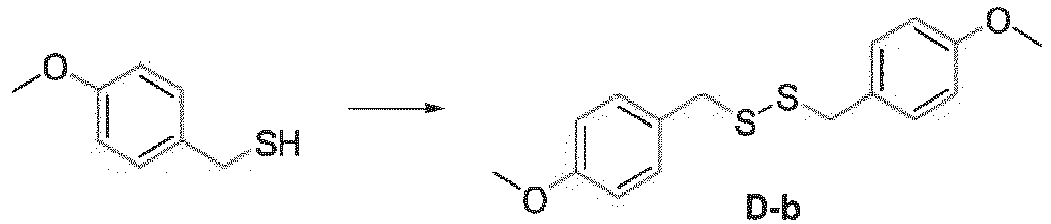
- Disulfide D-b was synthesized according to a literature known procedure (cf. U. F. Fritze, M. von Delius, Chem. Commun. 2016, 52, 6363-6366). The product was obtained as a colourless solid (2.48 g, 8.10 mmol, quant.). The analytical data are consistent with the above literature.
- Melting point: 94 °C (Lit.(cf. H. Xiao, J. Chen, M. Liu, H. Wu, J. Ding, Phosphorus, Sulfur Silicon Relat. Elem. 2009, 184, 2553-2559): 99 °C). 1H NMR (300 MHz, CDCl3): δ (ppm) = 7.17 (m, 4H, Ar-H), 6.86 (m, 4H, Ar-H), 3.80 (s, 6H, Ar-CH 2-S), 3.59 (s, 4H, OCH 3).
-

- Disulfide D-c was synthesized according to GP1 followed by GP2 from 4-bromobenzylbromide (5.00 g, 11.4 mmol, 1.0 eq). The product was obtained as a colourless solid (4.61 g, 4.37 mmol, 93%, over two steps). The analytical data are consistent with those from literature (cf. K. M. Khan, M. Taha, F. Rahim, M. Ali, W. Jamil, S. Perveen, M. Iqbal Choudhary, Lett. Org. Chem. 2010, 7, 415-419).
- Melting point: 80 °C (Lit.: 83-84 °C). 1H NMR (300 MHz, CDCl3): δ (ppm) = 7.44 (d, J = 8.4 Hz, 4H, Ar-H), 7.43 (d, J = 8.4 Hz, 4H, Ar-H), 3.62 (s, 4H, Ar-CH 2-S).
-

- Disulfide D-d was synthesized according to a procedure for direct conversation of benzylic halogenides to disulfides (cf. D. Preeti, S. Chandrasekaran, J. Org. Chem 1989, 54, 2998-3000). Methyl-4-(chloromethyl)benzoate (1.85 g, 10.0 mmol, 1.0 eq) was dissolved in DMF (20 mL) and added dropwise to a solution of ammonium tetrathiomolybdate (2.60 g, 10.0 mmol, 1.0 eq) in DMF (30 mL) at rt. The mixture was stirred overnight. Water (50 mL) was added and the solution was extracted with methyl tert-butyl ether (2 × 50 mL). The combined organic phases were extracted with water (3 × 40 mL) until the aqueous phase was colourless. The organic phase was dried over anhydrous sodium sulfate and the solvent was removed under reduced pressure. The crude product was further purified by column chromatography (SiO2, PE:DCM 1:1) to obtain the pure product as a colourless solid (1.16 g, 3.20 mmol, 64%).
- Melting point: 79 °C. 1H NMR (400 MHz, CDCl3): δ (ppm) = 7.99 (d, J = 8.20 Hz, 4H, Ar-3-H), 7.28 (d, J = 8.20 Hz, 4H, Ar-2-H), 3.91 (s, 6H, CO2CH 3), 3.61 (s, 4H, Ar-CH 2-S). 13C NMR (100 MHz, CDCl3): δ (ppm) = 166.9 (Ar-CO2Me), 142.7 (Ar-C-1), 129.9 (Ar-C-3), 129.5 (Ar-C-2), 129.4 (Ar-C-4), 52.3 (CO2 CH3), 43.0 (Ar-CH2-S). FT-IR (ATR): ṽ (cm-1) = 3063 (vw), 3028 (w), 2999 (w), 2951 (w), 2914 (w), 2842 (w), 2081 (vw), 1989 (vw), 1964 (vw), 1907 (vw), 1718 (vs), 1606 (w), 1588 (w), 1485 (w), 1445 (m), 1433 (m), 1305 (m), 1283 (vs), 1223 (m), 1199 (s), 1104 (s), 1079 (m), 988 (m), 916 (w), 872 (w), 857 (vw), 818 (w), 794 (m), 758 (s), 717 (m), 699 (s), 673 (m), 660 (w). HRMS (EI, pos): m/z calcd. for [M+]: 362.0647, found: 362.0641 (<10), 149.0598 (100), 121.0662 (14), 90.0466 (11). Elemental analysis: Calcd. for C18H18O4S2: C 59.65, H 5.01; found: C 59.67, H 5.15.
-

- Disulfide D-e was synthesized according to GP1 followed by GP2 from 4-trifluoromethylbenzylbromide (2.39 g, 10.0 mmol, 1.0 eq). The product was obtained as a colourless solid (1.67 g, 4.37 mmol, 87%, over two steps). The analytical data are consistent with those from literature (cf. S. L. Buchwald, R. B. Nielsen, J. Am. Chem. Soc 1988, 110, 3171-3175; R. Matake, Y. Niwa, H. Matsubara, Tetrahedron Lett. 2016, 57, 672-675).
- Melting point: 67 °C (Lit.: 65-68 °C). 1H NMR (300 MHz, CDCl3): δ (ppm) = 7.59 (d, J = 8.1 Hz, 4H, Ar-H), 7.32 (d, J = 8.1 Hz, 4H, Ar-H), 3.65 (s, 4H, Ar-CH 2-S).
-

- Disulfide D-f was synthesized according to GP1 followed by GP2 from 3-methoxybenzylbromide (1.66 mL, 2.39 g, 11.9 mmol, 1.0 eq). The product was obtained as a colourless oil (1.37 g, 4.48 mmol, 77%, over two steps). The analytical data are consistent with those from literature (cf. V. Panduranga, G. Prabhu, N. Panguluri, B. Nageswara, R. Panguluri, V. V. Sureshbabu, Synthesis (Stuttg). 2016, 48, 1711-1718).
- 1H-NMR (300 MHz, CDCl3): δ (ppm) = 7.23 (m, 2H, Ar-H), 6.83 (m, 6H, Ar-H), 3.81 (s, 6H, Ar-CH 2-S), 3.61 (s, 4H, OCH 3).
-

- Disulfide D-g was synthesized as D-d. The product was obtained as a sticky colourless oil (872 mg, 2.40 mmol, 48%).
- 1H NMR (400 MHz, CDCl3): δ (ppm) = 7.97-7.94 (m, 2H, Ar-5-H), 7.90 (m, 2H, Ar-2-H), 7.42-7.40 (m, 4H, Ar-4/6-H), 3.93 (s, 6H, CO2CH 3), 3.64 (s, 4H, Ar-CH 2-S). 13C NMR (100 MHz, CDCl3): δ (ppm) = 166.9 (Ar-CO2Me), 137.9 (Ar-C-2), 134.0 (Ar-C-4), 130.7 (Ar-C-3), 130.6 (Ar-C-2), 128.9 (Ar-C-5), 128.8 (Ar-C-6), 52.3 (Ar-CO2 CH3), 42.9 (Ar-CH2-S). FT-IR (ATR): ṽ (cm-1) = 3061 (vw), 3026 (w), 2999 (w), 2951 (w), 2913 (w), 2842 (w), 2080 (vw), 1988 (vw), 1965 (vw), 1905 (vw), 1717 (vs), 1606 (w), 1589 (w), 1485 (w), 1445 (m), 1433 (m), 1305 (m), 1283 (vs), 1223 (s), 1199 (s), 1104 (s), 1079 (m), 988 (m), 916 (w), 872 (w), 819 (w), 794 (m), 757 (s), 717 (m), 699 (s), 674 (m), 660 (w). HRMS (EI, pos): m/z calcd. for [M+]: 362.0647, found: 362.0645 (<10), 149.0597 (100), 119.0499 (11). Elemental analysis: Calcd. for C18H18O4S2: C 59.65, H 5.01; found: C 59.88, H 5.19.
-

- Disulfide D-h was synthesized according to GP1 followed by GP2 from 3-trifluoromethylbenzylbromide (1.53 mL, 2.39 g, 10.0 mmol, 1.0 eq). The product was obtained as a colourless oil (2.21 g, 5.79 mmol, quant., over two steps). The analytical data are consistent with those from literature (cf. H. Huang, J. Ash, J. Y. Kang, Org. Biomol. Chem. 2018, 16, 4236).
- 1H NMR (300 MHz, CDCl3): δ (ppm) = 7.55 (m, 2H, Ar-H), 7.43 (m, 6H, Ar-H), 3.62 (s, 4H, Ar-CH 2-S).
-

- Disulfide D-i was synthesized by addition of perfluorophenylmethyl bromide (2.61 g, 10.0 mmol, 1.0 eq) to a solution of potassium thioacetate (1.37 g, 10.5 mmol, 1.2 eq) in tetrahydrofuran (30 mL). The reaction was stirred at rt overnight. The solvent was removed under reduced pressure and the residue was dissolved in methanol (5 mL). Trifluoroacetic acid (5 mL) was added and the reaction was stirred under reflux for 3 days. The mixture was diluted with water (200 mL) and aqueous sodium hydroxide solution (20 wt%, 40 mL) was added. The aqueous mixture was extracted with dichloromethane (3 × 50 mL). The combined organic phases were dried over anhydrous sodium sulfate and the solvent was removed under reduced pressure. The product was obtained as a colourless solid (700 mg, 1.70 mmol, 34%, over two steps). The analytical data are consistent with those from literature (cf. C. H. Sohn, C. K. Chung, S. Yin, P. Ramachandran, J. A. Loo, J. L. Beauchamp, J. Am. Chem. Soc 2009, 131, 5444-5459).
- Melting point: 135-138 °C (Lit.(cf. G. M. Brooke, J. A. K. J. Ferguson, J. Fluor. Chem. 1988, 41, 263-275): 145.5 °C). 1H NMR (300 MHz, CDCl3): δ (ppm) = 3.91 (s, 4H, ArCH 2-S).
-

- Disulfide D-j was synthesized according to GP2 from 2,4,6-trimethylbenzylmercaptane (5.00 g, 30.1 mmol, 1.0 eq) and obtained as a colourless solid (4.77 g, 14.6 mmol, 97%).
- Melting point: 96 °C. 1H NMR (400 MHz, CDCl3): δ (ppm) = 6.83 (s, 4H, Ar-3/5-H), 3.92 (s, 4H, Ar-CH 2-S), 2.36 (s, 12H, Ar-2/6-CH 3), 2.24 (s, 6H, Ar-4-CH 3). 13C NMR (100 MHz, CDCl3): δ (ppm) = 137.5 (Ar-C-1), 137.2 (Ar-C-4), 130.1 (Ar-C-2/6), 129.3 (Ar-C-3/5), 38.7 (Ar-CH2-S), 21.1 (Ar-6-CH3), 20.0 (Ar-2/5-CH3). FT-IR (ATR): ṽ (cm-1)= 3000 (w), 2966 (w), 2949 (w), 2910 (w), 2862 (w), 2724 (vw), 2670 (vw), 2395 (vw), 2326 (vw), 2253 (vw), 2186 (vw), 2152 (vw), 2141 (vw), 2056 (vw), 1990 (vw), 1951 (vw), 1913 (vw), 1886 (vw), 1765 (vw), 1726 (vw), 1691 (w), 1640 (vw), 1610 (m), 1577 (w), 1534 (w), 1481 (m), 1459 (m), 1440 (m), 1421 (m), 1373 (m), 1222 (w), 1195 (w), 1140 (w), 1120 (w), 1029 (m), 1015 (w), 943 (vw), 851 (vs), 768 (w), 742 (w), 679 (m), 643 (w). HRMS (EI, pos): m/z calcd. for [M+]: 330.1476, found: 330.1470 (<1), 133.1009 (100). Elemental analysis: Calcd. for C20H26S: C 72.67, H 7.93; found: C 72.41, H 8.19.
-

- Disulfide D-l was synthesized according to GP2 from methylthioglyconate (1.06 g, 10.0 mmol, 1.0 eq). The product was obtained as a colourless oil (1.05 g, 5.00 mmol, quant.). The analytical data are consistent with those from literature (cf. S. S. Shah, S. Karthik, N. D. P. Singh, RSC Adv. 2015, 5, 45416-45419).
- 1H NMR (300 MHz, CDCl3): δ (ppm) = 3.77 (s, 6H, CO2CH3) 3.59 (s, 4H, CH 2-S).
-
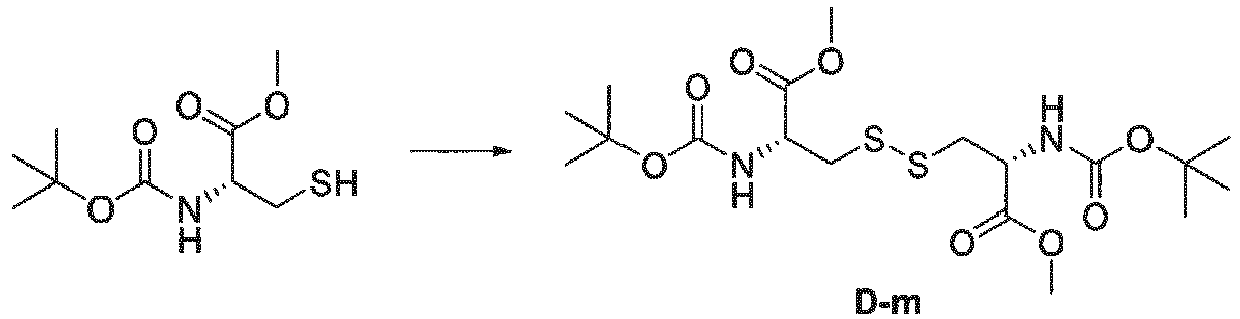
- Disulfide D-m was synthesized according to a literature known procedure (cf. P. Mampuys, Y. Zhu, S. Sergeyev, E. Ruijter, R. V. A. Orru, S. Van Doorslaer, B. U. W. Maes, Org. Lett. 2016, 18, 2808-2811). The product was obtained as a colourless oil which solidified after several days at room temperature to a colourless solid (1.74 g, 3.70 mmol, 74%). The analytical data are consistent with the above from literature.
- Melting point: 92 °C (Lit.: 99-100 °C). 1H NMR (300 MHz, CDCl3): δ (ppm) = 5.36 (m, 2H, NH), 4.59 (m, 2H, CH-CO2Me), 3.77 (s, 6H, CO2CH3), 3.17 (d, J = 4.7 Hz, CH-CH 2-S), 1.45 (s, 18H, C(CH 3)3).
-

- Disulfide D-n was synthesized according to a literature known procedure (cf. L. Liu, S. Tanke, M. J. Miller, 1986, 51, 5332-5337). The pure product was obtained by washing the oily residue with a mixture of ethyl acetate/n-hexane (v/v 1:2, 40 mL) via ultrasonic irradiation. The product separated as an oil and the wash solution was decanted. The colourless oily residue solidified over several days at rt (3.73 g, 6.95 mmol, 70%). The analytical data are consistent with those from the above literature.
- Melting point: 65-68 °C (Lit.: 68-69 °C). 1H-NMR (300 MHz, CDCl3): δ (ppm) = 7.35 (s, 10H, Ar-H), 5.65 (m, 2H, NH), 5.12 (s, 4H, Ar-CH 2), 4.68 (m, 2H, CHCO2Me), 3.75 (s, 6H, CH 3), 3.16 (d, J = 4.9 Hz, 4H, CH 2-S).
- The sulfur extrusion from a disulfide compound D-a to the corresponding thioether compound T-a was investigated for four different commercially available NHCs. For this purpose, sodium hydride as a non-nucleophilic base was added in a slight excess to generate the carbene from the corresponding imidazolium salt. The reaction was carried out in THF at 50°C for 24h in accordance with the general procedure described above. The obtained results are summarized in Table 1.

Table 1: Investigation of different NHCs. Entry NHC salt NMR yield [%]a) Conversion [%]a) 1 IMes·HCl 69 100 2 IPr·HCl 42 75 3 sIMes·HCl 68 89 4 NHC-4 63 98 5 None - - 6 IMes·HClb) - - 7 IMesc) 67 76 a) NMR yield/conversion determined using 1,3,5-trimethoxy benzene (TMB) as an internal standard, b) no base added, c) Free carbene used in place of IMes·HCl. - The most nucleophilic NHCs IMes·HCl and SIMes·HCl lead to the highest yields of 69% and 68%, respectively (Entries 1 and 3). Using the sterically more hindered IPr·HCl (Entry 2) a lower yield of 42% was obtained, despite its nucleophilicity being similar to IMes·HCl. The smaller carbene NHC-4 with a moderate nucleophilicity leads to 63% yield (Entry 4). Moreover, reaction controls without imidazolium salt (Entry 5), without base (Entry 6) and with the free carbene (Entry 7) confirm the role of the NHC as the nucleophile mediating the reaction.
- Different bases were used for carbene generation and the results on the sulfur extrusion from compound D-a to compound T-a, which were carried out in accordance with the above general procedure, are summarized in Table 2.

Table 2: Investigation of different bases. Entry Base NMR yield [%]a) Conversion [%]a) 1 NaH 52 96 2 Cs2CO3 61 95 3 K2CO3 66 99 4 DBU 41 76 a) NMR yield/conversion determined using 1,3,5-trimethoxy benzene (TMB) as an internal standard. - As demonstrated in the above Table 2, sodium hydride and mild carbonates showed high yields. When compared to sodium hydride (Entry 1), the mild carbonates (Entries 2 and 3), which can be handled more easily, increased the yield. The results for DBU further showed that organic bases may also be used (Entry 4).
- The applicability of different solvents for sulfur extrusion was investigated, thereby using potassium carbonate and sodium hydride as bases. The reactions were carried out in accordance with the general procedure described above and the obtained results are summarized in Table 3.

Table 3: Investigation of different solvents. Entry Base Solvent NMR yield [%]a) Consumption [%]a) 1 K2CO3 DMF 62 93 2 K2CO3 acetonitrile 67 86 3 K2CO3 THF 67 85 4 K2CO3 toluene 54 93 5 K2CO3 n-hexane 53 68 6 K2CO3 methanol 64 67 7 K2CO3 ethanol 67 99 8 K2CO3 isopropanol 73 99 9 NaH DMF 63 98 10 NaH acetonitrile 67 100 11 NaH THF 52 99 12 NaH toluene 72 88 13 NaH n-hexane 68 94 a) NMR yield determined using 1,3,5-trimethoxy benzene (TMB) as an internal standard. - As demonstrated by the above results, both polar and non-polar, aprotic solvents are suitable for the sulfur extrusion and lead to similar NMR yields from 53% to 67%. Moreover, greener solvents, which may be applied in biochemistry, as ethanol and isopropanol also gave yields of 67% and 73%, respectively. These results verify the high versatility of the NHC induced sulfur extrusion where the solvent can be adapted to the reacting disulfide as required.
- Using IMes·HCl as NHC salt and NaH as base, further reaction conditions (concentration, amount of NHC, and temperature) were investigated. The results are shown in Table 4.

Table 4: Investigations concerning further reaction conditions. Entry Variation NMR yield [%]a) Conversion [%]a) 1 1.5 mL THF 46 99 2 None (3.0 mL THF, 1.0 equ. NHC·HCl, 50°C) 52 96 3 6.0 mL THF 30 47 4 12 mL THF 22 85 5 1.3 equ. IMes·HCl 64 99 6 1.5 equ. IMes·HCl 84 100 7 2.0 equ. IMes·HCl 77 100 8 rt 61 92 a) NMR yield/conversion determined using 1,3,5-trimethoxy benzene (TMB) as an internal standard. - As demonstrated by the above results, even when varying the concentration, the amount of NHC, and the temperature, sulfur extrusion can be carried out. Increasing the concentration lead to a smaller reduction of the NMR yield (Entry 1) as dilution (Entries 3 and 4) when comparing the same to the original result (Entry 2). Increasing the NHC stoichiometry to 1.5 equivalents resulted in higher yields, while additional amounts of IMes·HCl did not lead to further improvement (Entries 5-7). Furthermore, a decrease in temperature did not change the yield showing that the reaction can be performed at ambient conditions (Entry 8).
- For investigating the scope of the sulfur extrusion, different substrates were applied. 10 benzylic substrates and one heterocyclic substrate were synthesized, sulfur extruded and the corresponding sulfides isolated.
- The applied general procedure (GP3) was as follows:
1,3-bis(2,4,6-trimethylphenyl)-1H-imidazole-3-iumchloride (1.02 g, 3.00 mmol, 1.5 eq) and potassium carbonate (1.24 g, 9.00 mmol, 4.5 eq) were mixed in tetrahydrofuran (80 mL). Afterwards disulfide (549 mg, 2.00 mmol, 1.0 eq) was added and the reaction was stirred until completion of the reaction (usually 24 h) at rt. The solvent was removed under reduced pressure and the crude product was purified by column chromatography to obtain the sulfide. Minor impurities as disulfide residues were removed for analytical samples by HPLC, if indicated. -

- T-a was synthesized according to GP3. The sulfide was purified by column chromatography (SiO2, PE:EE 20:1, R t = 0.83) to obtain the product as a colourless solid (470 mg, 1.94 mmol, 97%). The analytical data are consistent with those from literature (cf. K. S. Eccles, C. J. Elcoate, S. E. Lawrence, A. R. Maguire, Gen. Pap. Ark. 2010, ix, 216-228).
- Melting point: 69 °C (Lit.: 76-78 °C). 1H NMR (300 MHz, CDCl3): δ (ppm) = 7.14 (m, 8H, Ar-H), 3.57 (s, 4H, Ar-CH 2-S), 2.34 (s, 6H, CH 3). 13C NMR (75 MHz, CDCl3): δ (ppm) = 136.7, 135.3, 129.3, 129.0, 35.4, 21.3. FT-IR (ATR): ṽ (cm-1) = 3126 (vw), 3089 (vw), 3048 (w), 3021 (w), 2954 (m), 2921 (m), 2855 (m), 2733 (vw), 1906 (w), 1802 (vw), 1725 (w), 1705 (w), 1664 (vw), 1610 (w), 1575 (vw), 1511 (m), 1456 (w), 1428 (w), 1415 (m), 1378 (w), 1317 (w), 1258 (w), 1234 (w), 1212 (w), 1201 (w), 1178 (w), 1109 (m), 1040 (m), 1021 (m), 963 (w), 897 (vw), 817 (vs), 750 (m), 727 (s), 699 (w), 679 (m), 660 (w), 642 (vw). HRMS (EI, pos): m/z calcd. for [M+]: 242.1129, found: 242.1111 (23), 137.0413 (14), 105.0698 (100), 77.0387 (13). Elemental analysis: Calcd. for C16H18S: C 79.29, H 7.49; found: C 79.10, H 7.33.
-

- T-b was synthesized according to GP3. The sulfide was purified by column chromatography (SiO2, PE:EE 20:1, R t = 0.20) to obtain the product as a colourless solid (499 mg, 1.82 mmol, 91%). The analytical data are consistent with those from literature (Y. A. W. Park, Y. Na, D. J. Baek, Bull. Korean Chem. Soc. 2006, 27, 2023-2027).
- Melting point: 30 °C (Lit.: 30 °C). 1H NMR (400 MHz, CDCl3): δ (ppm) = 7.22-7.19 (m, 4H, Ar-H), 6.87-6.83 (m, 4H, Ar-H), 3.81 (s, 6H, OCH 3), 3.56 (s, 4H, Ar-CH 2-S). 13C NMR (100 MHz, CDCl3): δ (ppm) = 159.2, 130.7, 129.6, 114.1, 55.4,43.0. FT-IR (ATR): ṽ (cm-1) = 3067 (vw), 3008 (w), 2957 (w), 2933 (w), 2837 (w), 2052 (vw), 1989 (vw), 1888 (w), 1768 (vw), 1650 (vw), 1608 (m), 1582 (w), 1507 (vs), 1466 (m), 1457 (m), 1443 (m), 1417 (m), 1316 (w), 1301 (m), 1242 (vs), 1172 (s), 1106 (m), 1029 (s), 953 (vw), 939 (vw), 902 (vw), 828 (vs), 765 (w), 748 (m), 737 (m), 679 (m), 663 (w), 636 (w). HRMS (EI, pos): m/z calcd. for [M+]: 274.1028, found: 274.1012 (12), 121.0643 (100). Elemental analysis: Calcd. for

-

- T-c was synthesized according to GP3. The sulfide was purified by column chromatography (SiO2, PE:DCM 10:1, R f = 0.36) to obtain the product as a colourless solid (45.6 mg, 123 µmol, 35%). The analytical data are consistent with those from literature (cf. C. G. Overberger, R. A. Gadea, J. A. Smith6, I. C. Kogon, J. Am. Chem. Soc. 1953, 75, 2075-2077).
- Melting point: 51 °C (Lit.: 59-60 °C). 1H NMR (400 MHz, CDCl3): δ (ppm) = 7.47 (d, J = 8.3 Hz, 4H, Ar-H), 7.19 (d, J = 8.3 Hz, 4H, Ar-H), 3.58 (s, 4H, Ar-CH2-S). 13C NMR (100 MHz, CDCl3): δ (ppm) = 137.9, 132.0, 131.3, 121.3, 35.6. FT-IR (ATR): ṽ (cm-1) = 3084 (vw), 3061 (vw), 3048 (vw), 3026 (vw), 2959 (vw), 2923 (w), 2912 (w), 2851 (vw), 2816 (vw), 2782 (vw), 2657 (vw), 2614 (vw), 2594 (vw), 2559 (vw), 2551 (vw), 2478 (vw), 2439 (vw), 2403 (vw), 2371 (vw), 2311 (vw), 2281 (vw), 2232 (vw), 1983 (vw), 1953 (vw), 1904 (w), 1783 (vw), 1725 (vw), 1709 (vw), 1660 (w), 1586 (w), 1483 (s), 1443 (w), 1415 (w), 1400 (m), 1351 (vw), 1304 (vw), 1280 (vw), 1250 (vw), 1231 (w), 1198 (w), 1172 (w), 11.57 (vw), 1140 (vw), 1097 (w), 1069 (s), 1038 (w), 1009 (s), 957 (w), 884 (w), 826 (vs), 804 (s), 752 (m), 724 (m), 693 (w), 680 (w), 646 (w), 630 (w), 626 (w), 609 (m). HRMS (EI, pos): m/z calcd. for [M+]: 371.9006, found: 371.8987 (20), 168.9641 (100), 122.0179 (10), 90.0461 (20). Elemental analysis: Calcd. for C14H12Br2S: C 45.19, H 3.25; found: C 45.45, H 3.55.
-

- T-d was synthesized according to GP3 but the reaction time was extended to three days. The sulfide was purified by column chromatography (SiO2, PE:EE 2:1, R t = 0.35). In this case the sulfide was difficult to isolate from the thiourea side product. Final purification was achieved by NP-HPLC (DCM:EE 9:1, 20 mL min-1, R t = 3.4 min) and the sulfide (238 mg, 720 µmol, 36%) was isolated.
- Melting point: 93 °C. 1H NMR (400 MHz, CDCl3): δ (ppm) = 7.98 (d, J = 8.4 Hz, 4H, Ar-2-H), 7.33 (d, J = 8.4 Hz, 4H, Ar-3-H), 3.92 (s, 6H, CO2CH 3), 3.61 (s, 4H, Ar-CH 2-S). 13C NMR (100 MHz, CDCl3): δ (ppm) =167.0 (Ar-CO2Me), 143.3 (Ar-C-4), 130.0 (Ar-C-2/6), 129.2 (Ar-C-1), 129.2 (Ar-C-3/5), 52.3 (CO2 CH3), 35.5 (Ar-CH2-S). FT-IR (ATR): ṽ (cm-1) = 3035 (vw), 3007 (vw), 2960 (w), 2939 (w), 2910 (vw), 2851 (vw), 2119 (vw), 2074 (vw), 1952 (vw), 1936 (vw), 1925 (vw), 1712 (s), 1606 (m), 1573 (w), 1505 (vw), 1440 (m), 1419 (m), 1406 (w), 1305 (m), 1275 (vs), 1212 (w), 1197 (m), 1172 (m), 1150 (m), 1114 (s), 1103 (s), 1015 (m), 983 (vw), 965 (m), 915 (w), 860 (m), 837 (w), 796 (w), 771 (m), 727 (vs), 689 (m), 636 (w), 619 (w). HRMS (El.pos): m/z calcd. for [M+]: 330.0926, found: 330.0924 (40), 299.0741 (14), 181.0328 (15), 149.0608 (100), 121.0662 (27), 90.0471 (18). Elemental analysis: Calcd. for C18H18O4S: C 65.44, H 5.49; found: C 65.02, H 5.69.
-

- T-e was synthesized according to GP3. The sulfide was purified by column chromatography (SiO2, PE:EE 20:1, R f = 0.34) to obtain the product as a colourless oil in satisfying purity (210 mg, 600 µmol, 30%). Higher purification was achieved by NP-HPLC (DCM:n-hexane, 20 mL min-1, R t = 4.0 min). The analytical data are consistent with those from literature (cf. G. Buehrdel, E. Petrlikova, P. Herzigova, R. Beckert, H. Goerls, Phosphorus, Sulfur Silicon Relat. Elem. 2009, 184, 1161-1174).
- 1H NMR (400 MHz, CDCl3): δ (ppm) = 7.59 (d, J = 8.1 Hz, 4H, Ar-H), 7.33 (d, J = 8.1 Hz, 4H, Ar-H), 3.65 (s, CH 2). 13C NMR (100 MHz, CDCl3): δ (ppm) = 141.9, 129.3, 129.2, 125.5 (q), 126.2 (q), 36.1. FT-IR (ATR): ṽ (cm-1) = 3071 (vw), 3046 (vw), 3020 (vw), 2926 (vw), 2855 (vw), 1922 (vw), 1803 (vw), 1710 (w), 1618 (w), 1584 (vw), 1514 (vw), 1420 (w), 1321 (vs), 1236 (w), 1162 (s), 1119 (s), 1104 (s), 1066 (vs), 1018 (s), 955 (vw), 896 (w), 849 (m), 754 (w), 709 (w), 616 (w). HRMS (EI, pos): m/z calcd. for C16Hl2Fr,S [M+]: 350.0564, found 350.0559 (30), 191.0137 (21), 159.0416 (100), 109.0454 (12). Elemental analysis: Calcd. for

-

- T-f was synthesized according to GP3. The sulfide was purified by column chromatography (SiO2, PE:EE 20:1, R t = 0.23) to obtain the product as a colourless oil (417 mg, 1.52 mmol, 76%). The analytical data are consistent with those from literature (cf. K. S. Eccles, C. J. Elcoate, S. E. Lawrence, A. R. Maguire, Gen. Pap. Ark. 2010, ix, 216-228).
- 1H NMR (400 MHz, CDCl3): δ (ppm) = 7.15 (t, J = 7.81 Hz, 2H, Ar-H), 6.81-6.78 (m, 4H, Ar-H), 6.72 (m, 2H, Ar-H), 3.73 (s, 6H, OCH 3), 3.52 (s, 4H, Ar-CH 2-S). 13C NMR (100 MHz, CDCl3): δ (ppm) = 159.9, 139.9, 129.6, 121.6, 114.6, 112.8, 55.4, 35.8. FT-IR (ATR): ṽ (cm-1) = 3052 (w), 2999 (w), 2957 (w), 2939 (w), 2913 (w), 2833 (w), 2093 (vw), 2073 (vw), 2037 (vw), 1999 (vw), 1930 (vw), 1888 (vw), 1843 (vw), 1599 (s), 1583 (s), 1489 (s), 1465 (m), 1453 (m), 1436 (m), 1314 (m), 1297 (m), 1262 (vs), 1189 (w), 1150 (s), 1089 (w), 1078 (w), 1041 (s), 995 (w), 934 (w), 915 (w), 874 (m), 781 (s), 747 (m), 737 (m), 711 (m), 690 (s). HRMS (EI, pos): m/z calcd. for [M+]: 274.1028, found: 274.1028 (10), 138.0677 (16), 122.0727 (100), 109.0648 (17), 91.0544 (29), 77.0383 (18). Elemental analysis: Calcd. for C16H18O2S: C 70.04, H 6.61; found: C 70.18, H 6.58.
-

- T-g was synthesized according to GP3 but the reaction time was extended to three days. The sulfide was purified by column chromatography (SiO2, PE:EE 2:1, R t = 0.35) to obtain the product as colourless needles (515 mg, 1.56 mmol, 78%).
- Melting point: 90-93 °C. 1H NMR (400 MHz, CDCl3): δ (ppm) = 7.93-7.91 (m, 4H, Ar-2/6-H), 7.48-7.46 (m, 2H, Ar-4-H), 7.38 (t, J = 7.9 Hz, 2H, Ar-5-H), 3.92 (s, 6H, CO2CH 3), 3.64 (s, 4H, Ar-CH 2-S). 13C NMR (100 MHz, CDCl3): δ (ppm) = 167.0 (CO2Me), 138.5 (Ar-C-3), 133.6 (Ar-C-2), 130.6 (Ar-C-1), 130.2 (Ar-C-4), 128.8 (Ar-C-5), 128.5 (Ar-C-6), 52.3 (CO2 CH3), 35.6 (Ar-CH2-S). FT-IR (ATR): ṽ (cm-1) = 3058 (vw), 2971 (w), 2958 (w), 2939 (w), 2928 (w), 2874 (vw), 2839 (vw), 2184 (vw), 2159 (vw), 2098 (vw), 2073 (vw), 1982 (vw), 1960 (vw), 1903 (vw), 1854 (vw), 1789 (vw), 1718 (vs), 1678 (w), 1638 (w), 1606 (w), 1585 (w), 1542 (vw), 1484 (w), 1458 (w), 1444 (m), 1379 (vw), 1283 (vs), 1231 (s), 1195 (s), 1143 (w), 1106 (m), 1084 (m), 1057 (w), 1041 (m), 992 (m), 934 (w), 908 (vw), 878 (w), 854 (w), 833 (w), 820 (w), 794 (w), 758 (s), 733 (w), 711 (s), 690 (m), 667 (w), 635 (vw). HRMS (EI, pos): m/z calcd. for [M+]: 330.0926, found: 330.0904 (22), 299.0721 (10), 181.0322 (32), 149.0601 (100), 119.0489 (26), 91.0542 (29). Elemental analysis: Calcd. for C18H18O4S: C 65.44, H 5.49; found: C 65.56, H 5.64.
-

- T-h was synthesized according to GP3. The sulfide was purified by column chromatography (SiO2, PE:EE 20:1, R t = 0.50) to obtain the product as a colourless oil in satisfying purity (301 mg, 1.24 mmol, 62%). Higher purification was achieved by NP-HPLC (DCM:n-hexane, 20 mL min-1, R t = 3.0 min).
- 1H NMR (400 MHz, CDCl3): δ (ppm) = 7.52-7.40 (m, 8H, Ar-3/4/5/7-H), 3.64 (s, 4H, ArCH 2-S). 13C NMR (100 MHz, CDCl3): 5 (ppm) = 139.0, 132.4, 131.1 (q), 129.2, 125.8 (q), 124.2 (q), 124.2 (q), 35.5. FT-IR (ATR): ṽ (cm-1) = 3112 (vw), 3066 (vw), 3047 (vw), 3023 (vw), 2921 (vw), 1960 (vw), 1901 (vw), 1612 (vw), 1596 (w), 1493 (w), 1449 (m), 1422 (w), 1329 (vs), 1234 (w), 1194 (m), 1162 (s), 1117 (vs), 1092 (s), 1072 (s), 1003 (w), 982 (vw), 934 (w), 904 (m), 886 (m), 828 (w), 801 (m), 759 (w), 732 (m), 699 (s), 659 (m), 629 (vw). HRMS (EI, pos): m/z calcd. for [M+]: 350.0564, found: 350.0551 (20), 191.0126 (17), 159.0405 (100), 109.0433 (20). Elemental analysis: Calcd. for

-

- T-i was synthesized according to GP3. The sulfide was purified by column chromatography (SiO2, PE:DCM 40:1, R t = 0.24) to obtain the product as a colourless solid in satisfying purity (37.3 mg, 94.5 µmol, 27%). Higher purification was achieved by NP-HPLC (DCM, 20 mL min-1, R t = 3.4 min).
- Melting point: 58-62 °C. 1H NMR (300 MHz, CDCl3): δ (ppm) = 3.86 (s, 4H, Ar-CH 2-S). 13C NMR (150 MHz, CDCl3): δ (ppm) = 145.1 (md, Ar-C-3), 140.9 (md, Ar-C-4), 137.8 (md, Ar-C-2), 122.2 (dt, Ar-C-1), 23.9 (Ar-CH2-S). FT-IR (ATR): ṽ (cm-1)= 2948 (vw), 2931 (vw), 2647 (vw), 2433 (vw), 2409 (vw), 2117 (vw), 2087 (vw), 2071 (vw), 1899 (vw), 1860 (vw), 1719 (vw), 1657 (w), 1520 (m), 1499 (vs), 1430 (w), 1415 (w), 1365 (vw), 1311 (w), 1289 (vw), 1254 (vw), 1244 (vw), 1192 (w), 1171 (w), 1123 (s), 1036 (w), 987 (s), 962 (vs), 920 (w), 890 (m), 877 (w), 773 (vw), 752 (w), 714 (w), 699 (w), 655 (w), 645 (w), 602 (w). HRMS (EI, pos): m/z calcd. for [M+]: 393.9874, found: 393.9879 (10), 181.0061 (100). Elemental analysis: Calcd. for: C 42.65, H 1.02; found: C 42.37, H 1.41.
-

- T-j was synthesized according to GP3. The sulfide was purified by column chromatography (SiO2, PE:methyl tert butylether 10:1, R t = 0.73) to obtain the product as a colourless solid (89.8 mg, 301 µmol, 86%).
- Melting point: 140 °C. 1H NMR (300 MHz, CDCl3): δ (ppm) = 6.81 (s, 4H, Ar-3-H), 3.76 (s, 4H, Ar-CH 2-S), 2.33 (s, 12H, Ar-2/6-H), 2.24 (s, 6H, Ar-4-H). 13C NMR (75 MHz, CDCl3): δ (ppm) = 137.1 (Ar-C-2), 136.5 (Ar-C-4), 131.2 (Ar-C-1), 129.1 (Ar-C-3), 31.1 (Ar-CH2-S), 21.0 (Ar-4-CH3), 19.6 (Ar-2/6-CH3). FT-IR (ATR): ṽ (cm-1) = 3006 (w), 2963 (m), 2945 (w), 2909 (w), 2856 (w), 2727 (vw), 2468 (vw), 2392 (vw), 2359 (vw), 2331 (vw), 2059 (vw), 1999 (vw), 1947 (vw), 1908 (vw), 1883 (vw), 1754 (vw), 1723 (w), 1611 (m), 1578 (w), 1543 (w), 1503 (w), 1480 (m), 1458 (m), 1440 (m), 1422 (m), 1371 (m), 1243 (vw), 1216 (w), 1190 (m), 1140 (w), 1031 (m), 1013 (m), 948 (w), 872 (w), 848 (vs), 801 (w), 752 (w), 692 (s). HRMS (EI, pos): m/z calcd. for C20H26S [M+]: 298.1755, found: 298.1755 (15), 133.1007 (100). Elemental analysis: Calcd. for C20H26S: C 80.48, H 8.78; found: C 80.47, H 8.79.
-

- T-k was synthesized according to GP3. The sulfide was purified by filtration over a silica plug (8 cm, SiO2, PE:EE 20:1) to obtain the product with minor impurities (95%). The sulfide was found to be sensitive if exposed to light and rt for several hours. Therefore, further purification was achieved by NP-HPLC (DCM:n-hexane 2:1, 20 mL min-1, R t = 6.8 min). The analytical data are consistent with those from literature (cf. S. C. A. Sousa, J. R. Bernardo, M. Wolff, B. Machura, A. C. Fernandes, European J. Org. Chem. 2014, 2014, 1855-1859).
- 1H NMR (400 MHz, CDCl3): δ (ppm) = 7.37 (dd, J = 1.8 Hz, 0.7 Hz, 2H, Ar-H), 6.32 (dd, J = 3.1 Hz, 1.9 Hz, 2H, Ar-H), 6.20 (d, J = 3.1 Hz, 2H, Ar-H), 3.70 (s, 4H, Ar-CH2-S). 13C NMR (100 MHz, CDCl3): δ (ppm) = 151.5, 142.4, 110.5, 107.9, 27.9. FT-IR (ATR): ṽ (cm-1) = 3061 (vw), 3028 (w), 2998 (w), 2951 (w), 2842 (w), 2080 (vw), 1988 (vw), 1965 (vw), 1905 (vw), 1717 (vs), 1606 (w), 1589 (w), 1485 (w), 1445 (m), 1433 (m), 1305 (m), 1283 (vs), 1223 (s), 1199 (s), 1104 (s), 1079 (m), 988 (m), 916 (w), 872 (w), 819 (w), 794 (m), 757 (s), 717 (m), 699 (s), 674 (m), 660 (w). HRMS (EI, pos): m/z calcd. for [M+]: 194.0402, found:194.0386 (12), 126.0129 (10), 113.0045 (16), 81.0330 (100), 53.0386 (24). Elemental analysis: Calcd. for C10H10O2S: C 61.83, H 5.19; found: C 61.91, H 5.45.
- In an effort to delineate the electronic contribution of the aryl ring to the reaction progress, various para- and meta substituted benzylic disulfides were examined. The results are summarized in Table 5.

Table 5: Substrate scope of the sulfur extrusion reaction. Entry Substituent Yield [%]a) Entry Substituent Yield [%]a) 1 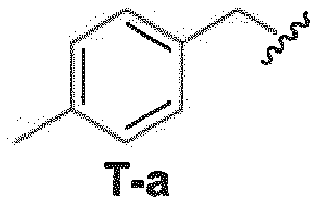
97 7 
86c) 2 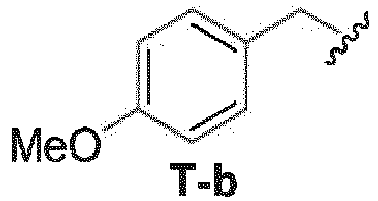
91 8 
62 3 
35 9 
27 4 
36b),c) 10 
86 5 
30 11 
95 6 
76 a) Yields are isolated yields and averaged over two experiments. b) HPLC was used to separate sulfide from thiourea, c) reaction time 3 d. - Substrates having p-Me and p-OMe substituents (Entries 1 and 2) delivered 97% and 91% yield, respectively. A p-Br substituent (Entry 3) lead to a slightly lower yield of 35%. Electron withdrawing groups as p-CO2Me and p-CF3 (Entries 4 and 5) lead to 36% and 30% yield, respectively. In general, the para substituted substrates reveal that compounds having more electron rich substituents react much faster than those with electron poor substituents. In comparison, the corresponding meta substituted substrates show the same general trend with decreasing electron density but behave different to their para isomers. The yield of p-OMe to m-OMe (Entries 2 and 6) dropped slightly from 91% to 76%, in good agreement with the reduced σ-value of m-OMe with regard to p-OMe. The electron withdrawing groups m-CO2Me and m-CF3 (Entries 7 and 8) lead to 86% and 62% isolated yield, respectively, which are higher than for their para-substituted analogues, as their σ-values would suggest.
- Moreover, steric influences were investigated. For this purpose, the 2,4,6-trimethylphenyl compound D-j was utilised and a high yield of 86% was isolated for the thioetherT-j (Entry 10), which indicated that the steric impact is minimal in this reaction. Moreover, pentafluorobenzyl disulfide D-i was submitted to the reaction conditions, leading to a 27% yield of T-i (Entry 9), indicating both an electronic and steric influence. When comparing T-i and T-j it becomes clear that electronic effects have a greater influence on the efficiency of the sulfur extrusion than steric effects from the aromatic ring. Furthermore, a commercially available furyl disulfide D-k was extruded to obtain 95% yield of thioether T-k, showing that heterocycles are subjectable to sulfur extrusion as well.
- In an effort to extend the scope towards non-benzyl substituted disulfides, ester D-I was tested (cf. Scheme 7 below). The reaction proceeded smoothly and 64% of sulfide T-l were obtained. Moreover, two cystine derivatives D-m and D-n were tested as a model compound for peptidic residues. The sulfur extrusion of D-m/n lead to two products which were the desired lanthionine derivatives T-m/n in 28 and 48% yield, respectively, and the corresponding dehydroalanine derivatives A-m/n in 17 and 35% yield, respectively. The obtained results prove an easy access of lanthionine units from cystine under mild conditions which can be applied in the synthesis of lantibiotics such as Nisin that was synthesized with HMPA in the past.

-

- T-l was synthesized according to GP3. The sulfide was purified by bulb-to-blub distillation (70 °C, 10-3 mbar) and obtained as a colourless oil (64%). The analytical data are consistent with those from literature (cf. N. Agarwal, C.-H. Hung, M. Ravikanth, Tetrahedron 2004, 60, 10671-10680).
- 1H NMR (300 MHz, CDCl3): δ (ppm) = 3.74 (s, CO2CH 3), 3.39 (s, CH 2). 13C NMR (75 MHz, CDCl3): δ (ppm) = 170.4, 52.6, 33.6. FT-IR (ATR): ṽ (cm-1) = 3002 (w), 2955 (w), 2845 (vw), 1733 (vs), 1436 (s), 1411 (w), 1392 (w), 1276 (s), 1194 (m), 1153 (s), 1126 (s), 1005 (s), 930 (w), 879 (w), 833 (w), 772 (w), 708 (w). HRMS (EI, pos): m/z calcd. for [M+]: 178.0300, found: 178.0291 (12), 163.0976 (91), 146.0021 (65), 134.0953 (100), 120.0804 (56), 87.0429 (94). Elemental analysis: Calcd. for C10H10O2S: C 40.44, H 5.66; found: C 40.66, H 5.76.
-

- T-m was synthesized according to GP3. The sulfide was filtrated over a silica plug (8 cm, SiO2, ethyl acetate) followed by ultrasonication in acetonitrile (3 mL). The resulting solution was decanted and further purified by RP-HPLC (MeCN, rt, 10 mL m-1, R t = 6.50 min (T-m), R f = 7.38 min (A-m), R f = 8.00 min (NHC-thiourea)) to obtain the pure product T-m as a colourless oil which solidified over several days at room temperature to a colourless solid (42.8 mg, 98.0 µmol, 28%), whereas A-m was isolated as a yellow oil (23.2 mg, 116 µmol, 17%).
- T-m: 1H NMR(400 MHz, CDCl3): δ (ppm) = 5.37 (m, 2H, NH), 4.50 (m, 2H, CH-CO2Me) 3.74 (s, 6H, CO2CH 3), 2.97 (m, 4H, S-CH 2-CH), 1.43 (s, 18H, OC(CH 3)3). 13C NMR (100 MHz, CDCl3): δ (ppm) = 171.4 (CO2Me), 155.3 (NHC=O), 80.3 (OC(CH 3)3), 55.4 (CH-CO2Me), 52.7 (CO2 CH3), 35.4 (S-CH2-CH), 28.39 (OCCH3). FT-IR (ATR): ṽ (cm- 1) = 3435 (vw), 3392 (vw), 3369 (vw), 3001 (vw), 2978 (w), 2961 (w), 2934 (w), 2874 (vw), 2849 (vw), 1745 (m), 1699 (s), 1503 (m), 1454 (w), 1437 (w), 1393 (w), 1367 (m), 1350 (m), 1316 (w), 1266 (m), 1248 (m), 1213 (m), 1159 (vs), 1053 (m), 1015 (m), 987 (w), 917 (w), 860 (w), 778 (w), 759 (w), 709 (vw). HRMS (ESI, DCM/MeOH, pos): m/z calcd. for [M+Na+]: 459.1772, found: 459.1775 [M+Na+] (100), 475.1515 [M+K+] (20), 895.3662 [2M+Na+] (17). Elemental analysis: Calcd. for C18H32O8N2S: C 49.53, H 7.39, N 6.42; found: C 49.35, H 7.32, N 6.51.
- A-m: 1H NMR (400 MHz, CDCl3): δ (ppm) = 7.00 (s, 1H, NH), 6.15 (s, 1H, E-CH 2), 5.73 (d, J = 1.4 Hz, 1H, Z-CH 2), 3.83 (s, 3H, CO2CH 3), 1.48 (s, 9H, OC(CH 3)3. 13C NMR (100 MHz, CDCl3): δ (ppm) = 164.6 (CO2Me), 152.7 (NHC=O), 131.5 (C=CH2), 105.3 (C=CH2), 80.9 (OC(CH3)3), 53.0 (CO2 CH3), 28.4 (OC(CH3)3). FT-IR (ATR): ṽ (cm-1) = 3461 (vw), 3422 (w), 3401 (vw), 3340 (vw), 2980 (w), 2958 (w), 2934 w), 2874 (vw), 2855 (vw), 1782 (w), 1715 (s), 1634 (w), 1509 (s), 1441 (m), 1393 (w), 1368 (m), 1326 (s), 1244 (m), 1204 (m), 1153 (vs), 1066 (s), 1039 (w), 1018 (w), 998 (w), 980 (w), 964 (w), 885 (m), 845 (w), 806 (m), 775 (w), 759 (w), 711 (w), 643 (vw). HRMS (EI, pos): m/z calcd. for [M+]: 201.1001, found: 201.0993 (<10), 145.0373 (12), 101.0473 (11), 57.0699 (100), 41.0374 (39). Elemental analysis: Calcd. for

-

- T-n was synthesized according to GP3. The sulfide was filtrated over a silica plug (8 cm, SiO2, ethyl acetate) followed by ultrasonication in acetonitrile (3 mL). The resulting solution was decanted and further purified by RP-HPLC (MeCN, rt, 10 mL m-1, R t = 6.30 min (T-n), R f = 7.00 min (A-n), R f = 8.00 min (NHC-thiourea)) to obtain the pure product T-n as a colourless oil which solidified over several days at room temperature to a colourless solid (82.9 mg, 168 µmol, 48%), whereas A-n was isolated as a yellow oil (53.9 mg, 229 µmol, 35%).
- T-n: 1H NMR (400 MHz, CDCl3): δ (ppm) = 7.34 (m, 10H, Ar-2/3/4-H), 5.63 (m, 2H, NH), 5.12 (s, 4H, Ar-CH 2), 4.58 (m, 2H, CH-CO2Me), 3.75 (s, 6H, CO2CH3), 2.98 (m, 4H, S-CH 2-CH). 13C NMR (100 MHz, CDCl3): δ (ppm) = 171.0 (CO2Me), 155.9 (HN-C-C=O), 136.3 (Ar-C-1), 128.7 (Ar-C-3), 128.4 (Ar-C-4), 128.3 (Ar-C-2), 67.4 (Ar-CH2), 53.8 (CH-CO2Me), 52.9 (CO2Me), 35.4 (S-CH2-CH). FT-IR (ATR): ṽ (cm-1) = 3332 (w), 3114 (vw), 3091 (vw), 3067 (vw), 3033 (w), 2955 (w), 2888 (vw), 2847 (vw), 1745 (s), 1716 (s), 1690 (vs), 1587 (vw), 1521 (s), 1454 (w), 1438 (m), 1407 (w), 1382 (vw), 1367 (vw), 1348 (m), 1319 (m), 1282 (m), 1237 (s), 1207 (vs), 1178 (m), 1144 (m), 1081 (m), 1058 (s), 1040 (m), 1027 (s), 1014 (s), 986 (m), 961 (w), 907 (w), 856 (w), 842 (w), 832 (w), 777 (m), 737 (s), 696 (s), 677 (vw), 636 (vw). HRMS (ESI, DCM/MeOH, pos): m/z calcd. for [M+]: 1031.3025, found: 1047.2776 [2M+K+] (13), 1031.3032 [2M+Na+] (100), 527.1461 [M+Na+] (24). Elemental analysis: Calcd. for C24H28O8N2S: C 57.13, H 5.59, N 5.55; found: C 57.03, H 5.64, N 6.35.
- A-n: 1H NMR (600 MHz, CDCl3): δ (ppm) = 7.69-7.65 (m, 5H, Ar-2/3/4-H), 7.56 (s, 1H, NH), 6.56 (s, 1H, E-CH 2), 6.10 (d, J = 1.3 Hz, 1H, Z-CH 2), 5.48 (s, 2H, Ar-CH 2), 4.14 (s, 3H, CO2CH 3). 13C NMR (150 MHz, CDCl3): δ (ppm) = 164.3 (CO2 CH3), 153.3 (HN-C-C=O), 135.9 (Ar-C-1), 131.1 (C=CH2), 128.8 (Ar-C-3), 128.6 (Ar-C-4), 128.4 (Ar-C-2), 106.2 (C=CH2), 67.2 (Ar-CH2), 53.1 (CO2 CH3). FT-IR (ATR): ṽ (cm-1) = 3705 (vw), 3412 (w), 3350 (w), 3151 (vw), 3091 (vw), 3066 (vw), 3034 (w), 2955 (w), 2899 (vw), 2851 (vw), 1803 (vw), 1739 (m), 1713 (vs), 1654 (vw), 1637 (m), 1610 (vw), 1517 (vs), 1453 (m), 1441 (s), 1377 (w), 1321 (vs), 1222 (s), 1200 (s), 1177 (m), 1084 (m), 1065 (vs), 1029 (w), 1002 (w), 990 (w), 955 (w), 896 (m), 856 (w), 847 (w), 805 (m), 770 (w), 746 (m), 697 (s), 678 (vw), 651 (vw). HRMS (EI, pos): m/z calcd. for [M-CO2Me+]: 176.0712 found: 176.0708 (5), 91.0540 (100). Elemental analysis: Calcd. for C12H13O4N2: C, H; found: C 61.74, H 5.61, N 6.08.
Claims (15)
- A method for preparing a compound T having a thioether group from a compound D having a disulfide group, wherein the method comprises the step of:
reacting the compound D in the presence of a carbene to form the compound T; wherein the compound D is a compound of the following general formula (1) wherein R2 to R5 may be the same or different and are each independently selected from the group consisting of a hydrogen atom, a substituted or unsubstituted alkyl group, a substituted or unsubstituted alkenyl group, and a substituted or unsubstituted alkynyl group, wherein at least one of R2 and R3 is a hydrogen atom and at least one of R4 and R5 is a hydrogen atom; andR1 and R6 may be the same or different and are each independently selected from the group consisting of a substituted or unsubstituted aryl group, a substituted or unsubstituted heteroaryl group, a halogen atom, a group of the general formula (2), -NZ1Z2, -NO2, -CN, -OZ3, -C(O)Z4, -C(O)NZ5Z6, -COOZ7, and -SO3Z8,
 wherein R7 is selected from the group consisting of a hydrogen atom, a substituted or unsubstituted alkyl group, a substituted or unsubstituted cycloalkyl group, a substituted or unsubstituted alkenyl group, a substituted or unsubstituted cycloalkenyl group, a substituted or unsubstituted alkynyl group, a substituted or unsubstituted aryl group, and a substituted or unsubstituted heteroaryl group;R8 is selected from the group consisting of a hydrogen atom, a substituted or unsubstituted alkyl group, a substituted or unsubstituted cycloalkyl group, a substituted or unsubstituted alkenyl group, a substituted or unsubstituted cycloalkenyl group, a substituted or unsubstituted alkynyl group, a substituted or unsubstituted aryl group, a substituted or unsubstituted heteroaryl group, - COOR10 and a peptide chain being bonded to the nitrogen atom of the NR7R8 group via its C terminus, wherein R10 is selected from the group consisting of a substituted or unsubstituted alkyl group, a substituted or unsubstituted cycloalkyl group, a substituted or unsubstituted alkenyl group and a substituted or unsubstituted aryl group;R9 is selected from the group consisting of -OR11 and a peptide chain being bonded to the carbon atom of the C(O)R9 group via its N terminus, wherein R11 is selected from the group consisting of a hydrogen atom, a substituted or unsubstituted alkyl group, a substituted or unsubstituted cycloalkyl group, a substituted or unsubstituted alkenyl group, a substituted or unsubstituted cycloalkenyl group, a substituted or unsubstituted alkynyl group, a substituted or unsubstituted aryl group, and a substituted or unsubstituted heteroaryl group; peptide chains, when present, may bond to each other via a peptide bond and/or via a disulfide bond and each of the peptide chains, when present, may have a disulfide bond within itself;Z1 to Z8 are each independently selected from the group consisting of a hydrogen atom, a substituted or unsubstituted alkyl group, a substituted or unsubstituted cycloalkyl group, a substituted or unsubstituted alkenyl group, a substituted or unsubstituted cycloalkenyl group, a substituted or unsubstituted alkynyl group, a substituted or unsubstituted aryl group, and a substituted or unsubstituted heteroaryl group; andR1 to R6 may bond to each other to form one or more rings.
 - The method according to claim 1, wherein the amount of carbene available for converting the compound D having a disulfide group to the compound T having a thioether group is at least 1.0 equivalents in relation to the amount of disulfide groups in compound D.
- The method according to claim 1 or 2, wherein the carbene is a N-heterocyclic carbene.
- The method according to claim 3, wherein the N-heterocyclic carbene is selected from the group consisting of 1,3-bis(2,4,6-trimethylphenyl)-1,3-dihydro-2H-imidazol-2-ylidene, 1,3-bis(2,4,6-trimethylphenyl)imidazol-2-ylidene, 1,3-bis(2,6-diisopropylphenyl)imidazol-2-ylidene, 1,3-bis(2,4,6-trimethylphenyl)-4,5-dihydroimidazol-2-ylidene, 1,3-diisopropylimidazol-2-ylidene, 1,3-dimethylbenzimidazol-2-ylidene, and 1,4-dimethyl-4H-1,2,4-triazol-5-ylidene.
- The method according to any one of claims 1 to 4, wherein the compound T is a compound of the following general formula (3)
 wherein R2 to R5 may be the same or different and are each independently selected from the group consisting of a hydrogen atom, a substituted or unsubstituted alkyl group, a substituted or unsubstituted alkenyl group, and a substituted or unsubstituted alkynyl group, wherein at least one of R2 and R3 is a hydrogen atom and at least one of R4 and R5 is a hydrogen atom; andR1 and R6 may be the same or different and are each independently selected from the group consisting of a substituted or unsubstituted aryl group, a substituted or unsubstituted heteroaryl group, a halogen atom, a group of the general formula (2), -NZ1Z2, -NO2, -CN, -OZ3, -C(O)Z4, -C(O)NZ5Z6, -COOZ7, and -SO3Z8,
 wherein R7 is selected from the group consisting of a hydrogen atom, a substituted or unsubstituted alkyl group, a substituted or unsubstituted cycloalkyl group, a substituted or unsubstituted alkenyl group, a substituted or unsubstituted cycloalkenyl group, a substituted or unsubstituted alkynyl group, a substituted or unsubstituted aryl group, and a substituted or unsubstituted heteroaryl group; R8 is selected from the group consisting of a hydrogen atom, a substituted or unsubstituted alkyl group, a substituted or unsubstituted cycloalkyl group, a substituted or unsubstituted alkenyl group, a substituted or unsubstituted cycloalkenyl group, a substituted or unsubstituted alkynyl group, a substituted or unsubstituted aryl group, a substituted or unsubstituted heteroaryl group, - COOR10 and a peptide chain being bonded to the nitrogen atom of the NR7R8 group via its C terminus, wherein R10 is selected from the group consisting of a substituted or unsubstituted alkyl group, a substituted or unsubstituted cycloalkyl group, a substituted or unsubstituted alkenyl group and a substituted or unsubstituted aryl group;R9 is selected from the group consisting of -OR11 and a peptide chain being bonded to the carbon atom of the C(O)R9 group via its N terminus, wherein R11 is selected from the group consisting of a hydrogen atom, a substituted or unsubstituted alkyl group, a substituted or unsubstituted cycloalkyl group, a substituted or unsubstituted alkenyl group, a substituted or unsubstituted cycloalkenyl group, a substituted or unsubstituted alkynyl group, a substituted or unsubstituted aryl group, and a substituted or unsubstituted heteroaryl group; peptide chains, when present, may bond to each other via a peptide bond and/or via a disulfide bond and each of the peptide chains, when present, may have a disulfide bond within itself;Z1 to Z8 are each independently selected from the group consisting of a hydrogen atom, a substituted or unsubstituted alkyl group, a substituted or unsubstituted cycloalkyl group, a substituted or unsubstituted alkenyl group, a substituted or unsubstituted cycloalkenyl group, a substituted or unsubstituted alkynyl group, a substituted or unsubstituted aryl group, and a substituted or unsubstituted heteroaryl group; andR1 to R6 may bond to each other to form one or more rings.
 - The method according to any one of claims 1 to 5, wherein R1 and R6 are each independently selected from a substituted or unsubstituted aryl group, a substituted or unsubstituted heteroaryl group, a group of the general formula (2), and -COOZ7.
- The method according to any one of claims 1 to 6, wherein each of R2 to R5 is a hydrogen atom and R1 and R6 may bond to each other to form one or more rings.
- The method according to any one of claims 1 to 7, wherein compound D is a polypeptide having one or more disulfide bonds or another compound having an oligomeric, polymeric, macrocyclic, or cage structure and having one or more disulfide bonds, wherein the polypeptide is preferably a precursor compound of a lantibiotic.
- The method according to any one of claims 1 to 8, wherein the compound D has from 1 to 20 disulfide groups.
- The method according to claim 9, wherein from 25% to 100% of the disulfide groups of compound D are converted into thioether groups in the compound T.
- The method according to any one of claims 1 to 10, wherein the compound T is a polypeptide, preferably a lantibiotic, or another compound having an oligomeric, polymeric, macrocyclic, or cage structure.
- The method according to any one of claims 1 to 11, wherein the compound D is reacted in the presence of a solvent, wherein the solvent is preferably selected from one or more of the group consisting of 1,4-dioxane, diethyl ether, water, ionic liquids, halogenated solvents, DMSO, THF, DMF, acetonitrile, toluene, n-hexane, methanol, ethanol, and isopropanol.
- The method according to claim 12, wherein the amount of solvent is from 1.0 L to 1000 L per 1.0 mole of compound D.
- The method according to any one of claims 1 to 13, wherein the step of reacting the compound D is carried out at a temperature from 0°C to 80°C for 30 s to 10 d.
- The method according to any one of claims 1 to 14, wherein the carbene is obtained from the corresponding protonated salt and a base, wherein the base is preferably selected from the group consisting of a hydride, a carbonate, an alcoholate, DBU, alkali HMDS, and LDA.
Priority Applications (4)
| Application Number | Priority Date | Filing Date | Title |
|---|---|---|---|
| EP20170862.5A EP3901135A1 (en) | 2020-04-22 | 2020-04-22 | Sulfur extrusion from disulfides by carbenes |
| PCT/EP2021/060568 WO2021214243A1 (en) | 2020-04-22 | 2021-04-22 | Sulfur extrusion from disulfides by carbenes |
| US17/906,771 US20230151054A1 (en) | 2020-04-22 | 2021-04-22 | Sulfur extrusion from disulfides by carbenes |
| EP21720288.6A EP4139281B1 (en) | 2020-04-22 | 2021-04-22 | Sulfur extrusion from disulfides by carbenes |
Applications Claiming Priority (1)
| Application Number | Priority Date | Filing Date | Title |
|---|---|---|---|
| EP20170862.5A EP3901135A1 (en) | 2020-04-22 | 2020-04-22 | Sulfur extrusion from disulfides by carbenes |
Publications (1)
| Publication Number | Publication Date |
|---|---|
| EP3901135A1 true EP3901135A1 (en) | 2021-10-27 |
Family
ID=70417313
Family Applications (2)
| Application Number | Title | Priority Date | Filing Date |
|---|---|---|---|
| EP20170862.5A Withdrawn EP3901135A1 (en) | 2020-04-22 | 2020-04-22 | Sulfur extrusion from disulfides by carbenes |
| EP21720288.6A Active EP4139281B1 (en) | 2020-04-22 | 2021-04-22 | Sulfur extrusion from disulfides by carbenes |
Family Applications After (1)
| Application Number | Title | Priority Date | Filing Date |
|---|---|---|---|
| EP21720288.6A Active EP4139281B1 (en) | 2020-04-22 | 2021-04-22 | Sulfur extrusion from disulfides by carbenes |
Country Status (3)
| Country | Link |
|---|---|
| US (1) | US20230151054A1 (en) |
| EP (2) | EP3901135A1 (en) |
| WO (1) | WO2021214243A1 (en) |
Citations (1)
| Publication number | Priority date | Publication date | Assignee | Title |
|---|---|---|---|---|
| US20130158274A1 (en) * | 2010-01-08 | 2013-06-20 | Bluestar Silicones France Sas | Method for preparing carbene in solution, novel stable form of carbene obtained in particular by means of said method, and uses thereof in catalysis |
-
2020
- 2020-04-22 EP EP20170862.5A patent/EP3901135A1/en not_active Withdrawn
-
2021
- 2021-04-22 US US17/906,771 patent/US20230151054A1/en active Pending
- 2021-04-22 WO PCT/EP2021/060568 patent/WO2021214243A1/en not_active Ceased
- 2021-04-22 EP EP21720288.6A patent/EP4139281B1/en active Active
Patent Citations (1)
| Publication number | Priority date | Publication date | Assignee | Title |
|---|---|---|---|---|
| US20130158274A1 (en) * | 2010-01-08 | 2013-06-20 | Bluestar Silicones France Sas | Method for preparing carbene in solution, novel stable form of carbene obtained in particular by means of said method, and uses thereof in catalysis |
Non-Patent Citations (29)
| Title |
|---|
| B. ZEYNIZADEH, J. CHEM. RES., vol. 2002, 2002, pages 564 - 566 |
| C. G. OVERBERGERR. A. GADEAJ. A. SMITH6C. KOGON, J. AM. CHEM. SOC., vol. 75, 1953, pages 2075 - 2077 |
| C. H. SOHNC. K. CHUNGS. YINP. RAMACHANDRANJ. A. LOOJ. L. BEAUCHAMP, J. AM. CHEM. SOC, vol. 131, 2009, pages 5444 - 5459 |
| D. PREETIS. CHANDRASEKARAN, J. ORG. CHEM, vol. 54, 1989, pages 2998 - 3000 |
| D.M. WOLFEP.R. SCHREINER, EUR. J. ORG. CHEM., 2007, pages 2825 - 2838 |
| DAVID N. HARPP ET AL: "Organic sulfur chemistry. X. Selective desulfurization of disulfides. Scope and mechanism", JOURNAL OF THE AMERICAN CHEMICAL SOCIETY, vol. 93, no. 10, 1971, US, pages 2437 - 2445, XP055727710, ISSN: 0002-7863, DOI: 10.1021/ja00739a014 * |
| G. BUEHRDELE. PETRLIKOVAP. HERZIGOVAR. BECKERTH. GOERLSPHOSPHORUS, SULFUR SILICON RELAT. ELEM., vol. 184, 2009, pages 1161 - 1174 |
| G. J. BODWELLJ. N. BRIDSONS.-L. CHENR. A. POIRIER, J AM CHEM SOC, vol. 123, 2001, pages 4704 - 4708 |
| G. M. BROOKEJ. A. K. J. FERGUSON, J. FLUOR. CHEM., vol. 41, 1988, pages 263 - 275 |
| H. HUANGJ. ASHJ. Y. KANG, ORG. BIOMOL. CHEM., vol. 16, 2018, pages 4236 |
| H. XIAOJ. CHENM. LIUH. WUJ. DING, PHOSPHORUS, SULFUR SILICON RELAT. ELEM., vol. 184, 2009, pages 2553 - 2559 |
| JOHNSONM. S. COLLINSM. E. CARNESB. P. NELLL. N. ZAKHAROVD. W. JOHNSON ET AL., NAT COMMUN, vol. 7, 2016, pages 11052 |
| K. FUKASEM. KITAZAWAA. SANOK. SHIMBOH. FUJITAS. HORIMOTOT. WAKAMIYAT. SHIBA, TETRAHEDRON LEFT, vol. 29, 1988, pages 795 - 798 |
| K. M. KHANM. TAHAF. RAHIMM. ALIW. JAMILS. PERVEENM. IQBAL CHOUDHARY, LETT. ORG. CHEM., vol. 7, 2010, pages 415 - 419 |
| K. S. ECCLESC. J. ELCOATES. E. LAWRENCEA. R. MAGUIRE, GEN. PAP. ARK., vol. ix, 2010, pages 216 - 228 |
| L. LIUS. TANKE, M. J. MILLER, vol. 51, 1986, pages 5332 - 5337 |
| N. AGARWALC.-H. HUNGM. RAVIKANTH, TETRAHEDRON, vol. 60, 2004, pages 10671 - 10680 |
| P. MAMPUYSY. ZHUS. SERGEYEVE. RUIJTERR. V. A. ORRUS. VAN DOORSLAERB. U. W. MAES, ORG. LETT., vol. 18, 2016, pages 2808 - 2811 |
| R. MATAKEY. NIWAH. MATSUBARA, TETRAHEDRON LETT., vol. 57, 2016, pages 672 - 675 |
| S. C. A. SOUSAJ. R. BERNARDOM. WOLFFB. MACHURAA. C. FERNANDES, EUROPEAN J. ORG. CHEM., vol. 2014, 2014, pages 1855 - 1859 |
| S. L. BUCHWALDR. B. NIELSEN, J. AM. CHEM. SOC, vol. 110, 1988, pages 3171 - 3175 |
| S. S. SHAHS. KARTHIKN. D. P. SINGH, RSC ADV., vol. 5, 2015, pages 45416 - 45419 |
| SHLOMO ANTEBI ET AL: "Cobalt carbonyl catalyzed reactions of disulfides: Carbonylation to thioesters and desulfurization to sulfides", TETRAHEDRON LETTERS, vol. 26, no. 22, 1985, AMSTERDAM, NL, pages 2609 - 2612, XP055727712, ISSN: 0040-4039, DOI: 10.1016/S0040-4039(00)98115-2 * |
| T. MATSUMURAM. NAKADA, TETRAHEDRON LETT, vol. 55, 2014, pages 1412 - 1415 |
| T. MATSUMURAM. NAKADA, TETRAHEDRON LETTERS, vol. 55, 2014, pages 1412 - 1415 |
| U. F. FRITZEM. VON DELIUS, CHEM. COMMUN., vol. 52, 2016, pages 6363 - 6366 |
| V. BOEKELHEIDER. A. HOLLINS, J AM CHEM SOC, vol. 92, 1970, pages 3512 - 3513 |
| V. PANDURANGAG. PRABHUN. PANGULURIB. NAGESWARAR. PANGULURIV. V. SURESHBABU, SYNTHESIS (STUTTG), vol. 48, 2016, pages 1711 - 1718 |
| Y. A. W. PARKY. NAD. J. BAEK, BULL. KOREAN CHEM. SOC., vol. 27, 2006, pages 2023 - 2027 |
Also Published As
| Publication number | Publication date |
|---|---|
| WO2021214243A1 (en) | 2021-10-28 |
| US20230151054A1 (en) | 2023-05-18 |
| EP4139281B1 (en) | 2024-05-08 |
| EP4139281A1 (en) | 2023-03-01 |
Similar Documents
| Publication | Publication Date | Title |
|---|---|---|
| Mori et al. | Reactions and syntheses with organometallic compounds. 7. Synthesis of benzolactams by palladium-catalyzed amidation | |
| JP5531008B2 (en) | New ruthenium complexes as catalysts for metathesis reactions | |
| Phadnis et al. | Internally stabilized selenocysteine derivatives: syntheses, 77Se NMR and biomimetic studies | |
| EP3668849B1 (en) | Process for preparing cyclic carbonates | |
| KR20220158761A (en) | Preparation of cyclosporine derivatives | |
| FI84599C (en) | Process for the preparation of therapeutically useful cholecalciferol derivatives | |
| Bachi et al. | Tributylstannane-mediated cyclization of thionocarboxylic acid derivatives | |
| EP4139281B1 (en) | Sulfur extrusion from disulfides by carbenes | |
| Davis et al. | Chemistry of sulfenic acids. 5. A novel rearrangement of 2, 4, 6-trineopentylbenzenesulfenic acid to 2-tert-butyl-4, 6-dineopentylbenzo [b] thiete and 3, 3-dimethyl-4, 4-dihydro-6, 8-dineopentylbenzo [b] thiopyran. Synthesis of thiete sulfoxides | |
| EP0044203B1 (en) | Process for producing 2-mercaptoethylamine hydrohalides | |
| HU214204B (en) | Process for the preparation of gamma-mercapto-carboxylic acid derivatives | |
| Okuma et al. | Reaction of Olefins with Dimethyl (methylthio) sulfonium Salts in the Presence of Triphenylphosphine. Preparation of Vinylphosphonium Salts. | |
| Brace | Oxidation chemistry of perfluoroalkyl-segmented thiols, disulfides, thiosulfinates and thiosulfonates: The role of the perfluoroalkyl group in searching out new chemistry | |
| KR890002427B1 (en) | How to prepare nizatidine | |
| WO2017044043A1 (en) | Process for direct amidation of amines via rh(i)-catalyzed addition of boroxines | |
| JP2658059B2 (en) | Method for producing thioethers | |
| Blanco et al. | Chiral sulfinic acids: Synthesis of sodium (1S, 2S, 5R)-2-isopropyl-5-mmethylcyclohexanesulfinate by a novel route | |
| HU222026B1 (en) | Method for producing thiochloroformates | |
| Nilsson | A convenient one-step procedure for the synthesis of ketene O, S-and ketene S, S-acetals via thioacylation of malononitrile | |
| KR930006198B1 (en) | Novel α-chloroketone derivatives and preparation method thereof | |
| Fujihara et al. | A new type of reductive cleavage of disulfide in quadruply ortho-substituted diphenyl disulfide by neighboring thiolate anion. | |
| US5698737A (en) | Prophosphatrane deprotonation of solvents | |
| RU2689381C1 (en) | Chiral s-mono-perpenyl-cysteines | |
| SU721422A1 (en) | Method of preparing glyoxal ethylalkylmonothioacetals | |
| FR2637594A1 (en) | PREPARATION OF CARBOXYLIC ACID AMIDES |
Legal Events
| Date | Code | Title | Description |
|---|---|---|---|
| PUAI | Public reference made under article 153(3) epc to a published international application that has entered the european phase |
Free format text: ORIGINAL CODE: 0009012 |
|
| STAA | Information on the status of an ep patent application or granted ep patent |
Free format text: STATUS: THE APPLICATION HAS BEEN PUBLISHED |
|
| AK | Designated contracting states |
Kind code of ref document: A1 Designated state(s): AL AT BE BG CH CY CZ DE DK EE ES FI FR GB GR HR HU IE IS IT LI LT LU LV MC MK MT NL NO PL PT RO RS SE SI SK SM TR |
|
| B565 | Issuance of search results under rule 164(2) epc |
Effective date: 20200929 |
|
| RIN1 | Information on inventor provided before grant (corrected) |
Inventor name: ULLRICH, ALEXANDER PASCAL Inventor name: MASTALERZ, MICHAEL |
|
| STAA | Information on the status of an ep patent application or granted ep patent |
Free format text: STATUS: THE APPLICATION IS DEEMED TO BE WITHDRAWN |
|
| 18D | Application deemed to be withdrawn |
Effective date: 20220429 |