EP3901096A1 - Cerium oxide nanoparticles, method for analyzing nucleic acid, method for analyzing polypeptide, method for manufacturing cerium oxide nanoparticles, oxidizing agent, antioxidant, antifungal agent, and antiviral agent - Google Patents
Cerium oxide nanoparticles, method for analyzing nucleic acid, method for analyzing polypeptide, method for manufacturing cerium oxide nanoparticles, oxidizing agent, antioxidant, antifungal agent, and antiviral agent Download PDFInfo
- Publication number
- EP3901096A1 EP3901096A1 EP19898677.0A EP19898677A EP3901096A1 EP 3901096 A1 EP3901096 A1 EP 3901096A1 EP 19898677 A EP19898677 A EP 19898677A EP 3901096 A1 EP3901096 A1 EP 3901096A1
- Authority
- EP
- European Patent Office
- Prior art keywords
- cerium oxide
- oxide nanoparticle
- solution
- polymer
- nanoparticle according
- Prior art date
- Legal status (The legal status is an assumption and is not a legal conclusion. Google has not performed a legal analysis and makes no representation as to the accuracy of the status listed.)
- Granted
Links
Images



Classifications
-
- C—CHEMISTRY; METALLURGY
- C01—INORGANIC CHEMISTRY
- C01F—COMPOUNDS OF THE METALS BERYLLIUM, MAGNESIUM, ALUMINIUM, CALCIUM, STRONTIUM, BARIUM, RADIUM, THORIUM, OR OF THE RARE-EARTH METALS
- C01F17/00—Compounds of rare earth metals
-
- A—HUMAN NECESSITIES
- A01—AGRICULTURE; FORESTRY; ANIMAL HUSBANDRY; HUNTING; TRAPPING; FISHING
- A01N—PRESERVATION OF BODIES OF HUMANS OR ANIMALS OR PLANTS OR PARTS THEREOF; BIOCIDES, e.g. AS DISINFECTANTS, AS PESTICIDES OR AS HERBICIDES; PEST REPELLANTS OR ATTRACTANTS; PLANT GROWTH REGULATORS
- A01N25/00—Biocides, pest repellants or attractants, or plant growth regulators, characterised by their forms, or by their non-active ingredients or by their methods of application, e.g. seed treatment or sequential application; Substances for reducing the noxious effect of the active ingredients to organisms other than pests
- A01N25/26—Biocides, pest repellants or attractants, or plant growth regulators, characterised by their forms, or by their non-active ingredients or by their methods of application, e.g. seed treatment or sequential application; Substances for reducing the noxious effect of the active ingredients to organisms other than pests in coated particulate form
-
- A—HUMAN NECESSITIES
- A01—AGRICULTURE; FORESTRY; ANIMAL HUSBANDRY; HUNTING; TRAPPING; FISHING
- A01N—PRESERVATION OF BODIES OF HUMANS OR ANIMALS OR PLANTS OR PARTS THEREOF; BIOCIDES, e.g. AS DISINFECTANTS, AS PESTICIDES OR AS HERBICIDES; PEST REPELLANTS OR ATTRACTANTS; PLANT GROWTH REGULATORS
- A01N25/00—Biocides, pest repellants or attractants, or plant growth regulators, characterised by their forms, or by their non-active ingredients or by their methods of application, e.g. seed treatment or sequential application; Substances for reducing the noxious effect of the active ingredients to organisms other than pests
- A01N25/26—Biocides, pest repellants or attractants, or plant growth regulators, characterised by their forms, or by their non-active ingredients or by their methods of application, e.g. seed treatment or sequential application; Substances for reducing the noxious effect of the active ingredients to organisms other than pests in coated particulate form
- A01N25/28—Microcapsules or nanocapsules
-
- A—HUMAN NECESSITIES
- A01—AGRICULTURE; FORESTRY; ANIMAL HUSBANDRY; HUNTING; TRAPPING; FISHING
- A01N—PRESERVATION OF BODIES OF HUMANS OR ANIMALS OR PLANTS OR PARTS THEREOF; BIOCIDES, e.g. AS DISINFECTANTS, AS PESTICIDES OR AS HERBICIDES; PEST REPELLANTS OR ATTRACTANTS; PLANT GROWTH REGULATORS
- A01N59/00—Biocides, pest repellants or attractants, or plant growth regulators containing elements or inorganic compounds
-
- A—HUMAN NECESSITIES
- A01—AGRICULTURE; FORESTRY; ANIMAL HUSBANDRY; HUNTING; TRAPPING; FISHING
- A01N—PRESERVATION OF BODIES OF HUMANS OR ANIMALS OR PLANTS OR PARTS THEREOF; BIOCIDES, e.g. AS DISINFECTANTS, AS PESTICIDES OR AS HERBICIDES; PEST REPELLANTS OR ATTRACTANTS; PLANT GROWTH REGULATORS
- A01N59/00—Biocides, pest repellants or attractants, or plant growth regulators containing elements or inorganic compounds
- A01N59/16—Heavy metals; Compounds thereof
-
- A—HUMAN NECESSITIES
- A01—AGRICULTURE; FORESTRY; ANIMAL HUSBANDRY; HUNTING; TRAPPING; FISHING
- A01P—BIOCIDAL, PEST REPELLANT, PEST ATTRACTANT OR PLANT GROWTH REGULATORY ACTIVITY OF CHEMICAL COMPOUNDS OR PREPARATIONS
- A01P1/00—Disinfectants; Antimicrobial compounds or mixtures thereof
-
- A—HUMAN NECESSITIES
- A01—AGRICULTURE; FORESTRY; ANIMAL HUSBANDRY; HUNTING; TRAPPING; FISHING
- A01P—BIOCIDAL, PEST REPELLANT, PEST ATTRACTANT OR PLANT GROWTH REGULATORY ACTIVITY OF CHEMICAL COMPOUNDS OR PREPARATIONS
- A01P3/00—Fungicides
-
- C—CHEMISTRY; METALLURGY
- C01—INORGANIC CHEMISTRY
- C01F—COMPOUNDS OF THE METALS BERYLLIUM, MAGNESIUM, ALUMINIUM, CALCIUM, STRONTIUM, BARIUM, RADIUM, THORIUM, OR OF THE RARE-EARTH METALS
- C01F17/00—Compounds of rare earth metals
- C01F17/10—Preparation or treatment, e.g. separation or purification
-
- C—CHEMISTRY; METALLURGY
- C01—INORGANIC CHEMISTRY
- C01F—COMPOUNDS OF THE METALS BERYLLIUM, MAGNESIUM, ALUMINIUM, CALCIUM, STRONTIUM, BARIUM, RADIUM, THORIUM, OR OF THE RARE-EARTH METALS
- C01F17/00—Compounds of rare earth metals
- C01F17/20—Compounds containing only rare earth metals as the metal element
- C01F17/206—Compounds containing only rare earth metals as the metal element oxide or hydroxide being the only anion
- C01F17/224—Oxides or hydroxides of lanthanides
- C01F17/235—Cerium oxides or hydroxides
-
- C—CHEMISTRY; METALLURGY
- C09—DYES; PAINTS; POLISHES; NATURAL RESINS; ADHESIVES; COMPOSITIONS NOT OTHERWISE PROVIDED FOR; APPLICATIONS OF MATERIALS NOT OTHERWISE PROVIDED FOR
- C09K—MATERIALS FOR MISCELLANEOUS APPLICATIONS, NOT PROVIDED FOR ELSEWHERE
- C09K15/00—Anti-oxidant compositions; Compositions inhibiting chemical change
- C09K15/02—Anti-oxidant compositions; Compositions inhibiting chemical change containing inorganic compounds
-
- C—CHEMISTRY; METALLURGY
- C09—DYES; PAINTS; POLISHES; NATURAL RESINS; ADHESIVES; COMPOSITIONS NOT OTHERWISE PROVIDED FOR; APPLICATIONS OF MATERIALS NOT OTHERWISE PROVIDED FOR
- C09K—MATERIALS FOR MISCELLANEOUS APPLICATIONS, NOT PROVIDED FOR ELSEWHERE
- C09K15/00—Anti-oxidant compositions; Compositions inhibiting chemical change
- C09K15/04—Anti-oxidant compositions; Compositions inhibiting chemical change containing organic compounds
- C09K15/30—Anti-oxidant compositions; Compositions inhibiting chemical change containing organic compounds containing heterocyclic ring with at least one nitrogen atom as ring member
-
- B—PERFORMING OPERATIONS; TRANSPORTING
- B82—NANOTECHNOLOGY
- B82Y—SPECIFIC USES OR APPLICATIONS OF NANOSTRUCTURES; MEASUREMENT OR ANALYSIS OF NANOSTRUCTURES; MANUFACTURE OR TREATMENT OF NANOSTRUCTURES
- B82Y30/00—Nanotechnology for materials or surface science, e.g. nanocomposites
-
- B—PERFORMING OPERATIONS; TRANSPORTING
- B82—NANOTECHNOLOGY
- B82Y—SPECIFIC USES OR APPLICATIONS OF NANOSTRUCTURES; MEASUREMENT OR ANALYSIS OF NANOSTRUCTURES; MANUFACTURE OR TREATMENT OF NANOSTRUCTURES
- B82Y40/00—Manufacture or treatment of nanostructures
-
- B—PERFORMING OPERATIONS; TRANSPORTING
- B82—NANOTECHNOLOGY
- B82Y—SPECIFIC USES OR APPLICATIONS OF NANOSTRUCTURES; MEASUREMENT OR ANALYSIS OF NANOSTRUCTURES; MANUFACTURE OR TREATMENT OF NANOSTRUCTURES
- B82Y5/00—Nanobiotechnology or nanomedicine, e.g. protein engineering or drug delivery
-
- C—CHEMISTRY; METALLURGY
- C01—INORGANIC CHEMISTRY
- C01P—INDEXING SCHEME RELATING TO STRUCTURAL AND PHYSICAL ASPECTS OF SOLID INORGANIC COMPOUNDS
- C01P2004/00—Particle morphology
- C01P2004/60—Particles characterised by their size
- C01P2004/62—Submicrometer sized, i.e. from 0.1-1 micrometer
Definitions
- the present invention relates to a cerium oxide nanoparticle whose surface is covered with a polymer, a decomposition method of a nucleic acid or a polypeptide by using the nanoparticle, a method for producing a cerium oxide nanoparticle, an oxidizing agent, an antioxidant, an antifungal agent, and an anti-virus agent.
- titanium oxide generates an active oxygen species due to the photocatalytic property thereof; thus, this has a characteristic to oxidatively decompose an organic substance. Therefore, titanium oxide is expected to be used, besides the use as an antibacterial agent, also for decomposition of low-molecular weight substances such as acetaldehyde and ammonia, as well as various harmful substances such as allergen and virus.
- a cerium oxide nanoparticle (nanoceria) has various characteristics such as an oxidative action, an anti-oxidative action, and an antimicrobial action. And it is also known that this has a catalytic activity similar to such enzymes as a catalase, an oxidase, a peroxidase, a superoxide dismutase, and a phosphatase. In addition, it is expected that the cerium oxide nanoparticle may be used differently from the titanium oxide that has photocatalytic characteristics.
- nanoparticles tend to readily aggregate. Because the cerium oxide nanoparticle, too, can readily aggregate, this is sometimes used by coating the particle surface thereof by a polymer or the like to enhance dispersibility of the particle; then, this is occasionally used as an oxidizing agent, an antibacterial agent, and the like.
- Non Patent Literatures 1 and 2 the cerium oxide nanoparticle whose surface is covered with polyacrylic acid or dextran is described; and the oxidation activity and antibacterial activity thereof, among others, are studied.
- Non Patent Literature 3 the cerium oxide nanoparticle whose surface is covered with, in place of a polymer, sodium bis(2-ethylhexyl) sulfosuccinate is described; and in addition, in this Literature, the phosphatase activity thereof is studied.
- Non-patent Literature 3 it is disclosed that the cerium oxide nanoparticle had the phosphatase activity to hydrolyze a phosphate ester but this failed to decompose a nucleic acid.
- the inventors of the present invention studied a novel use of a cerium oxide nanoparticle whose surface is covered with a polymer.
- the study was carried out with regard to decomposition of a plasmid and a polypeptide by using the cerium oxide nanoparticle whose surface is covered with the polyacrylic acid that is described in Non Patent Literature 1; but the decomposition of the plasmid was not able to be recognized, namely the same result as reported in Non Patent Literature 3 was obtained. It was also found that the decomposition rate of the polypeptide was very low.
- the inventors of the present invention studied the polymer to cover the surface of the cerium oxide nanoparticle.
- the cerium oxide nanoparticle whose surface is covered with a vinyl polymer having a skeleton of piperazine, pyridine, imidazole, or carbazole or with a polyamide having a skeleton of piperazine, pyridine, imidazole, or carbazole is able to decompose a nucleic acid and a polypeptide with high decomposition rates.
- the present invention has been accomplished.
- the present invention is as follows:
- the cerium oxide nanoparticle according to the present invention can decompose a nucleic acid and a polypeptide with much higher decomposition rates than conventional nanoparticles.
- cerium oxide nanoparticle whose surface is covered with a vinyl polymer having a heterocyclic amine skeleton or with a polyamide having a heterocyclic amine skeleton according to the present invention is sometimes described in this specification as the cerium oxide nanoparticle according to the present invention.
- the vinyl polymer or the polyamide to be used in the present invention has a heterocyclic amine skeleton R such as piperazine, pyridine, imidazole, or a carbazole in a main chain thereof ( FIG. 1(a) ) or in a side chain thereof ( FIG. 1(b) and FIG. 1(c) ).
- the vinyl polymer or the polyamide according to the present invention may have a substituent group in an arbitrary position in the main chain or in the side chain, or in an arbitrary position in the heterocyclic amine skeleton such as piperazine, pyridine, imidazole, or carbazole.
- FIG. 1(a) has the heterocyclic amine skeleton in the main chain, and has the substituent groups R1 and R2 in the side chain.
- the polymer illustrated in FIG. 1(b) has the heterocyclic amine skeleton in the side chain, and has the substituent group R2 as the substituent group of the heterocyclic amine skeleton.
- the polymer illustrated in FIG. 1(c) has the heterocyclic amine skeleton in the side chain, in which the heterocyclic amine skeleton is the substituent group of the substituent group R1 in the side chain, and has the substituent group R3 as the substituent group of the heterocyclic amine skeleton.
- the substituent groups are an alkyl group, an acetyl group, a hydroxy group, an amino group, a cyano group, a carboxy group, an ester group, an aldehyde group, an amide group, an ether group, a ketone group, a halogen group, a sulfonate group, or a phosphate group.
- the substituent group may be single or plural.
- the vinyl polymer to be used in the present invention has a methylene group in the main chain thereof.
- Examples of the structure of the vinyl polymer having a piperazine skeleton in the main chain or in the side chain include FIG. 2(a) and FIG. 2(b) .
- FIG. 2(a) when the piperazine skeleton is present in the main chain, the piperazine skeleton is present between the methylene group and the methylene group in the main chain.
- the main chain has other heterocyclic amine skeleton such as a skeleton of pyridine, imidazole, or carbazole, the heterocyclic amine skeleton is present between the methylene group and the methylene group, similarly to FIG. 2 (a) .
- the piperazine skeleton may be bonded directly to the carbon atom in the methylene group as illustrated in FIG. 2(b) , or the piperazine skeleton may be bonded via an alkyl group or an amino group.
- the vinyl polymer has other heterocyclic amine skeleton such as a skeleton of pyridine, imidazole, or carbazole
- the heterocyclic amine skeleton such as the skeleton of pyridine, imidazole, or carbazole may be bonded directly to the carbon atom of the methylene group similarly to FIG. 2(b) , or may be bonded via the alkyl group or the amino group.
- the vinyl polymer to be used in the present invention is preferably the vinyl polymer having the skeleton of piperazine, pyridine, imidazole, or carbazole in the side chain thereof.
- the vinyl polymer having the skeleton of piperazine, pyridine, imidazole, or carbazole in the side chain thereof may be obtained by a polymerization reaction of a vinyl monomer having a vinyl group.
- the vinyl monomer examples include specifically 1-vinyl piperazine, (4-vinylpiperazin-1-yl)methane amine, 2-(4-vinylpiperazin-1-yl)ethane-1-amine, 2-vinyl piperazine, (3-vinylpiperazin-1-yl)methane amine, 2-(3-vinylpiperazin-1-yl)ethane-1-amine, (2-vinylpiperazin-1-yl)methane amine, 2-(2-vinylpiperazin-1-yl)ethane-1-amine, 2-vinyl pyridine, 3-vinyl pyridine, 4-vinyl pyridine, 1-vinyl imidazole, 2-vinyl imidazole, 4-vinyl imidazole, and 9-vinyl carbazole.
- the vinyl monomer may have a substituent group in an arbitrary position other than the vinyl group; the vinyl group may have a methyl group or a cyano group as the substituent group
- the vinyl polymer to be used in the present invention may be a homopolymer or a copolymer produced from raw materials of two or more vinyl monomers.
- Examples of the vinyl polymer that can be preferably used in the present invention are specifically poly(1-vinylpiperazine), poly((4-vinylpiperazin-1-yl)methaneamine), poly(2-(4-vinylpiperazin-1-yl)ethane-1-amine), poly(2-vinylpyridine), poly(3-vinylpyridine), poly(4-vinylpyridine), poly(1-vinylimidazole), poly(2-vinylimidazole), poly(4-vinylimidazole), and poly(9-vinylcarbazole).
- the polyamide to be used in the present invention is the polymer having an amide bond in the main chain thereof.
- the piperazine skeleton exists between the carbonyl group and the carbonyl group in the main chain, and the nitrogen atoms in the heterocyclic ring of the piperazine skeleton form the amide bonds with the carbonyl groups.
- the main chain has other heterocyclic amine skeleton such as the skeleton of pyridine, imidazole, or carbazole having two or more primary or secondary amino groups, the heterocyclic amine skeleton exists between the carbonyl group and the carbonyl group, similarly to FIG. 2c .
- the piperazine skeleton may be bonded directly to the carbon atom that connects the amide bonds as illustrated in FIG. 2d , or the piperazine skeleton may be bonded via an alkyl group or an amino group.
- the polyamide has other heterocyclic amine skeleton such as the skeleton of pyridine, imidazole, or carbazole
- the heterocyclic amine skeleton such as the skeleton of pyridine, imidazole, or carbazole may be bonded directly to the carbon atom that connects the amide groups similarly to FIG. 2d , or may be bonded via the alkyl group or the amino group.
- the polyamide to be used in the present invention is preferably the polymer having the piperazine skeleton in the main chain or in the side chain thereof, while more preferably the polymer having the piperazine skeleton in the main chain, as illustrated in GIG. 2c.
- the polyamide having the piperazine skeleton in the main chain to be used in the present invention may be obtained by a polycondensation reaction between an amine having the piperazine skeleton and a dicarboxylic acid.
- Illustrative examples of the preferable amine having the piperazine skeleton include piperazine, (aminomethyl) piperazine, (aminoethyl) piperazine, (aminopropyl) piperazine, (aminobutyl) piperazine, 1,4-bis(aminomethyl) piperazine, 1,4-bis(2-aminoethyl) piperazine, 1,4-bis(3-aminopropyl) piperazine, and 1,4-bis(4-aminobutyl) piperazine.
- (aminoethyl) piperazine and 1,4-bis(3-aminopropyl) piperazine are more preferable.
- These amines may have a substituent group in an arbitrary position other than the position of the nitrogen atom capable of forming the amide bond.
- Illustrative example of the preferable dicarboxylic acid include 1H-imidazole-2,4-dicarboxylic acid, 1H-imidazole-2,5-dicarboxylic acid, 1H-imidazole-4,5-dicarboxylic acid, pyridine-2,3-dicarboxylic acid, pyridine-2,4-dicarboxylic acid, pyridine-2,5-dicarboxylic acid, pyridine-2,6-dicarboxylic acid, pyridine-3,4-dicarboxylic acid, pyridine-3,5-dicarboxylic acid, adipic acid, sebacic acid, dodecadicarboxylic acid, terephthalic acid, and isophthalic acid.
- These dicarboxylic acids may have a substituent group in an arbitrary position other than the carboxy group that can form the amide bond.
- the polyamide to be used in the present invention is preferably those obtained from the amines and dicarboxylic acids described above in any combinations thereof, and especially preferably the polyamide obtained from a combination of (aminoethyl) piperazine and adipic acid.
- the polyamide to be used in the present invention may have a polyalkylene glycol structure in the main chain thereof.
- examples of such polyamide include specifically the polyamide having the skeletons of (aminoethyl) piperazine, adipic acid, and bis(aminopropyl)polyethylene glycol.
- the polyamide to be used in the present invention may be a mixture of the polyamide having the heterocyclic amine skeleton such as piperazine, pyridine, imidazole, or carbazole with other polymer, or a copolymer of the polyamide with other polymer.
- illustrative examples of the other polymer include specifically polycaproamide (nylon 6), polyhexamethylene adipamide (nylon 66), polytetramethylene adipamide (nylon 46), polypentamethylene adipamide (nylon 56), polypentamethylene sebacamide (nylon 510), polyhexamethylene sebacamide (nylon 610), polyhexamethylene dodecamide (nylon 612), a polyhexamethylene adipamide/polyhexamethylene terephthalamide copolymer (nylon 66/6T), a polyhexamethylene adipamide/polyhexamethylene terephthalamide/polyhexamethylene isophthalamide copolymer (nylon 66/6T/6I), a polyhexamethylene terephthalamide/polyhexamethylene isophthalamide copolymer (nylon 6T/6I), and polyxylene adipamide (nylon XD6).
- nylon 6 polyhexamethylene
- the molecular weight of the vinyl polymer or of the polyamide to be used in the present invention may be in the range of 3,000 to 1,000,000, and this is preferably in the range of 10,000 to 50,000.
- the cerium oxide nanoparticle according to the present invention has the structure having in the center thereof the cerium oxide particle formed of a mixture of Ce 2 O 3 and CeO 2 (this is sometimes described as a center nucleus in this specification), and has the surface thereof covered with the afore-mentioned polymer.
- the particle diameter of the center nucleus may be about 1 nm or more and 100 nm or less. The particle diameter is obtained in such a way that at least two or more of a long-axis diameter, a short-axis diameter, and a unidirectional diameter are measured by using a transmission electron microscope followed by calculating the average value of them.
- the ratio of Ce 2 O 3 to CeO 2 in the center nucleus can be calculated as the ratio of cerium (III) to cerium (IV).
- the ratio may be calculated by using an X-ray photoelectron spectrometry (XPS) method after the cerium oxide nanoparticle according to the present invention is dried.
- XPS X-ray photoelectron spectrometry
- the energy states of cerium (III) and cerium (IV) in Ce 2 O 3 and CeO 2 may be observed by measurement of the X-ray absorption fine structure (XAFS) spectrum.
- XANES X-ray absorption near edge structure
- EXAFS extended X-ray absorption fine structure
- the Ce L3 edge XANES spectrum obtained by measurement of the X-ray absorption fine structure spectrum has the maximum absorptions in the range of 5,726.0 to 5,729.0 eV and in the range of 5,735.0 to 5,739.0 eV.
- the particle diameter including the polymer layer on the surface thereof is preferably 200 nm or less, as the hydrodynamic diameter.
- the hydrodynamic diameter is calculated as follows.
- the cerium oxide nanoparticles according to the present invention are dissolved in an arbitrary solvent such as water, ethanol, or pyridine; then, the dynamic light scattering thereof is measured to obtain the autocorrelation function; this is then analyzed by the Marquadt method to calculate from the number conversion histogram the average particle diameter as the hydrodynamic diameter. Measurement of the dynamic light scattering is done by using ELS-Z manufactured by Otsuka Electronics Co., Ltd.
- the cerium oxide nanoparticle according to the present invention may be produced by the method for producing the cerium oxide nanoparticle that includes: the process a at which a solution of the polymer having the heterocyclic amine skeleton such as piperazine, pyridine, imidazole, or carbazole is mixed with a solution including a cerium ion (III) or with a cerium (III) salt to obtain a mixed solution; and the process b at which an oxidizing agent is added to the mixed solution obtained at the process a.
- the process a at which a solution of the polymer having the heterocyclic amine skeleton such as piperazine, pyridine, imidazole, or carbazole is mixed with a solution including a cerium ion (III) or with a cerium (III) salt to obtain a mixed solution
- the process b at which an oxidizing agent is added to the mixed solution obtained at the process a.
- a solution of the polymer having the heterocyclic amine skeleton such as piperazine, pyridine, imidazole, or carbazole is mixed with a solution including a cerium ion (III) or with a cerium (III) salt to obtain a mixed solution.
- the polymer solution to be used at the process a may be prepared by dissolving the polymer into an arbitrary solvent.
- the solvent is preferably water or a solvent that is soluble in water is preferable.
- water-soluble solvent examples include specifically methanol, ethanol, propanol, butanol, tetrahydrofuran, glycerol, ethylene glycol, acetone, dimethylformamide (DMF), dimethyl sulfoxide (DMSO), triethylamine, and pyridine.
- Polyamide and polyvinyl imidazole are preferably soluble in water; poly(4-vinylpyridine) and poly(2-vinylpyridine) are preferably soluble in an aqueous 80% ethanol solution; and polyvinyl carbazole is preferably soluble in pyridine. When these polymers are not readily dissolved, they may be dissolved by heating or by an ultrasonic treatment.
- the concentration of the polymer solution is preferably 0.01% or more and 5% or less, while more preferably 0.1% or more and 2% or less, in terms of the mass concentration.
- Mixing of the polymer solution with the solution including the cerium (III) ion or with the cerium (III) salt may be effected by mixing the polymer solution with the solution including the cerium (III) ion after these solutions were prepared separately in advance; or alternatively, when the solvent of the polymer solution is water or a water-soluble solvent, the cerium (III) salt may be added into the polymer solution for mixing.
- the solution including the cerium (III) ion may be prepared by dissolving the cerium (III) salt into an arbitrary solvent. Examples of the cerium (III) salt include cerium (III) nitrate hexahydrate.
- the mass ratio of the cerium (III) nitrate hexahydrate to the polymer upon mixing is preferably 0.1 or more and 5.0 or less.
- the resulting mixture solution is preferably mixed for 5 minutes or longer until the solution becomes uniform.
- an oxidizing agent is added into the mixed solution obtained at the process a.
- the oxidizing agent to be used at the process b include nitric acid, potassium nitrate, hypochlorous acid, chlorous acid, chloric acid, perchloric acid, halogens, hydrogen halides, permanganate salts, chromic acid, dichromic acid, oxalic acid, hydrogen sulfide, sulfur dioxide, sodium thiosulfate, sulfuric acid, and hydrogen peroxide.
- hydrogen peroxide is especially preferable.
- the addition amount thereof may be 0.1 equivalent or more and 10 equivalents or less relative to the cerium (III) ion as molar equivalent; the addition amount is preferably 1 equivalent or more and 2 equivalents or less.
- the oxidizing agent When the oxidizing agent is added to the mixed solution obtained at the process a, the cerium (III) ion is oxidized to cerium (IV); then, the particle formation reaction starts to give the cerium oxide particle that is formed of a mixture of Ce 2 O 3 and CeO 2 in the center thereof whose surface is covered with the polymer.
- the oxidizing agent into the mixed solution of the polymer with the cerium (III) ion, the formation reaction to produce the cerium oxide nanoparticle according to the present invention starts. During this reaction, the solution is colored to yellow, orange, red, brown, or the like.
- This coloring takes place because the cerium (III) ion changes to cerium (IV), in which the coloring degree is determined by the ratio of cerium (III) to cerium (IV) that are present in the surface of the cerium oxide nanoparticle. Termination of the reaction can be judged at the time when the color does not change any further. The reaction usually terminates in about 30 minutes to 1 hour.
- 100 ⁇ L of the aqueous solution of 10wt% of cerium (III) nitrate hexahydrate is mixed with 5 mL of the aqueous solution of 0.1wt% of polyvinyl imidazole, which is then followed by addition of 100 ⁇ L of the aqueous solution of 1.2wt% of hydrogen peroxide; then, upon heating the resulting solution to 40°C, the color of the solution changes at first to yellow; then, the yellow color gradually deepens thereby finally resulting in an orange color, indicating termination of the reaction.
- the size of the cerium oxide nanoparticle according to the present invention may be controlled by concentration of the polymer solution.
- concentration of the polymer solution The polymer solution with a higher concentration gives the particle having a larger particle diameter; the polymer solution with a lower concentration gives the particle with a smaller particle diameter.
- the size of the cerium oxide nanoparticle according to the present invention may be controlled by the reaction temperature as well.
- the reaction temperature is made equal to or higher than the glass transition temperature (Tg) of the polymer, the particle having a large particle diameter may be obtained; when the reaction temperature is made lower than Tg, the particle with a small particle diameter may be obtained.
- Tg glass transition temperature
- the reaction temperature may be arbitrarily set in the range of 4 to 95°C.
- the cerium oxide nanoparticle according to the present invention may be stored in the solution after termination of the reaction; or this may be stored in the dry state after the cerium oxide nanoparticle according to the present invention is taken out from the solution after termination of the reaction. When this is stored in the solution, this is stored preferably in a refrigerated state. In the case that the cerium oxide nanoparticle according to the present invention is dried, this may be done as follows.
- the solution after termination of the reaction is filtrated by an ultrafiltration membrane or dialyzed by a semitransparent membrane to remove the unreacted oxidizing agent, the cerium (III) ion, and the excess polymer, these being remained in the solution after termination of the reaction; then, this is dried by using an evaporator, a freeze dryer, or the like.
- a nucleic acid and a polypeptide can be decomposed.
- a virus which includes the nucleic acid and the polypeptide as the main components therein.
- an allergen which includes the polypeptide as the main component therein.
- nucleic acid to decompose the nucleic acid means that a nucleotide chain that constitutes the nucleic acid is cleaved.
- a steric structure of the nucleic acid changes, or the nucleic acid is fragmented.
- a cyclic double-chained nucleic acid such as a plasmid
- when the nucleic acid is in the uncleaved state this has a closed circular structure; when one of the two chains is cleaved, this has an open circular structure; and when both of the two chains are cleaved, this has a linear structure.
- to decompose the polypeptide means that a polypeptide chain is cleaved thereby resulting in the change of the steric structure of the polypeptide or in fragmentation of the polypeptide.
- Decomposition of the nucleic acid or the polypeptide by using the cerium oxide nanoparticle according to the present invention may be effected by contacting under the dry state thereof with a sample that includes the nucleic acid or the polypeptide; or by contacting, as the solution that includes the cerium oxide nanoparticle according to the present invention, the solution after termination of the reaction as it is with the sample that includes the nucleic acid or the polypeptide.
- the contact when the sample that includes the nucleic acid and the polypeptide is a liquid, the contact may be effected by adding and mixing this sample with the cerium oxide nanoparticle according to the present invention or with the solution that includes the cerium oxide nanoparticle according to the present invention.
- the contact of the solution that includes the cerium oxide nanoparticle according to the present invention with the sample such as a virus that includes the nucleic acid or the polypeptide and that is staying in an air may be effected by scattering this solution into an air as a mist.
- the cerium oxide nanoparticle according to the present invention is kneaded as an additive into a textile, a tube, a bead, a rubber, a film, a plastic, or the like, or is applied onto the surface of these materials; then, this may be contacted with the sample that includes the nucleic acid or the polypeptide.
- the solution that includes the cerium oxide nanoparticle according to the present invention may be prepared by mixing this nanoparticle with water or an arbitrary solution.
- nucleic acid there is no particular restriction in the nucleic acid that can be decomposed by the cerium oxide nanoparticle according to the present invention so far as the nucleic acid is those having nucleotides polymerized linearly or circularly; thus, this may also be an artificial nucleic acid.
- nucleic acid include RNA, DNA, and RNA/DNA (chimera).
- DNA include cDNA, micro DNA (miDNA), plasmid DNA, genome DNA, synthetic DNA, cell-free DNA (cfDNA), ctDNA, and mitochondria DNA (mtDNA).
- RNA examples include total RNA, mRNA, rRNA, miRNA, siRNA, snoRNA, snRNA, non-coding RNA, precursors of these RNAs, and synthetic RNAs.
- Synthetic DNA and synthetic RNA are those prepared artificially, for example, by using an automatic nucleic acid synthesizing apparatus on the basis of a prescribed nucleotide sequence (any of a natural sequence and a non-natural sequence may be used).
- the artificial nucleic acid include LNA and BNA. For decomposition, an arbitrary sample including these nucleic acids may be used.
- Illustrative examples of the polypeptide that can be decomposed by the cerium oxide nanoparticle according to the present invention include a protein and a polypeptide that is artificially synthesized on the basis of a prescribed amino acid sequence (any of a natural sequence and a non-natural sequence may be used).
- a polypeptide nucleic acid (PNA) having a nucleic acid-like structure that retains a polypeptide structure in the main chain thereof, a virus whose main components are a protein and a nucleic acid, and the like may also be used as the sample that includes the nucleic acid or the polypeptide.
- PNA polypeptide nucleic acid
- Illustrative examples of the method to confirm decomposition of the nucleic acid include: electrophoreses such as an acrylamide gel electrophoresis, an agarose gel electrophoresis, and a capillary electrophoresis; and nucleic acid analysis methods by using a size exclusion chromatography, a mass-spectrometry analysis, and the like.
- electrophoreses such as an acrylamide gel electrophoresis, an agarose gel electrophoresis, and a capillary electrophoresis
- nucleic acid analysis methods by using a size exclusion chromatography, a mass-spectrometry analysis, and the like.
- the decomposition may be confirmed by emergence of a new band or peak that indicates presence of a small fragment as compared with those before the decomposition.
- the closed circular structure, the open circular structure, and the linear structure can be confirmed as the independent bands by the electrophoresis.
- the steric structure of the nucleic acid is changed by decomposition, after the electrophoresis, there is a case that the position of the band shifts from the position before the decomposition.
- the decomposition of the polypeptide may be confirmed by the method similar to that used for confirmation of decomposition of the nucleic acid as described above.
- the decomposition rate of the nucleic acid or of the polypeptide may be calculated by the method described below.
- Sample that is obtained by contacting the sample that includes the nucleic acid or the polypeptide with the cerium oxide nanoparticle according to the present invention is prepared (in this specification, the sample that is obtained by this contact is sometimes called simply "Sample”).
- sample that includes the nucleic acid or the polypeptide not contacted with the cerium oxide nanoparticle according to the present invention is used.
- the Sample having been contacted with the cerium oxide nanoparticle according to the present invention and the control are analyzed by the electrophoresis, the size exclusion chromatography, or the like as described before.
- the control and the Sample are subjected to the electrophoresis; then, after the band concentrations at the same position are confirmed, each band concentration is expressed by the corresponding numerical value.
- the band concentration of the control is expressed by (X)
- the band concentration of the Sample is expressed by (Y); and then, the ratio of the difference between (X) and (Y) to (X) is defined as the decomposition rate.
- the cerium oxide nanoparticle according to the present invention When the cerium oxide nanoparticle according to the present invention is contacted with the sample that includes the nucleic acid or the polypeptide, if the nucleic acid or the polypeptide are adsorbed to the cerium oxide nanoparticle according to the present invention, the nucleic acid or the polypeptide may be recovered by eluting these by using an arbitrary eluting solution.
- the eluting solution usable include the citrate buffer including citric acid and sodium citrate, the phosphate buffer including phosphoric acid and sodium phosphate, and the Tris-EDTA buffer that is obtained by adding EDTA to the Tris-hydrochloric acid buffer, which includes trishydroxy amino methane and hydrochloric acid.
- the cerium oxide nanoparticle according to the present invention may be used as an oxidizing agent.
- this may be used in an organic synthetic reaction, a polymer polymerization, and wet-etching of a semiconductor.
- this may be used as a substitute substance of an oxidative enzyme.
- this may be used as a substitute of an oxidase or a peroxidase, in a detection reaction or a tissue dying using an antibody-antigen reaction or a nucleic acid hybridization, or in an electrochemical detection reaction by immobilizing this to an electrode.
- the performance of this as the oxidizing agent described above may be evaluated by the measurement method of the oxidase activity, the measurement method of the peroxidase activity, or the like, which will be described later.
- this may be used for decomposition and removal of dirt, smell, and an allergen as a bleaching agent or as a disinfectant.
- the bleaching agent this may be used for cleaning of cloth, tableware, a kitchen, a toilet, a washroom, a bathroom, medical equipment, and so forth.
- this may be added as the disinfectant to a swimming pool, a bathtub, and a hot spring; and furthermore, this may be used as a body soap, a hand cleaning material, a disinfecting medicine, a gargle, a mouth washer, and so forth.
- the performance of this as the oxidizing agent described above may be evaluated by the color fading reaction of an organic dye or the like, which will be described later.
- the color fading reaction of the organic dye can also be used for evaluation of the photocatalytic performance of titanium oxide.
- the decomposition rate of the dye thereby obtained can be used as the indicator of the characteristic with regard to the oxidative decomposition of an organic substance.
- the decomposition rate of the dye is calculated as follows. First, the solution of the cerium oxide nanoparticle according to the present invention is mixed with an organic dye such as Acid Orange 7 (AO7); then, the resulting mixed solution is allowed to statically leave for a prescribed period. As a control, the AO7 solution not including the cerium oxide nanoparticle is treated similarly. After the reaction, the absorption spectra of all the solutions are measured.
- AO7 Acid Orange 7
- the absorbance at 485 nm, the maximum absorption wavelength of AO7 is used.
- the ratio of the difference value between the absorbance of the control (Ic) and the absorbance of the solution including the cerium oxide nanoparticle (I) to the absorbance of the control (Ic) is calculated as the decomposition rate.
- the value of the oxidase activity may be obtained by the method such as the one described in A. Asati, Angew. Chem. Int. Ed. 2009, 48, 2308-2312 .
- a dilution series is prepared by using the reagent such as TMBZ that is capable of being colored by oxidation; to each of them, the solution of the cerium oxide nanoparticle according to the present invention having the identical concentration is added to carry out the coloring reaction of 3,3',5,5'-tetramethyl benzidine (TMBZ).
- TMBZ 3,3',5,5'-tetramethyl benzidine
- the reaction rate is calculated; then, the reciprocal of the reaction rate is plotted against the reciprocal of the concentration of the TMBZ substrate.
- a straight line is obtained by plotting in each concentration; the maximum reaction rate Vmax is obtained from the reciprocal of the y-intercept; and the Michaelis Menten constant Km is calculated by multiplying this value with the slope of the straight line.
- the maximum reaction rate Vmax is compared as the value that indicates the oxidase activity.
- the oxidase activity may be measured as well by using a compound such as 2,2'-azinobis(3-ethylbenzothiazoline-6-sulfonic acid) (AzBTS) or dopamine in place of TMBZ.
- the cerium oxide nanoparticle according to the present invention may be used as an antioxidant.
- the antioxidant means the substance having a reductive property, thereby suppressing excessive oxidation of a lipid or reacting with an active oxygen (superoxide ion, hydroxy radical, hydrogen peroxide, etc.) to suppress the action of the active oxygen (Standard Dictionary of Chemical Terms; second edition, Maruzen Publishing Co., Ltd.).
- an active oxygen superoxide ion, hydroxy radical, hydrogen peroxide, etc.
- this may be used as a reducing agent in an organic reaction or as a radical terminating agent in a polymer polymerization.
- this may be used as a cosmetic to protect a skin from lipid peroxidation and an active oxygen.
- this may be used as the substitute of an anti-oxidative enzyme.
- a substitute of a catalase this may be used in a detection reaction of hydrogen peroxide or in an electrochemical detection reaction by immobilizing this to an electrode.
- this may be used to neutralize hydrogen peroxide that is used in an industry such as foods, semiconductor, textile, pulp and paper manufacturing, as well as used to sterilize a public bath and to remove slime in a piping. These performances may be evaluated by the catalase activity that will be described later.
- this may be used as an antioxidant.
- this may be added to these.
- the performance as the antioxidant as described above may be evaluated by a scavenging reaction or like of an active species, which will be described later.
- the cerium oxide nanoparticle according to the present invention may be used as an antioxidant in a drug to treat an oxidation stress or an inflammation of a human or of an animal.
- the cerium oxide nanoparticle having a catalase activity can be used for prevention and treatment of a disease that relates to the oxidation stress such as an apoplectic stroke, disseminated sclerosis, amyotrophic lateral sclerosis, and ischemia reperfusion damage by administering to a test object by means of a topical, an enteral, or a parenterally method such as injection, drip infusion, or transplantation.
- cerium oxide nanoparticle having a catalase activity can reduce an inflammation topically or systemically when this is held on the surface of an artificial organ represented by a dialysis membrane and medicinal equipment such as a cannula, a catheter, and a stent.
- the scavenging reaction of an active species may be measured as a dye retention rate by the method such as the one described by Y. Xue, J. Phys. Chem. C, 2011, 115, 4433-4438 .
- a hydroxy radical is generated by a Fenton reaction by mixing an aqueous iron (II) chloride solution with an aqueous hydrogen peroxide solution. Then, to this solution is added the solution of the cerium oxide nanoparticle according to the present invention to carry out the radical scavenging reaction.
- This mixture solution is mixed with an organic dye such as a methylene blue; then, the resulting mixture is allowed to statically leave for a prescribed period.
- the same treatment is carried out to the solution not including the cerium oxide nanoparticle.
- the methylene blue solution having the same concentration as the reaction solution is prepared as the standard solution.
- the absorption spectra of these solutions are measured.
- the absorbance at 664 nm, the wavelength of the maximum absorption of the methylene blue is used.
- the difference ( ⁇ I 0 ) between the absorbance (I 0 ) of the standard solution and the absorbance (I c ) of the control, and the difference ( ⁇ I) between the absorbance (I) of the solution including the cerium oxide nanoparticle according to the present invention and the absorbance (I c ) of the control are calculated.
- the ratio of the latter ( ⁇ I) to the former ( ⁇ I 0 ) is calculated as the decomposition rate; and this is taken as the dye retention rate. This value indicates the radical scavenging performance.
- the dye retention rate may be obtained by using a methyl violet in place of the methylene blue.
- the value of the catalase activity may be obtained in accordance with the protocol by using Amplex Red Catalase Assay Kit (A22180) (manufactured by Thermo Fisher Scientific Inc.) as described in Japanese Patent Application Laid-open Publication No. 2018-508568 .
- the Reaction Buffer included in the kit, the cerium oxide nanoparticle according to the present invention, and the aqueous hydrogen peroxide solution are mixed; then, the resulting mixture is allowed to statically leave for 30 minutes to carry out the decomposition reaction of hydrogen peroxide.
- the reaction solution is passed through the 30 kD ultrafiltration membrane; then, the flow-through solution is mixed with Working Solution included in the kit to carry out the reaction at 37°C for 30 minutes.
- the resorufin generated by the reaction is excited at 544 nm, and the fluorescence intensity at 590 nm is measured.
- the catalase activity of the cerium oxide nanoparticle is calculated.
- other kits such as EnzyChrom Catalase Assay Kit manufactured by BioAssay Systems, LLC may also be used.
- the cerium oxide nanoparticle according to the present invention may be used as an antifungal agent.
- Illustrative examples of the method to evaluate the antifungal performance include: the method in which a suspension solution of a mold's spore is mixed with the test solution followed by culturing in an inorganic salt agar medium or a glucose-including inorganic salt agar medium to observe the growing state thereof; the method in which the test solution is added to an agar medium to observe the growth suppression; and the method in which the test solution is added to an agar medium to measure the growth-suppression circle.
- the method in which the test solution is added to an agar medium to observe the growth suppression and the method in which the test solution is added to an agar medium to measure the growth-suppression circle are preferably used.
- Illustrative examples of the mold that can be inactivated by the cerium oxide nanoparticle according to the present invention include Penicillium, Aspergillus, Alternaria, Cladosporium, Trichoderma, and Chaetomium.
- cerium oxide nanoparticle according to the present invention is used as the antifungal agent, this is kneaded as an additive into a textile, a tube, a bead, a rubber, a film, a plastic, or the like, or is applied onto the surface of these materials.
- Illustrative examples of the processed products like these include a chrysanthemum-shaped cover of the drain hole in a kitchen sink, a drain plug, a fixing packing material of a window, a fixing packing material of a mirror, a water-proof packing material in a bathroom, in a washing stand, and in a kitchen, an inner packing material of a refrigerator door, a bath mat, an anti-sliding rubber of a washing bowl and a chair, a hose, a shower head, a packing material used in a water purifier, a plastic product of a water purifier, a packing material used in a cloth washing machine, a plastic product used in a cloth washing machine, an air conditioner filter, a filter of air cleaning equipment, a filter for a vacuum cleaner, a filter for a ventilation fan, a filter for a vehicle, a filter for an air conditioner, a fin of an air conditioner, plastic parts such as a rover of an air conditioner's blowing outlet and a blowing fan, a
- the cerium oxide nanoparticle according to the present invention may be used as an anti-virus agent.
- the cerium oxide nanoparticle according to the present invention is caused to contact with a virus; then, the amount of the virus after contact is quantified.
- Illustrative examples of the quantifying method of the virus include: the method in which the virus antigen amount is measured by the ELISA method; the method in which the virus nucleic acid is quantified by PCR; the method in which an infectivity titer is measured by the Plaque method; and the method in which an infectivity titer is measured by the 50% infection amount measurement method.
- the anti-virus performance is measured preferably by the method in which an infectivity titer is measured by the Plaque method or by the 50% infection amount measurement method.
- the unit of the virus infectivity titer in the 50% infection amount measurement method is expressed by: TCID 50 (tissue culture infectious dose 50) when the object of the test is a cultured cell; EID 50 (egg infectious dose 50) when an embryonated egg is used; and LD 50 (lethal dose 50) in an animal.
- TCID 50 tissue culture infectious dose 50
- EID 50 egg infectious dose 50
- LD 50 lethal dose 50
- illustrative examples of the method to calculate the infectivity titer from the obtained data include the Reed-Muench method, the Behrens-Karber method, and the Spearman-Karber method.
- the Reed-Muench method is used.
- the judgement standard of the anti-virus performance in general, when the logarithmic reduction value of the infectivity titer relative to the infectivity titer before action of the cerium oxide nanoparticle according to the present invention, or to the control not including the cerium oxide nanoparticle according to the present invention is 2.0 or greater, this is judged to be effective in the anti-virus performance.
- Illustrative examples of the virus that can be inactivated by the cerium oxide nanoparticle according to the present invention include rhino virus, polio virus, foot and mouth disease virus, rotavirus, norovirus, enterovirus, hepatovirus, astrovirus, sapovirus, hepatitis E virus, influenza A virus, influenza B virus, influenza C virus, parainfluenza virus, mumps virus (epidemic parotitis), measles virus, human metapneumovirus, RS virus, nipah virus, hendra virus, yellow fever virus, dengue virus, Japanese B encephalitis virus, West Nile encephalitis virus, hepatitis B virus, hepatitis C virus, eastern equine encephalitis virus, western equine encephalitis virus, o'nyong'nyong virus, rubella virus, Lassa virus, Junin virus, Machupo virus, Guanarito virus, Sabia virus, Crimean-Congo hemorr
- cerium oxide nanoparticle according to the present invention is used as the anti-virus agent, this is kneaded as an additive into a textile, a tube, a bead, a rubber, a film, a plastic, or the like, or is applied onto the surface of these materials.
- Illustrative examples of the processed products like these include a mask, a medical cap, a medical shoe cover, a filter for an air conditioner, a filter for an air cleaner, a filter for a vacuum cleaner, a filter for a ventilation fan, a filter for a vehicle, a filter for an air conditioner, a fin of an air conditioner, plastic parts such as a rover of an air conditioner's blowing outlet and a blowing fan, a fin of a car air conditioner, plastic parts such as a rover of a car air conditioner's blowing outlet and a blowing fan, a cloth, a bedding cloth, a net in a screen door, a net for a chicken house, nets such as a mosquito net, a wall paper and a window, a blind, an interior material of a building such as a hospital, an interior material of a train and a car, a seat for a vehicle, a blind, a chair, a sofa, virus-treating equipment, and a construction material in various
- Sodium polyacrylate, poly(4-vinylpyridine), and poly(2-vinylpyride) were purchased from Merck KGaA; poly(1-vinylimidazole) and poly(9-vinylcarbazole) were purchased from Maruzen Petrochemical Co., Ltd.; and cerium (III) nitrate hexahydrate and an aqueous 30wt% hydrogen peroxide solution were purchased from Fuji Film Wako Pure Chemical Corp.
- polyamide (1) the polymer having the structural units of (aminoethyl) piperazine and adipic acid is described as polyamide (1); the polymer having the structural units of (aminoethyl) piperazine, bis(aminopropyl) polyethylene glycol, and adipic acid is described as polyamide (2); and these polymers were prepared by referring to Japanese Patent Application Laid-open No. H11-166121 .
- the hydrodynamic diameter of the cerium oxide nanoparticles covered with the polymer was measured by using the zeta potential particle measurement system ELS-Z manufactured by Otsuka Electronic Co., Ltd.; and the ratio of cerium (III) to cerium (IV) was measured by using Quantera SXM manufactured by PHI Inc.
- the QM9414 strain was obtained from NBRC (NITE Biological Resource Center).
- the aqueous solution of 0.1wt% of polyamide (1) was used as the aqueous solution of the polymer having the piperazine skeleton.
- To 5 mL of the aqueous solution of 0.1wt% of polyamide (1) was added 100 ⁇ L of the aqueous solution of 10wt% of cerium (III) nitrate hexahydrate; then, they were stirred at room temperature for 5 minutes.
- This aqueous solution was purified by the 30 kD ultrafiltration membrane to obtain as the solution the cerium oxide nanoparticle whose surface was covered with polyamide (1).
- the reaction was carried out under the same condition as Example 1, except that the aqueous solution of 0.1wt% of polyamide (2) was used as the aqueous solution of the polymer having the piperazine skeleton, to obtain a yellow aqueous solution of the cerium oxide nanoparticle whose surface was covered with polyamide (2).
- This aqueous solution was purified by the 30 kD ultrafiltration membrane to obtain as the solution the cerium oxide nanoparticle whose surface was covered with polyamide (2).
- the reaction was carried out under the same condition as Example 1, except that the aqueous solution of 0.1wt% of poly(1-vinylimidazole) was used as the aqueous solution of the polymer having the imidazole skeleton, to obtain an orange aqueous solution of the cerium oxide nanoparticle whose surface was covered with poly(1-vinylimidazole).
- This aqueous solution was purified by the 30 kD ultrafiltration membrane to obtain as the solution the cerium oxide nanoparticle whose surface was covered with poly(1-vinylimidazole).
- the reaction was carried out under the same condition as Example 1, except that 5 mL of the aqueous ethanol solution of 0.1wt% of poly(4-vinylpyridine) was used as the aqueous solution of the polymer having a pyridine skeleton, using the aqueous 80% by volume of ethanol solution, to obtain a reddish brown solution of the cerium oxide nanoparticle whose surface was covered with poly(4-vinylpyridine).
- the reaction was carried out under the same condition as Example 1, except that the aqueous ethanol solution of 0.1wt% of poly(2-vinylpyridine) was used as the aqueous solution of the polymer having a pyridine skeleton, using the aqueous 80% by volume of ethanol solution, to obtain a brown solution of the cerium oxide nanoparticle whose surface was covered with poly(2-vinylpyridine).
- the reaction was carried out under the same condition as Example 1, except that the pyridine solution of 0.1wt% of poly(9-vinylcarbazole) was used as the aqueous solution of the polymer having the carbazole skeleton, to obtain an orange solution of the cerium oxide nanoparticle whose surface was covered with poly(9-vinylcarbazole).
- This aqueous solution was centrifuged with 10,000 G for 1 hour to remove the supernatant thereof, which was then followed by re-dissolution into dimethyl sulfoxide (DMSO) to obtain as the solution the cerium oxide nanoparticle whose surface was covered with poly(9-vinylcarbazole).
- DMSO dimethyl sulfoxide
- the reaction was carried out under the same condition as Example 1, except that the aqueous solution of 1wt% of sodium polyacrylate was used as the aqueous polymer solution, to obtain a yellow aqueous solution of the cerium oxide nanoparticle whose surface was covered with sodium polyacrylate.
- This aqueous solution was purified by the 30 kD ultrafiltration membrane to obtain as the solution the cerium oxide nanoparticle whose surface was covered with polyacrylic acid.
- the hydrodynamic diameter of the cerium oxide nanoparticle whose surface was covered with the polymer prepared in each of Examples 1 to 6 was measured by the dynamic light scattering (DLS) method.
- the used solvents for measurement were: water when polyamide (1), polyamide (2), or poly(1-vinylimidazole) was used as the polymer; ethanol when poly(4-vinylpyridine) or poly(2-vinylpyridine) was used as the polymer; and pyridine when poly(9-vinylcabazole) was used as the polymer.
- the hydrodynamic diameter was obtained in terms of number conversion. The obtained results are listed in Table 1.
- the ratio of Ce 4+ to Ce 3+ in the cerium oxide nanoparticle obtained in each of Examples 1 to 6 was measured by the X-ray photoelectron spectrometry (XPS) method.
- XPS X-ray photoelectron spectrometry
- the excitation X-ray of the monocheomatic AlK ⁇ 1,2 line (1,486.6 eV), the X-ray diameter of 200 ⁇ m, and the photoelectron escape angle of 45° were used.
- the cerium oxide nanoparticles obtained in Examples 1 o 3 were freeze-dried in water after purification, and the cerium oxide nanoparticles obtained in Examples 4 to 6 were dried by a centrifugal evaporator after purification. The obtained values are listed in Table 1.
- Concentration of each solution of the nanoparticles prepared in Examples 1 to 6 and Comparative examples 1 was adjusted at 2 mg/mL.
- concentration of the cerium oxide nanoparticle according to the present invention included in each solution of the nanoparticles prepared in Examples 1 to 6 was calculated as follows. Each solution of the nanoparticles prepared in Examples 1 to 6 was dropped onto a cover glass whose mass had been measured in advance, and then, this was heated on a hot plate. After this was cooled in an air, the mass of the cover glass was measured again. By obtaining the difference from the mass before heating, the mass of the cerium oxide nanoparticle according to the present invention was obtained. This mass was divided with the amount of the dropped solution to determine the concentration of the cerium oxide nanoparticle according to the present invention in the solution. On the basis of this concentration value, each of the concentrations of the cerium oxide nanoparticles according to the present invention was adjusted so as to be used in the experiments described below.
- the agarose gel after the electrophoresis was dyed with ethidium bromide to detect the pUC19 bands.
- the pUC19 was cleaved, whereby the band of the closed circular structure of pUC19 and the new band of the open circular structure thereof were able to be recognized.
- the band of the open circular structure was not recognized, but only the band of the closed circular structure was recognized.
- cerium oxide nanoparticle according to the present invention can decompose the nucleic acid at a high decomposition rate.
- the acrylamide gel after the electrophoresis was dyed with Oriole (manufactured by Bio-Rad Laboratories, Inc.) to detect the OVA band.
- Oriole manufactured by Bio-Rad Laboratories, Inc.
- the sample including the polypeptide was contacted with the cerium oxide nanoparticle described in Example 2, OVA was decomposed thereby resulting in decrease of the band concentration, and a smeared new band was recognized.
- the smeared band suggesting decomposition was not recognized.
- the decomposition reaction of the polypeptide by the cerium oxide nanoparticle prepared in Comparative Example 1 was also carried out with the same operation under the same condition as those described above to calculate the decomposition rate.
- cerium oxide nanoparticle according to the present invention can decompose the polypeptide at a high decomposition rate.
- the decomposition test of the dye by the cerium oxide nanoparticle prepared in Comparative Example 1 was also carried out with the same operation under the same condition as those described above to calculate the decomposition rate.
- the cerium oxide nanoparticle according to the present invention can decompose the dye at a high decomposition rate. Because of such characteristics, the cerium oxide nanoparticle according to the present invention can be used as the oxidizing agent.
- TMBZ was dissolved into an aqueous 90% DMSO solution; then, the dilution series of 10, 5, 2.5, 1.25, and 0.625 mM were prepared.
- the Michaelis Menten equation was used for calculation of the oxidase activity. Because there was no change in the nanoceria concentration, the steady state approximation was performed in this oxidase activity measurement to obtain the Michaelis Menten constant Km and the maximum reaction rate Vmax. In analysis of the Michaelis Menten equation, the Lineweaver plot (double reciprocal plot) was used. Among the results obtained, the maximum reaction rate Vmax, the value indicating the oxidase activity, is listed in Table 5.
- the oxidase activity measurement of the cerium oxide nanoparticle prepared in Comparative Example 1 was also carried out with the same operation under the same condition as those described above to calculate the maximum reaction rate Vmax.
- the cerium oxide nanoparticle according to the present invention has a high oxidase activity. Because of such characteristics, the cerium oxide nanoparticle according to the present invention can be used as the oxidizing agent.
- the catalase activity was measured by using Amplex Red Catalase Assay Kit (A22180) manufactured by Thermo Fisher Scientific Inc. in accordance with the protocol. To describe simply, 50 ⁇ L of Reaction Buffer, 25 ⁇ L each of the cerium oxide nanoparticles according to the present invention that had been prepared in Examples 1 to 3 and the concentration of which had been adjusted to 16 ⁇ g/mL, and 25 ⁇ L of the aqueous 40 ⁇ M hydrogen peroxide solution were mixed; then, the resulting mixture was allowed to statically leave for 30 minutes to carry out the decomposition reaction of hydrogen peroxide.
- Amplex Red Catalase Assay Kit A22180 manufactured by Thermo Fisher Scientific Inc.
- the reaction solution was passed through the 30 kD ultrafiltration membrane; then, 100 ⁇ L of the flow-through solution was mixed with 50 ⁇ L of Working Solution to carry out the reaction at 37°C for 30 minutes.
- the resorufin generated by the reaction was excited at 544 nm, and the fluorescence intensity at 590 nm was measured.
- the catalase activity of the cerium oxide nanoparticle was calculated. The results thereof are listed in Table 6.
- the catalase activity measurement of the cerium oxide nanoparticle prepared in Comparative Example 2 was also carried out with the same operation under the same condition as those described above to calculate the catalase activity.
- the cerium oxide nanoparticle according to the present invention has a high catalase activity. Because of such characteristics, the cerium oxide nanoparticle according to the present invention can be used as the antioxidant.
- the absorbance at 664 nm the wavelength of the maximum absorption of the methylene blue.
- the difference ( ⁇ I 0 ) between the absorbance (I 0 ) of the standard solution and the absorbance (I c ) of the control, and the difference ( ⁇ I) between the absorbance (I) of each of Examples 1 to 3 and the absorbance (I c ) of the control were calculated.
- the ratio of the latter ( ⁇ I) to the former ( ⁇ I 0 ) was calculated as the decomposition rate; and this was taken as the dye retention rate.
- Table 7 The results are listed in Table 7.
- the retention test of the dye was also carried out with the same operation under the same condition as those described above to calculate the dye retention rate.
- the cerium oxide nanoparticle according to the present invention can scavenge the radical. Because of such characteristics, the cerium oxide nanoparticle according to the present invention can be used as the antioxidant.
- the solution of the cerium oxide nanoparticle according to the present invention that had been prepared in Example 2 and the concentration of which had been adjusted to 2 mg/mL was passed through the 0.45 ⁇ m sterilizing filter.
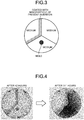
- the potato dextrose agar medium (PDA medium) was divided into 3 compartments; then, after the cerium oxide nanoparticle solution was applied in the boundary area of one compartment to other compartments, this was dried with an air in a clean bench for 30 minutes.
- Trichoderma (QM9414 strain (NBRC 31329); heretofore known mutant belonging to Trichoderma) was inoculated to the medium on one compartment other than the coated compartment, which was then followed by culturing at 28°C to evaluate whether the growth of the mold was able to be suppressed due to the coated surface of the nanoparticle according to the present invention.
- FIG. 4 Growth of the mold was recognized after 42 hours from the start of culturing. After 311 hours, growth of the mold was observed to be stopped on the surface that had been coated with the nanoparticle according to the present invention.
- cerium oxide nanoparticle according to the present invention can exhibit the antifungal performance.
- the cerium oxide nanoparticle according to the present invention has 99.99% of the anti-virus activity.
- the Ce L3 edge XANES spectrum is illustrated in FIG. 5 .
- the absorption edge (E0) was set at 5,724.4 eV, in which the vertical axis was the ratio based on 0 as the average absorption in the range of -150 eV to -30 eV from E0, and 1 as the average absorption in the range of +150 eV to +400 eV from E0.
- the cerium oxide nanoparticle according to the present invention has the maximum absorptions at 5,728.003 eV in the range of 5,726.0 eV to 5,729.0 eV, and at 5,736.582 eV in the range of 5,735.0 eV to 5,739.0 eV.
- the cerium oxide nanoparticle of Comparative Example 1 has the maximum absorptions at 5,725.631 eV and 5,736.582 eV; so, this has the maximum absorption in the range of 5,735.0 eV to 5,739.0 eV, but does not have the maximum absorption in the range of 5,726.0 eV to 5,729.0 eV.
- the XAFS observation was carried out with the same operation under the same condition as those of XAFS observations in Examples 1 to 3 as described above, except that the cerium oxide crystal, which is not the nanoparticle, cerium (III) carbonate, cerium (III) nitrate, or cerium (IV) ammonium nitrate, which are cerium salts, were used.
- the Ce L3 edge XANES spectra of them are exhibited in FIG. 6 .
- cerium oxide crystal had the maximum absorptions at 5,729.751 eV and 5,736.582 eV
- cerium (III) carbonate had the maximum absorption at 5,725.161 eV
- cerium (III) nitrate had the maximum absorption at 5,725.316 eV
- cerium (IV) ammonium nitrate had the maximum absorptions at 5,725.796 eV and 5,736.105 eV; but that none of the heretofore known cerium salts and the cerium compounds had the maximum absorptions in the range of 5,726.0 eV to 5,729.0 eV and in the range of 5,735.0 eV to 5,739.0 eV.
Landscapes
- Life Sciences & Earth Sciences (AREA)
- Chemical & Material Sciences (AREA)
- Organic Chemistry (AREA)
- Engineering & Computer Science (AREA)
- Inorganic Chemistry (AREA)
- Health & Medical Sciences (AREA)
- General Health & Medical Sciences (AREA)
- Zoology (AREA)
- Environmental Sciences (AREA)
- Pest Control & Pesticides (AREA)
- Plant Pathology (AREA)
- Wood Science & Technology (AREA)
- Geology (AREA)
- Dentistry (AREA)
- Agronomy & Crop Science (AREA)
- Toxicology (AREA)
- General Chemical & Material Sciences (AREA)
- Chemical Kinetics & Catalysis (AREA)
- Materials Engineering (AREA)
- Mycology (AREA)
- Microbiology (AREA)
- Analytical Chemistry (AREA)
- Catalysts (AREA)
- Pharmaceuticals Containing Other Organic And Inorganic Compounds (AREA)
- Agricultural Chemicals And Associated Chemicals (AREA)
- Medicinal Preparation (AREA)
- Compounds Of Alkaline-Earth Elements, Aluminum Or Rare-Earth Metals (AREA)
- Compositions Of Macromolecular Compounds (AREA)
Abstract
Description
- The present invention relates to a cerium oxide nanoparticle whose surface is covered with a polymer, a decomposition method of a nucleic acid or a polypeptide by using the nanoparticle, a method for producing a cerium oxide nanoparticle, an oxidizing agent, an antioxidant, an antifungal agent, and an anti-virus agent.
- Under the circumstances of increase in concerns to safety and hygiene management in recent years, an antibacterial technology to decompose a harmful substance and a microorganism is receiving an attention. For example, titanium oxide generates an active oxygen species due to the photocatalytic property thereof; thus, this has a characteristic to oxidatively decompose an organic substance. Therefore, titanium oxide is expected to be used, besides the use as an antibacterial agent, also for decomposition of low-molecular weight substances such as acetaldehyde and ammonia, as well as various harmful substances such as allergen and virus.
- On the other hand, a cerium oxide nanoparticle (nanoceria) has various characteristics such as an oxidative action, an anti-oxidative action, and an antimicrobial action. And it is also known that this has a catalytic activity similar to such enzymes as a catalase, an oxidase, a peroxidase, a superoxide dismutase, and a phosphatase. In addition, it is expected that the cerium oxide nanoparticle may be used differently from the titanium oxide that has photocatalytic characteristics.
- On the other hand, in general, nanoparticles tend to readily aggregate. Because the cerium oxide nanoparticle, too, can readily aggregate, this is sometimes used by coating the particle surface thereof by a polymer or the like to enhance dispersibility of the particle; then, this is occasionally used as an oxidizing agent, an antibacterial agent, and the like.
- In
Non Patent Literatures - In Non Patent Literature 3, the cerium oxide nanoparticle whose surface is covered with, in place of a polymer, sodium bis(2-ethylhexyl) sulfosuccinate is described; and in addition, in this Literature, the phosphatase activity thereof is studied. In Non-patent Literature 3, it is disclosed that the cerium oxide nanoparticle had the phosphatase activity to hydrolyze a phosphate ester but this failed to decompose a nucleic acid.
-
- Non Patent Literature 1: A. Asati, Angew. Chem. Int. Ed. 2009, 48, 2308-2312
- Non Patent Literature 2: M. H. Kuchma, Nanomedicine: Nanotechnology, Biology, and Medicine 2010, 6, 738-744
- Non Patent Literature 3: Q. Wang, International Journal of Nanomedicine 2013, 8, 3395-3399
- The inventors of the present invention studied a novel use of a cerium oxide nanoparticle whose surface is covered with a polymer. As can be seen in the decomposition tests of a nucleic acid and a polypeptide, which will be discussed later, the study was carried out with regard to decomposition of a plasmid and a polypeptide by using the cerium oxide nanoparticle whose surface is covered with the polyacrylic acid that is described in
Non Patent Literature 1; but the decomposition of the plasmid was not able to be recognized, namely the same result as reported in Non Patent Literature 3 was obtained. It was also found that the decomposition rate of the polypeptide was very low. - On the basis of these results, the present study was carried out with an object to find a novel cerium oxide nanoparticle that can decompose a nucleic acid and a polypeptide with high decomposition rates.
- In order to solve the problem mentioned above, the inventors of the present invention studied the polymer to cover the surface of the cerium oxide nanoparticle. As a result, it has been found that the cerium oxide nanoparticle whose surface is covered with a vinyl polymer having a skeleton of piperazine, pyridine, imidazole, or carbazole or with a polyamide having a skeleton of piperazine, pyridine, imidazole, or carbazole is able to decompose a nucleic acid and a polypeptide with high decomposition rates. On the basis of such finding, the present invention has been accomplished.
- The present invention is as follows:
- (1) A cerium oxide nanoparticle, a surface of the cerium oxide nanoparticle being covered with a vinyl polymer having a heterocyclic amine skeleton or with a polyamide having a heterocyclic amine skeleton.
- (2) The cerium oxide nanoparticle according to (1), wherein the heterocyclic amine skeleton is formed of any of piperazine, pyridine, imidazole, or carbazole.
- (3) The cerium oxide nanoparticle according to (1), wherein the vinyl polymer is a polymer having the heterocyclic amine skeleton in a side chain of the vinyl polymer.
- (4) The cerium oxide nanoparticle according to (1), wherein the polyamide is a polymer having the heterocyclic amine skeleton in a main chain of the polyamide.
- (5) The cerium oxide nanoparticle according to any one of (1) to (4), wherein a Ce L3 edge XANES spectrum obtained by an X-ray absorption fine structure spectrometry measurement has a maximum absorption in a range of 5726.0 eV to 5729.0 eV and in a range of 5735.0 eV to 5739.0 eV.
- (6) A decomposition method of a nucleic acid, including causing a sample including the nucleic acid to contact with the cerium oxide nanoparticle according to any one of (1) to (5).
- (7) A decomposition method of a polypeptide, including causing a sample including the polypeptide to contact with the cerium oxide nanoparticle according to any one of (1) to (5).
- (8) A method for producing a cerium oxide nanoparticle whose surface is covered with a polymer, the method including:
- process a: mixing a solution of a polymer having a heterocyclic amine skeleton with a solution including a cerium (III) ion or with a cerium (III) salt to obtain a mixed solution; and
- process b: adding an oxidizing agent to the mixed solution obtained at the process a.
- (9) An oxidizing agent comprising the cerium oxide nanoparticle according to any one of (1) to (5).
- (10) An antioxidant comprising the cerium oxide nanoparticle according to any one of (1) to (5).
- (11) An antifungal agent comprising the cerium oxide nanoparticle according to any one of (1) to (5).
- (12) An anti-virus agent comprising the cerium oxide nanoparticle according to any one of (1) to (5). Advantageous Effects of Invention
- The cerium oxide nanoparticle according to the present invention can decompose a nucleic acid and a polypeptide with much higher decomposition rates than conventional nanoparticles.
-
-
FIG. 1 is the drawing to explain the structures of the polymers used in the present invention. -
FIG. 2 is the drawing to explain the structures of the polymers having the piperazine skeleton. -
FIG. 3 is the drawing to explain the antifungal test in Example 15 of the present invention. -
FIG. 4 is the drawing to explain the result of the antifungal test in Example 15 of the present invention. -
FIG. 5 is the Ce L3 edge XANES spectrum of the cerium oxide nanoparticle according to the present invention prepared in Example 2. -
FIG. 6 is the Ce L3 edge XANES spectrum of the cerium oxide nanoparticle according to the present invention prepared in Comparative Example 1. - The cerium oxide nanoparticle whose surface is covered with a vinyl polymer having a heterocyclic amine skeleton or with a polyamide having a heterocyclic amine skeleton according to the present invention is sometimes described in this specification as the cerium oxide nanoparticle according to the present invention.
- As illustrated in
FIG. 1 , the vinyl polymer or the polyamide to be used in the present invention has a heterocyclic amine skeleton R such as piperazine, pyridine, imidazole, or a carbazole in a main chain thereof (FIG. 1(a) ) or in a side chain thereof (FIG. 1(b) and FIG. 1(c) ). The vinyl polymer or the polyamide according to the present invention may have a substituent group in an arbitrary position in the main chain or in the side chain, or in an arbitrary position in the heterocyclic amine skeleton such as piperazine, pyridine, imidazole, or carbazole. The polymer illustrated inFIG. 1(a) has the heterocyclic amine skeleton in the main chain, and has the substituent groups R1 and R2 in the side chain. The polymer illustrated inFIG. 1(b) has the heterocyclic amine skeleton in the side chain, and has the substituent group R2 as the substituent group of the heterocyclic amine skeleton. The polymer illustrated inFIG. 1(c) has the heterocyclic amine skeleton in the side chain, in which the heterocyclic amine skeleton is the substituent group of the substituent group R1 in the side chain, and has the substituent group R3 as the substituent group of the heterocyclic amine skeleton. The structures illustrated inFIG. 1(a) to FIG. 1(c) are mere examples of the vinyl polymer or the polyamide to be used in the present invention; they are not limited to these structures. In this specification, unless otherwise specifically mentioned, the substituent groups are an alkyl group, an acetyl group, a hydroxy group, an amino group, a cyano group, a carboxy group, an ester group, an aldehyde group, an amide group, an ether group, a ketone group, a halogen group, a sulfonate group, or a phosphate group. The substituent group may be single or plural. - The vinyl polymer to be used in the present invention has a methylene group in the main chain thereof. Examples of the structure of the vinyl polymer having a piperazine skeleton in the main chain or in the side chain include
FIG. 2(a) and FIG. 2(b) . As illustrated inFIG. 2(a) , when the piperazine skeleton is present in the main chain, the piperazine skeleton is present between the methylene group and the methylene group in the main chain. When the main chain has other heterocyclic amine skeleton such as a skeleton of pyridine, imidazole, or carbazole, the heterocyclic amine skeleton is present between the methylene group and the methylene group, similarly toFIG. 2 (a) . - When the vinyl polymer to be used in the present invention has the piperazine skeleton in the side chain thereof, the piperazine skeleton may be bonded directly to the carbon atom in the methylene group as illustrated in
FIG. 2(b) , or the piperazine skeleton may be bonded via an alkyl group or an amino group. When the vinyl polymer has other heterocyclic amine skeleton such as a skeleton of pyridine, imidazole, or carbazole, the heterocyclic amine skeleton such as the skeleton of pyridine, imidazole, or carbazole may be bonded directly to the carbon atom of the methylene group similarly toFIG. 2(b) , or may be bonded via the alkyl group or the amino group. - The vinyl polymer to be used in the present invention is preferably the vinyl polymer having the skeleton of piperazine, pyridine, imidazole, or carbazole in the side chain thereof. The vinyl polymer having the skeleton of piperazine, pyridine, imidazole, or carbazole in the side chain thereof may be obtained by a polymerization reaction of a vinyl monomer having a vinyl group.
- Illustrative examples of the vinyl monomer include specifically 1-vinyl piperazine, (4-vinylpiperazin-1-yl)methane amine, 2-(4-vinylpiperazin-1-yl)ethane-1-amine, 2-vinyl piperazine, (3-vinylpiperazin-1-yl)methane amine, 2-(3-vinylpiperazin-1-yl)ethane-1-amine, (2-vinylpiperazin-1-yl)methane amine, 2-(2-vinylpiperazin-1-yl)ethane-1-amine, 2-vinyl pyridine, 3-vinyl pyridine, 4-vinyl pyridine, 1-vinyl imidazole, 2-vinyl imidazole, 4-vinyl imidazole, and 9-vinyl carbazole. The vinyl monomer may have a substituent group in an arbitrary position other than the vinyl group; the vinyl group may have a methyl group or a cyano group as the substituent group.
- The vinyl polymer to be used in the present invention may be a homopolymer or a copolymer produced from raw materials of two or more vinyl monomers.
- Examples of the vinyl polymer that can be preferably used in the present invention are specifically poly(1-vinylpiperazine), poly((4-vinylpiperazin-1-yl)methaneamine), poly(2-(4-vinylpiperazin-1-yl)ethane-1-amine), poly(2-vinylpyridine), poly(3-vinylpyridine), poly(4-vinylpyridine), poly(1-vinylimidazole), poly(2-vinylimidazole), poly(4-vinylimidazole), and poly(9-vinylcarbazole).
- The polyamide to be used in the present invention is the polymer having an amide bond in the main chain thereof. As illustrated in
FIG. 2c , when the main chain has the piperazine skeleton, the piperazine skeleton exists between the carbonyl group and the carbonyl group in the main chain, and the nitrogen atoms in the heterocyclic ring of the piperazine skeleton form the amide bonds with the carbonyl groups. When the main chain has other heterocyclic amine skeleton such as the skeleton of pyridine, imidazole, or carbazole having two or more primary or secondary amino groups, the heterocyclic amine skeleton exists between the carbonyl group and the carbonyl group, similarly toFIG. 2c . - When the polyamide to be used in the present invention has the piperazine skeleton, the piperazine skeleton may be bonded directly to the carbon atom that connects the amide bonds as illustrated in
FIG. 2d , or the piperazine skeleton may be bonded via an alkyl group or an amino group. When the polyamide has other heterocyclic amine skeleton such as the skeleton of pyridine, imidazole, or carbazole, the heterocyclic amine skeleton such as the skeleton of pyridine, imidazole, or carbazole may be bonded directly to the carbon atom that connects the amide groups similarly toFIG. 2d , or may be bonded via the alkyl group or the amino group. - The polyamide to be used in the present invention is preferably the polymer having the piperazine skeleton in the main chain or in the side chain thereof, while more preferably the polymer having the piperazine skeleton in the main chain, as illustrated in GIG. 2c.
- The polyamide having the piperazine skeleton in the main chain to be used in the present invention may be obtained by a polycondensation reaction between an amine having the piperazine skeleton and a dicarboxylic acid.
- Illustrative examples of the preferable amine having the piperazine skeleton include piperazine, (aminomethyl) piperazine, (aminoethyl) piperazine, (aminopropyl) piperazine, (aminobutyl) piperazine, 1,4-bis(aminomethyl) piperazine, 1,4-bis(2-aminoethyl) piperazine, 1,4-bis(3-aminopropyl) piperazine, and 1,4-bis(4-aminobutyl) piperazine. Among these, (aminoethyl) piperazine and 1,4-bis(3-aminopropyl) piperazine are more preferable. These amines may have a substituent group in an arbitrary position other than the position of the nitrogen atom capable of forming the amide bond.
- Illustrative example of the preferable dicarboxylic acid include 1H-imidazole-2,4-dicarboxylic acid, 1H-imidazole-2,5-dicarboxylic acid, 1H-imidazole-4,5-dicarboxylic acid, pyridine-2,3-dicarboxylic acid, pyridine-2,4-dicarboxylic acid, pyridine-2,5-dicarboxylic acid, pyridine-2,6-dicarboxylic acid, pyridine-3,4-dicarboxylic acid, pyridine-3,5-dicarboxylic acid, adipic acid, sebacic acid, dodecadicarboxylic acid, terephthalic acid, and isophthalic acid. These dicarboxylic acids may have a substituent group in an arbitrary position other than the carboxy group that can form the amide bond.
- The polyamide to be used in the present invention is preferably those obtained from the amines and dicarboxylic acids described above in any combinations thereof, and especially preferably the polyamide obtained from a combination of (aminoethyl) piperazine and adipic acid.
- The polyamide to be used in the present invention may have a polyalkylene glycol structure in the main chain thereof. Examples of such polyamide include specifically the polyamide having the skeletons of (aminoethyl) piperazine, adipic acid, and bis(aminopropyl)polyethylene glycol.
- The polyamide to be used in the present invention may be a mixture of the polyamide having the heterocyclic amine skeleton such as piperazine, pyridine, imidazole, or carbazole with other polymer, or a copolymer of the polyamide with other polymer. In this case, illustrative examples of the other polymer include specifically polycaproamide (nylon 6), polyhexamethylene adipamide (nylon 66), polytetramethylene adipamide (nylon 46), polypentamethylene adipamide (nylon 56), polypentamethylene sebacamide (nylon 510), polyhexamethylene sebacamide (nylon 610), polyhexamethylene dodecamide (nylon 612), a polyhexamethylene adipamide/polyhexamethylene terephthalamide copolymer (nylon 66/6T), a polyhexamethylene adipamide/polyhexamethylene terephthalamide/polyhexamethylene isophthalamide copolymer (nylon 66/6T/6I), a polyhexamethylene terephthalamide/polyhexamethylene isophthalamide copolymer (nylon 6T/6I), and polyxylene adipamide (nylon XD6).
- The molecular weight of the vinyl polymer or of the polyamide to be used in the present invention may be in the range of 3,000 to 1,000,000, and this is preferably in the range of 10,000 to 50,000.
- The cerium oxide nanoparticle according to the present invention has the structure having in the center thereof the cerium oxide particle formed of a mixture of Ce2O3 and CeO2 (this is sometimes described as a center nucleus in this specification), and has the surface thereof covered with the afore-mentioned polymer. The particle diameter of the center nucleus may be about 1 nm or more and 100 nm or less. The particle diameter is obtained in such a way that at least two or more of a long-axis diameter, a short-axis diameter, and a unidirectional diameter are measured by using a transmission electron microscope followed by calculating the average value of them.
- The ratio of Ce2O3 to CeO2 in the center nucleus can be calculated as the ratio of cerium (III) to cerium (IV). The ratio may be calculated by using an X-ray photoelectron spectrometry (XPS) method after the cerium oxide nanoparticle according to the present invention is dried. The energy states of cerium (III) and cerium (IV) in Ce2O3 and CeO2 may be observed by measurement of the X-ray absorption fine structure (XAFS) spectrum. In the XAFS spectrum, the structure at about 20 eV from the absorption edge is called XANES (X-ray absorption near edge structure), and the extended X-ray absorption fine structure appearing at more than about 100 eV in a high-energy side from the absorption edge is called EXAFS (extended X-ray absorption fine structure). From XANES, information relating to the valency and structure of the focused atom can be obtained; in the EXAFS analysis, information relating to the local structure of the sample, as well as the atom species, valency, and distance around the focused atom can be obtained by Fourier transformation of the actual spectrum (corresponding to FT-EXAFS/radial distribution function). The energy state of cerium (III) and cerium (IV) in the oxidation reduction reaction of cerium oxide is reflected in the peak position and peak intensity ratio of the maximum absorption in the XANES spectrum.
- Preferably, the Ce L3 edge XANES spectrum obtained by measurement of the X-ray absorption fine structure spectrum has the maximum absorptions in the range of 5,726.0 to 5,729.0 eV and in the range of 5,735.0 to 5,739.0 eV.
- In the cerium oxide nanoparticle according to the present invention, the particle diameter including the polymer layer on the surface thereof is preferably 200 nm or less, as the hydrodynamic diameter. The hydrodynamic diameter is calculated as follows. The cerium oxide nanoparticles according to the present invention are dissolved in an arbitrary solvent such as water, ethanol, or pyridine; then, the dynamic light scattering thereof is measured to obtain the autocorrelation function; this is then analyzed by the Marquadt method to calculate from the number conversion histogram the average particle diameter as the hydrodynamic diameter. Measurement of the dynamic light scattering is done by using ELS-Z manufactured by Otsuka Electronics Co., Ltd.
- The cerium oxide nanoparticle according to the present invention may be produced by the method for producing the cerium oxide nanoparticle that includes: the process a at which a solution of the polymer having the heterocyclic amine skeleton such as piperazine, pyridine, imidazole, or carbazole is mixed with a solution including a cerium ion (III) or with a cerium (III) salt to obtain a mixed solution; and the process b at which an oxidizing agent is added to the mixed solution obtained at the process a. Hereinafter, the method for producing the cerium oxide nanoparticle according to the present invention will be explained along these processes separately.
- At the process a, a solution of the polymer having the heterocyclic amine skeleton such as piperazine, pyridine, imidazole, or carbazole is mixed with a solution including a cerium ion (III) or with a cerium (III) salt to obtain a mixed solution. The polymer solution to be used at the process a may be prepared by dissolving the polymer into an arbitrary solvent. The solvent is preferably water or a solvent that is soluble in water is preferable. Illustrative examples of the water-soluble solvent include specifically methanol, ethanol, propanol, butanol, tetrahydrofuran, glycerol, ethylene glycol, acetone, dimethylformamide (DMF), dimethyl sulfoxide (DMSO), triethylamine, and pyridine. Polyamide and polyvinyl imidazole are preferably soluble in water; poly(4-vinylpyridine) and poly(2-vinylpyridine) are preferably soluble in an aqueous 80% ethanol solution; and polyvinyl carbazole is preferably soluble in pyridine. When these polymers are not readily dissolved, they may be dissolved by heating or by an ultrasonic treatment.
- The concentration of the polymer solution is preferably 0.01% or more and 5% or less, while more preferably 0.1% or more and 2% or less, in terms of the mass concentration.
- Mixing of the polymer solution with the solution including the cerium (III) ion or with the cerium (III) salt may be effected by mixing the polymer solution with the solution including the cerium (III) ion after these solutions were prepared separately in advance; or alternatively, when the solvent of the polymer solution is water or a water-soluble solvent, the cerium (III) salt may be added into the polymer solution for mixing. The solution including the cerium (III) ion may be prepared by dissolving the cerium (III) salt into an arbitrary solvent. Examples of the cerium (III) salt include cerium (III) nitrate hexahydrate.
- When the cerium (III) nitrate hexahydrate is used as the cerium (III) salt, the mass ratio of the cerium (III) nitrate hexahydrate to the polymer upon mixing is preferably 0.1 or more and 5.0 or less. The resulting mixture solution is preferably mixed for 5 minutes or longer until the solution becomes uniform.
- At the process b, an oxidizing agent is added into the mixed solution obtained at the process a. Illustrative examples of the oxidizing agent to be used at the process b include nitric acid, potassium nitrate, hypochlorous acid, chlorous acid, chloric acid, perchloric acid, halogens, hydrogen halides, permanganate salts, chromic acid, dichromic acid, oxalic acid, hydrogen sulfide, sulfur dioxide, sodium thiosulfate, sulfuric acid, and hydrogen peroxide. Among these, hydrogen peroxide is especially preferable. The addition amount thereof may be 0.1 equivalent or more and 10 equivalents or less relative to the cerium (III) ion as molar equivalent; the addition amount is preferably 1 equivalent or more and 2 equivalents or less.
- When the oxidizing agent is added to the mixed solution obtained at the process a, the cerium (III) ion is oxidized to cerium (IV); then, the particle formation reaction starts to give the cerium oxide particle that is formed of a mixture of Ce2O3 and CeO2 in the center thereof whose surface is covered with the polymer. Upon addition of the oxidizing agent into the mixed solution of the polymer with the cerium (III) ion, the formation reaction to produce the cerium oxide nanoparticle according to the present invention starts. During this reaction, the solution is colored to yellow, orange, red, brown, or the like. This coloring takes place because the cerium (III) ion changes to cerium (IV), in which the coloring degree is determined by the ratio of cerium (III) to cerium (IV) that are present in the surface of the cerium oxide nanoparticle. Termination of the reaction can be judged at the time when the color does not change any further. The reaction usually terminates in about 30 minutes to 1 hour.
- For example, 100 µL of the aqueous solution of 10wt% of cerium (III) nitrate hexahydrate is mixed with 5 mL of the aqueous solution of 0.1wt% of polyvinyl imidazole, which is then followed by addition of 100 µL of the aqueous solution of 1.2wt% of hydrogen peroxide; then, upon heating the resulting solution to 40°C, the color of the solution changes at first to yellow; then, the yellow color gradually deepens thereby finally resulting in an orange color, indicating termination of the reaction.
- The size of the cerium oxide nanoparticle according to the present invention may be controlled by concentration of the polymer solution. The polymer solution with a higher concentration gives the particle having a larger particle diameter; the polymer solution with a lower concentration gives the particle with a smaller particle diameter.
- Other than this, the size of the cerium oxide nanoparticle according to the present invention may be controlled by the reaction temperature as well. When the reaction temperature is made equal to or higher than the glass transition temperature (Tg) of the polymer, the particle having a large particle diameter may be obtained; when the reaction temperature is made lower than Tg, the particle with a small particle diameter may be obtained. The reaction temperature may be arbitrarily set in the range of 4 to 95°C.
- The cerium oxide nanoparticle according to the present invention may be stored in the solution after termination of the reaction; or this may be stored in the dry state after the cerium oxide nanoparticle according to the present invention is taken out from the solution after termination of the reaction. When this is stored in the solution, this is stored preferably in a refrigerated state. In the case that the cerium oxide nanoparticle according to the present invention is dried, this may be done as follows. For example, the solution after termination of the reaction is filtrated by an ultrafiltration membrane or dialyzed by a semitransparent membrane to remove the unreacted oxidizing agent, the cerium (III) ion, and the excess polymer, these being remained in the solution after termination of the reaction; then, this is dried by using an evaporator, a freeze dryer, or the like.
- When the cerium oxide nanoparticle according to the present invention is used, a nucleic acid and a polypeptide can be decomposed. For example, there is a possibility to decompose a virus, which includes the nucleic acid and the polypeptide as the main components therein. Also, there is a possibility to decompose an allergen, which includes the polypeptide as the main component therein.
- In this specification, to decompose the nucleic acid means that a nucleotide chain that constitutes the nucleic acid is cleaved. When the nucleic acid is decomposed, a steric structure of the nucleic acid changes, or the nucleic acid is fragmented. For example, in the case of a cyclic double-chained nucleic acid such as a plasmid, when the nucleic acid is in the uncleaved state, this has a closed circular structure; when one of the two chains is cleaved, this has an open circular structure; and when both of the two chains are cleaved, this has a linear structure.
- In this specification, to decompose the polypeptide means that a polypeptide chain is cleaved thereby resulting in the change of the steric structure of the polypeptide or in fragmentation of the polypeptide.
- Decomposition of the nucleic acid or the polypeptide by using the cerium oxide nanoparticle according to the present invention may be effected by contacting under the dry state thereof with a sample that includes the nucleic acid or the polypeptide; or by contacting, as the solution that includes the cerium oxide nanoparticle according to the present invention, the solution after termination of the reaction as it is with the sample that includes the nucleic acid or the polypeptide. With regard to the contacting method, when the sample that includes the nucleic acid and the polypeptide is a liquid, the contact may be effected by adding and mixing this sample with the cerium oxide nanoparticle according to the present invention or with the solution that includes the cerium oxide nanoparticle according to the present invention. Also, the contact of the solution that includes the cerium oxide nanoparticle according to the present invention with the sample such as a virus that includes the nucleic acid or the polypeptide and that is staying in an air may be effected by scattering this solution into an air as a mist. Alternatively, the cerium oxide nanoparticle according to the present invention is kneaded as an additive into a textile, a tube, a bead, a rubber, a film, a plastic, or the like, or is applied onto the surface of these materials; then, this may be contacted with the sample that includes the nucleic acid or the polypeptide. The solution that includes the cerium oxide nanoparticle according to the present invention may be prepared by mixing this nanoparticle with water or an arbitrary solution.
- There is no particular restriction in the nucleic acid that can be decomposed by the cerium oxide nanoparticle according to the present invention so far as the nucleic acid is those having nucleotides polymerized linearly or circularly; thus, this may also be an artificial nucleic acid. Illustrative examples of the nucleic acid include RNA, DNA, and RNA/DNA (chimera). Illustrative examples of the DNA include cDNA, micro DNA (miDNA), plasmid DNA, genome DNA, synthetic DNA, cell-free DNA (cfDNA), ctDNA, and mitochondria DNA (mtDNA). Illustrative examples of the RNA include total RNA, mRNA, rRNA, miRNA, siRNA, snoRNA, snRNA, non-coding RNA, precursors of these RNAs, and synthetic RNAs. Synthetic DNA and synthetic RNA are those prepared artificially, for example, by using an automatic nucleic acid synthesizing apparatus on the basis of a prescribed nucleotide sequence (any of a natural sequence and a non-natural sequence may be used). Illustrative examples of the artificial nucleic acid include LNA and BNA. For decomposition, an arbitrary sample including these nucleic acids may be used.
- Illustrative examples of the polypeptide that can be decomposed by the cerium oxide nanoparticle according to the present invention include a protein and a polypeptide that is artificially synthesized on the basis of a prescribed amino acid sequence (any of a natural sequence and a non-natural sequence may be used).
- A polypeptide nucleic acid (PNA) having a nucleic acid-like structure that retains a polypeptide structure in the main chain thereof, a virus whose main components are a protein and a nucleic acid, and the like may also be used as the sample that includes the nucleic acid or the polypeptide.
- Illustrative examples of the method to confirm decomposition of the nucleic acid include: electrophoreses such as an acrylamide gel electrophoresis, an agarose gel electrophoresis, and a capillary electrophoresis; and nucleic acid analysis methods by using a size exclusion chromatography, a mass-spectrometry analysis, and the like. When the nucleic acid is decomposed, the decrease in the target band concentration or the target peak intensity as compared with those before the decomposition, or the disappearance of the band or of the peak, or the like may be confirmed. Also, the decomposition may be confirmed by emergence of a new band or peak that indicates presence of a small fragment as compared with those before the decomposition. Specifically, when the cyclic double-chain nucleic acid is decomposed, the closed circular structure, the open circular structure, and the linear structure can be confirmed as the independent bands by the electrophoresis. Also, when the steric structure of the nucleic acid is changed by decomposition, after the electrophoresis, there is a case that the position of the band shifts from the position before the decomposition.
- The decomposition of the polypeptide may be confirmed by the method similar to that used for confirmation of decomposition of the nucleic acid as described above.
- The decomposition rate of the nucleic acid or of the polypeptide may be calculated by the method described below. First, "Sample" that is obtained by contacting the sample that includes the nucleic acid or the polypeptide with the cerium oxide nanoparticle according to the present invention is prepared (in this specification, the sample that is obtained by this contact is sometimes called simply "Sample"). For the control bands, the sample that includes the nucleic acid or the polypeptide not contacted with the cerium oxide nanoparticle according to the present invention is used. The Sample having been contacted with the cerium oxide nanoparticle according to the present invention and the control are analyzed by the electrophoresis, the size exclusion chromatography, or the like as described before. In the case of using the electrophoresis, the control and the Sample are subjected to the electrophoresis; then, after the band concentrations at the same position are confirmed, each band concentration is expressed by the corresponding numerical value. The band concentration of the control is expressed by (X), the band concentration of the Sample is expressed by (Y); and then, the ratio of the difference between (X) and (Y) to (X) is defined as the decomposition rate. When the cerium oxide nanoparticle according to the present invention is contacted with the sample that includes the nucleic acid or the polypeptide, if the nucleic acid or the polypeptide are adsorbed to the cerium oxide nanoparticle according to the present invention, the nucleic acid or the polypeptide may be recovered by eluting these by using an arbitrary eluting solution. Illustrative examples of the eluting solution usable include the citrate buffer including citric acid and sodium citrate, the phosphate buffer including phosphoric acid and sodium phosphate, and the Tris-EDTA buffer that is obtained by adding EDTA to the Tris-hydrochloric acid buffer, which includes trishydroxy amino methane and hydrochloric acid.
- The cerium oxide nanoparticle according to the present invention may be used as an oxidizing agent. For example, by utilizing the oxidative action of the cerium oxide nanoparticle according to the present invention, this may be used in an organic synthetic reaction, a polymer polymerization, and wet-etching of a semiconductor. By utilizing the oxidative action, this may be used as a substitute substance of an oxidative enzyme. Specifically, this may be used as a substitute of an oxidase or a peroxidase, in a detection reaction or a tissue dying using an antibody-antigen reaction or a nucleic acid hybridization, or in an electrochemical detection reaction by immobilizing this to an electrode. The performance of this as the oxidizing agent described above may be evaluated by the measurement method of the oxidase activity, the measurement method of the peroxidase activity, or the like, which will be described later. In addition to these, by utilizing the oxidative action thereof, this may be used for decomposition and removal of dirt, smell, and an allergen as a bleaching agent or as a disinfectant. Specifically, as the bleaching agent, this may be used for cleaning of cloth, tableware, a kitchen, a toilet, a washroom, a bathroom, medical equipment, and so forth. Also, this may be added as the disinfectant to a swimming pool, a bathtub, and a hot spring; and furthermore, this may be used as a body soap, a hand cleaning material, a disinfecting medicine, a gargle, a mouth washer, and so forth. The performance of this as the oxidizing agent described above may be evaluated by the color fading reaction of an organic dye or the like, which will be described later.
- The color fading reaction of the organic dye can also be used for evaluation of the photocatalytic performance of titanium oxide. The decomposition rate of the dye thereby obtained can be used as the indicator of the characteristic with regard to the oxidative decomposition of an organic substance. Specifically, the decomposition rate of the dye is calculated as follows. First, the solution of the cerium oxide nanoparticle according to the present invention is mixed with an organic dye such as Acid Orange 7 (AO7); then, the resulting mixed solution is allowed to statically leave for a prescribed period. As a control, the AO7 solution not including the cerium oxide nanoparticle is treated similarly. After the reaction, the absorption spectra of all the solutions are measured. For analysis, the absorbance at 485 nm, the maximum absorption wavelength of AO7, is used. The ratio of the difference value between the absorbance of the control (Ic) and the absorbance of the solution including the cerium oxide nanoparticle (I) to the absorbance of the control (Ic) is calculated as the decomposition rate.
- The value of the oxidase activity may be obtained by the method such as the one described in A. Asati, Angew. Chem. Int. Ed. 2009, 48, 2308-2312. Specifically, a dilution series is prepared by using the reagent such as TMBZ that is capable of being colored by oxidation; to each of them, the solution of the cerium oxide nanoparticle according to the present invention having the identical concentration is added to carry out the coloring reaction of 3,3',5,5'-tetramethyl benzidine (TMBZ). The Michaelis Menten equation is applied to this reaction to calculate the oxidase activity. From the temporal change of the absorbance in each TMBZ concentration, the reaction rate is calculated; then, the reciprocal of the reaction rate is plotted against the reciprocal of the concentration of the TMBZ substrate. A straight line is obtained by plotting in each concentration; the maximum reaction rate Vmax is obtained from the reciprocal of the y-intercept; and the Michaelis Menten constant Km is calculated by multiplying this value with the slope of the straight line. The maximum reaction rate Vmax is compared as the value that indicates the oxidase activity. The oxidase activity may be measured as well by using a compound such as 2,2'-azinobis(3-ethylbenzothiazoline-6-sulfonic acid) (AzBTS) or dopamine in place of TMBZ.
- The cerium oxide nanoparticle according to the present invention may be used as an antioxidant. In the present invention, the antioxidant means the substance having a reductive property, thereby suppressing excessive oxidation of a lipid or reacting with an active oxygen (superoxide ion, hydroxy radical, hydrogen peroxide, etc.) to suppress the action of the active oxygen (Standard Dictionary of Chemical Terms; second edition, Maruzen Publishing Co., Ltd.). For example, by utilizing the anti-oxidative action of the cerium oxide nanoparticle according to the present invention, this may be used as a reducing agent in an organic reaction or as a radical terminating agent in a polymer polymerization. Also, by utilizing the anti-oxidative action thereof, this may be used as a cosmetic to protect a skin from lipid peroxidation and an active oxygen. On top of these, by utilizing the anti-oxidative action thereof, this may be used as the substitute of an anti-oxidative enzyme. Specifically, as a substitute of a catalase, this may be used in a detection reaction of hydrogen peroxide or in an electrochemical detection reaction by immobilizing this to an electrode. In addition, this may be used to neutralize hydrogen peroxide that is used in an industry such as foods, semiconductor, textile, pulp and paper manufacturing, as well as used to sterilize a public bath and to remove slime in a piping. These performances may be evaluated by the catalase activity that will be described later. Furthermore, by utilizing the anti-oxidative action thereof, this may be used as an antioxidant. Specifically, in order to prevent a rubber, plastics, a fuel, a detergent, a food, an animal feed from deterioration, this may be added to these. The performance as the antioxidant as described above may be evaluated by a scavenging reaction or like of an active species, which will be described later.
- Furthermore, the cerium oxide nanoparticle according to the present invention may be used as an antioxidant in a drug to treat an oxidation stress or an inflammation of a human or of an animal. In general, it is considered that the cerium oxide nanoparticle having a catalase activity can be used for prevention and treatment of a disease that relates to the oxidation stress such as an apoplectic stroke, disseminated sclerosis, amyotrophic lateral sclerosis, and ischemia reperfusion damage by administering to a test object by means of a topical, an enteral, or a parenterally method such as injection, drip infusion, or transplantation. Also, it is considered that the cerium oxide nanoparticle having a catalase activity can reduce an inflammation topically or systemically when this is held on the surface of an artificial organ represented by a dialysis membrane and medicinal equipment such as a cannula, a catheter, and a stent.
- The scavenging reaction of an active species may be measured as a dye retention rate by the method such as the one described by Y. Xue, J. Phys. Chem. C, 2011, 115, 4433-4438. Specifically, a hydroxy radical is generated by a Fenton reaction by mixing an aqueous iron (II) chloride solution with an aqueous hydrogen peroxide solution. Then, to this solution is added the solution of the cerium oxide nanoparticle according to the present invention to carry out the radical scavenging reaction. This mixture solution is mixed with an organic dye such as a methylene blue; then, the resulting mixture is allowed to statically leave for a prescribed period. As a control, the same treatment is carried out to the solution not including the cerium oxide nanoparticle. Furthermore, the methylene blue solution having the same concentration as the reaction solution is prepared as the standard solution. Then, the absorption spectra of these solutions are measured. For the analysis, the absorbance at 664 nm, the wavelength of the maximum absorption of the methylene blue, is used. The difference (ΔI0) between the absorbance (I0) of the standard solution and the absorbance (Ic) of the control, and the difference (ΔI) between the absorbance (I) of the solution including the cerium oxide nanoparticle according to the present invention and the absorbance (Ic) of the control are calculated. The ratio of the latter (ΔI) to the former (ΔI0) is calculated as the decomposition rate; and this is taken as the dye retention rate. This value indicates the radical scavenging performance. The dye retention rate may be obtained by using a methyl violet in place of the methylene blue.
- The value of the catalase activity may be obtained in accordance with the protocol by using Amplex Red Catalase Assay Kit (A22180) (manufactured by Thermo Fisher Scientific Inc.) as described in
Japanese Patent Application Laid-open Publication No. 2018-508568 - The cerium oxide nanoparticle according to the present invention may be used as an antifungal agent. Illustrative examples of the method to evaluate the antifungal performance include: the method in which a suspension solution of a mold's spore is mixed with the test solution followed by culturing in an inorganic salt agar medium or a glucose-including inorganic salt agar medium to observe the growing state thereof; the method in which the test solution is added to an agar medium to observe the growth suppression; and the method in which the test solution is added to an agar medium to measure the growth-suppression circle. In the present invention, the method in which the test solution is added to an agar medium to observe the growth suppression and the method in which the test solution is added to an agar medium to measure the growth-suppression circle are preferably used.
- Illustrative examples of the mold that can be inactivated by the cerium oxide nanoparticle according to the present invention include Penicillium, Aspergillus, Alternaria, Cladosporium, Trichoderma, and Chaetomium.
- In the case that the cerium oxide nanoparticle according to the present invention is used as the antifungal agent, this is kneaded as an additive into a textile, a tube, a bead, a rubber, a film, a plastic, or the like, or is applied onto the surface of these materials. Illustrative examples of the processed products like these include a chrysanthemum-shaped cover of the drain hole in a kitchen sink, a drain plug, a fixing packing material of a window, a fixing packing material of a mirror, a water-proof packing material in a bathroom, in a washing stand, and in a kitchen, an inner packing material of a refrigerator door, a bath mat, an anti-sliding rubber of a washing bowl and a chair, a hose, a shower head, a packing material used in a water purifier, a plastic product of a water purifier, a packing material used in a cloth washing machine, a plastic product used in a cloth washing machine, an air conditioner filter, a filter of air cleaning equipment, a filter for a vacuum cleaner, a filter for a ventilation fan, a filter for a vehicle, a filter for an air conditioner, a fin of an air conditioner, plastic parts such as a rover of an air conditioner's blowing outlet and a blowing fan, a fin of a car air conditioner, plastic parts such as a rover of a car air conditioner's blowing outlet and a blowing fan, a cloth, a bedding cloth, a net in a screen door, a net for a chicken house, nets such as a mosquito net, a wall paper and a window, a blind, an interior material of a building such as a hospital, an interior material of a train and a car, a seat for a vehicle, a blind, a chair, a sofa, virus-treating equipment, and a construction material in various fields such as a door, a ceiling, a floor, and a window.
- The cerium oxide nanoparticle according to the present invention may be used as an anti-virus agent. In the method to evaluate the performance thereof as the anti-virus agent, the cerium oxide nanoparticle according to the present invention is caused to contact with a virus; then, the amount of the virus after contact is quantified. Illustrative examples of the quantifying method of the virus include: the method in which the virus antigen amount is measured by the ELISA method; the method in which the virus nucleic acid is quantified by PCR; the method in which an infectivity titer is measured by the Plaque method; and the method in which an infectivity titer is measured by the 50% infection amount measurement method. In the present invention, the anti-virus performance is measured preferably by the method in which an infectivity titer is measured by the Plaque method or by the 50% infection amount measurement method. The unit of the virus infectivity titer in the 50% infection amount measurement method is expressed by: TCID50 (tissue culture infectious dose 50) when the object of the test is a cultured cell; EID50 (egg infectious dose 50) when an embryonated egg is used; and LD50 (lethal dose 50) in an animal. In the 50% infection amount measurement method, illustrative examples of the method to calculate the infectivity titer from the obtained data include the Reed-Muench method, the Behrens-Karber method, and the Spearman-Karber method. In the present invention, the Reed-Muench method is used. With regard to the judgement standard of the anti-virus performance, in general, when the logarithmic reduction value of the infectivity titer relative to the infectivity titer before action of the cerium oxide nanoparticle according to the present invention, or to the control not including the cerium oxide nanoparticle according to the present invention is 2.0 or greater, this is judged to be effective in the anti-virus performance.
- Illustrative examples of the virus that can be inactivated by the cerium oxide nanoparticle according to the present invention include rhino virus, polio virus, foot and mouth disease virus, rotavirus, norovirus, enterovirus, hepatovirus, astrovirus, sapovirus, hepatitis E virus, influenza A virus, influenza B virus, influenza C virus, parainfluenza virus, mumps virus (epidemic parotitis), measles virus, human metapneumovirus, RS virus, nipah virus, hendra virus, yellow fever virus, dengue virus, Japanese B encephalitis virus, West Nile encephalitis virus, hepatitis B virus, hepatitis C virus, eastern equine encephalitis virus, western equine encephalitis virus, o'nyong'nyong virus, rubella virus, Lassa virus, Junin virus, Machupo virus, Guanarito virus, Sabia virus, Crimean-Congo hemorrhagic fever virus, sandfly virus, hantavirus, Sin Nombre virus, rabies virus, Ebora virus, Marburg virus, bat-borne lyssavirus, human T-cell leukemia virus, human immunodeficiency virus, human corona virus, SARS corona virus, human parvovirus, polyoma virus, human papilloma virus, adenovirus, herpes virus, varicella zoster virus, EB virus, cytomegalovirus, smallpox virus, monkeypox virus, cowpox virus, Molluscipoxvirus, and parapox virus.
- In the case that the cerium oxide nanoparticle according to the present invention is used as the anti-virus agent, this is kneaded as an additive into a textile, a tube, a bead, a rubber, a film, a plastic, or the like, or is applied onto the surface of these materials. Illustrative examples of the processed products like these include a mask, a medical cap, a medical shoe cover, a filter for an air conditioner, a filter for an air cleaner, a filter for a vacuum cleaner, a filter for a ventilation fan, a filter for a vehicle, a filter for an air conditioner, a fin of an air conditioner, plastic parts such as a rover of an air conditioner's blowing outlet and a blowing fan, a fin of a car air conditioner, plastic parts such as a rover of a car air conditioner's blowing outlet and a blowing fan, a cloth, a bedding cloth, a net in a screen door, a net for a chicken house, nets such as a mosquito net, a wall paper and a window, a blind, an interior material of a building such as a hospital, an interior material of a train and a car, a seat for a vehicle, a blind, a chair, a sofa, virus-treating equipment, and a construction material in various fields such as a door, a ceiling, a floor, and window.
- The present invention will be explained more specifically by the following Examples.
- Sodium polyacrylate, poly(4-vinylpyridine), and poly(2-vinylpyride) were purchased from Merck KGaA; poly(1-vinylimidazole) and poly(9-vinylcarbazole) were purchased from Maruzen Petrochemical Co., Ltd.; and cerium (III) nitrate hexahydrate and an aqueous 30wt% hydrogen peroxide solution were purchased from Fuji Film Wako Pure Chemical Corp.
- Other reagents were purchased from Fuji Film Wako Pure Chemical Corp., Tokyo Chemical Industry Co., Ltd., and Sigma-Aldrich Co., LLC; they were used as they were without any further purification.
- In the following Examples, the polymer having the structural units of (aminoethyl) piperazine and adipic acid is described as polyamide (1); the polymer having the structural units of (aminoethyl) piperazine, bis(aminopropyl) polyethylene glycol, and adipic acid is described as polyamide (2); and these polymers were prepared by referring to
Japanese Patent Application Laid-open No. H11-166121 - A hot plate IKA C-MAG HP4 manufactured by IKA Japan K.K. was used.
- The hydrodynamic diameter of the cerium oxide nanoparticles covered with the polymer was measured by using the zeta potential particle measurement system ELS-Z manufactured by Otsuka Electronic Co., Ltd.; and the ratio of cerium (III) to cerium (IV) was measured by using Quantera SXM manufactured by PHI Inc.
- The QM9414 strain was obtained from NBRC (NITE Biological Resource Center).
- The aqueous solution of 0.1wt% of polyamide (1) was used as the aqueous solution of the polymer having the piperazine skeleton. To 5 mL of the aqueous solution of 0.1wt% of polyamide (1) was added 100 µL of the aqueous solution of 10wt% of cerium (III) nitrate hexahydrate; then, they were stirred at room temperature for 5 minutes. To this was added 100 µL of the aqueous solution of 1.2wt% of hydrogen peroxide; then, the reaction was carried out at 40°C for 1 hour to obtain a yellow aqueous solution of the cerium oxide nanoparticle whose surface was covered with polyamide (1). This aqueous solution was purified by the 30 kD ultrafiltration membrane to obtain as the solution the cerium oxide nanoparticle whose surface was covered with polyamide (1).
- The reaction was carried out under the same condition as Example 1, except that the aqueous solution of 0.1wt% of polyamide (2) was used as the aqueous solution of the polymer having the piperazine skeleton, to obtain a yellow aqueous solution of the cerium oxide nanoparticle whose surface was covered with polyamide (2). This aqueous solution was purified by the 30 kD ultrafiltration membrane to obtain as the solution the cerium oxide nanoparticle whose surface was covered with polyamide (2).
- The reaction was carried out under the same condition as Example 1, except that the aqueous solution of 0.1wt% of poly(1-vinylimidazole) was used as the aqueous solution of the polymer having the imidazole skeleton, to obtain an orange aqueous solution of the cerium oxide nanoparticle whose surface was covered with poly(1-vinylimidazole). This aqueous solution was purified by the 30 kD ultrafiltration membrane to obtain as the solution the cerium oxide nanoparticle whose surface was covered with poly(1-vinylimidazole).
- The reaction was carried out under the same condition as Example 1, except that 5 mL of the aqueous ethanol solution of 0.1wt% of poly(4-vinylpyridine) was used as the aqueous solution of the polymer having a pyridine skeleton, using the aqueous 80% by volume of ethanol solution, to obtain a reddish brown solution of the cerium oxide nanoparticle whose surface was covered with poly(4-vinylpyridine). After this aqueous ethanol solution was diluted by water to 70% by volume, this was purified by the 30 kD ultrafiltration membrane, which was then followed by removal of the solvent by a centrifugal evaporator, then further followed by re-dissolution into dimethyl sulfoxide to obtain as the solution the cerium oxide nanoparticle whose surface was covered with poly(4-vinylpyridine).
- The reaction was carried out under the same condition as Example 1, except that the aqueous ethanol solution of 0.1wt% of poly(2-vinylpyridine) was used as the aqueous solution of the polymer having a pyridine skeleton, using the aqueous 80% by volume of ethanol solution, to obtain a brown solution of the cerium oxide nanoparticle whose surface was covered with poly(2-vinylpyridine). After this solution was diluted by water to 70% by volume, this was purified by the 30 kD ultrafiltration membrane, which was then followed by removal of the solvent by a centrifugal evaporator, then further followed by re-dissolution into dimethyl sulfoxide to obtain as the solution the cerium oxide nanoparticle whose surface was covered with poly(2-vinylpyridine).
- The reaction was carried out under the same condition as Example 1, except that the pyridine solution of 0.1wt% of poly(9-vinylcarbazole) was used as the aqueous solution of the polymer having the carbazole skeleton, to obtain an orange solution of the cerium oxide nanoparticle whose surface was covered with poly(9-vinylcarbazole). This aqueous solution was centrifuged with 10,000 G for 1 hour to remove the supernatant thereof, which was then followed by re-dissolution into dimethyl sulfoxide (DMSO) to obtain as the solution the cerium oxide nanoparticle whose surface was covered with poly(9-vinylcarbazole).
- The reaction was carried out under the same condition as Example 1, except that the aqueous solution of 1wt% of sodium polyacrylate was used as the aqueous polymer solution, to obtain a yellow aqueous solution of the cerium oxide nanoparticle whose surface was covered with sodium polyacrylate. This aqueous solution was purified by the 30 kD ultrafiltration membrane to obtain as the solution the cerium oxide nanoparticle whose surface was covered with polyacrylic acid.
- With referring to
Japanese Patent Application Laid-open Publication No. 2018-508568 - The hydrodynamic diameter of the cerium oxide nanoparticle whose surface was covered with the polymer prepared in each of Examples 1 to 6 was measured by the dynamic light scattering (DLS) method. The used solvents for measurement were: water when polyamide (1), polyamide (2), or poly(1-vinylimidazole) was used as the polymer; ethanol when poly(4-vinylpyridine) or poly(2-vinylpyridine) was used as the polymer; and pyridine when poly(9-vinylcabazole) was used as the polymer. The hydrodynamic diameter was obtained in terms of number conversion. The obtained results are listed in Table 1.
Table 1 Cerium oxide nanoparticle whose surface is covered with polymer Hydrodynamic diameter [nm] Ce4+/Ce3+ Polyamide (1) Example 1 12.6±2.9 1.92 Polyamide (2) Example 2 9.8±2.1 1.88 Poly(1-vinylimidazole) Example 3 12.4±2.9 1.75 Poly(4-vinylpyridine) Example 4 9.4±1.8 1.24 Poly(2-vinylpyridine) Example 5 10.9±4.0 1.42 Poly(9-vinylcarbazole) Example 6 24.8±3.6 4.00 - The ratio of Ce4+ to Ce3+ in the cerium oxide nanoparticle obtained in each of Examples 1 to 6 was measured by the X-ray photoelectron spectrometry (XPS) method. In the measurement, the excitation X-ray of the monocheomatic AlKα1,2 line (1,486.6 eV), the X-ray diameter of 200 µm, and the photoelectron escape angle of 45° were used. Before the measurement, the cerium oxide nanoparticles obtained in Examples 1 o 3 were freeze-dried in water after purification, and the cerium oxide nanoparticles obtained in Examples 4 to 6 were dried by a centrifugal evaporator after purification. The obtained values are listed in Table 1.
- Concentration of each solution of the nanoparticles prepared in Examples 1 to 6 and Comparative examples 1 was adjusted at 2 mg/mL. First, the concentration of the cerium oxide nanoparticle according to the present invention included in each solution of the nanoparticles prepared in Examples 1 to 6 was calculated as follows. Each solution of the nanoparticles prepared in Examples 1 to 6 was dropped onto a cover glass whose mass had been measured in advance, and then, this was heated on a hot plate. After this was cooled in an air, the mass of the cover glass was measured again. By obtaining the difference from the mass before heating, the mass of the cerium oxide nanoparticle according to the present invention was obtained. This mass was divided with the amount of the dropped solution to determine the concentration of the cerium oxide nanoparticle according to the present invention in the solution. On the basis of this concentration value, each of the concentrations of the cerium oxide nanoparticles according to the present invention was adjusted so as to be used in the experiments described below.
- The aqueous solution (2 µL) of each of the cerium oxide nanoparticles according to the present invention prepared in Examples 1 to 3 and of the cerium oxide nanoparticle prepared in Comparative Example 1, 0.5 µL of the solution of 100 ng/µL pUC19 as the sample including the nucleic acid, and 2.5 µL of the 50 mM acetate buffer (pH 5) were added; then, this mixture was allowed to statically leave at room temperature for 1 hour to carry out the decomposition reaction of the nucleic acid.
- The 2 mg/mL dimethyl sulfoxide solution (2 µL) of each of the cerium oxide nanoparticles according to the present invention prepared in Examples 4 to 6, 0.5 µL of the solution of 100 ng/µL pUC19 as the sample including the nucleic acid, and 0.5 µL of the 150 mM acetate buffer (pH 5) were added, and then, this mixture was allowed to statically leave at room temperature for 1 hour to carry out the decomposition reaction of the nucleic acid.
- As a control, 2 µL of water, 0.5 µL of 100 ng/µL pUC19, and 2.5 µL of the 50 mM acetate buffer (pH 5) were added; then, this mixture was allowed to statically leave at room temperature for 1 hour.
- To each of the solutions after the reaction were added 2 µL of 10% SDS (sodium dodecylsulfate polyacrylamide) and 3 µL of the 0.5 M phosphate buffer (pH 7) to carry out the electrophoresis with an agarose gel.
- The agarose gel after the electrophoresis was dyed with ethidium bromide to detect the pUC19 bands. When the sample including the nucleic acid was contacted with the cerium oxide nanoparticle described in each of Examples 1 to 6 and Comparative Example 1, the pUC19 was cleaved, whereby the band of the closed circular structure of pUC19 and the new band of the open circular structure thereof were able to be recognized. On the other hand, in the control, the band of the open circular structure was not recognized, but only the band of the closed circular structure was recognized.
- The band concentration (Y) of the closed circular structure in each solution was calculated, and the difference with the band concentration (X) of the closed circular structure in the control was calculated; then, the ratio of this difference value to (X) was calculated as the decomposition rate. The results are listed in Table 2.
- From these results, it was confirmed that the cerium oxide nanoparticle according to the present invention can decompose the nucleic acid at a high decomposition rate.
- On the other hand, cleavage of pUC19 were not able to be observed with the cerium oxide nanoparticle of Comparative Example 1.
Table 2 Cerium oxide nanoparticle whose surface is covered with polymer Decomposition rate of nucleic acid [%] Polyamide (1) Example 1 78.3 Polyamide (2) Example 2 73.7 Poly(1-vinylimidazole) Example 3 82.2 Poly(4-vinylpyridine) Example 4 39.4 Poly(2-vinylpyridine) Example 5 58.1 Poly(9-vinylcarbazole) Example 6 51.6 Polyacrylic acid Comparative Example 1 7.4 - 3 µL of the aqueous solution of the cerium oxide nanoparticle according to the present invention that had been prepared in Example 2 and the concentration of which had been adjusted to 0.2 mg/mL, 3 µL of 1 mg/mL ovalbumin (OVA) as the sample including the polypeptide, and 6 µL of the 50 mM acetate buffer (pH 5) were added; then, this mixture was allowed to statically leave at 40°C for 1 hour to carry out the decomposition reaction of the polypeptide.
- As a control, 3 µL of sterilized distilled water, 3 µL of 1 mg/mL OVA, and 6 µL of the 50 mM acetate buffer (pH 5) were added; then, this mixture was allowed to statically leave at 40°C for 1 hour to carry out the decomposition reaction of the polypeptide.
- To each of the solutions after the reaction was added 4 µL of NuPAGE LDS Sample Buffer (manufactured by Thermo Fisher Scientific Inc.); then, this was heated at 95°C for 10 minutes, and the electrophoresis with an acrylamide gel was carried out.
- The acrylamide gel after the electrophoresis was dyed with Oriole (manufactured by Bio-Rad Laboratories, Inc.) to detect the OVA band. When the sample including the polypeptide was contacted with the cerium oxide nanoparticle described in Example 2, OVA was decomposed thereby resulting in decrease of the band concentration, and a smeared new band was recognized. On the other hand, in the control, the smeared band suggesting decomposition was not recognized.
- The band concentration (X) of the control, and the band concentration (Y) of this Example 10 at the same molecular weight position as the control were calculated, respectively; then, the difference value between (X) and (Y) was calculated. The ratio of this difference value to (X) was calculated as the decomposition rate. The result thereof is listed in Table 3.
- The decomposition reaction of the polypeptide by the cerium oxide nanoparticle prepared in Comparative Example 1 was also carried out with the same operation under the same condition as those described above to calculate the decomposition rate.
- From this result, it was confirmed that the cerium oxide nanoparticle according to the present invention can decompose the polypeptide at a high decomposition rate.
- On the other hand, in the cerium oxide nanoparticle of Comparative Example 1, decomposition of the polypeptide was hardly recognized.
Table 3 Cerium oxide nanoparticle whose surface is covered with polymer Decomposition rate of polypeptide [%] Polyamide (2) Example 2 82.7 Polyacrylic acid Comparative Example 1 17.2 - 30 µL of the aqueous solution of each of the cerium oxide nanoparticles according to the present invention that had been prepared in Examples 1 to 3 and the concentration of which had been adjusted to 2 mg/mL, 60 µL of 0.5 mg/mL Acid Orange 7 (AO7) as the sample including the organic dye, and 1.41 mL of distilled water were added; then, this mixture was allowed to statically leave at 40°C for 3 hours to carry out the decomposition reaction of the dye. As the control, the AO7 solution not including the cerium oxide nanoparticle was treated in the same way as above. After the reaction, 100 µL of the solution was taken and diluted with 1.9 mL of distilled water; then, the absorption spectrum thereof was measured. With regard to the sample of the control, there was no change found in the absorption spectrum before and after the heating.
- In the analysis, the absorbance at 485 nm, the wavelength at the maximum absorption of AO7, was used. The difference value in the absorbance between the control and this Example 11 was calculated; then, the ratio of this difference value to the absorbance at 485 nm of the control was calculated as the decomposition rate. The results are listed in Table 4.
- The decomposition test of the dye by the cerium oxide nanoparticle prepared in Comparative Example 1 was also carried out with the same operation under the same condition as those described above to calculate the decomposition rate.
- From this result, it was confirmed that the cerium oxide nanoparticle according to the present invention can decompose the dye at a high decomposition rate. Because of such characteristics, the cerium oxide nanoparticle according to the present invention can be used as the oxidizing agent.
- On the other hand, in the cerium oxide nanoparticle of Comparative Example 1, decomposition of the dye was hardly recognized.
Table 4 Cerium oxide nanoparticle whose surface is covered with polymer Decomposition rate of coloring matter [%] Polyamide (1) Example 1 60 Polyamide (2) Example 2 62 Poly(1-vinylimidazole) Example 3 54 Polyacrylic acid Comparative Example 1 6 - TMBZ was dissolved into an aqueous 90% DMSO solution; then, the dilution series of 10, 5, 2.5, 1.25, and 0.625 mM were prepared. One hundred and 60 µL of the 50 mM citrate buffer (pH 4) and 20 µL of the TMBZ solution with each concentration were mixed; then, the resulting mixture was added to the 96-wells plate. To this was added 20 µL of each of the aqueous solutions of the cerium oxide nanoparticles according to the present invention that had been prepared in Examples 1 to 3 and the concentration of which had been adjusted to 2 mg/mL; then, immediately thereafter, this was set to the plate reader to measure the temporal change of the absorbance at 652 nm due to coloring of TMBZ to a blue color with the measurement interval of 30 seconds and the measurement period of 10 minutes.
- For calculation of the oxidase activity, the Michaelis Menten equation was used. Because there was no change in the nanoceria concentration, the steady state approximation was performed in this oxidase activity measurement to obtain the Michaelis Menten constant Km and the maximum reaction rate Vmax. In analysis of the Michaelis Menten equation, the Lineweaver plot (double reciprocal plot) was used. Among the results obtained, the maximum reaction rate Vmax, the value indicating the oxidase activity, is listed in Table 5.
- The oxidase activity measurement of the cerium oxide nanoparticle prepared in Comparative Example 1 was also carried out with the same operation under the same condition as those described above to calculate the maximum reaction rate Vmax.
- From this result, it was confirmed that the cerium oxide nanoparticle according to the present invention has a high oxidase activity. Because of such characteristics, the cerium oxide nanoparticle according to the present invention can be used as the oxidizing agent.
- On the other hand, in the cerium oxide nanoparticle of Comparative Example 1, the oxidase activity was lower than the values of the cerium oxide nanoparticles of Examples 1 to 3.
Table 5 Cerium oxide nanoparticle whose surface is covered with polymer Oxidase activity Vmax [µM/sec] Polyamide (1) Example 1 5.4 Polyamide (2) Example 2 1.3 Poly(1-vinylimidazole) Example 3 1.2 Polyacrylic acid Comparative Example 1 0.7 - The catalase activity was measured by using Amplex Red Catalase Assay Kit (A22180) manufactured by Thermo Fisher Scientific Inc. in accordance with the protocol. To describe simply, 50 µL of Reaction Buffer, 25 µL each of the cerium oxide nanoparticles according to the present invention that had been prepared in Examples 1 to 3 and the concentration of which had been adjusted to 16 µg/mL, and 25 µL of the aqueous 40 µM hydrogen peroxide solution were mixed; then, the resulting mixture was allowed to statically leave for 30 minutes to carry out the decomposition reaction of hydrogen peroxide. The reaction solution was passed through the 30 kD ultrafiltration membrane; then, 100 µL of the flow-through solution was mixed with 50 µL of Working Solution to carry out the reaction at 37°C for 30 minutes. The resorufin generated by the reaction was excited at 544 nm, and the fluorescence intensity at 590 nm was measured. By comparing with the calibration curve prepared by the catalase standard whose active value had already been known, the catalase activity of the cerium oxide nanoparticle was calculated. The results thereof are listed in Table 6.
- The catalase activity measurement of the cerium oxide nanoparticle prepared in Comparative Example 2 was also carried out with the same operation under the same condition as those described above to calculate the catalase activity.
- From this result, it was confirmed that the cerium oxide nanoparticle according to the present invention has a high catalase activity. Because of such characteristics, the cerium oxide nanoparticle according to the present invention can be used as the antioxidant.
- On the other hand, in the cerium oxide nanoparticle of Comparative Example 2, the catalase activity was lower than the values of the cerium oxide nanoparticles of Examples 1 to 3.
Table 6 Cerium oxide nanoparticle whose surface is covered with polymer Catalase activity [U/mL] Polyamide (1) Example 1 0.7 Polyamide (2) Example 2 1.0 Poly(1-vinylimidazole) Example 3 0.6 CA/EDDS Comparative Example 2 0.3 - 100 µL of the aqueous 1 mM iron (II) chloride solution and 100 µL of the aqueous 1 mM hydrogen peroxide solution were mixed, and then, to this mixed solution was added 10 µL of the solution of the cerium oxide nanoparticle according to the present invention that had been prepared in each of Examples 1 to 3 and the concentration of which had been adjusted to 0.4 mg/mL; then, the resulting mixture was allowed to be statically leave at room temperature for 5 minutes. To this mixed solution was added 90 µL of the aqueous 100 µM methylene blue solution; then, this was allowed to be statically leave at room temperature for 25 minutes. As a control, the same treatment was carried out to the solution not including the cerium oxide nanoparticle. The standard solution was prepared by mixing 90 µL of the aqueous 100 µM methylene blue solution with 210 µL of distilled water. Then, the absorption spectra of these solutions were measured.
- For the analysis, the absorbance at 664 nm, the wavelength of the maximum absorption of the methylene blue, was used. The difference (ΔI0) between the absorbance (I0) of the standard solution and the absorbance (Ic) of the control, and the difference (ΔI) between the absorbance (I) of each of Examples 1 to 3 and the absorbance (Ic) of the control were calculated. The ratio of the latter (ΔI) to the former (ΔI0) was calculated as the decomposition rate; and this was taken as the dye retention rate. The results are listed in Table 7.
- With regard to the 0.4 mg/mL cerium oxide nanoparticle prepared in Comparative Example 1, the retention test of the dye was also carried out with the same operation under the same condition as those described above to calculate the dye retention rate.
- From this result, it was confirmed that the cerium oxide nanoparticle according to the present invention can scavenge the radical. Because of such characteristics, the cerium oxide nanoparticle according to the present invention can be used as the antioxidant.
- On the other hand, in the cerium oxide nanoparticle of Comparative Example 1, the dye retention rate was lower than the cerium oxide nanoparticles of Examples 1 to 3.
Table 7 Cerium oxide nanoparticle whose surface is covered with polymer Coloring matter retention rate [%] Polyamide (1) Example 1 62 Polyamide (2) Example 2 90 Poly(1-vinylimidazole) Example 3 63 Polyacrylic acid Comparative Example 1 23 - The solution of the cerium oxide nanoparticle according to the present invention that had been prepared in Example 2 and the concentration of which had been adjusted to 2 mg/mL was passed through the 0.45 µm sterilizing filter. As illustrated in
FIG. 3 , the potato dextrose agar medium (PDA medium) was divided into 3 compartments; then, after the cerium oxide nanoparticle solution was applied in the boundary area of one compartment to other compartments, this was dried with an air in a clean bench for 30 minutes. Trichoderma (QM9414 strain (NBRC 31329); heretofore known mutant belonging to Trichoderma) was inoculated to the medium on one compartment other than the coated compartment, which was then followed by culturing at 28°C to evaluate whether the growth of the mold was able to be suppressed due to the coated surface of the nanoparticle according to the present invention. - The result is illustrated in
FIG. 4 . Growth of the mold was recognized after 42 hours from the start of culturing. After 311 hours, growth of the mold was observed to be stopped on the surface that had been coated with the nanoparticle according to the present invention. - From this result, it was confirmed that the cerium oxide nanoparticle according to the present invention can exhibit the antifungal performance.
- This test was carried out in Kitasato Research Center for Environmental Science. With 0.1 mL of the virus solution (feline calicivirus F-9, ATCC, VR-782, substitute of norovirus), 0.9 mL of the solution of the cerium oxide nanoparticle according to the present invention that had been prepared in Example 2 and the concentration of which had been adjusted to 10 mg/mL was mixed and the virus acted for 1 hour. Then, PBS was added as the action-stopping solution, so that the action to the virus was stopped. The infectivity titer was measured with the TCID50 method by using this solution as the original solution of the sample to measure the virus value.
- The logarithmic reduction value of the infectivity titer to the infectivity titer before applying the cerium oxide nanoparticle according to the present action is listed in Table 8.
- With regard to the solution of the cerium oxide nanoparticle prepared in Comparative Example 1, the inactivation test of the virus was also carried out with the same operation under the same condition as those described above to calculate the logarithmic reduction value of the infectivity titer. This result is listed in Table 8.
- Because the logarithmic reduction value was 4.0 in this result, it was confirmed that the cerium oxide nanoparticle according to the present invention has 99.99% of the anti-virus activity.
- On the other hand, in the cerium oxide nanoparticle of Comparative Example 1, the logarithmic reduction value was -0.4, indicating that this has a low virus inactivation performance.
Table 8 Cerium oxide nanoparticle whose surface is covered with polymer Infectivity titer logarithmic reduction value [%] Polyamide (2) Example 2 4.0 Polyacrylic acid Comparative Example 1 -0.5 - An X-ray was irradiated to the solution of the cerium oxide nanoparticle according to the present invention that had been prepared in Example 2 and the concentration of which had been adjusted to 10 mg/mL to measure the absorption amount thereof, thereby measuring the X-ray absorption fine structure (XAFS) spectrum. The measurement was carried out at High Energy Accelerator Research Organization Synchrotron Radiation Research Center (Photon Factory) BL12C using the Si (111) double crystal spectrometer with the Ce L3 absorption edge, by the transmission detection method, and with the ion chamber detector.
- The Ce L3 edge XANES spectrum is illustrated in
FIG. 5 . In the spectrum, the absorption edge (E0) was set at 5,724.4 eV, in which the vertical axis was the ratio based on 0 as the average absorption in the range of -150 eV to -30 eV from E0, and 1 as the average absorption in the range of +150 eV to +400 eV from E0. - With regard to the solution of the cerium oxide nanoparticle prepared in Comparative Example 1, the XAFS observation was also carried out with the same operation under the same condition as those described above. The Ce L3 edge XANES spectrum thus obtained is exhibited in
FIG. 5 . - From this result, it can be seen that the cerium oxide nanoparticle according to the present invention has the maximum absorptions at 5,728.003 eV in the range of 5,726.0 eV to 5,729.0 eV, and at 5,736.582 eV in the range of 5,735.0 eV to 5,739.0 eV.
- On the other hand, it can be seen that the cerium oxide nanoparticle of Comparative Example 1 has the maximum absorptions at 5,725.631 eV and 5,736.582 eV; so, this has the maximum absorption in the range of 5,735.0 eV to 5,739.0 eV, but does not have the maximum absorption in the range of 5,726.0 eV to 5,729.0 eV.
- The XAFS observation was carried out with the same operation under the same condition as those of XAFS observations in Examples 1 to 3 as described above, except that the cerium oxide crystal, which is not the nanoparticle, cerium (III) carbonate, cerium (III) nitrate, or cerium (IV) ammonium nitrate, which are cerium salts, were used. The Ce L3 edge XANES spectra of them are exhibited in
FIG. 6 . It was found that the cerium oxide crystal had the maximum absorptions at 5,729.751 eV and 5,736.582 eV, cerium (III) carbonate had the maximum absorption at 5,725.161 eV, cerium (III) nitrate had the maximum absorption at 5,725.316 eV, and cerium (IV) ammonium nitrate had the maximum absorptions at 5,725.796 eV and 5,736.105 eV; but that none of the heretofore known cerium salts and the cerium compounds had the maximum absorptions in the range of 5,726.0 eV to 5,729.0 eV and in the range of 5,735.0 eV to 5,739.0 eV.
Claims (12)
- A cerium oxide nanoparticle, a surface of the cerium oxide nanoparticle being covered with a vinyl polymer having a heterocyclic amine skeleton or with a polyamide having a heterocyclic amine skeleton.
- The cerium oxide nanoparticle according to claim 1, wherein the heterocyclic amine skeleton is formed of any of piperazine, pyridine, imidazole, or carbazole.
- The cerium oxide nanoparticle according to claim 1, wherein the vinyl polymer is a polymer having the heterocyclic amine skeleton in a side chain of the vinyl polymer.
- The cerium oxide nanoparticle according to claim 1, wherein the polyamide is a polymer having the heterocyclic amine skeleton in a main chain of the polyamide.
- The cerium oxide nanoparticle according to any one of claims 1 to 4, wherein a Ce L3 edge XANES spectrum obtained by an X-ray absorption fine structure spectrometry measurement has a maximum absorption in a range of 5726.0 eV to 5729.0 eV and in a range of 5735.0 eV to 5739.0 eV.
- A decomposition method of a nucleic acid, comprising causing a sample including the nucleic acid to contact with the cerium oxide nanoparticle according to any one of claims 1 to 5.
- A decomposition method of a polypeptide, comprising causing a sample including the polypeptide to contact with the cerium oxide nanoparticle according to any one of claims 1 to 5.
- A method for producing a cerium oxide nanoparticle whose surface is covered with a polymer, the method comprising:process a: mixing a solution of a polymer having a heterocyclic amine skeleton with a solution including a cerium (III) ion or with a cerium (III) salt to obtain a mixed solution; andprocess b: adding an oxidizing agent to the mixed solution obtained at the process a.
- An oxidizing agent comprising the cerium oxide nanoparticle according to any one of claims 1 to 5.
- An antioxidant comprising the cerium oxide nanoparticle according to any one of claims 1 to 5.
- An antifungal agent comprising the cerium oxide nanoparticle according to any one of claims 1 to 5.
- An anti-virus agent comprising the cerium oxide nanoparticle according to any one of claims 1 to 5.
Applications Claiming Priority (2)
| Application Number | Priority Date | Filing Date | Title |
|---|---|---|---|
| JP2018236451 | 2018-12-18 | ||
| PCT/JP2019/049348 WO2020129963A1 (en) | 2018-12-18 | 2019-12-17 | Cerium oxide nanoparticles, method for analyzing nucleic acid, method for analyzing polypeptide, method for manufacturing cerium oxide nanoparticles, oxidizing agent, antioxidant, antifungal agent, and antiviral agent |
Publications (3)
| Publication Number | Publication Date |
|---|---|
| EP3901096A1 true EP3901096A1 (en) | 2021-10-27 |
| EP3901096A4 EP3901096A4 (en) | 2022-08-31 |
| EP3901096B1 EP3901096B1 (en) | 2025-03-05 |
Family
ID=71101798
Family Applications (1)
| Application Number | Title | Priority Date | Filing Date |
|---|---|---|---|
| EP19898677.0A Active EP3901096B1 (en) | 2018-12-18 | 2019-12-17 | Cerium oxide nanoparticles, method for analyzing nucleic acid, method for analyzing polypeptide, method for manufacturing cerium oxide nanoparticles, oxidizing agent, antioxidant, antifungal agent, and antiviral agent |
Country Status (7)
| Country | Link |
|---|---|
| US (1) | US11937598B2 (en) |
| EP (1) | EP3901096B1 (en) |
| JP (1) | JP7508780B2 (en) |
| KR (1) | KR102788803B1 (en) |
| CN (1) | CN113194932B (en) |
| BR (1) | BR112021009208A2 (en) |
| WO (1) | WO2020129963A1 (en) |
Families Citing this family (6)
| Publication number | Priority date | Publication date | Assignee | Title |
|---|---|---|---|---|
| KR102474152B1 (en) * | 2020-10-16 | 2022-12-02 | 성균관대학교산학협력단 | Ceria nanoparticles and method for preparing the same |
| JP7718044B2 (en) * | 2020-11-17 | 2025-08-05 | 東レ株式会社 | Laminated Film |
| CN114903915A (en) * | 2021-02-09 | 2022-08-16 | 深圳先进技术研究院 | Application of cerium dioxide nano material in inhibiting coronavirus |
| JP2022159024A (en) * | 2021-03-31 | 2022-10-17 | 東レ株式会社 | Film, resin composition, resin product, textile material and textile product |
| CN118019715A (en) * | 2021-09-29 | 2024-05-10 | 东丽株式会社 | Nanoparticles of cerium oxide, dispersion, antiviral agent, antibacterial agent, resin composition, resin product, fiber material, fiber product, and method for producing nanoparticles of cerium oxide |
| US20250000097A1 (en) | 2021-09-29 | 2025-01-02 | Toray Industries, Inc. | Cerium oxide nanoparticle, dispersion solution, antiviral agent, antibacterial agent, resin composition, resin product, fiber material, fiber product, and method of producing cerium oxide nanoparticle |
Family Cites Families (16)
| Publication number | Priority date | Publication date | Assignee | Title |
|---|---|---|---|---|
| JPH11166121A (en) | 1997-12-05 | 1999-06-22 | Toray Ind Inc | Highly concentrated aqueous solution of polyamide and method for producing the same |
| JP3410403B2 (en) | 1999-09-10 | 2003-05-26 | 東京応化工業株式会社 | Photoresist stripping solution and photoresist stripping method using the same |
| JP4050532B2 (en) | 2001-03-26 | 2008-02-20 | 東レ株式会社 | Paper machine fabric |
| US7955738B2 (en) | 2004-03-05 | 2011-06-07 | Honeywell International, Inc. | Polymer ionic electrolytes |
| JP2012087213A (en) | 2010-10-19 | 2012-05-10 | Nippon Parkerizing Co Ltd | Hydrophilic film for metal material, hydrophilization-treating agent, and hydrophilization-treating method |
| MX2011004759A (en) | 2011-05-04 | 2012-11-21 | Senosiain S A De C V Lab | Novel antibiotic solid forms. |
| US20130195927A1 (en) * | 2011-12-06 | 2013-08-01 | University Of Central Florida Research Foundation Inc. | Cerium oxide nanoparticles and associated methods for promoting wound healing |
| UA106101C2 (en) | 2012-07-17 | 2014-07-25 | Володимир Сергійович Лисенко | Method for the preparation of antiviral preparations containing inorganic active ingredients as ceric oxide nanoparticles |
| US20140271899A1 (en) | 2013-03-14 | 2014-09-18 | Peroxyium, Inc., Delaware C Corp. | Method of enhancing the biodistribution and tissue targeting properties of therapeutic ceco2 particles via nano-encapsulation and coating |
| JP2016178099A (en) | 2013-08-09 | 2016-10-06 | コニカミノルタ株式会社 | Polishing liquid for cmp |
| EP3114085B1 (en) | 2014-03-07 | 2019-02-13 | Secure Natural Resources LLC | Method and device with cerium (iv) oxide with exceptional biological contaminant removal properties |
| JP6435689B2 (en) | 2014-07-25 | 2018-12-12 | Agc株式会社 | Abrasive, polishing method, and additive liquid for polishing |
| JP2018508568A (en) | 2015-01-20 | 2018-03-29 | セリオン,リミティド ライアビリティ カンパニー | Nanoceria chelated with EDDS with catalase-like activity |
| US10032644B2 (en) * | 2015-06-05 | 2018-07-24 | Versum Materials Us, Llc | Barrier chemical mechanical planarization slurries using ceria-coated silica abrasives |
| EP3431598B1 (en) | 2016-03-17 | 2024-12-11 | Toray Industries, Inc. | Method for collecting nucleic acid |
| WO2017174437A1 (en) | 2016-04-05 | 2017-10-12 | Hospital Clínic De Barcelona | Ceria nanoparticles for use in the treatment of hepatocellular carcinoma |
-
2019
- 2019-12-17 KR KR1020217017026A patent/KR102788803B1/en active Active
- 2019-12-17 JP JP2019570583A patent/JP7508780B2/en active Active
- 2019-12-17 US US17/413,714 patent/US11937598B2/en active Active
- 2019-12-17 EP EP19898677.0A patent/EP3901096B1/en active Active
- 2019-12-17 BR BR112021009208-0A patent/BR112021009208A2/en unknown
- 2019-12-17 CN CN201980083771.2A patent/CN113194932B/en active Active
- 2019-12-17 WO PCT/JP2019/049348 patent/WO2020129963A1/en not_active Ceased
Also Published As
| Publication number | Publication date |
|---|---|
| JPWO2020129963A1 (en) | 2021-10-21 |
| CN113194932B (en) | 2024-06-28 |
| KR102788803B1 (en) | 2025-03-31 |
| BR112021009208A2 (en) | 2021-08-03 |
| US20220030857A1 (en) | 2022-02-03 |
| WO2020129963A1 (en) | 2020-06-25 |
| EP3901096B1 (en) | 2025-03-05 |
| EP3901096A4 (en) | 2022-08-31 |
| KR20210102235A (en) | 2021-08-19 |
| JP7508780B2 (en) | 2024-07-02 |
| CN113194932A (en) | 2021-07-30 |
| US11937598B2 (en) | 2024-03-26 |
Similar Documents
| Publication | Publication Date | Title |
|---|---|---|
| EP3901096B1 (en) | Cerium oxide nanoparticles, method for analyzing nucleic acid, method for analyzing polypeptide, method for manufacturing cerium oxide nanoparticles, oxidizing agent, antioxidant, antifungal agent, and antiviral agent | |
| Mazrad et al. | Design of surface-coatable NIR-responsive fluorescent nanoparticles with PEI passivation for bacterial detection and killing | |
| US9527806B2 (en) | Structure, synthesis, and applications for poly (phenylene) ethynylenes (PPEs) | |
| AU2020200963A1 (en) | Antimicrobial and biologically active polymer composites and related methods, materials and devices | |
| CN119114152A (en) | Free radical generating catalyst, method for producing free radical, method for producing oxidation reaction product, agent, and agent for agricultural and livestock production | |
| López-López et al. | Photodynamic inactivation of staphylococcus aureus biofilms using a hexanuclear molybdenum complex embedded in transparent polyhema hydrogels | |
| JP2023056468A (en) | Polymer dispersion with improved adhesion and wettability and method thereof | |
| Nazaktabar et al. | In vivo evaluation of toxicity and antiviral activity of polyrhodanine nanoparticles by using the chicken embryo model | |
| CN101698769A (en) | Paint for preventing influenza viruses and preparation method thereof | |
| JP7694380B2 (en) | Cerium oxide nanoparticles, dispersion, oxidizer, antioxidant, and method for producing cerium oxide nanoparticles, method for producing dispersion, method for producing oxidizer, and method for producing antioxidant | |
| Choudhury et al. | Synergism between airborne singlet oxygen and a trisubstituted olefin sulfonate for the inactivation of bacteria | |
| CN114901594B (en) | Cerium oxide nanoparticles, dispersion, oxidant, antioxidant and method for producing cerium oxide nanoparticles | |
| US10561146B2 (en) | Star polymers with enhanced antimicrobial activity in response to light | |
| EP1182928B1 (en) | Method for producing microbicidal surfaces by immobilizing inherently microbicidally active macromolecules | |
| Huang et al. | A highly efficient bactericidal surface based on the co-capture function and photodynamic sterilization | |
| RU2176523C1 (en) | Disinfecting agent in tuberculosis | |
| AU2016267435B2 (en) | Antithrombotic material | |
| TW202241586A (en) | Anti-bacterial and anti-viral photocatalytic compositions and methods for manufacturing an article comprising the same | |
| JP7771750B2 (en) | Cerium oxide nanoparticles, dispersion containing cerium oxide nanoparticles, antioxidant, oxidant, and method for producing cerium oxide nanoparticles | |
| JP7740020B2 (en) | Cerium oxide nanoparticles, antibacterial agents, antiviral agents, and method for producing cerium oxide nanoparticles | |
| Saha et al. | A white light aided self-sterilizing biofilm resistant coating based on crystal violet fluoresceinate for prevention of nosocomial infections | |
| WO2022013803A1 (en) | Anti-microbial composition comprising silane encapsulated cu-ag nanoparticles and process of preparation thereof | |
| WO2021246507A1 (en) | Cerium oxide nanoparticles, liquid dispersion, antioxidant agent, oxidizing agent, and method for producing cerium oxide nanoparticles | |
| JP5441536B2 (en) | Water-based fungicide | |
| RU2782065C2 (en) | New virucidal agents containing complex based on polypyrrolidinium polymers |
Legal Events
| Date | Code | Title | Description |
|---|---|---|---|
| STAA | Information on the status of an ep patent application or granted ep patent |
Free format text: STATUS: THE INTERNATIONAL PUBLICATION HAS BEEN MADE |
|
| PUAI | Public reference made under article 153(3) epc to a published international application that has entered the european phase |
Free format text: ORIGINAL CODE: 0009012 |
|
| STAA | Information on the status of an ep patent application or granted ep patent |
Free format text: STATUS: REQUEST FOR EXAMINATION WAS MADE |
|
| 17P | Request for examination filed |
Effective date: 20210617 |
|
| AK | Designated contracting states |
Kind code of ref document: A1 Designated state(s): AL AT BE BG CH CY CZ DE DK EE ES FI FR GB GR HR HU IE IS IT LI LT LU LV MC MK MT NL NO PL PT RO RS SE SI SK SM TR |
|
| DAV | Request for validation of the european patent (deleted) | ||
| DAX | Request for extension of the european patent (deleted) | ||
| A4 | Supplementary search report drawn up and despatched |
Effective date: 20220728 |
|
| RIC1 | Information provided on ipc code assigned before grant |
Ipc: C01F 17/235 20200101ALI20220722BHEP Ipc: B82Y 5/00 20110101ALI20220722BHEP Ipc: A01N 59/16 20060101ALI20220722BHEP Ipc: B82Y 40/00 20110101ALI20220722BHEP Ipc: B82Y 30/00 20110101ALI20220722BHEP Ipc: C01F 17/00 20200101AFI20220722BHEP |
|
| STAA | Information on the status of an ep patent application or granted ep patent |
Free format text: STATUS: EXAMINATION IS IN PROGRESS |
|
| 17Q | First examination report despatched |
Effective date: 20230615 |
|
| GRAP | Despatch of communication of intention to grant a patent |
Free format text: ORIGINAL CODE: EPIDOSNIGR1 |
|
| STAA | Information on the status of an ep patent application or granted ep patent |
Free format text: STATUS: GRANT OF PATENT IS INTENDED |
|
| INTG | Intention to grant announced |
Effective date: 20241010 |
|
| GRAS | Grant fee paid |
Free format text: ORIGINAL CODE: EPIDOSNIGR3 |
|
| GRAA | (expected) grant |
Free format text: ORIGINAL CODE: 0009210 |
|
| STAA | Information on the status of an ep patent application or granted ep patent |
Free format text: STATUS: THE PATENT HAS BEEN GRANTED |
|
| AK | Designated contracting states |
Kind code of ref document: B1 Designated state(s): AL AT BE BG CH CY CZ DE DK EE ES FI FR GB GR HR HU IE IS IT LI LT LU LV MC MK MT NL NO PL PT RO RS SE SI SK SM TR |
|
| P01 | Opt-out of the competence of the unified patent court (upc) registered |
Free format text: CASE NUMBER: APP_4687/2025 Effective date: 20250128 |
|
| REG | Reference to a national code |
Ref country code: GB Ref legal event code: FG4D |
|
| REG | Reference to a national code |
Ref country code: CH Ref legal event code: EP |
|
| REG | Reference to a national code |
Ref country code: IE Ref legal event code: FG4D |
|
| REG | Reference to a national code |
Ref country code: DE Ref legal event code: R096 Ref document number: 602019067043 Country of ref document: DE |
|
| PG25 | Lapsed in a contracting state [announced via postgrant information from national office to epo] |
Ref country code: RS Free format text: LAPSE BECAUSE OF FAILURE TO SUBMIT A TRANSLATION OF THE DESCRIPTION OR TO PAY THE FEE WITHIN THE PRESCRIBED TIME-LIMIT Effective date: 20250605 |
|
| PG25 | Lapsed in a contracting state [announced via postgrant information from national office to epo] |
Ref country code: FI Free format text: LAPSE BECAUSE OF FAILURE TO SUBMIT A TRANSLATION OF THE DESCRIPTION OR TO PAY THE FEE WITHIN THE PRESCRIBED TIME-LIMIT Effective date: 20250305 |
|
| REG | Reference to a national code |
Ref country code: NL Ref legal event code: MP Effective date: 20250305 |
|
| PG25 | Lapsed in a contracting state [announced via postgrant information from national office to epo] |
Ref country code: ES Free format text: LAPSE BECAUSE OF FAILURE TO SUBMIT A TRANSLATION OF THE DESCRIPTION OR TO PAY THE FEE WITHIN THE PRESCRIBED TIME-LIMIT Effective date: 20250305 |
|
| REG | Reference to a national code |
Ref country code: LT Ref legal event code: MG9D |
|
| PG25 | Lapsed in a contracting state [announced via postgrant information from national office to epo] |
Ref country code: NO Free format text: LAPSE BECAUSE OF FAILURE TO SUBMIT A TRANSLATION OF THE DESCRIPTION OR TO PAY THE FEE WITHIN THE PRESCRIBED TIME-LIMIT Effective date: 20250605 |
|
| PG25 | Lapsed in a contracting state [announced via postgrant information from national office to epo] |
Ref country code: HR Free format text: LAPSE BECAUSE OF FAILURE TO SUBMIT A TRANSLATION OF THE DESCRIPTION OR TO PAY THE FEE WITHIN THE PRESCRIBED TIME-LIMIT Effective date: 20250305 |
|
| PG25 | Lapsed in a contracting state [announced via postgrant information from national office to epo] |
Ref country code: LV Free format text: LAPSE BECAUSE OF FAILURE TO SUBMIT A TRANSLATION OF THE DESCRIPTION OR TO PAY THE FEE WITHIN THE PRESCRIBED TIME-LIMIT Effective date: 20250305 |
|
| PG25 | Lapsed in a contracting state [announced via postgrant information from national office to epo] |
Ref country code: GR Free format text: LAPSE BECAUSE OF FAILURE TO SUBMIT A TRANSLATION OF THE DESCRIPTION OR TO PAY THE FEE WITHIN THE PRESCRIBED TIME-LIMIT Effective date: 20250606 Ref country code: BG Free format text: LAPSE BECAUSE OF FAILURE TO SUBMIT A TRANSLATION OF THE DESCRIPTION OR TO PAY THE FEE WITHIN THE PRESCRIBED TIME-LIMIT Effective date: 20250305 |
|
| REG | Reference to a national code |
Ref country code: AT Ref legal event code: MK05 Ref document number: 1772838 Country of ref document: AT Kind code of ref document: T Effective date: 20250305 |
|
| PG25 | Lapsed in a contracting state [announced via postgrant information from national office to epo] |
Ref country code: NL Free format text: LAPSE BECAUSE OF FAILURE TO SUBMIT A TRANSLATION OF THE DESCRIPTION OR TO PAY THE FEE WITHIN THE PRESCRIBED TIME-LIMIT Effective date: 20250305 |
|
| PG25 | Lapsed in a contracting state [announced via postgrant information from national office to epo] |
Ref country code: SE Free format text: LAPSE BECAUSE OF FAILURE TO SUBMIT A TRANSLATION OF THE DESCRIPTION OR TO PAY THE FEE WITHIN THE PRESCRIBED TIME-LIMIT Effective date: 20250305 |
|
| PG25 | Lapsed in a contracting state [announced via postgrant information from national office to epo] |
Ref country code: SM Free format text: LAPSE BECAUSE OF FAILURE TO SUBMIT A TRANSLATION OF THE DESCRIPTION OR TO PAY THE FEE WITHIN THE PRESCRIBED TIME-LIMIT Effective date: 20250305 |
|
| PG25 | Lapsed in a contracting state [announced via postgrant information from national office to epo] |
Ref country code: PT Free format text: LAPSE BECAUSE OF FAILURE TO SUBMIT A TRANSLATION OF THE DESCRIPTION OR TO PAY THE FEE WITHIN THE PRESCRIBED TIME-LIMIT Effective date: 20250707 |
|
| PG25 | Lapsed in a contracting state [announced via postgrant information from national office to epo] |
Ref country code: PL Free format text: LAPSE BECAUSE OF FAILURE TO SUBMIT A TRANSLATION OF THE DESCRIPTION OR TO PAY THE FEE WITHIN THE PRESCRIBED TIME-LIMIT Effective date: 20250305 |
|
| PG25 | Lapsed in a contracting state [announced via postgrant information from national office to epo] |
Ref country code: AT Free format text: LAPSE BECAUSE OF FAILURE TO SUBMIT A TRANSLATION OF THE DESCRIPTION OR TO PAY THE FEE WITHIN THE PRESCRIBED TIME-LIMIT Effective date: 20250305 |
|
| PG25 | Lapsed in a contracting state [announced via postgrant information from national office to epo] |
Ref country code: CZ Free format text: LAPSE BECAUSE OF FAILURE TO SUBMIT A TRANSLATION OF THE DESCRIPTION OR TO PAY THE FEE WITHIN THE PRESCRIBED TIME-LIMIT Effective date: 20250305 Ref country code: EE Free format text: LAPSE BECAUSE OF FAILURE TO SUBMIT A TRANSLATION OF THE DESCRIPTION OR TO PAY THE FEE WITHIN THE PRESCRIBED TIME-LIMIT Effective date: 20250305 |
|
| PG25 | Lapsed in a contracting state [announced via postgrant information from national office to epo] |
Ref country code: RO Free format text: LAPSE BECAUSE OF FAILURE TO SUBMIT A TRANSLATION OF THE DESCRIPTION OR TO PAY THE FEE WITHIN THE PRESCRIBED TIME-LIMIT Effective date: 20250305 |
|
| PG25 | Lapsed in a contracting state [announced via postgrant information from national office to epo] |
Ref country code: SK Free format text: LAPSE BECAUSE OF FAILURE TO SUBMIT A TRANSLATION OF THE DESCRIPTION OR TO PAY THE FEE WITHIN THE PRESCRIBED TIME-LIMIT Effective date: 20250305 |
|
| PG25 | Lapsed in a contracting state [announced via postgrant information from national office to epo] |
Ref country code: IS Free format text: LAPSE BECAUSE OF FAILURE TO SUBMIT A TRANSLATION OF THE DESCRIPTION OR TO PAY THE FEE WITHIN THE PRESCRIBED TIME-LIMIT Effective date: 20250705 |
|
| REG | Reference to a national code |
Ref country code: DE Ref legal event code: R097 Ref document number: 602019067043 Country of ref document: DE |
|
| PGFP | Annual fee paid to national office [announced via postgrant information from national office to epo] |
Ref country code: DE Payment date: 20251028 Year of fee payment: 7 |
|
| PGFP | Annual fee paid to national office [announced via postgrant information from national office to epo] |
Ref country code: GB Payment date: 20251030 Year of fee payment: 7 |
|
| PLBE | No opposition filed within time limit |
Free format text: ORIGINAL CODE: 0009261 |
|
| STAA | Information on the status of an ep patent application or granted ep patent |
Free format text: STATUS: NO OPPOSITION FILED WITHIN TIME LIMIT |
|
| PG25 | Lapsed in a contracting state [announced via postgrant information from national office to epo] |
Ref country code: DK Free format text: LAPSE BECAUSE OF FAILURE TO SUBMIT A TRANSLATION OF THE DESCRIPTION OR TO PAY THE FEE WITHIN THE PRESCRIBED TIME-LIMIT Effective date: 20250305 |
|
| PGFP | Annual fee paid to national office [announced via postgrant information from national office to epo] |
Ref country code: IT Payment date: 20251121 Year of fee payment: 7 |
|
| REG | Reference to a national code |
Ref country code: CH Ref legal event code: L10 Free format text: ST27 STATUS EVENT CODE: U-0-0-L10-L00 (AS PROVIDED BY THE NATIONAL OFFICE) Effective date: 20260114 |
|
| PGFP | Annual fee paid to national office [announced via postgrant information from national office to epo] |
Ref country code: FR Payment date: 20251110 Year of fee payment: 7 |
|
| 26N | No opposition filed |
Effective date: 20251208 |