EP3899234B1 - Using an artificial neural network for combustion phasing control in a spark ignited internal combustion engine - Google Patents
Using an artificial neural network for combustion phasing control in a spark ignited internal combustion engine Download PDFInfo
- Publication number
- EP3899234B1 EP3899234B1 EP19839201.1A EP19839201A EP3899234B1 EP 3899234 B1 EP3899234 B1 EP 3899234B1 EP 19839201 A EP19839201 A EP 19839201A EP 3899234 B1 EP3899234 B1 EP 3899234B1
- Authority
- EP
- European Patent Office
- Prior art keywords
- engine
- calibration
- ann
- data
- generated
- Prior art date
- Legal status (The legal status is an assumption and is not a legal conclusion. Google has not performed a legal analysis and makes no representation as to the accuracy of the status listed.)
- Active
Links
Images

Classifications
-
- G—PHYSICS
- G01—MEASURING; TESTING
- G01M—TESTING STATIC OR DYNAMIC BALANCE OF MACHINES OR STRUCTURES; TESTING OF STRUCTURES OR APPARATUS, NOT OTHERWISE PROVIDED FOR
- G01M15/00—Testing of engines
- G01M15/04—Testing internal-combustion engines
-
- F—MECHANICAL ENGINEERING; LIGHTING; HEATING; WEAPONS; BLASTING
- F02—COMBUSTION ENGINES; HOT-GAS OR COMBUSTION-PRODUCT ENGINE PLANTS
- F02D—CONTROLLING COMBUSTION ENGINES
- F02D41/00—Electrical control of supply of combustible mixture or its constituents
- F02D41/02—Circuit arrangements for generating control signals
- F02D41/14—Introducing closed-loop corrections
- F02D41/1401—Introducing closed-loop corrections characterised by the control or regulation method
- F02D41/1405—Neural network control
-
- F—MECHANICAL ENGINEERING; LIGHTING; HEATING; WEAPONS; BLASTING
- F02—COMBUSTION ENGINES; HOT-GAS OR COMBUSTION-PRODUCT ENGINE PLANTS
- F02D—CONTROLLING COMBUSTION ENGINES
- F02D41/00—Electrical control of supply of combustible mixture or its constituents
- F02D41/24—Electrical control of supply of combustible mixture or its constituents characterised by the use of digital means
- F02D41/2406—Electrical control of supply of combustible mixture or its constituents characterised by the use of digital means using essentially read only memories
- F02D41/2425—Particular ways of programming the data
- F02D41/2429—Methods of calibrating or learning
- F02D41/2432—Methods of calibration
-
- F—MECHANICAL ENGINEERING; LIGHTING; HEATING; WEAPONS; BLASTING
- F02—COMBUSTION ENGINES; HOT-GAS OR COMBUSTION-PRODUCT ENGINE PLANTS
- F02P—IGNITION, OTHER THAN COMPRESSION IGNITION, FOR INTERNAL-COMBUSTION ENGINES; TESTING OF IGNITION TIMING IN COMPRESSION-IGNITION ENGINES
- F02P17/00—Testing of ignition installations, e.g. in combination with adjusting; Testing of ignition timing in compression-ignition engines
- F02P17/02—Checking or adjusting ignition timing
- F02P17/04—Checking or adjusting ignition timing dynamically
-
- F—MECHANICAL ENGINEERING; LIGHTING; HEATING; WEAPONS; BLASTING
- F02—COMBUSTION ENGINES; HOT-GAS OR COMBUSTION-PRODUCT ENGINE PLANTS
- F02P—IGNITION, OTHER THAN COMPRESSION IGNITION, FOR INTERNAL-COMBUSTION ENGINES; TESTING OF IGNITION TIMING IN COMPRESSION-IGNITION ENGINES
- F02P5/00—Advancing or retarding ignition; Control therefor
- F02P5/04—Advancing or retarding ignition; Control therefor automatically, as a function of the working conditions of the engine or vehicle or of the atmospheric conditions
- F02P5/145—Advancing or retarding ignition; Control therefor automatically, as a function of the working conditions of the engine or vehicle or of the atmospheric conditions using electrical means
- F02P5/15—Digital data processing
- F02P5/1502—Digital data processing using one central computing unit
-
- F—MECHANICAL ENGINEERING; LIGHTING; HEATING; WEAPONS; BLASTING
- F02—COMBUSTION ENGINES; HOT-GAS OR COMBUSTION-PRODUCT ENGINE PLANTS
- F02D—CONTROLLING COMBUSTION ENGINES
- F02D41/00—Electrical control of supply of combustible mixture or its constituents
- F02D41/0002—Controlling intake air
- F02D2041/001—Controlling intake air for engines with variable valve actuation
-
- F—MECHANICAL ENGINEERING; LIGHTING; HEATING; WEAPONS; BLASTING
- F02—COMBUSTION ENGINES; HOT-GAS OR COMBUSTION-PRODUCT ENGINE PLANTS
- F02D—CONTROLLING COMBUSTION ENGINES
- F02D2200/00—Input parameters for engine control
- F02D2200/02—Input parameters for engine control the parameters being related to the engine
- F02D2200/04—Engine intake system parameters
-
- F—MECHANICAL ENGINEERING; LIGHTING; HEATING; WEAPONS; BLASTING
- F02—COMBUSTION ENGINES; HOT-GAS OR COMBUSTION-PRODUCT ENGINE PLANTS
- F02D—CONTROLLING COMBUSTION ENGINES
- F02D2200/00—Input parameters for engine control
- F02D2200/02—Input parameters for engine control the parameters being related to the engine
- F02D2200/10—Parameters related to the engine output, e.g. engine torque or engine speed
- F02D2200/101—Engine speed
-
- F—MECHANICAL ENGINEERING; LIGHTING; HEATING; WEAPONS; BLASTING
- F02—COMBUSTION ENGINES; HOT-GAS OR COMBUSTION-PRODUCT ENGINE PLANTS
- F02D—CONTROLLING COMBUSTION ENGINES
- F02D37/00—Non-electrical conjoint control of two or more functions of engines, not otherwise provided for
- F02D37/02—Non-electrical conjoint control of two or more functions of engines, not otherwise provided for one of the functions being ignition
-
- F—MECHANICAL ENGINEERING; LIGHTING; HEATING; WEAPONS; BLASTING
- F02—COMBUSTION ENGINES; HOT-GAS OR COMBUSTION-PRODUCT ENGINE PLANTS
- F02P—IGNITION, OTHER THAN COMPRESSION IGNITION, FOR INTERNAL-COMBUSTION ENGINES; TESTING OF IGNITION TIMING IN COMPRESSION-IGNITION ENGINES
- F02P5/00—Advancing or retarding ignition; Control therefor
- F02P5/04—Advancing or retarding ignition; Control therefor automatically, as a function of the working conditions of the engine or vehicle or of the atmospheric conditions
- F02P5/145—Advancing or retarding ignition; Control therefor automatically, as a function of the working conditions of the engine or vehicle or of the atmospheric conditions using electrical means
- F02P5/15—Digital data processing
- F02P5/152—Digital data processing dependent on pinking
-
- G—PHYSICS
- G05—CONTROLLING; REGULATING
- G05B—CONTROL OR REGULATING SYSTEMS IN GENERAL; FUNCTIONAL ELEMENTS OF SUCH SYSTEMS; MONITORING OR TESTING ARRANGEMENTS FOR SUCH SYSTEMS OR ELEMENTS
- G05B13/00—Adaptive control systems, i.e. systems automatically adjusting themselves to have a performance which is optimum according to some preassigned criterion
- G05B13/02—Adaptive control systems, i.e. systems automatically adjusting themselves to have a performance which is optimum according to some preassigned criterion electric
- G05B13/0265—Adaptive control systems, i.e. systems automatically adjusting themselves to have a performance which is optimum according to some preassigned criterion electric the criterion being a learning criterion
- G05B13/027—Adaptive control systems, i.e. systems automatically adjusting themselves to have a performance which is optimum according to some preassigned criterion electric the criterion being a learning criterion using neural networks only
-
- Y—GENERAL TAGGING OF NEW TECHNOLOGICAL DEVELOPMENTS; GENERAL TAGGING OF CROSS-SECTIONAL TECHNOLOGIES SPANNING OVER SEVERAL SECTIONS OF THE IPC; TECHNICAL SUBJECTS COVERED BY FORMER USPC CROSS-REFERENCE ART COLLECTIONS [XRACs] AND DIGESTS
- Y02—TECHNOLOGIES OR APPLICATIONS FOR MITIGATION OR ADAPTATION AGAINST CLIMATE CHANGE
- Y02T—CLIMATE CHANGE MITIGATION TECHNOLOGIES RELATED TO TRANSPORTATION
- Y02T10/00—Road transport of goods or passengers
- Y02T10/10—Internal combustion engine [ICE] based vehicles
- Y02T10/40—Engine management systems
Definitions
- the present application generally relates to spark ignition (SI) engines and, more particularly, to techniques for using an artificial neural network (ANN) for combustion phasing control in an SI engine.
- SI spark ignition
- ANN artificial neural network
- a spark ignition (SI) engine combusts a mixture of air and fuel (e.g., gasoline) within cylinders to drive pistons that generate drive torque at a crankshaft.
- the air is drawn into the engine through an induction system and provided to the various cylinders via intake valves that are actuated by lobes of an intake camshaft.
- the air/fuel mixture is compressed by the pistons within the cylinders and the compressed air/fuel mixture is ignited by a spark provided by respective spark plugs.
- Exhaust gas resulting from combustion is expelled from the cylinders via respective exhaust valves that are actuated by lobes of an exhaust camshaft.
- the spark timing with respect to the respective piston strokes affects the quality of combustion. It is therefore important to accurately determine and control the spark timing because poor combustion quality due to inaccurate spark timing could result in decreased fuel economy and/or engine knock.
- a calibration system for a spark ignition (SI) engine of a vehicle comprises dynamometer sensors configured to measure dynamometer data for the engine and a computing system configured to: receive the dynamometer data for the SI engine, artificially weight the engine dynamometer data in high engine load regions to obtain weighted engine dynamometer data, generate training data for an artificial neural network (ANN) using the weighted engine dynamometer data, train a plurality of ANNs using the generated training data, filter the plurality of trained ANNs based on their maximum error to obtain a filtered set of trained ANNs, perform a statistical analysis on each of the filtered set of trained ANNs including determining a set of statistical metrics for each of the filtered set of trained ANNs, select one of the filtered set of trained ANNs having a best combination of error at high engine loads and the set of statistical error metrics, and generate an ANN calibration using the selected one of the filtered set of
- ANN artificial neural network
- the computer system is further configured to output the generated ANN calibration to a controller of the SI engine.
- receipt of the generated ANN calibration causes the controller to store the generated ANN calibration and use the generated ANN calibration for combustion phasing control to at least one of decrease engine knock and increase fuel economy.
- the use of the generated ANN calibration involves the controller: receiving, from camshaft position sensors, measured positions of intake and exhaust camshafts of the SI engine, receiving, from an air charge sensor, a measured air charge provided to each cylinder of the SI engine, receiving, from an engine speed sensor, a measured engine speed indicative of a rotational speed of a crankshaft of the SI engine, using the generated ANN calibration, determining at least one of a desired base spark timing and a desired maximum brake torque (MBT) spark timing based on the measured intake and exhaust camshaft positions, the measured air charge, and the measured engine speed, and controlling a spark system of the SI engine based on at least one of the desired base and MBT spark timings.
- the controller does not generate and output empirically calibrated surfaces for determining the base or MBT spark timings.
- generating the training data for includes using the weighted engine dynamometer data and a mathematical method, wherein the generated training data includes more data points than the weighted engine dynamometer data.
- the set of statistical error metrics comprises at least one of a sum of squares due to error (SSE) and a root-mean-square error (RMSE).
- SSE sum of squares due to error
- RMSE root-mean-square error
- each of the plurality of trained ANNs defines two hidden layers, twelve neurons per hidden layer, a Bayesian regularization backpropagation training function, and a hyperbolic tangent sigmoid transfer function.
- a calibration method for an SI engine of a vehicle comprises: receiving, by a calibration system, dynamometer data for the engine, artificially weighting, by the calibration system, the engine dynamometer data in high engine load regions to obtain weighted engine dynamometer data, generating, by the calibration system, training data for an ANN using the weighted engine dynamometer data, training, by the calibration system, a plurality of ANNs using the generated training data, filtering, by the calibration system, the plurality of trained ANNs based on their maximum error to obtain a filtered set of trained ANNs, performing, by the calibration system, a statistical analysis on each of the filtered set of trained ANNs including determining a set of statistical metrics for each of the filtered set of trained ANNs, selecting, by the calibration system, one of the filtered set of trained ANNs having a best combination of error at high engine loads and the set of statistical error metrics, and generating, by the
- the method further comprises outputting, by the calibration system and to a controller of the SI engine, the generated ANN calibration.
- receipt of the generated ANN calibration causes the controller to store the generated ANN calibration and use the generated ANN calibration for combustion phasing control to at least one of decrease engine knock and increase fuel economy.
- the use of the generated ANN calibration involves the controller: receiving, from camshaft position sensors, measured positions of intake and exhaust camshafts of the SI engine, receiving, from an air charge sensor, a measured air charge provided to each cylinder of the SI engine, receiving, from an engine speed sensor, a measured engine speed indicative of a rotational speed of a crankshaft of the SI engine, using the generated ANN calibration, determining at least one of a desired base spark timing and a desired MBT spark timing based on the measured intake and exhaust camshaft positions, the measured air charge, and the measured engine speed, and controlling a spark system of the SI engine based on at least one of the desired base and MBT spark timings.
- the controller does not generate and output empirically calibrated surfaces for determining the base or MBT spark timings.
- generating the training data for includes using the weighted engine dynamometer data and a mathematical method, wherein the generated training data includes more data points than the weighted engine dynamometer data.
- the set of statistical error metrics comprises at least one of SSE and RMSE.
- each of the plurality of trained ANNs defines two hidden layers, twelve neurons per hidden layer, a Bayesian regularization backpropagation training function, and a hyperbolic tangent sigmoid transfer function.
- SI engine combustion phasing control techniques use a trained feed-forward artificial neural network (ANN) to model both base and maximum brake torque (MBT) spark timing based on only four inputs: intake and exhaust camshaft positions, an air charge being provided to each cylinder of the SI engine, and engine speed.
- ANN feed-forward artificial neural network
- MBT base and maximum brake torque
- the ANN is also trained using dynamometer data for the SI engine that is artificially weighted for high load regions where accuracy of spark timing is critical.
- FIG. 1 a diagram of an example vehicle 100 comprising an SI engine 104 (hereinafter, "engine 104").
- the engine 104 draws air into an intake manifold 108 through an induction system 112 that is regulated by a throttle valve 116.
- a mass airflow (MAF) and/or manifold absolute pressure (MAP) sensor 120 measures air flow/pressure indicative of an air charge being provided to each of a plurality of cylinders 124 of the engine 104. While eight cylinders are shown, it will be appreciated that the engine 104 could include any suitable number of cylinders.
- Intake valves 128 regulate the flow into the respective cylinders 124.
- the intake valves 128 are actuated by lobes of an intake camshaft 132, which is also connected to a VVC system 136 that is configured to adjust the actuation of the intake valves 128 by the intake camshaft 132 to adjust intake valve lift and/or timing.
- Camshaft position sensor 134 measures a position of the intake camshaft 132.
- the air charge for each cylinder is combined with fuel (e.g., gasoline) from a fuel system 140 (via direct or port fuel injection) and the air/fuel mixture is compressed by respective pistons (not shown) within the cylinders 124.
- the compressed air/fuel mixture is then ignited by spark provided by a spark system 144 (e.g., one or more spark plugs for each respective cylinder 124).
- the combustion of the compressed air/fuel mixture drives the pistons, which in turn rotatably turn a crankshaft 148 thereby generating drive torque.
- Engine speed sensor 150 measures a rotational speed of the crankshaft 148.
- the drive torque at the crankshaft 148 is then transferred to a driveline 152 of the vehicle 100 via a transmission 156.
- Exhaust gas resulting from combustion is expelled from the cylinders 124 via respective exhaust valves 160 that regulate the flow out of the respective cylinders 124.
- the exhaust valves 160 are actuated by lobes of an exhaust camshaft 164, which is also connected to the VVC system 136. Similar to the intake valves/camshaft, the VVC system 136 is configured to adjust exhaust valve lift and/or timing.
- Camshaft position sensor 166 measures a position of the exhaust camshaft 164.
- the exhaust gas expelled from the cylinders 124 is then treated by an exhaust system 168 to eliminate or mitigate emissions before being released into the atmosphere.
- Non-limiting example components of the exhaust system 168 include an exhaust manifold and a three-way catalytic converter.
- a controller 172 controls operation of the engine 104.
- the controller 172 is configured to receive input from one or more input devices 174 as well as the various sensors 120, 134, 150, and 166.
- One non-limiting example of the one or more input devices 176 is an accelerator pedal.
- a driver of the vehicle 100 could provide input via the accelerator pedal, which is indicative of a torque request.
- the controller 172 then controls the engine 104 (e.g., airflow, fuel, and spark) to achieve the torque request.
- a remote calibration system 176 that is not part of the vehicle 100 comprises a computer system that interacts with a dynamometer 180 (e.g., dynamometer sensors), which could be part of or separate from the calibration system 176, to obtain dynamometer data for the engine 104, which is utilized to generate an ANN calibration that is provided as input to the controller 172 and then utilized for combustion phasing control.
- a dynamometer 180 e.g., dynamometer sensors
- the term "obtain” as used herein refers to all of the generated ANN calibration being transmitted to the controller 172 for storage in its memory and subsequent retrieval for usage.
- the ANN is designed such that it is capable of accurately controlling spark in an SI engine.
- This design process involves the selection of various parameters, such as, but not limited to, input/output type and quantity, number of hidden layers, number of neurons per layer, and training/transfer functions.
- the optimal ANN design is four inputs (air charge, engine speed, and intake/exhaust camshaft positions), two outputs (base and MBT spark timing), two hidden layers, twelve neurons per layer, a Bayesian regularization backpropagation training function (also known as "trainbr”), and a hyperbolic tangent sigmoid transfer function (also known as "tansig").
- ANN design is merely one exemplary ANN design and that these parameters could vary depending on the specific vehicle/engine application.
- another suitable training function such as a Levenberg-Marquardt backpropagation training function (also known as “trainlm”), and/or another suitable transfer function, such as rectified linear units (also known as “ReLu”), could be utilized.
- trainlm Levenberg-Marquardt backpropagation training function
- ReLu rectified linear units
- Other suitable types and/or quantities of inputs and/or outputs could also be utilized.
- a functional block diagram of an example ANN training architecture 200 is illustrated.
- engine dynamometer (“dyno") data is gathered and is then artificially weighted at 208.
- This artificial weighting involves artificially weighting the dyno data at higher engine loads because accurate spark control is critical at these operating ranges. For example, an over advanced spark at very high engine loads could cause engine damage at certain conditions.
- training data is generated using the weighted engine dyno data. For example, a large quantity of training data (e.g., 10,000 to 40,000 data points) could be generated from the smaller quantity of engine dyno data (e.g., 1000 to 2000 data points) using any suitable mathematical method.
- the ANN is trained multiple times to obtain a plurality of trained ANNs.
- maximum error filtering of the trained ANNs is performed to obtain a desired number of trained ANNs.
- the desired number of trained ANNs could be five.
- This maximum error filtering involves discarding any trained ANNs having a maximum error (e.g., either base or MBT spark timing) greater than an error threshold.
- a statistical analysis of the remaining trained ANNs is performed.
- the set of statistical error metrics include, for example only, a sum of squares due to error (SSE), a root-mean-square error (RMSE), and an error distribution (e.g., across a full range of engine loads).
- the best performing trained ANN (based on the set of statistical error metrics) is then selected based on the statistical error metric(s).
- the selected trained ANN is utilized to generate an ANN calibration for use by the controller 172 of the engine 104. This could include, for example, loading the ANN calibration into a memory of the controller 172 for subsequent spark control.
- FIG. 3 a flow diagram of an example combustion phasing control method 300 for an SI engine (e.g., engine 104) is illustrated.
- This method 300 is implemented by the controller 172 of the engine 104 after the generation of the ANN calibration at 232 in FIG. 2 .
- the controller 172 receives the measured camshaft positions from camshaft position sensors 134, 166.
- the controller 172 receives the measured air charge based on measurements from air flow/pressure sensor 120.
- the controller 172 receives a measured engine speed from engine speed sensor 150.
- the controller 172 uses the measured parameters as inputs to the calibrated ANN to determine base and MBT spark timing.
- the controller 172 controls combustion (e.g., timing of spark provided by spark system 144) using at least one of the base and MBT spark timings.
- the method 300 then ends or returns to 304.
- controller refers to any suitable control device(s) that is/are configured to perform at least a portion of the techniques of the present disclosure.
- Non-limiting examples include an application-specific integrated circuit (ASIC), one or more processors and a non-transitory memory having instructions stored thereon that, when executed by the one or more processors, cause the controller to perform a set of operations corresponding to at least a portion of the techniques of the present disclosure.
- ASIC application-specific integrated circuit
- the one or more processors could be either a single processor or two or more processors operating in a parallel or distributed architecture.
Landscapes
- Engineering & Computer Science (AREA)
- Chemical & Material Sciences (AREA)
- Combustion & Propulsion (AREA)
- Mechanical Engineering (AREA)
- General Engineering & Computer Science (AREA)
- Signal Processing (AREA)
- Theoretical Computer Science (AREA)
- Artificial Intelligence (AREA)
- Evolutionary Computation (AREA)
- Physics & Mathematics (AREA)
- General Physics & Mathematics (AREA)
- Testing Of Engines (AREA)
- Combined Controls Of Internal Combustion Engines (AREA)
Description
- The present application generally relates to spark ignition (SI) engines and, more particularly, to techniques for using an artificial neural network (ANN) for combustion phasing control in an SI engine.
- A spark ignition (SI) engine combusts a mixture of air and fuel (e.g., gasoline) within cylinders to drive pistons that generate drive torque at a crankshaft. The air is drawn into the engine through an induction system and provided to the various cylinders via intake valves that are actuated by lobes of an intake camshaft. The air/fuel mixture is compressed by the pistons within the cylinders and the compressed air/fuel mixture is ignited by a spark provided by respective spark plugs. Exhaust gas resulting from combustion is expelled from the cylinders via respective exhaust valves that are actuated by lobes of an exhaust camshaft. The spark timing with respect to the respective piston strokes affects the quality of combustion. It is therefore important to accurately determine and control the spark timing because poor combustion quality due to inaccurate spark timing could result in decreased fuel economy and/or engine knock.
- Conventional combustion phasing control techniques for SI engines use an empirical approach where multiple calibration tables and surfaces are utilized to determine the desired spark timing. This requires a substantial calibration effort and increased processor throughput. Further, for SI engines having a variable valve control (VVC) system, these empirical calibrations incur an accuracy penalty at off-nominal camshaft positions, due to superposition methodology. Accordingly, while such SI combustion phasing control systems do work for their intended purpose, there remains a need for improvement in the relevant art.
- The paper "Bin Wu ET AL: "2004-01-3054 Using Artificial Neural Networks for Representing the Air Flow Rate through a 2.4 Liter VVT Engine",, 25 October 2004 (2004-10-25)" represents relevant art to such calibration techniques.
- According to one example aspect of the invention, a calibration system for a spark ignition (SI) engine of a vehicle is presented. In one exemplary implementation, the calibration system comprises dynamometer sensors configured to measure dynamometer data for the engine and a computing system configured to: receive the dynamometer data for the SI engine, artificially weight the engine dynamometer data in high engine load regions to obtain weighted engine dynamometer data, generate training data for an artificial neural network (ANN) using the weighted engine dynamometer data, train a plurality of ANNs using the generated training data, filter the plurality of trained ANNs based on their maximum error to obtain a filtered set of trained ANNs, perform a statistical analysis on each of the filtered set of trained ANNs including determining a set of statistical metrics for each of the filtered set of trained ANNs, select one of the filtered set of trained ANNs having a best combination of error at high engine loads and the set of statistical error metrics, and generate an ANN calibration using the selected one of the filtered set of trained ANNs.
- In some implementations, the computer system is further configured to output the generated ANN calibration to a controller of the SI engine. In some implementations, receipt of the generated ANN calibration causes the controller to store the generated ANN calibration and use the generated ANN calibration for combustion phasing control to at least one of decrease engine knock and increase fuel economy. In some implementations, the use of the generated ANN calibration involves the controller: receiving, from camshaft position sensors, measured positions of intake and exhaust camshafts of the SI engine, receiving, from an air charge sensor, a measured air charge provided to each cylinder of the SI engine, receiving, from an engine speed sensor, a measured engine speed indicative of a rotational speed of a crankshaft of the SI engine, using the generated ANN calibration, determining at least one of a desired base spark timing and a desired maximum brake torque (MBT) spark timing based on the measured intake and exhaust camshaft positions, the measured air charge, and the measured engine speed, and controlling a spark system of the SI engine based on at least one of the desired base and MBT spark timings. In some implementations, the controller does not generate and output empirically calibrated surfaces for determining the base or MBT spark timings.
- In some implementations, generating the training data for includes using the weighted engine dynamometer data and a mathematical method, wherein the generated training data includes more data points than the weighted engine dynamometer data. In some implementations, the set of statistical error metrics comprises at least one of a sum of squares due to error (SSE) and a root-mean-square error (RMSE). In some implementations, each of the plurality of trained ANNs defines two hidden layers, twelve neurons per hidden layer, a Bayesian regularization backpropagation training function, and a hyperbolic tangent sigmoid transfer function.
- According to another example aspect of the invention, a calibration method for an SI engine of a vehicle is presented. In one exemplary implementation, the method comprises: receiving, by a calibration system, dynamometer data for the engine, artificially weighting, by the calibration system, the engine dynamometer data in high engine load regions to obtain weighted engine dynamometer data, generating, by the calibration system, training data for an ANN using the weighted engine dynamometer data, training, by the calibration system, a plurality of ANNs using the generated training data, filtering, by the calibration system, the plurality of trained ANNs based on their maximum error to obtain a filtered set of trained ANNs, performing, by the calibration system, a statistical analysis on each of the filtered set of trained ANNs including determining a set of statistical metrics for each of the filtered set of trained ANNs, selecting, by the calibration system, one of the filtered set of trained ANNs having a best combination of error at high engine loads and the set of statistical error metrics, and generating, by the calibration system, an ANN calibration using the selected one of the filtered set of trained ANNs.
- In some implementations, the method further comprises outputting, by the calibration system and to a controller of the SI engine, the generated ANN calibration. In some implementations, receipt of the generated ANN calibration causes the controller to store the generated ANN calibration and use the generated ANN calibration for combustion phasing control to at least one of decrease engine knock and increase fuel economy. In some implementations, the use of the generated ANN calibration involves the controller: receiving, from camshaft position sensors, measured positions of intake and exhaust camshafts of the SI engine, receiving, from an air charge sensor, a measured air charge provided to each cylinder of the SI engine, receiving, from an engine speed sensor, a measured engine speed indicative of a rotational speed of a crankshaft of the SI engine, using the generated ANN calibration, determining at least one of a desired base spark timing and a desired MBT spark timing based on the measured intake and exhaust camshaft positions, the measured air charge, and the measured engine speed, and controlling a spark system of the SI engine based on at least one of the desired base and MBT spark timings. In some implementations, the controller does not generate and output empirically calibrated surfaces for determining the base or MBT spark timings.
- In some implementations, generating the training data for includes using the weighted engine dynamometer data and a mathematical method, wherein the generated training data includes more data points than the weighted engine dynamometer data. In some implementations, the set of statistical error metrics comprises at least one of SSE and RMSE. In some implementations, each of the plurality of trained ANNs defines two hidden layers, twelve neurons per hidden layer, a Bayesian regularization backpropagation training function, and a hyperbolic tangent sigmoid transfer function.
- Further areas of applicability of the teachings of the present disclosure will become apparent from the detailed description, claims and the drawings provided hereinafter, wherein like reference numerals refer to like features throughout the several views of the drawings. It should be understood that the detailed description, including disclosed embodiments and drawings referenced therein, are merely exemplary in nature intended for purposes of illustration only and are not intended to limit the scope of the present disclosure, its application or uses. Thus, variations that do not depart from the gist of the present disclosure are intended to be within the scope of the
-
-
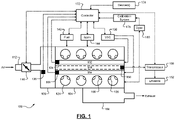
FIG. 1 is a diagram of an example spark ignition (SI) engine according to the principles of the present disclosure; -
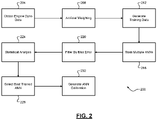
FIG. 2 is a functional block diagram of an example artificial neural network (ANN) training/calibration architecture according to the principles of the present disclosure; and -
FIG. 3 is a flow diagram of an example combustion phasing control method for an SI engine according to the principles of the present disclosure. - As previously discussed, there remains a need for accurate combustion phasing control in spark ignition (SI) engines that do not require substantial empirically calibrated surfaces. Such empirical based techniques are also inaccurate at certain operating conditions, such as off-nominal camshaft positions when valve lift and/or valve timing is adjusted by a variable valve control (VVC) system. Accordingly, SI engine combustion phasing control techniques are presented that use a trained feed-forward artificial neural network (ANN) to model both base and maximum brake torque (MBT) spark timing based on only four inputs: intake and exhaust camshaft positions, an air charge being provided to each cylinder of the SI engine, and engine speed. The ANN is also trained using dynamometer data for the SI engine that is artificially weighted for high load regions where accuracy of spark timing is critical.
- Referring now to
FIG. 1 , a diagram of anexample vehicle 100 comprising an SI engine 104 (hereinafter, "engine 104"). Theengine 104 draws air into anintake manifold 108 through aninduction system 112 that is regulated by athrottle valve 116. A mass airflow (MAF) and/or manifold absolute pressure (MAP) sensor 120 (also referred to as "air charge sensor 120") measures air flow/pressure indicative of an air charge being provided to each of a plurality ofcylinders 124 of theengine 104. While eight cylinders are shown, it will be appreciated that theengine 104 could include any suitable number of cylinders.Intake valves 128 regulate the flow into therespective cylinders 124. Theintake valves 128 are actuated by lobes of anintake camshaft 132, which is also connected to aVVC system 136 that is configured to adjust the actuation of theintake valves 128 by theintake camshaft 132 to adjust intake valve lift and/or timing. Camshaftposition sensor 134 measures a position of theintake camshaft 132. The air charge for each cylinder is combined with fuel (e.g., gasoline) from a fuel system 140 (via direct or port fuel injection) and the air/fuel mixture is compressed by respective pistons (not shown) within thecylinders 124. The compressed air/fuel mixture is then ignited by spark provided by a spark system 144 (e.g., one or more spark plugs for each respective cylinder 124). - The combustion of the compressed air/fuel mixture drives the pistons, which in turn rotatably turn a
crankshaft 148 thereby generating drive torque.Engine speed sensor 150 measures a rotational speed of thecrankshaft 148. The drive torque at thecrankshaft 148 is then transferred to adriveline 152 of thevehicle 100 via atransmission 156. Exhaust gas resulting from combustion is expelled from thecylinders 124 viarespective exhaust valves 160 that regulate the flow out of therespective cylinders 124. Theexhaust valves 160 are actuated by lobes of anexhaust camshaft 164, which is also connected to theVVC system 136. Similar to the intake valves/camshaft, theVVC system 136 is configured to adjust exhaust valve lift and/or timing. Camshaftposition sensor 166 measures a position of theexhaust camshaft 164. The exhaust gas expelled from thecylinders 124 is then treated by anexhaust system 168 to eliminate or mitigate emissions before being released into the atmosphere. Non-limiting example components of theexhaust system 168 include an exhaust manifold and a three-way catalytic converter. - A
controller 172 controls operation of theengine 104. Thecontroller 172 is configured to receive input from one ormore input devices 174 as well as thevarious sensors more input devices 176 is an accelerator pedal. For example, a driver of thevehicle 100 could provide input via the accelerator pedal, which is indicative of a torque request. Thecontroller 172 then controls the engine 104 (e.g., airflow, fuel, and spark) to achieve the torque request. Aremote calibration system 176 that is not part of thevehicle 100 comprises a computer system that interacts with a dynamometer 180 (e.g., dynamometer sensors), which could be part of or separate from thecalibration system 176, to obtain dynamometer data for theengine 104, which is utilized to generate an ANN calibration that is provided as input to thecontroller 172 and then utilized for combustion phasing control. The term "obtain" as used herein refers to all of the generated ANN calibration being transmitted to thecontroller 172 for storage in its memory and subsequent retrieval for usage. - The ANN is designed such that it is capable of accurately controlling spark in an SI engine. This design process involves the selection of various parameters, such as, but not limited to, input/output type and quantity, number of hidden layers, number of neurons per layer, and training/transfer functions. In one exemplary implementation, the optimal ANN design is four inputs (air charge, engine speed, and intake/exhaust camshaft positions), two outputs (base and MBT spark timing), two hidden layers, twelve neurons per layer, a Bayesian regularization backpropagation training function (also known as "trainbr"), and a hyperbolic tangent sigmoid transfer function (also known as "tansig"). It will be appreciated, however, that this is merely one exemplary ANN design and that these parameters could vary depending on the specific vehicle/engine application. For example only, another suitable training function, such as a Levenberg-Marquardt backpropagation training function (also known as "trainlm"), and/or another suitable transfer function, such as rectified linear units (also known as "ReLu"), could be utilized. Other suitable types and/or quantities of inputs and/or outputs could also be utilized.
- Referring now to
FIG. 2 , a functional block diagram of an exampleANN training architecture 200 is illustrated. At 204, engine dynamometer ("dyno") data is gathered and is then artificially weighted at 208. This artificial weighting involves artificially weighting the dyno data at higher engine loads because accurate spark control is critical at these operating ranges. For example, an over advanced spark at very high engine loads could cause engine damage at certain conditions. At 212, training data is generated using the weighted engine dyno data. For example, a large quantity of training data (e.g., 10,000 to 40,000 data points) could be generated from the smaller quantity of engine dyno data (e.g., 1000 to 2000 data points) using any suitable mathematical method. For example only, this could include running simulations using the existing dyno data to generate additional training data. This is performed because ANN training requires a large number of training samples to reduce the risk of overfitting. In addition, a large quantity of training data ensures that each ANN sees every possible engine operating condition in the training phase so that they do not extrapolate into unknown regions in real-world applications. At 216, the ANN is trained multiple times to obtain a plurality of trained ANNs. - At 220, maximum error filtering of the trained ANNs is performed to obtain a desired number of trained ANNs. For example only, the desired number of trained ANNs could be five. This maximum error filtering involves discarding any trained ANNs having a maximum error (e.g., either base or MBT spark timing) greater than an error threshold. At 224, a statistical analysis of the remaining trained ANNs is performed. The set of statistical error metrics include, for example only, a sum of squares due to error (SSE), a root-mean-square error (RMSE), and an error distribution (e.g., across a full range of engine loads). At 228, the best performing trained ANN (based on the set of statistical error metrics) is then selected based on the statistical error metric(s). For example only, this could be the trained ANN that has the best combined performance (SSE and RMSE) in addition to lower error at high engine loads. At 232, the selected trained ANN is utilized to generate an ANN calibration for use by the
controller 172 of theengine 104. This could include, for example, loading the ANN calibration into a memory of thecontroller 172 for subsequent spark control. - Referring now to
FIG. 3 , a flow diagram of an example combustionphasing control method 300 for an SI engine (e.g., engine 104) is illustrated. Thismethod 300 is implemented by thecontroller 172 of theengine 104 after the generation of the ANN calibration at 232 inFIG. 2 . At 304, thecontroller 172 receives the measured camshaft positions fromcamshaft position sensors controller 172 receives the measured air charge based on measurements from air flow/pressure sensor 120. At 312, thecontroller 172 receives a measured engine speed fromengine speed sensor 150. At 316, thecontroller 172 uses the measured parameters as inputs to the calibrated ANN to determine base and MBT spark timing. At 320, thecontroller 172 then controls combustion (e.g., timing of spark provided by spark system 144) using at least one of the base and MBT spark timings. Themethod 300 then ends or returns to 304. - It will be appreciated that the term "controller" as used herein refers to any suitable control device(s) that is/are configured to perform at least a portion of the techniques of the present disclosure. Non-limiting examples include an application-specific integrated circuit (ASIC), one or more processors and a non-transitory memory having instructions stored thereon that, when executed by the one or more processors, cause the controller to perform a set of operations corresponding to at least a portion of the techniques of the present disclosure. The one or more processors could be either a single processor or two or more processors operating in a parallel or distributed architecture. It should also be understood that the mixing and matching of features, elements, methodologies and/or functions between various examples may be expressly contemplated herein so that one skilled in the art would appreciate from the present teachings that features, elements and/or functions of one example may be incorporated into another example as appropriate, unless described otherwise above.
Claims (15)
- A calibration system (176) for a spark ignition (SI) engine (104) of a vehicle (100), the calibration system comprising:dynamometer sensors (180) configured to measure dynamometer data for the SI engine; anda computing system configured to:receive the dynamometer data for the engine (104),artificially weight the engine dynamometer data in high engine load regions to obtain weighted engine dynamometer data,generate training data for an artificial neural network (ANN) using the weighted engine dynamometer data,train a plurality of ANNs using the generated training data,filter the plurality of trained ANNs based on their maximum error to obtain a filtered set of trained ANNs,perform a statistical analysis on each of the filtered set of trained ANNs including determining a set of statistical metrics for each of the filtered set of trained ANNs,select one of the filtered set of trained ANNs having a best combination of error at high engine loads and the set of statistical error metrics, andgenerate an ANN calibration using the selected one of the filtered set of trained ANNs.
- The calibration system of claim 1, wherein the computer system is further configured to output the generated ANN calibration to a controller (172) of the SI engine (104).
- The calibration system of claim 2, wherein receipt of the generated ANN calibration causes the controller (172) to store the generated ANN calibration and use the generated ANN calibration for combustion phasing control to at least one of decrease engine knock and increase fuel economy.
- The calibration system of claim 3, wherein the use of the generated ANN calibration involves the controller (172):receiving, from camshaft position sensors (134, 166), measured positions of intake and exhaust camshafts (132, 164) of the SI engine;receiving, from an air charge sensor (120), a measured air charge provided to each cylinder (124) of the SI engine (104);receiving, from an engine speed sensor (150), a measured engine speed indicative of a rotational speed of a crankshaft (148) of the SI engine (104);using the generated ANN calibration, determining at least one of a desired base spark timing and a desired maximum brake torque (MBT) spark timing based on the measured intake and exhaust camshaft positions, the measured air charge, and the measured engine speed; andcontrolling a spark system (144) of the SI engine (104) based on at least one of the desired base and MBT spark timings.
- The calibration system of claim 4, wherein the controller (172) does not generate and output empirically calibrated surfaces for determining the base or MBT spark timings.
- The calibration system of claim 1, wherein generating the training data for includes using the weighted engine dynamometer data and a mathematical method, wherein the generated training data includes more data points than the weighted engine dynamometer data.
- The calibration system of claim 1, wherein the set of statistical error metrics comprises at least one of a sum of squares due to error (SSE) and a root-mean-square error (RMSE).
- The calibration system of claim 1, wherein each of the plurality of trained ANNs defines two hidden layers, twelve neurons per hidden layer, a Bayesian regularization backpropagation training function, and a hyperbolic tangent sigmoid transfer function.
- A calibration method for a spark ignition (SI) engine (104) of a vehicle (100), the method comprising:receiving, by a calibration system (176), dynamometer data (204) for the SI engine (104);artificially weighting (208), by the calibration system, the engine dynamometer data in high engine load regions to obtain weighted engine dynamometer data;generating (212), by the calibration system, training data for an artificial neural network (ANN) using the weighted engine dynamometer data;training (216), by the calibration system (176), a plurality of ANNs using the generated training data;filtering (220), by the calibration system (176), the plurality of trained ANNs based on their maximum error to obtain a filtered set of trained ANNs;performing, by the calibration system (176), a statistical analysis (224) on each of the filtered set of trained ANNs including determining a set of statistical metrics for each of the filtered set of trained ANNs;selecting, by the calibration system (176), one of the filtered set of trained ANNs having a best combination of error at high engine loads and the set of statistical error metrics; andgenerating, by the calibration system (176), an ANN calibration (232) using the selected one of the filtered set of trained ANNs.
- The method of claim 9, further comprising outputting, by the calibration system (176) and to a controller (172) of the SI engine (104), the generated ANN calibration (232).
- The method of claim 10, wherein receipt of the generated ANN calibration (232) causes the controller (172) to store the generated ANN calibration (232) and use the generated ANN calibration (232) for combustion phasing control to at least one of decrease engine knock and increase fuel economy.
- The method of claim 11, wherein the use of the generated ANN calibration (232) involves the controller (172):receiving, from camshaft position sensors (134, 166), measured positions of intake and exhaust camshafts (132, 164) of the SI engine (104);receiving, from an air charge sensor (120), a measured air charge provided to each cylinder (124) of the SI engine (104);receiving, from an engine speed sensor (150), a measured engine speed indicative of a rotational speed of a crankshaft (148) of the SI engine (104);using the generated ANN calibration (232), determining at least one of a desired base spark timing and a desired maximum brake torque (MBT) spark timing based on the measured intake and exhaust camshaft positions, the measured air charge, and the measured engine speed; andcontrolling a spark system (144) of the SI engine (104) based on at least one of the desired base and MBT spark timings.
- The method of claim 12, wherein the controller (172) does not generate and output empirically calibrated surfaces for determining the base or MBT spark timings.
- The method of claim 9, wherein generating the training data for includes using the weighted engine dynamometer data (204) and a mathematical method, wherein the generated training data includes more data points than the weighted engine dynamometer data (204).
- The method of claim 9, wherein the set of statistical error metrics comprises at least one of a sum of squares due to error (SSE) and a root-mean-square error (RMSE), and wherein each of the plurality of trained ANNs defines two hidden layers, twelve neurons per hidden layer, a Bayesian regularization backpropagation training function, and a hyperbolic tangent sigmoid transfer function.
Applications Claiming Priority (2)
| Application Number | Priority Date | Filing Date | Title |
|---|---|---|---|
| US16/224,988 US10788396B2 (en) | 2018-12-19 | 2018-12-19 | Using an artificial neural network for combustion phasing control in a spark ignited internal combustion engine |
| PCT/US2019/066445 WO2020131657A1 (en) | 2018-12-19 | 2019-12-16 | Using an artificial neural network for combustion phasing control in a spark ignited internal combustion engine |
Publications (2)
| Publication Number | Publication Date |
|---|---|
| EP3899234A1 EP3899234A1 (en) | 2021-10-27 |
| EP3899234B1 true EP3899234B1 (en) | 2022-12-07 |
Family
ID=69174591
Family Applications (1)
| Application Number | Title | Priority Date | Filing Date |
|---|---|---|---|
| EP19839201.1A Active EP3899234B1 (en) | 2018-12-19 | 2019-12-16 | Using an artificial neural network for combustion phasing control in a spark ignited internal combustion engine |
Country Status (3)
| Country | Link |
|---|---|
| US (1) | US10788396B2 (en) |
| EP (1) | EP3899234B1 (en) |
| WO (1) | WO2020131657A1 (en) |
Families Citing this family (7)
| Publication number | Priority date | Publication date | Assignee | Title |
|---|---|---|---|---|
| DE102019212275A1 (en) * | 2019-08-15 | 2021-02-18 | Volkswagen Aktiengesellschaft | Method for adapting a detected camshaft position, control unit for carrying out the method, internal combustion engine and vehicle |
| US20210056432A1 (en) * | 2019-08-21 | 2021-02-25 | Dspace Digital Signal Processing And Control Engineering Gmbh | Method for training an artificial neural generator network, method for training an artificial neural discriminator network, and test unit |
| US11459962B2 (en) * | 2020-03-02 | 2022-10-04 | Sparkcognitton, Inc. | Electronic valve control |
| JP2021161971A (en) * | 2020-03-31 | 2021-10-11 | 本田技研工業株式会社 | Fuel injection control device |
| JP7116756B2 (en) * | 2020-03-31 | 2022-08-10 | 本田技研工業株式会社 | Internal combustion engine controller |
| US12008294B2 (en) * | 2020-07-30 | 2024-06-11 | SparkCognition, Inc. | Calibration of online real-world systems using simulations |
| CN112145332B (en) * | 2020-09-08 | 2022-05-27 | 深圳摩吉智行科技有限公司 | Ignition state calibration method and device and computer readable storage medium |
Family Cites Families (5)
| Publication number | Priority date | Publication date | Assignee | Title |
|---|---|---|---|---|
| US4893244A (en) | 1988-08-29 | 1990-01-09 | General Motors Corporation | Predictive spark timing method |
| US6236908B1 (en) * | 1997-05-07 | 2001-05-22 | Ford Global Technologies, Inc. | Virtual vehicle sensors based on neural networks trained using data generated by simulation models |
| DE19741884C2 (en) * | 1997-09-23 | 2000-12-21 | Daimler Chrysler Ag | Method for determining relevant quantities that represent the cylinder pressure in the cylinders of an internal combustion engine |
| US9759177B2 (en) | 2015-03-05 | 2017-09-12 | GM Global Technology Operations LLC | System and method for controlling spark timing based on a duration of a fuel burn within a cylinder in an engine |
| US10012204B2 (en) | 2015-06-23 | 2018-07-03 | Shu Wang | Engine operation control |
-
2018
- 2018-12-19 US US16/224,988 patent/US10788396B2/en active Active
-
2019
- 2019-12-16 WO PCT/US2019/066445 patent/WO2020131657A1/en not_active Ceased
- 2019-12-16 EP EP19839201.1A patent/EP3899234B1/en active Active
Also Published As
| Publication number | Publication date |
|---|---|
| WO2020131657A1 (en) | 2020-06-25 |
| US20200200140A1 (en) | 2020-06-25 |
| EP3899234A1 (en) | 2021-10-27 |
| US10788396B2 (en) | 2020-09-29 |
Similar Documents
| Publication | Publication Date | Title |
|---|---|---|
| EP3899234B1 (en) | Using an artificial neural network for combustion phasing control in a spark ignited internal combustion engine | |
| US11125202B1 (en) | Feedforward artificial neural network for off-nominal spark control | |
| CN110185569B (en) | Control device and control method of internal combustion engine | |
| DE102015103412B4 (en) | Method of predicting parameters associated with airflow through an engine | |
| JP3823553B2 (en) | Engine combustion control device | |
| EP2562401B1 (en) | Controller for internal combustion engine | |
| US10001071B2 (en) | Control system and control method for internal combustion engine | |
| US6006157A (en) | Real-time engine misfire detection method | |
| EP2865872A1 (en) | Internal combustion engine control device | |
| CN104100432B (en) | Method and apparatus for determining the angle of ignition in device for controlling engine | |
| US8606489B2 (en) | Ignition timing control system for internal combustion engine | |
| CN110185548B (en) | Control device and control method for internal combustion engine | |
| CN108730050A (en) | Method for using air mass flow actuator to control engine | |
| CN107795389A (en) | For controlling the method and device of operation of internal combustion engine | |
| CA2589512A1 (en) | Air/fuel ratio control apparatus of an internal combustion engine | |
| US7853393B2 (en) | Method and device for operating an internal combustion engine | |
| JP6752325B2 (en) | Internal combustion engine control device and control method | |
| CN109026410A (en) | The purposes of prediction revolving speed of the least square technology in the control of multivariable engine | |
| US6758179B1 (en) | Method and apparatus for controlling a variable valve system for an internal combustion engine | |
| de Nola et al. | Reduction of the experimental effort in engine calibration by using neural networks and 1D engine simulation | |
| US11686251B1 (en) | Pre-chamber spark control with two ignition sources | |
| CN110005537B (en) | Control device for internal combustion engine | |
| JP6752326B2 (en) | Internal combustion engine control device | |
| JP4539619B2 (en) | Model creation method and fitting method | |
| US11286871B1 (en) | Using an artificial neural network for gas flows estimation in a spark ignitied internal computer engine |
Legal Events
| Date | Code | Title | Description |
|---|---|---|---|
| STAA | Information on the status of an ep patent application or granted ep patent |
Free format text: STATUS: UNKNOWN |
|
| STAA | Information on the status of an ep patent application or granted ep patent |
Free format text: STATUS: THE INTERNATIONAL PUBLICATION HAS BEEN MADE |
|
| PUAI | Public reference made under article 153(3) epc to a published international application that has entered the european phase |
Free format text: ORIGINAL CODE: 0009012 |
|
| STAA | Information on the status of an ep patent application or granted ep patent |
Free format text: STATUS: REQUEST FOR EXAMINATION WAS MADE |
|
| 17P | Request for examination filed |
Effective date: 20210511 |
|
| AK | Designated contracting states |
Kind code of ref document: A1 Designated state(s): AL AT BE BG CH CY CZ DE DK EE ES FI FR GB GR HR HU IE IS IT LI LT LU LV MC MK MT NL NO PL PT RO RS SE SI SK SM TR |
|
| DAV | Request for validation of the european patent (deleted) | ||
| DAX | Request for extension of the european patent (deleted) | ||
| GRAP | Despatch of communication of intention to grant a patent |
Free format text: ORIGINAL CODE: EPIDOSNIGR1 |
|
| STAA | Information on the status of an ep patent application or granted ep patent |
Free format text: STATUS: GRANT OF PATENT IS INTENDED |
|
| INTG | Intention to grant announced |
Effective date: 20220713 |
|
| GRAS | Grant fee paid |
Free format text: ORIGINAL CODE: EPIDOSNIGR3 |
|
| GRAA | (expected) grant |
Free format text: ORIGINAL CODE: 0009210 |
|
| STAA | Information on the status of an ep patent application or granted ep patent |
Free format text: STATUS: THE PATENT HAS BEEN GRANTED |
|
| AK | Designated contracting states |
Kind code of ref document: B1 Designated state(s): AL AT BE BG CH CY CZ DE DK EE ES FI FR GB GR HR HU IE IS IT LI LT LU LV MC MK MT NL NO PL PT RO RS SE SI SK SM TR |
|
| REG | Reference to a national code |
Ref country code: GB Ref legal event code: FG4D |
|
| REG | Reference to a national code |
Ref country code: CH Ref legal event code: EP Ref country code: AT Ref legal event code: REF Ref document number: 1536445 Country of ref document: AT Kind code of ref document: T Effective date: 20221215 |
|
| REG | Reference to a national code |
Ref country code: DE Ref legal event code: R096 Ref document number: 602019022991 Country of ref document: DE |
|
| REG | Reference to a national code |
Ref country code: IE Ref legal event code: FG4D |
|
| REG | Reference to a national code |
Ref country code: LT Ref legal event code: MG9D |
|
| REG | Reference to a national code |
Ref country code: NL Ref legal event code: MP Effective date: 20221207 |
|
| PG25 | Lapsed in a contracting state [announced via postgrant information from national office to epo] |
Ref country code: SE Free format text: LAPSE BECAUSE OF FAILURE TO SUBMIT A TRANSLATION OF THE DESCRIPTION OR TO PAY THE FEE WITHIN THE PRESCRIBED TIME-LIMIT Effective date: 20221207 Ref country code: NO Free format text: LAPSE BECAUSE OF FAILURE TO SUBMIT A TRANSLATION OF THE DESCRIPTION OR TO PAY THE FEE WITHIN THE PRESCRIBED TIME-LIMIT Effective date: 20230307 Ref country code: LT Free format text: LAPSE BECAUSE OF FAILURE TO SUBMIT A TRANSLATION OF THE DESCRIPTION OR TO PAY THE FEE WITHIN THE PRESCRIBED TIME-LIMIT Effective date: 20221207 Ref country code: FI Free format text: LAPSE BECAUSE OF FAILURE TO SUBMIT A TRANSLATION OF THE DESCRIPTION OR TO PAY THE FEE WITHIN THE PRESCRIBED TIME-LIMIT Effective date: 20221207 Ref country code: ES Free format text: LAPSE BECAUSE OF FAILURE TO SUBMIT A TRANSLATION OF THE DESCRIPTION OR TO PAY THE FEE WITHIN THE PRESCRIBED TIME-LIMIT Effective date: 20221207 |
|
| REG | Reference to a national code |
Ref country code: AT Ref legal event code: MK05 Ref document number: 1536445 Country of ref document: AT Kind code of ref document: T Effective date: 20221207 |
|
| PG25 | Lapsed in a contracting state [announced via postgrant information from national office to epo] |
Ref country code: RS Free format text: LAPSE BECAUSE OF FAILURE TO SUBMIT A TRANSLATION OF THE DESCRIPTION OR TO PAY THE FEE WITHIN THE PRESCRIBED TIME-LIMIT Effective date: 20221207 Ref country code: PL Free format text: LAPSE BECAUSE OF FAILURE TO SUBMIT A TRANSLATION OF THE DESCRIPTION OR TO PAY THE FEE WITHIN THE PRESCRIBED TIME-LIMIT Effective date: 20221207 Ref country code: LV Free format text: LAPSE BECAUSE OF FAILURE TO SUBMIT A TRANSLATION OF THE DESCRIPTION OR TO PAY THE FEE WITHIN THE PRESCRIBED TIME-LIMIT Effective date: 20221207 Ref country code: HR Free format text: LAPSE BECAUSE OF FAILURE TO SUBMIT A TRANSLATION OF THE DESCRIPTION OR TO PAY THE FEE WITHIN THE PRESCRIBED TIME-LIMIT Effective date: 20221207 Ref country code: GR Free format text: LAPSE BECAUSE OF FAILURE TO SUBMIT A TRANSLATION OF THE DESCRIPTION OR TO PAY THE FEE WITHIN THE PRESCRIBED TIME-LIMIT Effective date: 20230308 |
|
| PG25 | Lapsed in a contracting state [announced via postgrant information from national office to epo] |
Ref country code: NL Free format text: LAPSE BECAUSE OF FAILURE TO SUBMIT A TRANSLATION OF THE DESCRIPTION OR TO PAY THE FEE WITHIN THE PRESCRIBED TIME-LIMIT Effective date: 20221207 |
|
| PG25 | Lapsed in a contracting state [announced via postgrant information from national office to epo] |
Ref country code: SM Free format text: LAPSE BECAUSE OF FAILURE TO SUBMIT A TRANSLATION OF THE DESCRIPTION OR TO PAY THE FEE WITHIN THE PRESCRIBED TIME-LIMIT Effective date: 20221207 Ref country code: RO Free format text: LAPSE BECAUSE OF FAILURE TO SUBMIT A TRANSLATION OF THE DESCRIPTION OR TO PAY THE FEE WITHIN THE PRESCRIBED TIME-LIMIT Effective date: 20221207 Ref country code: PT Free format text: LAPSE BECAUSE OF FAILURE TO SUBMIT A TRANSLATION OF THE DESCRIPTION OR TO PAY THE FEE WITHIN THE PRESCRIBED TIME-LIMIT Effective date: 20230410 Ref country code: EE Free format text: LAPSE BECAUSE OF FAILURE TO SUBMIT A TRANSLATION OF THE DESCRIPTION OR TO PAY THE FEE WITHIN THE PRESCRIBED TIME-LIMIT Effective date: 20221207 Ref country code: CZ Free format text: LAPSE BECAUSE OF FAILURE TO SUBMIT A TRANSLATION OF THE DESCRIPTION OR TO PAY THE FEE WITHIN THE PRESCRIBED TIME-LIMIT Effective date: 20221207 Ref country code: AT Free format text: LAPSE BECAUSE OF FAILURE TO SUBMIT A TRANSLATION OF THE DESCRIPTION OR TO PAY THE FEE WITHIN THE PRESCRIBED TIME-LIMIT Effective date: 20221207 |
|
| REG | Reference to a national code |
Ref country code: CH Ref legal event code: PL |
|
| REG | Reference to a national code |
Ref country code: BE Ref legal event code: MM Effective date: 20221231 |
|
| PG25 | Lapsed in a contracting state [announced via postgrant information from national office to epo] |
Ref country code: SK Free format text: LAPSE BECAUSE OF FAILURE TO SUBMIT A TRANSLATION OF THE DESCRIPTION OR TO PAY THE FEE WITHIN THE PRESCRIBED TIME-LIMIT Effective date: 20221207 Ref country code: LU Free format text: LAPSE BECAUSE OF NON-PAYMENT OF DUE FEES Effective date: 20221216 Ref country code: IS Free format text: LAPSE BECAUSE OF FAILURE TO SUBMIT A TRANSLATION OF THE DESCRIPTION OR TO PAY THE FEE WITHIN THE PRESCRIBED TIME-LIMIT Effective date: 20230407 Ref country code: AL Free format text: LAPSE BECAUSE OF FAILURE TO SUBMIT A TRANSLATION OF THE DESCRIPTION OR TO PAY THE FEE WITHIN THE PRESCRIBED TIME-LIMIT Effective date: 20221207 |
|
| REG | Reference to a national code |
Ref country code: DE Ref legal event code: R097 Ref document number: 602019022991 Country of ref document: DE |
|
| PG25 | Lapsed in a contracting state [announced via postgrant information from national office to epo] |
Ref country code: MC Free format text: LAPSE BECAUSE OF FAILURE TO SUBMIT A TRANSLATION OF THE DESCRIPTION OR TO PAY THE FEE WITHIN THE PRESCRIBED TIME-LIMIT Effective date: 20221207 |
|
| PLBE | No opposition filed within time limit |
Free format text: ORIGINAL CODE: 0009261 |
|
| STAA | Information on the status of an ep patent application or granted ep patent |
Free format text: STATUS: NO OPPOSITION FILED WITHIN TIME LIMIT |
|
| PG25 | Lapsed in a contracting state [announced via postgrant information from national office to epo] |
Ref country code: LI Free format text: LAPSE BECAUSE OF NON-PAYMENT OF DUE FEES Effective date: 20221231 Ref country code: IE Free format text: LAPSE BECAUSE OF NON-PAYMENT OF DUE FEES Effective date: 20221216 Ref country code: DK Free format text: LAPSE BECAUSE OF FAILURE TO SUBMIT A TRANSLATION OF THE DESCRIPTION OR TO PAY THE FEE WITHIN THE PRESCRIBED TIME-LIMIT Effective date: 20221207 Ref country code: CH Free format text: LAPSE BECAUSE OF NON-PAYMENT OF DUE FEES Effective date: 20221231 |
|
| 26N | No opposition filed |
Effective date: 20230908 |
|
| PG25 | Lapsed in a contracting state [announced via postgrant information from national office to epo] |
Ref country code: SI Free format text: LAPSE BECAUSE OF FAILURE TO SUBMIT A TRANSLATION OF THE DESCRIPTION OR TO PAY THE FEE WITHIN THE PRESCRIBED TIME-LIMIT Effective date: 20221207 Ref country code: BE Free format text: LAPSE BECAUSE OF NON-PAYMENT OF DUE FEES Effective date: 20221231 |
|
| PG25 | Lapsed in a contracting state [announced via postgrant information from national office to epo] |
Ref country code: CY Free format text: LAPSE BECAUSE OF FAILURE TO SUBMIT A TRANSLATION OF THE DESCRIPTION OR TO PAY THE FEE WITHIN THE PRESCRIBED TIME-LIMIT Effective date: 20221207 |
|
| PG25 | Lapsed in a contracting state [announced via postgrant information from national office to epo] |
Ref country code: MK Free format text: LAPSE BECAUSE OF FAILURE TO SUBMIT A TRANSLATION OF THE DESCRIPTION OR TO PAY THE FEE WITHIN THE PRESCRIBED TIME-LIMIT Effective date: 20221207 Ref country code: IT Free format text: LAPSE BECAUSE OF FAILURE TO SUBMIT A TRANSLATION OF THE DESCRIPTION OR TO PAY THE FEE WITHIN THE PRESCRIBED TIME-LIMIT Effective date: 20221207 Ref country code: HU Free format text: LAPSE BECAUSE OF FAILURE TO SUBMIT A TRANSLATION OF THE DESCRIPTION OR TO PAY THE FEE WITHIN THE PRESCRIBED TIME-LIMIT; INVALID AB INITIO Effective date: 20191216 |
|
| PG25 | Lapsed in a contracting state [announced via postgrant information from national office to epo] |
Ref country code: TR Free format text: LAPSE BECAUSE OF FAILURE TO SUBMIT A TRANSLATION OF THE DESCRIPTION OR TO PAY THE FEE WITHIN THE PRESCRIBED TIME-LIMIT Effective date: 20221207 |
|
| PG25 | Lapsed in a contracting state [announced via postgrant information from national office to epo] |
Ref country code: BG Free format text: LAPSE BECAUSE OF FAILURE TO SUBMIT A TRANSLATION OF THE DESCRIPTION OR TO PAY THE FEE WITHIN THE PRESCRIBED TIME-LIMIT Effective date: 20221207 |
|
| PG25 | Lapsed in a contracting state [announced via postgrant information from national office to epo] |
Ref country code: MT Free format text: LAPSE BECAUSE OF FAILURE TO SUBMIT A TRANSLATION OF THE DESCRIPTION OR TO PAY THE FEE WITHIN THE PRESCRIBED TIME-LIMIT Effective date: 20221207 |
|
| PGFP | Annual fee paid to national office [announced via postgrant information from national office to epo] |
Ref country code: GB Payment date: 20251229 Year of fee payment: 7 |
|
| PGFP | Annual fee paid to national office [announced via postgrant information from national office to epo] |
Ref country code: FR Payment date: 20251226 Year of fee payment: 7 |
|
| PGFP | Annual fee paid to national office [announced via postgrant information from national office to epo] |
Ref country code: DE Payment date: 20251229 Year of fee payment: 7 |