EP3896920A1 - Proxy-based messaging system of a telecommunication network - Google Patents
Proxy-based messaging system of a telecommunication network Download PDFInfo
- Publication number
- EP3896920A1 EP3896920A1 EP20169979.0A EP20169979A EP3896920A1 EP 3896920 A1 EP3896920 A1 EP 3896920A1 EP 20169979 A EP20169979 A EP 20169979A EP 3896920 A1 EP3896920 A1 EP 3896920A1
- Authority
- EP
- European Patent Office
- Prior art keywords
- data
- messaging
- message
- proxy
- messaging system
- Prior art date
- Legal status (The legal status is an assumption and is not a legal conclusion. Google has not performed a legal analysis and makes no representation as to the accuracy of the status listed.)
- Pending
Links
Images
Classifications
-
- H—ELECTRICITY
- H04—ELECTRIC COMMUNICATION TECHNIQUE
- H04L—TRANSMISSION OF DIGITAL INFORMATION, e.g. TELEGRAPHIC COMMUNICATION
- H04L67/00—Network arrangements or protocols for supporting network services or applications
- H04L67/50—Network services
- H04L67/56—Provisioning of proxy services
- H04L67/563—Data redirection of data network streams
-
- H—ELECTRICITY
- H04—ELECTRIC COMMUNICATION TECHNIQUE
- H04L—TRANSMISSION OF DIGITAL INFORMATION, e.g. TELEGRAPHIC COMMUNICATION
- H04L51/00—User-to-user messaging in packet-switching networks, transmitted according to store-and-forward or real-time protocols, e.g. e-mail
- H04L51/21—Monitoring or handling of messages
- H04L51/214—Monitoring or handling of messages using selective forwarding
-
- H—ELECTRICITY
- H04—ELECTRIC COMMUNICATION TECHNIQUE
- H04L—TRANSMISSION OF DIGITAL INFORMATION, e.g. TELEGRAPHIC COMMUNICATION
- H04L47/00—Traffic control in data switching networks
- H04L47/10—Flow control; Congestion control
- H04L47/11—Identifying congestion
-
- H—ELECTRICITY
- H04—ELECTRIC COMMUNICATION TECHNIQUE
- H04L—TRANSMISSION OF DIGITAL INFORMATION, e.g. TELEGRAPHIC COMMUNICATION
- H04L51/00—User-to-user messaging in packet-switching networks, transmitted according to store-and-forward or real-time protocols, e.g. e-mail
- H04L51/48—Message addressing, e.g. address format or anonymous messages, aliases
-
- H—ELECTRICITY
- H04—ELECTRIC COMMUNICATION TECHNIQUE
- H04L—TRANSMISSION OF DIGITAL INFORMATION, e.g. TELEGRAPHIC COMMUNICATION
- H04L51/00—User-to-user messaging in packet-switching networks, transmitted according to store-and-forward or real-time protocols, e.g. e-mail
- H04L51/56—Unified messaging, e.g. interactions between e-mail, instant messaging or converged IP messaging [CPM]
Definitions
- the invention relates to a method for transmitting data messages between endpoints of a telecommunication network, wherein a sending endpoint of a telecommunication network transmits a data message to a messaging system of the telecommunication network.
- the invention further relates to a messaging system for a telecommunication network, a telecommunication network and a computer program product.
- a telecommunication network is used for transmitting data messages between a plurality of endpoints, i.e. terminal devices, being connected thereto and located away from each other.
- a data message may be sent by a sending endpoint and may be received by a receiving endpoint.
- Cellular networks are important examples of telecommunication networks.
- a plurality of data messages may be efficiently transmitted by a so-called message bus. Therefore, telecommunication networks usually comprise one or more message busses allowing for an asynchronous transmission of data messages between the endpoints.
- a telecommunication network may be provided with a message bus by configuring and executing a special software residing on nodes of the telecommunication network, e.g. on central office nodes of a cellular network. This special software is commonly called message oriented middleware (MOM).
- MOM message oriented middleware
- the application programming interface is mandatory for an application to access the message bus.
- a developer has to provide an application with a set of specialized access routines matching the application programming interface provided by the message oriented middleware to be accessed.
- a plurality of such sets is required for an application optionally using different message oriented middleware.
- the application has to be extended for each additional application programming interface to be used or each change of a used application programming interface.
- An amount, i.e. a number and/or a size, of the data messages to be transmitted by the telecommunication network usually is not uniformly distributed over space and time. Rather, there are hot spots and/or time peaks on the one hand and areas and/or periods of substantial inactivity on the other hand. It would be desirable, hence, that messaging be dynamically scalable depending on an actual transmission demand.
- a shortcoming of available message oriented middleware is an insufficient dynamic scalability, i.e. a runtime scalability. Either a message oriented middleware has a static configuration not allowing for a runtime scaling or a message oriented middleware indeed allows for a runtime scaling, but within a limited range and with practical difficulties.
- WO 2019/179714 A1 discloses a method for transmitting data messages between endpoints of a telecommunication network wherein the message bus discards a data message to be transmitted when the message bus detects a load of the message bus near capacity such that processing the data message would cause an overload of the message bus.
- Most telecommunication networks transmit data messages by means of a so-called packet switching, i.e. by separating the data message into a plurality of packets and transmitting the packets separately and independently of each other.
- the packets may be relatively small, relatively large, part of a data stream, e.g. an audio stream or a video stream, mainly of the same type, to be used only in the order of sending, to be consumed by the same receiver etc.
- there a data message may have a plurality of different packet types wherein each message oriented middleware favors specific packet types.
- an object of the invention to suggest a method for transmitting data messages between endpoints of a telecommunication network which allows for an efficient application development, an extensive dynamic scalability and a universal applicability independent of a packet type.
- Providing a messaging system for a telecommunication network, a telecommunication network and a computer program product are further objects of the invention.
- a first aspect of the invention is a method for transmitting data messages between endpoints of a telecommunication network, wherein a sending endpoint of a telecommunication network transmits a data message to a messaging system of the telecommunication network.
- Each endpoint may be configured as an application being executed by a smartphone, a tablet, a laptop, a desktop personal computer, a workstation, a server, an loT (internet of things) device and the like.
- both mobile devices and stationary devices having the ability to send or receive data messages are endpoints in the sense of the invention.
- the sending endpoint may be a server of a service provider providing audio or video streaming.
- the sending endpoint is a producer of data messages.
- the telecommunication network may be a radio network or a fixed network or any combination thereof, e.g. a mobile or cellular network.
- a data message is a digital entity comprising a plurality of digital bits, e.g. a data stream, an e-mail, an HTML page and the like.
- a messaging proxy of the messaging system receives the sent data message and forwards the received data message to a data queue or a data topic provided by a message bus of the messaging system.
- the sending endpoint directly accesses the messaging proxy instead of the message bus.
- the message bus is an instance of a message oriented middleware (MOM), it may be called a MOM proxy also.
- MOM proxy hides the message bus from the sending endpoint.
- the messaging proxy complements the message bus to form a messaging system comprising both the messaging proxy and the message bus.
- the sending endpoint more precisely an application being executed by a processor of the sending endpoint, has to interact with the messaging proxy only.
- the endpoint i.e. the application is required to only comprise a set of access routines matching the application programming interface of the messaging proxy.
- the messaging proxy may take further measures besides forwarding the data message to the message bus, i.e. act as a so-called dedicated proxy, in order to provide the messaging system with a dynamic scalability and an independence of a packet type of packets of the data message.
- the messaging system provides a plurality of data queues and data topics.
- the plurality of data queues and data topics may be provided, in turn, by a plurality of different message busses each message bus being an instance of a message oriented middleware.
- the data queues and the data topics are components of a so-called data plane or user plane (UP) of a message bus.
- UP user plane
- a data queue may represent a point-to-point model.
- a sender i.e. a producer
- a receiver i.e. a consumer
- the data message may be stored in the data queue until being read by the reader when the reader does not read the data message immediately.
- the data queue allows for an asynchronous transfer of data messages from the sender to the receiver.
- the data message may be automatically removed from the data queue after having been read by the receiver.
- the data message may be available in the data queue during a timeout period for being read by a plurality of receivers.
- a data topic may represent a publish-and-subscribe model. According to the publish-and-subscribe-model a sender writes a data message to the data topic and a plurality of receivers being subscribed to the data topic which may be unknown to the sender reads the data message from the data topic.
- Each data topic comprises at least one data queue and may comprise a plurality of data queues.
- Different implementations of a message bus may define data queues or data topics to be different combinations of the above-mentioned characteristics and further characteristics.
- a message bus usually does not provide the sender with any acknowledgement indicating a successful transmission of a data message.
- the messaging proxy may be configured to provide the sender with an acknowledgement when the messaging proxy has completely and correctly received the data message from the sender.
- the messaging proxy may provide the messaging system with an advanced functionality exceeding the usual functionality of a messaging bus.
- message busses may additionally provide a dedicated response queue the receiver writes acknowledgements to and the sender reads acknowledments from.
- message busses may be even used to simulate remote procedure calls (RPC) between endpoints of the telecommunication network.
- the sending endpoint provides the data message with at least one data tag indicating a data message type and the messaging proxy forwards the received data message to an appropriate data queue or an appropriate data topic of the messaging system depending on the at least one data tag.
- the data tag may comprise a type identifier and indicate a packet type of the data message.
- the messaging proxy may use the at least one data tag to determine the appropriate data queue or data topic of the messaging system.
- the sending endpoint may provide the messaging proxy with further transmission requirements, e.g. a transmission latency, a transmission redundancy and the like.
- the messaging proxy causes the message bus to create the data queue or the data topic when a data queue or a data topic being appropriate for the received data message is unavailable or when each available data queue or data topic being appropriate for the received data message has a load near capacity.
- Creating data queues or data topics according to a rise of data messages is a further measure which the messaging proxy may take in order to provide the messaging system with a scalability.
- the messaging proxy may use a network protocol being used by the sending endpoint to determine the appropriate data queue or data topic. For instance, the messaging proxy may use a streaming API of the message bus in case the sending endpoint uses a user datagram protocol (UDP) for sending the data message. In contrast, the messaging proxy may use a publish-and-subscribe API of the message bus in case the sending endpoint uses a transmission control program/internet protocol (TCP/IP) for sending the data message.
- UDP user datagram protocol
- TCP/IP transmission control program/internet protocol
- the messaging proxy may create the message bus when a message bus being appropriate for the received data message is unavailable or when each available message bus being appropriate for a data message has a load near capacity.
- Creating the message bus comprises causing an instance of a message oriented middleware to be started.
- Creating a message bus according to a rise of data message is a further measure the messaging proxy may take in order to provide the messaging system with a scalability.
- the measure of creating a message bus is a measure the messaging proxy may take in order to provide the messaging system as a whole with an independence of a packet type of the data message.
- the messaging proxy creates a supplementary messaging proxy and causes the created supplementary messaging proxy to receive the data message from the sending endpoint when the messaging proxy has a load near capacity.
- the load of the messaging proxy may be increased due to converting data messages between different data message formats, e.g. representational state transfer (REST), remote authentication dial-in user servcie (RADIUS); access node control protocol (ANCP) etc.
- Creating the supplementary messaging proxy comprises starting a further instance of the messaging proxy particularly having the same configuration.
- the supplementary messaging proxy also provides a dedicated response queue in case the messaging proxy does.
- Creating the supplementary messaging proxy is a further measure the messaging proxy may take to provide the messaging system with a scalability. This measure removes any unintended limitation of the messaging system due to the addition of the messaging proxy.
- each messaging proxy transmits control messages to a control queue or a control topic of the messaging system and each messaging proxy receives control messages from a control queue or a control topic of the messaging system.
- Control queues and control topics are components of a so-called control plane (CP) of a message bus.
- the control plane is very separate from the user plane and is protected from being accessed by an endpoint.
- the control queues and the control topics are by all messaging proxies of the messaging systems for communicating.
- the messaging proxy forwards the received data message to the data queue or the data topic balancing a load of the message busses, data queues or data topics of the messaging system. Balancing the load comprises distributing data messages evenly over all available appropriate data queues or data topics or message busses, in case the messaging proxy has created more than two message busses, is a further measure the messaging proxy may take to provide the messaging system with a scalability.
- Balancing the load, of cause may also comprise changing a configuration of a built-in load balancer of a message bus.
- the messaging proxy may change parameters of built-in load balancers during runtime of the messaging system.
- the messaging proxy may query performance data of the message busses, data queues or data topics from a messaging database of the messaging system.
- the messaging database provides the messaging proxy with performance data of the message busses, data queues or data topics.
- balancing the load may not only be based on data tags and a rise of data messages but also on specific information related to the performance of the entities being involved in the method and being crucial for the over all performance of the messaging system.
- the messaging proxy measures a performance of the message busses by measuring a processor load of a processor executing the messaging system.
- the performance data stored in the messaging database may be measured empiric data.
- the performance data not only indicates the performance of the employed message oriented middleware alone but also takes into account a hardware executing instances of the employed message oriented middleware.
- the messaging proxy for each message bus, data queue or data topic generates an entry in the messaging database.
- the entries of the messaging database reflect the active entities, i.e. data queues, data topics, message busses, of the messaging system at any time during runtime.
- the entries may further comprise configuration parameters of the active entities
- Each messaging proxy may query the messaging database for knowing the actual state of the messaging system.
- a receiving endpoint of the telecommunication network may further receive the data message from the messaging system.
- the receiving endpoint is a consumer of data messages.
- another messaging proxy of the messaging system forwards the data message from the data queue or the data topic of the messaging system to the receiving endpoint.
- the receiving endpoint directly accesses the messaging proxy instead of the message bus.
- each endpoint may be a sending endpoint or a receiving endpoint, either alternating the roles or simultaneously acting in both roles.
- a second aspect of the invention is a messaging system for a telecommunication network.
- Conventional messaging systems only comprise one or more message busses each having a plurality of data queues and data topics.
- the messaging system comprises a messaging proxy, and a message bus providing a data queue or a data topic and being configured to carry out a method according to the invention.
- the inventive messaging system may also comprise a messaging database storing entries related to the message bus, the data queue or the data topic.
- the messaging proxy extends the messaging system in order to provide the messaging system with an easy accessibility, a dynamic scalability and an independence of a packet type of a data message. Moreover the messaging system allows for developing simple and economical applications accessing the messaging system.
- a third aspect of the invention is a telecommunication network comprising an endpoint.
- Telecommunication networks usually comprise a messaging bus for transmitting data messages between endpoints being connected thereto.
- the telecommunication network comprises a messaging system according to the invention. Due to the inventive messaging system, transmitting data messages is dynamically scalable and independent of packet types of the data messages. Moreover, developing applications for accessing the messaging system is simple and economical.
- a fourth aspect of the invention is a computer program product, comprising a computer readable storage medium storing a program code, the program code being executable by an endpoint of a telecommunication network or a node of a telecommunication network.
- the storage medium may be a USB stick, a CD, a DVD, a memory chip and the like.
- the program code causes the endpoint or the node to carry out a method according to the invention when being executed by a processor of the endpoint or the node.
- the program code may be executed immediately on the storage medium being accessible by the node or the endpoint or after having been installed in a storage of the node or the endpoint. Executing the program code provides the messaging system of the telecommunication network with a dynamic scalability and independence of packet types of data messages.
- the program code for an application being executed on an endpoint and accessing the messaging system is simple and economical.
- inventive method allows for an extensive dynamic scalability of a messaging system of a telecommunication network. Furthermore, the inventive method allows for an efficient development of applications carrying out the method. Moreover, the method may be evenly applied for data messages with different packet types.
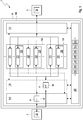
- Fig. 1 schematically shows a block diagram of a telecommunication network 1 according to an embodiment of the invention.
- the telecommunication network 1 may, for instance, be a cellular network comprising a sending endpoint 2, a receiving endpoint 3 and a node 10 which may be a central office of the cellular network.
- the node 10 may comprise a messaging system 100 which is exemplarily connected to by a sending endpoint 2 with an application 20 and a receiving endpoint 3 with an application 30.
- the sending endpoint 2 may be a server of a streaming service provider providing an audio stream or a video stream while endpoint 3 may be a user equipment (UE), e.g. a smartphone, of a user requesting the audio stream or the video stream.
- UE user equipment
- the messaging system 100 and the endpoints 2, 3 may be using a computer program product (not shown).
- the computer program product comprises a computer readable storage medium, e.g. a USB stick, CD, DVD, a memory chip and the like, storing a program code.
- the program code is executable by the endpoint 2, 3 and the node 10, respectively, causing the endpoints 2, 3 and the node 10 to carry out the method described below when being executed by a processor of the endpoints 2, 3 or the node 10, respectively.
- the messaging system 100 comprises a plurality of messaging proxies 110 with only two of them being displayed exemplarily and a plurality of message buses 120, 130 again with only two of them being displayed exemplarily.
- Each message bus 120, 130 provides a plurality of data queues 121, 131 and data topics 122, 132.
- Each data topic 122, 132 comprises one or more data queues 121, 131.
- One message bus 120 of the message busses 120, 130 provides a plurality of control queues 133 and control topics 134.
- Each control topic 134 comprises one or more control queues 133.
- the messaging system 100 further comprises a messaging data base 140 storing a plurality of entries 141.
- the endpoints 2, 3 and the messaging system 100 are configured to carry out the following method for transmitting data messages 40 between the endpoints 2, 3 being connected to the telecommunication network 1.
- the sending endpoint 2 particularly the application 20, i.e. the producer, transmits a data message 40 to the messaging system 100 of the telecommunication network 1.
- the messaging proxy 110 of the messaging system 100 receives the sent data message 40 and forwards the received data message 40 to a data queue 121, 131 or a data topic 122, 132 provided by a message bus 120, 130 of the messaging system 100.
- the receiving endpoint 3, particularly the application 30, i.e. consumer, may receive the data message 40 from the messaging system 100.
- another messaging proxy 110 of the messaging system 100 forwards the data message 40 from the data queue 121, 131 or the data topic 122, 132 of the messaging system 100 to the receiving endpoint 3.
- the sending endpoint 2 may provide the data message 40 with at least one data tag 41 indicating a data message type.
- the messaging proxy 110 may forward the received data message 40 to an appropriate data queue 121, 131 or an appropriate data topic 122, 132 of the messaging system 100 depending on the at least one data tag 41.
- the messaging proxy 110 may cause the message bus 120, 130 to create the data queue 121 or the data topic 122.
- the messaging proxy 110 may create the message bus 120, 130.
- the messaging proxy 110 may create a supplementary messaging proxy 150 and causes the created supplementary messaging proxy 150 to receive the data message 40 from the sending endpoint 2.
- the messaging proxies 110, 150 may transmit control messages to the control queue 123 or the control topic 124 of the messaging system 100 and each messaging proxy 110, 120, 150 receives control messages from the control queue 123 or the control topic 124 of the messaging system 100.
- the messaging proxy 110 may forward the received data message 40 to the data queue 121, 131 or the data topic 122, 132 balancing a load of the message busses 120, 130, data queues 121, 131 or data topics 122, 132 of the messaging system 100.
- the messaging proxy 110 may query performance data of the message busses 120, 130, data queues 121, 131 or data topics 122, 132 from the messaging database 140 of the messaging system 100.
- the messaging proxy 110 measures a performance of the message busses 120, 130 by measuring a processor load of a processor executing the messaging system 100.
- the messaging proxy 110 for each message bus 120, 130, data queue 121, 131 or data topic 122, 132 may generate an entry 141 in the messaging database 140.
Landscapes
- Engineering & Computer Science (AREA)
- Computer Networks & Wireless Communication (AREA)
- Signal Processing (AREA)
- Information Transfer Between Computers (AREA)
- Computer And Data Communications (AREA)
Abstract
A method for transmitting data messages between endpoints of a telecommunication network, wherein a sending endpoint of a telecommunication network transmits a data message to a messaging system of the telecommunication network, a messaging system for a telecommunication network, a telecommunication network and a computer program product.
Description
- The invention relates to a method for transmitting data messages between endpoints of a telecommunication network, wherein a sending endpoint of a telecommunication network transmits a data message to a messaging system of the telecommunication network. The invention further relates to a messaging system for a telecommunication network, a telecommunication network and a computer program product.
- Many different embodiments of telecommunication networks are known in prior art. A telecommunication network is used for transmitting data messages between a plurality of endpoints, i.e. terminal devices, being connected thereto and located away from each other. A data message may be sent by a sending endpoint and may be received by a receiving endpoint. Cellular networks are important examples of telecommunication networks.
- A plurality of data messages may be efficiently transmitted by a so-called message bus. Therefore, telecommunication networks usually comprise one or more message busses allowing for an asynchronous transmission of data messages between the endpoints. A telecommunication network may be provided with a message bus by configuring and executing a special software residing on nodes of the telecommunication network, e.g. on central office nodes of a cellular network. This special software is commonly called message oriented middleware (MOM).
- Different embodiments of message oriented middleware have been recently developed and are nowadays ready for an employment, e.g. Apache Kafka, RabbitMQ, Java Message Service (JMS) to name only a few. They differ from each other by an application programming interface (API) and an architectural design, the latter being determined by the preferred use case.
- The application programming interface is mandatory for an application to access the message bus. As a consequence, a developer has to provide an application with a set of specialized access routines matching the application programming interface provided by the message oriented middleware to be accessed. Correspondingly, a plurality of such sets is required for an application optionally using different message oriented middleware. Moreover, the application has to be extended for each additional application programming interface to be used or each change of a used application programming interface. As a result, developing and maintaining applications for using message busses of a telecommunication network is rather tedious and expensive.
- An amount, i.e. a number and/or a size, of the data messages to be transmitted by the telecommunication network usually is not uniformly distributed over space and time. Rather, there are hot spots and/or time peaks on the one hand and areas and/or periods of substantial inactivity on the other hand. It would be desirable, hence, that messaging be dynamically scalable depending on an actual transmission demand. A shortcoming of available message oriented middleware is an insufficient dynamic scalability, i.e. a runtime scalability. Either a message oriented middleware has a static configuration not allowing for a runtime scaling or a message oriented middleware indeed allows for a runtime scaling, but within a limited range and with practical difficulties.
-
WO 2019/179714 A1 discloses a method for transmitting data messages between endpoints of a telecommunication network wherein the message bus discards a data message to be transmitted when the message bus detects a load of the message bus near capacity such that processing the data message would cause an overload of the message bus. - Most telecommunication networks transmit data messages by means of a so-called packet switching, i.e. by separating the data message into a plurality of packets and transmitting the packets separately and independently of each other. Depending on the application, the packets may be relatively small, relatively large, part of a data stream, e.g. an audio stream or a video stream, mainly of the same type, to be used only in the order of sending, to be consumed by the same receiver etc. In other words, there a data message may have a plurality of different packet types wherein each message oriented middleware favors specific packet types.
- It is, therefore, an object of the invention to suggest a method for transmitting data messages between endpoints of a telecommunication network which allows for an efficient application development, an extensive dynamic scalability and a universal applicability independent of a packet type. Providing a messaging system for a telecommunication network, a telecommunication network and a computer program product are further objects of the invention.
- A first aspect of the invention is a method for transmitting data messages between endpoints of a telecommunication network, wherein a sending endpoint of a telecommunication network transmits a data message to a messaging system of the telecommunication network. Each endpoint may be configured as an application being executed by a smartphone, a tablet, a laptop, a desktop personal computer, a workstation, a server, an loT (internet of things) device and the like. In other words, both mobile devices and stationary devices having the ability to send or receive data messages are endpoints in the sense of the invention. For instance, the sending endpoint may be a server of a service provider providing audio or video streaming. The sending endpoint is a producer of data messages. The telecommunication network may be a radio network or a fixed network or any combination thereof, e.g. a mobile or cellular network. A data message is a digital entity comprising a plurality of digital bits, e.g. a data stream, an e-mail, an HTML page and the like.
- According to the invention a messaging proxy of the messaging system receives the sent data message and forwards the received data message to a data queue or a data topic provided by a message bus of the messaging system. Hence, the sending endpoint directly accesses the messaging proxy instead of the message bus. As the message bus is an instance of a message oriented middleware (MOM), it may be called a MOM proxy also. In other words, the messaging proxy hides the message bus from the sending endpoint. The messaging proxy complements the message bus to form a messaging system comprising both the messaging proxy and the message bus.
- The sending endpoint, more precisely an application being executed by a processor of the sending endpoint, has to interact with the messaging proxy only. As a consequence, the endpoint, i.e. the application is required to only comprise a set of access routines matching the application programming interface of the messaging proxy. Moreover, the messaging proxy may take further measures besides forwarding the data message to the message bus, i.e. act as a so-called dedicated proxy, in order to provide the messaging system with a dynamic scalability and an independence of a packet type of packets of the data message.
- The messaging system provides a plurality of data queues and data topics. The plurality of data queues and data topics may be provided, in turn, by a plurality of different message busses each message bus being an instance of a message oriented middleware. The data queues and the data topics are components of a so-called data plane or user plane (UP) of a message bus.
- A data queue may represent a point-to-point model. According to the point-to-point model a sender, i.e. a producer, writes a data message to the data queue and a receiver, i.e. a consumer, which may be known to the sender reads the data message from the data queue in a first-in-first-out (FIFO) regime. The data message may be stored in the data queue until being read by the reader when the reader does not read the data message immediately. Accordingly, the data queue allows for an asynchronous transfer of data messages from the sender to the receiver. The data message may be automatically removed from the data queue after having been read by the receiver. Alternatively, the data message may be available in the data queue during a timeout period for being read by a plurality of receivers.
- A data topic may represent a publish-and-subscribe model. According to the publish-and-subscribe-model a sender writes a data message to the data topic and a plurality of receivers being subscribed to the data topic which may be unknown to the sender reads the data message from the data topic. Each data topic comprises at least one data queue and may comprise a plurality of data queues.
- Different implementations of a message bus may define data queues or data topics to be different combinations of the above-mentioned characteristics and further characteristics.
- A message bus usually does not provide the sender with any acknowledgement indicating a successful transmission of a data message. However, the messaging proxy may be configured to provide the sender with an acknowledgement when the messaging proxy has completely and correctly received the data message from the sender. In other words, the messaging proxy may provide the messaging system with an advanced functionality exceeding the usual functionality of a messaging bus.
- Also the receiver usually does not provide the sender with any acknowledgement indicating a successful reception of a data message. However, message busses may additionally provide a dedicated response queue the receiver writes acknowledgements to and the sender reads acknowledments from. Thus, message busses may be even used to simulate remote procedure calls (RPC) between endpoints of the telecommunication network.
- In a preferred embodiment, the sending endpoint provides the data message with at least one data tag indicating a data message type and the messaging proxy forwards the received data message to an appropriate data queue or an appropriate data topic of the messaging system depending on the at least one data tag. The data tag may comprise a type identifier and indicate a packet type of the data message. The messaging proxy may use the at least one data tag to determine the appropriate data queue or data topic of the messaging system.
- The sending endpoint may provide the messaging proxy with further transmission requirements, e.g. a transmission latency, a transmission redundancy and the like.
- Advantageously, the messaging proxy causes the message bus to create the data queue or the data topic when a data queue or a data topic being appropriate for the received data message is unavailable or when each available data queue or data topic being appropriate for the received data message has a load near capacity. Creating data queues or data topics according to a rise of data messages is a further measure which the messaging proxy may take in order to provide the messaging system with a scalability.
- The messaging proxy may use a network protocol being used by the sending endpoint to determine the appropriate data queue or data topic. For instance, the messaging proxy may use a streaming API of the message bus in case the sending endpoint uses a user datagram protocol (UDP) for sending the data message. In contrast, the messaging proxy may use a publish-and-subscribe API of the message bus in case the sending endpoint uses a transmission control program/internet protocol (TCP/IP) for sending the data message.
- Alternatively or additionally, the messaging proxy may create the message bus when a message bus being appropriate for the received data message is unavailable or when each available message bus being appropriate for a data message has a load near capacity. Creating the message bus comprises causing an instance of a message oriented middleware to be started. Creating a message bus according to a rise of data message is a further measure the messaging proxy may take in order to provide the messaging system with a scalability. As the messaging proxy may create the message bus according to a data tag of the data message, the measure of creating a message bus is a measure the messaging proxy may take in order to provide the messaging system as a whole with an independence of a packet type of the data message.
- Still alternatively or additionally, the messaging proxy creates a supplementary messaging proxy and causes the created supplementary messaging proxy to receive the data message from the sending endpoint when the messaging proxy has a load near capacity. The load of the messaging proxy may be increased due to converting data messages between different data message formats, e.g. representational state transfer (REST), remote authentication dial-in user servcie (RADIUS); access node control protocol (ANCP) etc. Creating the supplementary messaging proxy comprises starting a further instance of the messaging proxy particularly having the same configuration. Of course, the supplementary messaging proxy also provides a dedicated response queue in case the messaging proxy does. Creating the supplementary messaging proxy is a further measure the messaging proxy may take to provide the messaging system with a scalability. This measure removes any unintended limitation of the messaging system due to the addition of the messaging proxy.
- Preferably, each messaging proxy transmits control messages to a control queue or a control topic of the messaging system and each messaging proxy receives control messages from a control queue or a control topic of the messaging system. Control queues and control topics are components of a so-called control plane (CP) of a message bus. The control plane is very separate from the user plane and is protected from being accessed by an endpoint. The control queues and the control topics are by all messaging proxies of the messaging systems for communicating.
- In advantageous embodiments, the messaging proxy forwards the received data message to the data queue or the data topic balancing a load of the message busses, data queues or data topics of the messaging system. Balancing the load comprises distributing data messages evenly over all available appropriate data queues or data topics or message busses, in case the messaging proxy has created more than two message busses, is a further measure the messaging proxy may take to provide the messaging system with a scalability.
- Balancing the load, of cause, may also comprise changing a configuration of a built-in load balancer of a message bus. The messaging proxy may change parameters of built-in load balancers during runtime of the messaging system.
- Therefore, the messaging proxy may query performance data of the message busses, data queues or data topics from a messaging database of the messaging system. The messaging database provides the messaging proxy with performance data of the message busses, data queues or data topics. Thus, balancing the load may not only be based on data tags and a rise of data messages but also on specific information related to the performance of the entities being involved in the method and being crucial for the over all performance of the messaging system.
- In many embodiments, the messaging proxy measures a performance of the message busses by measuring a processor load of a processor executing the messaging system. In other words, the performance data stored in the messaging database may be measured empiric data. As a consequence, the performance data not only indicates the performance of the employed message oriented middleware alone but also takes into account a hardware executing instances of the employed message oriented middleware.
- In another embodiment, the messaging proxy for each message bus, data queue or data topic generates an entry in the messaging database. The entries of the messaging database reflect the active entities, i.e. data queues, data topics, message busses, of the messaging system at any time during runtime. The entries may further comprise configuration parameters of the active entities Each messaging proxy may query the messaging database for knowing the actual state of the messaging system.
- A receiving endpoint of the telecommunication network may further receive the data message from the messaging system. The receiving endpoint is a consumer of data messages.
- Preferably, another messaging proxy of the messaging system forwards the data message from the data queue or the data topic of the messaging system to the receiving endpoint. In other words, the receiving endpoint directly accesses the messaging proxy instead of the message bus. Of course, each endpoint may be a sending endpoint or a receiving endpoint, either alternating the roles or simultaneously acting in both roles.
- A second aspect of the invention is a messaging system for a telecommunication network. Conventional messaging systems only comprise one or more message busses each having a plurality of data queues and data topics.
- According to the invention, the messaging system comprises a messaging proxy, and a message bus providing a data queue or a data topic and being configured to carry out a method according to the invention. The inventive messaging system may also comprise a messaging database storing entries related to the message bus, the data queue or the data topic. The messaging proxy extends the messaging system in order to provide the messaging system with an easy accessibility, a dynamic scalability and an independence of a packet type of a data message. Moreover the messaging system allows for developing simple and economical applications accessing the messaging system.
- A third aspect of the invention is a telecommunication network comprising an endpoint. Telecommunication networks usually comprise a messaging bus for transmitting data messages between endpoints being connected thereto.
- According to the invention, the telecommunication network comprises a messaging system according to the invention. Due to the inventive messaging system, transmitting data messages is dynamically scalable and independent of packet types of the data messages. Moreover, developing applications for accessing the messaging system is simple and economical.
- A fourth aspect of the invention is a computer program product, comprising a computer readable storage medium storing a program code, the program code being executable by an endpoint of a telecommunication network or a node of a telecommunication network. The storage medium may be a USB stick, a CD, a DVD, a memory chip and the like.
- According to the invention, the program code causes the endpoint or the node to carry out a method according to the invention when being executed by a processor of the endpoint or the node. The program code may be executed immediately on the storage medium being accessible by the node or the endpoint or after having been installed in a storage of the node or the endpoint. Executing the program code provides the messaging system of the telecommunication network with a dynamic scalability and independence of packet types of data messages. The program code for an application being executed on an endpoint and accessing the messaging system is simple and economical.
- It is an essential advantage of the inventive method that it allows for an extensive dynamic scalability of a messaging system of a telecommunication network. Furthermore, the inventive method allows for an efficient development of applications carrying out the method. Moreover, the method may be evenly applied for data messages with different packet types.
- Further advantages and configurations of the invention become apparent from the following description and the enclosed drawings.
- It shall be understood that the features described previously and to be described subsequently may be used not only in the indicated combinations but also in different combinations or on their own without leaving the scope of the present invention.
- The invention is described in detail by means of an exemplary embodiment and with reference to the drawings.
- Fig. 1
- schematically shows a block diagram of a telecommunication network according to an embodiment of the invention.
-
Fig. 1 schematically shows a block diagram of a telecommunication network 1 according to an embodiment of the invention. The telecommunication network 1 may, for instance, be a cellular network comprising a sendingendpoint 2, a receivingendpoint 3 and anode 10 which may be a central office of the cellular network. Thenode 10 may comprise amessaging system 100 which is exemplarily connected to by a sendingendpoint 2 with anapplication 20 and a receivingendpoint 3 with anapplication 30. The sendingendpoint 2 may be a server of a streaming service provider providing an audio stream or a video stream whileendpoint 3 may be a user equipment (UE), e.g. a smartphone, of a user requesting the audio stream or the video stream. - The
messaging system 100 and theendpoints endpoint node 10, respectively, causing theendpoints node 10 to carry out the method described below when being executed by a processor of theendpoints node 10, respectively. - The
messaging system 100 comprises a plurality ofmessaging proxies 110 with only two of them being displayed exemplarily and a plurality ofmessage buses message bus data queues data topics data topic more data queues message bus 120 of the message busses 120, 130 provides a plurality of control queues 133 and control topics 134. Each control topic 134 comprises one or more control queues 133. Themessaging system 100 further comprises amessaging data base 140 storing a plurality ofentries 141. - The
endpoints messaging system 100 are configured to carry out the following method for transmittingdata messages 40 between theendpoints - The sending
endpoint 2, particularly theapplication 20, i.e. the producer, transmits adata message 40 to themessaging system 100 of the telecommunication network 1. Themessaging proxy 110 of themessaging system 100 receives the sentdata message 40 and forwards the receiveddata message 40 to adata queue data topic message bus messaging system 100. - The receiving
endpoint 3, particularly theapplication 30, i.e. consumer, may receive thedata message 40 from themessaging system 100. Preferably, anothermessaging proxy 110 of themessaging system 100 forwards thedata message 40 from thedata queue data topic messaging system 100 to the receivingendpoint 3. - The sending
endpoint 2 may provide thedata message 40 with at least onedata tag 41 indicating a data message type. Themessaging proxy 110 may forward the receiveddata message 40 to anappropriate data queue appropriate data topic messaging system 100 depending on the at least onedata tag 41. - When a
data queue data topic data message 40 is unavailable or when eachavailable data queue data topic data message 40 has a load near capacity, themessaging proxy 110 may cause themessage bus data queue 121 or thedata topic 122. - When a
message bus data message 40 is unavailable or when eachavailable message bus data message 40 has a load near capacity, themessaging proxy 110 may create themessage bus - When the
messaging proxy 110 itself has a load near capacity, themessaging proxy 110 may create asupplementary messaging proxy 150 and causes the createdsupplementary messaging proxy 150 to receive thedata message 40 from the sendingendpoint 2. - The
messaging proxies control queue 123 or thecontrol topic 124 of themessaging system 100 and eachmessaging proxy control queue 123 or thecontrol topic 124 of themessaging system 100. - The
messaging proxy 110 may forward the receiveddata message 40 to thedata queue data topic data queues data topics messaging system 100. - The
messaging proxy 110 may query performance data of the message busses 120, 130,data queues data topics messaging database 140 of themessaging system 100. Themessaging proxy 110 measures a performance of the message busses 120, 130 by measuring a processor load of a processor executing themessaging system 100. - The
messaging proxy 110 for eachmessage bus data queue data topic entry 141 in themessaging database 140. -
- 1
- telecommunication network
- 10
- node
- 100
- messaging system
- 110
- messaging proxy
- 120
- message bus
- 121
- data queue
- 122
- data topic
- 123
- control queue
- 124
- control topic
- 130
- message bus
- 131
- data queue
- 132
- data topic
- 140
- messaging database
- 141
- entry
- 150
- supplementary messaging proxy
- 2
- sending endpoint
- 20
- application
- 3
- receiving endpoint
- 30
- application
- 40
- data message
- 41
- data tag
Claims (15)
- A method for transmitting data messages (40) between endpoints (2, 3) of a telecommunication network (1), wherein- a sending endpoint (2) of a telecommunication network (1) transmits a data message (40) to a messaging system (100) of the telecommunication network (1); and- a messaging proxy (110) of the messaging system (100) receives the sent data message (40) and forwards the received data message (40) to a data queue (121) or a data topic (122) provided by a message bus (120) of the messaging system (100).
- The method according to claim 1, wherein the sending endpoint (2) provides the data message (40) with at least one data tag (41) indicating a data message type and the messaging proxy (110) forwards the received data message (40) to an appropriate data queue (121) or an appropriate data topic (122) of the messaging system (100) depending on the at least one data tag (41).
- The method according to claim 2, wherein the messaging proxy (110) causes the message bus (120) to create the data queue (121) or the data topic (122) when a data queue (121) or a data topic (122) being appropriate for the received data message (40) is unavailable or when each available data queue (121) or data topic (122) being appropriate for the received data message (40) has a load near capacity.
- The method according to one of claims 2 or 3, wherein the messaging proxy (110) creates the message bus (120) when a message bus (120) being appropriate for the received data message (40) is unavailable or when each available message bus (120) being appropriate for a data message (40) has a load near capacity.
- The method according to one of claims 2 to 4, wherein the messaging proxy (110) creates a supplementary messaging proxy (150) and causes the created supplementary messaging proxy (150) to receive the data message (40) from the sending endpoint (2) when the messaging proxy (120) has a load near capacity.
- The method according to one of claims 1 to 5, wherein each messaging proxy (110, 150) transmits control messages to a control queue (123) or a control topic (124) of the messaging system (100) and each messaging proxy (110, 150) receives control messages from a control queue (123) or a control topic (124) of the messaging system (100).
- The method according to one of claims 1 to 6, wherein the messaging proxy (110) forwards the received data message (40) to the data queue (121) or the data topic (122) balancing a load of the message busses (120), data queues (121) or data topics (122) of the messaging system (100).
- The method according to one of claims 1 to 7, wherein the messaging proxy (110) queries performance data of the message busses (120), data queues (121) or data topics (122) from a messaging database (140) of the messaging system (100).
- The method according to claim 8, wherein the messaging proxy (110) measures a performance of the message busses (120) by measuring a processor load of a processor executing the messaging system (100).
- The method according to claim 8 or 9, wherein the messaging proxy (110) for each message bus (120), data queue (121) or data topic (122) generates an entry (141) in the messaging database (140).
- The method according to one of claims 1 to 10, wherein a receiving endpoint (3) of the telecommunication network (1) receives the data message (40) from the messaging system (100).
- The method according to claim 11, wherein another messaging proxy (110) of the messaging system (100) forwards the data message (40) from the data queue (121) or the data topic (122) of the messaging system (100) to the receiving endpoint (3).
- A messaging system (100) for a telecommunication network (1), comprising a messaging proxy (110) and a message bus (120) providing a data queue (121) or a data topic (122) and being configured to carry out a method according to one of claims 1 to 12.
- A telecommunication network (1) comprising an endpoint (2, 3) and a messaging system (100) according to claim 13.
- A computer program product, comprising a computer readable storage medium storing a program code, the program code being executable by an endpoint (2, 3) of a telecommunication network (1) or a node (10) of a telecommunication network (1) causing the endpoint (2, 3) or the node (10) to carry out a method according to one of claims 1 to 12 when being executed by a processor of the endpoint (2, 3) or the node (10).
Priority Applications (2)
| Application Number | Priority Date | Filing Date | Title |
|---|---|---|---|
| EP20169979.0A EP3896920A1 (en) | 2020-04-16 | 2020-04-16 | Proxy-based messaging system of a telecommunication network |
| US17/229,891 US11336740B2 (en) | 2020-04-16 | 2021-04-14 | Proxy-based messaging system of a telecommunication network |
Applications Claiming Priority (1)
| Application Number | Priority Date | Filing Date | Title |
|---|---|---|---|
| EP20169979.0A EP3896920A1 (en) | 2020-04-16 | 2020-04-16 | Proxy-based messaging system of a telecommunication network |
Publications (1)
| Publication Number | Publication Date |
|---|---|
| EP3896920A1 true EP3896920A1 (en) | 2021-10-20 |
Family
ID=70294965
Family Applications (1)
| Application Number | Title | Priority Date | Filing Date |
|---|---|---|---|
| EP20169979.0A Pending EP3896920A1 (en) | 2020-04-16 | 2020-04-16 | Proxy-based messaging system of a telecommunication network |
Country Status (2)
| Country | Link |
|---|---|
| US (1) | US11336740B2 (en) |
| EP (1) | EP3896920A1 (en) |
Citations (5)
| Publication number | Priority date | Publication date | Assignee | Title |
|---|---|---|---|---|
| US20100333111A1 (en) * | 2009-06-29 | 2010-12-30 | Software Ag | Systems and/or methods for policy-based JMS broker clustering |
| US20130060834A1 (en) * | 2011-09-07 | 2013-03-07 | Microsoft Corportion | Distributed messaging system connectivity and resource management |
| US20170161282A1 (en) * | 2015-12-03 | 2017-06-08 | The Royal Institution For The Advancement Of Learning/Mcgill University | Methods and systems for graph-based publication - subscription |
| US20180314407A1 (en) * | 2017-04-28 | 2018-11-01 | Dell Products L.P. | Messaging queue topology configuration system |
| WO2019179714A1 (en) | 2018-03-20 | 2019-09-26 | Deutsche Telekom Ag | Method for an enhanced functionality of a network function entity in a carrier telecommunications network, the network function entity comprising a control plane functionality and a user plane functionality, carrier telecommunications network, network function entity, and system, program and computer-readable medium |
Family Cites Families (21)
| Publication number | Priority date | Publication date | Assignee | Title |
|---|---|---|---|---|
| US6721779B1 (en) * | 2000-07-07 | 2004-04-13 | Softwired Ag | Messaging proxy system |
| US20030115366A1 (en) * | 2001-12-18 | 2003-06-19 | Robinson Brian R. | Asynchronous message delivery system and method |
| US20040203581A1 (en) * | 2002-10-07 | 2004-10-14 | Msafe Ltd. | Method system and device for monitoring data pushed to a wireless communication device |
| DE10319528A1 (en) * | 2003-04-30 | 2004-11-25 | Siemens Ag | Method and arrangement for the transparent dynamic provision of a web service |
| US20050182937A1 (en) * | 2004-02-12 | 2005-08-18 | Harmeet Singh Bedi | Method and system for sending secure messages over an unsecured network |
| US7512408B2 (en) * | 2006-02-16 | 2009-03-31 | Softwired Ag | Scalable wireless messaging system |
| US8127035B1 (en) * | 2006-09-28 | 2012-02-28 | Rockwell Automation Technologies, Inc. | Distributed message engines and systems |
| US8782249B1 (en) * | 2006-09-28 | 2014-07-15 | Rockwell Automation Technologies, Inc. | Message engine |
| US8812684B1 (en) * | 2006-09-28 | 2014-08-19 | Rockwell Automation Technologies, Inc. | Messaging configuration system |
| US20080104258A1 (en) * | 2006-10-30 | 2008-05-01 | Gestalt, Llc | System and method for dynamic data discovery in service oriented networks with peer-to-peer based communication |
| US20080208820A1 (en) * | 2007-02-28 | 2008-08-28 | Psydex Corporation | Systems and methods for performing semantic analysis of information over time and space |
| US20130013704A1 (en) * | 2011-07-07 | 2013-01-10 | Cisco Technology, Inc. | System and method for providing a message and an event based video services control plane |
| WO2013101765A1 (en) * | 2011-12-27 | 2013-07-04 | Cisco Technology, Inc. | System and method for management of network-based services |
| US9055095B2 (en) * | 2013-06-14 | 2015-06-09 | Microsoft Technology Licensing, Llc | DOS detection and mitigation in a load balancer |
| US20150180769A1 (en) * | 2013-12-20 | 2015-06-25 | Alcatel-Lucent Usa Inc. | Scale-up of sdn control plane using virtual switch based overlay |
| CA2887443A1 (en) * | 2014-03-31 | 2015-09-30 | AWARE 360 Ltd. | Systems and methods for communication across multiple communications networks |
| US20180027006A1 (en) * | 2015-02-24 | 2018-01-25 | Cloudlock, Inc. | System and method for securing an enterprise computing environment |
| US10491474B2 (en) * | 2017-02-17 | 2019-11-26 | Home Box Office, Inc. | Endpoint abstraction for service-to-service communication |
| US10594614B2 (en) * | 2017-05-19 | 2020-03-17 | Bsquare Corp. | Context aware routing |
| US10567244B1 (en) * | 2018-02-09 | 2020-02-18 | Equinix, Inc. | Near real-time feed manager for data center infrastructure monitoring (DCIM) using custom tags for infrastructure assets |
| US11621965B2 (en) * | 2019-09-27 | 2023-04-04 | Musarubra Us Llc | Analysis of endpoint detect and response data |
-
2020
- 2020-04-16 EP EP20169979.0A patent/EP3896920A1/en active Pending
-
2021
- 2021-04-14 US US17/229,891 patent/US11336740B2/en active Active
Patent Citations (5)
| Publication number | Priority date | Publication date | Assignee | Title |
|---|---|---|---|---|
| US20100333111A1 (en) * | 2009-06-29 | 2010-12-30 | Software Ag | Systems and/or methods for policy-based JMS broker clustering |
| US20130060834A1 (en) * | 2011-09-07 | 2013-03-07 | Microsoft Corportion | Distributed messaging system connectivity and resource management |
| US20170161282A1 (en) * | 2015-12-03 | 2017-06-08 | The Royal Institution For The Advancement Of Learning/Mcgill University | Methods and systems for graph-based publication - subscription |
| US20180314407A1 (en) * | 2017-04-28 | 2018-11-01 | Dell Products L.P. | Messaging queue topology configuration system |
| WO2019179714A1 (en) | 2018-03-20 | 2019-09-26 | Deutsche Telekom Ag | Method for an enhanced functionality of a network function entity in a carrier telecommunications network, the network function entity comprising a control plane functionality and a user plane functionality, carrier telecommunications network, network function entity, and system, program and computer-readable medium |
Also Published As
| Publication number | Publication date |
|---|---|
| US11336740B2 (en) | 2022-05-17 |
| US20210329085A1 (en) | 2021-10-21 |
Similar Documents
| Publication | Publication Date | Title |
|---|---|---|
| CN102792264B (en) | Routing requests for duplex applications | |
| US8514750B2 (en) | Multiplexed communication for duplex applications | |
| US8898336B2 (en) | Content conversion system and content conversion server | |
| CN109547286B (en) | CDN node selection method, device and storage medium | |
| CN110234140B (en) | Communication method, device, entity and storage medium | |
| EP1299980B1 (en) | Messaging proxy system | |
| US7836164B2 (en) | Extensible network discovery subsystem | |
| US20040058644A1 (en) | Relay device, information transmission device, and information transmission method | |
| US8935377B2 (en) | Dynamic registration of listener resources for cloud services | |
| CN112769671B (en) | Message processing method, device and system | |
| CN115396528A (en) | Quic data transmission method and device based on protocol family | |
| CN110661871A (en) | Data transmission method and MQTT server | |
| WO2012167531A1 (en) | Data-fast-distribution method and device | |
| JP4653225B2 (en) | Method executed on a coordinator server in a cluster of servers, method executed on a new server desiring to join a cluster of servers and computer program | |
| CN106657180A (en) | Information transmission method and device for cloud services, terminal equipment, and system | |
| CN113973136B (en) | Flow scheduling method, device and system | |
| KR102526770B1 (en) | Electronic device providing fast packet forwarding with reference to additional network address translation table | |
| EP2371112A1 (en) | Download of a file from a mobile device | |
| CN111131470B (en) | Terminal device, data processing method thereof and data processing system | |
| CN115086425B (en) | Message transmission method, device, program product, medium and electronic equipment | |
| CN114025016B (en) | Data forwarding method, device and storage medium | |
| US11336740B2 (en) | Proxy-based messaging system of a telecommunication network | |
| CN111049915A (en) | Message queue agent grid under container cloud and method | |
| US20050175016A1 (en) | Method, medium, and apparatus for connecting heterogeneous protocol nodes | |
| KR20150025249A (en) | Method for content routing based on batching and apparatus performing the method |
Legal Events
| Date | Code | Title | Description |
|---|---|---|---|
| PUAI | Public reference made under article 153(3) epc to a published international application that has entered the european phase |
Free format text: ORIGINAL CODE: 0009012 |
|
| STAA | Information on the status of an ep patent application or granted ep patent |
Free format text: STATUS: REQUEST FOR EXAMINATION WAS MADE |
|
| 17P | Request for examination filed |
Effective date: 20210215 |
|
| AK | Designated contracting states |
Kind code of ref document: A1 Designated state(s): AL AT BE BG CH CY CZ DE DK EE ES FI FR GB GR HR HU IE IS IT LI LT LU LV MC MK MT NL NO PL PT RO RS SE SI SK SM TR |
|
| B565 | Issuance of search results under rule 164(2) epc |
Effective date: 20201014 |
|
| STAA | Information on the status of an ep patent application or granted ep patent |
Free format text: STATUS: EXAMINATION IS IN PROGRESS |
|
| 17Q | First examination report despatched |
Effective date: 20220825 |