EP3896813B1 - Techniques for managing resource consumption for demand-based metering - Google Patents
Techniques for managing resource consumption for demand-based metering Download PDFInfo
- Publication number
- EP3896813B1 EP3896813B1 EP21176167.1A EP21176167A EP3896813B1 EP 3896813 B1 EP3896813 B1 EP 3896813B1 EP 21176167 A EP21176167 A EP 21176167A EP 3896813 B1 EP3896813 B1 EP 3896813B1
- Authority
- EP
- European Patent Office
- Prior art keywords
- demand
- load
- interval
- consumption
- local
- Prior art date
- Legal status (The legal status is an assumption and is not a legal conclusion. Google has not performed a legal analysis and makes no representation as to the accuracy of the status listed.)
- Active
Links
Images

Classifications
-
- G—PHYSICS
- G06—COMPUTING OR CALCULATING; COUNTING
- G06Q—INFORMATION AND COMMUNICATION TECHNOLOGY [ICT] SPECIALLY ADAPTED FOR ADMINISTRATIVE, COMMERCIAL, FINANCIAL, MANAGERIAL OR SUPERVISORY PURPOSES; SYSTEMS OR METHODS SPECIALLY ADAPTED FOR ADMINISTRATIVE, COMMERCIAL, FINANCIAL, MANAGERIAL OR SUPERVISORY PURPOSES, NOT OTHERWISE PROVIDED FOR
- G06Q10/00—Administration; Management
- G06Q10/04—Forecasting or optimisation specially adapted for administrative or management purposes, e.g. linear programming or "cutting stock problem"
-
- G—PHYSICS
- G01—MEASURING; TESTING
- G01R—MEASURING ELECTRIC VARIABLES; MEASURING MAGNETIC VARIABLES
- G01R21/00—Arrangements for measuring electric power or power factor
- G01R21/007—Adapted for special tariff measuring
- G01R21/008—Measuring maximum demand
-
- G—PHYSICS
- G06—COMPUTING OR CALCULATING; COUNTING
- G06Q—INFORMATION AND COMMUNICATION TECHNOLOGY [ICT] SPECIALLY ADAPTED FOR ADMINISTRATIVE, COMMERCIAL, FINANCIAL, MANAGERIAL OR SUPERVISORY PURPOSES; SYSTEMS OR METHODS SPECIALLY ADAPTED FOR ADMINISTRATIVE, COMMERCIAL, FINANCIAL, MANAGERIAL OR SUPERVISORY PURPOSES, NOT OTHERWISE PROVIDED FOR
- G06Q10/00—Administration; Management
- G06Q10/06—Resources, workflows, human or project management; Enterprise or organisation planning; Enterprise or organisation modelling
-
- G—PHYSICS
- G06—COMPUTING OR CALCULATING; COUNTING
- G06Q—INFORMATION AND COMMUNICATION TECHNOLOGY [ICT] SPECIALLY ADAPTED FOR ADMINISTRATIVE, COMMERCIAL, FINANCIAL, MANAGERIAL OR SUPERVISORY PURPOSES; SYSTEMS OR METHODS SPECIALLY ADAPTED FOR ADMINISTRATIVE, COMMERCIAL, FINANCIAL, MANAGERIAL OR SUPERVISORY PURPOSES, NOT OTHERWISE PROVIDED FOR
- G06Q50/00—Information and communication technology [ICT] specially adapted for implementation of business processes of specific business sectors, e.g. utilities or tourism
- G06Q50/06—Energy or water supply
-
- H—ELECTRICITY
- H02—GENERATION; CONVERSION OR DISTRIBUTION OF ELECTRIC POWER
- H02J—ELECTRIC POWER NETWORKS; CIRCUIT ARRANGEMENTS OR SYSTEMS FOR SUPPLYING OR DISTRIBUTING ELECTRIC POWER; SYSTEMS FOR STORING ELECTRIC ENERGY
- H02J13/00—Circuit arrangements for providing remote monitoring or remote control of equipment in a power distribution network
-
- H—ELECTRICITY
- H02—GENERATION; CONVERSION OR DISTRIBUTION OF ELECTRIC POWER
- H02J—ELECTRIC POWER NETWORKS; CIRCUIT ARRANGEMENTS OR SYSTEMS FOR SUPPLYING OR DISTRIBUTING ELECTRIC POWER; SYSTEMS FOR STORING ELECTRIC ENERGY
- H02J13/00—Circuit arrangements for providing remote monitoring or remote control of equipment in a power distribution network
- H02J13/14—Circuit arrangements for providing remote monitoring or remote control of equipment in a power distribution network the power network being locally controlled, e.g. home energy management systems [HEMS]
-
- H—ELECTRICITY
- H02—GENERATION; CONVERSION OR DISTRIBUTION OF ELECTRIC POWER
- H02J—ELECTRIC POWER NETWORKS; CIRCUIT ARRANGEMENTS OR SYSTEMS FOR SUPPLYING OR DISTRIBUTING ELECTRIC POWER; SYSTEMS FOR STORING ELECTRIC ENERGY
- H02J13/00—Circuit arrangements for providing remote monitoring or remote control of equipment in a power distribution network
- H02J13/18—Circuit arrangements for providing remote monitoring or remote control of equipment in a power distribution network characterised by the remotely-controlled equipment, e.g. converters or transformers
- H02J13/333—Circuit arrangements for providing remote monitoring or remote control of equipment in a power distribution network characterised by the remotely-controlled equipment, e.g. converters or transformers the equipment forming part of substations
-
- H—ELECTRICITY
- H02—GENERATION; CONVERSION OR DISTRIBUTION OF ELECTRIC POWER
- H02J—ELECTRIC POWER NETWORKS; CIRCUIT ARRANGEMENTS OR SYSTEMS FOR SUPPLYING OR DISTRIBUTING ELECTRIC POWER; SYSTEMS FOR STORING ELECTRIC ENERGY
- H02J3/00—Circuit arrangements for AC mains or AC distribution networks
- H02J3/003—Load forecast, e.g. methods or systems for forecasting future load demand
-
- H—ELECTRICITY
- H02—GENERATION; CONVERSION OR DISTRIBUTION OF ELECTRIC POWER
- H02J—ELECTRIC POWER NETWORKS; CIRCUIT ARRANGEMENTS OR SYSTEMS FOR SUPPLYING OR DISTRIBUTING ELECTRIC POWER; SYSTEMS FOR STORING ELECTRIC ENERGY
- H02J3/00—Circuit arrangements for AC mains or AC distribution networks
- H02J3/12—Arrangements for adjusting voltage in AC networks by changing a characteristic of the network load
- H02J3/14—Arrangements for adjusting voltage in AC networks by changing a characteristic of the network load by switching loads on to, or off from, the networks, e.g. progressively balanced loading
-
- G—PHYSICS
- G01—MEASURING; TESTING
- G01D—MEASURING NOT SPECIALLY ADAPTED FOR A SPECIFIC VARIABLE; ARRANGEMENTS FOR MEASURING TWO OR MORE VARIABLES NOT COVERED IN A SINGLE OTHER SUBCLASS; TARIFF METERING APPARATUS; MEASURING OR TESTING NOT OTHERWISE PROVIDED FOR
- G01D4/00—Tariff metering apparatus
- G01D4/002—Remote reading of utility meters
- G01D4/004—Remote reading of utility meters to a fixed location
-
- H—ELECTRICITY
- H02—GENERATION; CONVERSION OR DISTRIBUTION OF ELECTRIC POWER
- H02J—ELECTRIC POWER NETWORKS; CIRCUIT ARRANGEMENTS OR SYSTEMS FOR SUPPLYING OR DISTRIBUTING ELECTRIC POWER; SYSTEMS FOR STORING ELECTRIC ENERGY
- H02J2105/00—Networks for supplying or distributing electric power characterised by their spatial reach or by the load
- H02J2105/10—Local stationary networks having a local or delimited stationary reach
- H02J2105/12—Local stationary networks having a local or delimited stationary reach supplying households or buildings
-
- Y—GENERAL TAGGING OF NEW TECHNOLOGICAL DEVELOPMENTS; GENERAL TAGGING OF CROSS-SECTIONAL TECHNOLOGIES SPANNING OVER SEVERAL SECTIONS OF THE IPC; TECHNICAL SUBJECTS COVERED BY FORMER USPC CROSS-REFERENCE ART COLLECTIONS [XRACs] AND DIGESTS
- Y02—TECHNOLOGIES OR APPLICATIONS FOR MITIGATION OR ADAPTATION AGAINST CLIMATE CHANGE
- Y02B—CLIMATE CHANGE MITIGATION TECHNOLOGIES RELATED TO BUILDINGS, e.g. HOUSING, HOUSE APPLIANCES OR RELATED END-USER APPLICATIONS
- Y02B70/00—Technologies for an efficient end-user side electric power management and consumption
- Y02B70/30—Systems integrating technologies related to power network operation and communication or information technologies for improving the carbon footprint of the management of residential or tertiary loads, i.e. smart grids as climate change mitigation technology in the buildings sector, including also the last stages of power distribution and the control, monitoring or operating management systems at local level
- Y02B70/3225—Demand response systems, e.g. load shedding, peak shaving
-
- Y—GENERAL TAGGING OF NEW TECHNOLOGICAL DEVELOPMENTS; GENERAL TAGGING OF CROSS-SECTIONAL TECHNOLOGIES SPANNING OVER SEVERAL SECTIONS OF THE IPC; TECHNICAL SUBJECTS COVERED BY FORMER USPC CROSS-REFERENCE ART COLLECTIONS [XRACs] AND DIGESTS
- Y02—TECHNOLOGIES OR APPLICATIONS FOR MITIGATION OR ADAPTATION AGAINST CLIMATE CHANGE
- Y02B—CLIMATE CHANGE MITIGATION TECHNOLOGIES RELATED TO BUILDINGS, e.g. HOUSING, HOUSE APPLIANCES OR RELATED END-USER APPLICATIONS
- Y02B90/00—Enabling technologies or technologies with a potential or indirect contribution to GHG emissions mitigation
- Y02B90/20—Smart grids as enabling technology in buildings sector
-
- Y—GENERAL TAGGING OF NEW TECHNOLOGICAL DEVELOPMENTS; GENERAL TAGGING OF CROSS-SECTIONAL TECHNOLOGIES SPANNING OVER SEVERAL SECTIONS OF THE IPC; TECHNICAL SUBJECTS COVERED BY FORMER USPC CROSS-REFERENCE ART COLLECTIONS [XRACs] AND DIGESTS
- Y04—INFORMATION OR COMMUNICATION TECHNOLOGIES HAVING AN IMPACT ON OTHER TECHNOLOGY AREAS
- Y04S—SYSTEMS INTEGRATING TECHNOLOGIES RELATED TO POWER NETWORK OPERATION, COMMUNICATION OR INFORMATION TECHNOLOGIES FOR IMPROVING THE ELECTRICAL POWER GENERATION, TRANSMISSION, DISTRIBUTION, MANAGEMENT OR USAGE, i.e. SMART GRIDS
- Y04S20/00—Management or operation of end-user stationary applications or the last stages of power distribution; Controlling, monitoring or operating thereof
- Y04S20/20—End-user application control systems
- Y04S20/222—Demand response systems, e.g. load shedding, peak shaving
-
- Y—GENERAL TAGGING OF NEW TECHNOLOGICAL DEVELOPMENTS; GENERAL TAGGING OF CROSS-SECTIONAL TECHNOLOGIES SPANNING OVER SEVERAL SECTIONS OF THE IPC; TECHNICAL SUBJECTS COVERED BY FORMER USPC CROSS-REFERENCE ART COLLECTIONS [XRACs] AND DIGESTS
- Y04—INFORMATION OR COMMUNICATION TECHNOLOGIES HAVING AN IMPACT ON OTHER TECHNOLOGY AREAS
- Y04S—SYSTEMS INTEGRATING TECHNOLOGIES RELATED TO POWER NETWORK OPERATION, COMMUNICATION OR INFORMATION TECHNOLOGIES FOR IMPROVING THE ELECTRICAL POWER GENERATION, TRANSMISSION, DISTRIBUTION, MANAGEMENT OR USAGE, i.e. SMART GRIDS
- Y04S20/00—Management or operation of end-user stationary applications or the last stages of power distribution; Controlling, monitoring or operating thereof
- Y04S20/30—Smart metering, e.g. specially adapted for remote reading
Definitions
- WO 2016/076008 A1 describes a device, method, and program for controlling electrical power supply and demand. With that it is possible to create an appropriate plan for requesting a reduction in the amount of electrical power being purchased on the basis of an expectation value for the amount of reduced electrical power being purchased per consumer. The expectation value is determined on the basis of the remaining amount of storage cells for the consumer.
- An electrical power supply and demand control device has a remaining amount acquisition part and a setting part. The remaining amount acquisition part acquires remaining amount information indicating the remaining amount of storage cells for a consumer.
- the setting part sets an expectation value for the amount of reduced electrical power being purchased from a grid based on the consumer on the basis of the remaining amount information acquired by the remaining amount acquisition part.
- an electric power supply and demand control apparatus including a remaining battery level acquisition unit and a setting unit.
- the remaining battery level acquisition unit acquires remaining battery level information indicating a remaining battery level of a storage battery of a consumer.
- the setting unit sets an expectation value of a reduction in power purchase from a system performed by the consumer, on the basis of the remaining battery level information acquired by the remaining battery level acquisition unit. For example, a high expectation value is set for a consumer whose storage battery has a large remaining battery level. According to the present invention, it is possible to create an appropriate plan of a request for a reduction in a power purchase quantity, on the basis of the expectation value of the reduction in power purchase for each consumer determined on the basis of the remaining battery level of a storage battery of the consumer.
- EP 0 003 010 A1 relates to a method and apparatus for limiting the power demand in heating-ventilation-air conditioning.
- a central control system includes a central processing unit (CPU) installed in a central location of a facility, and interconnected with a plurality of remote controllers, each located in an associated one of several buildings in the facility and each including a remote microprocessor (RMP) the CPU automatically controlling, simultaneously from the central location, the closed loop operation of individual environmental conditioning systems (ECS) in the several buildings comprising the facility in combination with the RMP associated therewith, and in dependence on the sensed temperature conditions within the living spaces associated with each system.
- CPU central processing unit
- RMP remote microprocessor
- a watt meter measures the total power usage of the facility in kilowatt hours (KWH) and provides signal information representative of the instantaneous power usage to an RMP associated therewith.
- the CPU receives the power usage signal information from the RMP, and provides in response thereto, a predicted peak average power demand signal value in each demand interval of time over which the usage is monitored by the electric utility.
- the CPU compares the predicted peak average power demand signal with a monthly demand limit (MDL) signal and provides in response to a predicted signal value greater than the MDL value, load shed command signals to each of the RMPs associated with ECS, each RMP providing a turn off of selected one, or all of the ECS associated therewith, in dependence on the load shed command signals from the CPU.
- MDL monthly demand limit
- US 2009/234511 A1 describes a demand control device.
- the demand control device includes a predicted value calculating unit arranged to calculate a predicted value of a power consumption integrated value for each one of a plurality of demand time intervals including a current demand time interval and a predetermined number of demand time intervals subsequent to the current demand time interval based on performance data stored in a power database at the start of the demand time interval, and a control unit arranged to control appliances based on the predicted value calculated by the predicted value calculating unit for each one of the plurality of demand time intervals and on a pre-set target value.
- US 2016/329707 A1 relates to peak shaving using energy storage. Methods for controlling an energy storage device to reduce peak power demand at a site are provided.
- load data corresponding to a load in a utility grid-connecting energy generation (EG) system is received.
- the load data may be sampled at a first predetermined interval, and the EG system may include an energy storage device.
- a load threshold level is received, and a discharge control signal is generated.
- the discharge control signal may be generated when the measured load is at or above the load threshold level.
- the control signal may be applied to the measured load for a second predetermined interval that is longer than the first predetermined interval.
- Embodiments of the present invention are generally directed to a meter that manages electricity usage for a utility customer based on the metered demand.
- an electricity meter determines a value for a customer's electricity demand during defined demand intervals using an application or other logic executing in the electricity meter (sometimes referred to as the "Demand Manager" application).
- the meter will start shedding the electrical load by issuing corresponding commands to the customer's load control devices, such as thermostats and load control switches.
- the meter Once the meter has issued one or more load-reducing commands, it monitors the resulting electricity demand to determine if the demand has been reduced to a level to stay within the customer-configured limits for the demand interval.
- the meter issues additional load-reducing commands to further reduce the customer's electricity demand for utility-provided electric power.
- a customer's demand for utility-provided electric power is determined not only by their amount of electricity consumption, but also by the amount of electricity supplied to their premise by additional power sources, such as photovoltaic solar cells, wind turbine generators, batteries, etc.
- the meter measures demand and usage that is in excess of the electrical power supplied by the additional power sources (sometimes referred to as "net demand” and "net usage,” respectively).
- the metered environment 100 includes an electricity meter 103 that meters electricity demand and usage for a customer premise.
- the metered environment 100 also includes various electrical load managing devices, such as a thermostat 105a and load control switches 105b-c, that are capable of adjusting (i.e., shedding and/or restoring) electricity usage of other on-premise devices to affect demand.
- the thermostat 105a may manage temperature set points and other operating modes of a heat pump for a home
- a load control switch 105b-c may manage operation of a vehicle charger, clothes dryer, water heater, etc.
- a utility customer may manage configuration of the electricity demand management functionality of the meter 103 using a computing device 107, such as a smartphone, desktop computer, laptop computer, etc.
- the computing device 107 may communicate directly with the meter 103 via Wi-Fi and/or other communication protocols, or the customer may configure their meter 103 indirectly via a cloud computing interface.
- the electric utility provider may also communicate with the meter 103 to obtain and/or configure various data on the meter, such as data associated with electricity usage and demand. For example, a utility provider may configure the length of demand intervals (e.g., 15 min., 30 min., or 60 min.) during which electricity demand for a customer is evaluated, the various billing rates that correspond to when/how demand should be tracked and how it is to be billed, etc.
- billing rate A may correspond to demand-based pricing and the utility provider schedules rate A to be in effect from 5 P.M. to 10 P.M. Monday-Friday, whereas the remainder of the time billing rate B is in effect whereby electricity is billed based on usage and demand is not considered.
- this data is stored by the meter 103 where it may be used to inform electricity demand/usage decisions according to the portion of the configuration made by the customer.
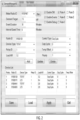
- FIG. 2 Shown in FIG. 2 , is an exemplary user interface for an application with which a customer may configure the electricity demand management functionality of their meter 103 using a computing device 107.
- a portion of the parameters shown in the user interface may be configured by the utility provider and may or may not also be configurable by the customer.
- the tables below further describe the possible parameters presented in the user interface.
- Application Parameter Description Meter Radio ID The radio ID of the meter running Demand Manager Demand Target Specifies the forecasted demand threshold at which Demand Manager will shed load.
- Demand manager will cancel load control for a device if it calculates the forecasted demand will remain below the target with the load re-enabled (utilizing the devices "Load kW" value).
- the debug message is sent every 20 seconds from the meter to Load Control Shop to indicate the operational status of the Demand Manager application.
- Enable Rate A,B,C,D,E Specifies for which rates in the meter that Demand Manager should actively control demand. Details about each rate, such as schedule (days, times, etc.) and pricing, are defined by the utility provider and are subject to be updated periodically.
- the meter can utilize the most current rate information configured by the utility provider for performing demand management functions.
- the table below further describes possible parameters for load control devices that may be managed by the meter 103 to shed and/or restore electrical load.
- Control Type Specifies the type of load control when shedding load Supported Types: Duty Cycle - Shed load using Duty cycle method Temp Offset - Shed load using temperature offset method
- Duty Cycle Specifies the maximum operational duty cycle of the device when shedding load with the "Duty Cycle” control type. Examples: - Duty Cycle of "0" indicates that the load will remain off for the duration of the event. - Duty Cycle of "70” specifies that the load will be allowed to run for at most 70% of the event duration. This value is ignored for the "Temp Offset” control type.
- Temp Offset Specifies the set point offset adjustment in degrees F when shedding load with the "Temp Offset” control type. This value is ignored for the "Duty Cycle” control type.
- Priority Specifies the order in which loads should be shed. Priority 1 is shed first. Typical values: 1 to 16
- the forecasted demand estimates the demand value for the current demand interval, taking into account the demand thus far for the interval and assuming the instantaneous demand will continue for the remainder of the interval. It should be noted that in other embodiments, the meter 103 can make decisions based on other demand values, such as instantaneous demand, rather than forecasted demand.
- meter 103 configured for managing electricity demand (via Demand Manager) under the following configuration: Demand Target 10 KW Rate Flags Rate A Interval Guard Time 5 Minutes Load1 kW 3 KW Load2 kW 4 KW Load3 kW 8 KW Load4 KW 2 KW Meter Demand Interval Size 30 minutes
- an exemplary meter 103 may perform the various tasks of Demand Manager using the following business logic: Tasks Frequency Evaluate Demand Every 20 seconds - Creates a Forecasted Demand value derived from the following meter read data: ⁇ watthours accumulated in the current demand interval ⁇ Instantaneous KW ⁇ time remaining in the interval ⁇ Programmed demand interval size. - Forecasted Demand mathematically is equivalent to the interval's demand if the current instantaneous demand remained constant for the remainder of the demand interval. - The direction of the power flow is known to the meter. The meter does not accumulate energy in the demand register whenever the meter is receiving energy. Likewise, the Forecasted Demand will reflect negative kW as an instantaneous power of zero.
- DM will send a load shed command to the next device in the load control device list that is not currently shedding load - Selects devices in priority order - Delays at least 30 seconds between each load shed command allowing for time to re-evaluate the Forecasted Demand before issuing subsequent load commands -
- the DM configuration specifies the parameters in the load control command (duration, relay ID, duty cycle / temp offset) Cancel Shed Load Evaluates every 30 seconds - While this task is active, DM will cancel load shed to devices if ⁇ The device is in control ⁇ A calculation of forecasted demand with the load active (using the configured load kW value) is
- the messages may contain information such as shown in the table below: Element Description Timestamp Timestamp when the event record was created in 1 second resolution Event Log ID Event Record Counter value. Incremented for each created event log record Event Reason Specifies the reason for the event record. Values include: DM_EVENTREASON_STARTDRLC equ 1 DM_EVENTREASON_STOPDRLC equ 2 DM_EVENTREASON_INTERVAL equ 3 Pre-Time Remaining Prior to issuing the load control command, the time remaining in seconds for the demand interval Pre-Forecast Demand Prior to issuing the load control command, the calculated forecast demand in watts.
- Pre-Instantaneous kW Prior to issuing the load control command, the measured instantaneous KW measured by the meter in watts.
- Post-Time Remaining Subsequent to issuing the load control command the time remaining in seconds for the demand interval Post-Forecast Demand Subsequent to issuing the load control command, the calculated forecast demand in watts.
- Post-Instantaneous kW Subsequent to issuing the load control command the measured instantaneous KW measured by the meter in watts.
- Demand Target The currently configured demand target in watts Event Duration
- Event Duration The currently configured event duration in minutes
- DRLC Count Counter indicating the total number of DRLC commands sent by Demand Manager DRLC Response Indicates if the device acknowledges the load control command.
- DM_DRLC_RESPONSE_ACK equ 0
- Radio ID Radio ID for the device being controlled DRLC Parameters Specifies the configured parameters for controlled device including: Load Type Control Type Temp Offset / Duty Cycle setting
Landscapes
- Engineering & Computer Science (AREA)
- Business, Economics & Management (AREA)
- Economics (AREA)
- Power Engineering (AREA)
- Strategic Management (AREA)
- Human Resources & Organizations (AREA)
- General Physics & Mathematics (AREA)
- Physics & Mathematics (AREA)
- Theoretical Computer Science (AREA)
- Tourism & Hospitality (AREA)
- Marketing (AREA)
- General Business, Economics & Management (AREA)
- Entrepreneurship & Innovation (AREA)
- Health & Medical Sciences (AREA)
- Quality & Reliability (AREA)
- Operations Research (AREA)
- Game Theory and Decision Science (AREA)
- Development Economics (AREA)
- Public Health (AREA)
- Water Supply & Treatment (AREA)
- General Health & Medical Sciences (AREA)
- Primary Health Care (AREA)
- Educational Administration (AREA)
- Supply And Distribution Of Alternating Current (AREA)
- Remote Monitoring And Control Of Power-Distribution Networks (AREA)
- Management, Administration, Business Operations System, And Electronic Commerce (AREA)
Description
- In some instances, electric utility providers meter customer usage based upon the electricity demand of individual customers over defined time intervals (also referred to as "demand intervals"). Often the utility providers bill such customers for their electricity demand using the peak demand value that occurred within a billing period. For example, a residential utility customer whose electricity demand during one 15-minute demand interval was 20 kilowatts (KW), while the remaining demand intervals for the monthly billing period were 5 KW would be billed for the month using their peak demand level of 20 KW. As a result, it may be advantageous for such customers to manage their electricity demand in order to avoid reaching an unnecessarily large peak demand level.
- However, managing demand can be particularly challenging for customers who, in addition to the utility-provided electric power, have additional sources of electric power for their premises, such as photovoltaic solar cells, wind turbine generators, batteries, etc. Unlike the electric power provided by the electric utility, such additional power sources may vary in the amount of electric power that is provided, such as can occur with solar cells on a cloudy day or with a wind turbine during periods with little or no wind. Thus, even if the electricity consumed at a customer premise is steady, the electricity demand placed upon the utility by the customer can vary dramatically as utility-provided power is needed to offset the varying amount of power from the additional source(s). In order to avoid potentially costly peaks in metered demand usage, what is needed is a way to actively manage electricity usage that takes the metered demand into account.
-
WO 2016/076008 A1 describes a device, method, and program for controlling electrical power supply and demand. With that it is possible to create an appropriate plan for requesting a reduction in the amount of electrical power being purchased on the basis of an expectation value for the amount of reduced electrical power being purchased per consumer. The expectation value is determined on the basis of the remaining amount of storage cells for the consumer. An electrical power supply and demand control device has a remaining amount acquisition part and a setting part. The remaining amount acquisition part acquires remaining amount information indicating the remaining amount of storage cells for a consumer. The setting part sets an expectation value for the amount of reduced electrical power being purchased from a grid based on the consumer on the basis of the remaining amount information acquired by the remaining amount acquisition part. - In
US 2017/330294 A1 is provided an electric power supply and demand control apparatus including a remaining battery level acquisition unit and a setting unit. The remaining battery level acquisition unit acquires remaining battery level information indicating a remaining battery level of a storage battery of a consumer. The setting unit sets an expectation value of a reduction in power purchase from a system performed by the consumer, on the basis of the remaining battery level information acquired by the remaining battery level acquisition unit. For example, a high expectation value is set for a consumer whose storage battery has a large remaining battery level. According to the present invention, it is possible to create an appropriate plan of a request for a reduction in a power purchase quantity, on the basis of the expectation value of the reduction in power purchase for each consumer determined on the basis of the remaining battery level of a storage battery of the consumer. -
EP 0 003 010 A1 -
US 2009/234511 A1 describes a demand control device. The demand control device includes a predicted value calculating unit arranged to calculate a predicted value of a power consumption integrated value for each one of a plurality of demand time intervals including a current demand time interval and a predetermined number of demand time intervals subsequent to the current demand time interval based on performance data stored in a power database at the start of the demand time interval, and a control unit arranged to control appliances based on the predicted value calculated by the predicted value calculating unit for each one of the plurality of demand time intervals and on a pre-set target value. -
US 2016/329707 A1 relates to peak shaving using energy storage. Methods for controlling an energy storage device to reduce peak power demand at a site are provided. In one embodiment, load data corresponding to a load in a utility grid-connecting energy generation (EG) system is received. The load data may be sampled at a first predetermined interval, and the EG system may include an energy storage device. A load threshold level is received, and a discharge control signal is generated. The discharge control signal may be generated when the measured load is at or above the load threshold level. The control signal may be applied to the measured load for a second predetermined interval that is longer than the first predetermined interval. - Embodiments of the present invention are generally directed to a meter that manages electricity usage for a utility customer based on the metered demand. In an exemplary embodiment, an electricity meter determines a value for a customer's electricity demand during defined demand intervals using an application or other logic executing in the electricity meter (sometimes referred to as the "Demand Manager" application). In the event that that the demand exceeds a limit that the customer has set, the meter will start shedding the electrical load by issuing corresponding commands to the customer's load control devices, such as thermostats and load control switches. Once the meter has issued one or more load-reducing commands, it monitors the resulting electricity demand to determine if the demand has been reduced to a level to stay within the customer-configured limits for the demand interval. If the electricity demand still seems to exceed the limit (or is forecasted to exceed the limit), the meter issues additional load-reducing commands to further reduce the customer's electricity demand for utility-provided electric power. In some instances, a customer's demand for utility-provided electric power is determined not only by their amount of electricity consumption, but also by the amount of electricity supplied to their premise by additional power sources, such as photovoltaic solar cells, wind turbine generators, batteries, etc. In some embodiments, the meter measures demand and usage that is in excess of the electrical power supplied by the additional power sources (sometimes referred to as "net demand" and "net usage," respectively).
- With reference to
FIG. 1 , shown is an exemplarymetered environment 100 in which a utility customer can manage her or his electricity demand. Themetered environment 100 includes an electricity meter 103 that meters electricity demand and usage for a customer premise. Themetered environment 100 also includes various electrical load managing devices, such as athermostat 105a andload control switches 105b-c, that are capable of adjusting (i.e., shedding and/or restoring) electricity usage of other on-premise devices to affect demand. For example, thethermostat 105a may manage temperature set points and other operating modes of a heat pump for a home, while a load control switch 105b-c may manage operation of a vehicle charger, clothes dryer, water heater, etc. The load managing devices 105 can receive commands from the meter 103 to shed and/or restore electrical load. The meter may communicate with the load managing devices 105 using Wi-Fi; RF mesh networking, such as defined by ZigBee and/or IEEE 802.15.4; Z-Wave; Power-line Communication (PLC); and/or other communication technologies and protocols. In some embodiments, themetered environment 100 also includes additional power sources (not shown), such as photovoltaic solar cells, wind turbine generators, batteries, etc., that provide power for a customer premise, in addition to the utility-provided power that is metered by the meter 103. In still other embodiments, a metering device that implements the Demand Manager application, such as the meter 103, may be placed at the transformer level of the utility provider, thereby enabling electricity demand management for possibly multiple customers within a geographic area. - A utility customer may manage configuration of the electricity demand management functionality of the meter 103 using a
computing device 107, such as a smartphone, desktop computer, laptop computer, etc. Thecomputing device 107 may communicate directly with the meter 103 via Wi-Fi and/or other communication protocols, or the customer may configure their meter 103 indirectly via a cloud computing interface. The electric utility provider may also communicate with the meter 103 to obtain and/or configure various data on the meter, such as data associated with electricity usage and demand. For example, a utility provider may configure the length of demand intervals (e.g., 15 min., 30 min., or 60 min.) during which electricity demand for a customer is evaluated, the various billing rates that correspond to when/how demand should be tracked and how it is to be billed, etc. For instance, billing rate A may correspond to demand-based pricing and the utility provider schedules rate A to be in effect from 5 P.M. to 10 P.M. Monday-Friday, whereas the remainder of the time billing rate B is in effect whereby electricity is billed based on usage and demand is not considered. When the utility provider seeks to change schedules or other aspects associated with customer billing, this data is stored by the meter 103 where it may be used to inform electricity demand/usage decisions according to the portion of the configuration made by the customer. - Shown in
FIG. 2 , is an exemplary user interface for an application with which a customer may configure the electricity demand management functionality of their meter 103 using acomputing device 107. In some embodiments, a portion of the parameters shown in the user interface may be configured by the utility provider and may or may not also be configurable by the customer. The tables below further describe the possible parameters presented in the user interface.Application Parameter Description Meter Radio ID The radio ID of the meter running Demand Manager Demand Target Specifies the forecasted demand threshold at which Demand Manager will shed load. In addition, Demand manager will cancel load control for a device if it calculates the forecasted demand will remain below the target with the load re-enabled (utilizing the devices "Load kW" value). Event Duration (also referred to as Demand Interval) Specifies the duration for the load shed command. Typical value is 15, 30, or 60 minutes. May be set by the utility provider or adjusted/specified by a customer for demand management purposes. Interval Guard Time Specifies the length of time at the start of each interval during which Demand Manager will not consider shedding load. Typical value is 5 minutes. Enable DM Enables the Demand Manager Feature in the Meter Enable Events Enables the reporting of events in Demand Manager. Events are generated and sent after a load control command is issued to a device. It is recommended that this feature be enabled during the pilot. Enable Debug Enables the reporting of debug messaging in Demand Manager. The debug message is sent every 20 seconds from the meter to Load Control Shop to indicate the operational status of the Demand Manager application. Enable Rate A,B,C,D,E Specifies for which rates in the meter that Demand Manager should actively control demand. Details about each rate, such as schedule (days, times, etc.) and pricing, are defined by the utility provider and are subject to be updated periodically. The meter can utilize the most current rate information configured by the utility provider for performing demand management functions. - The table below further describes possible parameters for load control devices that may be managed by the meter 103 to shed and/or restore electrical load.
Per Device Parameters Description Radio ID The 4 byte serial number of the SBR radio in the load control device. Device Type Supported Types: TSTAT - Gridstream Thermostat LCS - Gridstream Load Control Switch Relay ID Specifies the relay to be configured on a Load Control Switch Supported Values: For Thermostat - always 1 For LCS - 1 or 2 Load kW Specifies the size of the load under control in KW. This value will be used by Demand Manager to determine if an active load shed can be canceled for device and still maintain the demand target. Control Type Specifies the type of load control when shedding load Supported Types: Duty Cycle - Shed load using Duty cycle method Temp Offset - Shed load using temperature offset method Duty Cycle Specifies the maximum operational duty cycle of the device when shedding load with the "Duty Cycle" control type. Examples: - Duty Cycle of "0" indicates that the load will remain off for the duration of the event. - Duty Cycle of "70" specifies that the load will be allowed to run for at most 70% of the event duration. This value is ignored for the "Temp Offset" control type. Temp Offset Specifies the set point offset adjustment in degrees F when shedding load with the "Temp Offset" control type. This value is ignored for the "Duty Cycle" control type. Priority Specifies the order in which loads should be shed. Priority 1 is shed first. Typical values: 1 to 16 - In some embodiments, when the meter 103 is appropriately configured, Demand Manager will make decisions to shed or restore electrical load based on the results of the calculated forecasted demand and the configured demand target. The inputs to this calculation include the following metrics which can be provided by the metrology module in the meter:
- CurrentDemandKWH - Total energy accumulated in the current interval
- InstantaneousKW - Current instantaneous power measured by the meter
- IntervalLength - Demand Interval length (in seconds)
- TimeLeft - Amount of time remaining in the interval (in seconds)
- The equation for forecasted demand is given as follows:

- Which simplifies to the form::

- The forecasted demand estimates the demand value for the current demand interval, taking into account the demand thus far for the interval and assuming the instantaneous demand will continue for the remainder of the interval. It should be noted that in other embodiments, the meter 103 can make decisions based on other demand values, such as instantaneous demand, rather than forecasted demand.
- Demand Manager business logic is controlled by the following configurable values:
- Demand Target - Specifies the desired kw demand value to which Demand Manager should manage via shed and restoration of loads
- Interval Guard Time - Specifies the length of time at the start of each interval during which Demand Manager will not consider shedding load
- Control Event Length - Specifies the default length of time that demand manager will issue events when controlling load
- Load KW - Specifies the amount of demand for each load configured to demand manager. Demand manager utilizes this value to determine if restoring a load will still maintain the demand forecast below demand target
- Rate Flags - Specifies during which rate periods that Demand Manager should consider shedding load
- Below are possible use cases for the meter 103 configured for managing electricity demand (via Demand Manager) under the following configuration:
Demand Target 10 KW Rate Flags Rate A Interval Guard Time 5 Minutes Load1 kW 3 KW Load2 kW 4 KW Load3 kW 8 KW Load4 KW 2 KW Meter Demand Interval Size 30 minutes -
- Conditions
- ∘ Meter is currently accumulating for billing Rate B (in which demand is not billed)
- ∘ Demand Forecast is 12 KW
- Expected Behavior
∘ Demand Manager will not shed load even though Demand Forecast > Demand Target since Rate B is not enabled for Demand Manager -
- Conditions
- ∘ Meter is currently accumulating for billing Rate A
- ∘ Demand Forecast is 8 KW and remains < Demand Target during the interval
- Expected Behavior
∘ Demand Manager will not shed load because Demand Forecast < Demand Target -
- Conditions
- ∘ Meter is currently accumulating for billing Rate A
- ∘ Demand Forecast is 12 KW at 3 minutes into interval
- ∘ Demand Forecast becomes 9 KW at 5 minutes into the interval
- ∘ Demand Forecast remains below Demand Target for remainder of interval
- Expected Behavior
∘ Demand Manager will not shed load even though Demand Forecast > Demand Target as this occurred only during the Interval Guard Time during which the Demand Forecast can exceed the Demand Target without load being shed -
- Conditions
- ∘ Meter is currently accumulating for billing Rate A
- ∘ Demand Forecast is 9 KW at 5 minutes into interval
- ∘ Demand Forecast becomes 14 KW at 10 minutes into the interval
- Expected Behavior
- ∘ Demand Manager will shed load1 at 10:00 into the interval
- ∘ Demand Manager will see Demand Forecast drops to 12 KW at 10:10 into interval
- ∘ Demand Manager will shed load2 at 10:20 into the interval
- ∘ Demand Manager will see Demand Forecast drops to 9.3 KW at 10:30 into interval
- ∘ Demand Manager will not shed any more load as long as Demand Forecast remains below Demand Target for the remainder of the interval
- ∘ The Loads will automatically exit the
load control 30 minutes after the load shed started (as the next Demand Interval begins with the Interval Guard Time).
-
- Conditions
- ∘ Meter is currently accumulating for billing Rate A
- ∘ Demand Forecast had put all four loads into control due to exceeding demand target
- ∘ Demand Forecast remains at 9 KW throughout the interval
- Expected Behavior
- o Demand Manager will continually be evaluating whether restoration of load(s) will maintain the demand target constraint
- ∘ At 10:00 into the interval none of the loads can be restored. Calculations
- ▪ ForecastedDemand + Loadl = 9KW + 3KW*20min/30min = 11.0 KW
- ▪ ForecastedDemand + Load2 = 9KW + 4KW*20min/30min = 11.6 KW
- ▪ ForecastedDemand + Load3 = 9KW + 8KW*20min/30min = 14.3 KW
- ▪ ForecastedDemand + Load4 = 9KW + 5KW*20min/30min = 12.3 KW
- ∘ At 15:00 into the interval none of the loads can be restored. Calculations
- ▪ ForecastedDemand + Loadl = 9KW + 3KW*15min/30min = 10.5 KW
- ▪ ForecastedDemand + Load2 = 9KW + 4KW*15min/30min = 11.0 KW
- ▪ ForecastedDemand + Load3 = 9KW + 8KW*15min/30min = 13 KW
- ▪ ForecastedDemand + Load4 = 9KW + 5KW*15min/30min = 11.5 KW
- ∘ At 21:00 into the interval, Demand Manager will determine that Load1 can be restored. Calculations:
- ▪ ForecastedDemand + Load1 = 9KW + 3KW*9min/30min = 9.9 KW
- ▪ ForecastedDemand + Load2 = 9KW + 4KW*9min/30min = 10.2 KW
- ▪ ForecastedDemand + Load3 = 9KW + 8KW*9min/30min = 11.4 KW
- ▪ ForecastedDemand + Load4 = 9KW + 5KW*9min/30min = 10.5 KW
- ∘ At 21:00 demand manager will end the control event on Load1
- ∘ At 21:10 demand manager will see Demand Forecast increased to 9.9 KW
- To generalize the above use cases, an exemplary meter 103 may perform the various tasks of Demand Manager using the following business logic:
Tasks Frequency Evaluate Demand Every 20 seconds - Creates a Forecasted Demand value derived from the following meter read data: ∘ watthours accumulated in the current demand interval ∘ Instantaneous KW ∘ time remaining in the interval ∘ Programmed demand interval size. - Forecasted Demand mathematically is equivalent to the interval's demand if the current instantaneous demand remained constant for the remainder of the demand interval. - The direction of the power flow is known to the meter. The meter does not accumulate energy in the demand register whenever the meter is receiving energy. Likewise, the Forecasted Demand will reflect negative kW as an instantaneous power of zero. - If Forecasted Demand > Demand Target then Demand Manager will: ∘ Enable task to shed load ∘ Disable task to cancel shed load - If Forecasted Demand < Demand Target then Demand Manager will: ∘ Enable task to cancel shed load ∘ Disable task to shed load Shed Load Evaluates every 30 seconds - While this task is active and if the current rate is enabled in the DM configuration, DM will send a load shed command to the next device in the load control device list that is not currently shedding load - Selects devices in priority order - Delays at least 30 seconds between each load shed command allowing for time to re-evaluate the Forecasted Demand before issuing subsequent load commands - The DM configuration specifies the parameters in the load control command (duration, relay ID, duty cycle / temp offset) Cancel Shed Load Evaluates every 30 seconds - While this task is active, DM will cancel load shed to devices if ∘ The device is in control ∘ A calculation of forecasted demand with the load active (using the configured load kW value) is still below the demand target - Selects devices in reverse priority order - Delays at least 30 seconds between each load cancel command Send Debug Message Every 20 seconds - If enabled in the DM configuration, this message is sent to the HES whenever the Demand Forecast is evaluated Send Event Message After every load control command - If enabled in the configuration, this message is sent to the HES after load control command is executed - When the meter 103 is configured to generate event messages, the messages may contain information such as shown in the table below:
Element Description Timestamp Timestamp when the event record was created in 1 second resolution Event Log ID Event Record Counter value. Incremented for each created event log record Event Reason Specifies the reason for the event record. Values include: DM_EVENTREASON_STARTDRLC equ 1 DM_EVENTREASON_STOPDRLC equ 2 DM_EVENTREASON_INTERVAL equ 3 Pre-Time Remaining Prior to issuing the load control command, the time remaining in seconds for the demand interval Pre-Forecast Demand Prior to issuing the load control command, the calculated forecast demand in watts. Pre-Instantaneous kW Prior to issuing the load control command, the measured instantaneous KW measured by the meter in watts. Post-Time Remaining Subsequent to issuing the load control command, the time remaining in seconds for the demand interval Post-Forecast Demand Subsequent to issuing the load control command, the calculated forecast demand in watts. Post-Instantaneous kW Subsequent to issuing the load control command, the measured instantaneous KW measured by the meter in watts. CE Flags Indicates which devices are currently in control. Two byte mask. 0x01 = Device 1, 0x02 = Device2, etc. Demand Target The currently configured demand target in watts Event Duration The currently configured event duration in minutes DRLC Count Counter indicating the total number of DRLC commands sent by Demand Manager DRLC Response Indicates if the device acknowledges the load control command. DM_DRLC_RESPONSE_ACK equ 0DM_DRLC_RESPONSE_NONE equ 1 DM_DRLC_RESPONSE_UNKNOWN equ 255 DRLC Radio ID Radio ID for the device being controlled DRLC Parameters Specifies the configured parameters for controlled device including: Load Type Control Type Temp Offset / Duty Cycle setting - The foregoing is provided for purposes of illustrating, describing, and explaining aspects of the present invention and is not intended to be exhaustive or to limit the invention to the precise forms disclosed. Further modifications and adaptation of these embodiments will be apparent to those skilled in the art and may be made without departing from the scope of the invention. Different arrangements and combinations of the components and functionality described above, as well as those not shown or described are possible. Similarly, some features and sub-combinations are useful and may be employed without reference to other features and sub-combinations. Embodiments of the invention have been described for illustrative and not restrictive purposes, and alternative embodiments will become apparent to readers of the appended claims defining the scope of the present invention.
Claims (4)
- A system for managing electrical consumption of a load device (306), the system including:a load managing device (105) capable of adjusting the electrical consumption of the load device (306), anda processor configured with code to perform operations comprising:receiving information describing a quantity of electricity received by the load device (306) from an electrical utility provider (120);determining that the portion of the received energy is received during a local demand interval (312), wherein the local demand interval (312) has i) a local duration and a local start time that are modified based on a provider duration of a provider demand interval (322) associated with the electrical utility provider (120) and ii) an interval guard time at a start of the local demand interval, wherein the processor does not consider shedding load during the guard time;determining a forecasted consumption (314) of the load device (306) based on the portion of the received energy received during the local demand interval (312) and on a quantity of time remaining in the local duration of the local demand interval (312);based on a comparison of the forecasted consumption (314) to a demand threshold (316) associated with the local demand interval (312), determining that the forecasted consumption (314) exceeds the demand threshold (316); andresponsive to determining that the forecasted consumption (314) exceeds the demand threshold, adjusting the electrical consumption of the load device (306) unless the forecasted consumption exceeds the demand threshold only during the guard interval.
- The system of claim 1, wherein:the information describing the provider demand interval (322) indicates a billing category of the provider demand interval (322), andthe demand threshold (316) associated with the local demand interval (312) is determined based on the billing category.
- The system of claim 1, wherein adjusting the electrical consumption of the load device (306) includes reducing the electrical consumption of the load device (306).
- The system of claim 1, wherein the processor is further configured for:determining that an additional forecasted consumption (314) of the load device (306) is within the demand threshold (316), andresponsive to determining that the additional forecasted consumption (314) is within the demand threshold (316), issuing an additional command to the load managing device (105), wherein the additional command describes an increase of the electrical consumption by the load device (306).
Applications Claiming Priority (3)
| Application Number | Priority Date | Filing Date | Title |
|---|---|---|---|
| US201762450190P | 2017-01-25 | 2017-01-25 | |
| PCT/US2018/015166 WO2018140564A1 (en) | 2017-01-25 | 2018-01-25 | Techniques for managing resource consumption for demand-based metering |
| EP18703457.4A EP3574560B1 (en) | 2017-01-25 | 2018-01-25 | Techniques for managing resource consumption for demand-based metering |
Related Parent Applications (3)
| Application Number | Title | Priority Date | Filing Date |
|---|---|---|---|
| US201762450190P Previously-Filed-Application | 2017-01-25 | ||
| EP18703457.4A Division-Into EP3574560B1 (en) | 2017-01-25 | 2018-01-25 | Techniques for managing resource consumption for demand-based metering |
| EP18703457.4A Division EP3574560B1 (en) | 2017-01-25 | 2018-01-25 | Techniques for managing resource consumption for demand-based metering |
Publications (2)
| Publication Number | Publication Date |
|---|---|
| EP3896813A1 EP3896813A1 (en) | 2021-10-20 |
| EP3896813B1 true EP3896813B1 (en) | 2024-11-27 |
Family
ID=61163849
Family Applications (2)
| Application Number | Title | Priority Date | Filing Date |
|---|---|---|---|
| EP21176167.1A Active EP3896813B1 (en) | 2017-01-25 | 2018-01-25 | Techniques for managing resource consumption for demand-based metering |
| EP18703457.4A Active EP3574560B1 (en) | 2017-01-25 | 2018-01-25 | Techniques for managing resource consumption for demand-based metering |
Family Applications After (1)
| Application Number | Title | Priority Date | Filing Date |
|---|---|---|---|
| EP18703457.4A Active EP3574560B1 (en) | 2017-01-25 | 2018-01-25 | Techniques for managing resource consumption for demand-based metering |
Country Status (6)
| Country | Link |
|---|---|
| US (1) | US10797483B2 (en) |
| EP (2) | EP3896813B1 (en) |
| CA (1) | CA3050267A1 (en) |
| ES (1) | ES2901536T3 (en) |
| PT (1) | PT3574560T (en) |
| WO (1) | WO2018140564A1 (en) |
Families Citing this family (6)
| Publication number | Priority date | Publication date | Assignee | Title |
|---|---|---|---|---|
| JP6988537B2 (en) * | 2018-02-09 | 2022-01-05 | 富士通株式会社 | Information processing equipment, distributed system and change control program |
| US20190393699A1 (en) * | 2018-06-26 | 2019-12-26 | Ganesh Shastri | Smart Utility Hub |
| KR102889106B1 (en) * | 2021-02-04 | 2025-11-20 | 랜디스+기어 테크놀로지, 인크 | Decentralized control and grid stability for energy storage device charging |
| CN113131476B (en) * | 2021-04-28 | 2022-06-14 | 南方电网科学研究院有限责任公司 | Power load prediction method |
| FR3151155A1 (en) * | 2023-12-07 | 2025-01-17 | Sagemcom Energy & Telecom Sas | METHODS AND DEVICES FOR MANAGING LOAD SHEDDING IN A RESOURCE DISTRIBUTION NETWORK |
| CN119520068B (en) * | 2024-11-14 | 2025-11-14 | 天翼安全科技有限公司 | A flow cleaning method, apparatus, electronic device and storage medium |
Family Cites Families (6)
| Publication number | Priority date | Publication date | Assignee | Title |
|---|---|---|---|---|
| EP0003010A1 (en) * | 1977-12-27 | 1979-07-11 | United Technologies Corporation | Method and apparatus for limiting the power demand in heating-ventilation-air conditioning |
| JP5114026B2 (en) * | 2006-06-28 | 2013-01-09 | 三洋電機株式会社 | Demand control device |
| EP3498905B1 (en) * | 2010-06-25 | 2020-03-11 | LG Electronics Inc. | Network system |
| US10069332B2 (en) * | 2012-06-05 | 2018-09-04 | Centurylink Intellectual Property Llc | Electrical power status indicator |
| US10063053B2 (en) * | 2015-05-04 | 2018-08-28 | Solarcity Corporation | Peak shaving using energy storage |
| WO2016076008A1 (en) * | 2014-11-10 | 2016-05-19 | 日本電気株式会社 | Device for controlling electrical power supply and demand, method for controlling electrical power supply and demand, and program |
-
2018
- 2018-01-25 PT PT187034574T patent/PT3574560T/en unknown
- 2018-01-25 ES ES18703457T patent/ES2901536T3/en active Active
- 2018-01-25 EP EP21176167.1A patent/EP3896813B1/en active Active
- 2018-01-25 US US15/879,679 patent/US10797483B2/en active Active
- 2018-01-25 EP EP18703457.4A patent/EP3574560B1/en active Active
- 2018-01-25 WO PCT/US2018/015166 patent/WO2018140564A1/en not_active Ceased
- 2018-01-25 CA CA3050267A patent/CA3050267A1/en active Pending
Also Published As
| Publication number | Publication date |
|---|---|
| US20180212428A1 (en) | 2018-07-26 |
| ES2901536T3 (en) | 2022-03-22 |
| EP3574560B1 (en) | 2021-07-21 |
| US10797483B2 (en) | 2020-10-06 |
| EP3574560A1 (en) | 2019-12-04 |
| PT3574560T (en) | 2021-10-21 |
| BR112019014863A2 (en) | 2020-04-14 |
| EP3896813A1 (en) | 2021-10-20 |
| CA3050267A1 (en) | 2018-08-02 |
| WO2018140564A1 (en) | 2018-08-02 |
Similar Documents
| Publication | Publication Date | Title |
|---|---|---|
| EP3896813B1 (en) | Techniques for managing resource consumption for demand-based metering | |
| US9881259B2 (en) | System and method for estimating and providing dispatchable operating reserve energy capacity through use of active load management | |
| US10396592B2 (en) | System and method for estimating and providing dispatchable operating reserve energy capacity through use of active load management | |
| Mohagheghi et al. | Demand response architecture: Integration into the distribution management system | |
| US8938322B2 (en) | Apparatus and method for controlling consumer electric power consumption | |
| CN114362189A (en) | Calling method, system and device capable of adjusting load participation demand response | |
| CA2810993C (en) | Thermal energy storage apparatus, controllers and thermal energy storage control methods | |
| CN102282741B (en) | Energy savings | |
| US8600573B2 (en) | System and method for managing cold load pickup using demand response | |
| KR20120016133A (en) | System and method for estimating and providing expedited operational reserve energy capacity using active load management | |
| AU2012212224A1 (en) | System and method for estimating and providing dispatchable operating reserve energy capacity through use of active load management | |
| US20120245753A1 (en) | System and method for generating and providing dispatchable operating reserve energy capacity through use of active load management to compensate for an over-generation condition | |
| US20140172183A1 (en) | Power apparatus | |
| US20160294215A1 (en) | Power control system, power control method, and recording medium | |
| US20160370819A1 (en) | System and method for estimating and providing dispatchable operating reserve energy capacity through use of active load management | |
| KR20120114435A (en) | Method of managing electric consumption with demand response | |
| CN108879953A (en) | A kind of virtual peaking generation factory system and its Intelligent hardware control equipment | |
| EP2503503A1 (en) | Systems and methods for generating a utility bill | |
| US12438368B2 (en) | System and method for estimating and providing dispatchable operating reserve energy capacity through use of active load management | |
| KR101504169B1 (en) | System and method of scheduling electric power consumption for smart grid | |
| Dai et al. | A demand response scheme in smart grid with clustering of residential customers | |
| Arghira et al. | Demand dispatch framework for smart distribution grids | |
| Jain et al. | A distributed algorithm with rooftop solar photo voltaic for balancing domestic loads | |
| NZ621385B2 (en) | Power apparatus |
Legal Events
| Date | Code | Title | Description |
|---|---|---|---|
| PUAI | Public reference made under article 153(3) epc to a published international application that has entered the european phase |
Free format text: ORIGINAL CODE: 0009012 |
|
| STAA | Information on the status of an ep patent application or granted ep patent |
Free format text: STATUS: THE APPLICATION HAS BEEN PUBLISHED |
|
| AC | Divisional application: reference to earlier application |
Ref document number: 3574560 Country of ref document: EP Kind code of ref document: P |
|
| AK | Designated contracting states |
Kind code of ref document: A1 Designated state(s): AL AT BE BG CH CY CZ DE DK EE ES FI FR GB GR HR HU IE IS IT LI LT LU LV MC MK MT NL NO PL PT RO RS SE SI SK SM TR |
|
| B565 | Issuance of search results under rule 164(2) epc |
Effective date: 20210727 |
|
| STAA | Information on the status of an ep patent application or granted ep patent |
Free format text: STATUS: REQUEST FOR EXAMINATION WAS MADE |
|
| 17P | Request for examination filed |
Effective date: 20220404 |
|
| RBV | Designated contracting states (corrected) |
Designated state(s): AL AT BE BG CH CY CZ DE DK EE ES FI FR GB GR HR HU IE IS IT LI LT LU LV MC MK MT NL NO PL PT RO RS SE SI SK SM TR |
|
| STAA | Information on the status of an ep patent application or granted ep patent |
Free format text: STATUS: EXAMINATION IS IN PROGRESS |
|
| 17Q | First examination report despatched |
Effective date: 20220908 |
|
| P01 | Opt-out of the competence of the unified patent court (upc) registered |
Effective date: 20230517 |
|
| RAP1 | Party data changed (applicant data changed or rights of an application transferred) |
Owner name: LANDIS+GYR TECHNOLOGY, INC. |
|
| GRAP | Despatch of communication of intention to grant a patent |
Free format text: ORIGINAL CODE: EPIDOSNIGR1 |
|
| STAA | Information on the status of an ep patent application or granted ep patent |
Free format text: STATUS: GRANT OF PATENT IS INTENDED |
|
| INTG | Intention to grant announced |
Effective date: 20240618 |
|
| GRAS | Grant fee paid |
Free format text: ORIGINAL CODE: EPIDOSNIGR3 |
|
| GRAA | (expected) grant |
Free format text: ORIGINAL CODE: 0009210 |
|
| STAA | Information on the status of an ep patent application or granted ep patent |
Free format text: STATUS: THE PATENT HAS BEEN GRANTED |
|
| AC | Divisional application: reference to earlier application |
Ref document number: 3574560 Country of ref document: EP Kind code of ref document: P |
|
| AK | Designated contracting states |
Kind code of ref document: B1 Designated state(s): AL AT BE BG CH CY CZ DE DK EE ES FI FR GB GR HR HU IE IS IT LI LT LU LV MC MK MT NL NO PL PT RO RS SE SI SK SM TR |
|
| REG | Reference to a national code |
Ref country code: GB Ref legal event code: FG4D |
|
| REG | Reference to a national code |
Ref country code: CH Ref legal event code: EP |
|
| REG | Reference to a national code |
Ref country code: IE Ref legal event code: FG4D |
|
| REG | Reference to a national code |
Ref country code: DE Ref legal event code: R096 Ref document number: 602018077142 Country of ref document: DE |
|
| REG | Reference to a national code |
Ref country code: NL Ref legal event code: FP |
|
| REG | Reference to a national code |
Ref country code: LT Ref legal event code: MG9D |
|
| PG25 | Lapsed in a contracting state [announced via postgrant information from national office to epo] |
Ref country code: PT Free format text: LAPSE BECAUSE OF FAILURE TO SUBMIT A TRANSLATION OF THE DESCRIPTION OR TO PAY THE FEE WITHIN THE PRESCRIBED TIME-LIMIT Effective date: 20250327 Ref country code: IS Free format text: LAPSE BECAUSE OF FAILURE TO SUBMIT A TRANSLATION OF THE DESCRIPTION OR TO PAY THE FEE WITHIN THE PRESCRIBED TIME-LIMIT Effective date: 20250327 Ref country code: HR Free format text: LAPSE BECAUSE OF FAILURE TO SUBMIT A TRANSLATION OF THE DESCRIPTION OR TO PAY THE FEE WITHIN THE PRESCRIBED TIME-LIMIT Effective date: 20241127 |
|
| PG25 | Lapsed in a contracting state [announced via postgrant information from national office to epo] |
Ref country code: FI Free format text: LAPSE BECAUSE OF FAILURE TO SUBMIT A TRANSLATION OF THE DESCRIPTION OR TO PAY THE FEE WITHIN THE PRESCRIBED TIME-LIMIT Effective date: 20241127 |
|
| REG | Reference to a national code |
Ref country code: AT Ref legal event code: MK05 Ref document number: 1746665 Country of ref document: AT Kind code of ref document: T Effective date: 20241127 |
|
| PG25 | Lapsed in a contracting state [announced via postgrant information from national office to epo] |
Ref country code: BG Free format text: LAPSE BECAUSE OF FAILURE TO SUBMIT A TRANSLATION OF THE DESCRIPTION OR TO PAY THE FEE WITHIN THE PRESCRIBED TIME-LIMIT Effective date: 20241127 |
|
| PG25 | Lapsed in a contracting state [announced via postgrant information from national office to epo] |
Ref country code: ES Free format text: LAPSE BECAUSE OF FAILURE TO SUBMIT A TRANSLATION OF THE DESCRIPTION OR TO PAY THE FEE WITHIN THE PRESCRIBED TIME-LIMIT Effective date: 20241127 |
|
| PG25 | Lapsed in a contracting state [announced via postgrant information from national office to epo] |
Ref country code: NO Free format text: LAPSE BECAUSE OF FAILURE TO SUBMIT A TRANSLATION OF THE DESCRIPTION OR TO PAY THE FEE WITHIN THE PRESCRIBED TIME-LIMIT Effective date: 20250227 |
|
| PG25 | Lapsed in a contracting state [announced via postgrant information from national office to epo] |
Ref country code: LV Free format text: LAPSE BECAUSE OF FAILURE TO SUBMIT A TRANSLATION OF THE DESCRIPTION OR TO PAY THE FEE WITHIN THE PRESCRIBED TIME-LIMIT Effective date: 20241127 Ref country code: GR Free format text: LAPSE BECAUSE OF FAILURE TO SUBMIT A TRANSLATION OF THE DESCRIPTION OR TO PAY THE FEE WITHIN THE PRESCRIBED TIME-LIMIT Effective date: 20250228 Ref country code: AT Free format text: LAPSE BECAUSE OF FAILURE TO SUBMIT A TRANSLATION OF THE DESCRIPTION OR TO PAY THE FEE WITHIN THE PRESCRIBED TIME-LIMIT Effective date: 20241127 |
|
| PG25 | Lapsed in a contracting state [announced via postgrant information from national office to epo] |
Ref country code: PL Free format text: LAPSE BECAUSE OF FAILURE TO SUBMIT A TRANSLATION OF THE DESCRIPTION OR TO PAY THE FEE WITHIN THE PRESCRIBED TIME-LIMIT Effective date: 20241127 |
|
| PG25 | Lapsed in a contracting state [announced via postgrant information from national office to epo] |
Ref country code: RS Free format text: LAPSE BECAUSE OF FAILURE TO SUBMIT A TRANSLATION OF THE DESCRIPTION OR TO PAY THE FEE WITHIN THE PRESCRIBED TIME-LIMIT Effective date: 20250227 |
|
| PG25 | Lapsed in a contracting state [announced via postgrant information from national office to epo] |
Ref country code: SM Free format text: LAPSE BECAUSE OF FAILURE TO SUBMIT A TRANSLATION OF THE DESCRIPTION OR TO PAY THE FEE WITHIN THE PRESCRIBED TIME-LIMIT Effective date: 20241127 |
|
| PG25 | Lapsed in a contracting state [announced via postgrant information from national office to epo] |
Ref country code: DK Free format text: LAPSE BECAUSE OF FAILURE TO SUBMIT A TRANSLATION OF THE DESCRIPTION OR TO PAY THE FEE WITHIN THE PRESCRIBED TIME-LIMIT Effective date: 20241127 |
|
| PG25 | Lapsed in a contracting state [announced via postgrant information from national office to epo] |
Ref country code: EE Free format text: LAPSE BECAUSE OF FAILURE TO SUBMIT A TRANSLATION OF THE DESCRIPTION OR TO PAY THE FEE WITHIN THE PRESCRIBED TIME-LIMIT Effective date: 20241127 |
|
| PG25 | Lapsed in a contracting state [announced via postgrant information from national office to epo] |
Ref country code: RO Free format text: LAPSE BECAUSE OF FAILURE TO SUBMIT A TRANSLATION OF THE DESCRIPTION OR TO PAY THE FEE WITHIN THE PRESCRIBED TIME-LIMIT Effective date: 20241127 |
|
| PG25 | Lapsed in a contracting state [announced via postgrant information from national office to epo] |
Ref country code: SK Free format text: LAPSE BECAUSE OF FAILURE TO SUBMIT A TRANSLATION OF THE DESCRIPTION OR TO PAY THE FEE WITHIN THE PRESCRIBED TIME-LIMIT Effective date: 20241127 |
|
| PG25 | Lapsed in a contracting state [announced via postgrant information from national office to epo] |
Ref country code: CZ Free format text: LAPSE BECAUSE OF FAILURE TO SUBMIT A TRANSLATION OF THE DESCRIPTION OR TO PAY THE FEE WITHIN THE PRESCRIBED TIME-LIMIT Effective date: 20241127 |
|
| PG25 | Lapsed in a contracting state [announced via postgrant information from national office to epo] |
Ref country code: IT Free format text: LAPSE BECAUSE OF FAILURE TO SUBMIT A TRANSLATION OF THE DESCRIPTION OR TO PAY THE FEE WITHIN THE PRESCRIBED TIME-LIMIT Effective date: 20241127 |
|
| REG | Reference to a national code |
Ref country code: DE Ref legal event code: R097 Ref document number: 602018077142 Country of ref document: DE |
|
| PG25 | Lapsed in a contracting state [announced via postgrant information from national office to epo] |
Ref country code: SE Free format text: LAPSE BECAUSE OF FAILURE TO SUBMIT A TRANSLATION OF THE DESCRIPTION OR TO PAY THE FEE WITHIN THE PRESCRIBED TIME-LIMIT Effective date: 20241127 |
|
| PG25 | Lapsed in a contracting state [announced via postgrant information from national office to epo] |
Ref country code: LU Free format text: LAPSE BECAUSE OF NON-PAYMENT OF DUE FEES Effective date: 20250125 Ref country code: MC Free format text: LAPSE BECAUSE OF FAILURE TO SUBMIT A TRANSLATION OF THE DESCRIPTION OR TO PAY THE FEE WITHIN THE PRESCRIBED TIME-LIMIT Effective date: 20241127 |
|
| PLBE | No opposition filed within time limit |
Free format text: ORIGINAL CODE: 0009261 |
|
| STAA | Information on the status of an ep patent application or granted ep patent |
Free format text: STATUS: NO OPPOSITION FILED WITHIN TIME LIMIT |
|
| REG | Reference to a national code |
Ref country code: CH Ref legal event code: L10 Free format text: ST27 STATUS EVENT CODE: U-0-0-L10-L00 (AS PROVIDED BY THE NATIONAL OFFICE) Effective date: 20251008 |
|
| PG25 | Lapsed in a contracting state [announced via postgrant information from national office to epo] |
Ref country code: BE Free format text: LAPSE BECAUSE OF NON-PAYMENT OF DUE FEES Effective date: 20250131 |
|
| REG | Reference to a national code |
Ref country code: BE Ref legal event code: MM Effective date: 20250131 |
|
| 26N | No opposition filed |
Effective date: 20250828 |
|
| PG25 | Lapsed in a contracting state [announced via postgrant information from national office to epo] |
Ref country code: IE Free format text: LAPSE BECAUSE OF NON-PAYMENT OF DUE FEES Effective date: 20250125 |
|
| REG | Reference to a national code |
Ref country code: CH Ref legal event code: U11 Free format text: ST27 STATUS EVENT CODE: U-0-0-U10-U11 (AS PROVIDED BY THE NATIONAL OFFICE) Effective date: 20260201 |
|
| PGFP | Annual fee paid to national office [announced via postgrant information from national office to epo] |
Ref country code: NL Payment date: 20260121 Year of fee payment: 9 |
|
| PGFP | Annual fee paid to national office [announced via postgrant information from national office to epo] |
Ref country code: GB Payment date: 20260123 Year of fee payment: 9 |
|
| PGFP | Annual fee paid to national office [announced via postgrant information from national office to epo] |
Ref country code: DE Payment date: 20260121 Year of fee payment: 9 |
|
| PGFP | Annual fee paid to national office [announced via postgrant information from national office to epo] |
Ref country code: FR Payment date: 20260123 Year of fee payment: 9 |
|
| PGFP | Annual fee paid to national office [announced via postgrant information from national office to epo] |
Ref country code: TR Payment date: 20260121 Year of fee payment: 9 |
|
| PGFP | Annual fee paid to national office [announced via postgrant information from national office to epo] |
Ref country code: CH Payment date: 20260201 Year of fee payment: 9 |