EP3896647A1 - Mini-batch learning device, operating program for mini-batch learning device, operating method for mini-batch learning device, and image processing device - Google Patents
Mini-batch learning device, operating program for mini-batch learning device, operating method for mini-batch learning device, and image processing device Download PDFInfo
- Publication number
- EP3896647A1 EP3896647A1 EP19895917.3A EP19895917A EP3896647A1 EP 3896647 A1 EP3896647 A1 EP 3896647A1 EP 19895917 A EP19895917 A EP 19895917A EP 3896647 A1 EP3896647 A1 EP 3896647A1
- Authority
- EP
- European Patent Office
- Prior art keywords
- mini
- learning
- machine learning
- batch
- unit
- Prior art date
- Legal status (The legal status is an assumption and is not a legal conclusion. Google has not performed a legal analysis and makes no representation as to the accuracy of the status listed.)
- Granted
Links
Images







Classifications
-
- G—PHYSICS
- G06—COMPUTING OR CALCULATING; COUNTING
- G06N—COMPUTING ARRANGEMENTS BASED ON SPECIFIC COMPUTATIONAL MODELS
- G06N3/00—Computing arrangements based on biological models
- G06N3/02—Neural networks
- G06N3/08—Learning methods
-
- G—PHYSICS
- G06—COMPUTING OR CALCULATING; COUNTING
- G06F—ELECTRIC DIGITAL DATA PROCESSING
- G06F18/00—Pattern recognition
- G06F18/20—Analysing
- G06F18/21—Design or setup of recognition systems or techniques; Extraction of features in feature space; Blind source separation
- G06F18/214—Generating training patterns; Bootstrap methods, e.g. bagging or boosting
-
- G—PHYSICS
- G06—COMPUTING OR CALCULATING; COUNTING
- G06F—ELECTRIC DIGITAL DATA PROCESSING
- G06F18/00—Pattern recognition
- G06F18/20—Analysing
- G06F18/24—Classification techniques
- G06F18/243—Classification techniques relating to the number of classes
- G06F18/2431—Multiple classes
-
- G—PHYSICS
- G06—COMPUTING OR CALCULATING; COUNTING
- G06N—COMPUTING ARRANGEMENTS BASED ON SPECIFIC COMPUTATIONAL MODELS
- G06N20/00—Machine learning
-
- G—PHYSICS
- G06—COMPUTING OR CALCULATING; COUNTING
- G06N—COMPUTING ARRANGEMENTS BASED ON SPECIFIC COMPUTATIONAL MODELS
- G06N3/00—Computing arrangements based on biological models
- G06N3/02—Neural networks
- G06N3/04—Architecture, e.g. interconnection topology
- G06N3/0464—Convolutional networks [CNN, ConvNet]
-
- G—PHYSICS
- G06—COMPUTING OR CALCULATING; COUNTING
- G06N—COMPUTING ARRANGEMENTS BASED ON SPECIFIC COMPUTATIONAL MODELS
- G06N3/00—Computing arrangements based on biological models
- G06N3/02—Neural networks
- G06N3/08—Learning methods
- G06N3/09—Supervised learning
-
- G—PHYSICS
- G06—COMPUTING OR CALCULATING; COUNTING
- G06T—IMAGE DATA PROCESSING OR GENERATION, IN GENERAL
- G06T7/00—Image analysis
-
- G—PHYSICS
- G06—COMPUTING OR CALCULATING; COUNTING
- G06T—IMAGE DATA PROCESSING OR GENERATION, IN GENERAL
- G06T7/00—Image analysis
- G06T7/10—Segmentation; Edge detection
- G06T7/11—Region-based segmentation
-
- G—PHYSICS
- G06—COMPUTING OR CALCULATING; COUNTING
- G06V—IMAGE OR VIDEO RECOGNITION OR UNDERSTANDING
- G06V10/00—Arrangements for image or video recognition or understanding
- G06V10/70—Arrangements for image or video recognition or understanding using pattern recognition or machine learning
- G06V10/82—Arrangements for image or video recognition or understanding using pattern recognition or machine learning using neural networks
-
- G—PHYSICS
- G06—COMPUTING OR CALCULATING; COUNTING
- G06V—IMAGE OR VIDEO RECOGNITION OR UNDERSTANDING
- G06V20/00—Scenes; Scene-specific elements
- G06V20/60—Type of objects
- G06V20/69—Microscopic objects, e.g. biological cells or cellular parts
- G06V20/698—Matching; Classification
-
- G—PHYSICS
- G06—COMPUTING OR CALCULATING; COUNTING
- G06V—IMAGE OR VIDEO RECOGNITION OR UNDERSTANDING
- G06V30/00—Character recognition; Recognising digital ink; Document-oriented image-based pattern recognition
- G06V30/10—Character recognition
- G06V30/19—Recognition using electronic means
- G06V30/191—Design or setup of recognition systems or techniques; Extraction of features in feature space; Clustering techniques; Blind source separation
- G06V30/19147—Obtaining sets of training patterns; Bootstrap methods, e.g. bagging or boosting
-
- G—PHYSICS
- G06—COMPUTING OR CALCULATING; COUNTING
- G06V—IMAGE OR VIDEO RECOGNITION OR UNDERSTANDING
- G06V30/00—Character recognition; Recognising digital ink; Document-oriented image-based pattern recognition
- G06V30/10—Character recognition
- G06V30/19—Recognition using electronic means
- G06V30/191—Design or setup of recognition systems or techniques; Extraction of features in feature space; Clustering techniques; Blind source separation
- G06V30/19173—Classification techniques
-
- G—PHYSICS
- G06—COMPUTING OR CALCULATING; COUNTING
- G06V—IMAGE OR VIDEO RECOGNITION OR UNDERSTANDING
- G06V30/00—Character recognition; Recognising digital ink; Document-oriented image-based pattern recognition
- G06V30/10—Character recognition
- G06V30/26—Techniques for post-processing, e.g. correcting the recognition result
- G06V30/262—Techniques for post-processing, e.g. correcting the recognition result using context analysis, e.g. lexical, syntactic or semantic context
- G06V30/274—Syntactic or semantic context, e.g. balancing
-
- G—PHYSICS
- G06—COMPUTING OR CALCULATING; COUNTING
- G06N—COMPUTING ARRANGEMENTS BASED ON SPECIFIC COMPUTATIONAL MODELS
- G06N3/00—Computing arrangements based on biological models
- G06N3/02—Neural networks
- G06N3/04—Architecture, e.g. interconnection topology
- G06N3/045—Combinations of networks
-
- G—PHYSICS
- G06—COMPUTING OR CALCULATING; COUNTING
- G06T—IMAGE DATA PROCESSING OR GENERATION, IN GENERAL
- G06T2207/00—Indexing scheme for image analysis or image enhancement
- G06T2207/10—Image acquisition modality
- G06T2207/10056—Microscopic image
-
- G—PHYSICS
- G06—COMPUTING OR CALCULATING; COUNTING
- G06T—IMAGE DATA PROCESSING OR GENERATION, IN GENERAL
- G06T2207/00—Indexing scheme for image analysis or image enhancement
- G06T2207/20—Special algorithmic details
- G06T2207/20081—Training; Learning
-
- G—PHYSICS
- G06—COMPUTING OR CALCULATING; COUNTING
- G06T—IMAGE DATA PROCESSING OR GENERATION, IN GENERAL
- G06T2207/00—Indexing scheme for image analysis or image enhancement
- G06T2207/20—Special algorithmic details
- G06T2207/20084—Artificial neural networks [ANN]
Definitions
- the technique of the present disclosure relates to a mini-batch learning apparatus, an operation program of the mini-batch learning apparatus, and an operation method of the mini-batch learning apparatus.
- semantic segmentation which determines a plurality of classes in an image in units of pixels.
- the semantic segmentation is realized by a machine learning model (hereinafter, simply referred to as a model) such as a U-shaped convolutional neural network (U-Net, U-shaped neural network).
- a machine learning model hereinafter, simply referred to as a model
- U-Net U-shaped convolutional neural network
- the learning data includes a learning input image and an annotation image in which a class in the learning input image is manually designated.
- JP2017-107386A from a plurality of learning input images, one learning input image which is a source of the annotation image is extracted.
- mini-batch learning there is a method called mini-batch learning.
- mini-batch learning as learning data, mini-batch data is input to the model.
- the mini-batch data includes some divided images (100 divided images) among a plurality of divided images obtained by dividing the learning input image and the annotation image (for example, 10000 divided images obtained by dividing an original image by a frame having a size of 1/100 of the size of the original image).
- a plurality of sets (for example, 100 sets) of the mini-batch data are generated, and each set is sequentially input to the model.
- the learning input image is a phase-contrast-microscope image in which a state of cell culture appears.
- differentiated cells are classified as a class 1
- undifferentiated cells are classified as a class 2
- a medium is classified as a class 3
- dead cells are classified as a class 4.
- an area ratio of the differentiated cells is 38%
- an area ratio of the undifferentiated cells is 2%
- an area ratio of the medium is 40%
- an area ratio of the dead cells is 20%
- the area ratio of the undifferentiated cells is relatively low.
- JP2017-107386A as described above, from the plurality of learning input images, one learning input image which is a source of the annotation image is extracted.
- this method in a case where there is a class bias in all of the plurality of learning input images, a model with a low rare class determination accuracy is obtained in the end.
- the method described in JP2017-107386A cannot solve the problem that a model with a low rare class determination accuracy is obtained.
- An object of the technique of the present disclosure is to provide a mini-batch learning apparatus capable of preventing a decrease in a class determination accuracy of a machine learning model for performing semantic segmentation, an operation program of the mini-batch learning apparatus, an operation method of the mini-batch learning apparatus, and an image processing apparatus in which the mini-batch learning apparatus is implemented.
- a mini-batch learning apparatus that learns a machine learning model for performing semantic segmentation, which determines a plurality of classes in an image in units of pixels, by inputting mini-batch data to the machine learning model, the apparatus including: a calculation unit that calculates an area ratio of each of the plurality of classes in the mini-batch data; a specifying unit that specifies a rare class of which the area ratio is lower than a setting value; and an update unit that updates the machine learning model according to a result of the learning using the mini-batch data and sets an update level of the machine learning model in a case where the rare class is specified by the specifying unit to be lower than an update level of the machine learning model in a case where the rare class is not specified by the specifying unit.
- the update unit sets a learning coefficient indicating a change range in various parameter values of the machine learning model in a case where the rare class is specified by the specifying unit to be smaller than a learning coefficient in a case where the rare class is not specified by the specifying unit.
- the mini-batch learning apparatus further includes a reception unit that receives a selection instruction as to whether or not to cause the update unit to perform processing of setting the update level to be low.
- an operation program of a mini-batch learning apparatus that learns a machine learning model for performing semantic segmentation, which determines a plurality of classes in an image in units of pixels, by inputting mini-batch data to the machine learning model, the program causing a computer to function as: a calculation unit that calculates an area ratio of each of the plurality of classes in the mini-batch data; a specifying unit that specifies a rare class of which the area ratio is lower than a setting value; and an update unit that updates the machine learning model according to a result of the learning using the mini-batch data and sets an update level of the machine learning model in a case where the rare class is specified by the specifying unit to be lower than an update level of the machine learning model in a case where the rare class is not specified by the specifying unit.
- an operation method of a mini-batch learning apparatus that learns a machine learning model for performing semantic segmentation, which determines a plurality of classes in an image in units of pixels, by inputting mini-batch data to the machine learning model, the method including: a calculation step of calculating an area ratio of each of the plurality of classes in the mini-batch data; a specifying step of specifying a rare class of which the area ratio is lower than a setting value; and an update step of updating the machine learning model according to a result of the learning using the mini-batch data and setting an update level of the machine learning model in a case where the rare class is specified in the specifying step to be lower than an update level of the machine learning model in a case where the rare class is not specified in the specifying step.
- a mini-batch learning apparatus capable of preventing a decrease in a class determination accuracy of a machine learning model for performing semantic segmentation, an operation program of the mini-batch learning apparatus, an operation method of the mini-batch learning apparatus, and an image processing apparatus.
- a mini-batch learning apparatus 2 performs mini-batch learning by inputting mini-batch data 11 to the model 10.
- the mini-batch learning apparatus 2 is, for example, a desktop personal computer.
- the model 10 is, for example, U-Net.
- the class may be referred to as a type of an object that appears in the input image.
- the semantic segmentation is a technique of determining a class and a contour of an object appearing in an input image, and the model 10 outputs a determination result as an output image. For example, in a case where three objects of a cup, a book, and a mobile phone appear in an input image, in an output image, ideally, each of the cup, the book, and the mobile phone is determined as a class, and contour lines that faithfully trace contours of these objects are drawn on each object.
- the learning data includes a pair of a learning input image which is to be input to the model 10 and an annotation image in which a class in the learning input image is manually designated.
- the annotation image is a correct answer image for matching an answer with a learning output image, which is output from the model 10 in accordance with the learning input image, and is compared with the learning output image.
- a difference between the annotation image and the learning output image is smaller.
- the mini-batch learning apparatus 2 uses mini-batch data 11 as the learning data.
- the mini-batch data 11 includes a divided learning input image group 12 and a divided annotation image group 13.
- the divided learning input image group 12 is input to the model 10. Thereby, a learning output image is output from the model 10 for each divided learning input image 20S (refer to Fig. 4 ) of the divided learning input image group 12.
- the learning output image group 14, which is a set of learning output images output from the model 10 in this way, is compared with the divided annotation image group 13, and thus a class determination accuracy of the model 10 is evaluated.
- the model 10 is updated according to an evaluation result of the class determination accuracy.
- the mini-batch learning apparatus 2 inputs the divided learning input image group 12 to the model 10, outputs the learning output image group 14 from the model 10, evaluates the class determination accuracy of the model 10, and updates the model 10 while changing the mini-batch data 11. The processing is repeated until the class determination accuracy of the model 10 reaches a desired level.
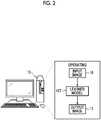
- the model 10 in which the class determination accuracy is raised to a desired level as described above is incorporated into an operating apparatus 15, as a learned machine learning model 10T (hereinafter, referred to as a learned model).
- An input image 16 in which a class and a contour of an appeared object are not yet determined is input to the learned model 10T.
- the learned model 10T determines a class and a contour of an object appeared in the input image 16, and outputs an output image 17 as a determination result.
- the operating apparatus 15 is, for example, a desktop personal computer, and displays an input image 16 and an output image 17 side by side on a display.
- the operating apparatus 15 may be an apparatus different from the mini-batch learning apparatus 2 or the same apparatus as the mini-batch learning apparatus 2. Further, even after the learned model 10T is incorporated into the operating apparatus 15, the learned model 10T may be learned by inputting the mini-batch data 11 to the learned model 10T.
- the learning input image 20 is, in this example, one phase-contrast-microscope image in which a state of cell culture appears.
- the learning input image 20 differentiated cells, undifferentiated cells, a medium, and dead cells appear as objects.
- class-1 differentiated cells, class-2 undifferentiated cells, a class-3 medium, and class-4 dead cells are respectively and manually designated.
- the input image 16 which is input to the learned model 10T is also a phase-contrast-microscope image in which a state of cell culture appears, similar to the learning input image 20.
- the divided learning input image 20S is obtained by cutting out a region surrounded by a rectangular frame 25, which is sequentially moved by DX in a horizontal direction and by DY in a vertical direction in the learning input image 20, each time.
- the movement amount DX of the frame 25 in the horizontal direction is, for example, 1/2 of a size of the frame 25 in the horizontal direction.
- the movement amount DY of the frame 25 in the vertical direction is, for example, 1/2 of a size of the frame 25 in the vertical direction.
- a size of the frame 25 is, for example, 1/50 of the size of the learning input image 20.
- the divided learning input images 20S include a total of 10000 divided learning input images 20S_1 to 20S_10000.
- the divided annotation image 21S is obtained by cutting out a region surrounded by a rectangular frame 25, which is sequentially moved by DX in the horizontal direction and by DY in the vertical direction in the annotation image 21, each time.
- the divided annotation images 21S include a total of 10000 divided annotation images 21S_1 to 21S_10000.
- the learning input image 20 and the annotation image 21 are already prepared in the mini-batch learning apparatus 2, and that the divided learning input images 20S and the divided annotation images 21S are already generated.
- the divided learning input image group 12 includes some divided learning input images 20S among the plurality of divided learning input images 20S generated as illustrated in Fig. 4 (for example, 100 divided learning input images 20S among 10000 divided learning input images 20S).
- the divided annotation image group 13 includes some divided annotation images 21S among the plurality of divided annotation images 21S generated as illustrated in Fig. 5 (for example, 100 divided annotation images 21S among 10000 divided annotation images 21S).
- the divided learning input image 20S included in the divided learning input image group 12 and the divided annotation image 21S included in the divided annotation image group 13 have the same region which is cut out by the frame 25.
- a computer including the mini-batch learning apparatus 2 includes a storage device 30, a memory 31, a central processing unit (CPU) 32, a communication unit 33, a display 34, and an input device 35.
- the components are connected to each other via a data bus 36.
- the storage device 30 is a hard disk drive that is built in the computer including the mini-batch learning apparatus 2 or is connected via a cable or a network. Alternatively, the storage device 30 is a disk array in which a plurality of hard disk drives are connected in series.
- the storage device 30 stores a control program such as an operating system, various application programs, and various data associated with the programs.
- the memory 31 is a work memory which is necessary to execute processing by the CPU 32.
- the CPU 32 loads the program stored in the storage device 30 into the memory 31, and collectively controls each unit of the computer by executing processing according to the program.
- the communication unit 33 is a network interface that controls transmission of various information via a network such as a wide area network (WAN), for example, the Internet or a public communication network.
- the display 34 displays various screens.
- the various screens include operation functions by a graphical user interface (GUI).
- GUI graphical user interface
- the computer including the mini-batch learning apparatus 2 receives an input of an operation instruction from the input device 35 via the various screens.
- the input device 35 includes a keyboard, a mouse, a touch panel, and the like.
- the storage device 30 stores the learning input image 20, the annotation image 21, the divided learning input images 20S, the divided annotation images 21S, and the model 10. Further, the storage device 30 stores an operation program 40 as an application program.
- the operation program 40 is an application program for operating the computer as the mini-batch learning apparatus 2.
- the CPU 32 of the computer including the mini-batch learning apparatus 2 functions as a generation unit 50, a calculation unit 51, a specifying unit 52, a learning unit 53, an evaluation unit 54, and an update unit 55, in cooperation with the memory 31.
- the generation unit 50 generates the mini-batch data 11 by selecting, as illustrated in Figs. 6 and 7 , some images from the divided learning input images 20S and the divided annotation images 21S generated from the learning input image 20 and the annotation image 21 illustrated in Figs. 4 and 5 .
- the generation unit 50 generates a plurality of sets (for example, 100 sets) of the mini-batch data 11.
- the generation unit 50 outputs the generated mini-batch data 11 to the calculation unit 51, the learning unit 53, and the evaluation unit 54.
- the generation unit 50 may execute a method of increasing selection alternatives of the divided learning input images 20S and the divided annotation images 21S as the mini-batch data 11. Specifically, the generation unit 50 obtains additional images by performing image processing such as trimming, vertical inversion, or rotation on the divided learning input images 20S and the divided annotation images 21S, and sets the obtained images as new selection alternatives for the mini-batch data 11. The method is called data augmentation.
- the specifying unit 52 specifies a rare class of which the area ratio is lower than the setting value.
- the specifying unit 52 outputs the specified rare class to the update unit 55.
- the learning unit 53 learns the model 10 by inputting, to the model 10, the divided learning input image group 12 of the mini-batch data 11 generated from the generation unit 50. Thereby, the learning unit 53 outputs, to the evaluation unit 54, the learning output image group 14 which is output from the model 10.
- the evaluation unit 54 evaluates the class determination accuracy of the model 10 by comparing the divided annotation image group 13 of the mini-batch data 11 generated from the generation unit 50 with the learning output image group 14 output from the learning unit 53.
- the evaluation unit 54 outputs an evaluation result to the update unit 55.
- the evaluation unit 54 evaluates the class determination accuracy of the model 10 by using a loss function.
- the loss function is a function representing a degree of a difference between the divided annotation image group 13 and the learning output image group 14. As a value calculated by the loss function is closer to 0, the class determination accuracy of the model 10 is higher.
- the update unit 55 updates the model 10 according to the evaluation result from the evaluation unit 54. More specifically, the update unit 55 changes various parameter values of the model 10, by a stochastic gradient descent method or the like using a learning coefficient ⁇ (refer to Fig. 11 ).
- the learning coefficient ⁇ indicates a change range in various parameter values of the model 10. That is, as the learning coefficient ⁇ has a relatively large value, the change range in various parameter values becomes wider, and thus, an update level of the model 10 becomes higher.
- the update unit 55 sets the update level of the model 10 in a case where a rare class is specified by the specifying unit 52 to be lower than the update level of the model 10 in a case where a rare class is not specified by the specifying unit 52. More specifically, the update unit 55 sets the learning coefficient ⁇ B in a case where a rare class is specified by the specifying unit 52 to be smaller than the learning coefficient ⁇ A in a case where a rare class is not specified by the specifying unit 52 ( ⁇ B ⁇ A). For example, the learning coefficient ⁇ B is set to 1/10 of the learning coefficient ⁇ A.
- Figs. 10 and 11 illustrate specific examples of processing of each unit of the calculation unit 51, the specifying unit 52, and the update unit 55.
- the calculation unit 51 calculates the area ratio of each class for each set 1, 2, 3, ⁇ of the mini-batch data 11.
- a case where the area ratio of the class-1 differentiated cells is calculated as 38%, the area ratio of the class-2 undifferentiated cells is calculated as 2%, the area ratio of the class-3 medium is calculated as 40%, and the area ratio of the class-4 dead cells is calculated as 20% is exemplified.
- the specifying unit 52 specifies a rare class of which the area ratio is lower than the setting value.
- a case where the setting value is equal to or lower than 5% for the first set of the mini-batch data 11, a case where the class-2 undifferentiated cells of which the area ratio is 2% lower than the setting value are specified as a rare class is exemplified.
- a case where only one rare class is specified is exemplified.
- the plurality of classes are specified as rare classes.
- Fig. 11 as shown in a table 61, in a case of a first set of the mini-batch data 11 in which a rare class is specified, the update unit 55 sets the learning coefficient ⁇ B1 to be smaller than the learning coefficient ⁇ A1 in a case where a rare class is not specified. On the other hand, in a case of a second set and a third set of the mini-batch data 11 in which a rare class is not specified, the update unit 55 sets the learning coefficients ⁇ A2 and ⁇ A3 in a case where a rare class is not specified as the learning coefficients are.
- the update unit 55 sets the update level of the model 10 to be smaller than the update level of the model 10 in a case where a rare class is not specified.
- the mini-batch data 11 is generated by the generation unit 50 (step ST100).
- the mini-batch data 11 is output from the generation unit 50 to the calculation unit 51, the learning unit 53, and the evaluation unit 54.
- the calculation unit 51 calculates the area ratio of each class for each set of the mini-batch data 11 (step ST110, calculation step). Subsequently, as illustrated in Fig. 10 , a rare class of which the area ratio is lower than the setting value is specified by the specifying unit 52 (step ST120, specifying step).
- the model 10 is learned by the learning unit 53 by inputting, to the model 10, the divided learning input image group 12 of the mini-batch data 11 generated from the generation unit 50 (step ST130). Thereby, the class determination accuracy of the model 10 is evaluated by the evaluation unit 54 by comparing the learning output image group 14 output from the model 10 with the divided annotation image group 13 of the mini-batch data 11 from the generation unit 50 (step ST140).
- step ST150 In a case where it is determined that the class determination accuracy of the model 10 reaches a desired level based on the evaluation result by the evaluation unit 54 (YES in step ST150), the mini-batch learning is ended. On the other hand, in a case where it is determined that the class determination accuracy of the model 10 does not reach a desired level (NO in step ST150), the processing proceeds to step ST160.
- step ST130 In a case where there is a rare class in the mini-batch data 11 which is input to the model 10 in step ST130 (YES in step ST160), as shown in a table 61 of Fig. 11 , the model 10 is updated by the update unit 55 with an update level lower than an update level in a case where there is no rare class (step ST170, update step). On the other hand, in a case where there is no rare class in the mini-batch data 11 which is input to the model 10 in step ST130 (NO in step ST160), the model 10 is updated with a normal update level without setting the update level to be low (step ST180, update step). After step ST170 and step ST180, the process returns to step ST130. Another set of the mini-batch data 11 is input to the model 10, and the subsequent steps are repeated.
- the case where the rare class is specified by the specifying unit 52 is a case where there is a class bias in the mini-batch data 11.
- learning is performed without taking into account a rare class. More specifically, a frequency of learning of the rare class is relatively lower than a frequency of learning of other classes.
- a result of the biased learning has a great influence on the model 10. As a result, the model 10 having a low rare class determination accuracy is obtained.
- the update unit 55 sets the update level of the model 10 in a case where a rare class is specified by the specifying unit 52 to be lower than the update level of the model 10 in a case where a rare class is not specified by the specifying unit 52.
- the update level in this way, in a case where there is a class bias in the mini-batch data 11, the model 10 is not updated much, and a result of the learning using the mini-batch data 11 in which there is a class bias does not have a great influence on the model 10. Therefore, it is possible to avoid a situation in which the model 10 having a low rare class determination accuracy is obtained, and it is possible to prevent a decrease in the class determination accuracy of the model 10.
- a degree to which the update level of the model 10 is set to be low may be increased.
- the CPU of the mini-batch learning apparatus functions as a reception unit 70 in addition to each of the processing units 50 to 55 according to the first embodiment.
- the reception unit 70 receives a selection instruction as to whether or not to cause the update unit 55 to execute processing of setting the update level to be low.
- an inquiry screen 71 is displayed on the display 34.
- a message 72 indicating that the rare class is specified and inquiring whether or not to perform processing of setting the update level of the model 10 to be low a Yes button 73, and a No button 74 are displayed.
- the reception unit 70 receives a selection instruction of the Yes button 73 and the No button 74, as a selection instruction as to whether or not to cause the update unit 55 to perform processing of setting the update level to be low.
- the Yes button 73 is selected
- processing of setting the update level to be low is performed by the update unit 55.
- the No button 74 processing of setting the update level to be low is not performed by the update unit 55.
- the class since the class is manually designated, the class may be incorrectly designated. Further, although classes are designated in early stage of development of the model 10, some classes may become less important as the development progresses. In such a case, although the rare class is specified by the specifying unit 52, it may not be necessary to perform processing of setting the update level of the model 10 to be low.
- the reception unit 70 receives a selection instruction as to whether or not to cause the update unit 55 to perform processing of setting the update level of the model 10 to be low. Therefore, in a case where the rare class is specified by the specifying unit 52 but it may not be necessary to perform processing of setting the update level of the model 10 to be low, it is possible to deal with the case.
- phase-contrast-microscope images in which a state of cell culture appears are exemplified as the input image 16 and the learning input image 20, and the differentiated cells and the medium are exemplified as the classes.
- the present disclosure is not limited thereto.
- magnetic resonance imaging (MRI) images may be used as the input image 16 and the learning input image 20
- organs such as a liver and a kidney may be used as the classes.
- the model 10 is not limited to U-Net, and may be another convolutional neural network, for example, SegNet.
- a method of setting the update level of the model 10 to be low a method other than the method of setting the learning coefficient ⁇ to be small may be adopted.
- the hardware configuration of the computer including the mini-batch learning apparatus 2 may be modified in various ways.
- the mini-batch learning apparatus 2 may be configured by a plurality of computers which are separated as hardware for the purpose of improving processing capability and reliability.
- the functions of the generation unit 50, the calculation unit 51, and the specifying unit 52, and the functions of the learning unit 53, the evaluation unit 54, and the update unit 55 may be distributed to two computers.
- the mini-batch learning apparatus 2 is configured with two computers.
- the hardware configuration of the computer may be appropriately changed according to the required performance such as processing capability, safety, and reliability.
- the application program such as an operation program 40 may be duplicated or distributed and stored in a plurality of storage devices for the purpose of ensuring safety and reliability.
- the processing unit that executes various processing such as pieces of processing by the generation unit 50, the calculation unit 51, the specifying unit 52, the learning unit 53, the evaluation unit 54, the update unit 55, and the reception unit 70, the following various processors may be used.
- the various processors include, as described above, a central processing unit (CPU) which is a general-purpose processor that functions as various processing units by executing software (an operation program 40), a programmable logic device (PLD) such as a field programmable gate array (FPGA) which is a processor capable of changing a circuit configuration after manufacture, a dedicated electric circuit such as an application specific integrated circuit (ASIC) which is a processor having a circuit configuration specifically designed to execute specific processing, and the like.
- CPU central processing unit
- PLD programmable logic device
- FPGA field programmable gate array
- ASIC application specific integrated circuit
- One processing unit may be configured by one of these various processors, or may be configured by a combination of two or more processors having the same type or different types (for example, a combination of a plurality of FPGAs or a combination of a CPU and an FPGA). Further, the plurality of processing units may be configured by one processor.
- the plurality of processing units are configured by one processor
- a computer such as a client and a server
- a form in which one processor is configured by a combination of one or more CPUs and software and the processor functions as the plurality of processing units may be adopted.
- SoC system on chip
- a form in which a processor that realizes the function of the entire system including the plurality of processing units by one integrated circuit (IC) chip is used may be adopted.
- the various processing units are configured by using one or more various processors as a hardware structure.
- an electric circuit in which circuit elements such as semiconductor elements are combined may be used.
- a mini-batch learning apparatus that learns a machine learning model for performing semantic segmentation, which determines a plurality of classes in an image in units of pixels, by inputting mini-batch data to the machine learning model, the apparatus including:
- the technique of the present disclosure can also appropriately combine the various embodiments and the various modification examples.
- the technique of the present disclosure is not limited to each embodiment, and various configurations may be adopted without departing from the scope of the present disclosure.
- the technique of the present disclosure extends to a program, a storage medium for non-temporarily storing the program, and an image processing apparatus in which the learning apparatus and the program are implemented.
Landscapes
- Engineering & Computer Science (AREA)
- Theoretical Computer Science (AREA)
- Physics & Mathematics (AREA)
- General Physics & Mathematics (AREA)
- Computer Vision & Pattern Recognition (AREA)
- Evolutionary Computation (AREA)
- Data Mining & Analysis (AREA)
- Artificial Intelligence (AREA)
- Multimedia (AREA)
- Software Systems (AREA)
- Life Sciences & Earth Sciences (AREA)
- Health & Medical Sciences (AREA)
- General Health & Medical Sciences (AREA)
- General Engineering & Computer Science (AREA)
- Computing Systems (AREA)
- Computational Linguistics (AREA)
- Biomedical Technology (AREA)
- Molecular Biology (AREA)
- Mathematical Physics (AREA)
- Biophysics (AREA)
- Medical Informatics (AREA)
- Evolutionary Biology (AREA)
- Bioinformatics & Computational Biology (AREA)
- Bioinformatics & Cheminformatics (AREA)
- Databases & Information Systems (AREA)
- Image Analysis (AREA)
Abstract
Description
- The technique of the present disclosure relates to a mini-batch learning apparatus, an operation program of the mini-batch learning apparatus, and an operation method of the mini-batch learning apparatus.
- There is known semantic segmentation which determines a plurality of classes in an image in units of pixels. The semantic segmentation is realized by a machine learning model (hereinafter, simply referred to as a model) such as a U-shaped convolutional neural network (U-Net, U-shaped neural network).
- In order to improve a determination accuracy of the model, it is necessary to update the model by inputting learning data to the model and learning the learning data. The learning data includes a learning input image and an annotation image in which a class in the learning input image is manually designated. In
JP2017-107386A - For learning, there is a method called mini-batch learning. In mini-batch learning, as learning data, mini-batch data is input to the model. The mini-batch data includes some divided images (100 divided images) among a plurality of divided images obtained by dividing the learning input image and the annotation image (for example, 10000 divided images obtained by dividing an original image by a frame having a size of 1/100 of the size of the original image). A plurality of sets (for example, 100 sets) of the mini-batch data are generated, and each set is sequentially input to the model.
- Here, a case where there is a class bias in the learning input image and the annotation image is considered. For example, the learning input image is a phase-contrast-microscope image in which a state of cell culture appears. In the learning input image, differentiated cells are classified as a
class 1, undifferentiated cells are classified as aclass 2, a medium is classified as aclass 3, and dead cells are classified as aclass 4. In area ratios of classes in the entire learning input image and the entire annotation image, an area ratio of the differentiated cells is 38%, an area ratio of the undifferentiated cells is 2%, an area ratio of the medium is 40%, and an area ratio of the dead cells is 20%, and the area ratio of the undifferentiated cells is relatively low. - In a case where there is a class bias in the learning input image and the annotation image in this way, it is likely that there is also a class bias in the mini-batch data including the learning input image and the annotation image. In a case where there is a class bias in the mini-batch data, learning is performed without taking into account a rare class of which the area ratio is relatively low. As a result, a model with a low rare class determination accuracy is obtained.
- In
JP2017-107386A JP2017-107386A - An object of the technique of the present disclosure is to provide a mini-batch learning apparatus capable of preventing a decrease in a class determination accuracy of a machine learning model for performing semantic segmentation, an operation program of the mini-batch learning apparatus, an operation method of the mini-batch learning apparatus, and an image processing apparatus in which the mini-batch learning apparatus is implemented.
- In order to achieve the object, according to the present disclosure, there is provided a mini-batch learning apparatus that learns a machine learning model for performing semantic segmentation, which determines a plurality of classes in an image in units of pixels, by inputting mini-batch data to the machine learning model, the apparatus including: a calculation unit that calculates an area ratio of each of the plurality of classes in the mini-batch data; a specifying unit that specifies a rare class of which the area ratio is lower than a setting value; and an update unit that updates the machine learning model according to a result of the learning using the mini-batch data and sets an update level of the machine learning model in a case where the rare class is specified by the specifying unit to be lower than an update level of the machine learning model in a case where the rare class is not specified by the specifying unit.
- Preferably, the update unit sets a learning coefficient indicating a change range in various parameter values of the machine learning model in a case where the rare class is specified by the specifying unit to be smaller than a learning coefficient in a case where the rare class is not specified by the specifying unit.
- Preferably, the mini-batch learning apparatus further includes a reception unit that receives a selection instruction as to whether or not to cause the update unit to perform processing of setting the update level to be low.
- According to the present disclosure, there is provided an operation program of a mini-batch learning apparatus that learns a machine learning model for performing semantic segmentation, which determines a plurality of classes in an image in units of pixels, by inputting mini-batch data to the machine learning model, the program causing a computer to function as: a calculation unit that calculates an area ratio of each of the plurality of classes in the mini-batch data; a specifying unit that specifies a rare class of which the area ratio is lower than a setting value; and an update unit that updates the machine learning model according to a result of the learning using the mini-batch data and sets an update level of the machine learning model in a case where the rare class is specified by the specifying unit to be lower than an update level of the machine learning model in a case where the rare class is not specified by the specifying unit.
- According to the present disclosure, there is provided an operation method of a mini-batch learning apparatus that learns a machine learning model for performing semantic segmentation, which determines a plurality of classes in an image in units of pixels, by inputting mini-batch data to the machine learning model, the method including: a calculation step of calculating an area ratio of each of the plurality of classes in the mini-batch data; a specifying step of specifying a rare class of which the area ratio is lower than a setting value; and an update step of updating the machine learning model according to a result of the learning using the mini-batch data and setting an update level of the machine learning model in a case where the rare class is specified in the specifying step to be lower than an update level of the machine learning model in a case where the rare class is not specified in the specifying step.
- According to the technique of the present disclosure, it is possible to provide a mini-batch learning apparatus capable of preventing a decrease in a class determination accuracy of a machine learning model for performing semantic segmentation, an operation program of the mini-batch learning apparatus, an operation method of the mini-batch learning apparatus, and an image processing apparatus.
-
-
Fig. 1 is a diagram illustrating a mini-batch learning apparatus and an outline of processing of the mini-batch learning apparatus. -
Fig. 2 is a diagram illustrating an operating apparatus and an outline of processing of the operating apparatus. -
Fig. 3 is a diagram illustrating images, (a) ofFig. 3 illustrates a learning input image, and (b) ofFig. 3 illustrates an annotation image. -
Fig. 4 is a diagram illustrating how a divided learning input image is generated from a learning input image. -
Fig. 5 is a diagram illustrating how a divided annotation image is generated from an annotation image. -
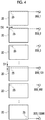
Fig. 6 is a diagram illustrating that a divided learning input image group includes some of a plurality of divided learning input images. -
Fig. 7 is a diagram illustrating that a divided annotation image group includes some of a plurality of divided annotation images. -
Fig. 8 is a block diagram illustrating a computer including the mini-batch learning apparatus. -
Fig. 9 is a block diagram illustrating a processing unit of a CPU of the mini-batch learning apparatus. -
Fig. 10 is a diagram illustrating a specific example of processing of a calculation unit and a specifying unit. -
Fig. 11 is a diagram illustrating a specific example of processing of an update unit. -
Fig. 12 is a flowchart illustrating a processing procedure of the mini-batch learning apparatus. -
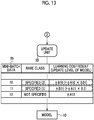
Fig. 13 is a diagram illustrating a modification example of processing of the update unit. -
Fig. 14 is a diagram illustrating a modification example of processing of the update unit. -
Fig. 15 is a diagram illustrating a second embodiment for inquiring whether or not to cause the update unit to perform processing of setting an update level to be low. - In
Fig. 1 , in order to improve a determination accuracy of amodel 10 for performing semantic segmentation, which determines a plurality of classes in an input image in units of pixels, amini-batch learning apparatus 2 performs mini-batch learning by inputtingmini-batch data 11 to themodel 10. Themini-batch learning apparatus 2 is, for example, a desktop personal computer. Further, themodel 10 is, for example, U-Net. - The class may be referred to as a type of an object that appears in the input image. Further, in short, the semantic segmentation is a technique of determining a class and a contour of an object appearing in an input image, and the
model 10 outputs a determination result as an output image. For example, in a case where three objects of a cup, a book, and a mobile phone appear in an input image, in an output image, ideally, each of the cup, the book, and the mobile phone is determined as a class, and contour lines that faithfully trace contours of these objects are drawn on each object. - By inputting the learning data to the
model 10, learning the learning data, and updating themodel 10, the class determination accuracy of themodel 10 is improved. The learning data includes a pair of a learning input image which is to be input to themodel 10 and an annotation image in which a class in the learning input image is manually designated. The annotation image is a correct answer image for matching an answer with a learning output image, which is output from themodel 10 in accordance with the learning input image, and is compared with the learning output image. As the class determination accuracy of themodel 10 is higher, a difference between the annotation image and the learning output image is smaller. - As described above, the
mini-batch learning apparatus 2 usesmini-batch data 11 as the learning data. Themini-batch data 11 includes a divided learninginput image group 12 and a dividedannotation image group 13. - In mini-batch learning, the divided learning
input image group 12 is input to themodel 10. Thereby, a learning output image is output from themodel 10 for each dividedlearning input image 20S (refer toFig. 4 ) of the divided learninginput image group 12. The learningoutput image group 14, which is a set of learning output images output from themodel 10 in this way, is compared with the dividedannotation image group 13, and thus a class determination accuracy of themodel 10 is evaluated. Themodel 10 is updated according to an evaluation result of the class determination accuracy. Themini-batch learning apparatus 2 inputs the divided learninginput image group 12 to themodel 10, outputs the learningoutput image group 14 from themodel 10, evaluates the class determination accuracy of themodel 10, and updates themodel 10 while changing themini-batch data 11. The processing is repeated until the class determination accuracy of themodel 10 reaches a desired level. - As illustrated in
Fig. 2 , themodel 10 in which the class determination accuracy is raised to a desired level as described above is incorporated into anoperating apparatus 15, as a learnedmachine learning model 10T (hereinafter, referred to as a learned model). Aninput image 16 in which a class and a contour of an appeared object are not yet determined is input to the learnedmodel 10T. The learnedmodel 10T determines a class and a contour of an object appeared in theinput image 16, and outputs anoutput image 17 as a determination result. Similar to themini-batch learning apparatus 2, the operatingapparatus 15 is, for example, a desktop personal computer, and displays aninput image 16 and anoutput image 17 side by side on a display. Theoperating apparatus 15 may be an apparatus different from themini-batch learning apparatus 2 or the same apparatus as themini-batch learning apparatus 2. Further, even after the learnedmodel 10T is incorporated into theoperating apparatus 15, the learnedmodel 10T may be learned by inputting themini-batch data 11 to the learnedmodel 10T. - As illustrated in (a) of
Fig. 3 , the learninginput image 20 is, in this example, one phase-contrast-microscope image in which a state of cell culture appears. In the learninginput image 20, differentiated cells, undifferentiated cells, a medium, and dead cells appear as objects. In this case, as illustrated in (b) ofFig. 3 , in anannotation image 21, class-1 differentiated cells, class-2 undifferentiated cells, a class-3 medium, and class-4 dead cells are respectively and manually designated. Theinput image 16 which is input to the learnedmodel 10T is also a phase-contrast-microscope image in which a state of cell culture appears, similar to the learninginput image 20. - As illustrated in
Fig. 4 , the divided learninginput image 20S is obtained by cutting out a region surrounded by arectangular frame 25, which is sequentially moved by DX in a horizontal direction and by DY in a vertical direction in the learninginput image 20, each time. The movement amount DX of theframe 25 in the horizontal direction is, for example, 1/2 of a size of theframe 25 in the horizontal direction. Similarly, the movement amount DY of theframe 25 in the vertical direction is, for example, 1/2 of a size of theframe 25 in the vertical direction. A size of theframe 25 is, for example, 1/50 of the size of the learninginput image 20. In this case, the divided learninginput images 20S include a total of 10000 divided learning input images 20S_1 to 20S_10000. - Similarly, as illustrated in
Fig. 5 , the dividedannotation image 21S is obtained by cutting out a region surrounded by arectangular frame 25, which is sequentially moved by DX in the horizontal direction and by DY in the vertical direction in theannotation image 21, each time. In this case, the dividedannotation images 21S include a total of 10000 divided annotation images 21S_1 to 21S_10000. In the following, it is assumed that the learninginput image 20 and theannotation image 21 are already prepared in themini-batch learning apparatus 2, and that the divided learninginput images 20S and the dividedannotation images 21S are already generated. - As illustrated in
Fig. 6 , the divided learninginput image group 12 includes some divided learninginput images 20S among the plurality of divided learninginput images 20S generated as illustrated inFig. 4 (for example, 100 divided learninginput images 20S among 10000 divided learninginput images 20S). Similarly, as illustrated inFig. 7 , the dividedannotation image group 13 includes some dividedannotation images 21S among the plurality of dividedannotation images 21S generated as illustrated inFig. 5 (for example, 100 dividedannotation images 21S among 10000 dividedannotation images 21S). The dividedlearning input image 20S included in the divided learninginput image group 12 and the dividedannotation image 21S included in the dividedannotation image group 13 have the same region which is cut out by theframe 25. - In
Fig. 8 , a computer including themini-batch learning apparatus 2 includes astorage device 30, amemory 31, a central processing unit (CPU) 32, acommunication unit 33, adisplay 34, and aninput device 35. The components are connected to each other via adata bus 36. - The
storage device 30 is a hard disk drive that is built in the computer including themini-batch learning apparatus 2 or is connected via a cable or a network. Alternatively, thestorage device 30 is a disk array in which a plurality of hard disk drives are connected in series. Thestorage device 30 stores a control program such as an operating system, various application programs, and various data associated with the programs. - The
memory 31 is a work memory which is necessary to execute processing by theCPU 32. TheCPU 32 loads the program stored in thestorage device 30 into thememory 31, and collectively controls each unit of the computer by executing processing according to the program. - The
communication unit 33 is a network interface that controls transmission of various information via a network such as a wide area network (WAN), for example, the Internet or a public communication network. Thedisplay 34 displays various screens. The various screens include operation functions by a graphical user interface (GUI). The computer including themini-batch learning apparatus 2 receives an input of an operation instruction from theinput device 35 via the various screens. Theinput device 35 includes a keyboard, a mouse, a touch panel, and the like. - In
Fig. 9 , thestorage device 30 stores the learninginput image 20, theannotation image 21, the divided learninginput images 20S, the dividedannotation images 21S, and themodel 10. Further, thestorage device 30 stores anoperation program 40 as an application program. Theoperation program 40 is an application program for operating the computer as themini-batch learning apparatus 2. - In a case where the
operation program 40 is started, theCPU 32 of the computer including themini-batch learning apparatus 2 functions as ageneration unit 50, acalculation unit 51, a specifyingunit 52, alearning unit 53, anevaluation unit 54, and anupdate unit 55, in cooperation with thememory 31. - The
generation unit 50 generates themini-batch data 11 by selecting, as illustrated inFigs. 6 and 7 , some images from the divided learninginput images 20S and the dividedannotation images 21S generated from the learninginput image 20 and theannotation image 21 illustrated inFigs. 4 and5 . Thegeneration unit 50 generates a plurality of sets (for example, 100 sets) of themini-batch data 11. Thegeneration unit 50 outputs the generatedmini-batch data 11 to thecalculation unit 51, thelearning unit 53, and theevaluation unit 54. - The
generation unit 50 may execute a method of increasing selection alternatives of the divided learninginput images 20S and the dividedannotation images 21S as themini-batch data 11. Specifically, thegeneration unit 50 obtains additional images by performing image processing such as trimming, vertical inversion, or rotation on the divided learninginput images 20S and the dividedannotation images 21S, and sets the obtained images as new selection alternatives for themini-batch data 11. The method is called data augmentation. - The
calculation unit 51 calculates an area ratio of each of the plurality of classes in themini-batch data 11. More specifically, thecalculation unit 51 adds, for each class, the number of pixels of regions, which are manually designated in the dividedannotation images 21S of the dividedannotation image group 13 of themini-batch data 11 generated from thegeneration unit 50. Next, thecalculation unit 51 calculates an area ratio by dividing the added number of pixels by the total number of pixels of the dividedannotation images 21S. For example, in a case where the added number of pixels of the regions designated as the class-1 differentiated cells is 10000 and the total number of pixels is 50000, the area ratio of the class-1 differentiated cells is (10000/50000)×100=20%. Thecalculation unit 51 outputs the calculated area ratio to the specifyingunit 52. - The specifying
unit 52 specifies a rare class of which the area ratio is lower than the setting value. The specifyingunit 52 outputs the specified rare class to theupdate unit 55. - The
learning unit 53 learns themodel 10 by inputting, to themodel 10, the divided learninginput image group 12 of themini-batch data 11 generated from thegeneration unit 50. Thereby, thelearning unit 53 outputs, to theevaluation unit 54, the learningoutput image group 14 which is output from themodel 10. - The
evaluation unit 54 evaluates the class determination accuracy of themodel 10 by comparing the dividedannotation image group 13 of themini-batch data 11 generated from thegeneration unit 50 with the learningoutput image group 14 output from thelearning unit 53. Theevaluation unit 54 outputs an evaluation result to theupdate unit 55. - The
evaluation unit 54 evaluates the class determination accuracy of themodel 10 by using a loss function. The loss function is a function representing a degree of a difference between the dividedannotation image group 13 and the learningoutput image group 14. As a value calculated by the loss function is closer to 0, the class determination accuracy of themodel 10 is higher. - The
update unit 55 updates themodel 10 according to the evaluation result from theevaluation unit 54. More specifically, theupdate unit 55 changes various parameter values of themodel 10, by a stochastic gradient descent method or the like using a learning coefficient η (refer toFig. 11 ). The learning coefficient η indicates a change range in various parameter values of themodel 10. That is, as the learning coefficient η has a relatively large value, the change range in various parameter values becomes wider, and thus, an update level of themodel 10 becomes higher. - The
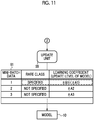
update unit 55 sets the update level of themodel 10 in a case where a rare class is specified by the specifyingunit 52 to be lower than the update level of themodel 10 in a case where a rare class is not specified by the specifyingunit 52. More specifically, theupdate unit 55 sets the learning coefficient ηB in a case where a rare class is specified by the specifyingunit 52 to be smaller than the learning coefficient ηA in a case where a rare class is not specified by the specifying unit 52 (ηB<ηA). For example, the learning coefficient ηB is set to 1/10 of the learning coefficient ηA. -
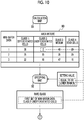
Figs. 10 and11 illustrate specific examples of processing of each unit of thecalculation unit 51, the specifyingunit 52, and theupdate unit 55. First, inFig. 10 , as shown in a table 60, thecalculation unit 51 calculates the area ratio of each class for eachset mini-batch data 11. InFig. 10 , for a first set of themini-batch data 11, a case where the area ratio of the class-1 differentiated cells is calculated as 38%, the area ratio of the class-2 undifferentiated cells is calculated as 2%, the area ratio of the class-3 medium is calculated as 40%, and the area ratio of the class-4 dead cells is calculated as 20% is exemplified. - The specifying
unit 52 specifies a rare class of which the area ratio is lower than the setting value. InFig. 10 , assuming that the setting value is equal to or lower than 5%, for the first set of themini-batch data 11, a case where the class-2 undifferentiated cells of which the area ratio is 2% lower than the setting value are specified as a rare class is exemplified. InFig. 10 , a case where only one rare class is specified is exemplified. On the other hand, in a case where there are a plurality of classes of which the area ratio is lower than the setting value, naturally, the plurality of classes are specified as rare classes. - Subsequently, in
Fig. 11 , as shown in a table 61, in a case of a first set of themini-batch data 11 in which a rare class is specified, theupdate unit 55 sets the learning coefficient ηB1 to be smaller than the learning coefficient ηA1 in a case where a rare class is not specified. On the other hand, in a case of a second set and a third set of themini-batch data 11 in which a rare class is not specified, theupdate unit 55 sets the learning coefficients ηA2 and ηA3 in a case where a rare class is not specified as the learning coefficients are. By setting the learning coefficient η to be smaller in this way, in a case of themini-batch data 11 in which a rare class is specified, theupdate unit 55 sets the update level of themodel 10 to be smaller than the update level of themodel 10 in a case where a rare class is not specified. - Next, an operation according to the configuration will be described with reference to a flowchart illustrated in
Fig. 12 . First, in a case where theoperation program 40 is started, as illustrated inFig. 9 , theCPU 32 of the computer including themini-batch learning apparatus 2 functions as each of theprocessing units 50 to 55. - The
mini-batch data 11 is generated by the generation unit 50 (step ST100). Themini-batch data 11 is output from thegeneration unit 50 to thecalculation unit 51, thelearning unit 53, and theevaluation unit 54. - As shown in the table 60 of
Fig. 10 , thecalculation unit 51 calculates the area ratio of each class for each set of the mini-batch data 11 (step ST110, calculation step). Subsequently, as illustrated inFig. 10 , a rare class of which the area ratio is lower than the setting value is specified by the specifying unit 52 (step ST120, specifying step). - The
model 10 is learned by thelearning unit 53 by inputting, to themodel 10, the divided learninginput image group 12 of themini-batch data 11 generated from the generation unit 50 (step ST130). Thereby, the class determination accuracy of themodel 10 is evaluated by theevaluation unit 54 by comparing the learningoutput image group 14 output from themodel 10 with the dividedannotation image group 13 of themini-batch data 11 from the generation unit 50 (step ST140). - In a case where it is determined that the class determination accuracy of the
model 10 reaches a desired level based on the evaluation result by the evaluation unit 54 (YES in step ST150), the mini-batch learning is ended. On the other hand, in a case where it is determined that the class determination accuracy of themodel 10 does not reach a desired level (NO in step ST150), the processing proceeds to step ST160. - In a case where there is a rare class in the
mini-batch data 11 which is input to themodel 10 in step ST130 (YES in step ST160), as shown in a table 61 ofFig. 11 , themodel 10 is updated by theupdate unit 55 with an update level lower than an update level in a case where there is no rare class (step ST170, update step). On the other hand, in a case where there is no rare class in themini-batch data 11 which is input to themodel 10 in step ST130 (NO in step ST160), themodel 10 is updated with a normal update level without setting the update level to be low (step ST180, update step). After step ST170 and step ST180, the process returns to step ST130. Another set of themini-batch data 11 is input to themodel 10, and the subsequent steps are repeated. - The case where the rare class is specified by the specifying
unit 52 is a case where there is a class bias in themini-batch data 11. In themini-batch data 11 in which there is a class bias, learning is performed without taking into account a rare class. More specifically, a frequency of learning of the rare class is relatively lower than a frequency of learning of other classes. After biased learning is performed, in a case where themodel 10 is updated by theupdate unit 55 without any restriction, a result of the biased learning has a great influence on themodel 10. As a result, themodel 10 having a low rare class determination accuracy is obtained. - On the other hand, in the present embodiment, the
update unit 55 sets the update level of themodel 10 in a case where a rare class is specified by the specifyingunit 52 to be lower than the update level of themodel 10 in a case where a rare class is not specified by the specifyingunit 52. By setting the update level in this way, in a case where there is a class bias in themini-batch data 11, themodel 10 is not updated much, and a result of the learning using themini-batch data 11 in which there is a class bias does not have a great influence on themodel 10. Therefore, it is possible to avoid a situation in which themodel 10 having a low rare class determination accuracy is obtained, and it is possible to prevent a decrease in the class determination accuracy of themodel 10. - As the number of the specified rare classes is larger, a degree to which the update level of the
model 10 is set to be low may be increased. For example, as shown in a table 65 ofFig. 13 , in a case of a tenth set of themini-batch data 11 in which two rare classes are specified, theupdate unit 55 sets the learning coefficient ηB10 to 1/100 of the learning coefficient ηA10 in a case where a rare class is not specified (ηB10 = ηA10 × 0.01). On the other hand, in a case of a 11th set of themini-batch data 11 in which only one rare class is specified, theupdate unit 55 sets the learning coefficient ηB11 to 1/10 of the learning coefficient ηA11 in a case where a rare class is not specified (ηB11 = ηA11 × 0.1). It is considered that there is a larger class bias in themini-batch data 11 as the number of the specified rare classes is larger. Thus, it is possible to further prevent a decrease in the class determination accuracy of themodel 10. - Similarly, as the area ratio is lower, a degree to which the update level of the
model 10 is set to be low may be increased. For example, as shown in a table 66 ofFig. 14 , in a case where the area ratio is equal to or higher than 0% and lower than 2.5% as in the 20th set of themini-batch data 11, the learning coefficient ηB20 is set to 1/100 of the learning coefficient ηA20 (ηB20=ηA20×0.01). On the other hand, in a case where the area ratio is equal to or higher than 2.5% and equal to or lower than 5% as in the 21st set of themini-batch data 11, the learning coefficient ηB21 is set to 1/10 of the learning coefficient ηA21 (nB21=ηA21×0.1). Even in this case, similar to the case ofFig. 13 , it is considered that there is a larger class bias in themini-batch data 11 as the area ratio is lower. Thus, it is possible to further prevent a decrease in the class determination accuracy of themodel 10. - In a second embodiment illustrated in
Fig. 15 , whether or not to cause theupdate unit 55 to perform processing of setting an update level to be low is inquired. - In
Fig. 15 , the CPU of the mini-batch learning apparatus according to the second embodiment functions as areception unit 70 in addition to each of theprocessing units 50 to 55 according to the first embodiment. In a case where a rare class is specified by the specifyingunit 52, thereception unit 70 receives a selection instruction as to whether or not to cause theupdate unit 55 to execute processing of setting the update level to be low. - In the second embodiment, in a case where the rare class is specified by the specifying
unit 52, aninquiry screen 71 is displayed on thedisplay 34. On theinquiry screen 71, amessage 72 indicating that the rare class is specified and inquiring whether or not to perform processing of setting the update level of themodel 10 to be low, aYes button 73, and a Nobutton 74 are displayed. Thereception unit 70 receives a selection instruction of theYes button 73 and the Nobutton 74, as a selection instruction as to whether or not to cause theupdate unit 55 to perform processing of setting the update level to be low. In a case where theYes button 73 is selected, processing of setting the update level to be low is performed by theupdate unit 55. On the other hand, in a case where the Nobutton 74 is selected, processing of setting the update level to be low is not performed by theupdate unit 55. - In generation of the annotation image, since the class is manually designated, the class may be incorrectly designated. Further, although classes are designated in early stage of development of the
model 10, some classes may become less important as the development progresses. In such a case, although the rare class is specified by the specifyingunit 52, it may not be necessary to perform processing of setting the update level of themodel 10 to be low. - For this reason, in the second embodiment, the
reception unit 70 receives a selection instruction as to whether or not to cause theupdate unit 55 to perform processing of setting the update level of themodel 10 to be low. Therefore, in a case where the rare class is specified by the specifyingunit 52 but it may not be necessary to perform processing of setting the update level of themodel 10 to be low, it is possible to deal with the case. - In each embodiment, phase-contrast-microscope images in which a state of cell culture appears are exemplified as the
input image 16 and the learninginput image 20, and the differentiated cells and the medium are exemplified as the classes. On the other hand, the present disclosure is not limited thereto. For example, magnetic resonance imaging (MRI) images may be used as theinput image 16 and the learninginput image 20, and organs such as a liver and a kidney may be used as the classes. - The
model 10 is not limited to U-Net, and may be another convolutional neural network, for example, SegNet. - As a method of setting the update level of the
model 10 to be low, a method other than the method of setting the learning coefficient η to be small may be adopted. - The hardware configuration of the computer including the
mini-batch learning apparatus 2 may be modified in various ways. For example, themini-batch learning apparatus 2 may be configured by a plurality of computers which are separated as hardware for the purpose of improving processing capability and reliability. Specifically, the functions of thegeneration unit 50, thecalculation unit 51, and the specifyingunit 52, and the functions of thelearning unit 53, theevaluation unit 54, and theupdate unit 55 may be distributed to two computers. In this case, themini-batch learning apparatus 2 is configured with two computers. - In this way, the hardware configuration of the computer may be appropriately changed according to the required performance such as processing capability, safety, and reliability. Further, not only hardware but also the application program such as an
operation program 40 may be duplicated or distributed and stored in a plurality of storage devices for the purpose of ensuring safety and reliability. - In each embodiment, for example, as a hardware structure of the processing unit that executes various processing such as pieces of processing by the
generation unit 50, thecalculation unit 51, the specifyingunit 52, thelearning unit 53, theevaluation unit 54, theupdate unit 55, and thereception unit 70, the following various processors may be used. The various processors include, as described above, a central processing unit (CPU) which is a general-purpose processor that functions as various processing units by executing software (an operation program 40), a programmable logic device (PLD) such as a field programmable gate array (FPGA) which is a processor capable of changing a circuit configuration after manufacture, a dedicated electric circuit such as an application specific integrated circuit (ASIC) which is a processor having a circuit configuration specifically designed to execute specific processing, and the like. - One processing unit may be configured by one of these various processors, or may be configured by a combination of two or more processors having the same type or different types (for example, a combination of a plurality of FPGAs or a combination of a CPU and an FPGA). Further, the plurality of processing units may be configured by one processor.
- As an example in which the plurality of processing units are configured by one processor, firstly, as represented by a computer such as a client and a server, a form in which one processor is configured by a combination of one or more CPUs and software and the processor functions as the plurality of processing units may be adopted. Secondly, as represented by a system on chip (SoC) or the like, a form in which a processor that realizes the function of the entire system including the plurality of processing units by one integrated circuit (IC) chip is used may be adopted. As described above, the various processing units are configured by using one or more various processors as a hardware structure.
- Further, as the hardware structure of the various processors, more specifically, an electric circuit (circuitry) in which circuit elements such as semiconductor elements are combined may be used.
- From the above description, the invention described in following
Appendix 1 can be understood. - A mini-batch learning apparatus that learns a machine learning model for performing semantic segmentation, which determines a plurality of classes in an image in units of pixels, by inputting mini-batch data to the machine learning model, the apparatus including:
- a calculation processor configured to calculate an area ratio of each of the plurality of classes in the mini-batch data;
- a specifying processor configured to specify a rare class of which the area ratio is lower than a setting value; and
- an update processor configured to update the machine learning model according to a result of the learning using the mini-batch data and set an update level of the machine learning model in a case where the rare class is specified by the specifying processor to be lower than an update level of the machine learning model in a case where the rare class is not specified by the specifying processor.
- The technique of the present disclosure can also appropriately combine the various embodiments and the various modification examples. In addition, the technique of the present disclosure is not limited to each embodiment, and various configurations may be adopted without departing from the scope of the present disclosure. Further, the technique of the present disclosure extends to a program, a storage medium for non-temporarily storing the program, and an image processing apparatus in which the learning apparatus and the program are implemented.
-
- 2:
- mini-batch learning apparatus
- 10:
- machine learning model (model)
- 10T:
- learned machine learning model (learned model)
- 11:
- mini-batch data
- 12:
- divided learning input image group
- 13:
- divided annotation image group
- 14:
- learning output image group
- 15:
- operating apparatus
- 16:
- input image
- 17:
- output image
- 20:
- learning input image
- 20S:
- divided learning input image
- 21:
- annotation image
- 21S:
- divided annotation image
- 25:
- frame
- 30:
- storage device
- 31:
- memory
- 32:
- CPU
- 33:
- communication unit
- 34:
- display
- 35:
- input device
- 36:
- data bus
- 40:
- operation program
- 50:
- generation unit
- 51:
- calculation unit
- 52:
- specifying unit
- 53:
- learning unit
- 54:
- evaluation unit
- 55:
- update unit
- 60, 61, 65, 66:
- table
- 70:
- reception unit
- 71:
- inquiry screen
- 72:
- message
- 73:
- Yes button
- 74:
- No button
- DX:
- movement amount of frame in horizontal direction
- DY:
- movement amount of frame in vertical direction
- η:
- learning coefficient
- ST100 to ST180:
- step
Claims (6)
- A mini-batch learning apparatus that learns a machine learning model for performing semantic segmentation, which determines a plurality of classes in an image in units of pixels, by inputting mini-batch data to the machine learning model, the apparatus comprising:a calculation unit that calculates an area ratio of each of the plurality of classes in the mini-batch data;a specifying unit that specifies a rare class of which the area ratio is lower than a setting value; andan update unit that updates the machine learning model according to a result of the learning using the mini-batch data and sets an update level of the machine learning model in a case where the rare class is specified by the specifying unit to be lower than an update level of the machine learning model in a case where the rare class is not specified by the specifying unit.
- The mini-batch learning apparatus according to claim 1,
wherein the update unit sets a learning coefficient indicating a change range in various parameter values of the machine learning model in a case where the rare class is specified by the specifying unit to be smaller than a learning coefficient in a case where the rare class is not specified by the specifying unit. - The mini-batch learning apparatus according to claim 1 or 2, further comprising:
a reception unit that receives a selection instruction as to whether or not to cause the update unit to perform processing of setting the update level to be low. - An operation program of a mini-batch learning apparatus that learns a machine learning model for performing semantic segmentation, which determines a plurality of classes in an image in units of pixels, by inputting mini-batch data to the machine learning model, the program causing a computer to function as:a calculation unit that calculates an area ratio of each of the plurality of classes in the mini-batch data;a specifying unit that specifies a rare class of which the area ratio is lower than a setting value; andan update unit that updates the machine learning model according to a result of the learning using the mini-batch data and sets an update level of the machine learning model in a case where the rare class is specified by the specifying unit to be lower than an update level of the machine learning model in a case where the rare class is not specified by the specifying unit.
- An operation method of a mini-batch learning apparatus that learns a machine learning model for performing semantic segmentation, which determines a plurality of classes in an image in units of pixels, by inputting mini-batch data to the machine learning model, the method comprising:a calculation step of calculating an area ratio of each of the plurality of classes in the mini-batch data;a specifying step of specifying a rare class of which the area ratio is lower than a setting value; andan update step of updating the machine learning model according to a result of the learning using the mini-batch data and setting an update level of the machine learning model in a case where the rare class is specified in the specifying step to be lower than an update level of the machine learning model in a case where the rare class is not specified in the specifying step.
- An image processing apparatus that learns a machine learning model for performing semantic segmentation, which determines a plurality of classes in an image in units of pixels, by inputting mini-batch data to the machine learning model, the apparatus being configured to:calculate an area ratio of each of the plurality of classes in the mini-batch data;specify a rare class of which the area ratio is lower than a setting value; andset an update level of the machine learning model in a case where the rare class is specified to be lower than an update level of the machine learning model in a case where the rare class is not specified.
Applications Claiming Priority (2)
| Application Number | Priority Date | Filing Date | Title |
|---|---|---|---|
| JP2018234881 | 2018-12-14 | ||
| PCT/JP2019/042935 WO2020121678A1 (en) | 2018-12-14 | 2019-10-31 | Mini-batch learning device, operating program for mini-batch learning device, operating method for mini-batch learning device, and image processing device |
Publications (3)
| Publication Number | Publication Date |
|---|---|
| EP3896647A1 true EP3896647A1 (en) | 2021-10-20 |
| EP3896647A4 EP3896647A4 (en) | 2022-01-26 |
| EP3896647B1 EP3896647B1 (en) | 2026-04-01 |
Family
ID=71077223
Family Applications (1)
| Application Number | Title | Priority Date | Filing Date |
|---|---|---|---|
| EP19895917.3A Active EP3896647B1 (en) | 2018-12-14 | 2019-10-31 | Mini-batch learning device, operating program for mini-batch learning device, operating method for mini-batch learning device, and image processing device |
Country Status (5)
| Country | Link |
|---|---|
| US (1) | US11900249B2 (en) |
| EP (1) | EP3896647B1 (en) |
| JP (1) | JP7096361B2 (en) |
| CN (1) | CN113168713B (en) |
| WO (1) | WO2020121678A1 (en) |
Families Citing this family (2)
| Publication number | Priority date | Publication date | Assignee | Title |
|---|---|---|---|---|
| WO2020121678A1 (en) * | 2018-12-14 | 2020-06-18 | 富士フイルム株式会社 | Mini-batch learning device, operating program for mini-batch learning device, operating method for mini-batch learning device, and image processing device |
| EP3896646A4 (en) * | 2018-12-14 | 2022-01-26 | FUJIFILM Corporation | MINI-LOT LEARNING DEVICE, AND RELATED OPERATING PROGRAM AND METHOD OF OPERATING |
Family Cites Families (60)
| Publication number | Priority date | Publication date | Assignee | Title |
|---|---|---|---|---|
| US9454823B2 (en) * | 2010-07-28 | 2016-09-27 | arian Medical Systems, Inc. | Knowledge-based automatic image segmentation |
| JP6509717B2 (en) | 2015-12-09 | 2019-05-08 | 日本電信電話株式会社 | Case selection apparatus, classification apparatus, method, and program |
| WO2017106645A1 (en) * | 2015-12-18 | 2017-06-22 | The Regents Of The University Of California | Interpretation and quantification of emergency features on head computed tomography |
| US20170175169A1 (en) * | 2015-12-18 | 2017-06-22 | Min Lee | Clinical decision support system utilizing deep neural networks for diagnosis of chronic diseases |
| US9916522B2 (en) * | 2016-03-11 | 2018-03-13 | Kabushiki Kaisha Toshiba | Training constrained deconvolutional networks for road scene semantic segmentation |
| CN105894018B (en) * | 2016-03-29 | 2019-04-23 | 西安电子科技大学 | Polarimetric SAR image classification method based on deep multi-instance learning |
| WO2017173100A1 (en) * | 2016-03-30 | 2017-10-05 | Convenant Eyes, Inc. | Applications, systems and methods to monitor, filter and/or alter output of a computing device |
| CN109313717A (en) * | 2016-05-02 | 2019-02-05 | 丹麦Scopito公司 | A Model Building for Object Detection in Neural Networks |
| WO2018081537A1 (en) * | 2016-10-31 | 2018-05-03 | Konica Minolta Laboratory U.S.A., Inc. | Method and system for image segmentation using controlled feedback |
| EP3570753B1 (en) * | 2017-02-23 | 2024-08-07 | Google LLC | Method and system for assisting pathologist identification of tumor cells in magnified tissue images |
| US10713794B1 (en) * | 2017-03-16 | 2020-07-14 | Facebook, Inc. | Method and system for using machine-learning for object instance segmentation |
| WO2019190576A2 (en) * | 2017-06-13 | 2019-10-03 | The Trustees Of Princeton University | Fully automatic, template -free particle picking for electron microscopy |
| US10019654B1 (en) * | 2017-06-28 | 2018-07-10 | Accenture Global Solutions Limited | Image object recognition |
| US10062039B1 (en) * | 2017-06-28 | 2018-08-28 | CS Disco, Inc. | Methods and apparatus for asynchronous and interactive machine learning using word embedding within text-based documents and multimodal documents |
| US10586104B2 (en) * | 2017-07-21 | 2020-03-10 | Tata Consultancy Services Limited | System and method for theme extraction |
| WO2019041360A1 (en) * | 2017-09-04 | 2019-03-07 | 华为技术有限公司 | Pedestrian attribute recognition and positioning method and convolutional neural network system |
| CN109493347B (en) * | 2017-09-12 | 2021-03-23 | 深圳科亚医疗科技有限公司 | Method and system for segmenting sparsely distributed objects in an image |
| CN108228703B (en) * | 2017-10-31 | 2020-05-08 | 北京市商汤科技开发有限公司 | Image question answering method, device, system and storage medium |
| WO2019104003A1 (en) * | 2017-11-21 | 2019-05-31 | Beth Israel Deaconess Medical Center, Inc | Systems and methods for automatically interpreting images of microbiological samples |
| EP3721373B1 (en) * | 2017-12-07 | 2025-03-05 | Ventana Medical Systems, Inc. | Deep-learning systems and methods for joint cell and region classification in biological images |
| EP3514756A1 (en) * | 2018-01-18 | 2019-07-24 | Koninklijke Philips N.V. | Medical analysis method for predicting metastases in a test tissue sample |
| US10580137B2 (en) * | 2018-01-30 | 2020-03-03 | International Business Machines Corporation | Systems and methods for detecting an indication of malignancy in a sequence of anatomical images |
| US11507800B2 (en) * | 2018-03-06 | 2022-11-22 | Adobe Inc. | Semantic class localization digital environment |
| WO2019172901A1 (en) * | 2018-03-07 | 2019-09-12 | Google Llc | Virtual staining for tissue slide images |
| CN111837157B (en) * | 2018-03-08 | 2024-08-23 | 株式会社岛津制作所 | Cell image analysis method, cell image analysis device, and learning model creation method |
| CN108470159B (en) * | 2018-03-09 | 2019-12-20 | 腾讯科技(深圳)有限公司 | Lane line data processing method and device, computer device and storage medium |
| CN108416776B (en) * | 2018-03-16 | 2021-04-30 | 京东方科技集团股份有限公司 | Image recognition method, image recognition apparatus, computer product, and readable storage medium |
| US10878569B2 (en) * | 2018-03-28 | 2020-12-29 | International Business Machines Corporation | Systems and methods for automatic detection of an indication of abnormality in an anatomical image |
| CN108830277B (en) * | 2018-04-20 | 2020-04-21 | 平安科技(深圳)有限公司 | Training method, device, computer equipment and storage medium for semantic segmentation model |
| CA3041140C (en) * | 2018-04-26 | 2021-12-14 | NeuralSeg Ltd. | Systems and methods for segmenting an image |
| JP7678424B2 (en) * | 2018-05-10 | 2025-05-16 | 学校法人順天堂 | Image analysis method, device, computer program, and method for generating deep learning algorithm |
| CN110163834B (en) * | 2018-05-14 | 2023-08-25 | 腾讯科技(深圳)有限公司 | Object recognition method and device and storage medium |
| WO2019218136A1 (en) * | 2018-05-15 | 2019-11-21 | 深圳大学 | Image segmentation method, computer device, and storage medium |
| KR102102161B1 (en) * | 2018-05-18 | 2020-04-20 | 오드컨셉 주식회사 | Method, apparatus and computer program for extracting representative feature of object in image |
| US10817740B2 (en) * | 2018-06-20 | 2020-10-27 | Zoox, Inc. | Instance segmentation inferred from machine learning model output |
| WO2019243405A1 (en) * | 2018-06-22 | 2019-12-26 | H-Labs Gmbh | A method to determine a degree of abnormality, a respective computer readable medium and a distributed cancer analysis system |
| CN109191515B (en) * | 2018-07-25 | 2021-06-01 | 北京市商汤科技开发有限公司 | Image parallax estimation method and device and storage medium |
| US10902588B2 (en) * | 2018-08-13 | 2021-01-26 | International Business Machines Corporation | Anatomical segmentation identifying modes and viewpoints with deep learning across modalities |
| US11055854B2 (en) * | 2018-08-23 | 2021-07-06 | Seoul National University R&Db Foundation | Method and system for real-time target tracking based on deep learning |
| US10984532B2 (en) * | 2018-08-24 | 2021-04-20 | Ordnance Survey Limited | Joint deep learning for land cover and land use classification |
| CN110866526B (en) * | 2018-08-28 | 2024-10-01 | 北京三星通信技术研究有限公司 | Image segmentation method, electronic device and computer readable storage medium |
| GB201814121D0 (en) * | 2018-08-30 | 2018-10-17 | Liopa Ltd | Liopa |
| US10853934B2 (en) * | 2018-09-19 | 2020-12-01 | Indus.Ai Inc | Patch-based scene segmentation using neural networks |
| JP7129870B2 (en) * | 2018-10-01 | 2022-09-02 | 富士フイルム株式会社 | Learning device, method, and program for discriminator for discriminating disease area, discriminator for discriminating disease area, and device and program for discriminating disease region |
| CN110162644B (en) * | 2018-10-10 | 2022-12-20 | 腾讯科技(深圳)有限公司 | Image set establishing method, device and storage medium |
| KR102500760B1 (en) * | 2018-10-23 | 2023-02-16 | 삼성전자주식회사 | Image acquisition device and its control method |
| US10504027B1 (en) * | 2018-10-26 | 2019-12-10 | StradVision, Inc. | CNN-based learning method, learning device for selecting useful training data and test method, test device using the same |
| JP7300699B2 (en) * | 2018-11-12 | 2023-06-30 | 株式会社イシダ | Training data generation method, training data generation program, training data generation device, and product identification device |
| US11205086B2 (en) * | 2018-11-13 | 2021-12-21 | Nvidia Corporation | Determining associations between objects and persons using machine learning models |
| CN109685116B (en) * | 2018-11-30 | 2022-12-30 | 腾讯科技(深圳)有限公司 | Image description information generation method and device and electronic device |
| US11657525B2 (en) * | 2018-12-04 | 2023-05-23 | Yoti Holding Limited | Extracting information from images |
| GB2579583B (en) * | 2018-12-04 | 2021-01-06 | Yoti Holding Ltd | Anti-spoofing |
| US20200193281A1 (en) * | 2018-12-13 | 2020-06-18 | Zebra Technologies Corporation | Method for automating supervisory signal during training of a neural network using barcode scan |
| EP3896646A4 (en) * | 2018-12-14 | 2022-01-26 | FUJIFILM Corporation | MINI-LOT LEARNING DEVICE, AND RELATED OPERATING PROGRAM AND METHOD OF OPERATING |
| WO2020121678A1 (en) * | 2018-12-14 | 2020-06-18 | 富士フイルム株式会社 | Mini-batch learning device, operating program for mini-batch learning device, operating method for mini-batch learning device, and image processing device |
| EP3896648A4 (en) * | 2018-12-14 | 2022-01-26 | FUJIFILM Corporation | MINI-BATCH LEARNING DEVICE AND OPERATING PROGRAM AND OPERATING METHOD THEREOF |
| KR20200079581A (en) * | 2018-12-26 | 2020-07-06 | 오드컨셉 주식회사 | A method of providing a fashion item recommendation service using a swipe gesture to a user |
| CN113678147B (en) * | 2019-04-09 | 2024-08-27 | 基诺媒体株式会社 | Search method and information processing system |
| US10607331B1 (en) * | 2019-06-28 | 2020-03-31 | Corning Incorporated | Image segmentation into overlapping tiles |
| EP4036211B1 (en) * | 2019-09-27 | 2026-04-29 | FUJIFILM Corporation | Information processing apparatus, method for operating information processing apparatus, and operating program of information processing apparatus |
-
2019
- 2019-10-31 WO PCT/JP2019/042935 patent/WO2020121678A1/en not_active Ceased
- 2019-10-31 CN CN201980081724.4A patent/CN113168713B/en active Active
- 2019-10-31 EP EP19895917.3A patent/EP3896647B1/en active Active
- 2019-10-31 JP JP2020559800A patent/JP7096361B2/en active Active
-
2021
- 2021-06-02 US US17/336,807 patent/US11900249B2/en active Active
Also Published As
| Publication number | Publication date |
|---|---|
| JPWO2020121678A1 (en) | 2021-09-27 |
| US20210287042A1 (en) | 2021-09-16 |
| EP3896647A4 (en) | 2022-01-26 |
| CN113168713B (en) | 2024-09-06 |
| WO2020121678A1 (en) | 2020-06-18 |
| CN113168713A (en) | 2021-07-23 |
| JP7096361B2 (en) | 2022-07-05 |
| EP3896647B1 (en) | 2026-04-01 |
| US11900249B2 (en) | 2024-02-13 |
Similar Documents
| Publication | Publication Date | Title |
|---|---|---|
| US11983880B2 (en) | Mini-batch learning apparatus, operation program of mini-batch learning apparatus, and operation method of mini-batch learning apparatus | |
| US11594056B2 (en) | Learning apparatus, operation program of learning apparatus, and operation method of learning apparatus | |
| US20210304006A1 (en) | Mini-batch learning apparatus, operation program of mini-batch learning apparatus, and operation method of mini-batch learning apparatus | |
| US9514540B2 (en) | Method and apparatus for processing a video frame in a video file | |
| CN114066714B (en) | Batch rendering method, device, equipment and storage medium | |
| US20150063697A1 (en) | Method and apparatus for segmenting object in image | |
| US11900249B2 (en) | Mini-batch learning apparatus, operation program of mini-batch learning apparatus, operation method of mini-batch learning apparatus, and image processing apparatus | |
| WO2015150634A1 (en) | Method and apparatus for processing a video file | |
| WO2019209751A1 (en) | Superpixel merging | |
| CN111783950A (en) | Model acquisition method, device, device and storage medium based on hypernetwork | |
| CN110633717A (en) | A training method and device for a target detection model | |
| US20220012524A1 (en) | Image processing apparatus, operation method of image processing apparatus, and operation program of image processing apparatus | |
| CN111797933B (en) | Template matching method, device, electronic equipment and storage medium | |
| CN114596637B (en) | Image sample data enhancement training method and device and electronic equipment | |
| CN112634408A (en) | Material selection method, system, device and storage medium | |
| JP7099254B2 (en) | Learning methods, learning programs and learning devices | |
| CN111597476A (en) | Image processing method and device | |
| US11625525B1 (en) | Grouping cells in cell library based on clustering | |
| CN117785165A (en) | Large model-based chart generation method, device and electronic equipment | |
| CN114241092A (en) | Multi-graph typesetting method, multi-graph typesetting device and electronic equipment | |
| CN111831319A (en) | Differential data posteriori method, device, device and storage medium | |
| CN121503381B (en) | A method, apparatus, device, and medium for merging and decomposing FPGA lookup tables. | |
| US20230316731A1 (en) | Information processing apparatus, information processing method, and non-transitory computer-readable storage medium | |
| CN121682249A (en) | Data processing method and electronic equipment | |
| CN117010339A (en) | Form editing method, device, equipment and storage medium |
Legal Events
| Date | Code | Title | Description |
|---|---|---|---|
| STAA | Information on the status of an ep patent application or granted ep patent |
Free format text: STATUS: THE INTERNATIONAL PUBLICATION HAS BEEN MADE |
|
| PUAI | Public reference made under article 153(3) epc to a published international application that has entered the european phase |
Free format text: ORIGINAL CODE: 0009012 |
|
| STAA | Information on the status of an ep patent application or granted ep patent |
Free format text: STATUS: REQUEST FOR EXAMINATION WAS MADE |
|
| 17P | Request for examination filed |
Effective date: 20210526 |
|
| AK | Designated contracting states |
Kind code of ref document: A1 Designated state(s): AL AT BE BG CH CY CZ DE DK EE ES FI FR GB GR HR HU IE IS IT LI LT LU LV MC MK MT NL NO PL PT RO RS SE SI SK SM TR |
|
| A4 | Supplementary search report drawn up and despatched |
Effective date: 20220105 |
|
| RIC1 | Information provided on ipc code assigned before grant |
Ipc: G06K 9/00 20060101ALI20211222BHEP Ipc: G06K 9/62 20060101ALI20211222BHEP Ipc: G06T 7/00 20170101AFI20211222BHEP |
|
| DAV | Request for validation of the european patent (deleted) | ||
| DAX | Request for extension of the european patent (deleted) | ||
| STAA | Information on the status of an ep patent application or granted ep patent |
Free format text: STATUS: EXAMINATION IS IN PROGRESS |
|
| 17Q | First examination report despatched |
Effective date: 20231005 |
|
| REG | Reference to a national code |
Ref country code: DE Ref legal event code: R079 Free format text: PREVIOUS MAIN CLASS: G06T0007000000 Ipc: G06N0003080000 Ref country code: DE Ref legal event code: R079 Ref document number: 602019083233 Country of ref document: DE Free format text: PREVIOUS MAIN CLASS: G06T0007000000 Ipc: G06N0003080000 |
|
| GRAP | Despatch of communication of intention to grant a patent |
Free format text: ORIGINAL CODE: EPIDOSNIGR1 |
|
| STAA | Information on the status of an ep patent application or granted ep patent |
Free format text: STATUS: GRANT OF PATENT IS INTENDED |
|
| RIC1 | Information provided on ipc code assigned before grant |
Ipc: G06N 3/08 20060101AFI20251127BHEP Ipc: G06T 7/11 20170101ALI20251127BHEP Ipc: G06V 10/82 20220101ALI20251127BHEP Ipc: G06V 20/69 20220101ALI20251127BHEP Ipc: G06V 30/19 20220101ALI20251127BHEP Ipc: G06N 3/0464 20230101ALI20251127BHEP Ipc: G06N 3/09 20230101ALI20251127BHEP Ipc: G06T 7/00 20170101ALI20251127BHEP |
|
| INTG | Intention to grant announced |
Effective date: 20251218 |
|
| GRAS | Grant fee paid |
Free format text: ORIGINAL CODE: EPIDOSNIGR3 |
|
| GRAA | (expected) grant |
Free format text: ORIGINAL CODE: 0009210 |
|
| STAA | Information on the status of an ep patent application or granted ep patent |
Free format text: STATUS: THE PATENT HAS BEEN GRANTED |
|
| AK | Designated contracting states |
Kind code of ref document: B1 Designated state(s): AL AT BE BG CH CY CZ DE DK EE ES FI FR GB GR HR HU IE IS IT LI LT LU LV MC MK MT NL NO PL PT RO RS SE SI SK SM TR |
|
| REG | Reference to a national code |
Ref country code: CH Ref legal event code: F10 Free format text: ST27 STATUS EVENT CODE: U-0-0-F10-F00 (AS PROVIDED BY THE NATIONAL OFFICE) Effective date: 20260401 Ref country code: GB Ref legal event code: FG4D |
|
| REG | Reference to a national code |
Ref country code: DE Ref legal event code: R096 Ref document number: 602019083233 Country of ref document: DE |
|
| REG | Reference to a national code |
Ref country code: IE Ref legal event code: FG4D |