EP3896594A1 - Method, device, equipment, and storage medium for mining topic concept - Google Patents
Method, device, equipment, and storage medium for mining topic concept Download PDFInfo
- Publication number
- EP3896594A1 EP3896594A1 EP20201845.3A EP20201845A EP3896594A1 EP 3896594 A1 EP3896594 A1 EP 3896594A1 EP 20201845 A EP20201845 A EP 20201845A EP 3896594 A1 EP3896594 A1 EP 3896594A1
- Authority
- EP
- European Patent Office
- Prior art keywords
- topic
- concepts
- concept
- candidate
- candidate topic
- Prior art date
- Legal status (The legal status is an assumption and is not a legal conclusion. Google has not performed a legal analysis and makes no representation as to the accuracy of the status listed.)
- Withdrawn
Links
Images



Classifications
-
- G—PHYSICS
- G06—COMPUTING OR CALCULATING; COUNTING
- G06F—ELECTRIC DIGITAL DATA PROCESSING
- G06F40/00—Handling natural language data
- G06F40/30—Semantic analysis
-
- G—PHYSICS
- G06—COMPUTING OR CALCULATING; COUNTING
- G06F—ELECTRIC DIGITAL DATA PROCESSING
- G06F16/00—Information retrieval; Database structures therefor; File system structures therefor
- G06F16/20—Information retrieval; Database structures therefor; File system structures therefor of structured data, e.g. relational data
- G06F16/24—Querying
- G06F16/245—Query processing
- G06F16/2458—Special types of queries, e.g. statistical queries, fuzzy queries or distributed queries
- G06F16/2465—Query processing support for facilitating data mining operations in structured databases
-
- G—PHYSICS
- G06—COMPUTING OR CALCULATING; COUNTING
- G06F—ELECTRIC DIGITAL DATA PROCESSING
- G06F16/00—Information retrieval; Database structures therefor; File system structures therefor
- G06F16/20—Information retrieval; Database structures therefor; File system structures therefor of structured data, e.g. relational data
- G06F16/24—Querying
- G06F16/245—Query processing
- G06F16/2452—Query translation
- G06F16/24528—Standardisation; Simplification
-
- G—PHYSICS
- G06—COMPUTING OR CALCULATING; COUNTING
- G06F—ELECTRIC DIGITAL DATA PROCESSING
- G06F16/00—Information retrieval; Database structures therefor; File system structures therefor
- G06F16/30—Information retrieval; Database structures therefor; File system structures therefor of unstructured textual data
- G06F16/36—Creation of semantic tools, e.g. ontology or thesauri
- G06F16/367—Ontology
-
- G—PHYSICS
- G06—COMPUTING OR CALCULATING; COUNTING
- G06F—ELECTRIC DIGITAL DATA PROCESSING
- G06F16/00—Information retrieval; Database structures therefor; File system structures therefor
- G06F16/40—Information retrieval; Database structures therefor; File system structures therefor of multimedia data, e.g. slideshows comprising image and additional audio data
- G06F16/43—Querying
- G06F16/435—Filtering based on additional data, e.g. user or group profiles
-
- G—PHYSICS
- G06—COMPUTING OR CALCULATING; COUNTING
- G06F—ELECTRIC DIGITAL DATA PROCESSING
- G06F40/00—Handling natural language data
- G06F40/10—Text processing
- G06F40/103—Formatting, i.e. changing of presentation of documents
- G06F40/117—Tagging; Marking up; Designating a block; Setting of attributes
-
- G—PHYSICS
- G06—COMPUTING OR CALCULATING; COUNTING
- G06F—ELECTRIC DIGITAL DATA PROCESSING
- G06F40/00—Handling natural language data
- G06F40/20—Natural language analysis
- G06F40/253—Grammatical analysis; Style critique
-
- G—PHYSICS
- G06—COMPUTING OR CALCULATING; COUNTING
- G06F—ELECTRIC DIGITAL DATA PROCESSING
- G06F40/00—Handling natural language data
- G06F40/20—Natural language analysis
- G06F40/268—Morphological analysis
-
- G—PHYSICS
- G06—COMPUTING OR CALCULATING; COUNTING
- G06F—ELECTRIC DIGITAL DATA PROCESSING
- G06F40/00—Handling natural language data
- G06F40/20—Natural language analysis
- G06F40/279—Recognition of textual entities
-
- G—PHYSICS
- G06—COMPUTING OR CALCULATING; COUNTING
- G06F—ELECTRIC DIGITAL DATA PROCESSING
- G06F40/00—Handling natural language data
- G06F40/20—Natural language analysis
- G06F40/279—Recognition of textual entities
- G06F40/289—Phrasal analysis, e.g. finite state techniques or chunking
-
- G—PHYSICS
- G06—COMPUTING OR CALCULATING; COUNTING
- G06F—ELECTRIC DIGITAL DATA PROCESSING
- G06F2216/00—Indexing scheme relating to additional aspects of information retrieval not explicitly covered by G06F16/00 and subgroups
- G06F2216/03—Data mining
-
- Y—GENERAL TAGGING OF NEW TECHNOLOGICAL DEVELOPMENTS; GENERAL TAGGING OF CROSS-SECTIONAL TECHNOLOGIES SPANNING OVER SEVERAL SECTIONS OF THE IPC; TECHNICAL SUBJECTS COVERED BY FORMER USPC CROSS-REFERENCE ART COLLECTIONS [XRACs] AND DIGESTS
- Y02—TECHNOLOGIES OR APPLICATIONS FOR MITIGATION OR ADAPTATION AGAINST CLIMATE CHANGE
- Y02D—CLIMATE CHANGE MITIGATION TECHNOLOGIES IN INFORMATION AND COMMUNICATION TECHNOLOGIES [ICT], I.E. INFORMATION AND COMMUNICATION TECHNOLOGIES AIMING AT THE REDUCTION OF THEIR OWN ENERGY USE
- Y02D10/00—Energy efficient computing, e.g. low power processors, power management or thermal management
Definitions
- the present disclosure relates to the field of knowledge graph technology in the field of computer technology, in particular, to a method, a device, an equipment, and a storage medium for mining a topic concept.
- the topic concept mining technology can extract topic concepts from a large number of search logs, in which these topic concepts can be topic concepts describing a thing, an event, a person, etc.
- the current mining of the topic concept begins with a batch of seed topic concept templates, matching a seed query to obtain a candidate topic concept, and then matching more query based on the candidate topic concept, thereby obtaining a candidate template.
- the candidate topic concepts corresponding to the candidate templates are filtered manually, to realize the mining the topic concept. Therefore, it needs a large labor cost for the current mining of the topic concept.
- This application provides a method, a device, an equipment, and a storage medium for mining a topic concept, to solve the problem that the mining the topic concept requires a large labor cost.
- a method for mining a topic concept including: acquiring a plurality of candidate topic concepts based on a query; performing word segmentation on the plurality of candidate topic concepts and performing part-of-speech tagging on words obtained after performing the word segmentation, to obtain a part-of-speech sequence of each of the plurality of candidate topic concepts; and filtering the plurality of candidate topic concepts based on the part-of-speech sequence, to filter out a topic concept corresponding to a target part-of-speech sequence among the plurality of candidate topic concepts, in which a proportion of accurate topic concepts in the target part-of-speech sequence is lower than or equal to a first preset threshold, or a proportion of inaccurate topic concepts in the target part-of-speech sequence is higher than or equal to a second preset threshold.
- a device for mining a topic concept including: an acquisition module for acquiring a plurality of candidate topic concepts based on a query; a word segmentation module for performing word segmentation on the plurality of candidate topic concepts and performing part-of-speech tagging on words obtained after performing the word segmentation, to obtain a part-of-speech sequence of each of the plurality of candidate topic concepts; and a filter module for filtering the plurality of candidate topic concepts based on the part-of-speech sequence, to filter out a topic concept corresponding to a target part-of-speech sequence among the plurality of candidate topic concepts, in which a proportion of accurate topic concepts in the target part-of-speech sequence is lower than or equal to a first preset threshold, or a proportion of inaccurate topic concepts in the target part-of-speech sequence is higher than or equal to a second preset threshold.
- an electronic equipment including: at least one processor; and a memory communicatively connected with the at least one processor, in which the memory stores an instruction executable by the at least one processor, and the instruction are executed by the at least one processor, so that the at least one processor is capable of executing the method for mining the topic concept according to the present disclosure.
- a non-transitory computer-readable storage medium storing computer instruction, in which the computer instruction is configured to allow the computer execute the method for mining the topic concept according to the present disclosure.
- the candidate topic concepts are filtered through the part-of-speech sequence of the candidate topic concept, thereby reducing the labor cost required for mining the topic concept.
- Fig. 1 is a flow chart of a method for mining a topic concept according to the present disclosure, as shown in Fig. 1 , it including the following steps.
- Step S101 acquiring a plurality of candidate topic concepts based on a query.
- the above acquiring the plurality of candidate topic concepts based on the query may be to extract candidate topic concepts from the query input by a user, or may be to extract common candidate topic concepts from the query input by a user and the multimedia content (e.g., title) corresponding to the query.
- the multimedia content e.g., title
- the topic concept may represent one or more topic concepts, such as one or more things, one or more events, and one or more characters, which are not limited herein.
- one or more candidate topic concepts can be extracted for one query, and the query in step S 101 can be a plurality of queries.
- topic concept in the present disclosure can also be referred to as a topic concept graph.
- Step S 102 performing word segmentation on the plurality of candidate topic concepts and performing part-of-speech tagging on words obtained after performing the word segmentation, to obtain a part-of-speech sequence of each of the plurality of candidate topic concepts.
- the above word segmentation may be to segment the words of each candidate topic concept, to obtain a plurality of words of the candidate topic concept.
- the candidate topic concept "Tianjin Steel Plate Lease” is segmented into “Tianjin / Steel Plate / Lease”.
- a candidate topic concept “Comparison Table of Gregorian Calendar and Lunar Calendar” is segmented into “Gregorian Calendar / Lunar Calendar / Comparison Table”.
- the word in the present disclosure can be a word, a phrase of a plurality of words, a phrase of a plurality of characters, or a character, that is, the number of words or characters included in the word in the present disclosure is not limited.
- the above part-of-speech tagging on words obtained after performing the word segmentation may be to tag the part of speech of each word, such as a noun [n], a gerund [vn], an adjective [a], a verb [v], a conjunction [c], and a location noun [f].
- the above part-of-speech sequence of candidate topic concepts may be a sequence of part of speech for each word used to represent the candidate topic concept.
- the word sequence can be expressed as ":n:vn", in which [:] can represent the part-of-speech separator.
- [:] can represent the part-of-speech separator.
- [/] can be used to indicate the part-of-speech separator.
- Step S103 filtering the plurality of candidate topic concepts based on the part-of-speech sequence, to filter out a topic concept corresponding to a target part-of-speech sequence among the plurality of candidate topic concepts, in which a proportion of accurate topic concepts in the target part-of-speech sequence is lower than or equal to a first preset threshold, or a proportion of inaccurate topic concepts in the target part-of-speech sequence is higher than or equal to a second preset threshold.
- the above target part-of-speech sequence may be preconfigured, e.g., preset by a user, or obtained based on the statistics of candidate topic concepts.
- the target part-of-speech sequence may include: v:v:, n:f, :c:f, and so on.
- the above target part-of-speech sequence may be one or more part-of-speech sequences.
- the accurate topic concept may refer to a concept capable of reflecting an accurate topic
- the inaccurate topic concept may refer to a concept not capable of reflecting an accurate topic.
- the present disclosure does not limit them.
- the accurate topic concept and the inaccurate topic concept can also be set manually.
- the topic concept corresponding to the above target part-of-speech sequence may refer to a candidate topic concept of the above target part-of-speech sequence.
- the filtering the plurality of candidate topic concepts based on the part-of-speech sequence, to filter out the topic concept corresponding to a target part-of-speech sequence among the plurality of candidate topic concepts may be to delete the topic concept corresponding to the target part-of-speech sequence among the plurality of candidate topic concepts.
- the topic concept corresponding to the target part-of-speech sequence among the plurality of candidate topic concepts can be filtered out, the accuracy of the topic concepts can be improved.
- Table 2 Candidate Topic Concepts Word Segmentation on Candidate Topic Concepts Part-of-Speech Sequences Filtered or Not Tianjin Steel Plate Lease Tianjin / Steel Plate / Lease :n:vn No Comparison Table of Gregorian Calendar and Lunar Calendar Gregorian Calendar / Lunar Calendar / Comparison Table n:n:n No Huang Wenxiu's Advanced Deeds Huang Wenxiu / Advanced / Deeds :a:n No Automatic Cat Litter Basin Automatic / Cat Litter / Basin a:n:n No Do not Marry a Man from Guilin Marry a Man / Do not Marry / Guilin v:v: Yes between hundreds' digit and tens' digit hundreds' digit / and / tens' digit / between :c::f Yes in a computer computer / in n:f Yes
- [:] is the part-of-speech separator. If there is no part-of-speech mark to tag before and after the separator, it means that the part of speech for the middle part of word is not recognized, in which [n] means [noun], [vn] means gerund, [a] means adjective, [v] means verb, [c] means conjunction, and [f] means location noun.
- the topic concept having the part-of-speech sequence of [verb+verb] has a lower proportion of accurate concepts
- the topic concept having the part-of-speech sequence of [noun+gerund] has a higher proportion of accurate concepts.
- the present disclosure can be applied to electronic equipments, in which the electronic equipments can be servers, computers, and mobile phones.
- the method according to the present disclosure includes: acquiring a plurality of candidate topic concepts based on a query; performing word segmentation on the plurality of candidate topic concepts and performing part-of-speech tagging on words obtained after performing the word segmentation, to obtain a part-of-speech sequence of each of the plurality of candidate topic concepts; and filtering the plurality of candidate topic concepts based on the part-of-speech sequence, to filter out a topic concept corresponding to a target part-of-speech sequence among the plurality of candidate topic concepts. Since the candidate topic concepts are filtered by the part-of-speech sequence of the candidate topic concepts, the labor cost required for mining the topic concepts can be reduced.
- Fig. 2 is a flow chart of another method for mining a topic concept according to the present disclosure, as shown in Fig. 2 , it including the following steps.
- Step S201 acquiring a plurality of candidate topic concepts based on a query.
- the acquiring the plurality of candidate topic concepts based on the query includes: performing word segmentation on a first query, to obtain a first word segmentation result; performing word segmentation on a first multimedia content, to obtain a second word segmentation result, in which the first multimedia content is a multimedia content hit by searching the first query; and determining a first candidate topic concept according to the first word segmentation result and the second word segmentation result, in which the first candidate topic concept is a word content in which a word continuously appears in the first query and a word continuously appears in the first multimedia content, and the first candidate topic concept is one of the plurality of candidate topic concepts.
- the above first query may be one query in step 201, and a process corresponding to the first query may be executed for all the queries in step 201.
- the above first multimedia content may be the multimedia content hit by searching the first query and clicked by a user, e.g., a linking title clicked by a user.
- a user e.g., a linking title clicked by a user.
- it is not limited, for example, it may also be a multimedia content hit and preferentially recommended.
- the multimedia content in the present disclosure may include at least one of a video, an audio, a picture, a text, etc.
- the above word segmentation can adopt n-gram segmentation technology for word segmentation.
- the above first candidate topic concept may be a n-gram continuous word co-occurring in the first query and the first multimedia content.
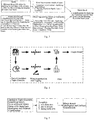
- the input query and multimedia content are segmented separately, and then the word segmentation result of the query is compared with the word segmentation result of the multimedia content, so as to determine the two candidate theme concepts, i.e., Qualifications for Applying for Township Civil Servants and Conditions for Housing Provident Fund Loans, for the query and multimedia content shown in Fig. 3 .
- the present disclosure does not limit the word segmentation to a n-gram word segmentation technology, and other word segmentation technologies can also be used for the word segmentation.
- the candidate topic concept is not limited to a n-gram continuous word.
- the word content continuously appearing in the query can be compared with the word content continuously appearing in the multimedia content, to determine the word content co-occurring in the query and the multimedia content.
- the candidate topic concept is a word content in which a word continuously appears in the first query and a word continuously appears in the first multimedia content, the accuracy of the candidate topic concept can be improved.
- the above first candidate topic concept is a longest one among a plurality of continuous contents
- the continuous content refers to a word content in which a word continuously appears in the first query and a word continuously appears in the first multimedia content.
- the continuous content may include a plurality of words and continuously appear in the query and the multimedia content, and term “continuously” here refers to the appearance positions in the query and the multimedia content being continuous.
- different continuous content may or may not have an overlapping word.
- the acquiring the plurality of candidate topic concepts based on the query in the present disclosure is not limited to the above embodiments.
- the candidate topic concept can also be determined only based on the query, or the candidate topic concept can be extracted from the query and the multimedia content by using the candidate topic concept template.
- Step S202 performing word segmentation on the plurality of candidate topic concepts and performing part-of-speech tagging on words obtained after performing the word segmentation, to obtain a part-of-speech sequence of each of the plurality of candidate topic concepts.
- Step S203 filtering the plurality of candidate topic concepts based on the part-of-speech sequence, to filter out a topic concept corresponding to a target part-of-speech sequence among the plurality of candidate topic concepts, in which a proportion of accurate topic concepts in the target part-of-speech sequence is lower than or equal to a first preset threshold, or a proportion of inaccurate topic concepts in the target part-of-speech sequence is higher than or equal to a second preset threshold.
- the method before the filtering the plurality of candidate topic concepts based on the part-of-speech sequence, to filter out the topic concept corresponding to the target part-of-speech sequence among the plurality of candidate topic concepts, the method further includes: tagging a part of topic concepts among the plurality of candidate topic concepts, to obtain a tagging result, the tagging result indicating whether each topic concept in the part of topic concepts is accurate, and a part-of-speech sequence of the part of topic concepts including the part-of-speech sequence of the plurality of candidate topic concepts; and counting a proportion of the accurate topic concepts or a proportion of the inaccurate topic concepts in each target part-of-speech sequence according to the tagging result.
- the above partial topic concepts may be a part of topic concepts randomly extracted from the above plurality of candidate topic concepts.
- the above tagging can be done manually to determine whether it is an accurate topic concept.
- the part-of-speech sequence of some candidate topic concepts may be the same. Therefore, the part-of-speech sequence of the above part of topic concepts may include the part-of-speech sequences of the plurality of candidate topic concepts.
- a part of topic concepts are extracted from a plurality of candidate topic concepts, and subjected to word segmentation and tagging. Then, the proportion of accurate topic concepts or the proportion of inaccurate topic concepts in each part-of-speech sequence is counted, and the above plurality of candidate topic concepts is filtered through these counting, to obtain an output result.
- the determining the proportion of the accurate topic concept or the proportion of the inaccurate topic concept for the part-of-speech sequence in the present disclosure is not limited to the above manner.
- a plurality of topic concepts different from the candidate topic concepts in step 201 and the corresponding part-of-speech sequences can be obtained in advance.
- the accuracy of these topic concepts can determine the proportion of accurate topic concepts or the proportion of inaccurate topic concepts in the part-of-speech sequence.
- the method further includes Step 204: deleting a target candidate topic concept from filtered candidate topic concepts according to a target template, in which in the case that the target template is an inaccurate topic concept template, the target candidate topic concept is a topic concept matching the target template, or in the case that the target template is an accurate topic concept template, the target candidate topic concept is a topic concept not matching the target template among the filtered candidate topic concepts.
- the above target template may be preconfigured, e.g., set by a user.
- the three inaccurate topic concept templates shown in Fig. 5 can filter out inaccurate candidate topic concepts and retain the correct topic concepts. It should be noted that Fig. 5 is merely an example, and the ratio of inaccurate candidate topic concepts filtered in practical applications may be much lower than the ratio of inaccurate topic concepts shown in Fig. 5 .
- the candidate topic concept deleted from the above filtered candidate topic concepts can also be deleted.
- the query and multimedia content are subjected to word segmentation, and the word segmentations of the query and the multimedia content are matched, to determine a plurality of candidate topic concepts. Then, the part-of-speech sequence of each candidate topic concept is determined, and the inaccurate topic concept is filtered out and finally filtered through the template, to obtain the final output topic concept and to obtain the high-quality topic concept.
- a variety of optional embodiments are added on the basis of the embodiment shown in Fig. 1 , and all of them can reduce the labor cost required for mining the topic concept, and achieve the beneficial effects of improving the accuracy of the topic concepts.
- Fig. 7 is a diagram showing a structure of a device for mining a topic concept according to the present disclosure.
- the device 700 for mining the topic concept includes: an acquisition module 701 for acquiring a plurality of candidate topic concepts based on a query; a word segmentation module 702 for performing word segmentation on the plurality of candidate topic concepts and performing part-of-speech tagging on words obtained after performing the word segmentation, to obtain a part-of-speech sequence of each of the plurality of candidate topic concepts; and a filter module 703 for filtering the plurality of candidate topic concepts based on the part-of-speech sequence, to filter out a topic concept corresponding to a target part-of-speech sequence among the plurality of candidate topic concepts, in which a proportion of accurate topic concepts in the target part-of-speech sequence is lower than or equal to a first preset threshold, or a proportion of inaccurate topic concepts in the target part-of-speech sequence
- the device further includes: a tagging module 704 for tagging a part of topic concepts among the plurality of candidate topic concepts, to obtain a tagging result, the tagging result indicating whether each topic concept in the part of topic concepts is accurate, and a part-of-speech sequence of the part of topic concepts including the part-of-speech sequence of the plurality of candidate topic concepts; and a statistics module 705 for counting a proportion of the accurate topic concepts or a proportion of the inaccurate topic concepts in each target part-of-speech sequence according to the tagging result.
- a tagging module 704 for tagging a part of topic concepts among the plurality of candidate topic concepts, to obtain a tagging result, the tagging result indicating whether each topic concept in the part of topic concepts is accurate, and a part-of-speech sequence of the part of topic concepts including the part-of-speech sequence of the plurality of candidate topic concepts
- a statistics module 705 for counting a proportion of the accurate topic concepts or
- the acquiring module 701 includes: a first word unit 7011 for performing word segmentation on a first query, to obtain a first word segmentation result; a second word segmentation unit 7012 for performing word segmentation on a first multimedia content, to obtain a second word segmentation result, in which the first multimedia content is a multimedia content hit by searching the first query; and a determining unit 7013 for determining a first candidate topic concept according to the first word segmentation result and the second word segmentation result, in which the first candidate topic concept is a word content in which a word continuously appears in the first query and a word continuously appears in the first multimedia content, and the first candidate topic concept is one of the plurality of candidate topic concepts.
- the first candidate topic concept is a longest one among a plurality of continuous contents
- the continuous content refers to a word content in which a word continuously appears in the first query and a word continuously appears in the first multimedia content.
- the device further includes: a deletion module 706 for deleting a target candidate topic concept from filtered candidate topic concepts according to a target template, in which in the case that the target template is an inaccurate topic concept template, the target candidate topic concept is a topic concept matching the target template, or in a case where the target template is an accurate topic concept template, the target candidate topic concept is a topic concept not matching the target template among the filtered candidate topic concepts.
- a deletion module 706 for deleting a target candidate topic concept from filtered candidate topic concepts according to a target template, in which in the case that the target template is an inaccurate topic concept template, the target candidate topic concept is a topic concept matching the target template, or in a case where the target template is an accurate topic concept template, the target candidate topic concept is a topic concept not matching the target template among the filtered candidate topic concepts.
- the device according to this embodiment can implement each process implemented in the method embodiment of the present disclosure, and can achieve the same beneficial effects. To avoid repetition, the details are not repeated herein.
- the present disclosure also provides an electronic equipment and a readable storage medium.
- FIG. 11 it is a block diagram showing an electronic equipment for realizing a method for mining a topic concept according to an embodiment of the present disclosure.
- the electronic equipment is intended to represent various forms of digital computers, such as laptop computers, desktop computers, workstations, personal digital assistants, servers, blade servers, mainframe computers, and other suitable computers.
- the electronic equipment can also represent various forms of mobile devices, such as personal digital processing, cellular phones, smart phones, wearable devices, and other similar computing devices.
- the components, their connections and relationships, and their functions shown herein are merely examples, and are not intended to limit the implementation of the present disclosure described and/or required herein.
- the electronic equipment includes one or more processors 1101, memories 1102, and interfaces for connecting various components, including a high-speed interface and a low-speed interface.
- the various components are connected to each other by using different buses, and can be installed on a common motherboard or installed in other ways as needed.
- the processor may process instructions executed in the electronic equipment, including instructions stored in or on the memory to display graphical information of the GUI on an external input/output device (such as a display equipment coupled to an interface).
- an external input/output device such as a display equipment coupled to an interface.
- a plurality of processors and/or a plurality of buses can be used along with a plurality of memories.
- a plurality of electronic equipments can be connected, in which each device provides some necessary operations (for example, as a server array, a group of blade servers, or a multi-processor system).
- a processor 1101 is taken as an example.
- the memory 1102 is the non-transitory computer-readable storage medium according to the present disclosure.
- the memory stores an instruction executable by at least one processor, so that the at least one processor executes the method for mining the topic concept according to the present disclosure.
- the non-transitory computer-readable storage medium of the present disclosure stores a computer instruction, in which the computer instruction is configured to allow a computer execute the method for mining the topic concept according to the present disclosure.
- the memory 1102 can be used to store a non-transitory software program, a non-transitory computer-executable program, and a module, e.g., a program instruction / module corresponding to the method for mining the topic concept in the embodiments of the present disclosure (for example, the acquisition module 701, the word segmentation module 702, and the filter module 703 shown in Fig. 7 ).
- the processor 1101 executes various functional applications of the server and data processing by running non-transitory software programs, instructions, and modules stored in the memory 1102, thereby realizing the method for mining the topic concept in the above method embodiment.
- the memory 1102 may include a storage program area and a storage data area, in which the storage program area may store an operating system and an application program required by at least one function; and the storage data area may store data created by using the electronic equipment based on the method for mining the topic concept.
- the memory 1102 may include a high-speed random access memory, and may also include a non-transitory memory, e.g., at least one of a magnetic disk storage device, a flash memory device, or other non-transitory solid-state storage devices.
- the memory 1102 may optionally include memories remotely arranged with respect to the processor 1101, and these remote memories may be connected to the electronic equipment of the method for mining the topic concept via a network.
- the examples of the above networks include, but are not limited to, the internet, a corporate intranet, a local area network, a mobile communication network, and a combination thereof.
- the electronic equipment of the method for mining the topic concept may further include: an input device 1103 and an output device 1104.
- the processor 1101, the memory 1102, the input device 1103, and the output device 1104 may be connected by a bus or in other manners. In Fig. 11 , a bus connection is taken as an example.
- the input device 1103 can receive input digital or character information, and generate a key signal input related to the user setting and function control of the electronic equipment of the method for mining the topic concept, e.g., a touch screen, a keypad, a mouse, a track pad, a touch pad, a pointing stick, one or more mouse buttons, a trackball, a joystick and other input devices.
- the output device 1104 may include a display equipment, an auxiliary lighting device (e.g., LED), a tactile feedback device (e.g., a vibration motor), and the like.
- the display equipment may include, but is not limited to, a liquid crystal display (LCD), a light emitting diode (LED) display, and a plasma display. In some embodiments, the display equipment may be a touch screen.
- Various embodiment of the systems and techniques described herein can be implemented in a digital electronic circuit system, an integrated circuit system, a specific ASIC (application specific integrated circuits), a computer hardware, firmware, a software, and/or a combination thereof. These various embodiments may include an embodiment that is implemented in one or more computer programs.
- the one or more computer programs may be executed and/or interpreted on a programmable system including at least one programmable processor.
- the programmable processor can be a dedicated or general programmable processor, and can receive data and instructions from the storage system, at least one input device, and at least one output device, and transmit the data and instructions to the storage system, the at least one input device, and the at least one output device.
- the systems and techniques described herein can be implemented on a computer.
- the computer has a display equipment (for example, a CRT (cathode ray tube) or LCD (liquid crystal display) monitor)) for displaying an information to a user; and a keyboard and a pointing device (e.g., a mouse or a trackball).
- a display equipment for example, a CRT (cathode ray tube) or LCD (liquid crystal display) monitor
- a keyboard and a pointing device e.g., a mouse or a trackball.
- the feedback provided to the user can be any form of sensory feedback (e.g., a visual feedback, an auditory feedback, or a tactile feedback); and can receive input in any form (including an acoustic input, a voice input, or a tactile input) from the user.
- the feedback provided to the user can be any form of sensory feedback (e.g., a visual feedback, an auditory feedback, or a tactile feedback); and can receive input in any form (including an acoustic input, a voice input, or a tactile input) from the user.
- the systems and technologies described herein can be implemented in a computing system including background components (e.g., as a data server), a computing system including middleware components (e.g., an application server), a computing system including front-end components (e.g., a user computer having a graphical user interface or a web browser, through which the user can interact with the implementation of the system and technology described herein), or a computing system including any combination of the background components, the middleware components or the front-end components.
- the components of the system can be connected to each other through digital data communication in any form or medium (e.g., a communication network). Examples of communication networks include: a local area network (LAN), a wide area network (WAN), and the internet.
- the computer system can include clients and servers.
- the clients and servers are generally far away from each other and usually interact through a communication network.
- the relationship between the client and the server is generated by a computer program running on a corresponding computer and having a client-server relationship with each other.
- the candidate topic concepts are filtered through the part-of-speech sequence of the candidate topic concept, thereby reducing the labor cost required for mining the topic concept.
Landscapes
- Engineering & Computer Science (AREA)
- Theoretical Computer Science (AREA)
- Physics & Mathematics (AREA)
- General Engineering & Computer Science (AREA)
- General Physics & Mathematics (AREA)
- Computational Linguistics (AREA)
- Databases & Information Systems (AREA)
- General Health & Medical Sciences (AREA)
- Health & Medical Sciences (AREA)
- Audiology, Speech & Language Pathology (AREA)
- Artificial Intelligence (AREA)
- Data Mining & Analysis (AREA)
- Fuzzy Systems (AREA)
- Mathematical Physics (AREA)
- Probability & Statistics with Applications (AREA)
- Software Systems (AREA)
- Multimedia (AREA)
- Life Sciences & Earth Sciences (AREA)
- Animal Behavior & Ethology (AREA)
- Information Retrieval, Db Structures And Fs Structures Therefor (AREA)
Abstract
Description
- The present disclosure relates to the field of knowledge graph technology in the field of computer technology, in particular, to a method, a device, an equipment, and a storage medium for mining a topic concept.
- The topic concept mining technology can extract topic concepts from a large number of search logs, in which these topic concepts can be topic concepts describing a thing, an event, a person, etc. However, the current mining of the topic concept begins with a batch of seed topic concept templates, matching a seed query to obtain a candidate topic concept, and then matching more query based on the candidate topic concept, thereby obtaining a candidate template. After that, the candidate topic concepts corresponding to the candidate templates are filtered manually, to realize the mining the topic concept. Therefore, it needs a large labor cost for the current mining of the topic concept.
- This application provides a method, a device, an equipment, and a storage medium for mining a topic concept, to solve the problem that the mining the topic concept requires a large labor cost.
- According to a first aspect, a method for mining a topic concept is provided, including: acquiring a plurality of candidate topic concepts based on a query; performing word segmentation on the plurality of candidate topic concepts and performing part-of-speech tagging on words obtained after performing the word segmentation, to obtain a part-of-speech sequence of each of the plurality of candidate topic concepts; and filtering the plurality of candidate topic concepts based on the part-of-speech sequence, to filter out a topic concept corresponding to a target part-of-speech sequence among the plurality of candidate topic concepts, in which a proportion of accurate topic concepts in the target part-of-speech sequence is lower than or equal to a first preset threshold, or a proportion of inaccurate topic concepts in the target part-of-speech sequence is higher than or equal to a second preset threshold.
- According to a second aspect, a device for mining a topic concept is provided, including: an acquisition module for acquiring a plurality of candidate topic concepts based on a query; a word segmentation module for performing word segmentation on the plurality of candidate topic concepts and performing part-of-speech tagging on words obtained after performing the word segmentation, to obtain a part-of-speech sequence of each of the plurality of candidate topic concepts; and a filter module for filtering the plurality of candidate topic concepts based on the part-of-speech sequence, to filter out a topic concept corresponding to a target part-of-speech sequence among the plurality of candidate topic concepts, in which a proportion of accurate topic concepts in the target part-of-speech sequence is lower than or equal to a first preset threshold, or a proportion of inaccurate topic concepts in the target part-of-speech sequence is higher than or equal to a second preset threshold.
- According to a third aspect, an electronic equipment is provided, including: at least one processor; and a memory communicatively connected with the at least one processor, in which the memory stores an instruction executable by the at least one processor, and the instruction are executed by the at least one processor, so that the at least one processor is capable of executing the method for mining the topic concept according to the present disclosure.
- According to a fourth aspect, a non-transitory computer-readable storage medium storing computer instruction is provided, in which the computer instruction is configured to allow the computer execute the method for mining the topic concept according to the present disclosure.
- According to the technical solution of the present disclosure, the candidate topic concepts are filtered through the part-of-speech sequence of the candidate topic concept, thereby reducing the labor cost required for mining the topic concept.
- It should be understood that the content described in this section is neither intended to identify key or important features of the embodiments of the present disclosure, nor is it intended to limit the scope of the present disclosure. Other features of the present disclosure will be easily understood through the following description.
- The drawings are used to better understand the solution and do not constitute a limitation to the present disclosure. Among them,
-
Fig. 1 is a flow chart showing a method for mining a topic concept according to the present disclosure; -
Fig. 2 is a flow chart of another method for mining a topic concept according to the present disclosure; -
Fig. 3 is a schematic diagram showing an extraction of a candidate topic concept according to the present disclosure; -
Fig. 4 is a schematic diagram showing a mining of a topic concept according to the present disclosure; -
Fig. 5 is a schematic diagram showing a filtering of a topic concept according to the present disclosure; -
Fig. 6 is a schematic diagram showing another mining of a topic concept according to the present disclosure; -
Fig. 7 is a diagram showing a structure of a device for mining a topic concept according to the present disclosure; -
Fig. 8 is a diagram showing a structure of another device for mining a topic concept according to the present disclosure; -
Fig. 9 is a diagram showing a structure of another device for mining a topic concept according to the present disclosure; -
Fig. 10 is a diagram showing a structure of another device for mining a topic concept according to the present disclosure; -
Fig. 11 is a block diagram showing an electronic equipment for realizing a method for mining a topic concept according to an embodiment of the present disclosure. - The exemplary embodiments of the present disclosure will be described below in conjunction with the drawings, which include various details of the embodiments of the present disclosure to be helpful for understanding, and should be considered as merely exemplary. Therefore, those skilled in the art should recognize that various changes and modifications may be made to the embodiments described herein without departing from the scope and spirit of the present disclosure. Similarly, for clarity and conciseness, the descriptions of well-known functions and structures are omitted in the following description.
- Please refer to
Fig. 1, Fig. 1 is a flow chart of a method for mining a topic concept according to the present disclosure, as shown inFig. 1 , it including the following steps. - Step S101: acquiring a plurality of candidate topic concepts based on a query.
- The above acquiring the plurality of candidate topic concepts based on the query may be to extract candidate topic concepts from the query input by a user, or may be to extract common candidate topic concepts from the query input by a user and the multimedia content (e.g., title) corresponding to the query.
- In the present disclosure, the topic concept may represent one or more topic concepts, such as one or more things, one or more events, and one or more characters, which are not limited herein.
- In addition, in the present disclosure, one or more candidate topic concepts can be extracted for one query, and the query in
step S 101 can be a plurality of queries. - It should be noted that the topic concept in the present disclosure can also be referred to as a topic concept graph.
- Step S 102: performing word segmentation on the plurality of candidate topic concepts and performing part-of-speech tagging on words obtained after performing the word segmentation, to obtain a part-of-speech sequence of each of the plurality of candidate topic concepts.
- The above word segmentation may be to segment the words of each candidate topic concept, to obtain a plurality of words of the candidate topic concept. For example, the candidate topic concept "Tianjin Steel Plate Lease" is segmented into "Tianjin / Steel Plate / Lease". For another example, a candidate topic concept "Comparison Table of Gregorian Calendar and Lunar Calendar" is segmented into "Gregorian Calendar / Lunar Calendar / Comparison Table".
- It should be noted that the word in the present disclosure can be a word, a phrase of a plurality of words, a phrase of a plurality of characters, or a character, that is, the number of words or characters included in the word in the present disclosure is not limited.
- The above part-of-speech tagging on words obtained after performing the word segmentation may be to tag the part of speech of each word, such as a noun [n], a gerund [vn], an adjective [a], a verb [v], a conjunction [c], and a location noun [f].
- The above part-of-speech sequence of candidate topic concepts may be a sequence of part of speech for each word used to represent the candidate topic concept. For example, if the word segmentation of the candidate topic concept "Tianjin Steel Plate Lease" is "Tianjin/Steel Plate/Lease", the word sequence can be expressed as ":n:vn", in which [:] can represent the part-of-speech separator. Of course, this is just an example. For example, [/] can be used to indicate the part-of-speech separator.
- Step S103: filtering the plurality of candidate topic concepts based on the part-of-speech sequence, to filter out a topic concept corresponding to a target part-of-speech sequence among the plurality of candidate topic concepts, in which a proportion of accurate topic concepts in the target part-of-speech sequence is lower than or equal to a first preset threshold, or a proportion of inaccurate topic concepts in the target part-of-speech sequence is higher than or equal to a second preset threshold.
- Among them, the above target part-of-speech sequence may be preconfigured, e.g., preset by a user, or obtained based on the statistics of candidate topic concepts. For example, the target part-of-speech sequence may include: v:v:, n:f, :c:f, and so on. In addition, the above target part-of-speech sequence may be one or more part-of-speech sequences.
- In the present disclosure, the accurate topic concept may refer to a concept capable of reflecting an accurate topic, and the inaccurate topic concept may refer to a concept not capable of reflecting an accurate topic. Specifically, the present disclosure does not limit them. For example, the accurate topic concept and the inaccurate topic concept can also be set manually.
- The topic concept corresponding to the above target part-of-speech sequence may refer to a candidate topic concept of the above target part-of-speech sequence.
- The filtering the plurality of candidate topic concepts based on the part-of-speech sequence, to filter out the topic concept corresponding to a target part-of-speech sequence among the plurality of candidate topic concepts may be to delete the topic concept corresponding to the target part-of-speech sequence among the plurality of candidate topic concepts.
- In addition, since the topic concept corresponding to the target part-of-speech sequence among the plurality of candidate topic concepts can be filtered out, the accuracy of the topic concepts can be improved.
- The following table 2 is used to illustrate the filtering of the candidate topic concepts in the present disclosure.
Table 2: Candidate Topic Concepts Word Segmentation on Candidate Topic Concepts Part-of-Speech Sequences Filtered or Not Tianjin Steel Plate Lease Tianjin / Steel Plate / Lease :n:vn No Comparison Table of Gregorian Calendar and Lunar Calendar Gregorian Calendar / Lunar Calendar / Comparison Table n:n:n No Huang Wenxiu's Advanced Deeds Huang Wenxiu / Advanced / Deeds :a:n No Automatic Cat Litter Basin Automatic / Cat Litter / Basin a:n:n No Do not Marry a Man from Guilin Marry a Man / Do not Marry / Guilin v:v: Yes between hundreds' digit and tens' digit hundreds' digit / and / tens' digit / between :c::f Yes in a computer computer / in n:f Yes - Among them, [:] is the part-of-speech separator. If there is no part-of-speech mark to tag before and after the separator, it means that the part of speech for the middle part of word is not recognized, in which [n] means [noun], [vn] means gerund, [a] means adjective, [v] means verb, [c] means conjunction, and [f] means location noun.
- As can be determined from Table 2, whether the topic concept is accurate is strong correlated with the part-of-speech sequence. For example, the topic concept having the part-of-speech sequence of [verb+verb] has a lower proportion of accurate concepts, while the topic concept having the part-of-speech sequence of [noun+gerund] has a higher proportion of accurate concepts.
- It should be noted that the present disclosure can be applied to electronic equipments, in which the electronic equipments can be servers, computers, and mobile phones.
- The method according to the present disclosure includes: acquiring a plurality of candidate topic concepts based on a query; performing word segmentation on the plurality of candidate topic concepts and performing part-of-speech tagging on words obtained after performing the word segmentation, to obtain a part-of-speech sequence of each of the plurality of candidate topic concepts; and filtering the plurality of candidate topic concepts based on the part-of-speech sequence, to filter out a topic concept corresponding to a target part-of-speech sequence among the plurality of candidate topic concepts. Since the candidate topic concepts are filtered by the part-of-speech sequence of the candidate topic concepts, the labor cost required for mining the topic concepts can be reduced.
- Please refer to
Fig. 2, Fig. 2 is a flow chart of another method for mining a topic concept according to the present disclosure, as shown inFig. 2 , it including the following steps. - Step S201: acquiring a plurality of candidate topic concepts based on a query.
- As an optional embodiment, the acquiring the plurality of candidate topic concepts based on the query includes: performing word segmentation on a first query, to obtain a first word segmentation result; performing word segmentation on a first multimedia content, to obtain a second word segmentation result, in which the first multimedia content is a multimedia content hit by searching the first query; and determining a first candidate topic concept according to the first word segmentation result and the second word segmentation result, in which the first candidate topic concept is a word content in which a word continuously appears in the first query and a word continuously appears in the first multimedia content, and the first candidate topic concept is one of the plurality of candidate topic concepts.
- Among them, the above first query may be one query in step 201, and a process corresponding to the first query may be executed for all the queries in step 201.
- The above first multimedia content may be the multimedia content hit by searching the first query and clicked by a user, e.g., a linking title clicked by a user. Of course, it is not limited, for example, it may also be a multimedia content hit and preferentially recommended.
- It should be noted that the multimedia content in the present disclosure may include at least one of a video, an audio, a picture, a text, etc.
- The above word segmentation can adopt n-gram segmentation technology for word segmentation.
- The above first candidate topic concept may be a n-gram continuous word co-occurring in the first query and the first multimedia content. For example, as shown in
Fig. 3 , the input query and multimedia content are segmented separately, and then the word segmentation result of the query is compared with the word segmentation result of the multimedia content, so as to determine the two candidate theme concepts, i.e., Qualifications for Applying for Township Civil Servants and Conditions for Housing Provident Fund Loans, for the query and multimedia content shown inFig. 3 . - It should be noted that the present disclosure does not limit the word segmentation to a n-gram word segmentation technology, and other word segmentation technologies can also be used for the word segmentation. The candidate topic concept is not limited to a n-gram continuous word. For example, the word content continuously appearing in the query can be compared with the word content continuously appearing in the multimedia content, to determine the word content co-occurring in the query and the multimedia content.
- In this embodiment, since the candidate topic concept is a word content in which a word continuously appears in the first query and a word continuously appears in the first multimedia content, the accuracy of the candidate topic concept can be improved.
- Optionally, the above first candidate topic concept is a longest one among a plurality of continuous contents, and the continuous content refers to a word content in which a word continuously appears in the first query and a word continuously appears in the first multimedia content.
- Among them, the continuous content may include a plurality of words and continuously appear in the query and the multimedia content, and term "continuously" here refers to the appearance positions in the query and the multimedia content being continuous. In addition, different continuous content may or may not have an overlapping word.
- In this embodiment, it can be realized that when there is a plurality of continuous word contents co-reproduced in the query and the multimedia content, the longest one can be selected, thereby mining more fine-grained topic concepts to more accurately reflect the corresponding topic information.
- It should be noted that the acquiring the plurality of candidate topic concepts based on the query in the present disclosure is not limited to the above embodiments. For example, the candidate topic concept can also be determined only based on the query, or the candidate topic concept can be extracted from the query and the multimedia content by using the candidate topic concept template.
- Step S202: performing word segmentation on the plurality of candidate topic concepts and performing part-of-speech tagging on words obtained after performing the word segmentation, to obtain a part-of-speech sequence of each of the plurality of candidate topic concepts.
- Step S203: filtering the plurality of candidate topic concepts based on the part-of-speech sequence, to filter out a topic concept corresponding to a target part-of-speech sequence among the plurality of candidate topic concepts, in which a proportion of accurate topic concepts in the target part-of-speech sequence is lower than or equal to a first preset threshold, or a proportion of inaccurate topic concepts in the target part-of-speech sequence is higher than or equal to a second preset threshold.
- As an optional embodiment, before the filtering the plurality of candidate topic concepts based on the part-of-speech sequence, to filter out the topic concept corresponding to the target part-of-speech sequence among the plurality of candidate topic concepts, the method further includes: tagging a part of topic concepts among the plurality of candidate topic concepts, to obtain a tagging result, the tagging result indicating whether each topic concept in the part of topic concepts is accurate, and a part-of-speech sequence of the part of topic concepts including the part-of-speech sequence of the plurality of candidate topic concepts; and counting a proportion of the accurate topic concepts or a proportion of the inaccurate topic concepts in each target part-of-speech sequence according to the tagging result.
- Among them, the above partial topic concepts may be a part of topic concepts randomly extracted from the above plurality of candidate topic concepts.
- The above tagging can be done manually to determine whether it is an accurate topic concept.
- It should be noted that although the texts of different candidate topic concepts are different, the part-of-speech sequence of some candidate topic concepts may be the same. Therefore, the part-of-speech sequence of the above part of topic concepts may include the part-of-speech sequences of the plurality of candidate topic concepts.
- In this embodiment, since a part of the candidate topic concepts are extracted, only a part of the candidate topic concepts need to be tagged, thereby reducing the workload.
- For example, as shown in
Fig. 4 , a part of topic concepts are extracted from a plurality of candidate topic concepts, and subjected to word segmentation and tagging. Then, the proportion of accurate topic concepts or the proportion of inaccurate topic concepts in each part-of-speech sequence is counted, and the above plurality of candidate topic concepts is filtered through these counting, to obtain an output result. - It should be noted that the determining the proportion of the accurate topic concept or the proportion of the inaccurate topic concept for the part-of-speech sequence in the present disclosure is not limited to the above manner. For example, a plurality of topic concepts different from the candidate topic concepts in step 201 and the corresponding part-of-speech sequences can be obtained in advance. The accuracy of these topic concepts can determine the proportion of accurate topic concepts or the proportion of inaccurate topic concepts in the part-of-speech sequence.
- As an optional embodiment, as shown in
Fig. 2 , the method further includes Step 204: deleting a target candidate topic concept from filtered candidate topic concepts according to a target template, in which in the case that the target template is an inaccurate topic concept template, the target candidate topic concept is a topic concept matching the target template, or in the case that the target template is an accurate topic concept template, the target candidate topic concept is a topic concept not matching the target template among the filtered candidate topic concepts. - Among them, the above target template may be preconfigured, e.g., set by a user. Taking the inaccurate topic concept template as an example, the three inaccurate topic concept templates shown in
Fig. 5 can filter out inaccurate candidate topic concepts and retain the correct topic concepts. It should be noted thatFig. 5 is merely an example, and the ratio of inaccurate candidate topic concepts filtered in practical applications may be much lower than the ratio of inaccurate topic concepts shown inFig. 5 . - In the case that an accurate topic concept template is used, the candidate topic concept deleted from the above filtered candidate topic concepts can also be deleted.
- In this embodiment, since the candidate topic concepts filtered in step 203 are filtered again, thereby further improving the accuracy of the topic concepts.
- For example, as shown in
Fig. 6 , the query and multimedia content are subjected to word segmentation, and the word segmentations of the query and the multimedia content are matched, to determine a plurality of candidate topic concepts. Then, the part-of-speech sequence of each candidate topic concept is determined, and the inaccurate topic concept is filtered out and finally filtered through the template, to obtain the final output topic concept and to obtain the high-quality topic concept. - In this embodiment, a variety of optional embodiments are added on the basis of the embodiment shown in
Fig. 1 , and all of them can reduce the labor cost required for mining the topic concept, and achieve the beneficial effects of improving the accuracy of the topic concepts. - Please refer to
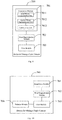
Fig. 7, Fig. 7 is a diagram showing a structure of a device for mining a topic concept according to the present disclosure. As shown inFig. 7 , thedevice 700 for mining the topic concept includes: anacquisition module 701 for acquiring a plurality of candidate topic concepts based on a query; aword segmentation module 702 for performing word segmentation on the plurality of candidate topic concepts and performing part-of-speech tagging on words obtained after performing the word segmentation, to obtain a part-of-speech sequence of each of the plurality of candidate topic concepts; and afilter module 703 for filtering the plurality of candidate topic concepts based on the part-of-speech sequence, to filter out a topic concept corresponding to a target part-of-speech sequence among the plurality of candidate topic concepts, in which a proportion of accurate topic concepts in the target part-of-speech sequence is lower than or equal to a first preset threshold, or a proportion of inaccurate topic concepts in the target part-of-speech sequence is higher than or equal to a second preset threshold. - Optionally, as shown in
Fig. 8 , the device further includes: a taggingmodule 704 for tagging a part of topic concepts among the plurality of candidate topic concepts, to obtain a tagging result, the tagging result indicating whether each topic concept in the part of topic concepts is accurate, and a part-of-speech sequence of the part of topic concepts including the part-of-speech sequence of the plurality of candidate topic concepts; and astatistics module 705 for counting a proportion of the accurate topic concepts or a proportion of the inaccurate topic concepts in each target part-of-speech sequence according to the tagging result. - Optionally, as shown in
Fig. 9 , the acquiringmodule 701 includes: afirst word unit 7011 for performing word segmentation on a first query, to obtain a first word segmentation result; a secondword segmentation unit 7012 for performing word segmentation on a first multimedia content, to obtain a second word segmentation result, in which the first multimedia content is a multimedia content hit by searching the first query; and a determiningunit 7013 for determining a first candidate topic concept according to the first word segmentation result and the second word segmentation result, in which the first candidate topic concept is a word content in which a word continuously appears in the first query and a word continuously appears in the first multimedia content, and the first candidate topic concept is one of the plurality of candidate topic concepts. - Optionally, the first candidate topic concept is a longest one among a plurality of continuous contents, and the continuous content refers to a word content in which a word continuously appears in the first query and a word continuously appears in the first multimedia content.
- Optionally, as shown in
Fig. 10 , the device further includes: adeletion module 706 for deleting a target candidate topic concept from filtered candidate topic concepts according to a target template, in which in the case that the target template is an inaccurate topic concept template, the target candidate topic concept is a topic concept matching the target template, or in a case where the target template is an accurate topic concept template, the target candidate topic concept is a topic concept not matching the target template among the filtered candidate topic concepts. - The device according to this embodiment can implement each process implemented in the method embodiment of the present disclosure, and can achieve the same beneficial effects. To avoid repetition, the details are not repeated herein.
- According to the embodiments of the present disclosure, the present disclosure also provides an electronic equipment and a readable storage medium.
- As shown in
Fig. 11 , it is a block diagram showing an electronic equipment for realizing a method for mining a topic concept according to an embodiment of the present disclosure. The electronic equipment is intended to represent various forms of digital computers, such as laptop computers, desktop computers, workstations, personal digital assistants, servers, blade servers, mainframe computers, and other suitable computers. The electronic equipment can also represent various forms of mobile devices, such as personal digital processing, cellular phones, smart phones, wearable devices, and other similar computing devices. The components, their connections and relationships, and their functions shown herein are merely examples, and are not intended to limit the implementation of the present disclosure described and/or required herein. - As shown in
Fig. 11 , the electronic equipment includes one ormore processors 1101,memories 1102, and interfaces for connecting various components, including a high-speed interface and a low-speed interface. The various components are connected to each other by using different buses, and can be installed on a common motherboard or installed in other ways as needed. The processor may process instructions executed in the electronic equipment, including instructions stored in or on the memory to display graphical information of the GUI on an external input/output device (such as a display equipment coupled to an interface). In other embodiments, if necessary, a plurality of processors and/or a plurality of buses can be used along with a plurality of memories. Similarly, a plurality of electronic equipments can be connected, in which each device provides some necessary operations (for example, as a server array, a group of blade servers, or a multi-processor system). InFig. 11 , aprocessor 1101 is taken as an example. - The
memory 1102 is the non-transitory computer-readable storage medium according to the present disclosure. Among them, the memory stores an instruction executable by at least one processor, so that the at least one processor executes the method for mining the topic concept according to the present disclosure. The non-transitory computer-readable storage medium of the present disclosure stores a computer instruction, in which the computer instruction is configured to allow a computer execute the method for mining the topic concept according to the present disclosure. - As a non-transitory computer-readable storage medium, the
memory 1102 can be used to store a non-transitory software program, a non-transitory computer-executable program, and a module, e.g., a program instruction / module corresponding to the method for mining the topic concept in the embodiments of the present disclosure (for example, theacquisition module 701, theword segmentation module 702, and thefilter module 703 shown inFig. 7 ). Theprocessor 1101 executes various functional applications of the server and data processing by running non-transitory software programs, instructions, and modules stored in thememory 1102, thereby realizing the method for mining the topic concept in the above method embodiment. - The
memory 1102 may include a storage program area and a storage data area, in which the storage program area may store an operating system and an application program required by at least one function; and the storage data area may store data created by using the electronic equipment based on the method for mining the topic concept. In addition, thememory 1102 may include a high-speed random access memory, and may also include a non-transitory memory, e.g., at least one of a magnetic disk storage device, a flash memory device, or other non-transitory solid-state storage devices. In some embodiments, thememory 1102 may optionally include memories remotely arranged with respect to theprocessor 1101, and these remote memories may be connected to the electronic equipment of the method for mining the topic concept via a network. The examples of the above networks include, but are not limited to, the internet, a corporate intranet, a local area network, a mobile communication network, and a combination thereof. - The electronic equipment of the method for mining the topic concept may further include: an
input device 1103 and anoutput device 1104. Theprocessor 1101, thememory 1102, theinput device 1103, and theoutput device 1104 may be connected by a bus or in other manners. InFig. 11 , a bus connection is taken as an example. - The
input device 1103 can receive input digital or character information, and generate a key signal input related to the user setting and function control of the electronic equipment of the method for mining the topic concept, e.g., a touch screen, a keypad, a mouse, a track pad, a touch pad, a pointing stick, one or more mouse buttons, a trackball, a joystick and other input devices. Theoutput device 1104 may include a display equipment, an auxiliary lighting device (e.g., LED), a tactile feedback device (e.g., a vibration motor), and the like. The display equipment may include, but is not limited to, a liquid crystal display (LCD), a light emitting diode (LED) display, and a plasma display. In some embodiments, the display equipment may be a touch screen. - Various embodiment of the systems and techniques described herein can be implemented in a digital electronic circuit system, an integrated circuit system, a specific ASIC (application specific integrated circuits), a computer hardware, firmware, a software, and/or a combination thereof. These various embodiments may include an embodiment that is implemented in one or more computer programs. The one or more computer programs may be executed and/or interpreted on a programmable system including at least one programmable processor. The programmable processor can be a dedicated or general programmable processor, and can receive data and instructions from the storage system, at least one input device, and at least one output device, and transmit the data and instructions to the storage system, the at least one input device, and the at least one output device.
- These calculation programs (also known as programs, softwares, software applications, or codes) include machine instructions of programmable processors; and these calculation programs can be implemented by using high-level procedures and/or object-oriented programming languages, and/or assembly/machine languages. As used herein, the terms "machine-readable medium" and "computer-readable medium" refer to any computer program product, equipment, and/or device (e.g., a magnetic disk, an optical disk, a memory, a programmable logic device (PLD)) used to provide machine instructions and/or data to a programmable processor, including a machine-readable medium that receive the machine instructions as a machine-readable signal. The term "machine-readable signal" refers to any signal for providing the machine instructions and/or data to a programmable processor.
- In order to provide an interaction with a user, the systems and techniques described herein can be implemented on a computer. The computer has a display equipment (for example, a CRT (cathode ray tube) or LCD (liquid crystal display) monitor)) for displaying an information to a user; and a keyboard and a pointing device (e.g., a mouse or a trackball). The user can provide an input to the computer through the keyboard and the pointing device. Other types of devices can also be used to provide an interaction with the user; for example, the feedback provided to the user can be any form of sensory feedback (e.g., a visual feedback, an auditory feedback, or a tactile feedback); and can receive input in any form (including an acoustic input, a voice input, or a tactile input) from the user.
- The systems and technologies described herein can be implemented in a computing system including background components (e.g., as a data server), a computing system including middleware components (e.g., an application server), a computing system including front-end components (e.g., a user computer having a graphical user interface or a web browser, through which the user can interact with the implementation of the system and technology described herein), or a computing system including any combination of the background components, the middleware components or the front-end components. The components of the system can be connected to each other through digital data communication in any form or medium (e.g., a communication network). Examples of communication networks include: a local area network (LAN), a wide area network (WAN), and the internet.
- The computer system can include clients and servers. The clients and servers are generally far away from each other and usually interact through a communication network. The relationship between the client and the server is generated by a computer program running on a corresponding computer and having a client-server relationship with each other.
- According to the technical solution of the present disclosure, the candidate topic concepts are filtered through the part-of-speech sequence of the candidate topic concept, thereby reducing the labor cost required for mining the topic concept.
- It should be understood that the various forms of processes shown above can be used to reorder, add or delete steps. For example, the steps described in the present disclosure can be executed in parallel, sequentially, or in a different order, as long as the desired result of the technical solution disclosed in the present disclosure can be achieved, and thus them are not limited herein.
- The above specific embodiments do not constitute a limitation on the protection scope of the present disclosure. Those skilled in the art should understand that various modifications, combinations, sub-combinations and substitutions can be made according to design requirements and other factors. Any amendments, equivalent substitutions and improvements made within the spirit and principle of the present disclosure shall be included in the protection scope of the present disclosure.
Claims (12)
- A method for mining a topic concept, comprising:acquiring a plurality of candidate topic concepts based on a query;performing word segmentation on the plurality of candidate topic concepts and performing part-of-speech tagging on words obtained after performing the word segmentation, to obtain a part-of-speech sequence of each of the plurality of candidate topic concepts; andfiltering the plurality of candidate topic concepts based on the part-of-speech sequence, to filter out a topic concept corresponding to a target part-of-speech sequence among the plurality of candidate topic concepts, wherein a proportion of accurate topic concepts in the target part-of-speech sequence is lower than or equal to a first preset threshold, or a proportion of inaccurate topic concepts in the target part-of-speech sequence is higher than or equal to a second preset threshold.
- The method of claim 1, wherein before the filtering the plurality of candidate topic concepts based on the part-of-speech sequence, to filter out the topic concept corresponding to the target part-of-speech sequence among the plurality of candidate topic concepts, the method further comprises:tagging a part of topic concepts among the plurality of candidate topic concepts, to obtain a tagging result, the tagging result indicating whether each topic concept in the part of topic concepts is accurate, and a part-of-speech sequence of the part of topic concepts comprising the part-of-speech sequence of the plurality of candidate topic concepts; andcounting a proportion of the accurate topic concepts or a proportion of the inaccurate topic concepts in each target part-of-speech sequence according to the tagging result.
- The method of claim 1, wherein the acquiring the plurality of candidate topic concepts based on the query comprises:performing word segmentation on a first query, to obtain a first word segmentation result;performing word segmentation on a first multimedia content, to obtain a second word segmentation result, wherein the first multimedia content is a multimedia content hit by searching the first query; anddetermining a first candidate topic concept according to the first word segmentation result and the second word segmentation result, wherein the first candidate topic concept is a word content in which a word continuously appears in the first query and a word continuously appears in the first multimedia content, and the first candidate topic concept is one of the plurality of candidate topic concepts.
- The method of claim 3, wherein the first candidate topic concept is a longest one among a plurality of continuous contents, and the continuous content refers to a word content in which a word continuously appears in the first query and a word continuously appears in the first multimedia content.
- The method of claim 1, wherein after the filtering the plurality of candidate topic concepts based on the part-of-speech sequence, to filter out the topic concept corresponding to the target part-of-speech sequence among the plurality of candidate topic concepts, the method further comprises:
deleting a target candidate topic concept from filtered candidate topic concepts according to a target template, wherein in the case that the target template is an inaccurate topic concept template, the target candidate topic concept is a topic concept matching the target template, or in the case that the target template is an accurate topic concept template, the target candidate topic concept is a topic concept not matching the target template among the filtered candidate topic concepts. - A device for mining a topic concept, comprising:an acquisition module for acquiring a plurality of candidate topic concepts based on a query;a word segmentation module for performing word segmentation on the plurality of candidate topic concepts and performing part-of-speech tagging on words obtained after performing the word segmentation, to obtain a part-of-speech sequence of each of the plurality of candidate topic concepts; anda filter module for filtering the plurality of candidate topic concepts based on the part-of-speech sequence, to filter out a topic concept corresponding to a target part-of-speech sequence among the plurality of candidate topic concepts, wherein a proportion of accurate topic concepts in the target part-of-speech sequence is lower than or equal to a first preset threshold, or a proportion of inaccurate topic concepts in the target part-of-speech sequence is higher than or equal to a second preset threshold.
- The device of claim 6, wherein the device further comprises:a tagging module for tagging a part of topic concepts among the plurality of candidate topic concepts, to obtain a tagging result, the tagging result indicating whether each topic concept in the part of topic concepts is accurate, and a part-of-speech sequence of the part of topic concepts comprising the part-of-speech sequence of the plurality of candidate topic concepts; anda statistics module for counting a proportion of the accurate topic concepts or a proportion of the inaccurate topic concepts in each target part-of-speech sequence according to the tagging result.
- The device of claim 6, wherein the acquiring module comprises:a first word segmentation unit for performing word segmentation on a first query, to obtain a first word segmentation result;a second word segmentation unit for performing word segmentation on a first multimedia content, to obtain a second word segmentation result, wherein the first multimedia content is a multimedia content hit by searching the first query; anda determining unit for determining a first candidate topic concept according to the first word segmentation result and the second word segmentation result, wherein the first candidate topic concept is a word content in which a word continuously appears in the first query and a word continuously appears in the first multimedia content, and the first candidate topic concept is one of the plurality of candidate topic concepts.
- The device of claim 8, wherein the first candidate topic concept is a longest one among a plurality of continuous contents, and the continuous content refers to a word content in which a word continuously appears in the first query and a word continuously appears in the first multimedia content.
- The device of claim 6, wherein the device further comprises:
a deletion module for deleting a target candidate topic concept from filtered candidate topic concepts according to a target template, wherein in the case that the target template is an inaccurate topic concept template, the target candidate topic concept is a topic concept matching the target template, or in the case that the target template is an accurate topic concept template, the target candidate topic concept is a topic concept not matching the target template among the filtered candidate topic concepts. - An electronic equipment, comprising:at least one processor; anda memory communicatively connected with the at least one processor,wherein the memory stores an instruction executable by the at least one processor, and the instruction are executed by the at least one processor, so that the at least one processor is capable of executing the method of any one of claims 1 to 5.
- A non-transitory computer-readable storage medium storing computer instruction, wherein the computer instruction is configured to allow the computer execute the method of any one of claims 1 to 5.
Applications Claiming Priority (1)
| Application Number | Priority Date | Filing Date | Title |
|---|---|---|---|
| CN202010295520.5A CN111522863B (en) | 2020-04-15 | 2020-04-15 | Theme concept mining method, device, equipment and storage medium |
Publications (1)
| Publication Number | Publication Date |
|---|---|
| EP3896594A1 true EP3896594A1 (en) | 2021-10-20 |
Family
ID=71901136
Family Applications (1)
| Application Number | Title | Priority Date | Filing Date |
|---|---|---|---|
| EP20201845.3A Withdrawn EP3896594A1 (en) | 2020-04-15 | 2020-10-14 | Method, device, equipment, and storage medium for mining topic concept |
Country Status (5)
| Country | Link |
|---|---|
| US (1) | US11651164B2 (en) |
| EP (1) | EP3896594A1 (en) |
| JP (1) | JP7072034B2 (en) |
| KR (1) | KR102557782B1 (en) |
| CN (1) | CN111522863B (en) |
Cited By (2)
| Publication number | Priority date | Publication date | Assignee | Title |
|---|---|---|---|---|
| CN114330298A (en) * | 2021-12-10 | 2022-04-12 | 武汉斗鱼鱼乐网络科技有限公司 | A method, device, medium and equipment for mining hot topics in a community |
| CN114595957A (en) * | 2022-03-04 | 2022-06-07 | 广州耐奇电气科技有限公司 | Smart building energy management method and system based on big data analysis |
Families Citing this family (4)
| Publication number | Priority date | Publication date | Assignee | Title |
|---|---|---|---|---|
| CN115269889B (en) * | 2021-04-30 | 2024-07-02 | 北京字跳网络技术有限公司 | Clip template search method and device |
| CN113361272B (en) * | 2021-06-22 | 2023-03-21 | 海信视像科技股份有限公司 | Method and device for extracting concept words of media asset title |
| CN114519105B (en) * | 2021-12-24 | 2024-07-12 | 北京达佳互联信息技术有限公司 | Concept word determining method and device, electronic equipment and storage medium |
| CN114372146A (en) * | 2022-01-07 | 2022-04-19 | 清华大学 | Method and apparatus for training concept recognition models and recognizing concepts |
Citations (1)
| Publication number | Priority date | Publication date | Assignee | Title |
|---|---|---|---|---|
| WO2000010100A1 (en) * | 1998-08-14 | 2000-02-24 | The Trustees Of Columbia University In The City Of New York | Method and system for identifying significant topics of a document |
Family Cites Families (18)
| Publication number | Priority date | Publication date | Assignee | Title |
|---|---|---|---|---|
| US5537317A (en) * | 1994-06-01 | 1996-07-16 | Mitsubishi Electric Research Laboratories Inc. | System for correcting grammer based parts on speech probability |
| CN101901235B (en) * | 2009-05-27 | 2013-03-27 | 国际商业机器公司 | Method and system for document processing |
| CN101727487A (en) * | 2009-12-04 | 2010-06-09 | 中国人民解放军信息工程大学 | Network criticism oriented viewpoint subject identifying method and system |
| JP5491446B2 (en) * | 2011-05-20 | 2014-05-14 | 日本電信電話株式会社 | Topic word acquisition apparatus, method, and program |
| JP5964149B2 (en) | 2012-06-20 | 2016-08-03 | 株式会社Nttドコモ | Apparatus and program for identifying co-occurrence words |
| CN103793434A (en) * | 2012-11-02 | 2014-05-14 | 北京百度网讯科技有限公司 | Content-based image search method and device |
| JP6042790B2 (en) | 2013-11-15 | 2016-12-14 | 日本電信電話株式会社 | Trend analysis apparatus, trend analysis method, and trend analysis program |
| CN104008090A (en) | 2014-04-29 | 2014-08-27 | 河海大学 | Multi-subject extraction method based on concept vector model |
| US20150317303A1 (en) * | 2014-04-30 | 2015-11-05 | Linkedin Corporation | Topic mining using natural language processing techniques |
| US9852132B2 (en) * | 2014-11-25 | 2017-12-26 | Chegg, Inc. | Building a topical learning model in a content management system |
| US10042923B2 (en) * | 2015-04-24 | 2018-08-07 | Microsoft Technology Licensing, Llc | Topic extraction using clause segmentation and high-frequency words |
| US20170075978A1 (en) * | 2015-09-16 | 2017-03-16 | Linkedin Corporation | Model-based identification of relevant content |
| CN105354333B (en) | 2015-12-07 | 2018-11-06 | 天云融创数据科技(北京)有限公司 | A kind of method for extracting topic based on newsletter archive |
| CN106294314A (en) | 2016-07-19 | 2017-01-04 | 北京奇艺世纪科技有限公司 | Topic Mining Method and Device |
| WO2018186599A1 (en) | 2017-04-06 | 2018-10-11 | 네이버 주식회사 | Automatic extraction and structurization, by subject, of sub-topic of query |
| CN107436922B (en) * | 2017-07-05 | 2021-06-08 | 北京百度网讯科技有限公司 | Text label generation method and device |
| CN108460011B (en) * | 2018-02-01 | 2022-03-25 | 北京百度网讯科技有限公司 | Entity concept labeling method and system |
| CN111159557B (en) * | 2019-12-31 | 2023-07-25 | 北京奇艺世纪科技有限公司 | Hot spot information acquisition method, device, server and medium |
-
2020
- 2020-04-15 CN CN202010295520.5A patent/CN111522863B/en active Active
- 2020-09-29 US US17/036,609 patent/US11651164B2/en active Active
- 2020-10-14 EP EP20201845.3A patent/EP3896594A1/en not_active Withdrawn
- 2020-11-12 JP JP2020188635A patent/JP7072034B2/en active Active
- 2020-11-16 KR KR1020200152767A patent/KR102557782B1/en active Active
Patent Citations (1)
| Publication number | Priority date | Publication date | Assignee | Title |
|---|---|---|---|---|
| WO2000010100A1 (en) * | 1998-08-14 | 2000-02-24 | The Trustees Of Columbia University In The City Of New York | Method and system for identifying significant topics of a document |
Non-Patent Citations (2)
| Title |
|---|
| BARRETT RICK ET AL: "CoType : Joint Extraction of Typed Entities and Relations with Knowledge Bases", WORLD WIDE WEB, 3 April 2017 (2017-04-03), Republic and Canton of Geneva Switzerland, pages 1015 - 1024, XP055786775, ISBN: 978-1-4503-4913-0, Retrieved from the Internet <URL:https://dl.acm.org/doi/pdf/10.1145/3038912.3052708> [retrieved on 20210317], DOI: 10.1145/3038912.3052708 * |
| SHANG JINGBO ET AL: "Automated Phrase Mining from Massive Text Corpora", IEEE TRANSACTIONS ON KNOWLEDGE AND DATA ENGINEERING, vol. 30, no. 10, 11 March 2017 (2017-03-11), pages 1825 - 1837, XP055786870, Retrieved from the Internet <URL:https://arxiv.org/pdf/1702.04457.pdf> [retrieved on 20210315], DOI: 10.1145/1235 * |
Cited By (2)
| Publication number | Priority date | Publication date | Assignee | Title |
|---|---|---|---|---|
| CN114330298A (en) * | 2021-12-10 | 2022-04-12 | 武汉斗鱼鱼乐网络科技有限公司 | A method, device, medium and equipment for mining hot topics in a community |
| CN114595957A (en) * | 2022-03-04 | 2022-06-07 | 广州耐奇电气科技有限公司 | Smart building energy management method and system based on big data analysis |
Also Published As
| Publication number | Publication date |
|---|---|
| CN111522863A (en) | 2020-08-11 |
| CN111522863B (en) | 2023-07-25 |
| JP2021170309A (en) | 2021-10-28 |
| JP7072034B2 (en) | 2022-05-19 |
| US20210326535A1 (en) | 2021-10-21 |
| US11651164B2 (en) | 2023-05-16 |
| KR20210128317A (en) | 2021-10-26 |
| KR102557782B1 (en) | 2023-07-20 |
Similar Documents
| Publication | Publication Date | Title |
|---|---|---|
| US11651164B2 (en) | Method, device, equipment, and storage medium for mining topic concept | |
| KR102781095B1 (en) | Query term recommendation method, target model training method, device, apparatus, and storage medium and computer program | |
| US11275904B2 (en) | Method and apparatus for translating polysemy, and medium | |
| KR20210038471A (en) | Text query method and apparatus, device and storage medium | |
| US20230012642A1 (en) | Method and device for snapshotting metadata, and storage medium | |
| CN115495440A (en) | Data migration method, device and equipment of heterogeneous database and storage medium | |
| CN111125176B (en) | A business data search method, device, electronic device and storage medium | |
| CN111310481B (en) | Speech translation method, device, computer equipment and storage medium | |
| US20160147751A1 (en) | Generating an index for a table in a database background | |
| CN112560459A (en) | Sample screening method, device, equipment and storage medium for model training | |
| CN113868251A (en) | Global secondary index method and device for distributed database | |
| CN112446728A (en) | Advertisement recall method, device, equipment and storage medium | |
| CN111259058B (en) | Data mining methods, data mining devices and electronic equipment | |
| US20210216713A1 (en) | Method, apparatus, device and storage medium for intelligent response | |
| CN111581363B (en) | Knowledge extraction method, device, equipment and storage medium | |
| CN114896263B (en) | Methods, systems, electronic devices, and storage media for identifying target populations | |
| EP3839799A1 (en) | Method, apparatus, electronic device and readable storage medium for translation | |
| US11468236B2 (en) | Method and apparatus for performing word segmentation on text, device, and medium | |
| EP3825865A2 (en) | Method and apparatus for processing data | |
| US20220139369A1 (en) | Method for recognizing chinese-english mixed speech, electronic device, and storage medium | |
| KR102526873B1 (en) | Electronic map search method, device, facility and medium | |
| US20210216598A1 (en) | Method and apparatus for mining tag, device, and storage medium | |
| CN119226289A (en) | A corpus management method, electronic device, storage medium and program product | |
| KR102663523B1 (en) | Method and apparatus for extracting information, electronic device | |
| US11449558B2 (en) | Relationship network generation method and device, electronic apparatus, and storage medium |
Legal Events
| Date | Code | Title | Description |
|---|---|---|---|
| PUAI | Public reference made under article 153(3) epc to a published international application that has entered the european phase |
Free format text: ORIGINAL CODE: 0009012 |
|
| STAA | Information on the status of an ep patent application or granted ep patent |
Free format text: STATUS: REQUEST FOR EXAMINATION WAS MADE |
|
| 17P | Request for examination filed |
Effective date: 20201014 |
|
| AK | Designated contracting states |
Kind code of ref document: A1 Designated state(s): AL AT BE BG CH CY CZ DE DK EE ES FI FR GB GR HR HU IE IS IT LI LT LU LV MC MK MT NL NO PL PT RO RS SE SI SK SM TR |
|
| B565 | Issuance of search results under rule 164(2) epc |
Effective date: 20210330 |
|
| STAA | Information on the status of an ep patent application or granted ep patent |
Free format text: STATUS: EXAMINATION IS IN PROGRESS |
|
| 17Q | First examination report despatched |
Effective date: 20211117 |
|
| STAA | Information on the status of an ep patent application or granted ep patent |
Free format text: STATUS: THE APPLICATION HAS BEEN WITHDRAWN |
|
| 18W | Application withdrawn |
Effective date: 20221118 |