EP3896562A1 - Interaction method, and image processing method and apparatus - Google Patents
Interaction method, and image processing method and apparatus Download PDFInfo
- Publication number
- EP3896562A1 EP3896562A1 EP19895203.8A EP19895203A EP3896562A1 EP 3896562 A1 EP3896562 A1 EP 3896562A1 EP 19895203 A EP19895203 A EP 19895203A EP 3896562 A1 EP3896562 A1 EP 3896562A1
- Authority
- EP
- European Patent Office
- Prior art keywords
- picture
- collage
- pictures
- content type
- original
- Prior art date
- Legal status (The legal status is an assumption and is not a legal conclusion. Google has not performed a legal analysis and makes no representation as to the accuracy of the status listed.)
- Pending
Links
Images





Classifications
-
- G—PHYSICS
- G06—COMPUTING OR CALCULATING; COUNTING
- G06F—ELECTRIC DIGITAL DATA PROCESSING
- G06F3/00—Input arrangements for transferring data to be processed into a form capable of being handled by the computer; Output arrangements for transferring data from processing unit to output unit, e.g. interface arrangements
- G06F3/01—Input arrangements or combined input and output arrangements for interaction between user and computer
- G06F3/048—Interaction techniques based on graphical user interfaces [GUI]
- G06F3/0484—Interaction techniques based on graphical user interfaces [GUI] for the control of specific functions or operations, e.g. selecting or manipulating an object, an image or a displayed text element, setting a parameter value or selecting a range
-
- G—PHYSICS
- G06—COMPUTING OR CALCULATING; COUNTING
- G06F—ELECTRIC DIGITAL DATA PROCESSING
- G06F3/00—Input arrangements for transferring data to be processed into a form capable of being handled by the computer; Output arrangements for transferring data from processing unit to output unit, e.g. interface arrangements
- G06F3/01—Input arrangements or combined input and output arrangements for interaction between user and computer
- G06F3/048—Interaction techniques based on graphical user interfaces [GUI]
- G06F3/0484—Interaction techniques based on graphical user interfaces [GUI] for the control of specific functions or operations, e.g. selecting or manipulating an object, an image or a displayed text element, setting a parameter value or selecting a range
- G06F3/04842—Selection of displayed objects or displayed text elements
-
- G—PHYSICS
- G06—COMPUTING OR CALCULATING; COUNTING
- G06F—ELECTRIC DIGITAL DATA PROCESSING
- G06F3/00—Input arrangements for transferring data to be processed into a form capable of being handled by the computer; Output arrangements for transferring data from processing unit to output unit, e.g. interface arrangements
- G06F3/01—Input arrangements or combined input and output arrangements for interaction between user and computer
- G06F3/048—Interaction techniques based on graphical user interfaces [GUI]
- G06F3/0484—Interaction techniques based on graphical user interfaces [GUI] for the control of specific functions or operations, e.g. selecting or manipulating an object, an image or a displayed text element, setting a parameter value or selecting a range
- G06F3/04845—Interaction techniques based on graphical user interfaces [GUI] for the control of specific functions or operations, e.g. selecting or manipulating an object, an image or a displayed text element, setting a parameter value or selecting a range for image manipulation, e.g. dragging, rotation, expansion or change of colour
-
- G—PHYSICS
- G06—COMPUTING OR CALCULATING; COUNTING
- G06F—ELECTRIC DIGITAL DATA PROCESSING
- G06F3/00—Input arrangements for transferring data to be processed into a form capable of being handled by the computer; Output arrangements for transferring data from processing unit to output unit, e.g. interface arrangements
- G06F3/01—Input arrangements or combined input and output arrangements for interaction between user and computer
- G06F3/048—Interaction techniques based on graphical user interfaces [GUI]
- G06F3/0484—Interaction techniques based on graphical user interfaces [GUI] for the control of specific functions or operations, e.g. selecting or manipulating an object, an image or a displayed text element, setting a parameter value or selecting a range
- G06F3/0485—Scrolling or panning
-
- G—PHYSICS
- G06—COMPUTING OR CALCULATING; COUNTING
- G06Q—INFORMATION AND COMMUNICATION TECHNOLOGY [ICT] SPECIALLY ADAPTED FOR ADMINISTRATIVE, COMMERCIAL, FINANCIAL, MANAGERIAL OR SUPERVISORY PURPOSES; SYSTEMS OR METHODS SPECIALLY ADAPTED FOR ADMINISTRATIVE, COMMERCIAL, FINANCIAL, MANAGERIAL OR SUPERVISORY PURPOSES, NOT OTHERWISE PROVIDED FOR
- G06Q30/00—Commerce
- G06Q30/06—Buying, selling or leasing transactions
- G06Q30/0601—Electronic shopping [e-shopping]
- G06Q30/0641—Electronic shopping [e-shopping] utilising user interfaces specially adapted for shopping
- G06Q30/0643—Electronic shopping [e-shopping] utilising user interfaces specially adapted for shopping graphically representing goods, e.g. 3D product representation
-
- G—PHYSICS
- G06—COMPUTING OR CALCULATING; COUNTING
- G06T—IMAGE DATA PROCESSING OR GENERATION, IN GENERAL
- G06T11/00—Two-dimensional [2D] image generation
- G06T11/60—Creating or editing images; Combining images with text
-
- G—PHYSICS
- G06—COMPUTING OR CALCULATING; COUNTING
- G06T—IMAGE DATA PROCESSING OR GENERATION, IN GENERAL
- G06T3/00—Geometric image transformations in the plane of the image
- G06T3/40—Scaling of whole images or parts thereof, e.g. expanding or contracting
- G06T3/4038—Image mosaicing, e.g. composing plane images from plane sub-images
Definitions
- Embodiments of this application relate to the field of computer application technologies, and in particular, to an interaction method, a picture processing method, and an apparatus.
- pictures displayed through a display interface have a single visual effect. Users can only view a large number of other pictures through searching to obtain desired picture content, but a large number of searches will cause resource consumption.
- Embodiments of this application provide an interaction method, a picture processing method, and an apparatus, which enrich visual effects and reduce resource consumption.
- an embodiment of this application provides an interaction method, including:
- an embodiment of this application provides a picture processing method, including:
- collage pictures of different content types are combined to form a display object.
- an interaction apparatus including:
- an embodiment of this application provides a picture processing apparatus, including:
- an embodiment of this application provides a terminal, including a storage component, a display component, and a processing component; the storage component stores one or more computer program instructions; the one or more computer program instructions are provided to be called and executed by the processing component; and the processing component is used for:
- an embodiment of this application provides a server, which includes a processing component and a storage component;
- a display object composed of a plurality of collage pictures is displayed; a first target collage picture whose content type matches any one of the collage pictures is acquired in response to a switch operation for the any one of the collage pictures; and the any one of the collage pictures is replaced with the first target collage picture.
- the embodiments of this application provide an interaction method, which can display diversified display contents by splicing and switching a plurality of collage pictures, thus enriching visual effects, avoiding a large number of searches, and reducing resource consumption.
- pictures displayed through a display interface have a single visual effect, and a user can only view the picture content. If he/she does not like the picture content, he/she can only search other pictures to find the picture content that meets the visual needs, but this kind of workload will be very heavy. For example, in a commodity matching recommendation scenario in e-commerce, only pictures of models who have already dressed up can be shown to a user, but the user may only like tops but not bottoms. If the user wants to find his/her favorite matching effect, he/she needs to keep searching and viewing a large number of pictures. Due to the limited matching effect conveyed through pictures at present, the user may not find the matching he/she wants.
- collage pictures may be pictures that can be displayed in combination, such as pictures of tops and bottoms, which realize a user's need for free matching and enrich the visual effect, and enable the display of diversified display contents without a large number of searches.
- a new interaction method is provided, which enriches the user interaction manner and improves user experience.
- FIG. 1 is a flow chart of an embodiment of an interaction method provided by an embodiment of this application.
- the method describes the technical solution of this application in detail from the perspective of interface display of a client terminal.
- the method may include the following steps: 101: Displaying a display object composed of a plurality of collage pictures.
- the plurality of collage pictures may be obtained by cropping one or more original pictures.
- the display content presented by the display object is formed by splicing the picture content in the plurality of collage pictures.
- a plurality of collage pictures can be spliced in a predetermined splicing manner, so that the display content presented by the display object meets certain aesthetic requirements and forms content with a specific shape or a specific structure.
- its corresponding content type can be determined according to its picture content.
- a plurality of content types may be needed to form a display object, and the plurality of collage pictures may be determined according to the plurality of content types corresponding to the display obj ect.
- the collage picture may be obtained by cropping, according to its content type, picture areas corresponding to the content type in an original picture to which it belongs. That is, each collage picture may be obtained by cropping, according to its content type, picture areas corresponding to the content type in an original picture to which it belongs.
- the collage picture may also be specifically obtained by recognizing a target object in an original image to which it belongs and various constituent parts of the target object, and cropping the original image according to the various constituent parts; and the content type of the collage picture is determined according to its corresponding constituent part, and the specific content type of the collage picture may refer to its corresponding constituent part.
- the various constituent parts of the target object can be preset according to actual needs.
- the various constituent parts can include a head part, other body parts except the head, an upper body part, a lower body part, an one-piece body part, a foot part, and the like.
- the upper body part refers to the body part wearing tops (such as T-shirts, shirts, vests, etc.)
- the lower body part refers to the body part wearing bottoms (such as shorts, pants, skirts, etc.)
- the one-piece body part refers to the body part wearing one-pieces (such as dresses, jumpsuits, etc.).
- the foot part can also refer to the body part wearing shoes (boots, short boots, etc.).
- the plurality of collage pictures can be determined according to the various constituent parts of the target object.
- the plurality of collage pictures may be combined to form a display object including the target object, wherein different collage pictures corresponding to the same constituent part have different picture contents.
- the target object may refer to a human body, for example.
- the display content (skin color, clothing, portrait, figure, etc.) of the human body in different original pictures may be different, and the plurality of collage pictures may respectively correspond to human bodies with different dosplay contents or at least some of the collage pictures respectively correspond to human bodies with different display contents.
- the method may further include:
- the interactive interface may be provided when a user interaction trigger request is received.
- the first target collage picture whose content type matches the any one of the collage pictures may be found from a collage picture set.
- the collage picture set can be sent from a server terminal to a client terminal.
- the first target collage picture whose content type matches the any one of the collage pictures may also be requested from the server terminal.
- each collage picture in the collage picture set may be obtained by cropping, according to its content type, picture areas corresponding to the content type in an original picture to which it belongs.
- the plurality of collage pictures in the display object can be switched.
- one or more collage pictures can be switched at the same time, so when a switch operation for any one of the collage pictures is detected, the operation of step 102 can be performed.
- the first target collage picture whose content type matches the any one of the collage pictures may be a first target collage picture whose content type is the same as that of the any one of the collage pictures; and it may also be a first target collage picture whose content type at least contains the content type of the any one of the collage pictures.
- the one-piece body part contains the upper body part.
- the acquiring, in response to a switch operation for any one of the collage pictures, a first target collage picture whose content type matches the any one of the collage pictures may include: acquiring, in response to a specified slide operation for any one of the collage pictures, a first target collage picture whose content type matches the any one of the collage pictures.
- the specified slide operation may refer to, for example, a slide operation in a predetermined direction, or the dragging of the any one of the collage pictures, that is, a slide operation for controlling the any one of the collage pictures to move from a first position to a second position, and the like.
- the switch operation for any one of the collage pictures may also refer to a click operation for the any one of the collage pictures, such as a single click or a double click, and the embodiment of this application does not specifically limit the switch operation.
- the any one of the collage pictures may be replaced with the first target collage picture to update the display content of the display object.
- the process can return to step 101 and continue, that is, the first target collage picture is taken as a new collage picture and it is possible to continue to request switching the collage pictures in the display object to continue to update the display content of the display object.
- the display object composed of the plurality of collage pictures acquire, in response to a switch operation for any one of the collage pictures, a first target collage picture whose content type matches the any one of the collage pictures; and replace the any one of the collage pictures with the first target collage picture.
- a plurality of collage pictures different display contents can be displayed, which enriches the visual effect, enables to obtain diversified display contents without a large number of picture searches, and reduces resource consumption.
- a new interaction manner is provided, thus enriching the user interaction manner.
- the combination manner of a plurality of collage pictures may be splicing or collaging, that is, any two collage pictures may partially overlap.
- the displaying a display object composed of a plurality of collage pictures may include:
- a picture splicing technology can be used to sequentially splice the plurality of collage pictures according to a splicing sequence to form the display object.
- the splicing sequence of the plurality of collage pictures can be determined according to content types of the plurality of collage pictures.
- the method may further include:
- the splicing sequence corresponding to the plurality of content types can be preset.
- the splicing sequence corresponding to the plurality of content types may be the connection sequence of the various constituent parts of the target object.
- the connection sequence can be that the head part connects to the upper body part, the upper body part connects to the lower body part, and the lower body part connects to the foot part.
- the plurality of collage pictures may include at least one bottom layer collage picture and at least one upper layer collage picture; and the displaying a display object composed of a plurality of collage pictures may include:
- the display object can be displayed by a plurality of collage pictures in a layered and superimposed manner, and there are collage pictures that overlap at least partially.
- the display object is mainly divided into a bottom layer and an upper layer.
- the bottom layer can use the image splicing technology to splice at least one bottom layer collage picture to obtain a bottom layer picture.
- the upper layer may sequentially cover the bottom layer picture in a hierarchical sequence according to the collage starting position of at least one upper layer collage picture in the bottom layer picture.
- each bottom layer collage picture may be obtained by cropping a bottom layer original picture to which it belongs
- each upper layer collage picture may be obtained by cropping an upper layer original picture to which it belongs, so the bottom layer picture may be specifically obtained by splicing a plurality of bottom layer collage pictures.
- the bottom layer collage picture may refer to the bottom layer original picture, that is, the bottom layer original picture is taken as the bottom layer collage picture, in which case a bottom layer collage picture may be taken as the bottom layer picture.
- the collage starting position of at least one upper layer collage picture in the bottom layer picture may be determined according to the content type of the at least one upper layer collage picture.
- the hierarchical sequence of the at least one upper layer collage picture may also be determined according to the content type of the at least one upper layer collage picture.
- the method may further include: acquiring at least one bottom layer picture content type bottom layer collage picture and at least one upper layer collage picture according to at least one content type of a corresponding bottom layer picture and at least one content type corresponding to an upper layer picture of the display obj ect.
- the splicing sequence of the at least one bottom layer collage picture may refer to the splicing sequence corresponding to the content types of the at least one bottom layer collage picture, wherein the splicing sequence corresponding to the content types of the at least one bottom layer collage picture can be preset.
- a bottom layer original picture can be cut according to various first constituent parts corresponding to a target object. Therefore, the at least one bottom layer collage picture respectively corresponds to the various first constituent parts of the target object.
- the splicing sequence corresponding to the content types of the at least one bottom layer collage picture may be the connection sequence of the various first constituent parts of the target object. For example, if each first constituent part is composed of a head part and other body parts except the head, it can be known that the head part is connected to other body parts.
- the collage starting position of the at least one upper layer collage picture may be determined according to the content type of the at least one upper layer collage picture.
- the upper layer original picture can be cut according to various second constituent parts corresponding to the target object. Therefore, the collage starting position of the at least one upper layer collage picture may be determined according to the second constituent parts corresponding to the at least one upper layer collage picture.
- the display content of the bottom layer picture formed by splicing at least one bottom layer collage picture includes the target object. According to the various second constituent parts of the target object, the splicing positions of the various second constituent parts in the bottom layer picture can be determined. Therefore, the collage starting position of the upper layer collage picture can be determined according to the splicing position of its corresponding second constituent part.
- both the first constituent parts and the second constituent parts are determined according to the composition structure of the target object, and they can be the same or different.
- the “first” and “second” are only used to distinguish different cropping of the bottom layer original picture and the upper layer original picture.
- the collage starting position of the upper body part in the bottom layer picture is the splicing position of a head part and the upper body part of the target object in the bottom layer picture
- the collage starting position of the lower body part is the splicing position of the upper body part and the lower body part of the target object in the bottom layer picture.
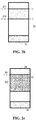
- FIG. 2a is a bottom layer picture formed by splicing at least one bottom layer collage picture.
- the bottom layer picture includes bottom layer collage picture 20 and bottom layer collage picture 21, respectively corresponding to constituent part A and constituent part B of a target object.
- the splicing position of the target object can include position 201 of the splicing line between constituent part A and constituent part B, position 201 of the splicing line between constituent part A and constituent part C, and position 202 of the splicing line between constituent part C and constituent part D. It can be seen that the position of the splicing line between constituent part A and constituent part B is the same as that of the splicing line between constituent part A and constituent part C.
- At least one upper layer collage picture includes two upper layer collage pictures, which respectively correspond to constituent part C and constituent part D.
- the hierarchical sequence of various constituent parts is that constituent part A and constituent part B are located at the bottom layer, constituent part D is located at the second layer on the bottom layer, and constituent part C is located at the third layer on the second layer.
- the splice starting position of the upper layer collage picture corresponding to constituent part C is position 201 of the splicing line
- the splice starting position of the upper layer collage picture corresponding to constituent part D is position 202 of the splicing line.
- upper layer collage picture 21 corresponding to constituent part D of the second layer is superimposed from position 202 of the splicing line; then as shown in FIG. 2c , upper layer collage picture 22 corresponding to constituent part C of the second layer is superimposed from the position of splicing line 201 to obtain the display object in FIG. 2c .
- upper layer collage picture 22 corresponding to constituent part C covers at least part of the content of upper layer collage picture 21 corresponding to constituent part D.
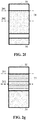
- a user can perform a switch operation for any one of the collage pictures. For example, if a switch operation for upper layer collage picture 21 corresponding to constituent part D is detected as shown in FIG. 2d , the user can search for upper layer collage picture 23 corresponding to constituent part D as the first target collage picture according to the content type (i.e., constituent part D) of upper layer collage picture 21, and then can replace upper layer collage picture 21 with upper layer collage picture 23 as shown in FIG. 2d , to obtain the display object with display content updated as shown in FIG. 2e .
- the content type i.e., constituent part D
- the method may further include: displaying at least one collage prompt message;
- each collage prompt message can correspond to a collage picture, and for any one of the collage prompt messages selected, a corresponding collage picture can be determined, which is named "a picture to be collaged" for convenience of distinction.
- the collage starting position thereof in the bottom layer picture can be determined, and the picture to be collaged can be collaged in the display object, that is, covers the display object from its corresponding splice starting position.
- the picture to be collaged is taken as the uppermost layer collage picture and covers other layers of collage pictures.
- FIG. 2f shows the display object with updated display content which is obtained after picture to be collaged 24 is collaged.
- the collage prompt message may be a thumbnail of its corresponding collage picture, so as to facilitate a user to understand the picture content of its corresponding collage picture.
- the method may further include:
- the corresponding relationship of collage pictures whose picture contents match but whose content types are different can be preset. Therefore, the second target collage picture can be obtained by searching the corresponding relationship.
- the method further includes:
- the collage requirements may refer to, for example, whether the proportion of the main content of any one of the upper layer collage pictures is the same as the proportion of the main content corresponding to the content type of the any one of the upper layer collage pictures in a bottom layer picture, and if not, the any one of the upper layer collage pictures can be enlarged or reduced, so that the proportions of the main content of the two pictures are the same, so that seamless splicing can be realized.
- the collage requirements may refer to whether the display direction of the main content of any one of the upper layer collage pictures is the same as that of the main content corresponding to the content type of the any one of the upper layer collage pictures in the bottom layer picture, and if not, the any one of the upper layer collage pictures can be rotated to adjust the display direction of the main content, so that the display direction is the same as the display direction of the picture content corresponding to the content type of the any one of the upper layer collage pictures in the bottom layer picture.
- the main content of any one of the upper layer collage pictures may refer to the picture content including its corresponding constituent parts.
- the content type of the first target collage picture at least contains the content type of the any one of the collage pictures. Therefore, the acquiring, in response to a switch operation for any one of the collage pictures, a first target collage picture whose content type matches the any one of the collage pictures may include:
- the at least one picture to be replaced includes the any one of the collage pictures.
- the one-piece body part contains the upper body part.
- the one-piece body part may also include the lower body part; therefore, the at least one picture to be replaced includes a collage picture of the upper body part and a collage picture of the lower body part.
- FIG. 2g shows a schematic diagram of the display object after replacing the at least one picture to be replaced with first target collage picture 25.
- the acquiring, in response to a switch operation for any one of the collage pictures, a first target collage picture whose content type matches the any one of the collage pictures may include: randomly selecting a collage picture from various collage pictures corresponding to the content type of the any one of the collage pictures, or selecting a next adjacent collage picture of the any one of the collage pictures according to a display sequence of the various collage pictures as the first target collage picture.
- FIG. 3 is a flow chart of another embodiment of a picture processing method provided by an embodiment of this application.
- the technical solution of this application is described from the perspective of the acquisition of collage pictures in this embodiment.
- the method may include the following steps:
- collage pictures of different content types are combined to form a display object.
- a server terminal may save the corresponding relationship between each collage picture and its content type to form a collage picture set, and may provide the collage picture set to a client terminal, so that the client terminal may select a first target collage picture from the collage picture set to replace any one of the collage pictures requested to be switched in the display object.
- the cropping the original picture to obtain picture areas respectively corresponding to the at least one content type includes:
- the original picture can be cut through a cutting method such as horizontal cutting, vertical cutting, or circular cutting, to form collage pictures with a specific shape.
- the original picture may include a bottom layer original picture and an upper layer original picture
- the upper layer original picture may refer to an original product picture, and the original product picture includes a human body wearing a product.
- an obtained product picture that matches user behavior characteristics is captured from an e-commerce platform.
- the user behavior characteristics may refer to, for example, historical purchase records, and a purchased product can be determined according to the historical purchase records, and a product picture of the purchased product can be used as an original product picture.
- the method may further include: determining an original product picture that matches user behavior characteristics.
- the bottom layer original picture may refer to an original standard picture, which is obtained by collecting human bodies of models.
- the determining at least one content type corresponding to an original picture includes:
- the technical solution of the embodiments of this application can be applied to a product matching recommendation scenario in an e-commerce platform.
- the bottom layer collage picture can be obtained by cropping an original standard picture; the original standard picture is obtained by collecting human bodies of models; the upper layer collage picture is obtained by cropping an original product picture; and the original product picture includes a human body wearing a product, wherein the content type of the collage picture is determined according to its corresponding constituent part of a human body. That is, each collage picture (including the bottom layer collage picture or the upper layer collage picture) corresponds to a constituent part of a human body, and its corresponding content type is determined according to its corresponding constituent part.
- the product is clothing
- it is suitable for clothing matching recommendation scenarios.
- the original standard picture and the original product picture can be cut according to various constituent parts of a human body.
- the original standard picture and the original product picture can choose to contain pictures of a human body in a standing posture.
- the human body can be divided into a head part, an upper body part, a lower body part, an one-piece body part, a foot part, and the like.
- a picture of the human body that satisfies the posture requirement may be selected from a picture set provided by a product provider as an original product picture.
- an original standard picture can be obtained by collecting human bodies of models in different postures (such as different standing postures).
- Standard collage pictures can be specifically obtained by cropping the original standard picture
- product collage pictures can be specifically obtained by cropping the original product picture.
- the original standard picture can be cropped to obtain standard collage pictures corresponding to the head part and standard collage pictures corresponding to body parts other than the head.
- the splicing positions between different constituent parts can be determined for various constituent parts of the human body, so that for the bottom layer picture obtained by splicing the standard collage pictures, the corresponding various splicing positions can also be determined.
- the different standard collage pictures constituting the bottom layer picture can be from the same original standard picture or from different original standard pictures, but the formed human body structure is the same, so each splicing position in the bottom layer picture is obtained.
- the original product picture can be cropped according to the product category (T-shirts, pants, skirts, windbreakers, etc.) of the original product picture to obtain product collage pictures of the upper (T-shirts, shirts, etc.) body part, product collage pictures of the lower (pants, skirts, or shorts) body part, product collage pictures of the one-piece (dresses or jumpsuits) body part, product collage pictures of the foot (shoes) part, or product collage pictures of the outer (windbreakers, short coats, long coats, down jackets, etc.) body part.
- product category T-shirts, pants, skirts, windbreakers, etc.
- Each collage picture obtained by cropping can be saved corresponding to its corresponding content type (constituent part) to form a collage picture set.
- a server terminal can send the collage picture set to the client terminal, so the client terminal displays a display object composed of a plurality of collage pictures.
- the initial plurality of collage pictures can be pre-configured.
- the user can request to switch the collage pictures.
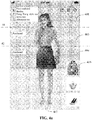
- a display object composed of a plurality of collage pictures which consists of standard collage picture 401 of the head part, standard collage picture 402 of body parts other than the head, product collage picture 403 of the upper body part, and product collage picture 404 of the lower body part.
- Standard collage picture 401 and standard collage picture 402 are spliced to obtain a bottom layer picture, which includes splicing position 41 and splicing position 42; product collage picture 404 uses splicing position 42 as the collage starting position, and product collage picture 403 uses splicing position 41 as the collage starting position, wherein the hierarchical sequence between various collage pictures is: standard collage picture 401 and standard collage picture 402 are located at the bottom layer, product collage picture 404 is located at the second layer on the bottom layer, and product collage picture 403 is located at the third layer on the second layer.
- one picture can be randomly selected from various product collage pictures corresponding to the upper body part, or the next product collage picture 405 of product collage picture 403 can be selected according to the display sequence of various product collage pictures corresponding to the upper body part; likewise, one picture can be randomly selected from various product collage pictures corresponding to the lower body part, or the next product collage picture 406 of product collage picture 404 can be selected according to the display sequence of various product collage pictures corresponding to the lower body part; and product collage picture 403 is replaced with product collage picture 405, and product collage picture 404 is replaced with product collage picture 406, so that the updated display object as shown in FIG. 4b can be obtained.
- product collage picture 403 it is possible to find out whether there is a standard collage picture whose picture content matches it but whose content type is different, and if so, assuming that standard collage picture 407 that matches product collage picture 403 is a standard collage picture of the head part as shown in FIG. 4c , then standard collage picture 401 can be replaced with standard collage picture 407; and as for product collage picture 404, assuming that standard collage picture 408 that matches it is a standard collage picture of body parts other than the head, then standard collage picture 402 can be replaced with standard collage picture 408, so as to obtain the updated display object shown in FIG. 4c to further enhance the display effect of the display object.
- collage prompt message 409 can also be displayed in an interactive interface.
- corresponding picture to be collaged 410 can be determined. Assuming that picture to be collaged 410 is a product collage picture of the outer body part, then picture to be collaged 410 is collaged in the display object according to the collage starting position (i.e., splicing position 41) of picture to be collaged 410, to obtain the updated display object shown in FIG. 4d .
- standard collage picture 401 can then be replaced with standard collage picture 411 according to picture to be collaged 410 to beautify the display effect.
- the product collage picture does not meet the collage requirements of its corresponding constituent part, for example, the proportion of its corresponding constituent part in the product collage picture being different from the proportion of the corresponding constituent part in the original standard picture, it is necessary to adjust the product collage picture, for example, to enlarge or reduce the product collage picture to meet the collage requirements, thereby ensuring that the proportions of the human body structure formed in the display object are coordinated.
- FIG. 5 shows a schematic structural diagram of an embodiment of an interaction apparatus provided by this application.
- the apparatus may include:
- the display module is used for splicing a plurality of collage pictures according to a splicing sequence of the plurality of collage pictures to obtain a display object; and displaying the display object.
- the apparatus may further include: a splicing sequence determining module for acquiring, according to a plurality of content types corresponding to the display object, collage pictures respectively corresponding to the plurality of content types, to obtain the plurality of collage pictures; and taking a splicing sequence corresponding to the plurality of content types as the splicing sequence of the plurality of collage pictures.
- the plurality of collage pictures include at least one bottom layer collage picture and at least one upper layer collage picture;
- the apparatus may further include: a picture determining module for acquiring at least one bottom layer picture content type bottom layer collage picture and at least one upper layer collage picture according to at least one content type of a corresponding bottom layer and at least one content type of a corresponding upper layer of the display object.
- the display module is also used for displaying at least one collage prompt message
- the collage picture is obtained by cropping, according to its content type, picture areas corresponding to the content type in an original picture to which it belongs.
- the collage picture is obtained by recognizing various constituent parts of a target object in an original image to which it belongs, and cropping the original image according to the various constituent parts; and the content type of the collage picture is determined according to its corresponding constituent part.
- the apparatus may further include:
- the apparatus may further include:
- the acquiring module is specifically used for acquiring, in response to a specified slide operation for any one of the collage pictures, a first target collage picture whose content type matches the any one of the collage pictures.
- the display module is specifically used for providing an interactive interface; and displaying the display object composed of the plurality of collage pictures in the interactive interface.
- the acquiring module is specifically used for acquiring, in response to a switch operation for any one of the collage pictures, a first target collage picture whose content type contains at least the content type of the any one of the collage pictures;
- the bottom layer collage picture is obtained by cropping an original standard picture; the original standard picture is obtained by collecting human bodies of models; the upper layer collage picture is obtained by cropping an original product picture; and the original product picture includes a human body wearing a product, wherein the content type of the collage picture is determined according to its corresponding constituent part of the human body. That is, each collage picture corresponds to a constituent part of the human body, and its content type is determined by its corresponding constituent part.
- the acquiring module is specifically used for randomly selecting a collage picture from various collage pictures corresponding to the content type of the any one of the collage pictures or selecting a next adjacent collage picture of the any one of the collage pictures according to a display sequence of the various collage pictures as the first target collage picture.
- the interaction apparatus described in FIG. 5 can execute the interaction method described in the embodiment shown in FIG. 1 , and its implementation principles and technical effects will not be repeated.
- the specific manner in which various modules and units in the interaction apparatus in the above embodiments perform operations have been described in detail in the embodiments regarding the method, and will not be elaborated here.
- the interaction apparatus of the embodiment shown in FIG. 5 may be implemented as a terminal.
- the terminal may include storage component 601, processing component 602, and display component 603; and storage component 601 stores one or more computer instructions, wherein the one or more computer instructions are called and executed by processing component 602.
- Processing component 602 is used for:
- processing component 602 may include one or more processors to execute the computer instructions to complete all or part of the steps in the above method.
- the processing component may also be implemented by one or more Application-Specific Integrated Circuits (ASICs), Digital Signal Processors (DSPs), Digital Signal Processing Devices (DSPDs), Programmable Logic Devices (PLDs), Field Programmable Gate Arrays (FPGAs), controllers, microcontrollers, microprocessors, or other electronic elements to perform the above method.
- ASICs Application-Specific Integrated Circuits
- DSPs Digital Signal Processors
- DSPDs Digital Signal Processing Devices
- PLDs Programmable Logic Devices
- FPGAs Field Programmable Gate Arrays
- controllers microcontrollers, microprocessors, or other electronic elements to perform the above method.
- Storage component 601 is configured to store various types of data to support operations on the terminal.
- the storage component can be implemented by any type of volatile or non-volatile storage device or their combination, such as a Static Random Access Memory (SRAM), an Electrically Erasable Programmable Read-Only Memory (EEPROM), an Erasable Programmable Read-Only Memory (EPROM), a Programmable Read-Only Memory (PROM), a Read-Only Memory (ROM), a magnetic memory, a flash memory, a magnetic disk, or an optical disk.
- SRAM Static Random Access Memory
- EEPROM Electrically Erasable Programmable Read-Only Memory
- EPROM Erasable Programmable Read-Only Memory
- PROM Programmable Read-Only Memory
- ROM Read-Only Memory
- Display component 603 can be an electroluminescence (EL) element, a liquid crystal display or a micro display with a similar structure, or a retina display or a similar laser scanning display.
- EL electroluminescence
- the terminal may necessarily also include other components, such as an input/output interface, a communication component, and the like.
- the input/output interface provides an interface between a processing component and a peripheral interface module.
- the above peripheral interface module may be an output device, an input device, and the like.
- the communication component is configured to facilitate wired or wireless communication between the terminal and other devices.
- a computer-readable storage medium is also provided in the embodiments of this application.
- the computer-readable storage medium stores a computer program which, when executed by a computer, may implement the interaction method of the embodiment shown in FIG. 1 .
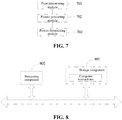
- FIG. 7 is a schematic structural diagram of an embodiment of a picture processing apparatus provided by the embodiment of this application.
- the apparatus may include:
- collage pictures of different content types are combined to form a display object.
- the apparatus may further include:
- the picture processing module is specifically used for recognizing various constituent parts of a target object in an original picture; determining content types respectively corresponding to the various constituent parts; and cutting the original picture according to the various constituent parts to obtain picture areas respectively corresponding to the at least one content type; and the picture determining module is specifically used for taking the picture areas where the constituent parts respectively corresponding to the at least one content type are located as collage pictures.
- the apparatus may further include:
- the upper layer original picture is an original product picture
- the bottom layer original picture is an original standard picture
- the picture processing apparatus described in FIG. 7 can execute the picture processing method described in the embodiment shown in FIG. 3 , and its implementation principles and technical effects will not be repeated.
- the specific manner in which various modules and units in the picture processing apparatus in the above embodiments perform operations have been described in detail in the embodiments regarding the method, and will not be elaborated here.
- the picture processing apparatus of the embodiment shown in FIG. 7 may be implemented as a server.
- the server may include storage component 801 and processing component 802; and storage component 801 stores one or more computer instructions, wherein the one or more computer instructions are called and executed by processing component 802.
- Processing component 802 is used for:
- collage pictures of different content types are combined to form a display object.
- processing component 802 may include one or more processors to execute the computer instructions to complete all or part of the steps in the above method.
- the processing component may also be implemented by one or more Application-Specific Integrated Circuits (ASICs), Digital Signal Processors (DSPs), Digital Signal Processing Devices (DSPDs), Programmable Logic Devices (PLDs), Field Programmable Gate Arrays (FPGAs), controllers, microcontrollers, microprocessors, or other electronic elements to perform the above method.
- ASICs Application-Specific Integrated Circuits
- DSPs Digital Signal Processors
- DSPDs Digital Signal Processing Devices
- PLDs Programmable Logic Devices
- FPGAs Field Programmable Gate Arrays
- controllers microcontrollers, microprocessors, or other electronic elements to perform the above method.
- Storage component 801 is configured to store various types of data to support operations on the server.
- the storage component can be implemented by any type of volatile or non-volatile storage device or their combination, such as a Static Random Access Memory (SRAM), an Electrically Erasable Programmable Read-Only Memory (EEPROM), an Erasable Programmable Read-Only Memory (EPROM), a Programmable Read-Only Memory (PROM), a Read-Only Memory (ROM), a magnetic memory, a flash memory, a magnetic disk, or an optical disk.
- SRAM Static Random Access Memory
- EEPROM Electrically Erasable Programmable Read-Only Memory
- EPROM Erasable Programmable Read-Only Memory
- PROM Programmable Read-Only Memory
- ROM Read-Only Memory
- the server may necessarily also include other components, such as an input/output interface, a communication component, and the like.
- the input/output interface provides an interface between a processing component and a peripheral interface module.
- the above peripheral interface module may be an output device, an input device, and the like.
- the communication component is configured to facilitate wired or wireless communication between the server and other devices.
- a computer-readable storage medium is also provided in the embodiments of this application.
- the computer-readable storage medium stores a computer program which, when executed by a computer, may implement the picture processing method of the embodiment shown in FIG. 3 .
- the apparatus embodiment described above is only schematic, wherein the units described as separate components may or may not be physically separated, and the components displayed as units may or may not be physical units, that is, may be located in one place, or may be distributed over a plurality of network units. Part or all of the modules may be selected according to actual needs to achieve the purpose of the solution of the embodiments. Those of ordinary skill in the art can understand and implement without creative efforts.
- the computer software product may be stored in a computer-readable storage medium (such as a ROM/RAM, a magnetic disk, an optical disc, etc.), and include several instructions used for causing a computer device (which may be a personal computer, a server, a network device, or the like) to execute the methods described in various embodiments or some parts of the embodiments.
- a computer-readable storage medium such as a ROM/RAM, a magnetic disk, an optical disc, etc.
Landscapes
- Engineering & Computer Science (AREA)
- Theoretical Computer Science (AREA)
- Physics & Mathematics (AREA)
- General Physics & Mathematics (AREA)
- General Engineering & Computer Science (AREA)
- Human Computer Interaction (AREA)
- Business, Economics & Management (AREA)
- Finance (AREA)
- Accounting & Taxation (AREA)
- Development Economics (AREA)
- Economics (AREA)
- Marketing (AREA)
- Strategic Management (AREA)
- General Business, Economics & Management (AREA)
- User Interface Of Digital Computer (AREA)
- Processing Or Creating Images (AREA)
Abstract
Description
- This application claims the priority to
Chinese patent application No. 201811513378.6 filed on December 11, 2018 - Embodiments of this application relate to the field of computer application technologies, and in particular, to an interaction method, a picture processing method, and an apparatus.
- At present, pictures displayed through a display interface have a single visual effect. Users can only view a large number of other pictures through searching to obtain desired picture content, but a large number of searches will cause resource consumption.
- Embodiments of this application provide an interaction method, a picture processing method, and an apparatus, which enrich visual effects and reduce resource consumption.
- In a first aspect, an embodiment of this application provides an interaction method, including:
- displaying a display object composed of a plurality of collage pictures;
- acquiring, in response to a switch operation for any one of the collage pictures, a first target collage picture whose content type matches the any one of the collage pictures; and
- replacing at least the any one of the collage pictures with the first target collage picture.
- In a second aspect, an embodiment of this application provides a picture processing method, including:
- determining at least one content type corresponding to an original picture;
- cropping the original picture to obtain picture areas respectively corresponding to the at least one content type; and
- taking the picture areas respectively corresponding to the at least one content type as collage pictures.
- Here, collage pictures of different content types are combined to form a display object.
- In a third aspect, an embodiment of this application provides an interaction apparatus, including:
- a display module for displaying a display object composed of a plurality of collage pictures;
- an acquiring module for acquiring, in response to a switch operation for any one of the collage pictures, a first target collage picture whose content type matches the any one of the collage pictures; and
- a replacing module for replacing at least the any one of the collage pictures with the first target collage picture.
- In a fourth aspect, an embodiment of this application provides a picture processing apparatus, including:
- a type determining module for determining at least one content type corresponding to an original picture;
- a picture processing module for cropping the original picture to obtain picture areas respectively corresponding to the at least one content type; and a picture determining module for taking the picture areas respectively corresponding to the at least one content type as collage pictures, wherein
- collage pictures of different content types are combined to form a display object.
- In a fifth aspect, an embodiment of this application provides a terminal, including a storage component, a display component, and a processing component; the storage component stores one or more computer program instructions; the one or more computer program instructions are provided to be called and executed by the processing component; and
the processing component is used for: - displaying a display object composed of a plurality of collage pictures through the display component;
- acquiring, in response to a switch operation for any one of the collage pictures, a first target collage picture whose content type matches the any one of the collage pictures; and
- replacing at least the any one of the collage pictures with the first target collage picture.
- In a sixth aspect, an embodiment of this application provides a server, which includes a processing component and a storage component;
- the storage component stores one or more computer instructions; the one or more computer instructions are used to be called and executed by the processing component; and
- the processing component is used for:
- determining at least one content type corresponding to an original picture;
- cropping the original picture to obtain picture areas respectively corresponding to the at least one content type; and
- taking the picture areas respectively corresponding to the at least one content type as collage pictures, wherein
- collage pictures of different content types are combined to form a display object.
- In an embodiment of this application, a display object composed of a plurality of collage pictures is displayed; a first target collage picture whose content type matches any one of the collage pictures is acquired in response to a switch operation for the any one of the collage pictures; and the any one of the collage pictures is replaced with the first target collage picture. Through combination and switching of a plurality of collage pictures, different display contents can be displayed, which enriches the visual effect and does not require a large number of picture searches, thus reducing resource consumption.
- These and other aspects of this application will be more concise and understandable in the description of the following embodiments.
- To describe the technical solutions in the embodiments of this application or the prior art more clearly, the accompanying drawings required for describing the embodiments or the prior art are briefly introduced below. It is apparent that the accompanying drawings in the following description are some embodiments of this application, and those of ordinary skill in the art may still derive other drawings from these accompanying drawings without creative efforts.
-
FIG. 1 shows a flow chart of an embodiment of an interaction method provided by this application; -
FIG. 2a to FIG. 2g respectively show schematic diagrams of picture interaction of an embodiment of this application in an actual application; -
FIG. 3 shows a flow chart of an embodiment of a picture processing method provided by this application; -
FIG. 4a to FIG. 4d respectively show schematic diagrams of the display of display objects of an embodiment of this application in an actual application; -
FIG. 5 shows a schematic structural diagram of an embodiment of an interaction apparatus provided by this application; -
FIG. 6 shows a schematic structural diagram of an embodiment of a terminal provided by this application; -
FIG. 7 shows a schematic structural diagram of an embodiment of a picture processing apparatus provided by this application; and -
FIG. 8 shows a schematic structural diagram of an embodiment of a server provided by this application. - In order to enable those skilled in the art to better understand the solutions in this application, the technical solutions in the embodiments of this application will be described clearly and completely with reference to the accompanying drawings in the embodiments of this application.
- A plurality of operations appearing in a specific sequence are contained in some of the procedures described in the specification and claims of this application and the above-mentioned accompanying drawings, but it should be clearly understood that these operations may not be executed in the sequence in which they appear in this document or be executed in parallel, and operation sequence numbers such as 101, 102, and the like are merely used to distinguish various different operations, and do not represent any execution sequence. In addition, these procedures may include more or fewer operations, and these operations may be executed sequentially or in parallel. It should be noted that descriptions such as "first" and "second" in this document are used to distinguish different messages, devices, modules, etc., and do not represent a sequence, nor do they define that "first" and "second" are of different types.
- The embodiments of this application provide an interaction method, which can display diversified display contents by splicing and switching a plurality of collage pictures, thus enriching visual effects, avoiding a large number of searches, and reducing resource consumption.
- At present, pictures displayed through a display interface have a single visual effect, and a user can only view the picture content. If he/she does not like the picture content, he/she can only search other pictures to find the picture content that meets the visual needs, but this kind of workload will be very heavy. For example, in a commodity matching recommendation scenario in e-commerce, only pictures of models who have already dressed up can be shown to a user, but the user may only like tops but not bottoms. If the user wants to find his/her favorite matching effect, he/she needs to keep searching and viewing a large number of pictures. Due to the limited matching effect conveyed through pictures at present, the user may not find the matching he/she wants. The technical solution of the embodiments of this application is adopted to achieve diversified display contents by combining and switching collage pictures, which enriches the visual effect. In the commodity matching scenario, collage pictures may be pictures that can be displayed in combination, such as pictures of tops and bottoms, which realize a user's need for free matching and enrich the visual effect, and enable the display of diversified display contents without a large number of searches. Moreover, a new interaction method is provided, which enriches the user interaction manner and improves user experience. The technical solutions in the embodiments of this application will be clearly and completely described below with reference to the accompanying drawings in the embodiments of this application. It is apparent that the described embodiments are merely a part, rather than all, of the embodiments of this application. Based on the embodiments of this application, all other embodiments derived by those skilled in the art without any creative efforts shall fall within the protection scope of this application.
-
FIG. 1 is a flow chart of an embodiment of an interaction method provided by an embodiment of this application. The method describes the technical solution of this application in detail from the perspective of interface display of a client terminal. The method may include the following steps:
101: Displaying a display object composed of a plurality of collage pictures. - Here, the plurality of collage pictures may be obtained by cropping one or more original pictures.
- The display content presented by the display object is formed by splicing the picture content in the plurality of collage pictures.
- In order to ensure the visual effect of the display content presented by the display object, a plurality of collage pictures can be spliced in a predetermined splicing manner, so that the display content presented by the display object meets certain aesthetic requirements and forms content with a specific shape or a specific structure.
- For the collage picture, its corresponding content type can be determined according to its picture content.
- A plurality of content types may be needed to form a display object, and the plurality of collage pictures may be determined according to the plurality of content types corresponding to the display obj ect.
- Optionally, the collage picture may be obtained by cropping, according to its content type, picture areas corresponding to the content type in an original picture to which it belongs. That is, each collage picture may be obtained by cropping, according to its content type, picture areas corresponding to the content type in an original picture to which it belongs.
- In addition, in an actual application, the collage picture may also be specifically obtained by recognizing a target object in an original image to which it belongs and various constituent parts of the target object, and cropping the original image according to the various constituent parts; and the content type of the collage picture is determined according to its corresponding constituent part, and the specific content type of the collage picture may refer to its corresponding constituent part.
- Here, the various constituent parts of the target object can be preset according to actual needs. For example, when the main object is a human body, the various constituent parts can include a head part, other body parts except the head, an upper body part, a lower body part, an one-piece body part, a foot part, and the like. Here, the upper body part refers to the body part wearing tops (such as T-shirts, shirts, vests, etc.), the lower body part refers to the body part wearing bottoms (such as shorts, pants, skirts, etc.), and the one-piece body part refers to the body part wearing one-pieces (such as dresses, jumpsuits, etc.). The foot part can also refer to the body part wearing shoes (boots, short boots, etc.).
- Therefore, the plurality of collage pictures can be determined according to the various constituent parts of the target object. The plurality of collage pictures may be combined to form a display object including the target object, wherein different collage pictures corresponding to the same constituent part have different picture contents.
- The target object may refer to a human body, for example. The display content (skin color, clothing, portrait, figure, etc.) of the human body in different original pictures may be different, and the plurality of collage pictures may respectively correspond to human bodies with different dosplay contents or at least some of the collage pictures respectively correspond to human bodies with different display contents.
- Optionally, the method may further include:
- providing an interactive interface; and
- the displaying a display object composed of a plurality of collage pictures includes:
displaying the display object composed of the plurality of collage pictures in the interactive interface. - Optionally, the interactive interface may be provided when a user interaction trigger request is received.
- 102: Acquiring, in response to a switch operation for any one of the collage pictures, a first target collage picture whose content type matches the any one of the collage pictures.
- Optionally, the first target collage picture whose content type matches the any one of the collage pictures may be found from a collage picture set. The collage picture set can be sent from a server terminal to a client terminal.
- Of course, optionally, the first target collage picture whose content type matches the any one of the collage pictures may also be requested from the server terminal.
- That is, each collage picture in the collage picture set may be obtained by cropping, according to its content type, picture areas corresponding to the content type in an original picture to which it belongs.
- The plurality of collage pictures in the display object can be switched.
- In addition, one or more collage pictures can be switched at the same time, so when a switch operation for any one of the collage pictures is detected, the operation of
step 102 can be performed. - Here, the first target collage picture whose content type matches the any one of the collage pictures may be a first target collage picture whose content type is the same as that of the any one of the collage pictures; and
it may also be a first target collage picture whose content type at least contains the content type of the any one of the collage pictures. - For example, if the content type of the first target collage picture is an one-piece body part, and the content type of the any one of the collage pictures is an upper body part, then the one-piece body part contains the upper body part.
- Optionally, the acquiring, in response to a switch operation for any one of the collage pictures, a first target collage picture whose content type matches the any one of the collage pictures may include:
acquiring, in response to a specified slide operation for any one of the collage pictures, a first target collage picture whose content type matches the any one of the collage pictures. - The specified slide operation may refer to, for example, a slide operation in a predetermined direction, or the dragging of the any one of the collage pictures, that is, a slide operation for controlling the any one of the collage pictures to move from a first position to a second position, and the like.
- Of course, the switch operation for any one of the collage pictures may also refer to a click operation for the any one of the collage pictures, such as a single click or a double click, and the embodiment of this application does not specifically limit the switch operation.
- 103: Replacing at least the any one of the collage pictures with the first target collage picture.
- After the first target collage picture is obtained, the any one of the collage pictures may be replaced with the first target collage picture to update the display content of the display object.
- After replacing at least the any one of the collage pictures with the first target collage picture, the process can return to step 101 and continue, that is, the first target collage picture is taken as a new collage picture and it is possible to continue to request switching the collage pictures in the display object to continue to update the display content of the display object.
- In this embodiment, it is possible to display the display object composed of the plurality of collage pictures; acquire, in response to a switch operation for any one of the collage pictures, a first target collage picture whose content type matches the any one of the collage pictures; and replace the any one of the collage pictures with the first target collage picture. Through combination and switching of a plurality of collage pictures, different display contents can be displayed, which enriches the visual effect, enables to obtain diversified display contents without a large number of picture searches, and reduces resource consumption. A new interaction manner is provided, thus enriching the user interaction manner.
- Here, the combination manner of a plurality of collage pictures may be splicing or collaging, that is, any two collage pictures may partially overlap.
- Therefore, as an option, the displaying a display object composed of a plurality of collage pictures may include:
- splicing the plurality of collage pictures according to a splicing sequence of the plurality of collage pictures to obtain the display object; and
- displaying the display object.
- That is, a picture splicing technology can be used to sequentially splice the plurality of collage pictures according to a splicing sequence to form the display object.
- Here, the splicing sequence of the plurality of collage pictures can be determined according to content types of the plurality of collage pictures.
- Therefore, in some embodiments, before the splicing the plurality of collage pictures according to a splicing sequence of the plurality of collage pictures to obtain the display object, the method may further include:
- according to a plurality of content types corresponding to the display object, acquiring collage pictures respectively corresponding to the plurality of content types to obtain the plurality of collage pictures; and
- taking a splicing sequence corresponding to the plurality of content types as the splicing sequence of the plurality of collage pictures.
- Here, the splicing sequence corresponding to the plurality of content types can be preset. In addition, when the plurality of content types respectively correspond to various constituent parts of the target object, the splicing sequence corresponding to the plurality of content types may be the connection sequence of the various constituent parts of the target object. For example, when the various constituent parts consist of a head part, an upper body part, a lower body part, and a foot part, the connection sequence can be that the head part connects to the upper body part, the upper body part connects to the lower body part, and the lower body part connects to the foot part.
- As another option, the plurality of collage pictures may include at least one bottom layer collage picture and at least one upper layer collage picture; and
the displaying a display object composed of a plurality of collage pictures may include: - splicing the at least one bottom layer collage picture according to a splicing sequence of the at least one bottom layer collage picture to obtain a bottom layer picture;
- determining a collage starting position of the at least one upper layer collage picture in the bottom layer picture;
- determining a hierarchical sequence of the at least one upper layer collage picture;
- sequentially combining the at least one upper layer collage picture on the bottom layer picture according to the collage starting position and the hierarchical sequence of the at least one upper layer collage picture to obtain the display object; and
- displaying the display object.
- That is, the display object can be displayed by a plurality of collage pictures in a layered and superimposed manner, and there are collage pictures that overlap at least partially. The display object is mainly divided into a bottom layer and an upper layer.
- The bottom layer can use the image splicing technology to splice at least one bottom layer collage picture to obtain a bottom layer picture.
- The upper layer may sequentially cover the bottom layer picture in a hierarchical sequence according to the collage starting position of at least one upper layer collage picture in the bottom layer picture.
- Optionally, each bottom layer collage picture may be obtained by cropping a bottom layer original picture to which it belongs, and each upper layer collage picture may be obtained by cropping an upper layer original picture to which it belongs, so the bottom layer picture may be specifically obtained by splicing a plurality of bottom layer collage pictures.
- In an option, the bottom layer collage picture may refer to the bottom layer original picture, that is, the bottom layer original picture is taken as the bottom layer collage picture, in which case a bottom layer collage picture may be taken as the bottom layer picture.
- Optionally, the collage starting position of at least one upper layer collage picture in the bottom layer picture may be determined according to the content type of the at least one upper layer collage picture.
- The hierarchical sequence of the at least one upper layer collage picture may also be determined according to the content type of the at least one upper layer collage picture.
- In some embodiments, after splicing the at least one bottom layer collage picture according to the splicing sequence of the at least one bottom layer collage picture to obtain a bottom layer picture, the method may further include:
acquiring at least one bottom layer picture content type bottom layer collage picture and at least one upper layer collage picture according to at least one content type of a corresponding bottom layer picture and at least one content type corresponding to an upper layer picture of the display obj ect. - The splicing sequence of the at least one bottom layer collage picture may refer to the splicing sequence corresponding to the content types of the at least one bottom layer collage picture, wherein
the splicing sequence corresponding to the content types of the at least one bottom layer collage picture can be preset. In addition, a bottom layer original picture can be cut according to various first constituent parts corresponding to a target object. Therefore, the at least one bottom layer collage picture respectively corresponds to the various first constituent parts of the target object. The splicing sequence corresponding to the content types of the at least one bottom layer collage picture may be the connection sequence of the various first constituent parts of the target object. For example, if each first constituent part is composed of a head part and other body parts except the head, it can be known that the head part is connected to other body parts. - The collage starting position of the at least one upper layer collage picture may be determined according to the content type of the at least one upper layer collage picture.
- In an option, when both the bottom layer collage picture and the upper layer collage picture correspond to constituent parts of a target object, the upper layer original picture can be cut according to various second constituent parts corresponding to the target object. Therefore, the collage starting position of the at least one upper layer collage picture may be determined according to the second constituent parts corresponding to the at least one upper layer collage picture. The display content of the bottom layer picture formed by splicing at least one bottom layer collage picture includes the target object. According to the various second constituent parts of the target object, the splicing positions of the various second constituent parts in the bottom layer picture can be determined. Therefore, the collage starting position of the upper layer collage picture can be determined according to the splicing position of its corresponding second constituent part.
- Here, both the first constituent parts and the second constituent parts are determined according to the composition structure of the target object, and they can be the same or different. The "first" and "second" are only used to distinguish different cropping of the bottom layer original picture and the upper layer original picture.
- For example, if the at least one upper layer collage picture respectively corresponds to an upper body part and a lower body part of a human body, the collage starting position of the upper body part in the bottom layer picture is the splicing position of a head part and the upper body part of the target object in the bottom layer picture, and the collage starting position of the lower body part is the splicing position of the upper body part and the lower body part of the target object in the bottom layer picture.
- For ease of understanding, as shown in
FIGS. 2a to 2c ,FIG. 2a is a bottom layer picture formed by splicing at least one bottom layer collage picture. The bottom layer picture includes bottomlayer collage picture 20 and bottomlayer collage picture 21, respectively corresponding to constituent part A and constituent part B of a target object. Assuming that the target object can be divided into constituent part A, constituent part B, constituent part C, and constituent part D, the splicing position of the target object can includeposition 201 of the splicing line between constituent part A and constituent part B,position 201 of the splicing line between constituent part A and constituent part C, andposition 202 of the splicing line between constituent part C and constituent part D. It can be seen that the position of the splicing line between constituent part A and constituent part B is the same as that of the splicing line between constituent part A and constituent part C. - Assume that at least one upper layer collage picture includes two upper layer collage pictures, which respectively correspond to constituent part C and constituent part D. Assume that the hierarchical sequence of various constituent parts is that constituent part A and constituent part B are located at the bottom layer, constituent part D is located at the second layer on the bottom layer, and constituent part C is located at the third layer on the second layer. It can be seen that the splice starting position of the upper layer collage picture corresponding to constituent part C is
position 201 of the splicing line, and the splice starting position of the upper layer collage picture corresponding to constituent part D isposition 202 of the splicing line. - As shown in
FIG. 2b , after the bottom layer collage pictures respectively corresponding to constituent part A and constituent part B are spliced to form the bottom layer picture, upperlayer collage picture 21 corresponding to constituent part D of the second layer is superimposed fromposition 202 of the splicing line; then as shown inFIG. 2c , upperlayer collage picture 22 corresponding to constituent part C of the second layer is superimposed from the position ofsplicing line 201 to obtain the display object inFIG. 2c . - As shown in
FIGS. 2b and 2c , upperlayer collage picture 22 corresponding to constituent part C covers at least part of the content of upperlayer collage picture 21 corresponding to constituent part D. - For the display object, a user can perform a switch operation for any one of the collage pictures. For example, if a switch operation for upper
layer collage picture 21 corresponding to constituent part D is detected as shown inFIG. 2d , the user can search for upperlayer collage picture 23 corresponding to constituent part D as the first target collage picture according to the content type (i.e., constituent part D) of upperlayer collage picture 21, and then can replace upperlayer collage picture 21 with upperlayer collage picture 23 as shown inFIG. 2d , to obtain the display object with display content updated as shown inFIG. 2e . - In some embodiments, the method may further include:
displaying at least one collage prompt message; - determining, in response to a selection operation for any one of the collage prompt messages, a picture to be collaged corresponding to the any one of the collage prompt messages; and
- collaging the picture to be collaged in the display object according to a collage starting position of the picture to be collaged in the bottom layer picture.
- Here, each collage prompt message can correspond to a collage picture, and for any one of the collage prompt messages selected, a corresponding collage picture can be determined, which is named "a picture to be collaged" for convenience of distinction.
- According to the content type of the picture to be collaged, the collage starting position thereof in the bottom layer picture can be determined, and the picture to be collaged can be collaged in the display object, that is, covers the display object from its corresponding splice starting position. The picture to be collaged is taken as the uppermost layer collage picture and covers other layers of collage pictures.
- As shown in
FIG. 2f , based on the display object ofFIG. 2c , assuming that the splice starting position of the picture to be collaged is splicingline 201,FIG. 2e shows the display object with updated display content which is obtained after picture to be collaged 24 is collaged. - Here, the collage prompt message may be a thumbnail of its corresponding collage picture, so as to facilitate a user to understand the picture content of its corresponding collage picture.
- In some embodiments, after the replacing the any one of the collage pictures with the first target collage picture, the method may further include:
- searching whether there is a second target collage picture whose picture content matches the first target collage picture and whose content type is different from the first target collage picture; and
- replacing an unreplaced collage picture corresponding to the content type of the second target collage picture in the display object with the second target collage picture.
- Here, the corresponding relationship of collage pictures whose picture contents match but whose content types are different can be preset. Therefore, the second target collage picture can be obtained by searching the corresponding relationship.
- In addition, since the plurality of collage pictures may be from different original pictures, in order to ensure the effect of combination, in some embodiments, before the sequentially combining the at least one upper layer collage picture on the bottom layer picture according to the collage starting position and the hierarchical sequence of the at least one upper layer collage picture to obtain the display object, the method further includes:
- judging whether the main content in any one of the upper layer collage pictures meets collage requirements;
- if not, adjusting the any one of the upper layer collage pictures according to the collage requirements to make the any one of the upper layer collage pictures meet the collage requirements.
- The collage requirements may refer to, for example, whether the proportion of the main content of any one of the upper layer collage pictures is the same as the proportion of the main content corresponding to the content type of the any one of the upper layer collage pictures in a bottom layer picture, and if not, the any one of the upper layer collage pictures can be enlarged or reduced, so that the proportions of the main content of the two pictures are the same, so that seamless splicing can be realized.
- For another example, the collage requirements may refer to whether the display direction of the main content of any one of the upper layer collage pictures is the same as that of the main content corresponding to the content type of the any one of the upper layer collage pictures in the bottom layer picture, and if not, the any one of the upper layer collage pictures can be rotated to adjust the display direction of the main content, so that the display direction is the same as the display direction of the picture content corresponding to the content type of the any one of the upper layer collage pictures in the bottom layer picture.
- Here, the main content of any one of the upper layer collage pictures may refer to the picture content including its corresponding constituent parts.
- In some embodiments, the content type of the first target collage picture at least contains the content type of the any one of the collage pictures. Therefore, the acquiring, in response to a switch operation for any one of the collage pictures, a first target collage picture whose content type matches the any one of the collage pictures may include:
- acquiring, in response to the switch operation for any one of the collage pictures, a first target collage picture whose content type contains at least the content type of the any one of the collage pictures; and
- the replacing at least the any one of the collage pictures with the first target collage picture includes:
- determining at least one picture to be replaced in the plurality of collage pictures according to the content type of the first target collage picture; and
- replacing the at least one picture to be replaced with the first target collage picture.
- Here, the at least one picture to be replaced includes the any one of the collage pictures.
- For example, if the content type of the first target collage picture is the one-piece body part, and the content type of the any one of the collage pictures is the upper body part, then the one-piece body part contains the upper body part. In addition, the one-piece body part may also include the lower body part; therefore, the at least one picture to be replaced includes a collage picture of the upper body part and a collage picture of the lower body part.
- As shown in
FIG. 2g , based on the display object shown inFIG. 2c , if a switch operation for upperlayer collage picture 21 of constituent part C is detected, assuming that the target object is also divided to have constituent part E, and assuming that the content type of the first target collage picture that matches upperlayer collage picture 21 is constituent part E, constituent part E contains constituent part C and constituent part D. Therefore, the at least one picture to be replaced not only includes upperlayer collage picture 21 but also includes upperlayer collage picture 22.FIG. 2g shows a schematic diagram of the display object after replacing the at least one picture to be replaced with firsttarget collage picture 25. - Here, in some embodiments, the acquiring, in response to a switch operation for any one of the collage pictures, a first target collage picture whose content type matches the any one of the collage pictures may include:
randomly selecting a collage picture from various collage pictures corresponding to the content type of the any one of the collage pictures, or selecting a next adjacent collage picture of the any one of the collage pictures according to a display sequence of the various collage pictures as the first target collage picture. -
FIG. 3 is a flow chart of another embodiment of a picture processing method provided by an embodiment of this application. The technical solution of this application is described from the perspective of the acquisition of collage pictures in this embodiment. The method may include the following steps: - 301: determining at least one content type corresponding to an original picture.
- 302: cropping the original picture to obtain picture areas respectively corresponding to the at least one content type.
- 303: taking the picture areas respectively corresponding to the at least one content type as collage pictures.
- Here, collage pictures of different content types are combined to form a display object.
- A server terminal may save the corresponding relationship between each collage picture and its content type to form a collage picture set, and may provide the collage picture set to a client terminal, so that the client terminal may select a first target collage picture from the collage picture set to replace any one of the collage pictures requested to be switched in the display object.
- In some embodiments, the cropping the original picture to obtain picture areas respectively corresponding to the at least one content type includes:
- recognizing various constituent parts of a target object in the original picture;
- determining content types respectively corresponding to the various constituent parts; and
- cutting the original picture according to the various constituent parts to obtain the picture areas respectively corresponding to the at least one content type;
- and the taking the picture areas respectively corresponding to the at least one content type as collage pictures includes:
taking the picture areas where the constituent parts respectively corresponding to the at least one content type are located as collage pictures. - Here, the original picture can be cut through a cutting method such as horizontal cutting, vertical cutting, or circular cutting, to form collage pictures with a specific shape.
- In some embodiments, the original picture may include a bottom layer original picture and an upper layer original picture;
- the recognizing various constituent parts of a target object in the original picture may include:
- for the bottom layer original picture, recognizing various first constituent parts of the target object in the bottom layer original picture; and
- for the upper layer original picture, recognizing various second constituent parts of the target object in the upper layer original picture;
- the determining content types respectively corresponding to the various constituent parts may include:
- determining content types respectively corresponding to the various first constituent parts for the bottom layer original picture; and
- determining content types respectively corresponding to the various second constituent parts for the upper layer original picture;
- the cutting the original picture according to the various constituent parts may include:
- for the bottom layer original picture, cutting the bottom layer original picture according to the various first constituent parts to obtain the picture areas respectively corresponding to the at least one content type; and
- for the upper layer original picture, cutting the upper layer original picture according to the various second constituent parts to obtain the picture areas respectively corresponding to the at least one content type; and
- the taking picture areas where the constituent parts respectively corresponding to the at least one content type are located as collage pictures includes:
- for the bottom layer original picture, taking the picture areas where the first constituent parts respectively corresponding to the at least one content type are located as bottom layer collage pictures; and
- for the upper layer original picture, taking the picture areas where the second constituent parts respectively corresponding to the at least one content type are located as upper layer collage pictures, wherein
- at least one bottom layer collage picture is used to be spliced to obtain a bottom layer picture; and at least one upper layer collage picture is used to be collaged on the bottom layer picture to obtain a display object.
- In an actual application, the upper layer original picture may refer to an original product picture, and the original product picture includes a human body wearing a product. Specifically, an obtained product picture that matches user behavior characteristics is captured from an e-commerce platform. The user behavior characteristics may refer to, for example, historical purchase records, and a purchased product can be determined according to the historical purchase records, and a product picture of the purchased product can be used as an original product picture.
- Therefore, in some embodiments, the method may further include:
determining an original product picture that matches user behavior characteristics. - The bottom layer original picture may refer to an original standard picture, which is obtained by collecting human bodies of models.
- In some embodiments, the determining at least one content type corresponding to an original picture includes:
- determining, for the original product picture and according to a product category corresponding to the original product picture, a content type corresponding to the product category; and
- determining, for the original standard picture, at least one content type pre-configured for the original standard picture.
- In an actual application, the technical solution of the embodiments of this application can be applied to a product matching recommendation scenario in an e-commerce platform.
- The bottom layer collage picture can be obtained by cropping an original standard picture; the original standard picture is obtained by collecting human bodies of models; the upper layer collage picture is obtained by cropping an original product picture; and the original product picture includes a human body wearing a product, wherein
the content type of the collage picture is determined according to its corresponding constituent part of a human body. That is, each collage picture (including the bottom layer collage picture or the upper layer collage picture) corresponds to a constituent part of a human body, and its corresponding content type is determined according to its corresponding constituent part. - For example, when the product is clothing, it is suitable for clothing matching recommendation scenarios.
- The original standard picture and the original product picture can be cut according to various constituent parts of a human body. Optionally, the original standard picture and the original product picture can choose to contain pictures of a human body in a standing posture.
- In the clothing matching recommendation scenario, since clothing includes many categories such as tops, coats, pants, skirts, shoes, and bags, it can be classified into tops, bottoms, one-pieces, coats, shoes, etc. Therefore, the human body can be divided into a head part, an upper body part, a lower body part, an one-piece body part, a foot part, and the like.
- Here, a picture of the human body that satisfies the posture requirement may be selected from a picture set provided by a product provider as an original product picture. In order to adapt to various human body postures in the original product picture, an original standard picture can be obtained by collecting human bodies of models in different postures (such as different standing postures).
- Standard collage pictures can be specifically obtained by cropping the original standard picture, and product collage pictures can be specifically obtained by cropping the original product picture.
- Usually, the original standard picture can be cropped to obtain standard collage pictures corresponding to the head part and standard collage pictures corresponding to body parts other than the head. In addition, the splicing positions between different constituent parts can be determined for various constituent parts of the human body, so that for the bottom layer picture obtained by splicing the standard collage pictures, the corresponding various splicing positions can also be determined. The different standard collage pictures constituting the bottom layer picture can be from the same original standard picture or from different original standard pictures, but the formed human body structure is the same, so each splicing position in the bottom layer picture is obtained.
- The original product picture can be cropped according to the product category (T-shirts, pants, skirts, windbreakers, etc.) of the original product picture to obtain product collage pictures of the upper (T-shirts, shirts, etc.) body part, product collage pictures of the lower (pants, skirts, or shorts) body part, product collage pictures of the one-piece (dresses or jumpsuits) body part, product collage pictures of the foot (shoes) part, or product collage pictures of the outer (windbreakers, short coats, long coats, down jackets, etc.) body part.
- Each collage picture obtained by cropping can be saved corresponding to its corresponding content type (constituent part) to form a collage picture set. When receiving a display request from a client terminal, a server terminal can send the collage picture set to the client terminal, so the client terminal displays a display object composed of a plurality of collage pictures. For the display object composed of the plurality of collage pictures and initially displayed by the client terminal, the initial plurality of collage pictures can be pre-configured. For the display object, the user can request to switch the collage pictures.
- As shown in
FIG. 4a , a display object composed of a plurality of collage pictures is shown, which consists ofstandard collage picture 401 of the head part,standard collage picture 402 of body parts other than the head,product collage picture 403 of the upper body part, andproduct collage picture 404 of the lower body part.Standard collage picture 401 andstandard collage picture 402 are spliced to obtain a bottom layer picture, which includessplicing position 41 andsplicing position 42;product collage picture 404 usessplicing position 42 as the collage starting position, andproduct collage picture 403 usessplicing position 41 as the collage starting position, wherein the hierarchical sequence between various collage pictures is:standard collage picture 401 andstandard collage picture 402 are located at the bottom layer,product collage picture 404 is located at the second layer on the bottom layer, andproduct collage picture 403 is located at the third layer on the second layer. - Assuming that a switch operation is performed on
product collage picture 403 andproduct collage picture 404, one picture can be randomly selected from various product collage pictures corresponding to the upper body part, or the nextproduct collage picture 405 ofproduct collage picture 403 can be selected according to the display sequence of various product collage pictures corresponding to the upper body part; likewise, one picture can be randomly selected from various product collage pictures corresponding to the lower body part, or the nextproduct collage picture 406 ofproduct collage picture 404 can be selected according to the display sequence of various product collage pictures corresponding to the lower body part; and
product collage picture 403 is replaced withproduct collage picture 405, andproduct collage picture 404 is replaced withproduct collage picture 406, so that the updated display object as shown inFIG. 4b can be obtained. - In addition, in order to further improve the visual effect, for
product collage picture 403, it is possible to find out whether there is a standard collage picture whose picture content matches it but whose content type is different, and if so, assuming thatstandard collage picture 407 that matchesproduct collage picture 403 is a standard collage picture of the head part as shown inFIG. 4c , thenstandard collage picture 401 can be replaced withstandard collage picture 407; and
as forproduct collage picture 404, assuming that standard collage picture 408 that matches it is a standard collage picture of body parts other than the head, thenstandard collage picture 402 can be replaced with standard collage picture 408, so as to obtain the updated display object shown inFIG. 4c to further enhance the display effect of the display object. - In addition, as shown in
FIG. 4a , collageprompt message 409 can also be displayed in an interactive interface. For a selection operation ofprompt message 409, as shown inFIG. 4d , corresponding picture to be collaged 410 can be determined. Assuming that picture to be collaged 410 is a product collage picture of the outer body part, then picture to be collaged 410 is collaged in the display object according to the collage starting position (i.e., splicing position 41) of picture to be collaged 410, to obtain the updated display object shown inFIG. 4d . In addition,standard collage picture 401 can then be replaced withstandard collage picture 411 according to picture to be collaged 410 to beautify the display effect. - In addition, if the product collage picture does not meet the collage requirements of its corresponding constituent part, for example, the proportion of its corresponding constituent part in the product collage picture being different from the proportion of the corresponding constituent part in the original standard picture, it is necessary to adjust the product collage picture, for example, to enlarge or reduce the product collage picture to meet the collage requirements, thereby ensuring that the proportions of the human body structure formed in the display object are coordinated.
-
FIG. 5 shows a schematic structural diagram of an embodiment of an interaction apparatus provided by this application. The apparatus may include: -
display module 501 for displaying a display object composed of a plurality of collage pictures; - acquiring
module 502 for acquiring, in response to a switch operation for any one of the collage pictures, a first target collage picture whose content type matches the any one of the collage pictures; and - replacing
module 502 for replacing at least the any one of the collage pictures with the first target collage picture. - In some embodiments, the display module is used for splicing a plurality of collage pictures according to a splicing sequence of the plurality of collage pictures to obtain a display object; and displaying the display object.
- In some embodiments, the apparatus may further include:
a splicing sequence determining module for acquiring, according to a plurality of content types corresponding to the display object, collage pictures respectively corresponding to the plurality of content types, to obtain the plurality of collage pictures; and taking a splicing sequence corresponding to the plurality of content types as the splicing sequence of the plurality of collage pictures. - In some embodiments, the plurality of collage pictures include at least one bottom layer collage picture and at least one upper layer collage picture; and
- the display module is specifically used for splicing the at least one bottom layer collage picture according to a splicing sequence of the at least one bottom layer collage picture to obtain a bottom layer picture;
- determining a collage starting position of the at least one upper layer collage picture in the bottom layer picture;
- determining a hierarchical sequence of the at least one upper layer collage picture;
- sequentially combining the at least one upper layer collage picture on the bottom layer picture according to the collage starting position and the hierarchical sequence of the at least one upper layer collage picture to obtain the display object; and
- displaying the display object.
- In some embodiments, the apparatus may further include:
a picture determining module for acquiring at least one bottom layer picture content type bottom layer collage picture and at least one upper layer collage picture according to at least one content type of a corresponding bottom layer and at least one content type of a corresponding upper layer of the display object. - In some embodiments, the display module is also used for displaying at least one collage prompt message;
- the acquiring module is also used for determining, in response to a selection operation for any one of the collage prompt messages, a picture to be collaged corresponding to the any one of the collage prompt messages; and
- the replacing module is also used for collaging the picture to be collaged in the display object according to a collage starting position of the picture to be collaged in the bottom layer picture.
- In some embodiments, the collage picture is obtained by cropping, according to its content type, picture areas corresponding to the content type in an original picture to which it belongs.
- In some embodiments, the collage picture is obtained by recognizing various constituent parts of a target object in an original image to which it belongs, and cropping the original image according to the various constituent parts; and the content type of the collage picture is determined according to its corresponding constituent part.
- In some embodiments, the apparatus may further include:
- a searching module for searching for a second target collage picture whose picture content matches the first target collage picture and whose content type is different from the first target collage picture; and
- the replacing module is also used for replacing an unreplaced collage picture corresponding to the content type of the second target collage picture in the display object with the second target collage picture.
- In an embodiment, the apparatus may further include:
- a judging module for judging whether any one of the upper layer collage pictures meets collage requirements; and
- an adjusting module for adjusting the any one of the upper layer collage pictures according to the collage requirements if the result of the judging module is no.
- In some embodiments, the acquiring module is specifically used for acquiring, in response to a specified slide operation for any one of the collage pictures, a first target collage picture whose content type matches the any one of the collage pictures.
- In some embodiments, the display module is specifically used for providing an interactive interface; and displaying the display object composed of the plurality of collage pictures in the interactive interface.
- In some embodiments, the acquiring module is specifically used for acquiring, in response to a switch operation for any one of the collage pictures, a first target collage picture whose content type contains at least the content type of the any one of the collage pictures; and
- the replacing module is specifically used for determining at least one picture to be replaced in the plurality of collage pictures according to the content type of the first target collage picture; and
- replacing the at least one picture to be replaced with the first target collage picture.
- In some embodiments, the bottom layer collage picture is obtained by cropping an original standard picture; the original standard picture is obtained by collecting human bodies of models; the upper layer collage picture is obtained by cropping an original product picture; and the original product picture includes a human body wearing a product, wherein
the content type of the collage picture is determined according to its corresponding constituent part of the human body. That is, each collage picture corresponds to a constituent part of the human body, and its content type is determined by its corresponding constituent part. - In some embodiments, the acquiring module is specifically used for randomly selecting a collage picture from various collage pictures corresponding to the content type of the any one of the collage pictures or selecting a next adjacent collage picture of the any one of the collage pictures according to a display sequence of the various collage pictures as the first target collage picture.
- The interaction apparatus described in
FIG. 5 can execute the interaction method described in the embodiment shown inFIG. 1 , and its implementation principles and technical effects will not be repeated. The specific manner in which various modules and units in the interaction apparatus in the above embodiments perform operations have been described in detail in the embodiments regarding the method, and will not be elaborated here. - In a possible design, the interaction apparatus of the embodiment shown in
FIG. 5 may be implemented as a terminal. As shown inFIG. 6 , the terminal may includestorage component 601,processing component 602, anddisplay component 603; and
storage component 601 stores one or more computer instructions, wherein the one or more computer instructions are called and executed by processingcomponent 602. -
Processing component 602 is used for: - displaying a display object composed of a plurality of collage pictures through
display component 603; - acquiring, in response to a switch operation for any one of the collage pictures, a first target collage picture whose content type matches the any one of the collage pictures; and
- replacing at least the any one of the collage pictures with the first target collage picture.
- Here,
processing component 602 may include one or more processors to execute the computer instructions to complete all or part of the steps in the above method. Of course, the processing component may also be implemented by one or more Application-Specific Integrated Circuits (ASICs), Digital Signal Processors (DSPs), Digital Signal Processing Devices (DSPDs), Programmable Logic Devices (PLDs), Field Programmable Gate Arrays (FPGAs), controllers, microcontrollers, microprocessors, or other electronic elements to perform the above method. -
Storage component 601 is configured to store various types of data to support operations on the terminal. The storage component can be implemented by any type of volatile or non-volatile storage device or their combination, such as a Static Random Access Memory (SRAM), an Electrically Erasable Programmable Read-Only Memory (EEPROM), an Erasable Programmable Read-Only Memory (EPROM), a Programmable Read-Only Memory (PROM), a Read-Only Memory (ROM), a magnetic memory, a flash memory, a magnetic disk, or an optical disk. -
Display component 603 can be an electroluminescence (EL) element, a liquid crystal display or a micro display with a similar structure, or a retina display or a similar laser scanning display. - Of course, the terminal may necessarily also include other components, such as an input/output interface, a communication component, and the like.
- The input/output interface provides an interface between a processing component and a peripheral interface module. The above peripheral interface module may be an output device, an input device, and the like.
- The communication component is configured to facilitate wired or wireless communication between the terminal and other devices.
- A computer-readable storage medium is also provided in the embodiments of this application. The computer-readable storage medium stores a computer program which, when executed by a computer, may implement the interaction method of the embodiment shown in
FIG. 1 . -
FIG. 7 is a schematic structural diagram of an embodiment of a picture processing apparatus provided by the embodiment of this application. The apparatus may include: -
type determining module 701 for determining at least one content type corresponding to an original picture; -
picture processing module 702 for cropping the original picture to obtain picture areas respectively corresponding to the at least one content type; and -
picture determining module 703 for taking the picture areas respectively corresponding to the at least one content type as collage pictures. - Here, collage pictures of different content types are combined to form a display object.
- In some embodiments, the apparatus may further include:
- a saving module for saving each collage picture and its corresponding content type to form a collage picture set; and
- a providing module for providing the collage picture set to a client terminal, so that the client terminal selects a first target collage picture from the collage picture set to replace any one of the collage pictures requested to be switched in the display object.
- In some embodiments, the picture processing module is specifically used for recognizing various constituent parts of a target object in an original picture; determining content types respectively corresponding to the various constituent parts; and cutting the original picture according to the various constituent parts to obtain picture areas respectively corresponding to the at least one content type; and
the picture determining module is specifically used for taking the picture areas where the constituent parts respectively corresponding to the at least one content type are located as collage pictures. - The apparatus may further include:
- in some embodiments, the picture processing module may be specifically used for: for a bottom layer original picture, recognizing various first constituent parts of a target object in the bottom layer original picture, determining content types respectively corresponding to the various first constituent parts, and cutting the bottom layer original picture according to the various first constituent parts to obtain picture areas respectively corresponding to the at least one content type;
- and for an upper layer original picture, recognizing various second constituent parts of the target object in the upper layer original picture, determining content types respectively corresponding to the various second constituent parts, and cutting the upper layer original picture according to the various second constituent parts to obtain picture areas respectively corresponding to the at least one content type; and
- the picture determining module is specifically used for: for the bottom layer original picture, taking the picture areas where the first constituent parts respectively corresponding to the at least one content type are located as bottom layer collage pictures; and for the upper layer original picture, taking the picture areas where the second constituent parts respectively corresponding to the at least one content type are located as upper layer collage pictures, wherein
- at least one bottom layer collage picture is used to be spliced to obtain a bottom layer picture; and at least one upper layer collage picture is used to be collaged on the bottom layer picture to obtain a display object.
- In some embodiments, the upper layer original picture is an original product picture; and the bottom layer original picture is an original standard picture;
- the type determining module is specifically used for determining, for an original product picture and according to a product category corresponding to the original product picture, a content type corresponding to the product category; and
- determining, for an original standard picture, at least one content type pre-configured for the original standard picture.
- The picture processing apparatus described in
FIG. 7 can execute the picture processing method described in the embodiment shown inFIG. 3 , and its implementation principles and technical effects will not be repeated. The specific manner in which various modules and units in the picture processing apparatus in the above embodiments perform operations have been described in detail in the embodiments regarding the method, and will not be elaborated here. - In a possible design, the picture processing apparatus of the embodiment shown in
FIG. 7 may be implemented as a server. As shown inFIG. 8 , the server may includestorage component 801 andprocessing component 802; and
storage component 801 stores one or more computer instructions, wherein the one or more computer instructions are called and executed by processingcomponent 802. -
Processing component 802 is used for: - determining at least one content type corresponding to an original picture;
- cropping the original picture to obtain picture areas respectively corresponding to the at least one content type; and
- taking the picture areas respectively corresponding to the at least one content type as collage pictures.
- Here, collage pictures of different content types are combined to form a display object.
- Here,
processing component 802 may include one or more processors to execute the computer instructions to complete all or part of the steps in the above method. Of course, the processing component may also be implemented by one or more Application-Specific Integrated Circuits (ASICs), Digital Signal Processors (DSPs), Digital Signal Processing Devices (DSPDs), Programmable Logic Devices (PLDs), Field Programmable Gate Arrays (FPGAs), controllers, microcontrollers, microprocessors, or other electronic elements to perform the above method. -
Storage component 801 is configured to store various types of data to support operations on the server. The storage component can be implemented by any type of volatile or non-volatile storage device or their combination, such as a Static Random Access Memory (SRAM), an Electrically Erasable Programmable Read-Only Memory (EEPROM), an Erasable Programmable Read-Only Memory (EPROM), a Programmable Read-Only Memory (PROM), a Read-Only Memory (ROM), a magnetic memory, a flash memory, a magnetic disk, or an optical disk. - Of course, the server may necessarily also include other components, such as an input/output interface, a communication component, and the like.
- The input/output interface provides an interface between a processing component and a peripheral interface module. The above peripheral interface module may be an output device, an input device, and the like.
- The communication component is configured to facilitate wired or wireless communication between the server and other devices.
- A computer-readable storage medium is also provided in the embodiments of this application. The computer-readable storage medium stores a computer program which, when executed by a computer, may implement the picture processing method of the embodiment shown in
FIG. 3 . - Those skilled in the art can clearly understand that, for convenience and conciseness of description, reference may be made to the corresponding process in the foregoing method embodiment for the specific working process of the system, apparatus, and unit described above, which will not be repeated here.
- The apparatus embodiment described above is only schematic, wherein the units described as separate components may or may not be physically separated, and the components displayed as units may or may not be physical units, that is, may be located in one place, or may be distributed over a plurality of network units. Part or all of the modules may be selected according to actual needs to achieve the purpose of the solution of the embodiments. Those of ordinary skill in the art can understand and implement without creative efforts.
- From the description of the above implementations, those skilled in the art can clearly understand that various implementations can be implemented by means of software plus a necessary general hardware platform, or of course by means of hardware. Based on such understanding, the above technical solutions essentially or the part making contributions to the prior art can be embodied in the form of a software product. The computer software product may be stored in a computer-readable storage medium (such as a ROM/RAM, a magnetic disk, an optical disc, etc.), and include several instructions used for causing a computer device (which may be a personal computer, a server, a network device, or the like) to execute the methods described in various embodiments or some parts of the embodiments.
- Finally, it should be noted that the above embodiments are only used to illustrate the technical solutions of this application, but not to limit them; although this application has been described in detail with reference to the foregoing embodiments, those of ordinary skill in the art should understand that it is still possible to modify the technical solutions recorded in the foregoing various embodiments, or to make equivalent substitutions to some of the technical features; and these modifications or substitutions do not cause the essence of the corresponding technical solutions to deviate from the spirit and scope of the technical solutions of the various embodiments of this application.
Claims (22)
- An interaction method, comprising:displaying a display object composed of a plurality of collage pictures;acquiring, in response to a switch operation for any one of the collage pictures, a first target collage picture whose content type matches the any one of the collage pictures; andreplacing at least the any one of the collage pictures with the first target collage picture.
- The method according to claim 1, wherein displaying a display object composed of a plurality of collage pictures comprises:splicing the plurality of collage pictures according to a splicing sequence of the plurality of collage pictures to obtain a display object; anddisplaying the display object.
- The method according to claim 2, further comprising:according to a plurality of content types corresponding to the display object, acquiring collage pictures respectively corresponding to the plurality of content types to obtain the plurality of collage pictures; andtaking a splicing sequence corresponding to the plurality of content types as the splicing sequence of the plurality of collage pictures.
- The method according to claim 1, wherein the plurality of collage pictures comprise at least one bottom layer collage picture and at least one upper layer collage picture;
the displaying a display object composed of a plurality of collage pictures comprises:splicing the at least one bottom layer collage picture according to a splicing sequence of the at least one bottom layer collage picture to obtain a bottom layer picture;determining a collage starting position of the at least one upper layer collage picture in the bottom layer picture;determining a hierarchical sequence of the at least one upper layer collage picture;sequentially combining the at least one upper layer collage picture on the bottom layer picture according to the collage starting position and the hierarchical sequence of the at least one upper layer collage picture to obtain a display object; anddisplaying the display object. - The method according to claim 4, further comprising:
acquiring at least one bottom layer collage picture and at least one upper layer collage picture according to at least one content type of a corresponding bottom layer and at least one content type of a corresponding upper layer of the display object. - The method according to claim 4, further comprising:displaying at least one collage prompt message;determining, in response to a selection operation for any one of the collage prompt messages, a picture to be collaged corresponding to the any one of the collage prompt messages; andcollaging the picture to be collaged in the display object according to a collage starting position of the picture to be collaged in the bottom layer picture.
- The method according to claim 1, wherein the collage picture is obtained by cropping, according to its content type, a picture area corresponding to the content type in an original picture to which it belongs.
- The method according to claim 1, wherein the collage picture is obtained by recognizing various constituent parts of a target object in an original image to which it belongs, and cropping the original image according to the various constituent parts; and the content type of the collage picture is determined according to its corresponding constituent part.
- The method according to claim 1, wherein after the replacing the any one of the collage pictures with the first target collage picture, the method further comprises:searching for a second target collage picture whose picture content matches the first target collage picture and whose content type is different from the first target collage picture; andreplacing an unreplaced collage picture corresponding to the content type of the second target collage picture in the display object with the second target collage picture.
- The method according to claim 4, wherein before the sequentially combining the at least one upper layer collage picture on the bottom layer picture according to the collage starting position and the hierarchical sequence of the at least one upper layer collage picture to obtain a display object, the method further comprises:judging whether any one of the upper layer collage pictures meets collage requirements; andif not, adjusting the any one of the upper layer collage pictures according to the collage requirements.
- The method according to claim 1, wherein the acquiring, in response to a switch operation for any one of the collage pictures, a first target collage picture whose content type matches the any one of the collage pictures comprises:
acquiring, in response to a specified slide operation for any one of the collage pictures, a first target collage picture whose content type matches the any one of the collage pictures. - The method according to claim 1, further comprising:providing an interactive interface; andthe displaying a display object composed of a plurality of collage pictures comprises:
displaying the display object composed of the plurality of collage pictures in the interactive interface. - The method according to claim 1, wherein the acquiring, in response to a switch operation for any one of the collage pictures, a first target collage picture whose content type matches the any one of the collage pictures comprises:acquiring, in response to the switch operation for any one of the collage pictures, a first target collage picture whose content type contains at least the content type of the any one of the collage pictures; andthe replacing at least the any one of the collage pictures with the first target collage picture comprises:determining at least one picture to be replaced in the plurality of collage pictures according to the content type of the first target collage picture; andreplacing the at least one picture to be replaced with the first target collage picture.
- The method according to claim 4, wherein the bottom layer collage picture is obtained by cropping an original standard picture; the original standard picture is obtained by collecting human bodies of models; the upper layer collage picture is obtained by cropping an original product picture; and the original product picture comprises a human body wearing a product, wherein
the content type of the collage picture is determined according to its corresponding constituent part of the human body. - The method according to claim 1, wherein the acquiring, in response to a switch operation for any one of the collage pictures, a first target collage picture whose content type matches the any one of the collage pictures comprises:
randomly selecting a collage picture from various collage pictures corresponding to the content type of the any one of the collage pictures or selecting a next adjacent collage picture of the any one of the collage pictures according to a display sequence of the various collage pictures as the first target collage picture. - A picture processing method, comprising:determining at least one content type corresponding to an original picture;cropping the original picture to obtain picture areas respectively corresponding to the at least one content type; andtaking the picture areas respectively corresponding to the at least one content type as collage pictures, whereincollage pictures of different content types are combined to form a display object.
- The method according to claim 16, further comprising:saving each collage picture and its corresponding content type to form a collage picture set; andproviding the collage picture set to a client terminal, so that the client terminal selects a first target collage picture from the collage picture set to replace any one of the collage pictures requested to be switched in the display object.
- The method according to claim 16, wherein the cropping the original picture to obtain picture areas respectively corresponding to the at least one content type comprises:recognizing various constituent parts of a target object in the original picture;determining content types respectively corresponding to the various constituent parts; andcutting the original picture according to the various constituent parts to obtain the picture areas respectively corresponding to the at least one content type;and the taking the picture areas respectively corresponding to the at least one content type as collage pictures comprises:
taking the picture areas where the constituent parts respectively corresponding to the at least one content type are located as collage pictures. - The method according to claim 18, wherein the recognizing various constituent parts of a target object in the original picture comprises:for a bottom layer original picture, recognizing various first constituent parts of a target object in the bottom layer original picture; andfor an upper layer original picture, recognizing various second constituent parts of a target object in the upper layer original picture;the determining content types respectively corresponding to the various constituent parts comprises:determining content types respectively corresponding to the various first constituent parts for the bottom layer original picture; anddetermining content types respectively corresponding to the various second constituent parts for the upper layer original picture;the cutting the original picture according to the various constituent parts to obtain picture areas respectively corresponding to the at least one content type comprises:for the bottom layer original picture, cutting the bottom layer original picture according to the various first constituent parts to obtain the picture areas respectively corresponding to the at least one content type; andfor the upper layer original picture, cutting the upper layer original picture according to the various second constituent parts to obtain the picture areas respectively corresponding to the at least one content type; andthe taking the picture areas where the constituent parts respectively corresponding to the at least one content type are located as collage pictures comprises:for the bottom layer original picture, taking the picture areas where the first constituent parts respectively corresponding to the at least one content type are located as bottom layer collage pictures; andfor the upper layer original picture, taking the picture areas where the second constituent parts respectively corresponding to the at least one content type are located as upper layer collage pictures, whereinat least one bottom layer collage picture is used to be spliced to obtain a bottom layer picture; and at least one upper layer collage picture is used to be collaged on the bottom layer picture to obtain a display object.
- The method according to claim 19, wherein the upper layer original picture is an original product picture; and the bottom layer original picture is an original standard picture; and
the determining at least one content type corresponding to an original picture comprises:determining, for the original product picture and according to a product category corresponding to the original product picture, a content type corresponding to the product category; anddetermining, for the original standard picture, at least one content type pre-configured for the original standard picture. - An interaction apparatus, comprising:a display module for displaying a display object composed of a plurality of collage pictures;an acquiring module for acquiring, in response to a switch operation for any one of the collage pictures, a first target collage picture whose content type matches the any one of the collage pictures; anda replacing module for replacing at least the any one of the collage pictures with the first target collage picture.
- A picture processing apparatus, comprising:a type determining module for determining at least one content type corresponding to an original picture;a picture processing module for cropping the original picture to obtain picture areas respectively corresponding to the at least one content type; and a picture determining module for taking the picture areas respectively corresponding to the at least one content type as collage pictures, whereincollage pictures of different content types are combined to form a display object.
Applications Claiming Priority (2)
| Application Number | Priority Date | Filing Date | Title |
|---|---|---|---|
| CN201811513378.6A CN111309220B (en) | 2018-12-11 | 2018-12-11 | Interaction method, image processing method and device |
| PCT/CN2019/122935 WO2020119543A1 (en) | 2018-12-11 | 2019-12-04 | Interaction method, and image processing method and apparatus |
Publications (2)
| Publication Number | Publication Date |
|---|---|
| EP3896562A1 true EP3896562A1 (en) | 2021-10-20 |
| EP3896562A4 EP3896562A4 (en) | 2022-10-26 |
Family
ID=71077114
Family Applications (1)
| Application Number | Title | Priority Date | Filing Date |
|---|---|---|---|
| EP19895203.8A Pending EP3896562A4 (en) | 2018-12-11 | 2019-12-04 | INTERACTION METHOD AND IMAGE PROCESSING METHOD AND APPARATUS |
Country Status (4)
| Country | Link |
|---|---|
| US (1) | US11928323B2 (en) |
| EP (1) | EP3896562A4 (en) |
| CN (1) | CN111309220B (en) |
| WO (1) | WO2020119543A1 (en) |
Families Citing this family (4)
| Publication number | Priority date | Publication date | Assignee | Title |
|---|---|---|---|---|
| CN111309220B (en) | 2018-12-11 | 2024-08-30 | 阿里巴巴华东有限公司 | Interaction method, image processing method and device |
| CN112732958B (en) * | 2020-12-21 | 2024-05-17 | 维沃移动通信有限公司 | Image display method and device and electronic equipment |
| CN116149584A (en) * | 2021-11-23 | 2023-05-23 | 上海博泰悦臻网络技术服务有限公司 | Method and device for in-vehicle screen projection |
| CN116820370A (en) * | 2023-05-29 | 2023-09-29 | 深圳市视景达科技有限公司 | Picture display proportion compensation method, device, equipment and storage medium |
Family Cites Families (46)
| Publication number | Priority date | Publication date | Assignee | Title |
|---|---|---|---|---|
| US7859551B2 (en) * | 1993-10-15 | 2010-12-28 | Bulman Richard L | Object customization and presentation system |
| US6396963B2 (en) * | 1998-12-29 | 2002-05-28 | Eastman Kodak Company | Photocollage generation and modification |
| US6677981B1 (en) * | 1999-12-31 | 2004-01-13 | Stmicroelectronics, Inc. | Motion play-back of still pictures comprising a panoramic view for simulating perspective |
| US20050212822A1 (en) * | 2002-06-03 | 2005-09-29 | Yoshinori Honma | Display device, display method and advertisement method using display device |
| JP2004086803A (en) * | 2002-08-29 | 2004-03-18 | Fujitsu Ltd | Information processing method and apparatus for virtual fitting |
| US8553949B2 (en) * | 2004-01-22 | 2013-10-08 | DigitalOptics Corporation Europe Limited | Classification and organization of consumer digital images using workflow, and face detection and recognition |
| US7532771B2 (en) * | 2004-11-12 | 2009-05-12 | Microsoft Corporation | Image processing system for digital collage |
| US9269157B2 (en) * | 2005-03-01 | 2016-02-23 | Eyesmatch Ltd | Methods for extracting objects from digital images and for performing color change on the object |
| EP2070309A2 (en) * | 2006-09-11 | 2009-06-17 | Koninklijke Philips Electronics N.V. | Method and electronic device for creating an image collage |
| US9530142B2 (en) * | 2007-02-13 | 2016-12-27 | Claudia Juliana Minsky | Method and system for creating a multifunctional collage useable for client/server communication |
| US8380005B1 (en) * | 2009-02-02 | 2013-02-19 | Adobe Systems Incorporated | System and method for image composition using non-destructive editing model and fast gradient solver |
| US9152292B2 (en) * | 2009-02-05 | 2015-10-06 | Hewlett-Packard Development Company, L.P. | Image collage authoring |
| US8396269B2 (en) * | 2010-04-08 | 2013-03-12 | Digital Pathco LLC | Image quality assessment including comparison of overlapped margins |
| WO2011126134A1 (en) * | 2010-04-09 | 2011-10-13 | サイバーアイ・エンタテインメント株式会社 | Server system for real-time moving image collection, recognition, classification, processing, and delivery |
| CN101895583A (en) * | 2010-07-23 | 2010-11-24 | 西安工程大学 | Internet two-dimensional fitting cooperative evaluation system and evaluation method |
| GB201102794D0 (en) * | 2011-02-17 | 2011-03-30 | Metail Ltd | Online retail system |
| US20120304068A1 (en) * | 2011-05-27 | 2012-11-29 | Nazia Zaman | Presentation format for an application tile |
| JP5994233B2 (en) * | 2011-11-08 | 2016-09-21 | ソニー株式会社 | Image processing apparatus, image processing method, and program |
| JP5439533B2 (en) * | 2012-03-30 | 2014-03-12 | 富士フイルム株式会社 | Image editing apparatus, method and program |
| KR20130142310A (en) * | 2012-06-19 | 2013-12-30 | 삼성전자주식회사 | Method and apparatus for image change in electronic device |
| JP5955139B2 (en) * | 2012-07-09 | 2016-07-20 | キヤノン株式会社 | Image arrangement control apparatus, image arrangement control method, and program |
| CN109598798B (en) * | 2012-12-14 | 2023-11-28 | 韩国电子通信研究院 | Virtual object fitting method and virtual object fitting service system |
| KR20140098009A (en) * | 2013-01-30 | 2014-08-07 | 삼성전자주식회사 | Method and system for creating a context based camera collage |
| US10163173B1 (en) * | 2013-03-06 | 2018-12-25 | Google Llc | Methods for generating a cover photo with user provided pictures |
| US9573054B2 (en) * | 2013-06-03 | 2017-02-21 | Grahame Keith Cohen | Social game concerning photograph manipulation for play across distributed devices |
| WO2015021449A2 (en) * | 2013-08-08 | 2015-02-12 | E-Valuation,Inc. | Systems and methods of communicating information regarding interpersonal relationships using biographical imagery |
| US9077823B1 (en) * | 2014-10-31 | 2015-07-07 | Interactive Memories, Inc. | Systems and methods for automatically generating a photo-based project having a flush photo montage on the front cover |
| US9507506B2 (en) * | 2014-11-13 | 2016-11-29 | Interactive Memories, Inc. | Automatic target box in methods and systems for editing content-rich layouts in media-based projects |
| DE102014018683B4 (en) * | 2014-12-18 | 2017-11-02 | miha bodytec GmbH | EMS stimulus current transmitting element, as well as EMS garment equipped with the EMS stimulus current transmitting element |
| US10475113B2 (en) * | 2014-12-23 | 2019-11-12 | Ebay Inc. | Method system and medium for generating virtual contexts from three dimensional models |
| TWI536363B (en) * | 2015-03-31 | 2016-06-01 | 建碁股份有限公司 | tiling-display system and method thereof |
| CN104867105B (en) * | 2015-05-30 | 2018-11-23 | 北京金山安全软件有限公司 | Picture processing method and device |
| US10062133B1 (en) * | 2016-01-26 | 2018-08-28 | Google Llc | Image retrieval for computing devices |
| KR102279063B1 (en) * | 2016-03-31 | 2021-07-20 | 삼성전자주식회사 | Method for composing image and an electronic device thereof |
| US10534809B2 (en) * | 2016-08-10 | 2020-01-14 | Zeekit Online Shopping Ltd. | Method, system, and device of virtual dressing utilizing image processing, machine learning, and computer vision |
| US10290136B2 (en) * | 2016-08-10 | 2019-05-14 | Zeekit Online Shopping Ltd | Processing user selectable product images and facilitating visualization-assisted coordinated product transactions |
| US10127632B1 (en) * | 2016-09-05 | 2018-11-13 | Google Llc | Display and update of panoramic image montages |
| CN106777329B (en) * | 2017-01-11 | 2019-03-05 | 维沃移动通信有限公司 | Image information processing method and mobile terminal |
| GB201703129D0 (en) * | 2017-02-27 | 2017-04-12 | Metail Ltd | Quibbler |
| CN107224721A (en) * | 2017-05-31 | 2017-10-03 | 合肥视尔文化创意有限公司 | A kind of intelligent games system that changes the outfit |
| US10607122B2 (en) * | 2017-12-04 | 2020-03-31 | International Business Machines Corporation | Systems and user interfaces for enhancement of data utilized in machine-learning based medical image review |
| CN208477852U (en) * | 2018-02-06 | 2019-02-05 | 深圳市雷迪奥视觉技术有限公司 | A spliced frame device |
| CN108491140B (en) * | 2018-03-02 | 2020-11-03 | 浙江口碑网络技术有限公司 | Interactive content display method and device |
| CN108428213B (en) * | 2018-03-30 | 2022-02-25 | 北京乐蜜科技有限责任公司 | Image collage method, device, electronic equipment and medium |
| CN108924626B (en) * | 2018-08-17 | 2021-02-23 | 腾讯科技(深圳)有限公司 | Image generation method, device, device and storage medium |
| CN111309220B (en) | 2018-12-11 | 2024-08-30 | 阿里巴巴华东有限公司 | Interaction method, image processing method and device |
-
2018
- 2018-12-11 CN CN201811513378.6A patent/CN111309220B/en active Active
-
2019
- 2019-12-04 EP EP19895203.8A patent/EP3896562A4/en active Pending
- 2019-12-04 WO PCT/CN2019/122935 patent/WO2020119543A1/en not_active Ceased
-
2021
- 2021-06-11 US US17/345,894 patent/US11928323B2/en active Active
Also Published As
| Publication number | Publication date |
|---|---|
| WO2020119543A1 (en) | 2020-06-18 |
| CN111309220B (en) | 2024-08-30 |
| US20210303142A1 (en) | 2021-09-30 |
| US11928323B2 (en) | 2024-03-12 |
| CN111309220A (en) | 2020-06-19 |
| EP3896562A4 (en) | 2022-10-26 |
Similar Documents
| Publication | Publication Date | Title |
|---|---|---|
| EP3896562A1 (en) | Interaction method, and image processing method and apparatus | |
| US12223156B2 (en) | Low-latency delivery mechanism for map-based GUI | |
| US10504264B1 (en) | Method and system for combining images | |
| CN106708452B (en) | Information sharing method and terminal | |
| KR20140098009A (en) | Method and system for creating a context based camera collage | |
| CN105354231B (en) | Picture selection method and device, and picture processing method and device | |
| CN106250421A (en) | A kind of method shooting process and terminal | |
| CN110210494A (en) | Image processing method and computer installation | |
| CN112541955A (en) | Image processing method, device and equipment | |
| CN116596611A (en) | Commodity object information display method and electronic equipment | |
| CN112764635B (en) | Display method and device, computer equipment and storage medium | |
| CN113379866A (en) | Wallpaper setting method and device | |
| WO2015184903A1 (en) | Picture processing method and device | |
| CN114935994A (en) | Article data processing method, device and storage medium | |
| US20240265583A1 (en) | Image processing device, image providing server, image display method, and image provision method for navigating horizontally or vertically between floor images | |
| KR102212942B1 (en) | System of coordination proposal with famous clothes designer’s style and operating method thereof | |
| JP2024001246A (en) | Image processing device and image display method | |
| US20130054425A1 (en) | Web-based system permitting a customer to shop online for clothes with their own picture | |
| CN113592731B (en) | Image processing method, device, electronic device and storage medium | |
| KR20200048508A (en) | Method and appatus for providing personalized clothing information | |
| CN112287817A (en) | Information acquisition method and device | |
| CN119356589B (en) | Information display methods, devices and equipment | |
| CN120393428A (en) | A virtual object dressing method, device, computer equipment, medium and program product | |
| CN119762617A (en) | Method, device and storage medium for generating sports data sharing template | |
| CN121957839A (en) | Session-based interaction methods, devices, computer equipment, and readable storage media |
Legal Events
| Date | Code | Title | Description |
|---|---|---|---|
| STAA | Information on the status of an ep patent application or granted ep patent |
Free format text: STATUS: THE INTERNATIONAL PUBLICATION HAS BEEN MADE |
|
| PUAI | Public reference made under article 153(3) epc to a published international application that has entered the european phase |
Free format text: ORIGINAL CODE: 0009012 |
|
| STAA | Information on the status of an ep patent application or granted ep patent |
Free format text: STATUS: REQUEST FOR EXAMINATION WAS MADE |
|
| 17P | Request for examination filed |
Effective date: 20210709 |
|
| AK | Designated contracting states |
Kind code of ref document: A1 Designated state(s): AL AT BE BG CH CY CZ DE DK EE ES FI FR GB GR HR HU IE IS IT LI LT LU LV MC MK MT NL NO PL PT RO RS SE SI SK SM TR |
|
| DAV | Request for validation of the european patent (deleted) | ||
| DAX | Request for extension of the european patent (deleted) | ||
| A4 | Supplementary search report drawn up and despatched |
Effective date: 20220927 |
|
| RIC1 | Information provided on ipc code assigned before grant |
Ipc: G06T 11/60 20060101ALI20220921BHEP Ipc: G06Q 30/06 20120101ALI20220921BHEP Ipc: G06F 3/04845 20220101ALI20220921BHEP Ipc: G06F 3/0484 20130101AFI20220921BHEP |
|
| P01 | Opt-out of the competence of the unified patent court (upc) registered |
Effective date: 20230418 |
|
| STAA | Information on the status of an ep patent application or granted ep patent |
Free format text: STATUS: EXAMINATION IS IN PROGRESS |
|
| 17Q | First examination report despatched |
Effective date: 20250214 |
|
| GRAP | Despatch of communication of intention to grant a patent |
Free format text: ORIGINAL CODE: EPIDOSNIGR1 |
|
| STAA | Information on the status of an ep patent application or granted ep patent |
Free format text: STATUS: GRANT OF PATENT IS INTENDED |
|
| INTG | Intention to grant announced |
Effective date: 20251020 |
|
| GRAJ | Information related to disapproval of communication of intention to grant by the applicant or resumption of examination proceedings by the epo deleted |
Free format text: ORIGINAL CODE: EPIDOSDIGR1 |
|
| STAA | Information on the status of an ep patent application or granted ep patent |
Free format text: STATUS: EXAMINATION IS IN PROGRESS |
|
| INTC | Intention to grant announced (deleted) | ||
| GRAP | Despatch of communication of intention to grant a patent |
Free format text: ORIGINAL CODE: EPIDOSNIGR1 |
|
| STAA | Information on the status of an ep patent application or granted ep patent |
Free format text: STATUS: GRANT OF PATENT IS INTENDED |
|
| INTG | Intention to grant announced |
Effective date: 20260202 |